A structured restorative reflection worksheet for students to process behavioral incidents, identify impacts on the classroom community, and propose repair steps.
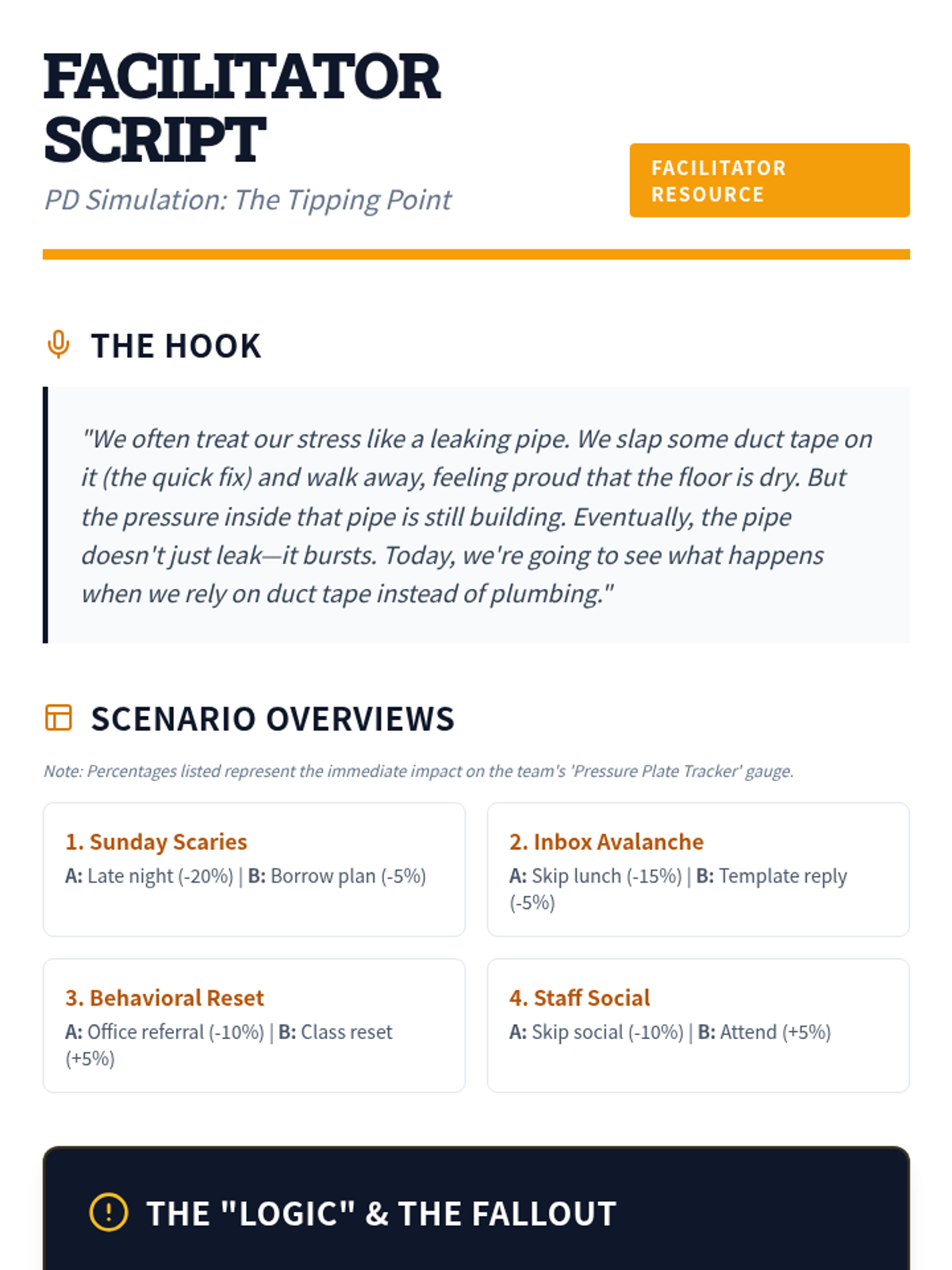
A guide for the PD facilitator explaining the game's mechanics, the underlying psychology of the "stress debt," and how to lead a meaningful debrief.
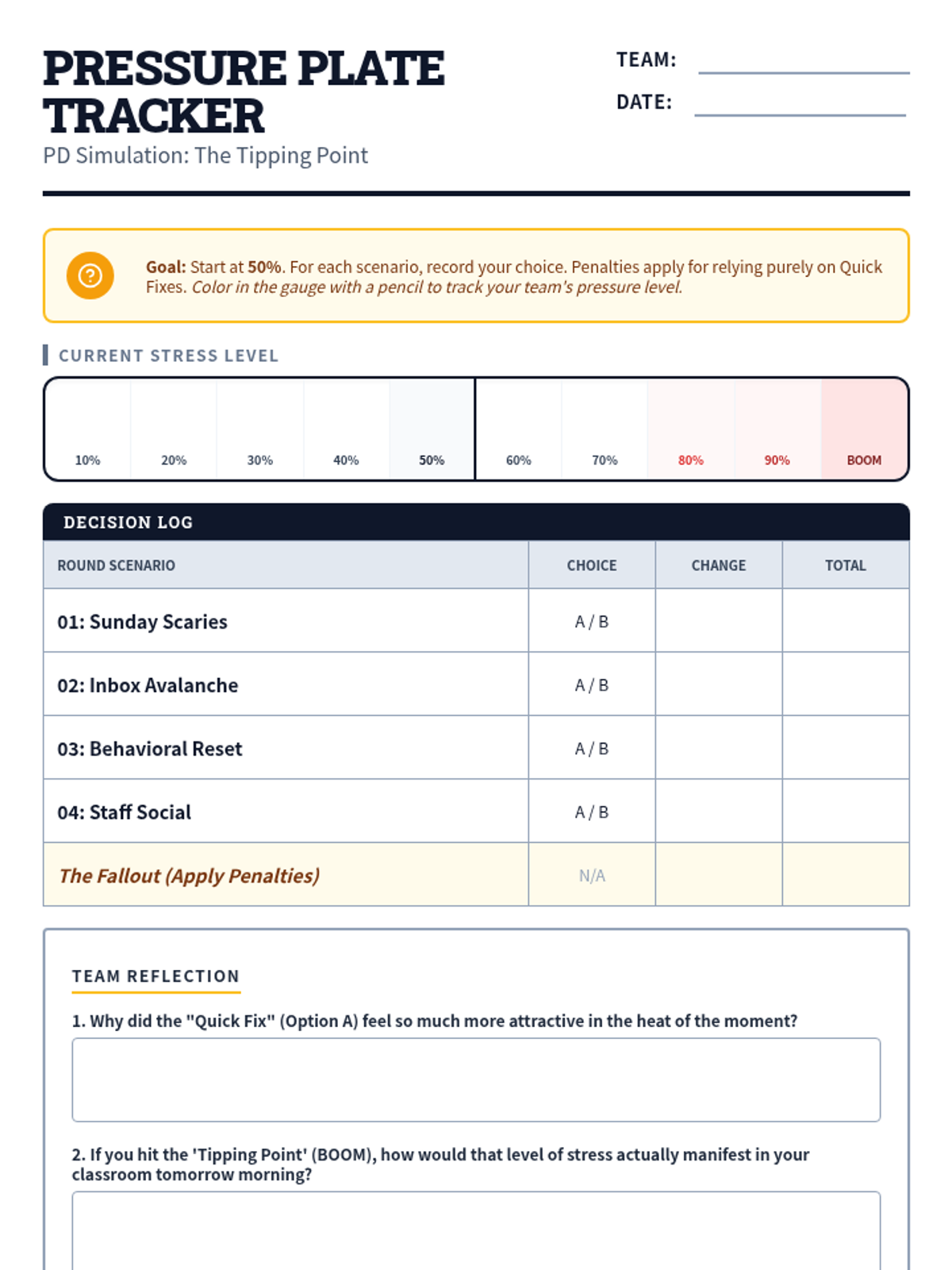
A handout for teachers to track their "stress levels" during the PD simulation game, visualizing how quick fixes affect long-term pressure.
A visual presentation for a professional development session that gamifies the decision-making process between short-term stress fixes and long-term sustainable habits.
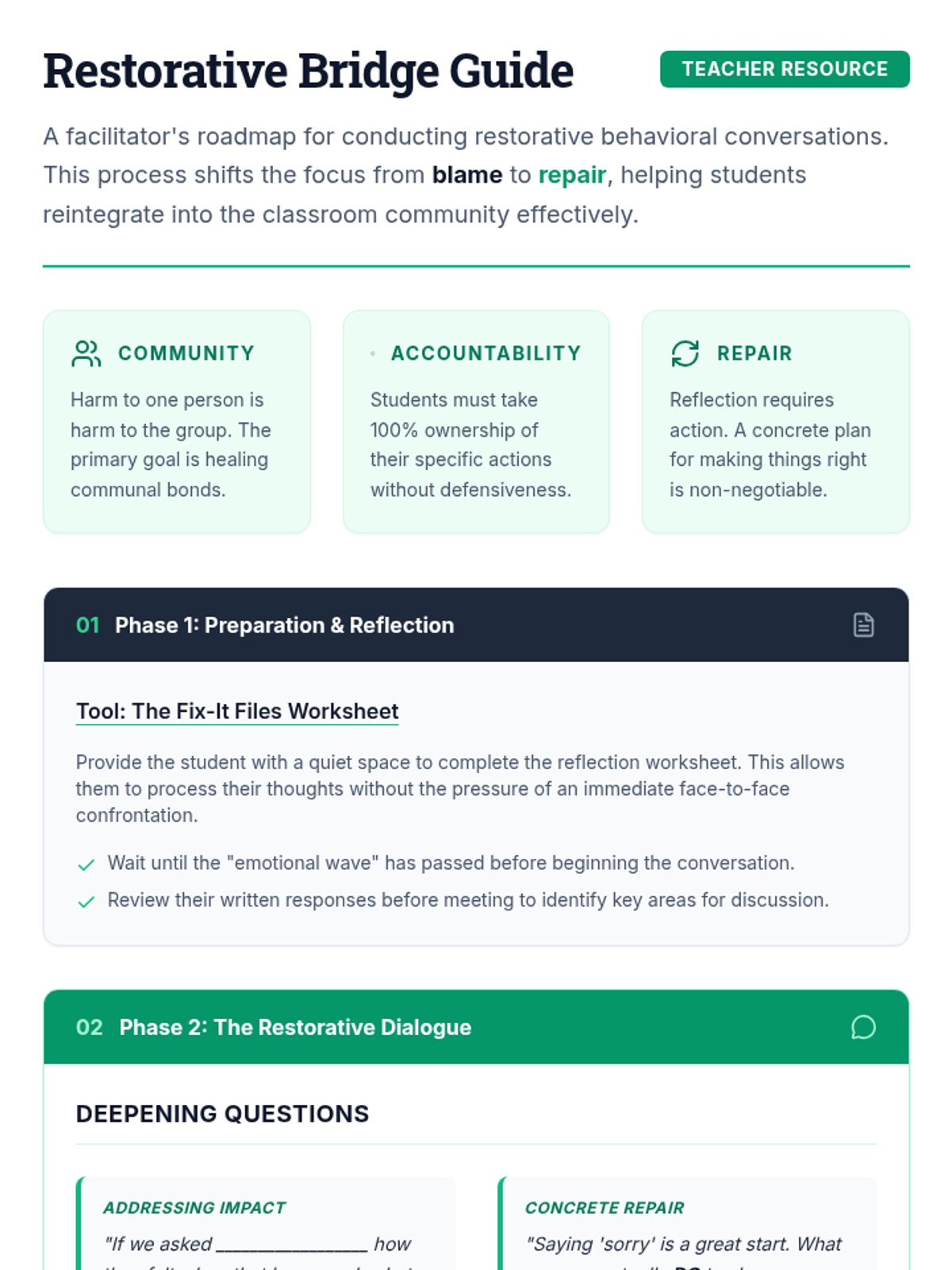
A facilitation guide for teachers to conduct restorative behavioral conversations, including deep-dive questions and a three-phase reintegration process.
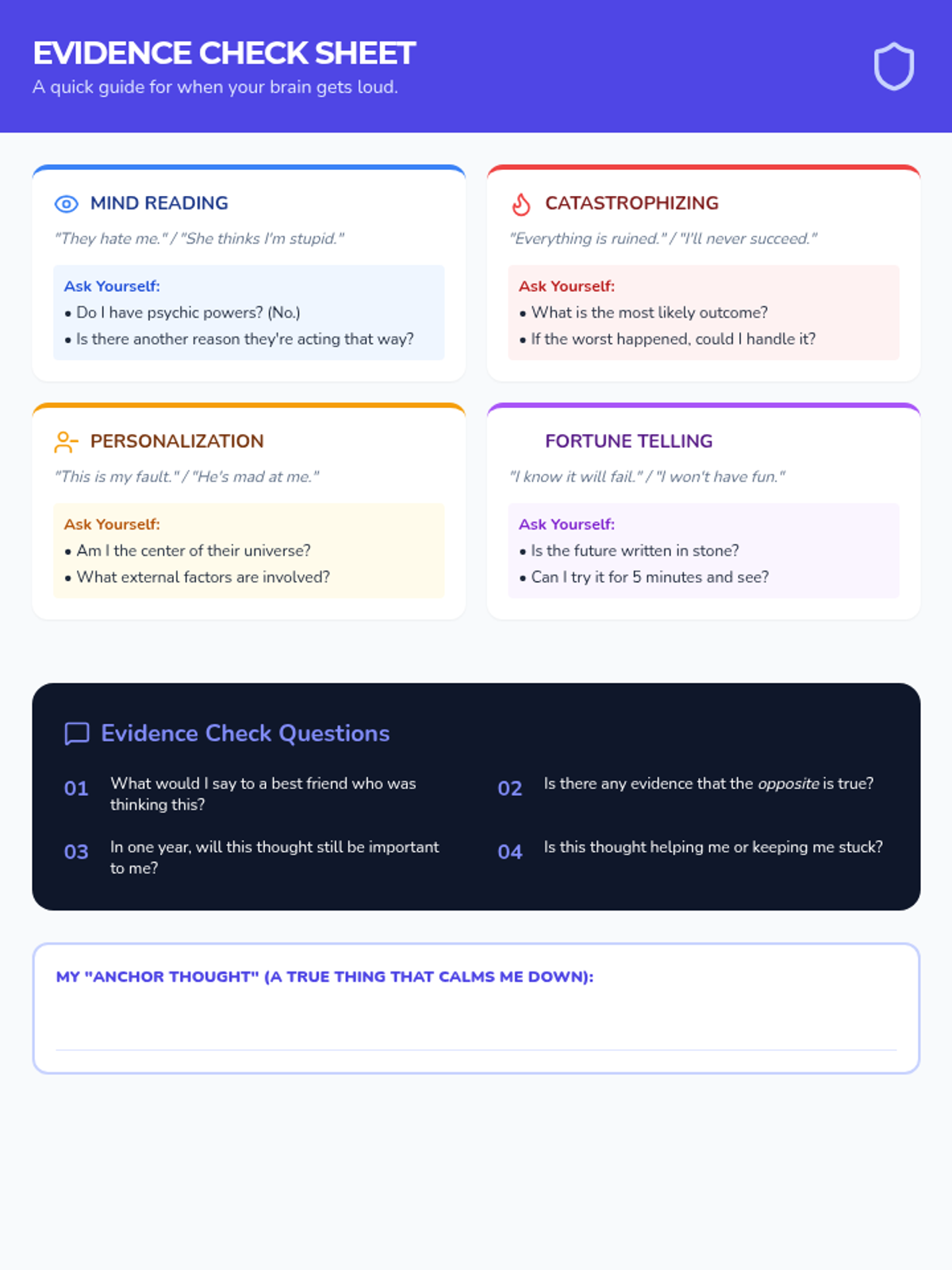
A linear, table-based reference sheet for identifying thinking traps with a small interactive "Anchor Thought" area for personalization. Condensed onto one page with specific topical examples.
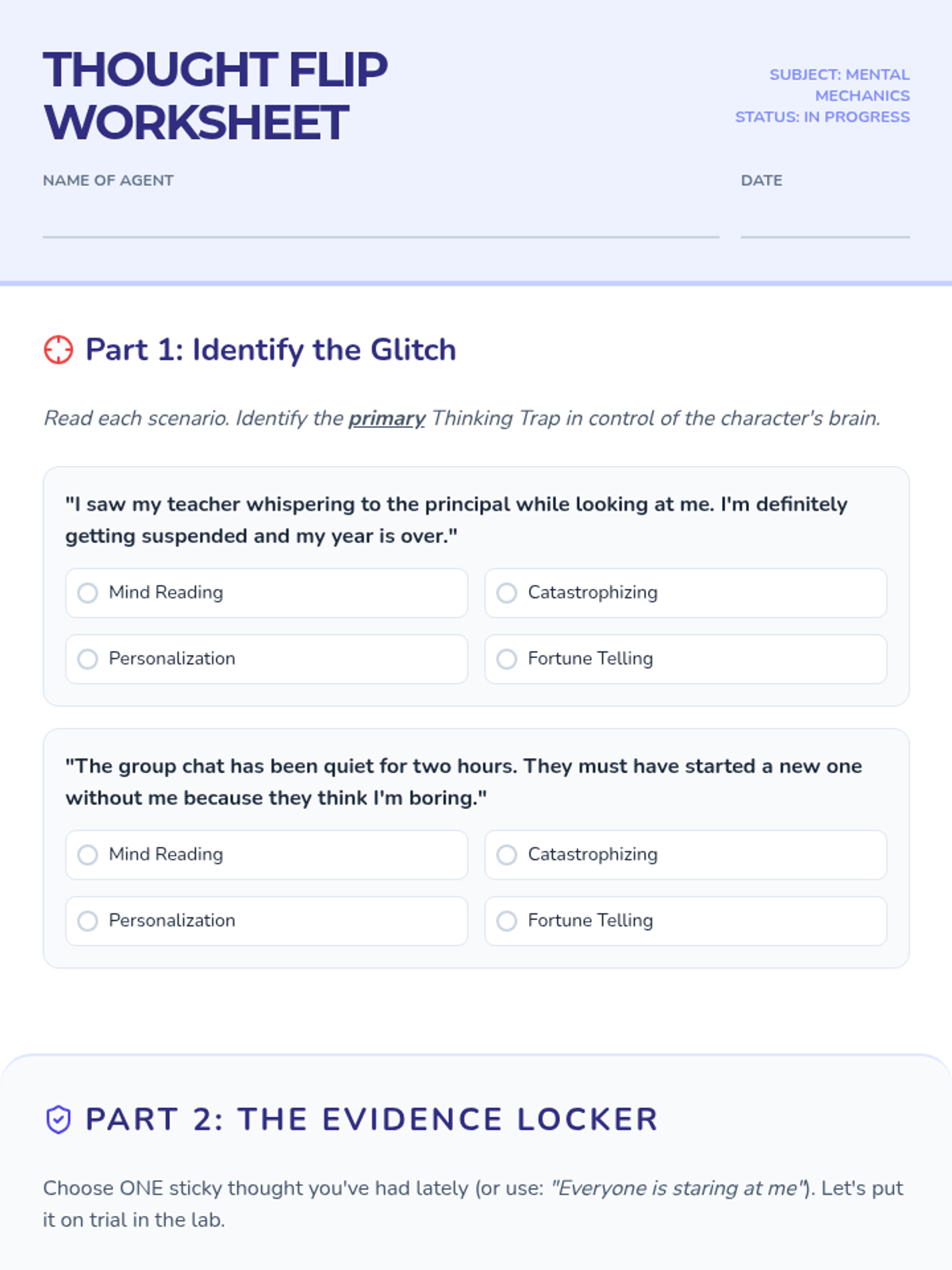
A clean, document-style worksheet for teens to practice identifying thinking traps, analyzing evidence, and reframing their own thoughts. Includes a third practice scenario and improved page breaking.
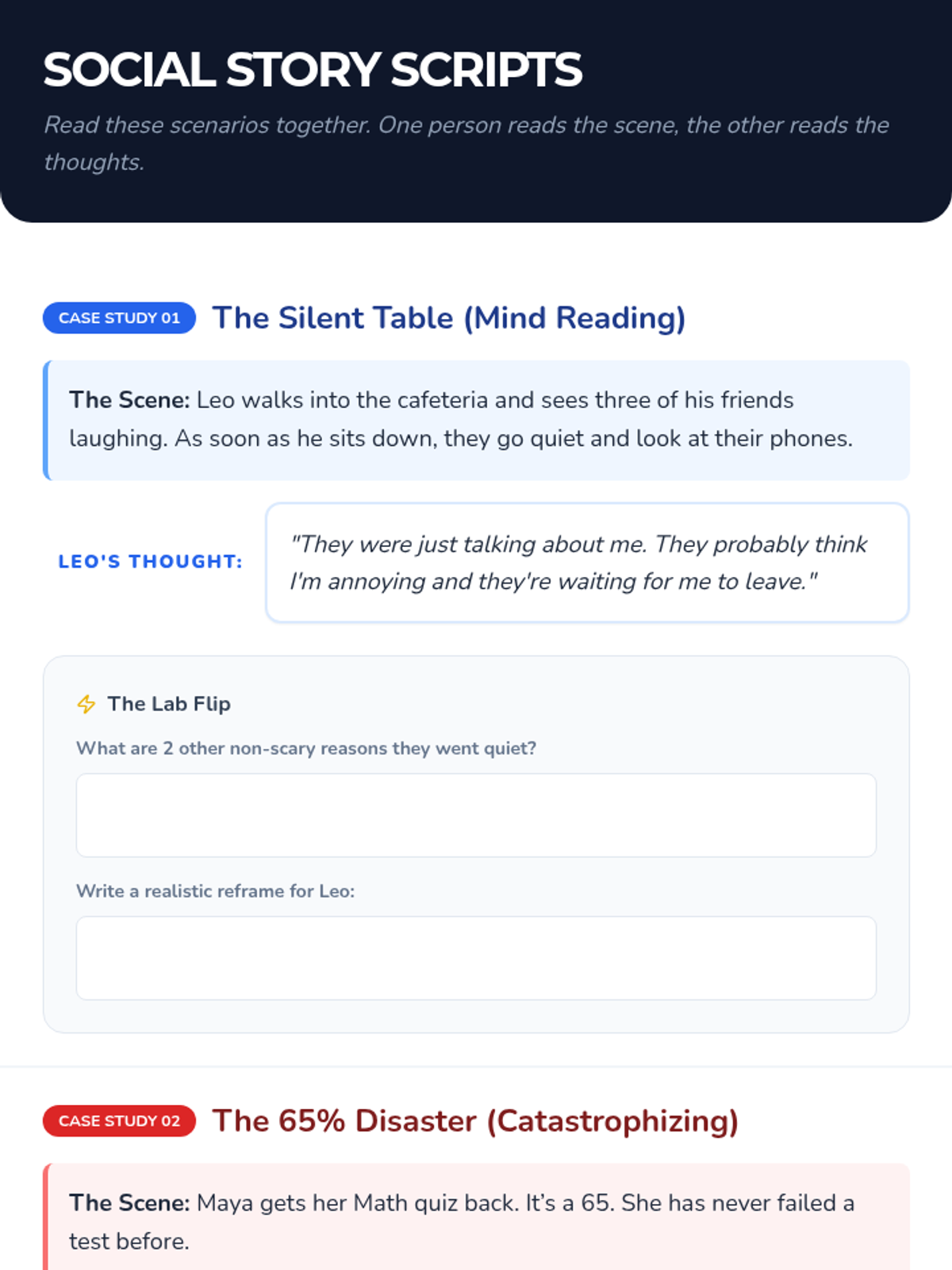
Four social stories illustrating common thinking traps (Mind Reading, Catastrophizing, Personalization, and Fortune Telling) formatted in a clean, linear document style for reading and completing together. Reduced whitespace and increased student work areas.
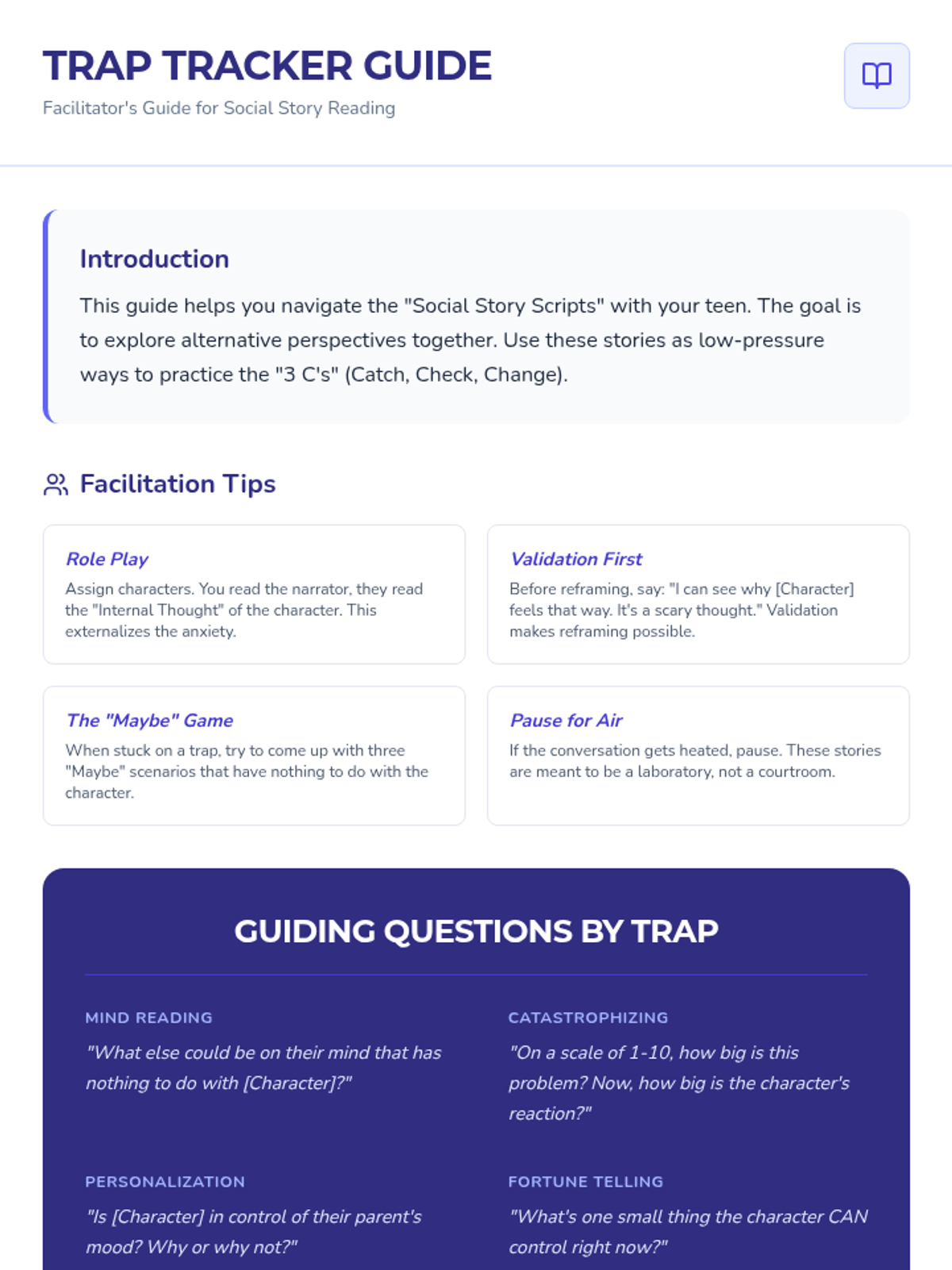
A clean, document-style facilitator's guide providing tips and specific discussion prompts for using social stories to address thinking traps.
A presentation deck introducing four common thinking traps (Mind Reading, Catastrophizing, Fortune Telling, Personalization) and the 3 C's reframing technique.
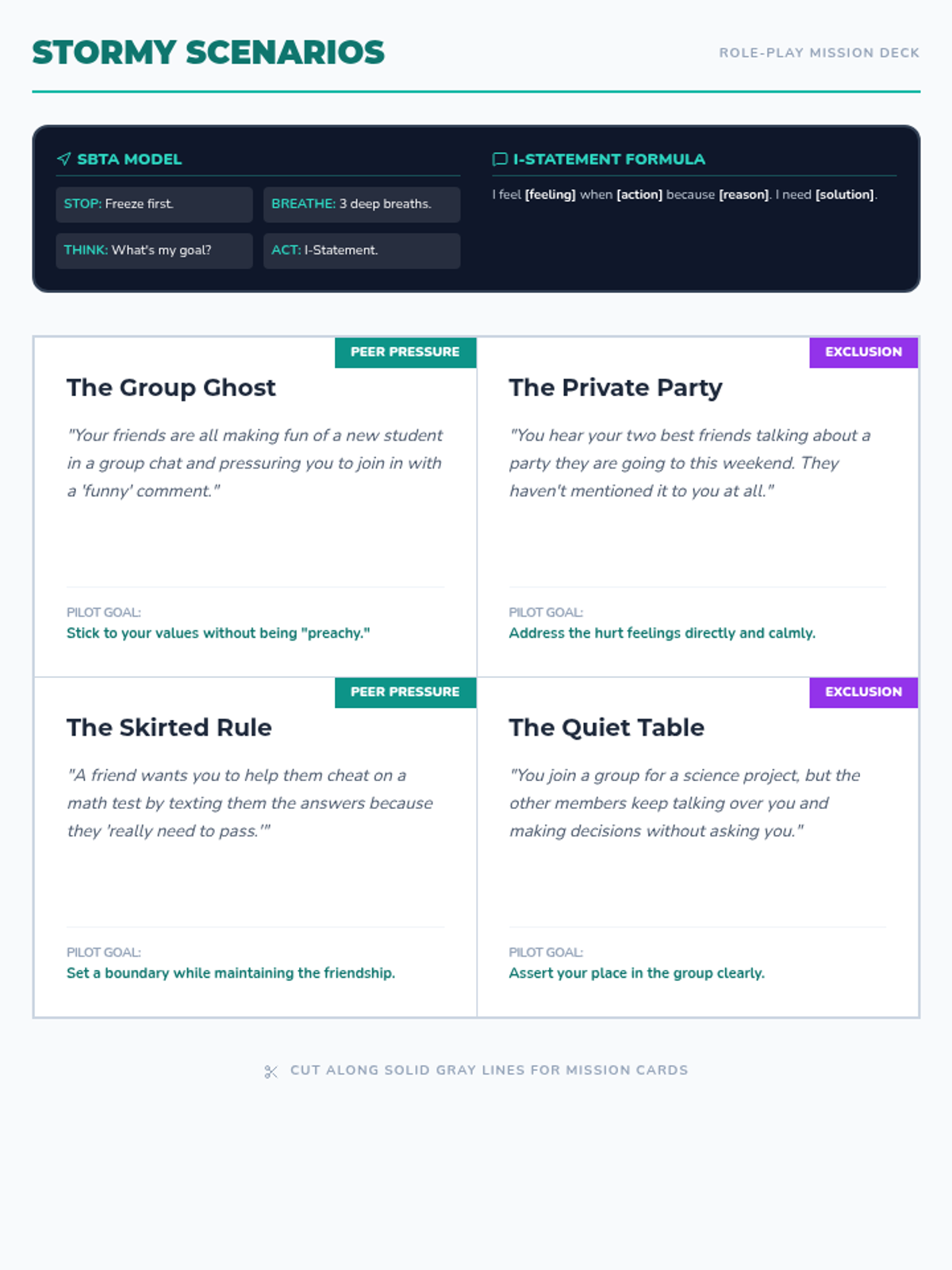
A set of printable role-play cards featuring peer pressure and social exclusion scenarios to help middle schoolers practice conflict resolution skills.