An emotional intelligence worksheet designed as a "blueprint" for students or staff to map out a recent emotional event, identifying triggers, physical sensations, and regulation strategies.
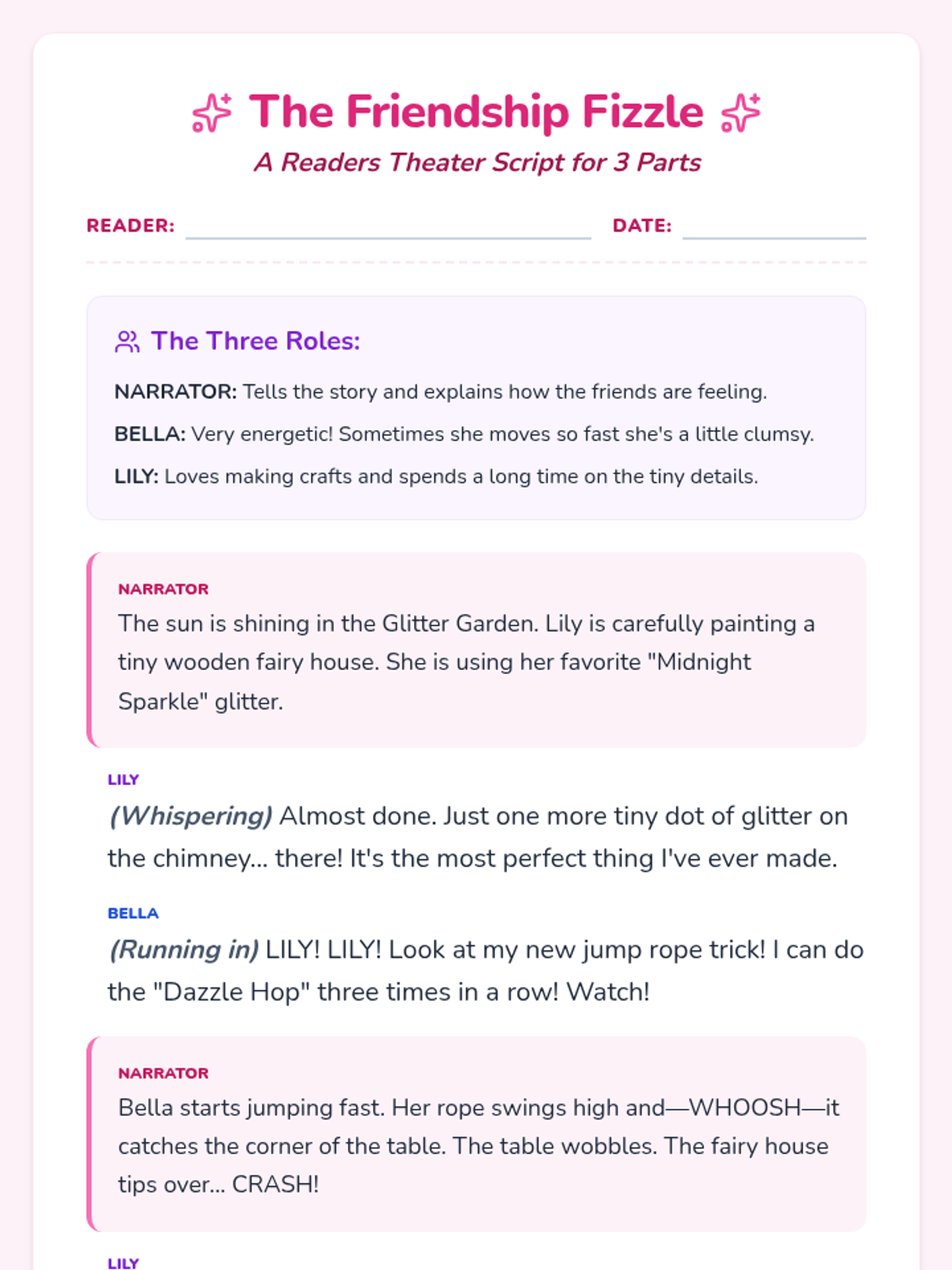
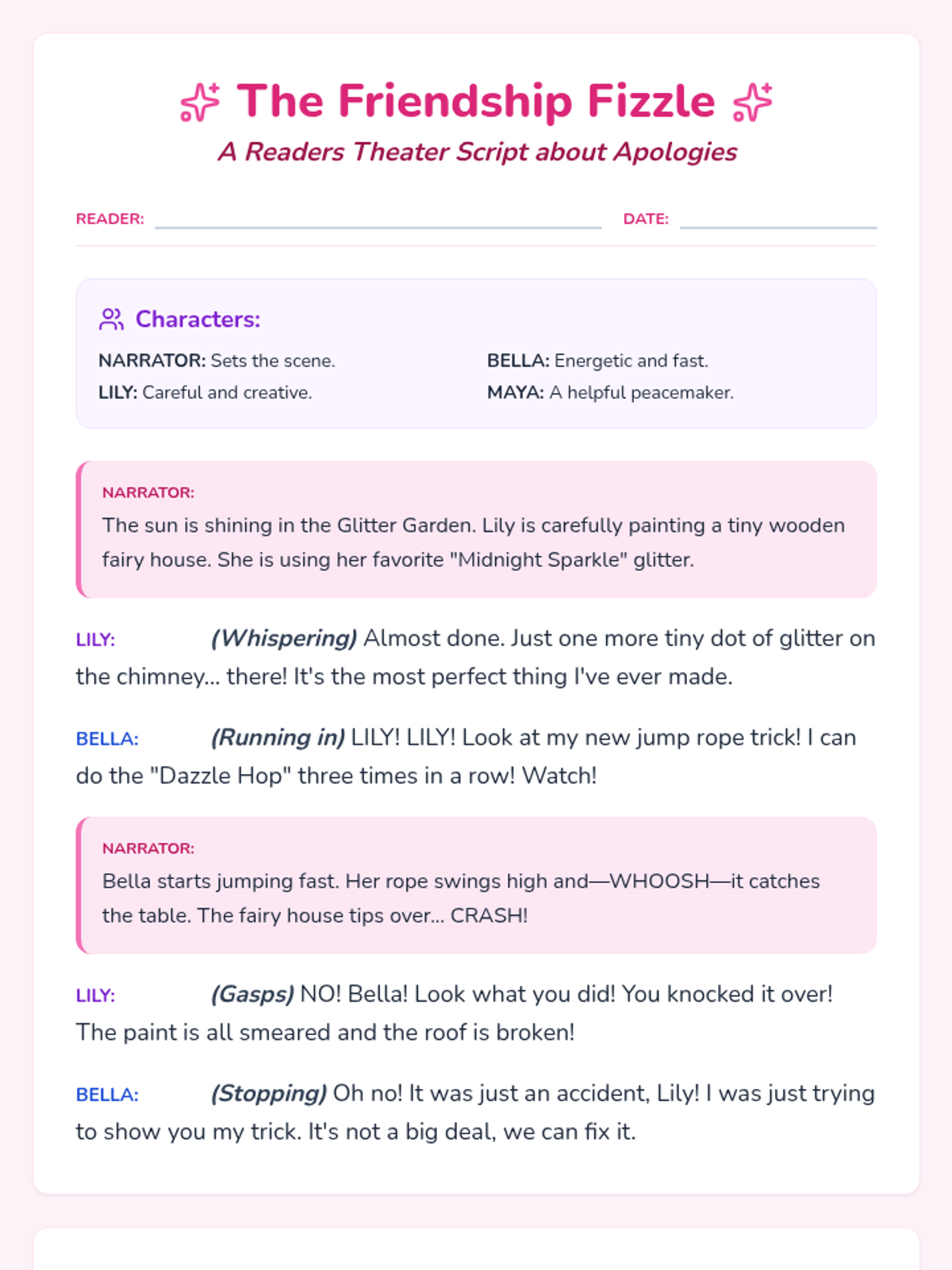
A 3-page Readers Theater script for 2nd-3rd grade students featuring a small cast (2 students and 1 narrator). The story focuses on conflict resolution and the components of a sincere apology.
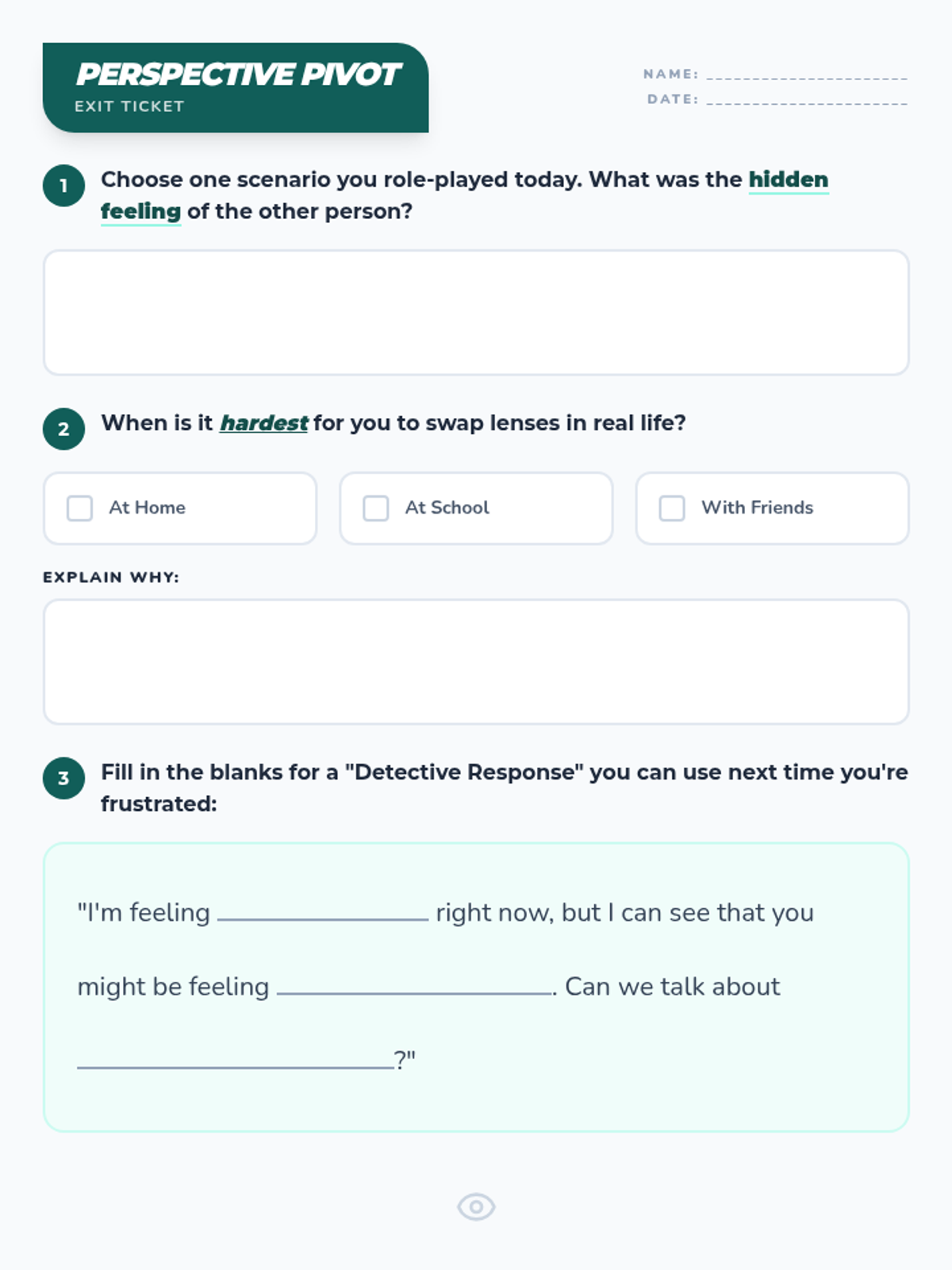
A reflection sheet for students to complete after the role-play activity. It asks them to identify hidden feelings in scenarios, reflect on their own challenges with perspective-taking, and practice a scripted empathetic response.
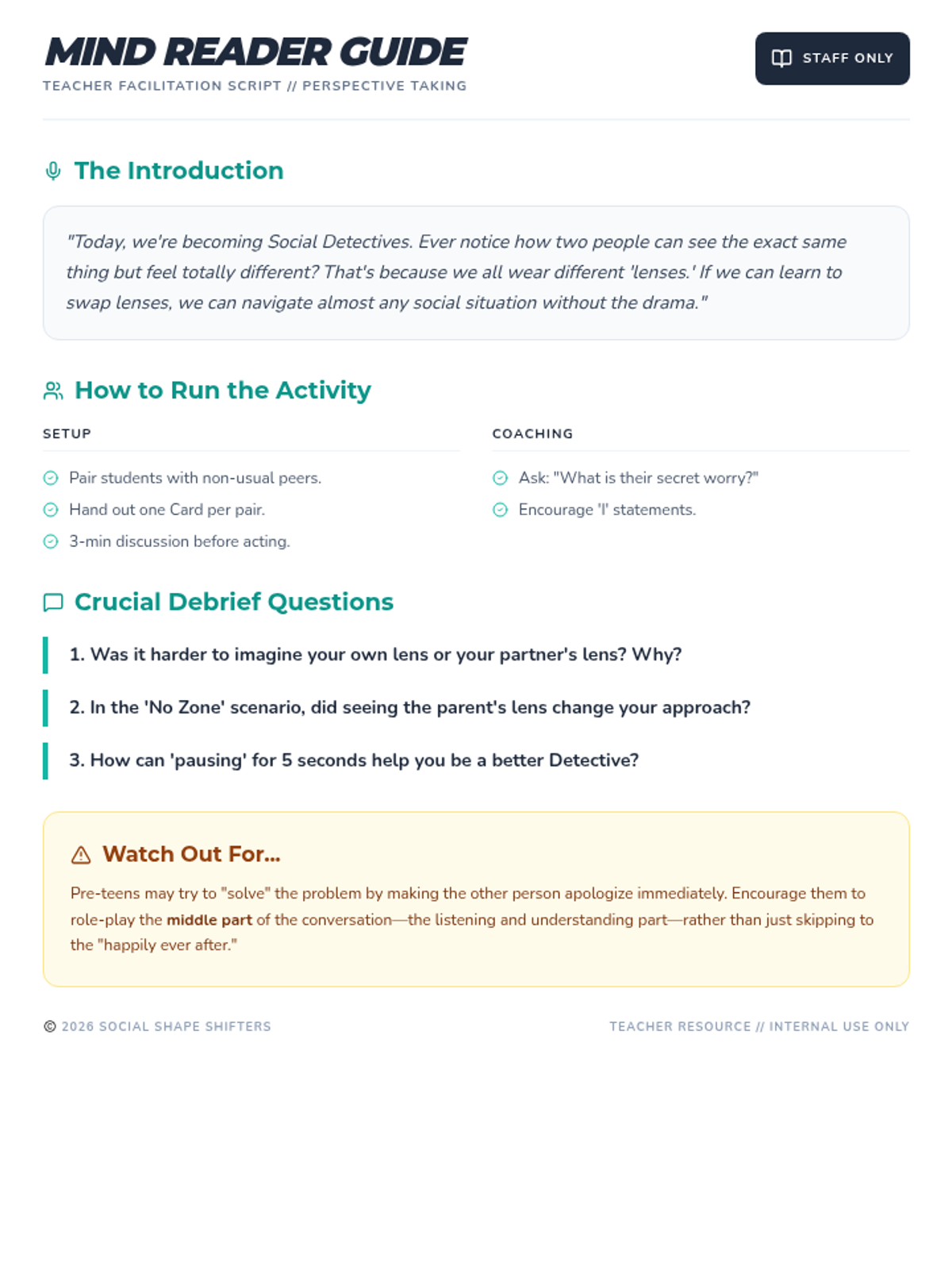
A facilitation guide for teachers to lead the perspective-taking activity. Includes a scripted introduction, role-play coaching tips, debrief questions, and advice on managing common student challenges during the exercise.
An engaging slide deck for pre-teens that introduces the concept of social 'lenses' (perspective taking). It provides a 'Social Detective' framework for pausing, swapping perspectives, and choosing empathetic responses, including practice scenarios.
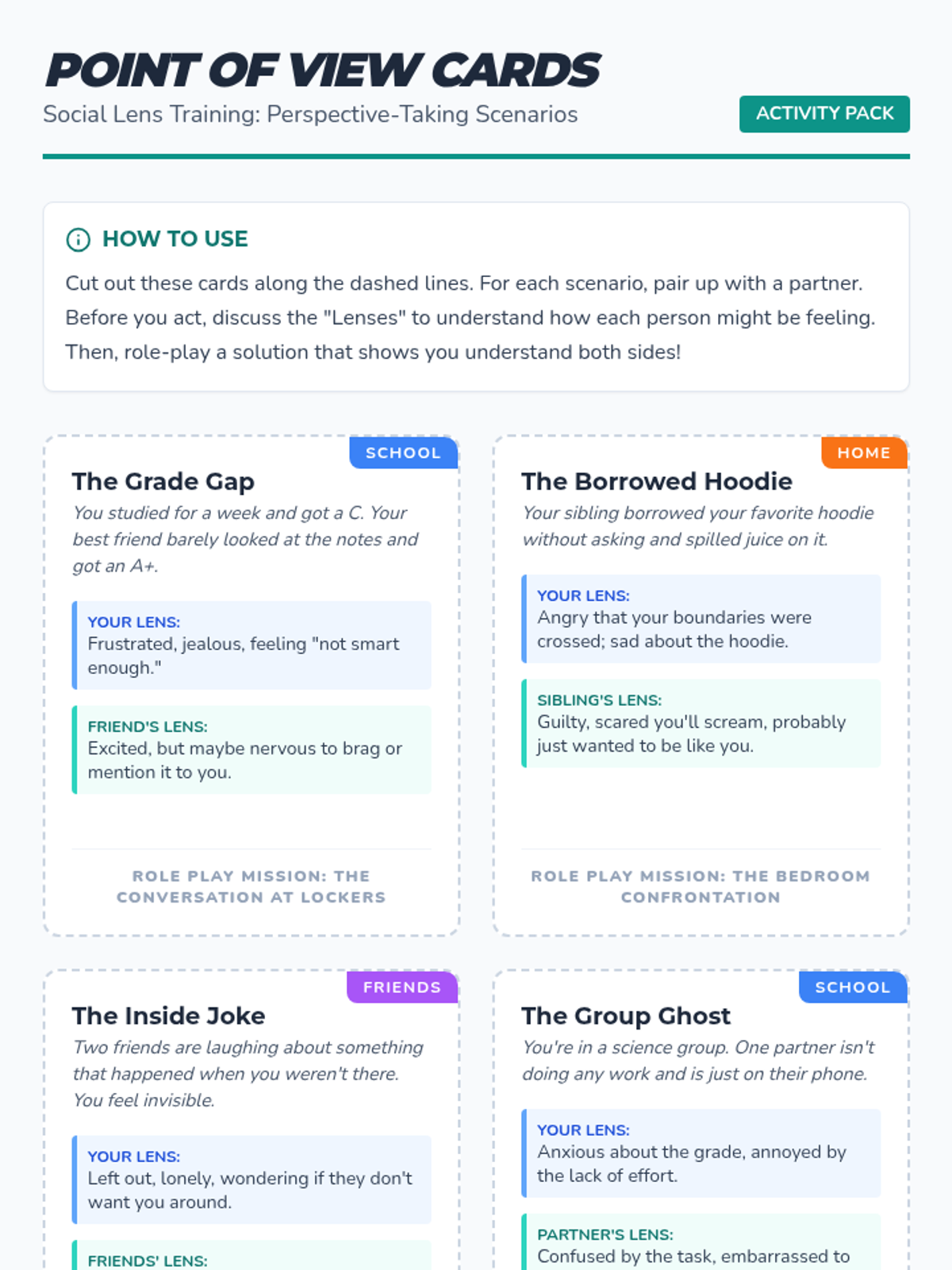
A set of 6 printable role-play cards featuring realistic social scenarios for pre-teens. Each card highlights different perspectives ('lenses') for school, home, and peer settings to help students practice empathy and effective communication.
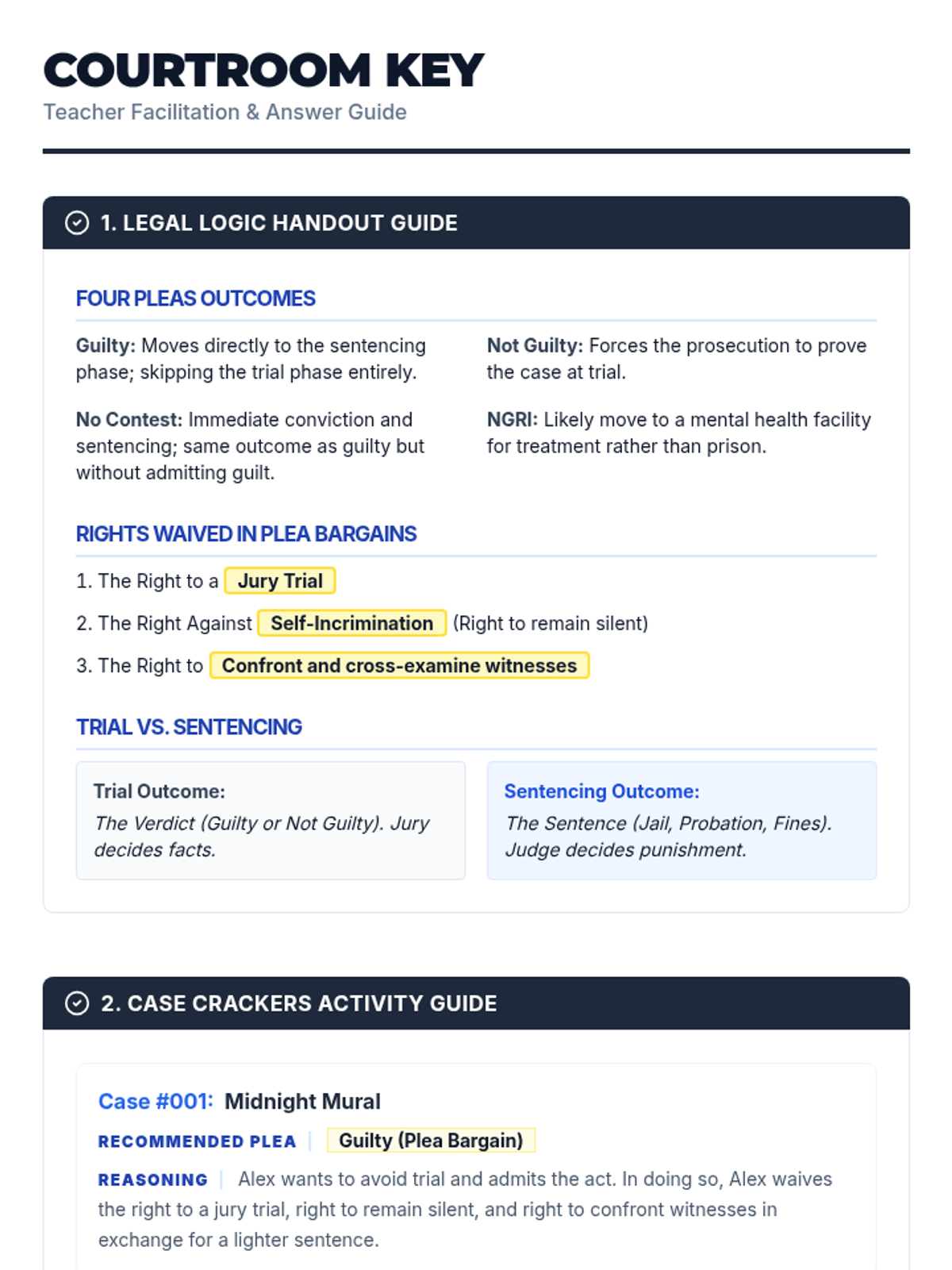
A comprehensive teacher guide providing answer keys for the Legal Logic handout and Case Crackers activity, updated with the new plea bargain rights: right to remain silent, right to an appeal, and right to a trial.
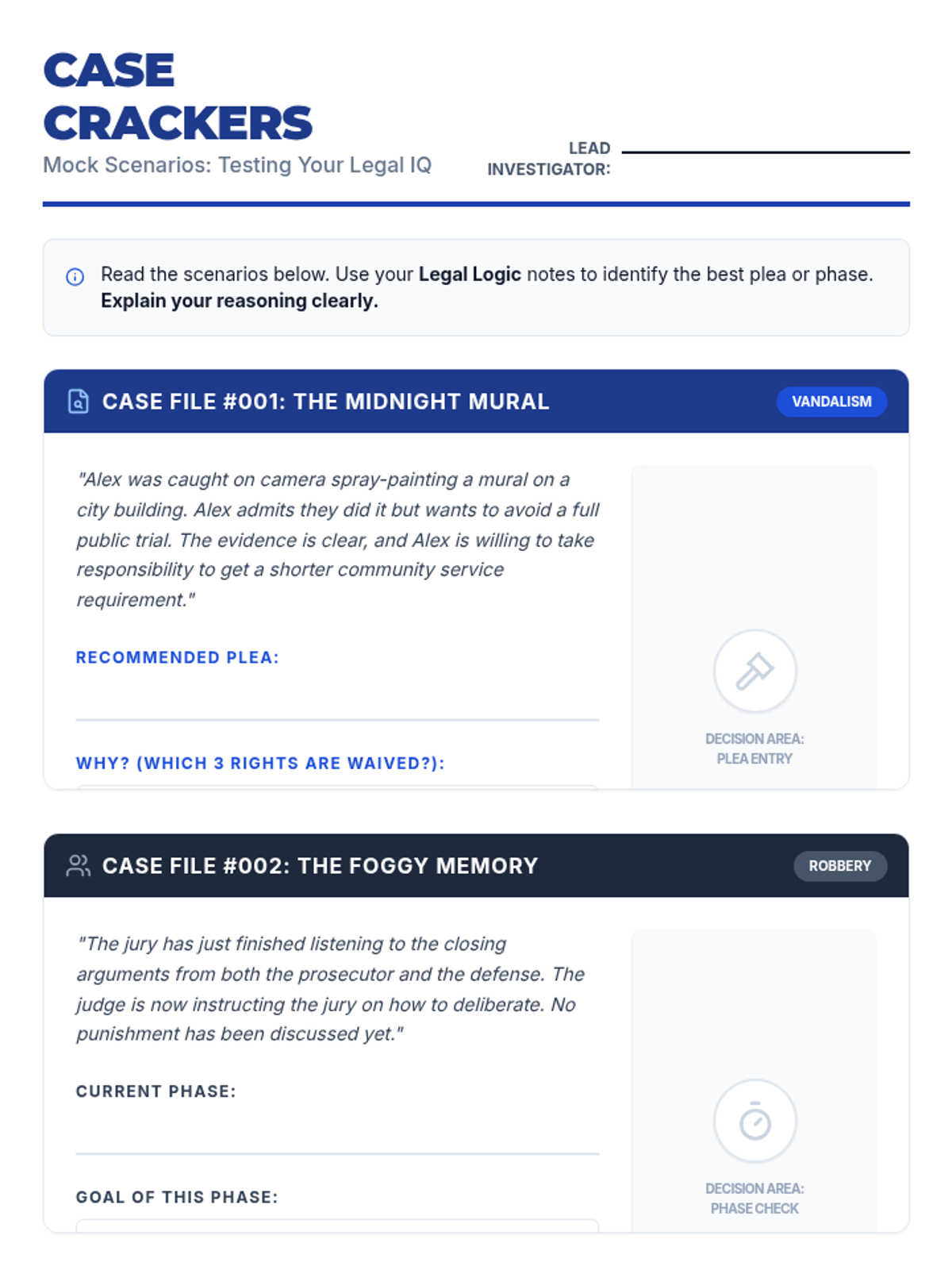
An interactive activity sheet featuring three mock legal scenarios where students must apply their knowledge of pleas, rights, and trial phases to determine the correct legal course of action.
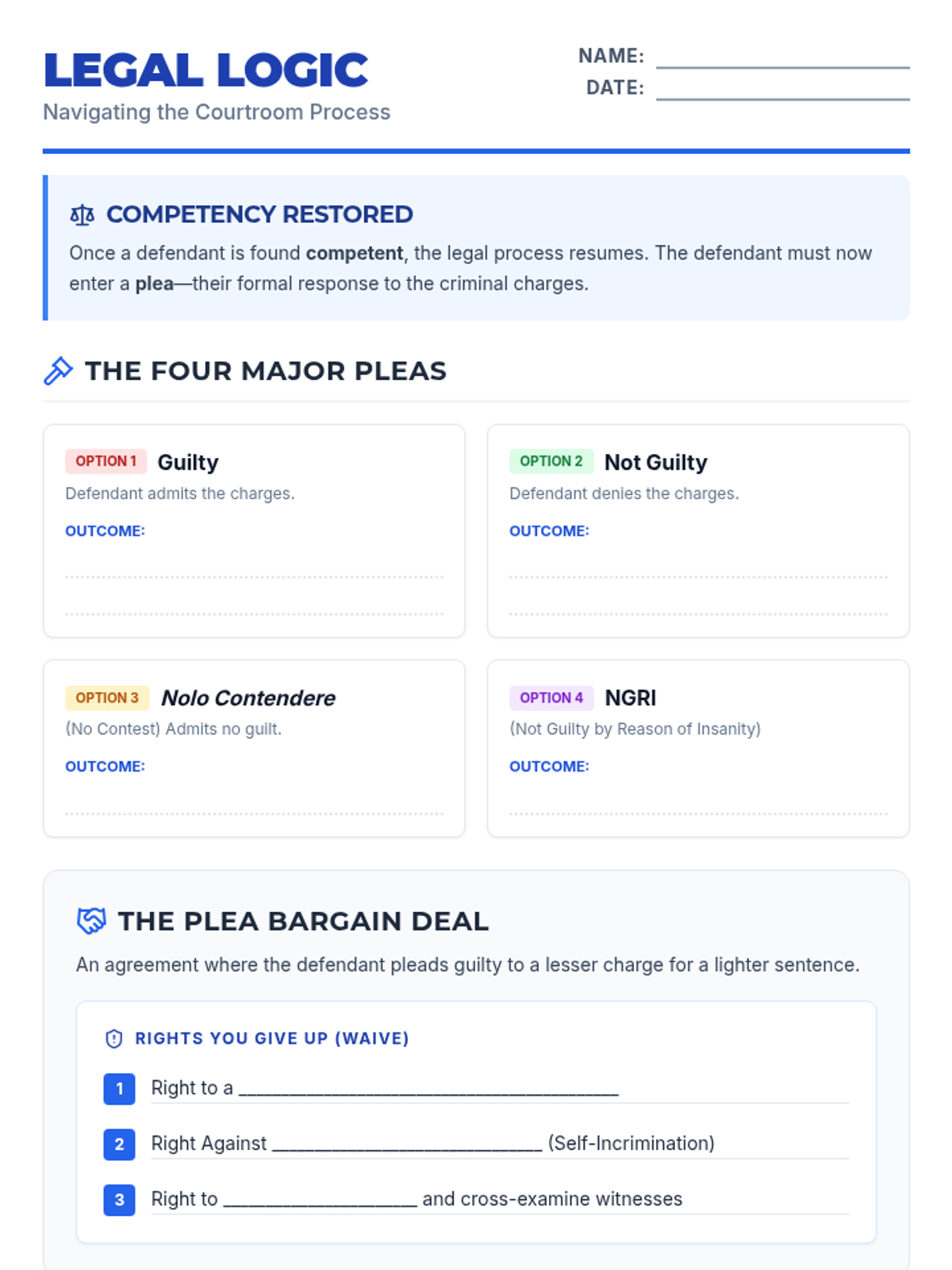
A visual guided notes handout for high school students covering the four legal pleas, updated rights waived during plea bargains (remain silent, appeal, trial), and the difference between trial and sentencing phases.
A 3-page Readers Theater script for 2nd-3rd grade students featuring a story about conflict resolution and apologies. Includes character roles, stage directions, and written reflection questions.
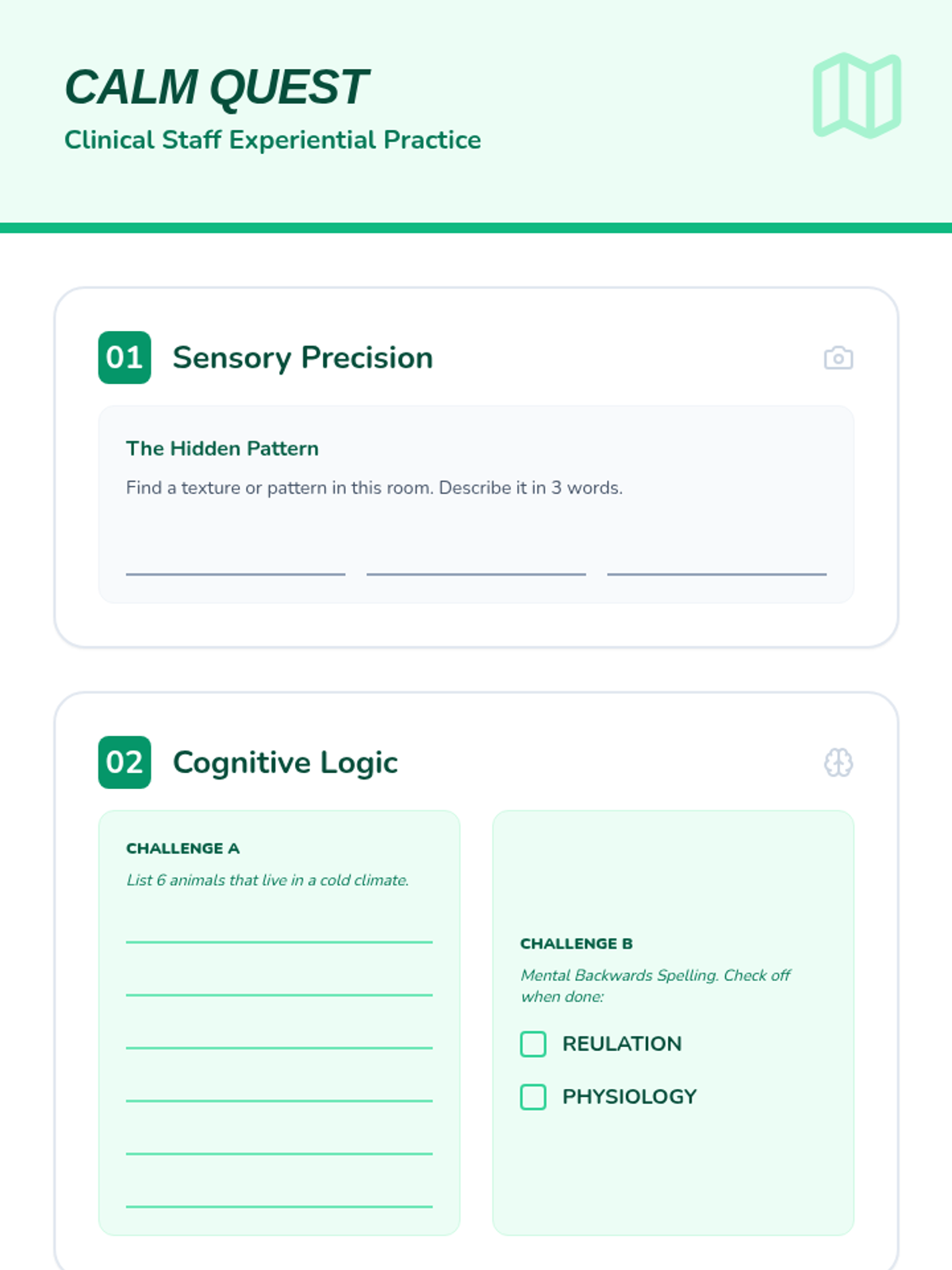
An experiential "scavenger hunt" for clinical staff to practice grounding techniques themselves. Includes sensory precision tasks, cognitive override challenges, and a section for developmental adaptation.