An engaging, visually structured presentation to guide students through circle agreements, the Connection Cards activity, and sentence frames for sharing gratitude.
A beautifully themed, high-visibility 16:9 slide presentation for teachers to display during the 90-minute workshop. It leads teams through the four pillars of active listening and the three interactive classroom challenges with large, clear prompt slides.
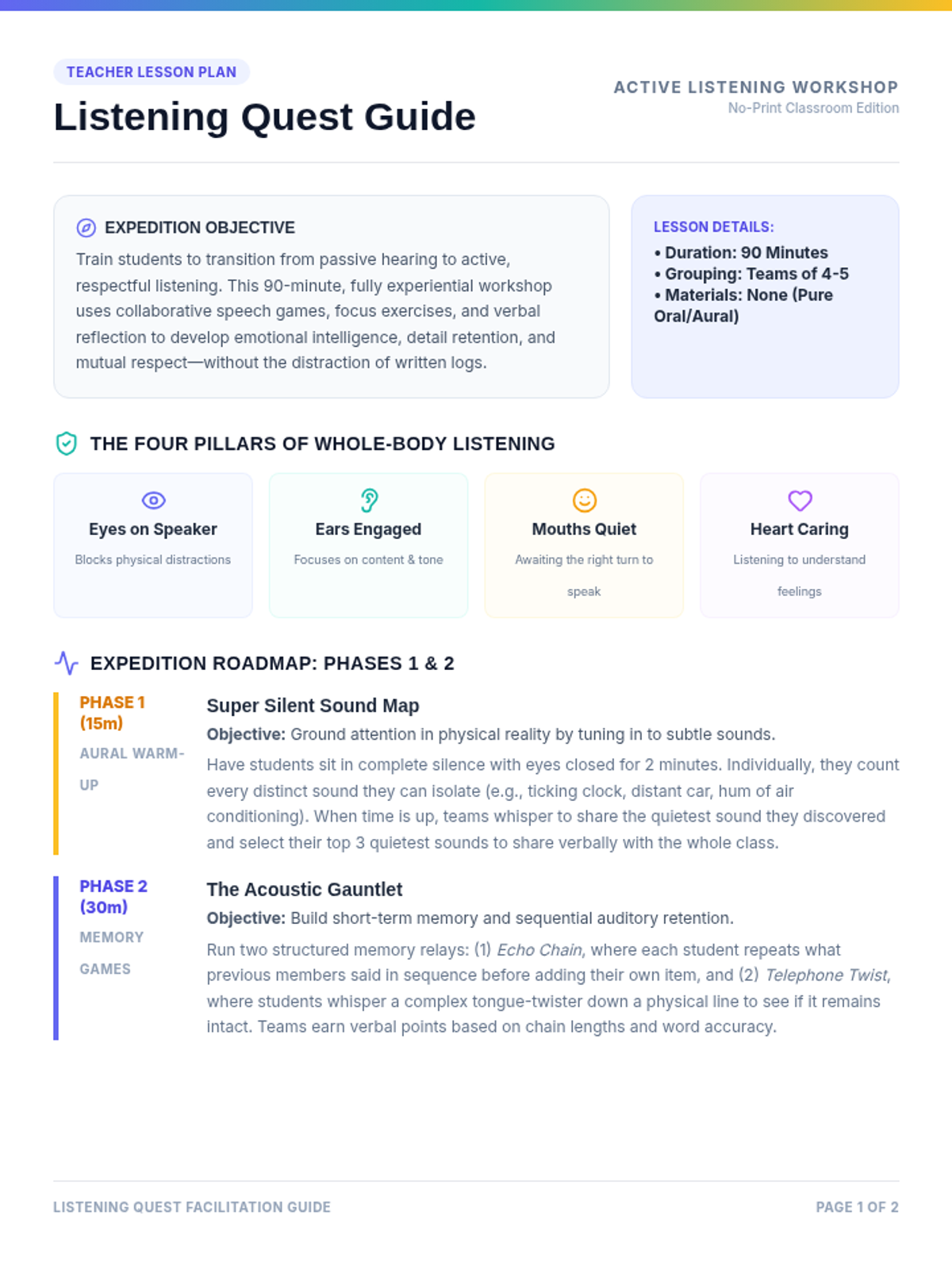
A comprehensive 2-page print-ready lesson plan and facilitation guide for teachers to lead the 90-minute Listening Quest. This guide contains detailed setup instructions, game scripts, verbal discussion prompts, and differentiation strategies without requiring any student worksheets.
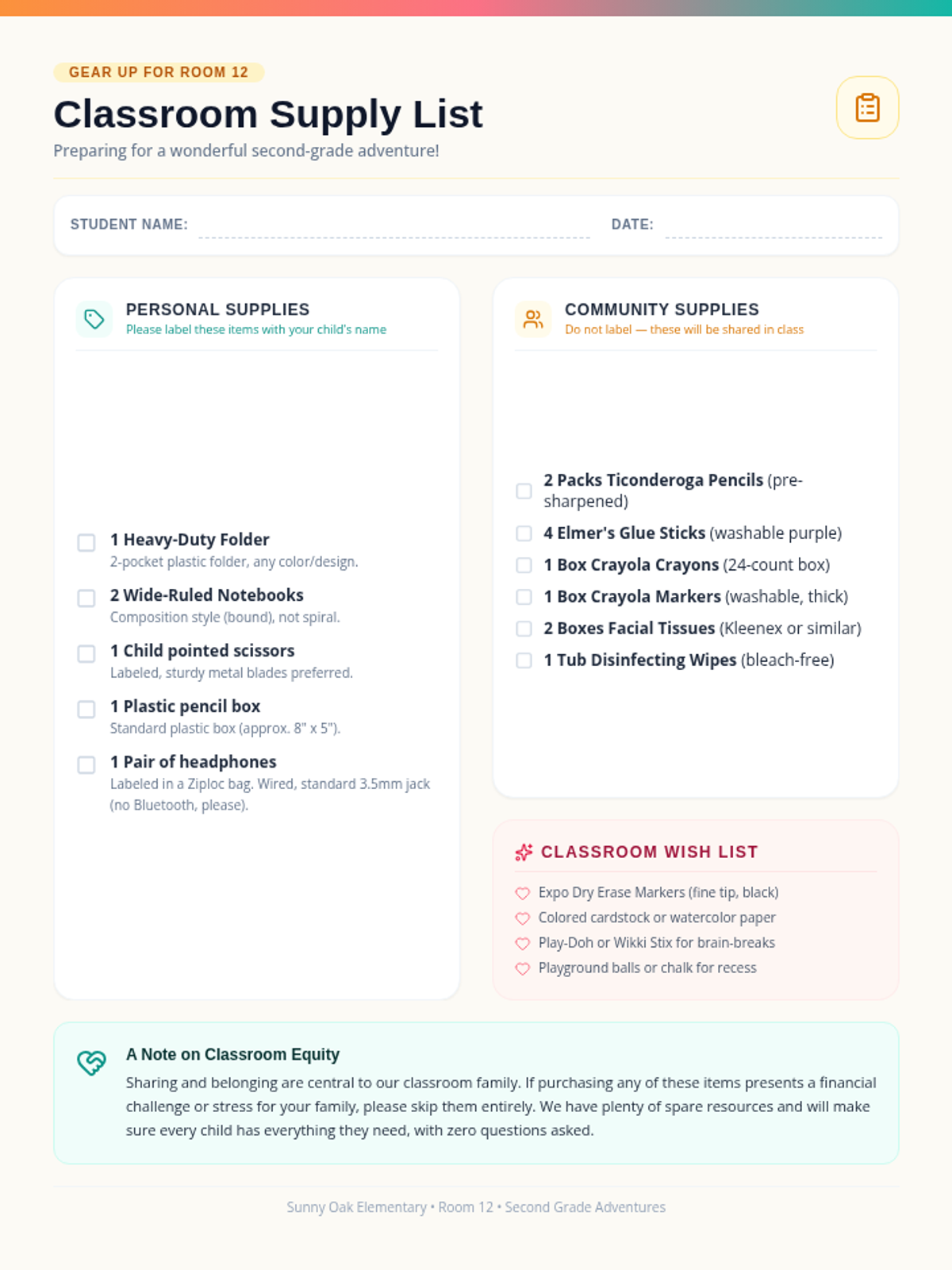
An organized, single-page classroom supply checklist for second graders, categorizing required personal supplies, shared community supplies, and optional classroom wish-list items. Includes a warm note on equity and support.
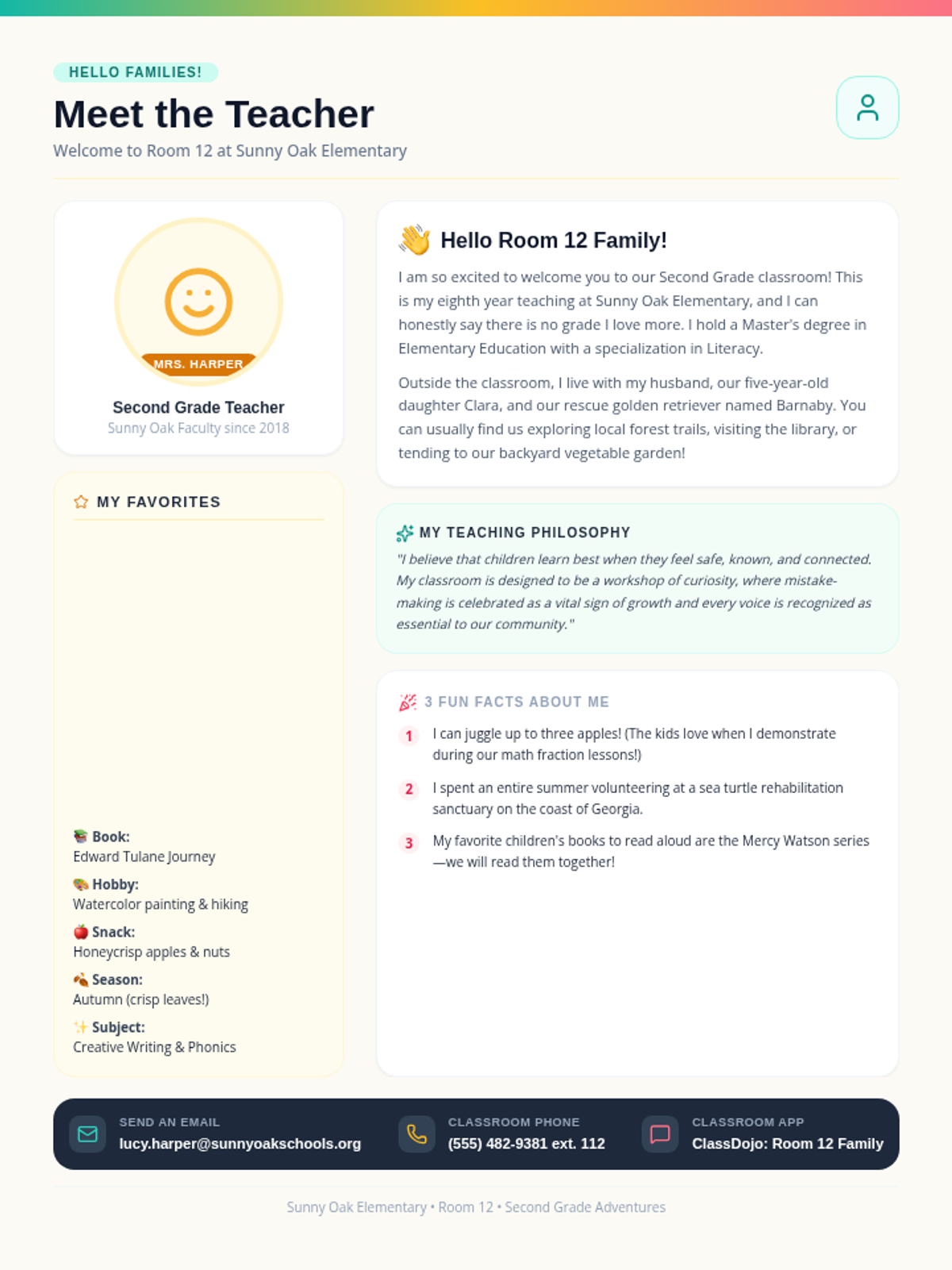
A visually engaging, single-page introductory flyer for Mrs. Harper, the second-grade teacher, showcasing her professional background, educational philosophy, list of favorite things, and contact details.
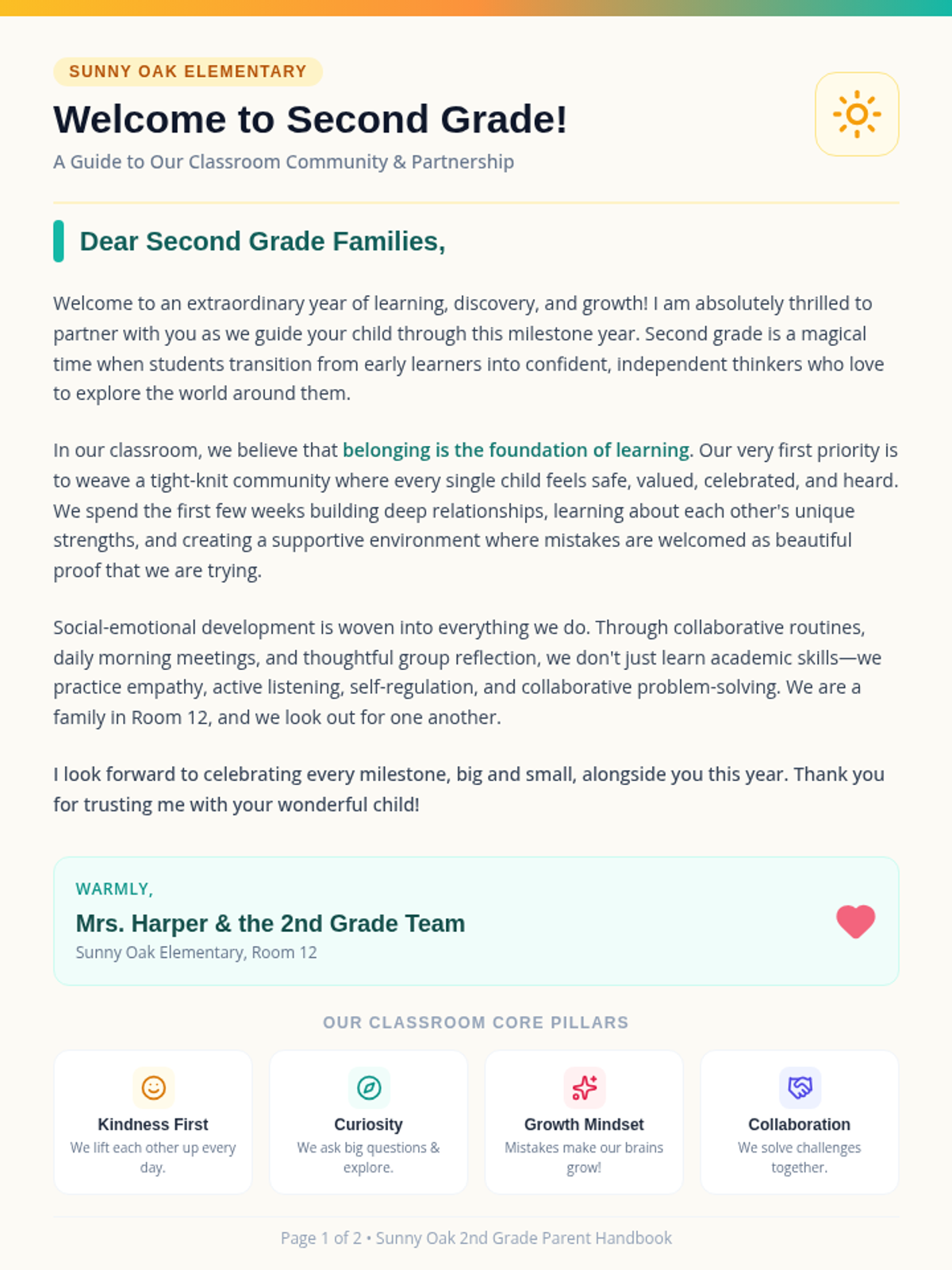
A warm, professional 2-page parent handbook containing a welcoming letter that emphasizes classroom community, relationship-building, and social-emotional growth, alongside clear explanations of the positive behavior plan and balanced homework policy.
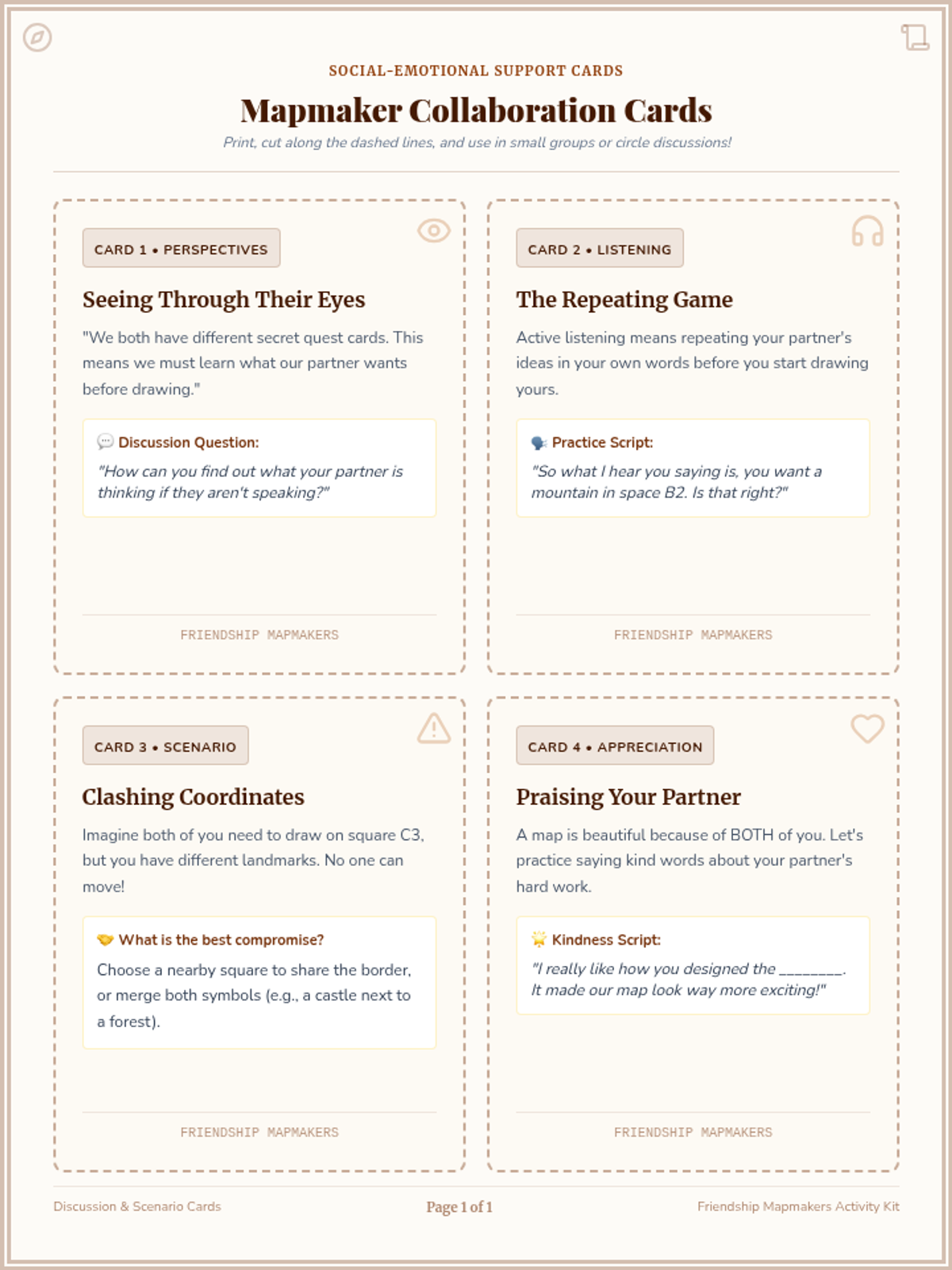
A 1-page printable set of 4 collaborative discussion and scenario cards. Designed for student small groups or teacher-led circles to support perspective-taking and active listening.
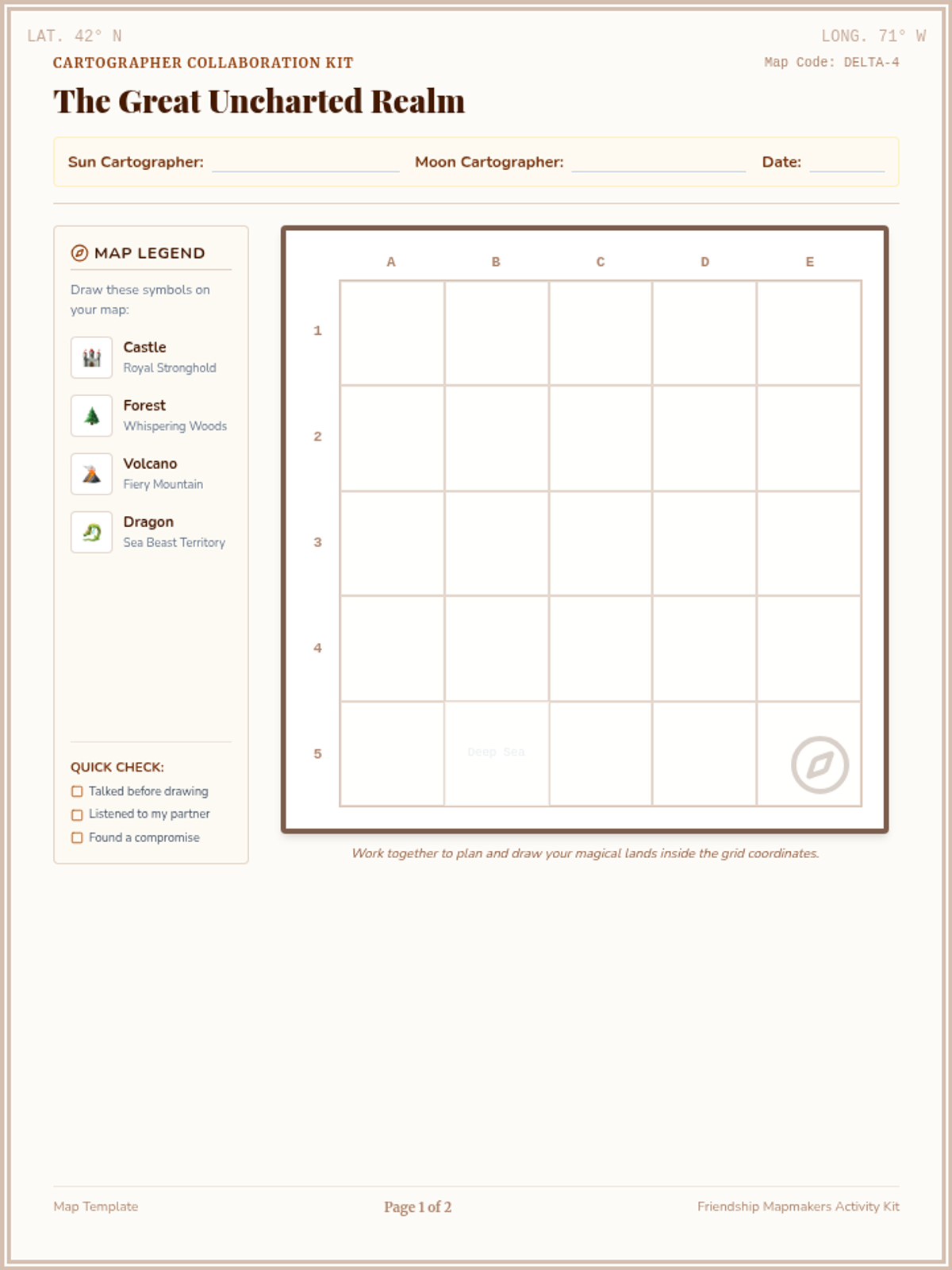
A 2-page printable student-facing activity booklet. Page 1 features a beautiful grid-based coordinate map template and map legend. Page 2 includes cut-out Secret Quest Cards and a compromise log for logging shared decisions.
A 5-slide instructional presentation for classroom delivery. It introduces students to the key concepts of perspective, active listening scripts, compromise, and guides them through the activity rules.
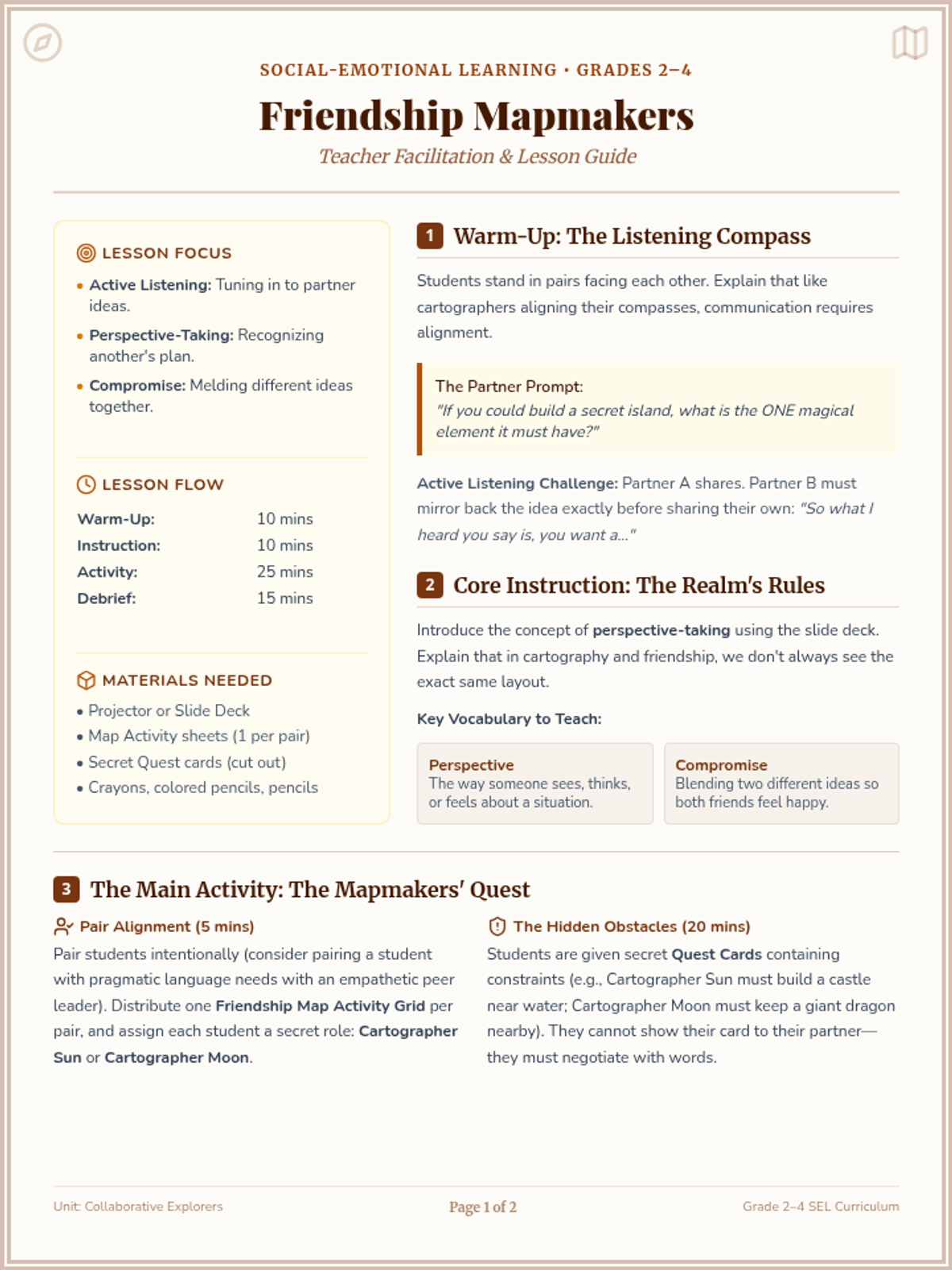
A 2-page teacher-facing facilitation guide for the Friendship Mapmakers lesson. It contains step-by-step instructions, developmental targets, scaffolding for pragmatic language challenges, and a progress tracking checklist.
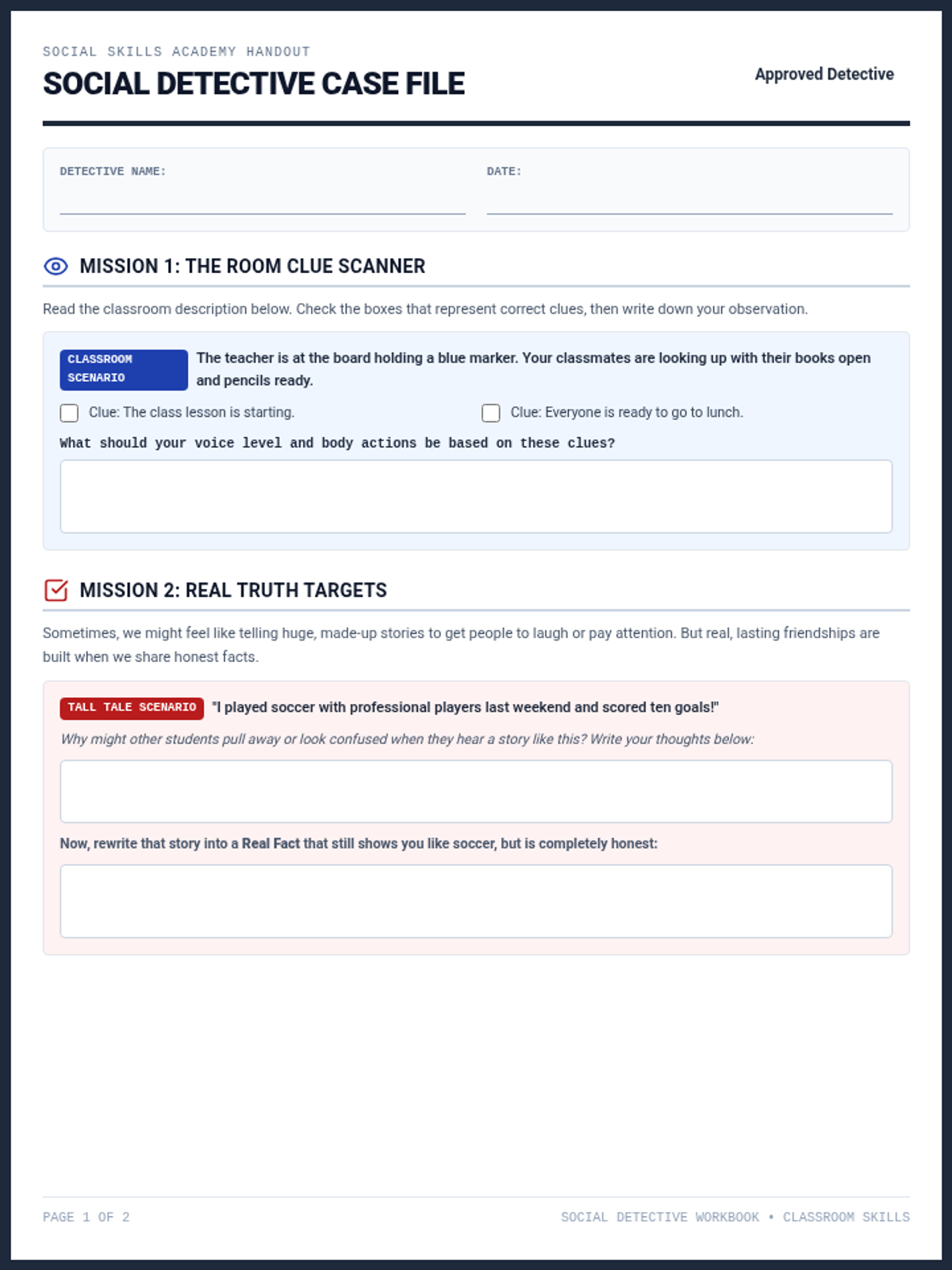
A student-facing activity worksheet structured as an official 'Secret Agent Case File'. Students diagnose social cue failures, rewrite attention-seeking fibs into honest truths, and commit to the Jumpstart Protocol.
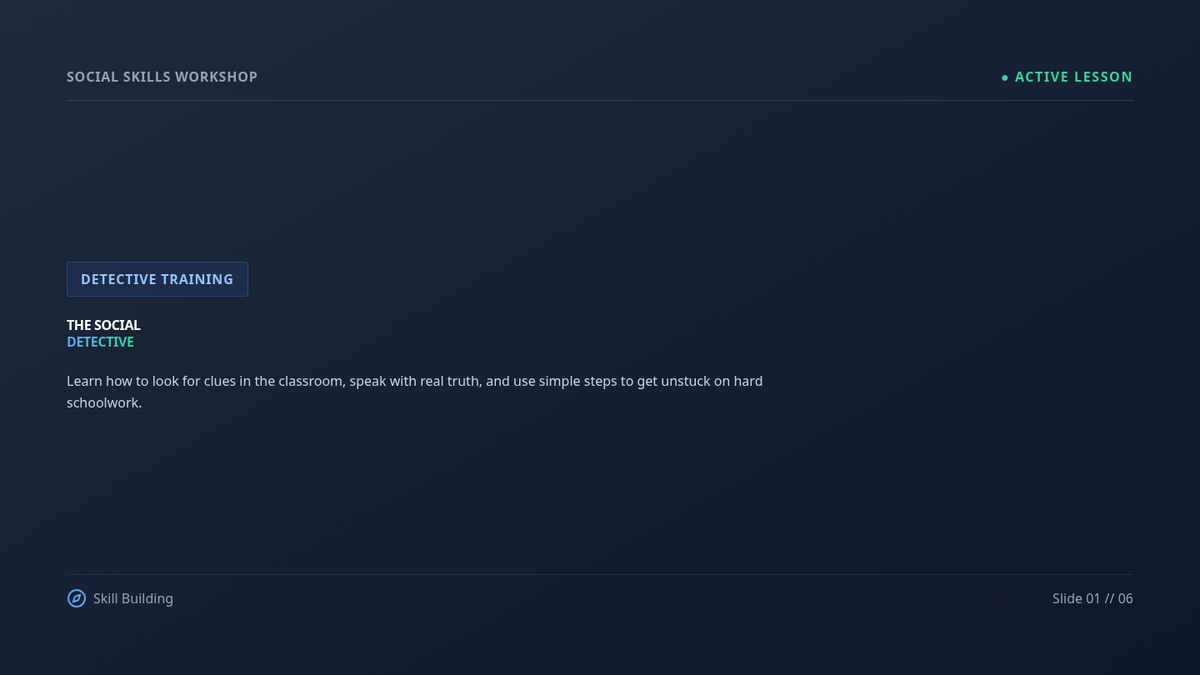
An engaging, high-contrast, secret-agent themed slide deck for the small-group lesson. Covers social cue reading, honest communication versus attention-seeking tall tales, and task initiative strategies.
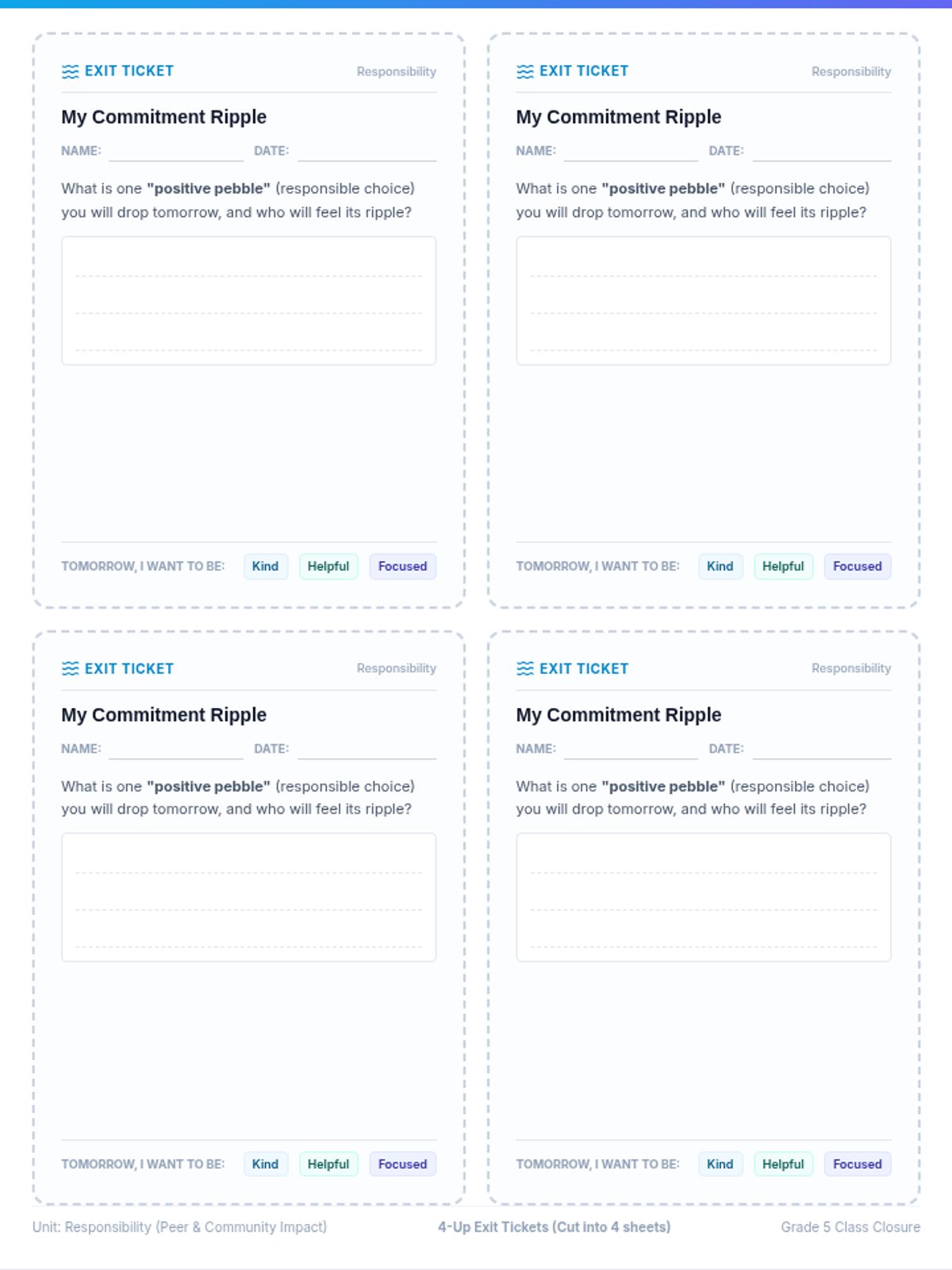
Printable 4-up sheet of student exit tickets containing individual self-reflection prompts and future commitment goals to close the lesson.
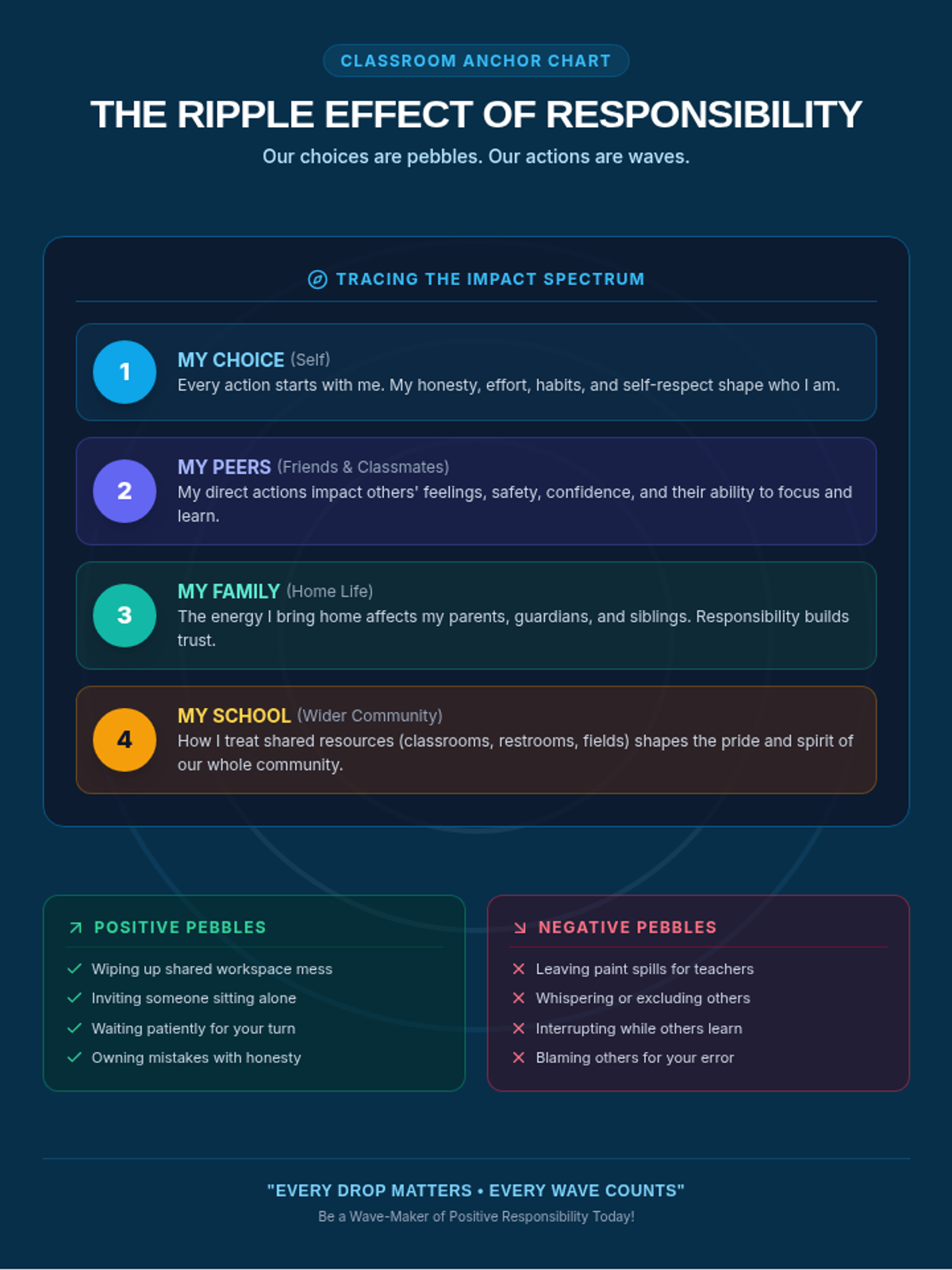
Printable anchor chart and classroom poster outlining the 4-level Ripple Effect responsibility framework with visual cues and memorable action mottos.
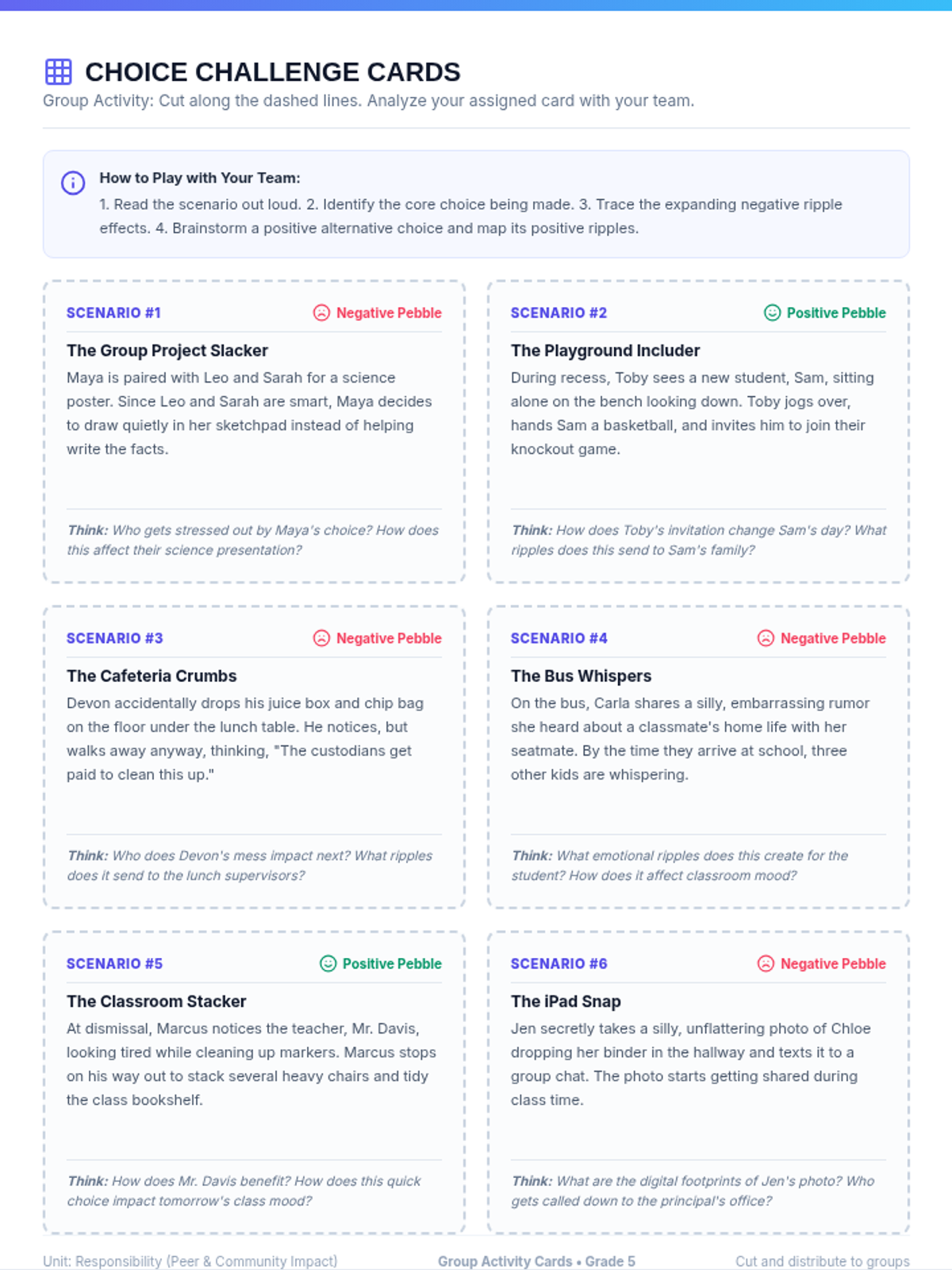
Printable group activity card set featuring 6 relatable real-world scenarios for fifth graders to analyze and trace the ripple effects of their choices.
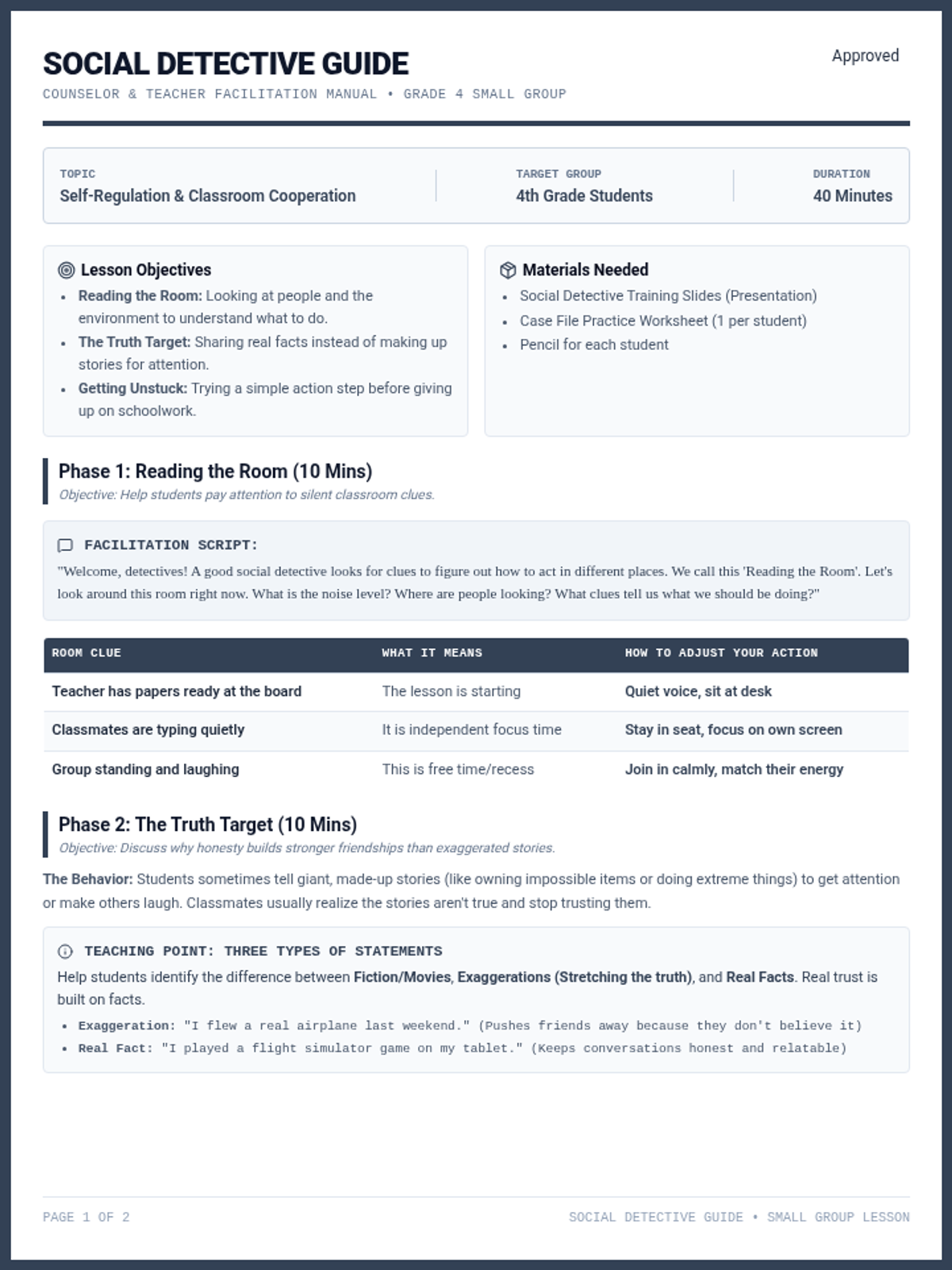
A simplified teacher facilitation guide for the Social Detective lesson. It uses realistic, grounded detective terms to address attention-seeking fibbing, learned helplessness, and reading the room without hyperactive gaming analogies.
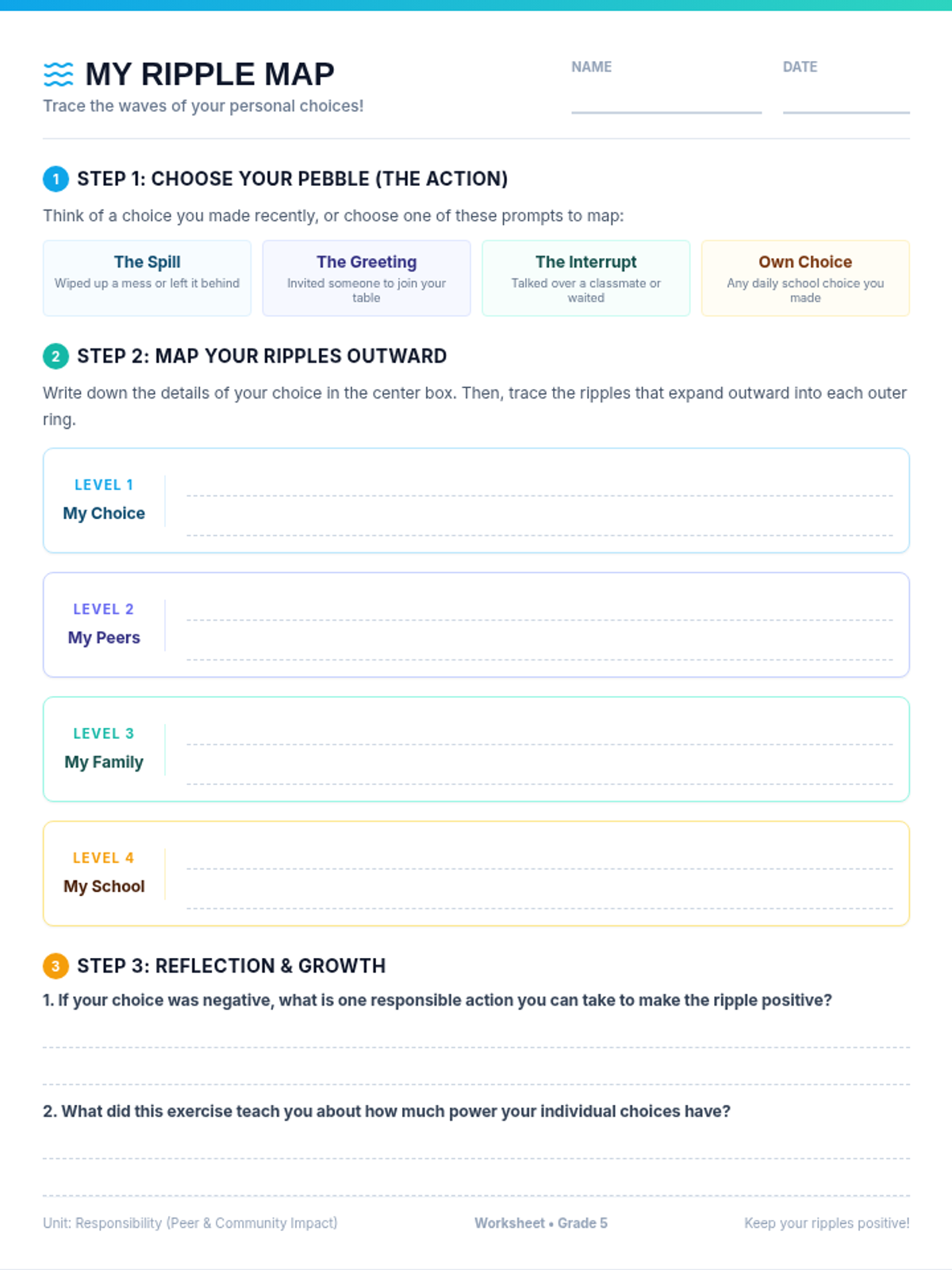
Student-facing individual reflection worksheet featuring a visual ripple mapping tool and text-based response areas to trace personal choice impacts.
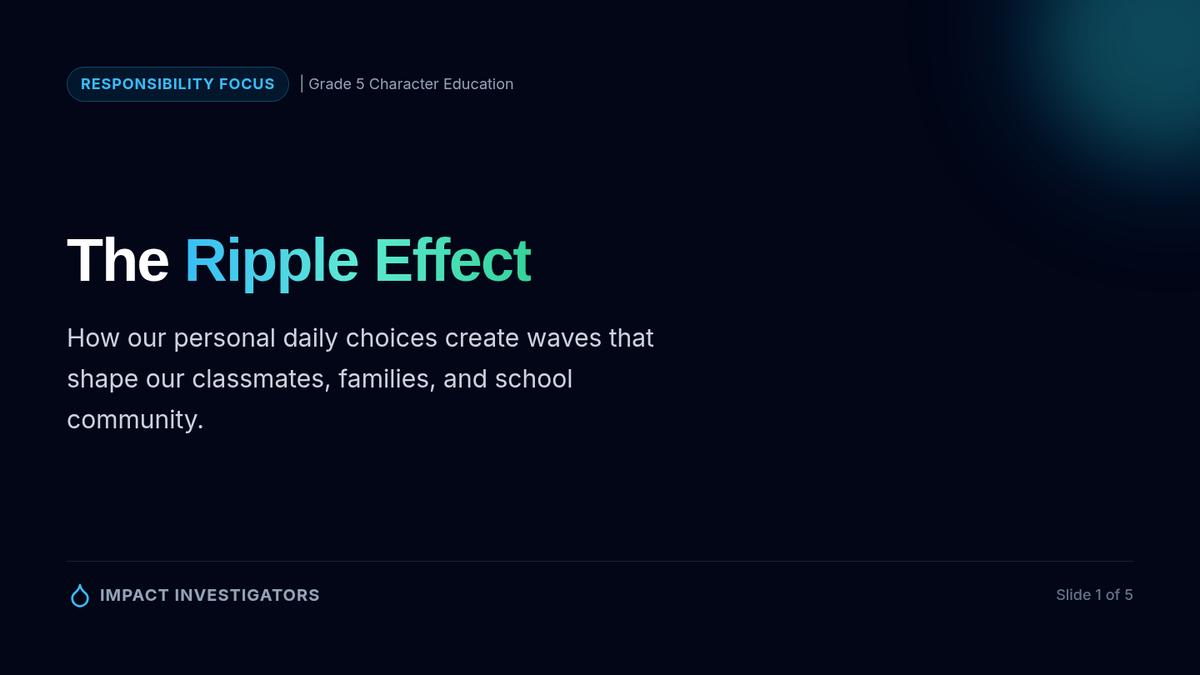
Interactive 5-slide presentation introducing the Ripple Effect model of responsibility, demonstrating how individual actions ripple out to peers, family, and the school community.
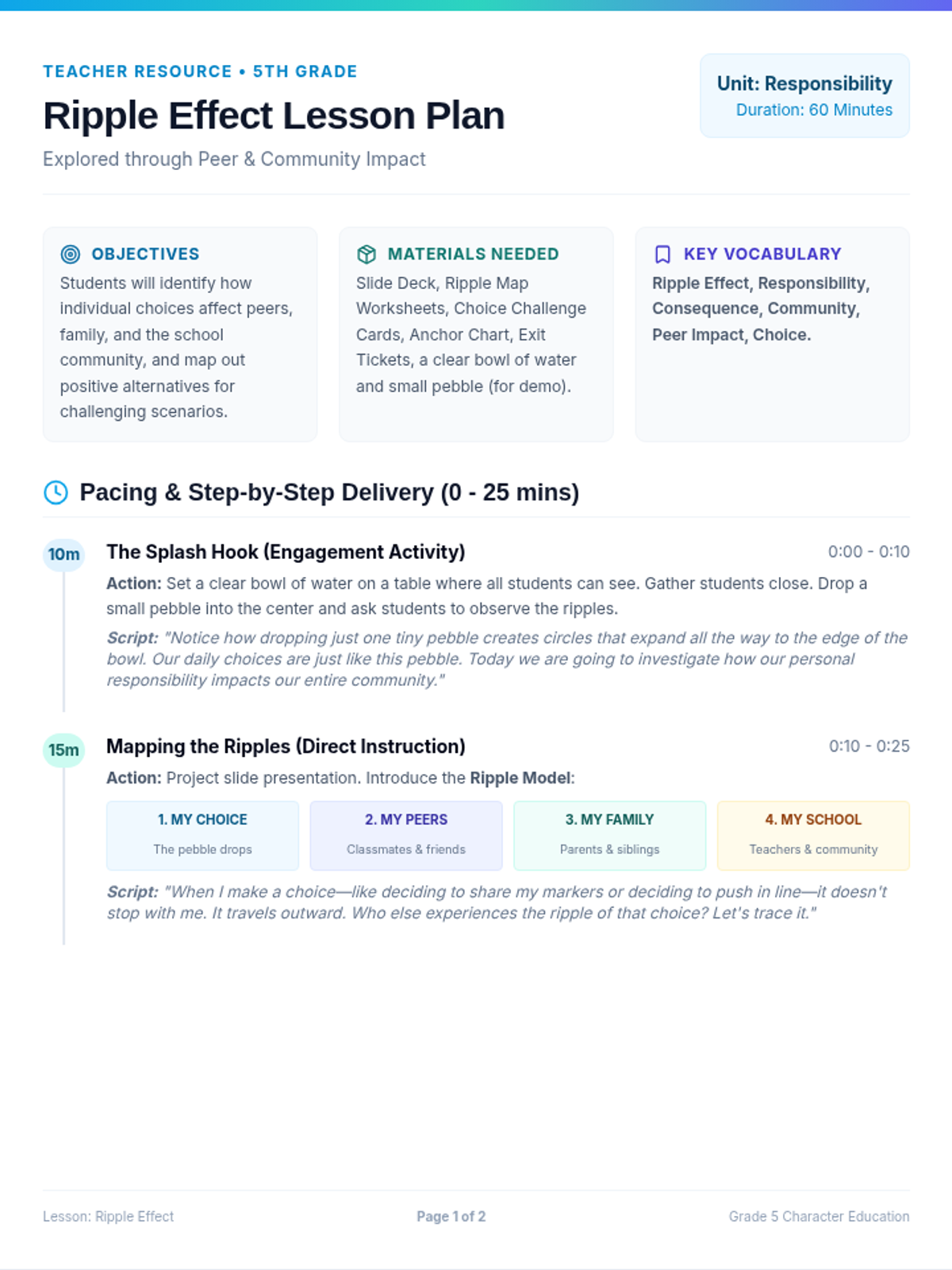
Detailed 2-page teacher facilitation guide and lesson plan outlining the 60-minute session on responsibility. Includes pacing, teaching scripts, material checklists, key questions, and differentiation strategies.
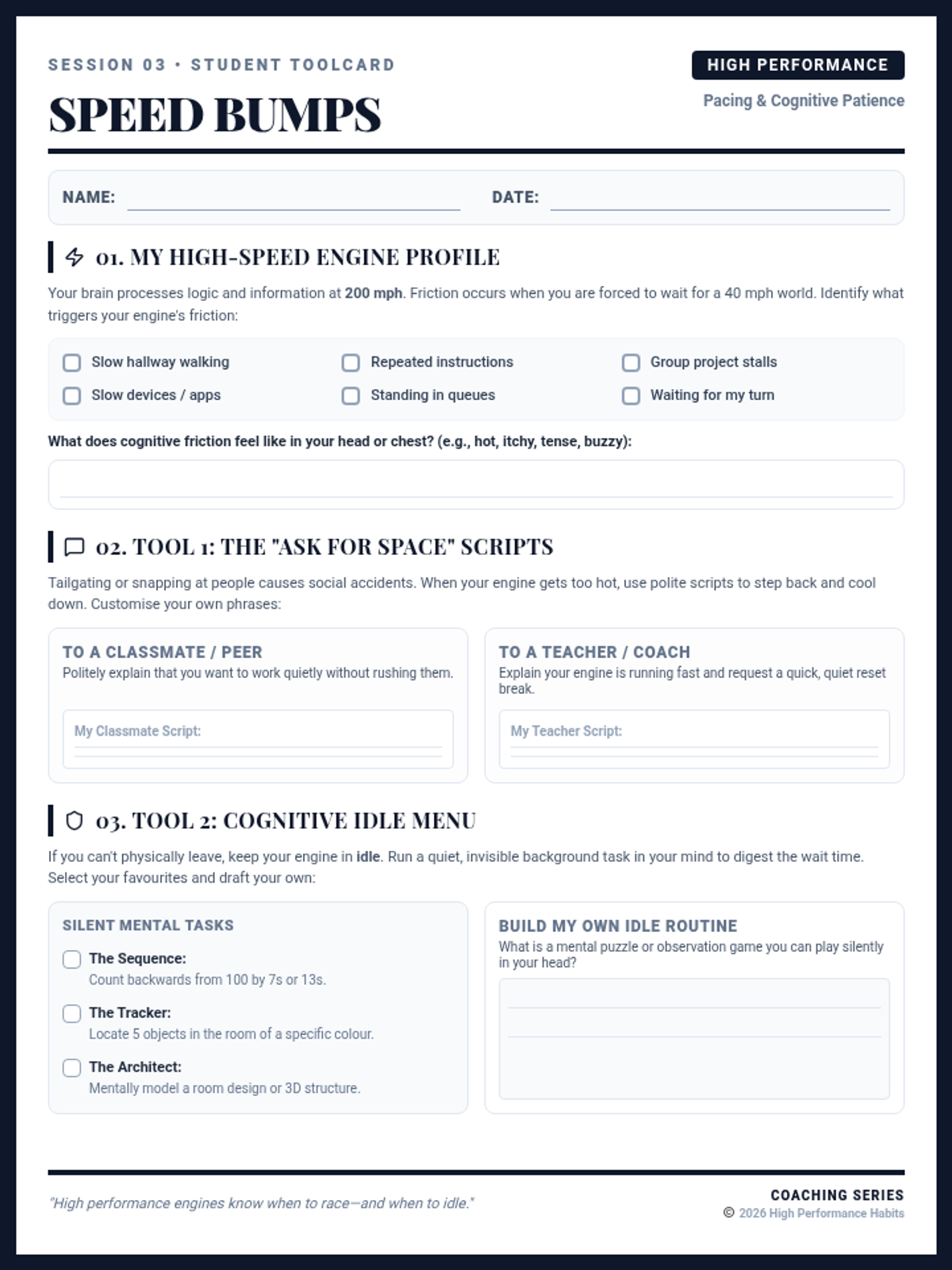
A single-page printable student worksheet and toolcard. It helps students map their cognitive friction triggers, draft polite space-asking scripts, and choose silent background cognitive idle tasks.
A 9-slide presentation for Lesson 3, exploring how to handle frustration when others move too slowly. It validates the student's high-speed brain while providing strategies like 'Asking for Space' and 'Cognitive Idle' to manage interpersonal friction.
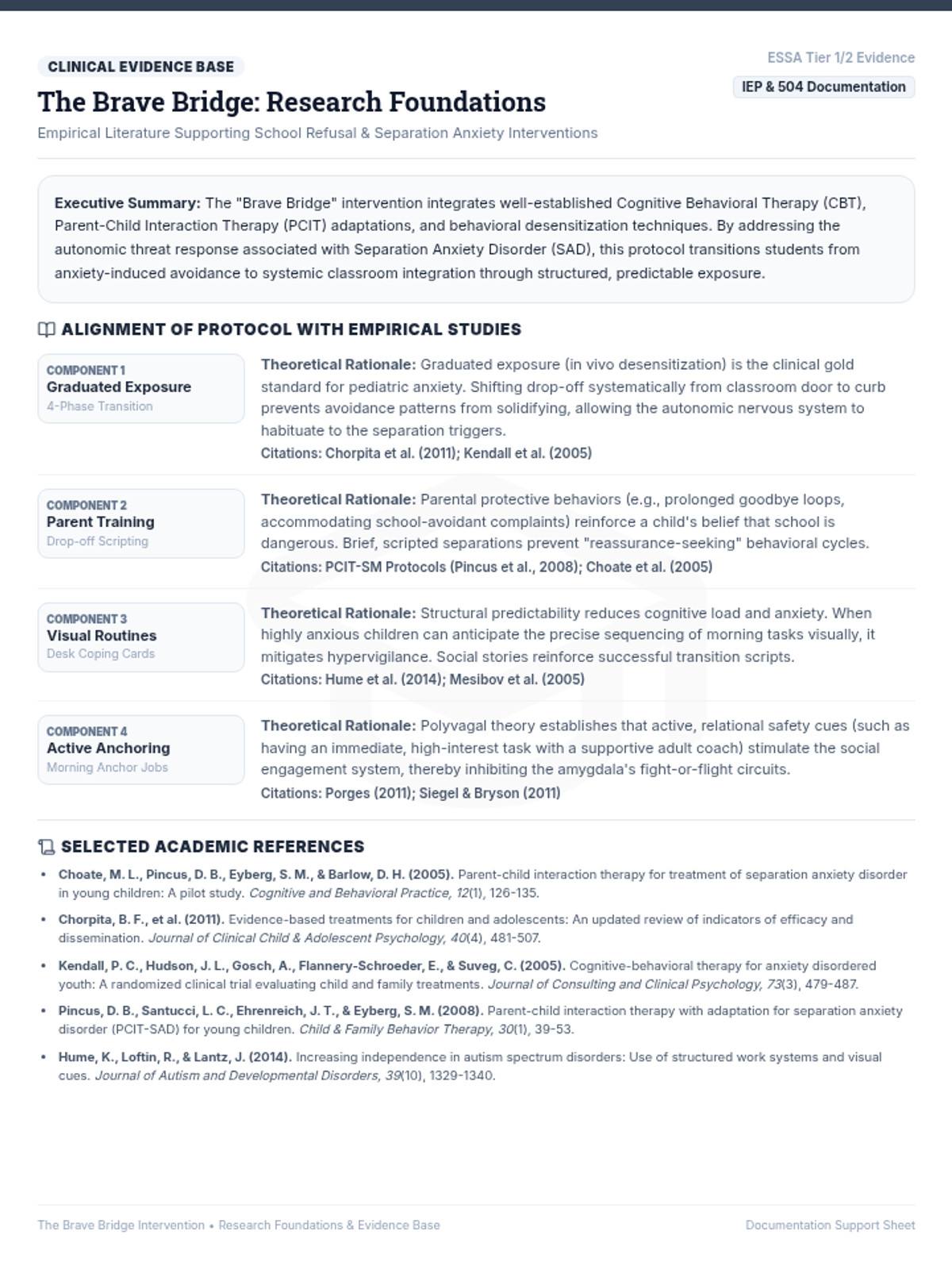
A 1-page professional reference sheet and research brief for school psychologists, counselors, and IEP/504 teams. Outlines the scientific foundations of the Brave Bridge framework, including citations on graduated exposure, behavioral parent training, and visual predictability.