A navy-blue themed slide deck exploring family diversity, highlighting personalities, interests, and the values of love and respect. Includes discussion prompts and insights on the benefits of complementary strengths.
A comprehensive 6-slide deck for a "Pairs Compare" activity, including a new summary 'Roadmap' slide that previews all steps before diving into individual detailed phases.
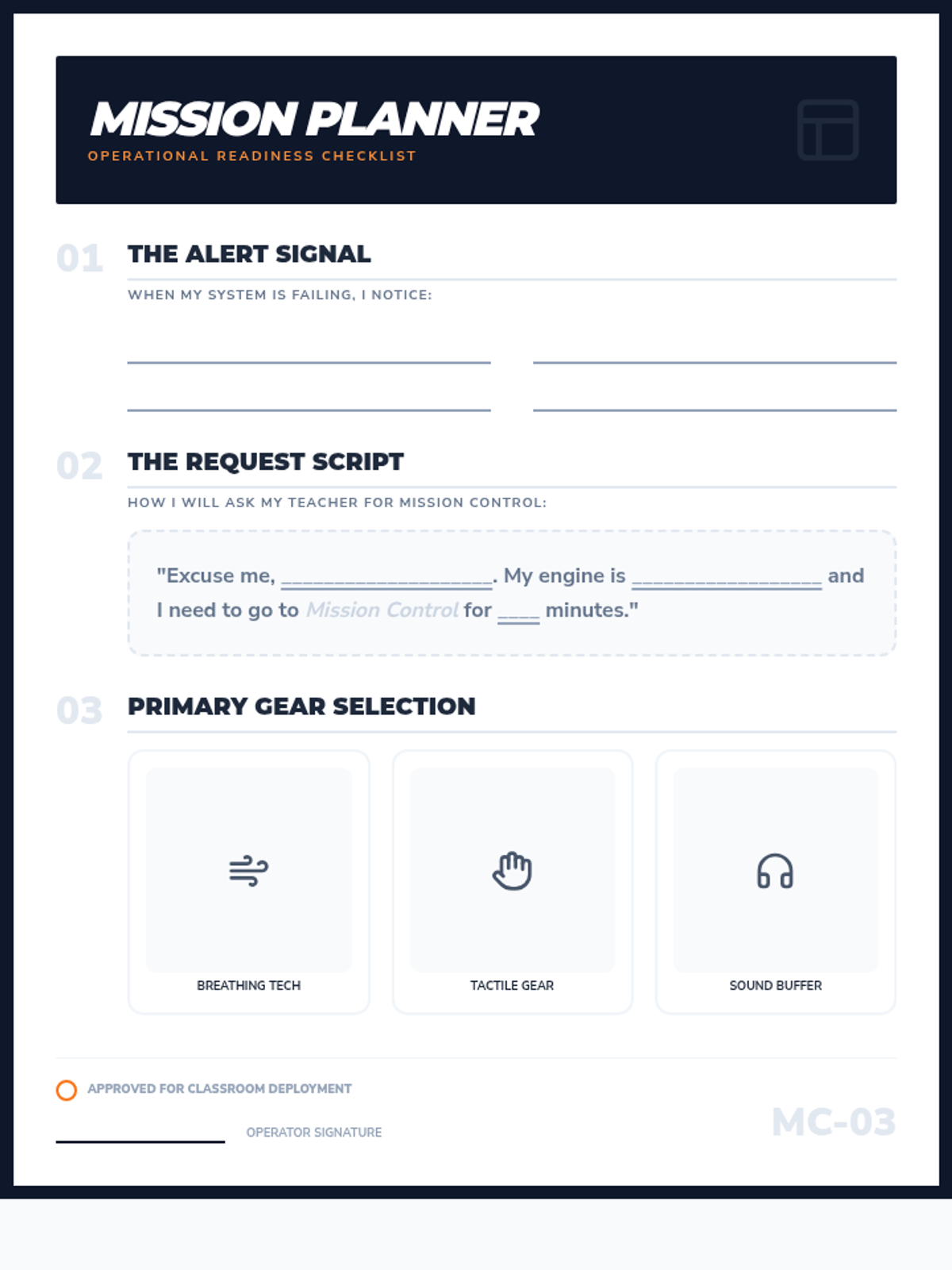
A final planning worksheet for students to script their request for the calm-down corner and finalize their emotional regulation tool selection. Revised for single-page layout and improved contrast.
Slide deck for the final session of Mission Calm, focusing on role-playing scenarios and the protocol for requesting, using, and returning from the calm-down corner.
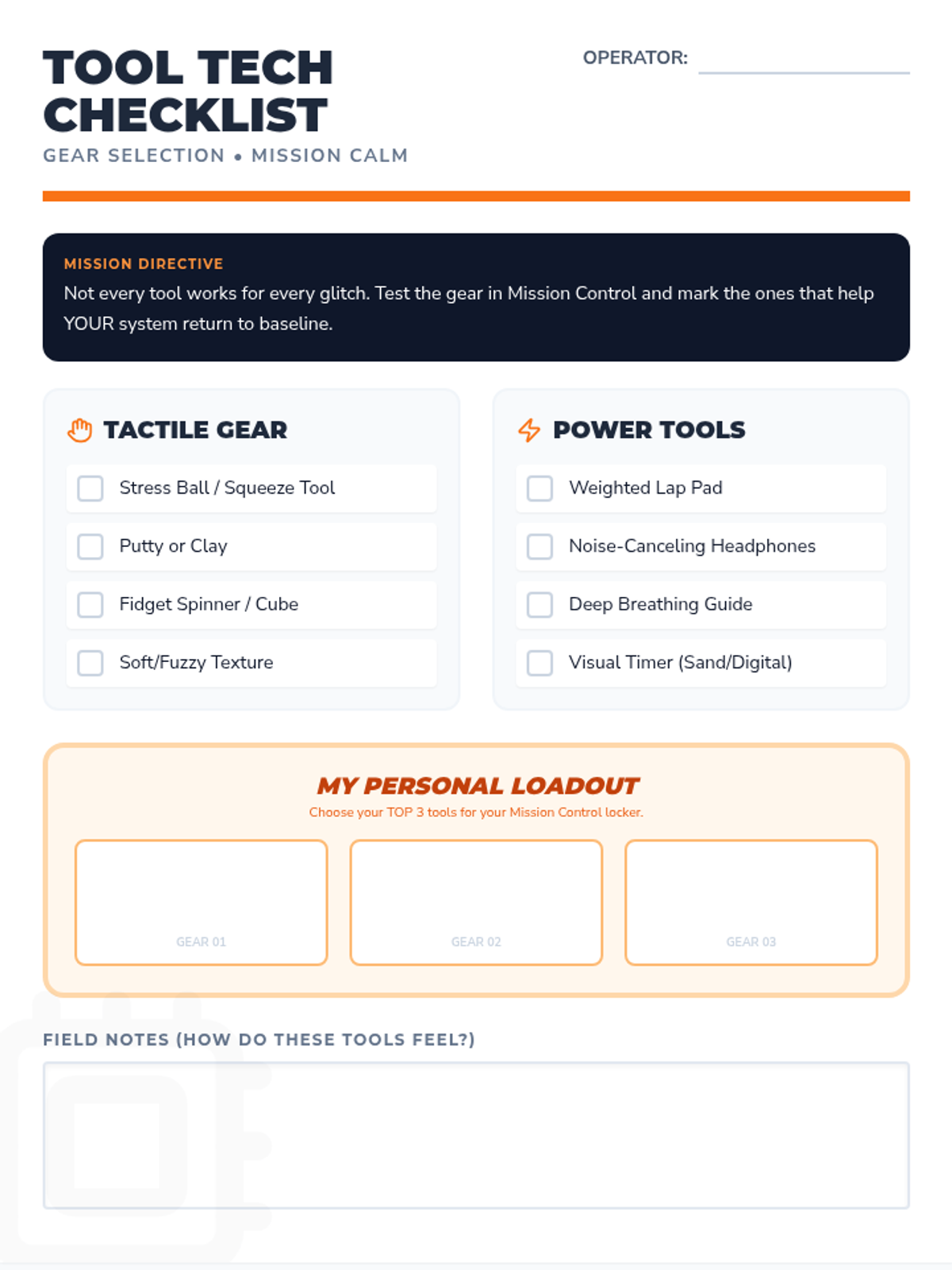
A checklist for students to test and evaluate different calm-down corner tools, selecting their 'top 3' personal favorite strategies for emotional regulation. Revised for single-page layout and improved contrast.
Slide deck for Session 2 of the Mission Calm unit, introducing students to the physical tools available in the Calm-Down Corner and their specific regulatory functions.
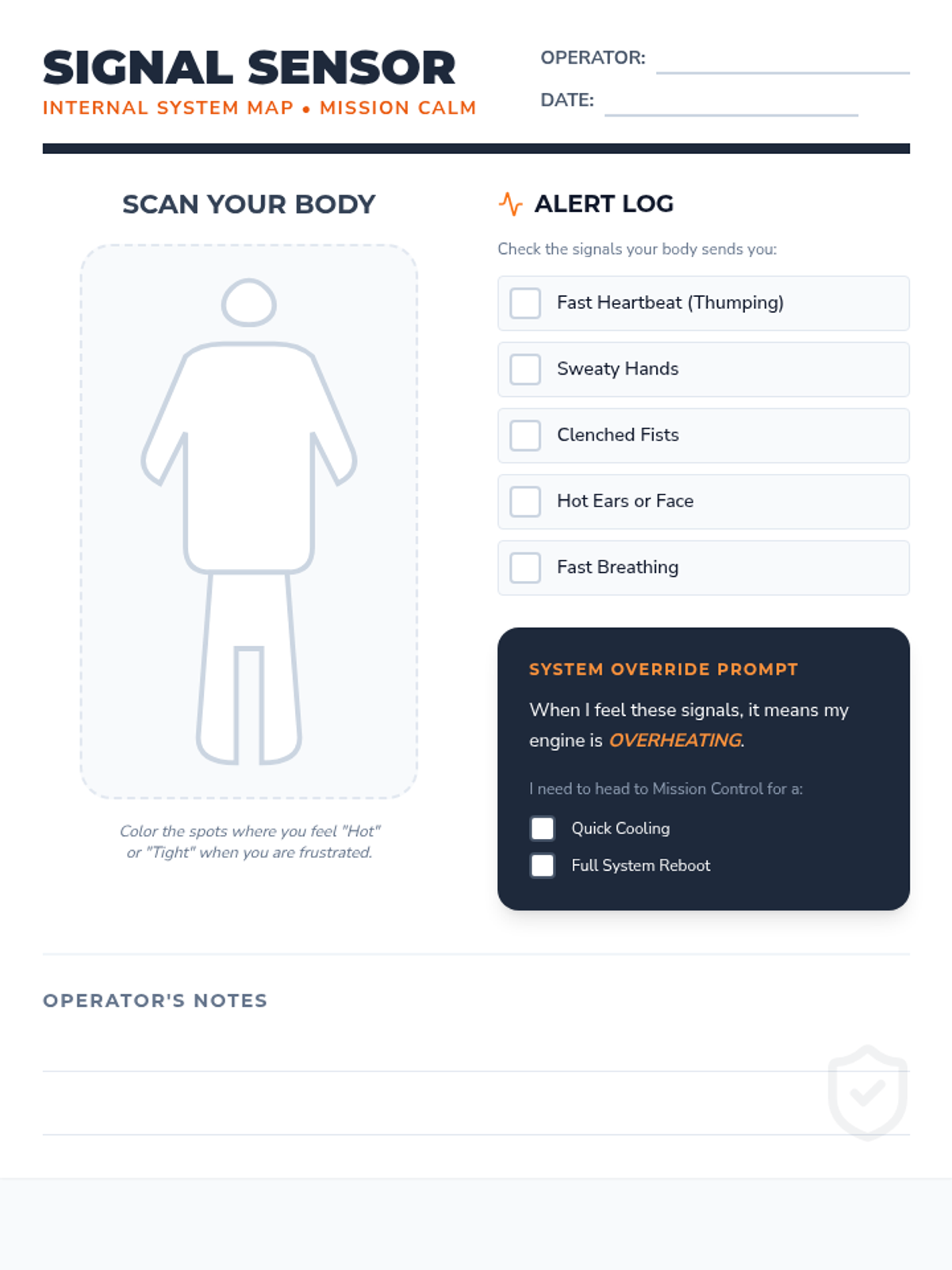
A student-facing body-mapping worksheet where students identify and color their physical 'alarm signals' during emotional escalation. Revised for improved silhouette and checkbox visibility.
Visual presentation for the first session of the Mission Calm unit, teaching students to identify physical emotional signals like increased heart rate and muscle tension. Revised Slide 5 padding.
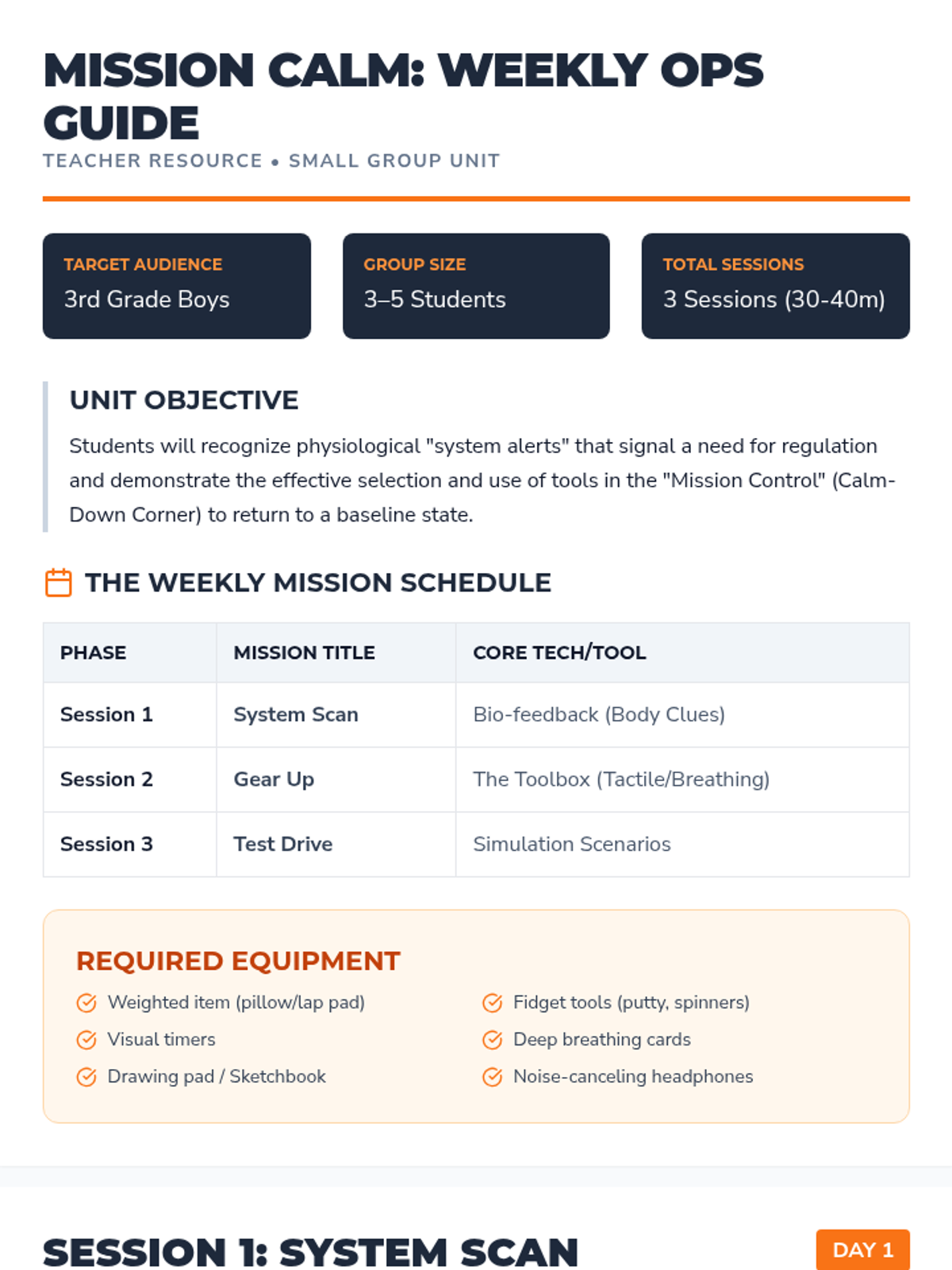
A comprehensive weekly teacher guide for a small group unit on emotion regulation, featuring three detailed session plans with a 'Mission Control' theme. Revised to fix page break issues.
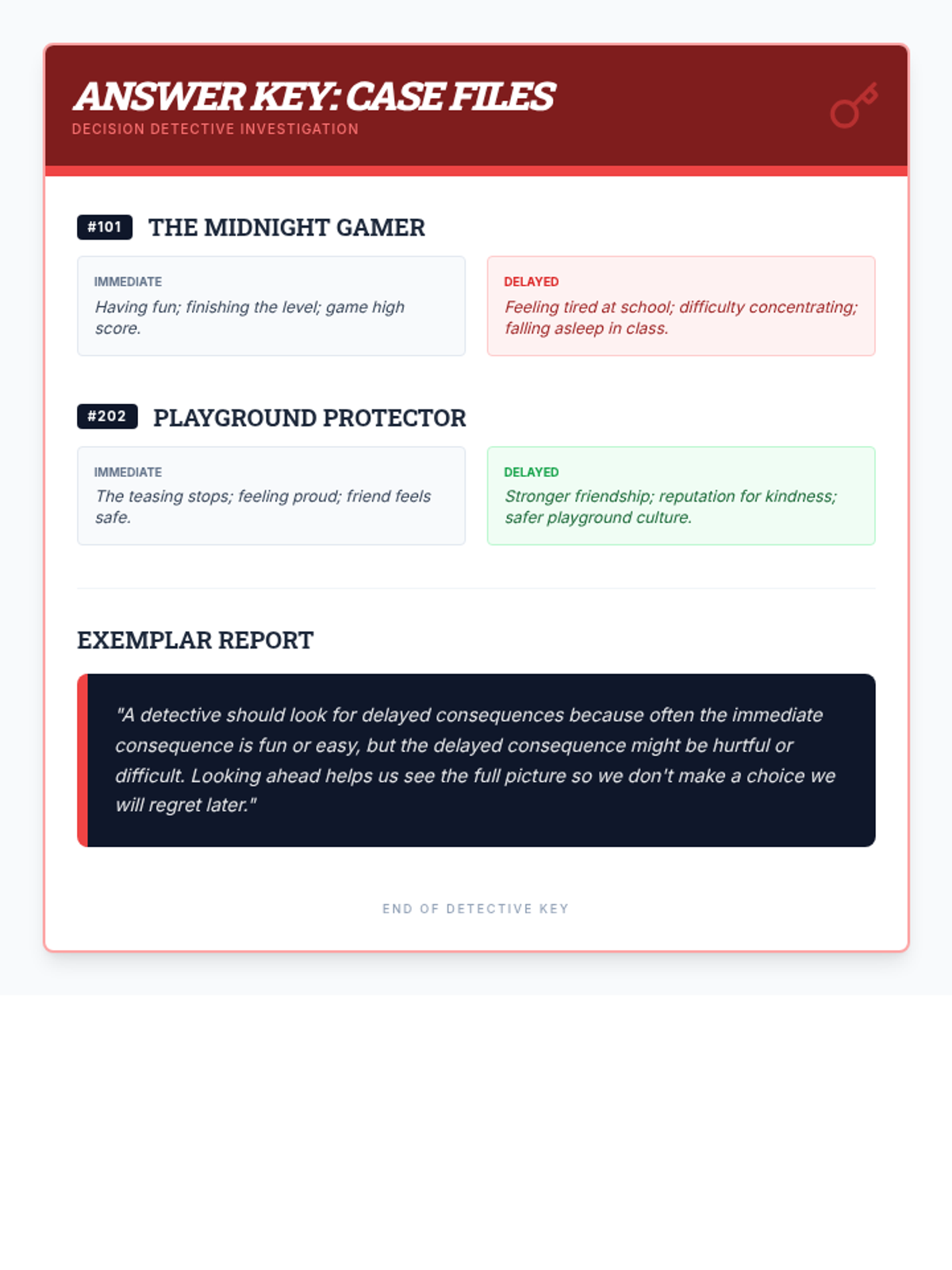
An answer key for the Consequence Clues Worksheet, providing exemplar answers for the case studies and the reflection question to assist teachers in grading or guided discussion.
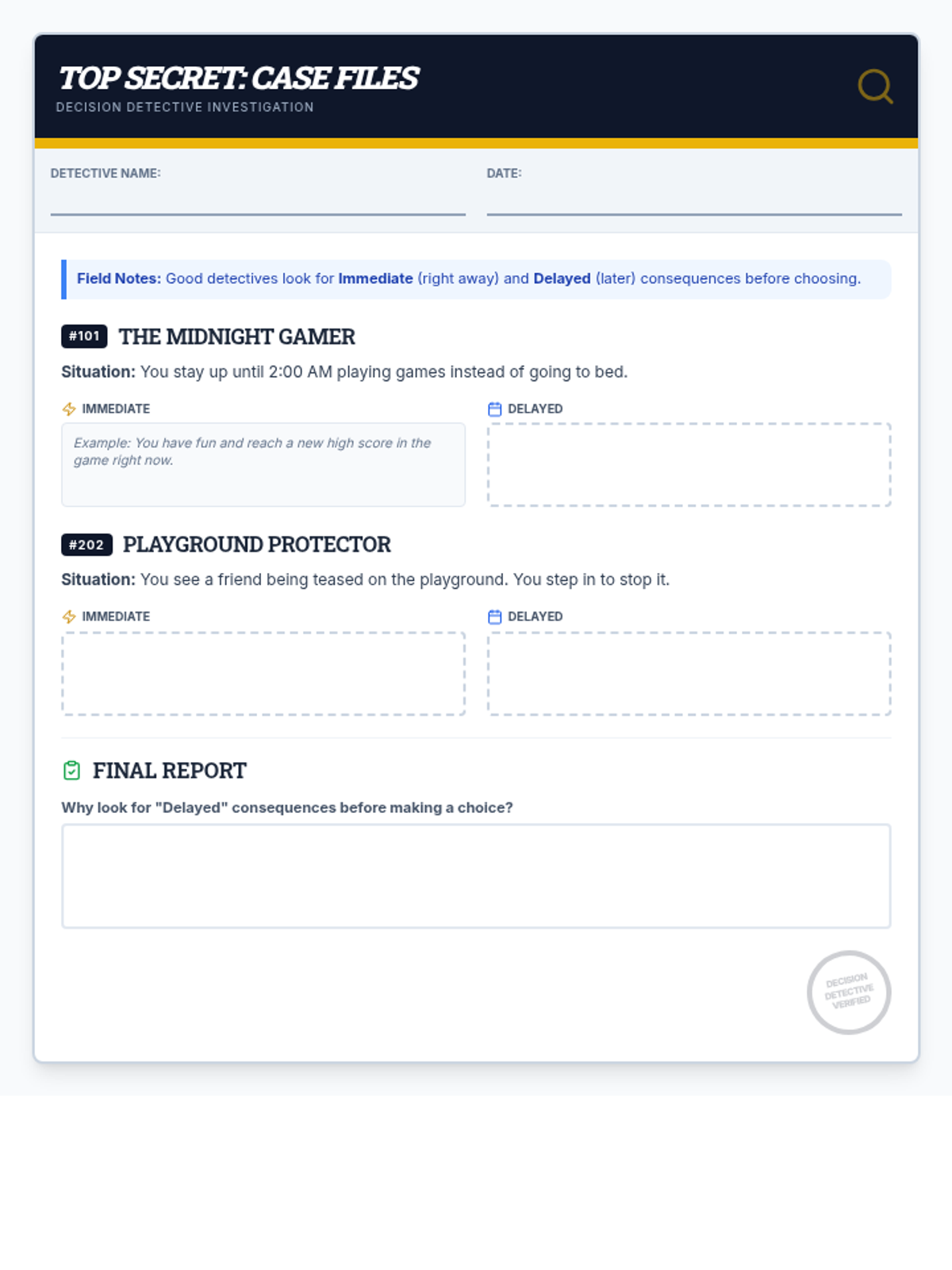
A student worksheet designed as a "Case File" for identifying consequences. Includes scenario analysis for immediate vs. delayed consequences and a reflection section for critical thinking.
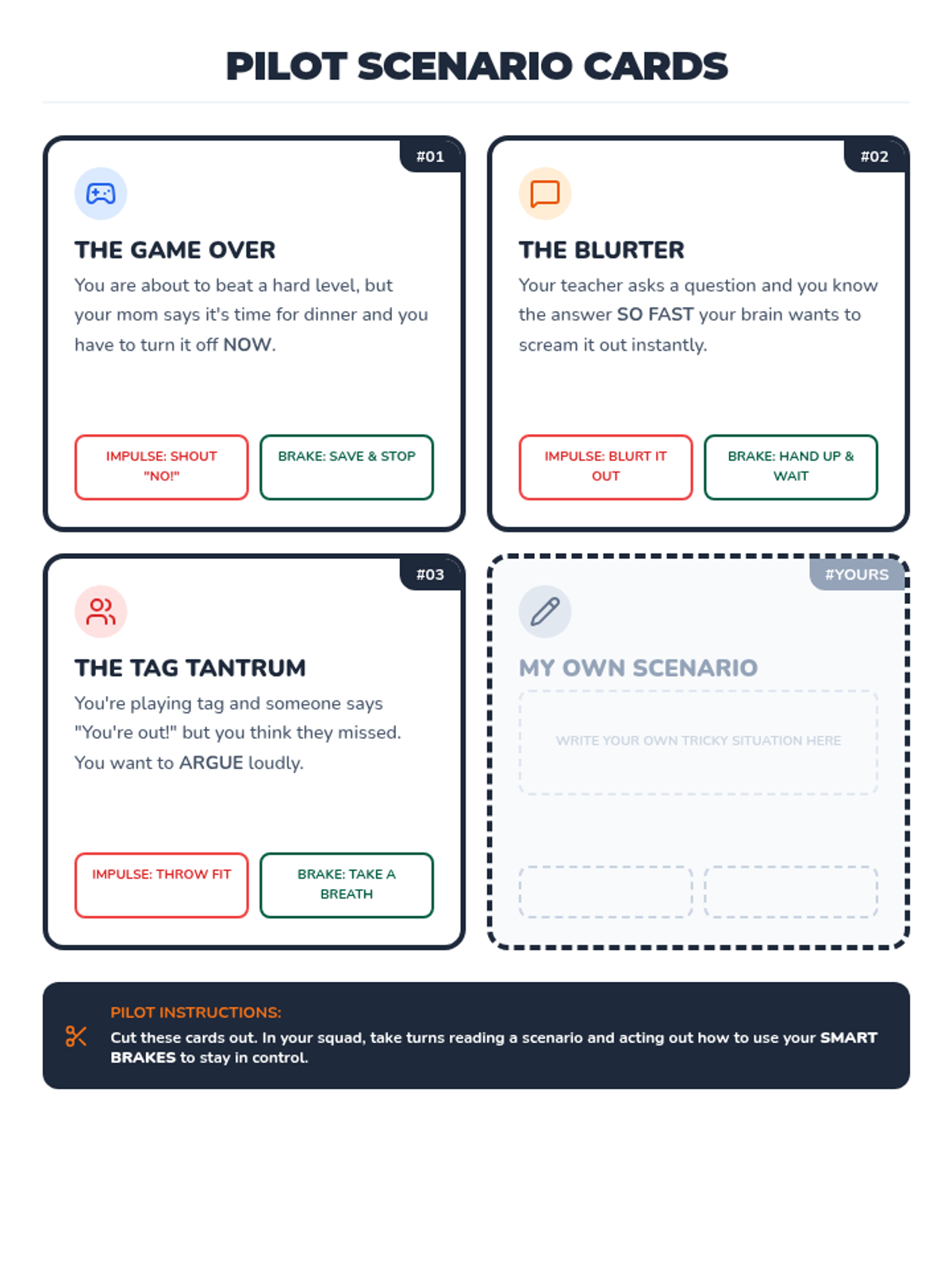
Relatable scenario cards for third-grade boys, covering situations like video games, classroom participation, and sports, to be used for group discussion and impulse control practice.
A high-impact slide deck for a lesson on identifying consequences. Features a detective theme, visual definitions of immediate vs. delayed consequences, and a mini-case study for class discussion.
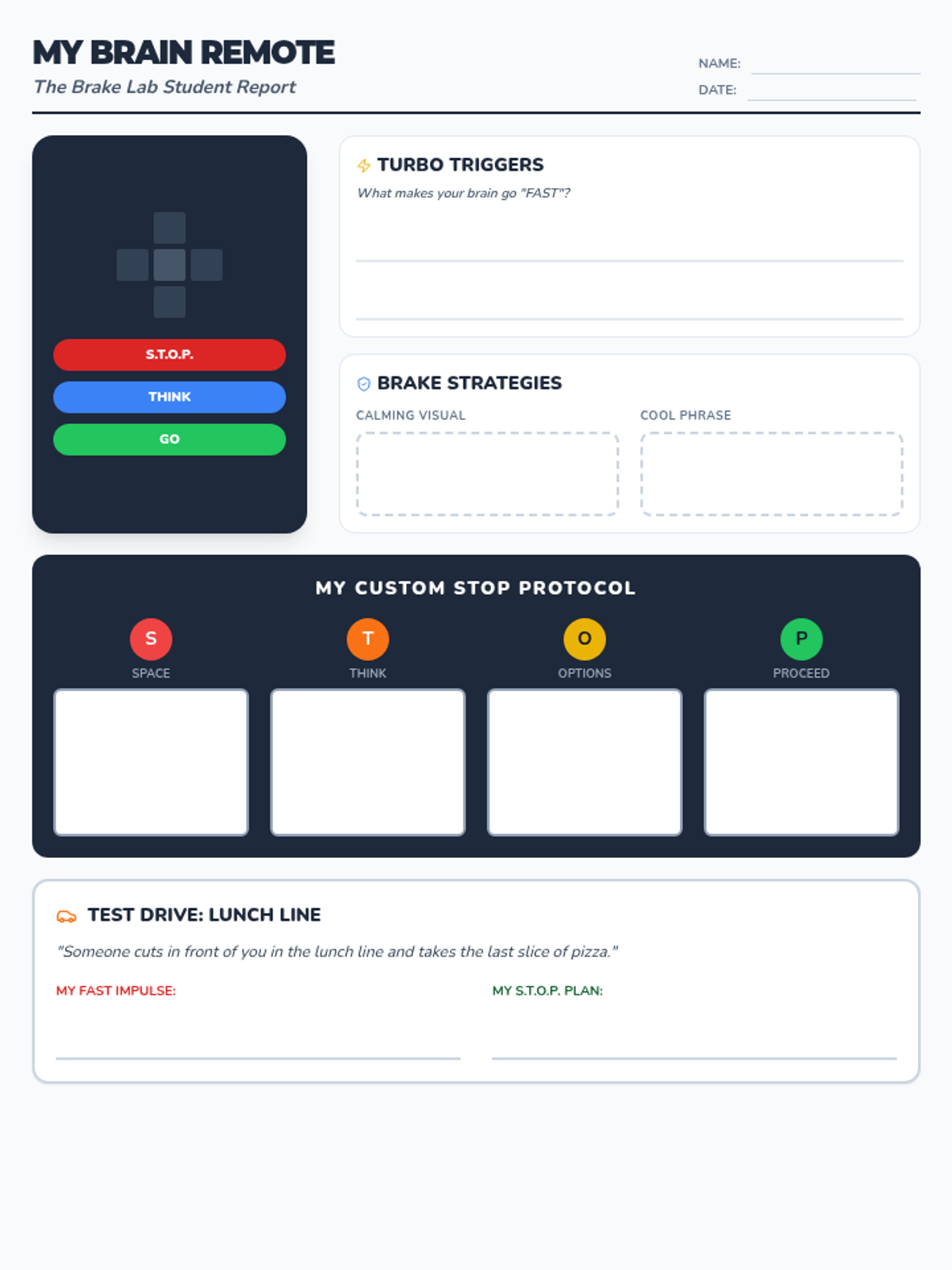
Interactive worksheet styled as a 'Brain Remote Control' where students identify personal triggers, draw calming strategies, and practice applying the STOP protocol to a lunchroom scenario.
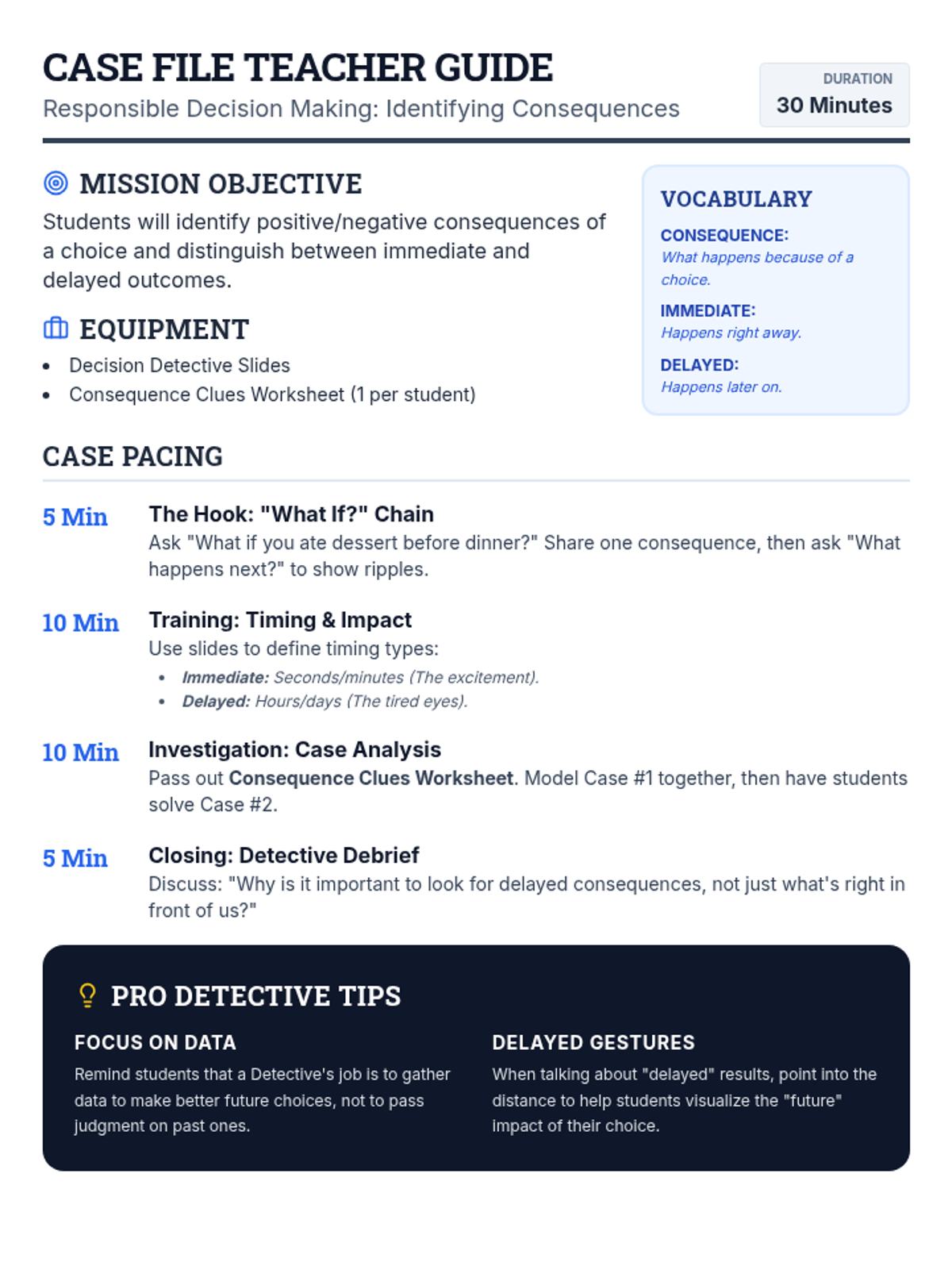
A teacher facilitation guide for a 30-minute classroom lesson on identifying consequences. Includes mission objectives, key vocabulary, a timed pacing guide, and pedagogical tips.
Dynamic presentation slides with high-contrast visuals, introducing the 'Amygdala' vs 'Prefrontal Cortex' and the 'STOP' impulse control strategy through a 'Remote Control' theme.
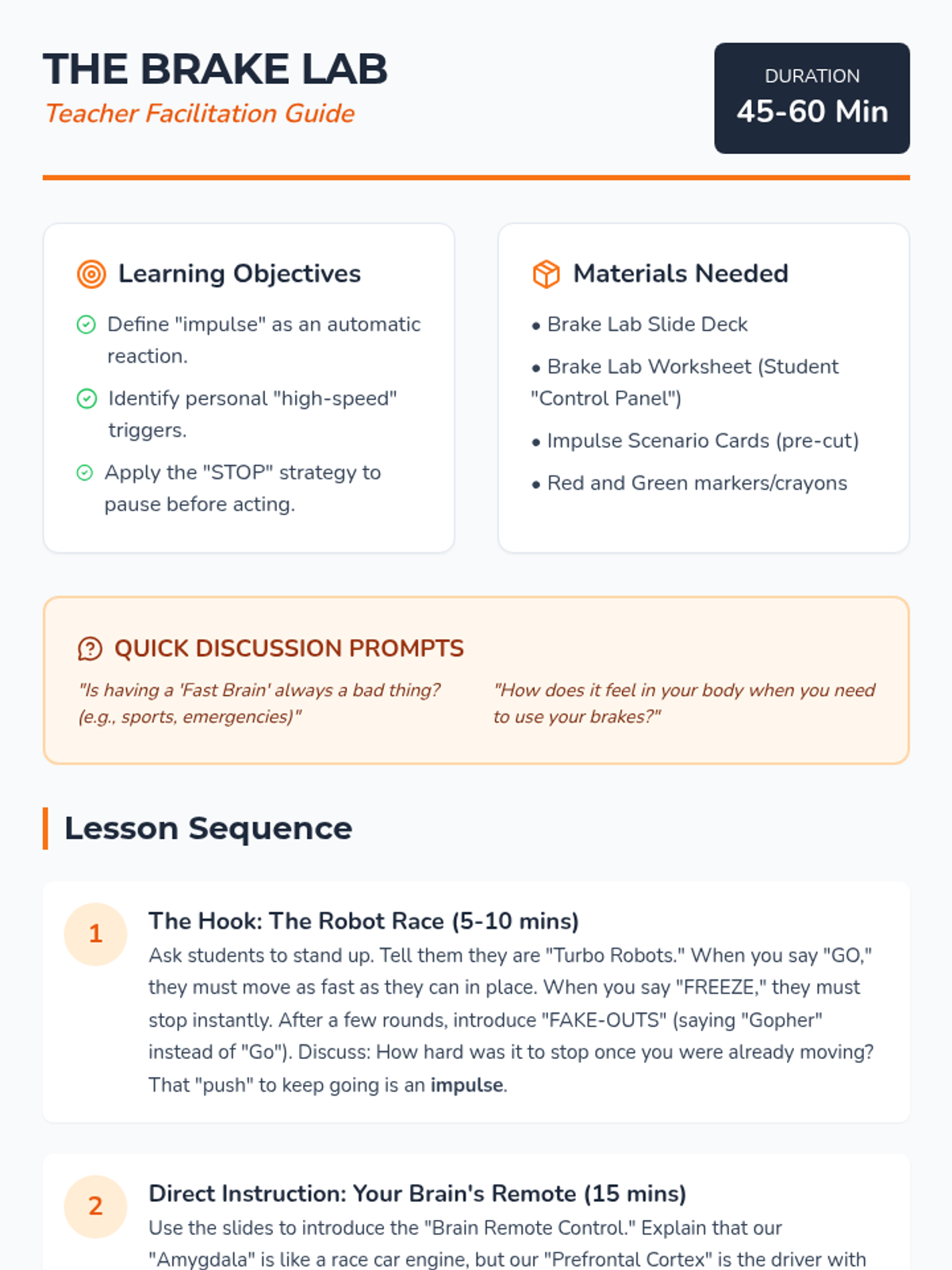
Detailed teacher facilitation guide for the 'Brake Lab' lesson, featuring learning objectives, a high-energy 'Robot Race' hook, and step-by-step instructional flow for teaching impulse control to third graders.
A visual slide deck designed for a 2nd-grade student to accompany the 'Tangled Truths' lesson, explaining the difference between exaggerating and hiding the truth through engaging graphics and large text.
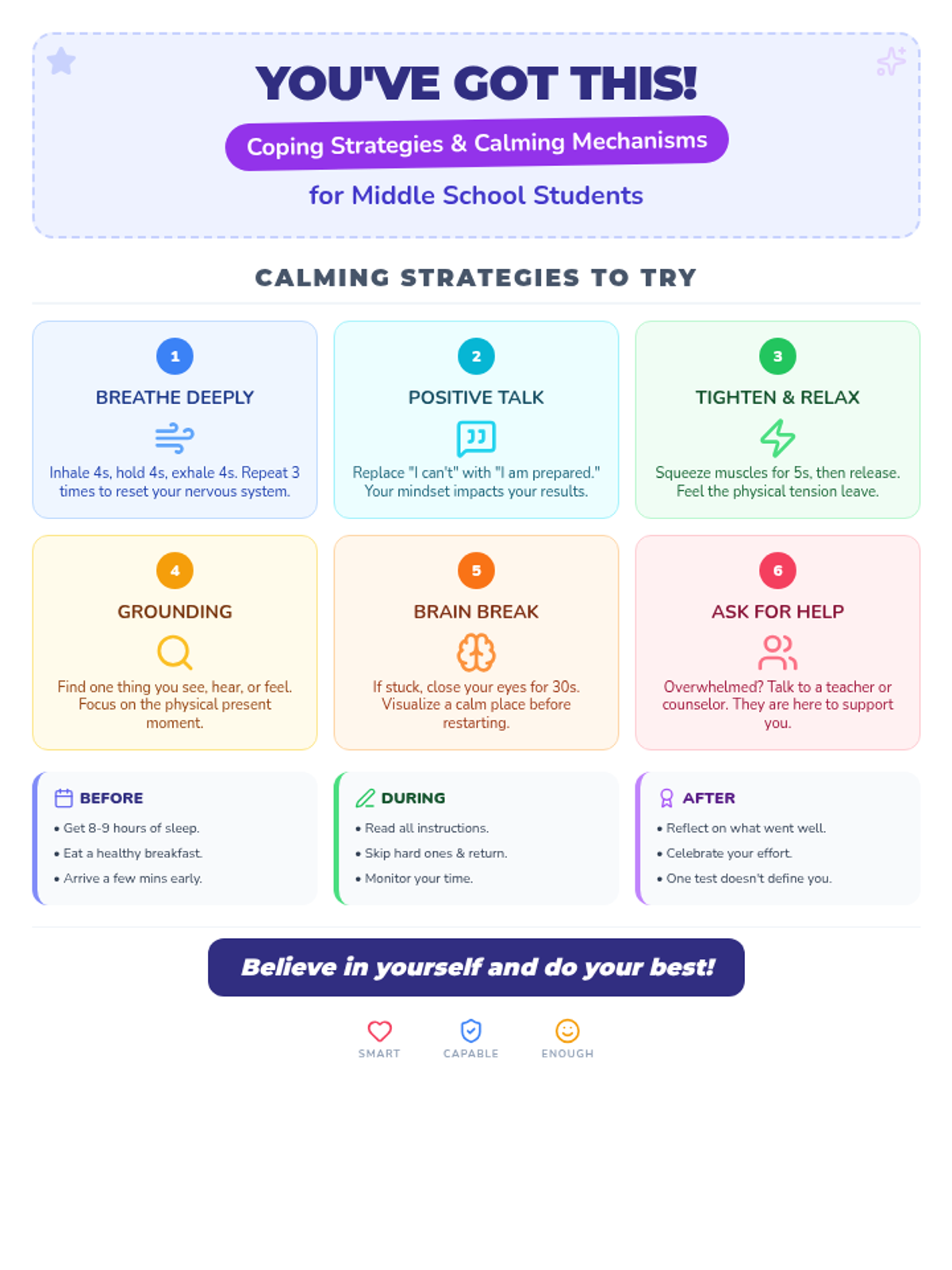
A compact, single-page infographic for middle school students featuring test anxiety coping strategies and helpful tips for before, during, and after exams.
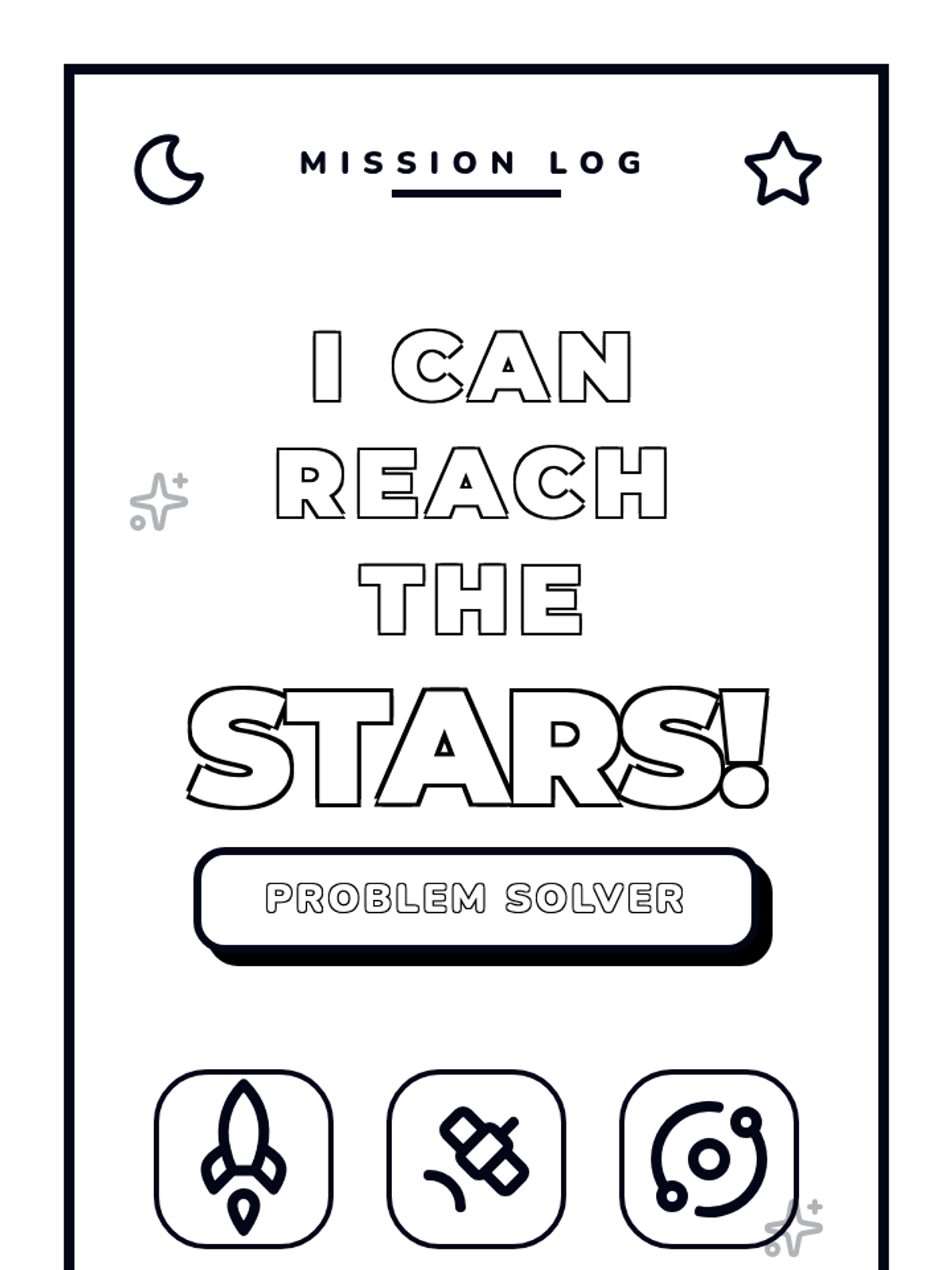
A space-themed positive affirmation coloring page for 3rd and 4th graders, featuring the mantra 'I Can Reach the Stars' with clear outlines for coloring.
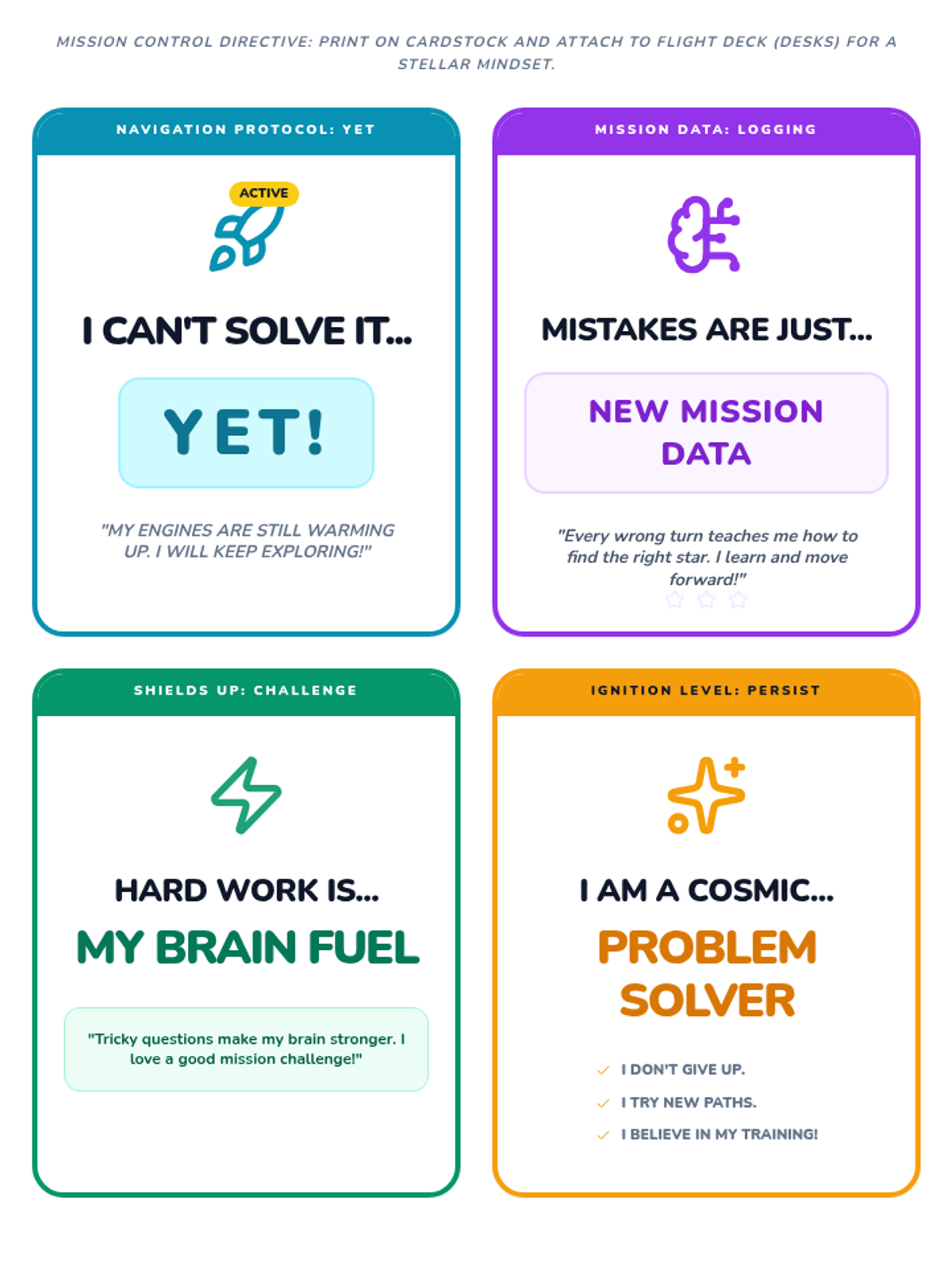
Space-themed growth mindset cards for students, focusing on the 'yet' mindset, learning from mistakes, and seeing challenges as 'brain fuel' during the NJSLA.
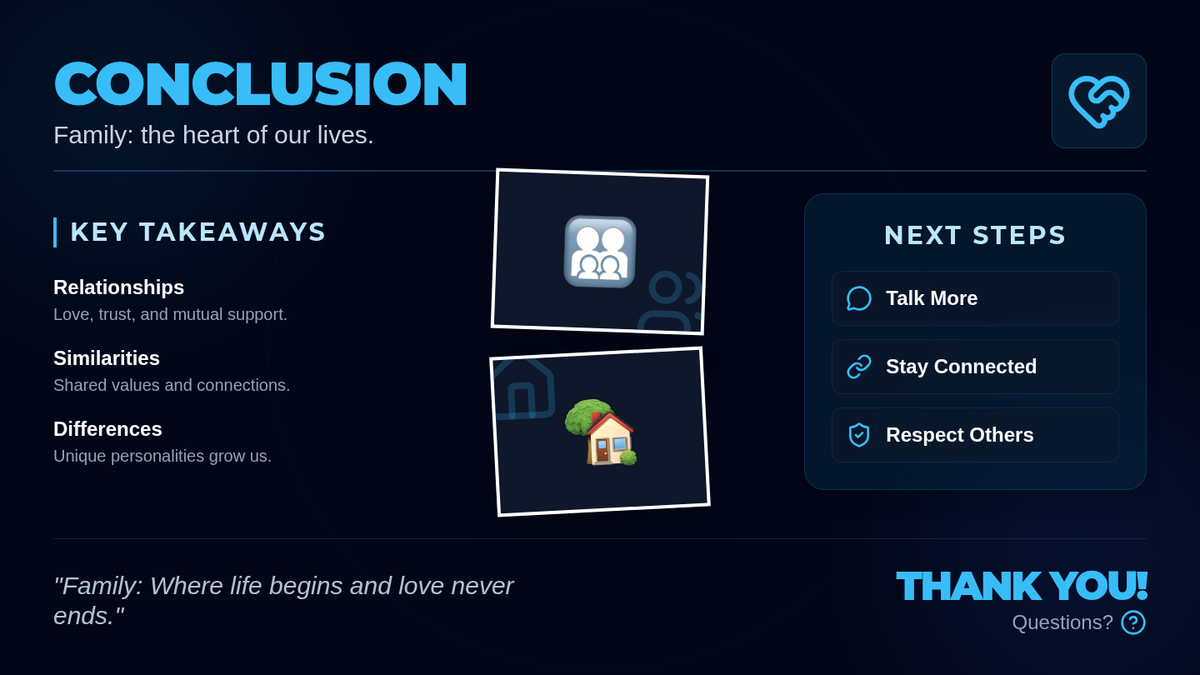
A concluding slide with a professional navy blue and sky blue theme, featuring Montserrat and Poppins fonts and stylized family-themed visuals. High contrast and polished layout.