A visual slide deck for Grade 1-2 students exploring 'Equality' vs 'Equity' using the band-aid analogy and school-based examples like headphones and extra time. Includes discussion prompts on classroom diversity.
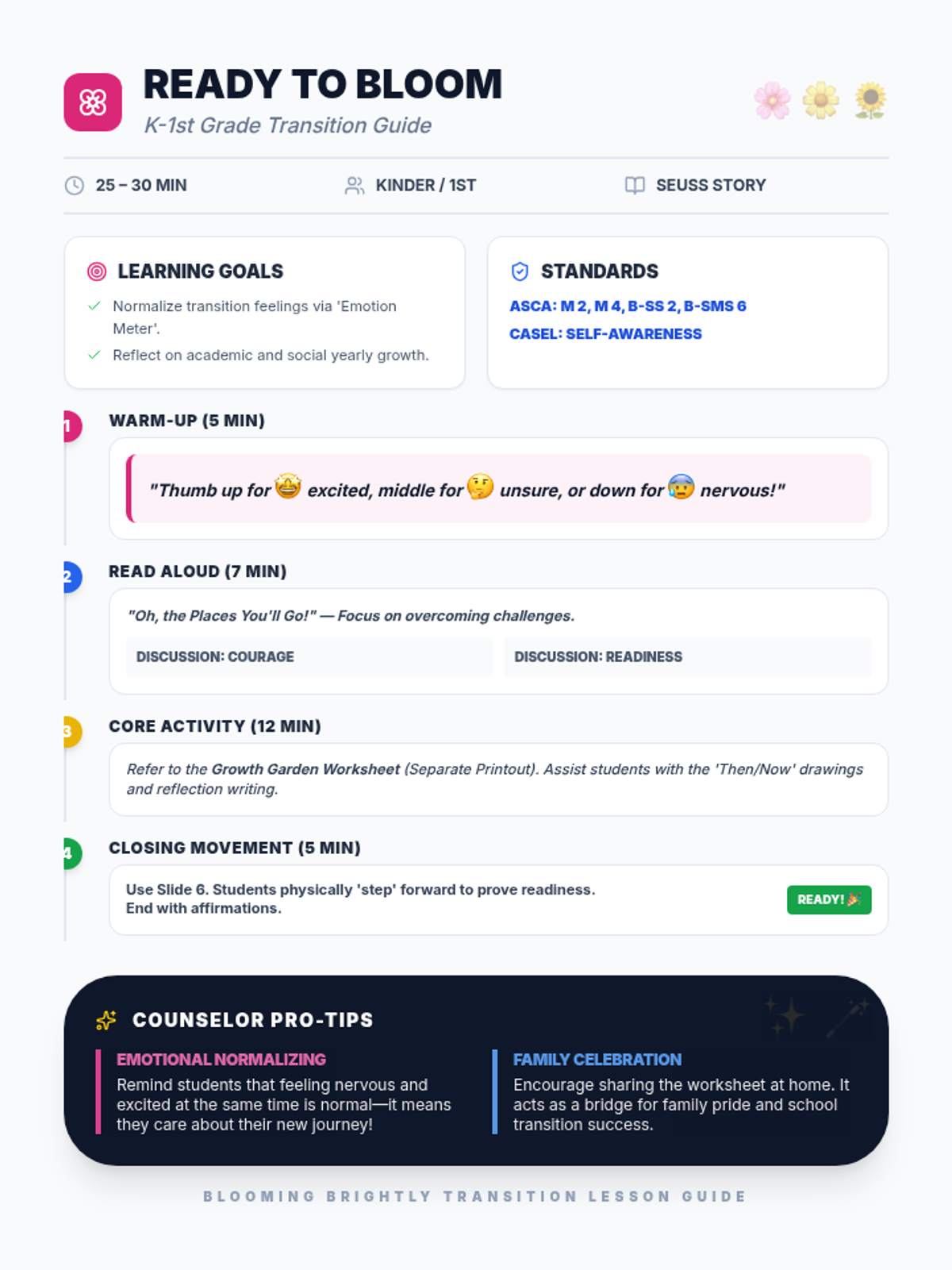
A comprehensive teacher facilitation guide for the Blooming Brightly lesson, including counselor scripts, differentiation tips, and alignment with ASCA standards.
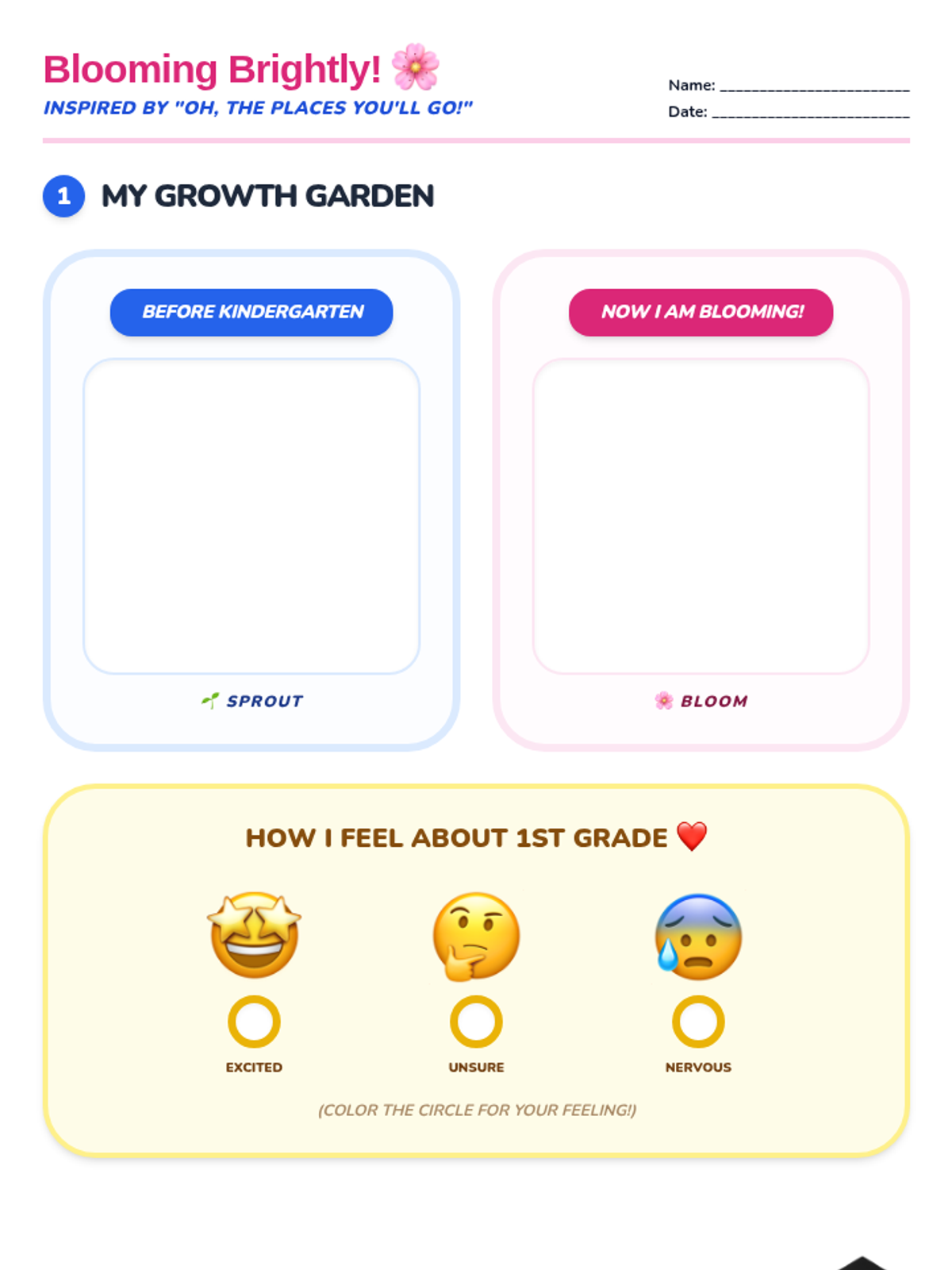
A two-page student worksheet featuring a "Then and Now" drawing activity and a "Kindergarten Graduate Reflection" section with tall primary writing lines for early learners.
A colorful, visual-heavy slide deck for Kindergarten and 1st grade students reflecting on their growth and feelings about moving to the next grade level.
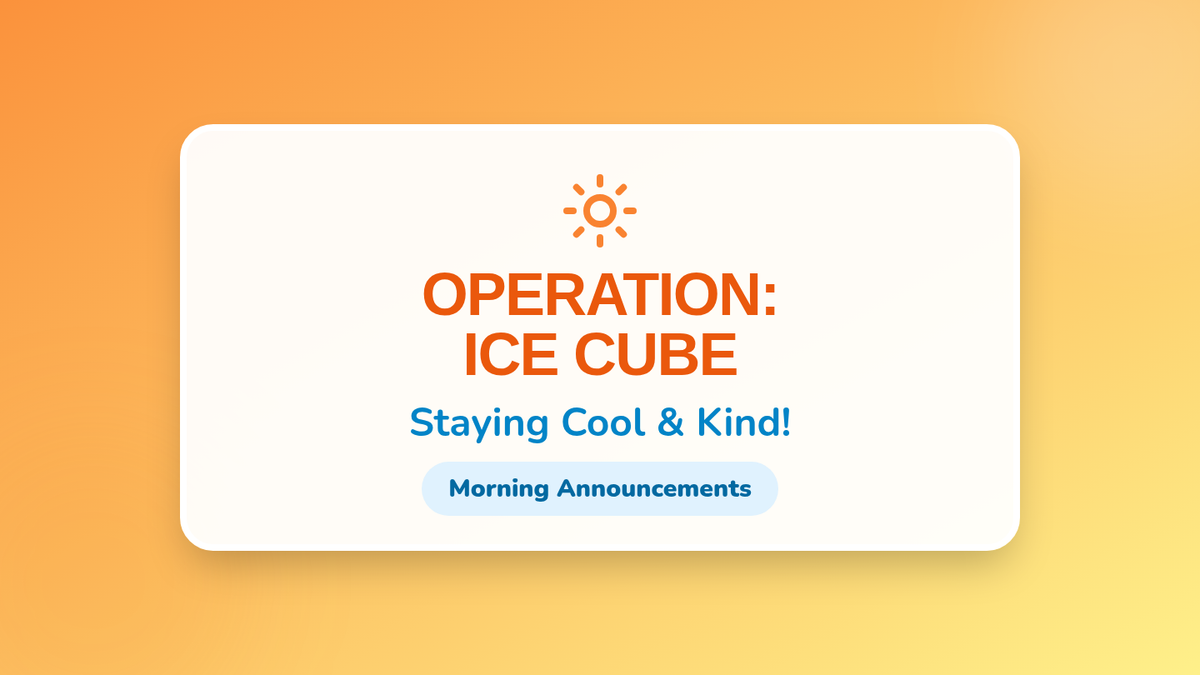
A concise 3-slide morning announcement presentation for K-4 students about staying cool. Covers hydration, shade, identifying 'Heat Grumpiness,' and using coping tools like breathing and asking for help. Designed for informational delivery without interactive prompts.
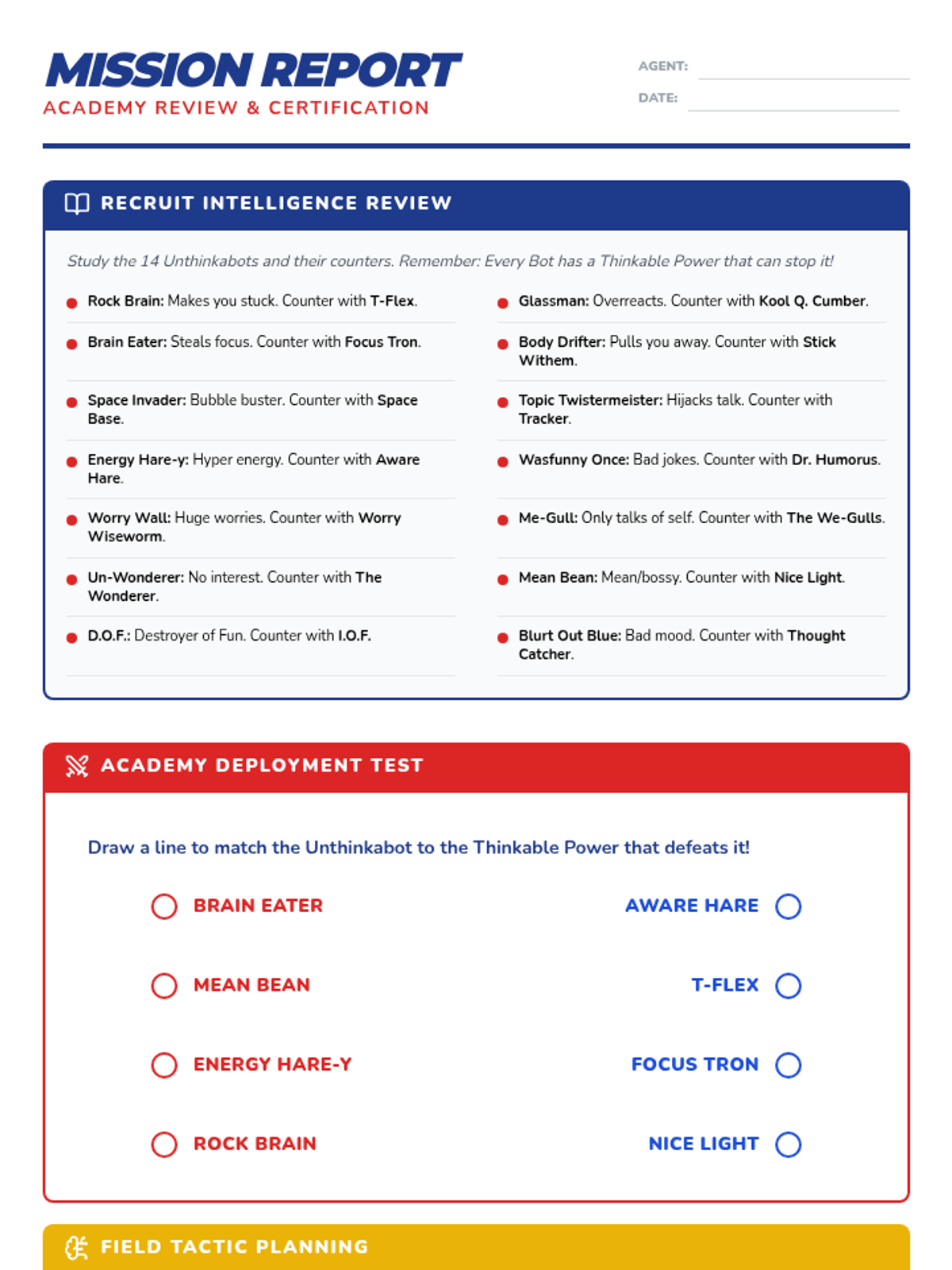
A 2-page Academy Mission Report worksheet for 2nd graders, including an 'Intel Review' summary of all 14 character sets and practical matching and writing exercises to test student knowledge. Optimized layout with break-inside-avoid to prevent content splitting.
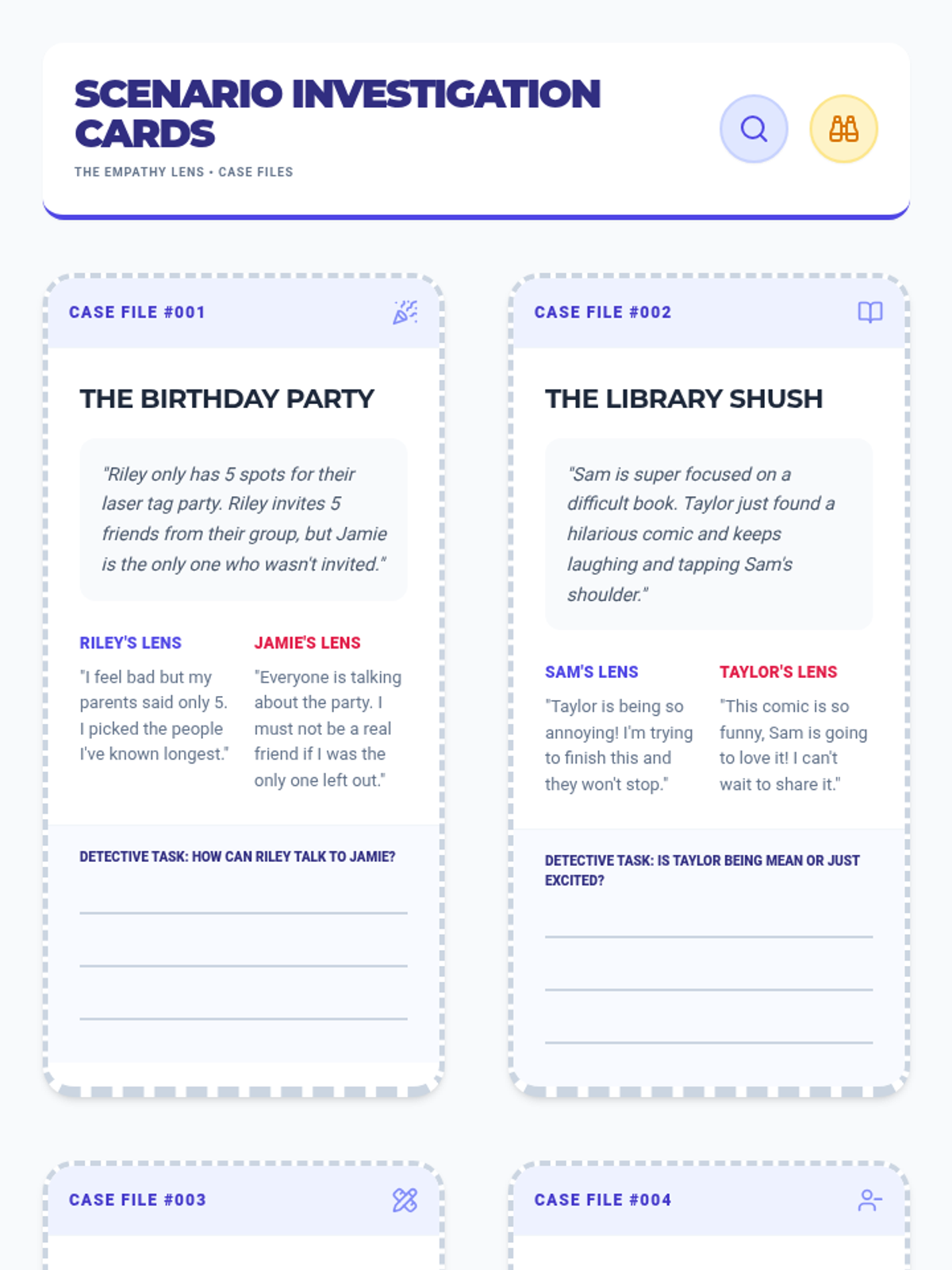
A set of 4 Case File investigation cards for 4th-grade perspective-taking practice. Each card presents a common school scenario, the conflicting thoughts of two characters, and a 'Detective Task' prompt to encourage empathy and problem-solving.
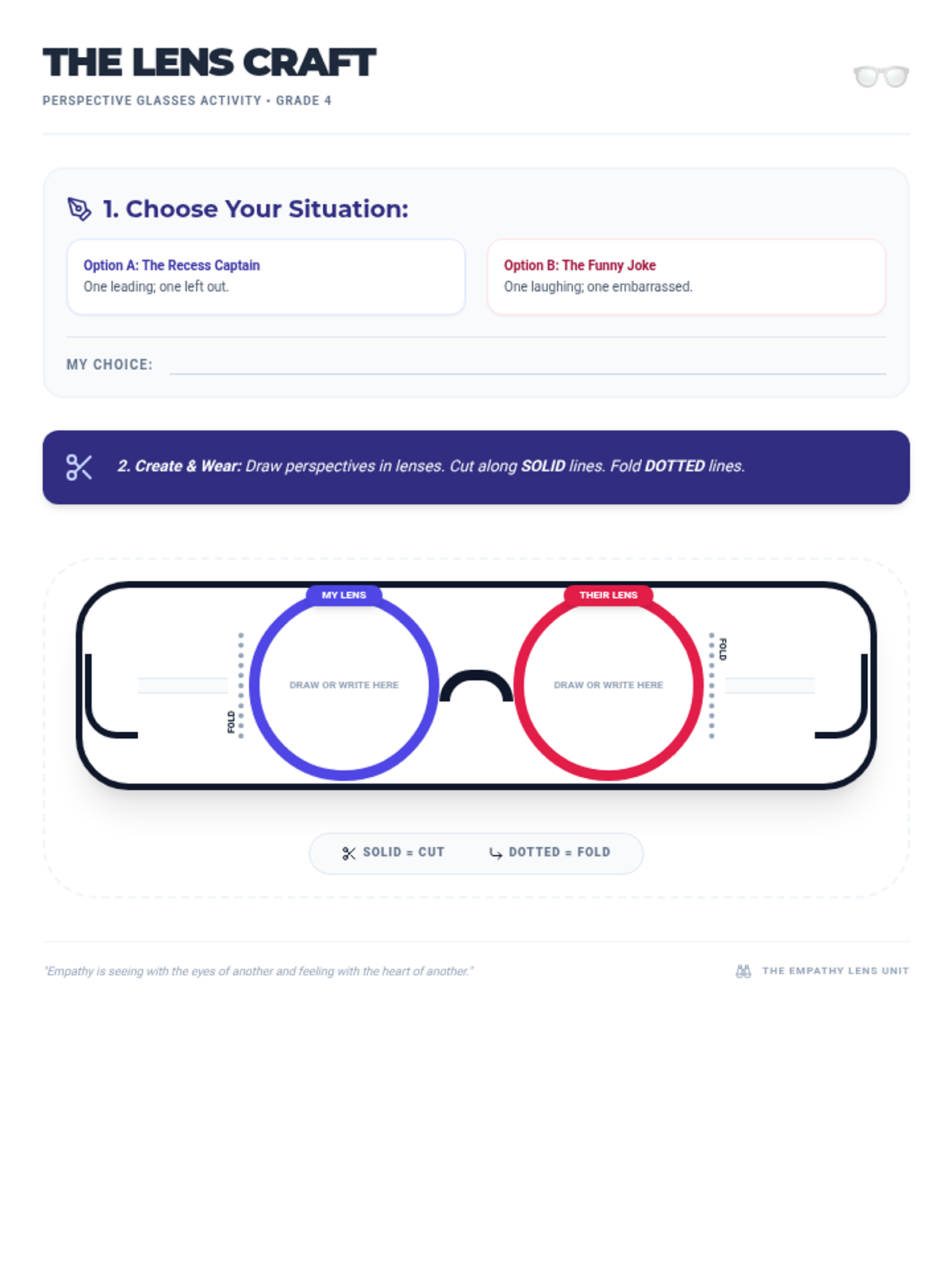
A creative hands-on activity for 4th graders where they construct 'Perspective Glasses'. The template allows students to illustrate 'My Lens' versus 'Their Lens' for a chosen social situation, physically modeling the act of switching perspectives. Includes a second page for written reflection.
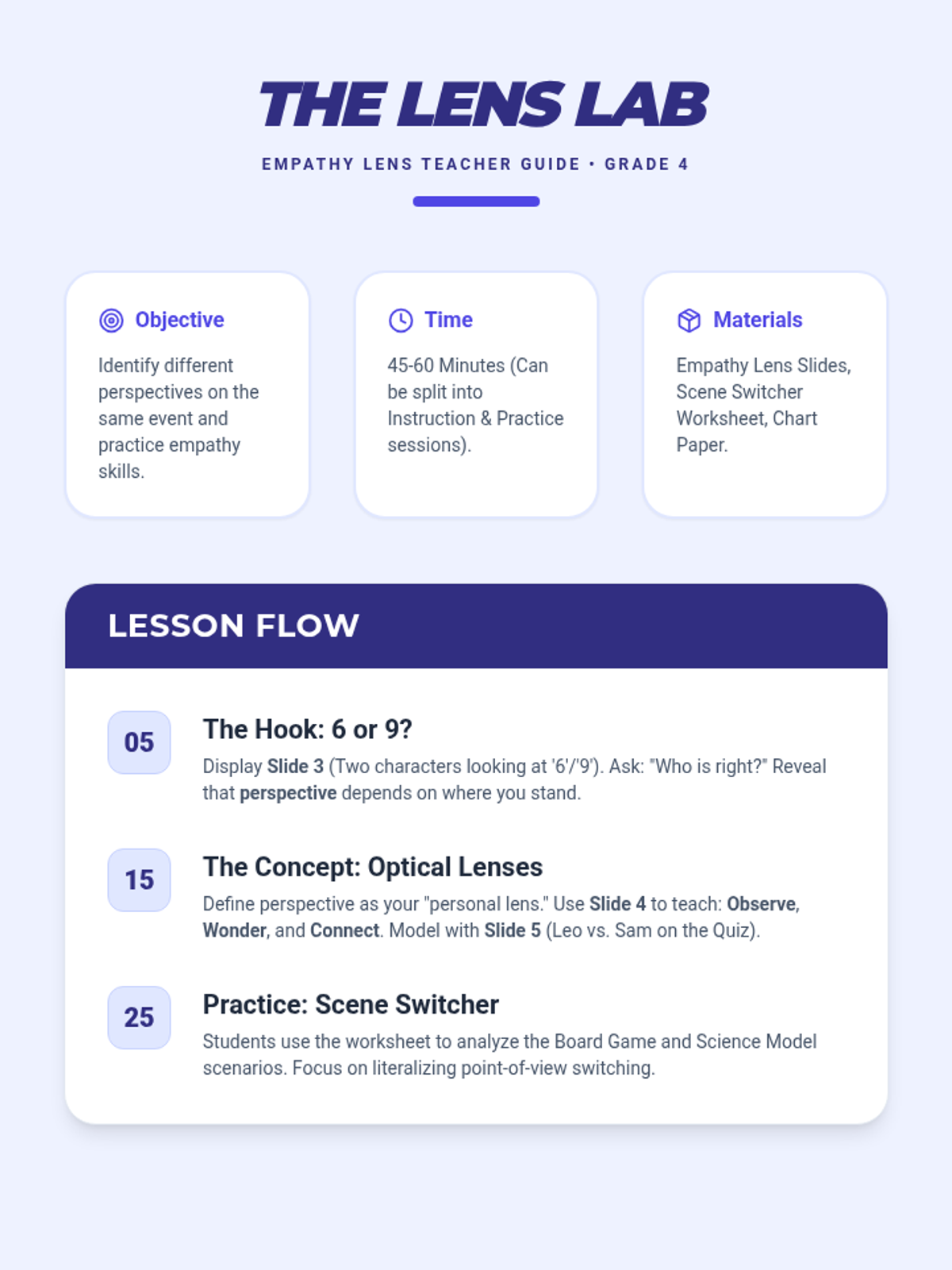
A teacher facilitation guide for 'The Empathy Lens' lesson. Includes lesson pacing, a structured flow from the 'hook' to debrief, specific discussion prompts to deepen student understanding of perspective-taking, and success criteria for assessment.
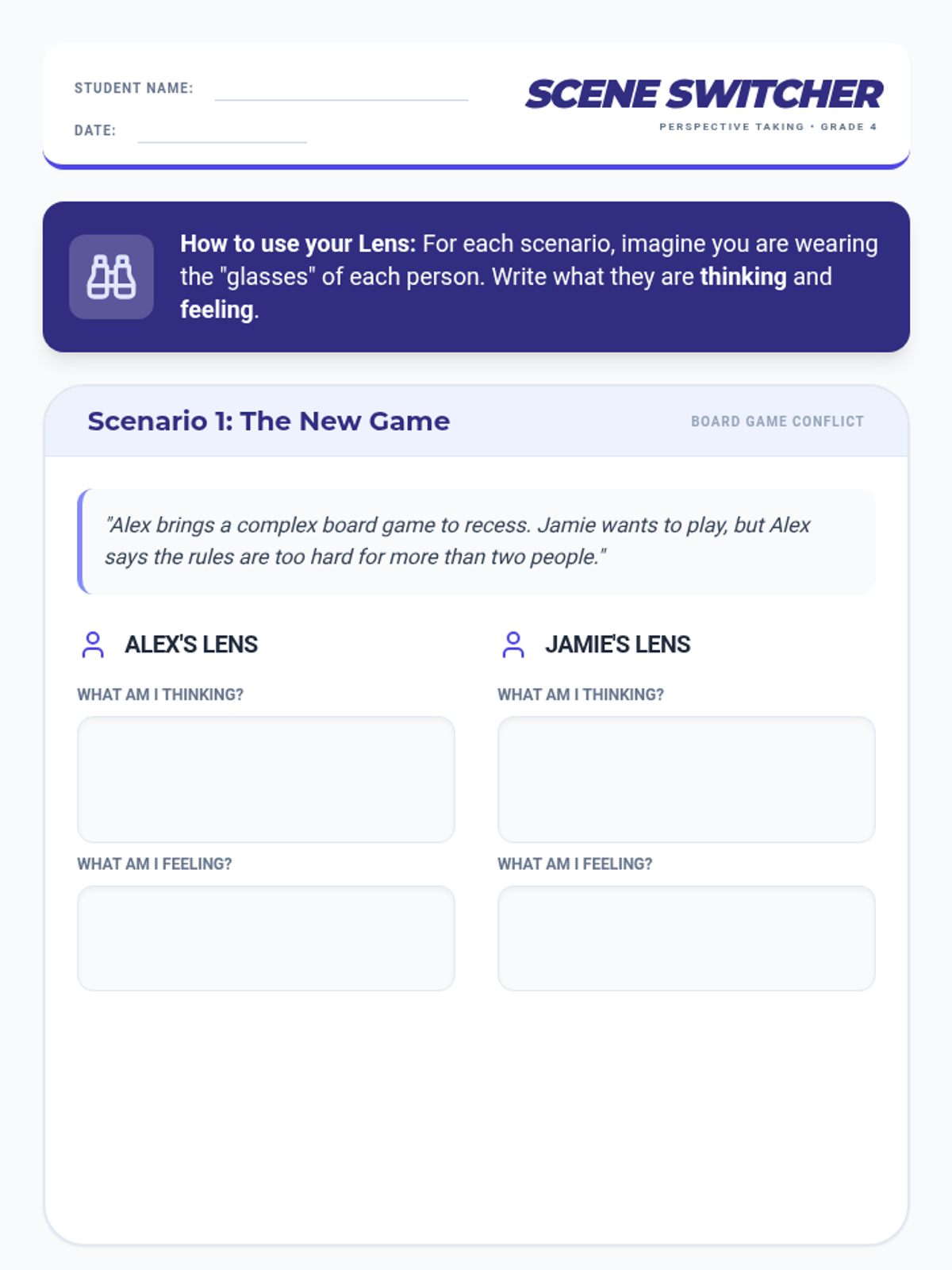
A 4th-grade perspective-taking worksheet called 'Scene Switcher'. Students analyze two contrasting scenarios (a board game conflict and a messy desk misunderstanding) and write from the point of view of each participant, identifying their likely thoughts and feelings to develop empathy.
A perspective-taking slide deck for 4th graders featuring the 'Empathy Lens' metaphor. It introduces the concept of perspective through visual puzzles, defines empathy-building steps (Observe, Wonder, Connect), and uses contrasting scenarios to demonstrate that people can feel differently about the same event.