A student worksheet for Lesson 1 where students identify Ollie, Allie, and Lester in specific social scenarios and practice re-framing the thoughts.
A slide deck for introducing preschoolers to the concept of play choices. It defines what a choice is, explains that friends have their own choice voice, and provides actionable options for when a friend chooses to play with something or someone else.
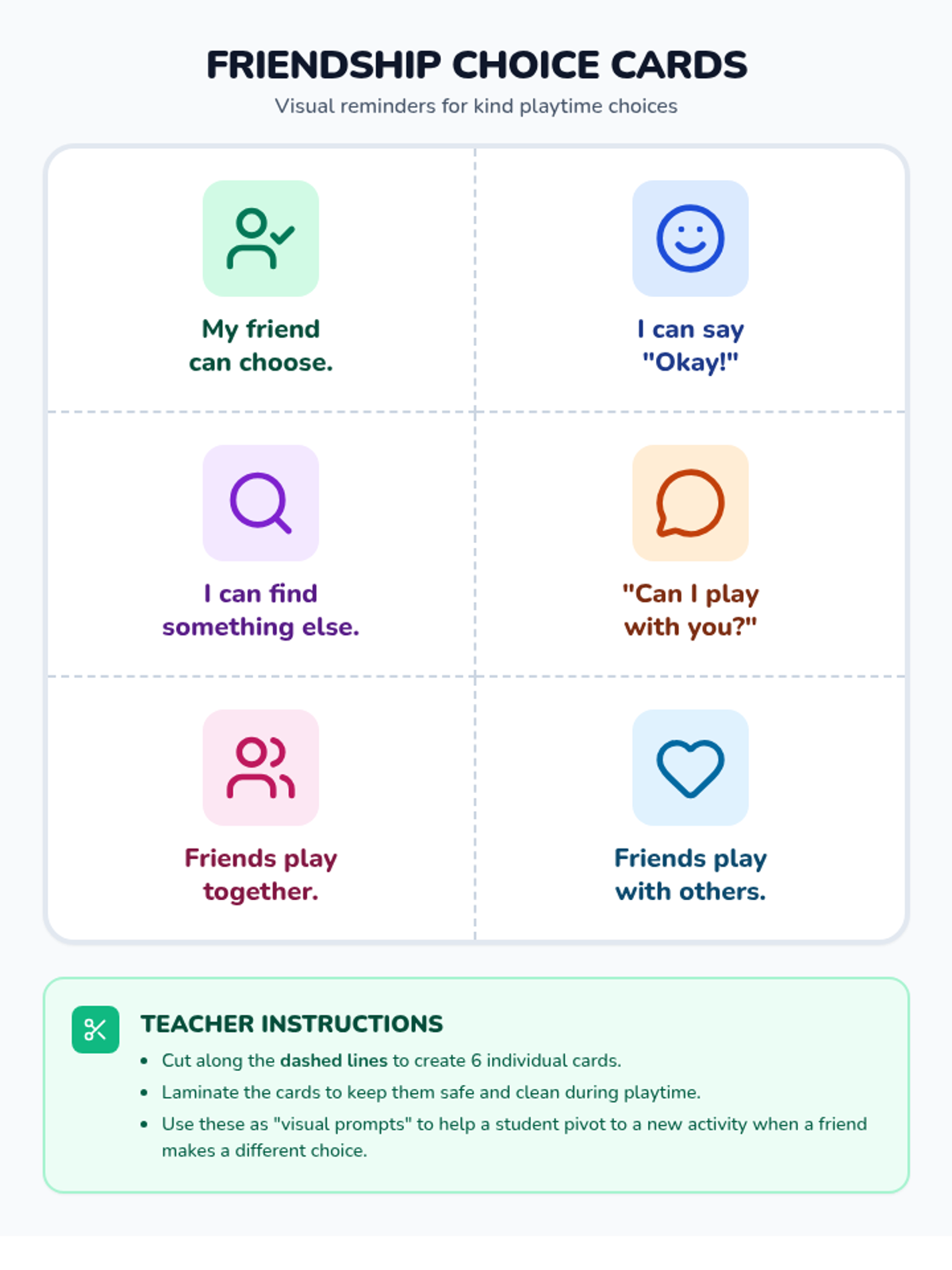
A set of 6 printable visual support cards for preschoolers to help them navigate social situations where friends make independent choices. Each card features a clear icon and a short, positive phrase.
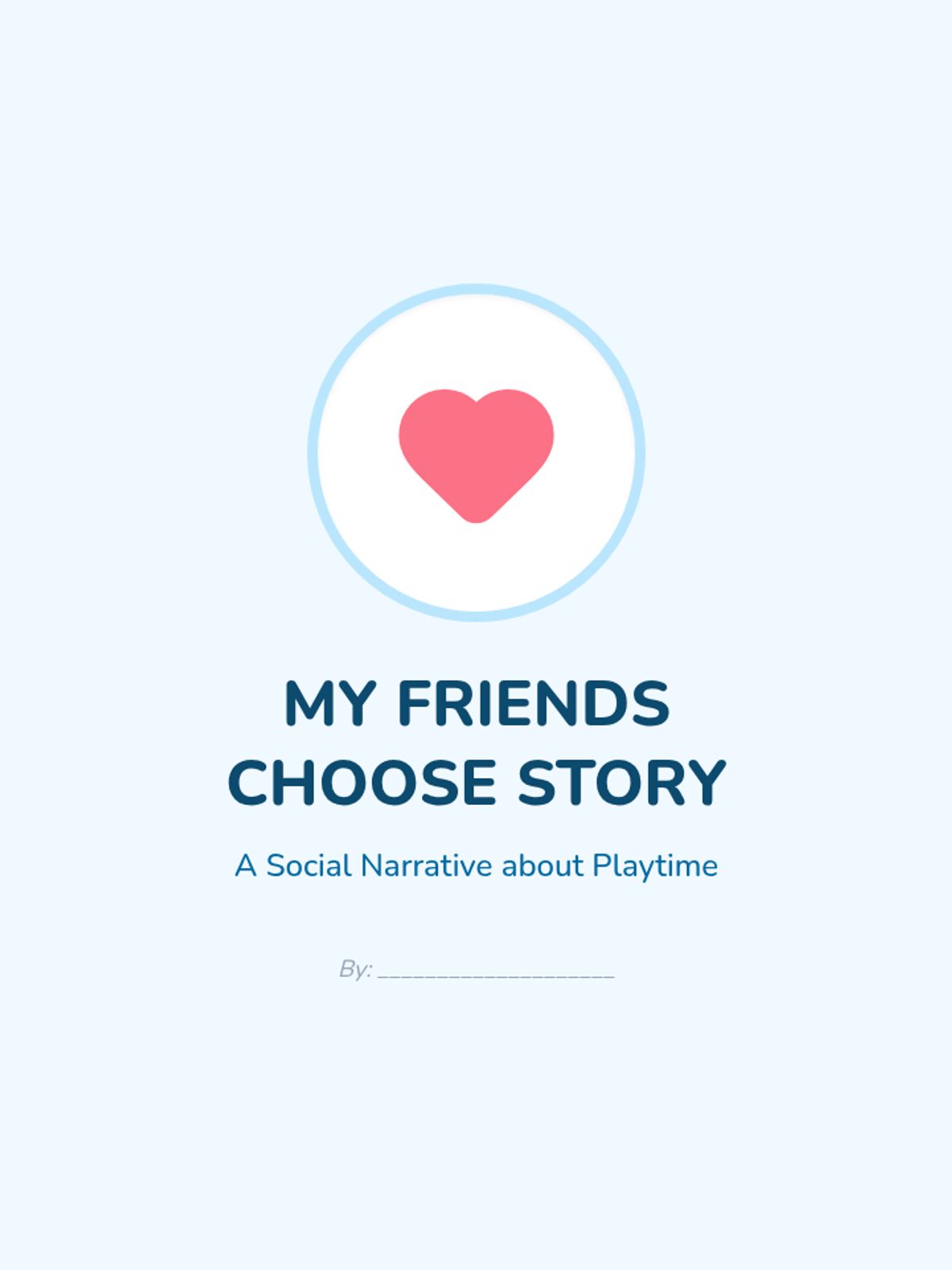
A simple, illustrated social narrative for preschoolers about allowing friends to make their own choices during play. It covers friends choosing different toys and playing with other people.
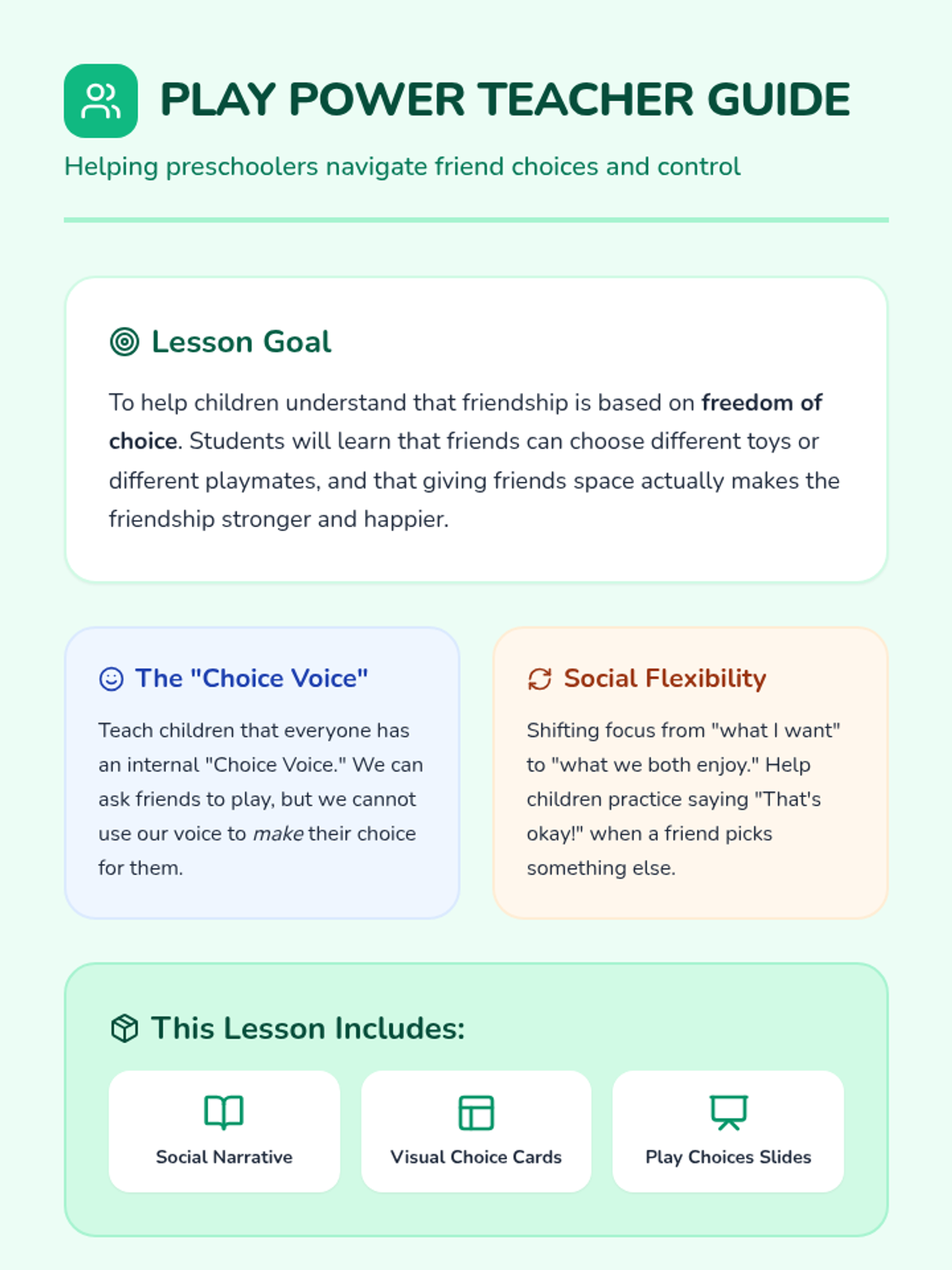
A comprehensive facilitator guide for teachers or parents to help preschoolers understand the concept of free choice in friendships. Includes teaching strategies, circle time prompts, and core concepts like the 'Choice Voice'.
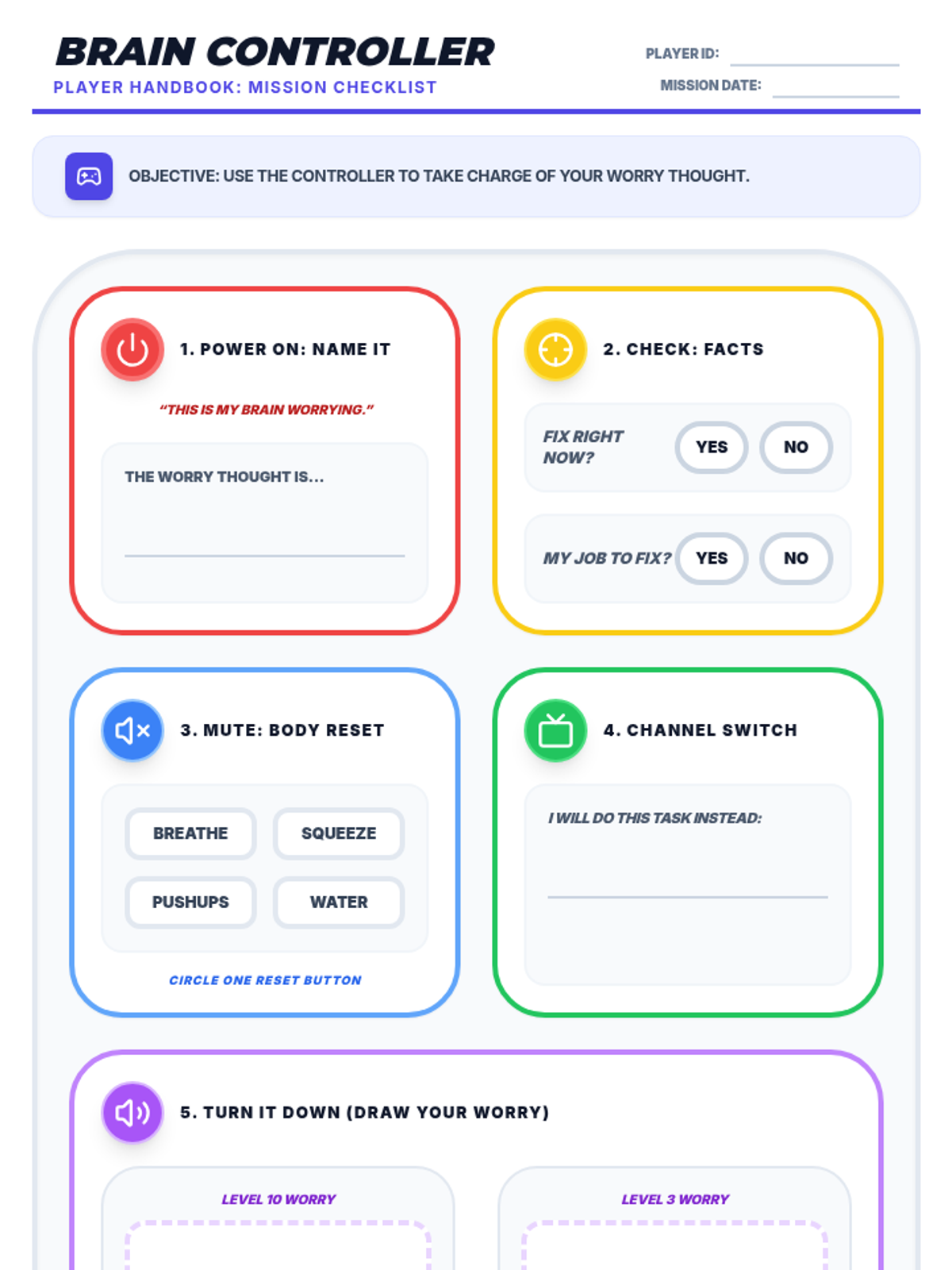
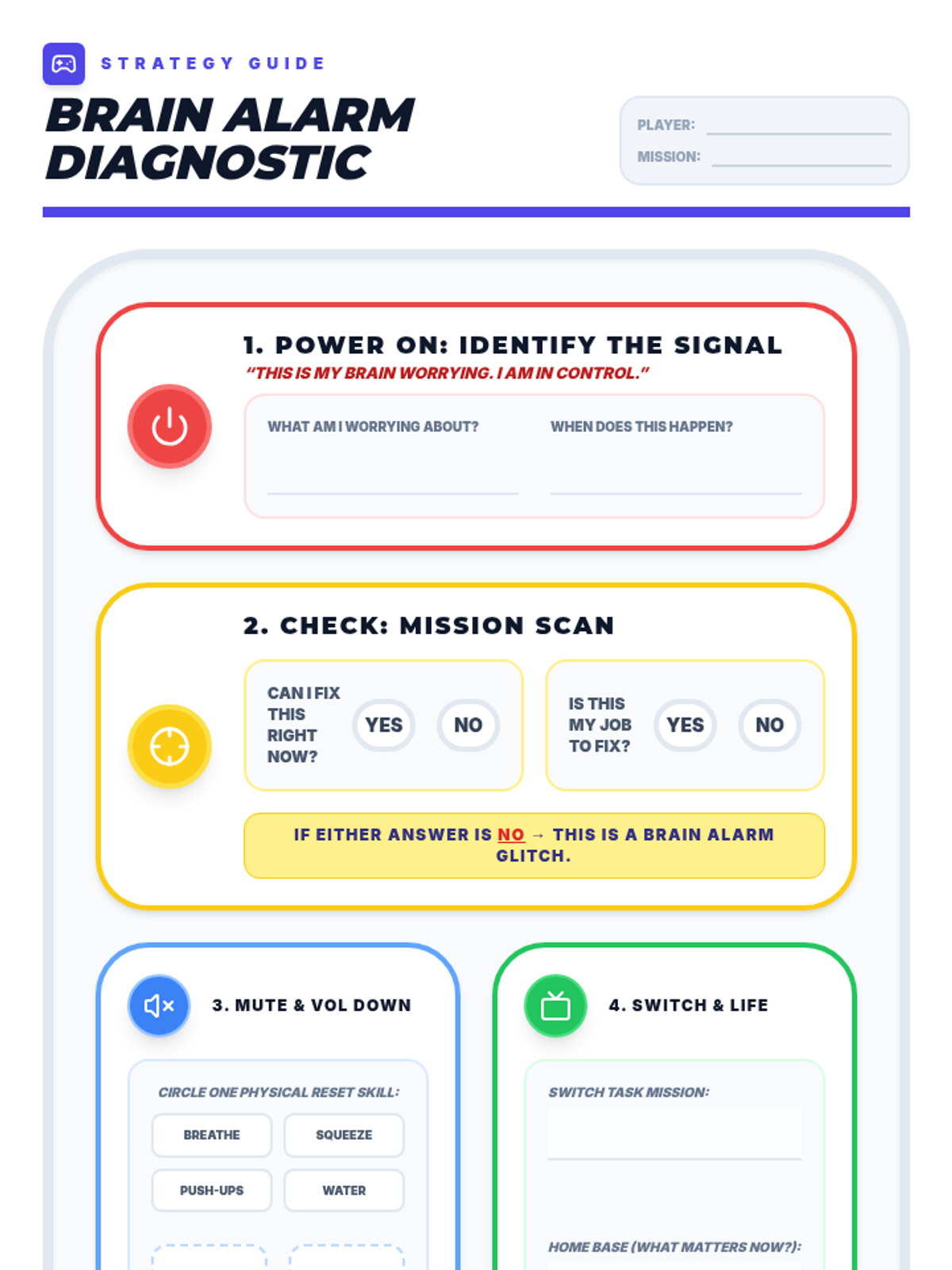
An interactive worksheet using a gamepad controller metaphor to teach students a step-by-step coping sequence for managing worries. Includes sections for naming thoughts, fact-checking, body resets, and drawing worry levels. Revised for a gaming aesthetic and ink-friendly layout.
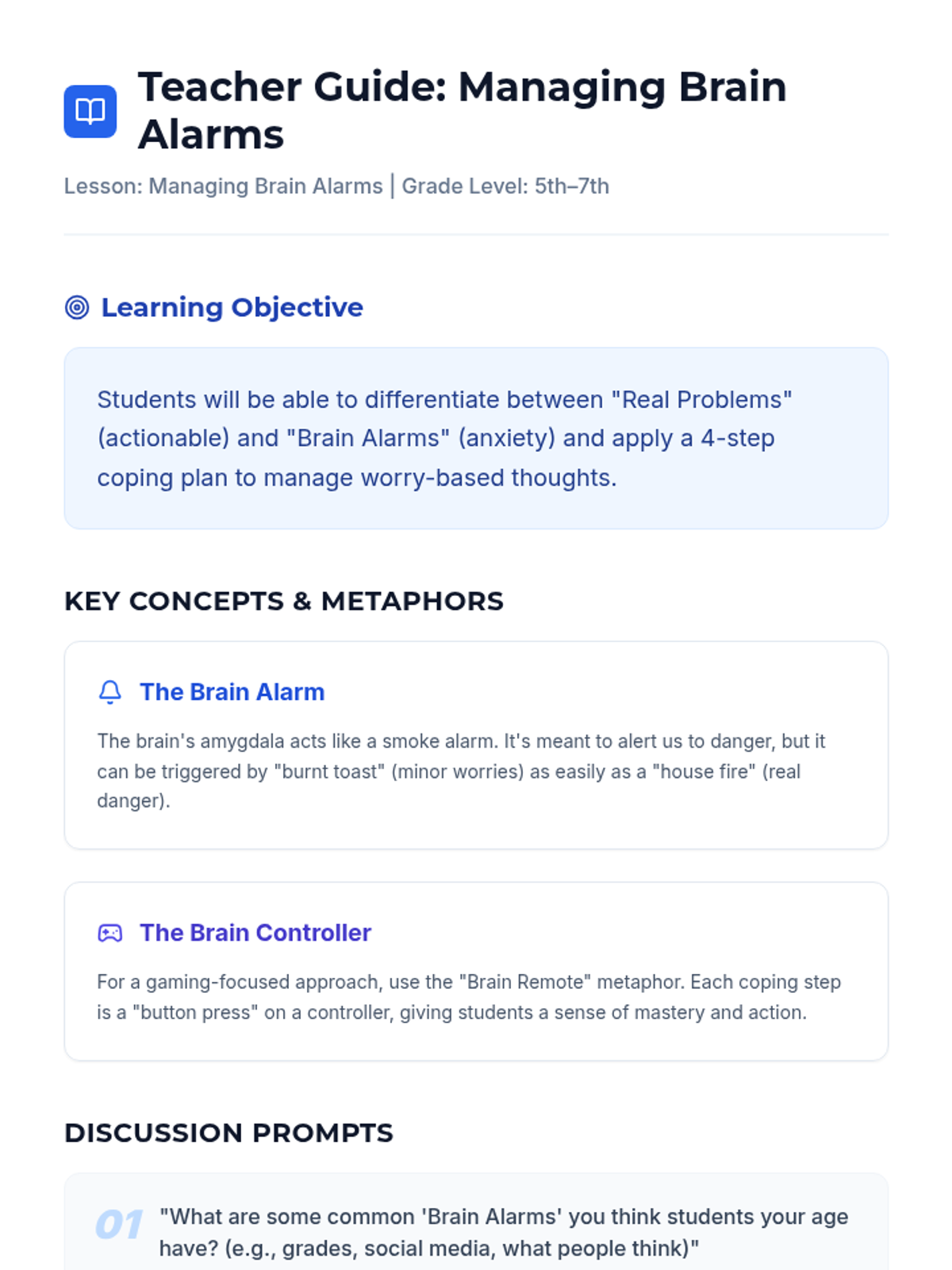
A comprehensive teacher guide for facilitating the 'Managing Brain Alarms' lesson, including learning objectives, discussion prompts, and an answer key for the student worksheet. Updated for better structure and flow.
An engaging slide deck to teach the 'Brain Alarm' concept, differentiating between real problems and anxiety-driven worries while introducing the four-step management plan. Revised for visibility and icon rendering.
A structured student worksheet for practicing the 'Brain Alarm' technique, helping 5th-7th graders differentiate between real problems and anxiety-driven worries while providing a clear coping action plan. Revised for improved layout and contrast.
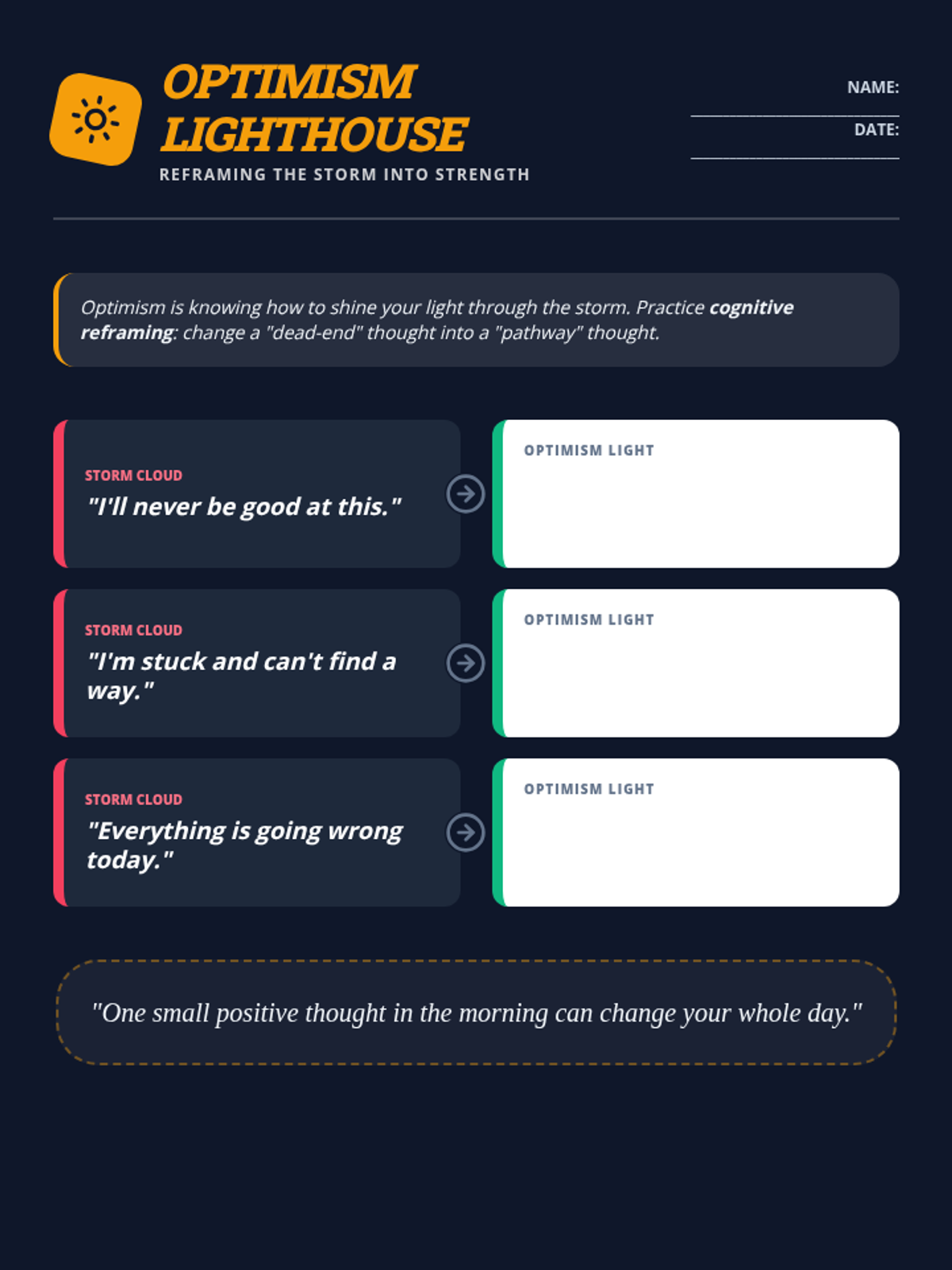
An optimism reframing worksheet that helps students transform negative "storm cloud" thoughts into hopeful, action-oriented "light" thoughts. It uses the concept of cognitive reframing to build resilience and agency.