An engaging matching activity where students choose specific 'Patronus Charms' (coping strategies) for various social and academic school scenarios. Designed with ASD-friendly clear choices.
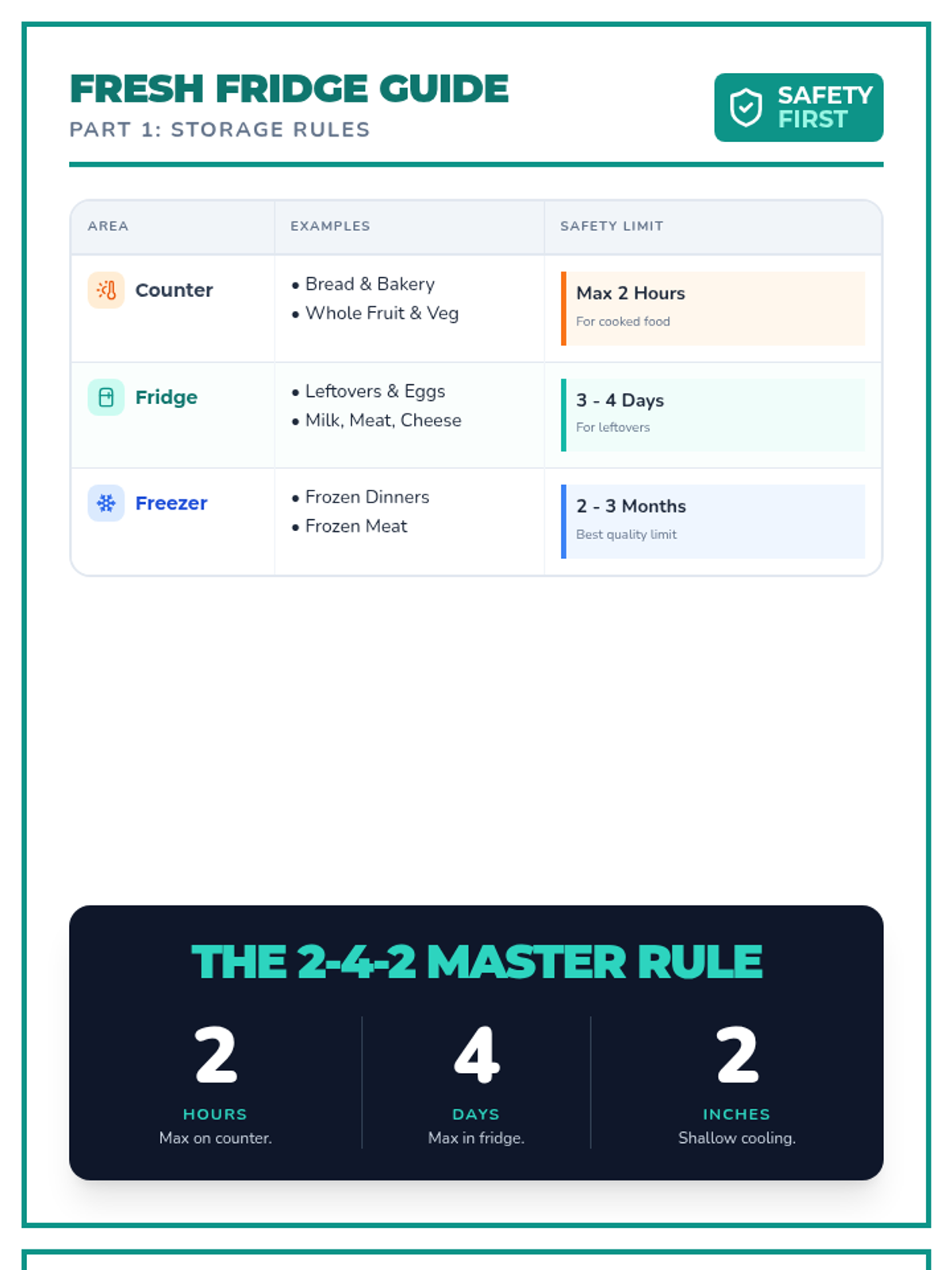
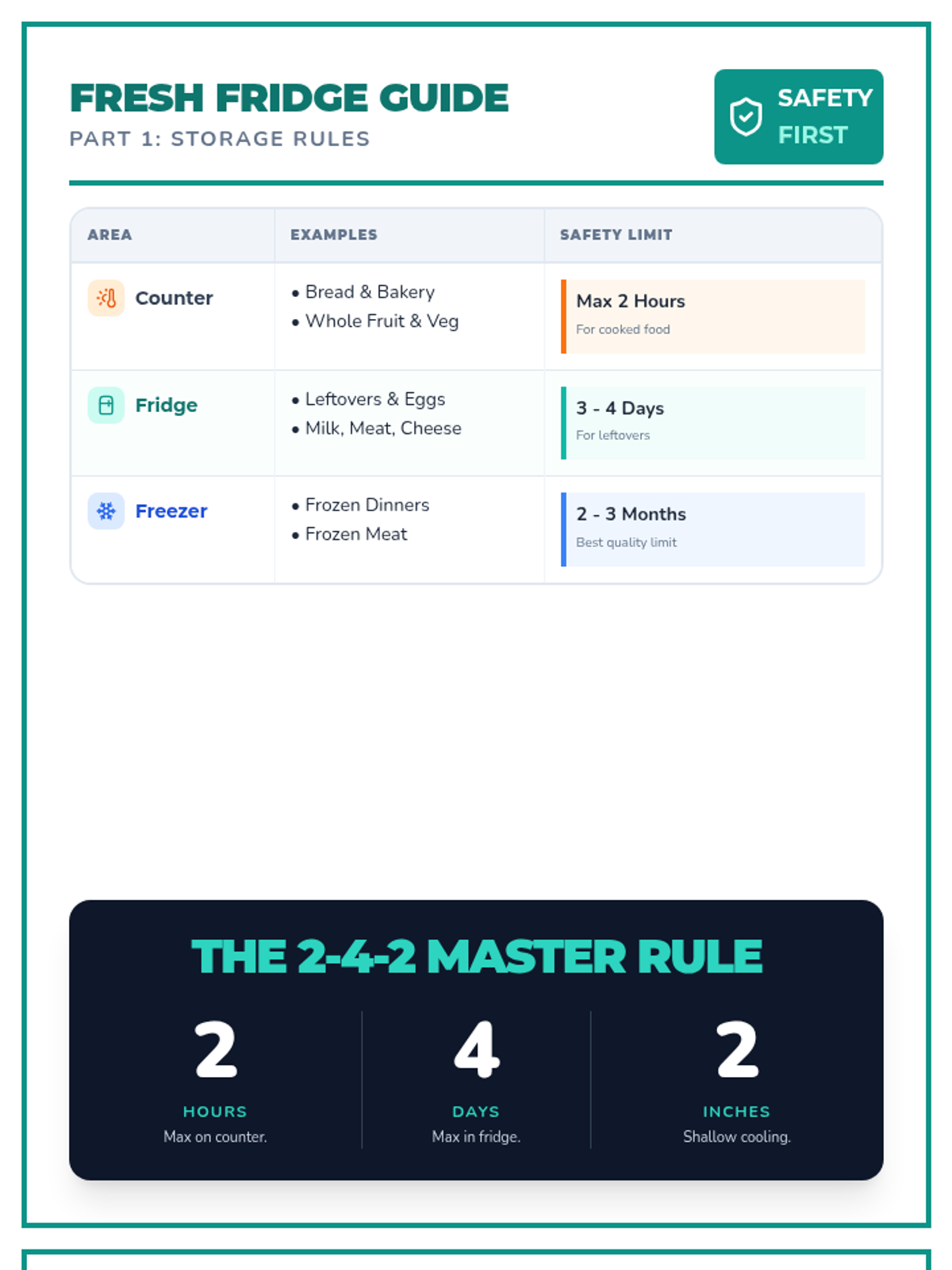
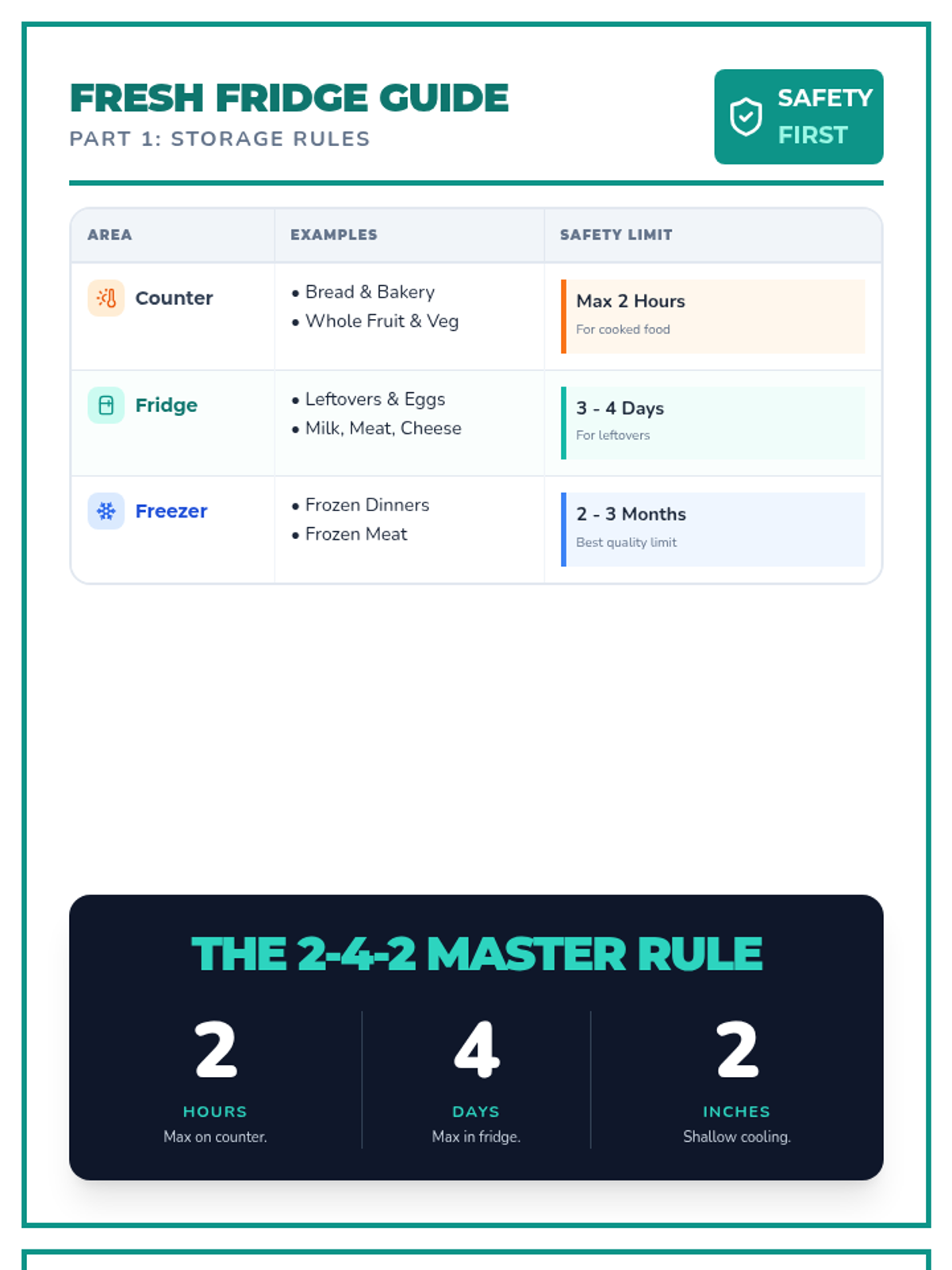
A reorganized visual guide for food storage and safety, featuring a clear tabular storage chart, the '2-4-2' rule, discard criteria, and a labeling tutorial with significantly increased font sizes for maximum readability.
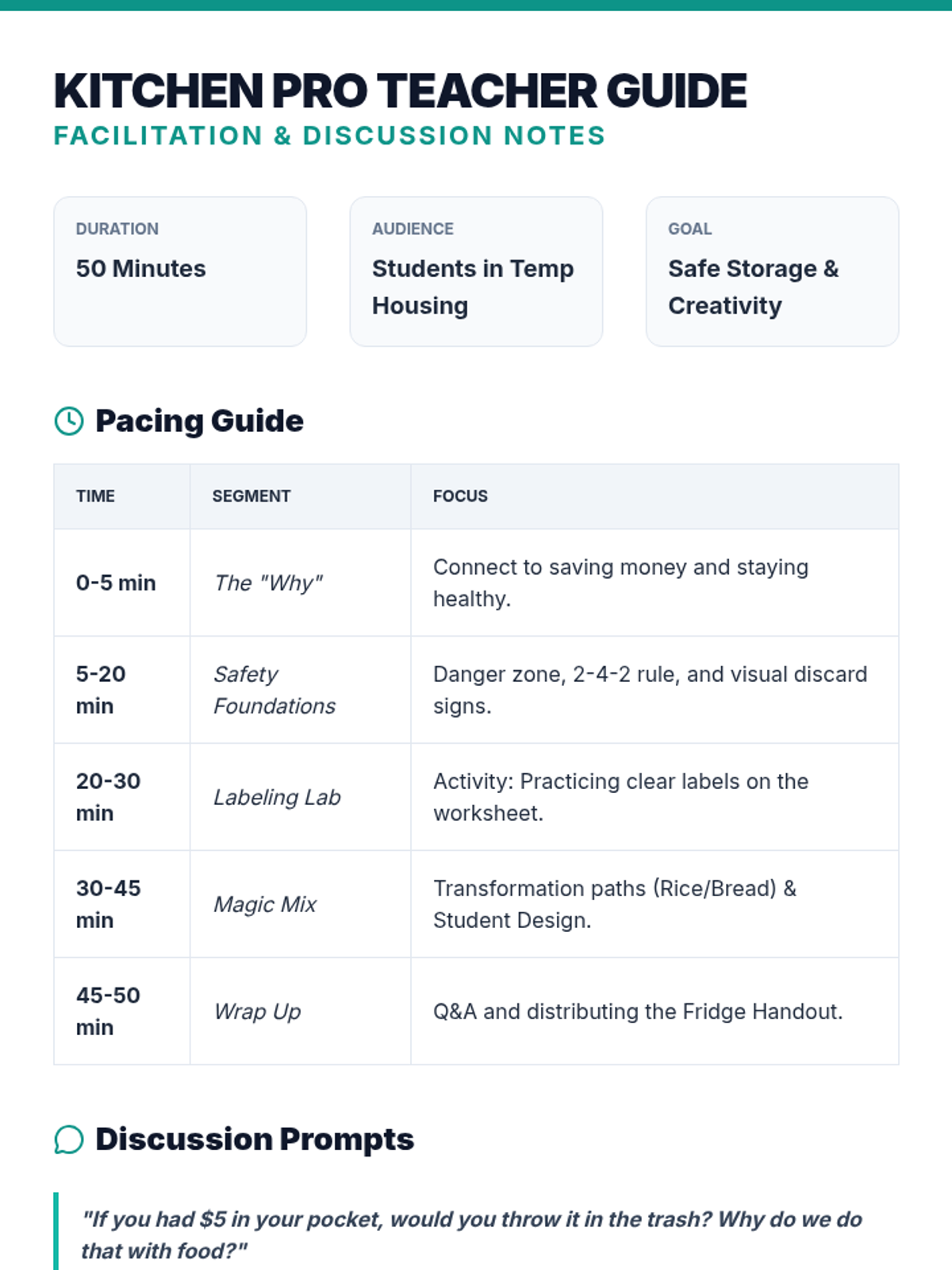
A comprehensive teacher's guide for the Kitchen Hacks lesson, including a 50-minute pacing guide, discussion prompts, and strategies for neurodiverse learners and students in temporary housing.
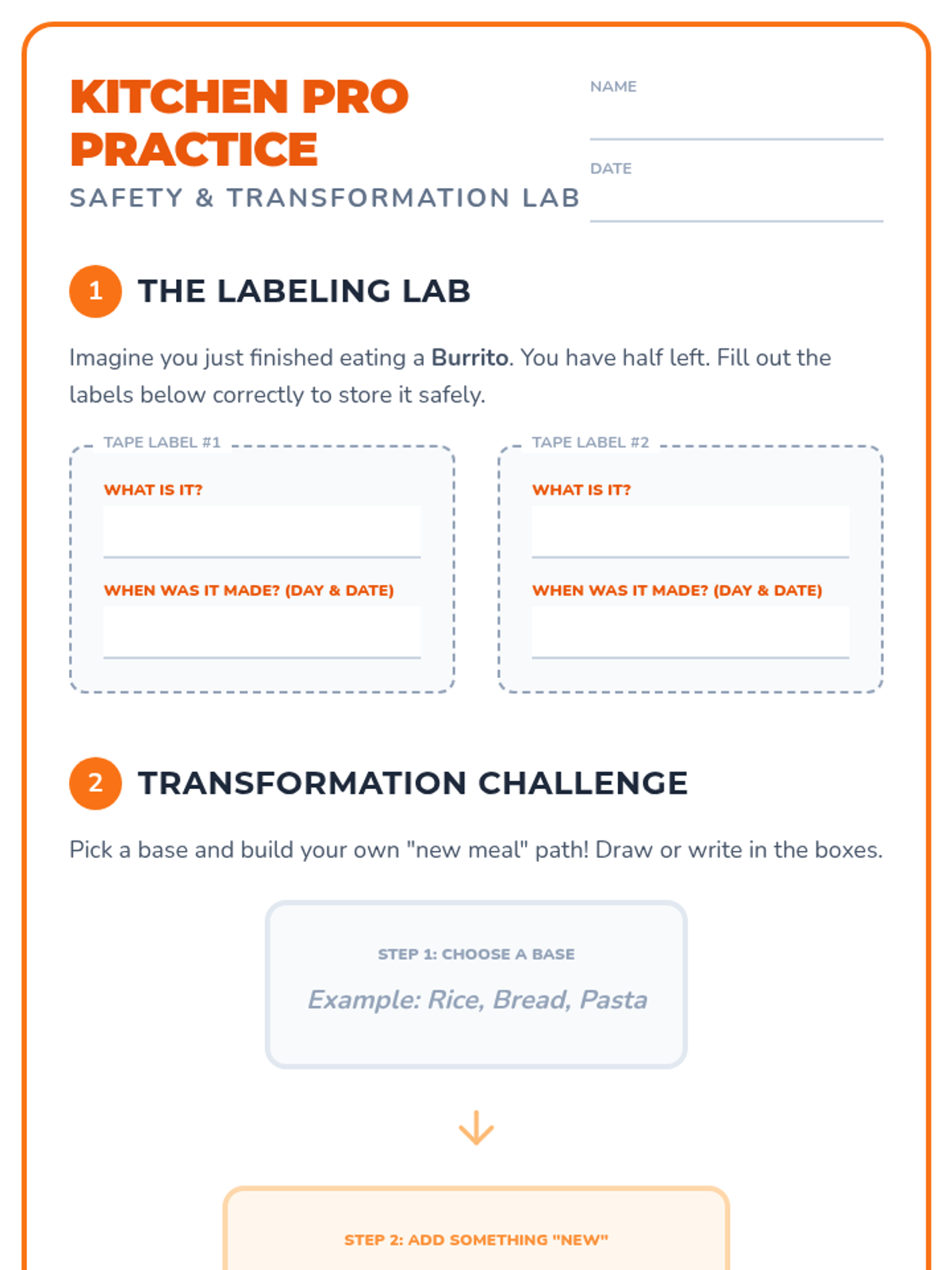
A student practice sheet for applying kitchen safety skills, including labeling exercises and a transformation flowchart activity.
A visually-driven slide deck for a 50-minute session on kitchen safety and food transformation, featuring the 2-4-2 rule and leftover flowcharts.
A reorganized visual guide for food storage and safety, featuring a clear tabular storage chart, the '2-4-2' rule, discard criteria, and a labeling tutorial with increased font sizes for readability.
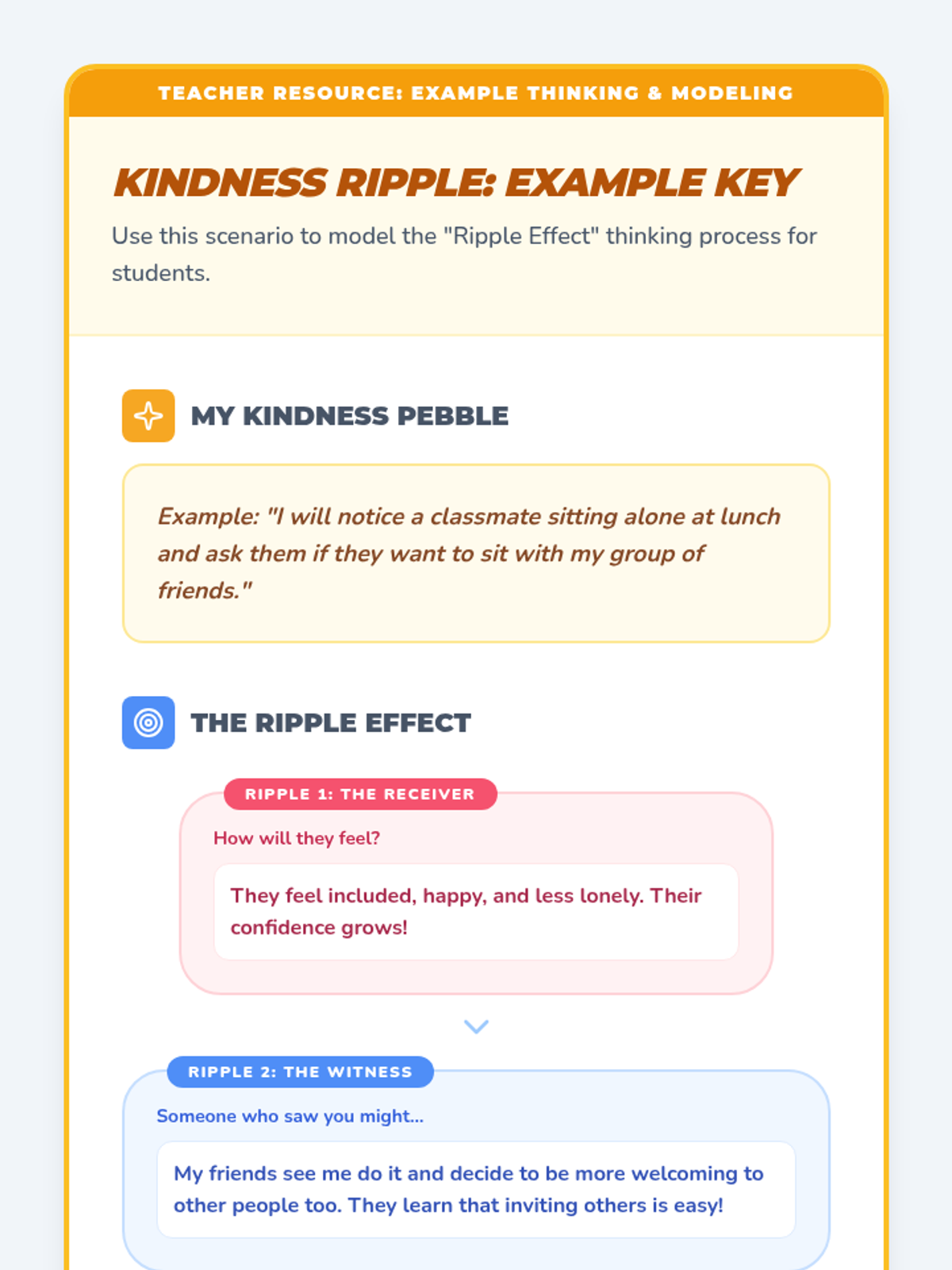
An example-filled version of the Kindness Ripple worksheet for teachers to use as a modeling tool during the lesson.
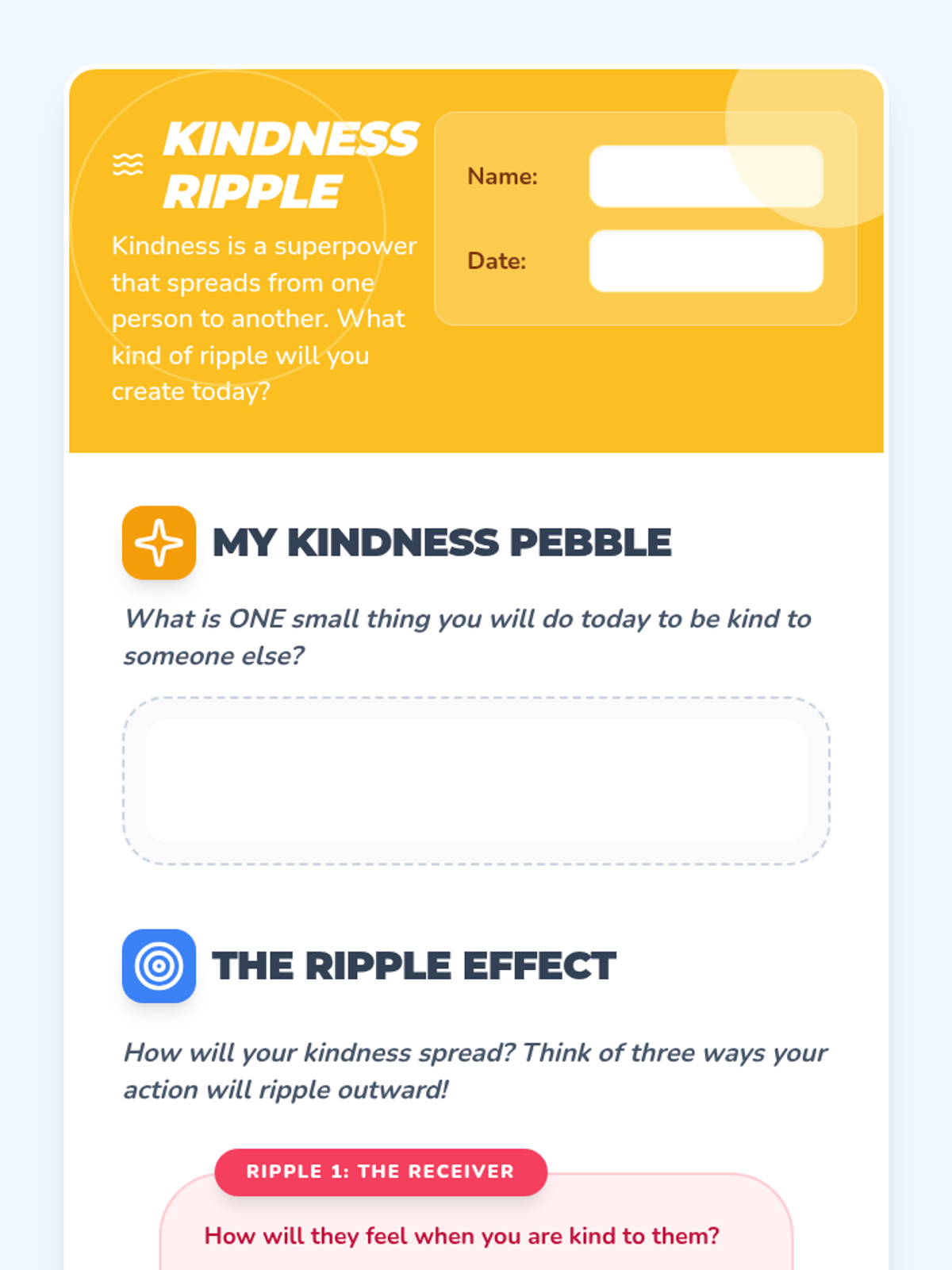
A student worksheet where 4th graders plan a kind act and visualize its ripple effect on the receiver, witnesses, and the wider school community.
A vibrant slide presentation for 4th graders that explains the 'Ripple Effect' of kindness, the 3-Way Win benefit system, and a call to action.
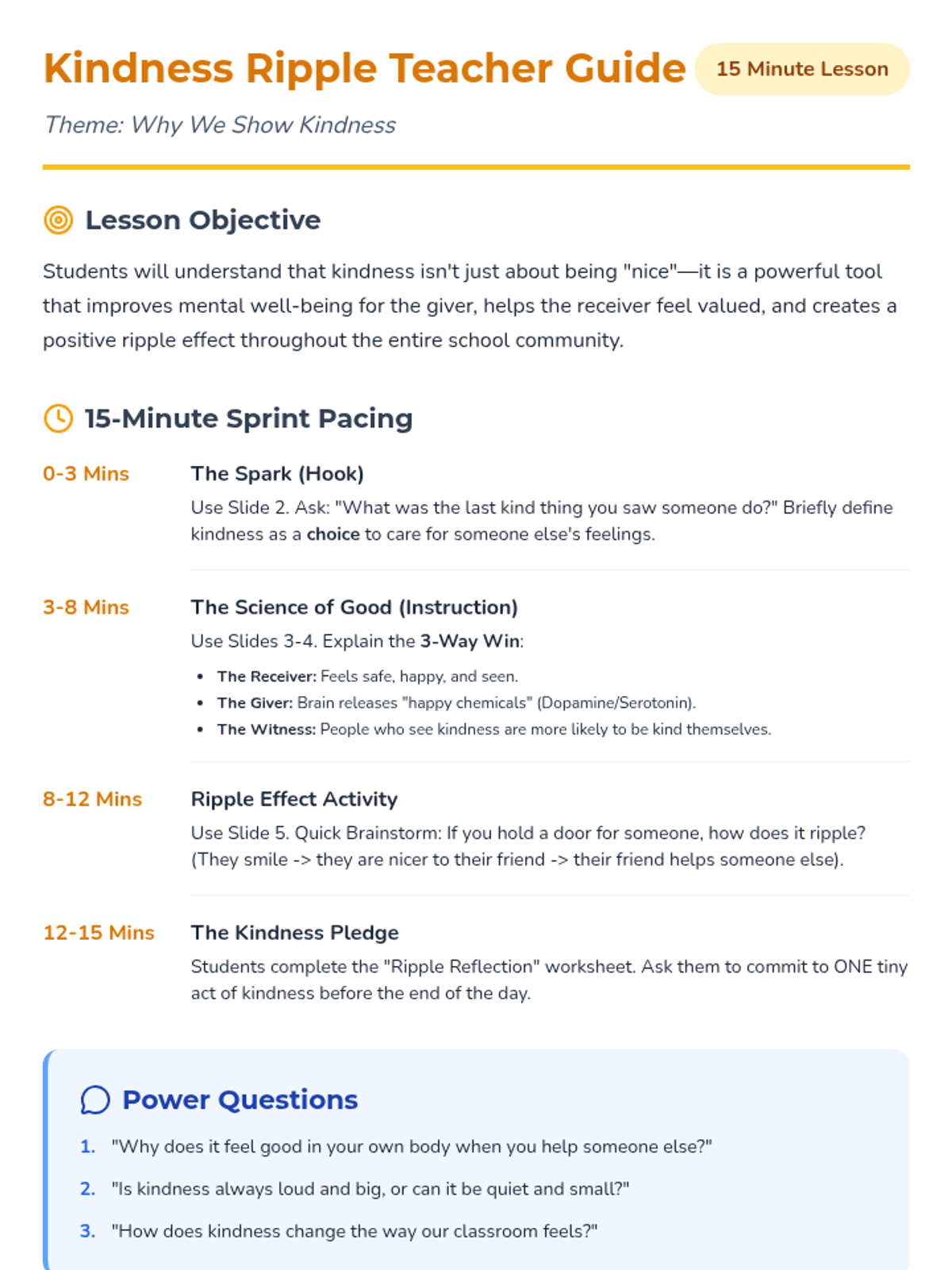
A teacher's instructional guide for a 15-minute lesson on kindness, featuring a timed pacing guide, key discussion questions, and pedagogical tips.
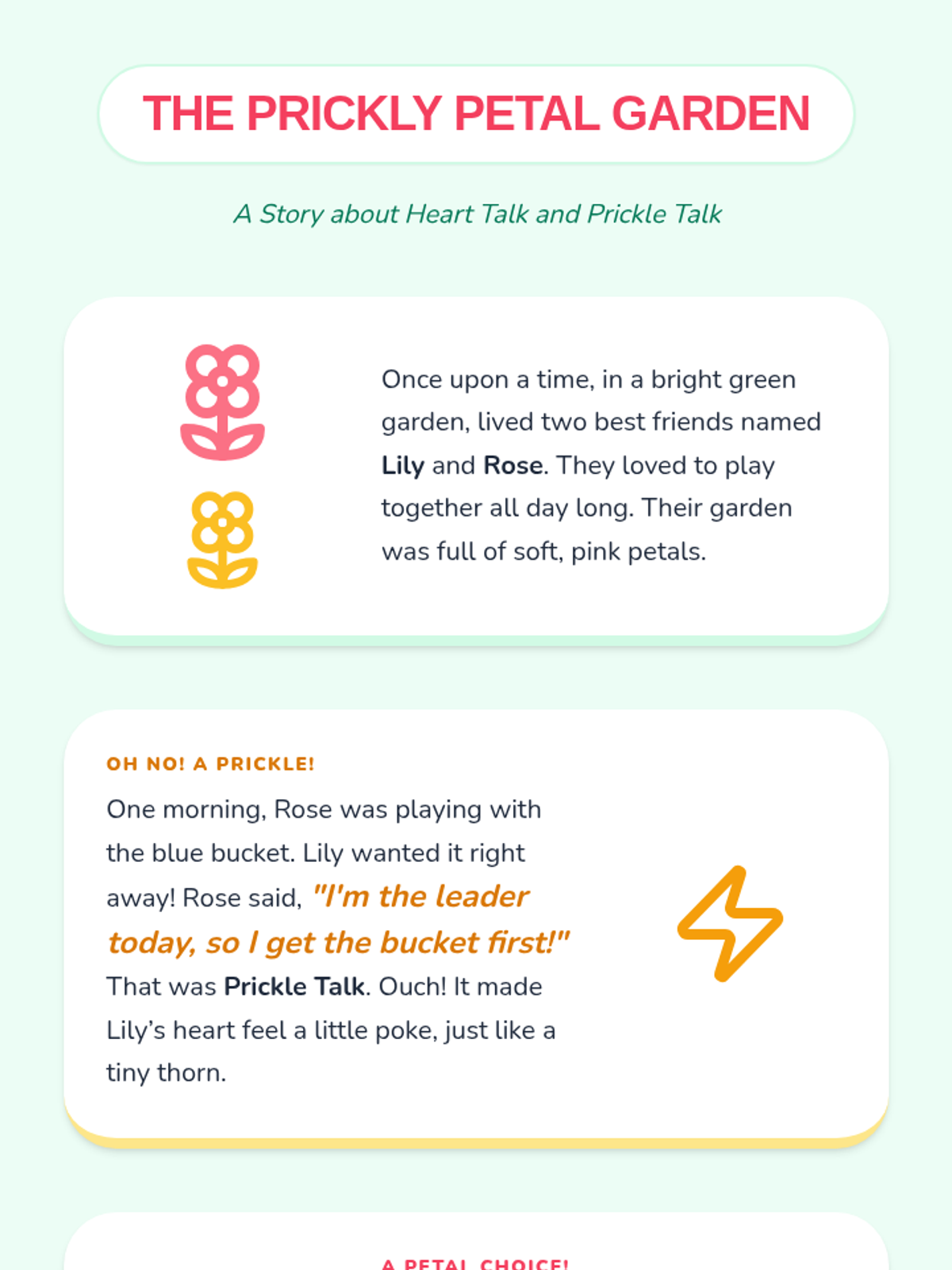
A short illustrated story for kindergarten students featuring two friends, Lily and Rose, who learn to choose soft 'Heart Talk' (petals) over tiny, constant 'Prickly Talk' (thorns).
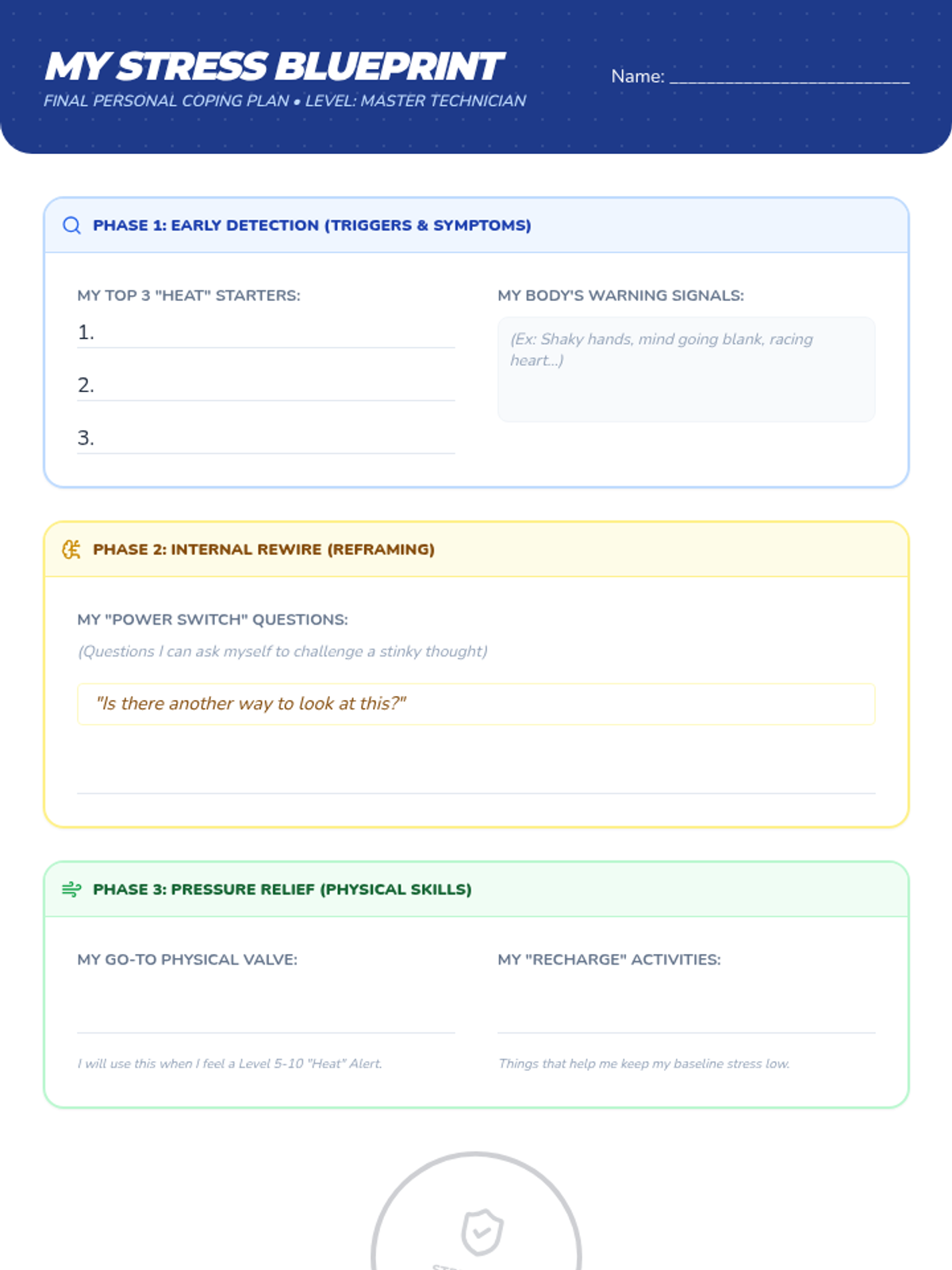
The final personal coping plan document for students, allowing them to synthesize their learning from all four sessions into a single "blueprint" for future use.
Slide presentation for Session 4, reviewing the unit's core concepts (Detection, Reframing, Regulation) and guiding students through the creation of their personal coping blueprints.
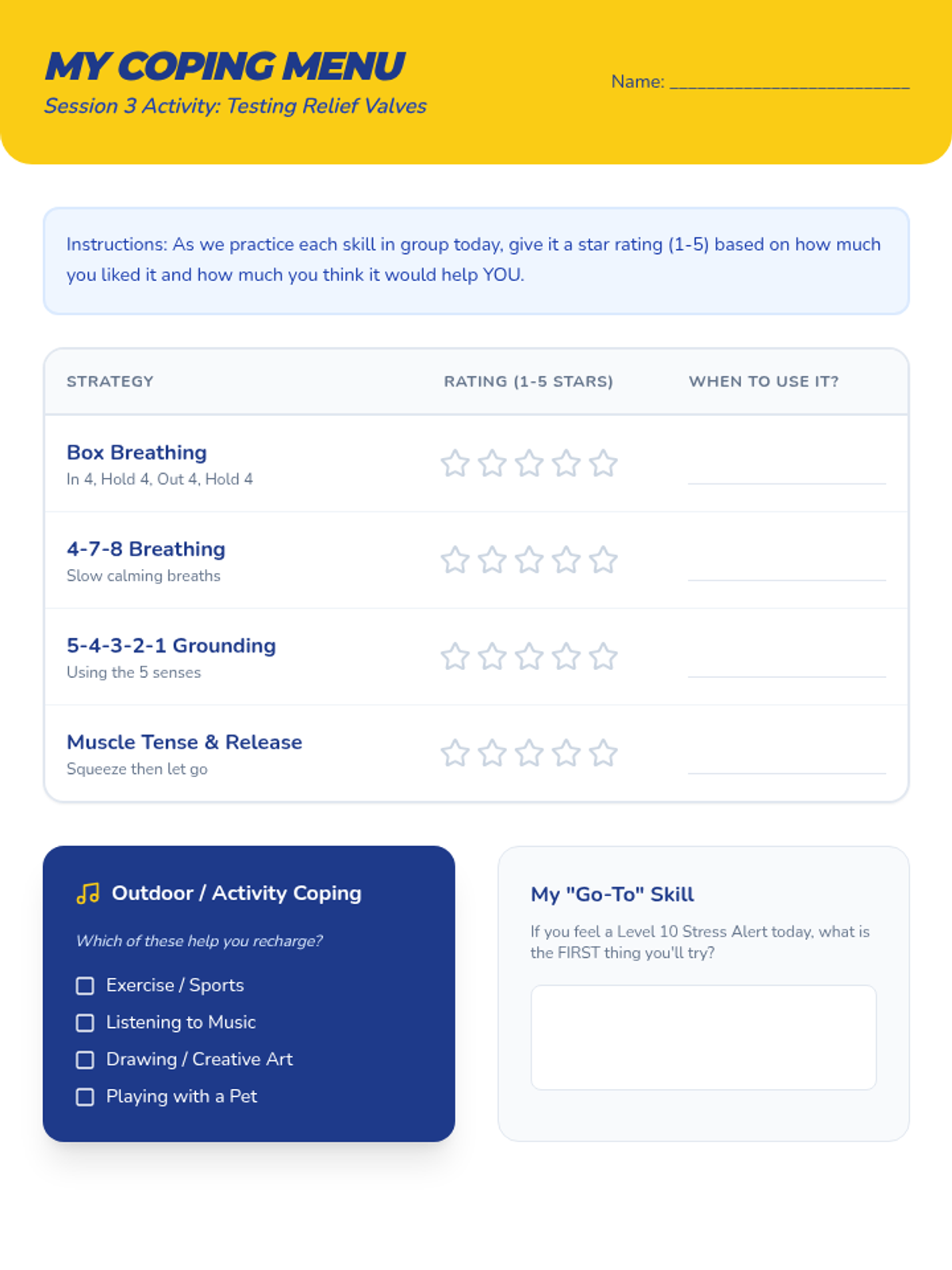
Coping strategy menu for students to trial and rate different physical and grounding techniques (e.g., box breathing, grounding) to identify what works best for them.
Slide presentation for Session 3, introducing physical coping mechanisms like controlled breathing, the 5-4-3-2-1 grounding technique, and explaining the physiological benefits of these strategies.