A high-energy presentation deck that introduces the 'Classroom Investigation' theme, provides clear step-by-step instructions for the scavenger hunt, and guides students through the Gallery Walk activity.
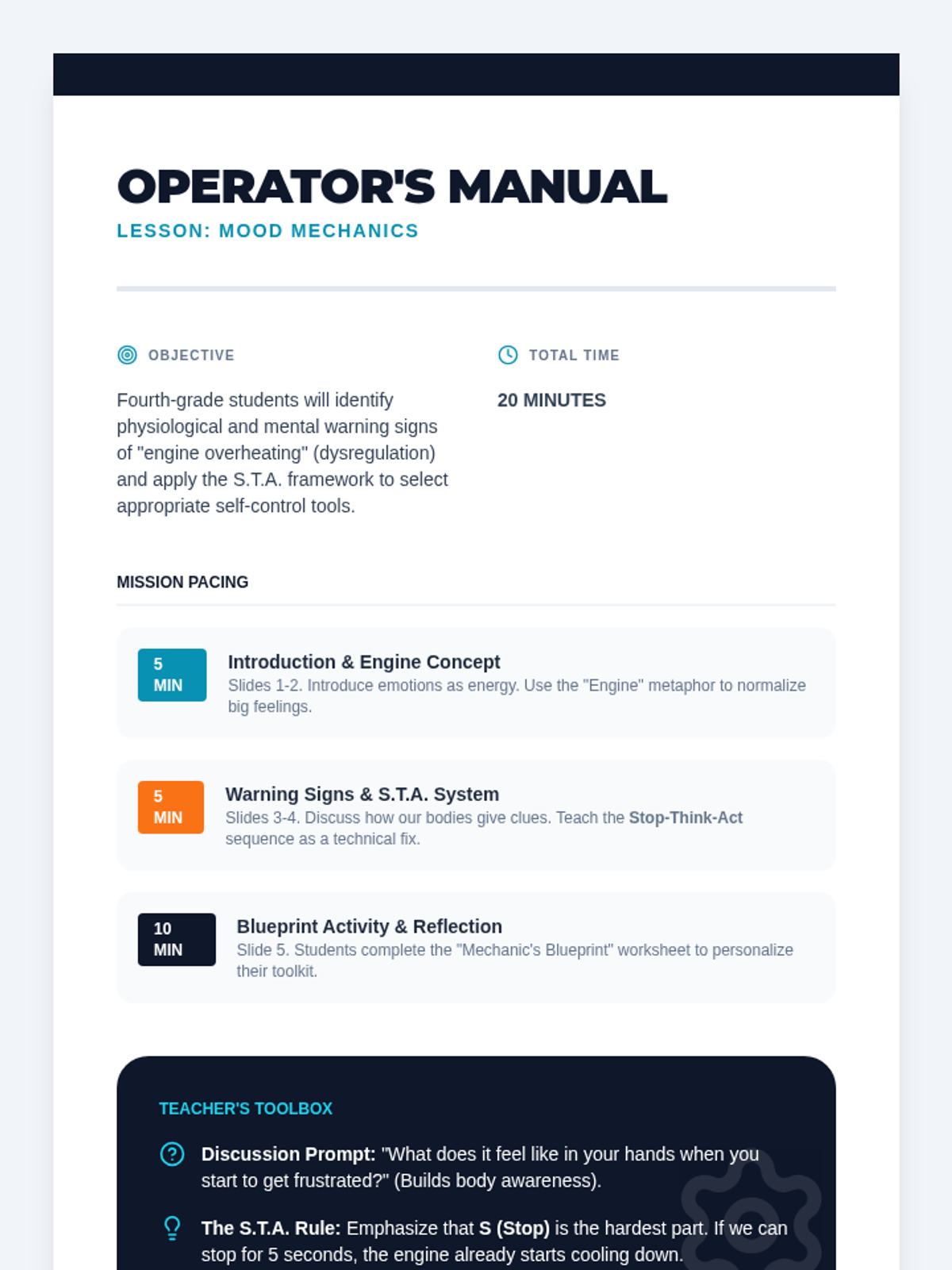
A comprehensive teacher guide for the 20-minute Mood Mechanics lesson, including pacing, discussion prompts, and checking for understanding questions.
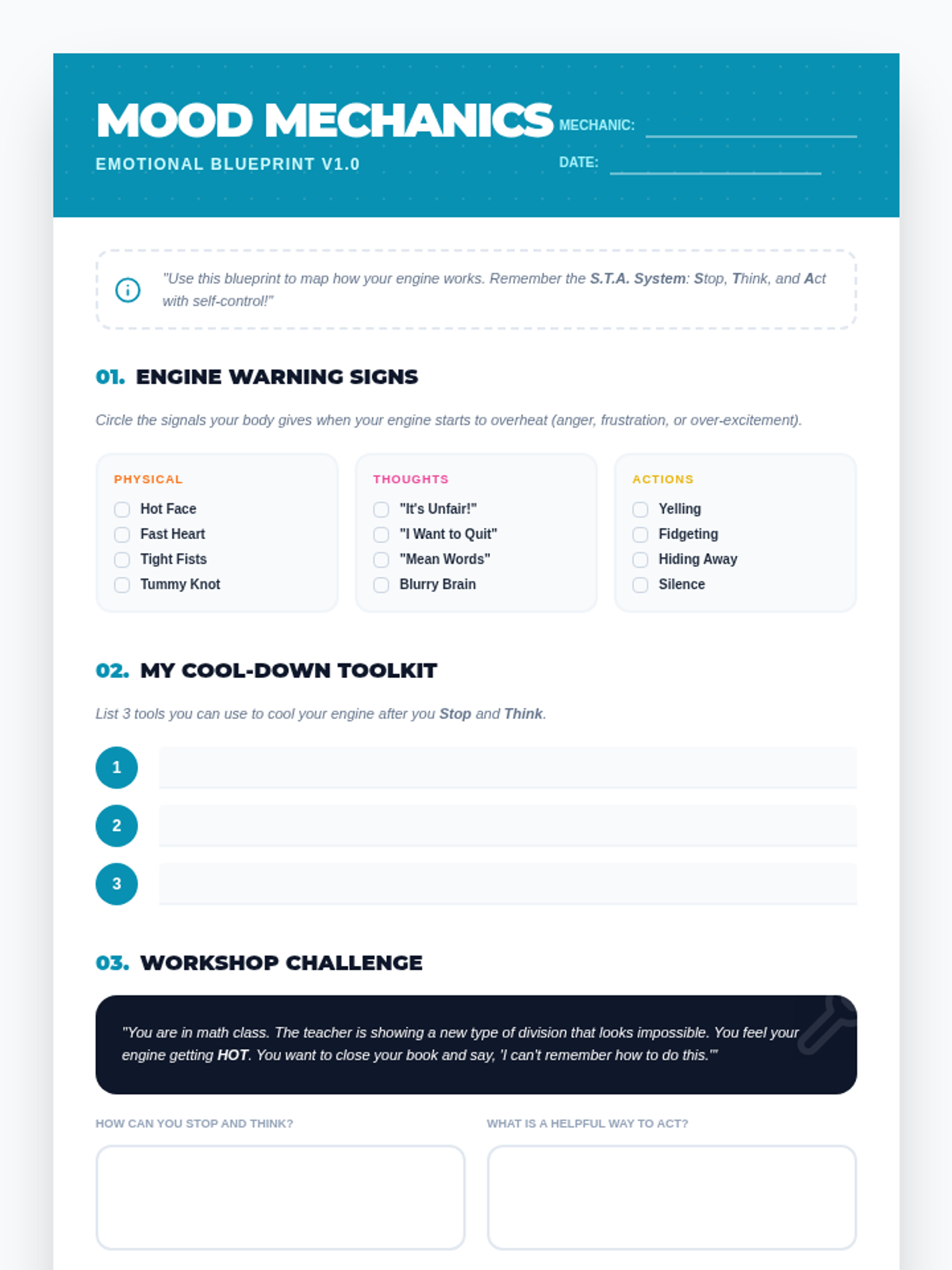
A technical 'blueprint' themed worksheet for students to identify their emotional warning signs and select self-control strategies. Includes a scenario analysis section.
A colorful, 5-slide visual presentation introducing the 'Emotional Engine' concept and the S.T.A. (Stop, Think, Act) framework for self-control. Great for a 20-minute lesson.
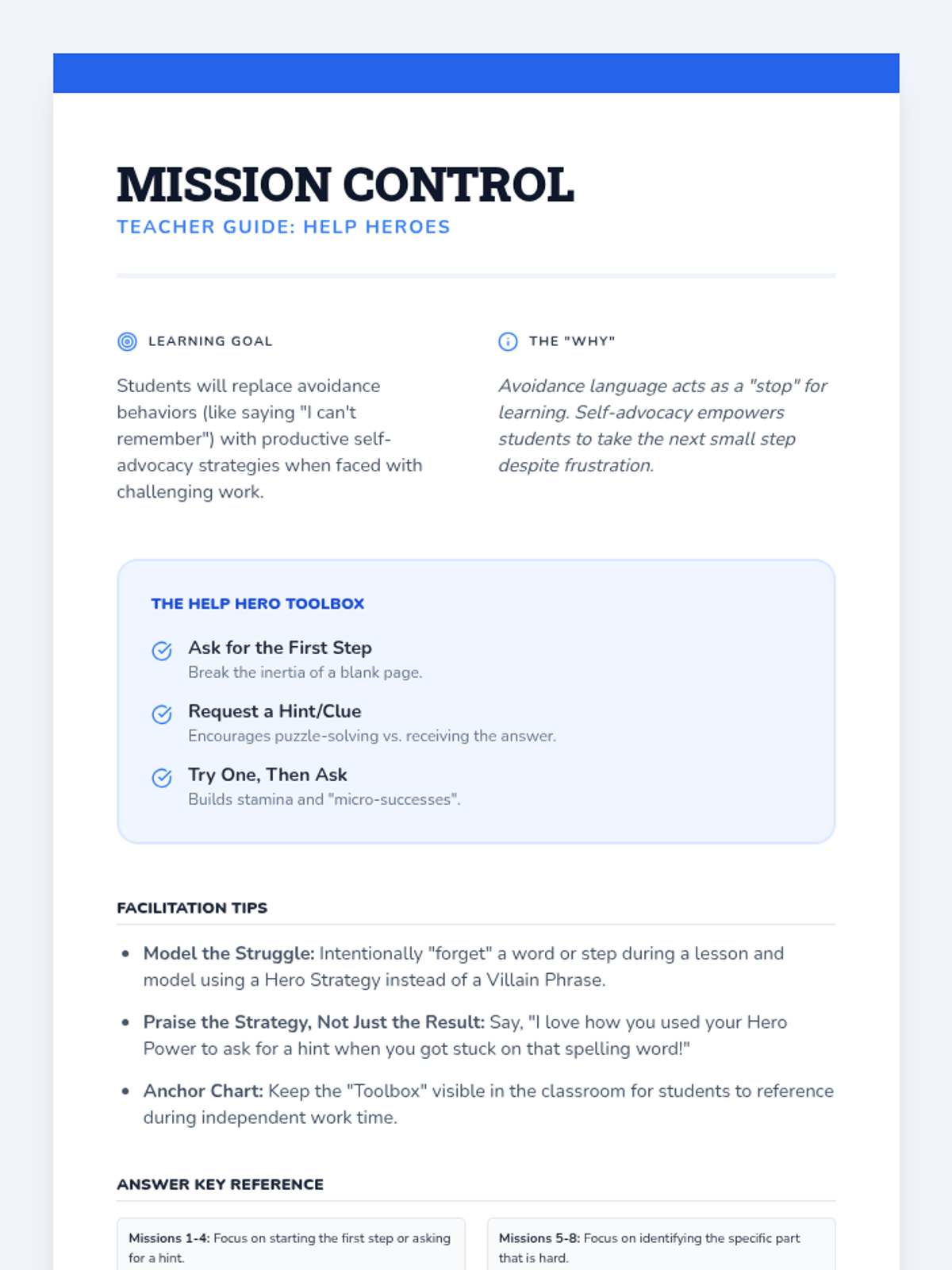
A teacher guide for the Help Heroes lesson, providing instructional context, strategy breakdowns, and facilitation tips for teaching self-advocacy.
A visual presentation introducing self-advocacy strategies for difficult academic tasks, helping students replace avoidance phrases with productive asks for help.
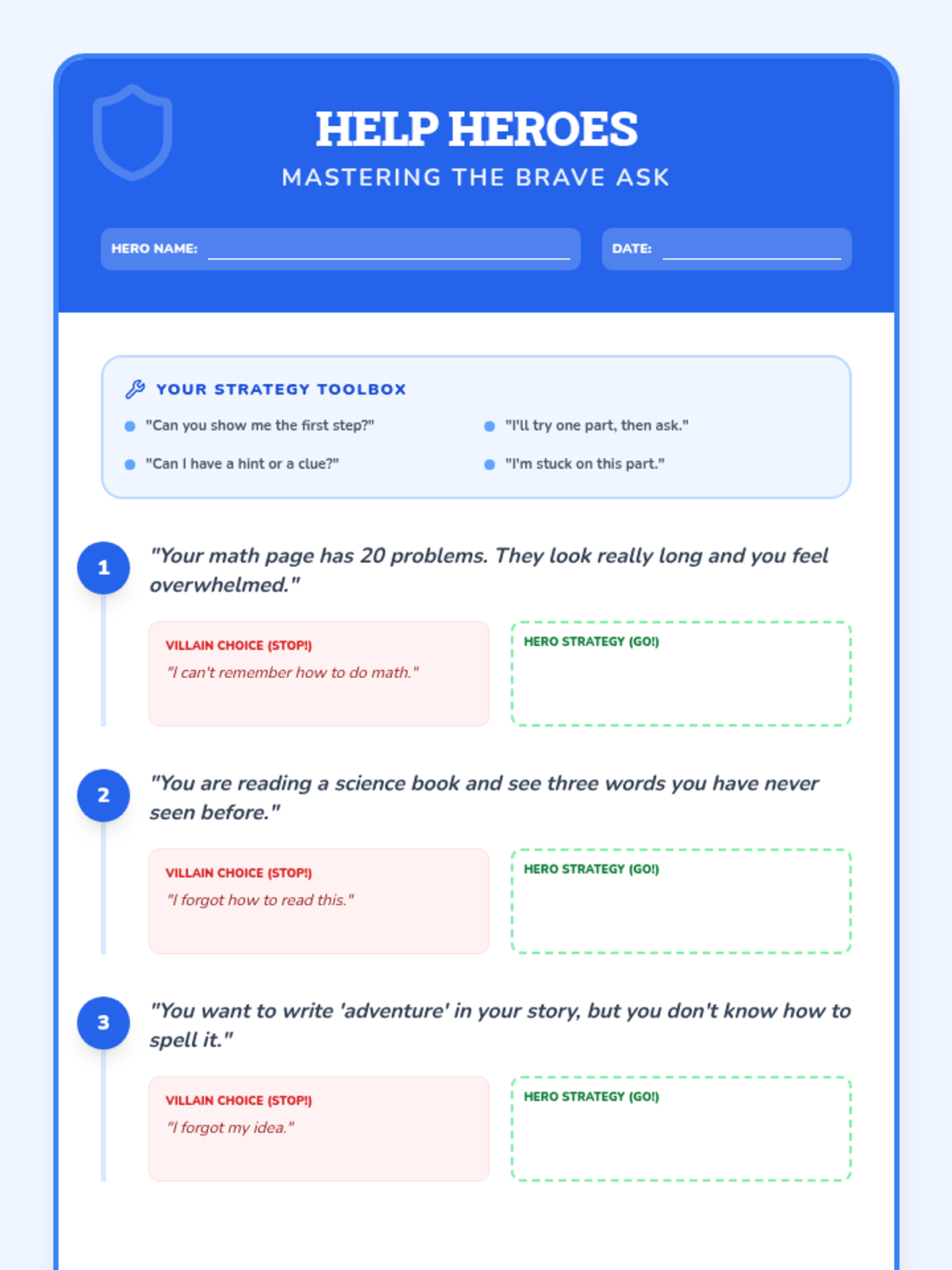
A superhero-themed worksheet designed to help 2nd-grade students practice self-advocacy strategies when academic tasks feel difficult, replacing avoidance phrases with productive asks for help.
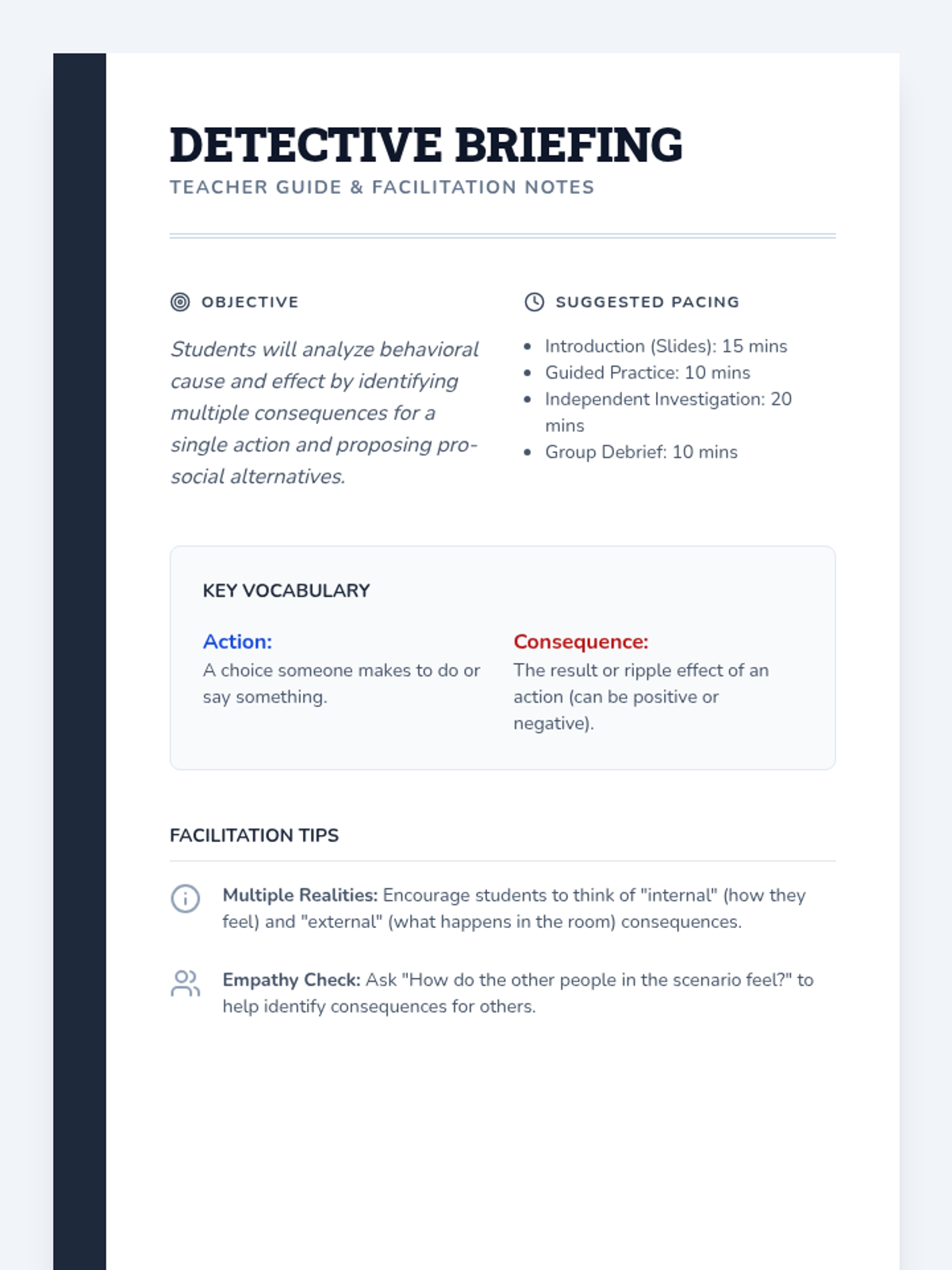
A comprehensive guide for teachers including lesson objectives, key vocabulary, facilitation tips, and a detailed answer key for the 12 behavioral scenarios.
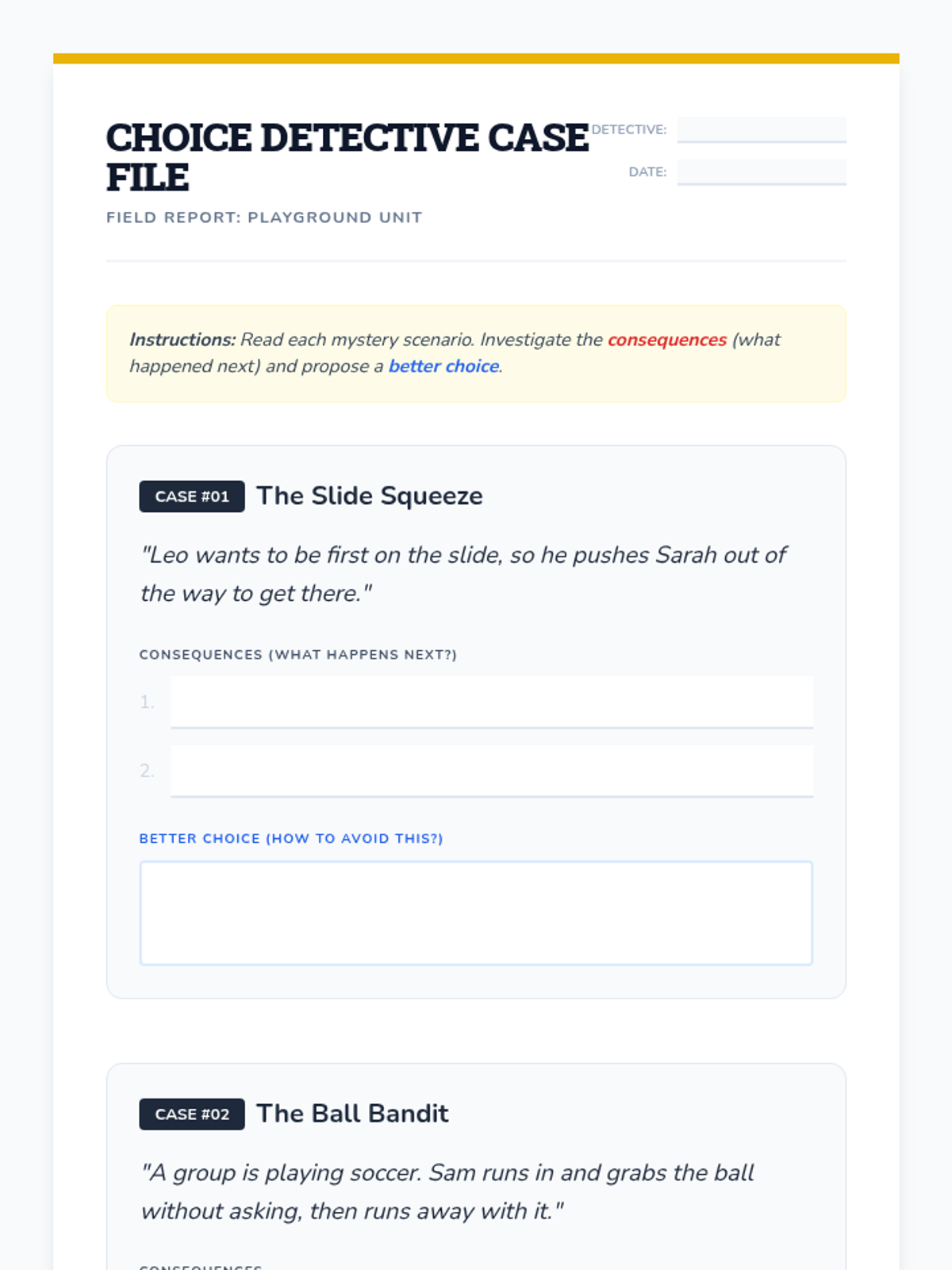
A 4-page detective-themed worksheet with 12 scenarios covering playground conflicts, classroom rules, work habits, and impulsivity. Each scenario requires students to identify two consequences and one alternative behavior.
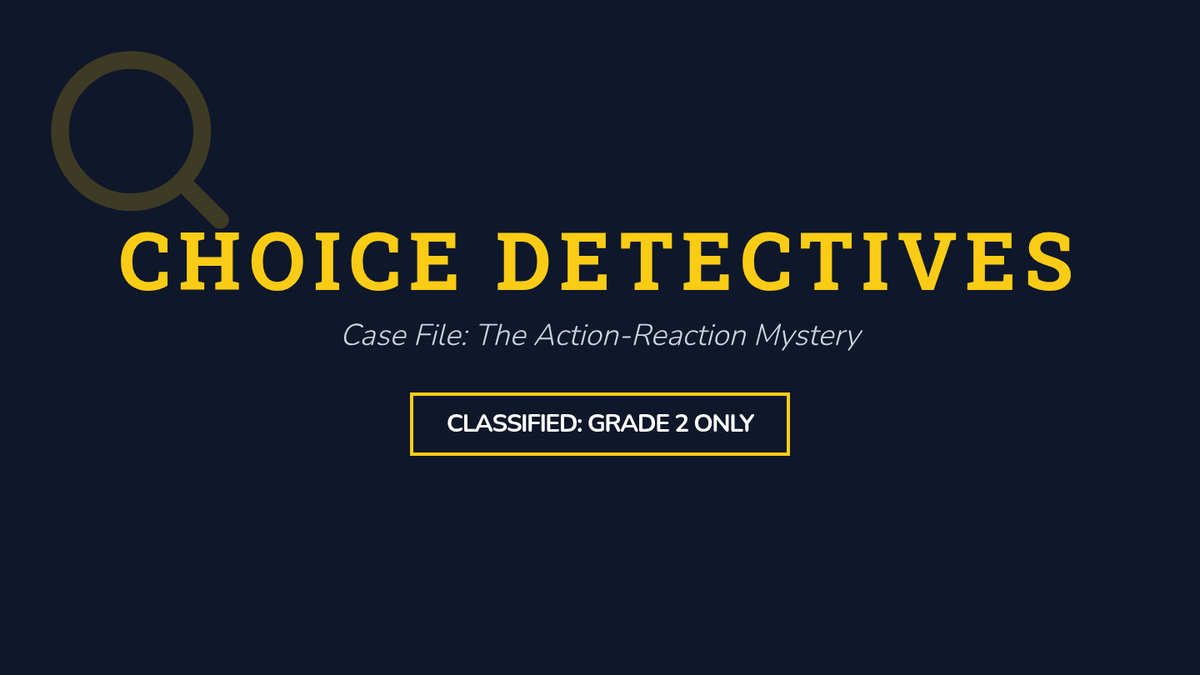
A visual presentation introducing the concepts of actions and consequences through a 'Choice Detective' theme, including group practice scenarios.
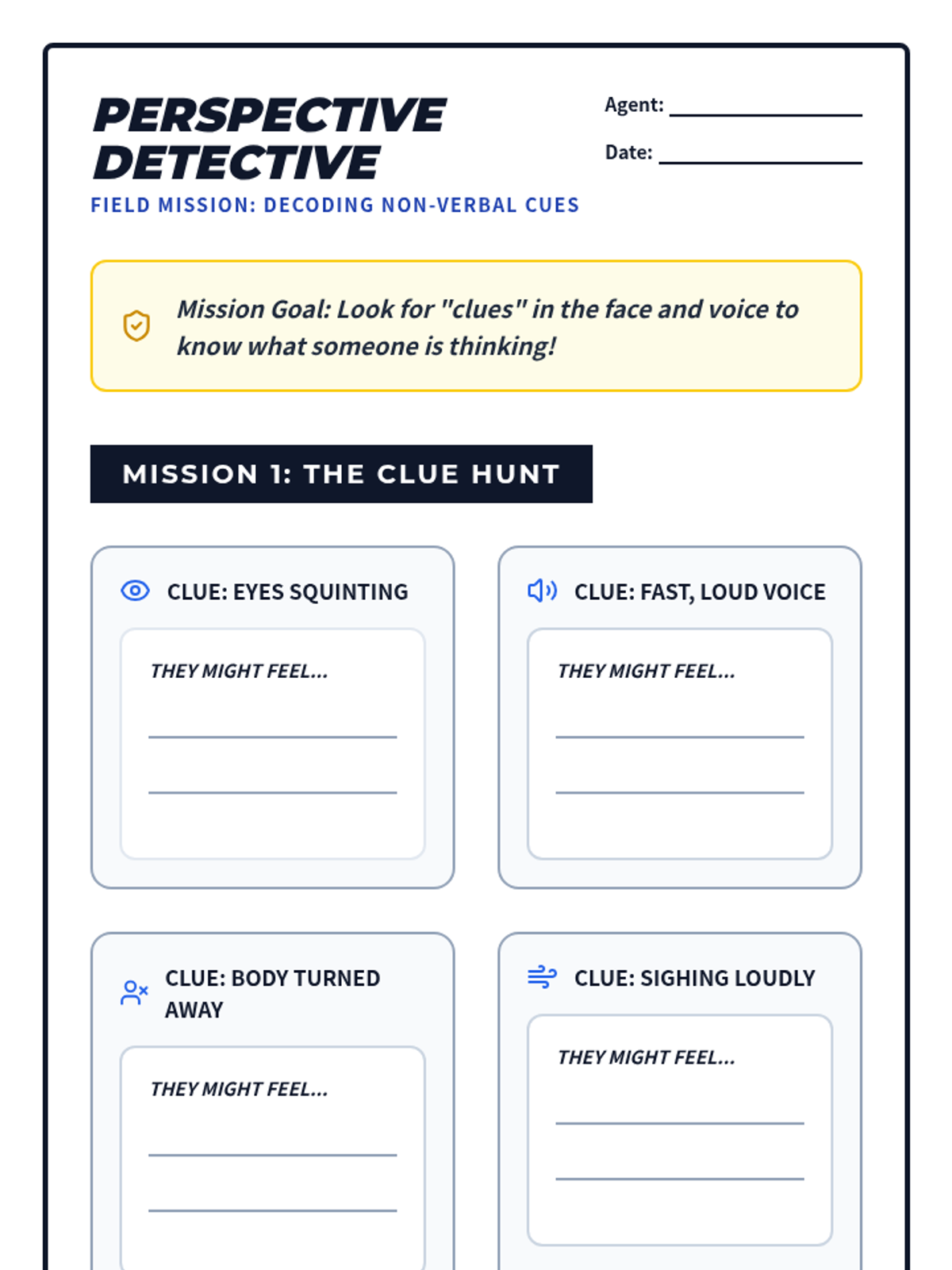
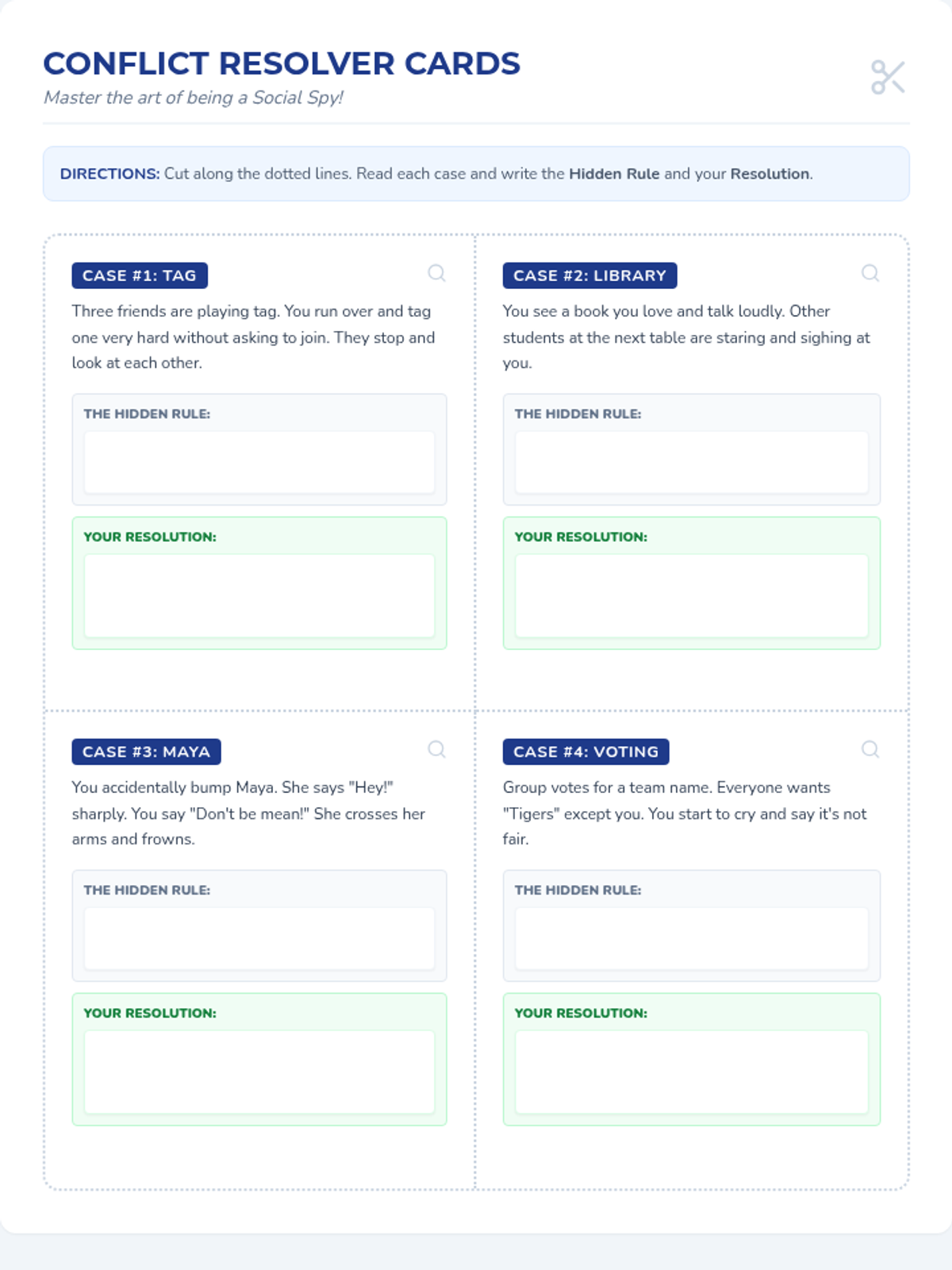
A student worksheet that tasks students with 'decoding' non-verbal clues, identifying hidden social rules in specific school scenarios, and practicing a three-step conflict resolution model.
Printable task cards containing six relatable social scenarios for 4th graders, designed to practice identifying hidden rules and applying perspective-taking strategies during peer conflicts.