A reflection and simulation log for students to track their use of de-escalation skills during role-play exercises.
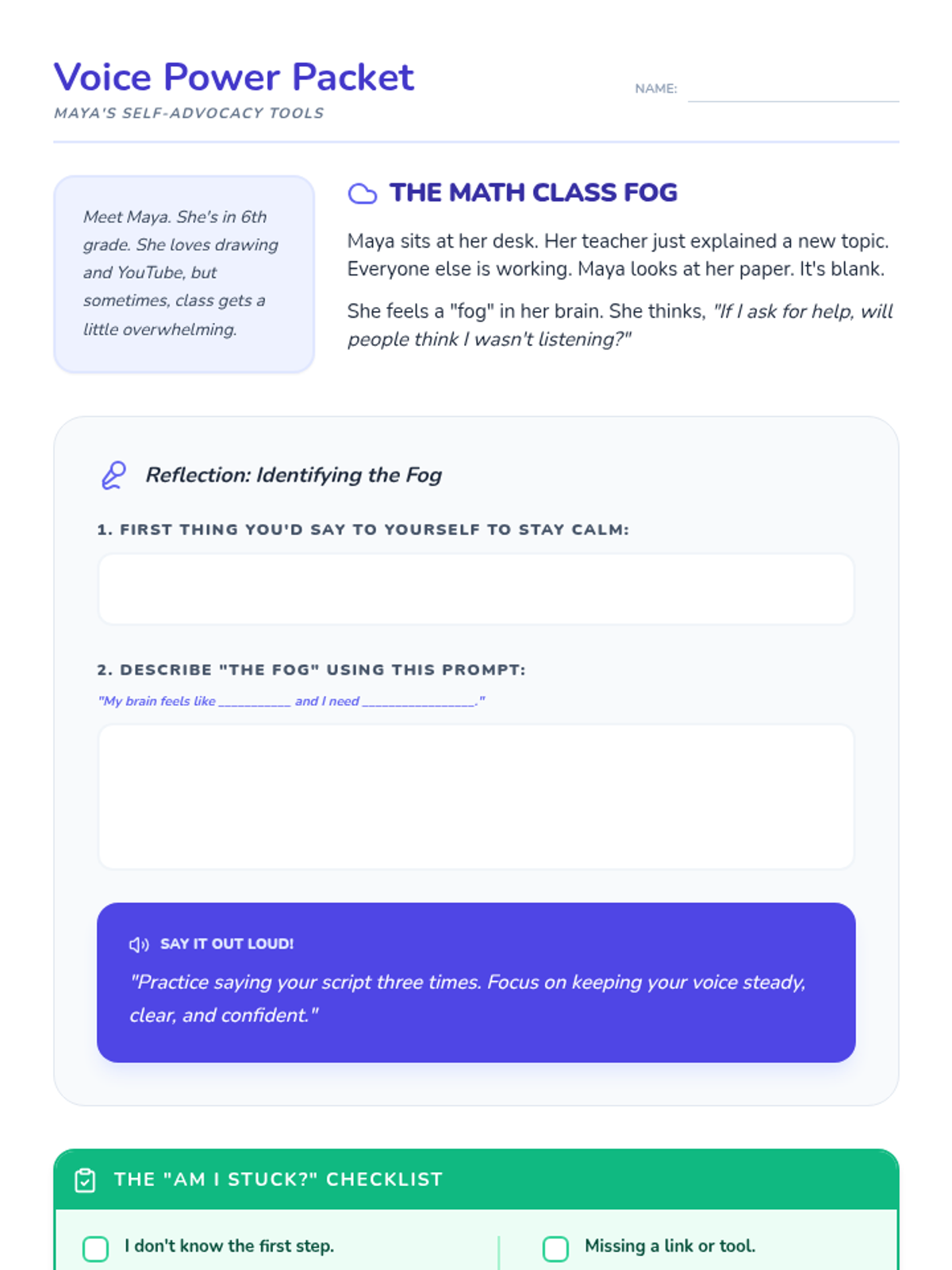
A 3-page student packet including a social story about self-advocacy, a diagnostic checklist, reflection questions with script-building areas, and standalone printable tools (sentence starters and mini cards). Updated to remove drawing tasks and focus on verbal rehearsal.
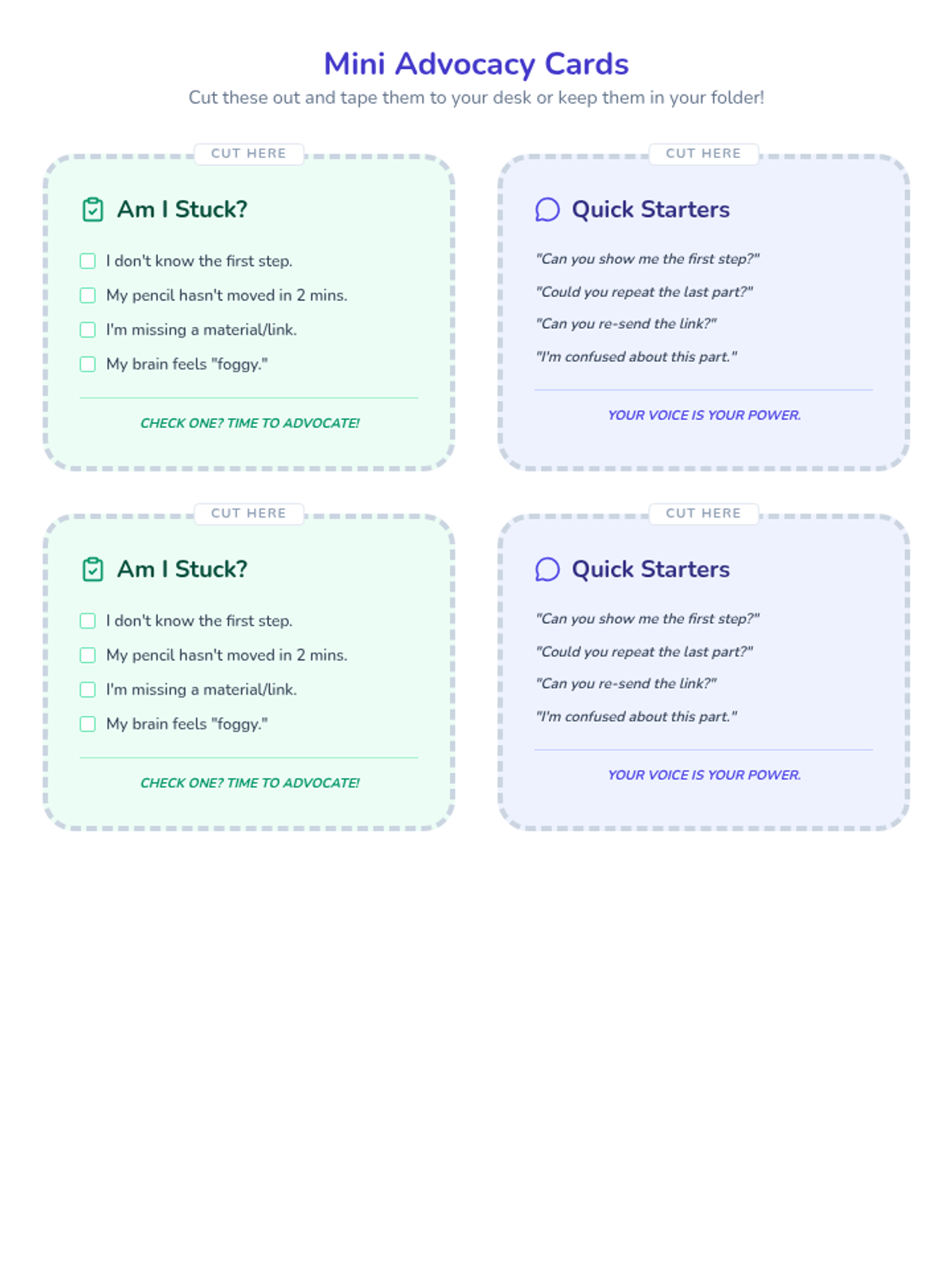
A collection of small, cut-out advocacy cards including the 'Am I Stuck?' checklist and quick sentence starters. Designed to be taped to a desk or kept in a pencil case for portable support.
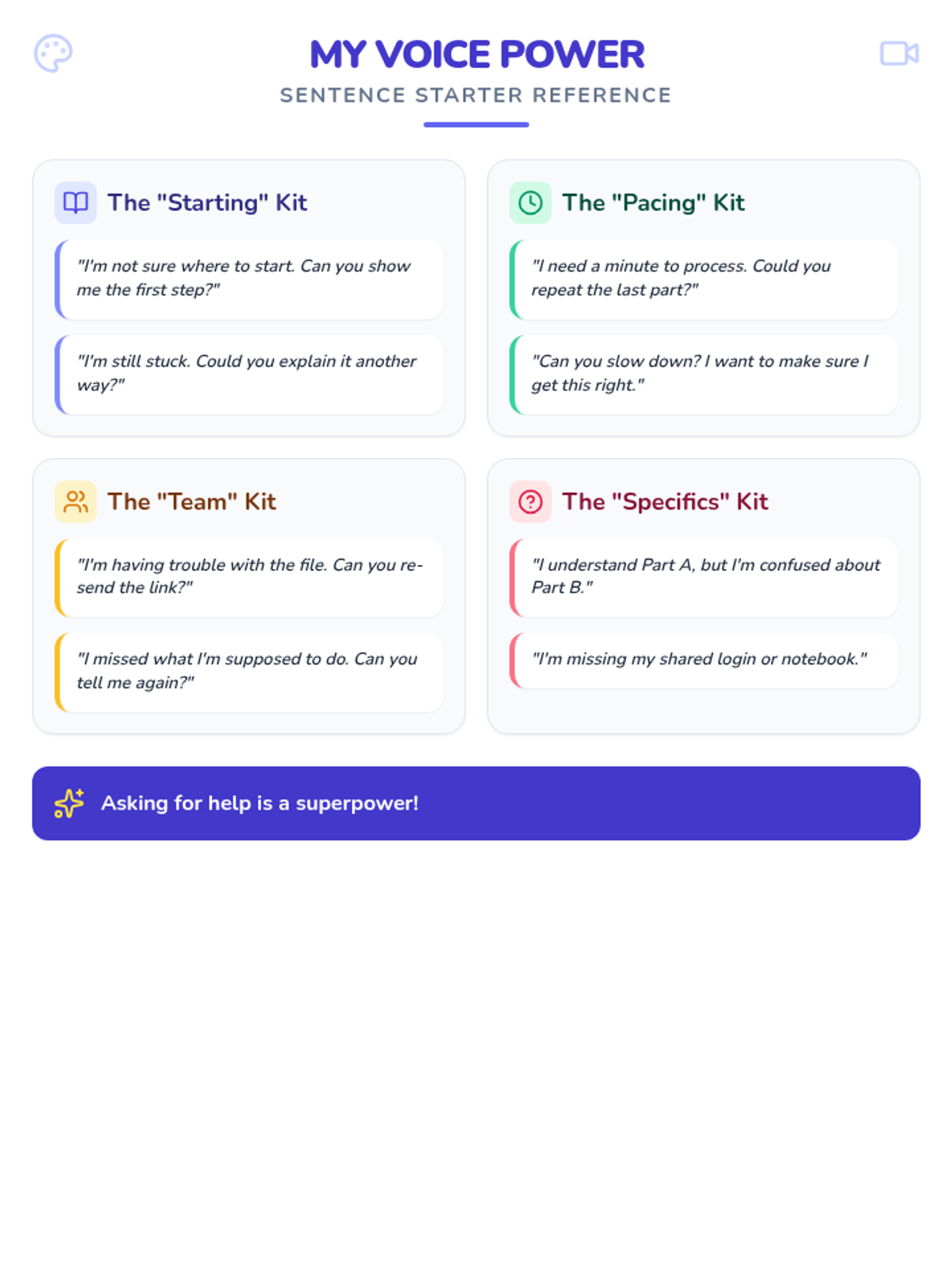
A full-page visual reference of sentence starters for self-advocacy, categorized by situation (Starting, Pacing, Teamwork, and Specifics). Designed for easy reference on a desk or wall. Now fits on a single page.
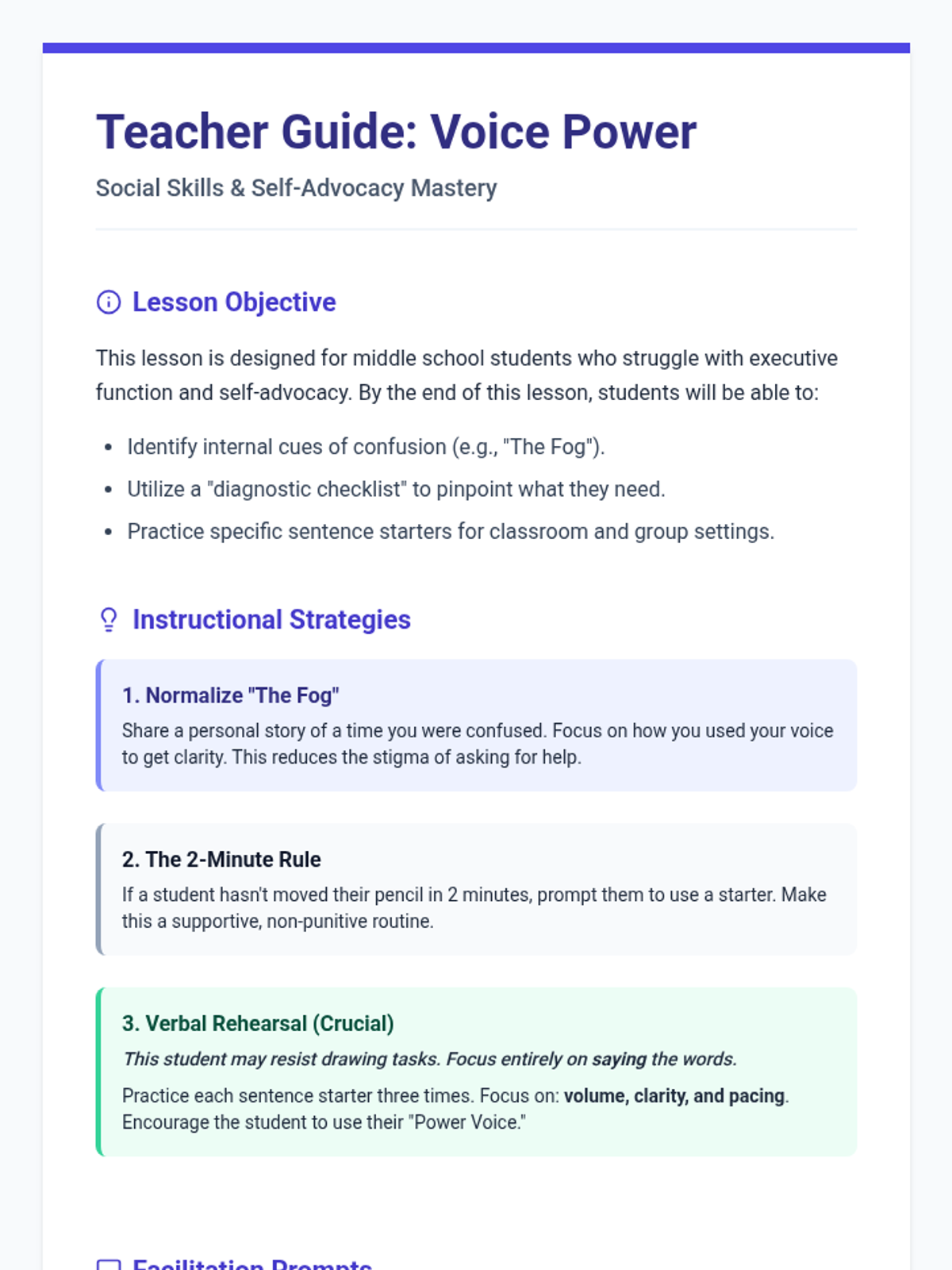
A teacher's facilitation guide for the Voice Power lesson, updated to prioritize verbal rehearsal and scripting over drawing tasks. Includes instructional tips, discussion prompts, and differentiation strategies.
A supportive slide deck designed for direct instruction on self-advocacy. Covers 'the fog' of confusion, the 2-minute rule for seeking help, and practical sentence starters for middle schoolers.
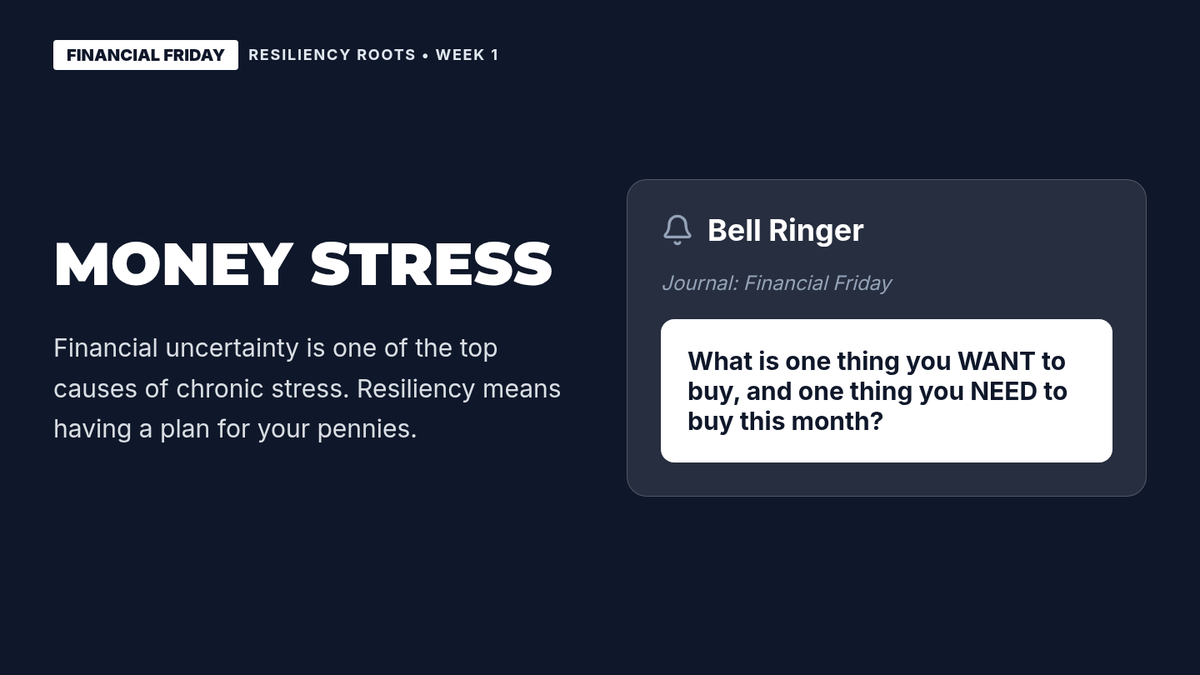
Financial Friday presentation slides. Connects financial literacy to stress management by introducing the concept of a 'Resiliency Fund' (emergency savings) and distinguishing between needs and wants. Now with improved text contrast and balanced visual layout.
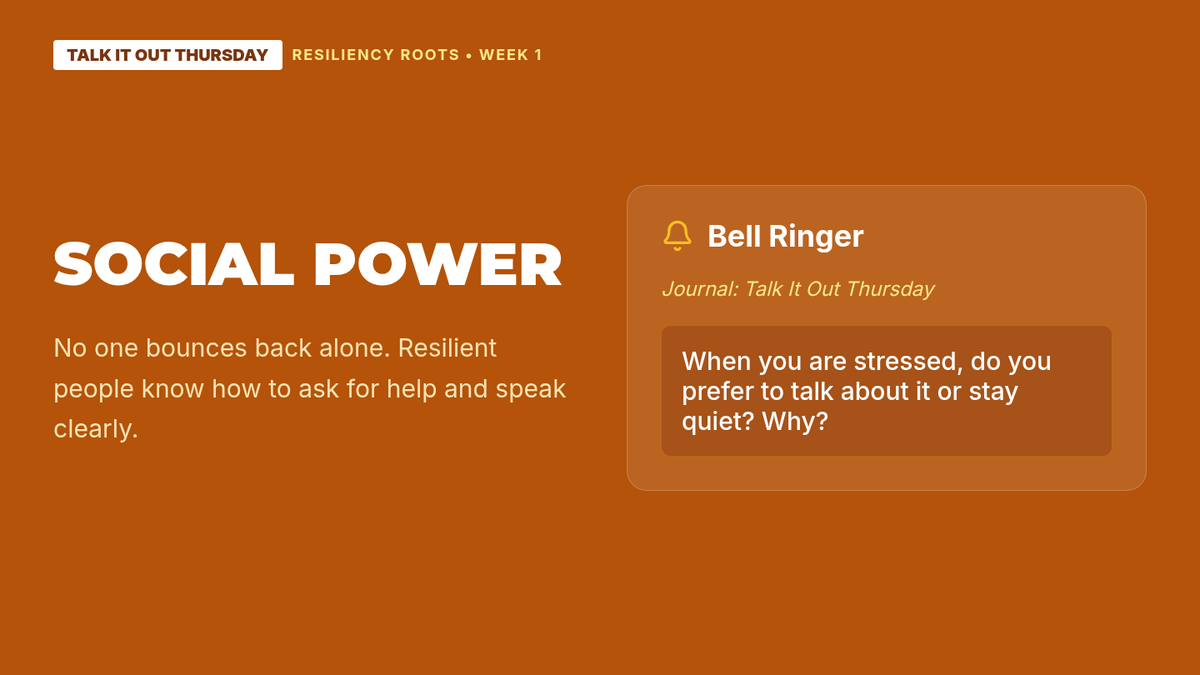
Talk It Out Thursday presentation slides. Focuses on assertive communication using 'I' statements and identifying social support networks as a component of resiliency.
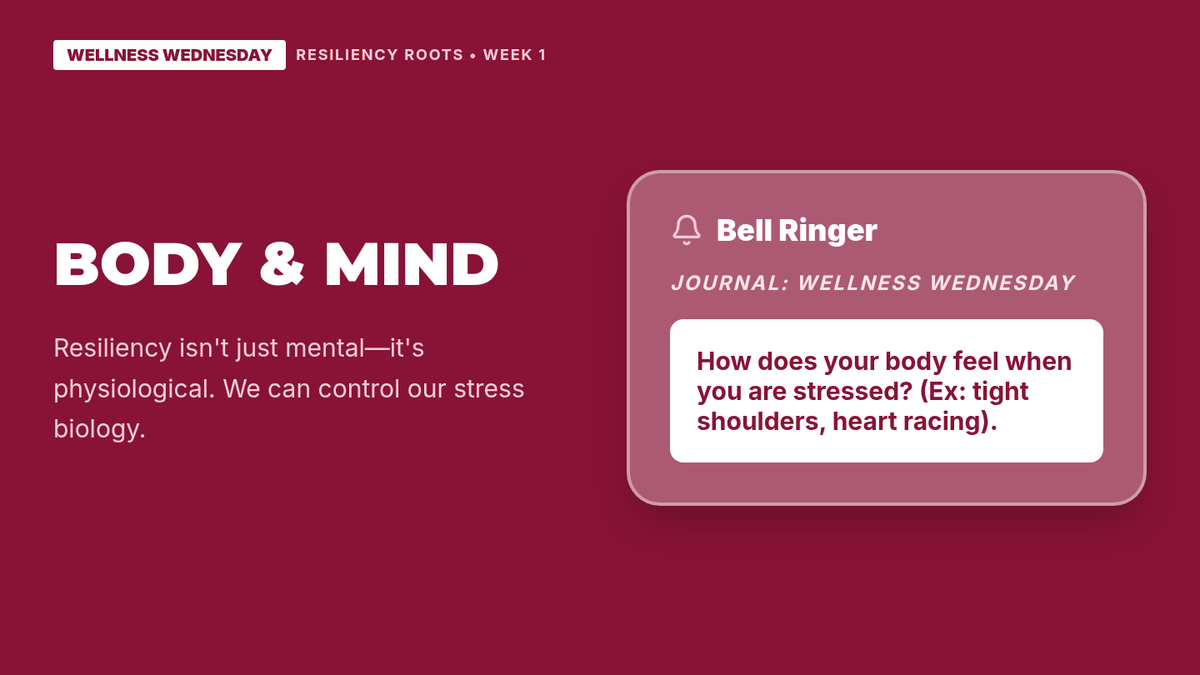
Wellness Wednesday presentation slides. Introduces the biology of stress (Fight or Flight vs. Rest and Digest) and leads students through the 4-7-8 breathing technique as a resiliency tool. Now features a split 'Wellness Menu' across two slides to ensure readability and full content visibility.
Time Management Tuesday presentation slides. Focuses on the 'Big Rocks' analogy and the concept of 'Buffer Zones' to mitigate time-related stress and build scheduling resiliency.