Lesson plan for Session 3 of the series, focusing on collaborative problem-solving and establishing a path forward for students in conflict.
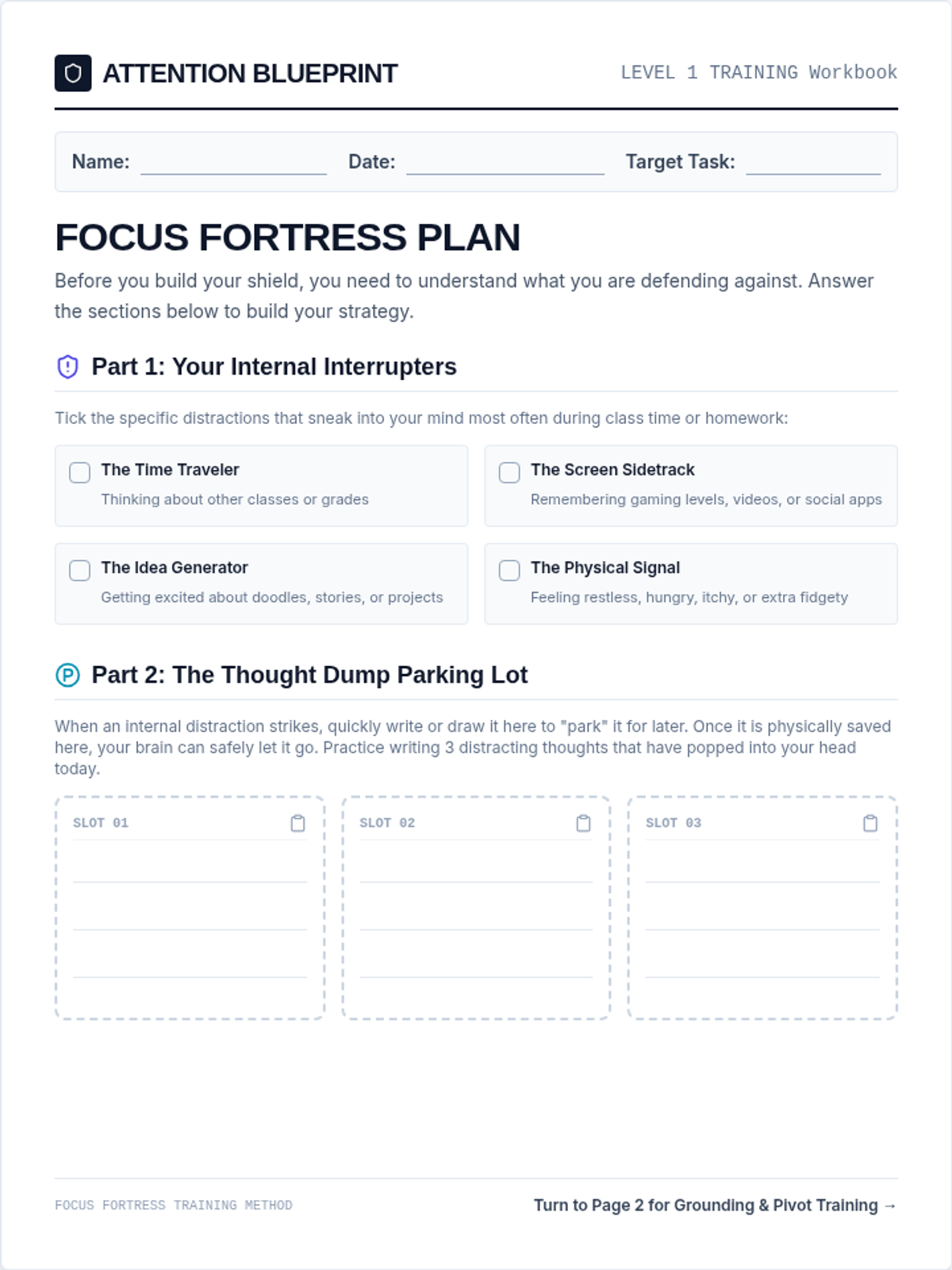
A printable 2-page workbook for students to identify their own internal distractions, practice thought-dump parking, record sensory grounding anchors, and draft personalized pivot self-talk scripts.
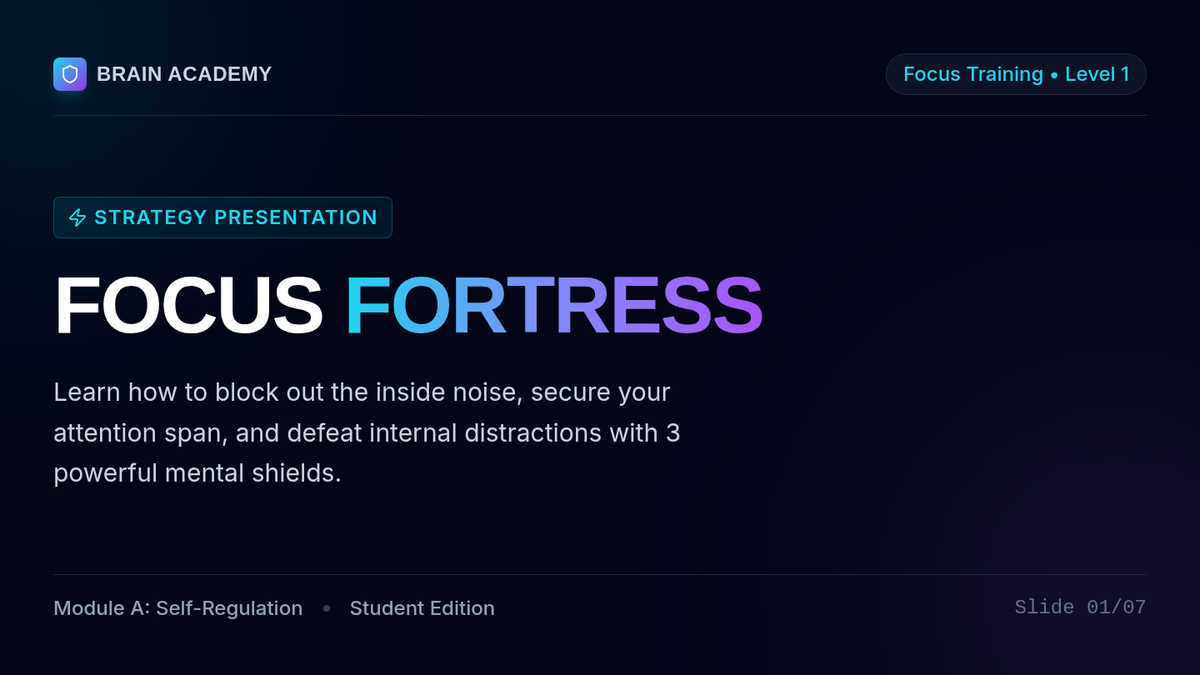
Explicit teaching slides with guided practice on identifying internal distractions and applying redirection techniques, including Thought Dumping, Mindful Grounding, and Self-Talk.
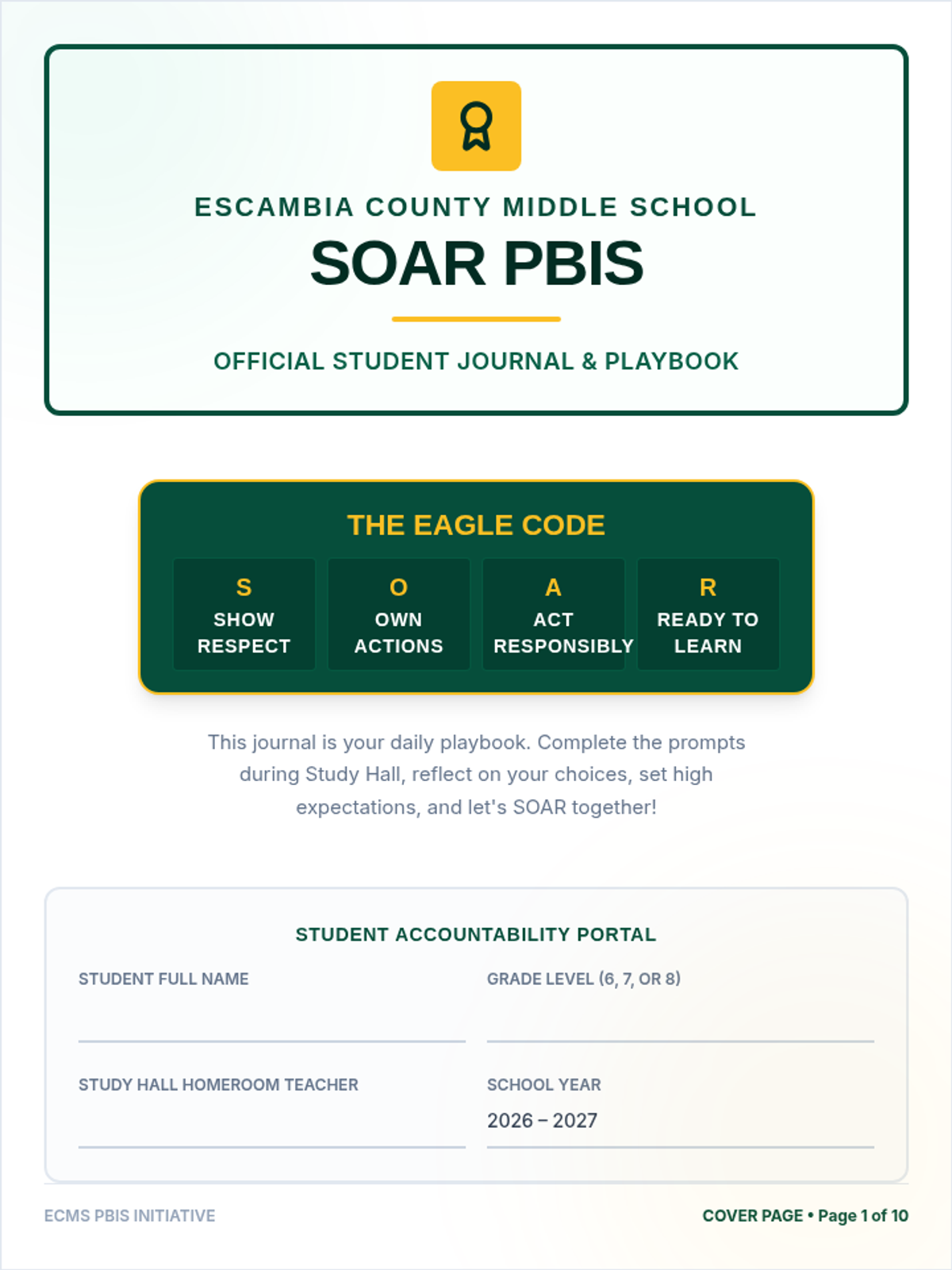
A highly detailed 10-page printed student workbook and journal that perfectly matches the SOAR PBIS Presentation. Provides custom, ruled response areas for all 23 daily mini-lessons, weekly reflection rubrics, self-ratings, and semester goal trackers.
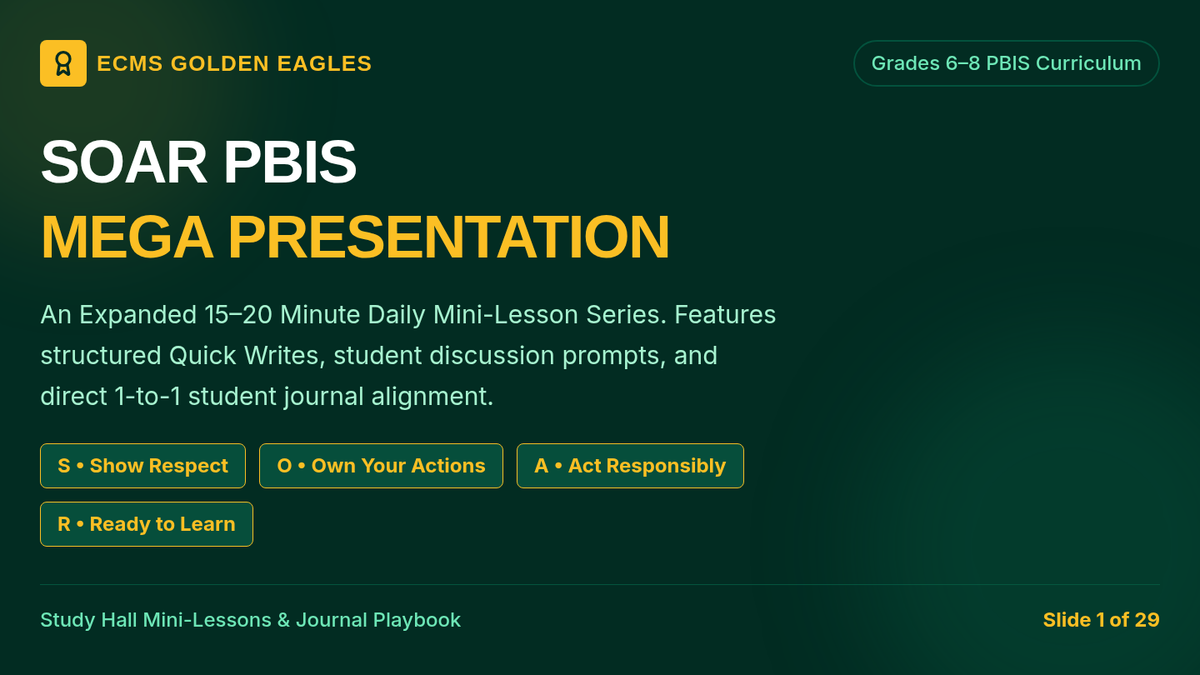
A comprehensive 29-slide presentation containing all 20 lessons for the year-long ECMS SOAR PBIS program. Designed in athletic green and gold, each slide provides 15-20 minute pacing trackers, clear student playbooks with explicit Journal prompts, and direct teacher language.
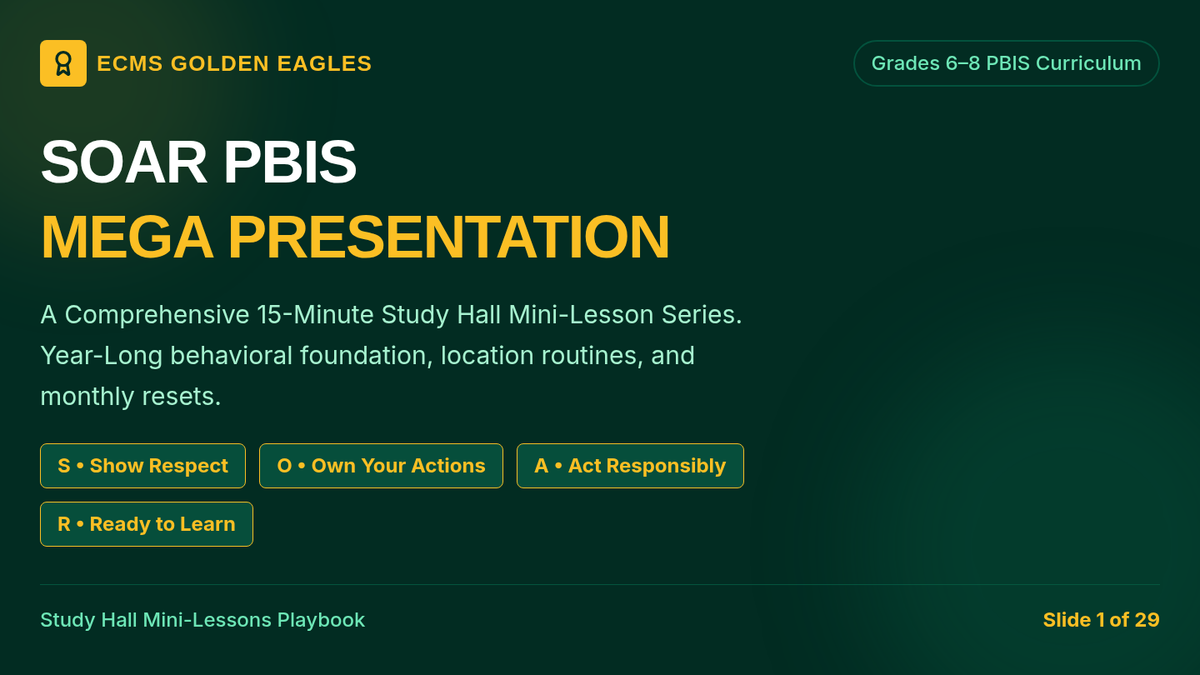
A comprehensive 29-slide presentation containing all 20 lessons for the year-long ECMS SOAR PBIS program. Designed in athletic green and gold, each slide provides 15-minute pacing trackers, clear student playbooks, and direct teacher language.
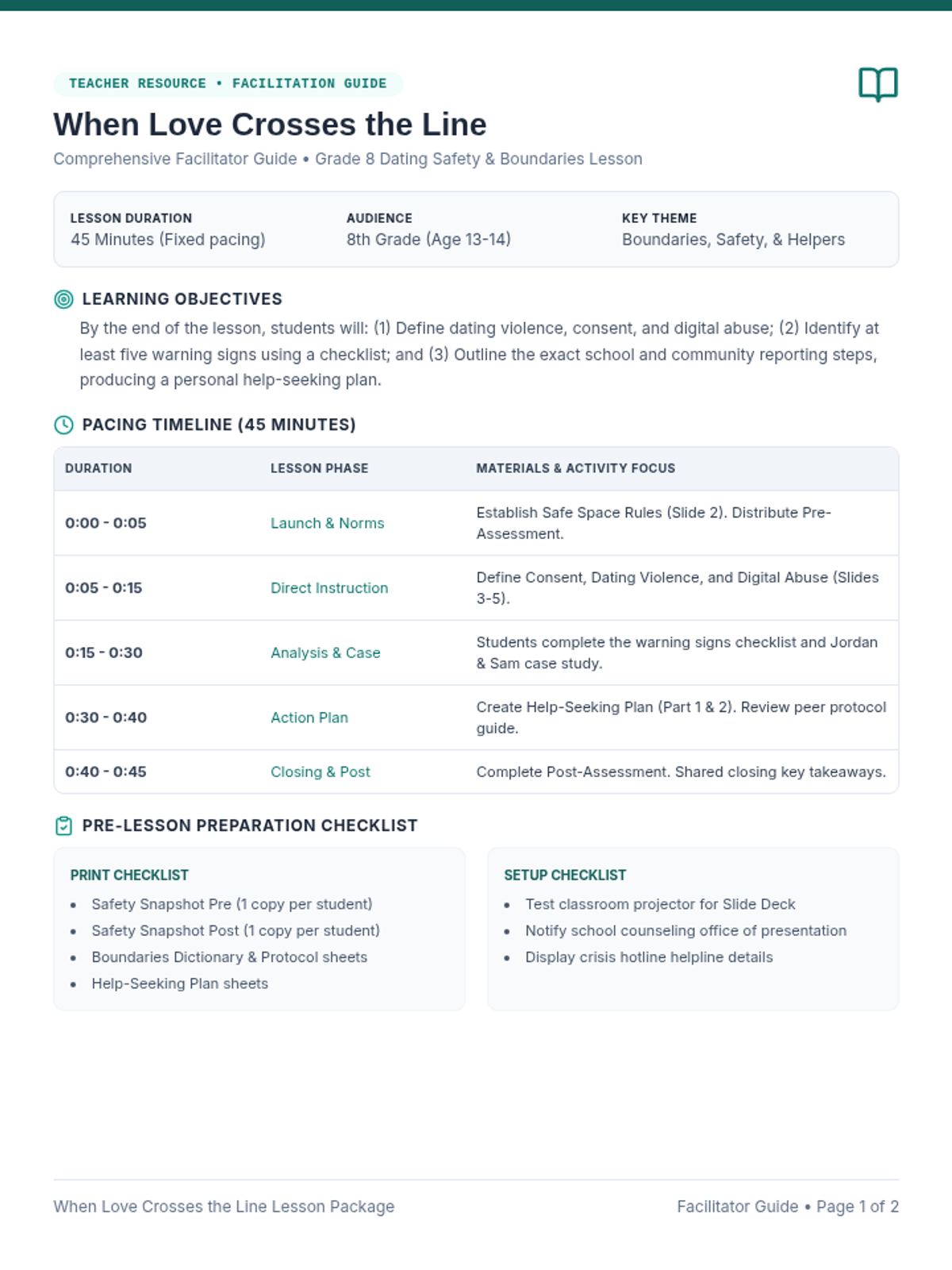
A comprehensive multi-page lesson facilitator guide outlining the 45-minute lesson arc, pacing, activities, discussion guides, and teaching tips.
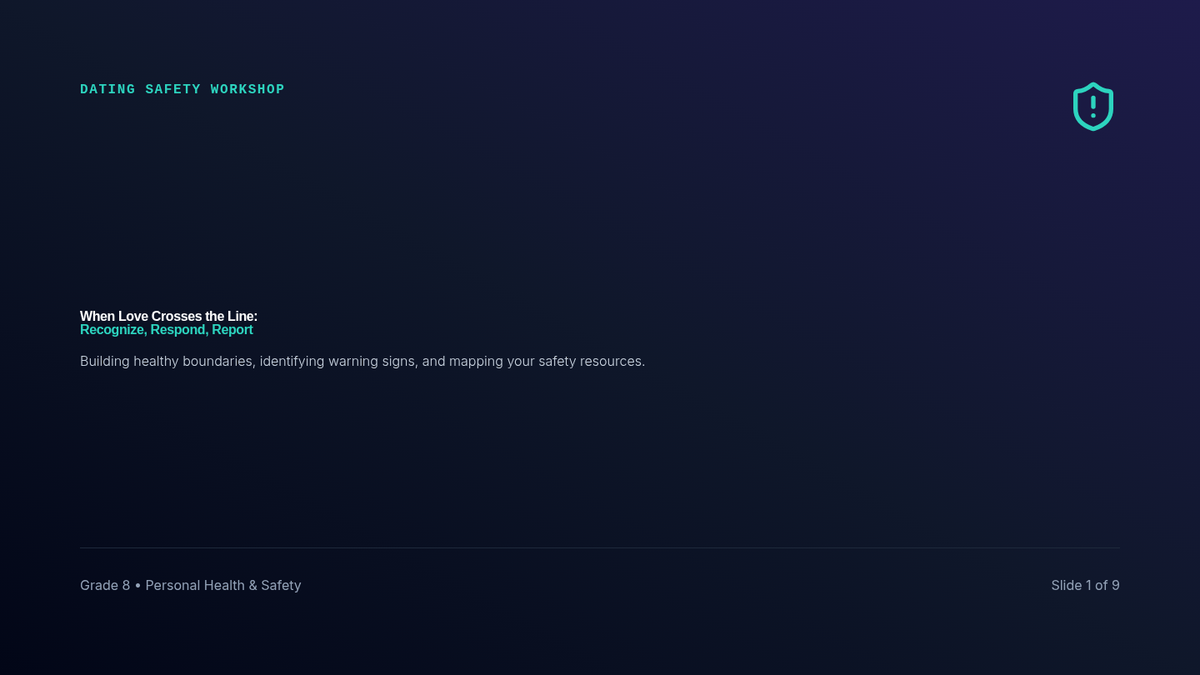
A 9-slide interactive digital presentation deck covering dating safety, consent, power and control dynamics, digital abuse, and step-by-step reporting protocols.
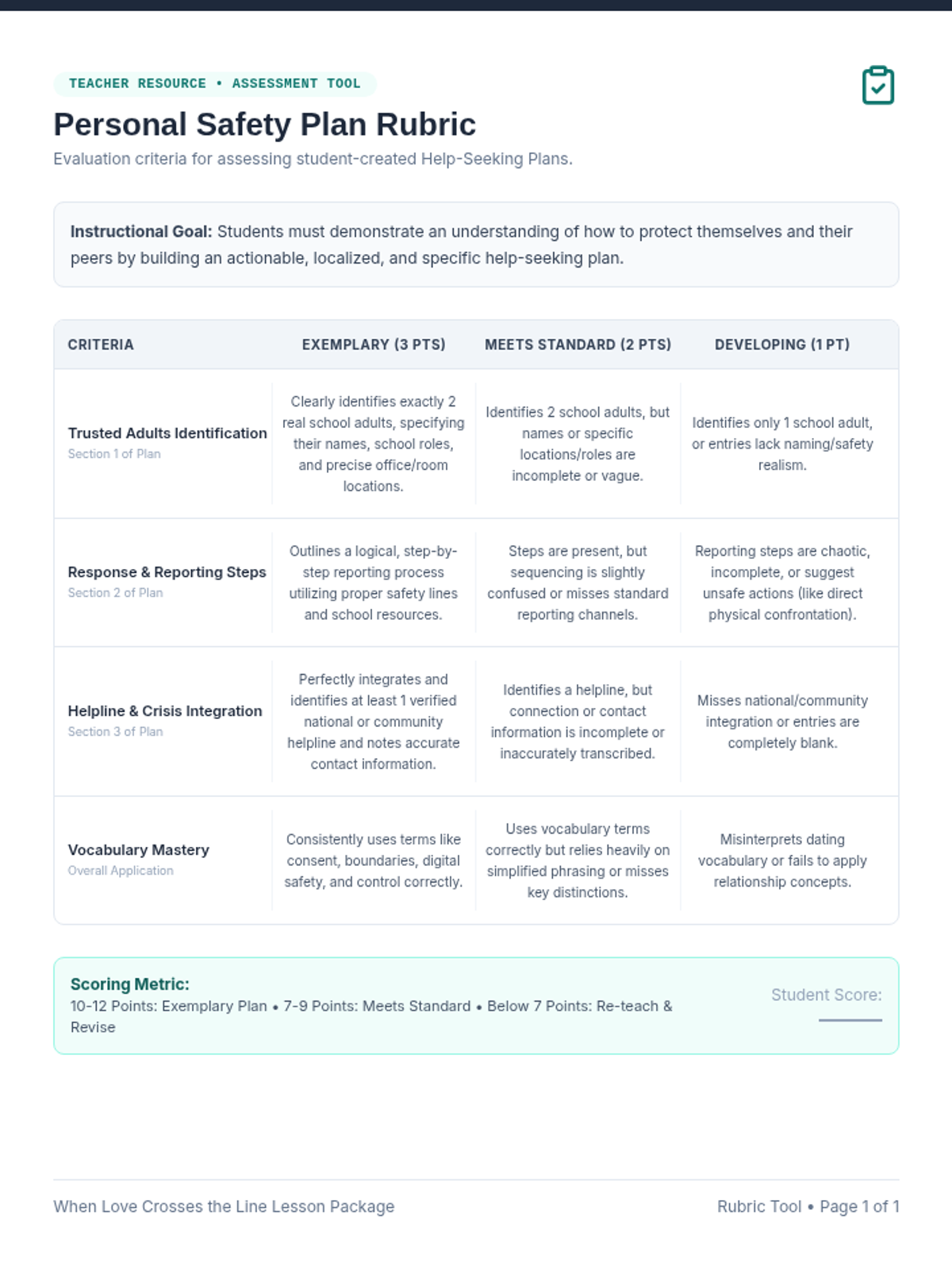
A structured teacher-facing evaluation rubric to assess the student's personal safety plans, focusing on trusted adult identification, reporting steps, and community resources.
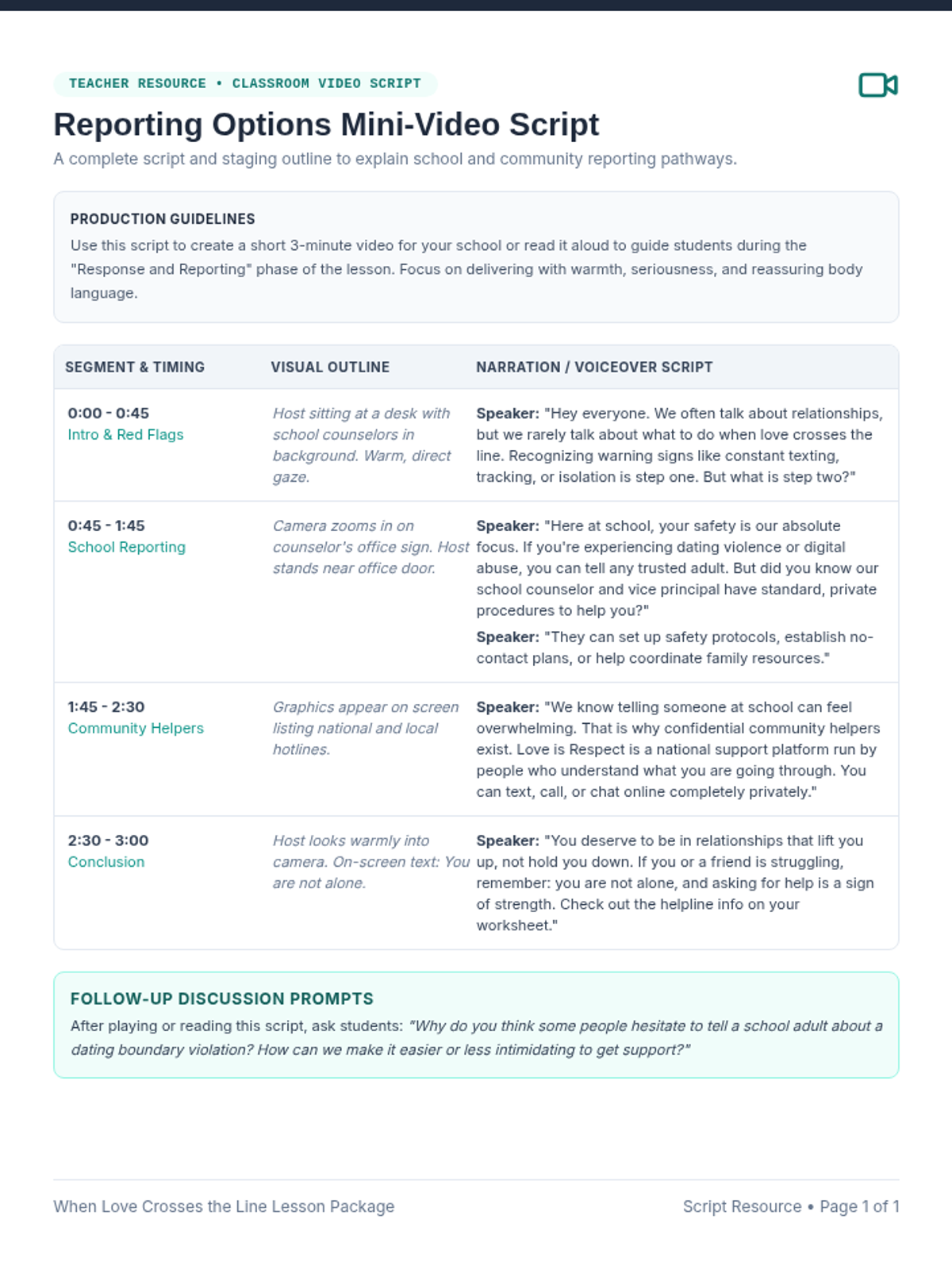
A structured video read-aloud script detailing school and community reporting options, featuring staging directions, key definitions, and student reflection prompts.
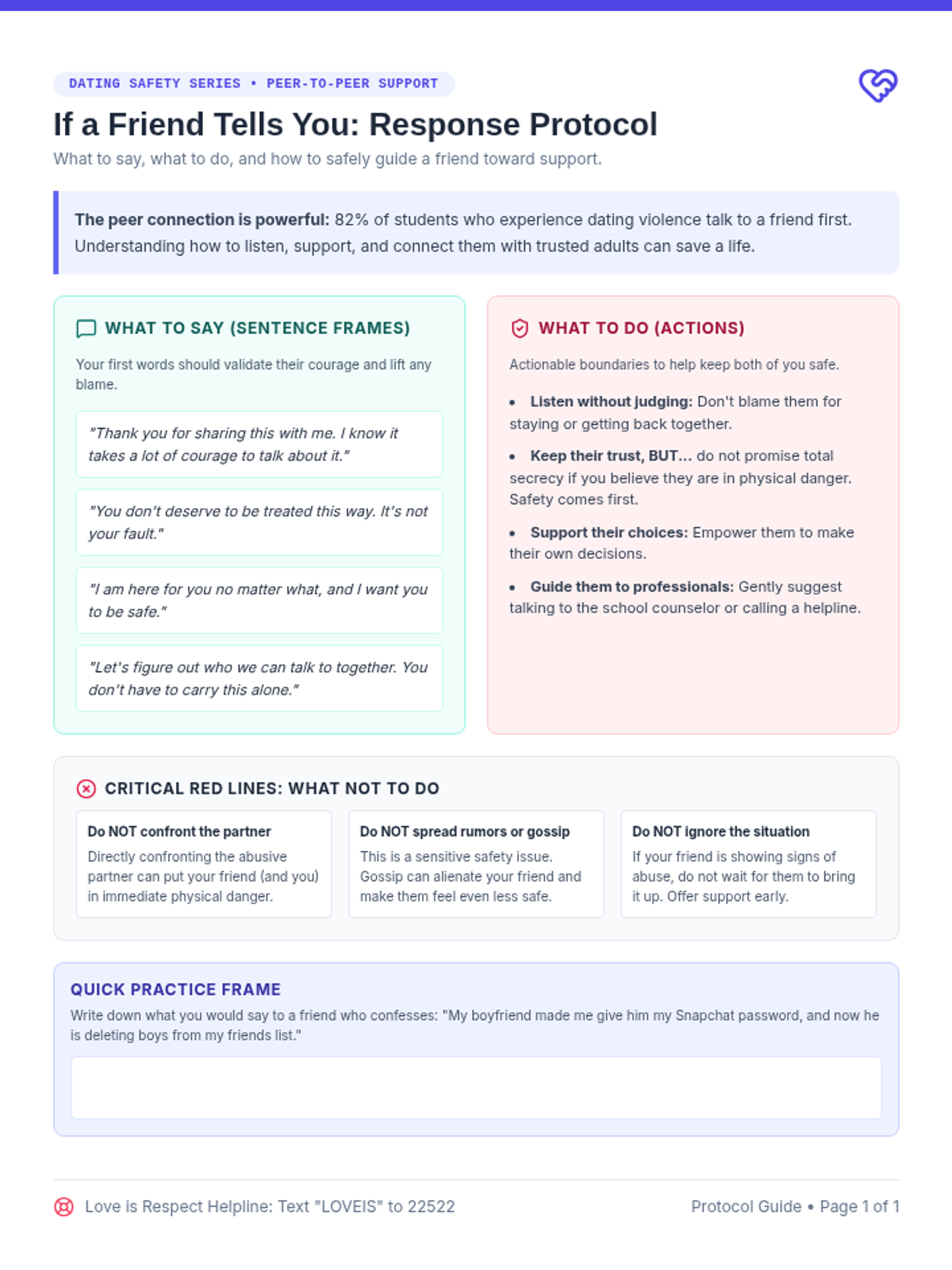
A clean, peer-to-peer support protocol handout providing step-by-step guidance, conversational scripts, and safety limits for helping a friend.
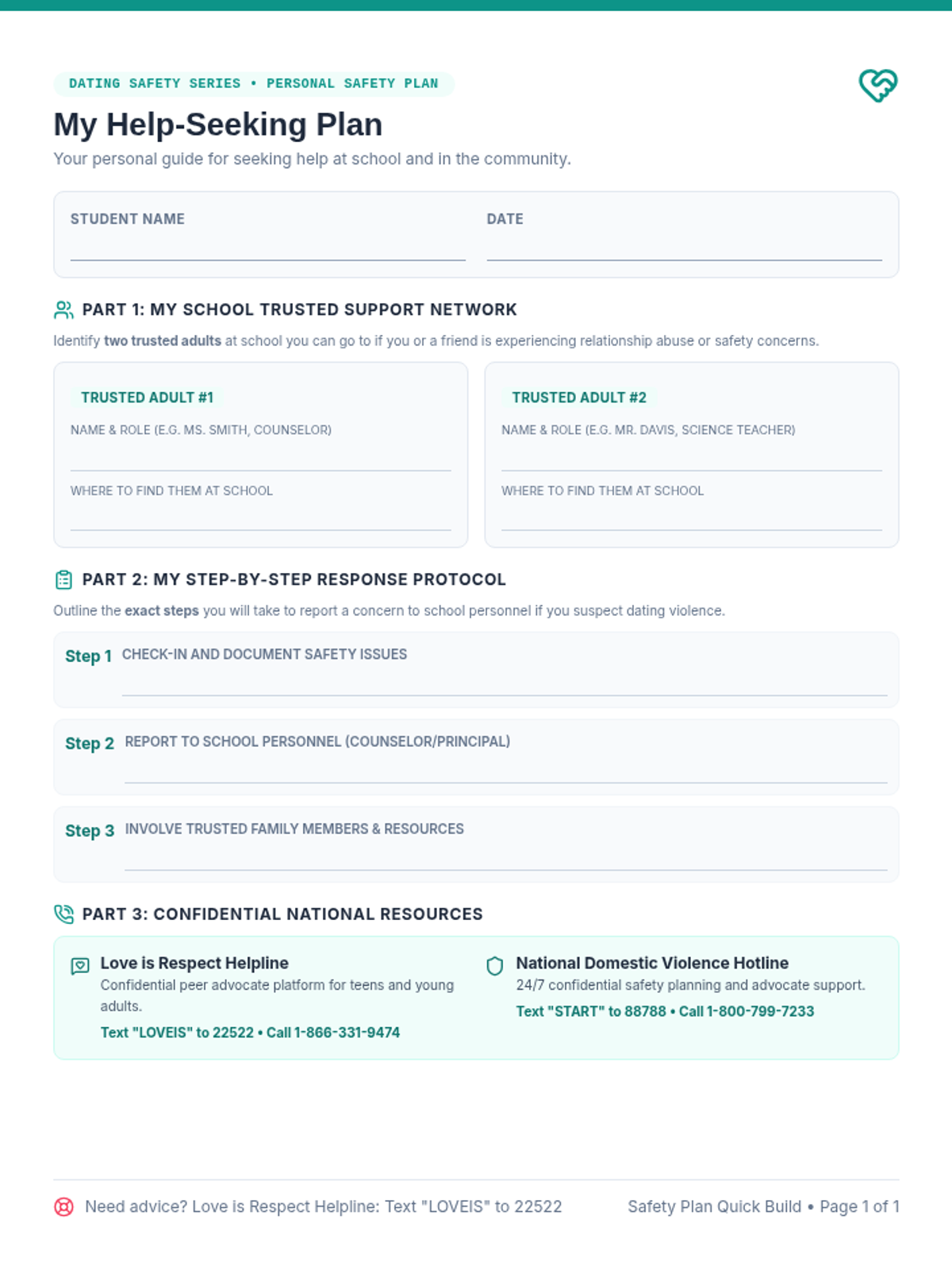
A student worksheet to construct a personalized help-seeking plan, including spaces to identify trusted school adults, outline school reporting procedures, and list national support hotlines.
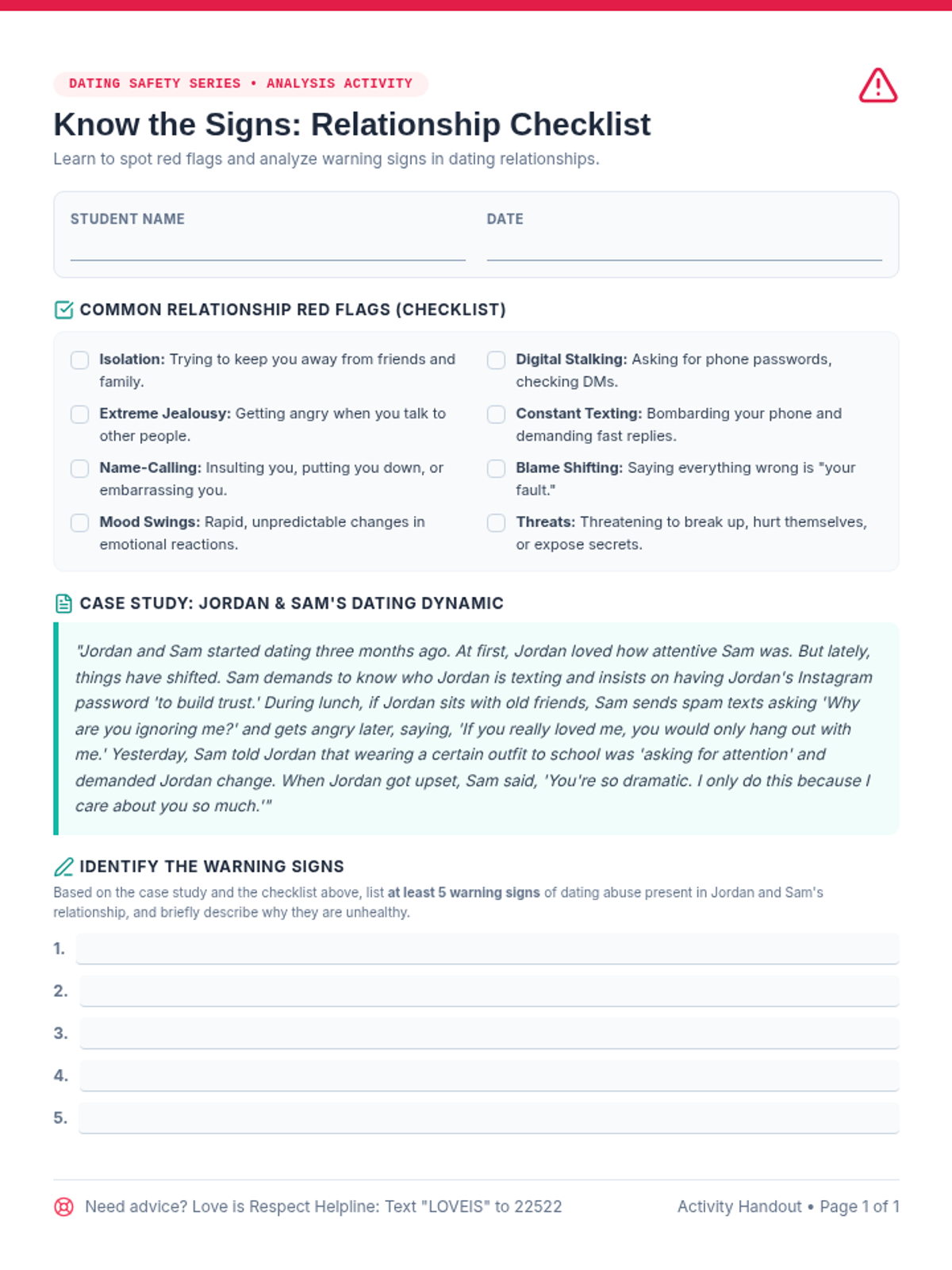
A warning signs checklist paired with a short, relatable dating relationship case study for students to analyze and identify power/control indicators.
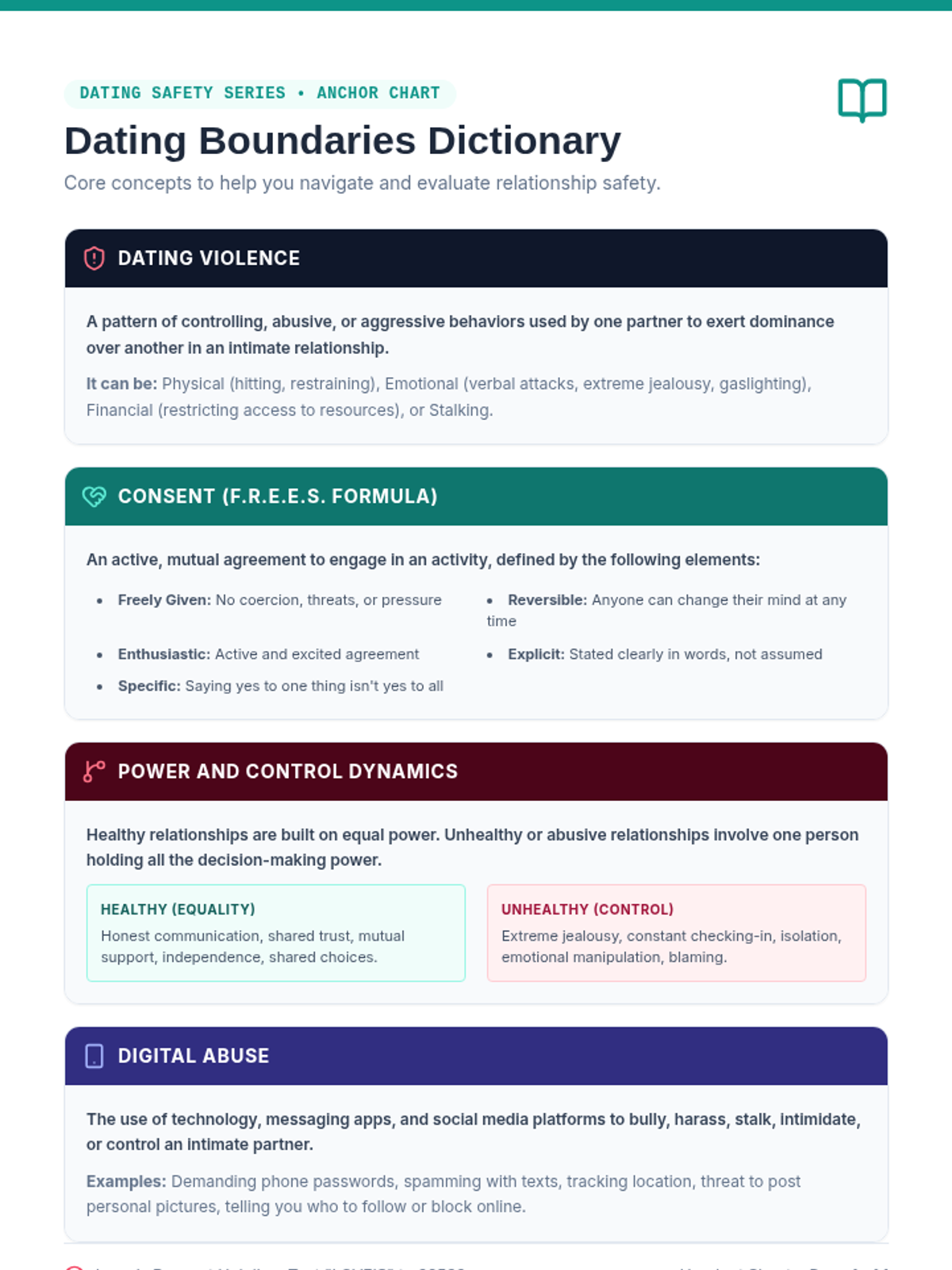
An anchor chart and student reference sheet defining consent, dating violence, digital abuse, and the cycle of power and control.
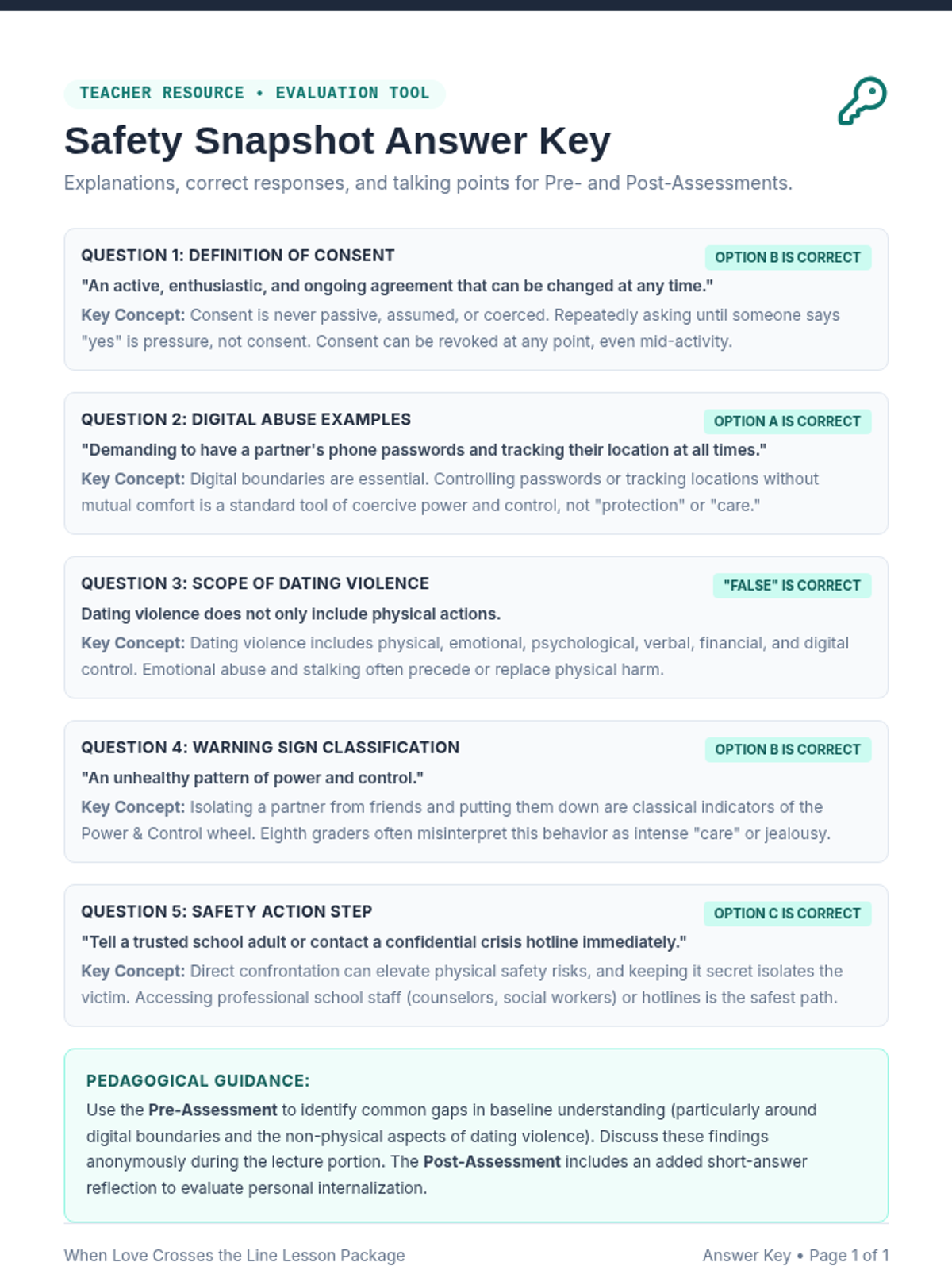
Teacher answer key for the safety snapshots, featuring detailed explanations, talking points for each question, and common misconceptions to address.
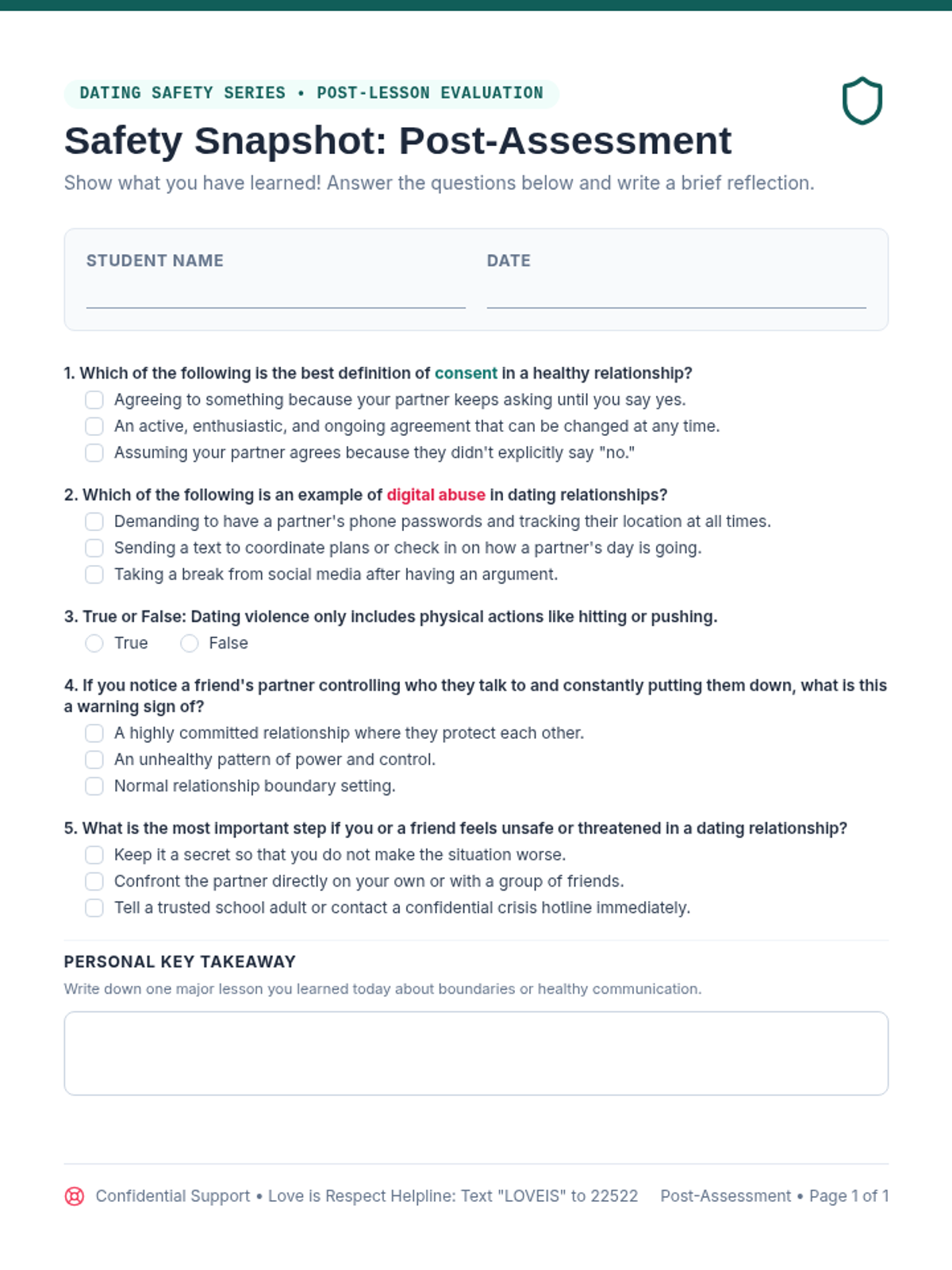
A 5-question post-assessment matching the pre-assessment with an added key takeaway section, designed to measure student learning gains on dating violence, consent, and help-seeking.