A comprehensive facilitator guide for the attendance workshop, including slide-by-slide scripts, interactive activity instructions, and tips for handling difficult conversations.
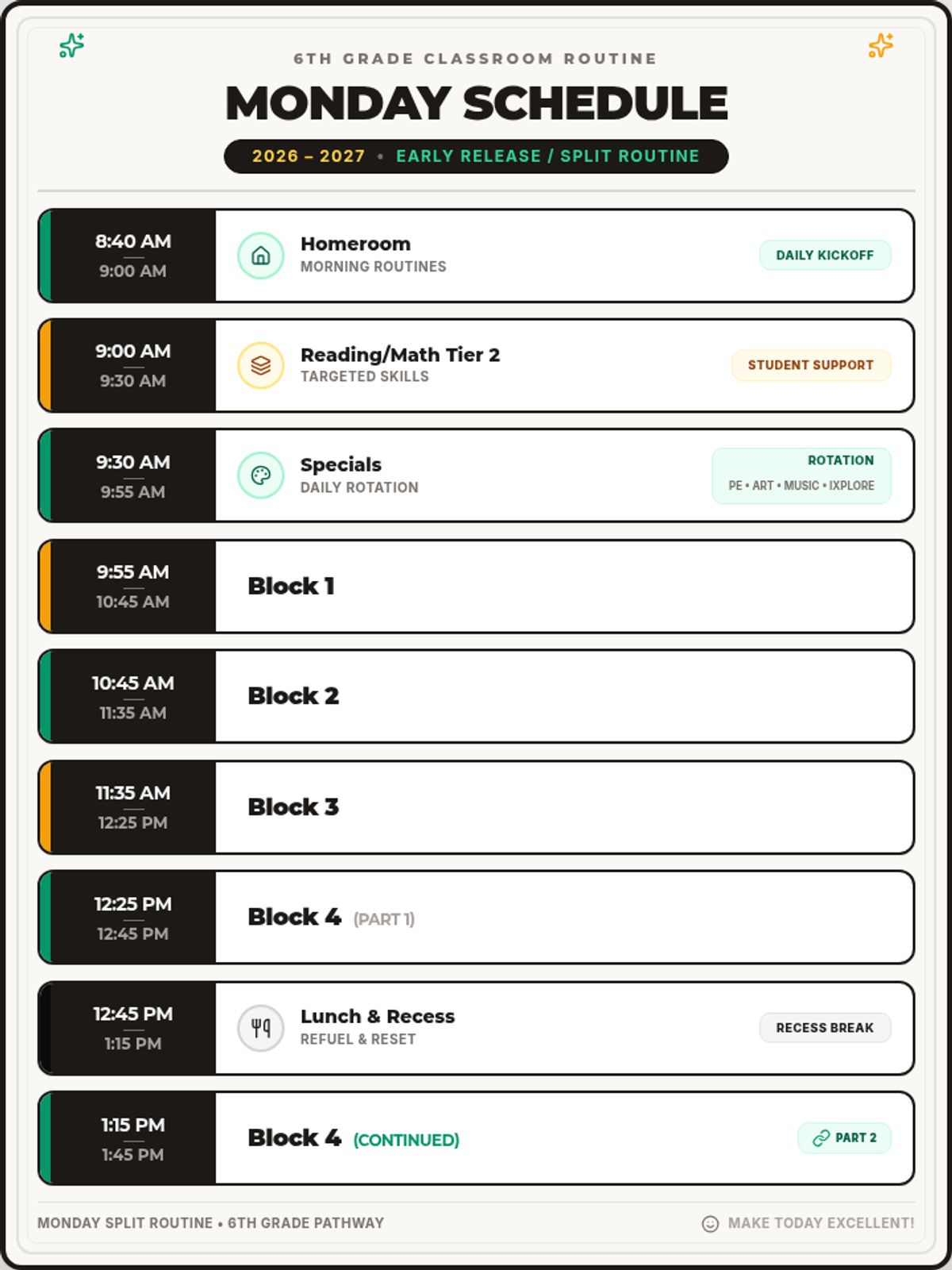
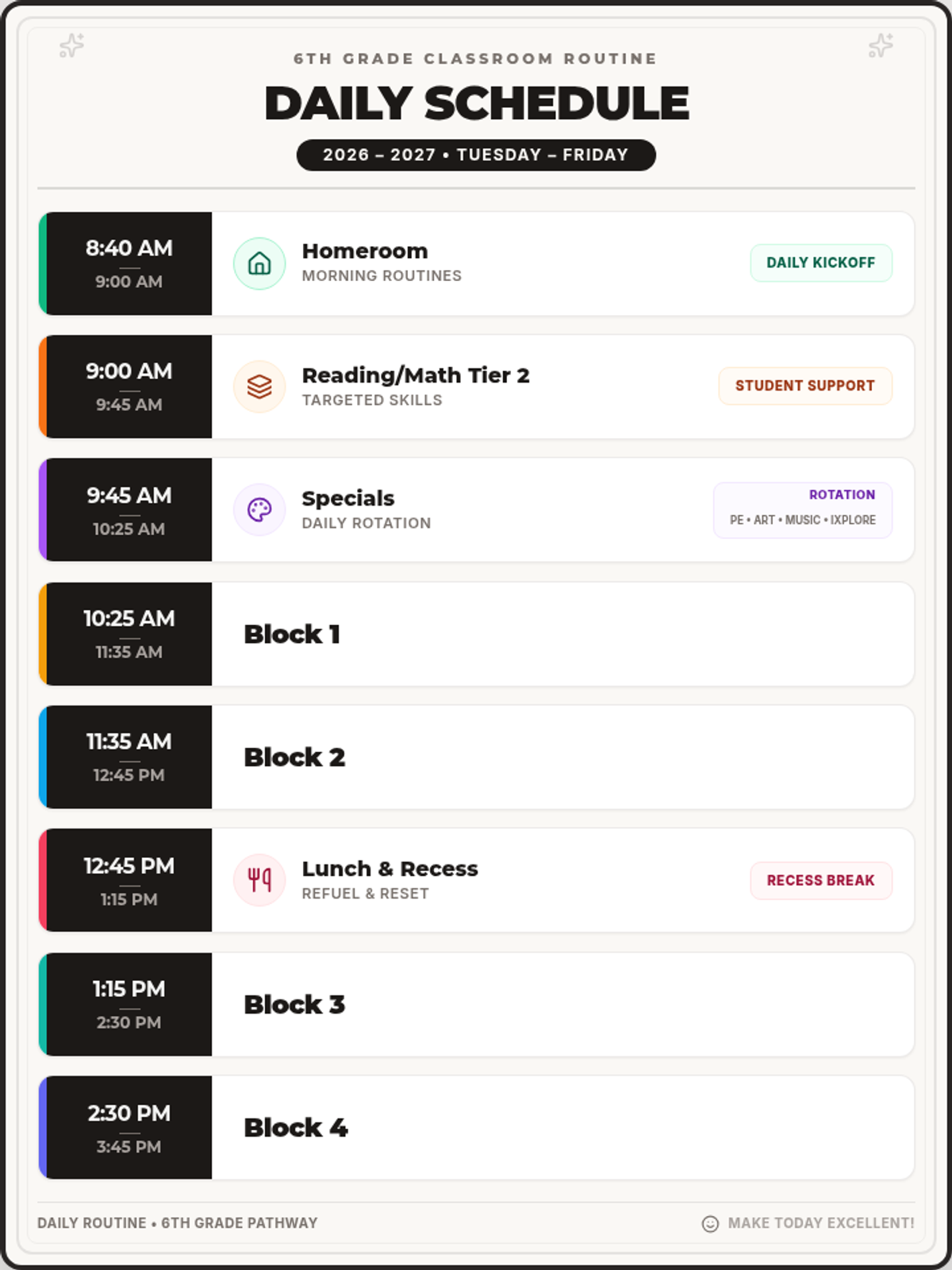
A beautifully designed Monday-specific daily schedule poster for a 6th-grade classroom, featuring a retro-modern green, yellow, and black aesthetic with custom split cards for Block 4 and no subject icons or subtexts for the subject blocks.
A beautifully designed daily schedule poster for a 6th-grade classroom, featuring a vintage modern aesthetic with clean, spacious cards for blocks 1-4. Both the subtext, icons, and write-in boxes have been removed from these blocks.
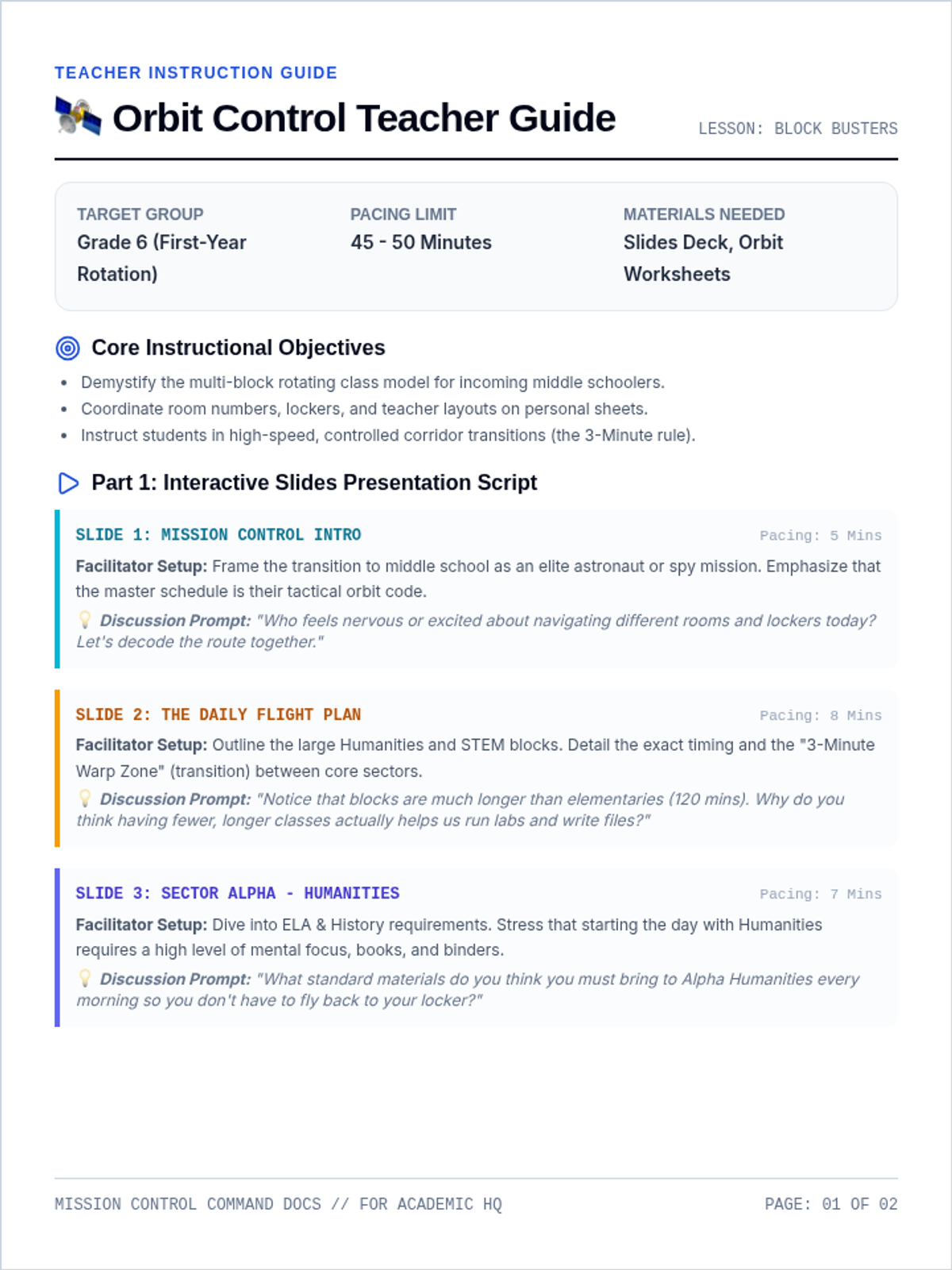
A comprehensive teacher instruction and pacing guide, containing interactive slide scripts, discussion prompts, worksheet answers, and transition troubleshooting.
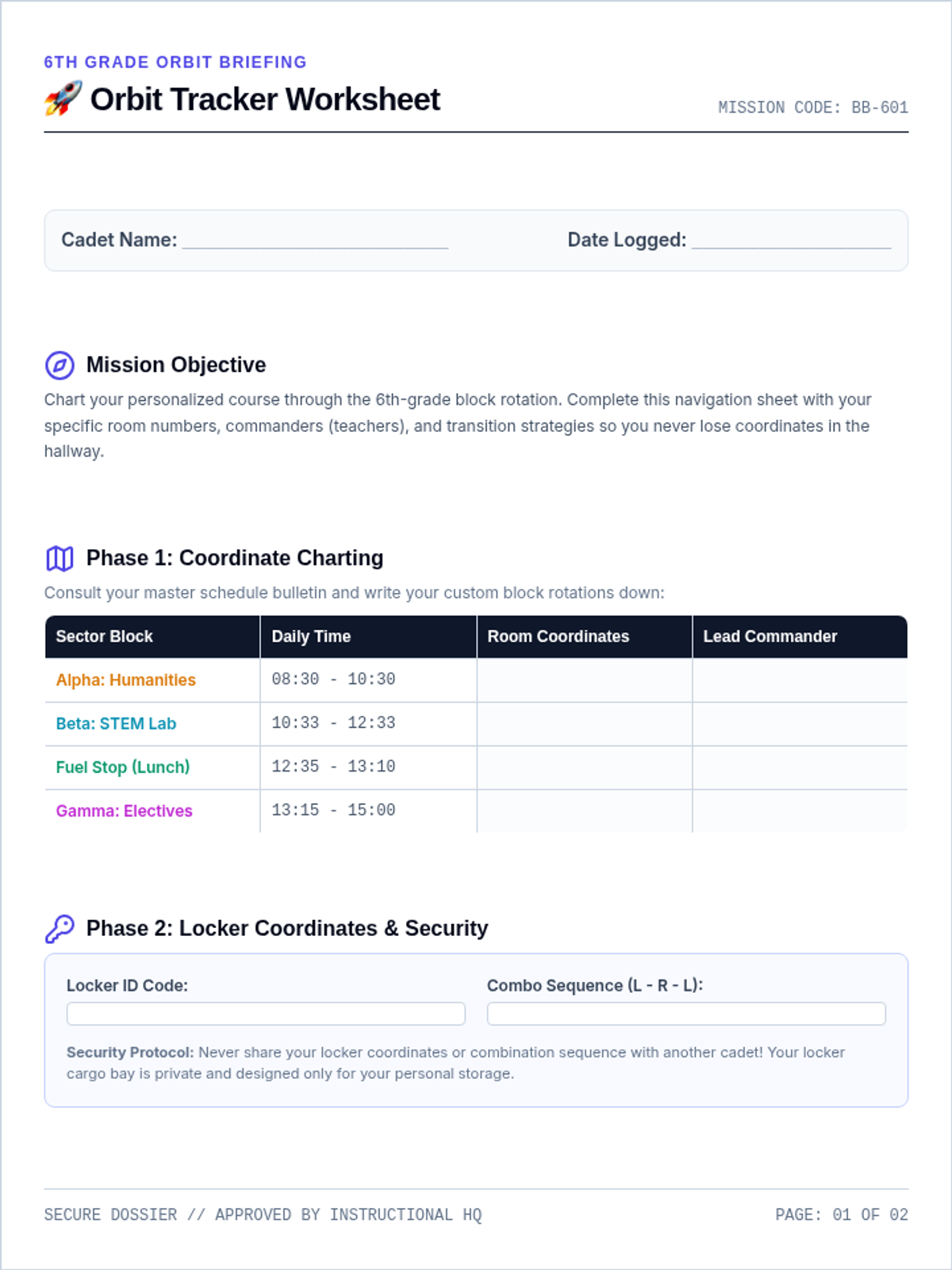
An engaging, student-facing schedule mapping worksheet themed around mission control, enabling students to chart their daily block rotations, room numbers, and transition checklists.
A highly engaging, mission-control themed slide deck that guides 6th-grade students through their core rotation schedule, block times, and transition expectations.
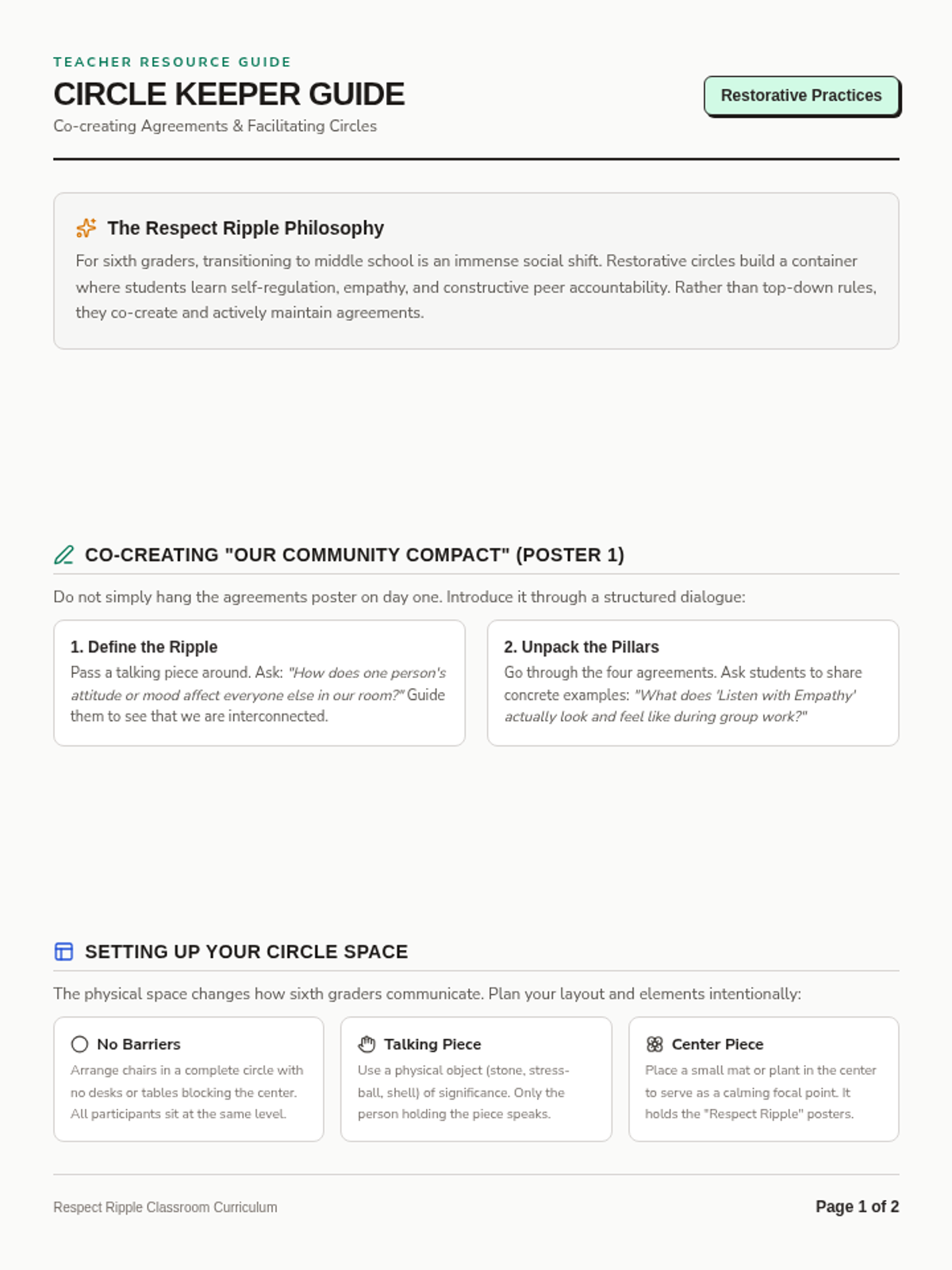
A comprehensive teacher facilitation guide for hosting restorative circles, co-creating community agreements with students, and using restorative dialogue prompts in the classroom.
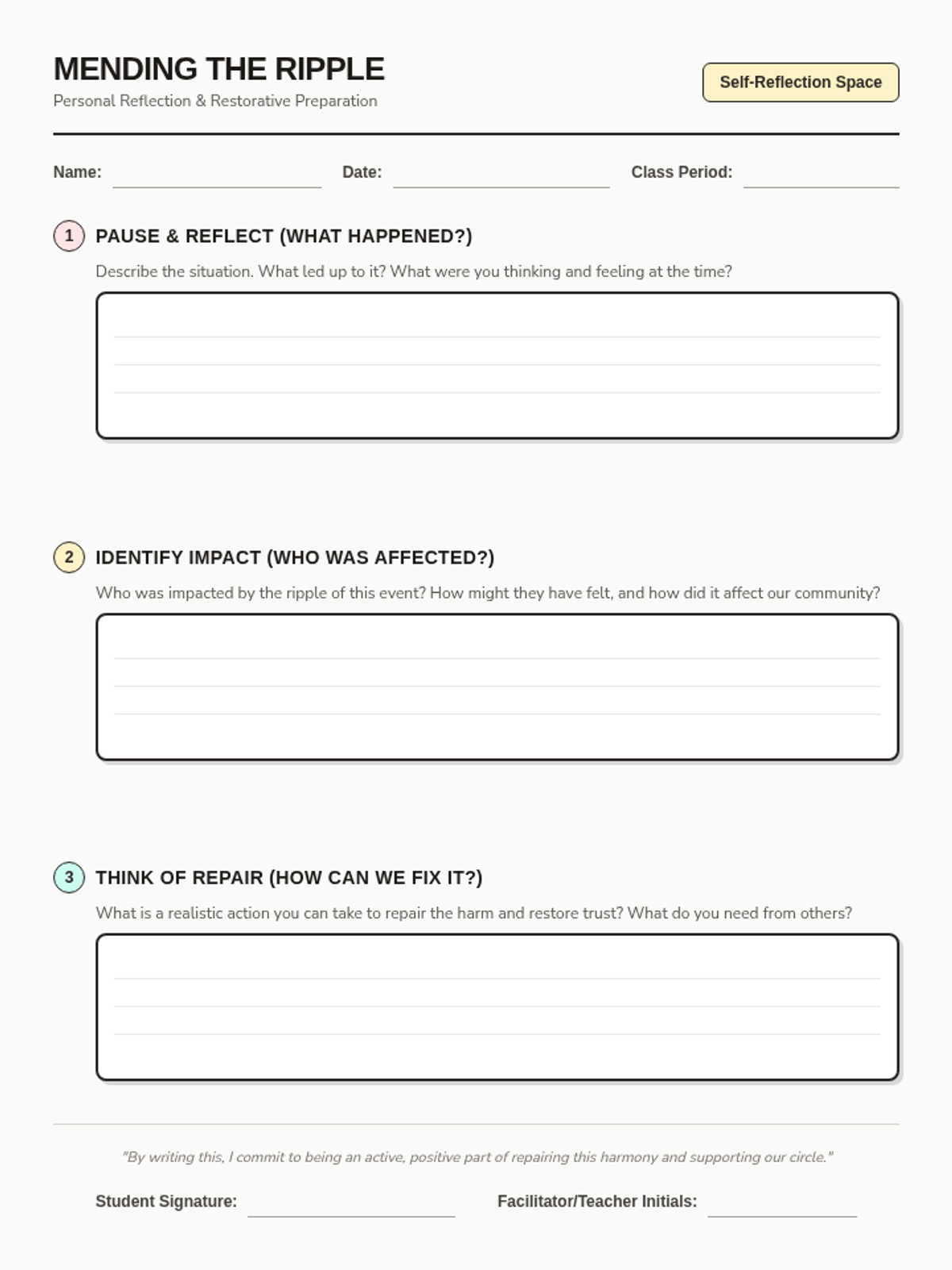
A student reflection worksheet to help students think through conflicts or incidents, identify the impact, and plan constructive ways to make things right before restorative dialogue.
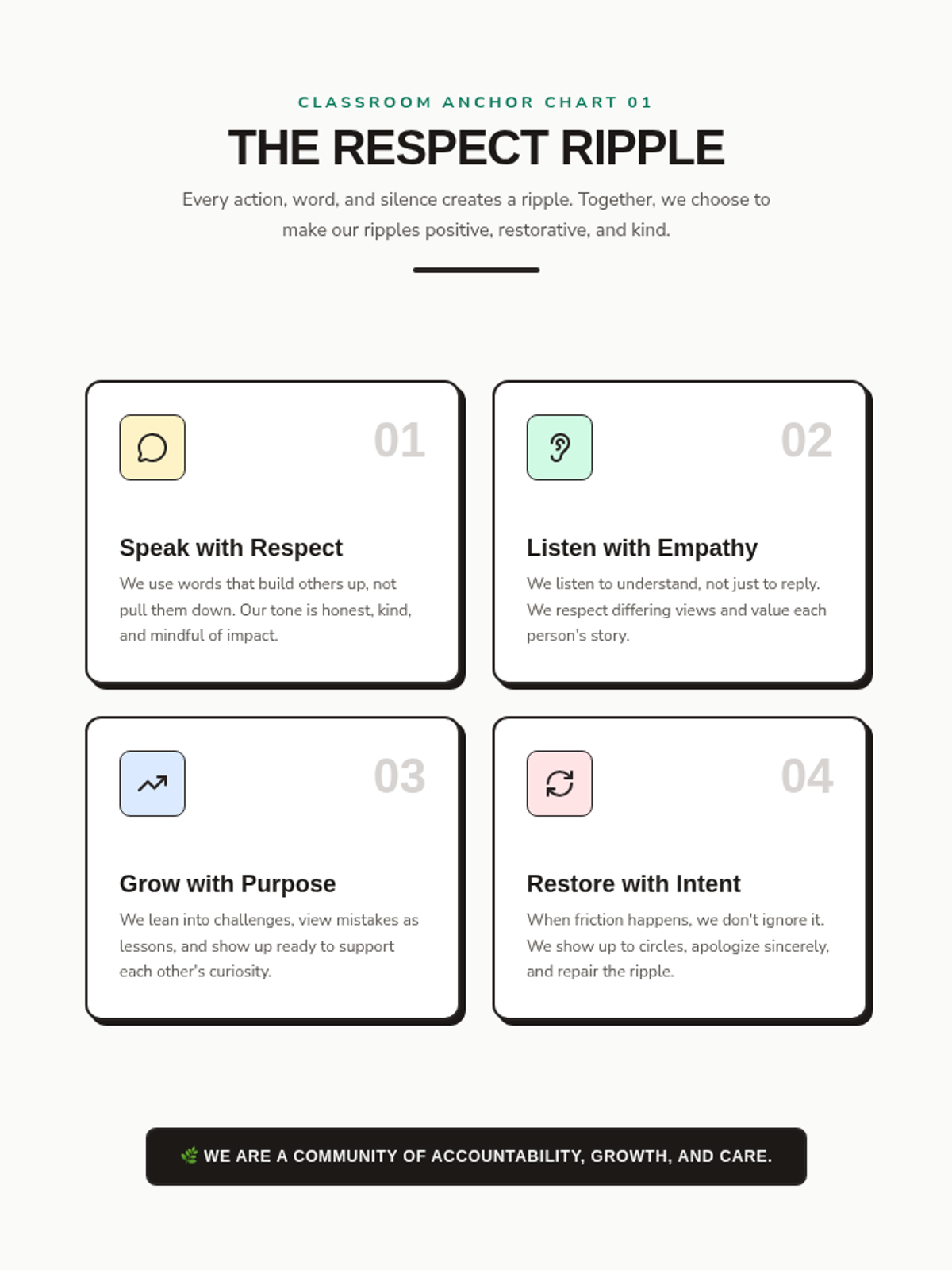
A set of three beautifully designed visual anchor charts (posters) for classroom walls, focusing on Community Agreements, Restorative Dialogue, and the Path to Repairing Harm. Staged in 8.5x11 format with bold, modern typography and clean organic borders.
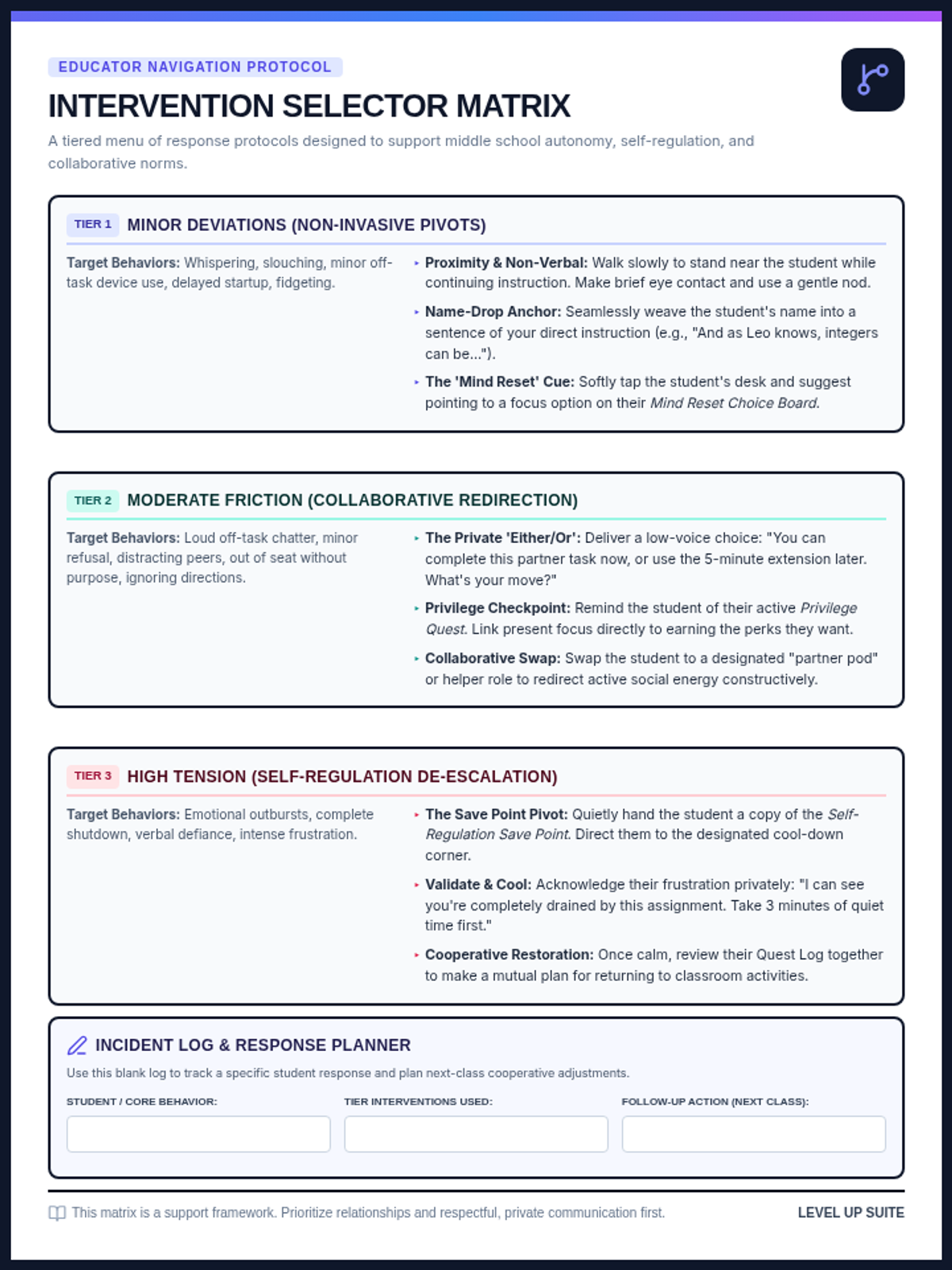
A professional intervention matrix and response selector for middle school teachers. It aligns classroom management norms with tiered behavioral support strategies, helping teachers select non-invasive interventions, self-regulation pivots, and cooperative reflections.
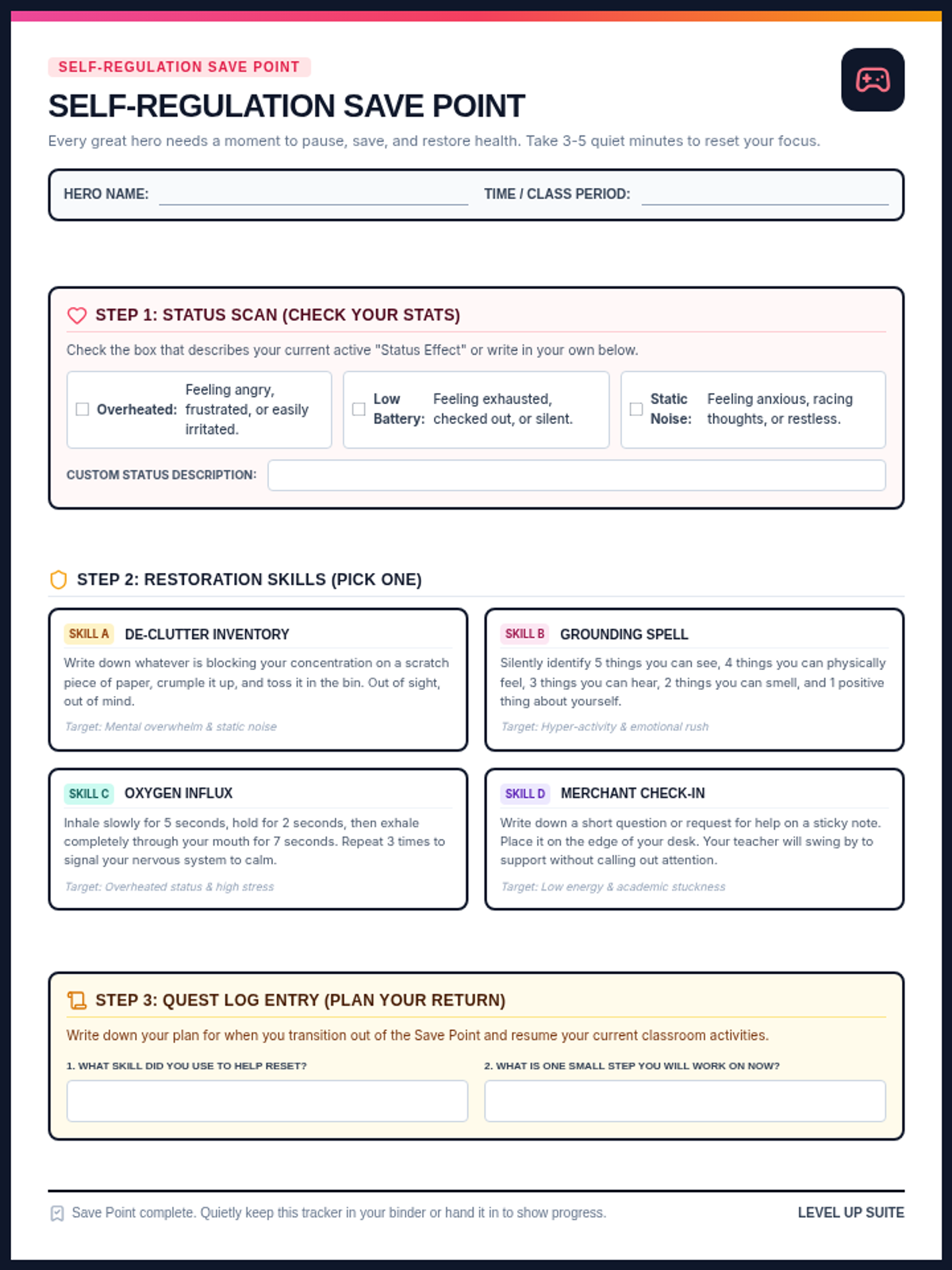
A de-escalation and self-regulation guide designed for middle schoolers, themed as an RPG 'Save Point.' It guides students through checking their emotional energy, selecting restorative coping strategies, and logging a small action step to return to class activities.
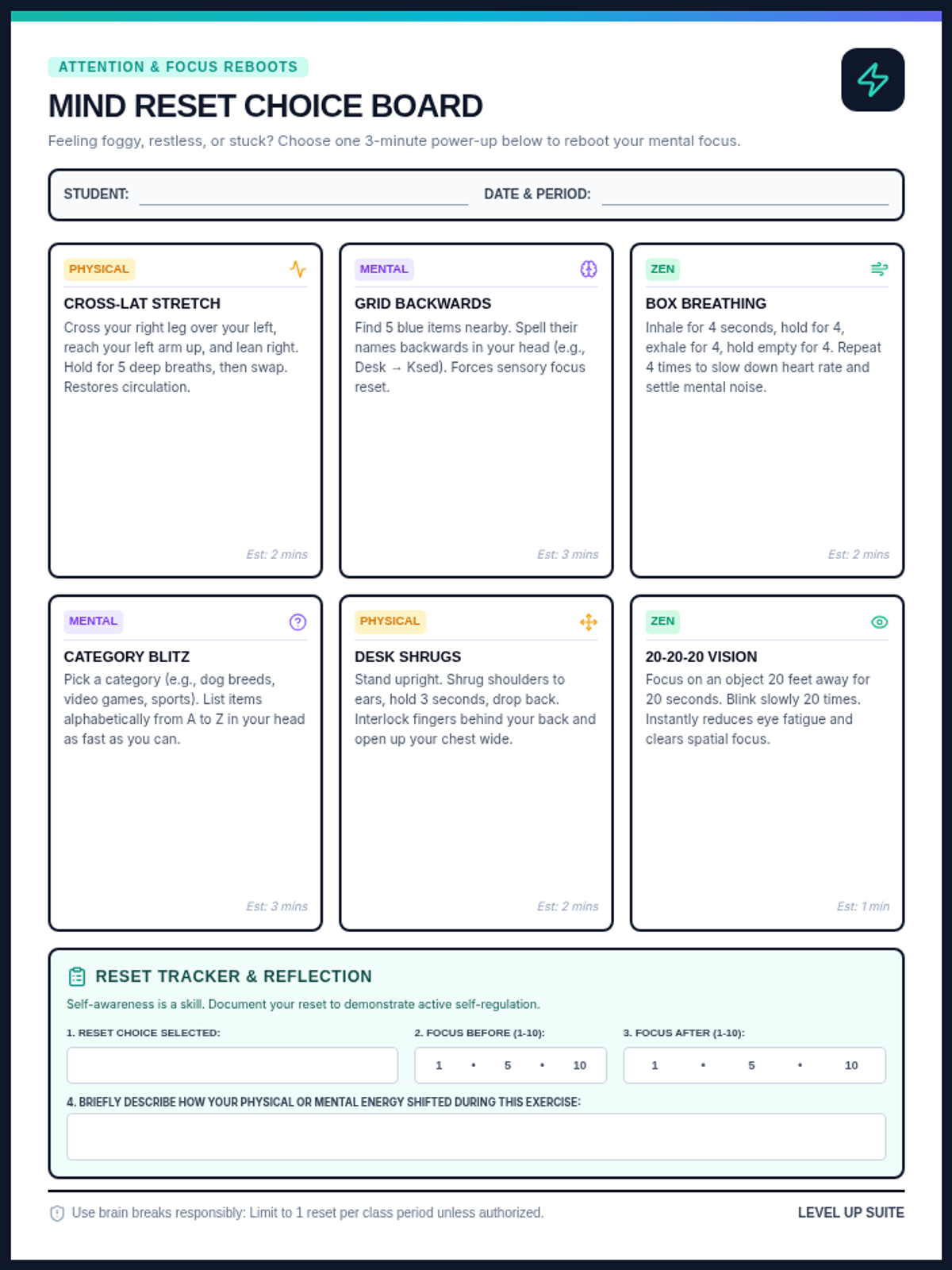
A choice board of short, structured brain breaks and focus activities designed to help middle schoolers reset their attention. It features physical movement, logic puzzles, and centering strategies styled like arcade-style power-ups.
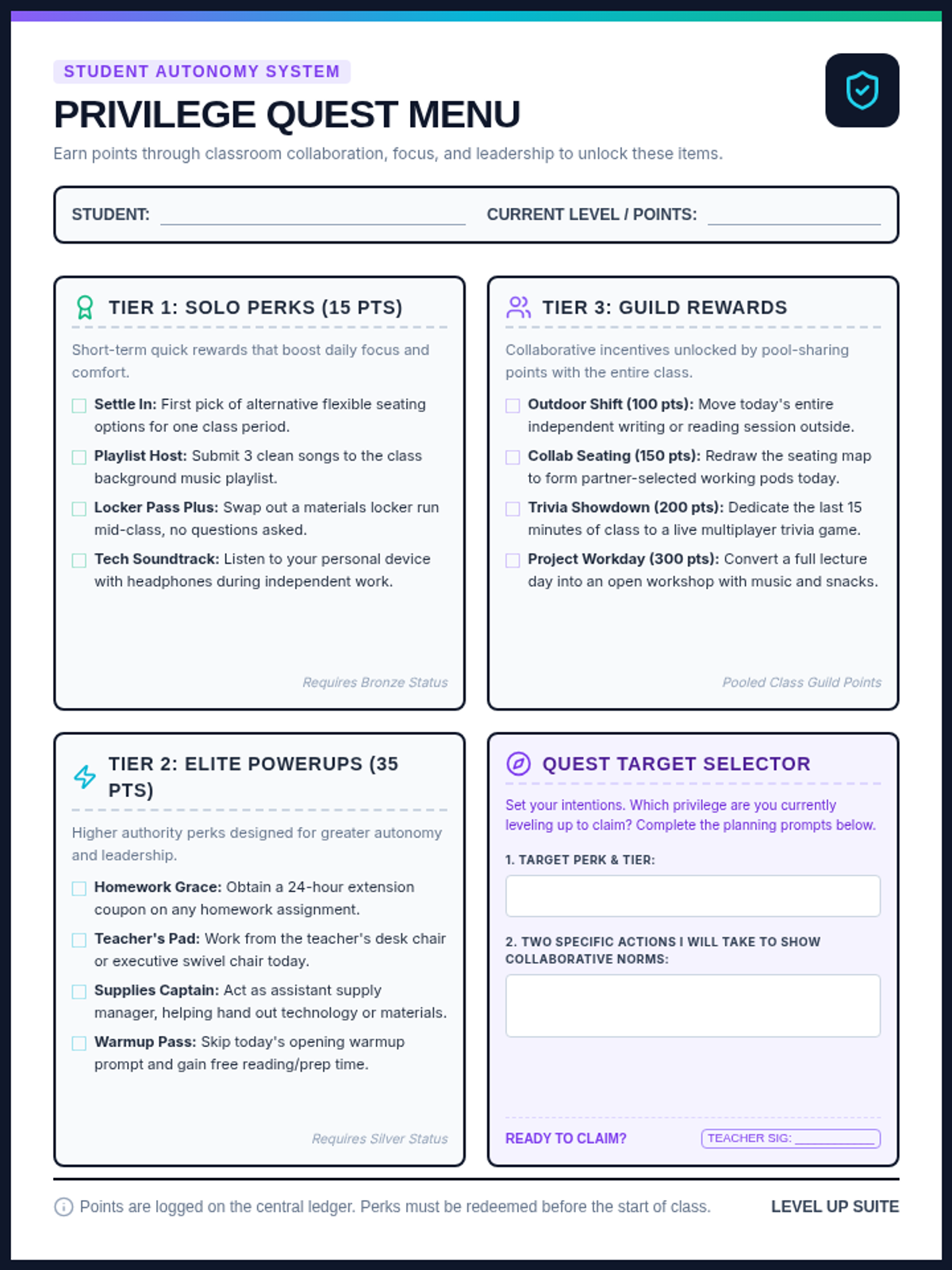
A reward and incentive menu designed for middle schoolers, styled as an adventure guild board. It offers structured individual and whole-class privileges that students can choose as they earn points or demonstrate collaborative norms.
A printable student worksheet for analyzing personal punctuality barriers, drafting three specific reliability strategies, and tracking arrival habits over a two-week period.
An exit ticket and reflection document where 12th-grade students establish a 30-day post-graduation launch plan, catalog key support network contacts, and write a self-advocacy commitment.
A step-by-step planning worksheet where students reverse-engineer their morning routines, identify micro-stalls, and design friction-free habit cues.
A student-facing 1-page activity sheet styled as an emergency protocol matrix. It facilitates the pairing phase where students swap plans, identify failure triggers, draft Plan B and Plan C contingencies, and commit to a 48-hour micro-action.
A structured student worksheet comprising a 5-item post-secondary transition skill survey and an integrated growth calculation block with reflective prompt areas to measure development.
A baseline pre-survey and scoring guide for 12th graders. Page 1 contains a 15-item Likert assessment measuring academic self-efficacy, postsecondary readiness, and social-emotional skills. Page 2 provides the self-scoring calculations, score interpretation scales, and a reflection prompt.
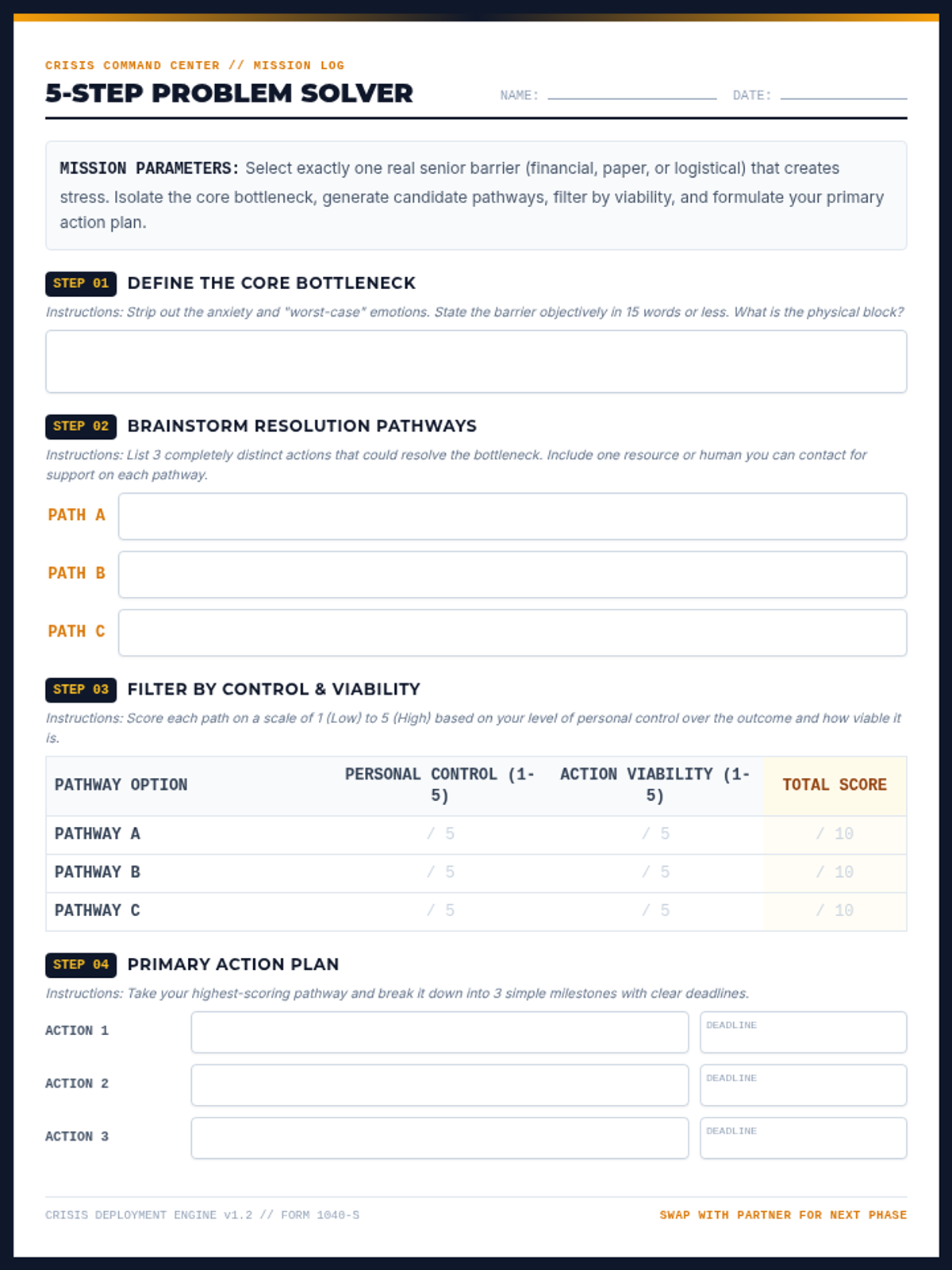
A student-facing 1-page worksheet styled as a tactical mission briefing sheet. High school seniors select a primary transition barrier and systematically work through the first four steps of the 5-step problem-solving process (Define, Brainstorm, Filter, Plan) in dedicated handwriting-friendly work blocks.
A professional grading and peer-evaluation rubric outlining assessment criteria for the STAR responses, thank-you email structures, and boundary-setting assertiveness.
A highly detailed, 1-page step-by-step checklist guiding 12th graders through creating FSA IDs, gathering tax records, filling out forms, submitting, and following up on FAFSA or TASFA aid.
A single-page student-facing interactive workspace formatted like a digital email application, designed to guide students through drafting, refining, and peer-checking professional follow-up messages.
A 6-slide deck styled with a high-contrast 'Crisis Command' visual theme. It guides high school seniors through the physiological 'stress freeze', the 5-step problem-solving system, real-world academic/financial scenarios, and the creation of clear triggers for backup plans.
A comprehensive slide deck covering employability skills, high school credit impacts, habit loops, and practical morning routine strategies.