A single-page facilitation guide for teachers, including objectives, lesson steps, discussion prompts, and common misconceptions for Kindergarten students. Optimized for single-page printing.
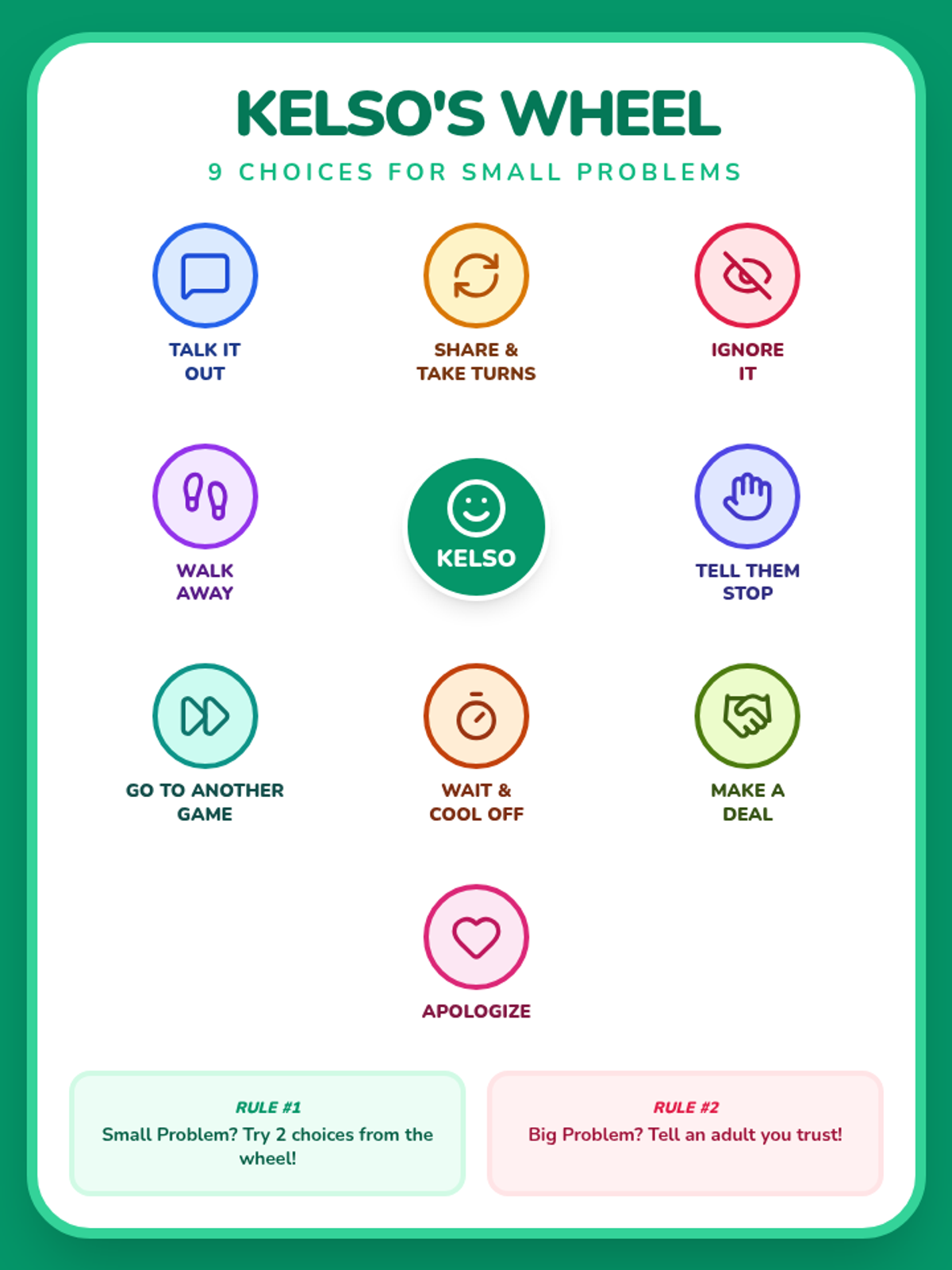
A vibrant, easy-to-read visual anchor chart displaying all 9 of Kelso's Choices in a wheel format for classroom display.
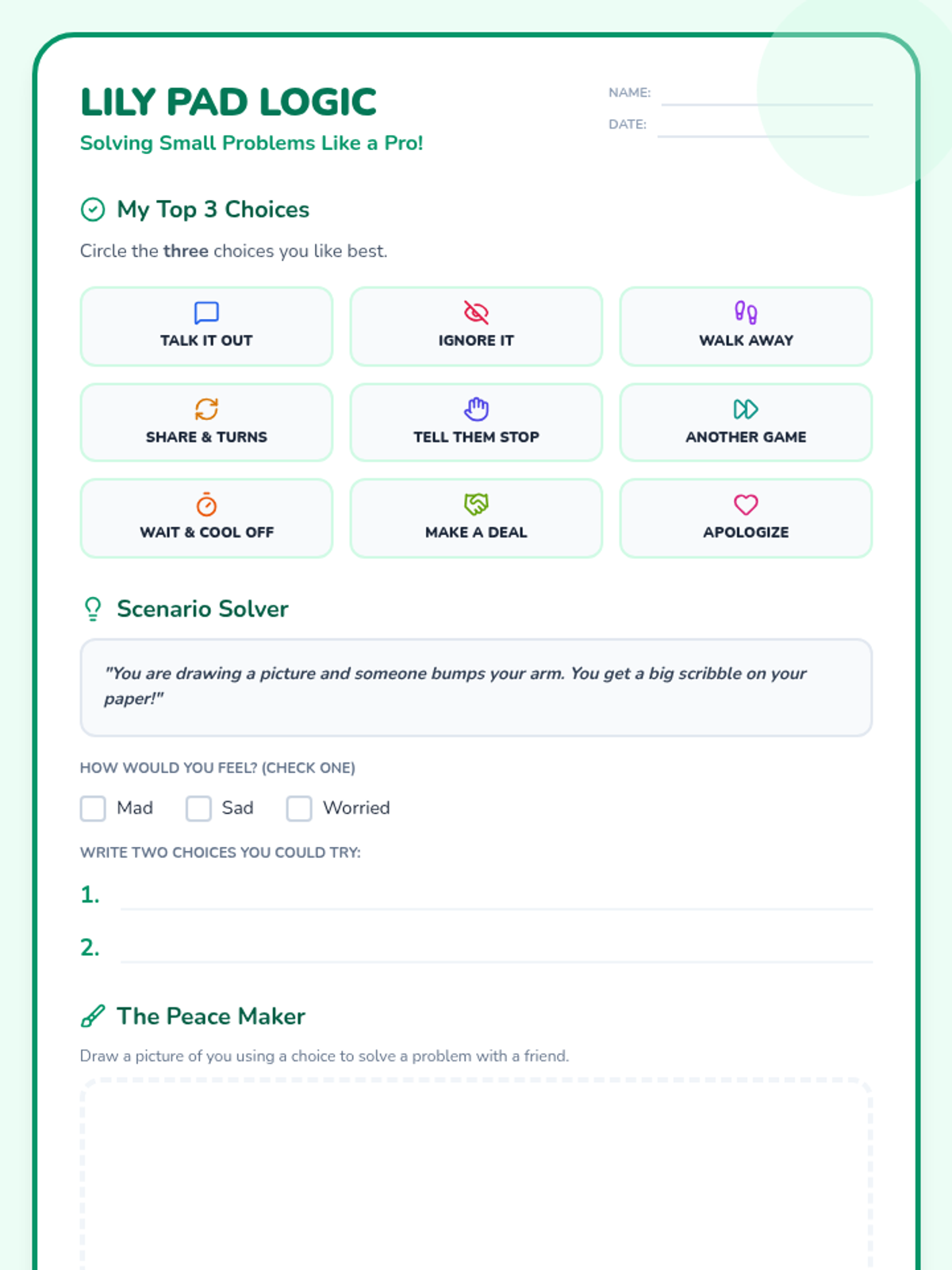
A student reflection worksheet for Kelso's Choice, featuring a choice selection grid, a scenario analysis, and a creative drawing area.
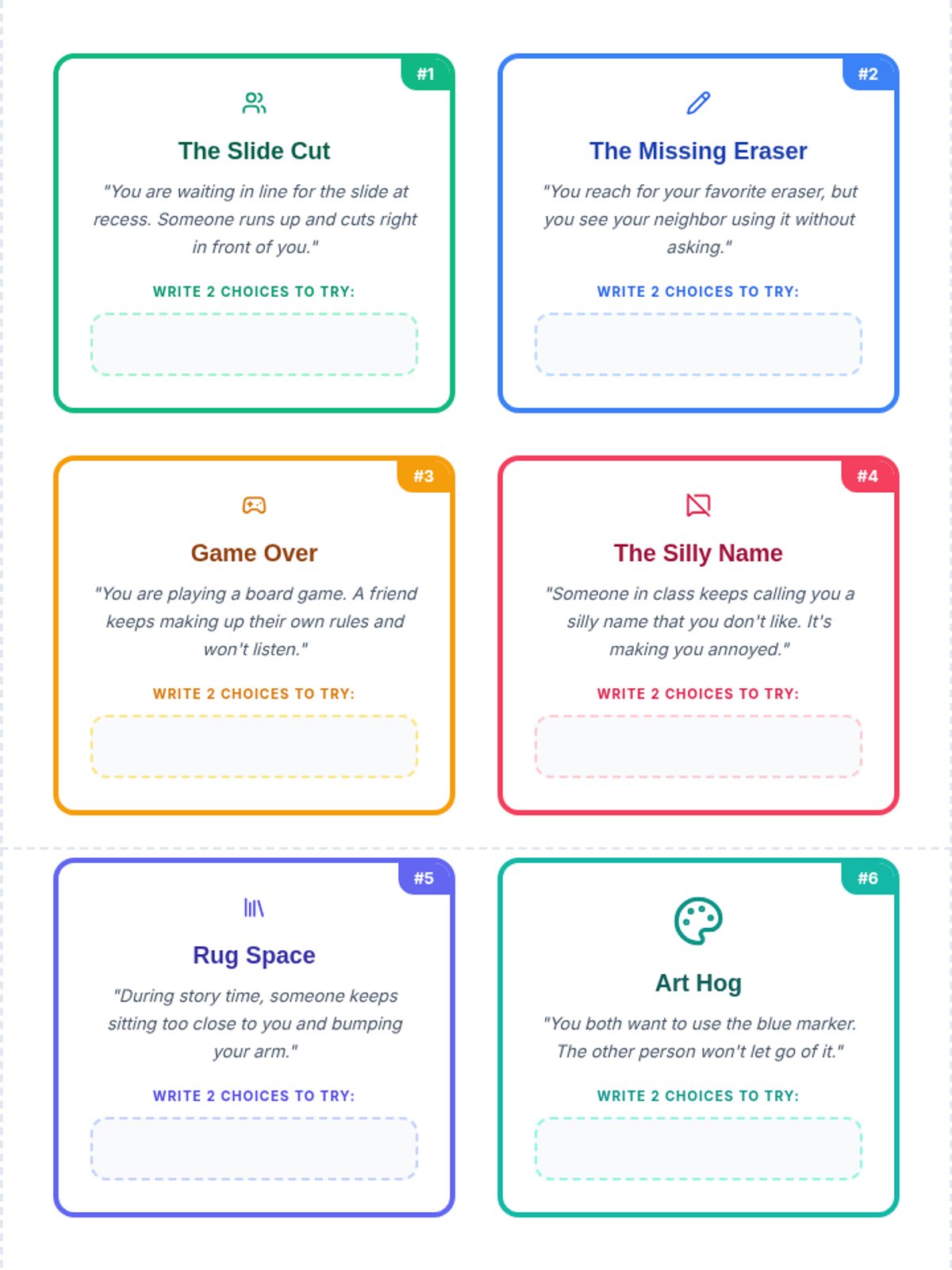
A set of 12 printable scenario cards featuring common playground and classroom conflicts, designed for role-play and practicing Kelso's 9 Choices.
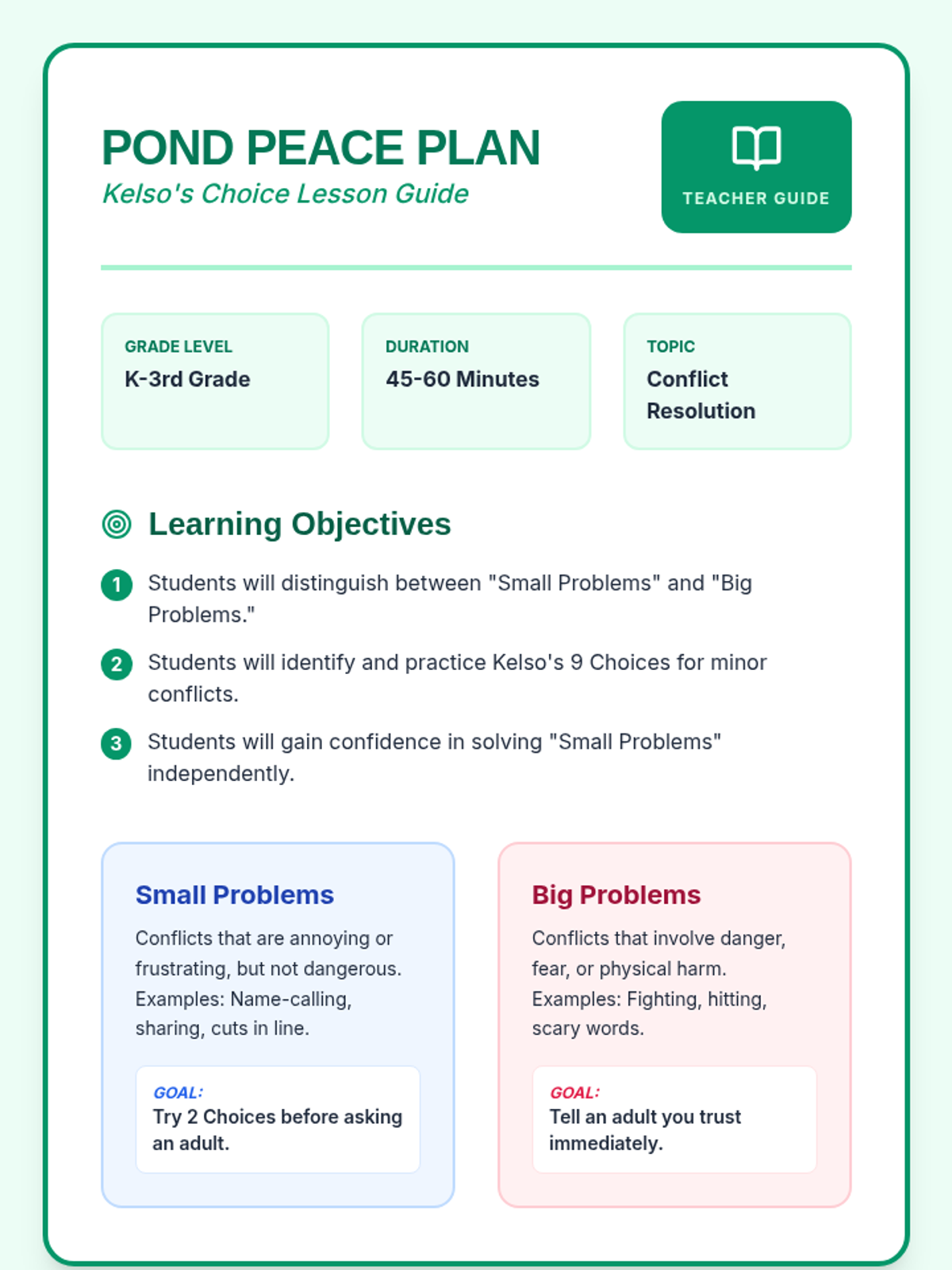
A detailed teacher guide for a Kelso's Choice lesson, including learning objectives, a breakdown of big vs. small problems, and a step-by-step instructional plan with role-play guidance.
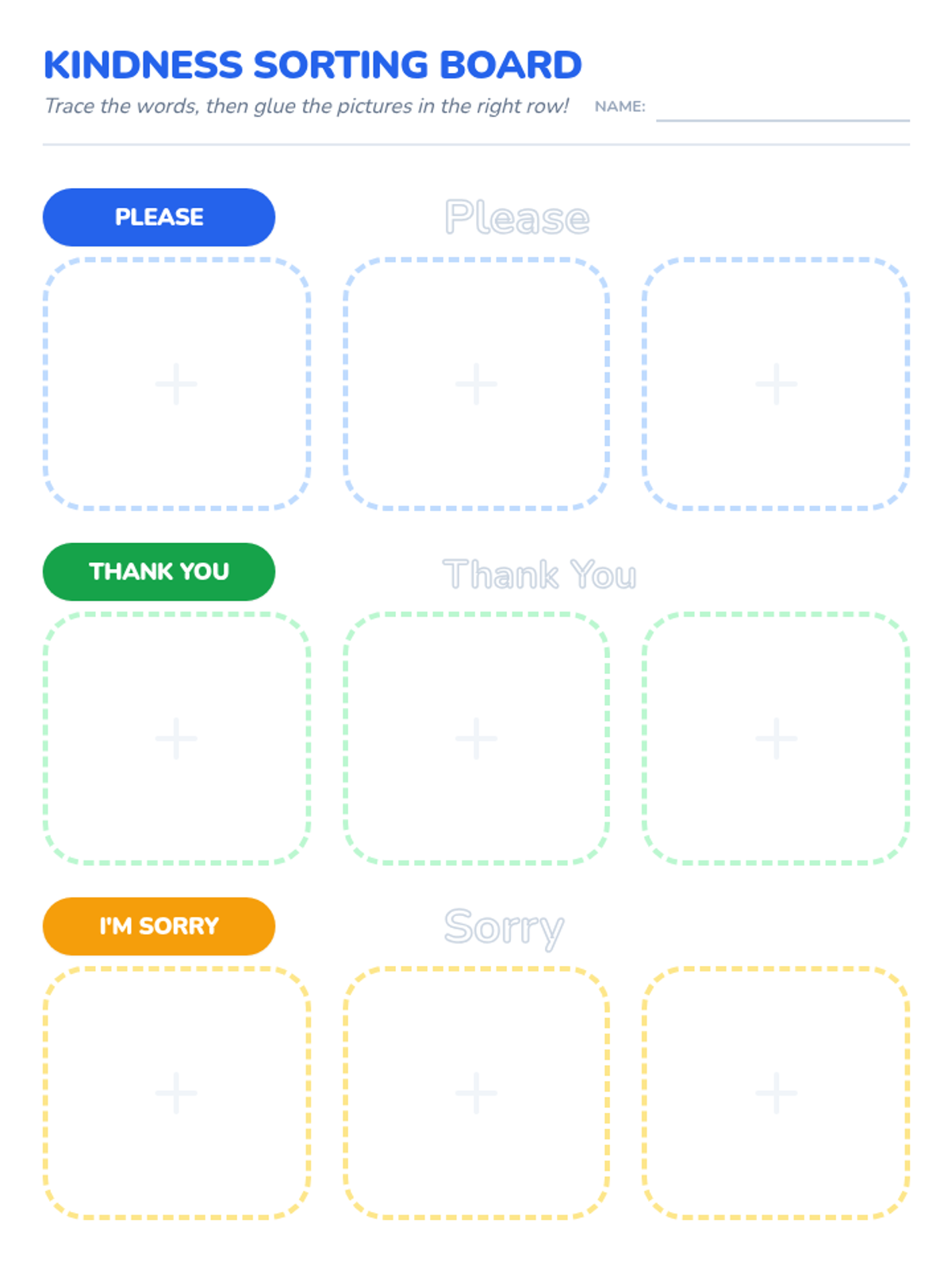
A kindergarten sorting activity where students cut out scenario pictures and paste them into the correct row for 'Please', 'Thank You', or 'Sorry'. Includes tracing practice.
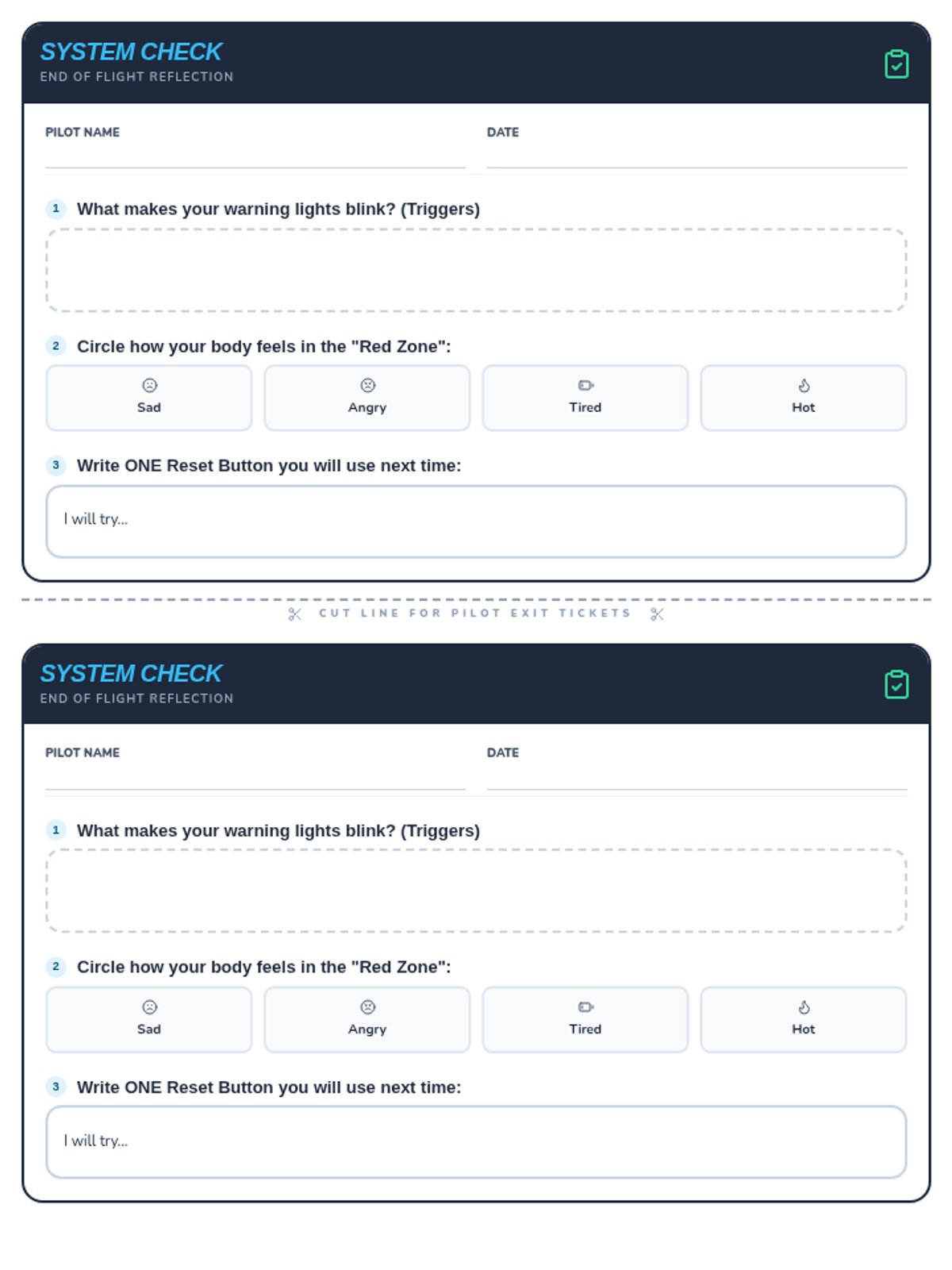
A concise exit ticket for students to reflect on their emotional triggers and identify a specific self-regulation strategy to use in the future.
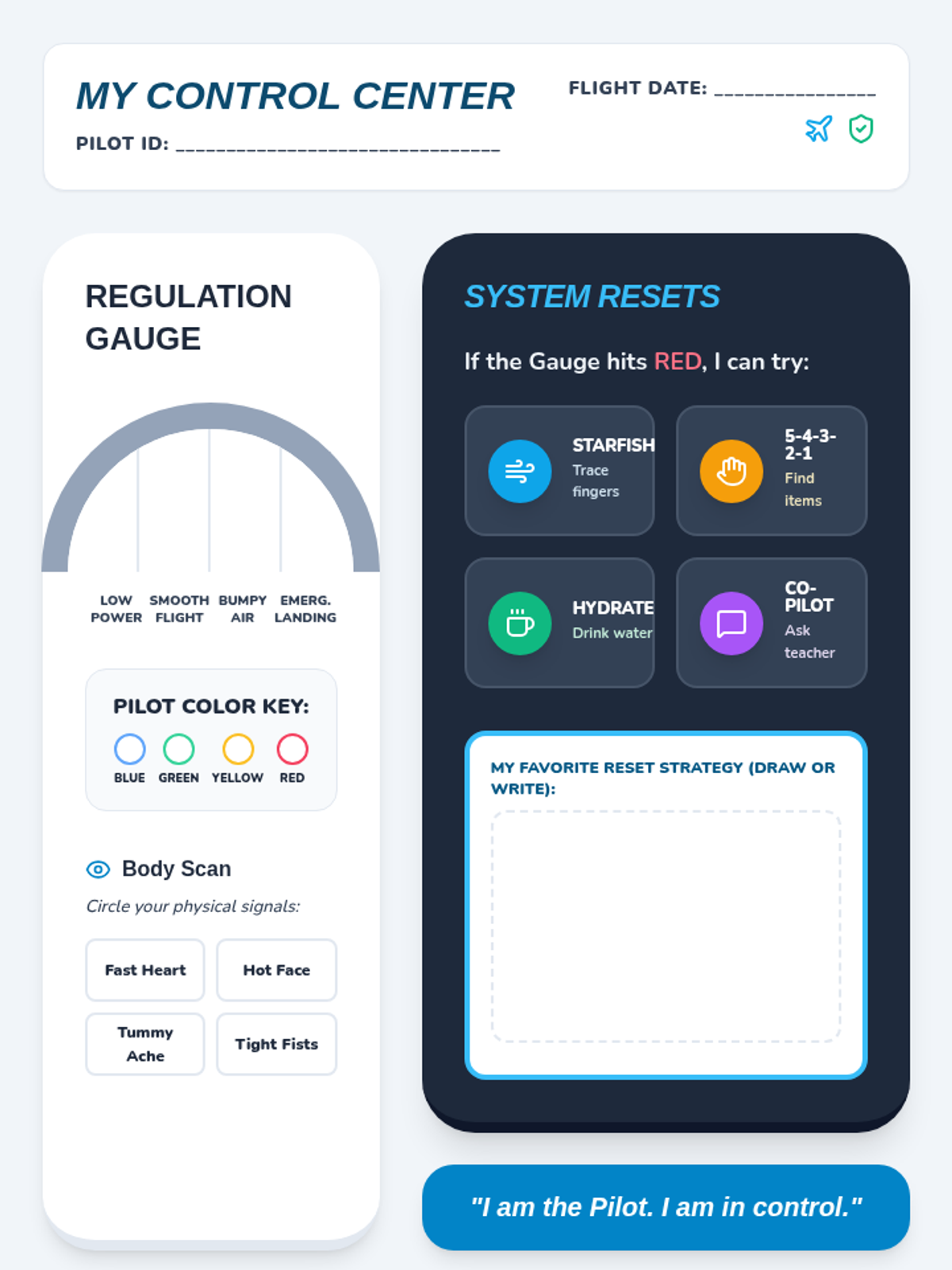
An interactive student activity sheet and visual guide. Students can color their own regulation gauge, identify their physical body signals, and choose specific 'reset' strategies to use when overwhelmed.
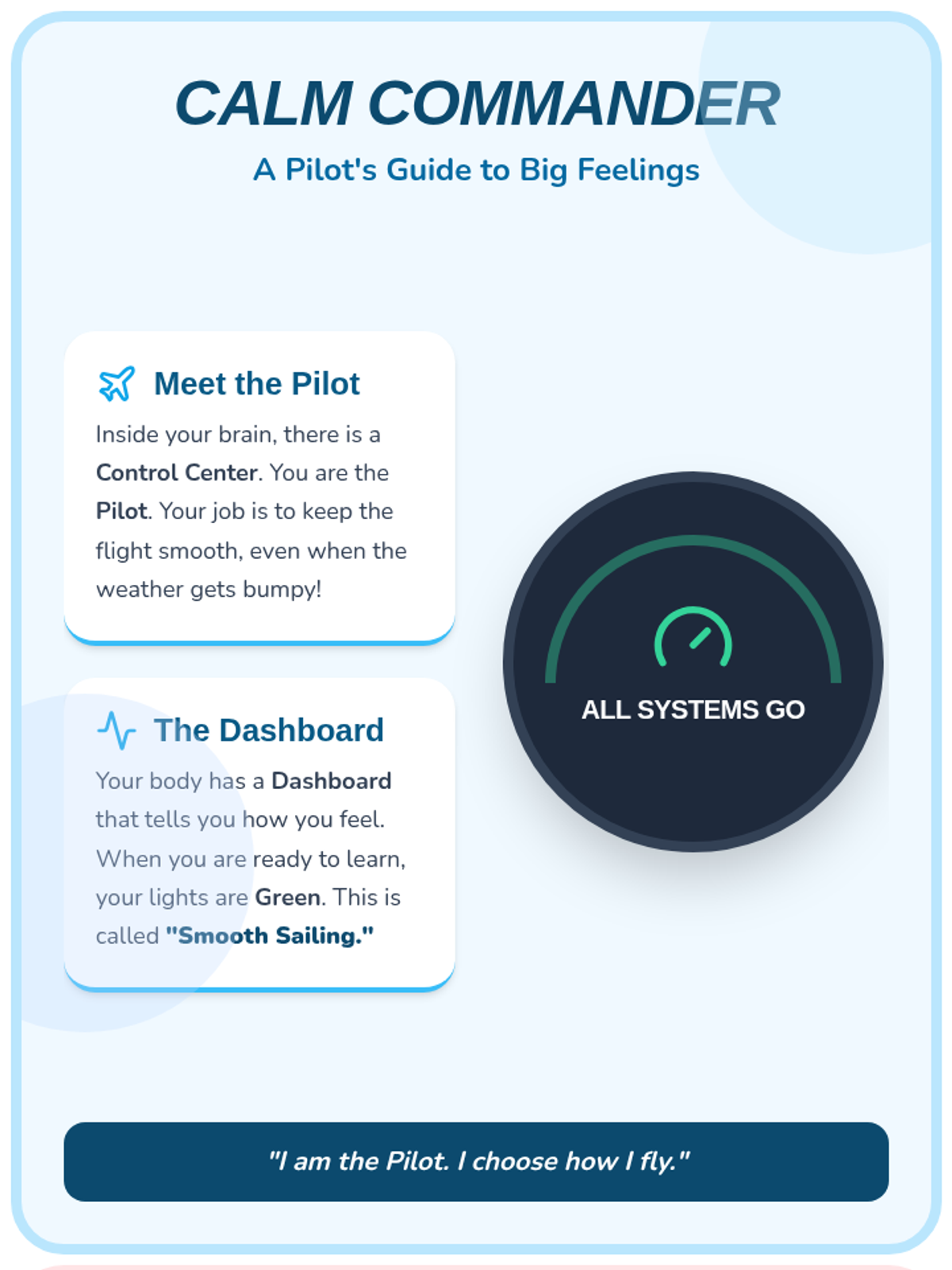
A two-page visual social story for students explaining the concept of being an 'Inner Pilot' of their own emotional control center. It covers recognizing body signals and using reset strategies.
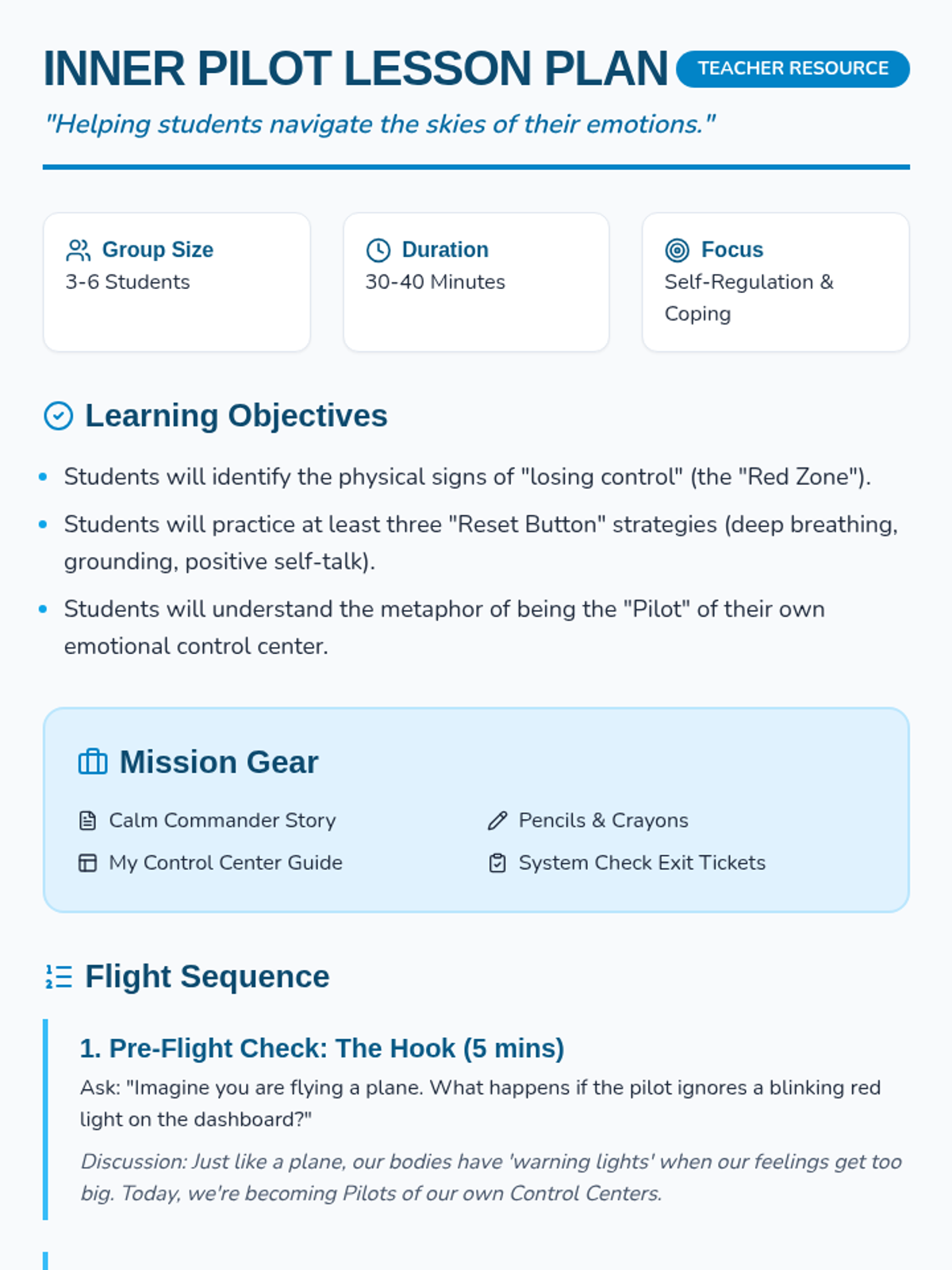
A teacher-facing small group lesson plan for teaching self-regulation using a pilot and control center metaphor. Includes objectives, materials, and a structured instructional flow.
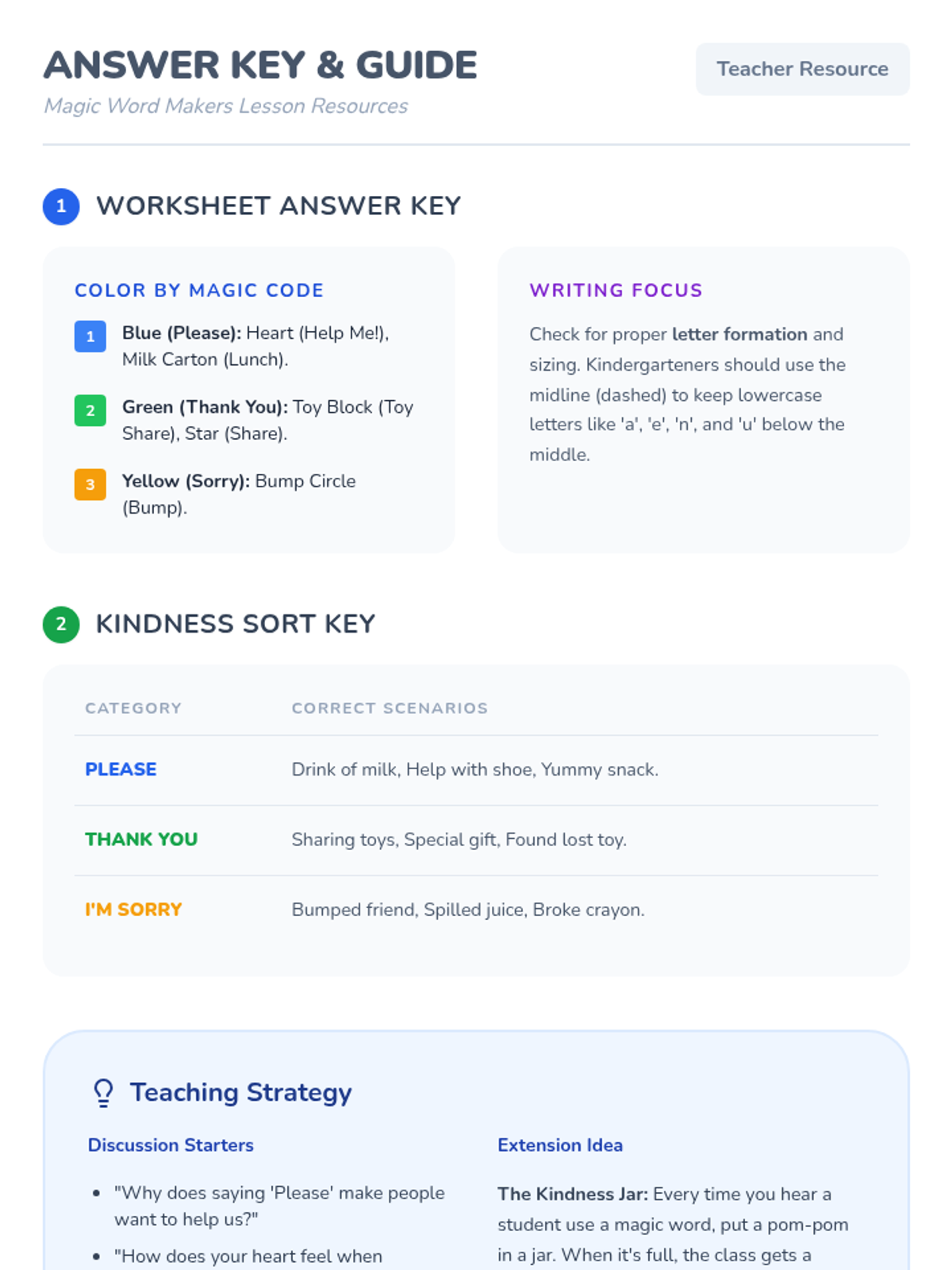
A teacher answer key and facilitation guide for the Magic Word Makers activity page and sorting activity.
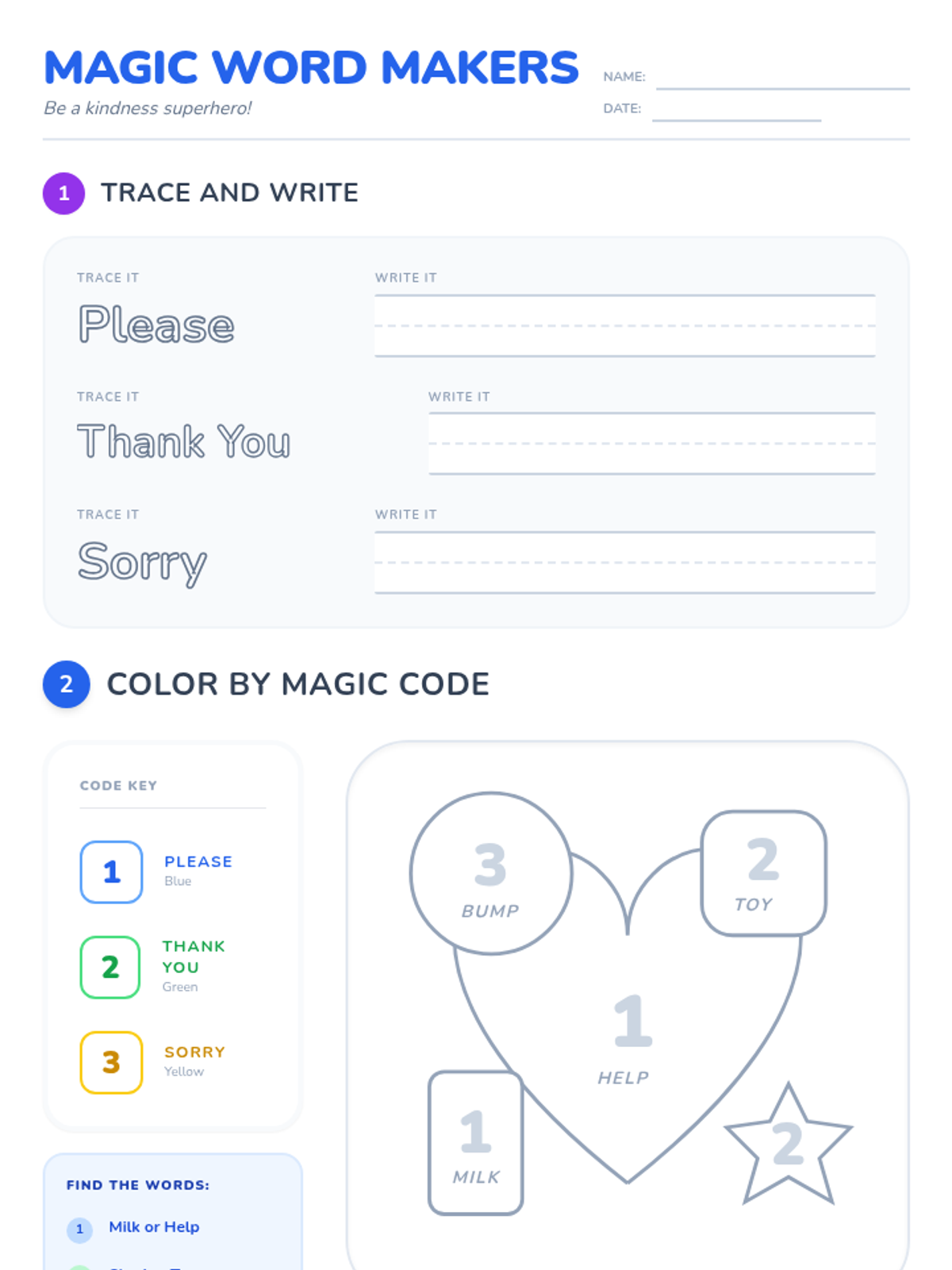
A kindergarten activity page featuring word tracing/writing for 'Please', 'Thank You', and 'Sorry', plus a color-by-code section integrated with social scenarios.
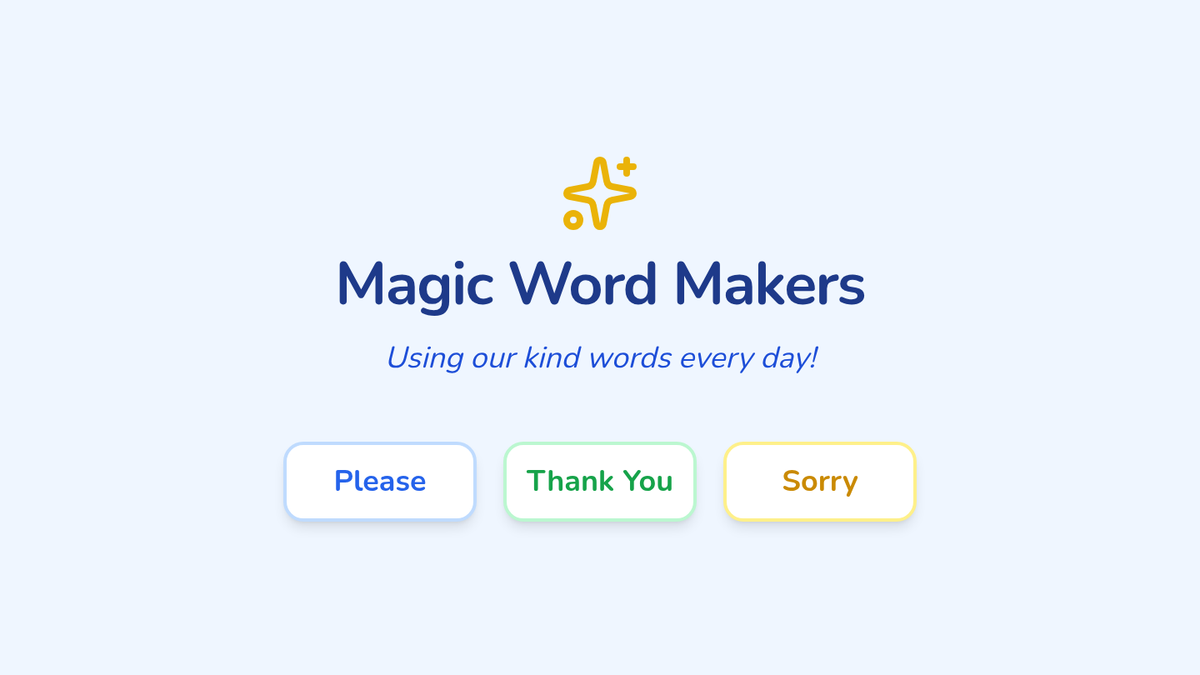
An engaging slide deck for kindergarten students introducing 'Please', 'Thank You', and 'Sorry' using social scenarios like lunch, sharing toys, and accidental bumps.