A high-visibility classroom poster detailing the four emotional zones with corresponding colors, feelings, and behavioral cues for quick student reference.
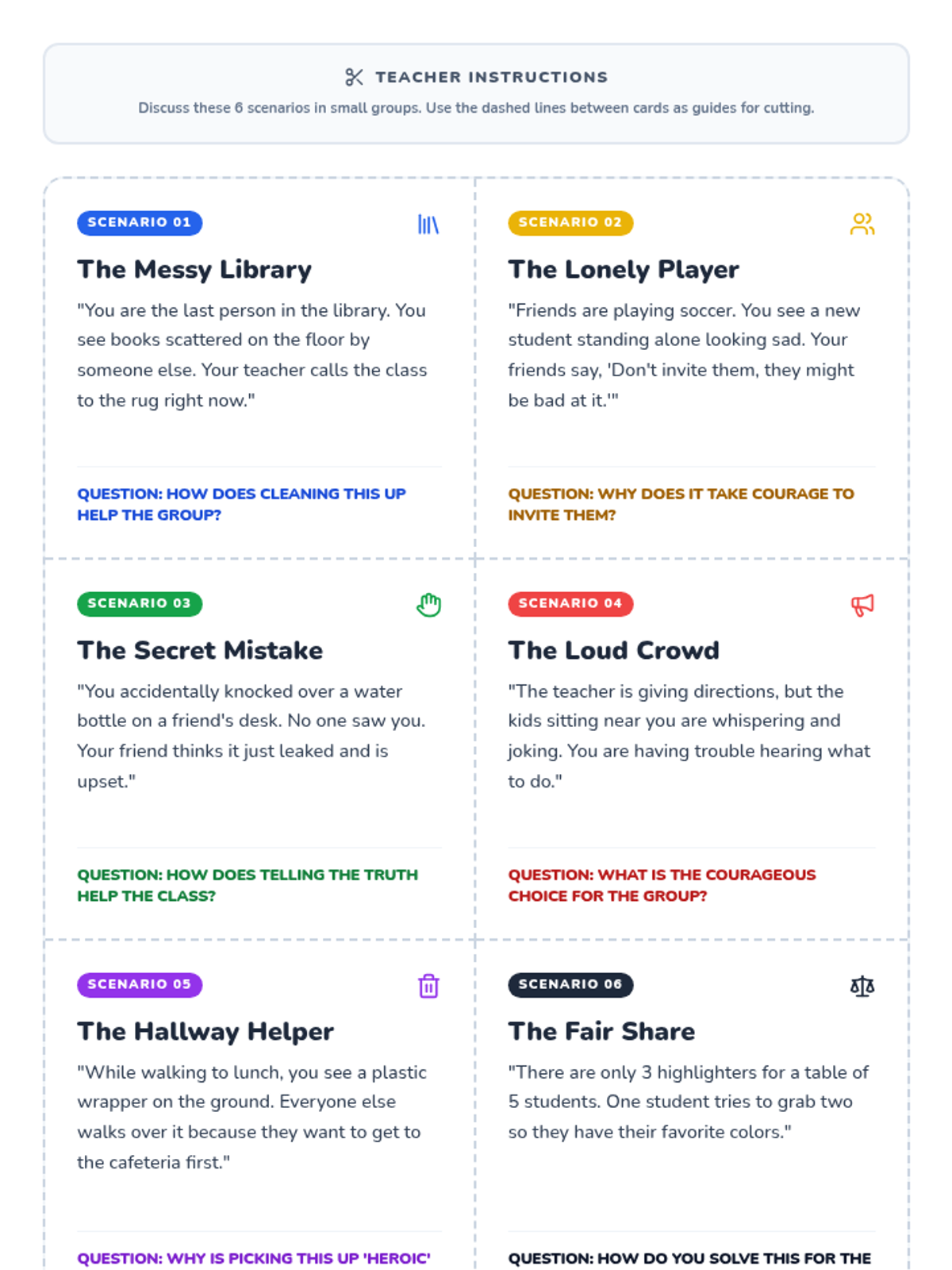
A set of 6 printable scenario cards designed for quick student discussion. Each card presents a relatable 3rd-grade dilemma where a student must choose between a selfish action and a courageous decision for the common good. Includes visual cut lines and improved readability.
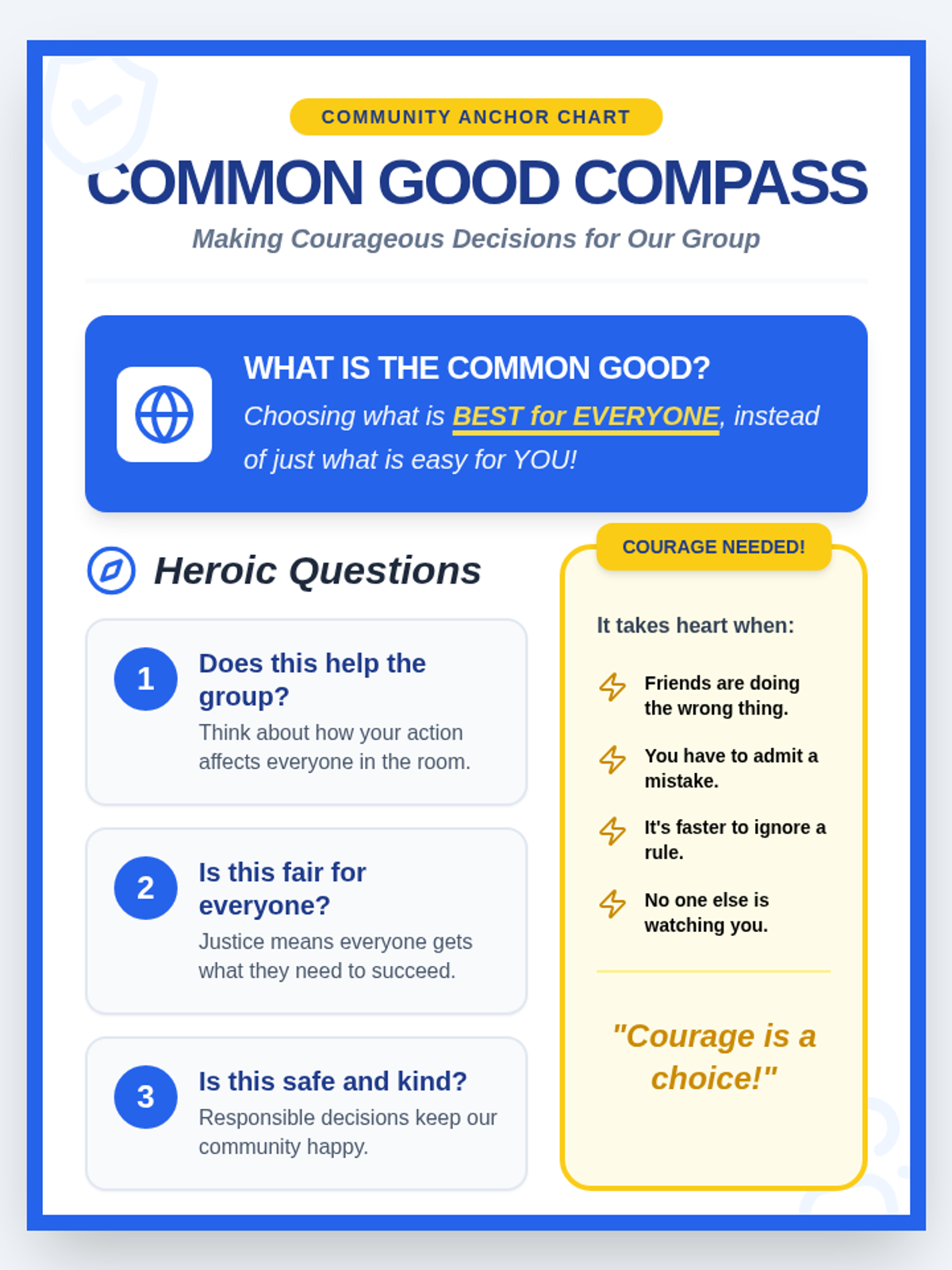
A bold, high-contrast anchor chart for classroom display. It features the 'Common Good Compass' with three guiding questions and a sidebar highlighting when courage is most needed, serving as a permanent visual reference for students.
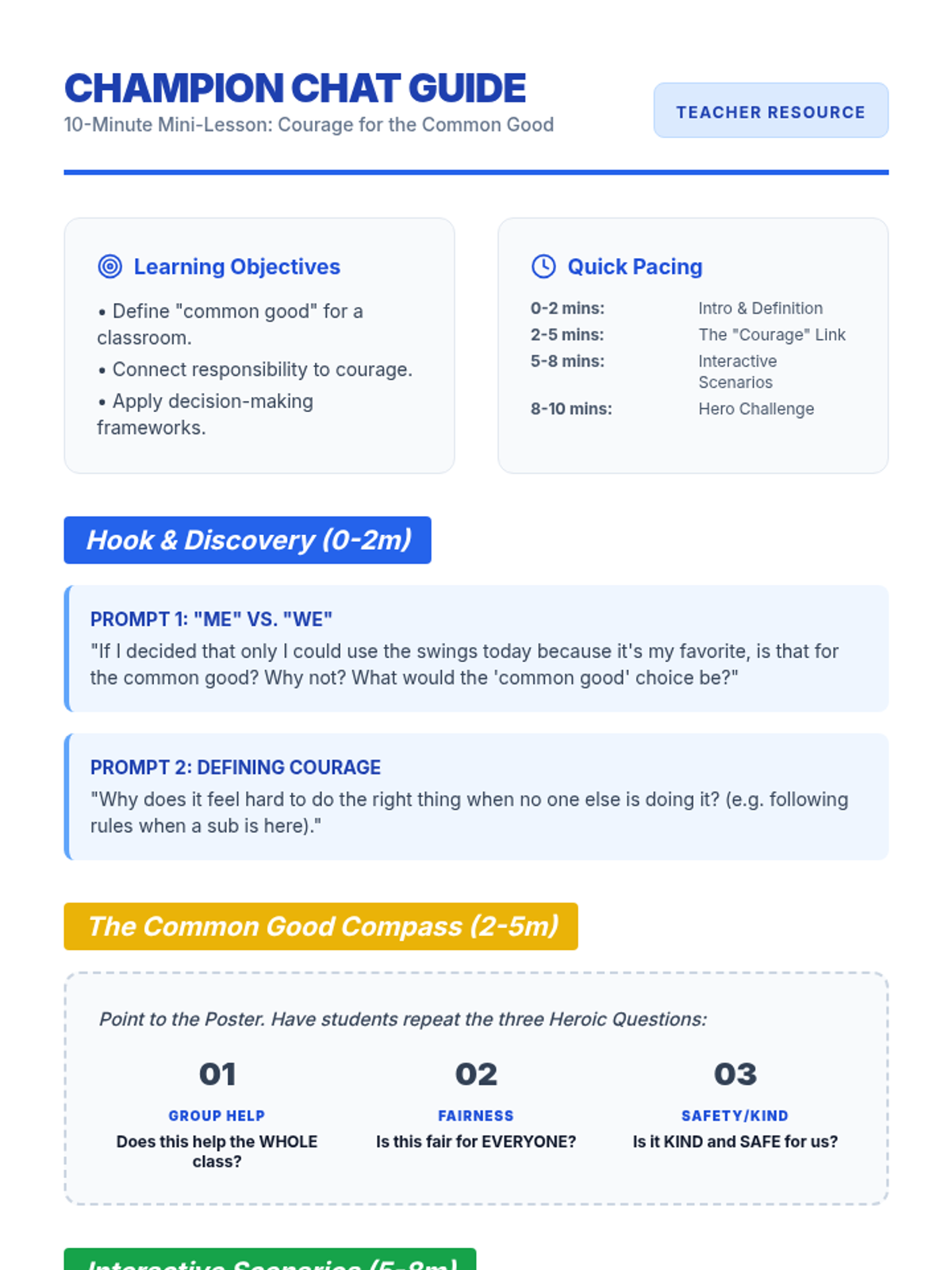
A comprehensive teacher's facilitator guide for the 10-minute Common Good lesson. Includes specific discussion prompts, time-stamped pacing, and deep-dive questions to link responsibility with courage.
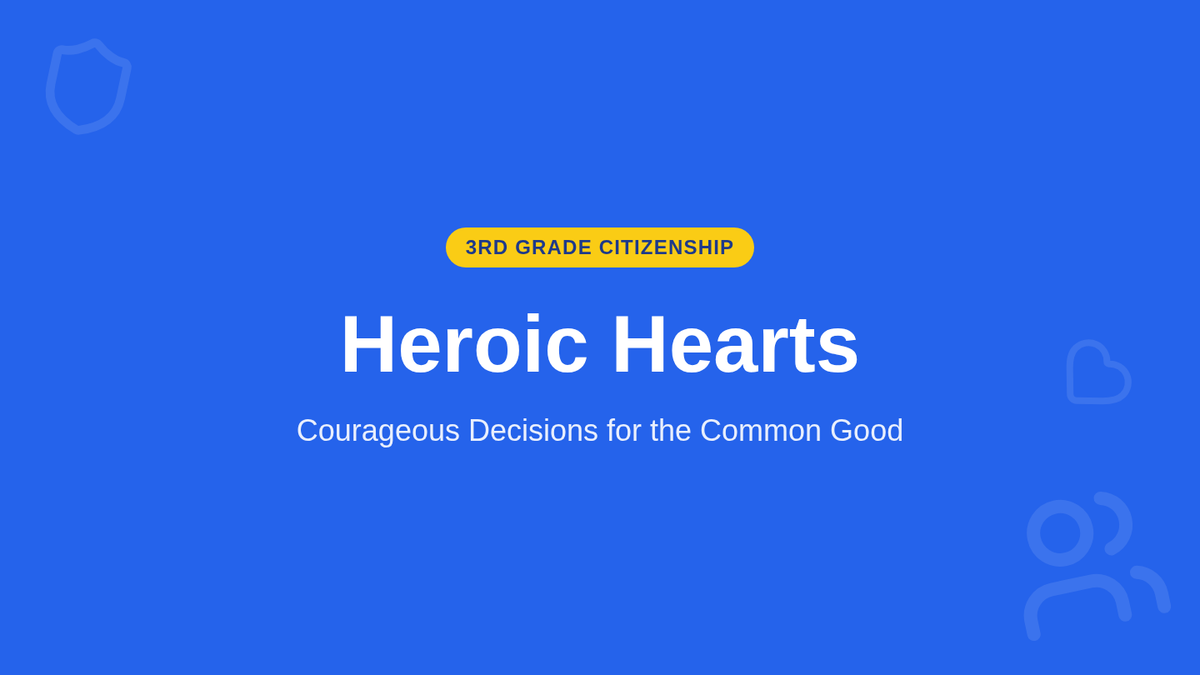
A high-energy, 6-slide presentation designed for a 10-minute mini-lesson on courage and the common good. Includes definitions, interactive scenario challenges, and the 'Common Good Compass' decision-making framework. Includes optimized contrast and layout.
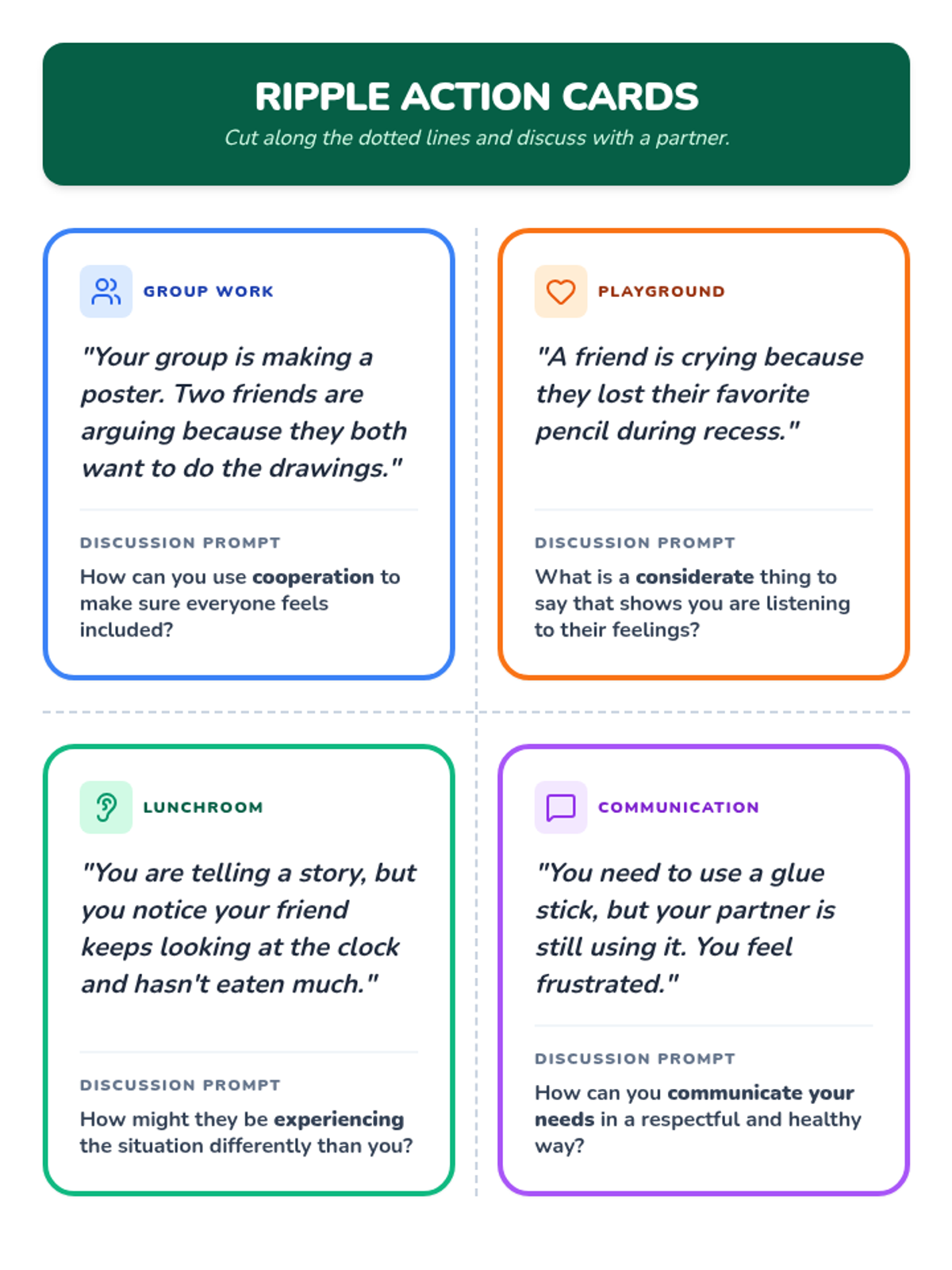
Discussion prompt cards featuring real-life scenarios. Revised with dotted cut lines, increased label contrast, and white background for ink efficiency.
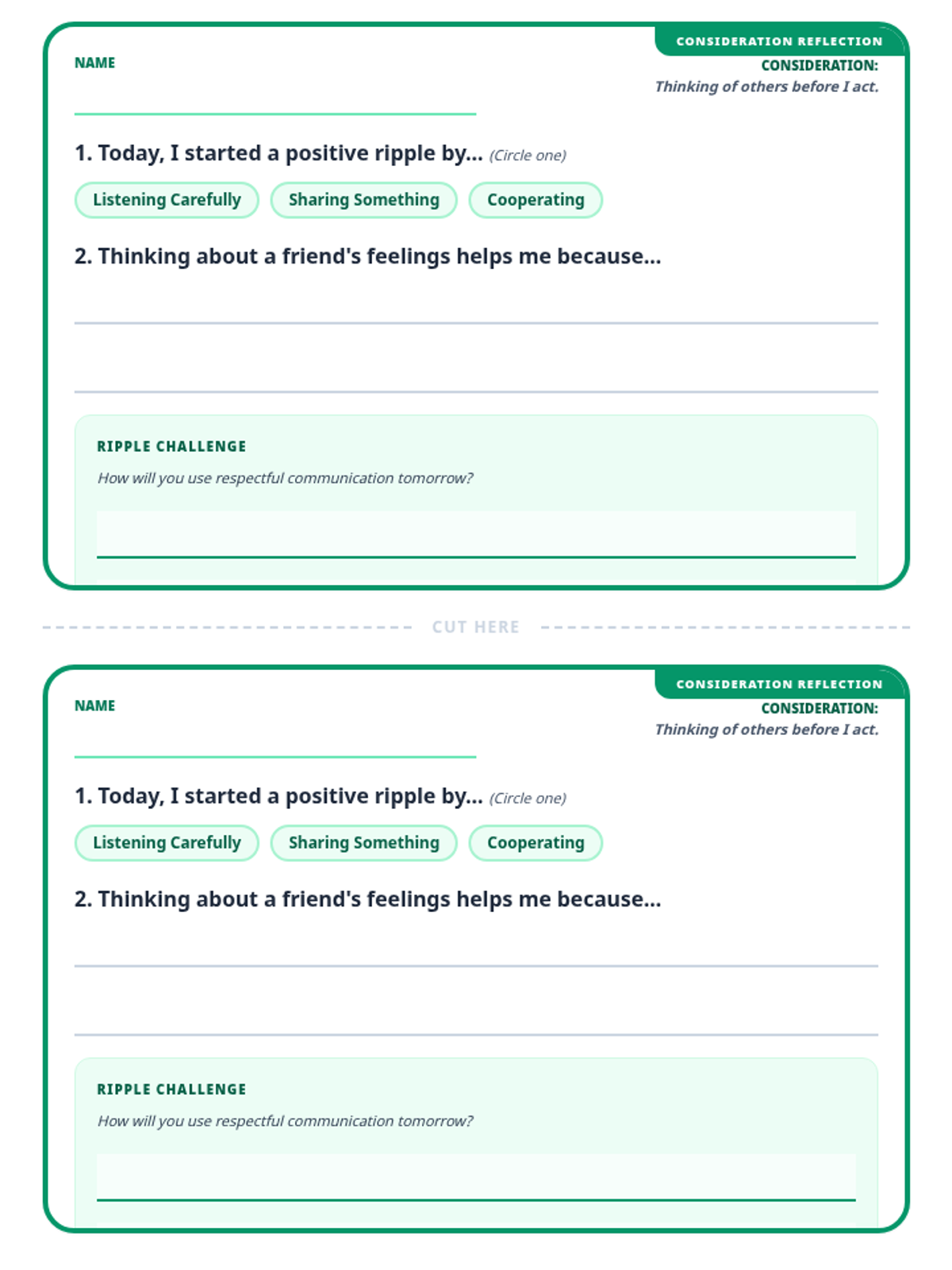
A printable student reflection slip designed with clean writing lines and selection options, focused on the ripple effect metaphor and practicing consideration. Increased definition text size and darkened writing lines for legibility.
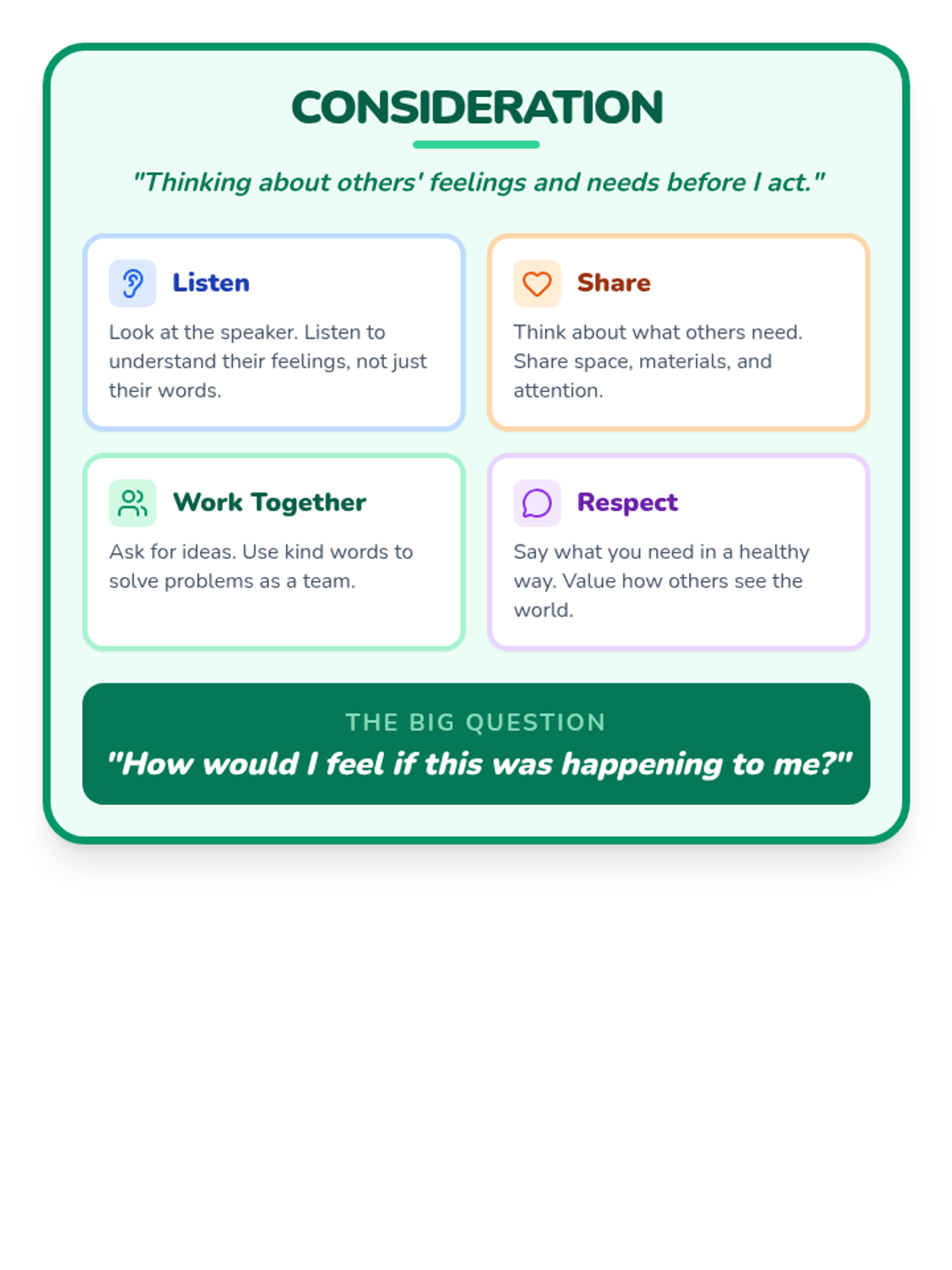
A visual mini-anchor chart for students to keep in their folders or for classroom display, defining the key components of consideration. Revised to fit on a single page.
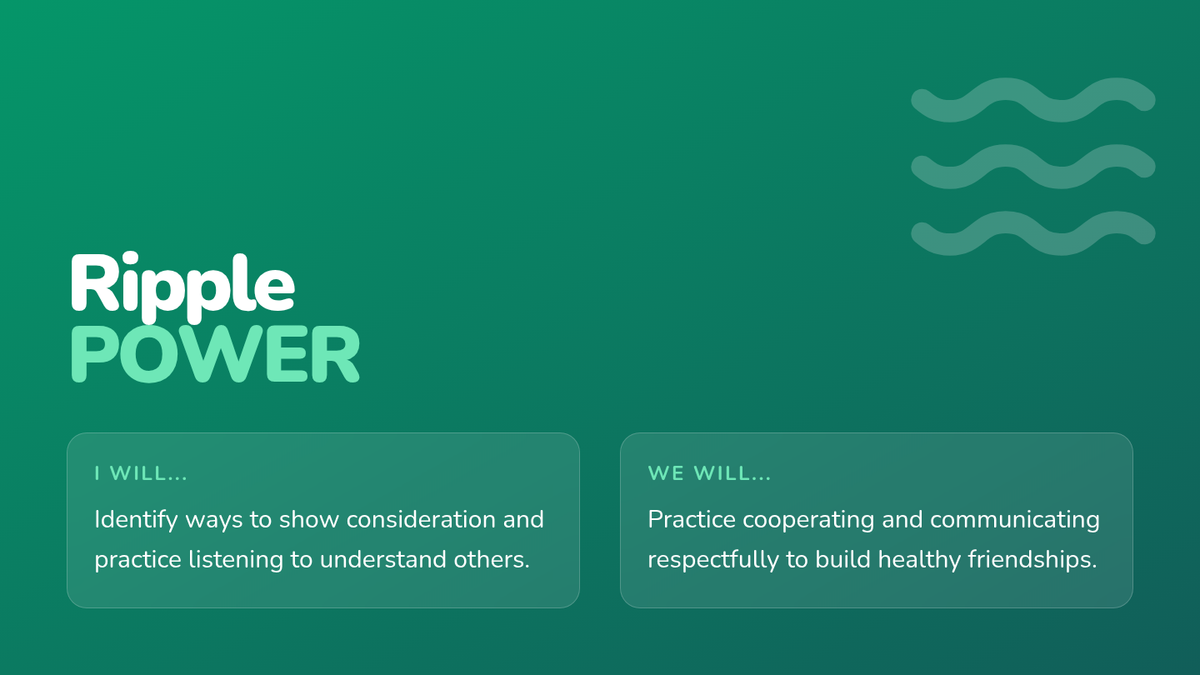
A high-impact visual slide presentation to guide the whole-group lesson on consideration and the ripple effect. Increased title size on first slide.
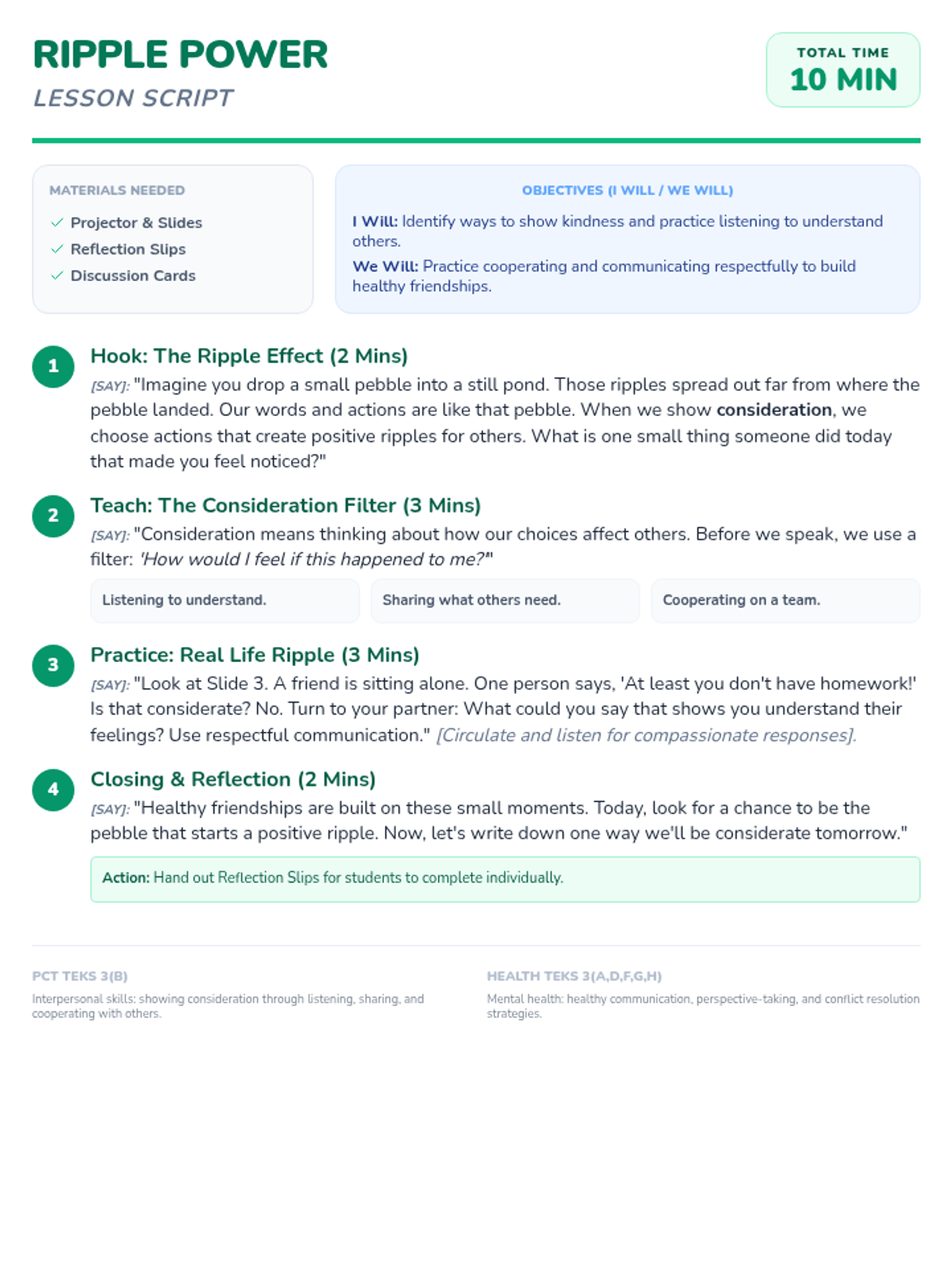
A teacher-facing script for a 10-minute whole-group lesson on consideration and the ripple effect, featuring structured timing, student objectives, and specific dialogue prompts.
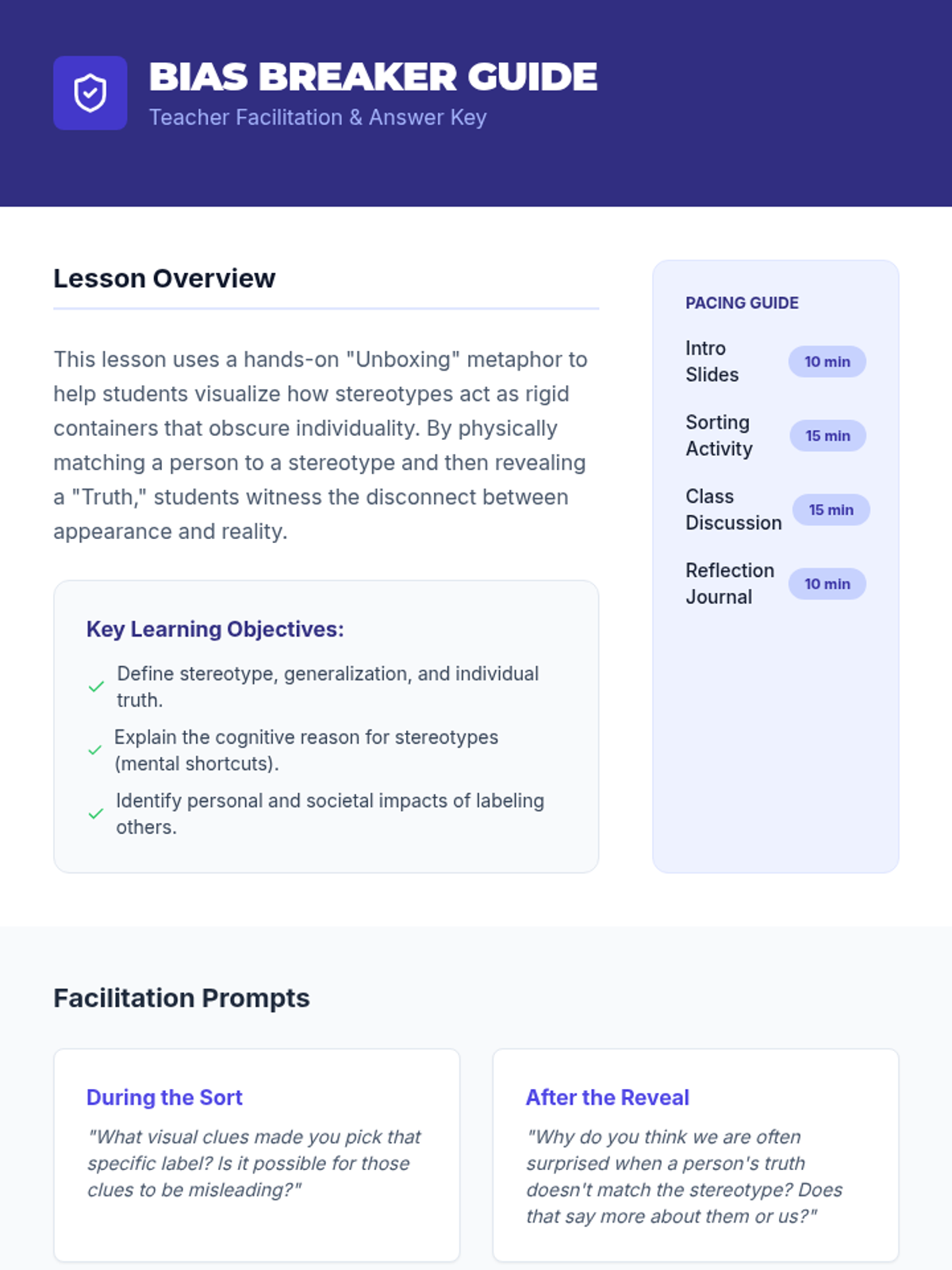
A comprehensive teacher's guide providing instructional strategies, pacing recommendations, guided discussion prompts, and a master answer key for the 9-set Unbox the Label sorting activity. Includes insights into cognitive shortcuts and the 'single story' concept.
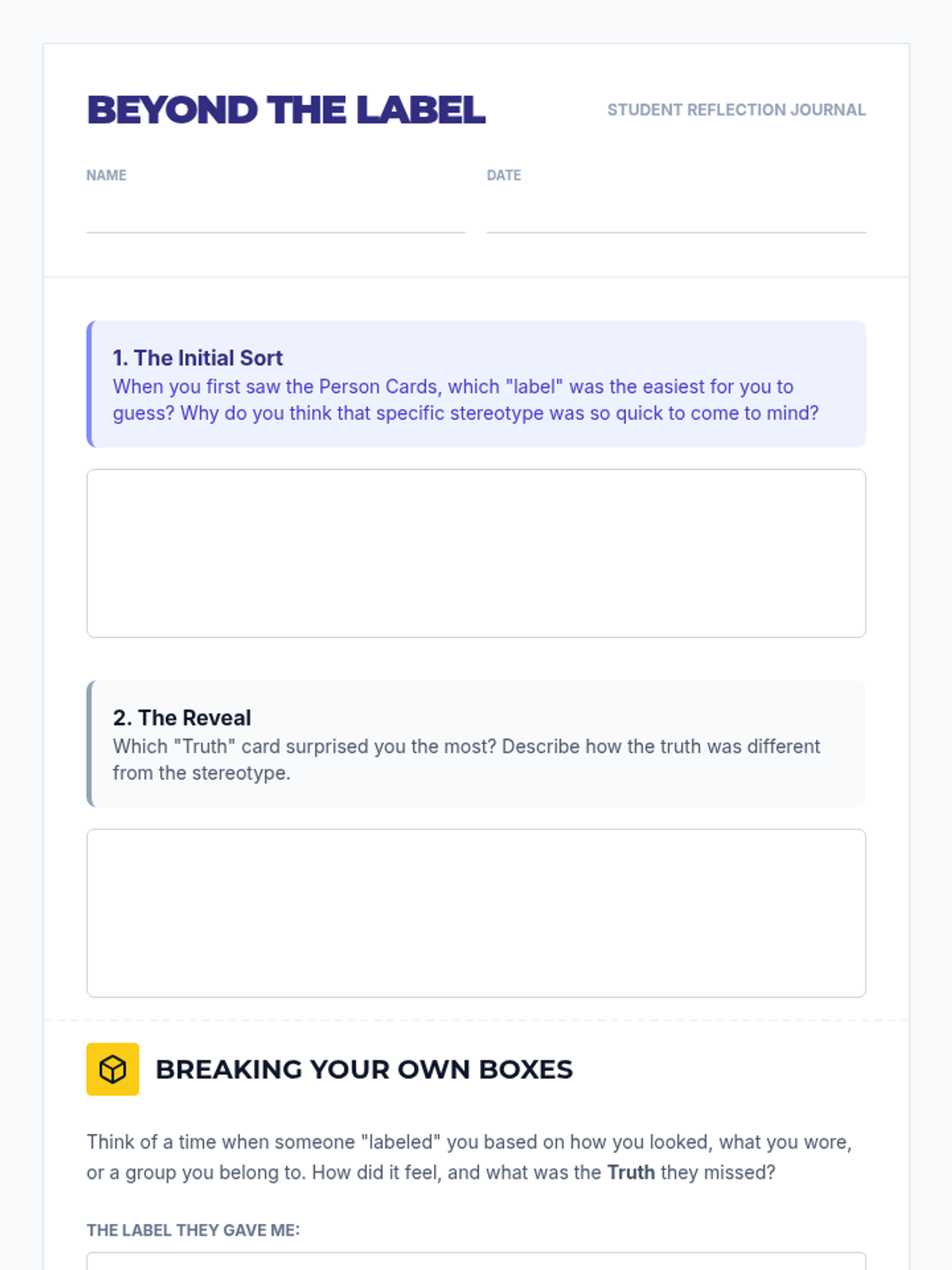
A reflective journal worksheet for students to process the visual sorting activity. It includes guided questions on their initial reactions, a space to analyze the 'Truth' reveals, and a personal application section for exploring their own experiences with labels.
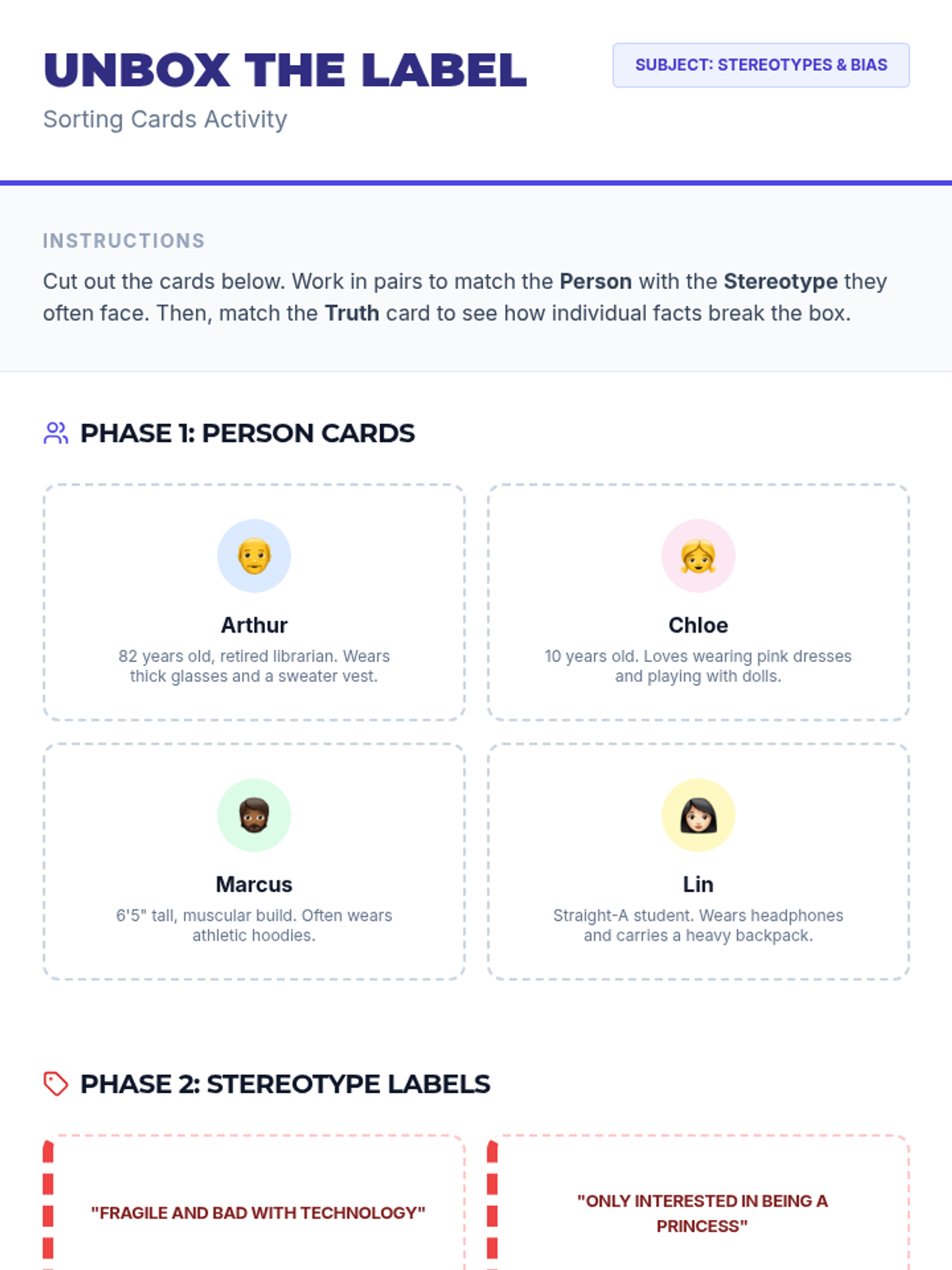
A hands-on activity sheet featuring 27 cut-out cards (9 sets of Person, Stereotype, and Truth) designed to help students visually sort and challenge common biases. Each set of cards provides a narrative that defies simple categorization.
A visual presentation introducing the concept of stereotypes, the brain's use of shortcuts, and the harmful effects of labeling people. Includes clear definitions and instructions for the hands-on sorting activity.
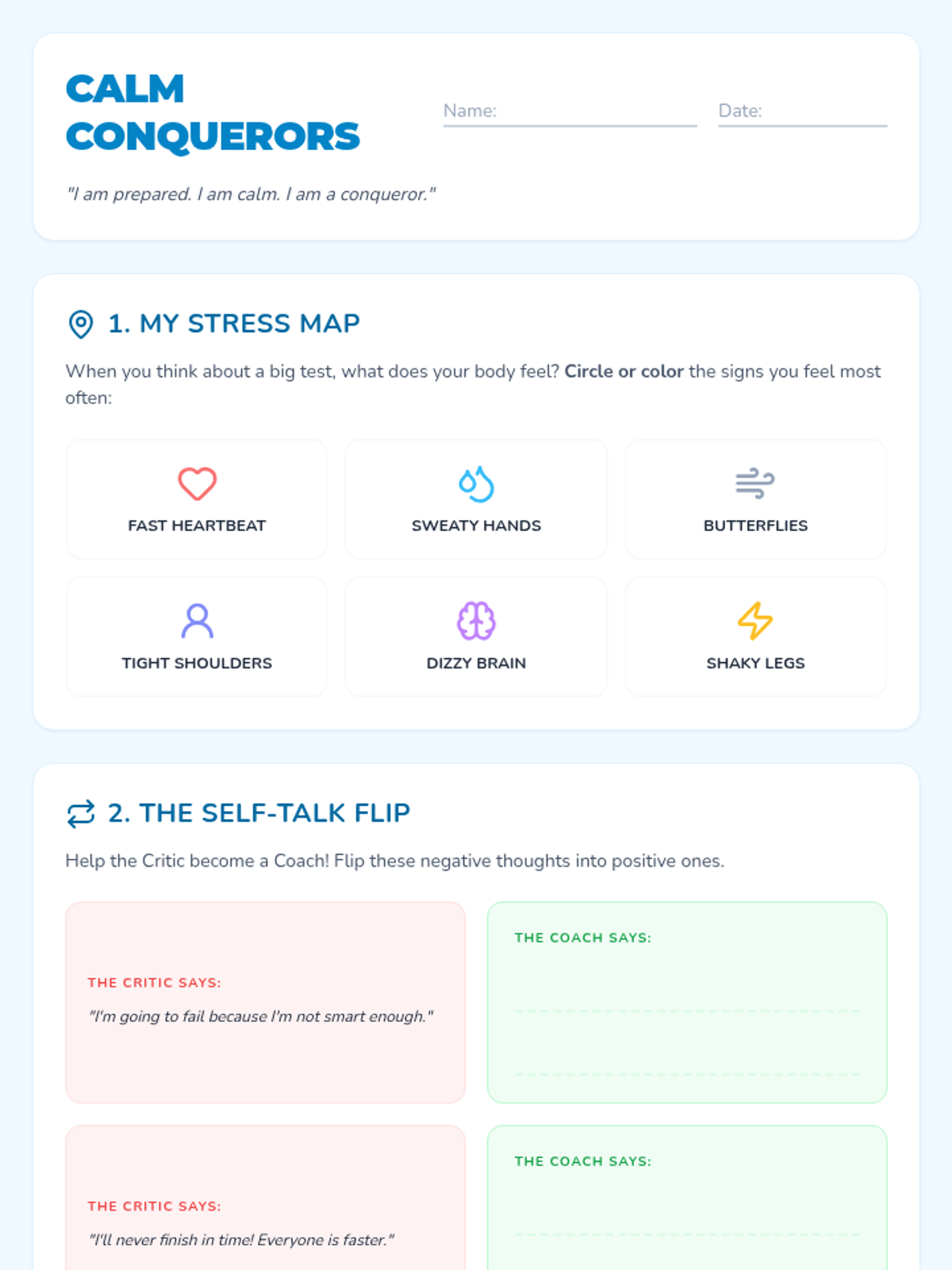
A student-facing worksheet for the Calm Conquerors lesson. Includes a checklist for identifying physical stress symptoms, a 'Self-Talk Flip' writing activity, and a visual breathing badge for practicing box breathing.
An engaging 16:9 slide presentation for 4th-grade students on managing test stress. Features visual guides for box breathing and the 'Self-Talk Flip' technique, with bold fonts and child-friendly icons.
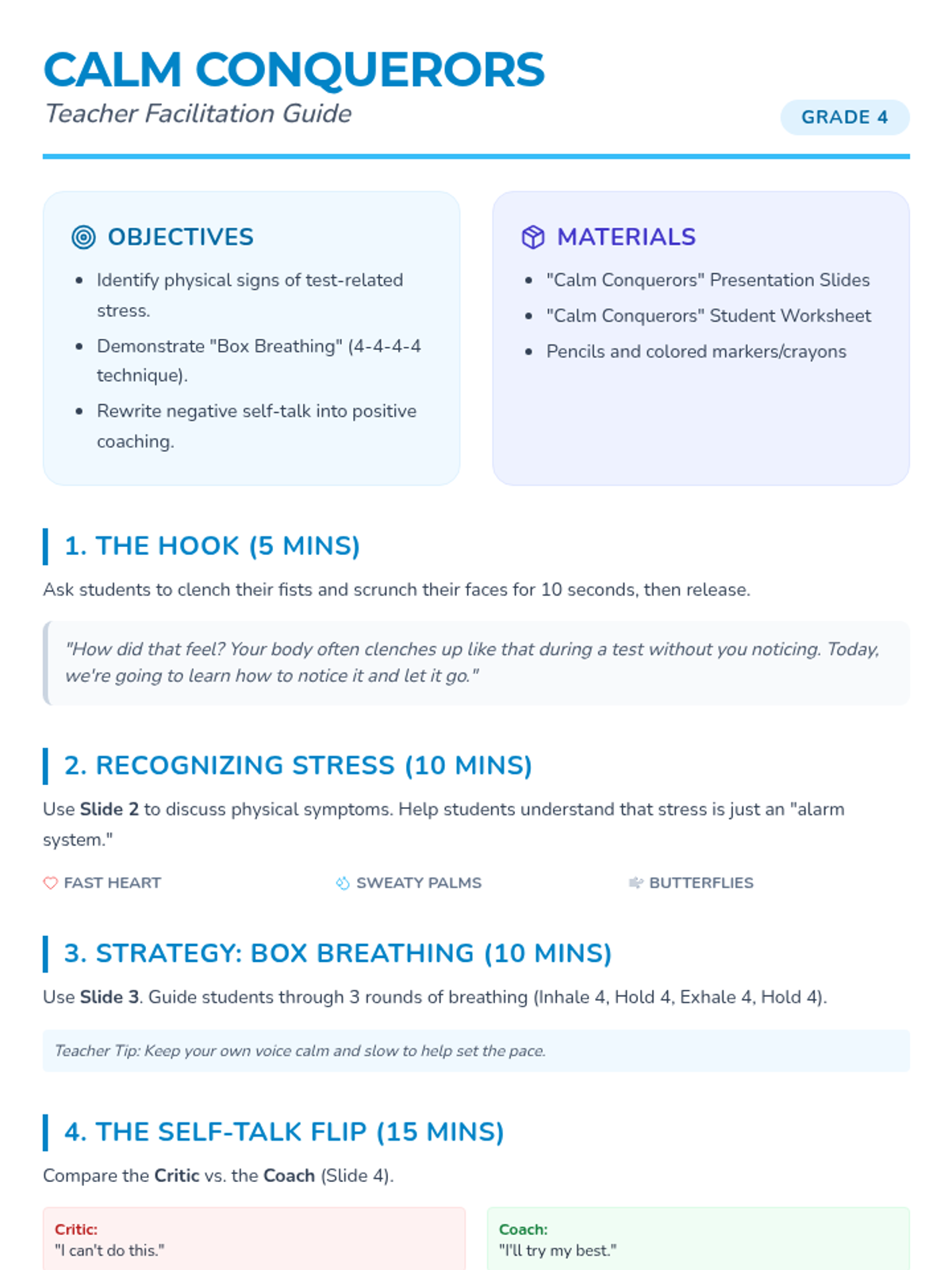
A detailed teacher facilitation guide for the Calm Conquerors lesson, including learning objectives, a materials list, step-by-step instructional procedures, and teaching tips for 4th-grade test anxiety management.
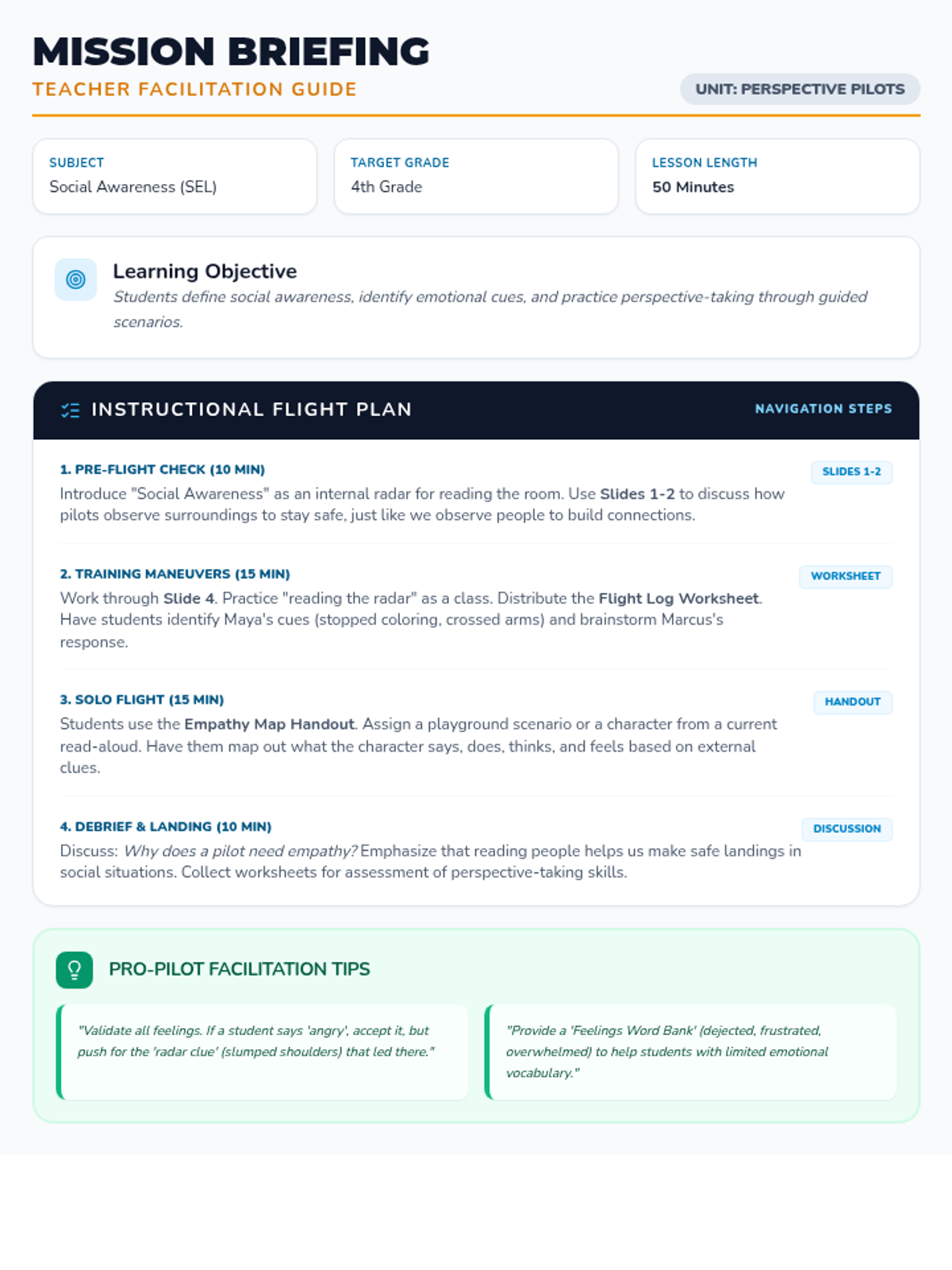
A comprehensive teacher facilitation guide for the 'Perspective Pilots' lesson. Revised to consolidate content onto a single page and improve flow for instructional delivery.
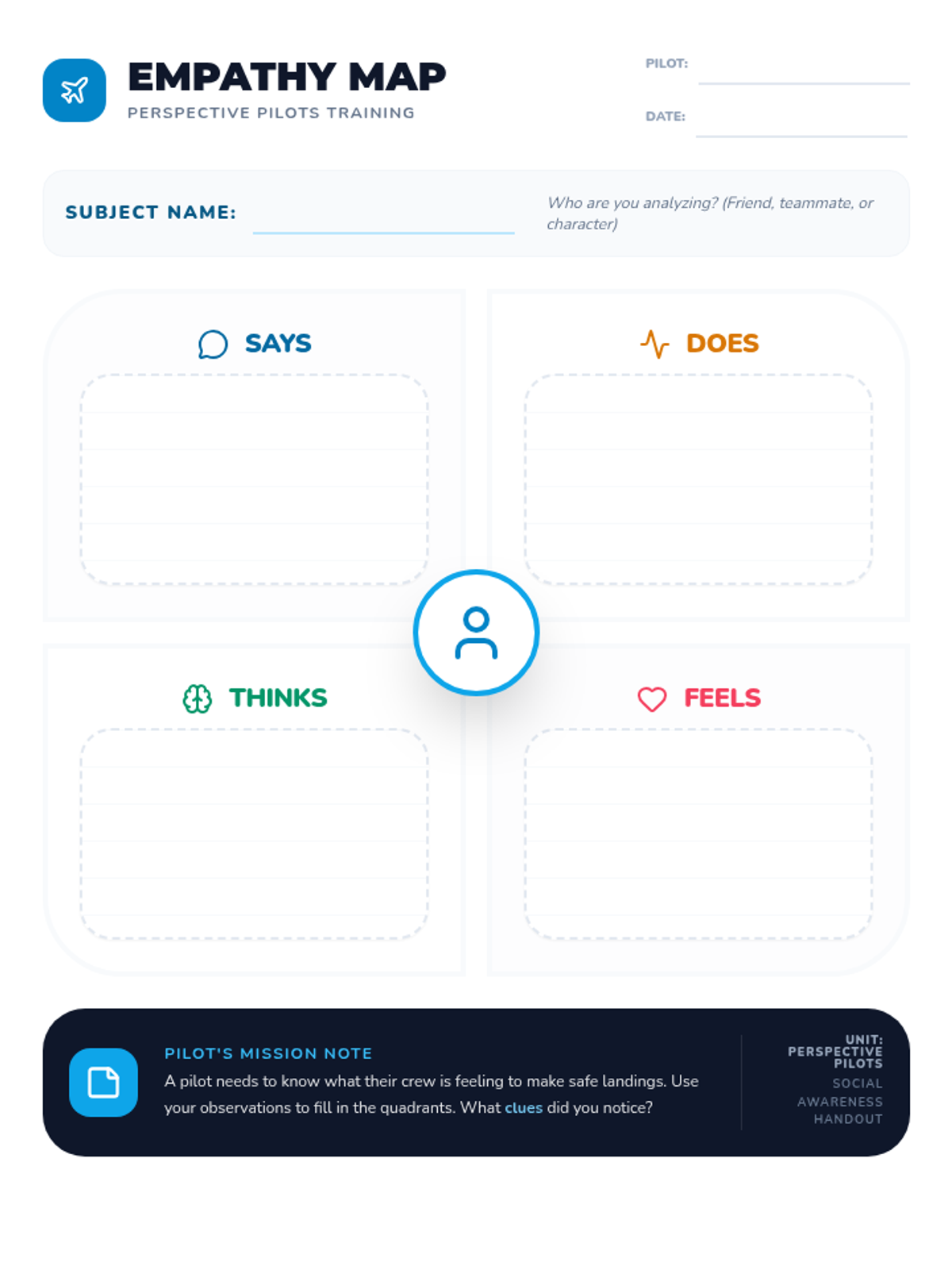
An Empathy Map graphic organizer designed for 4th graders to analyze what a person says, does, thinks, and feels. Revised for single-page printing with student name fields and handwriting guides.
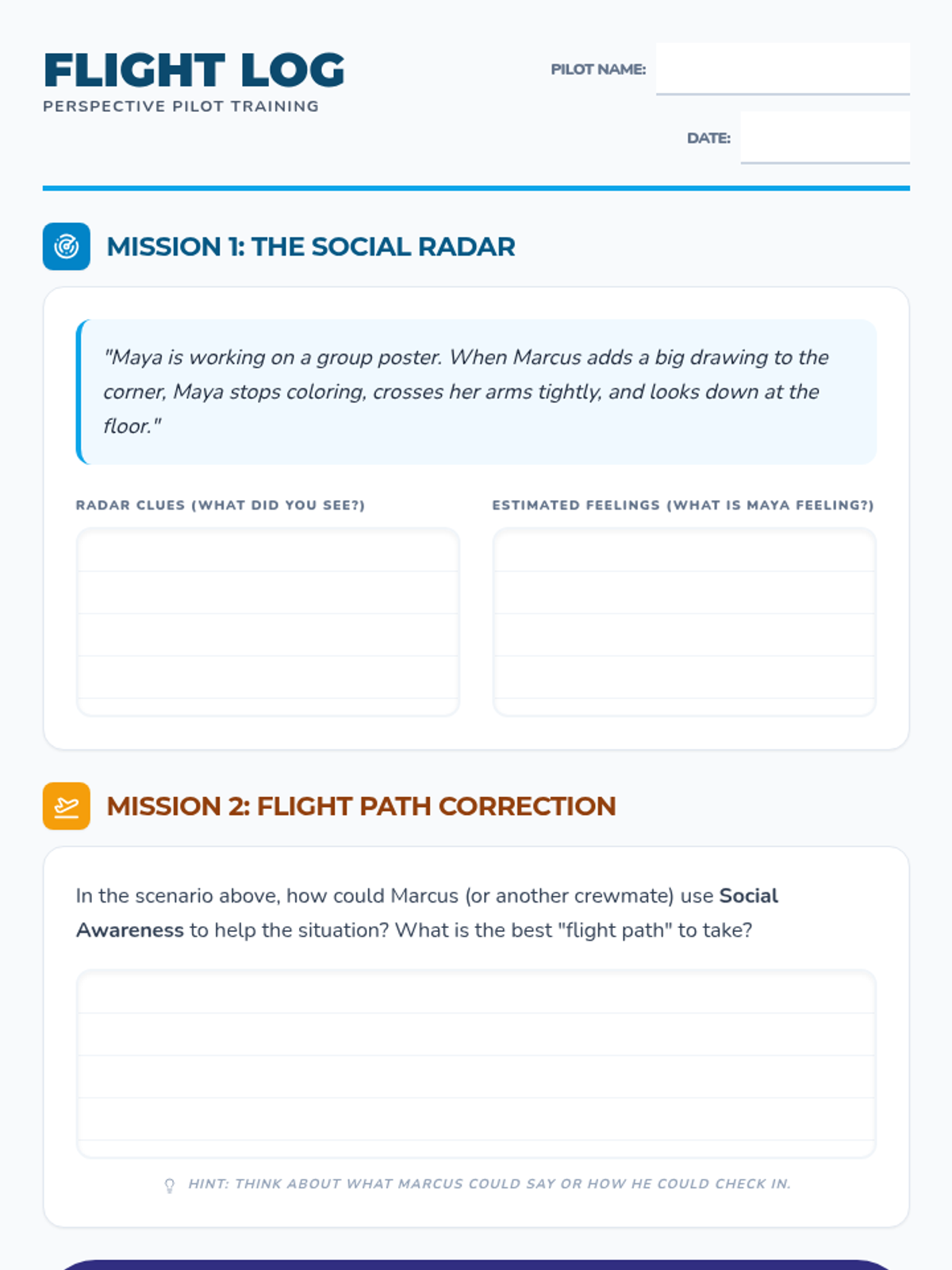
A student worksheet for the 'Perspective Pilots' lesson where students practice identifying social clues, naming emotions, and suggesting empathetic responses to real-world scenarios. Revised for better layout and legible work areas with handwriting lines.