A scenario-based worksheet where students practice identifying rigid versus elastic responses to common school-based schedule disruptions and setbacks. Now includes more varied scenarios across two pages.
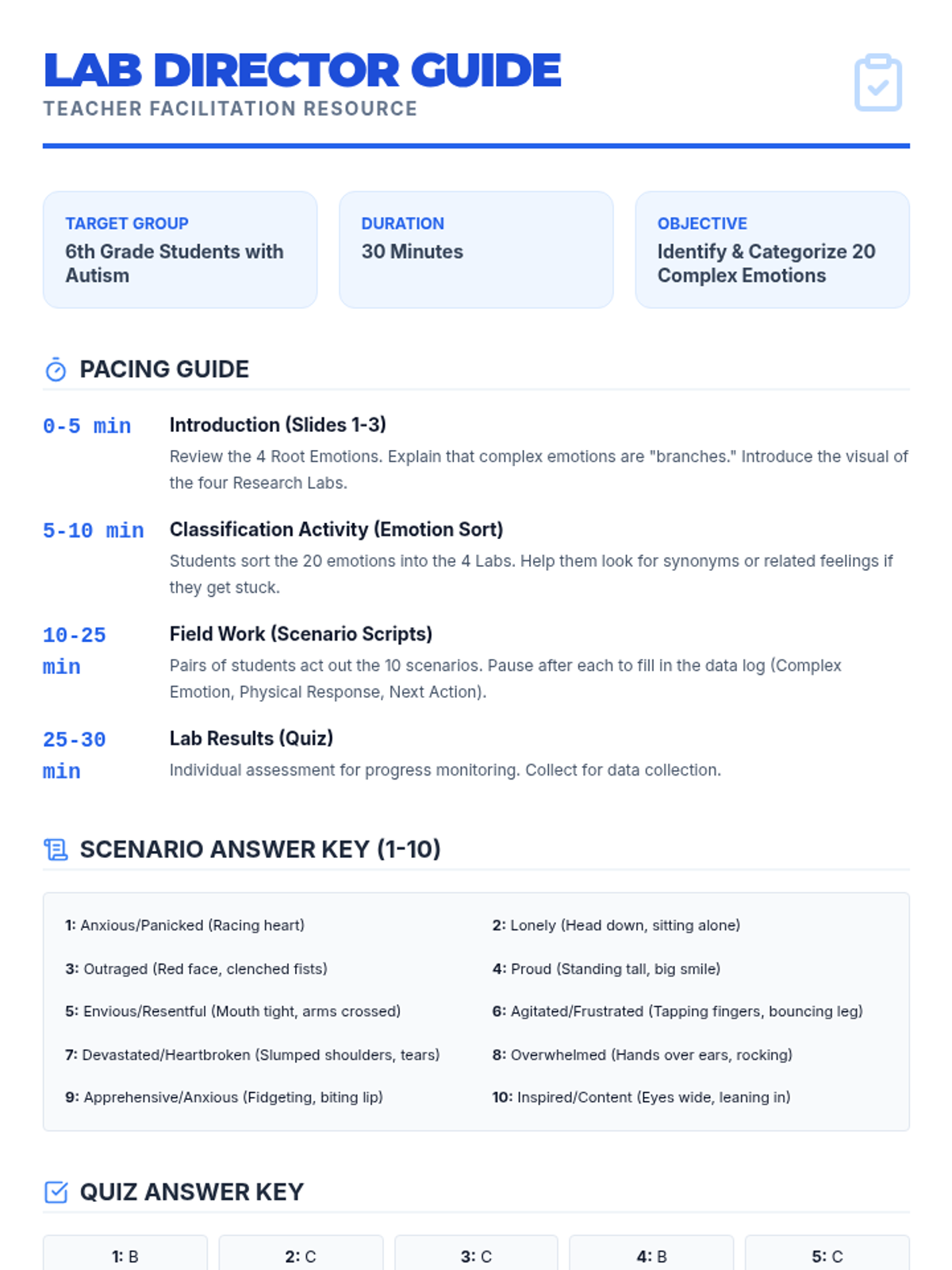
A teacher facilitation guide for "The Feeling Lab" lesson, including a 30-minute pacing guide, answer keys for the sorting activity and scenarios, and differentiation strategies for students with Autism.
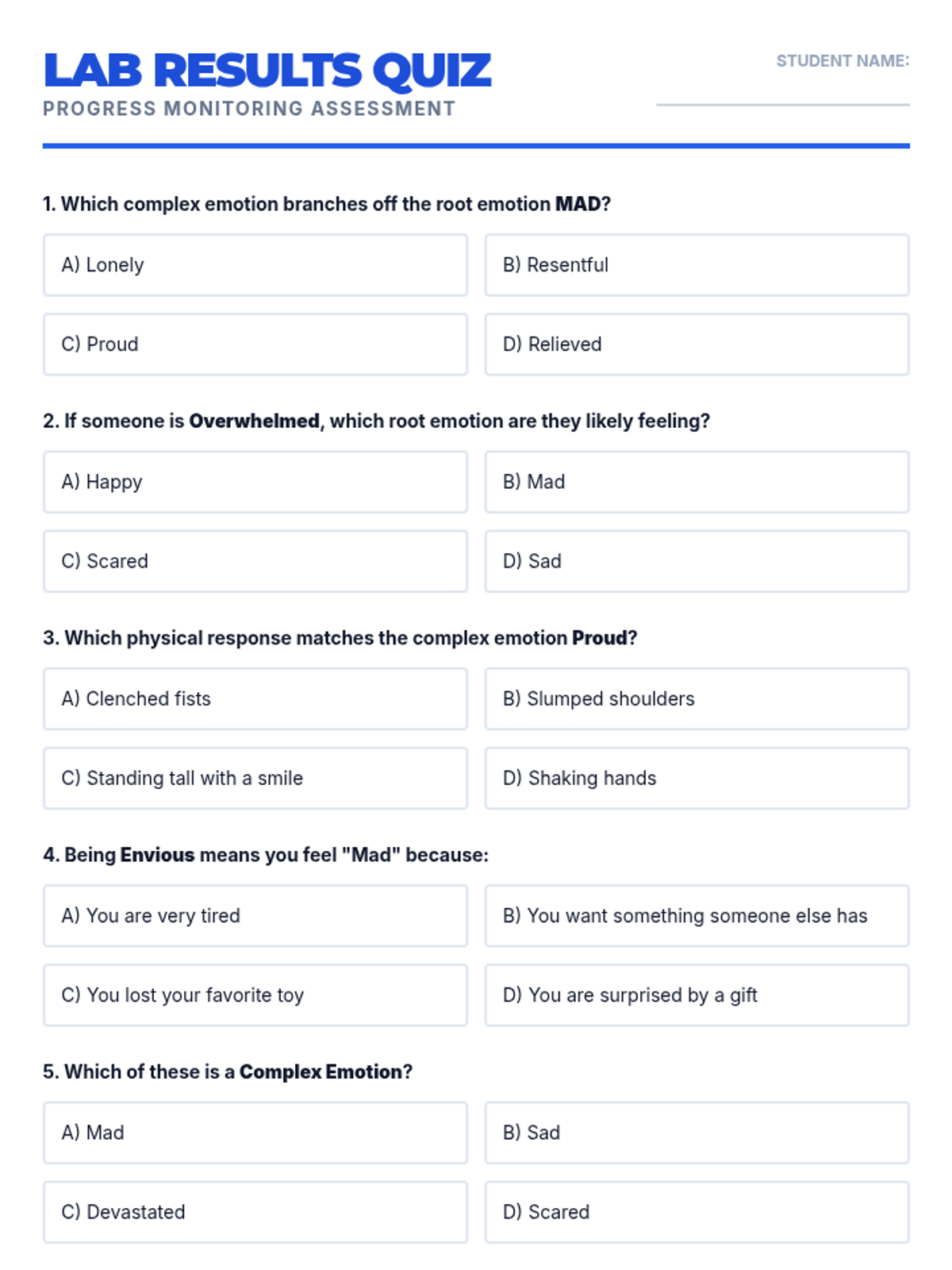
A 10-question multiple-choice quiz designed for progress monitoring. It assesses students' ability to categorize complex emotions into root categories, identify physical responses, and understand the purpose of naming specific feelings.
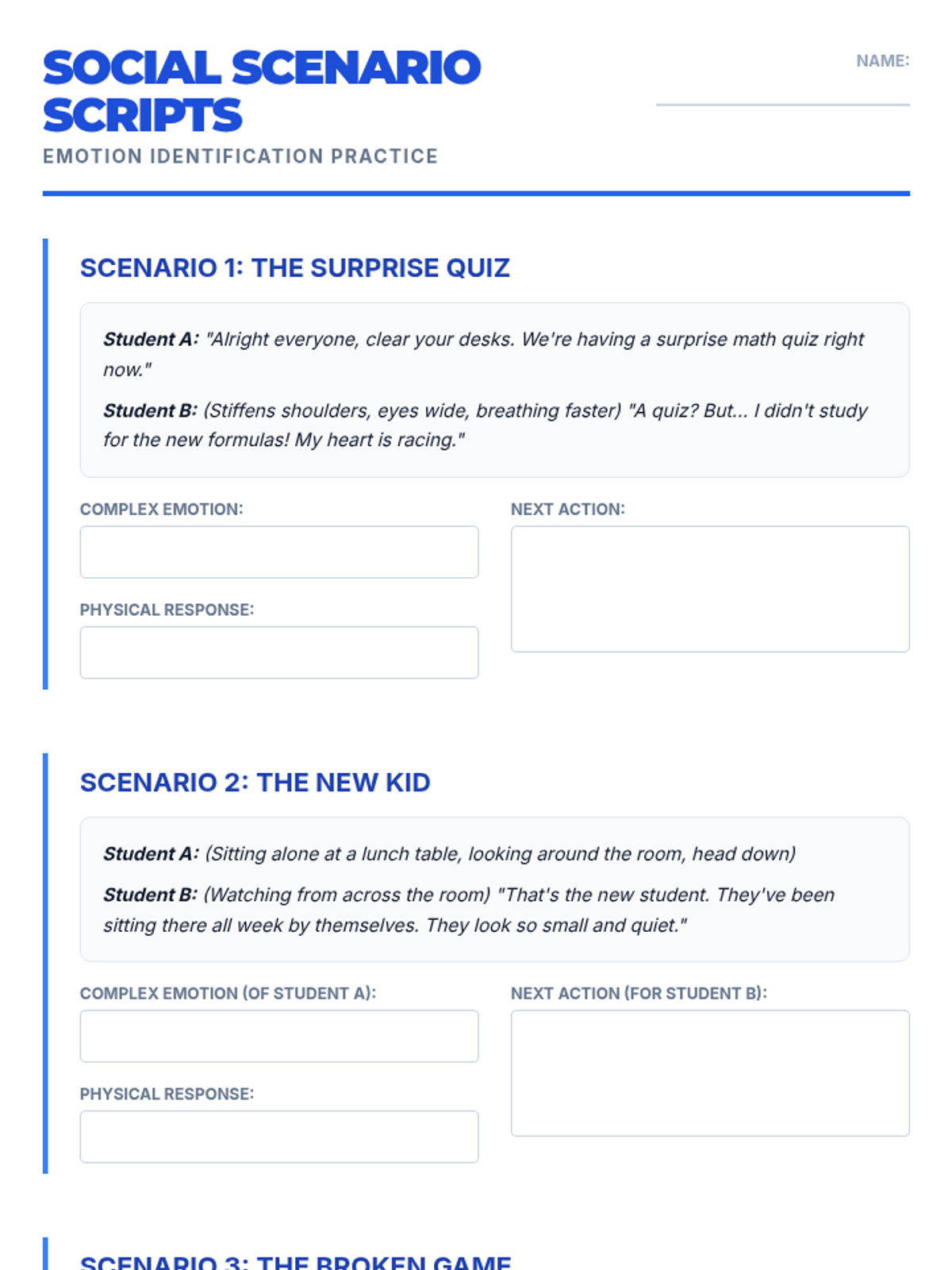
A set of 10 role-play scenarios in script format designed for two students. Each scenario focuses on a complex emotion and includes space for students to identify the emotion, describe physical body responses, and plan a next step.
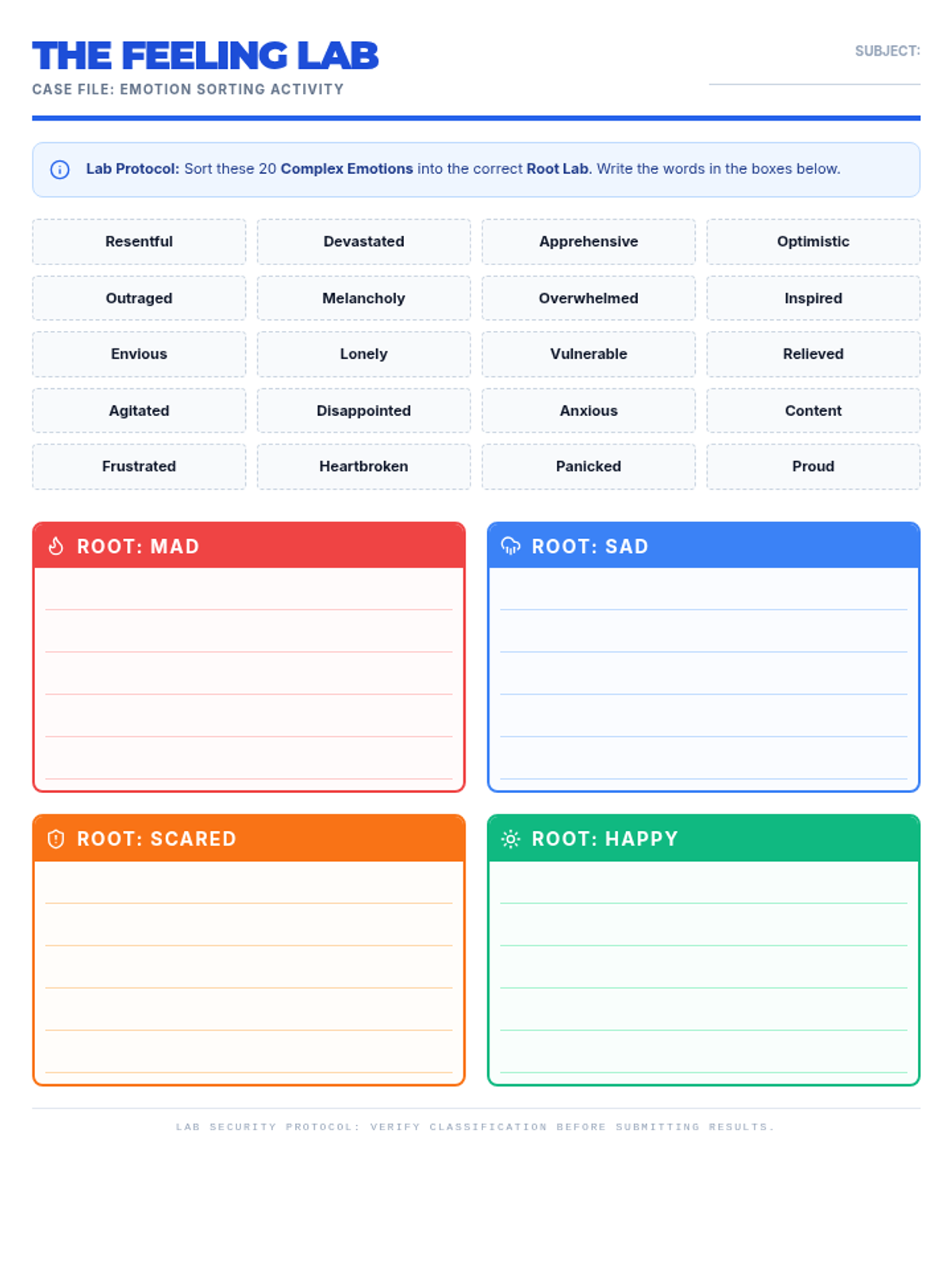
A sorting activity worksheet where students categorize 20 complex emotions into four root categories: Mad, Sad, Scared, and Happy. It features a lab-themed design with dedicated sorting boxes for each category.
A slide deck for a social skills lesson about identifying complex emotions, categorizing them into four root categories (Happy, Sad, Mad, Scared), and teaching a three-step observation protocol.
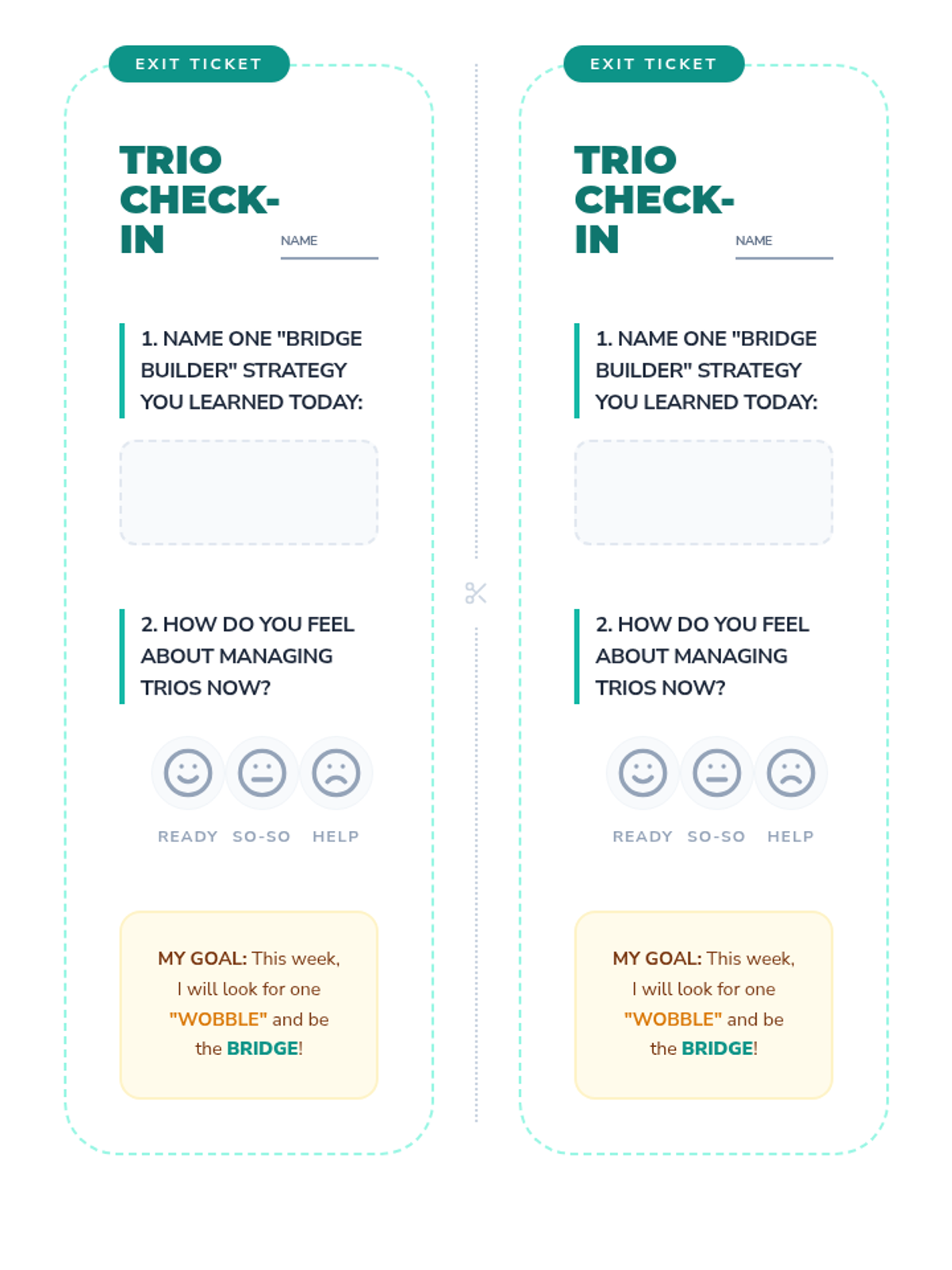
A simple exit ticket assessment for the end of the lesson, designed to be printed two-to-a-page for efficient use.
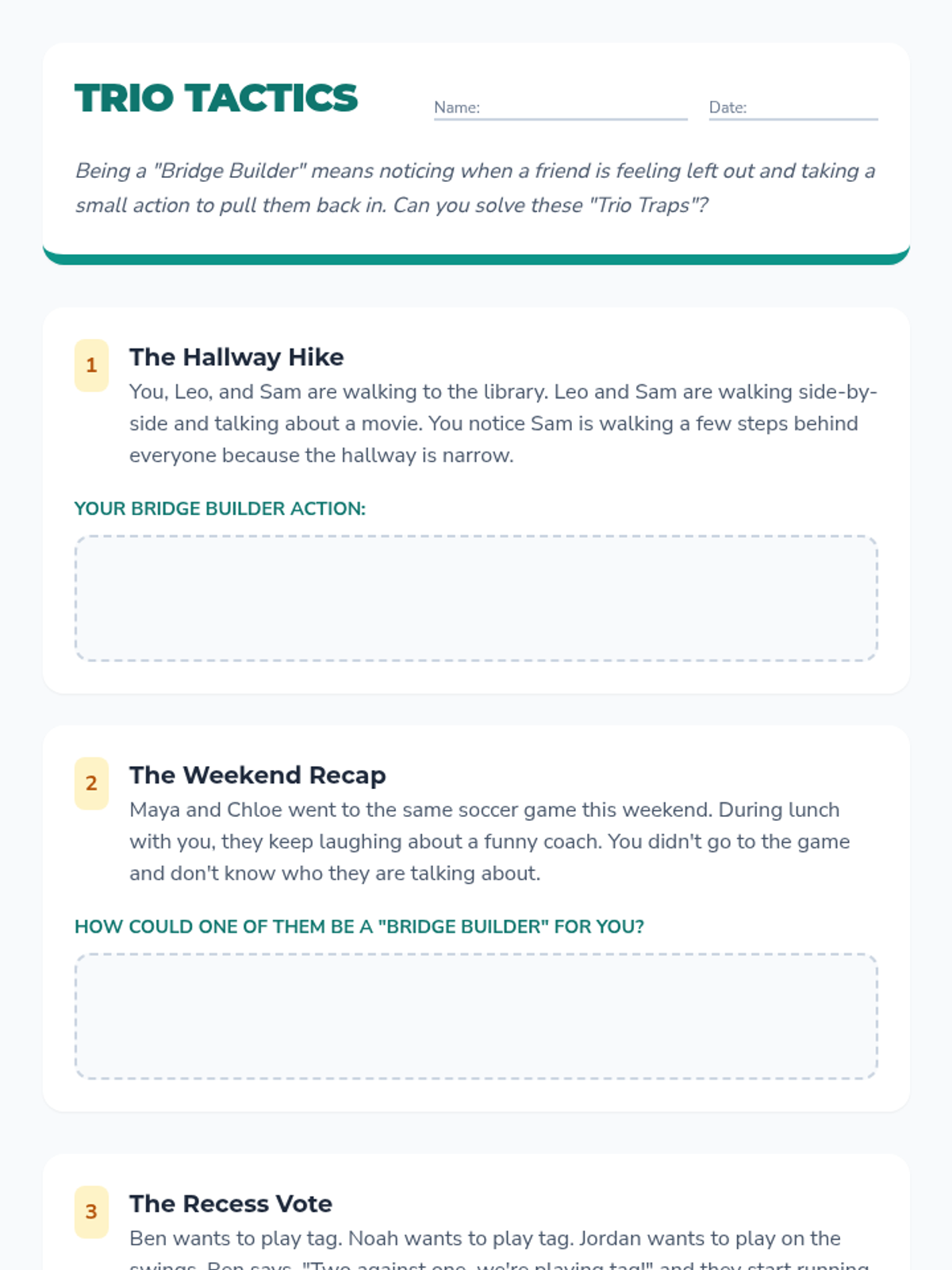
A student worksheet featuring three relatable scenarios involving three-person friendship 'traps' and space for students to brainstorm and draw inclusion strategies.
A visual slide presentation designed for 4th graders, illustrating the common challenges of three-person friendships and teaching 'Bridge Builder' inclusion strategies.
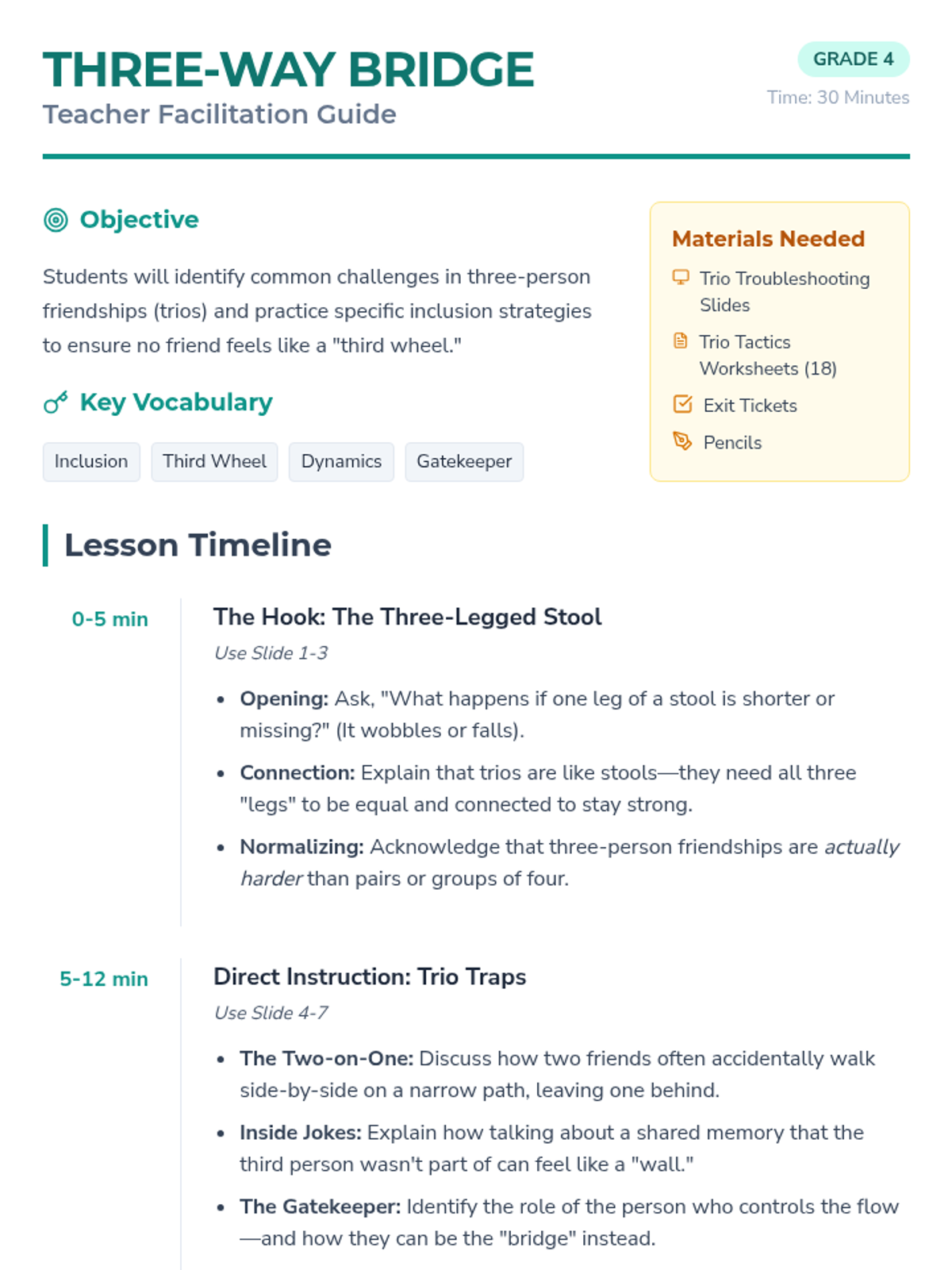
A comprehensive facilitation guide for teachers leading the 30-minute lesson on three-person friendship dynamics, including a detailed timeline and pedagogical tips.
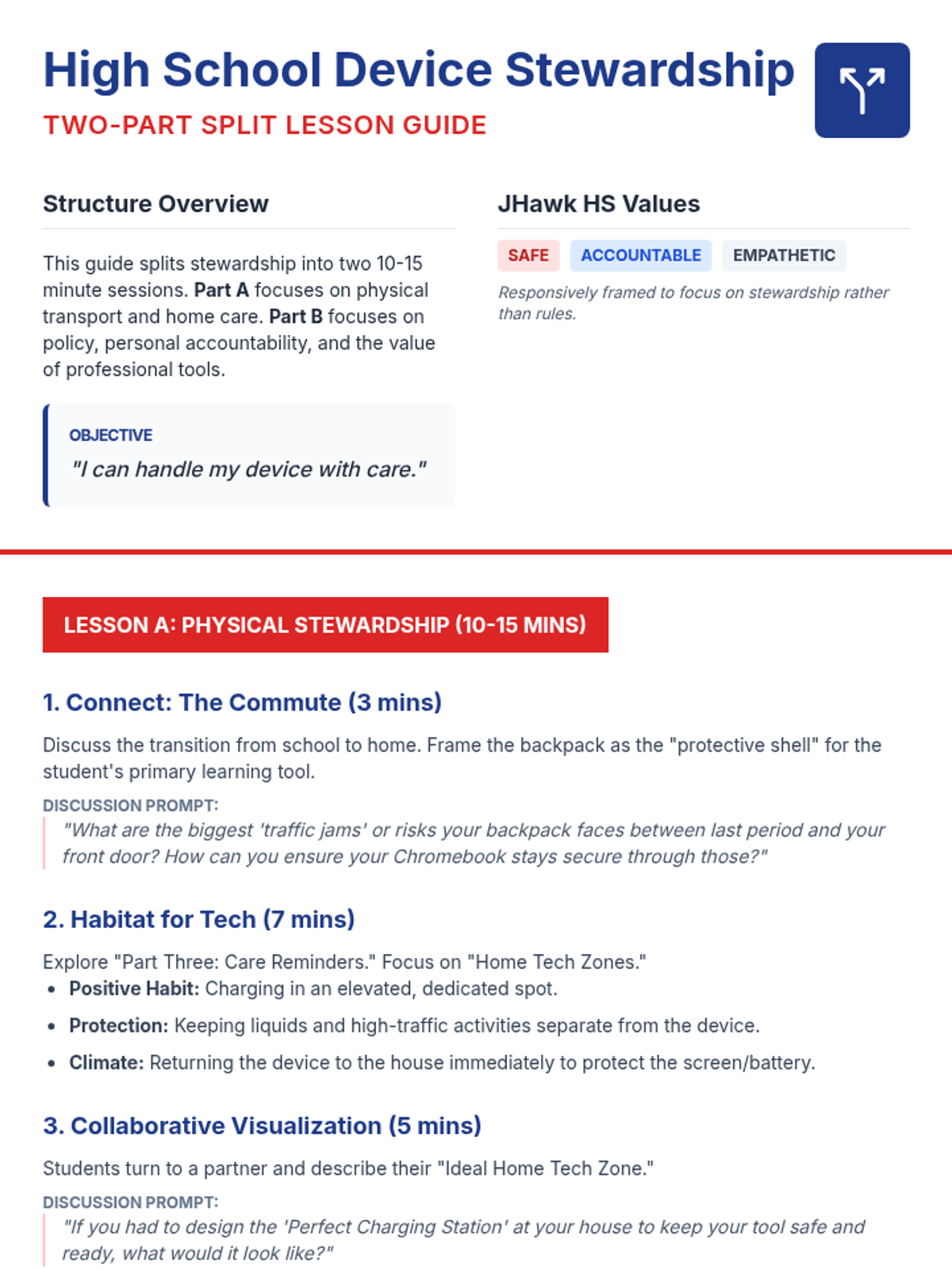
Positively framed teacher guide for two split High School device stewardship lessons, updated with 'last period' reference.