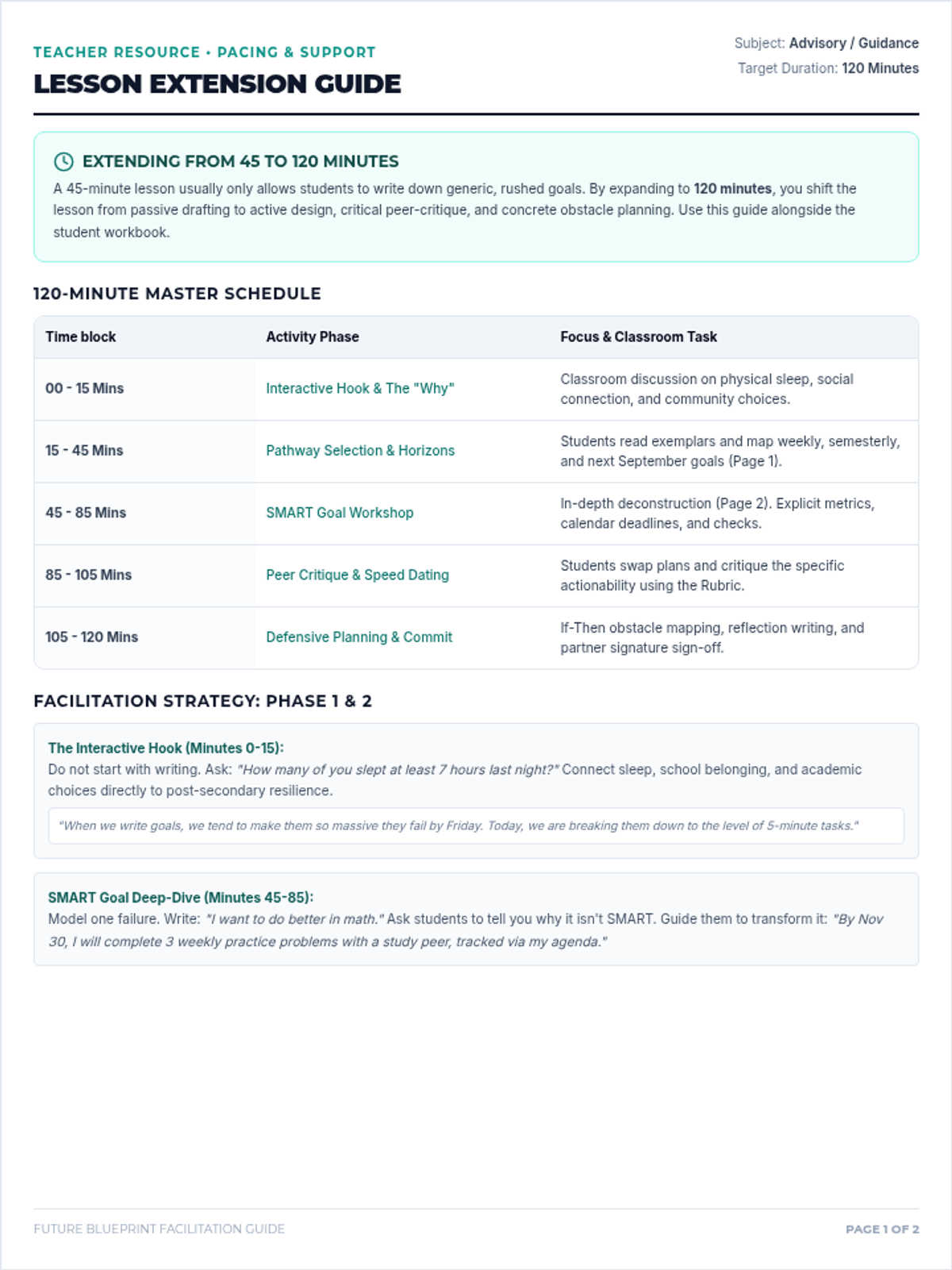
A professional facilitation guide for the 'Career Roadmap' lesson, featuring a detailed timeline, preparation checklist, and step-by-step instructional prompts for 8th-grade career exploration.
An engaging slide deck providing an overview of digital footprints, social media identity, and the importance of account privacy settings.
A professional checklist and discussion guide for students and teachers to navigate social media privacy settings and account security best practices.
A creative worksheet designed for students to mock up a social media profile for a historical figure or fictional character, facilitating reflection on digital identity and reputation.
A technical reference sheet for students providing "specifications" for different coping skills, categorized as foundations, girders, and cables to match the architectural theme.
A structured worksheet for students to draft their architectural bridge between distress and regulation, including space for site analysis and technical specifications of their coping skills.
A visual presentation to guide teens through the concept of the Blueprint Project, using architectural metaphors to explain the bridge between emotional distress and coping application.
A comprehensive facilitation guide for art therapists, providing lesson flow, therapeutic prompts, and intervention strategies for the "Blueprint Project" lesson.
A self-assessment rubric titled 'Level Up Rubric' that allows students to evaluate their baseline skills across the four pillars of personal effectiveness and set targets for growth.
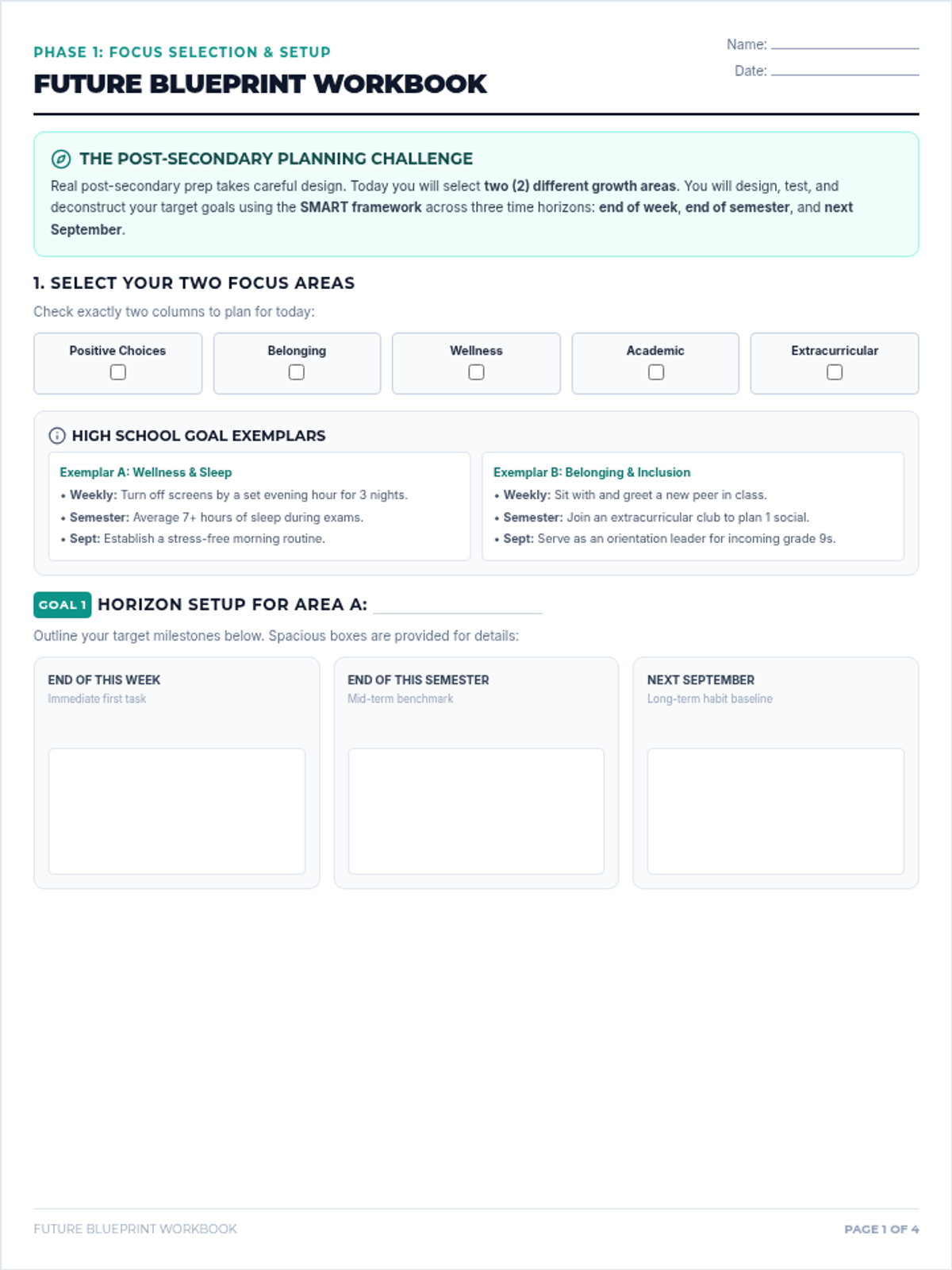
A structured student worksheet titled 'The Catalyst Blueprint' containing practical application areas for SMART goal setting, an Eisenhower Matrix grid, communication role-play prompts, and a stress management toolbox.
A comprehensive 45-minute teacher guide for facilitating 'The Catalyst Blueprint' lesson, featuring learning objectives, detailed pacing, activity instructions, and expert facilitation tips.
A professional slide presentation titled 'The Catalyst Blueprint' covering the four pillars of personal effectiveness: SMART goal setting, time management with the Eisenhower Matrix, active communication techniques, and stress management strategies.
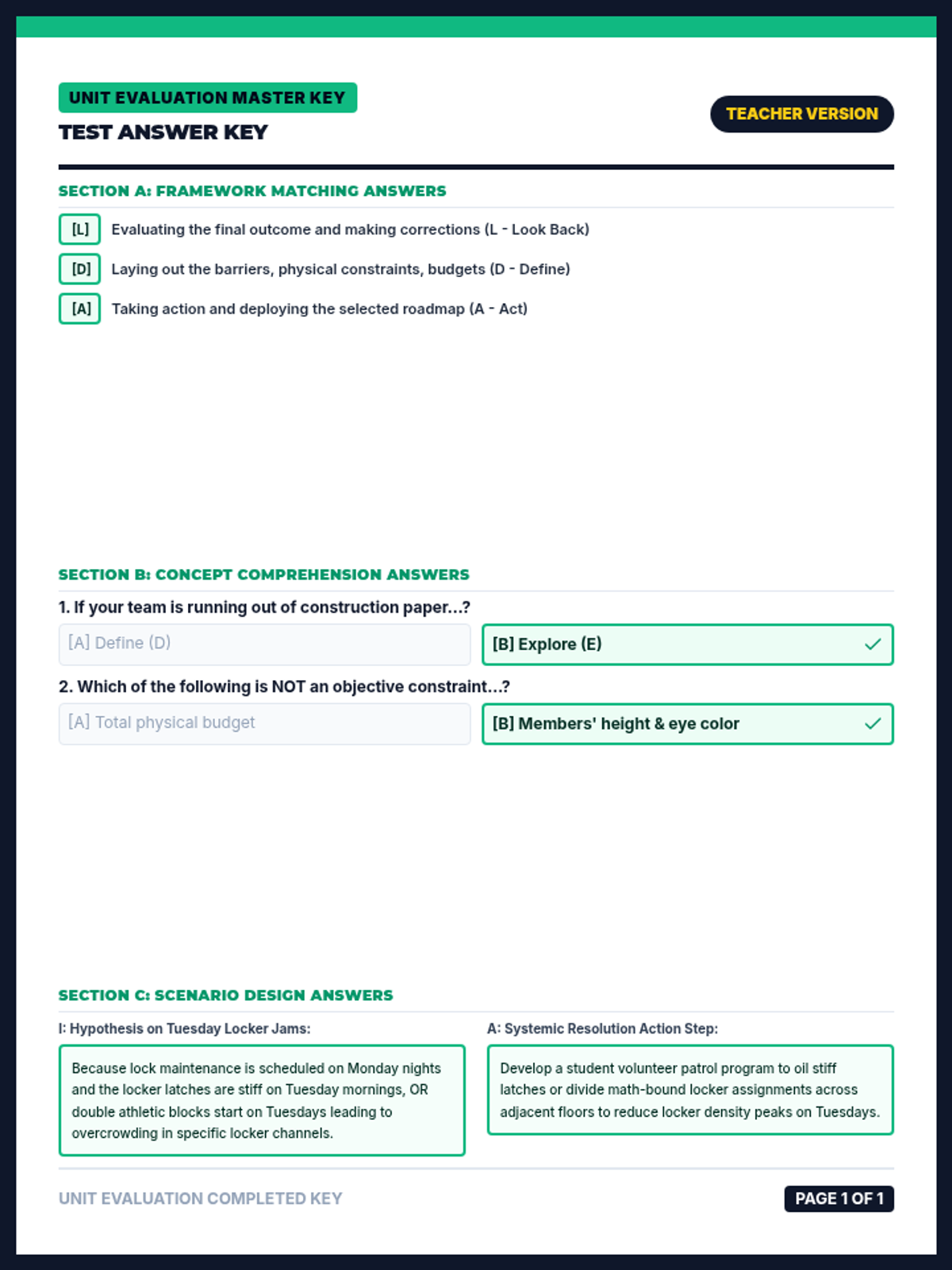
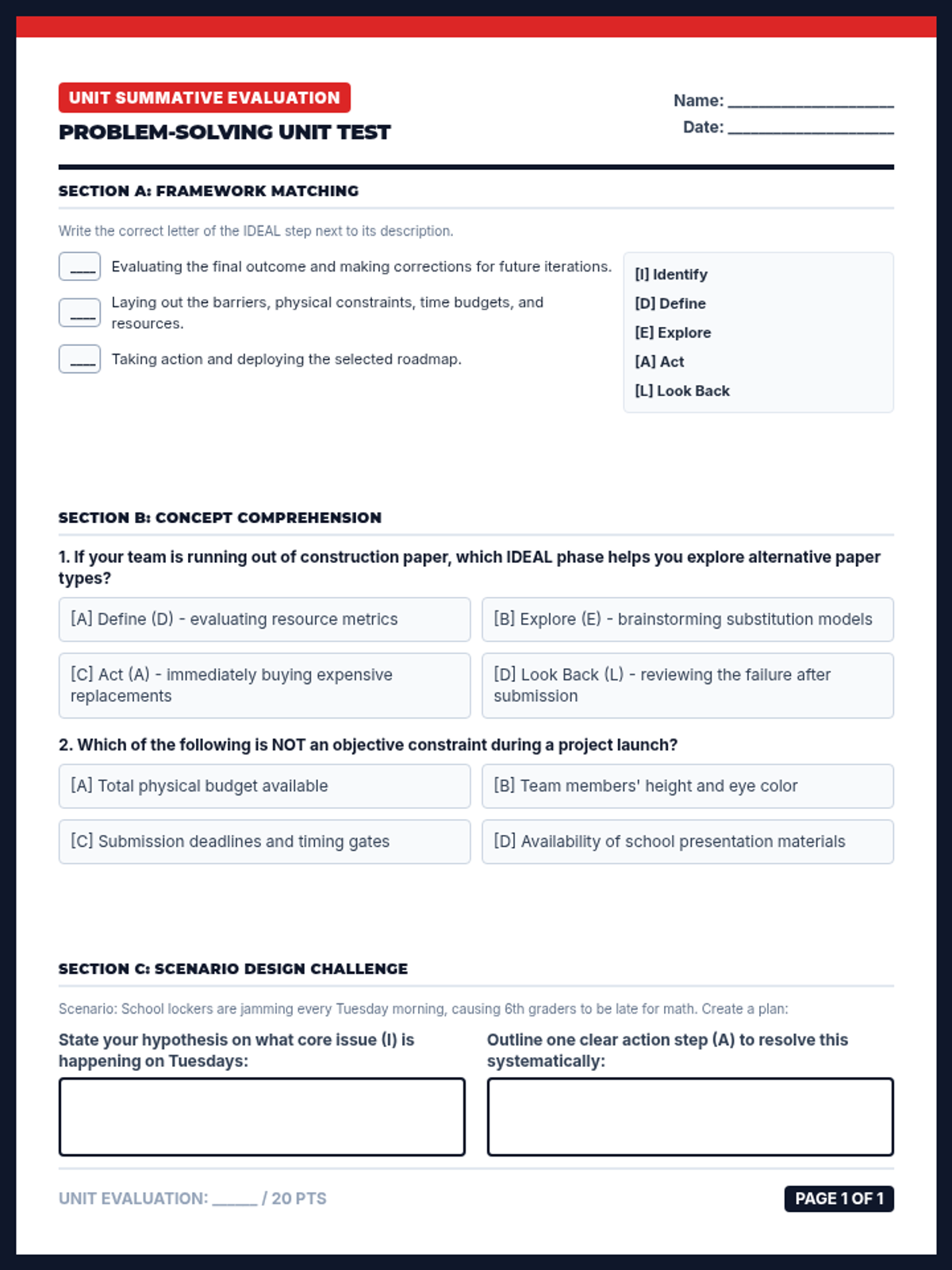
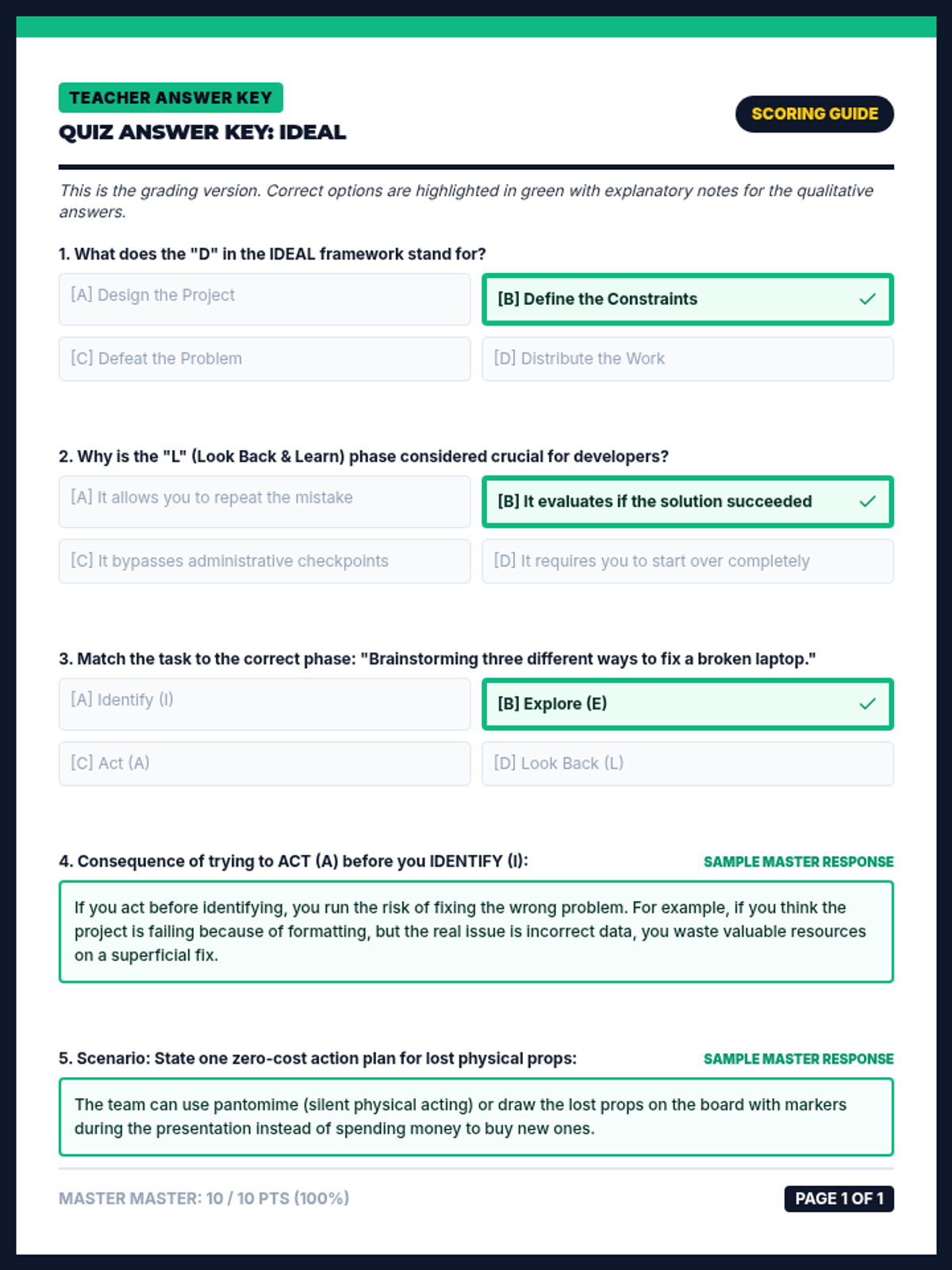
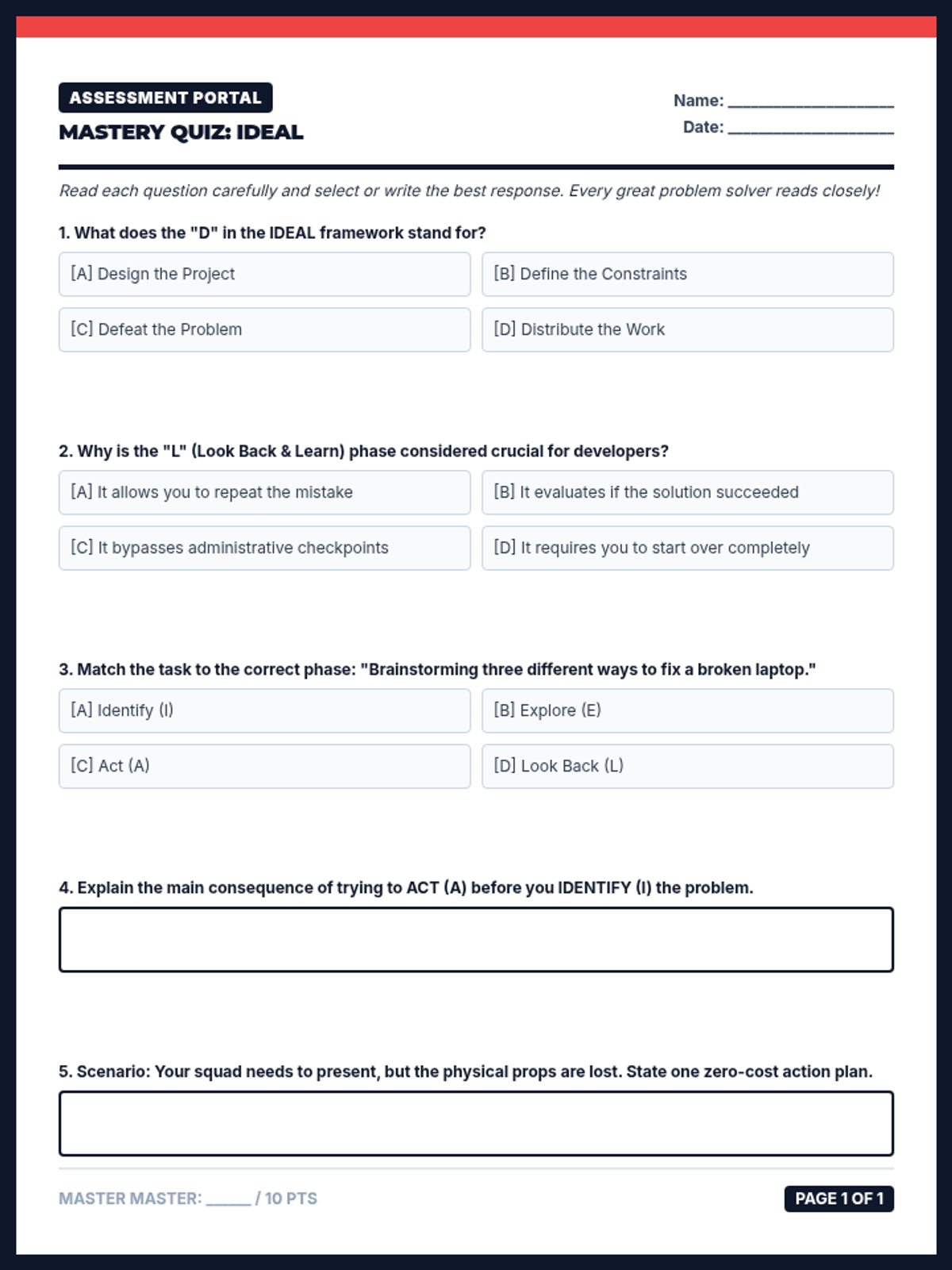
A specialized detailed lesson plan for Year 7-8 students focusing on 'Perspective Prism'. Includes Australian Curriculum v9.0 links (HPE), deconstruction of intent vs. impact, and practical perspective-taking protocols. Revised for layout and Appendix content.
A set of 4 printable exit tickets for the Perspective Prism lesson, evaluating student understanding of intent vs. impact, blindspots, and perspective-taking questions. Revised for better layout and student work space.
A comprehensive teacher's guide for the Perspective Prism lesson, covering intent vs. impact, certainty bias, and the 360-Scan protocol. Includes specific Year 7-8 QLD curriculum links and facilitation strategies for digital social dynamics.
A reflective worksheet for Year 7-8 students to practice social perspective-taking, auditing their own certainty, and distinguishing between their intent and the impact on others. Revised for single-page layout and student work areas.
A set of 4 printable scenario cards focusing on Year 7-8 social perspective-taking, specifically addressing common triggers like late replies, physical collisions, and project feedback. Designed for role-play and reframing.
A visual presentation for Year 7-8 students on cognitive empathy, distinguishing between intent and impact, and social perspective-taking. Features 'Refraction Simulation' and the '360-Scan' protocol with a dynamic Prism theme. Revised for layout and emoji rendering.
A specialized detailed lesson plan for Year 7-8 students focusing on 'Influence Lab'. Includes Australian Curriculum v9.0 links (HPE), deconstruction of groupthink and social power, and practical assertive defense strategies. Revised for curriculum accuracy and layout.
A set of 4 printable exit tickets for the Influence Lab lesson, evaluating student understanding of groupthink, assertive 'No' phrases, and positive social influence. Revised for single-page layout and better contrast.
A comprehensive teacher's guide for the Influence Lab lesson, covering group dynamics, the Chameleon Effect, and assertive 'No' strategies. Includes specific Year 7-8 QLD curriculum context and facilitation tips. Revised for layout and completeness.
A reflective worksheet for students to audit social influence in their lives, draft boundary-setting responses, and plan a 'positive uplift' action for their peer group. Revised for single-page layout and improved work areas.
A set of 4 role-play scenario cards focusing on Year 7-8 group dynamics, peer pressure, and maintaining personal values. Includes specific tags for 'Values Anchor' and 'Direct Exit' strategies. Revised for consistent hashtag visibility.
A high-impact slide presentation for Year 7-8 students on social influence, groupthink, and maintaining personal boundaries. Features 'Toxic Blends' analysis and assertive 'No' strategies with a laboratory aesthetic. Revised for content completeness and contrast.
A specialized detailed lesson plan for Year 7 students focusing on 'Digital Integrity'. Includes Australian Curriculum v9.0 links (HPE), deconstruction of rumors and cyberbullying, and practical application of the T.H.I.N.K. filter. Revised for curriculum accuracy and layout.
A set of 4 printable exit tickets for the Digital Integrity lesson (Year 7), assessing student understanding of digital footprint vs. shadow and the T.H.I.N.K. filter. Revised for better page breaks and contrast.
A comprehensive teacher's guide for the Digital Integrity lesson (Year 7), covering facilitation of discussions on rumors, cyberbullying, and the T.H.I.N.K. filter. Includes QLD v9.0 curriculum links and inquiry prompts.
A reflective worksheet for Year 7 students to audit their digital footprint and shadow, apply the T.H.I.N.K. filter to a specific social media rumor, and develop upstander strategies for system restoration. Revised for single-page layout and improved contrast.
A set of 4 role-play scenario cards focusing on Year 7 social media rumors, cyberbullying, and impersonation. Includes a second-page response worksheet for students to perform the 'Restoration Sequence'. Revised for better layout and student work areas.
A high-tech themed presentation for Year 7 students focusing on social media integrity, distinguishing between footprints and shadows, and identifying cyberbullying behaviors. Features the T.H.I.N.K. filter and 'System Restoration' strategies. Revised for font sizes and QLD Year 7 context.
A comprehensive 3-page detailed lesson plan for the Peacekeeping Pros session, including Australian Curriculum links (Year 8 HPE), step-by-step instructional sequences, differentiation strategies, and assessment frameworks. Revised for layout consistency and proper page breaks.
A set of 4 printable exit tickets per page for the Peacekeeping Pros lesson, assessing students on triggers, cool down tools, and I-statements. Revised for better legibility and student work space.
A formal lesson plan overview for the Peacekeeping Pros lesson, tailored for Queensland Australian Year 8 students, outlining curriculum codes, learning targets, and a 60-minute instructional roadmap.
A professional assessment rubric for the Peacekeeping Pros lesson, evaluating students on trigger awareness, de-escalation, active listening, I-statements, and mediation skills using a 'Conflict Mechanic' theme. Revised to fit on a single page.
A comprehensive teacher's guide for the Peacekeeping Pros lesson, specifically designed for Queensland Year 8 students, with facilitation strategies for more complex social dynamics and secondary school contexts.
A high-contrast classroom anchor chart summarizing the four key pillars of conflict resolution: Cool Down, Active Listening, I-Statements, and Win-Win Thinking. Revised for ink efficiency and single-page display.
A reflective worksheet for Year 8 students to analyze their biological stress response, identify social triggers (online/offline), and practice assertive I-statement construction. Revised for secondary school maturity.
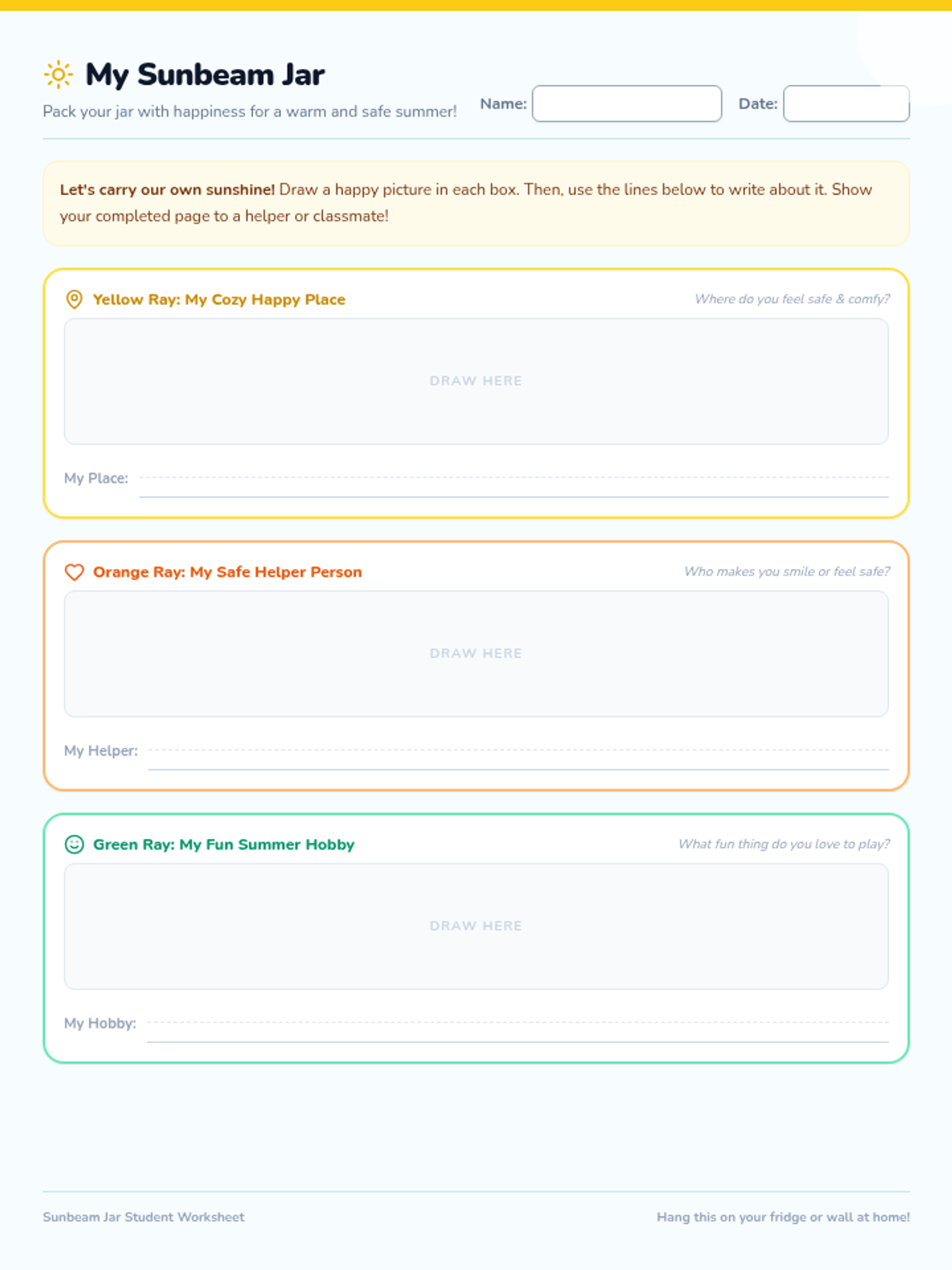
A set of printable role-play cards featuring common Year 8 social conflict scenarios (social media, exclusion, academic pressure) for students to practice mediation and de-escalation skills. Revised for secondary school dynamics.
A visual presentation for a conflict resolution lesson, tailored for Year 8 students, covering biological stress response (Amygdala Hijack), assertive communication, and peer mediation. Revised for secondary school maturity levels.
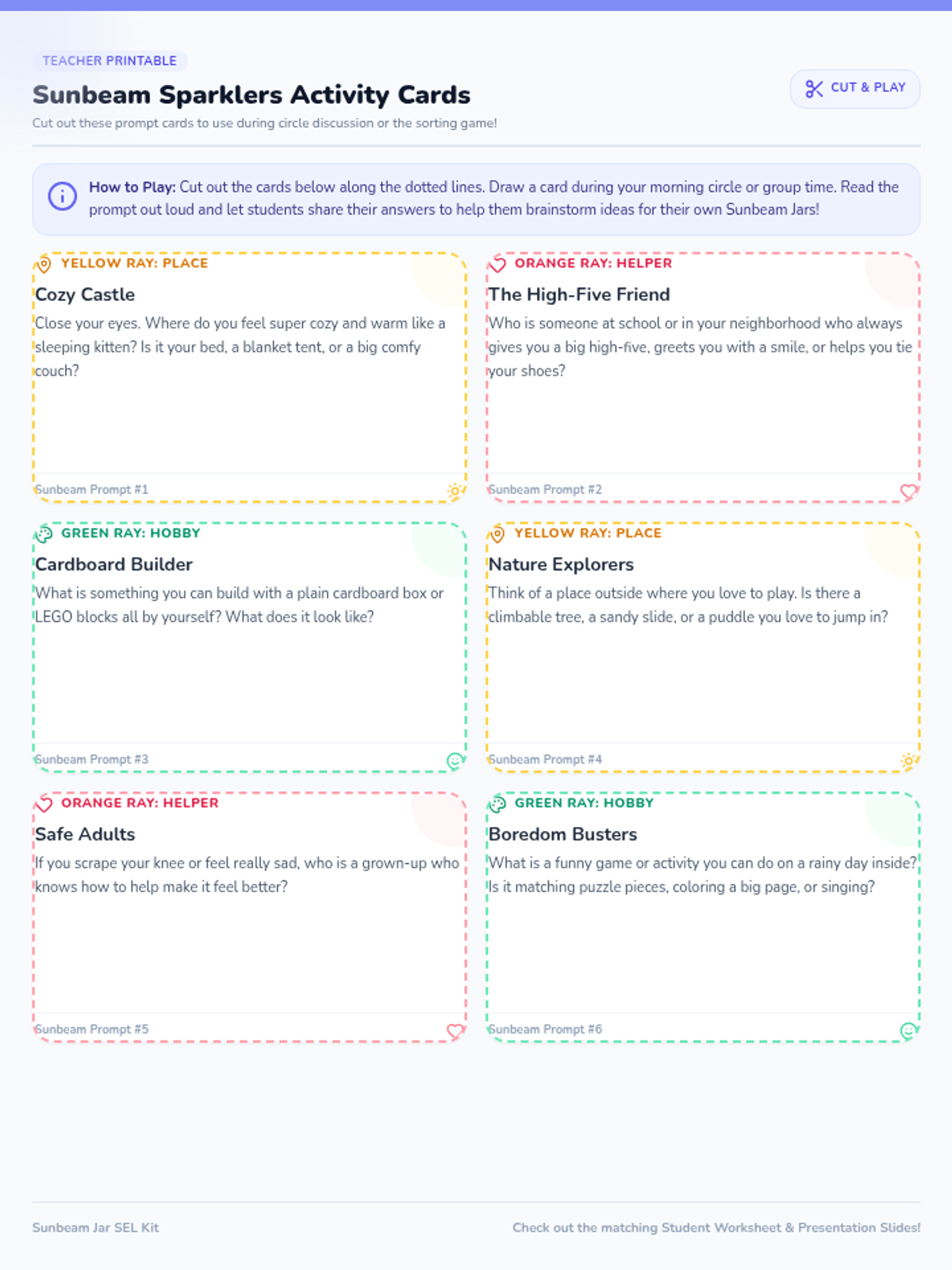
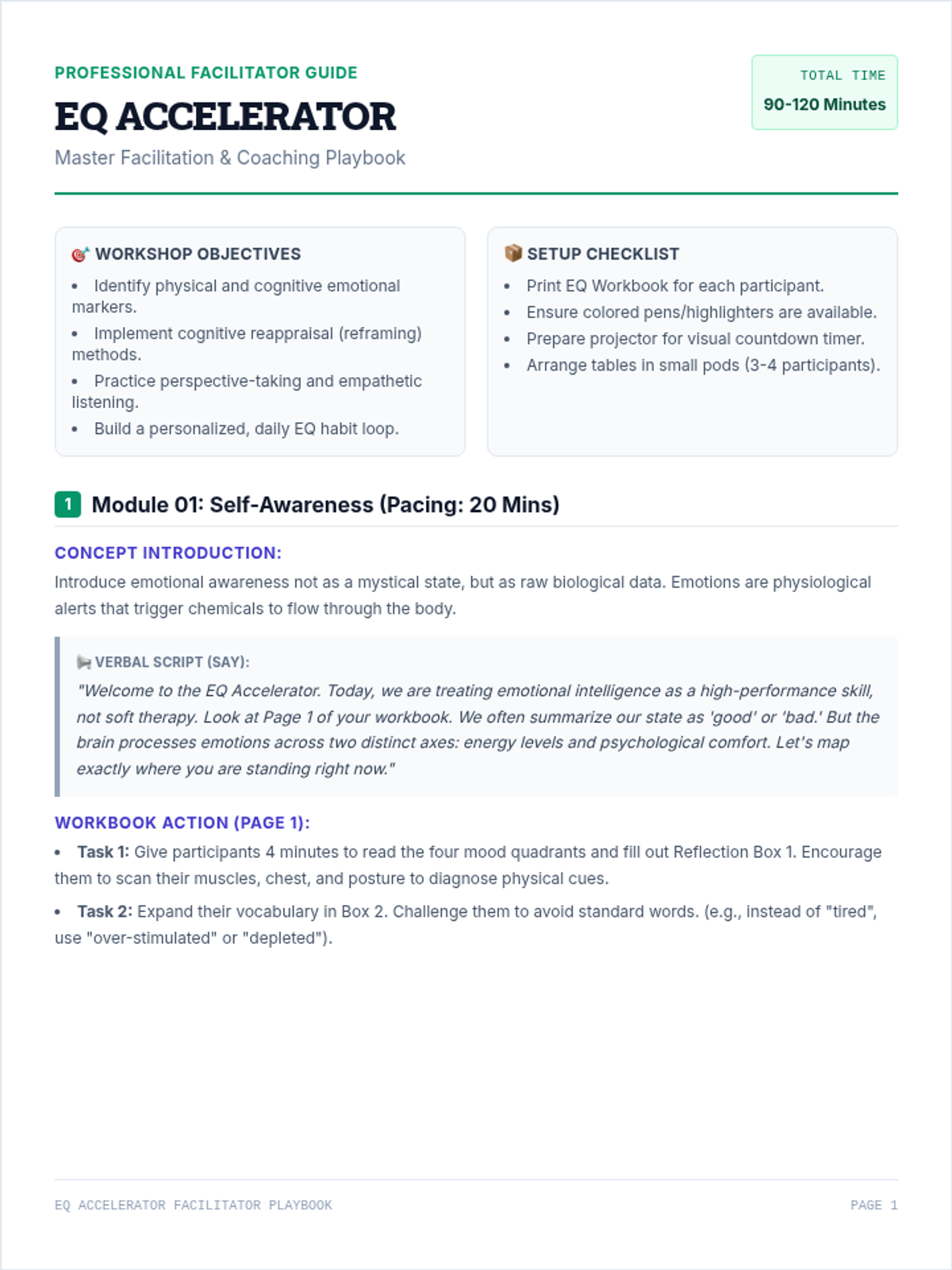
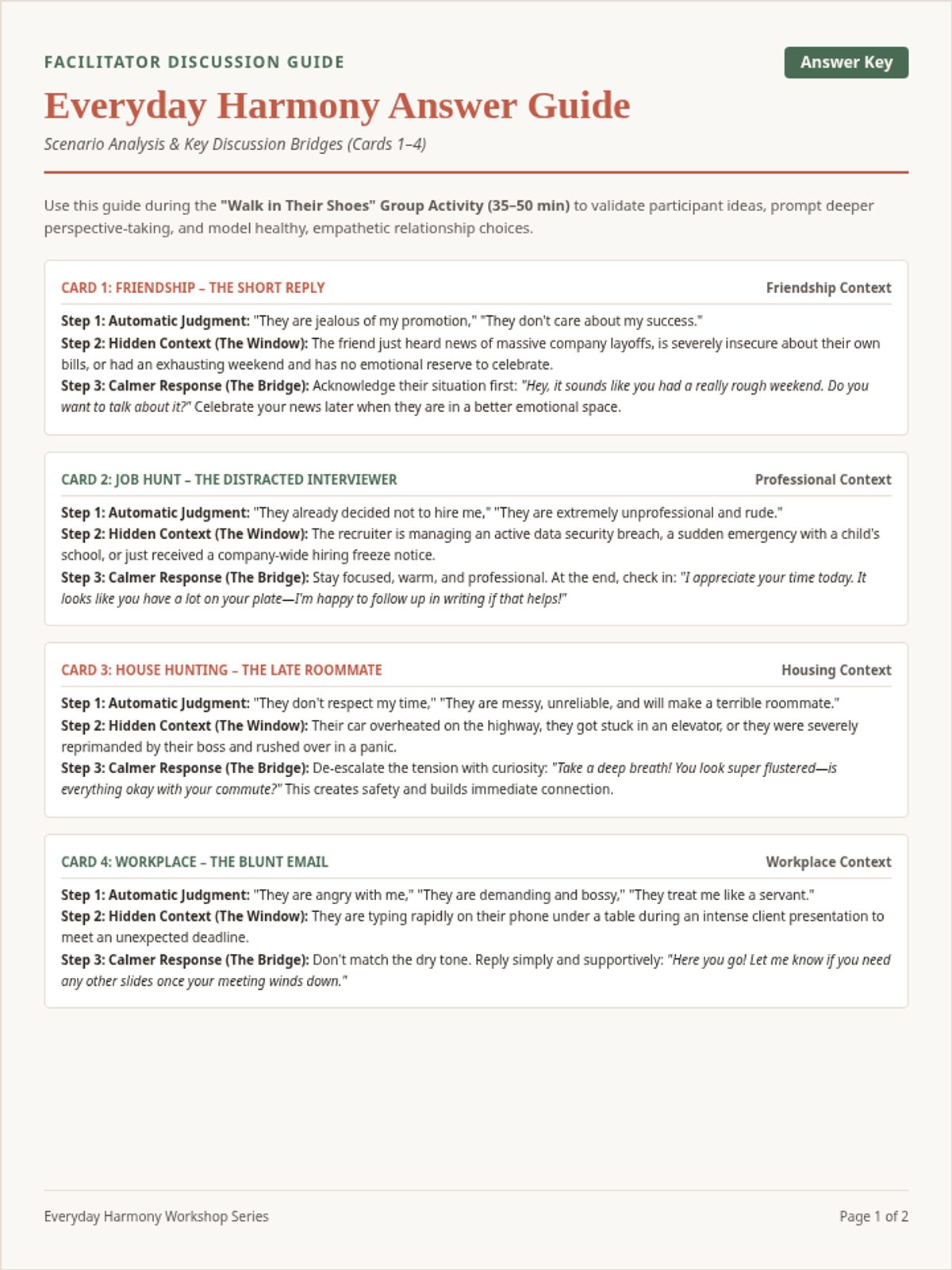
A facilitator guide for teachers or parents to support the Emotion Alchemy Workbook, providing scenario analysis, talking points, and best practices for supporting teen emotional intelligence.
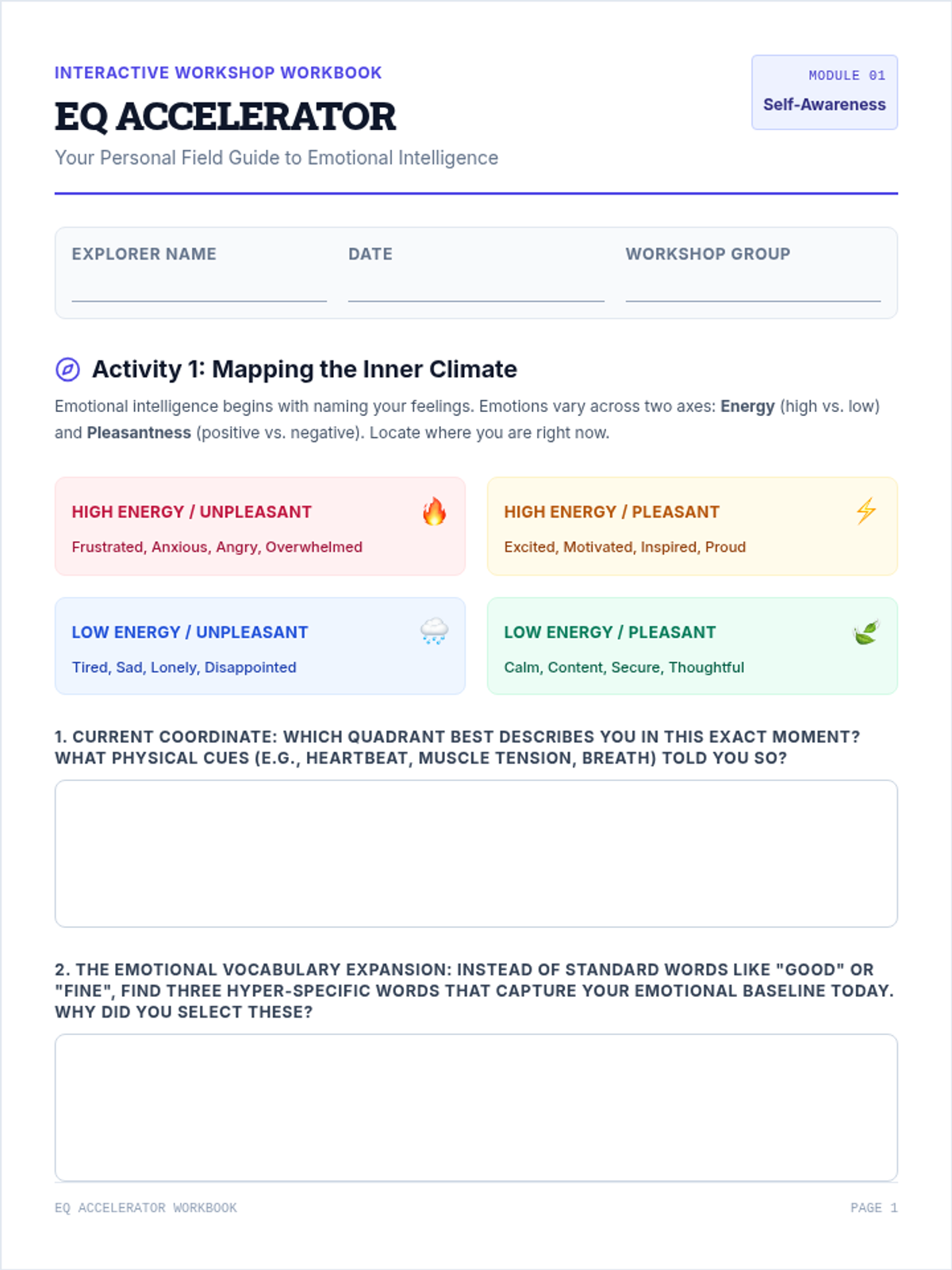
A comprehensive 5-page workbook for teens focused on identifying and handling emotions through coping strategies, scenario-based problem solving, and creative arts-based activities. It covers anger, conflict, stress, social anxiety, and self-esteem.
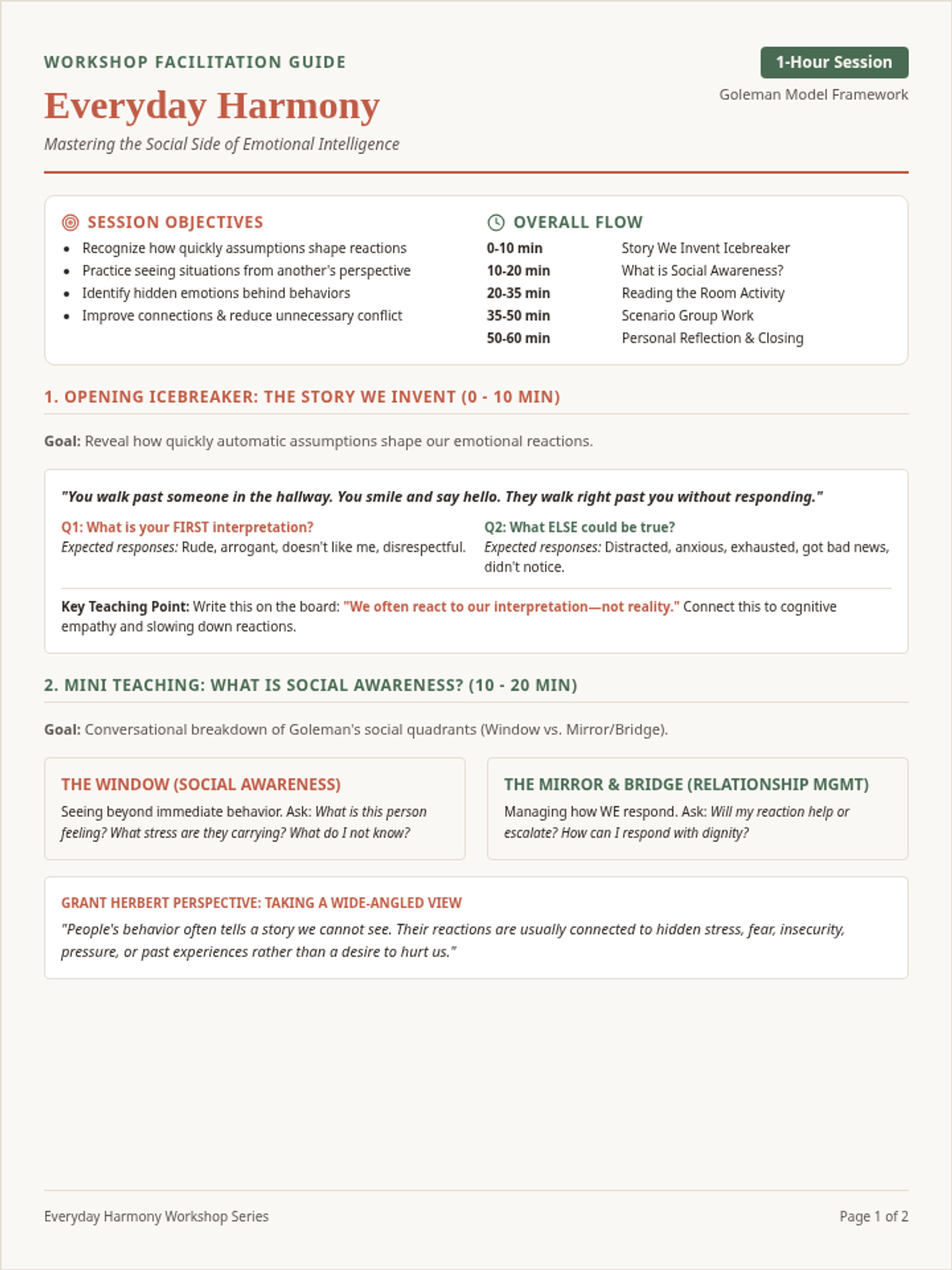
A detailed facilitator's guide for leading the 2-hour Mindset Remix session, now updated with the 'Glow Up' theme and strategies for facilitating without separate worksheets.
A stylish, girly slide deck for a 2-hour telehealth session, utilizing a 'Mindset Glow Up' theme to teach middle schoolers how to identify shadow thoughts and create realistic remixes. Includes integrated journaling and tracking activities.
A set of scenario cards designed for role-playing and practicing how to handle unexpected changes and 'turbulence' to a scheduled home routine.
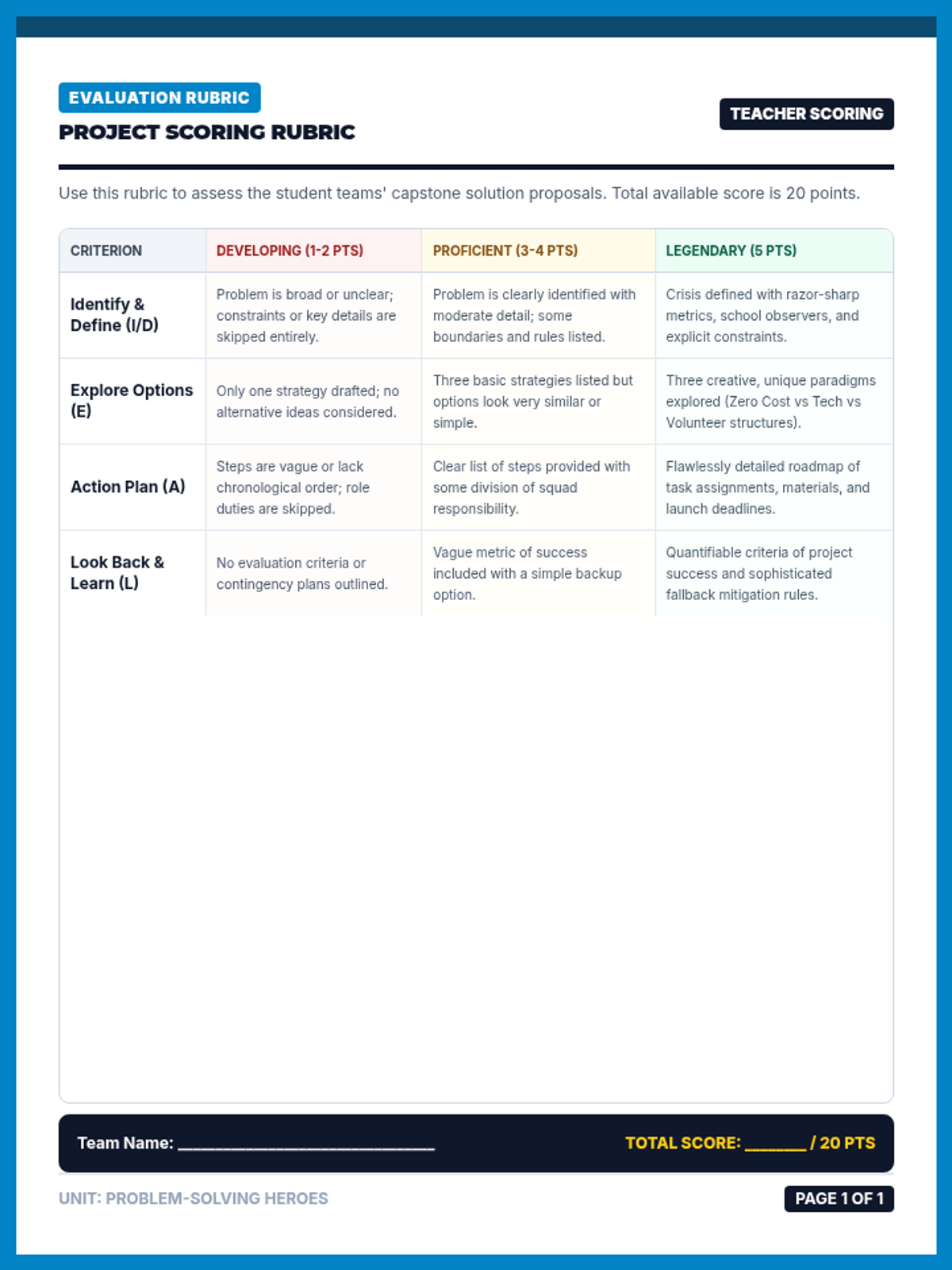
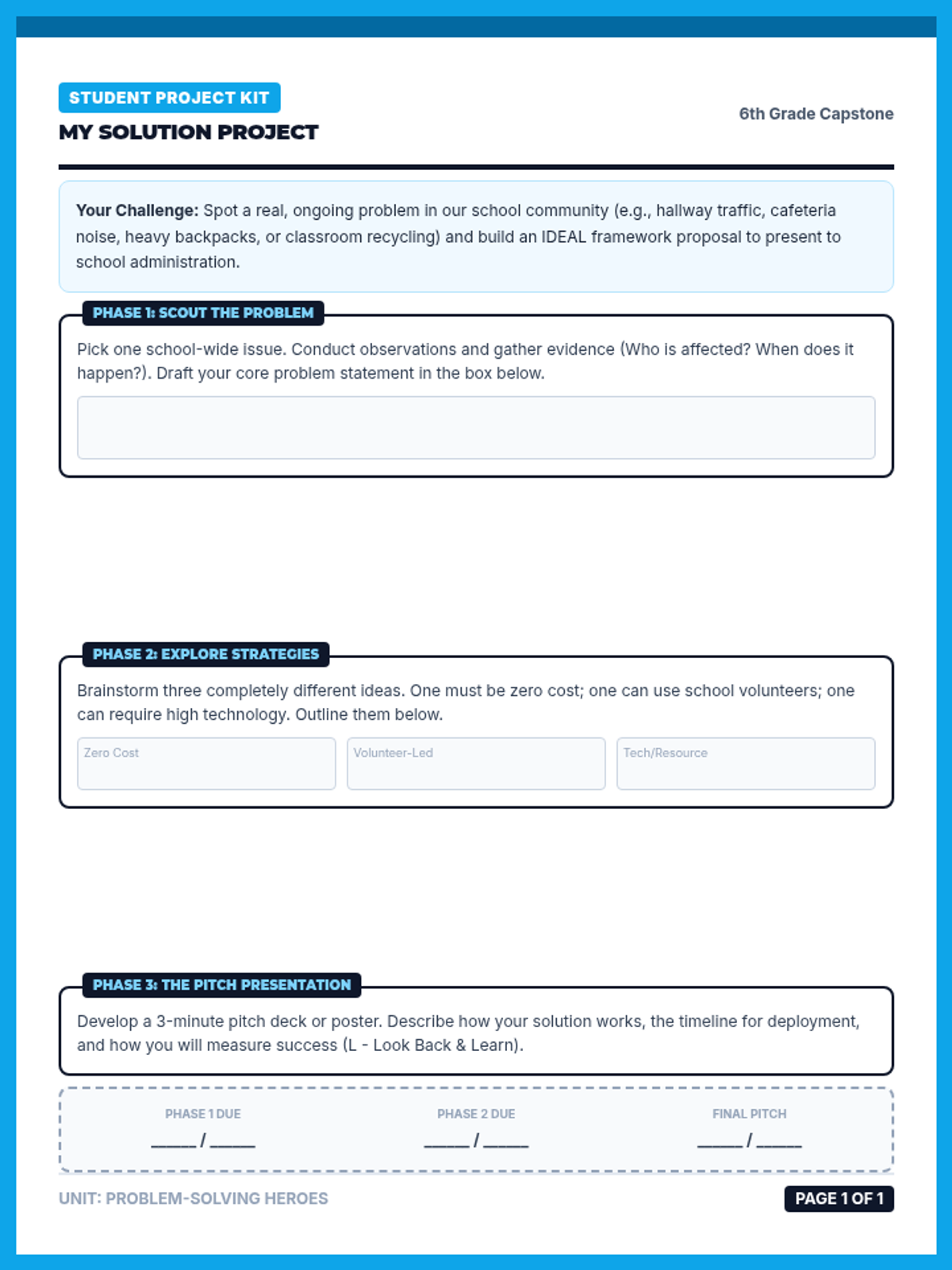
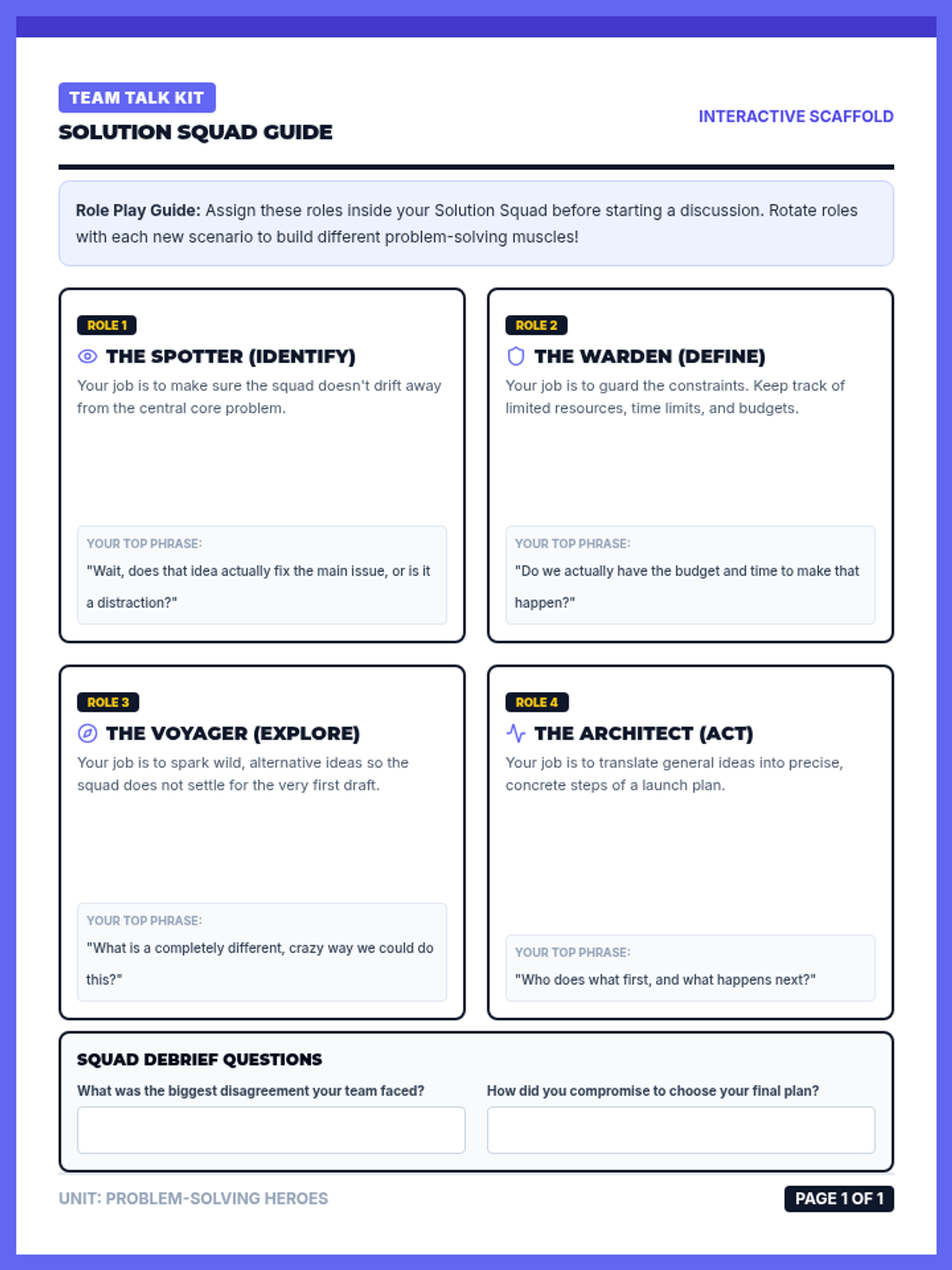
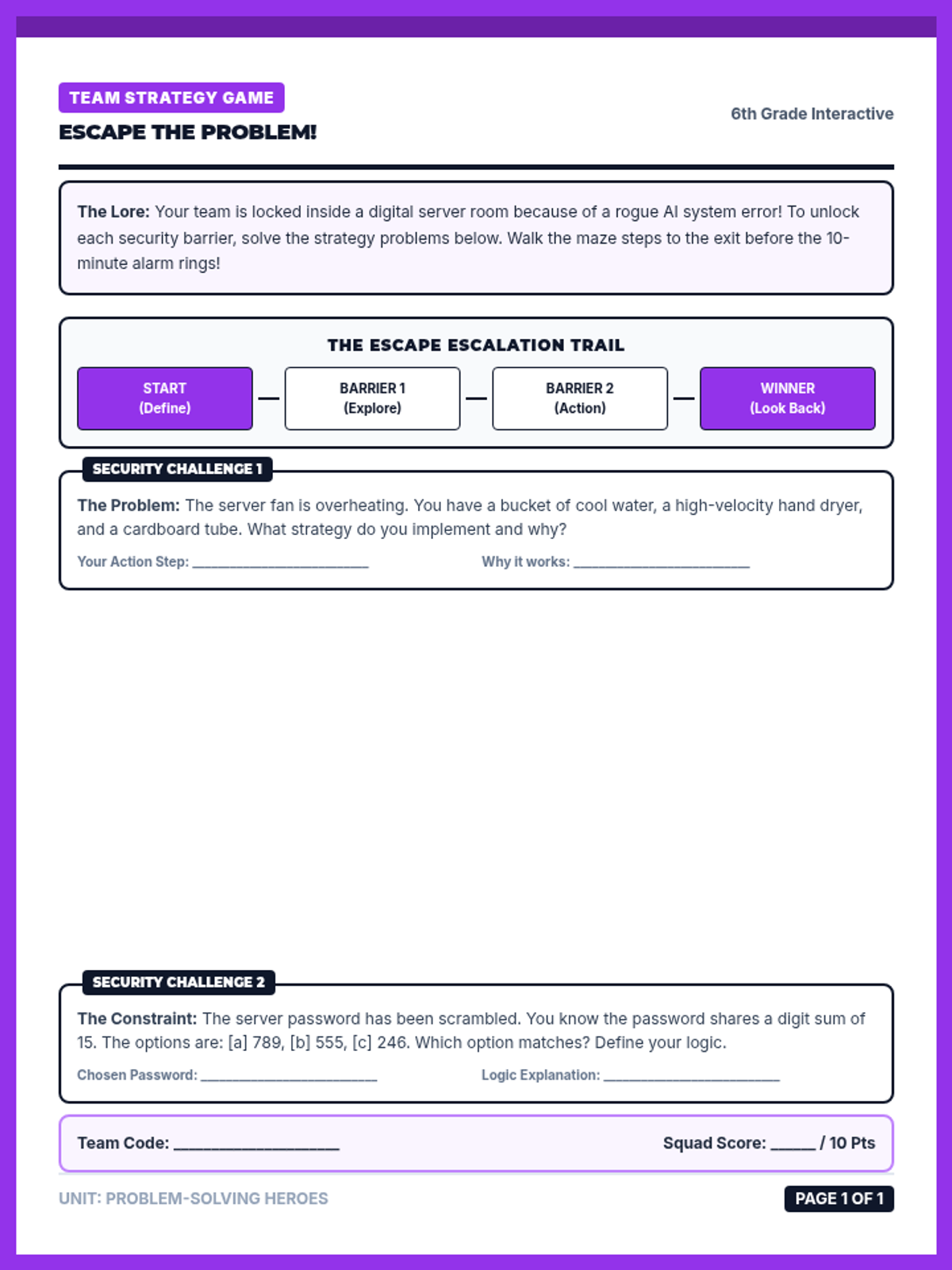
A facilitation guide and set of printable scenario cards for 'The Conflict Compass' workshop, enabling students to practice identifying triggers and applying de-escalation scripts in realistic school environments.
A structured worksheet for students to map out their home routine, identify 'Anchor Points', and create a plan for handling interruptions to their schedule.
A self-reflection worksheet for students to identify their personal end-of-year 'emotional triggers' and physical stress signals, helping them map out high-friction zones and find safe places for de-escalation.
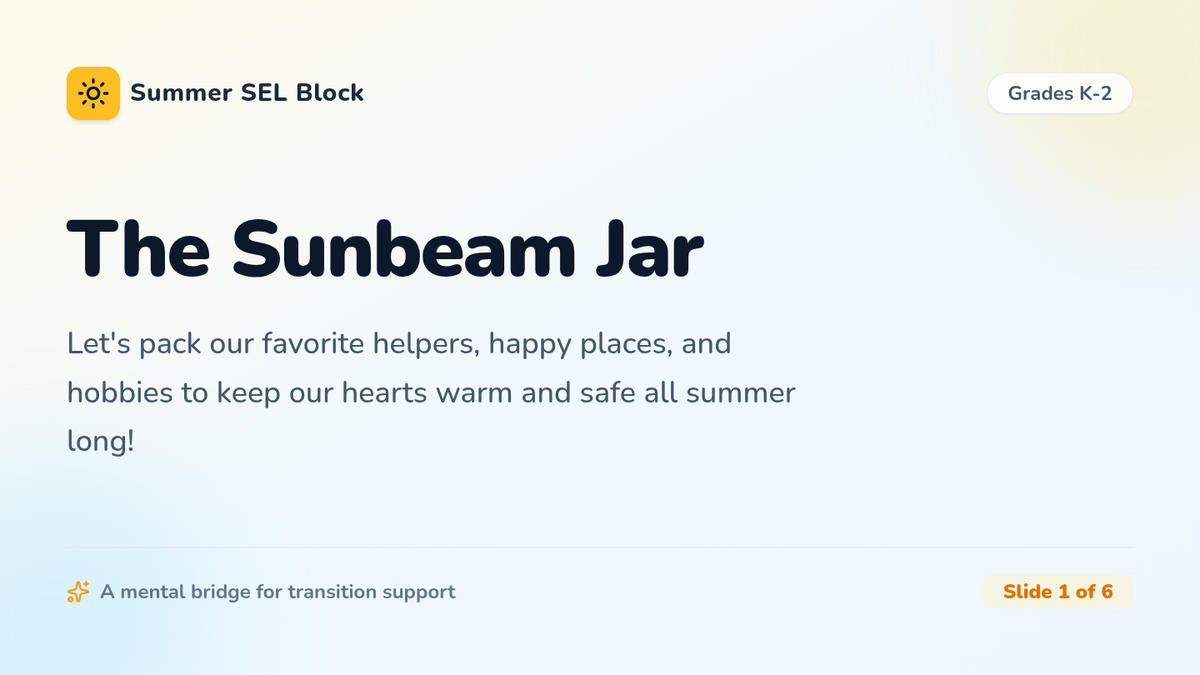
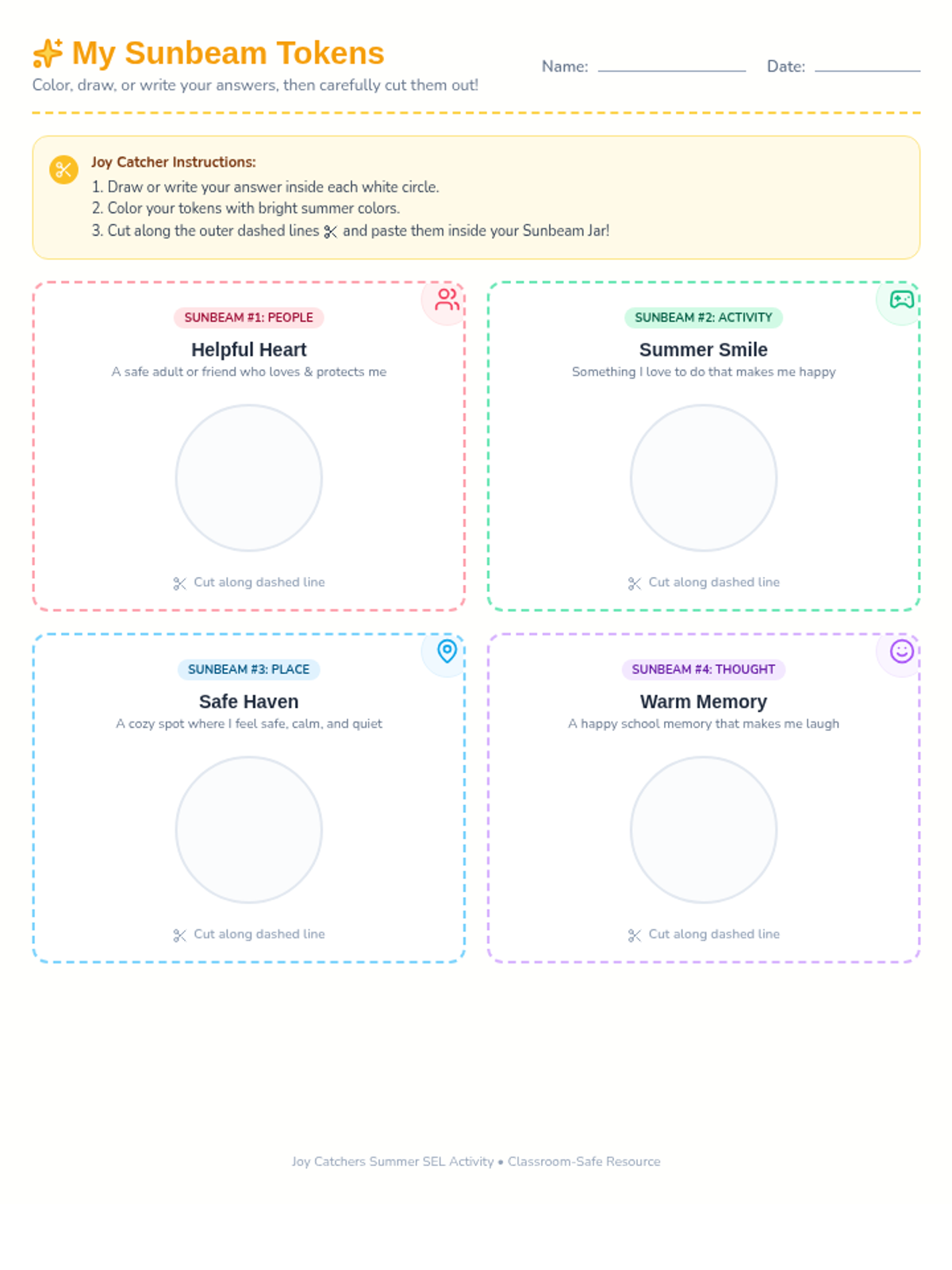
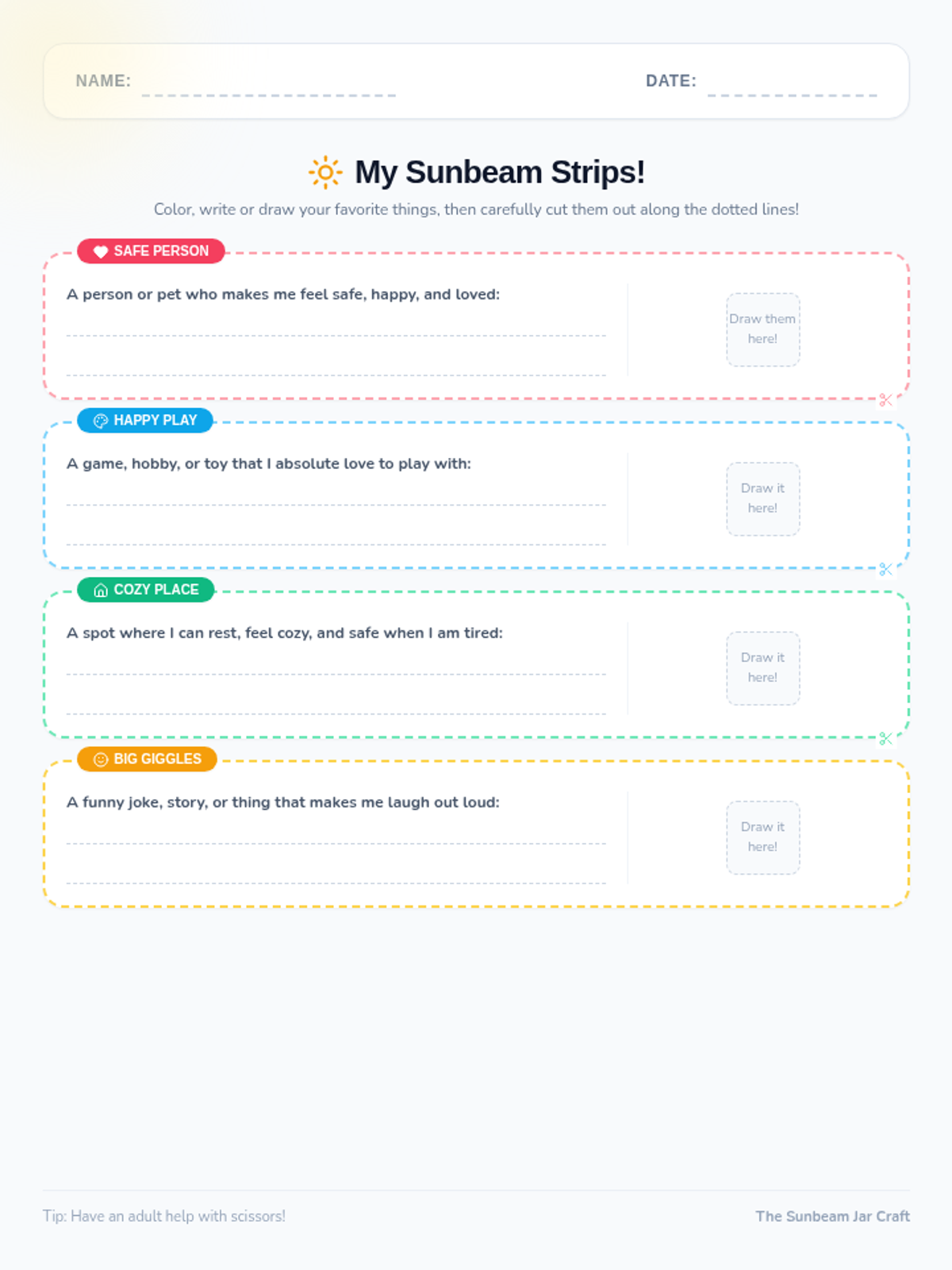
A hands-on activity featuring curated 'Gallery Frames' for drawing memories and 'Gratitude Postcards' for students to cut, write, and exchange with peers and staff.
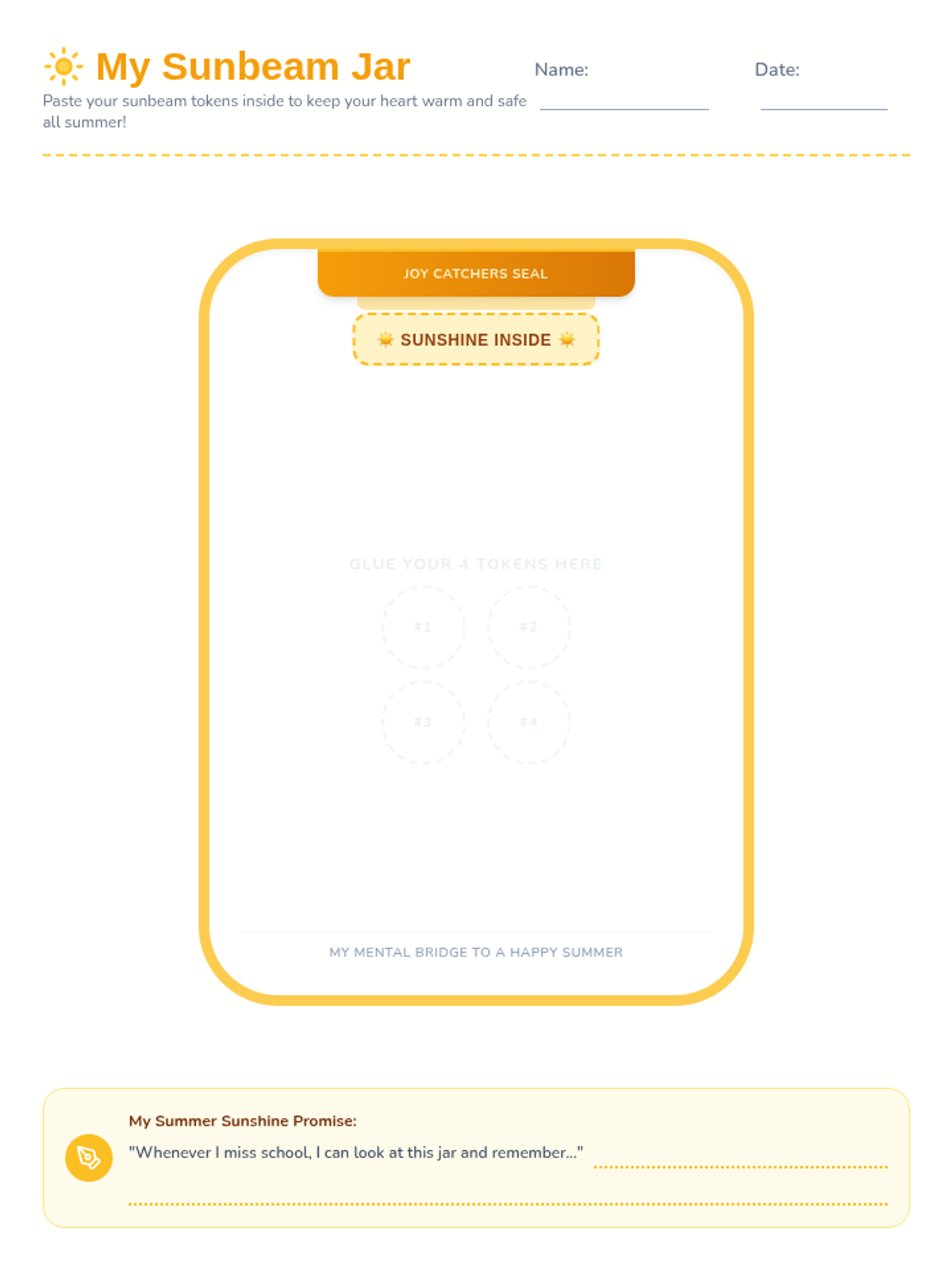
A reference handout for students containing categorical de-escalation scripts (The Exit Ramp, The De-Fuser, and The Hard Reset) designed to navigate social friction during high-stress periods.
Visual presentation to help students understand why school structure feels safe and how to recreate that stability at home using 'Anchor Points'.
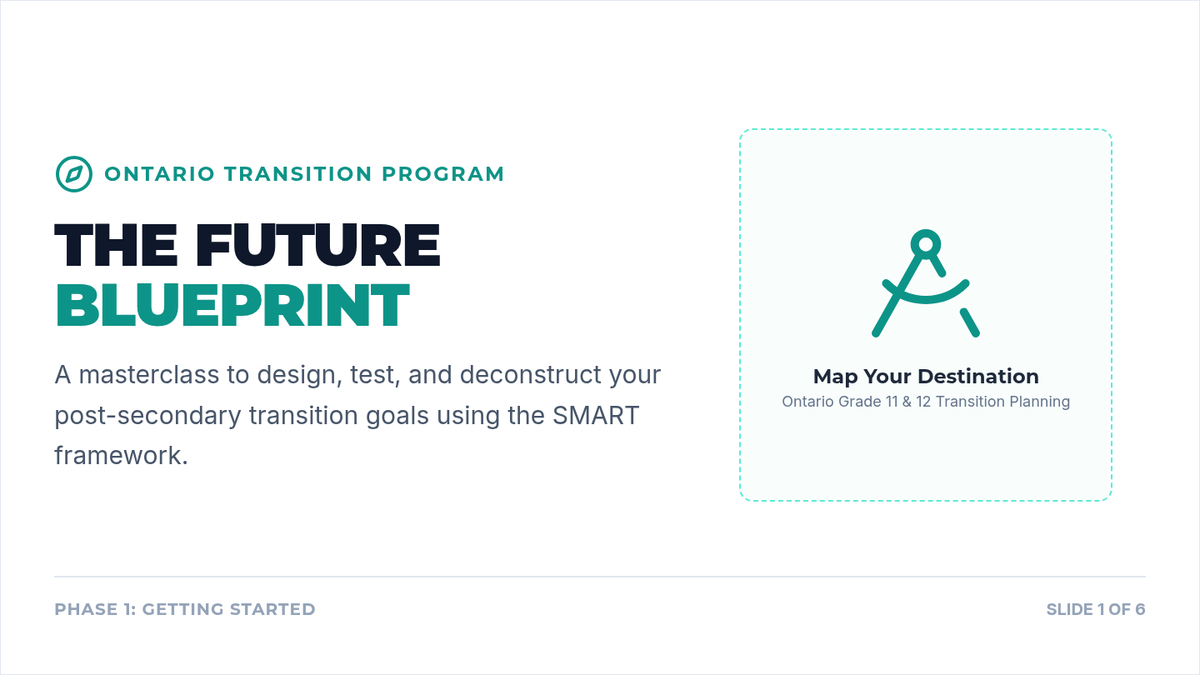
A visually engaging 6-slide deck designed to guide middle and high school students through the 'Conflict Compass' workshop, featuring sections on end-of-year fatigue, the HALT method, and de-escalation scripts.