A research worksheet where students select and investigate two career clusters, identifying specific jobs, required education paths, and necessary soft skills. Revised to prevent section splits and provide more writing space.
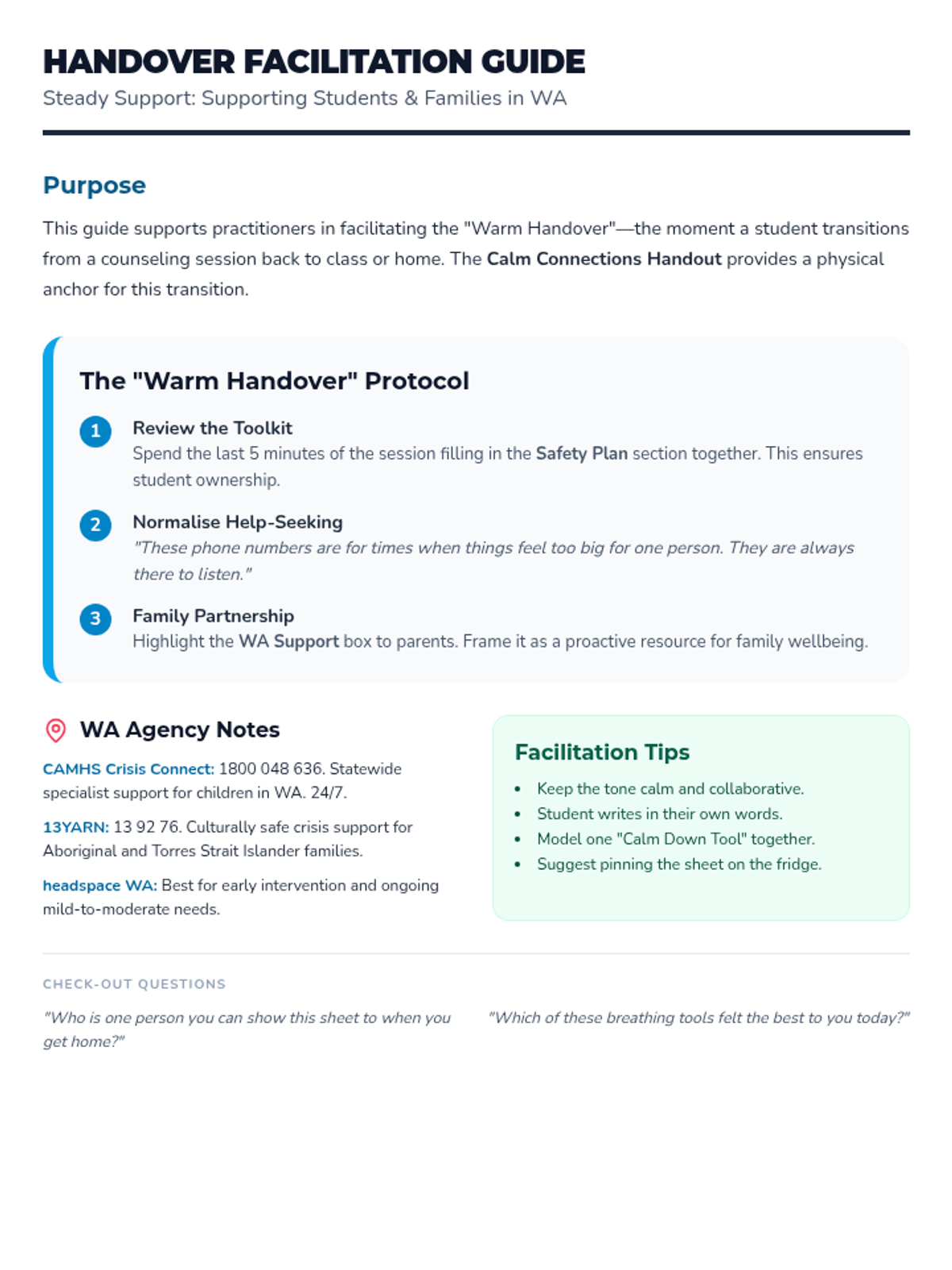
A teacher-facing guide for effectively facilitating the handover of the Calm Connections handout to primary students and their families, featuring Western Australia-specific referral advice.
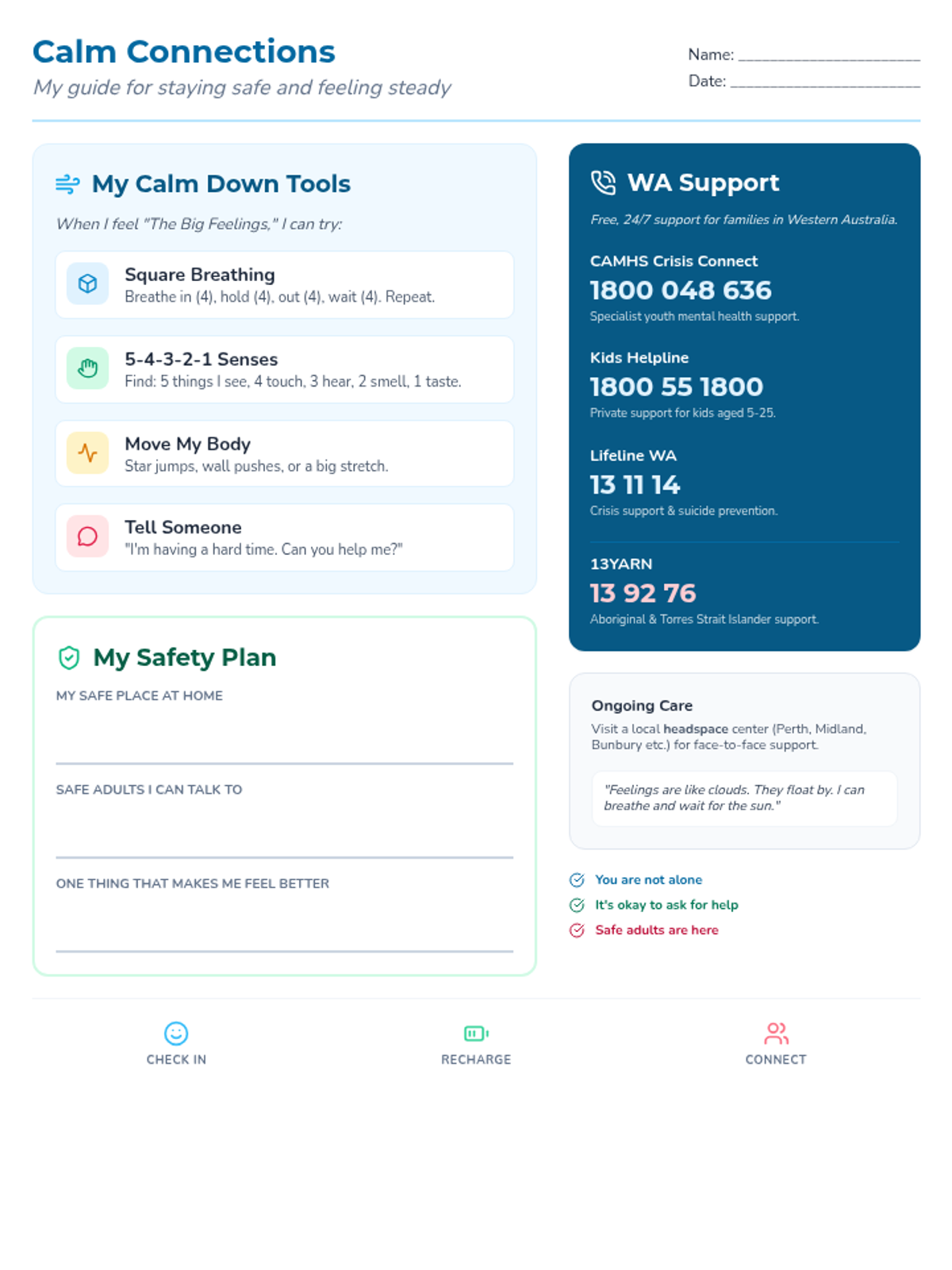
A one-page student and family handout providing emotional regulation strategies, a basic home safety plan, and key Western Australia-specific crisis support contact numbers for primary-aged children.
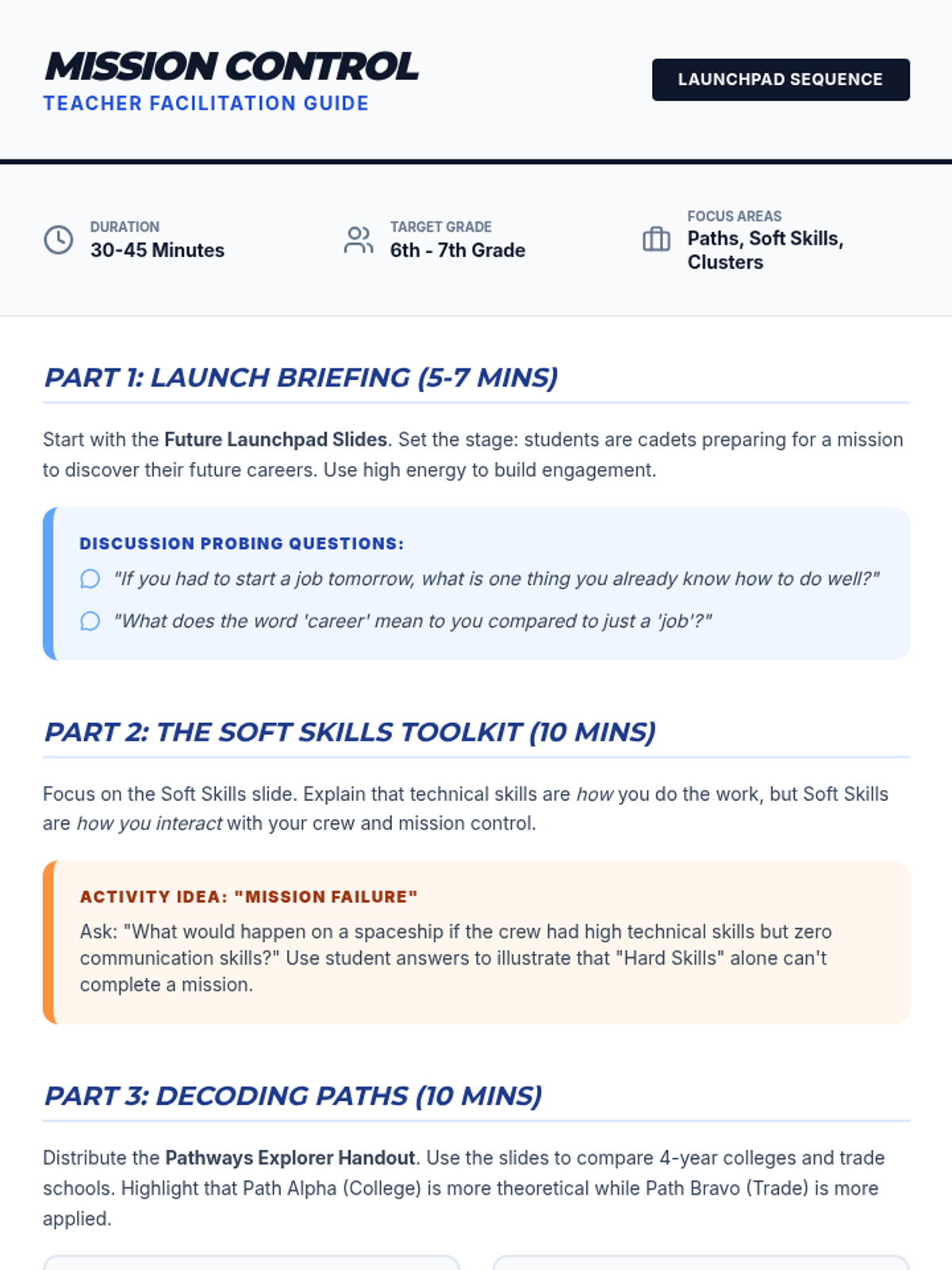
A comprehensive facilitator guide for teachers, providing a 30-45 minute lesson plan, discussion prompts, and differentiation strategies. Revised to fix page break issues and improve visual consistency.
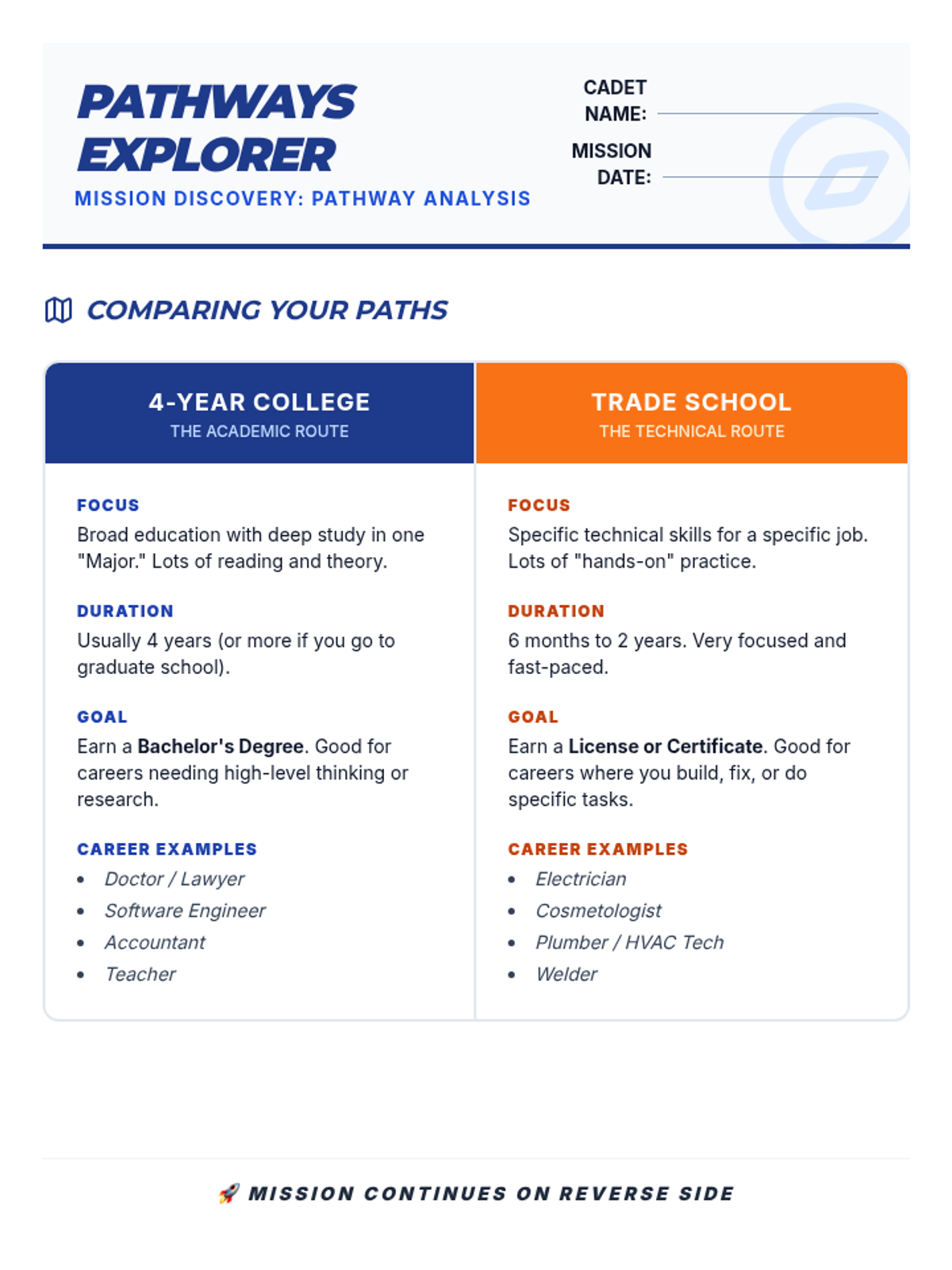
A comparative handout for students examining the differences between 4-year college and trade school, including a section on essential workplace soft skills and a reflection area. Revised for better page flow and contrast.
A 30-minute slide deck introducing middle school students to college types, soft skills, and career clusters using a high-engagement space exploration theme. Revised with improved contrast and visibility for classroom projection.
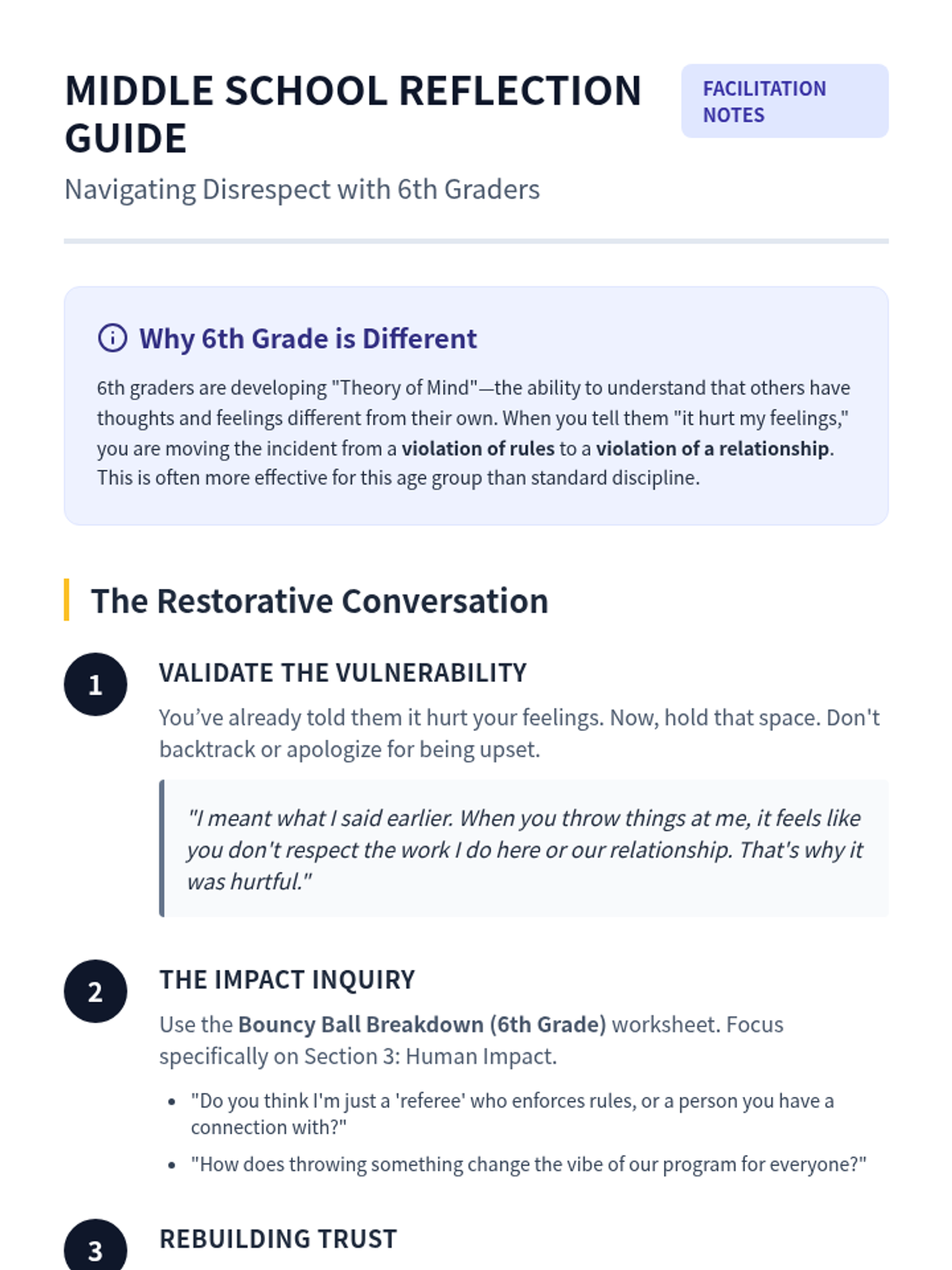
A revised facilitation guide for staff working with middle schoolers, emphasizing the transition from rule-breaking to relationship-repair after a physical outburst.
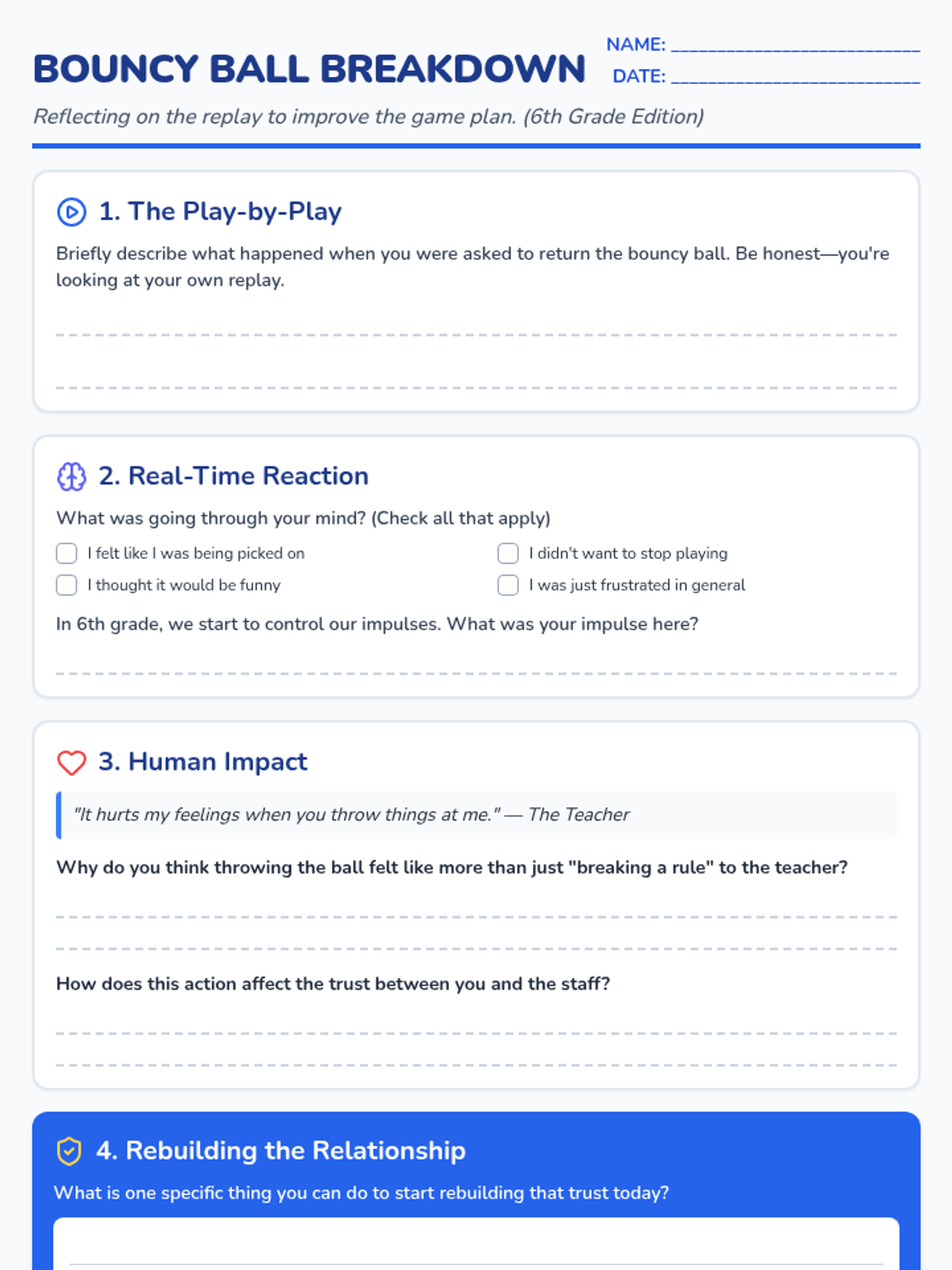
A revised reflective behavior worksheet for a 6th-grade student, now optimized for a single-page layout with increased writing space for complex reflection on teacher impact and trust.
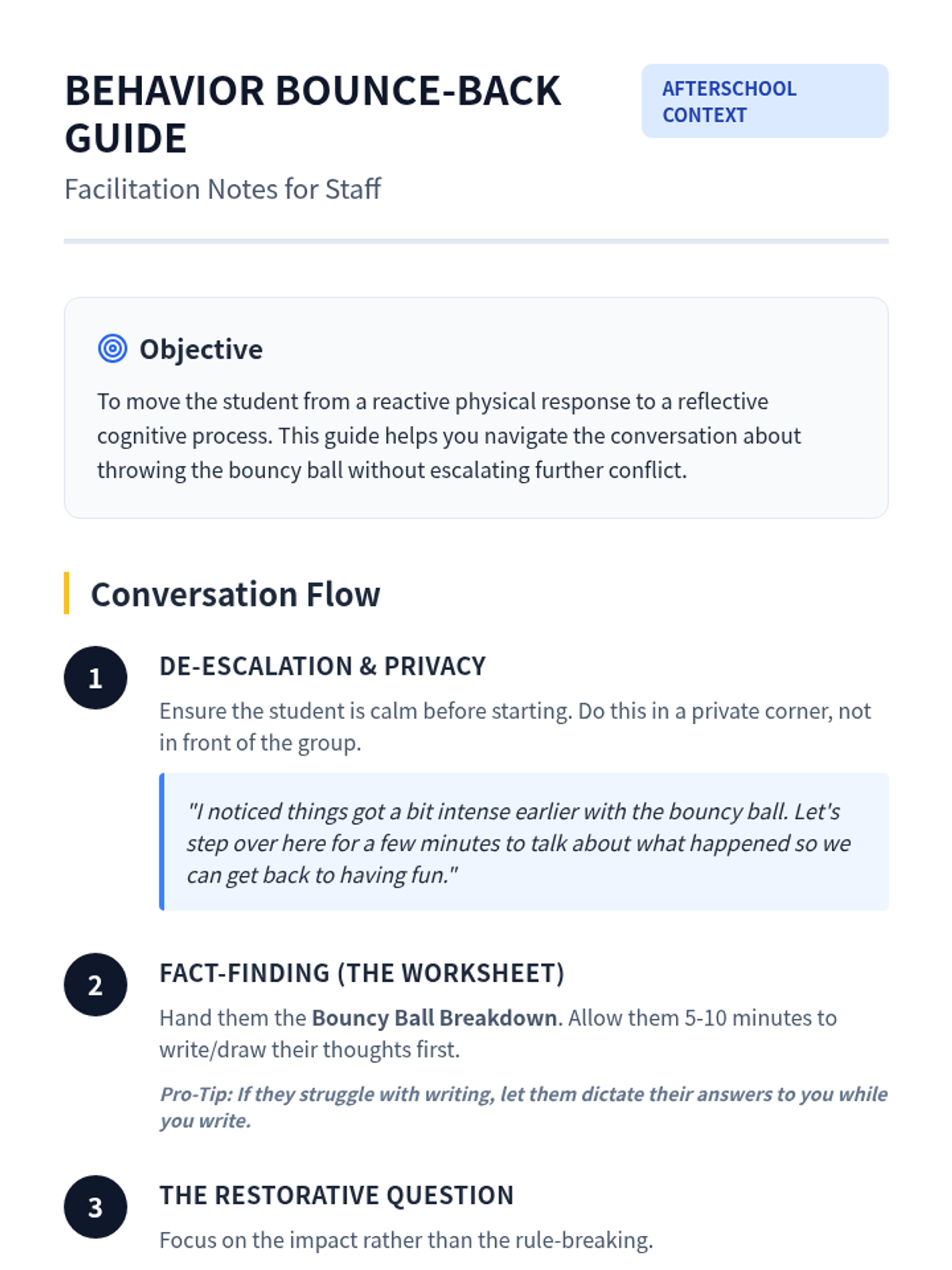
A facilitation guide for afterschool staff to conduct a restorative conversation with a student about throwing objects. Revised to fix page breaks and include a notes section.
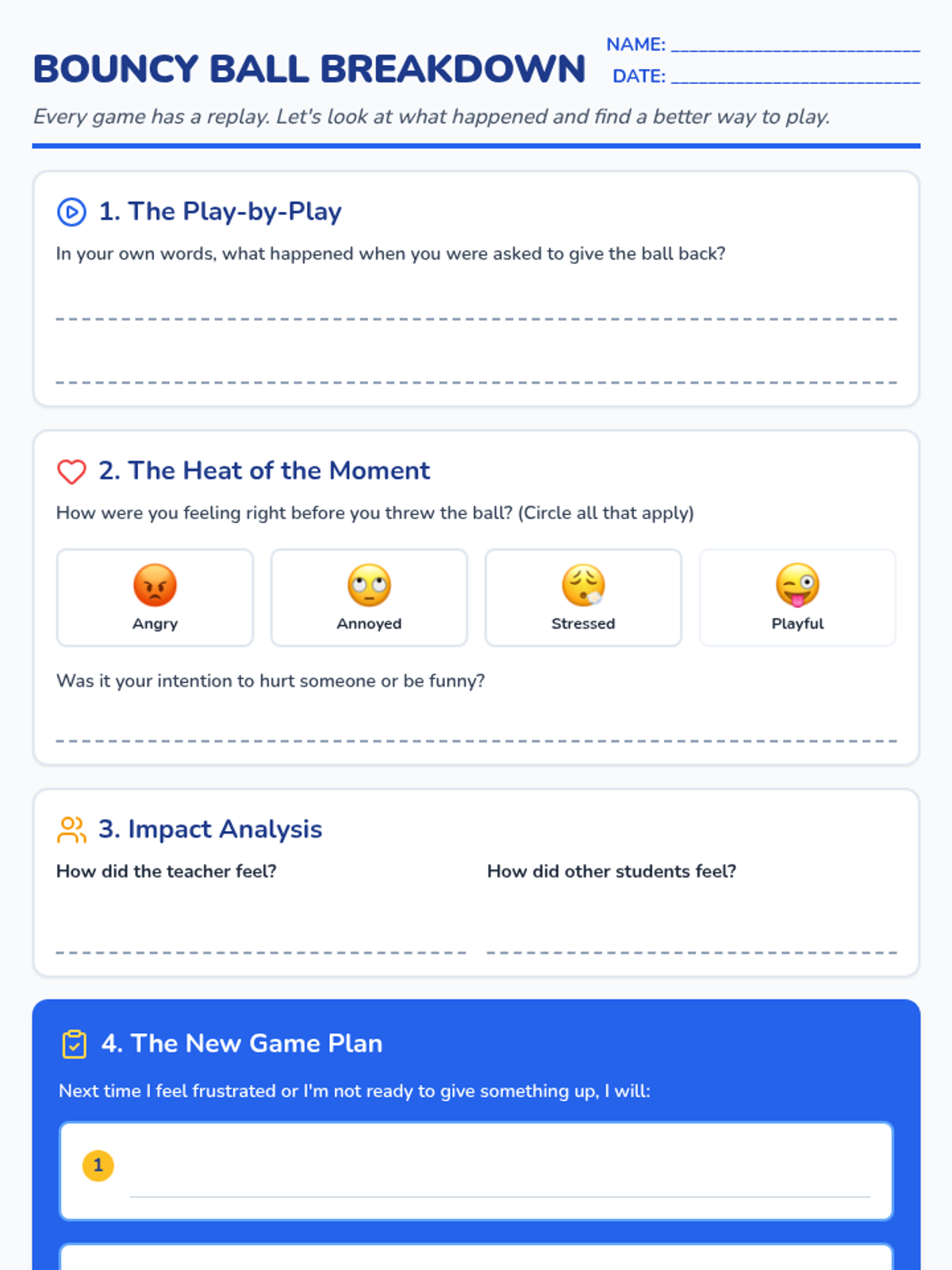
A reflective behavior worksheet for students to process the ball-throwing incident, focusing on feelings, impact, and future strategies. Optimized for single-page printing with legible work areas.
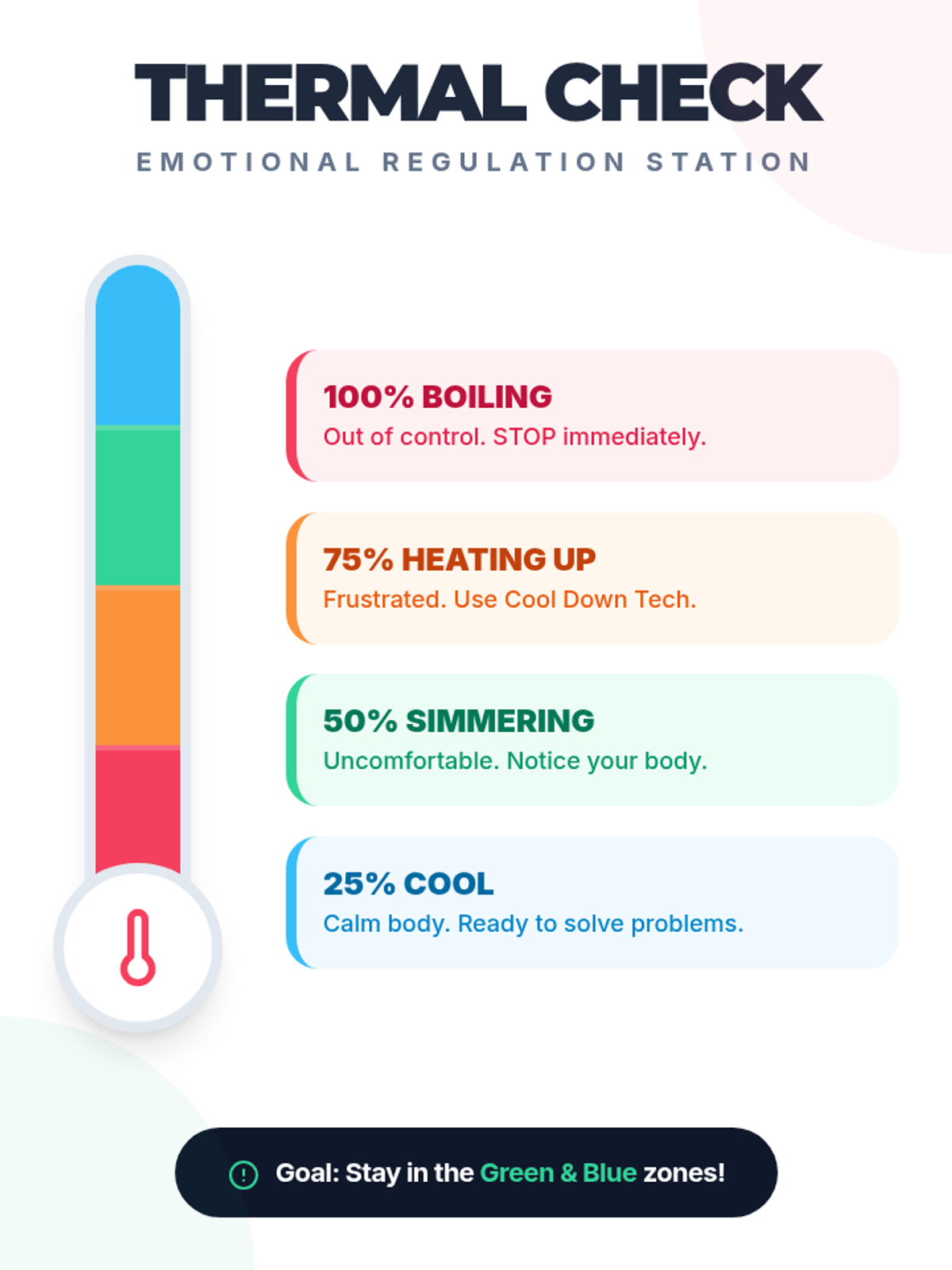
A set of 5 classroom posters for the Peace Lab lesson, covering the Emotional Thermometer, I-Statement formula, Cool Down Tech, Win-Win solutions, and a Knowledge Check.
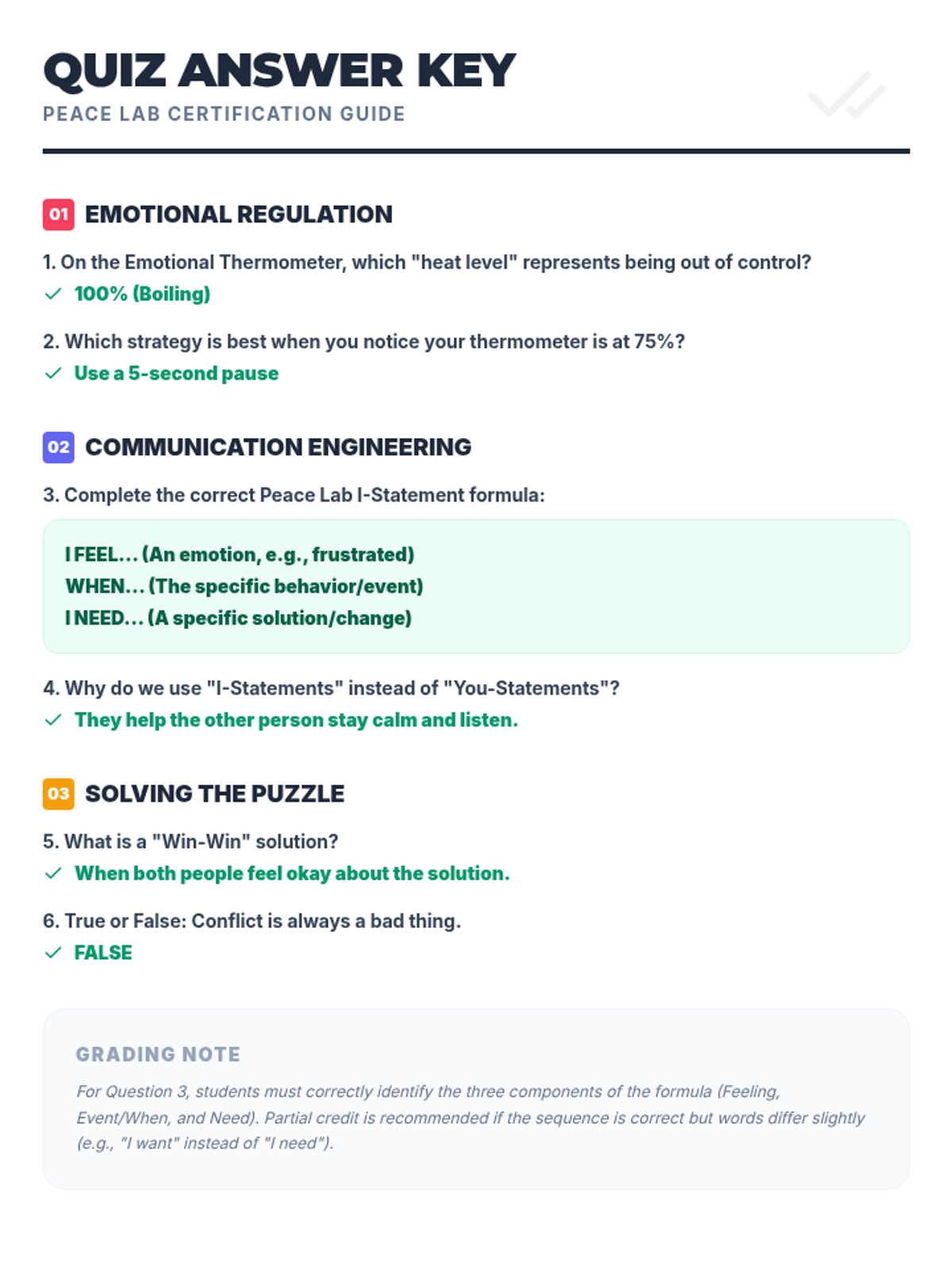
An answer key for the Peace Lab Quiz, providing correct responses and grading notes for the facilitator.
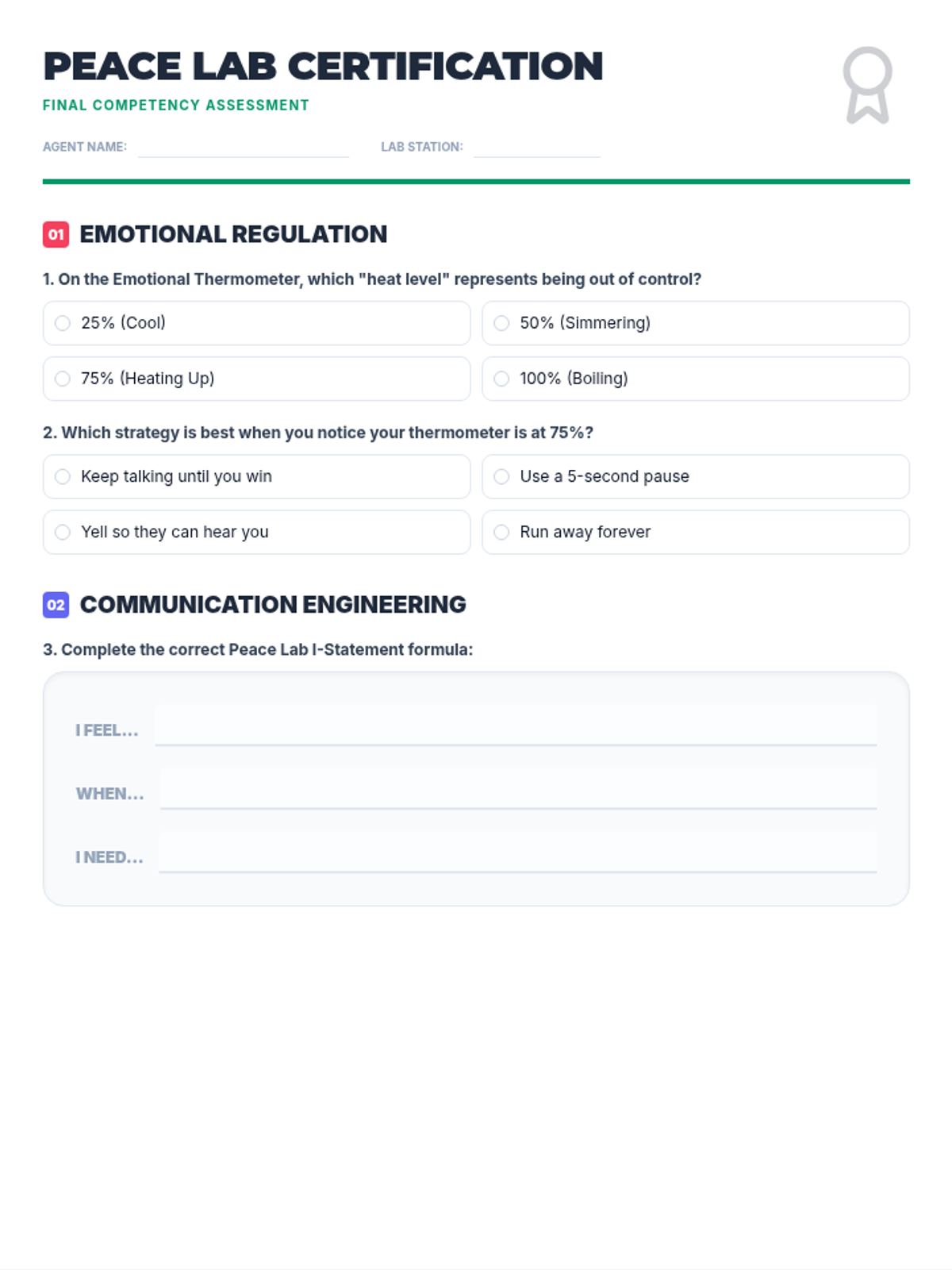
A comprehensive 6-question quiz ('Certification') to assess student understanding of the Peace Lab concepts: emotional regulation, I-statements, and win-win solutions.
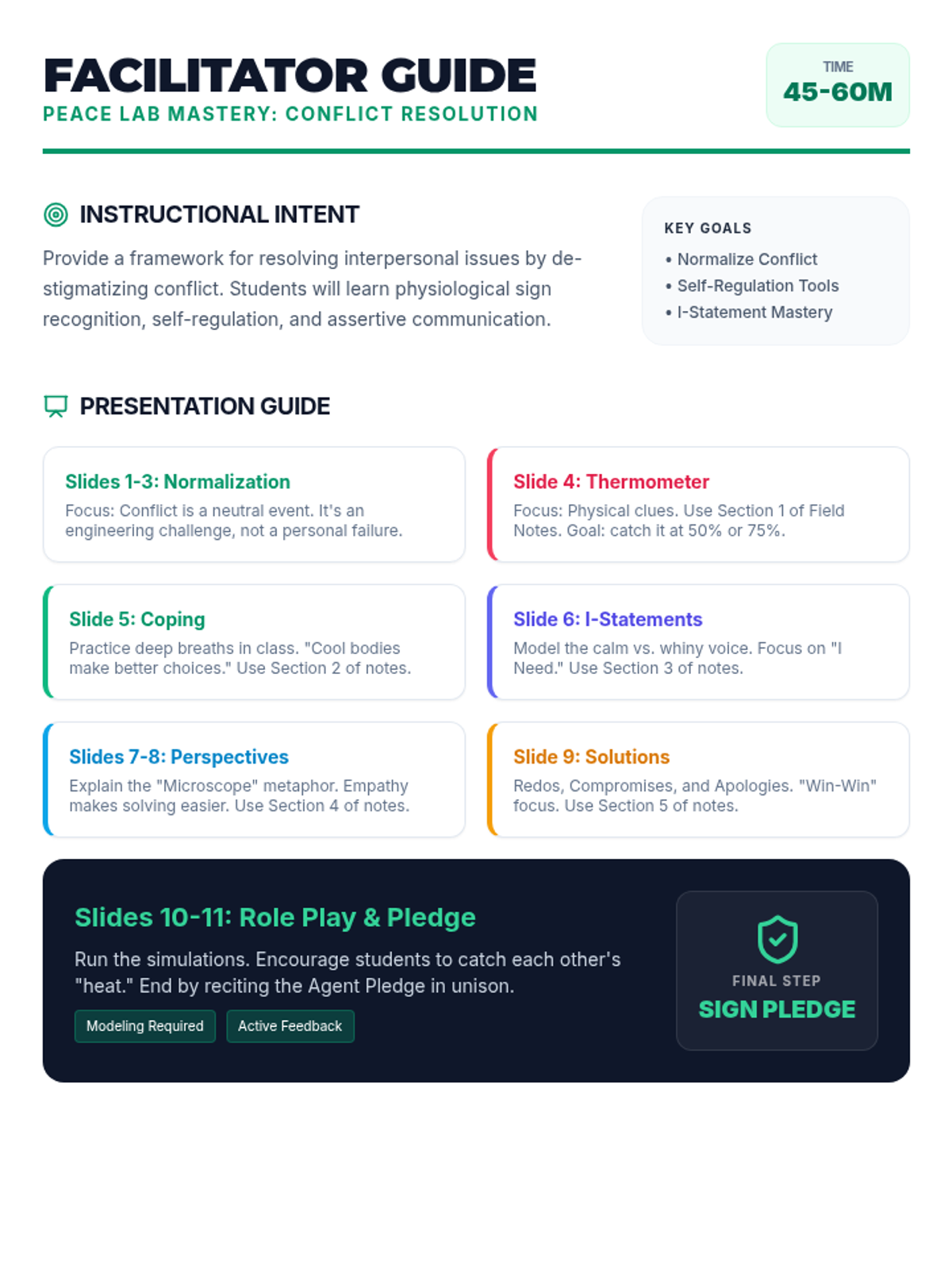
A facilitator guide for teachers to deliver the Peace Lab Mastery lesson. Includes discussion prompts, engagement timing, and tips for modeling social skills.
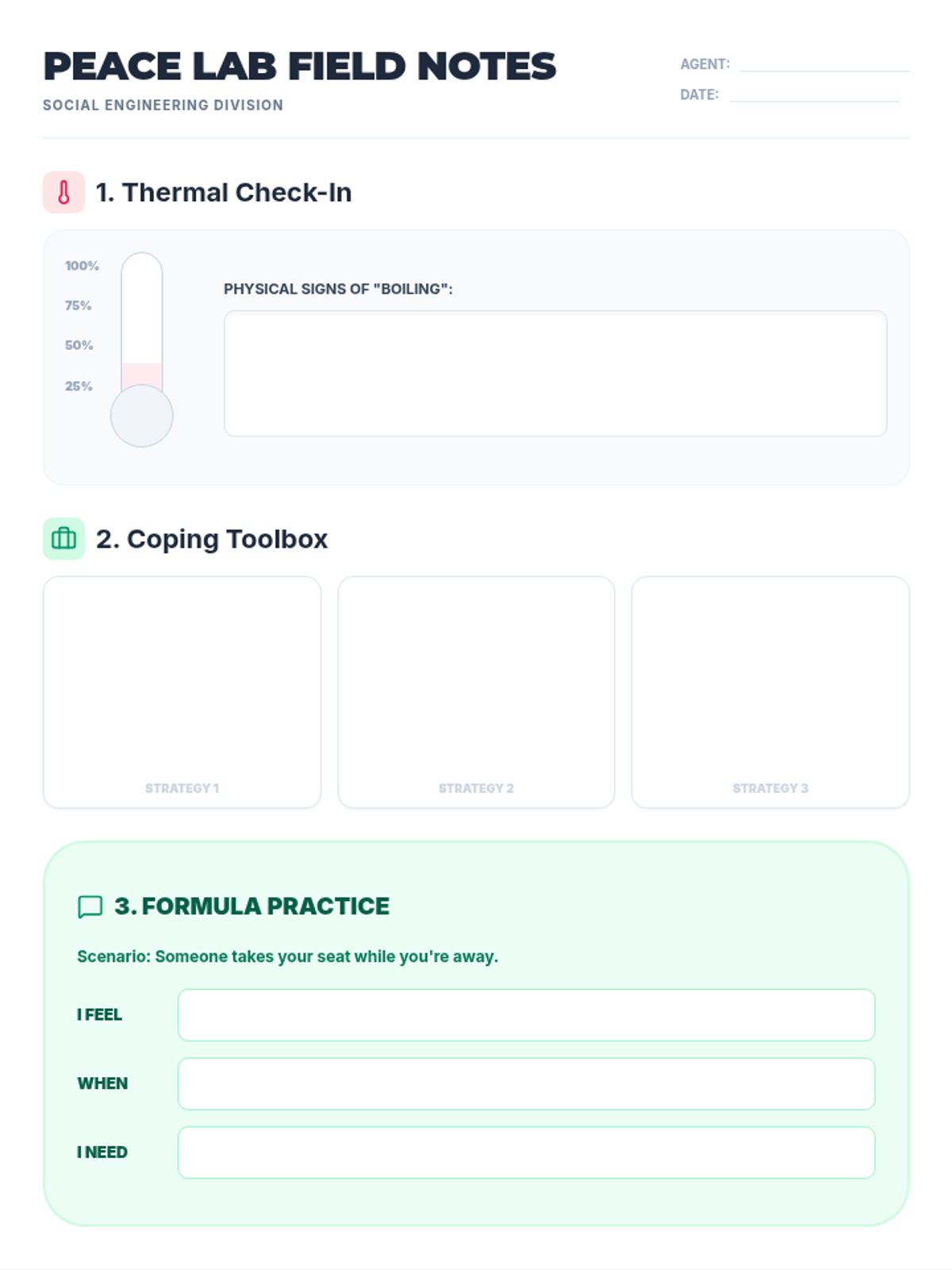
A 2-page student worksheet ('Field Notes') designed to accompany the Peace Lab presentation. Includes sections for emotional thermometer check-ins, coping strategies, and I-statement practice.
A 11-slide presentation designed for students to learn conflict resolution skills. It features 'The Peace Lab' theme with a focus on emotional regulation, I-statements, and perspective-taking.
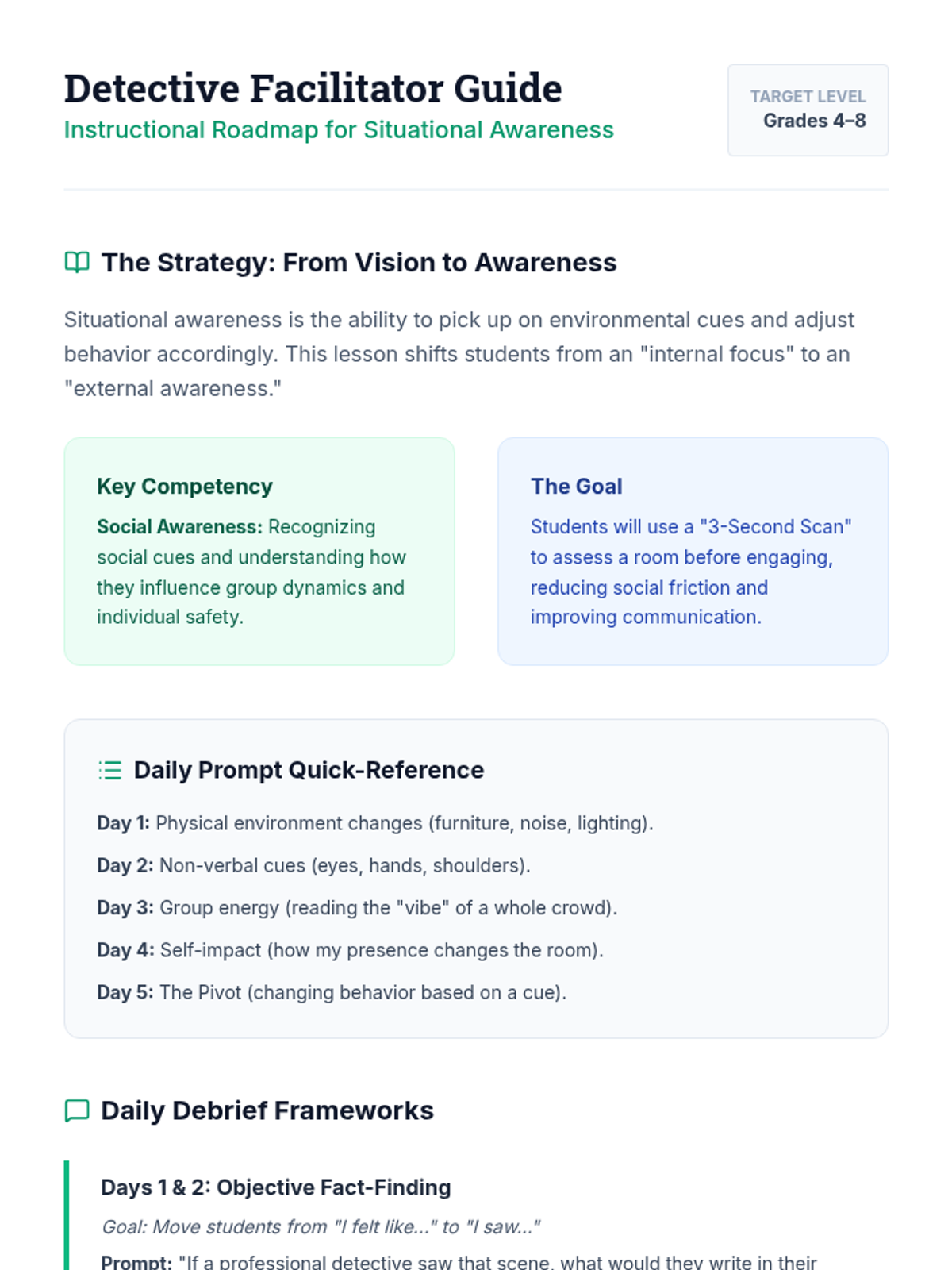
A teacher's guide for implementing the Social Detectives lesson, including instructional strategies, discussion frameworks, and facilitation tips for situational awareness.
A classroom presentation introducing the concept of situational awareness, including the '3-Second Scan' technique and reading non-verbal cues.
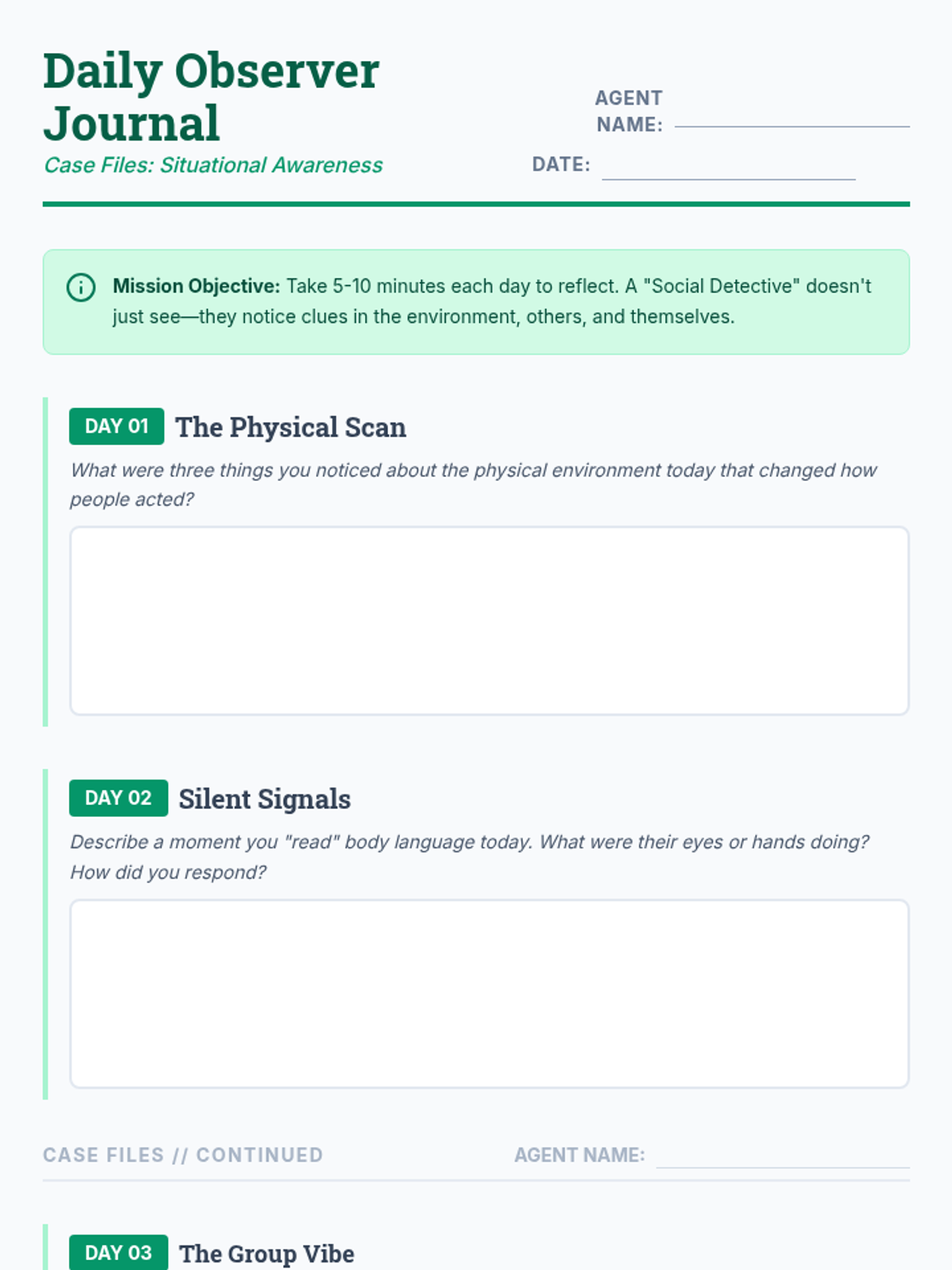
A 5-day daily reflection journal for students to practice situational awareness, focusing on physical environments, social cues, and personal impact.
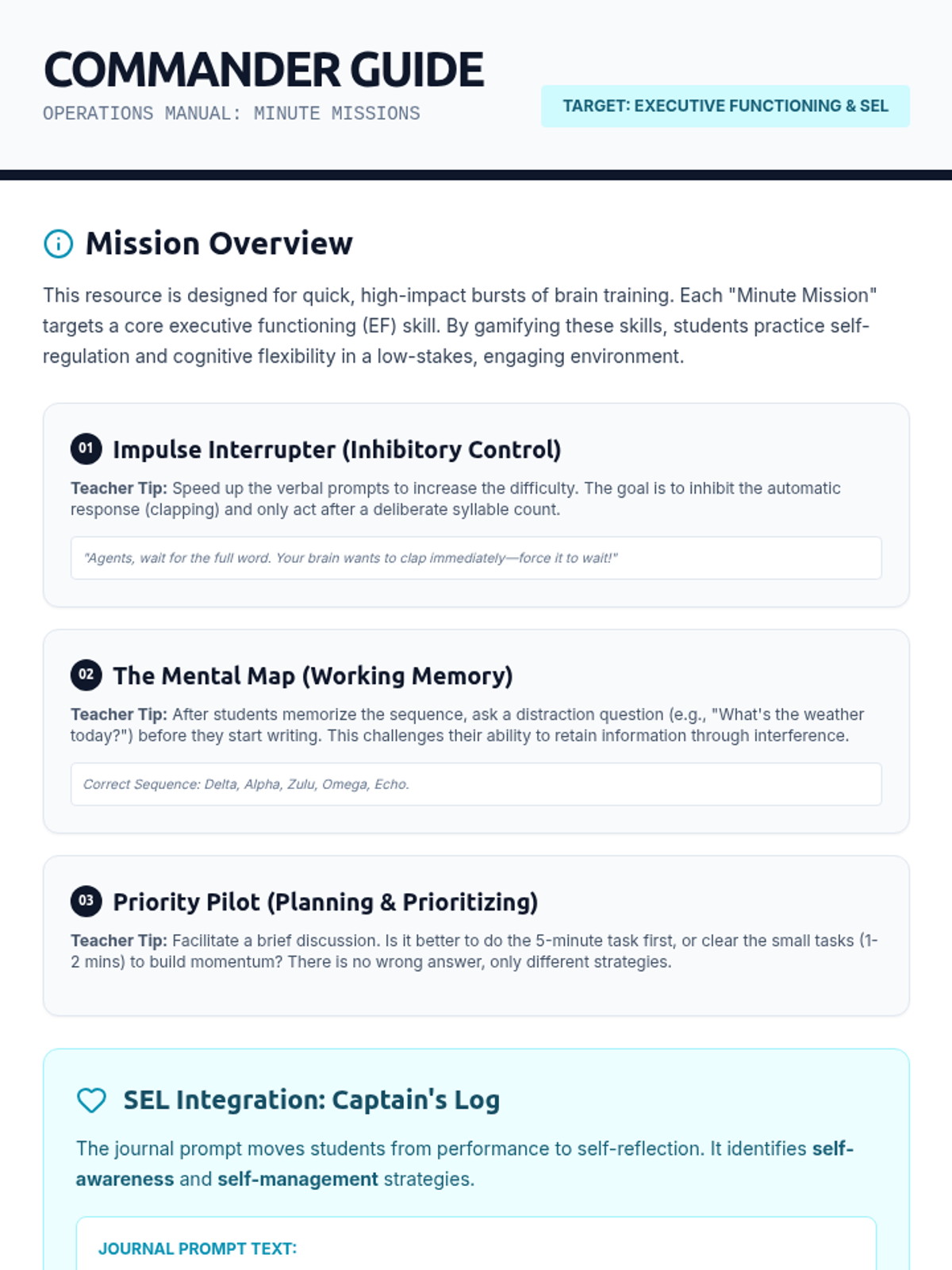
A teacher resource guide providing facilitation tips, skill breakdowns, and SEL discussion prompts for the Mission Control activities.
A visual presentation guide for 'Minute Missions', providing high-engagement challenges for impulse control, working memory, and planning.
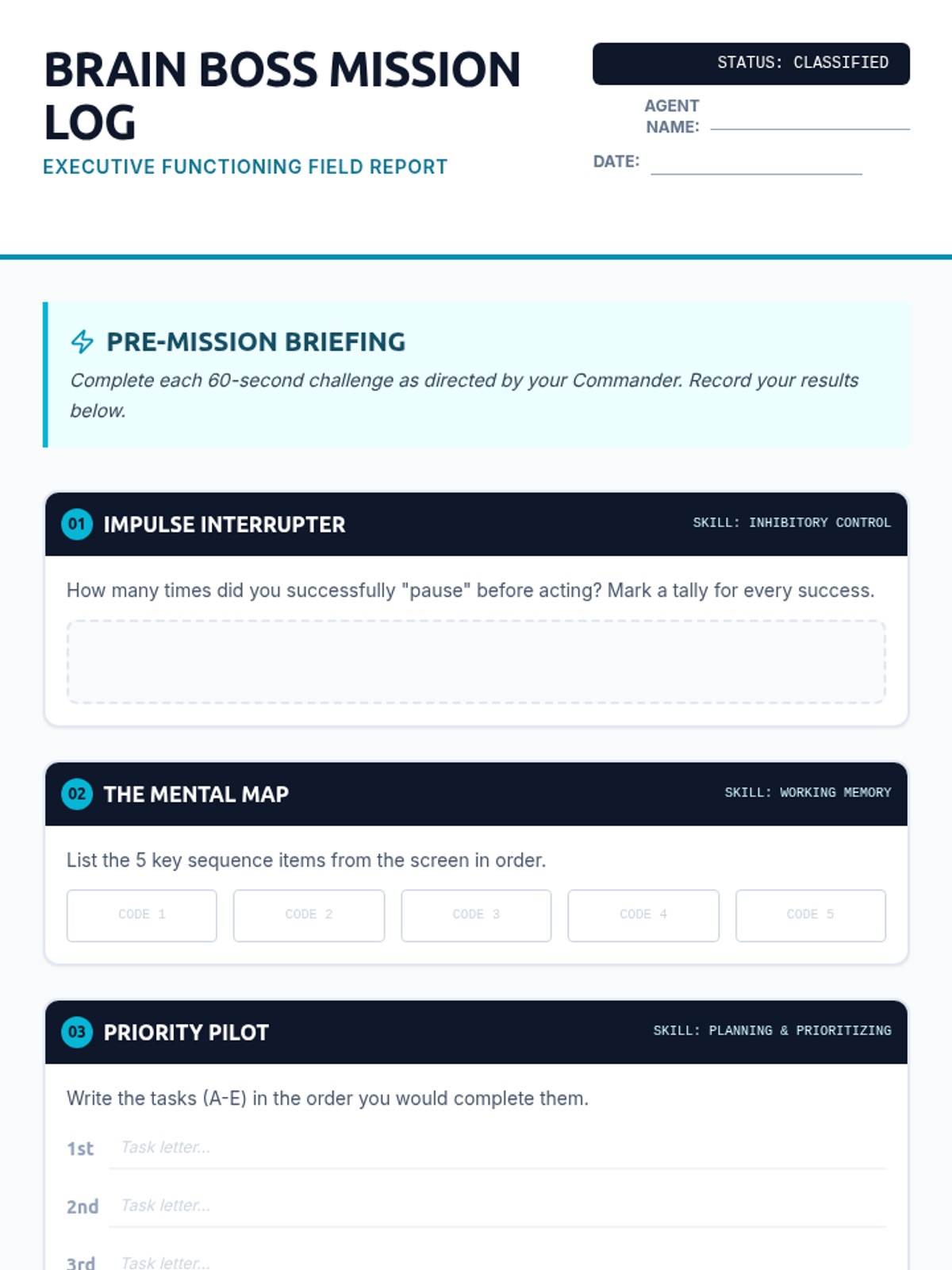
A student-facing worksheet for recording results of 'Minute Missions' and completing a reflective SEL journal prompt focused on executive functioning skills.
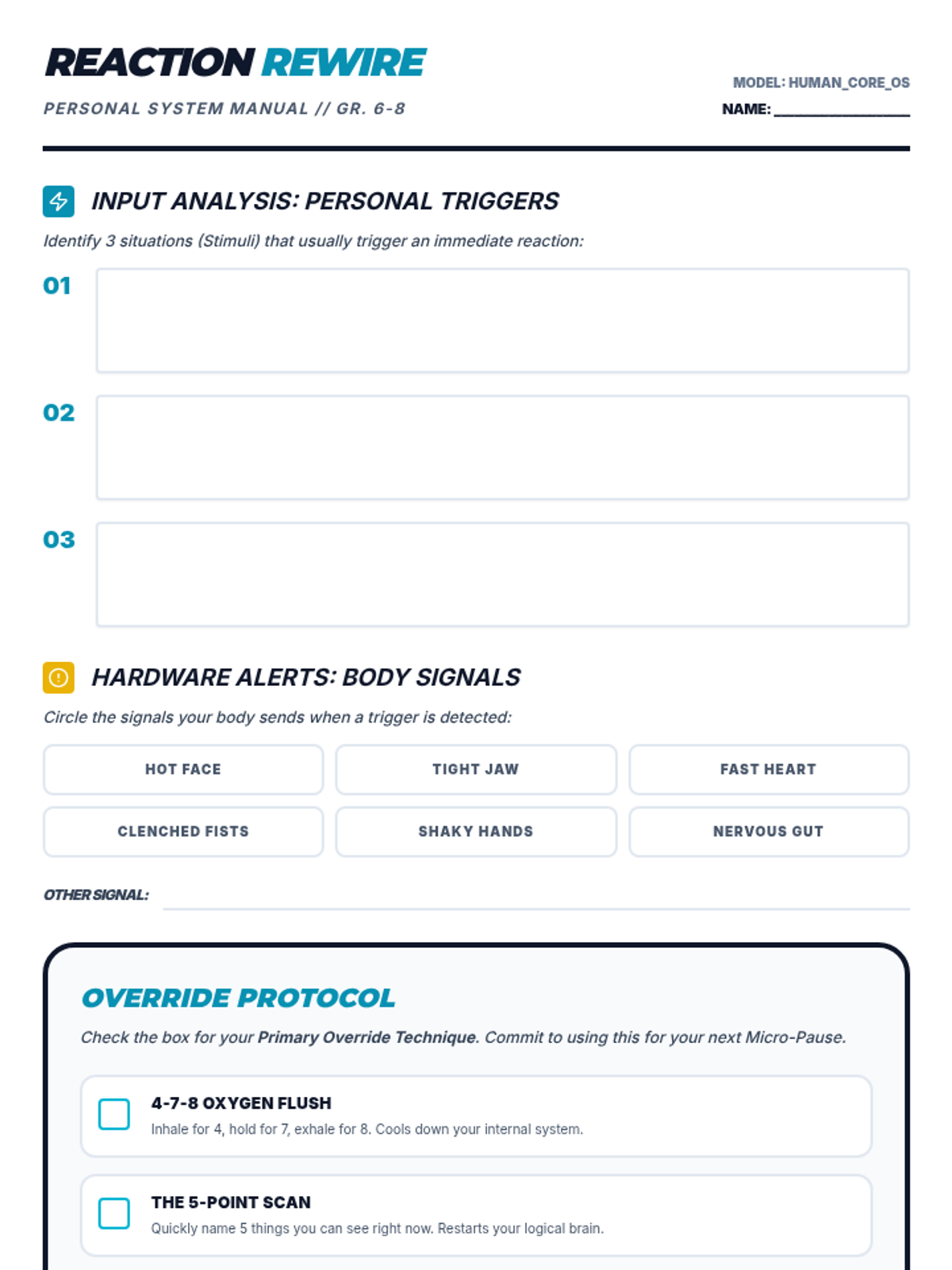
A personal reflection worksheet where students identify their own triggers and physical warning signs. They select a primary 'System Override' technique to commit to using in future high-tension situations.
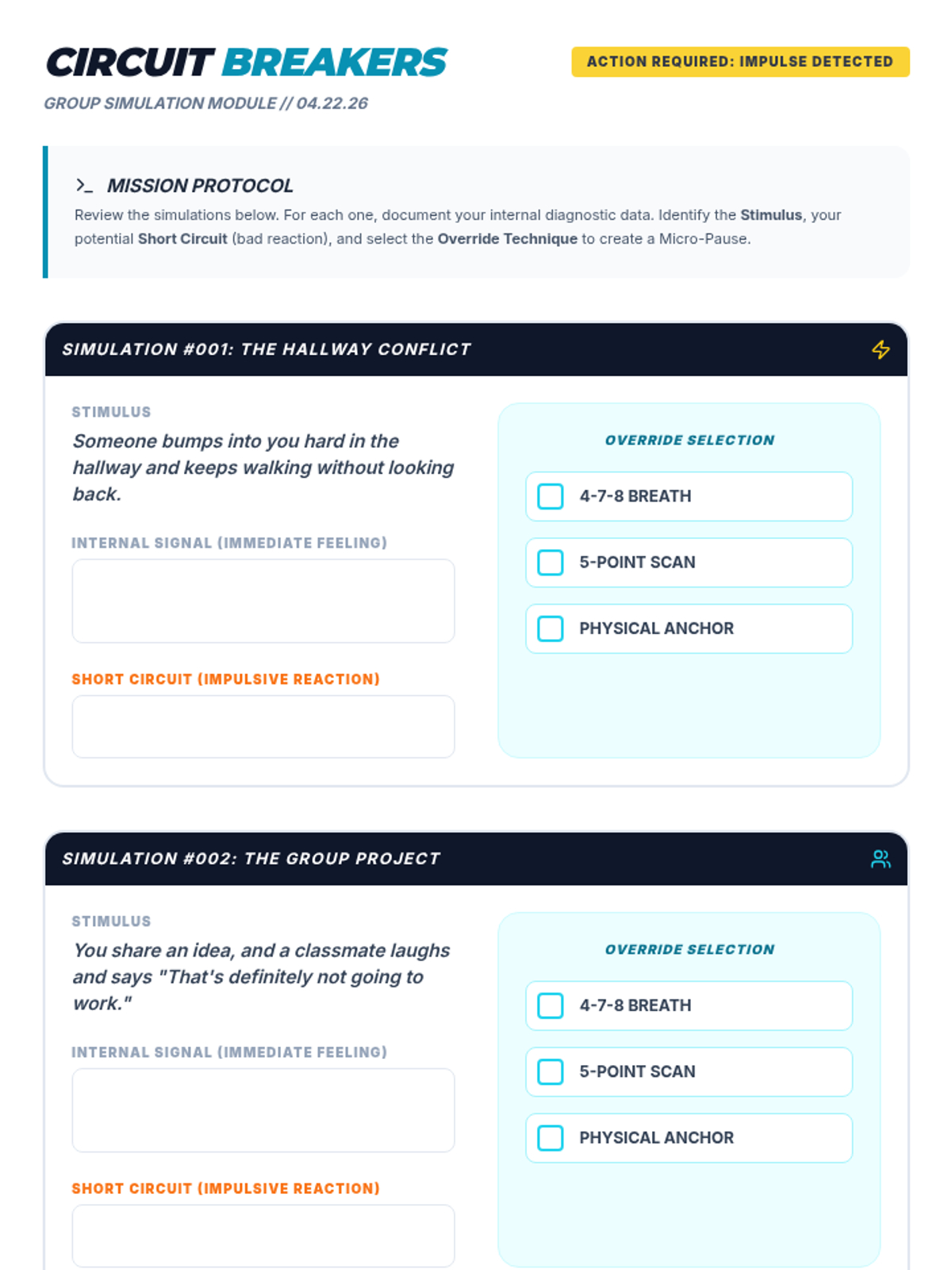
A group activity document featuring three common middle school scenarios where impulsivity is triggered. Students analyze the stimulus, identify their physical response, and select a specific 'System Override' technique to practice the micro-pause.
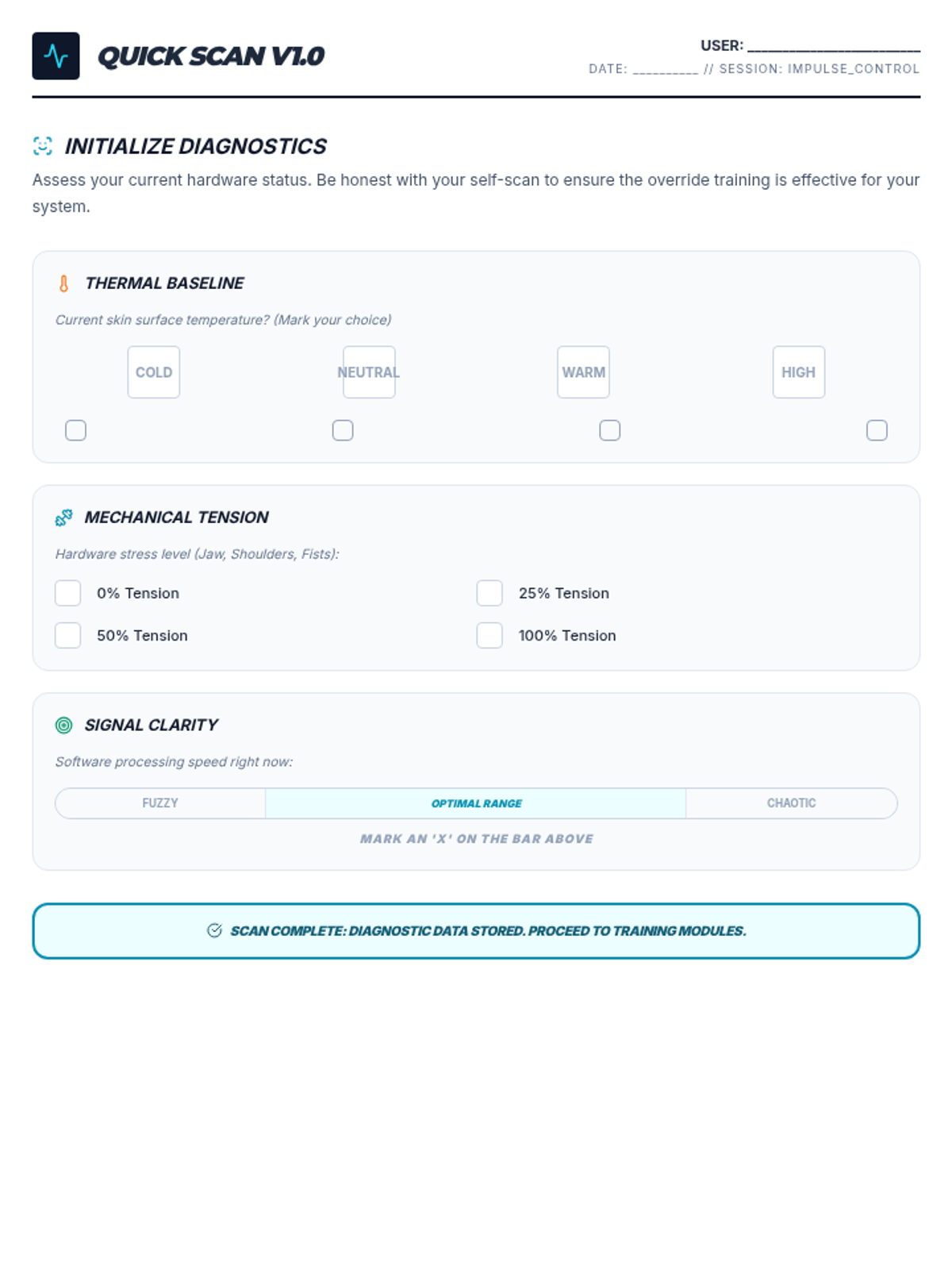
A quick student self-assessment tool used as a warm-up. It uses a diagnostic scan metaphor to help middle schoolers identify their current physical tension and emotional state before starting the lesson.
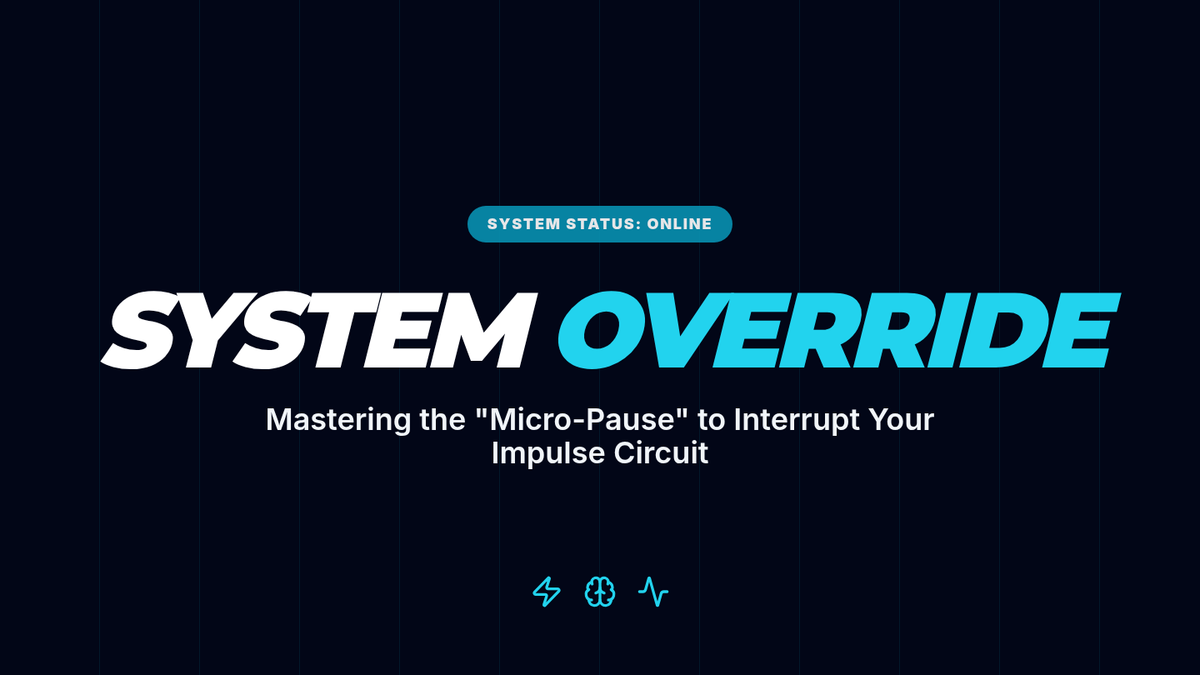
A visually engaging slide deck that uses a 'System Override' and 'Circuit Board' metaphor to teach middle schoolers about impulse control. It breaks down the stimulus-response model and introduces three specific micro-pause techniques: the 4-7-8 Breath, the 5-Point Scan, and the Physical Anchor.
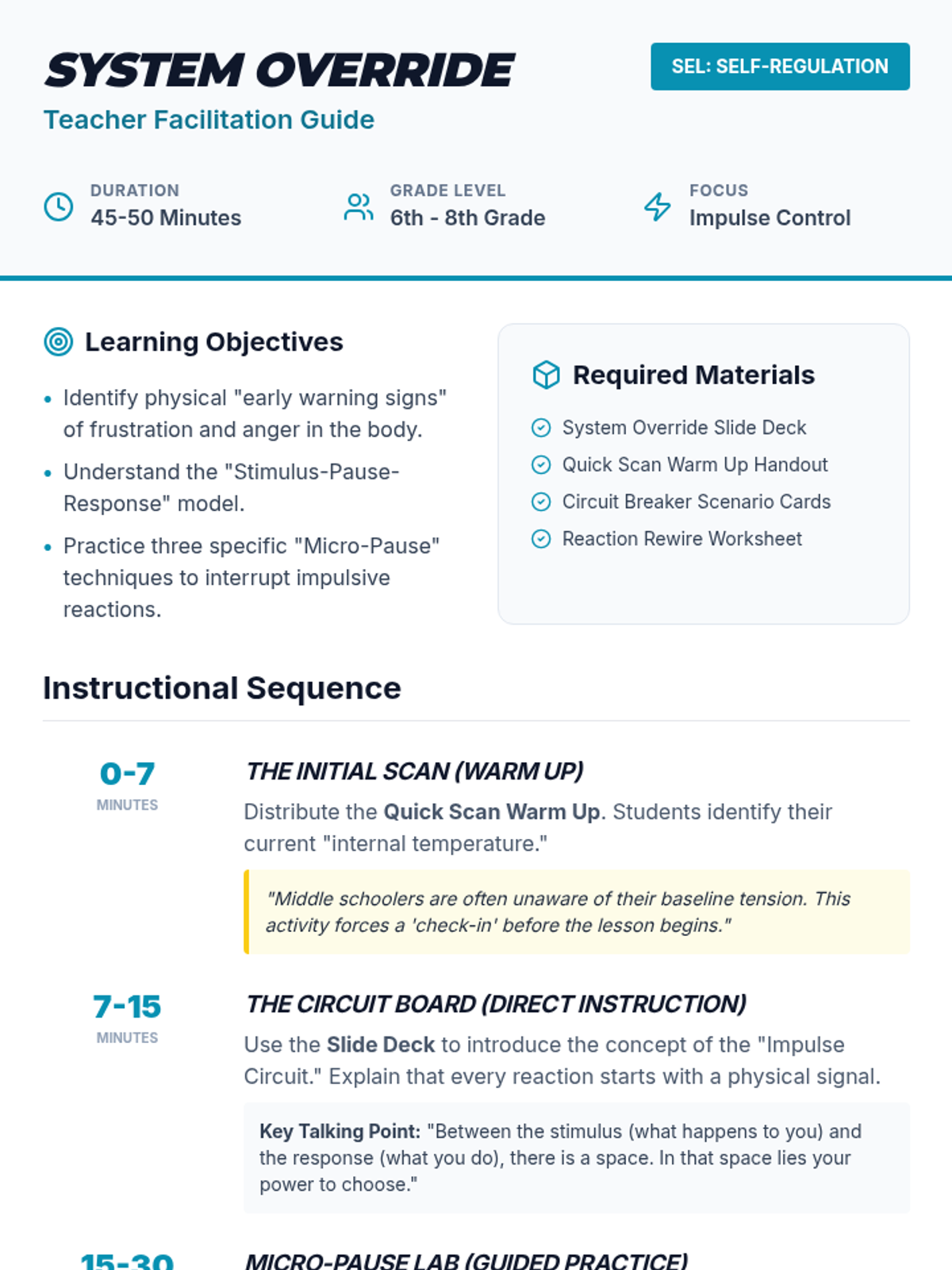
A comprehensive teacher facilitation guide for the Impulse Interrupter lesson, including a timed instructional sequence, learning objectives, and differentiation strategies. It frames emotional regulation through a 'system override' and 'circuitry' metaphor suitable for middle schoolers.