Student worksheet for Lesson 3. Students match tools to required skills and identify that both men and women can perform various community roles, challenging gender-based career stereotypes.
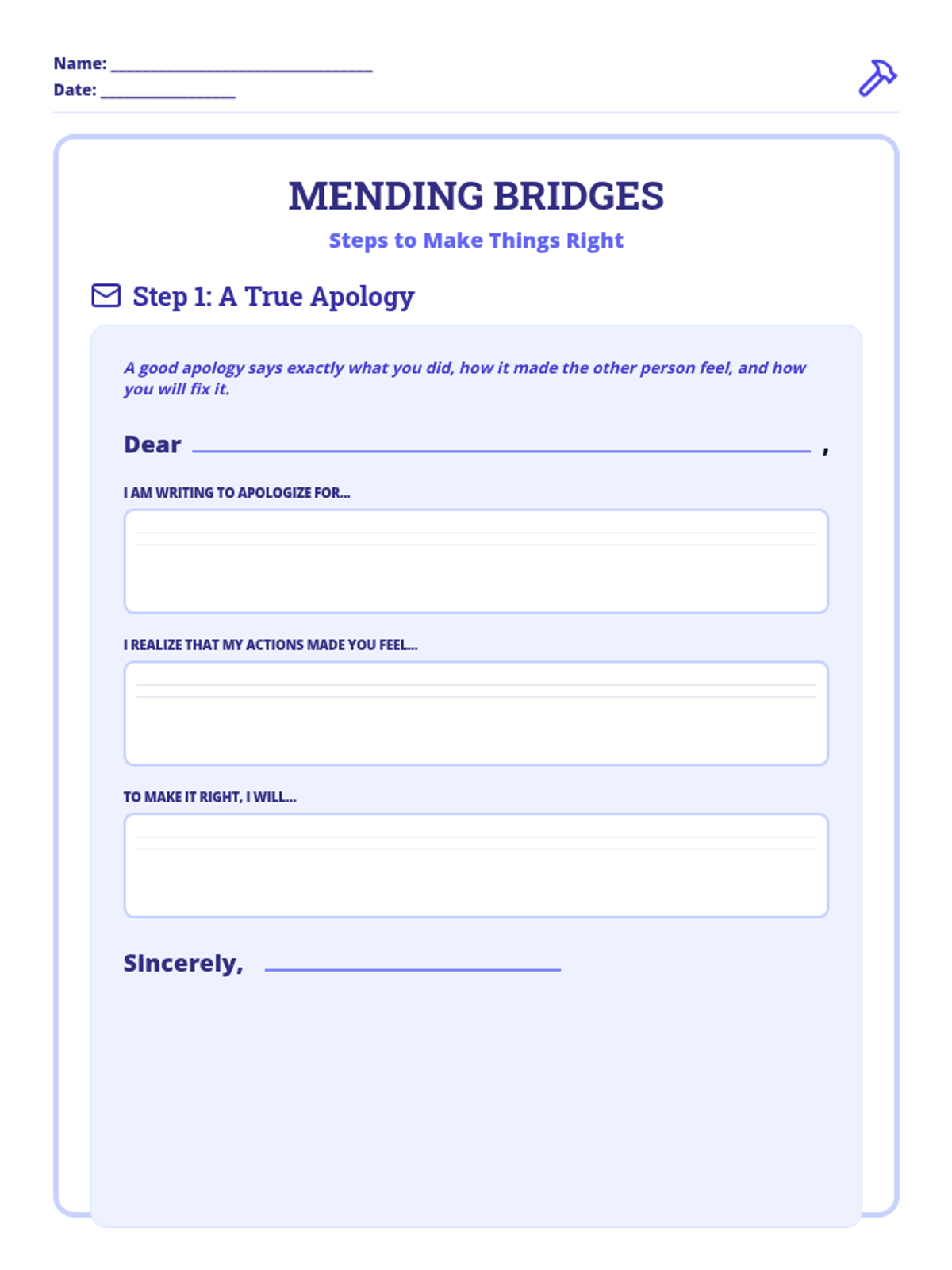
A restorative justice document featuring a guided apology letter template and a personal action plan. Revised with improved page layout, larger response areas, and clearer handwriting guides.
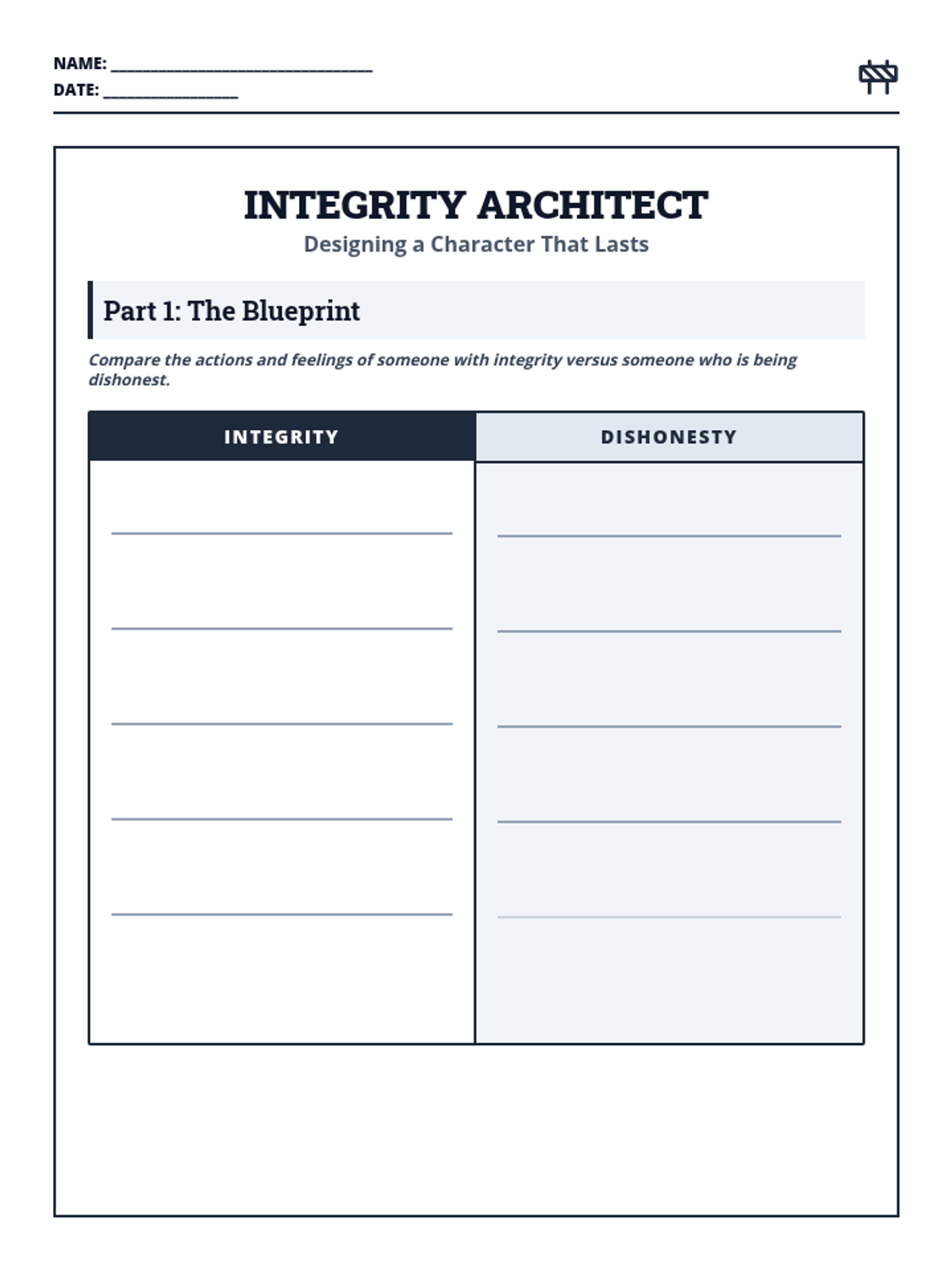
A dual-part worksheet featuring an Integrity vs. Dishonesty T-chart and a structured essay prompt about the importance of honesty in a community. Revised with better header placement and darker lines.
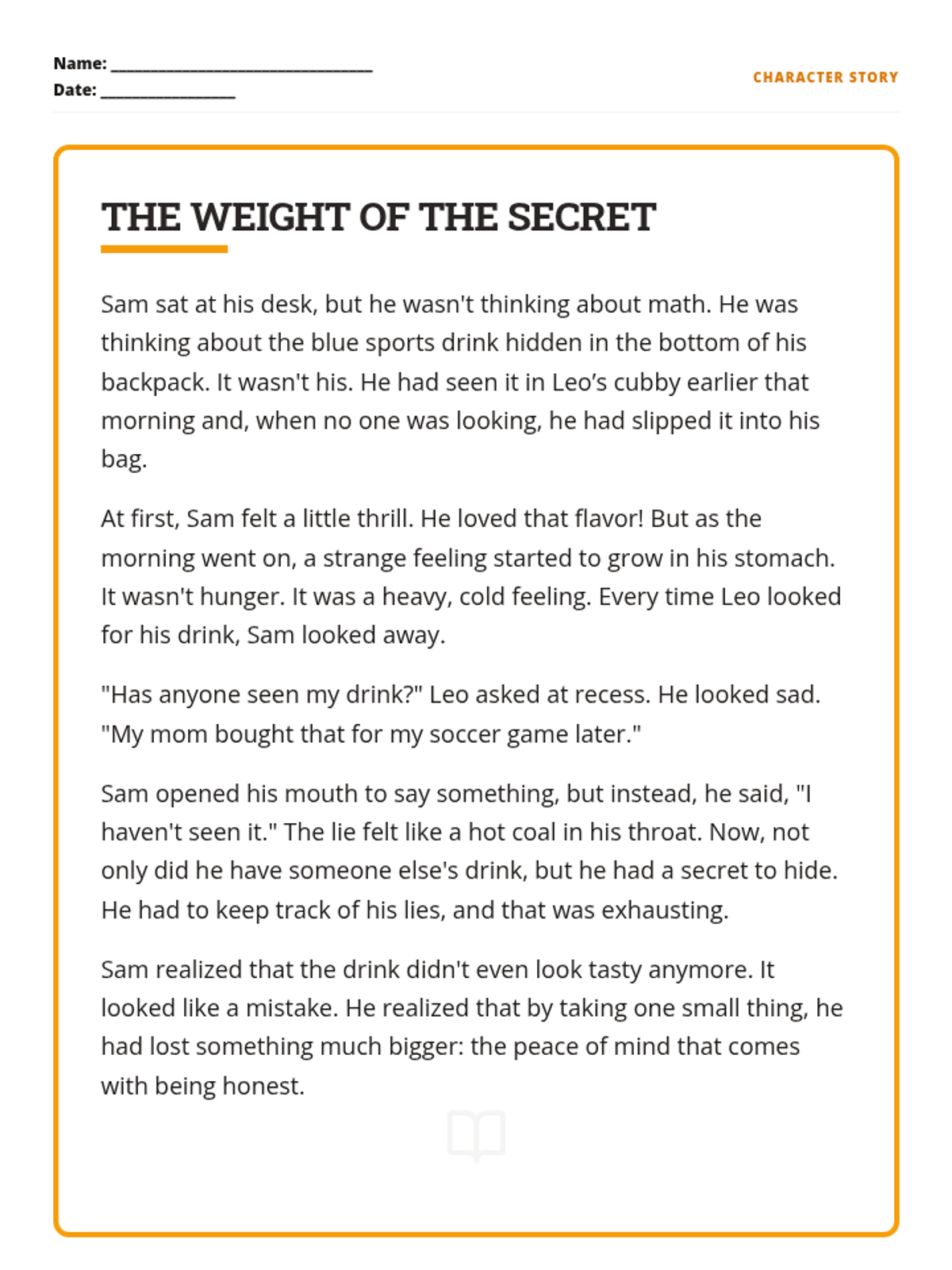
A relatable 3rd-grade short story about a student who steals a drink and regrets the guilt and lying that follow. Revised with improved page breaks and larger response areas.
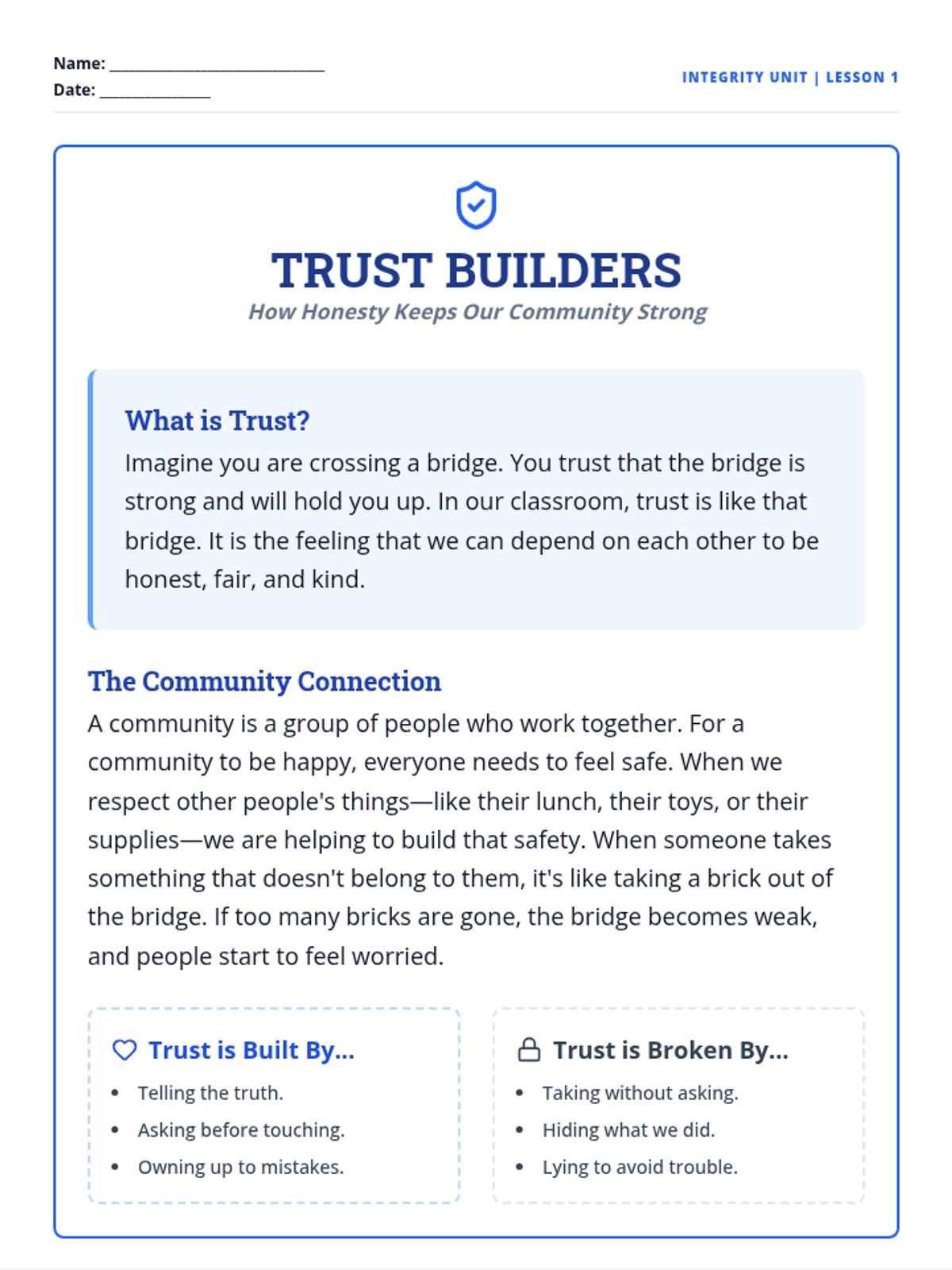
A 3rd-grade informational article explaining the concept of trust, community safety, and integrity using a bridge metaphor. Revised for better page breaks and printability.
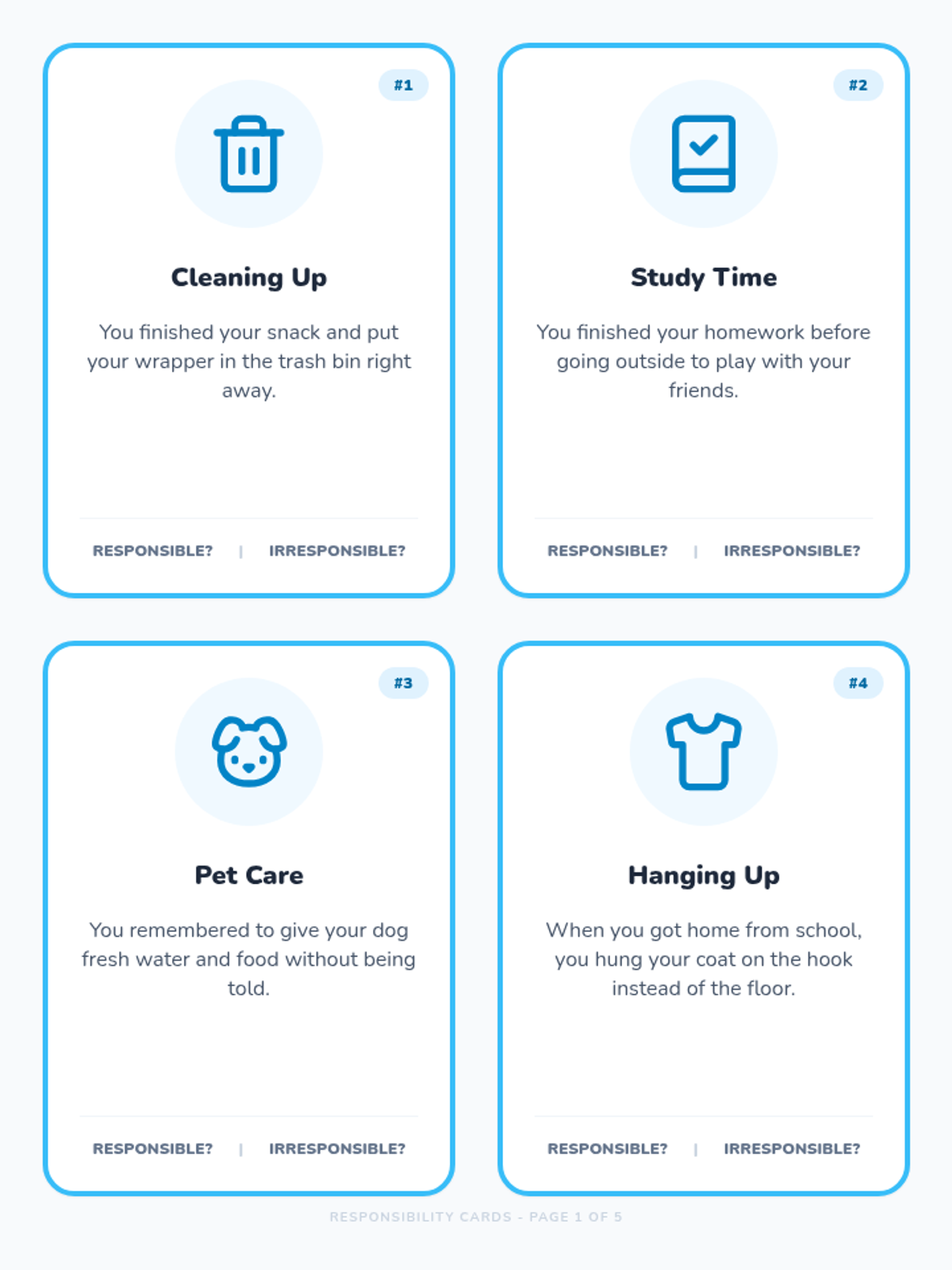
A set of 20 sorting task cards focused on responsibility. Features 10 examples of responsible behavior and 10 examples of irresponsible behavior with clear icons and age-appropriate scenarios for K-4 students. Optimized for sorting activities with uniform visual styling.
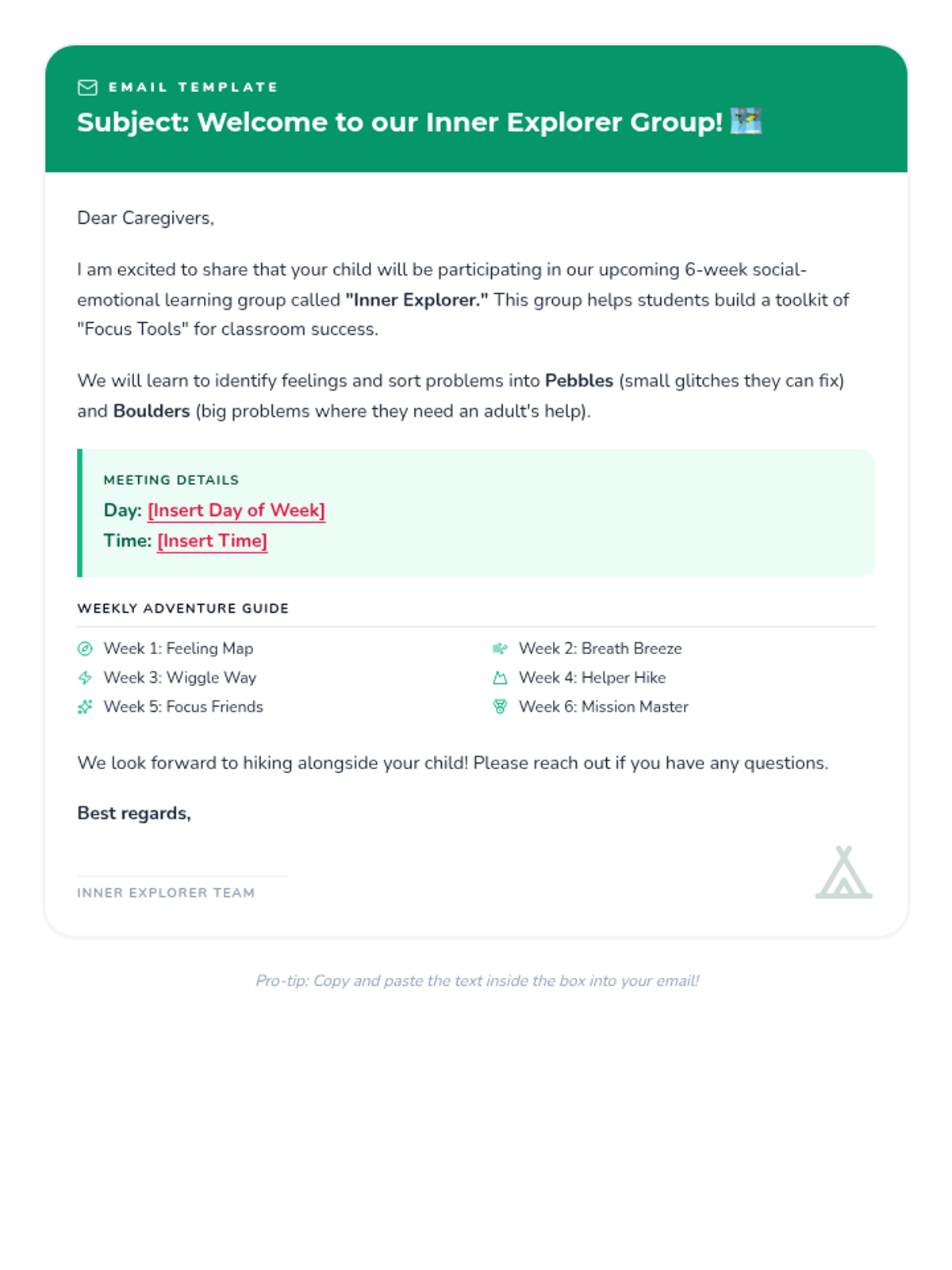
A simplified email template for caregivers introducing the 'Inner Explorer' group. Includes placeholders for group day and time, a summary of the 6-week curriculum, and an explanation of key concepts like 'Pebbles vs. Boulders'. Designed for quick copying into an email or school newsletter.
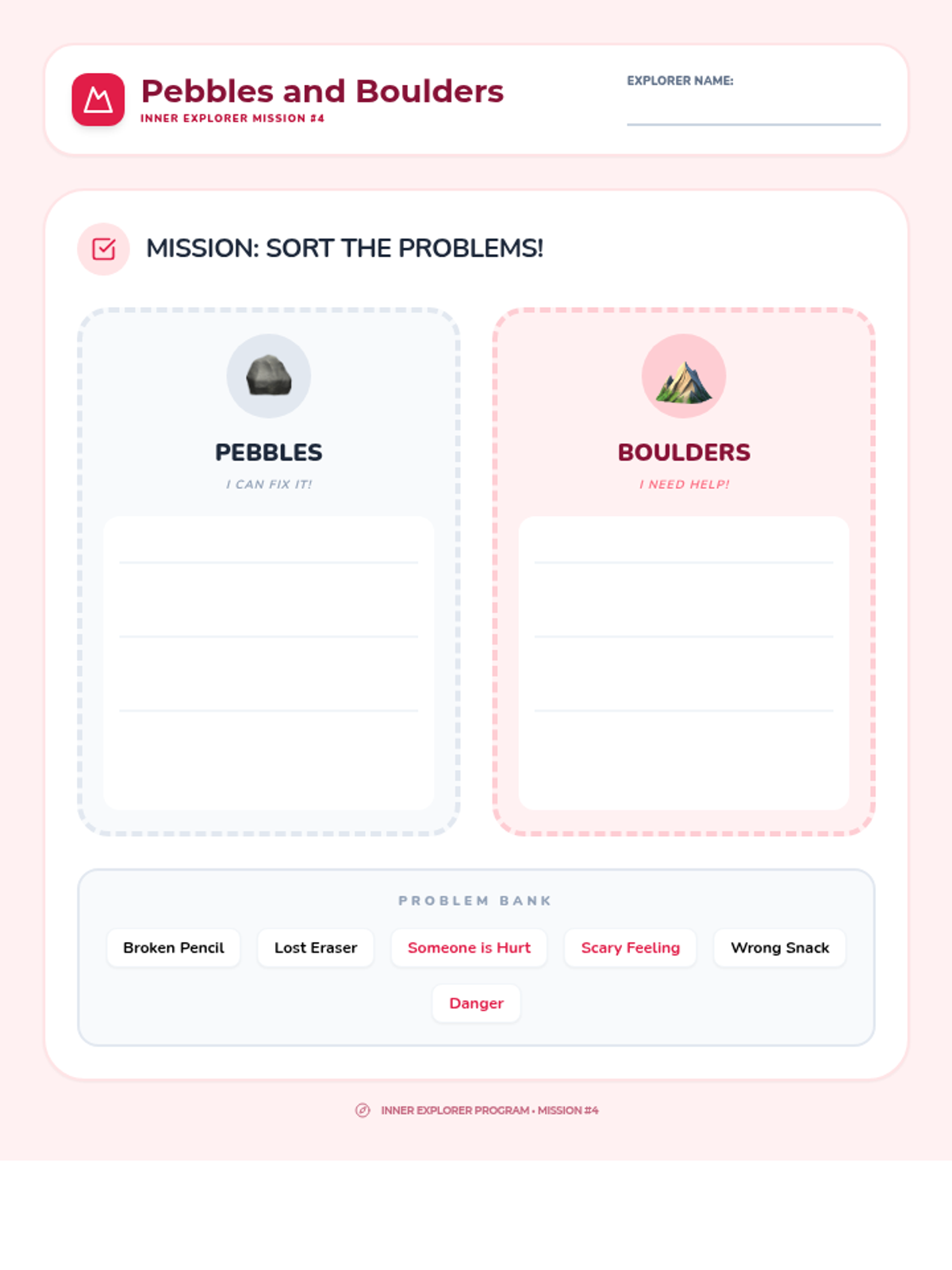
A sorting activity worksheet for first graders to practice identifying the difference between 'Pebbles' (small problems) and 'Boulders' (big problems). Includes a word bank of relatable scenarios and clear sorting areas to reinforce when to seek adult support.
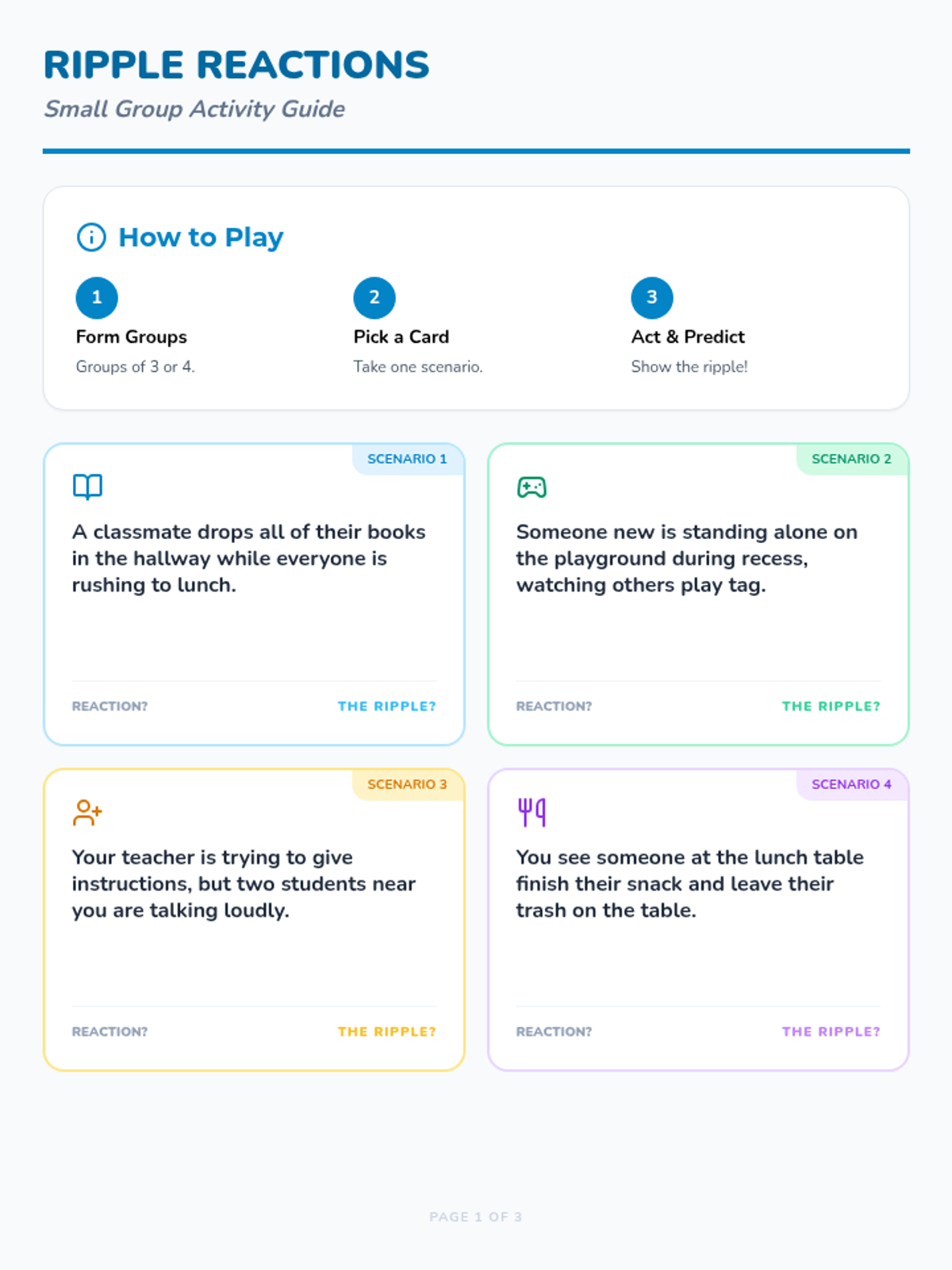
Small group activity cards featuring 16 distinct social scenarios. Designed to prompt student groups to role-play respectful reactions and discuss the subsequent positive ripples they create. Includes an instruction guide.
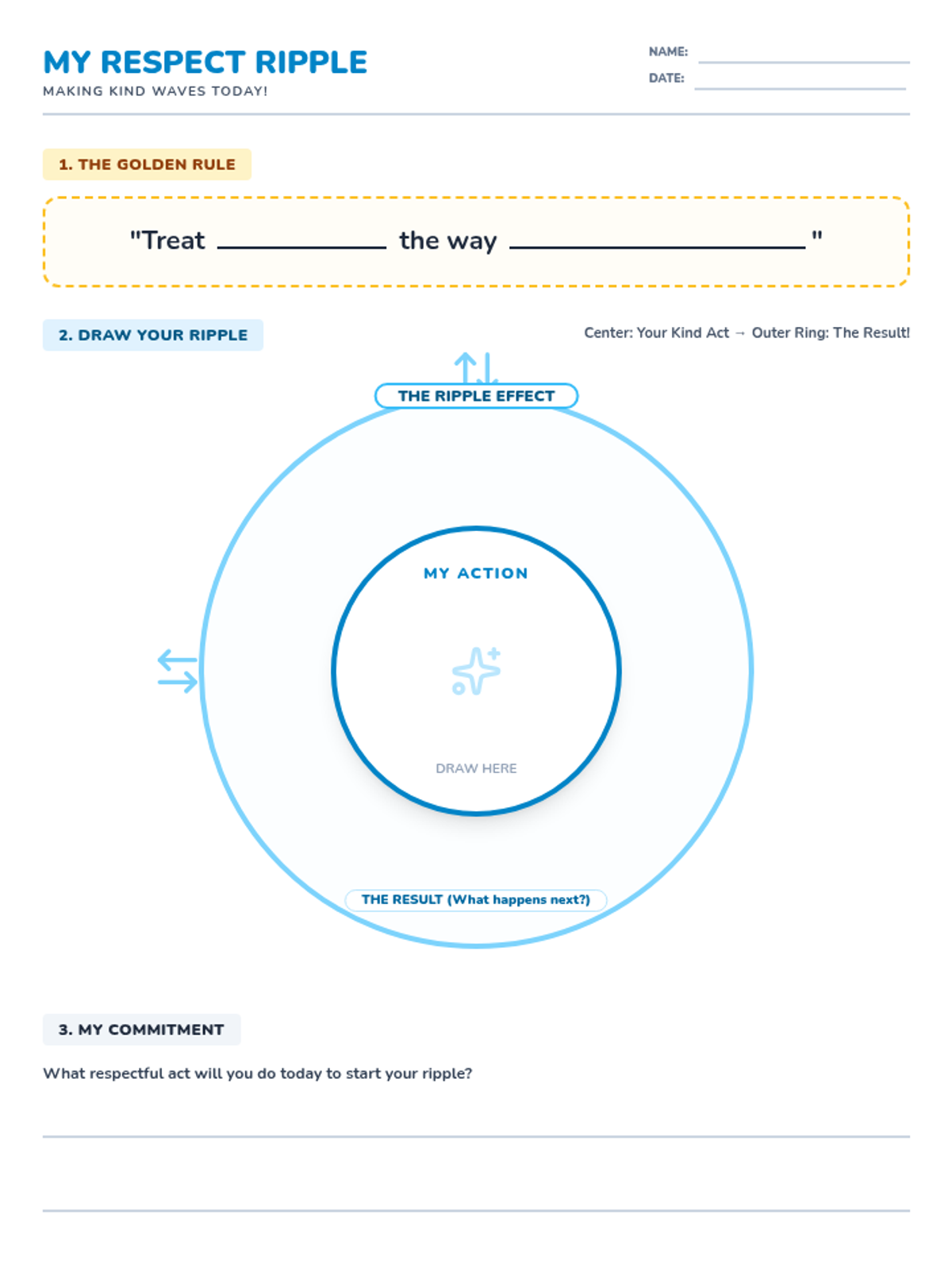
A student worksheet designed for grades K-4. Students complete the Golden Rule sentence, draw a respectful action in a visual ripple diagram, and write a commitment for the day. Resized and optimized for single-page printing with generous drawing space.
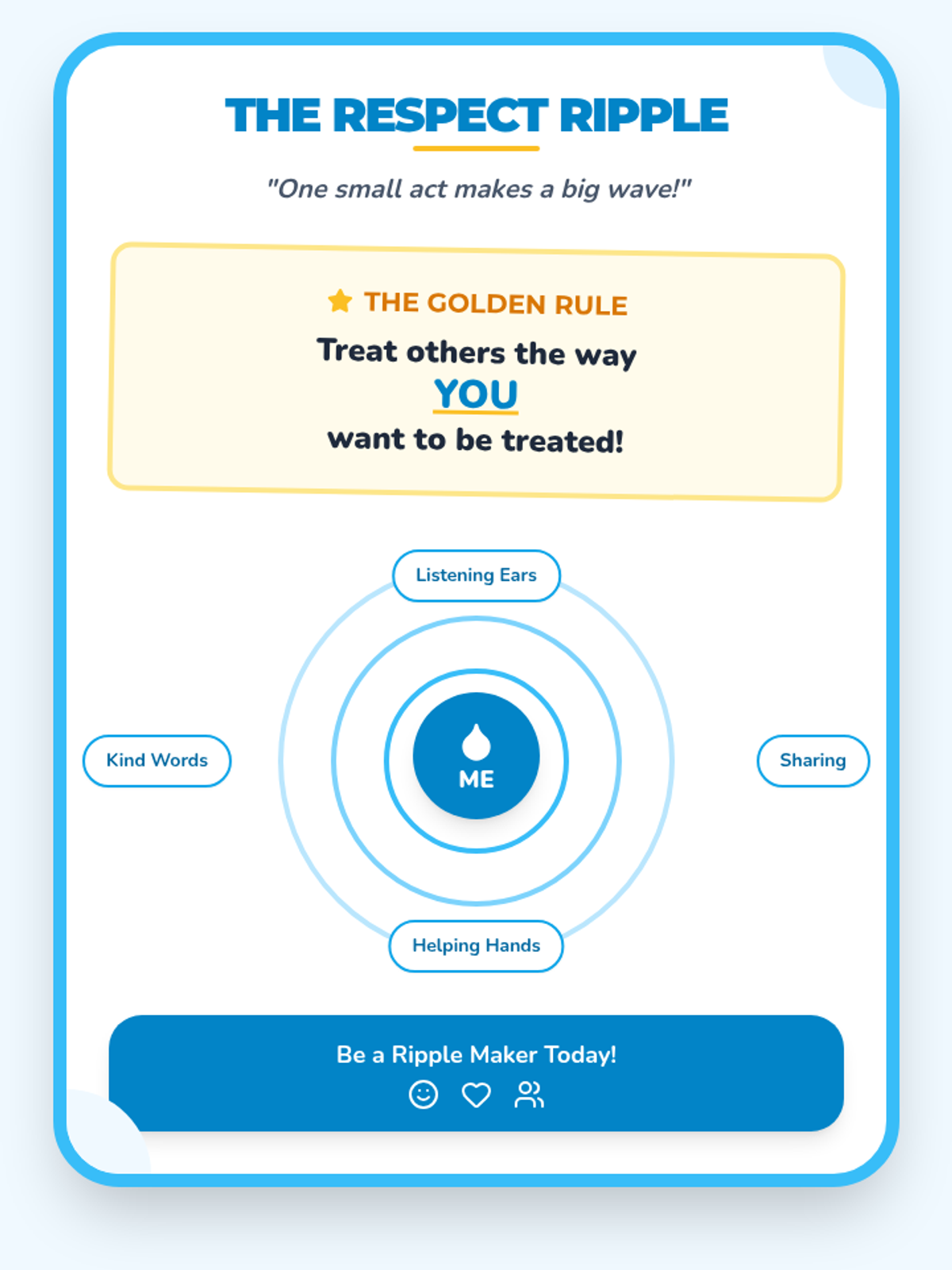
A vibrant anchor chart for the classroom that visually illustrates the Golden Rule and the Ripple Effect. Features a clear central metaphor of a water droplet and labels for respectful behaviors. Darkened borders and larger labels ensure high legibility.
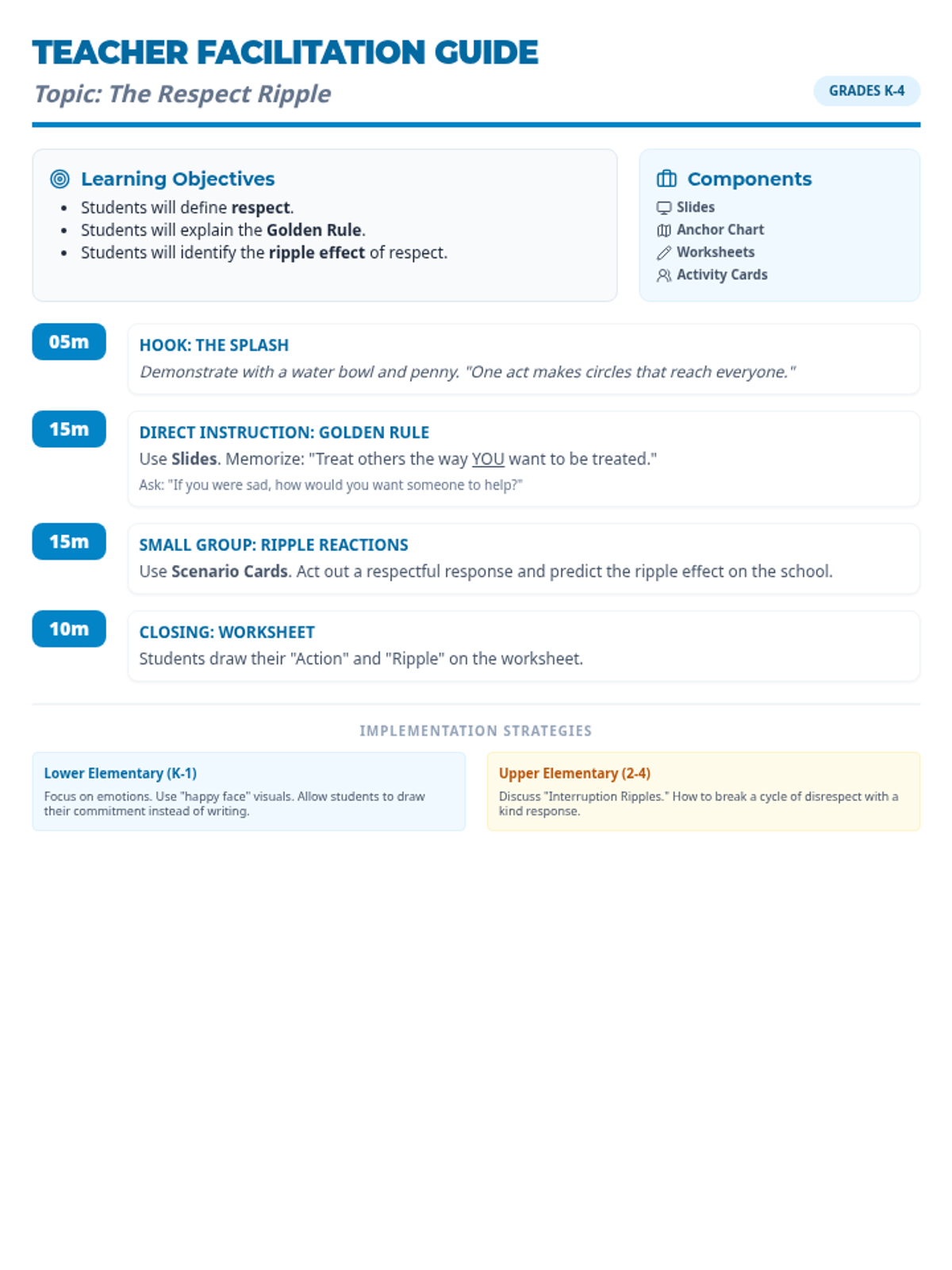
A detailed teacher facilitation guide for the Respect Ripple lesson. Includes a 45-minute lesson plan with a hook, direct instruction, small group activities, and differentiation strategies for K-4 students. Optimized for single-page printing.
A colorful and engaging 7-slide presentation for K-4 students teaching the concepts of respect, the Golden Rule, and the ripple effect. Includes visual metaphors, discussion prompts, and real-world examples.
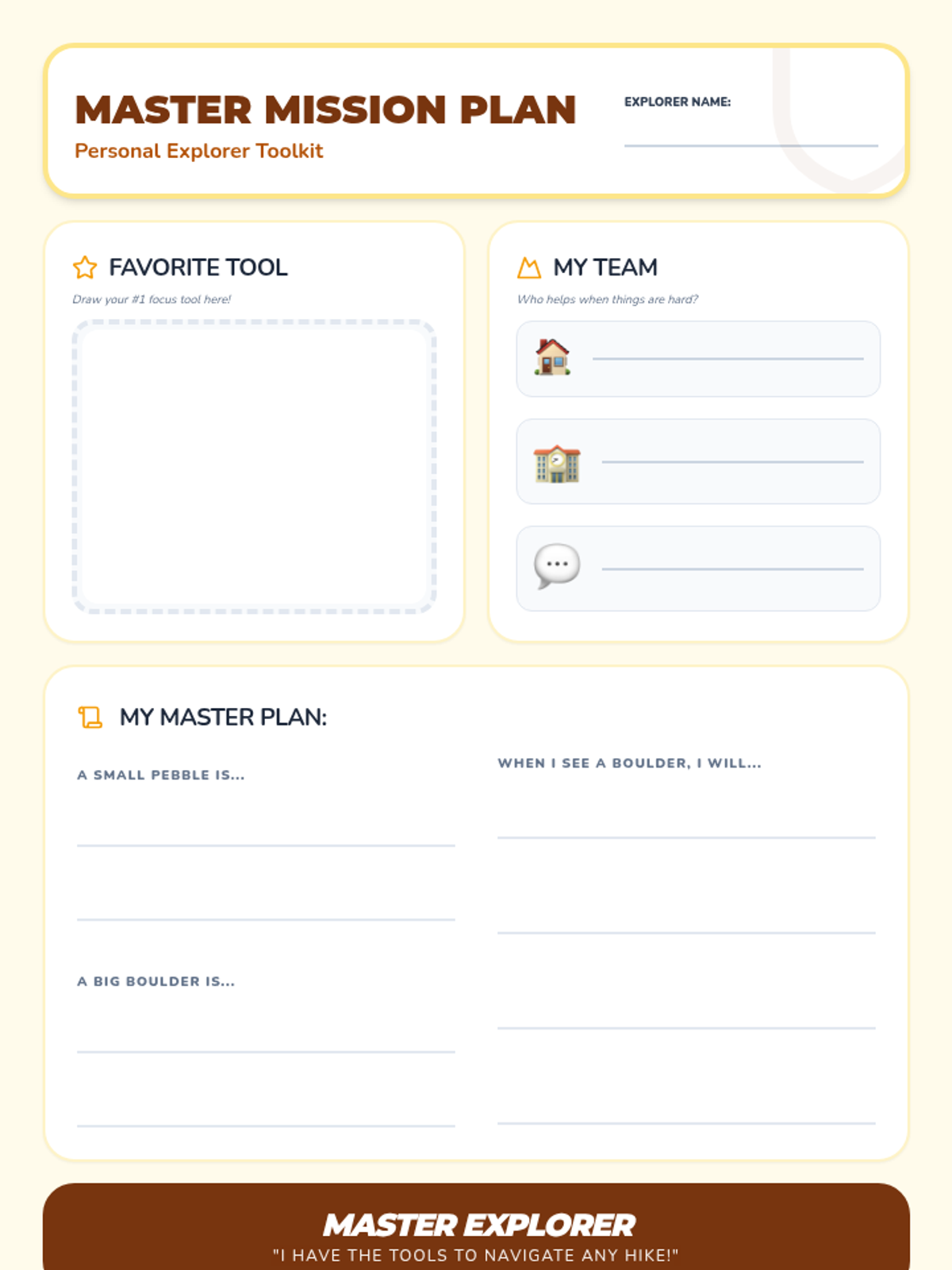
The culminating student worksheet for the Inner Explorer program, updated to include 'Pebbles vs. Boulders' problem sizing. Students document their favorite tool, their support team, and specific plans for handling different problem sizes.
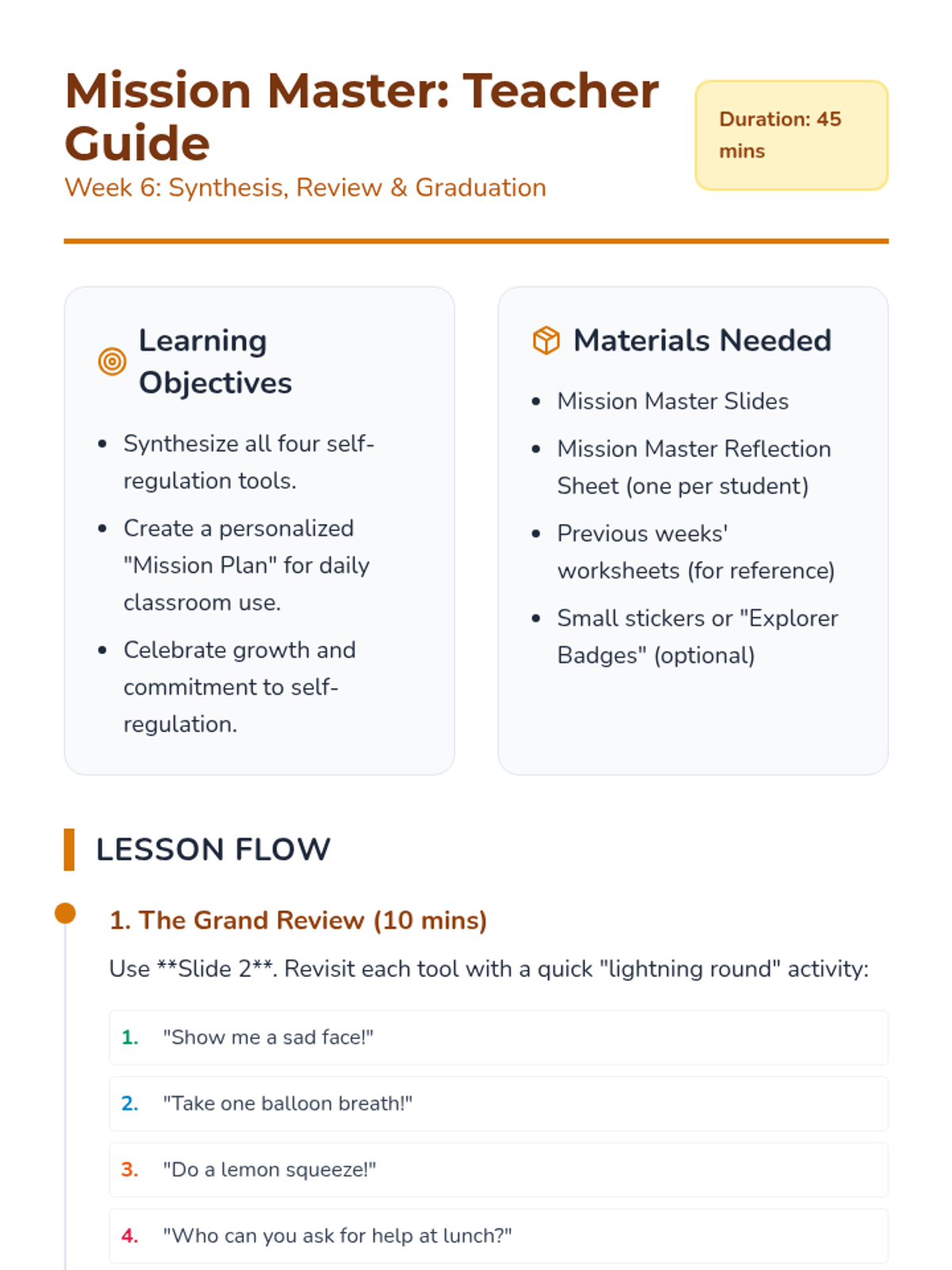
The final teacher's guide for the Inner Explorer program. Focuses on synthesizing the six weeks of learning, guiding students through the creation of their personalized mission plans, and conducting a celebration ceremony to recognize student achievement in self-regulation.
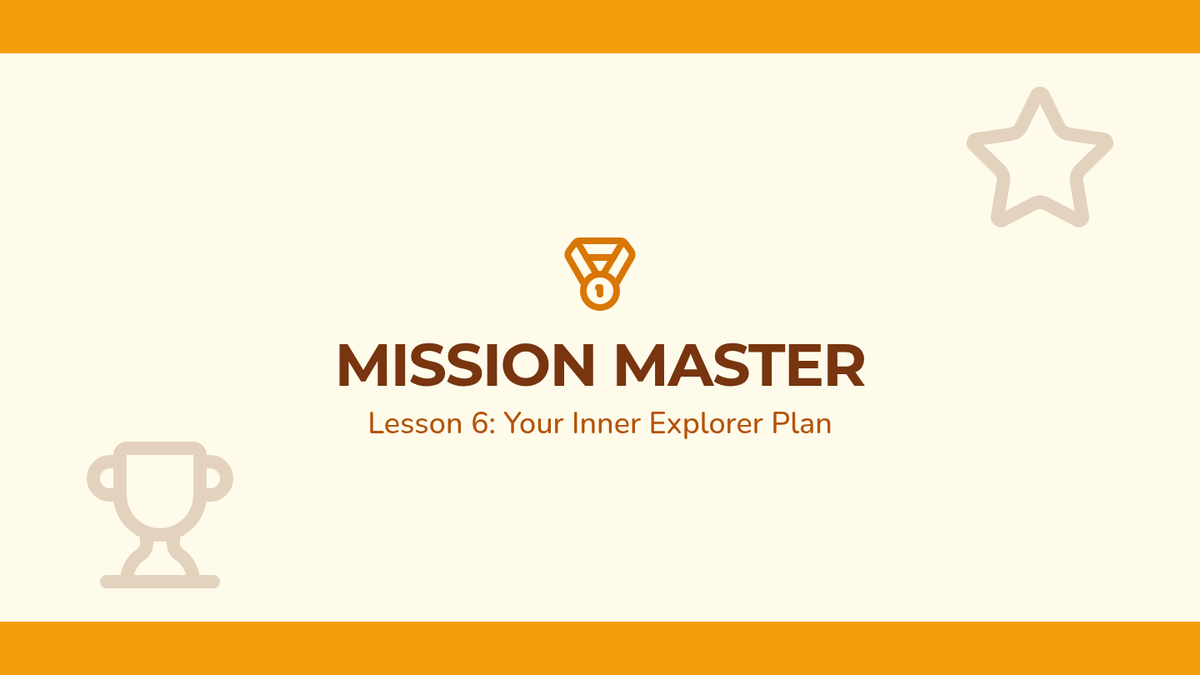
A celebratory and comprehensive review slide deck for the final week of the Inner Explorer program. Summarizes the four key tools learned (Feelings, Breath, Movement, Team), guides students in creating a personalized toolkit, and celebrates their growth as self-regulated learners.
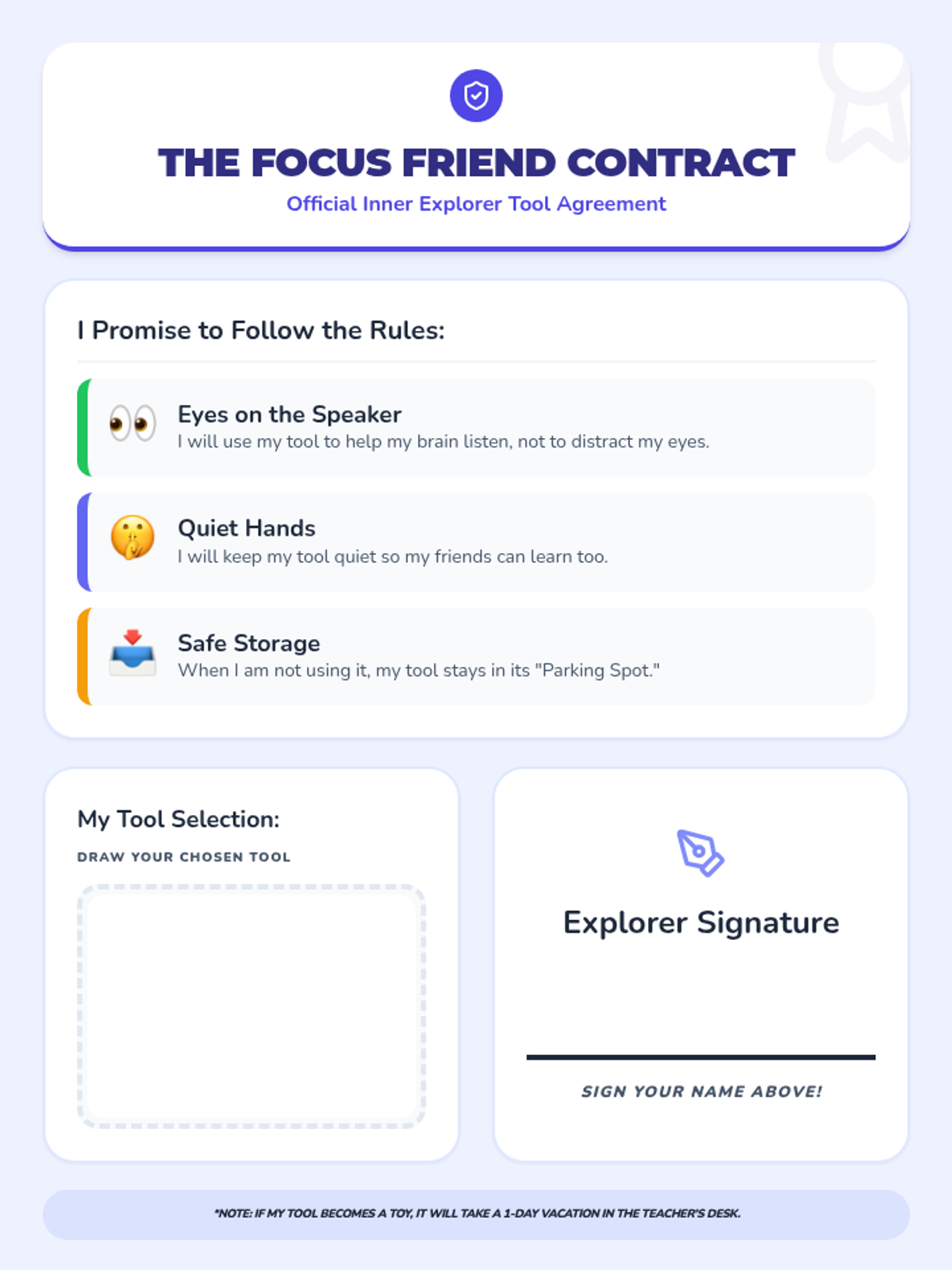
A formal behavioral contract for students using sensory tools (fidgets). Outlines three key rules (Eyes on Speaker, Quiet Hands, Safe Storage), includes a space for students to draw their selected tool, and provides a signature line to foster a sense of responsibility and ownership.
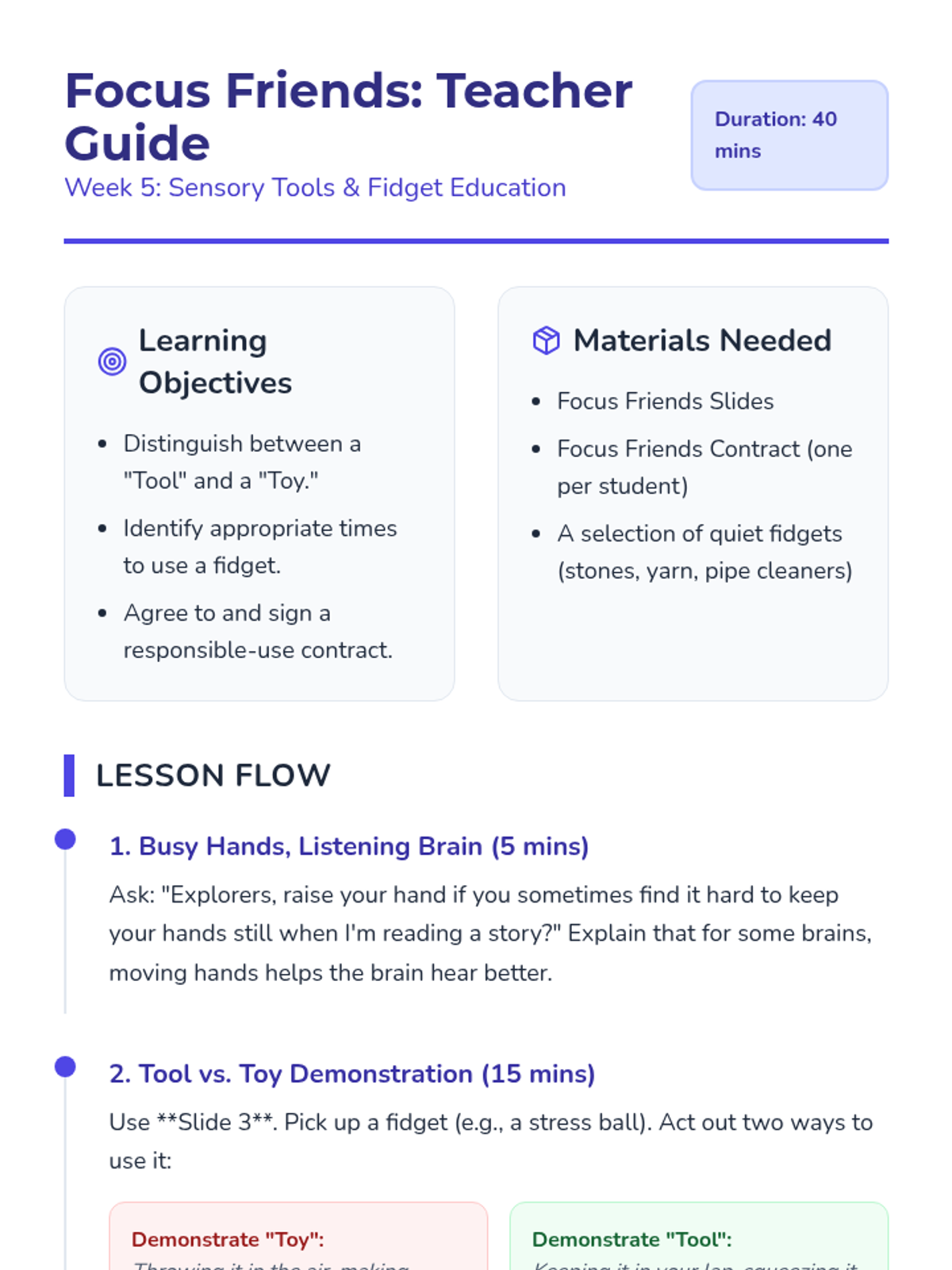
A teacher's guide for introducing fidget tools in the first-grade classroom. Includes a clear 'Tool vs. Toy' demonstration script, behavioral expectations for fidget use, and a classroom management strategy for storing and retrieving sensory tools.
A slide deck for teaching first graders how to use fidgets (Focus Friends) responsibly. Explains the difference between a tool and a toy, provides clear rules for engagement (Eyes Up, Keep it Quiet, Desk Home), and builds anticipation for signing a focus contract.
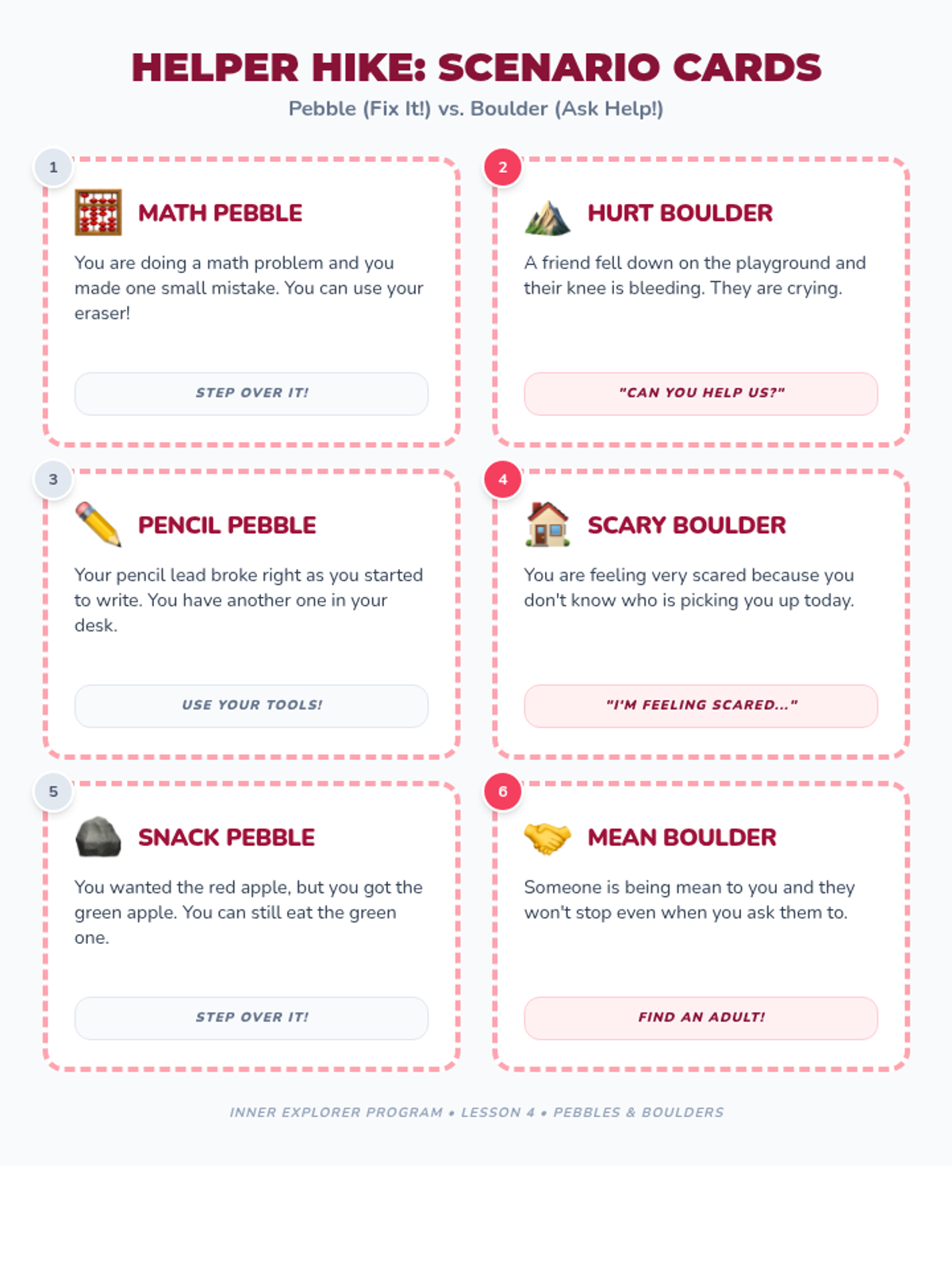
A set of six printable scenario cards for first-grade role-playing, updated to include the 'Pebbles vs. Boulders' concept. Each card presents a situation and helps students practice deciding whether to solve it independently or seek adult assistance.
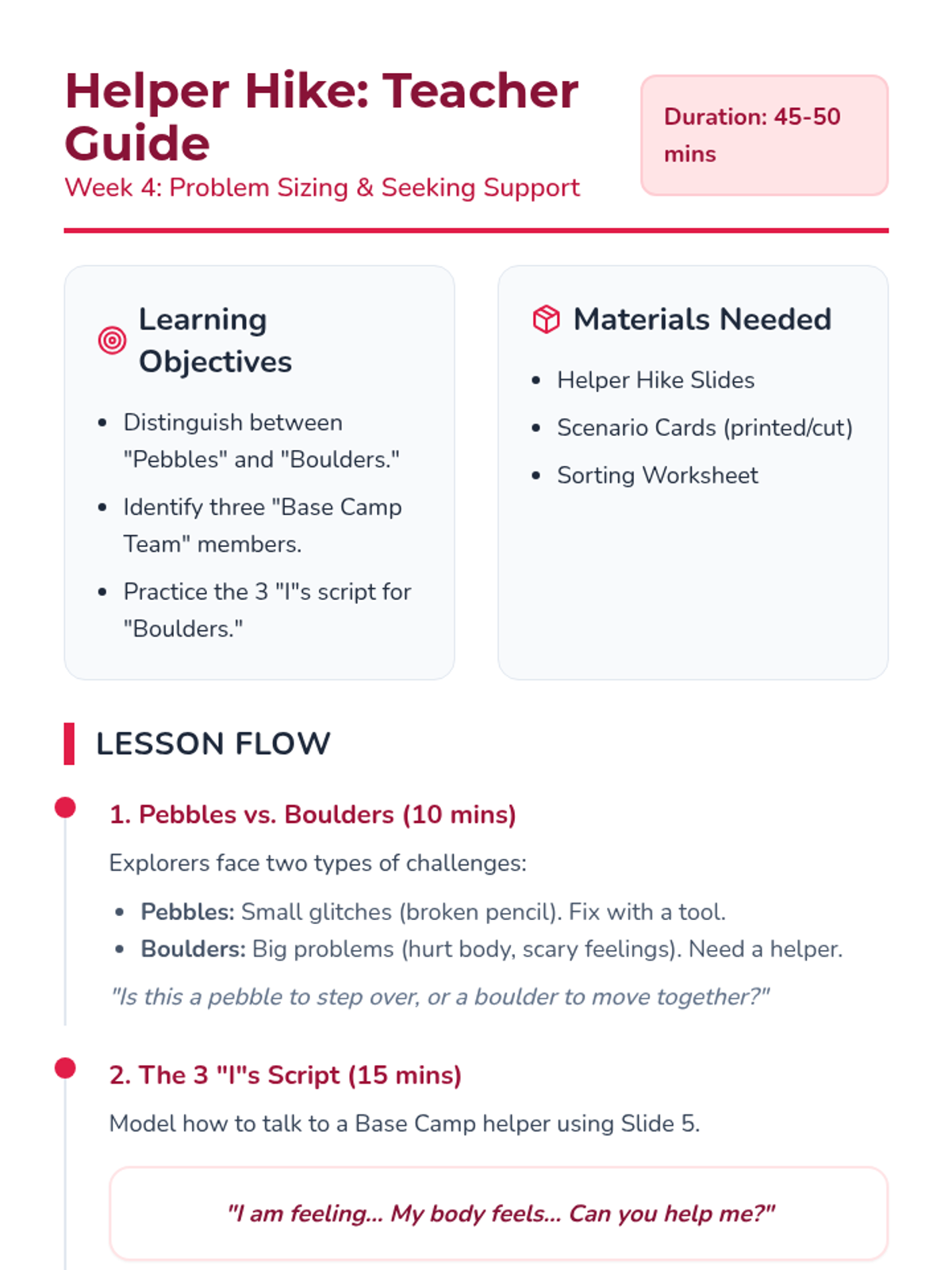
A professional teacher's guide for Lesson 4, focused on problem sizing (Pebbles vs. Boulders) and help-seeking behaviors. It outlines how to frame asking for help as a strength and provides a structured script for communicating needs to adults.
A social-emotional slide deck for first graders about the importance of asking for help. Introduces the 'Pebbles vs. Boulders' metaphor for problem sizing and teaches a three-step process for communicating needs to the 'Base Camp Team'.
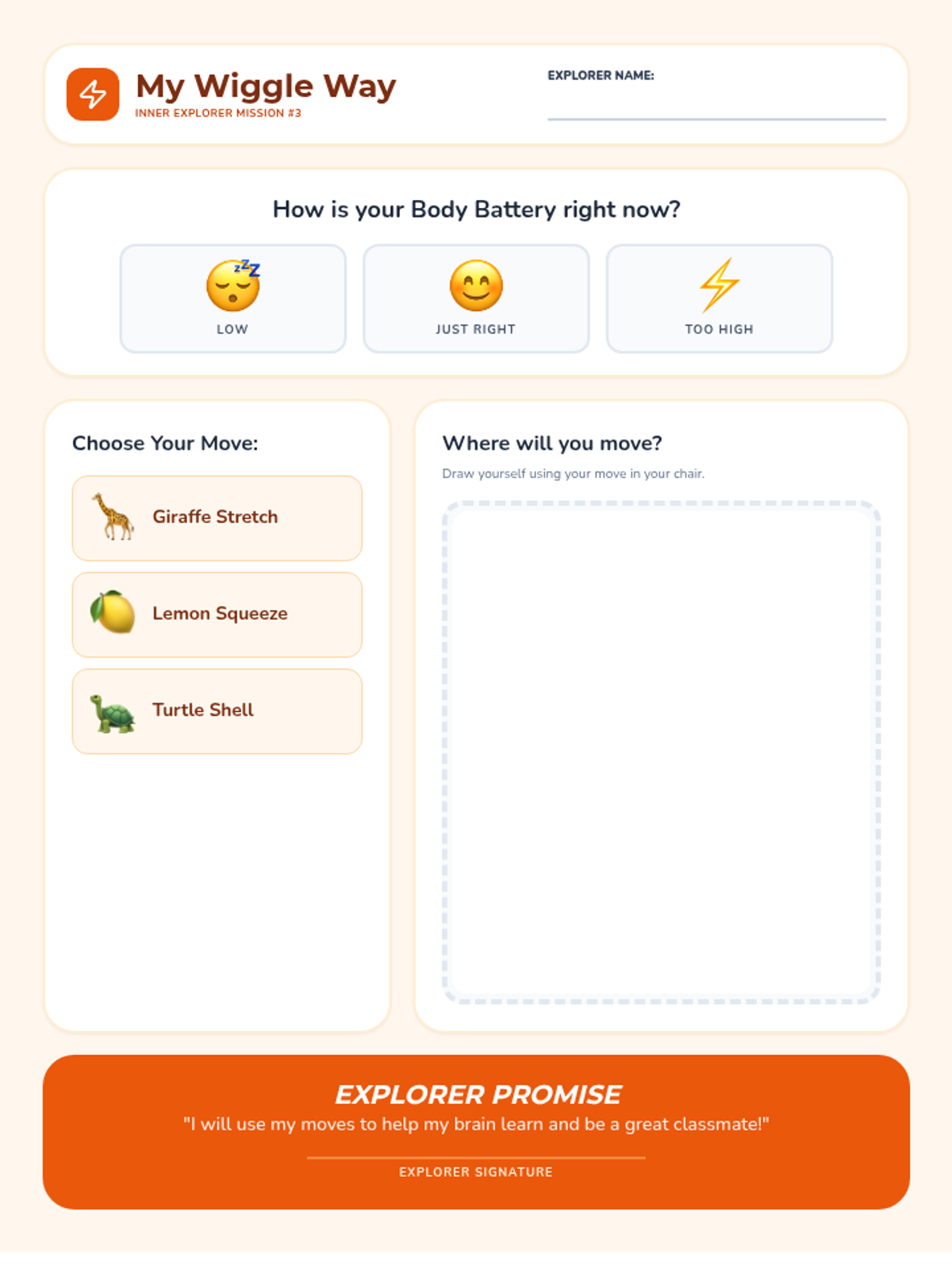
A student activity sheet for the 'Wiggle Way' movement lesson. Includes a 'Body Battery' check-in, a selection menu of three classroom-friendly movements, a drawing space for personalized application, and an 'Explorer Promise' to reinforce responsible use of movement tools.