A colorful, student-friendly worksheet for NJSLA anxiety regulation. Features vibrant section headers in rose, amber, and emerald, a large tracing activity for deep breathing, and clear growth mindset prompts.
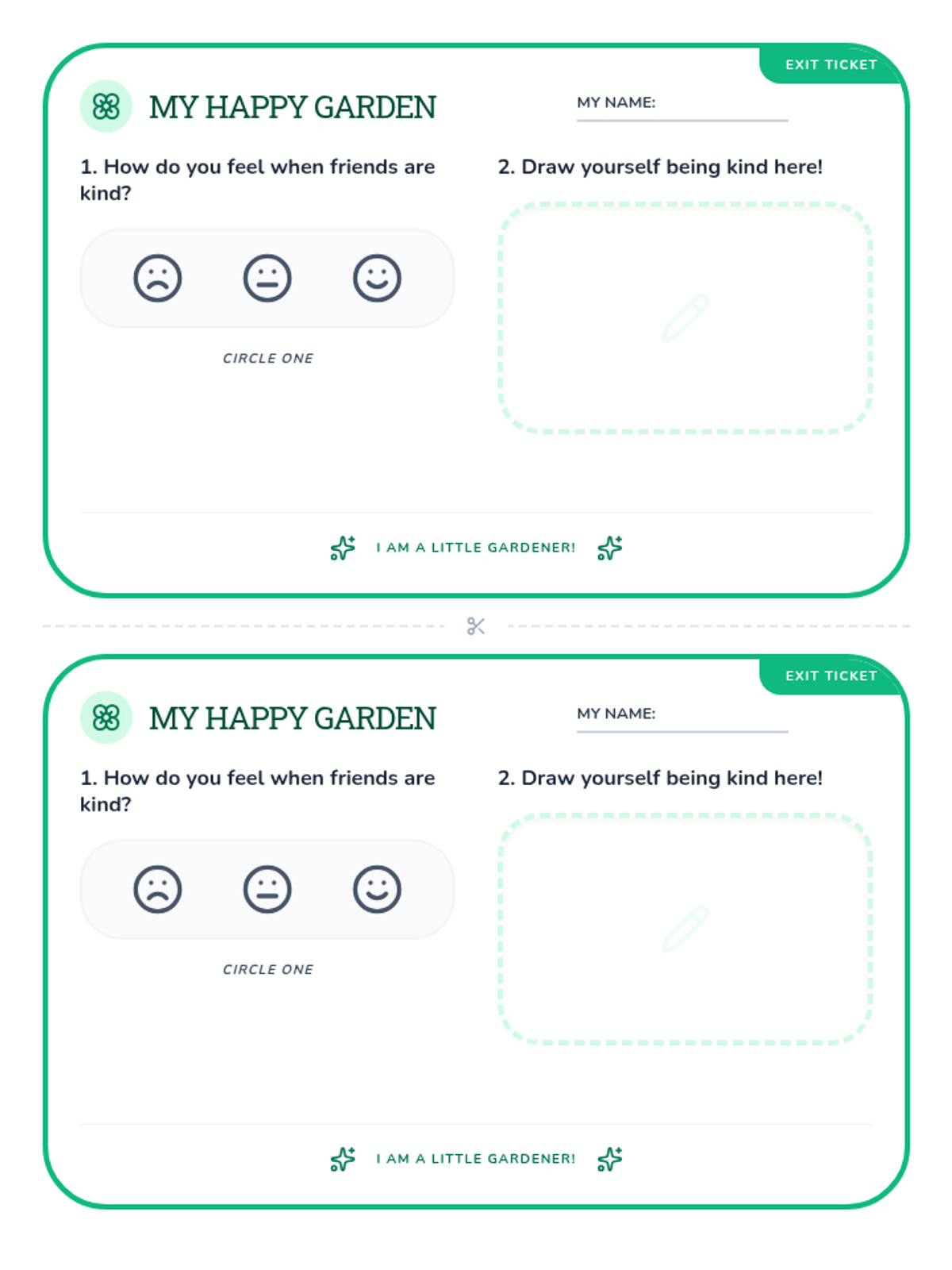
A drawing and choice-based exit ticket for K-1 students to reflect on kind feelings and actions. Adjusted for better contrast, clarified drawing prompt, and corrected page overflow.
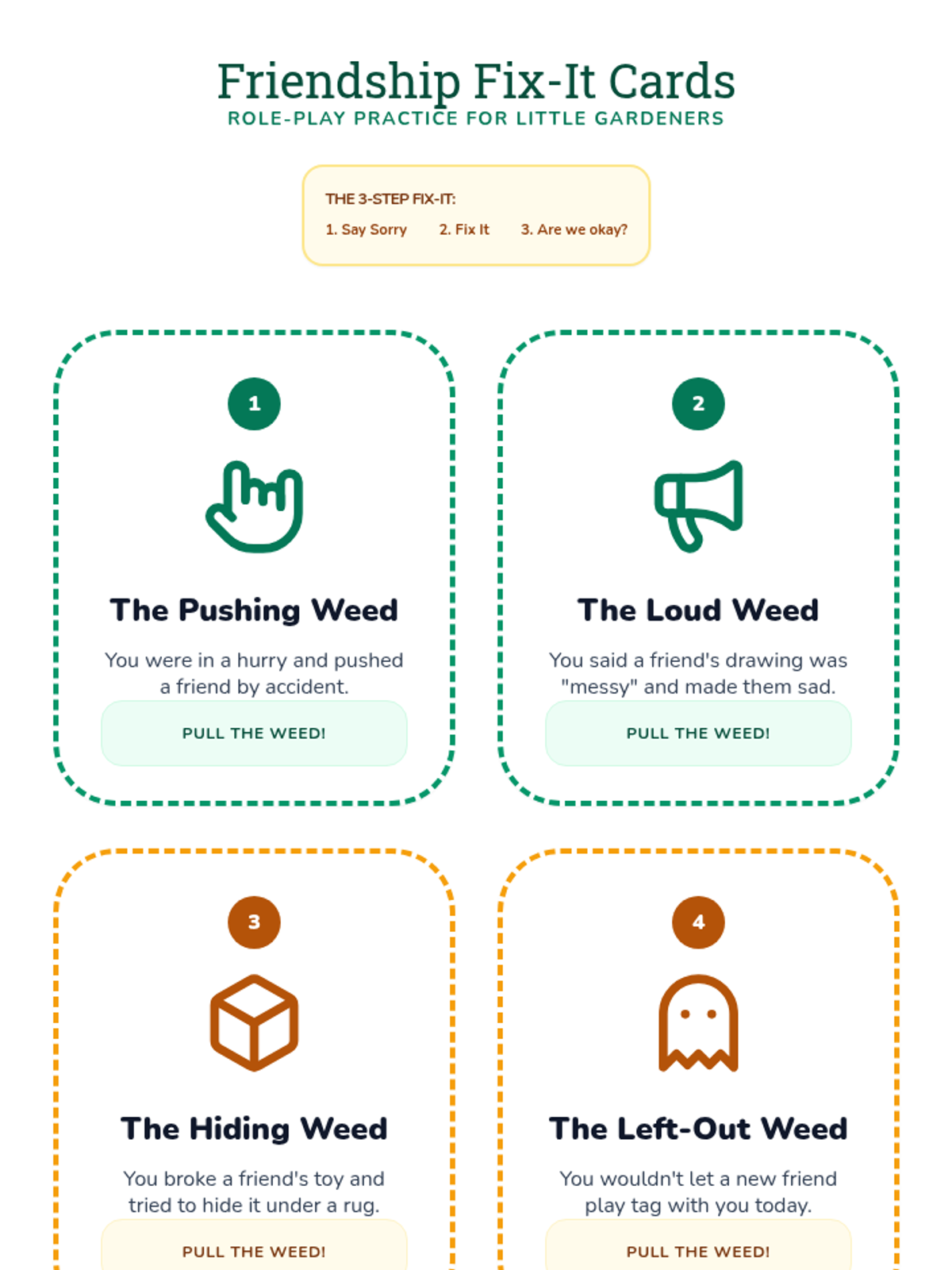
Simplified social scenarios for K-1 students to practice a 3-step apology (Sorry, Fix-It, Are we okay?). Includes visual icons for early readers.
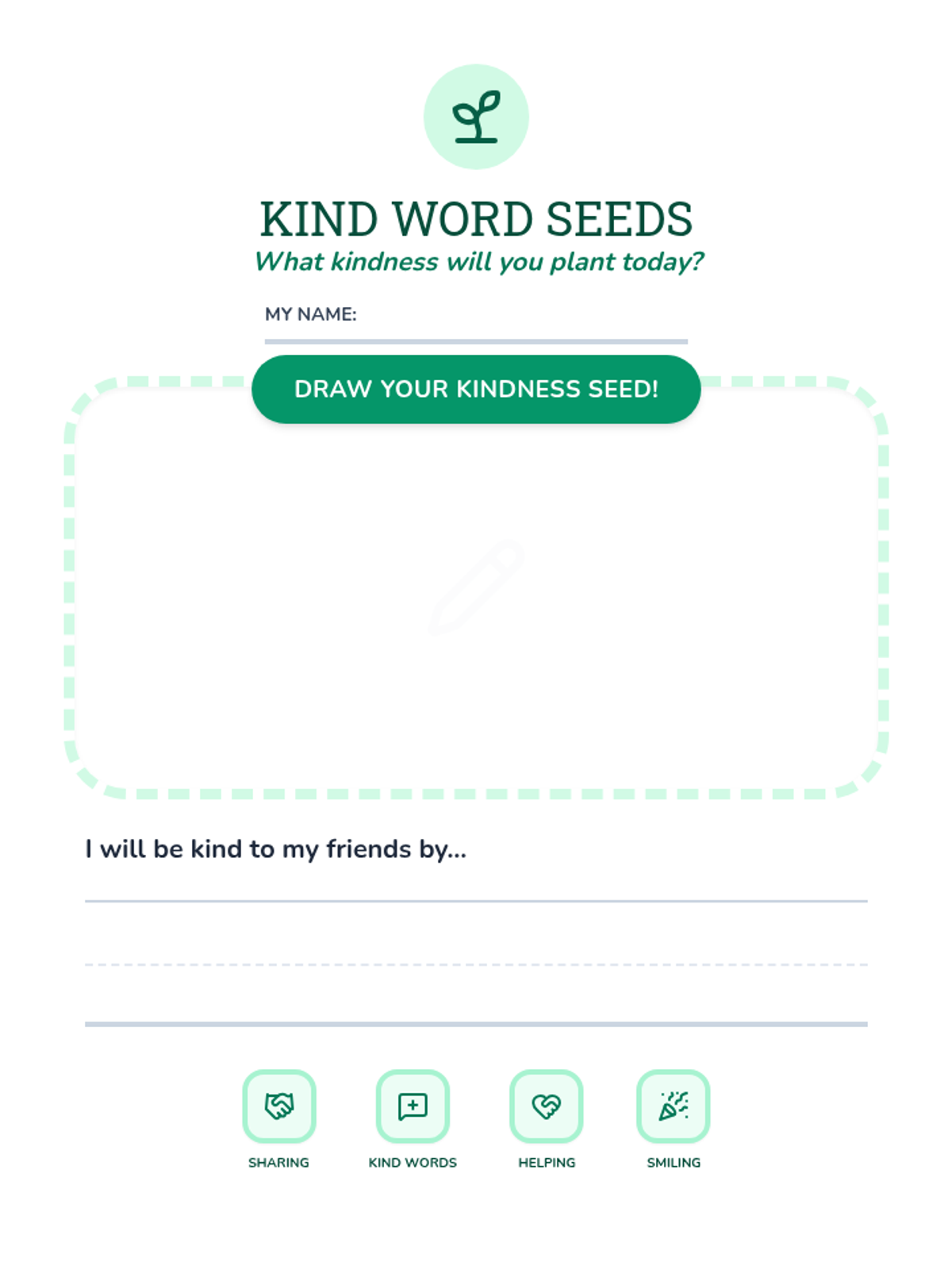
A drawing-based worksheet for K-1 students to identify a kind action they will take to grow their "Friendship Garden." Now includes primary handwriting lines and a white drawing area for clarity.
A bright, highly visual slide deck for K-1 students using the garden metaphor to teach kind words and a simple 3-step apology.
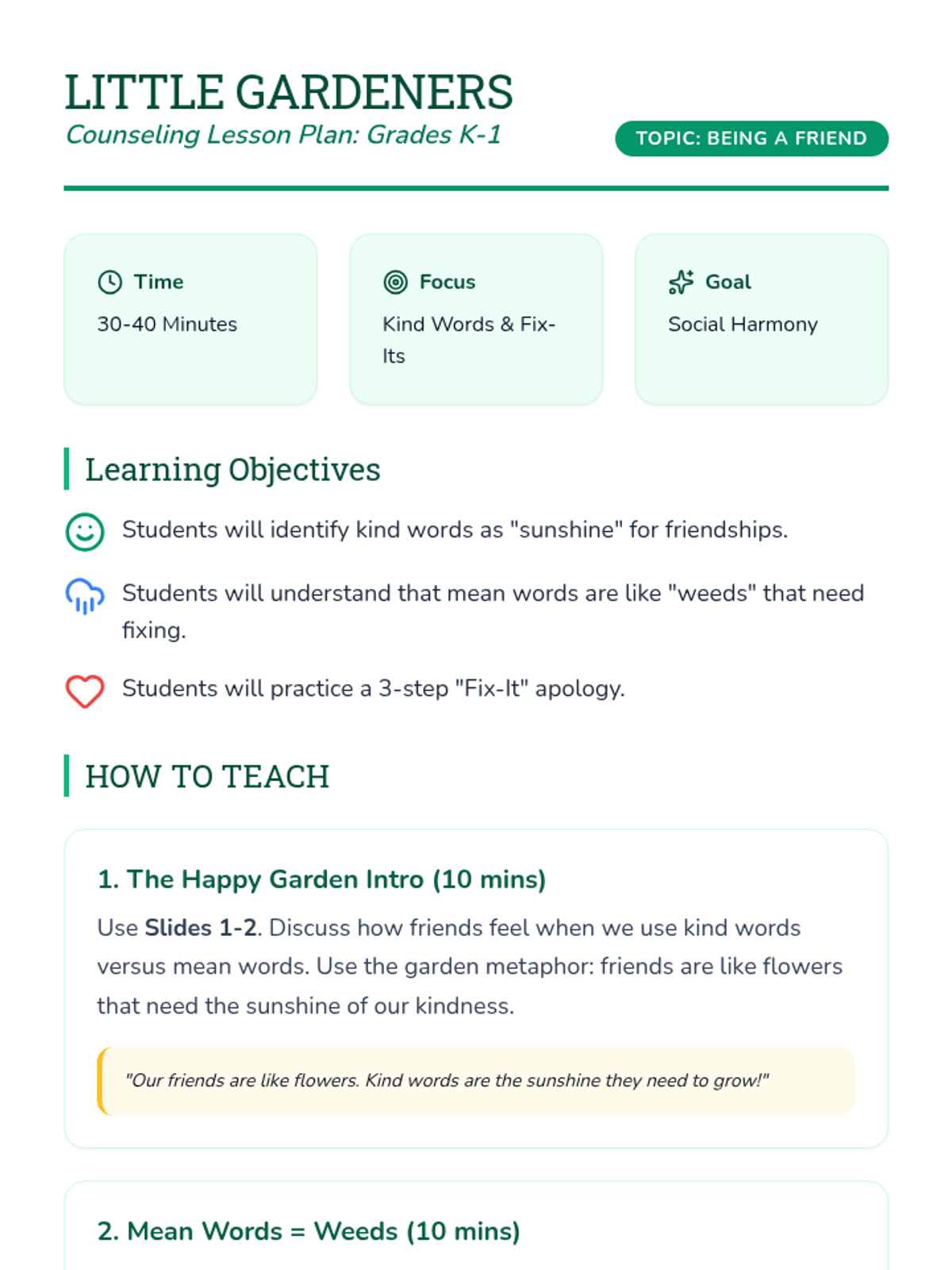
A simplified lesson plan for K-1 students focusing on kind words and a basic 3-step apology using the garden metaphor.
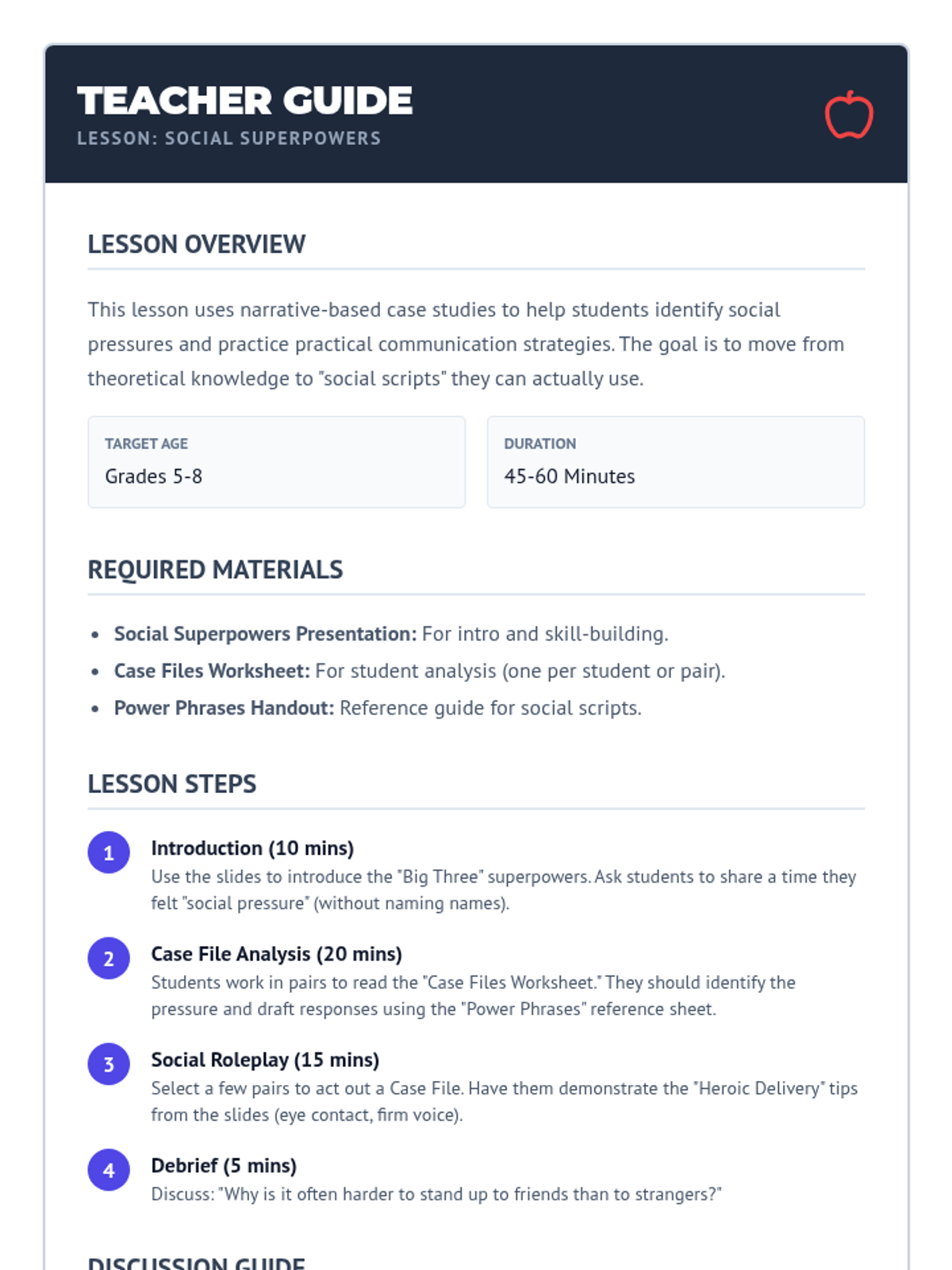
A comprehensive educator resource for the "Social Superpowers" lesson. It includes an instructional sequence, required materials list, timed lesson steps, key discussion prompts for each narrative case study, and differentiation strategies to support varied learner needs.
A high-impact visual presentation titled "Social Superpowers" designed to introduce students to key social skills. The slides define the three core concepts (standing up for oneself, resisting peer pressure, and conflict resolution), introduce the "Case File" investigation method, and provide tips on non-verbal communication and delivery.
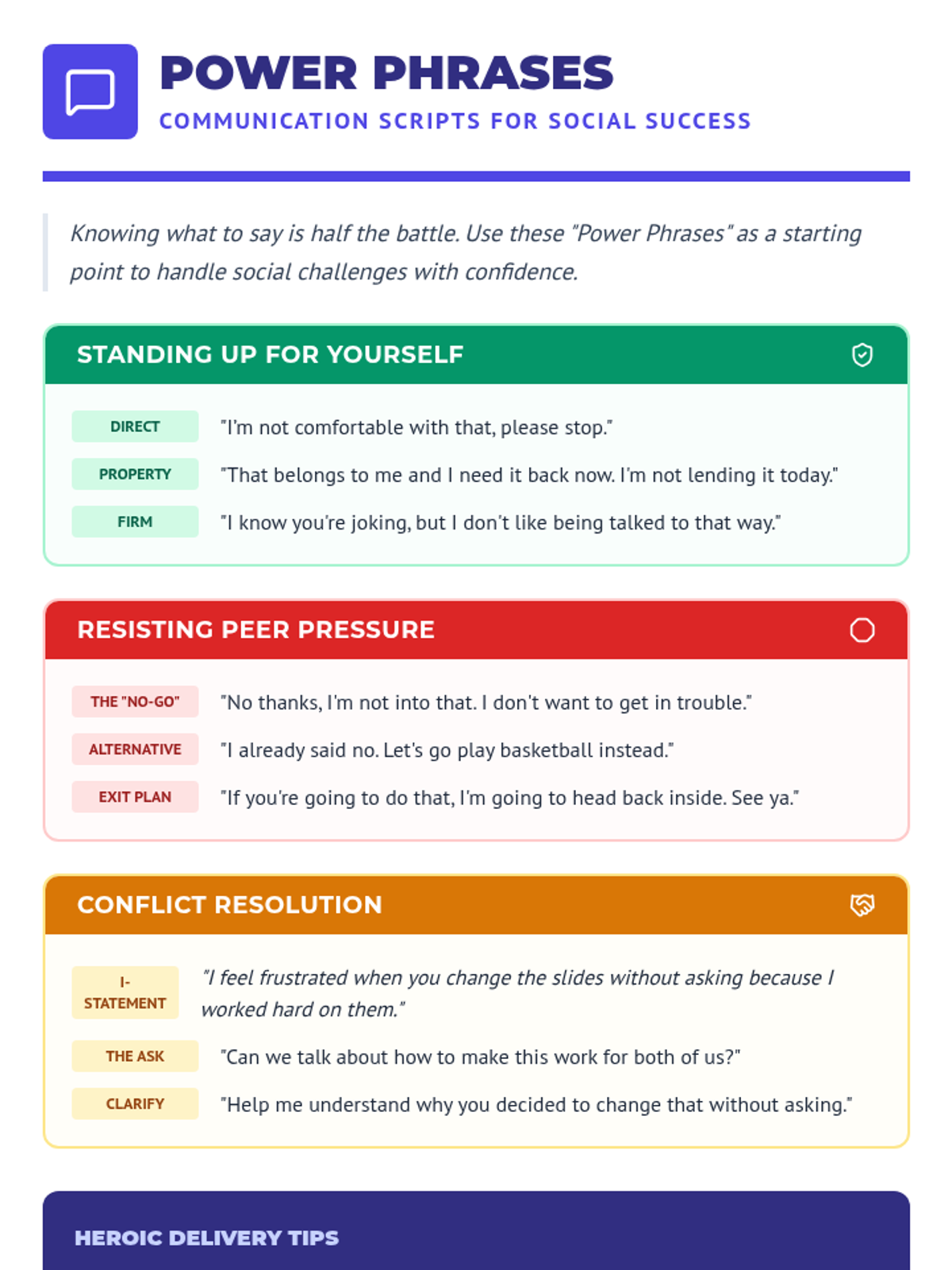
A handy reference sheet titled "Power Phrases" that provides students with specific communication scripts for three key areas: standing up for oneself, resisting peer pressure, and resolving conflict. The guide uses color-coded sections and practical examples to build social confidence.
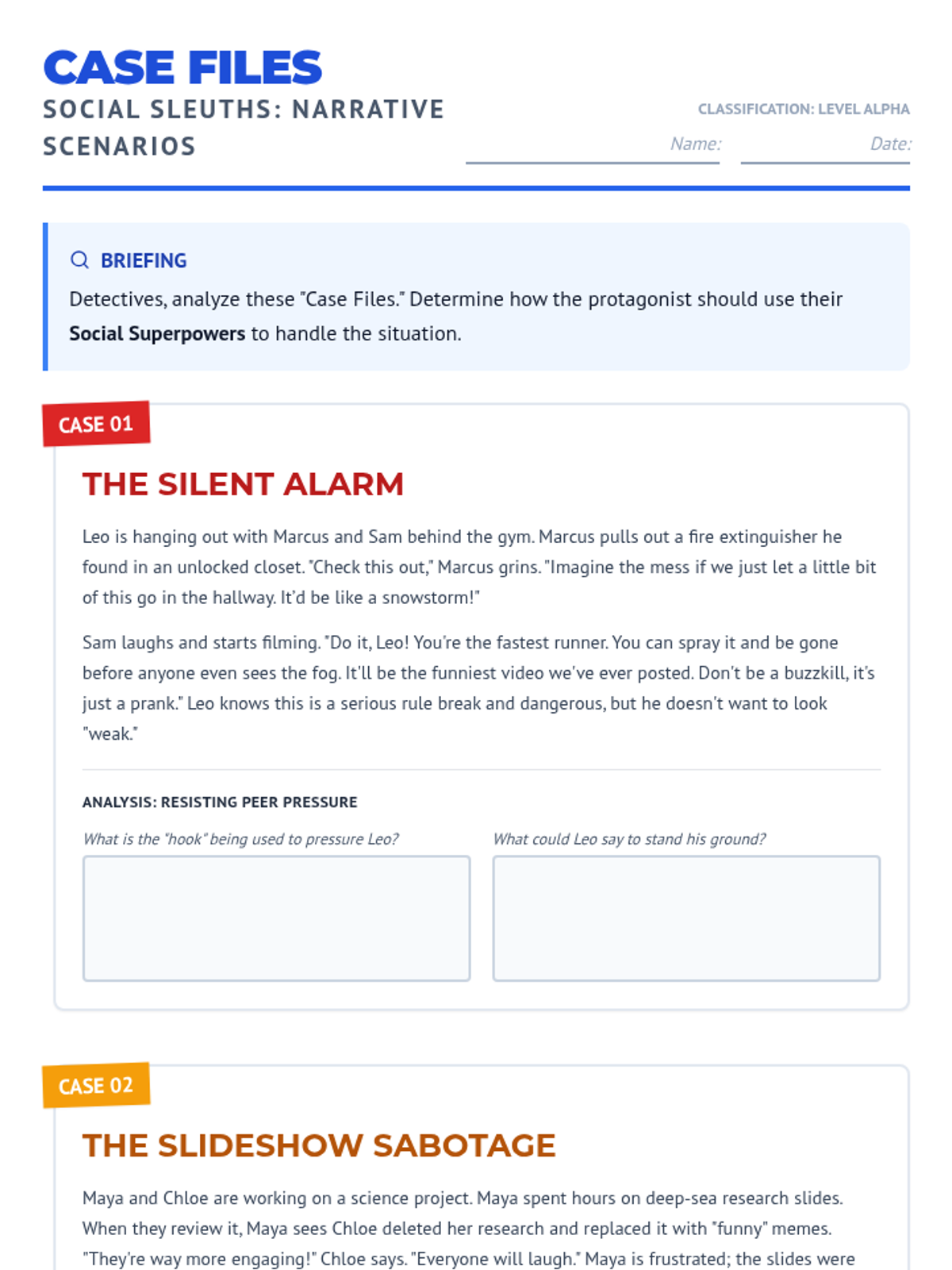
A collection of three narrative-driven social scenarios titled "Case Files" that challenge students to apply skills in peer pressure resistance, conflict resolution, and self-advocacy. Each case includes a detailed story followed by analytical questions for student reflection.