Introductory slides for Lesson 4, focusing on the financial gap, budget-hacking strategies, and alternative funding sources to avoid high-interest debt.
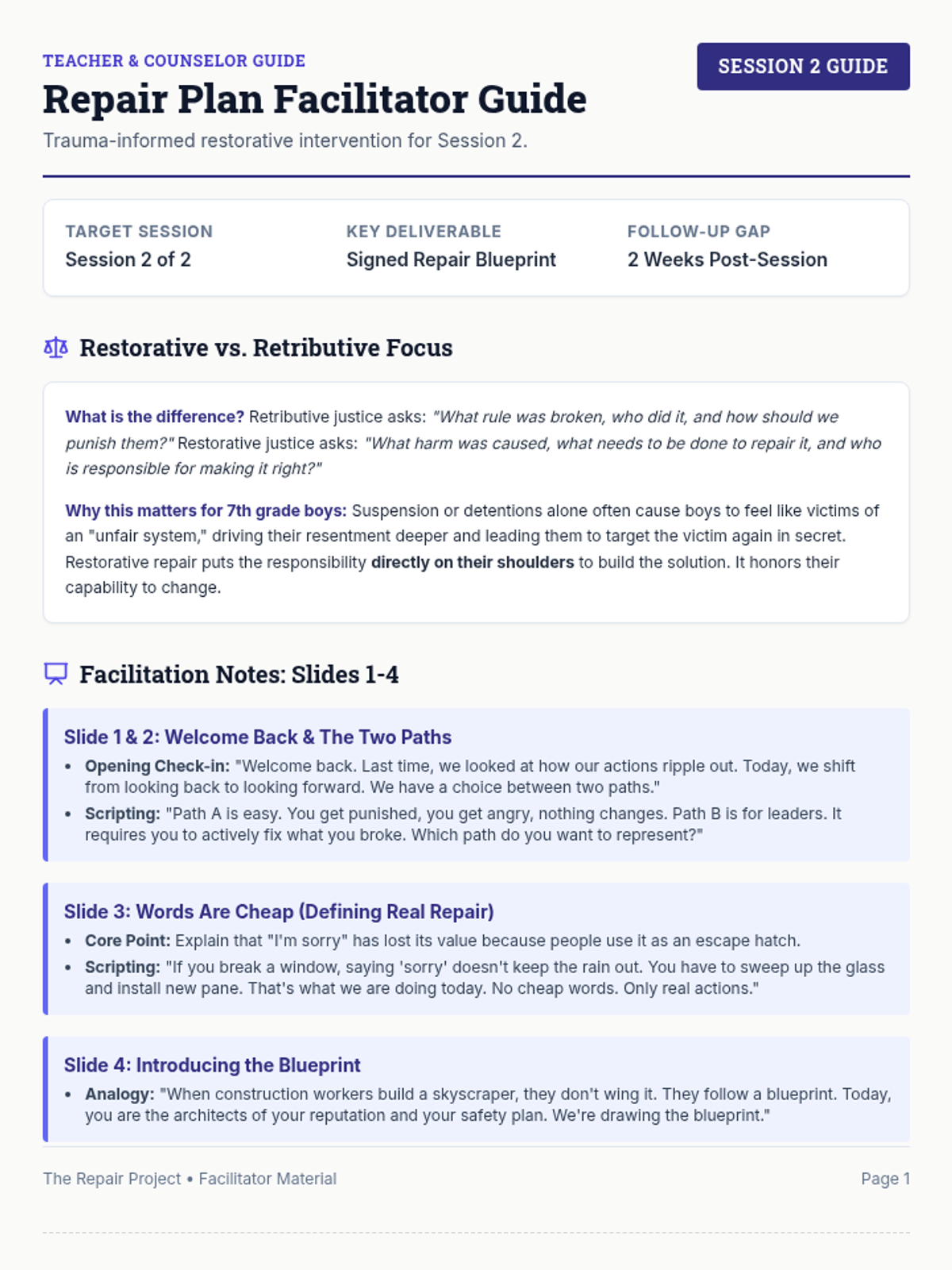
Facilitator guide for running Session 2 of the Repair Project restorative sequence. Includes instructions on explaining restorative principles, guiding students to draft behavioral safety commitments, and setting up the 2-week follow-up cycle.
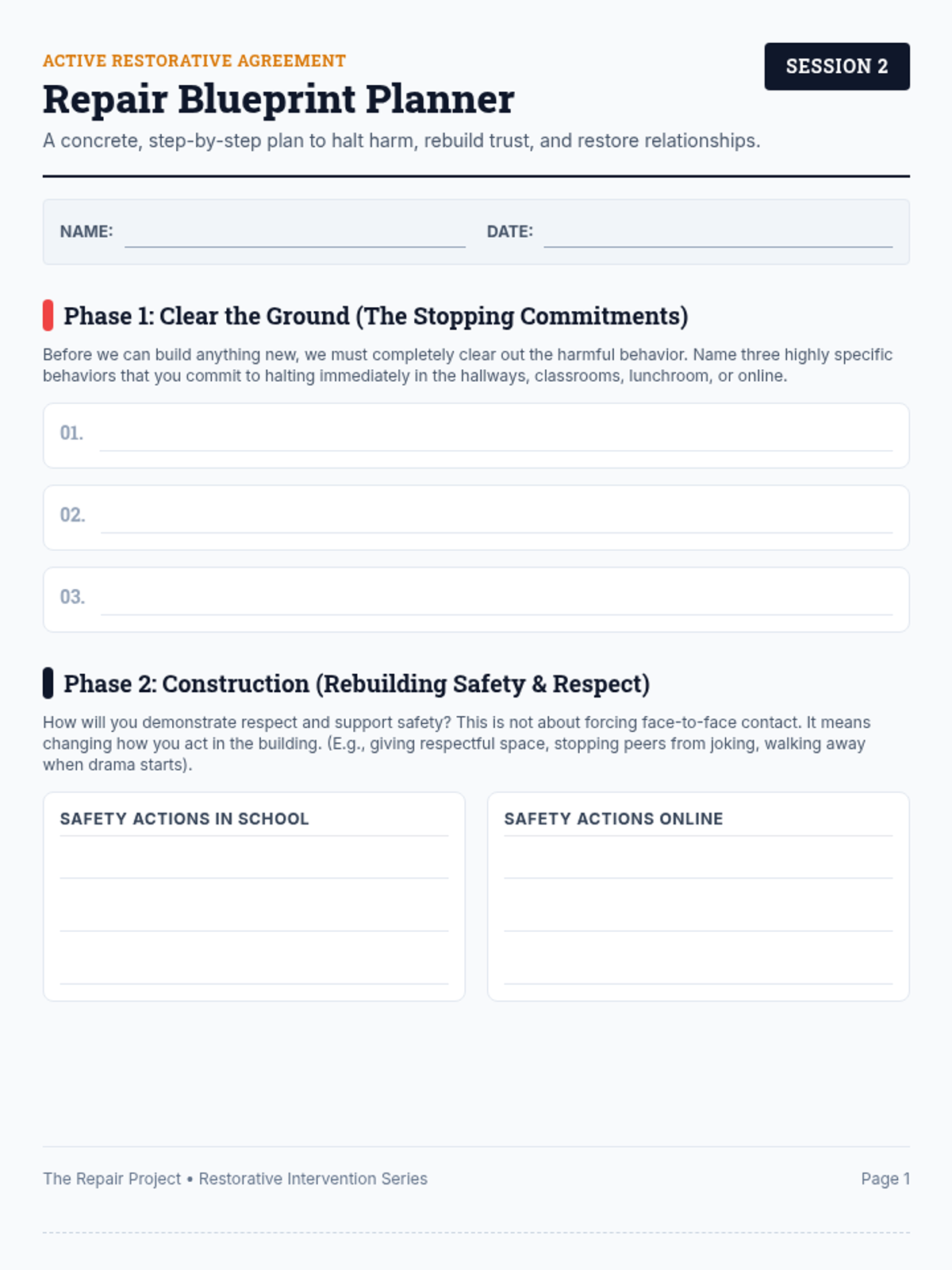
Structured workbook for Session 2 of the Repair Project restorative sequence. Student-facing with light, clean lined text input areas. Provides sections for defining behavioral stopping points, setting concrete hallway/classroom safety plans, noting personal coping strategies, and setting up an accountability contract.
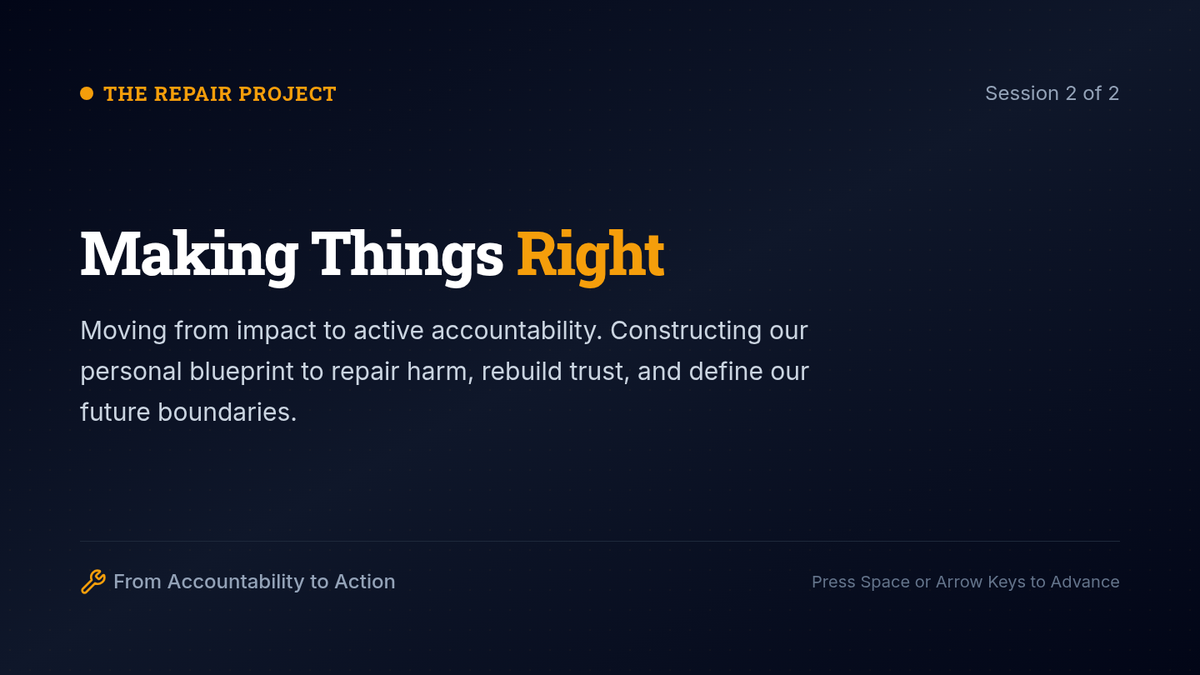
Visual presentation slides for Session 2 of the Repair Project restorative sequence. Guides students through understanding the differences between retributive and restorative justice, defining what real repair is, and introducing the components of their individual Repair Blueprint plans.
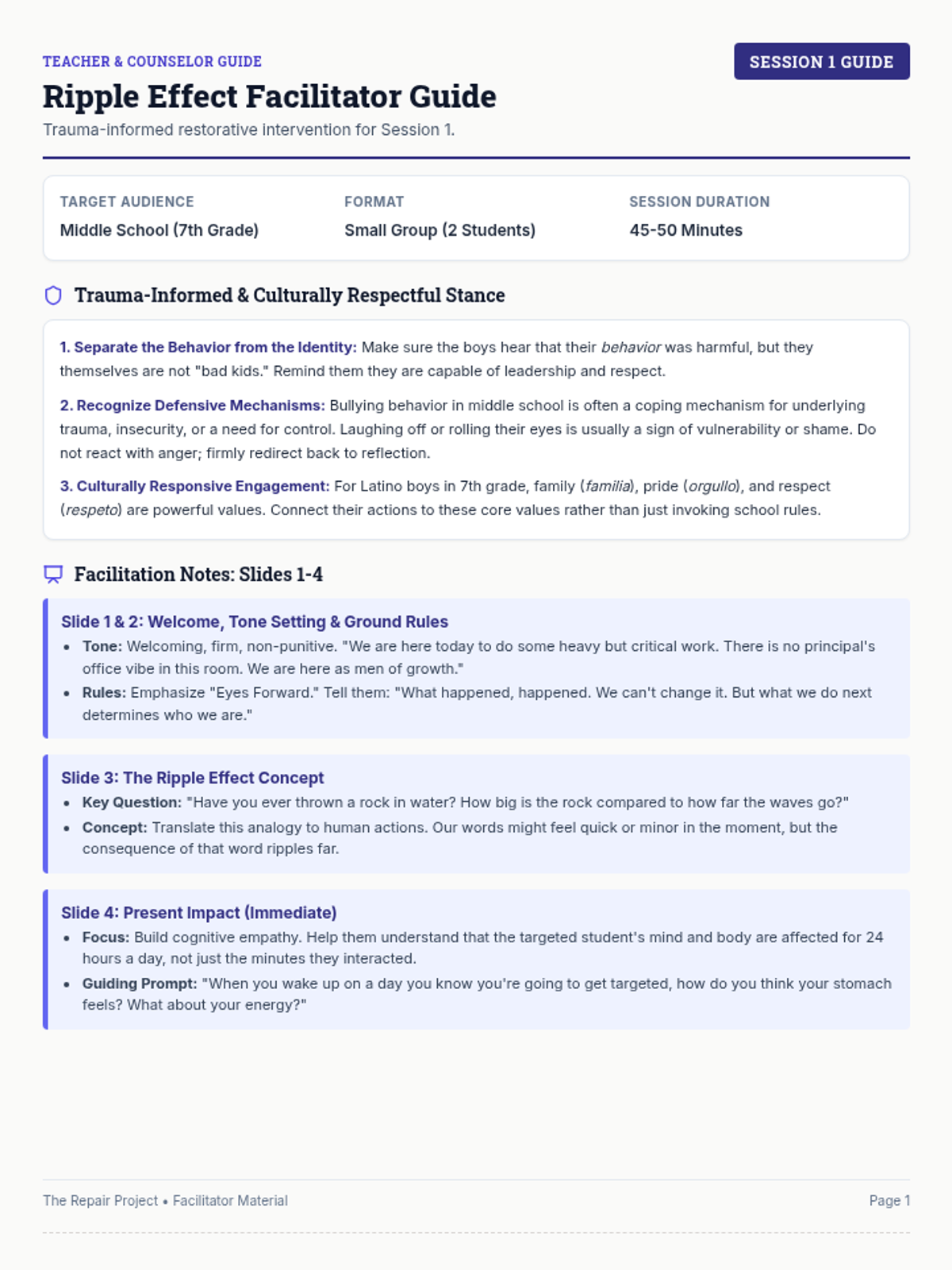
Detailed facilitator guide for running Session 1 of the Repair Project in a trauma-informed and culturally respectful manner. Includes sliding-scale discussion guides, counselor scripts, and troubleshooting tips for common middle-school defensive behaviors.
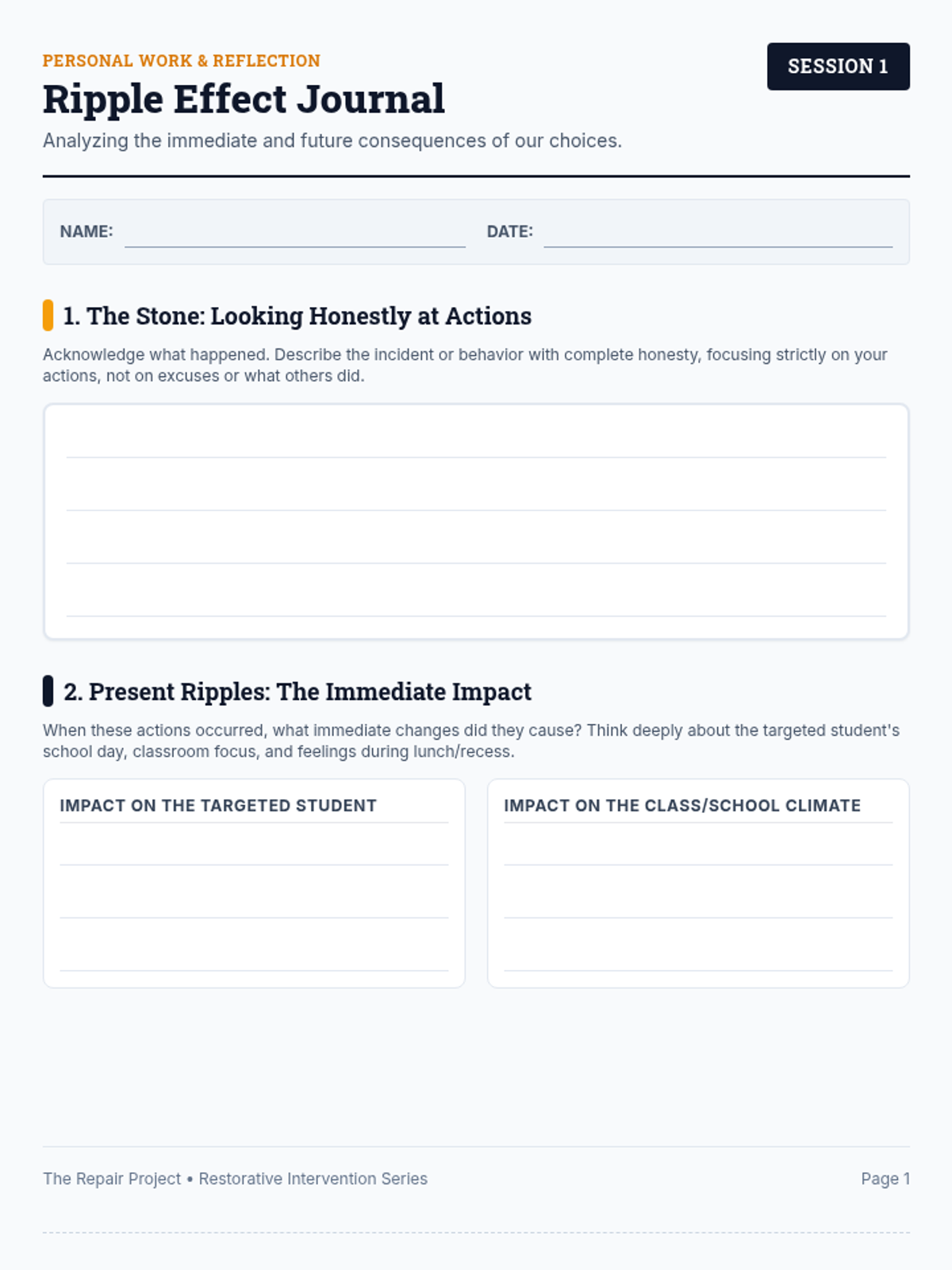
Reflective workbook for Lesson 1 (Session 1). Designed for student completion with lined blank answer spaces on light backgrounds. Helps students analyze immediate and future impacts, identify personal values, and prepare for restorative actions.
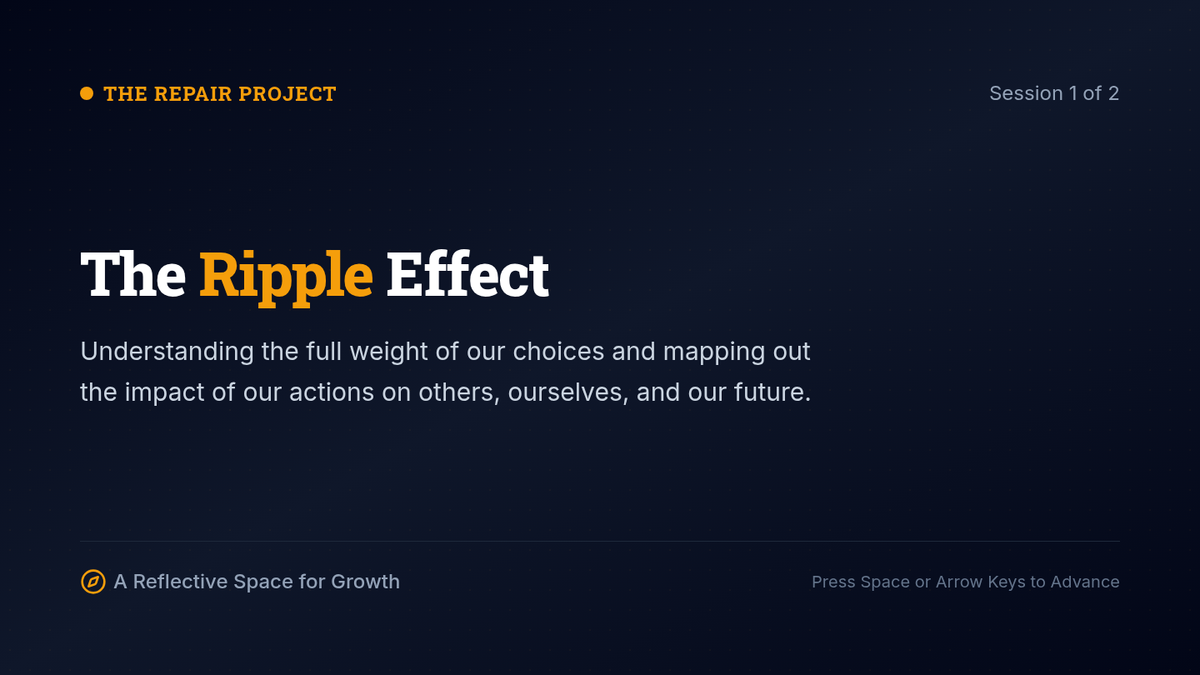
Visual slides for Session 1 of the Repair Project restorative sequence. Explores the ripple effect concept, outlining the immediate (present) and long-term (future) impacts of bullying behaviors on the targeted student, families, school climate, and the students themselves.
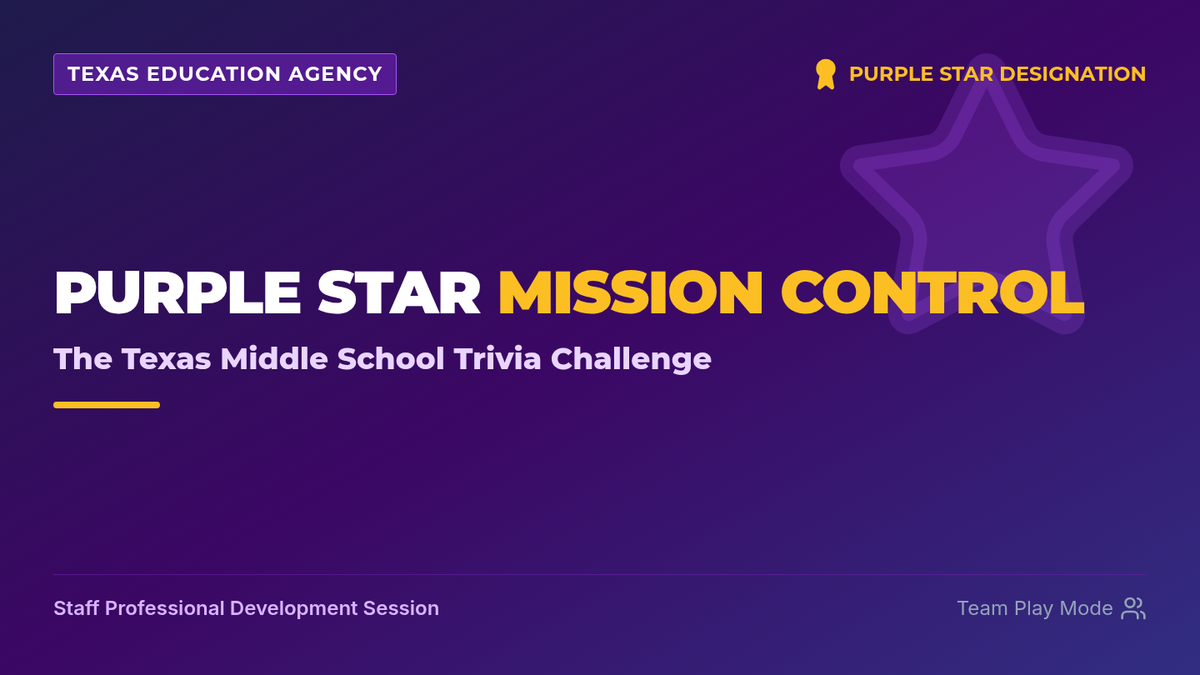
An interactive 15-slide presentation designed for Texas middle school educators, covering the 4 core TEA requirements, military student statistics, and Liaison duties with a 24px minimum font limit.
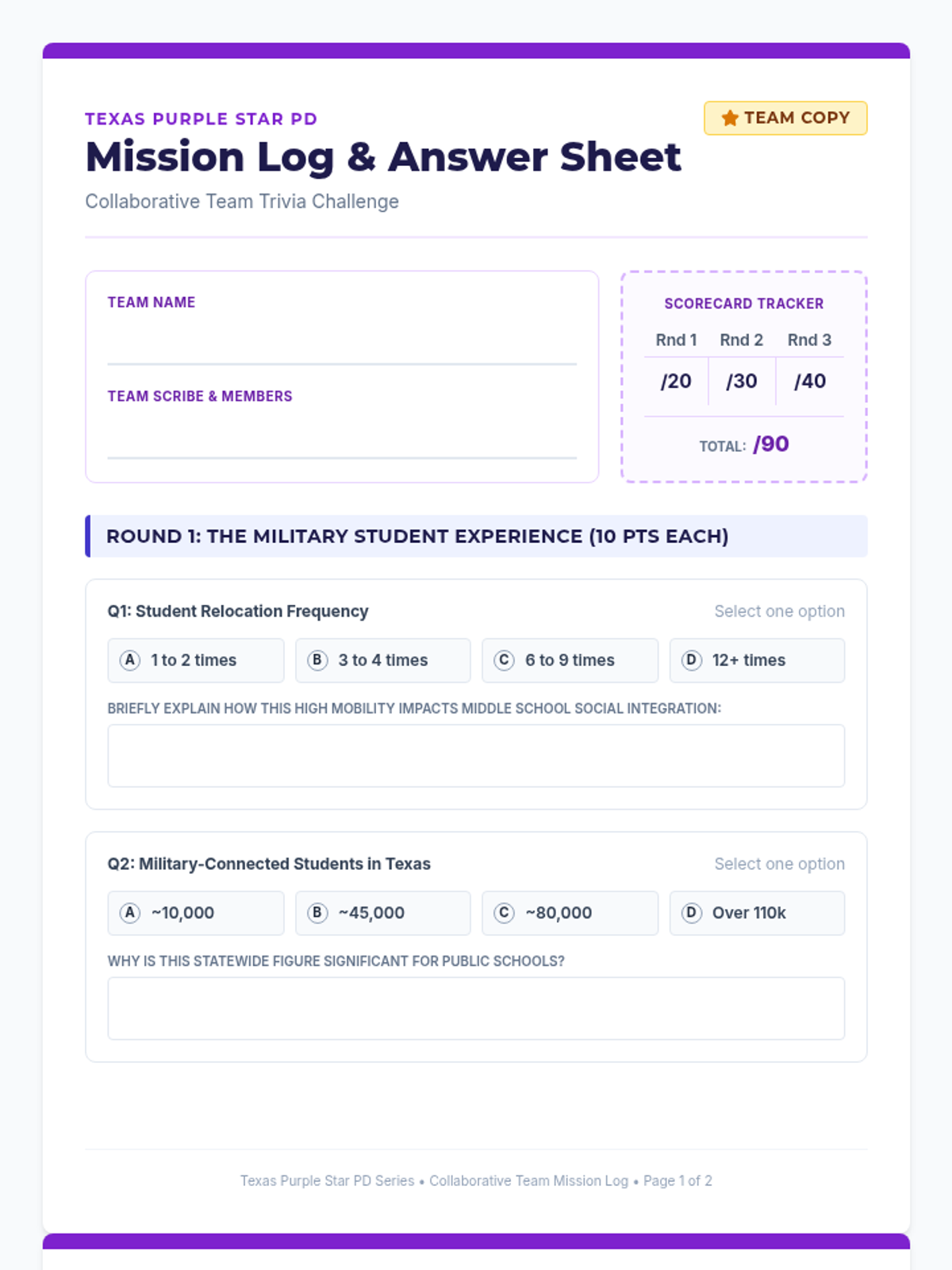
A printable team answer sheet and score tracker for educators participating in the Texas Purple Star PD trivia challenge, featuring reflective response blocks with light backgrounds.
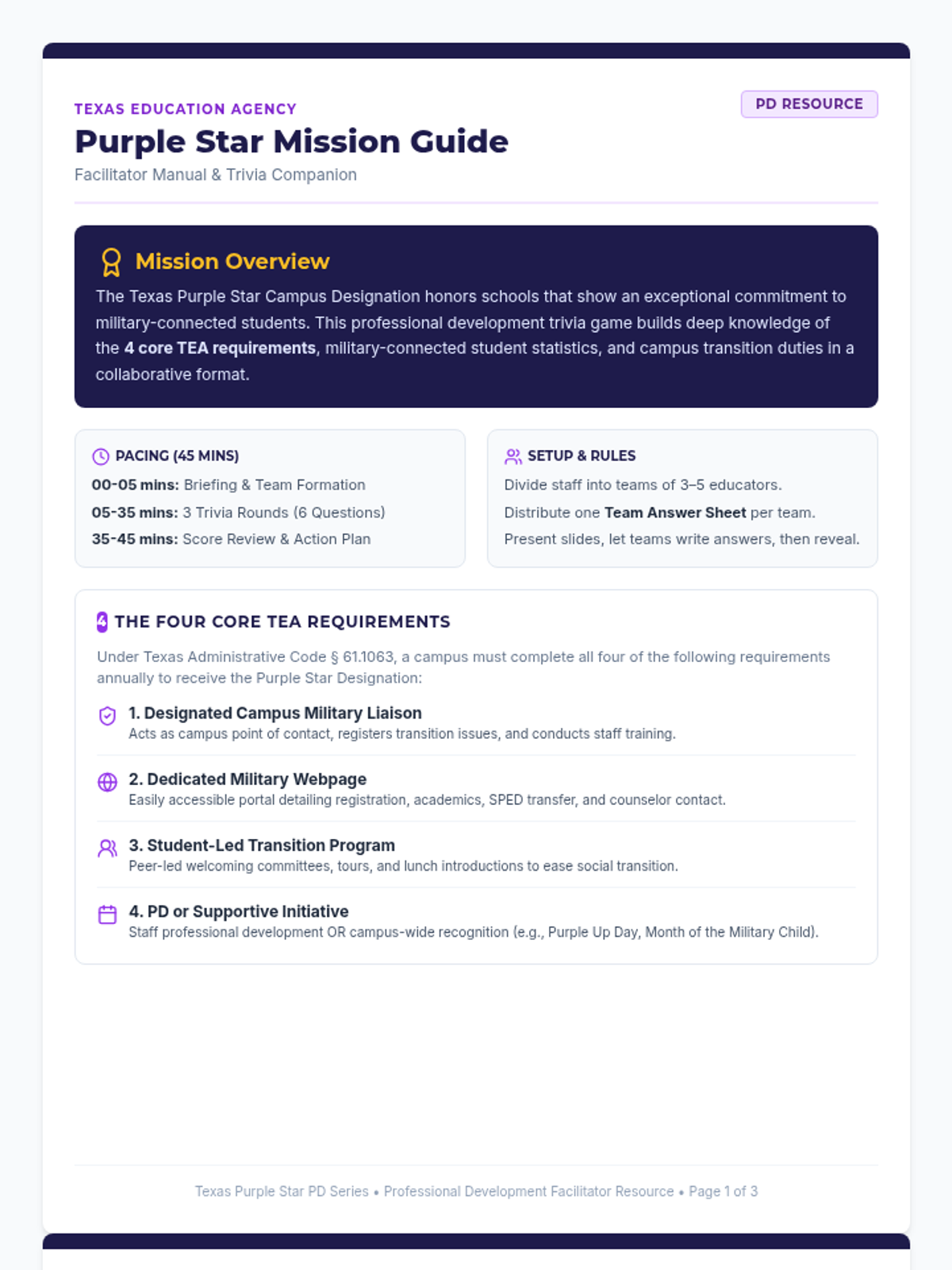
A comprehensive professional development facilitator guide detailing the Texas Education Agency (TEA) Purple Star Campus Designation requirements, trivia questions, and answers.
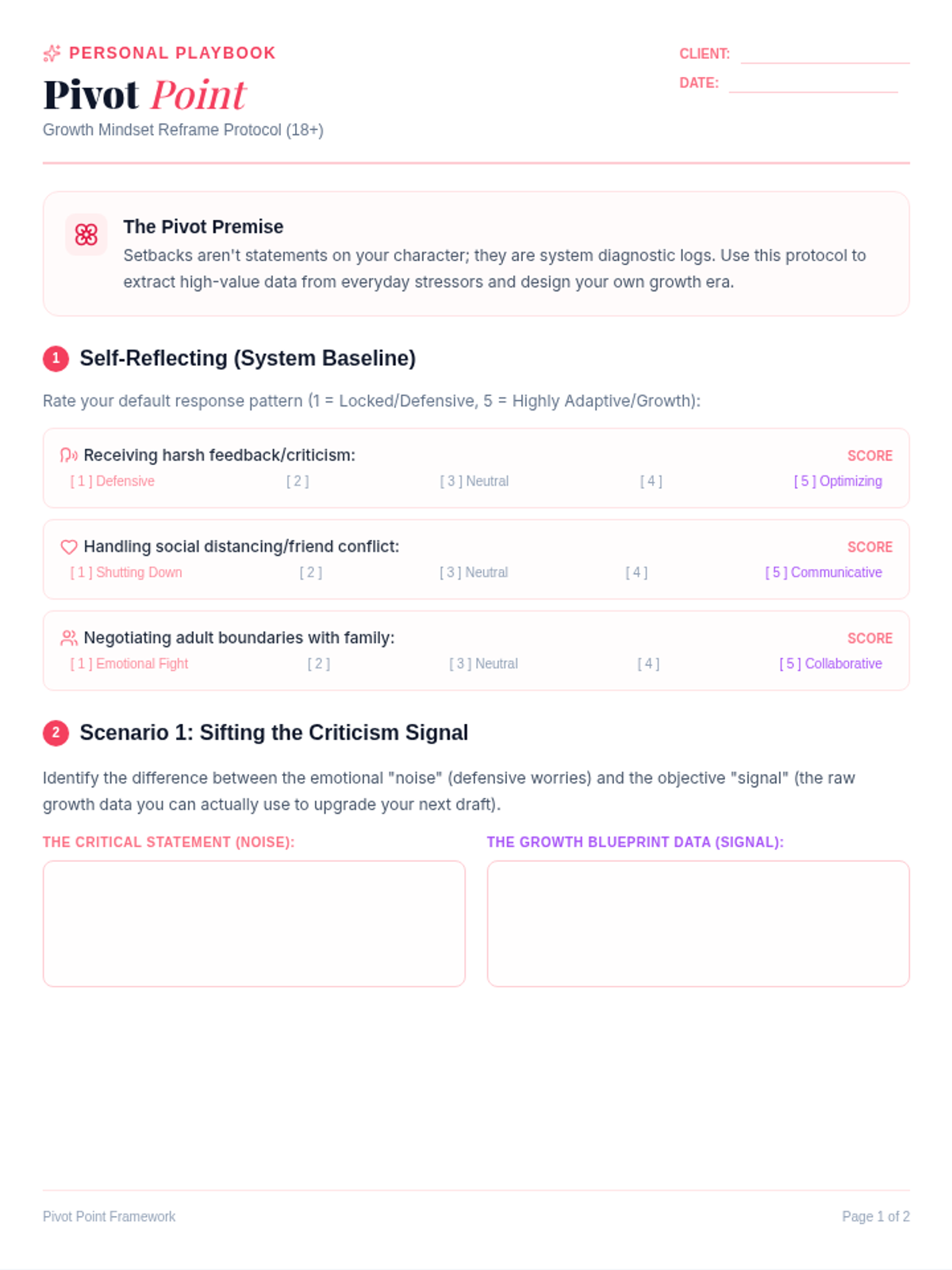
An engaging, printable coaching worksheet designed to help young adults apply the 3-Step Pivot Protocol to real-life triggers across feedback, peer conflict, and family boundaries.
A beautiful pink-and-lavender aesthetic slide deck tailored for young women/telehealth clients, featuring elegant layouts and structured role-play scenarios.
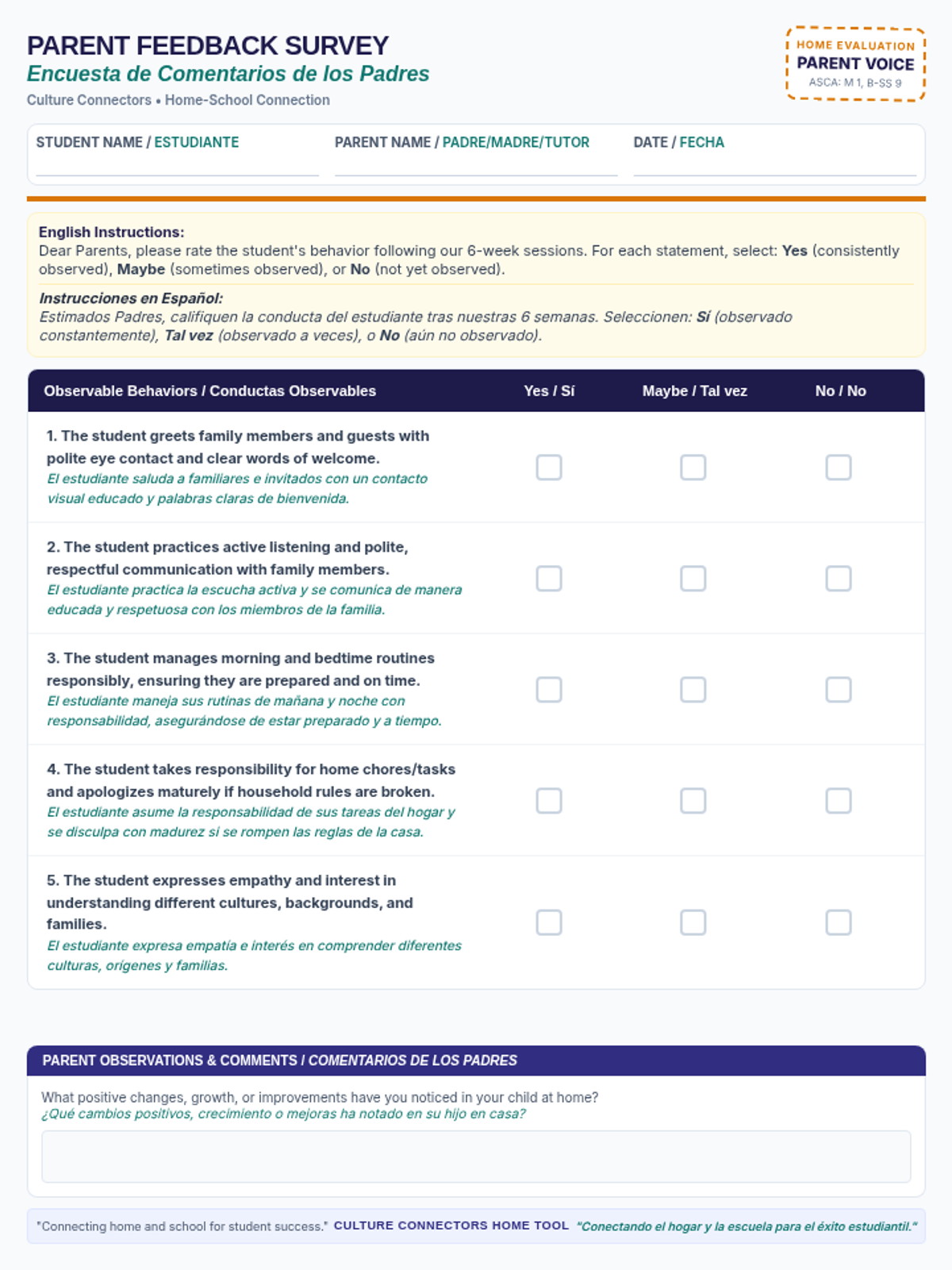
Bilingual parent feedback Likert scale survey featuring 5 statements assessing student physical space, active listening, punctuality, responsibility, and cultural empathy.
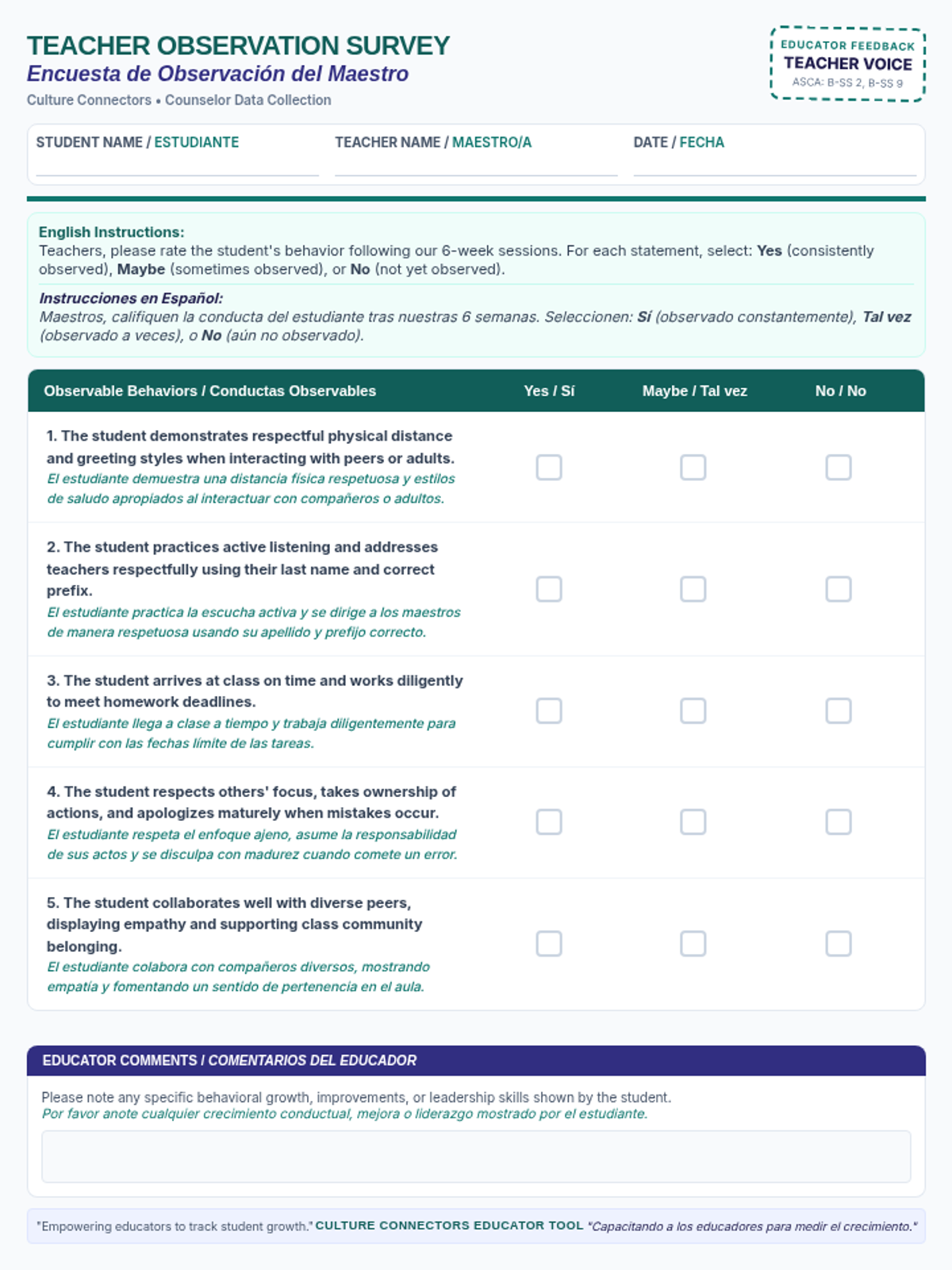
Bilingual teacher observation Likert scale survey featuring 5 statements assessing student physical space, active listening, punctuality, responsibility, and cultural empathy.
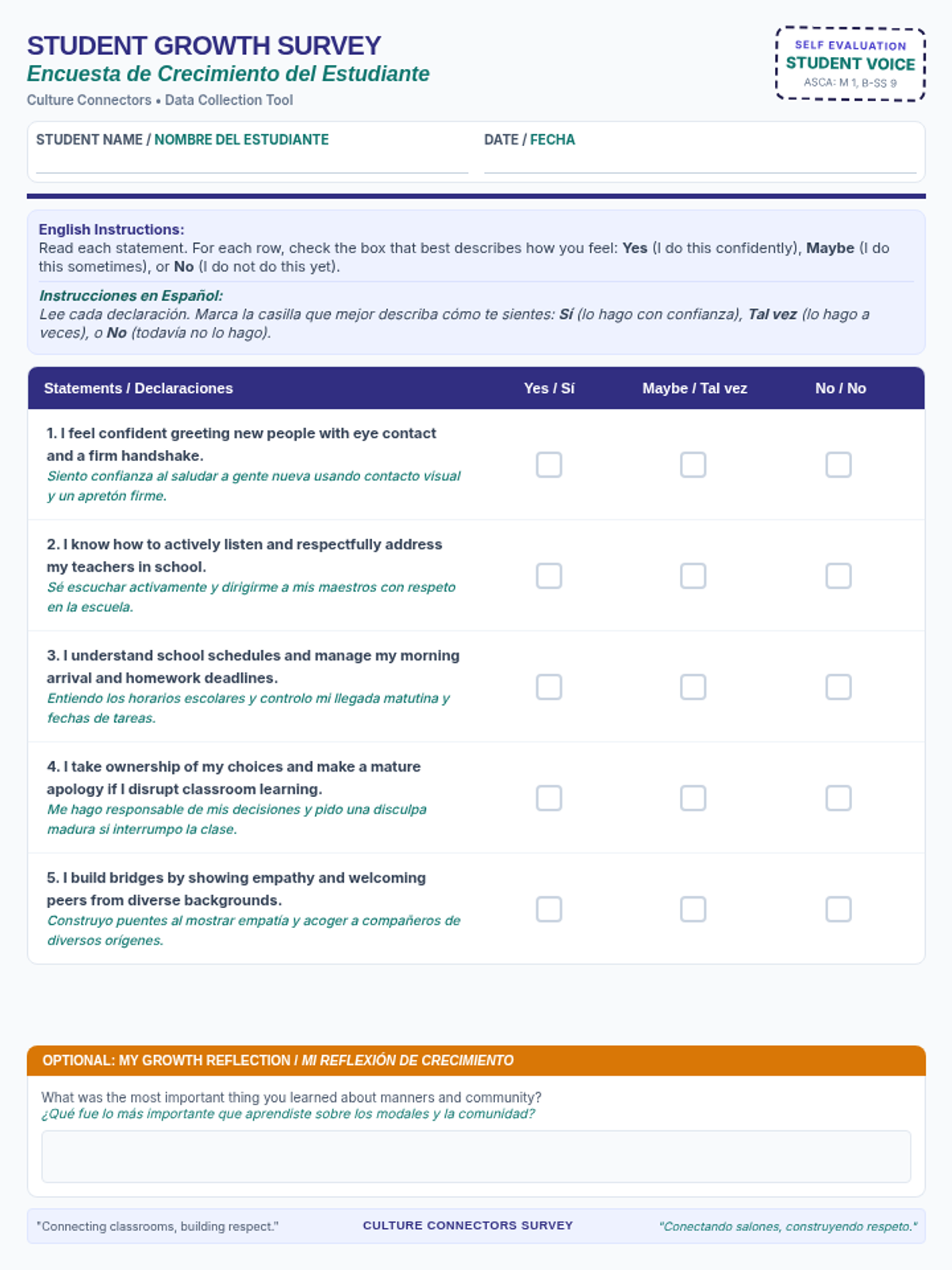
Student self-evaluation Likert scale survey featuring 5 bilingual English/Spanish statements on greetings, active listening, time management, behavior ownership, and empathy.
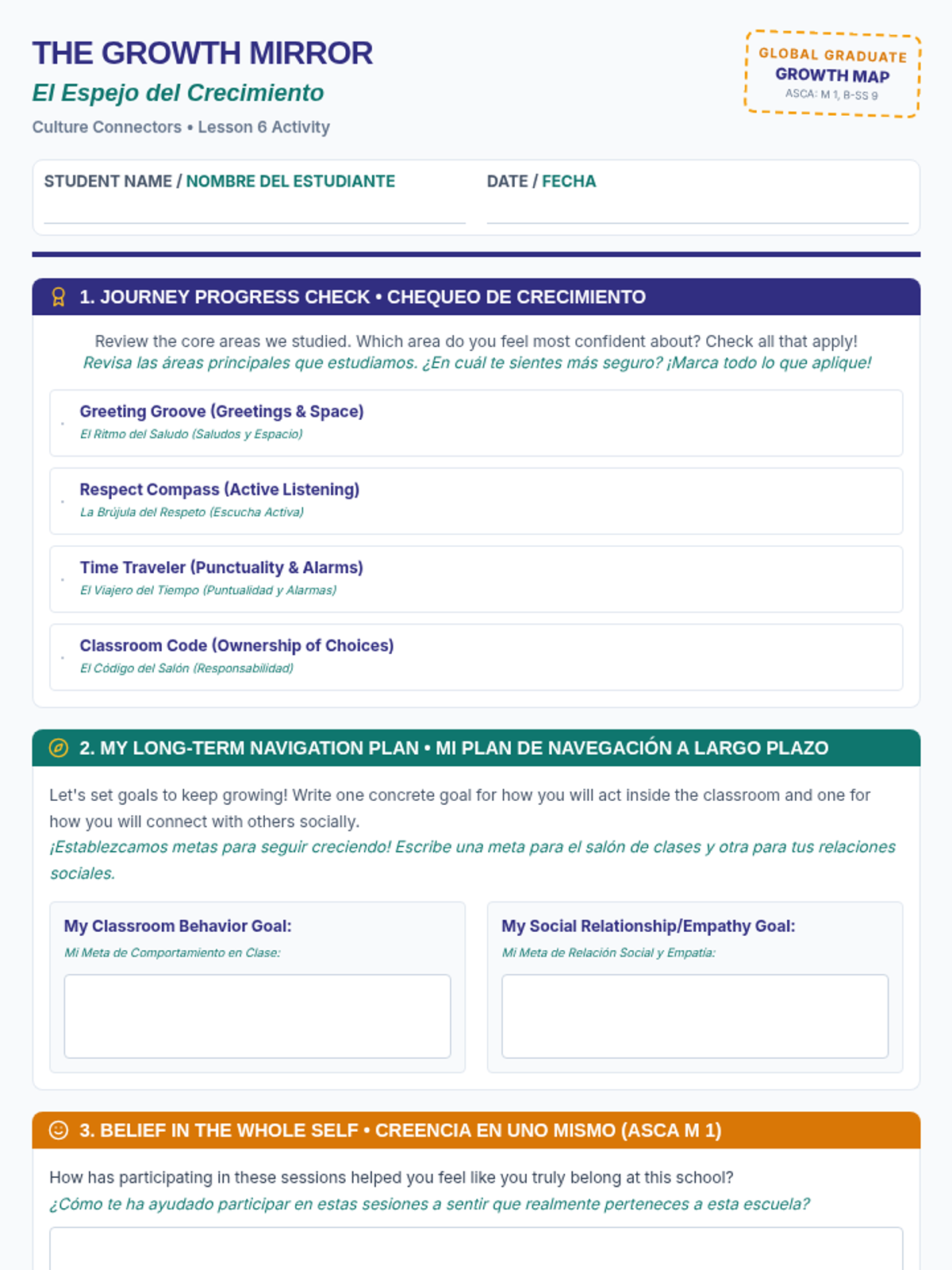
A student goal-setting and reflection activity sheet for Lesson 6 (The Growth Mirror), evaluating student confidence across previous lessons and planning future behaviors.
A celebratory bilingual slide presentation for Lesson 6 (The Growth Mirror), reviewing previous lessons, focusing on whole-self development, and explaining the survey process.
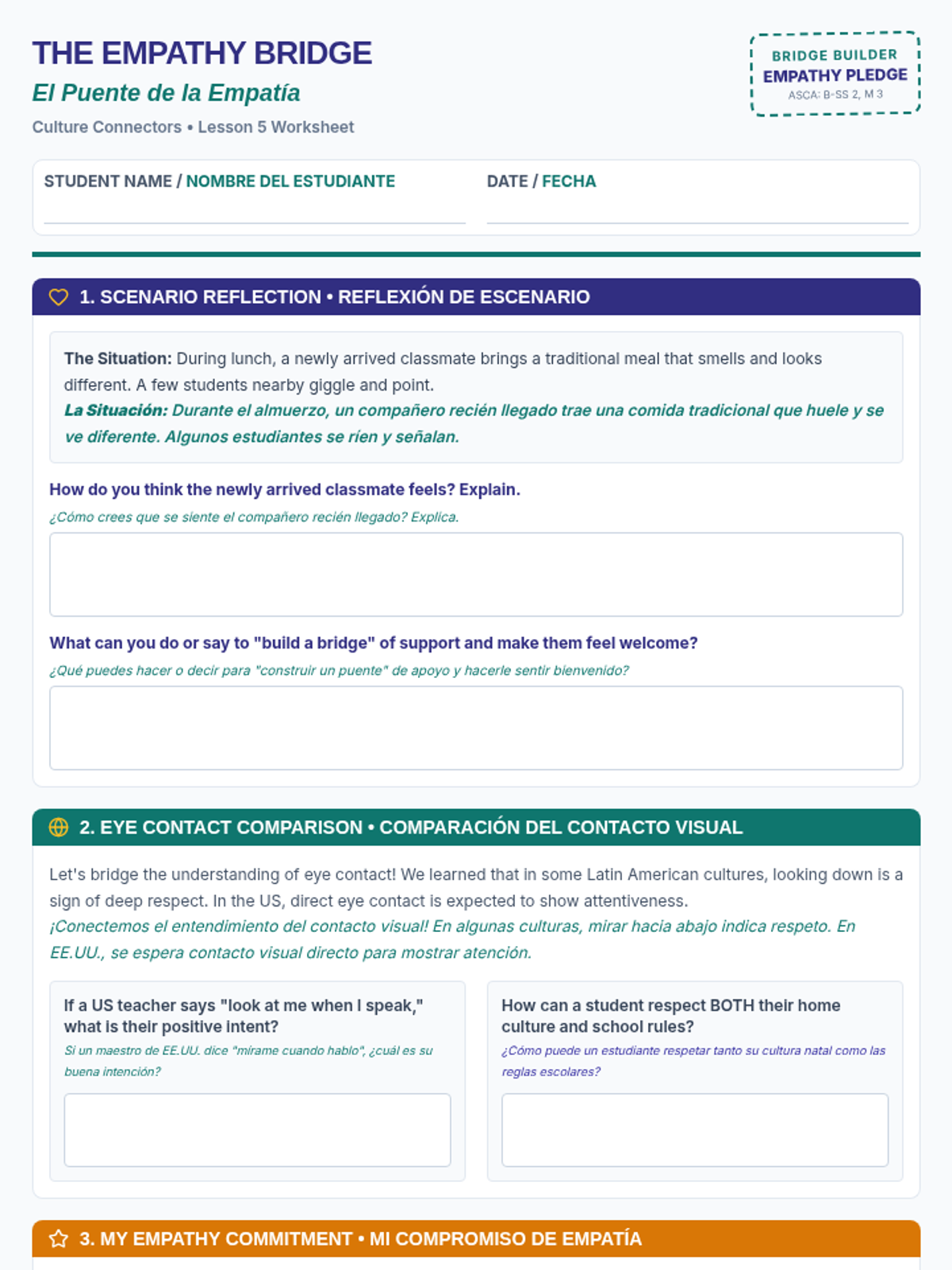
A bilingual student worksheet for Lesson 5 (The Empathy Bridge), offering perspective-taking reflections and comparative analysis of cross-cultural communication norms.
A comprehensive bilingual presentation for Lesson 5 (The Empathy Bridge), focusing on perspective-taking, resolving cultural misunderstandings, and celebrating student diversity.
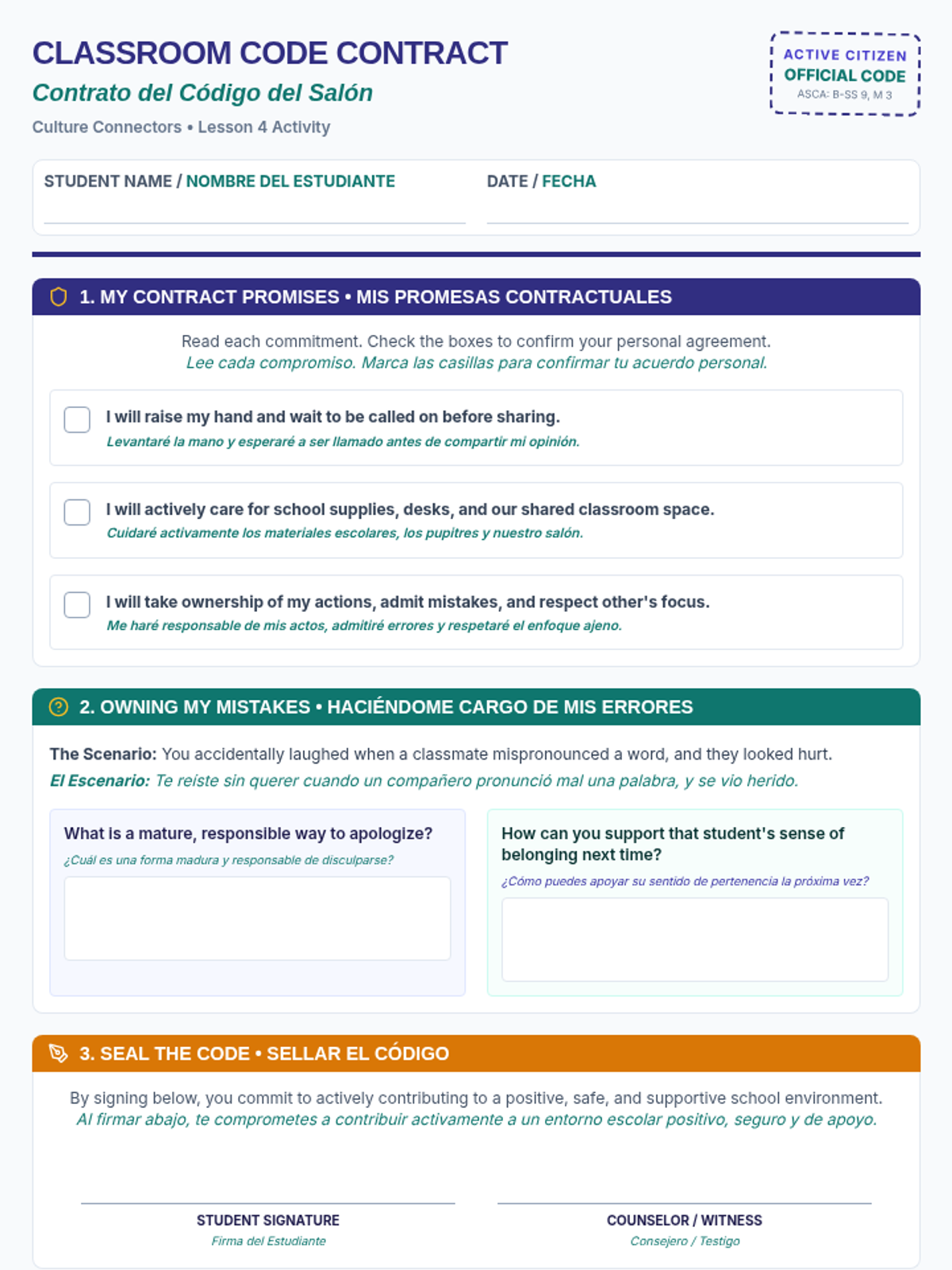
Bilingual student contract for Lesson 4 (The Classroom Code) with uniform checklist commitments, reflection on mistake ownership, and a formal bilingual signature block.
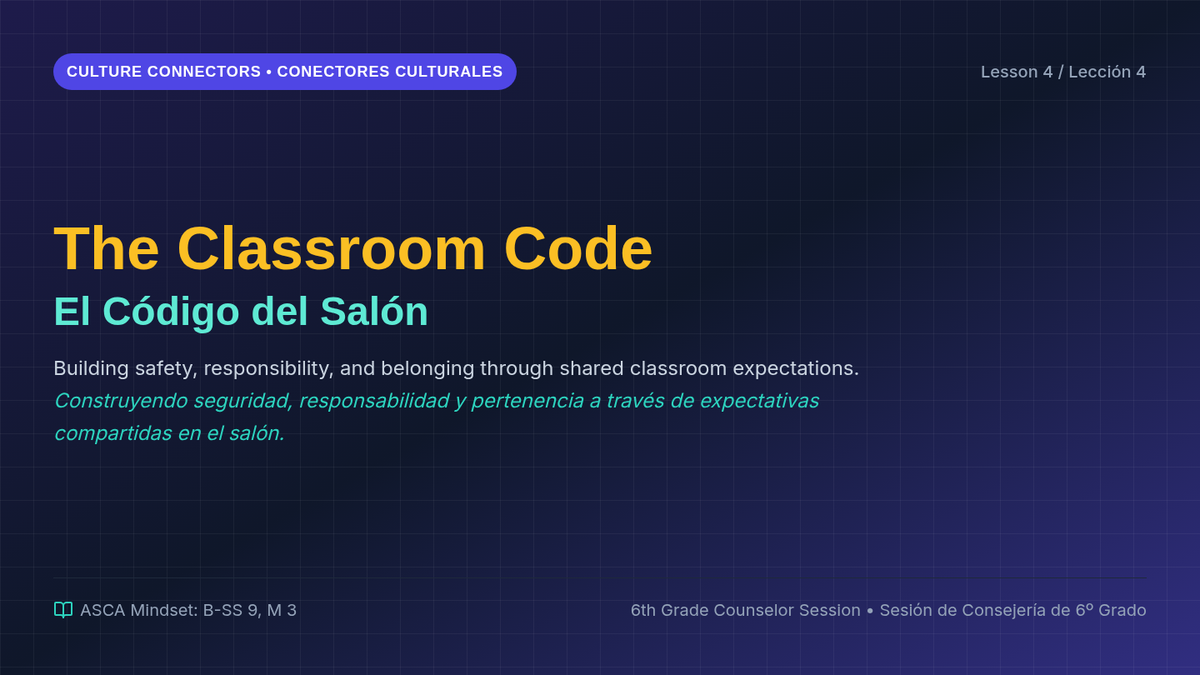
Bilingual slides for Lesson 4 (The Classroom Code) presenting expectations for raise-hand participation, classroom community ownership, and mistake accountability.
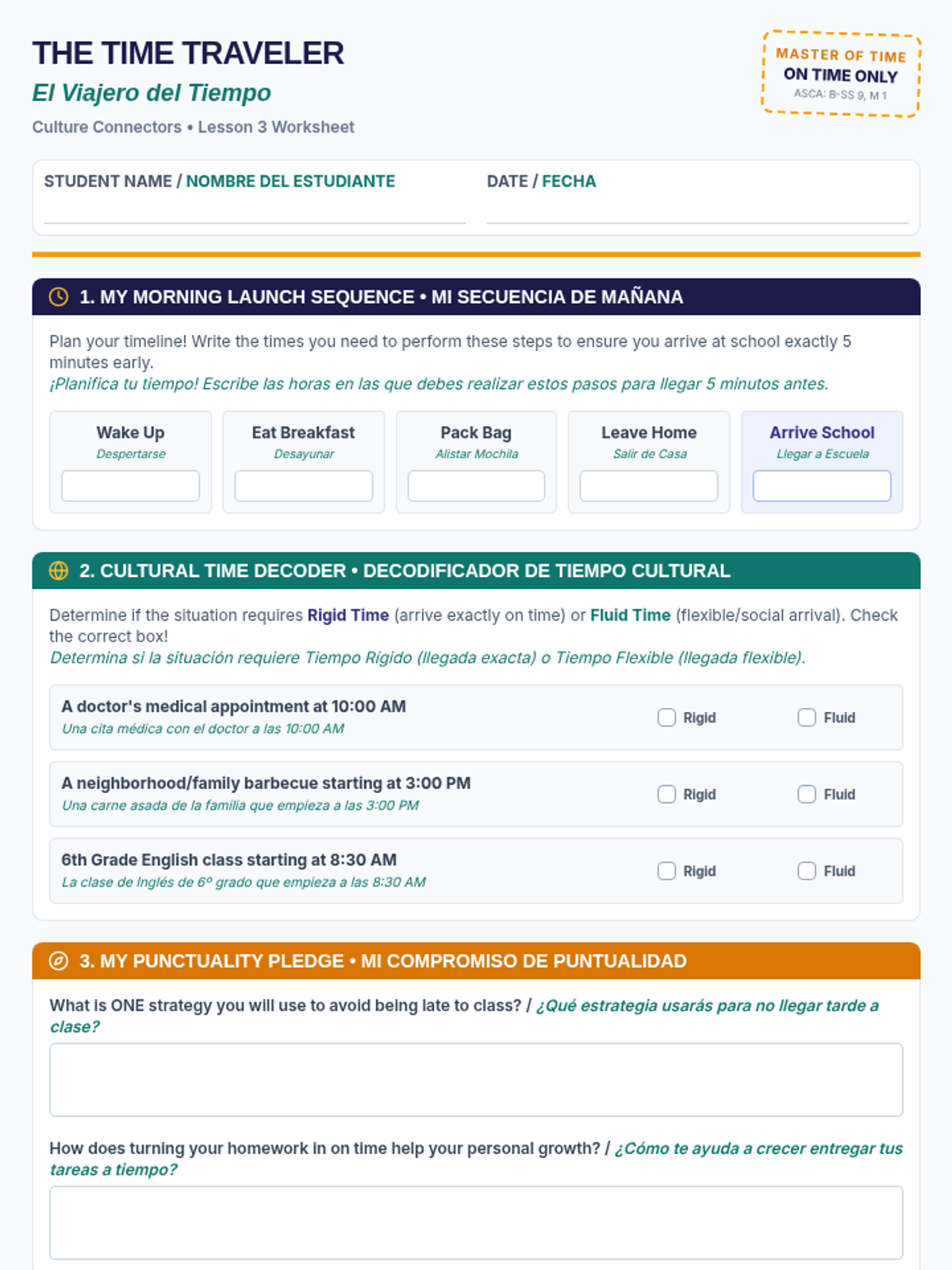
Bilingual student worksheet for Lesson 3 (The Time Traveler) featuring clock-based timeline planning, rigid vs fluid time scenarios, and written reflection questions on punctuality.