A visual presentation deck designed for the Teamwork Tune-Up workshop, featuring high-contrast slides, cooperation strategies, mission instructions, and structured debrief prompts.
A student self-monitoring worksheet for tracking courtesy protocols over a 24-hour period, featuring tally boxes, a custom goal area, and a post-mission reflection.
A modeling script for teachers and students featuring four real-world school scenarios where courtesy protocols are applied, including specific scripts and practice instructions.
A high-impact slide deck for teaching courtesy as 'social mechanics', featuring clear definitions, the 'Big Five' phrases, and gesture protocols.
A structured lesson plan for a 30-minute workshop on courtesy for 7th graders, featuring a pacing guide, facilitation tips, and differentiation strategies.
A set of printable "ballot" cards for students to anonymously vote on their chosen ethical path during the class poll activity.
A comprehensive facilitator script with pacing, talking points, and classroom management tips for leading the 30-minute ethics lesson.
A set of visual slides guiding students through the ethics of a locker room dilemma, introducing decision trees, and facilitating a class-wide choice poll.
A student worksheet for identifying ethical questions and mapping out consequences using a visual decision tree structure based on a locker room scenario.
Teacher answer key for the Pause Power System Check Quiz, including sample responses for open-ended logic questions.
A comprehensive quiz evaluating student knowledge of the Stop-Think-Act strategy, Zones of Regulation, and advanced troubleshooting like Stealth Shields. Now includes integrated answer key on page 2.
A comprehensive emotional regulation anchor chart in a technical blueprint style, featuring a flowchart for Stop-Think-Act and a tool navigator for the Zones of Regulation.
A visual slide deck introducing the Zones of Regulation and the Stop-Think-Act strategy with a technical blueprint aesthetic.
A revised teacher guide with optimized vertical spacing to keep all content on one page, increased font sizes for differentiation, and aligned differentiation cards.
A slide presentation for 6th graders on school transitions, explaining the psychology of change and providing actionable coping strategies like grounding and support mapping.
A revised student worksheet with optimized student work areas for the grounding technique and improved vertical spacing for better handwriting accessibility.
A revised social story document with improved visuals, correct page breaks, and an expanded lined student reflection area to support handwriting.
A collection of discussion questions and private journal prompts designed to help participants process the session's themes and practice self-reflection.
An activity worksheet for participants to explore the "iceberg" metaphor of emotions, identifying visible primary emotions and hidden secondary emotions.
An emotion vocabulary reference guide for participants, categorizing complex emotions and providing a list of common somatic signals.
A visual presentation for the session, featuring concepts like somatic awareness, the iceberg metaphor for secondary emotions, and mindfulness prompts.
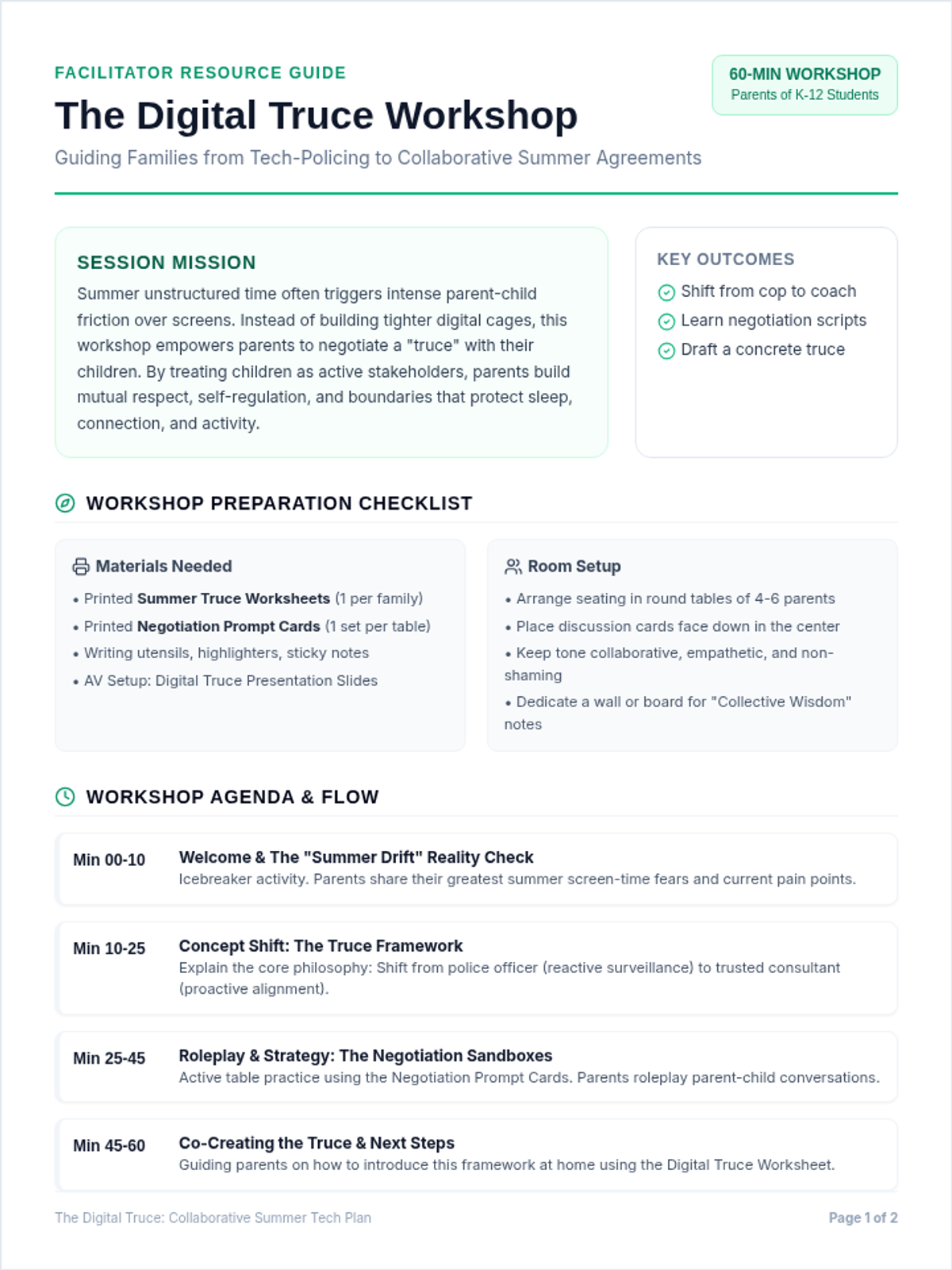
A comprehensive teacher guide for facilitators, outlining the 2-hour session flow, session objectives, pacing, and trauma-informed tips for working with survivors.
An engaging slide deck providing an overview of digital footprints, social media identity, and the importance of account privacy settings.
A professional checklist and discussion guide for students and teachers to navigate social media privacy settings and account security best practices.
A creative worksheet designed for students to mock up a social media profile for a historical figure or fictional character, facilitating reflection on digital identity and reputation.
A technical reference sheet for students providing "specifications" for different coping skills, categorized as foundations, girders, and cables to match the architectural theme.
A structured worksheet for students to draft their architectural bridge between distress and regulation, including space for site analysis and technical specifications of their coping skills.