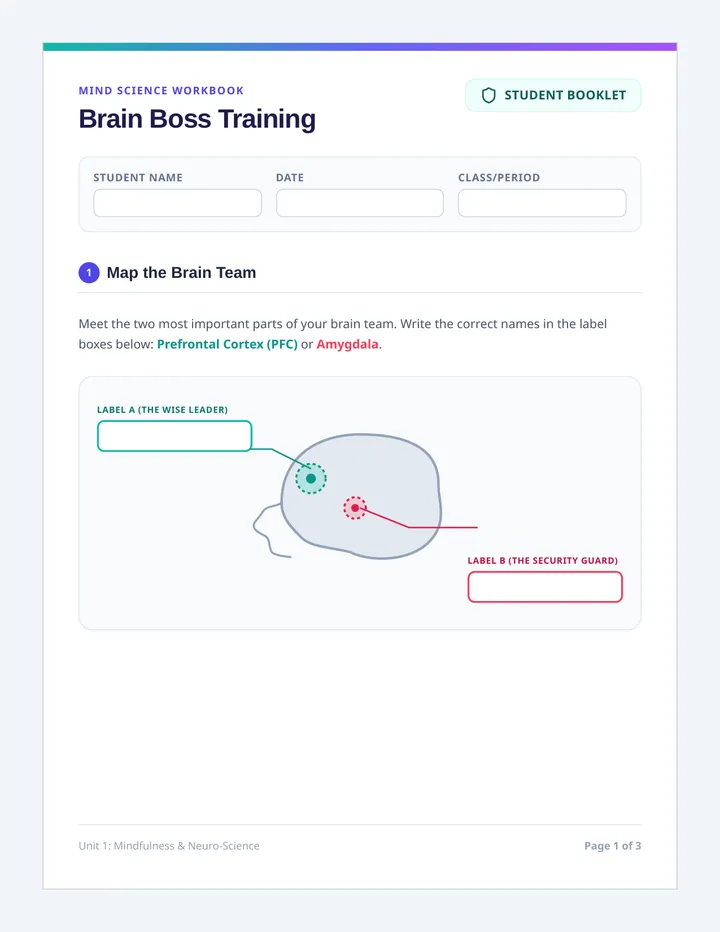
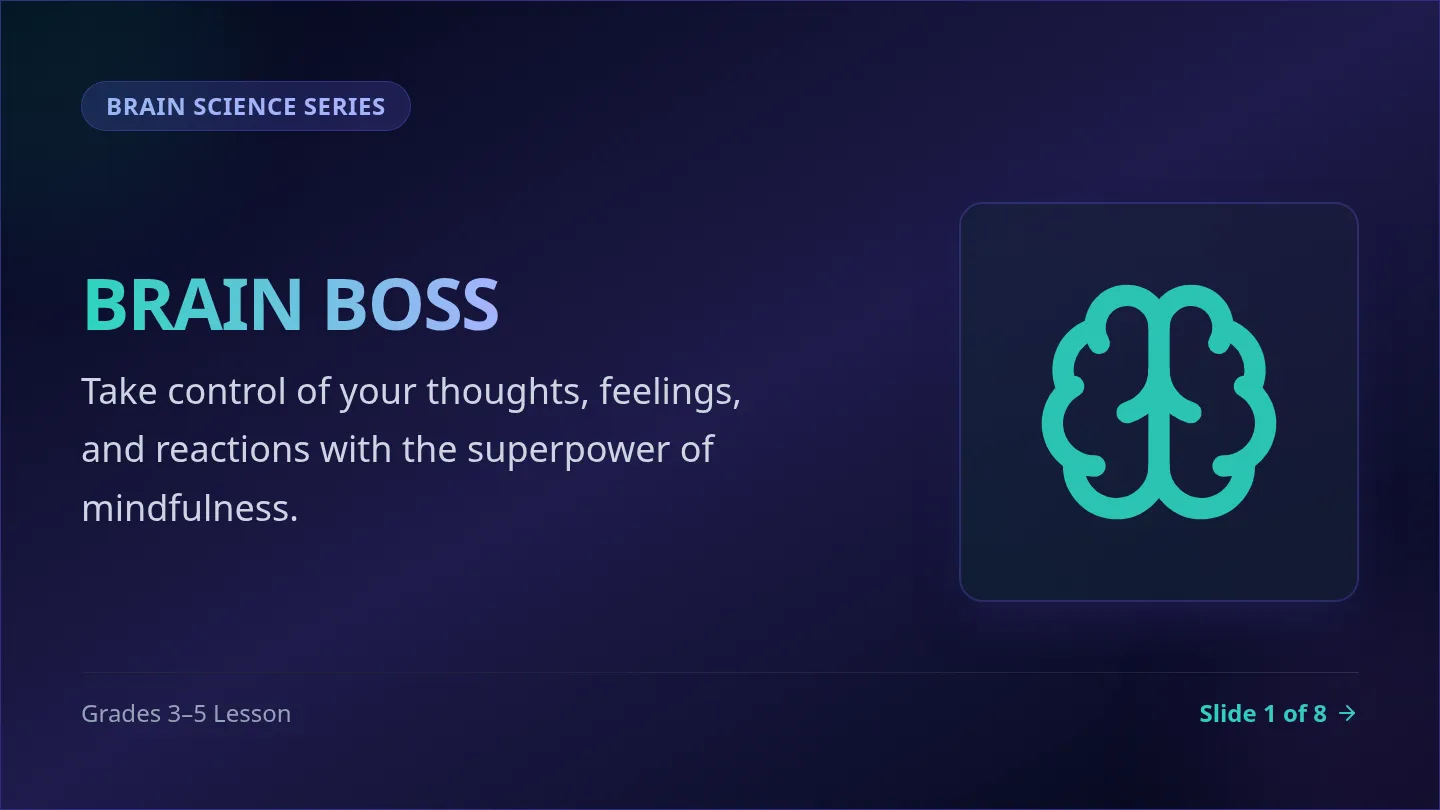
A vibrant and engaging visual presentation for grades 1-4, introducing the three key parts of the brain (Prefrontal Cortex, Amygdala, Hippocampus) as superhero 'power stations' and explaining neuroplasticity through simple analogies.
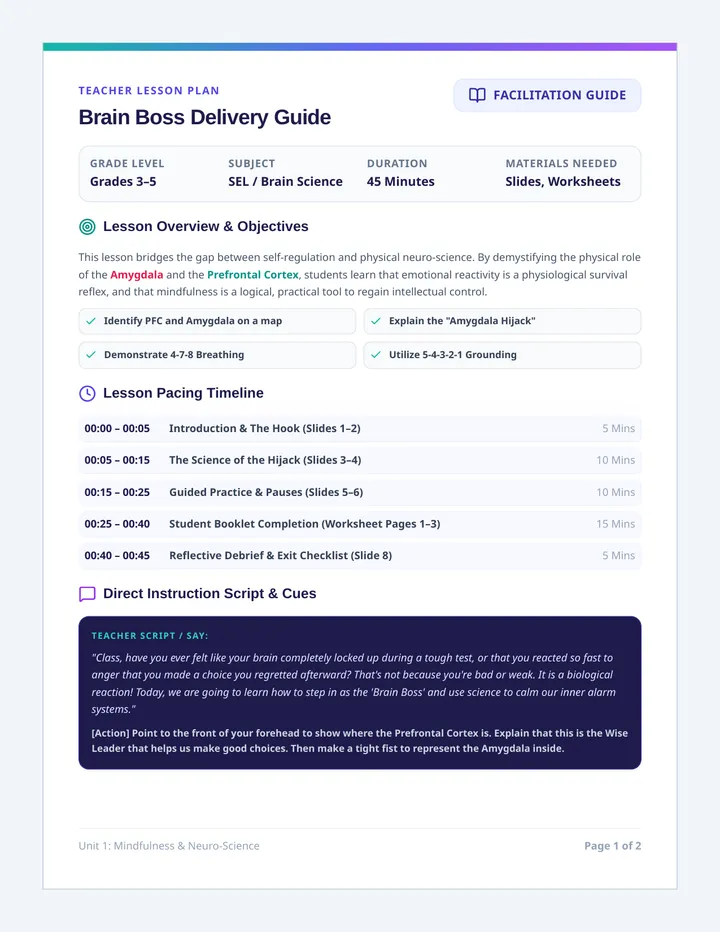
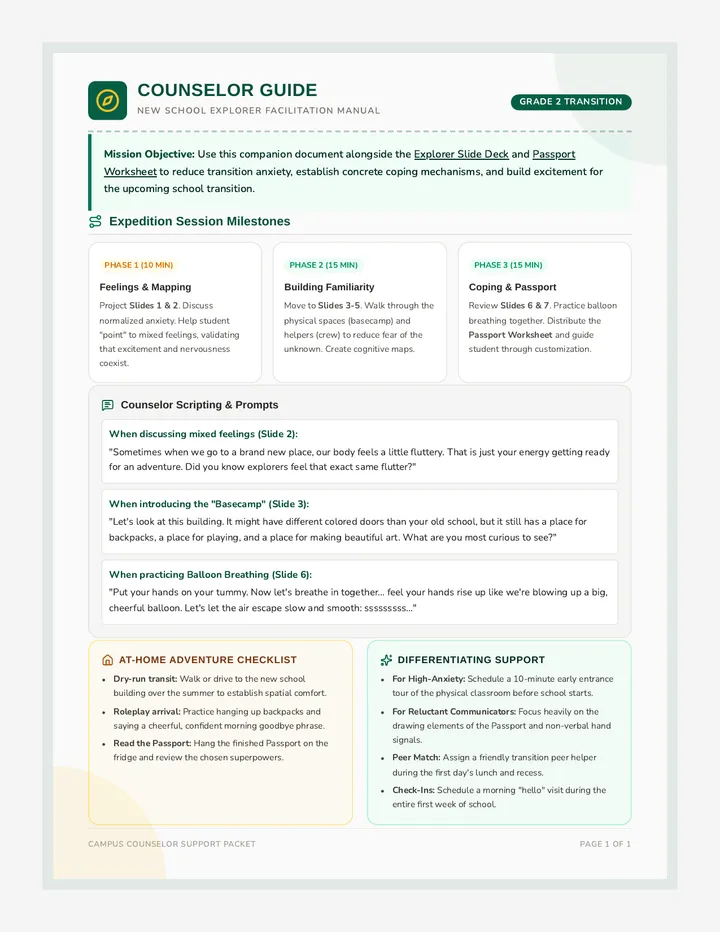
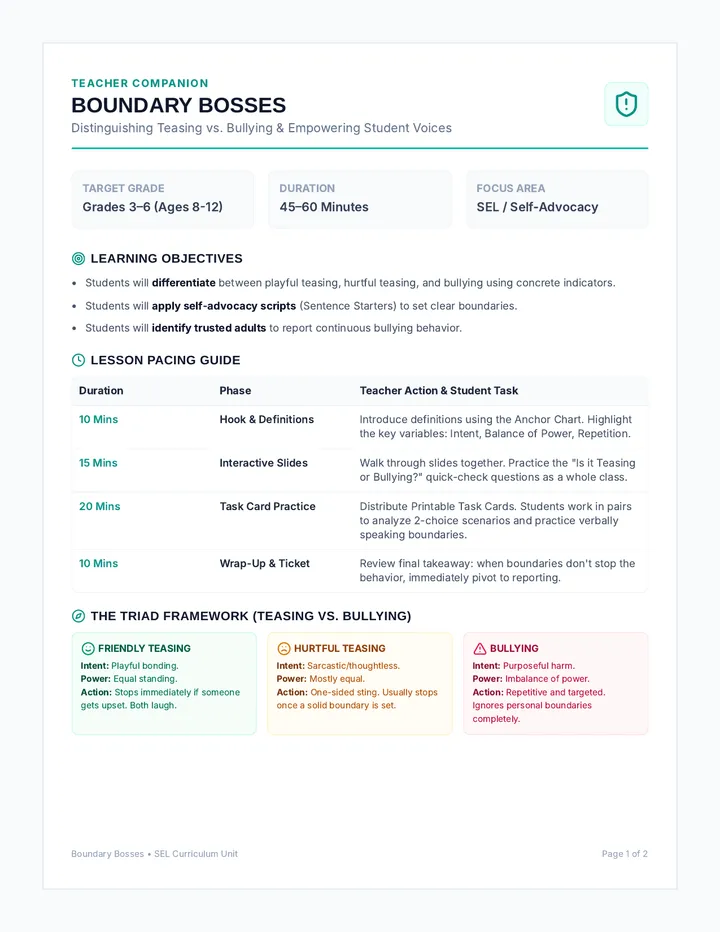
A comprehensive teacher facilitation guide covering the instruction, discussion prompts, activities, and specific listening lab scripts for both behavioral lessons.
A detective-themed worksheet for first graders to practice following multi-step directions, sequencing steps, and analyzing behavior scenarios.
A detective-themed presentation for first graders focusing on the four steps of following directions: Stop, Look, Listen, and Do.
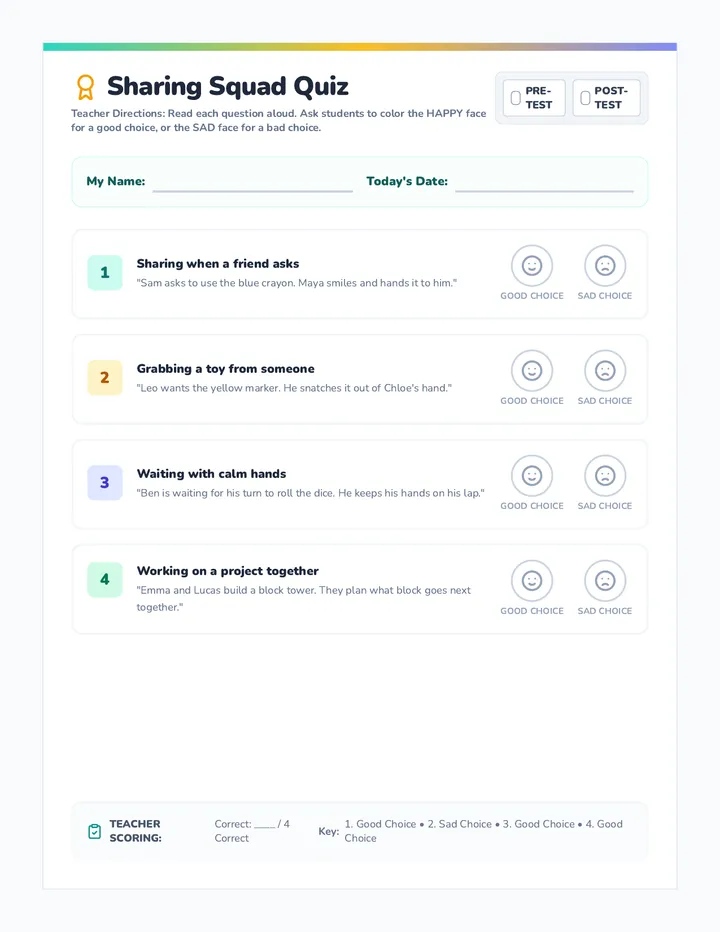
A scenario-based worksheet for first graders to identify and differentiate between positive classroom behaviors and rule-breaking actions using a 'Rule Ranger' theme.
An engaging slide deck for first graders that introduces classroom rules through a 'Rule Rangers' theme, featuring interactive scenarios and clear behavioral expectations.
A set of conversation starter cards updated to replace 'Me Too' moments with 'Interest Match' terminology.
A highly visual, full-page checklist for students to track their friendship skills, updated to use 'Interest Match' terminology.
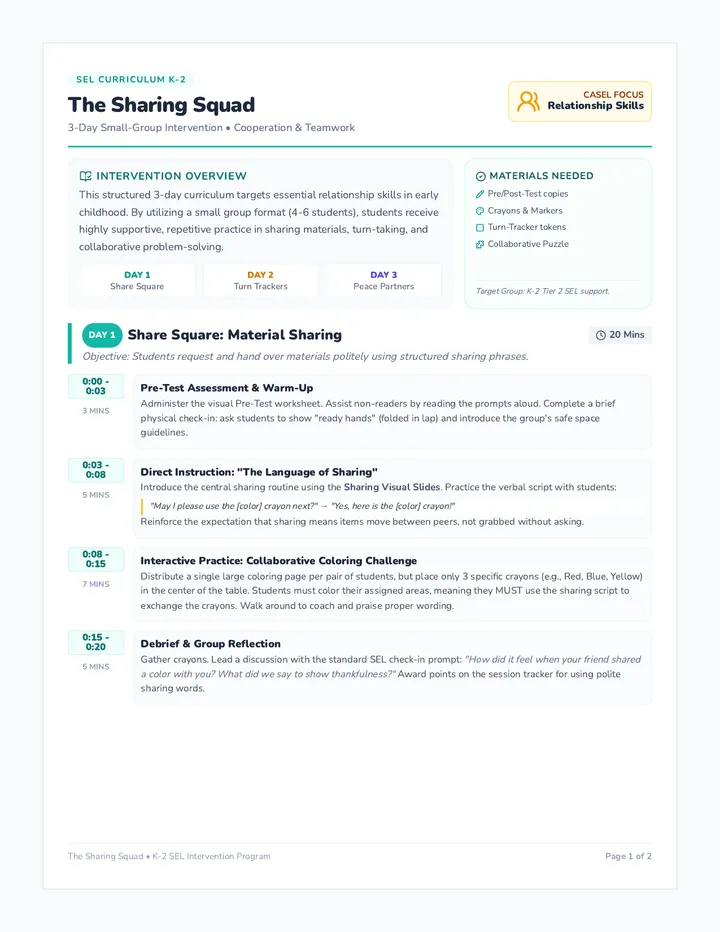
A teacher guide for instructing students on friendship skills, including role-play prompts, troubleshooting tips for common social hurdles, and a progress tracking table.
A 6-page illustrated social story for first graders that teaches the step-by-step process of making friends, updated to use 'Interest Match' verbiage for shared connections.
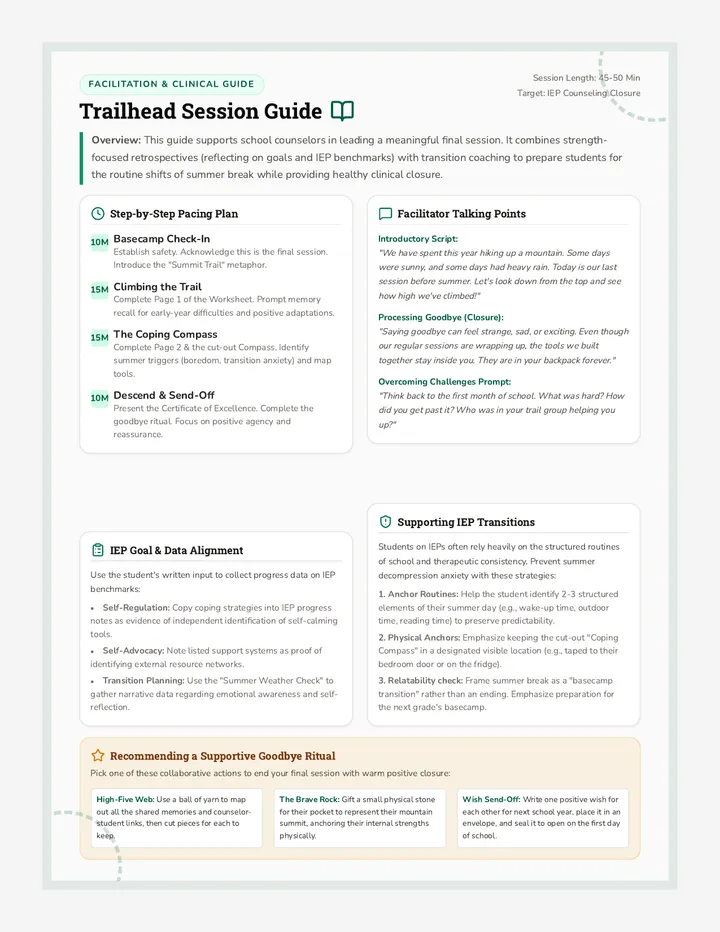
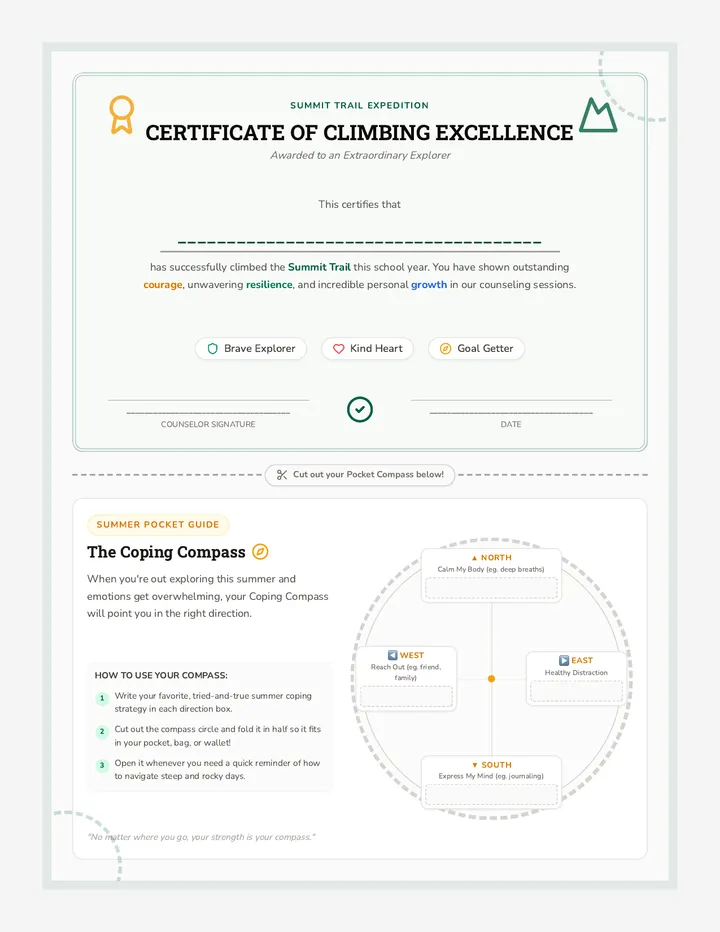
A facilitation guide for the counselor, providing specific strategies for rapport building, framing impulse control as 'power,' and navigating the student's unique home dynamics as an oldest sibling.
A visual aid and checklist that reframes being the oldest sibling as a leadership role, encouraging positive behaviors (Hero Habits) and fostering discussion about home dynamics.
An activity sheet that visualizes the 'Ripple Effect' of social behavior, helping students understand how their actions (both positive and negative) affect family members and peers.
An activity sheet for practicing 'Pulse Pilot' techniques, identifying physical triggers (The Spark), and mapping out alternative reactions to common stressors.
Visual aids to introduce the 'Pulse Pilot' concept, focusing on identifying the physical 'spark' of impulsivity and using a mental remote control.