A polished 1-slide professional presentation on clinical bibliotherapy, defining the modality, its psychological stages (identification, catharsis, insight), and its specific age-group applications from kindergarten through high school.
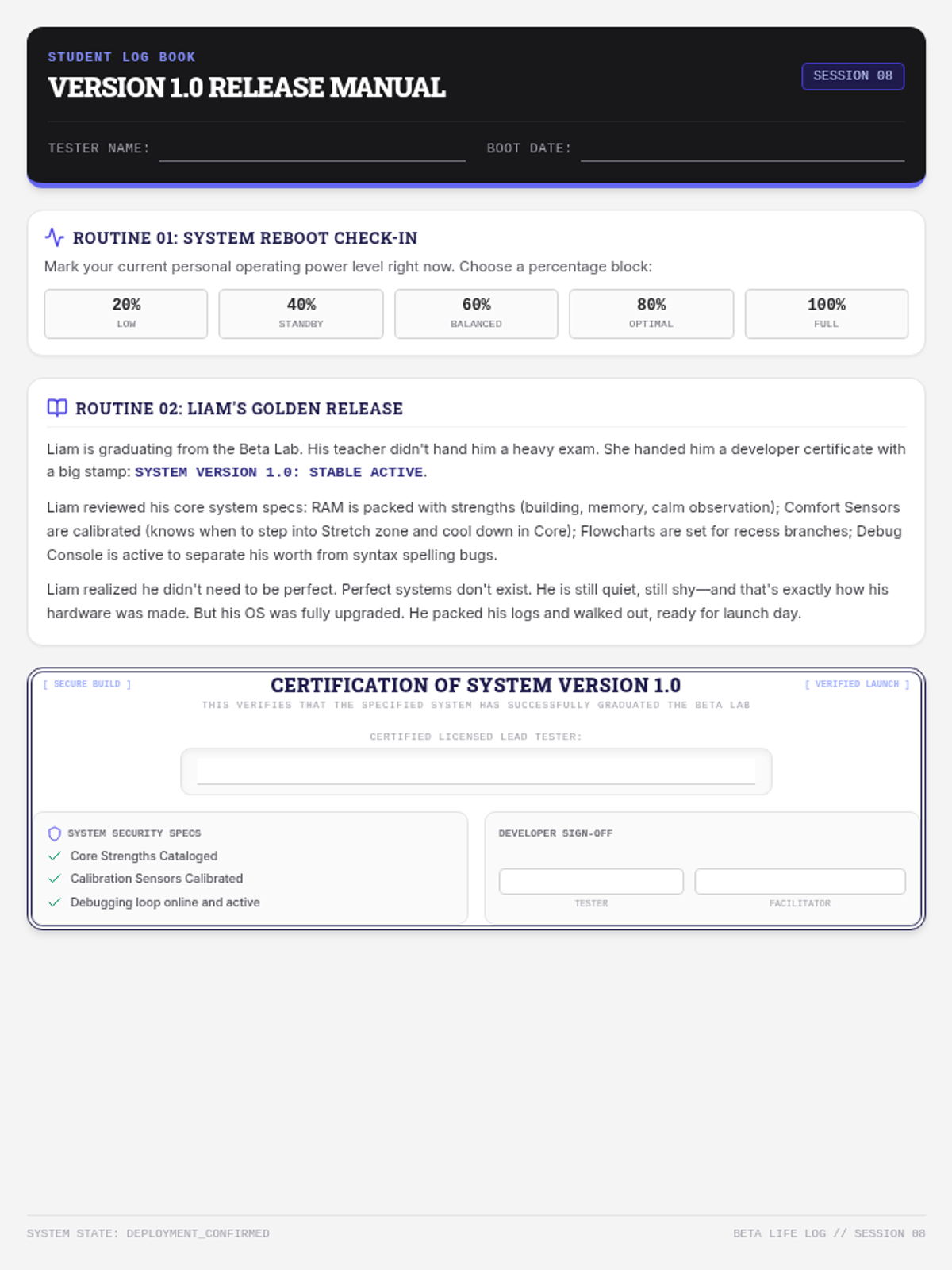
This student-facing spec sheet serves as the primary workspace for Session 8. It contains a predictable energy level check-in, Liam's story on graduating from the Beta Lab, and a beautiful certificate layout for the final signoff.
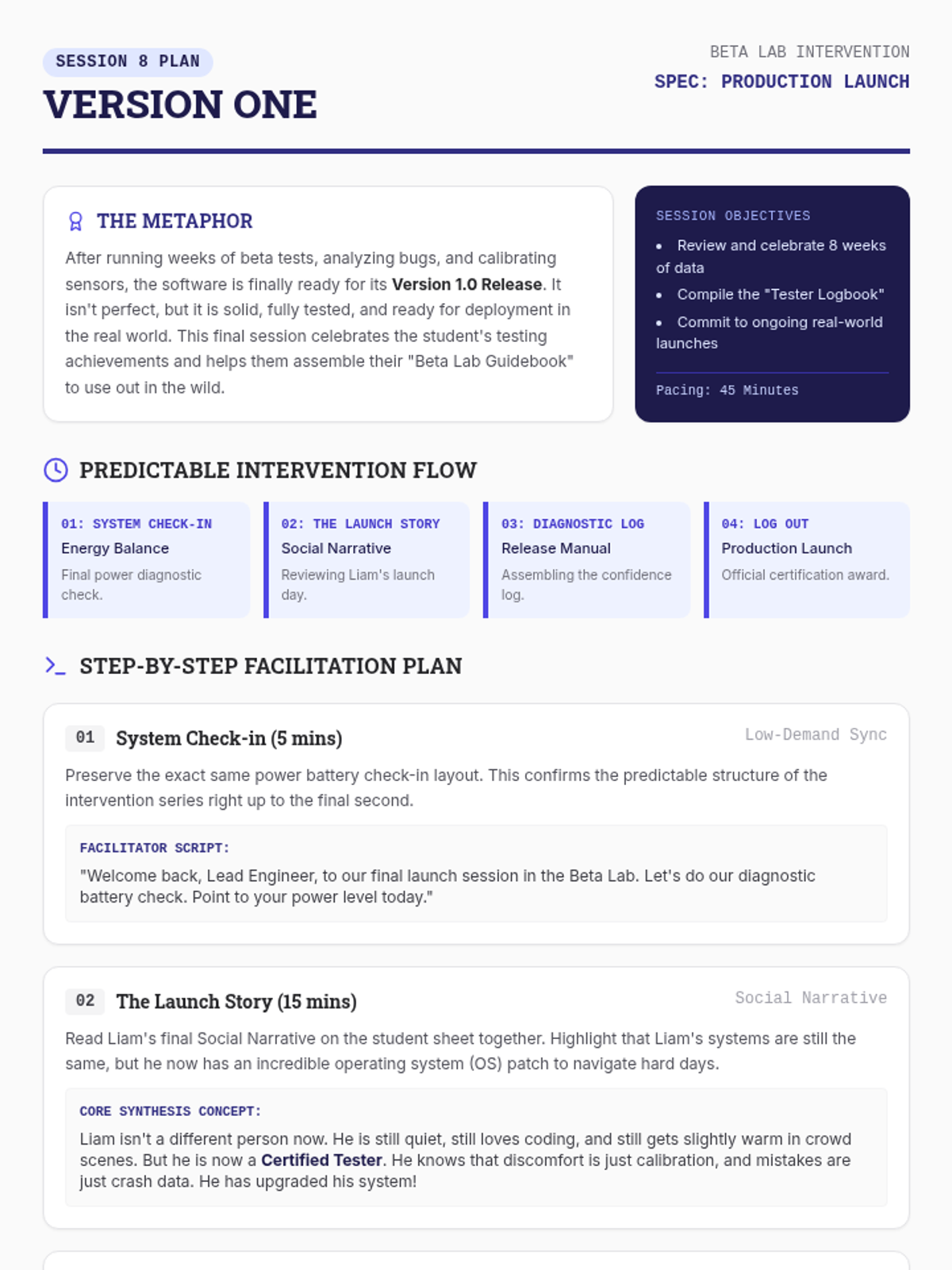
This facilitation guide provides the step-by-step lesson plan and engagement tips for Session 8, synthesizing the 8-week journey and guiding the teacher in organizing a quiet, professional celebration of the student's testing achievements.
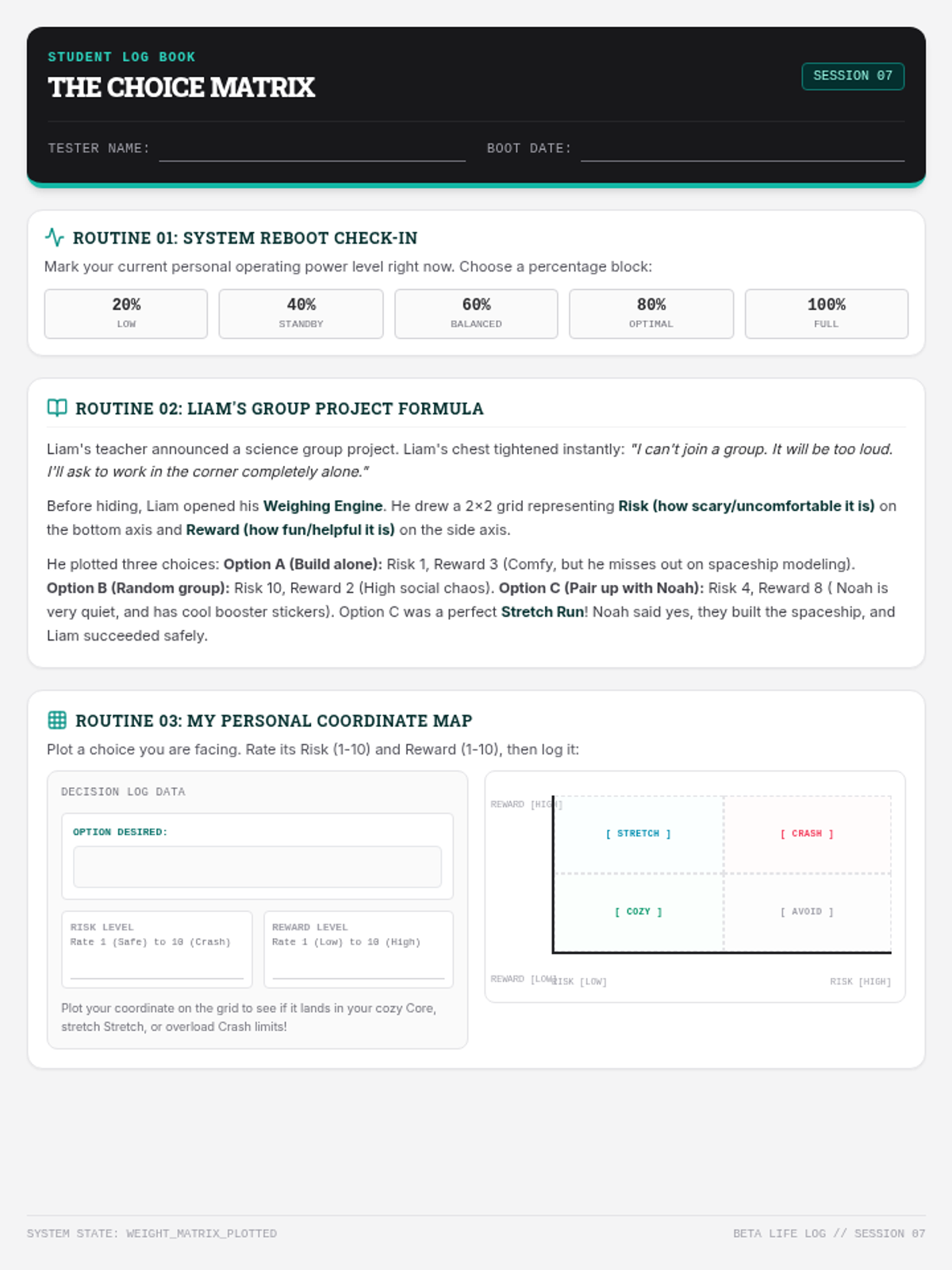
This student-facing spec sheet serves as the primary workspace for Session 7. It contains a predictable energy level check-in, Liam's story on using coordinates to analyze a scary science group assignment, and a structured 2x2 plotting grid.
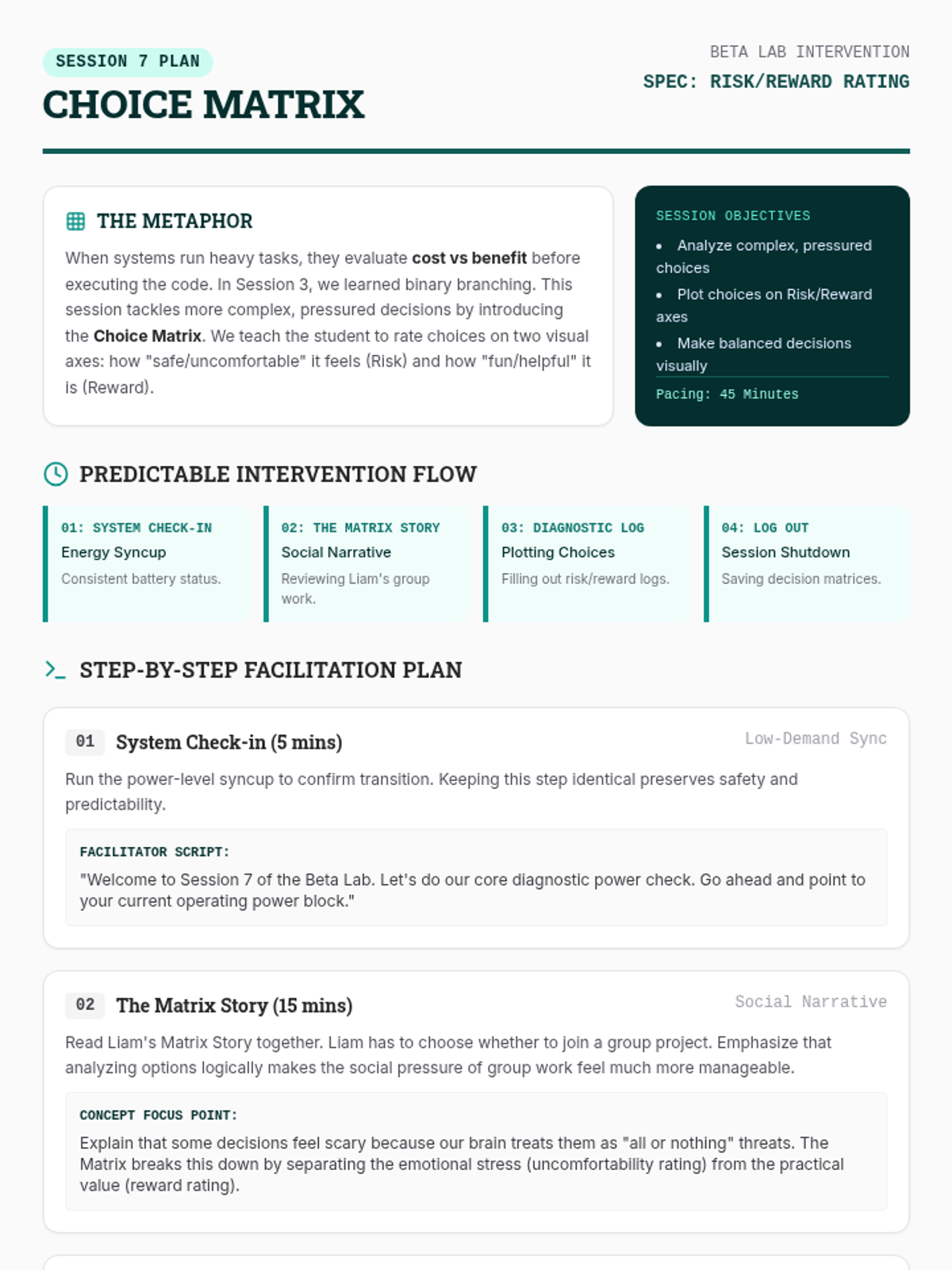
This facilitation guide provides the step-by-step lesson plan and engagement tips for Session 7, teaching the student how to use a visual Risk/Reward rating matrix to analyze complex choices.
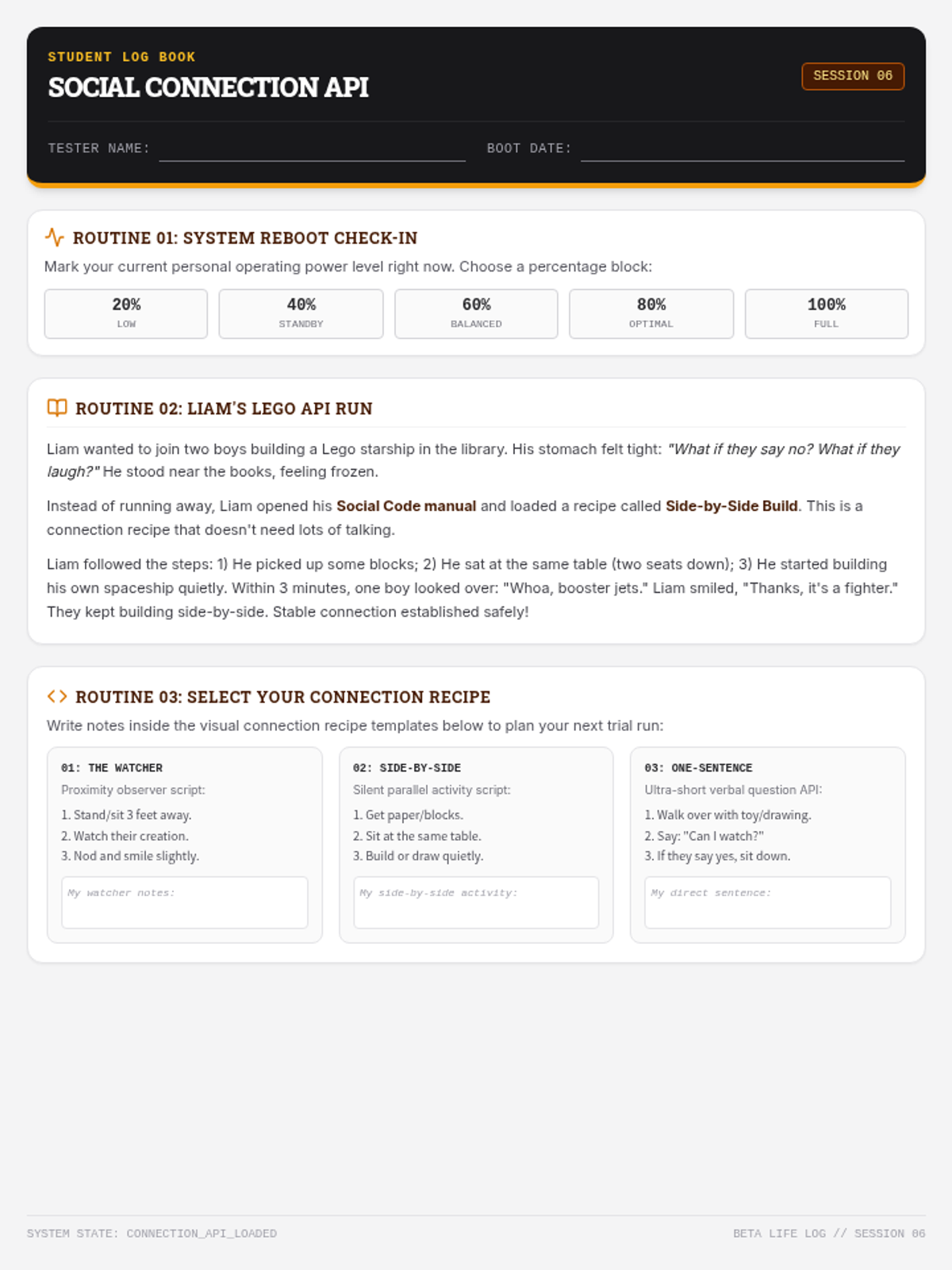
This student-facing spec sheet serves as the primary workspace for Session 6. It contains a predictable energy level check-in, Liam's story on parallel play lego connection, and three visual recipes for peer connection.
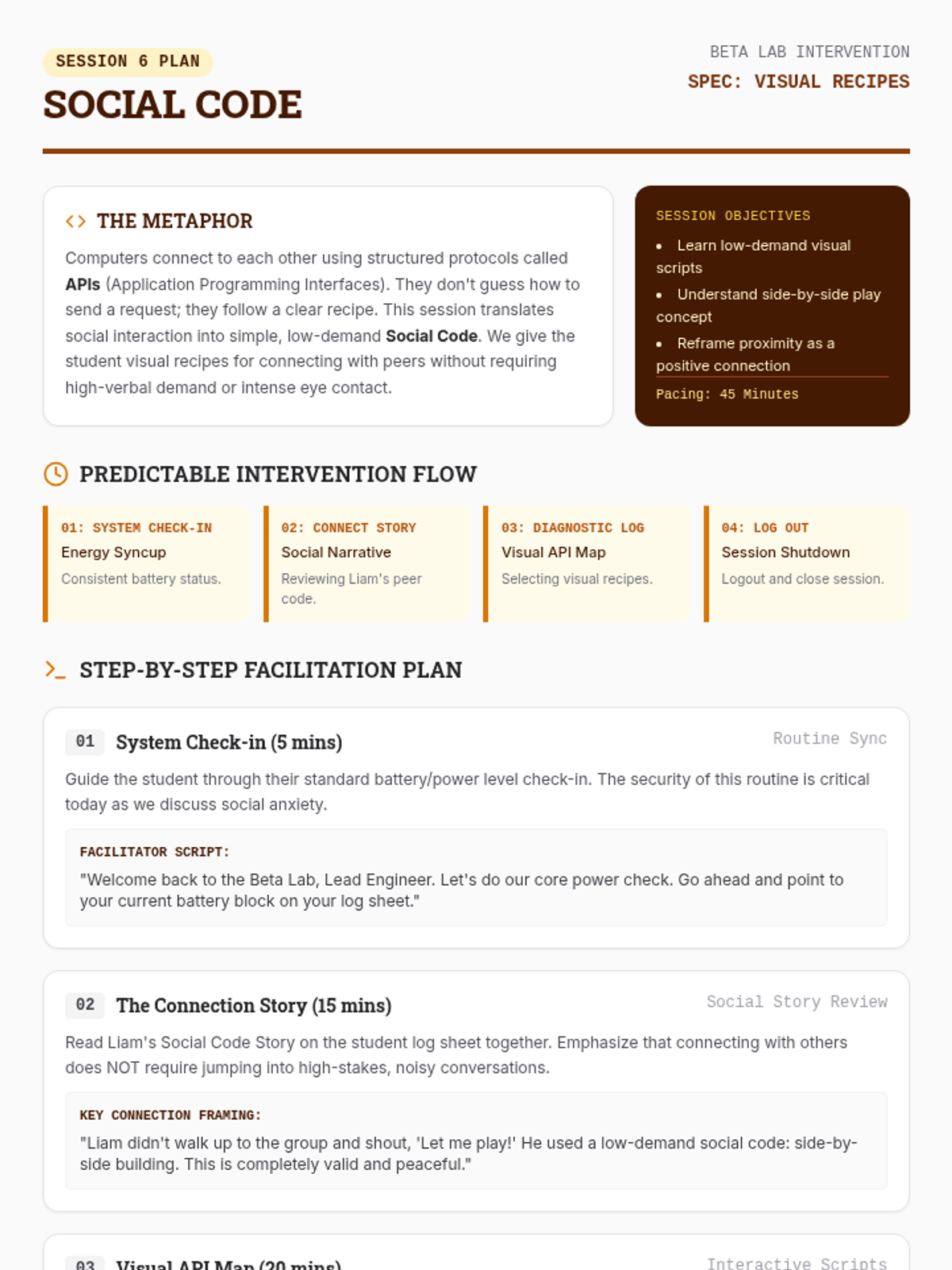
This facilitation guide provides the step-by-step lesson plan and engagement tips for Session 6, introducing low-demand social scripts and structured visual recipes for peer connection.
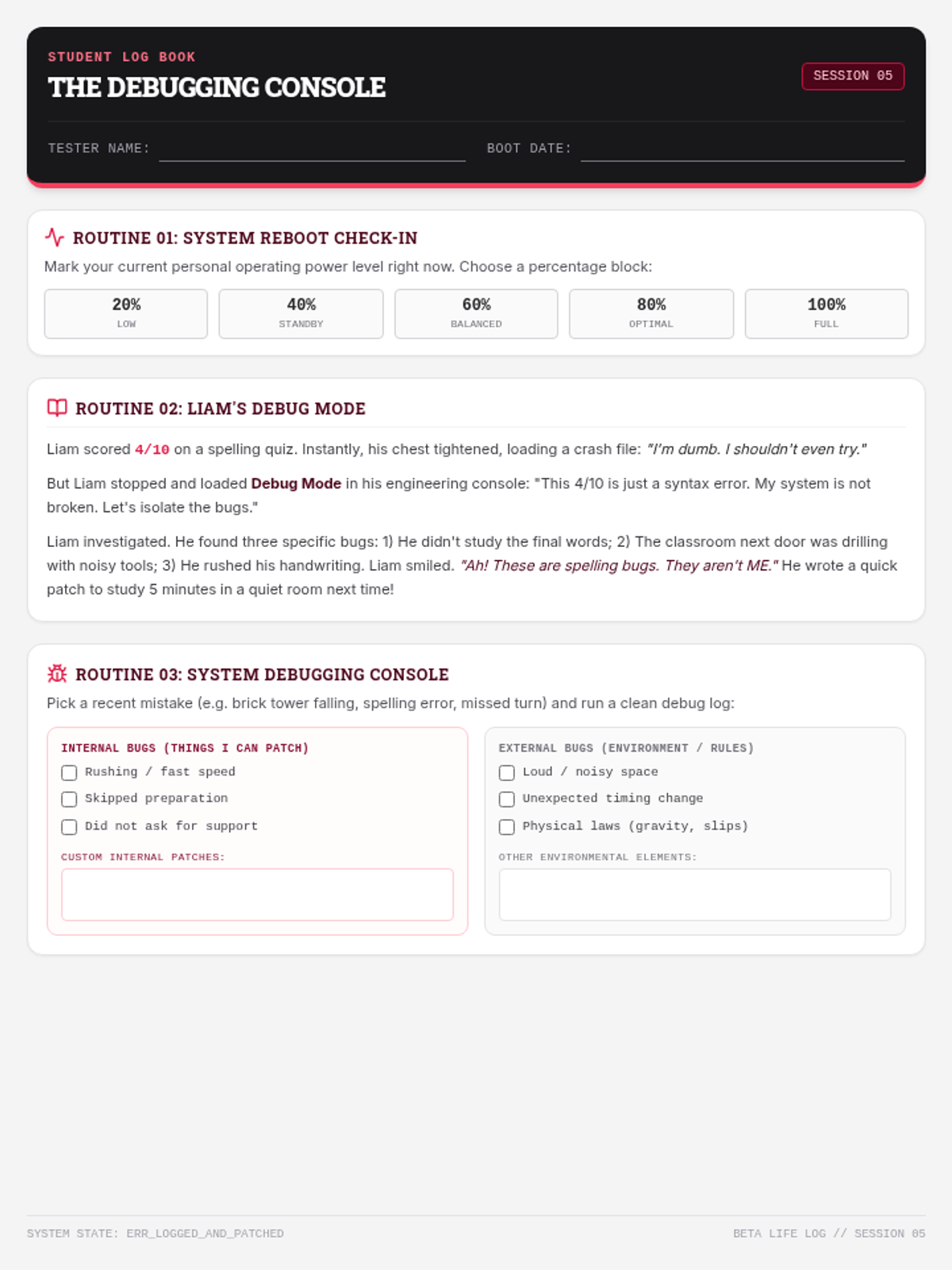
This student-facing spec sheet serves as the primary workspace for Session 5. It contains a predictable energy level check-in, Liam's story on debug mode, and an interactive sorting console for isolating internal vs. external error sources.
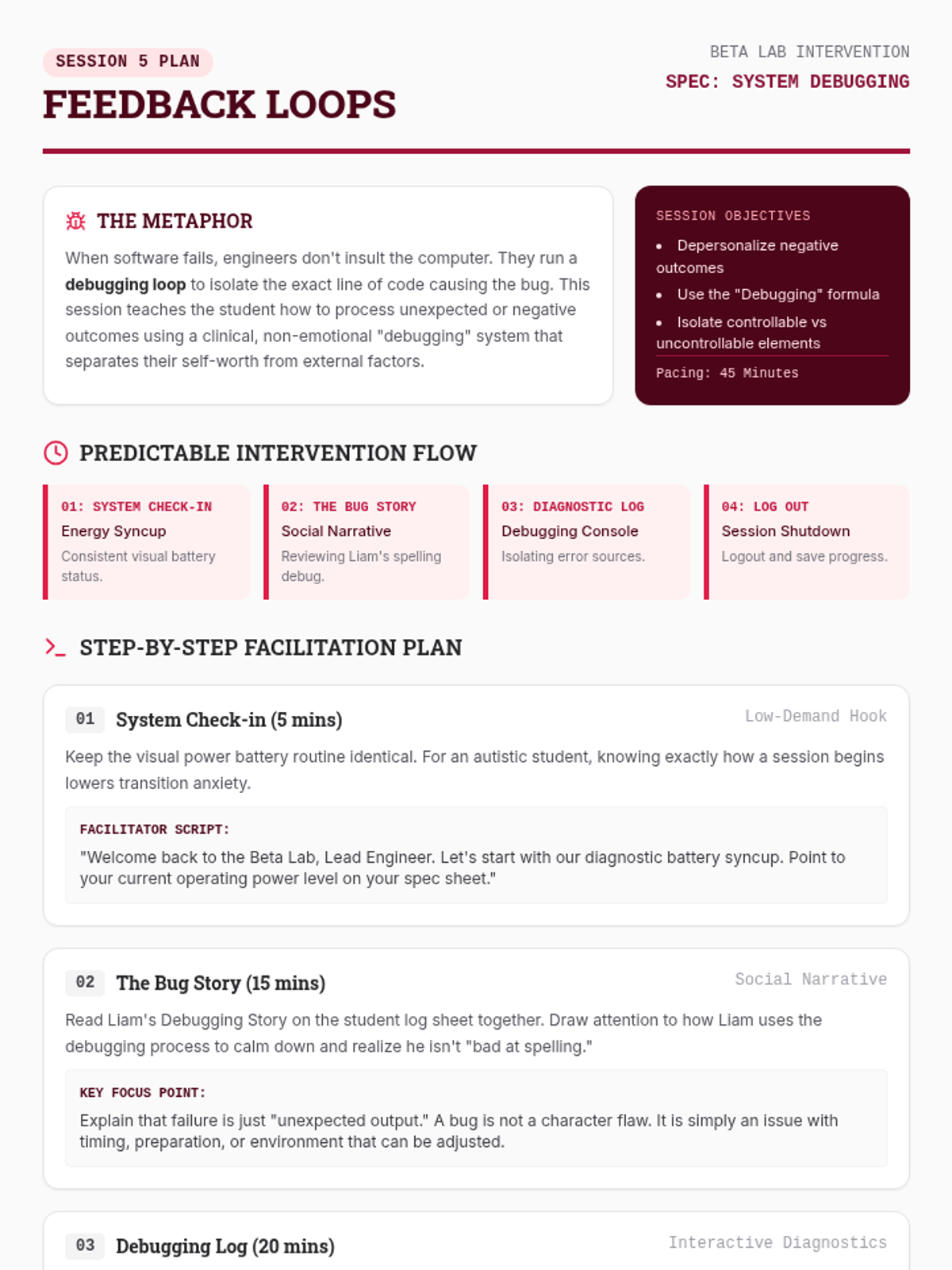
This facilitation guide provides the step-by-step lesson plan and engagement tips for Session 5, focusing on a structured, objective 'debugging' framework to help students analyze mistakes without personal shame.
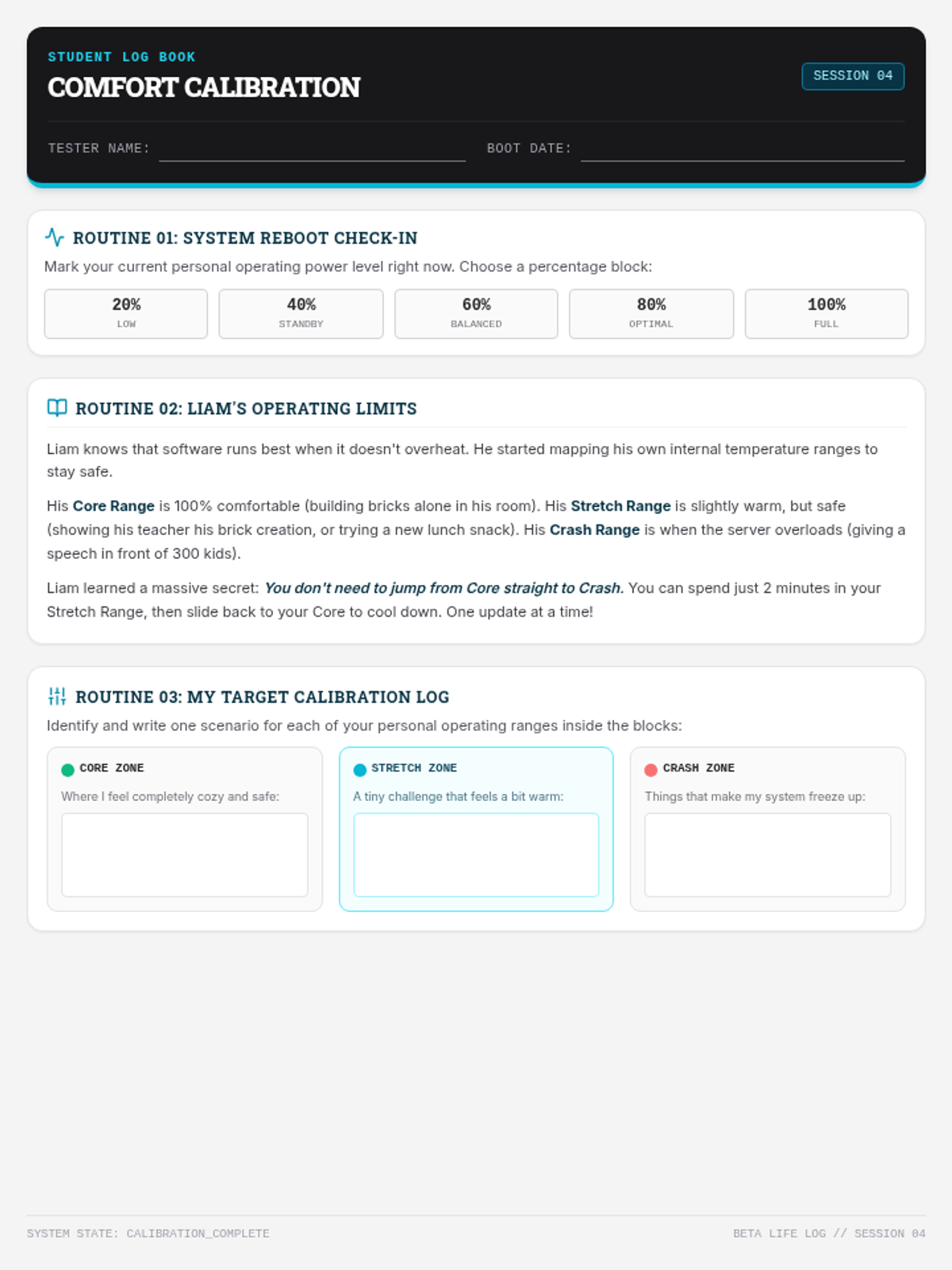
This student-facing spec sheet serves as the primary workspace for Session 4. It contains a predictable energy level check-in, Liam's story on comfort zones (Core, Stretch, and Crash), and a structured 3-tier calibration log.
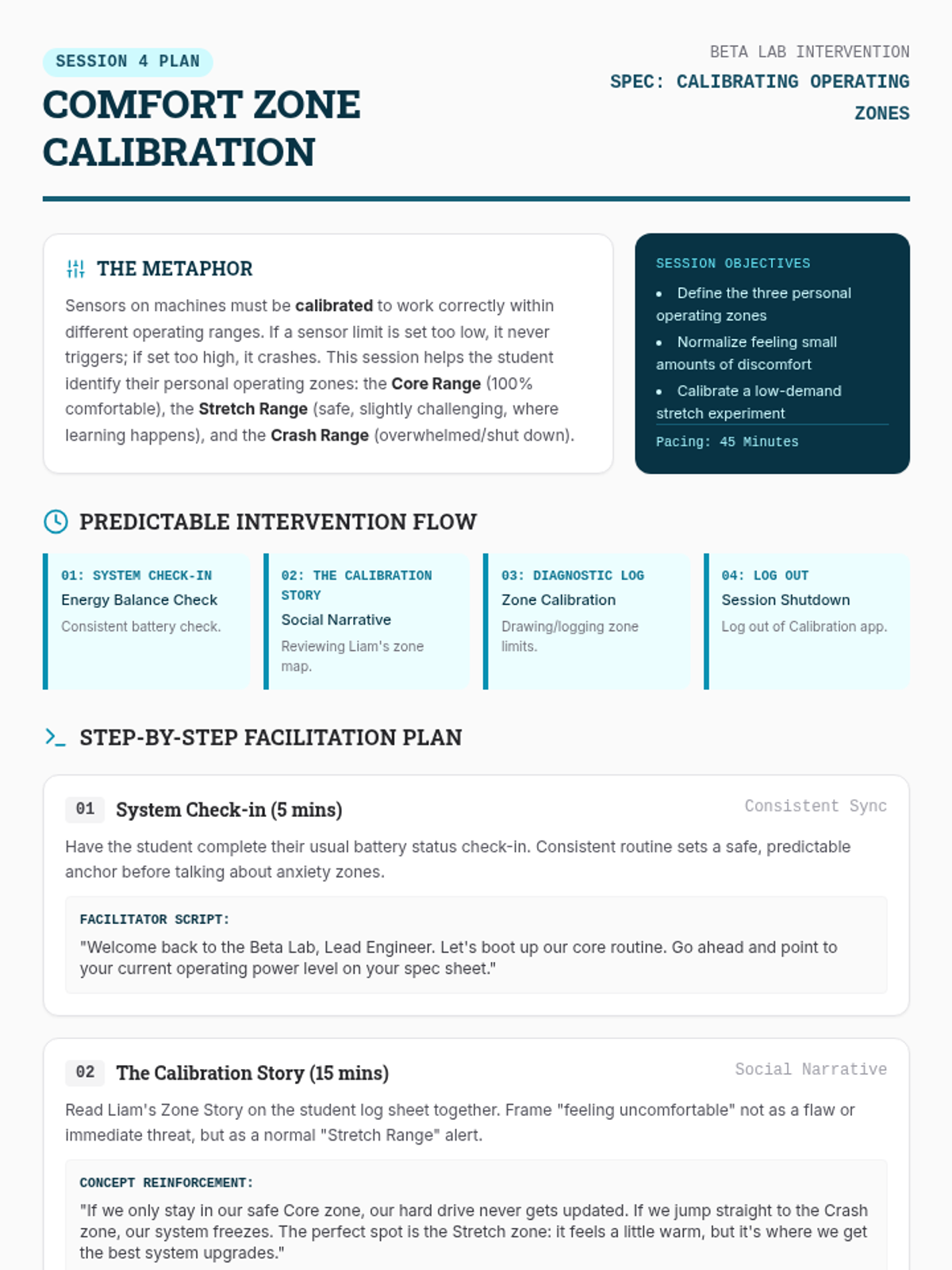
This facilitation guide provides the step-by-step lesson plan and engagement tips for Session 4, focusing on helping the student map their comfortable operating zones (Core, Stretch, and Crash) to make gradated risk-taking feel structured and safe.
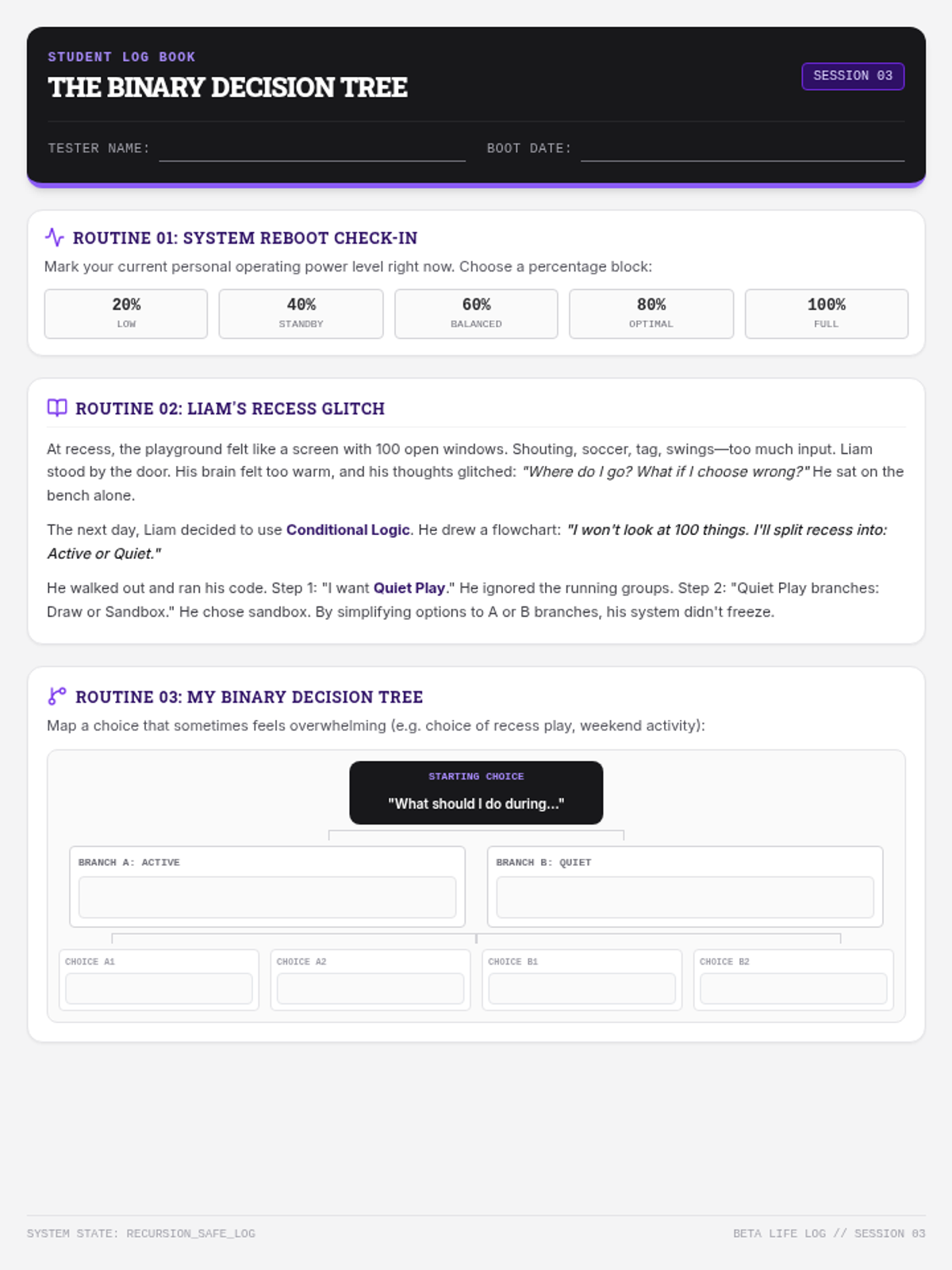
This student-facing spec sheet serves as the primary workspace for Session 3. It contains a predictable energy level check-in, Liam's story on choice overload at recess, and a structured flowchart for practicing binary choice branch logic.
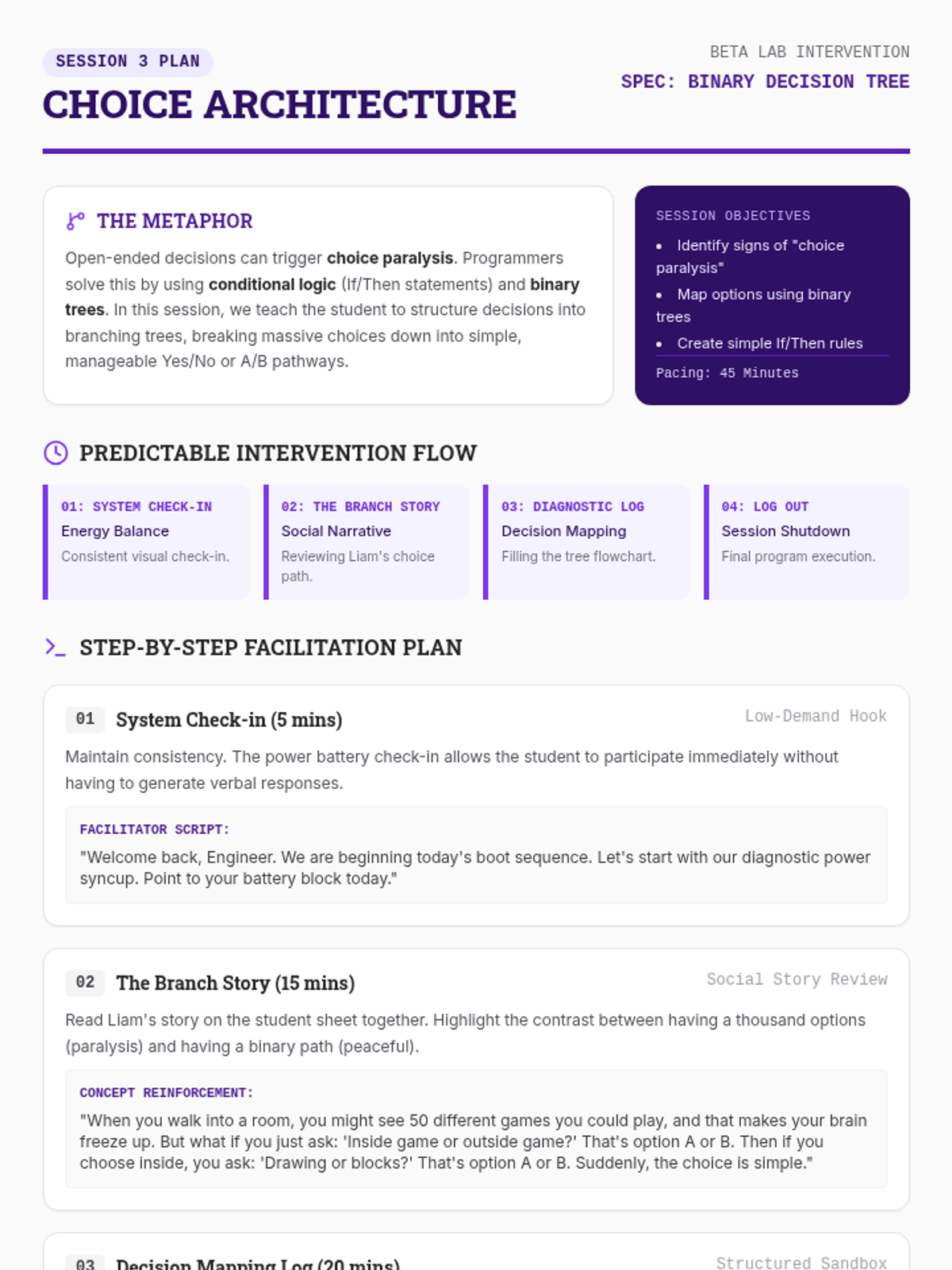
This facilitation guide provides the step-by-step lesson plan and engagement tips for Session 3, introducing branching choice architecture to simplify decisions and lower cognitive load for the student.
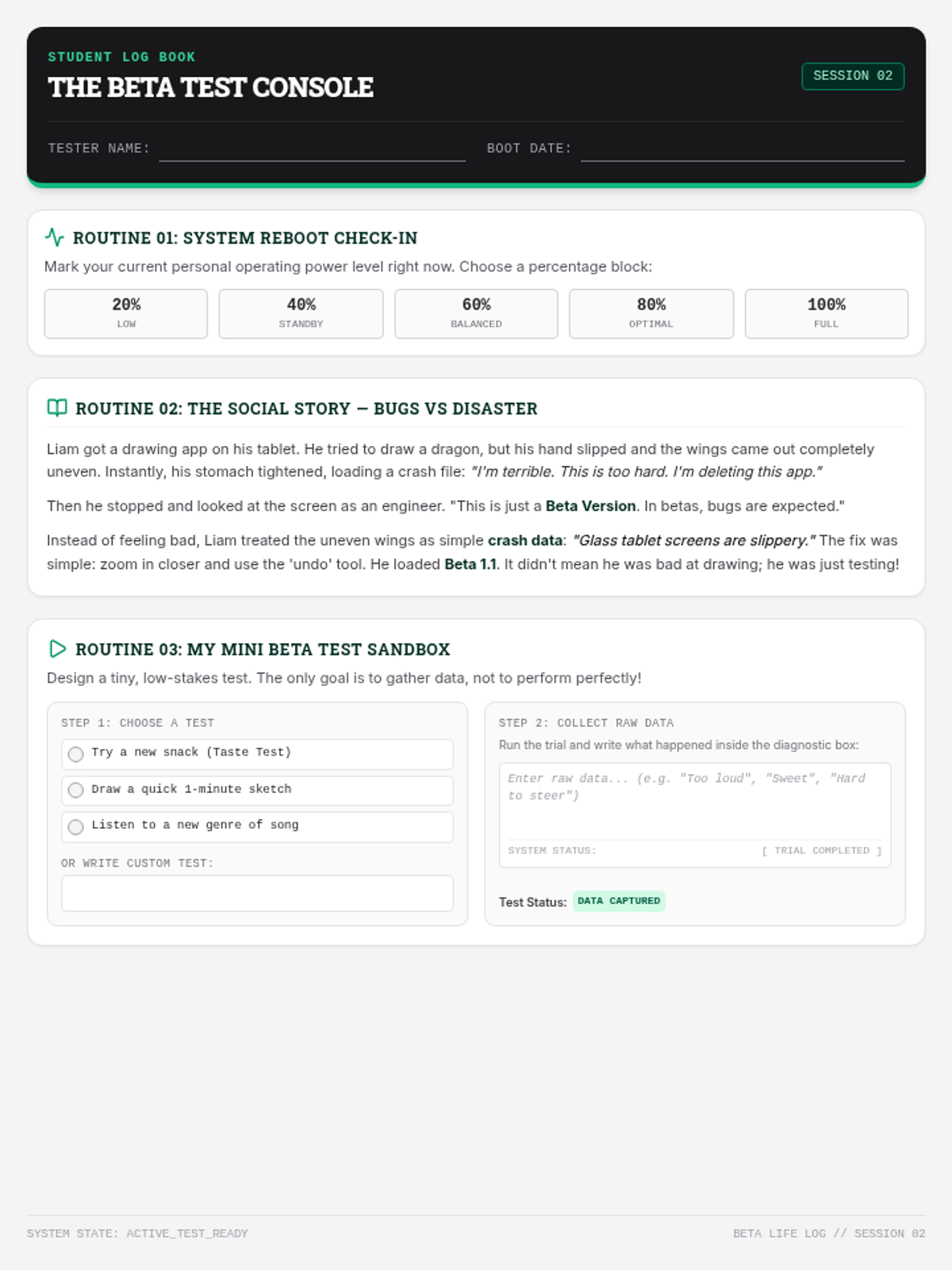
This student-facing spec sheet serves as the primary workspace for Session 2. It contains a predictable energy level check-in, Liam's beta story on reframing failure as simple crash data, and a structured sandbox for designing and running a tiny beta test.
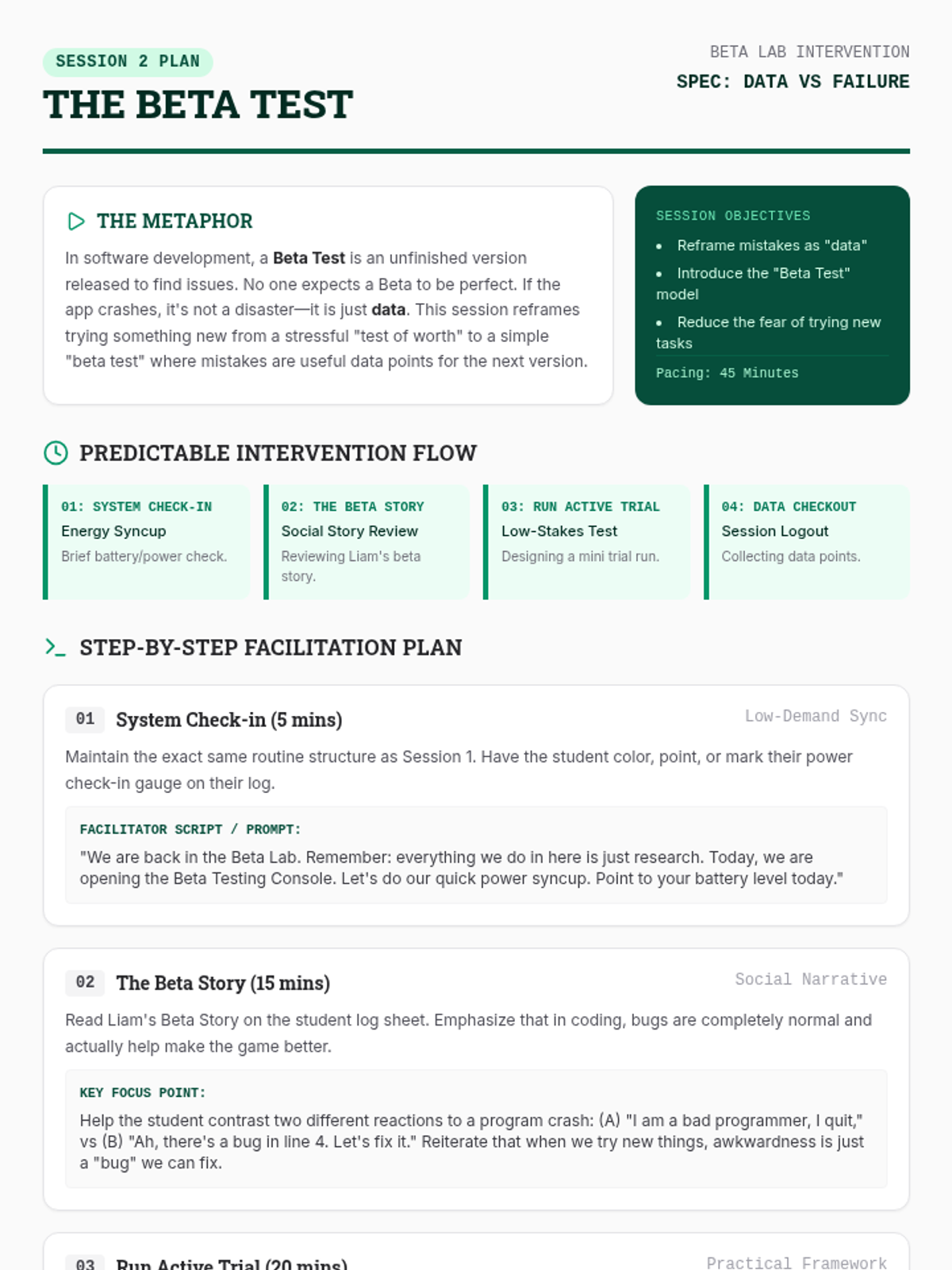
This facilitation guide provides the step-by-step lesson plan and engagement tips for Session 2, helping teachers reframe mistakes as data and guiding the student to outline a low-stakes 'beta test' in their environment.
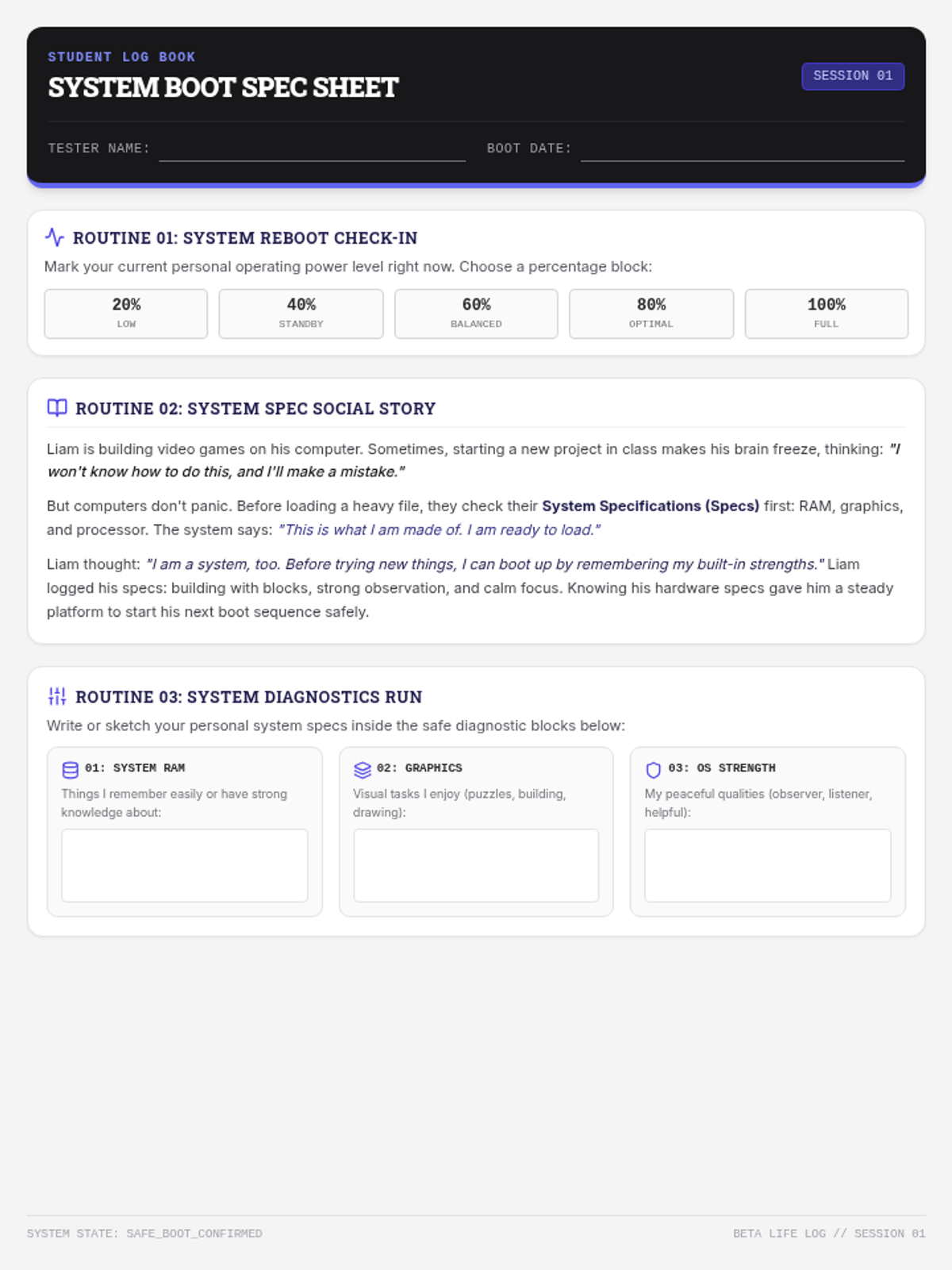
This student-facing spec sheet serves as the primary workspace for Session 1. It contains a predictable energy level check-in, a step-by-step social story reframing strengths as 'system specs', and structured modules for logging personal strengths.
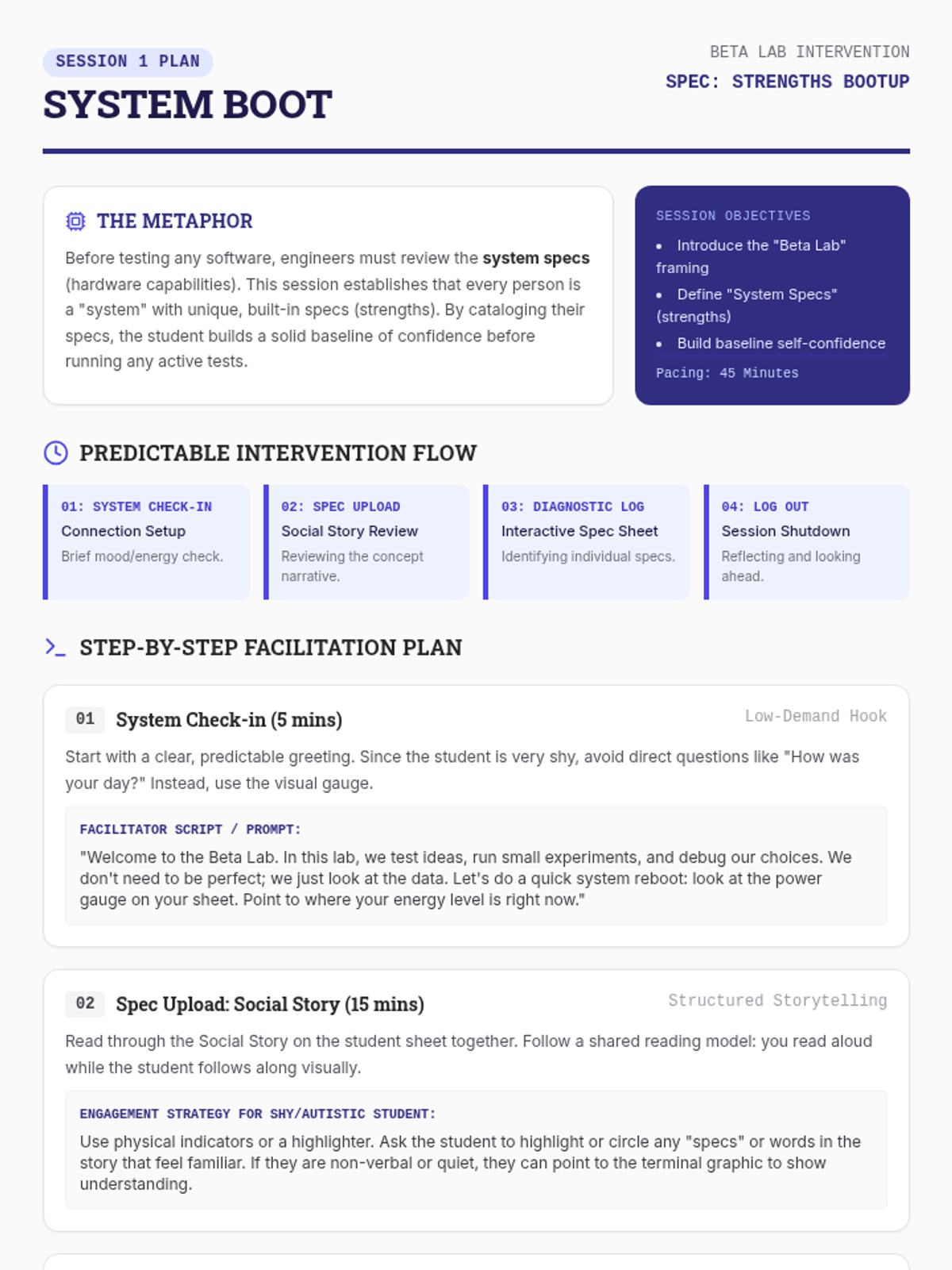
This facilitation guide provides the step-by-step lesson plan and engagement tips for Session 1, introducing the 'Beta Lab' engineering metaphor and helping the student identify their 'system specs' (personal strengths) in a predictable and supportive environment.
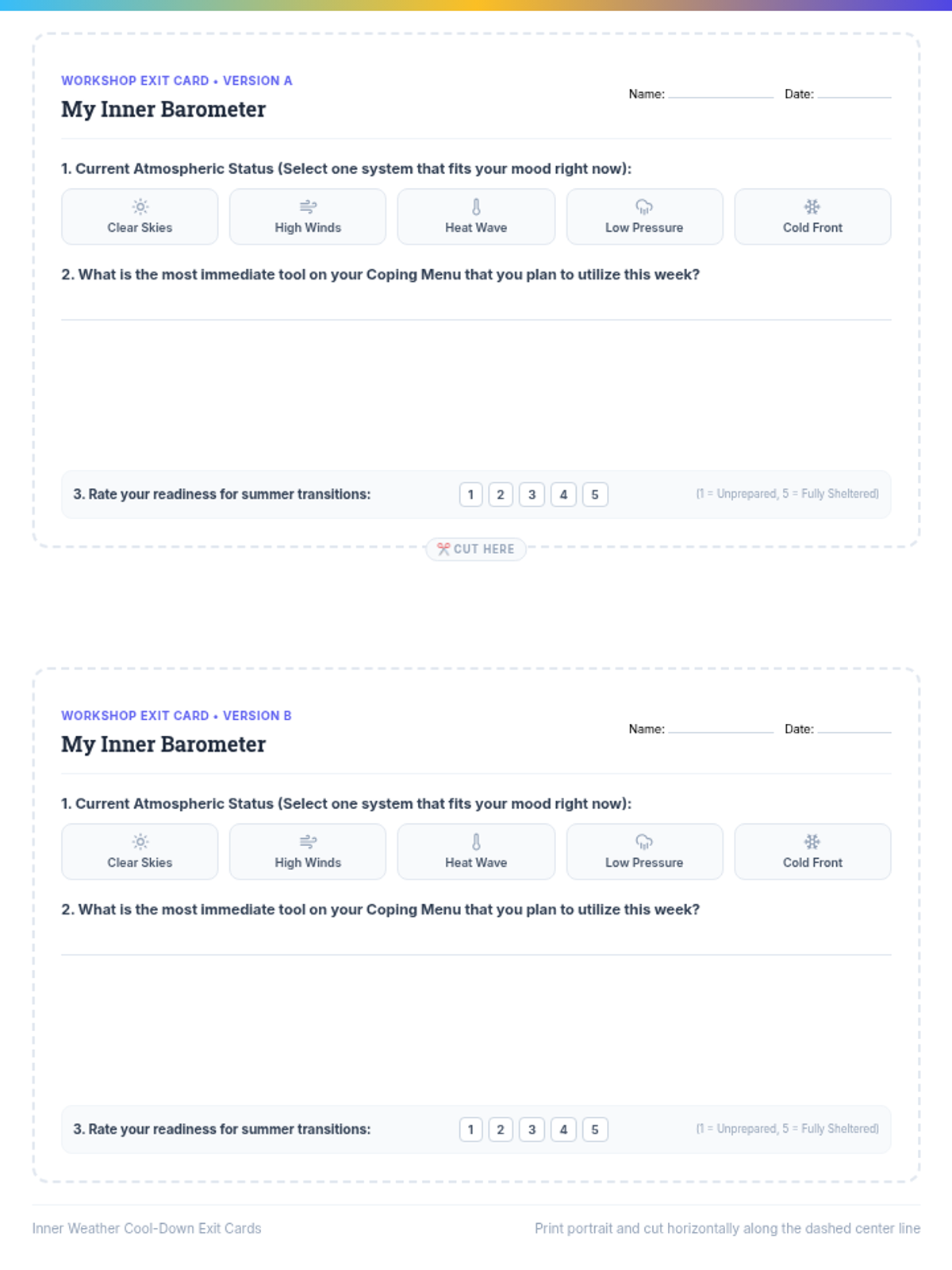
A double-entry printable exit card for high school students. Designed to quickly gauge current somatic atmospheric pressure, selected coping tools, and baseline readiness score.
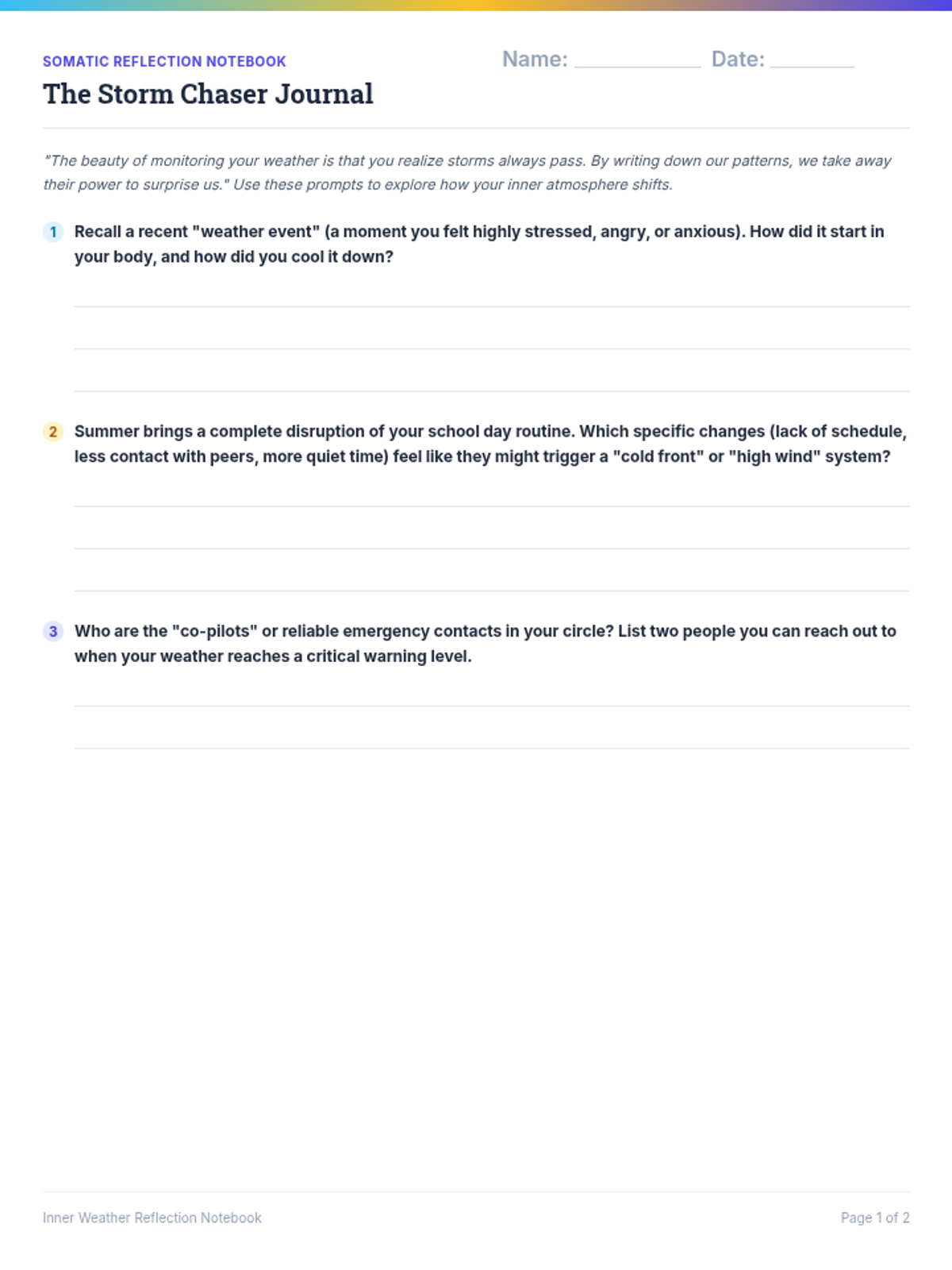
The student reflection journal and Summer Coping Menu worksheet. Features prompt spaces for historical and future-facing transition reflections, and a highly structured, categorized checklist to develop a summer coping plan.
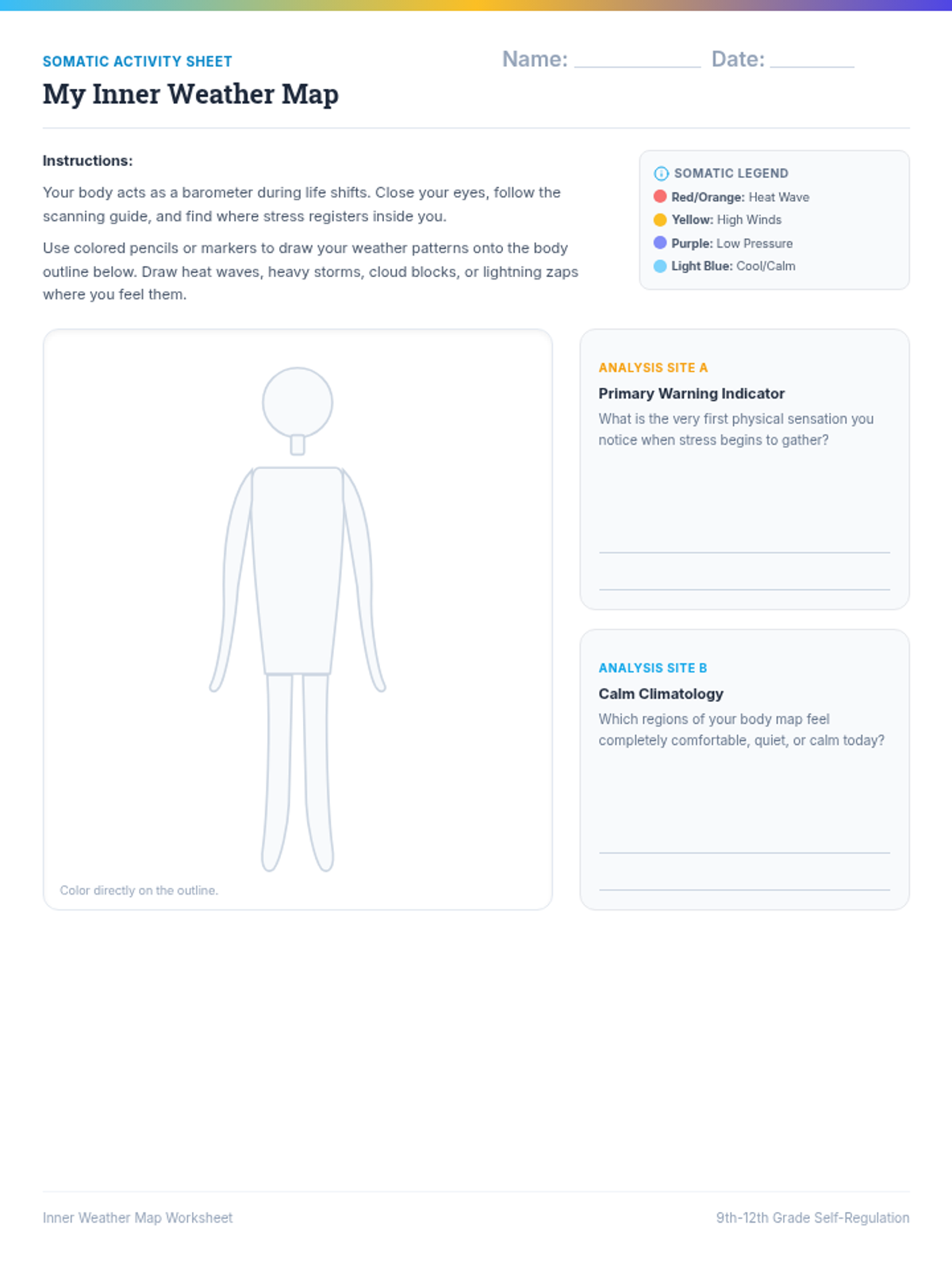
The student-facing body-mapping worksheet. Features an elegant humanoid outline vector for somatic coloring, an easy-to-use legend, and structured writing lines to identify stress warning systems.
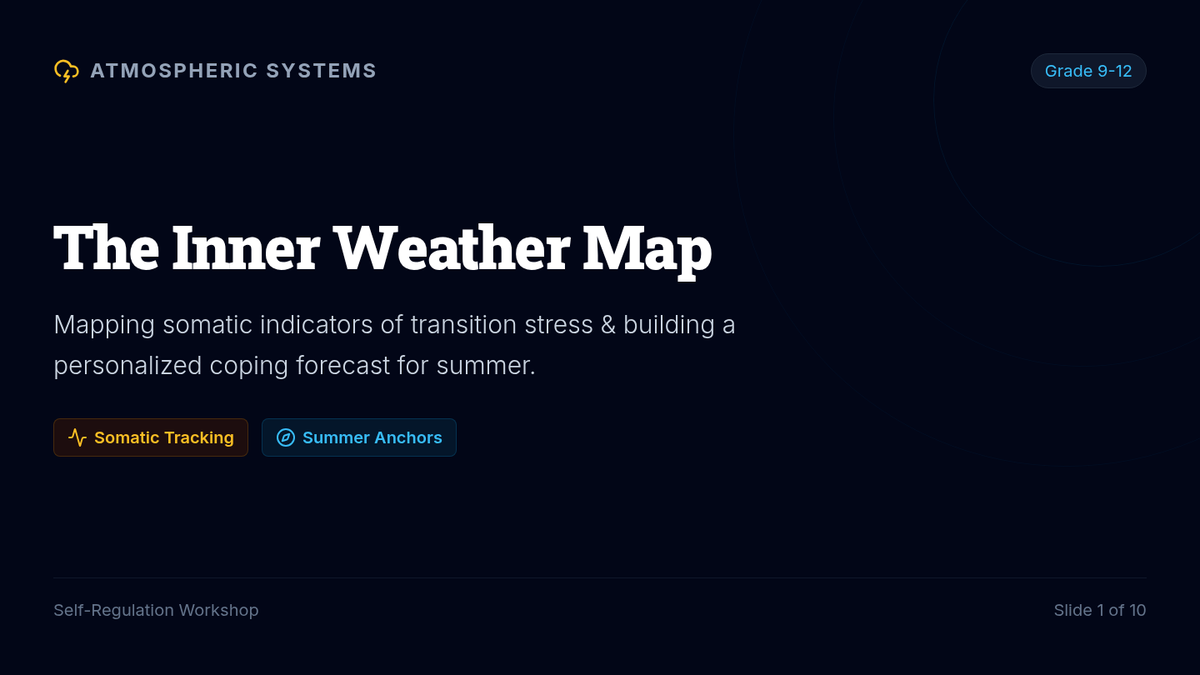
A highly stylized and visually engaging slide deck designed for presentations. Features large, high-readability slides introducing somatic awareness, defining weather systems, and prompting student mapping and coping reflections.
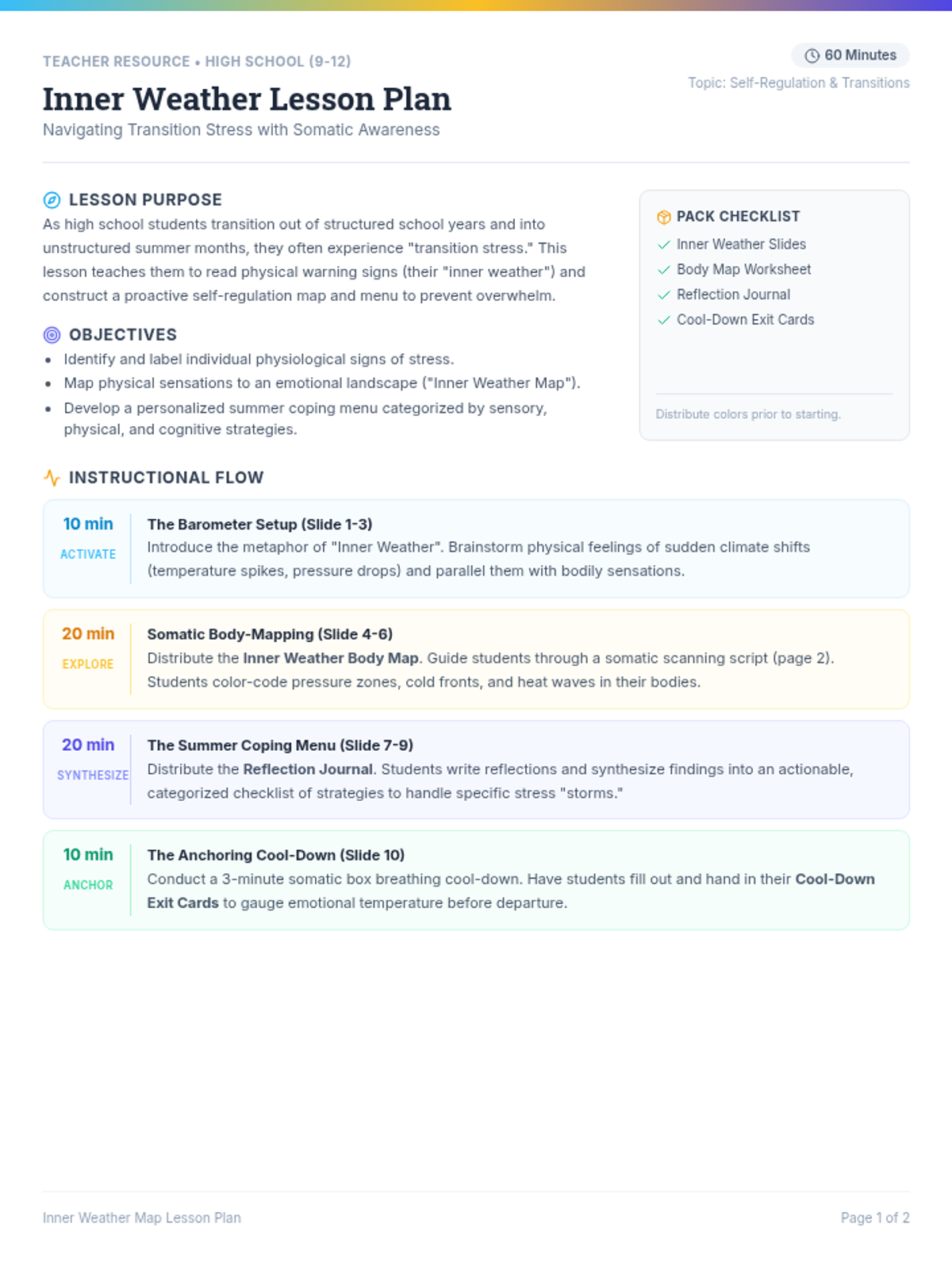
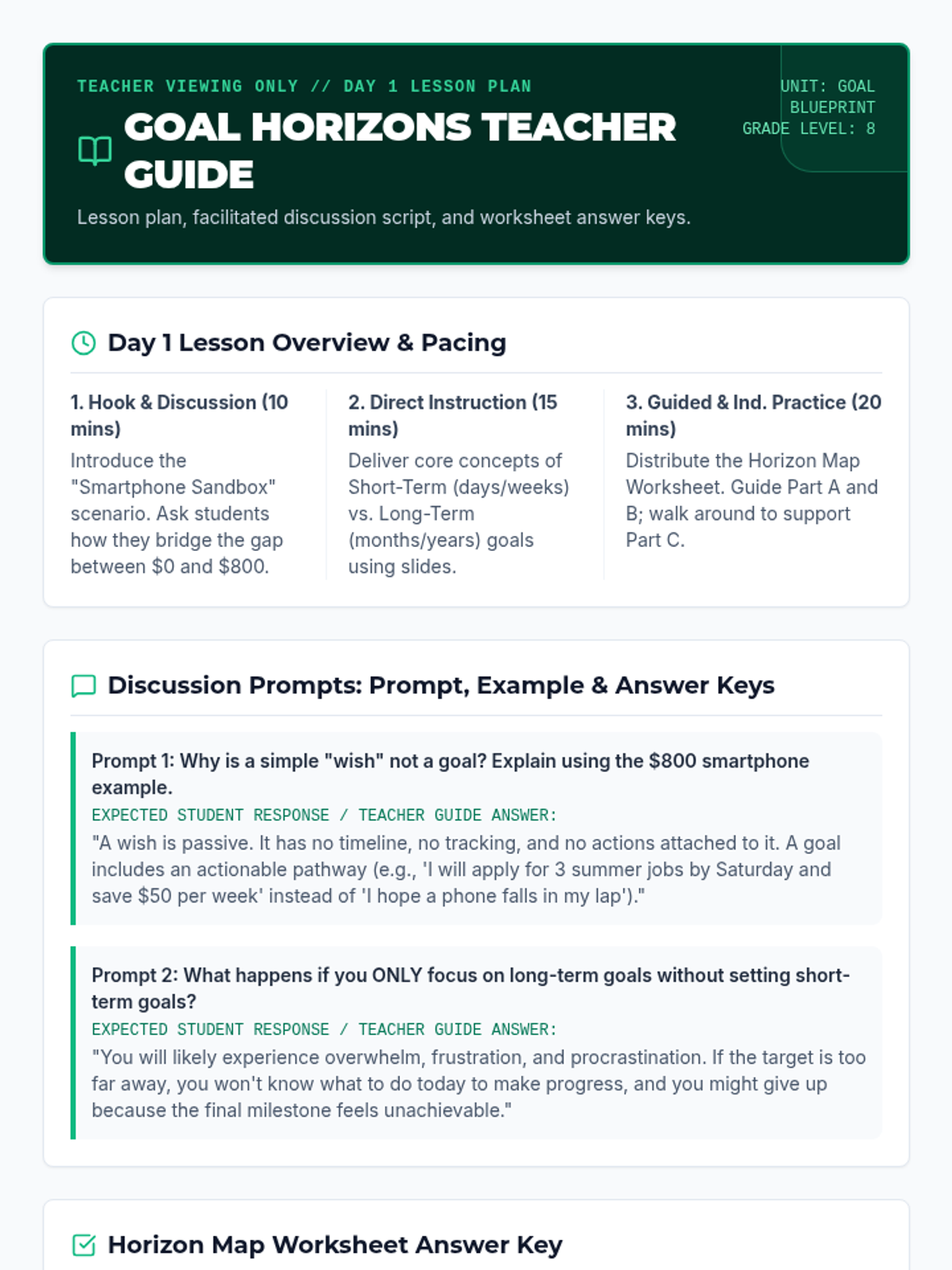
The comprehensive teacher guide/lesson plan for 'Inner Weather Map'. Features lesson objectives, pacing, somatic scanning scripts, and trauma-informed/differentiation tips for high school educators.
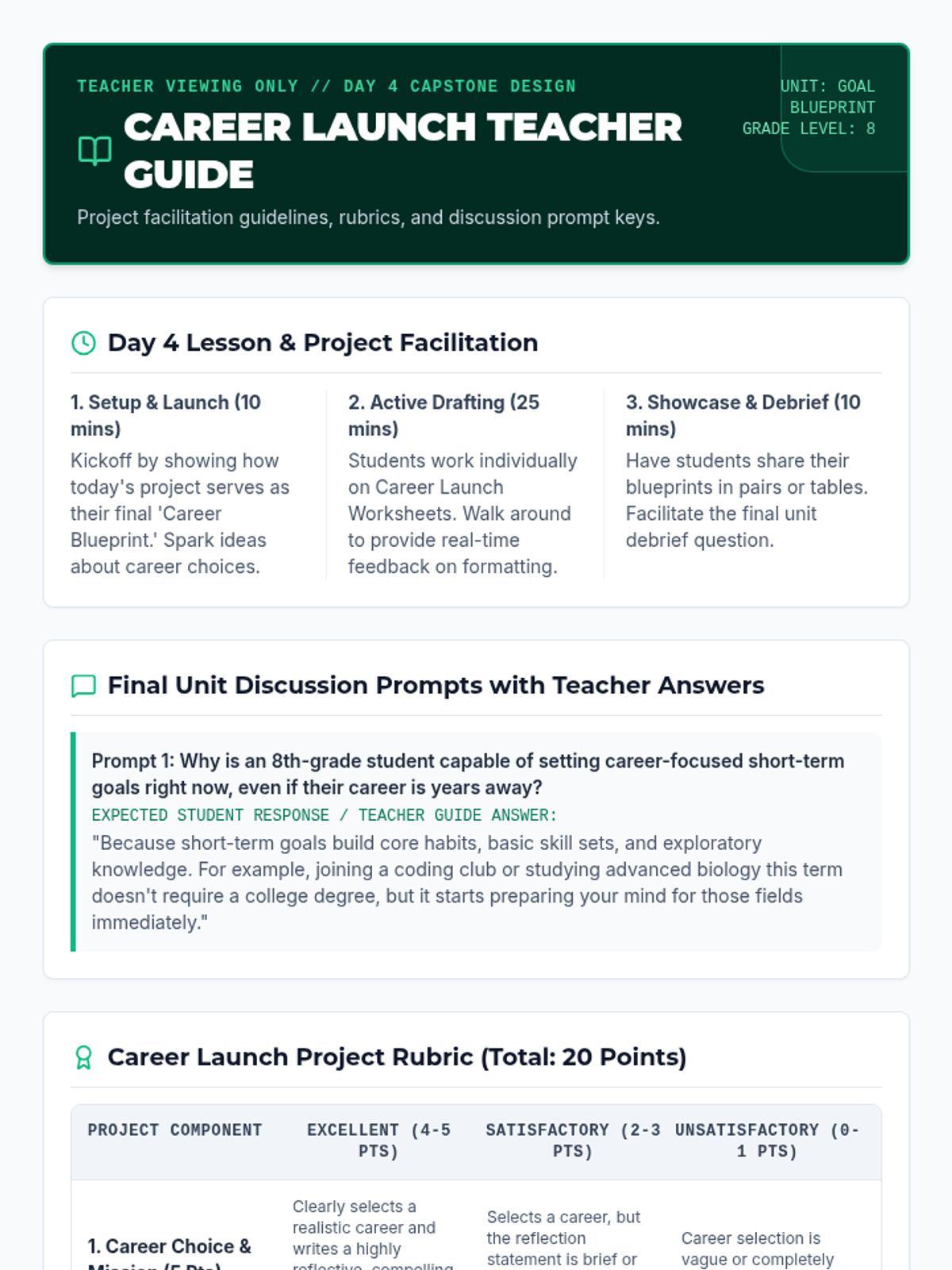
A highly useful teacher companion guide containing the Lesson 4 project rubrics, pacing, specific discussion prompts, and complete answer keys for the student worksheet.
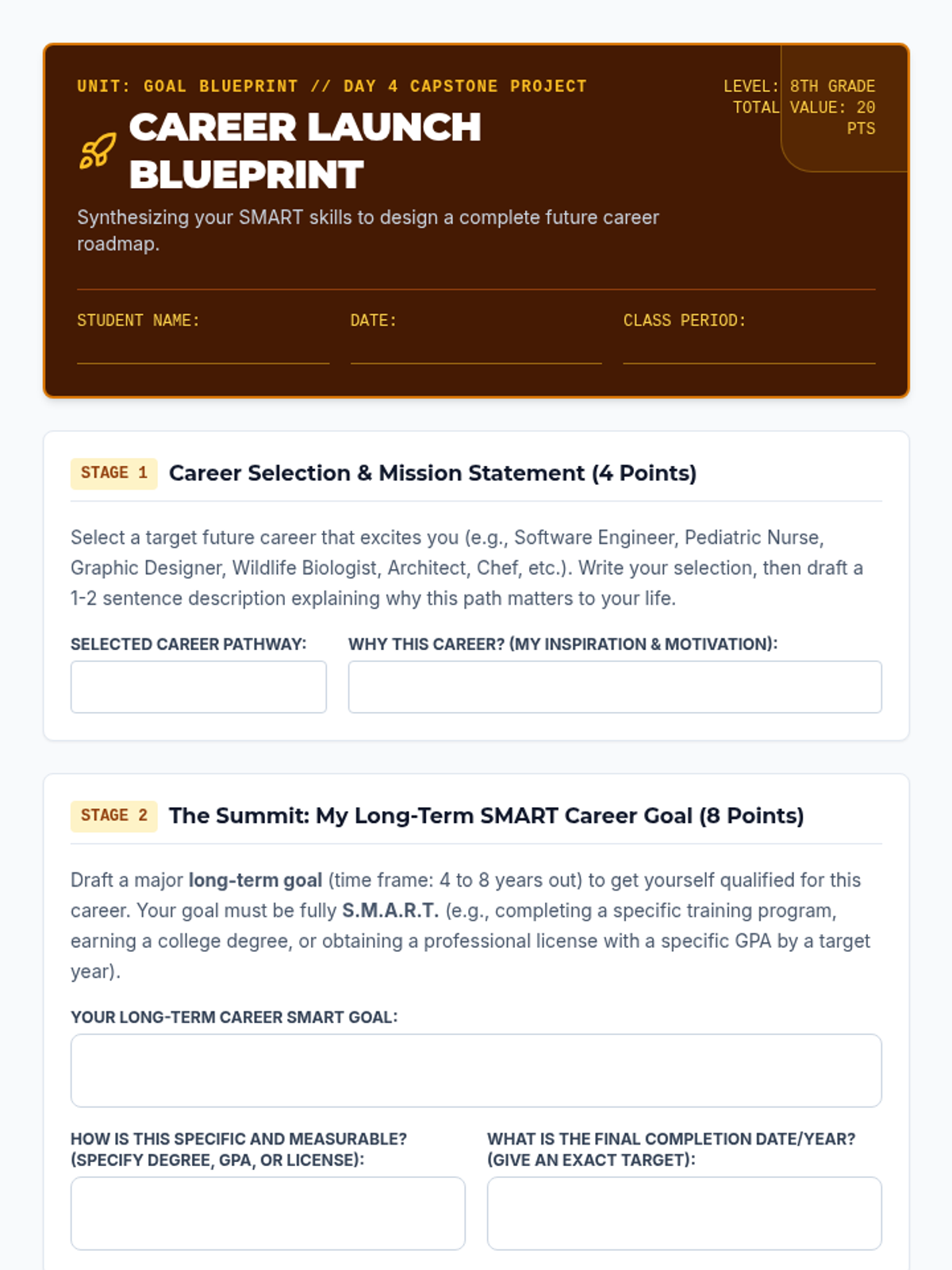
A structured student template sheet where 8th-grade students synthesize their knowledge to select a future career pathway and construct fully-functional short-term and long-term SMART goals to achieve it.
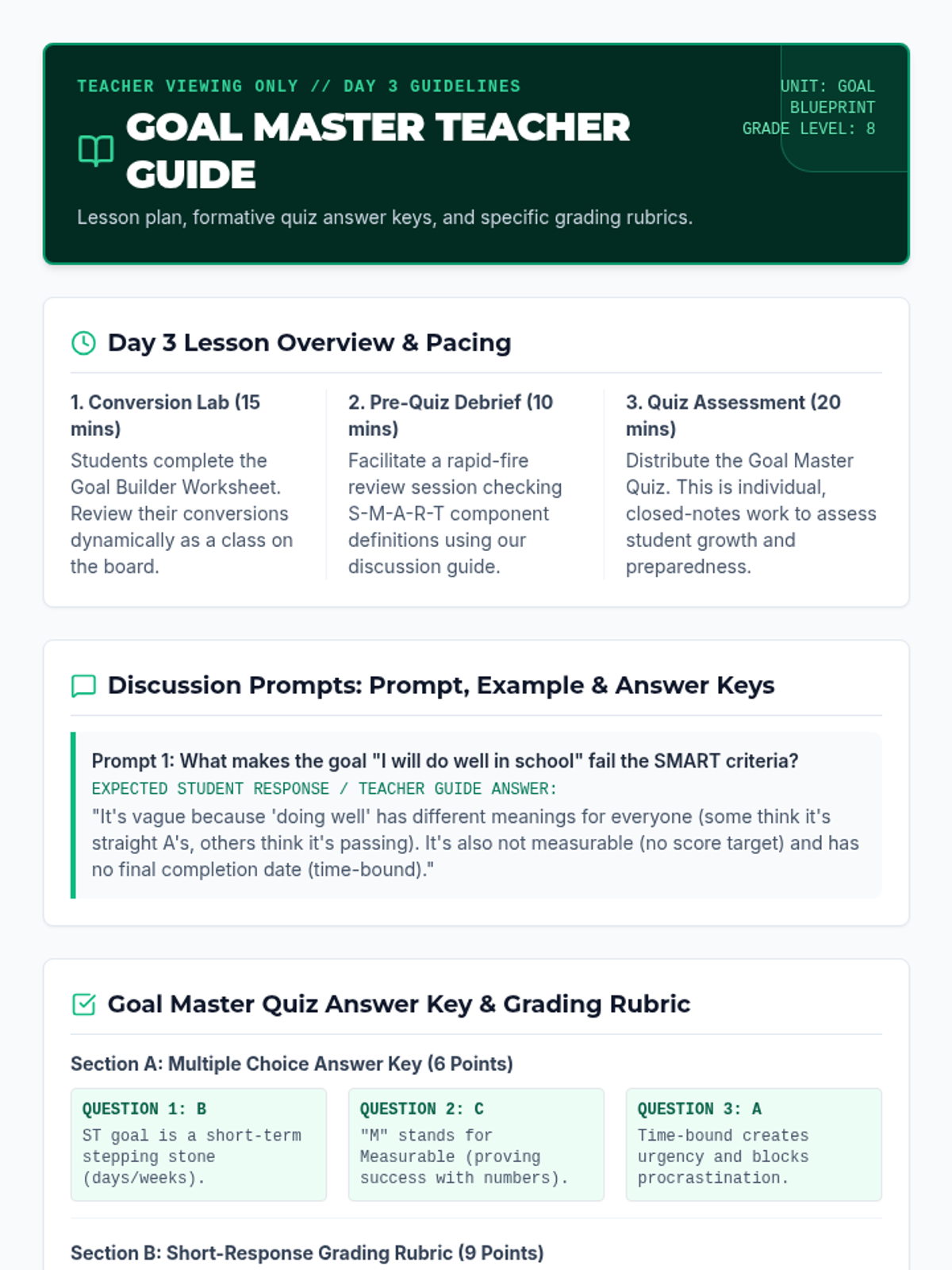
A highly useful teacher companion guide containing the Lesson 3 pacing, specific discussion prompts, and complete answer keys for the student worksheet.
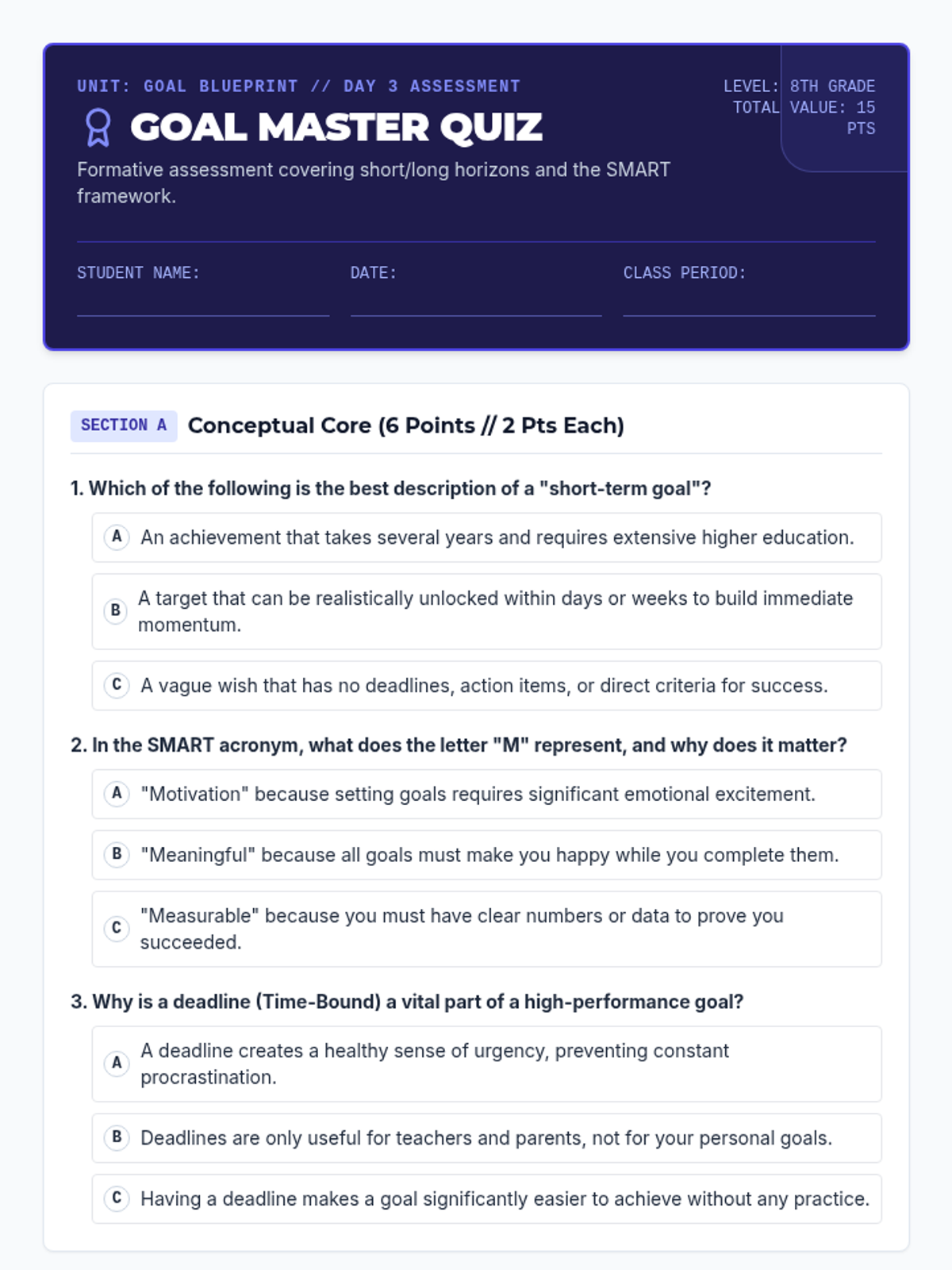
A structured, beautiful summative quiz with 3 high-cognitive-load multiple-choice questions and a rich short-response application section for grading SMART goal fluency.
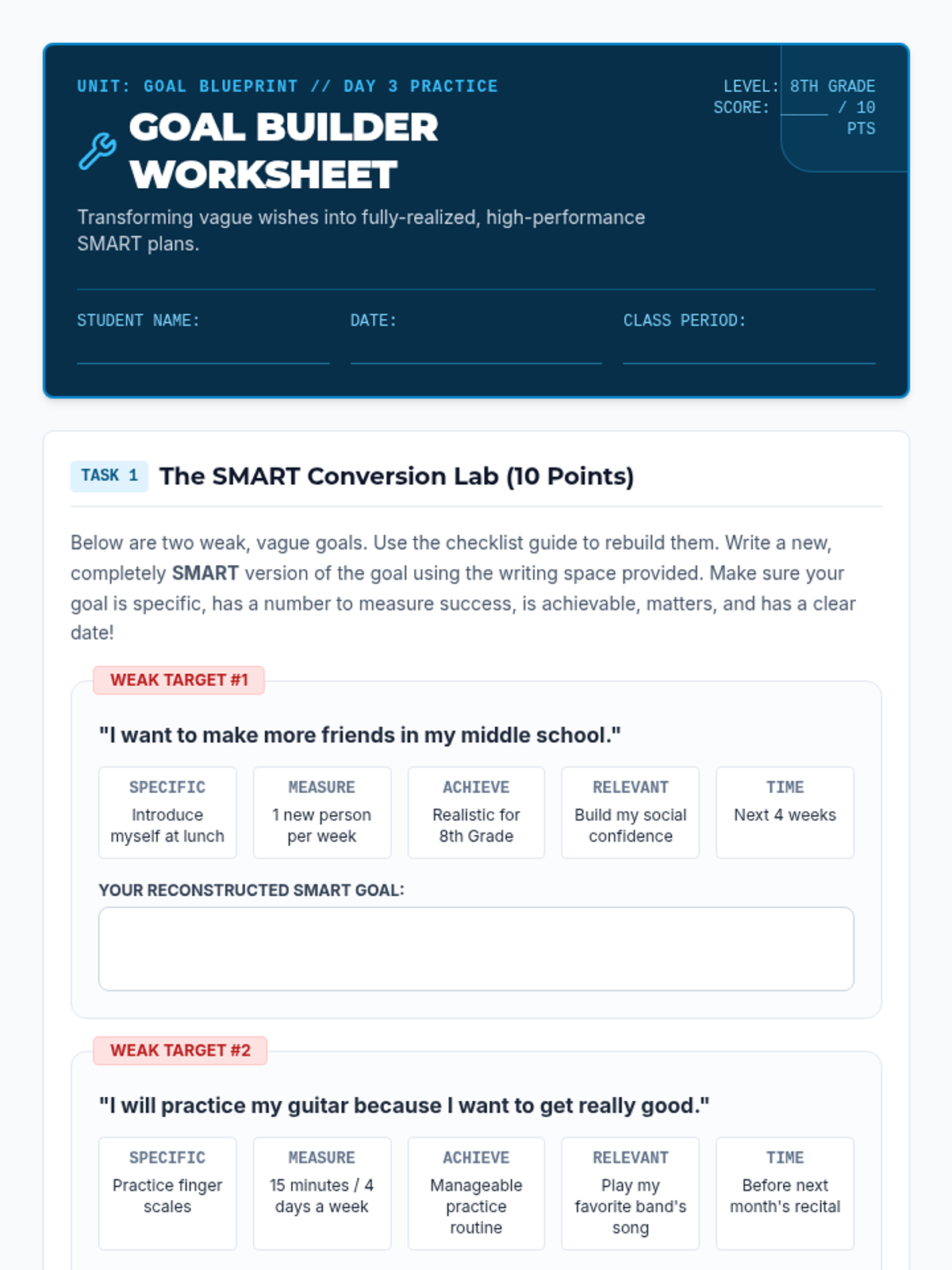
A structured, highly attractive student practice worksheet where 8th-grade students practice converting weak, vague goals into high-performance SMART goals.
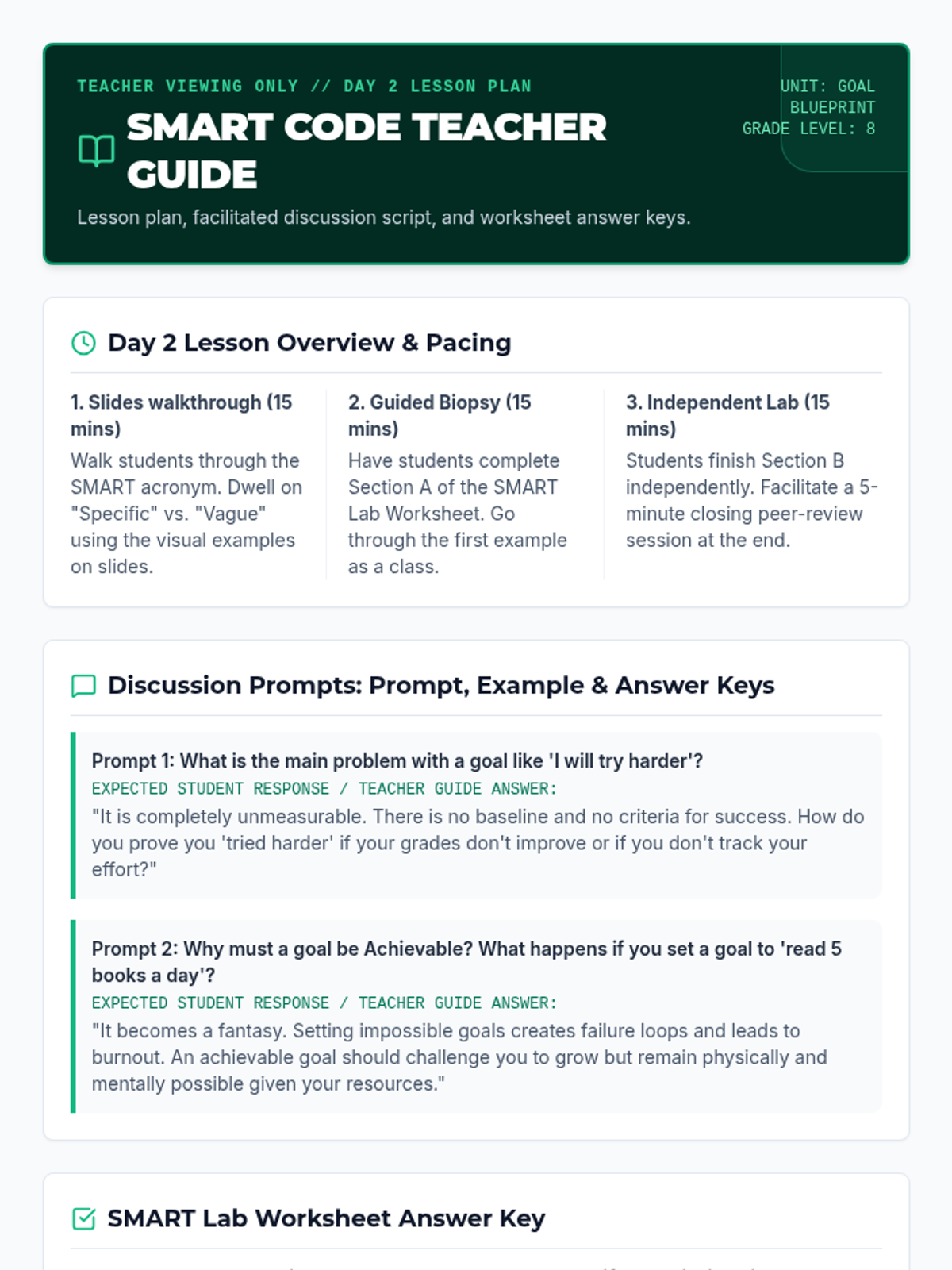
A highly useful teacher companion guide containing the Lesson 2 pacing, specific discussion prompts, and complete answer keys for the student worksheet.
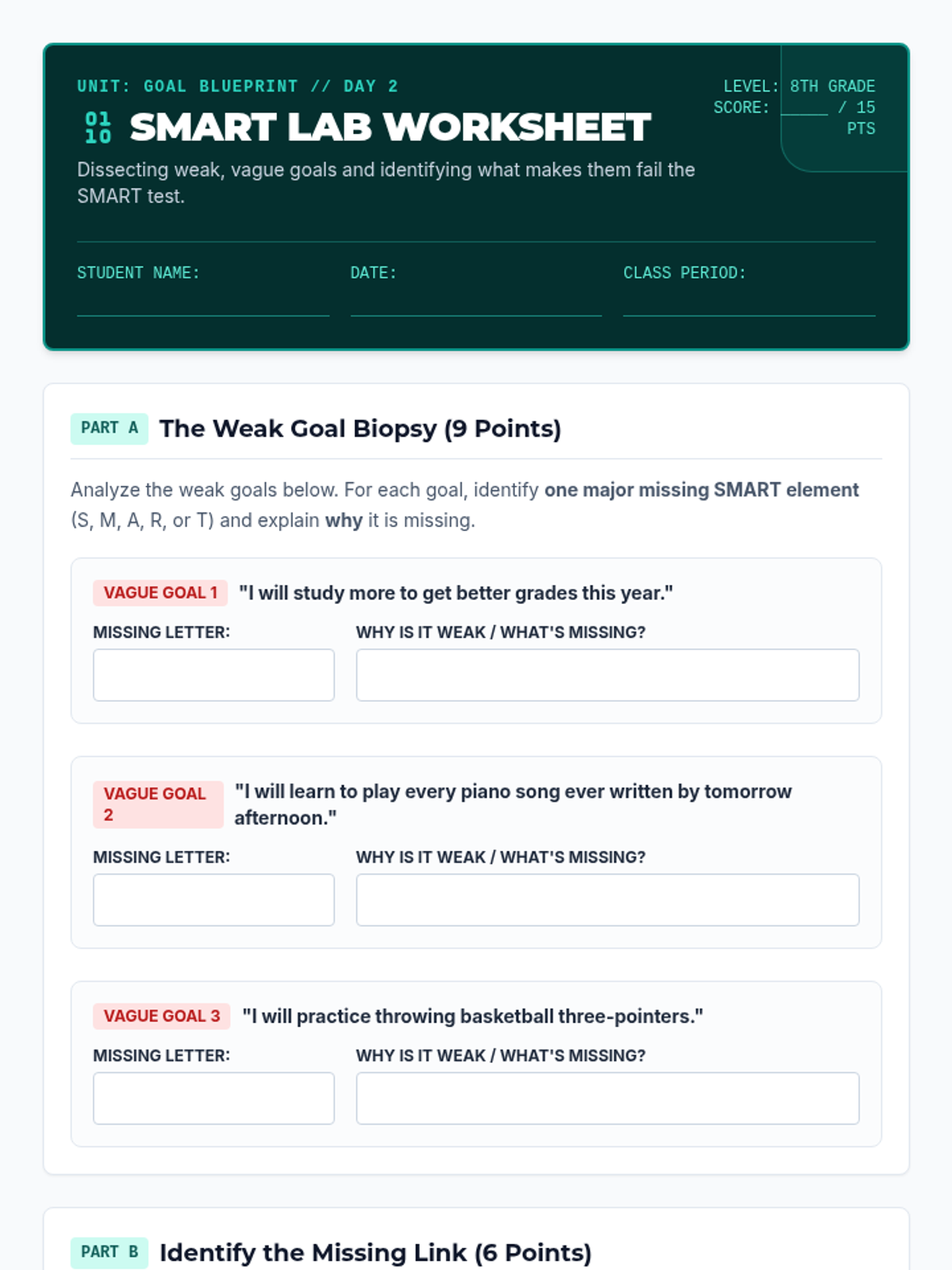
A structured, highly attractive student activity sheet where 8th-grade students analyze weak goals and determine what SMART variables are missing.
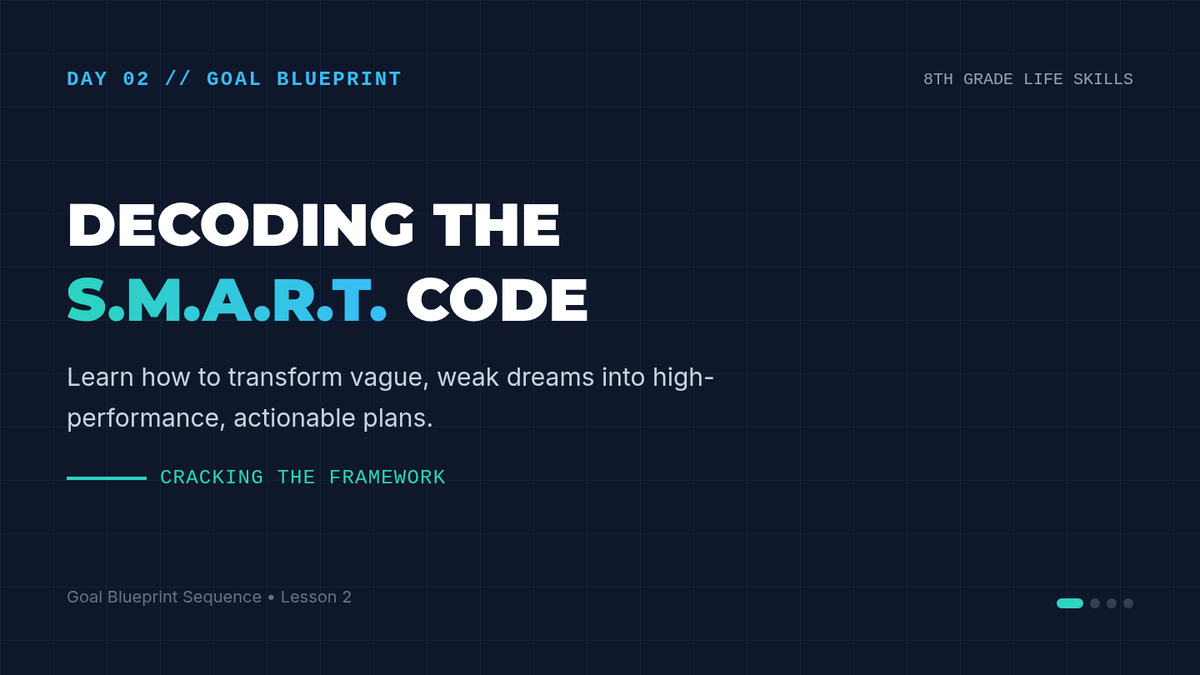
An engaging, educational 4-slide presentation defining and illustrating the acronym S.M.A.R.T. using clean layouts, high-contrast text, and 8th-grade relevant school examples.
A highly useful 1-page teacher companion sheet that contains pacing, specific discussion prompts with sample answers, and a precise answer key for the student worksheet.
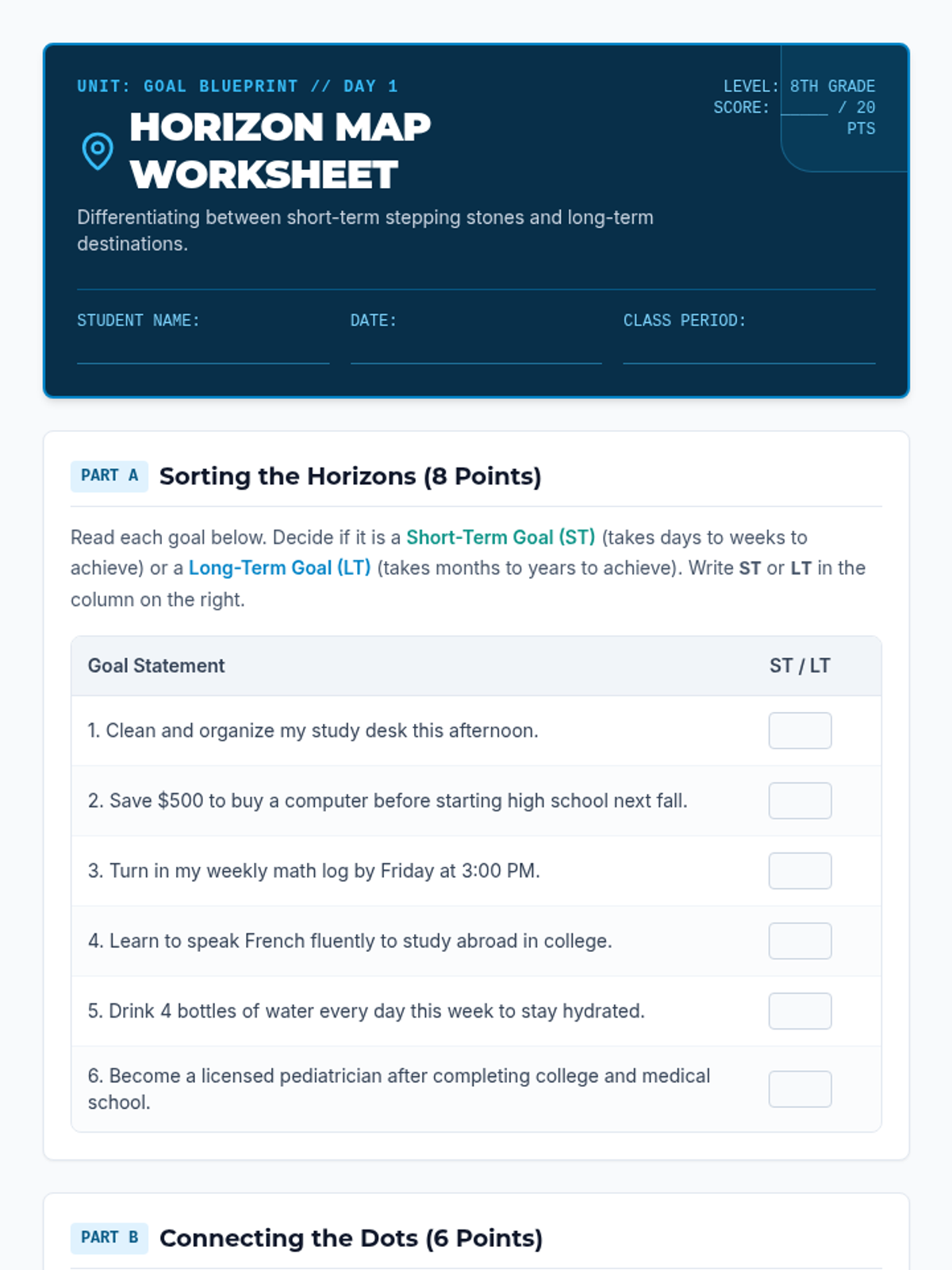
A structured, highly attractive 8.5x11 printable worksheet designed to help 8th-grade students practice classifying short-term and long-term goals and draft their own connecting milestones.
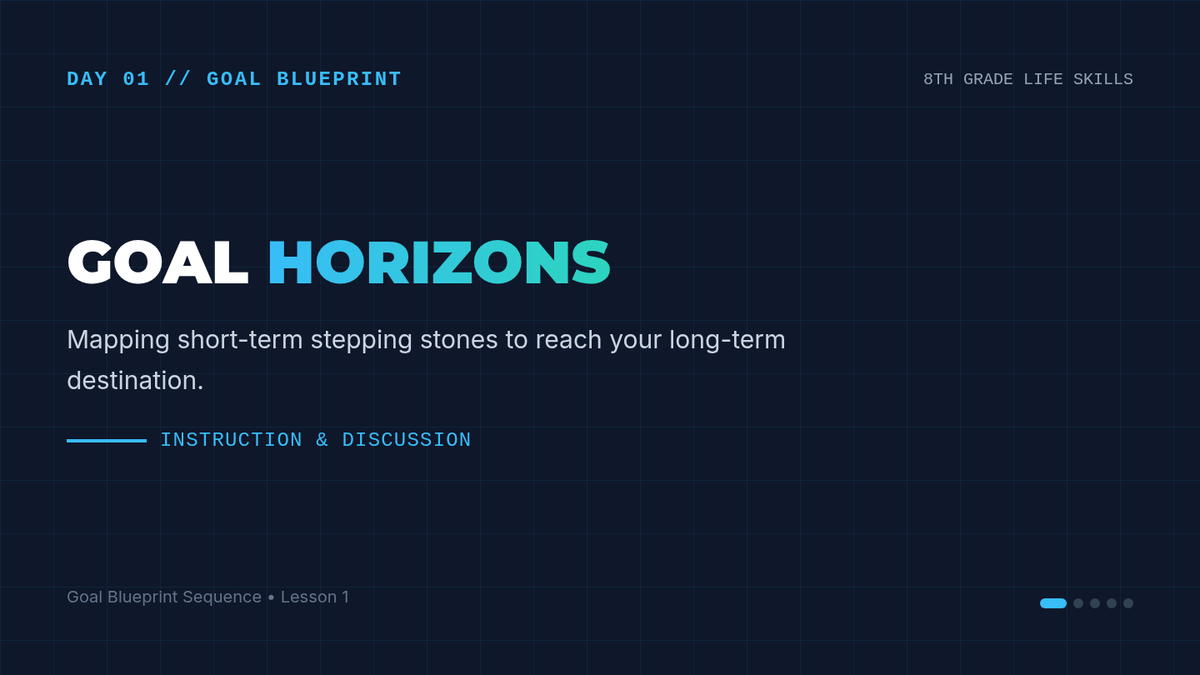
An engaging, high-quality 5-slide introductory presentation about goal horizons, differentiating between short-term and long-term goals. Designed specifically for 8th-grade life skills instruction with a sleek blueprint theme.
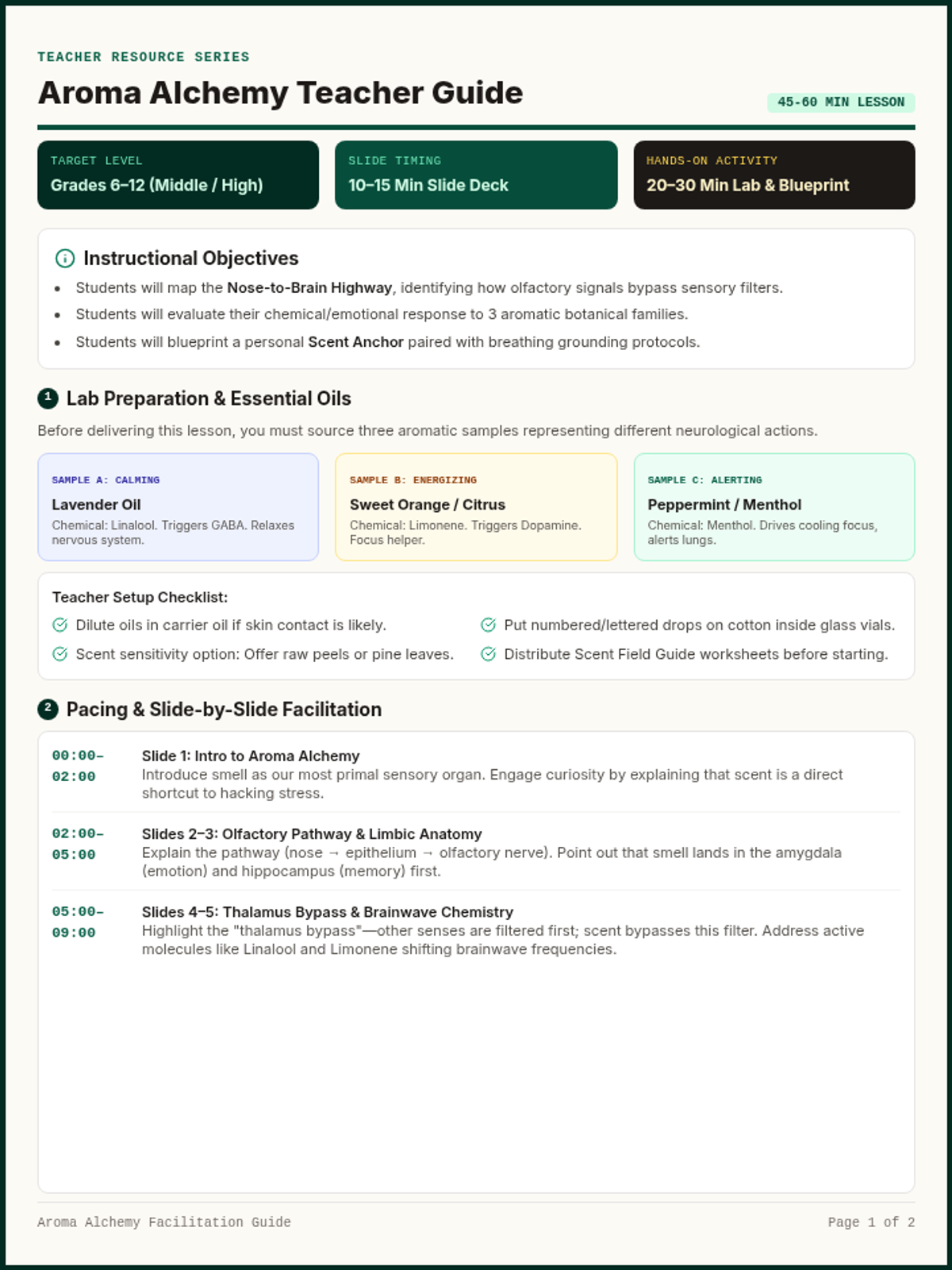
A 2-page teacher facilitation guide featuring lesson setup instructions, essential oil sourcing guides, slide script pointers, science explainers, and common misconceptions.
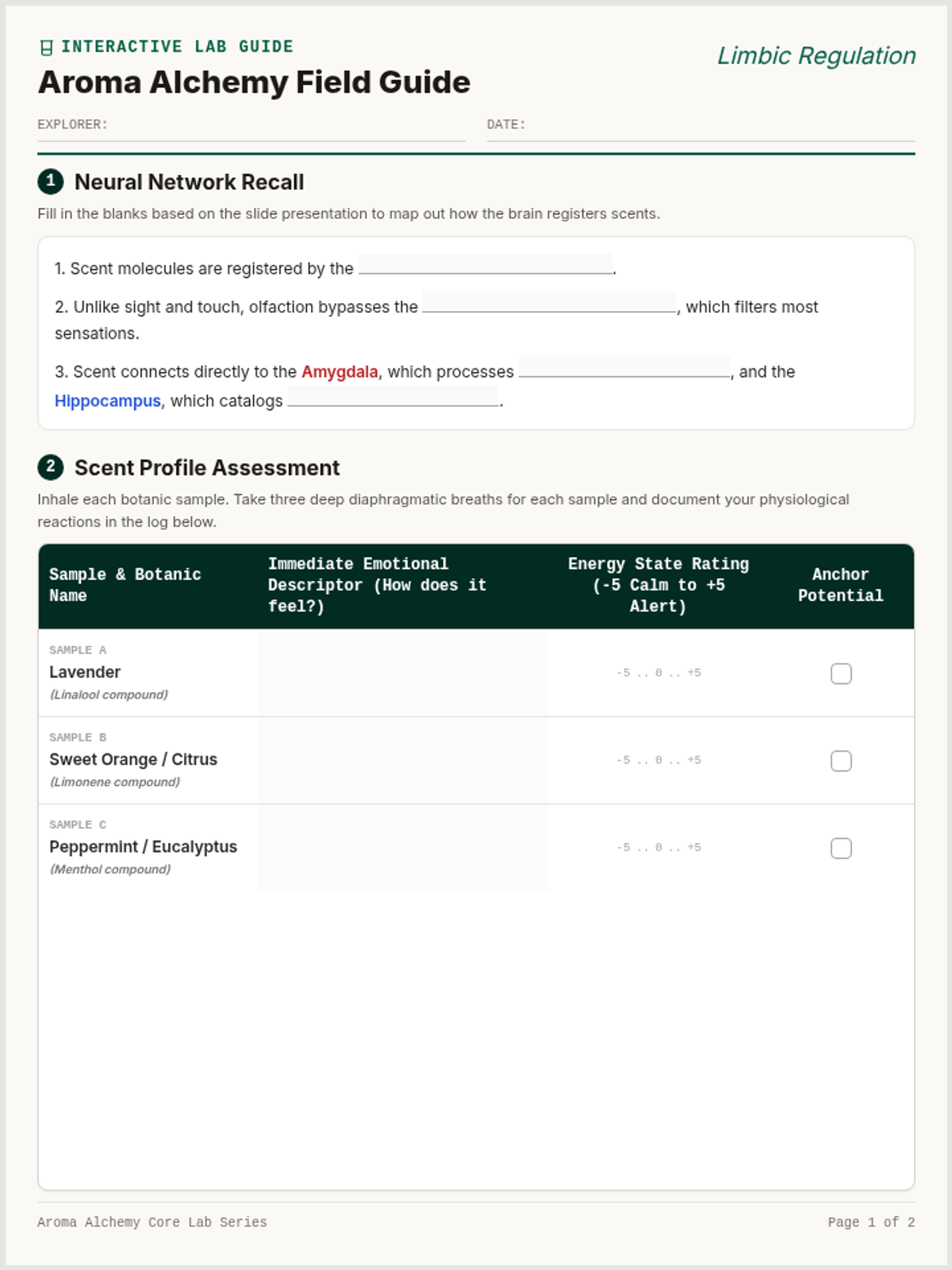
A 2-page student workbook containing anatomy recall, a structured scent evaluation lab table, and personal anchoring strategy blueprints.
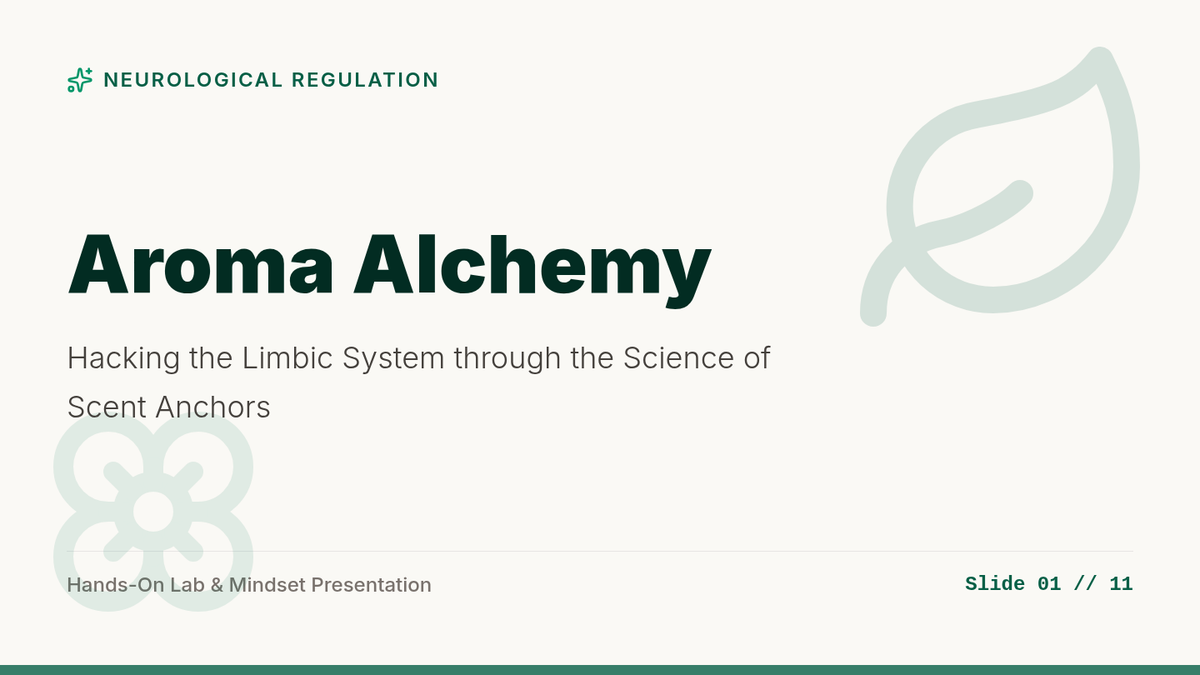
An 11-slide presentation themed softly botanical in cream and sage green. Explores the science of smell, olfactory anatomy, the limbic system, and how students can utilize scent anchoring as a self-regulation strategy.
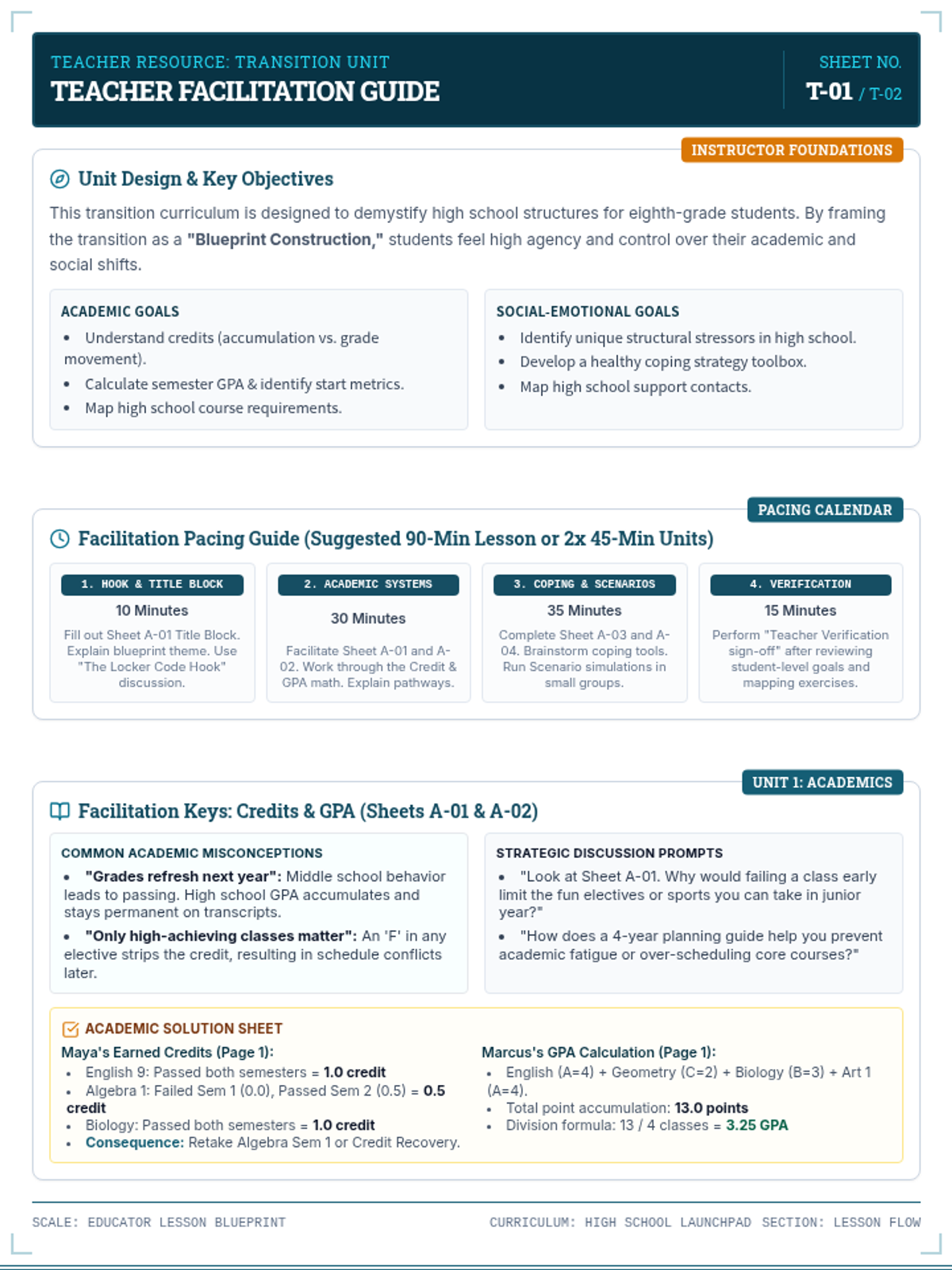
A comprehensive 2-page teacher facilitation guide to support the delivery of the High School Blueprint Workbook, complete with pacing guidelines, discussion prompts, common student misconceptions, and answer keys.
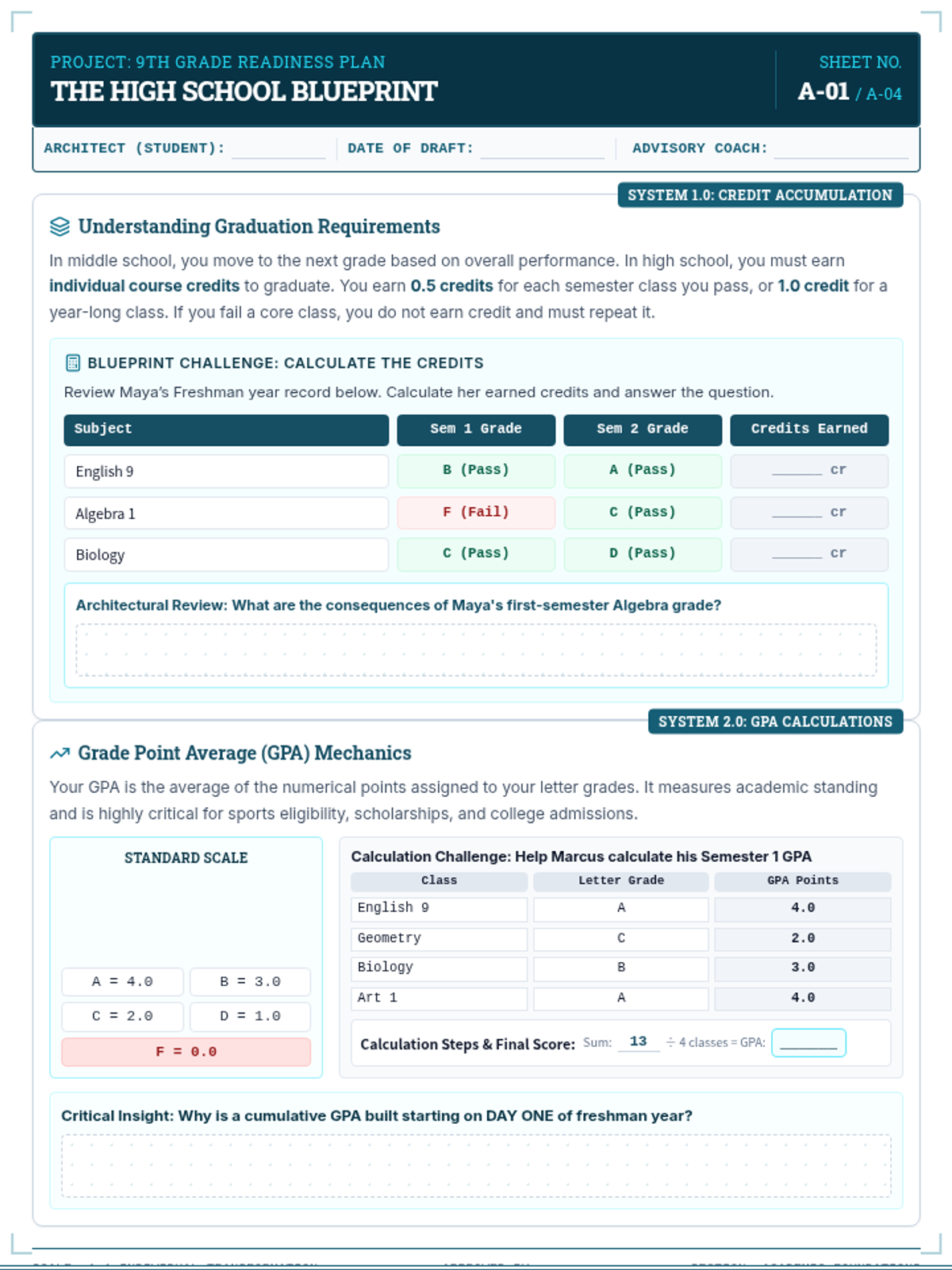
An interactive 4-page student workbook styled with an architectural blueprint aesthetic. It covers core high school transitions, including GPA calculations, credit accumulation, course scheduling, coping mechanisms for stress, and high school support maps.
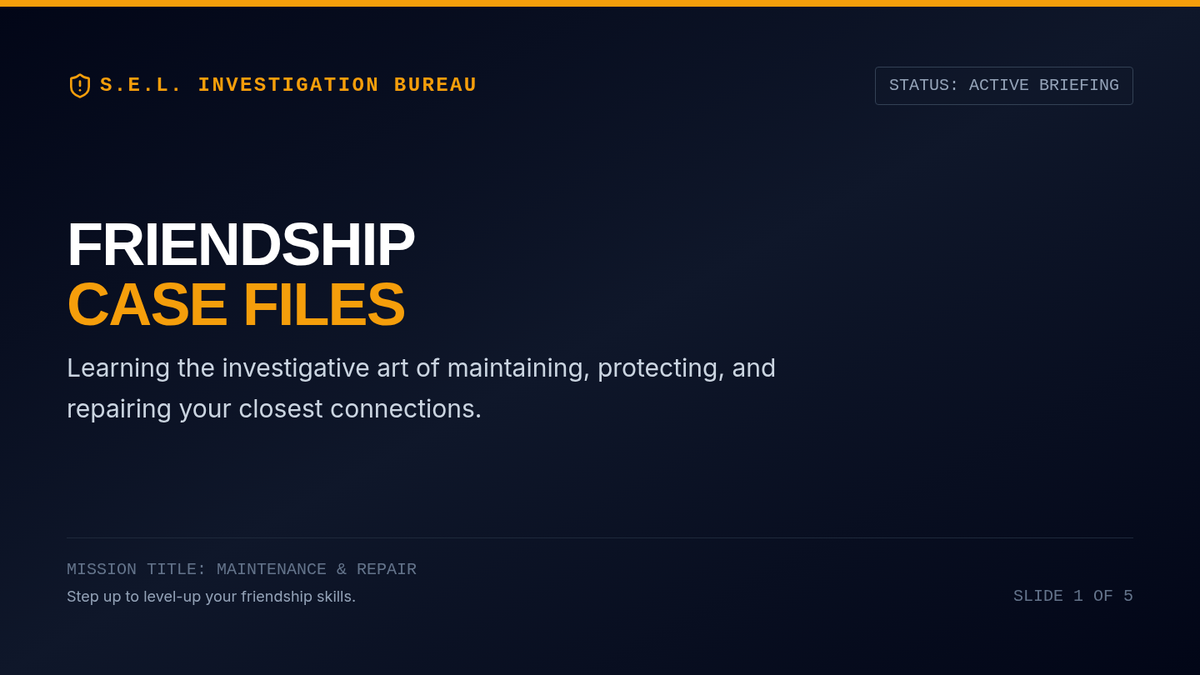
An engaging 5-slide introductory presentation styled as a detective agency briefing. Sets up the "Friendship Maintenance" analogy, outlines core friendship pillars, provides a practice case, and assigns the classroom mission. Minimum font sizes set to 24px+ for legibility.
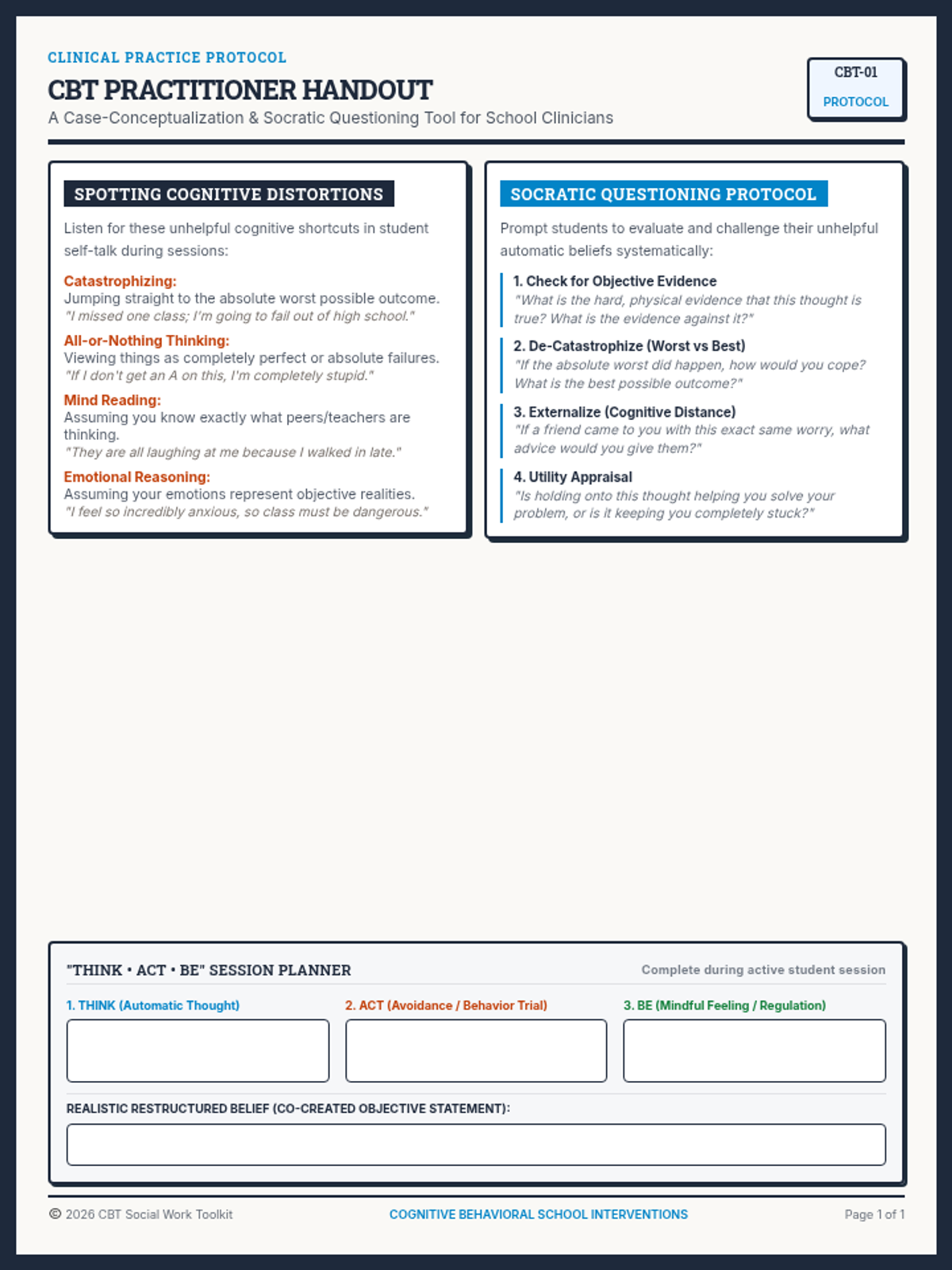
A practical diagnostic and socratic questioning handout for school social workers implementing Cognitive Behavioral Therapy (CBT), featuring cognitive distortions definitions, a questioning protocol, and a co-creation case planner.