A retro 80s arcade-themed 'Stranger Things' encouragement letter for testing, featuring a 'System Reload' (4-7-8) breathing activity. Revised for contrast and single-page fit.
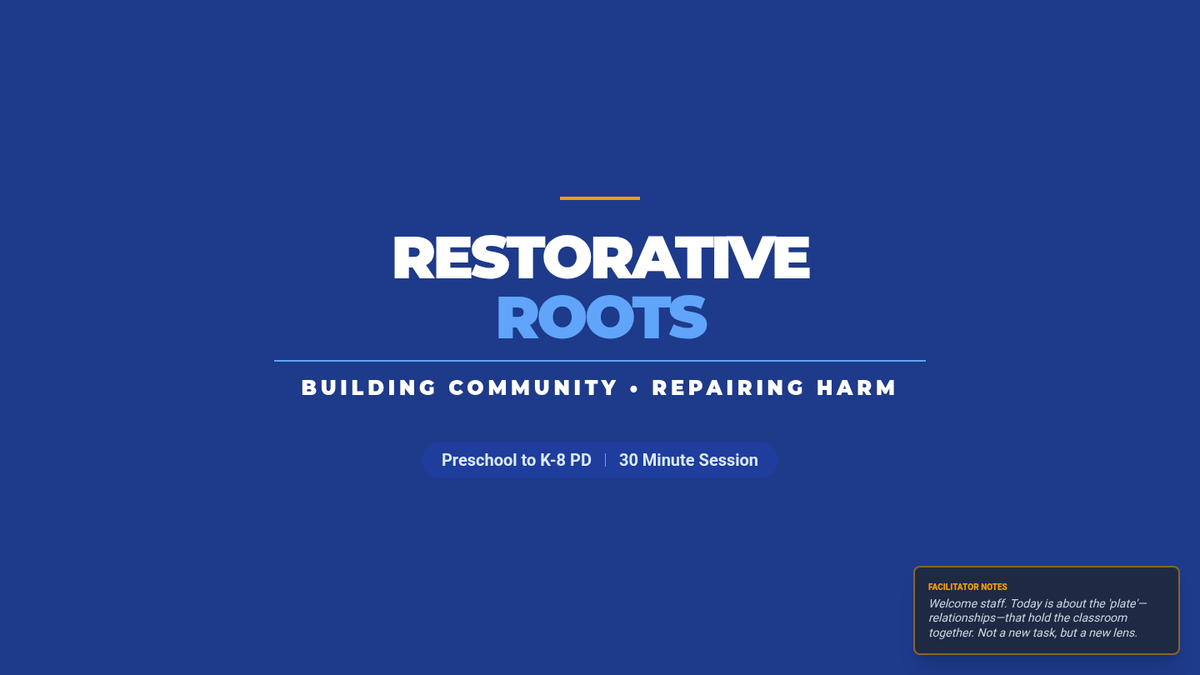
A professional 10-slide presentation for staff PD on restorative practices, featuring a high-contrast 'Blueprint' theme. It covers mindset shifts, affective statement formulas, circle structures, and re-entry think sheets with specific adaptations for preschool and behavior school contexts. Includes visible facilitator notes on each slide with fixed positioning.
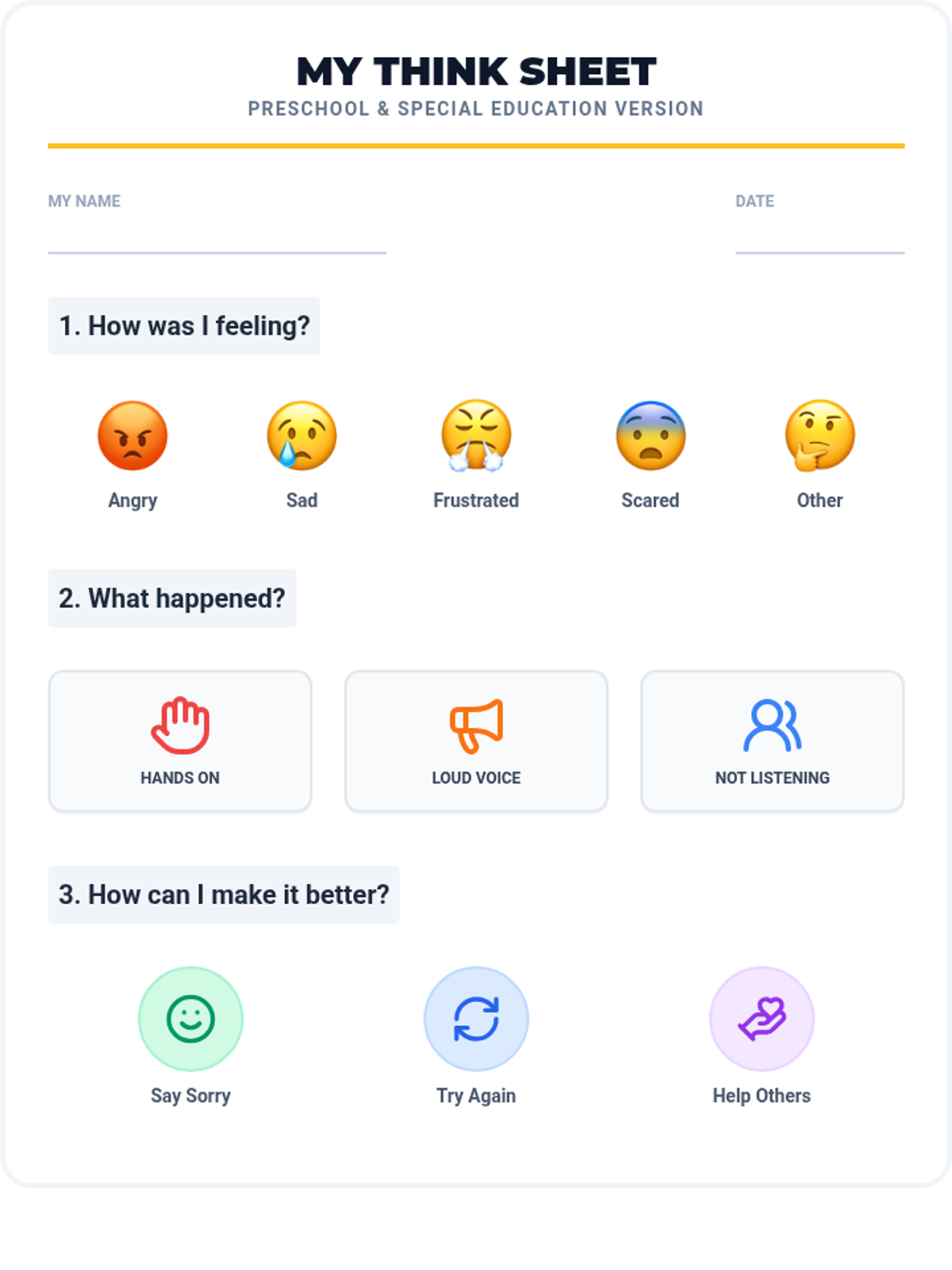
A set of restorative think sheets designed for two distinct environments: a highly visual version for preschool/special education and a structured reflection-based version for K-8 students in a behavior-focused setting. Completely blank work areas for student handwriting.
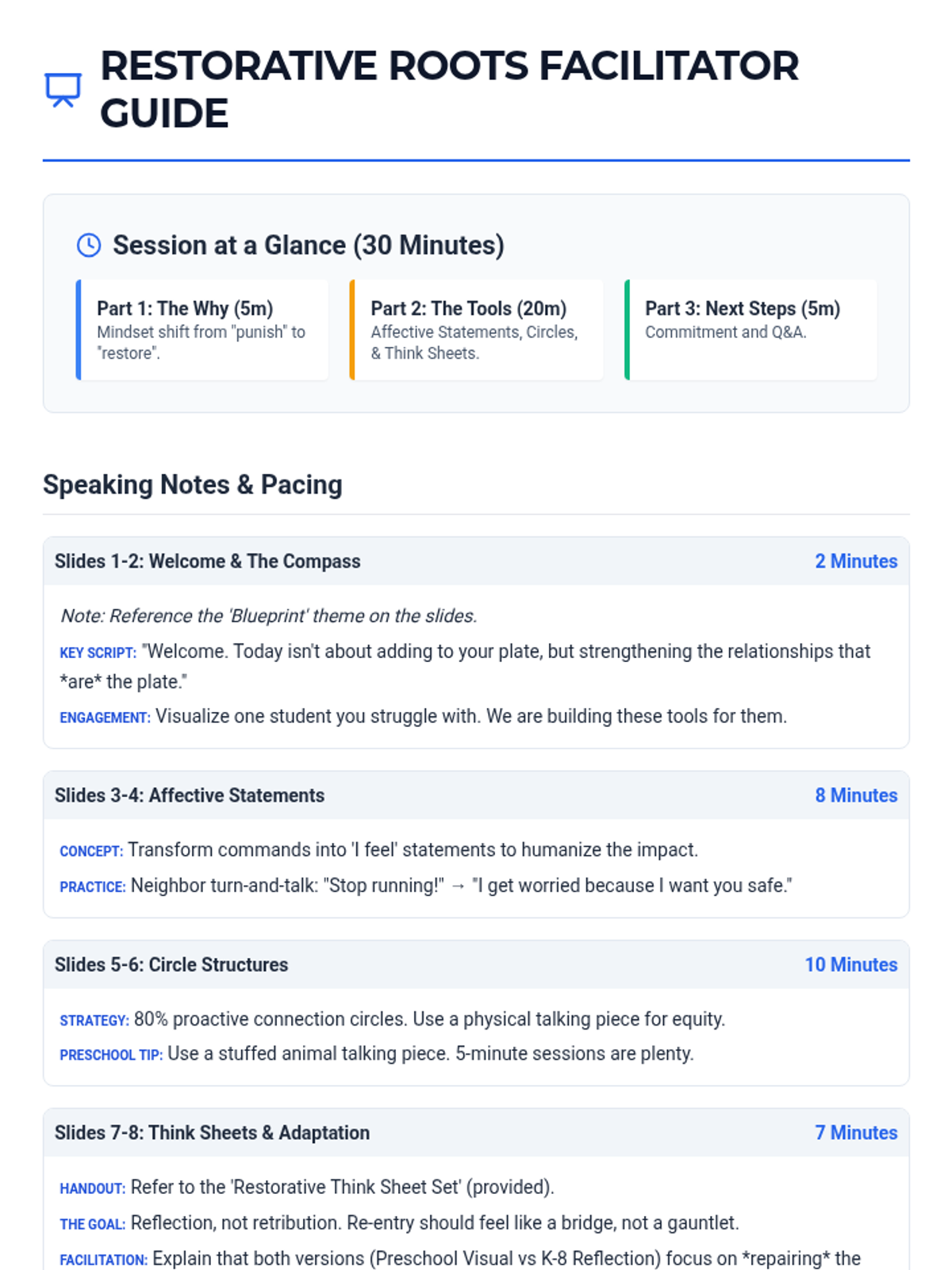
A comprehensive facilitator guide for the Restorative Roots PD session, including a slide-by-slide script, pacing suggestions, and practical tips for adapting content for preschool and K-8 behavior school staff. Explicitly references the Think Sheet handouts.
8th Grade slide deck focusing on peer influence and collective accountability. Includes a 'One-Stays-Three-Stray' collaborative norm-setting challenge.
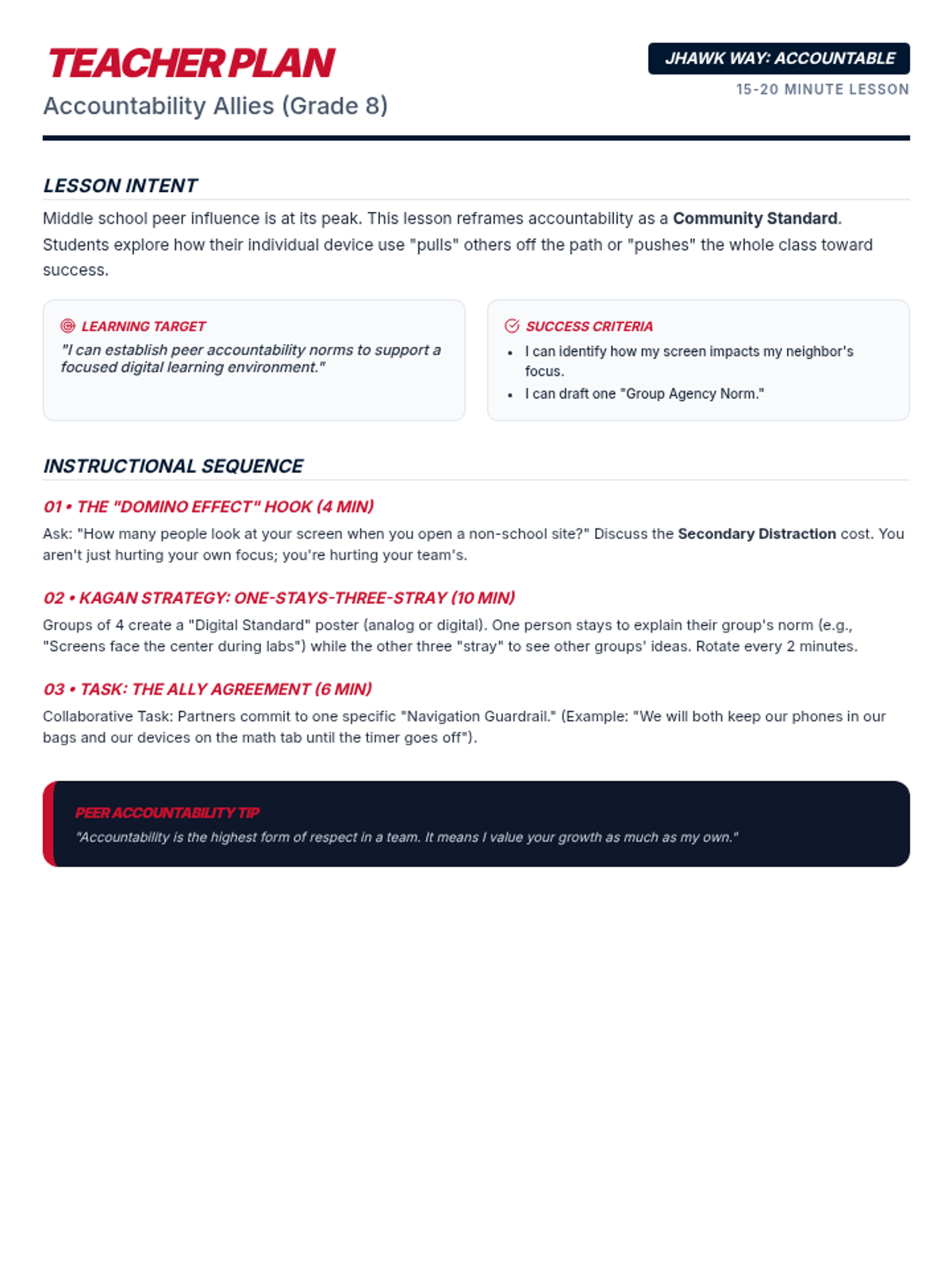
Teacher plan for 8th Grade. Reframes accountability as a team effort and peer influence. Uses the 'One-Stays-Three-Stray' Kagan strategy for collaborative norm-setting.
7th Grade slide deck focusing on the transition from compliance to digital agency. Includes a 'Quiz-Quiz-Trade' vocabulary challenge.
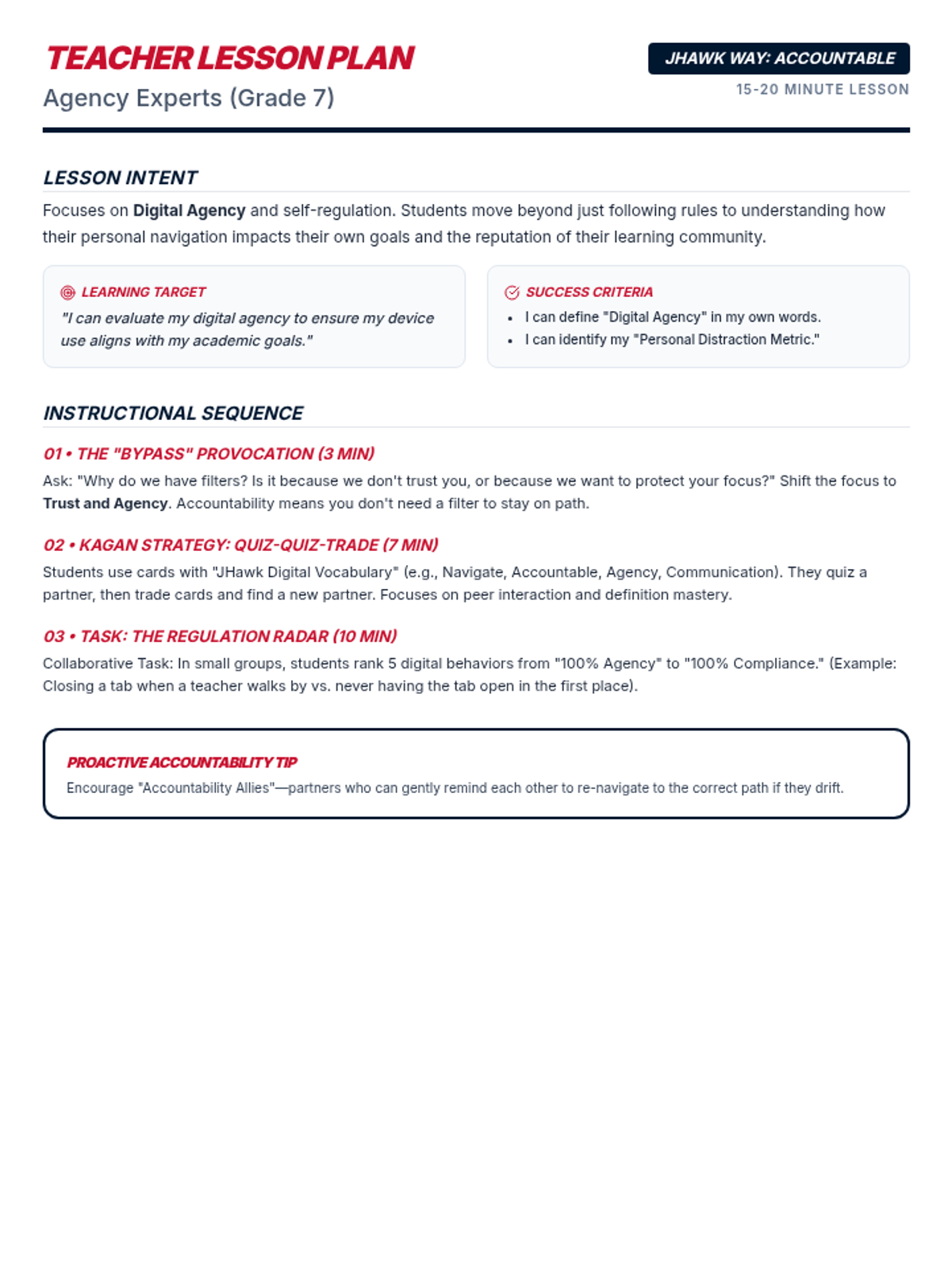
Teacher plan for 7th Grade. Focuses on 'Digital Agency' and self-regulation. Includes the 'Quiz-Quiz-Trade' Kagan strategy for vocabulary mastery.
5th Grade slide deck focusing on leadership and modeling responsible tech habits. Includes 'RoundRobin' Kagan strategy prompt.
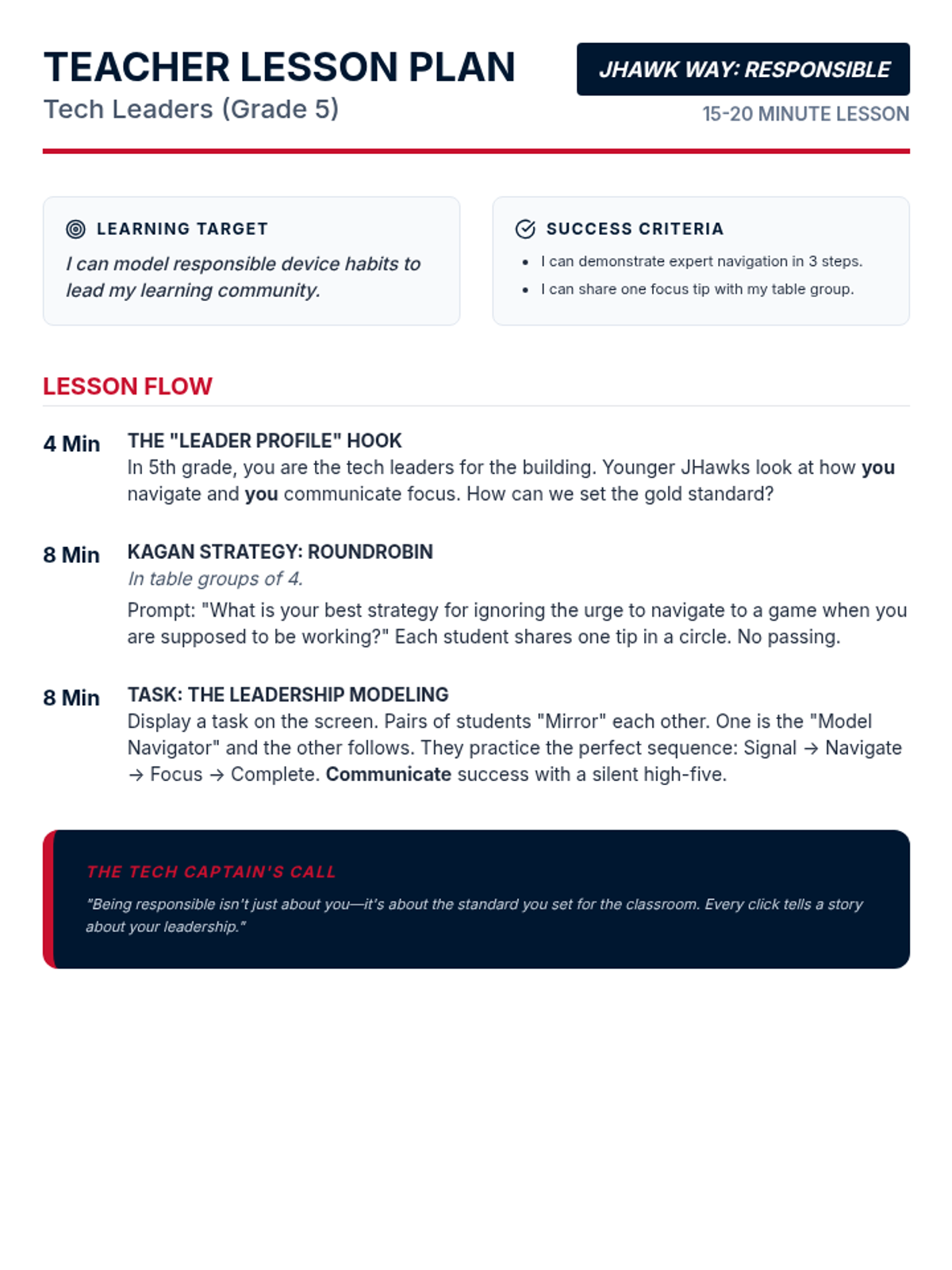
Teacher plan for 5th Grade. Focuses on peer modeling and leadership in digital navigation. Uses the 'RoundRobin' Kagan strategy to share focus strategies.
4th Grade slide deck focusing on task transitions. Includes 'Corners' Kagan strategy prompt and the '3-2-1 Switch' protocol.
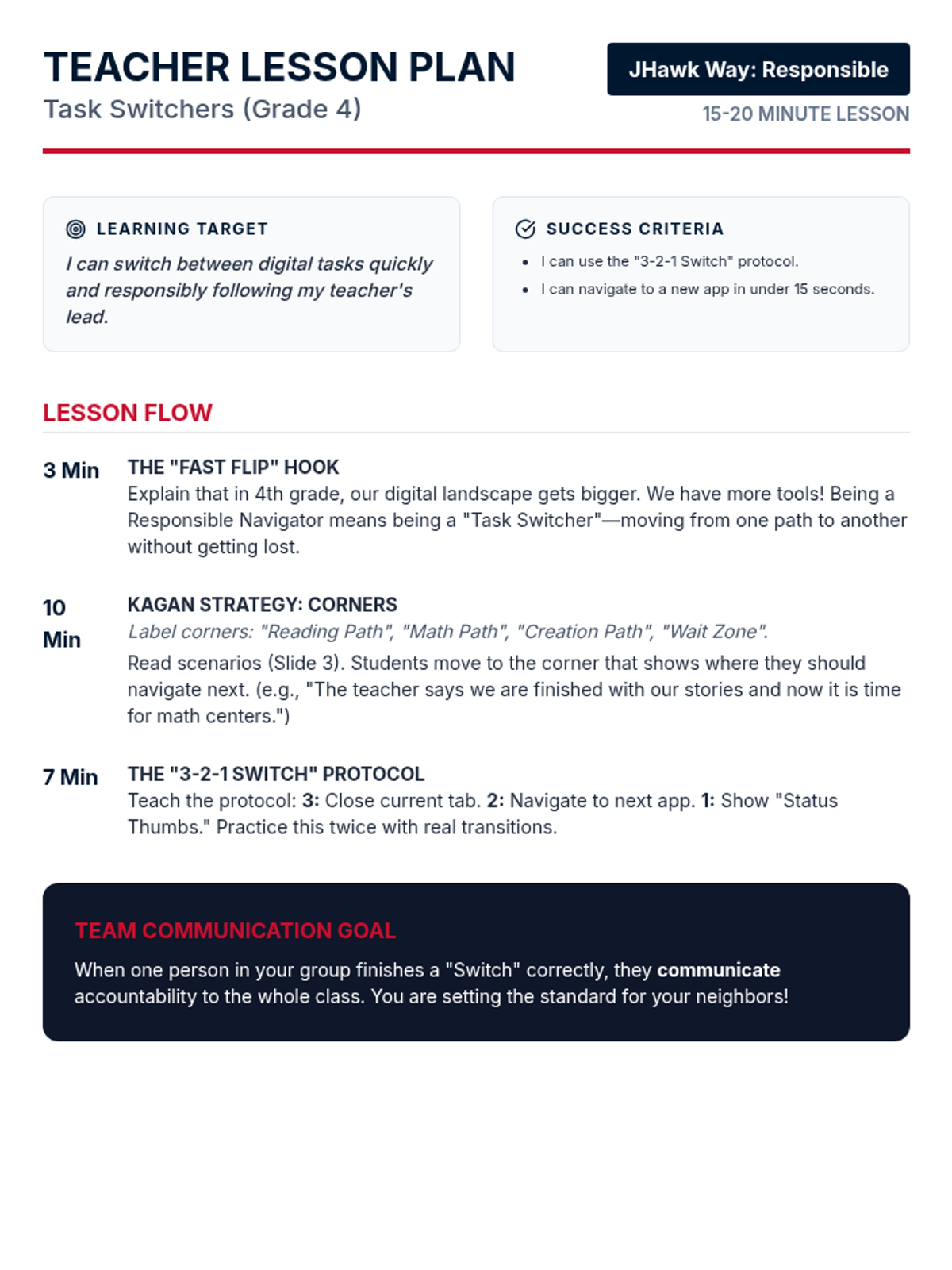
Teacher plan for 4th Grade. Focuses on efficient task switching and uses the 'Corners' Kagan strategy to practice decision-making in the digital landscape.
3rd Grade slide deck focusing on avoiding digital 'Navigation Hazards.' Includes 'Fan-Pick' Kagan scenario prompt.
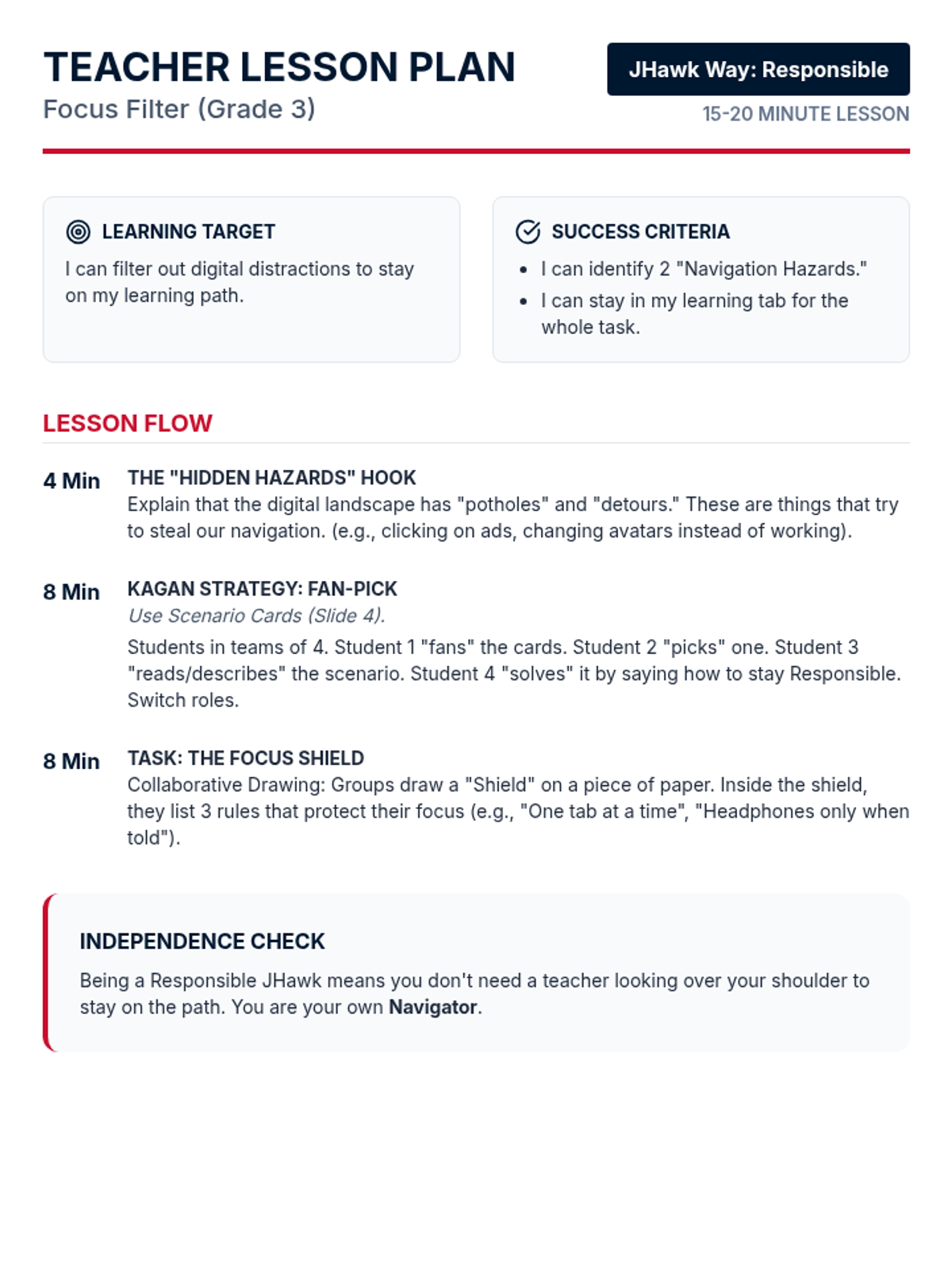
Teacher plan for 3rd Grade. Focuses on identifying digital distractions and uses the 'Fan-Pick' Kagan strategy for scenario-based learning.
2nd Grade slide deck focusing on non-verbal signals for device usage. Includes 'Think-Pair-Share' prompt and a 'Signal Check' practice slide.
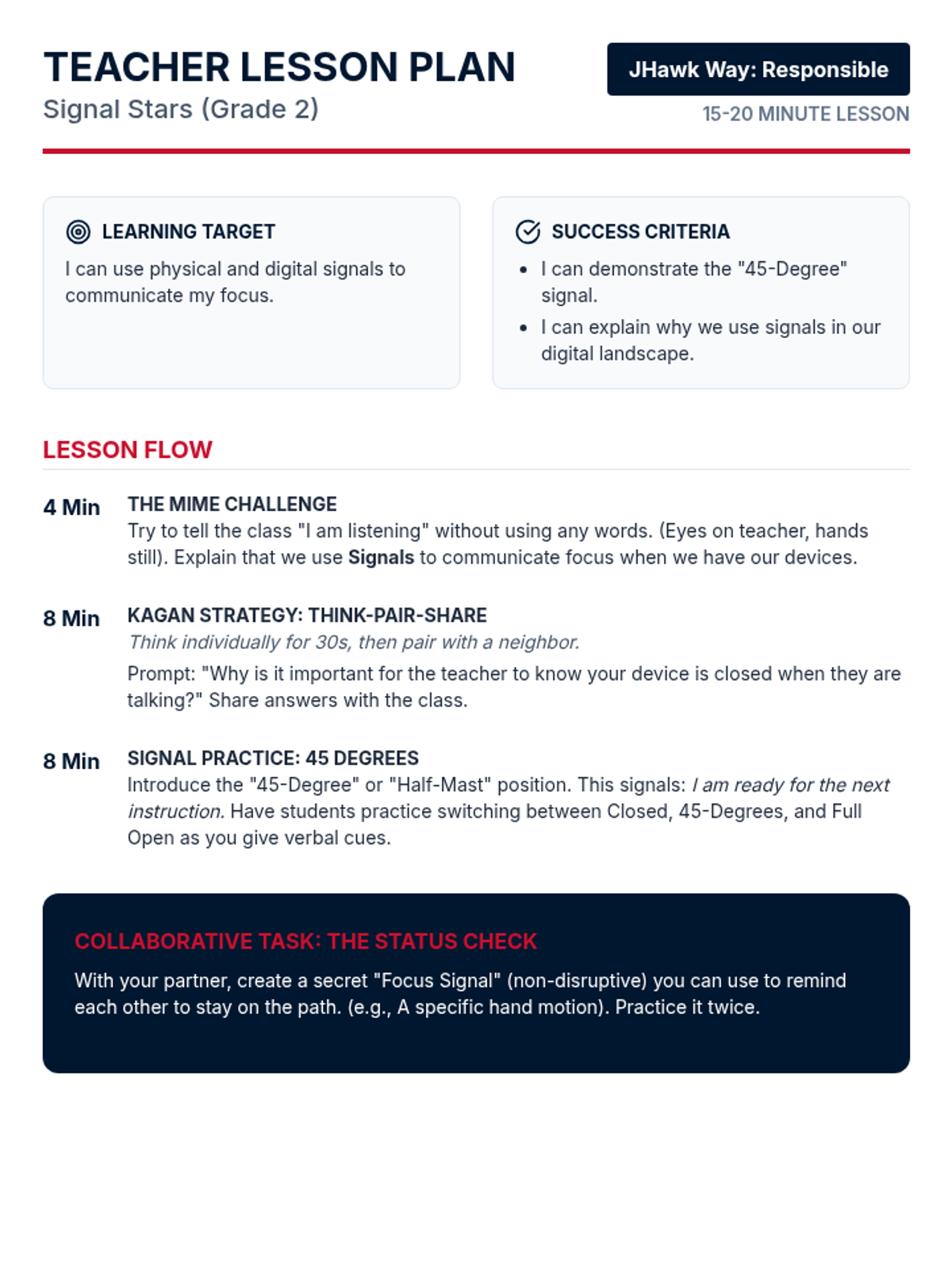
Teacher plan for 2nd Grade. Focuses on using physical signals to communicate device readiness. Includes 'Think-Pair-Share' Kagan strategy.
1st Grade slide deck focused on distinguishing between learning tools and distractions. Includes 'Mix-Pair-Share' Kagan strategy prompt.
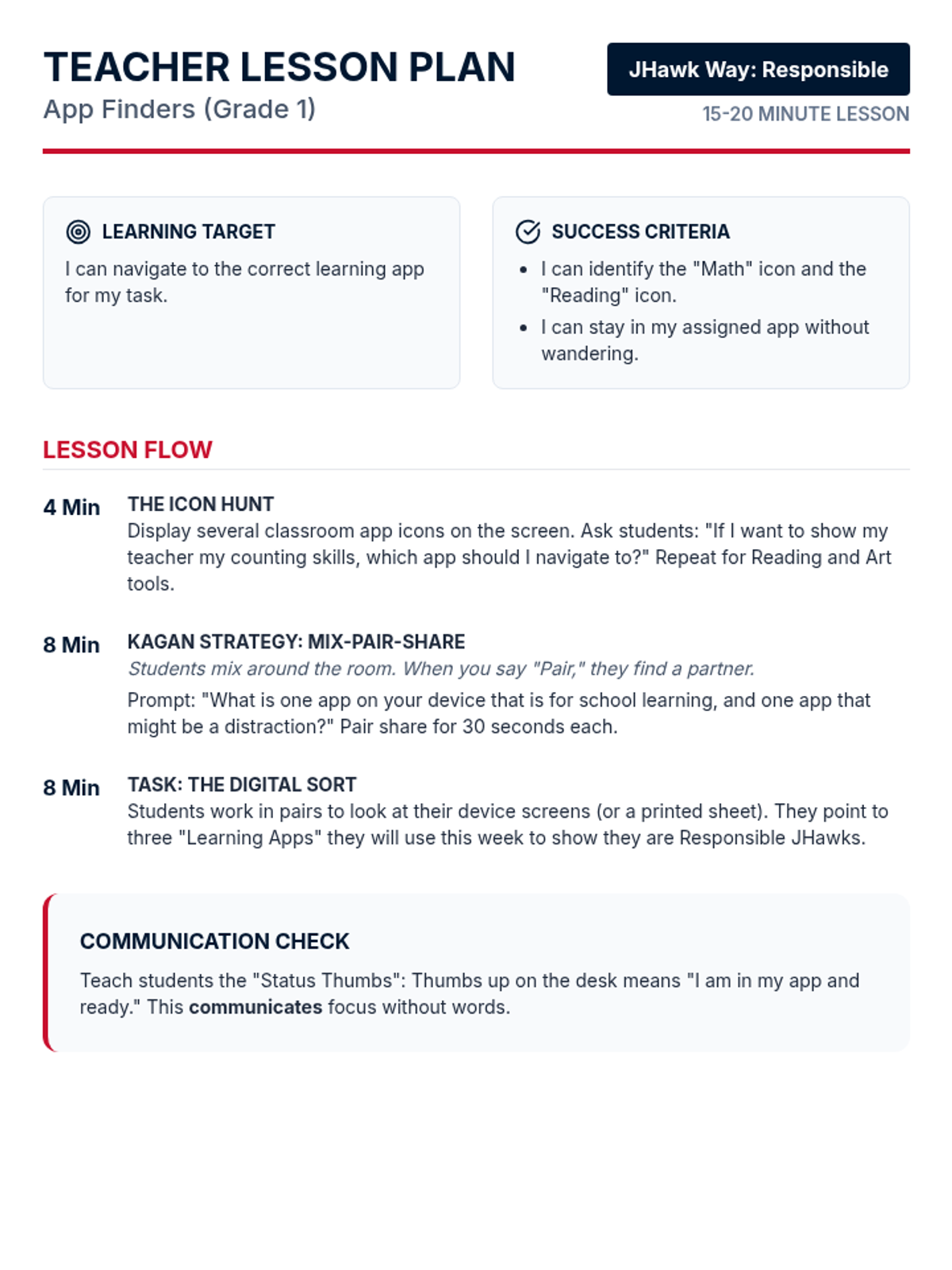
Teacher plan for 1st Grade. Focuses on app identification and the 'Mix-Pair-Share' Kagan strategy to distinguish between learning tools and distractions.
High-impact professional slide deck for High School. Reframes device habits as 'Agency' rather than 'Compliance' and includes a structured Kagan Timed Pair Share. Revised for better spacing and layout.
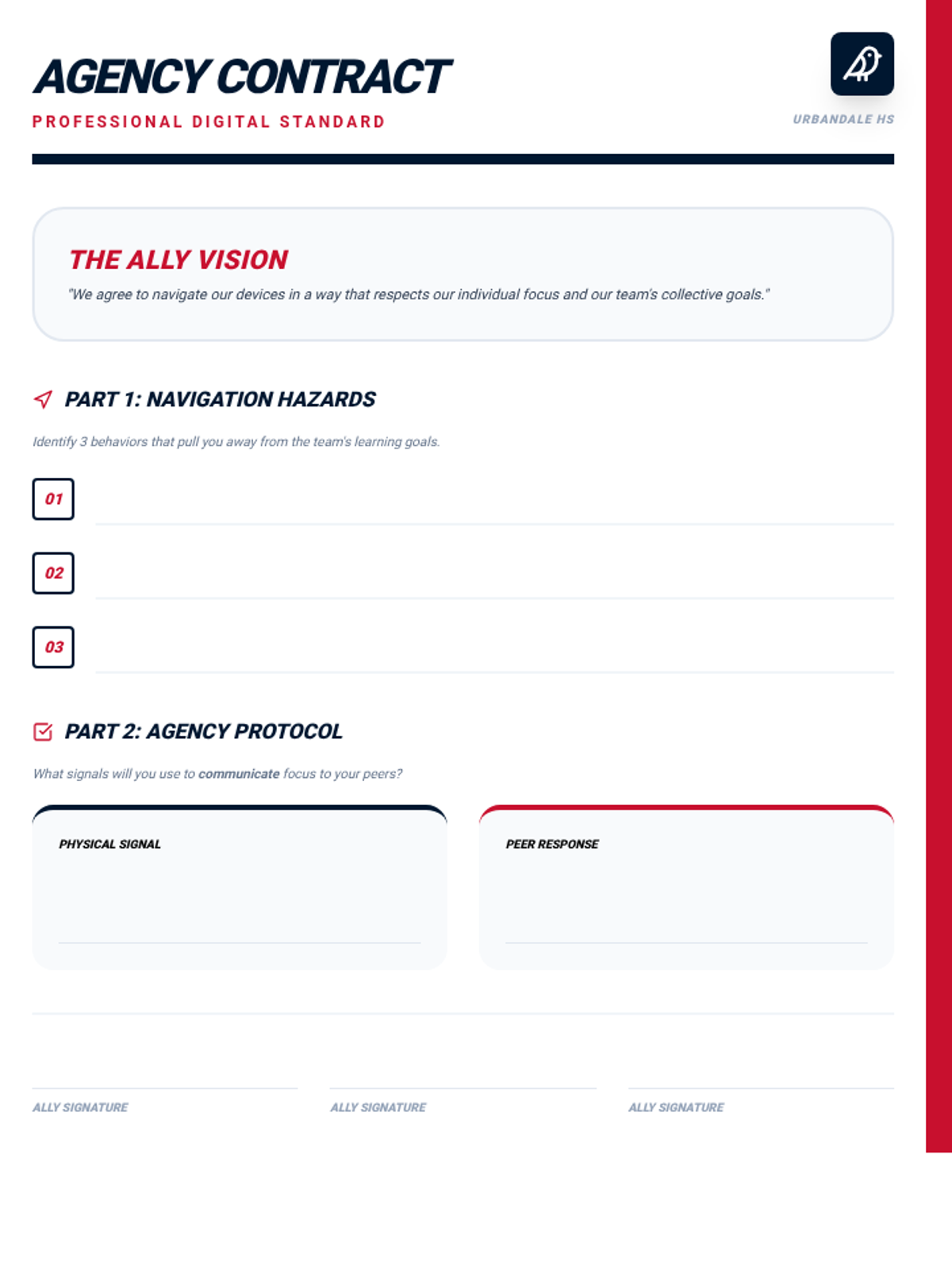
A professional team-based 'Agency Contract' for High School. Encourages collaborative goal setting and peer accountability protocols for device use in projects. Revised for single-page layout and accessibility.
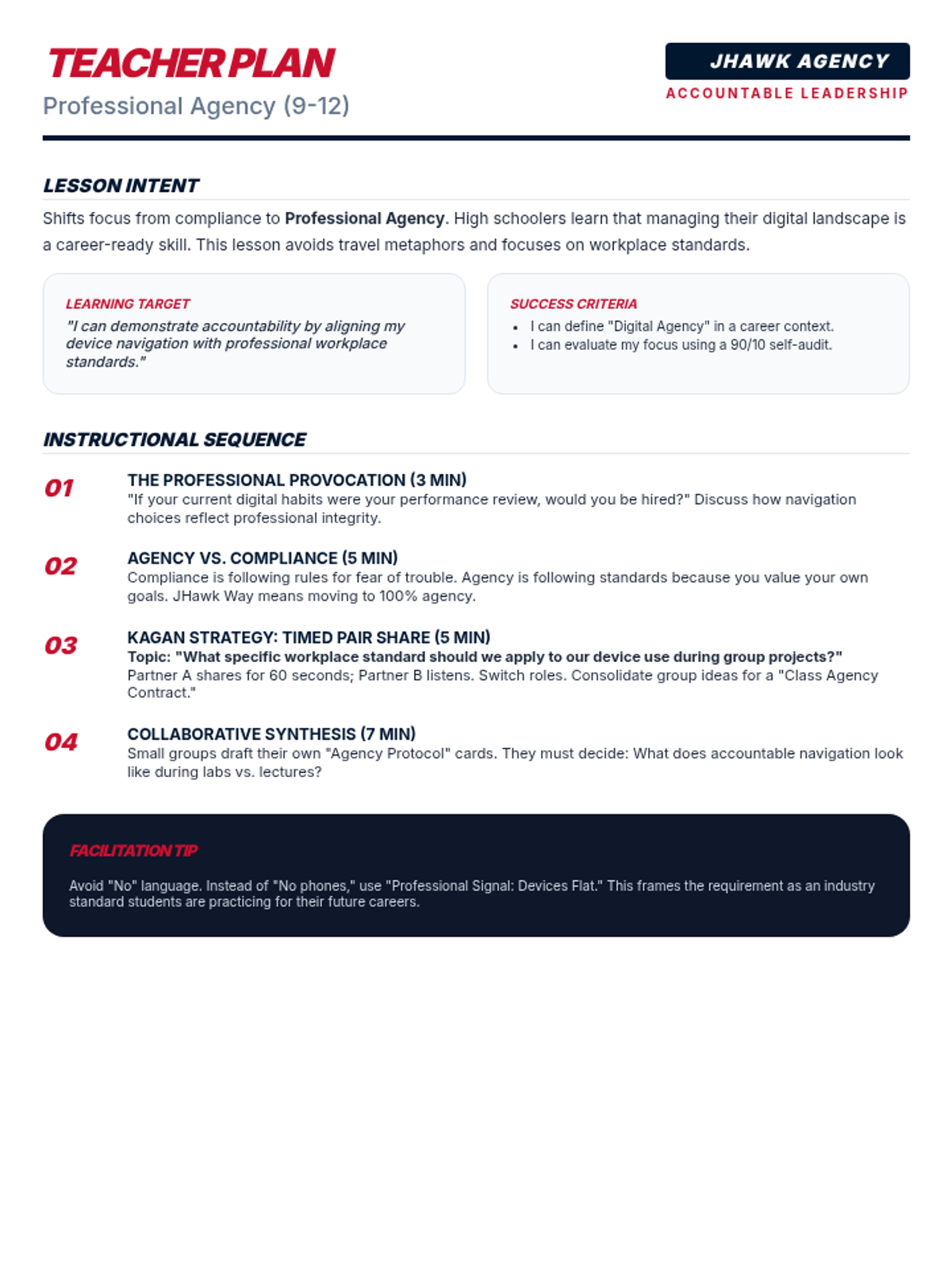
High School Teacher Plan (9-12). Reframes digital citizenship through the lens of 'Professional Agency' and uses a Timed Pair Share Kagan strategy for peer discussion.
Slide deck for 6th Grade. Uses high-impact visuals to teach the concept of an 'Attention Economy' and includes a Kagan Timed Pair Share activity.
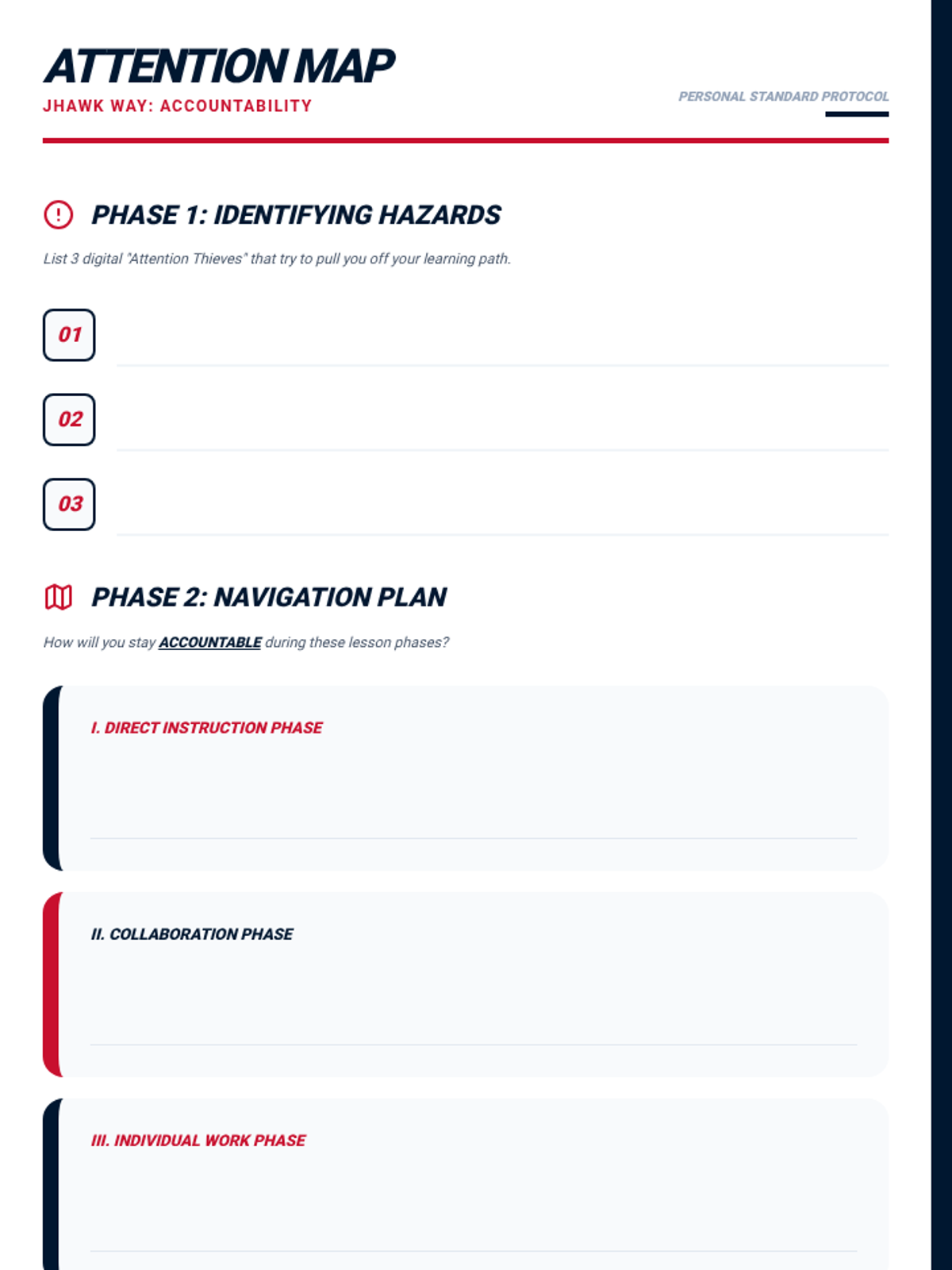
A standalone 'Attention Map' worksheet for 6th graders. Focuses on identifying digital hazards and planning accountability strategies for different lesson phases. Revised for single-page layout and increased writing space.
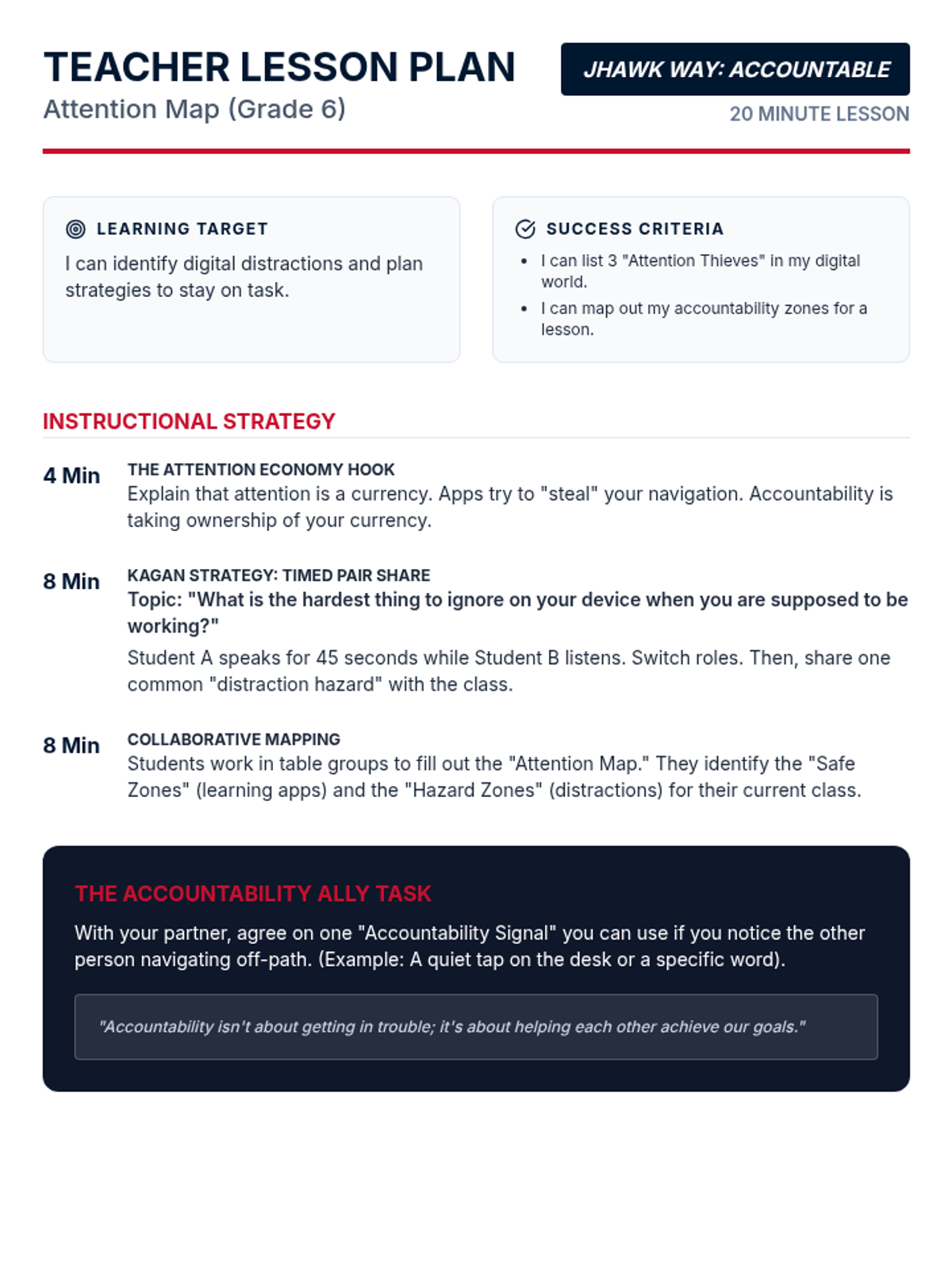
Teacher lesson plan for 6th Grade. Reframes device focus as an 'Attention Economy' and uses a Timed Pair Share Kagan strategy for student discussion.
Visual slide deck for Kindergarten. Introduces 'Lids Down' and 'Full Launch' concepts using simple visual metaphors and includes a Kagan RallyRobin prompt. Revised for better layout and icons.
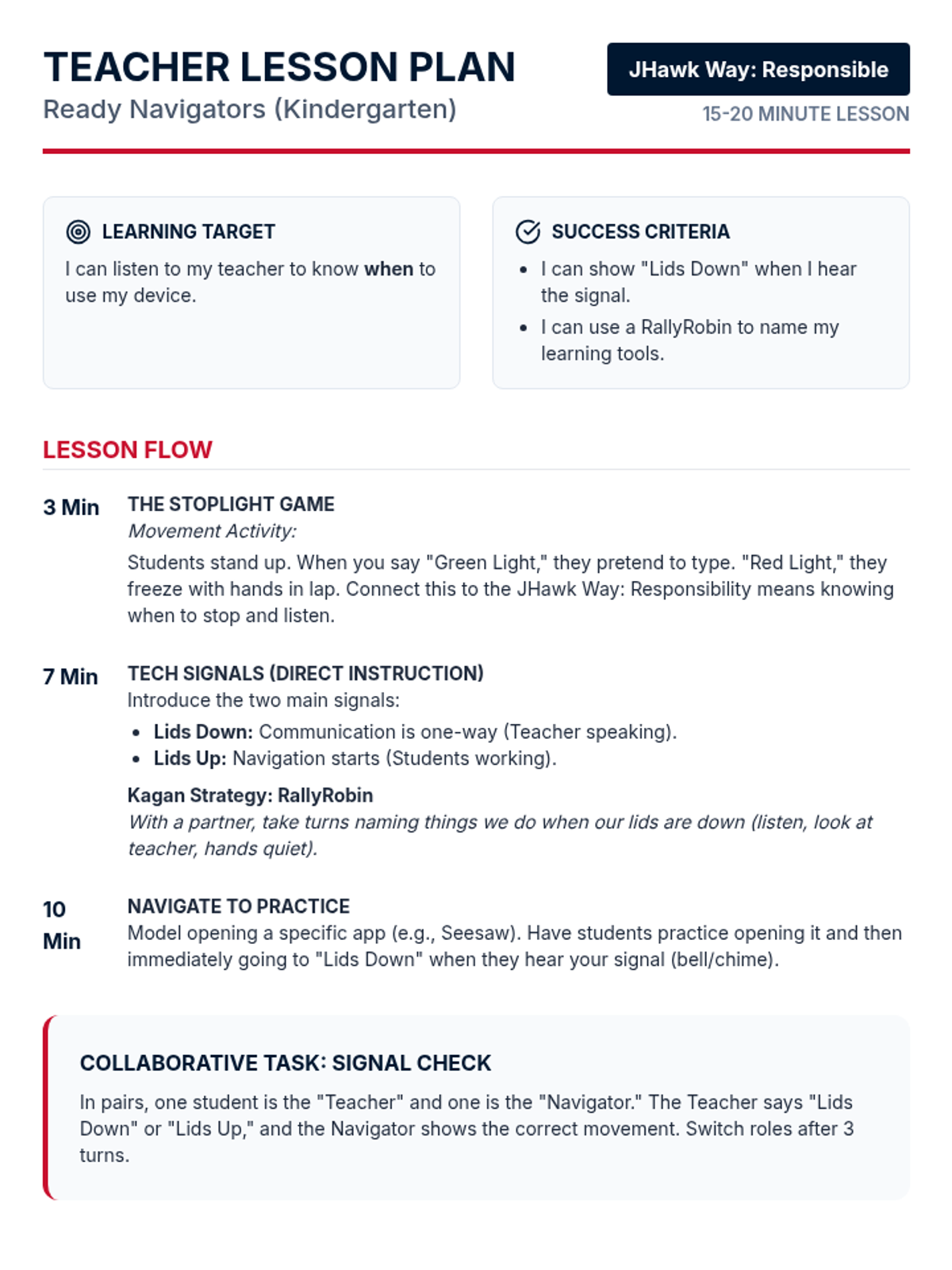
A 20-minute teacher plan for Kindergarten. Focuses on physical signals for device use and includes the Kagan RallyRobin strategy and a collaborative 'Signal Check' activity.
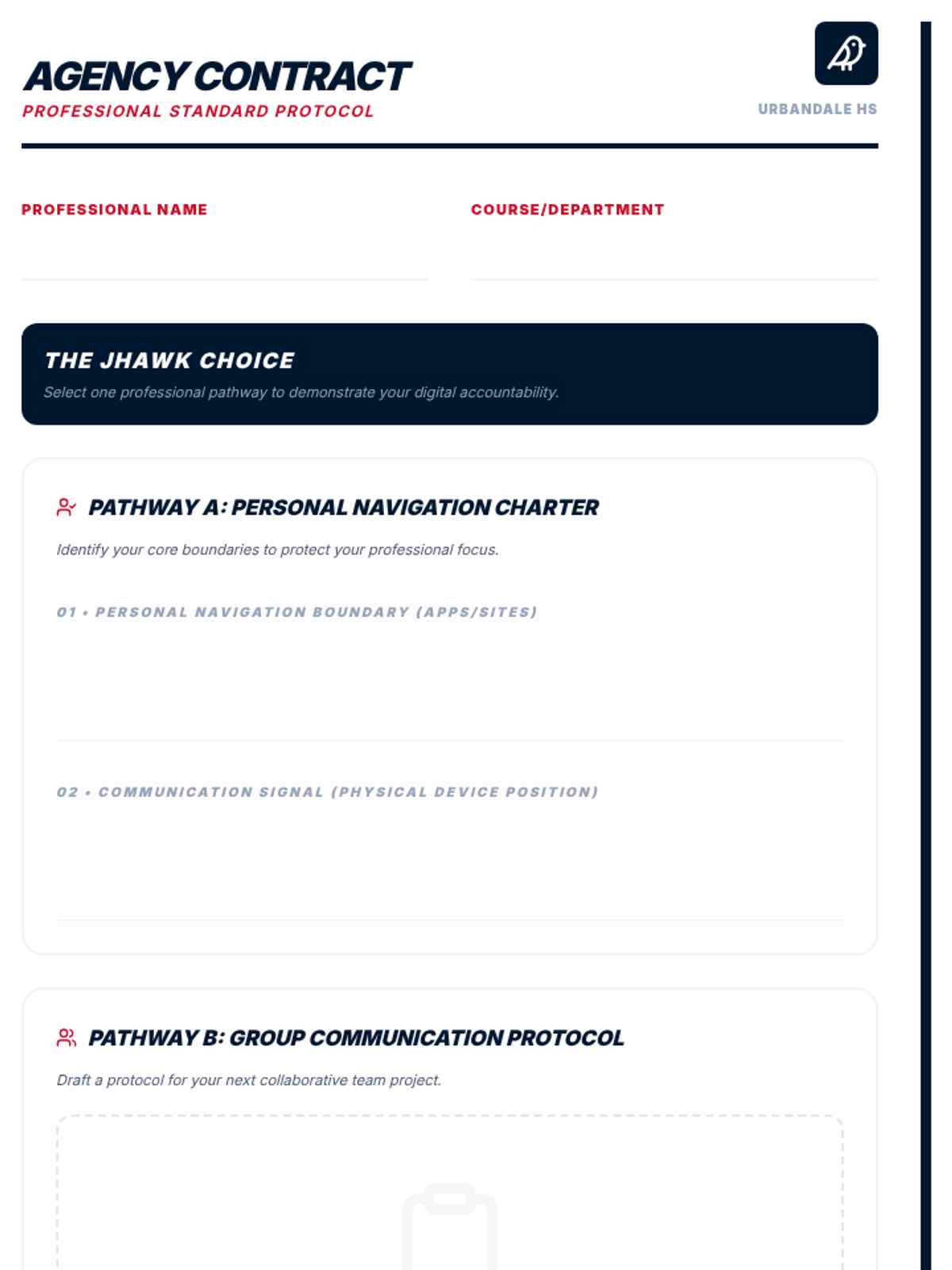
A professional "Agency Contract" for high schoolers. It offers pathways for students to design their own digital boundaries or team communication protocols, reinforcing accountability as a professional leadership skill.
A professional slide deck for high school students. It reframes digital citizenship as "Agency" and uses business-inspired concepts like the "switching cost" of distractions and "communication standards" to encourage accountable behavior.
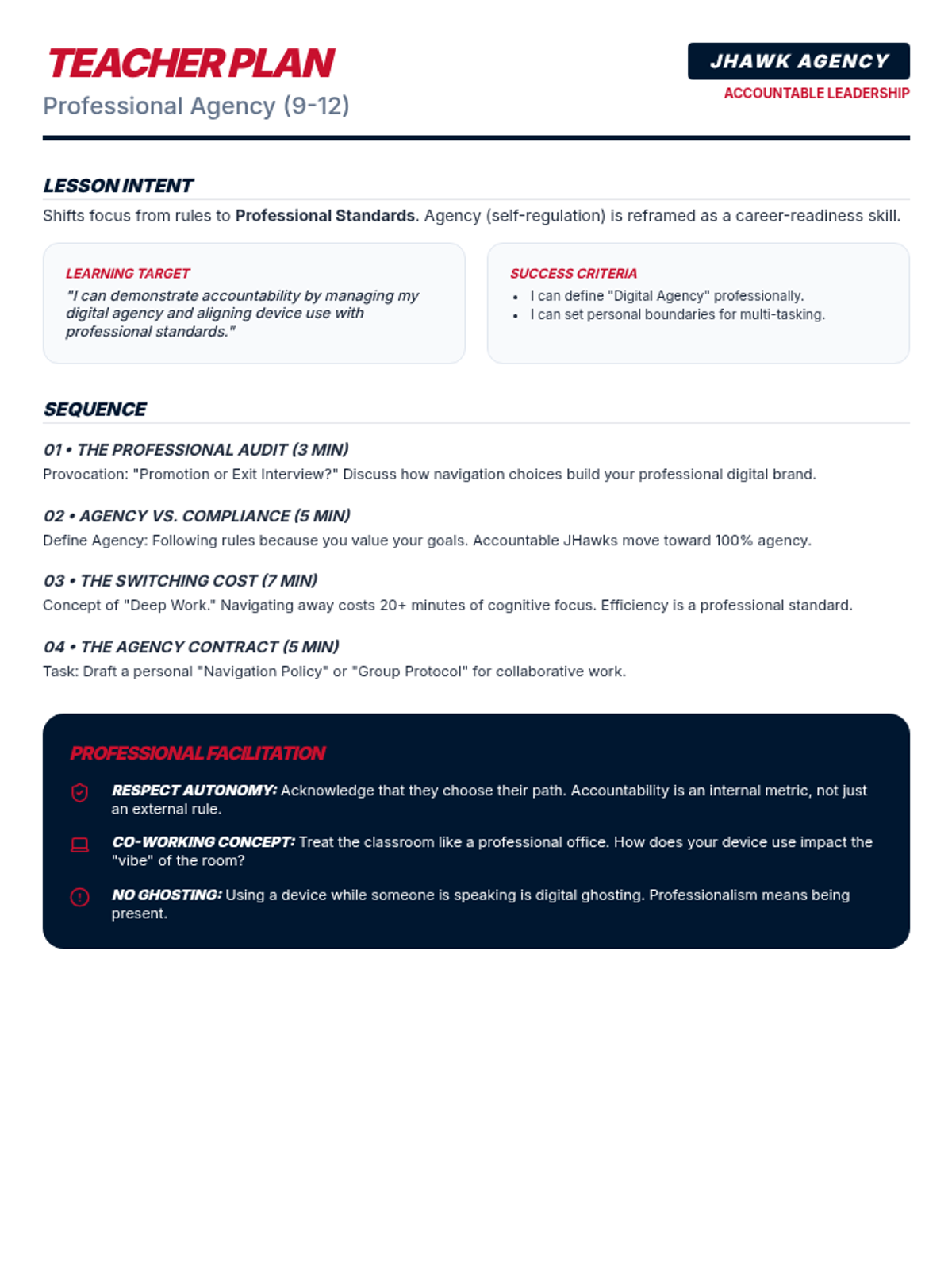
A high school teacher plan that rebrands digital citizenship as "Professional Agency." It focuses on self-regulation, the "switching cost" of distractions, and developing a professional digital brand as a JHawk.
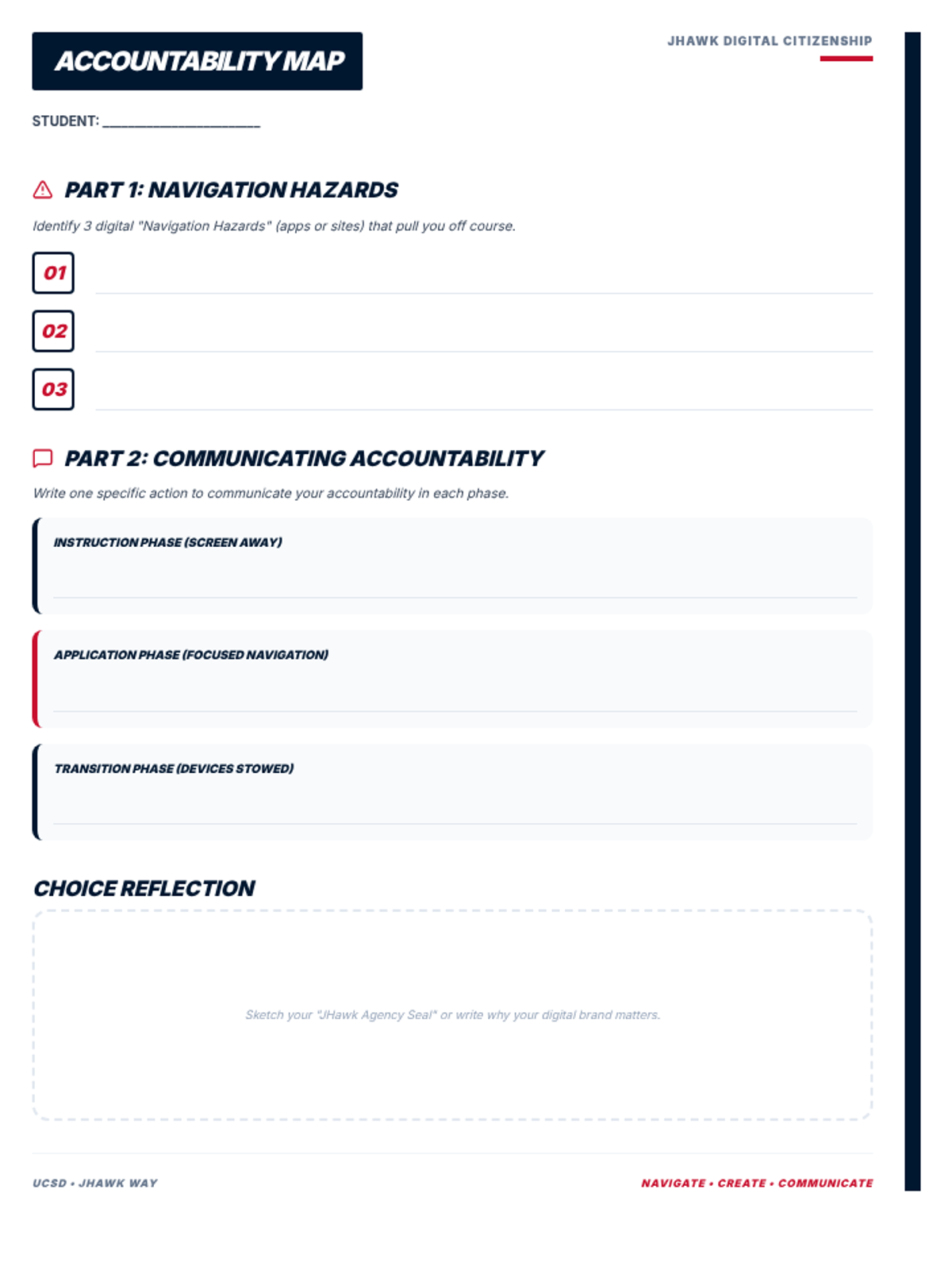
A sophisticated accountability-tracking worksheet for grades 6-8. It prompts students to identify digital distractions and plan their communication strategies for different phases of classroom instruction.
A high-energy slide deck for middle schoolers. It introduces the concept of the "Attention Economy" and uses "The JHawk Way" to frame device accountability as a form of social and personal leadership.
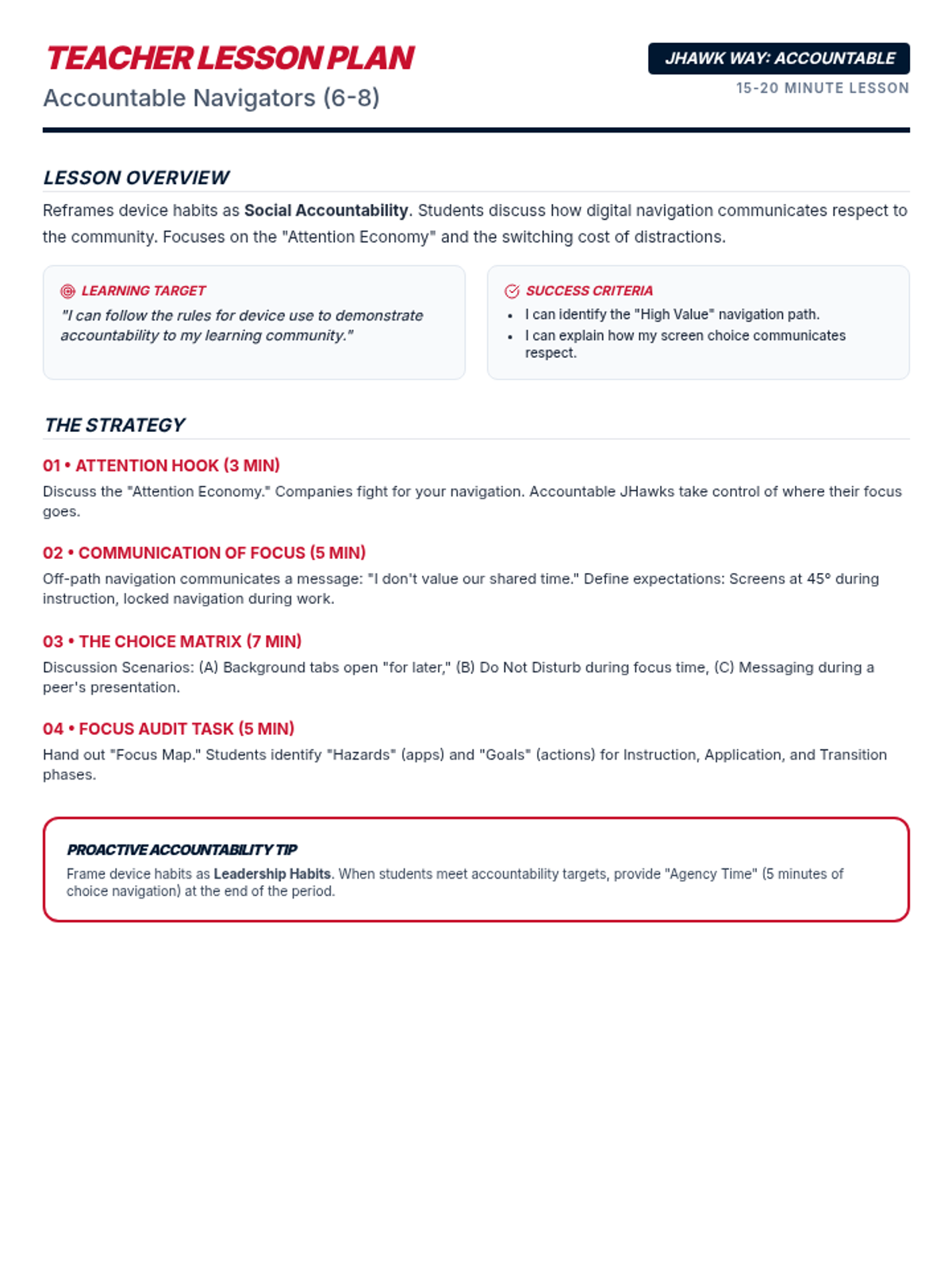
A teacher lesson plan for grades 6-8 centered on "Accountability." It focuses on the concept of the "Attention Economy" and helps students understand how their device use communicates respect within the school community.
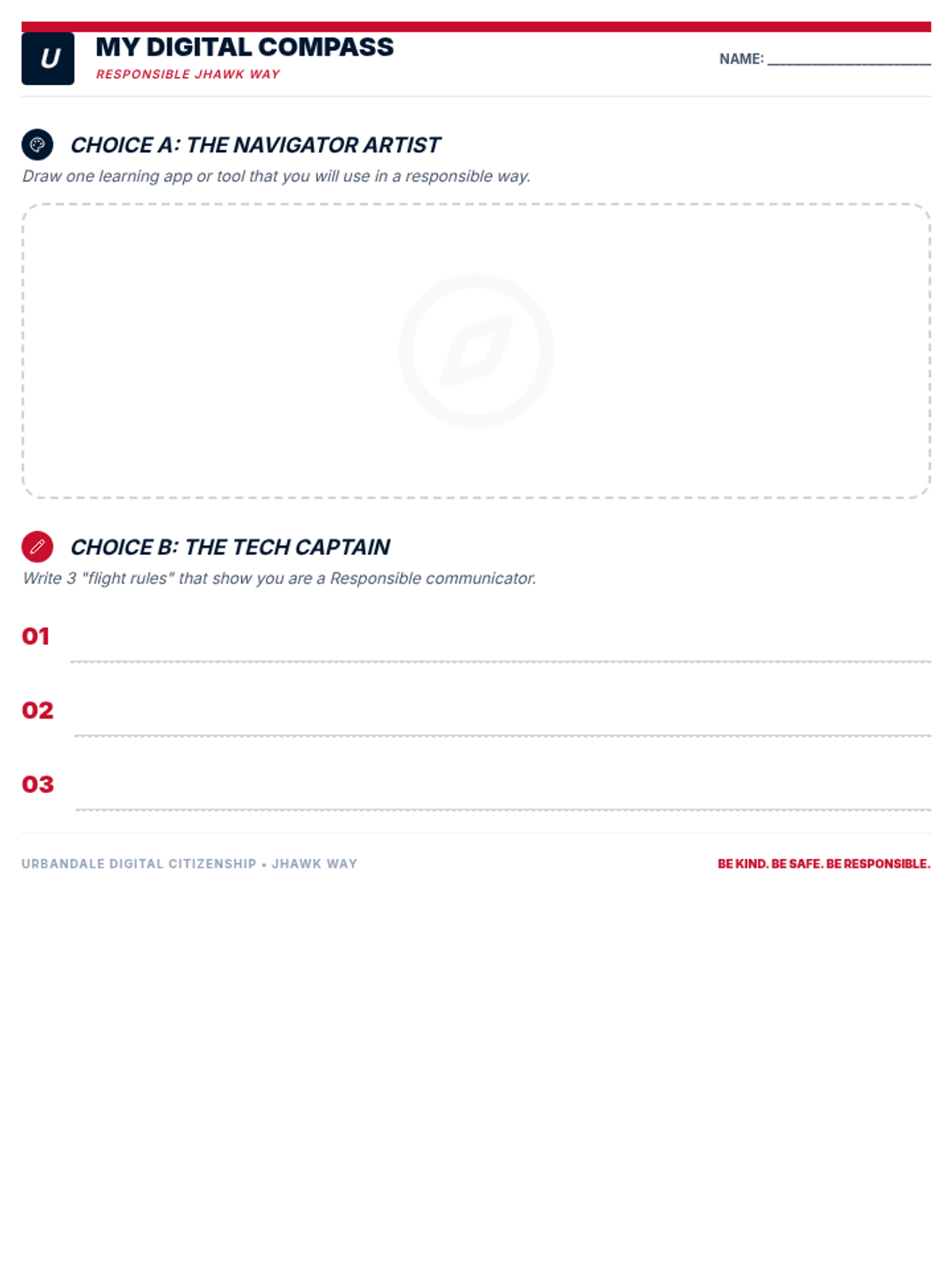
A printable student activity sheet for K-5. It offers two creative paths—drawing or writing—to demonstrate understanding of responsible device navigation and communication.
A visually engaging slide deck for K-5 students using the Urbandale brand. It defines "Lids Down," "Half-Mast," and "Full Launch" as positive behavioral choices for navigating classroom technology.
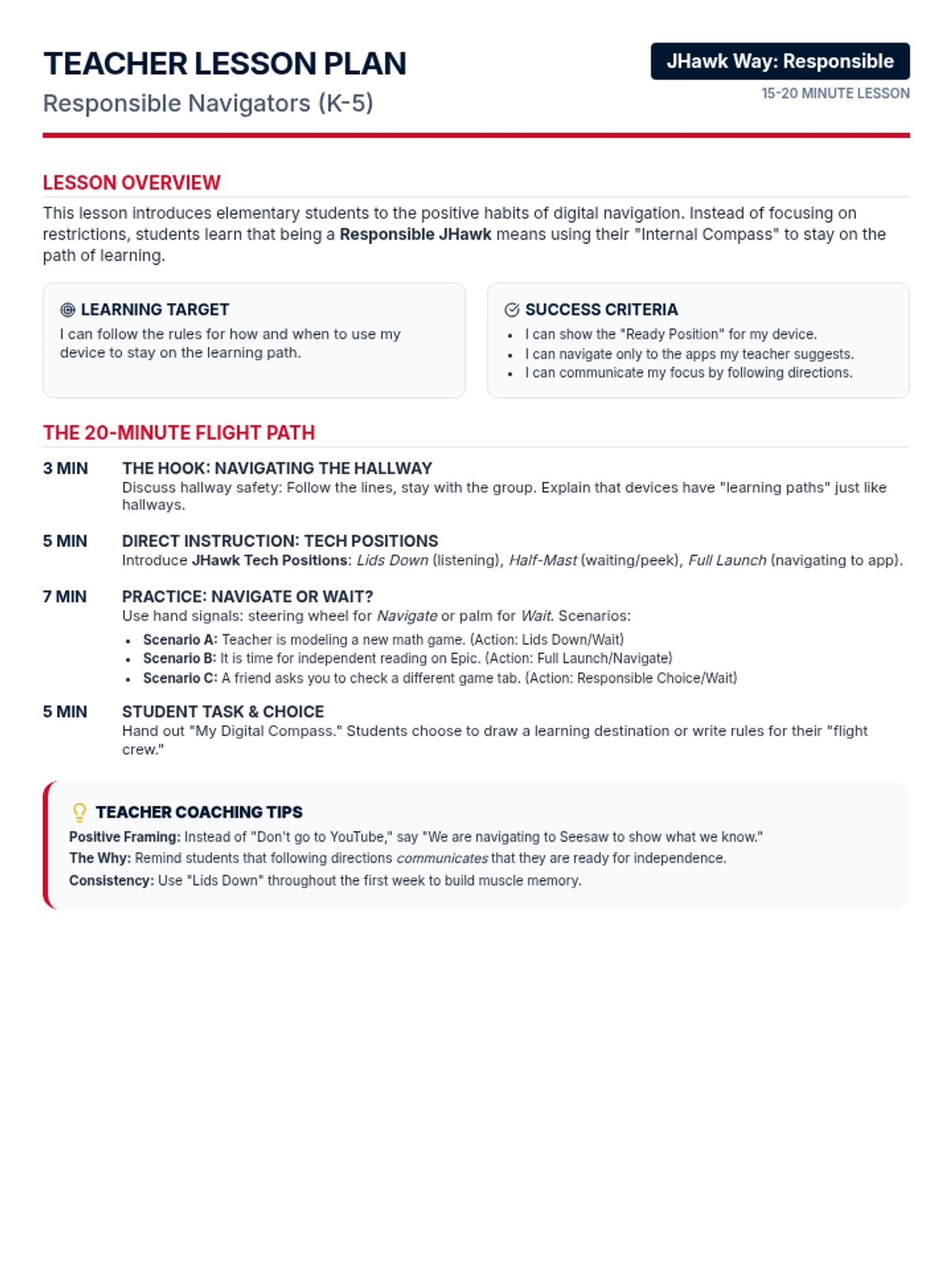
A comprehensive 20-minute teacher lesson plan for grades K-5 focused on the "Responsible" pillar of the JHawk Way. Includes instructional steps for teaching device transitions and positive navigation habits.
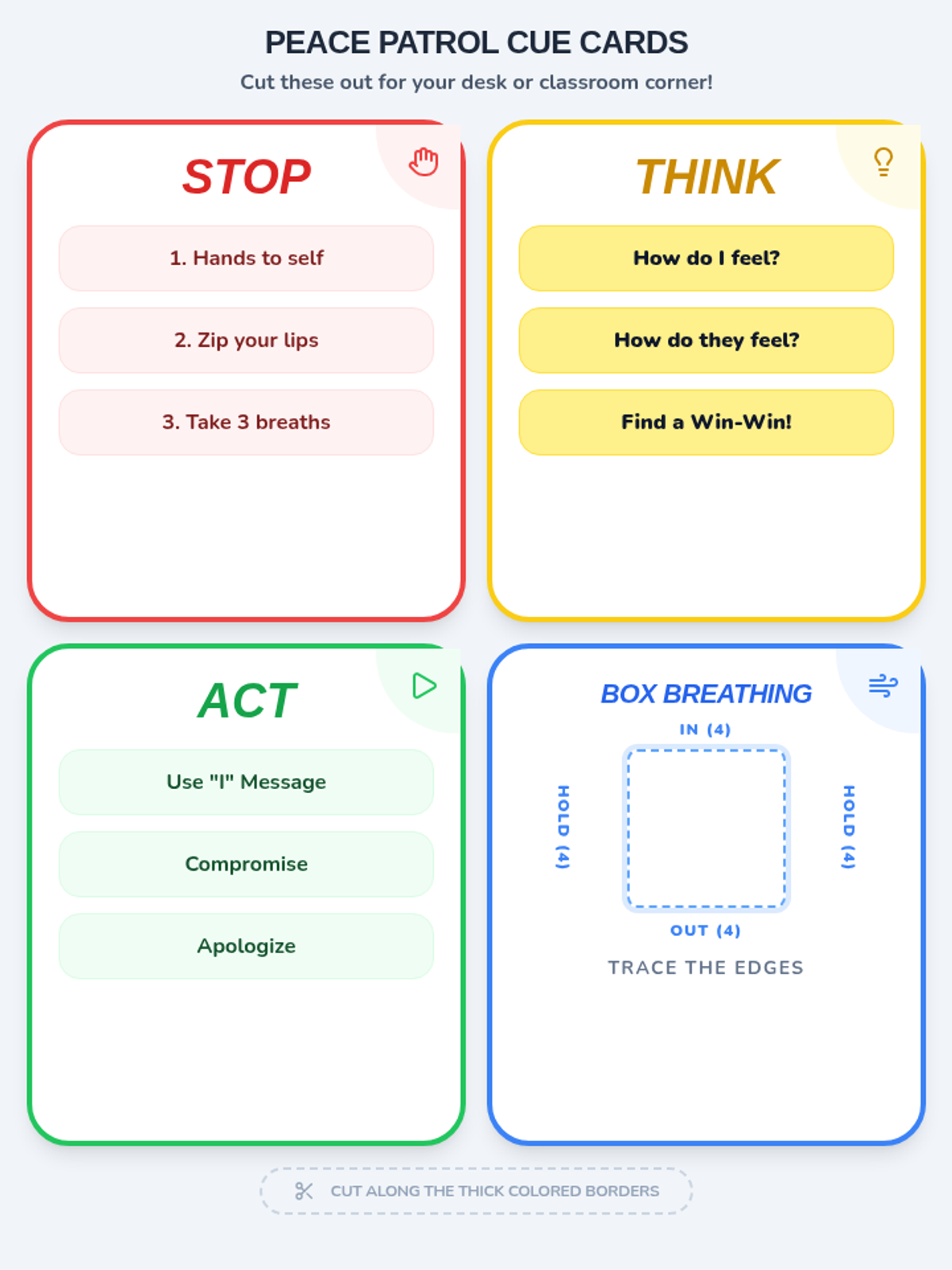
A set of four printable cue cards (Stop, Think, Act, and Box Breathing) for students to use as desk reminders or classroom resources during conflict resolution practice.
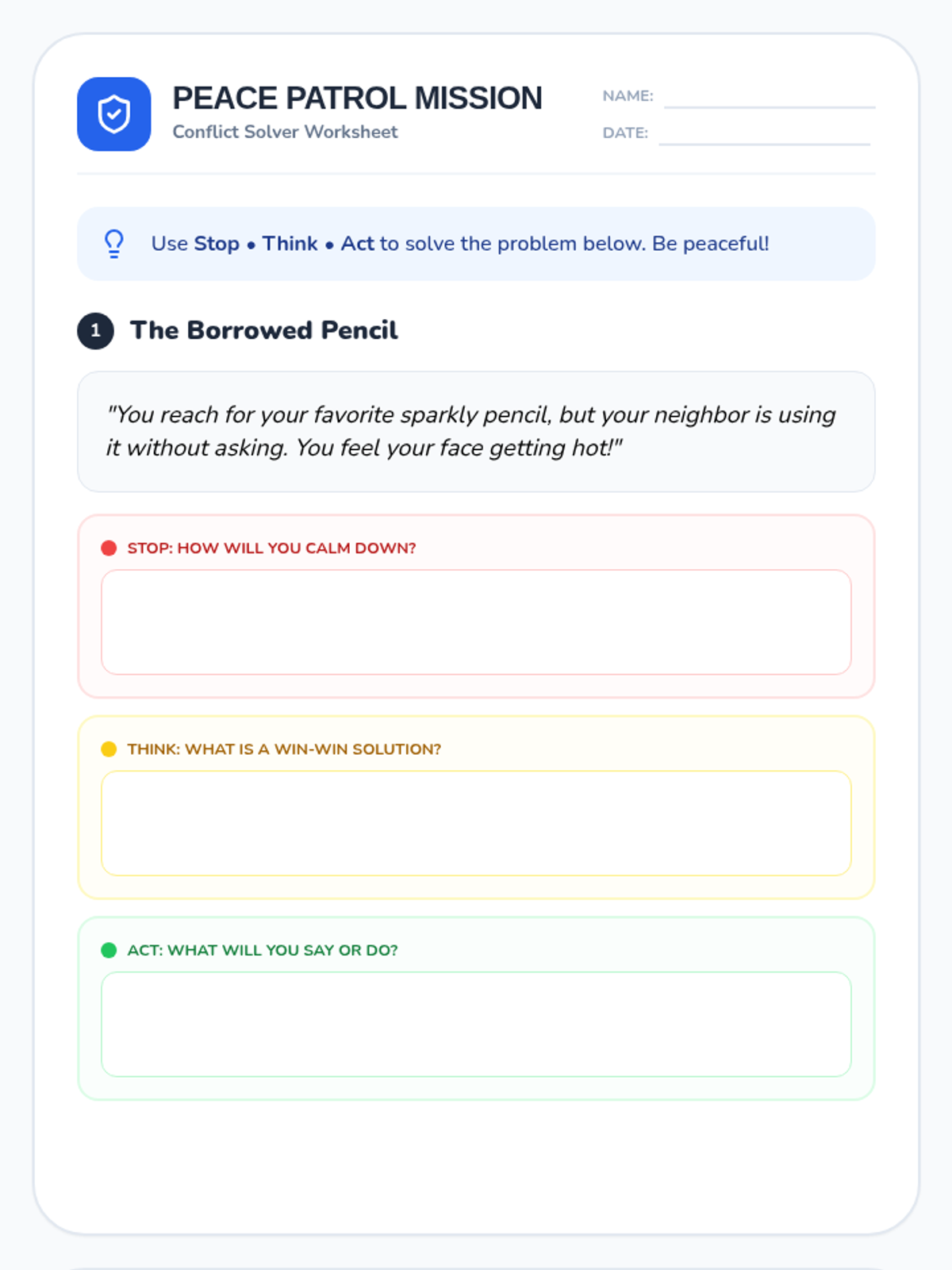
A two-page practice worksheet for students to apply the Stop-Think-Act strategy to scenarios and create a personalized calm-down plan with body awareness checks and drawing space.
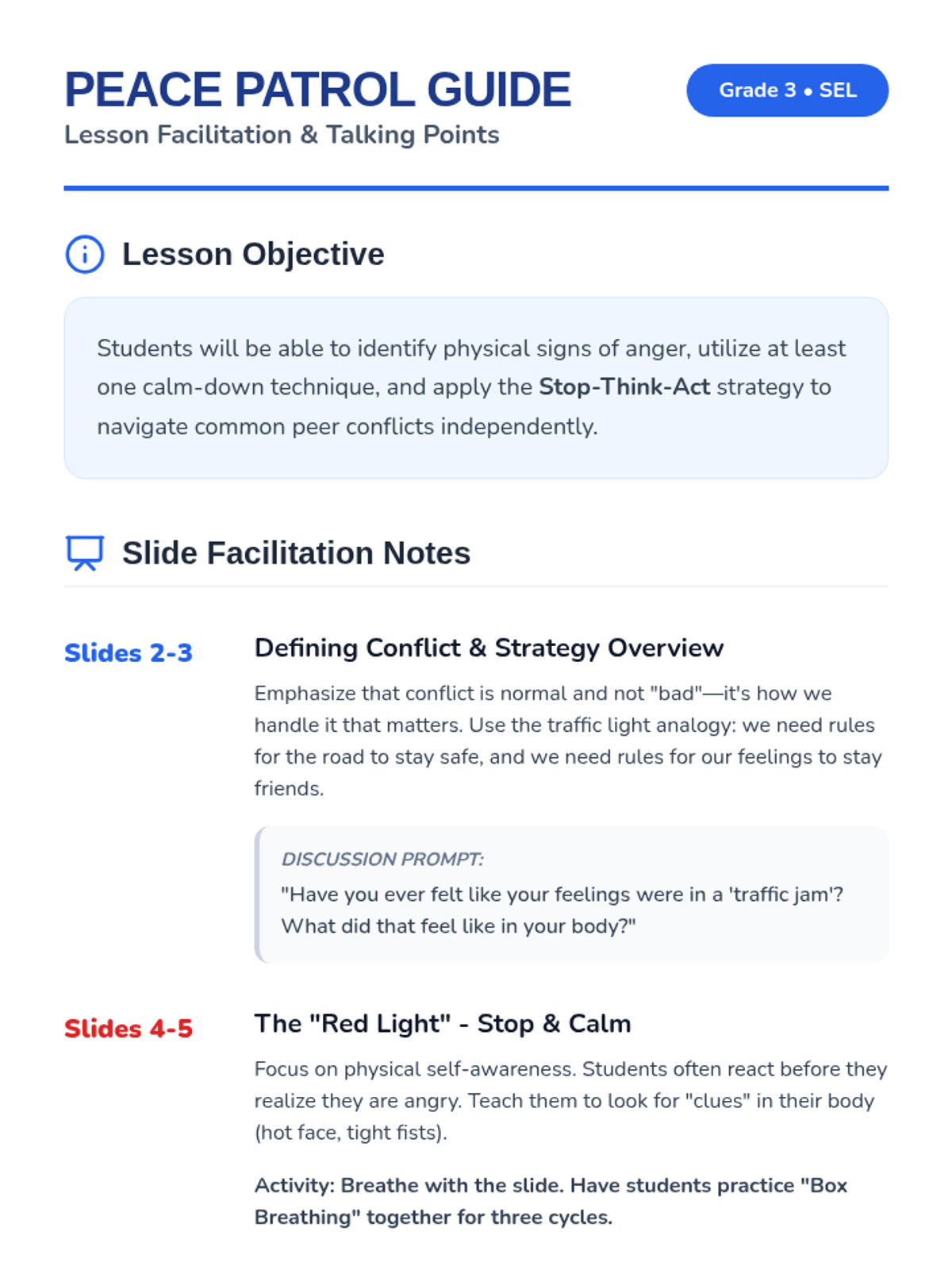
A teacher facilitation guide for the Peace Patrol lesson, featuring talking points for each slide, discussion prompts, and differentiation strategies for 3rd grade educators.
A 9-slide presentation for 3rd graders teaching the Stop-Think-Act strategy for conflict resolution. Includes calm-down techniques, identifying physical signs of anger, and a practice scenario.
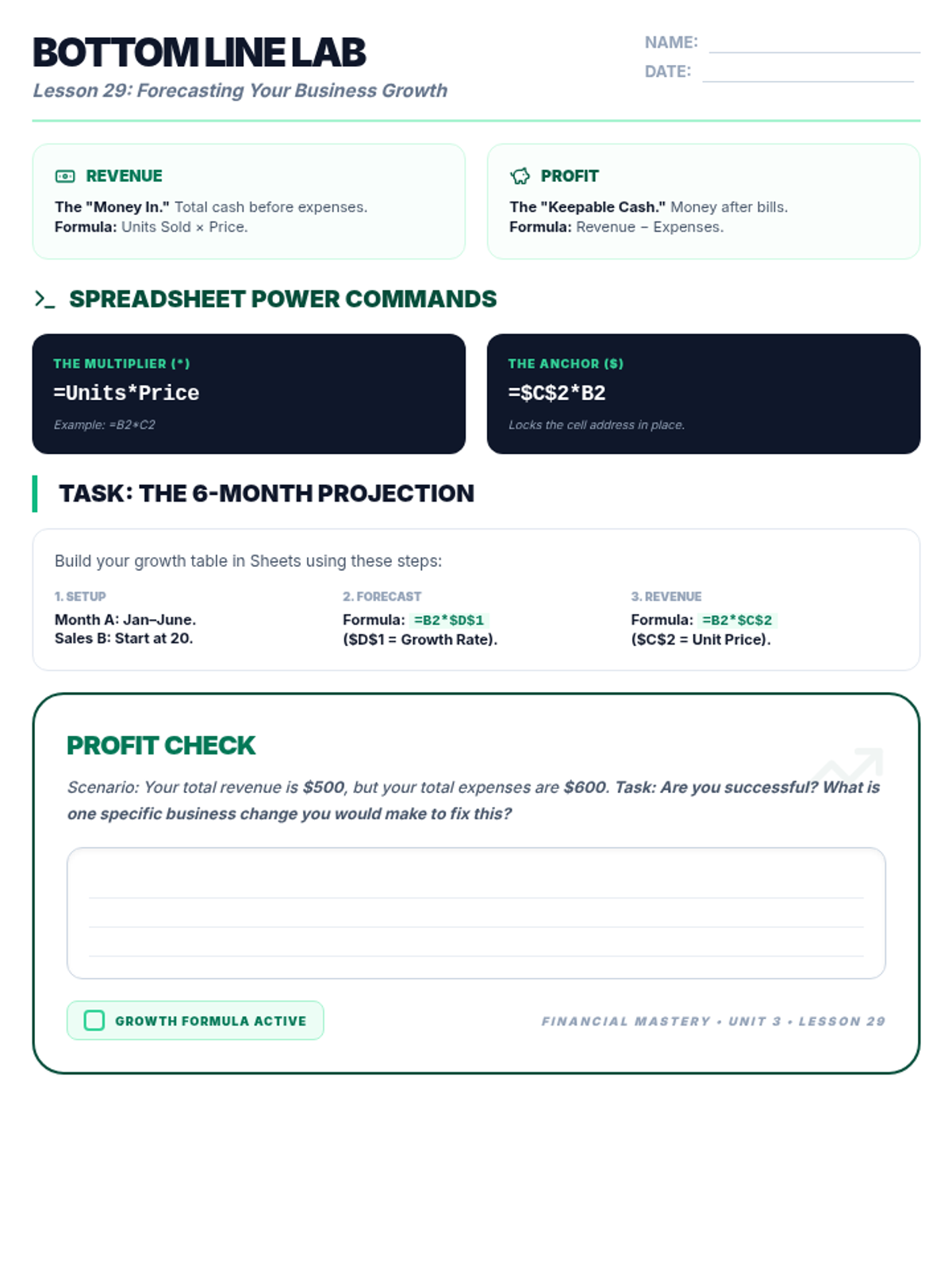
A student activity worksheet for Lesson 29 that guides students through creating a 6-month growth projection table, applying multiplication formulas, and analyzing revenue vs. profit. Revised for single-page layout and syntax accuracy.
A high-impact slide presentation for Lesson 29 teaching financial forecasting, multiplication formulas, and absolute referencing to 7th-grade marketing students. Revised with syntax corrections and improved contrast.

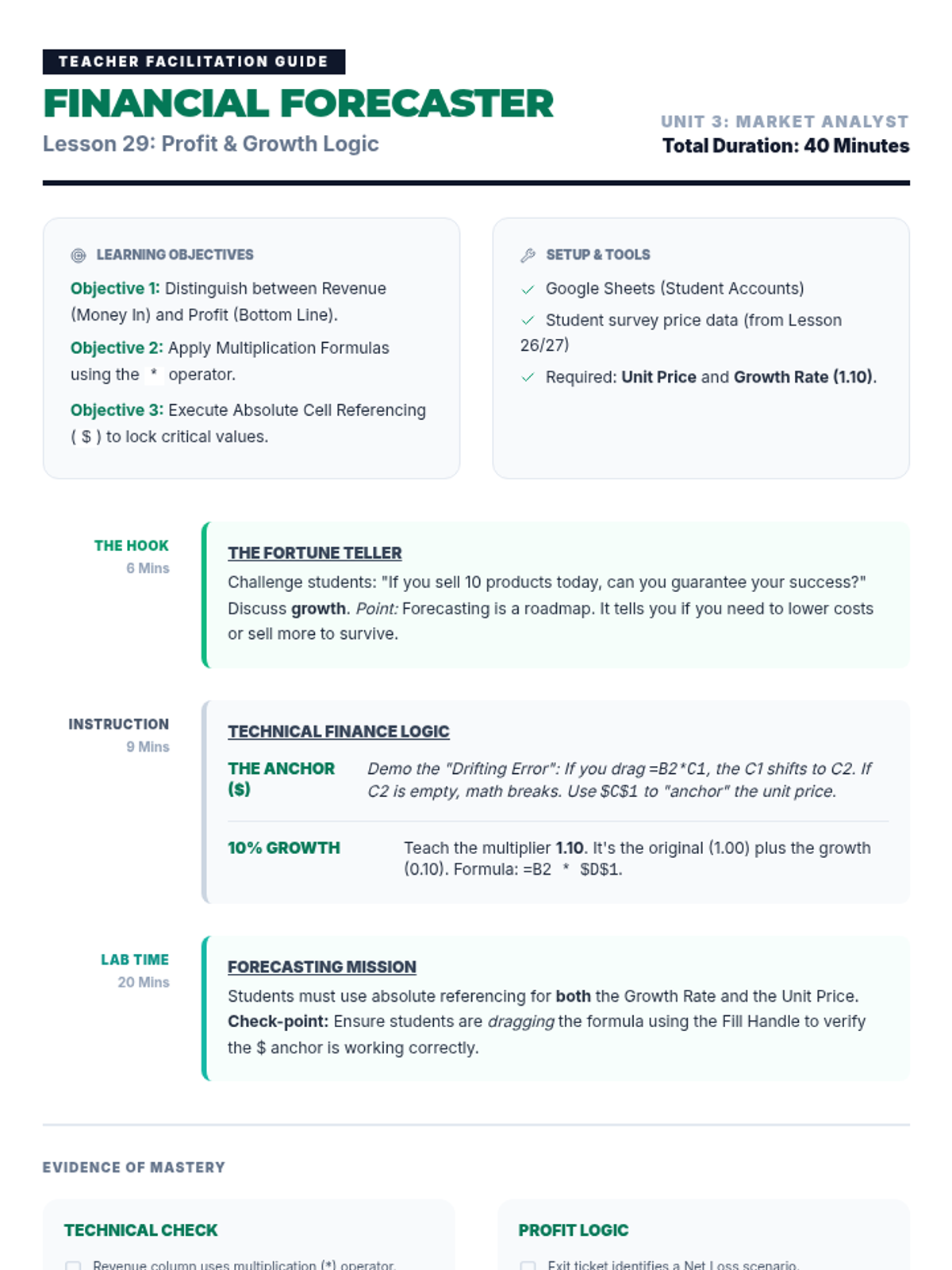
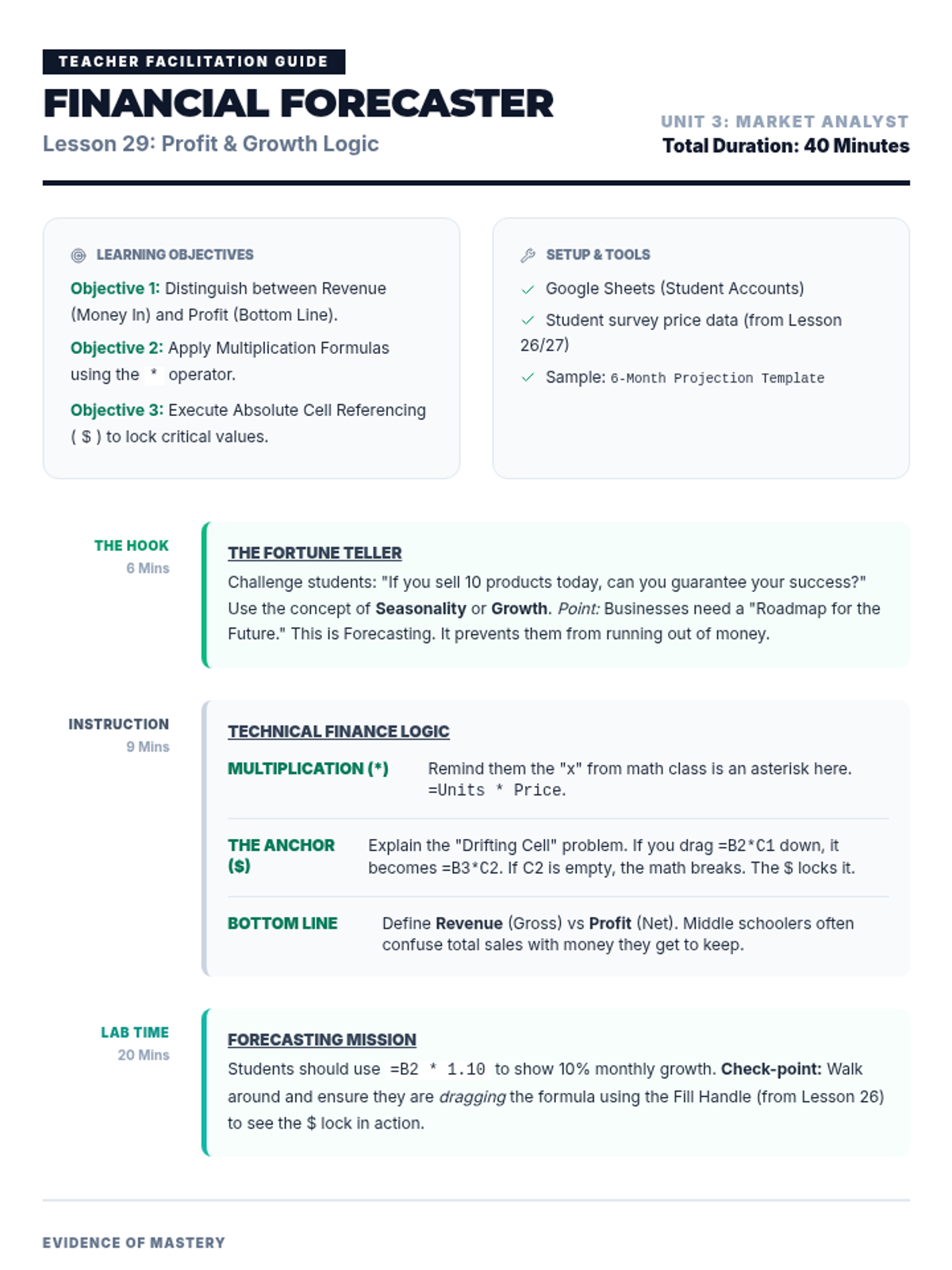
A comprehensive teacher guide for Lesson 29, detailing how to facilitate the 'Fortune Teller' hook, teaching absolute referencing logic with correct syntax, and assessing student financial growth projections.
A comprehensive teacher guide for Lesson 29, detailing how to facilitate the 'Fortune Teller' hook, teaching absolute referencing logic, and assessing student financial growth projections.