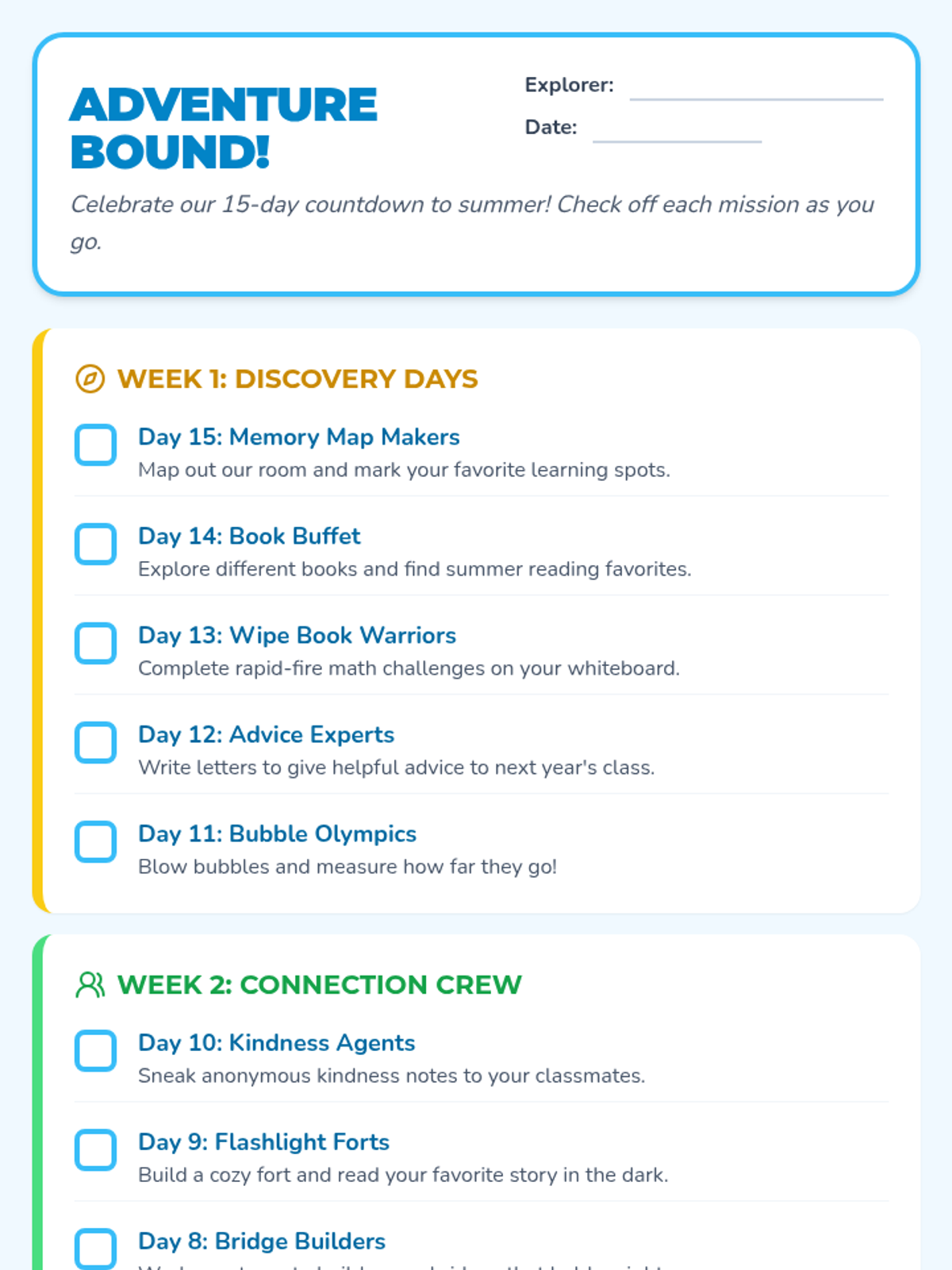
A complete slide deck for the 15-day "Adventure Bound" countdown. Every day is included with a clear title and a brief description of the activity, ensuring students know exactly what each day's adventure entails.
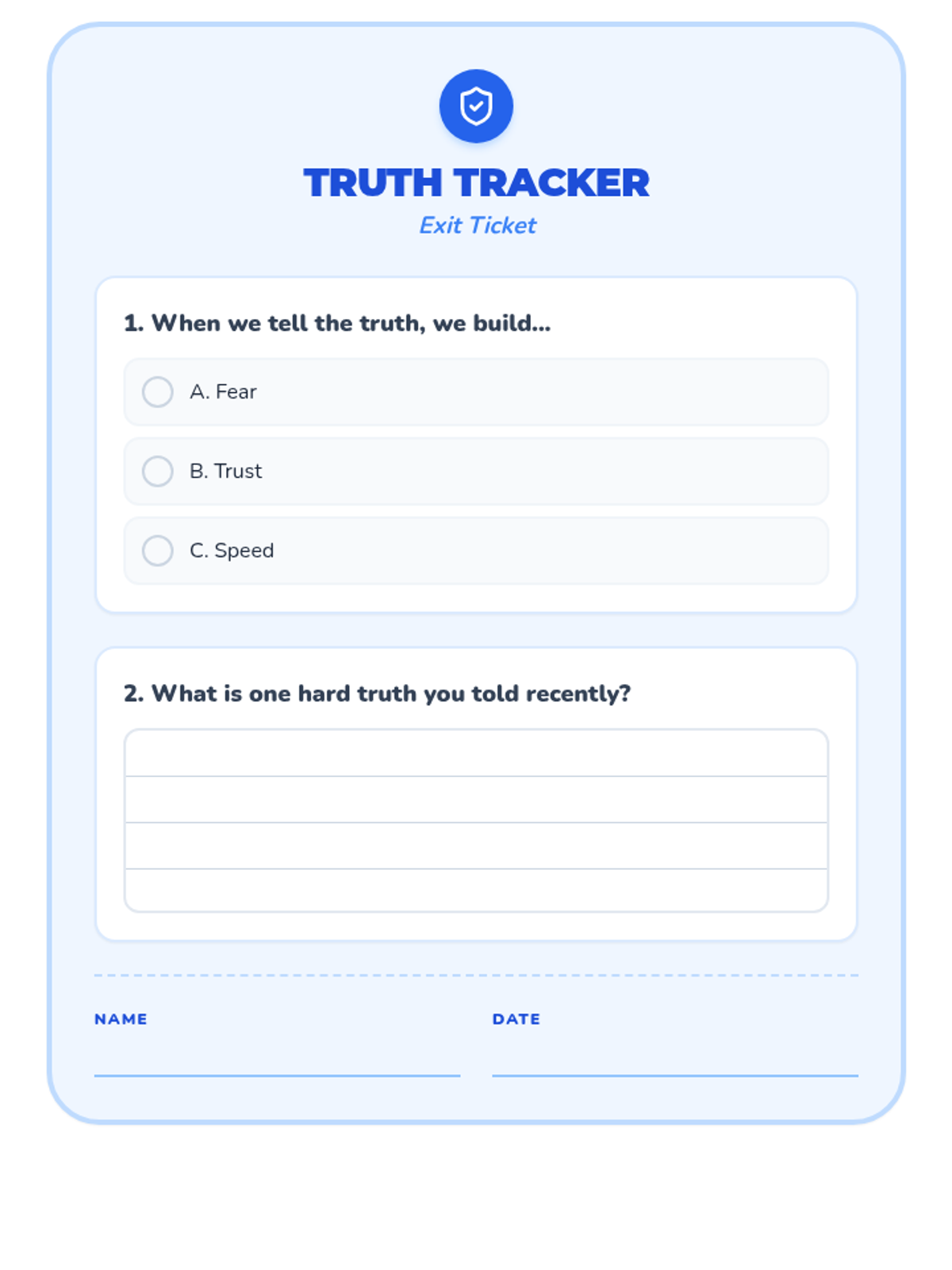
A short exit ticket to assess student understanding of trust and the importance of honesty at the end of the lesson.
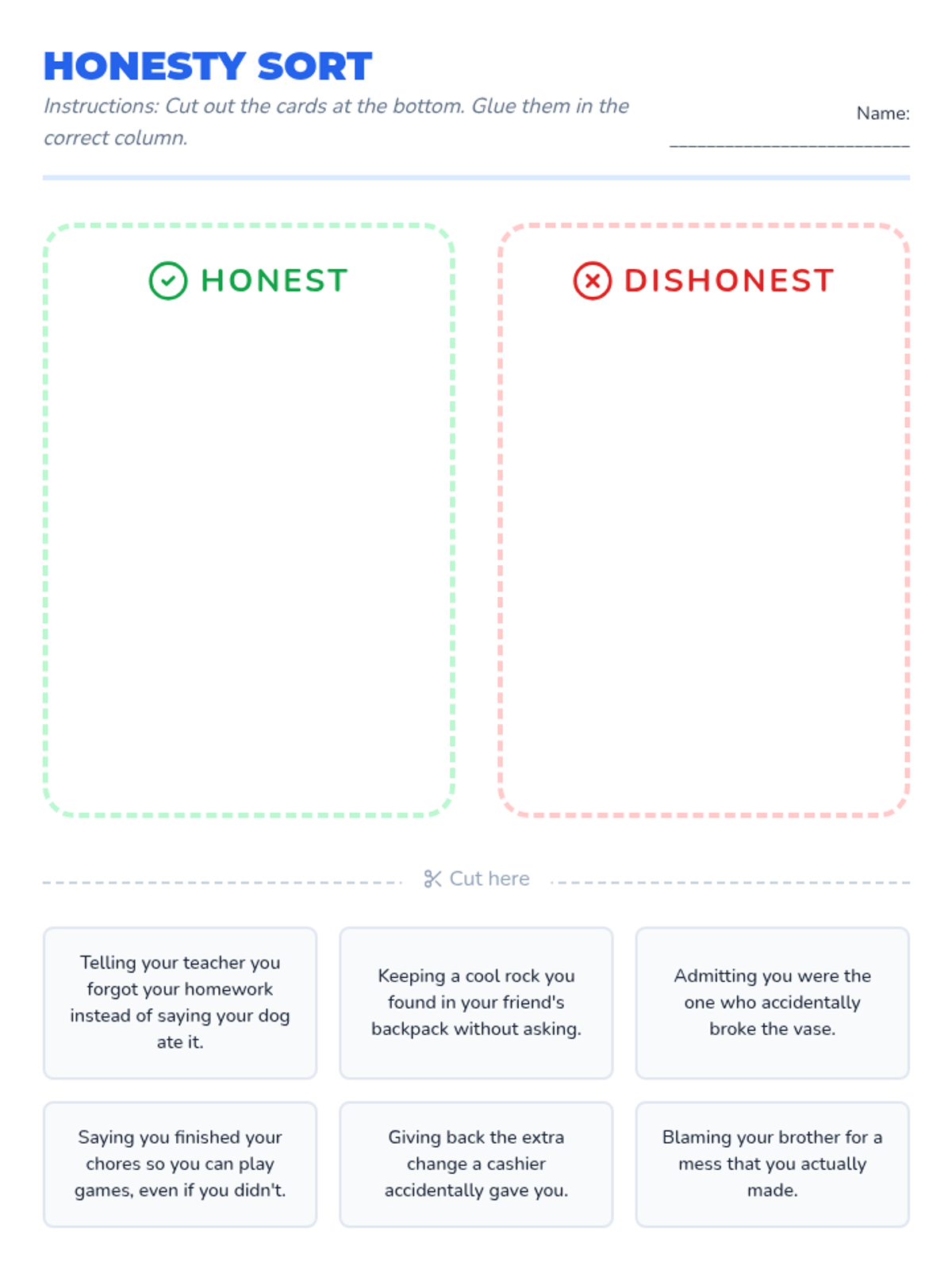
A cut-and-paste sorting activity for students to distinguish between honest and dishonest actions across various relatable scenarios.
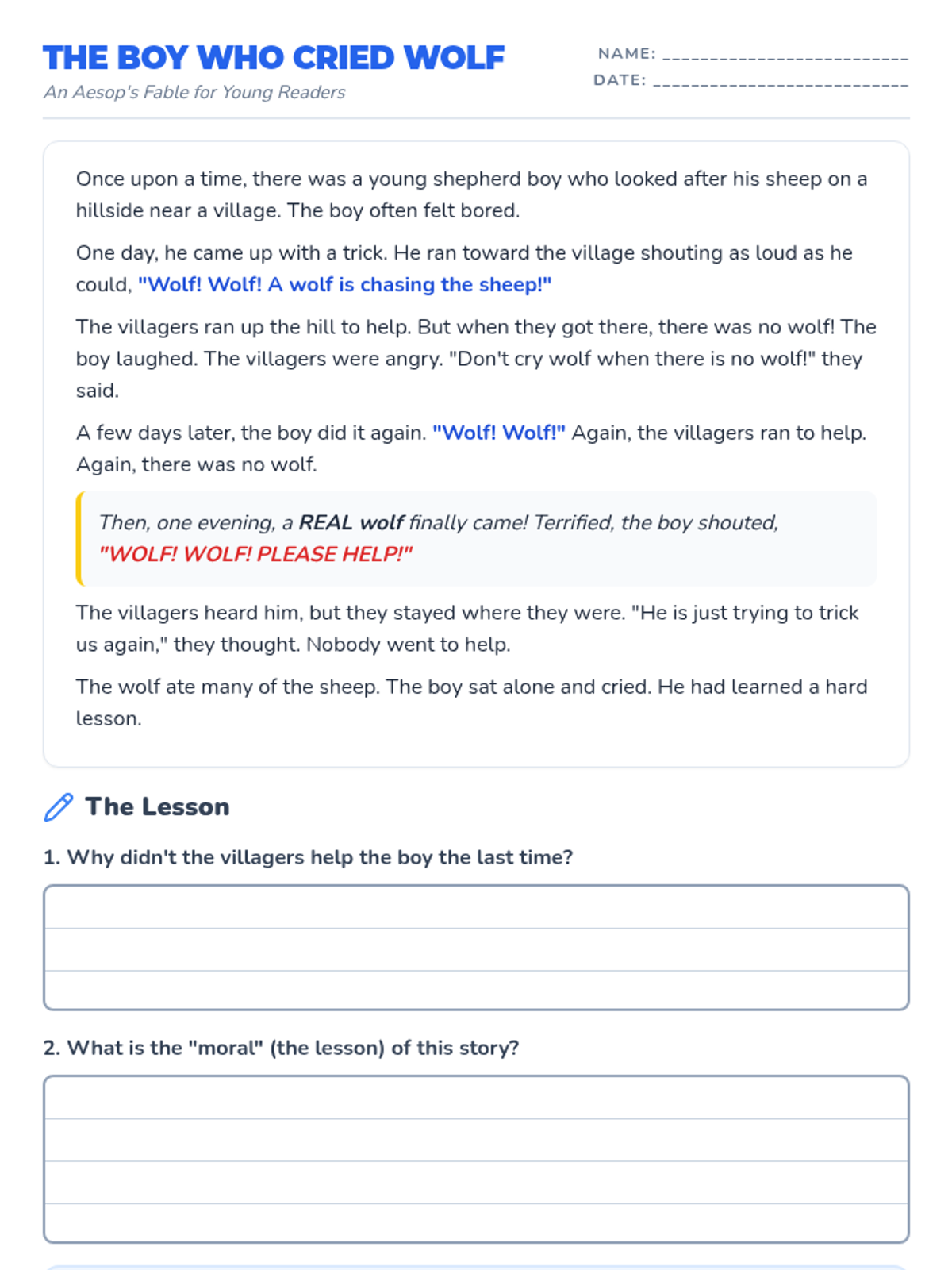
A kid-friendly adaptation of Aesop's Fable 'The Boy Who Cried Wolf' with reading comprehension and reflection questions.
A vibrant 6-slide presentation for 2nd graders that introduces honesty, tells the story of 'The Boy Who Cried Wolf', and explains the sorting activity.
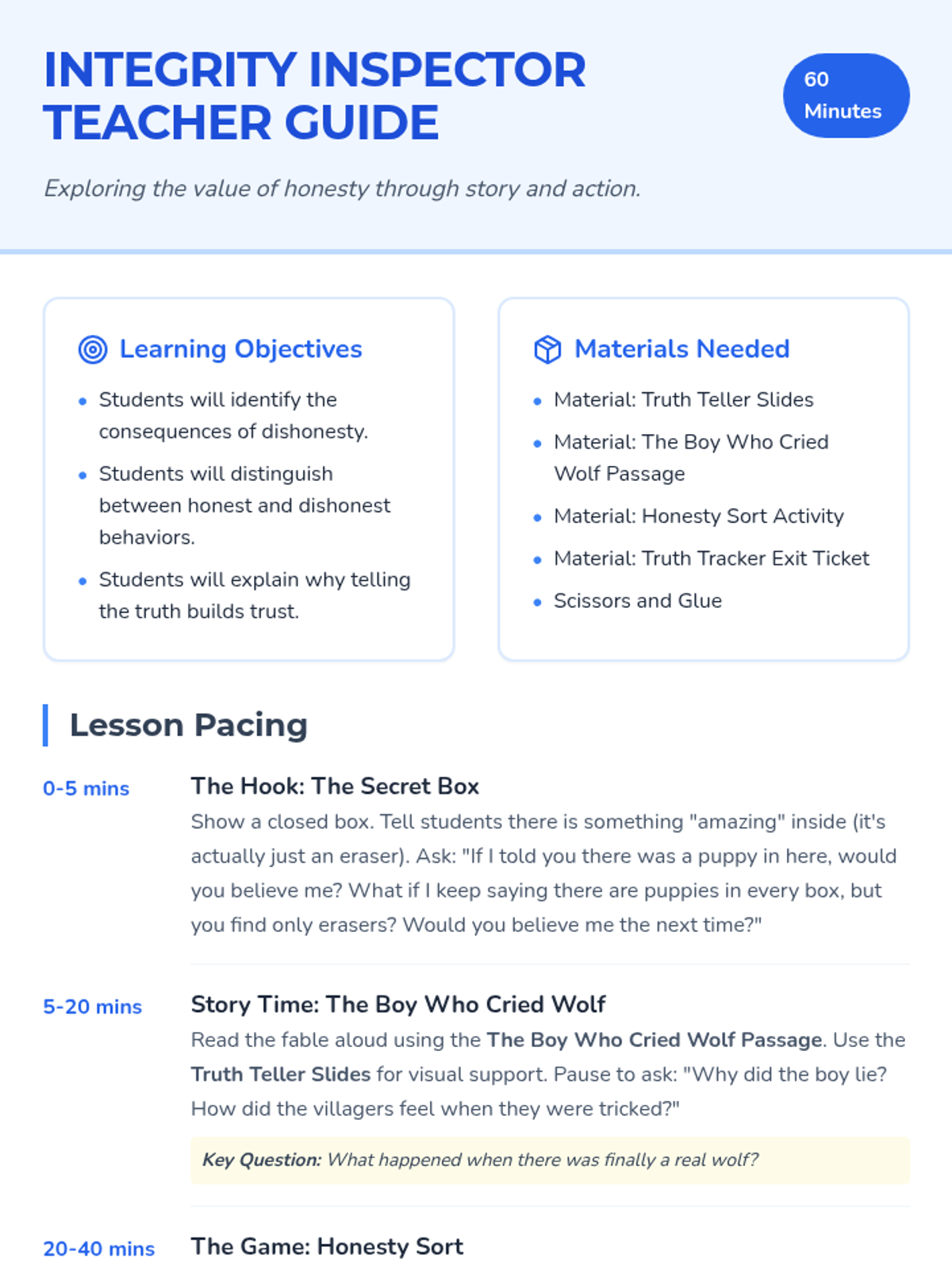
A comprehensive teacher's guide for a 60-minute lesson on honesty, including pacing, discussion prompts, and differentiation strategies for 2nd grade.
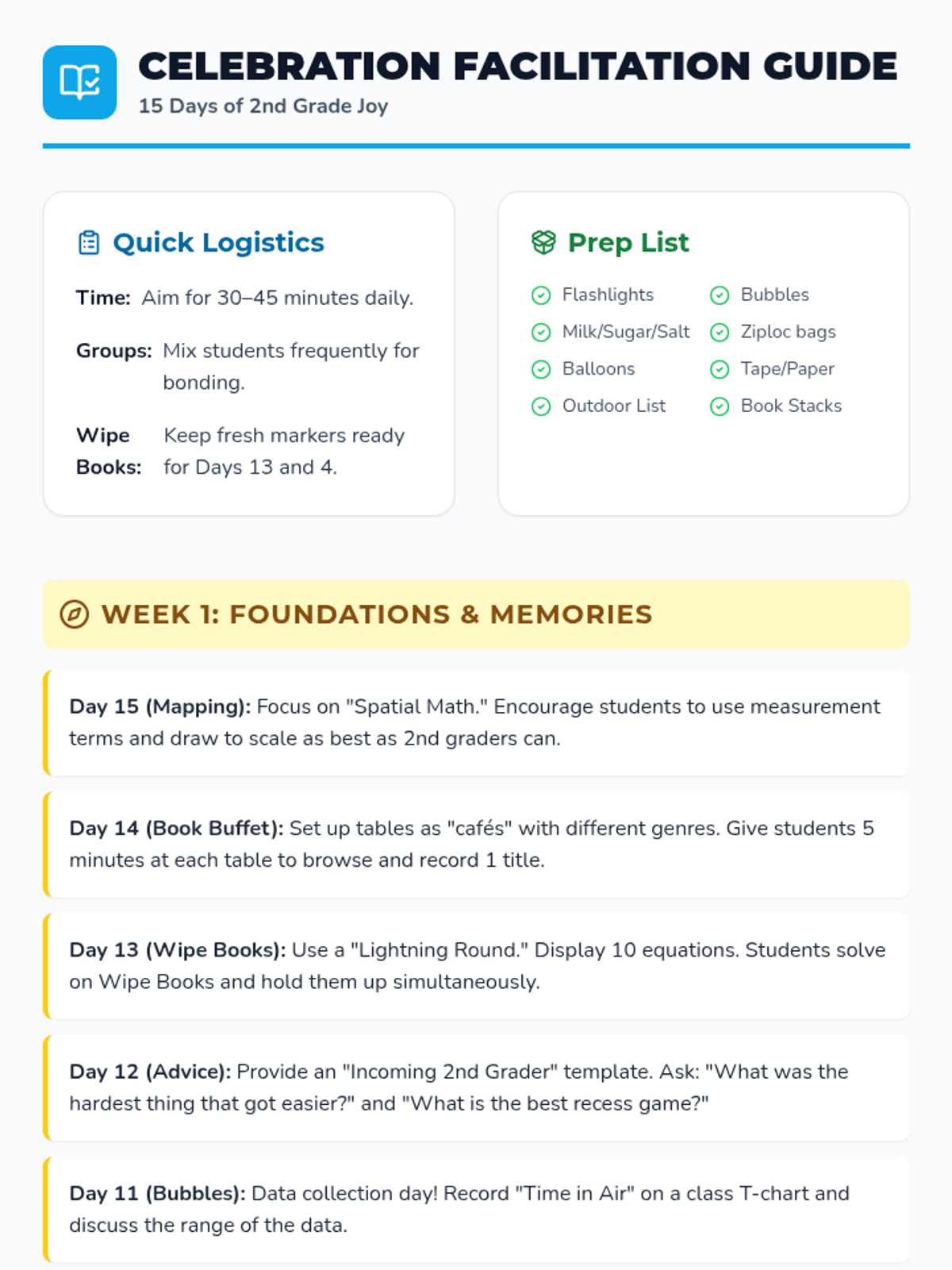
A complete instructional guide for teachers covering all 15 days of the "Adventure Bound" countdown. Includes preparation lists, specific instructional tips for each activity, and matter-of-fact logistical guidance to ensure a smooth celebration.
A colorful and engaging 15-day countdown checklist for second graders, featuring a daily activity to celebrate their growth in math, reading, and social skills. Box squares are clearly rendered for students to check off as they go. This version includes optimized page breaks and larger name fields.
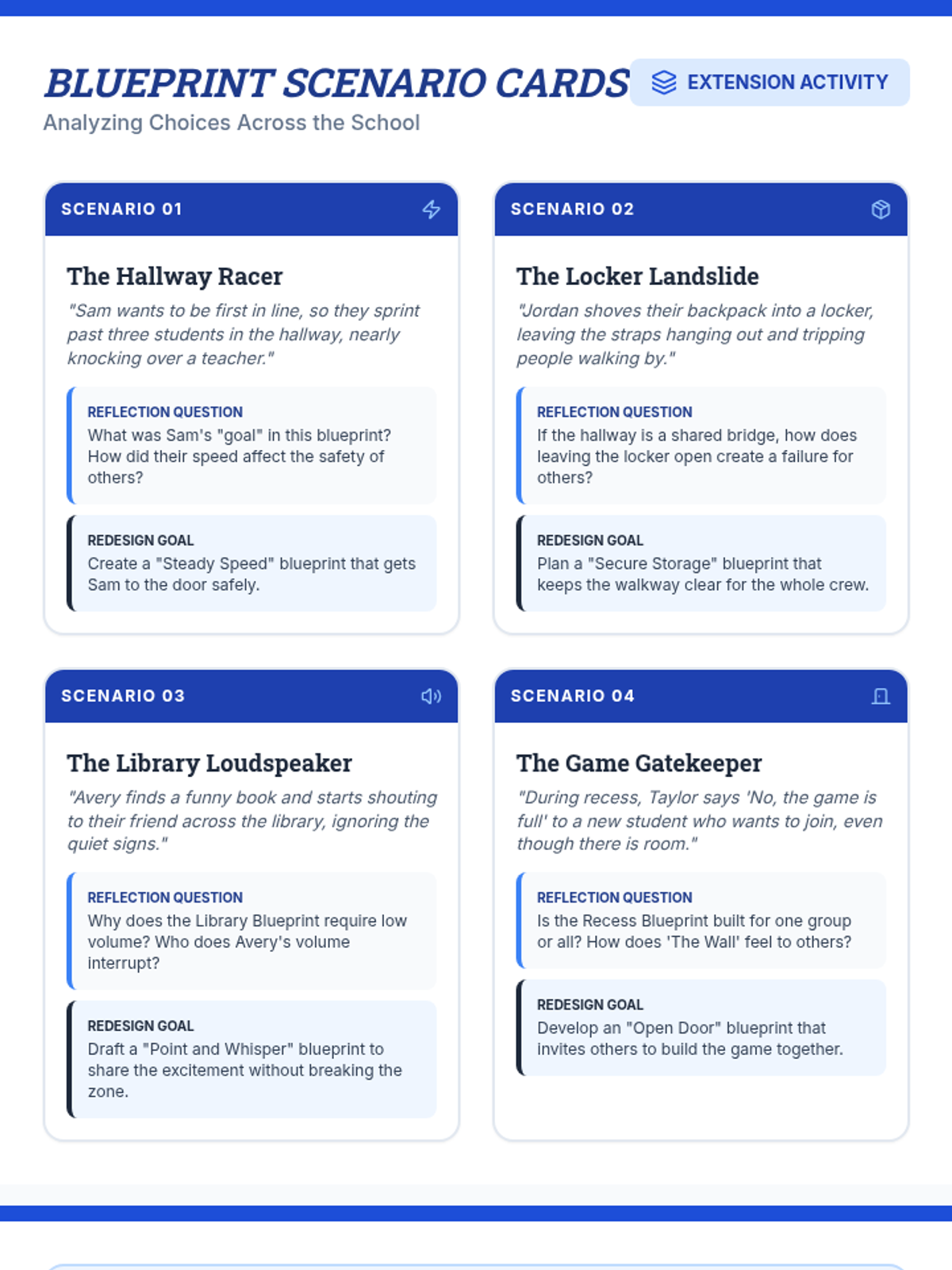
A set of four behavioral scenario cards (The Hallway Racer, Locker Landslide, Library Loudspeaker, and Game Gatekeeper) with reflection questions and redesign goals for student analysis.
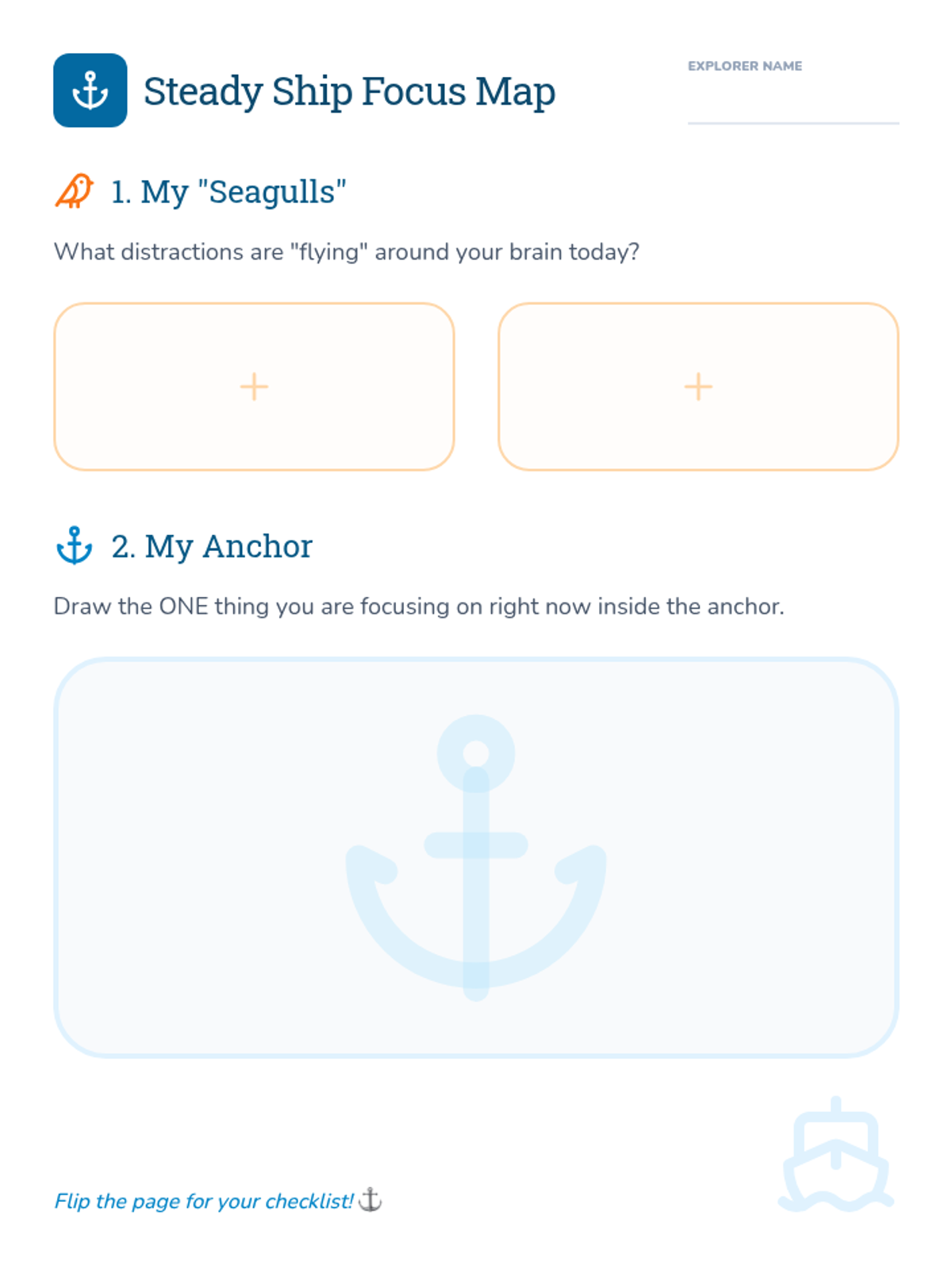
A student worksheet for self-identifying distractions and committing to 'anchoring' their attention during tasks. Features a clear checklist for non-verbal redirection responses.
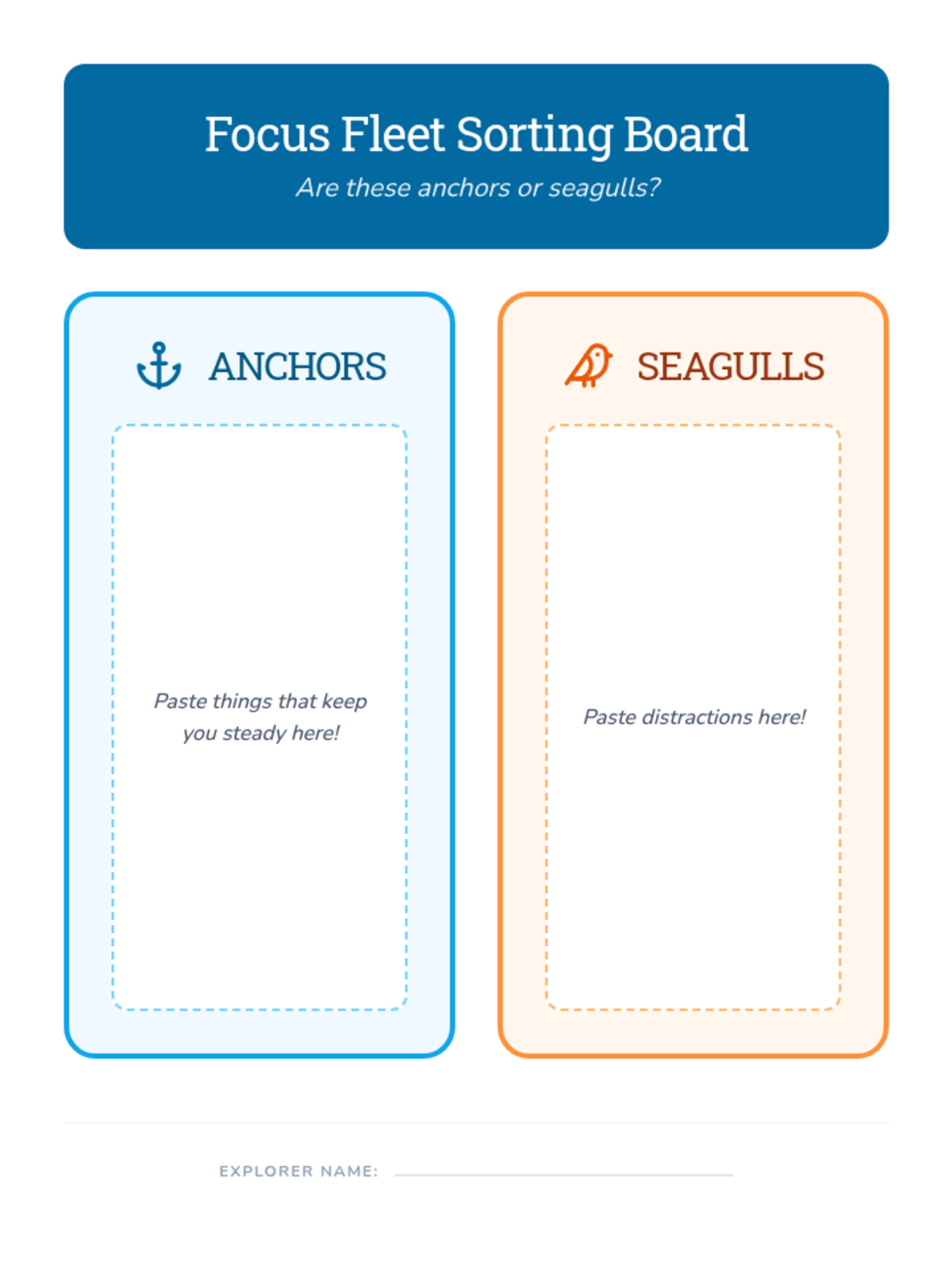
A hands-on sorting activity where students categorize various classroom elements as 'Anchors' (focus points) or 'Seagulls' (distractions). Cards use neutral colors to ensure students sort based on content.
An engaging slide deck designed to teach K-3 students the 'Attention Anchor' strategy using nautical metaphors and non-verbal redirection cues.
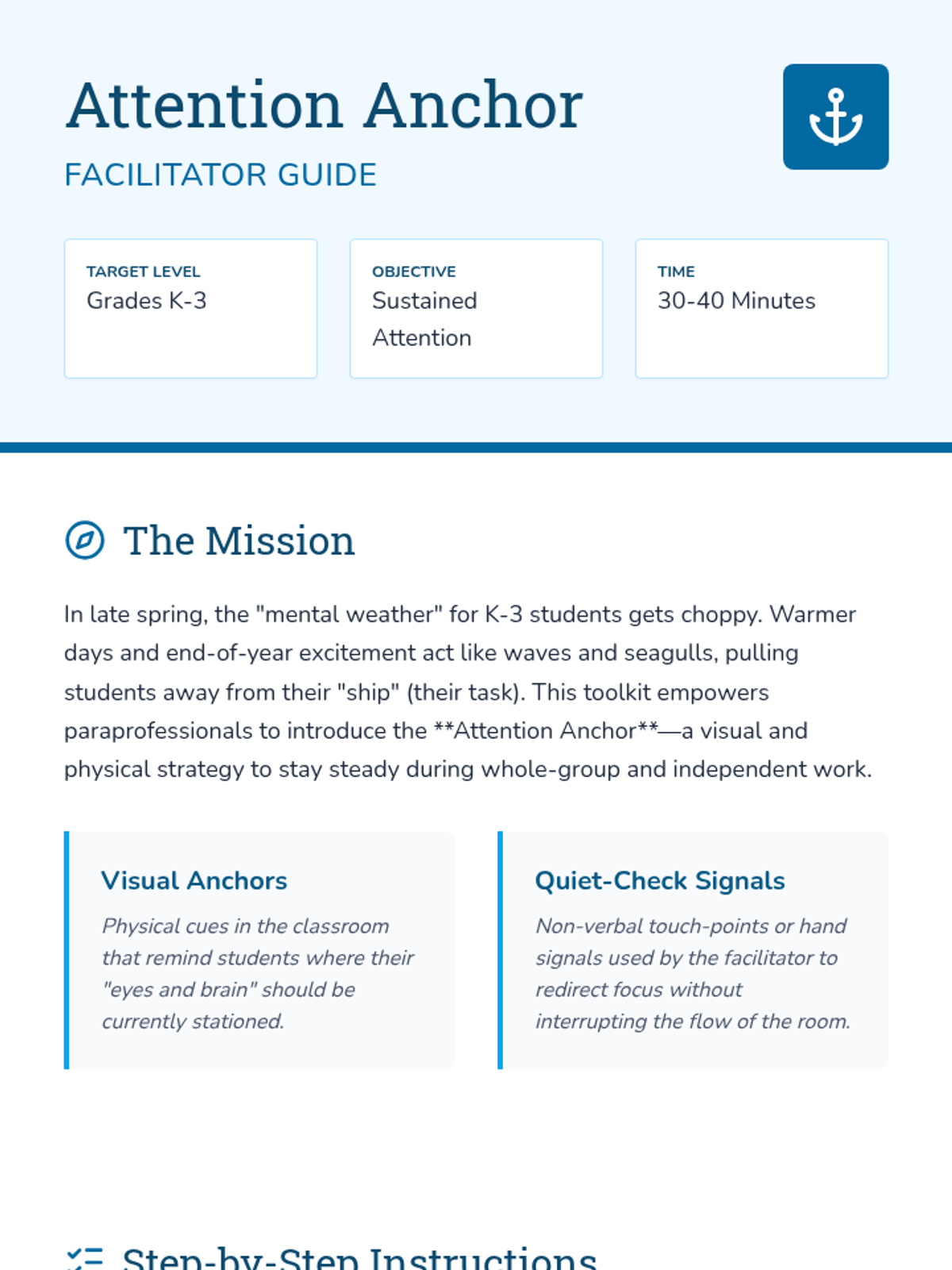
A comprehensive facilitator guide for paraprofessionals, outlining a nautical-themed executive functioning lesson on sustained attention for K-3 students.
A high-impact summary slide illustrating the concept of growing around grief, emphasizing that while loss remains, life expands to hold it.
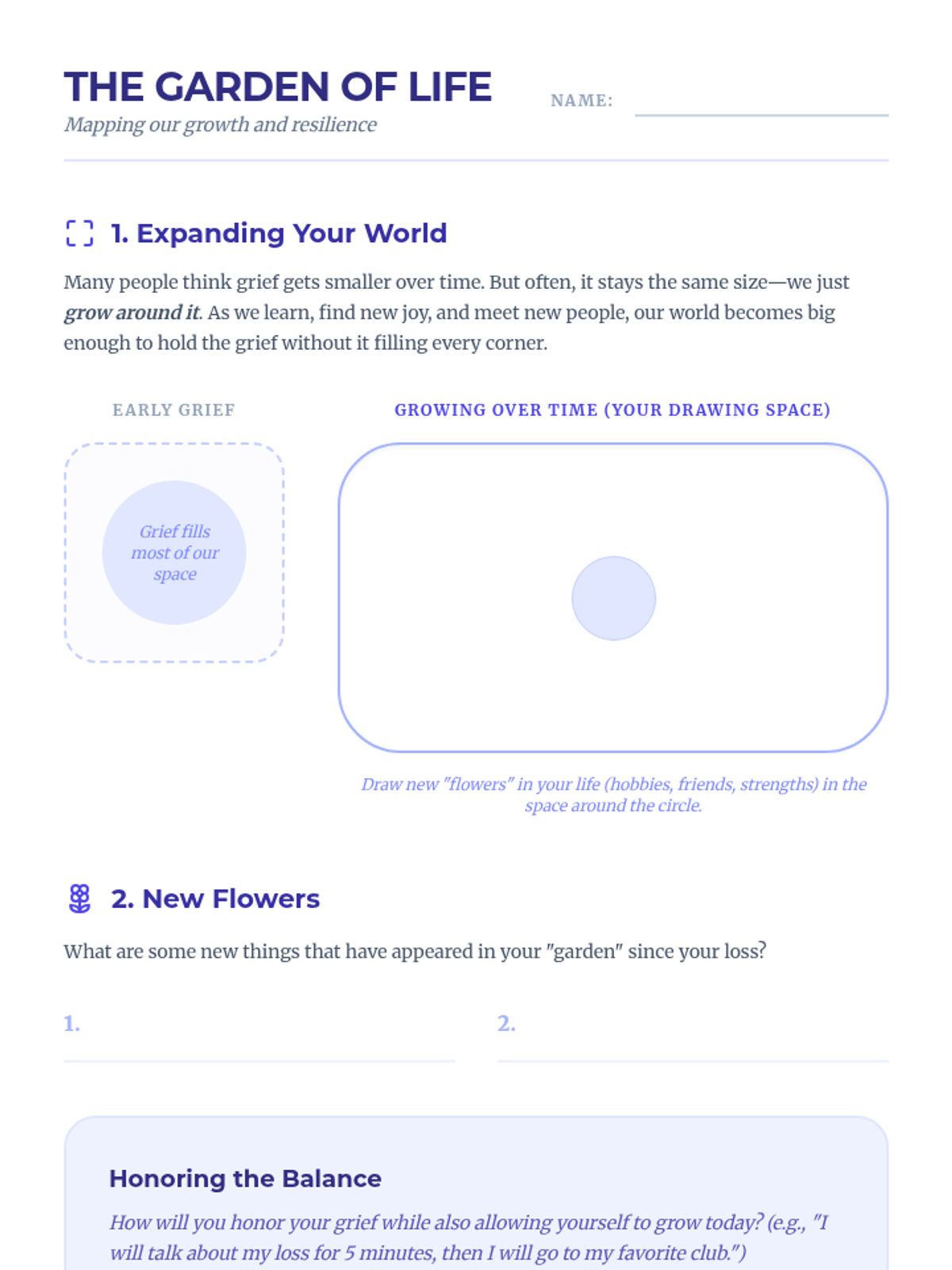
A worksheet based on the 'Growing Around Grief' model, helping students visualize how their lives can expand and incorporate new growth even as grief remains a part of their story.
A 3-slide visual presentation for Lesson 2, focusing on the balance between honoring loss and celebrating the enduring light of positive memories.
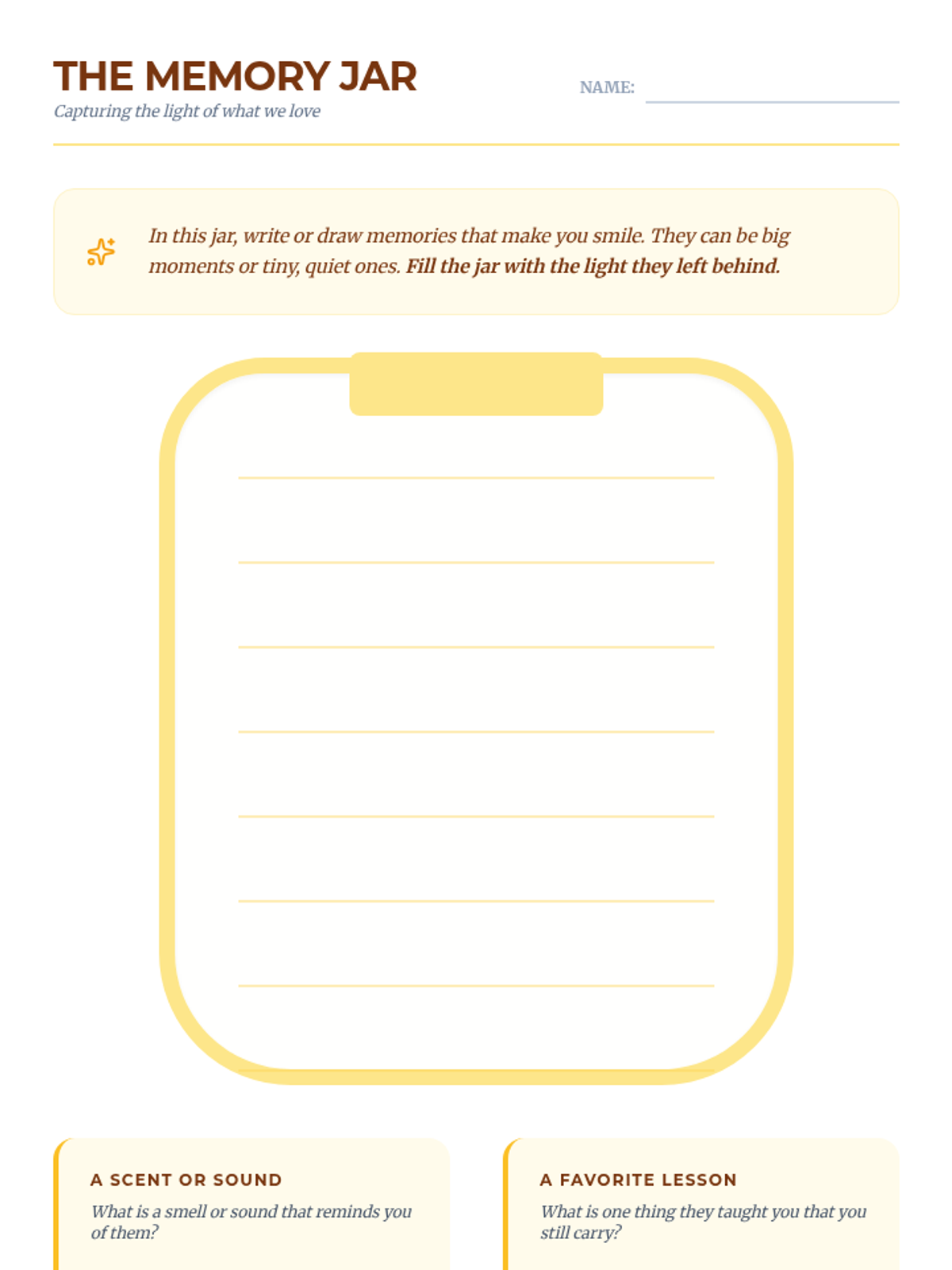
A creative worksheet where students visualize and record positive memories as 'tokens' in a jar, focusing on the legacy and warmth of what was lost.
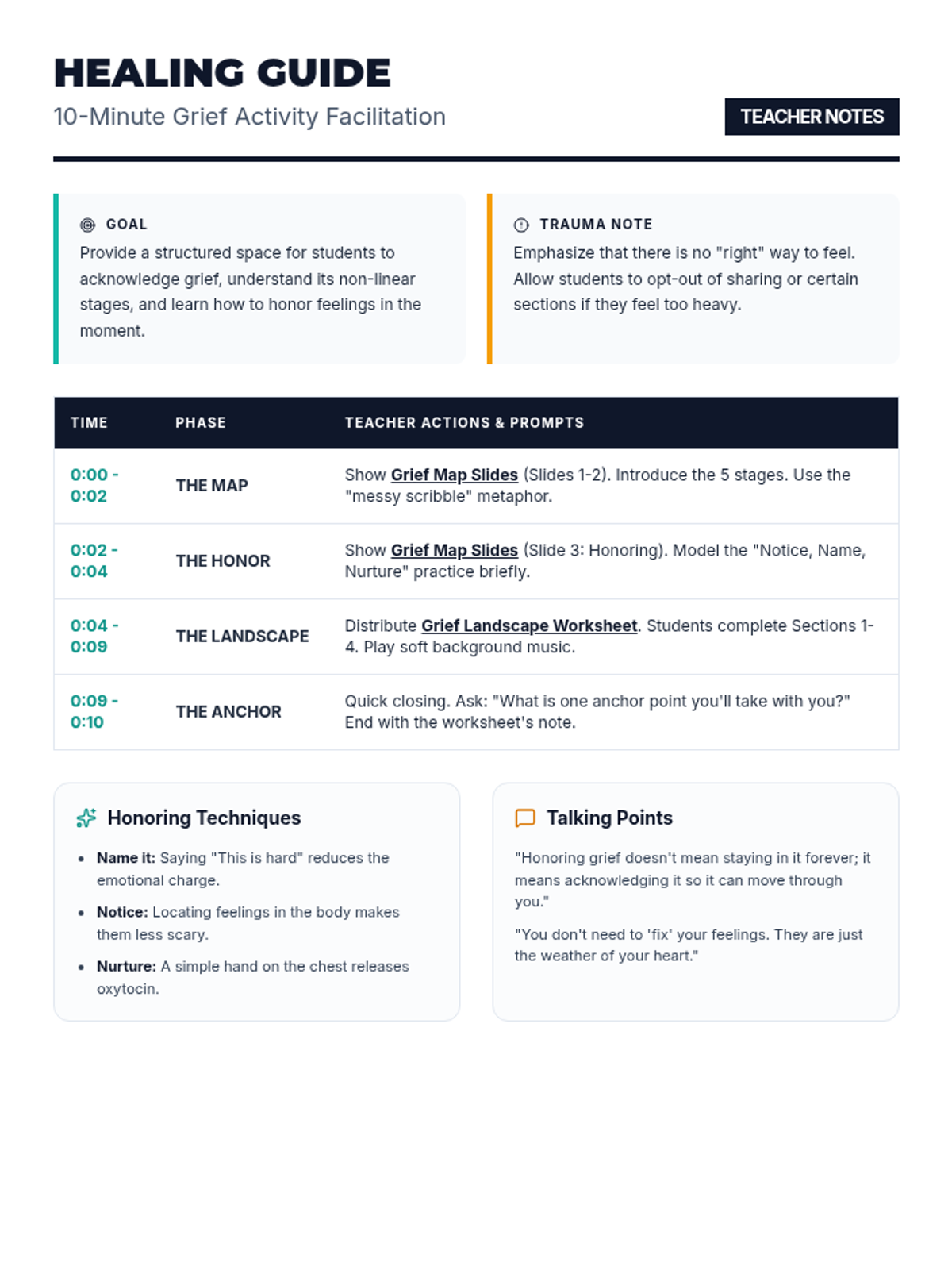
A facilitation guide for teachers to lead a 10-minute grief activity, including pacing, talking points, and techniques for honoring grief in the moment.
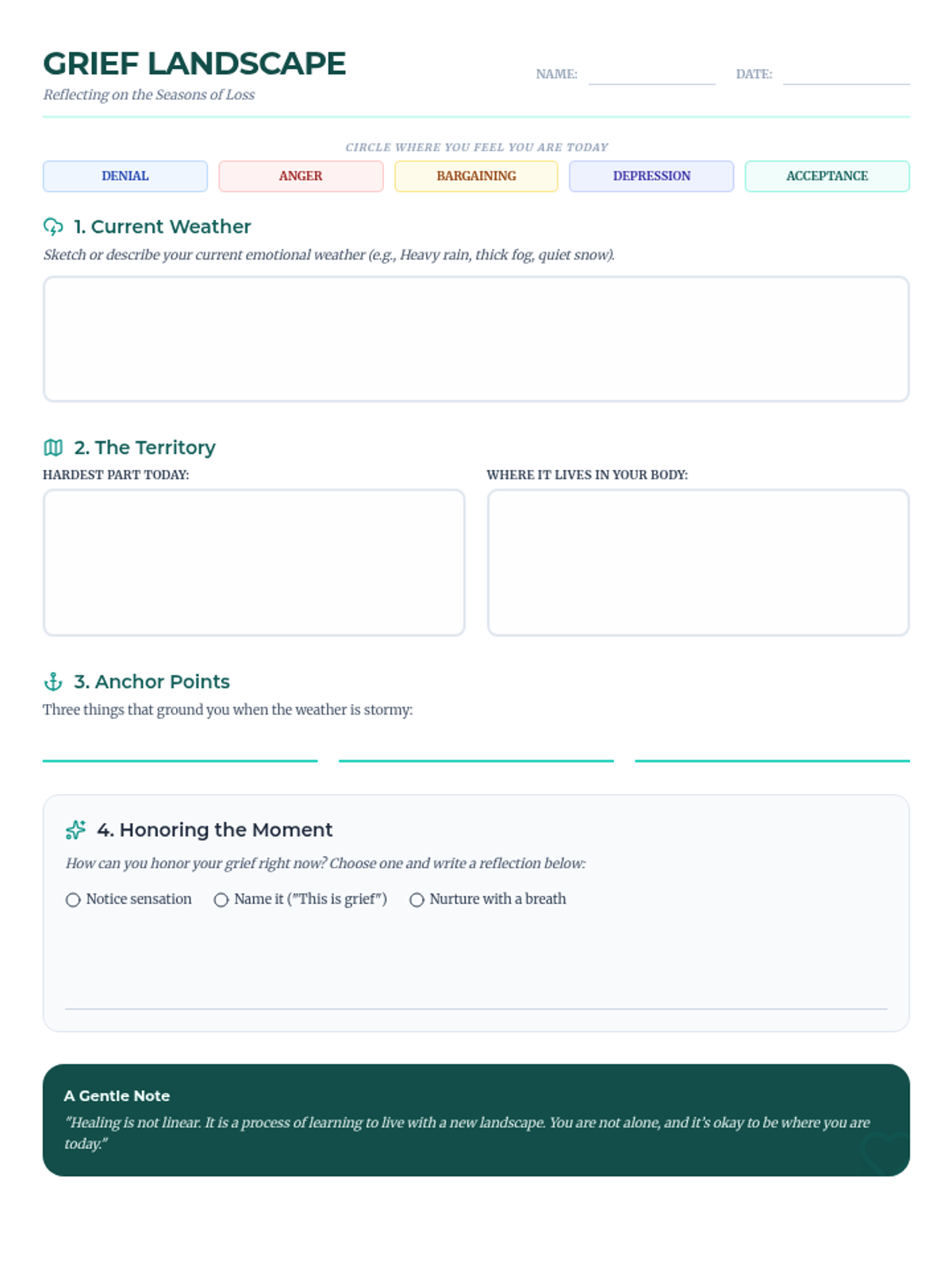
A reflective worksheet for students to process grief through metaphor, identifying their current emotional 'weather,' physical sensations, coping 'anchor points,' and practices for honoring grief in the moment.
A 4-slide visual presentation for a grief activity, explaining the five stages of grief, how to honor grief in the moment, and a final reflection prompt.
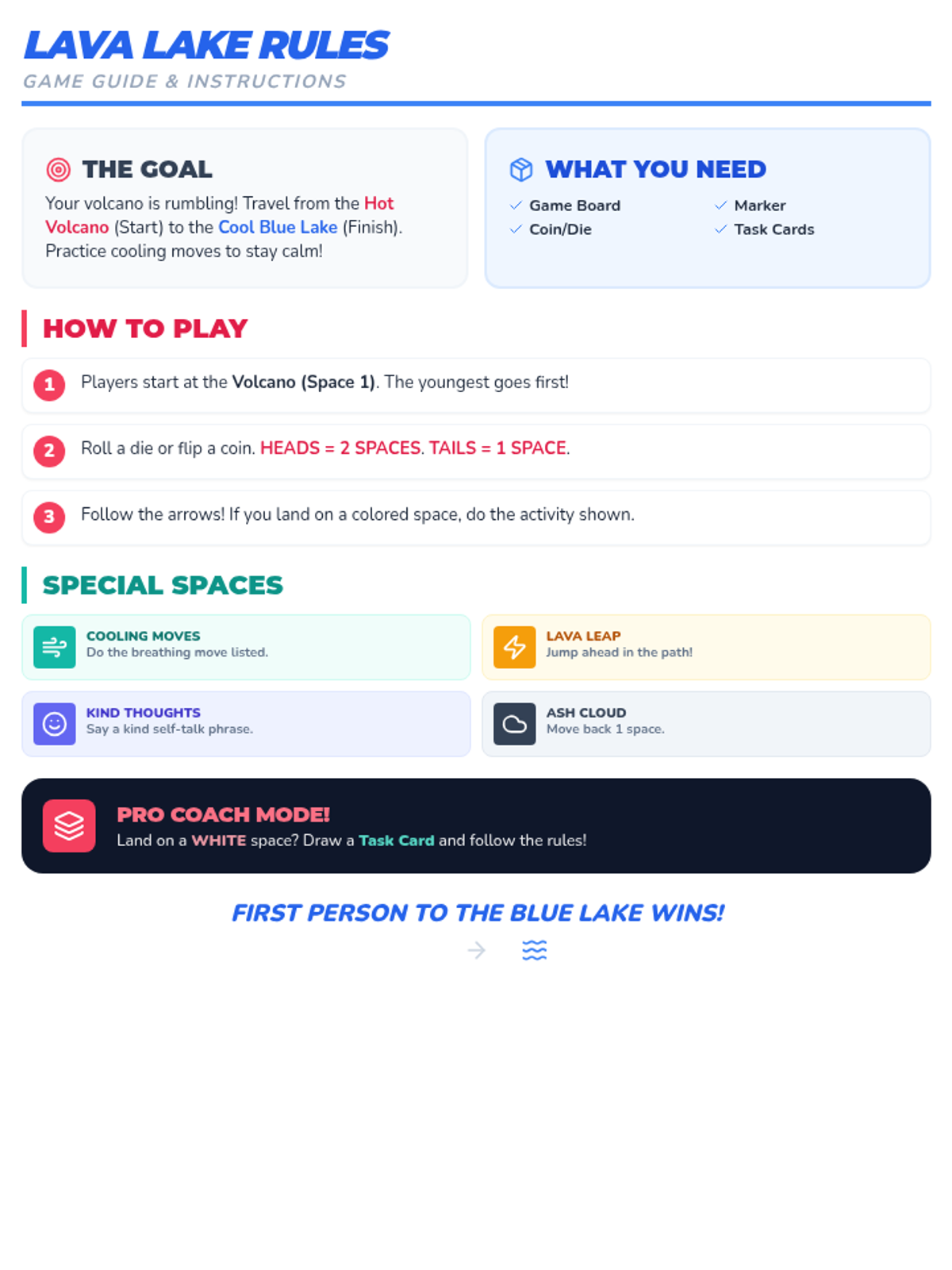
A one-page rules sheet for the 'Lava to Lake' board game, including setup instructions, gameplay steps, and special space descriptions. Revised for better formatting and single-page fit.
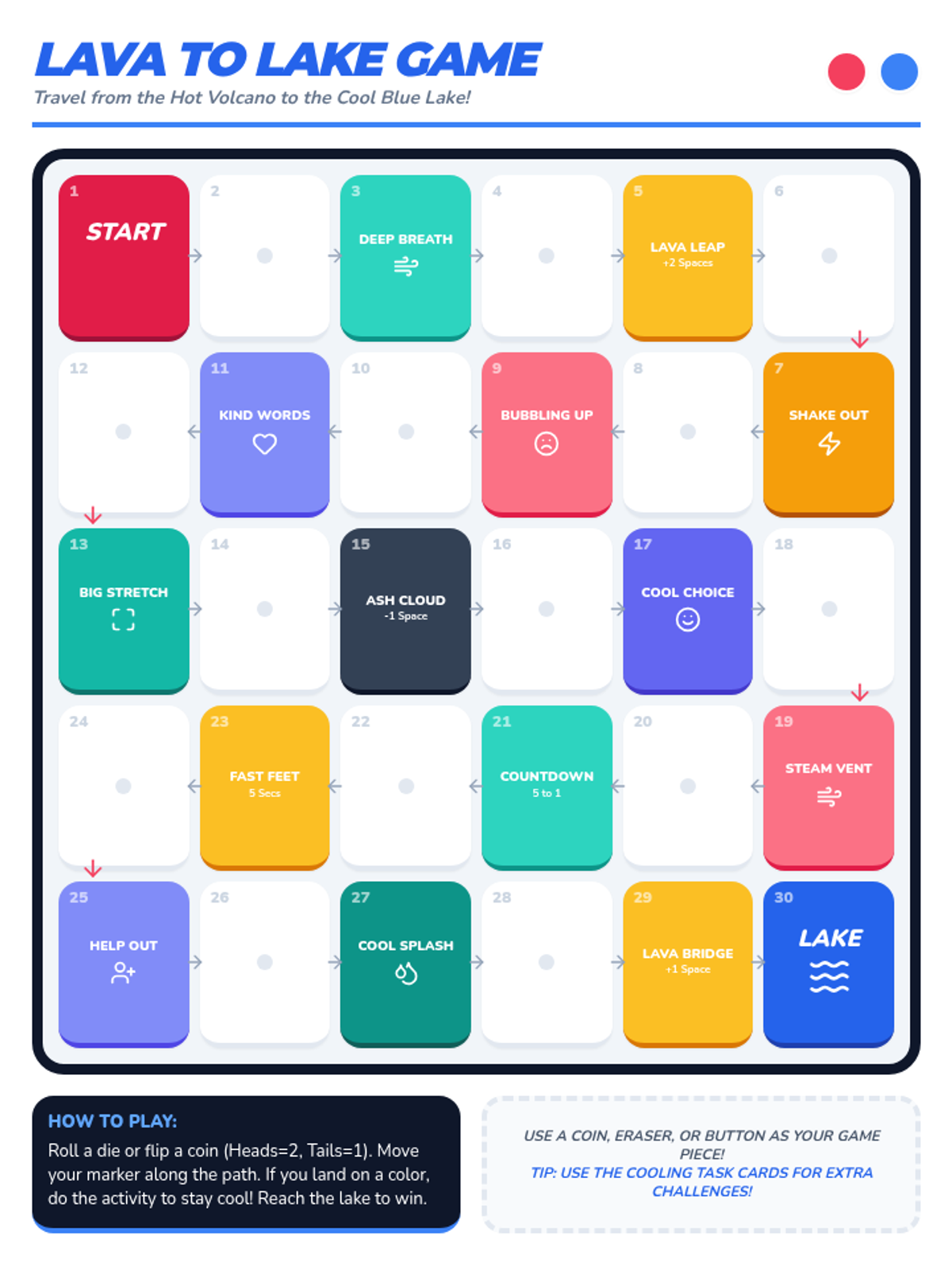
A 30-space board game themed around the volcano metaphor where students practice cooling strategies as they move from the 'Hot Volcano' to the 'Cool Blue Lake'. Revised for better fit and directional arrows.
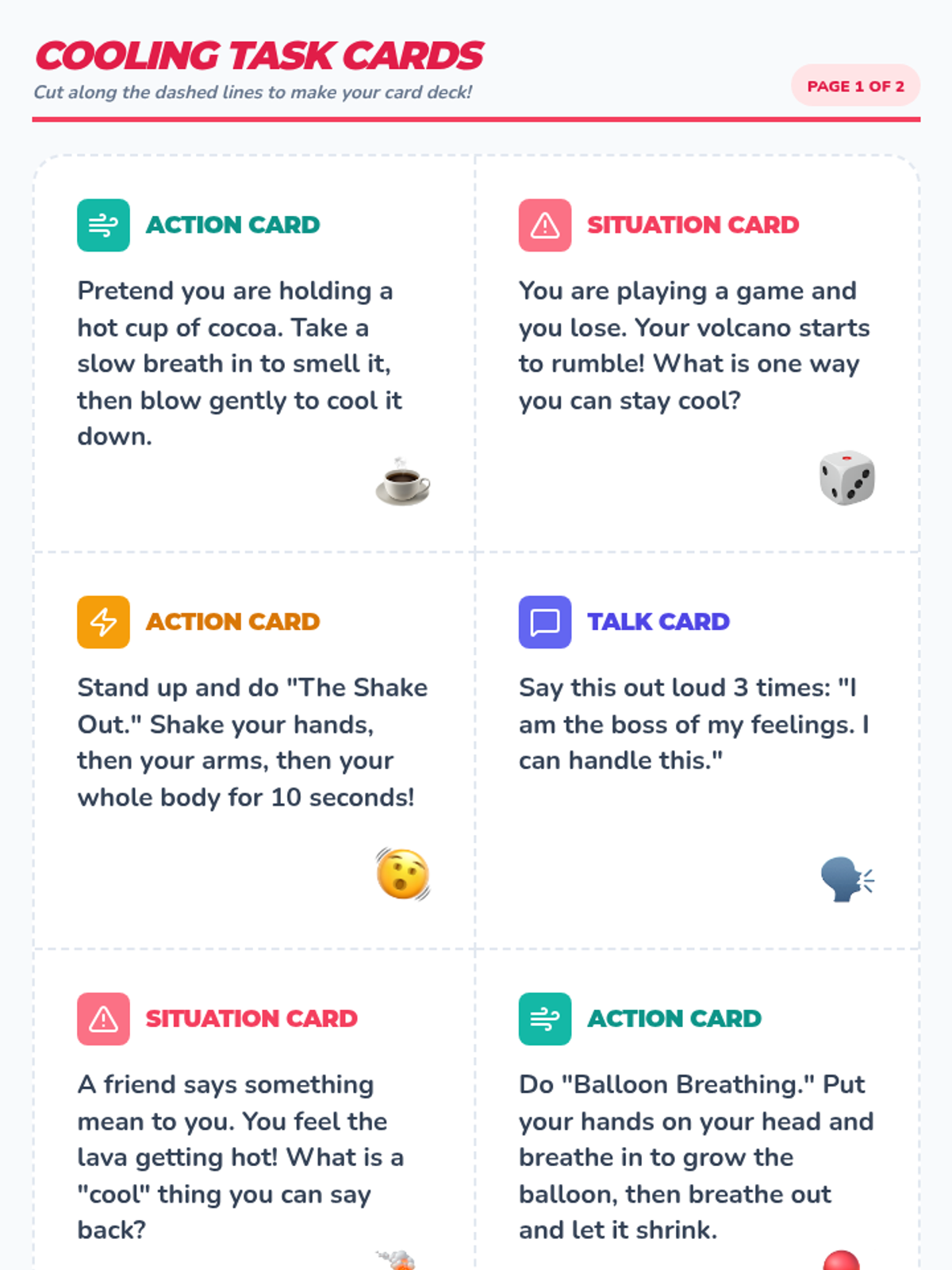
A set of 12 task cards featuring various scenarios and physical cooling activities to help students practice anger management strategies. Includes situation cards, action cards, and self-talk prompts. Revised for clarity.
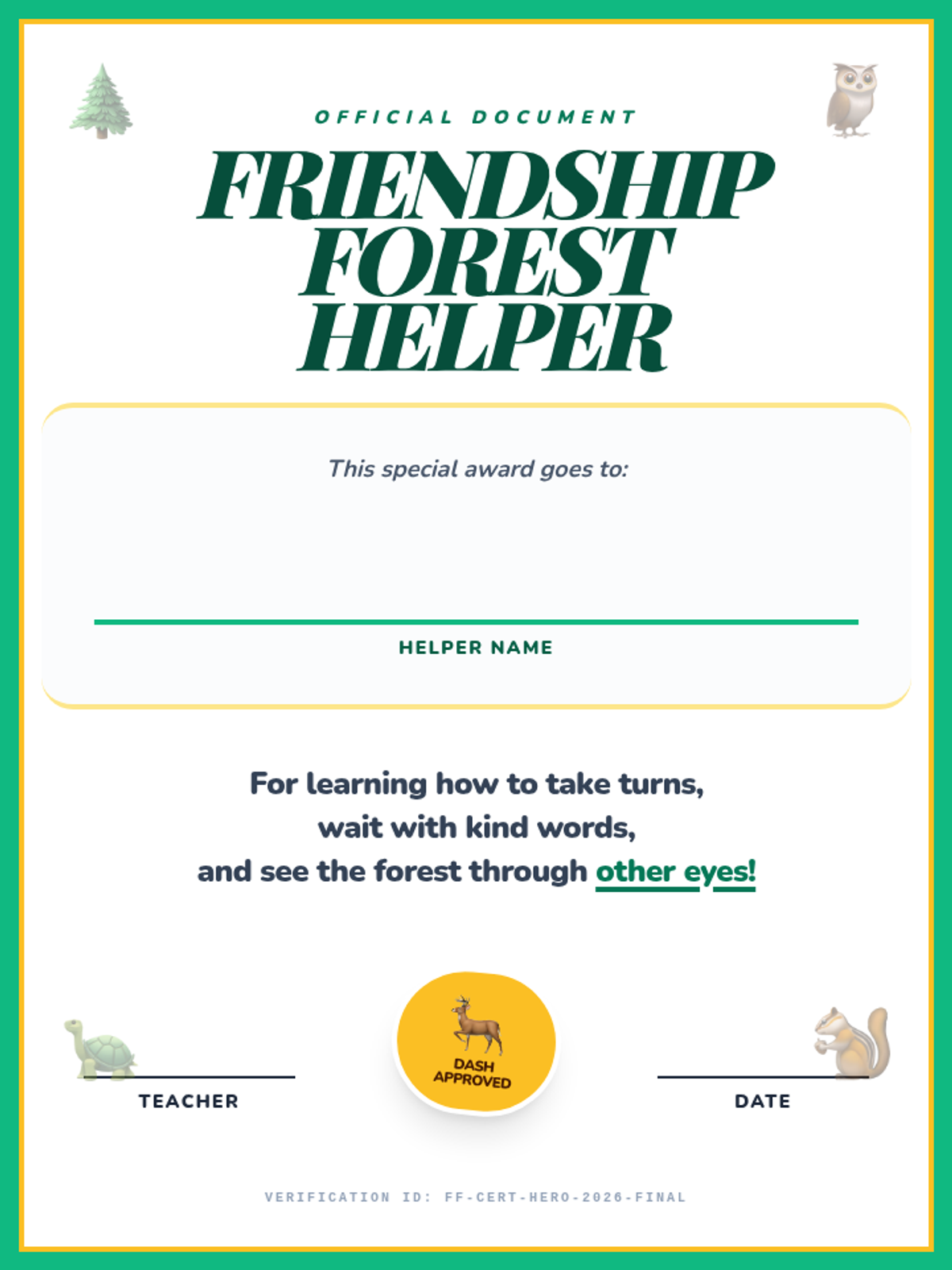
A celebratory certificate for 1st-2nd grade students. Increased contrast for labels, fixed layout overlapping, and extended the name line for better usability. Compaced to ensure single-page printing.
Instructional slides for the final lesson. Fixed terminology, contrast, and spacing for 1st-2nd graders.
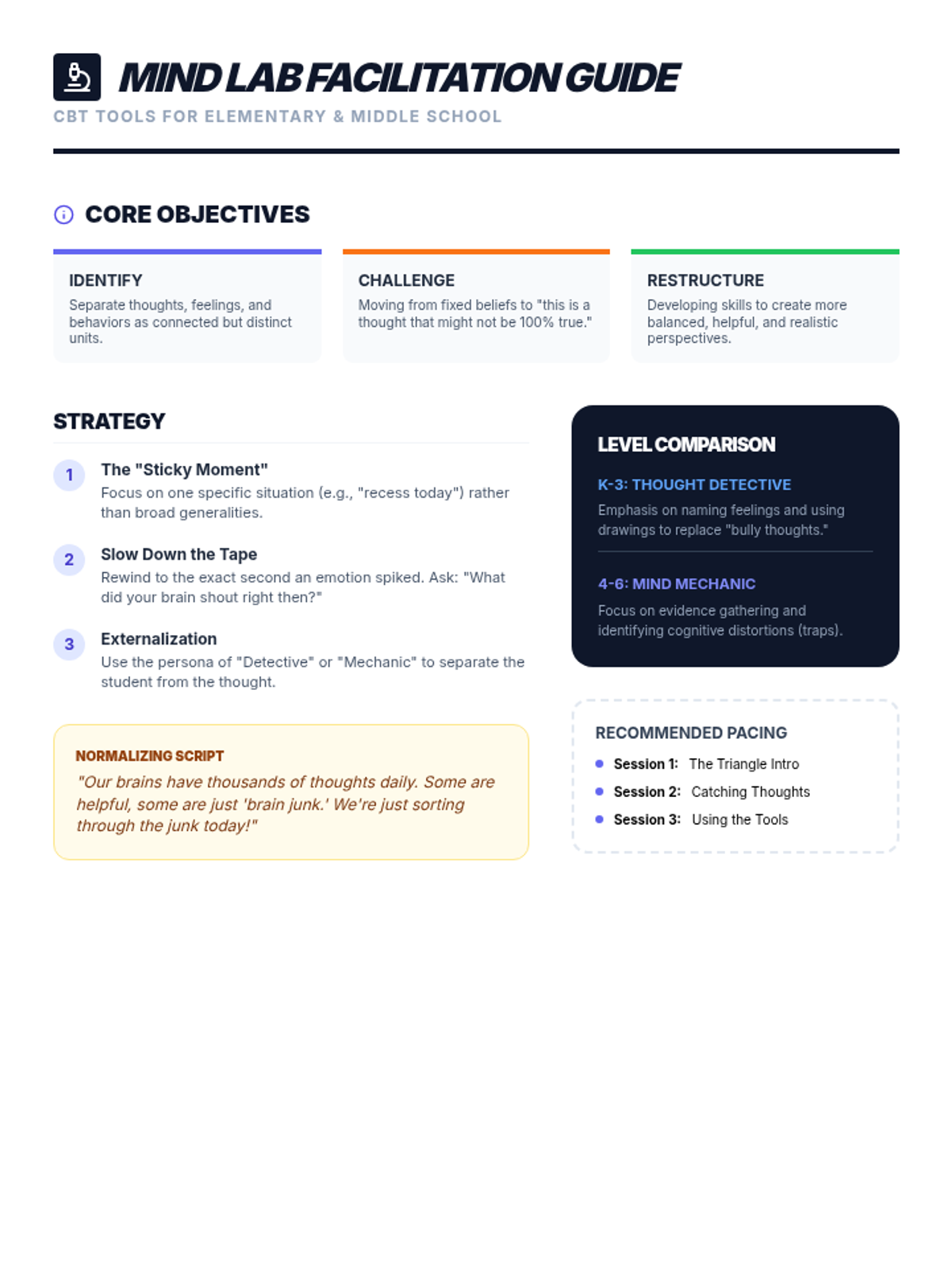
A teacher's guide for implementing CBT processing tools with students, including core objectives, usage tips, and developmental differentiation strategies.
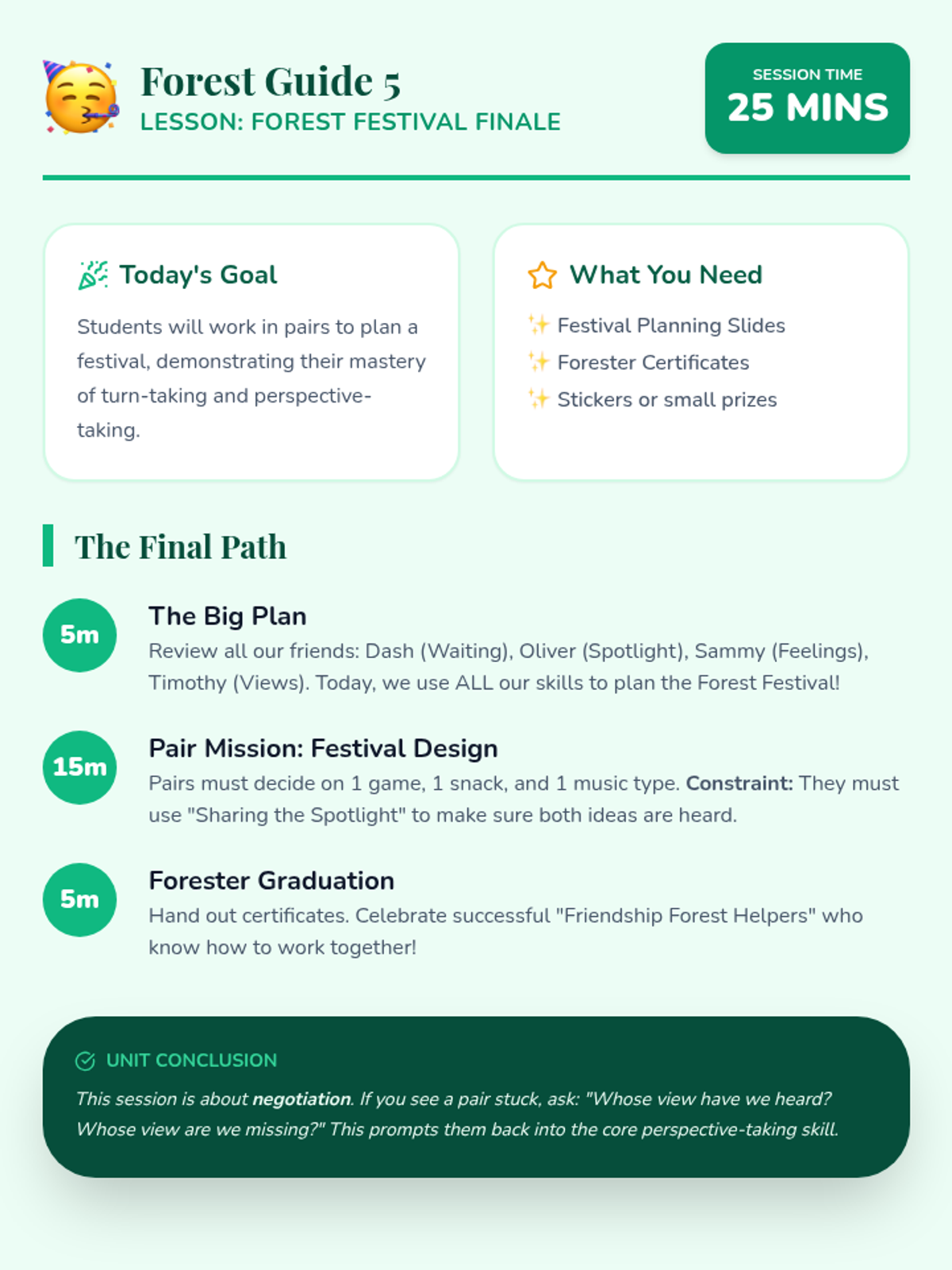
Teacher's guide for the final cumulative lesson where students apply all skills to a collaborative planning project.
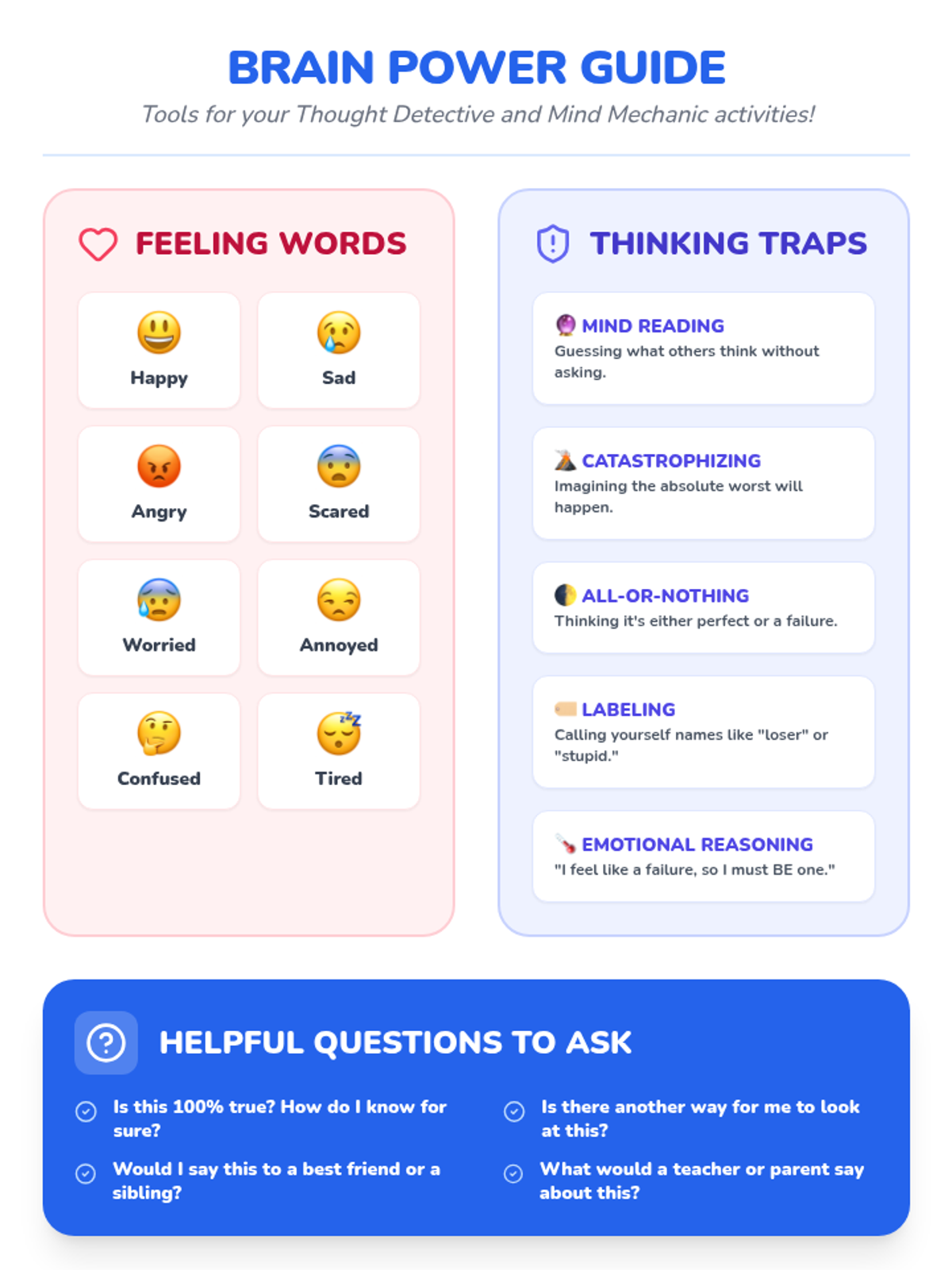
A student-facing reference guide with feelings vocabulary and 'Thinking Trap' definitions to support CBT processing activities.
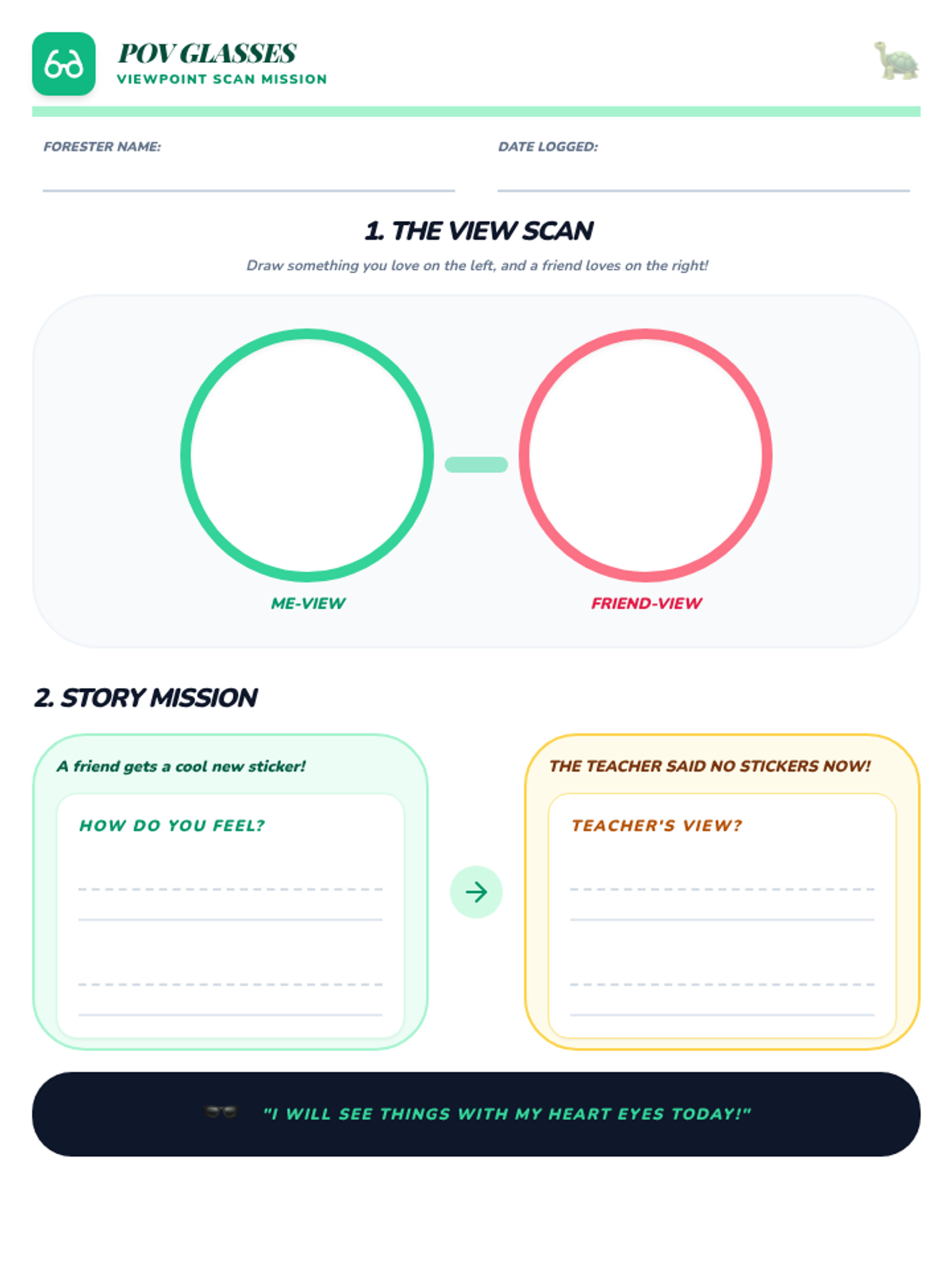
A student activity sheet for 1st-2nd graders to compare viewpoint. Consolidated to one page with primary-ruled writing lines for early elementary handwriting. Adjusted line visibility and label sizes. Added sequence arrow.
Instructional slides for Lesson 4, explaining differing viewpoints using likes/dislikes and emotional reactions to situations.
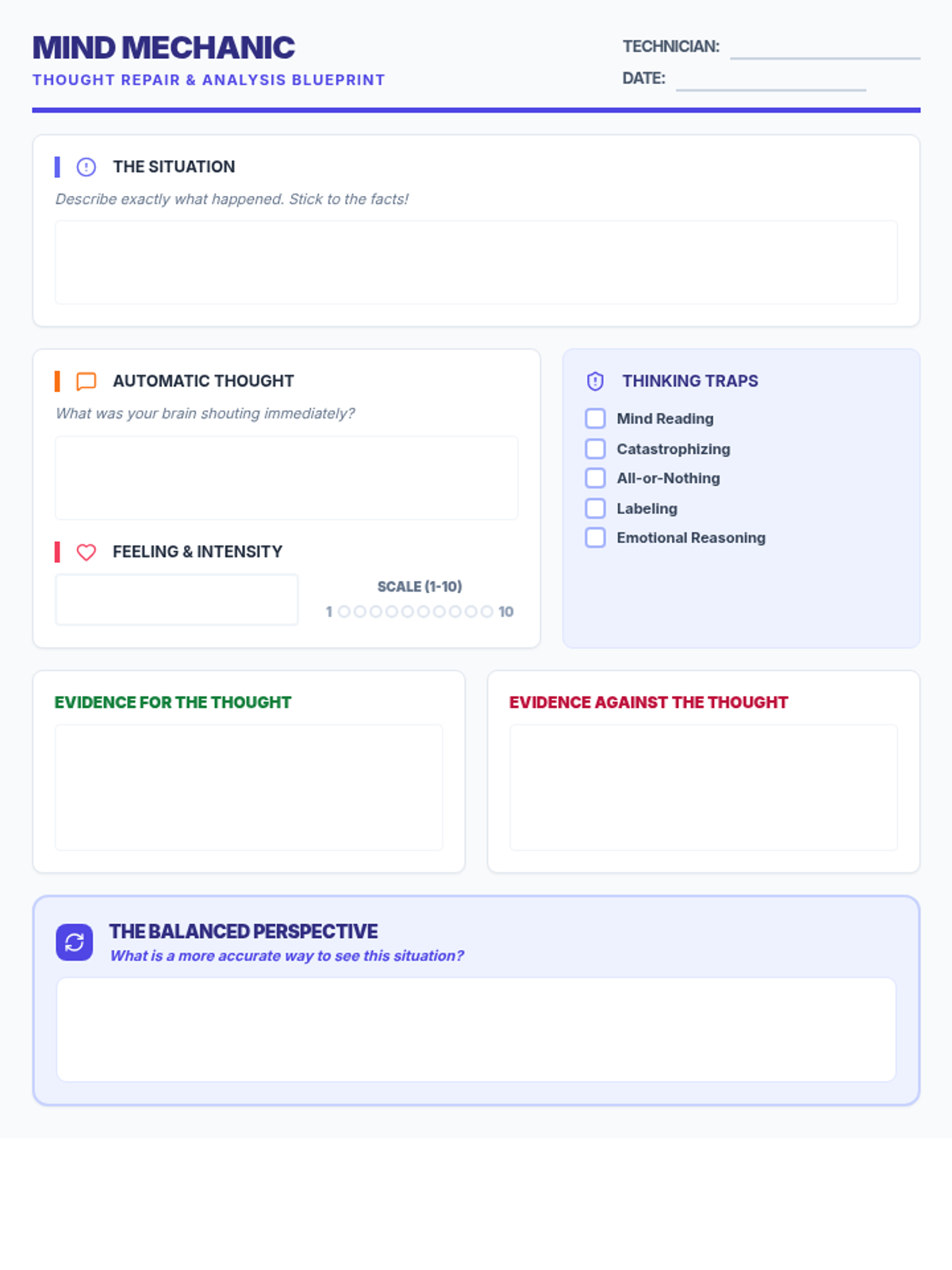
A detailed CBT processing sheet for students in grades 4-6, featuring 'Thinking Trap' identification, evidence gathering sections, and a balanced perspective area.