A 13-slide presentation for Accounting students that outlines a grade recovery plan, categorizes their current standing, and provides clear steps for improving their grades through test retakes and study guides.
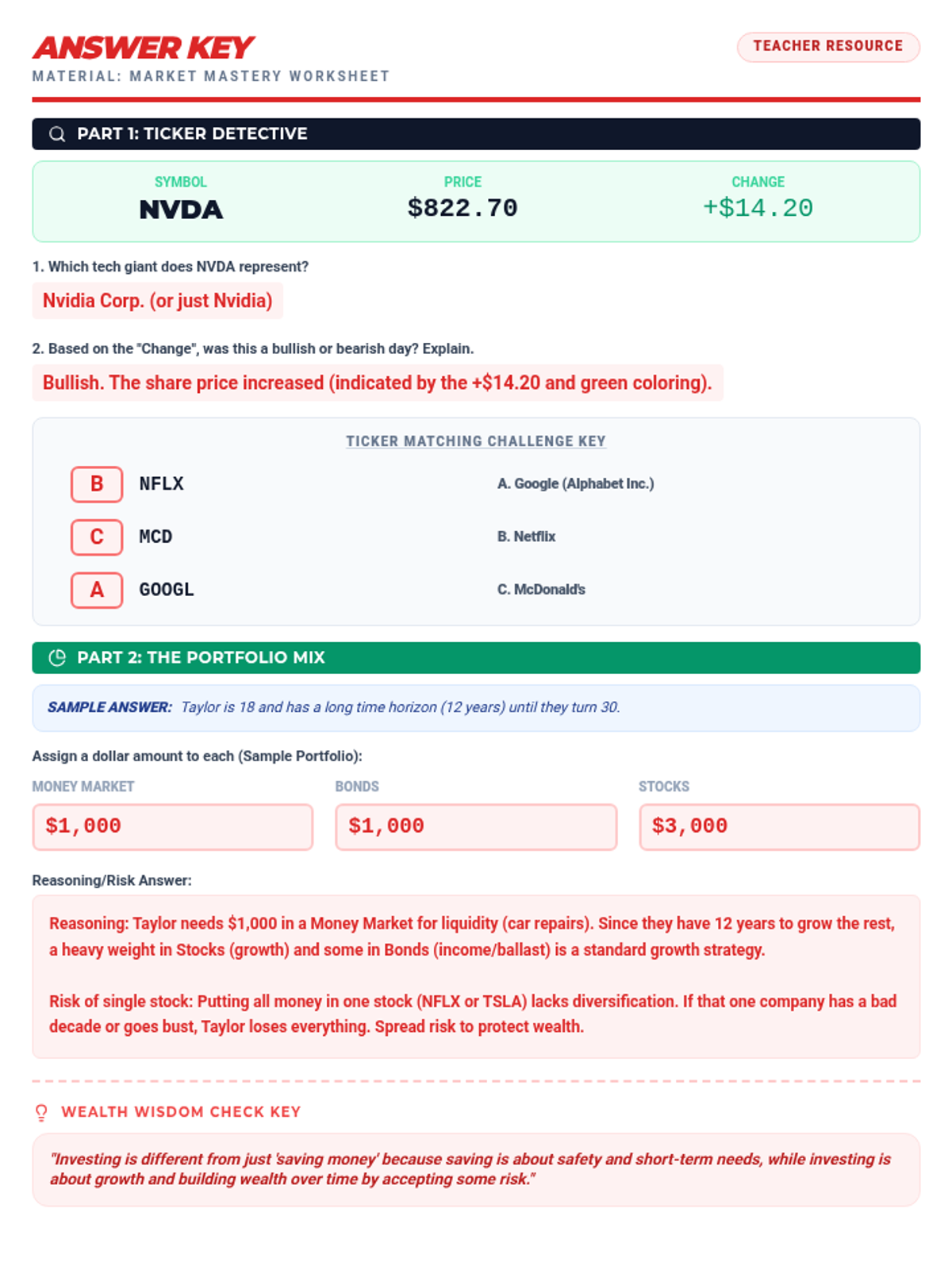
A teacher-facing answer key for the Market Mastery Worksheet, providing correct ticker interpretations, sample portfolio allocations, and reflection guidelines.
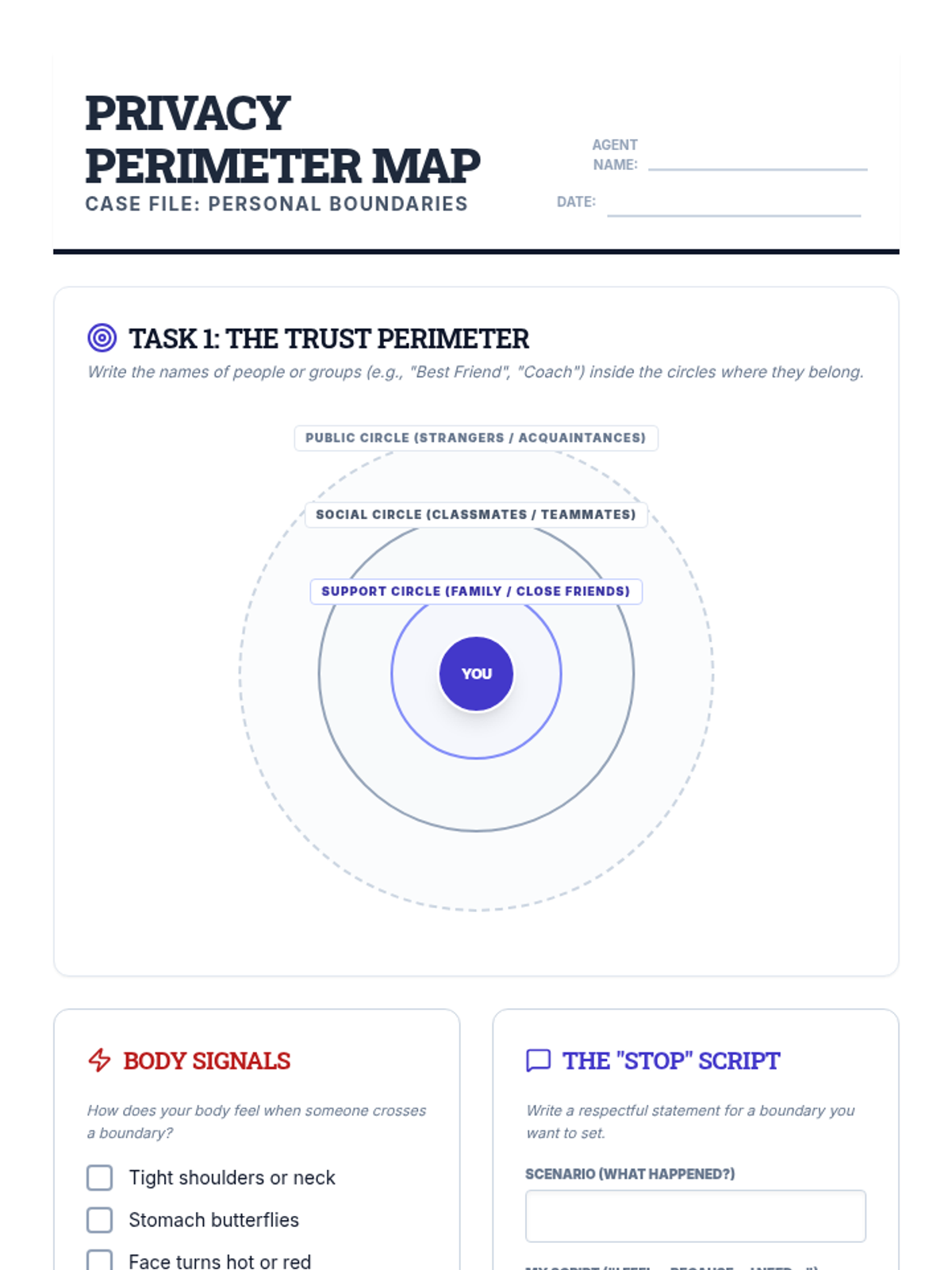
A student worksheet for identifying personal boundaries, featuring a 'Circles of Trust' mapping activity, a checklist for bodily signals of boundary violations, and a section for practicing assertive communication.
A visually striking presentation for a group session on boundaries, featuring definitions, types of boundaries (physical, emotional, digital), and scenario-based discussion prompts with a 'confidential agent' theme.
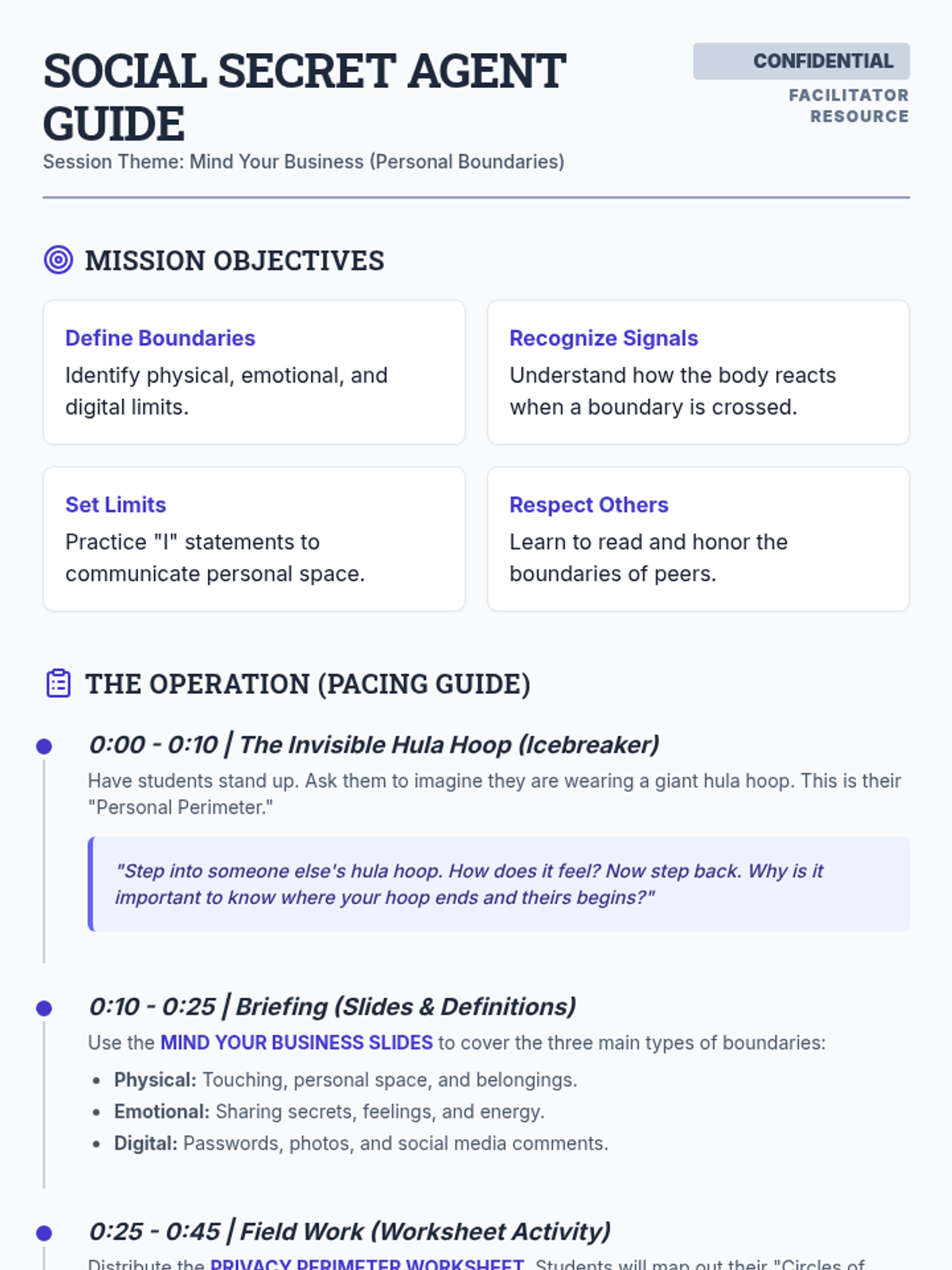
A facilitator guide for a group counseling session on boundaries, featuring a pacing guide, icebreaker activities, and discussion prompts with a 'confidential agent' theme.
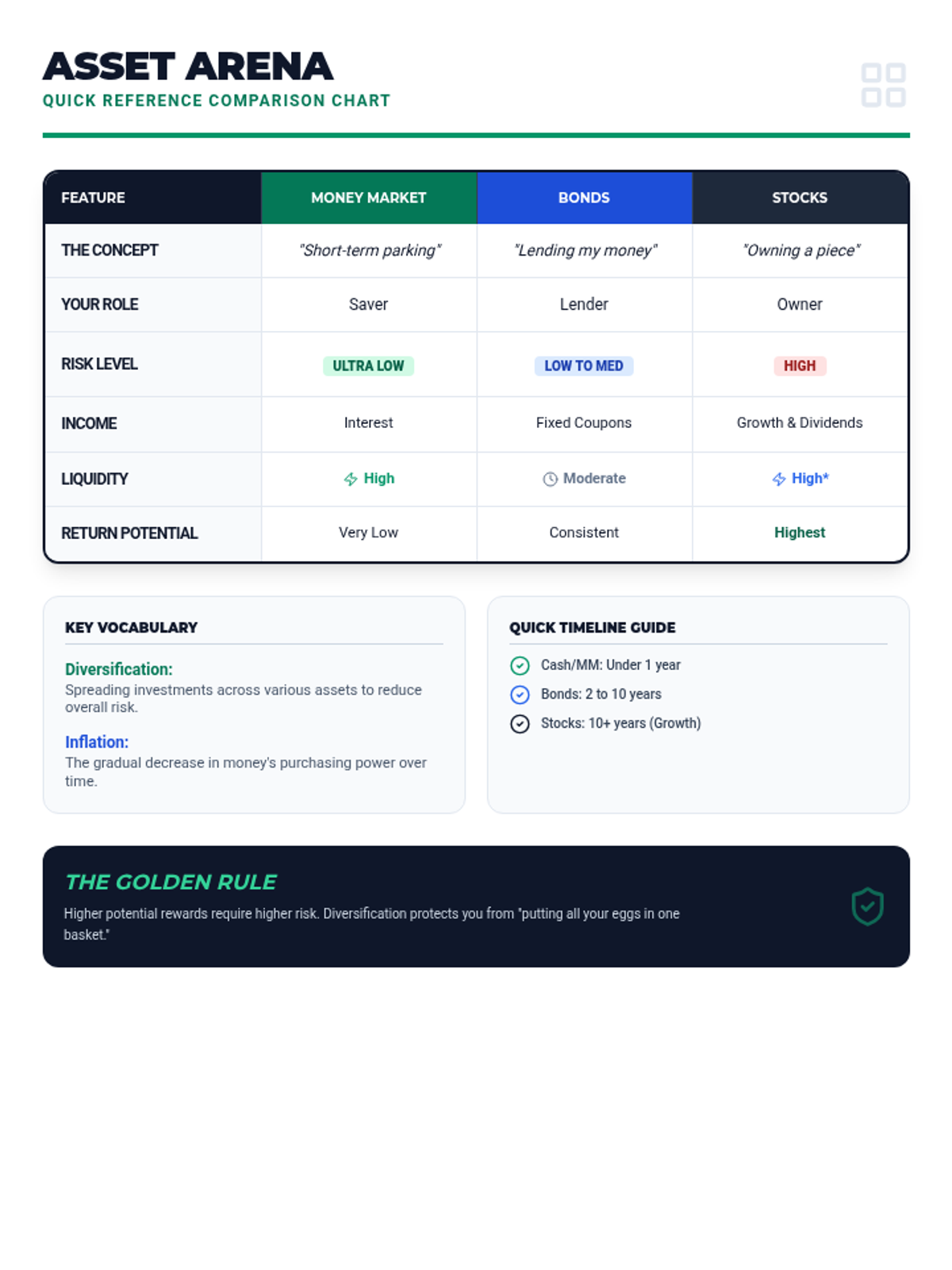
A quick-reference comparison chart summarizing the differences between stocks, bonds, and money market accounts for student reference.
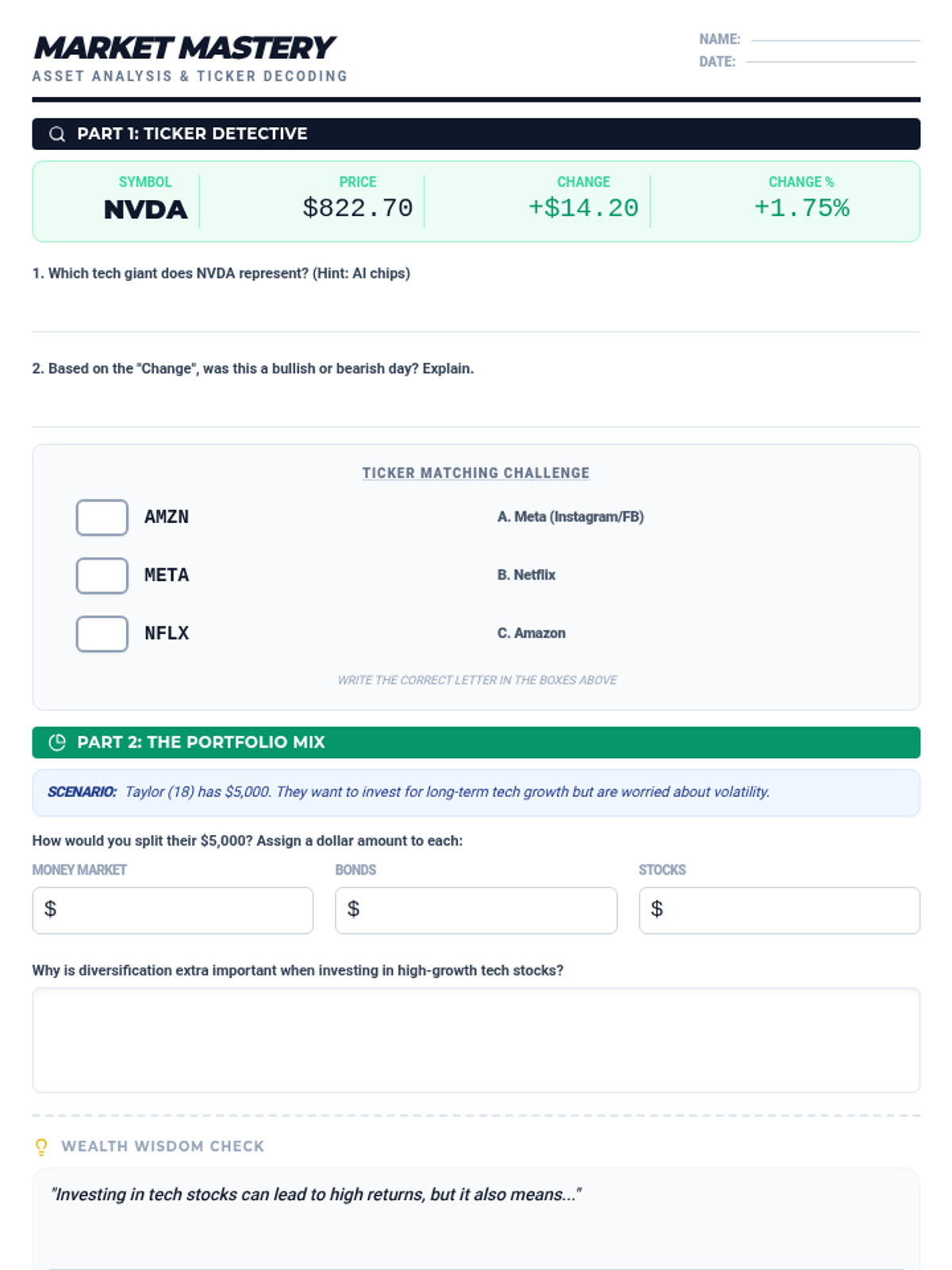
A student worksheet for practicing stock ticker interpretation and designing a basic investment portfolio based on a specific risk profile.
A high-impact slide deck for teaching stocks, bonds, and money market concepts, featuring a risk/return scale, ticker decoding, and the importance of diversification.
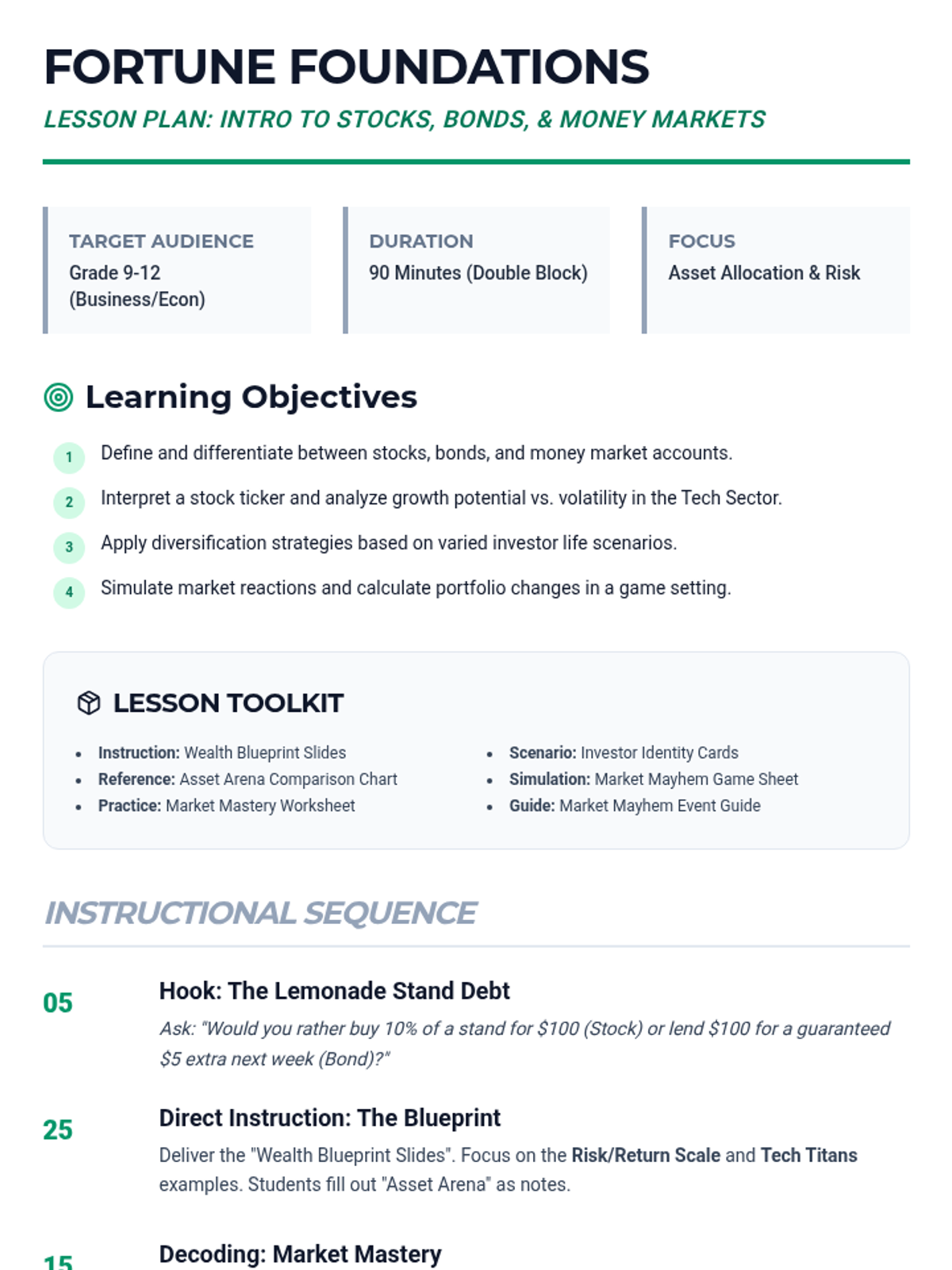
A comprehensive lesson plan for teachers covering the basics of stocks, bonds, and money market accounts, including instructional timing, objectives, and activity guides.
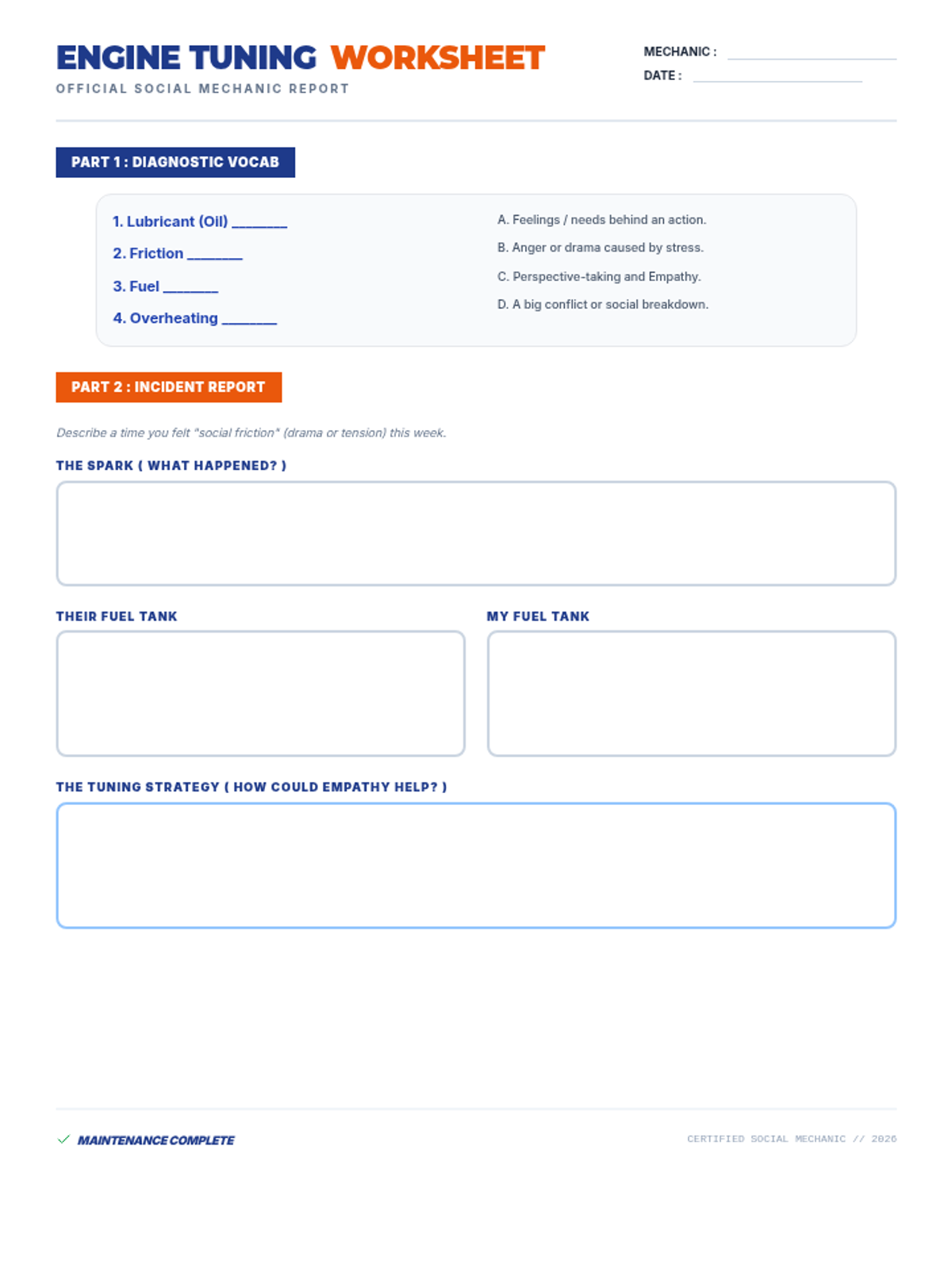
A student worksheet for individual reflection and application of the 'Empathy Engine' metaphor, featuring vocabulary matching and a personal incident report to practice perspective-taking.
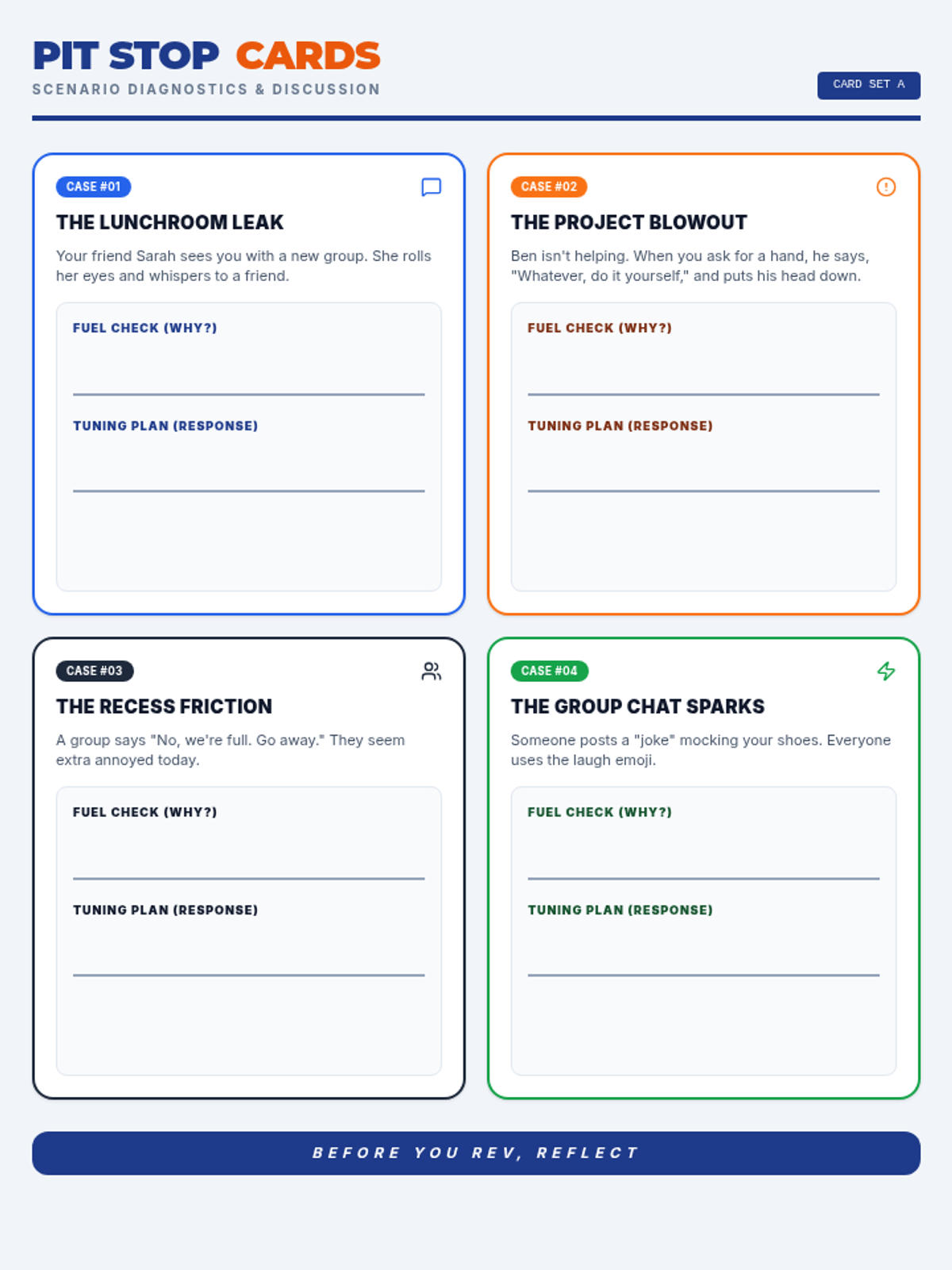
A set of four scenario cards designed for group discussion, prompting students to diagnose social friction in common peer conflicts and propose empathetic solutions.
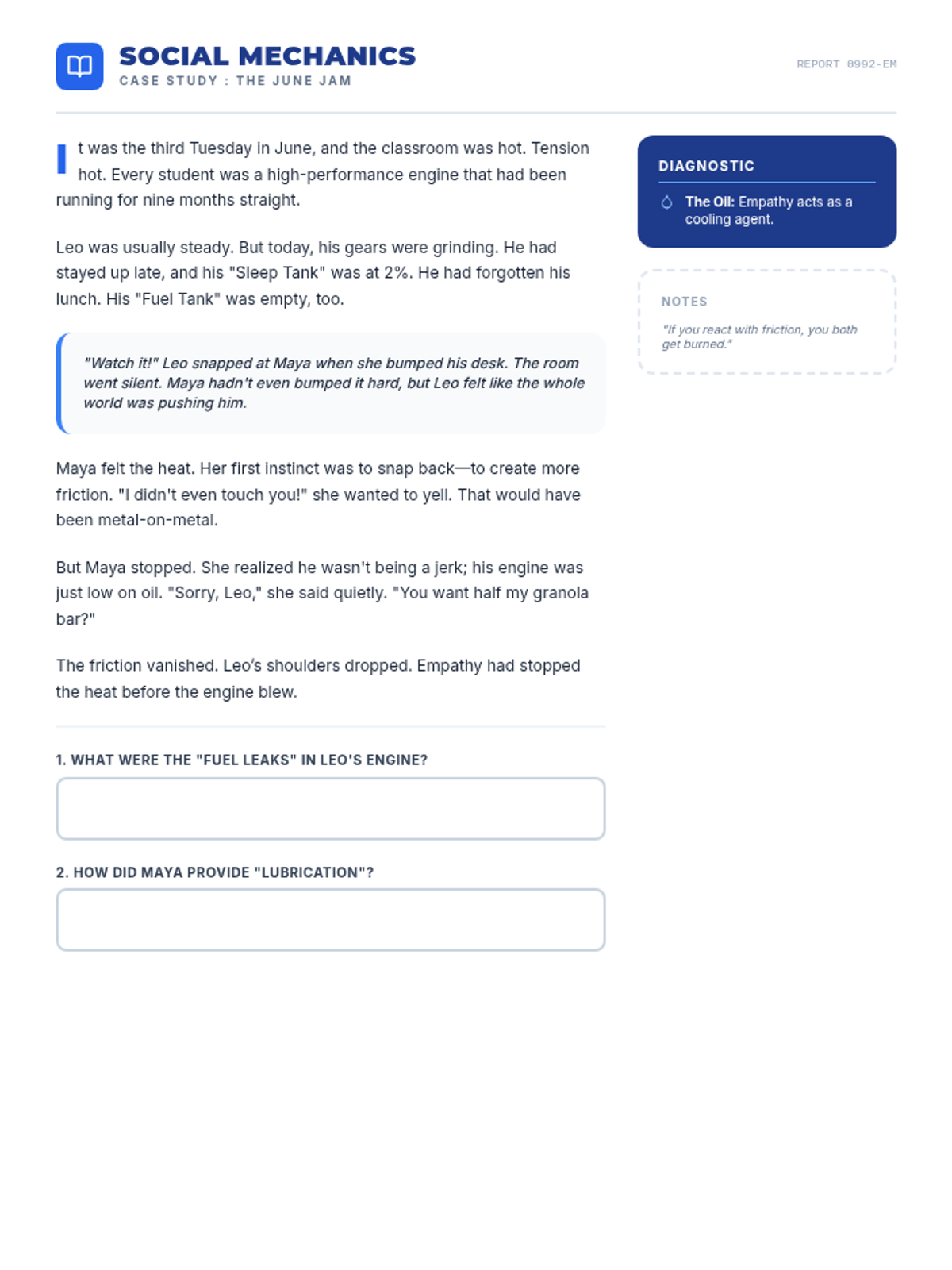
A student-facing reading passage titled 'Social Mechanics' that uses a narrative scenario to illustrate the concept of social friction and how empathy can de-escalate peer conflict.
A visual slide deck that introduces the 'Empathy Engine' metaphor, explaining social friction, the role of empathy as lubrication, and providing a diagnostic checklist for students to analyze peer behavior.
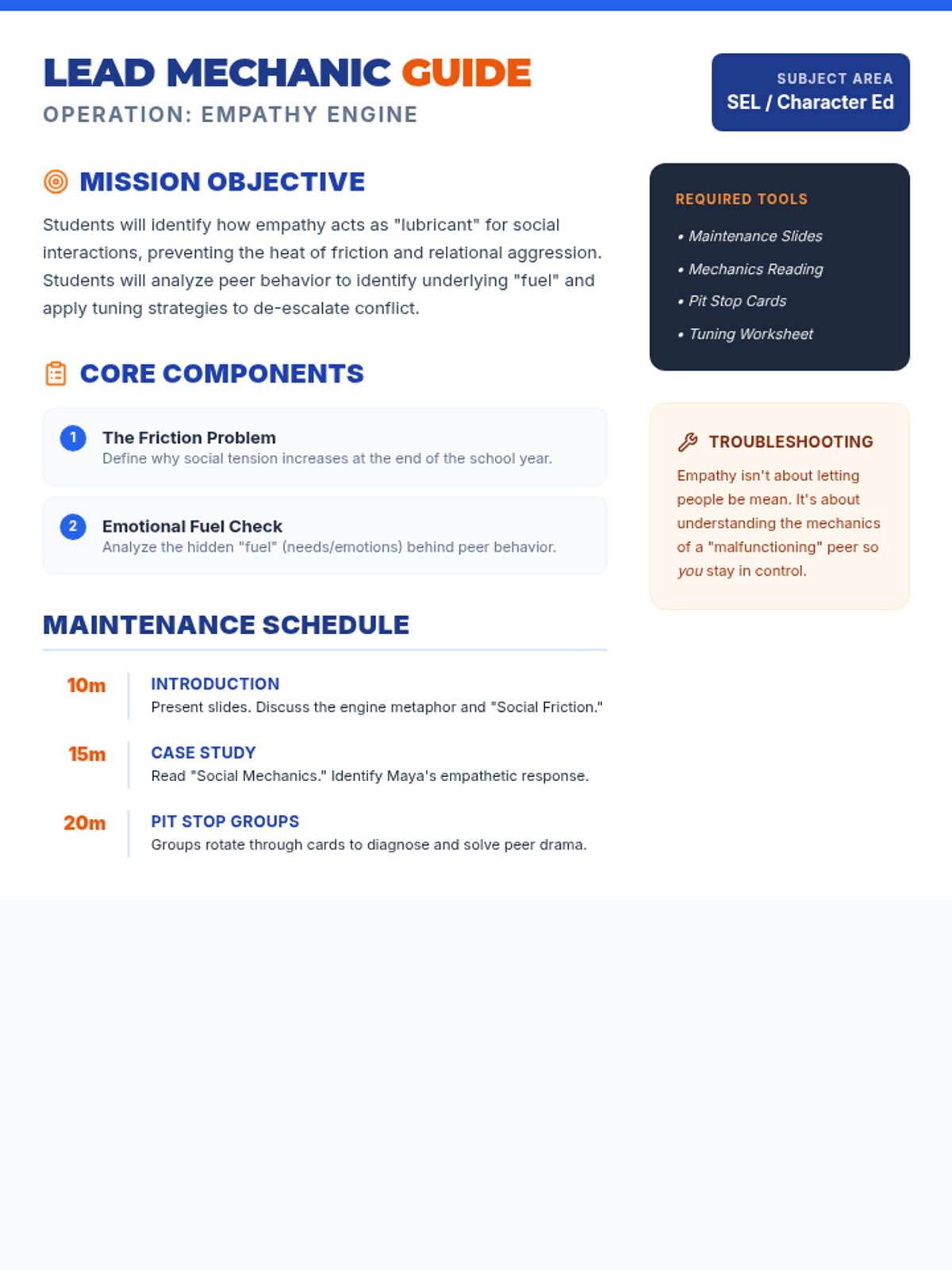
A comprehensive teacher guide for the Empathy Engine lesson, outlining learning objectives, terminology using the mechanical metaphor, and a step-by-step instructional procedure to address end-of-year social friction.
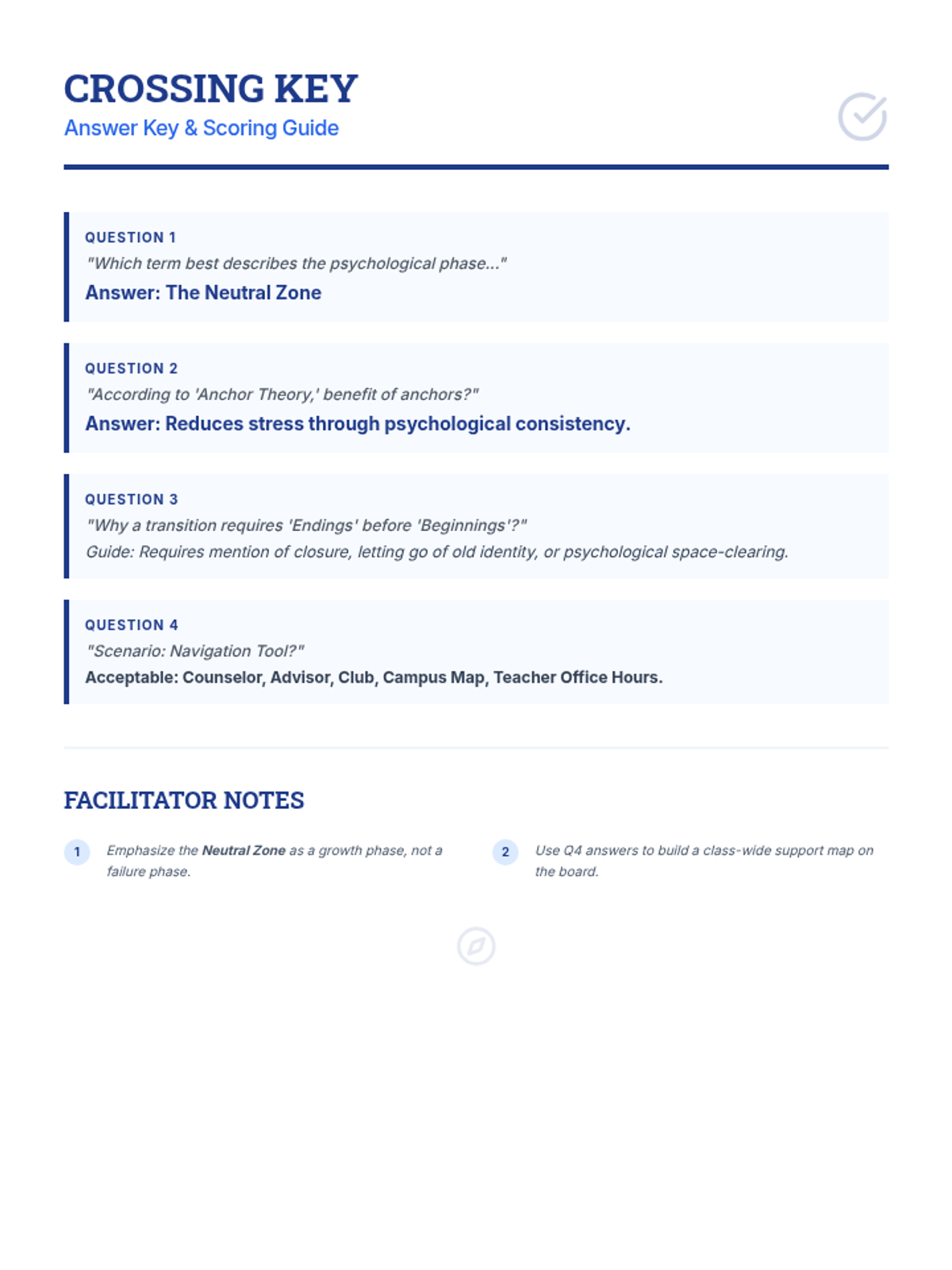
An answer key and facilitator guide for the Final Crossing quiz, including rationales for correct answers and sample open-ended responses.
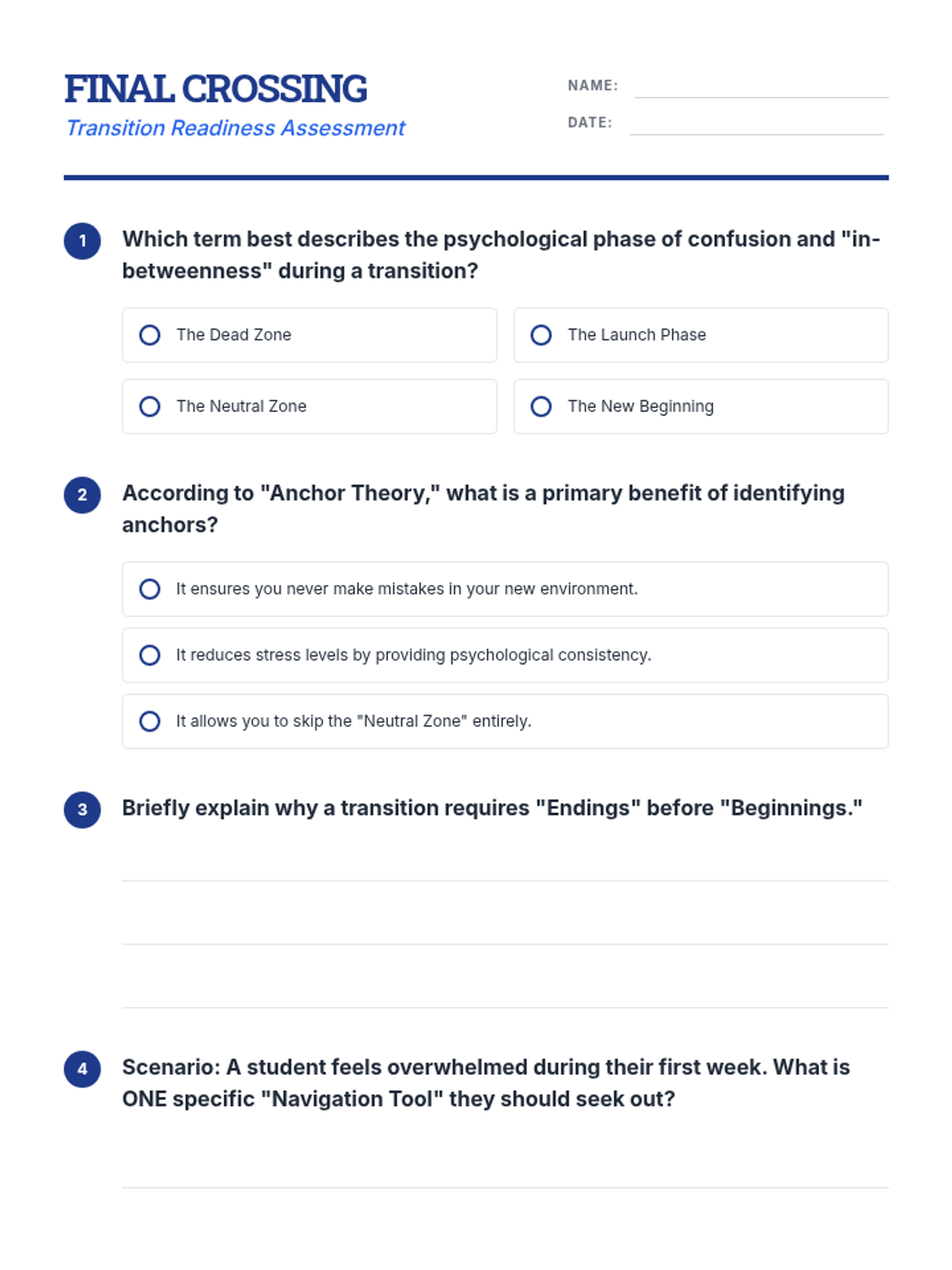
A summative assessment for students to verify their understanding of transition psychology, including the 'Neutral Zone' and the importance of anchors.
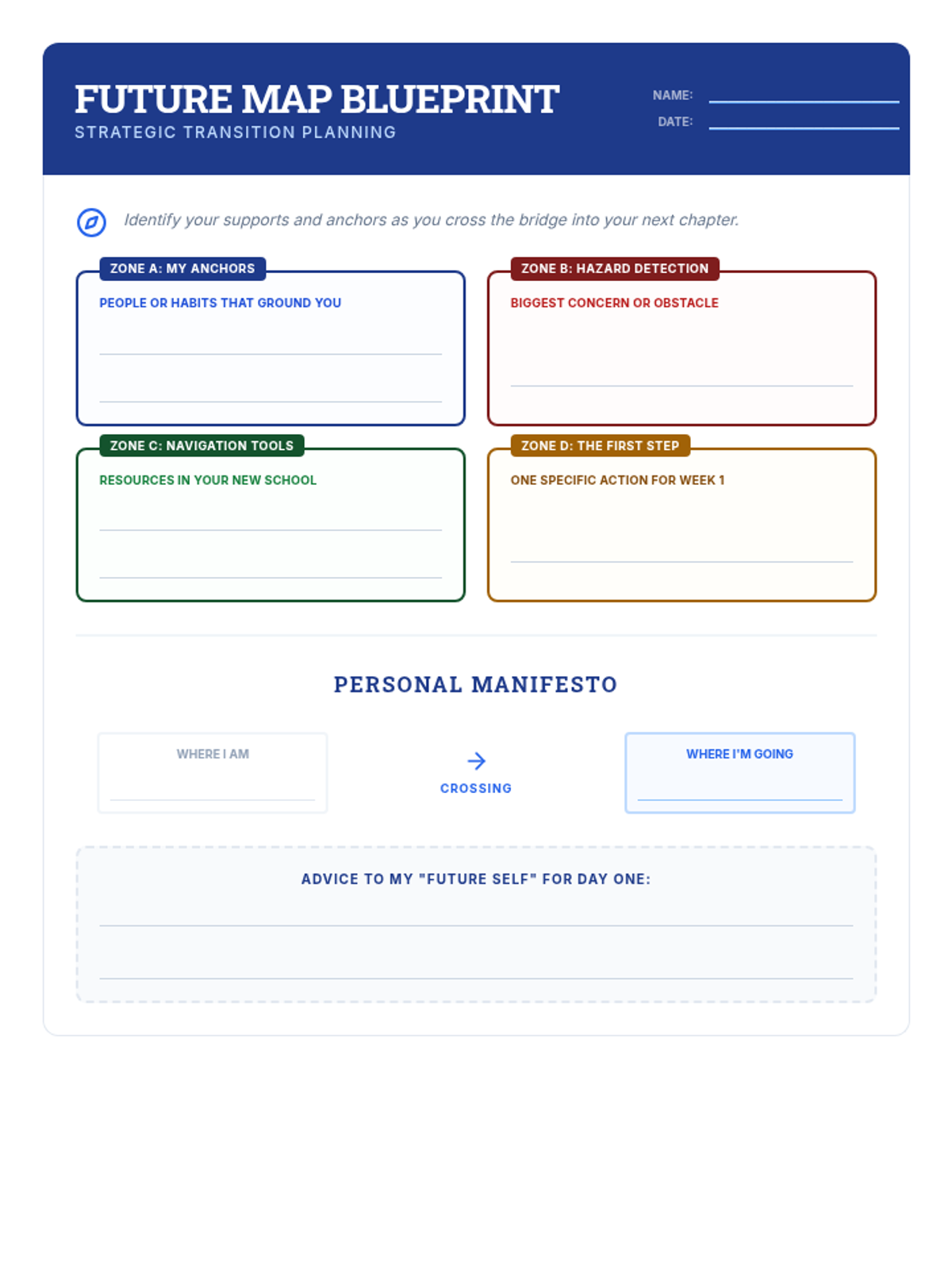
A structured 'Future Map' worksheet where students identify their personal anchors, detect potential hazards, list new resources, and write a manifesto for their academic transition.
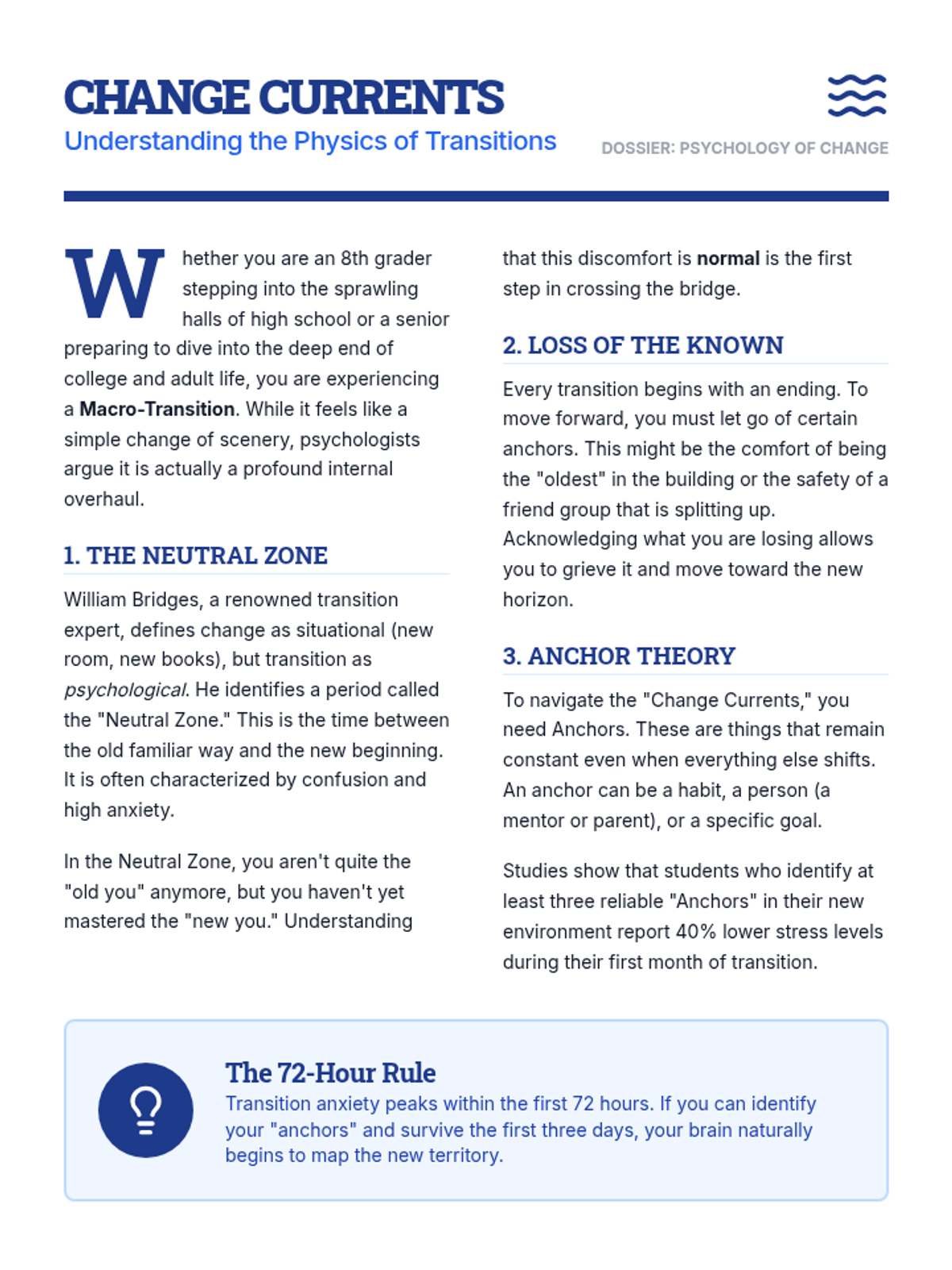
An informational text for students explaining the psychology of transitions, including the 'Neutral Zone' and 'Anchor Theory', followed by comprehension and reflection questions.
A visual presentation to guide students through the emotional and practical phases of academic transitions, featuring the 'Change Cycle' diagram and prompts for identifying personal anchors.
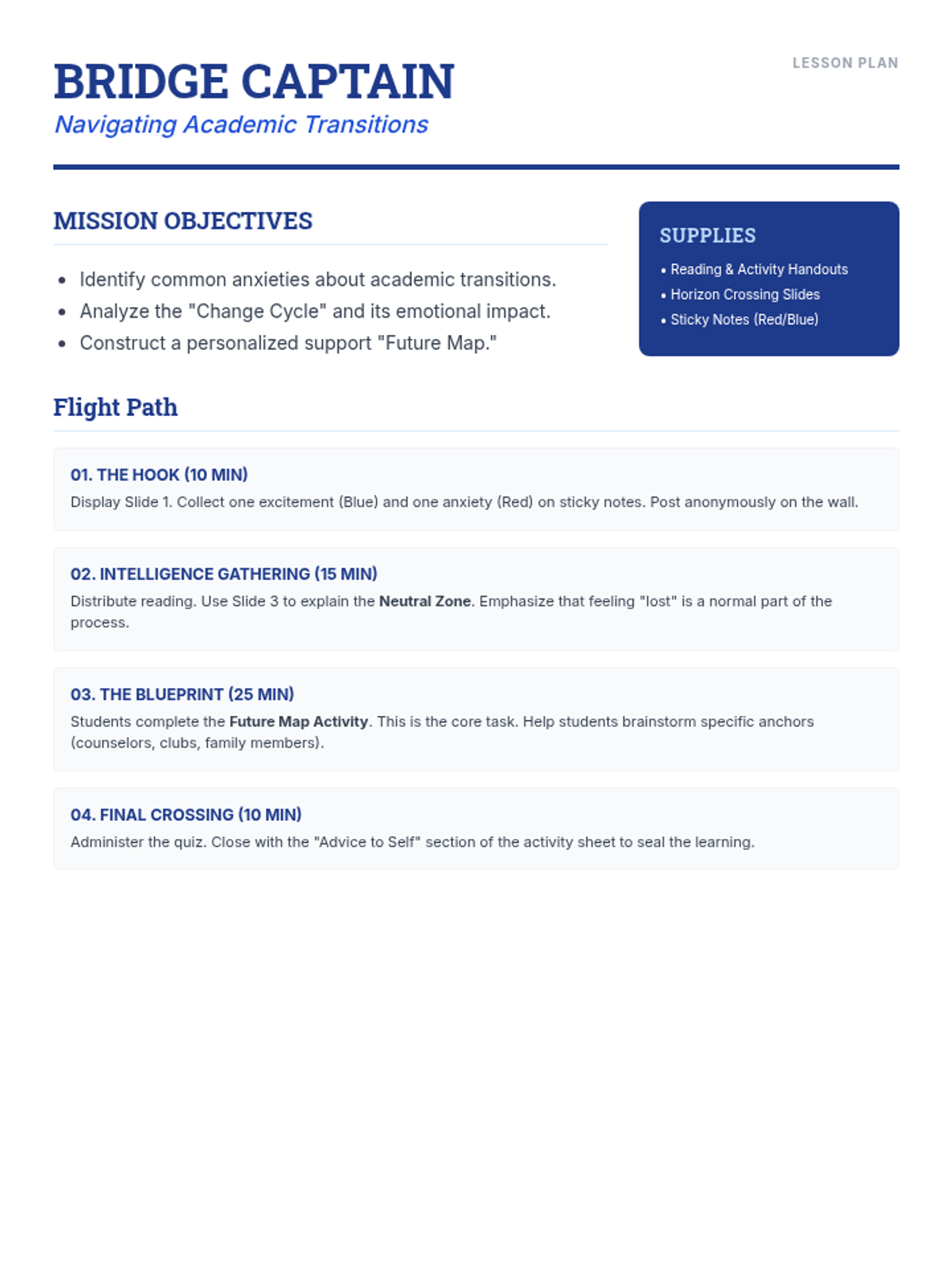
A facilitator guide for teachers to lead students through academic transitions, featuring a step-by-step flight path, supply lists, and grade-specific differentiation strategies for 8th and 12th graders.
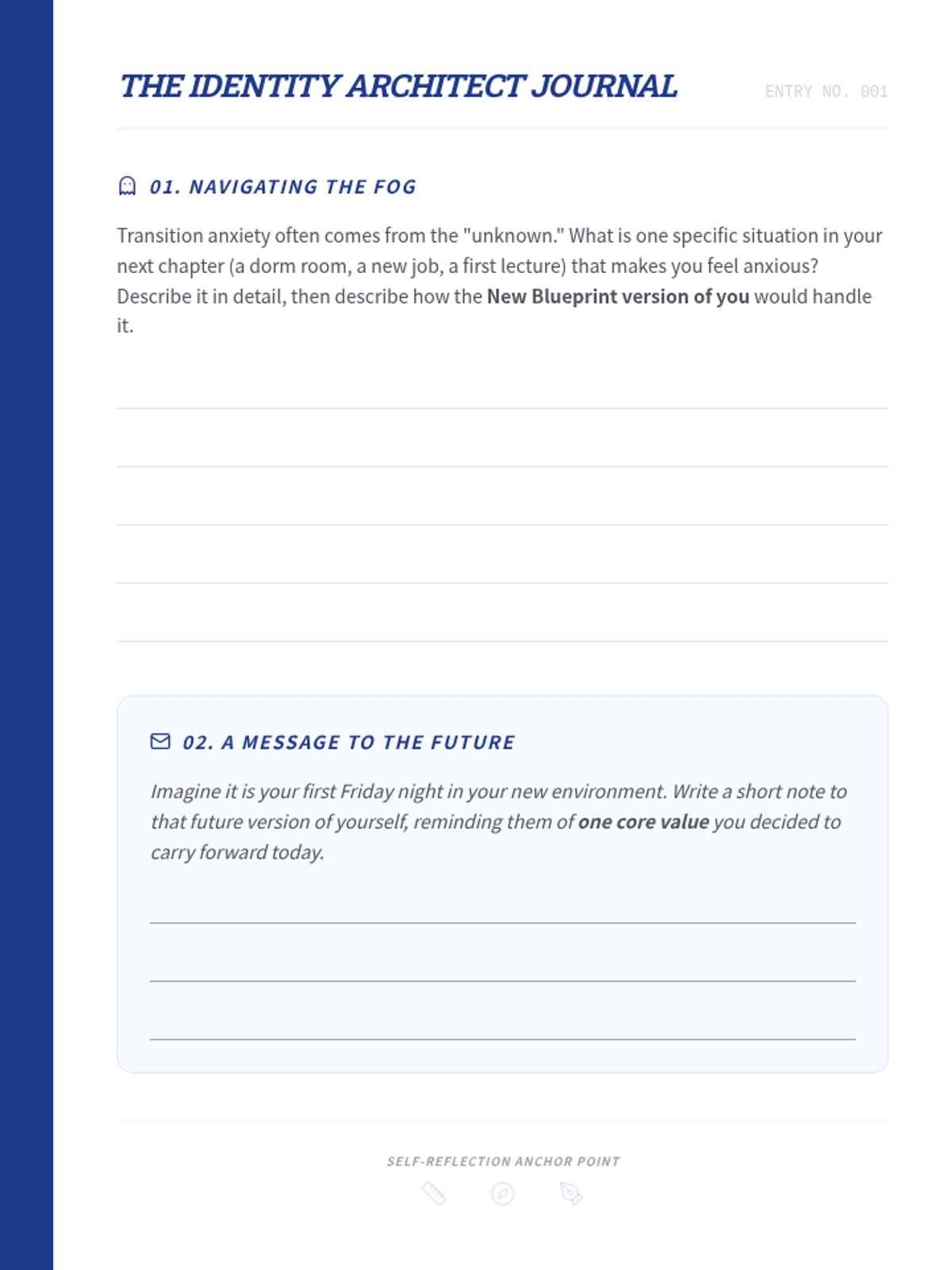
A guided journal for students to process their transition anxiety and document their personal growth intentions through the lens of architectural self-design.