A revised 4-page facilitator guide for "The Application Edge" masterclass, updated for a 90-minute session with precise pacing, module deep dives, and scripted talking points.
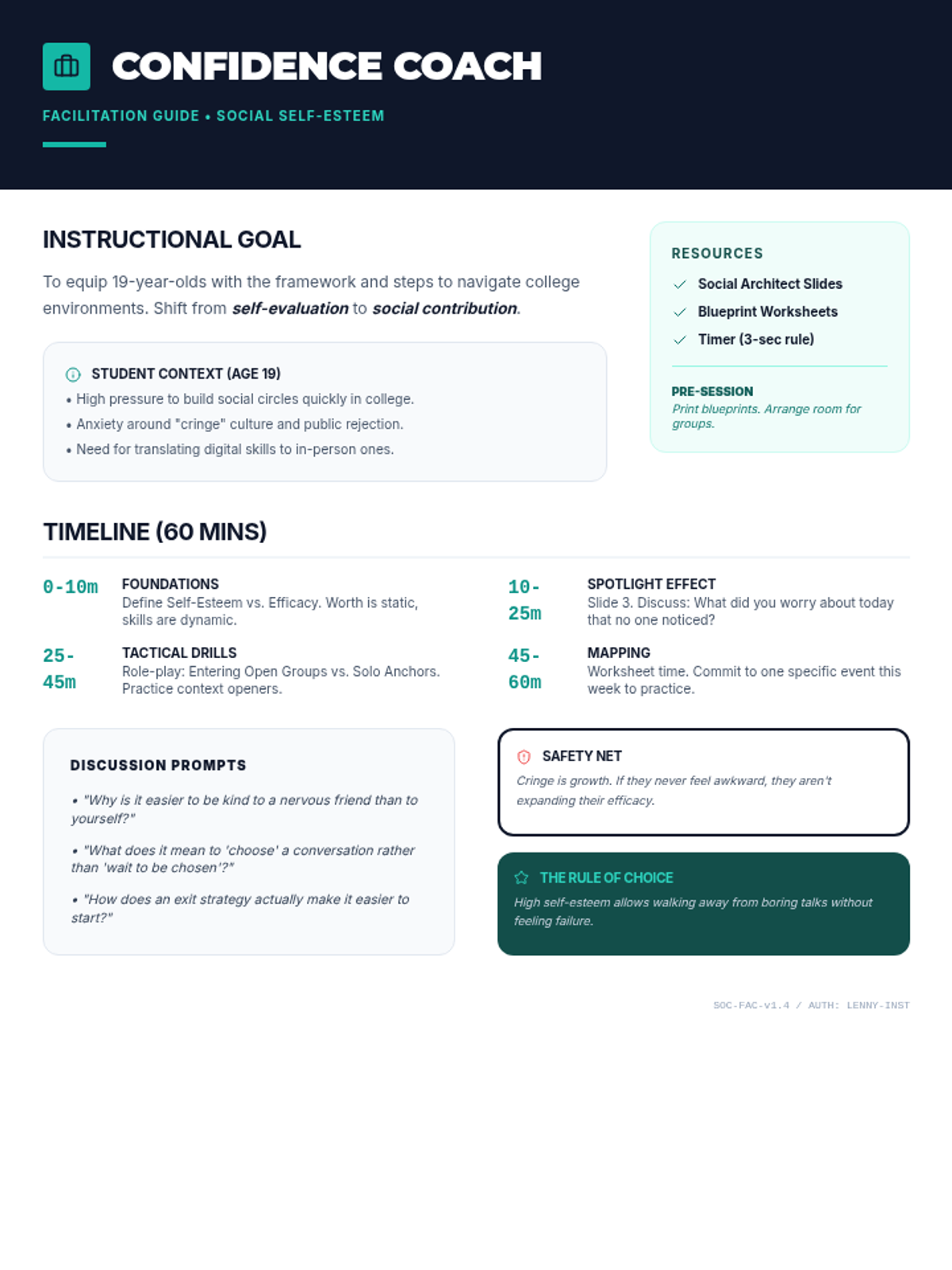
A teacher's facilitation guide for leading a workshop on self-esteem and social skills for young adults. Includes lesson pacing, role-play activity ideas, and discussion prompts for college-aged students.
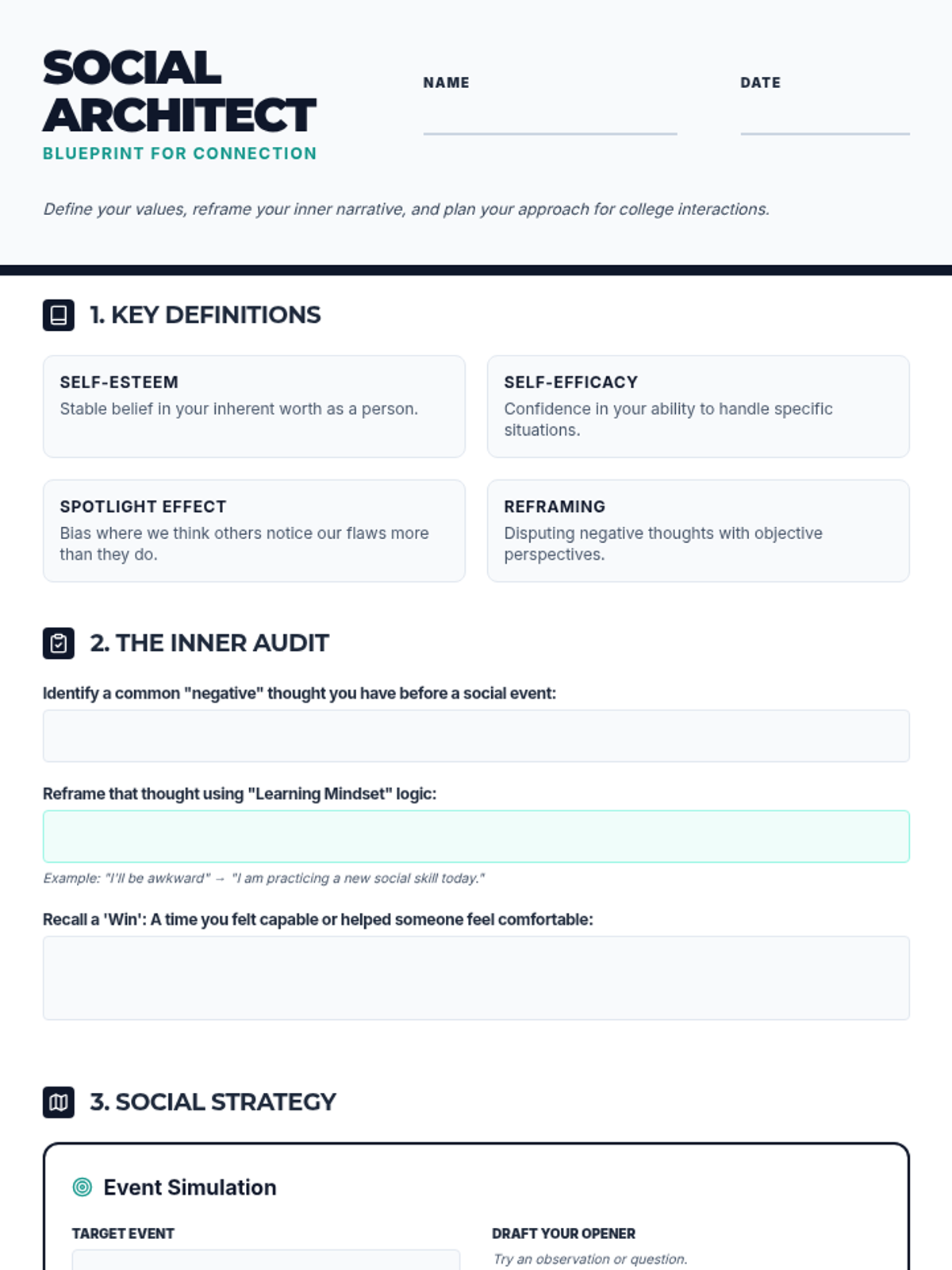
A worksheet for young adults to build self-esteem and social strategies. It includes sections for definitions, cognitive reframing of social anxiety, and a planning template for approaching people at college events.
A slide deck for 19-year-olds on building social self-esteem. Covers psychological concepts like the spotlight effect, cognitive reframing, and practical steps for approaching new people in college and event settings.
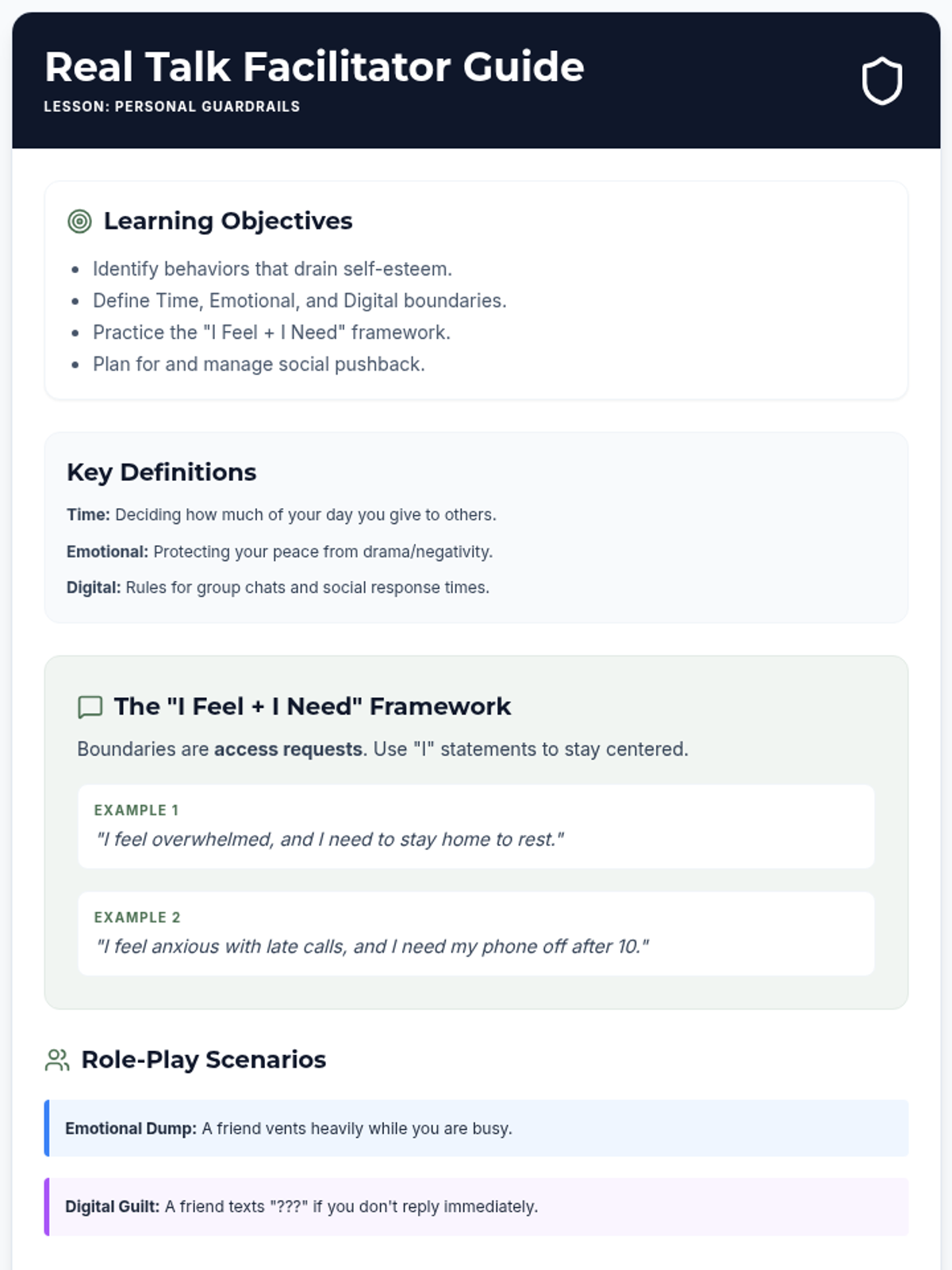
A teacher guide for facilitating discussions on boundaries and self-esteem for young adults, including learning objectives, role-play scenarios, and facilitation tips.
A presentation for teaching young adults about the relationship between boundaries and self-esteem, featuring the 'Energy Crisis' concept and practical communication formulas.
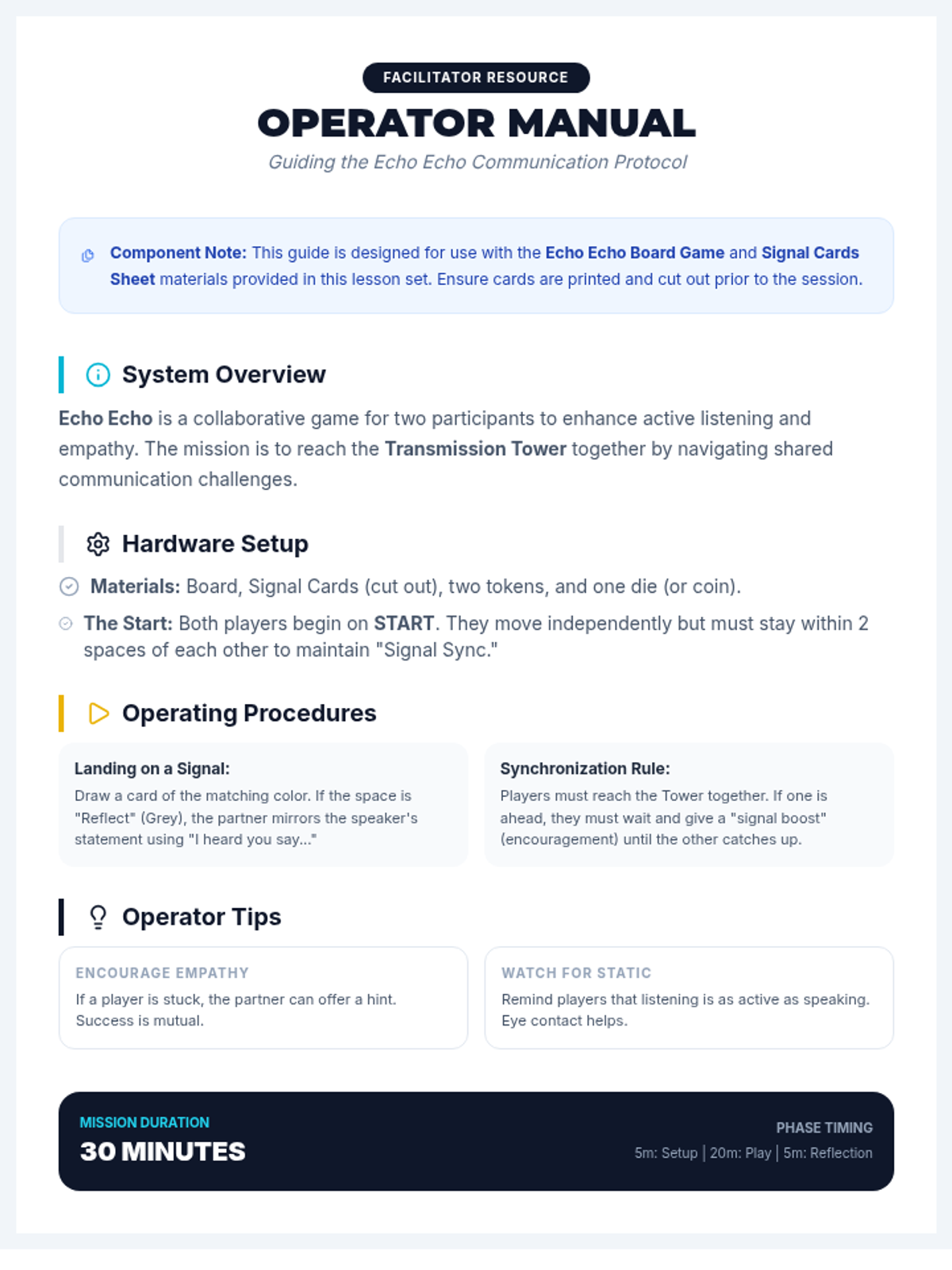
A facilitator guide for teachers or therapists, outlining the rules, setup, and instructional tips for implementing the Echo Echo communication game.
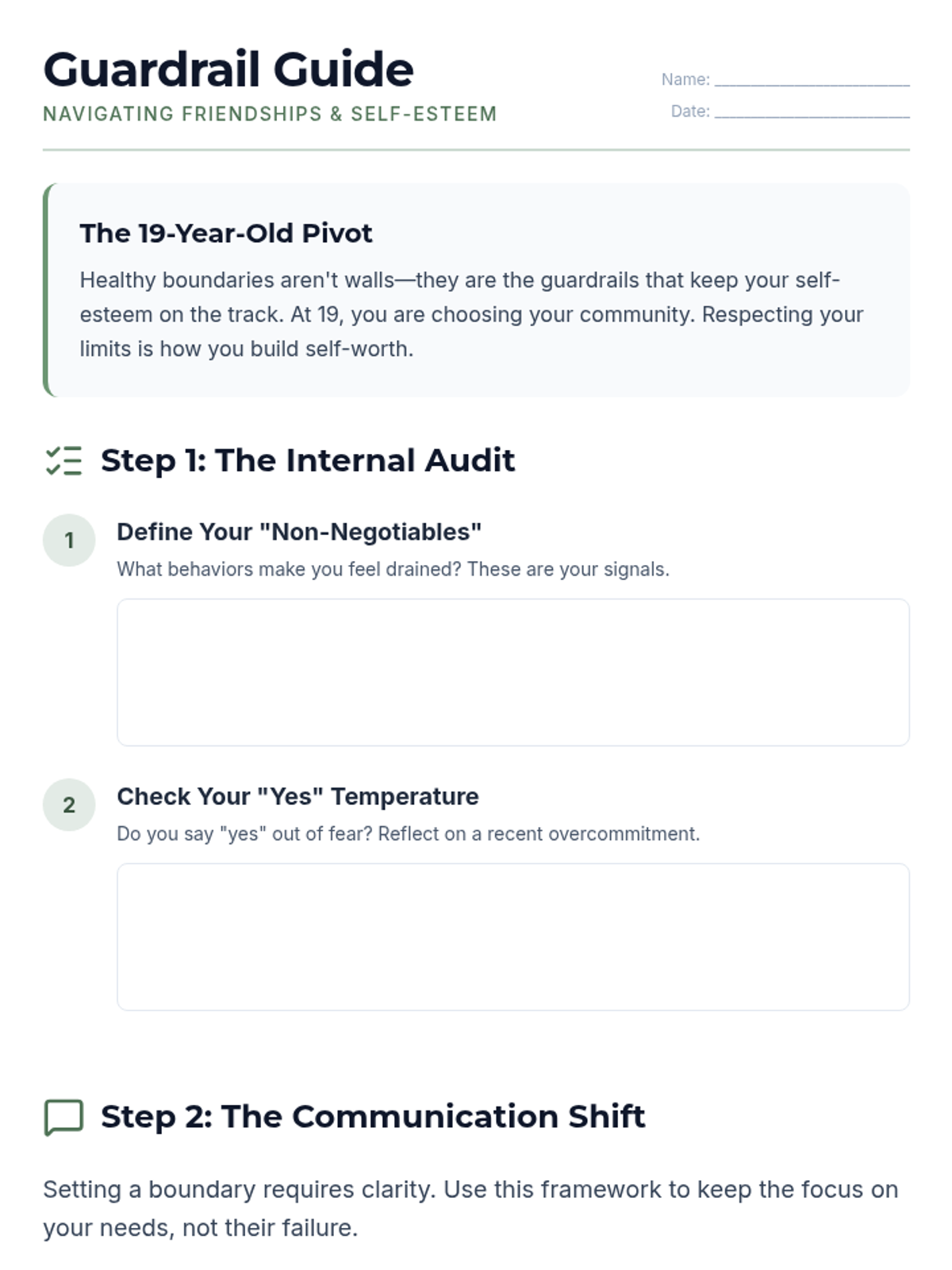
A two-page guide and worksheet for young adults focused on identifying personal limits, communicating boundaries using 'I' statements, and maintaining self-esteem within friendships.
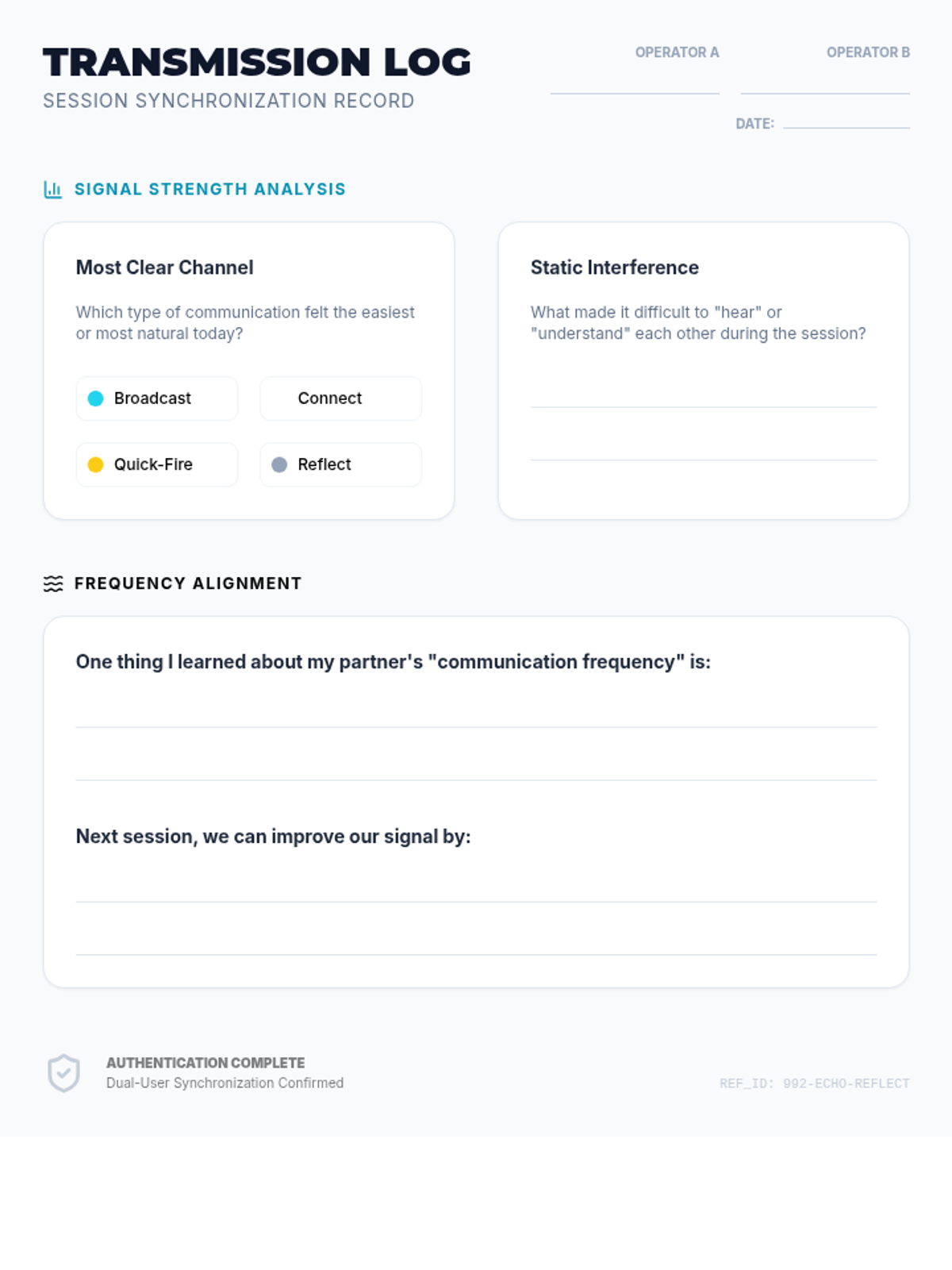
A post-game reflection sheet for two students to document their communication strengths, challenges, and insights gained during the game session.
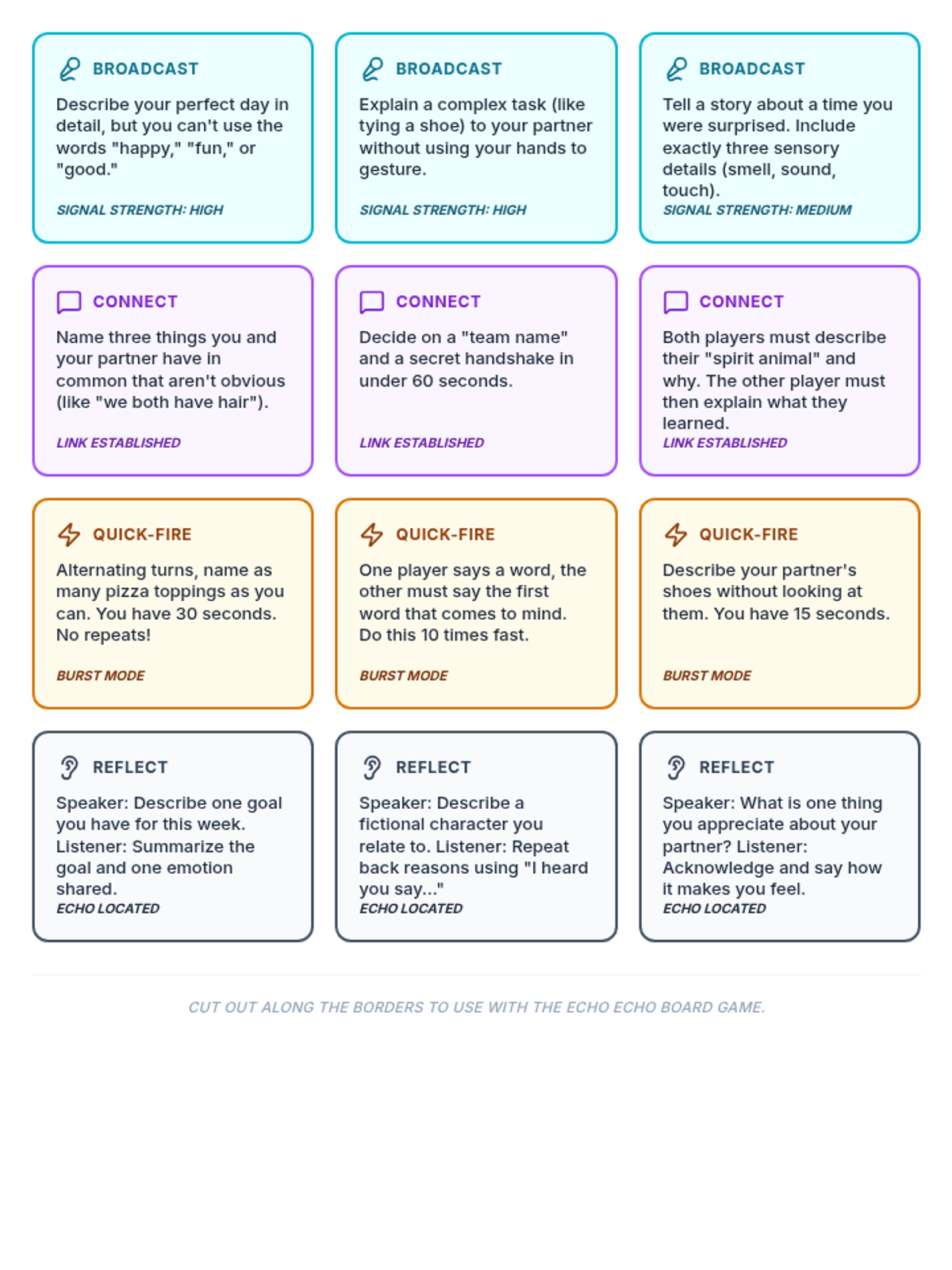
A set of 12 printable prompt cards for the Echo Echo game, categorized into Broadcast, Connect, Quick-Fire, and Reflect challenges to stimulate varied communication styles.
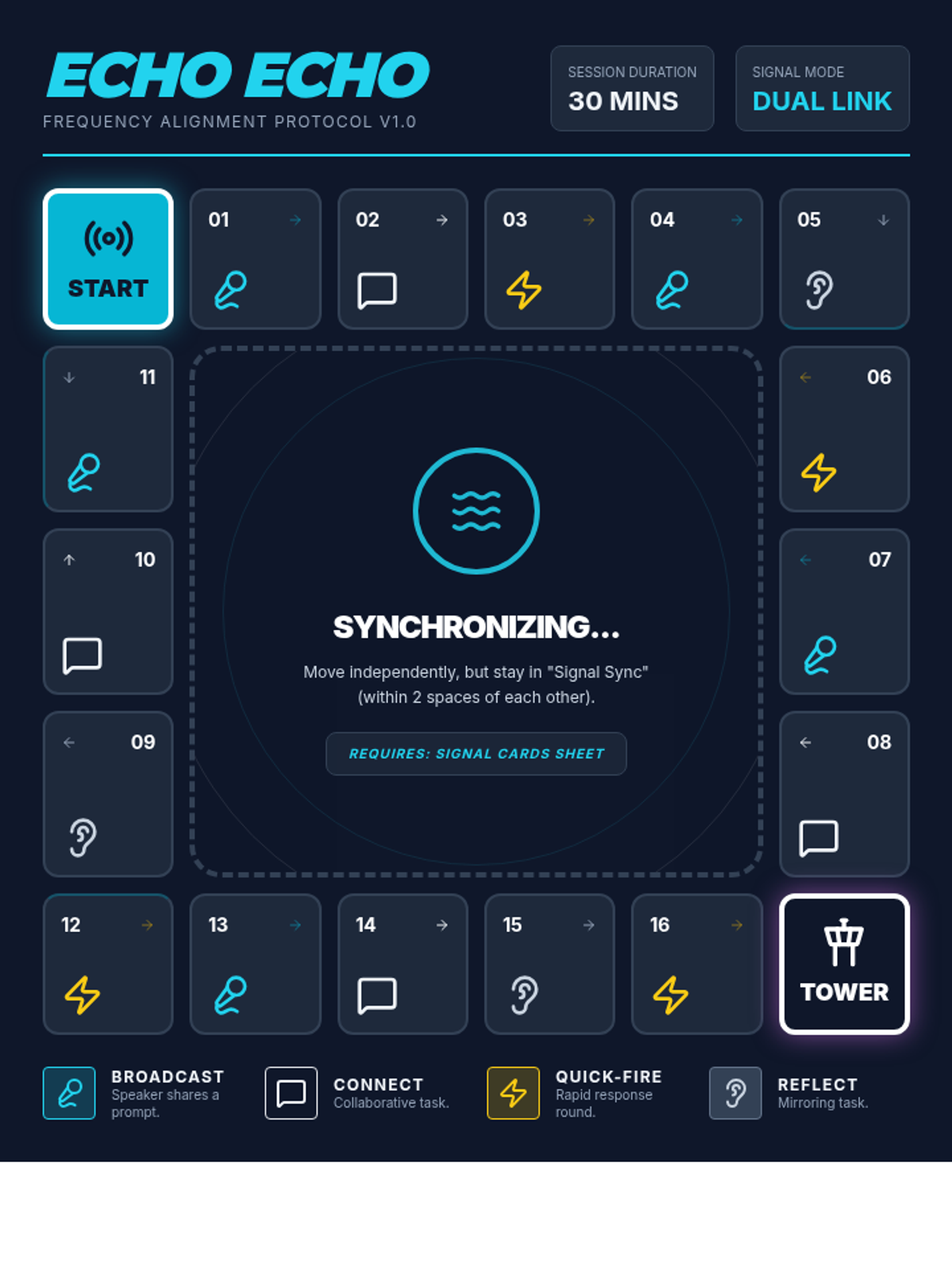
A high-contrast, neon-themed board game for two players focused on communication skills. Features a winding frequency path with different challenge types: Broadcast, Connect, Quick-Fire, and Reflect.
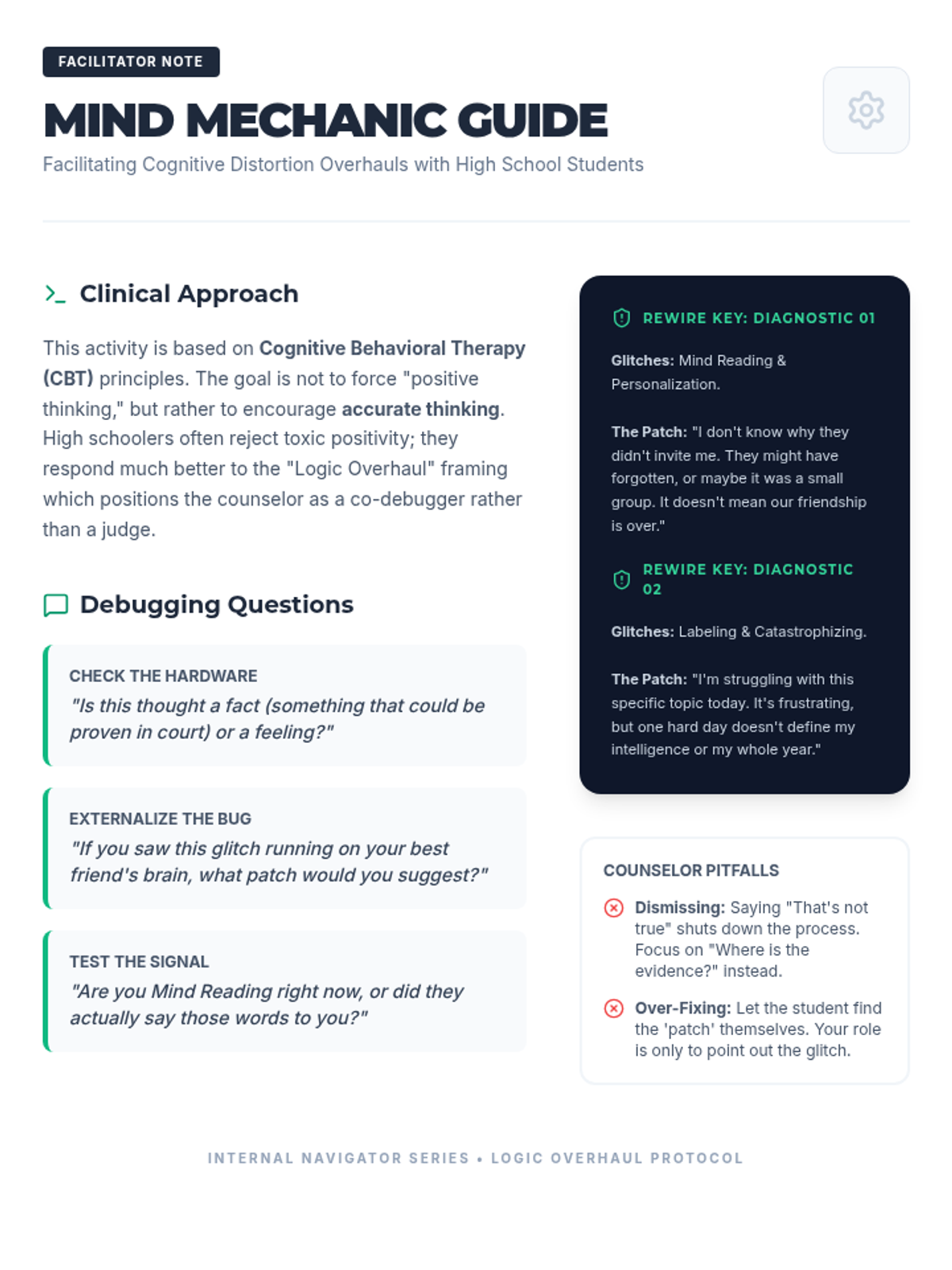
A facilitator's guide for counselors using the 'Logic Overhaul' lesson. Includes facilitation strategies based on CBT, probing questions to challenge distortions, and an answer key for the student worksheet.
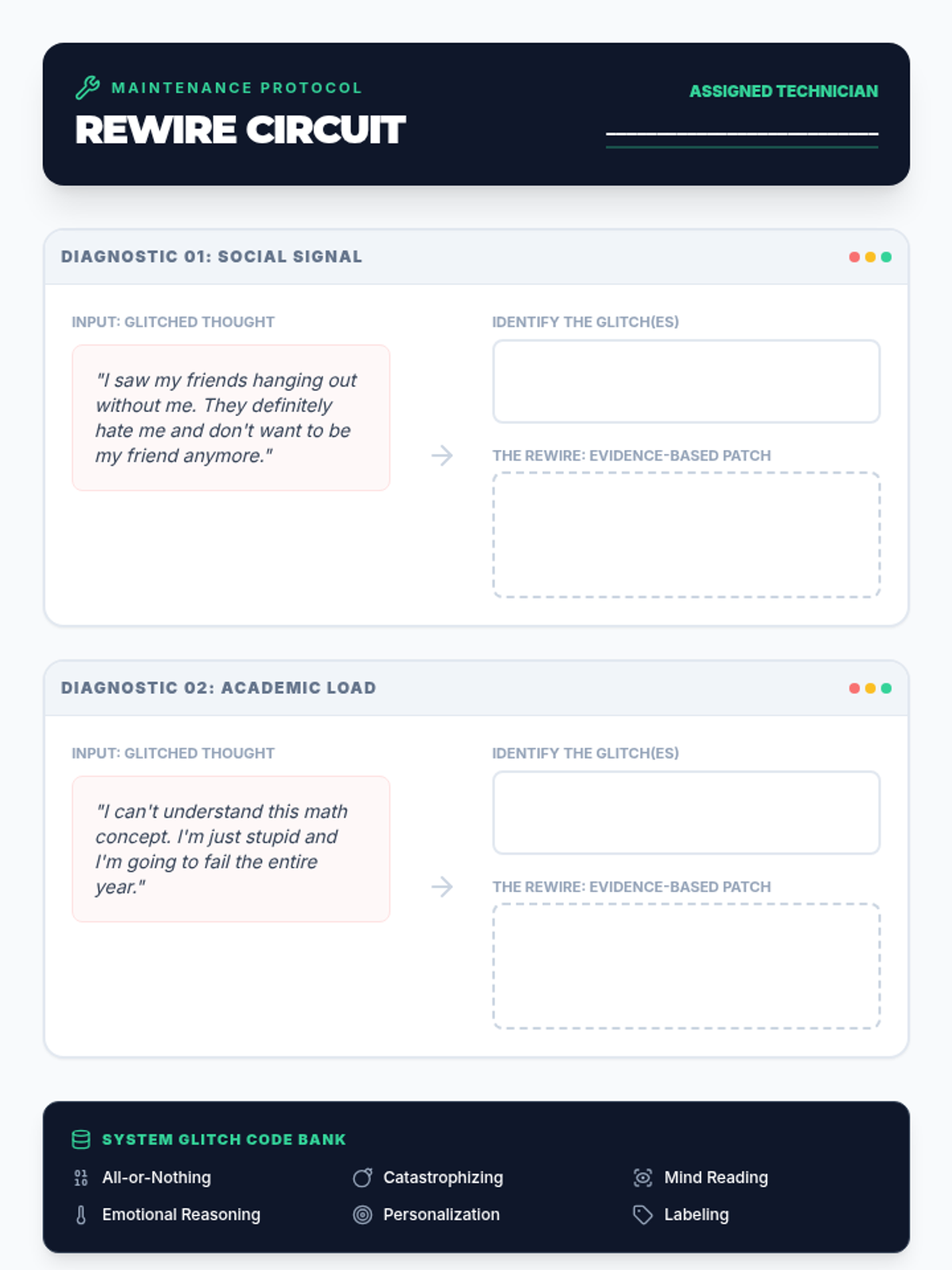
An interactive worksheet where high school students practice identifying cognitive distortions in scenarios and 'rewiring' them into balanced, evidence-based thoughts. Features a technical 'circuit repair' aesthetic.
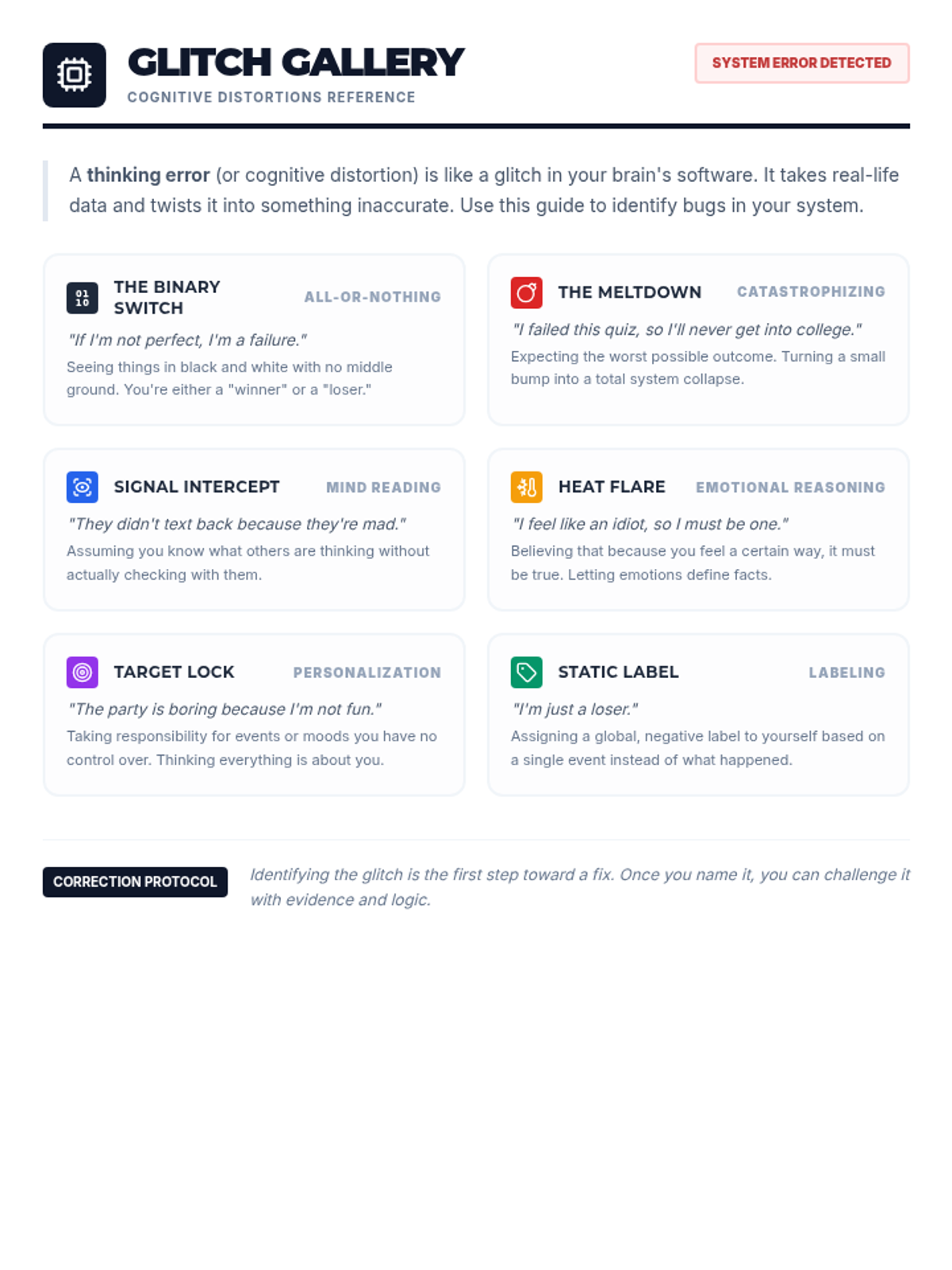
A visually engaging reference sheet for high school students that defines common cognitive distortions (thinking errors) using a 'digital system glitch' theme. Features clear examples and icons for each error.
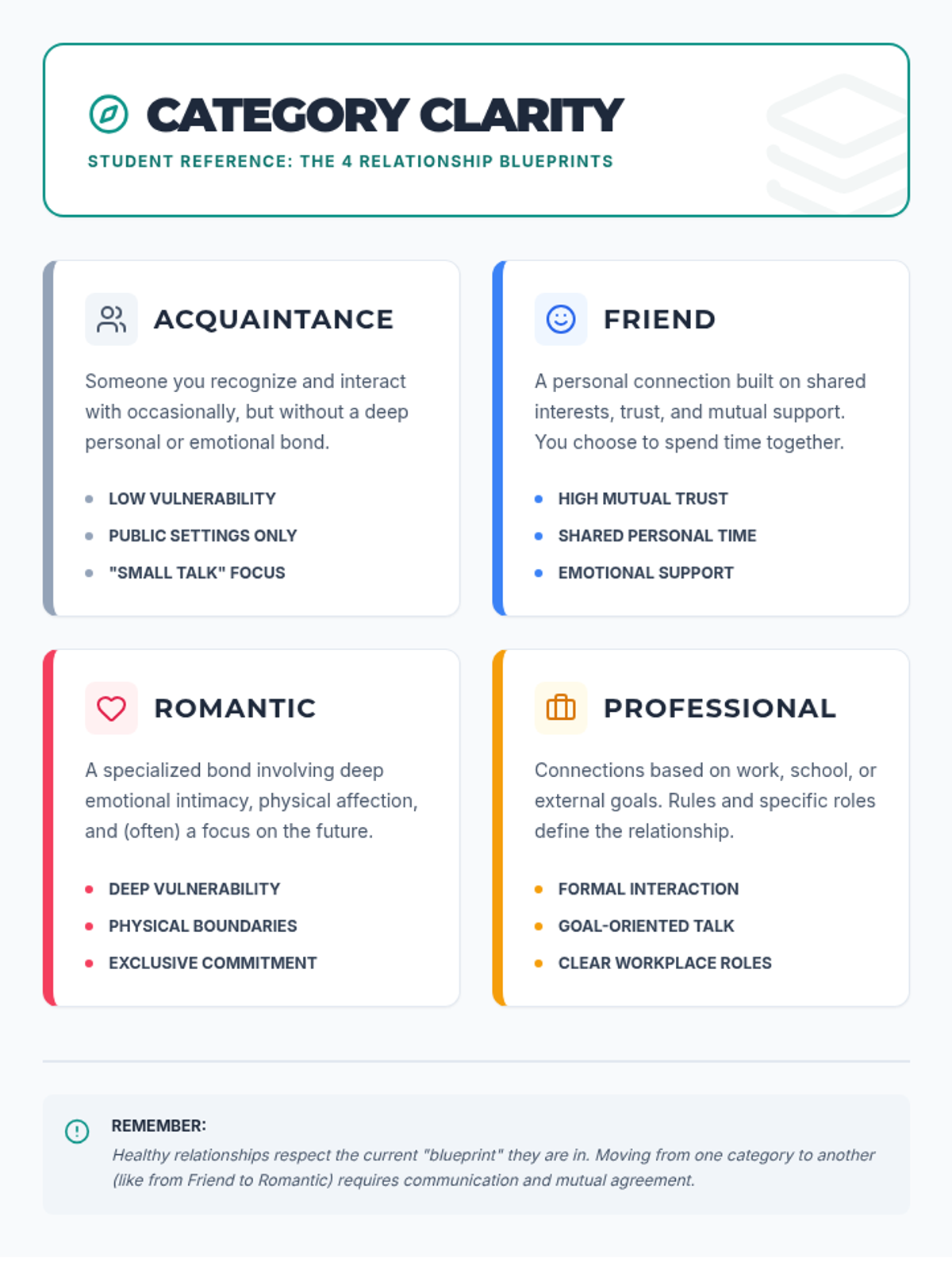
A student reference sheet that defines the four relationship categories (Acquaintance, Friend, Romantic, Professional) with key traits and boundary markers to help with the card sort activity.
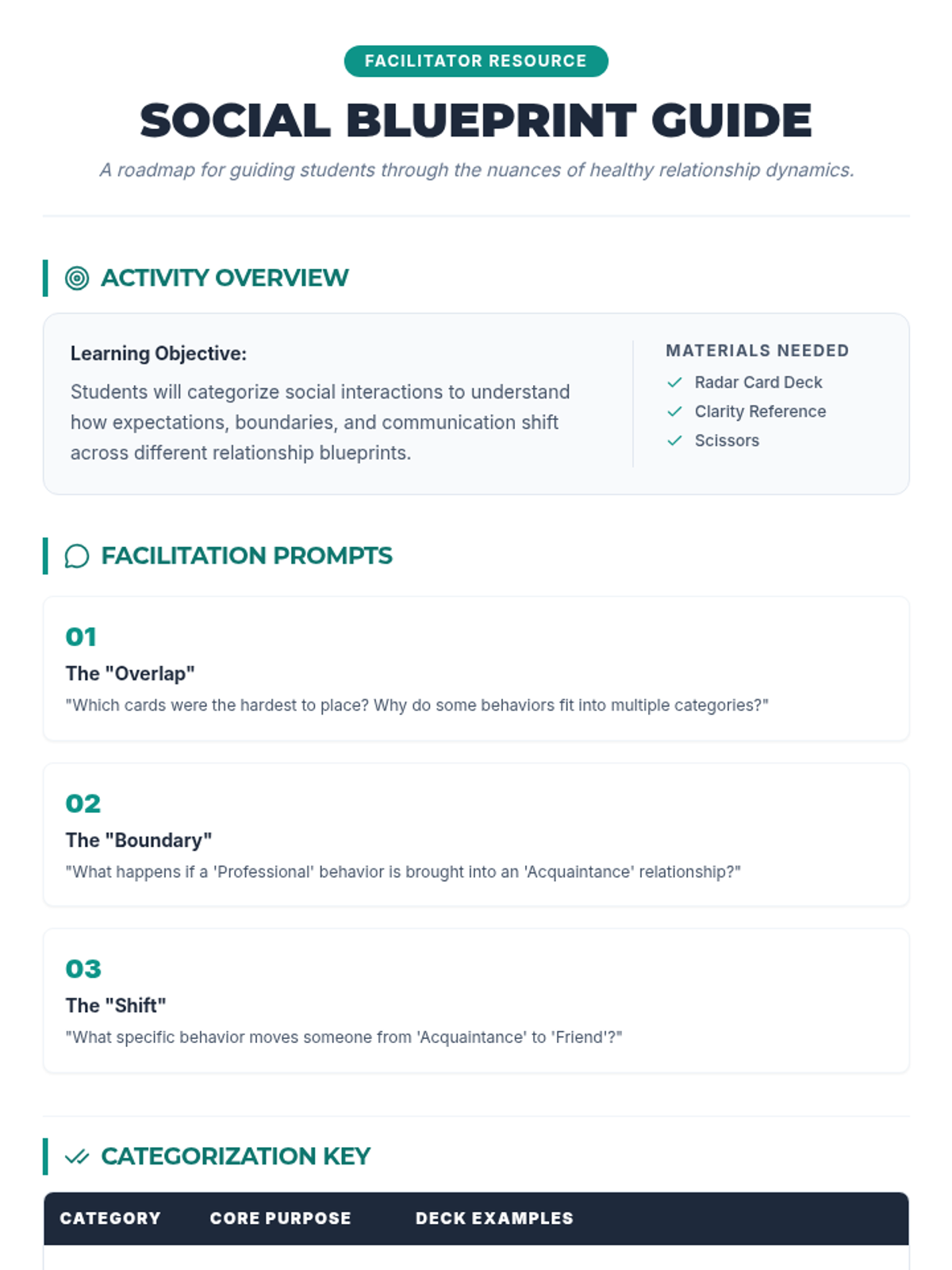
A comprehensive teacher guide for facilitating the relationship card sort activity. Includes learning objectives, discussion prompts, and a categorization key to help guide high school students through the lesson.
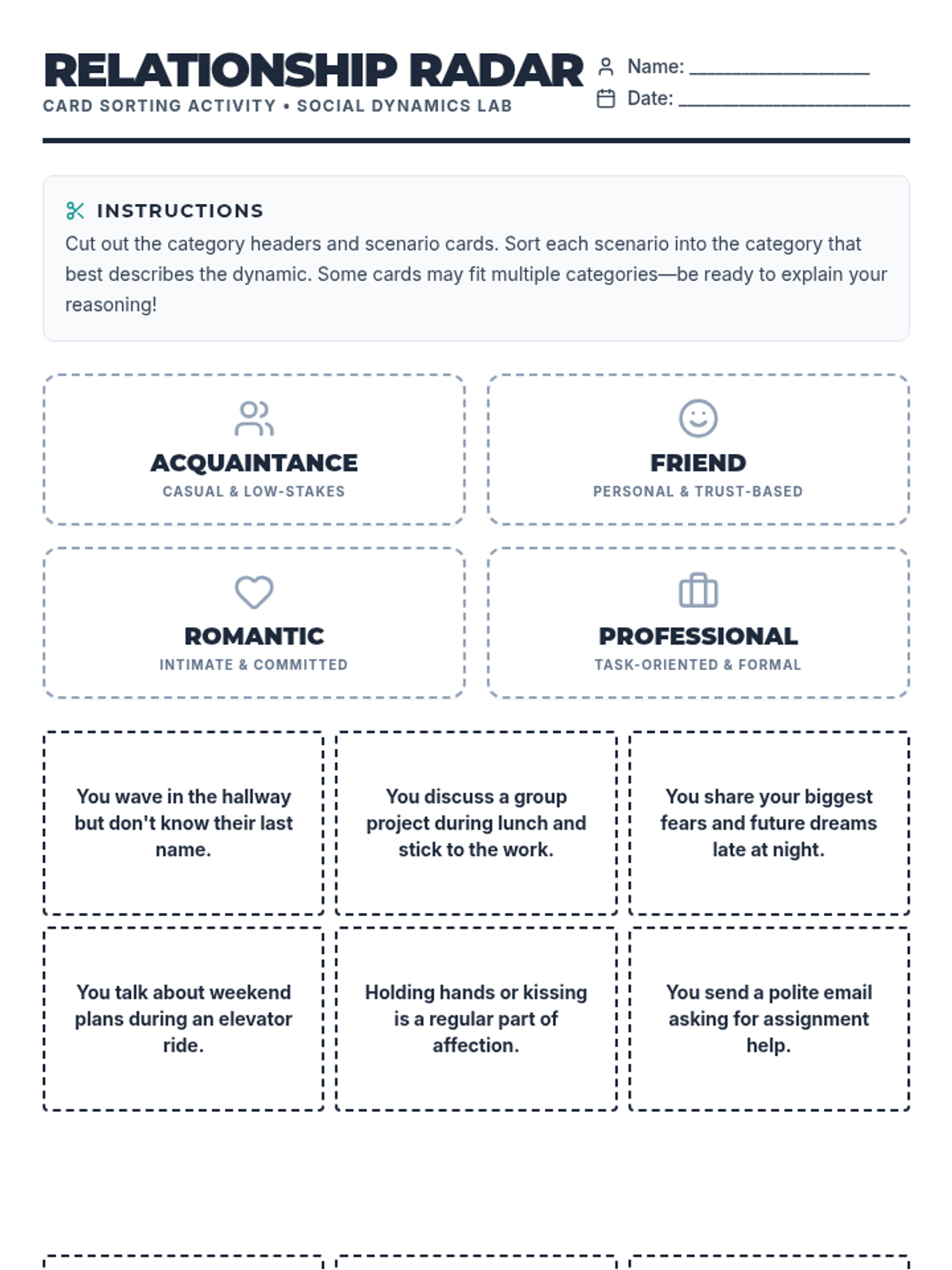
A two-page printable card deck featuring category headers and 18 scenario cards designed for a relationship-sorting activity. Includes acquaintance, friend, romantic, and professional categories with high-school appropriate scenarios.
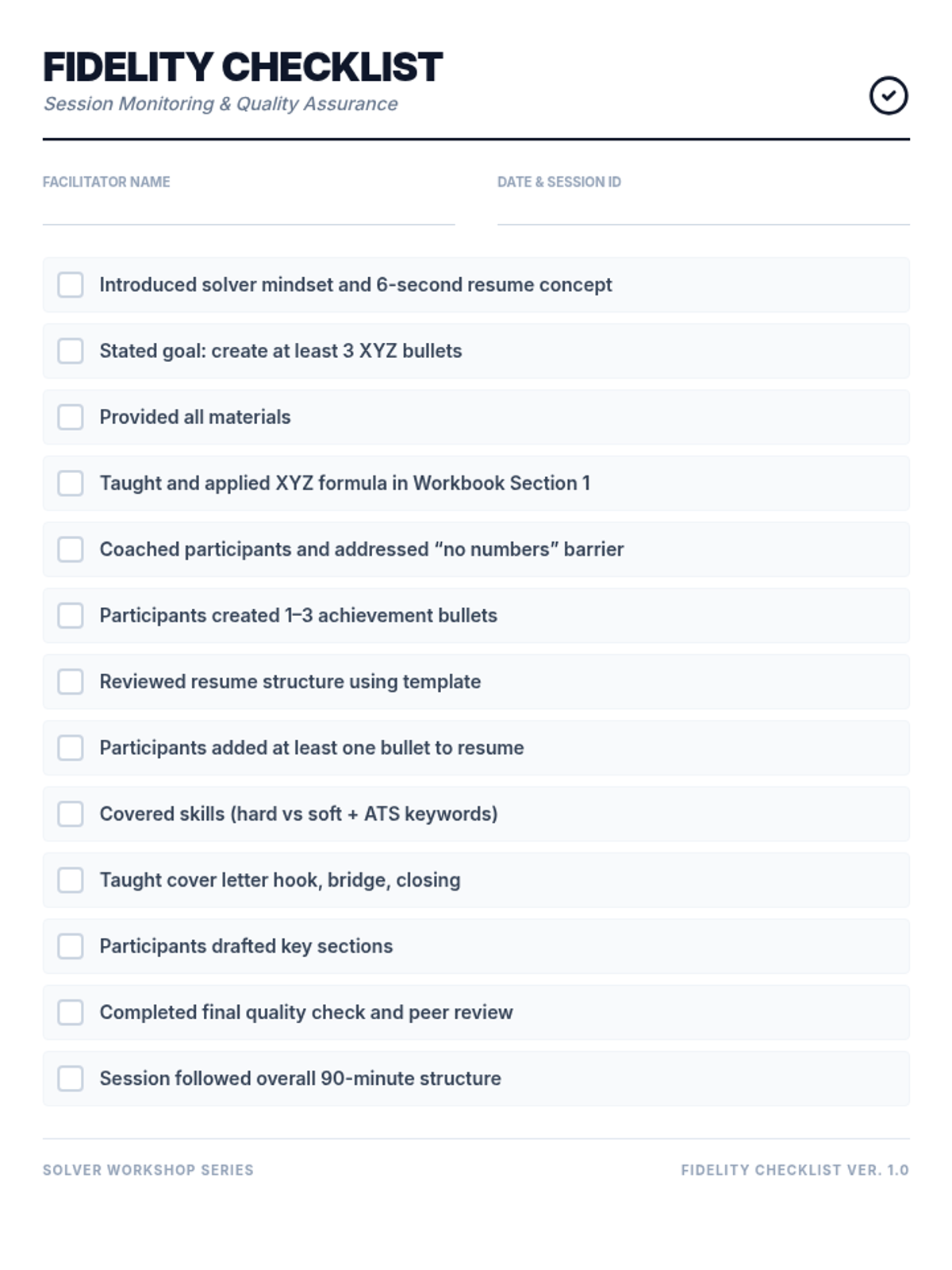
A single-page professional fidelity checklist for facilitators, optimized to fit all 13 tracking items on one sheet.
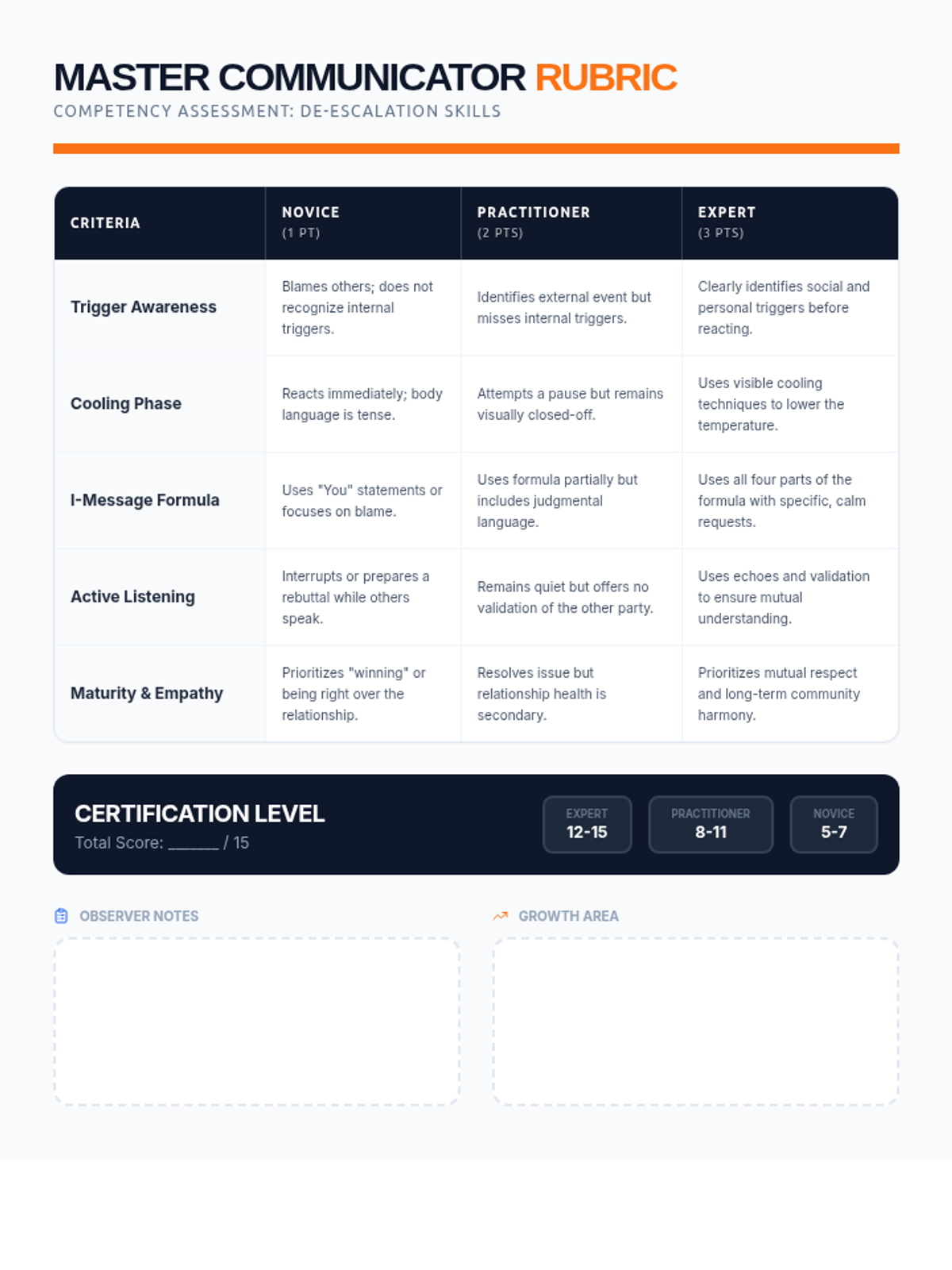
A formal assessment tool for evaluating student proficiency in de-escalation techniques, identifying growth areas in trigger awareness, communication formulas, and active listening.
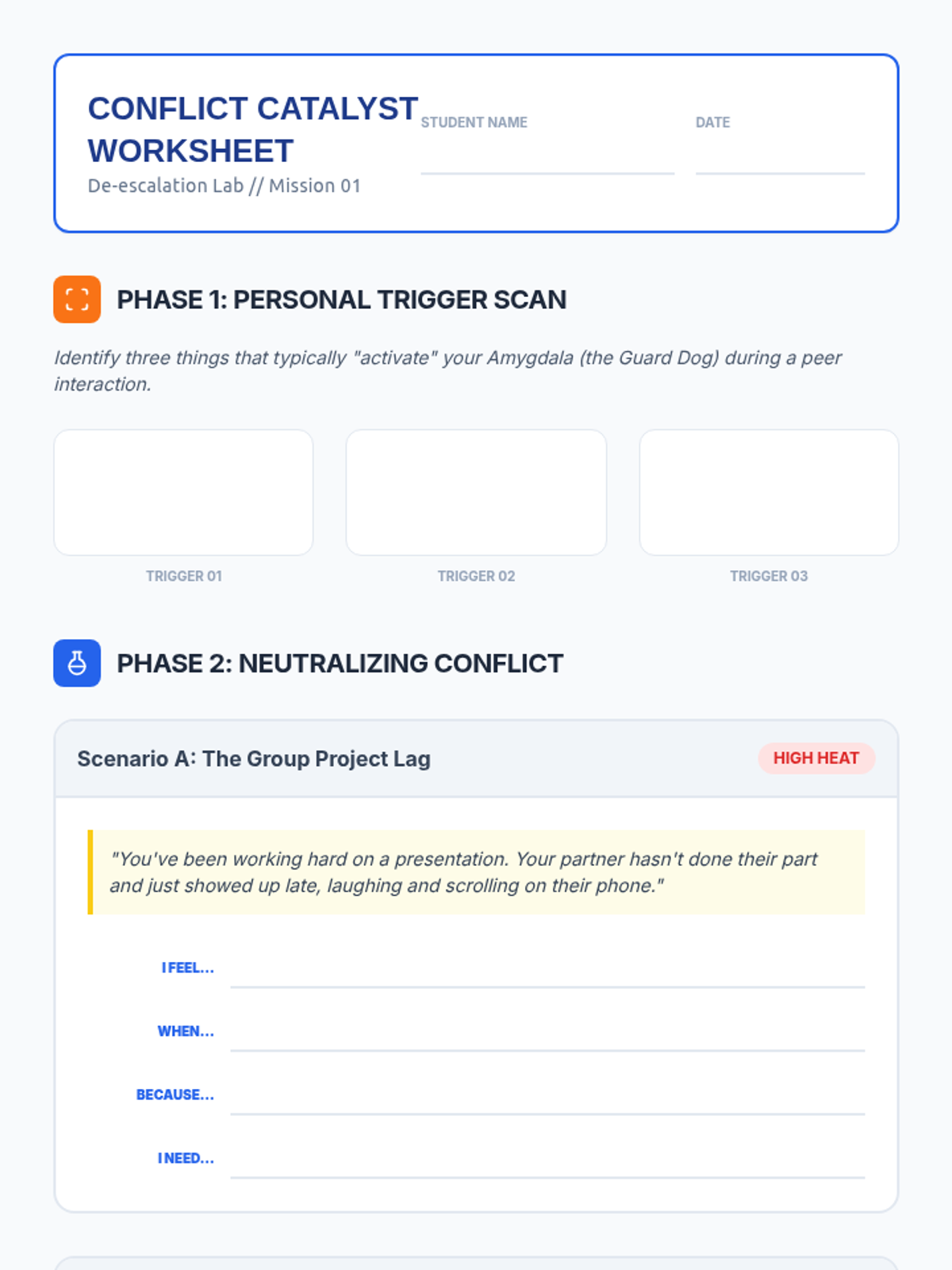
A student-facing activity worksheet featuring scenario-based practice for identifying emotional triggers and formulating 'I-Message' de-escalation responses.
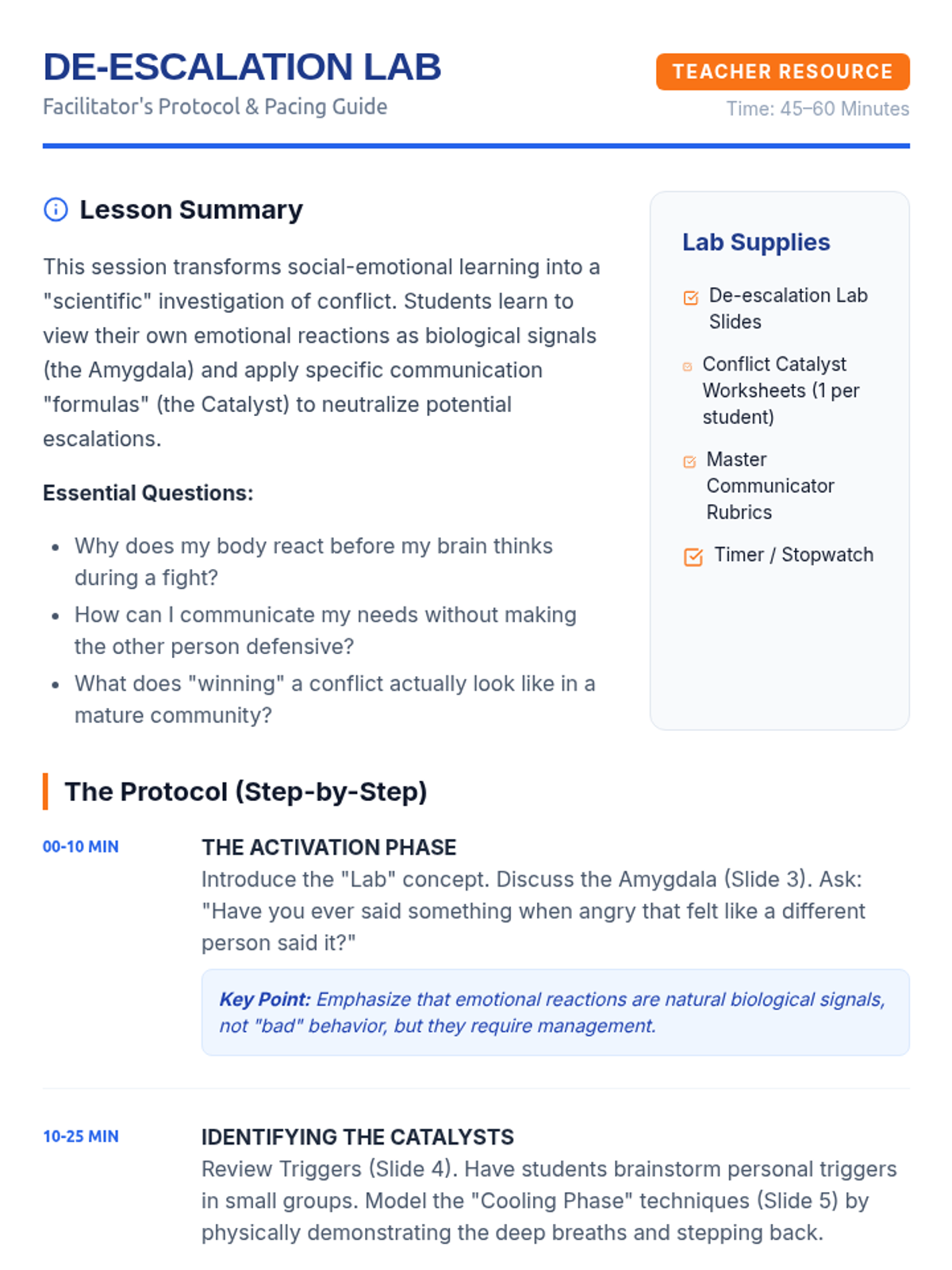
A comprehensive facilitator guide for the De-escalation Lab, featuring pacing instructions, essential questions, and differentiation strategies for managing the social-emotional session.
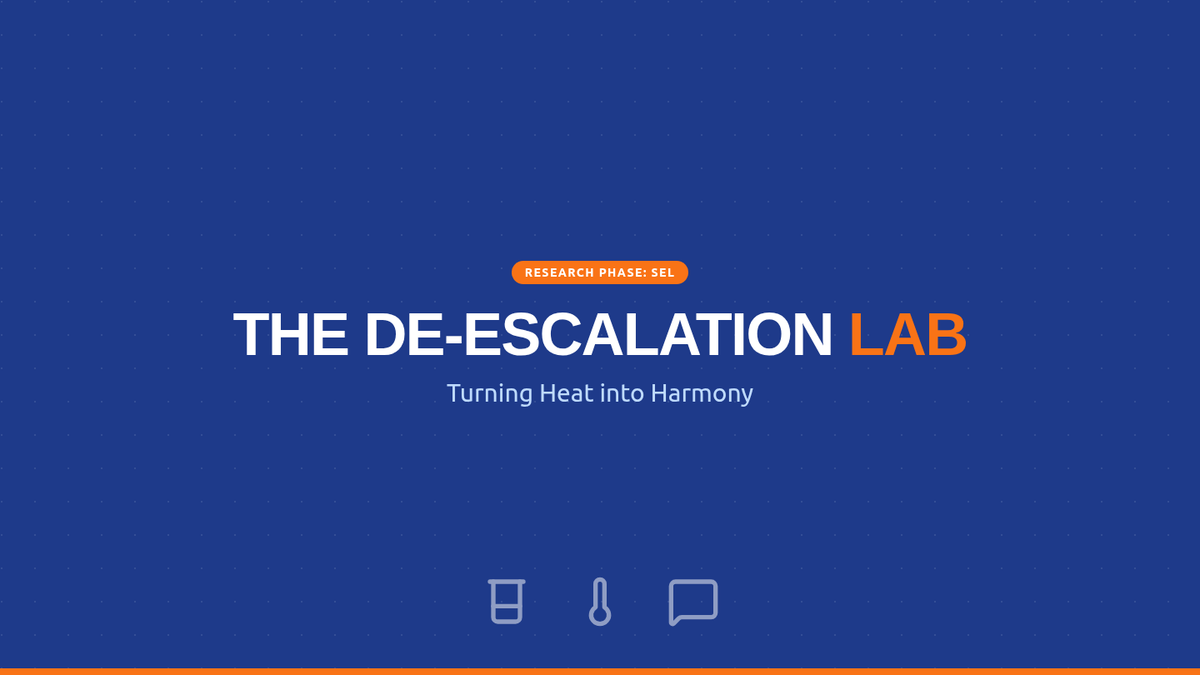
A laboratory-themed slide deck that guides students through the biological and social aspects of de-escalation, featuring the 'Cooling Phase' and 'I-Message' communication formulas.
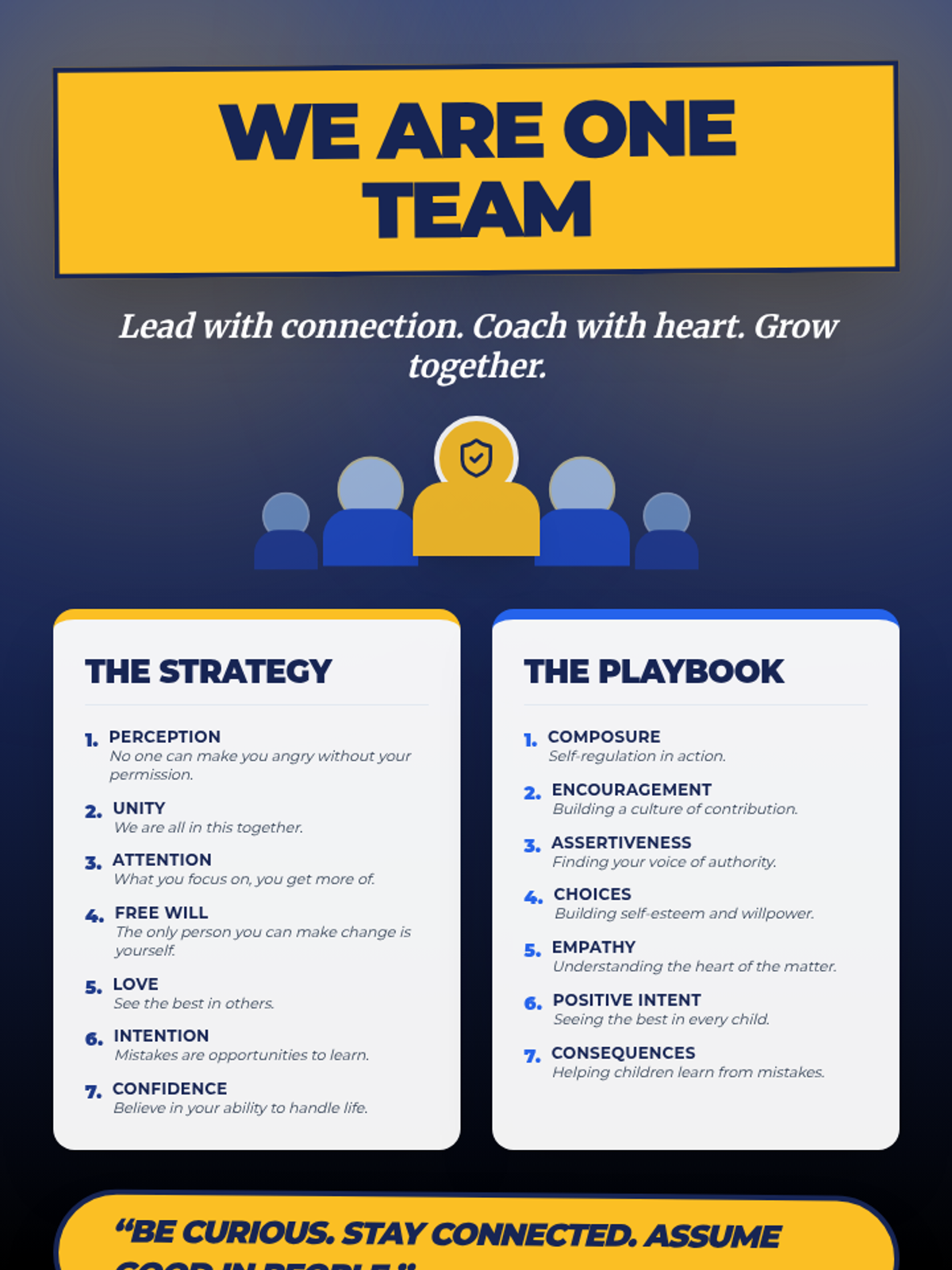
A Ted Lasso-inspired motivational poster for school staff, featuring the 7 Powers and 7 Skills of Conscious Discipline. Optimized for single-page printing with high-contrast typography and cinematic sports aesthetics.
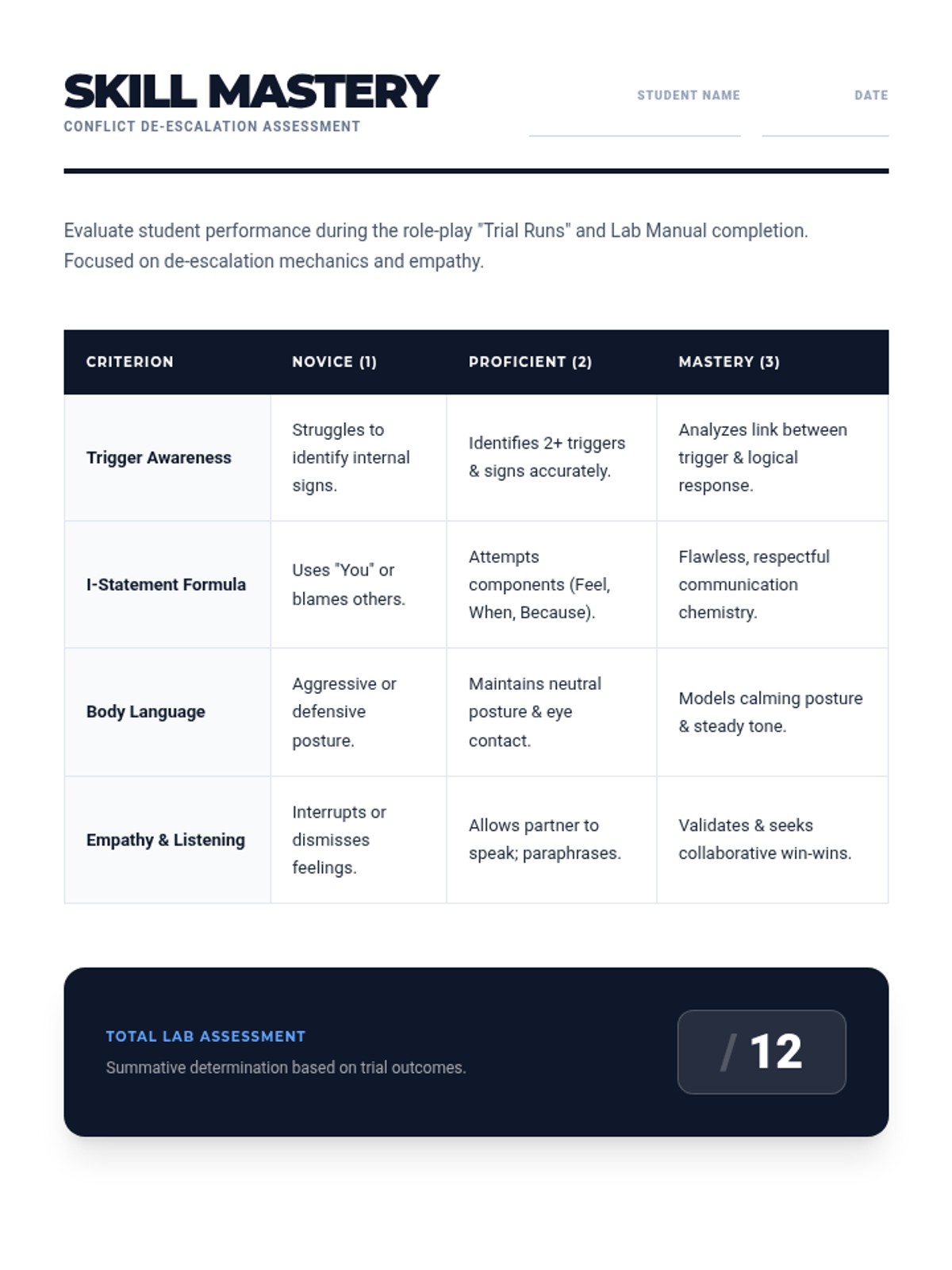
A formal assessment rubric for evaluating student performance in the De-escalation Lab, focusing on trigger awareness, I-statement application, body language, and empathetic listening.
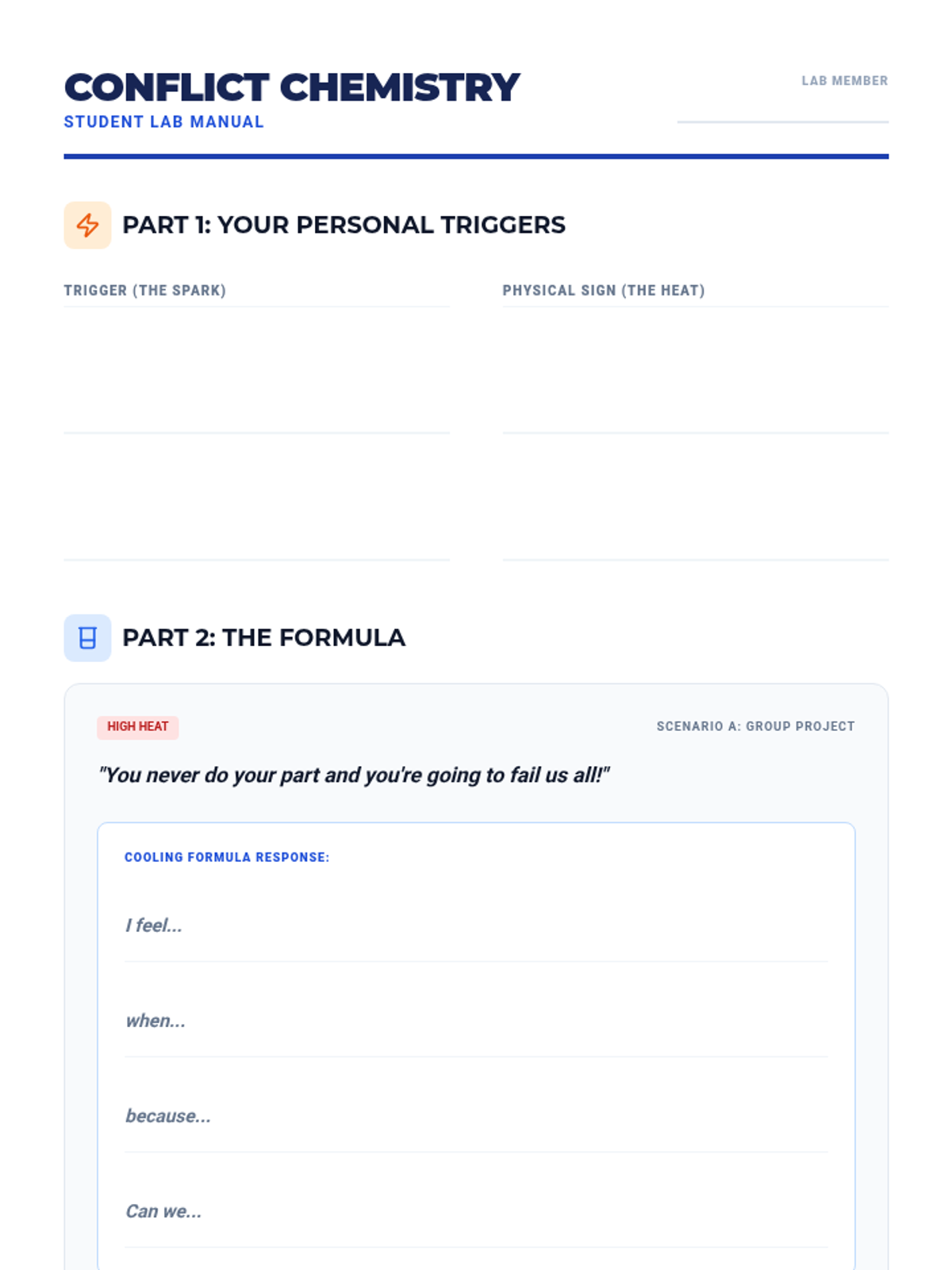
A student-facing activity worksheet for the De-escalation Lab, providing structured spaces to identify personal emotional triggers and practice transforming accusatory statements into productive I-statements using a "cooling formula."
An engaging slide deck designed for the De-escalation Lab, using a scientific "lab" theme to explain the neuroscience of anger and teach specific verbal cooling techniques like I-statements and active listening.
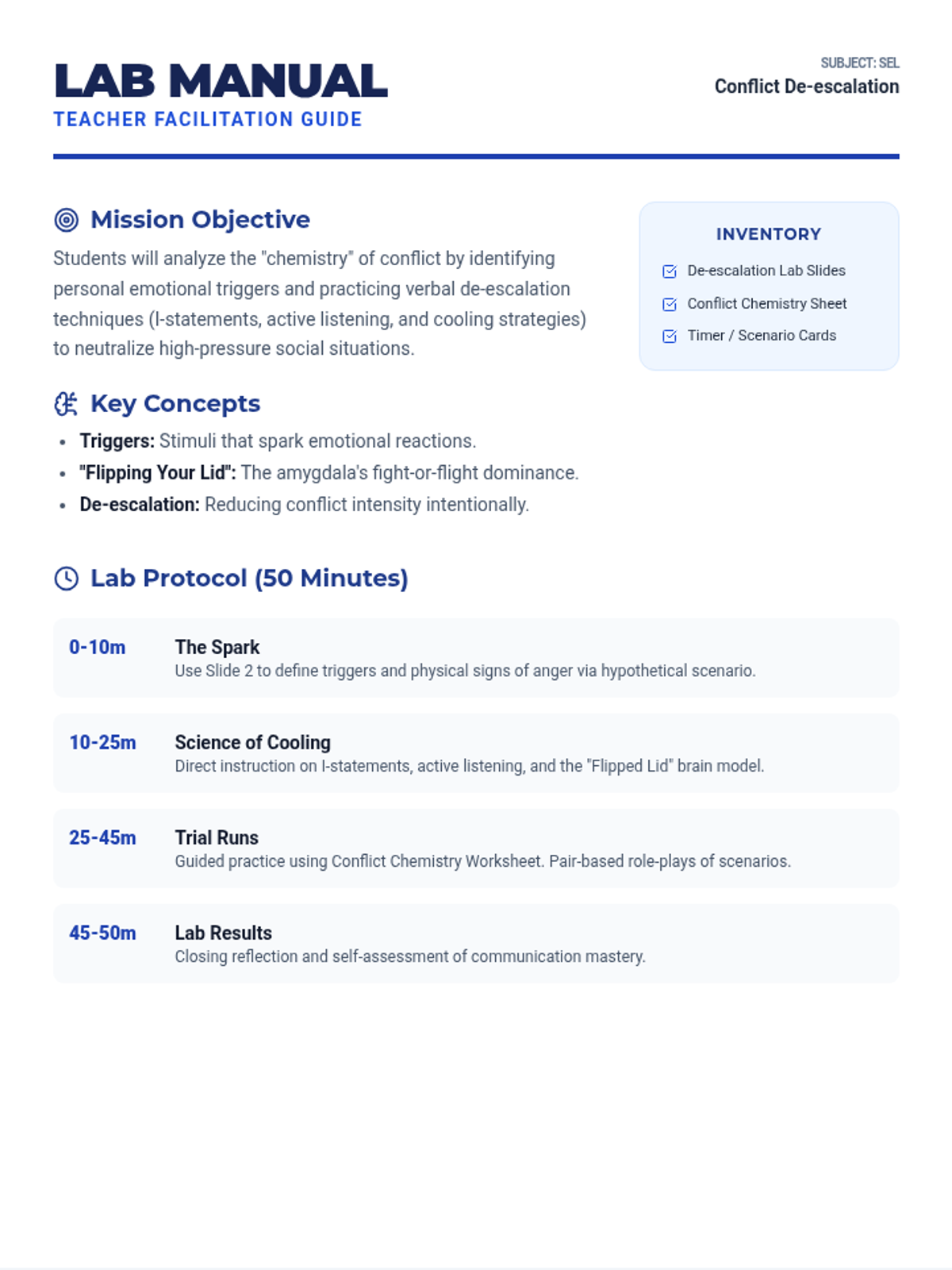
A comprehensive teacher facilitation guide for the De-escalation Lab, featuring a 50-minute lesson timeline, key concept definitions, differentiation strategies, and critical thinking prompts.
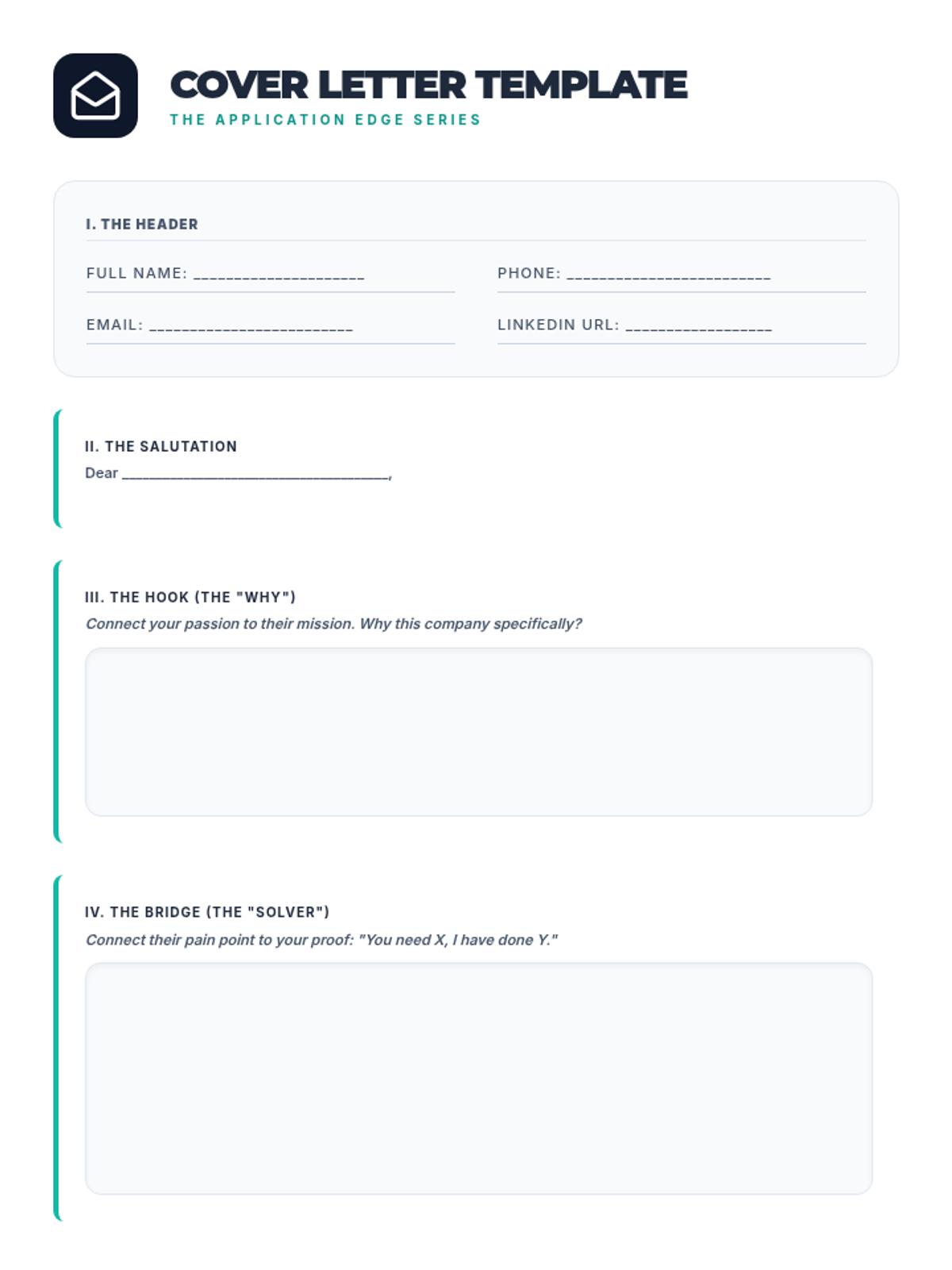
A structured two-page cover letter template for the Career Launchpad course, guiding students through the Hook, Bridge, and Closing sections with professional prompts and tips.
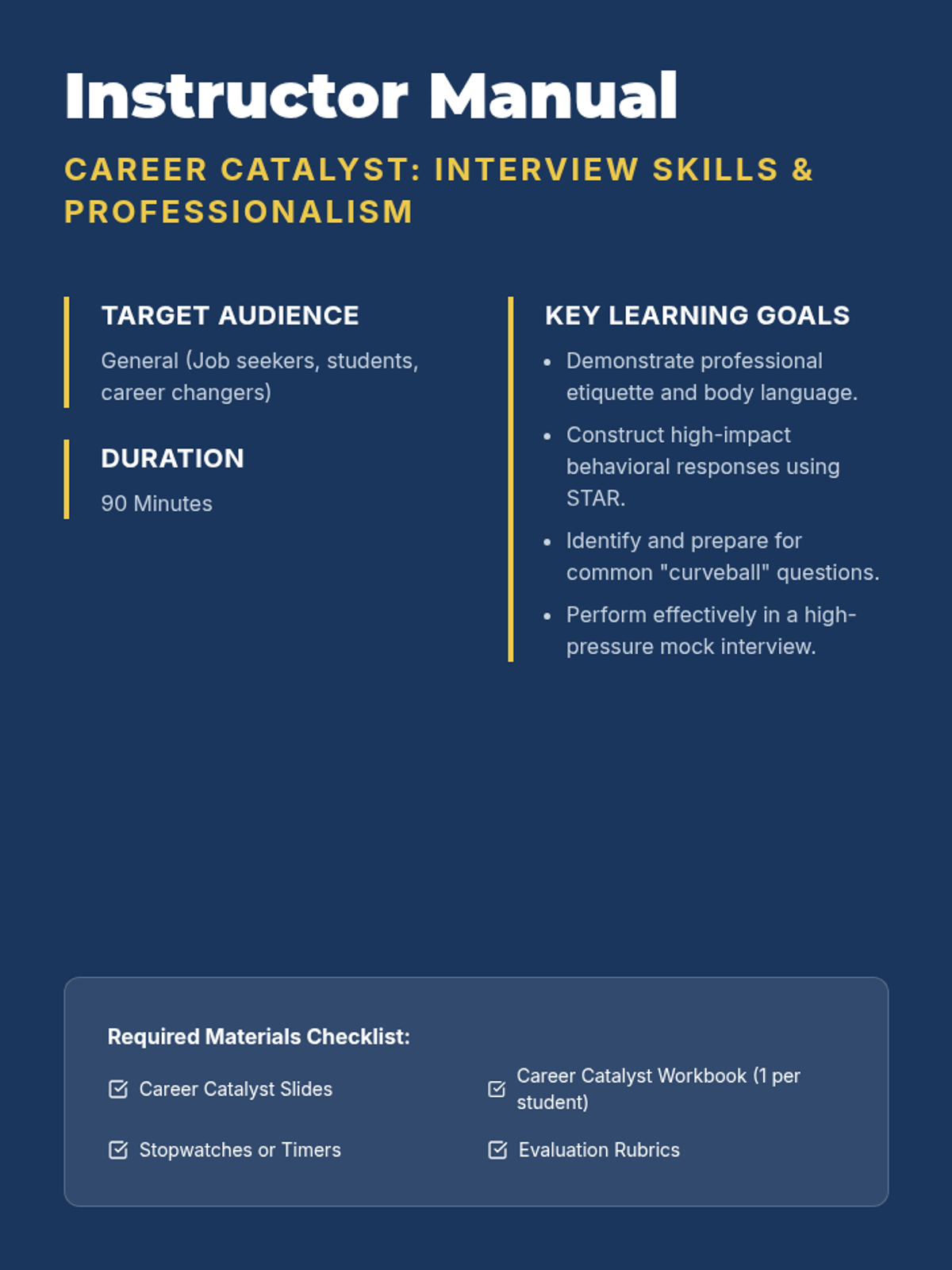
A significantly expanded 8-page instructor guide for the Career Catalyst Masterclass. Includes detailed SAY/DO scripts, facilitation directions for mirroring and STAR drills, scenario discussion guides, and a comprehensive Triad rotation model.
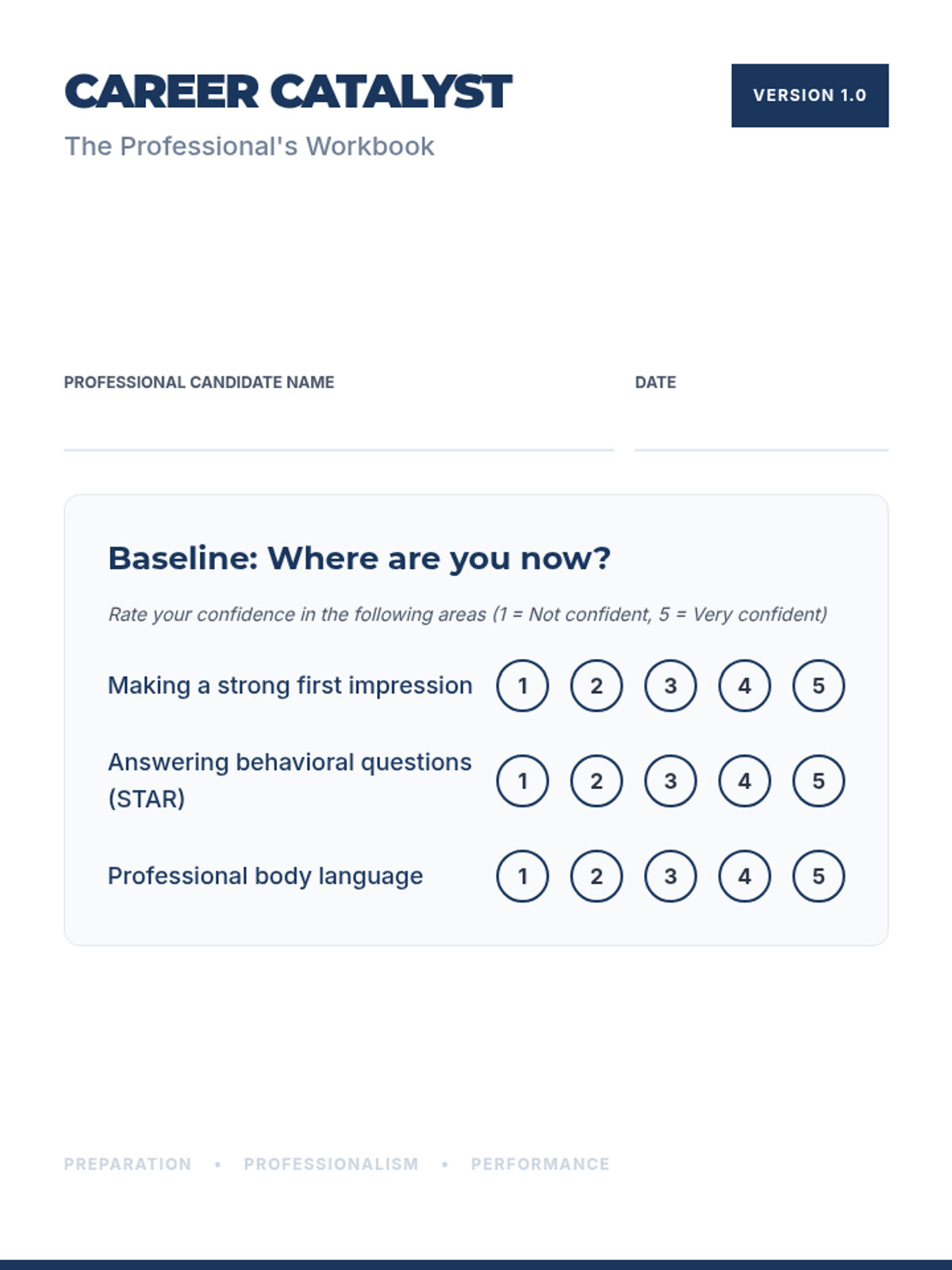
A comprehensive student workbook for interview skills, expanded with professional practice scenarios and an updated digital presence checklist. Fixed page breaks and enhanced work area borders. Reduced heights to prevent overflow.
A modern, high-contrast slide deck for teaching interview skills, featuring the STAR method, body language tips, and mock interview guidelines. Expanded to include digital professionalism and workplace etiquette.
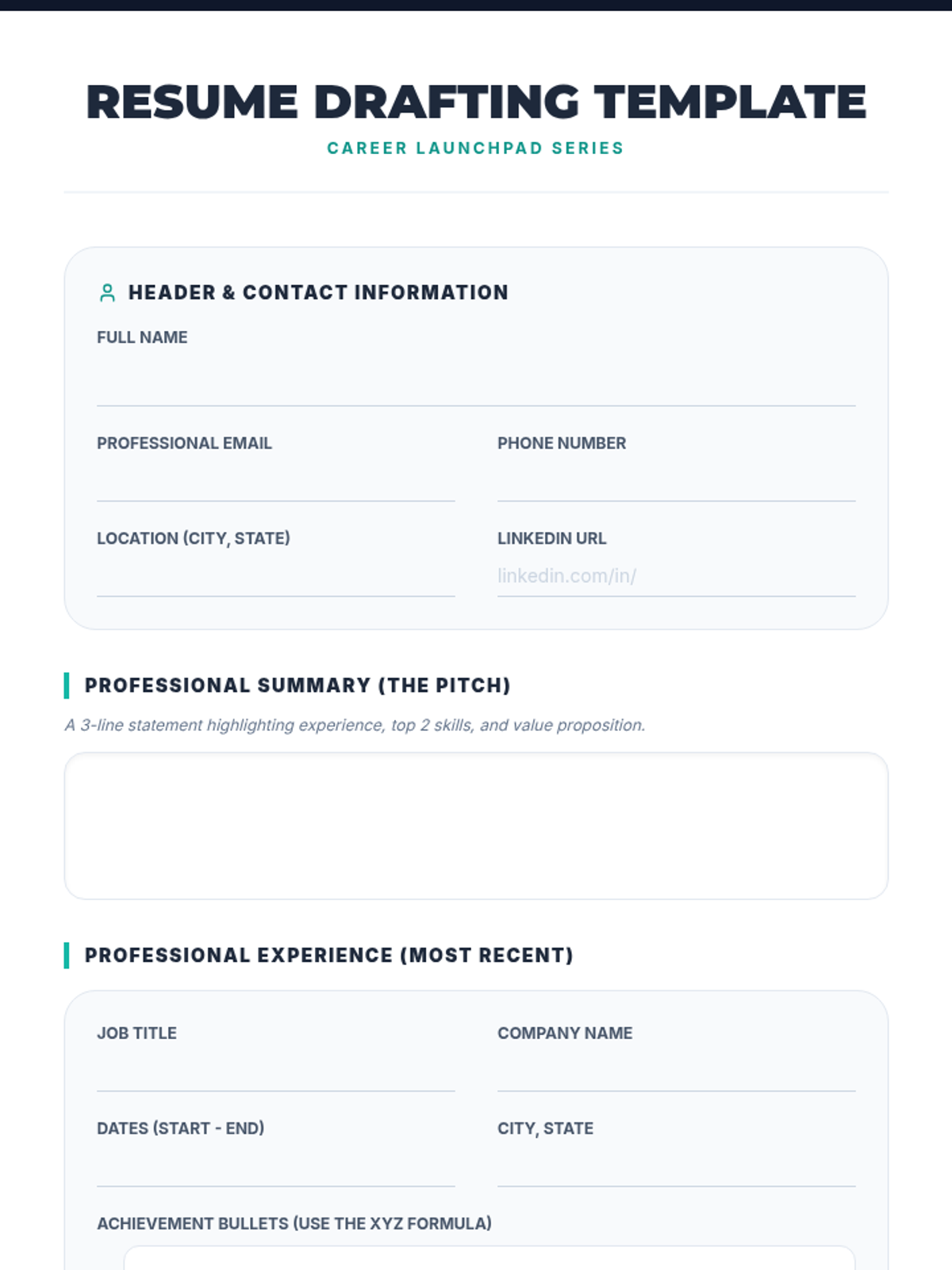
A revised two-page student worksheet designed as a fillable resume template, with improved writing space and layout to ensure it fits perfectly within the virtual viewport.