The capstone session where students apply their learning to a collaborative 'Unity Prototype' project. They design a community or school environment where differences are structurally integrated and social acceptance is the default.

This lesson introduces middle school students to the concepts of emotional regulation and constructive conflict resolution through guided reflection and visual models. Students will explore their own triggers, learn the 'Iceberg' theory of conflict, and practice perspective-shifting.
A comprehensive lesson on navigating social media with empathy and accountability. Students will learn to recognize the impact of their digital footprint, handle online mistakes with grace, and practice safe, respectful communication.
Reviews the skills learned and focuses on how to maintain established relationships with adults through consistent, positive interactions.
Equips students with the skills to ask for help or express a concern to an adult in a way that leads to collaborative problem-solving.
Explores the concept of "social context" to help students understand when it is appropriate to use formal versus casual language with adults.
Helps students navigate receiving feedback or corrections from adults with a growth mindset and respectful communication.
Provides strategies for answering adult questions with clarity and respect, moving beyond one-word answers to foster more meaningful dialogue.
Teaches students to interpret facial expressions, body language, and tone of voice to understand an adult's availability and mood before interacting.
Focuses on the mechanics of starting a conversation with a staff member, including choosing the right moment and using appropriate opening phrases.
Students identify current and potential adult allies in the school building and understand the importance of positive adult connections for their success and sense of belonging.
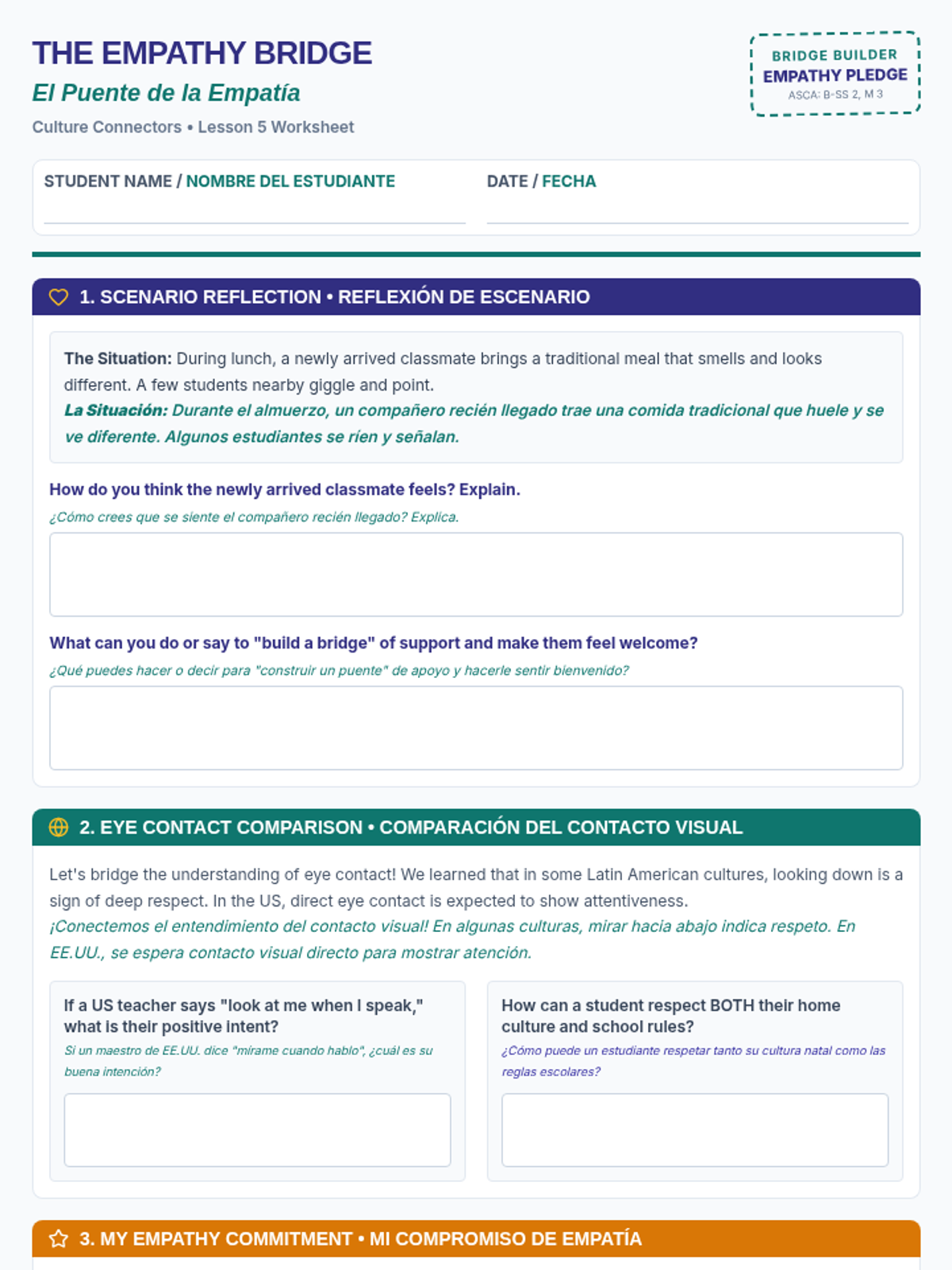
A fast-paced, 15-minute interactive lesson designed to help middle schoolers understand the mechanics of empathy and how small actions create a culture of belonging.
A set of tools to help students identify when their minds have wandered into daydreaming or perseveration and learn how to return to the present task.