A 1st-grade lesson focused on the social-emotional skills of sharing and taking turns to build healthy friendships and community.
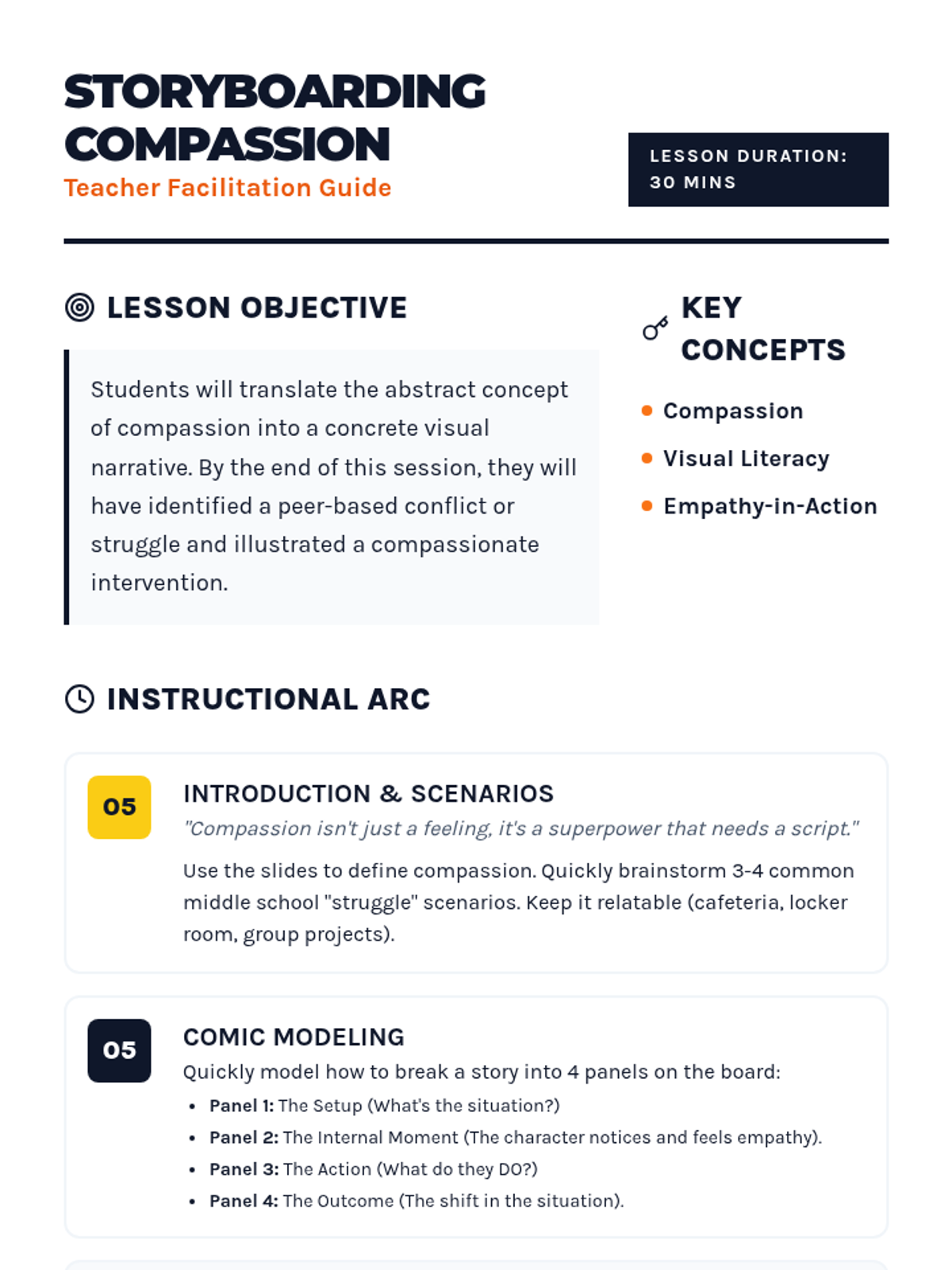
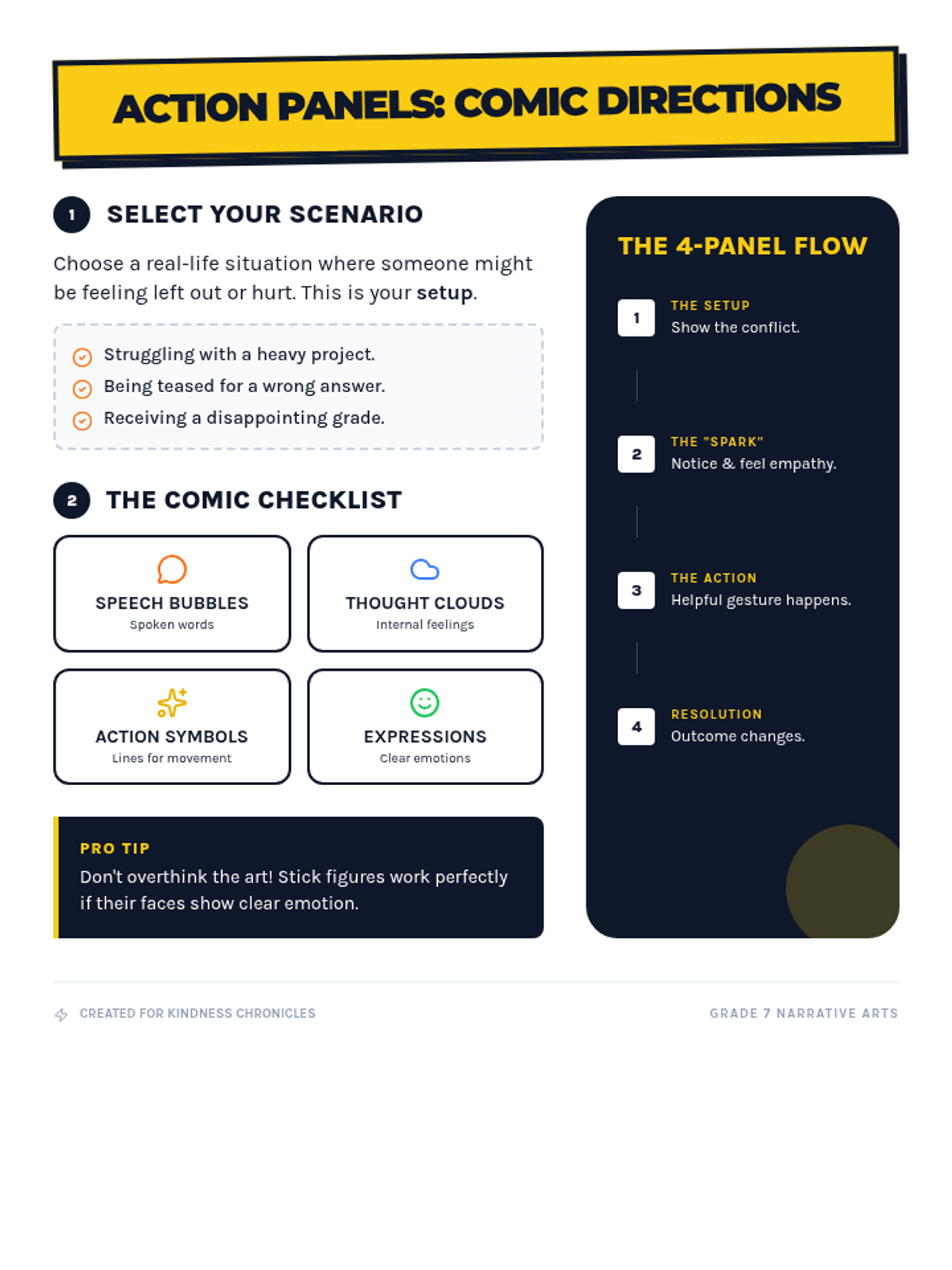
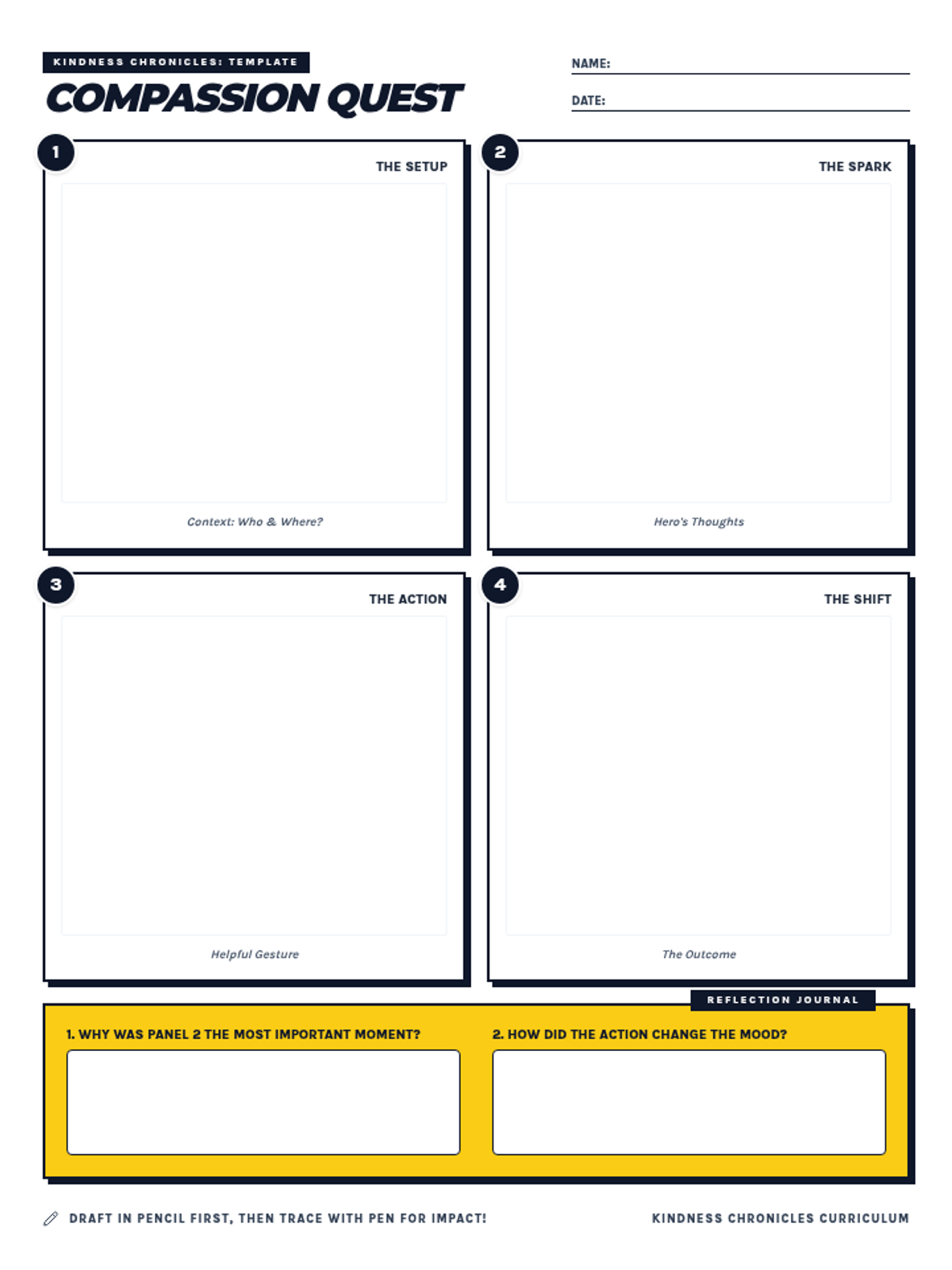
A creative arts-integrated lesson where 7th graders explore the concept of compassion by illustrating a peer-focused scenario through sequential visual storytelling. Students practice perspective-taking and identify concrete ways to show empathy in their daily lives.
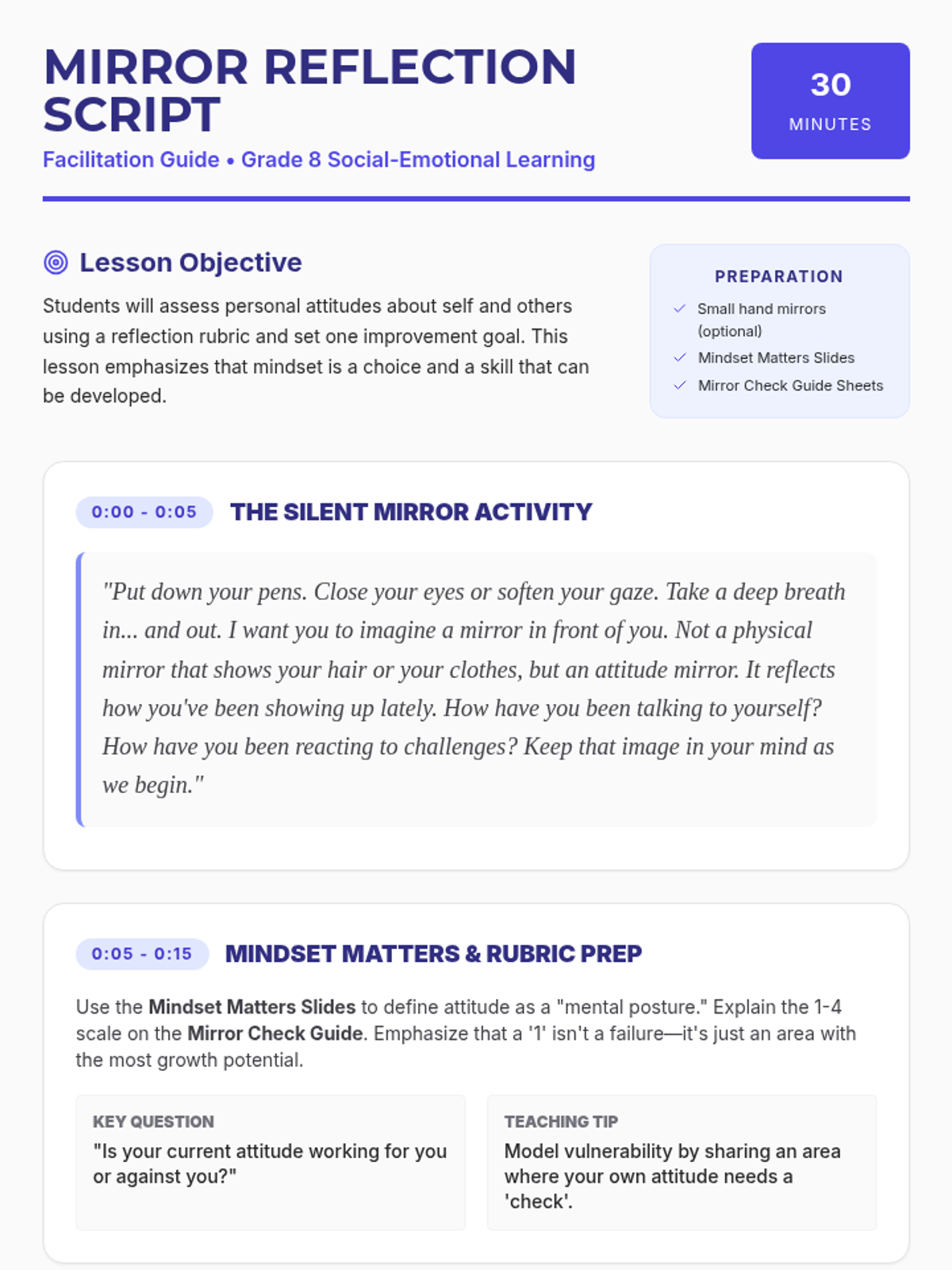
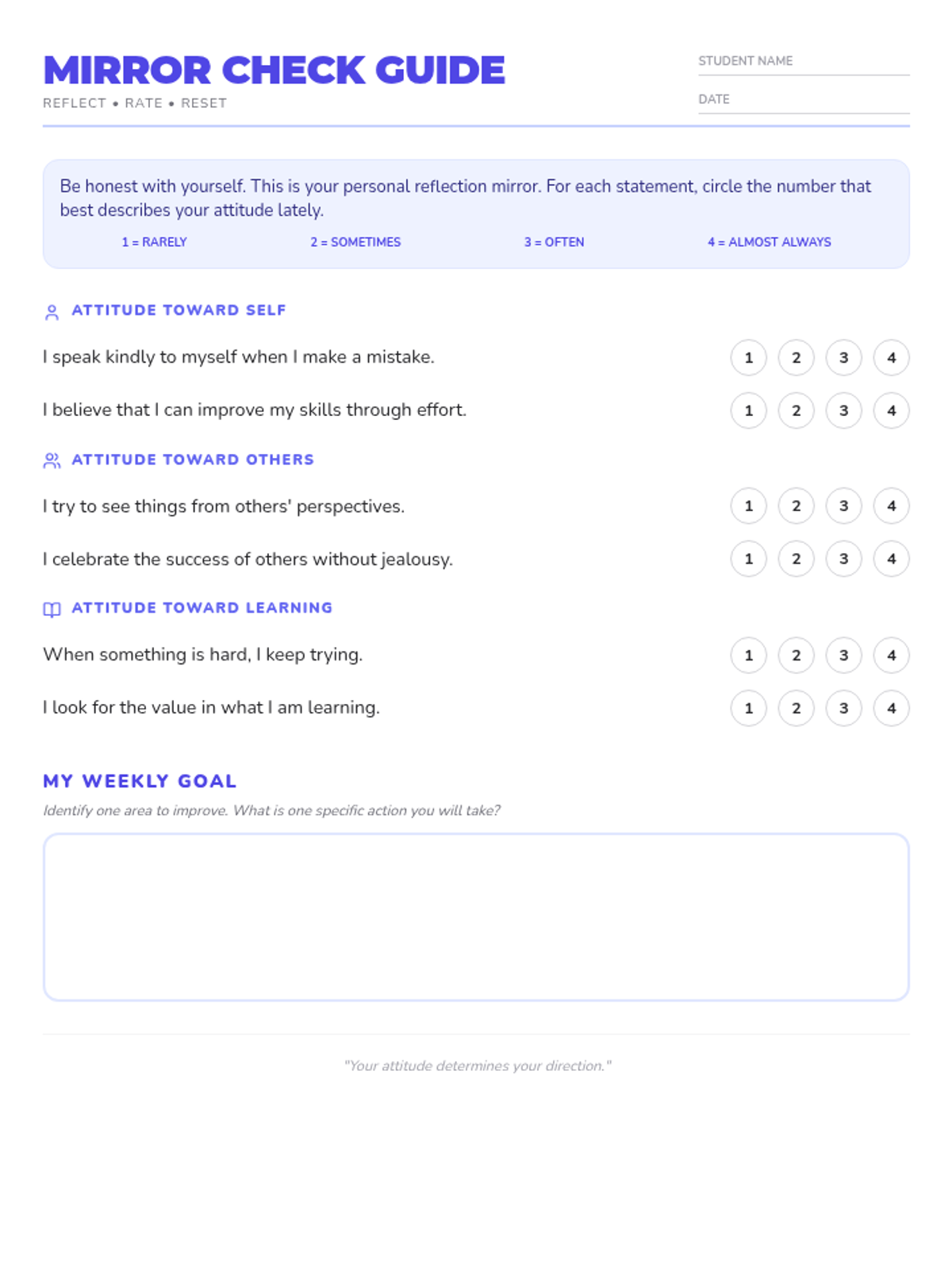
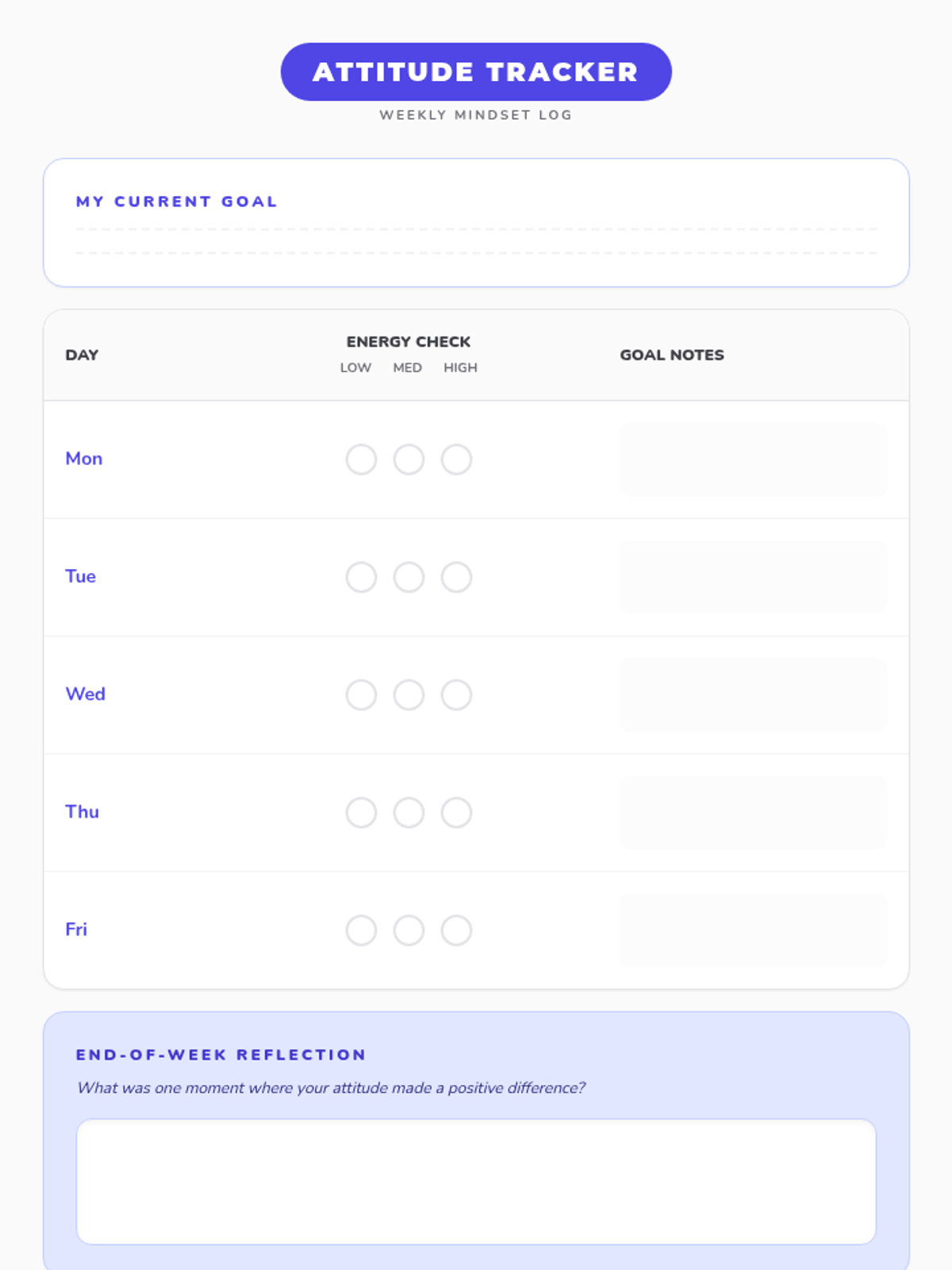
A 30-minute social-emotional learning lesson for 8th graders focused on self-reflection and personal growth. Students use a structured rubric to assess their current mindsets and set a concrete goal for attitude improvement.
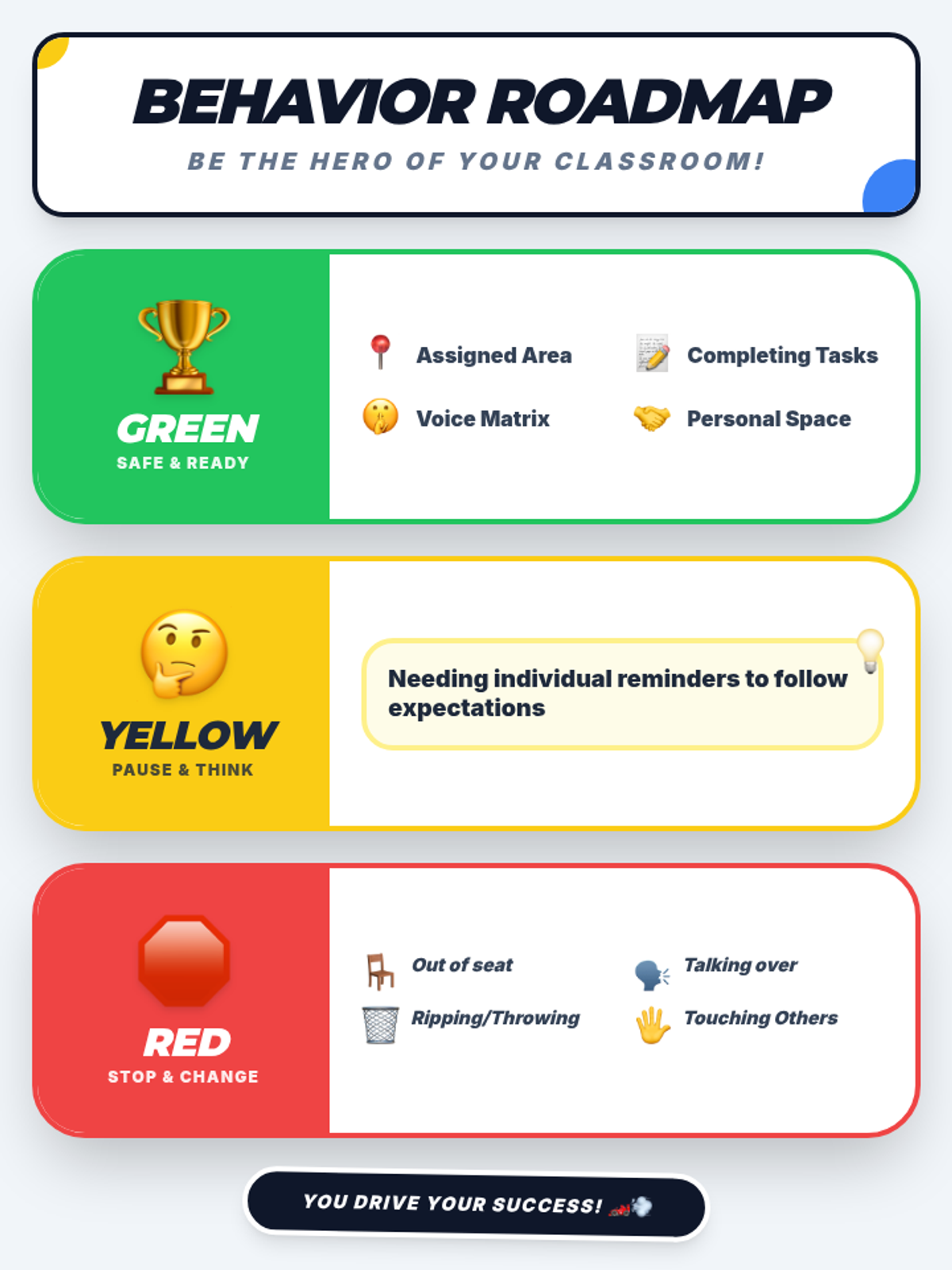
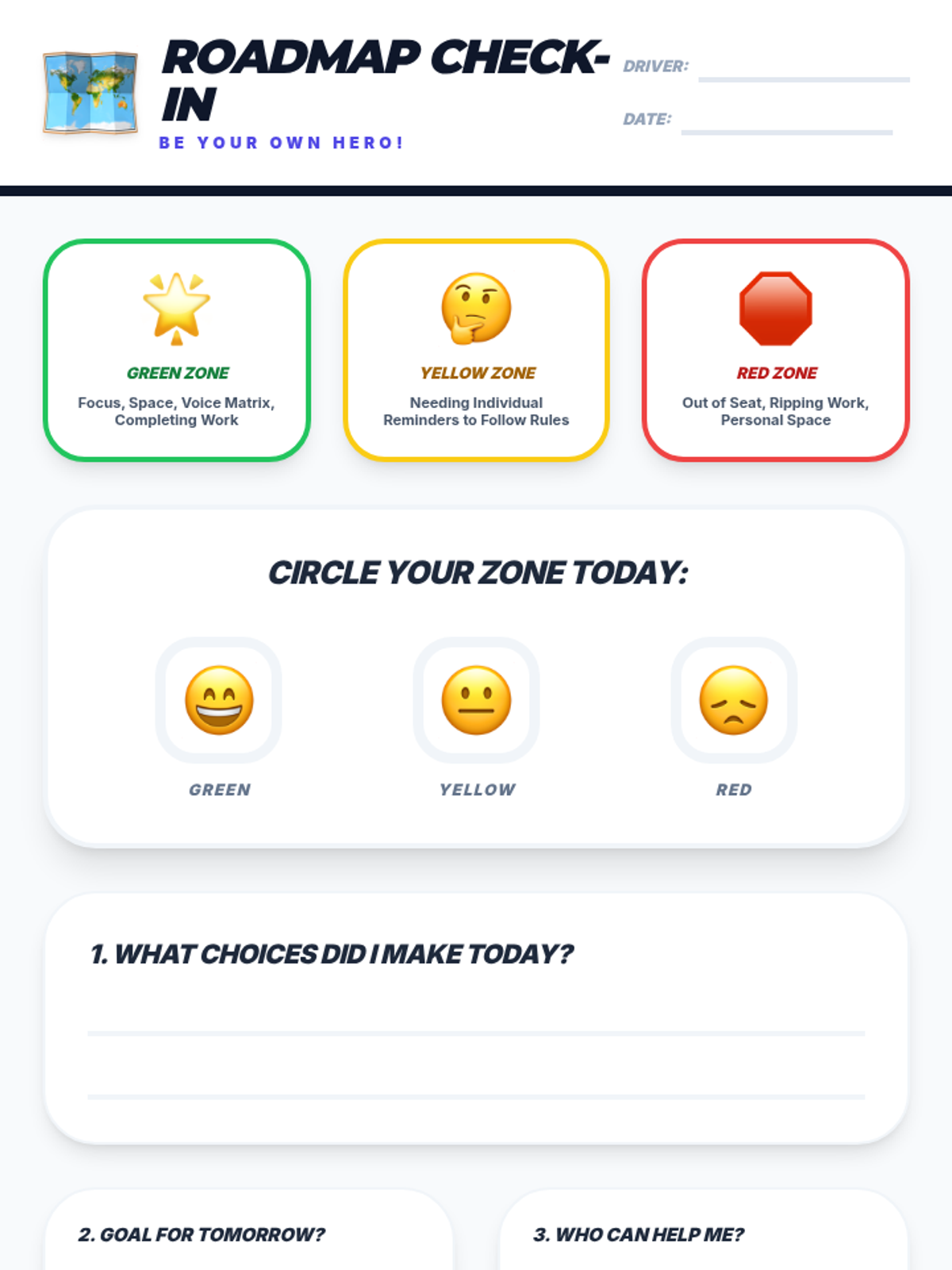
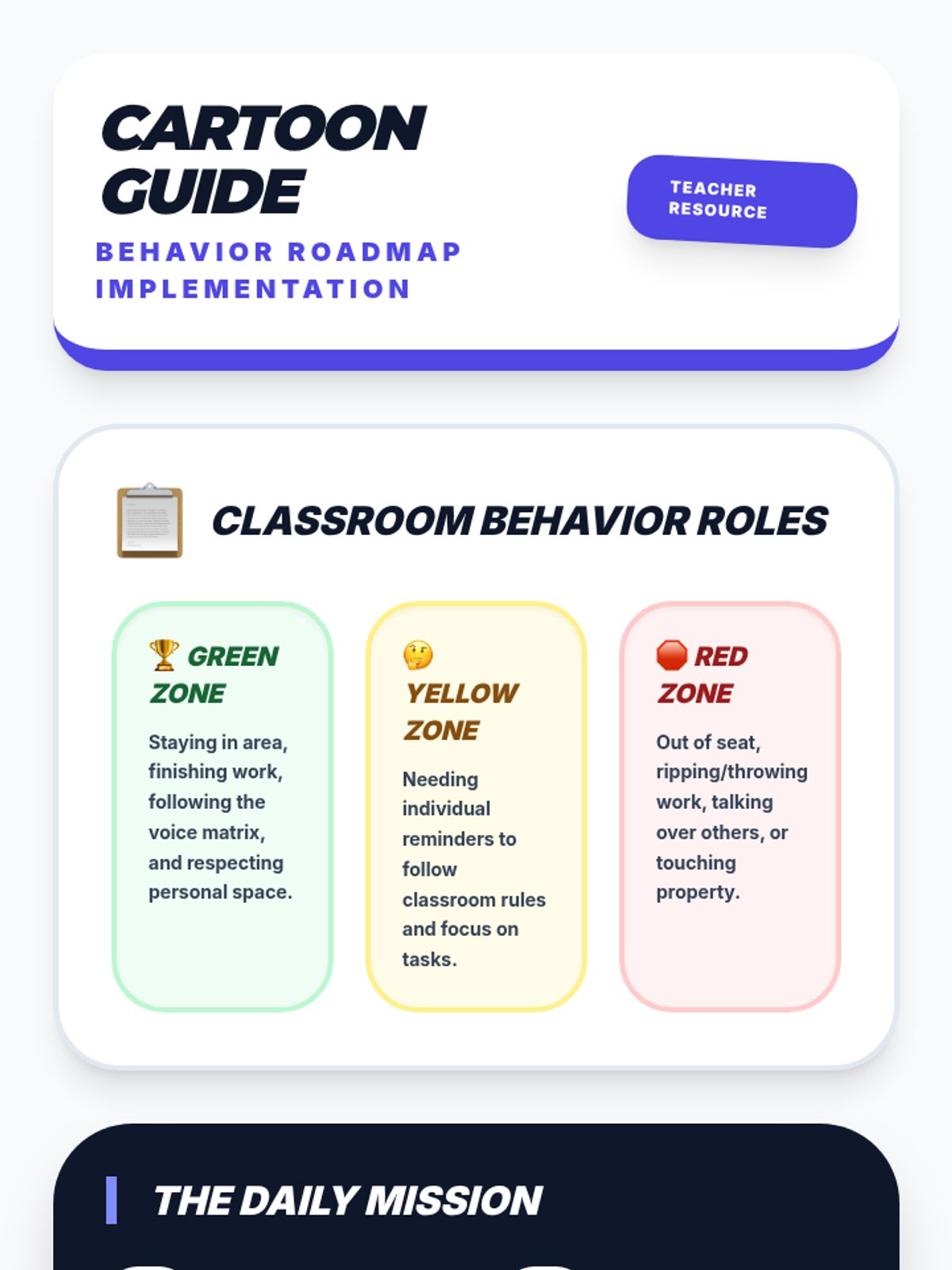
A comprehensive system for defining and maintaining a positive learning environment through a color-coded behavior framework. This lesson introduces students to green, yellow, and red behaviors with clear expectations and reflection tools.
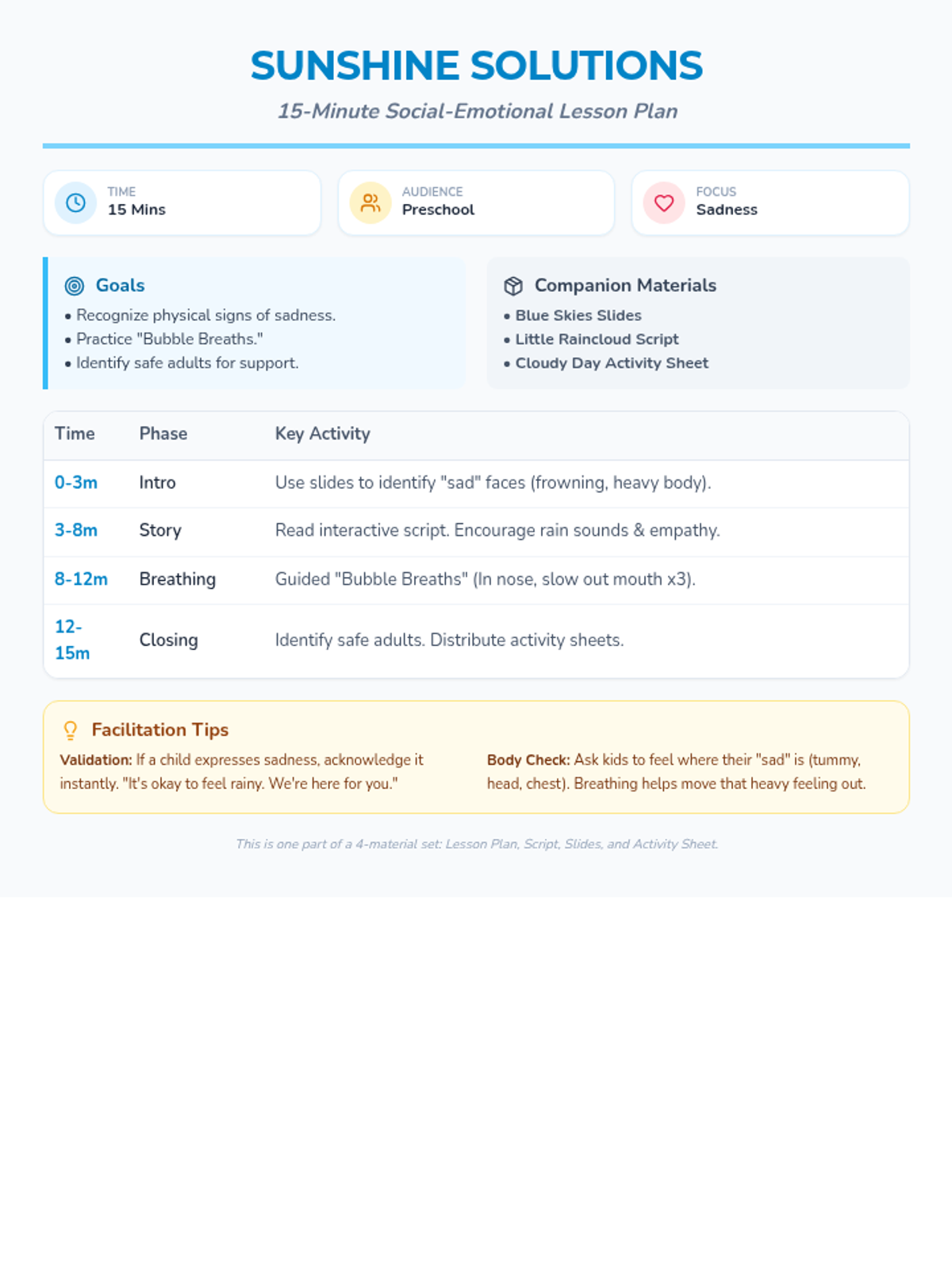
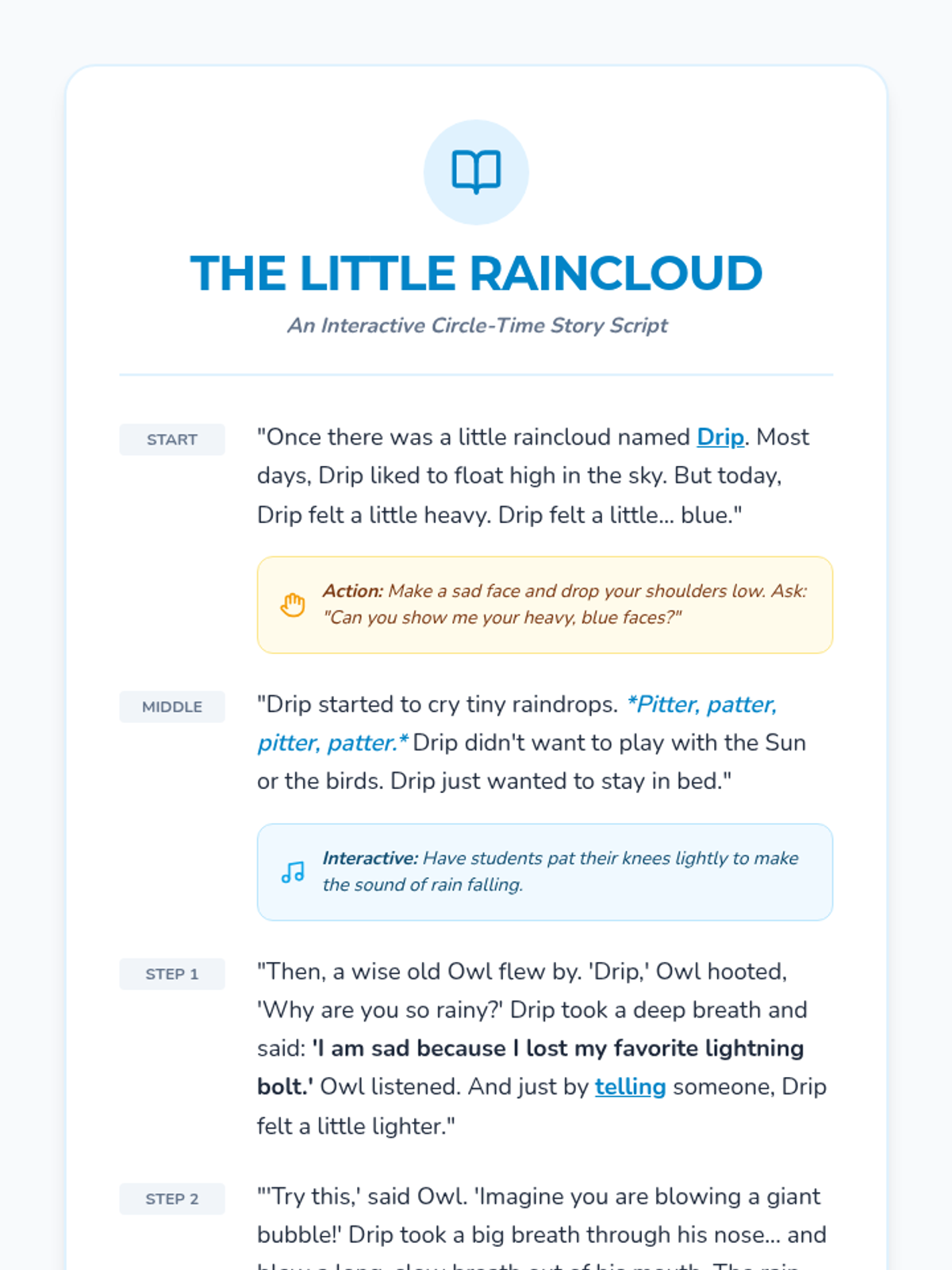
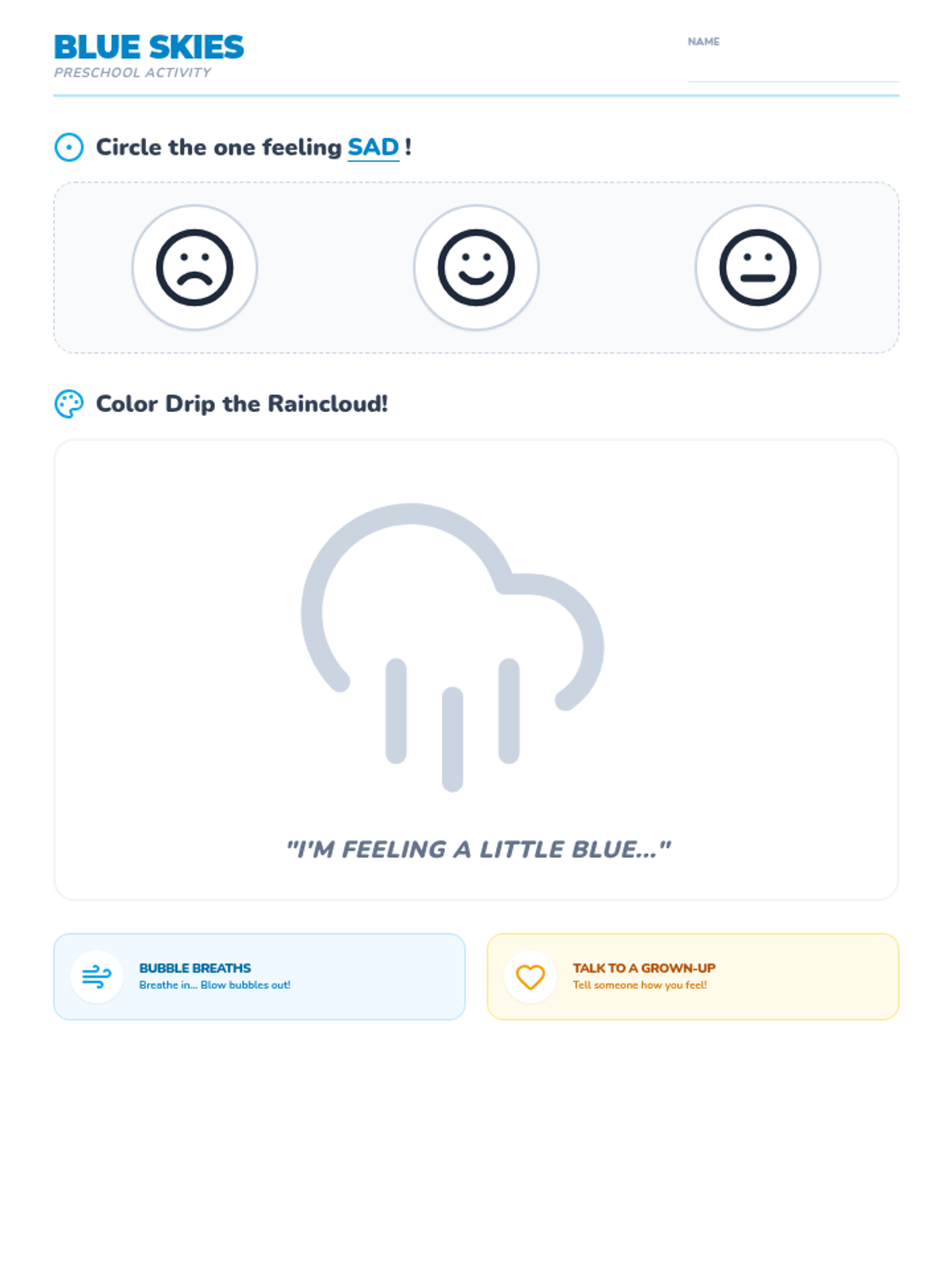
A gentle, 15-minute social-emotional learning lesson for preschoolers focused on identifying sadness and practicing two simple coping strategies: talking to a trusted adult and 'Bubble Breaths'.
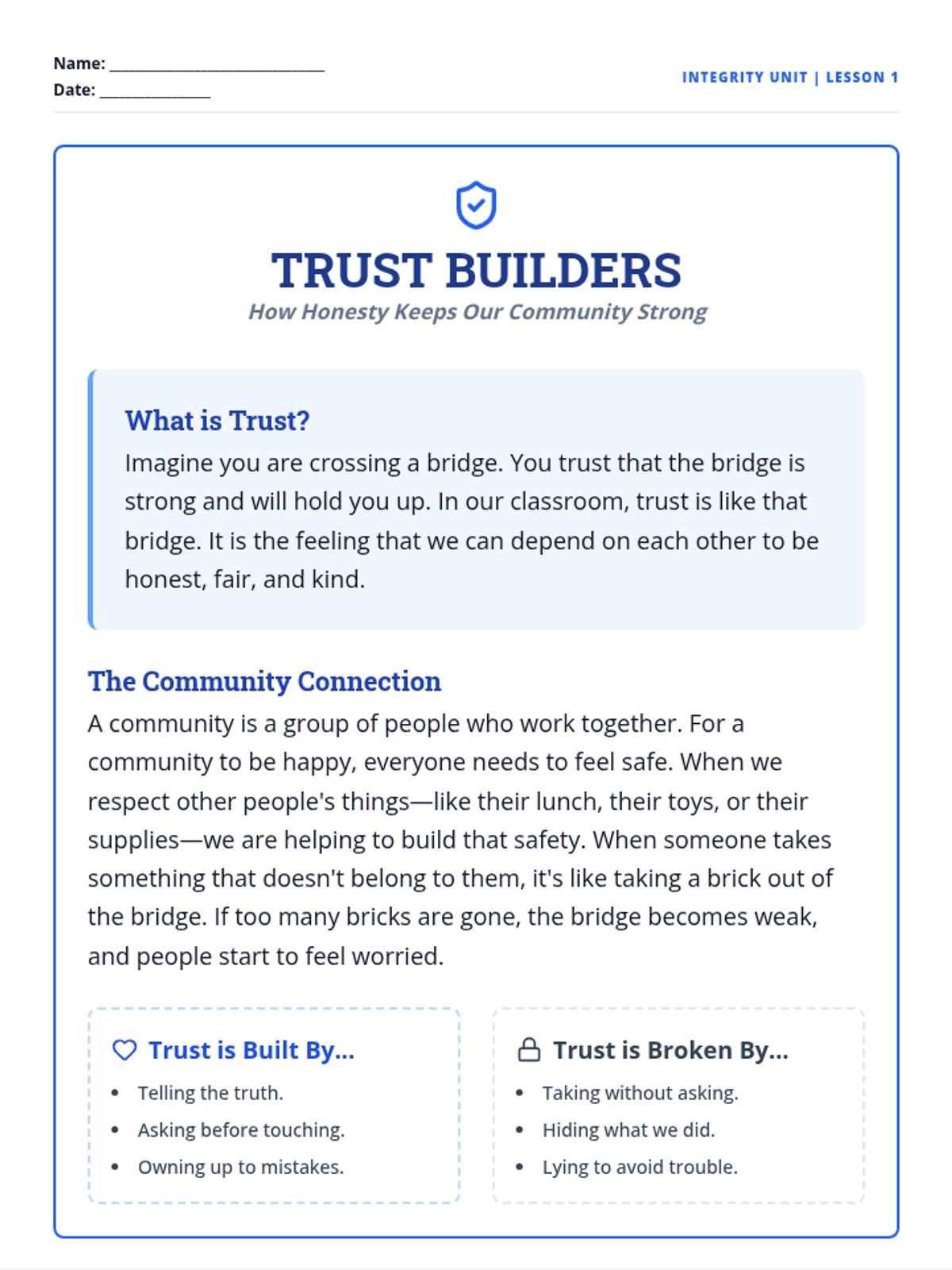
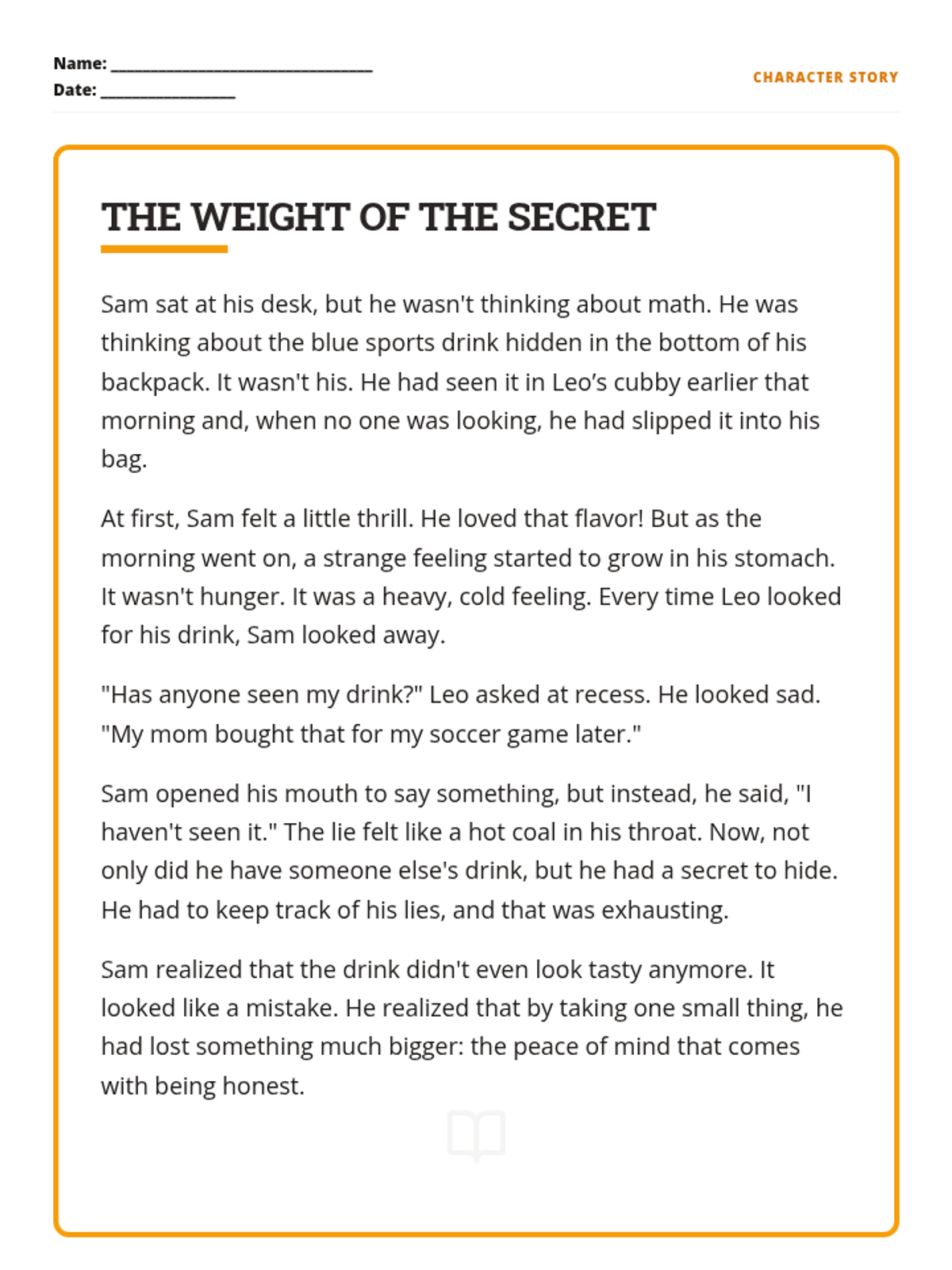
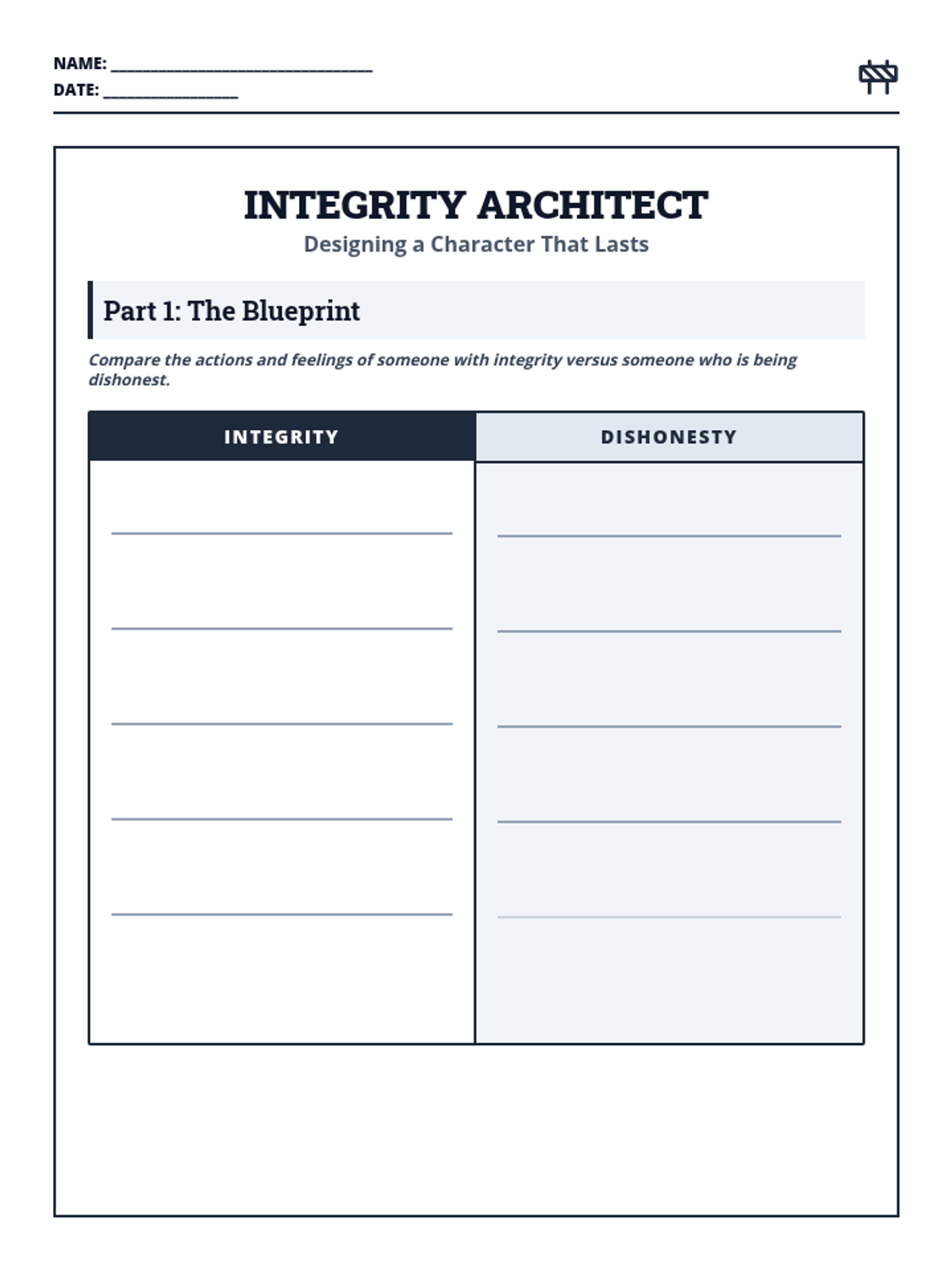
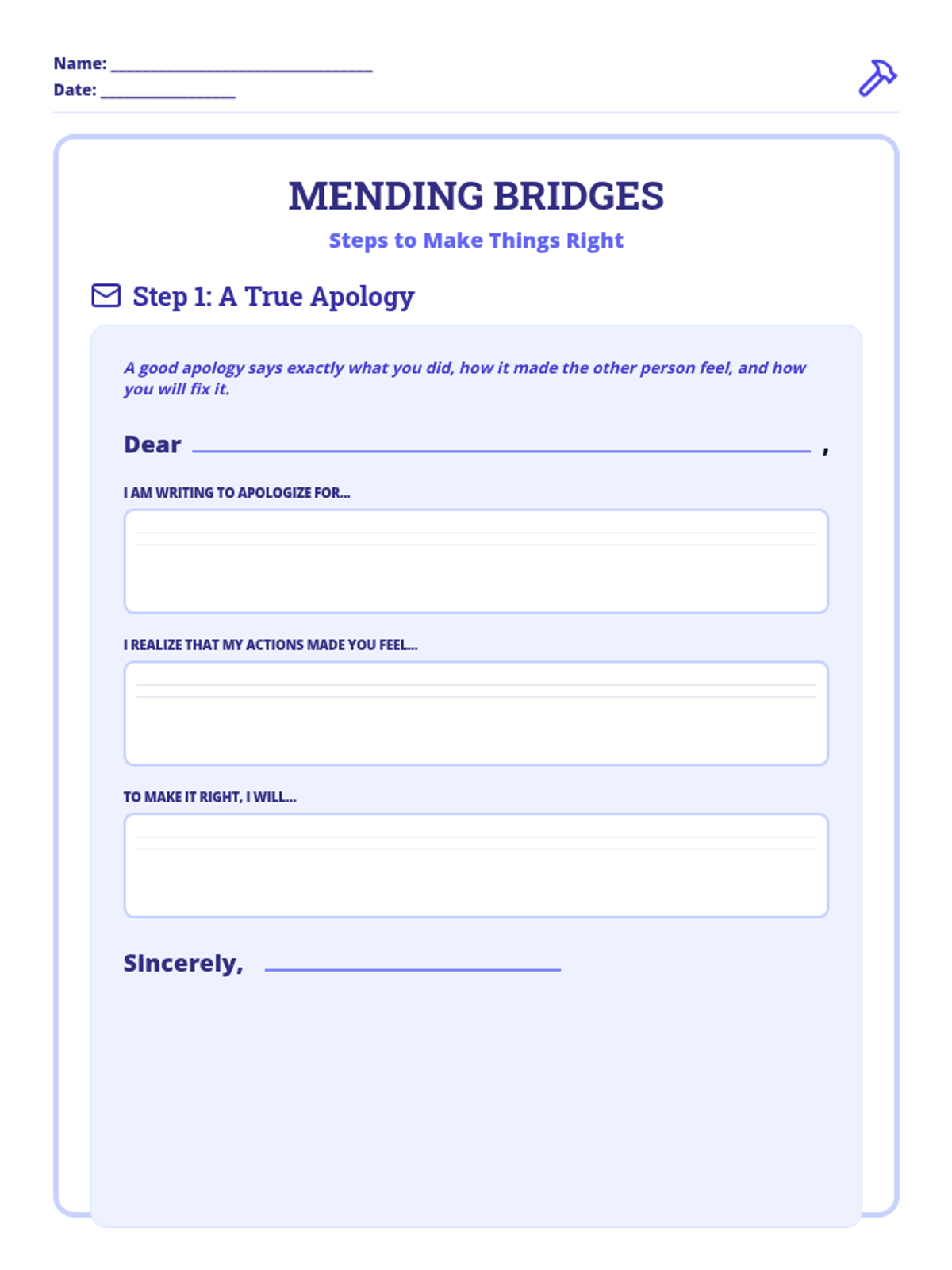
A restorative justice unit for elementary students focusing on the impact of theft and dishonesty on community trust, featuring informational text, a relatable narrative, and reflective writing projects.
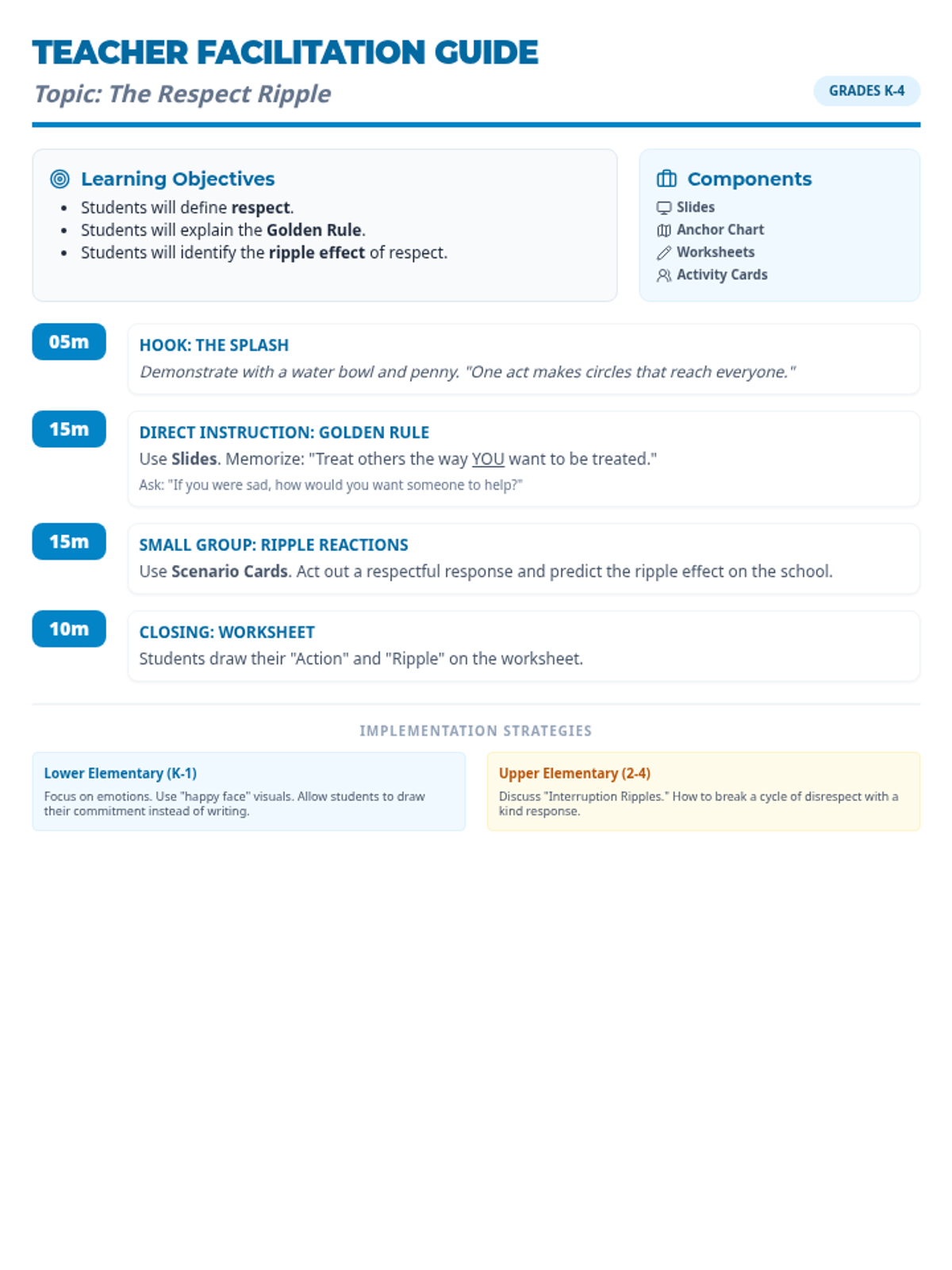
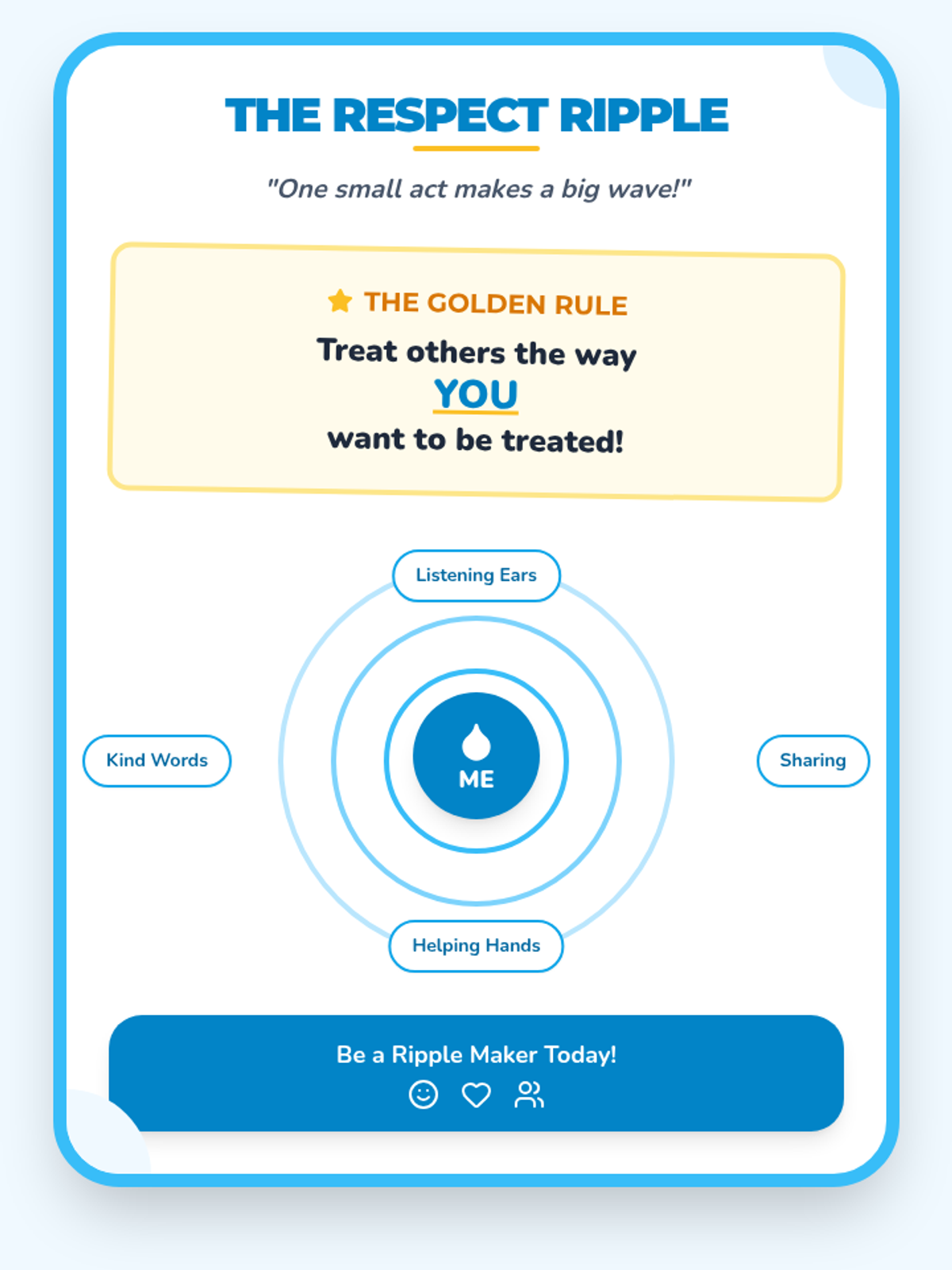
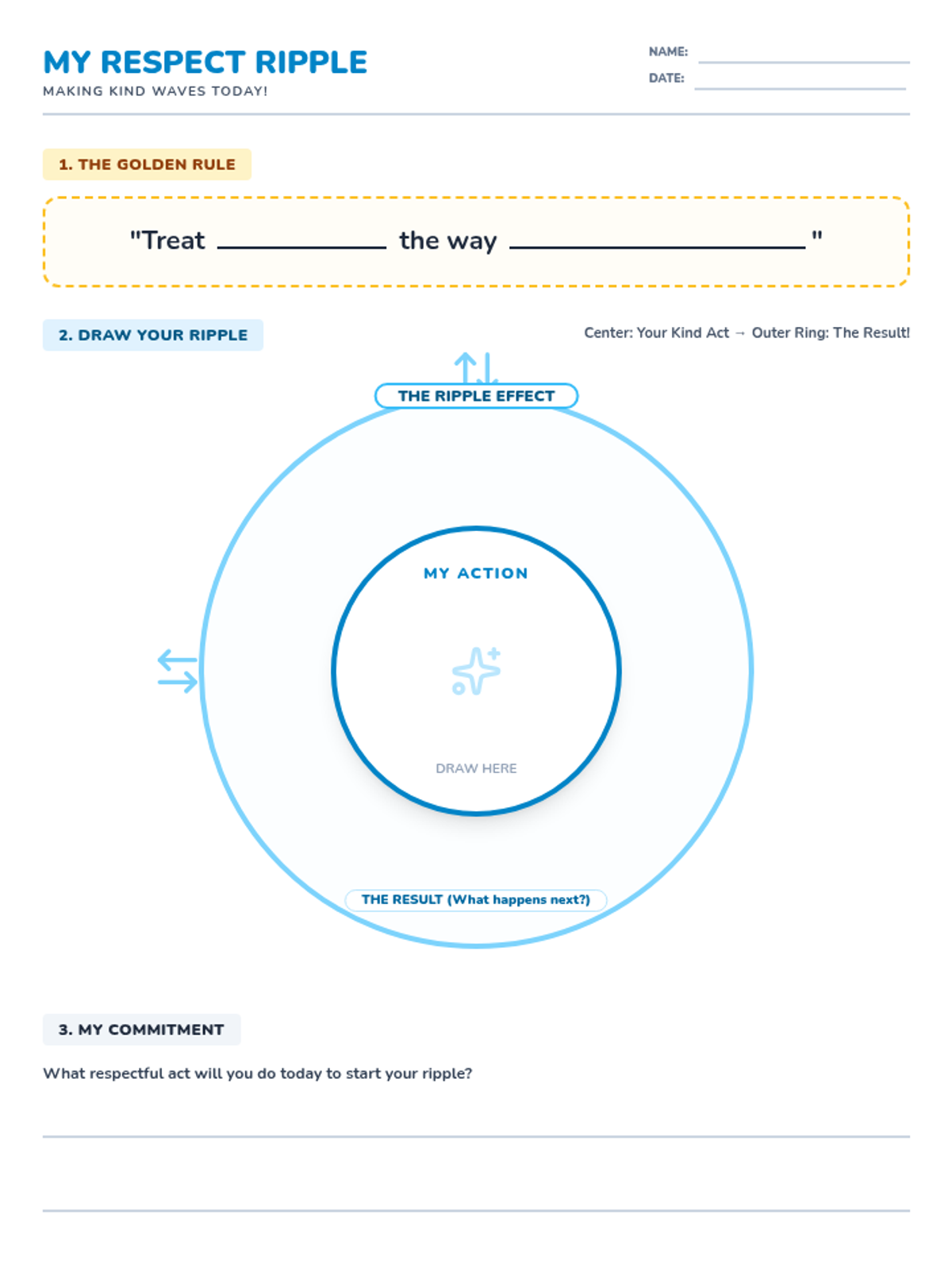
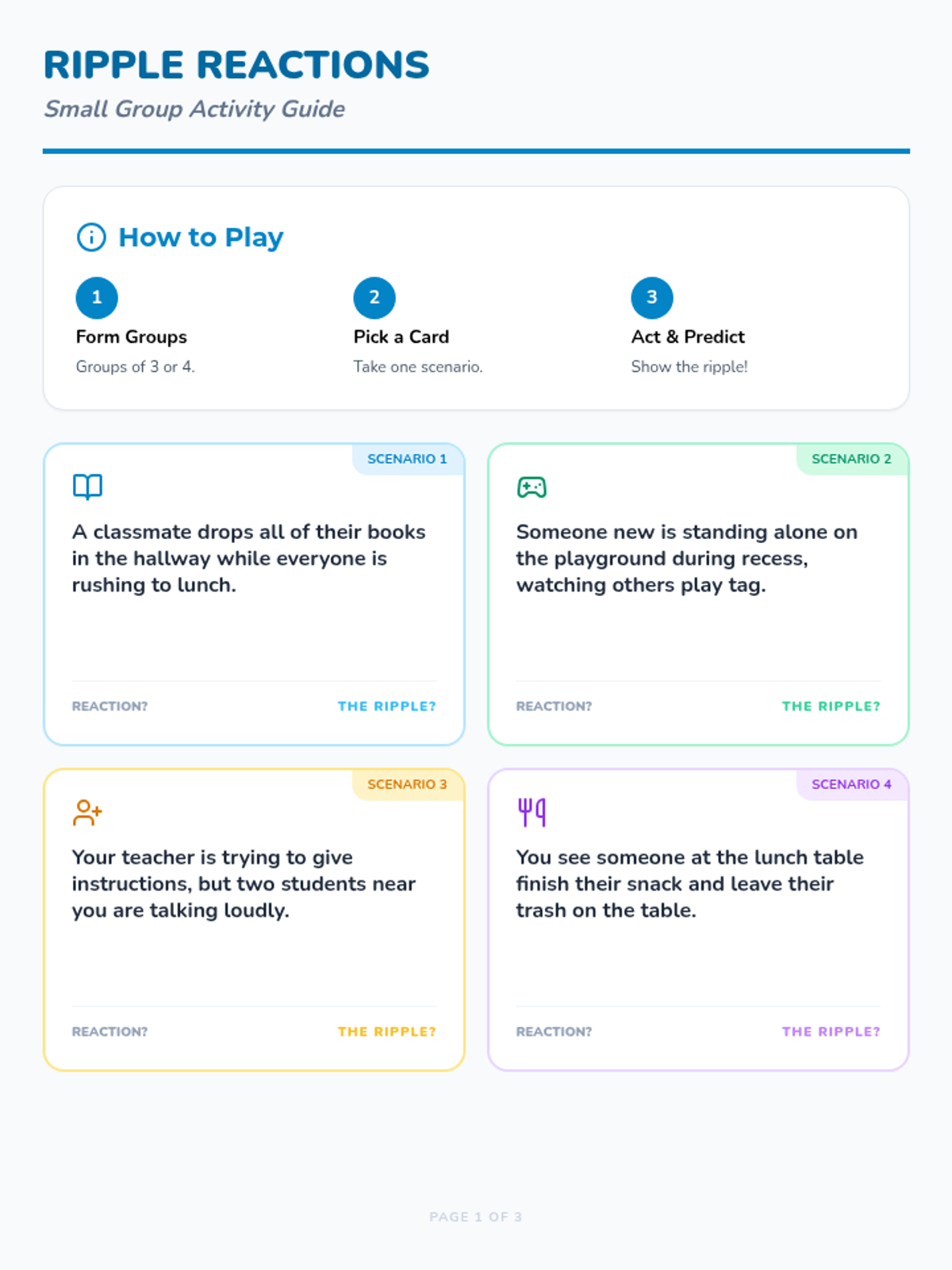
A comprehensive lesson on respect for K-4 students, focusing on the Golden Rule and the 'ripple effect' of kind actions. Includes a visual slide deck, teacher's guide, student worksheet, anchor chart, and small group activity cards.
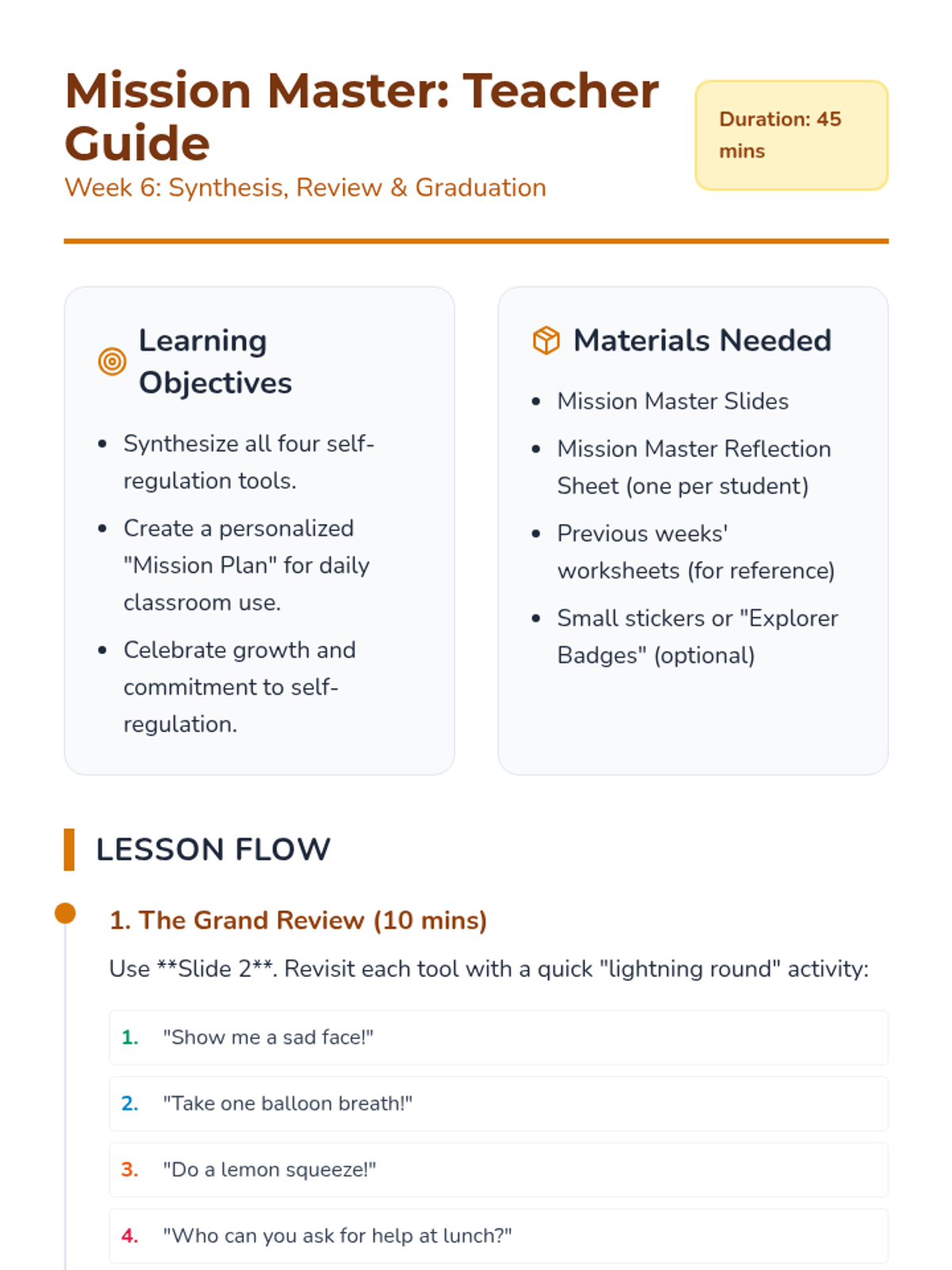
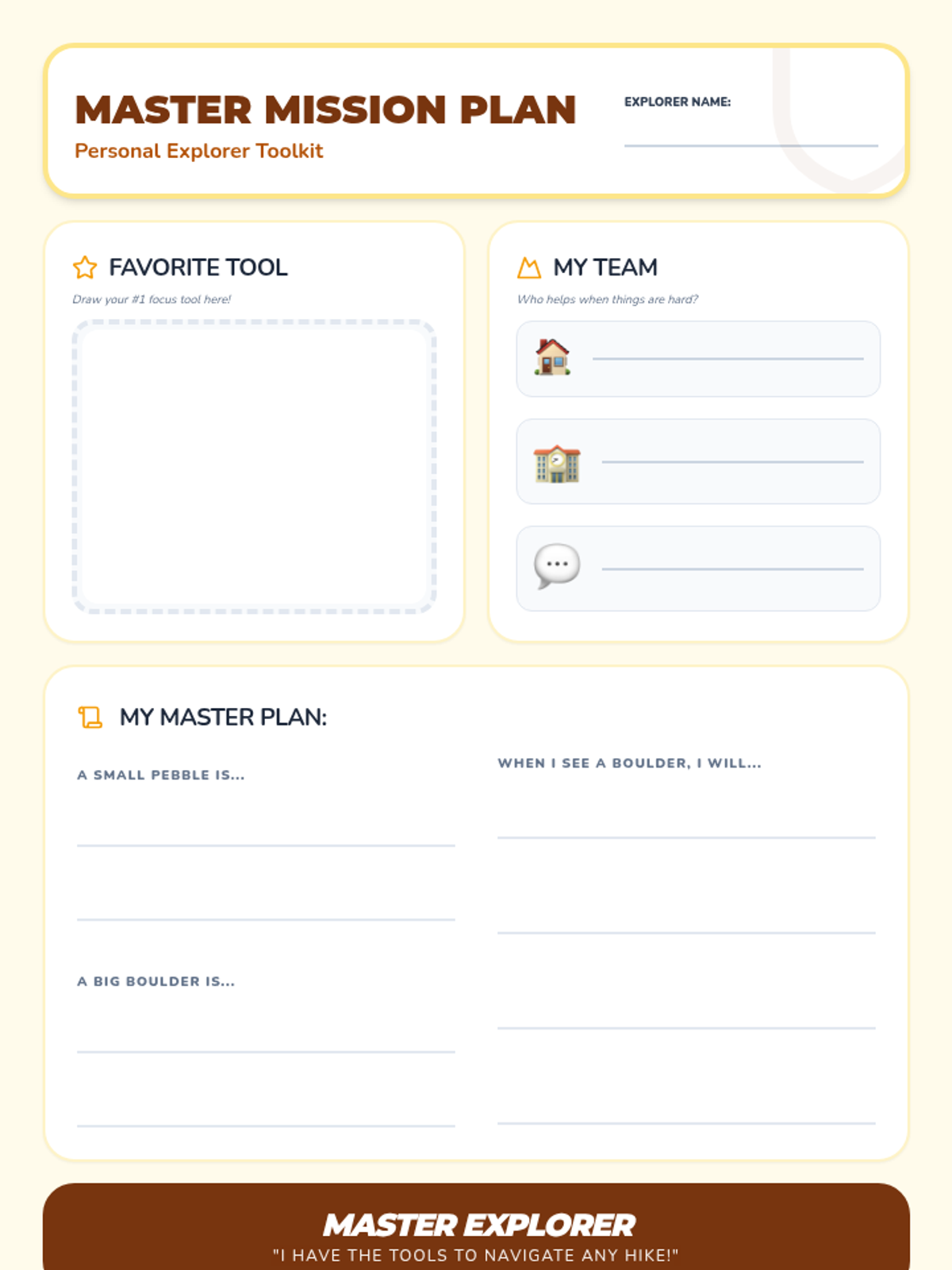
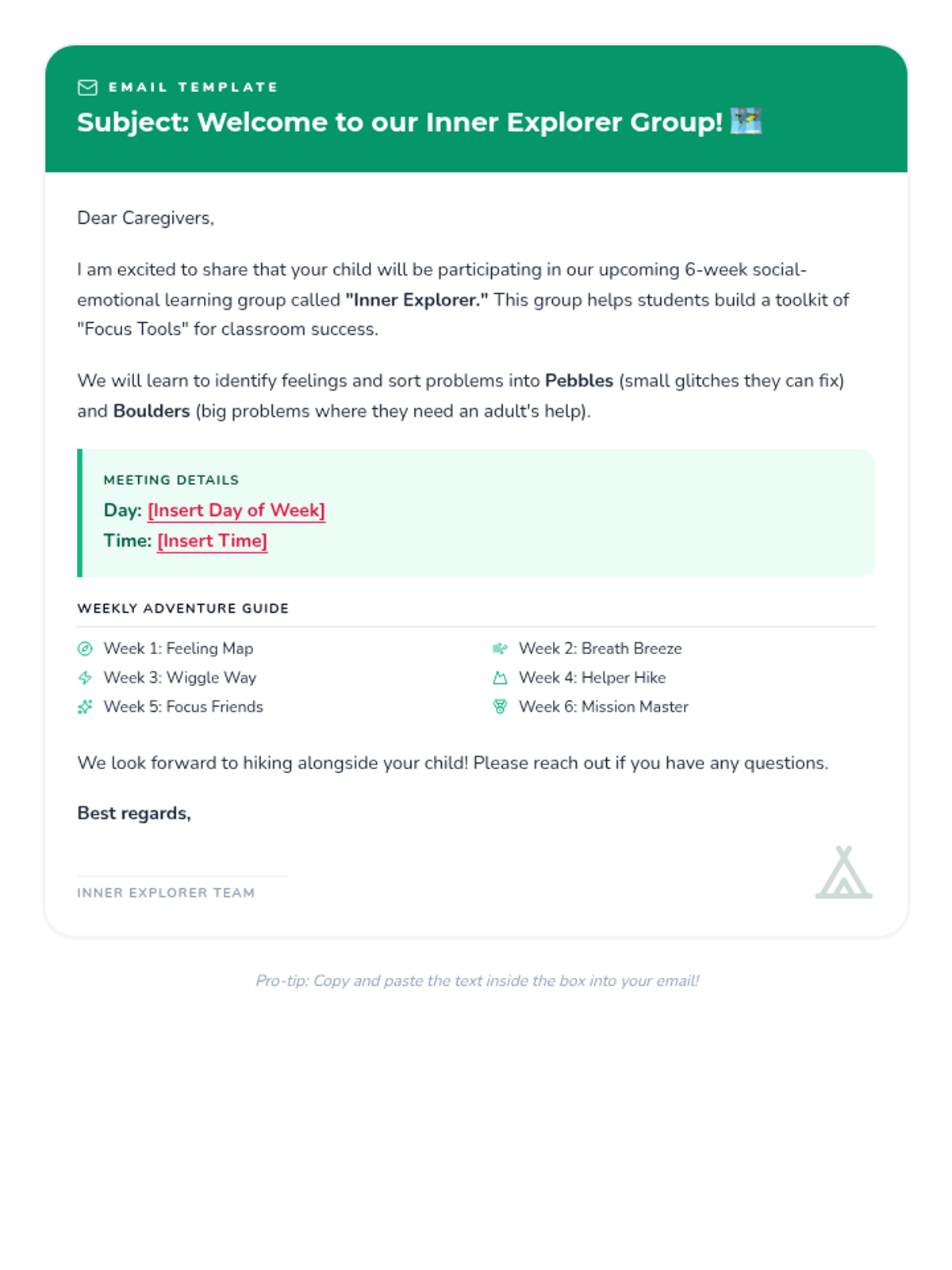
Reviewing all tools and creating a personalized 'Mission Plan' for classroom success.
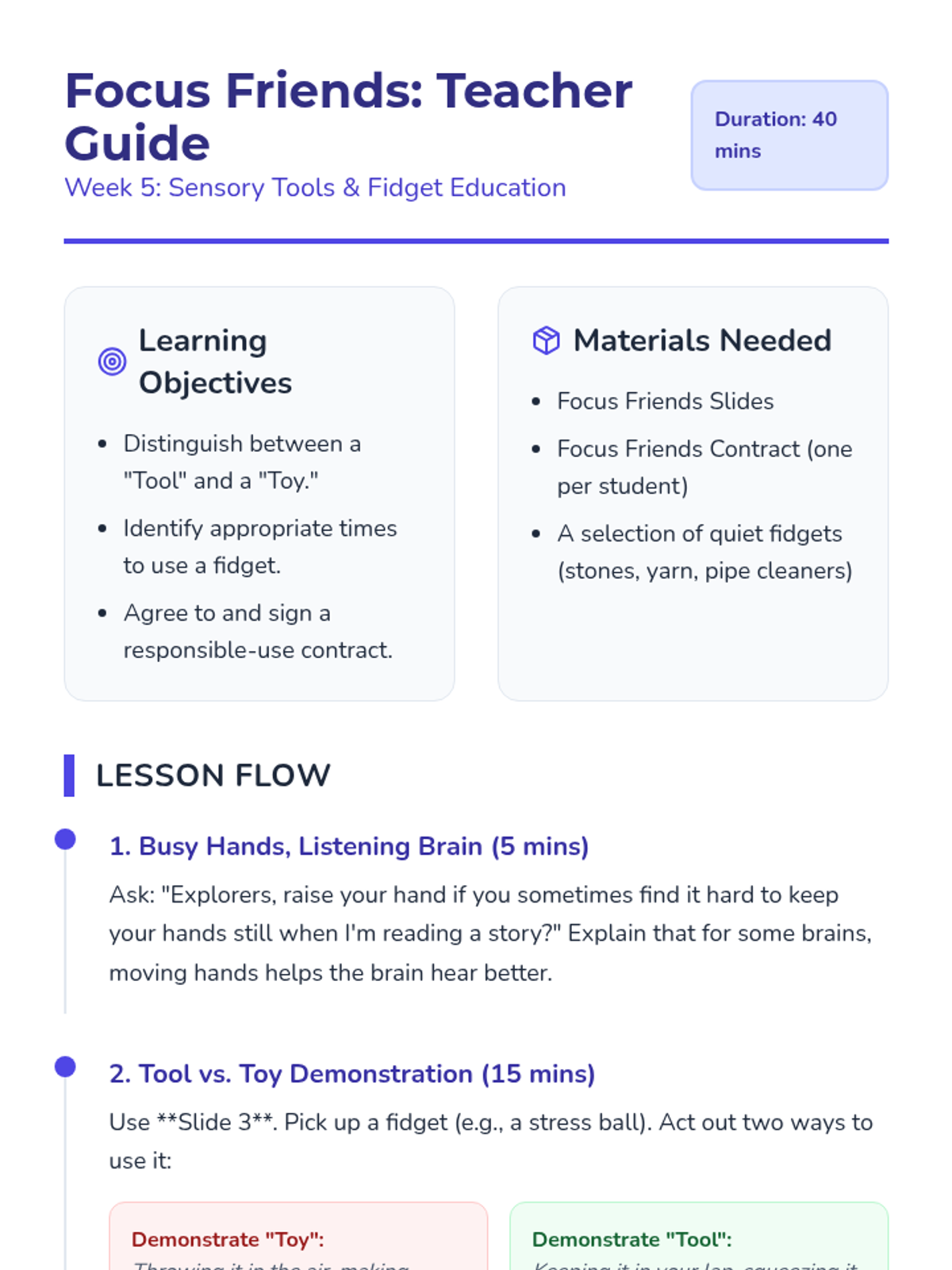
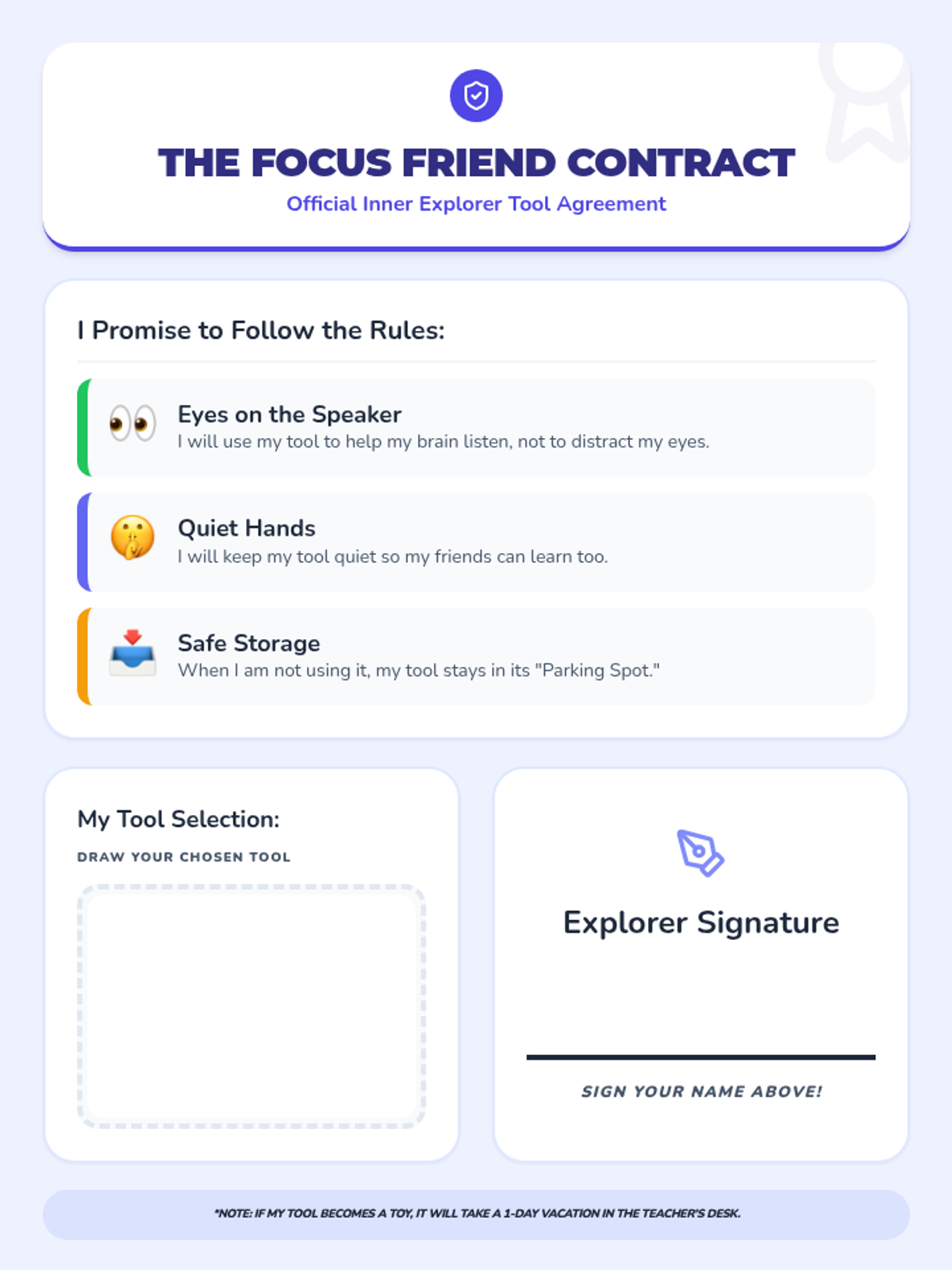
Learning how to use fidgets and sensory tools appropriately for focus.
Developing the skill of asking for help and talking through emotions with a trusted adult.
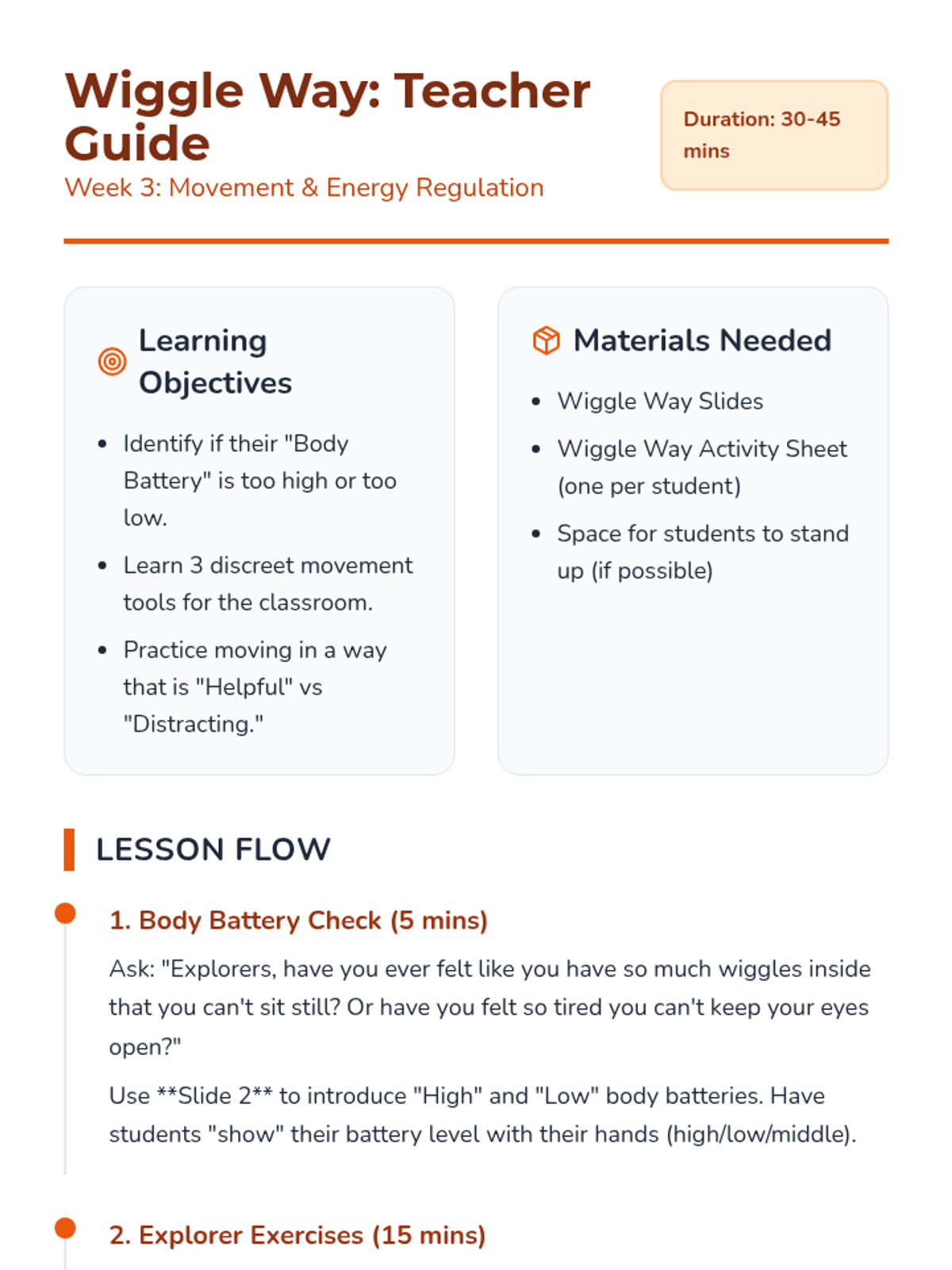
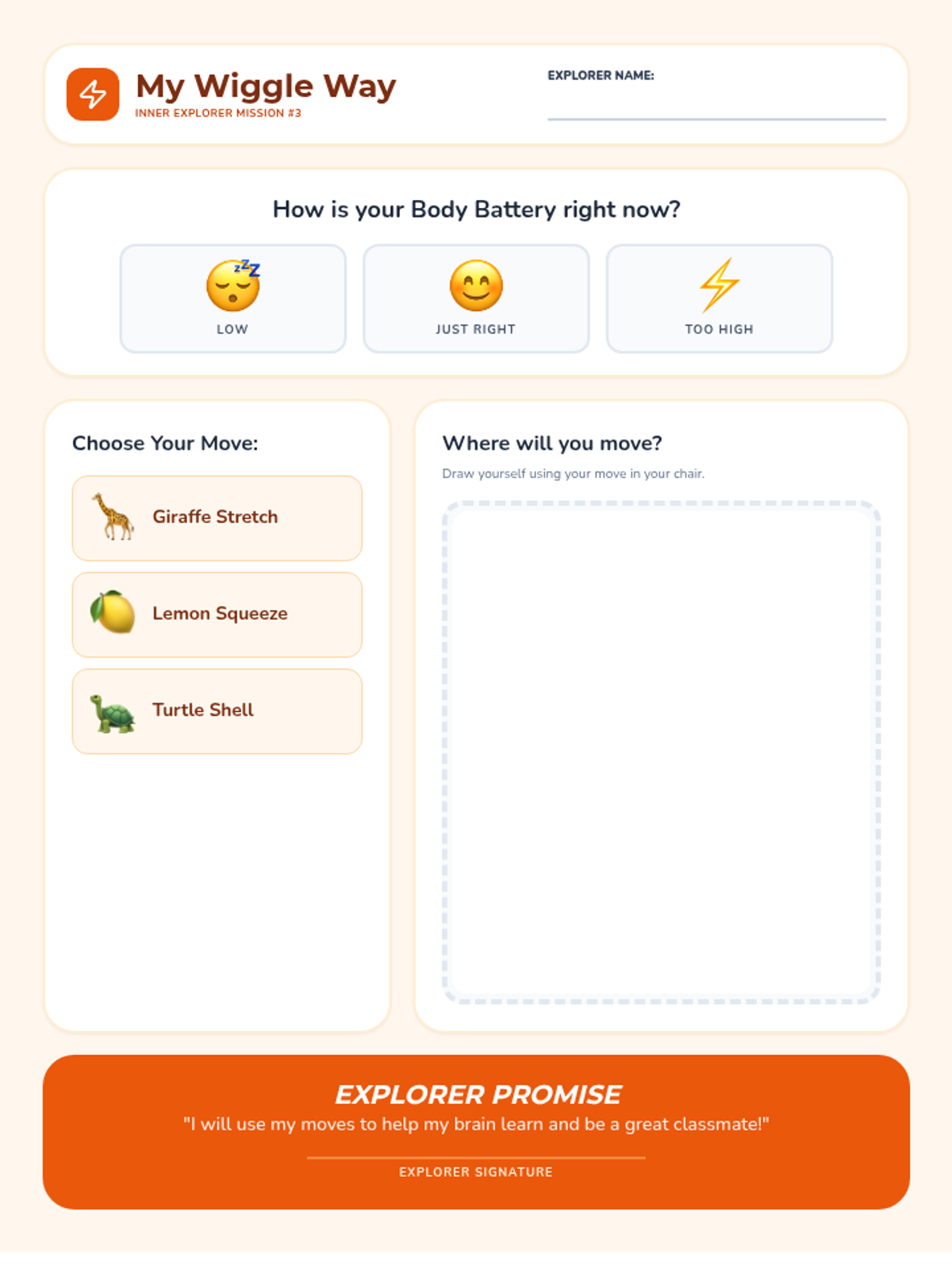
Understanding how movement can help refocus energy and stay on task.
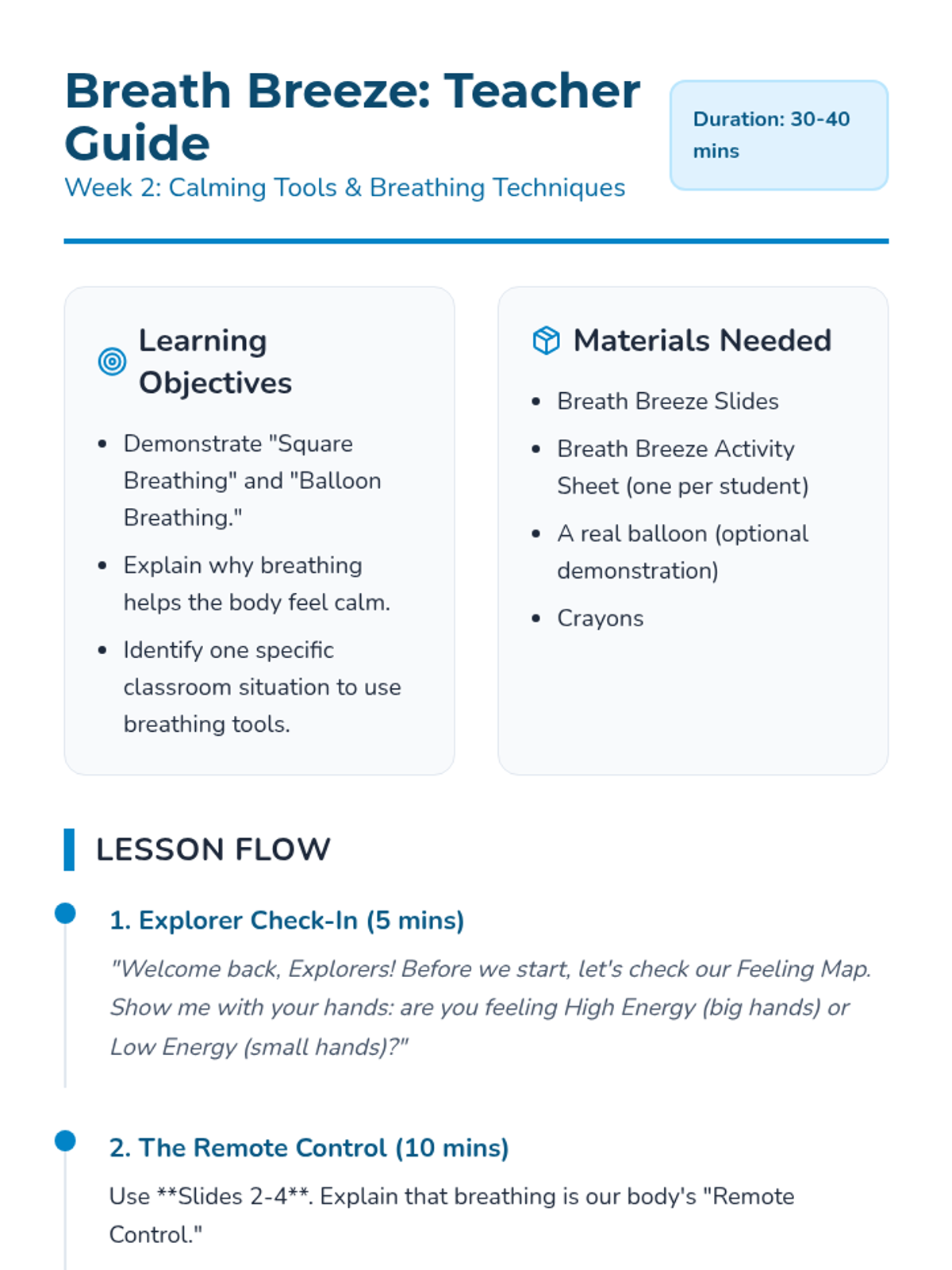
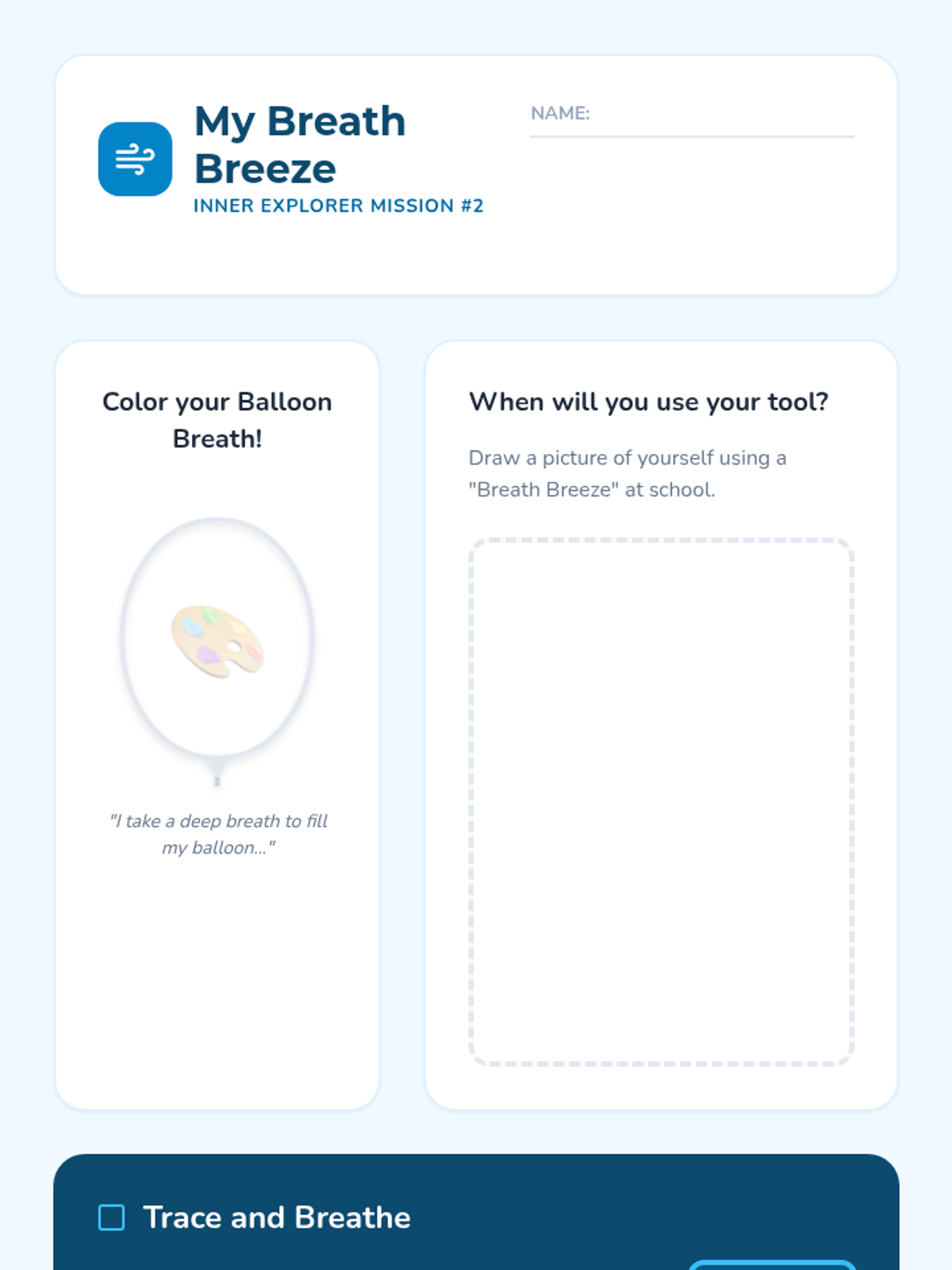
Learning different breathing techniques to calm the mind and body.
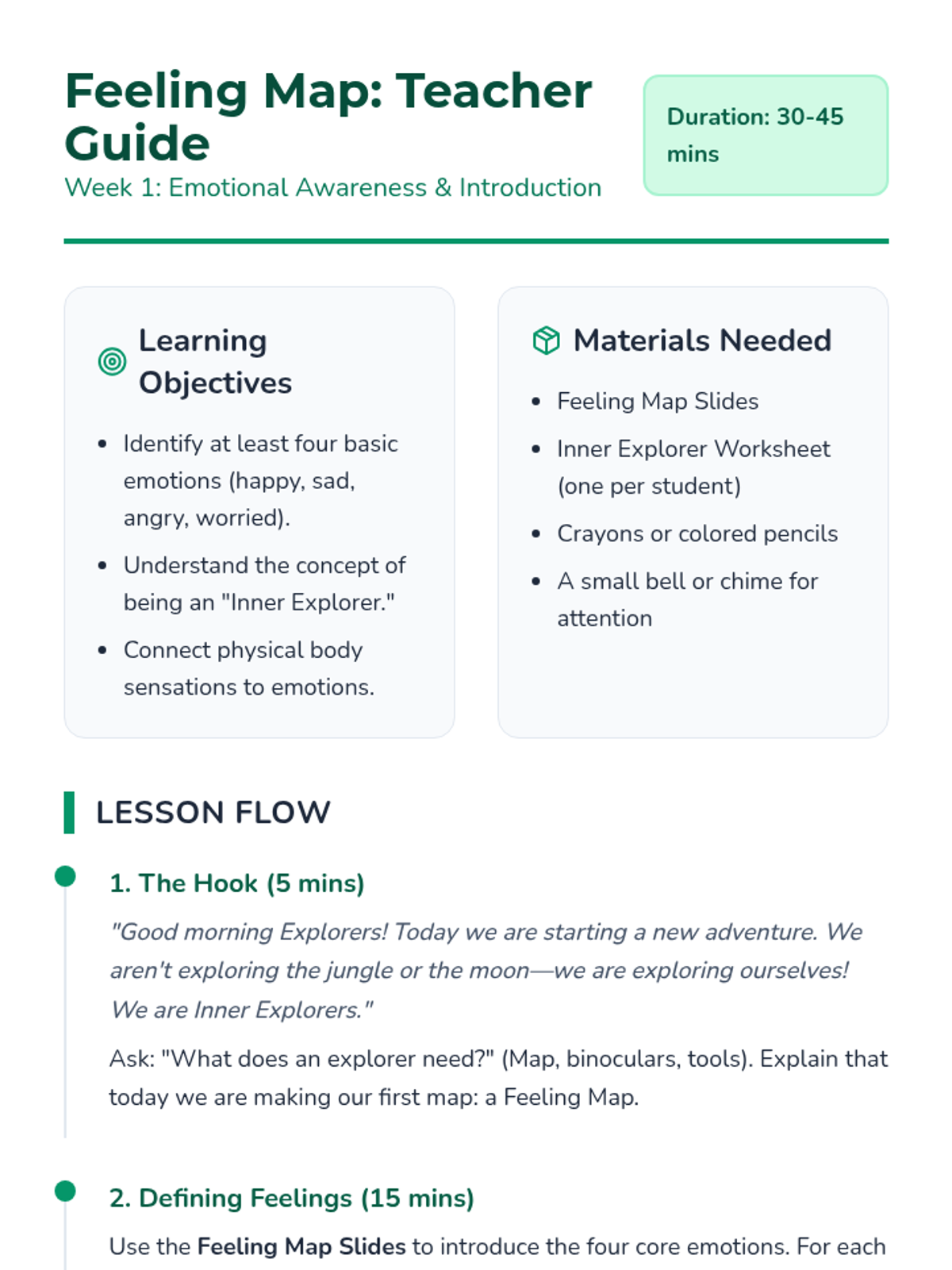
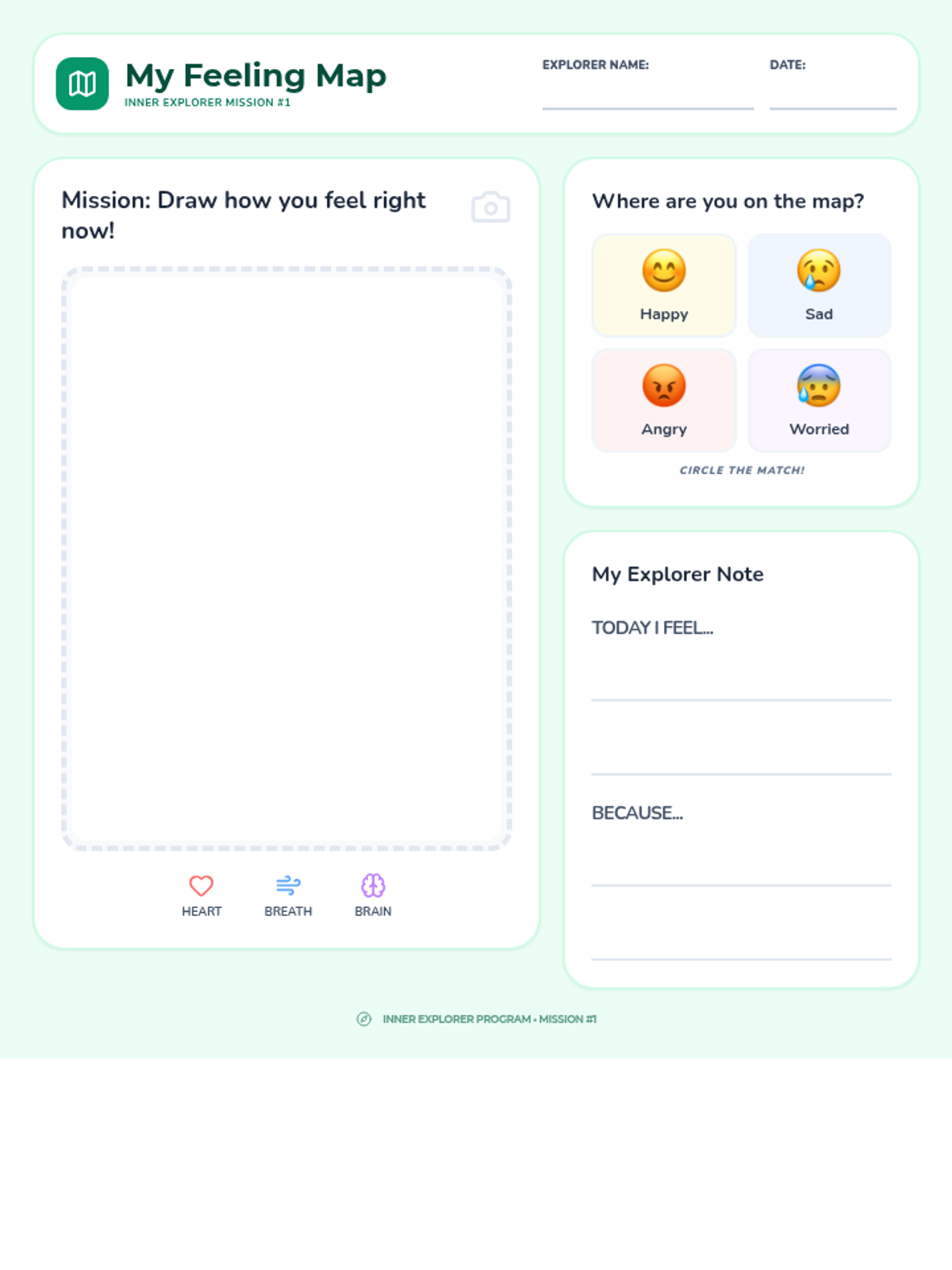
Introduction to the concept of feelings as a 'map' and identifying common emotions.
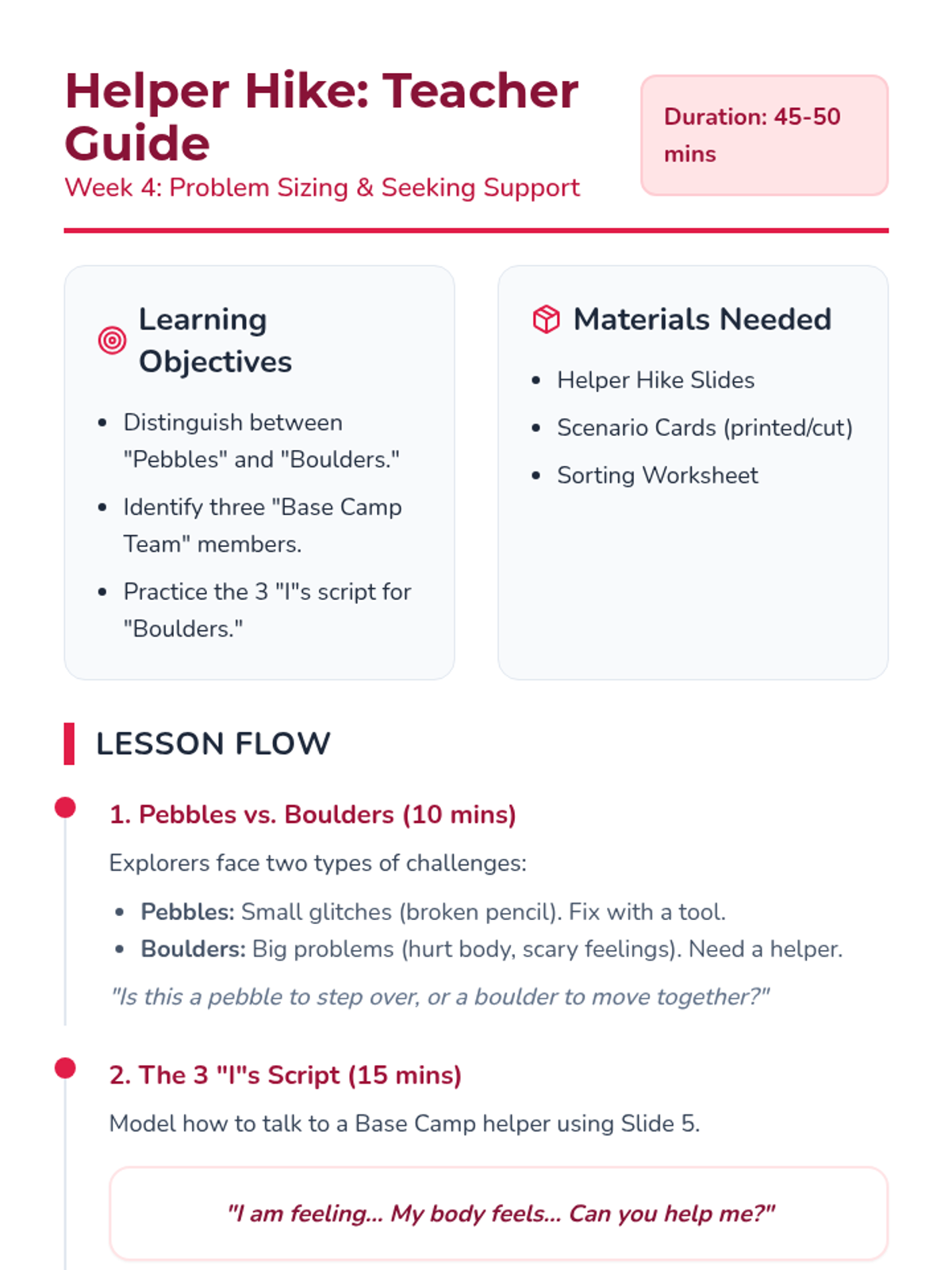
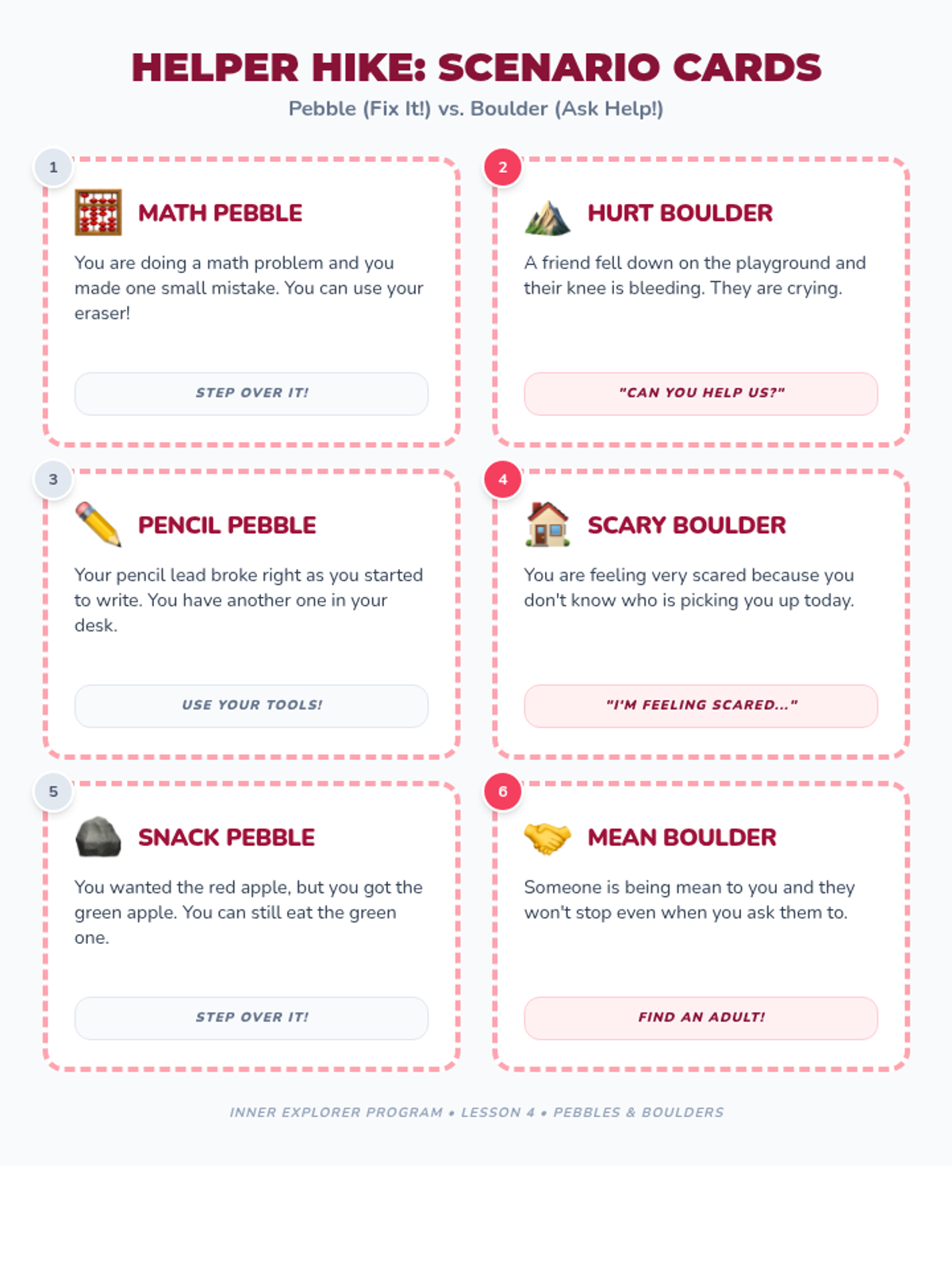
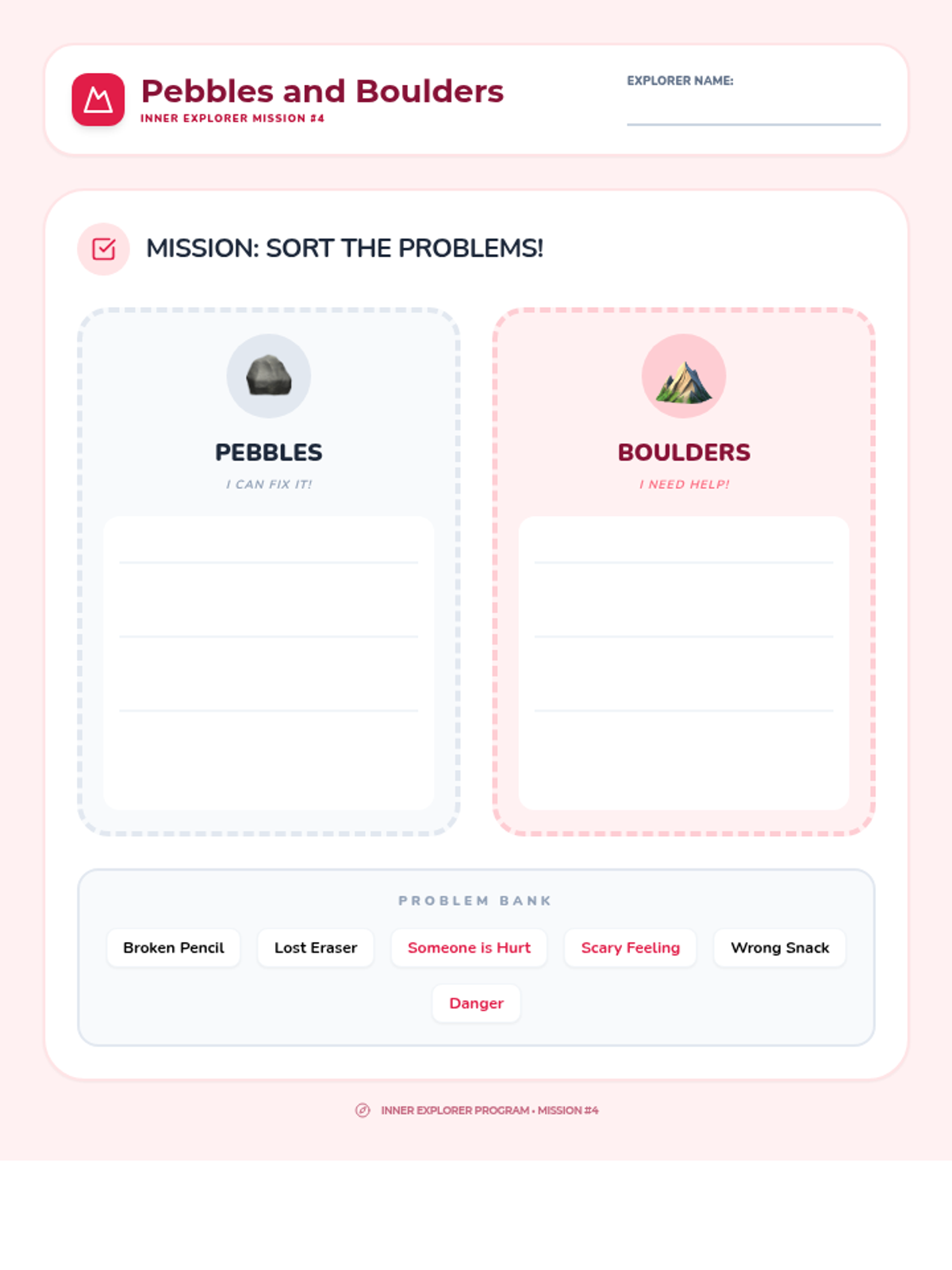
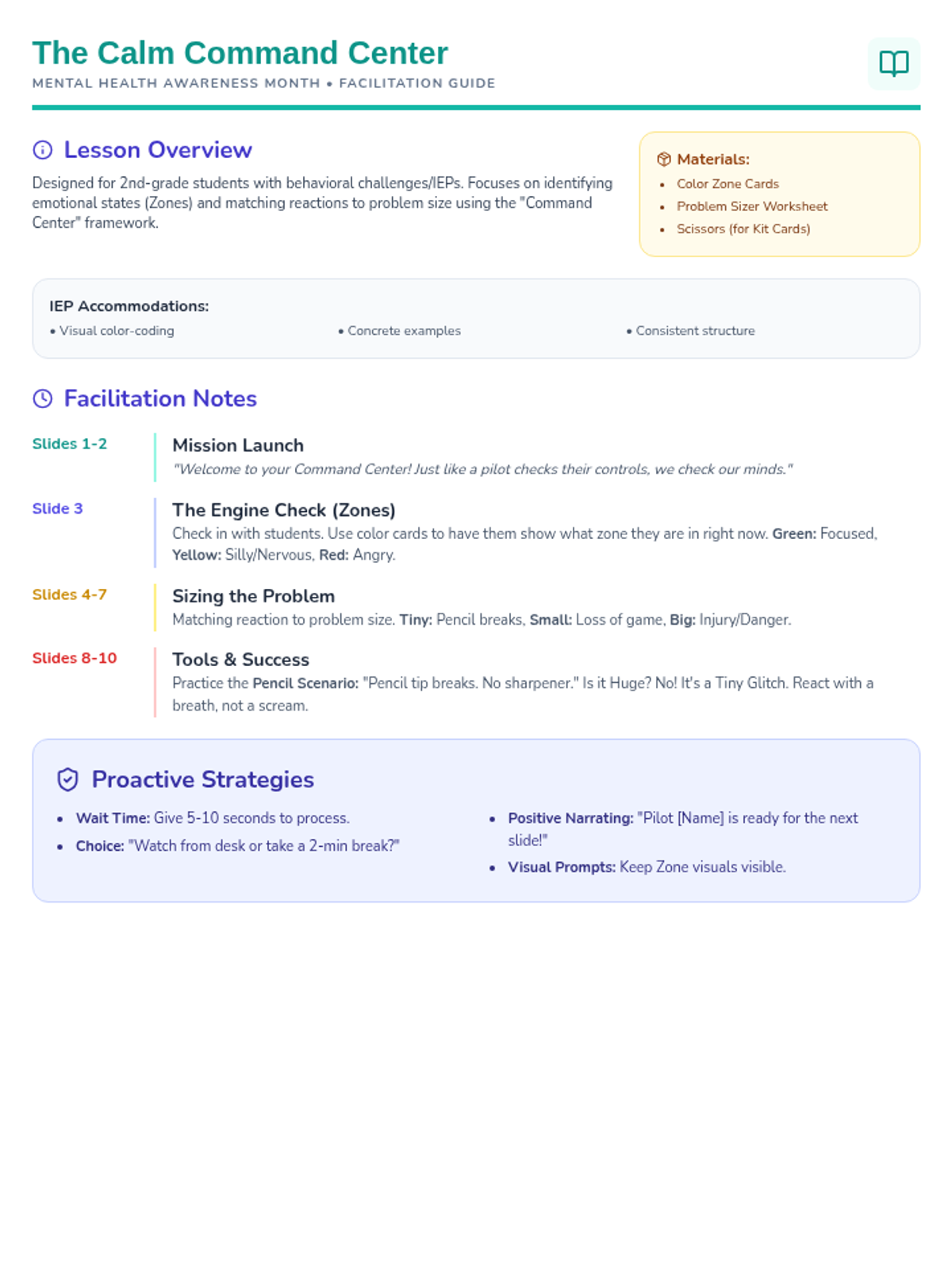
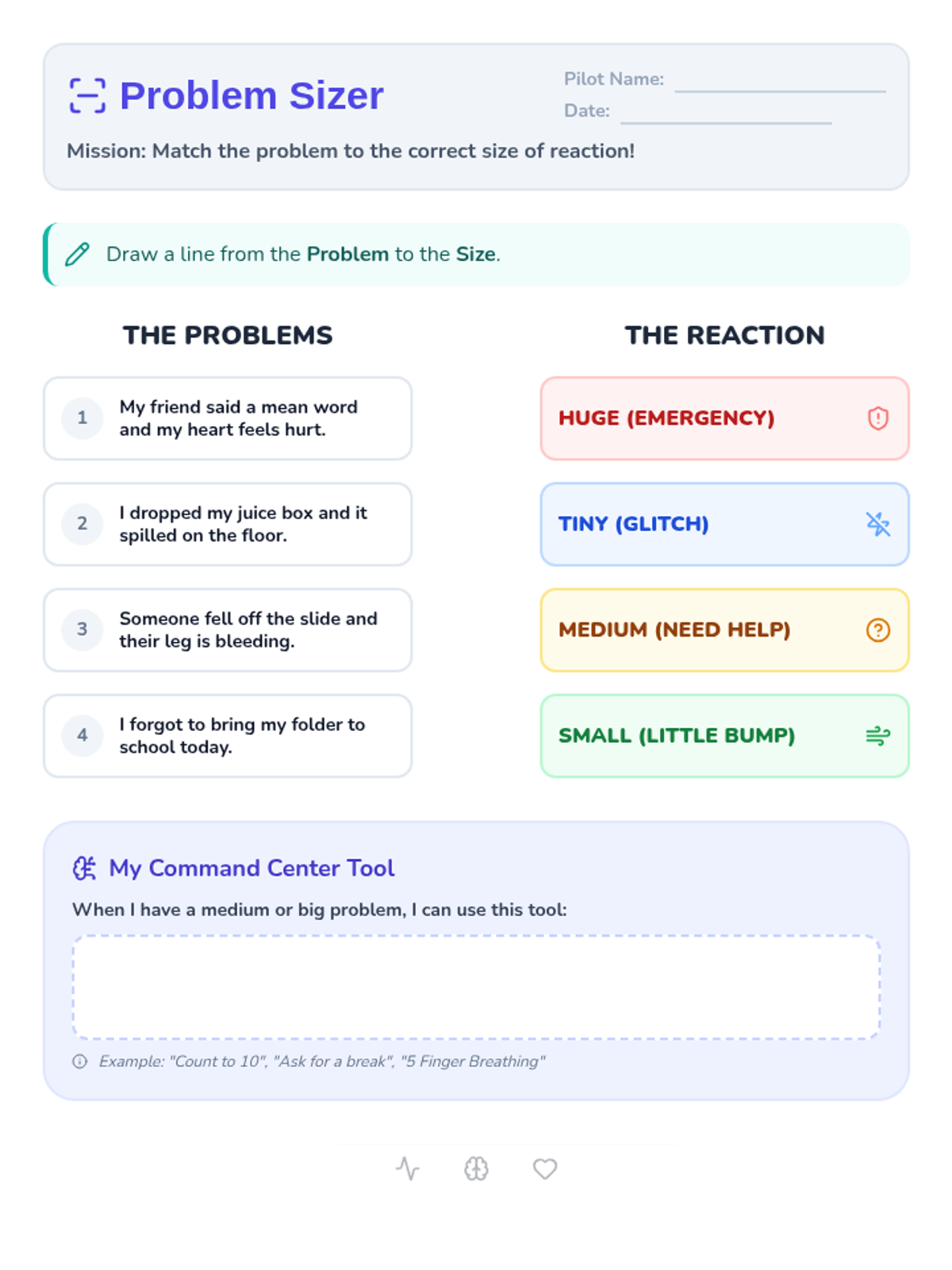
An introductory lesson focusing on identifying the size of problems and selecting appropriate self-regulation tools to manage emotions effectively in a virtual or classroom setting.
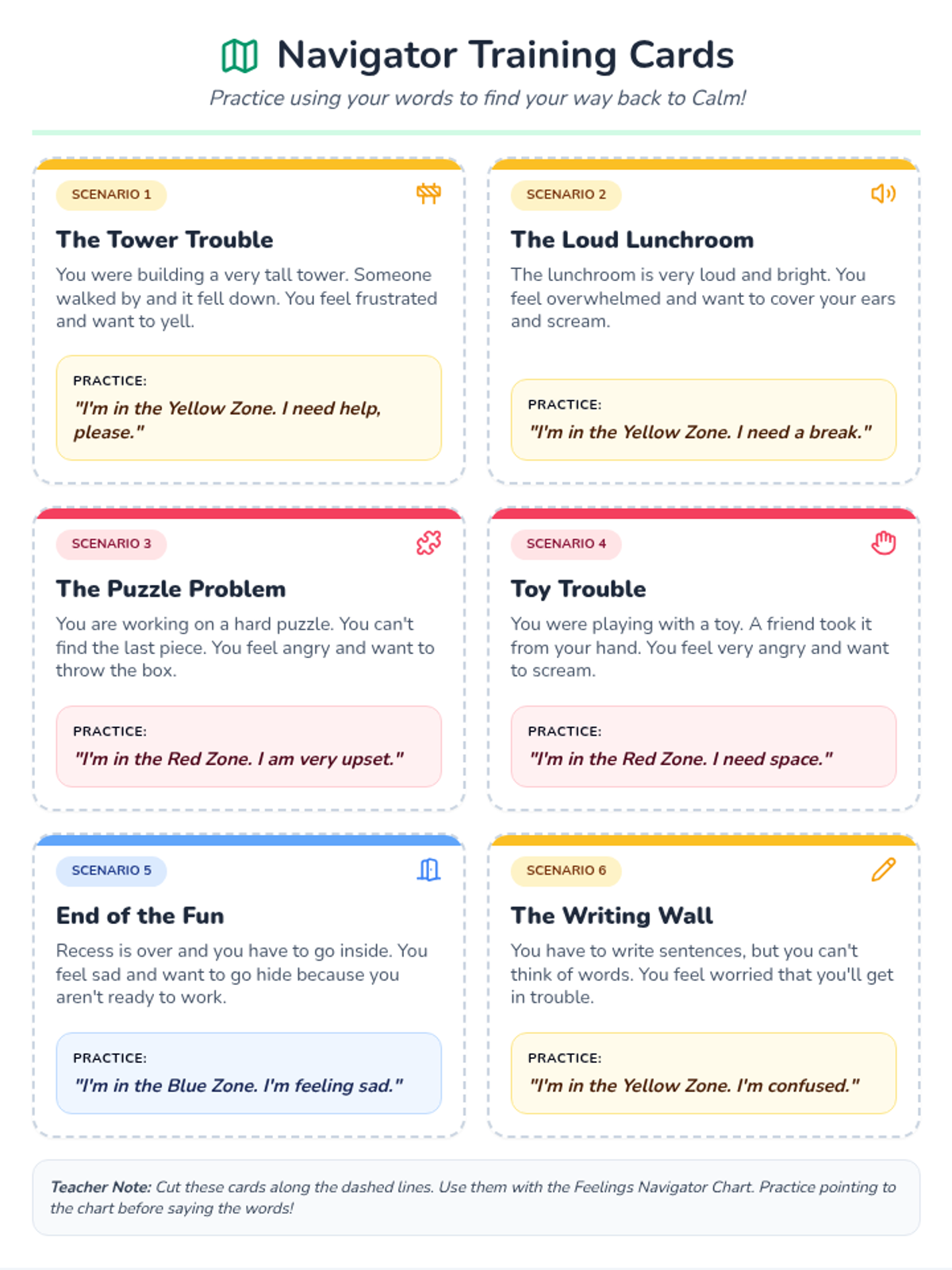
A lesson designed for two first-graders to learn how to replace screaming and eloping with verbal communication using a feelings chart. Through role-play and visual aids, students practice identifying their emotions and stating their needs.
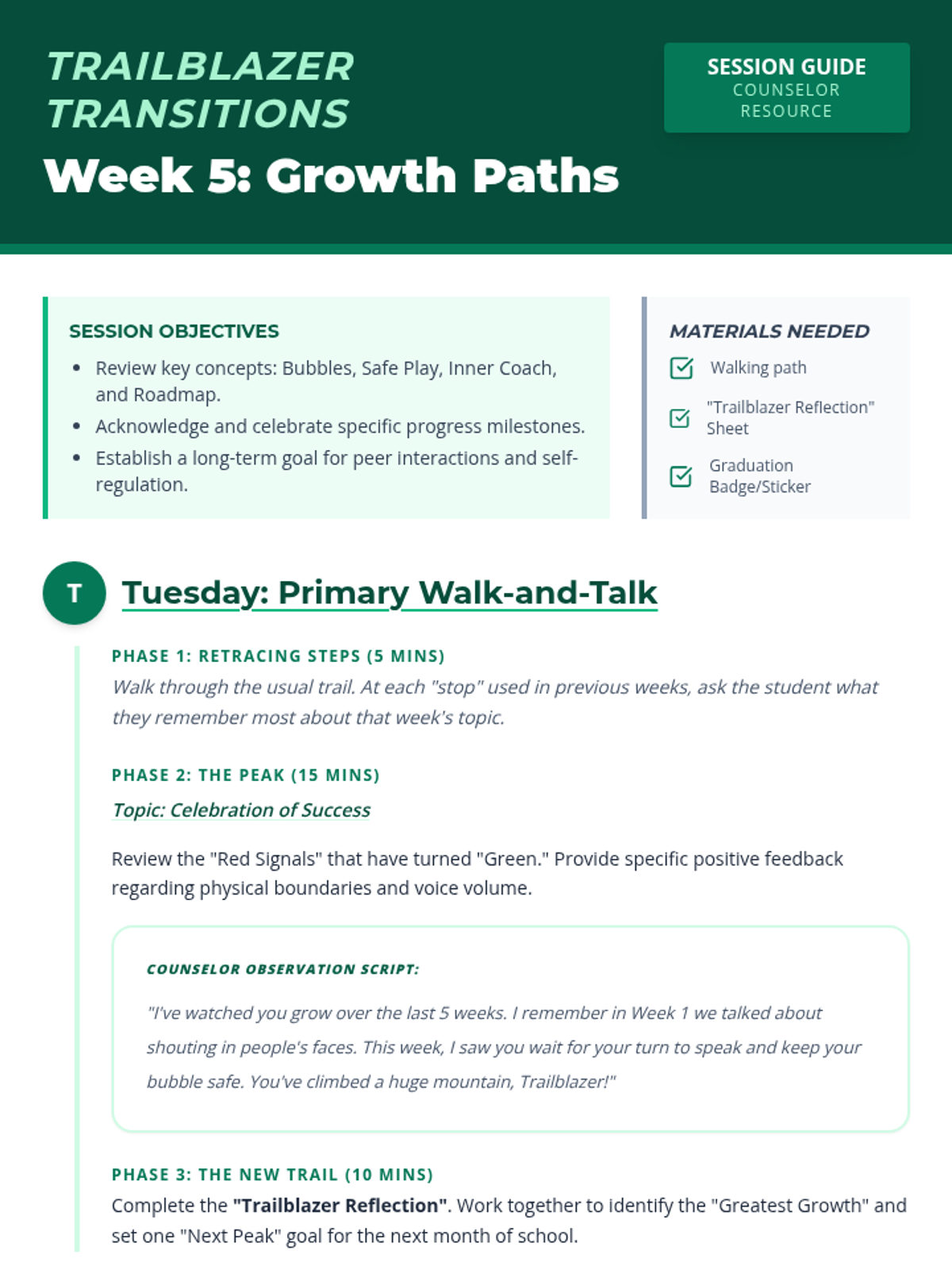
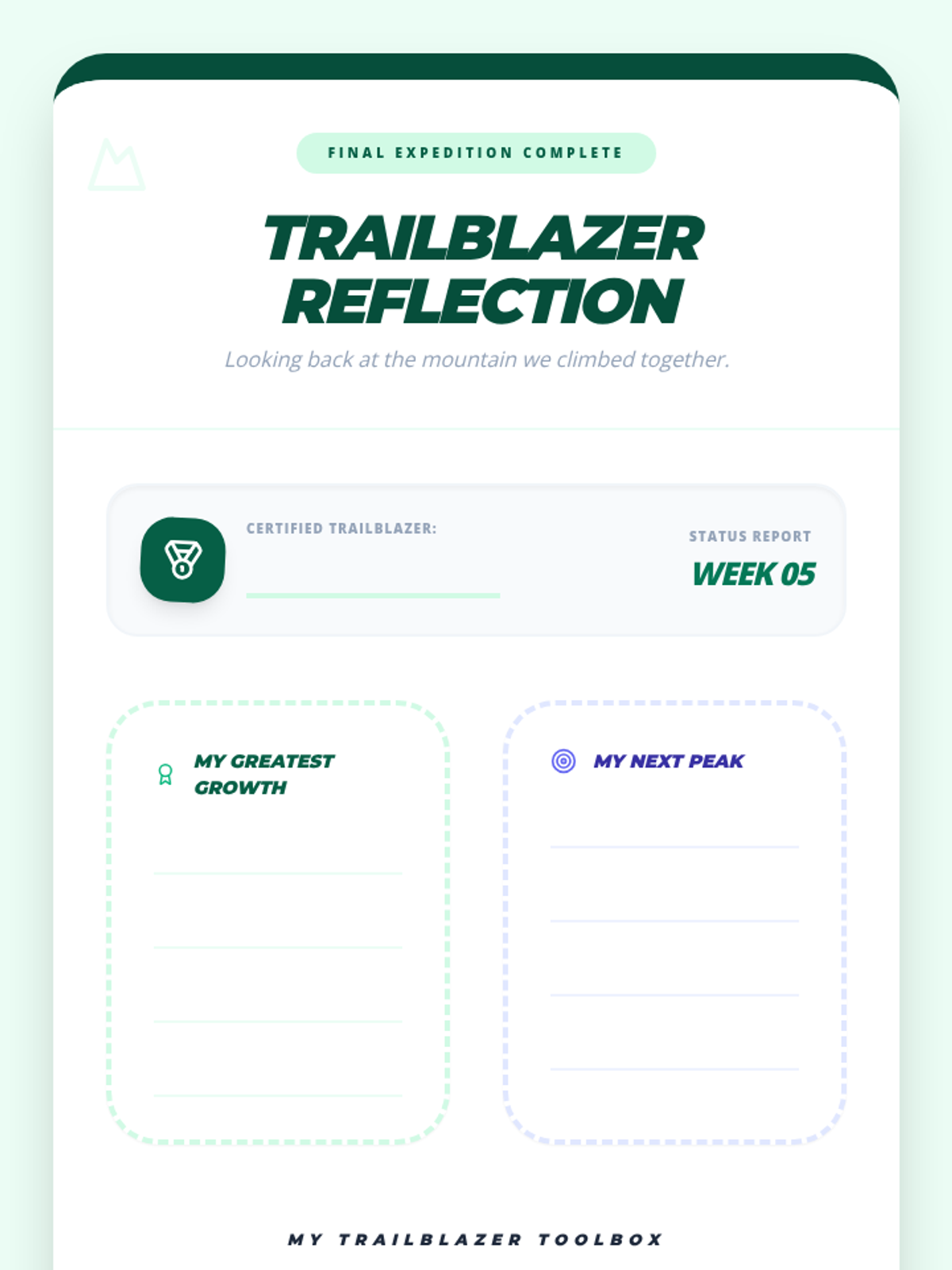
Consolidates learning from the previous weeks and sets goals for continued social-emotional success.
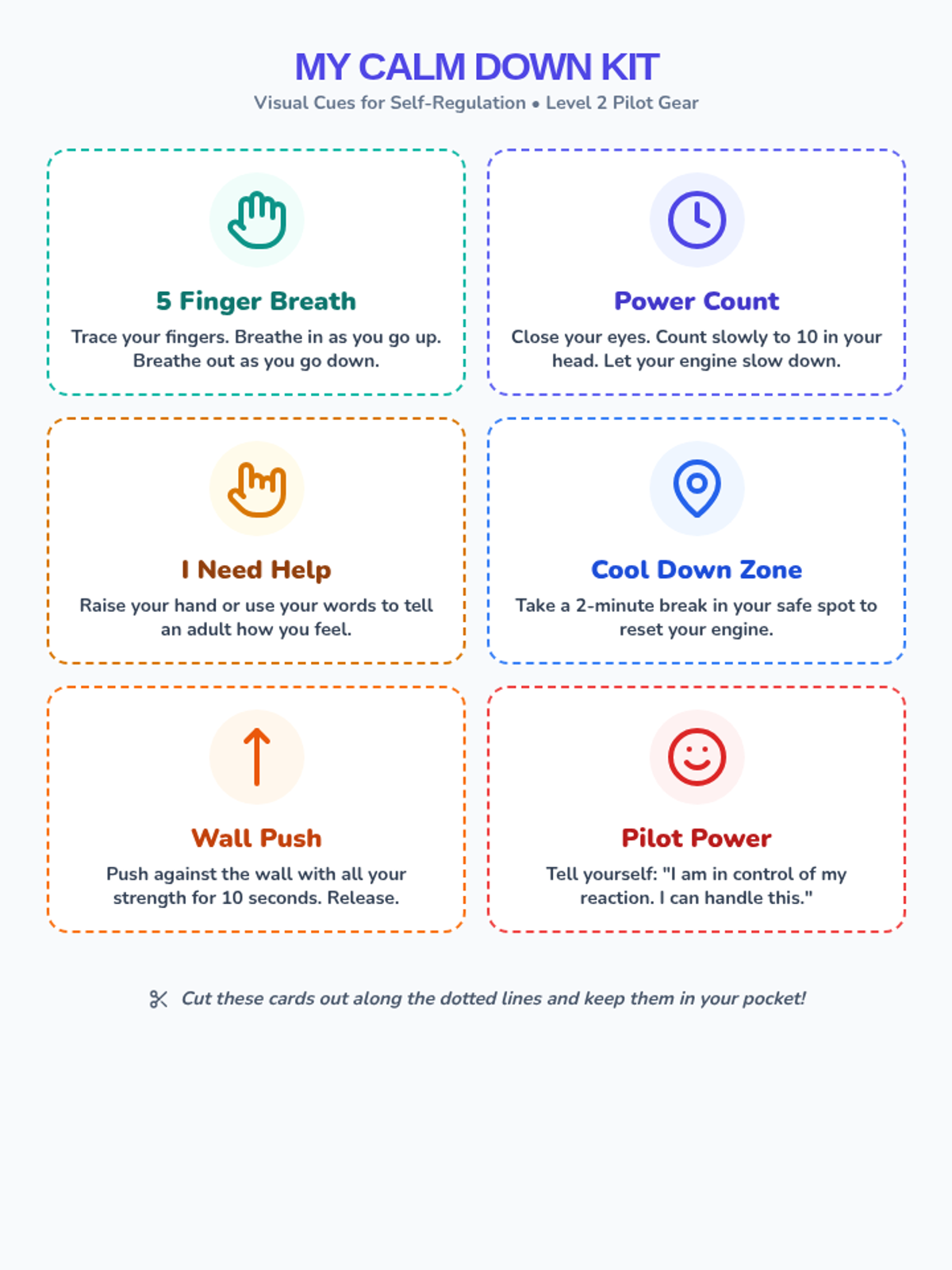
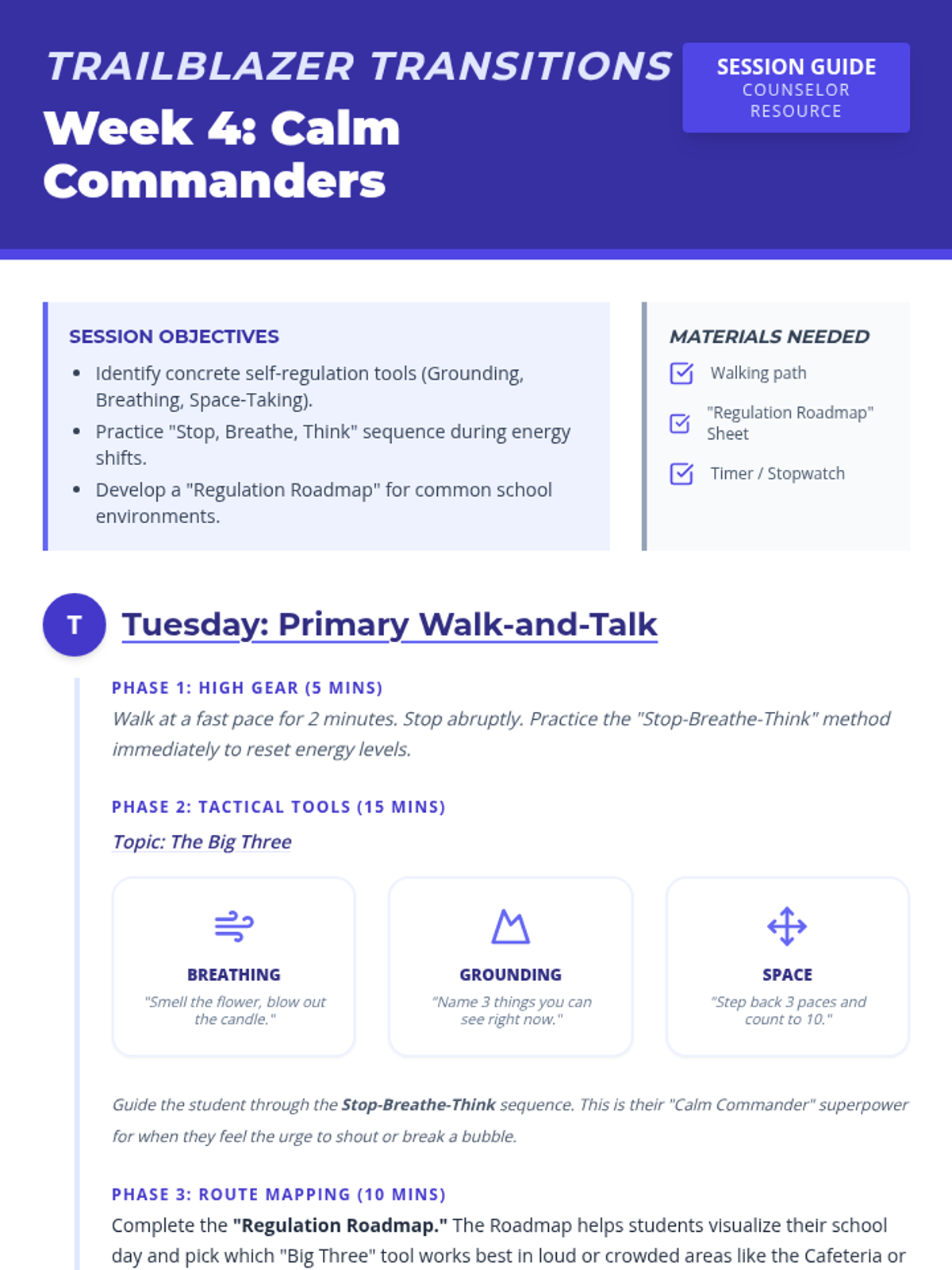
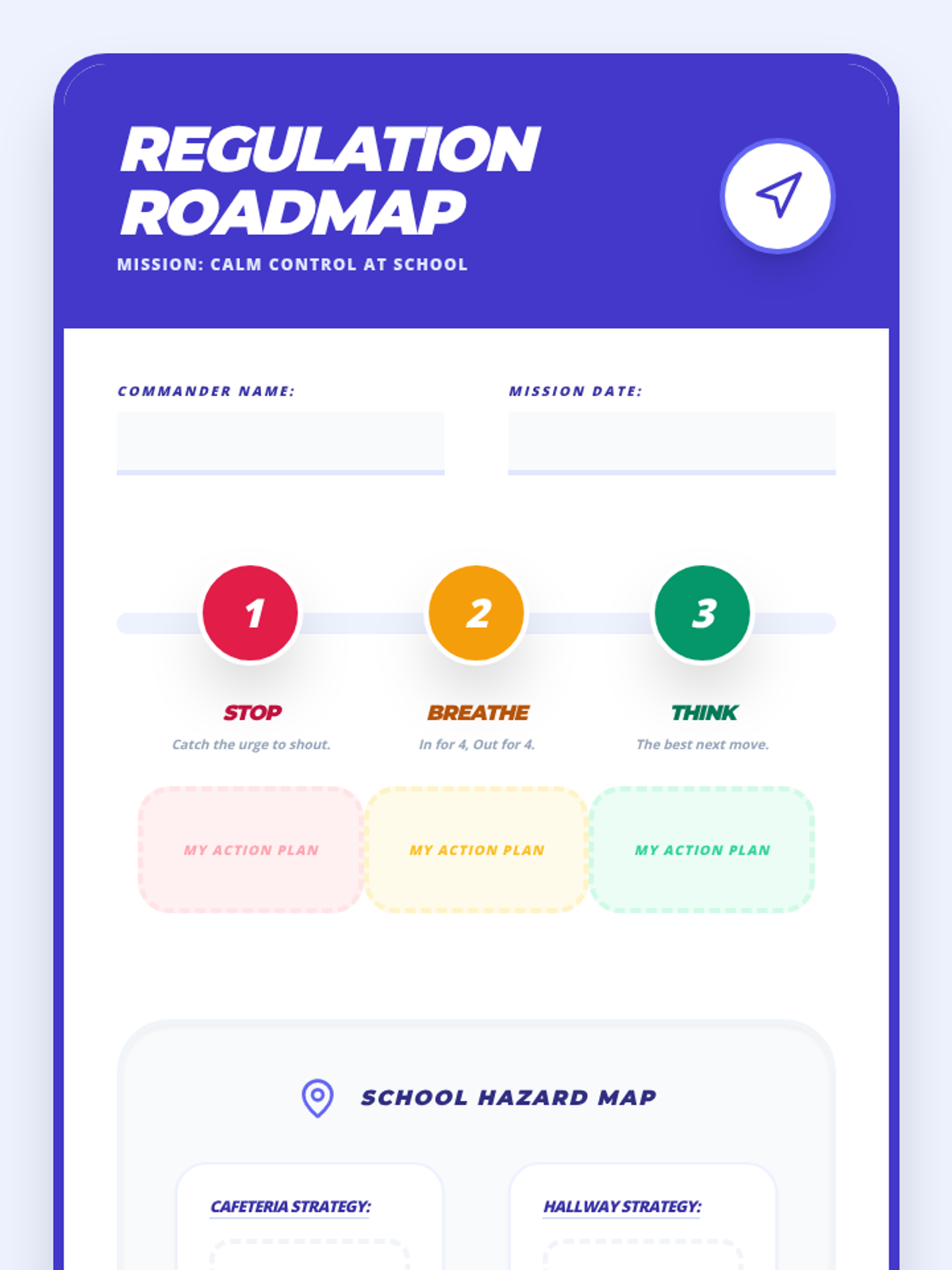
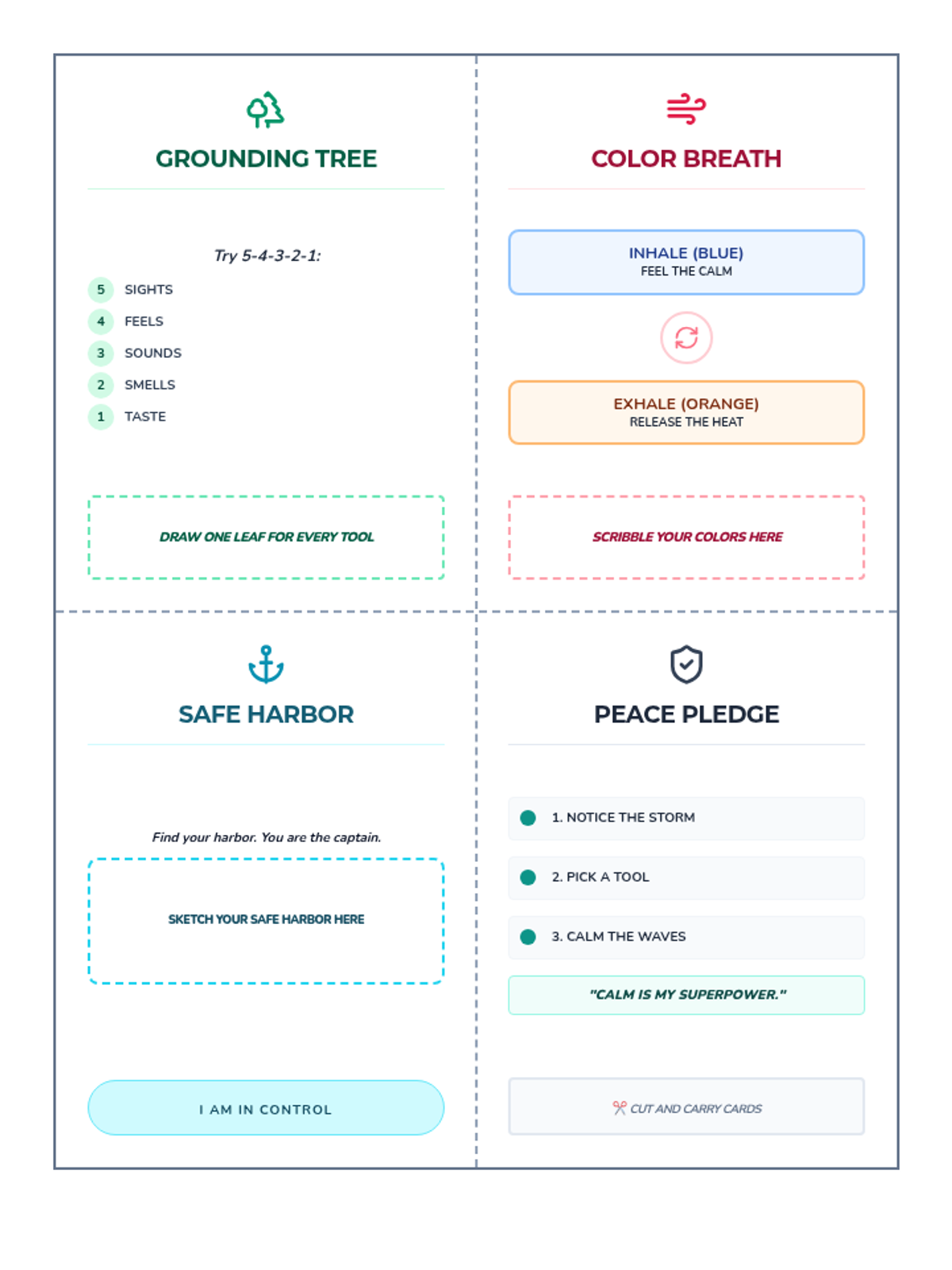
Teaches concrete self-regulation strategies and provides tools for emotional regulation.
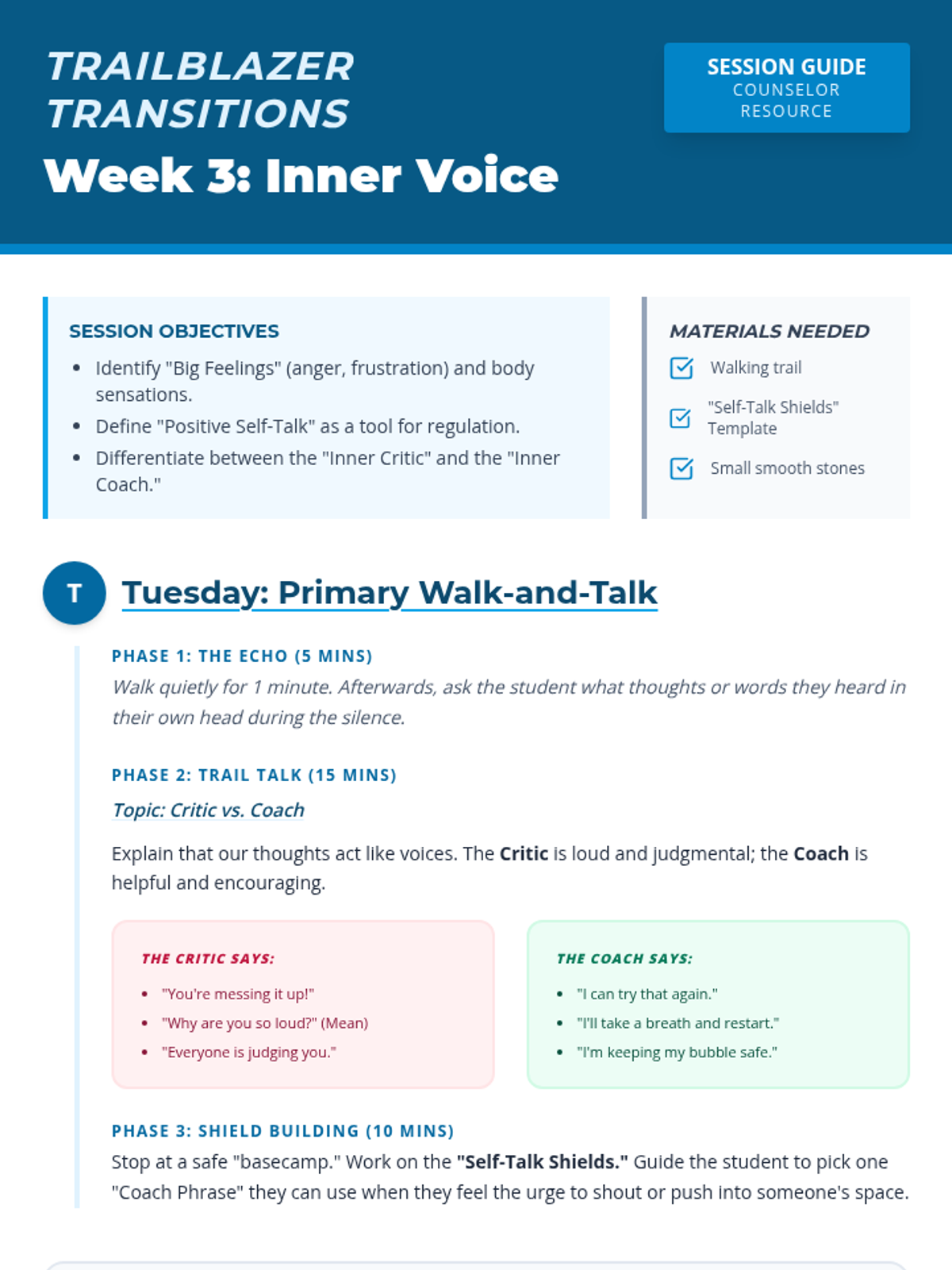
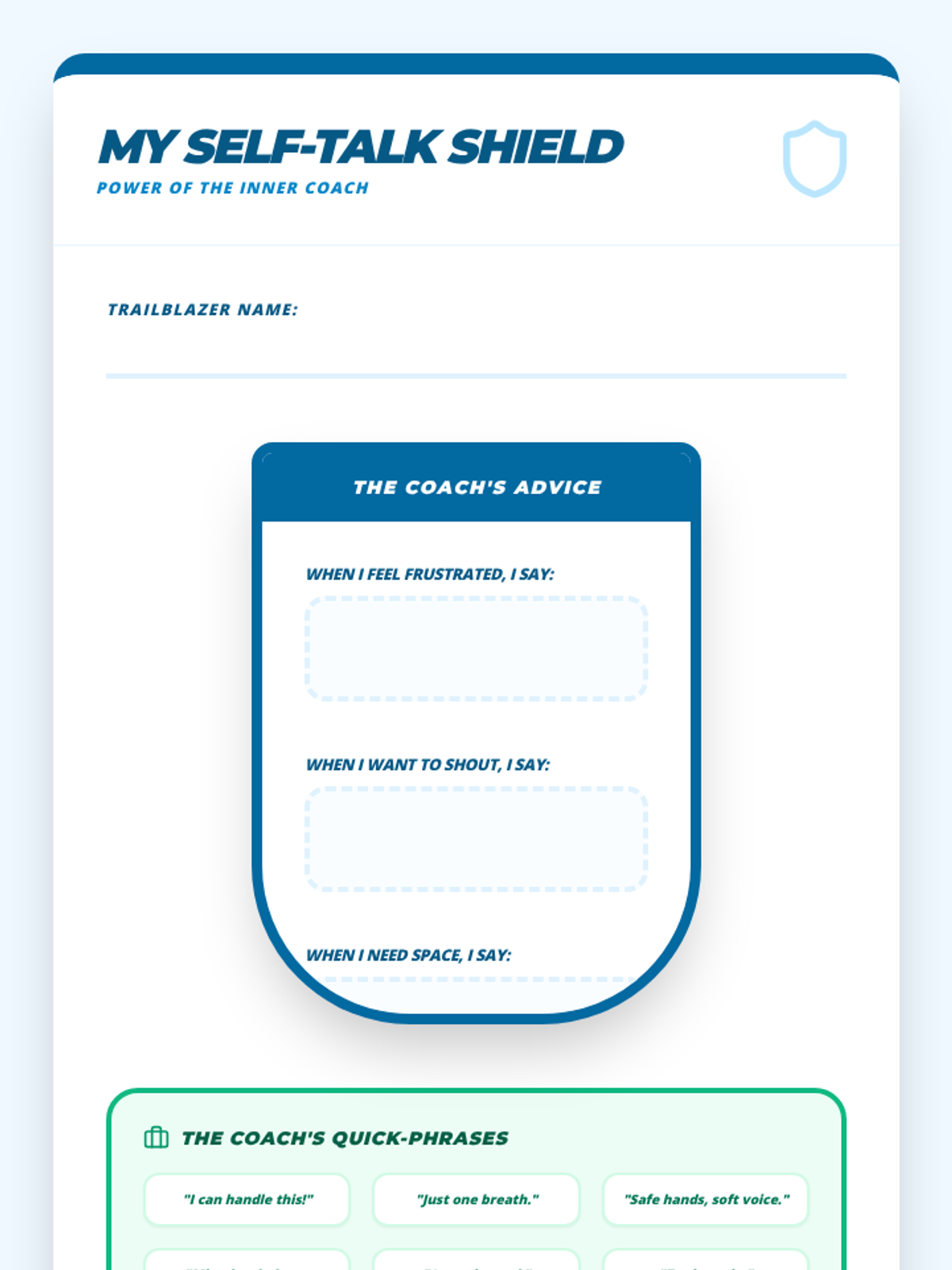
Explores emotional awareness and the power of positive self-talk to manage frustration.
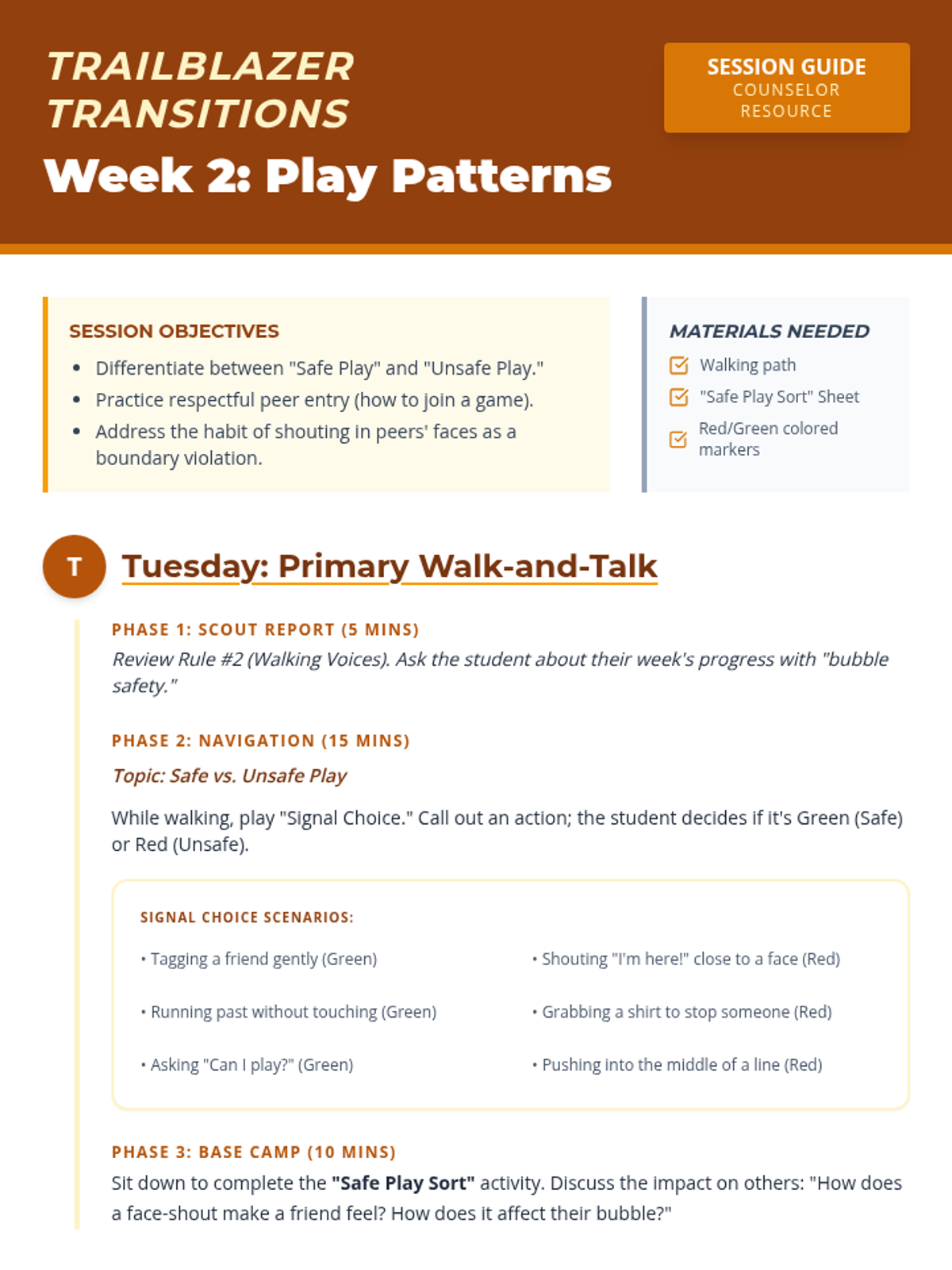
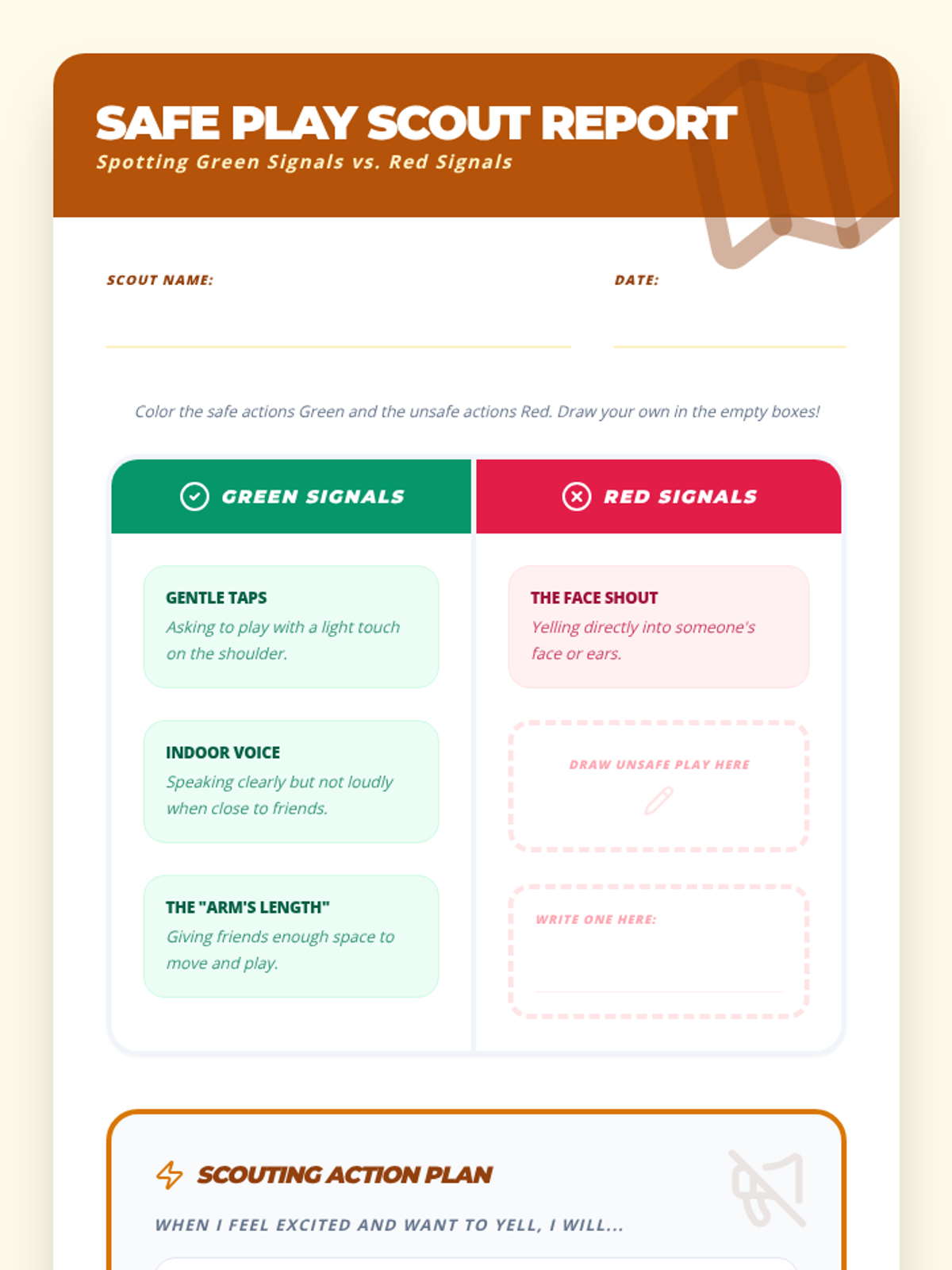
Focuses on distinguishing between safe and unsafe play, specifically addressing peer interactions like shouting and physical contact.
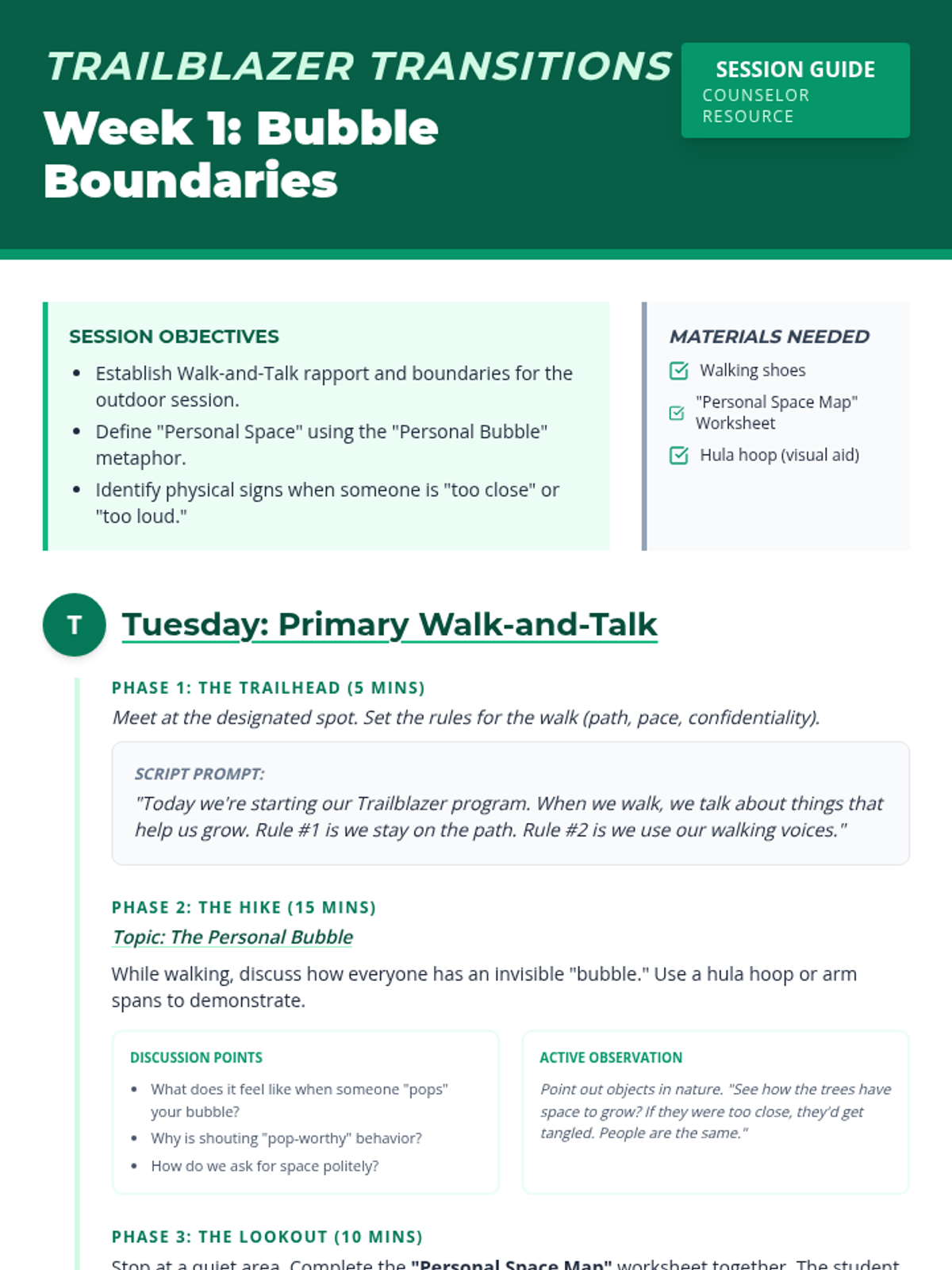
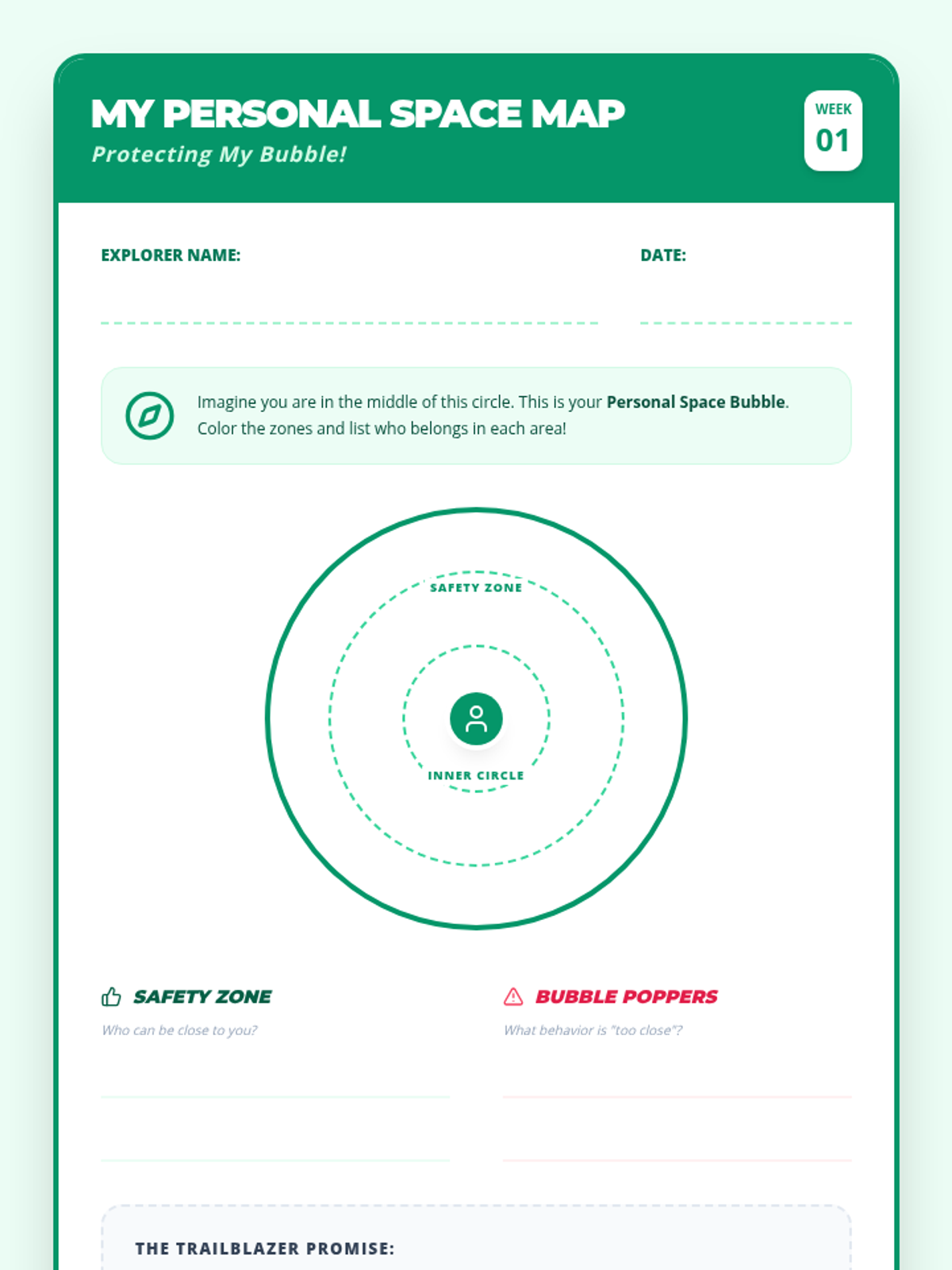
Introduces the concept of personal space and 'bubbles' while establishing the walk-and-talk routine.
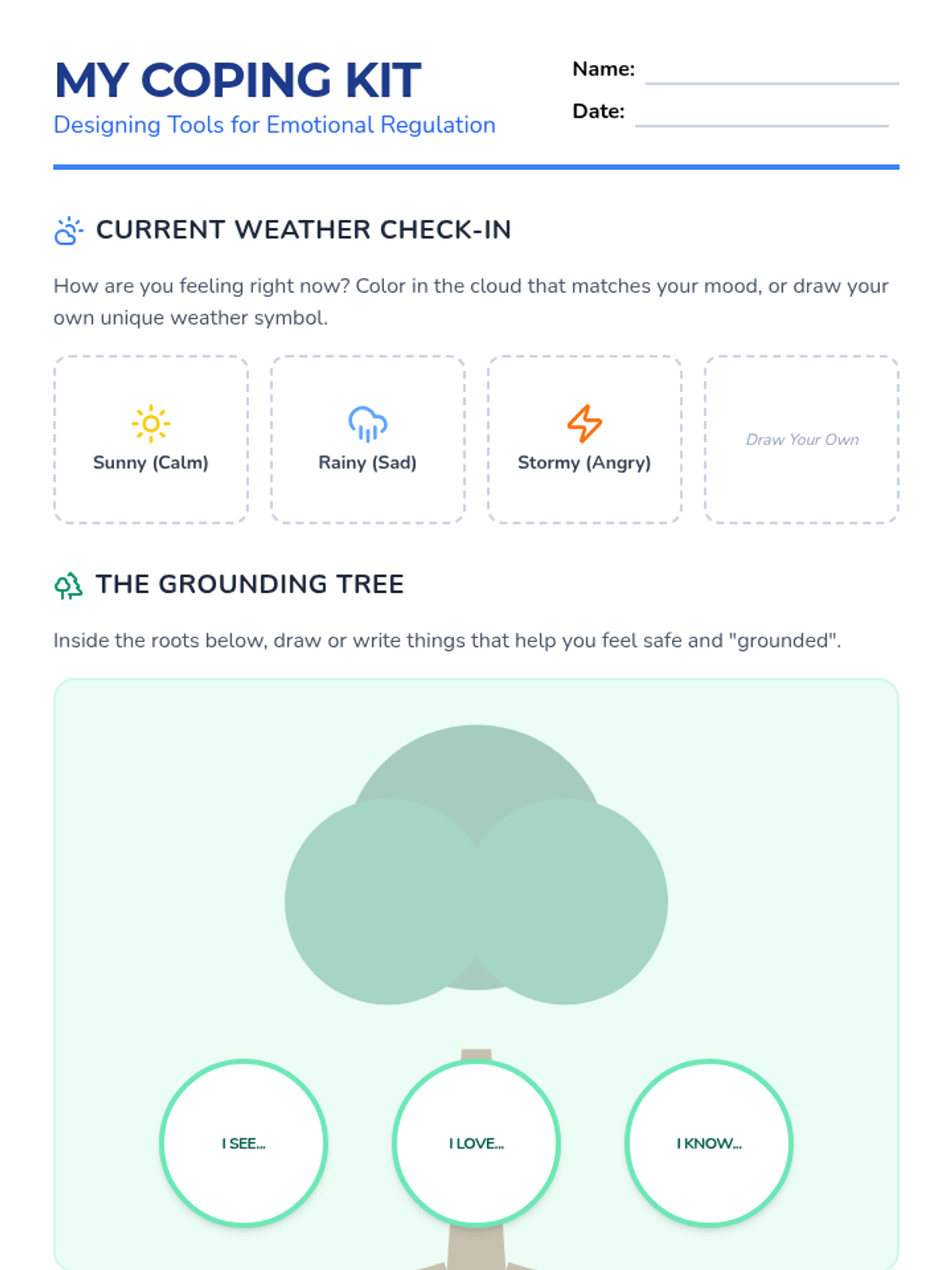
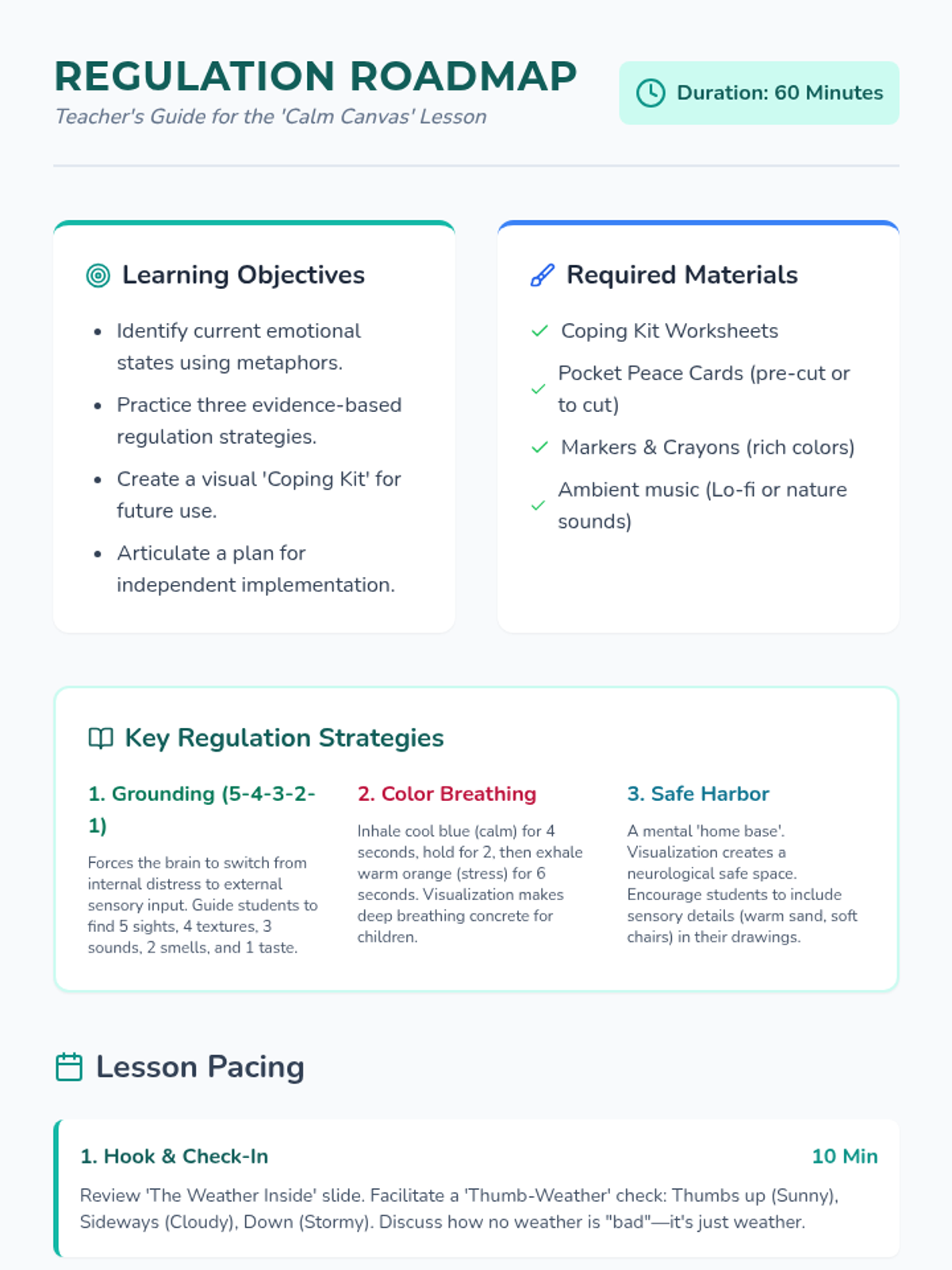
A creative art-based lesson where students learn to identify their emotional states and build a personalized 'coping kit' of regulation strategies using markers and crayons.