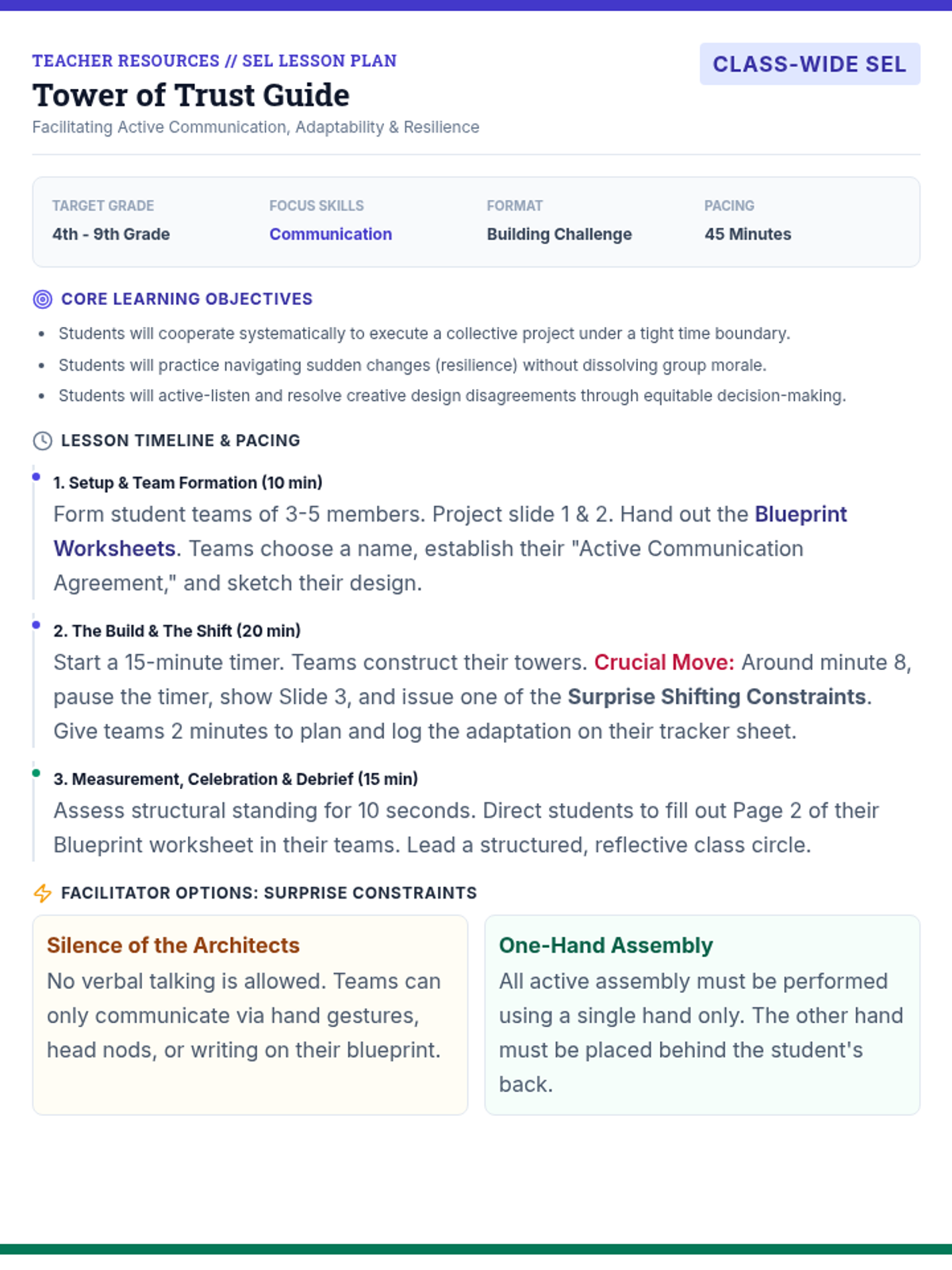
A fast-paced, 20-minute interactive workshop where middle school students practice active listening and clear expression through a back-to-back communication challenge.
Students apply decision-making matrices to complex social scenarios to practice managing impulses and owning outcomes.
Students define maturity beyond age, focusing on taking responsibility for their thoughts and actions even when they are unhelpful.
Students explore the concept of the 'gap' between stimulus and response, learning to use a pause button to avoid impulsive actions and use respectful communication.
A 30-minute interactive lesson for 7th graders to understand how social media designs encourage impulsivity and how to develop mindful digital habits.
A foundational look at the CASEL Social Emotional Learning framework, covering the five core competencies and the benefits of implementation.
A targeted organization and time management workshop designed for upper elementary and middle school students to build effective daily systems for academic success.
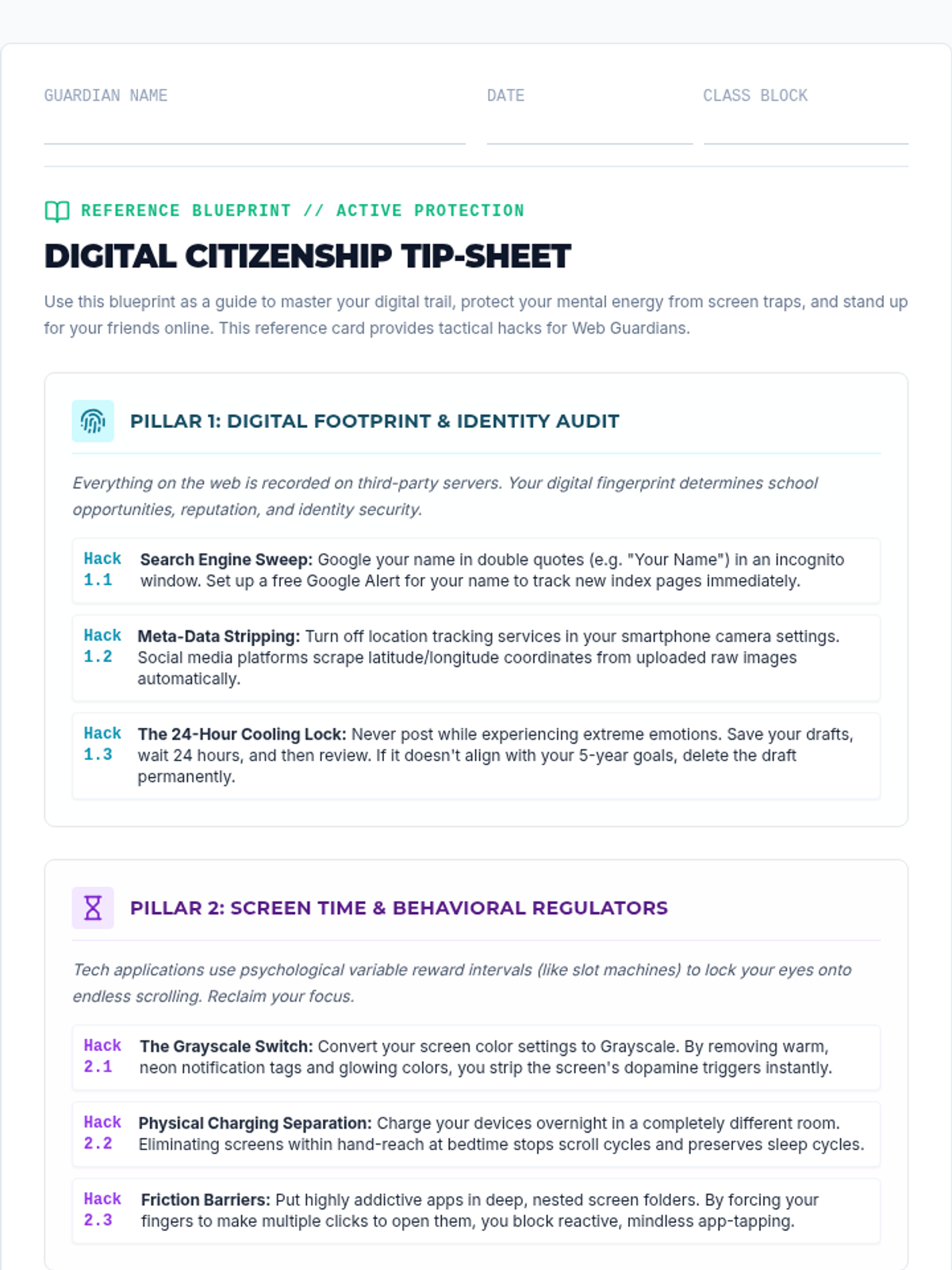
A comprehensive introduction to digital citizenship for 6th graders, focusing on online safety, respectful communication, and secure habits. This lesson equips students with practical strategies for navigating the digital world responsibly.
This lesson helps 6th grade students understand ADHD medication management, specifically focusing on how Methylphenidate (stimulants) and Guanfacine (non-stimulants) work individually and together to support focus, emotional regulation, and school success.
A brief opening session designed to help students identify their current emotional state and understand the factors influencing their feelings before beginning social skills activities.
A 20-minute follow-up counseling session for a 7th-grade student to deepen their awareness of Automatic Negative Thoughts (ANTs), identify personal triggers, and practice cognitive restructuring techniques.
A 15-minute lesson focused on self-acceptance, reframing negative self-talk, and embracing individual strengths and growth areas through a 'Mosaic Mindset' lens.
A high-energy, 15-minute classroom game where 7th-grade students navigate social and personal scenarios using a quick-thinking decision-making framework. Students work in small groups to evaluate consequences and choose the best path forward under pressure.
An interactive lesson designed to help students identify common cognitive distortions (mind traps) and develop practical skills for challenging negative thought patterns through role-play and analysis.
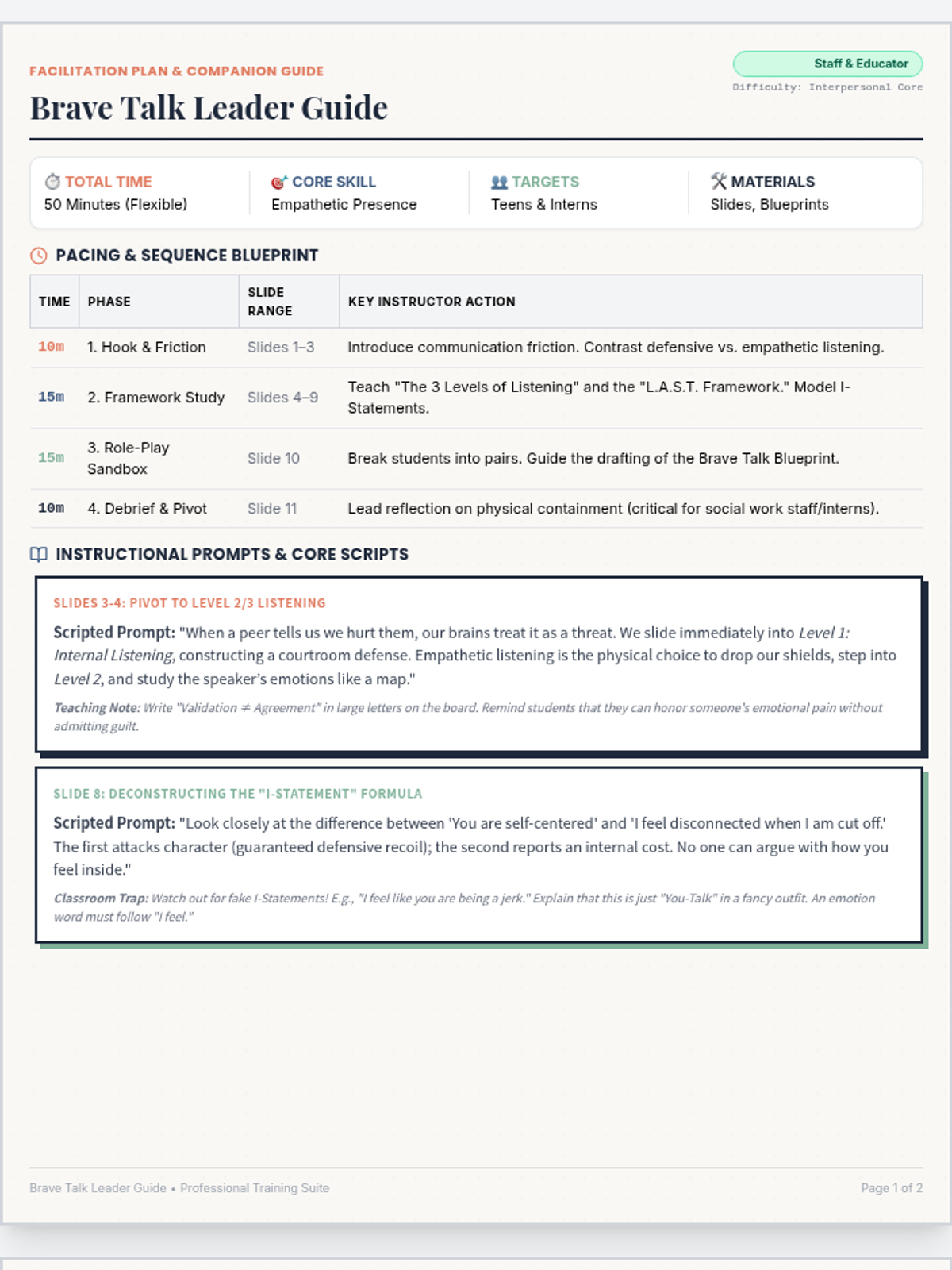
A high-energy, 15-minute assembly lesson for middle schoolers focusing on active listening, respectful interaction, and clear self-advocacy.
A high-energy, 15-minute exploration of communication through the 'Signal Hackers' game, focusing on active listening and selecting appropriate communication channels.
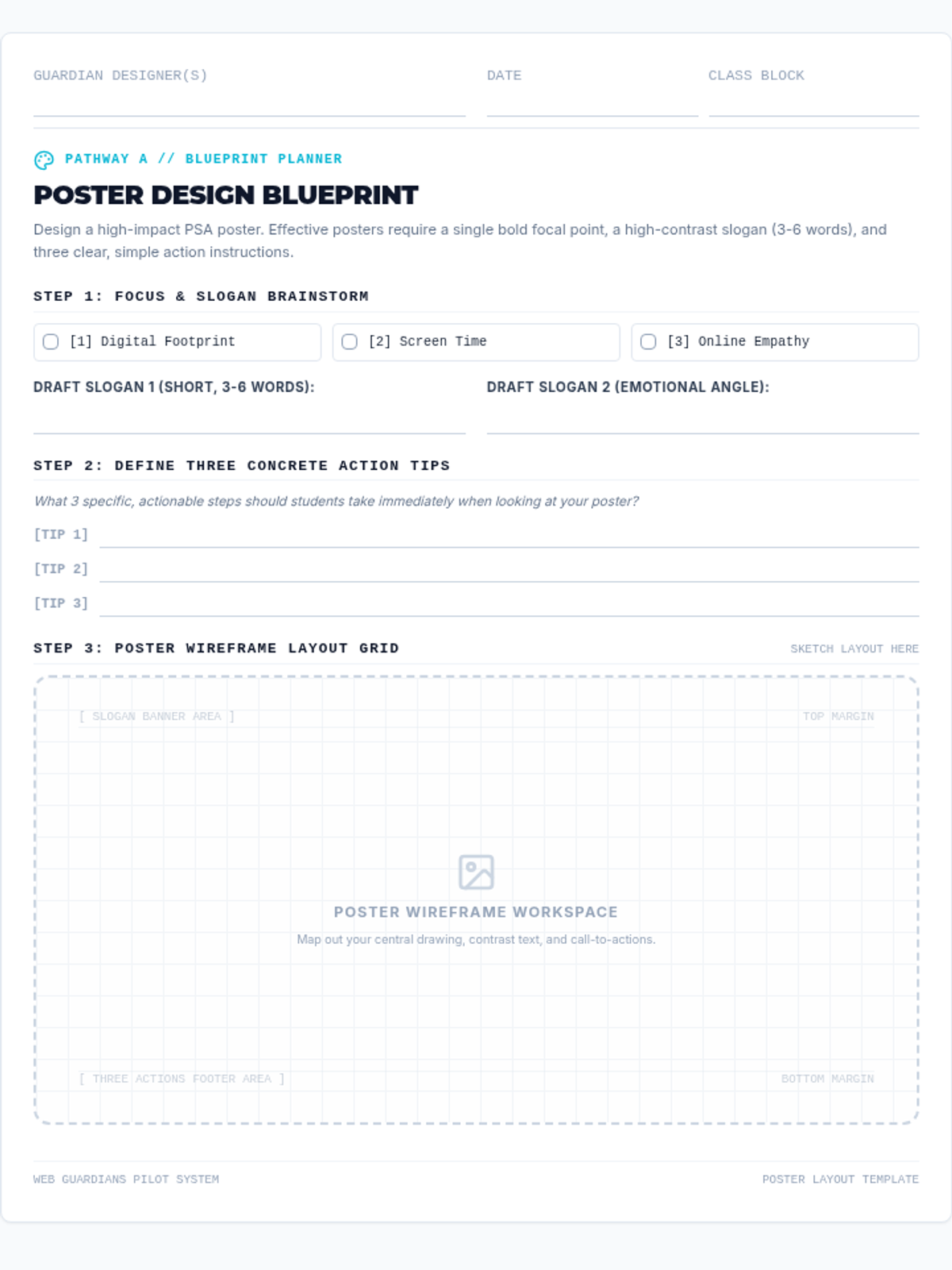
A workshop focused on mindful and ethical online behaviors, empowering middle schoolers to navigate the digital world with empathy, privacy awareness, and intentionality.
Finalizing the concept of maturity as personal responsibility. Students define maturity and practice taking ownership of their decisions regardless of external circumstances.
Developing the skill of impulse control. Students practice creating space between a trigger and a reaction to choose respectful words and thoughtful actions.
Introduction to the causal links between thoughts, emotions, and actions. Students learn to analyze their internal processes to identify and admit when their behaviors are unhelpful.
Reviewing progress, creating a long-term maintenance plan, and celebrating the transition to 'Master Pilot'.
Building a toolkit of personalized coping strategies and 'Power Up' behaviors to replace impulsive ones.
Recognizing 'Hot Thoughts' versus 'Cool Thoughts' and learning to reframe impulsive thinking.
Identifying physical sensations in the body that signal an impulsive urge is coming.
Learning the 'Stop, Think, Act' model and visualizing the consequences of different choices.
Introduction to impulsivity, identifying personal 'glitches' or triggers, and understanding the 'Control Lab' concept.
This lesson helps students recognize when they need support and provides a structured framework for asking for help effectively and confidently. Students will explore the benefits of seeking help and practice through scenarios.