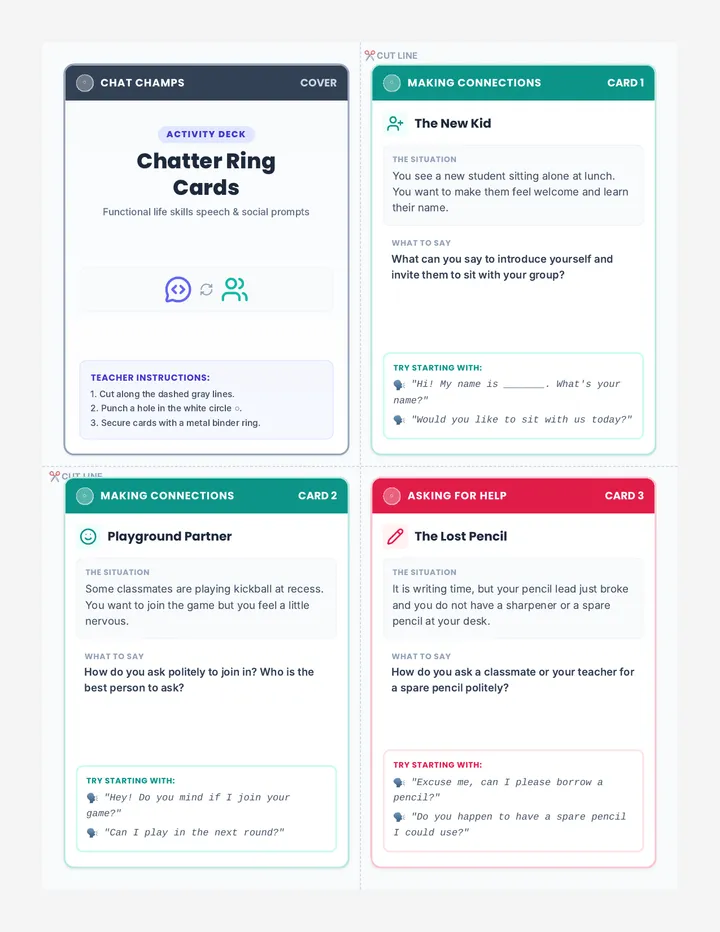
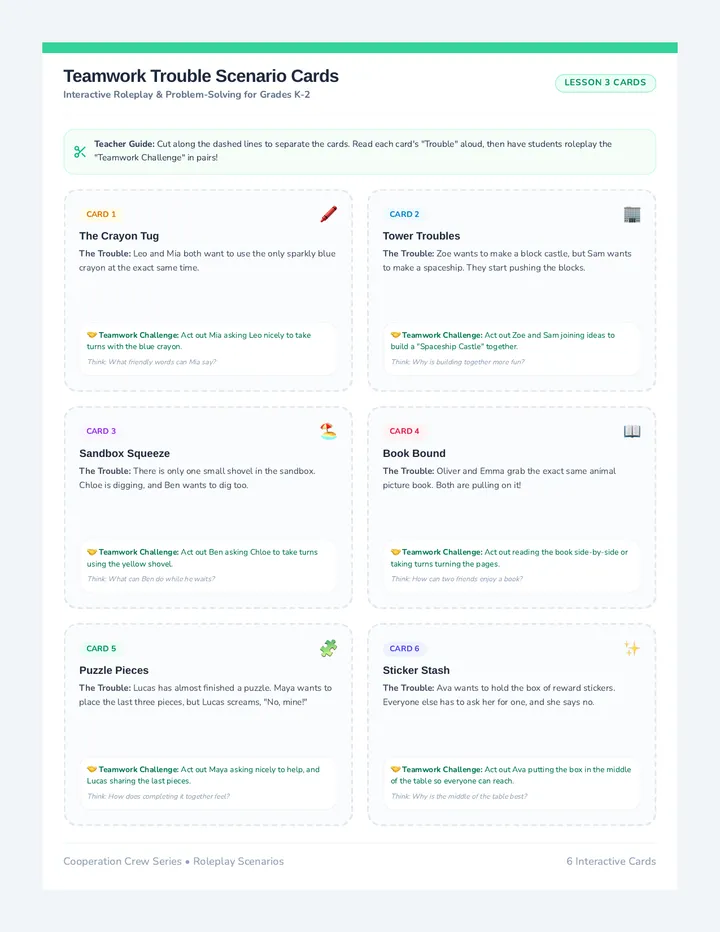
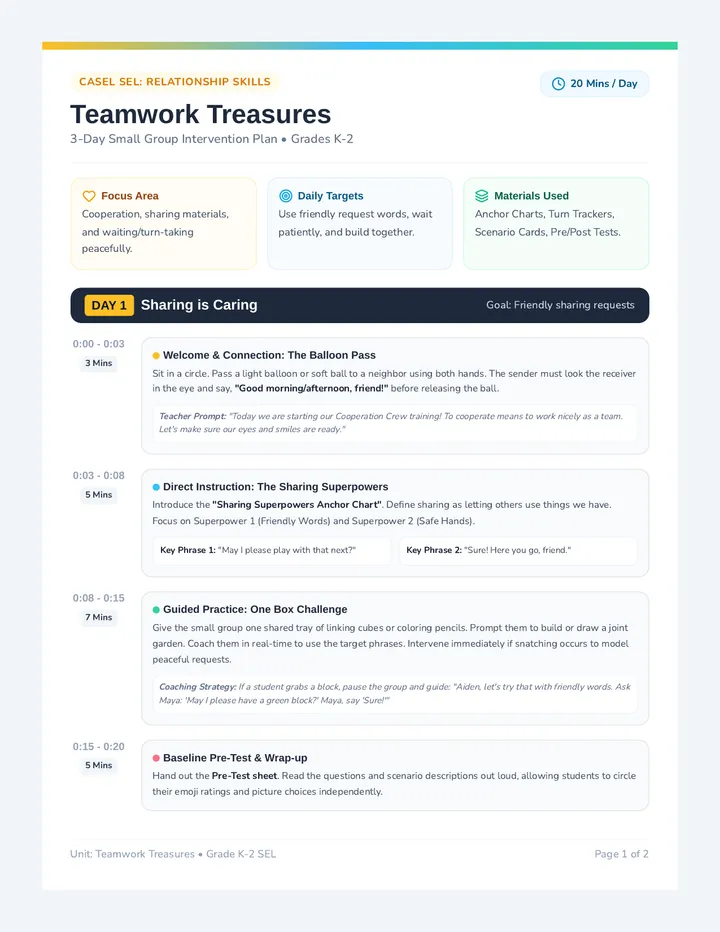
Brave Butterflies Lesson Plan Document
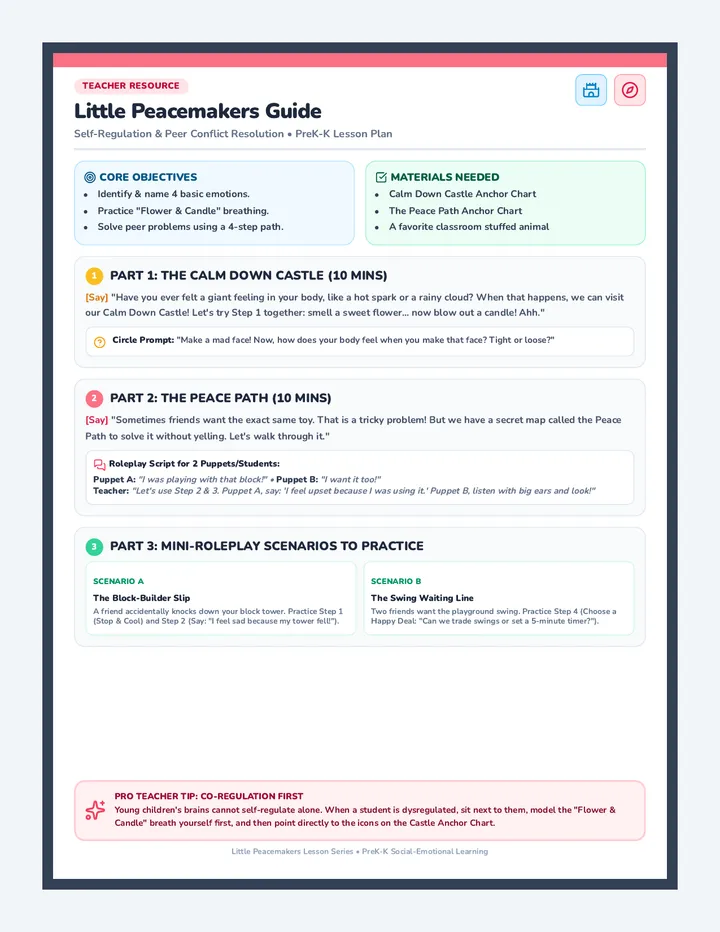
A comprehensive 30-minute lesson plan for Session 8, including objectives, materials, preparation steps, and detailed instructional sequences focusing on assertive communication.
Brave Butterflies Slide Deck Presentation
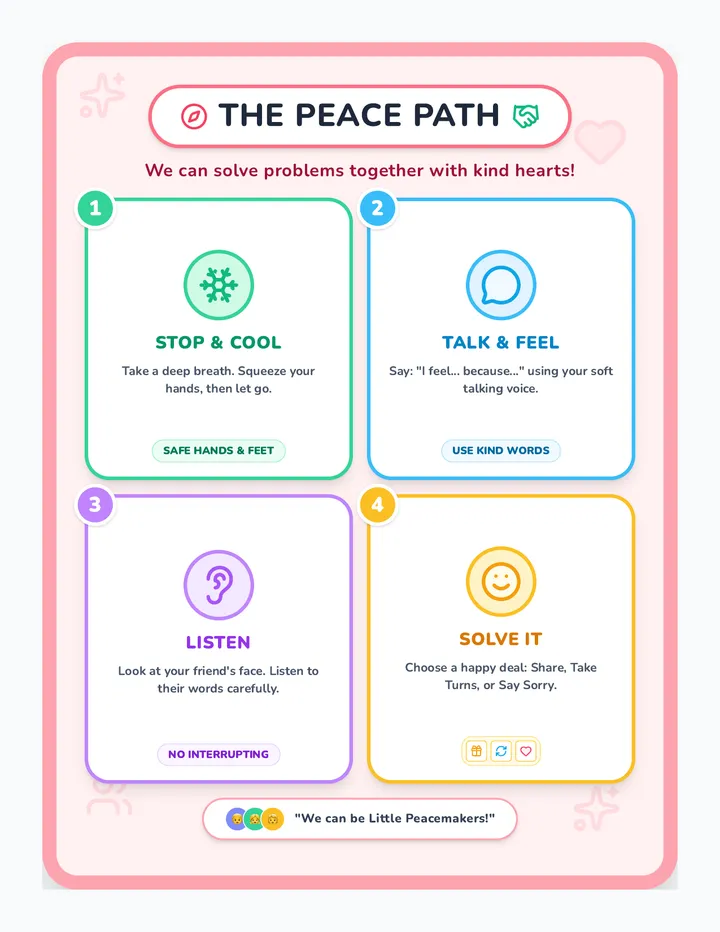
Visual slide deck for Session 8 introducing assertive communication. Includes the 'I statement' formula and a story about a shy squirrel.
Brave Butterflies Teacher Script Document
A detailed script for the teacher to facilitate Session 8, including dialogue for the problem-solving steps, story reading, and the Solution Spinners game.
Brave Butterflies Warm Up Document
A brief warm-up activity for Session 8 where students share a time they needed to use their words to get help or change something.
The Shy Squirrel Who Spoke Up Reading Document
A story featuring Squeaky the Squirrel that models assertive communication and the use of 'I statements' in a relatable situation.
"I Feel... When You... Because..." Activity Document
An activity guide for Session 8 where students practice constructing and using 'I statements' to express feelings and needs in various social situations.
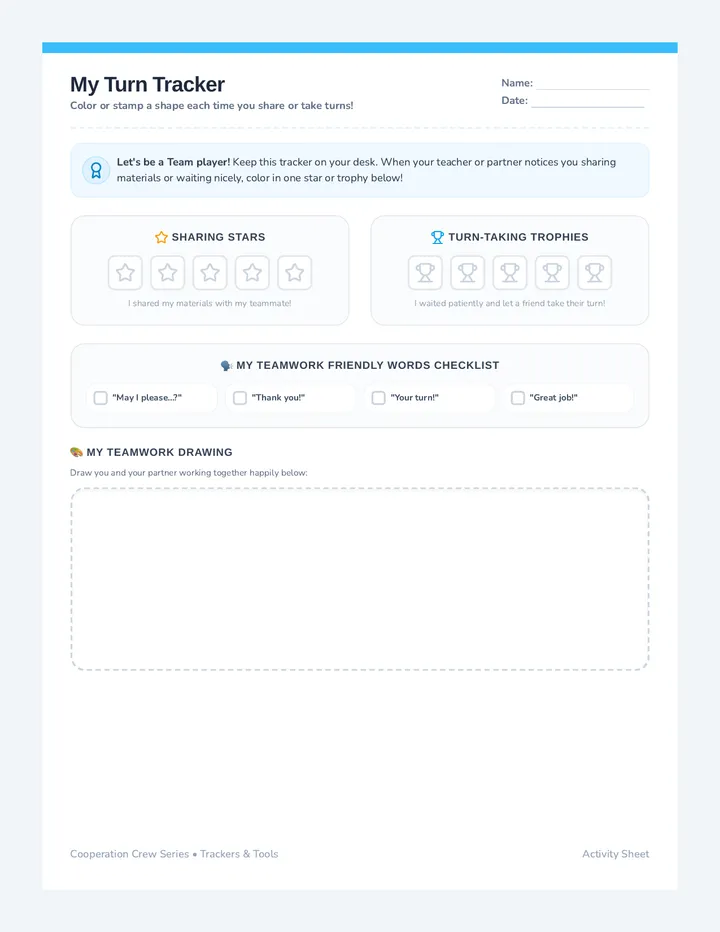
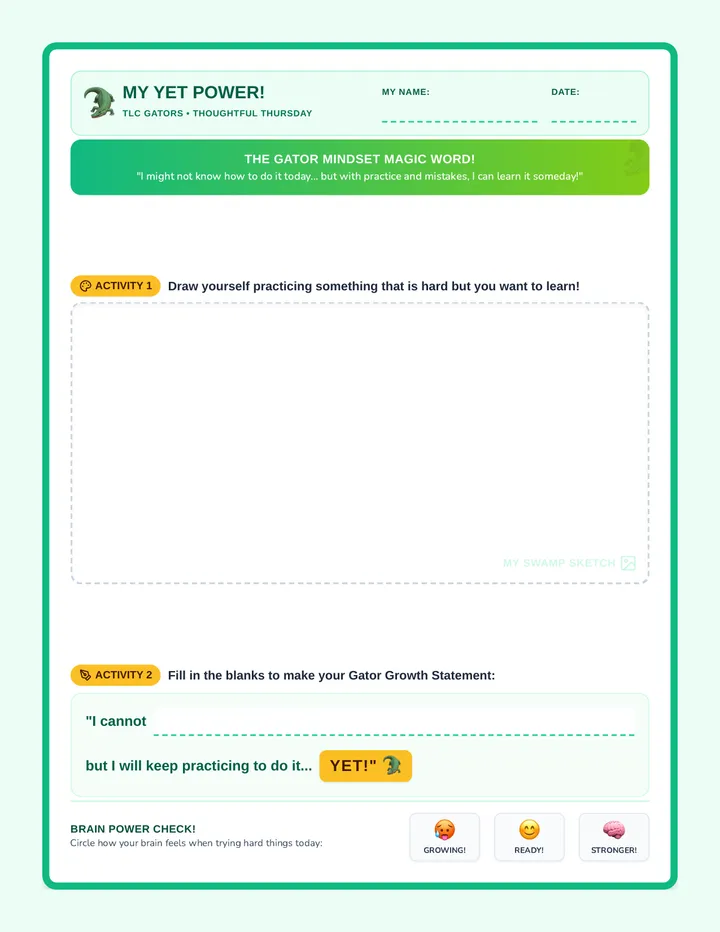
My Brave Words Worksheet Document
A student worksheet for Session 8 where children draw or write about a situation where they could use their brave words or an 'I statement'.
Brave Butterflies Cool Down Document
A reflective cool-down activity for Session 8 where students share one time they will try to use their brave words or an 'I statement' this week.