A transformative lesson on happiness as a trainable skill, focusing on the power of self-talk, daily habits, and cognitive reframing to improve mental well-being for both students and staff.
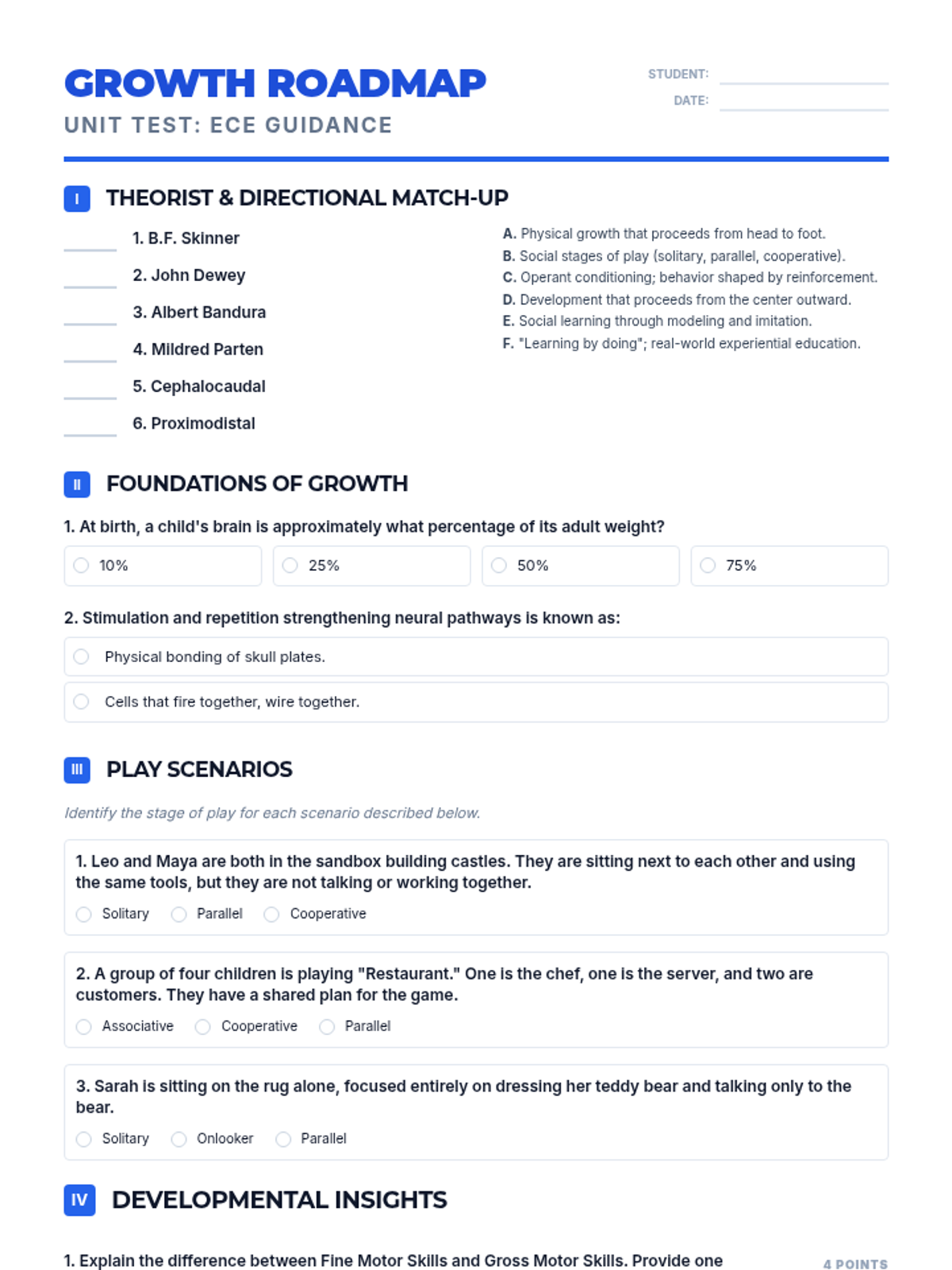
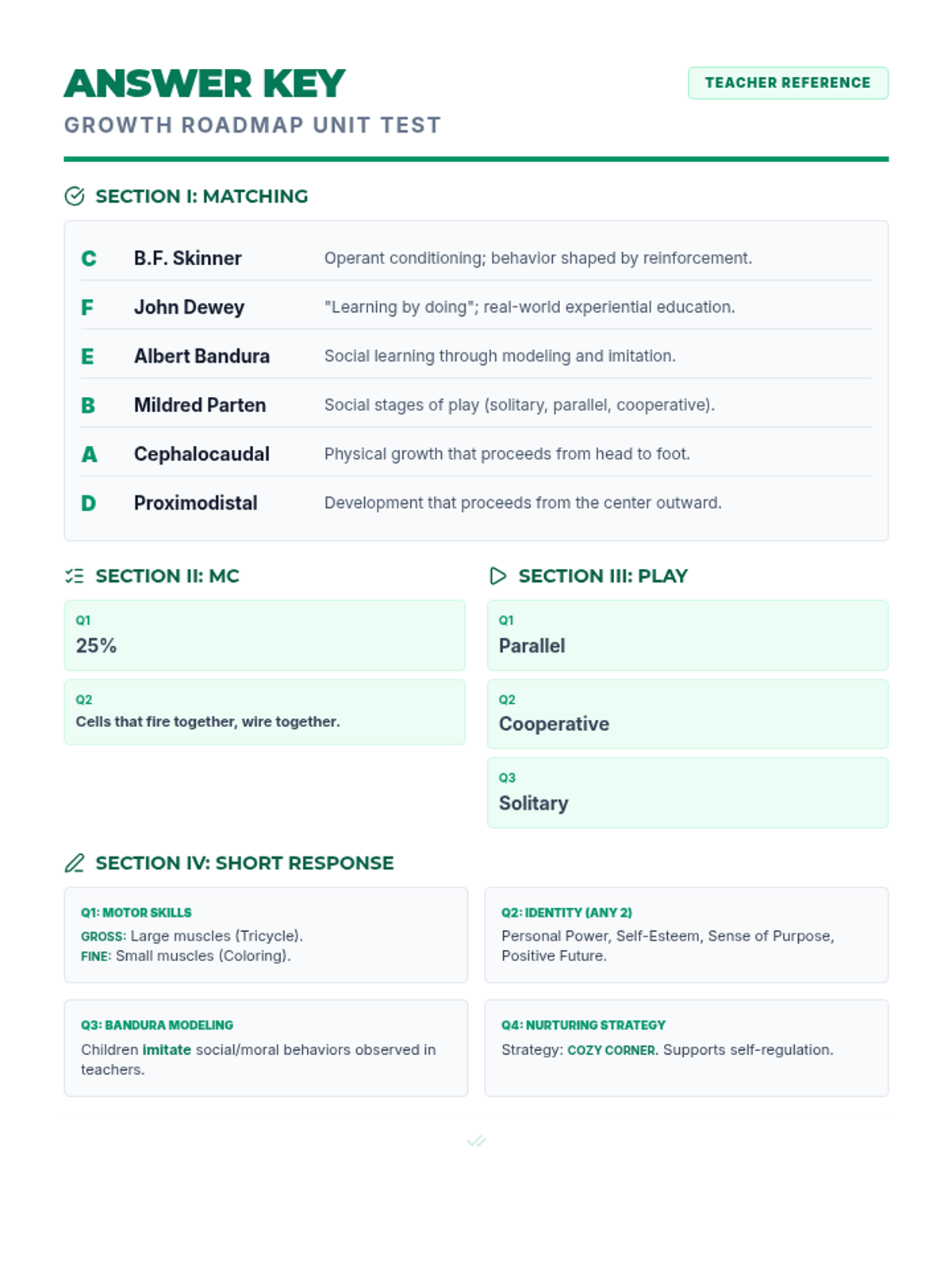
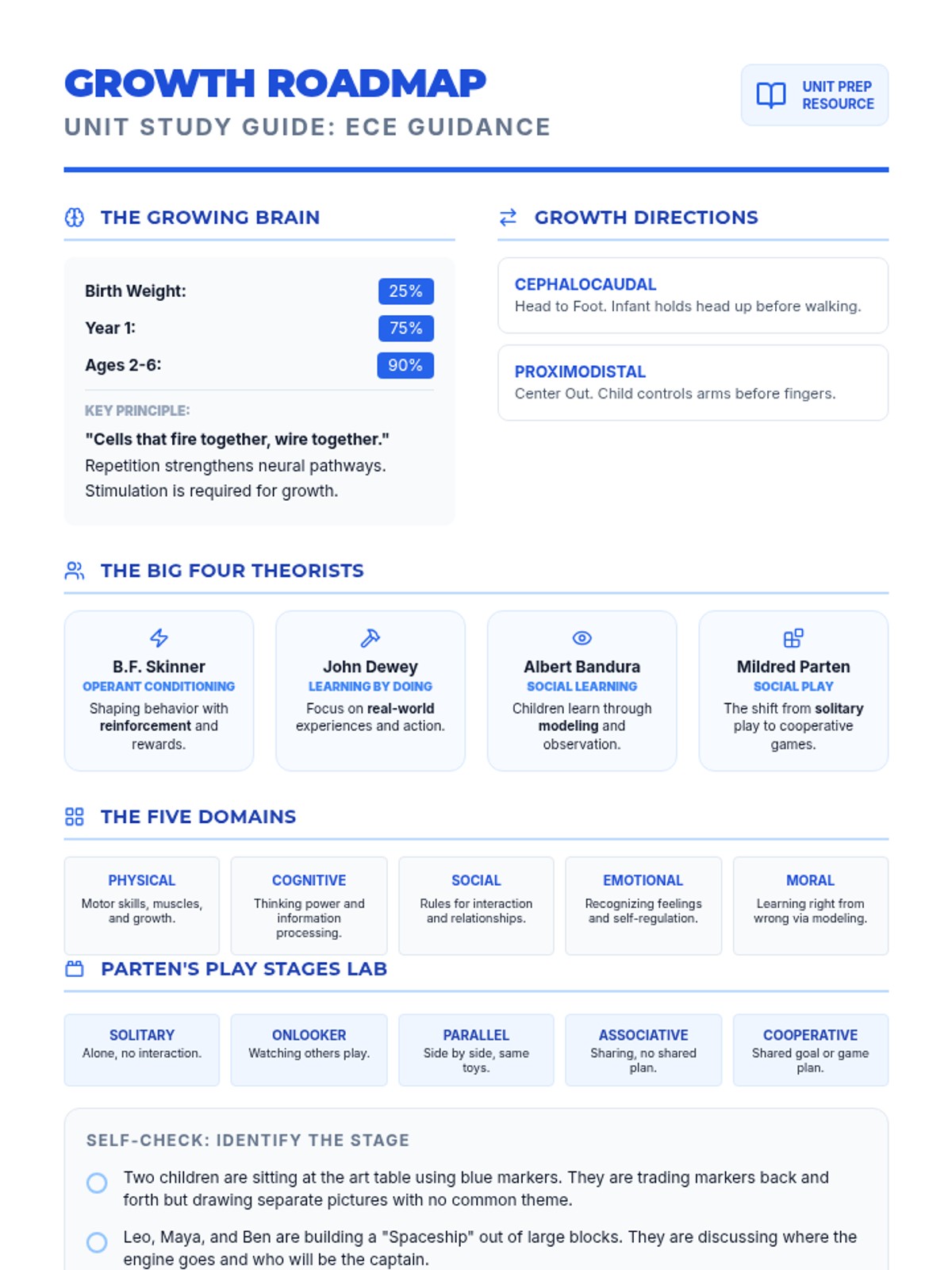
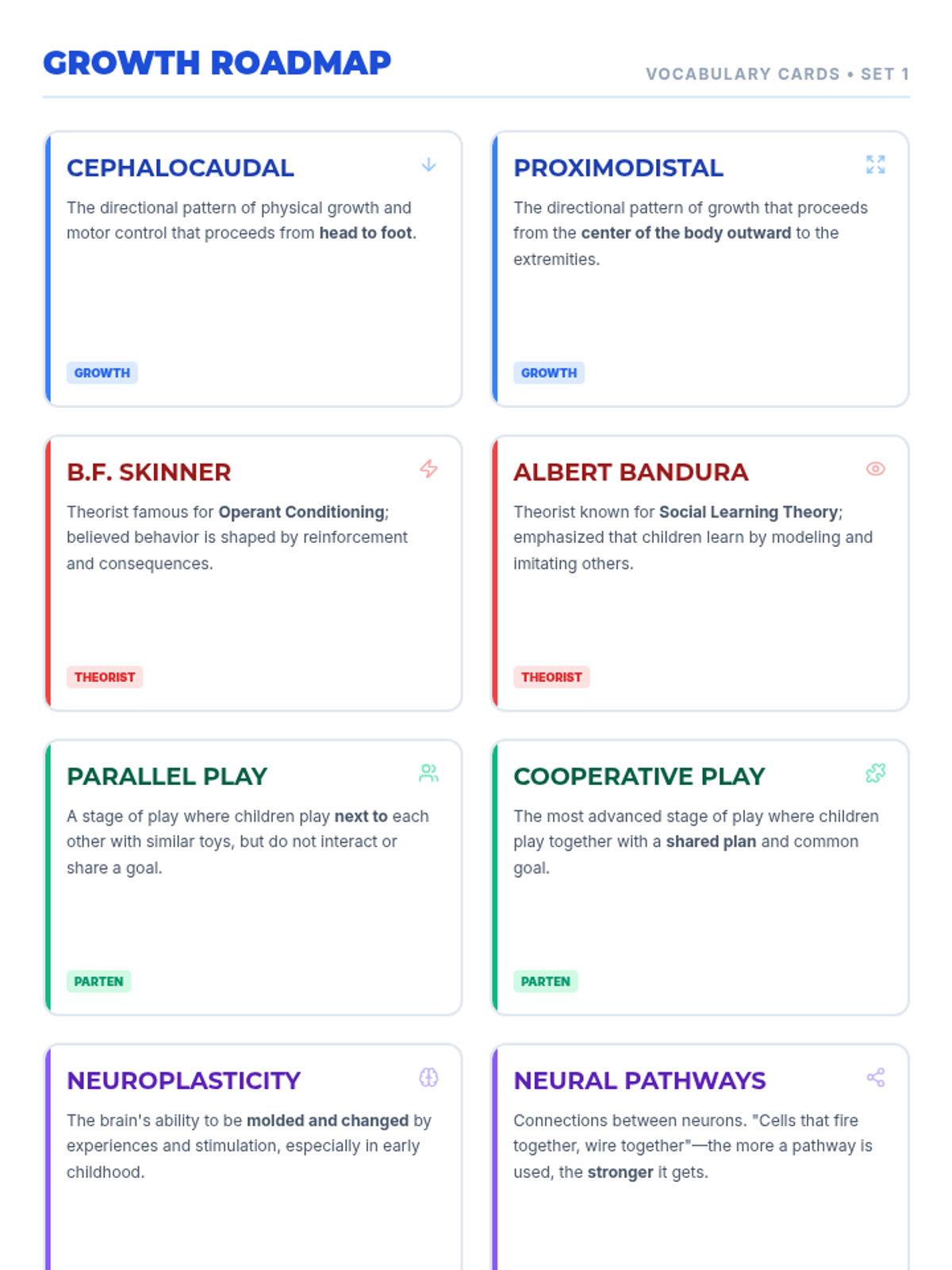
A comprehensive assessment covering developmental domains, brain growth, major ECE theorists, and strategies for supporting young children's self-concept and identity.
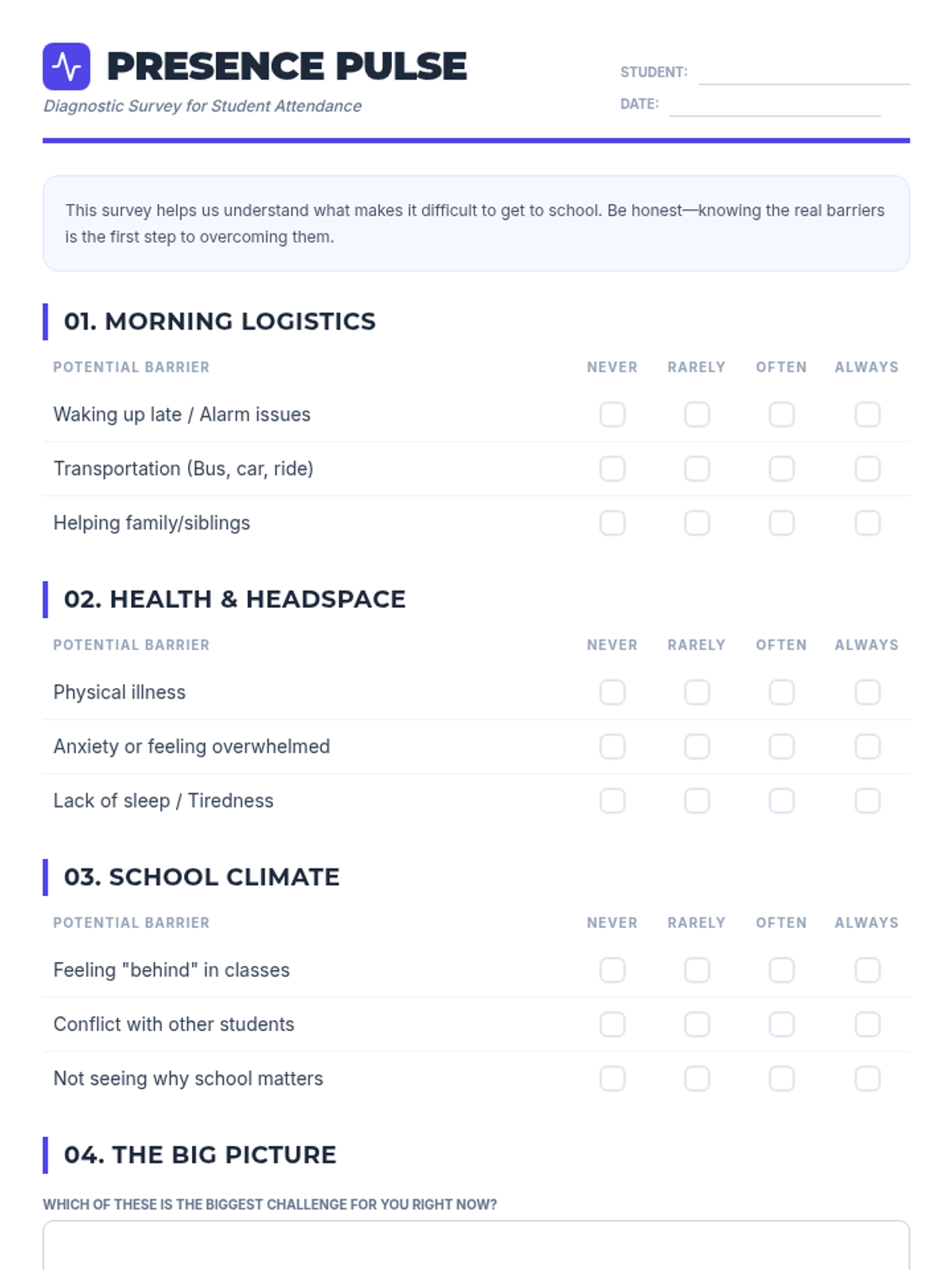
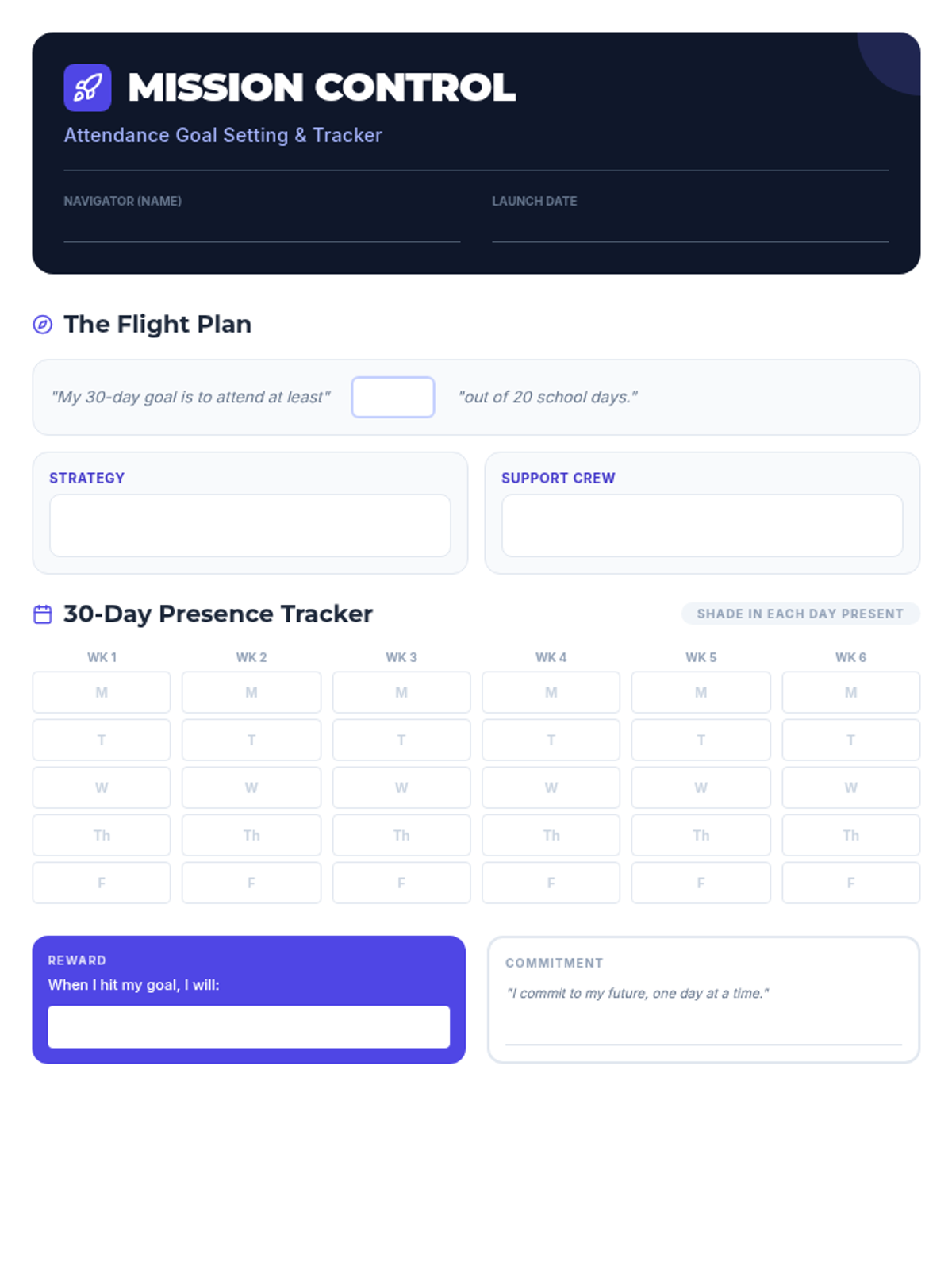
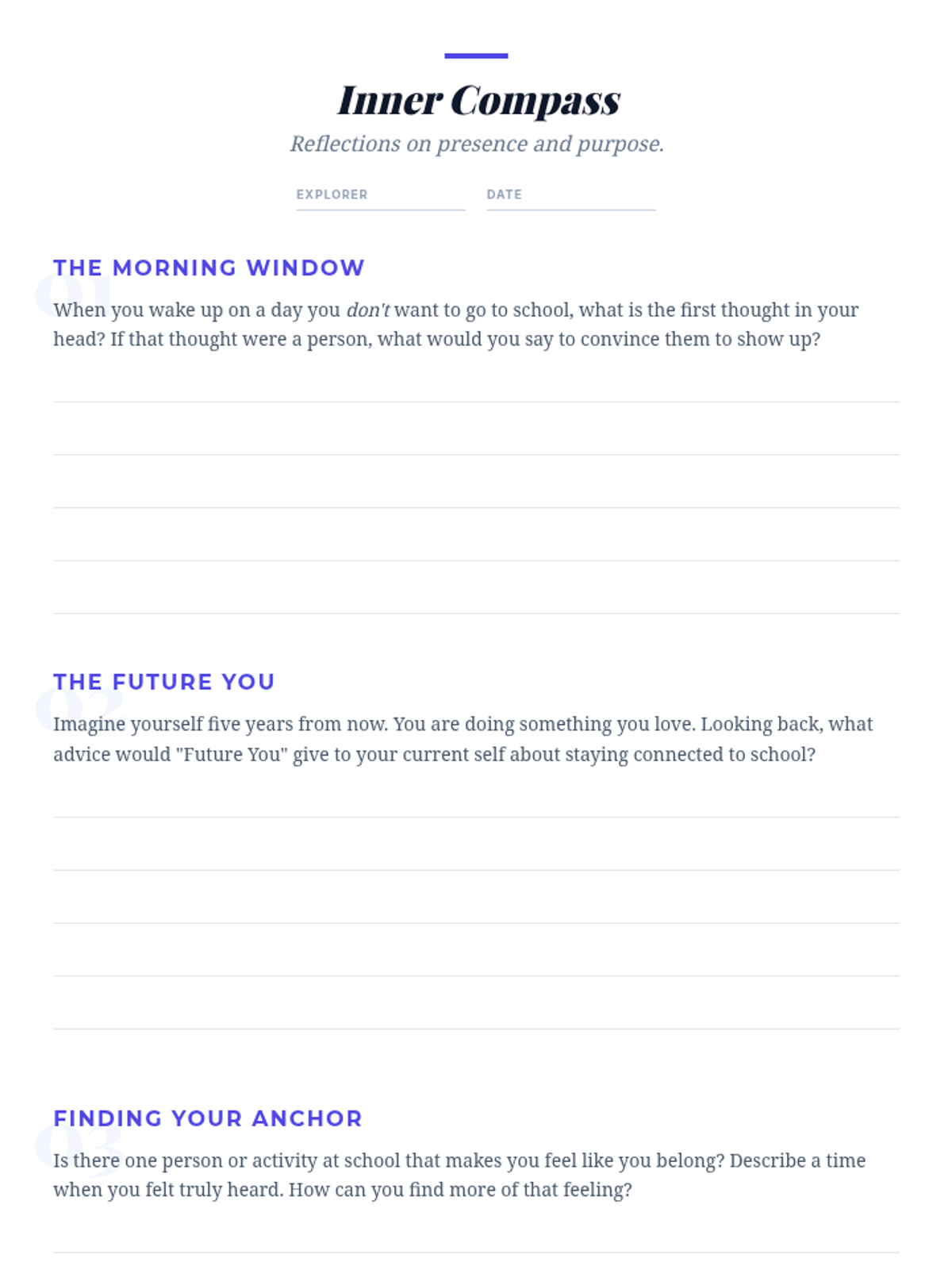
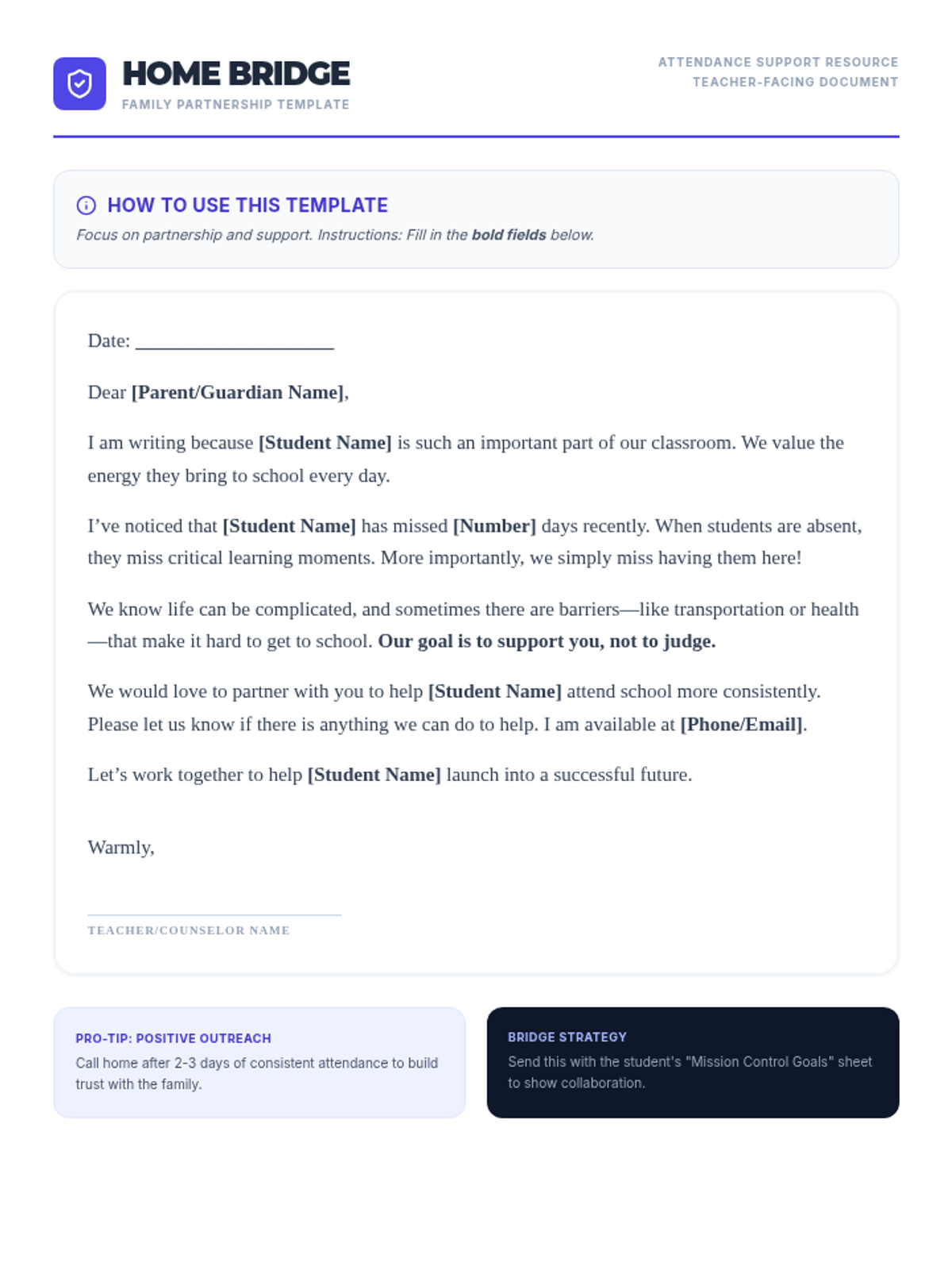
This lesson helps students identify personal barriers to school attendance, set actionable attendance goals, and reflect on the connection between presence and their future aspirations. It also provides teachers with a supportive framework for family communication regarding attendance.
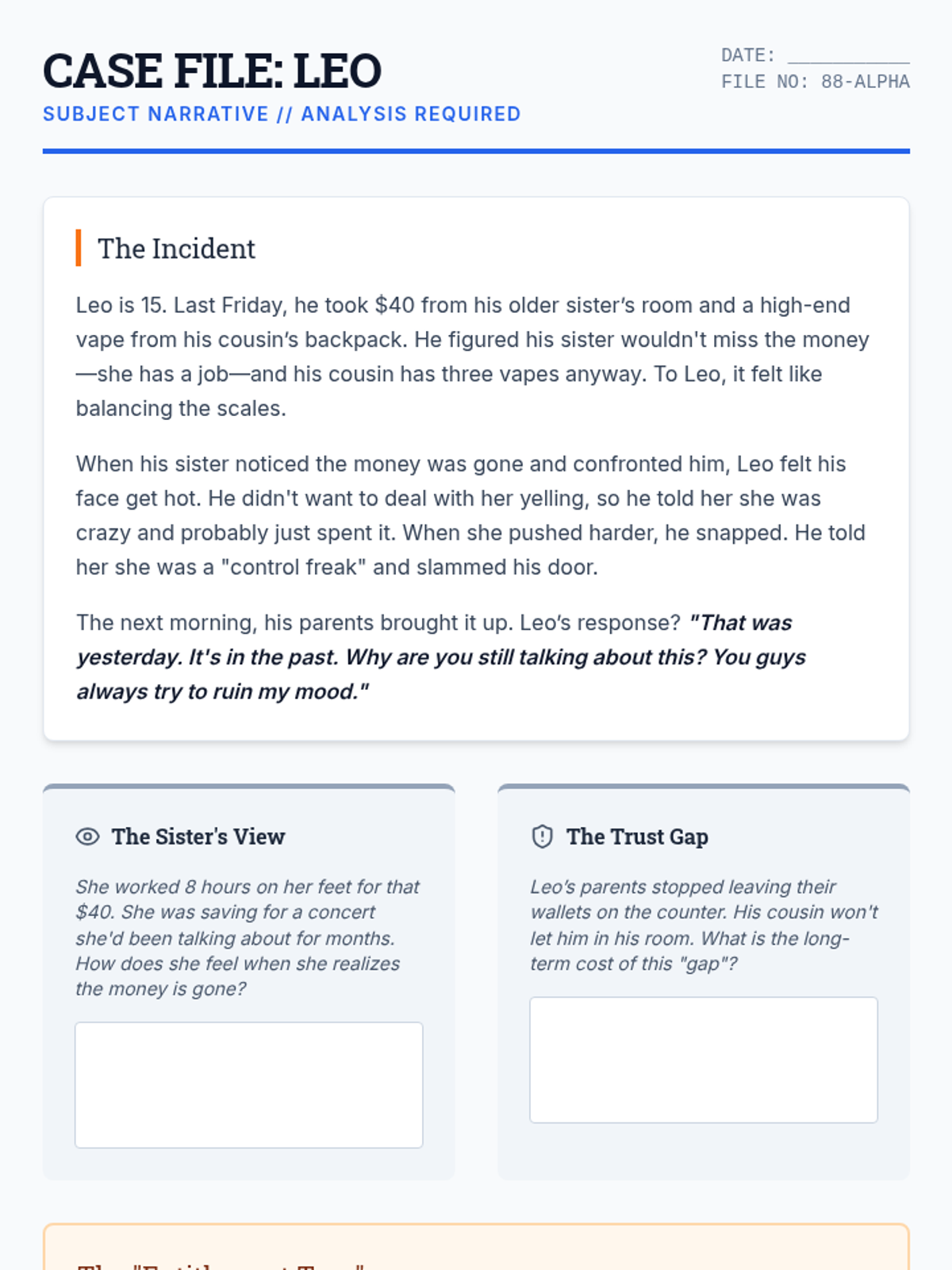
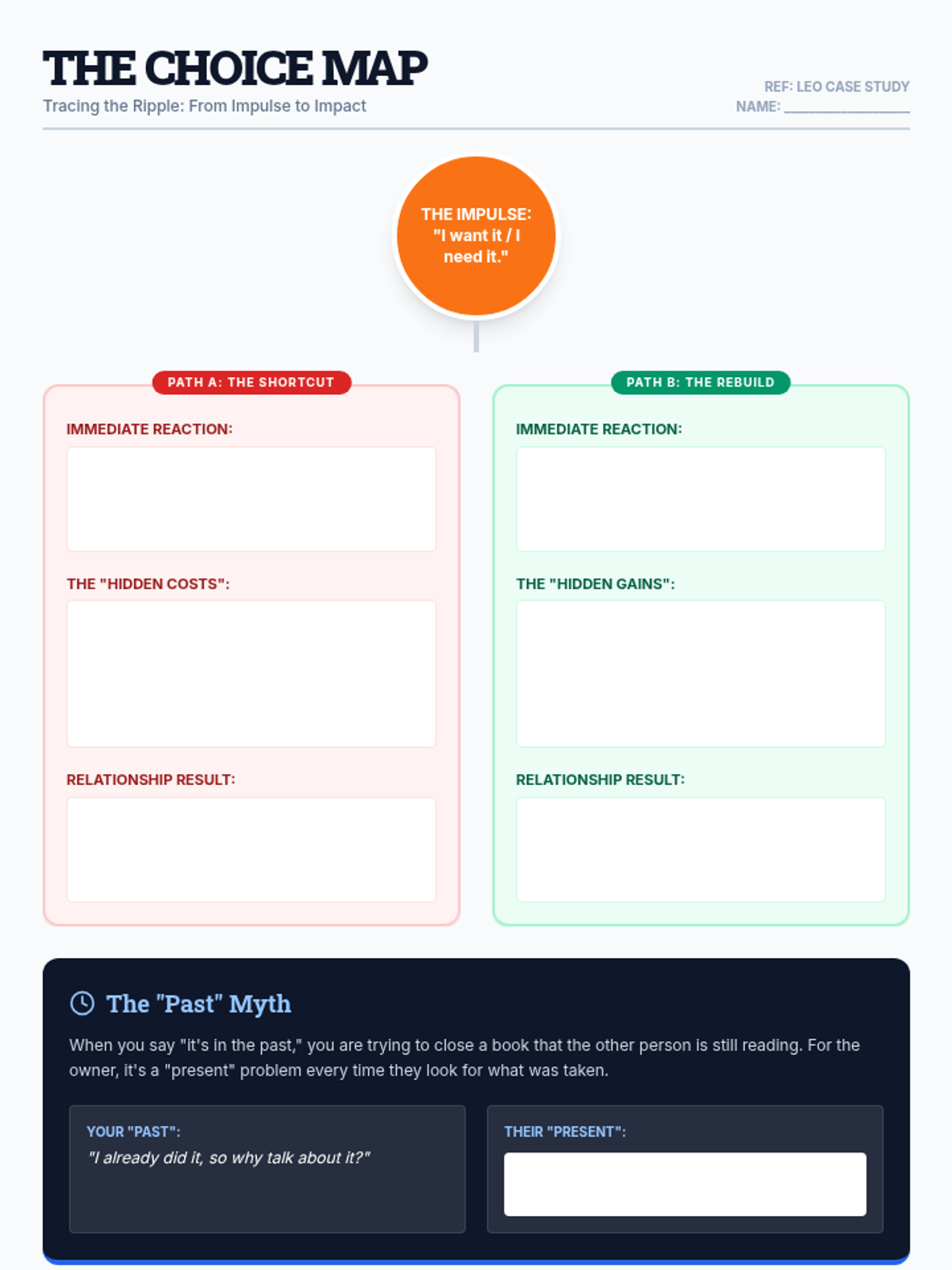
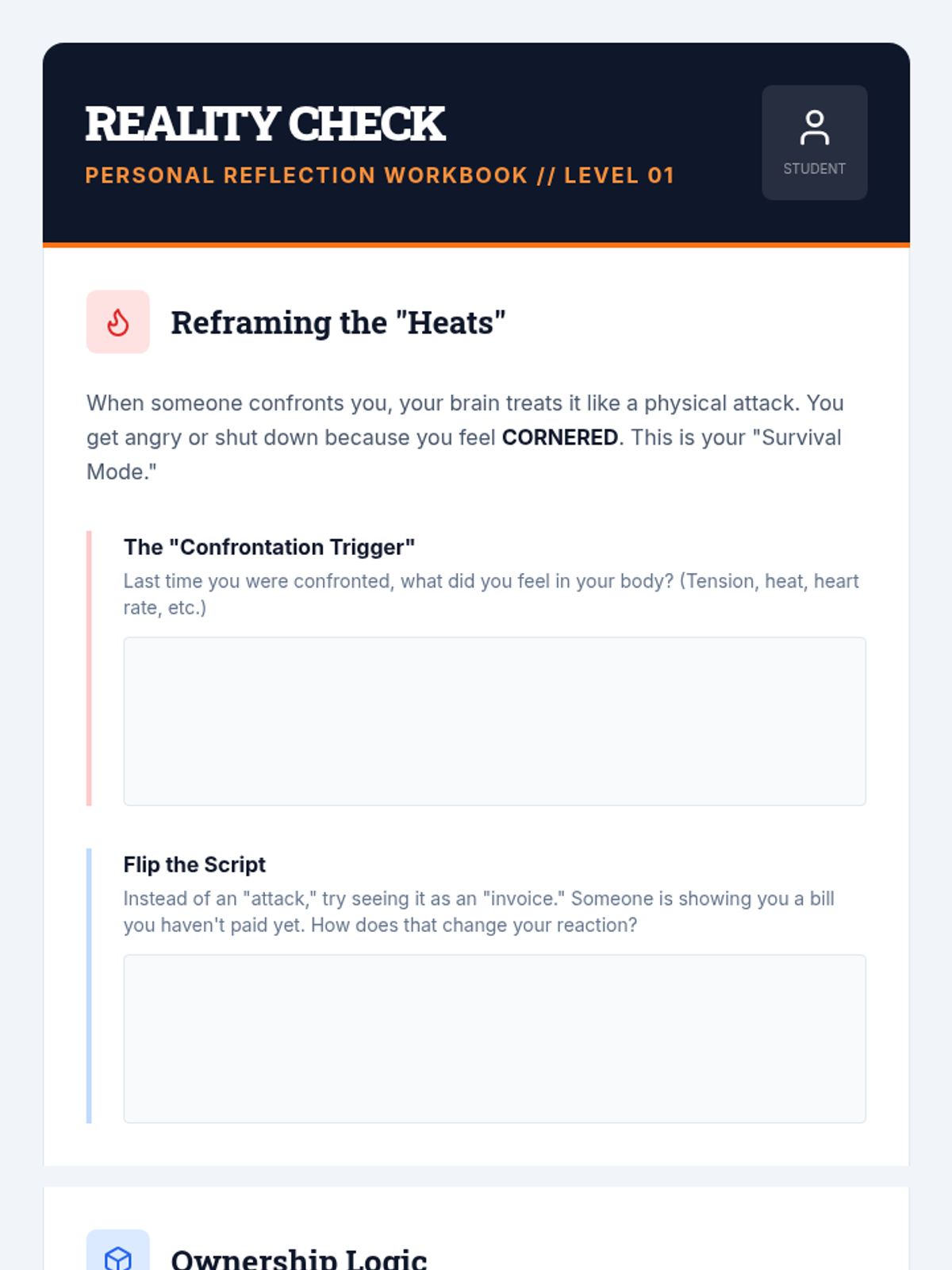
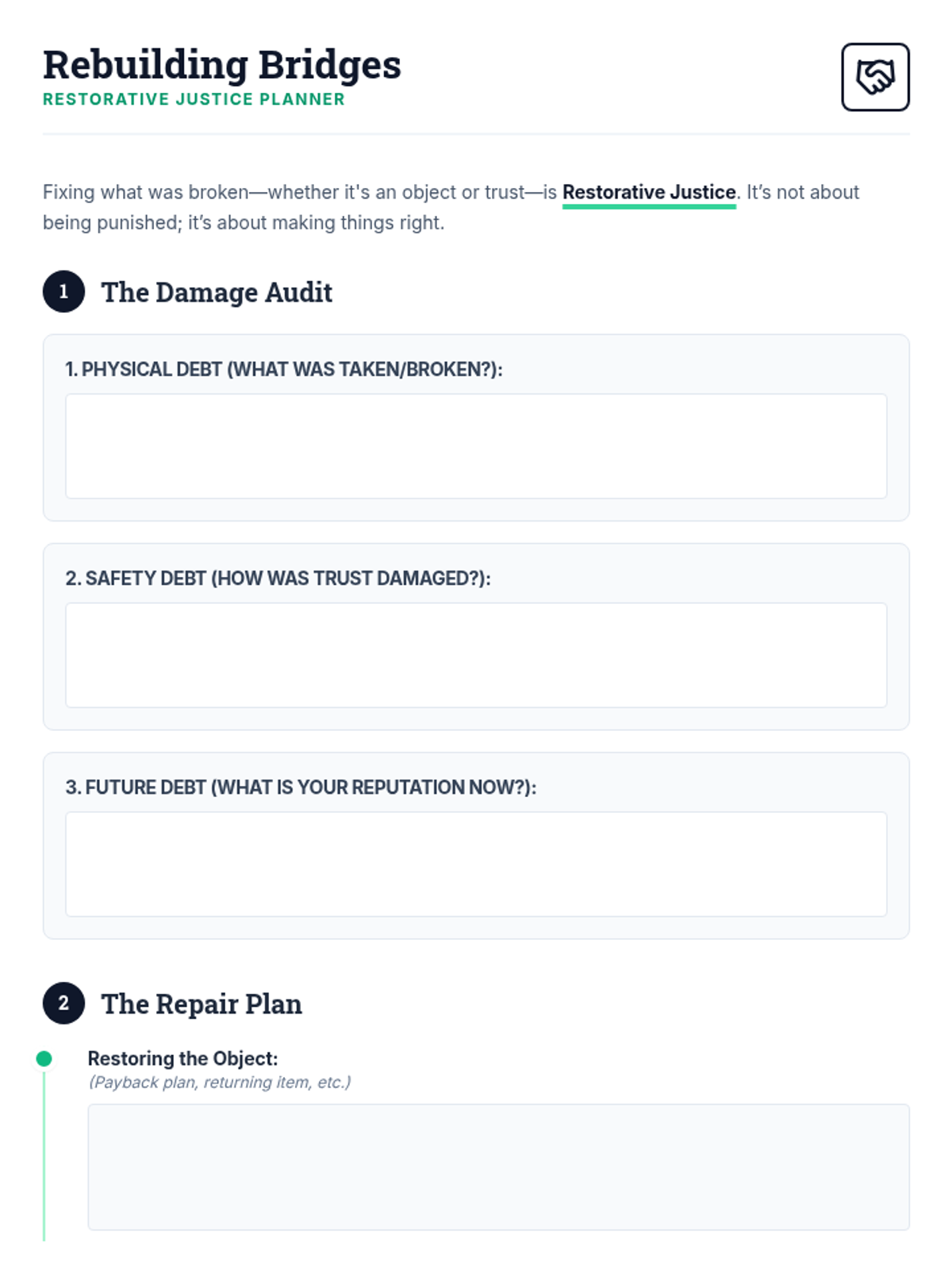
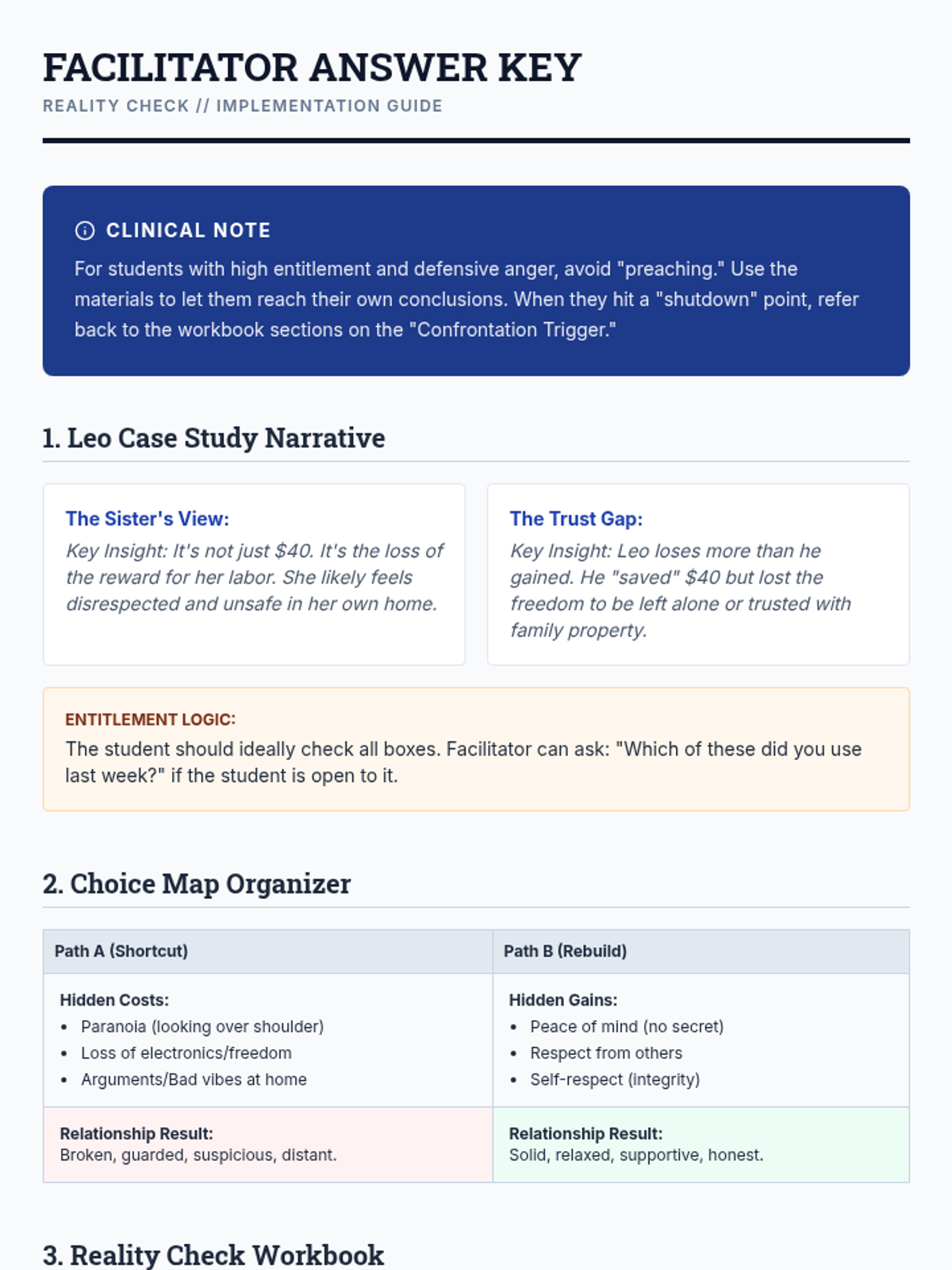
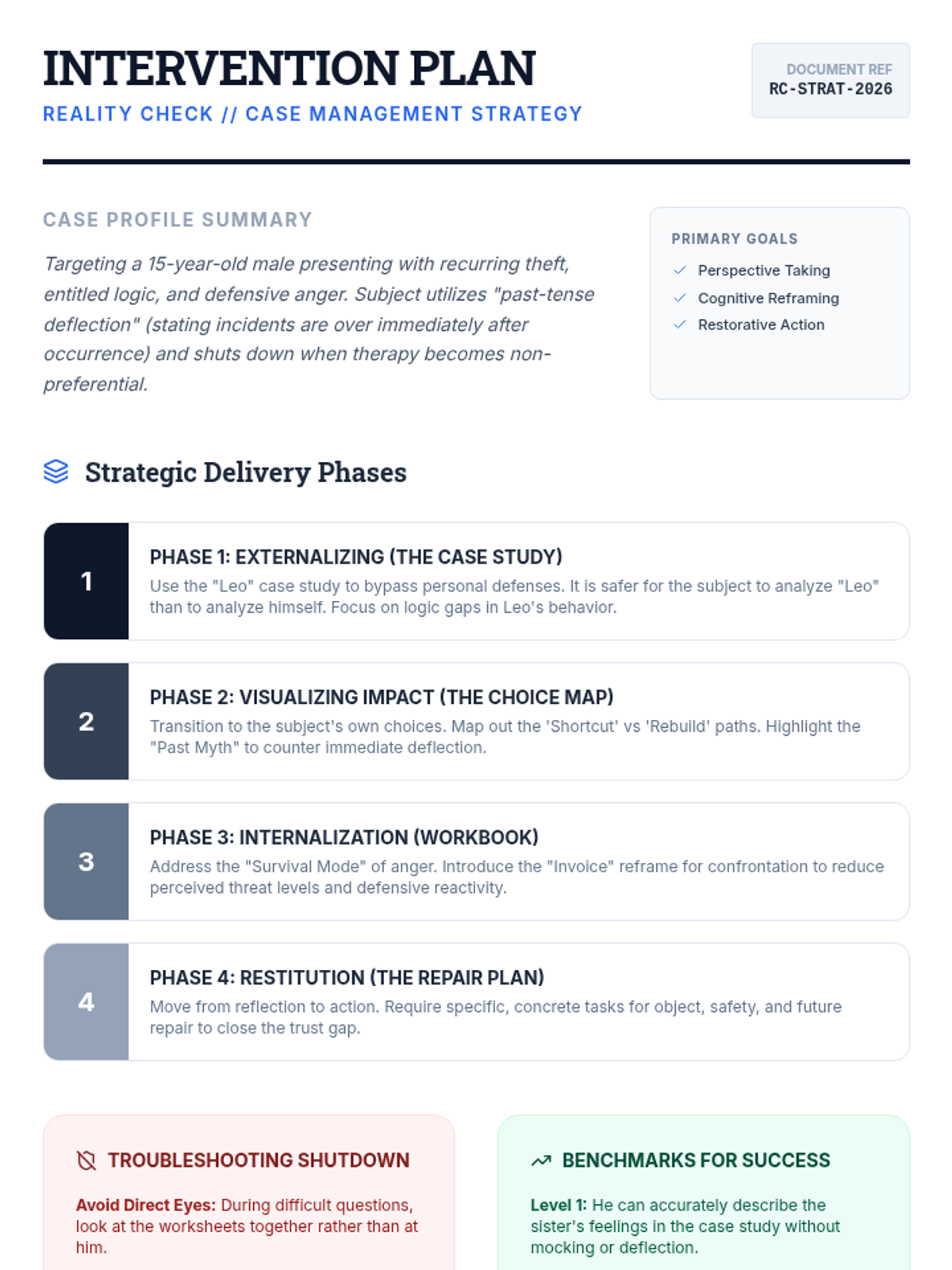
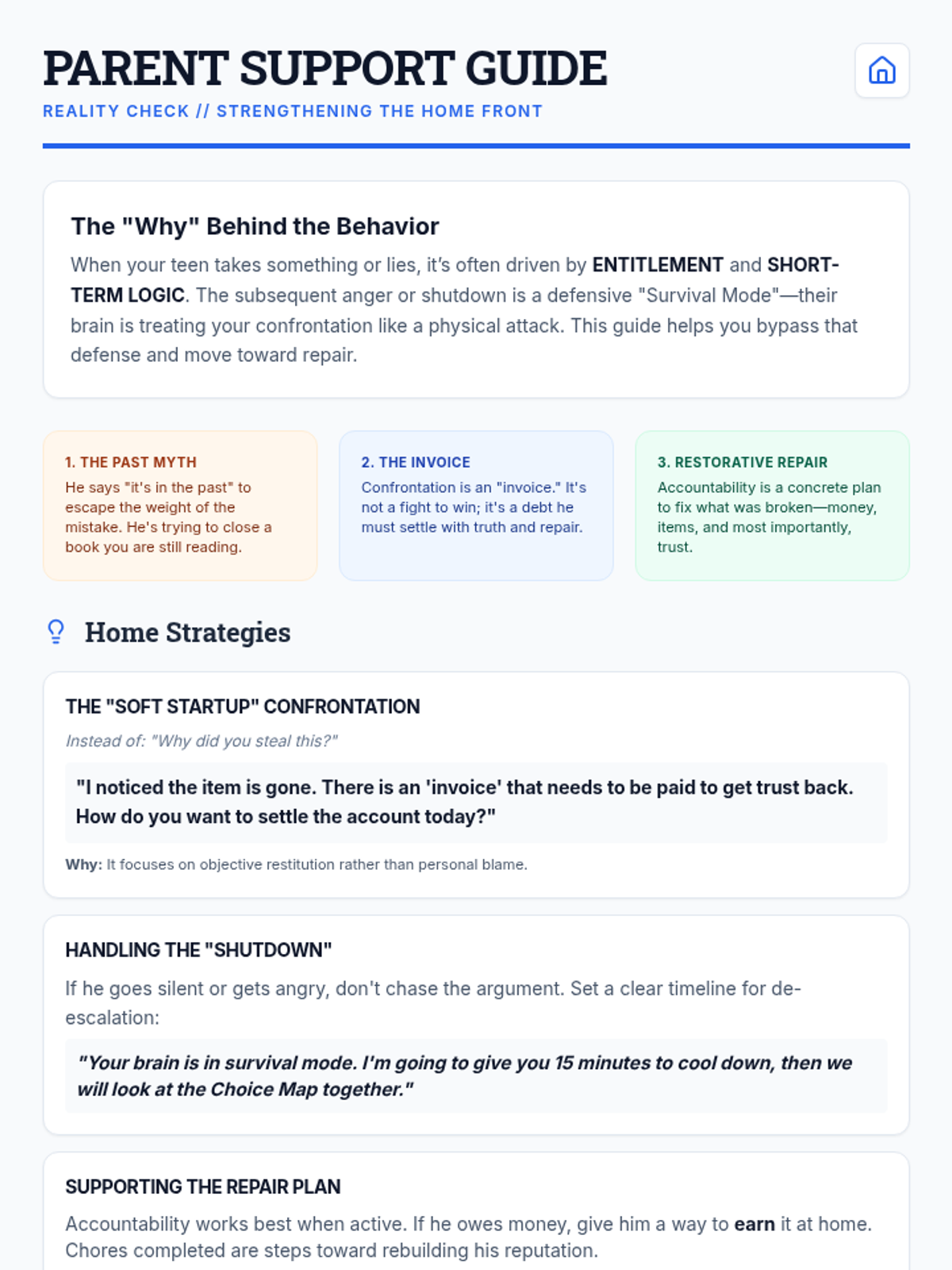
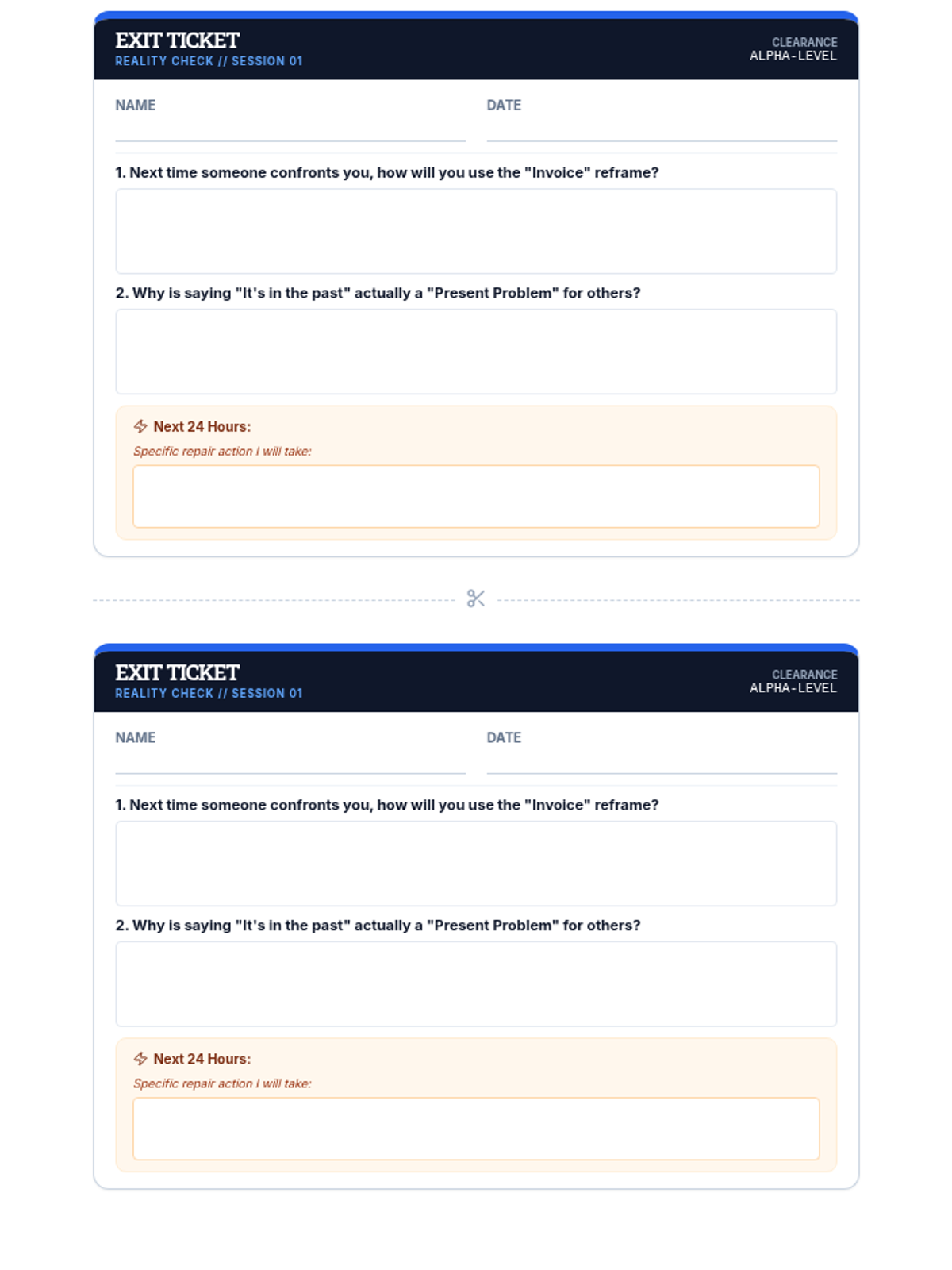
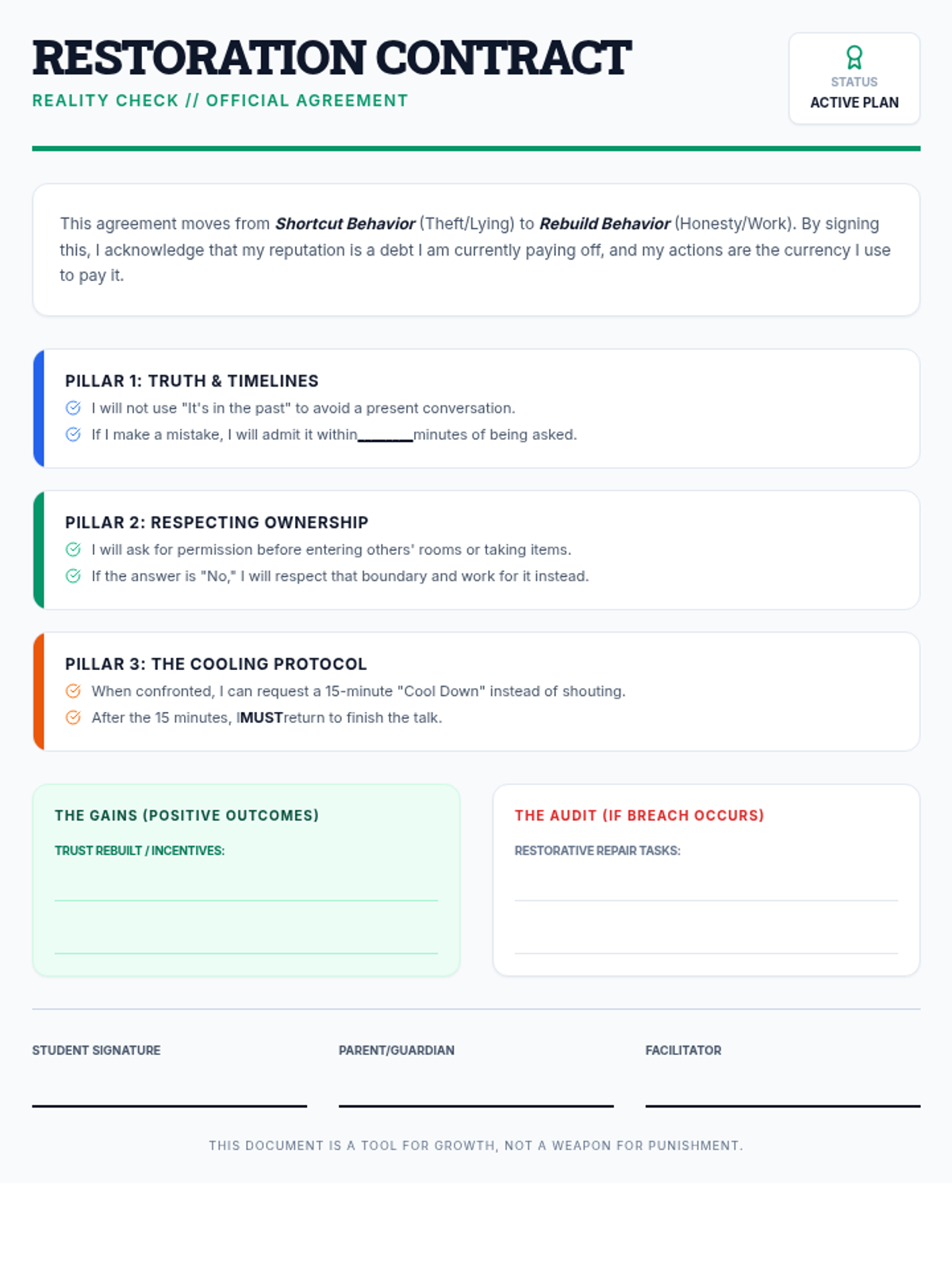
An intensive lesson focusing on the immediate impact of theft and lying, using a peer case study to bypass defensive shut-down mechanisms.
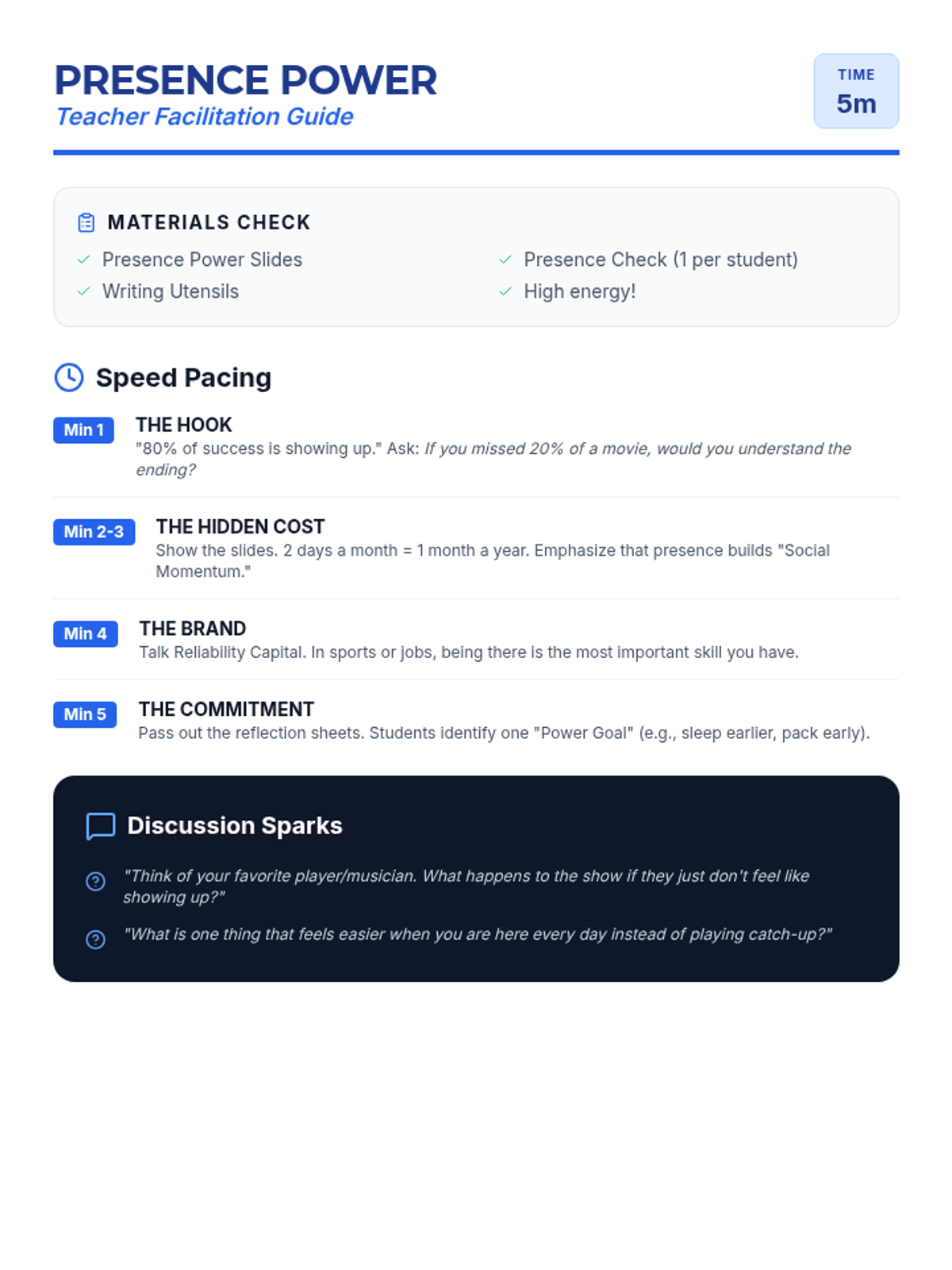
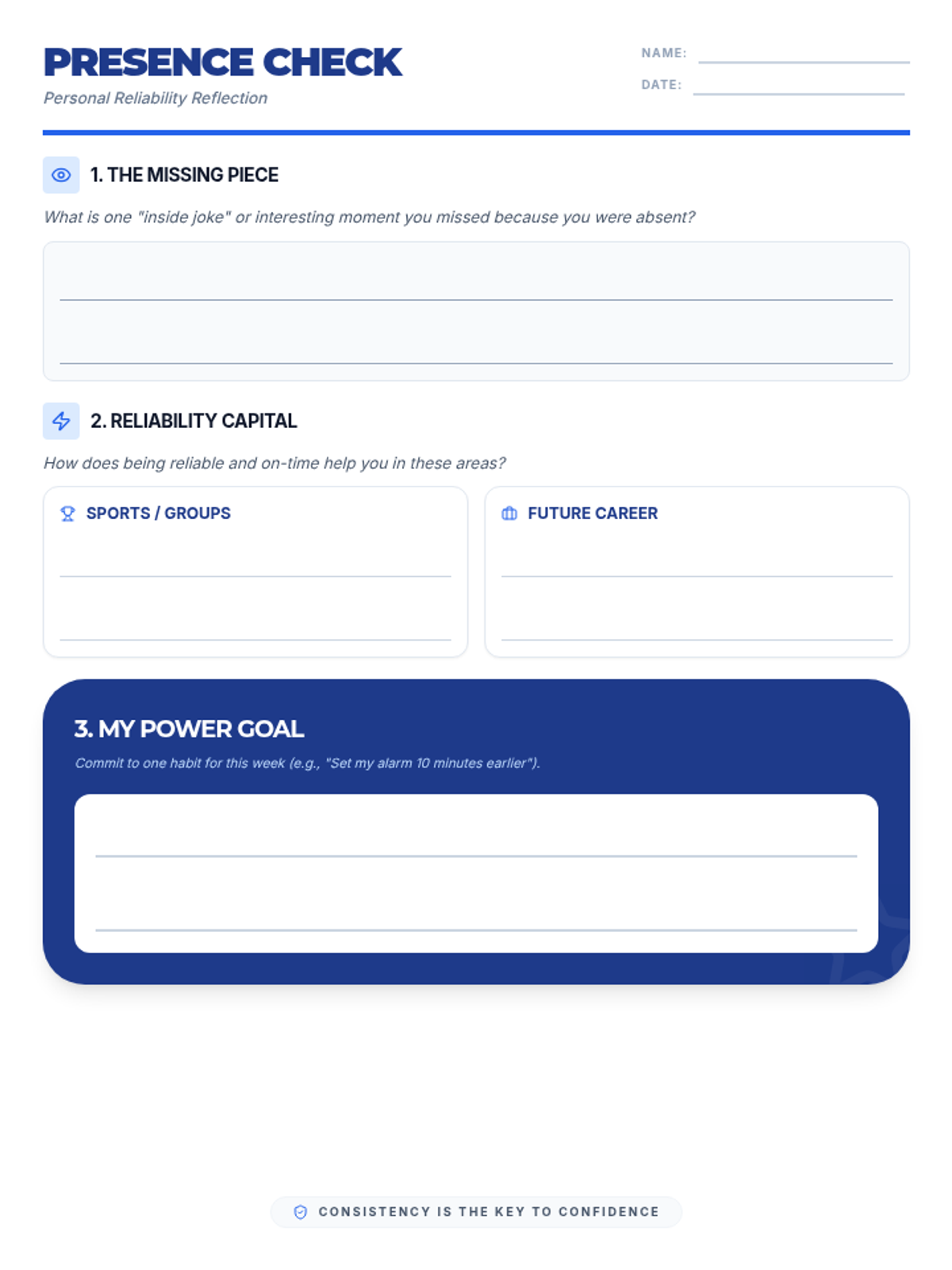
A high-impact, five-minute lesson designed to help middle school students understand the connection between attendance and their personal success.
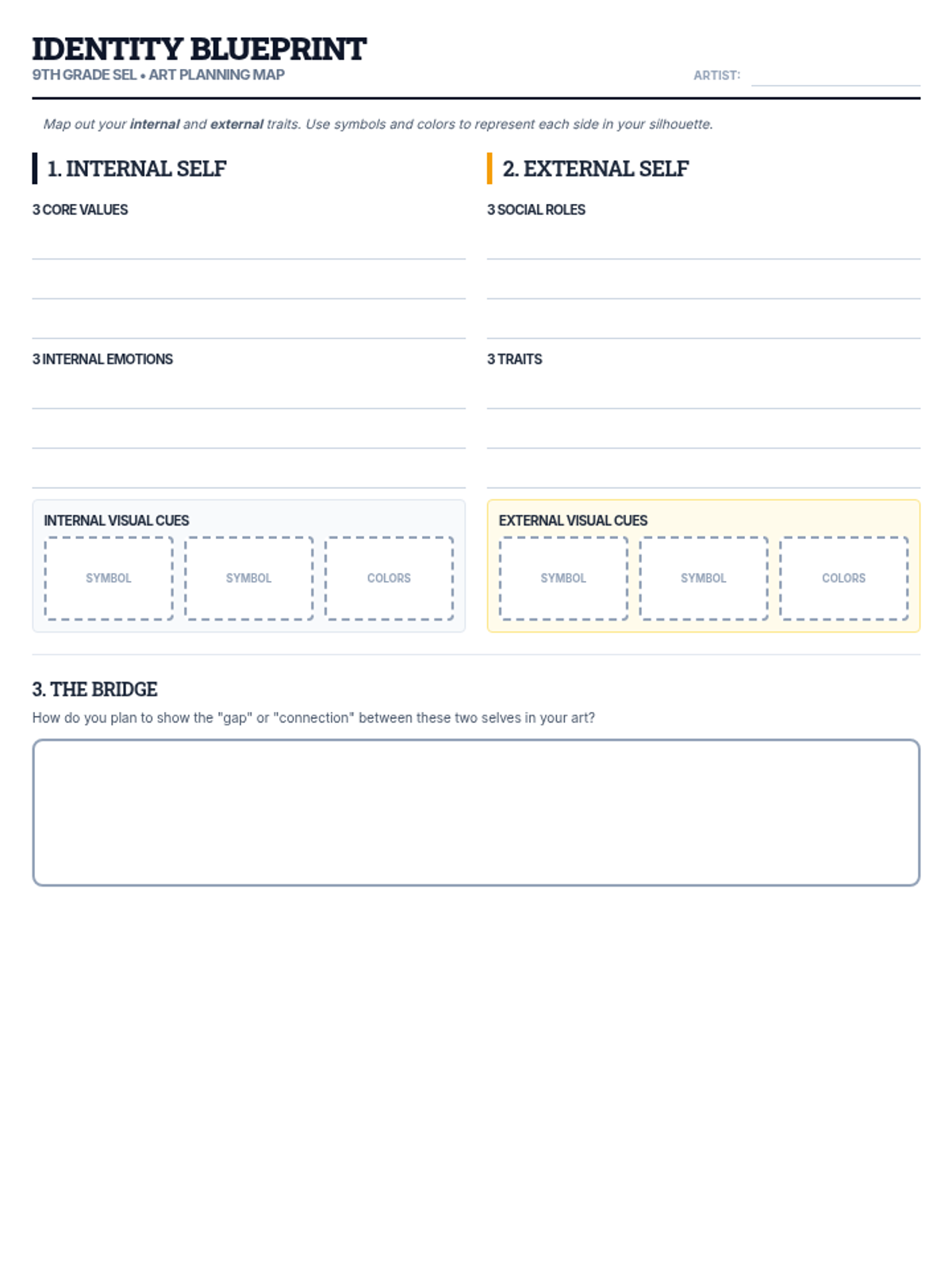
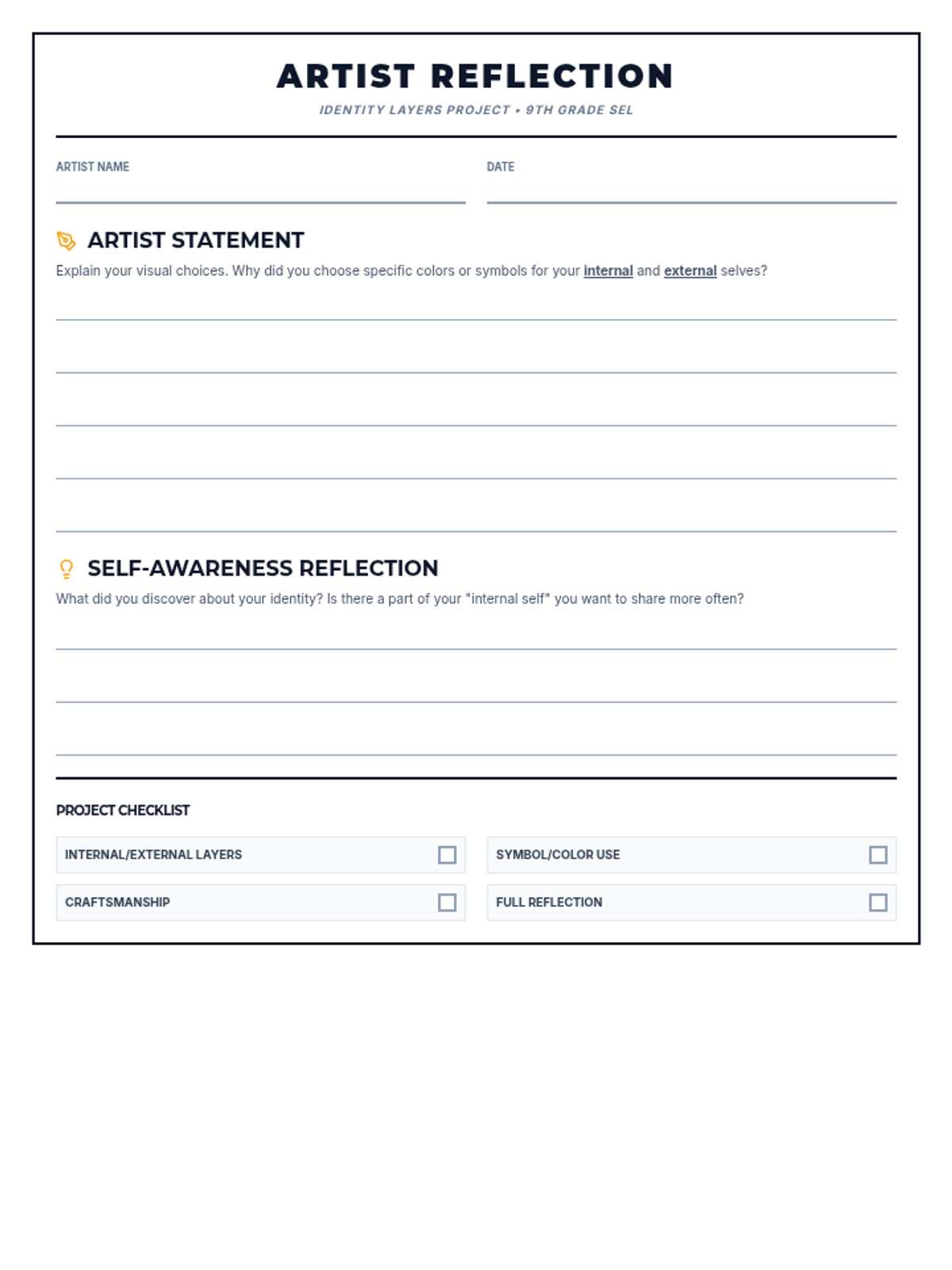
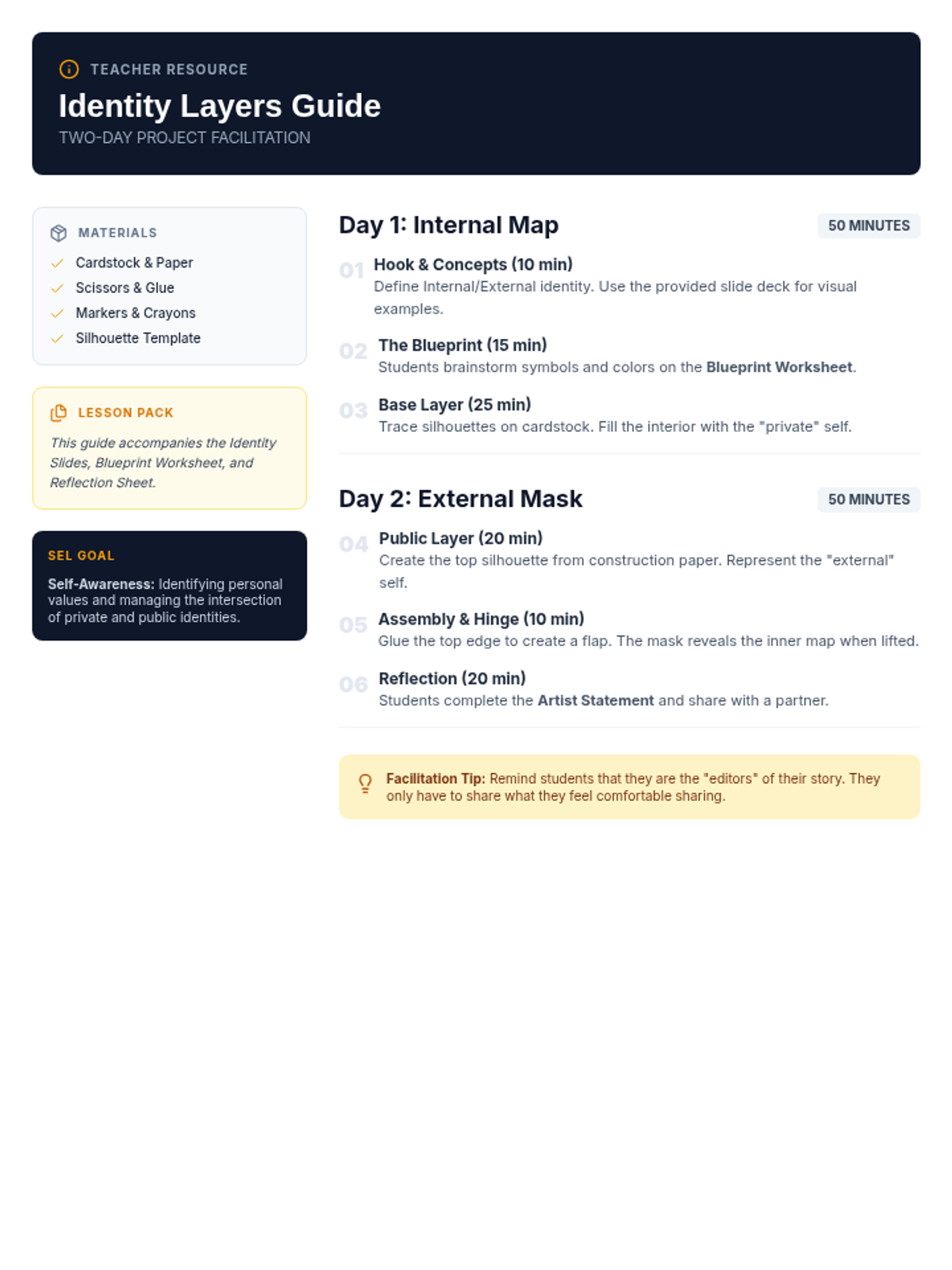
A two-day mixed media art project where students explore the duality of their internal and external identities through silhouette collage. Students brainstorm personal traits, create a visual representation of their 'inner' and 'outer' selves, and reflect on how these identities intersect.
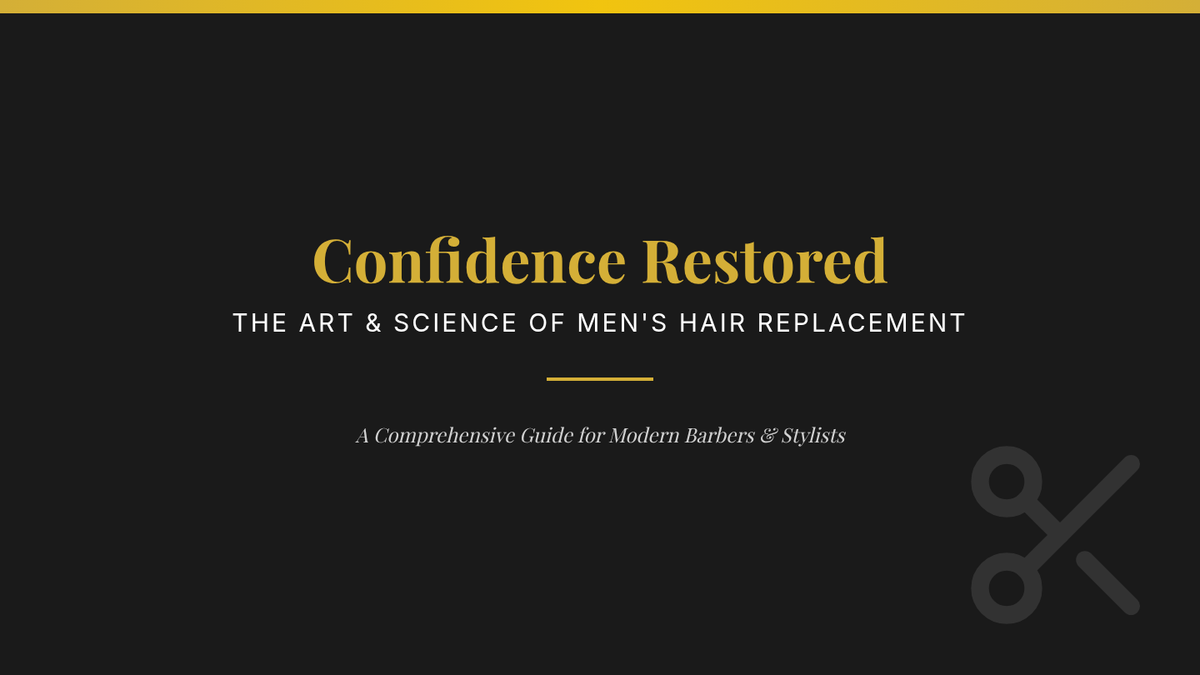
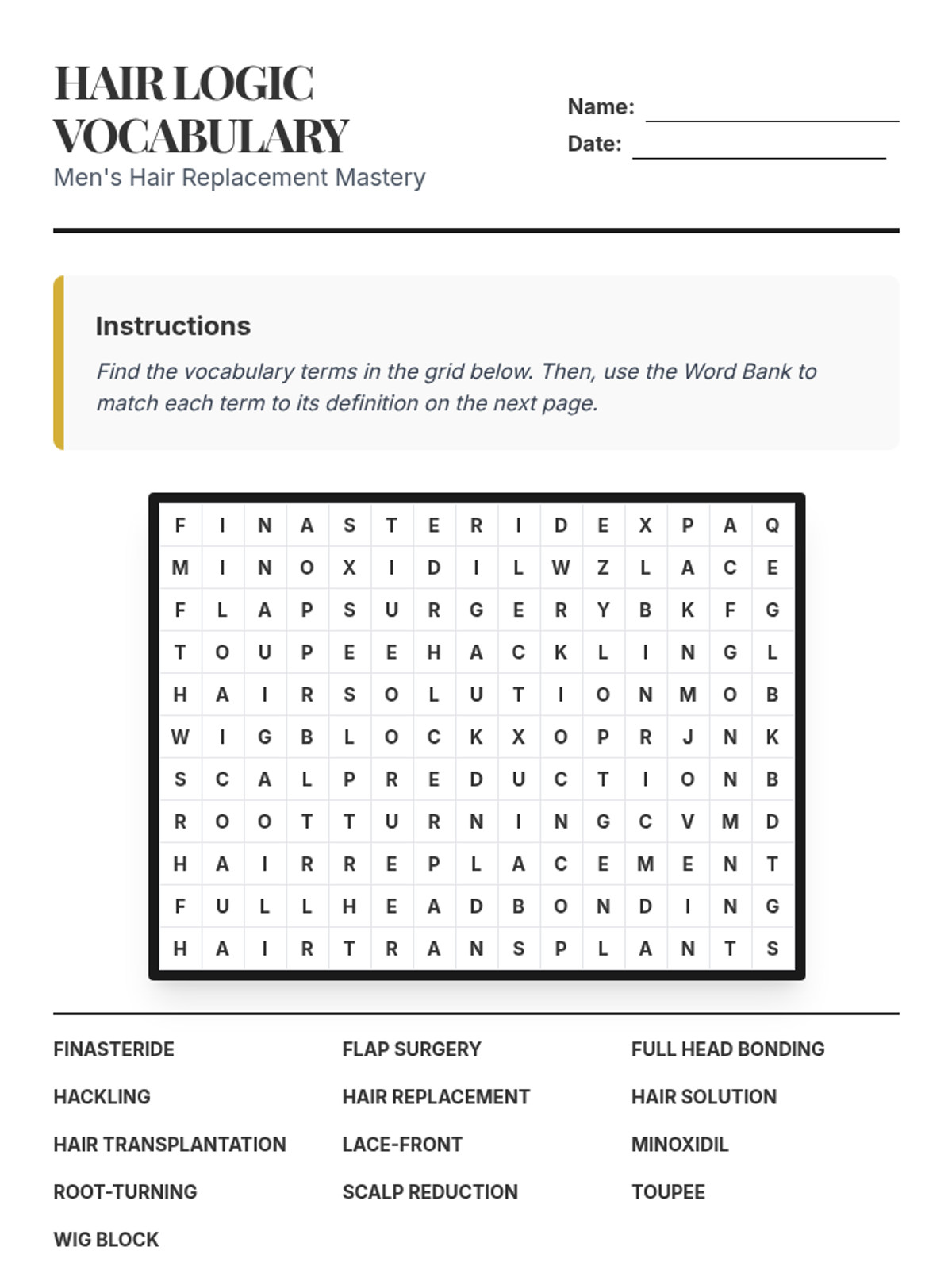
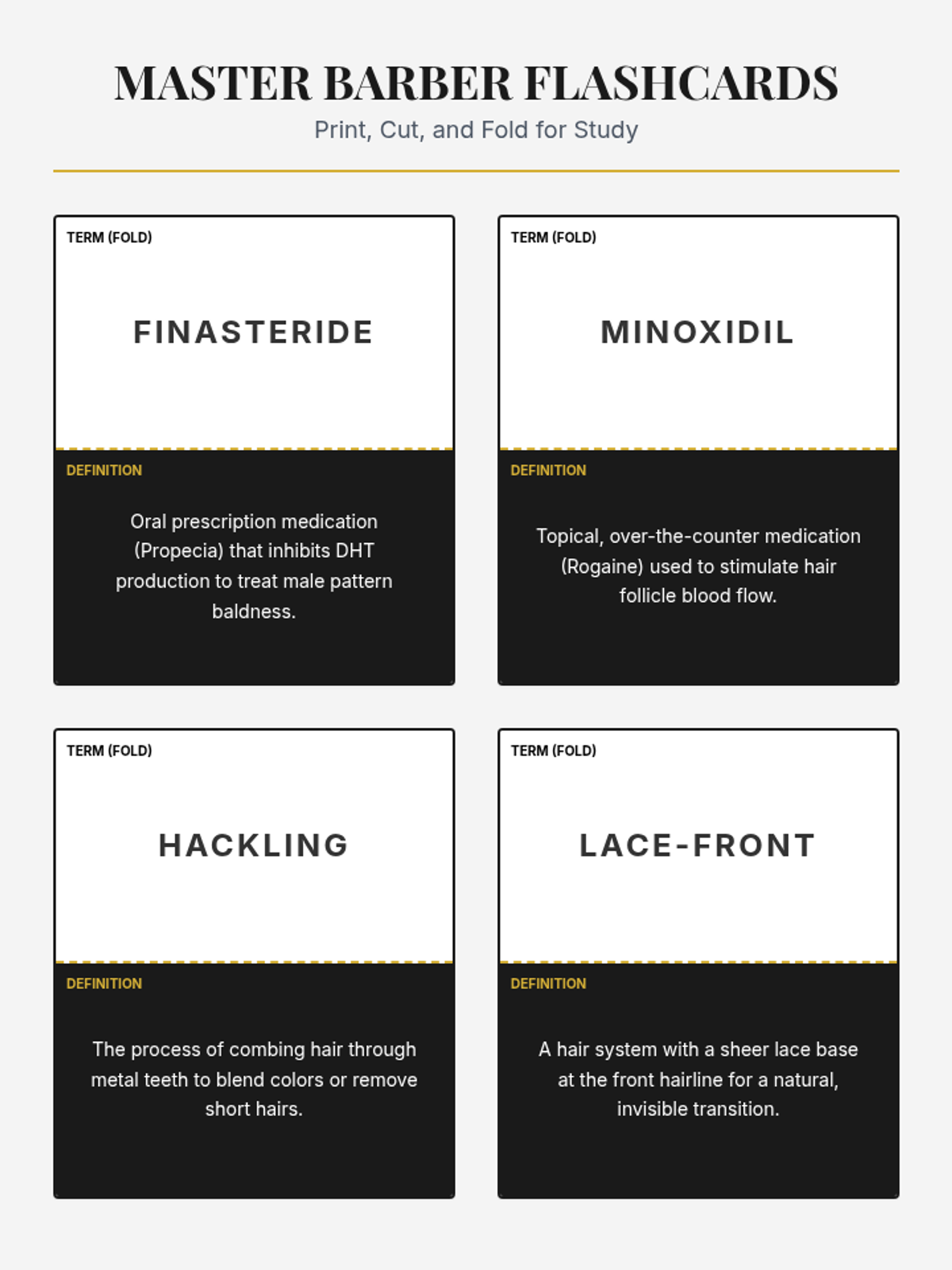
A comprehensive lesson on men's hair replacement systems, covering the psychological and practical reasons for hair replacement, surgical and non-surgical options, and professional terminology.
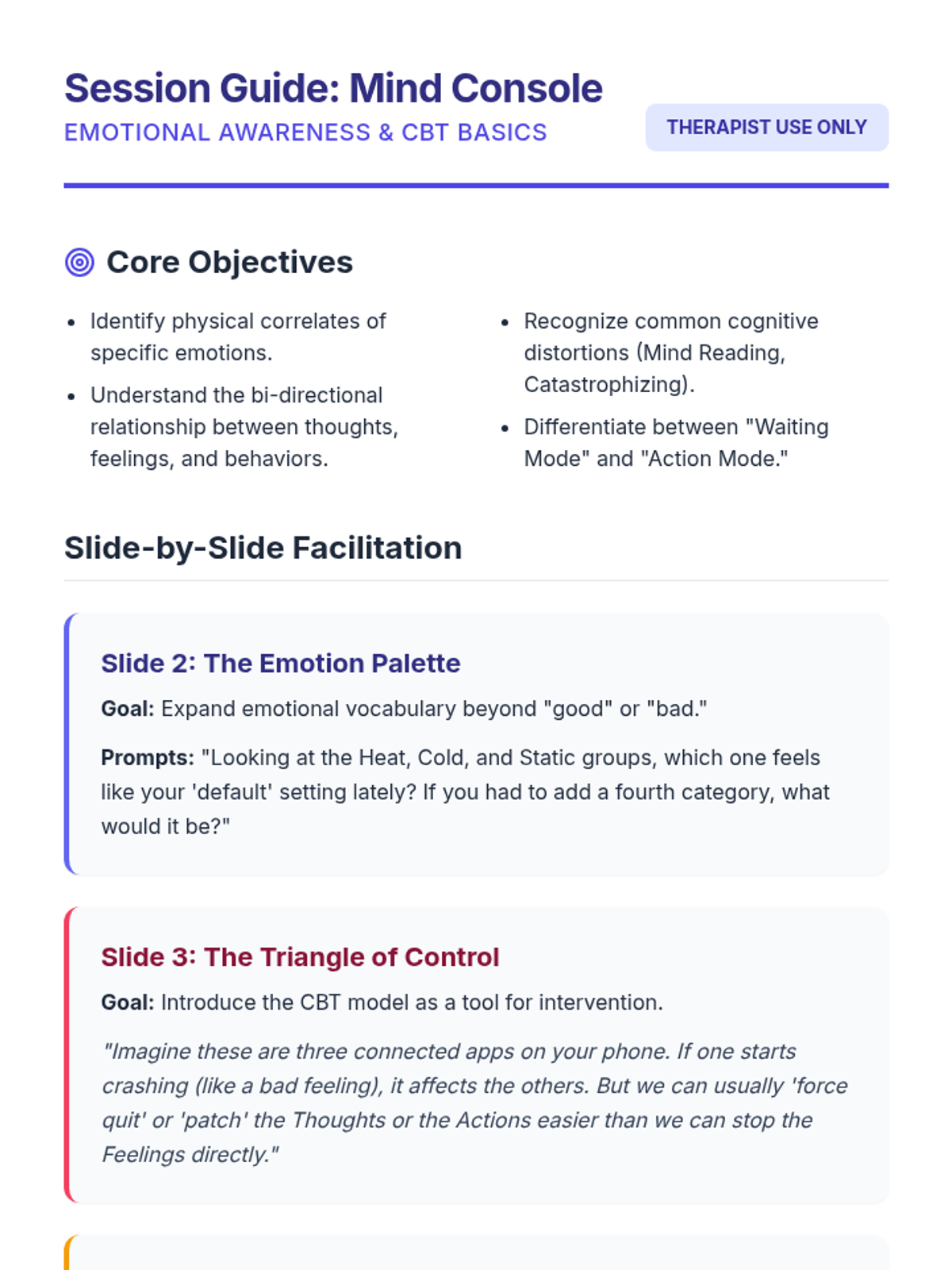
A CBT-focused session for adolescents to build emotional awareness, recognize cognitive distortions, and understand the link between thoughts, feelings, and behaviors.
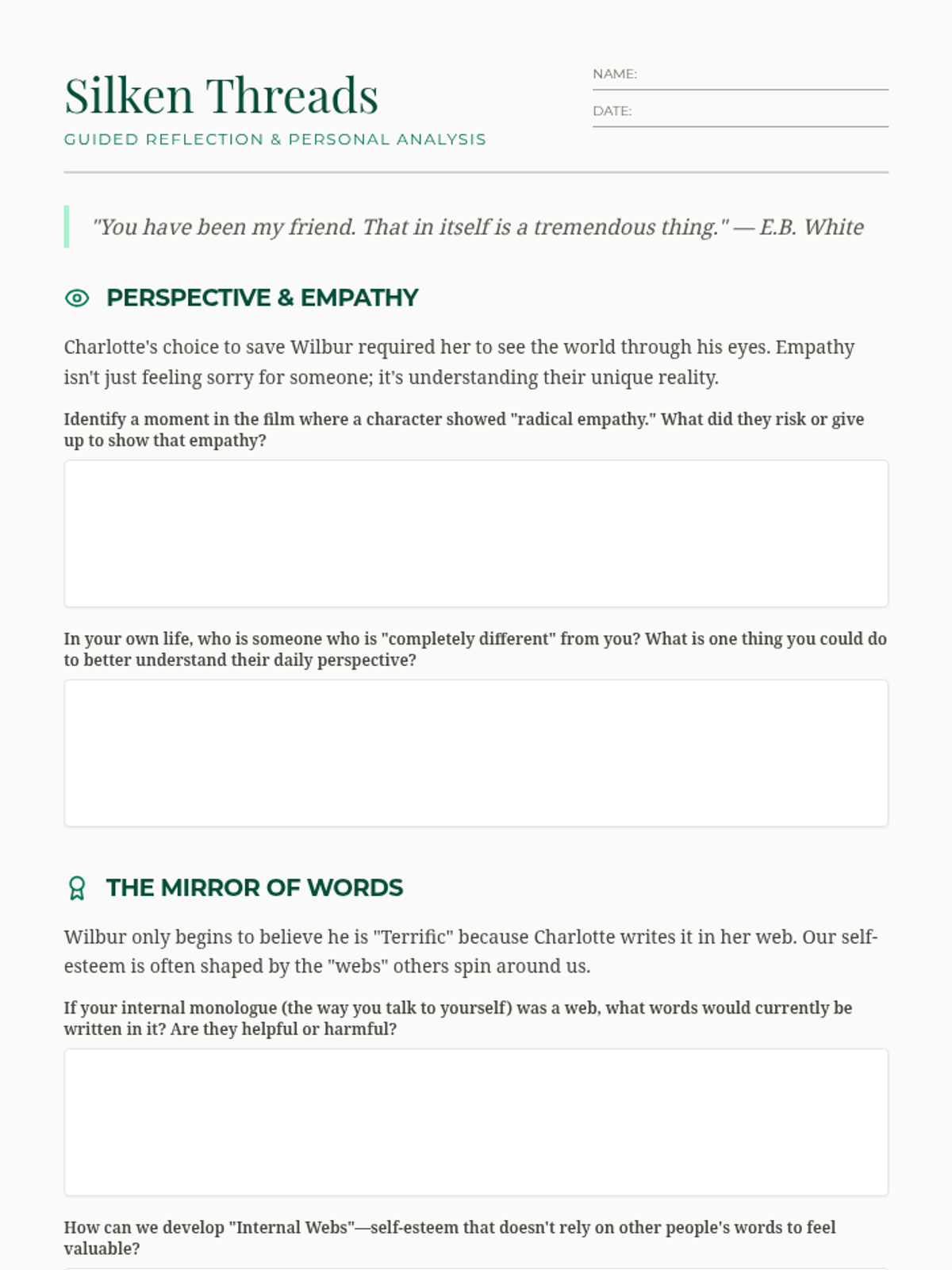
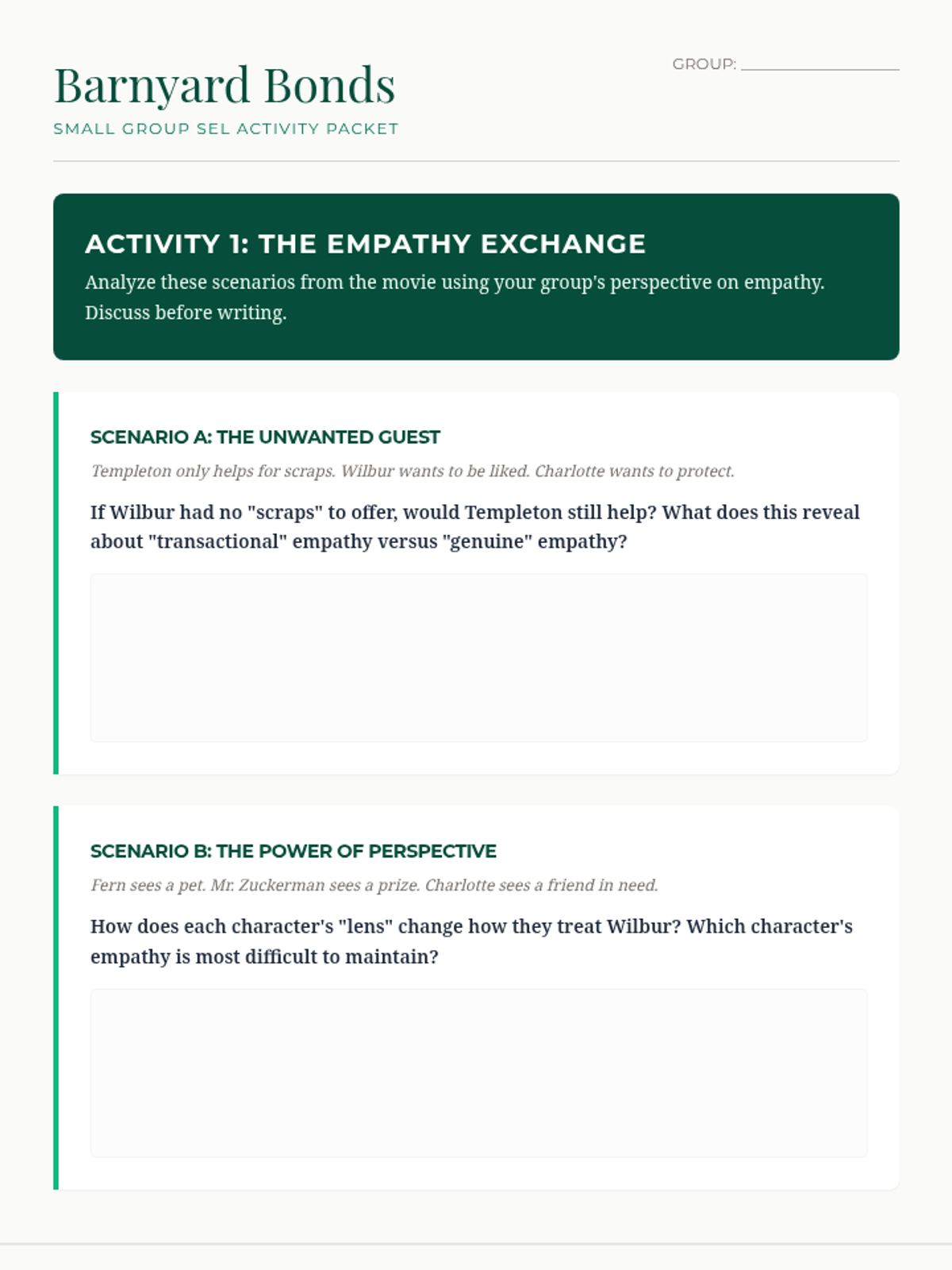
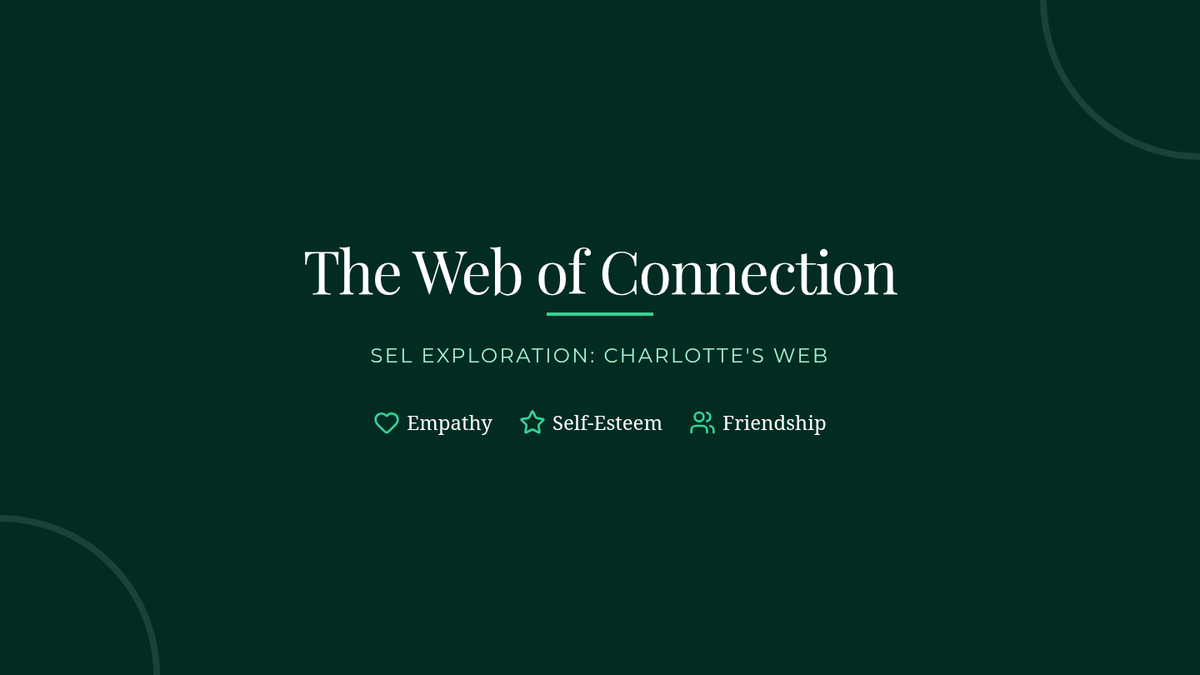
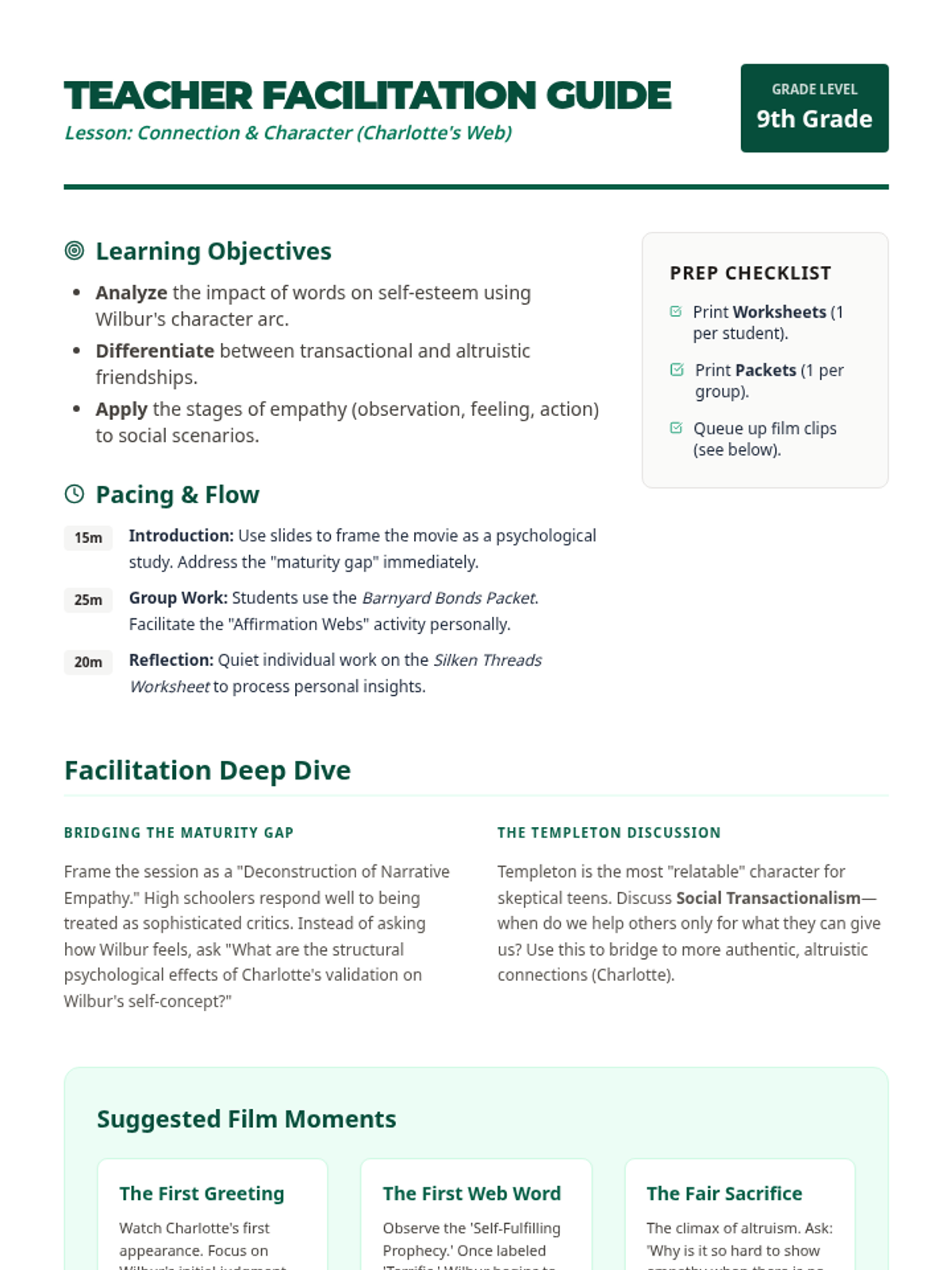
A social-emotional learning lesson for 9th graders exploring empathy, self-esteem, and friendship through the lens of the film Charlotte's Web. Students analyze character dynamics to understand their own social worlds.
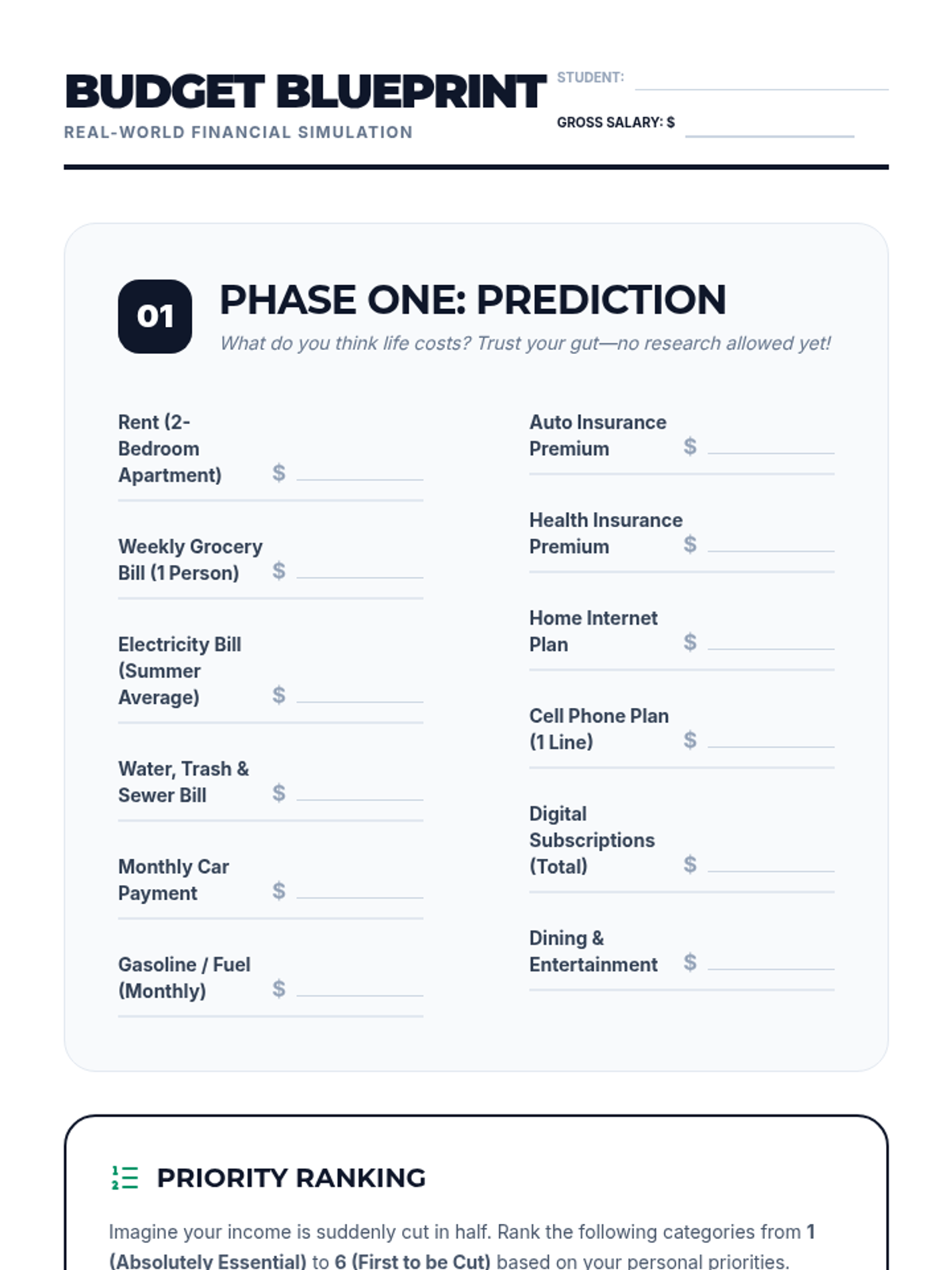
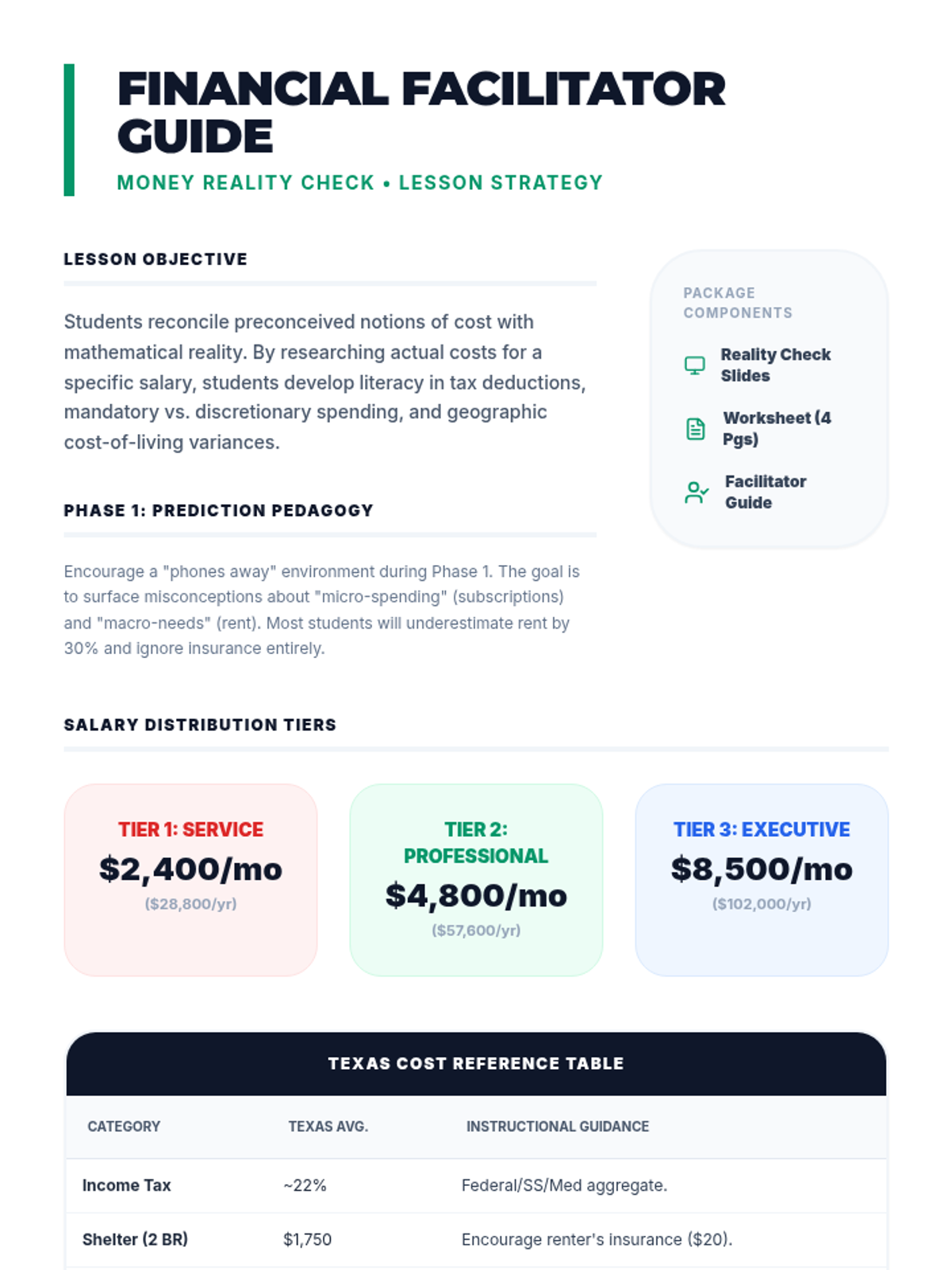
A practical budgeting lesson where students predict real-world costs, research actual expenses for a specific salary, and reconcile their expectations with financial reality.
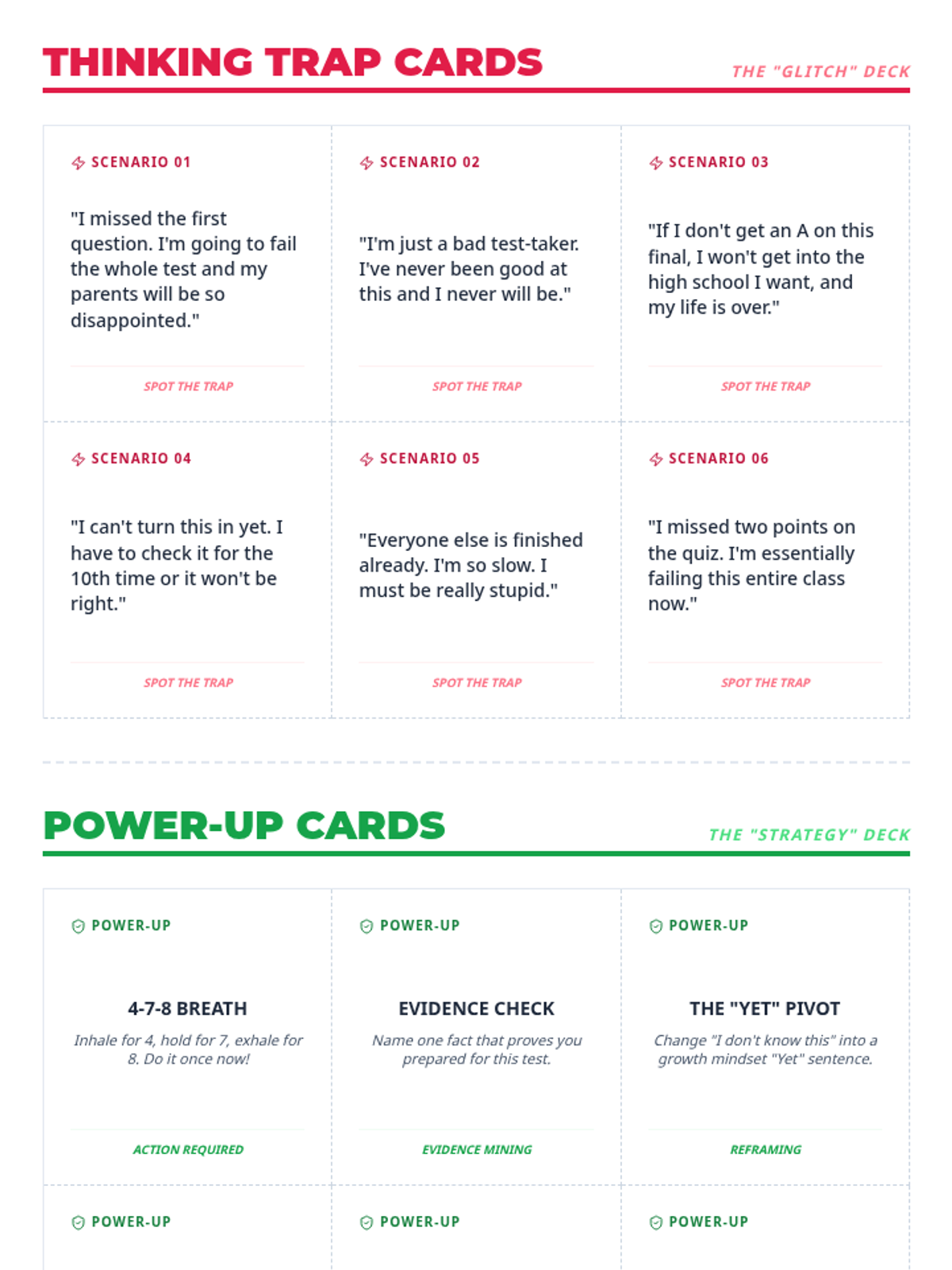
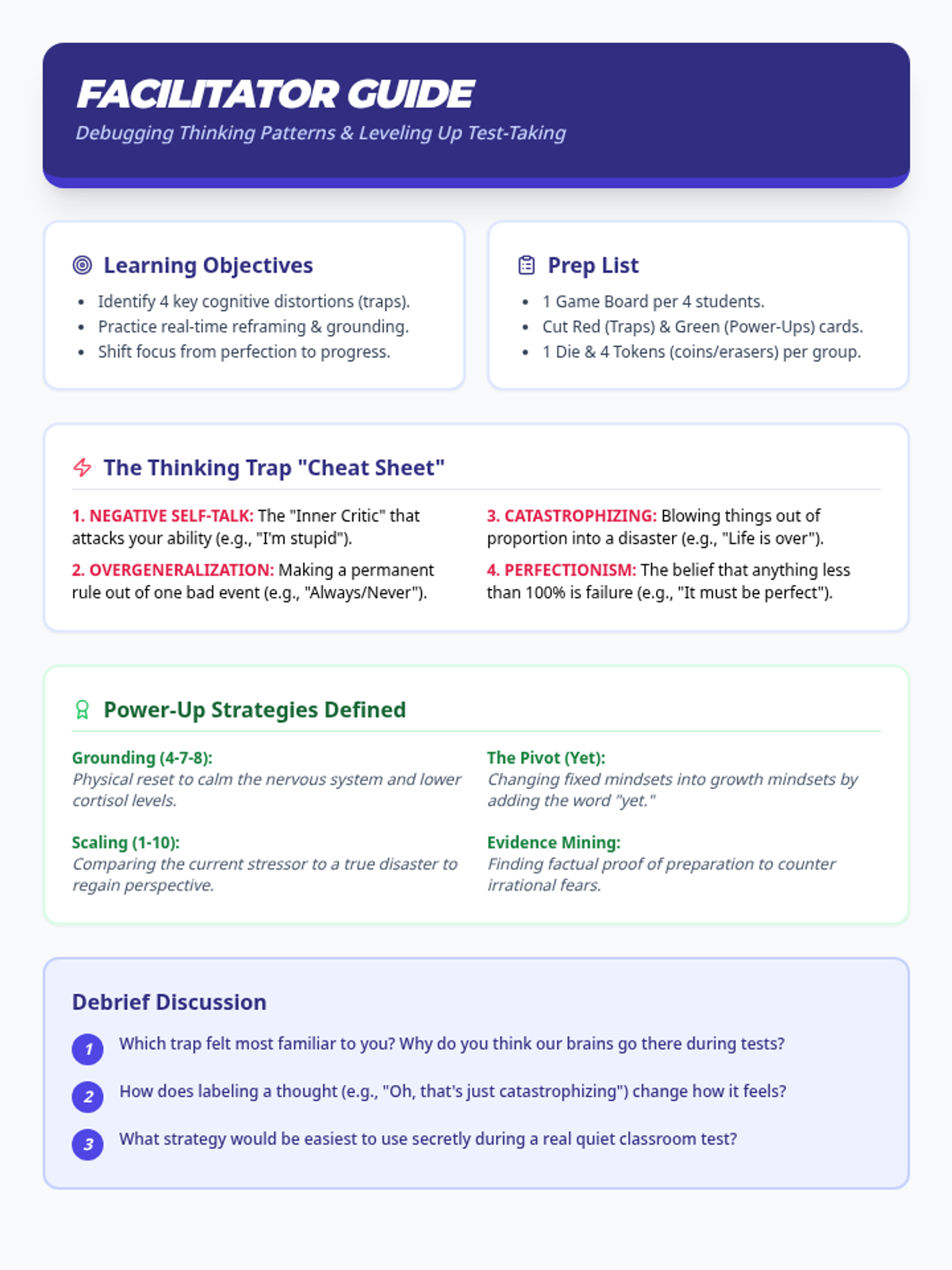
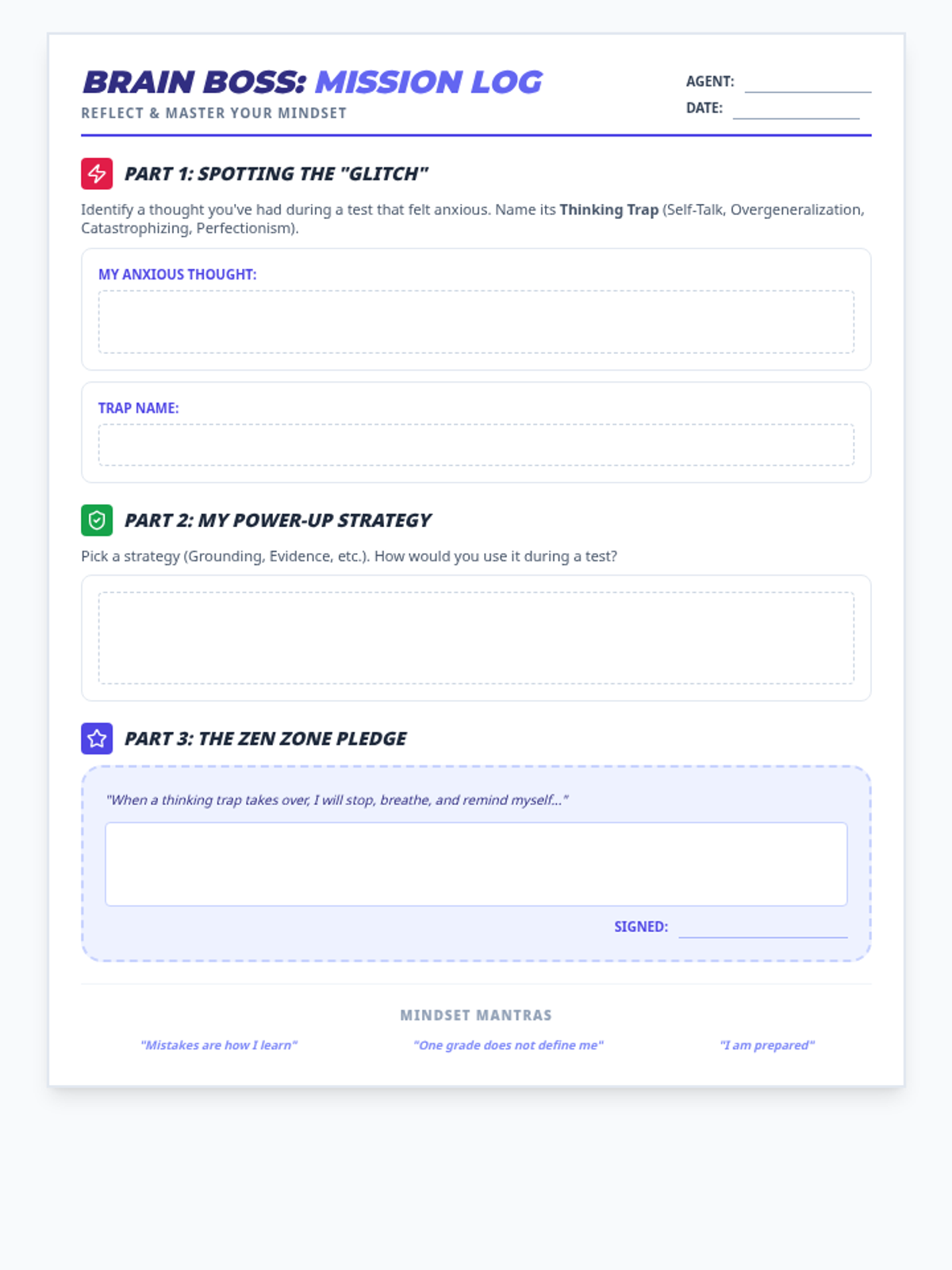
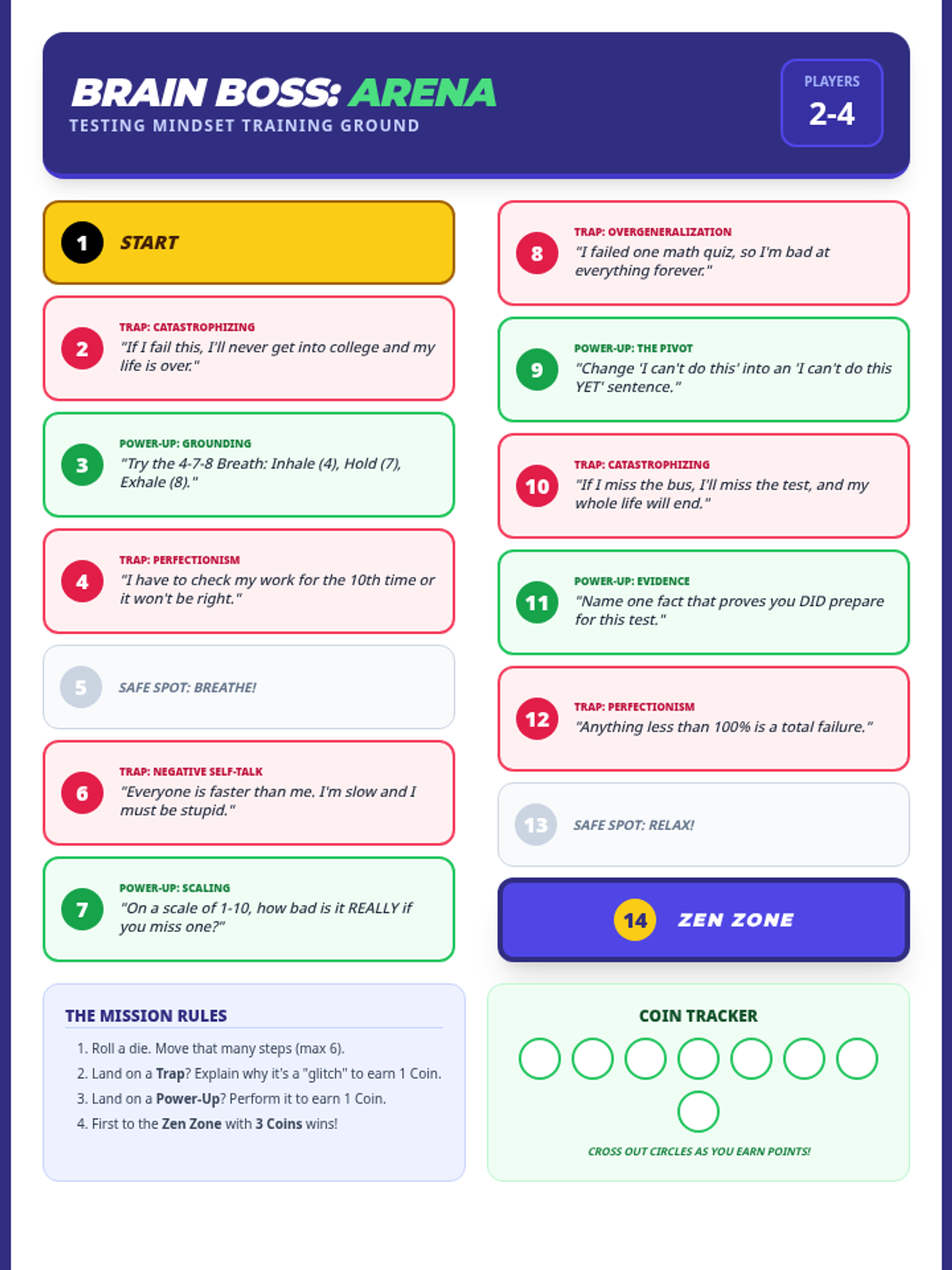
An interactive board game lesson designed for middle schoolers to identify and reframe negative thinking patterns—like catastrophizing and perfectionism—that fuel test anxiety.