Students will create story maps based on a short tale about a girl and an injured bird, focusing on identifying key emotional moments and reflecting on characters' feelings to foster empathy.
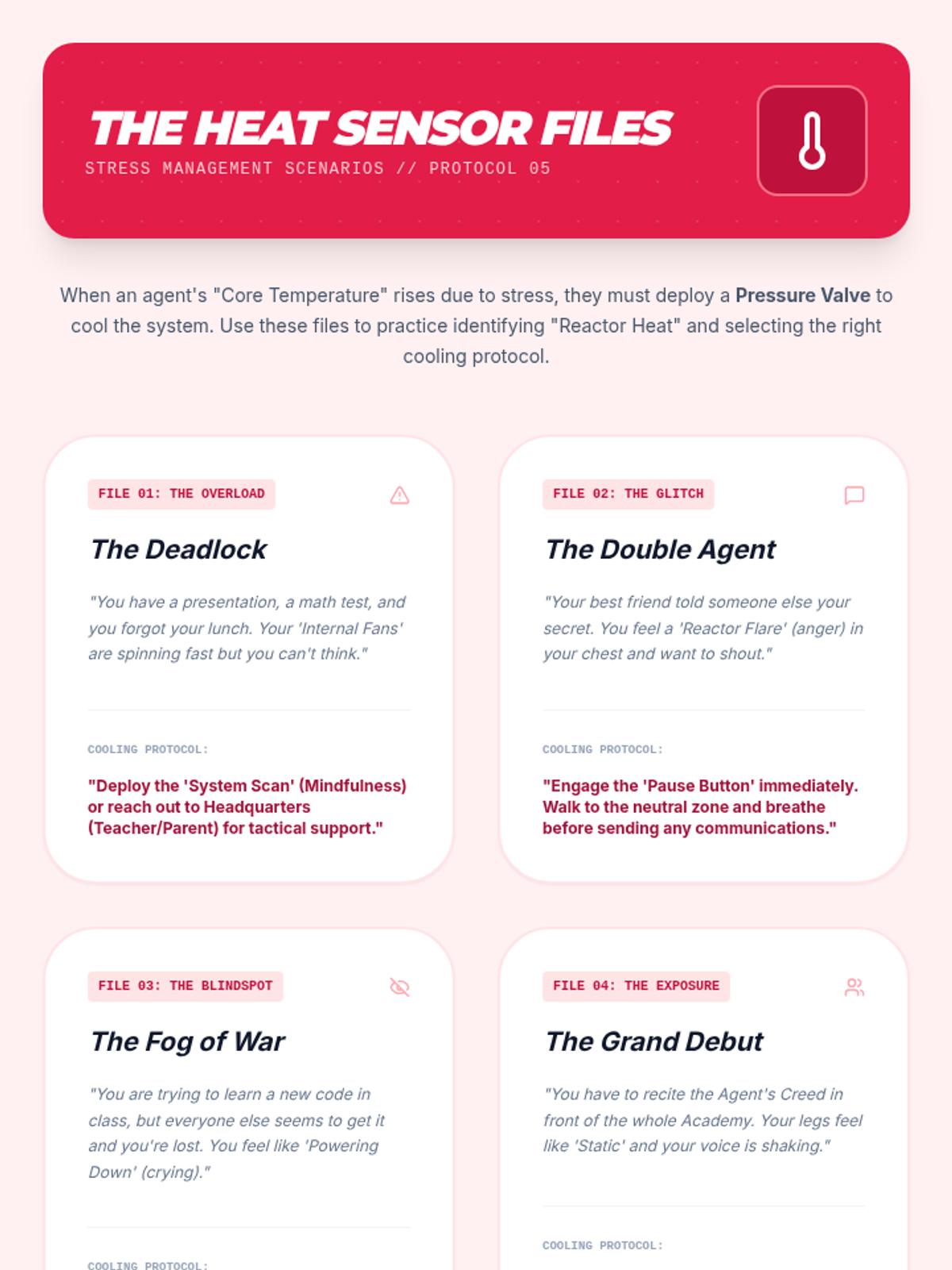
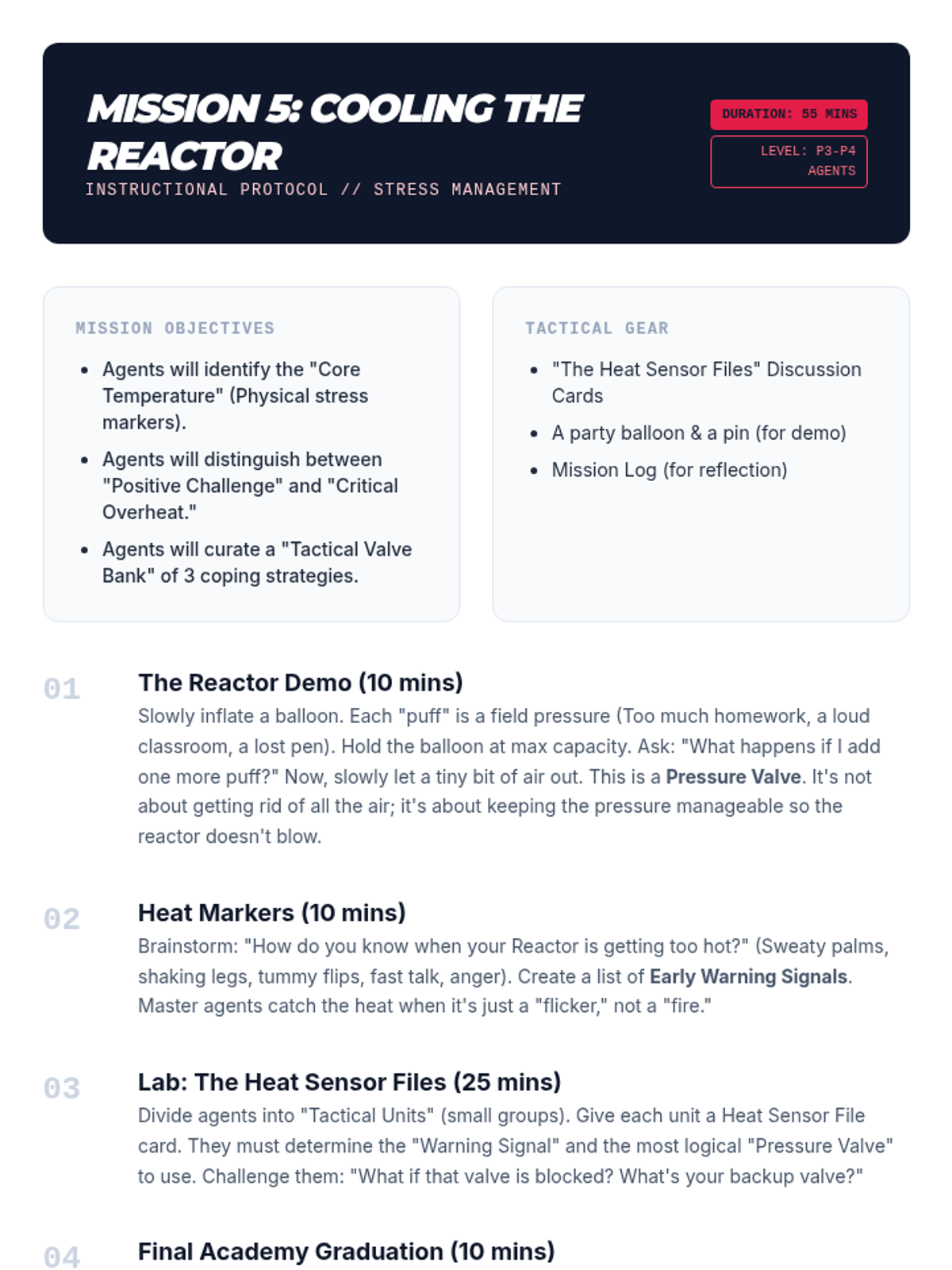
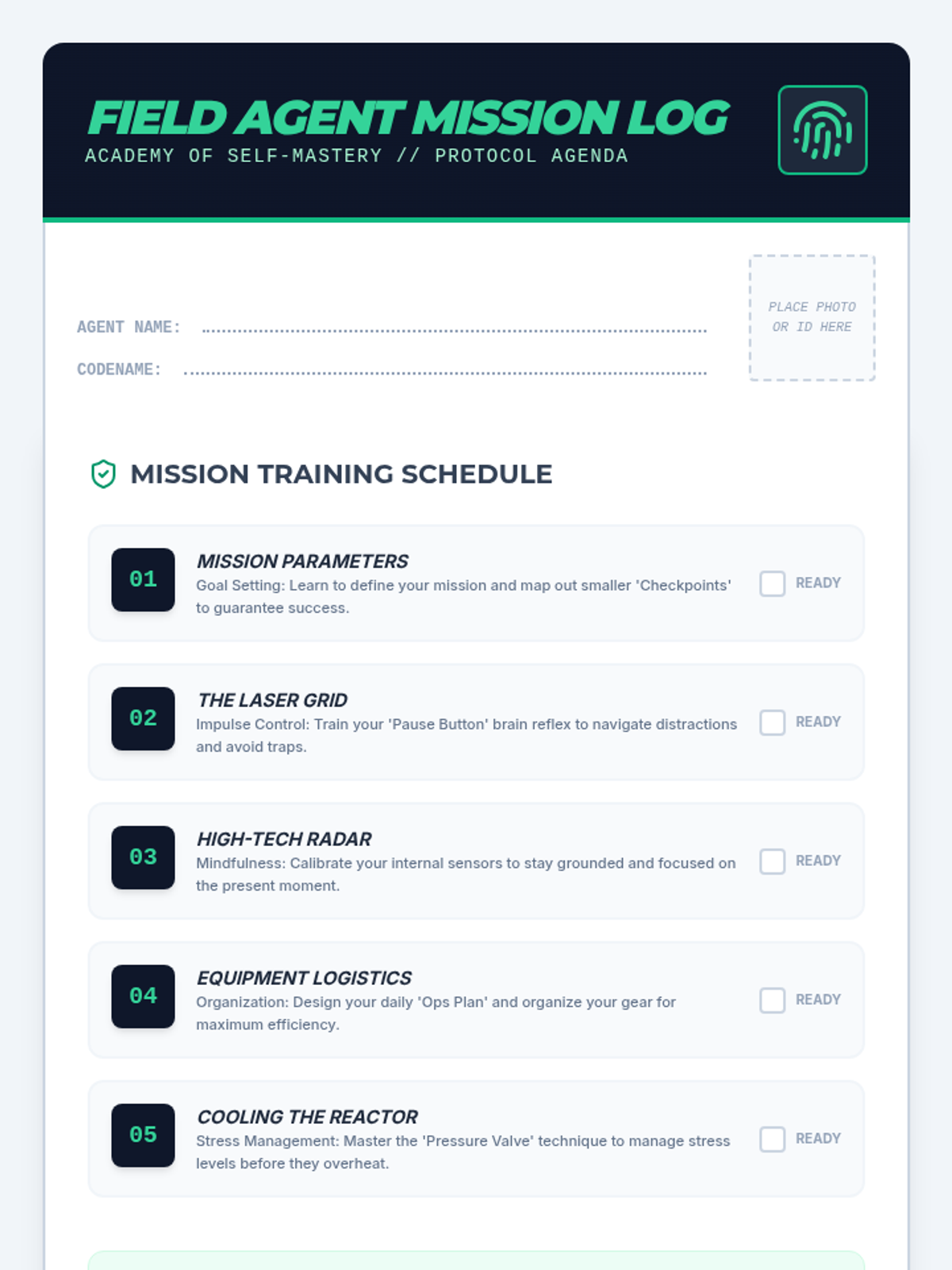
Agents learn to identify 'reactor heat' (stress) and use cooling valves to maintain operational status.
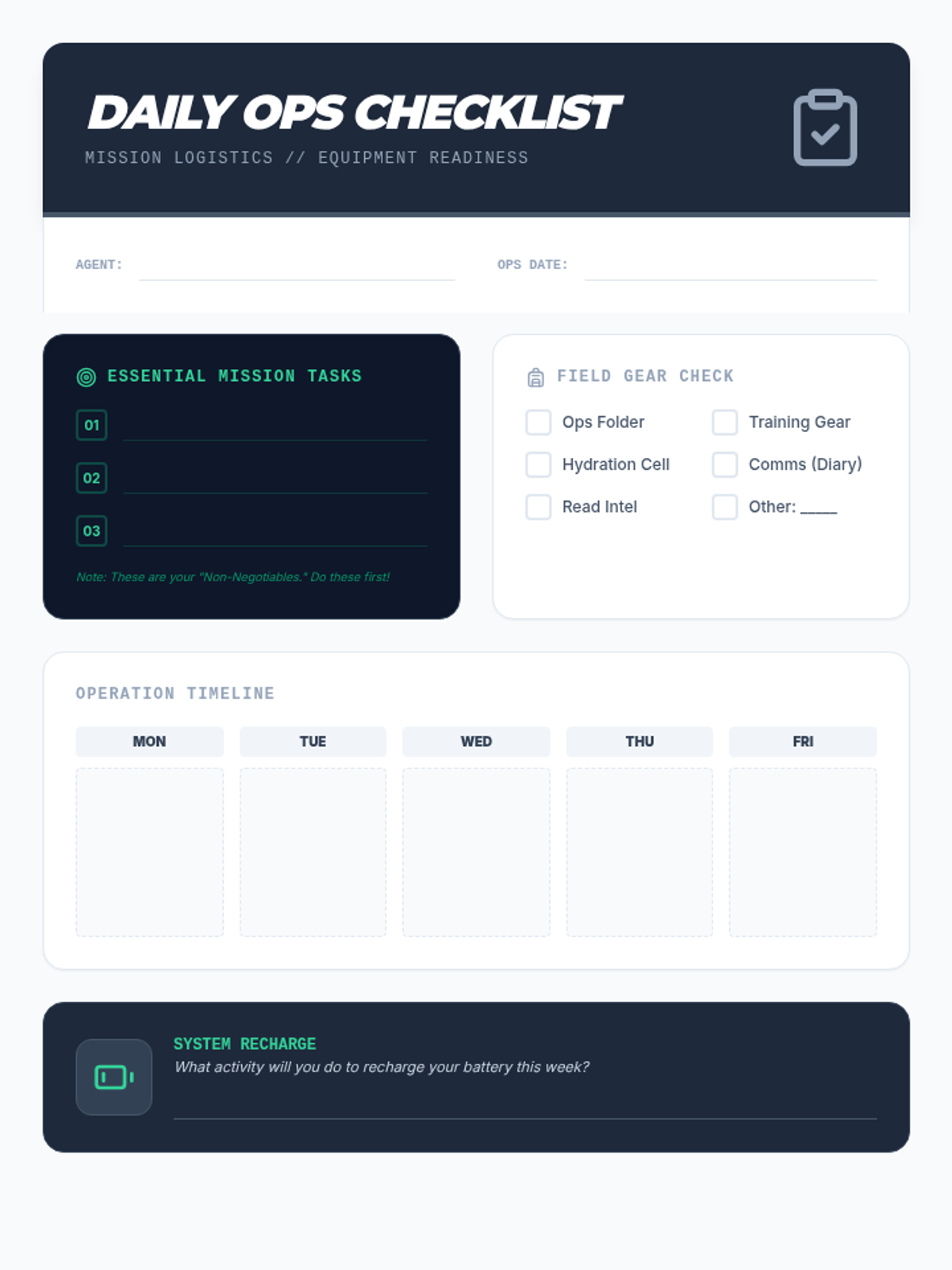
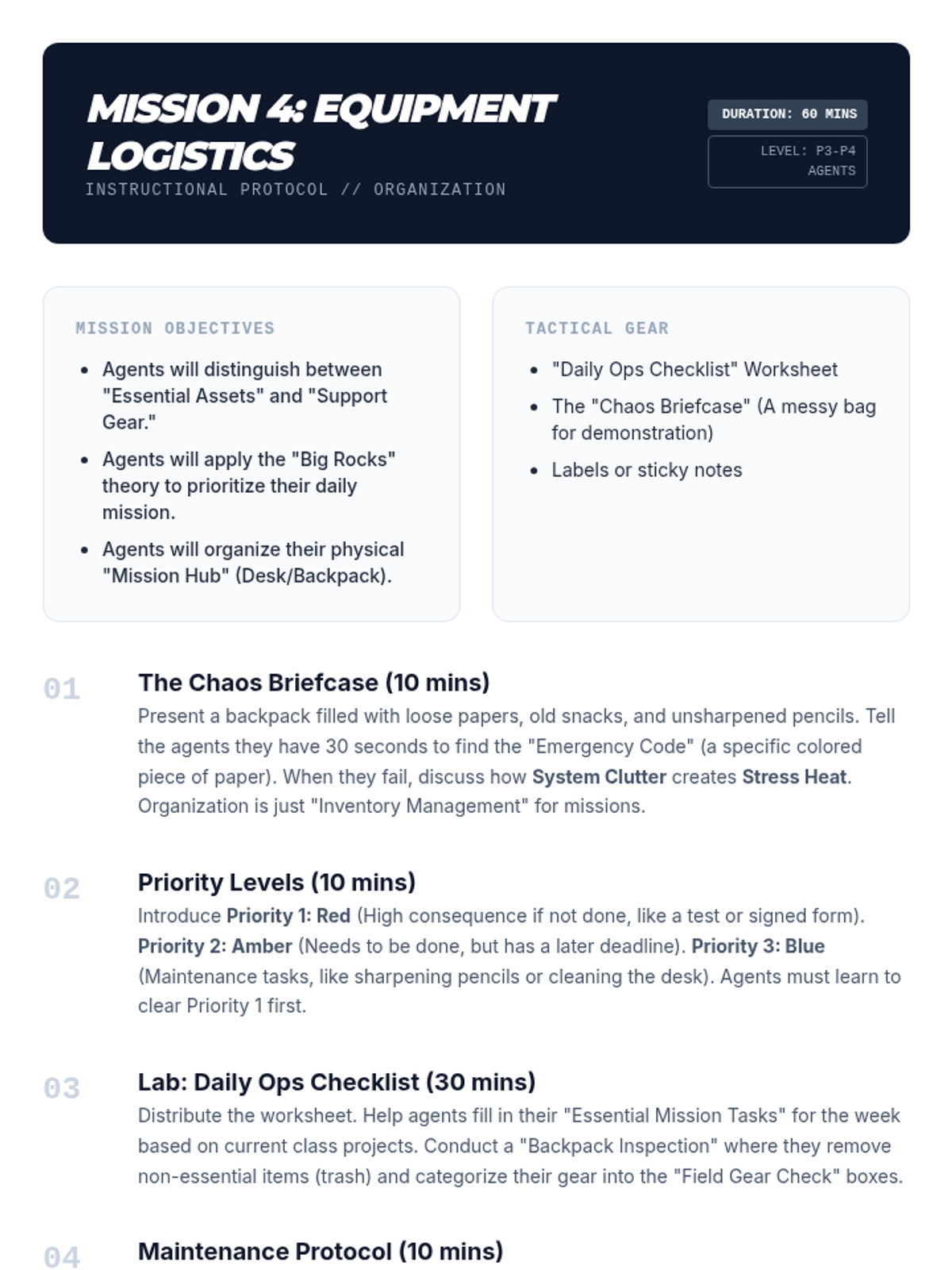
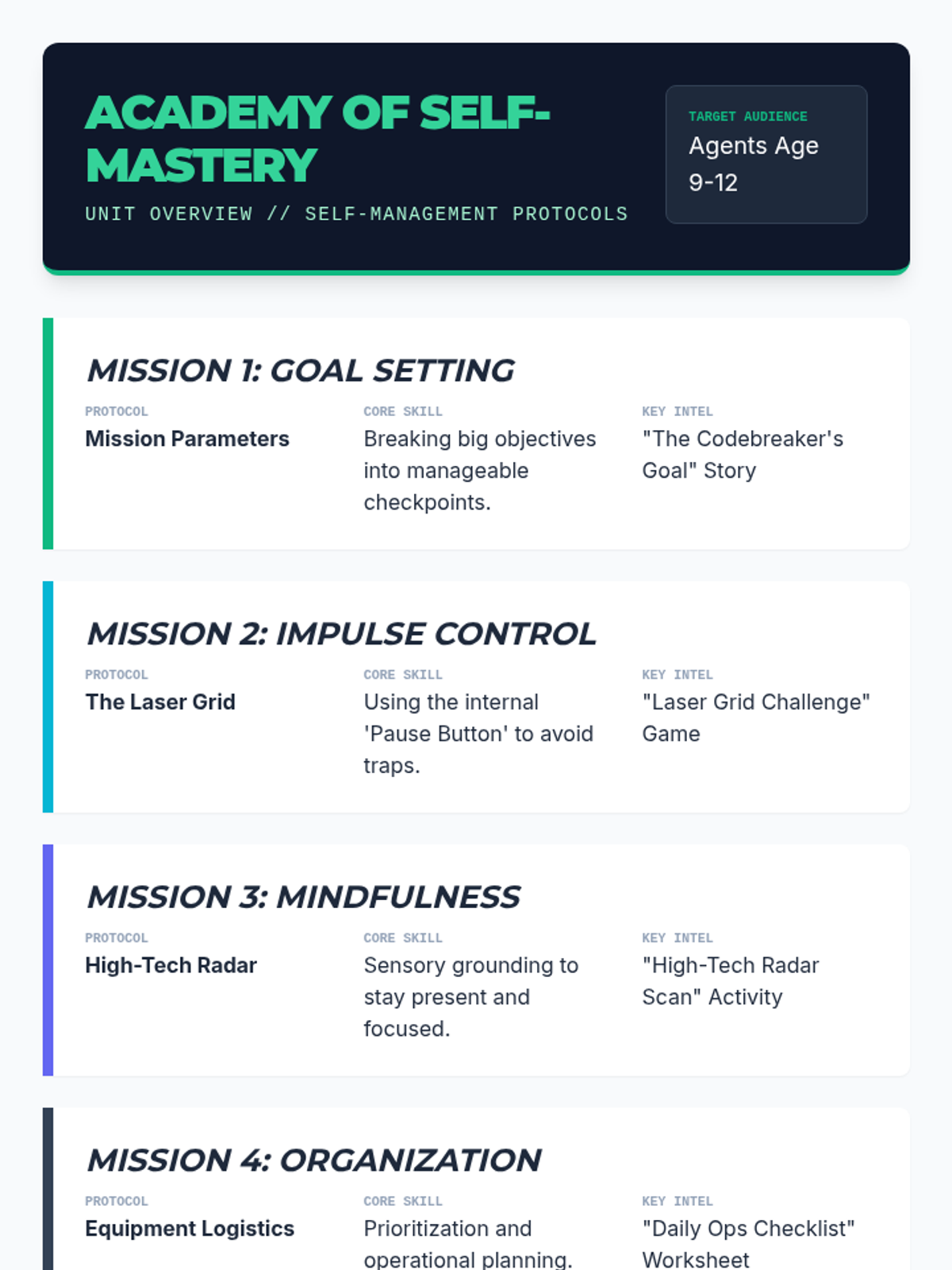
Agents master the logistics of their daily operations through effective planning and organization.
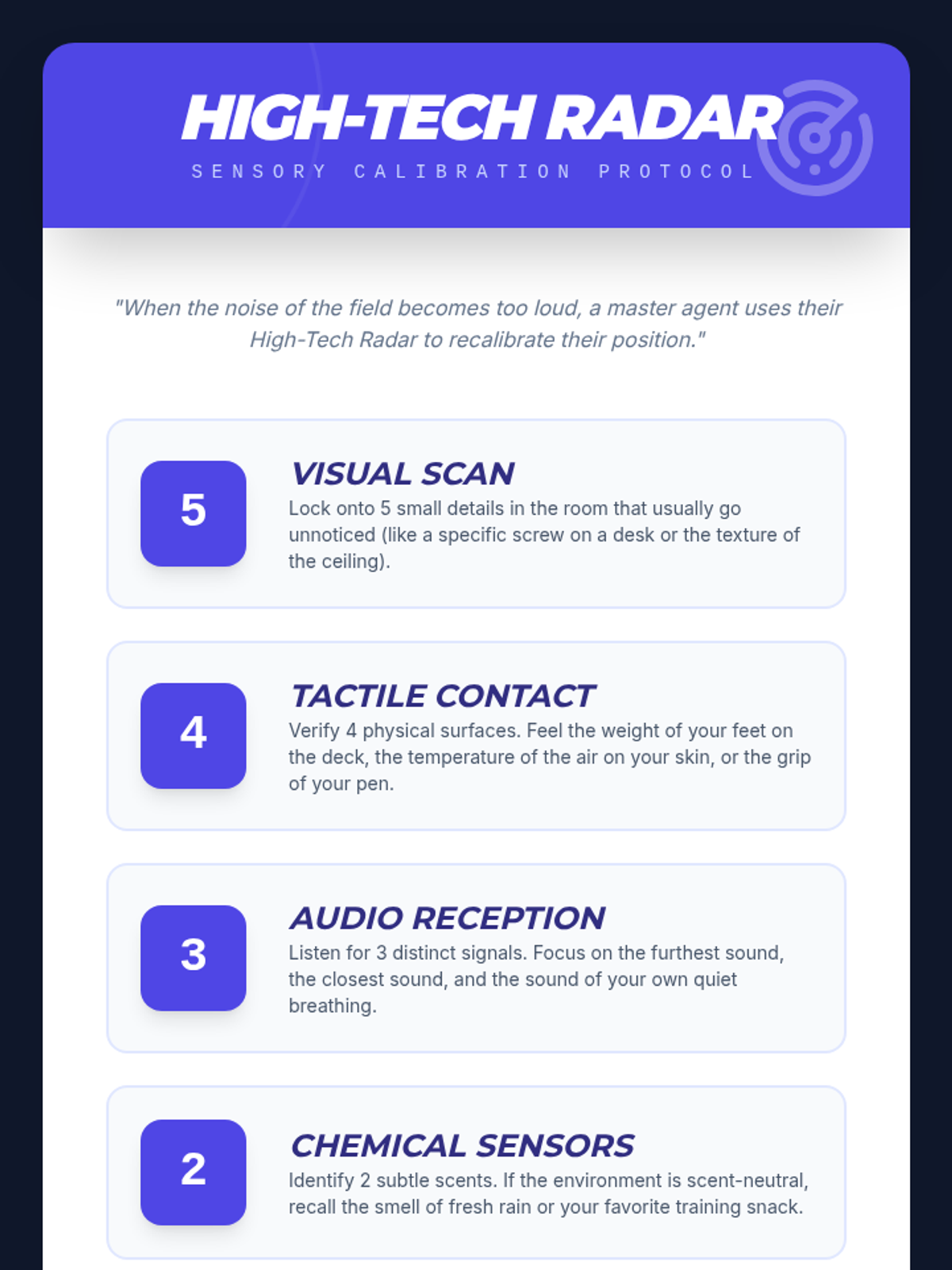
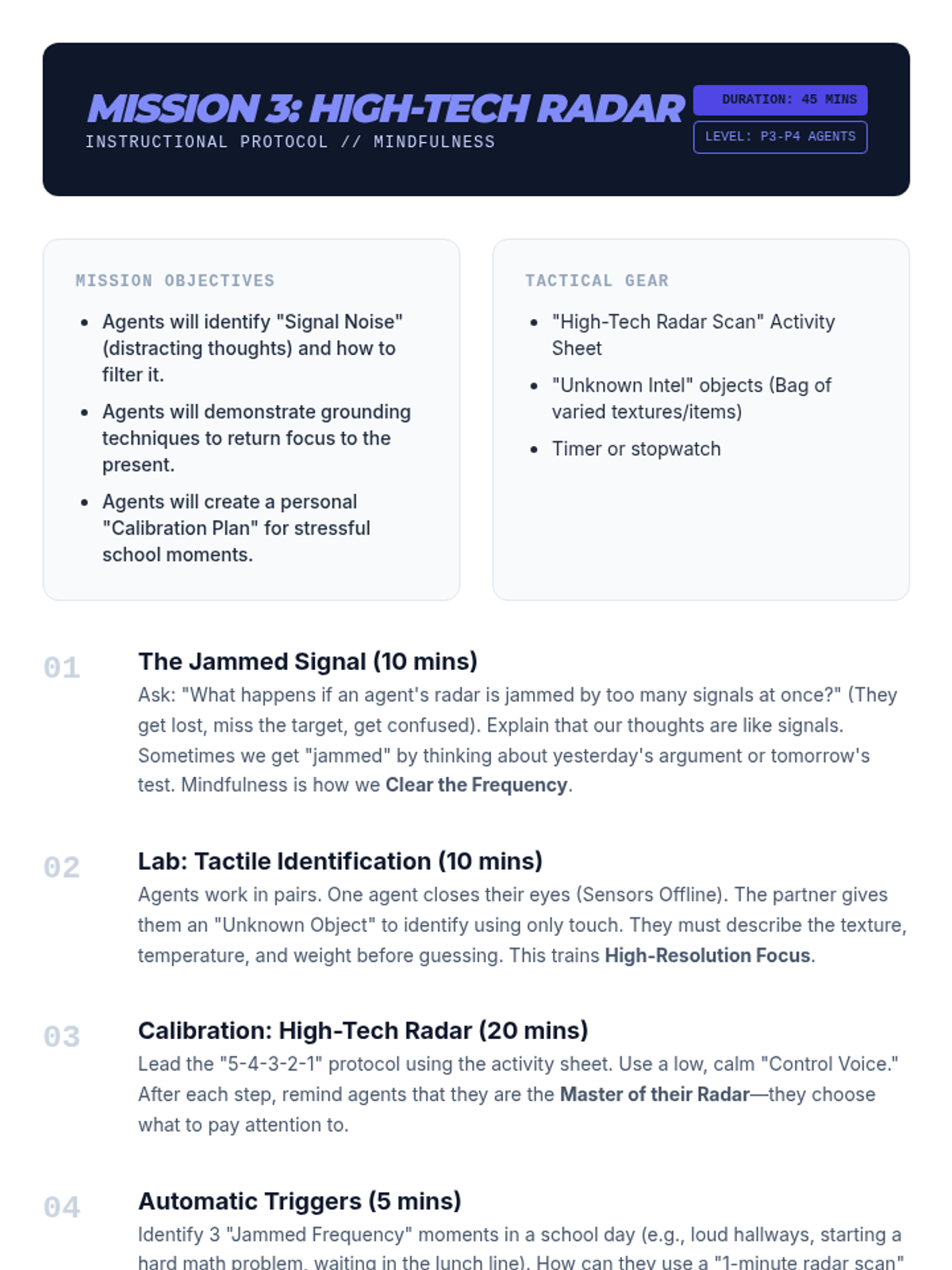
Agents calibrate their internal radar using sensory grounding techniques to stay focused.
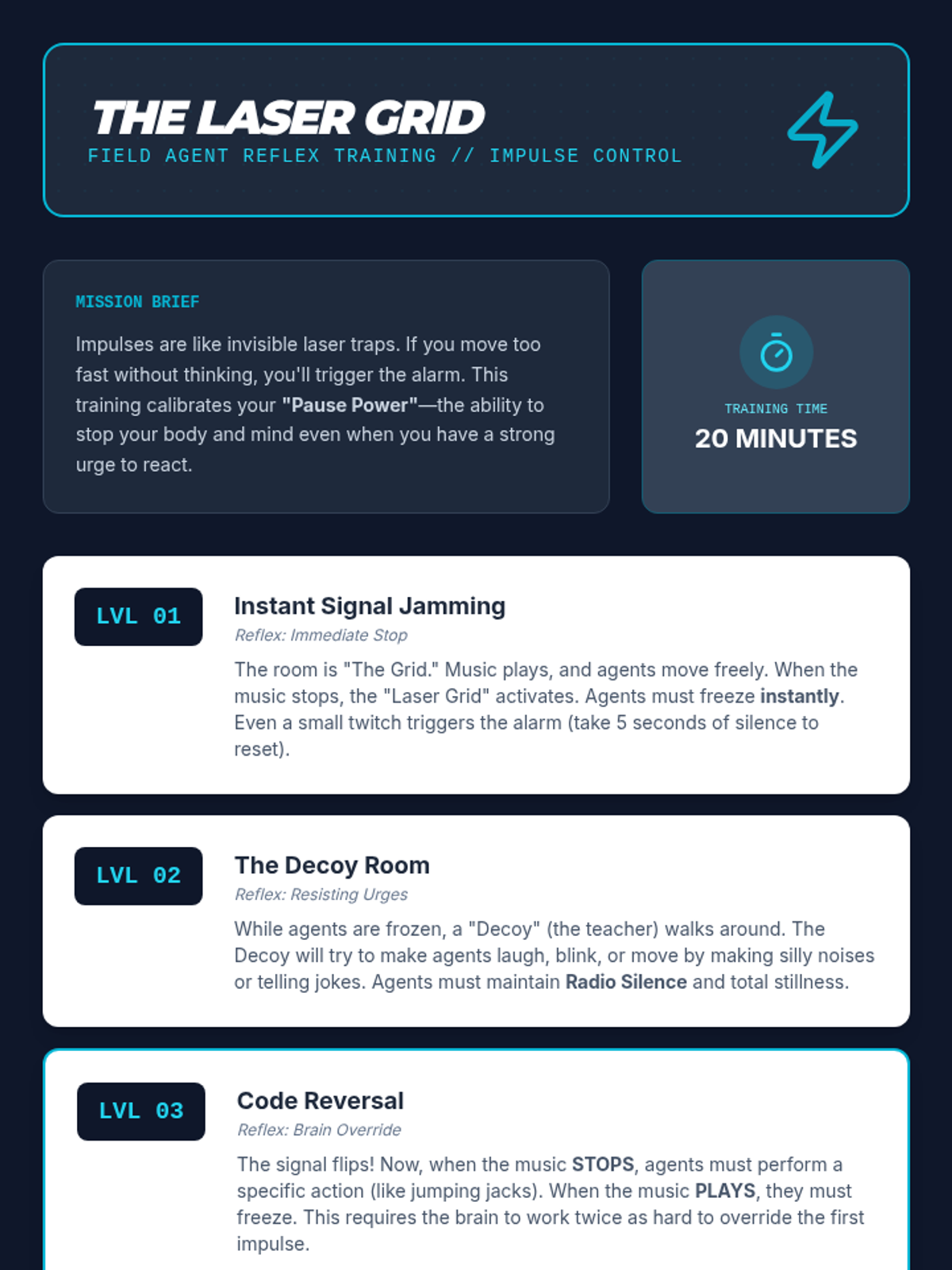
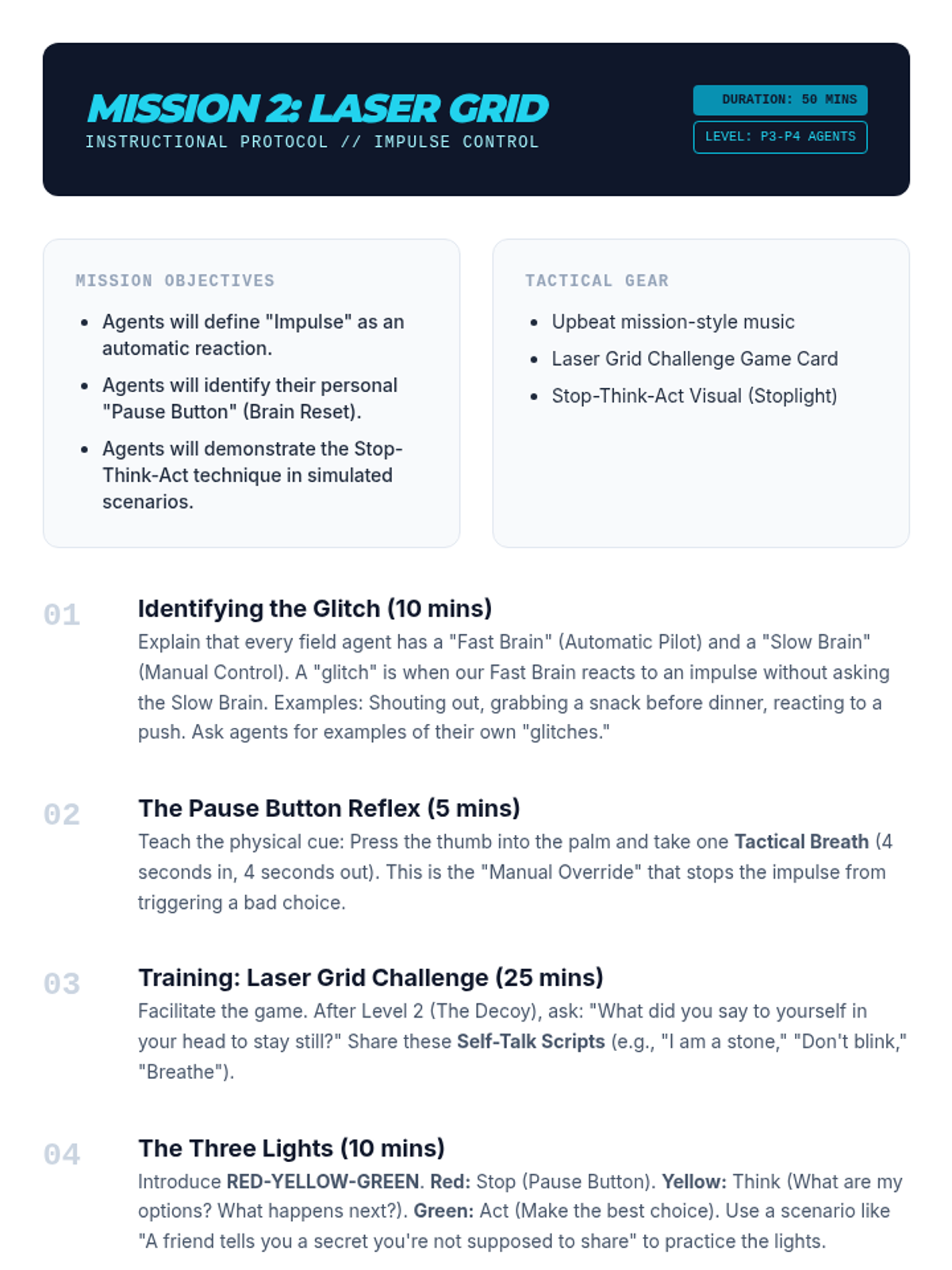
Agents practice navigating the 'Laser Grid' of impulses by using their internal pause button.
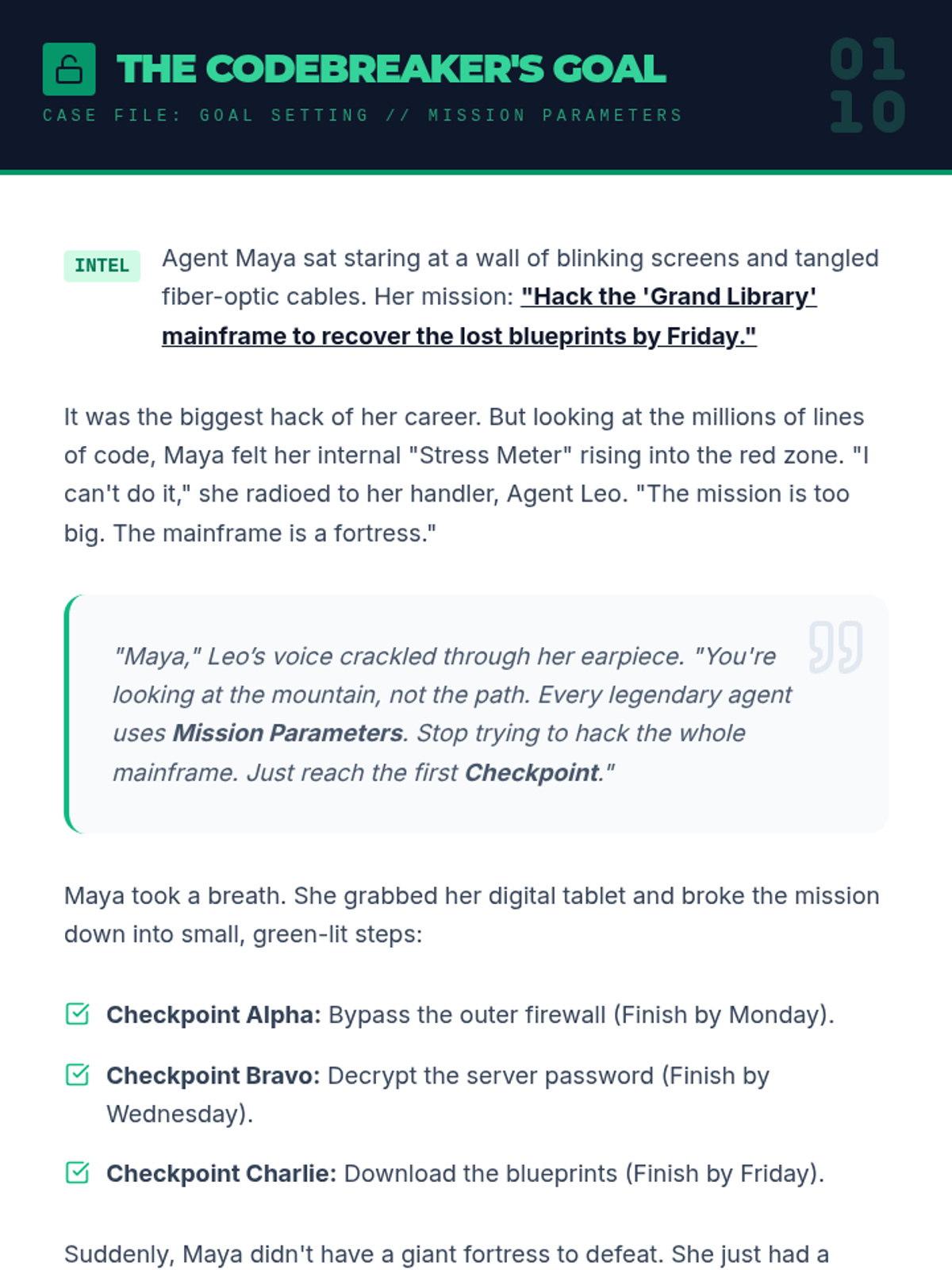
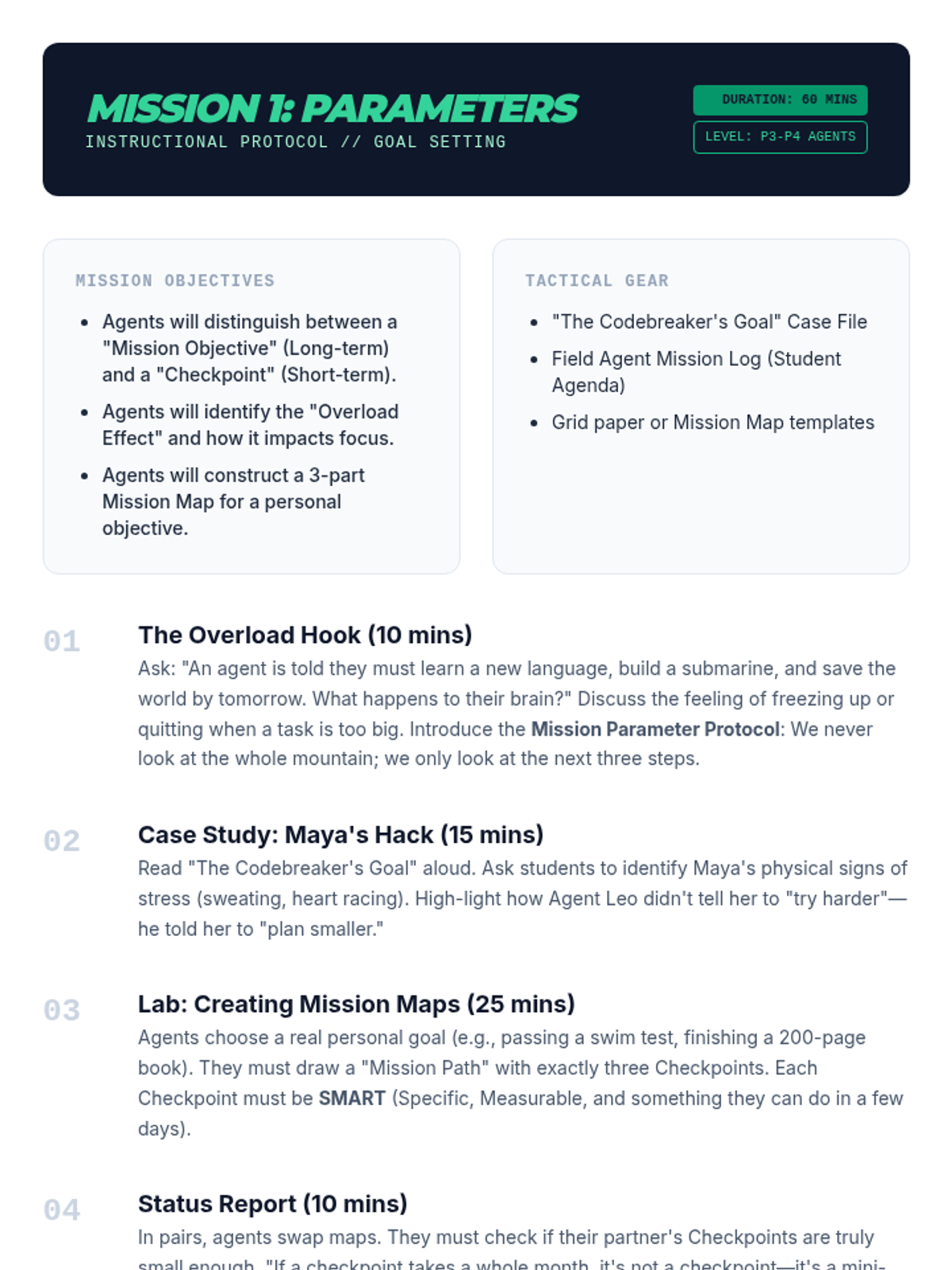
Agents learn to define their mission and break down big objectives into manageable checkpoints.
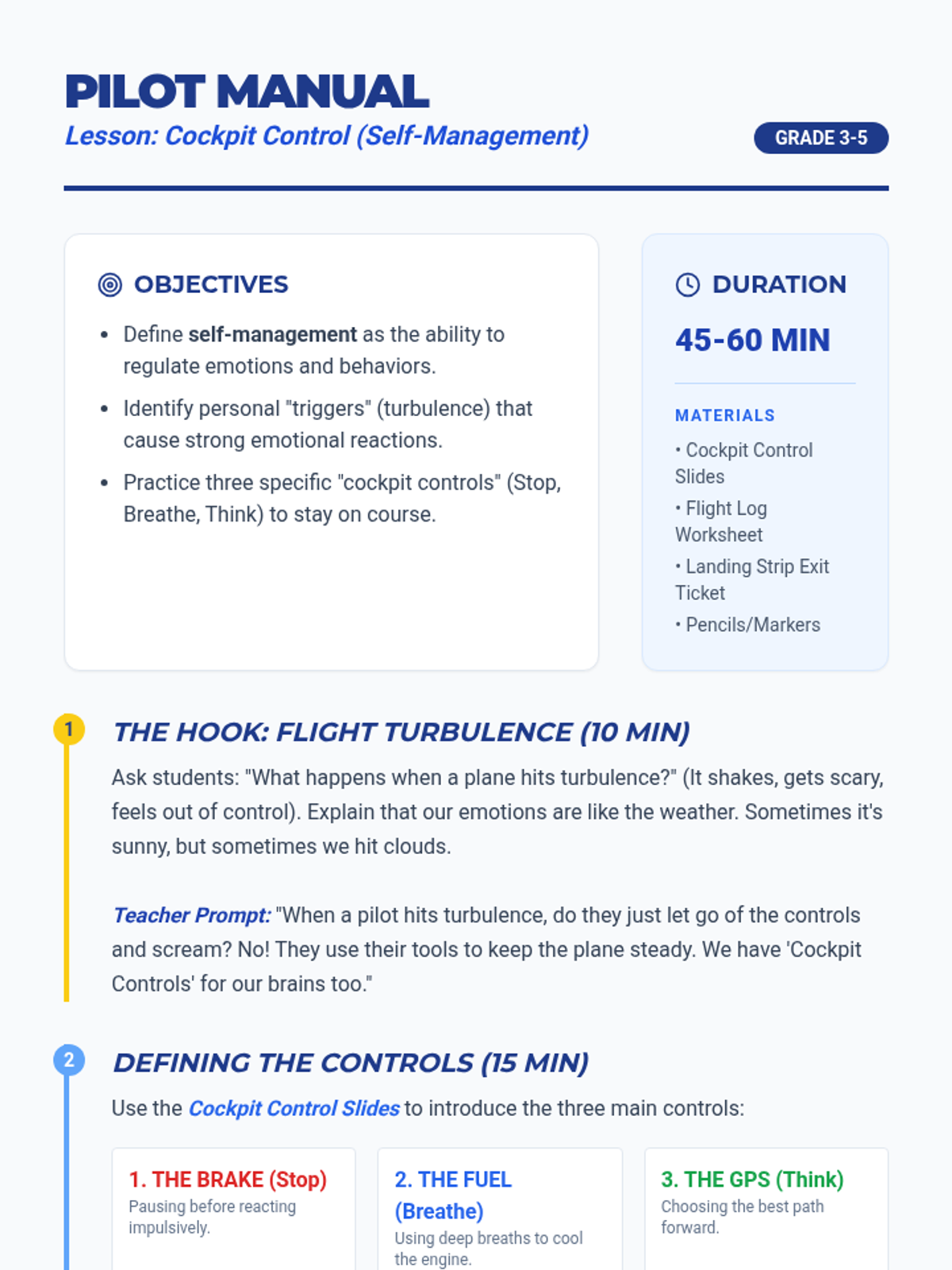
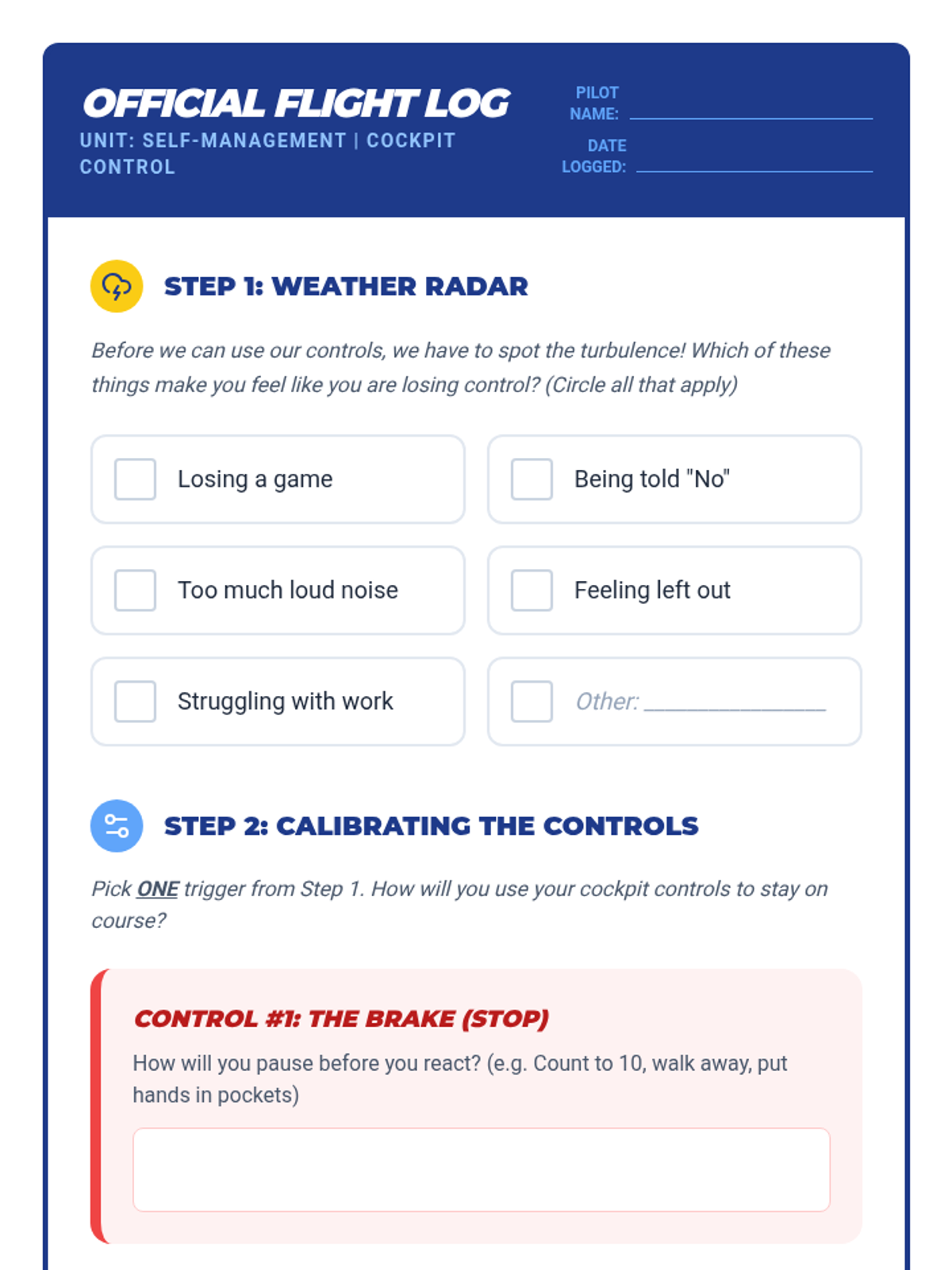
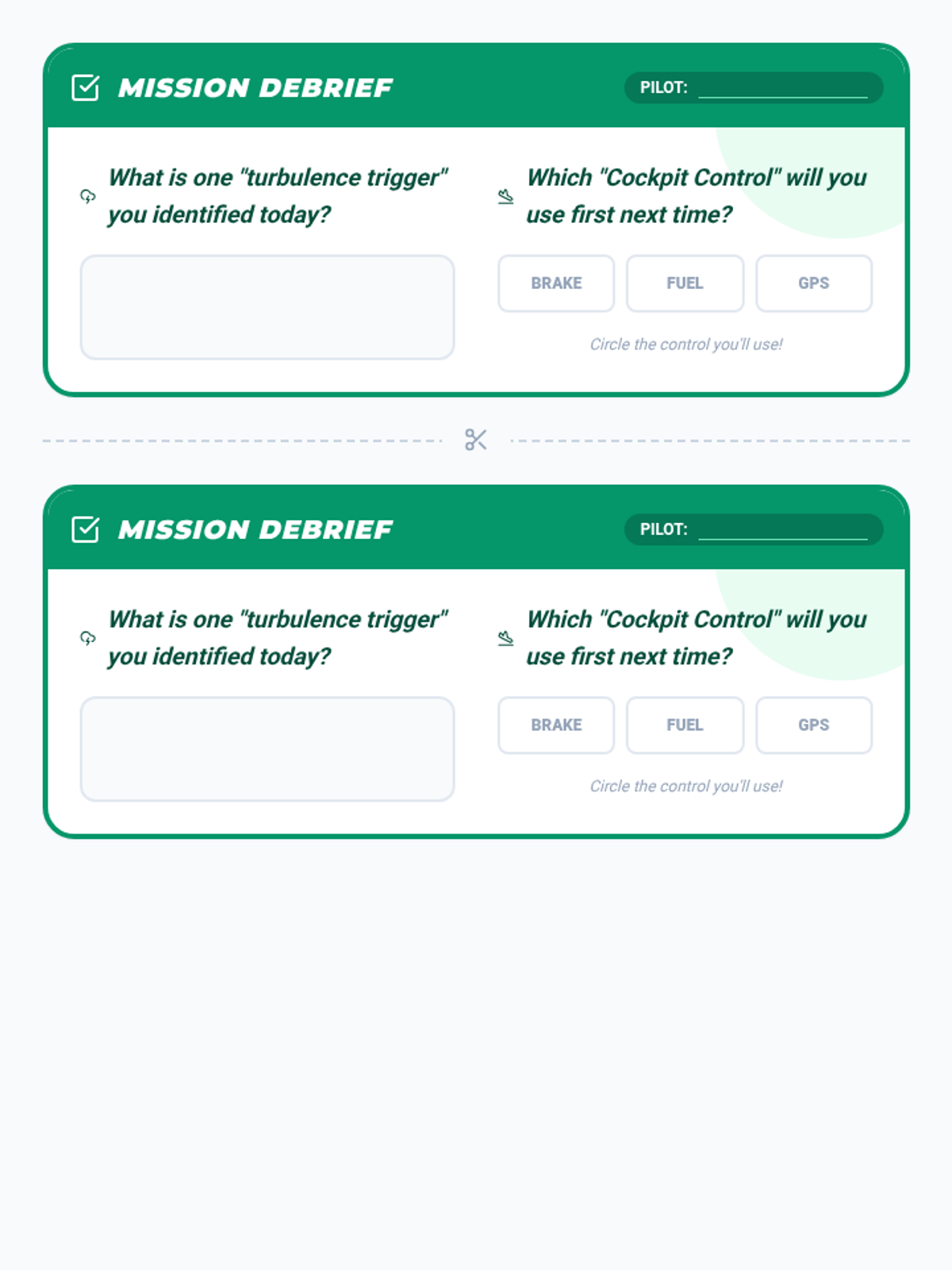
This lesson introduces self-management through an aviation metaphor, teaching students to identify emotional 'turbulence' and use specific 'cockpit controls' to stay on course. Students will learn strategies for impulse control and emotional regulation.
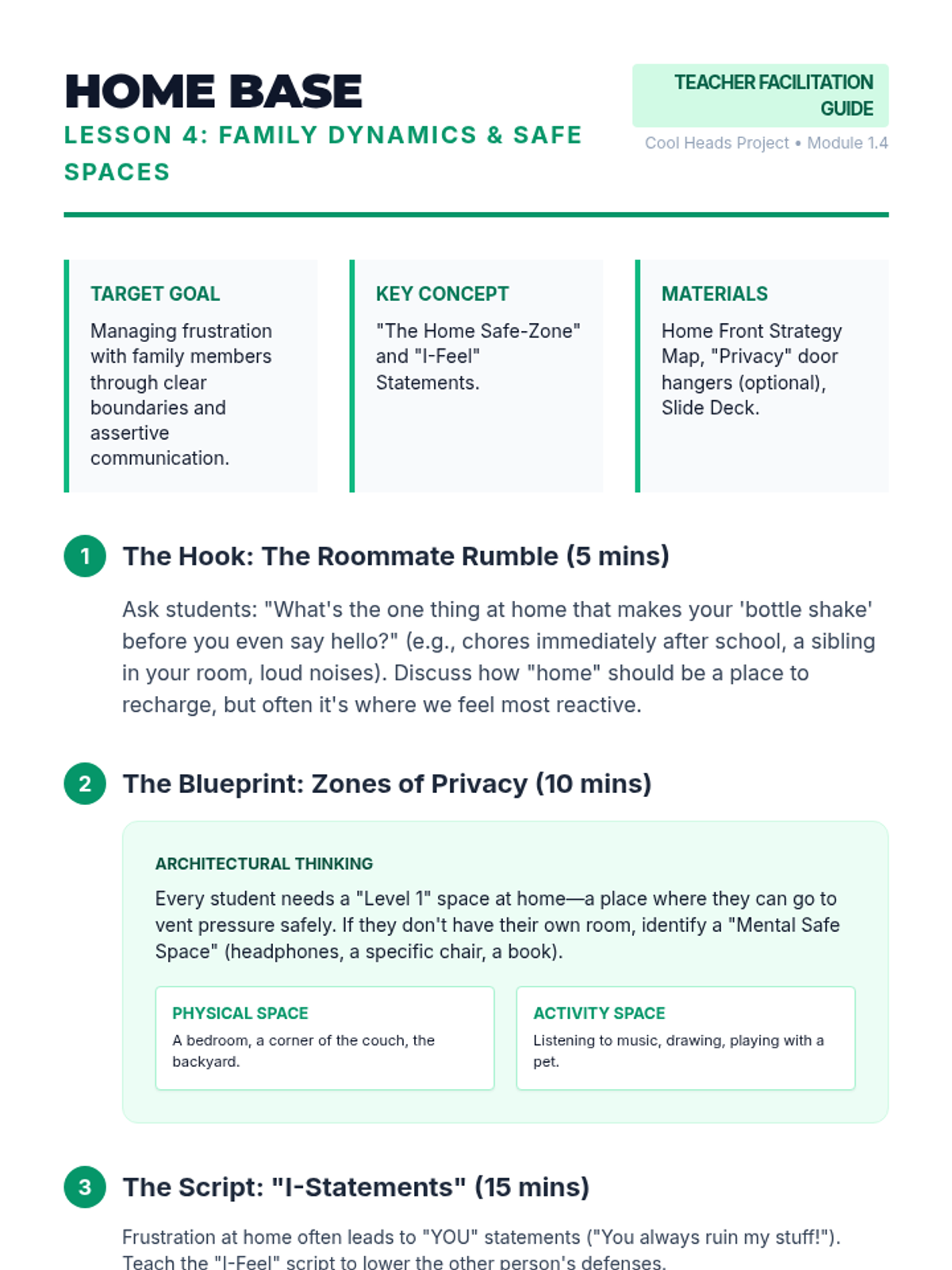
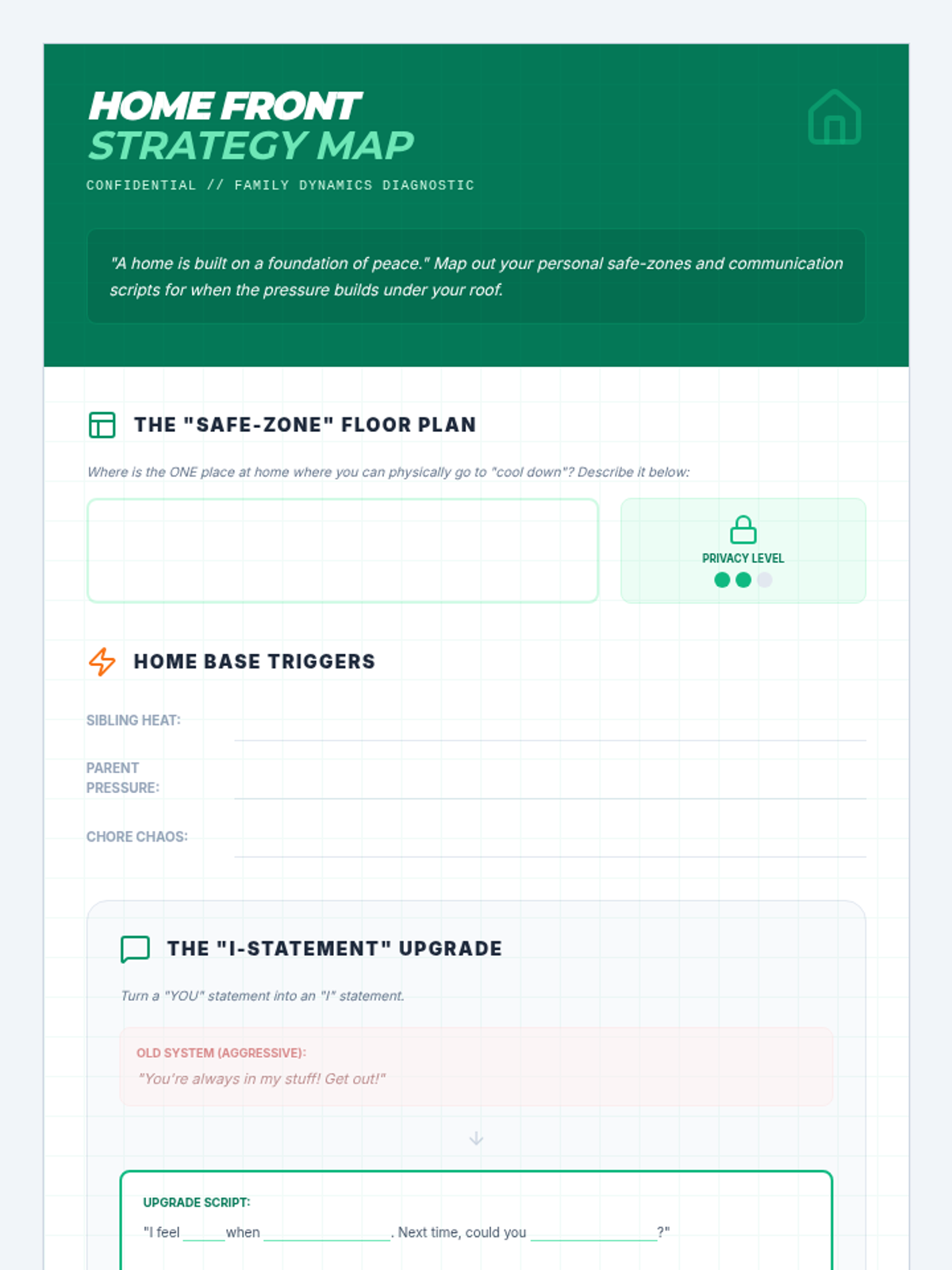
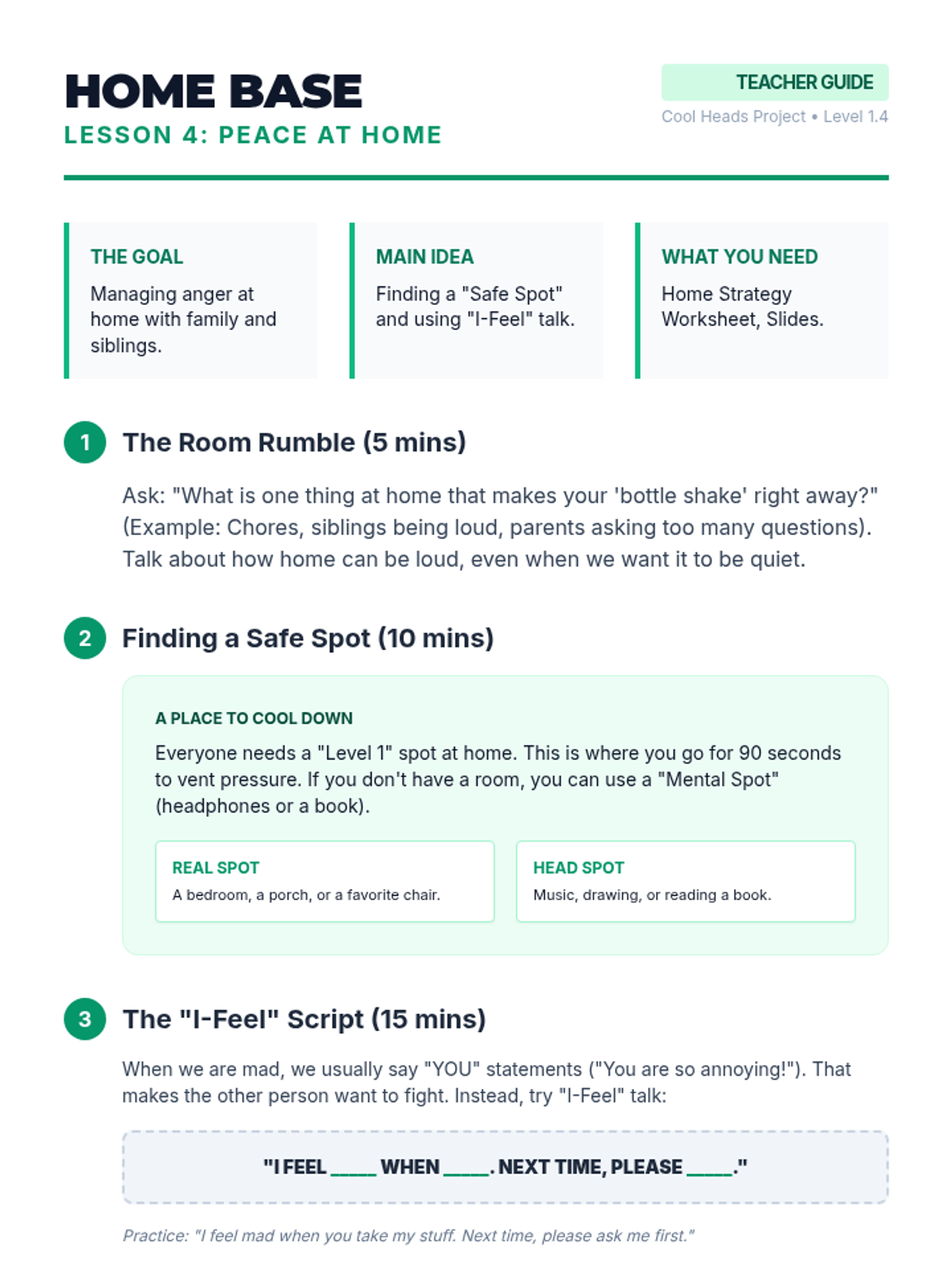
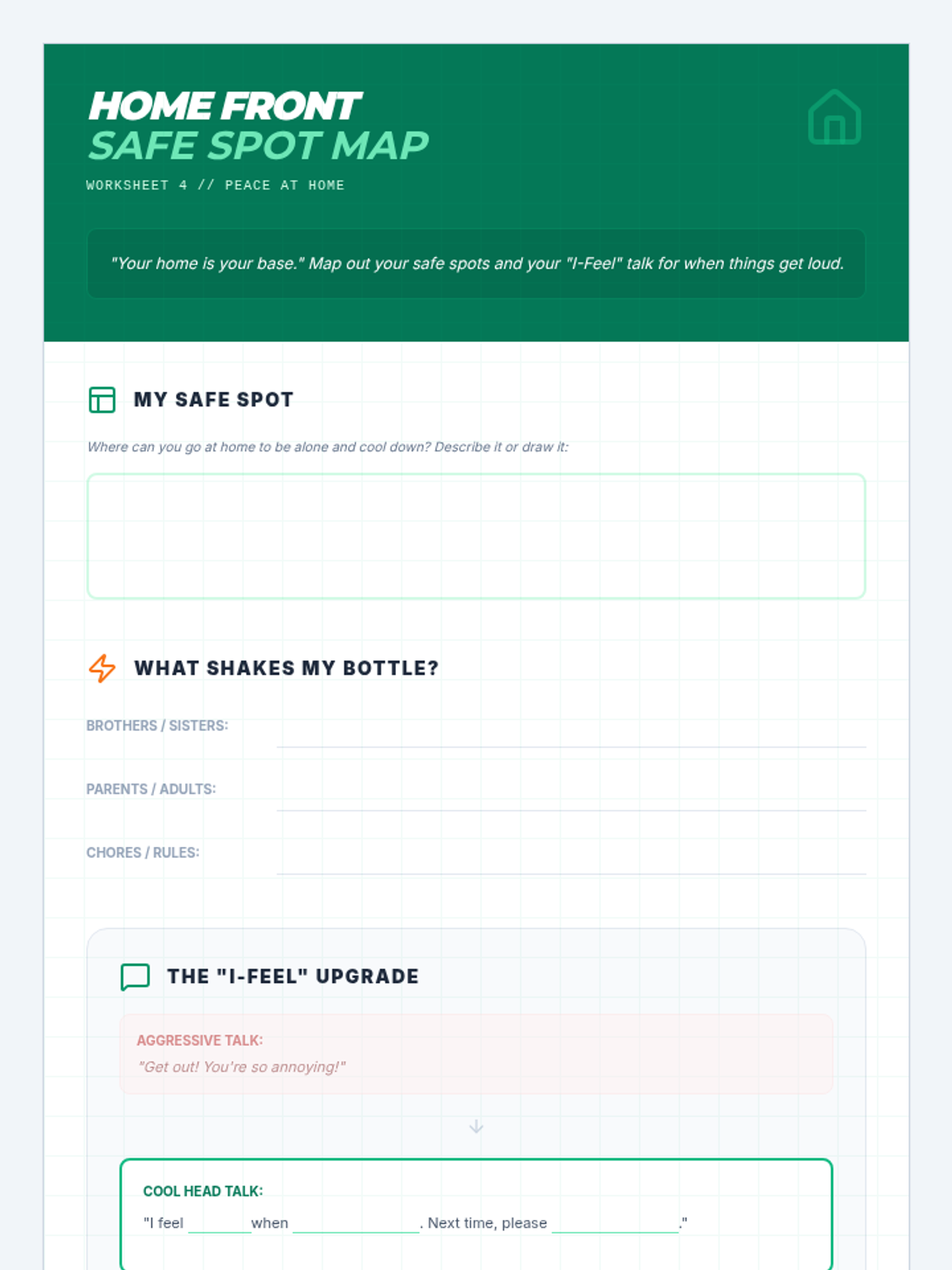
Strategies for navigating family dynamics, sibling conflicts, and home-based stressors through clear communication and personal space.
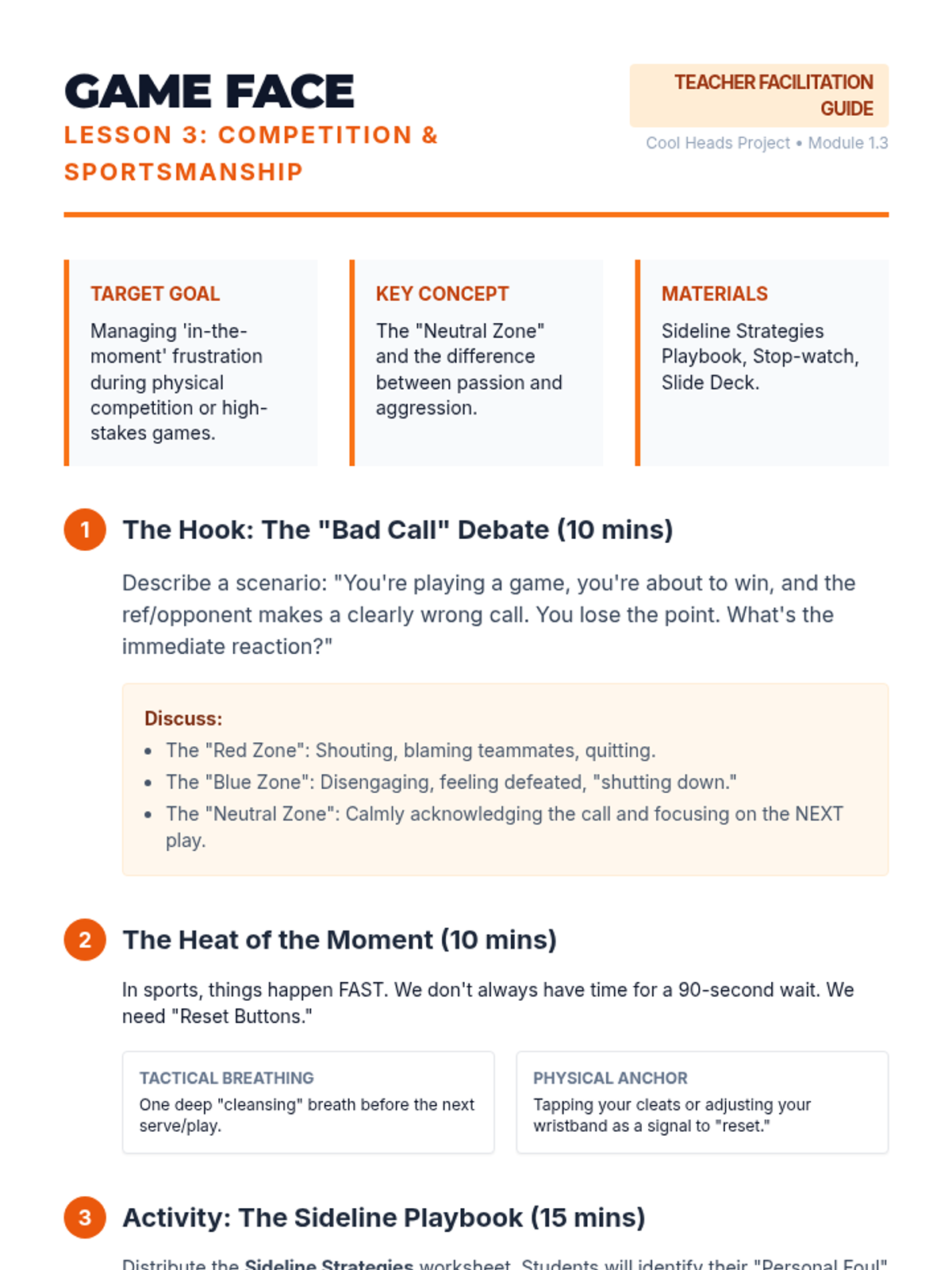
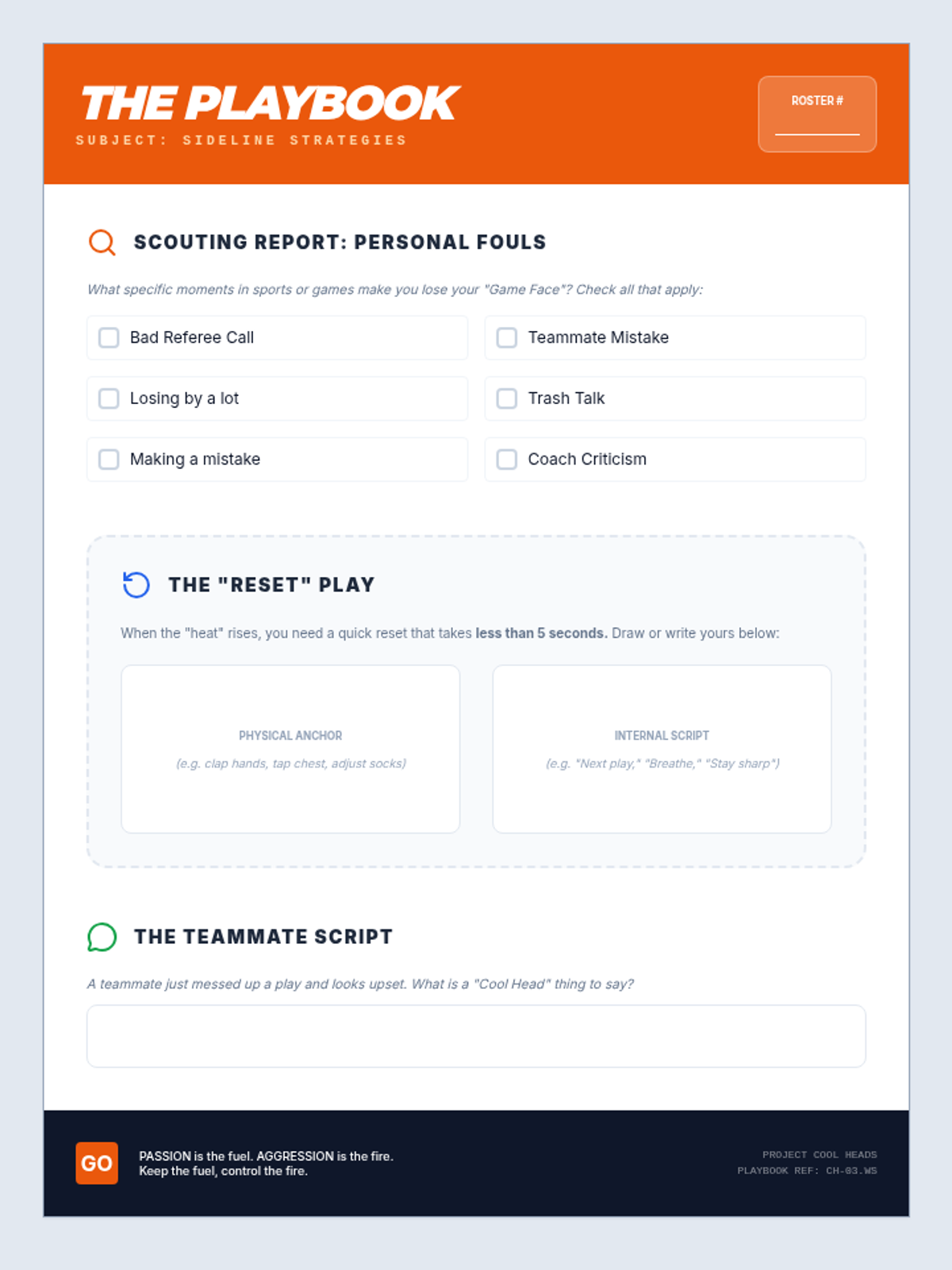
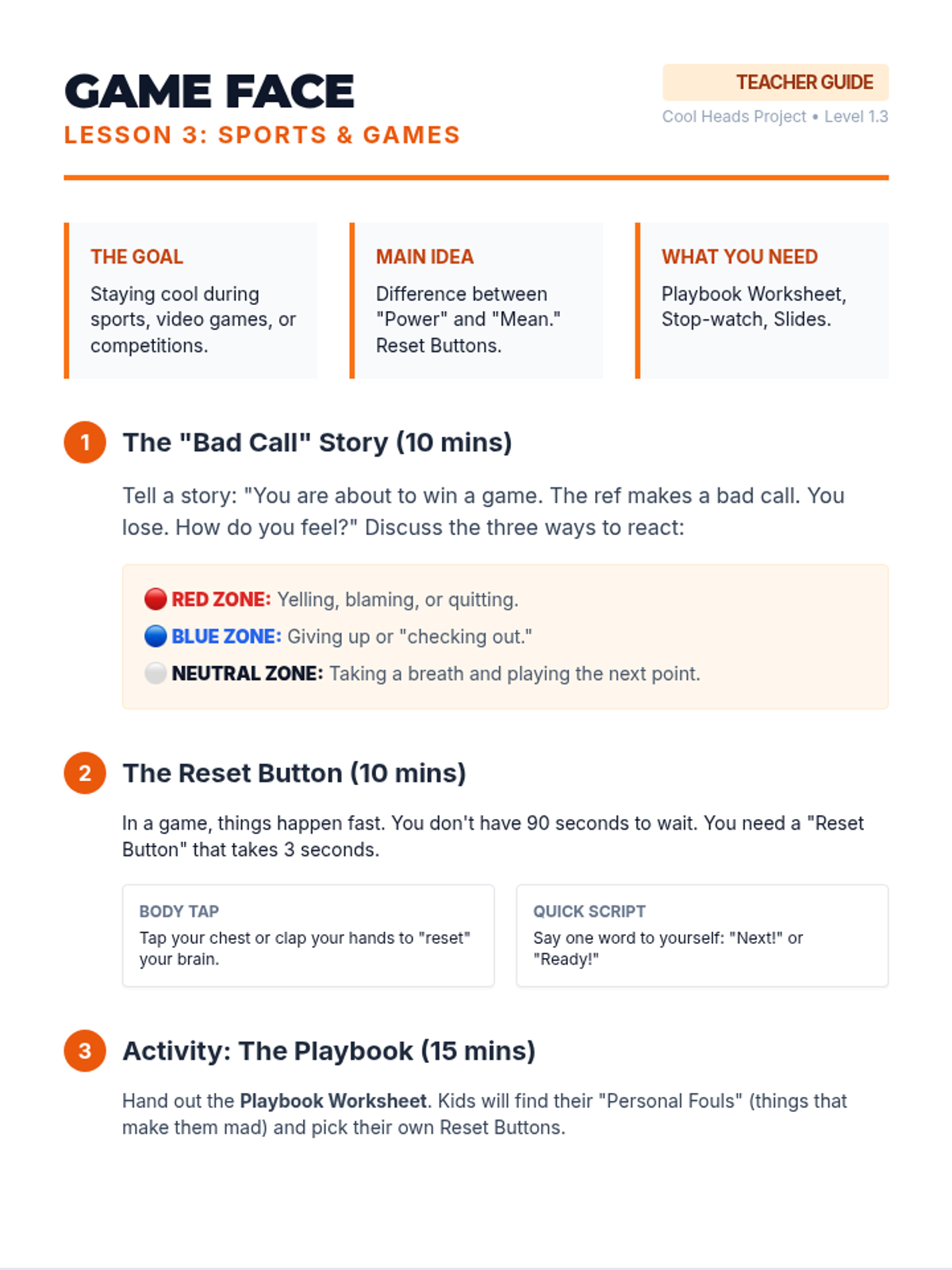
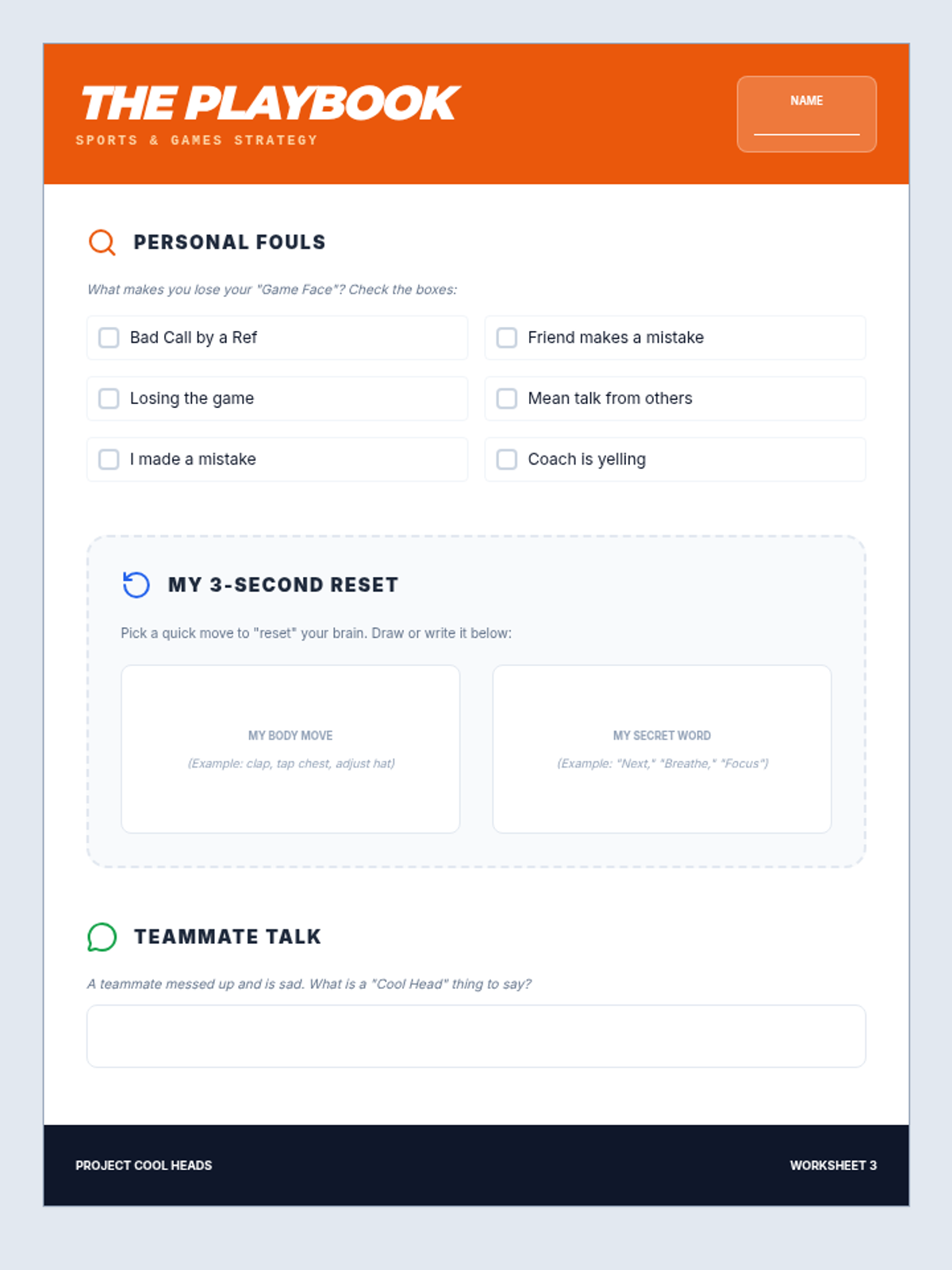
Explores the emotional ups and downs of sports and competition, teaching students how to keep their cool during wins and losses.
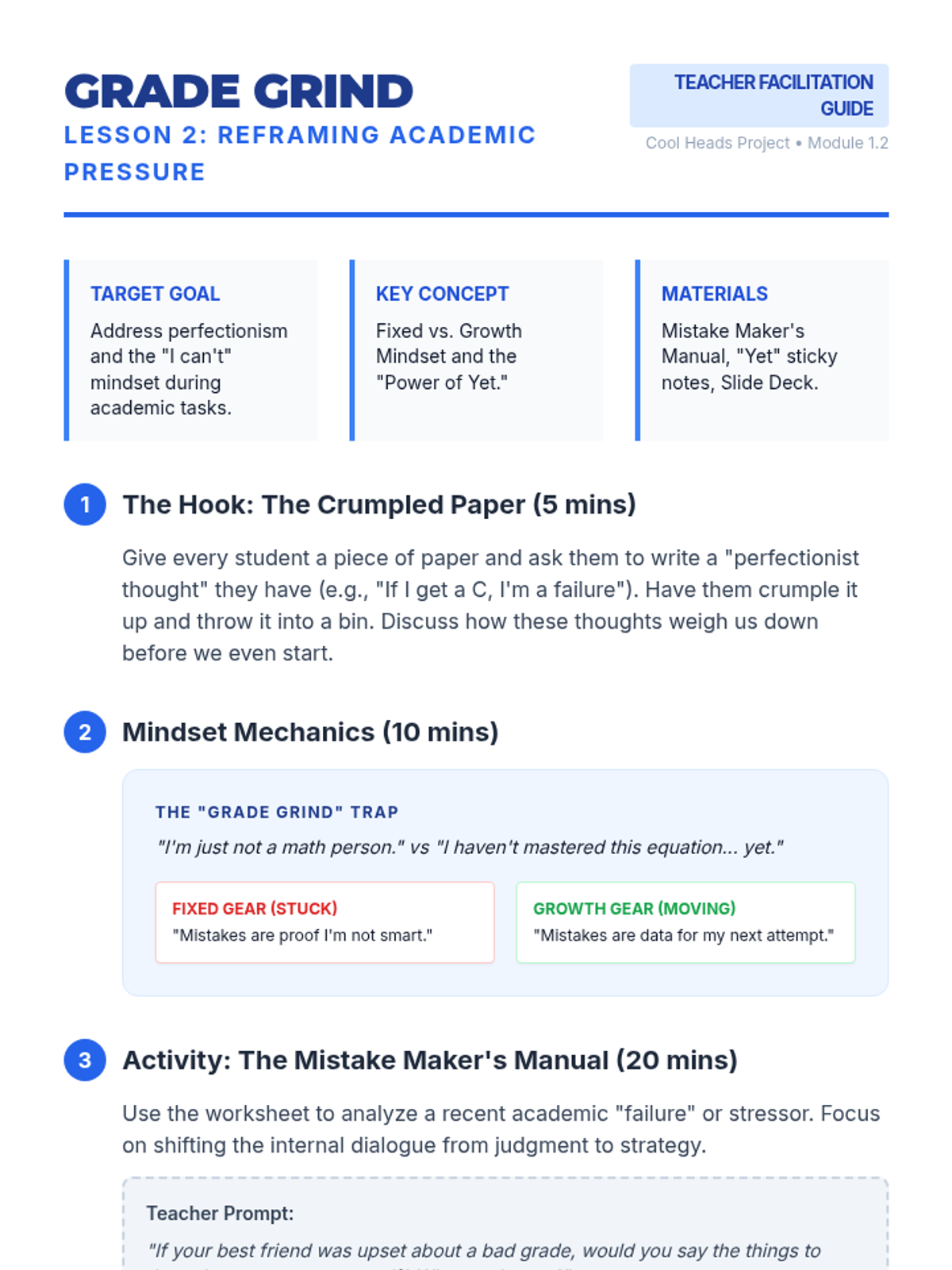
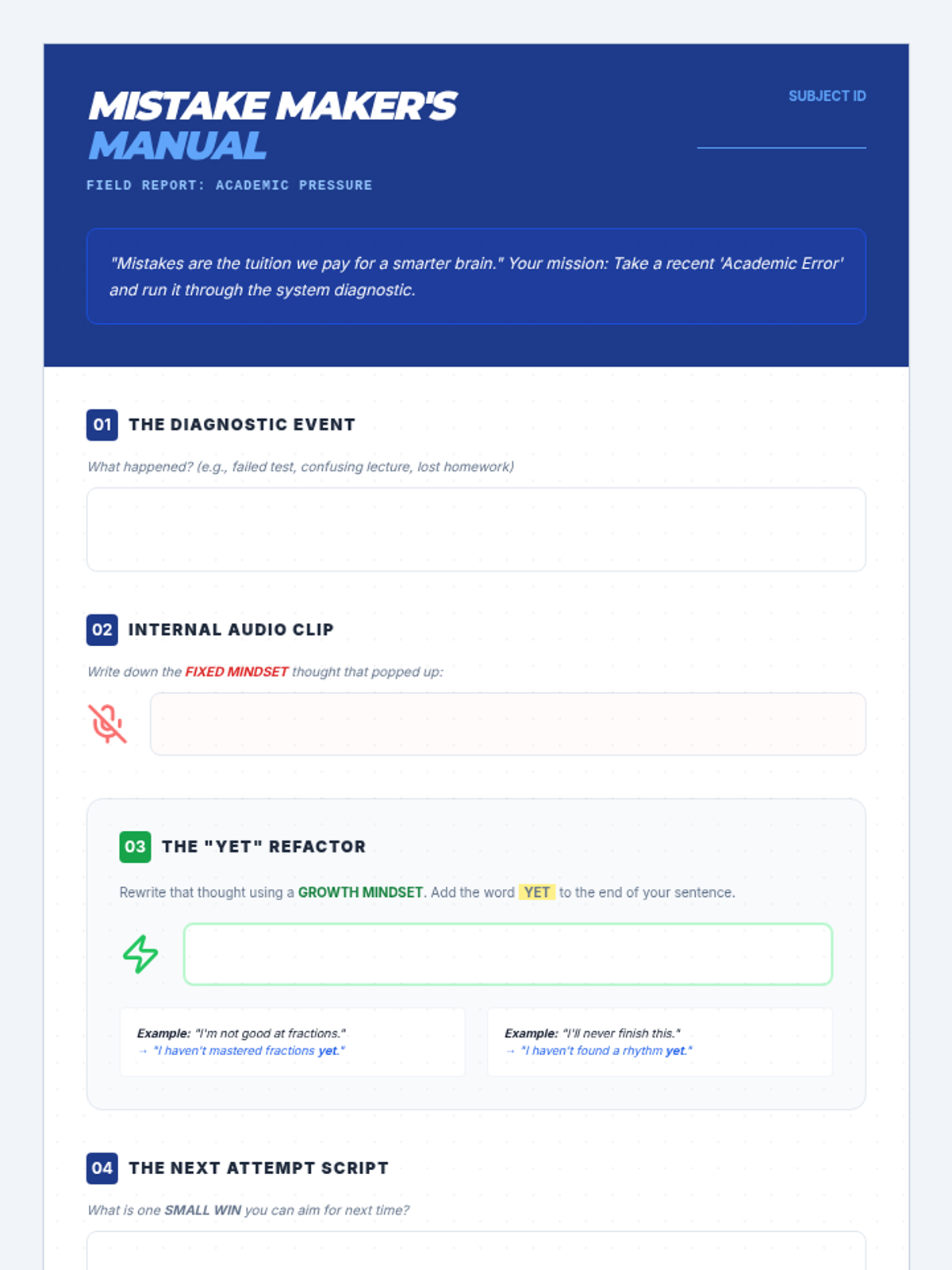
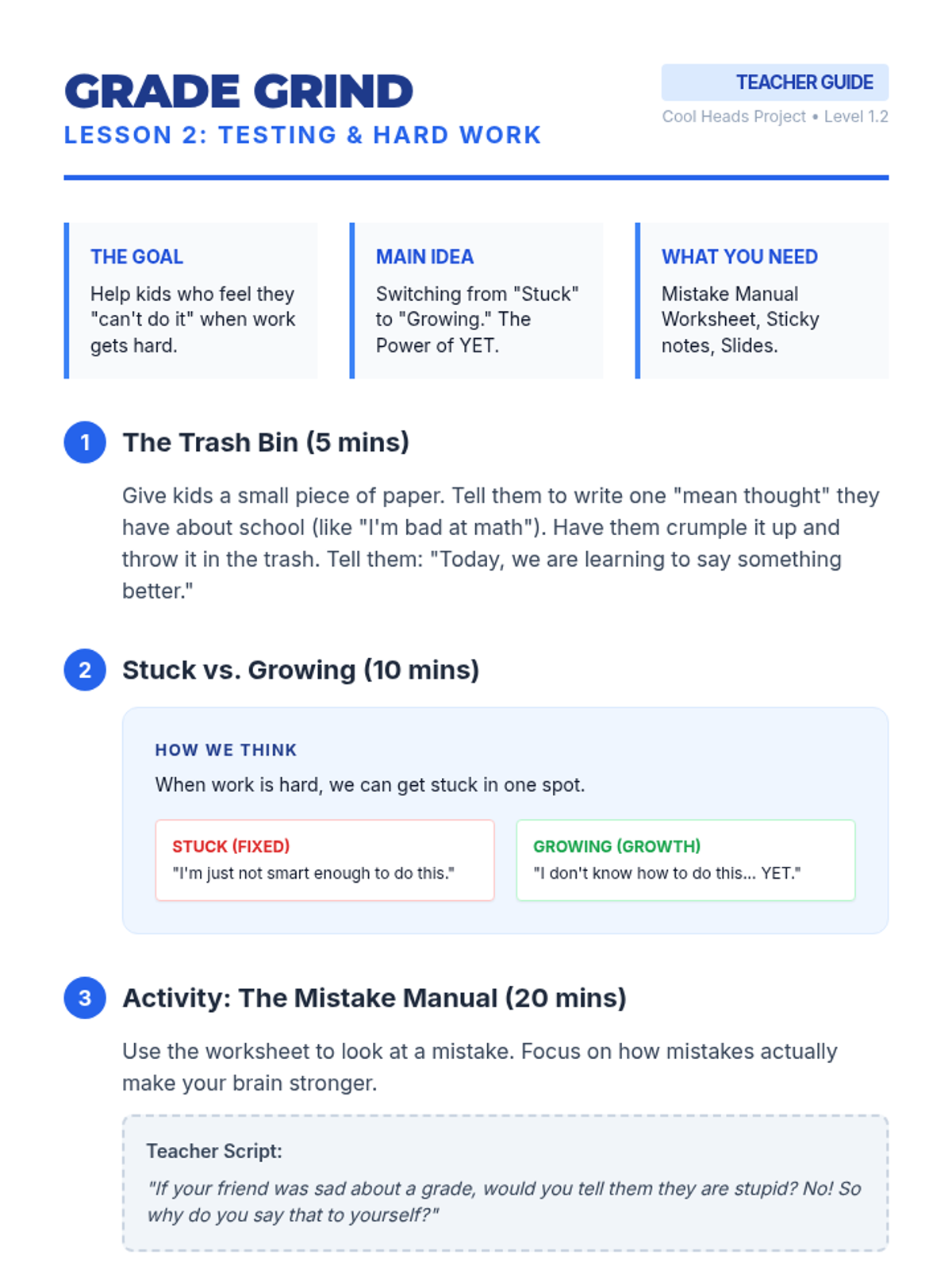
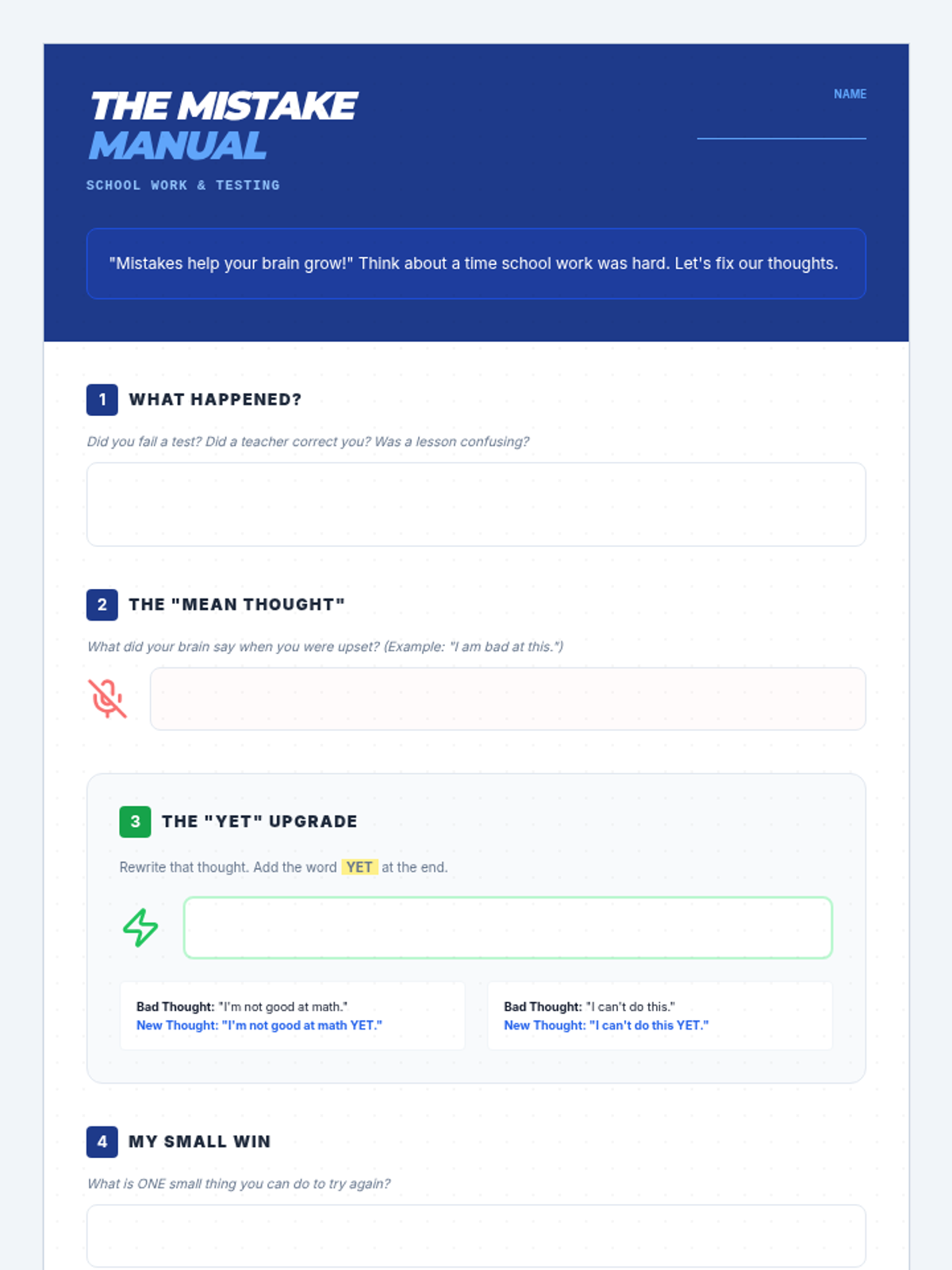
Focuses on managing the pressure of grades, tests, and academic expectations through reframing and realistic goal-setting.
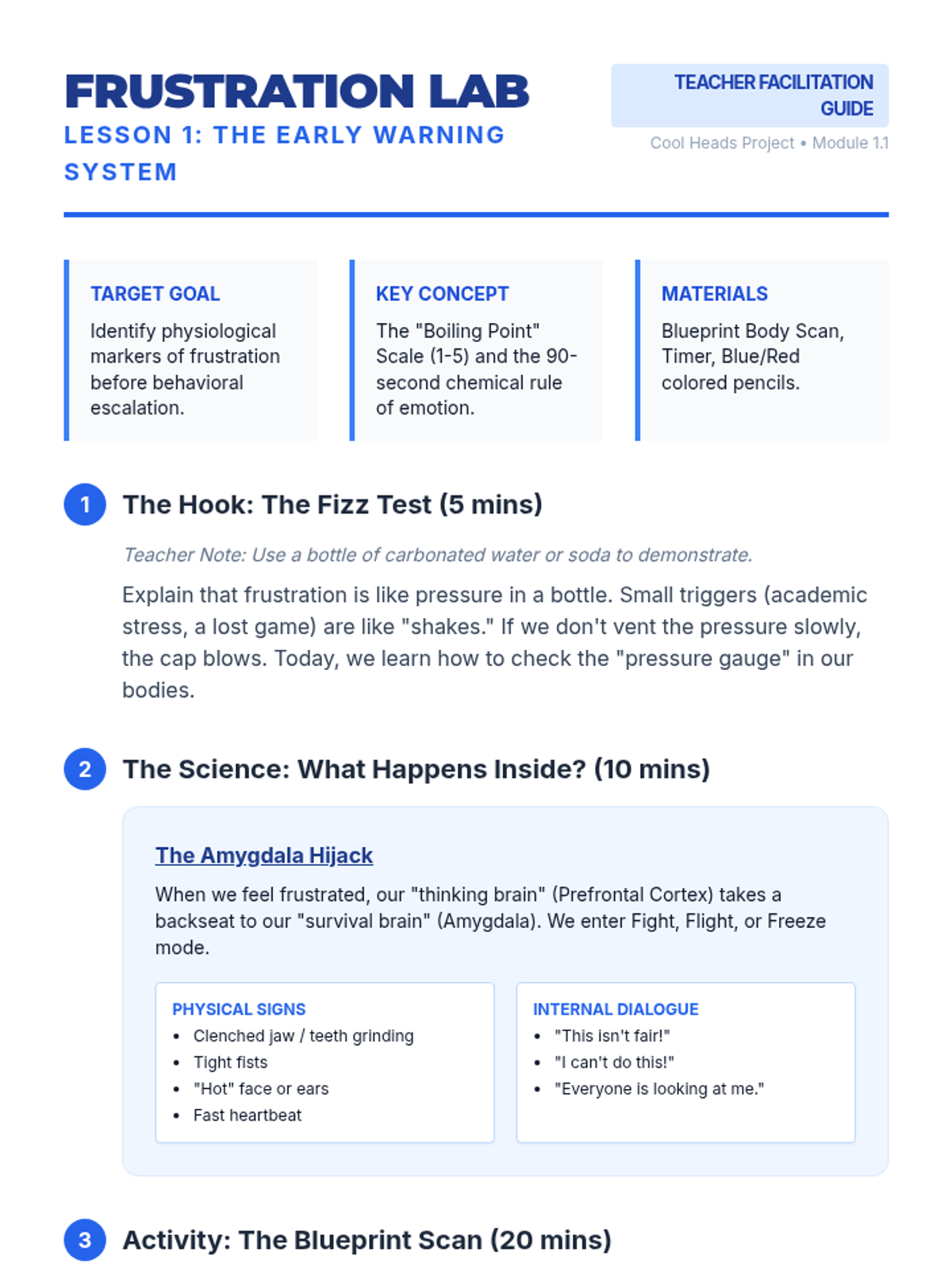
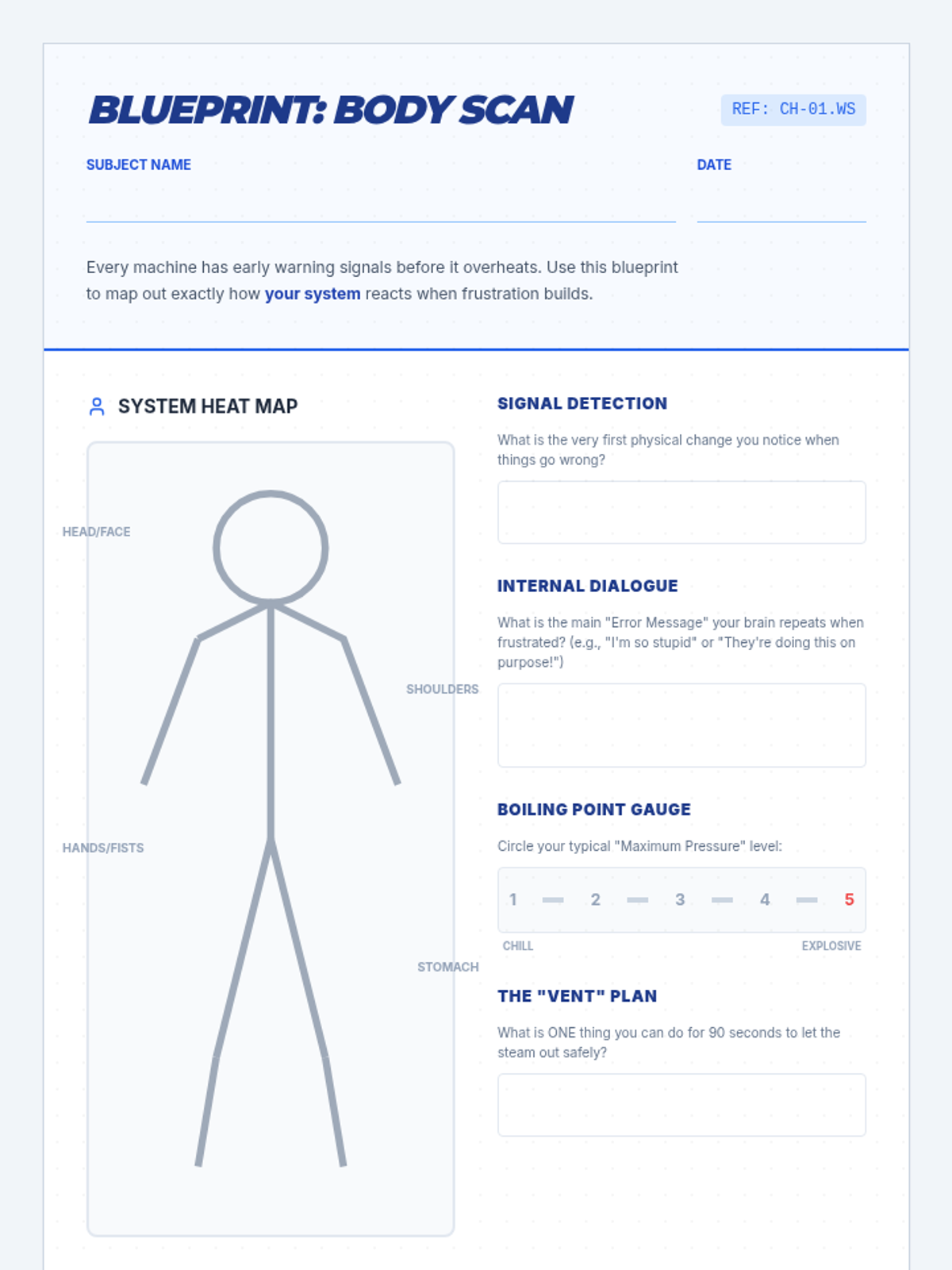
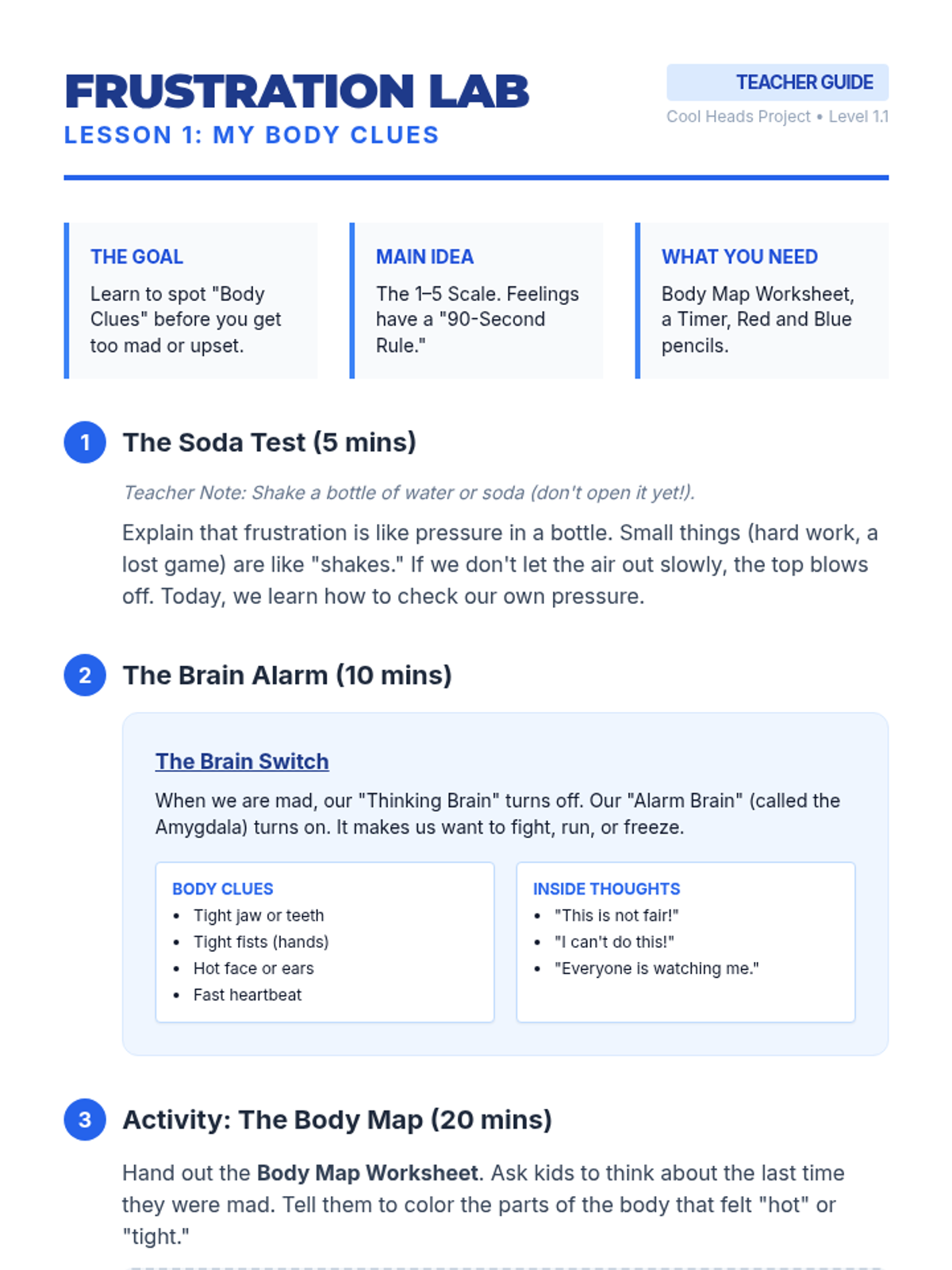
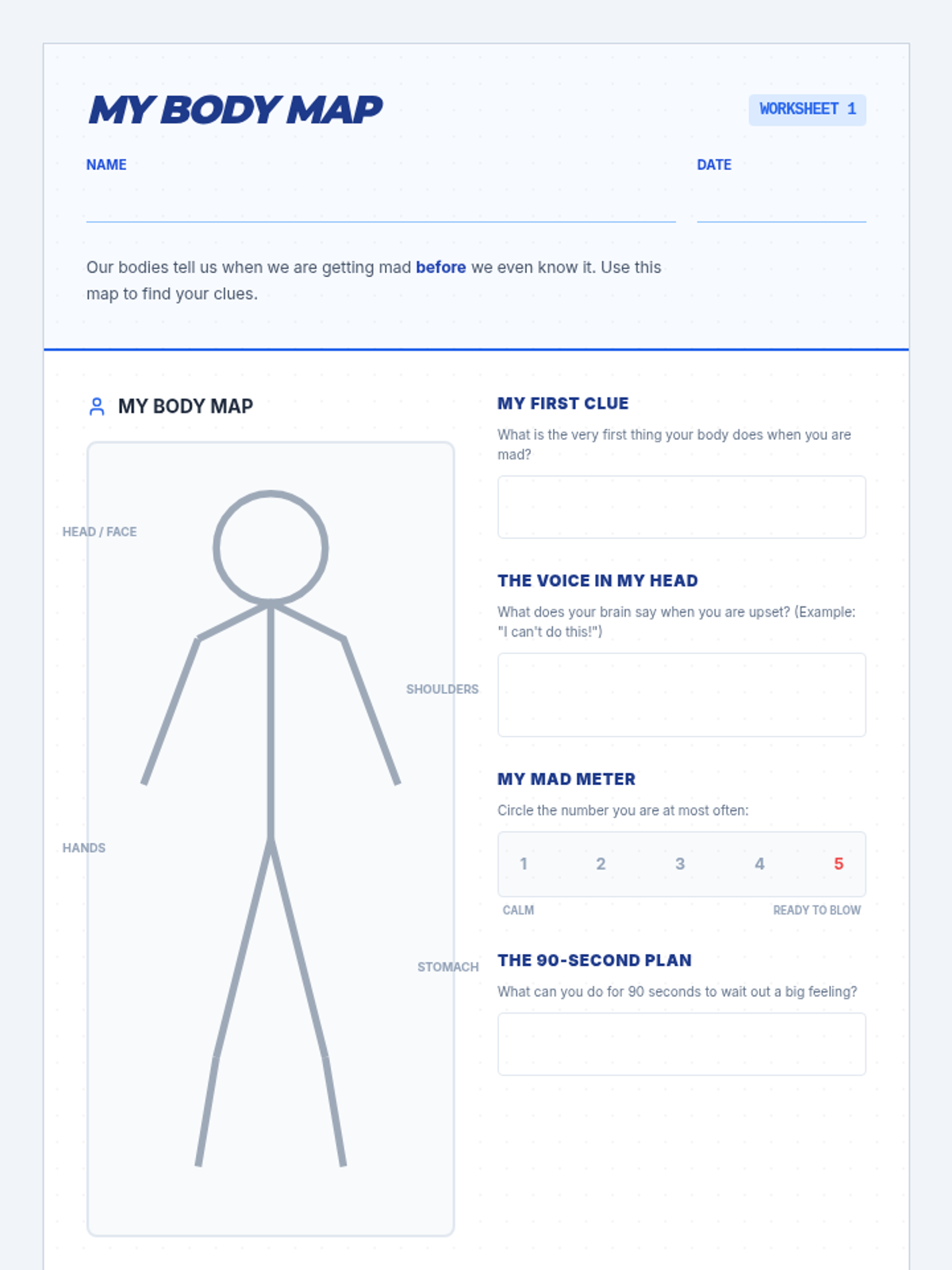
Students identify the physical sensations of frustration and learn to recognize their personal 'early warning signs' before they reach a boiling point.
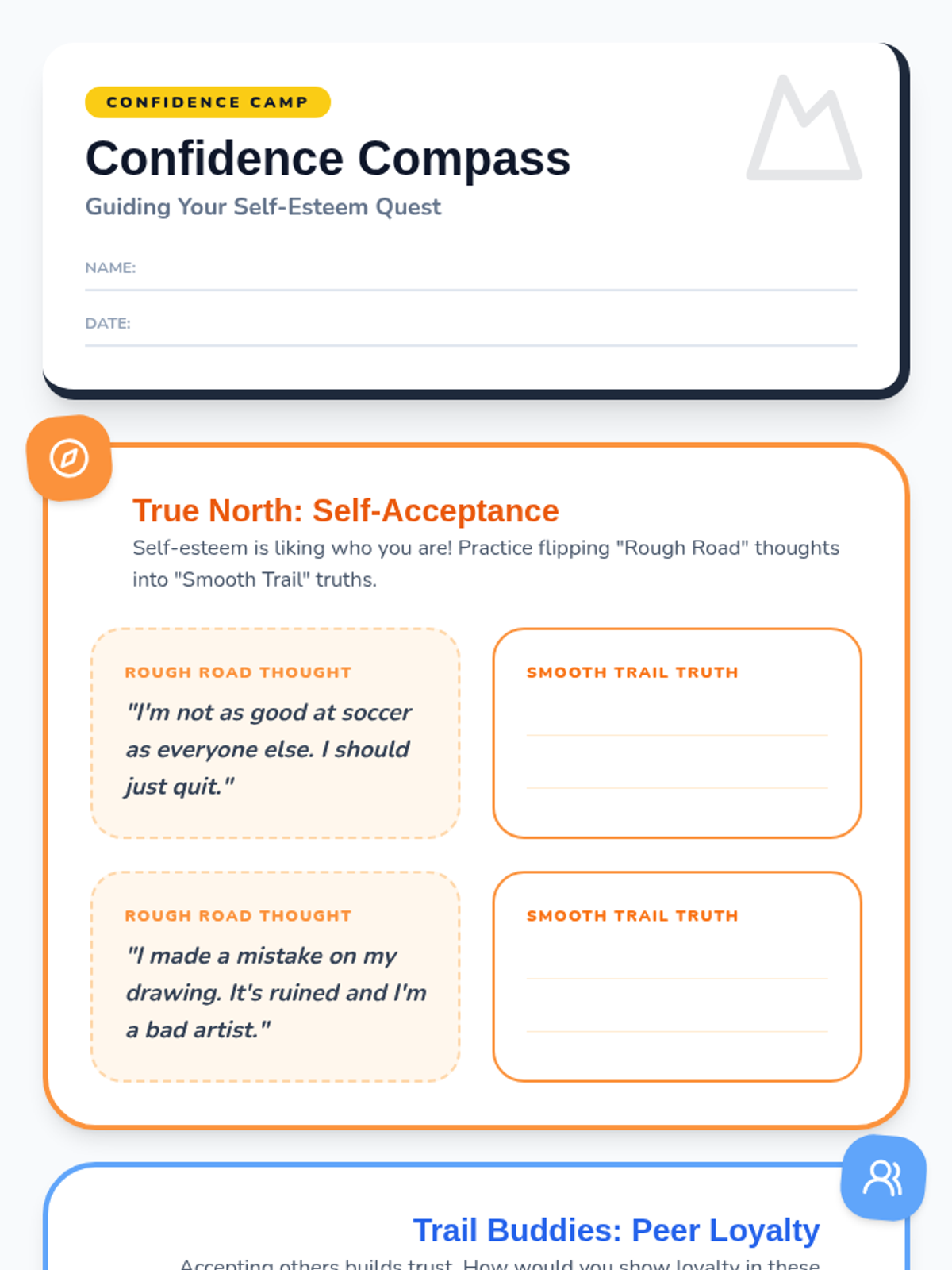
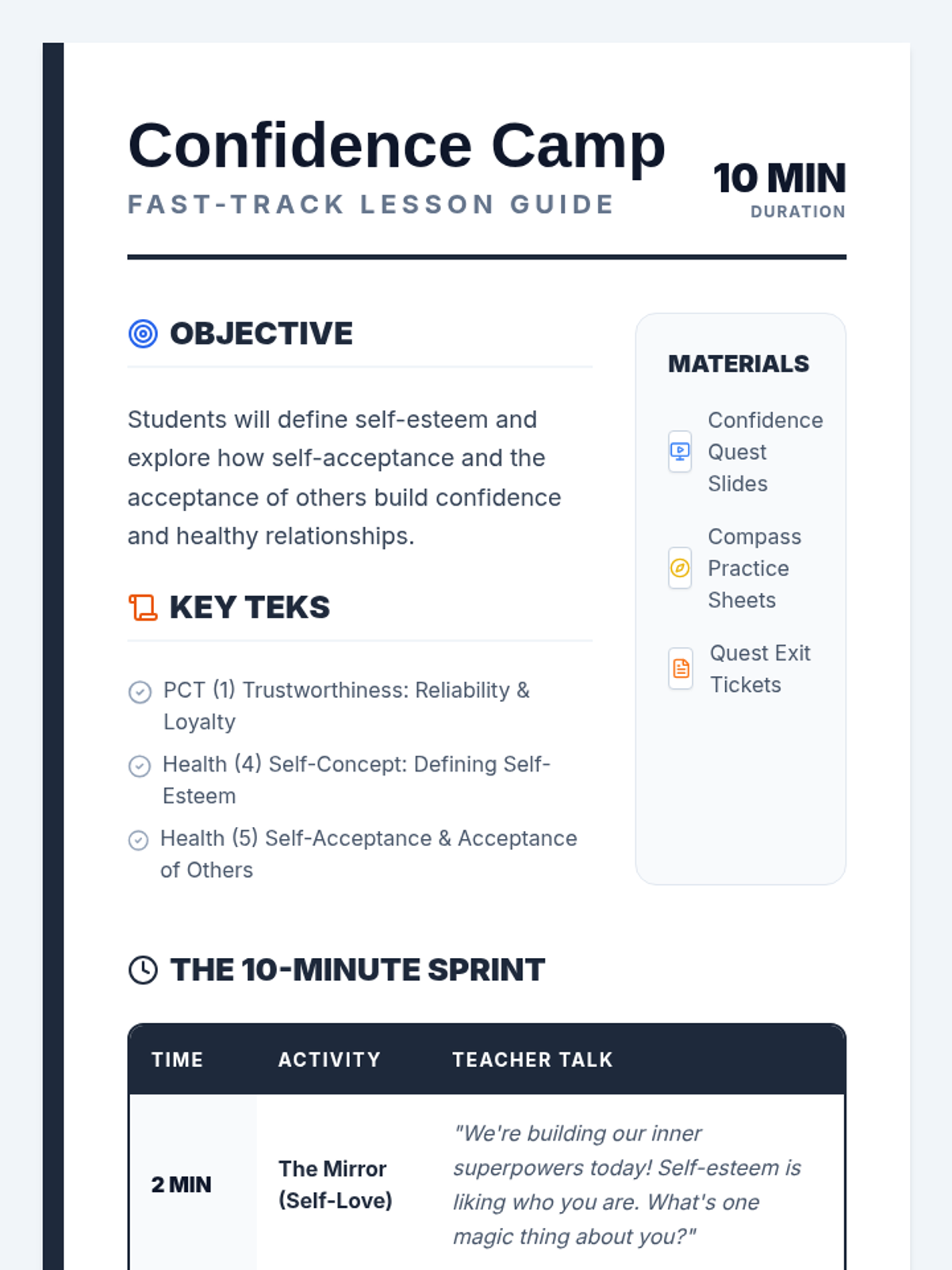
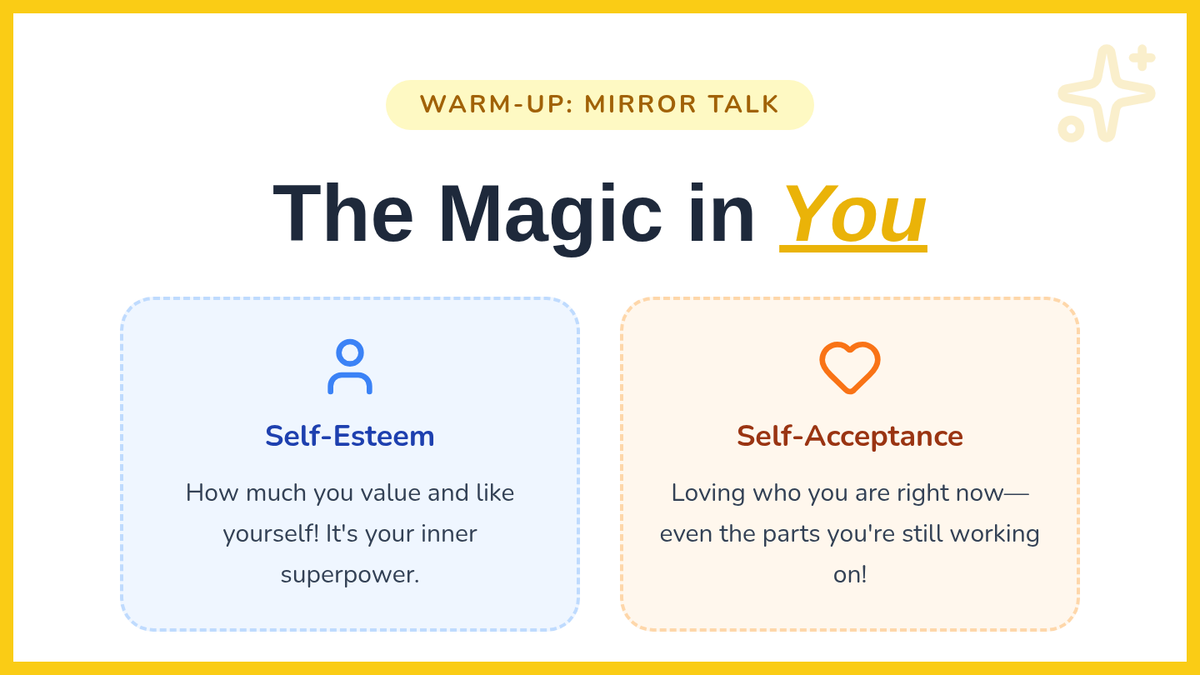
A fast-paced, 10-minute social-emotional learning lesson focused on building self-confidence through self-acceptance and kindness toward others. Students define self-esteem and set immediate goals for personal growth and peer acceptance.
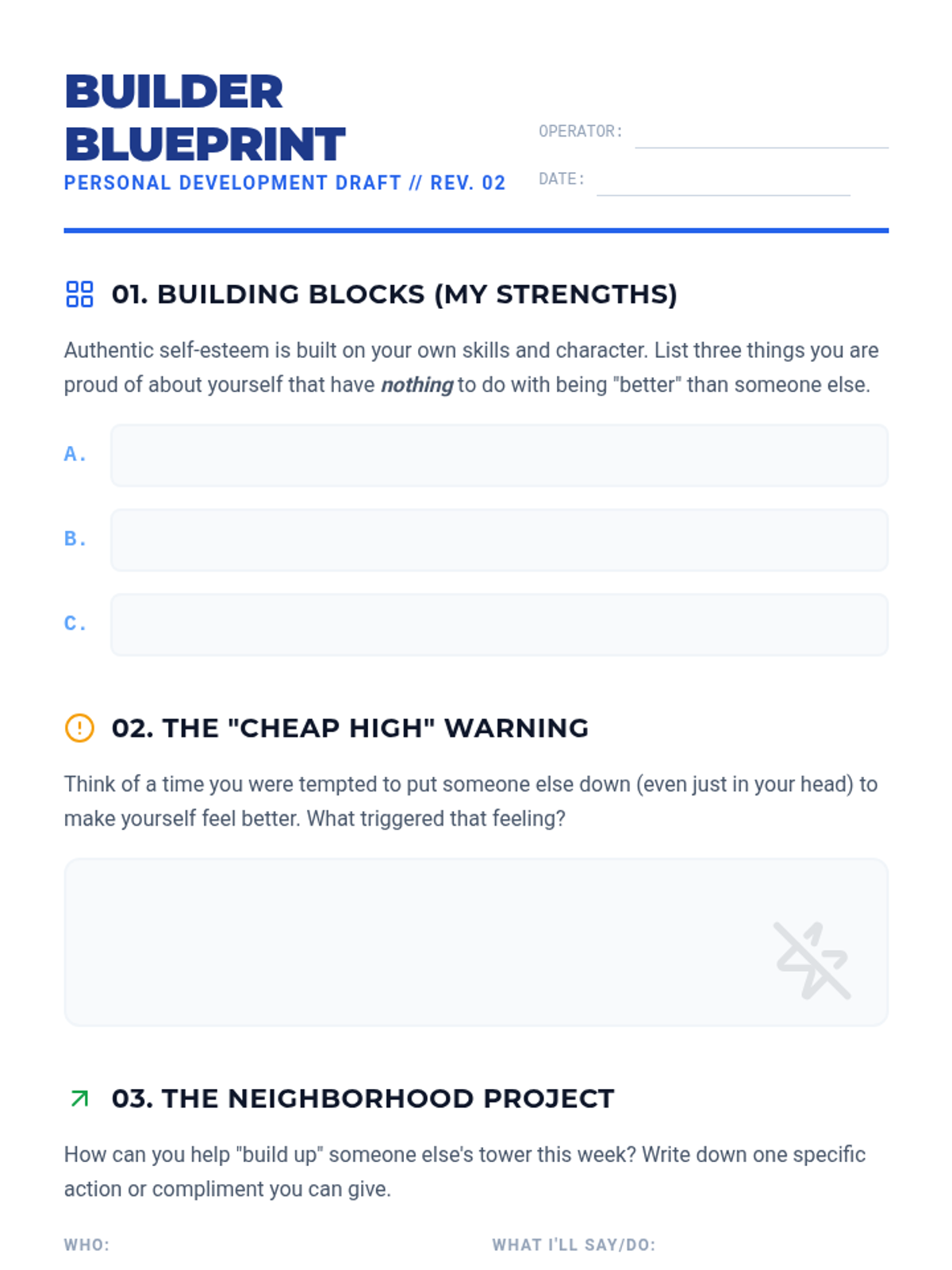
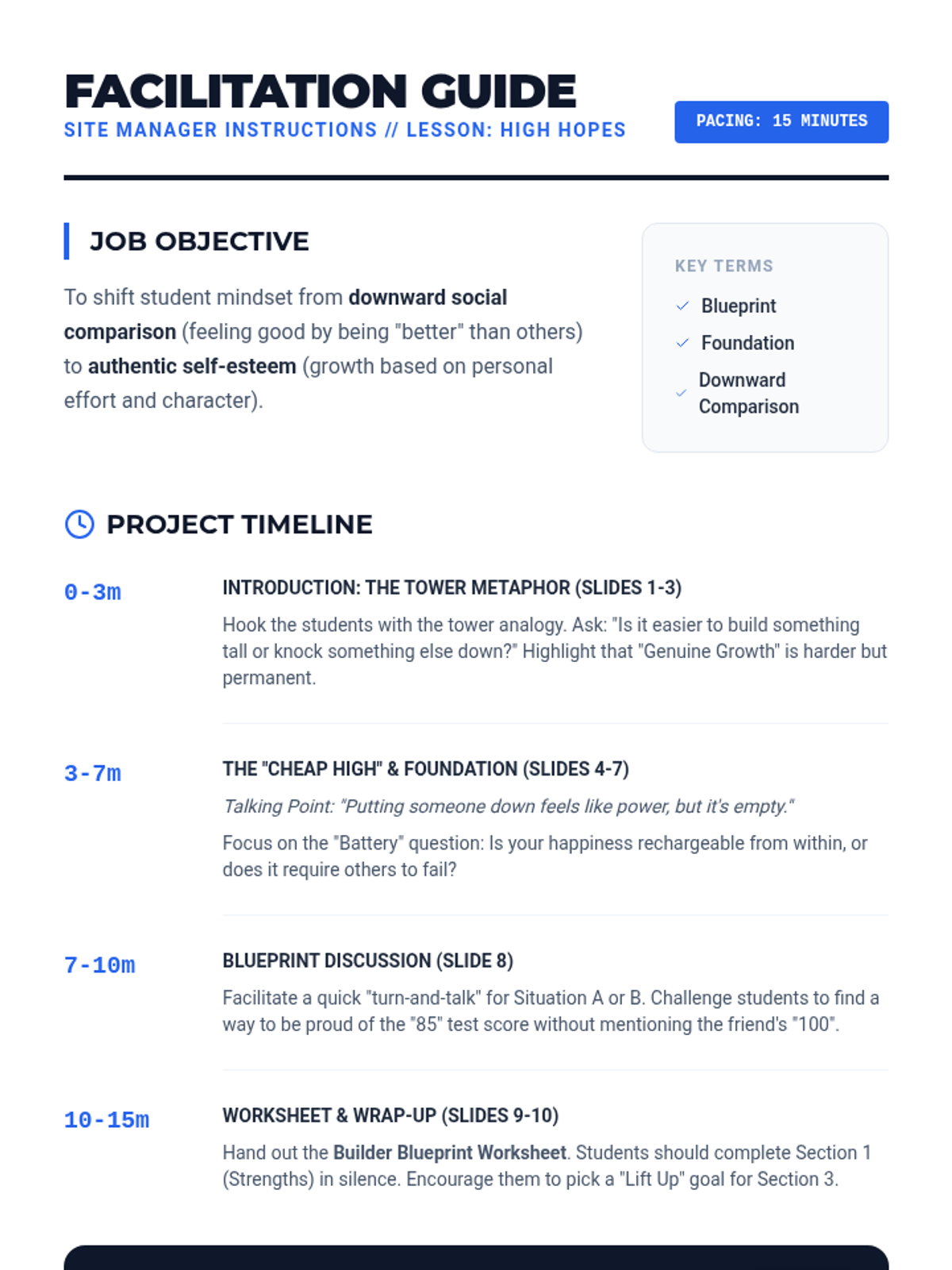
A 15-minute lesson exploring the pitfalls of 'downward social comparison' and how to build authentic self-esteem without diminishing others. Students will learn that true confidence comes from personal growth rather than putting others down.
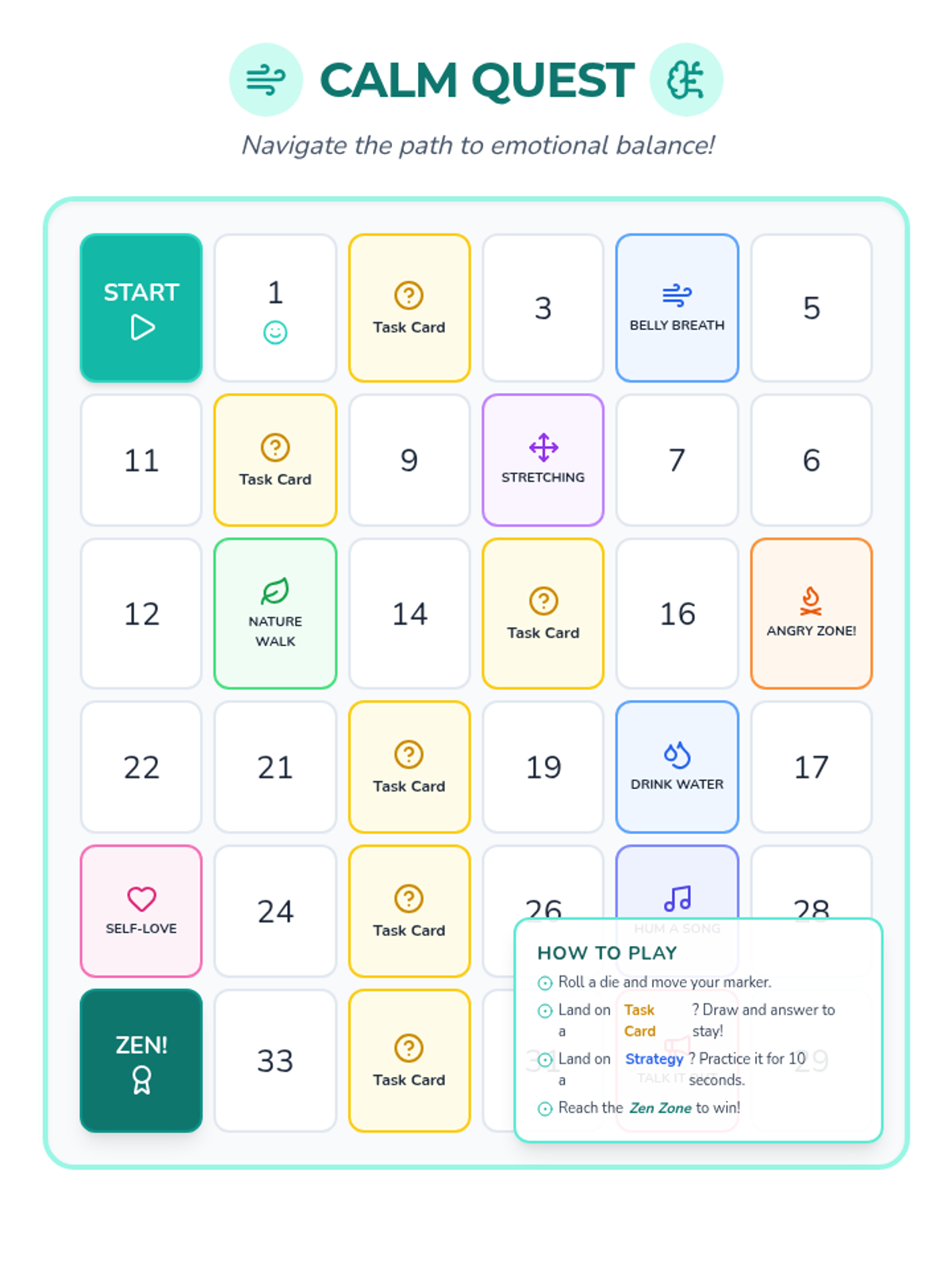
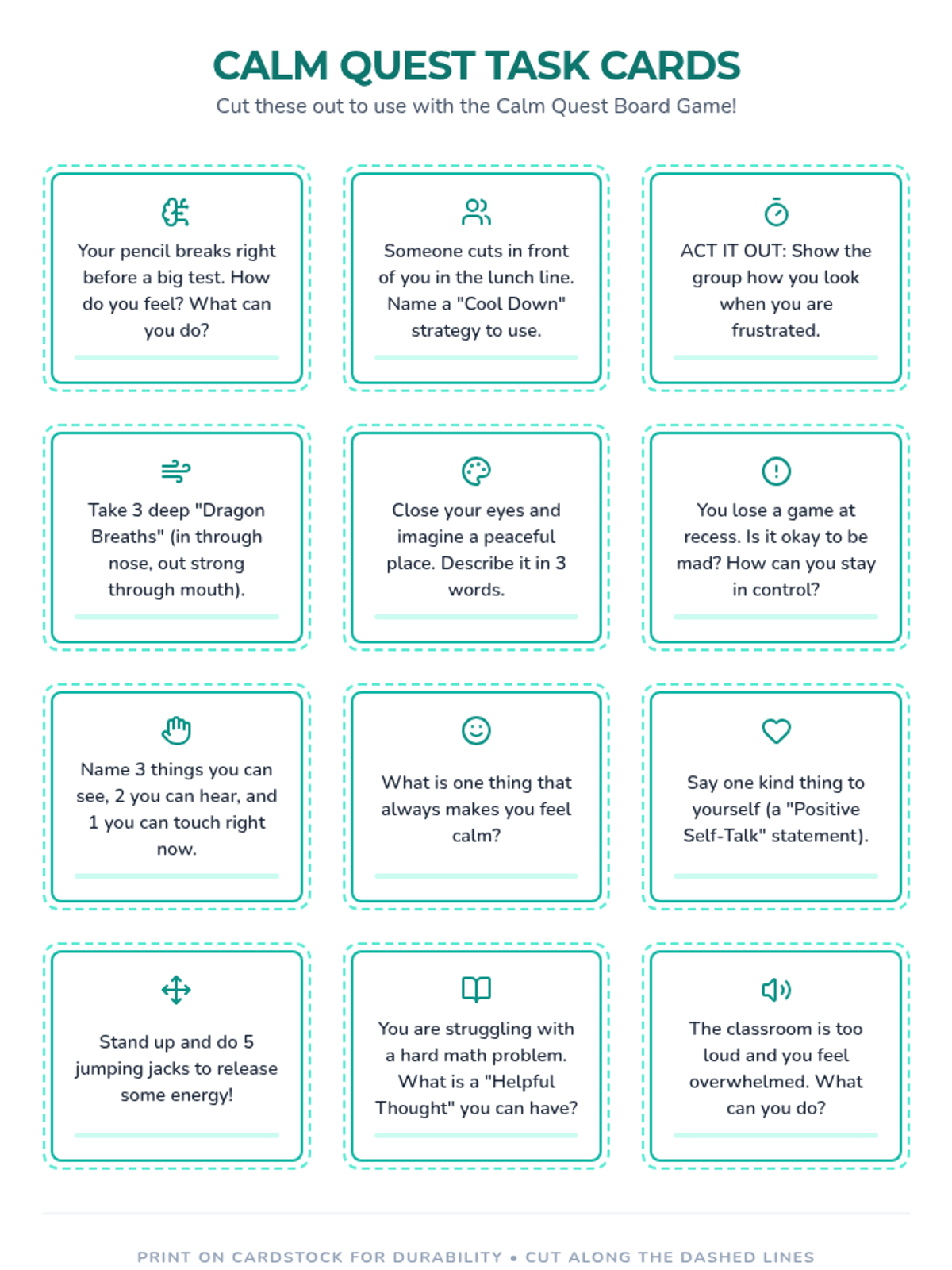
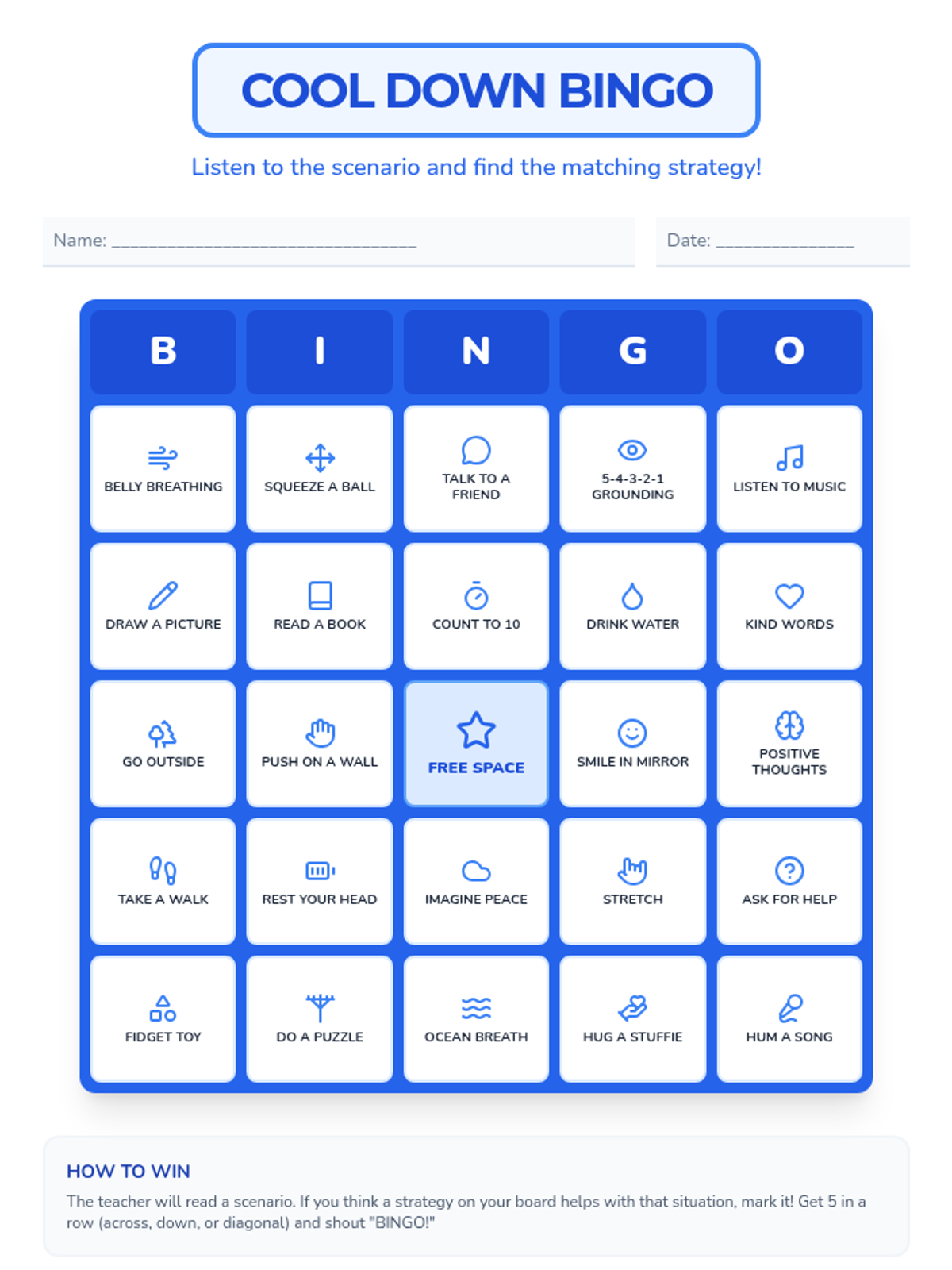
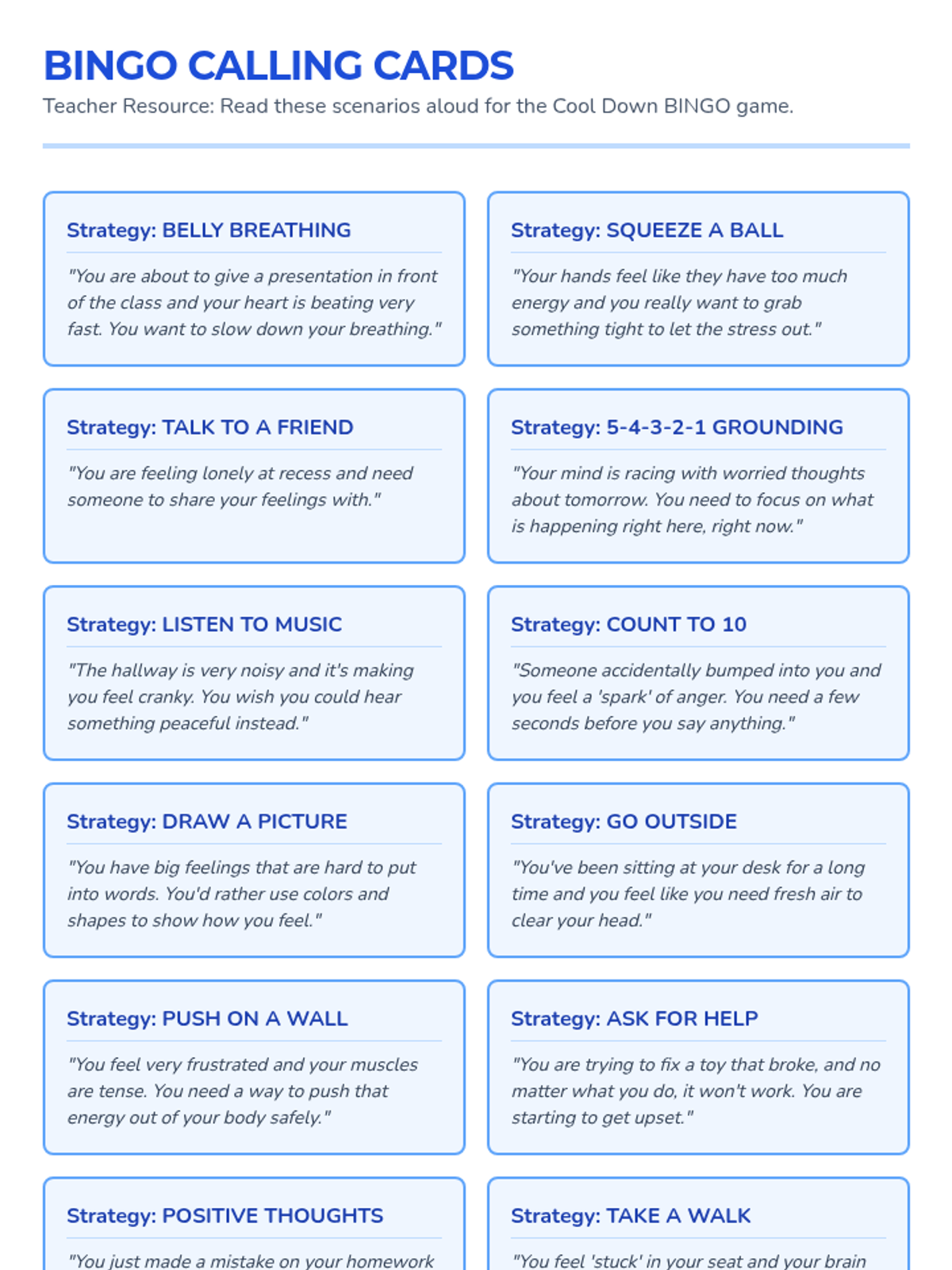
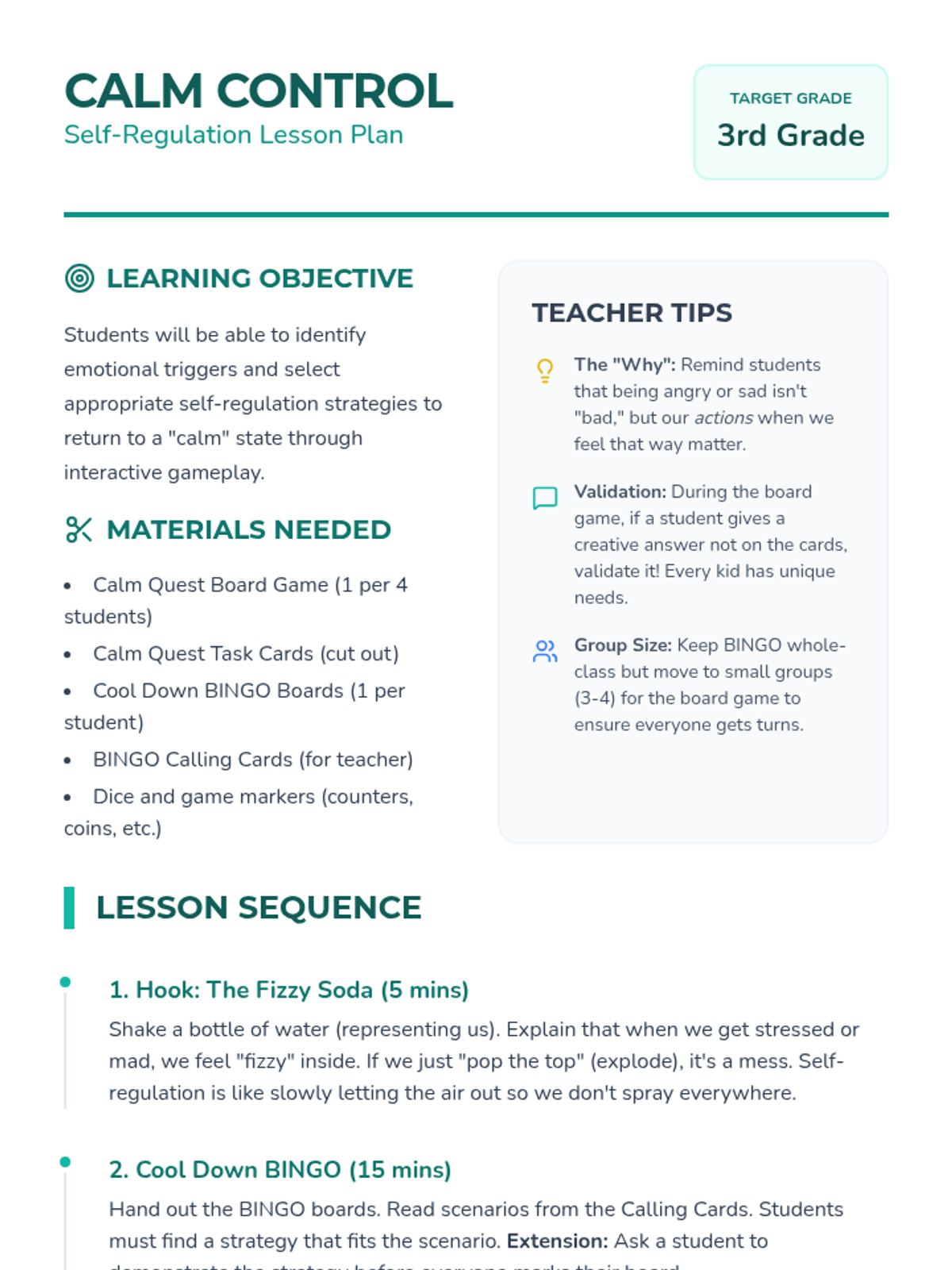
A fun, interactive lesson where 3rd graders practice identifying and applying self-regulation strategies through a board game and BINGO. Students will learn to recognize emotional triggers and choose appropriate 'calm-down' tools.
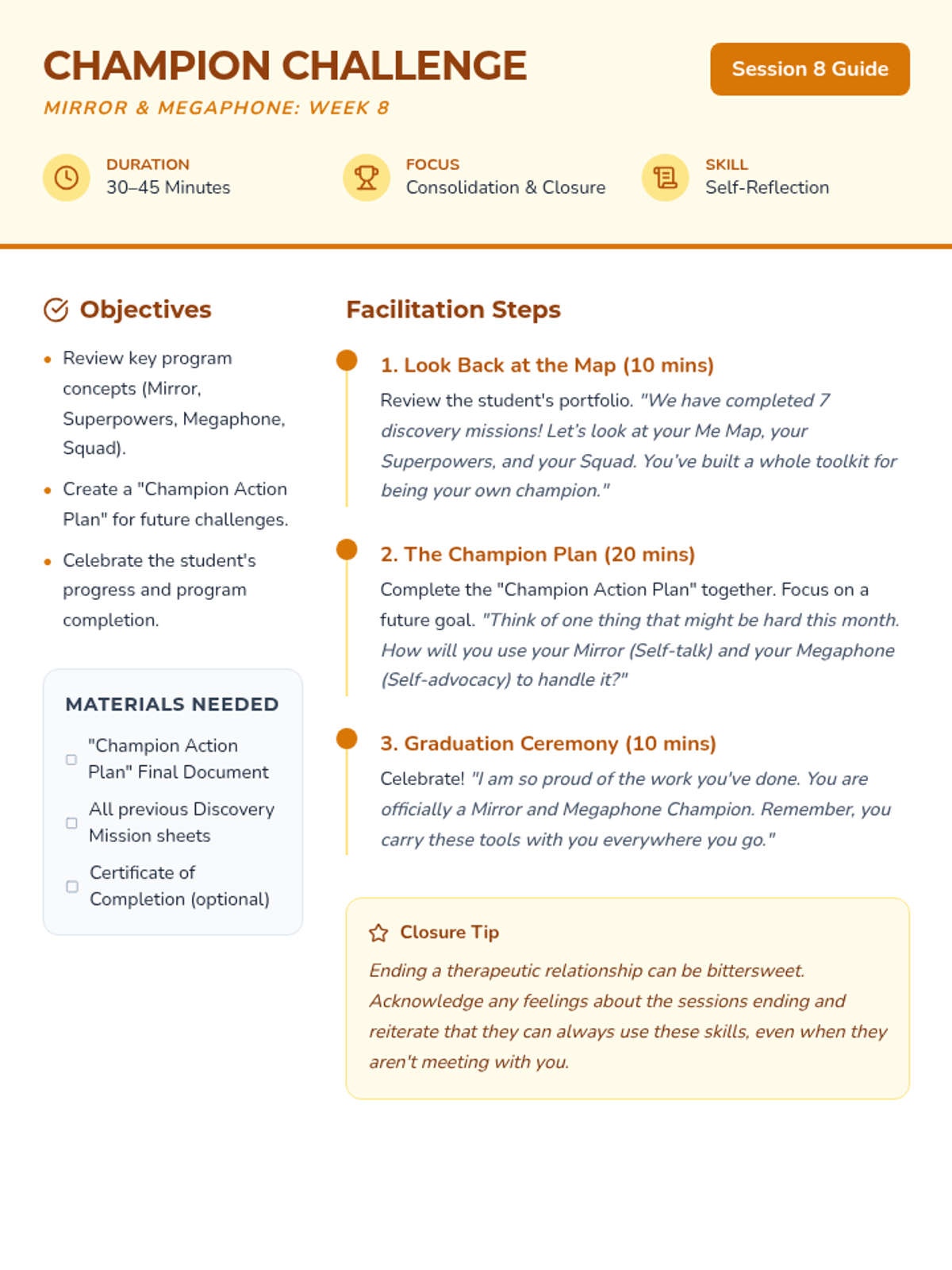
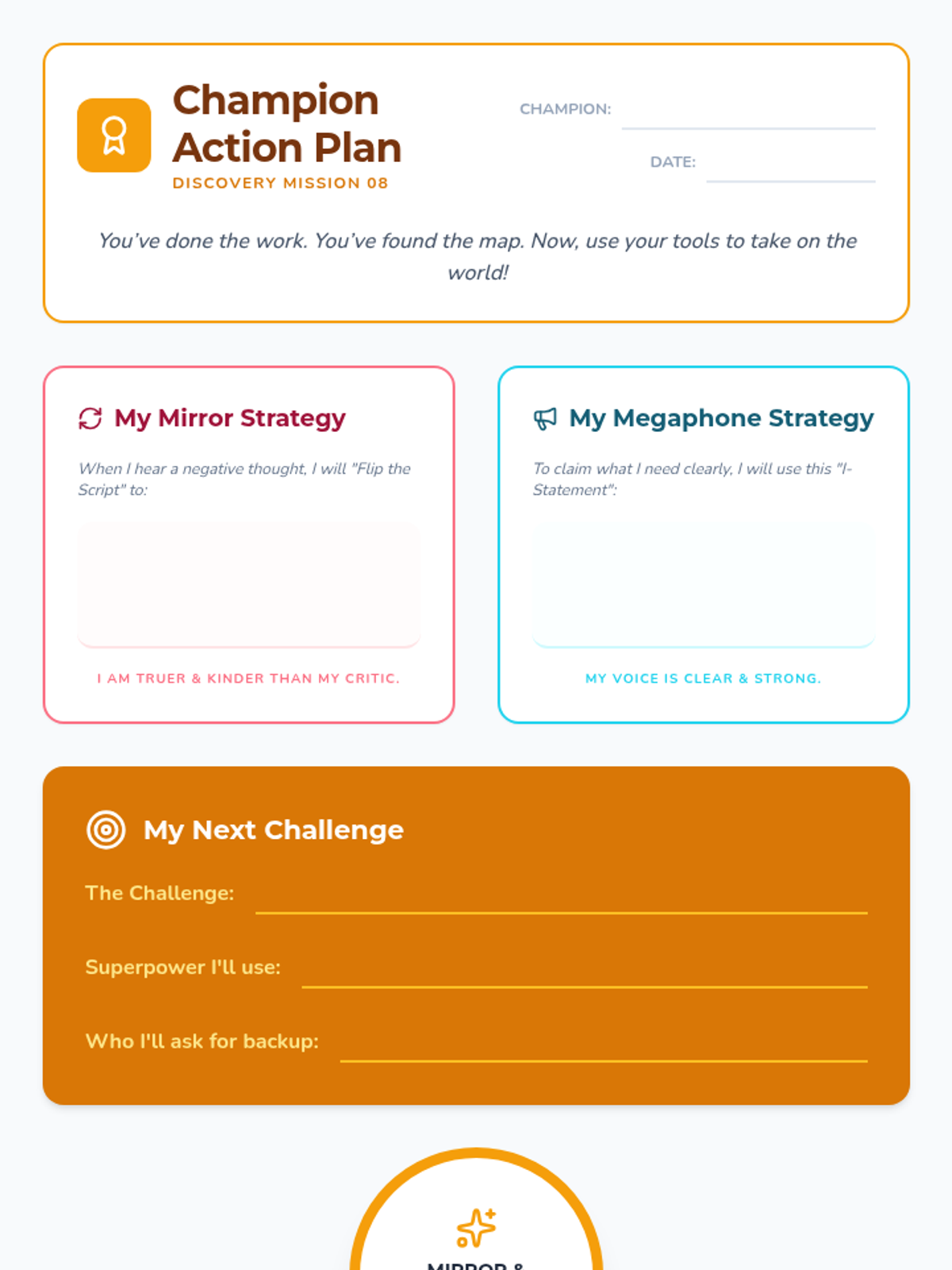
A final reflection session where the student reviews their progress and creates a personal 'Advocacy Action Plan' for the future.
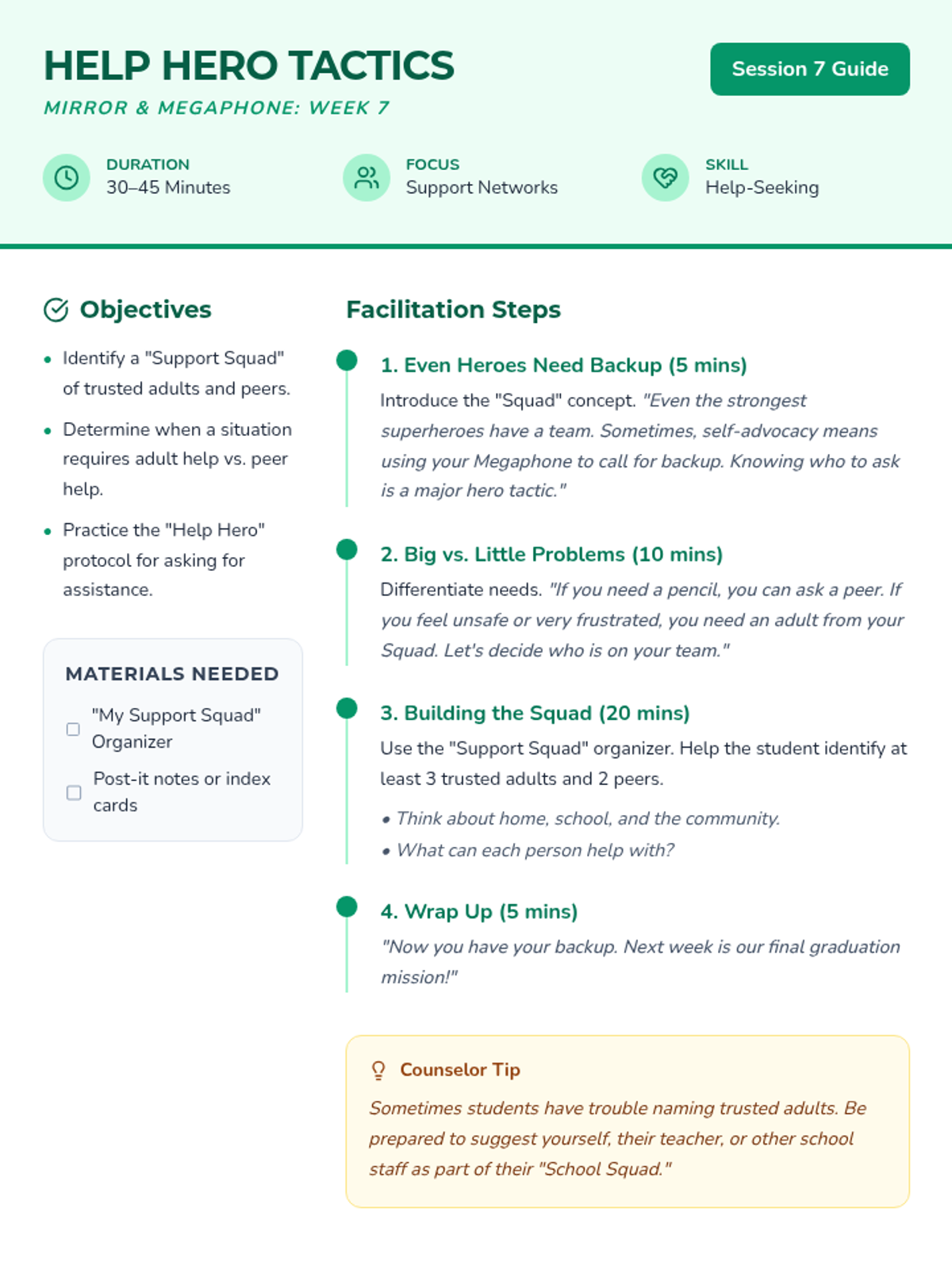
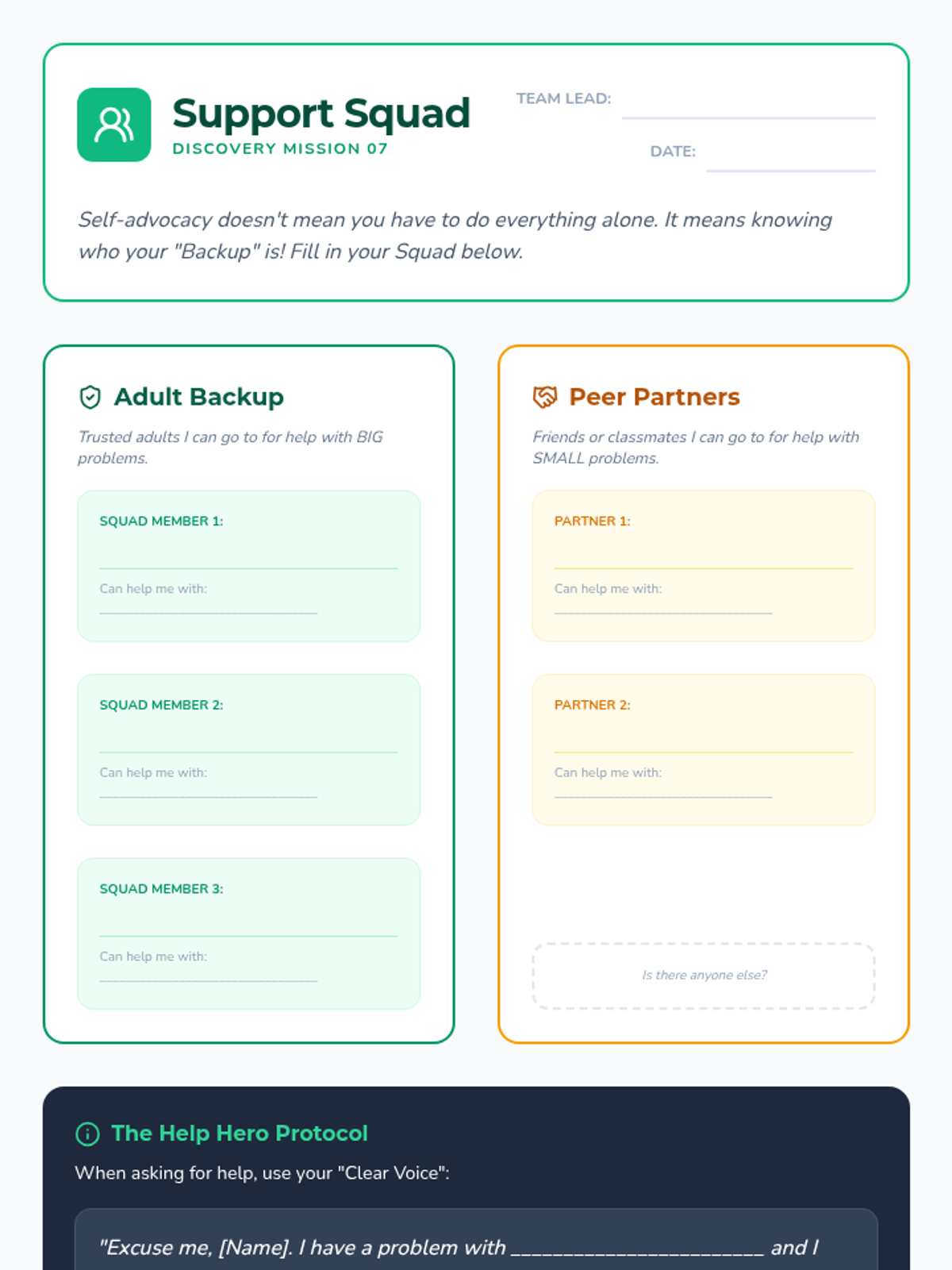
Provides a framework for how and when to ask for help, identifying a "Support Squad" of trusted individuals.
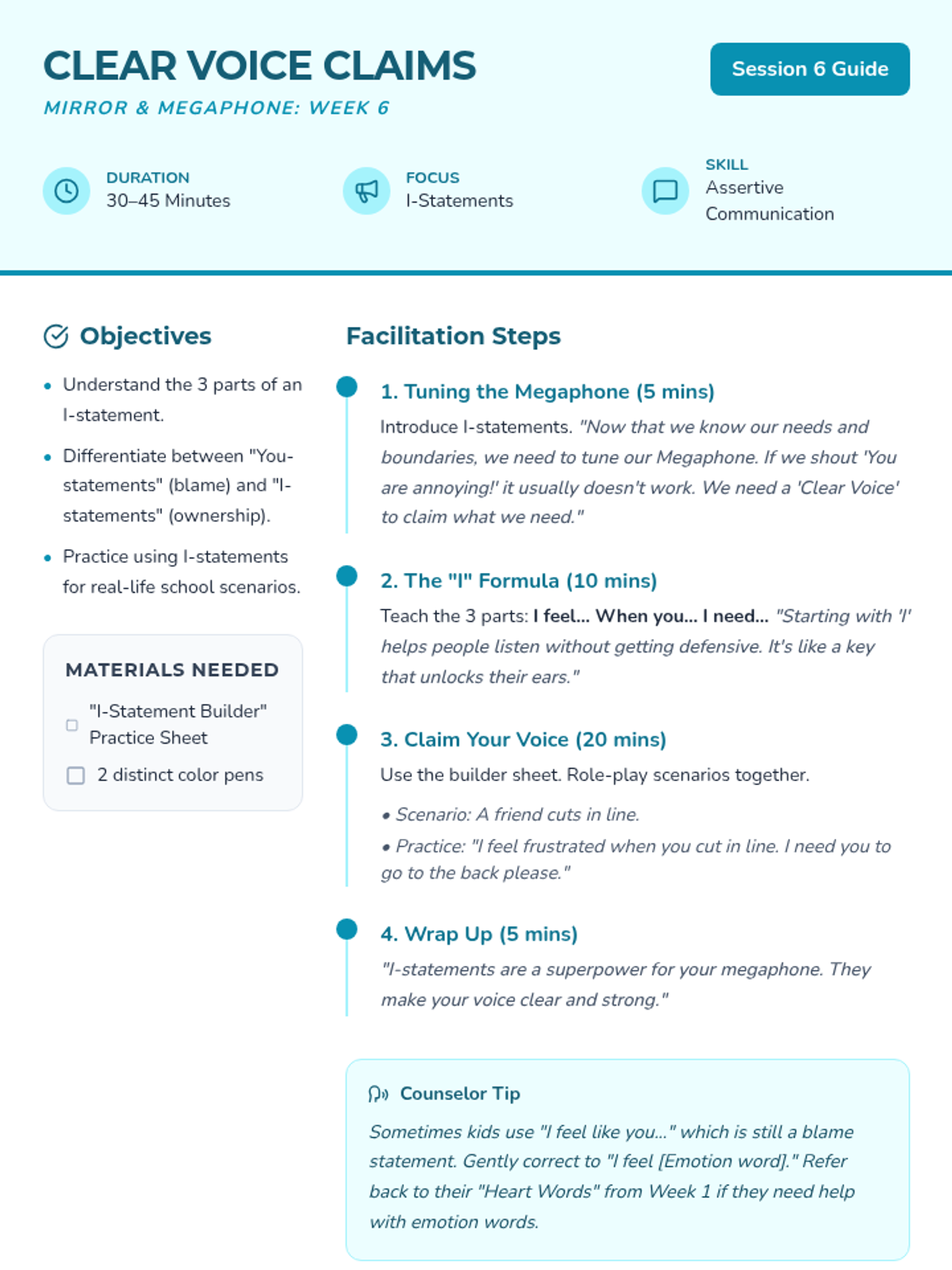
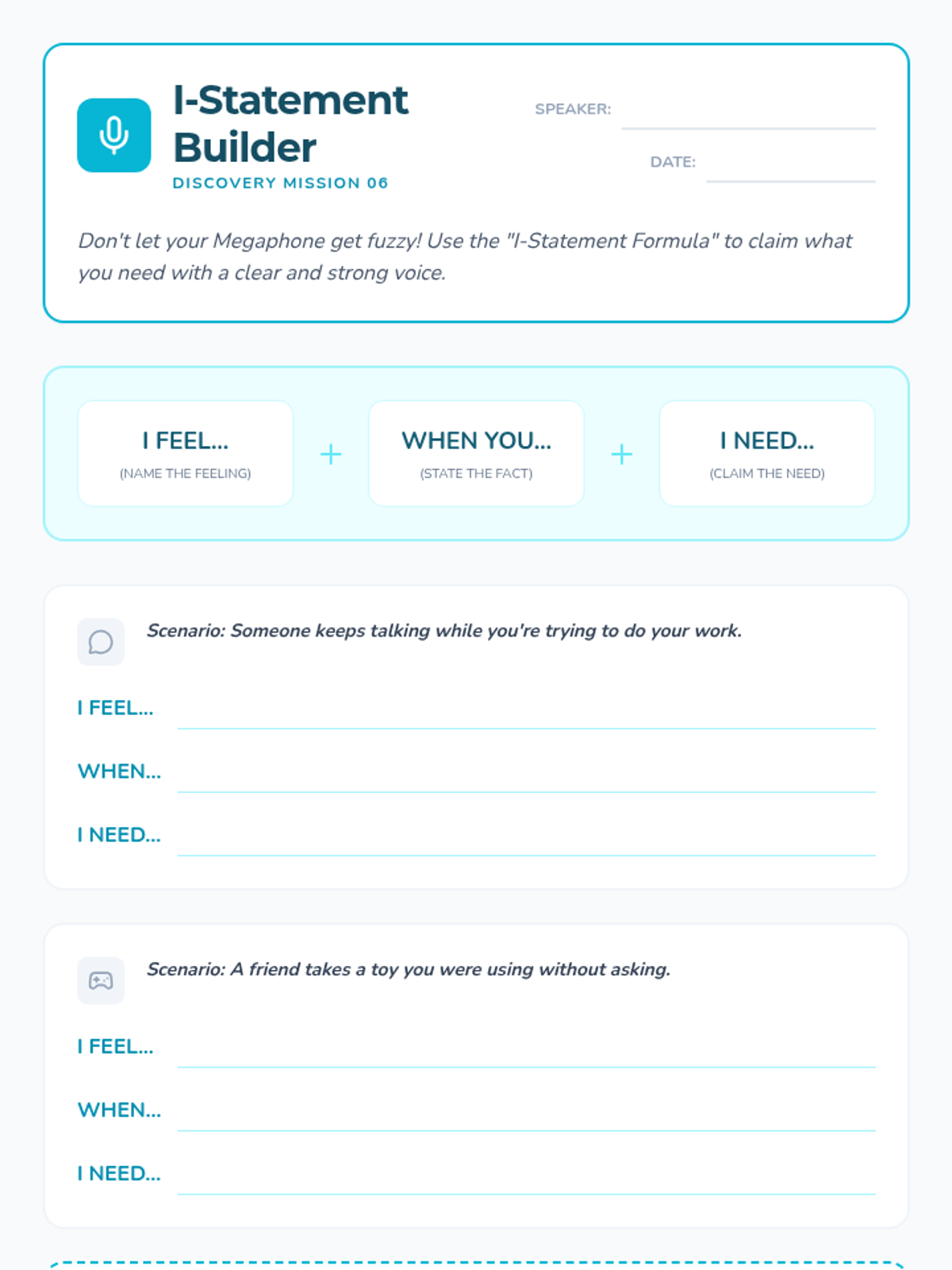
Teaches the practical skill of using "I-statements" to communicate feelings and needs effectively without blame.
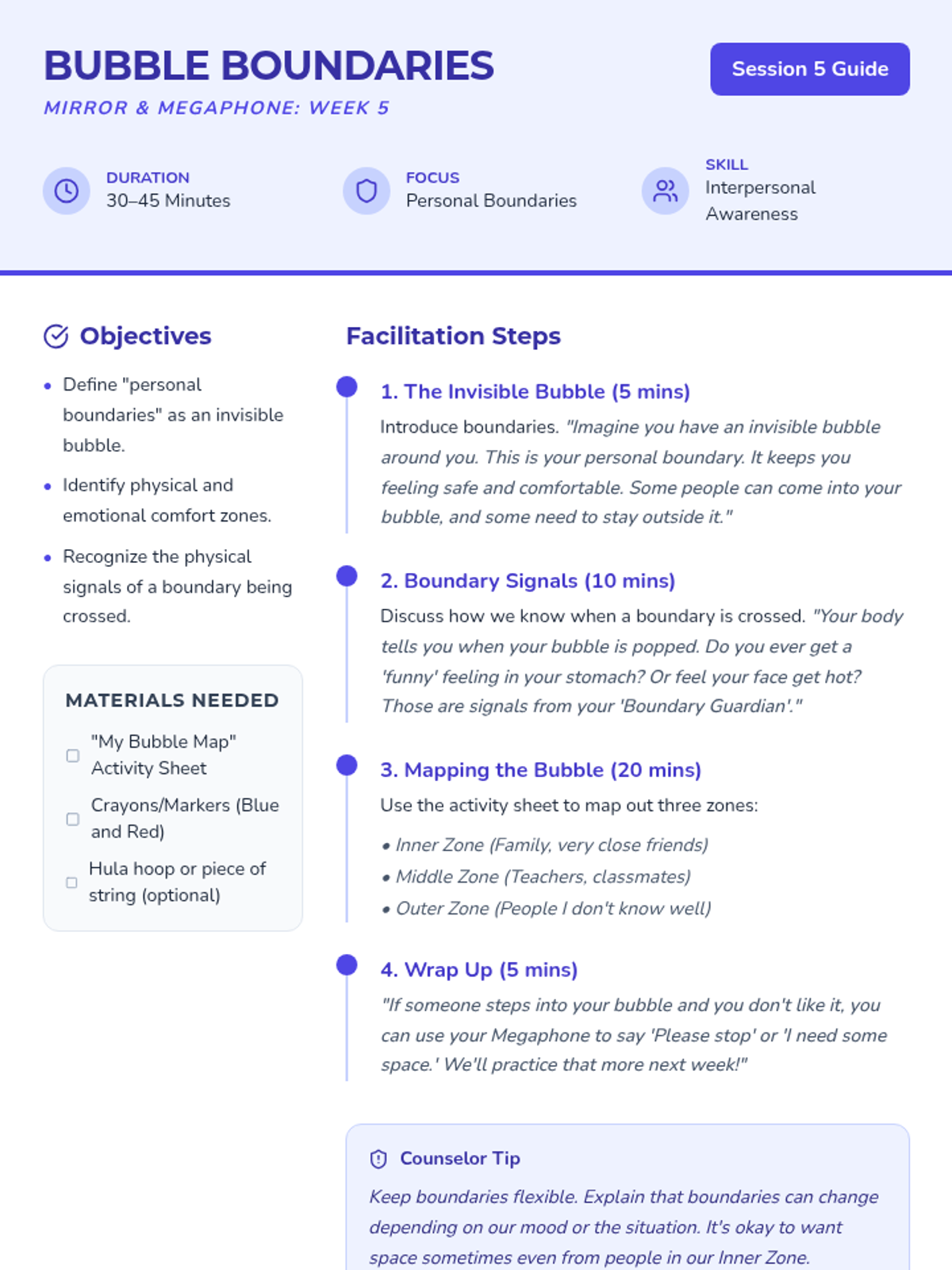
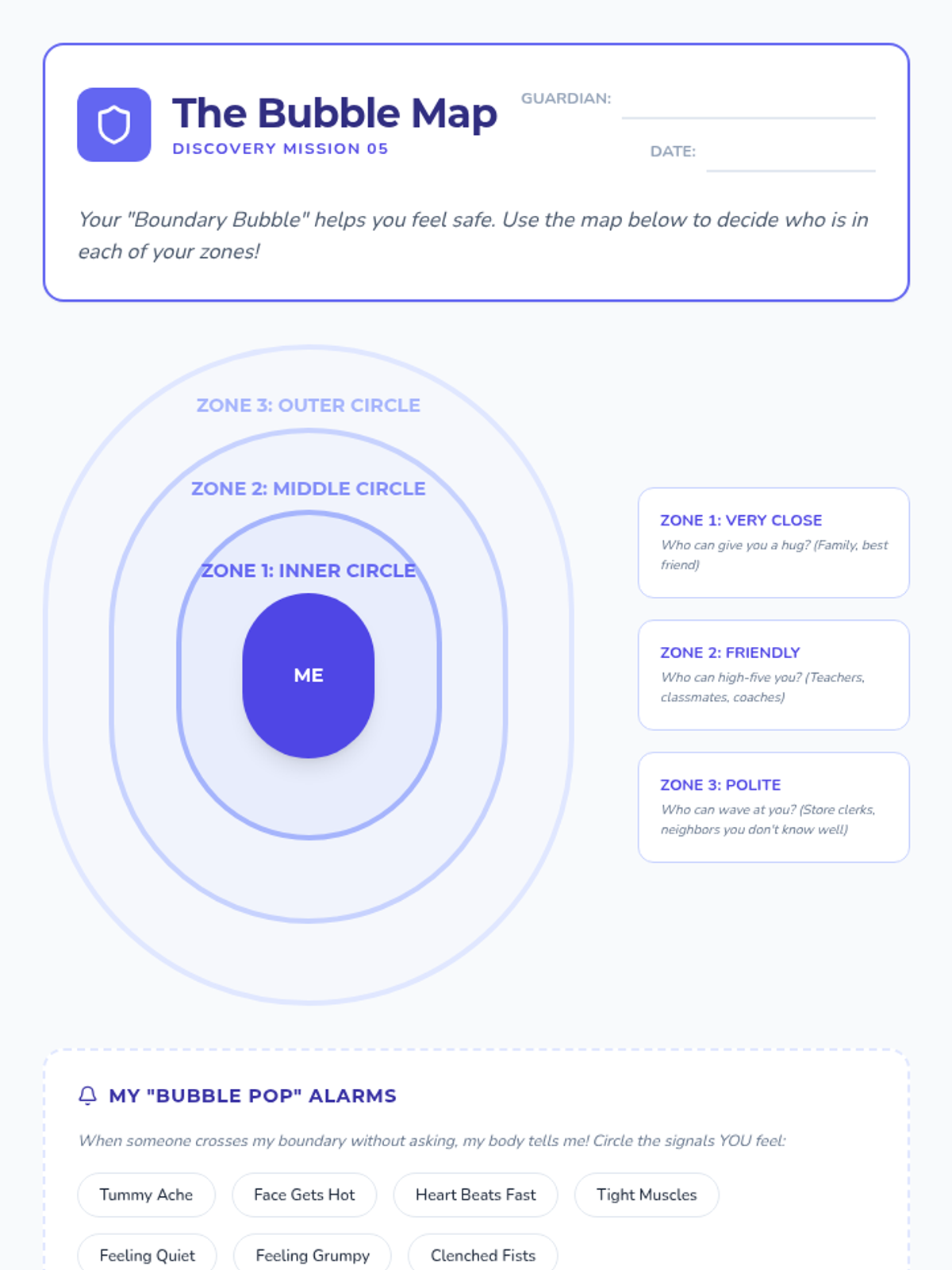
Focuses on identifying personal physical and emotional boundaries, and teaching the student how to recognize when a boundary is being crossed.
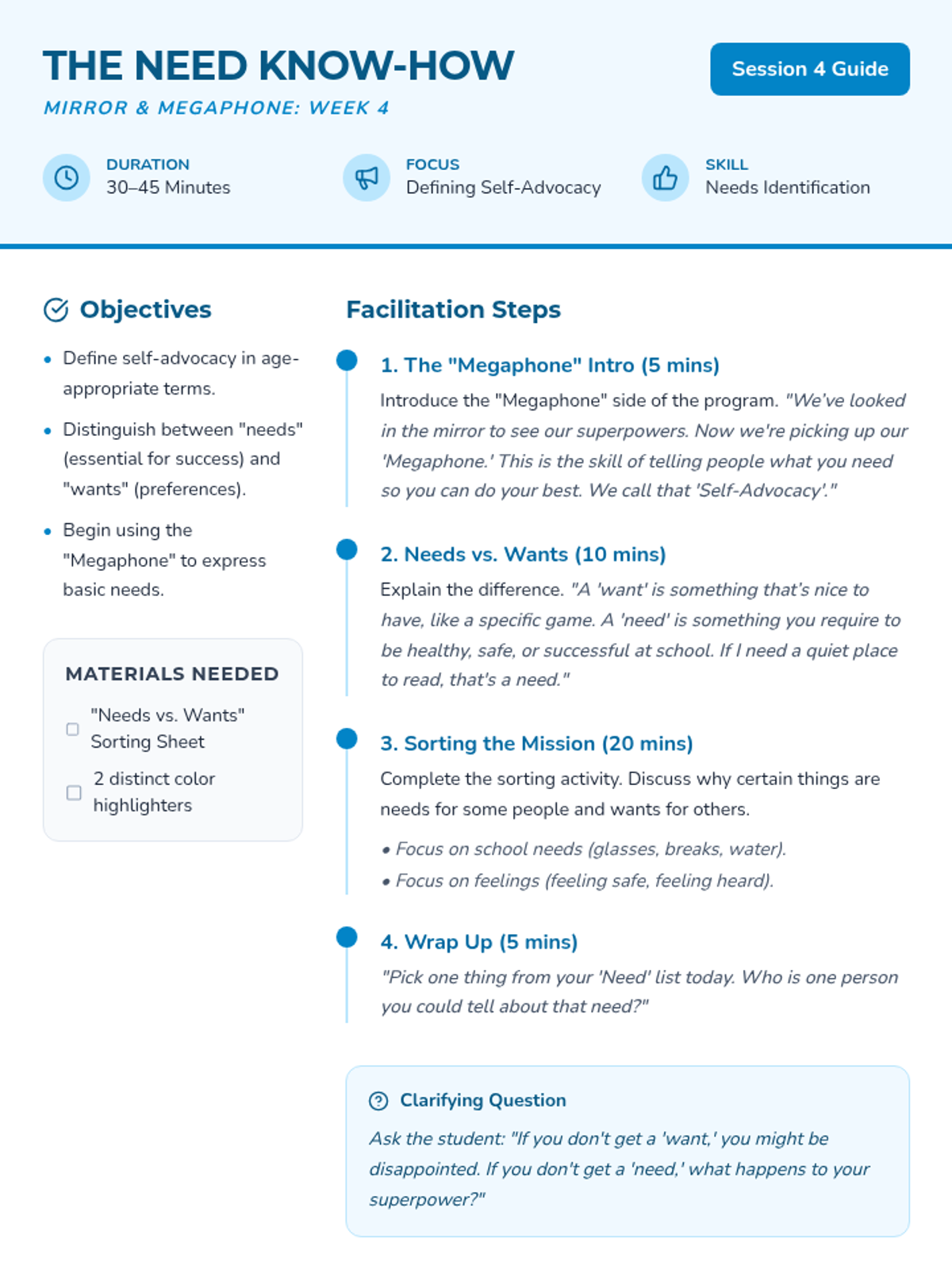
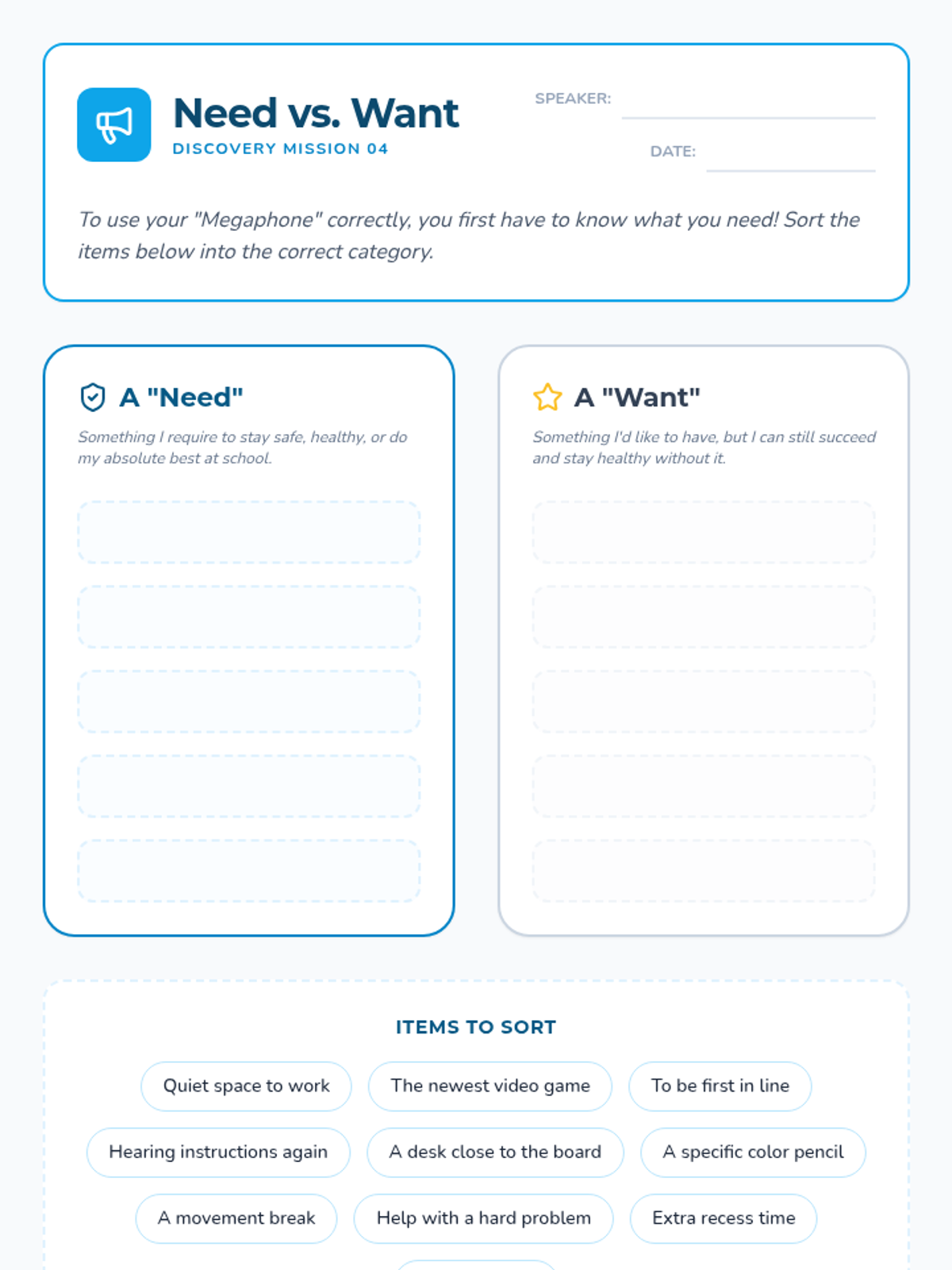
Students learn the definition of self-advocacy and begin to differentiate between personal needs and wants to better express themselves.