This lesson focuses on the mediator's primary tool: mirroring (reflecting back what was heard). Students practice listening to a complaint and summarizing it neutrally to ensure the speaker feels heard.
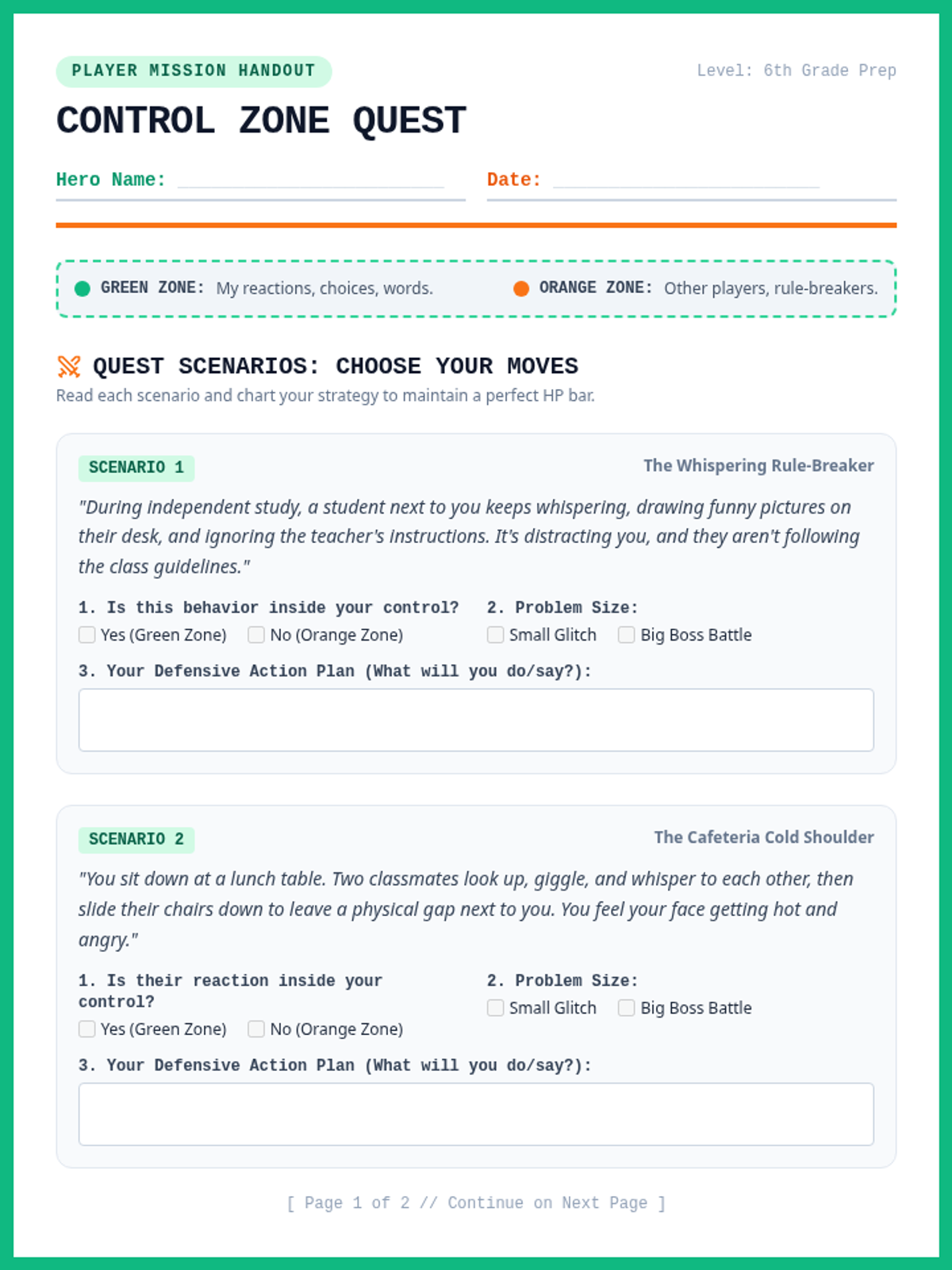
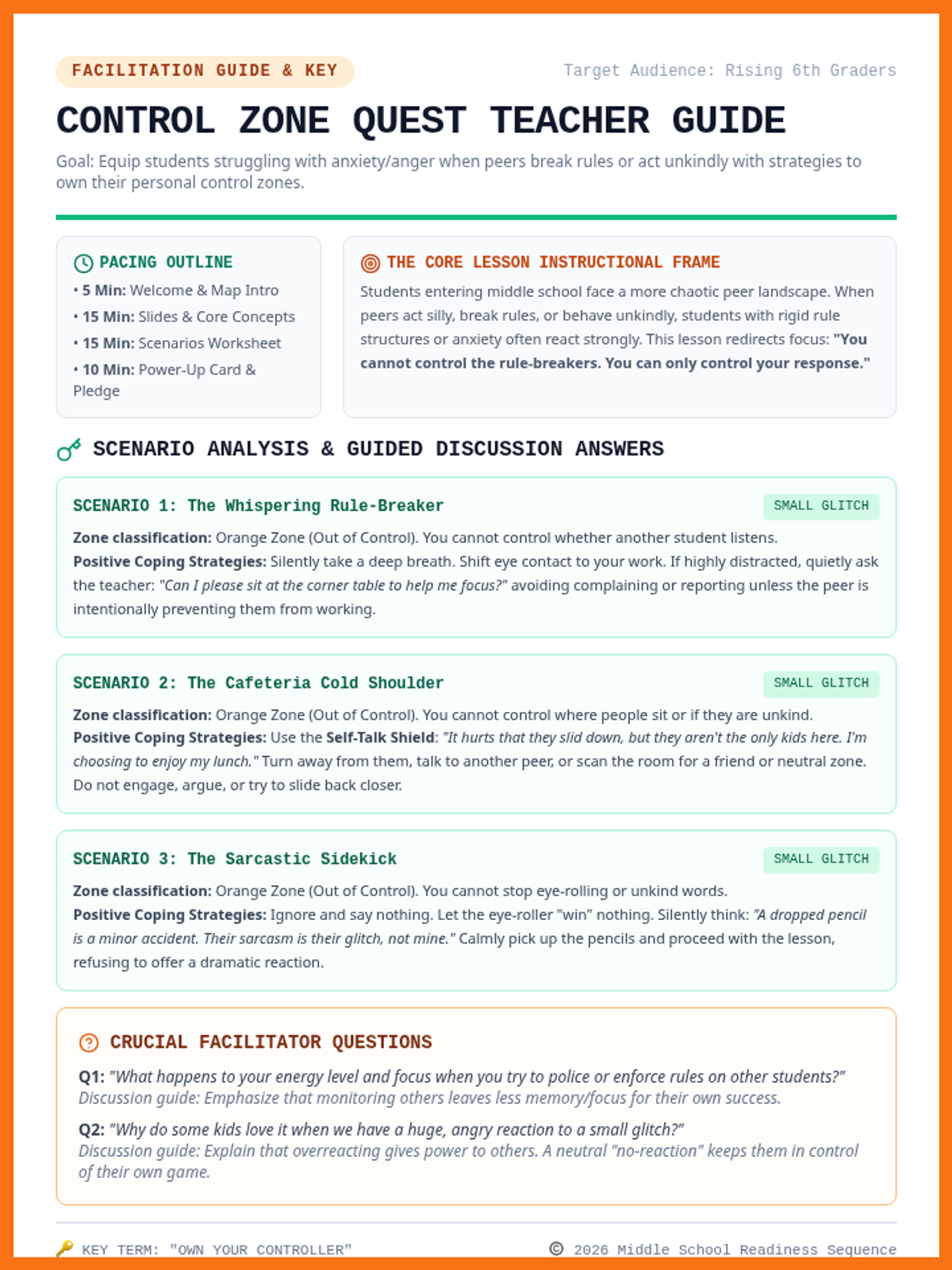
A transition lesson for rising sixth graders to master the Circle of Control and distinguish between big and small problems. Students learn practical coping strategies for peer conflicts and rule-breaking using a gamified quest theme.
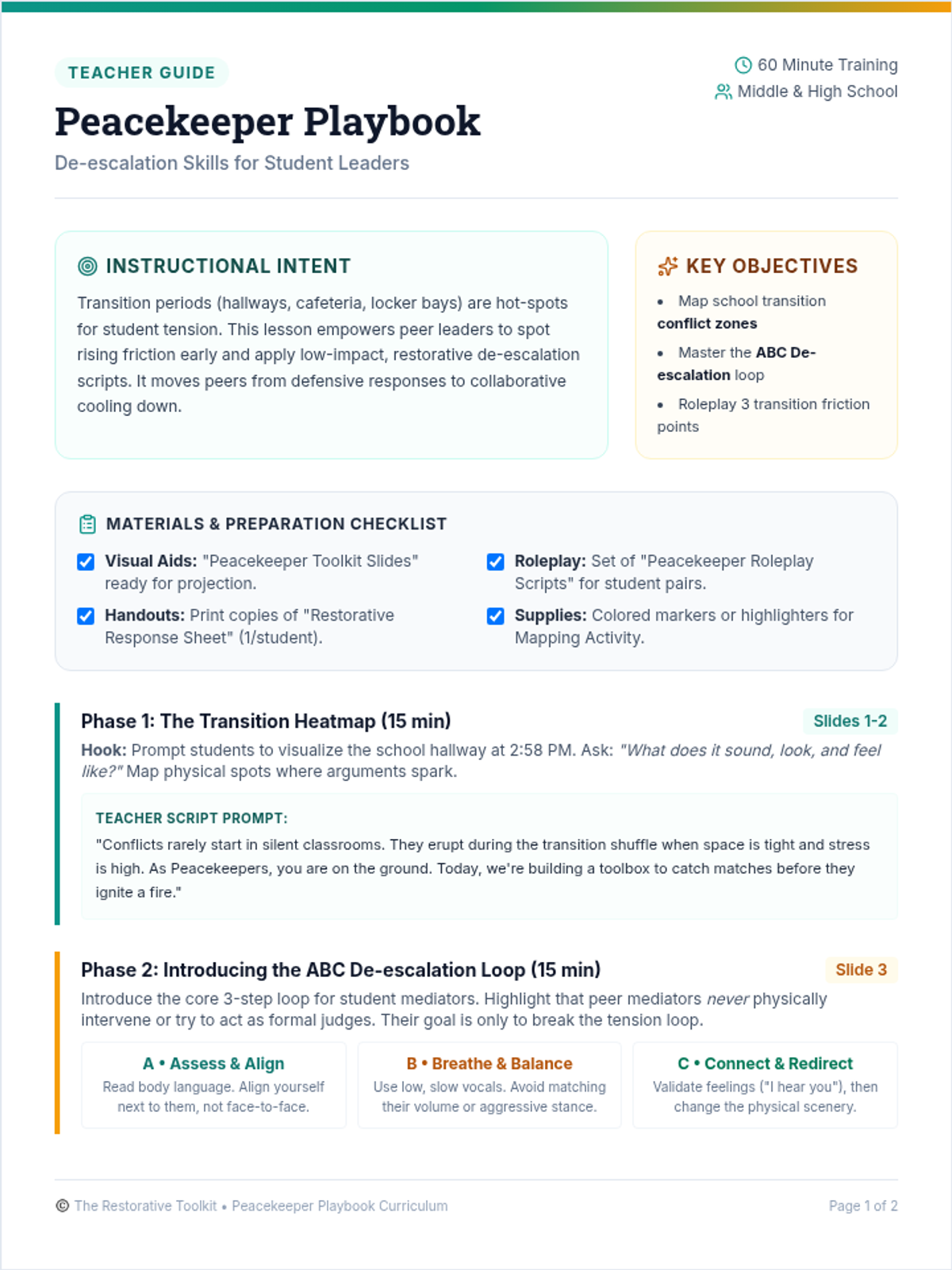
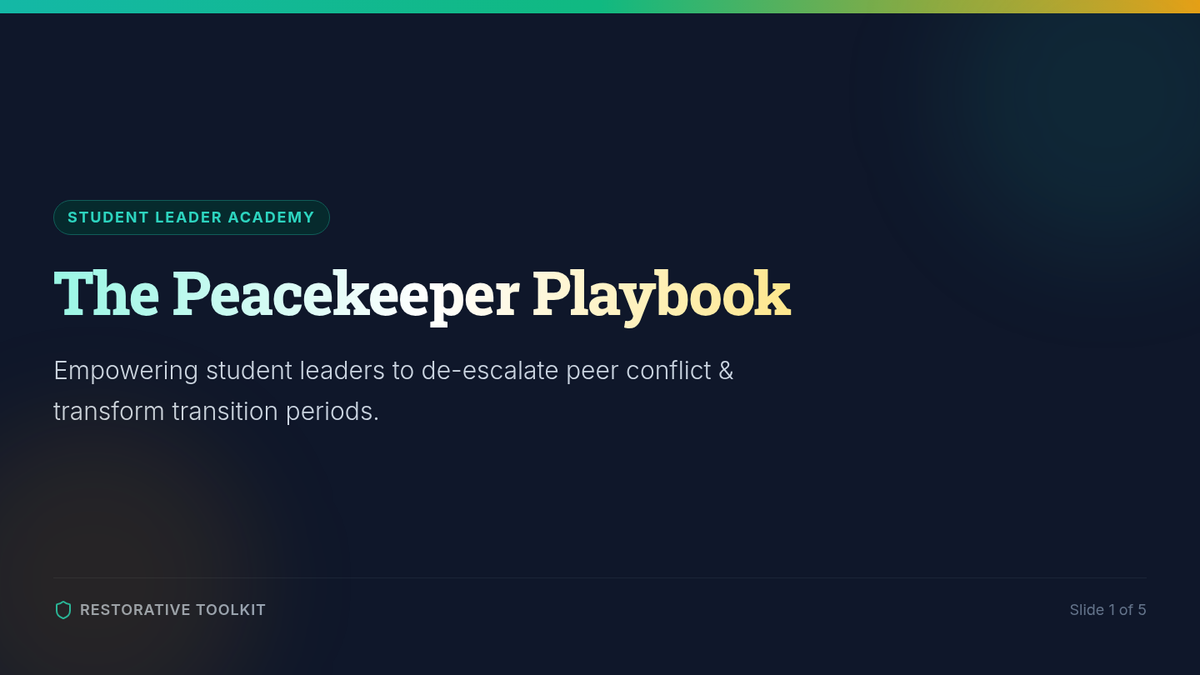
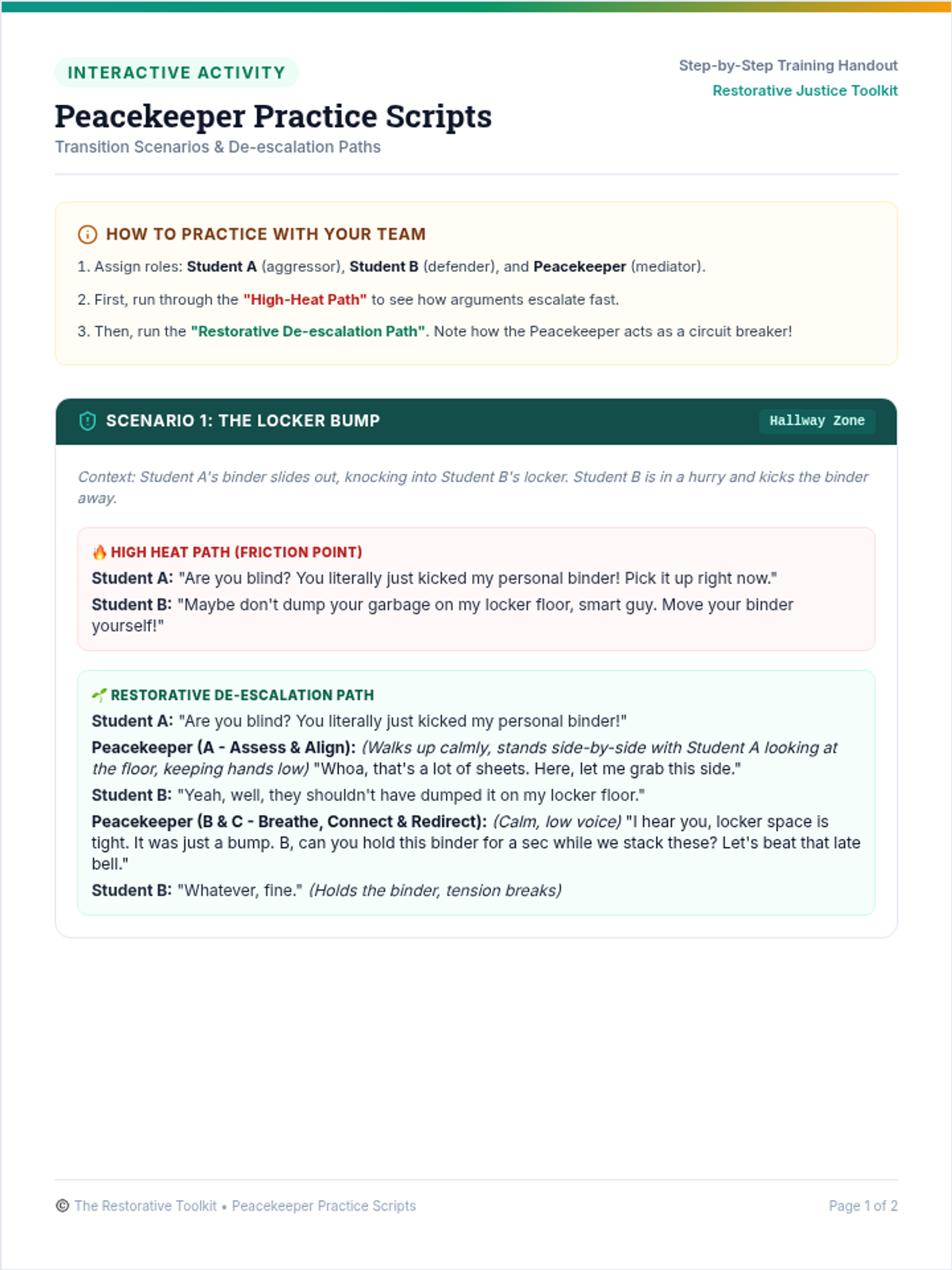
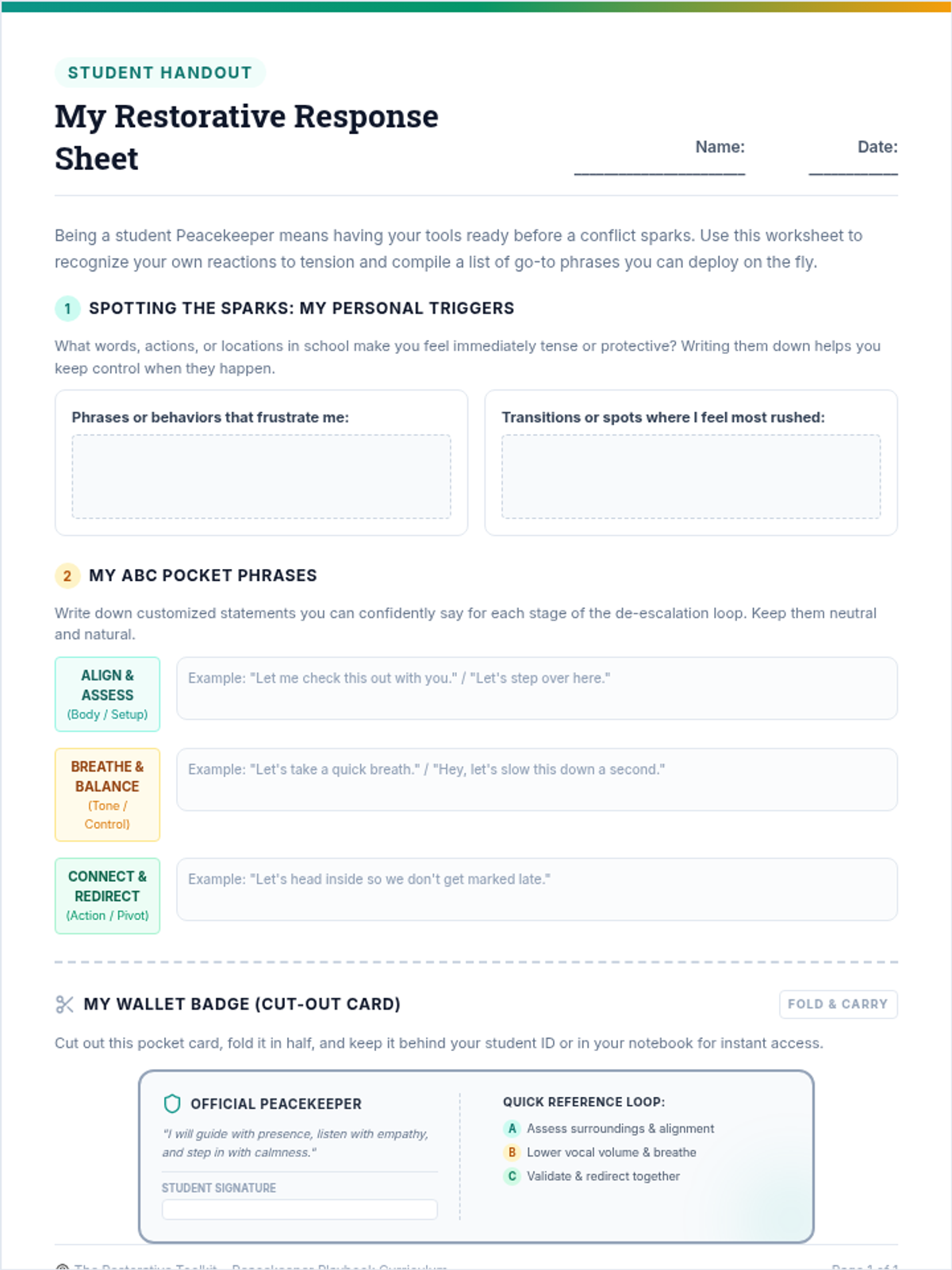
An interactive, student-led curriculum empowering middle and high school leaders to de-escalate minor peer conflicts during high-stress transition periods, building sustainable restorative justice skills.
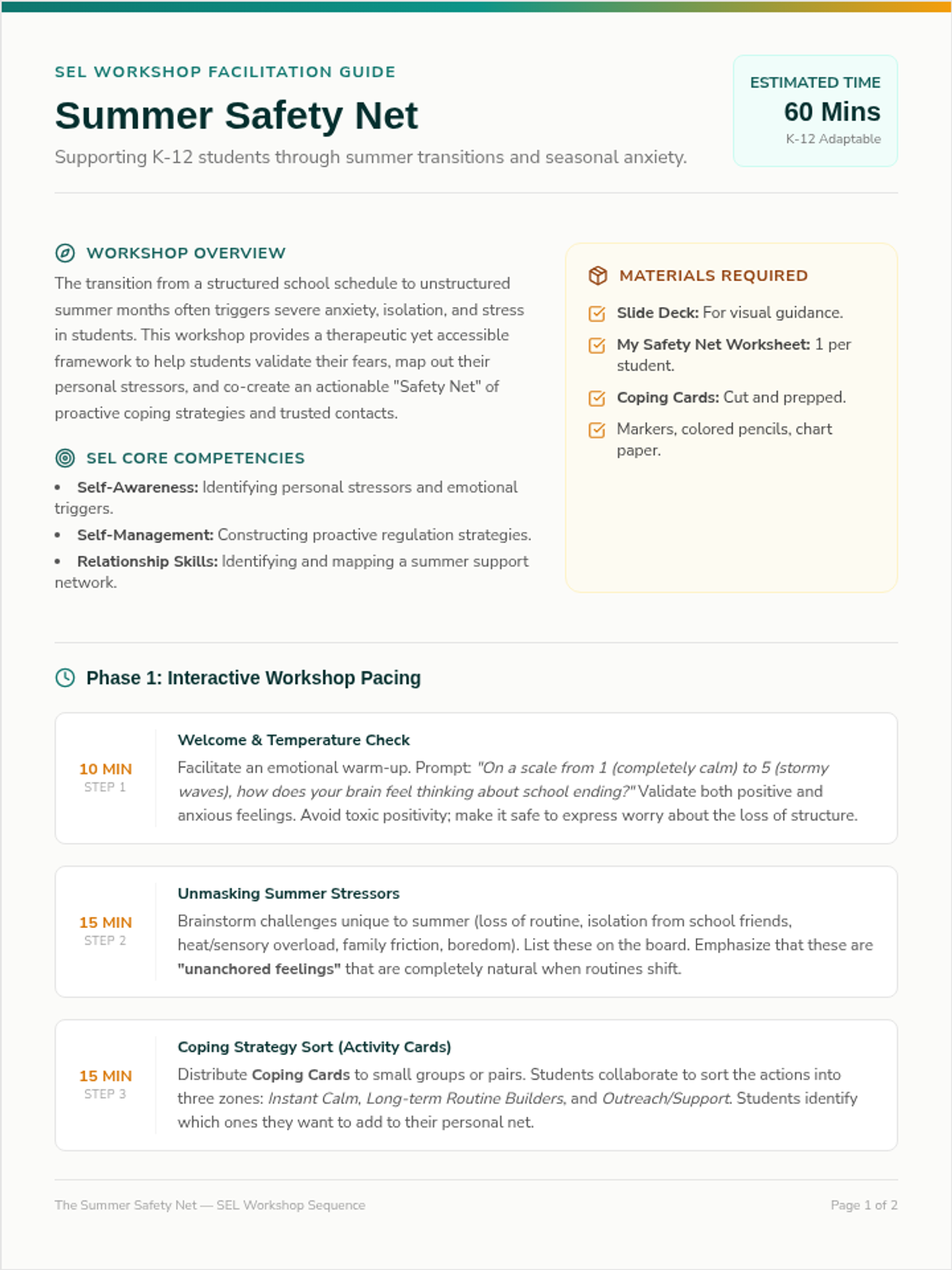
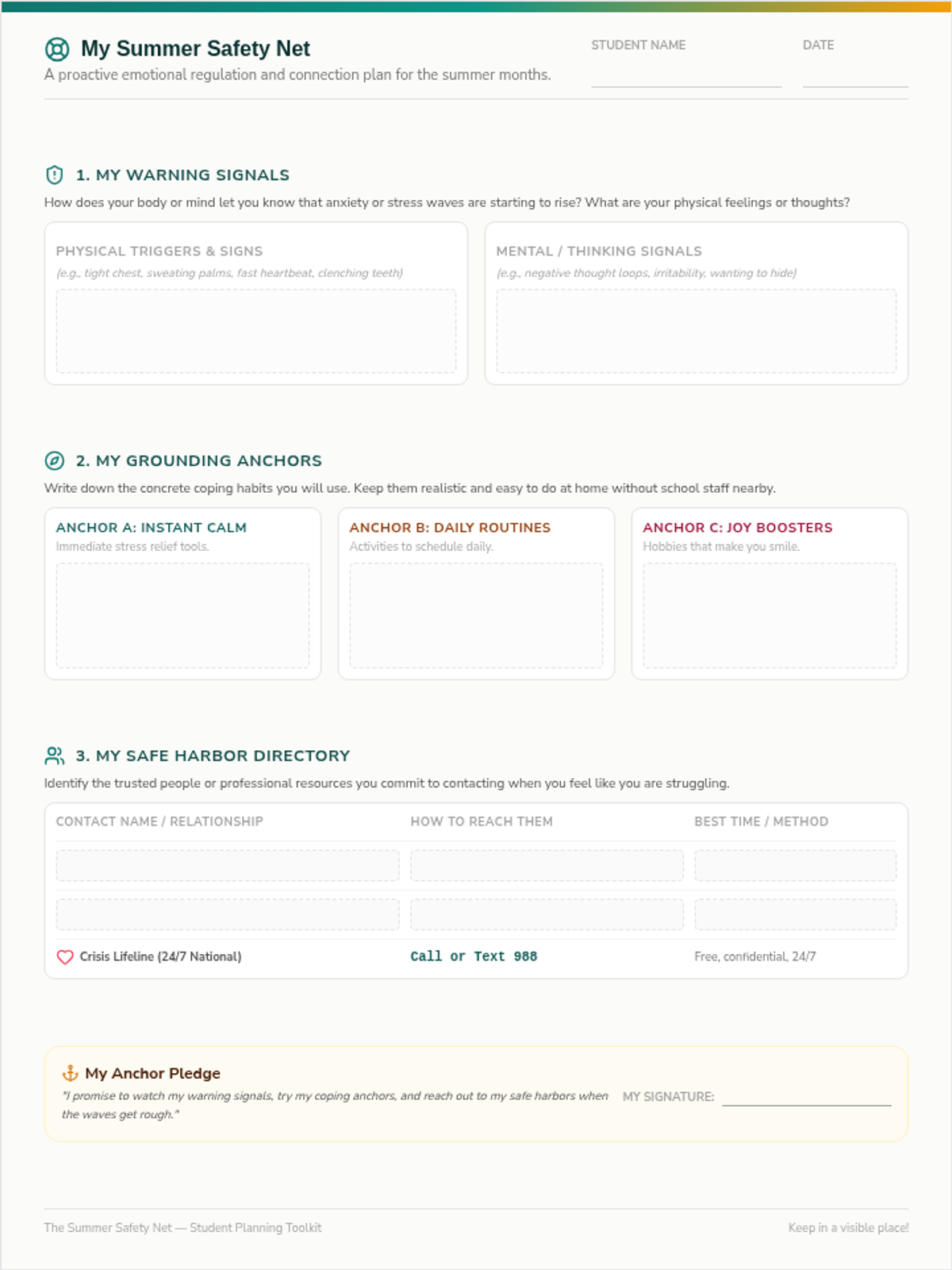
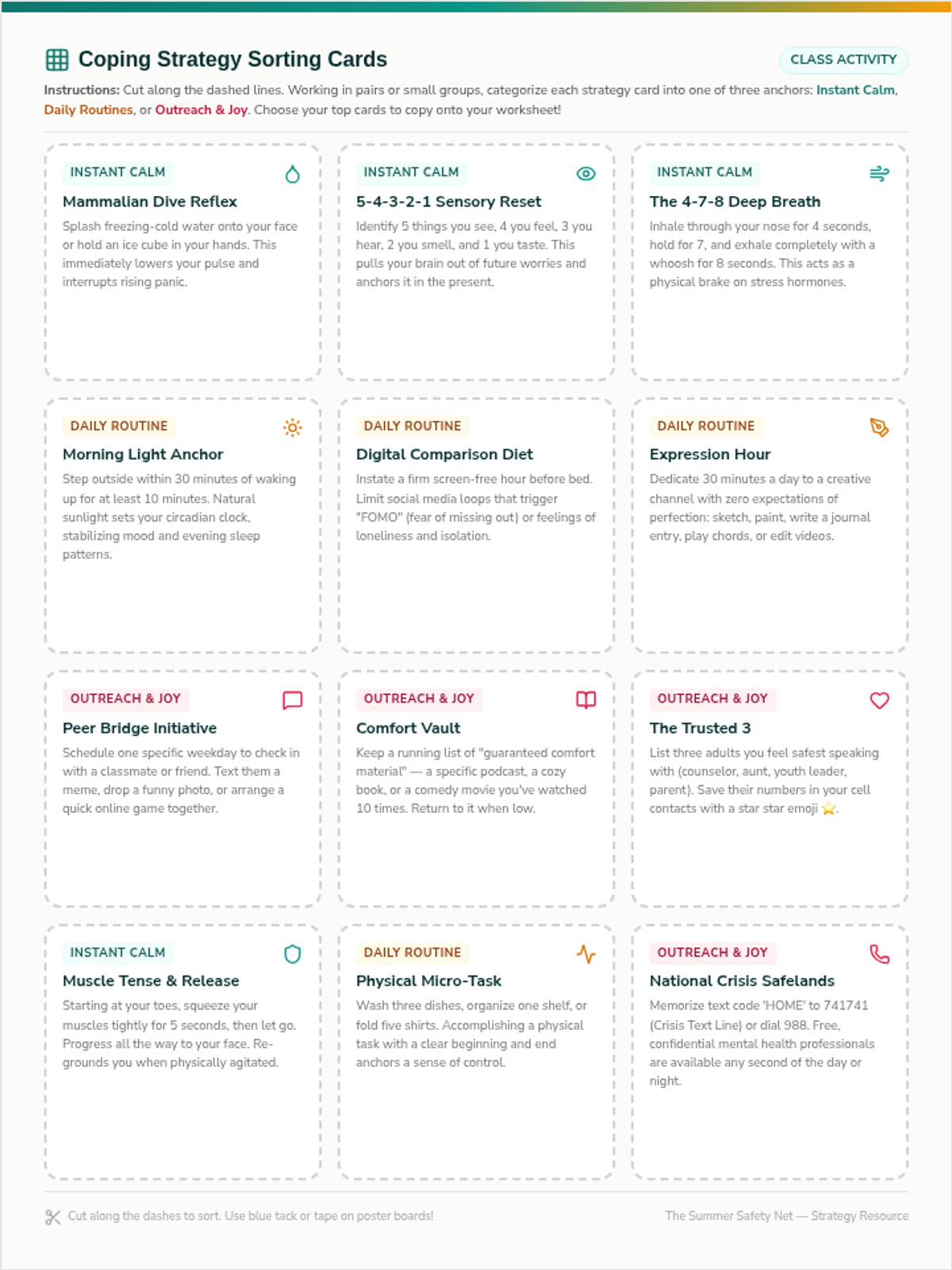
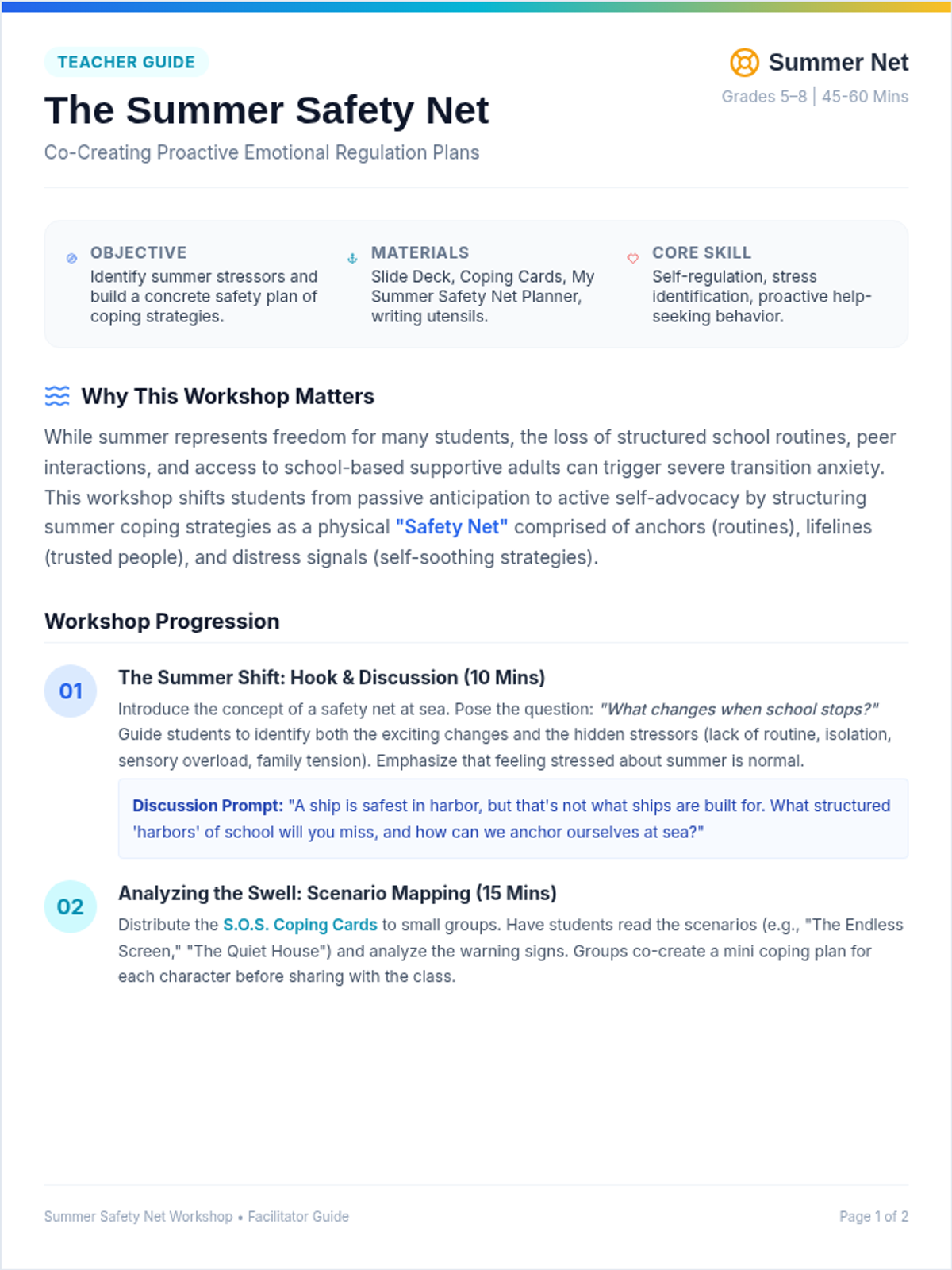
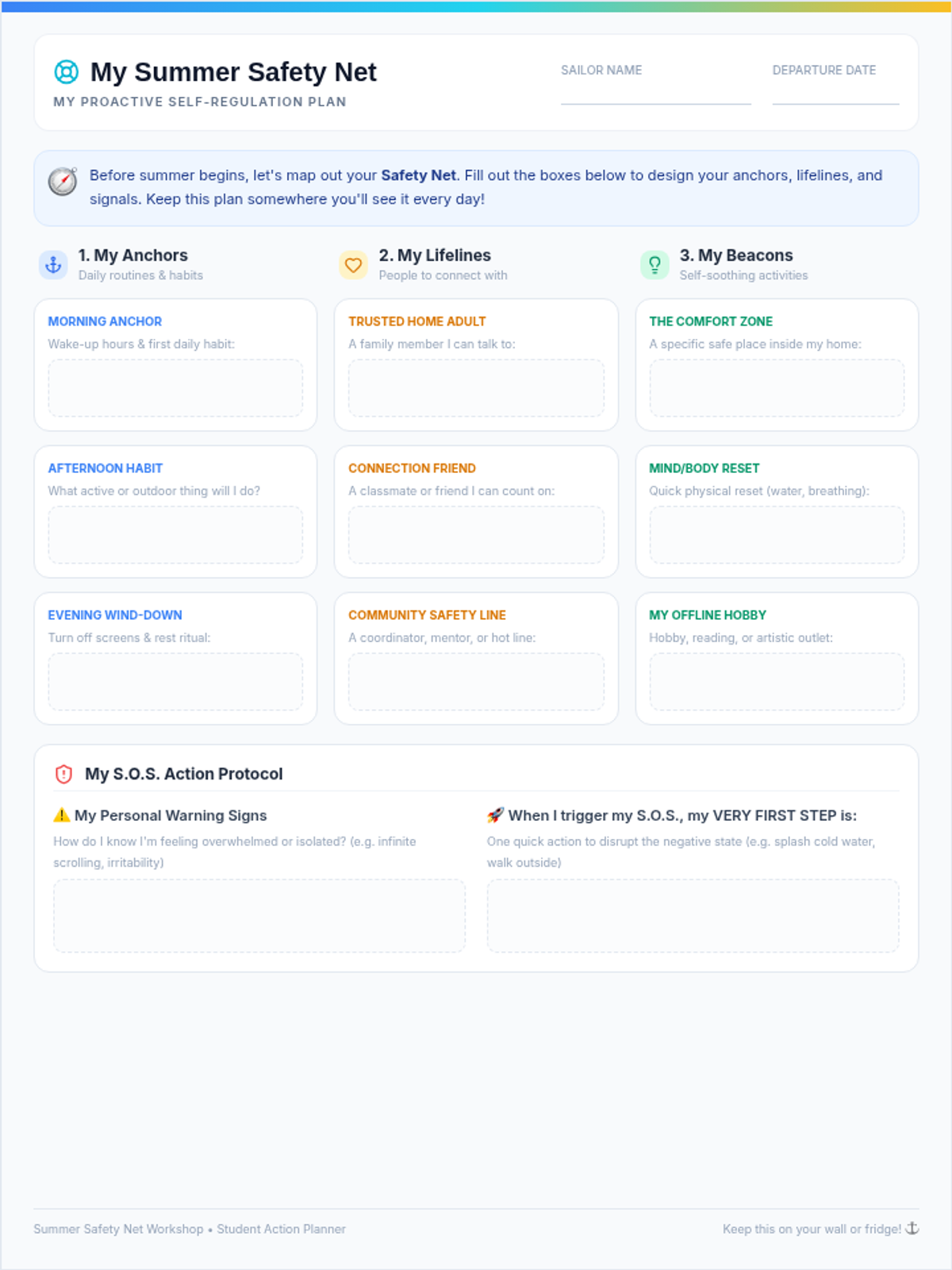
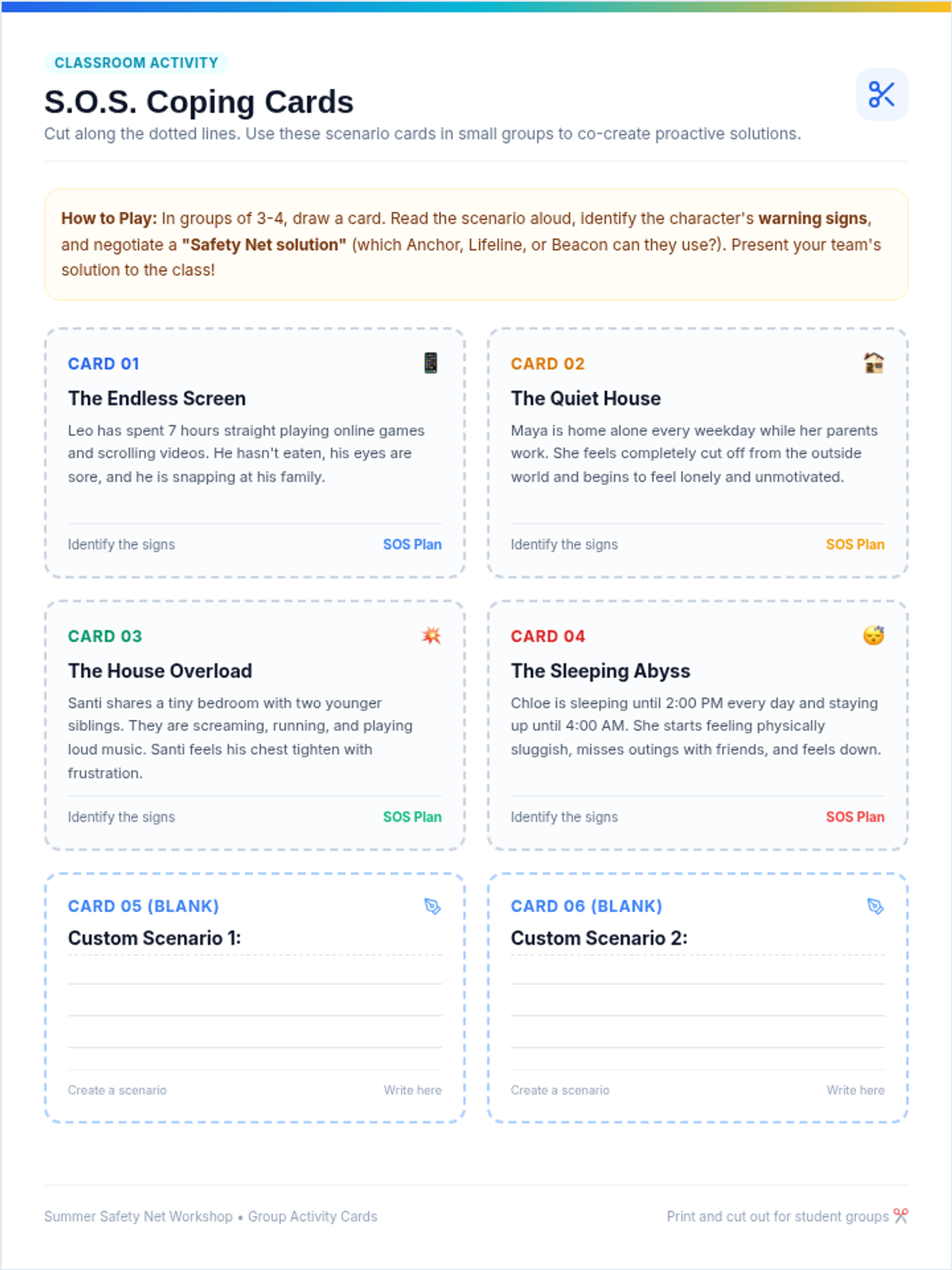
A collaborative mental health workshop designed to help students navigate summer transition anxiety by identifying stressors, mapping coping strategies, and co-creating a personalized proactive emotional regulation plan.
A collaborative workshop designed to help students identify summer stressors and co-create proactive plans for emotional regulation outside of school. This lesson builds concrete coping strategies and 'safety nets' for students transitioning to summer break.
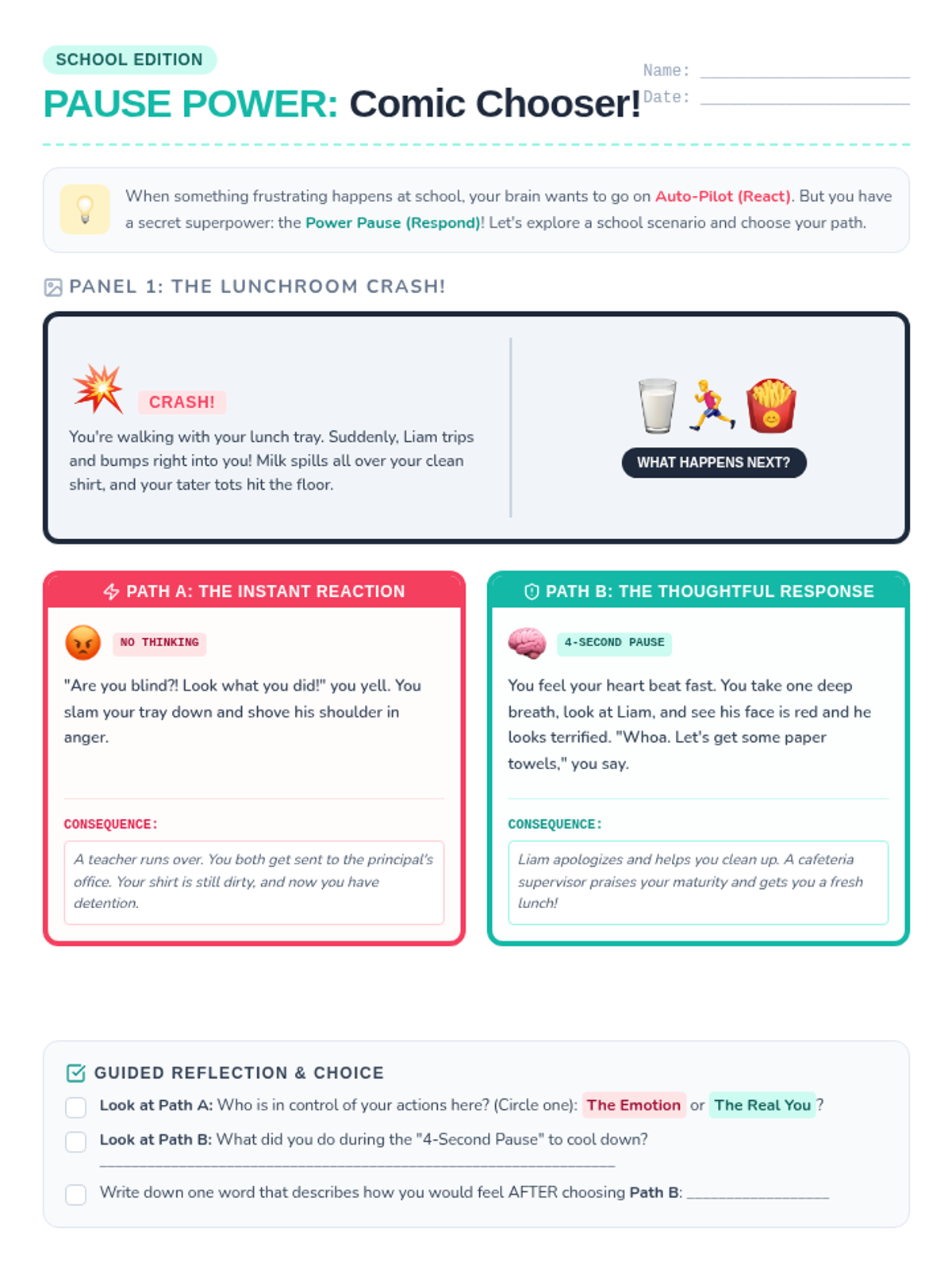
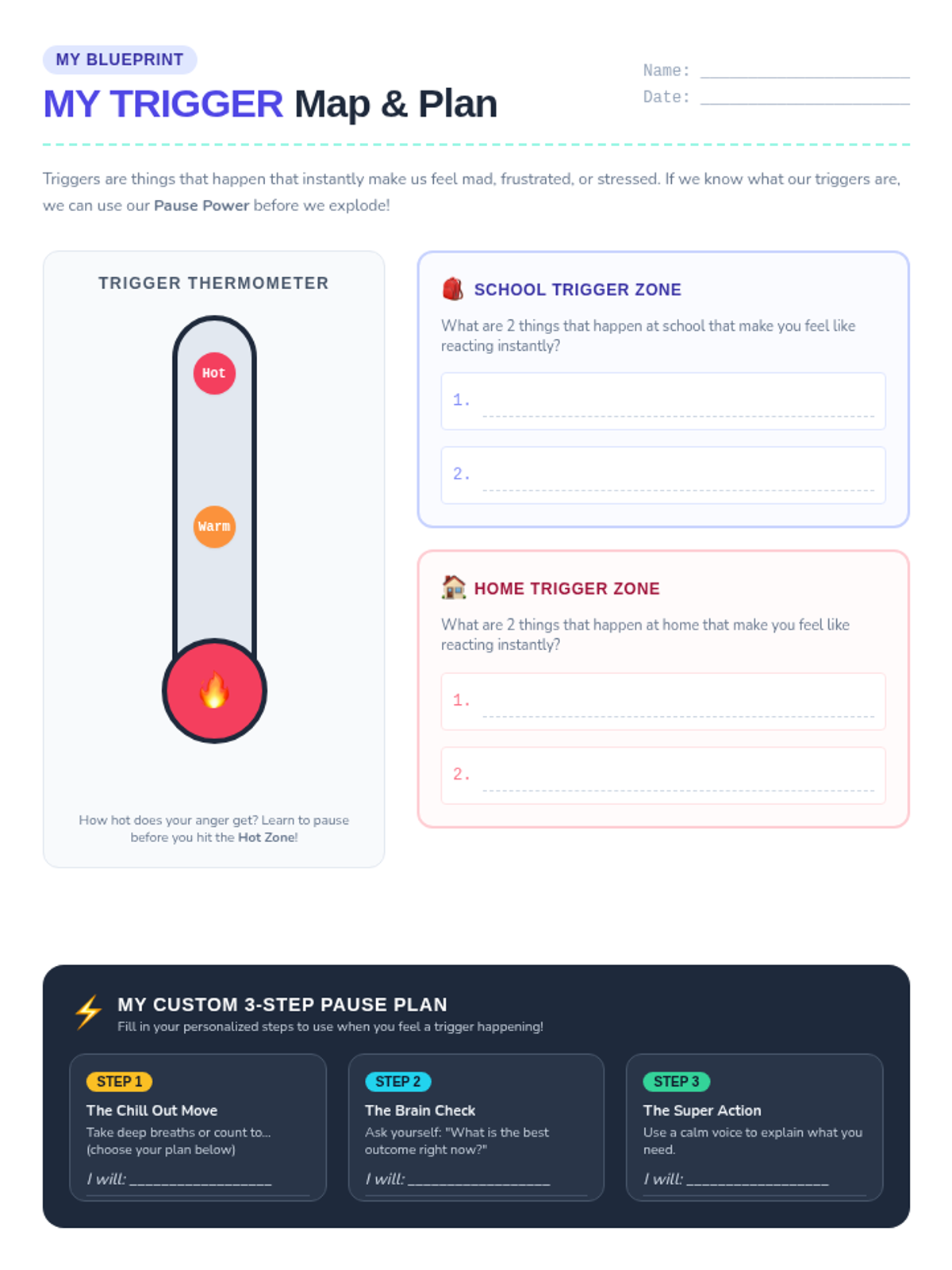
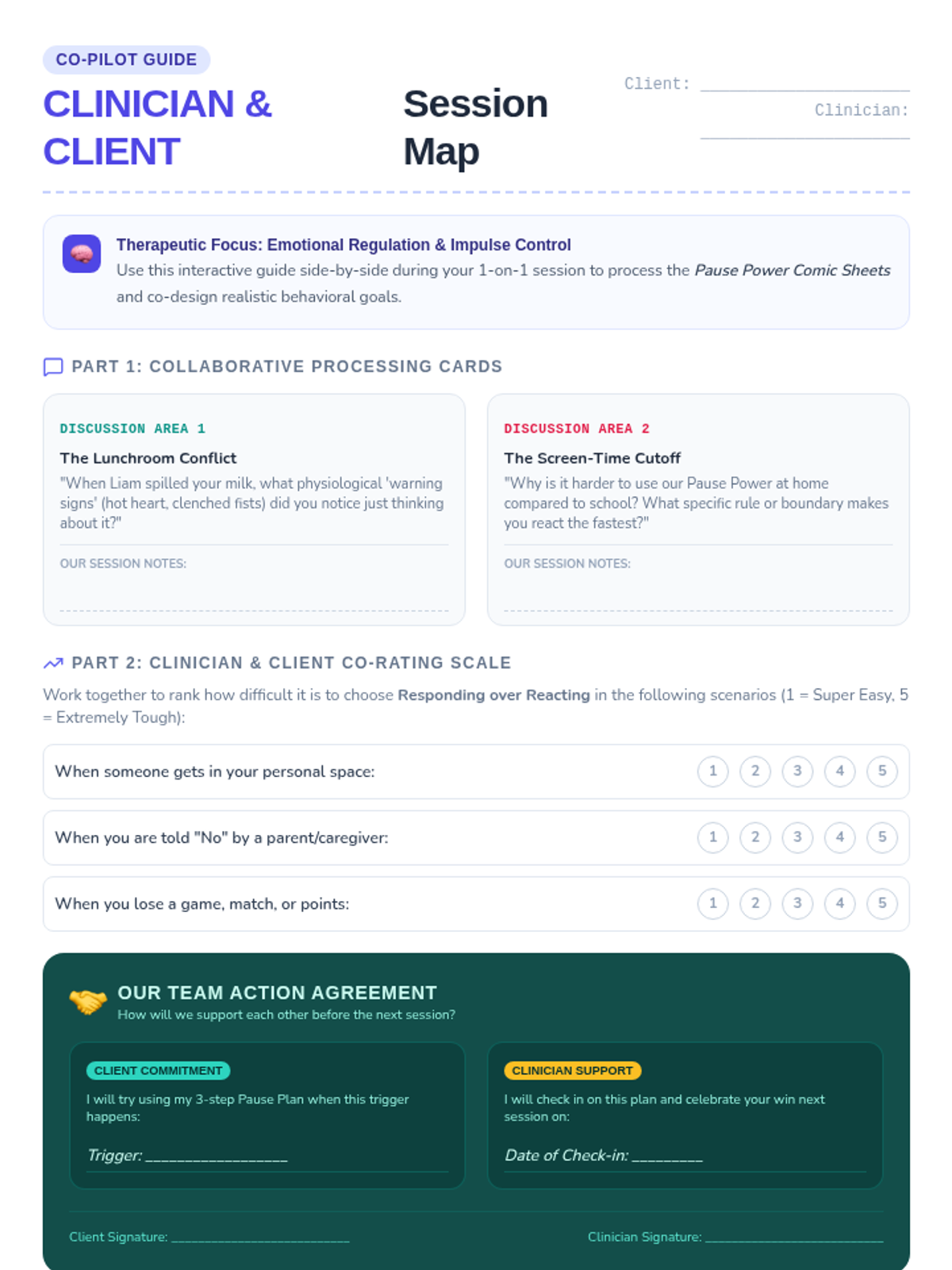
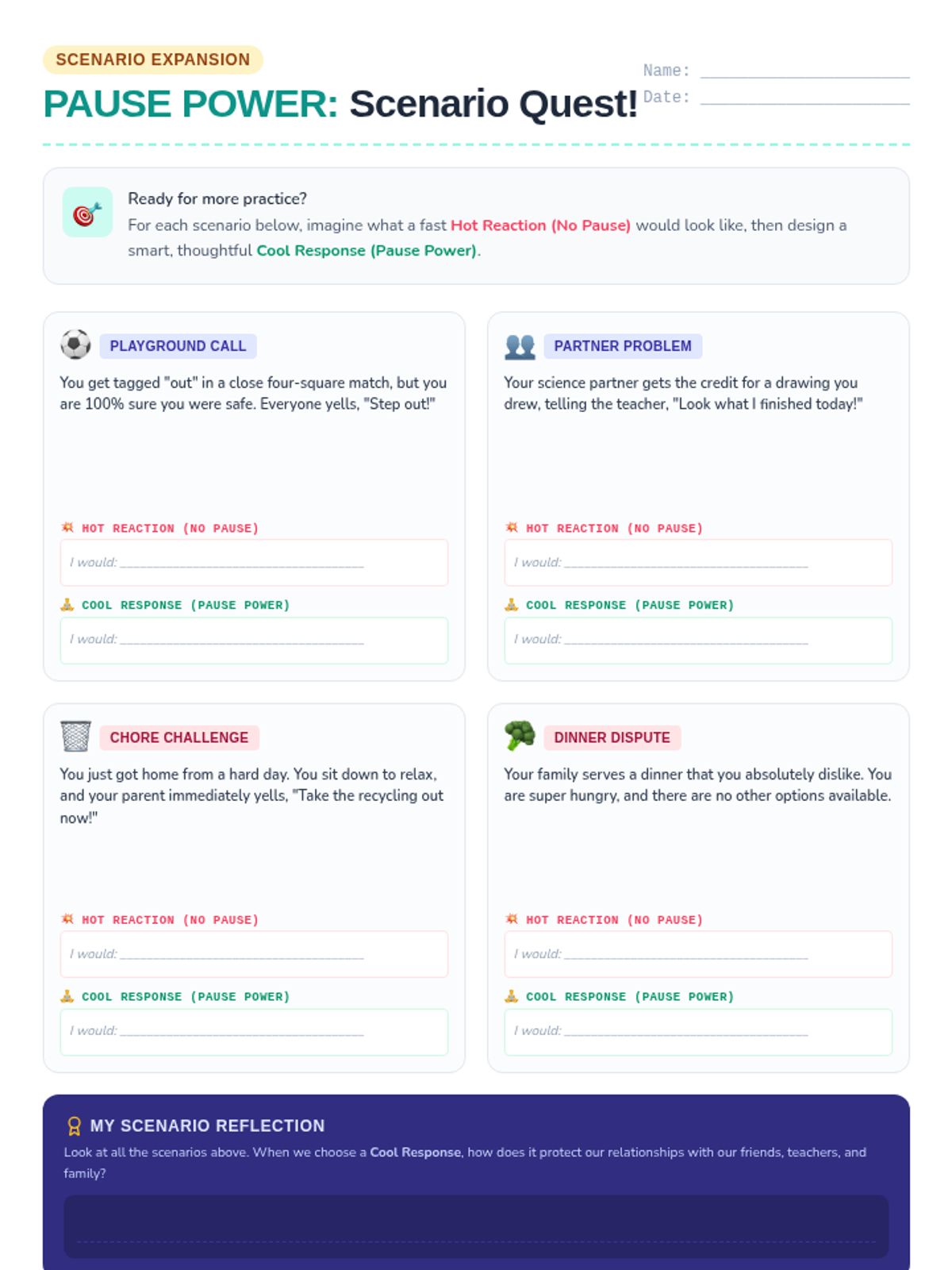
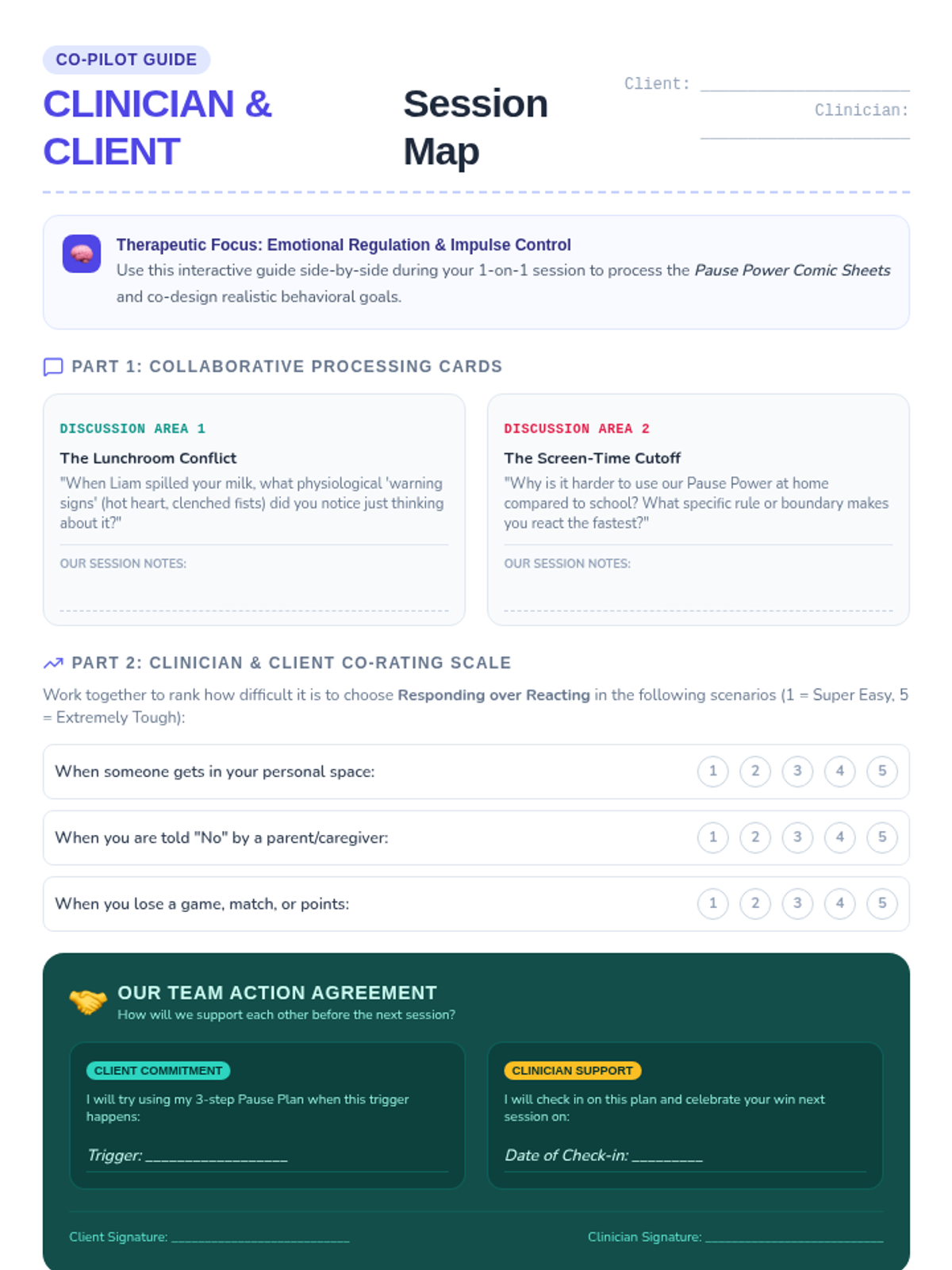
A visual, guided lesson for 5th graders to learn the difference between automatic reactions and thoughtful responses in school and home environments, using comic strips, scenario paths, and personal trigger maps.
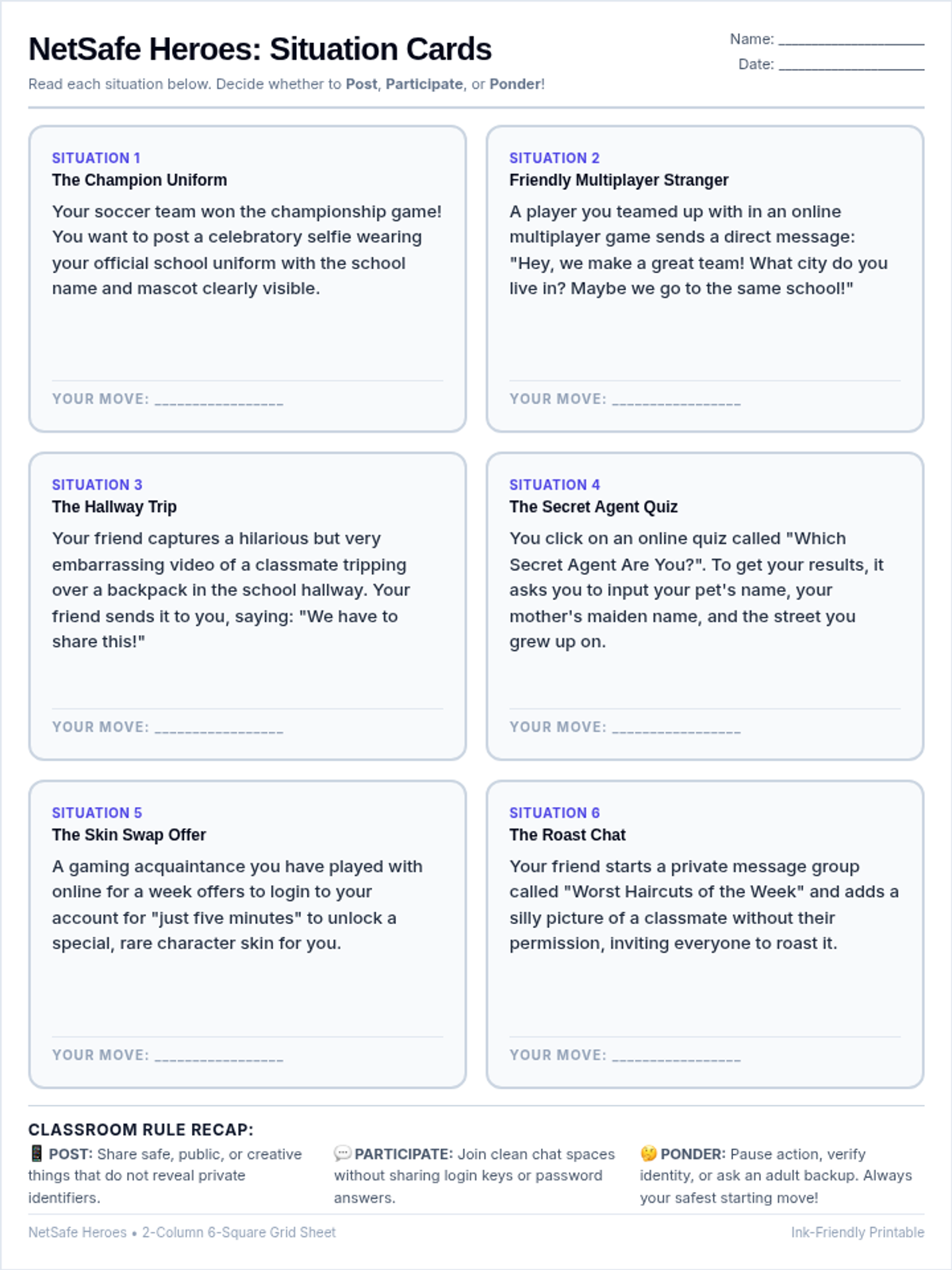
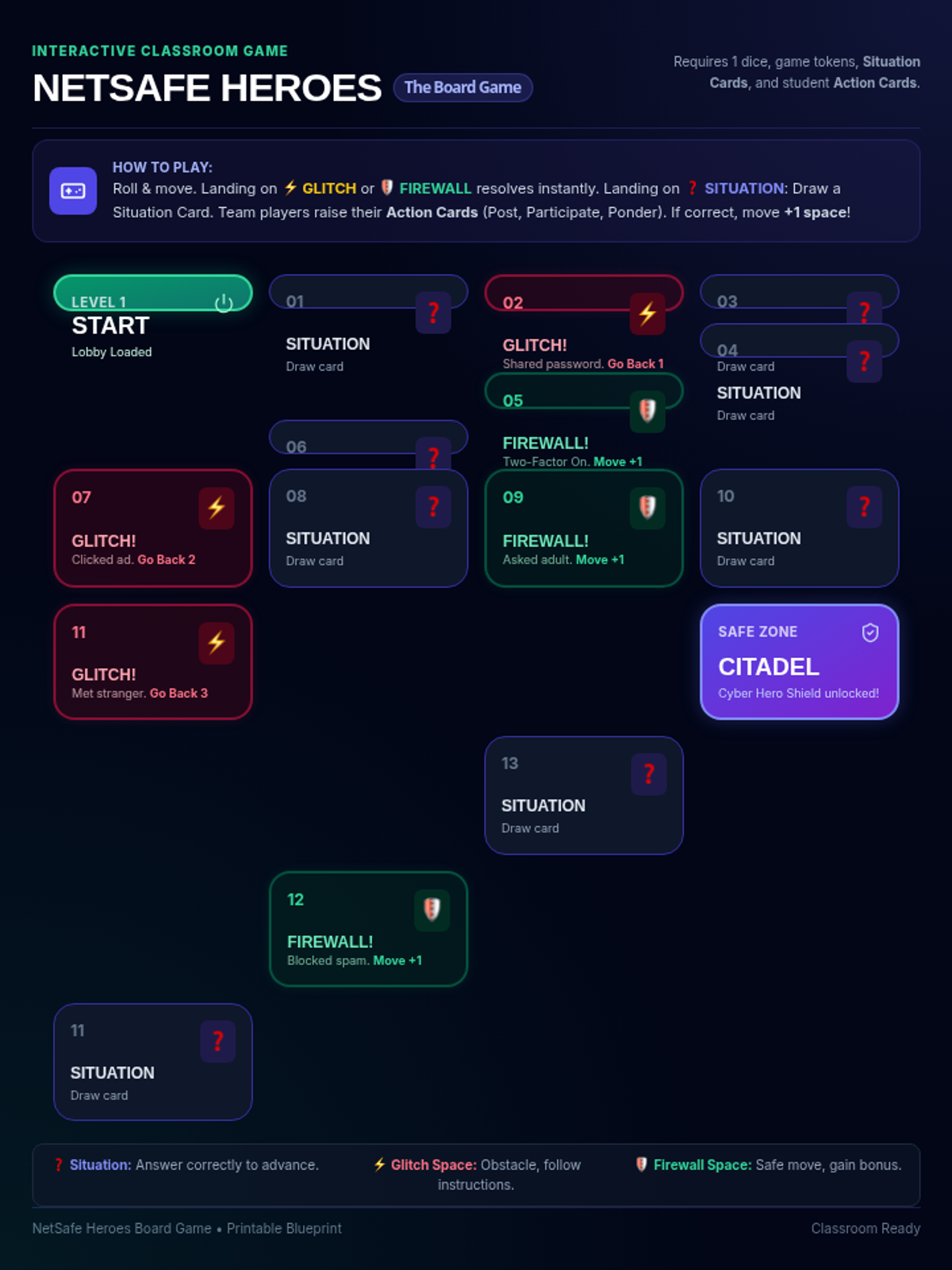
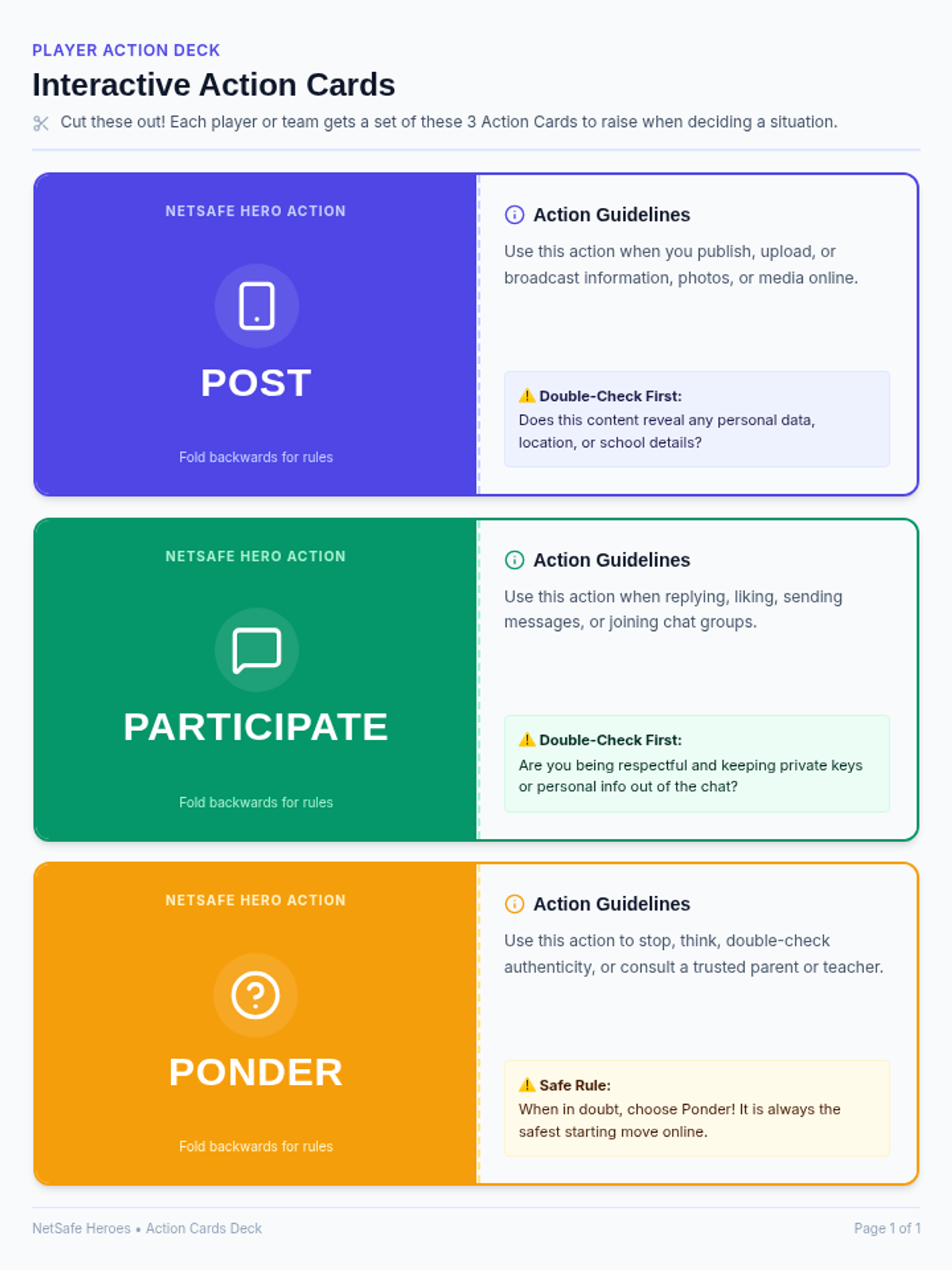
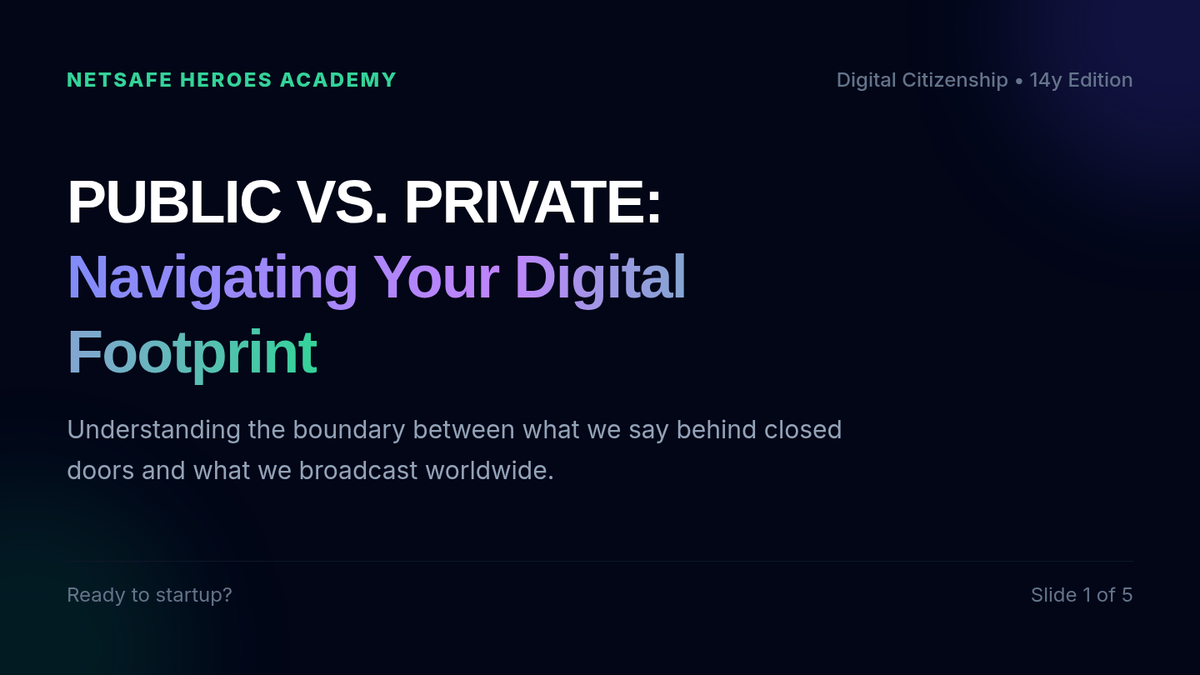
A lesson focusing on critical digital citizenship skills, helping students navigate the web safely and make informed choices when posting, interacting, or pondering online situations.
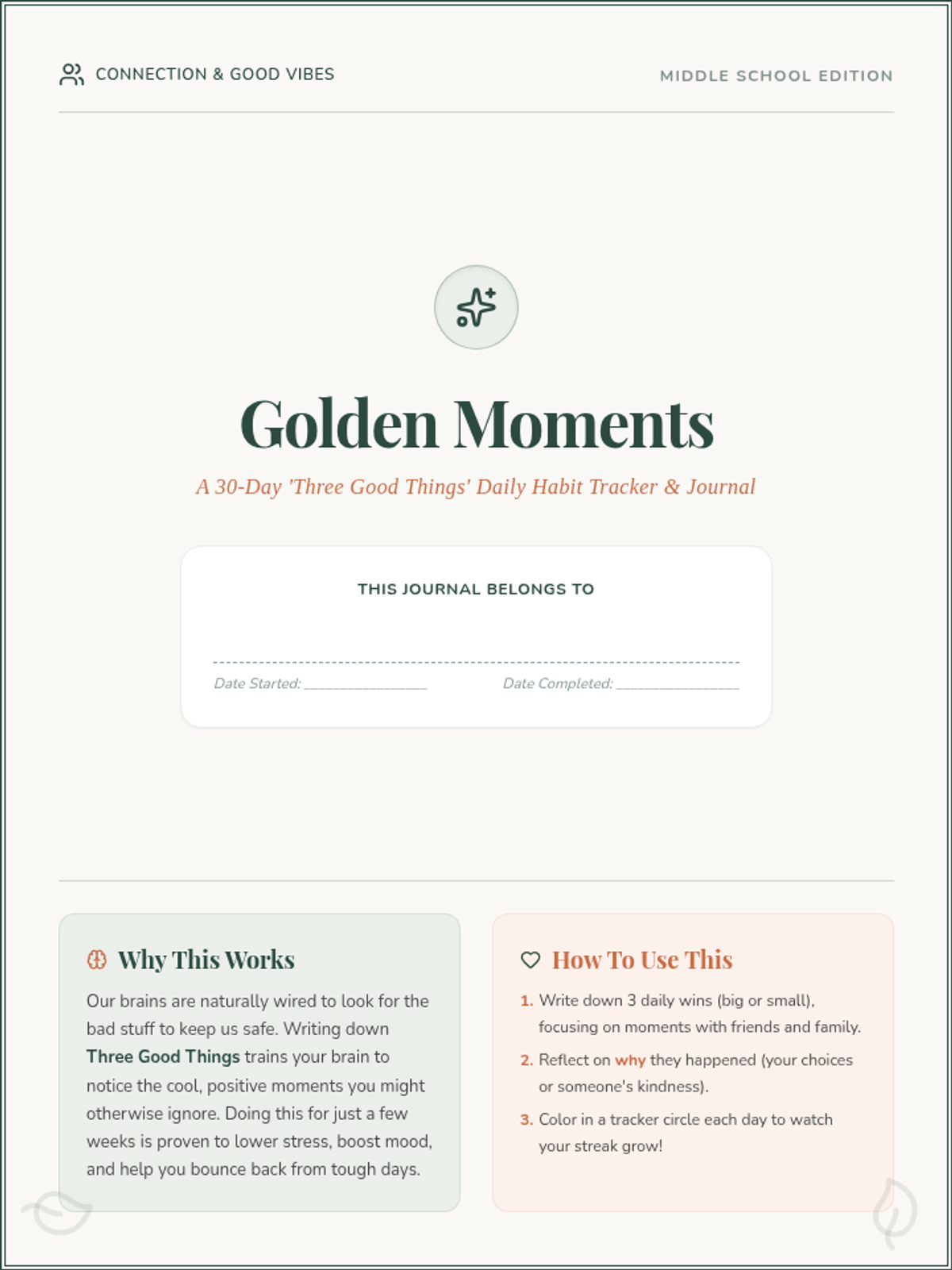
A transformative lesson introducing students to the psychological science of gratitude, centered on the 'Three Good Things' daily habit to build mental resilience, optimism, and emotional wellbeing.
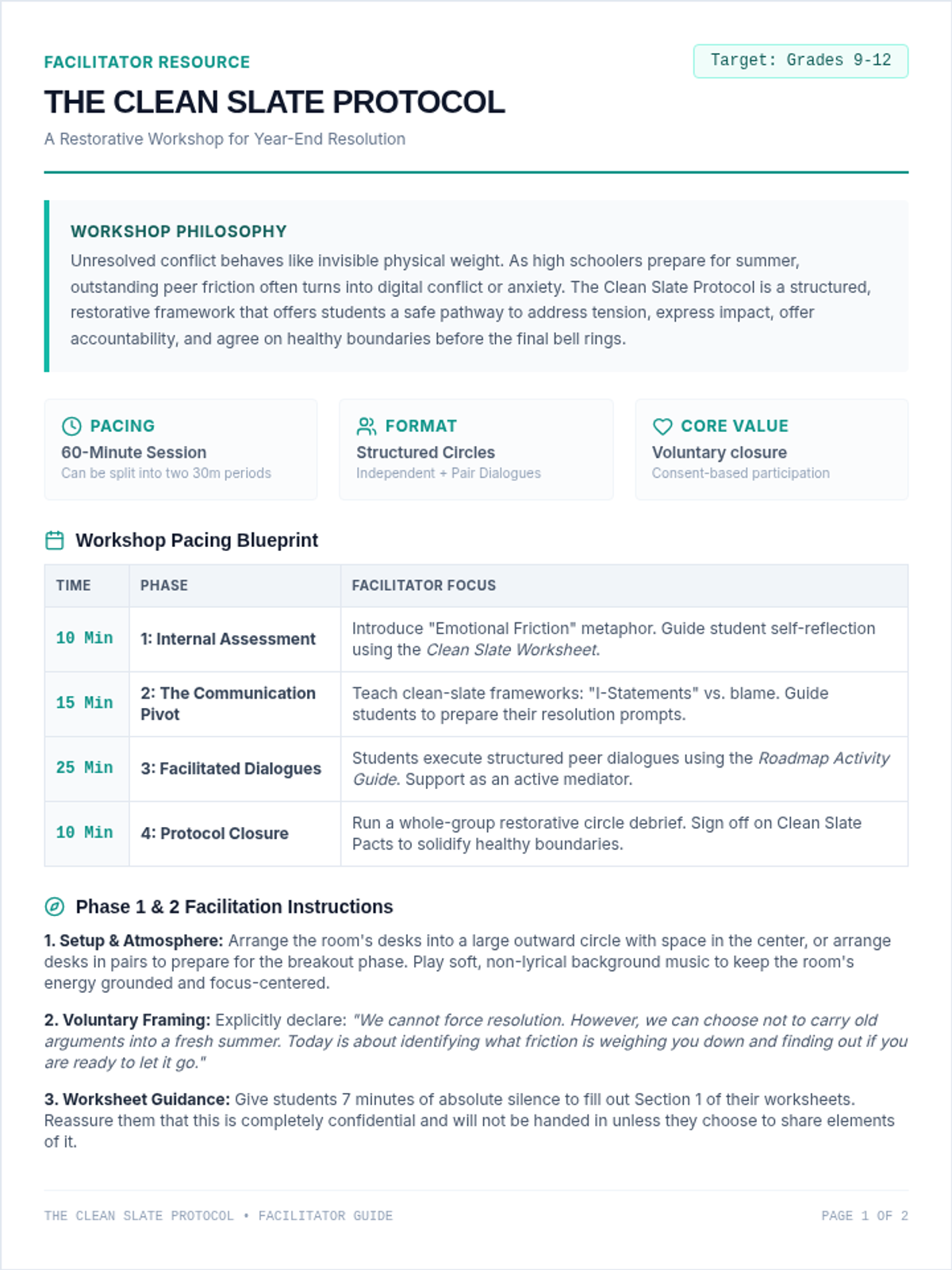
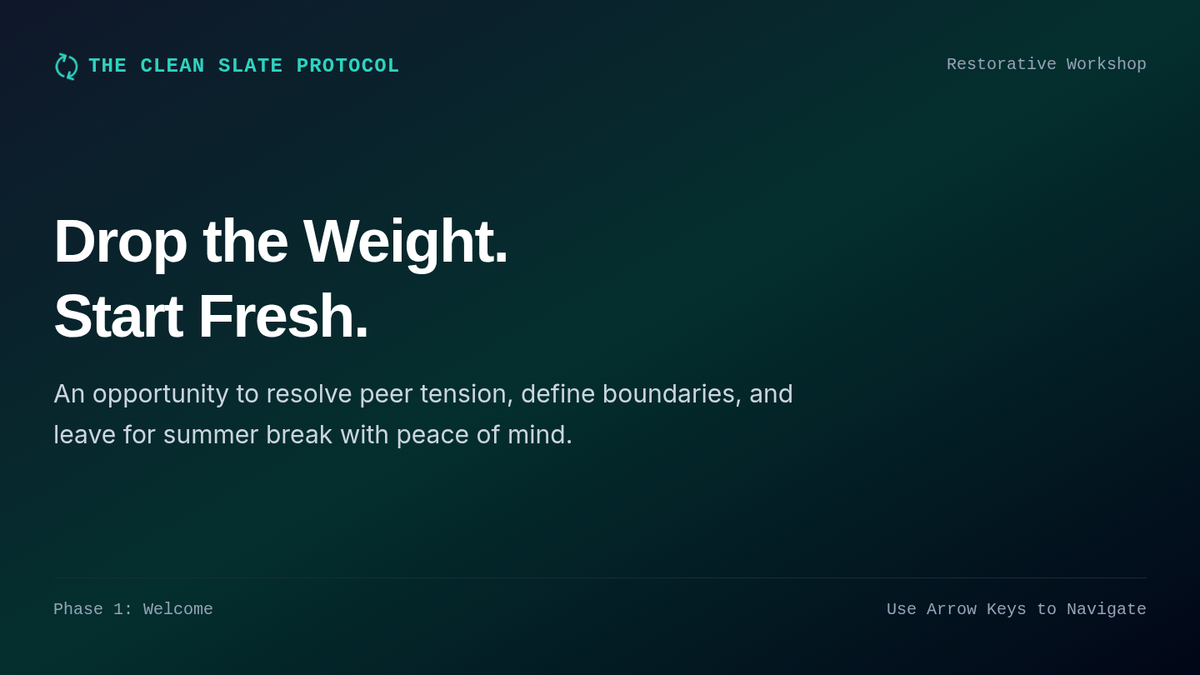
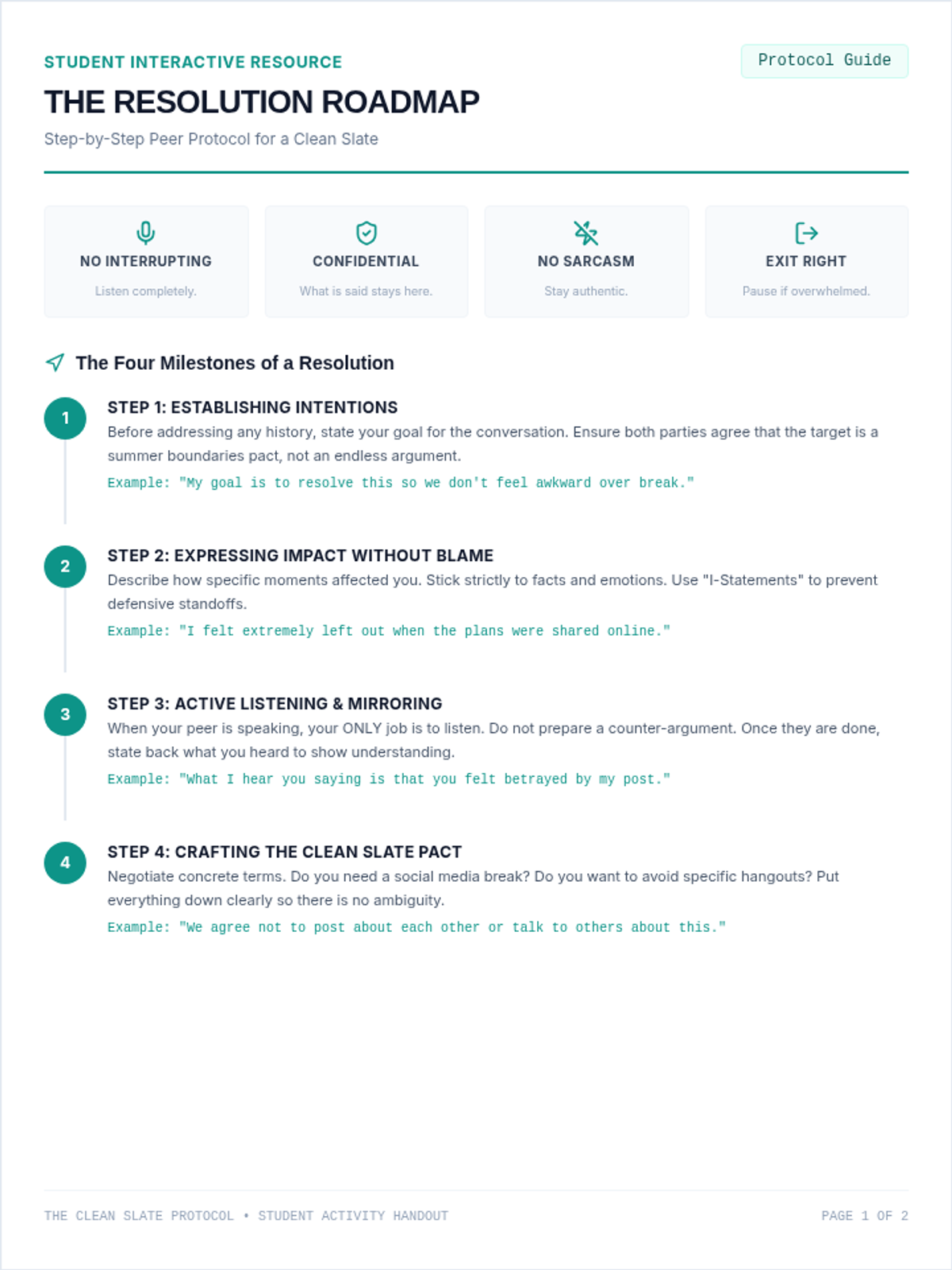
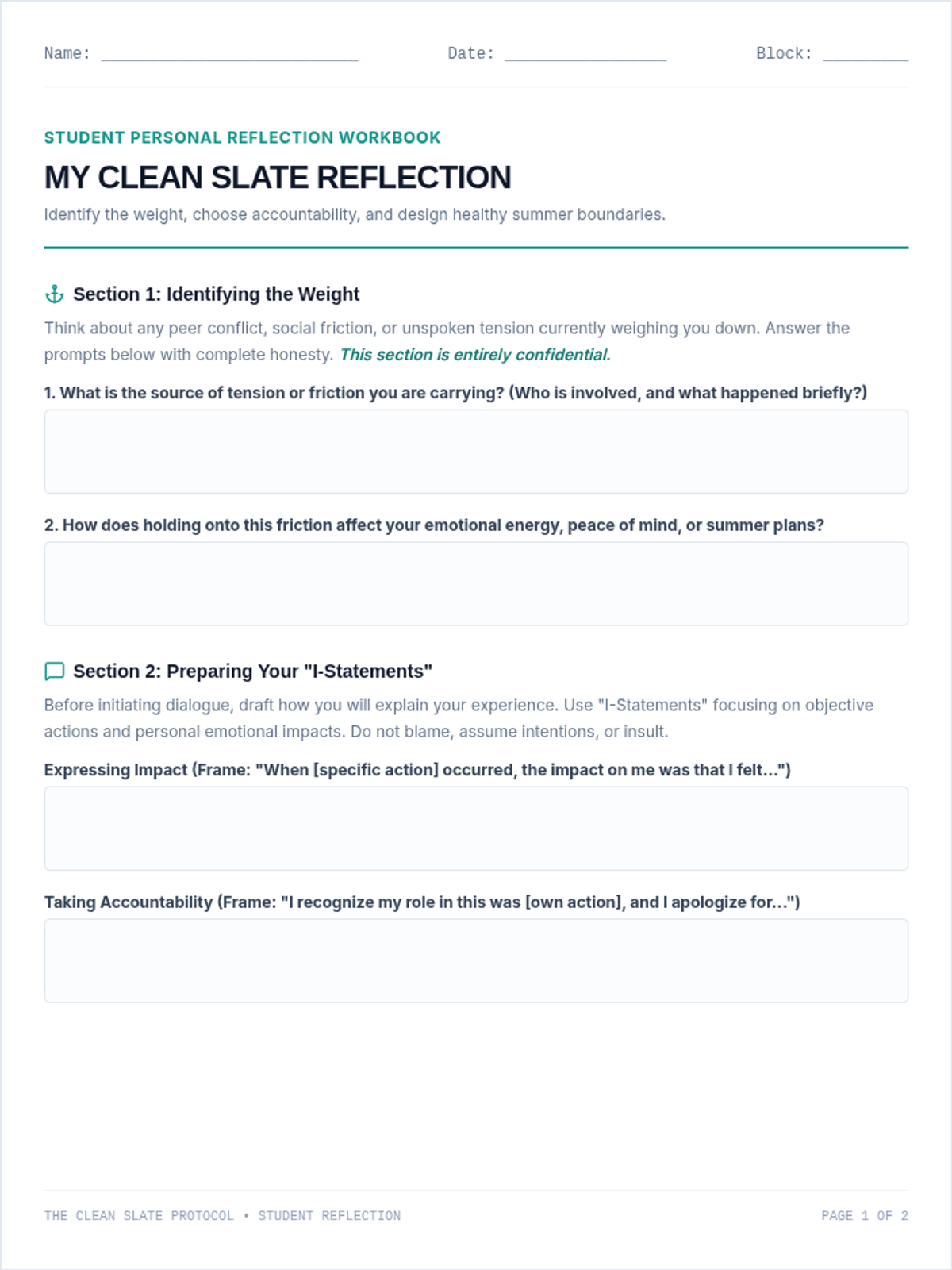
A restorative conflict-resolution workshop designed to help high schoolers resolve outstanding peer friction before summer break, allowing them to depart with a sense of peace and closure. This workshop provides step-by-step guidance, structured reflection, and concrete resolution tools.
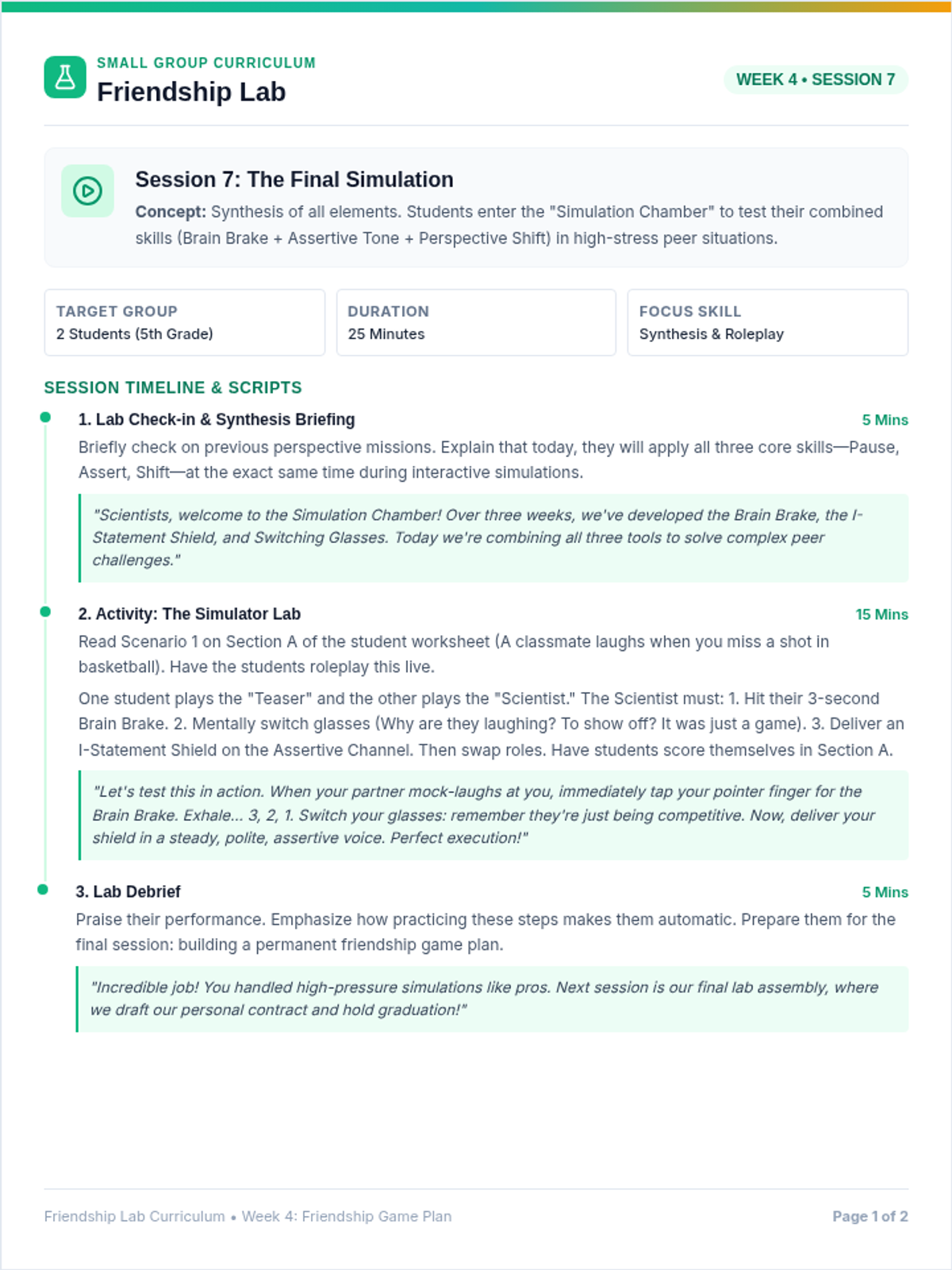
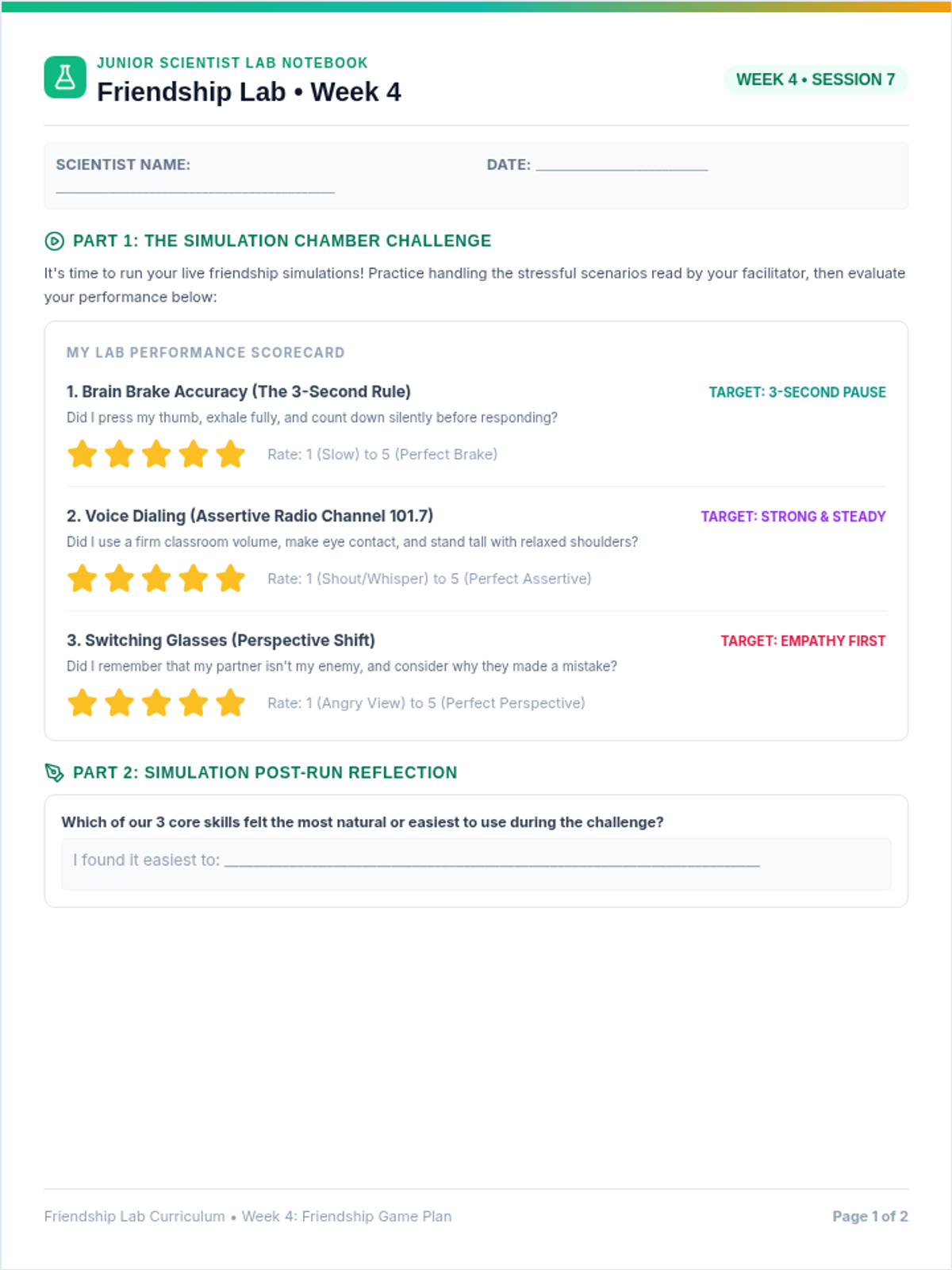
Week 4 of the program, focusing on real-world practice, synthesizing pause strategies and assertive communication, and creating a shared friendship blueprint for future interactions.
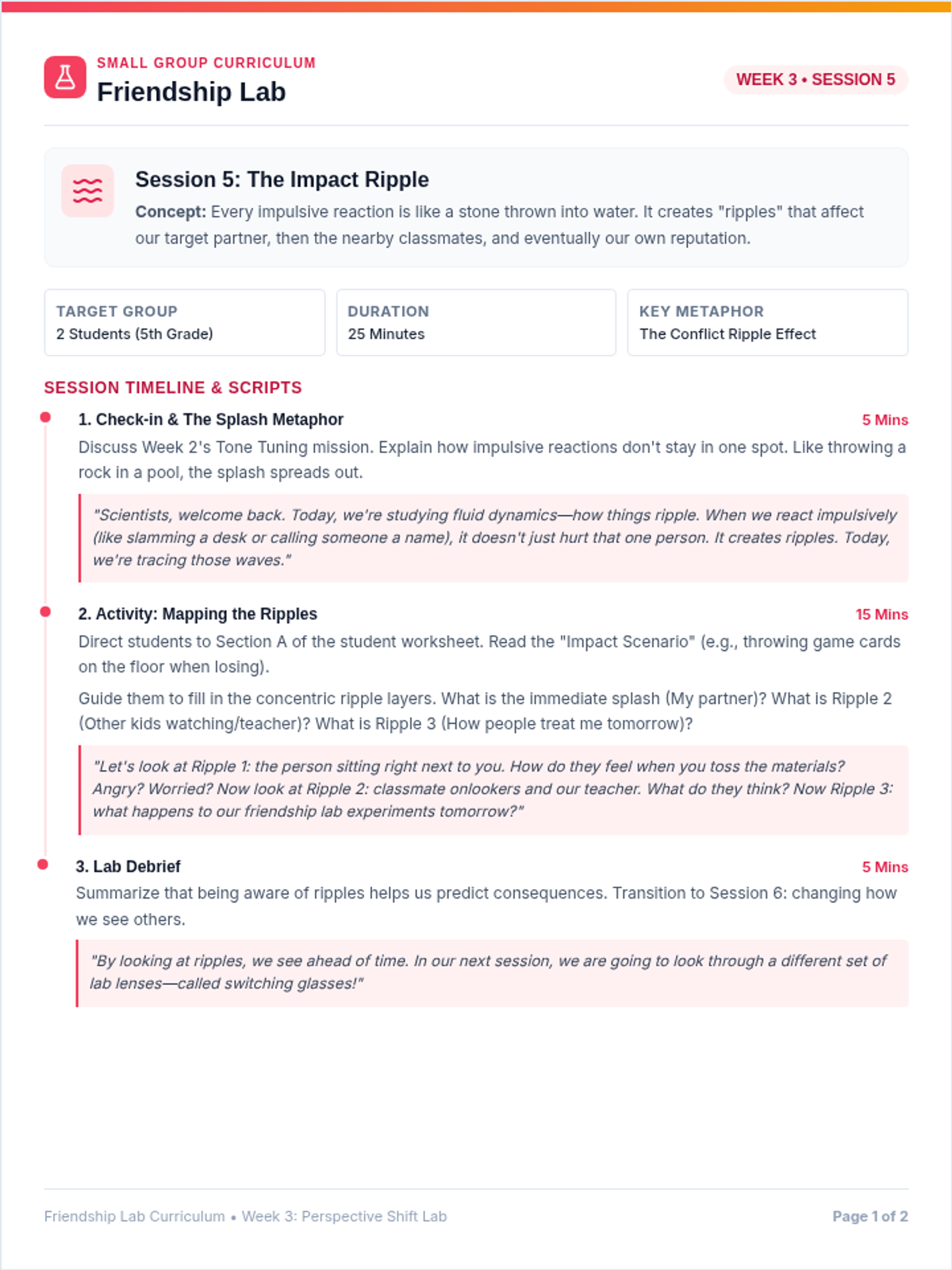
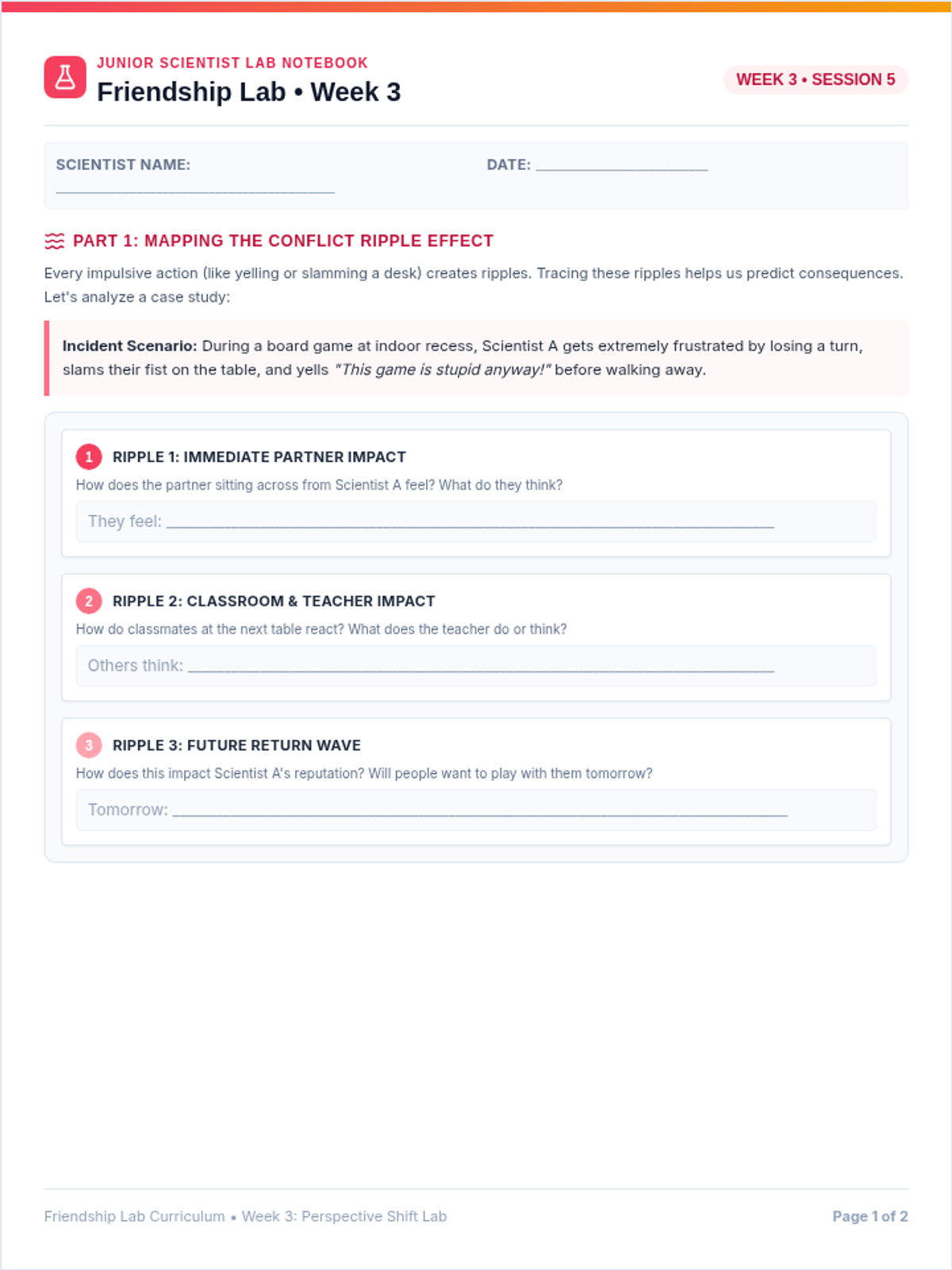
Week 3 of the program, focusing on perspective-taking activities to help students understand how their impulsive actions affect their partner's feelings and ripple out.
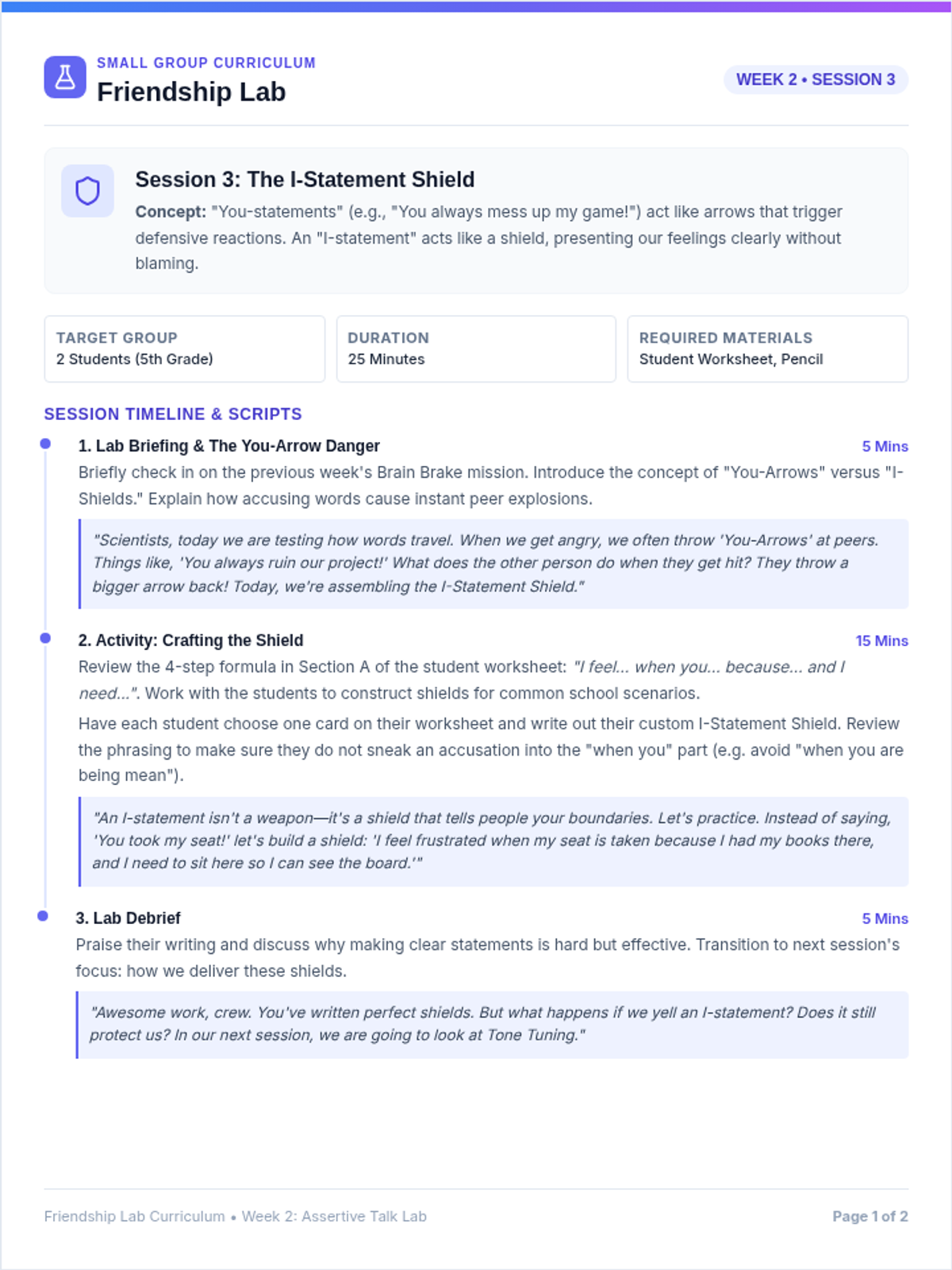
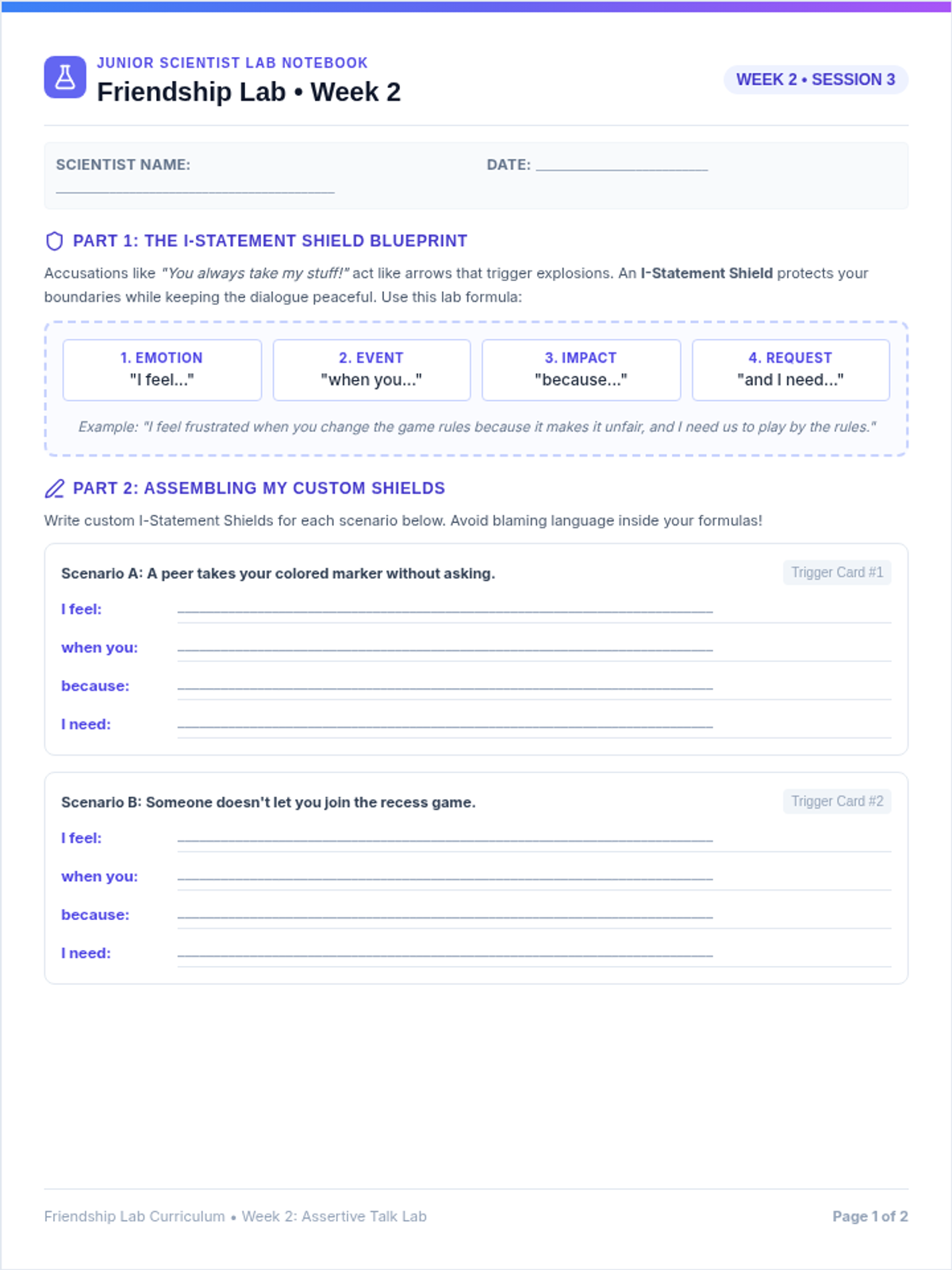
Week 2 of the program, focusing on learning and practicing assertive communication skills, specifically crafting and using 'I-statements' and modulating tone/posture to prevent conflicts.
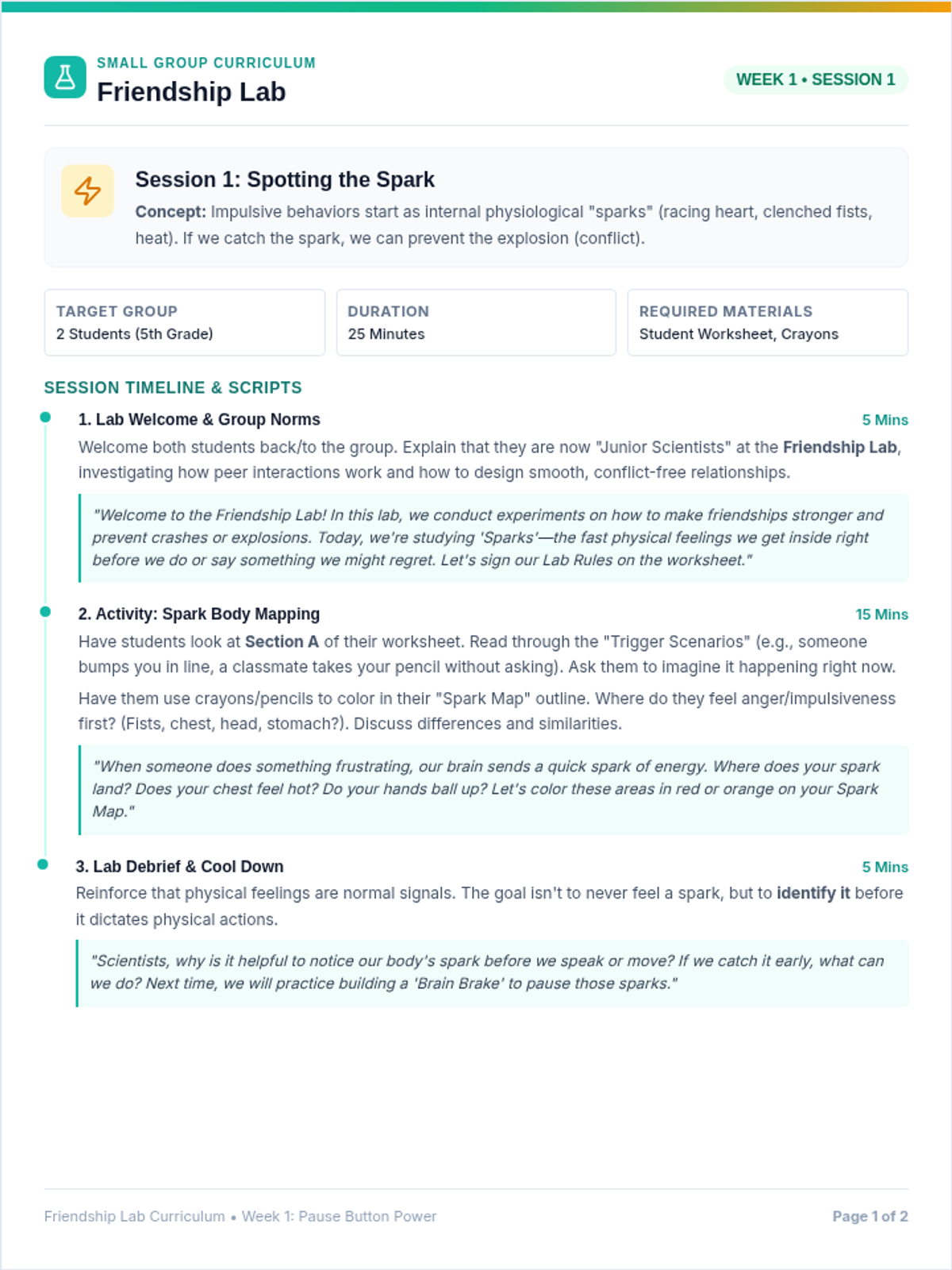
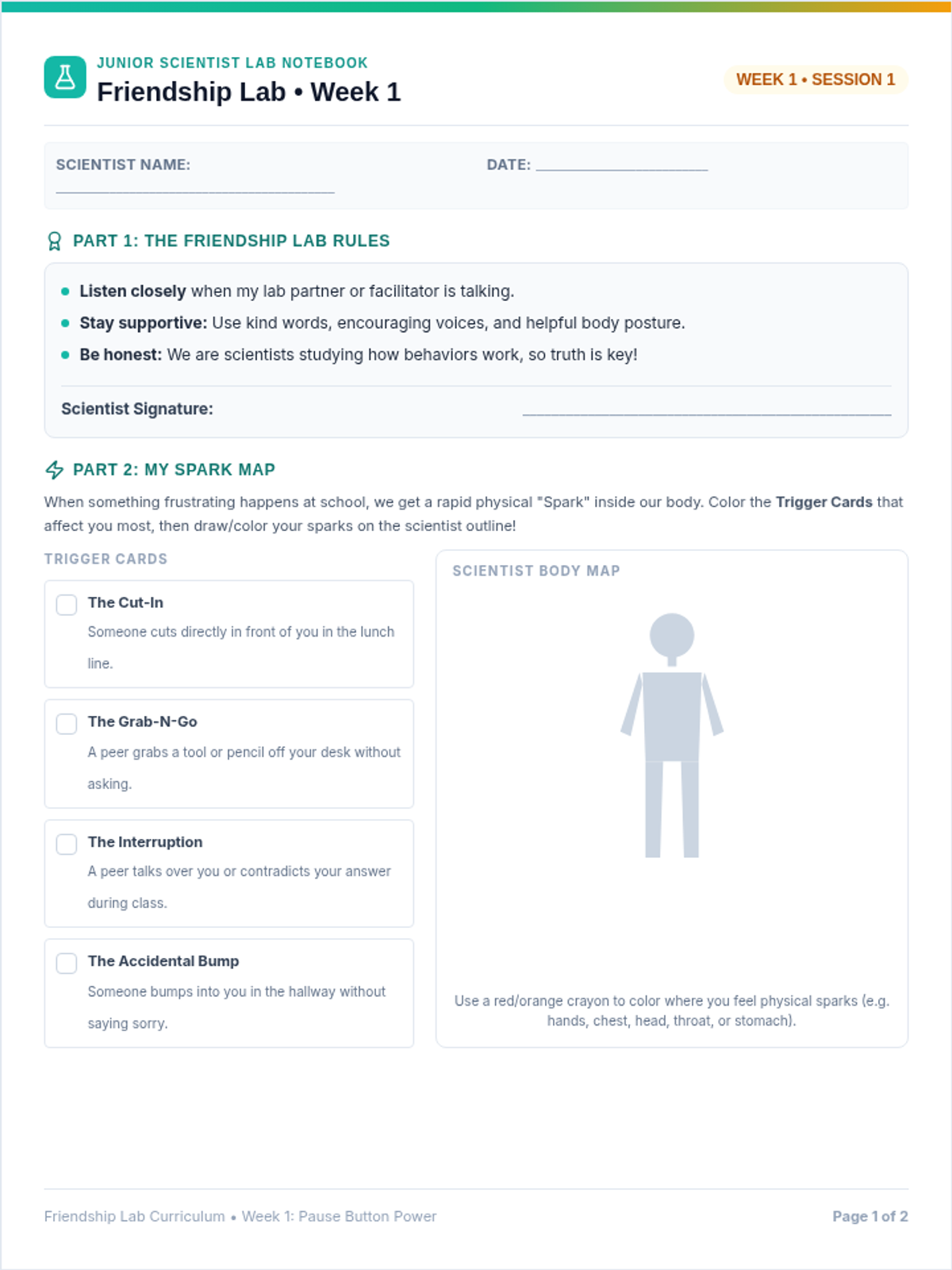
Week 1 of the program, focusing on identifying internal physical 'sparks' of anger/impulsivity and applying physical and mental 'stop' cues (the 3-second pause) before reacting to peers.
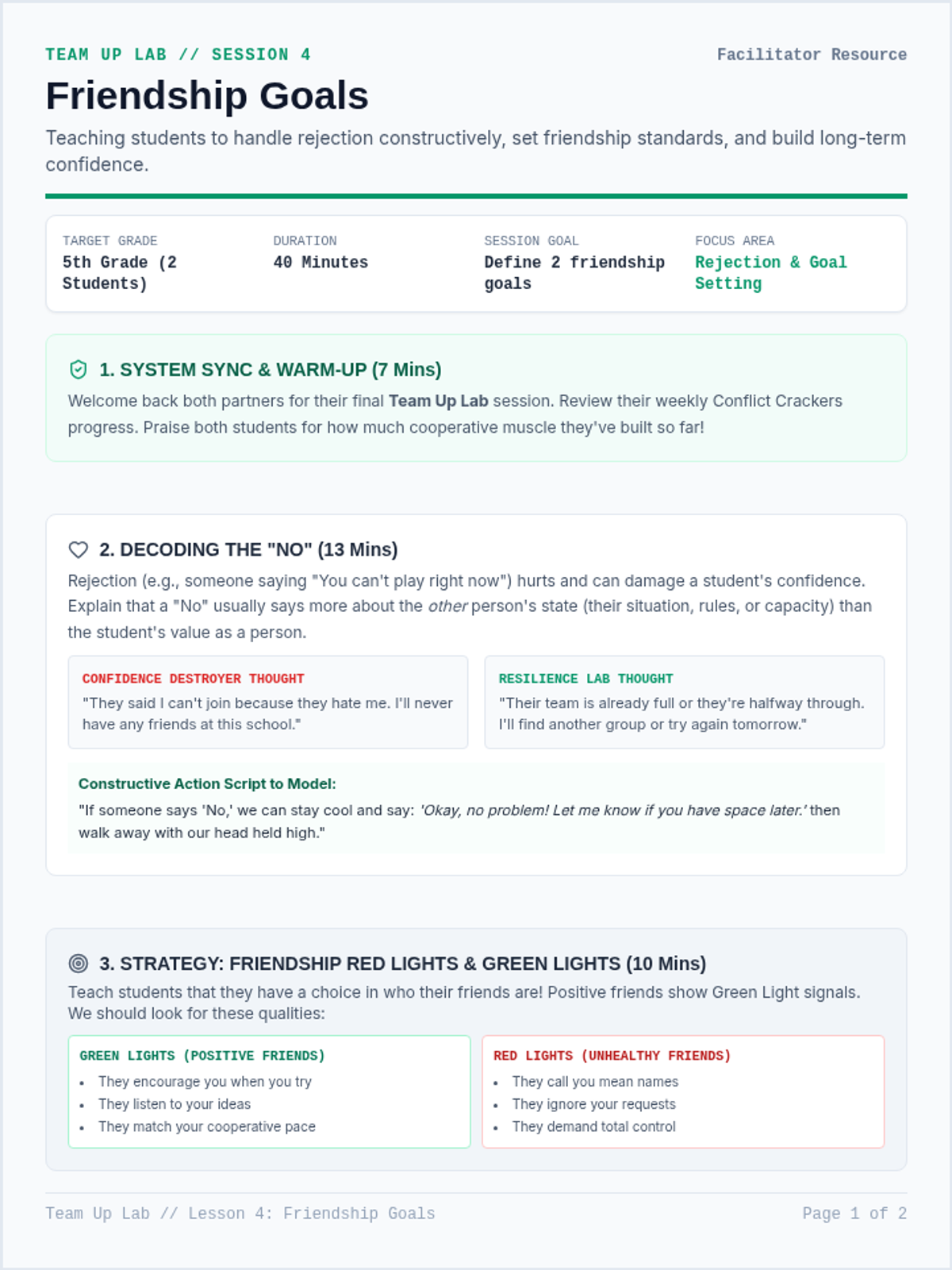
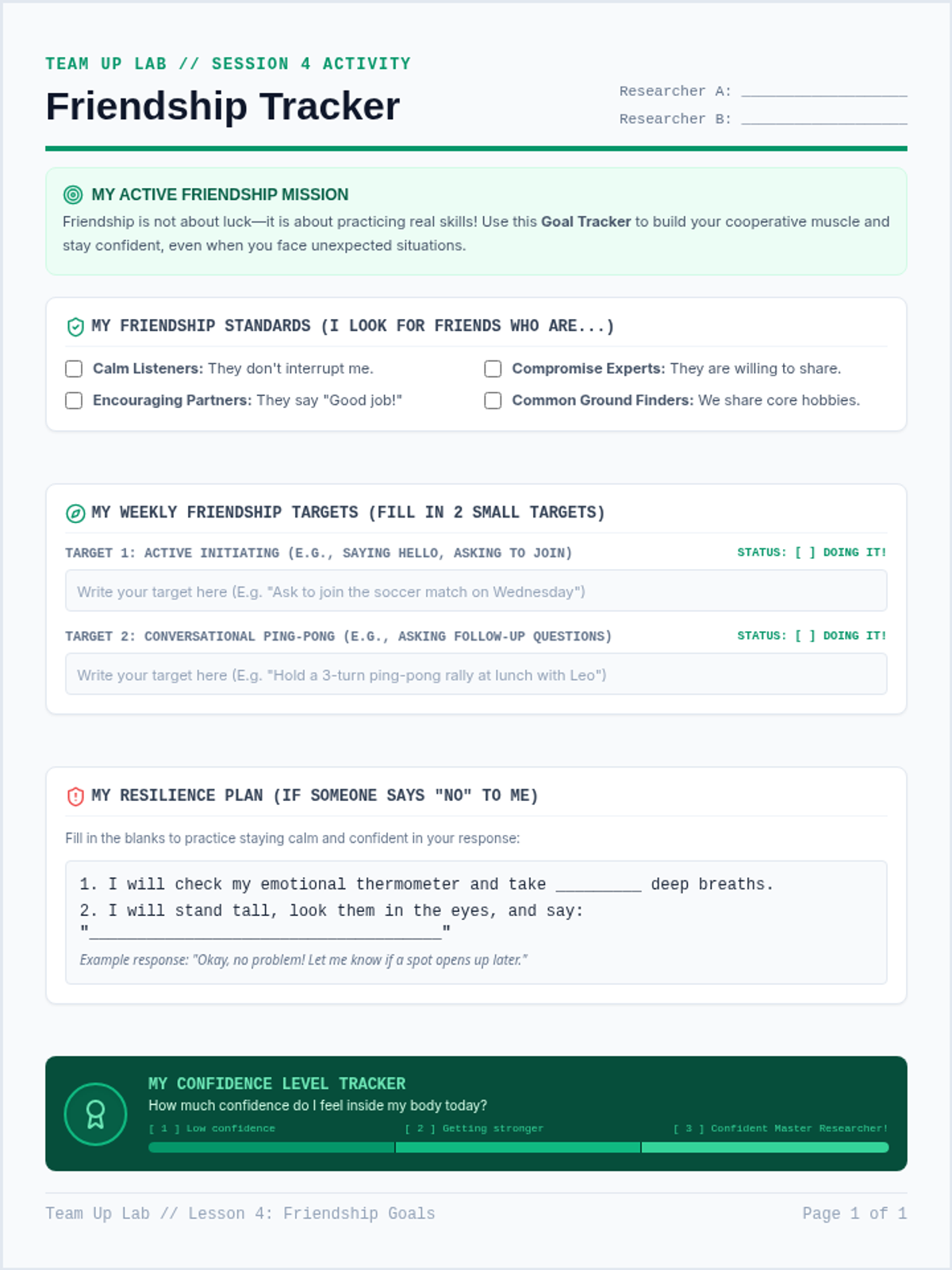
Empowers students to respond constructively to peer rejection, set realistic friendship goals, and track their self-confidence.