A comprehensive lesson focused on teaching students how to communicate with respect, empathy, and clarity. Includes discussion prompts, a communication styles worksheet, and scenario-based task cards for practice.
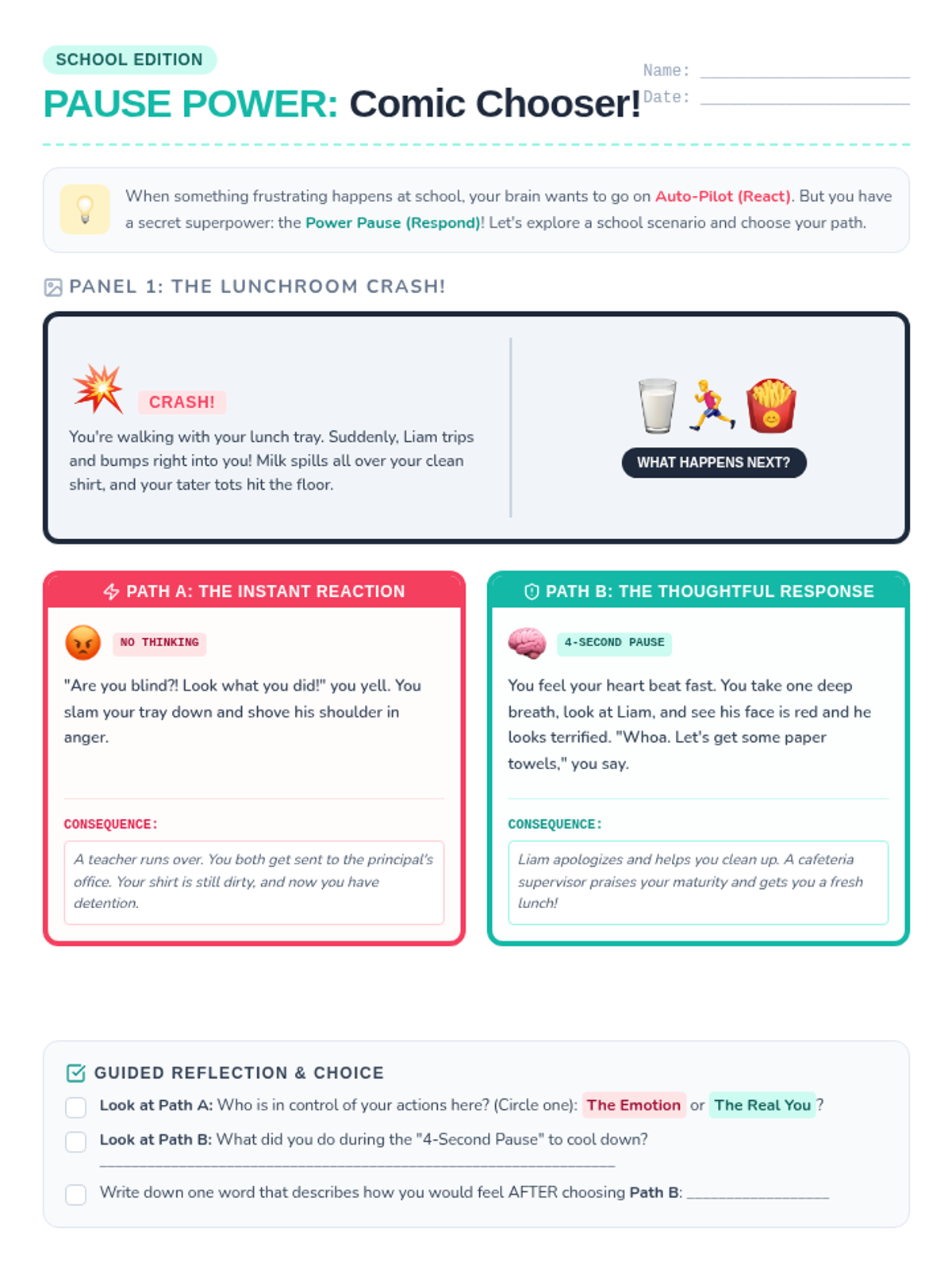
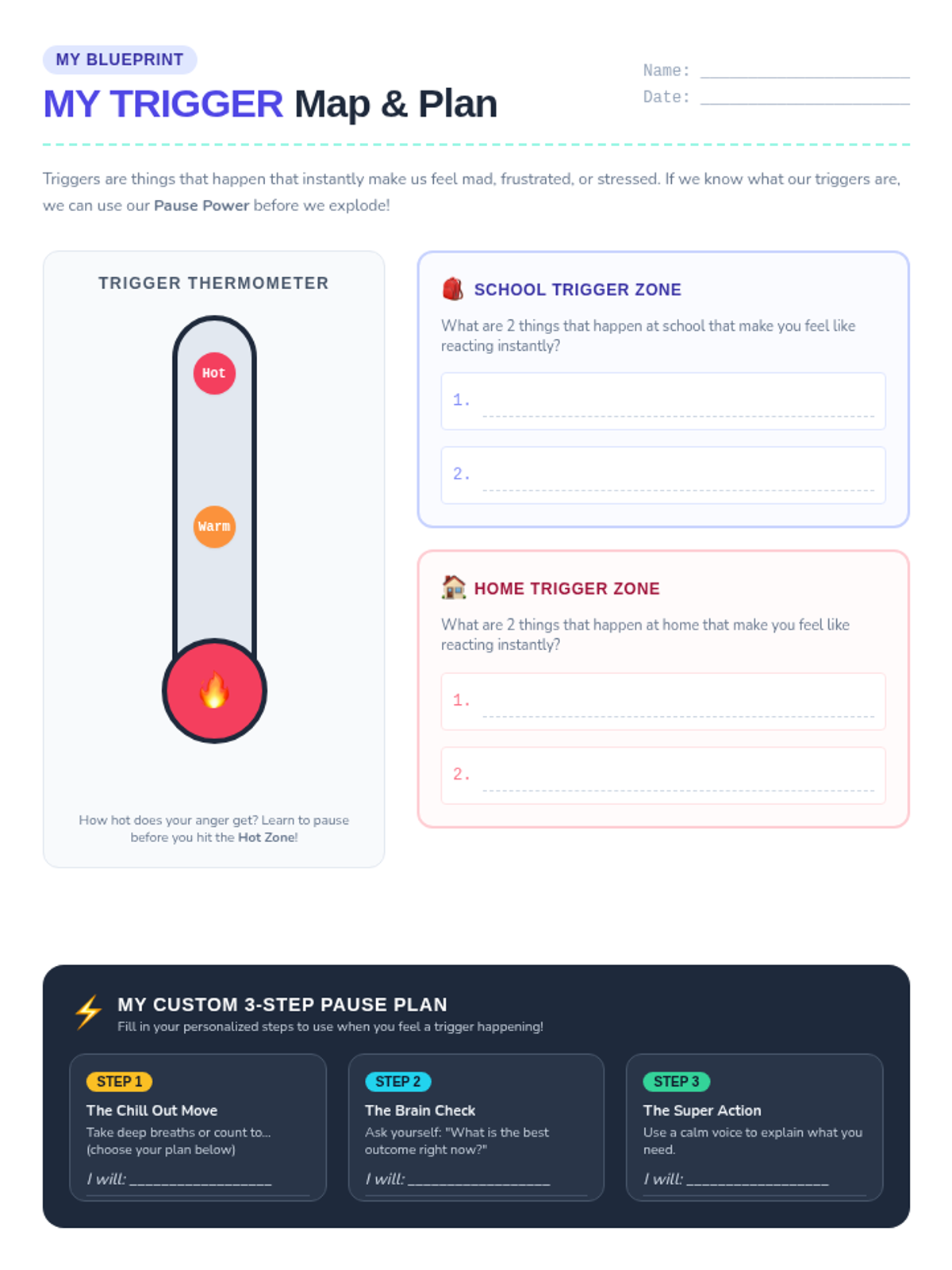
A visual, guided lesson for 5th graders to learn the difference between automatic reactions and thoughtful responses in school and home environments, using comic strips, scenario paths, and personal trigger maps.
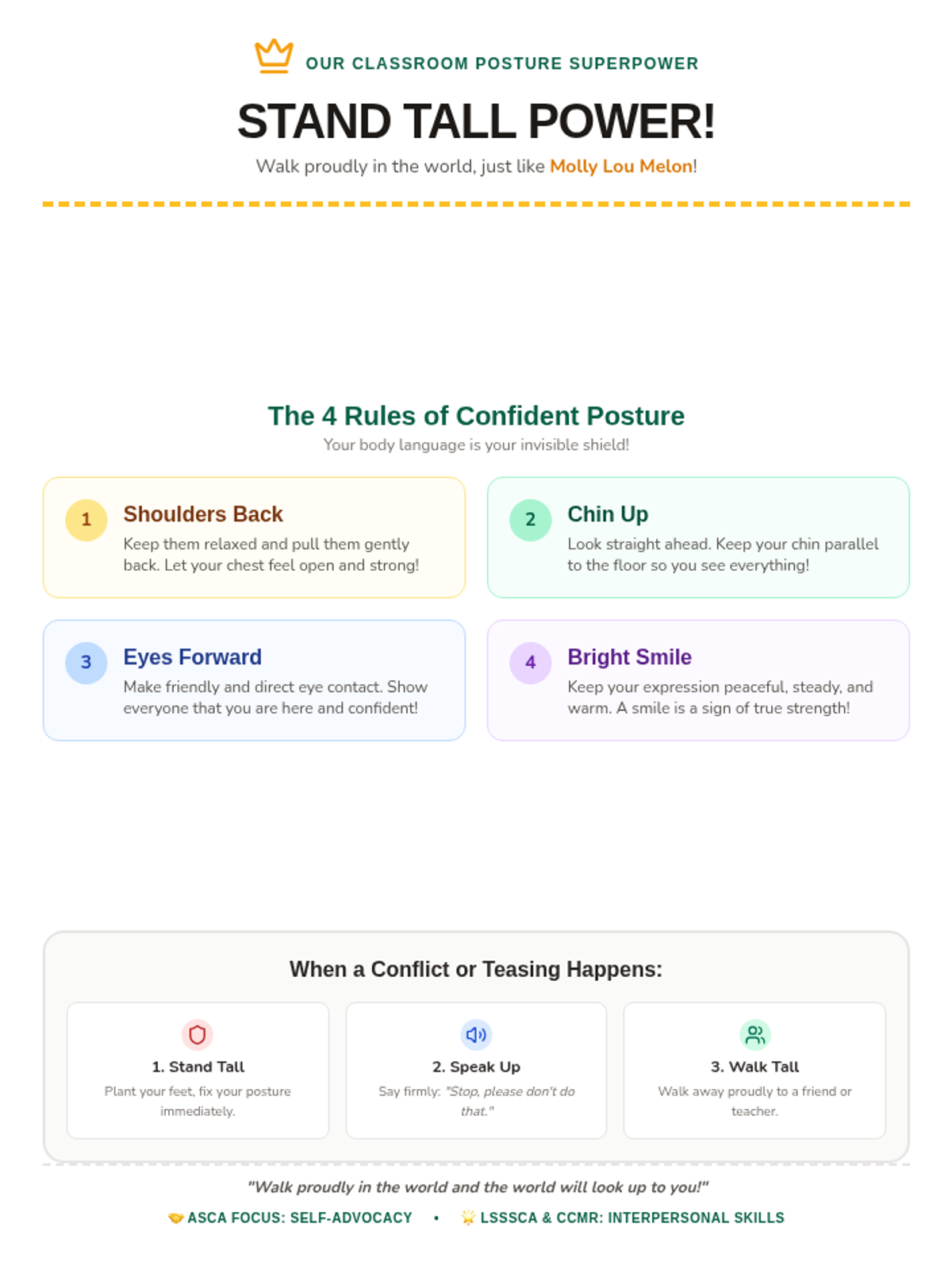
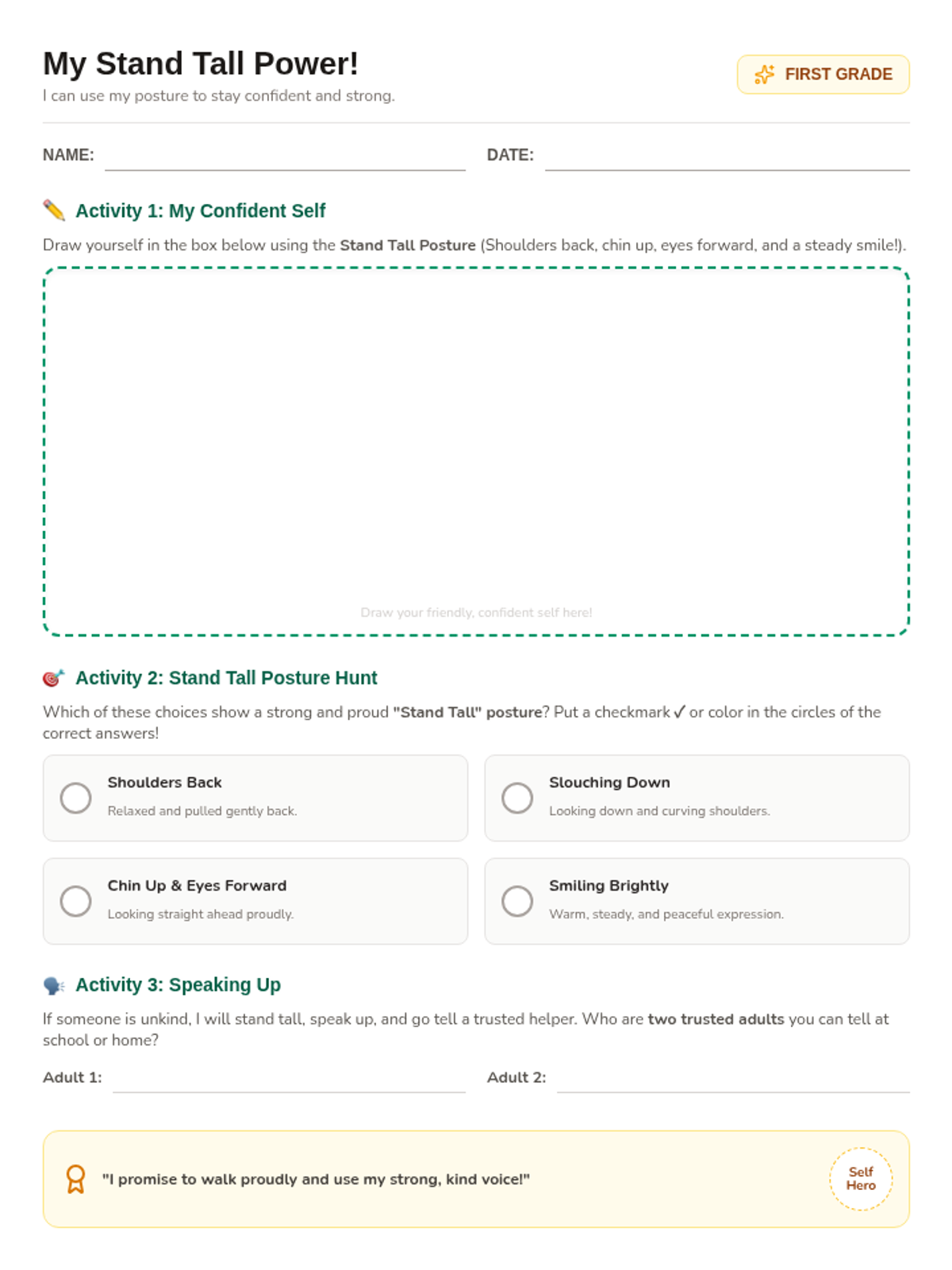
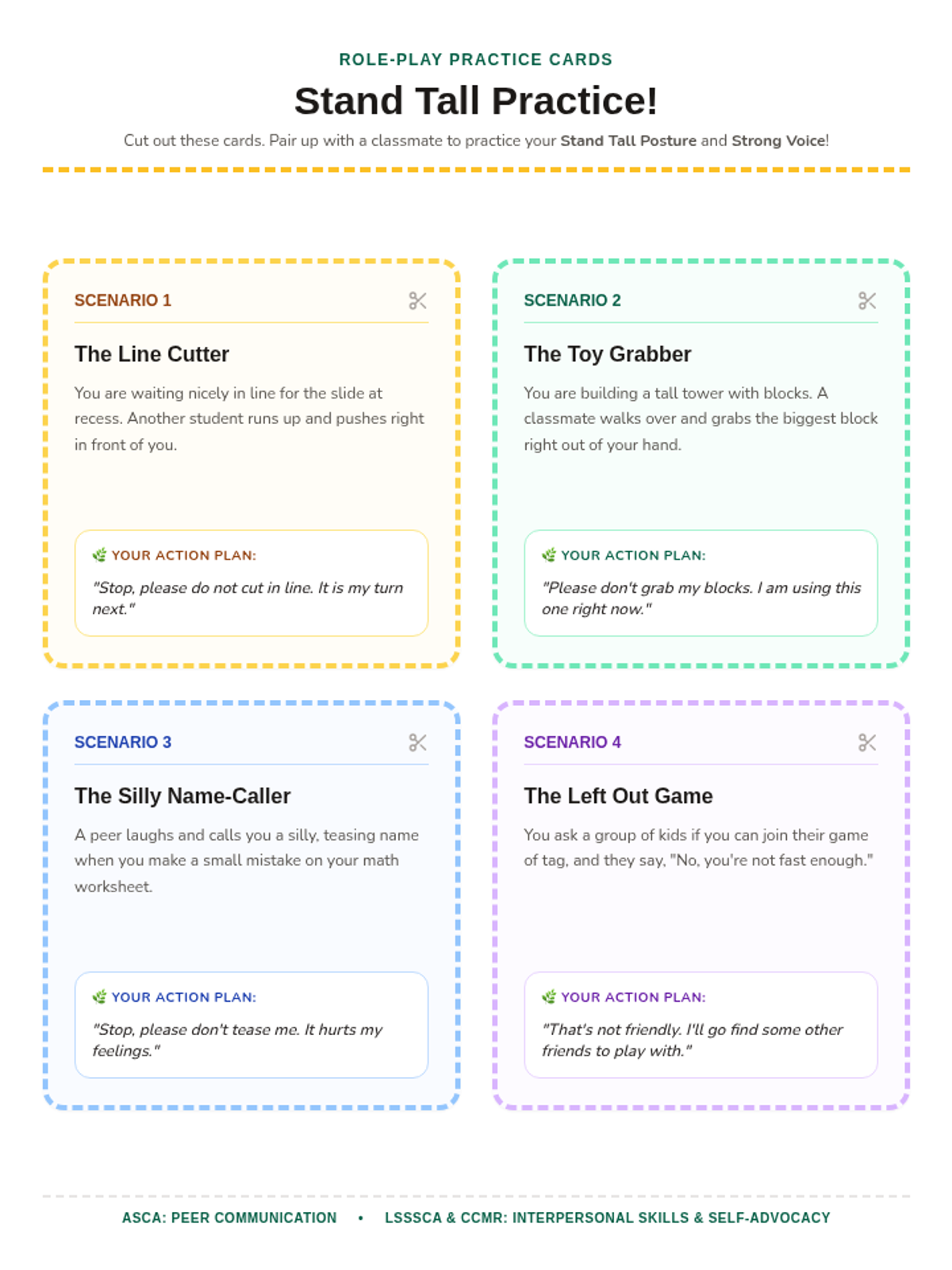
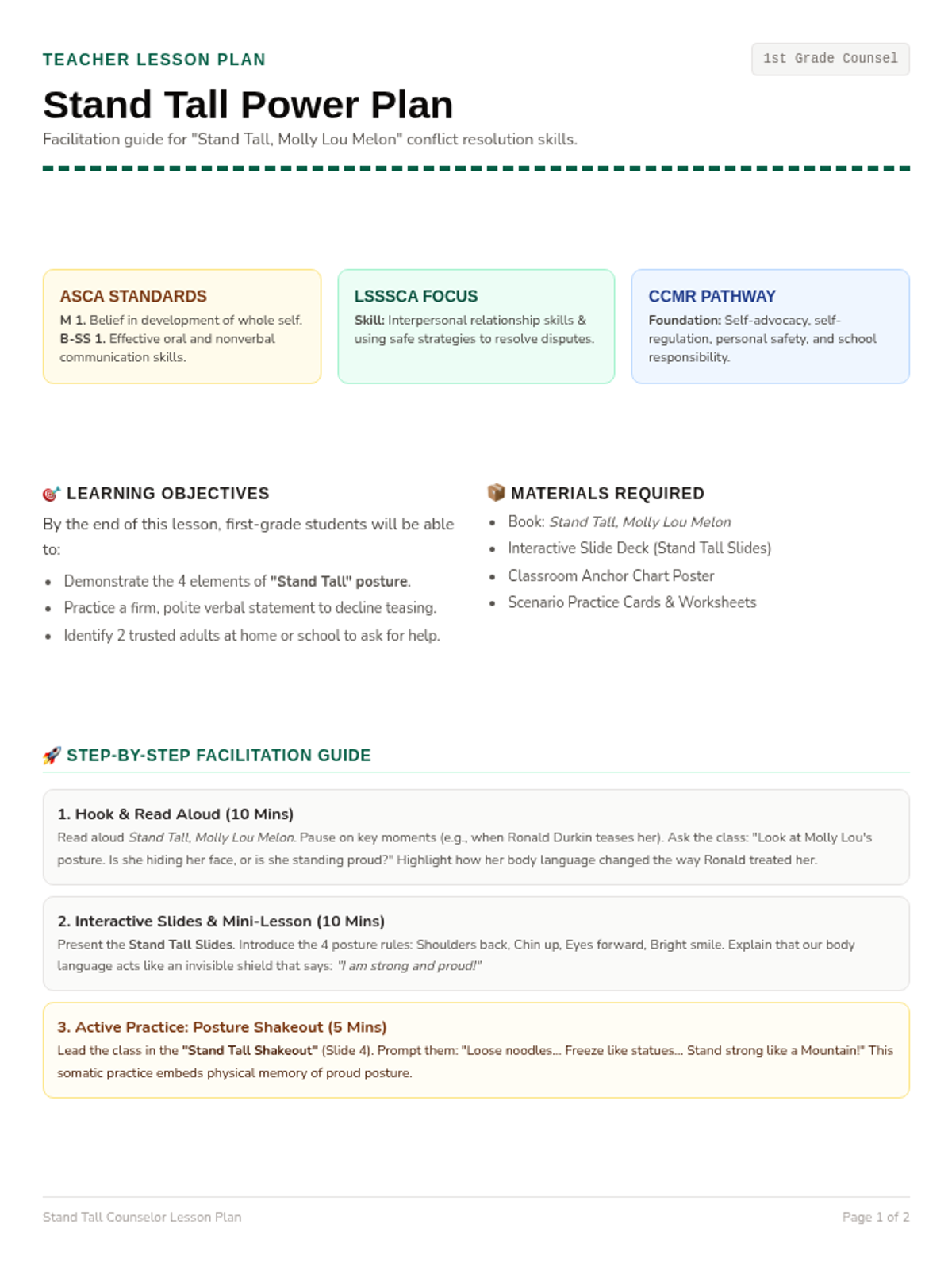
A first-grade classroom counseling lesson inspired by Patty Lovell's 'Stand Tall, Molly Lou Melon' that teaches students how to use confident body language and self-advocacy to resolve conflicts and handle teasing.
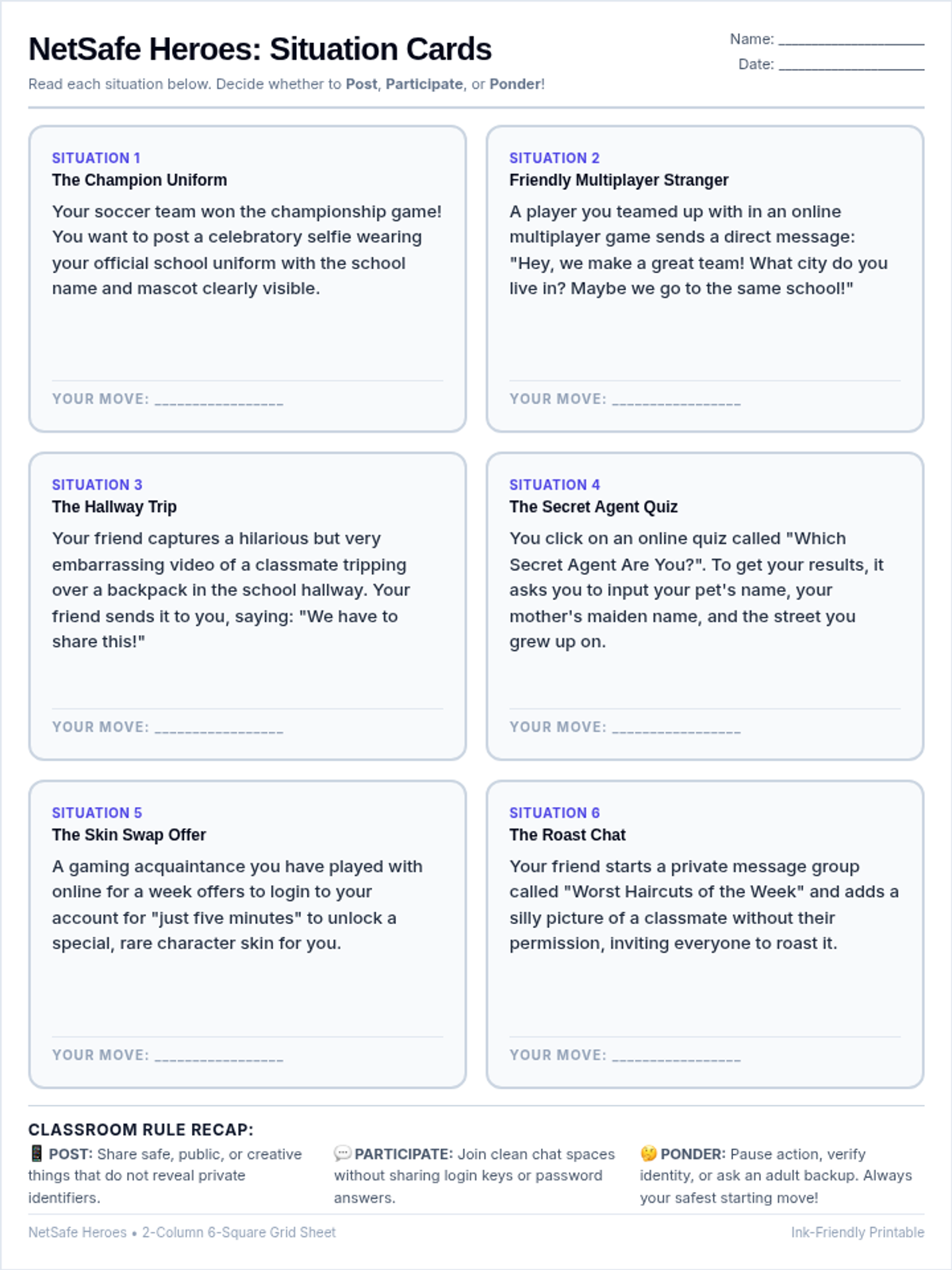
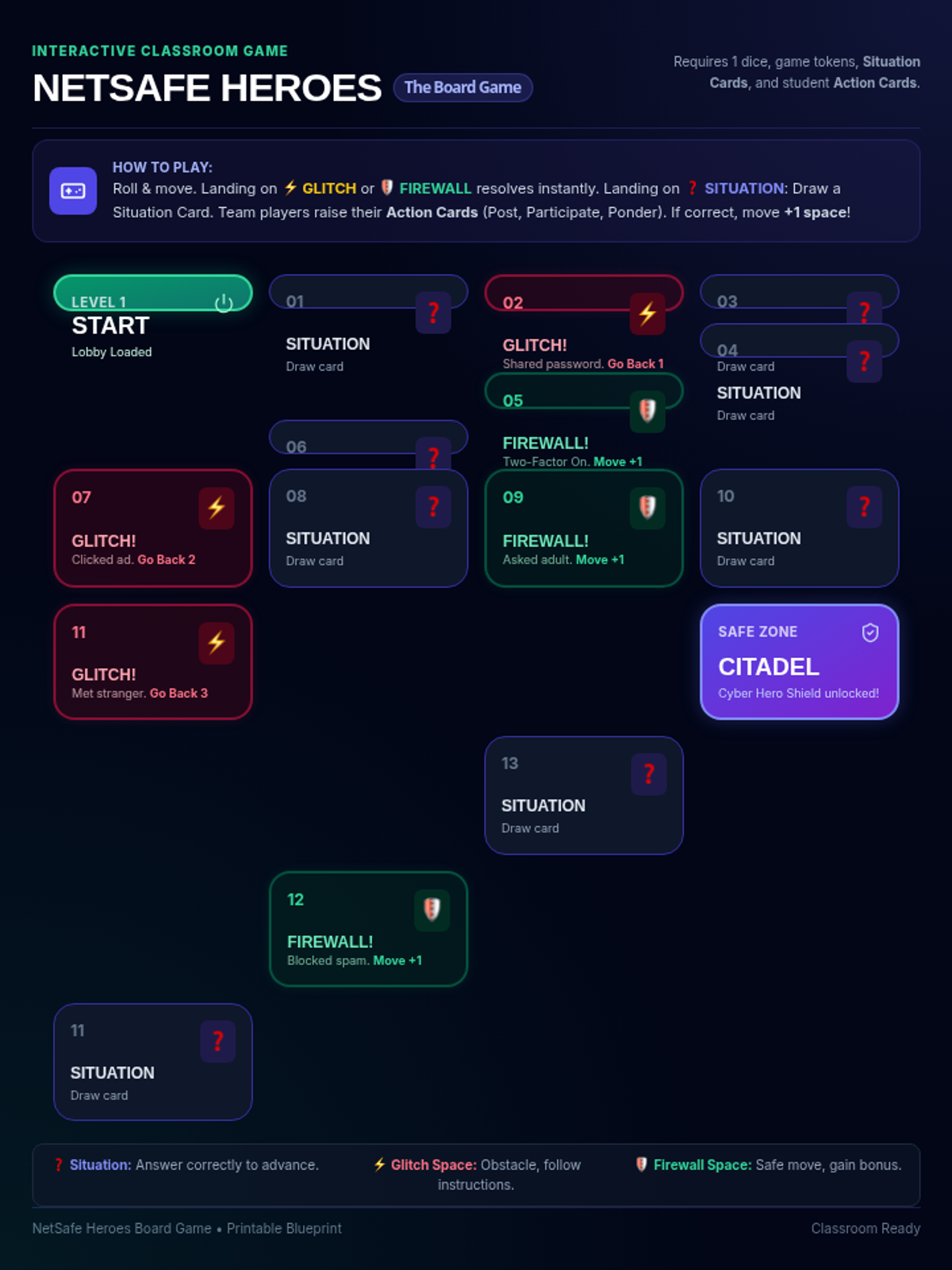
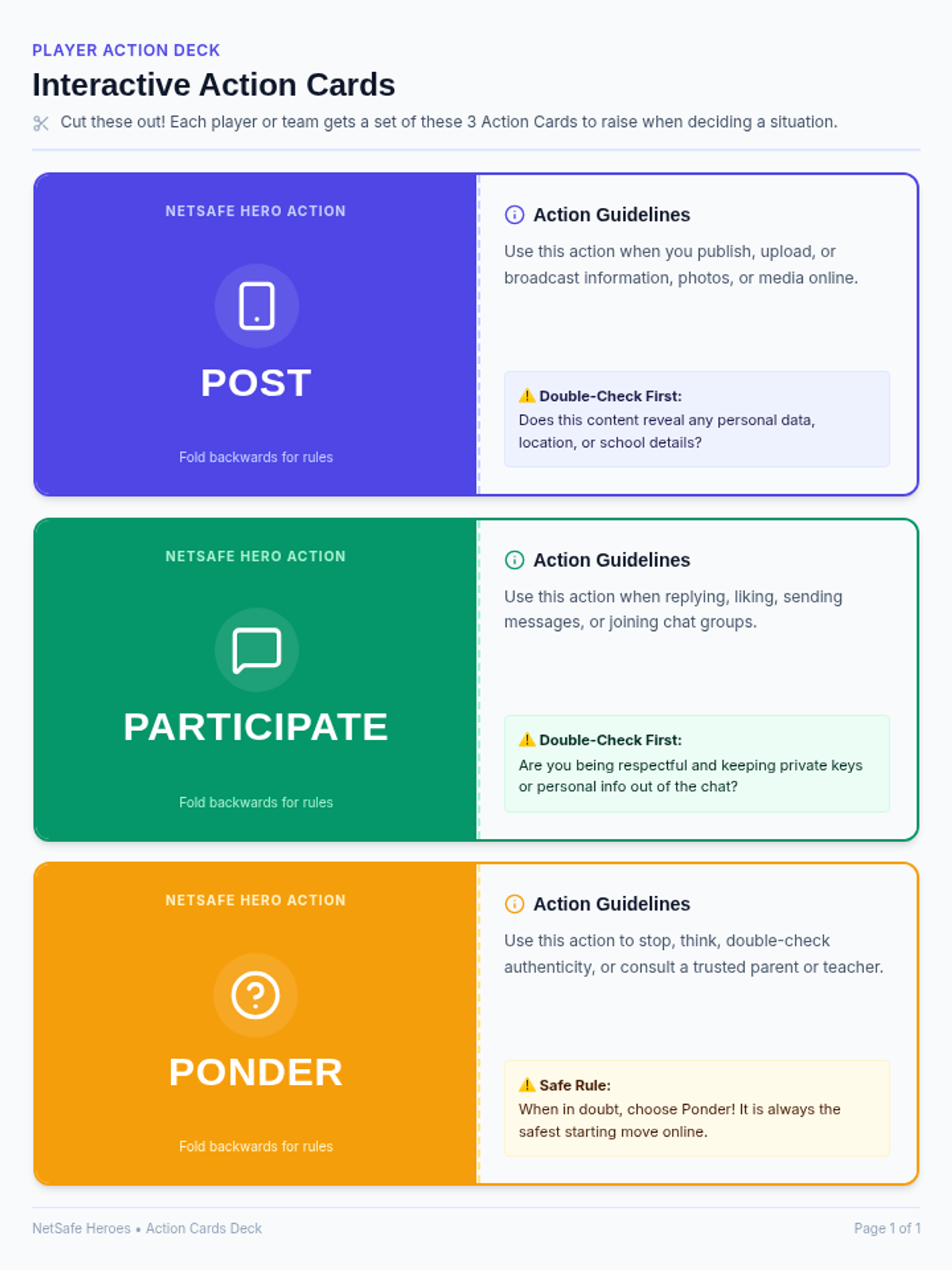
A lesson focusing on critical digital citizenship skills, helping students navigate the web safely and make informed choices when posting, interacting, or pondering online situations.
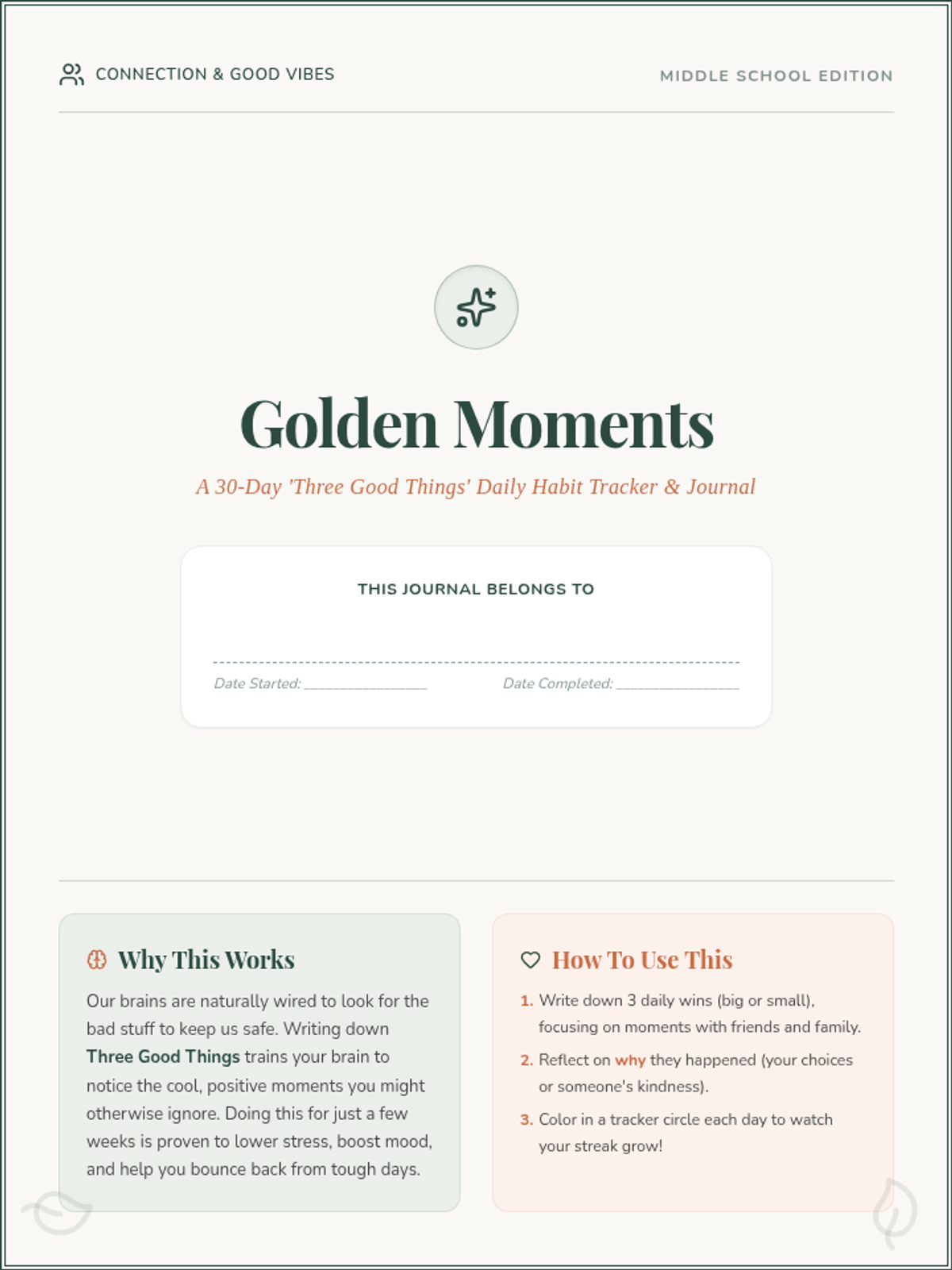
A transformative lesson introducing students to the psychological science of gratitude, centered on the 'Three Good Things' daily habit to build mental resilience, optimism, and emotional wellbeing.
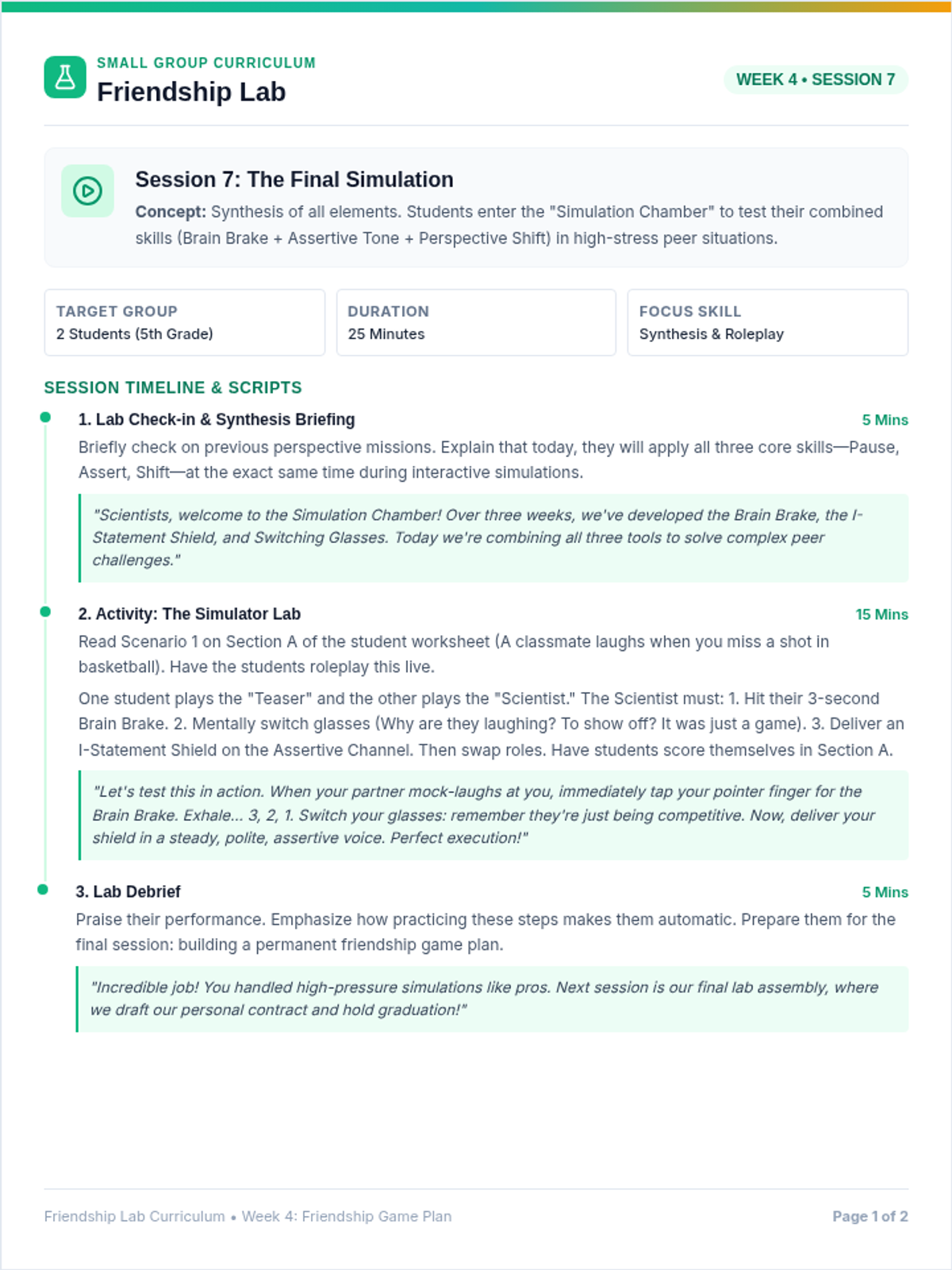
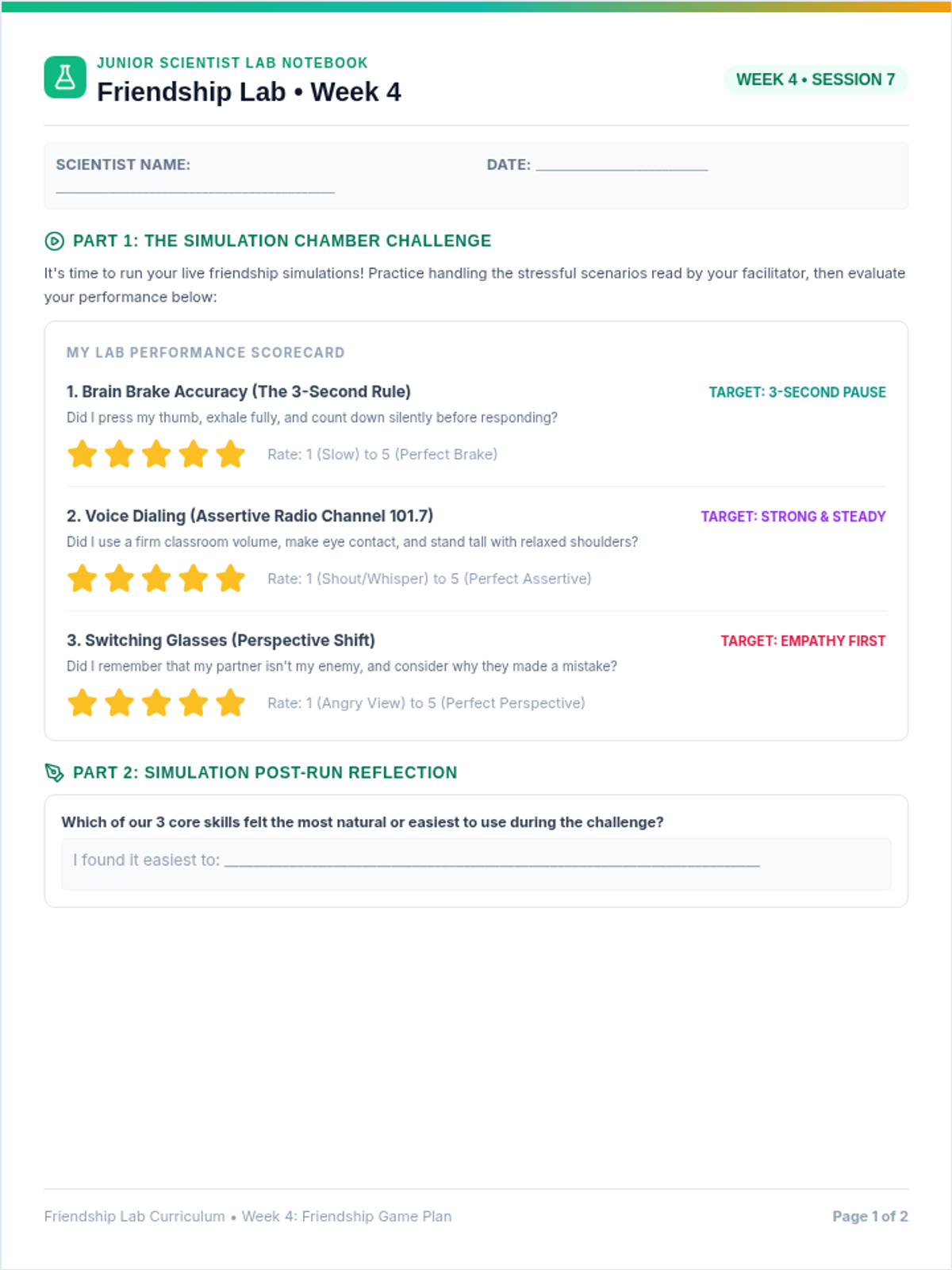
Week 4 of the program, focusing on real-world practice, synthesizing pause strategies and assertive communication, and creating a shared friendship blueprint for future interactions.
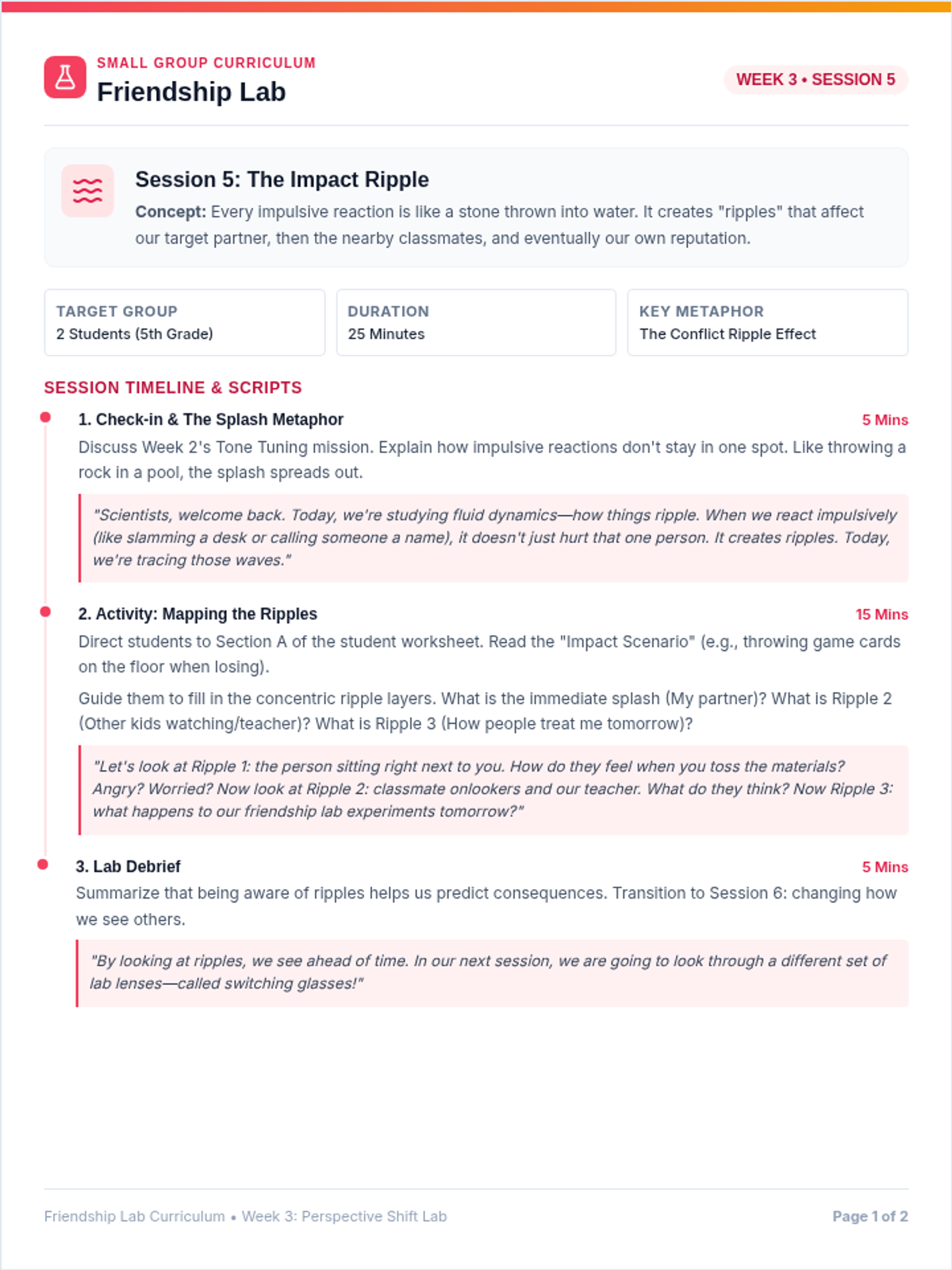
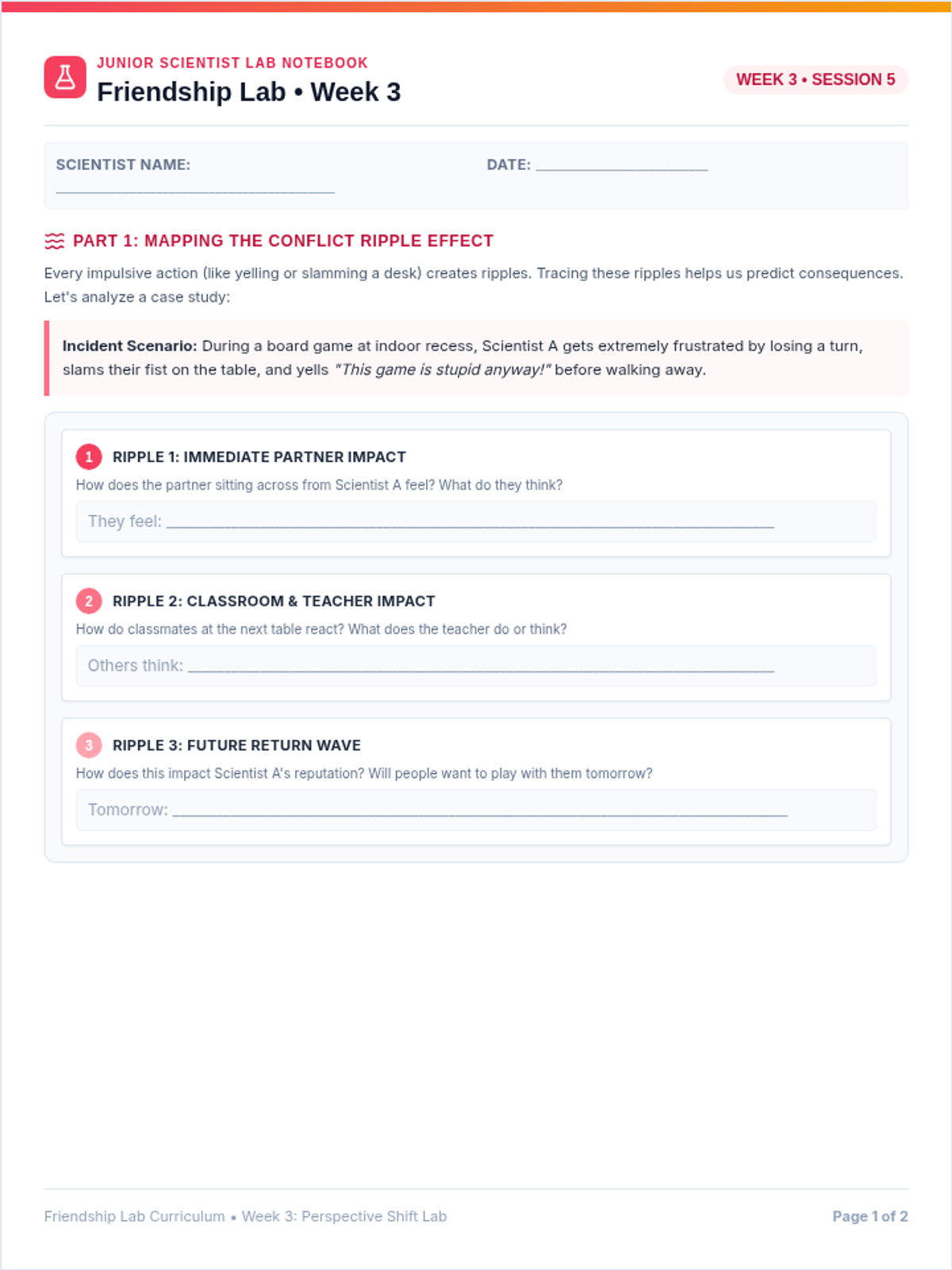
Week 3 of the program, focusing on perspective-taking activities to help students understand how their impulsive actions affect their partner's feelings and ripple out.
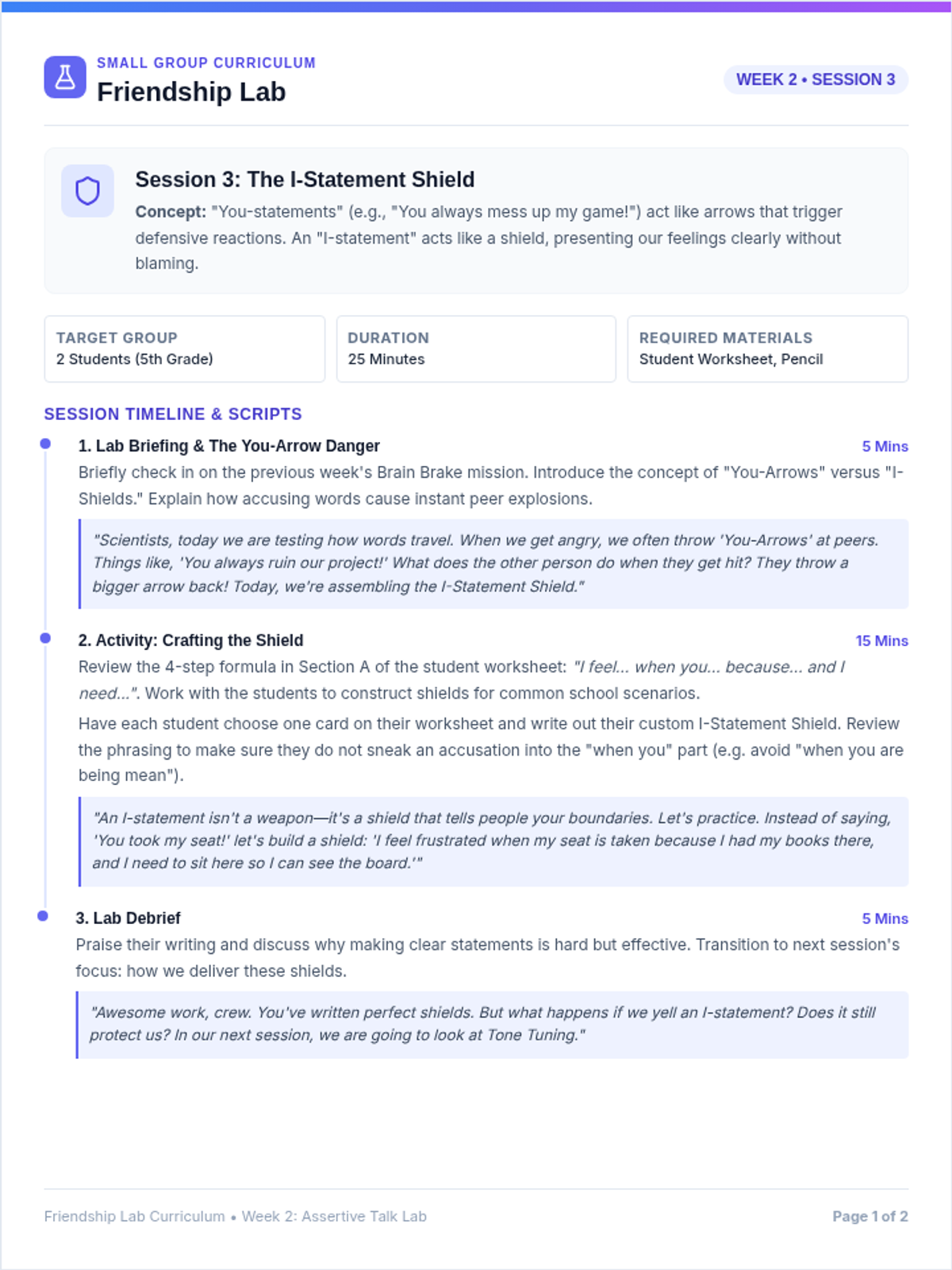
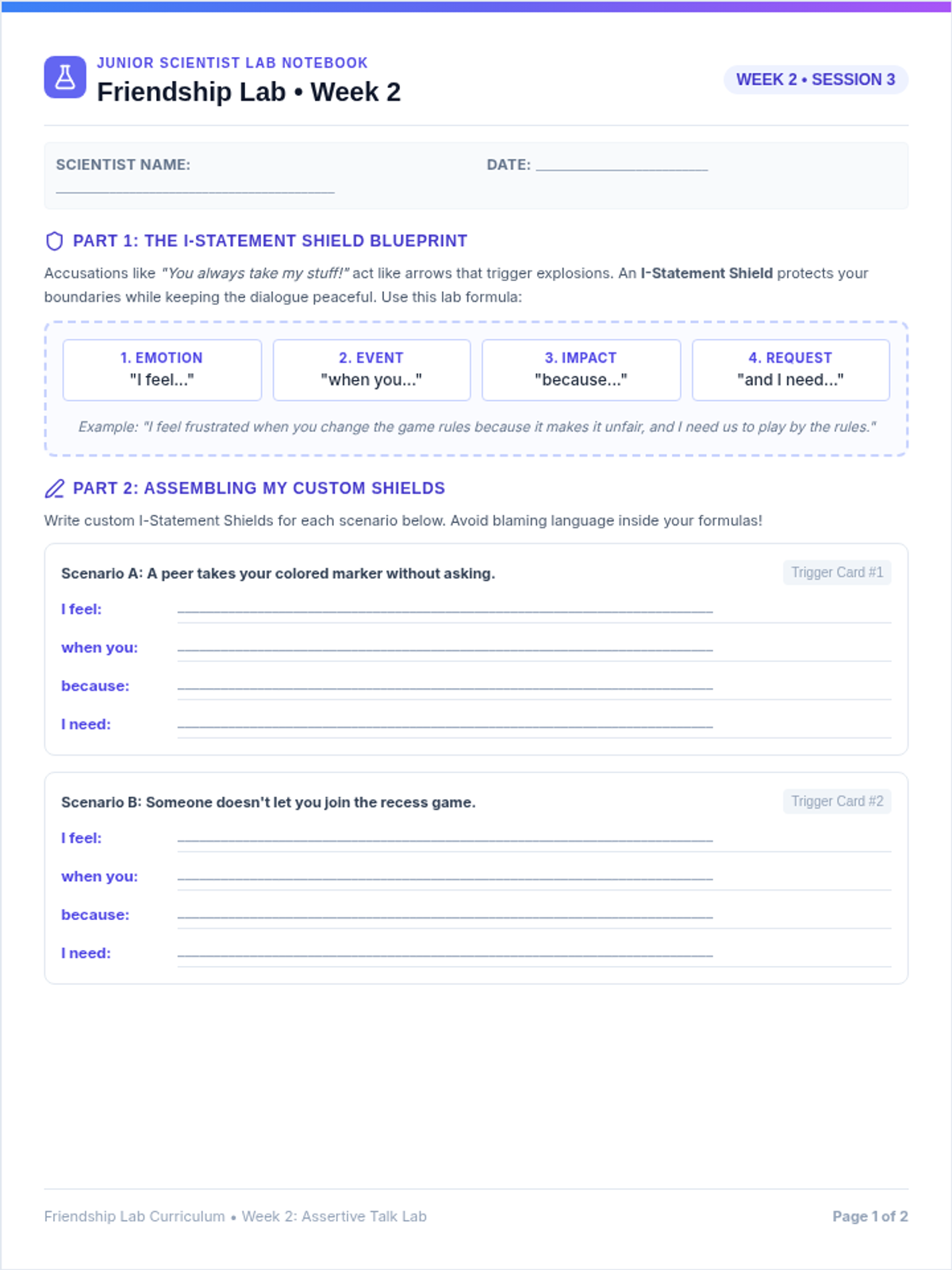
Week 2 of the program, focusing on learning and practicing assertive communication skills, specifically crafting and using 'I-statements' and modulating tone/posture to prevent conflicts.
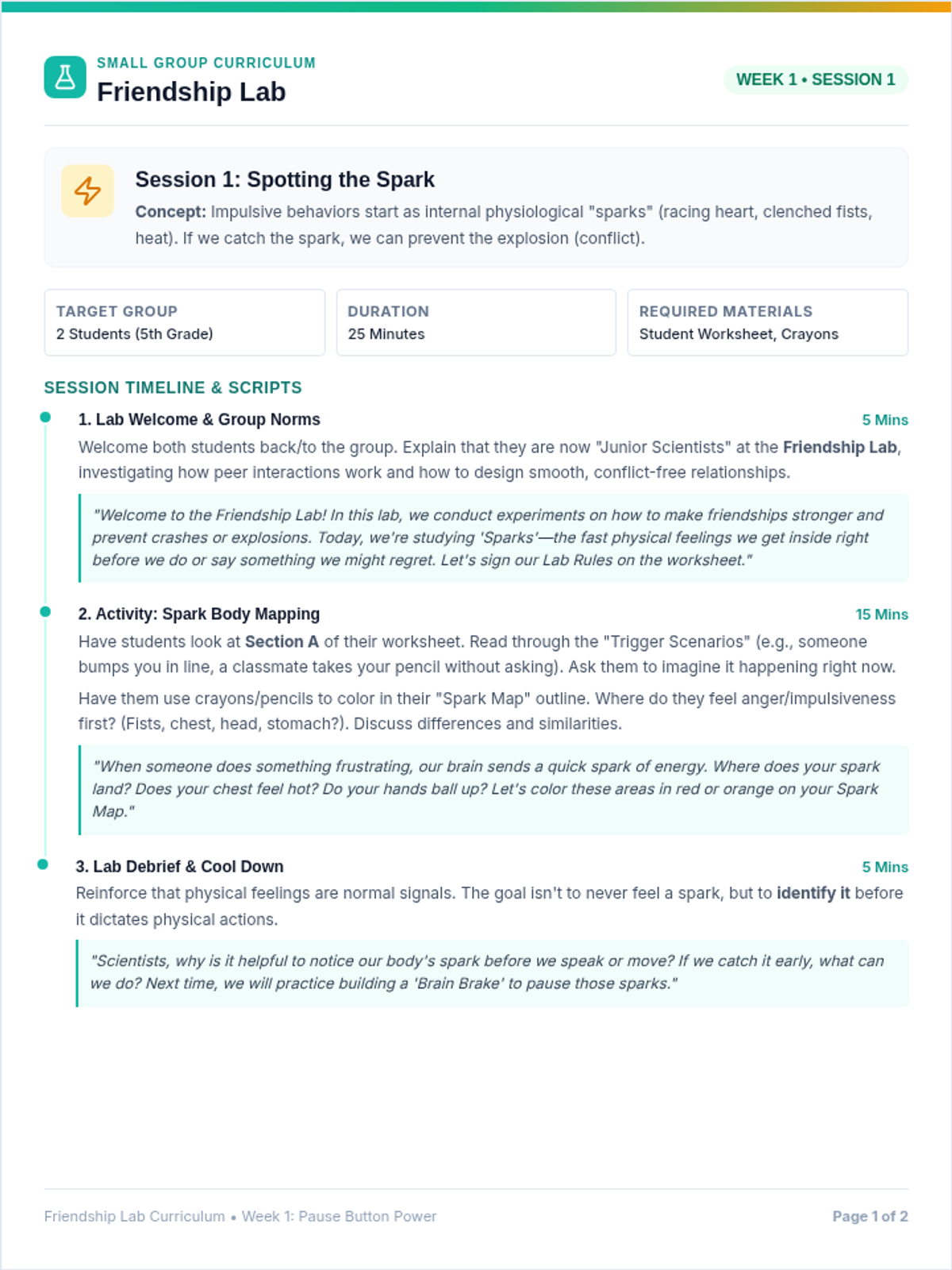
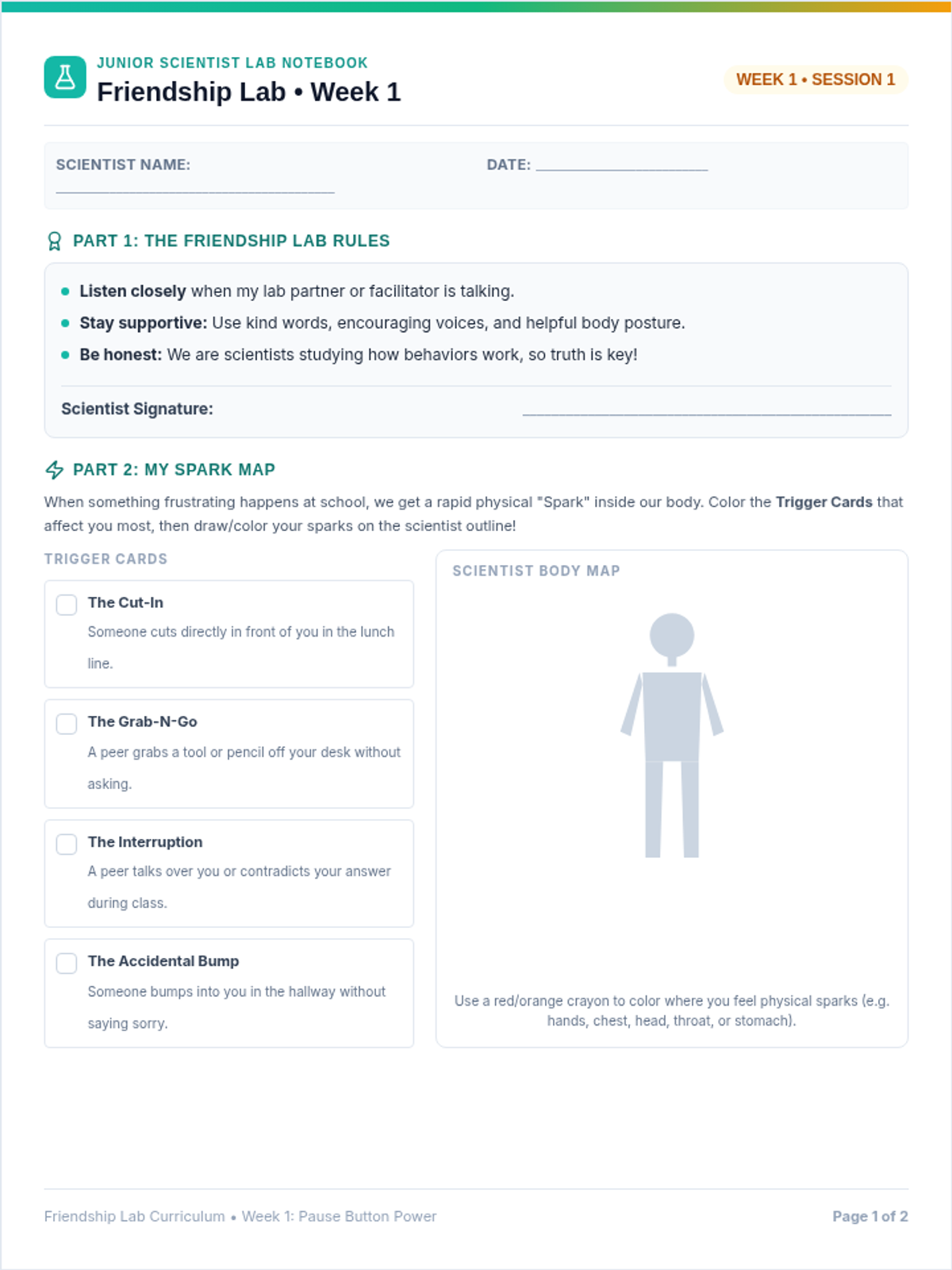
Week 1 of the program, focusing on identifying internal physical 'sparks' of anger/impulsivity and applying physical and mental 'stop' cues (the 3-second pause) before reacting to peers.
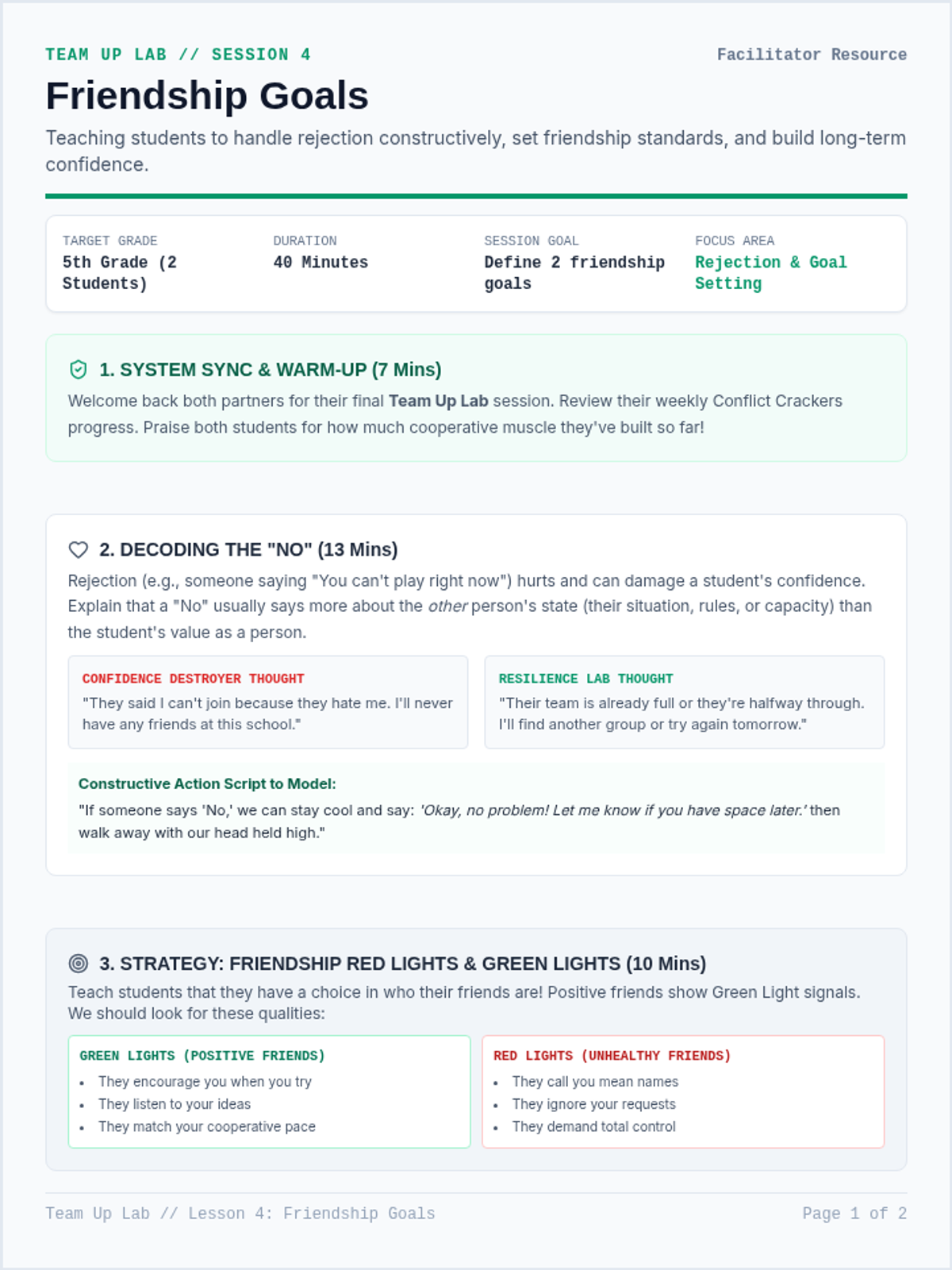
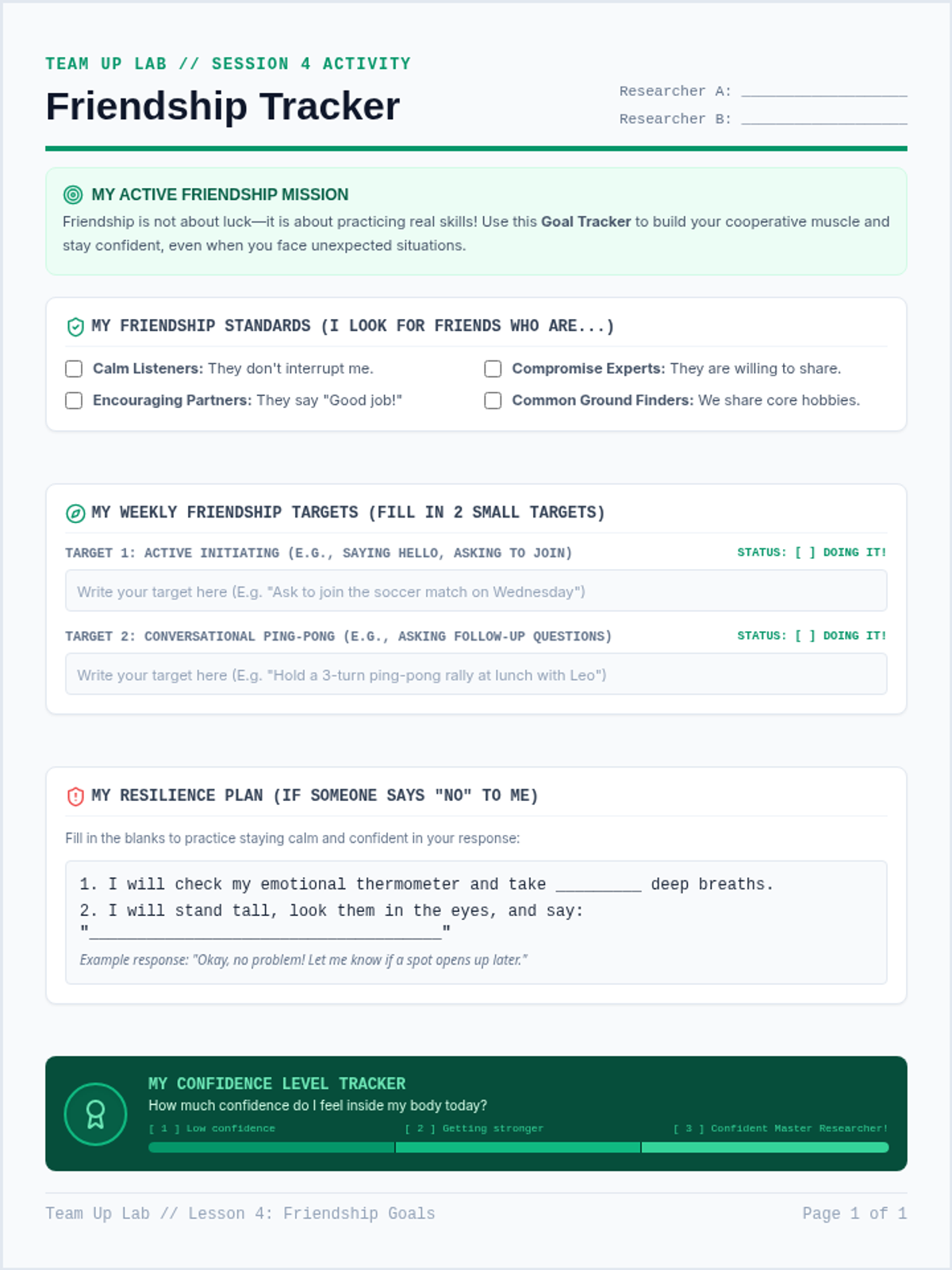
Empowers students to respond constructively to peer rejection, set realistic friendship goals, and track their self-confidence.
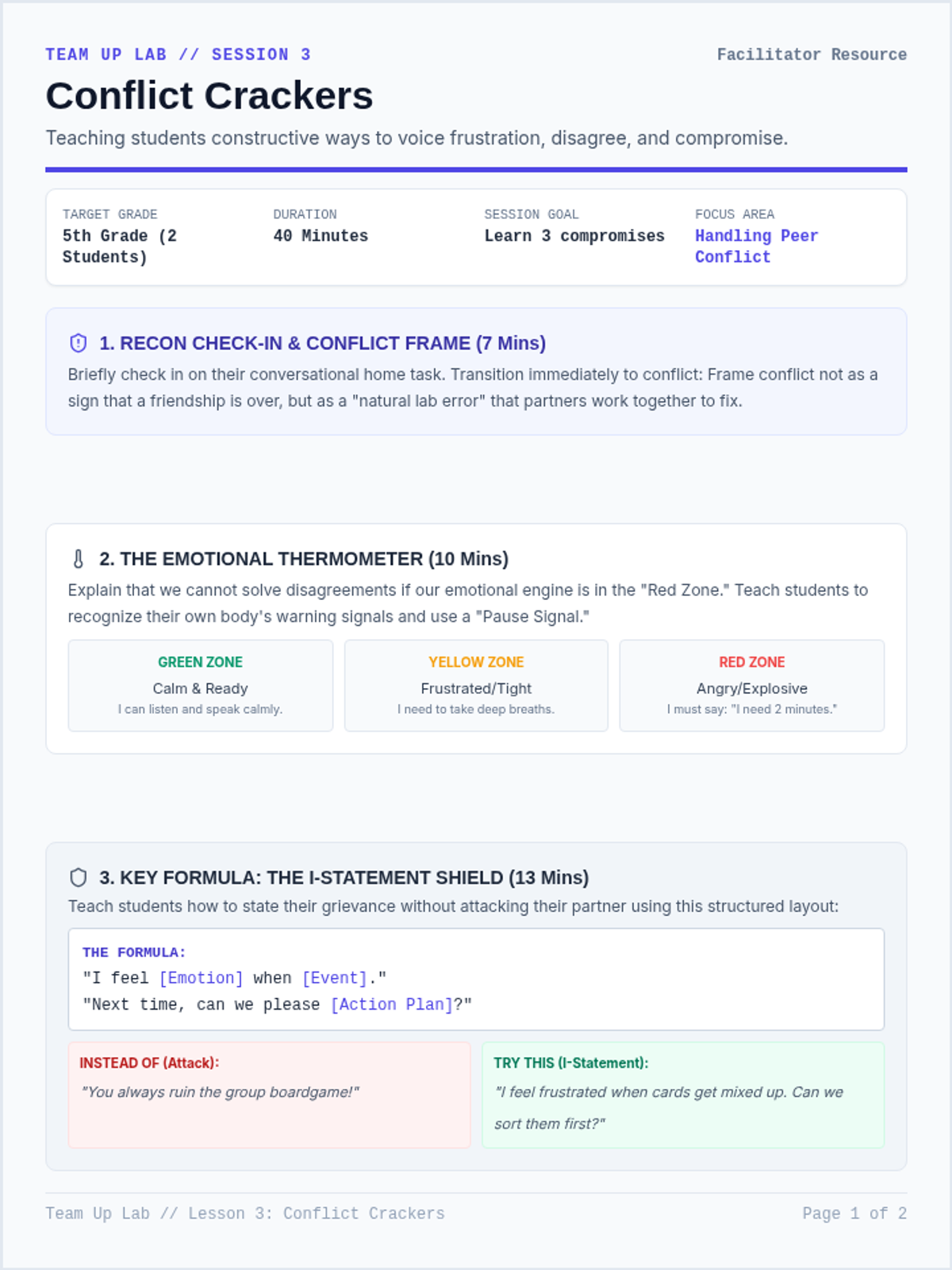
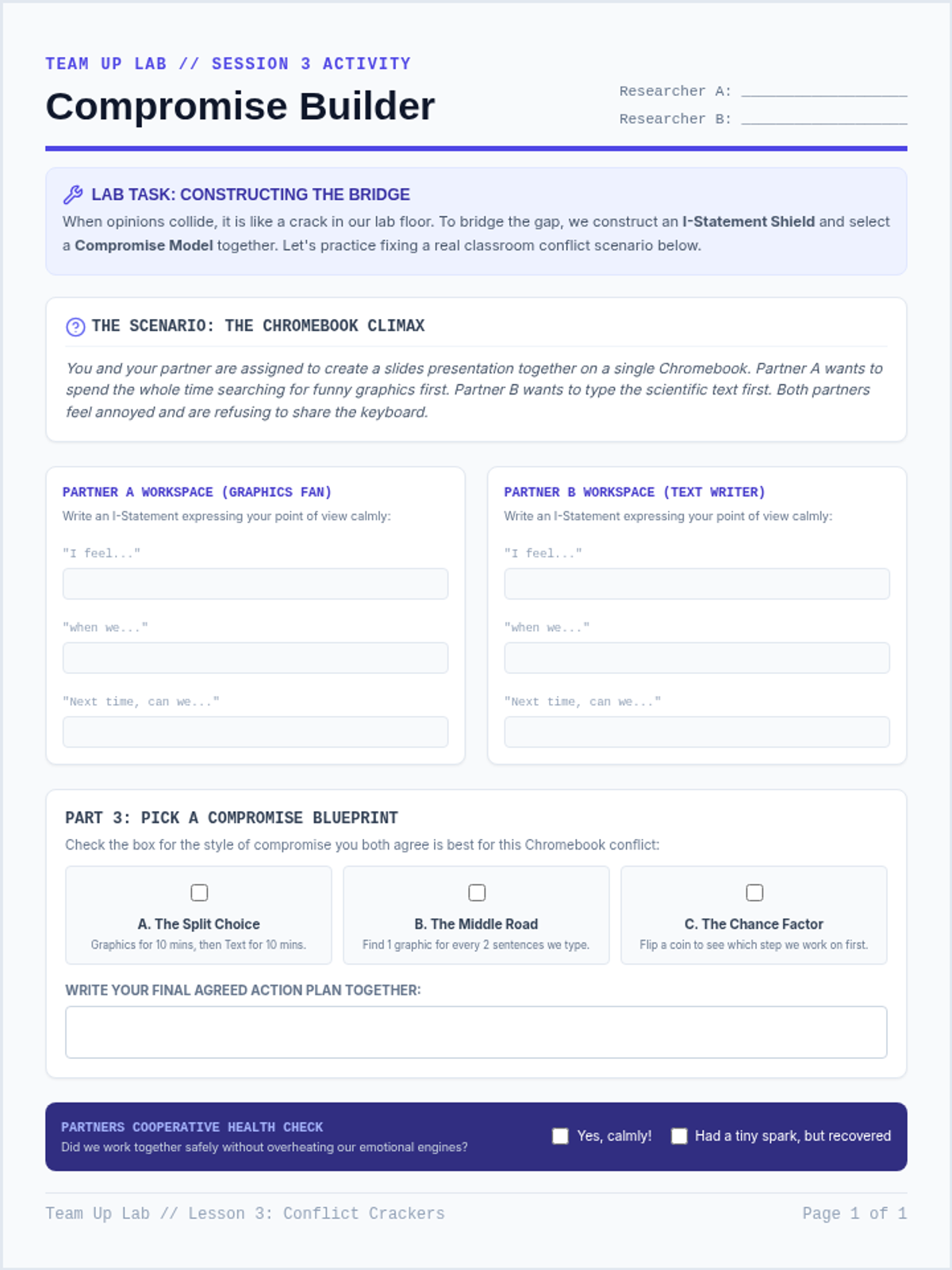
Equips students with practical tools to manage disagreements, practice compromise, and express frustration constructively.
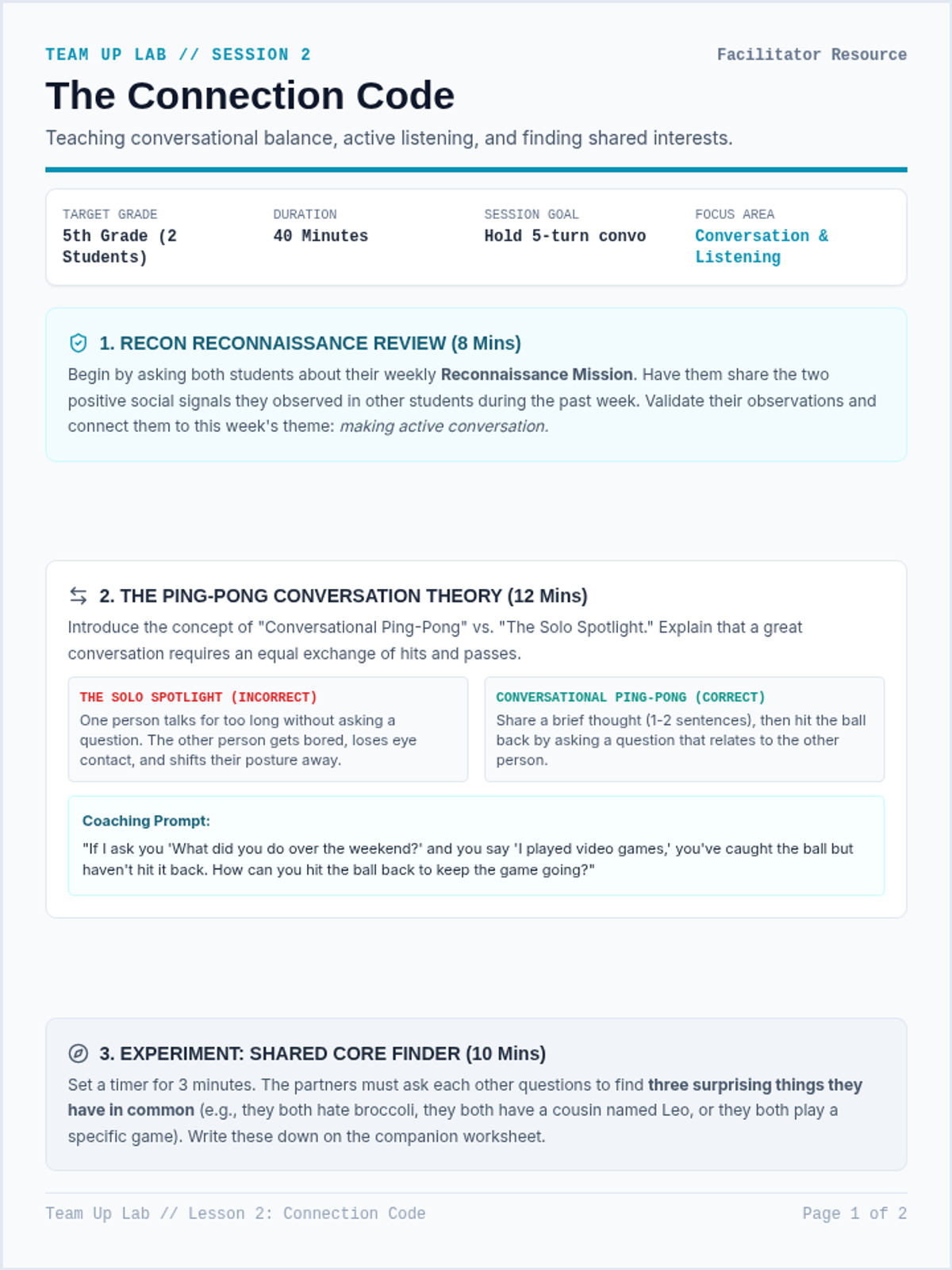
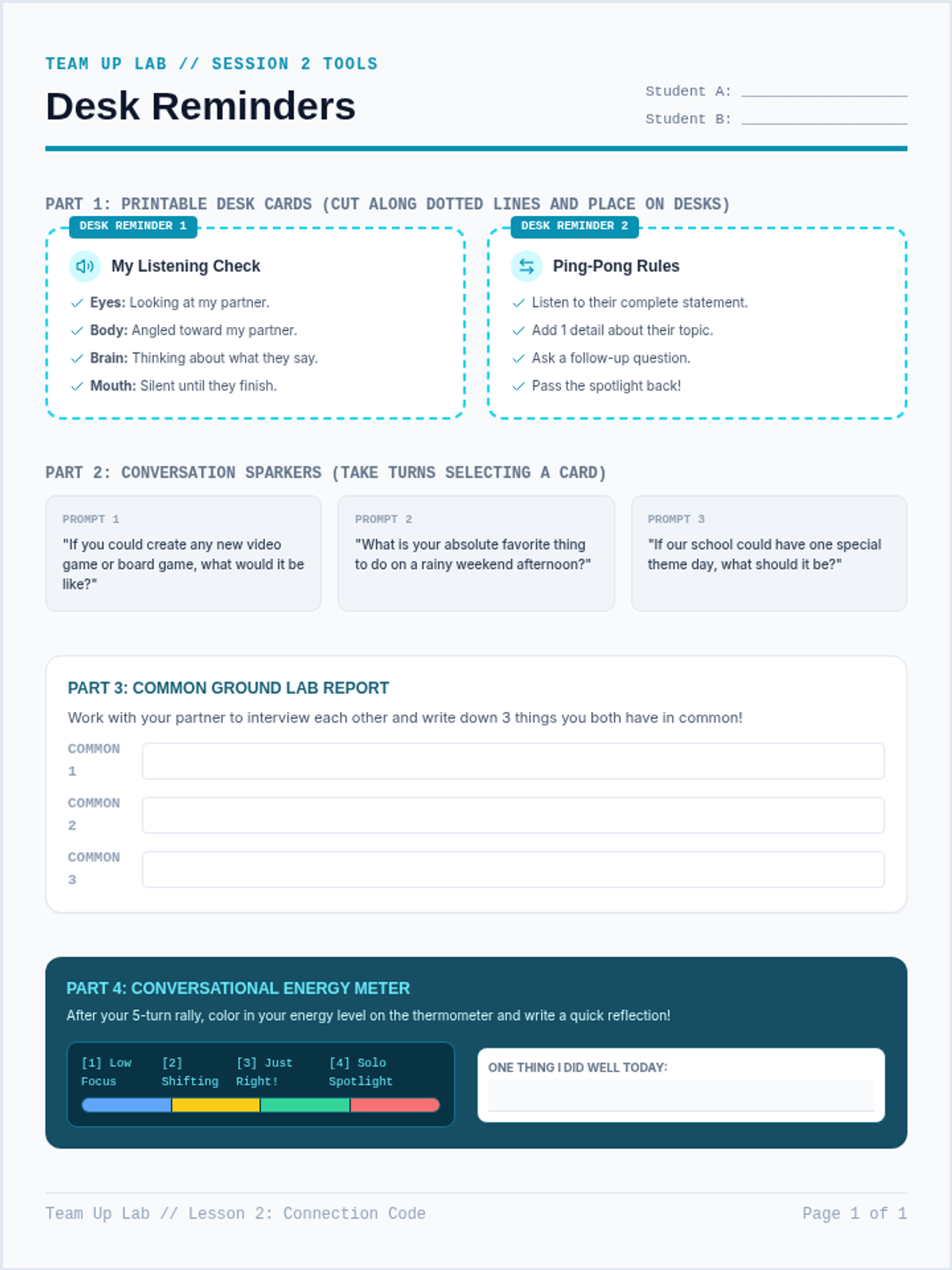
Teaches the mechanics of conversational exchange, finding common interests, and using visual desk reminders for active listening.
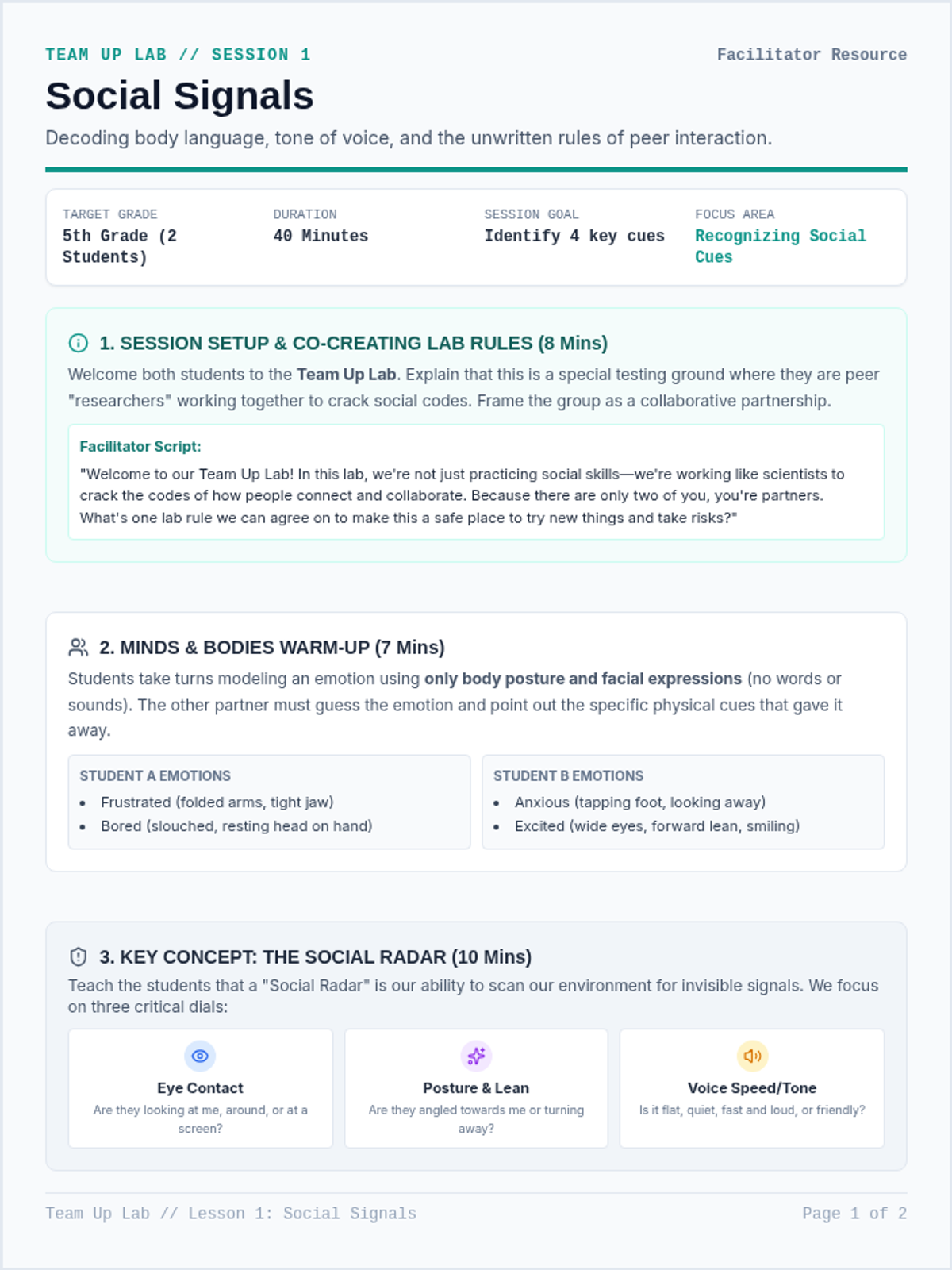
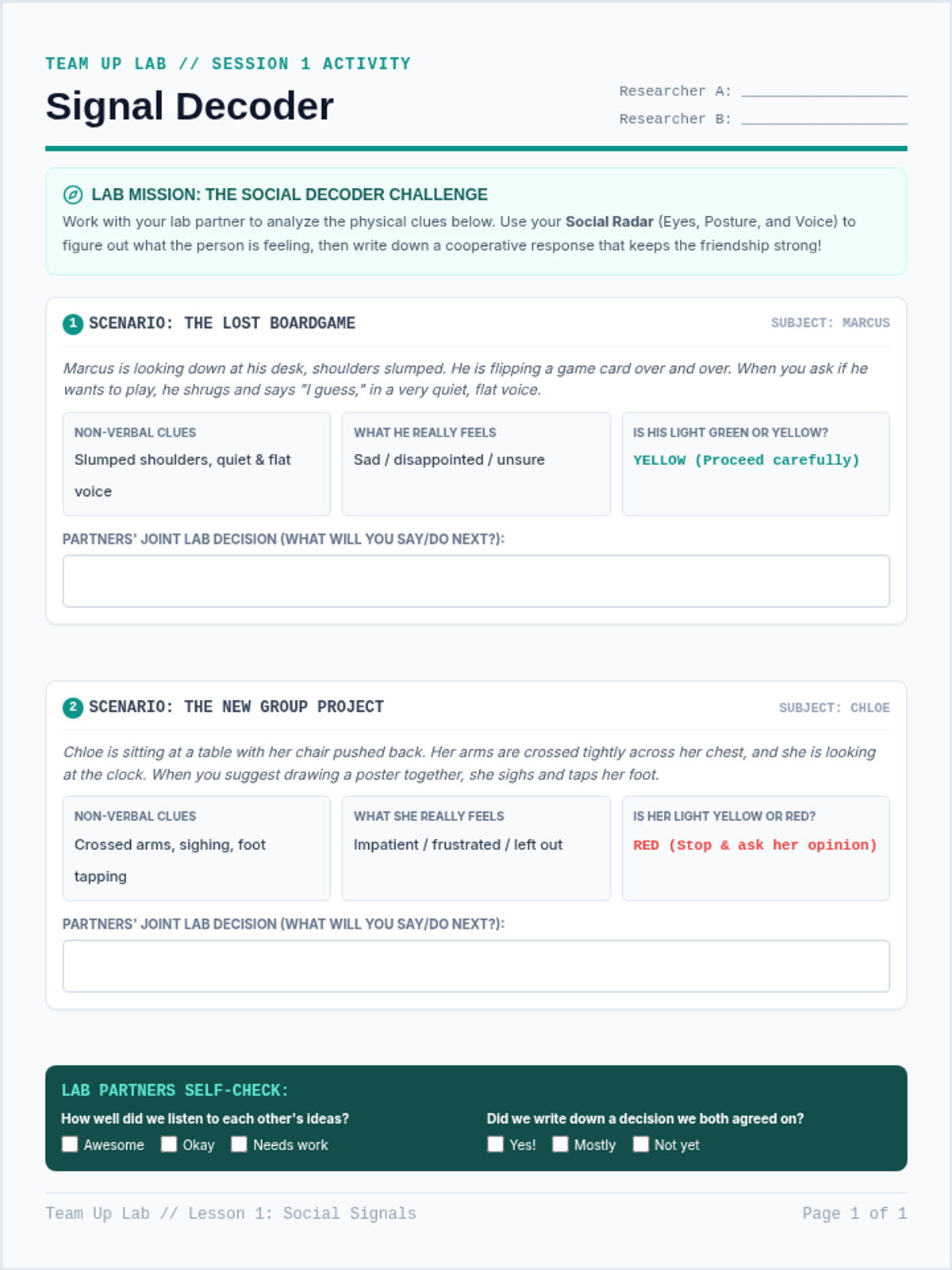
Focuses on reading non-verbal cues (body language, facial expressions, tone of voice) and understanding unwritten social rules in small group settings.
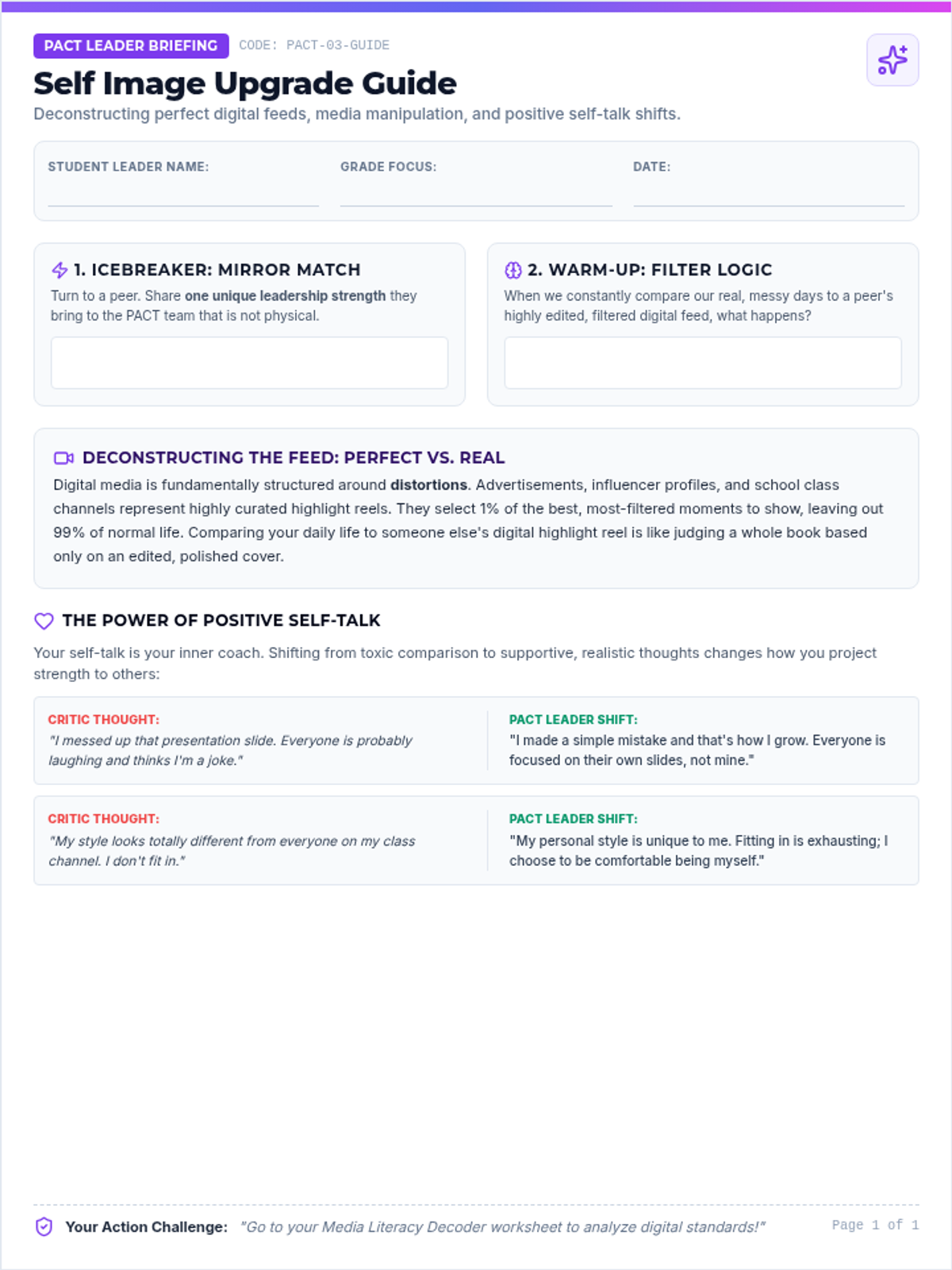
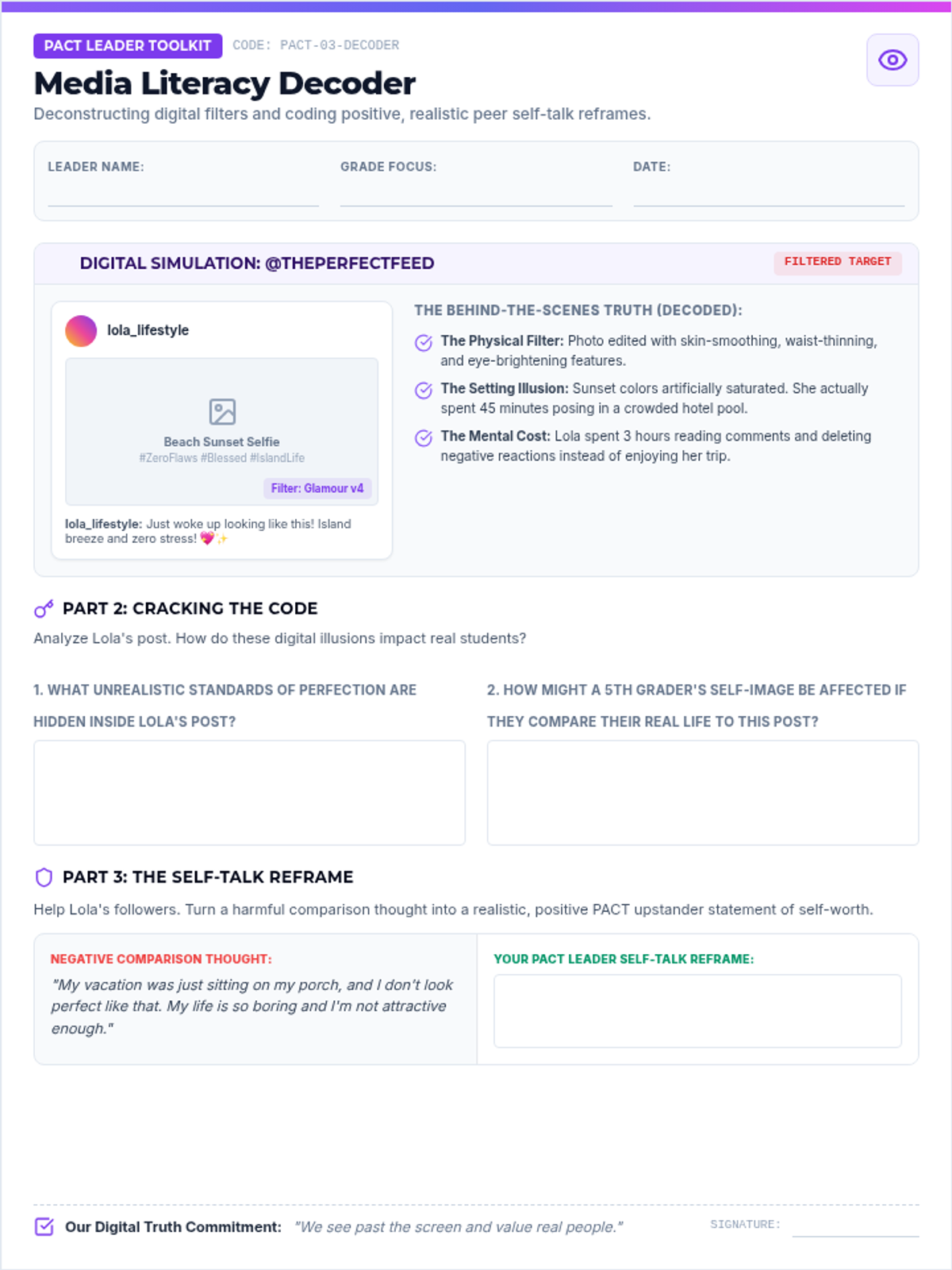
Focuses on building self-worth, identifying negative media messages, and shifting personal and peer narratives through positive self-talk strategies.