A creative emotional literacy lesson for Pre-K and Kindergarten students where they learn to identify and express their feelings by comparing them to different weather patterns.
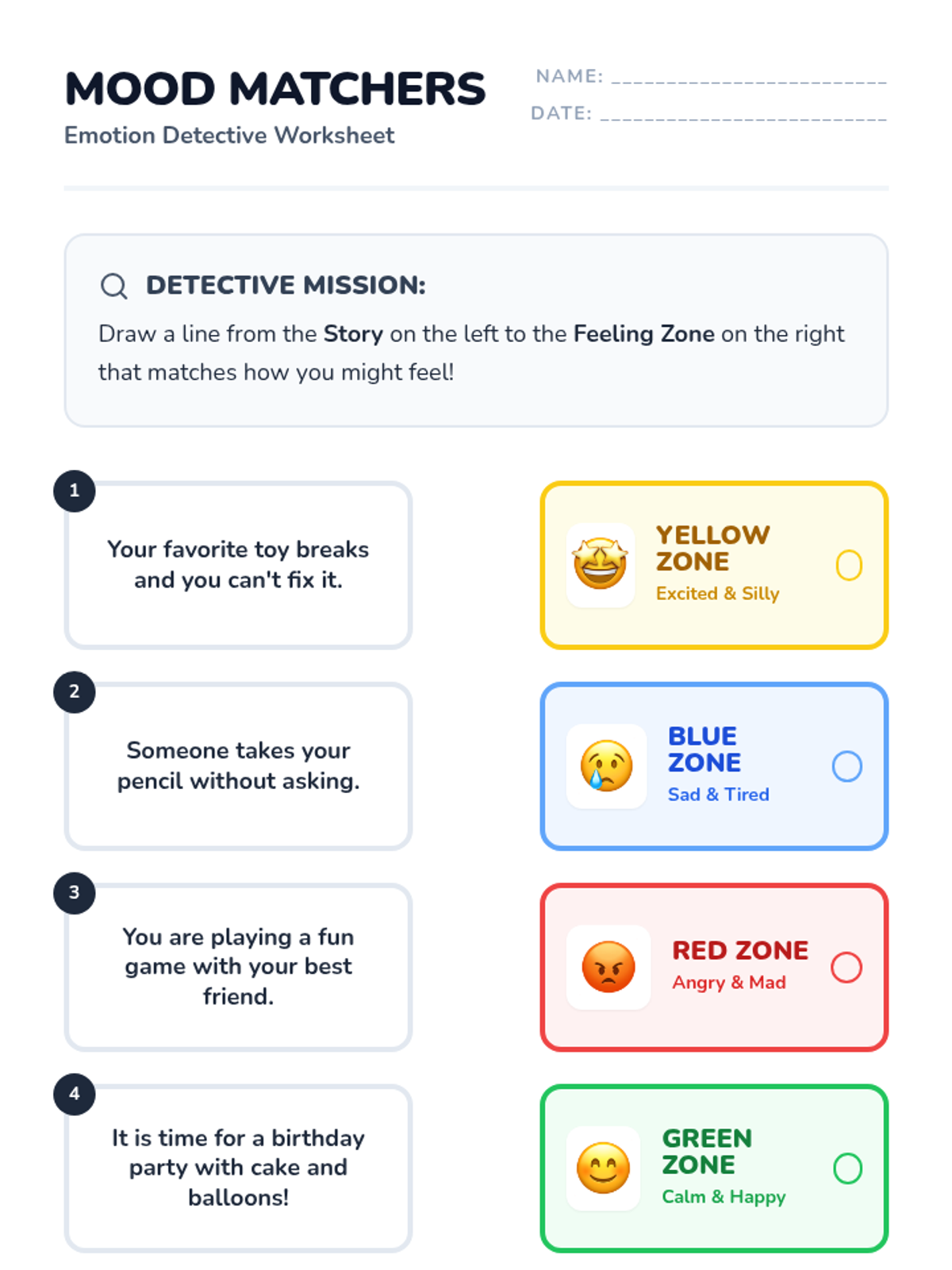
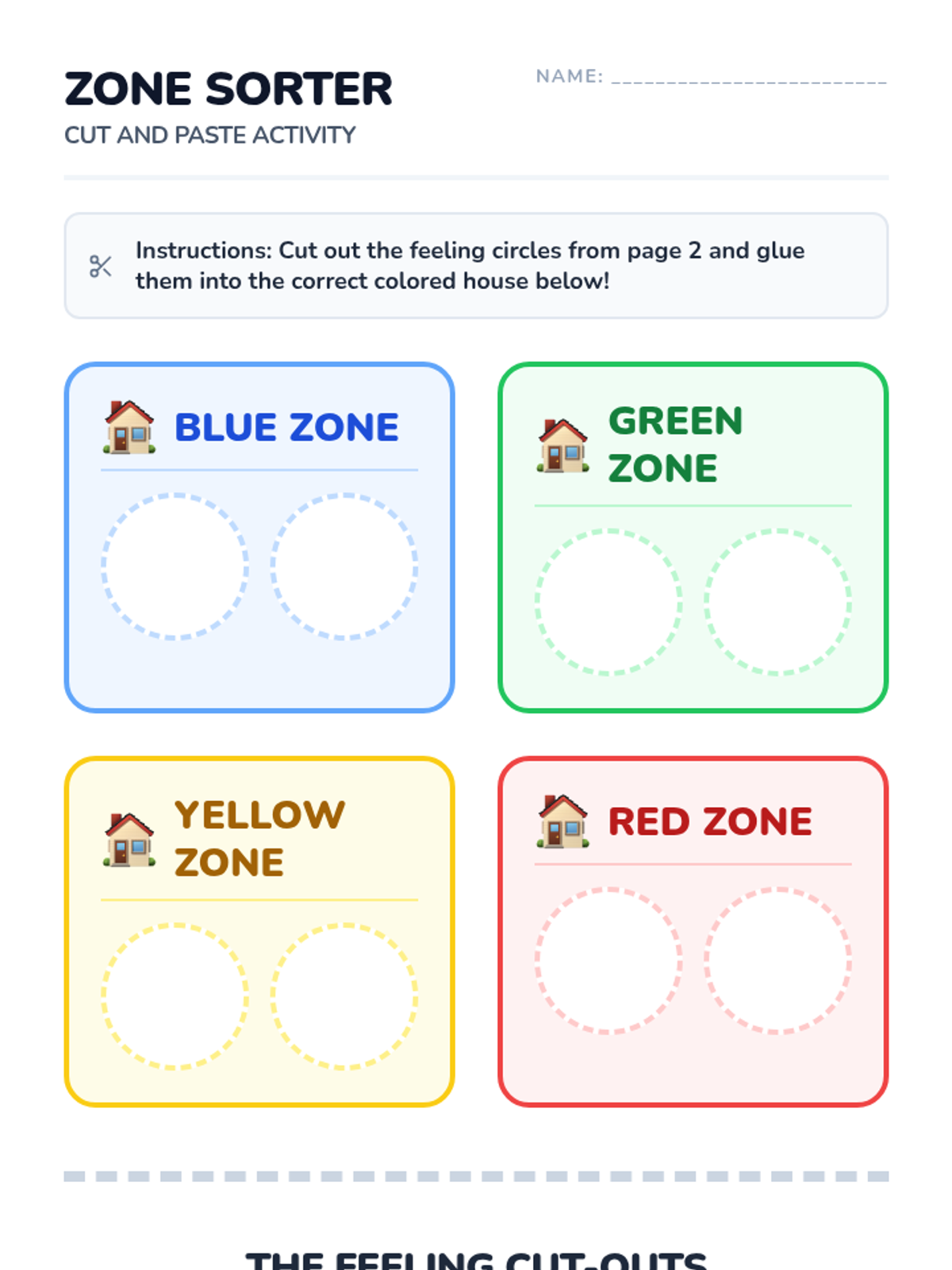
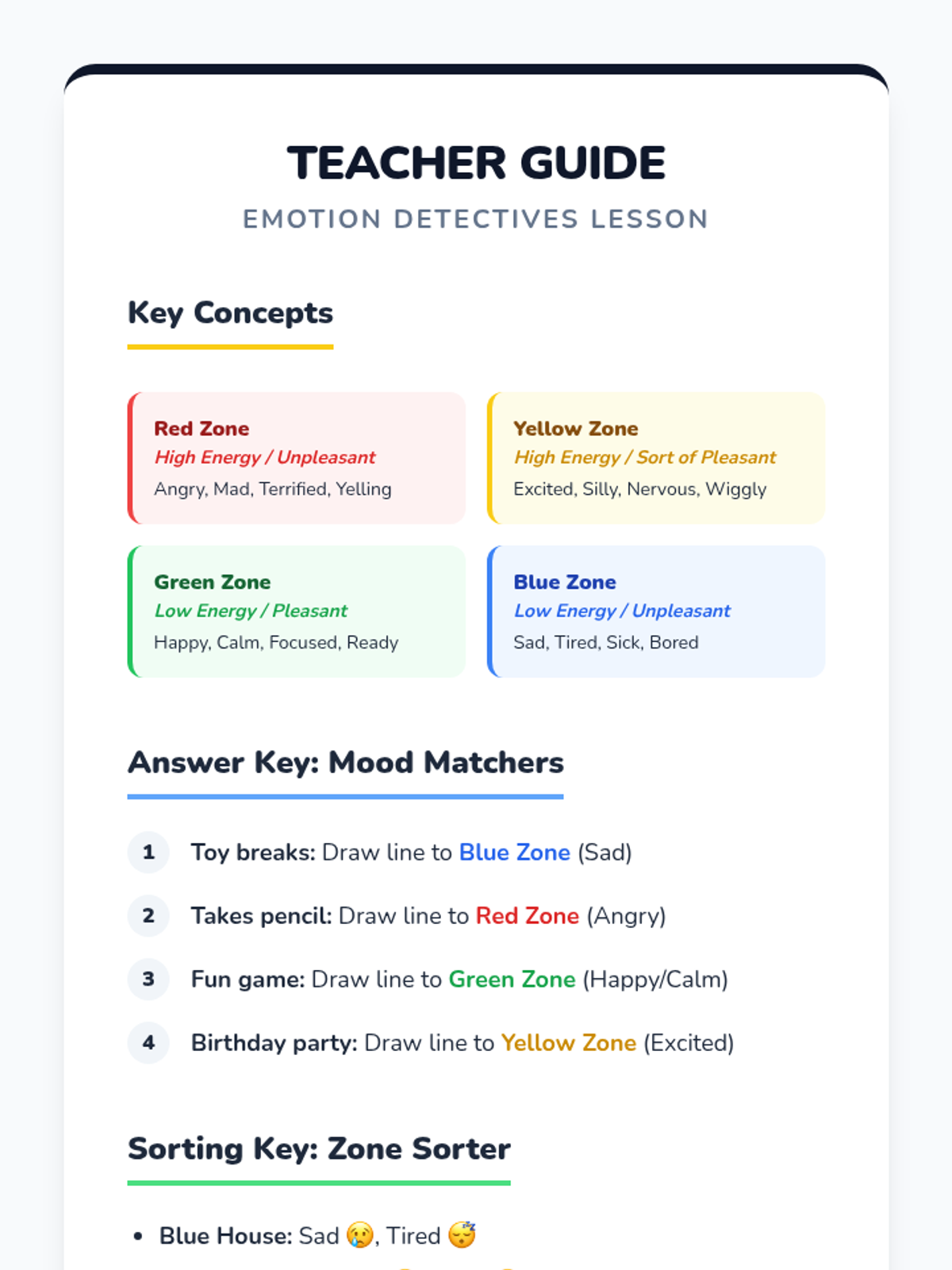
A foundational social-emotional learning lesson for kindergarteners to identify and categorize feelings using the four color zones. Students will explore scenarios, match emotions, and practice physical sorting of feelings.
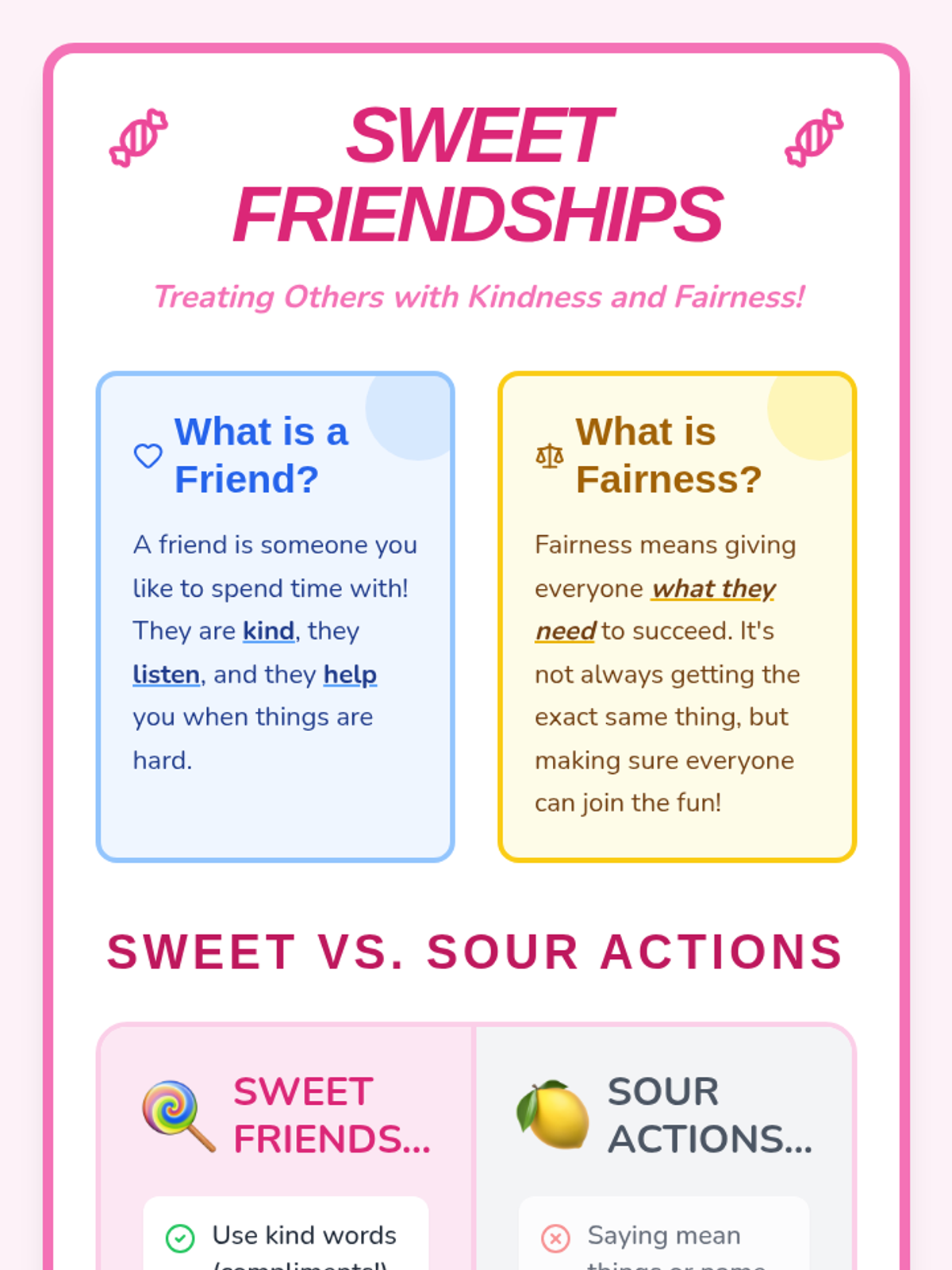
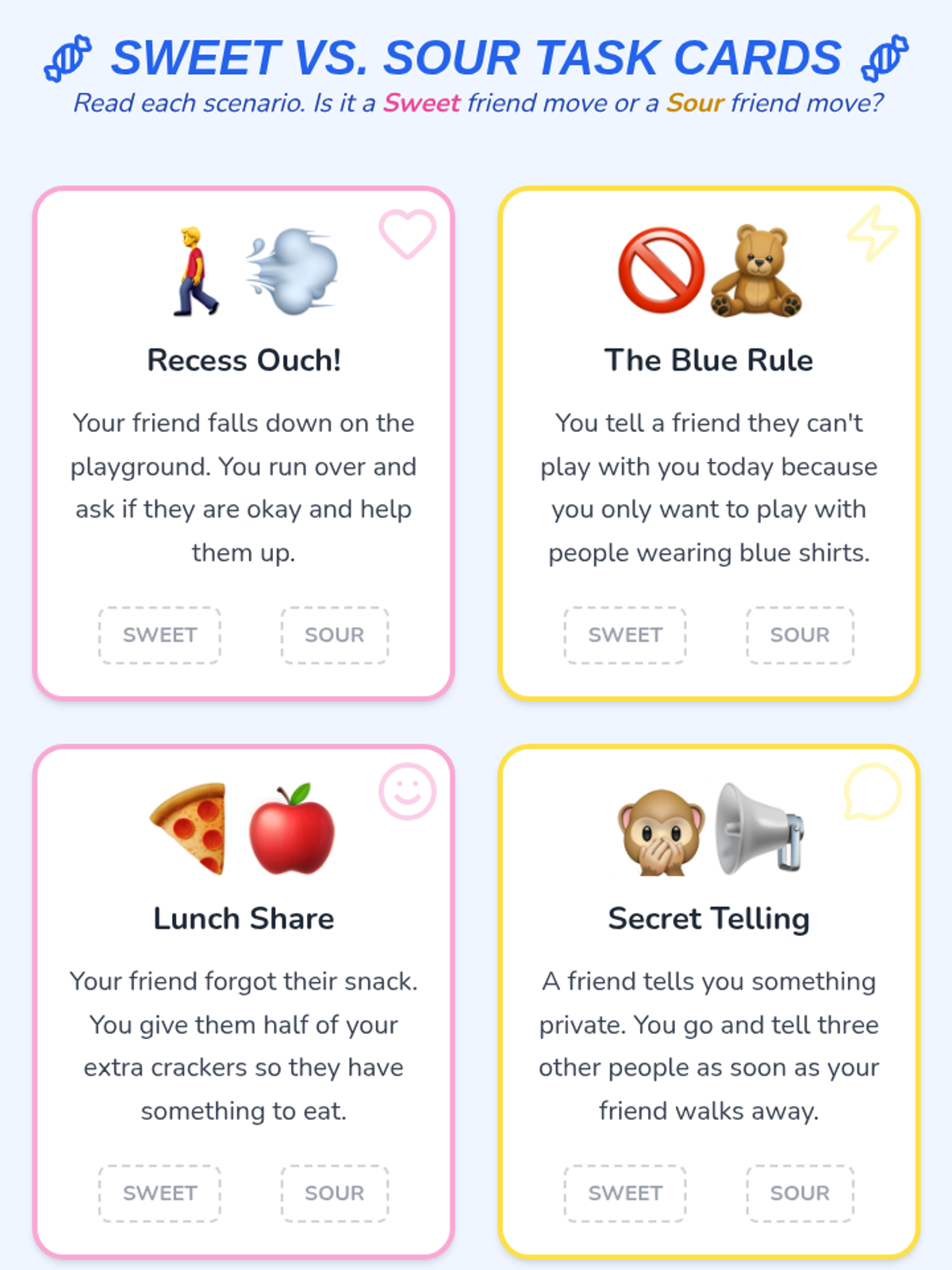
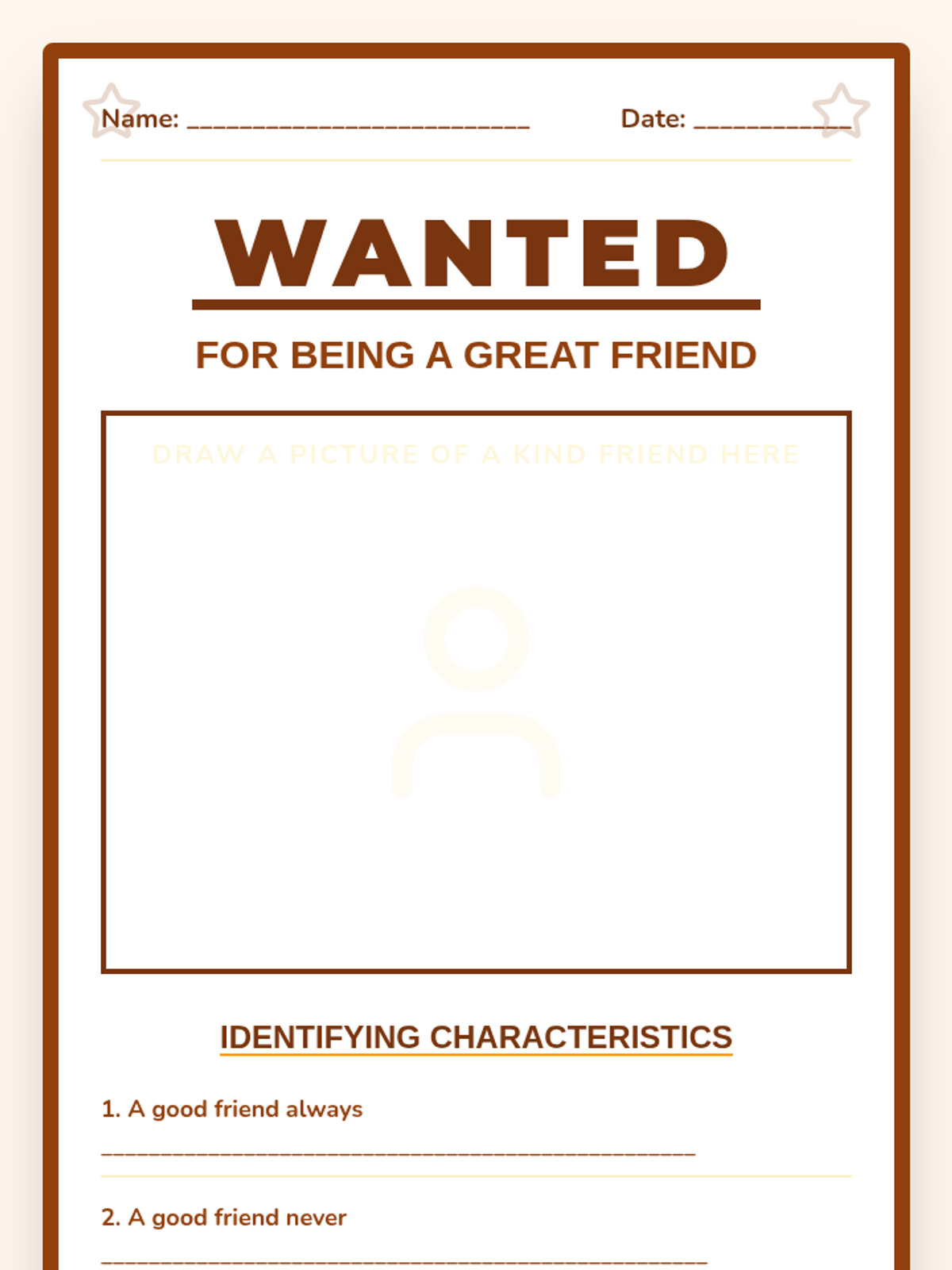
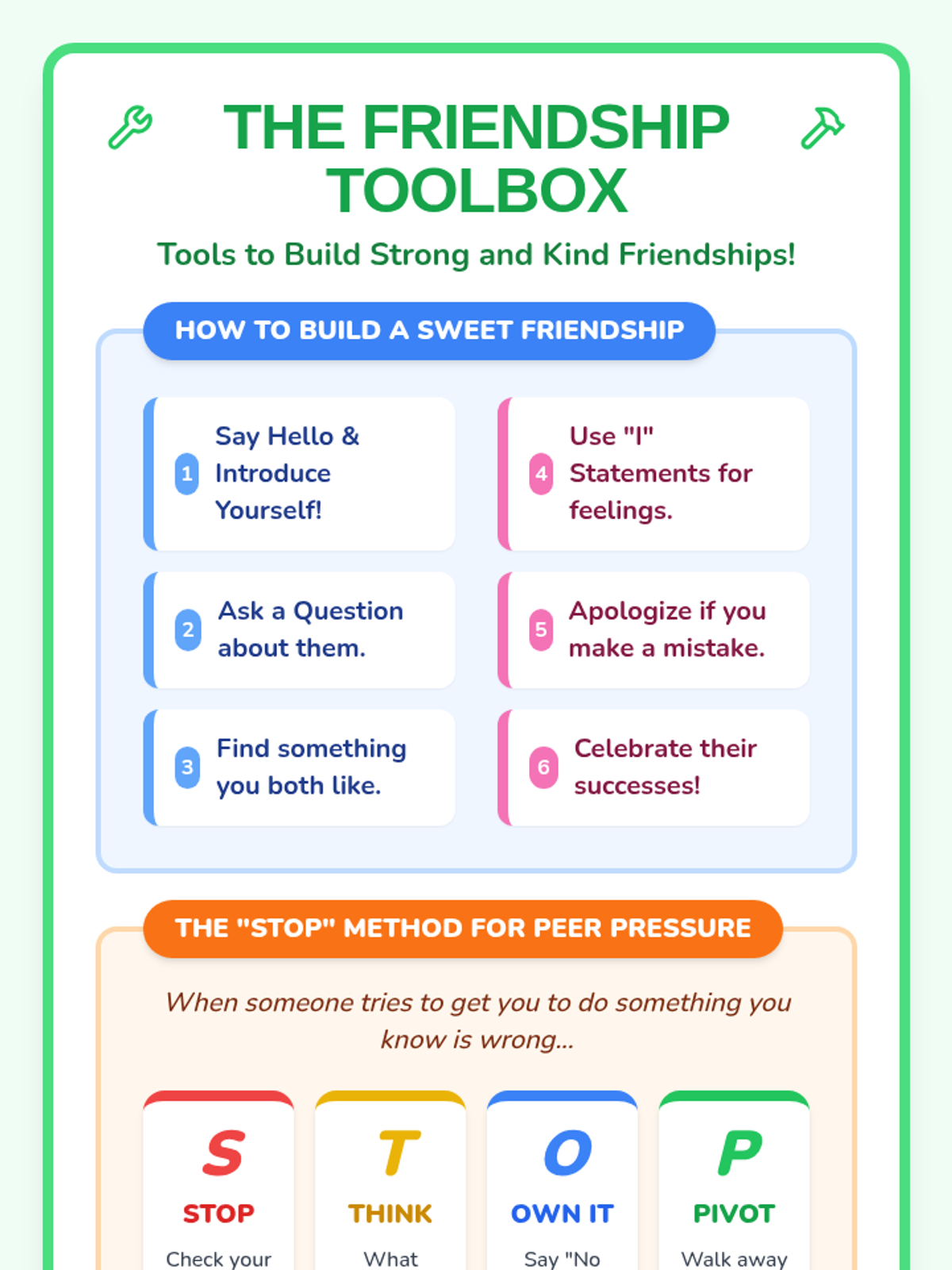
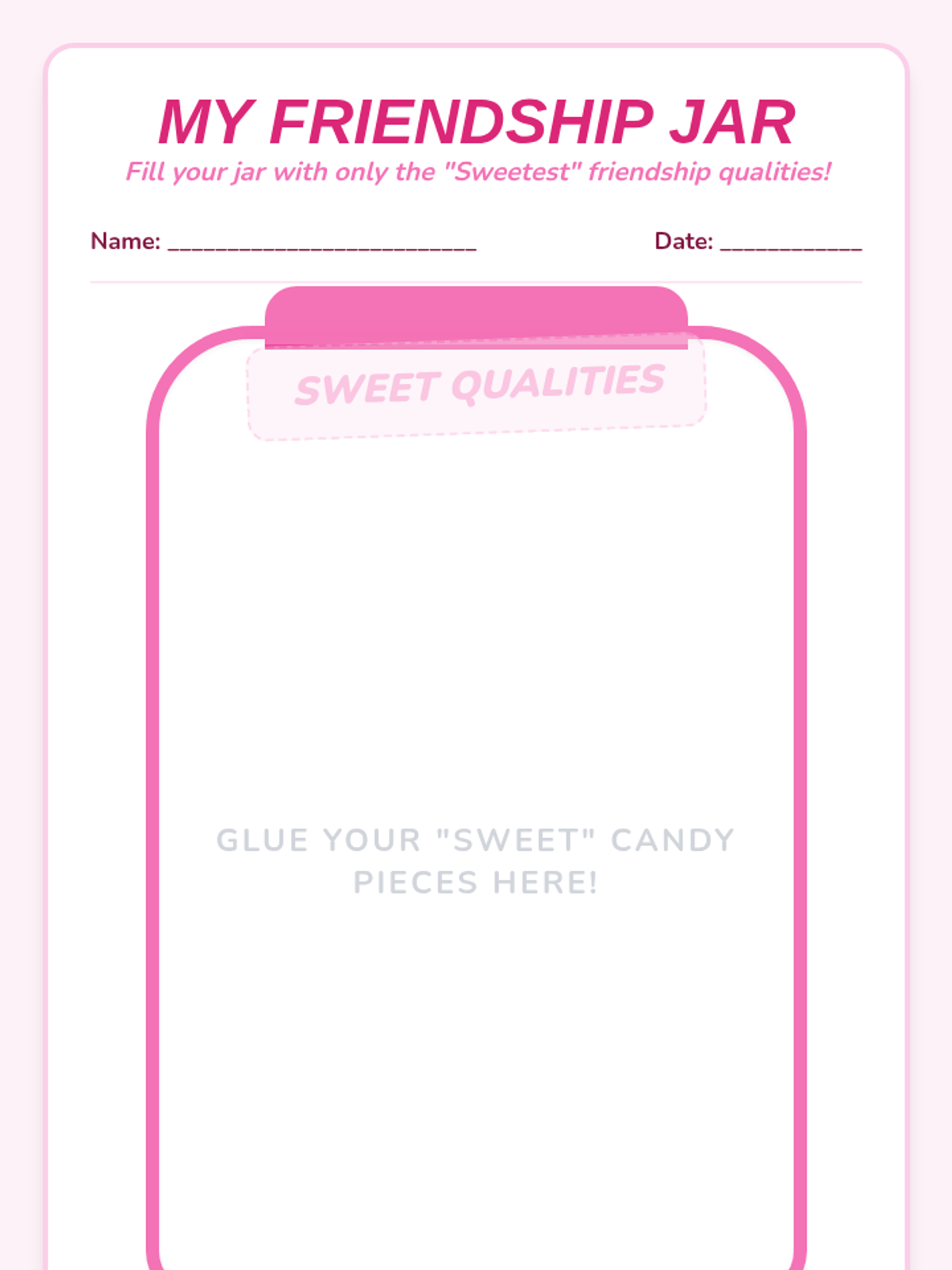
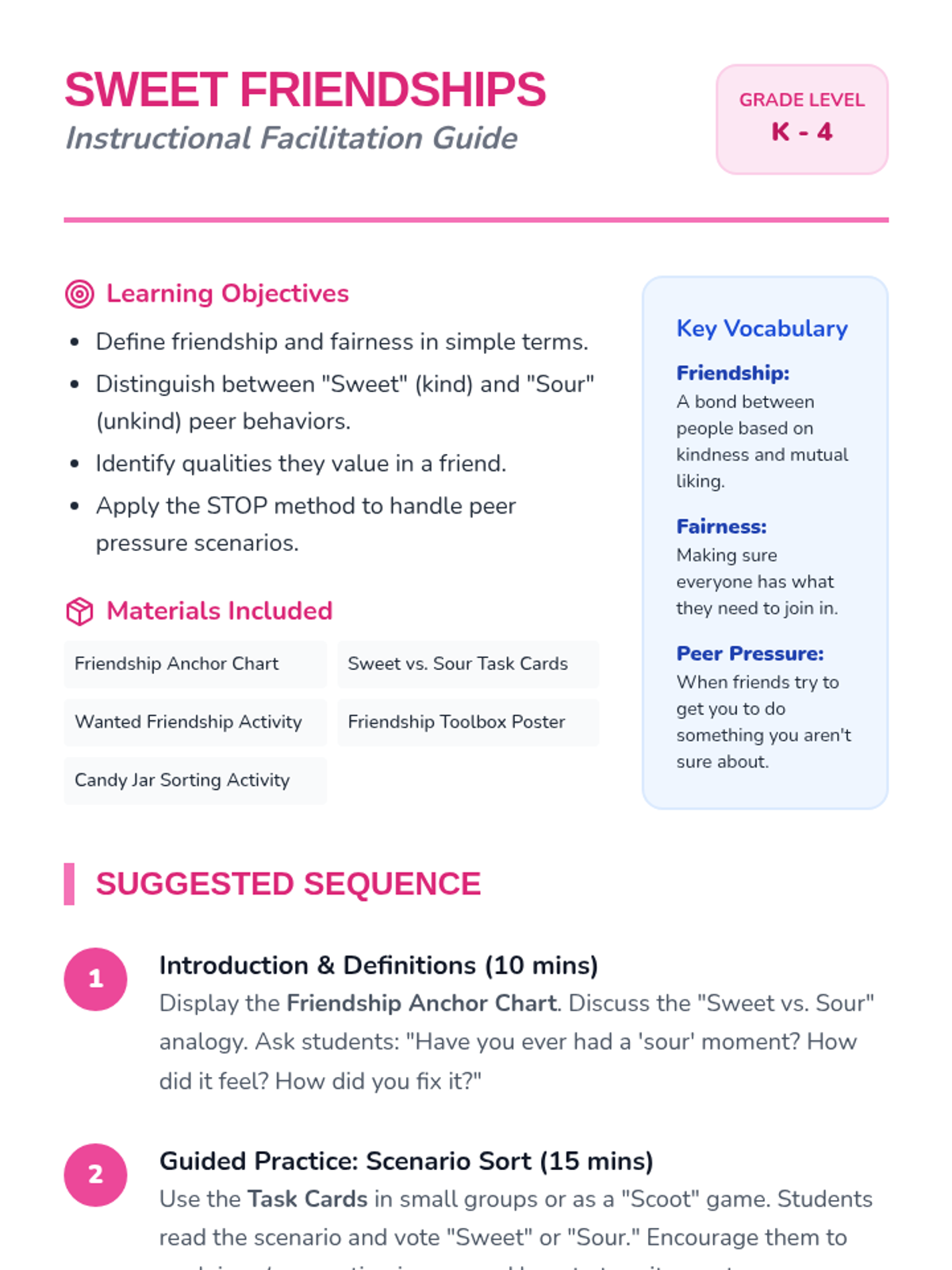
A comprehensive primary lesson focused on building positive relationships, understanding fairness, and developing social skills through interactive candy-themed activities.
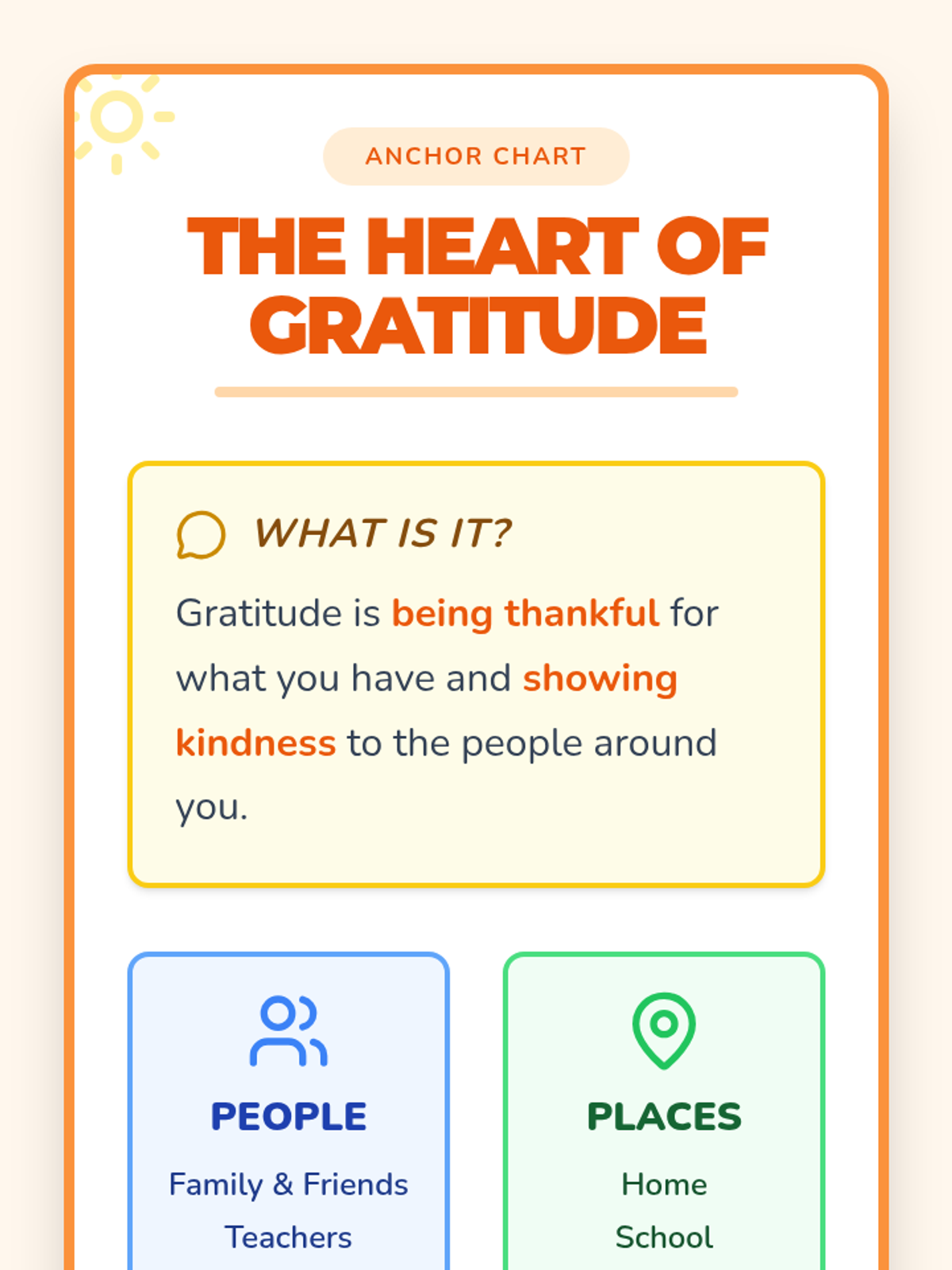
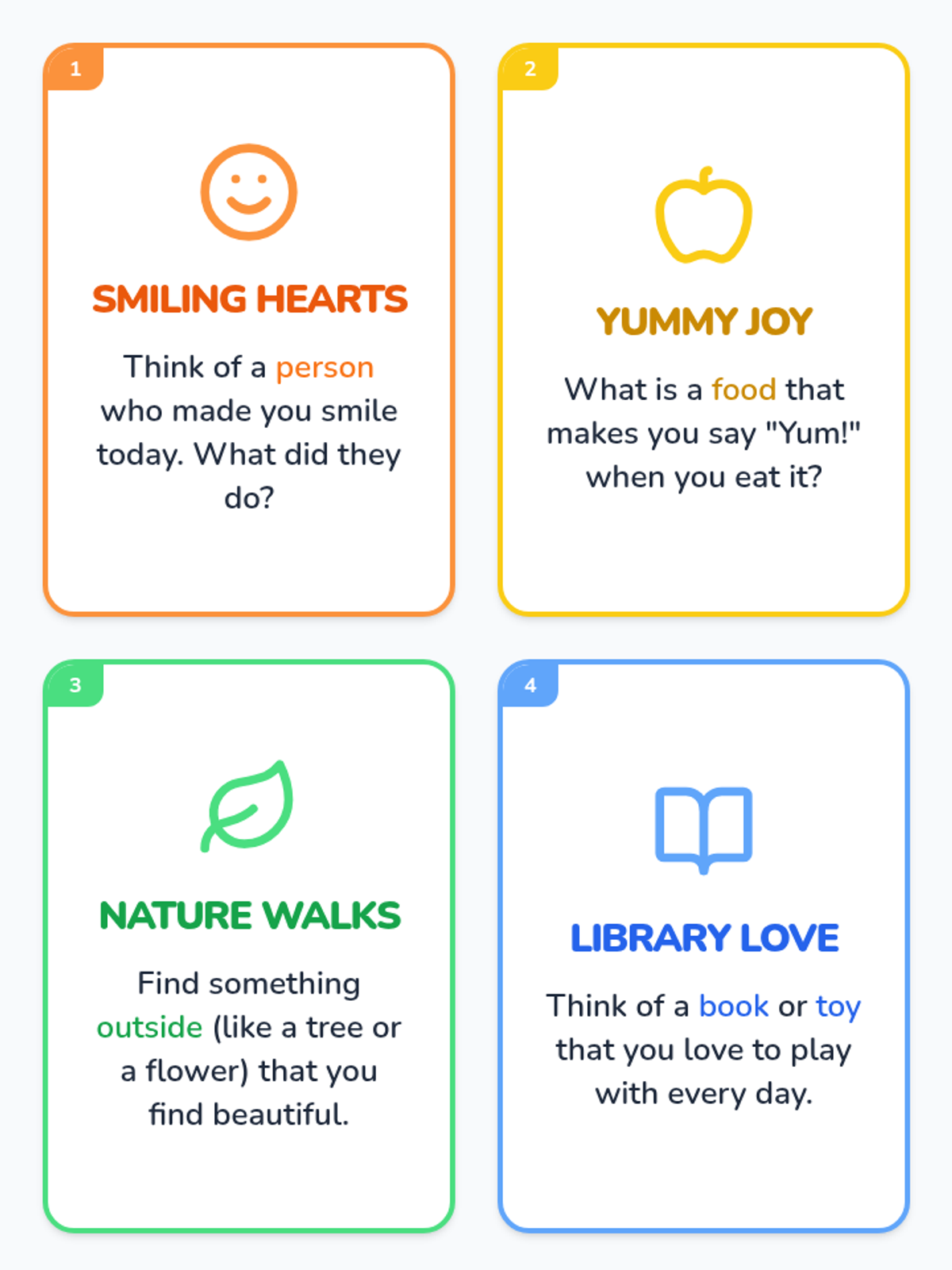
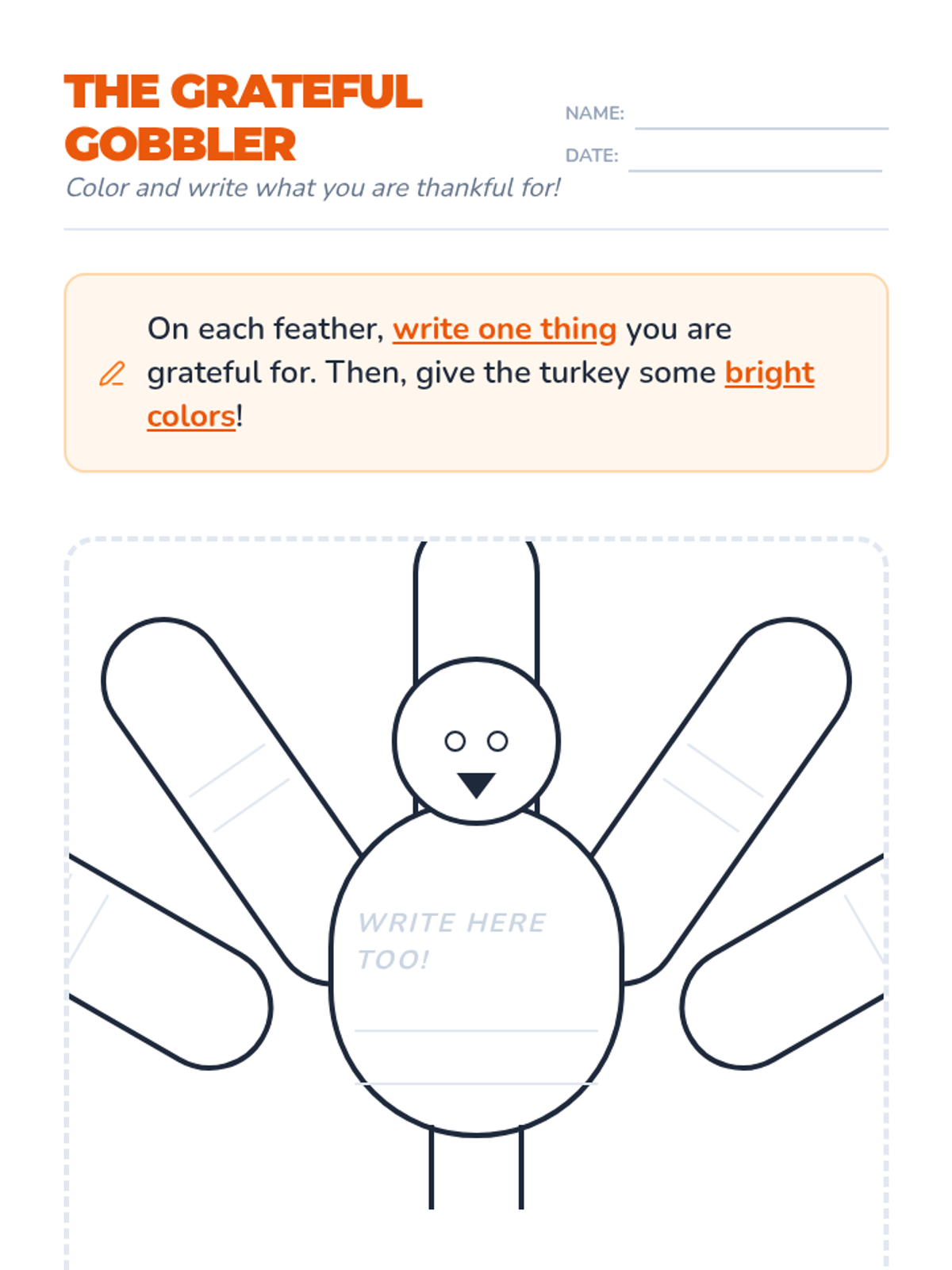
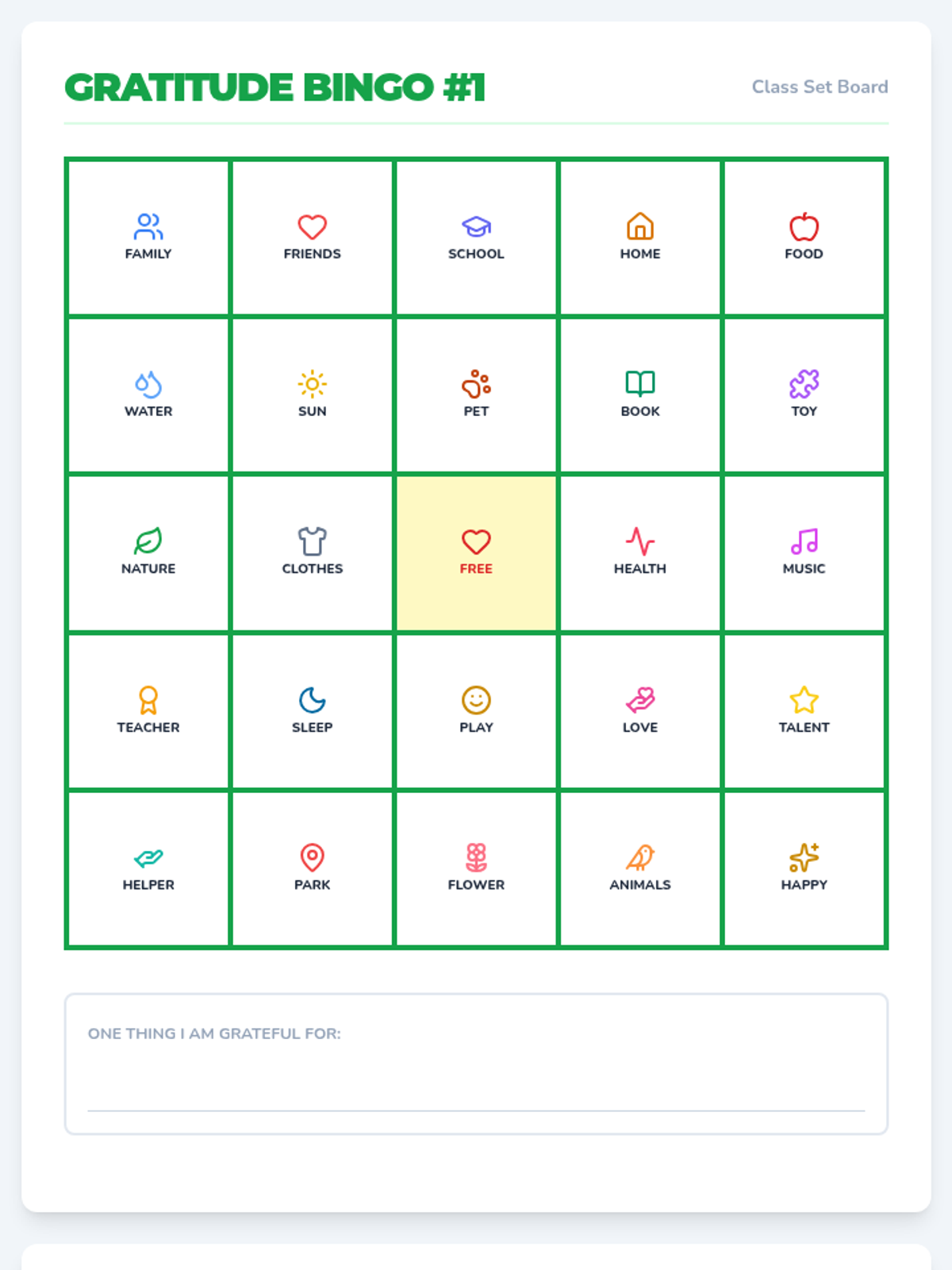
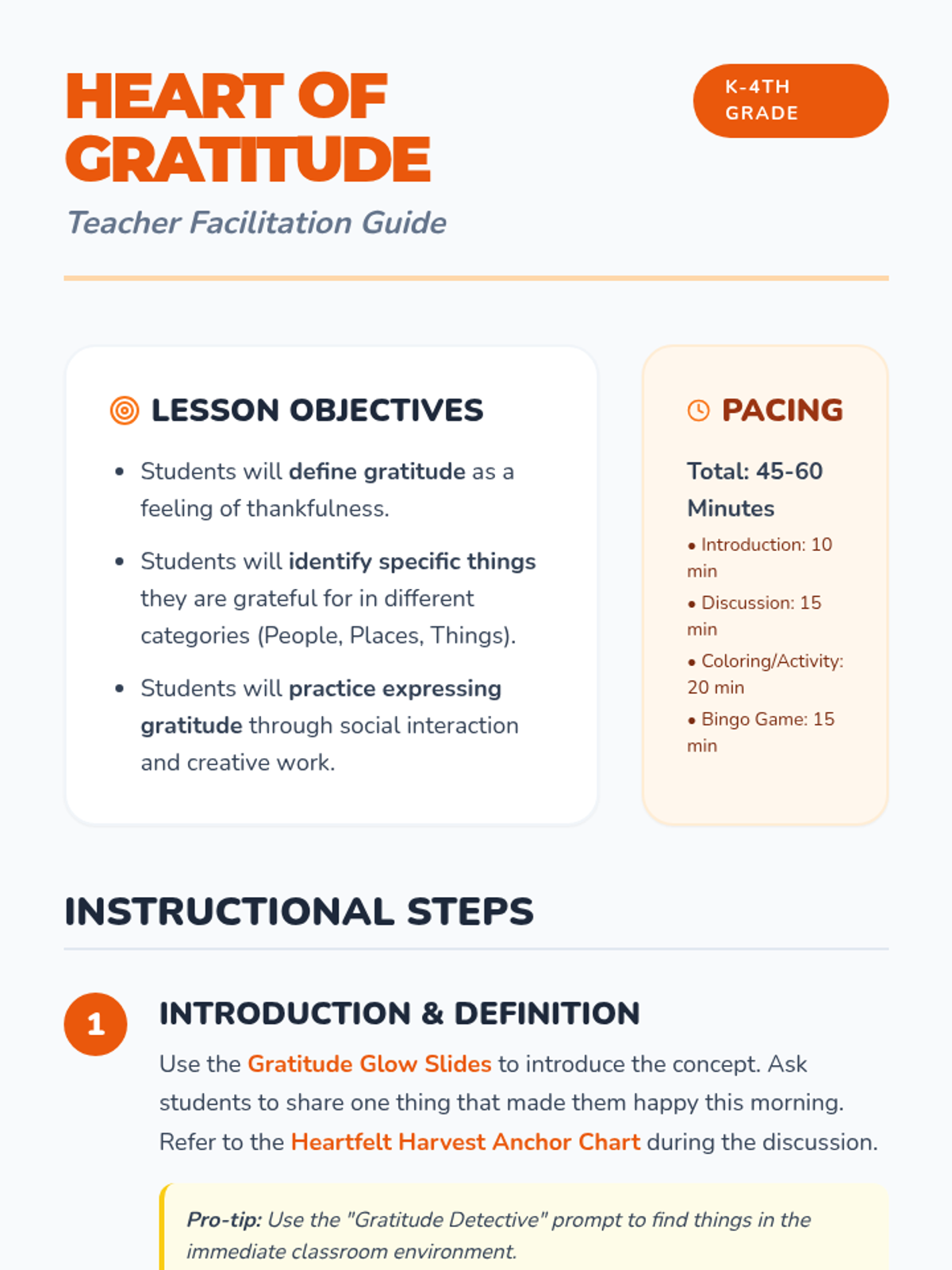
An introductory lesson on gratitude where students define the concept, engage in a visual anchor chart activity, and play a classroom-wide game of Gratitude Bingo.
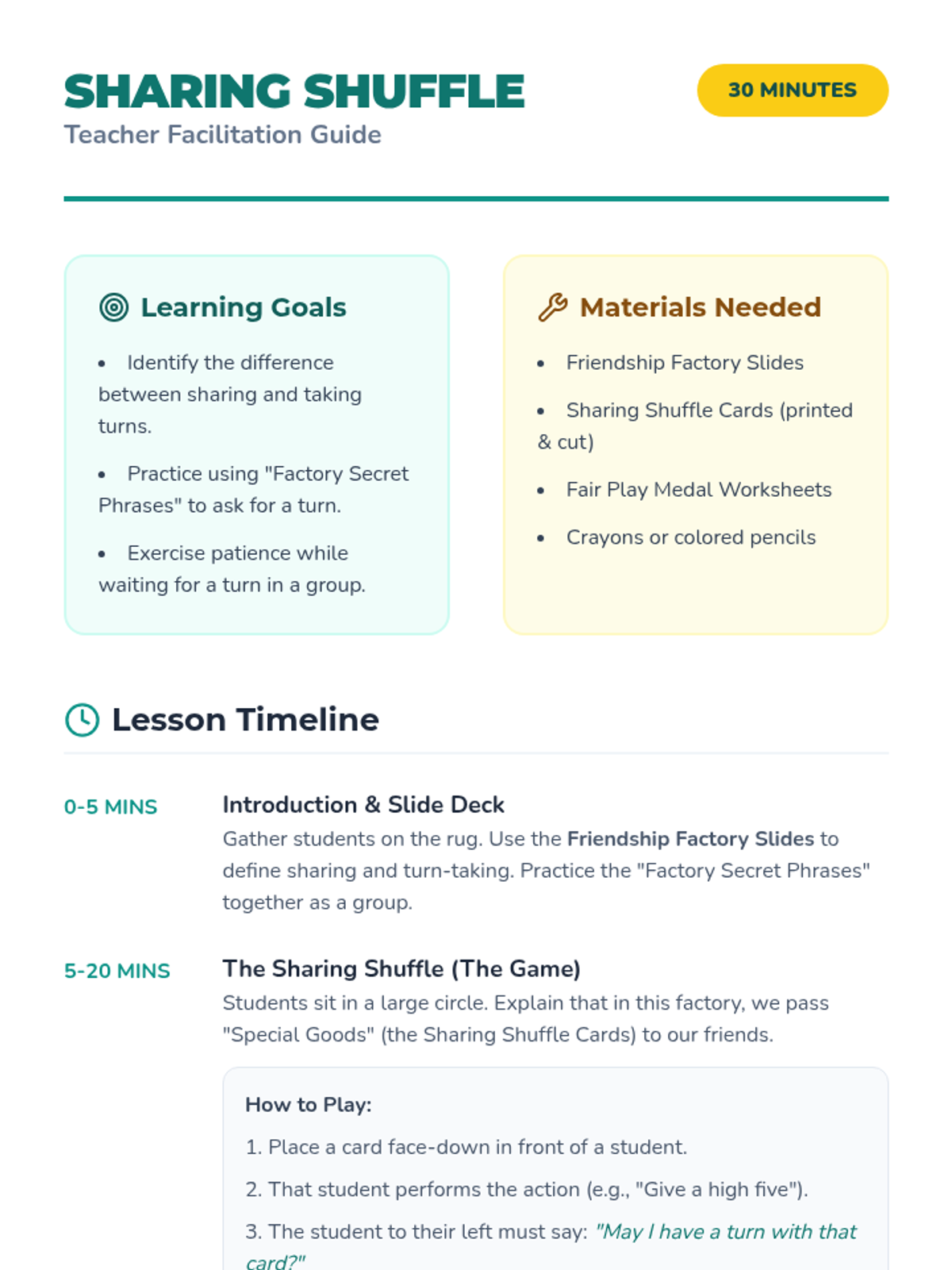
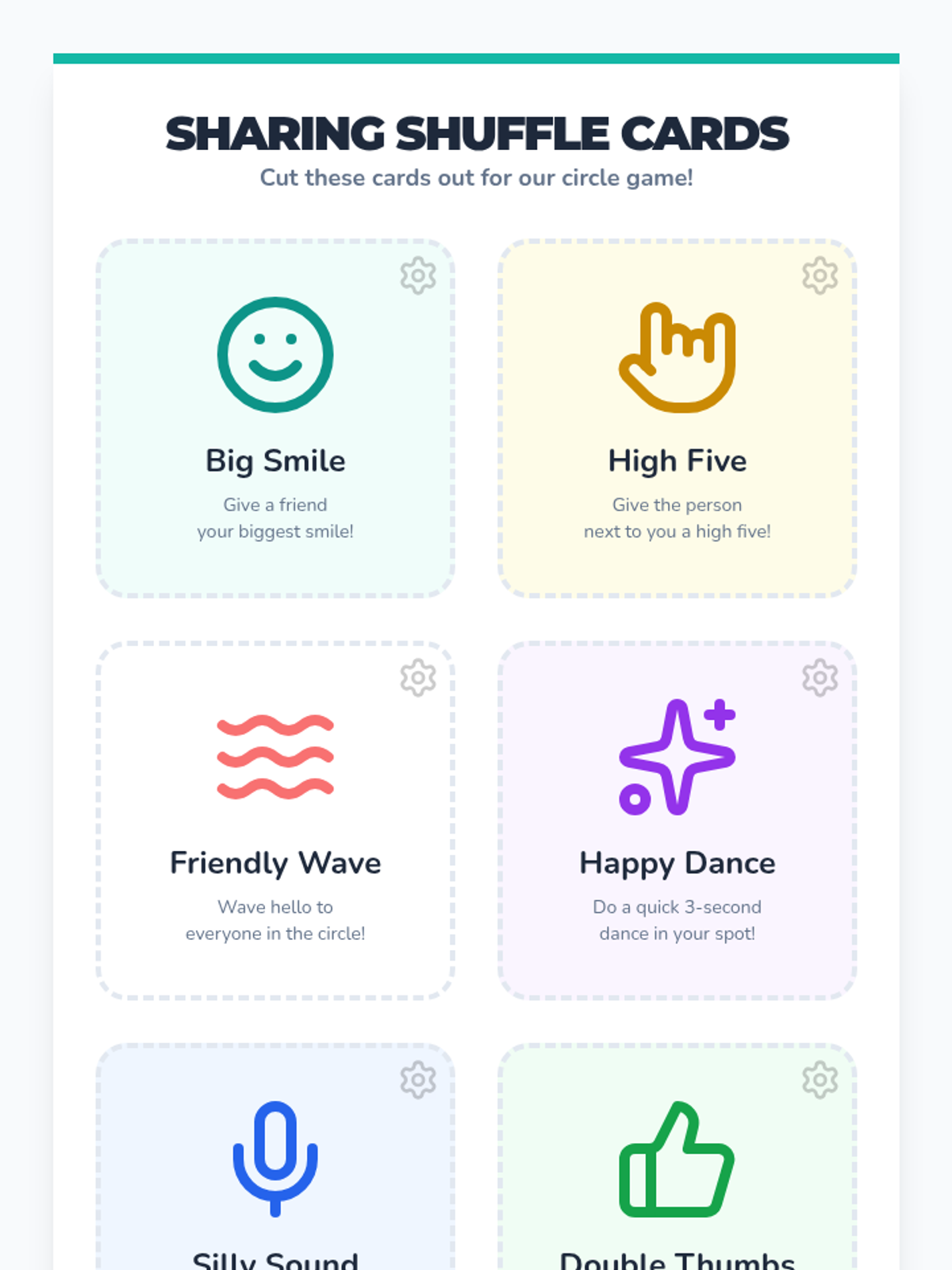
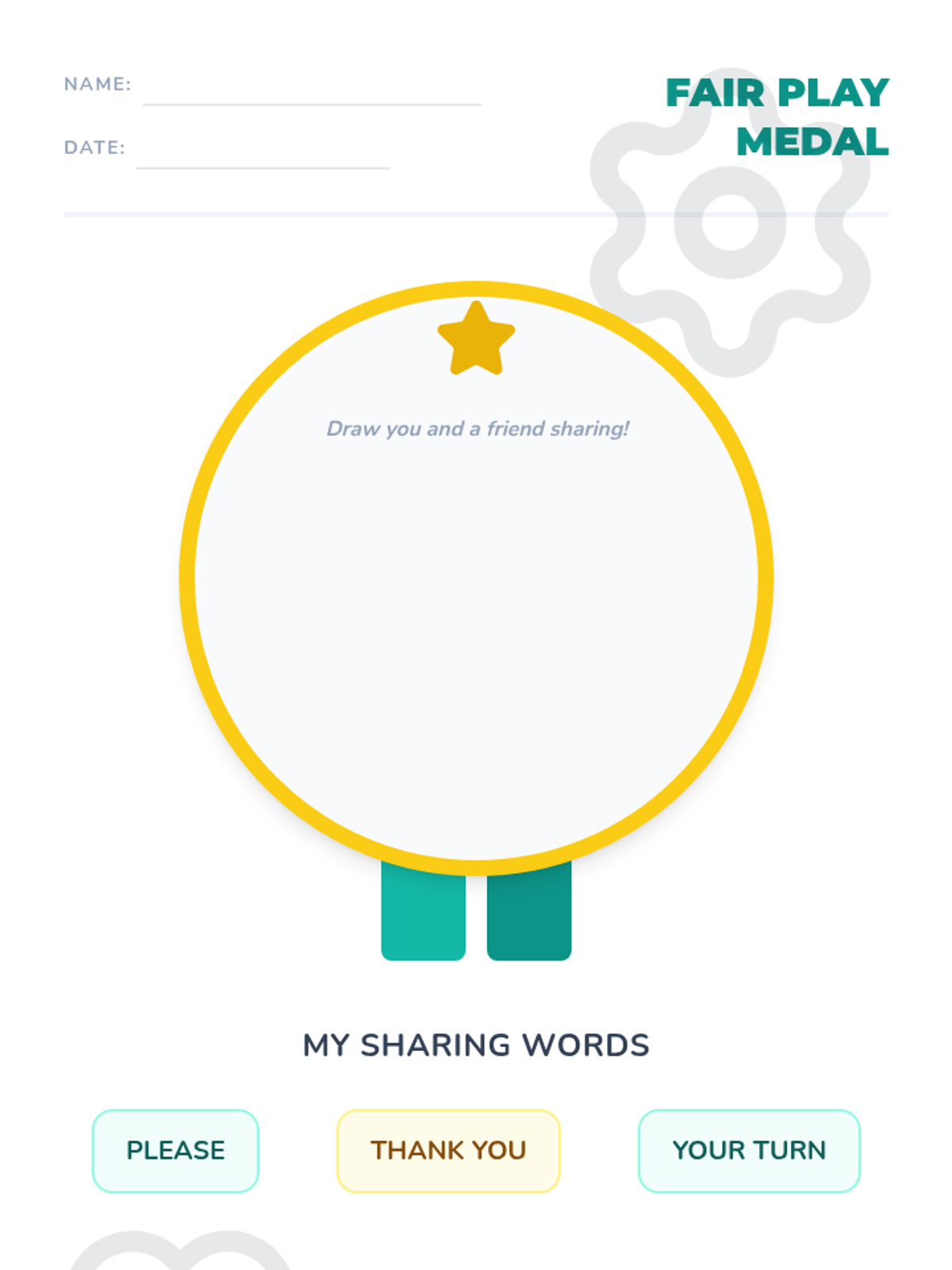
A 30-minute interactive lesson for Kindergarteners focusing on the fundamentals of sharing and taking turns through a whole-class circle game. Students practice using polite phrases and waiting for their turn in a supportive, factory-themed environment.
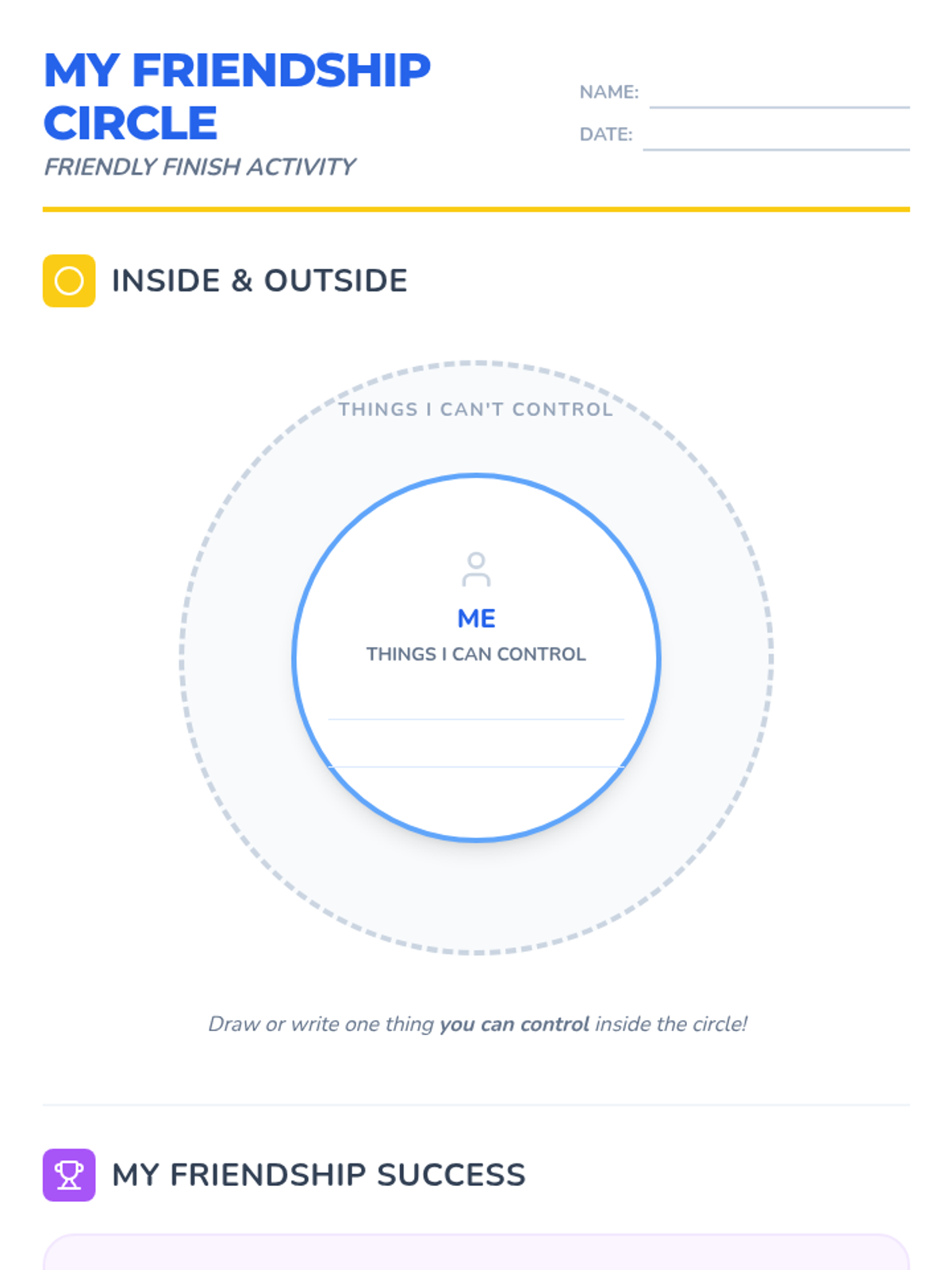
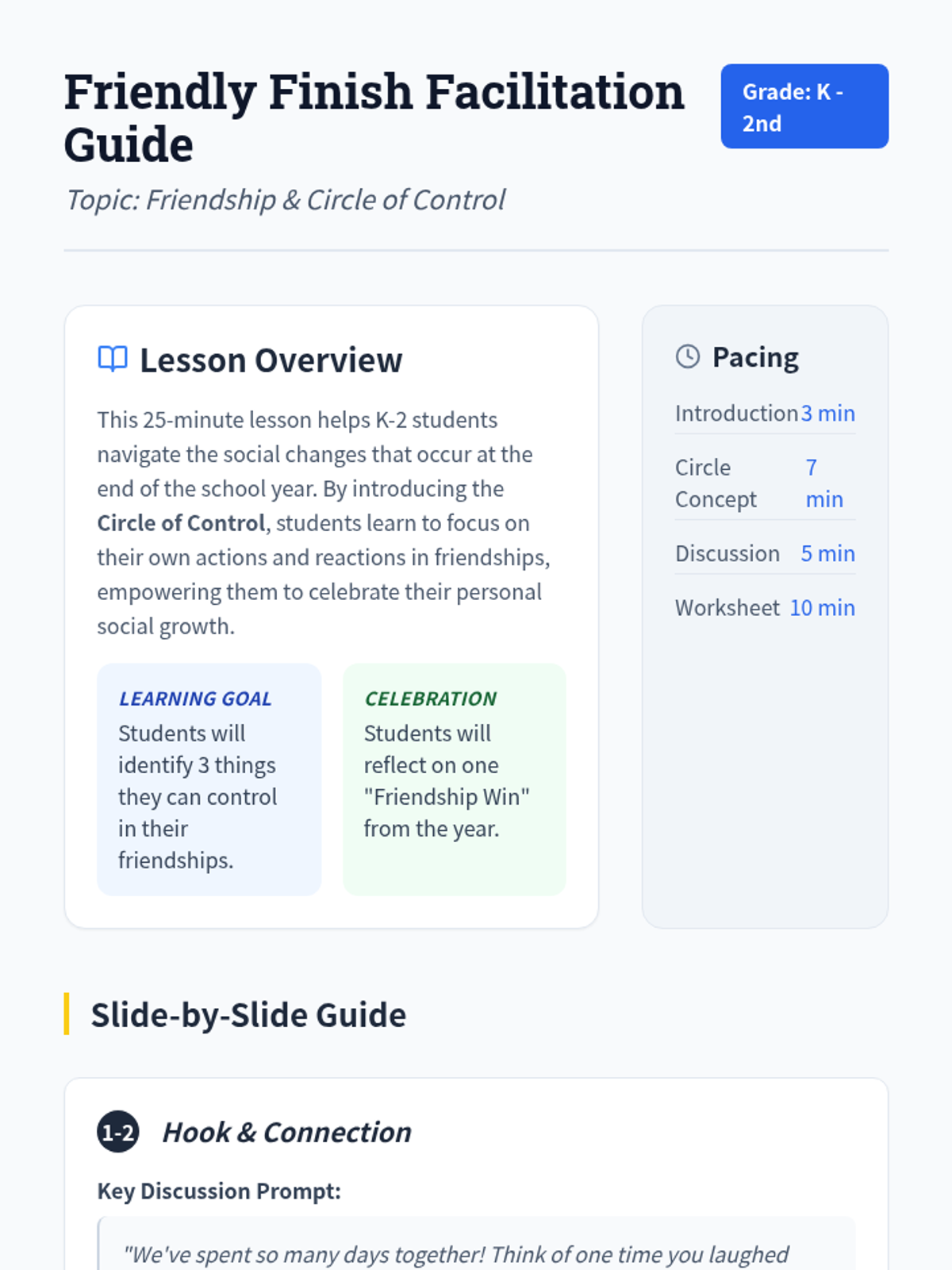
An end-of-year lesson for K-2 students focused on navigating social interactions using the Circle of Control and celebrating friendship growth. Students will learn what they can influence in their friendships and reflect on their social successes throughout the year.
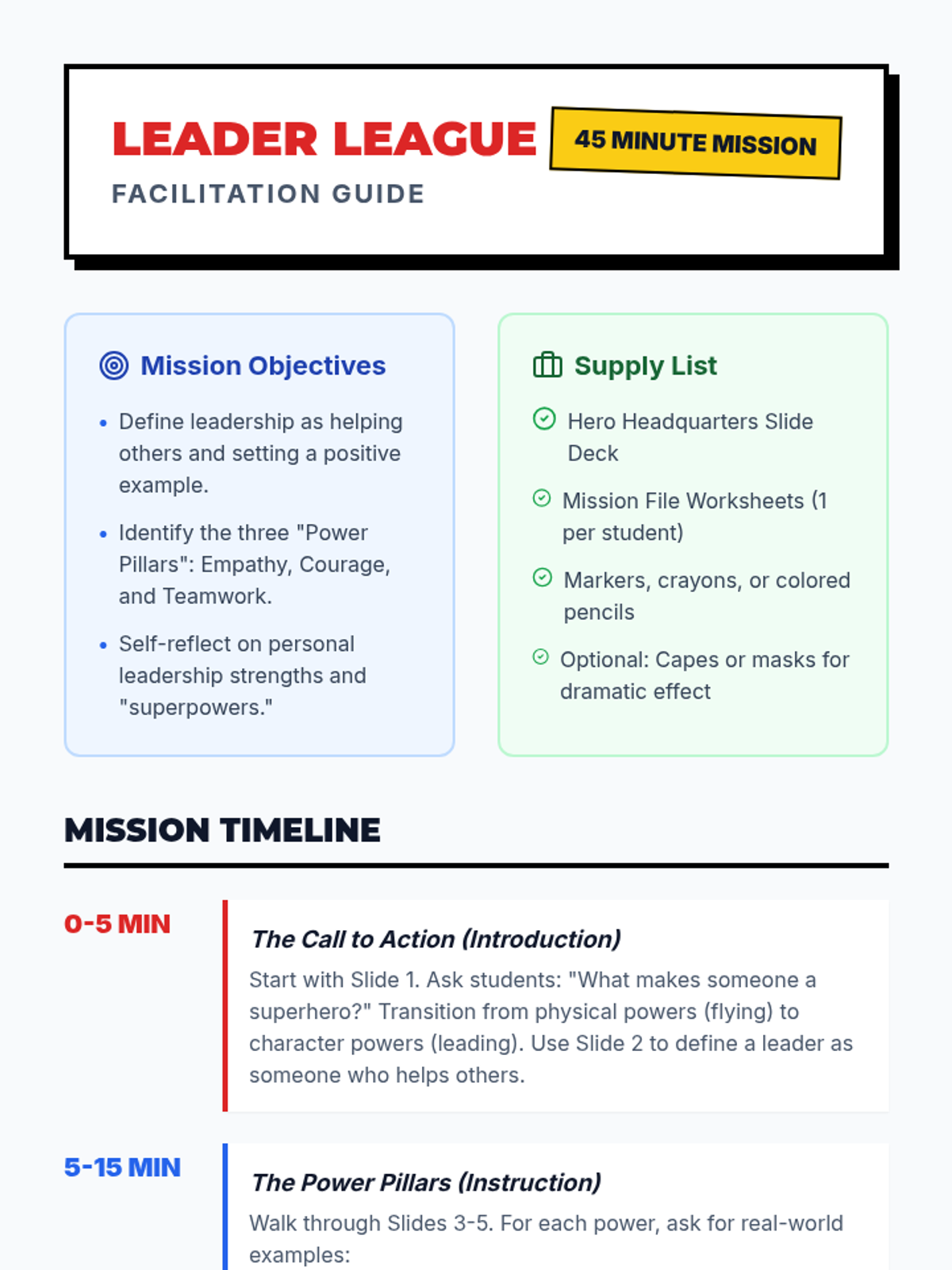
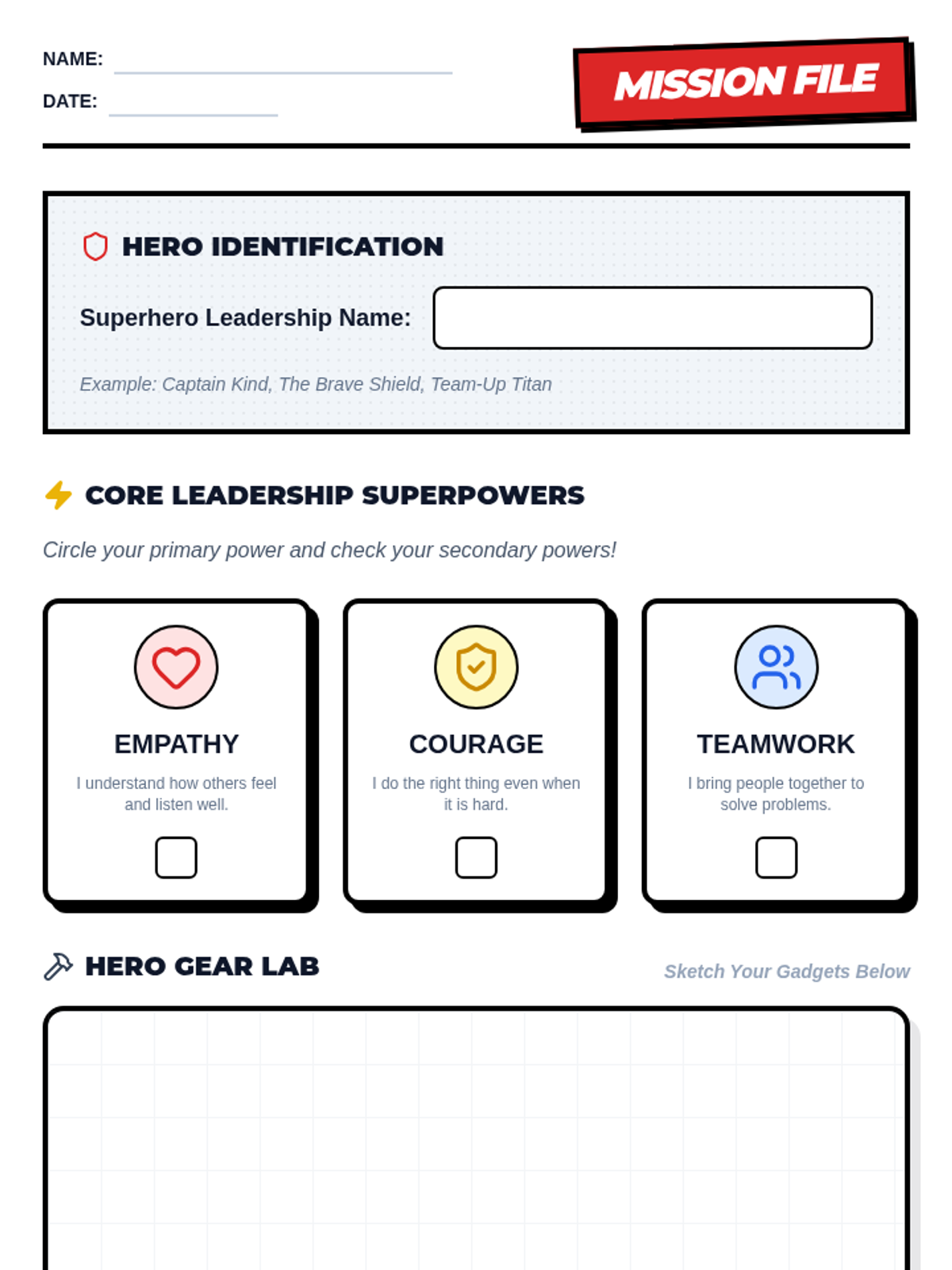
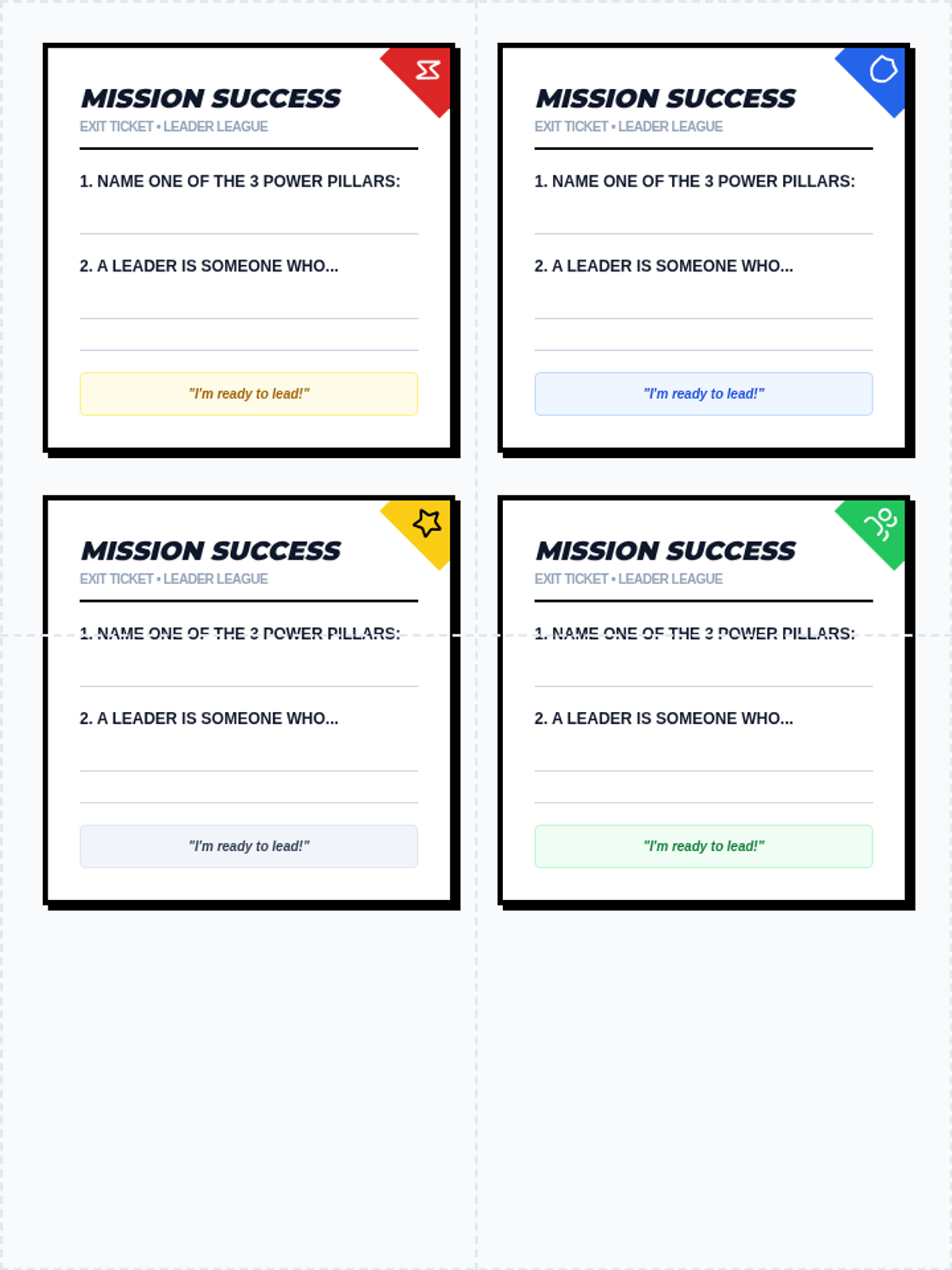
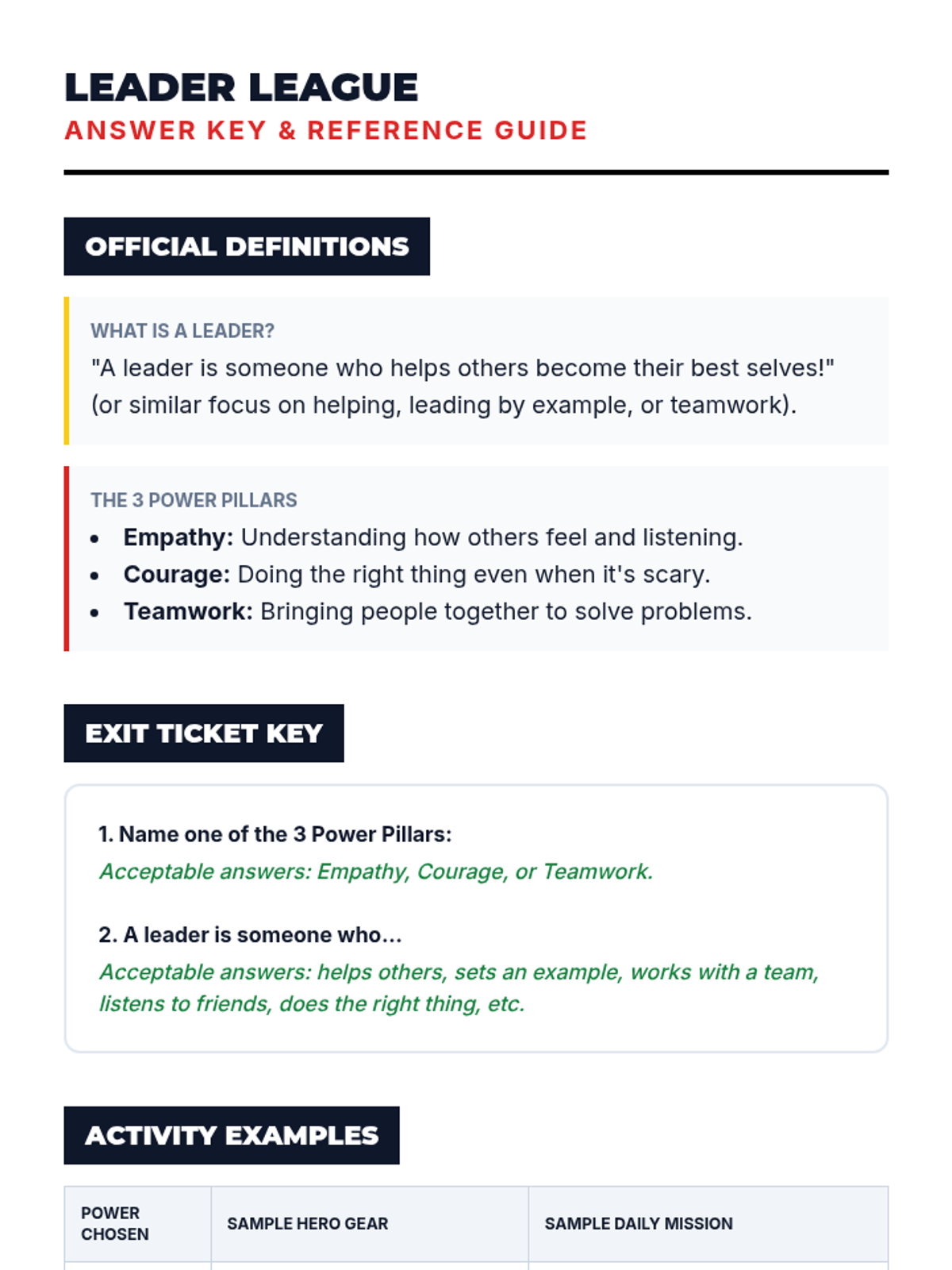
Students explore core leadership qualities through the lens of superheroes, identifying their own unique leadership 'superpowers' and learning how to lead with empathy, courage, and teamwork.
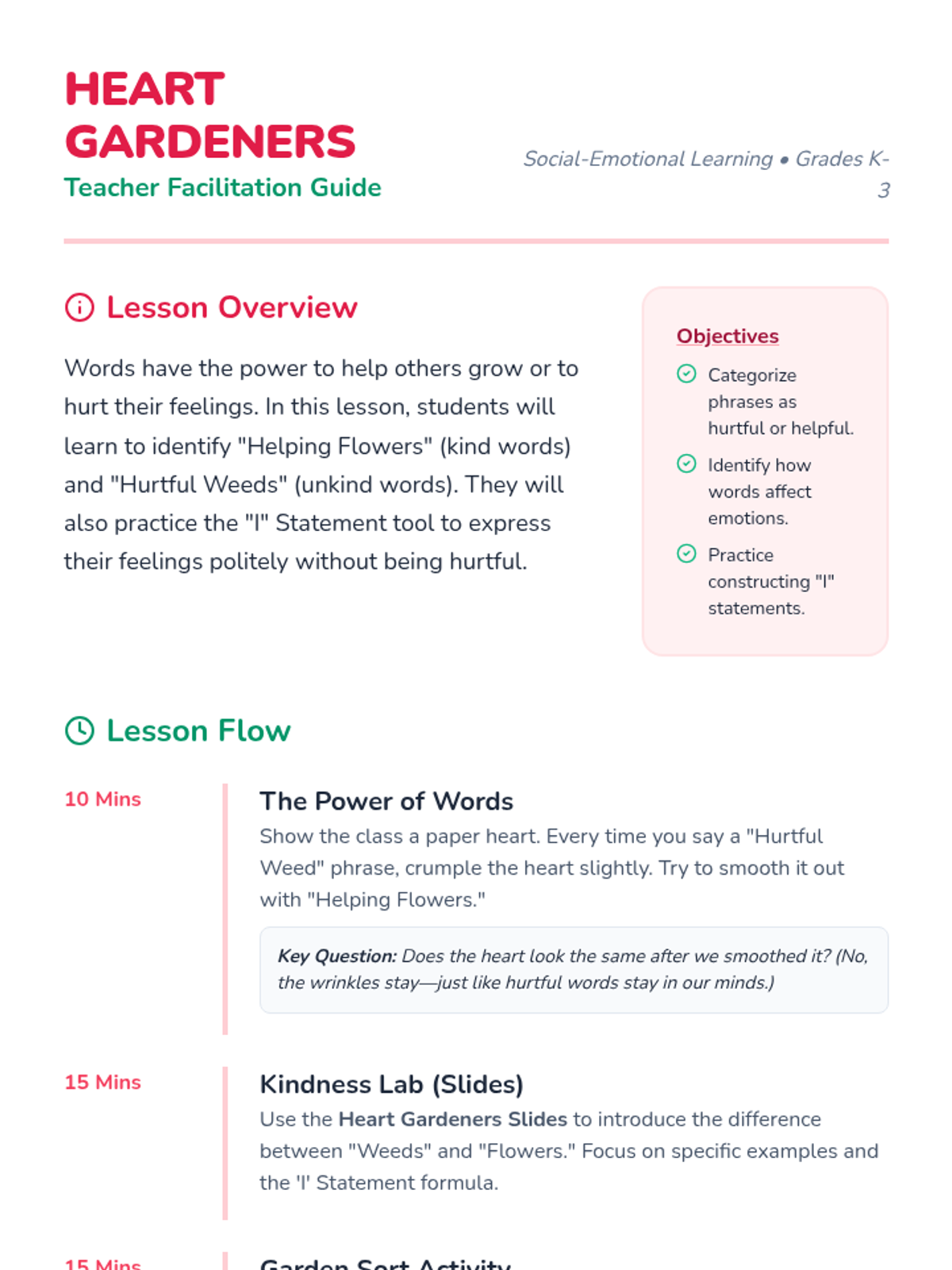
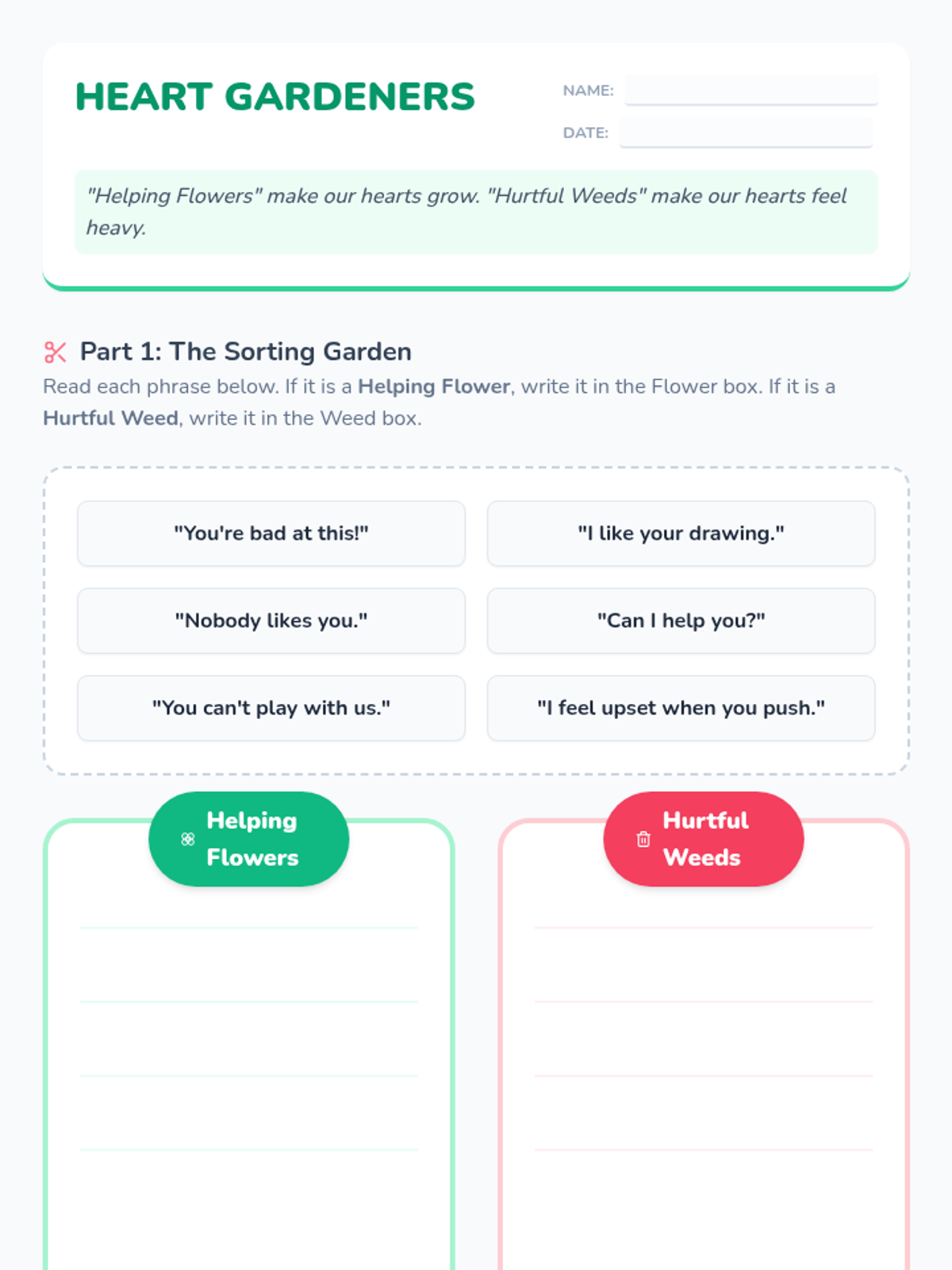
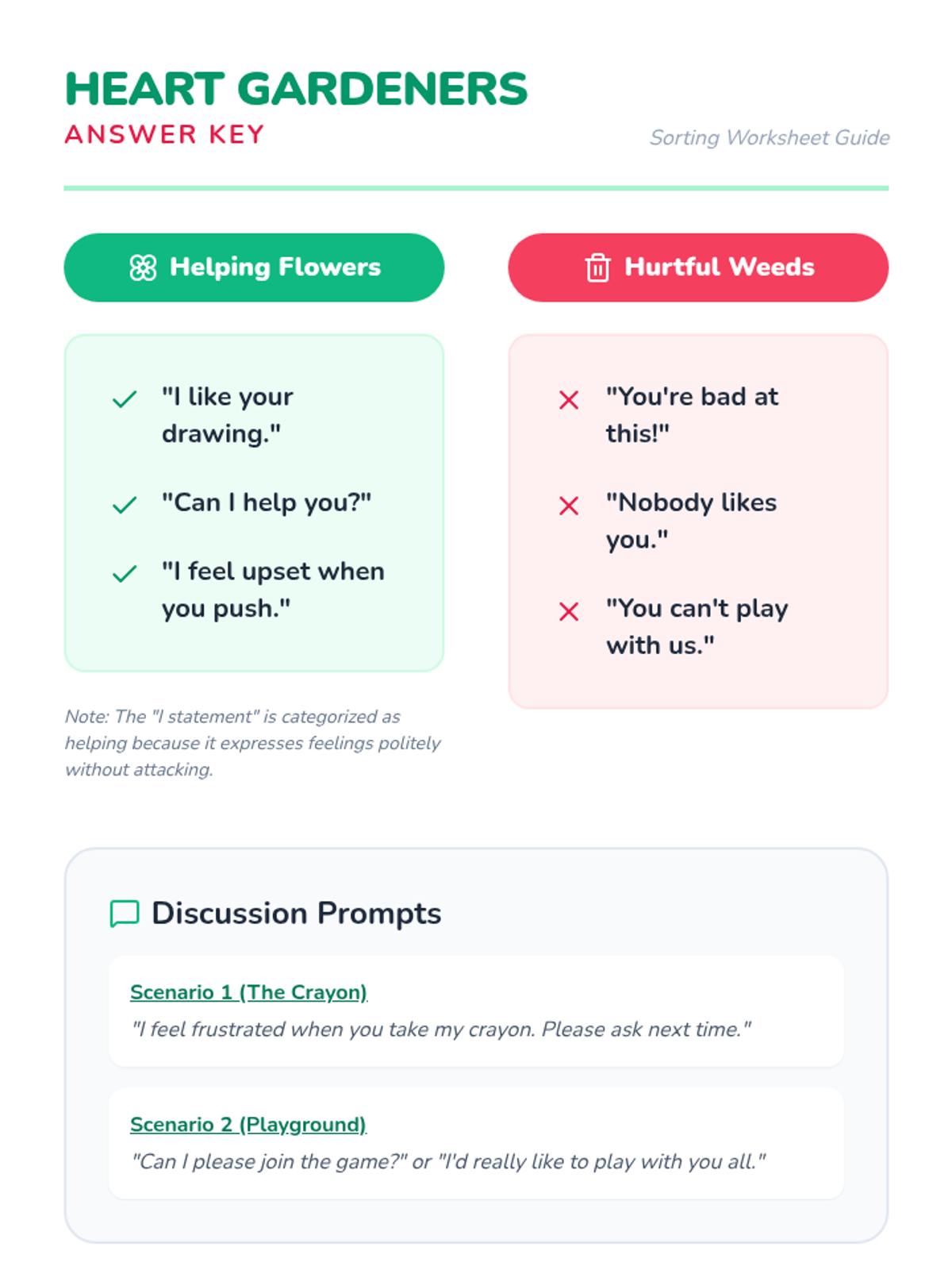
An SEL lesson focused on distinguishing between hurtful and helpful language, introducing 'I' statements to manage emotions and maintain positive relationships.
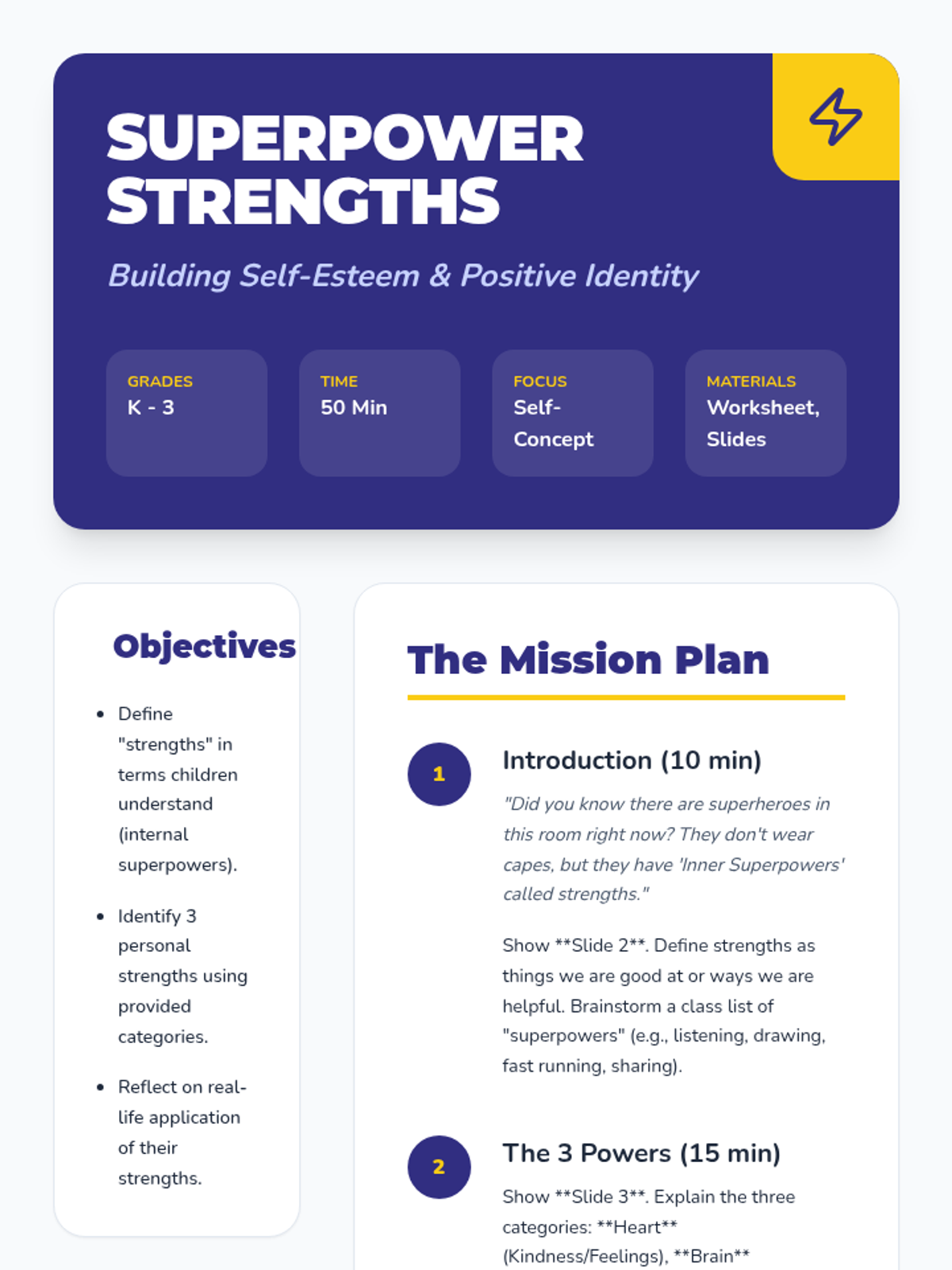
Students identify their personal strengths and positive qualities, reframing them as "inner superpowers". This lesson helps build self-esteem and a positive self-concept.
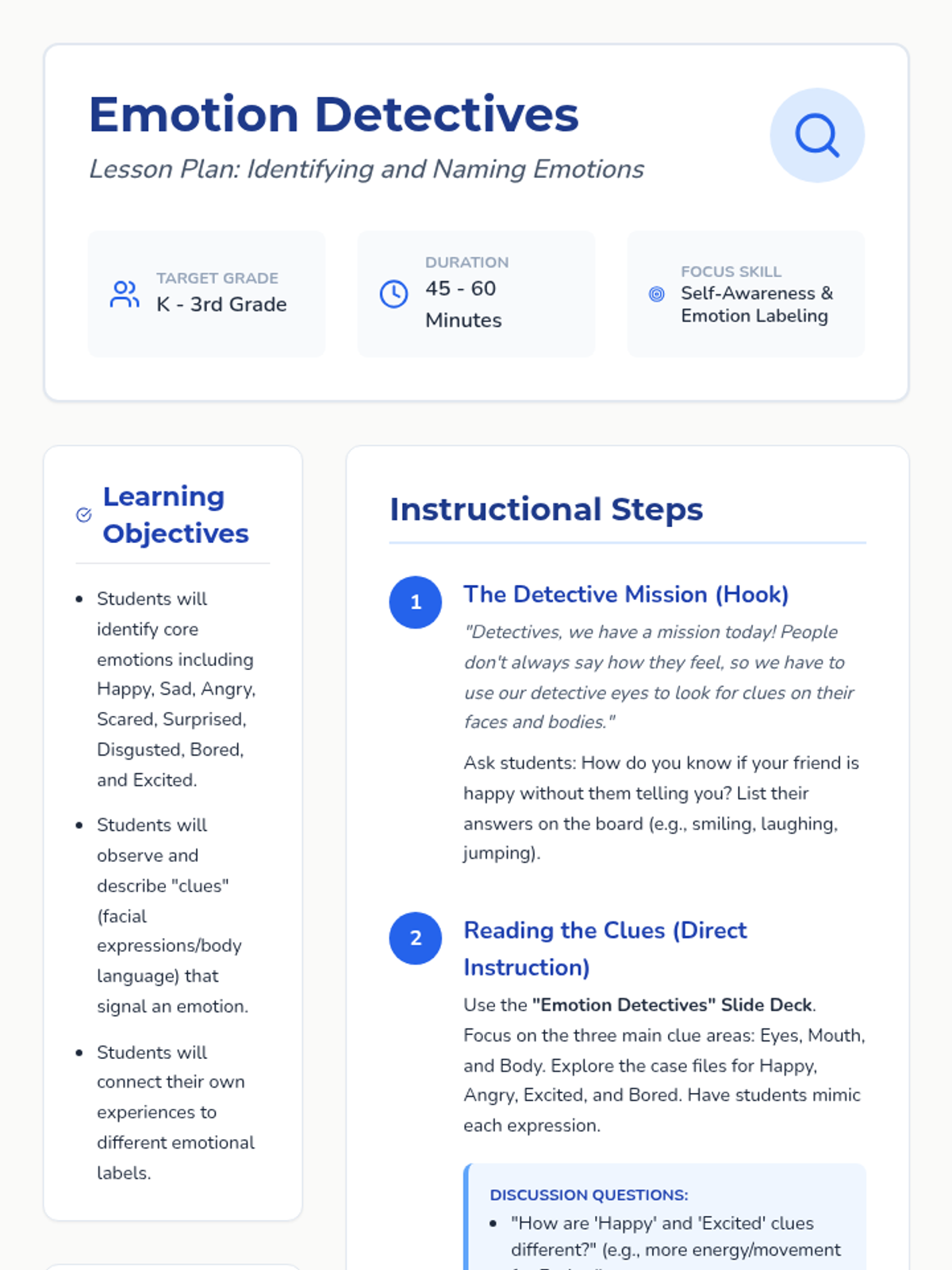
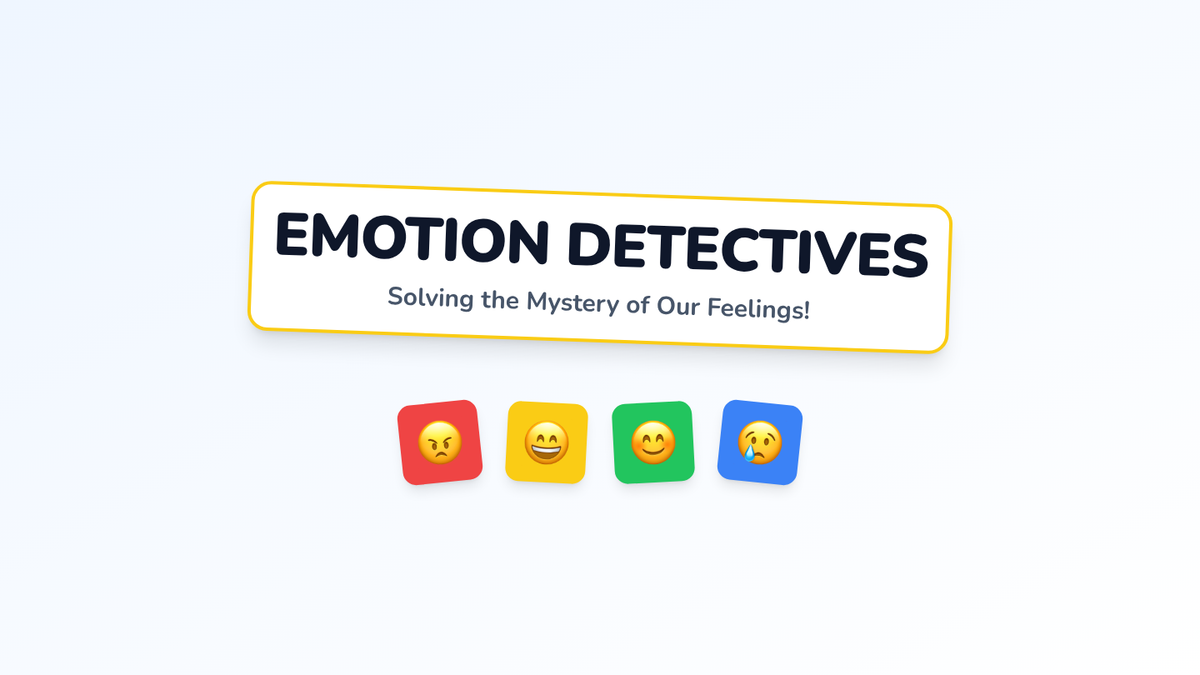
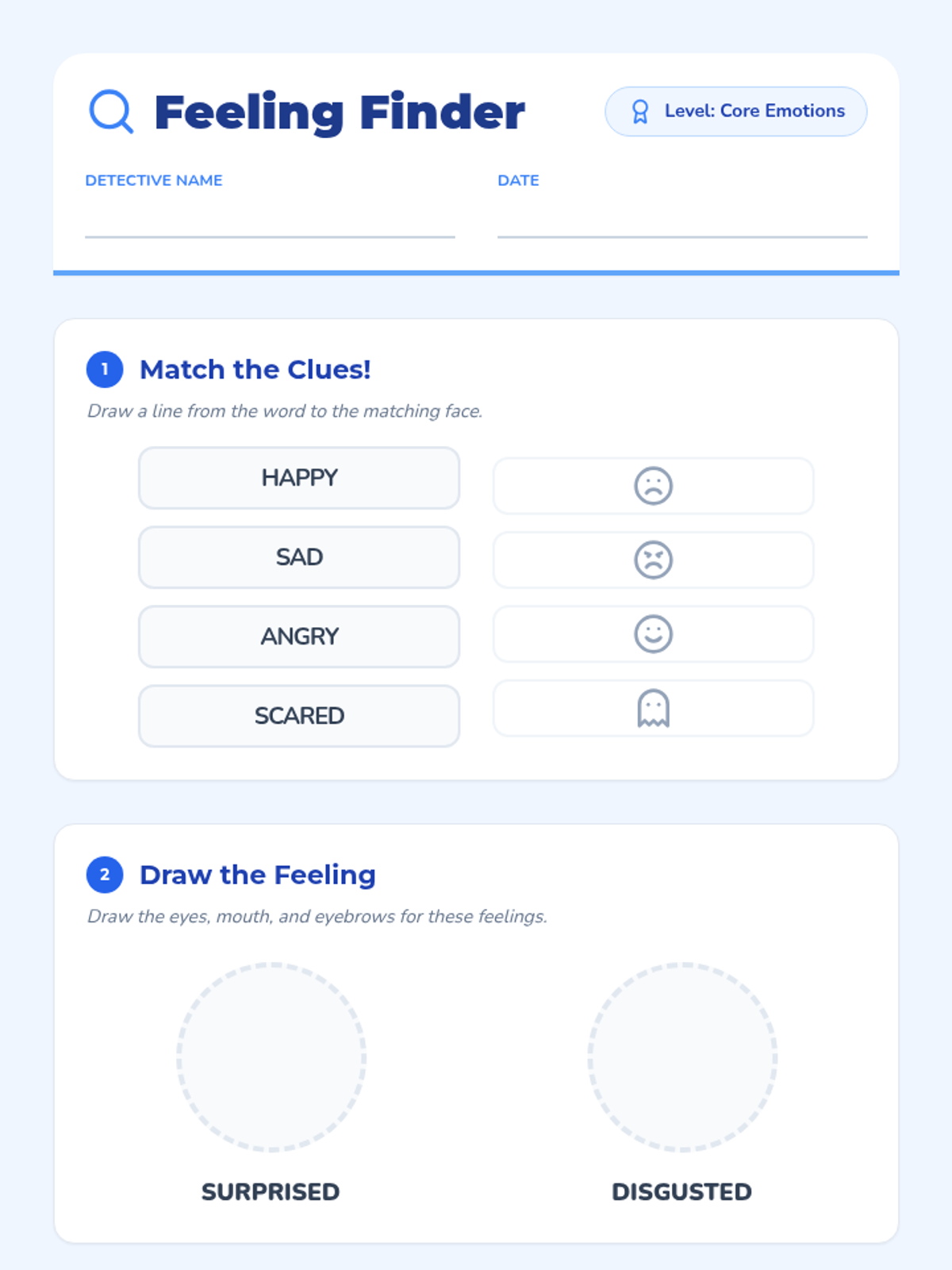
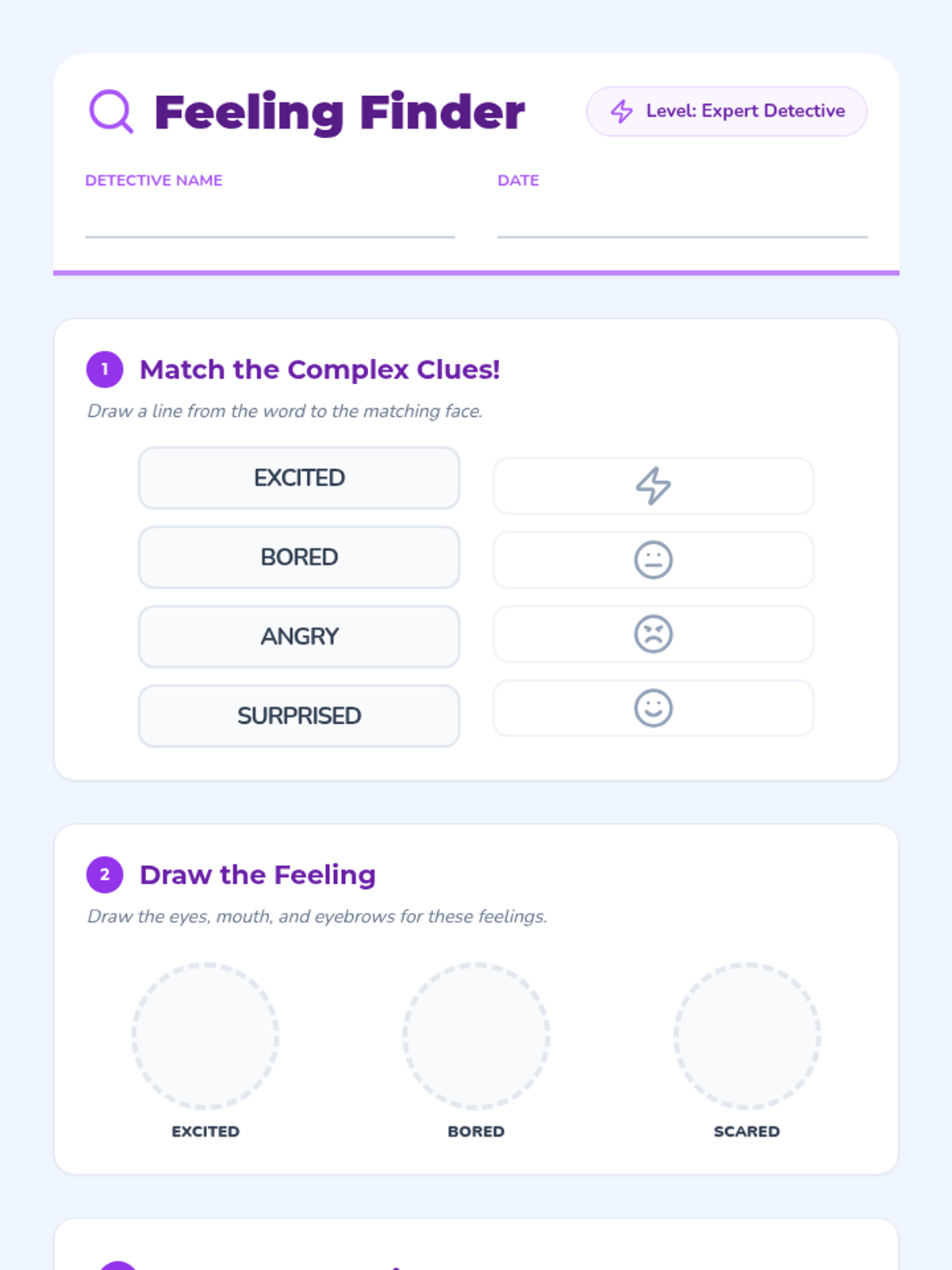
Students become Emotion Detectives to identify and name core emotions by looking for facial and body clues. This K-3 lesson focuses on happy, sad, angry, scared, surprised, and disgusted.
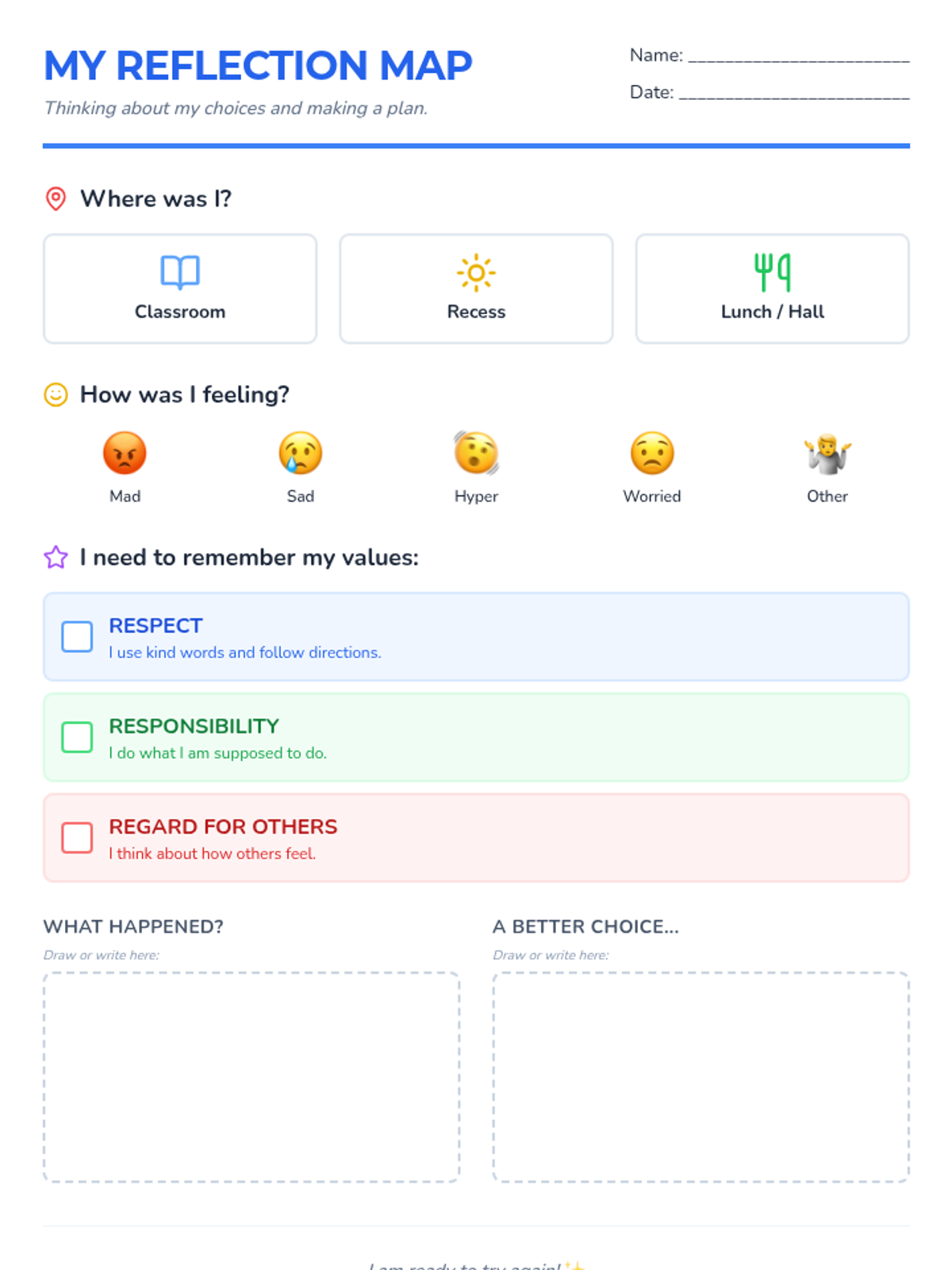
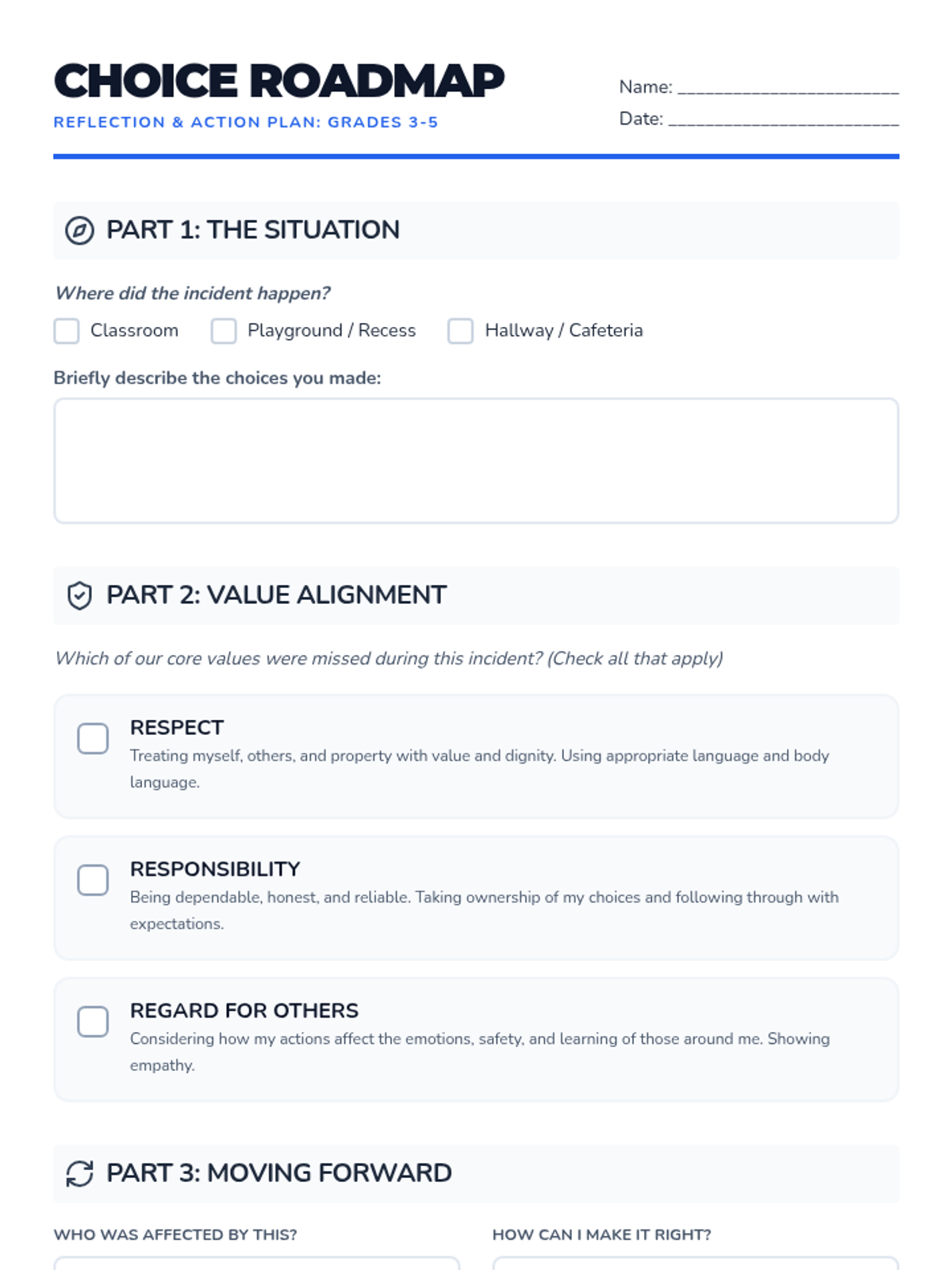
A set of reflection tools for students in grades K-5 to process behavioral incidents through the lens of core values: Respect, Responsibility, and Regard for Others. Includes tiered versions for lower and upper elementary students.
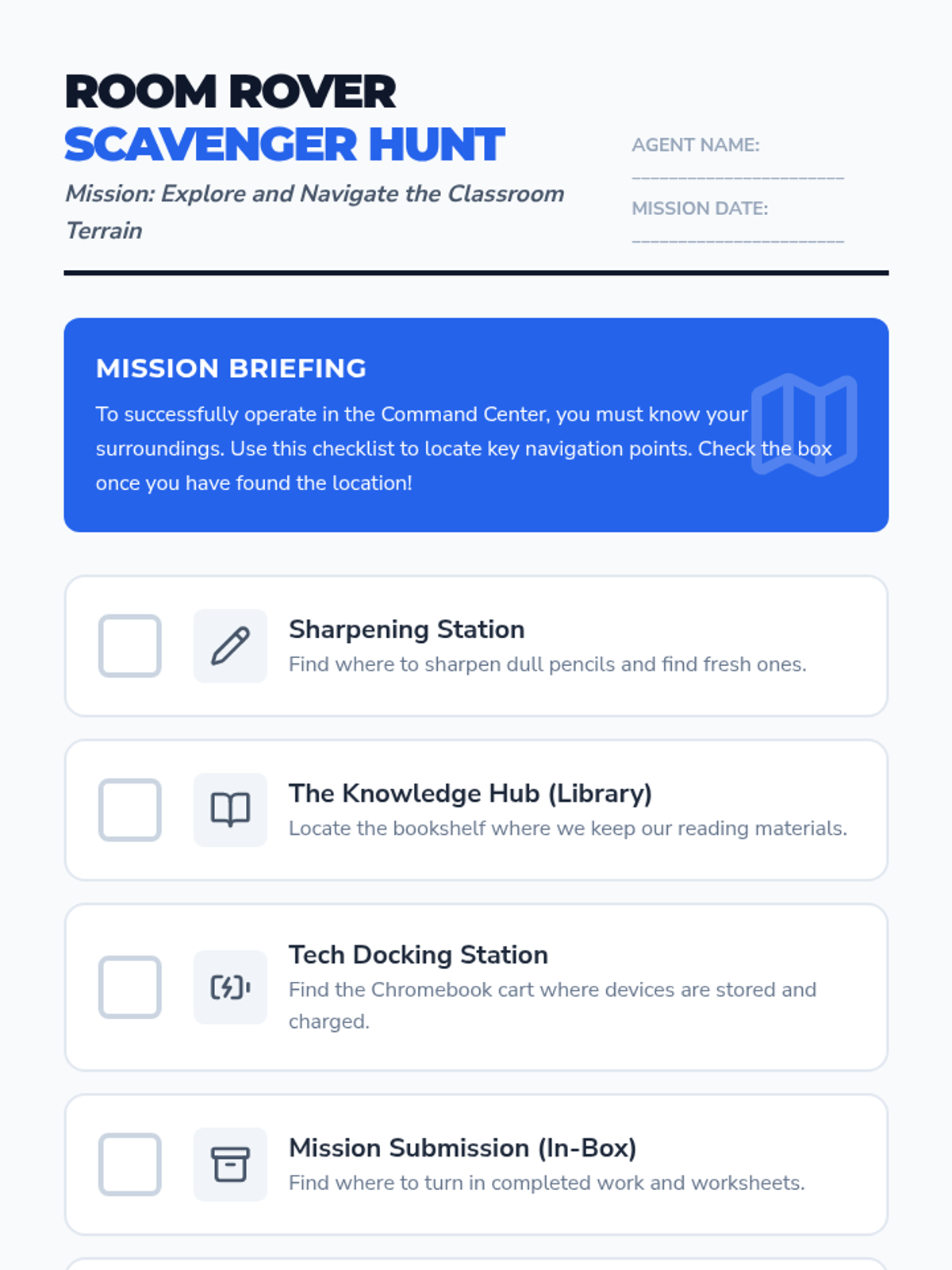
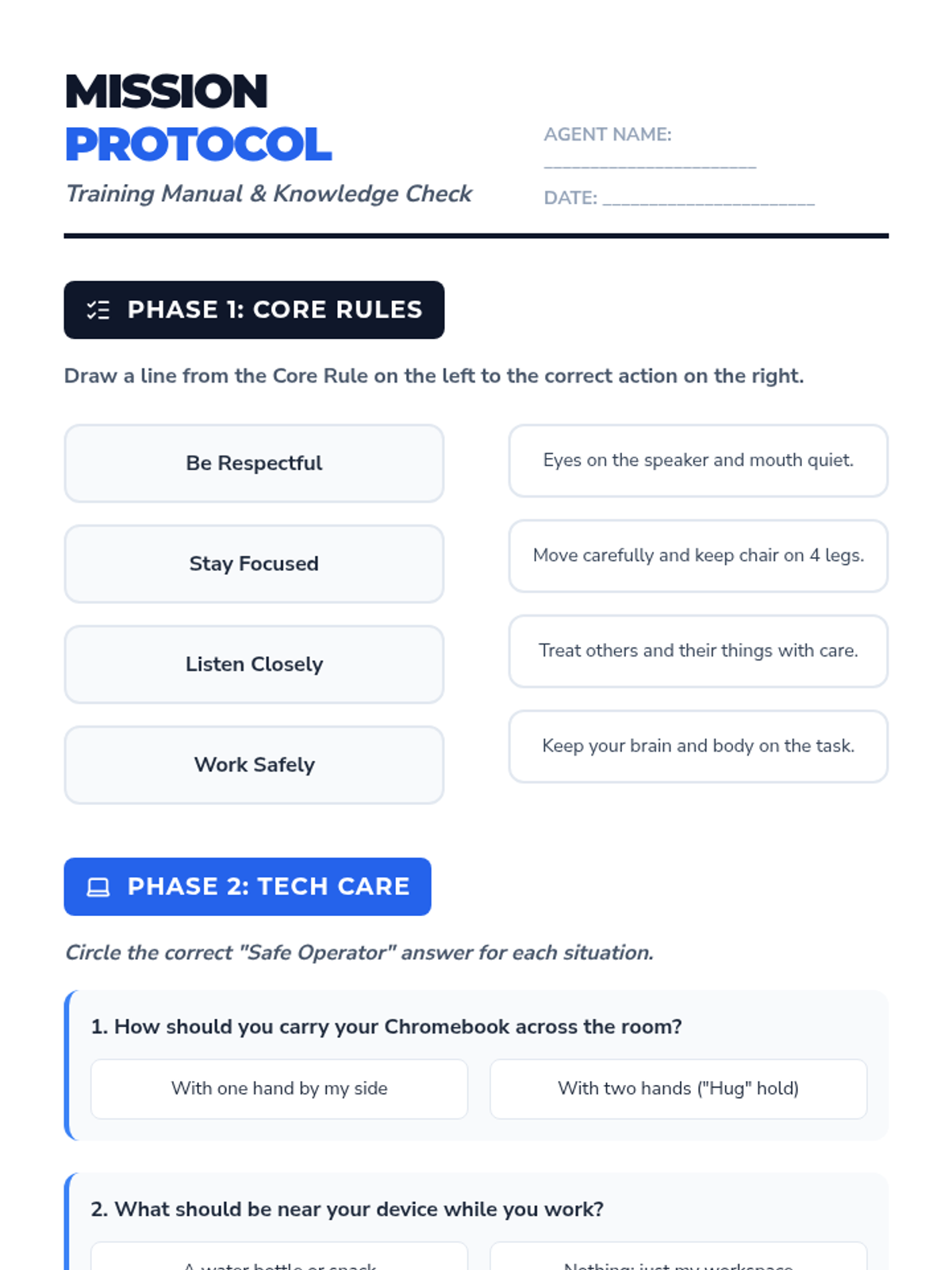
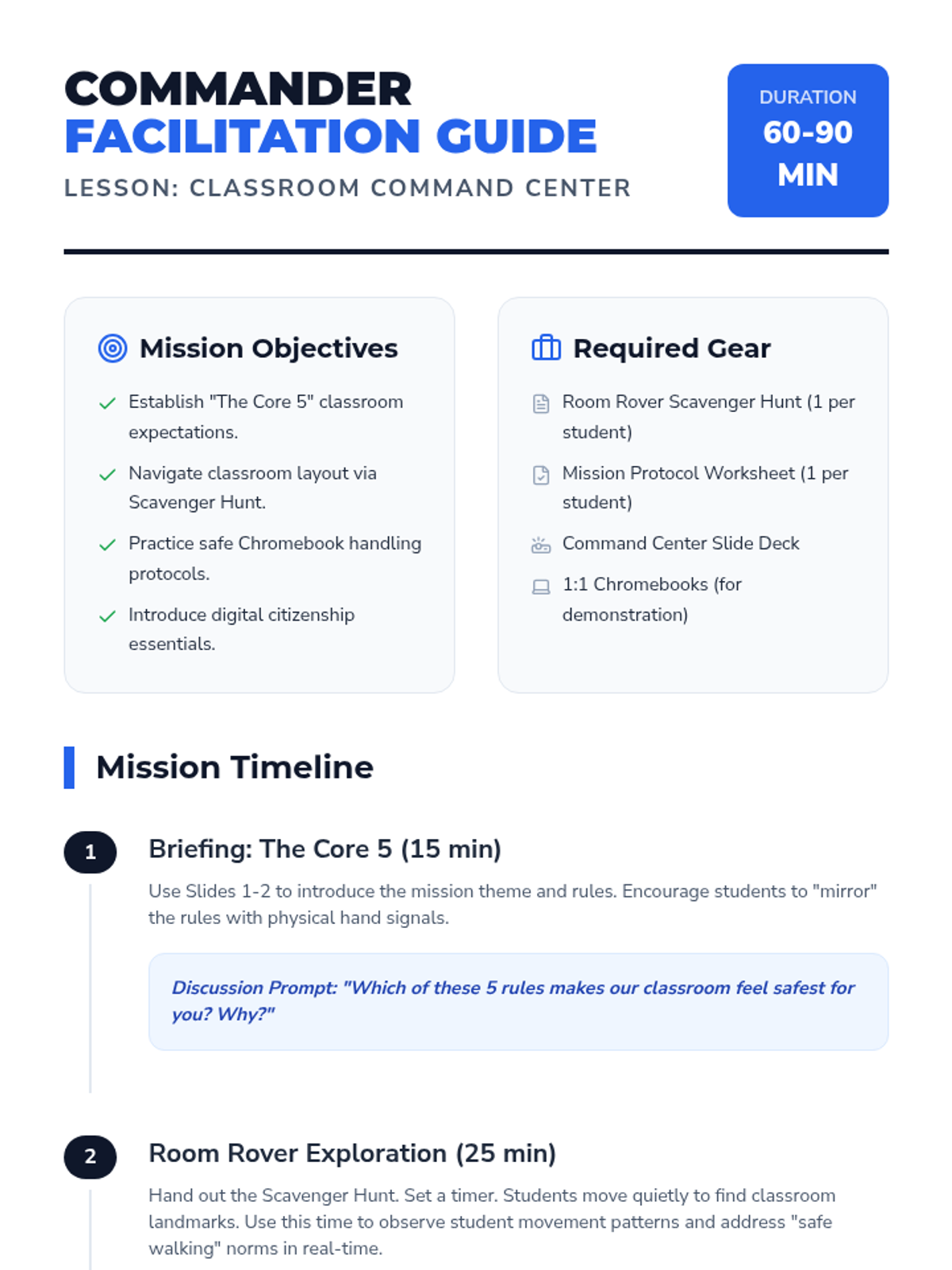
A comprehensive first-day lesson to establish classroom norms, physical space navigation, and digital responsibility. Includes instruction on Chromebook care and digital citizenship.
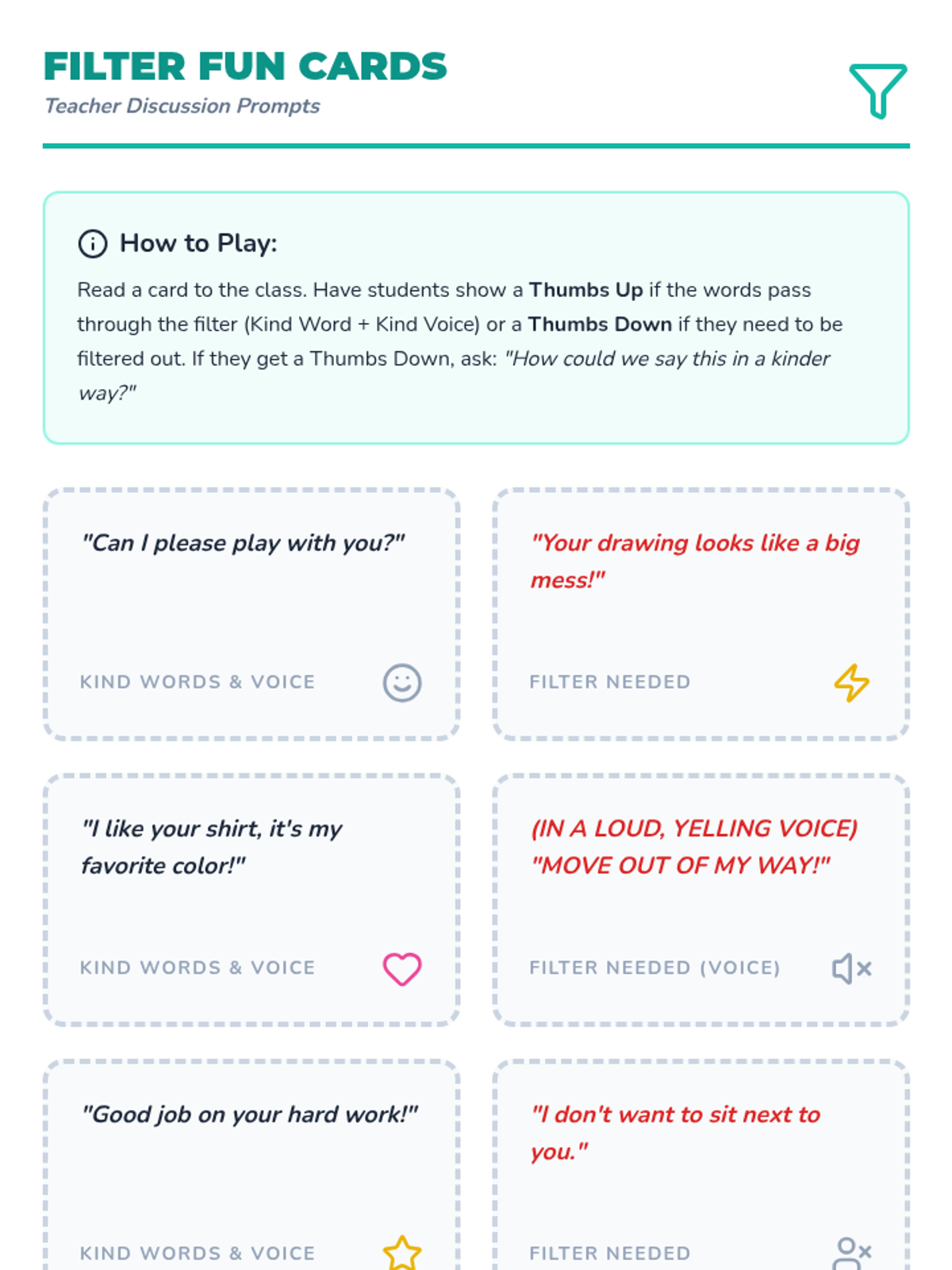
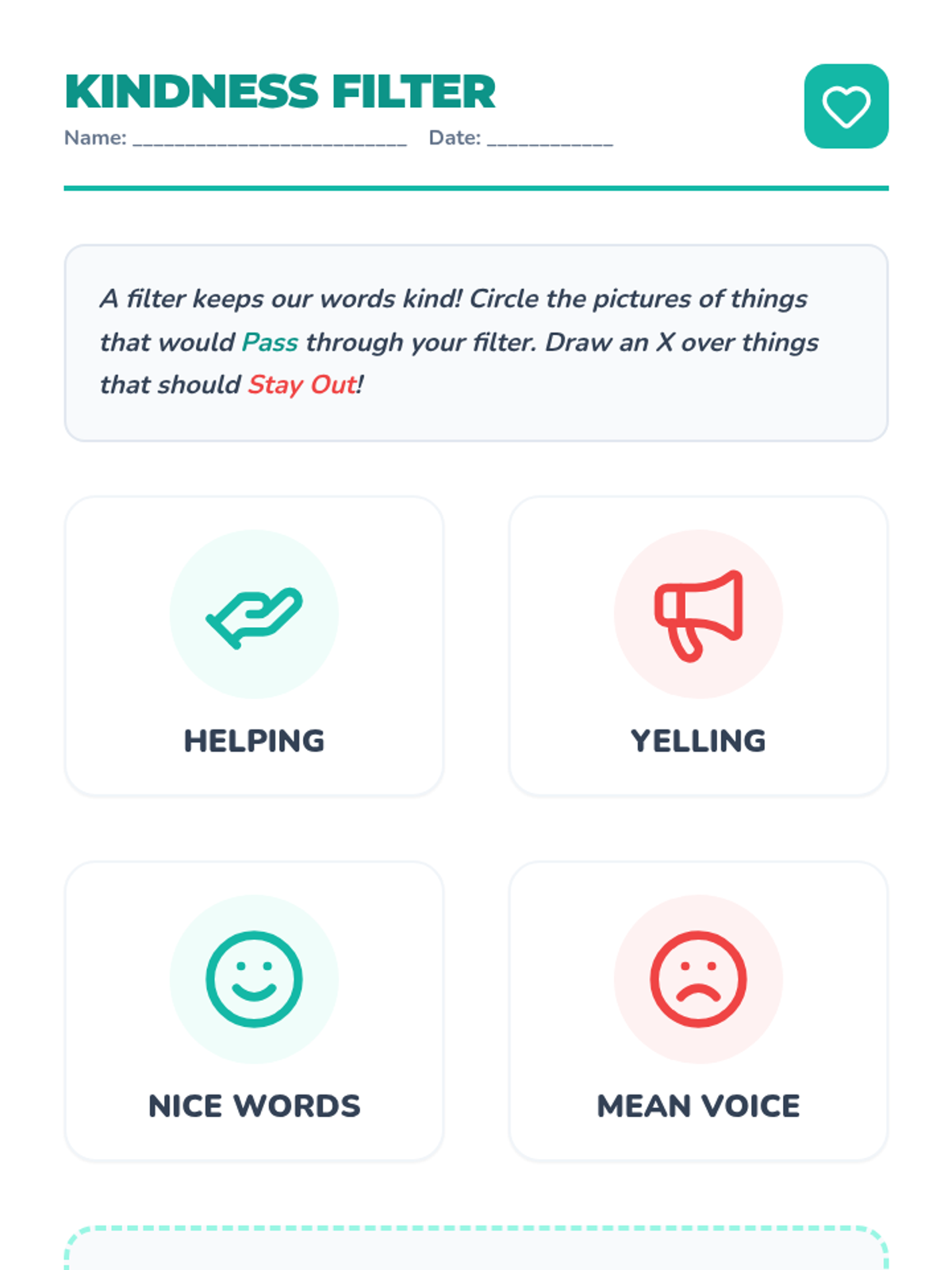
A social-emotional learning mini-lesson for K-1 students focusing on the 'Think Before You Speak' concept using a 'Thought Filter' to ensure words and voices are kind and helpful.
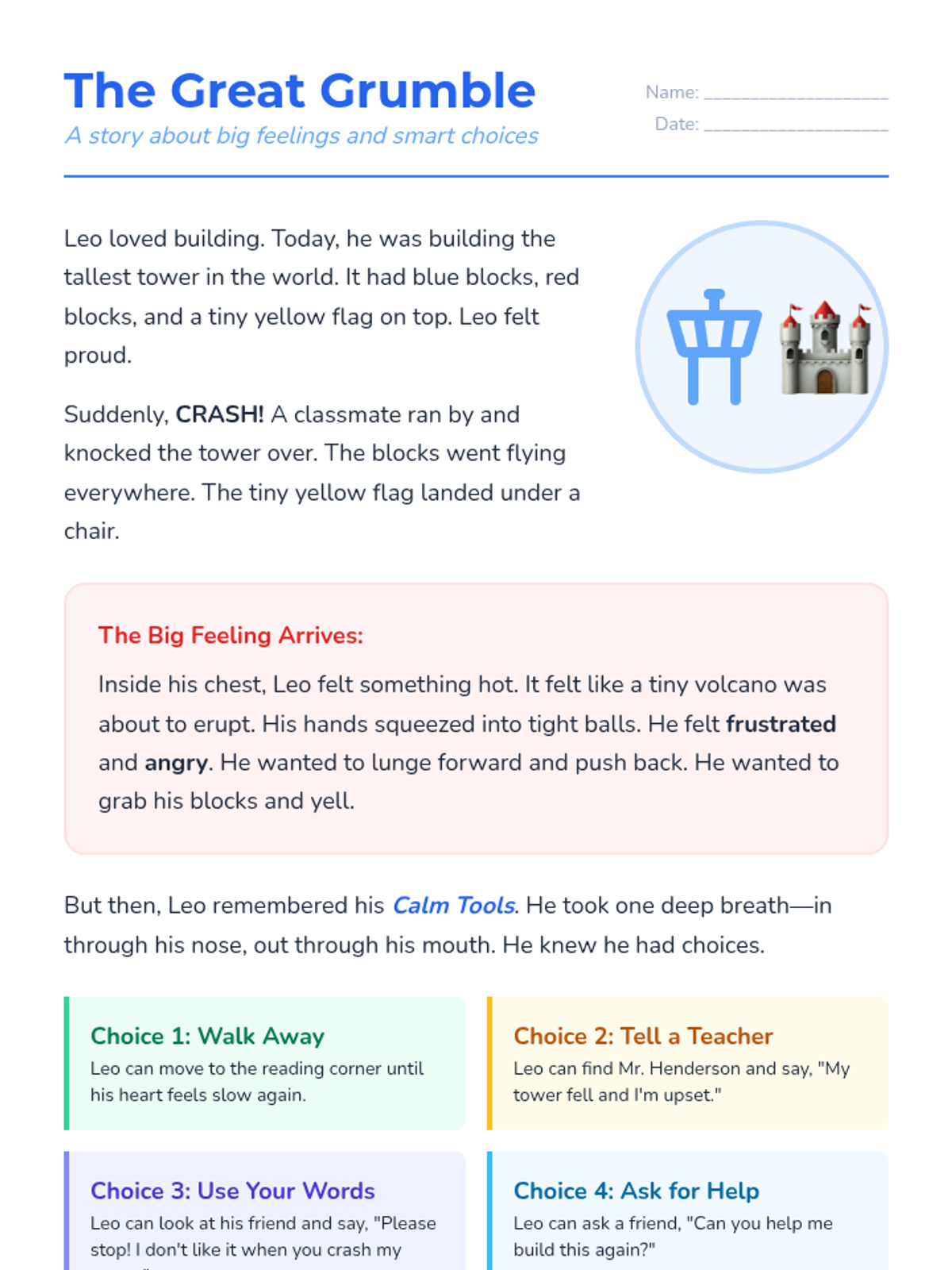
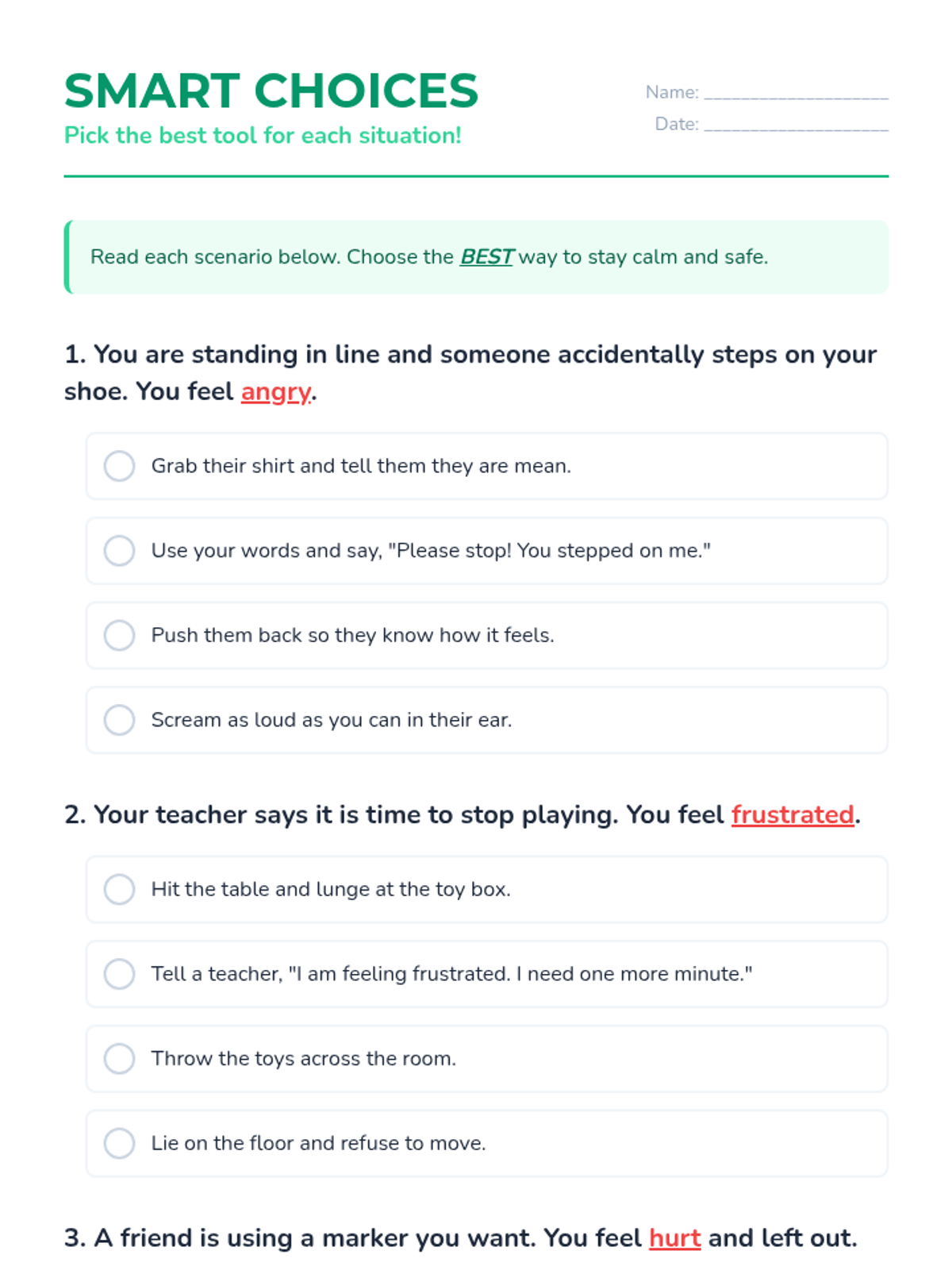
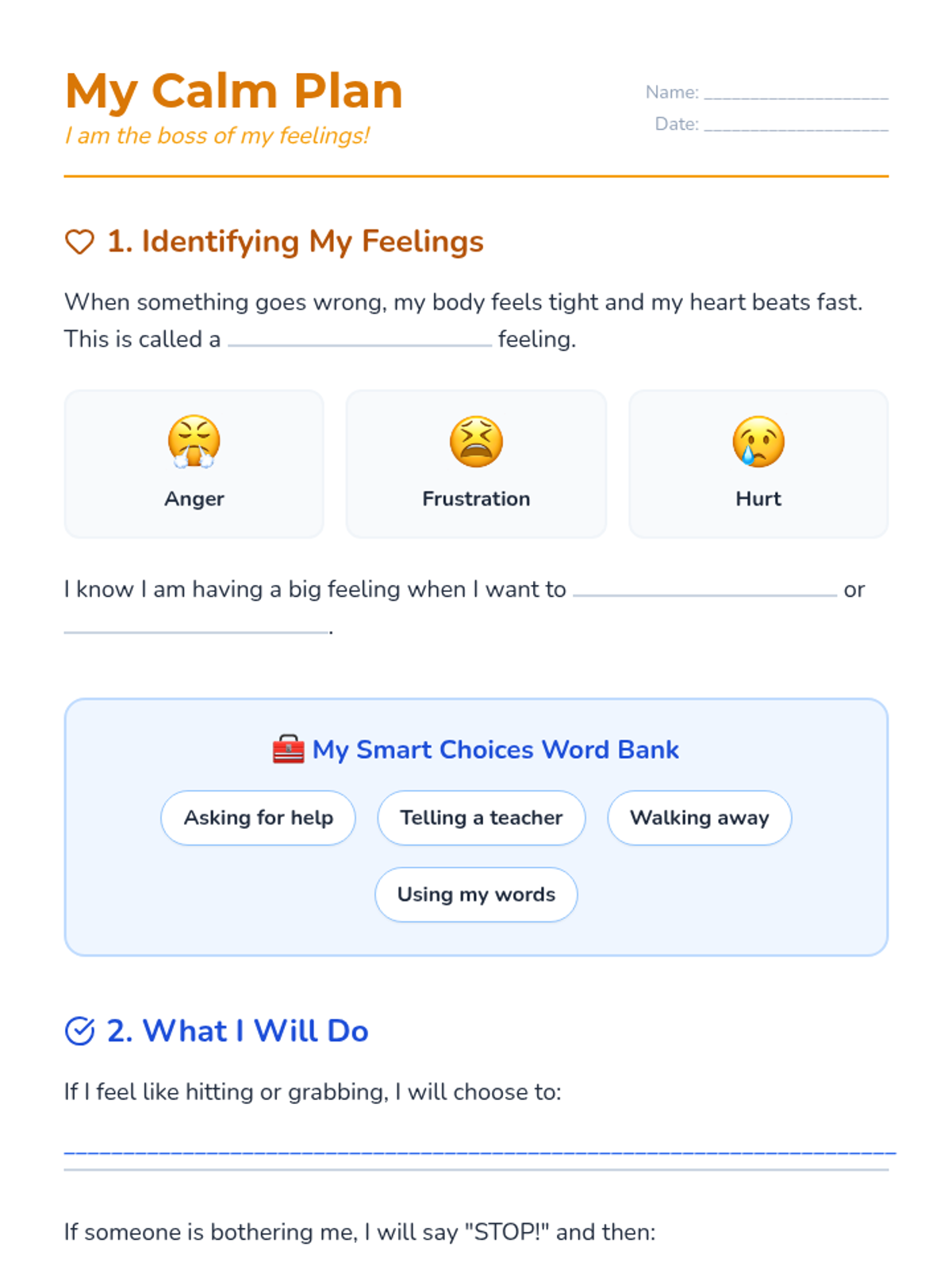
A social-emotional learning lesson designed to help students identify 'big feelings' and practice safe replacement behaviors for physical aggression. Includes a narrative story, situational practice, and a personalized reflection plan.
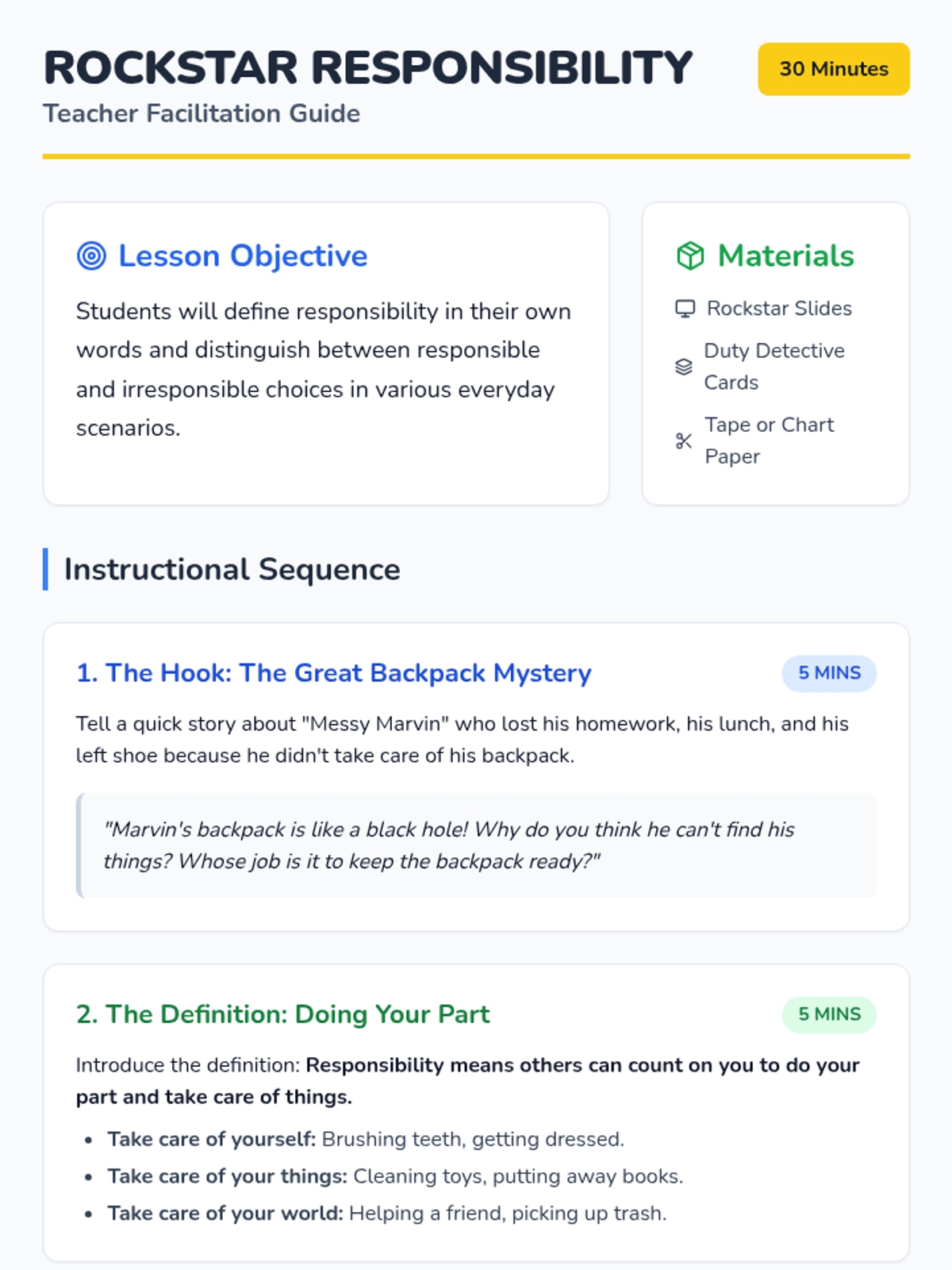
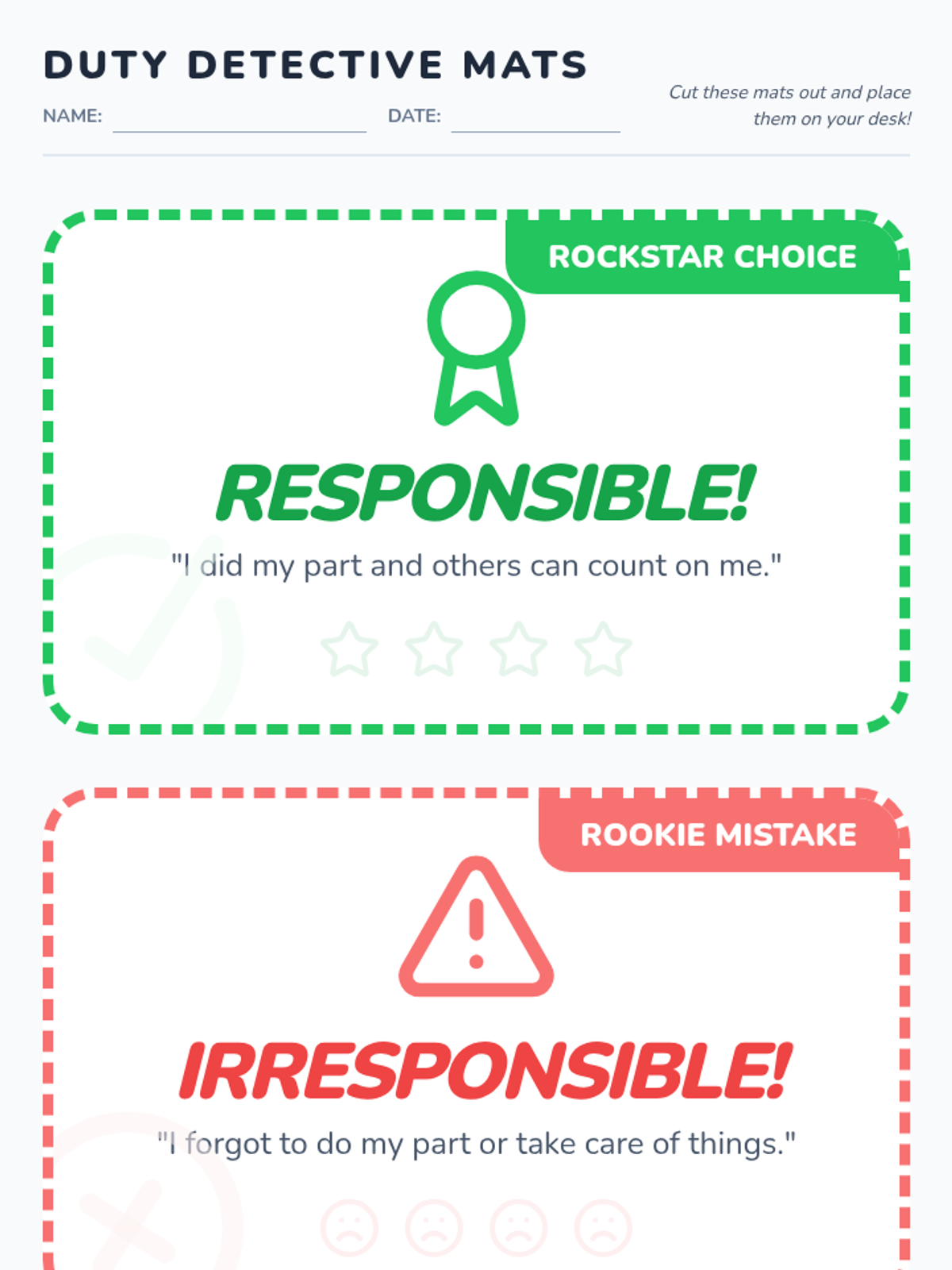
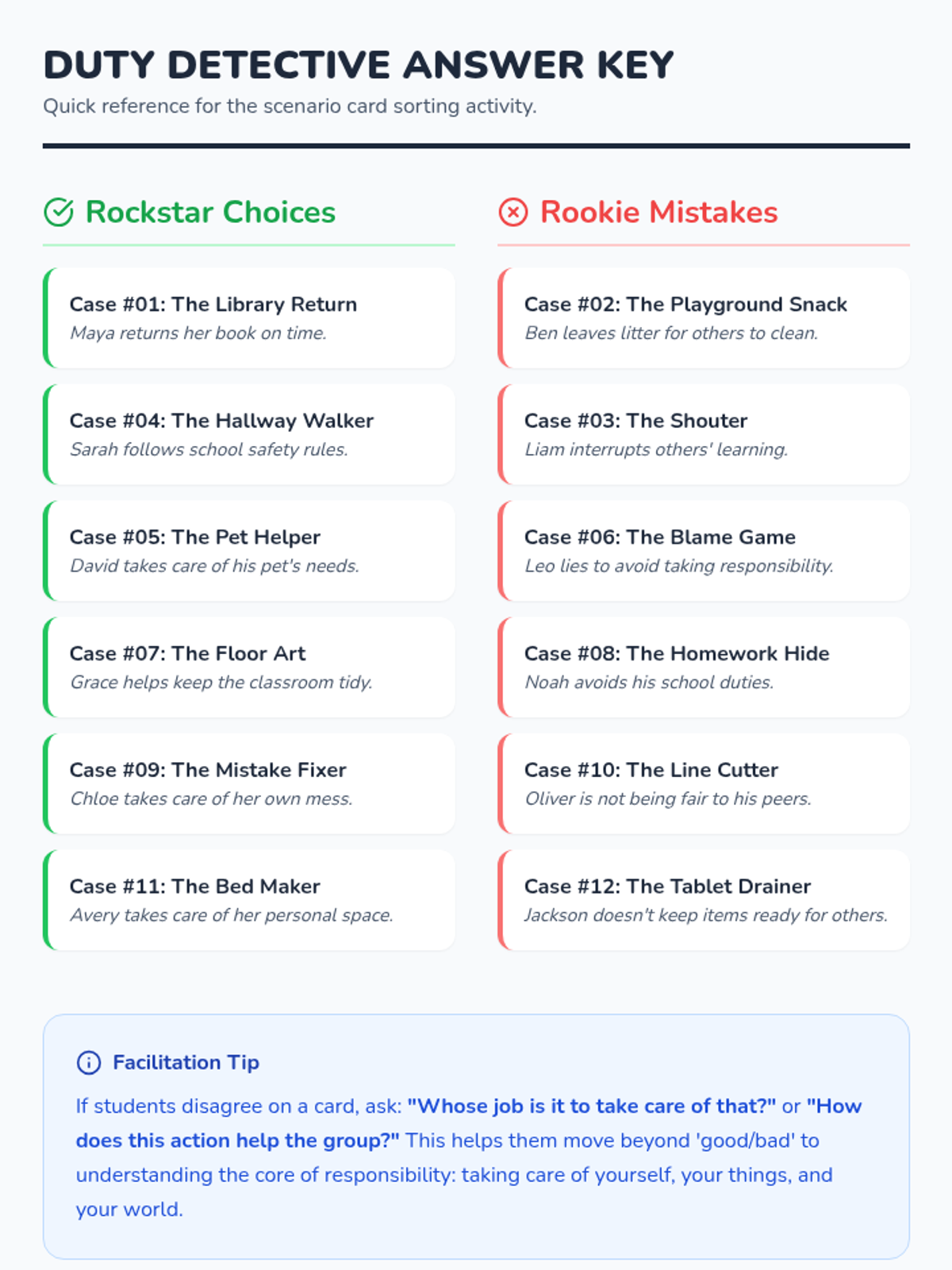
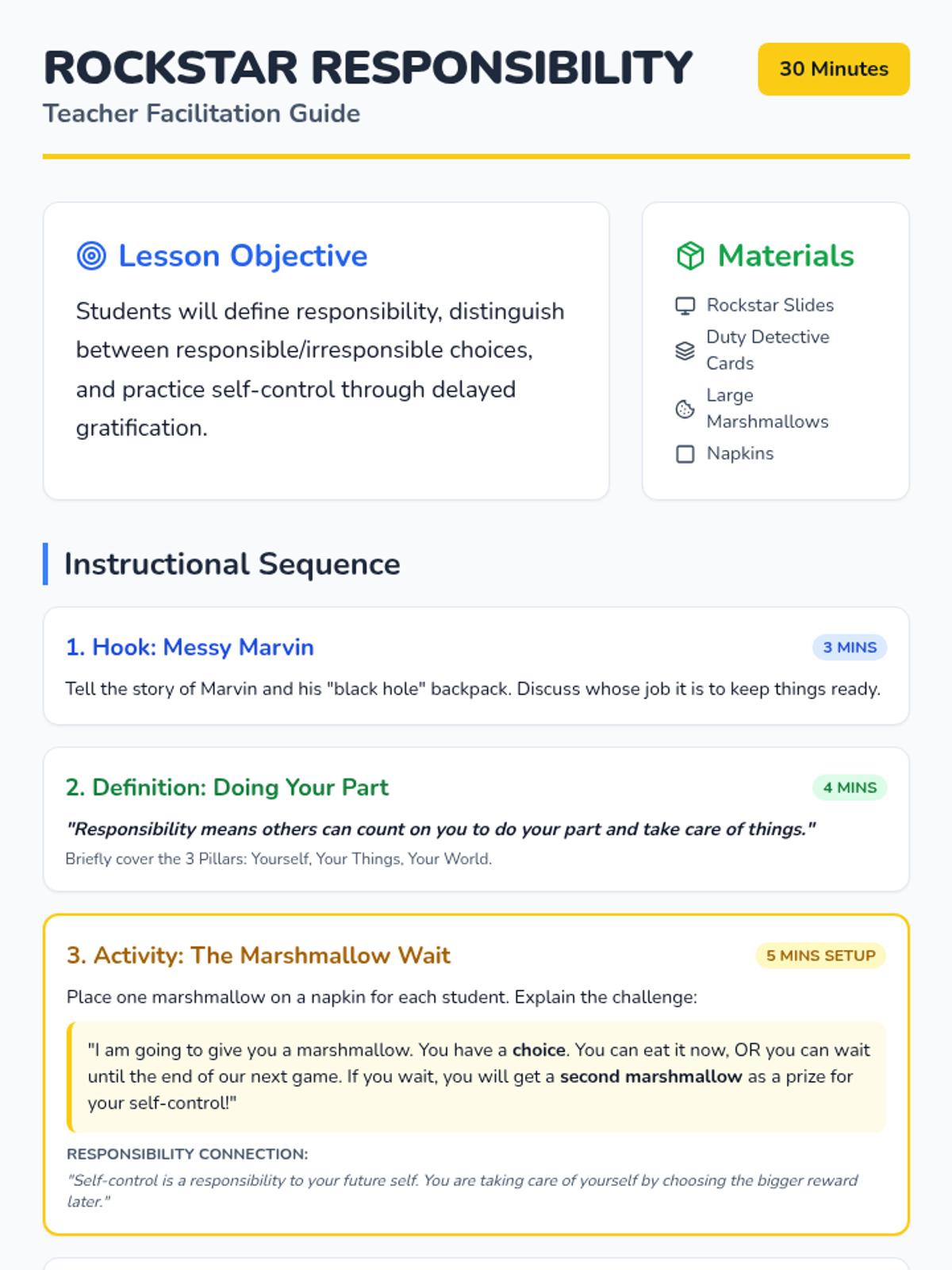
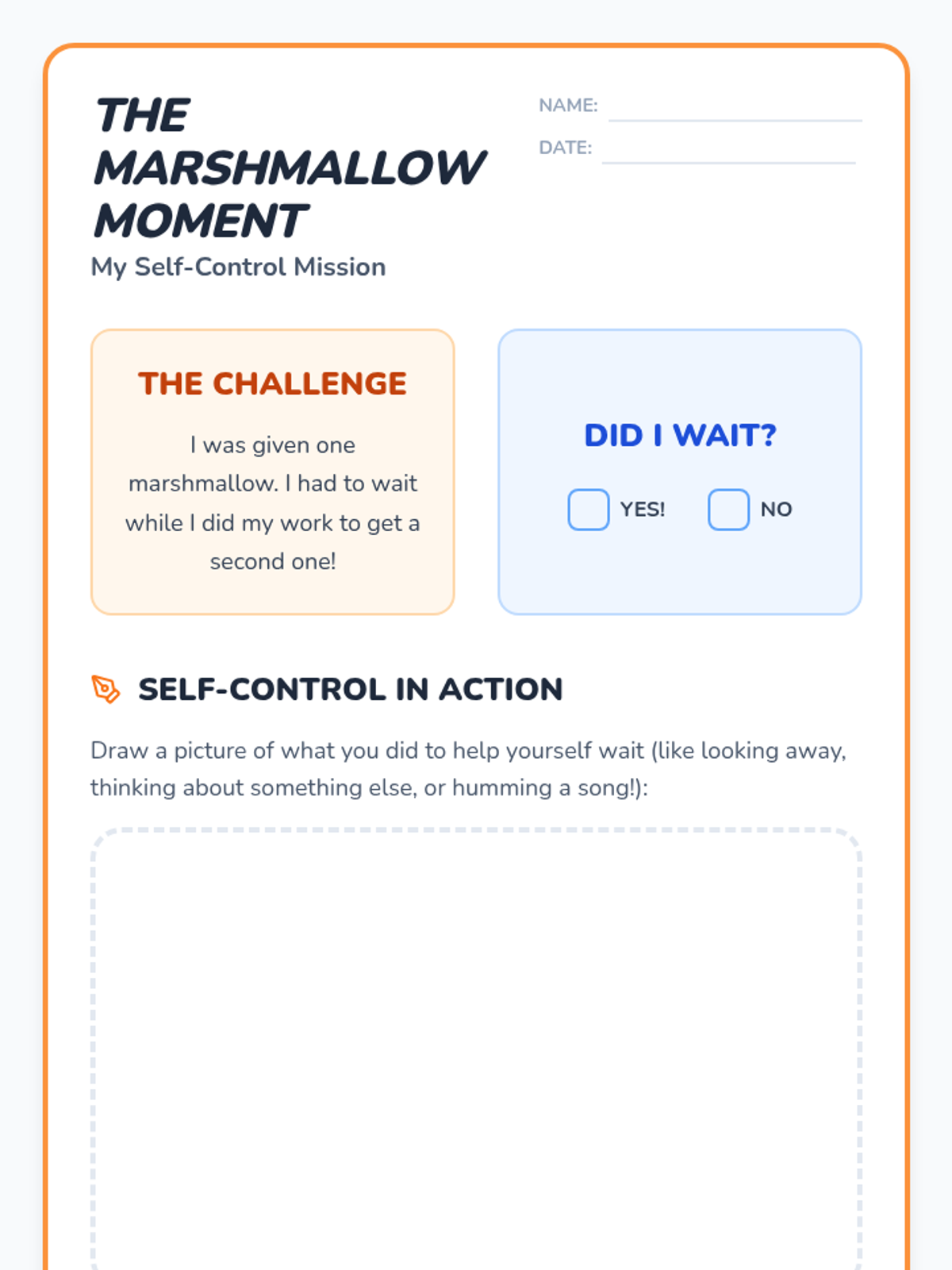
A high-energy, 30-minute introduction to responsibility for K-4 students, featuring a scenario-based hook, clear definitions, and interactive choice-sorting activities.
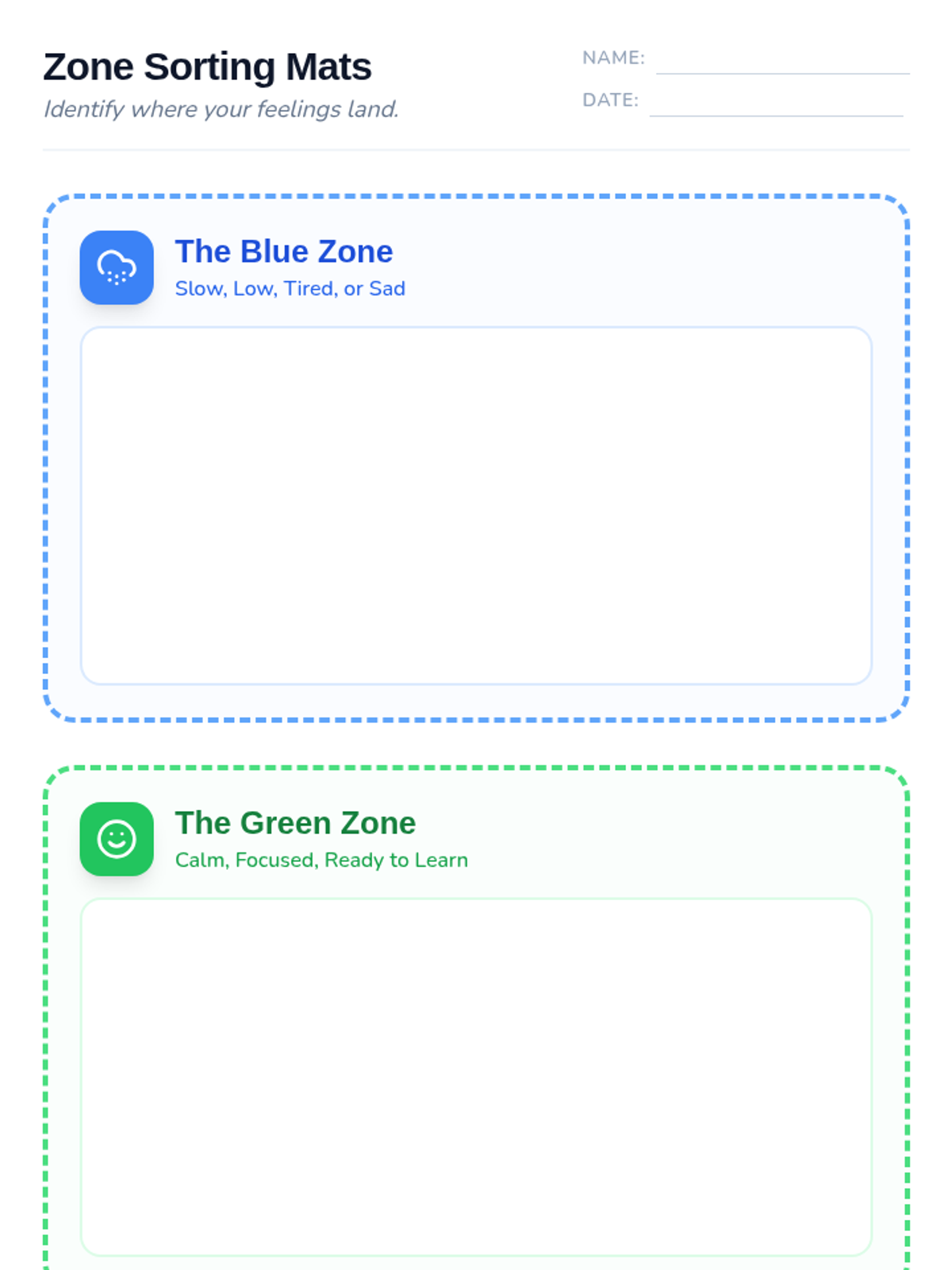
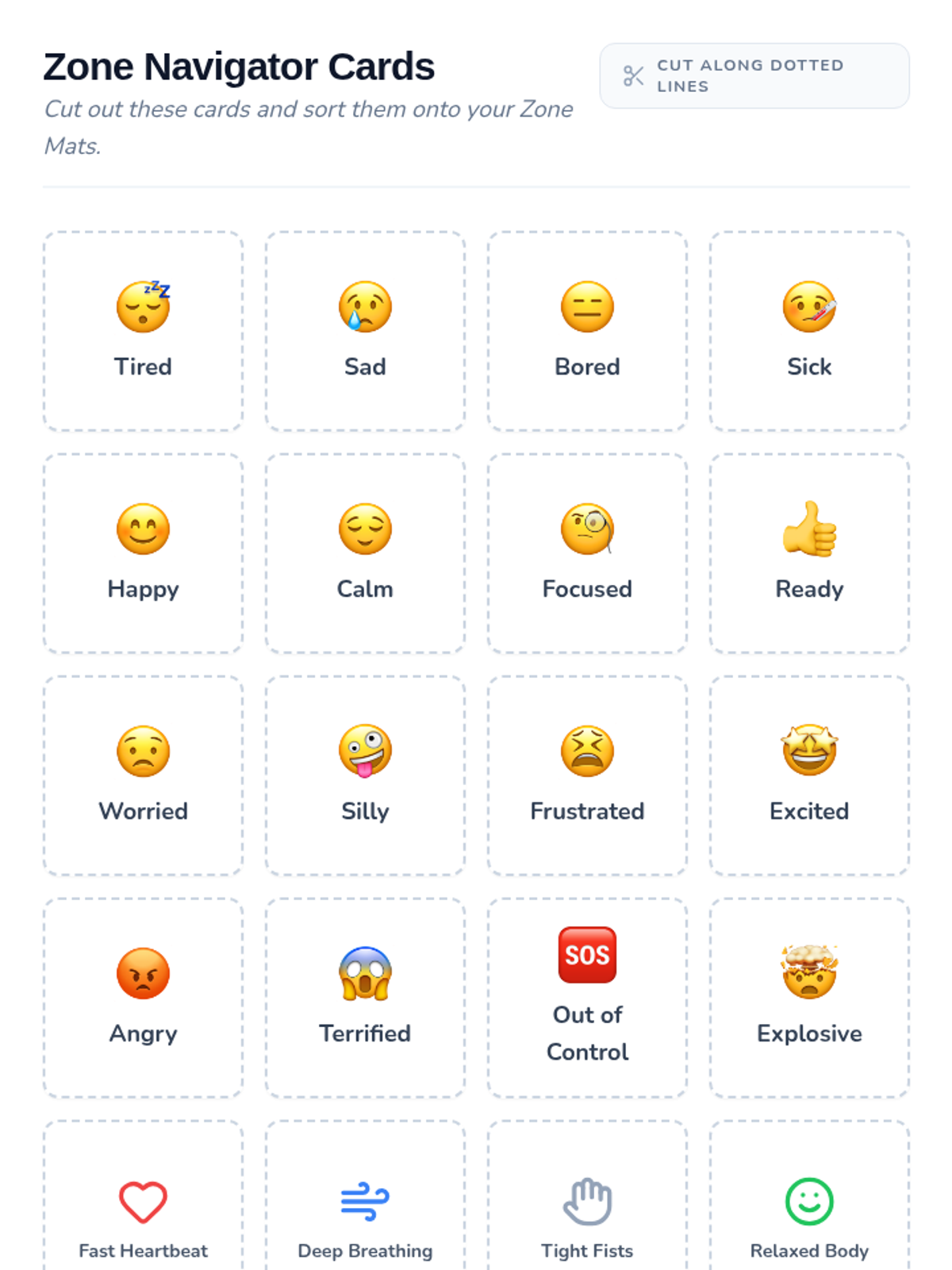
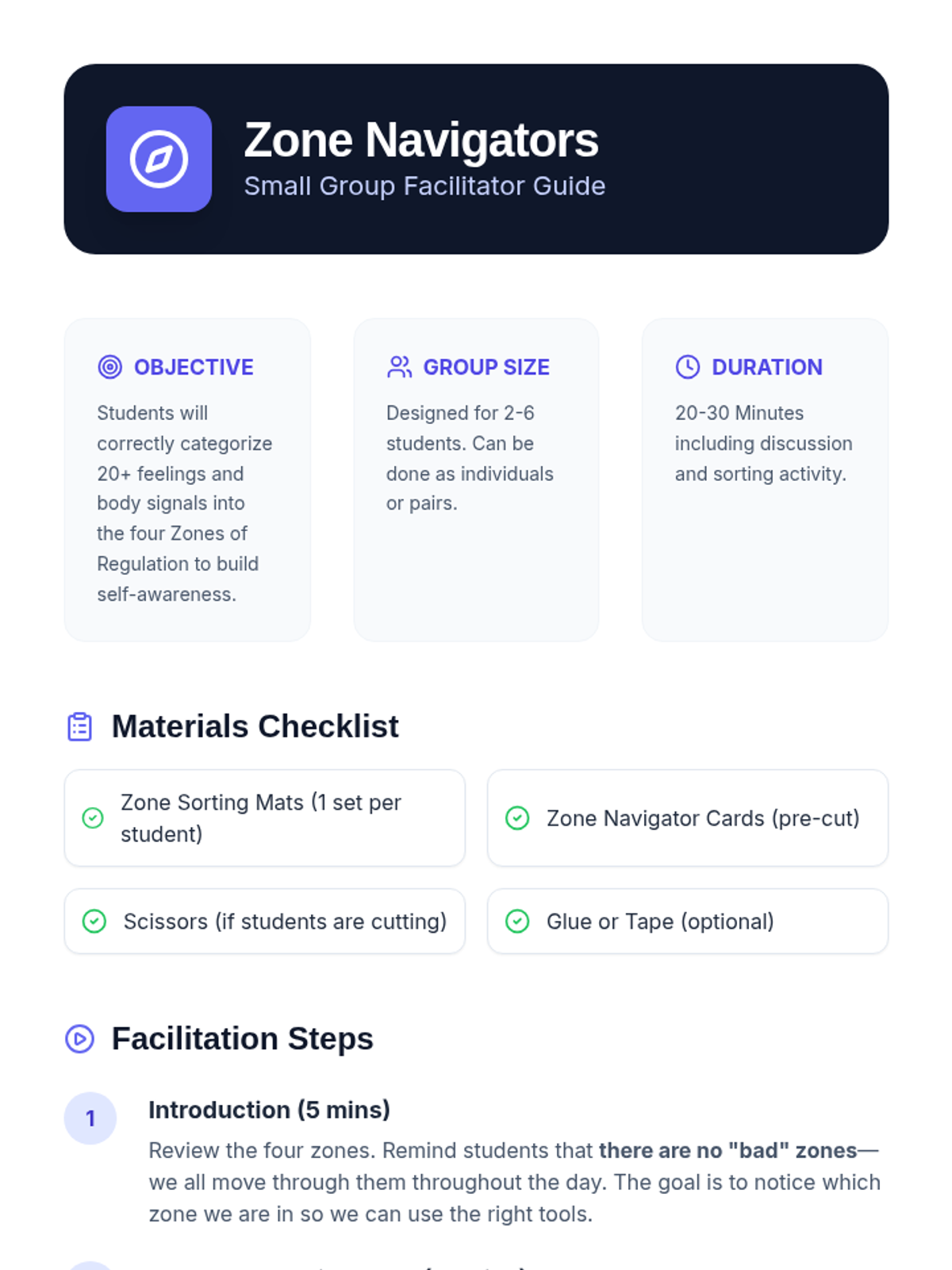
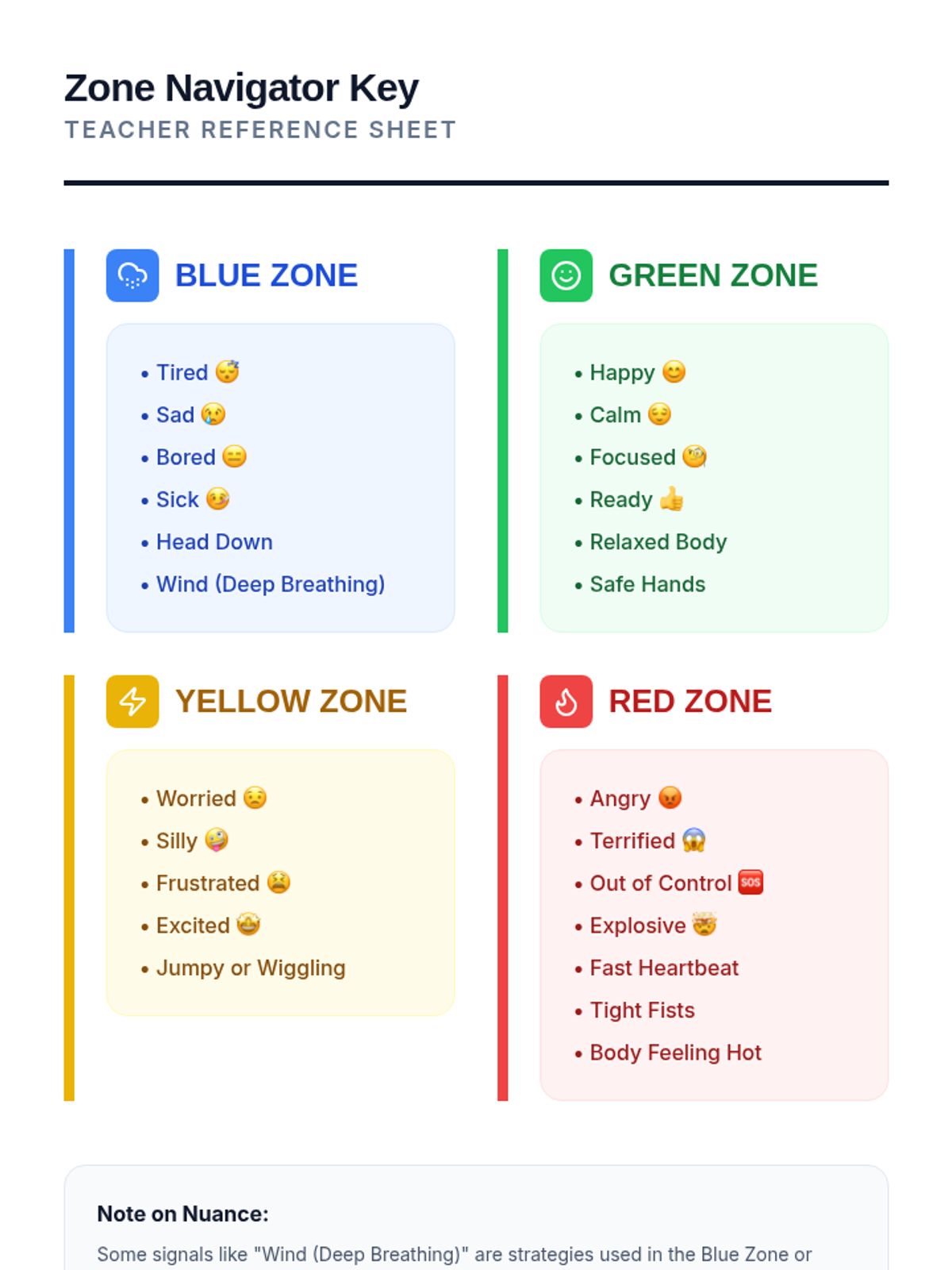
A small group activity focused on identifying and categorizing emotions into the four color zones (Blue, Green, Yellow, and Red). Students will practice recognizing body signals and feelings to improve self-awareness and regulation.
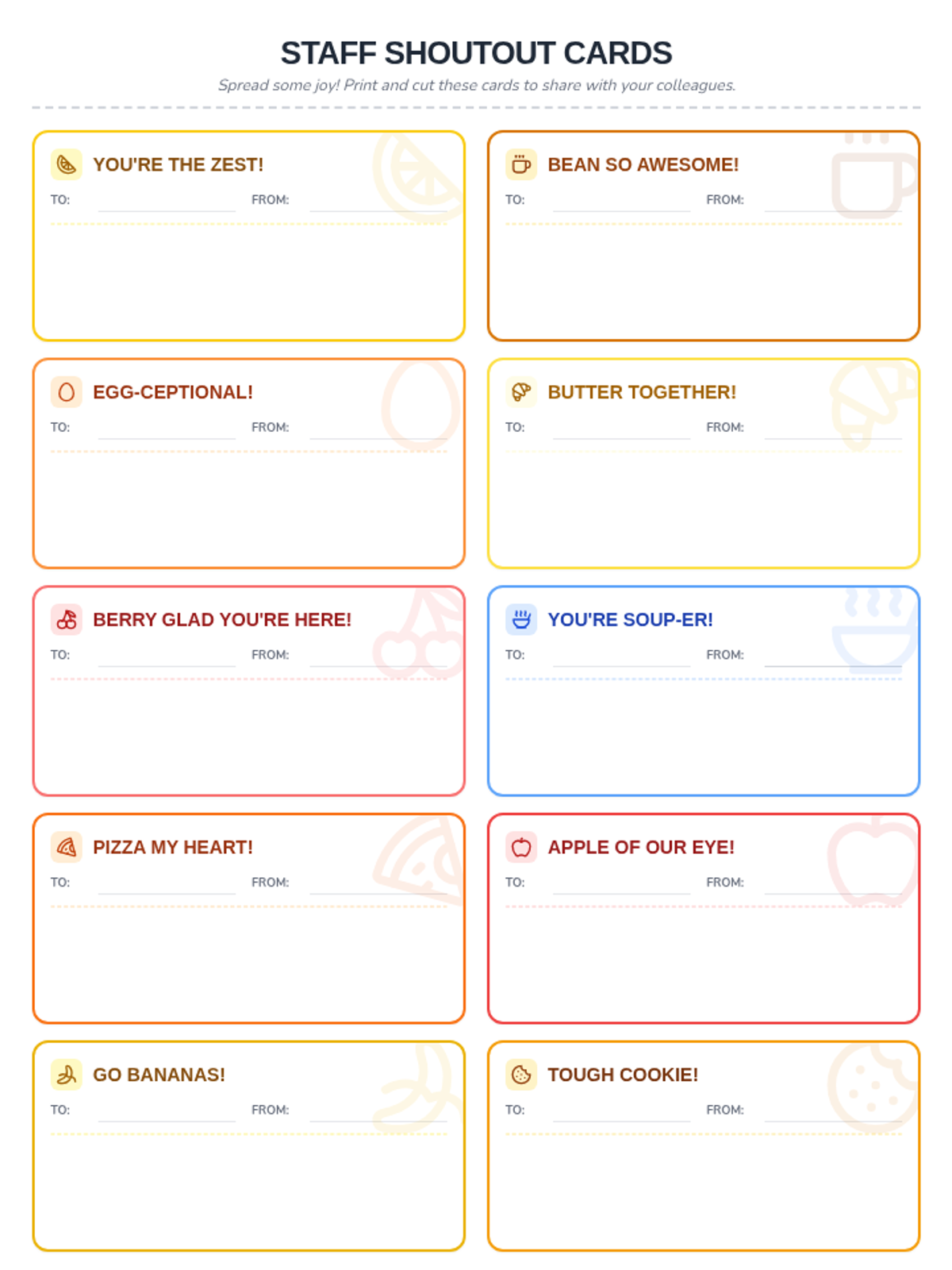
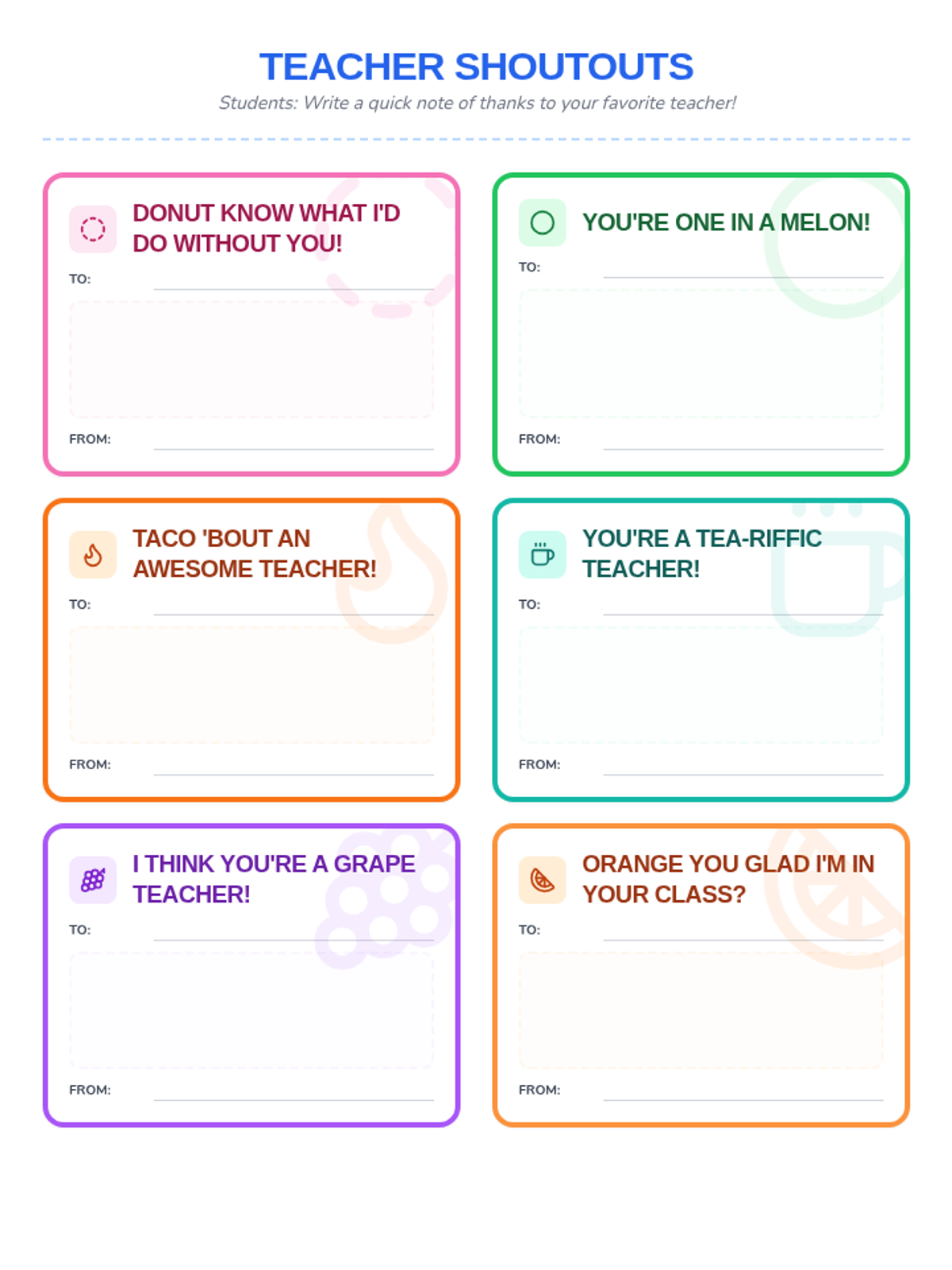
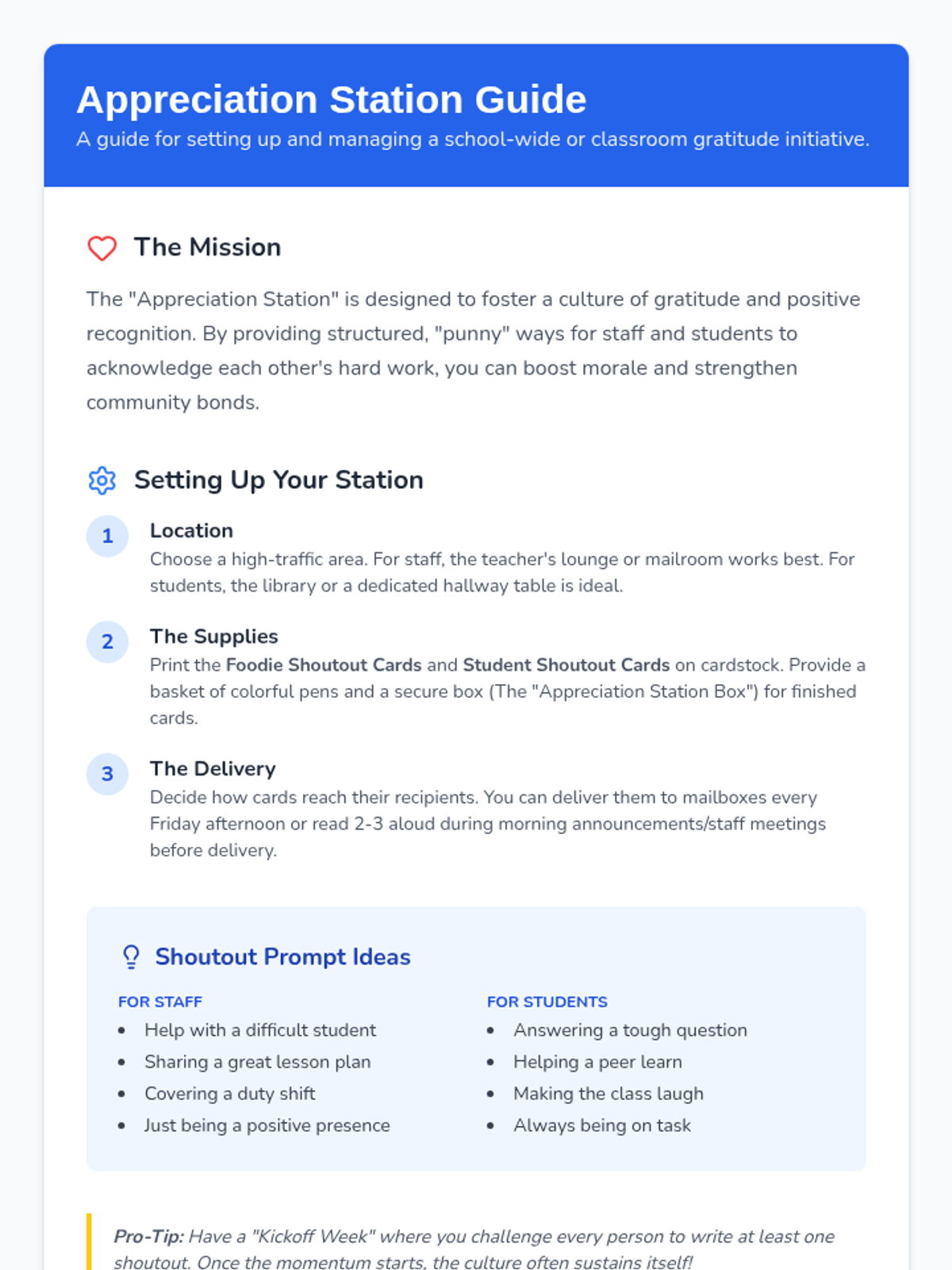
A collection of appreciation-themed resources for school staff and students to express gratitude through creative, pun-based shoutout cards.
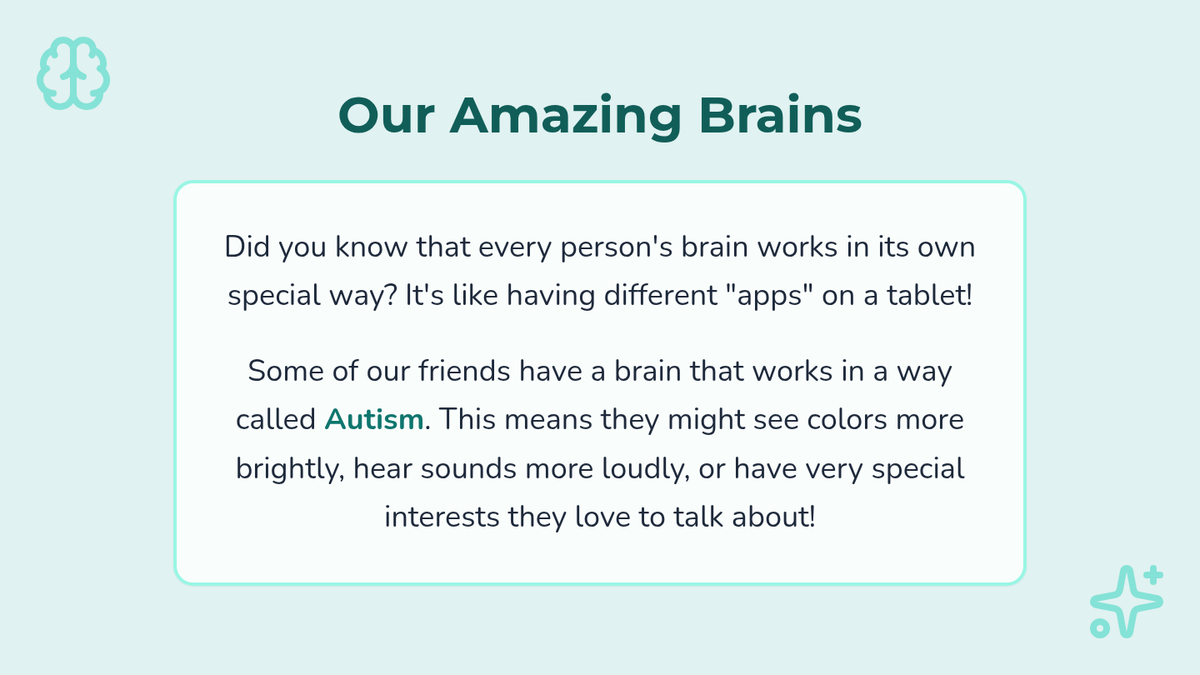
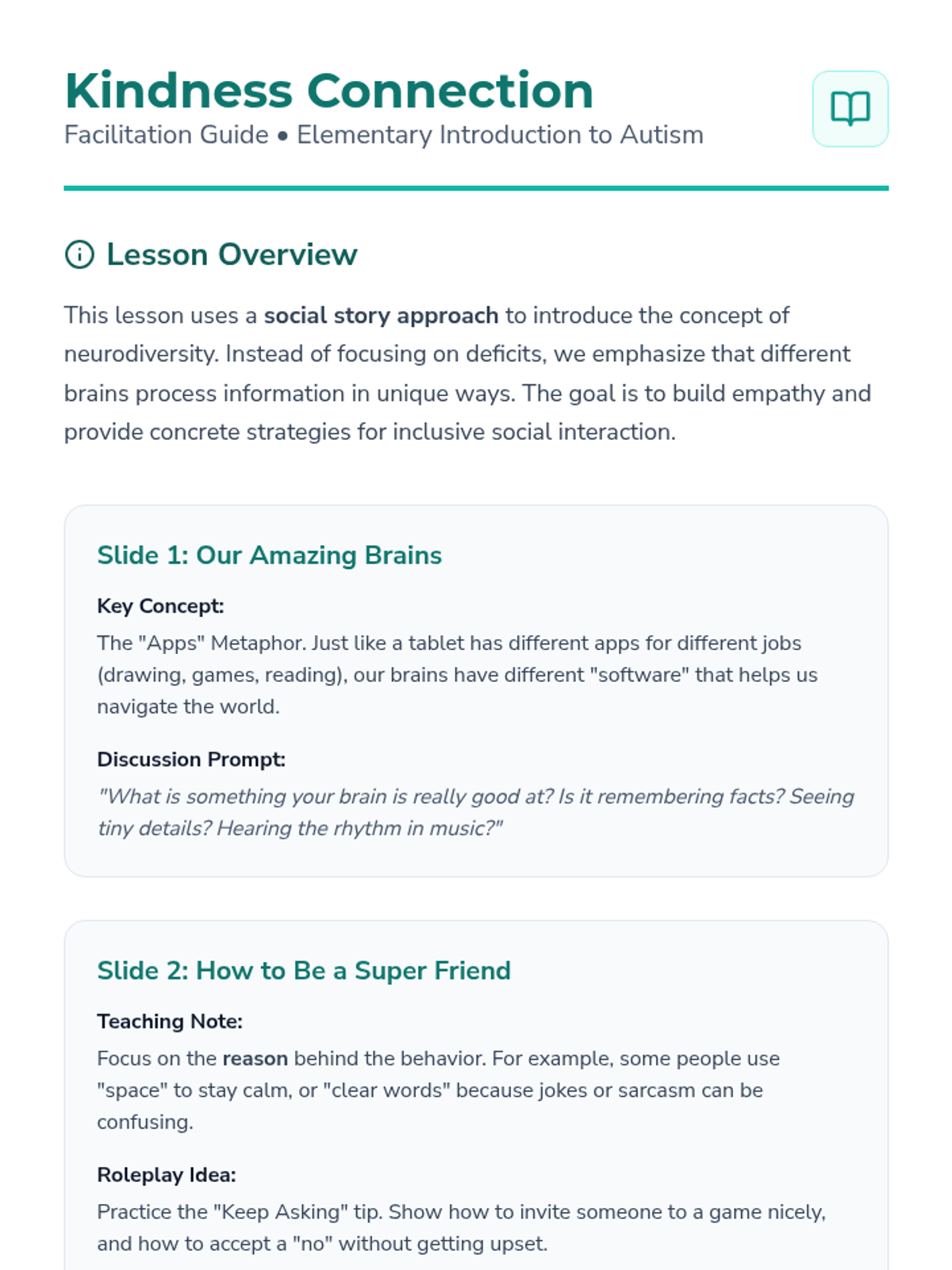
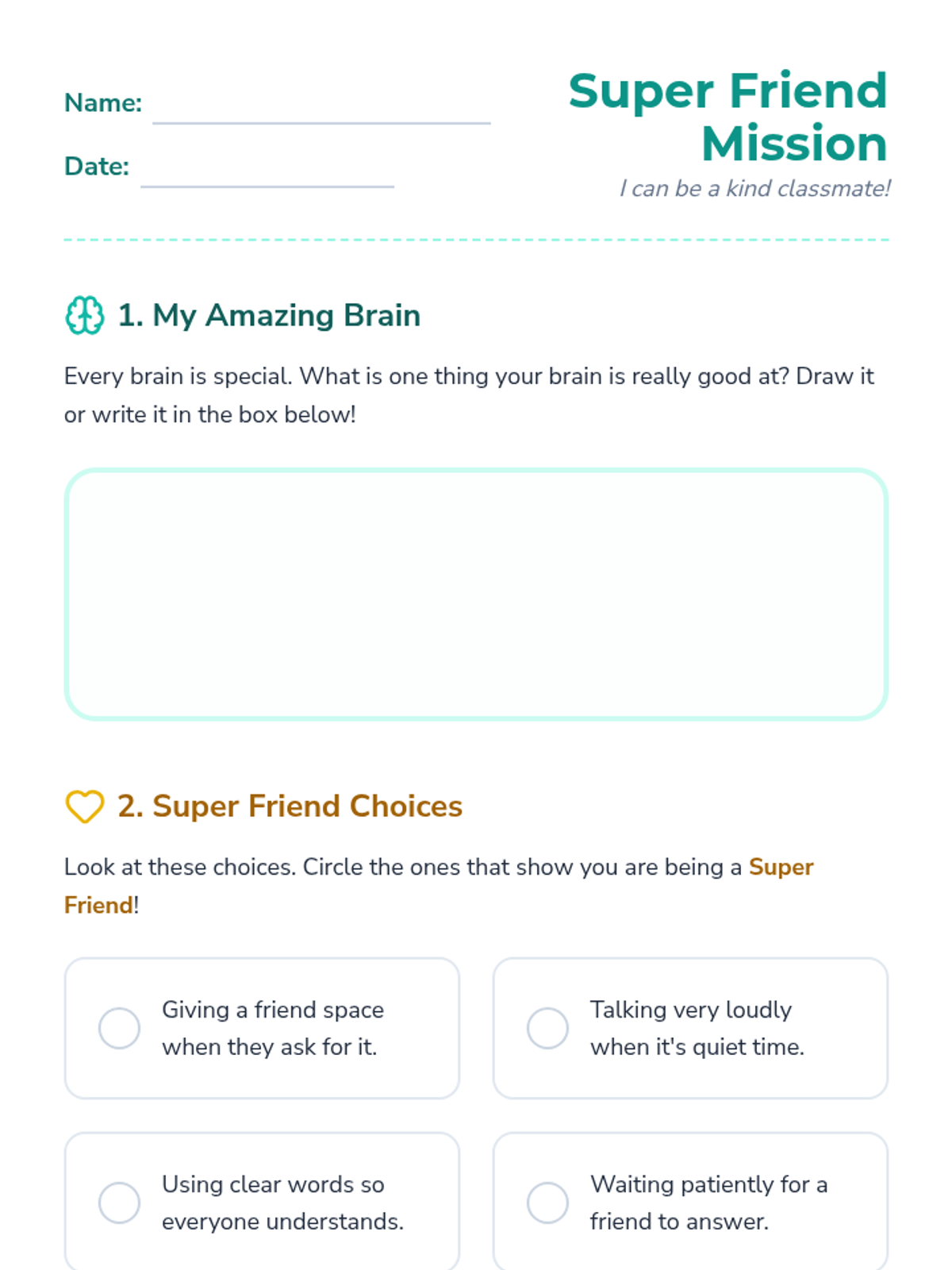
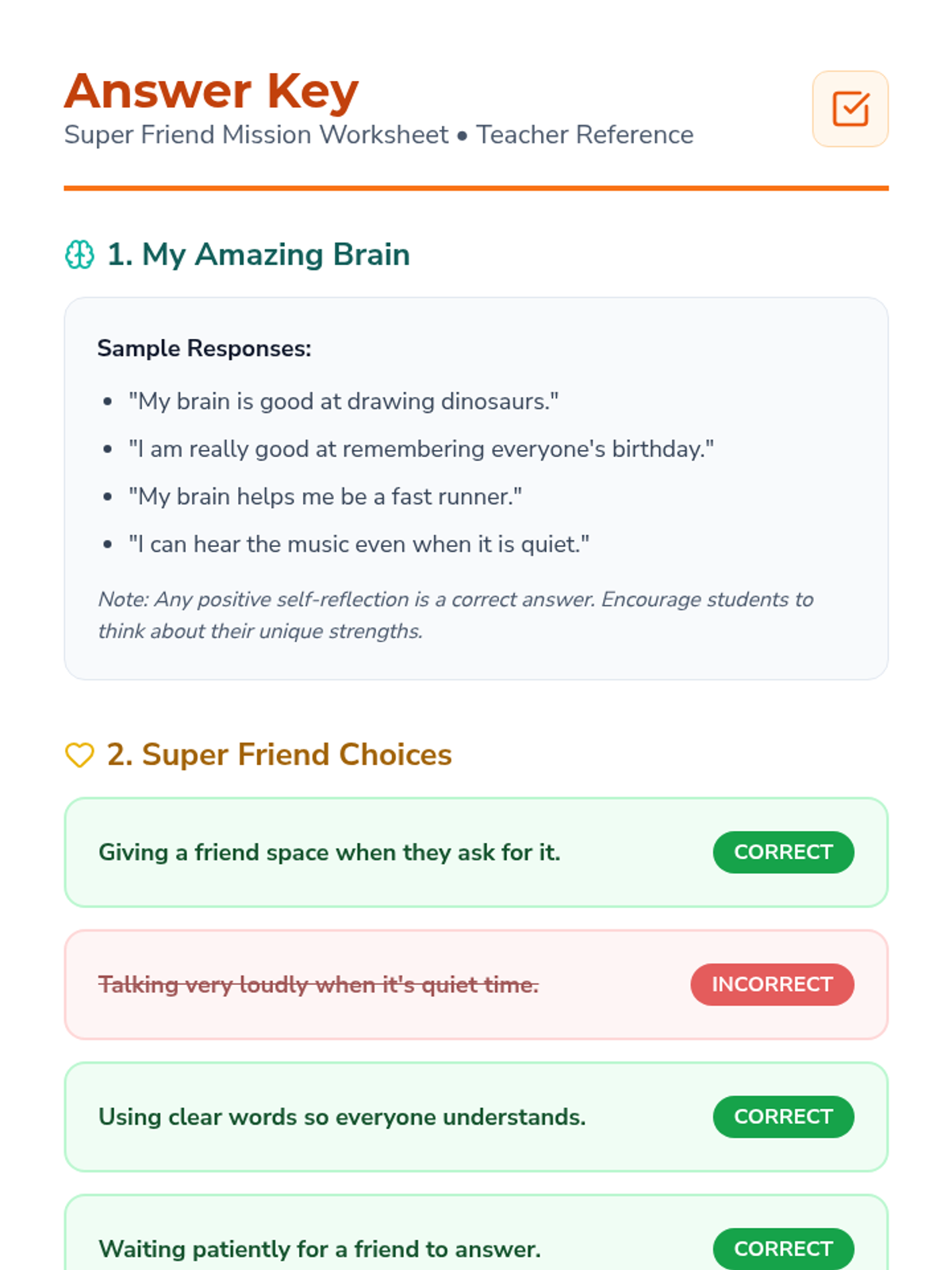
A gentle introduction to Autism for elementary students, focusing on neurodiversity and practical ways to be a supportive classmate using a social story approach.
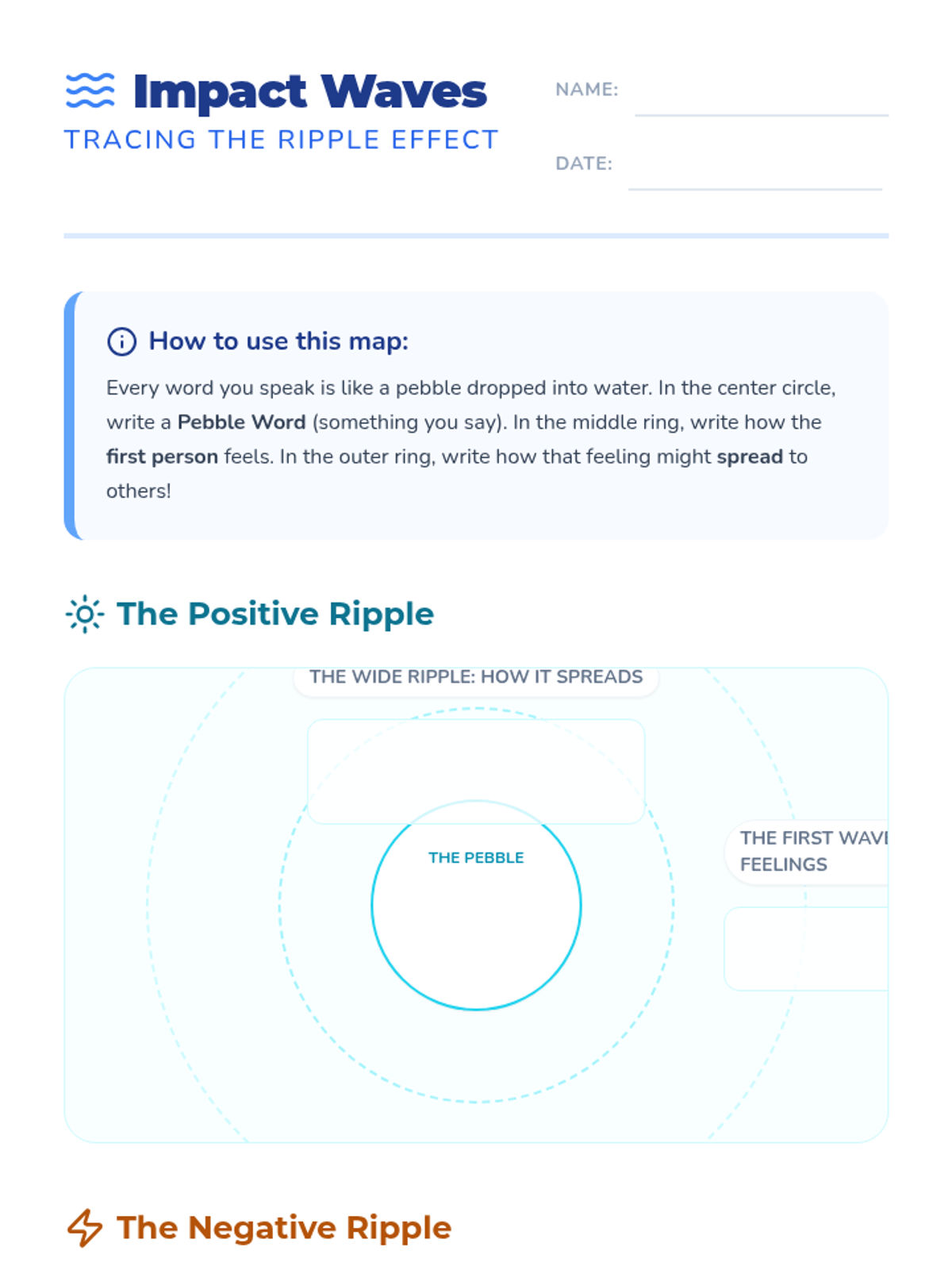
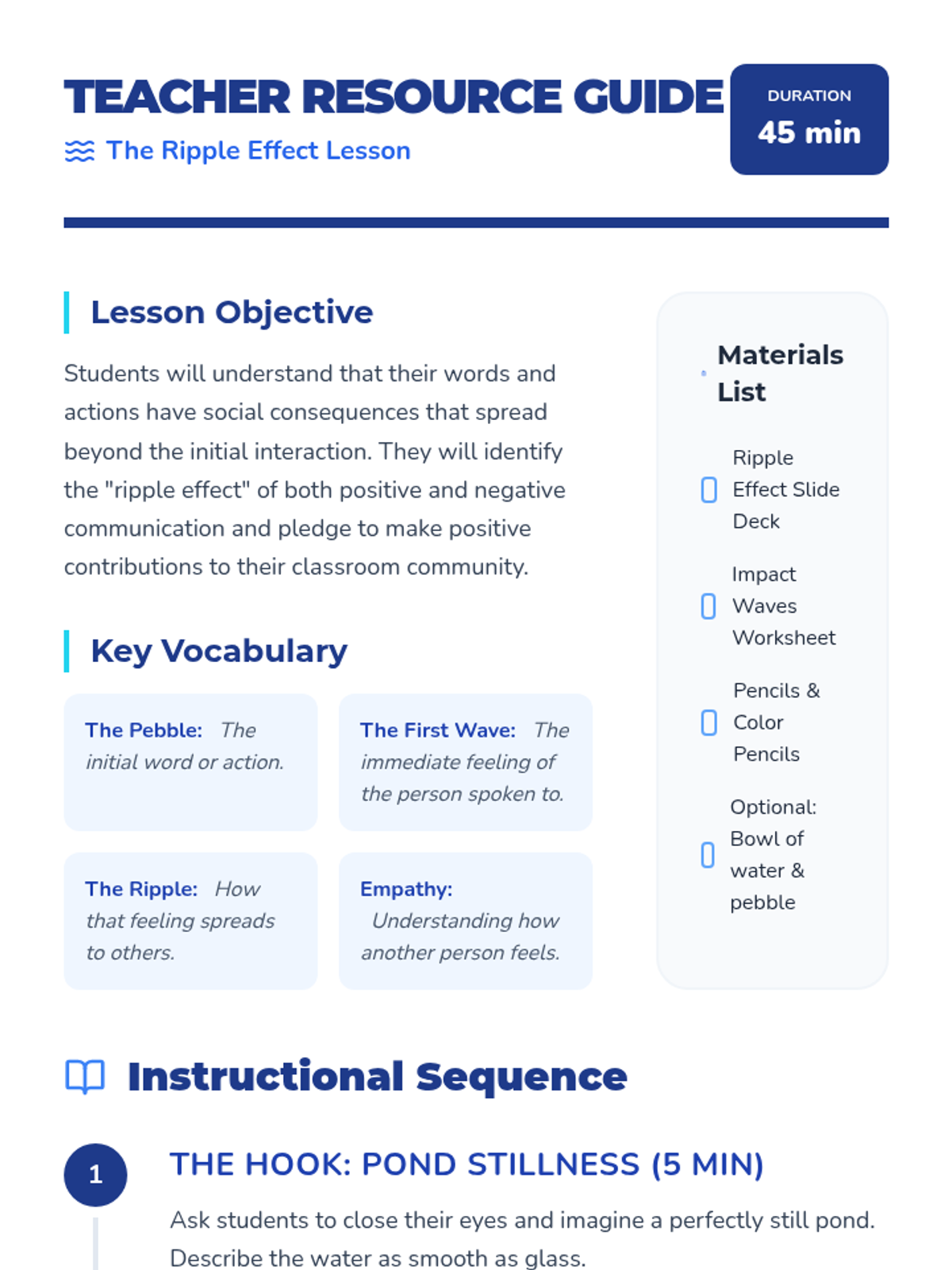
A social-emotional learning lesson that teaches students how their words create a 'ripple effect' of positive or negative emotions and actions in their community.
Focuses on the art of a sincere apology and celebrates the completion of the social skills group.
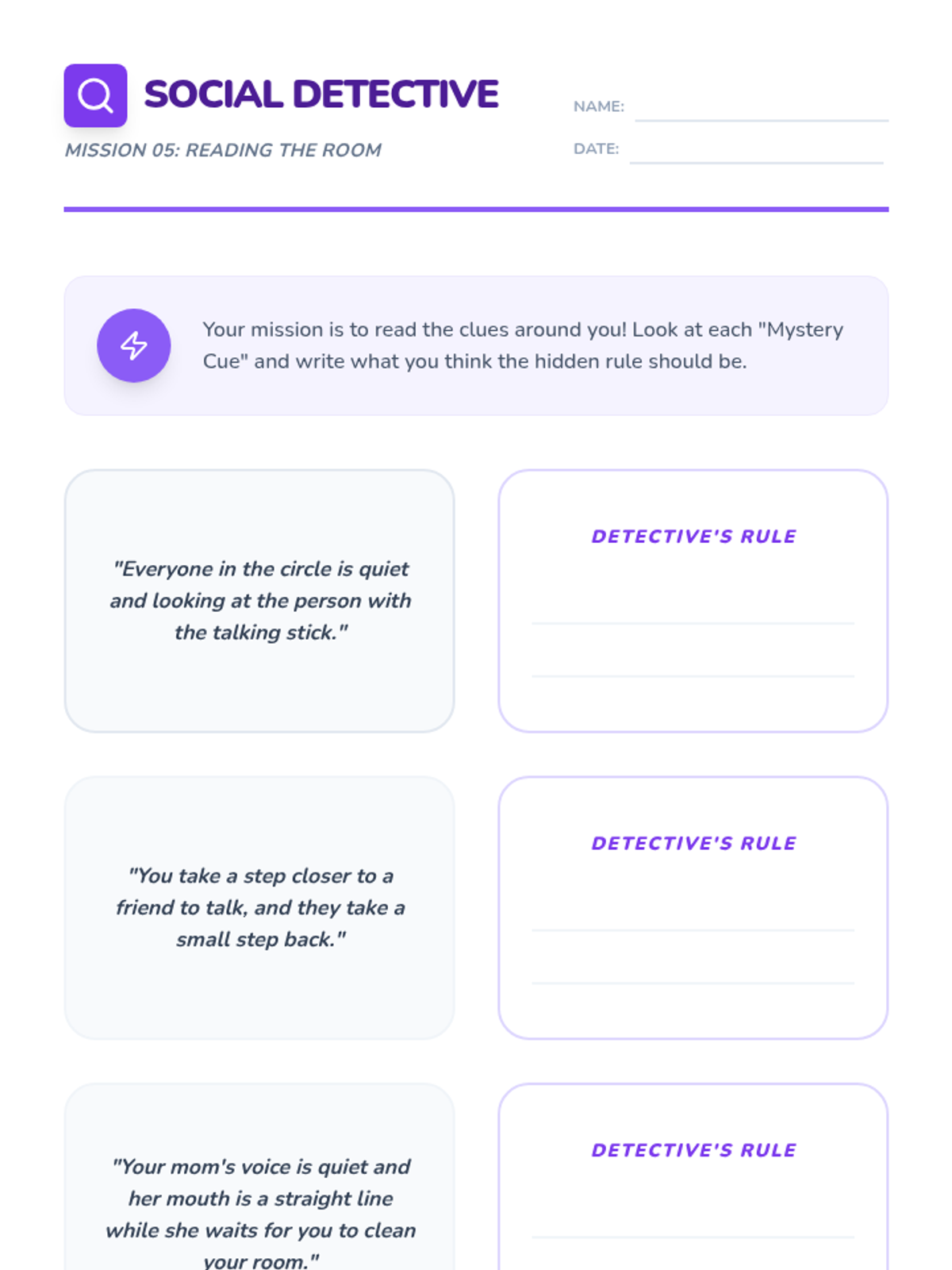
Interpreting body language and social cues while understanding the importance of following group rules.
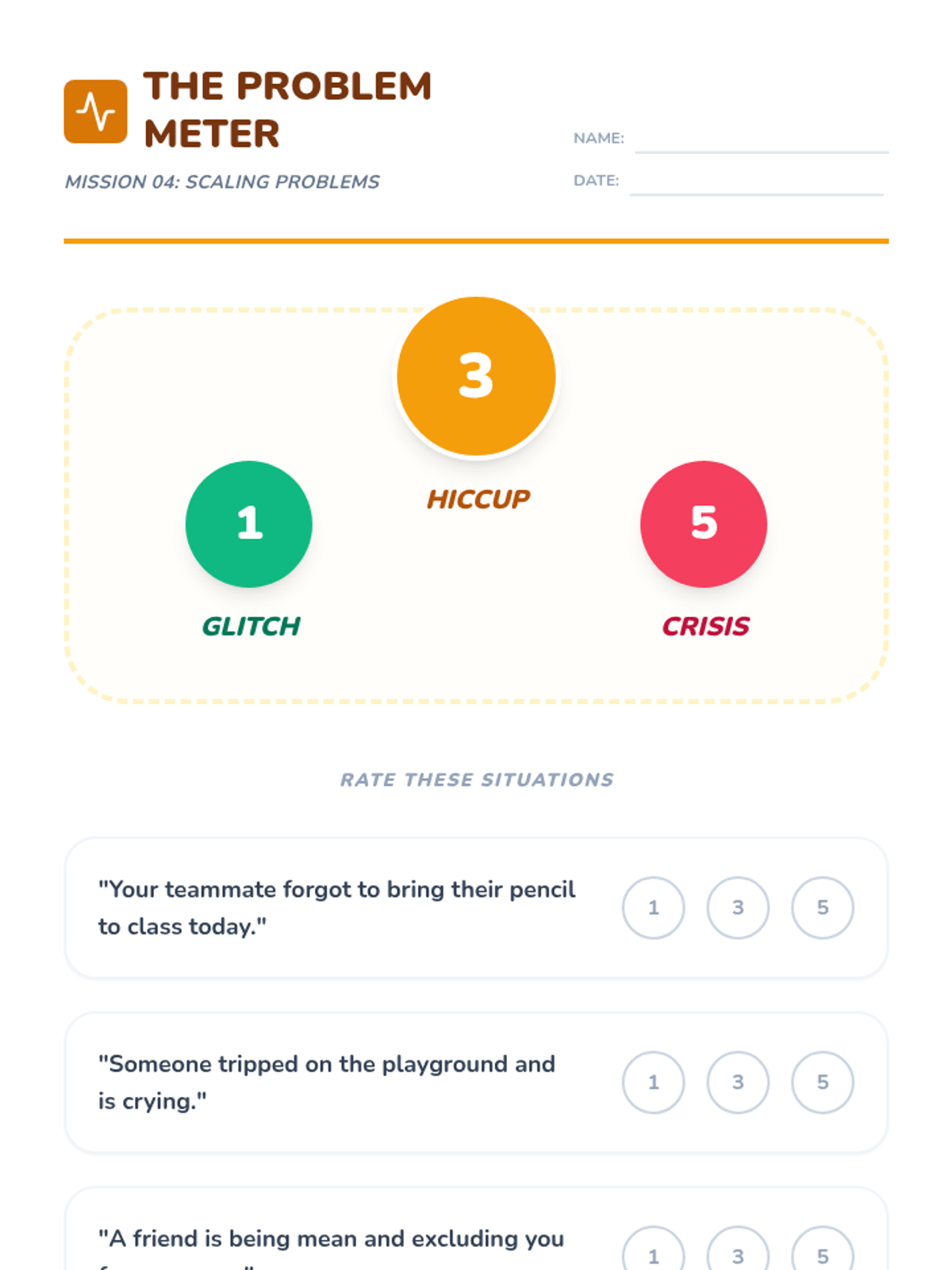
Categorizing 'Big vs. Small' problems and learning basic conflict resolution steps.
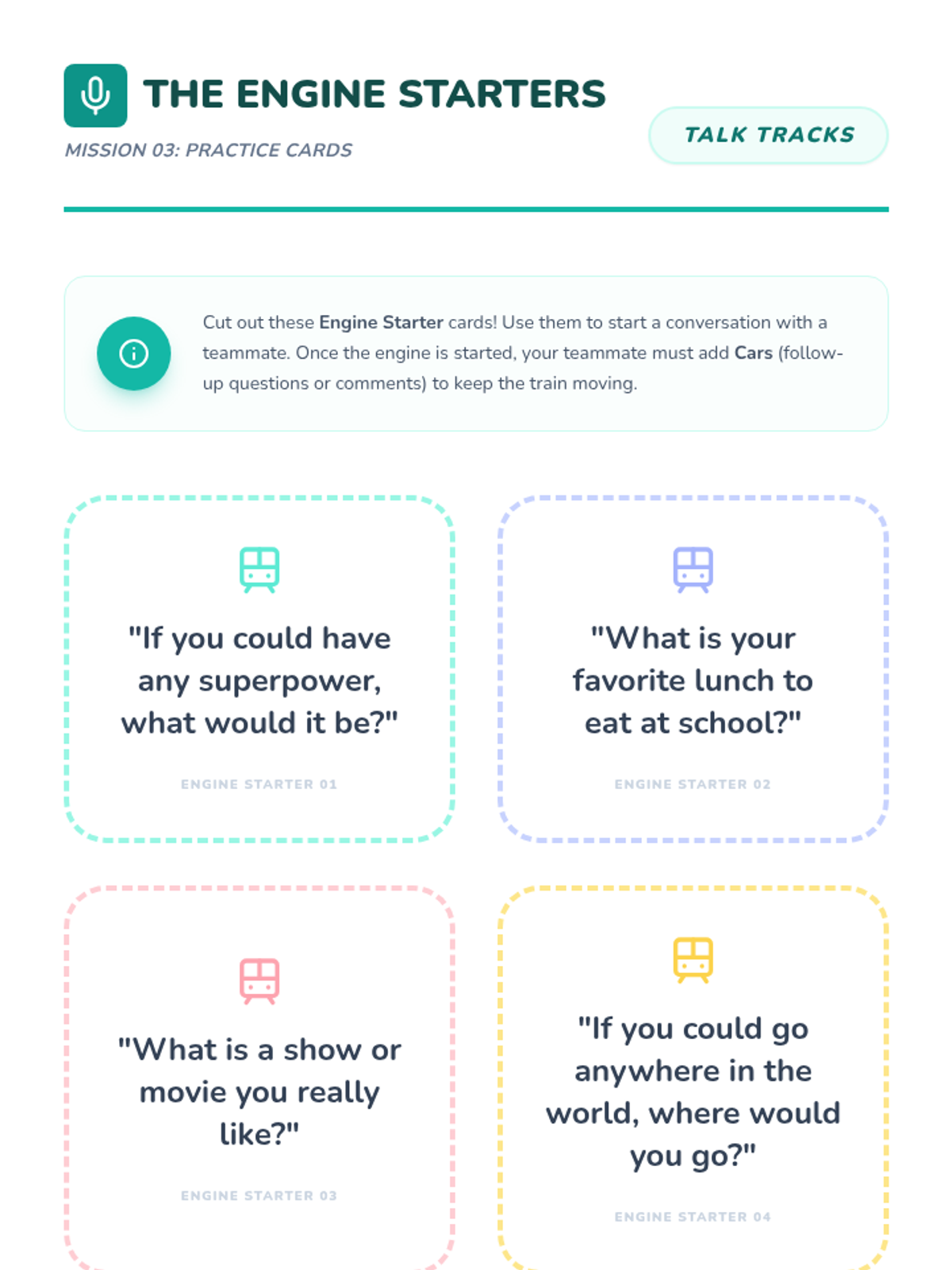
Teaches conversation skills, active listening, and how to maintain the flow of a social interaction.
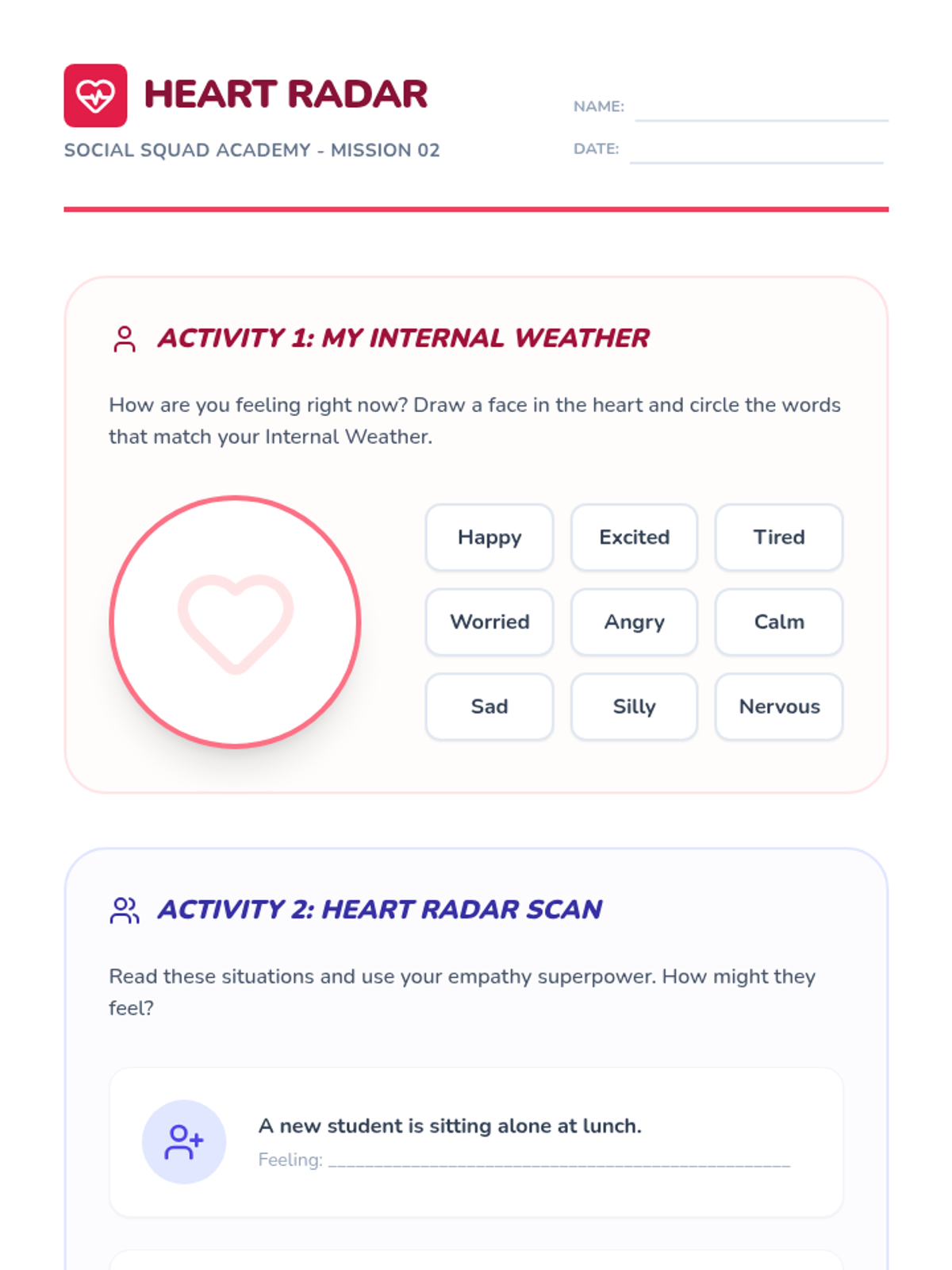
Focuses on identifying emotions in oneself and others (empathy) using the concept of a 'Heart Radar'.