A lesson designed for 7th graders to identify the 'size' of their problems, match their emotional reactions accordingly, and build a toolkit of coping strategies for anxiety and stress.
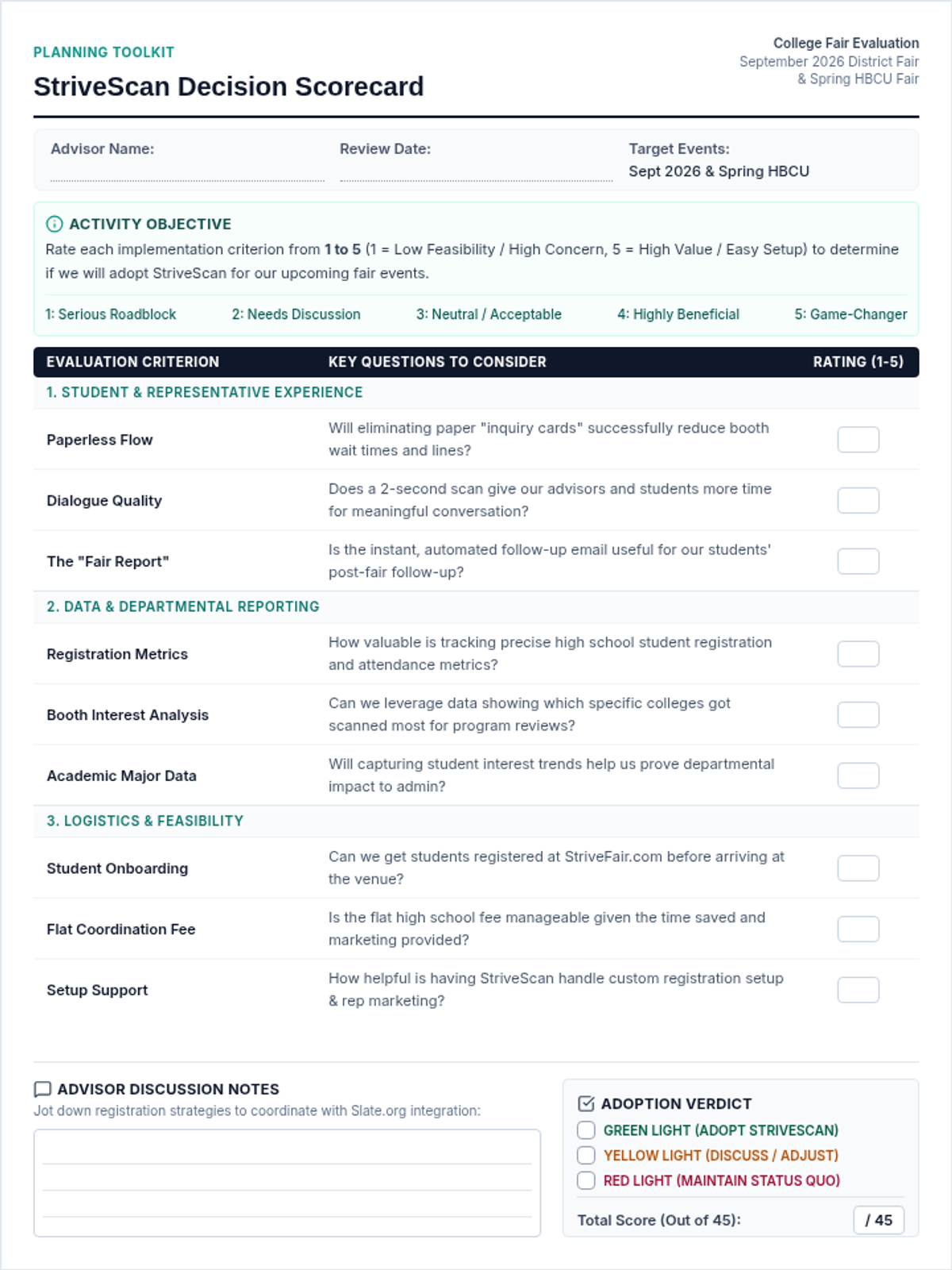
A brief lesson to help college and career advisors evaluate and plan the implementation of StriveScan for their upcoming fall college fair.
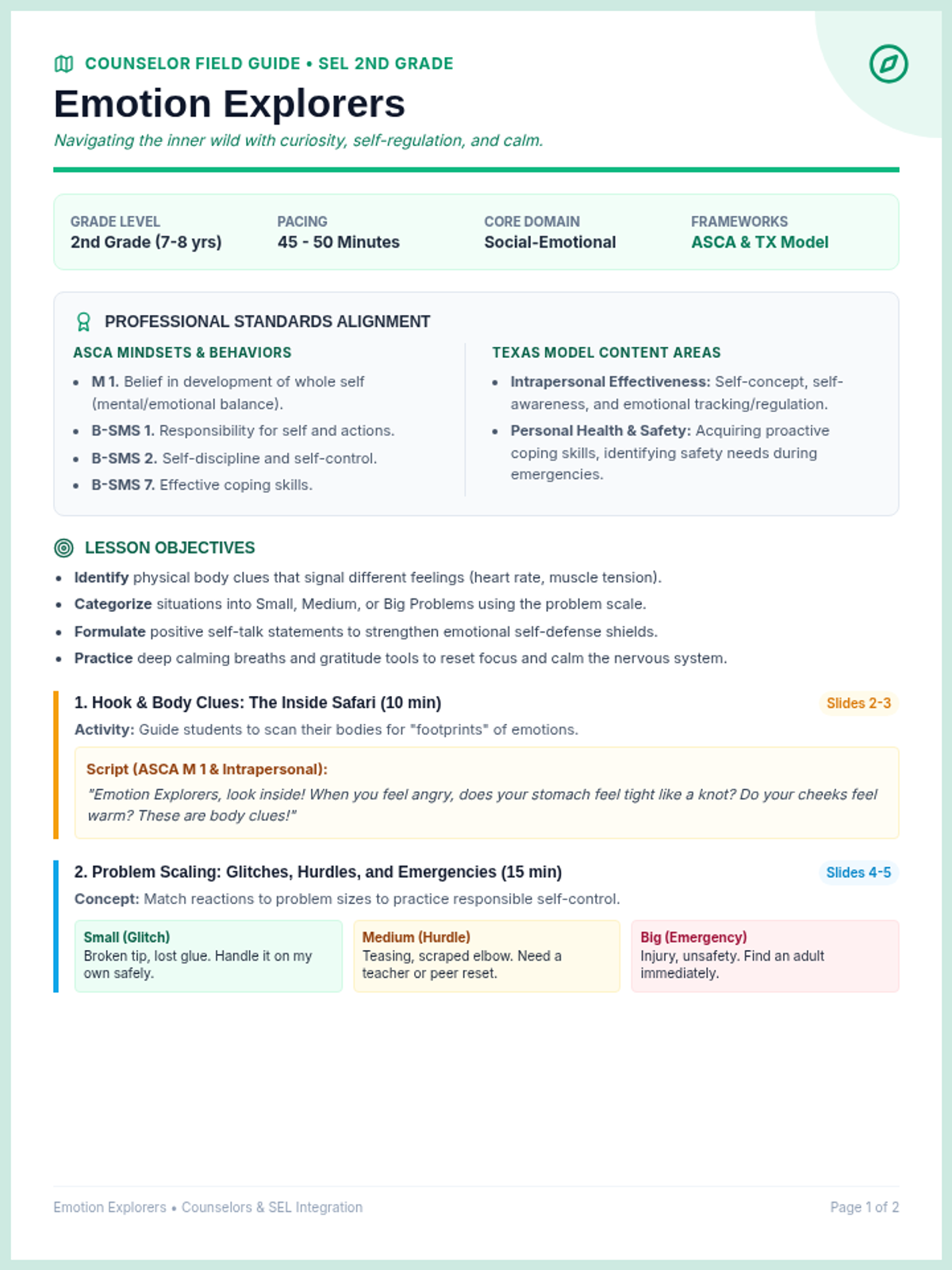
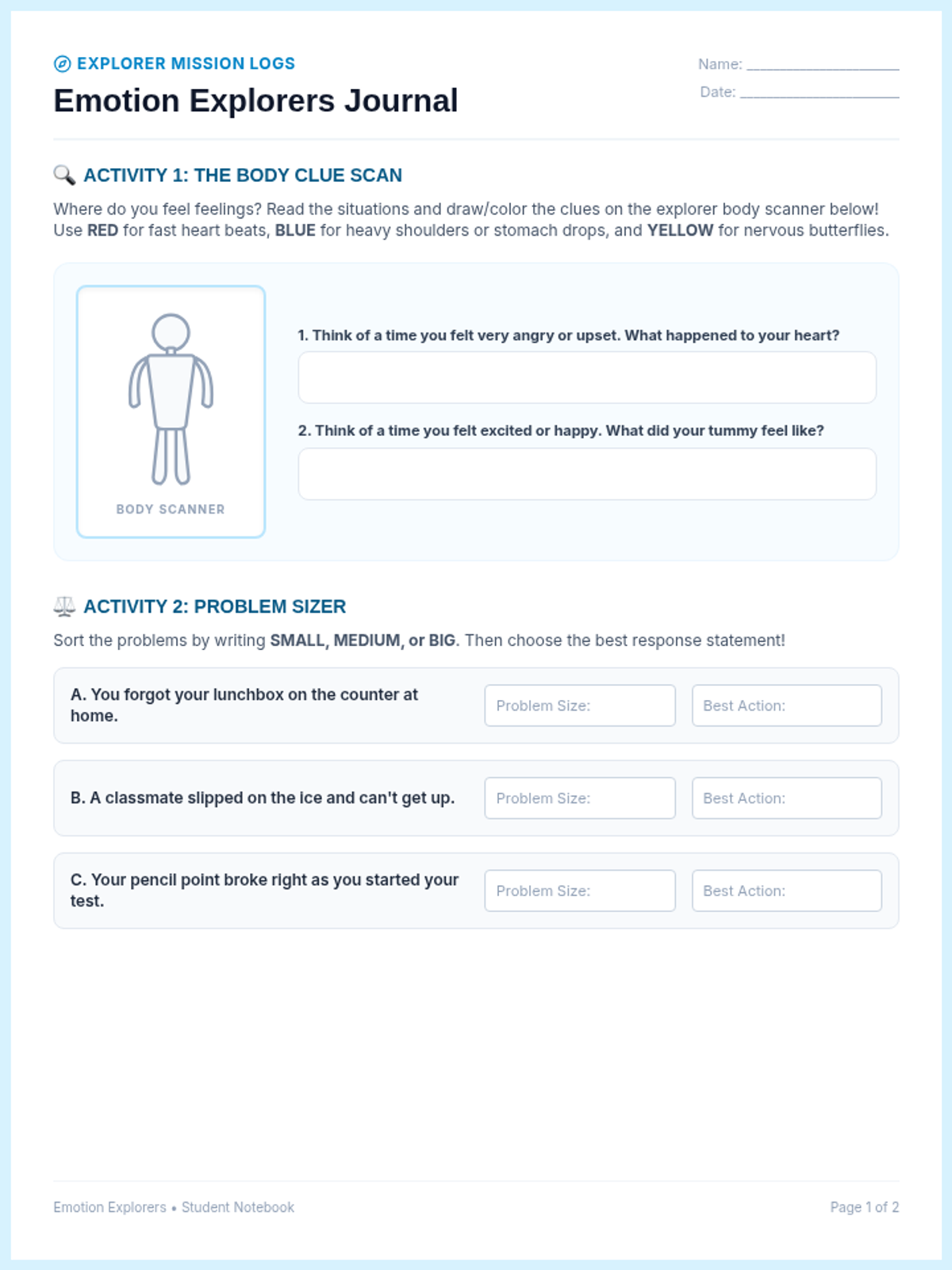
A comprehensive, counseling-focused social-emotional learning lesson for second graders to identify and manage emotions, fully aligned with ASCA Mindsets & Behaviors and the Texas Model. Students learn to spot physiological clues, sort the size of their problems, use positive self-talk, and practice mindful gratitude.
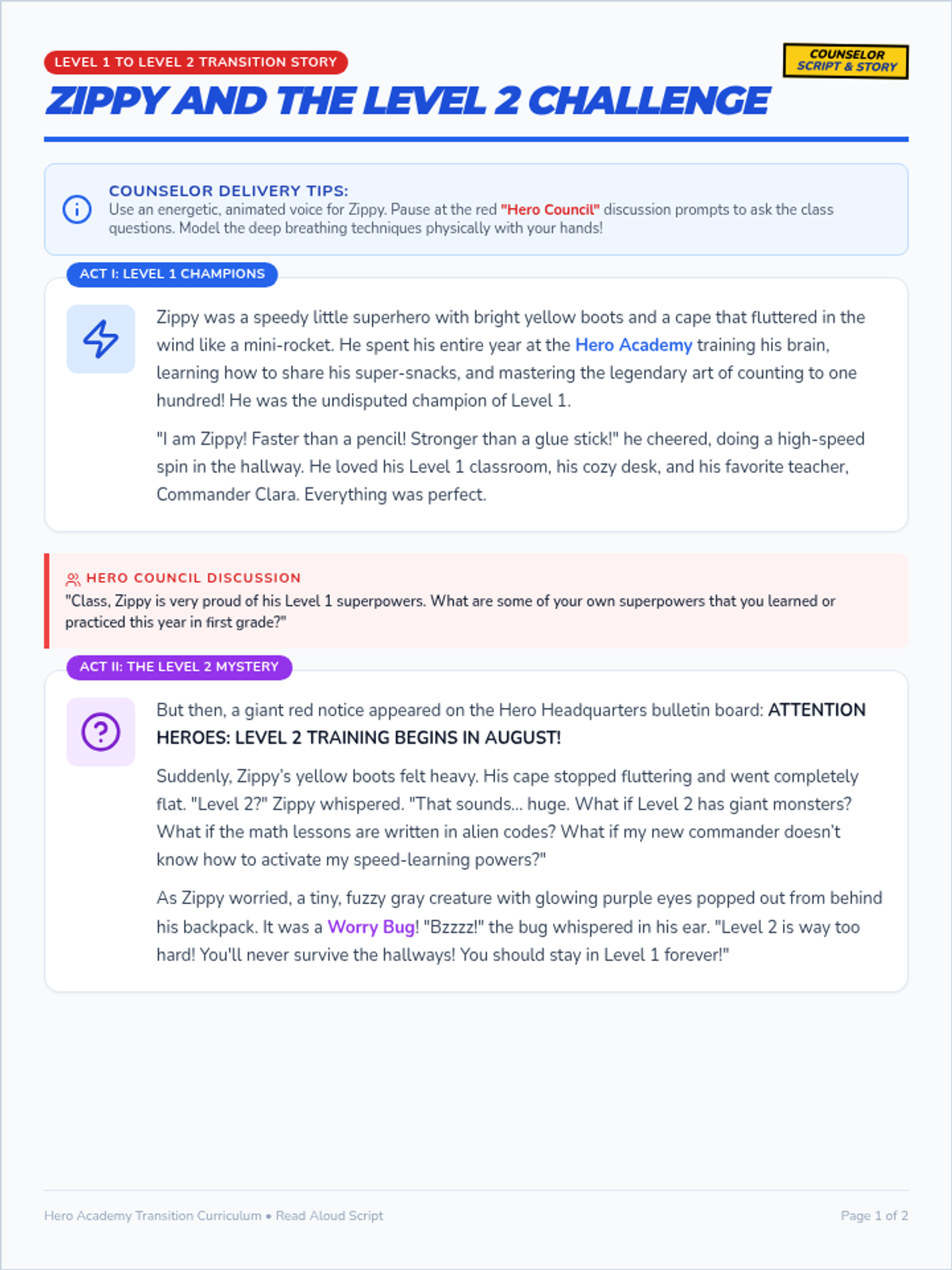
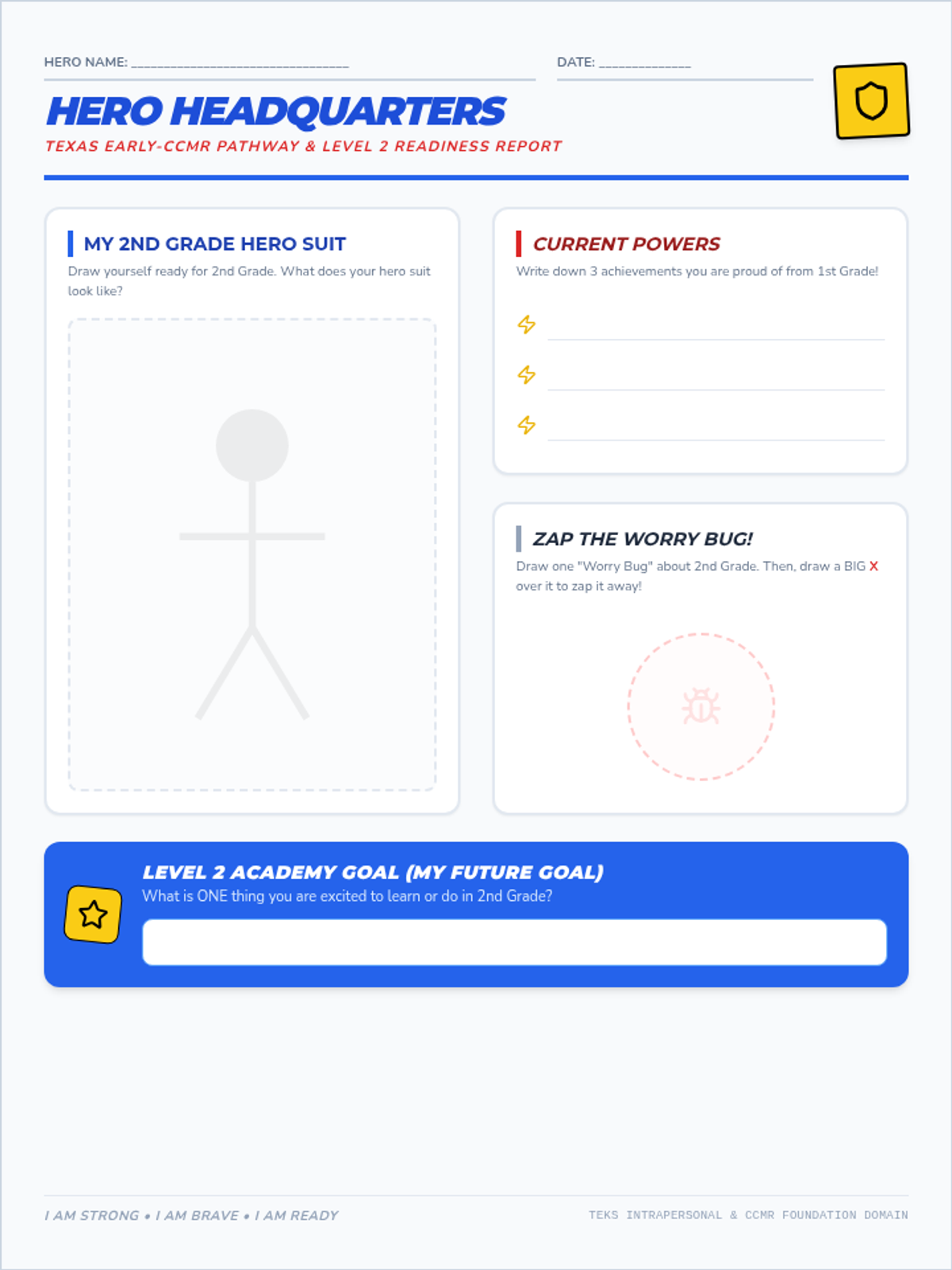
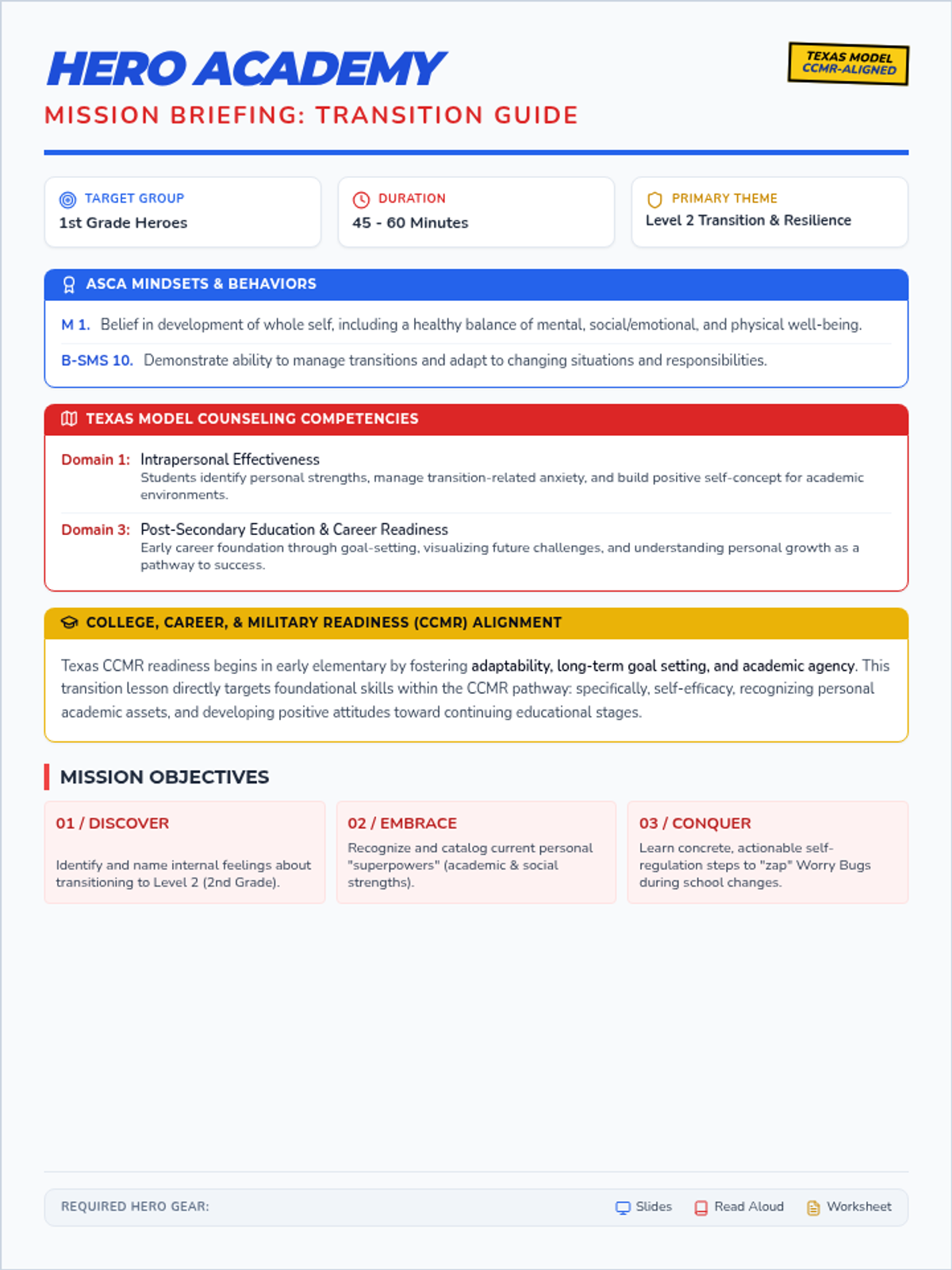
A Texas Model-aligned counseling transition lesson designed to help 1st-grade students manage anxiety about moving to 2nd grade. Framed as a 'Superhero Academy,' this lesson builds Intrapersonal Effectiveness and early CCMR foundations by celebrating existing strengths, building self-efficacy, and setting academic goals.
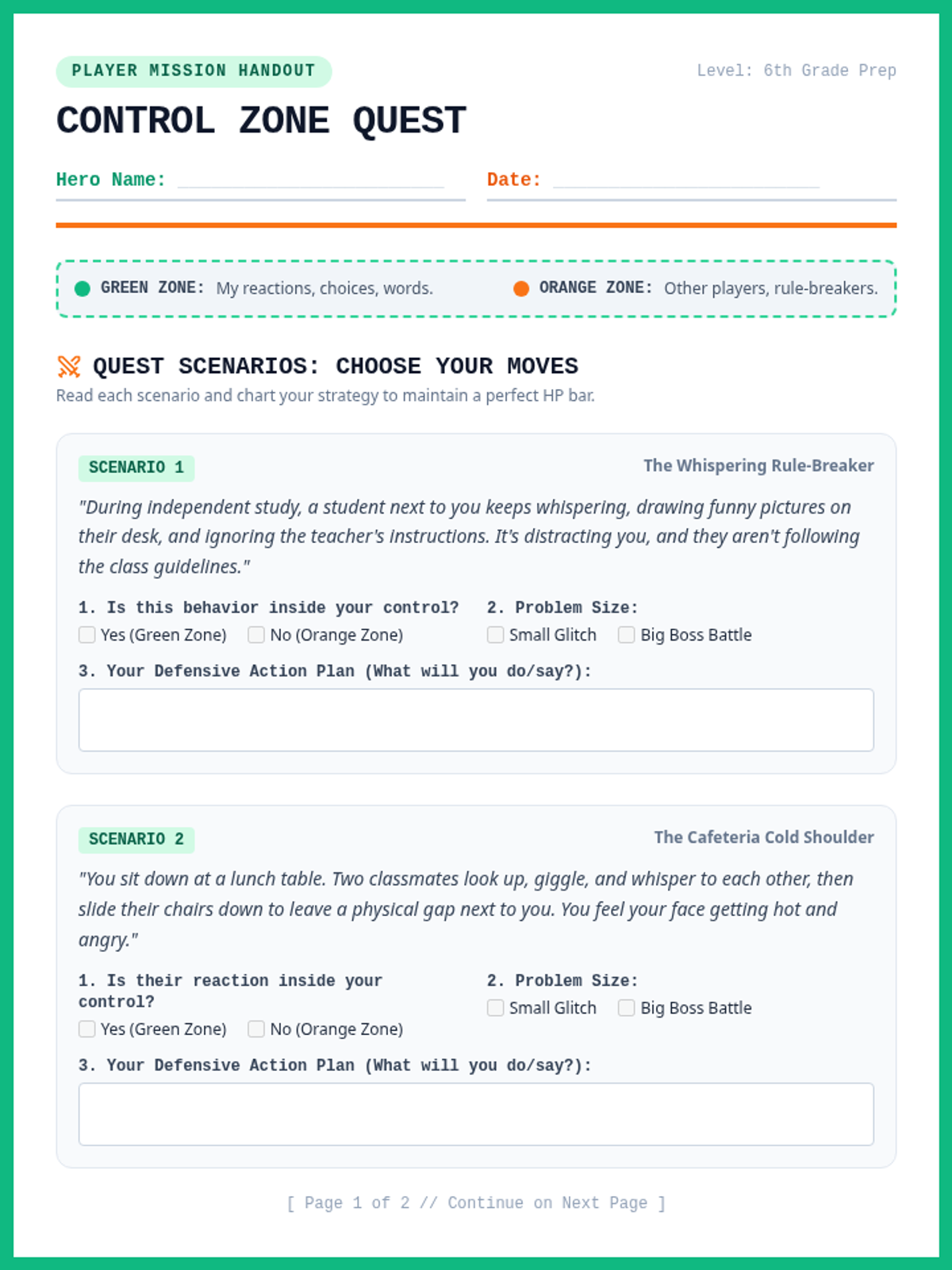
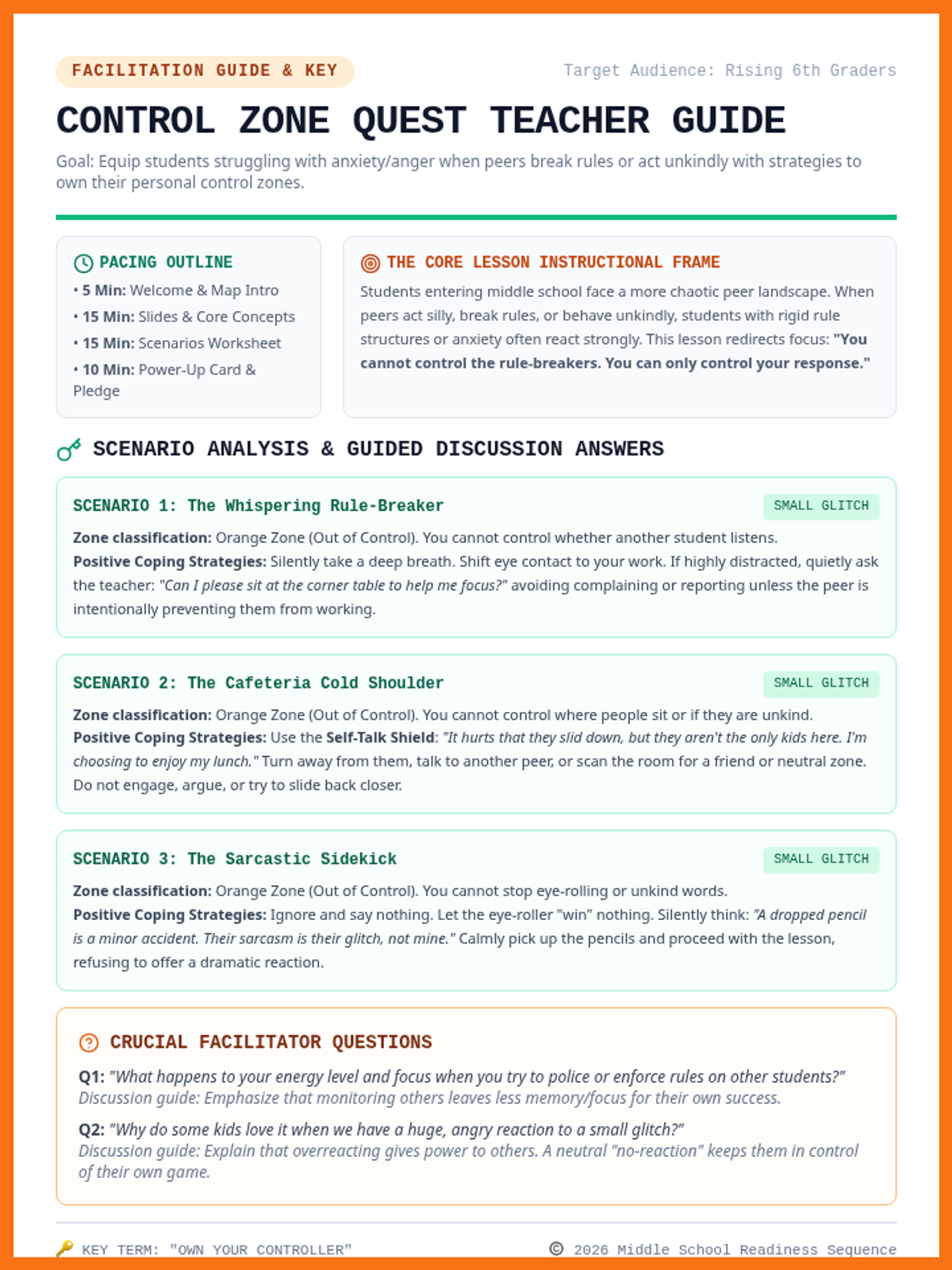
A transition lesson for rising sixth graders to master the Circle of Control and distinguish between big and small problems. Students learn practical coping strategies for peer conflicts and rule-breaking using a gamified quest theme.
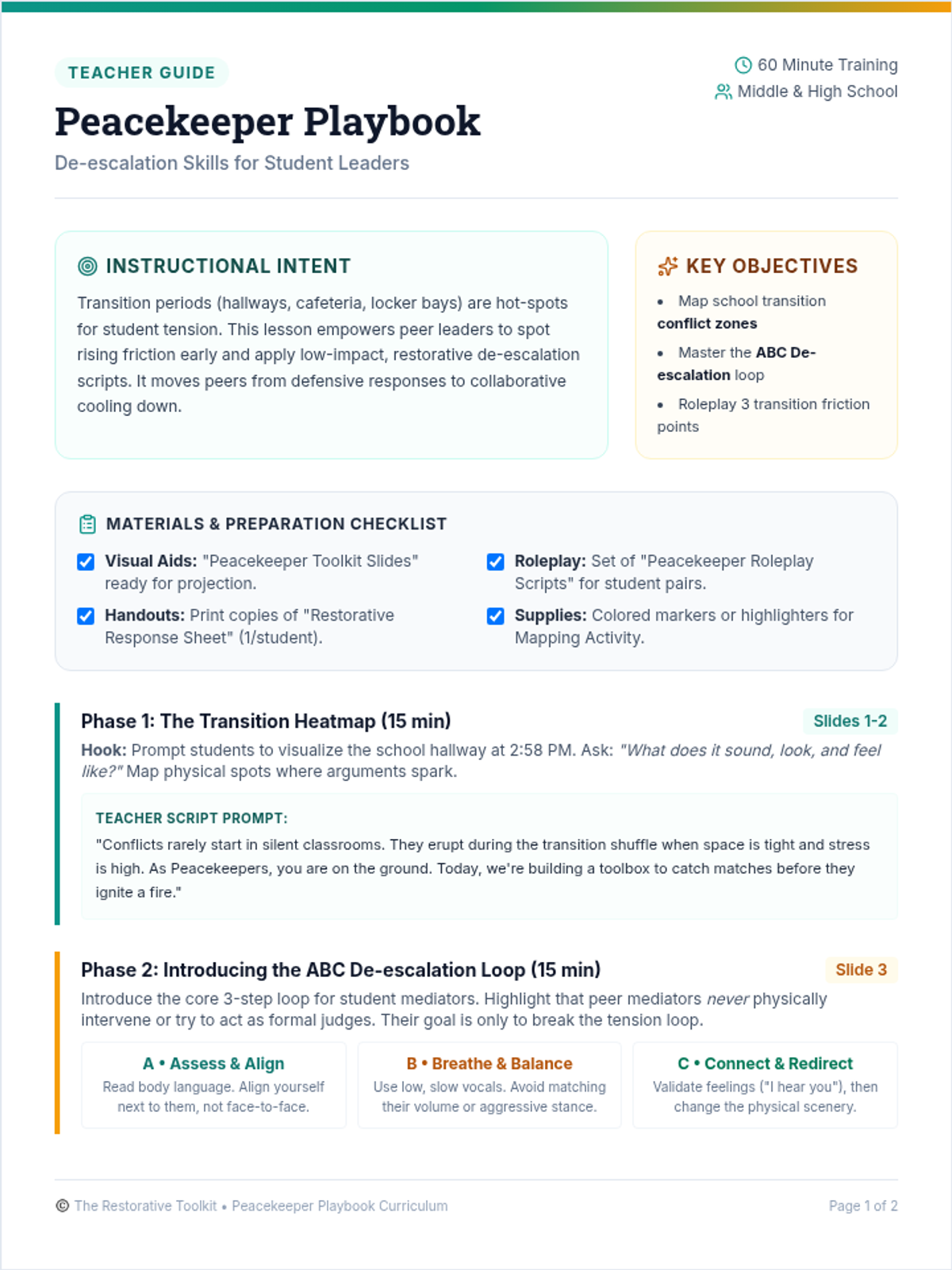
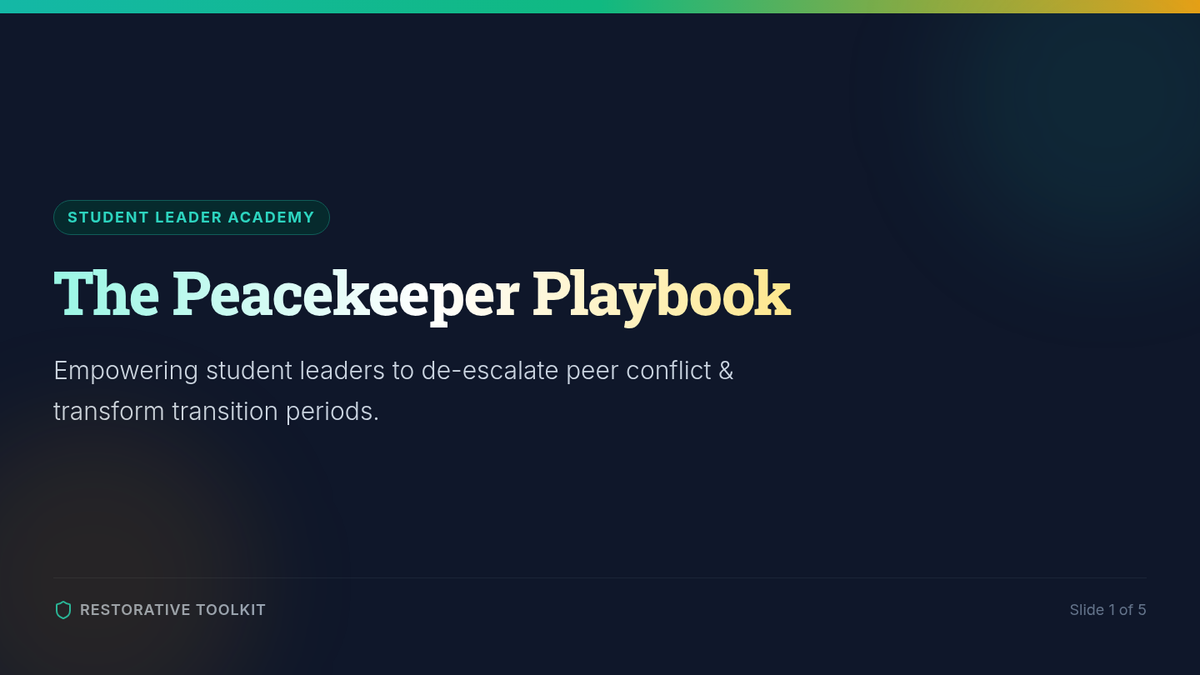
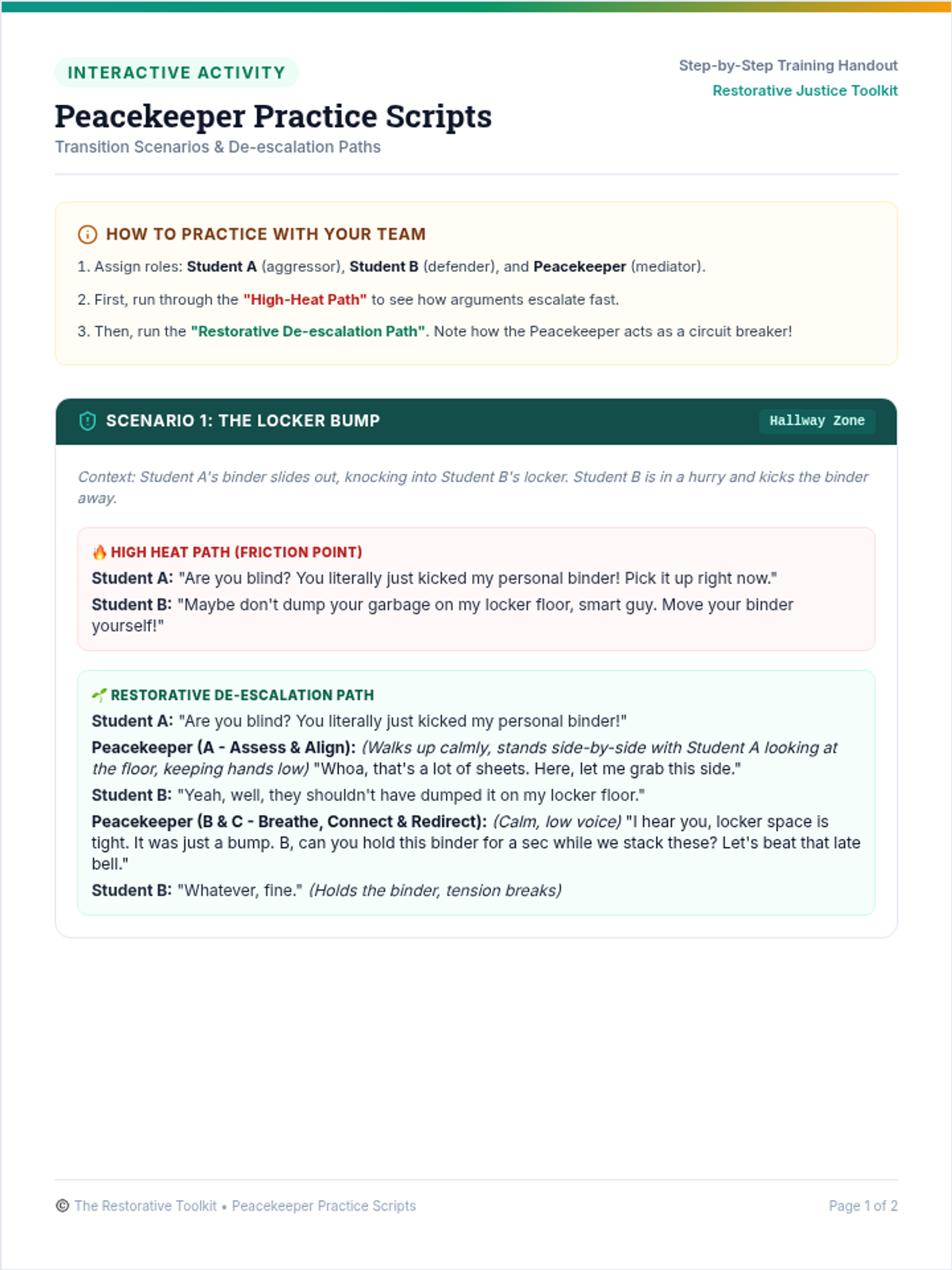
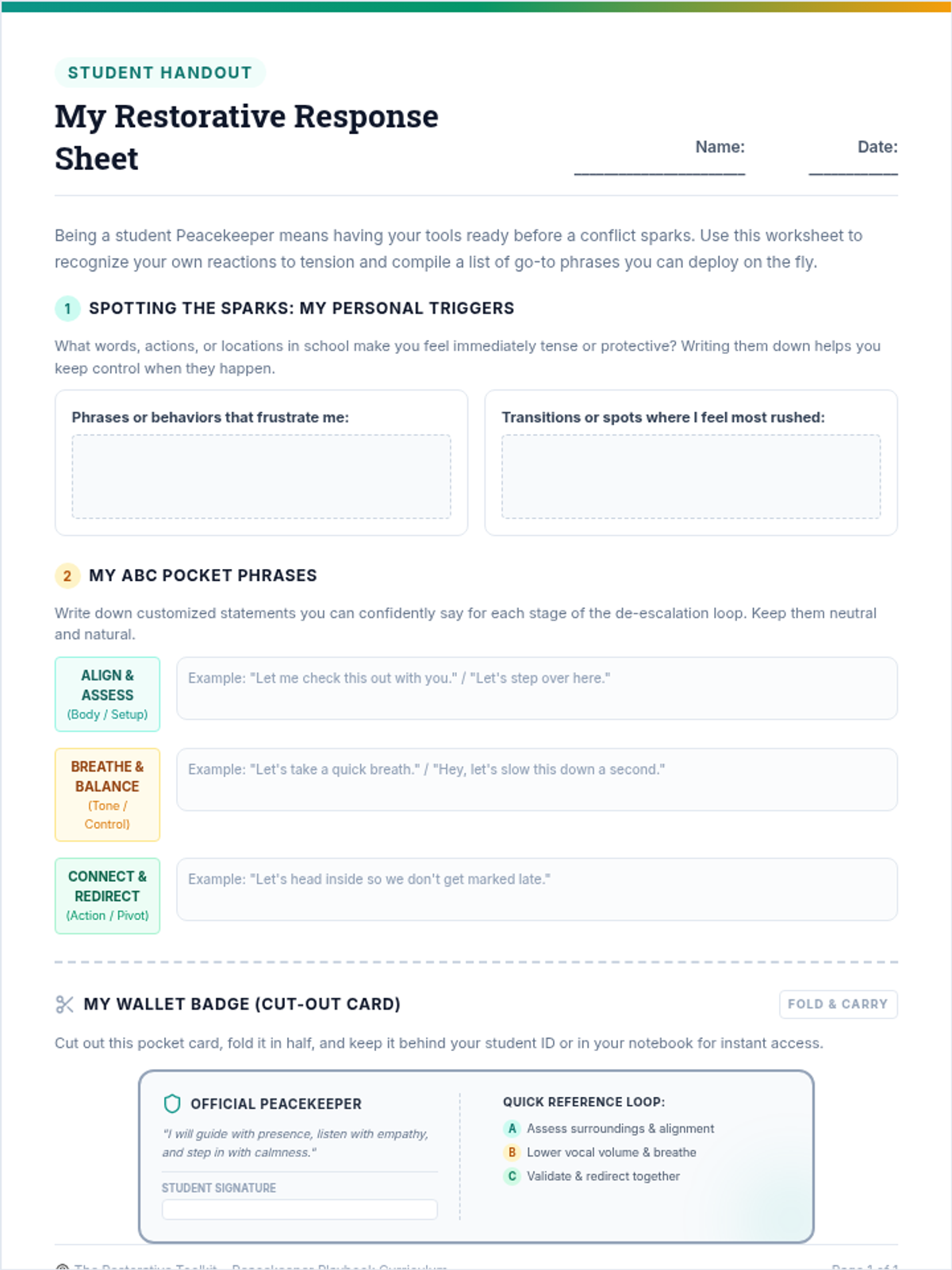
An interactive, student-led curriculum empowering middle and high school leaders to de-escalate minor peer conflicts during high-stress transition periods, building sustainable restorative justice skills.
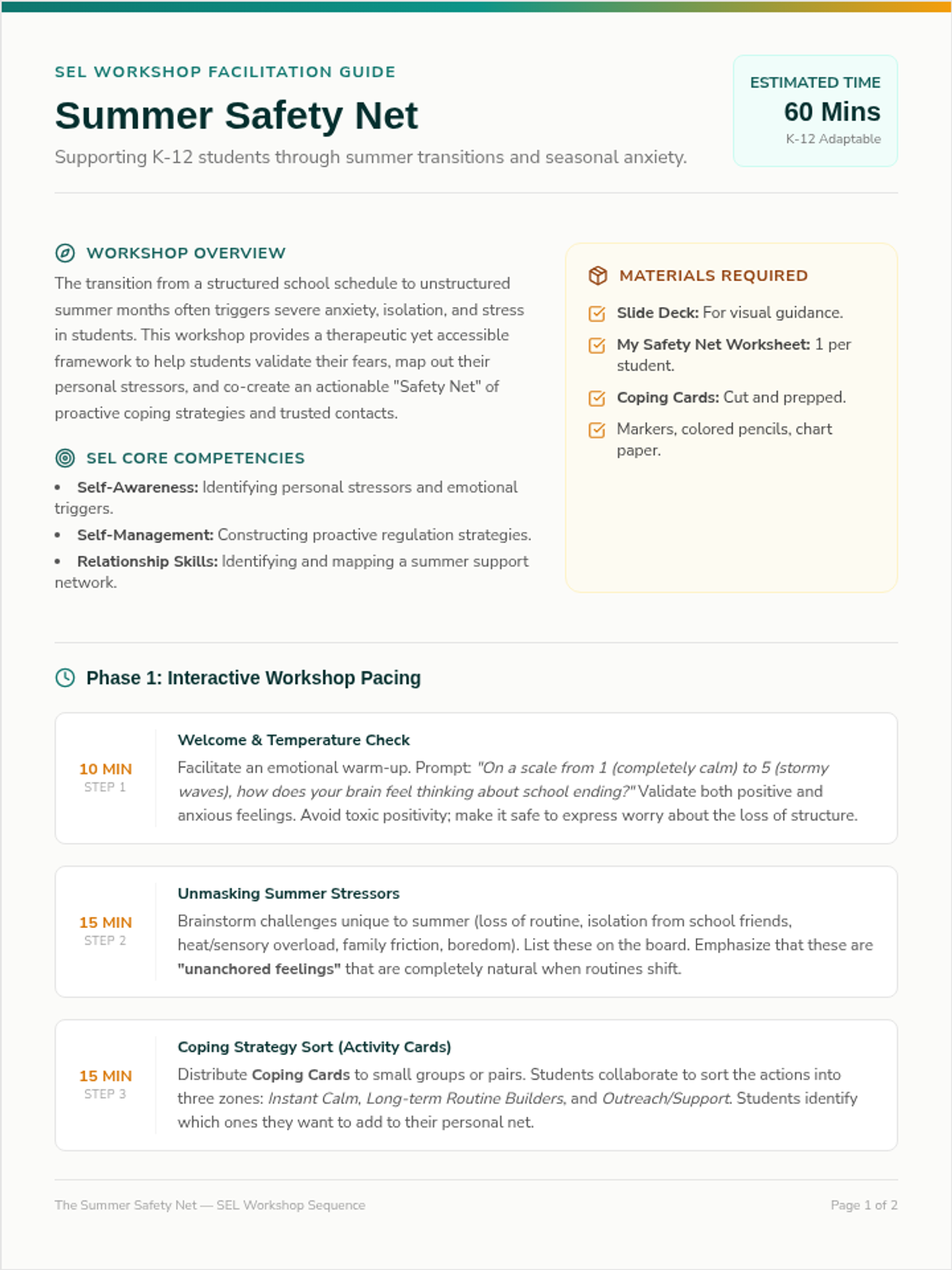
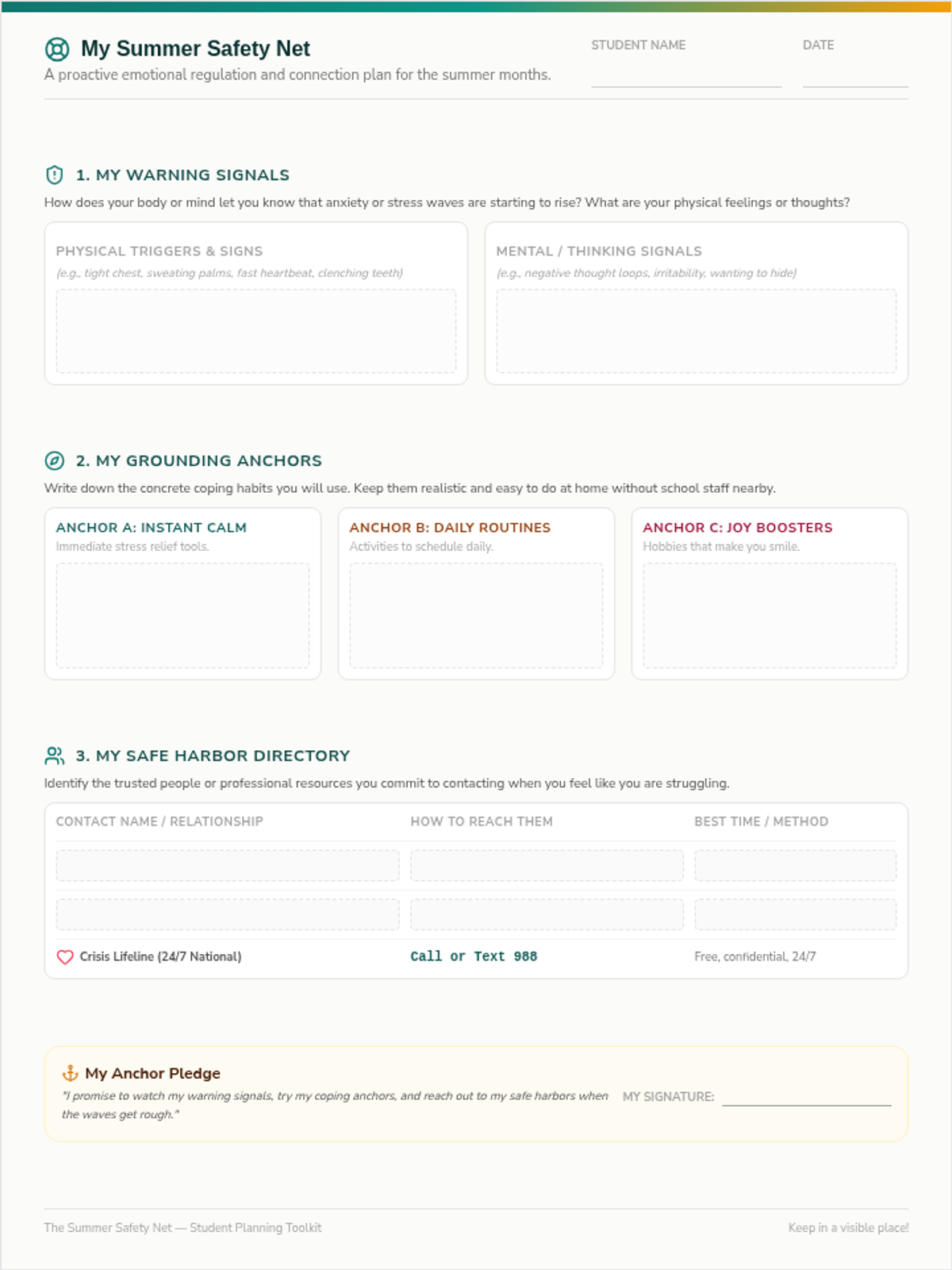
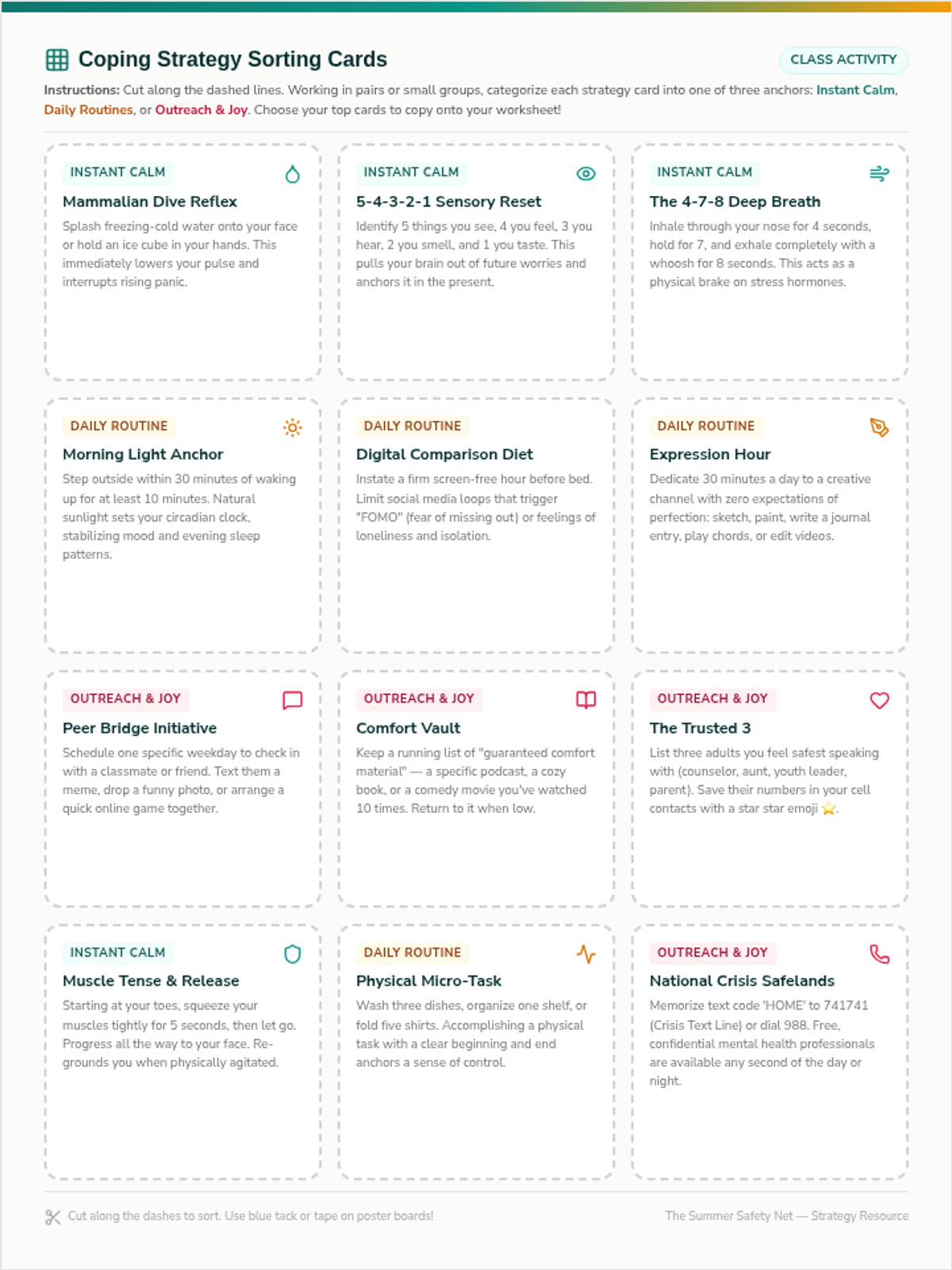
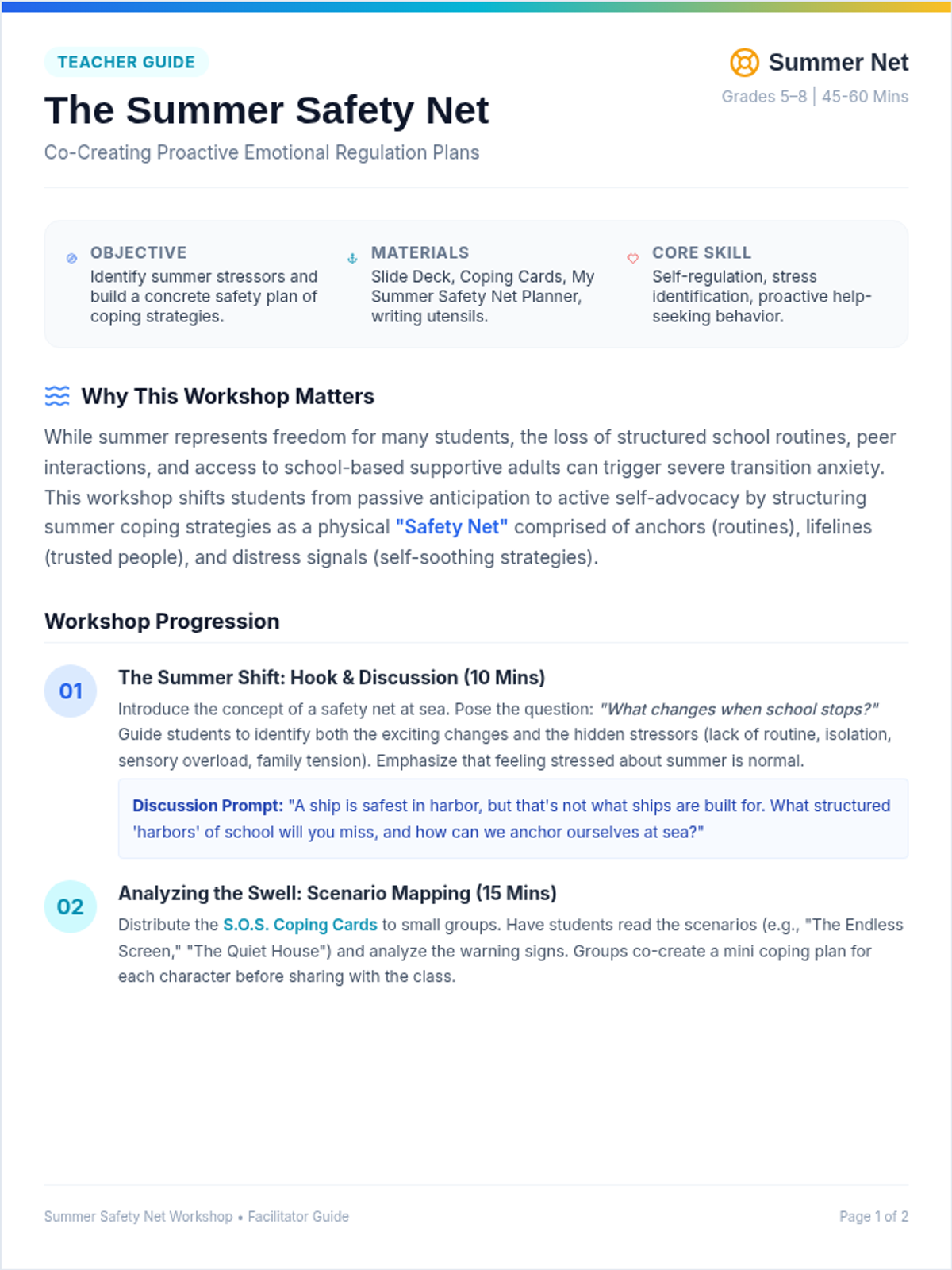
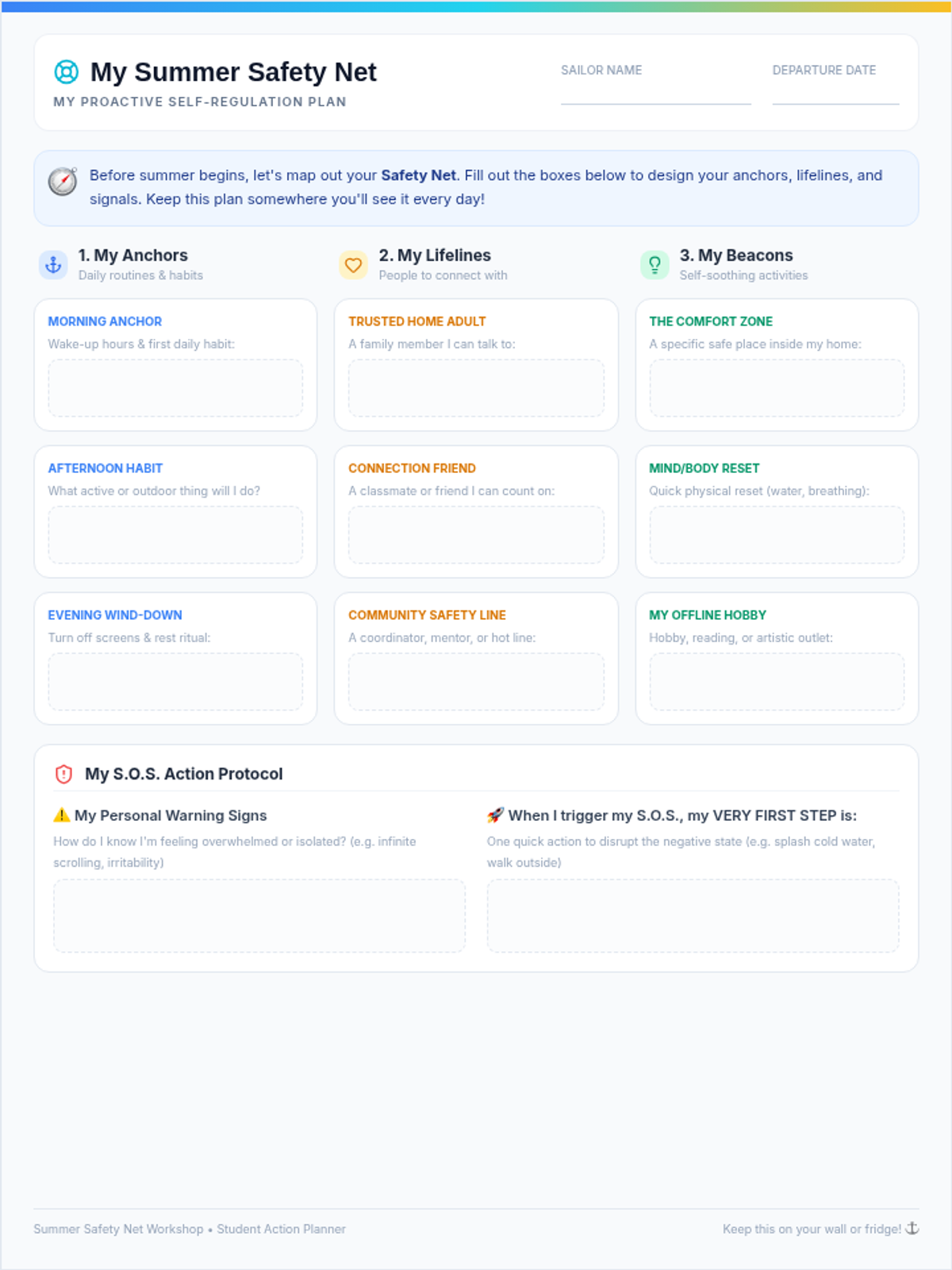
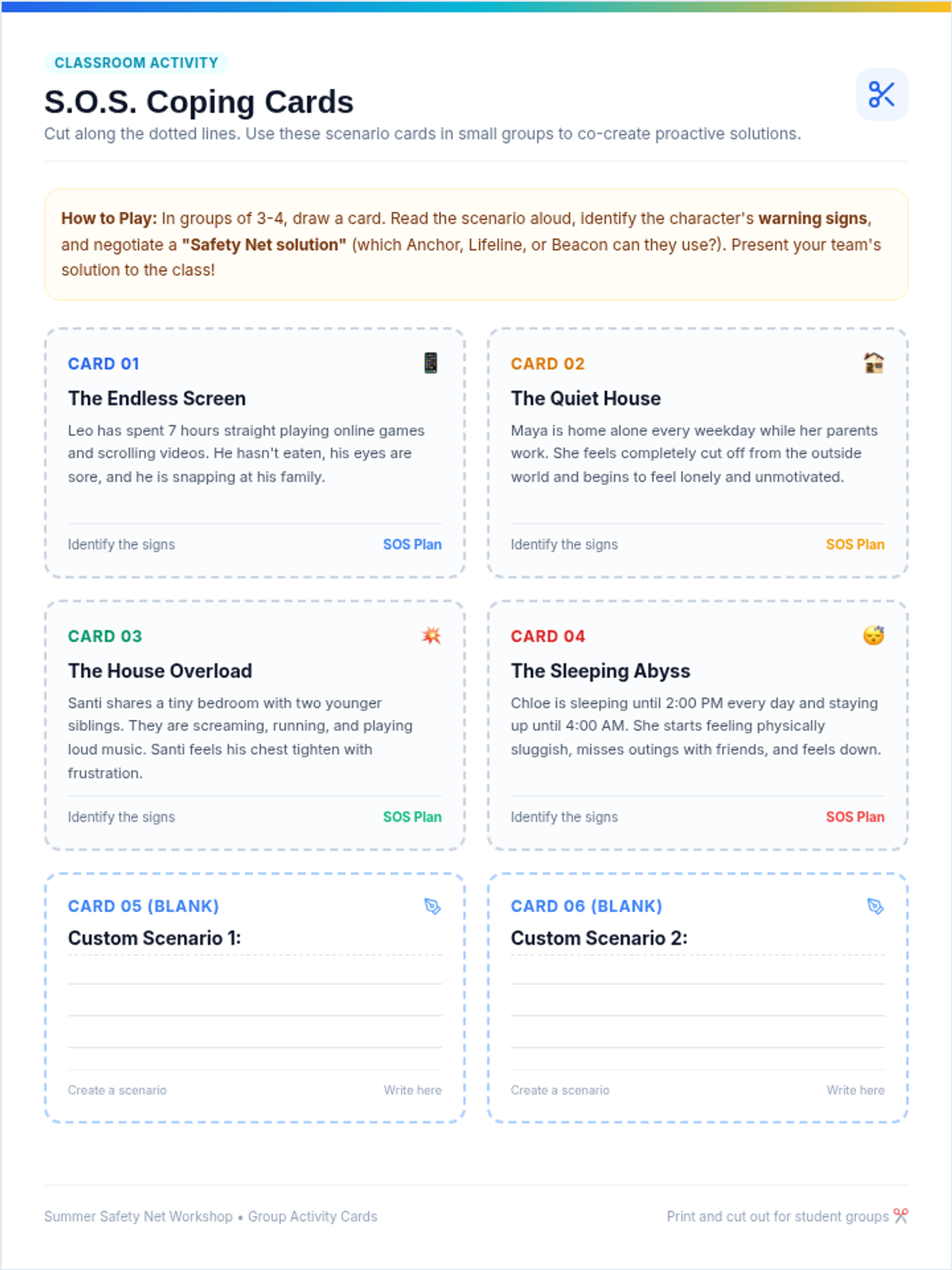
A collaborative mental health workshop designed to help students navigate summer transition anxiety by identifying stressors, mapping coping strategies, and co-creating a personalized proactive emotional regulation plan.
A collaborative workshop designed to help students identify summer stressors and co-create proactive plans for emotional regulation outside of school. This lesson builds concrete coping strategies and 'safety nets' for students transitioning to summer break.
A comprehensive social-emotional learning lesson for second graders to identify and manage emotions. Students learn to spot physiological clues, sort the size of their problems, use positive self-talk, and practice mindful gratitude.