A fun, interactive game where students act out and guess various emotions to build empathy and social-emotional skills.
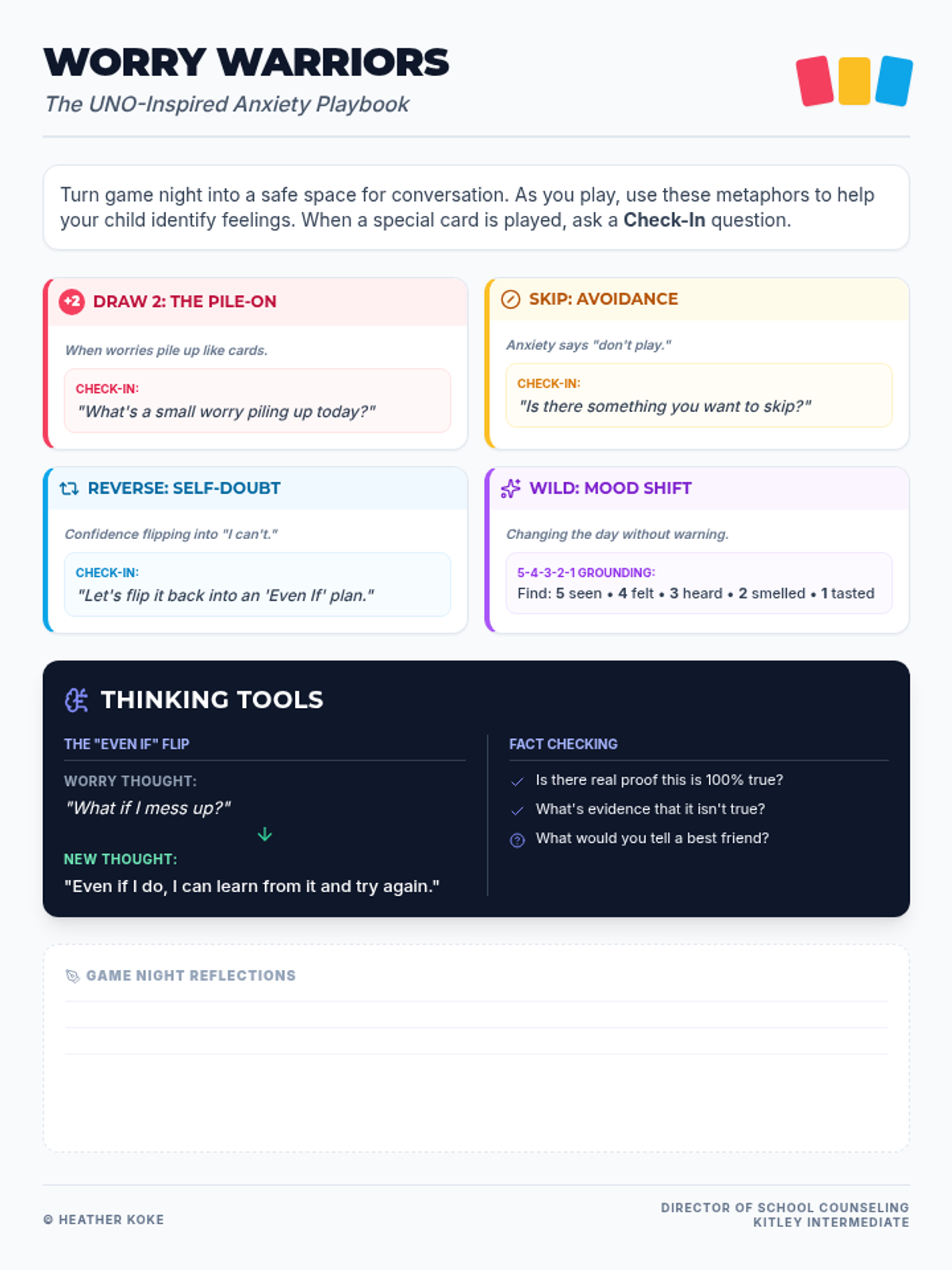
A family-focused session using standard card and block games to identify and reframe anxiety symptoms. Parents learn to lead conversations about stress through playful metaphors.
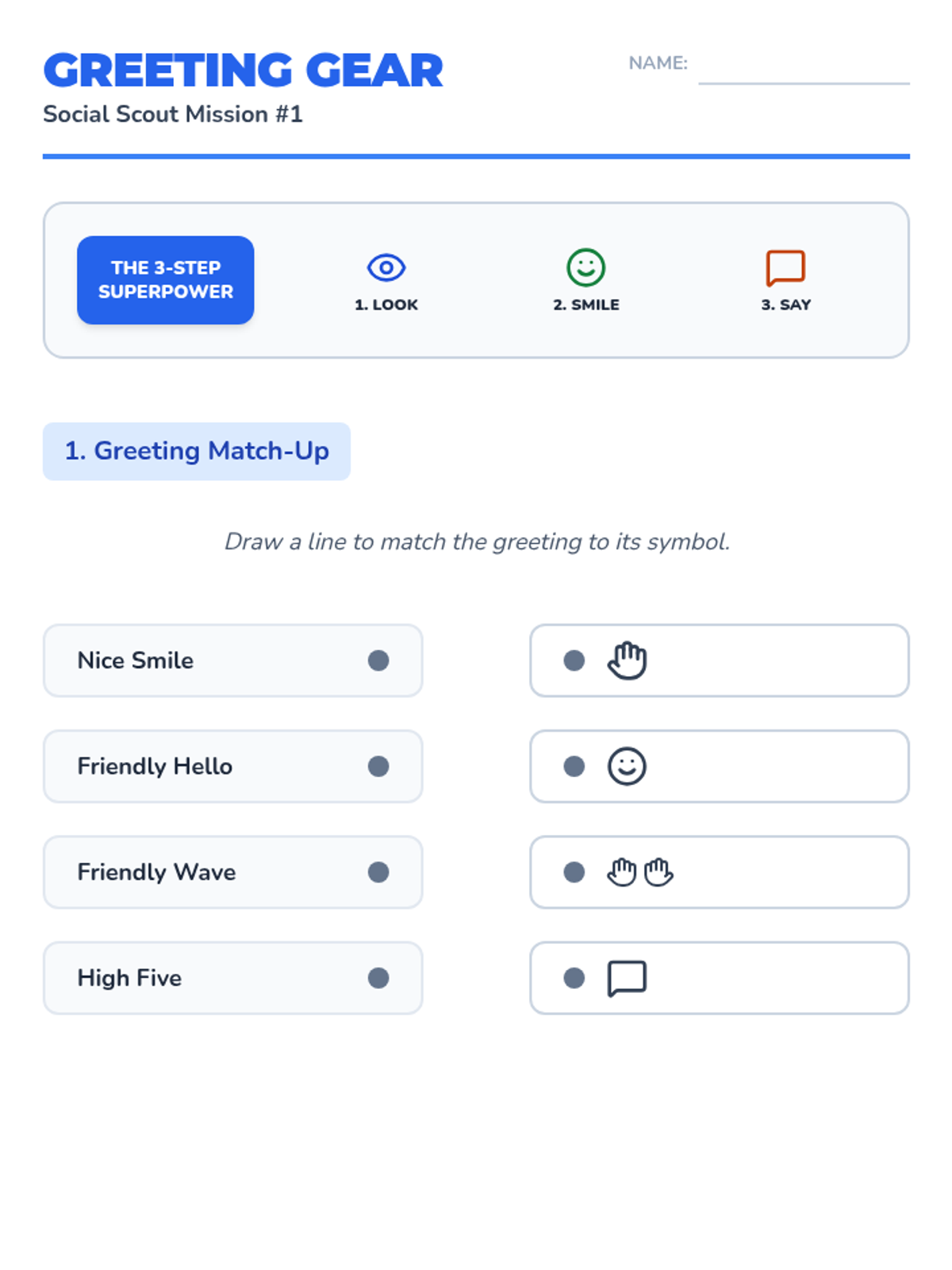
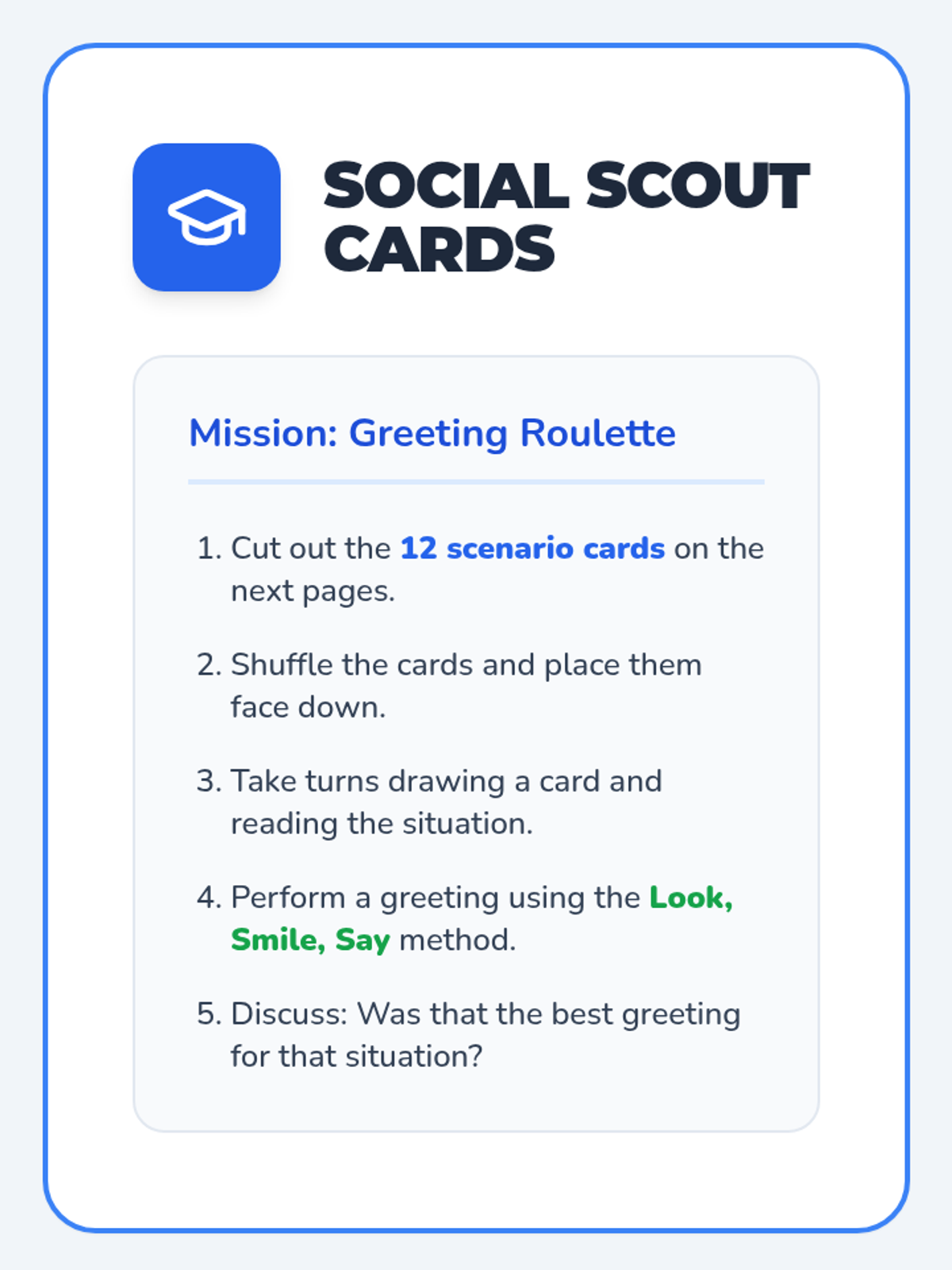
A foundational lesson on the mechanics of greeting friends, focusing on eye contact, body language, and choosing the right greeting for the right person.
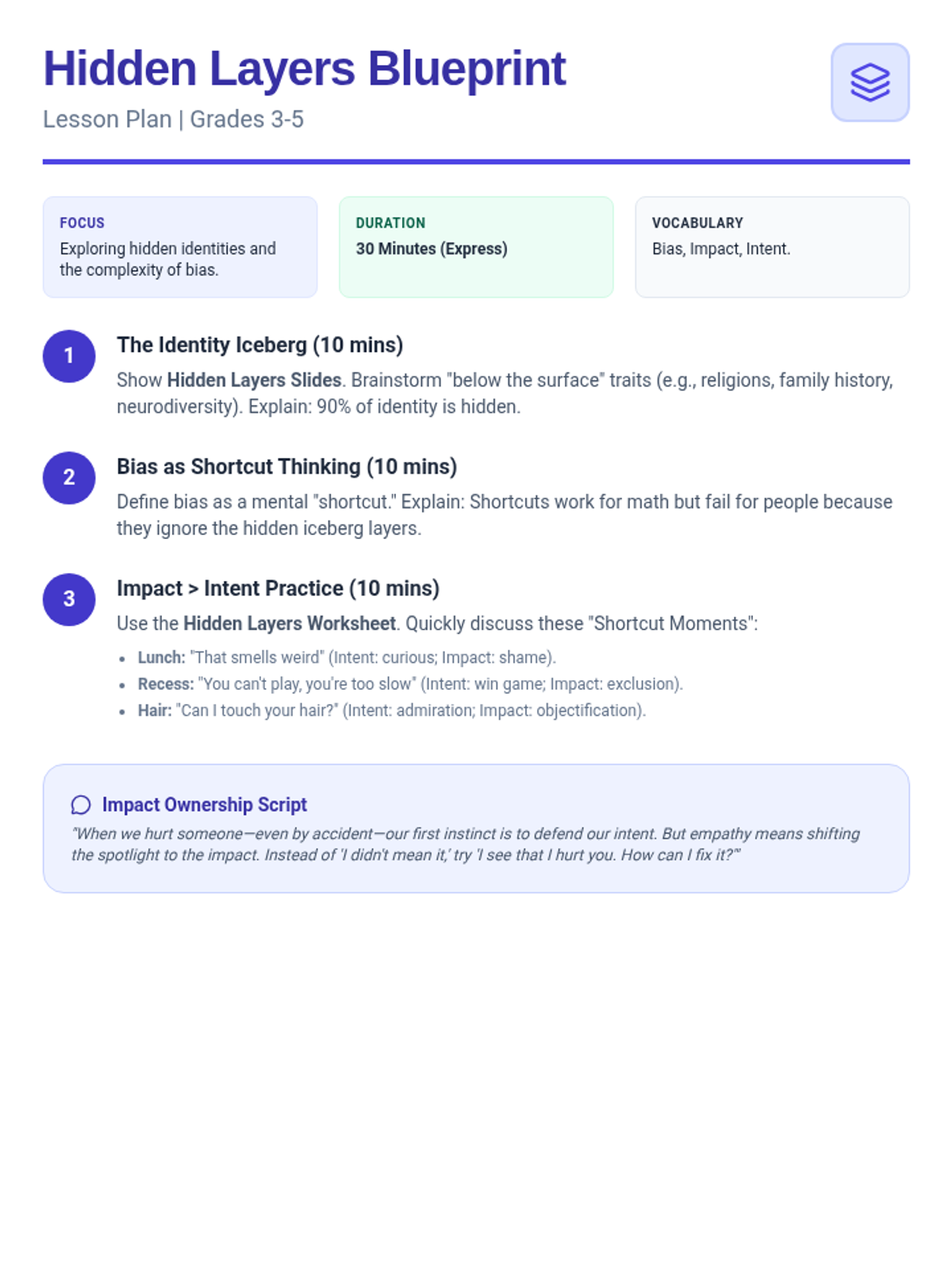
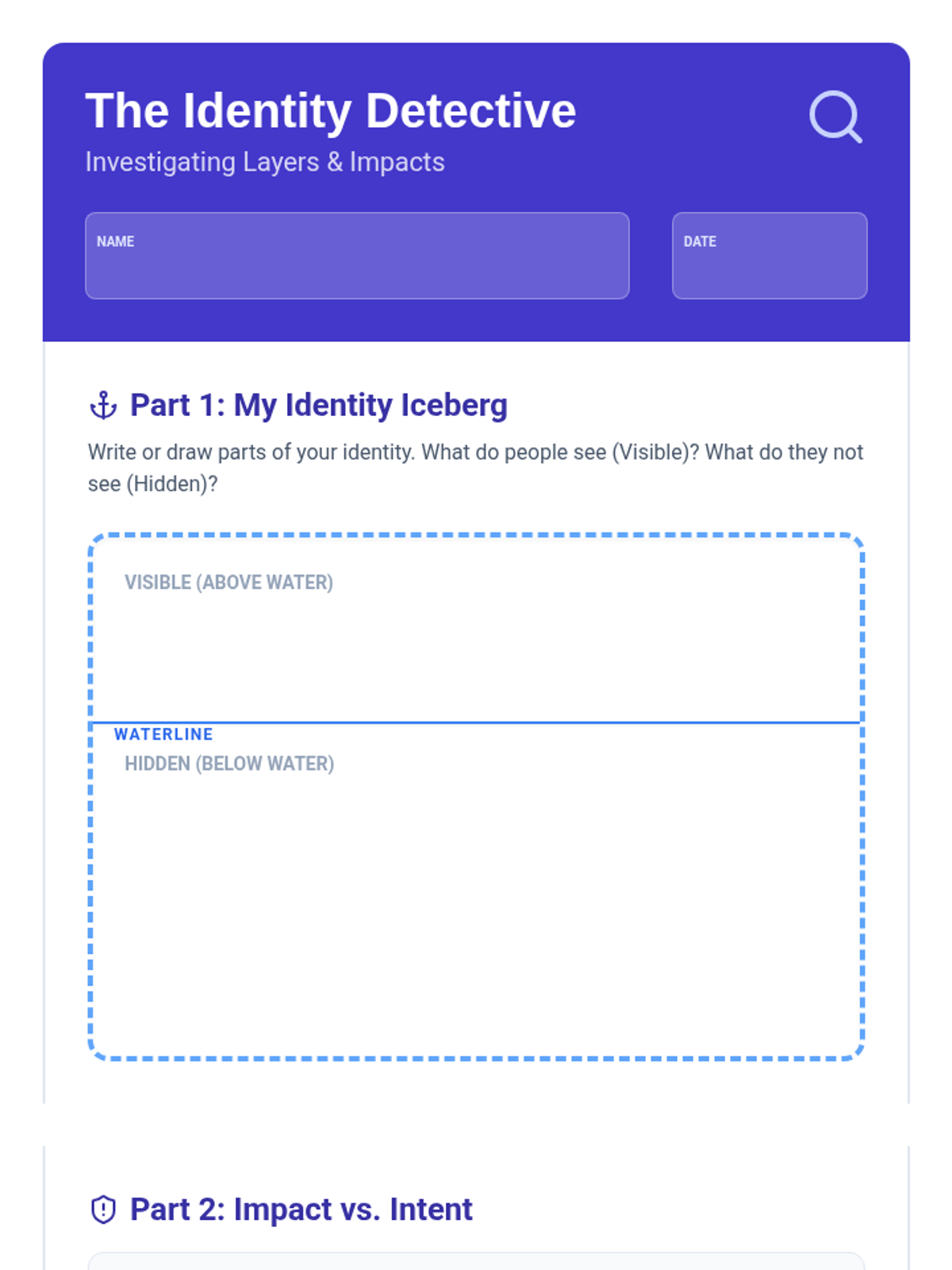
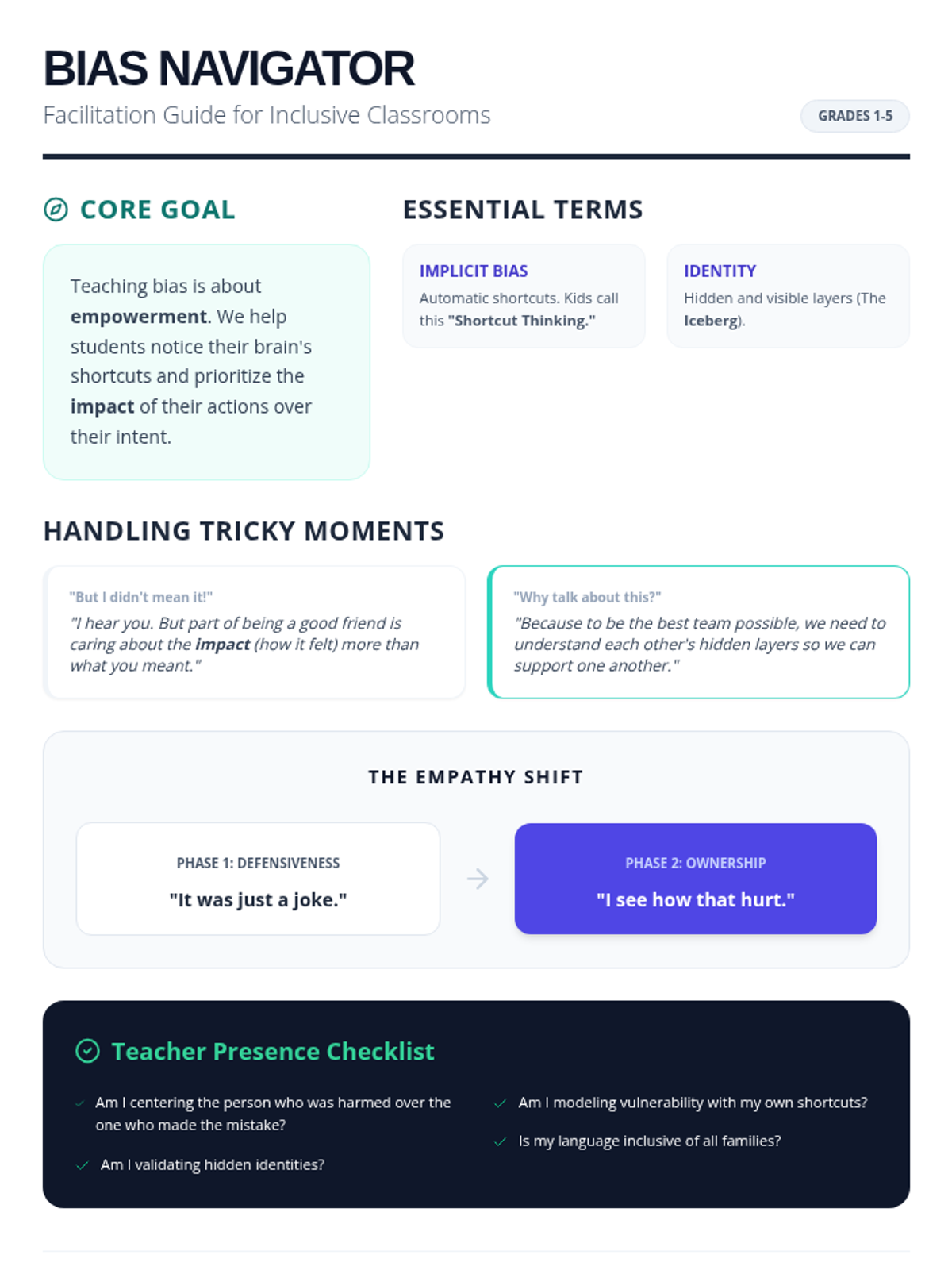
An advanced empathy lesson for 3rd through 5th graders exploring visible and invisible identities, shortcut thinking (bias), and the critical distinction between what we intend and the impact we have.
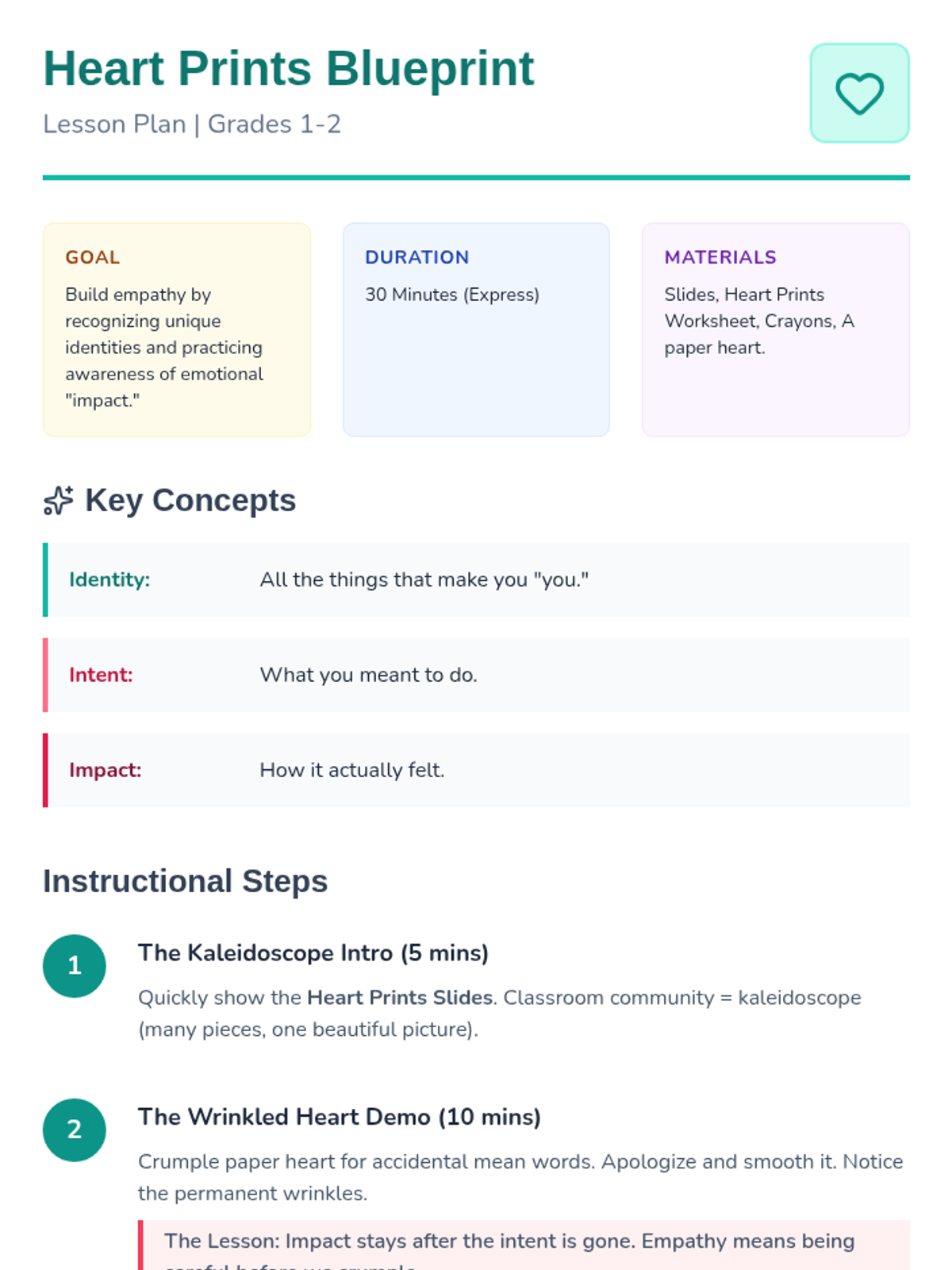
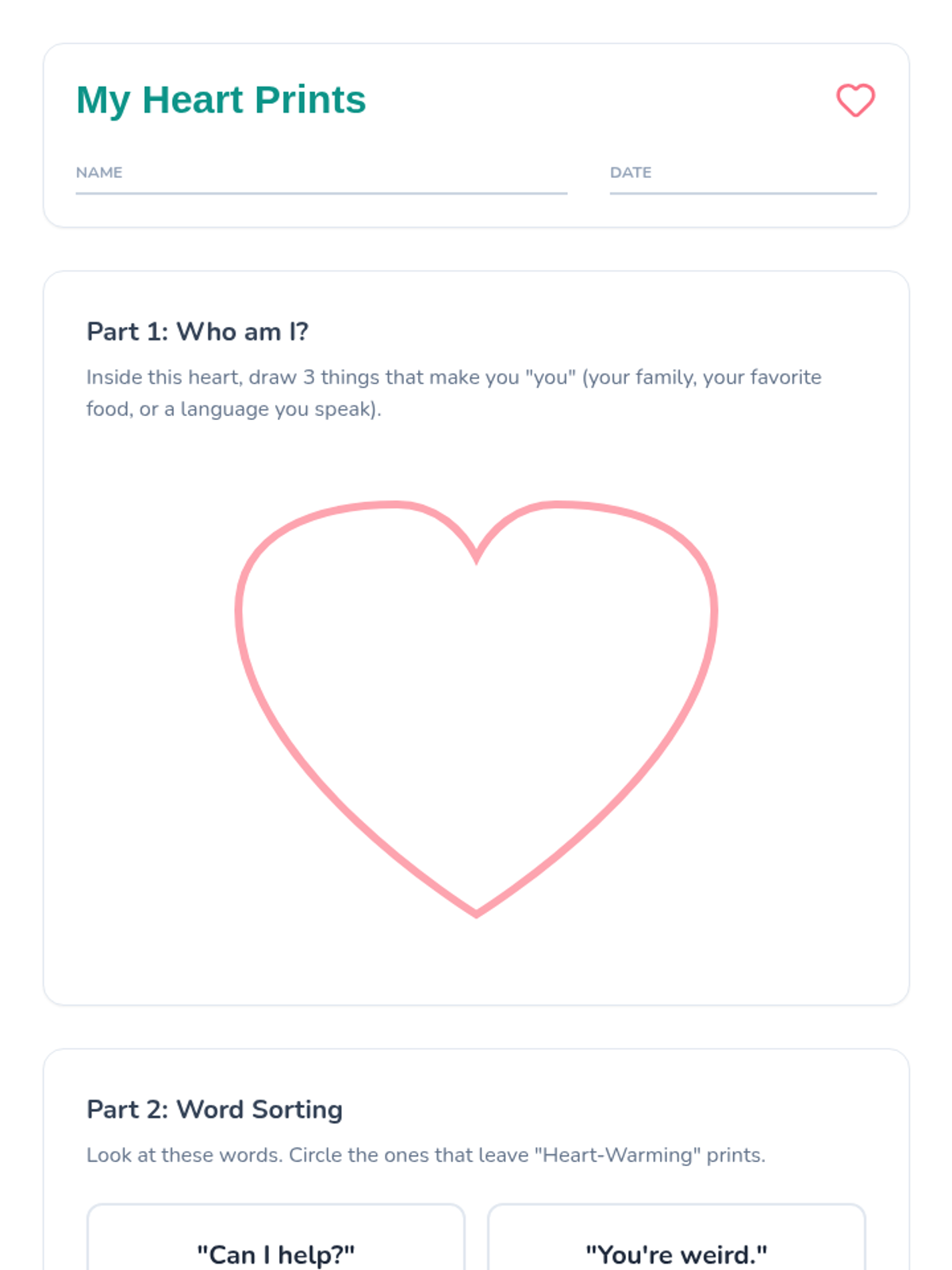
An introductory lesson for 1st and 2nd graders focused on identifying personal traits (identities) and understanding how our words can affect others' hearts, even when we don't mean to.
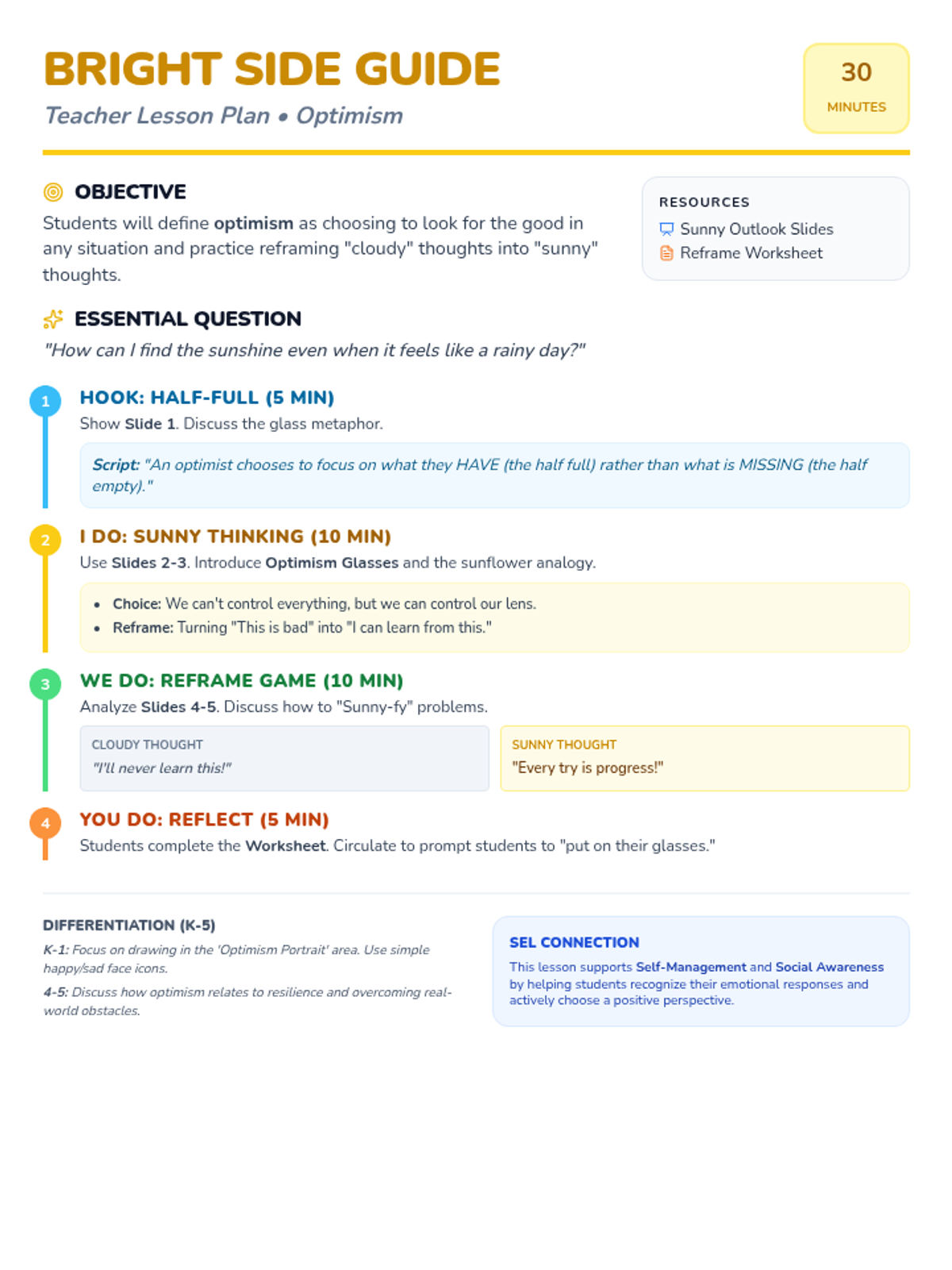
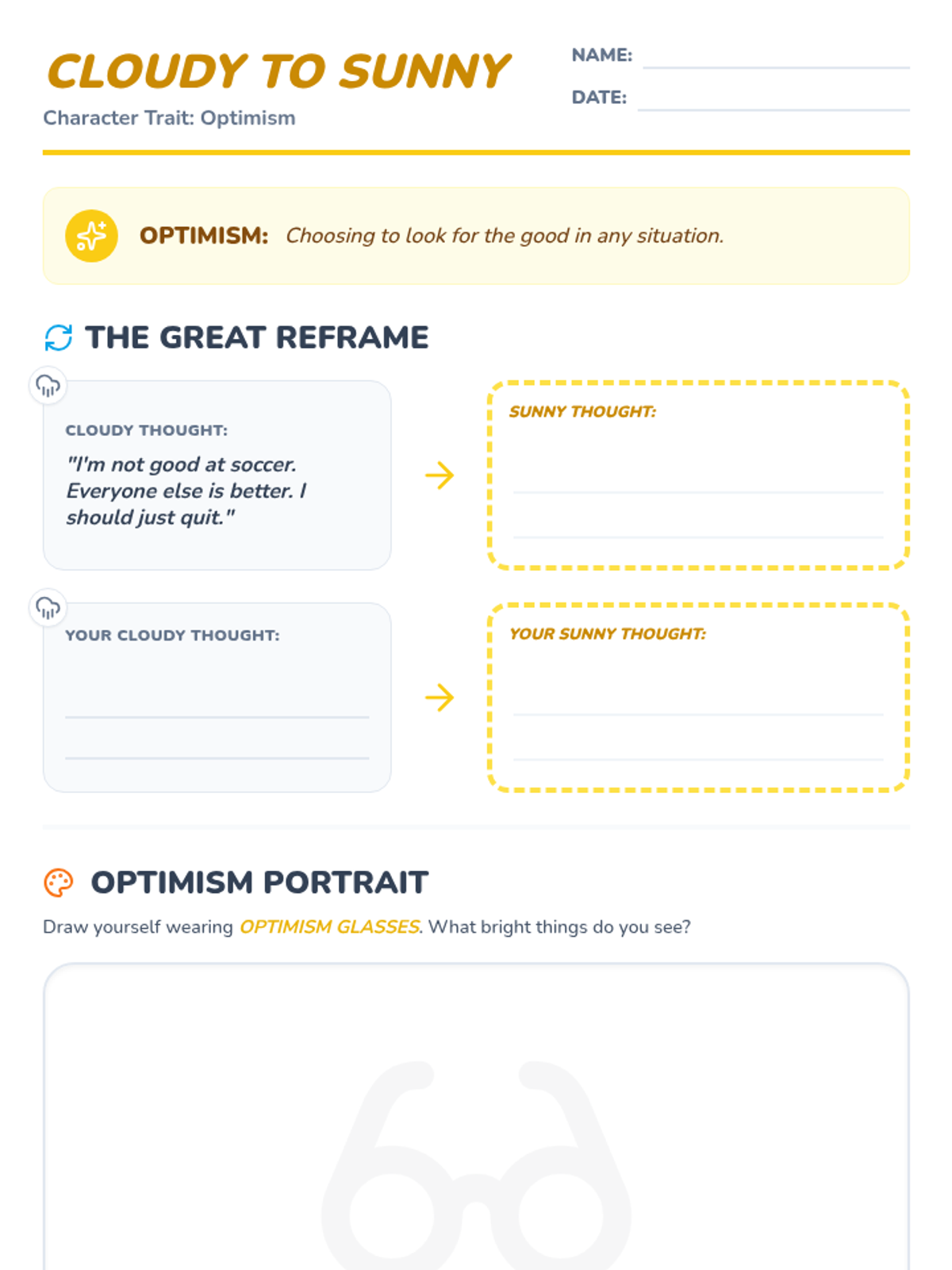
A 30-minute lesson designed to help elementary students understand and practice optimism through reframing challenges and finding the 'bright side' of situations.
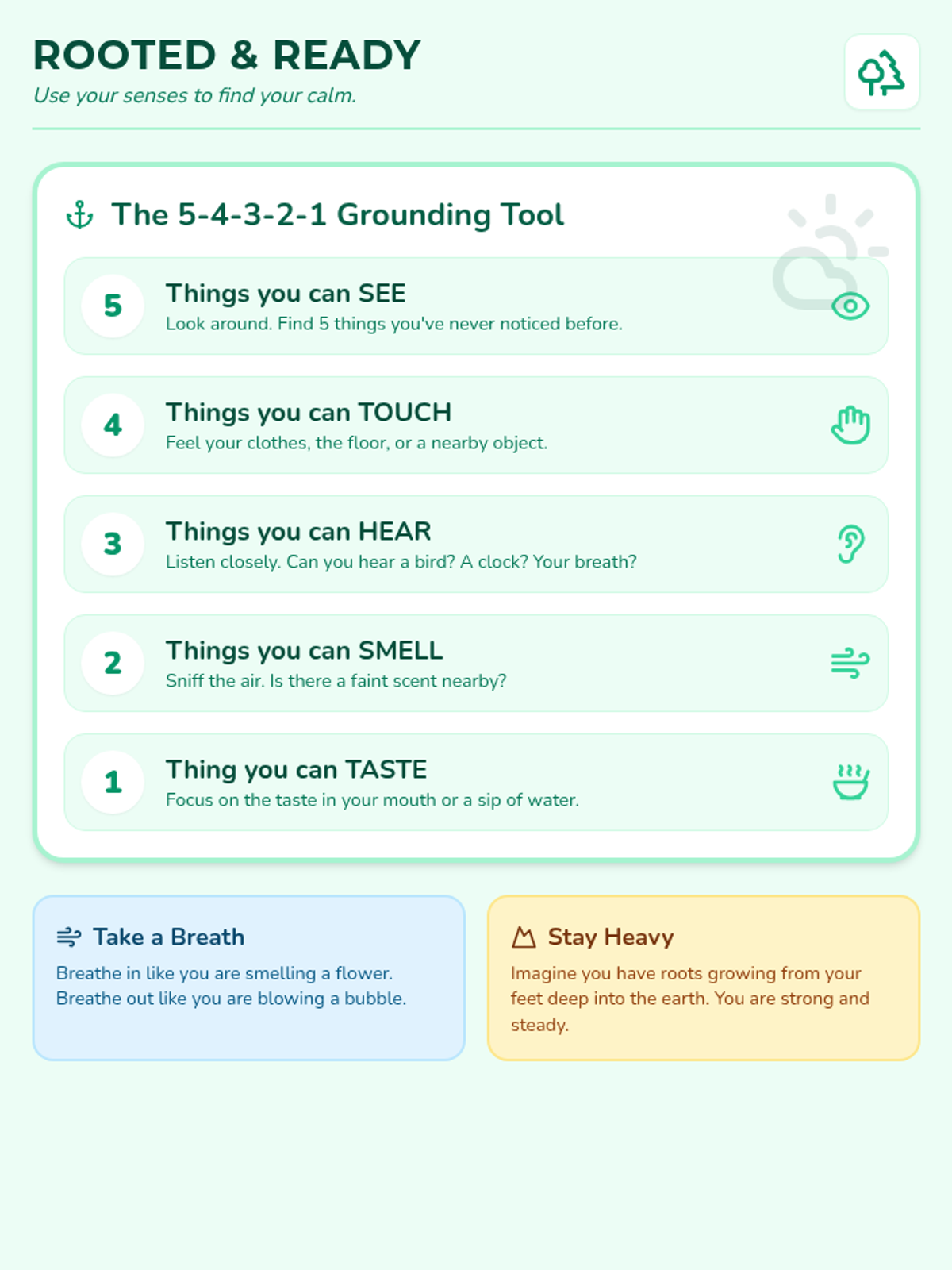
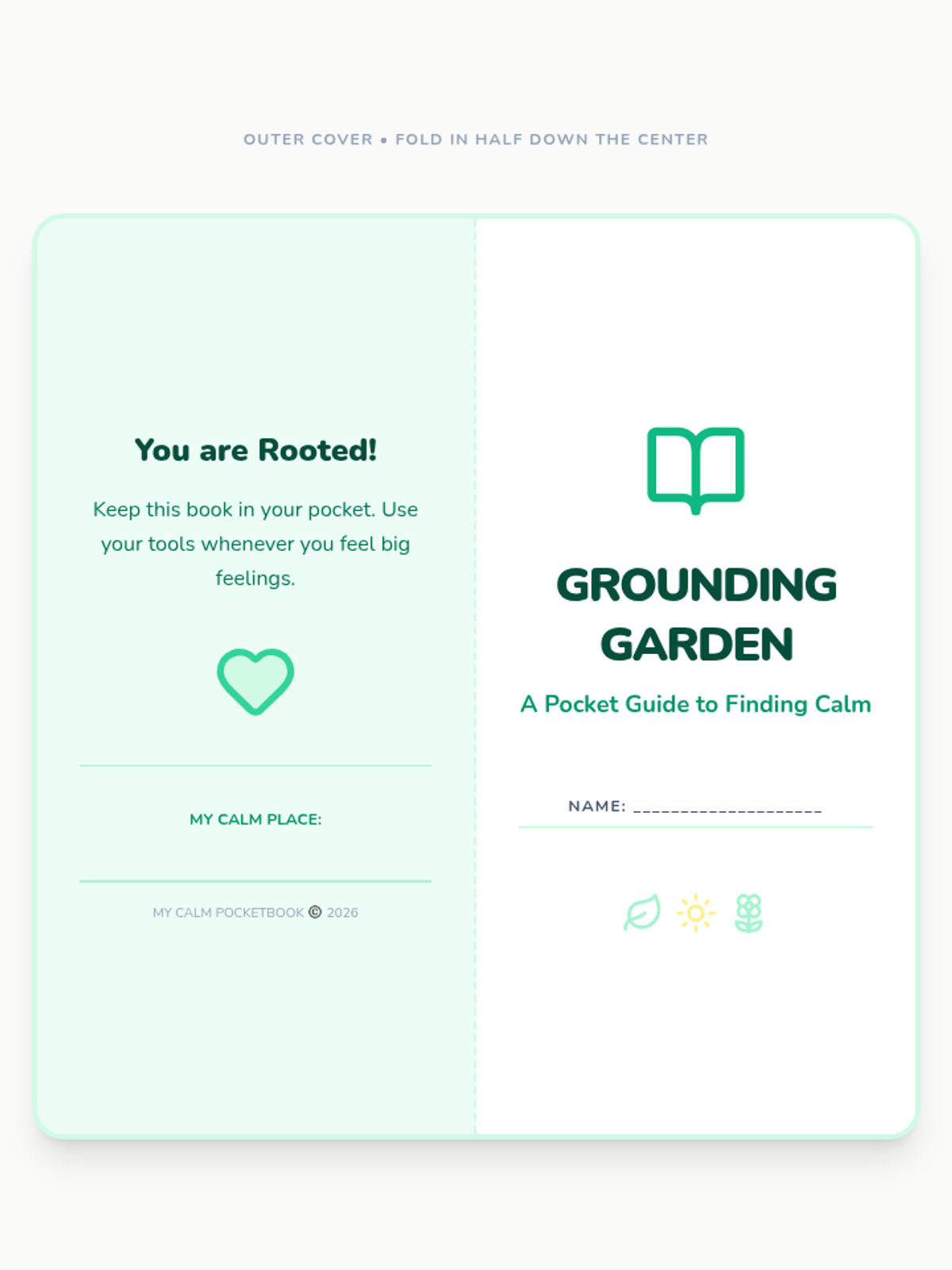
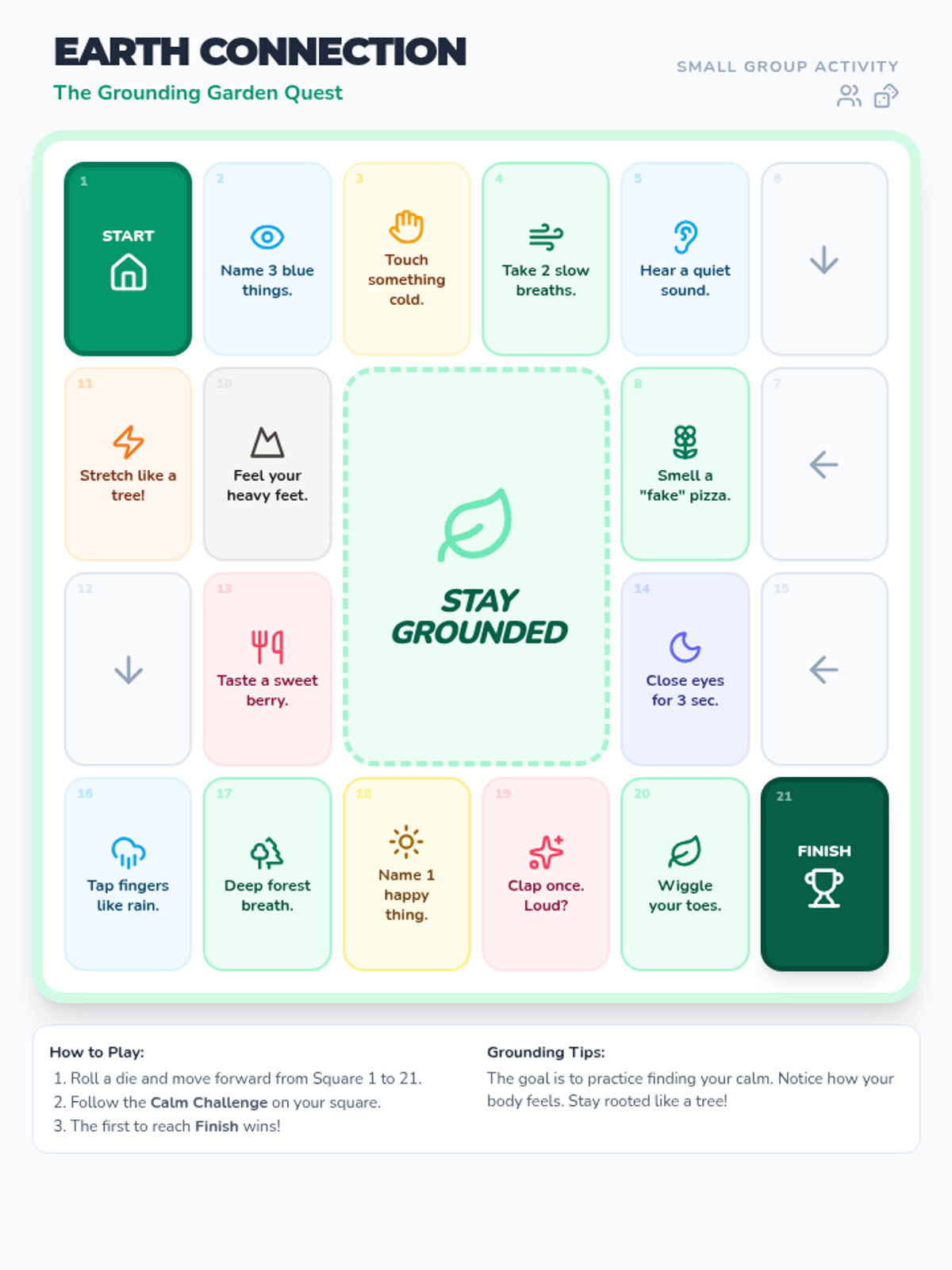
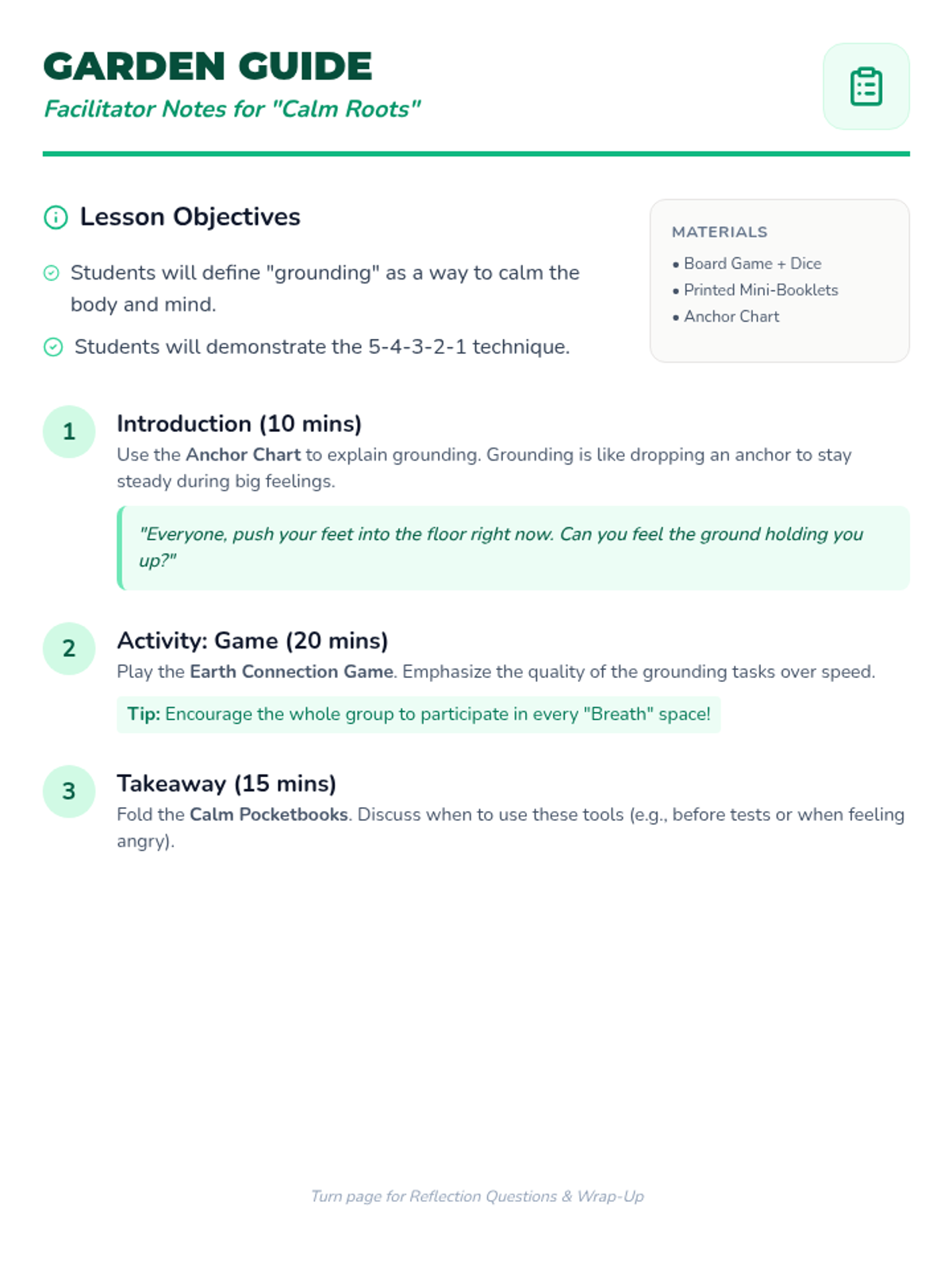
This lesson introduces students to grounding exercises through a nature-themed board game, a take-home booklet, and a classroom anchor chart. Students will learn the 5-4-3-2-1 technique and other sensory strategies to manage stress.
Using a regulated brain to communicate needs and solve social or academic problems effectively.
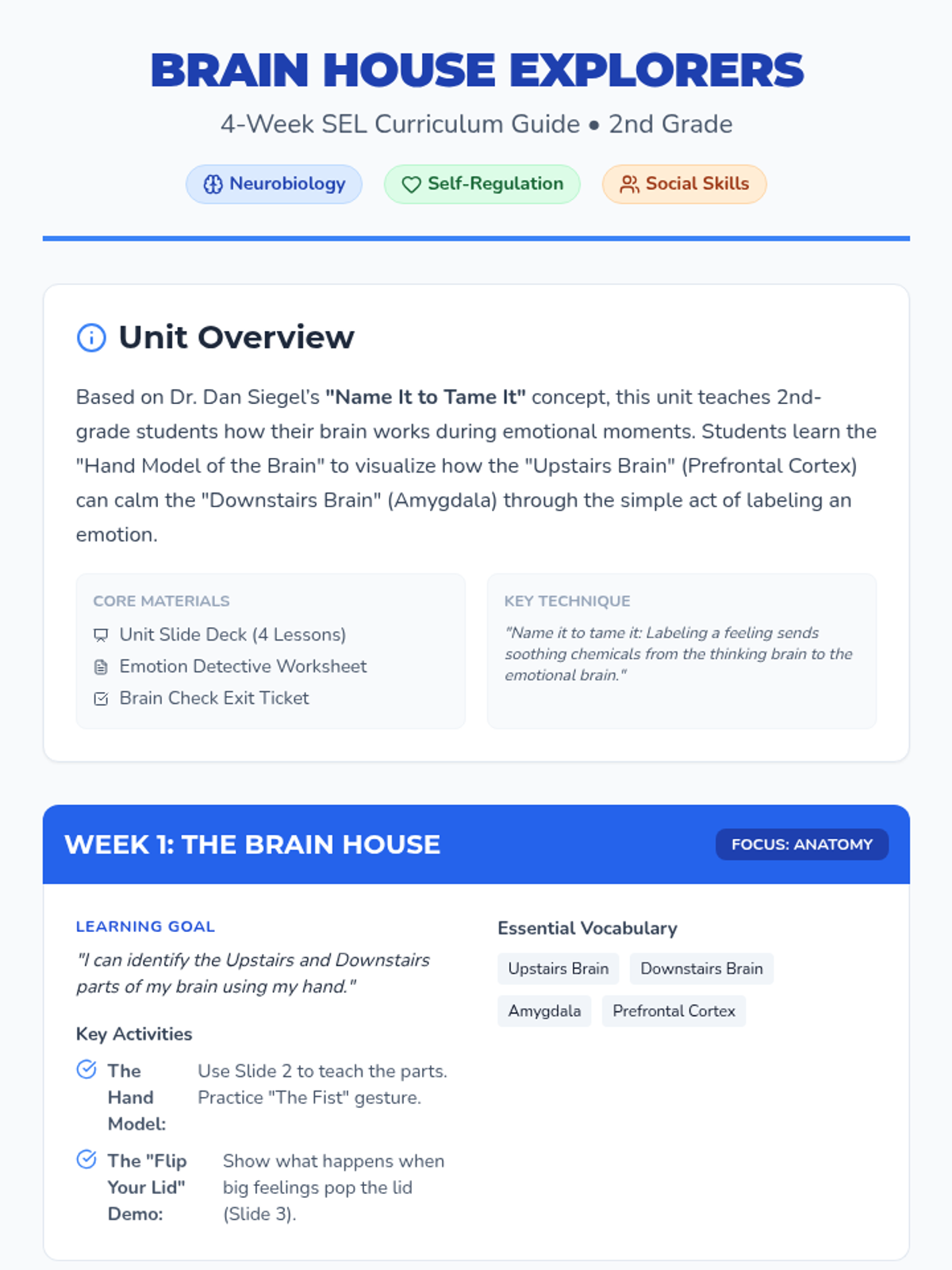
Connecting naming feelings to the brain's calming response, practicing the 'Name It to Tame It' technique.
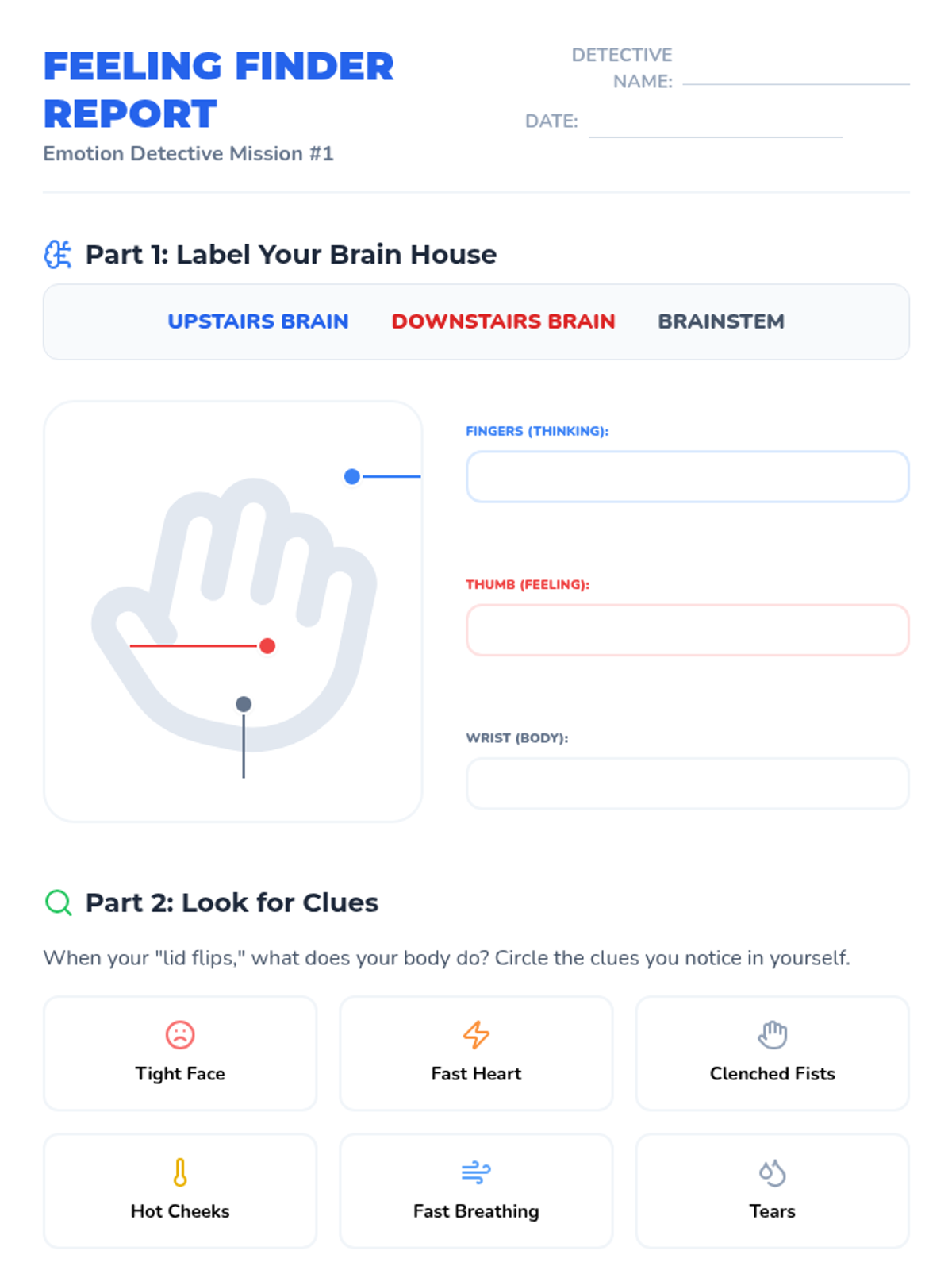
Focused on expanding emotional vocabulary and learning how to identify physical signals in the body that match big feelings.
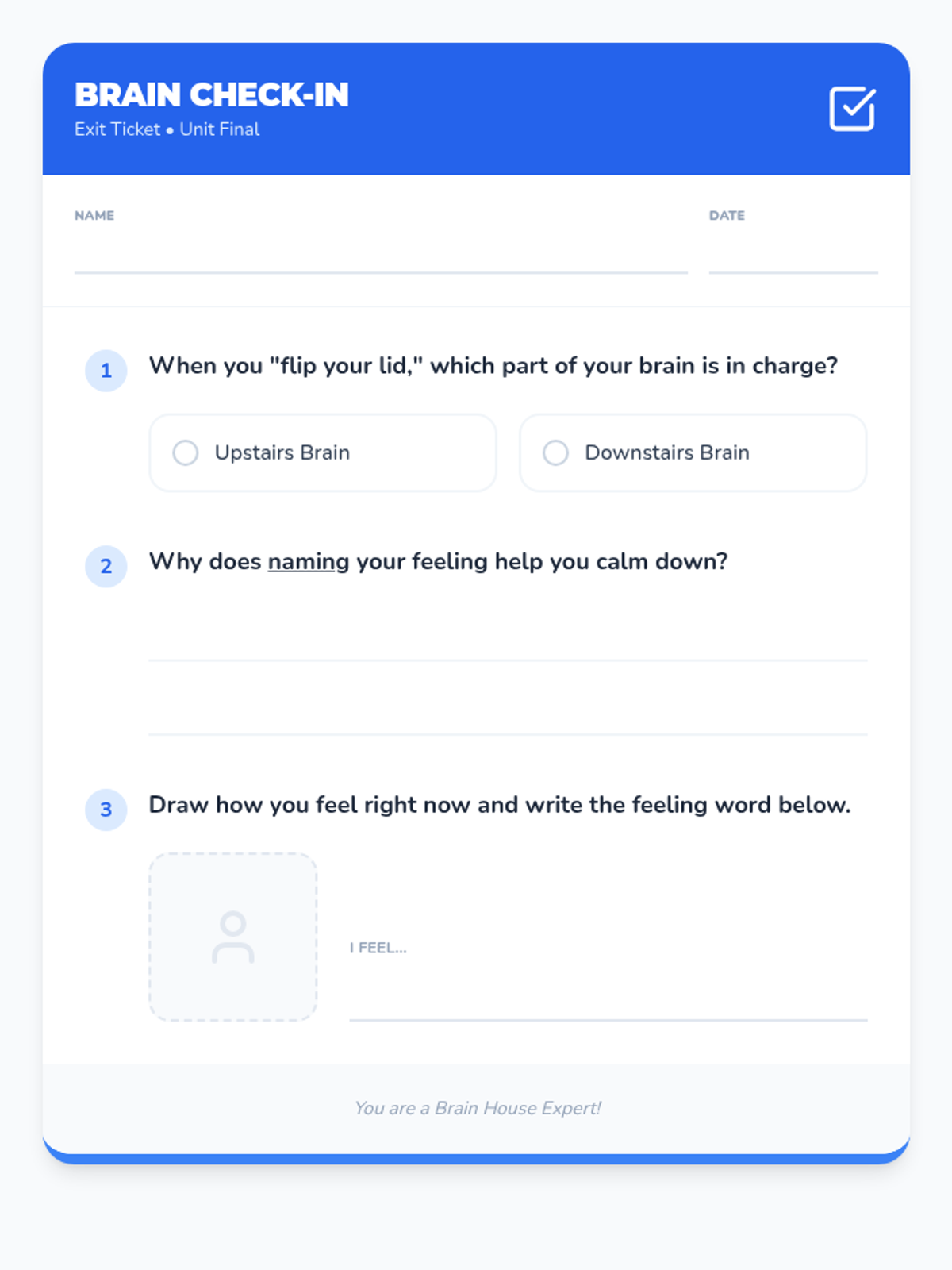
Introduce the hand model of the brain, identifying the 'Upstairs' (thinking) and 'Downstairs' (feeling) parts of the brain house.
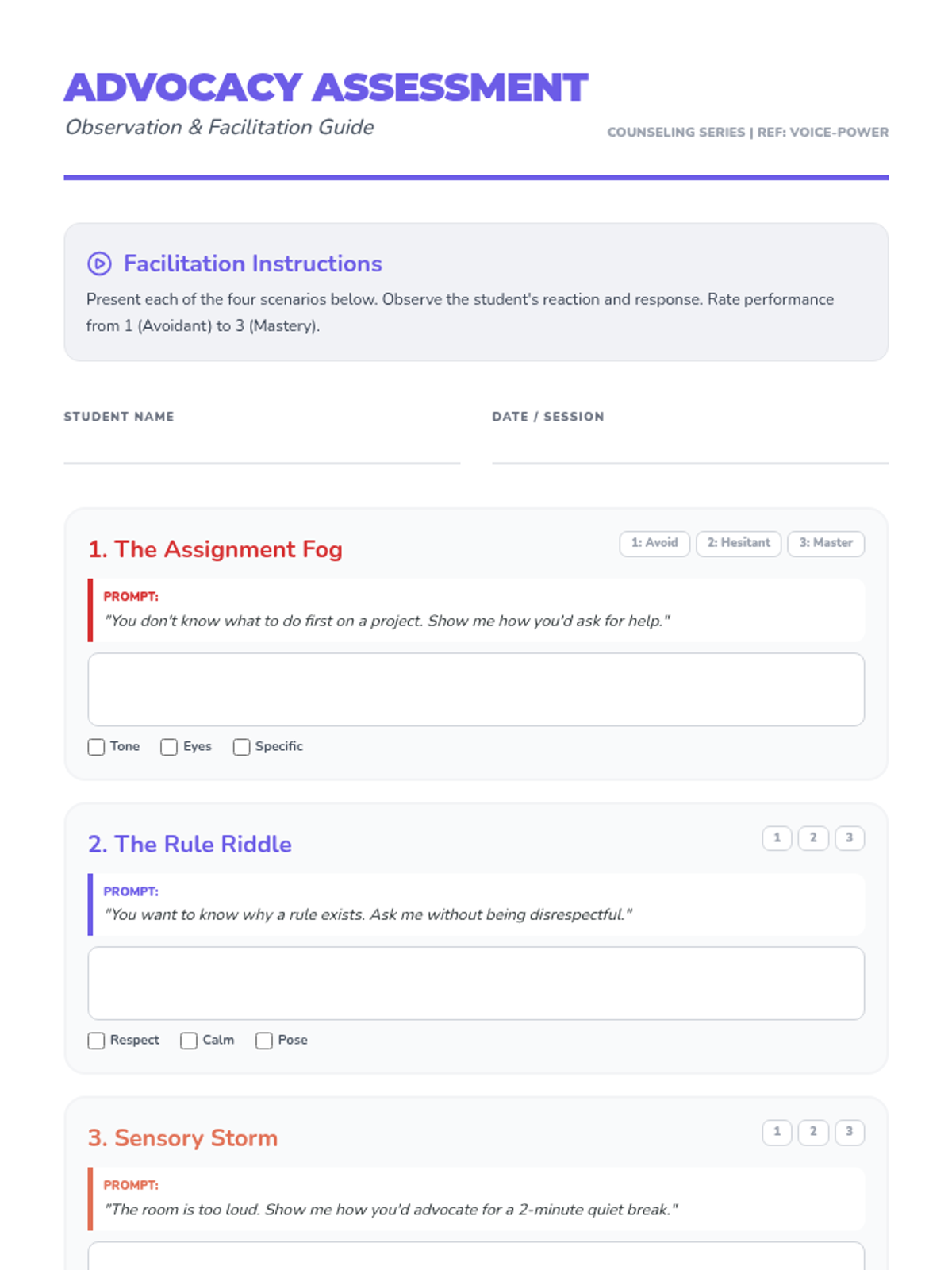
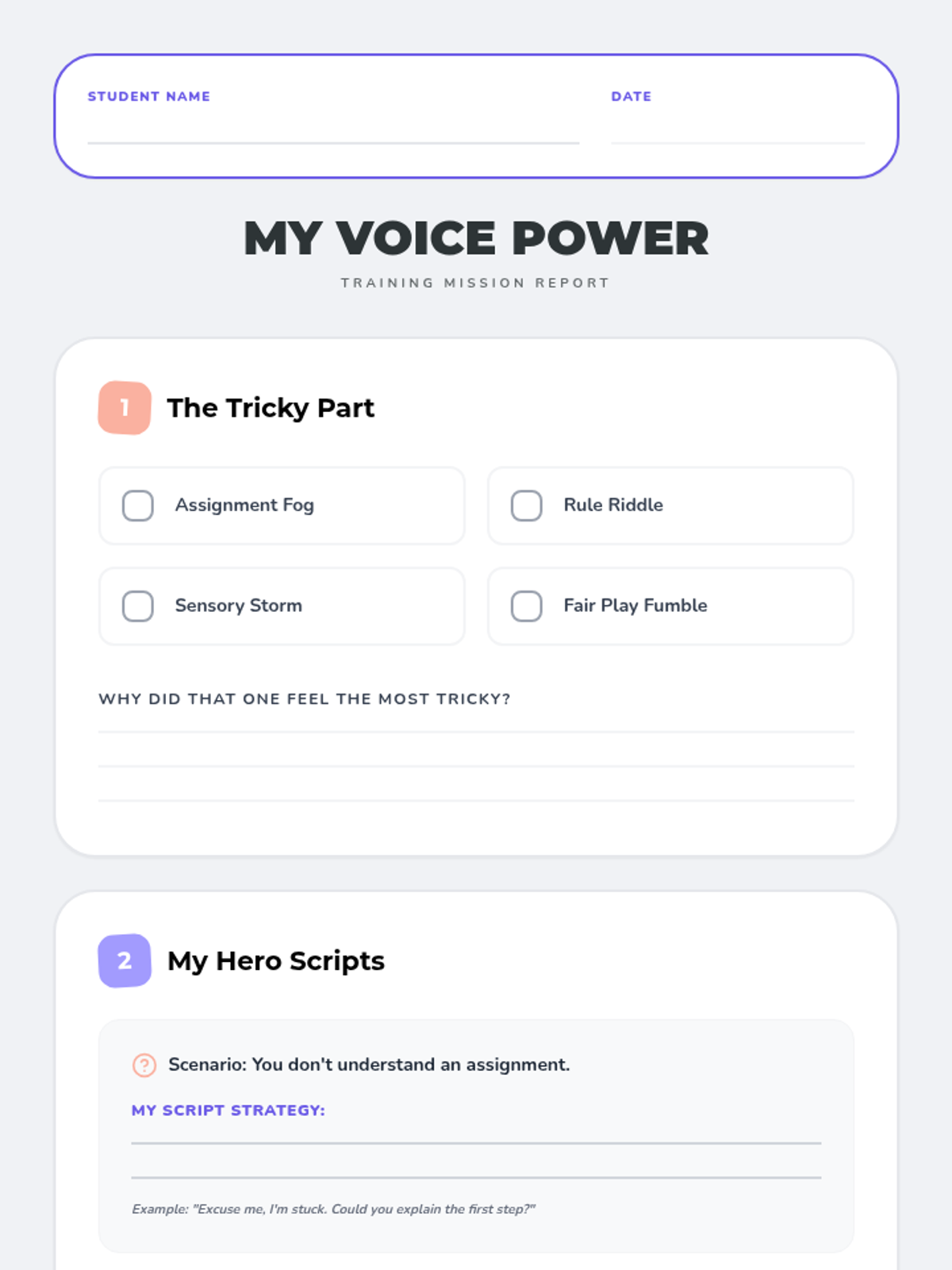
A quick, interactive lesson designed to assess and practice self-advocacy skills in challenging classroom scenarios. Students learn to identify when they need help and practice speaking up clearly and confidently.
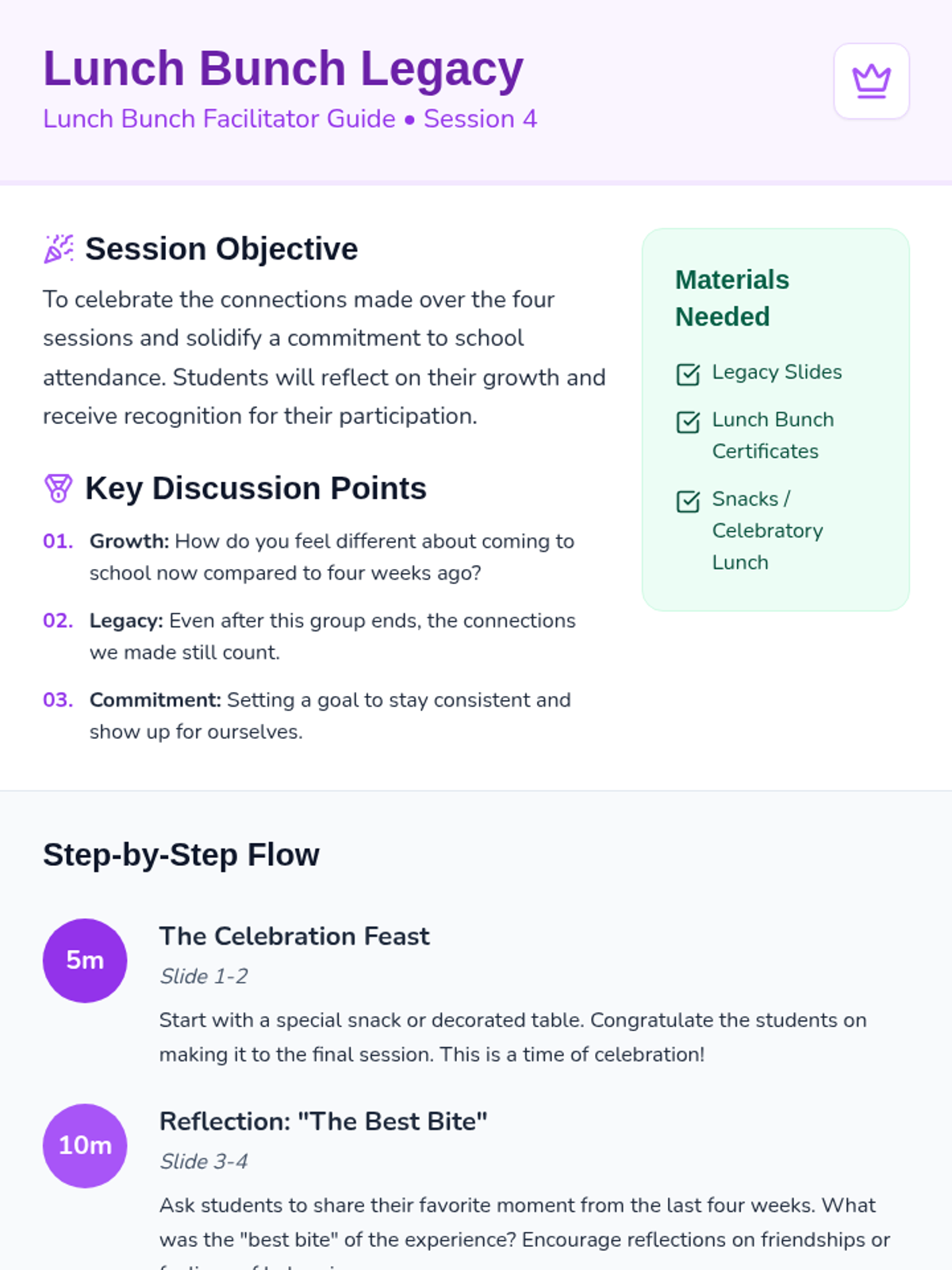
A final celebration of the community built, where students reflect on their growth and commit to showing up for themselves and each other.
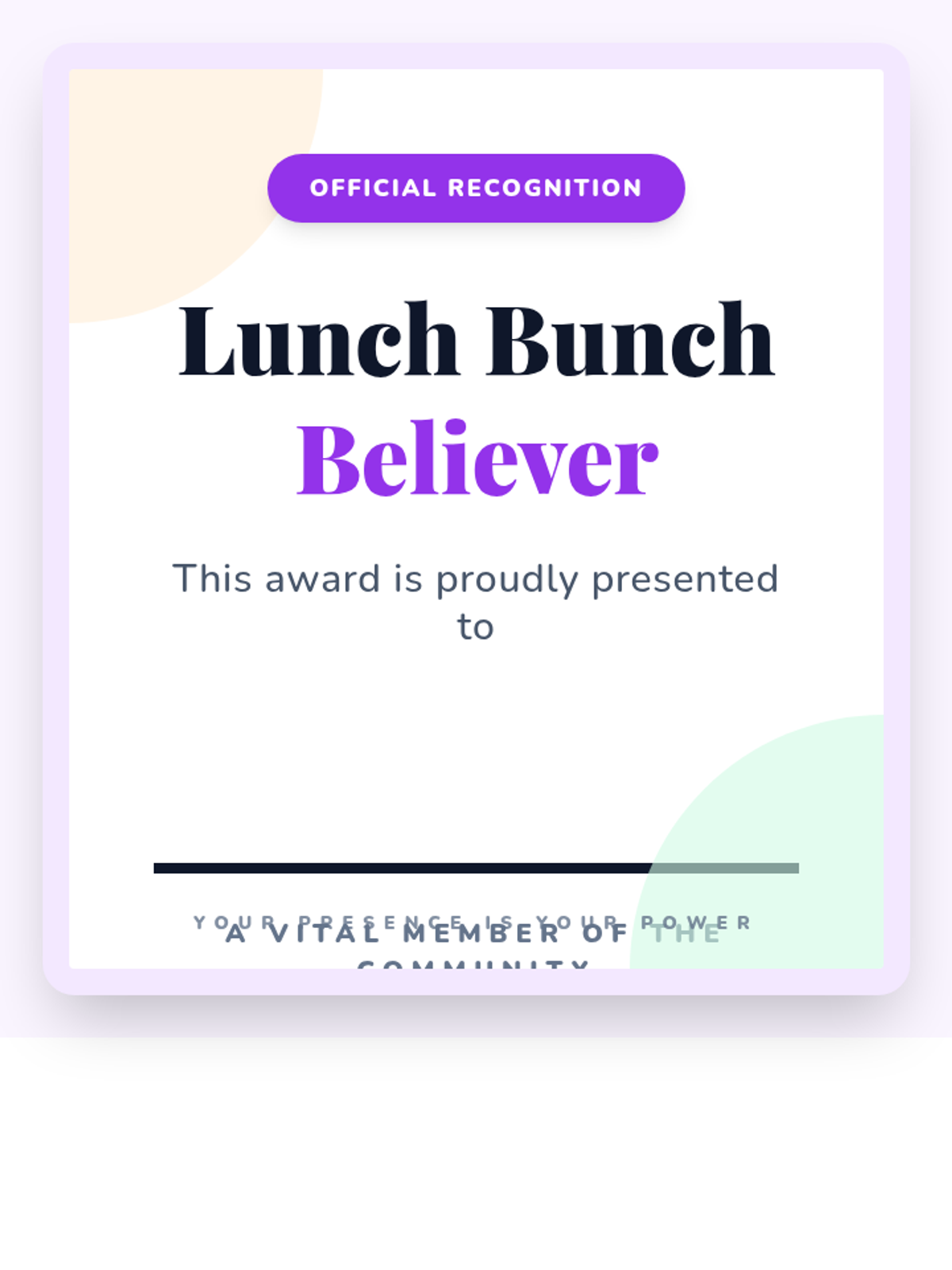
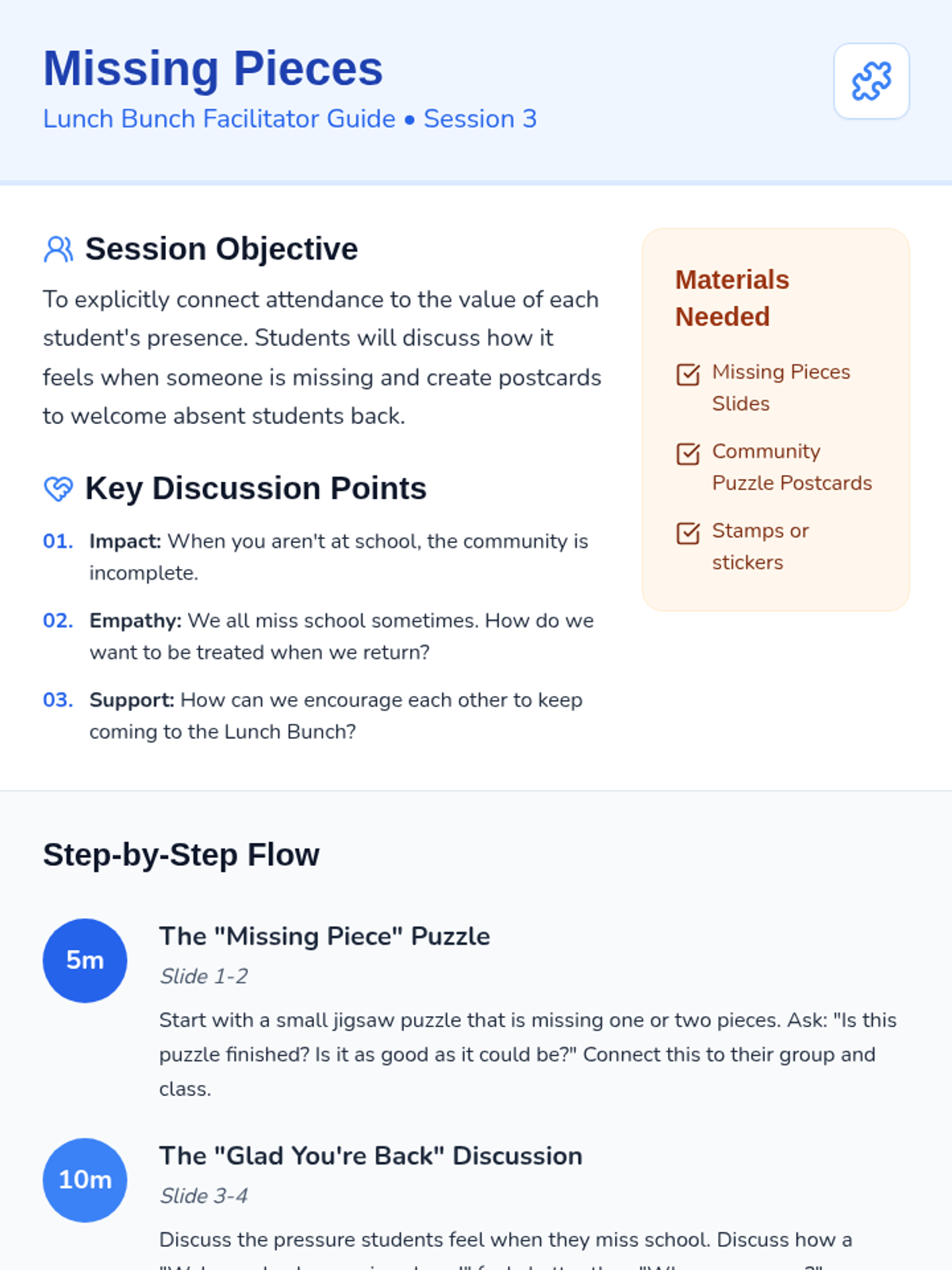
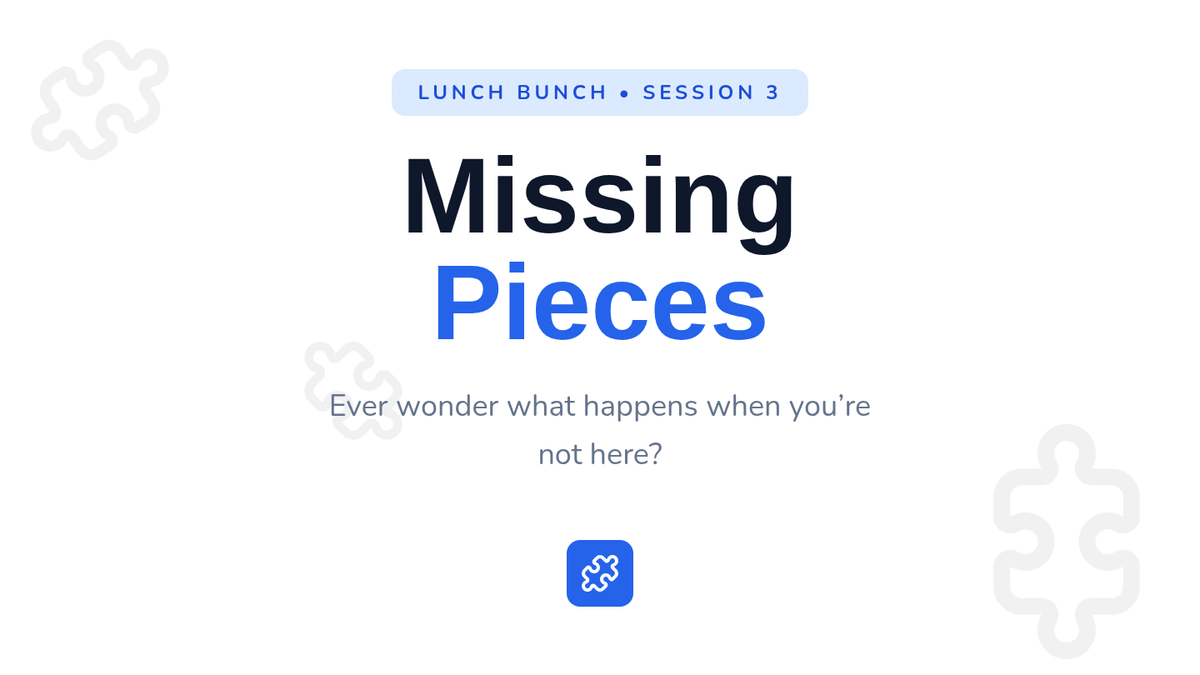
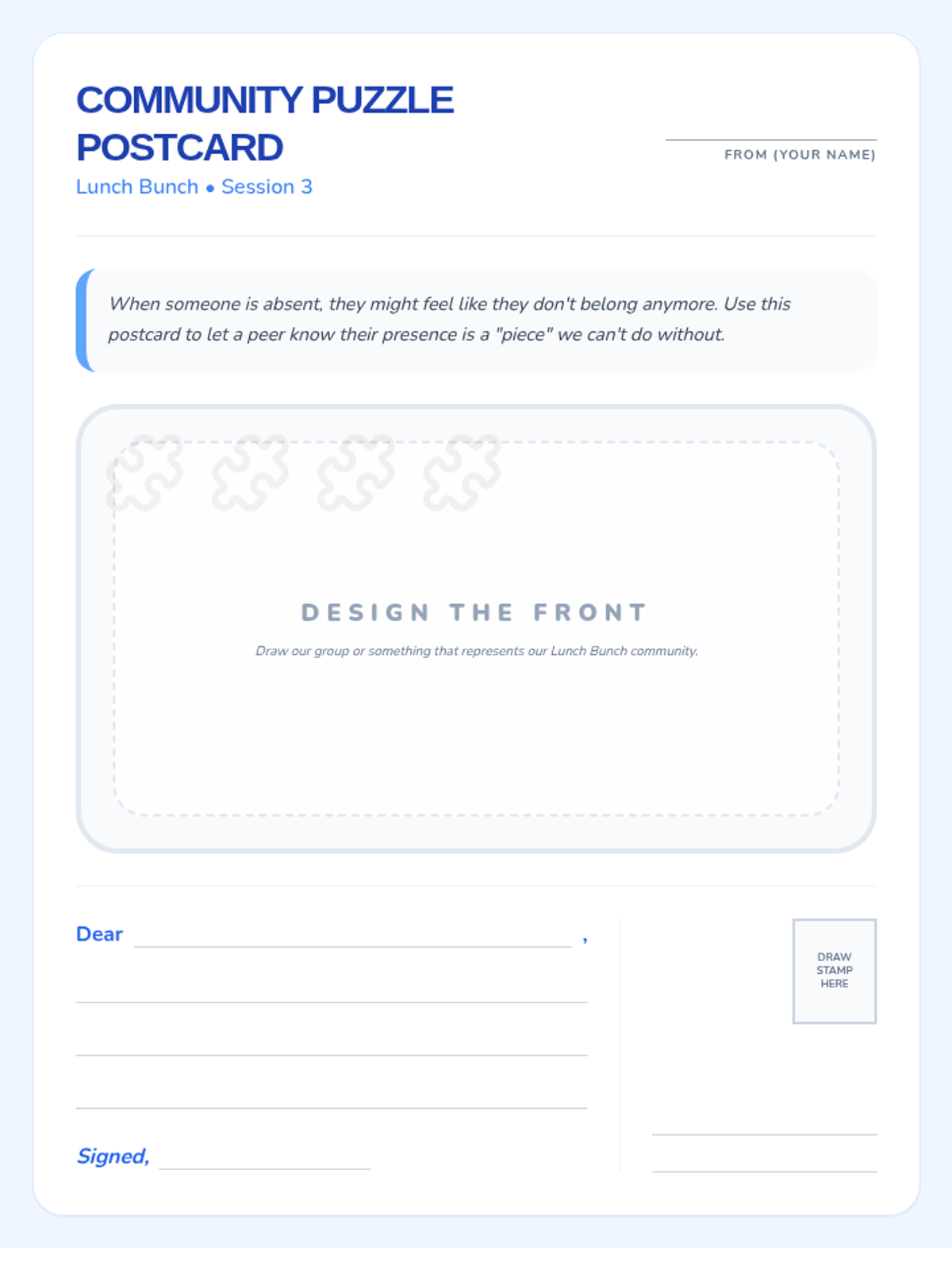
This lesson addresses attendance directly by discussing why every person matters to the group and how their absence is felt by others.
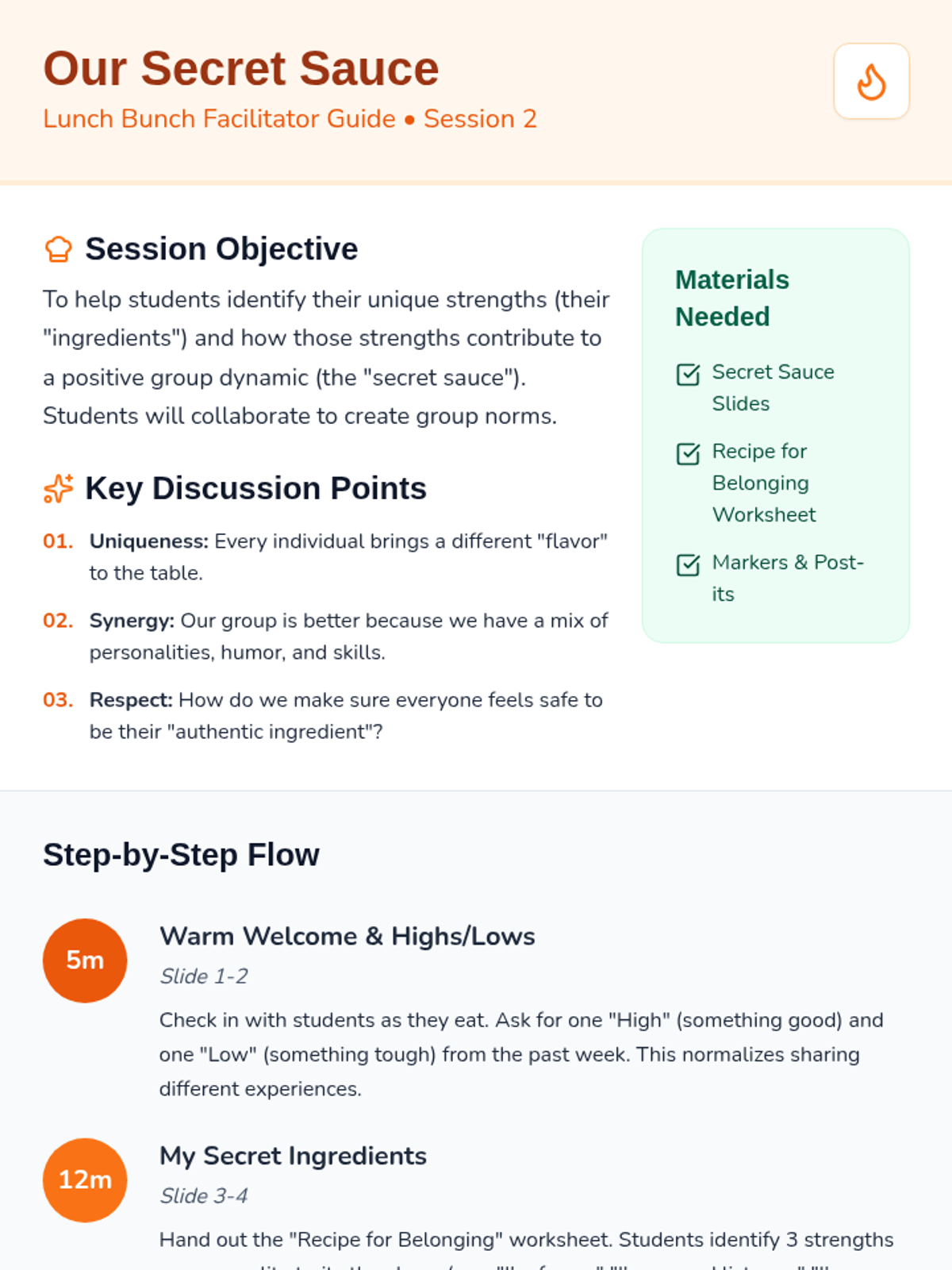
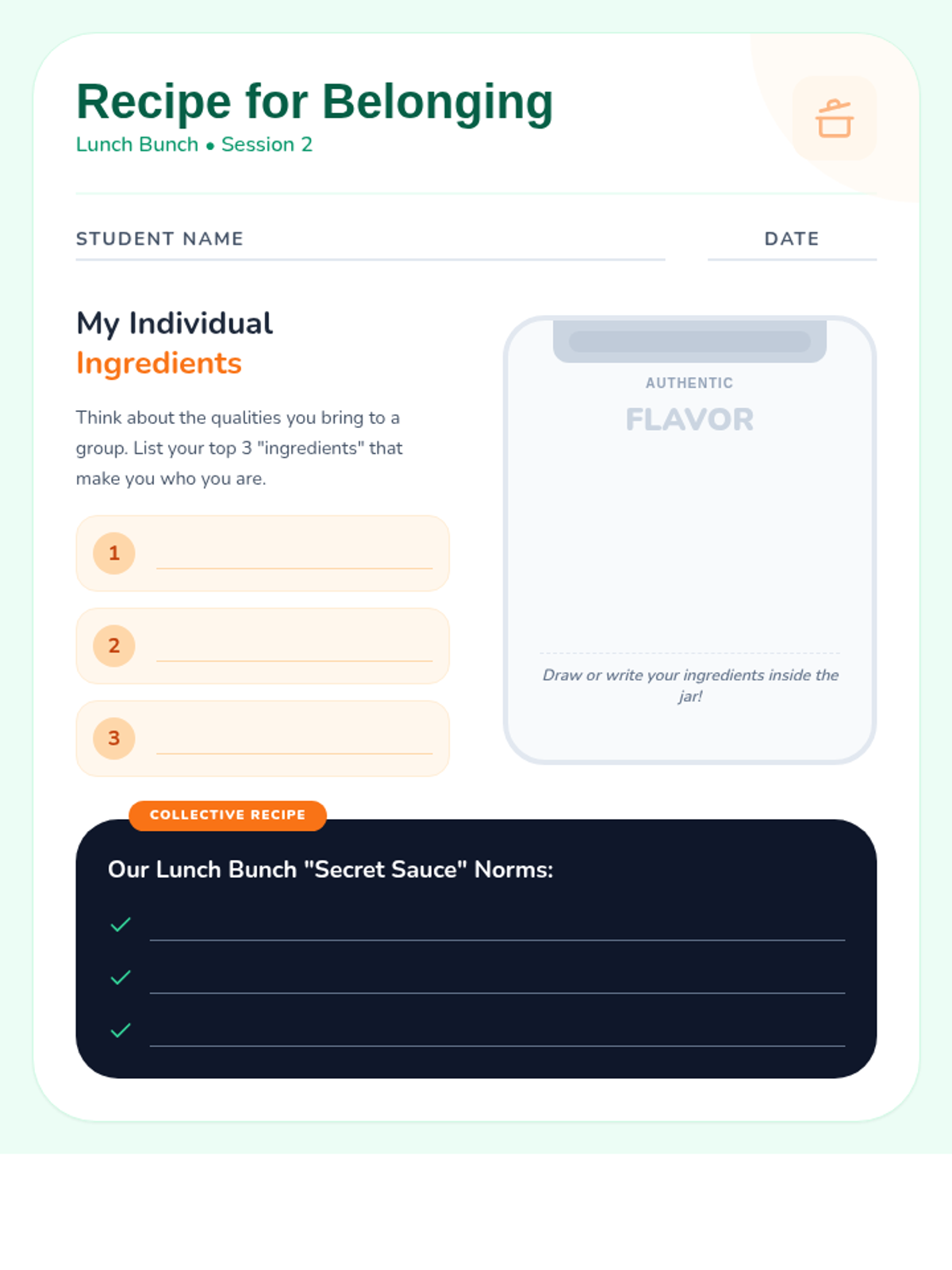
Students explore the unique qualities they bring to the group and collaboratively define what makes their lunch bunch community special.
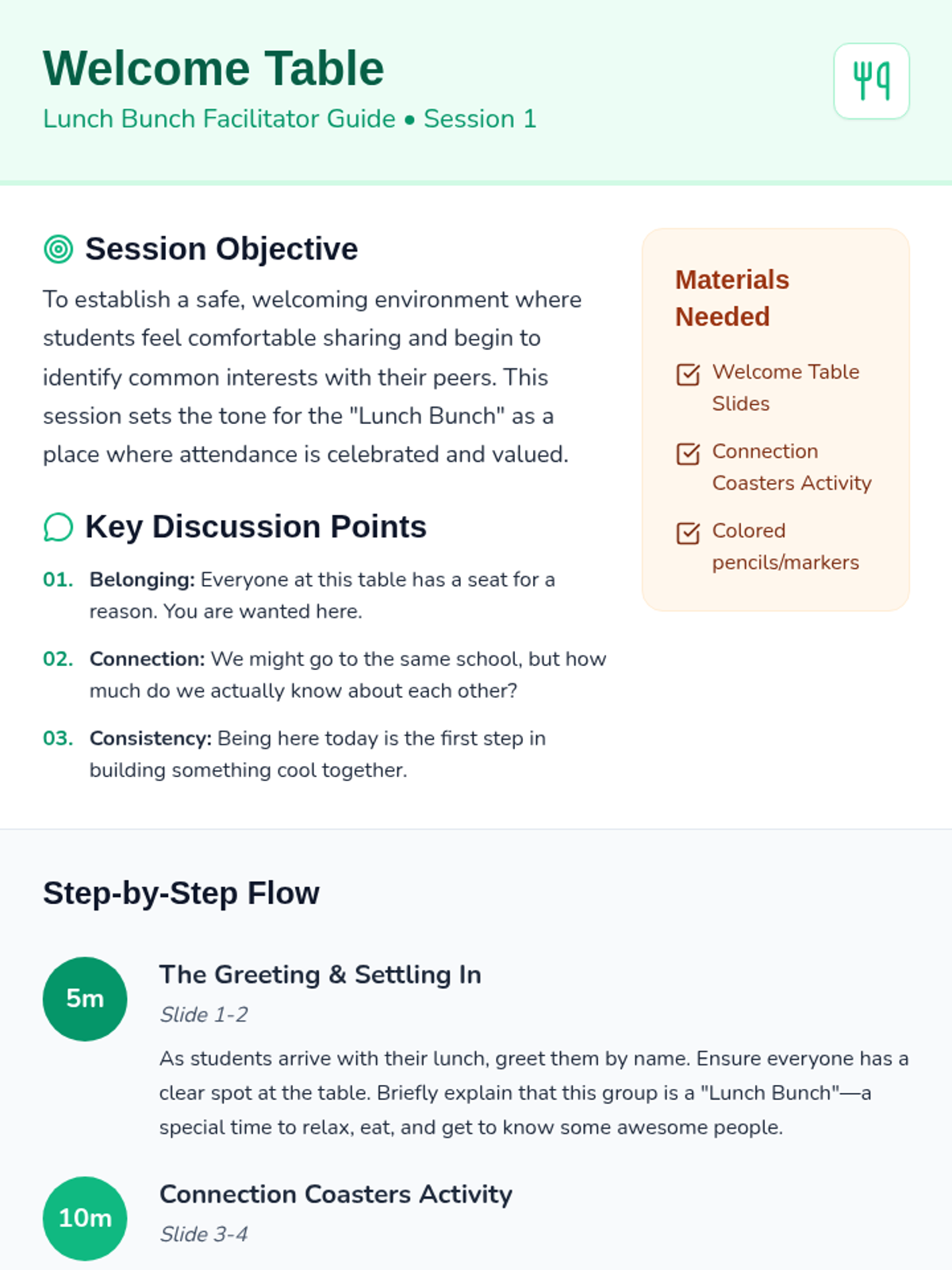
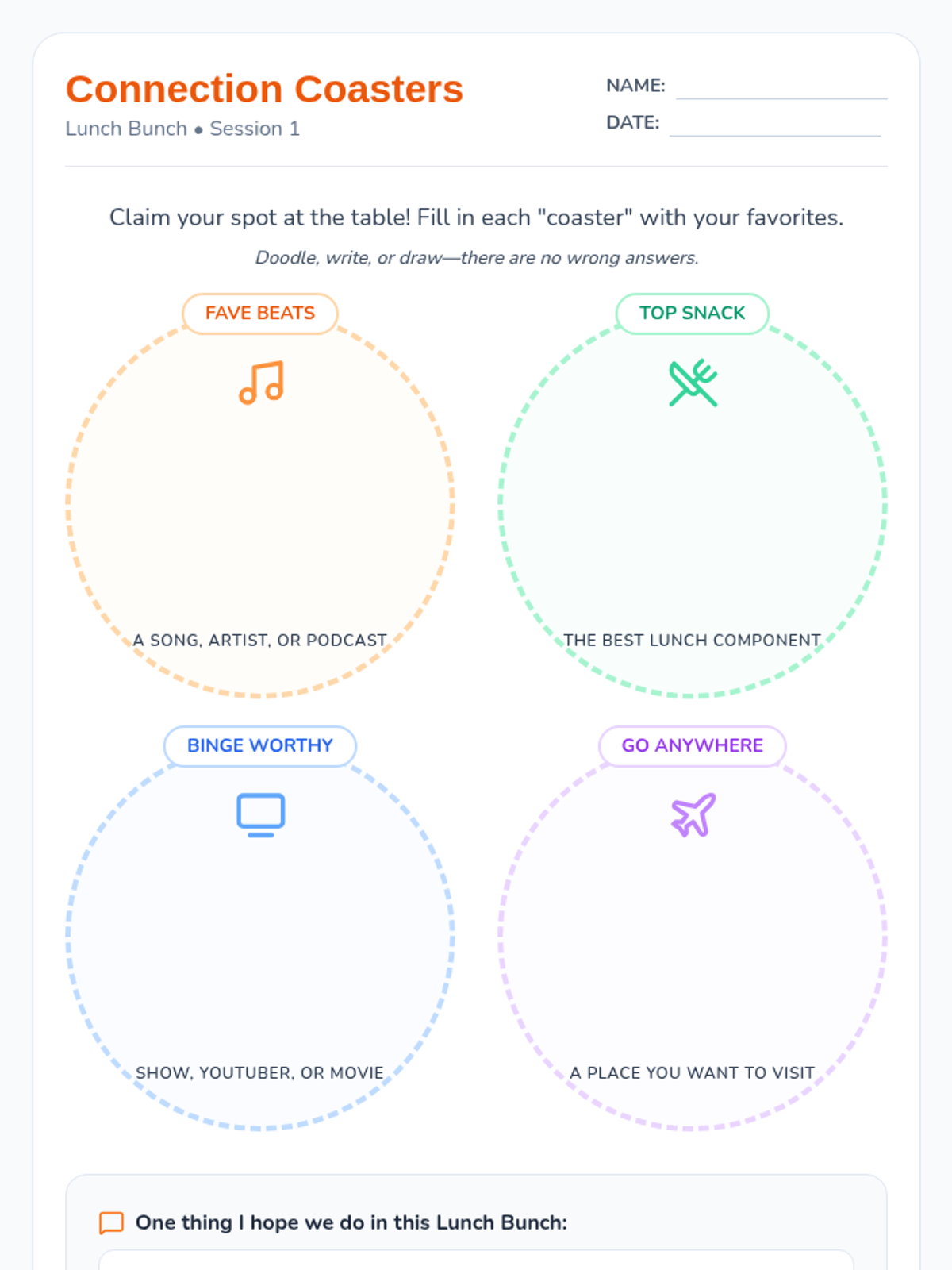
The opening session focuses on breaking the ice, establishing a safe lunch environment, and helping students find common ground with their peers.
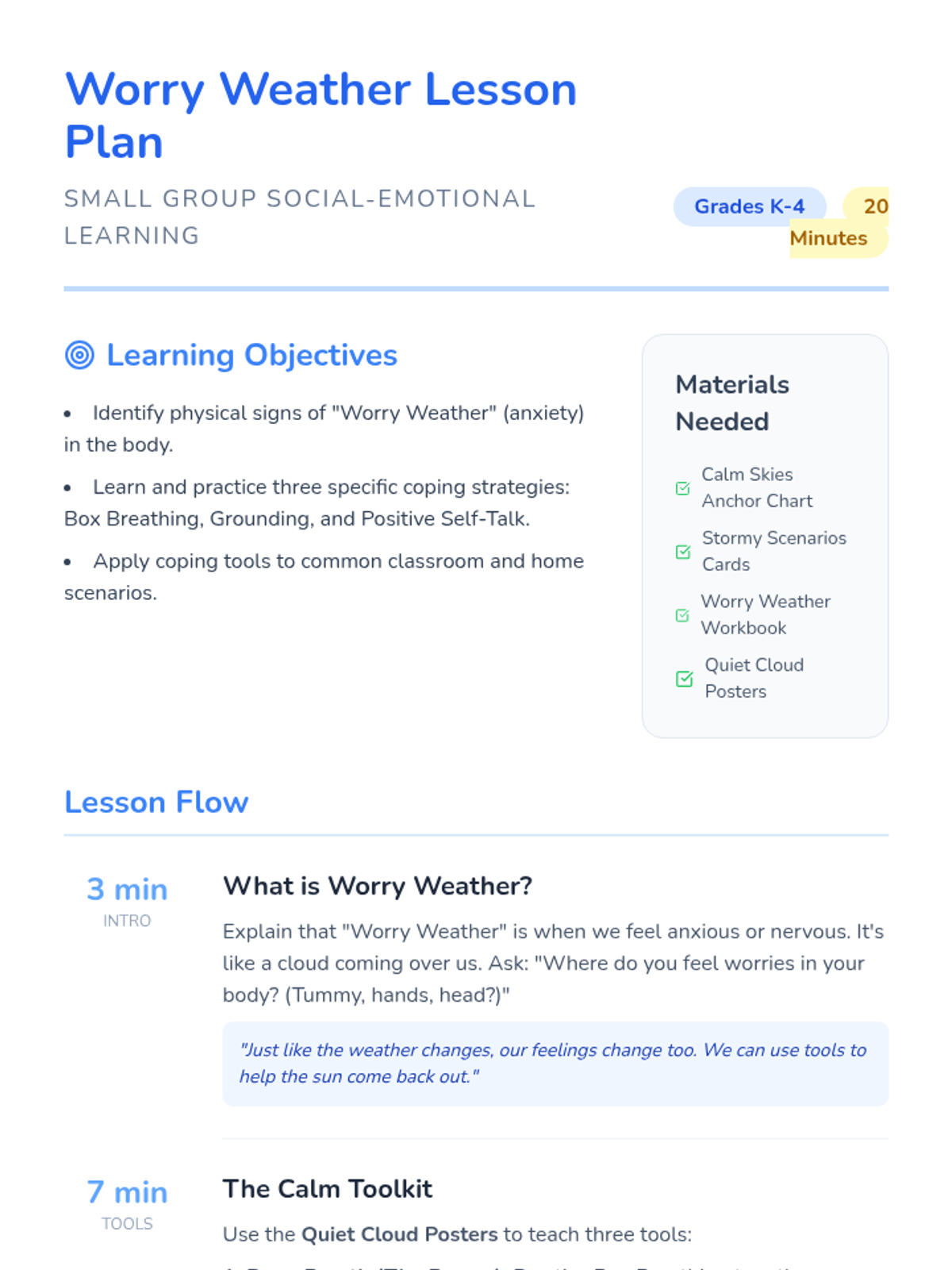
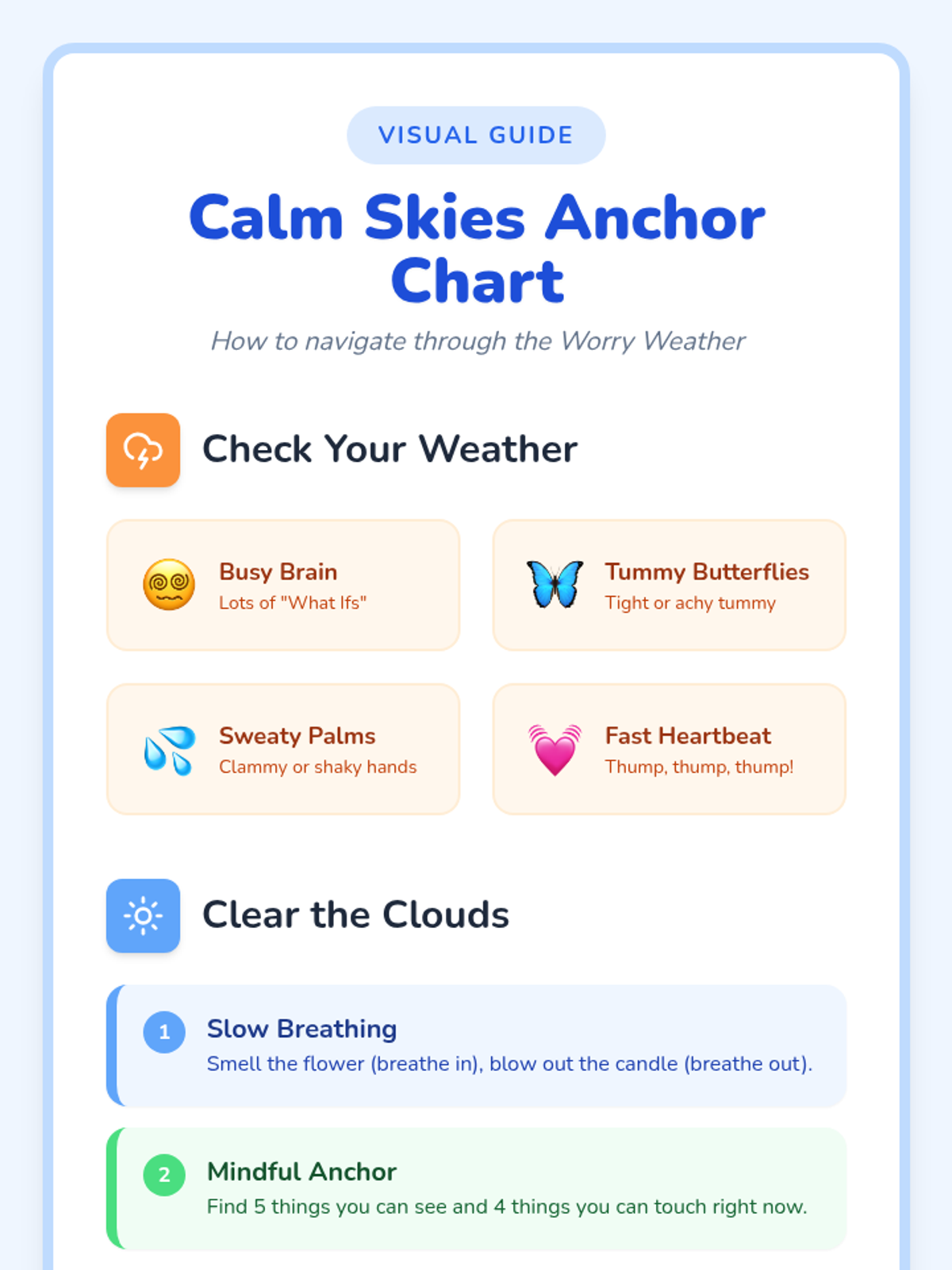
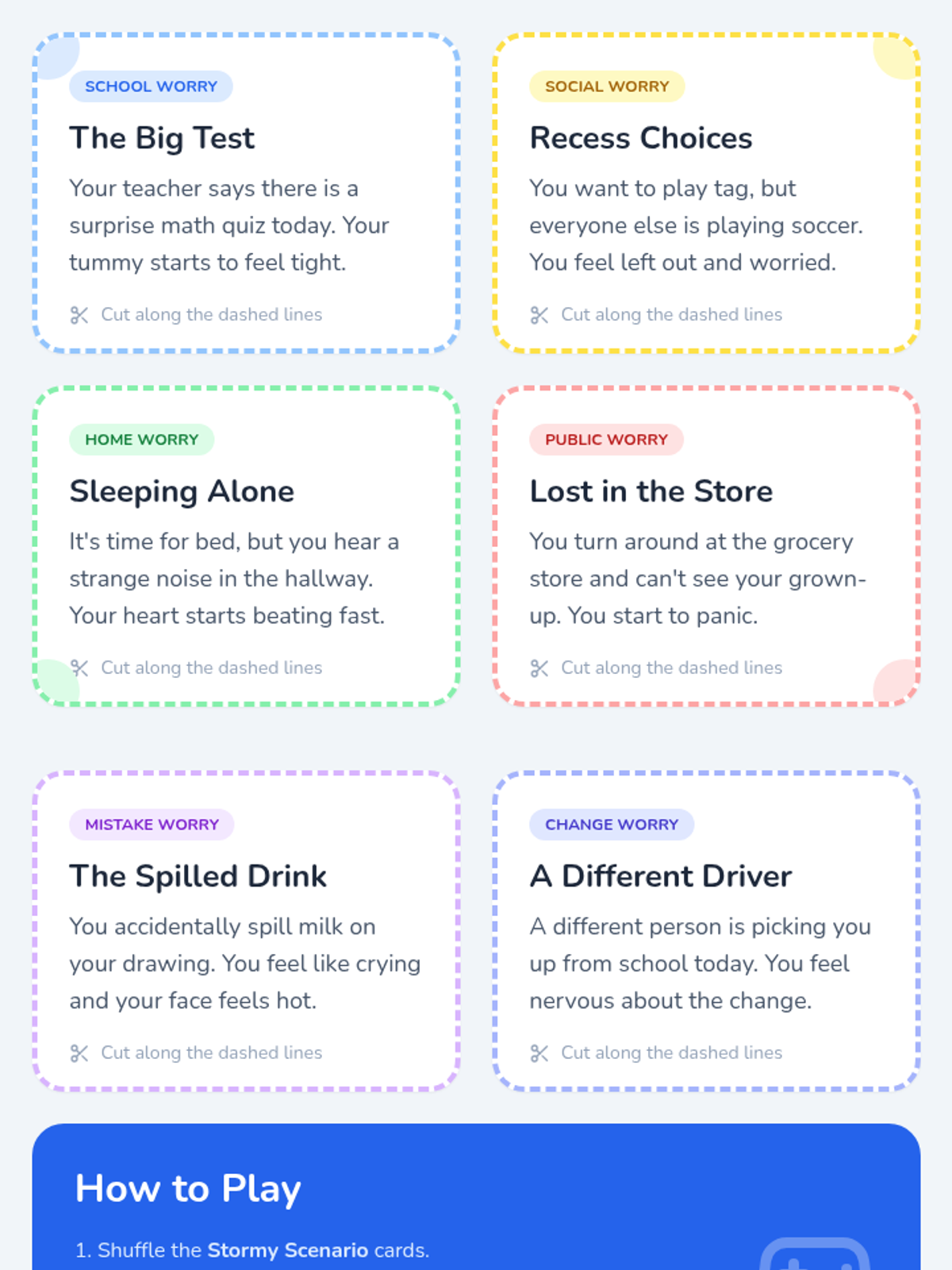
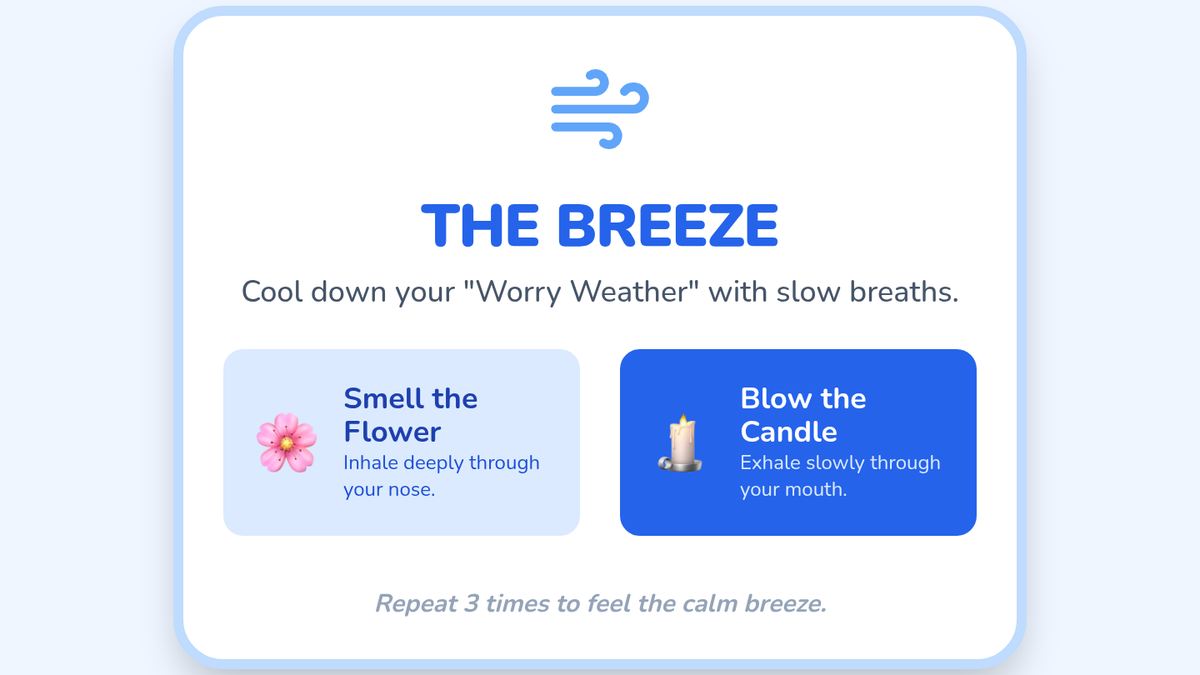
A small group social-emotional learning lesson for K-4 students focused on identifying anxiety triggers and practicing coping strategies using a weather-based metaphor.
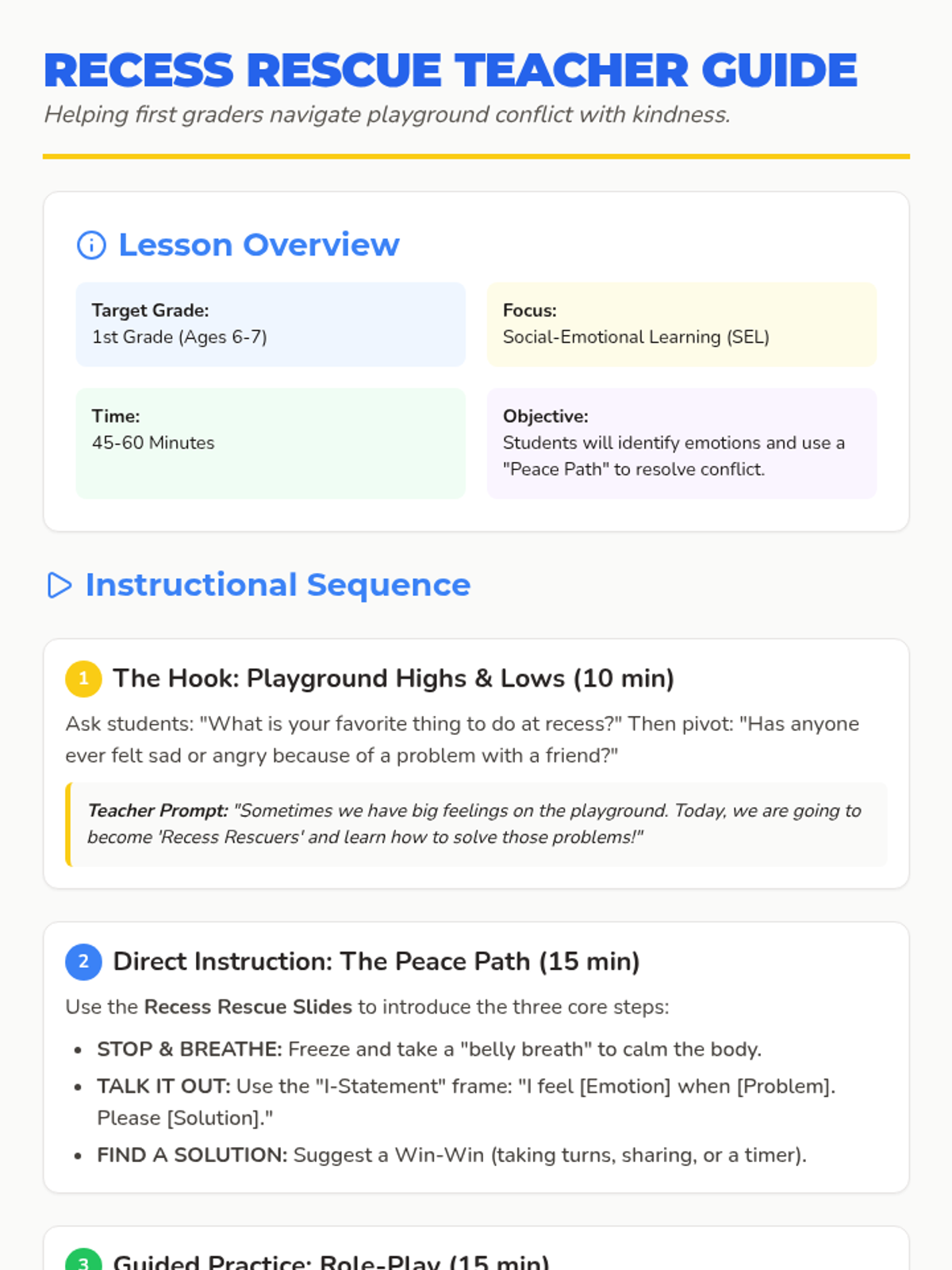
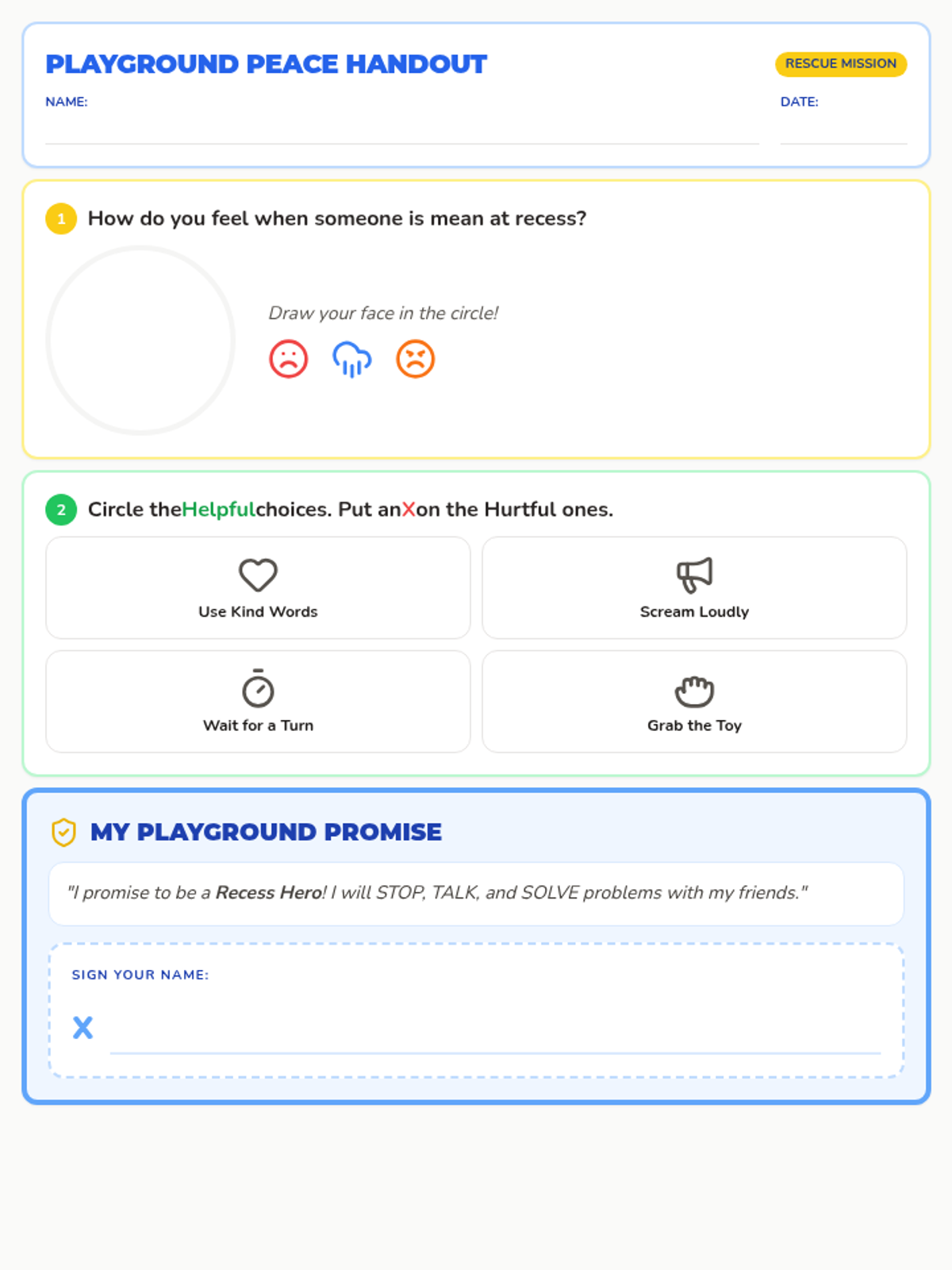
A lesson designed to help first graders navigate playground conflicts by identifying their emotions and learning simple, actionable steps for peaceful play.
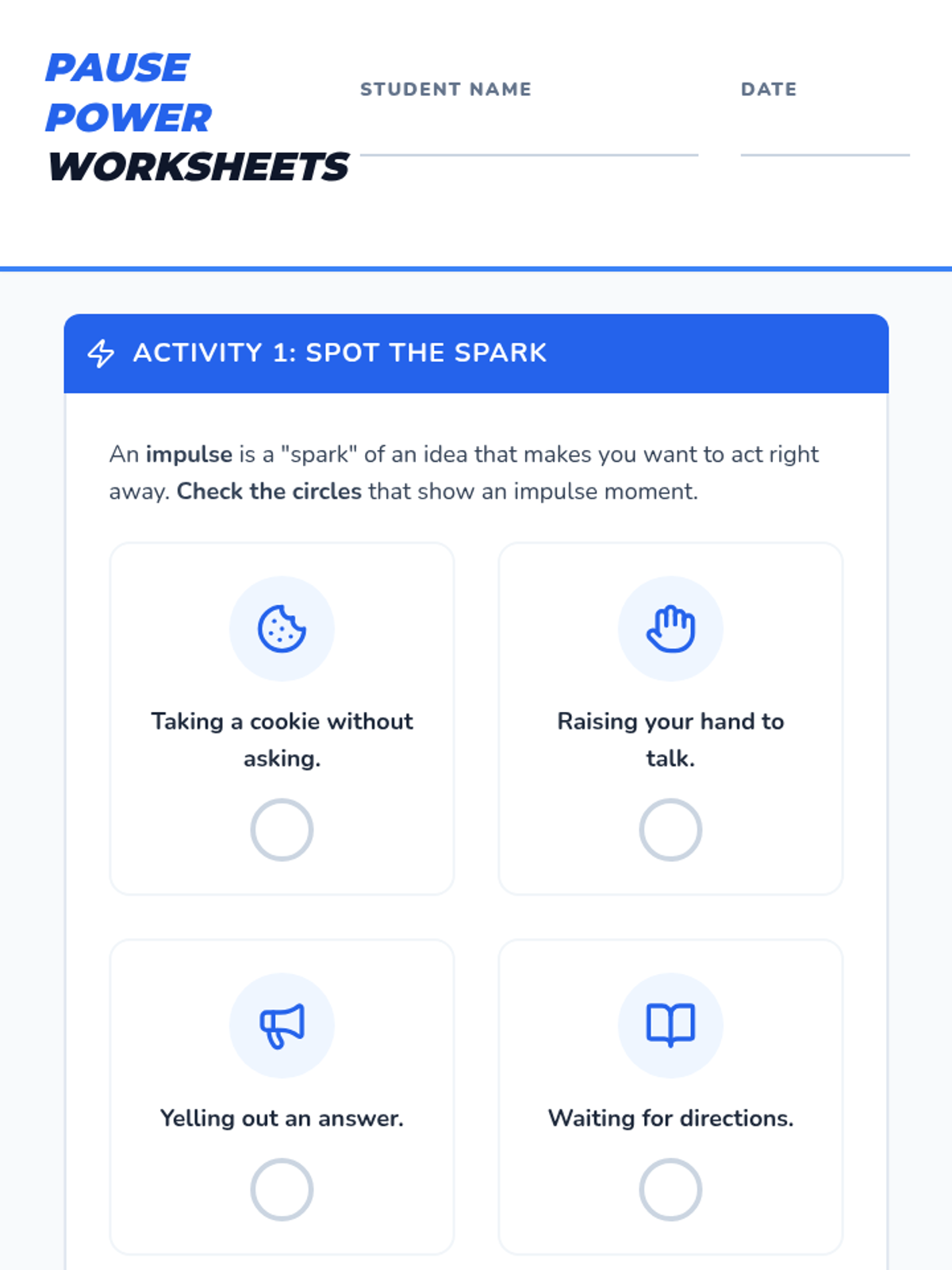
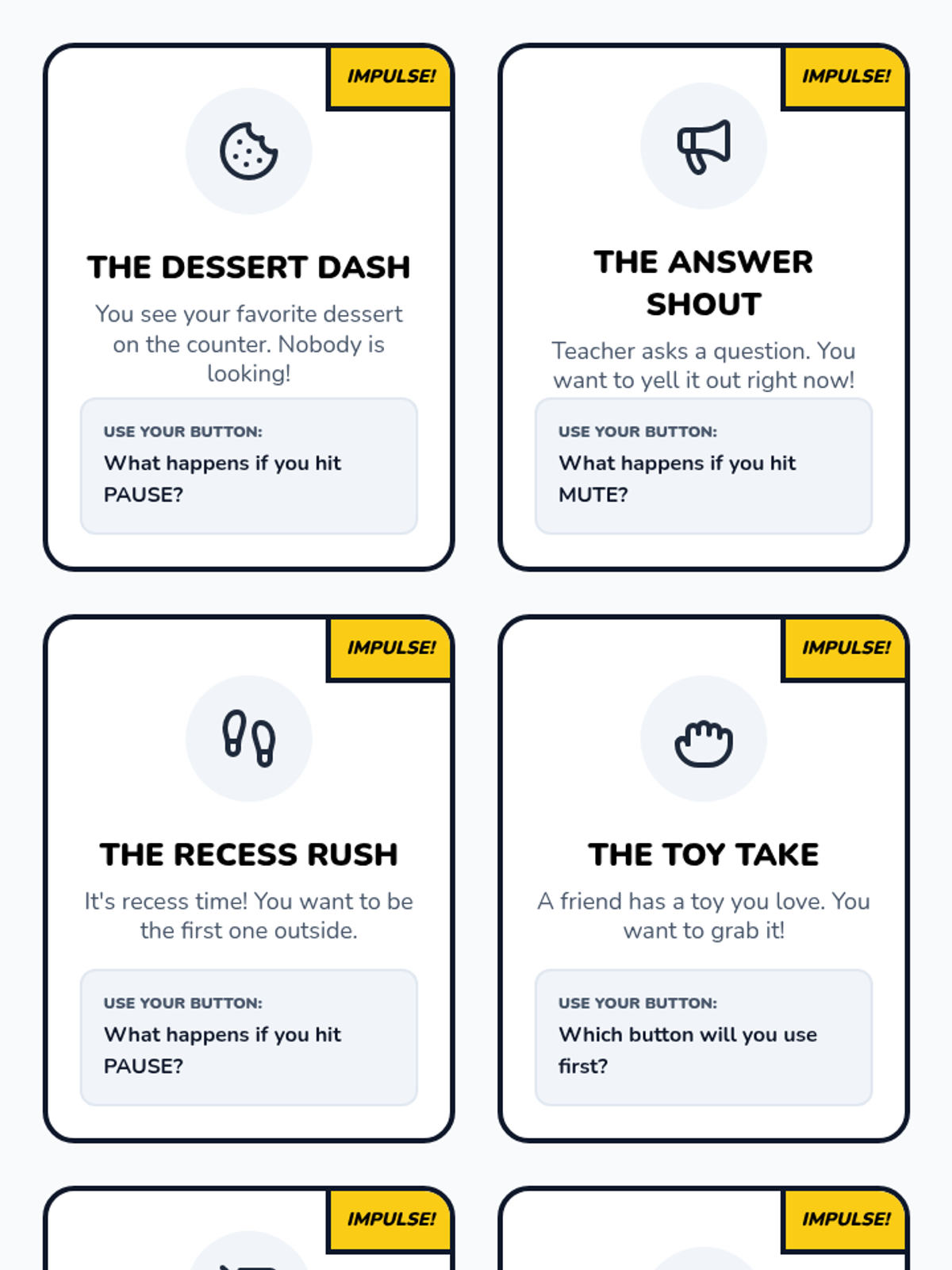
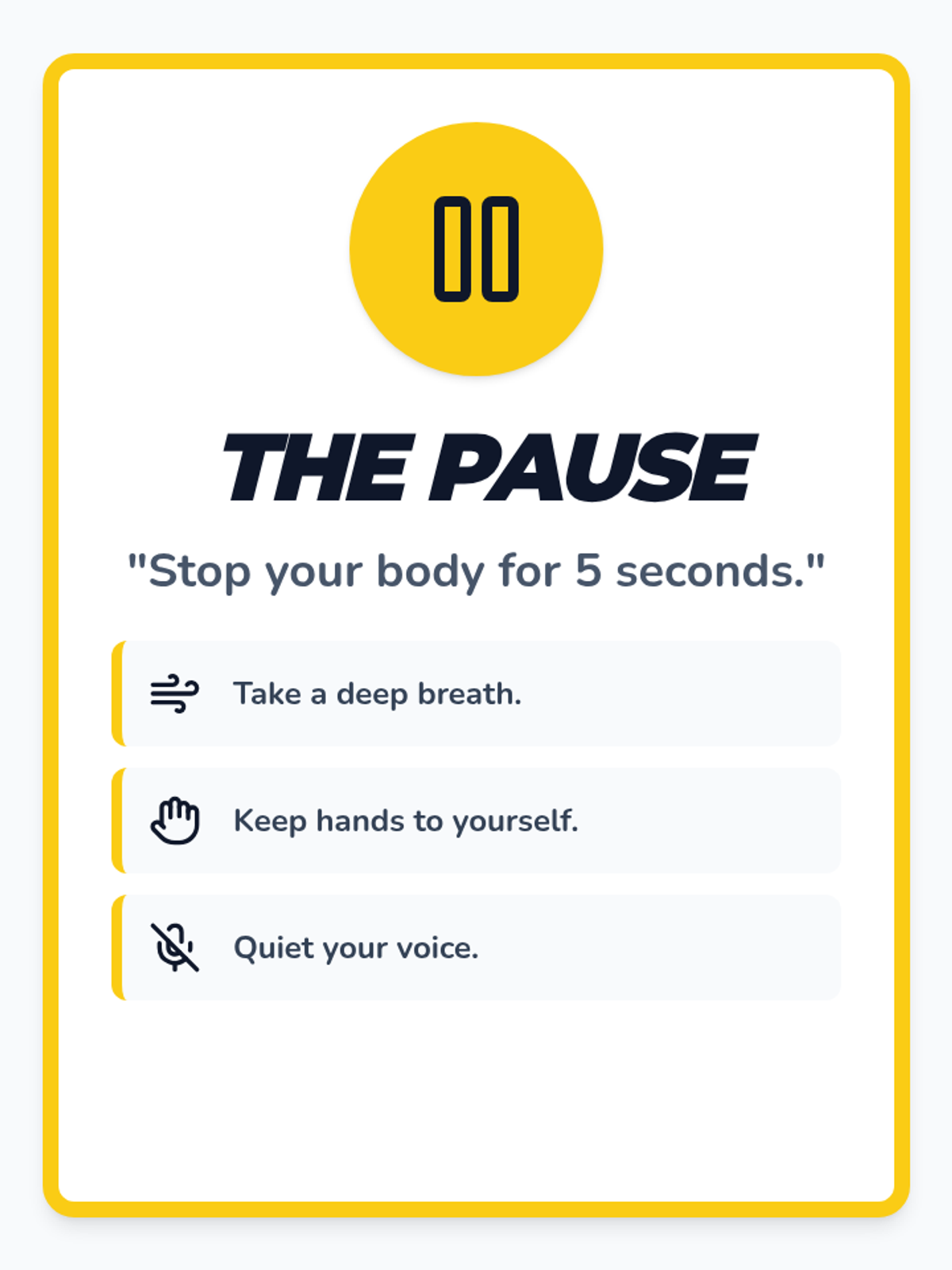
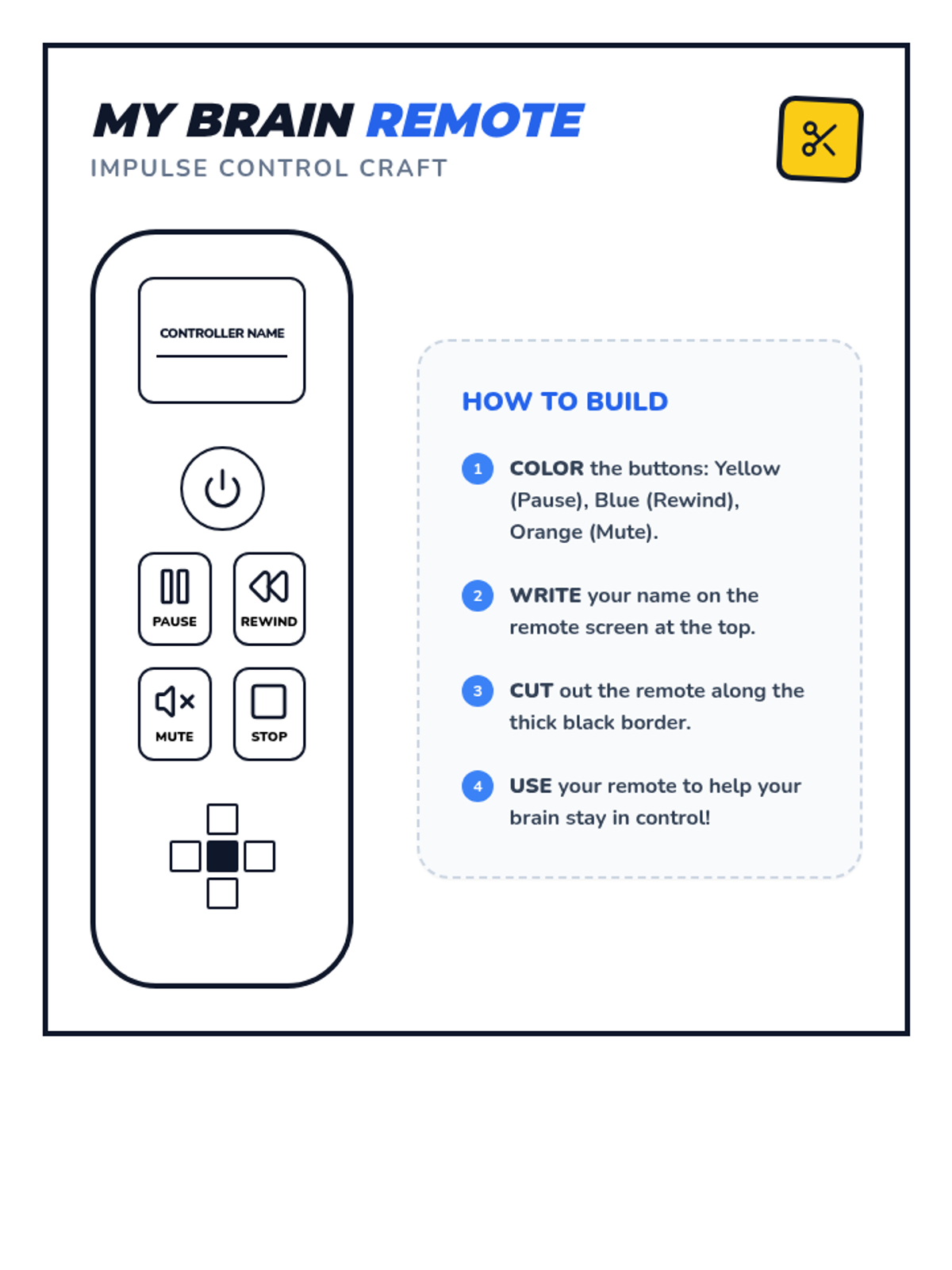
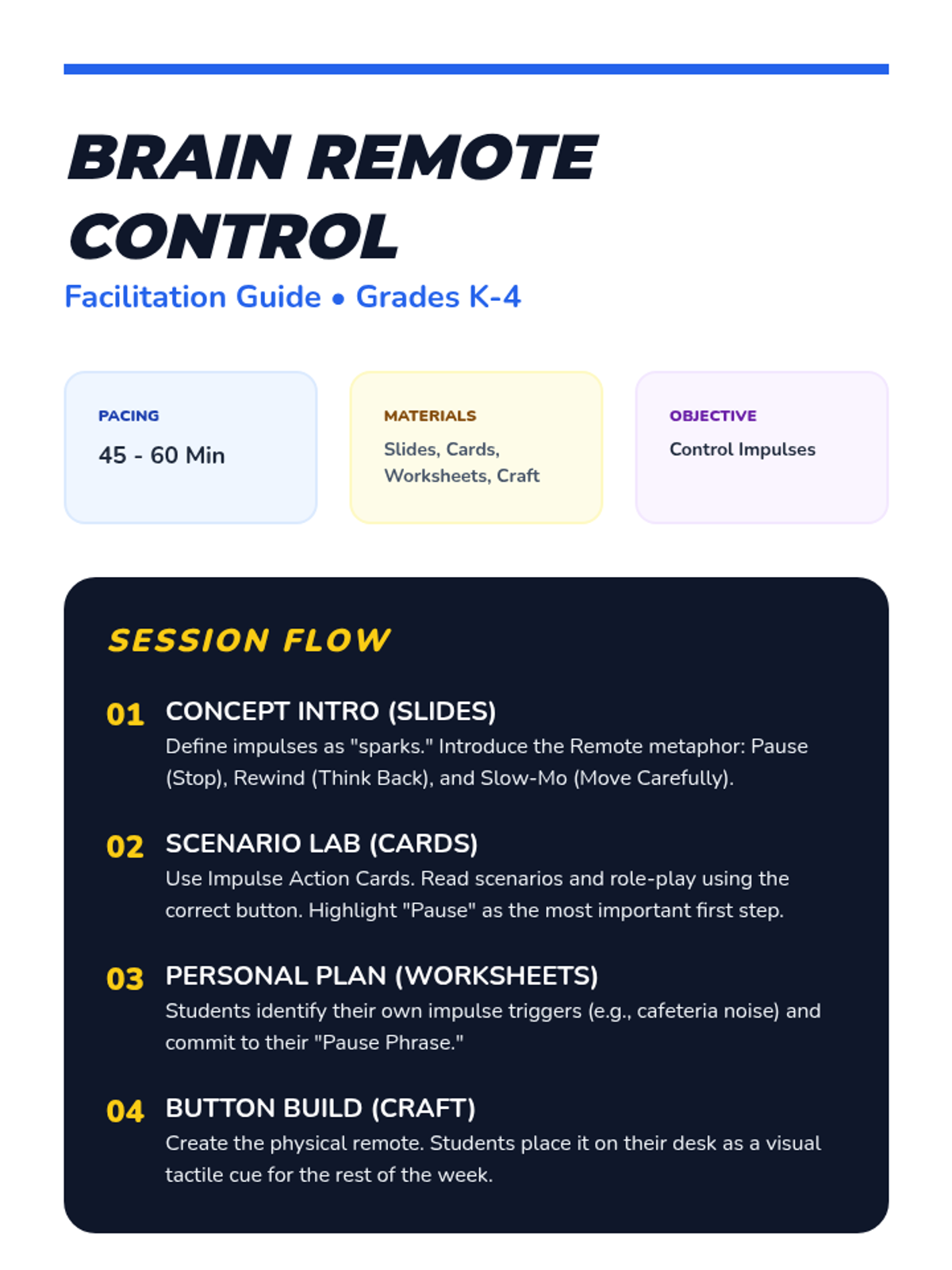
A social-emotional learning lesson for K-4 students focused on impulse control techniques using a remote control metaphor. Students learn to 'pause', 'rewind', and 'slow down' their reactions through interactive activities and a creative craft.