This lesson helps students understand that mistakes are a natural part of learning and growth. Using the story of Millie, students explore growth mindset, resilience, and creativity through video, discussion, and role-play.
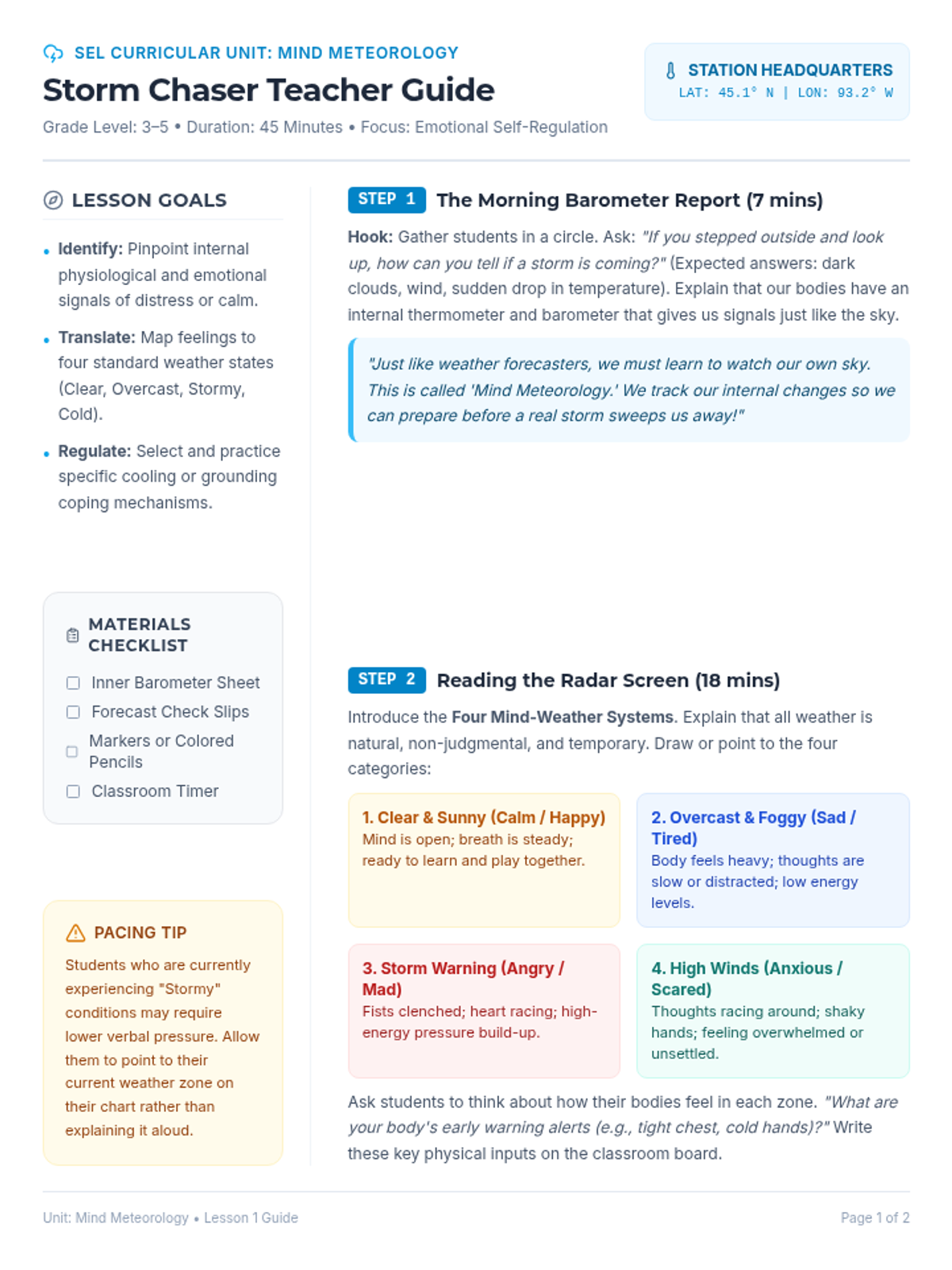
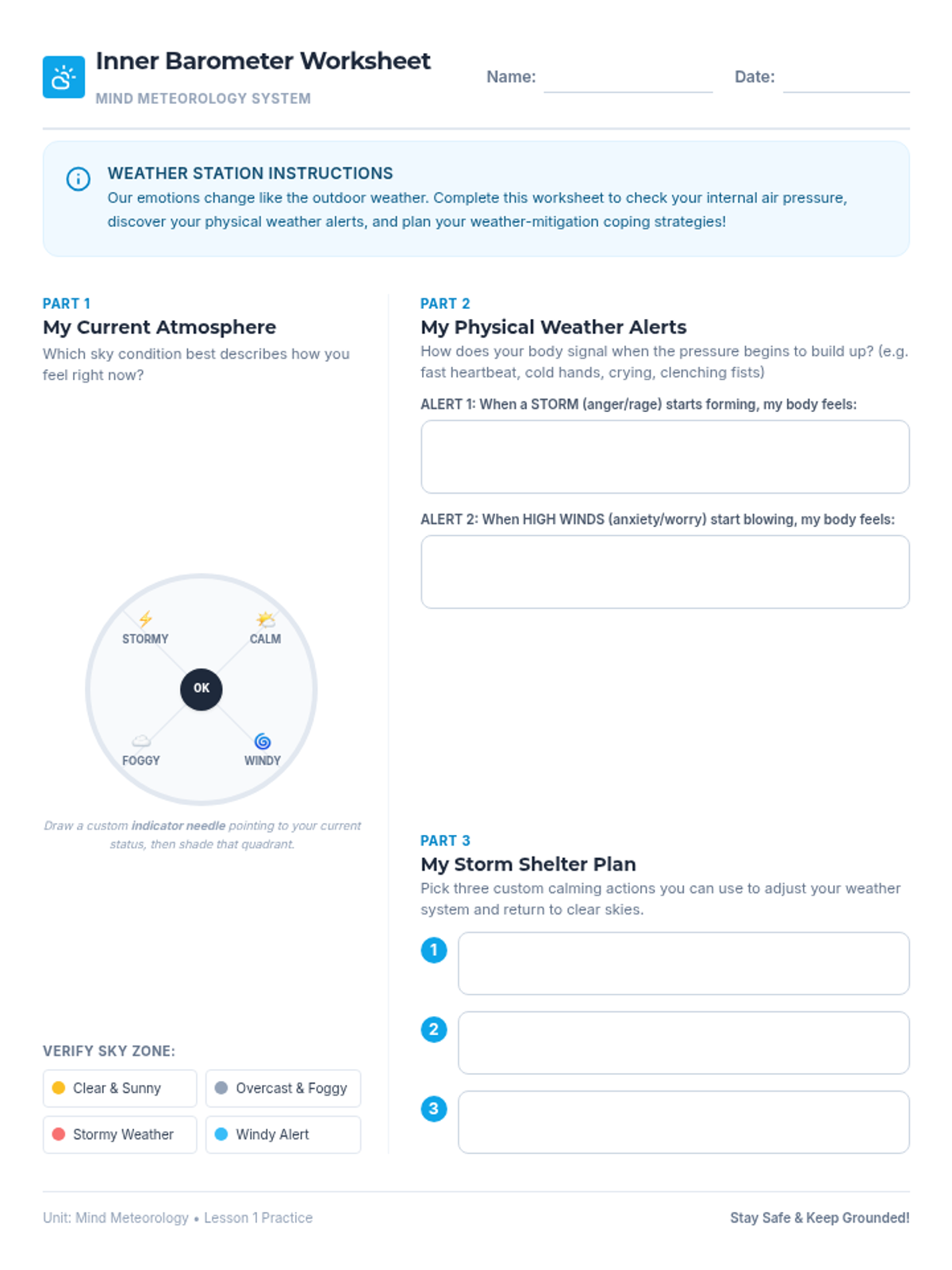
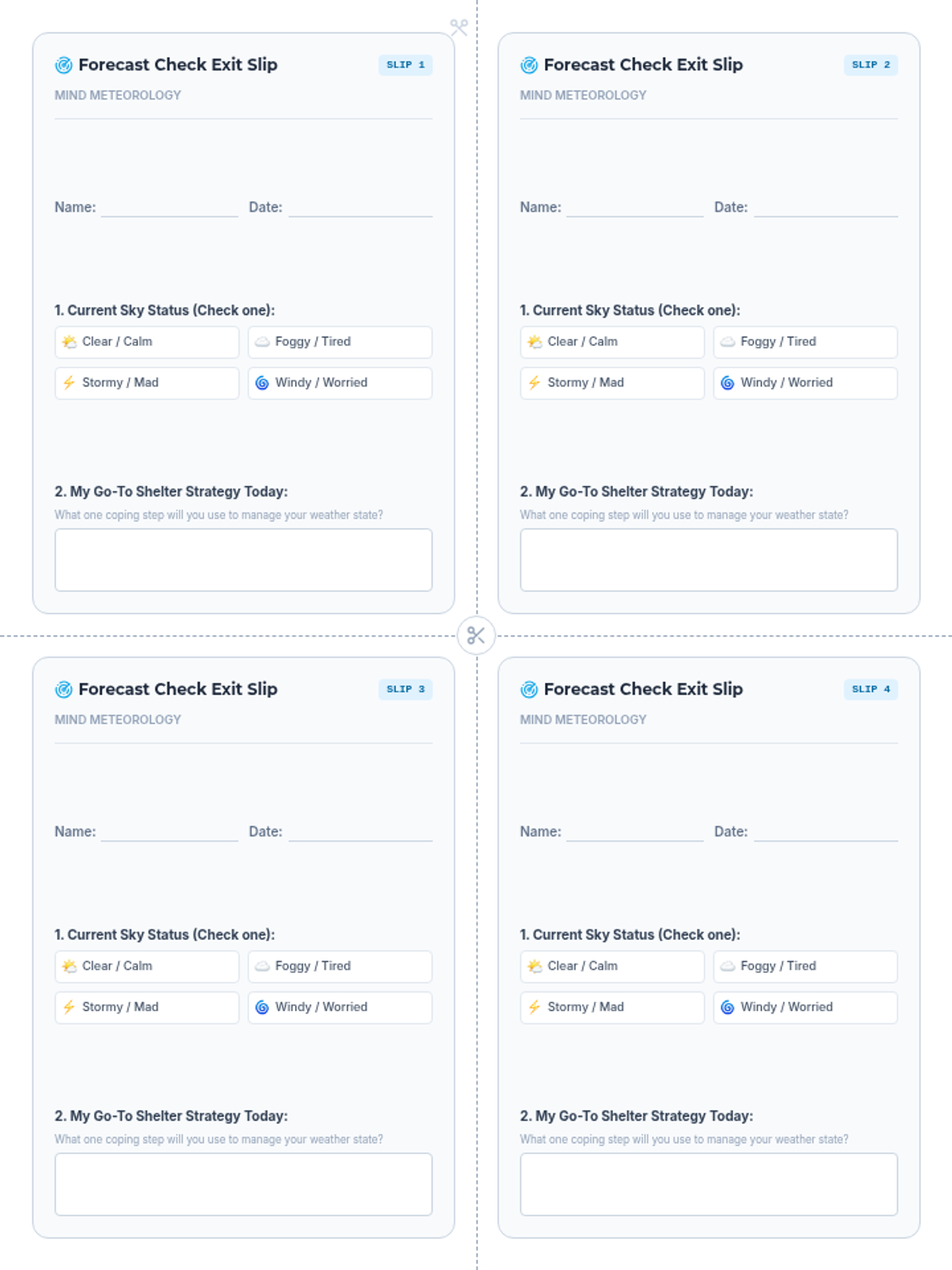
An engaging social-emotional learning lesson that teaches students to identify their emotional states as internal weather patterns and apply self-regulation coping strategies to return to calm, clear skies.
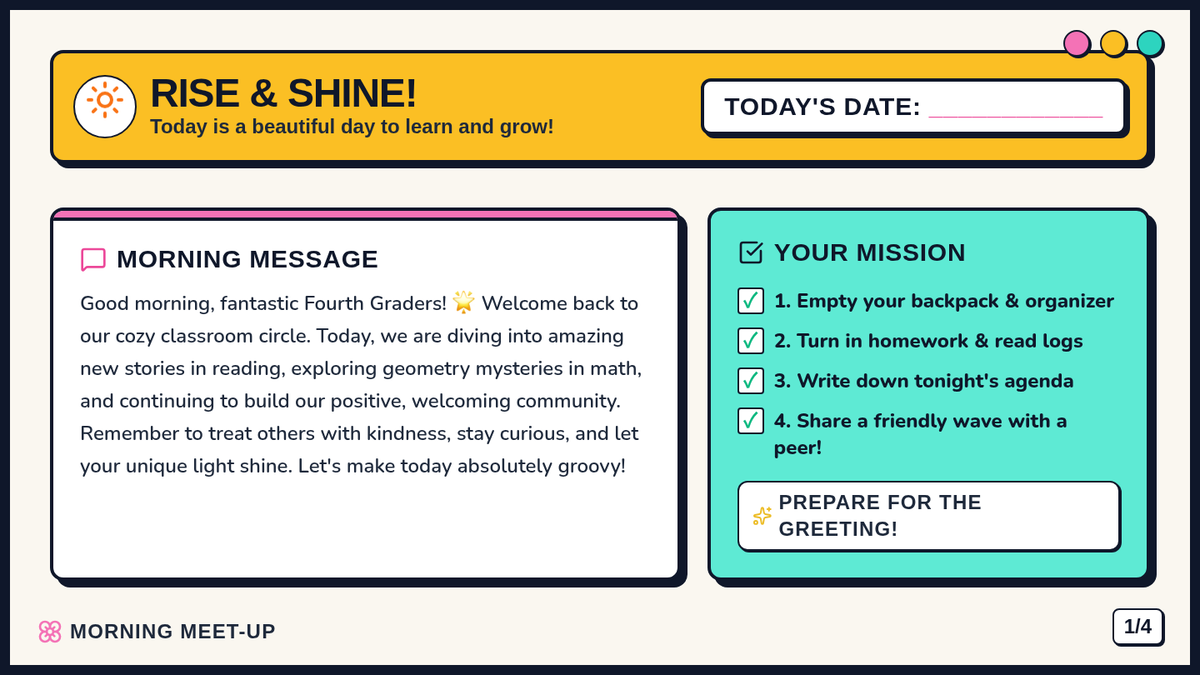
A vibrant, interactive morning meeting sequence designed to start the school day with positive 4th-grade energy. Features retro-inspired slide activities to foster community, sharing, and collaborative play.
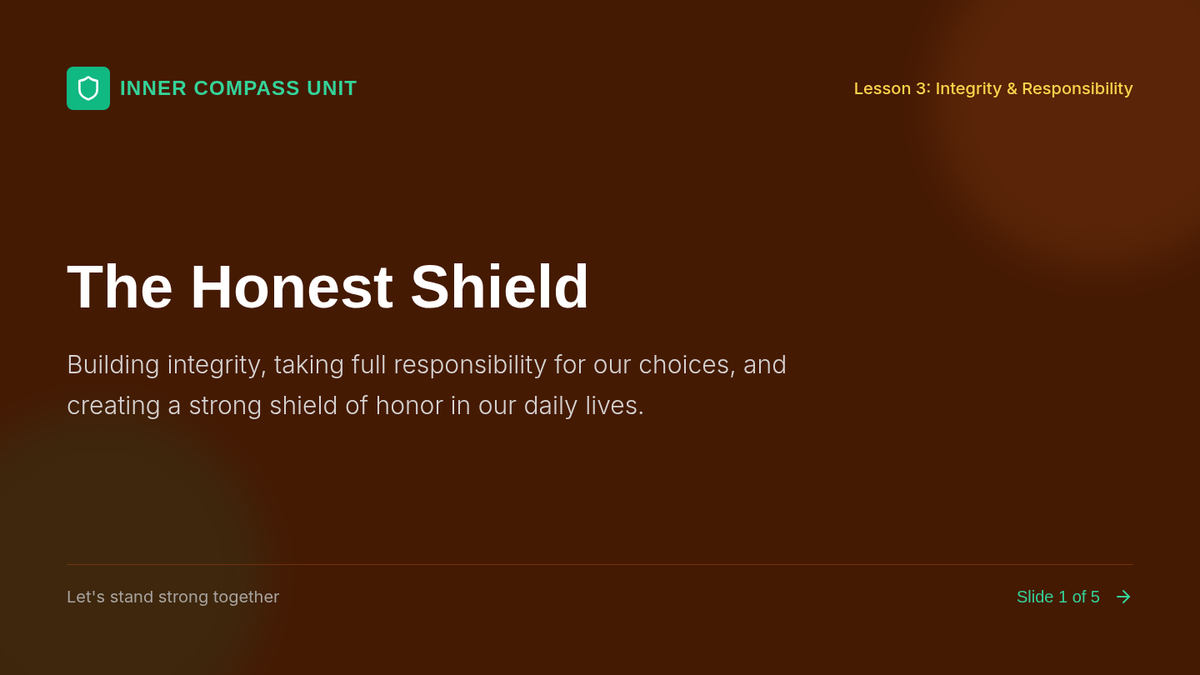
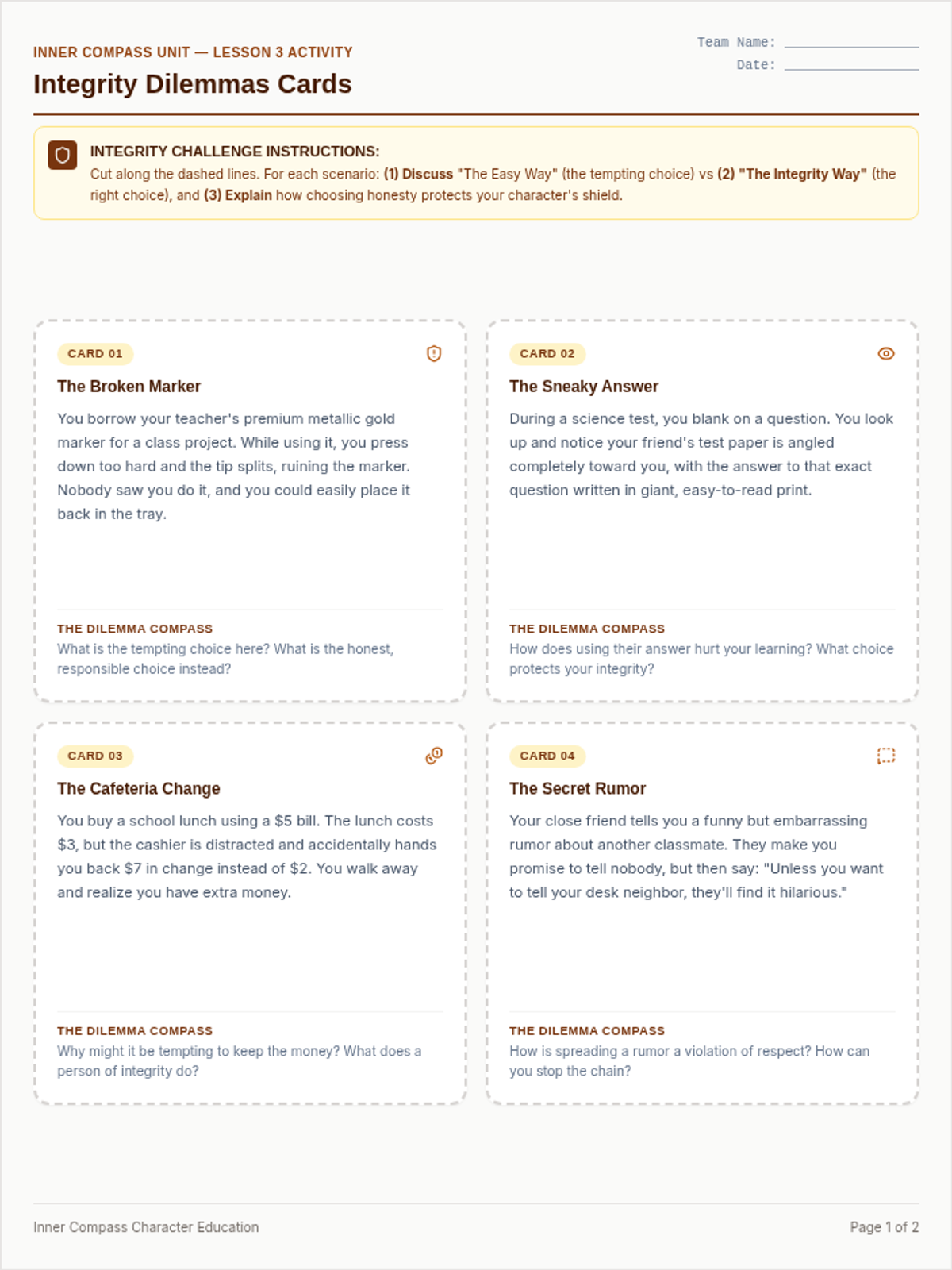
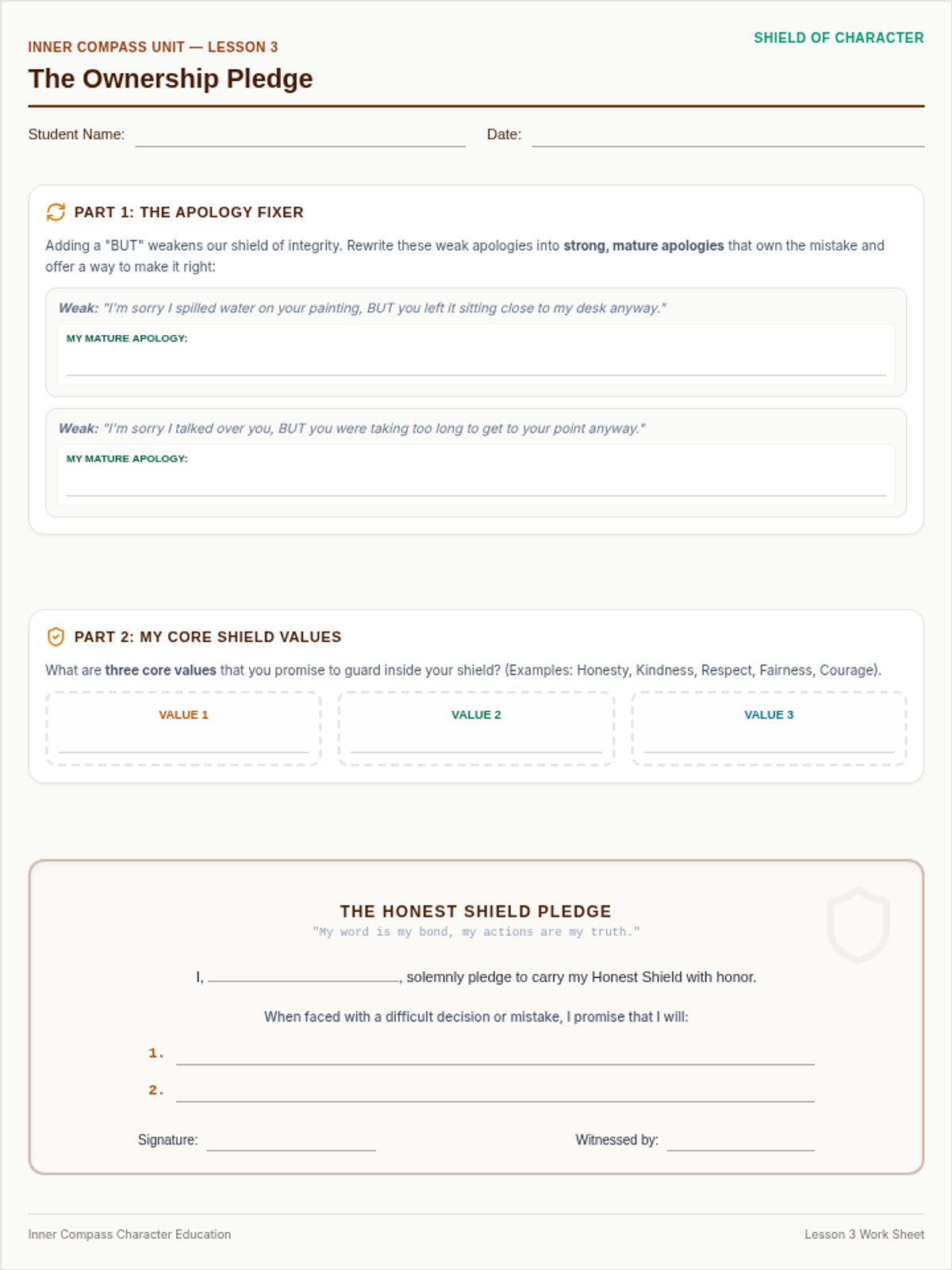
Students investigate responsibility, honesty, and integrity. They learn to make difficult choices, take ownership of mistakes, and construct a personal pledge for moral character.
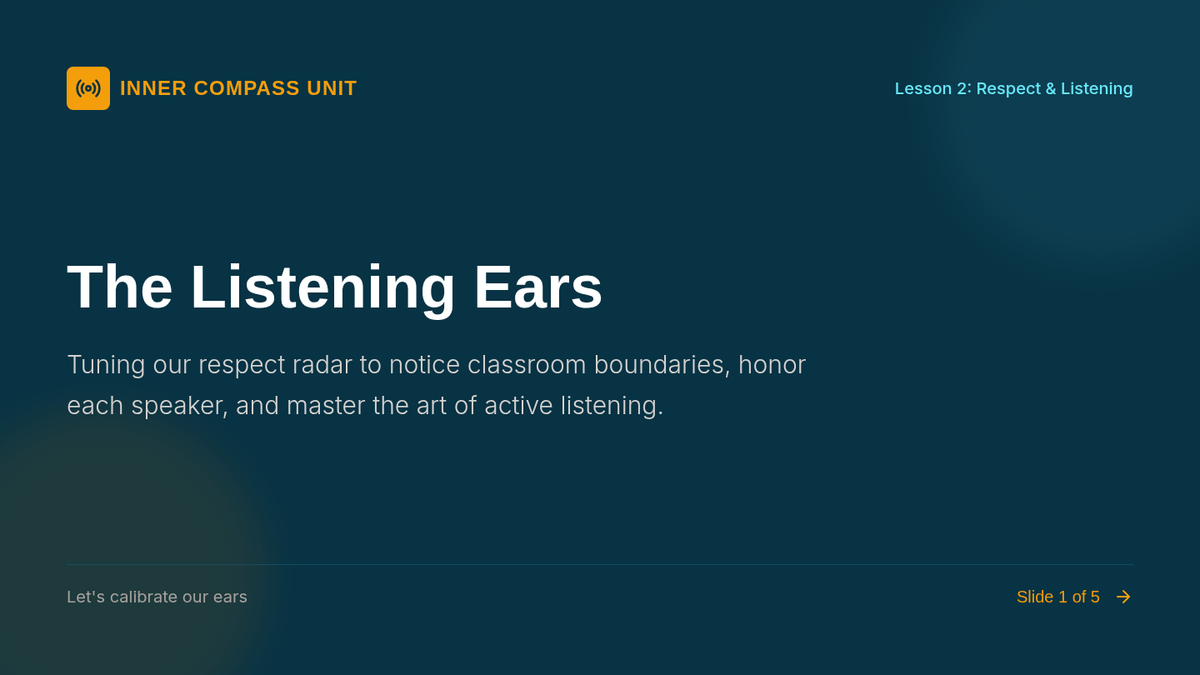
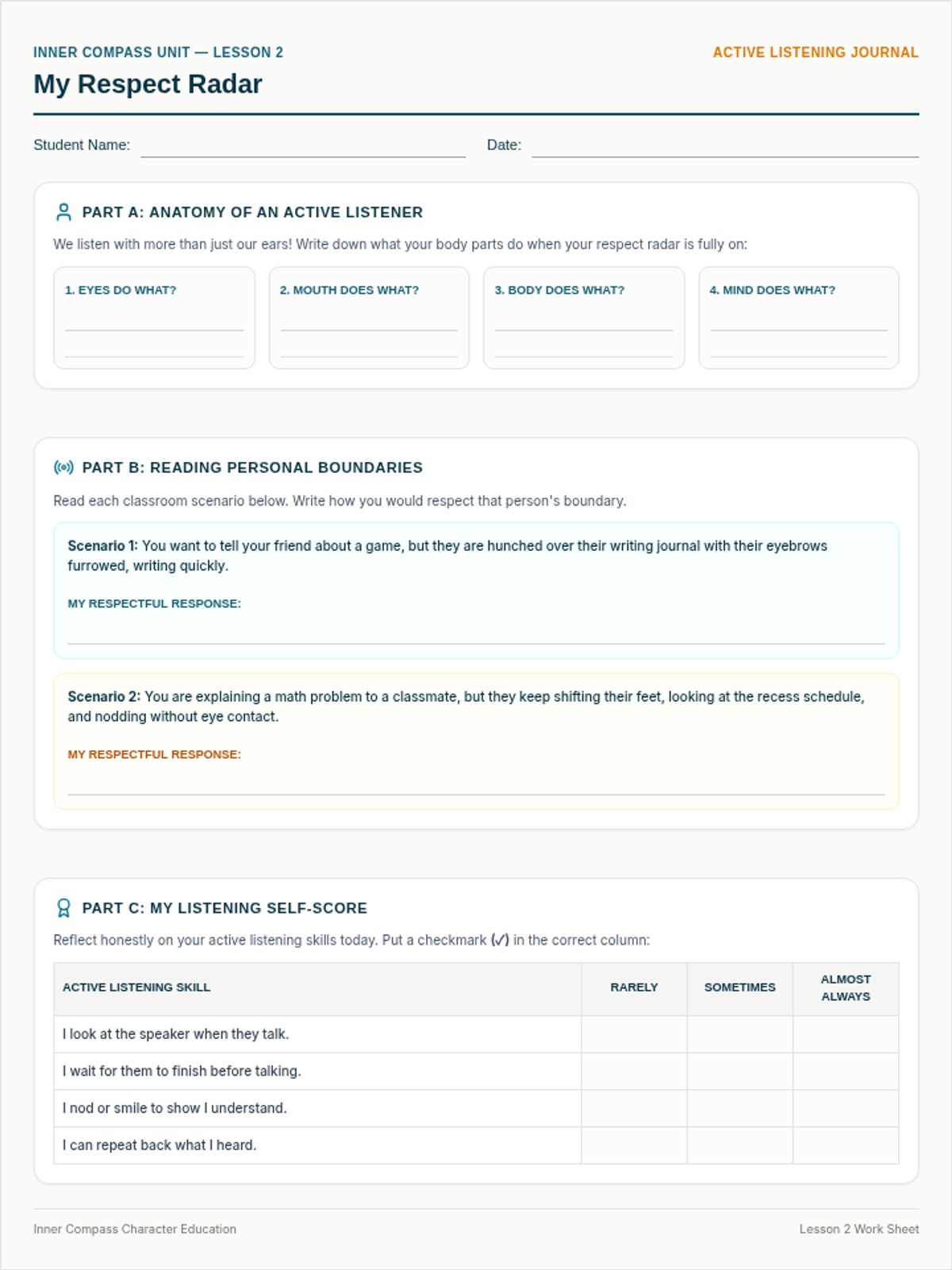
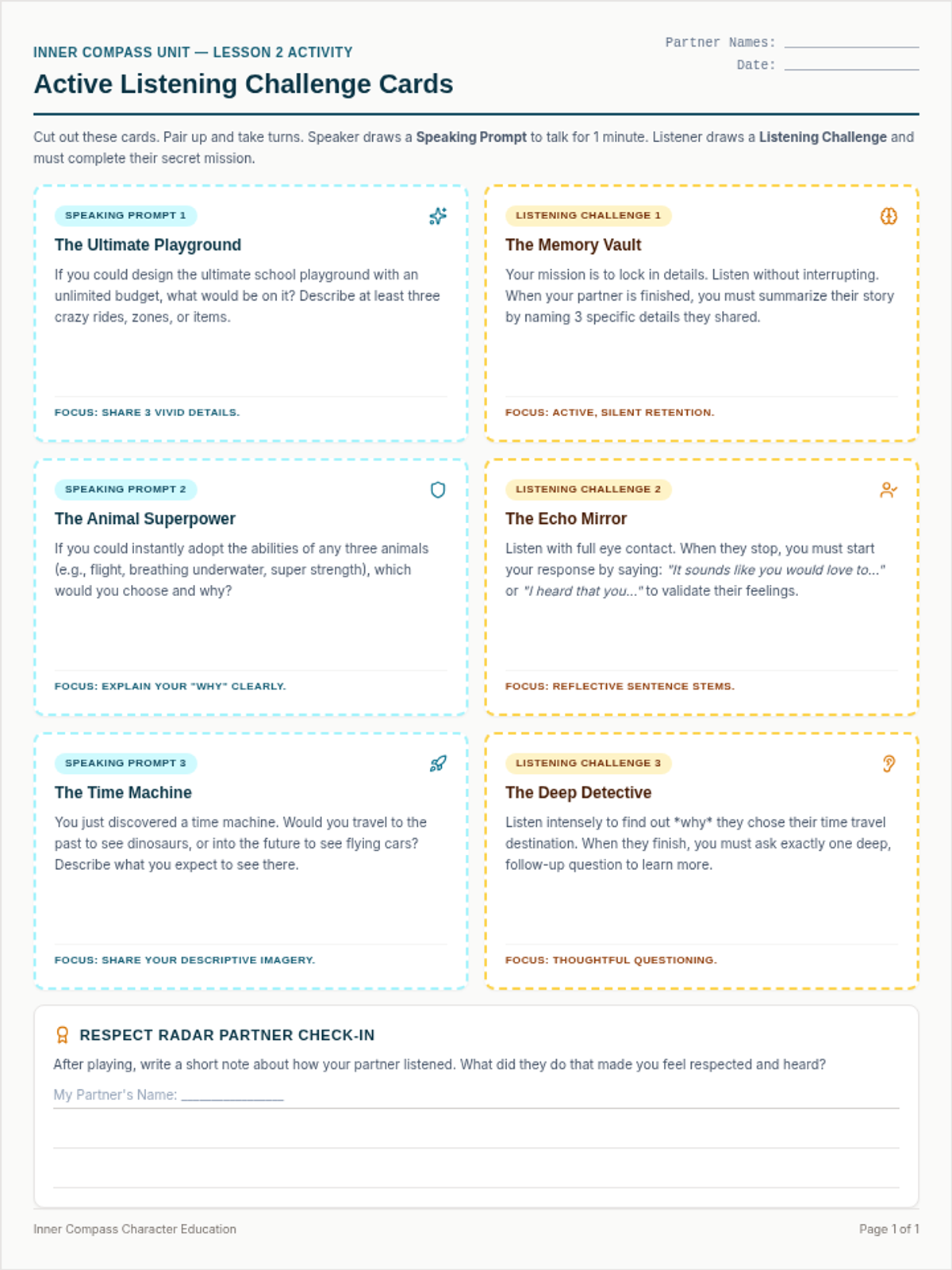
Students learn respect and active listening techniques. They engage in verbal exercises and boundary-setting activities to build effective communication and mutual respect.
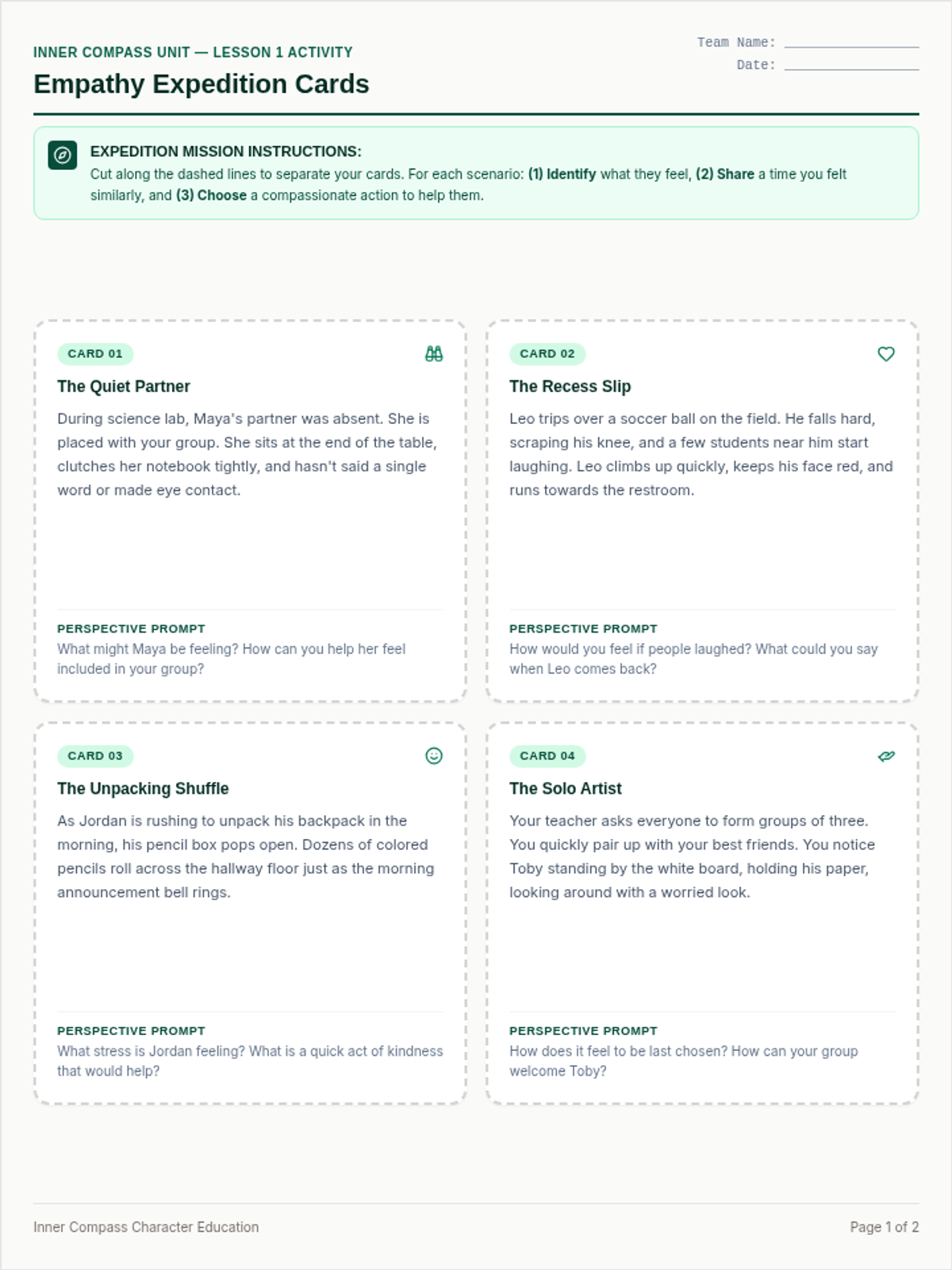
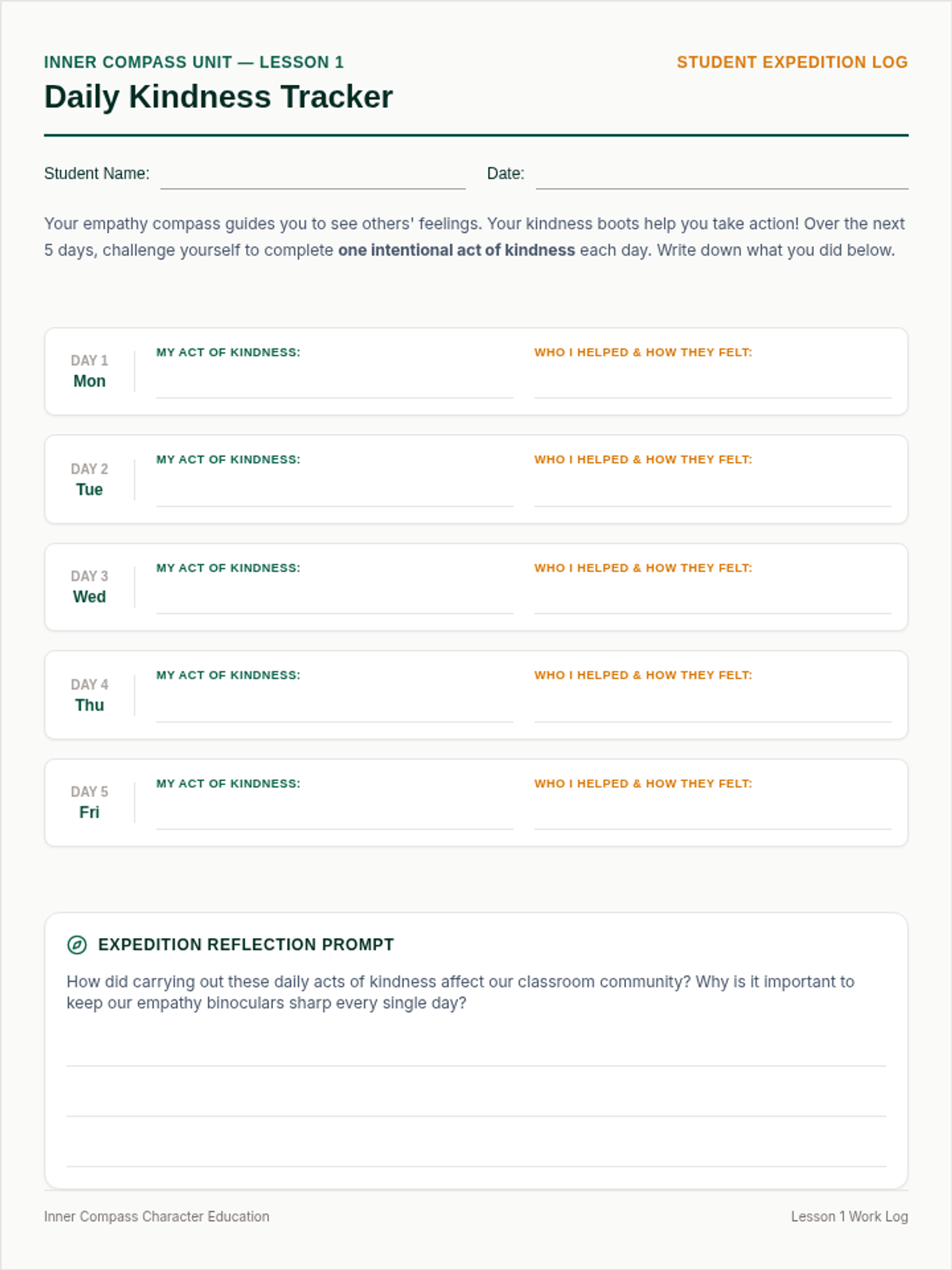
Students explore the power of empathy and kindness. Through looking at perspectives and performing small acts of helpfulness, students build connection and support in the classroom.
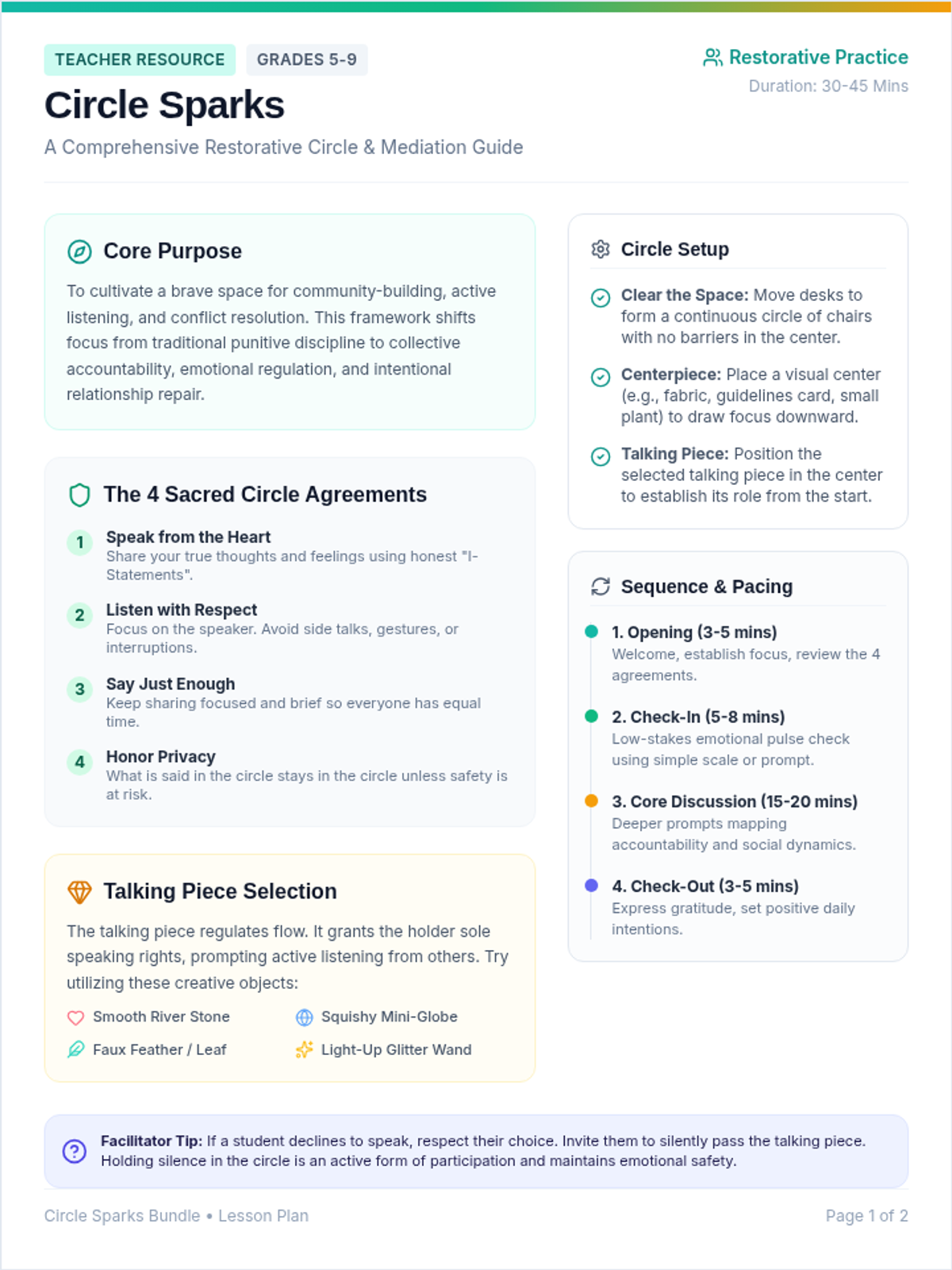
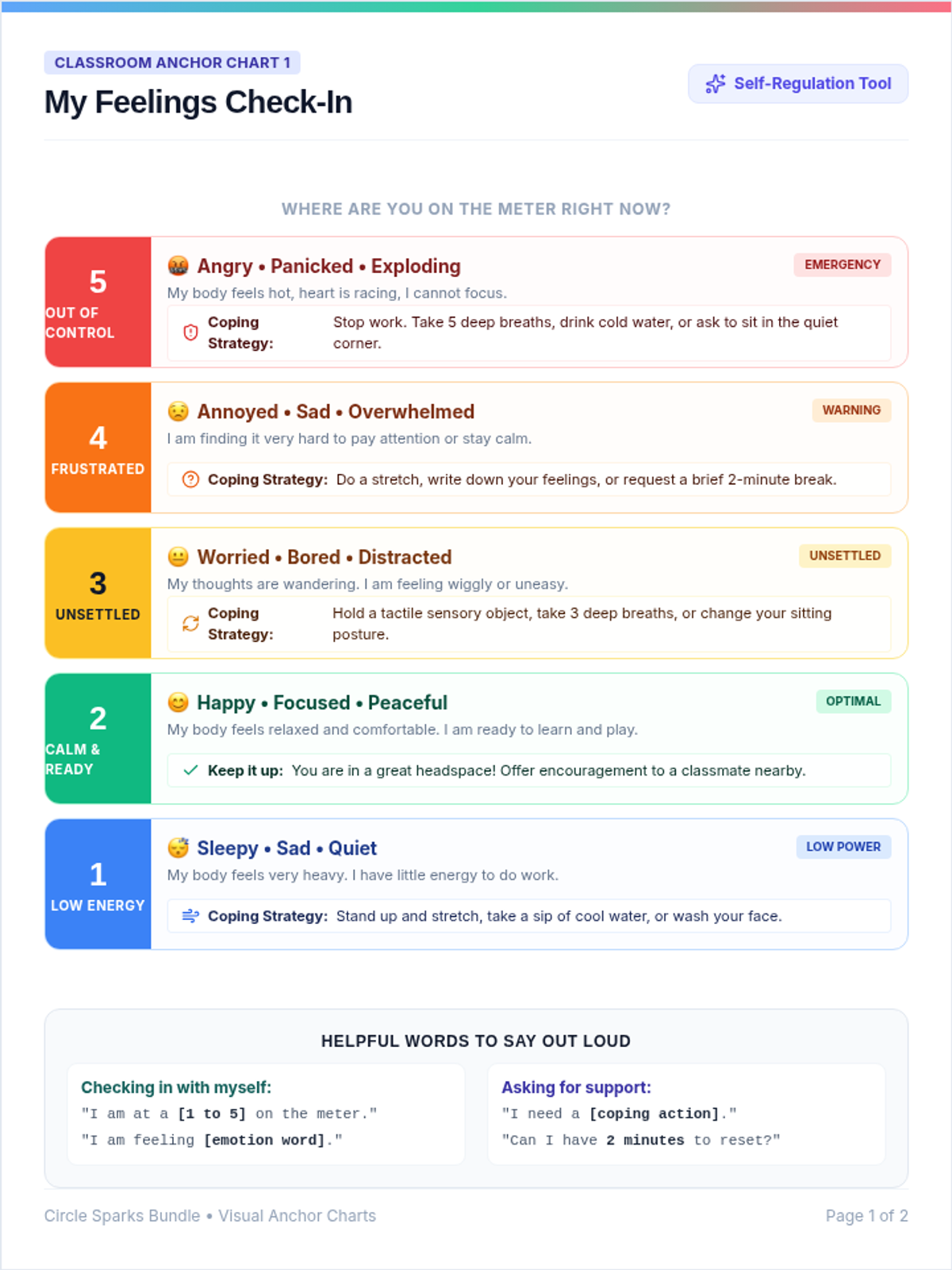
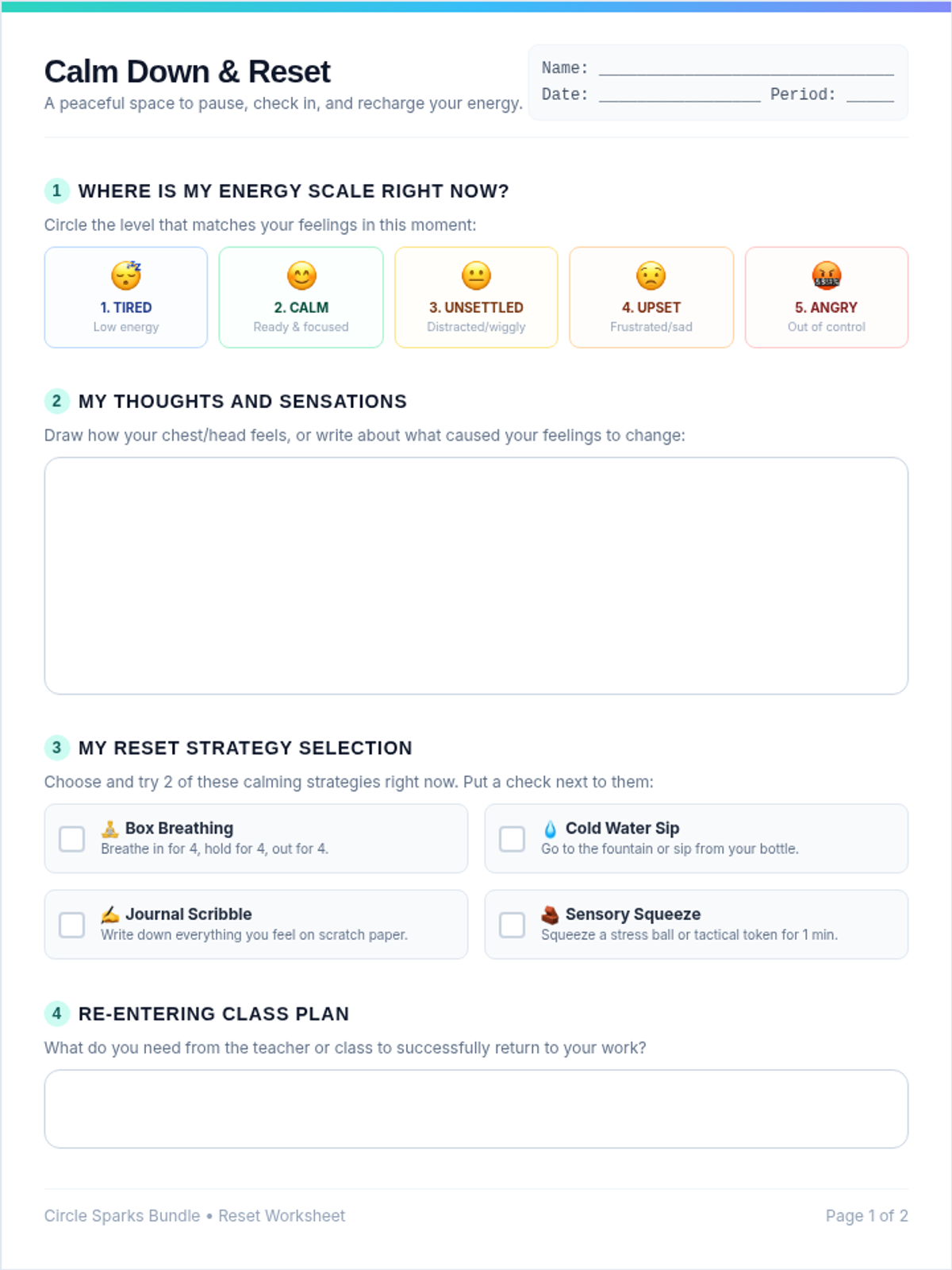
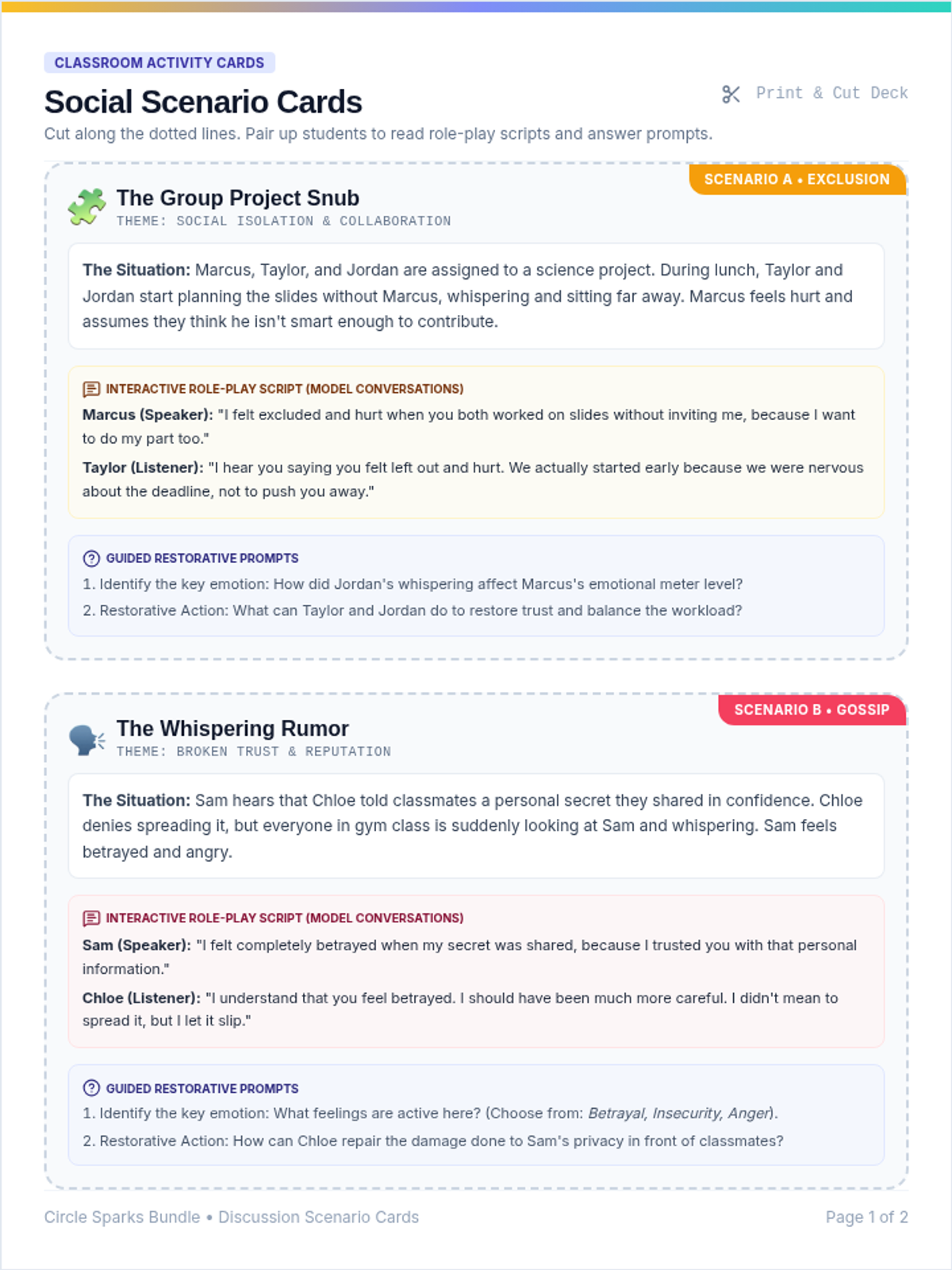
A comprehensive restorative justice lesson bundle designed to foster social-emotional learning, conflict resolution, and self-regulation through structured circle practices, visual anchor charts, visual reflection sheets, and real-world peer scenarios.
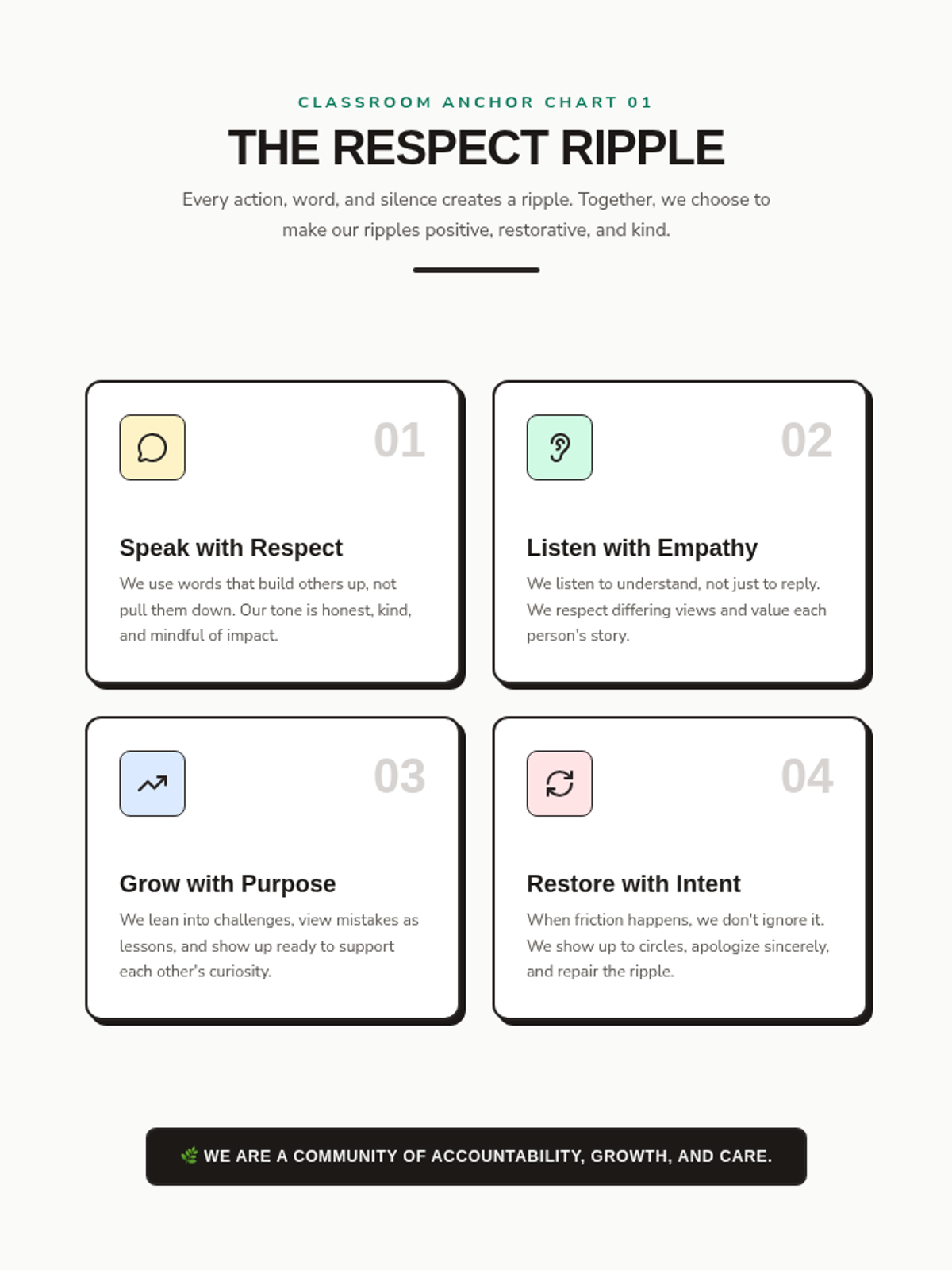
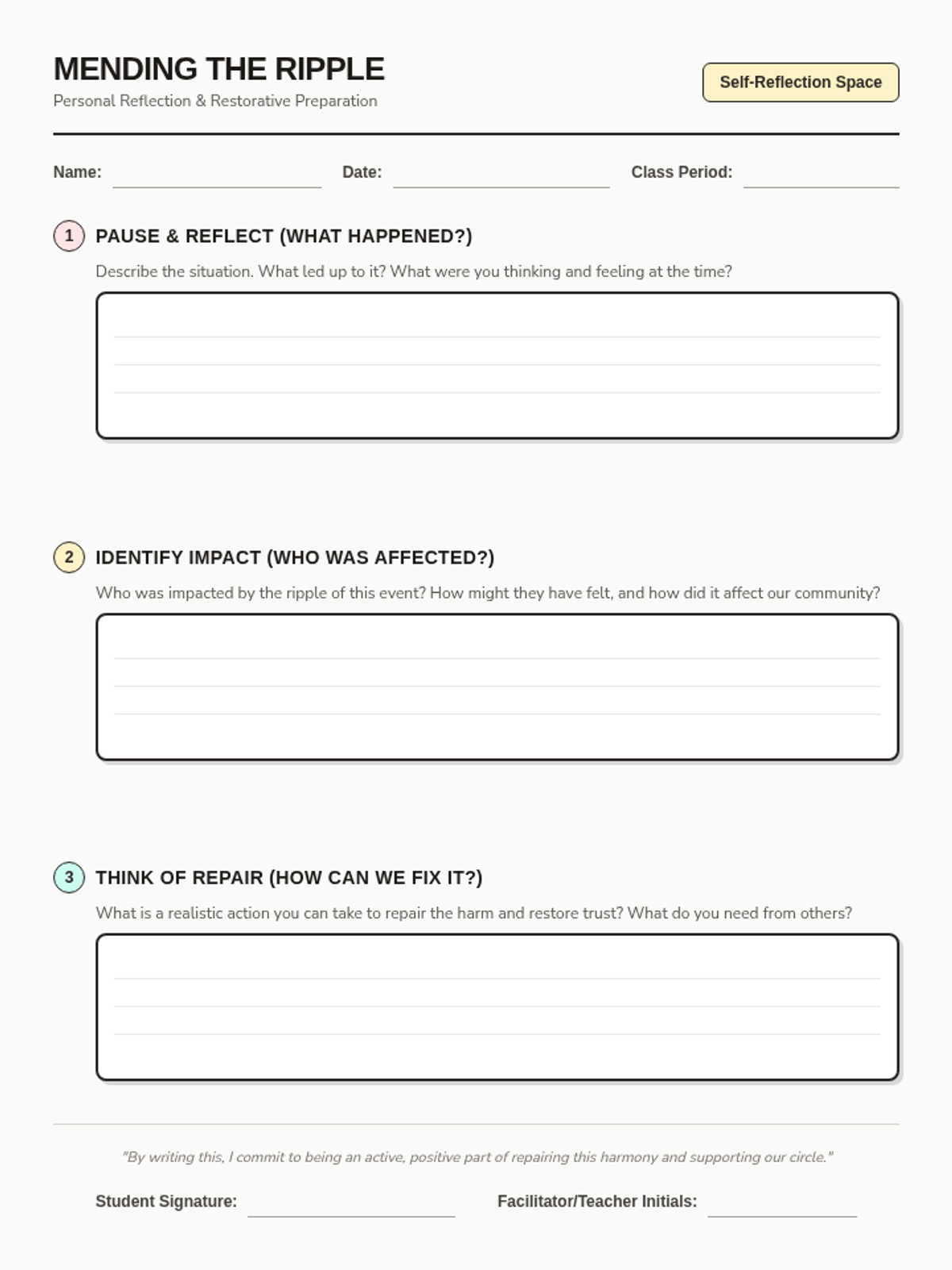
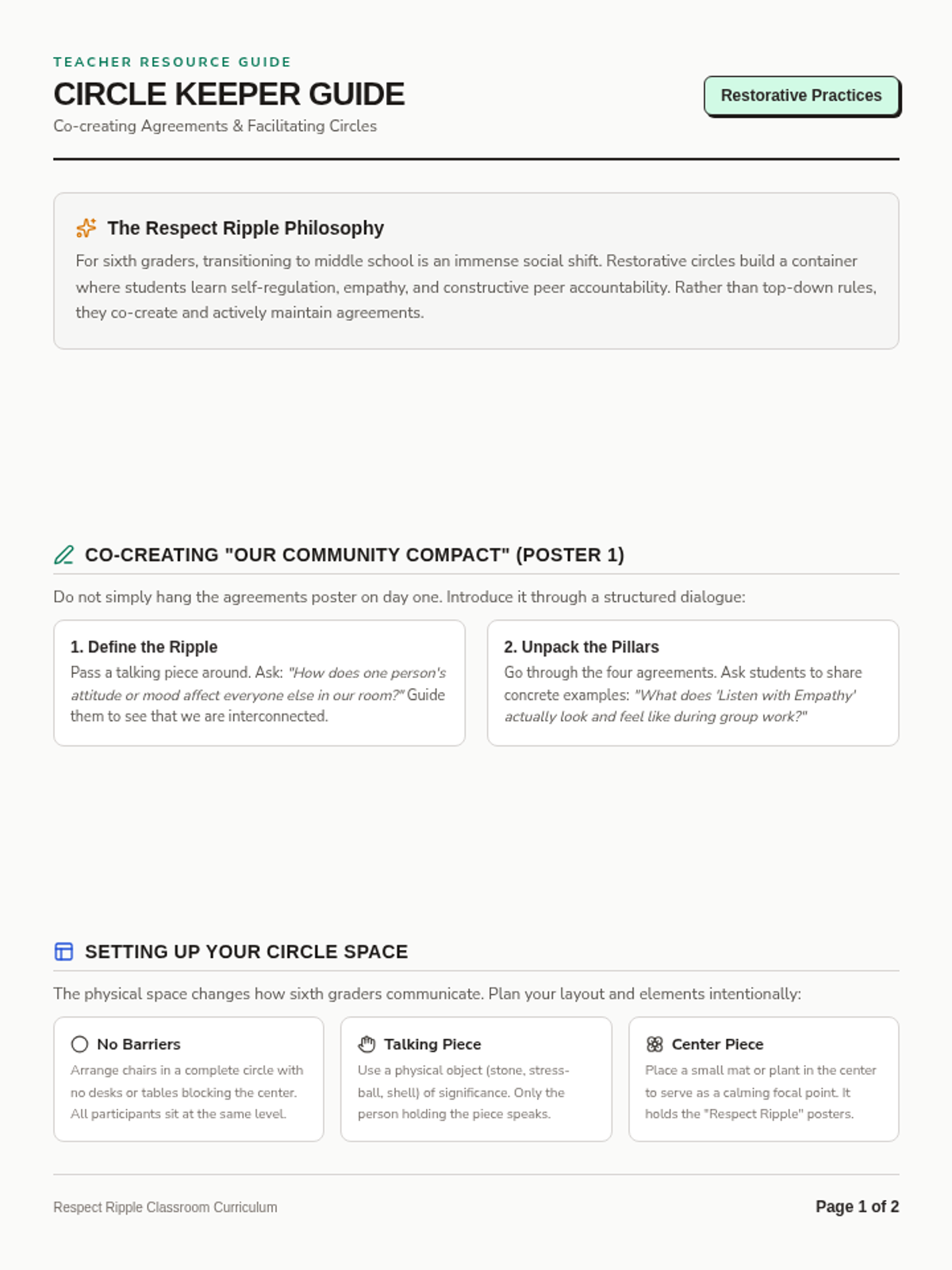
A restorative, community-focused set of materials for 6th grade classrooms. Includes large, clean visual anchor charts (posters) for agreements, restorative dialogue, and repairing harm, plus a student reflection worksheet and a teacher guide for hosting circle discussions.
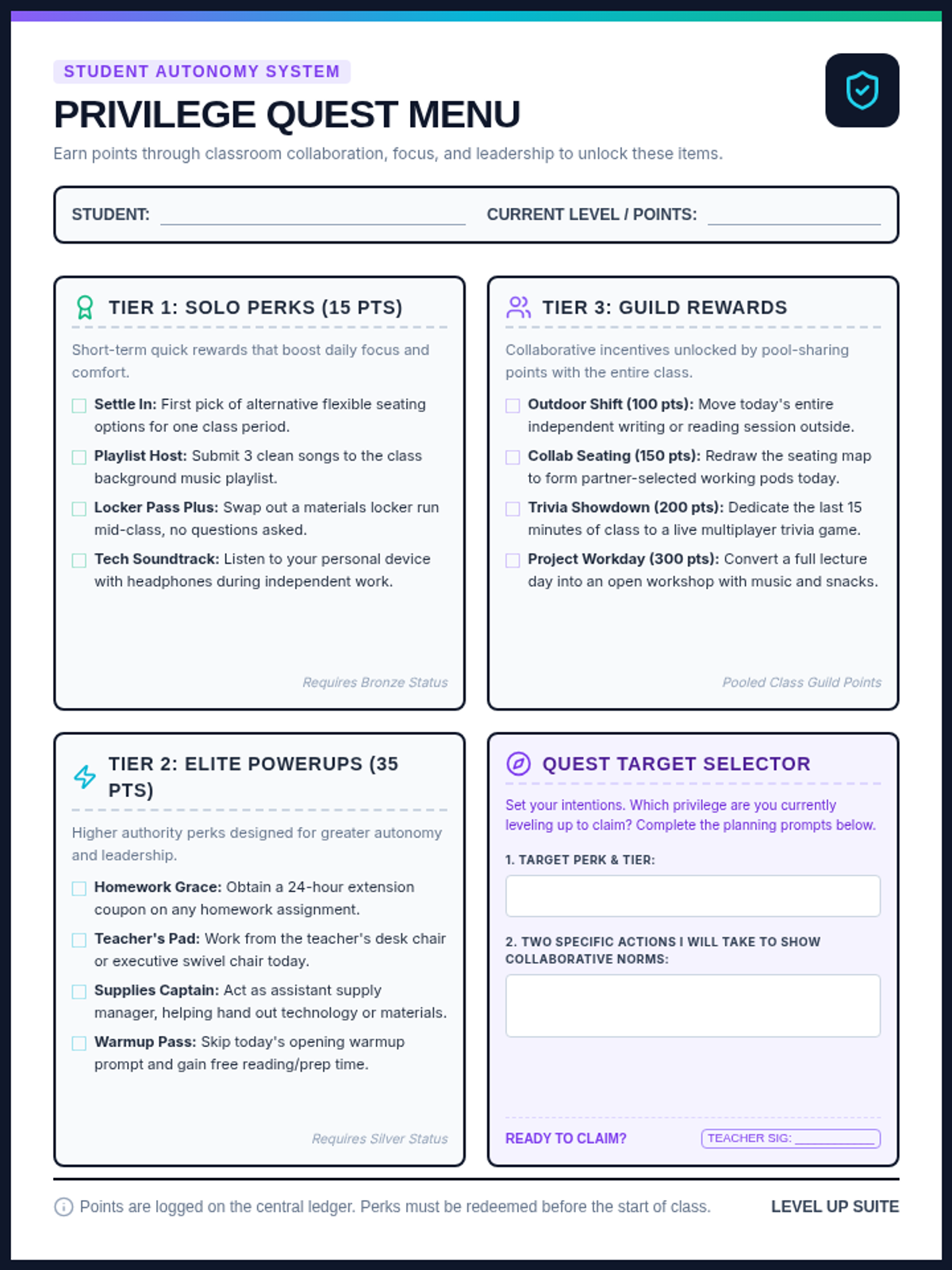
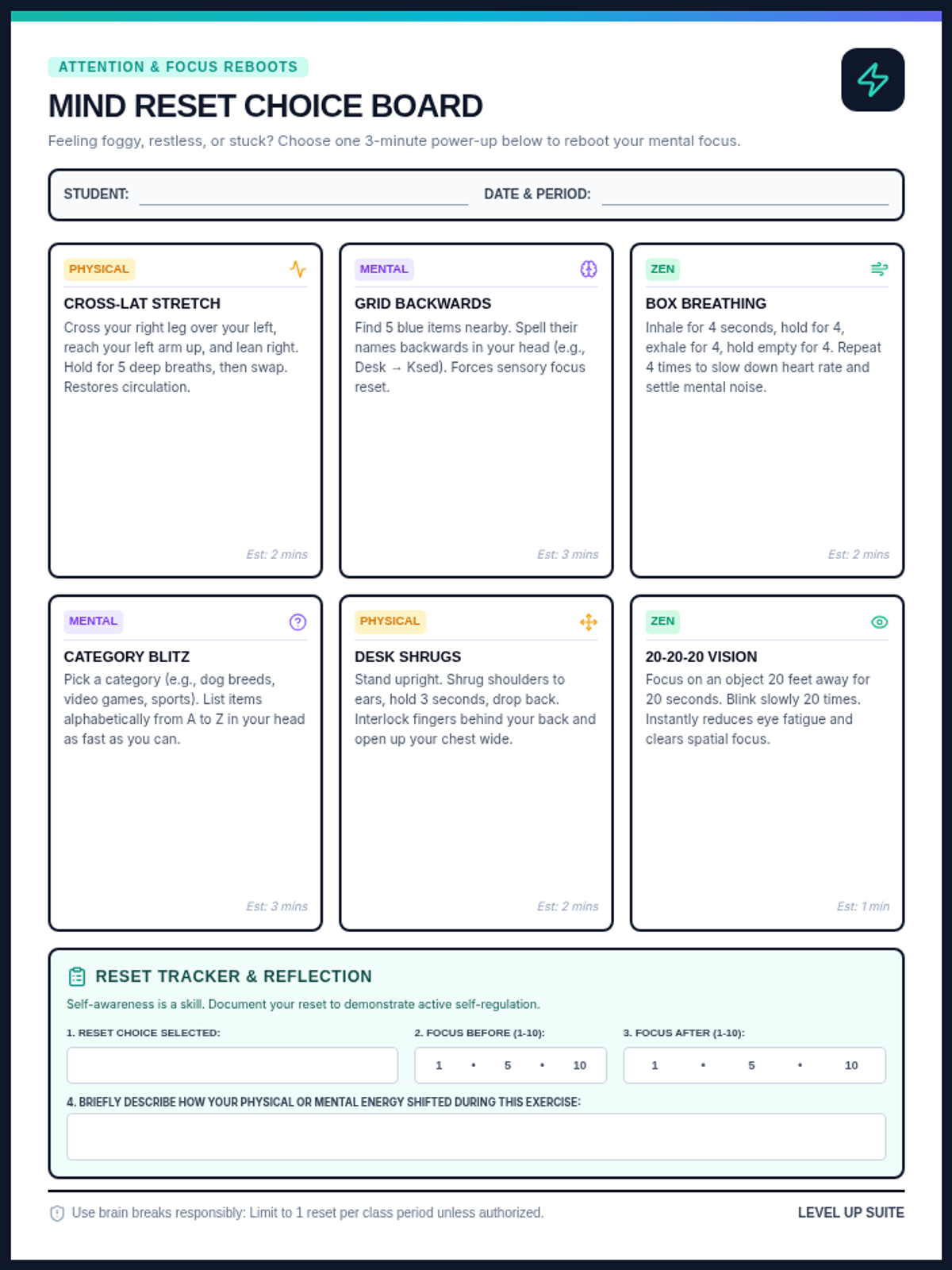
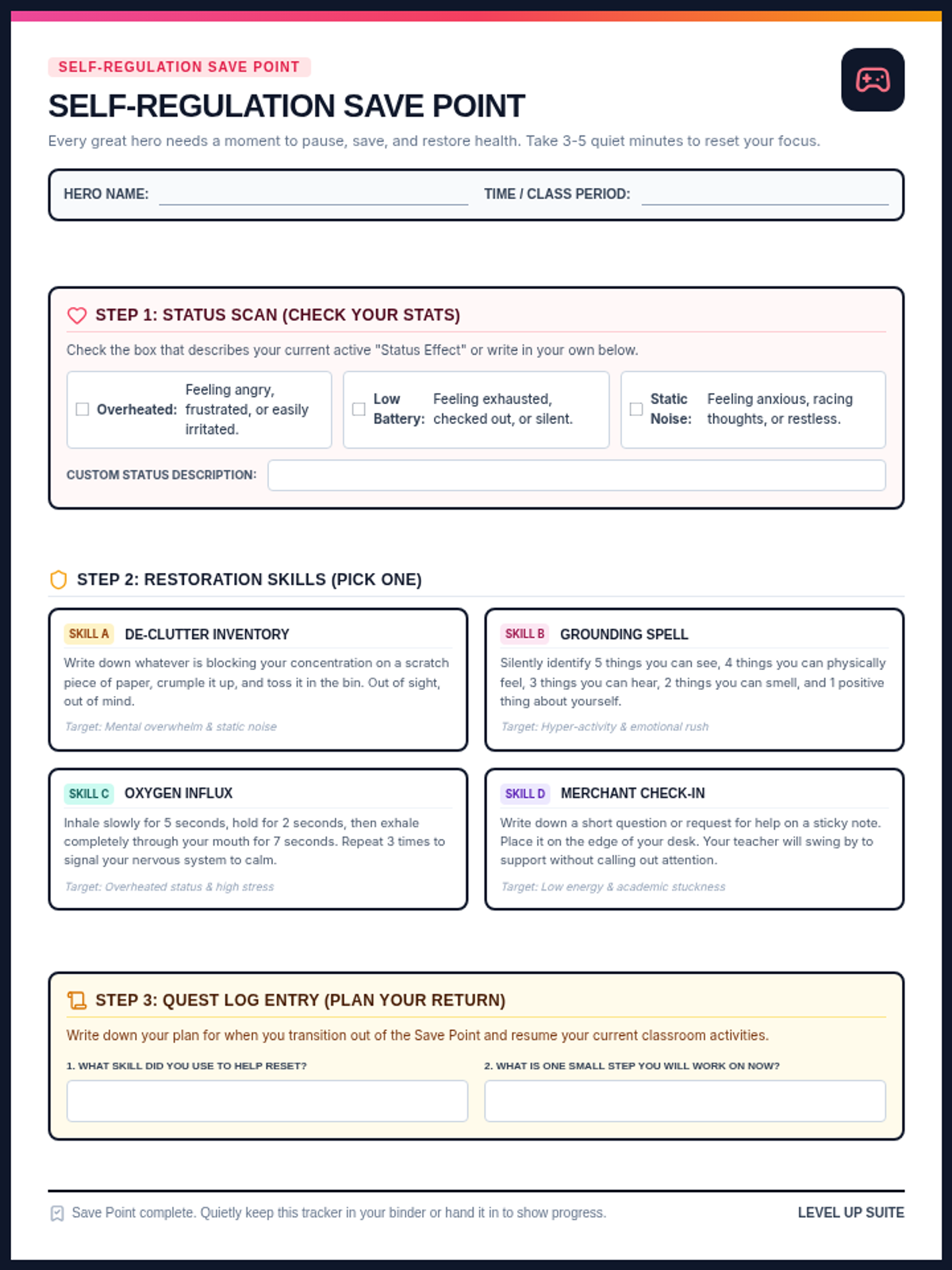
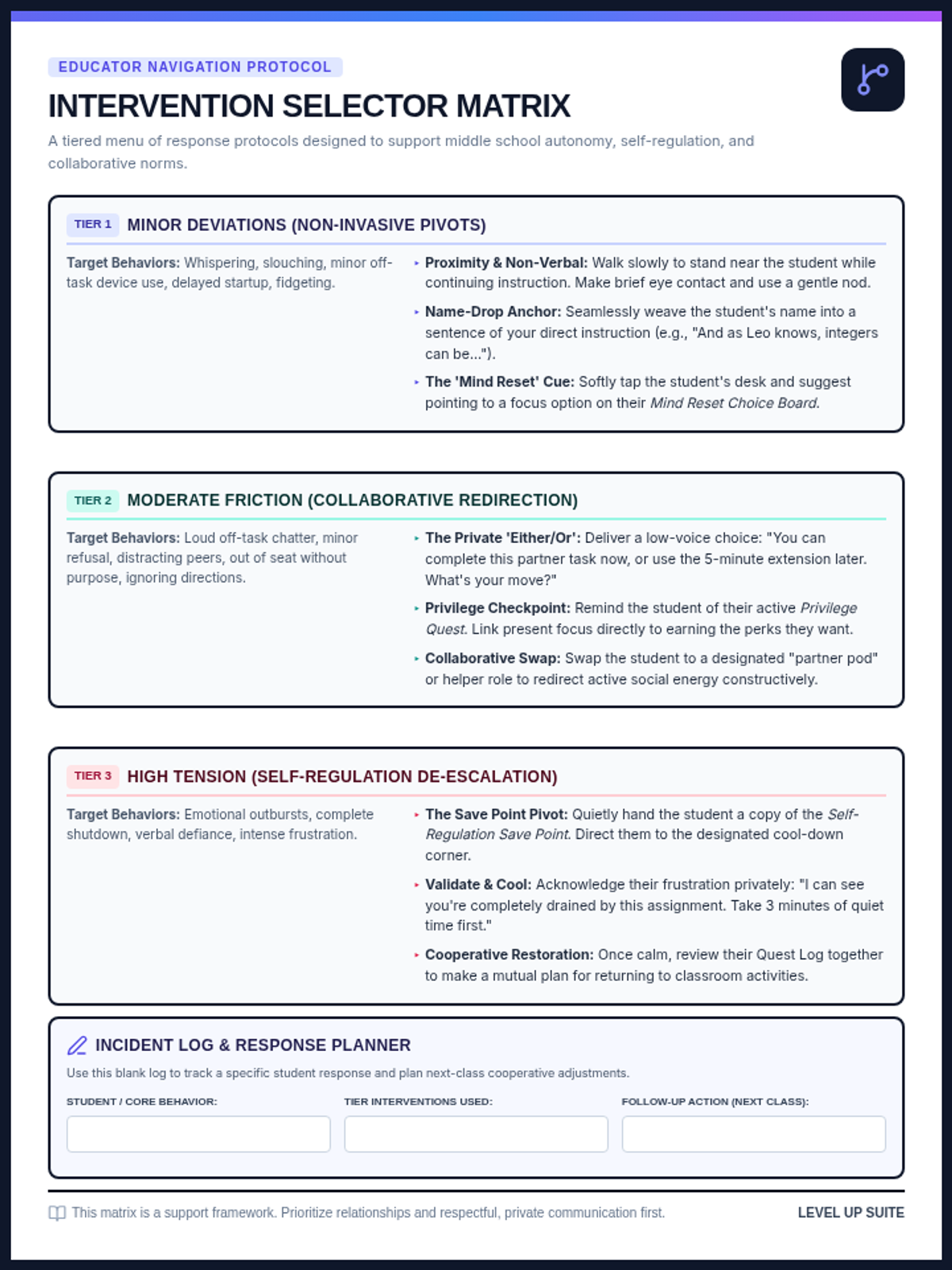
A comprehensive classroom management toolkit designed specifically for middle schoolers, emphasizing autonomy, self-regulation, and collaborative norms. It contains a privilege menu, a brain-break choice board, a student coping guide, and a teacher intervention selector.
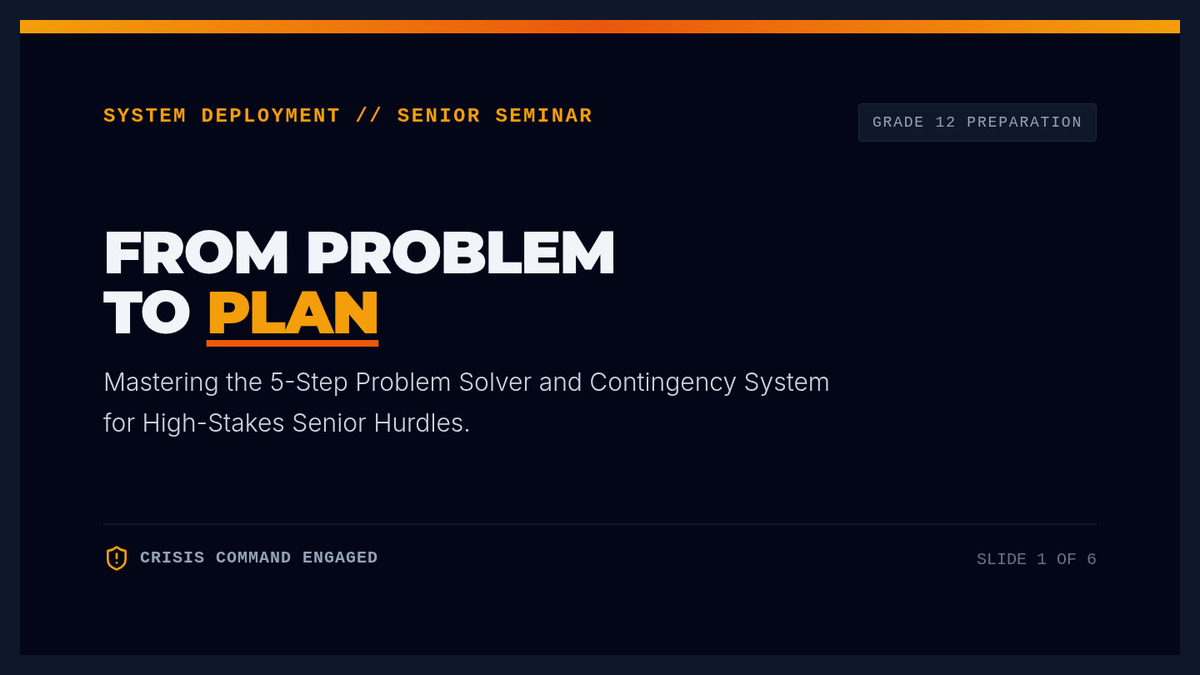
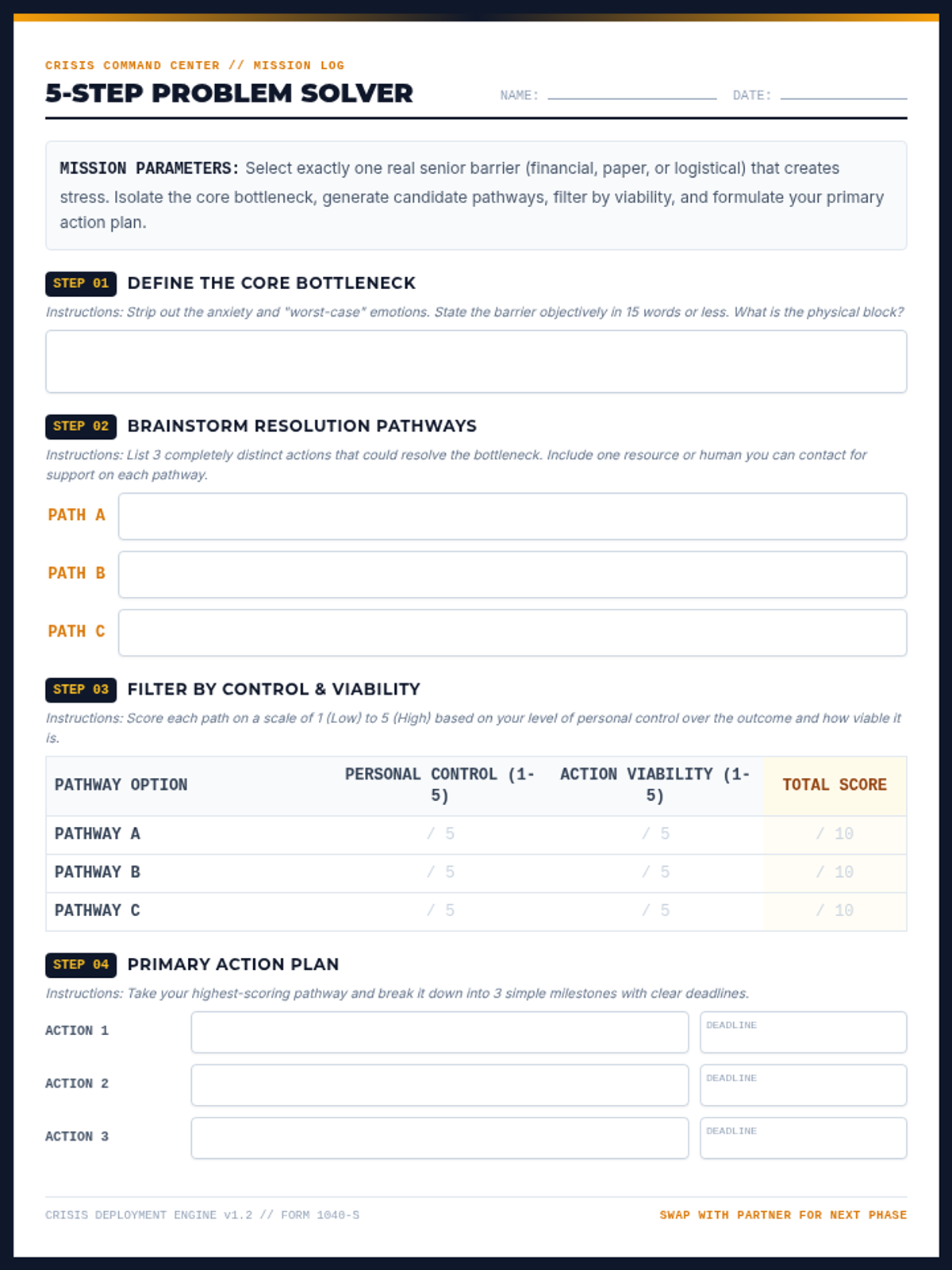
A high-impact 45-minute lesson for 12th graders to master problem-solving under pressure. Students learn a structured 5-step framework, analyze common senior barriers (financial, logistical, time), and build actionable backup plans with concrete contingencies.
A 45-minute lesson designed for 12th graders to analyze their punctuality habits, understand the high stakes of reliability in high school and the workplace, and build a concrete, personalized reliability plan.
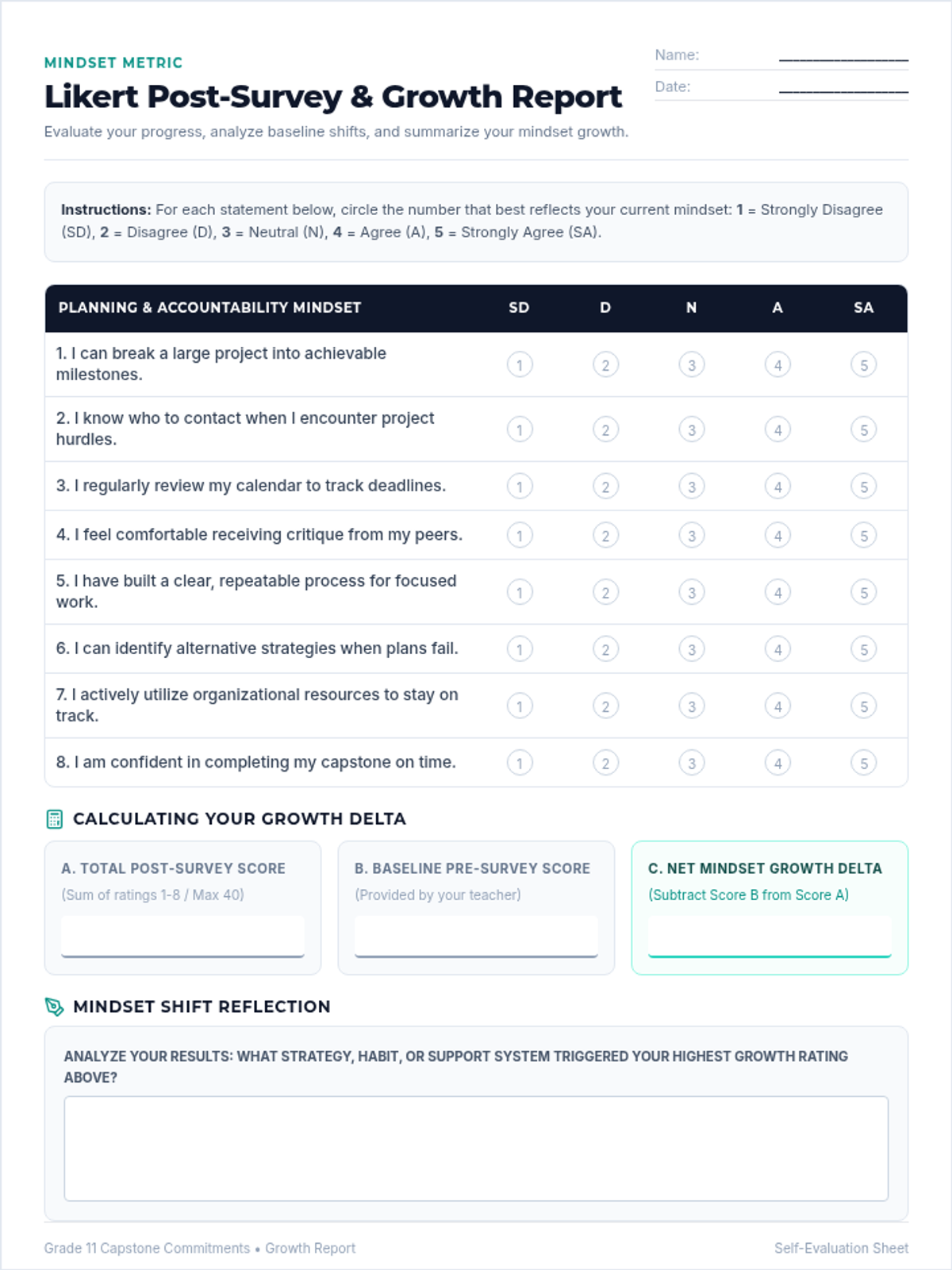
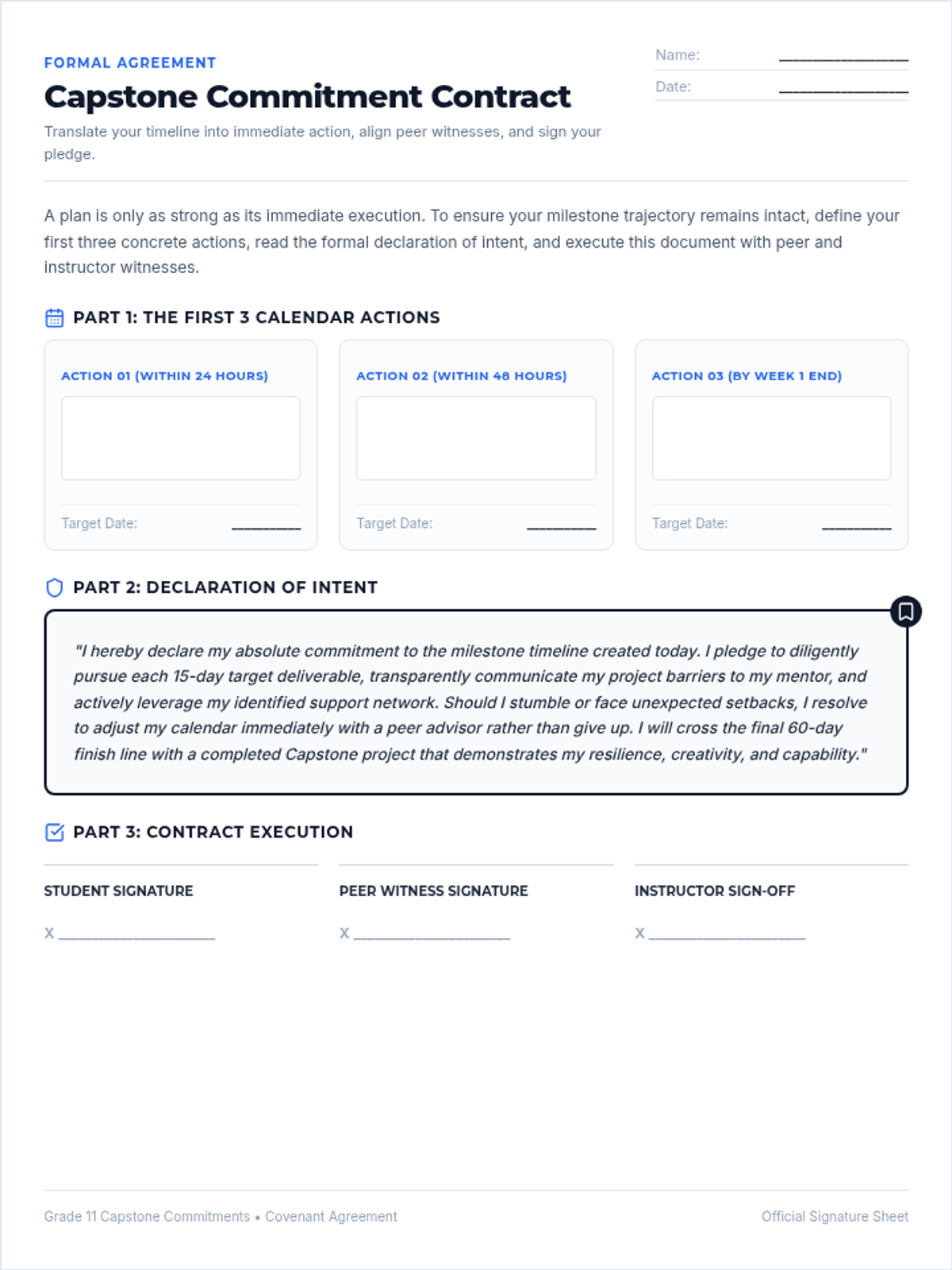
A 45-minute lesson for 11th graders to finalize their 60-day milestone plans, reflect on growth using a Likert post-survey, and make a formal commitment contract for their capstone projects.
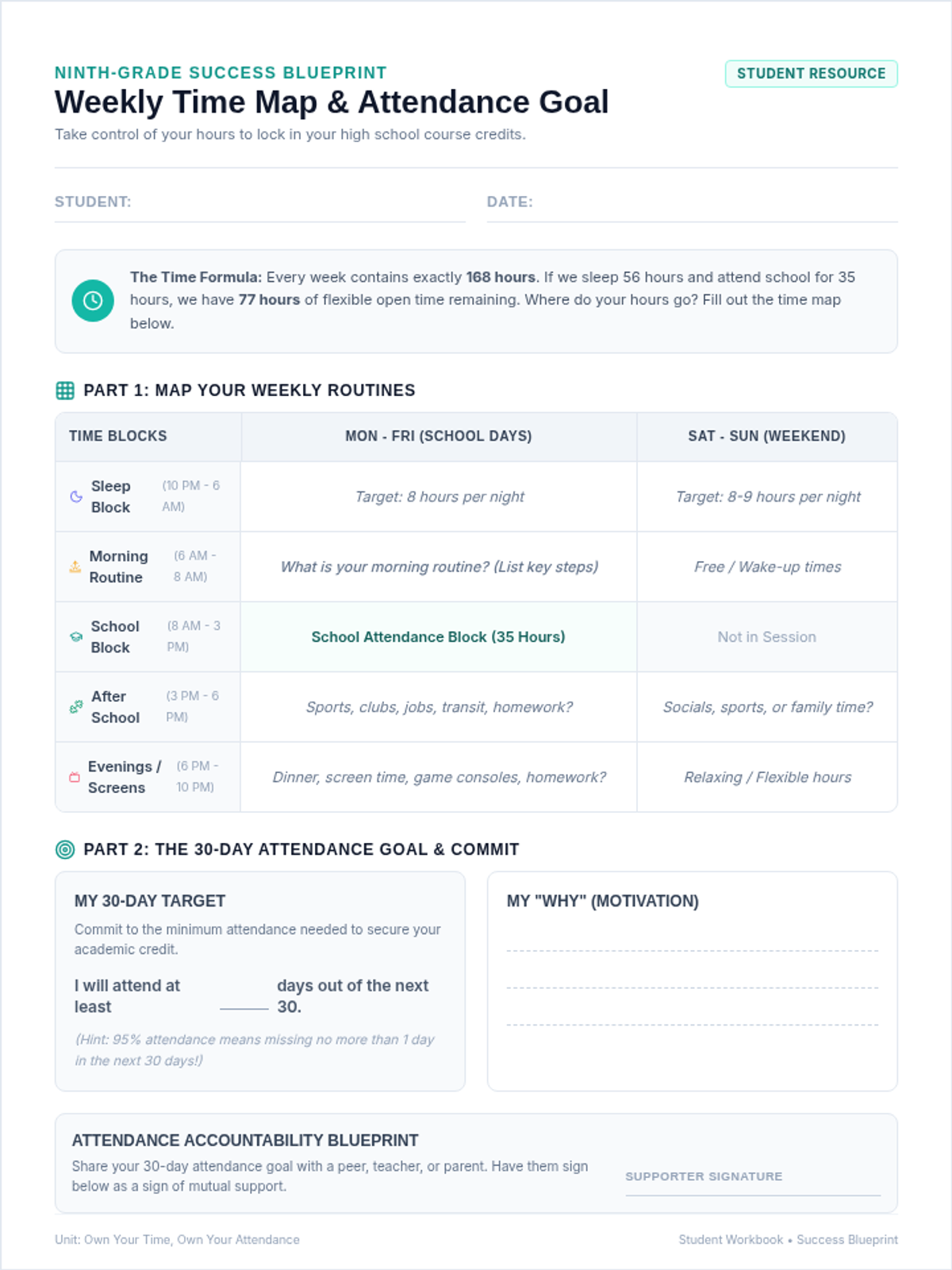
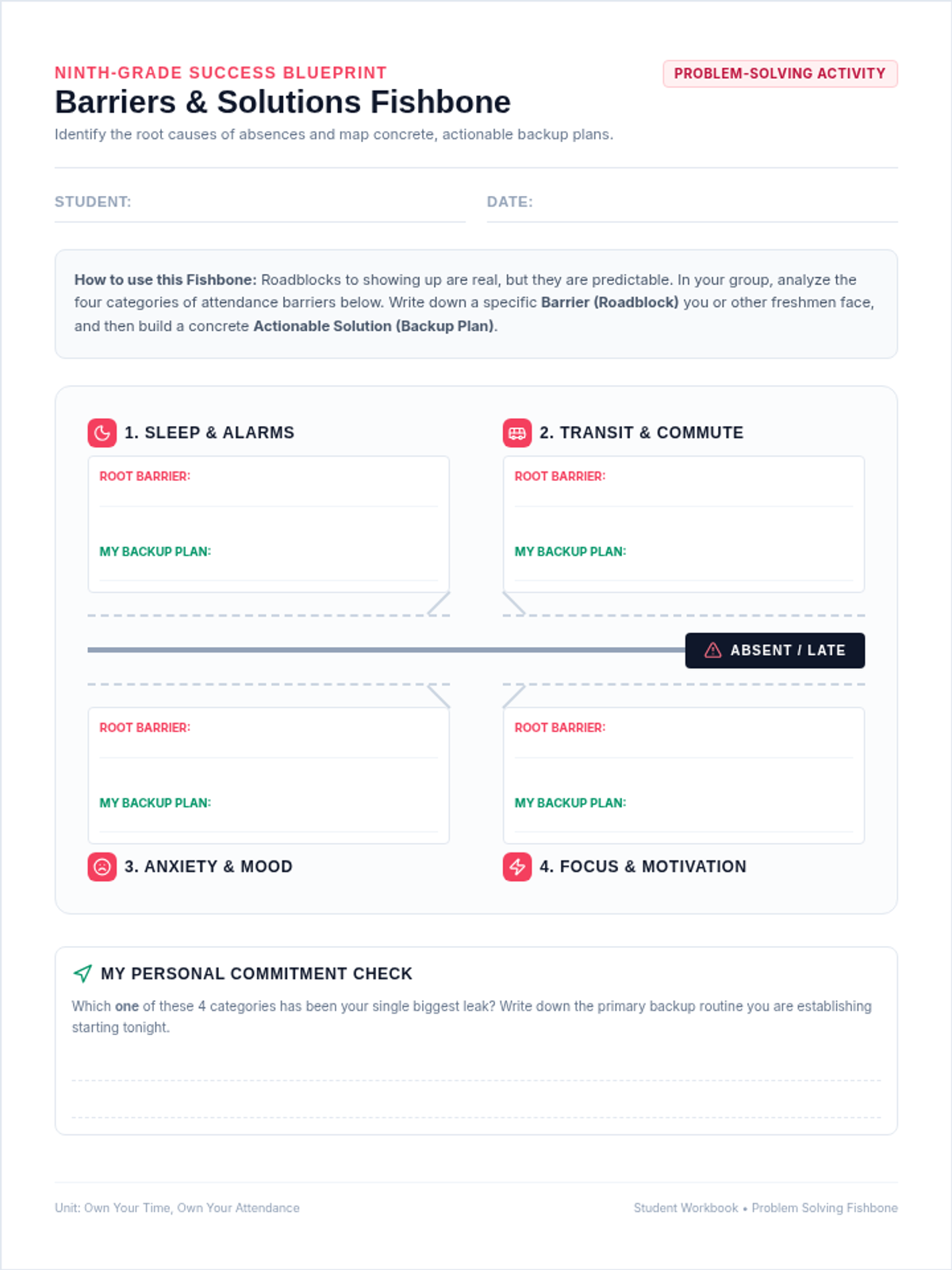
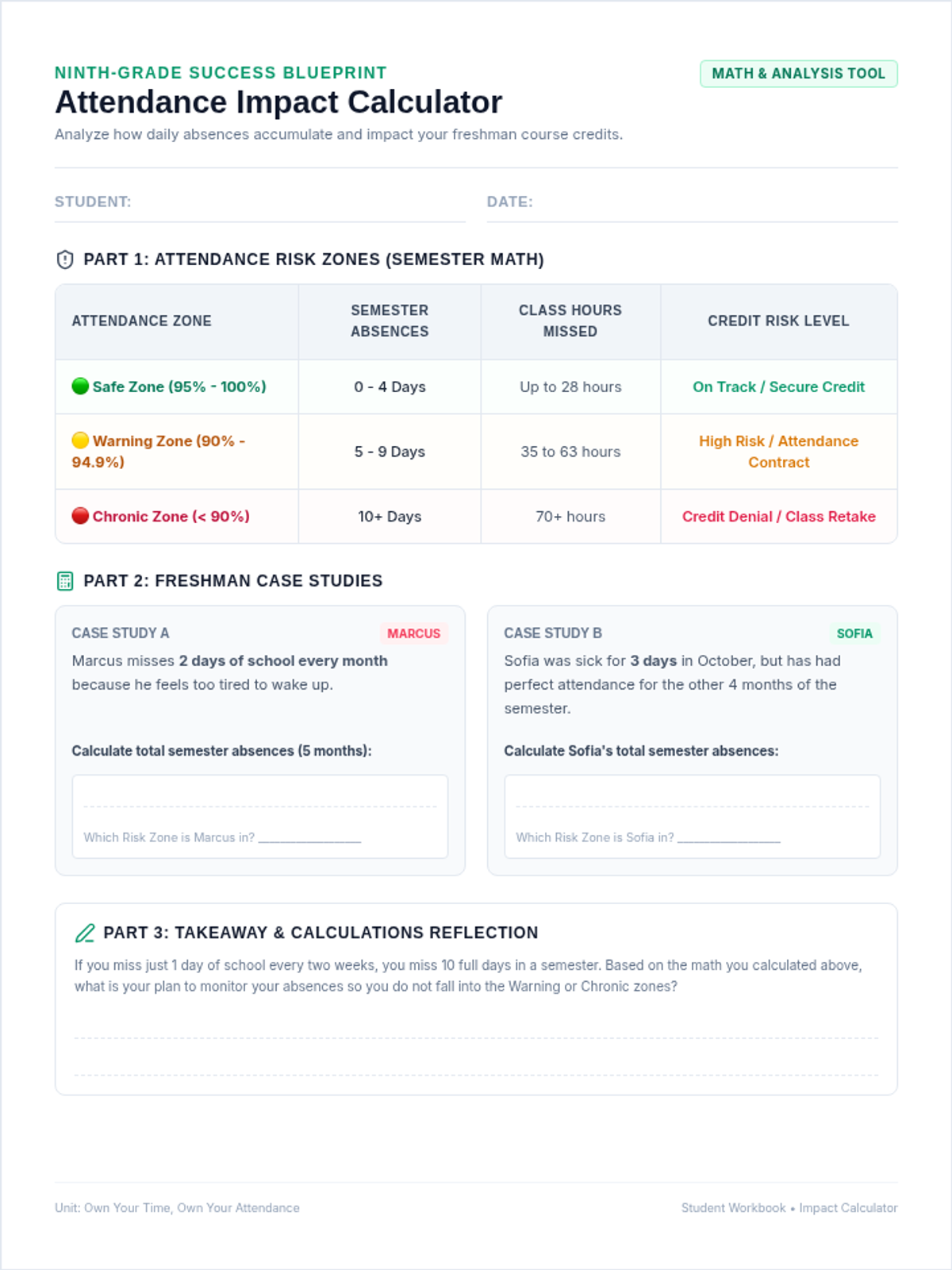
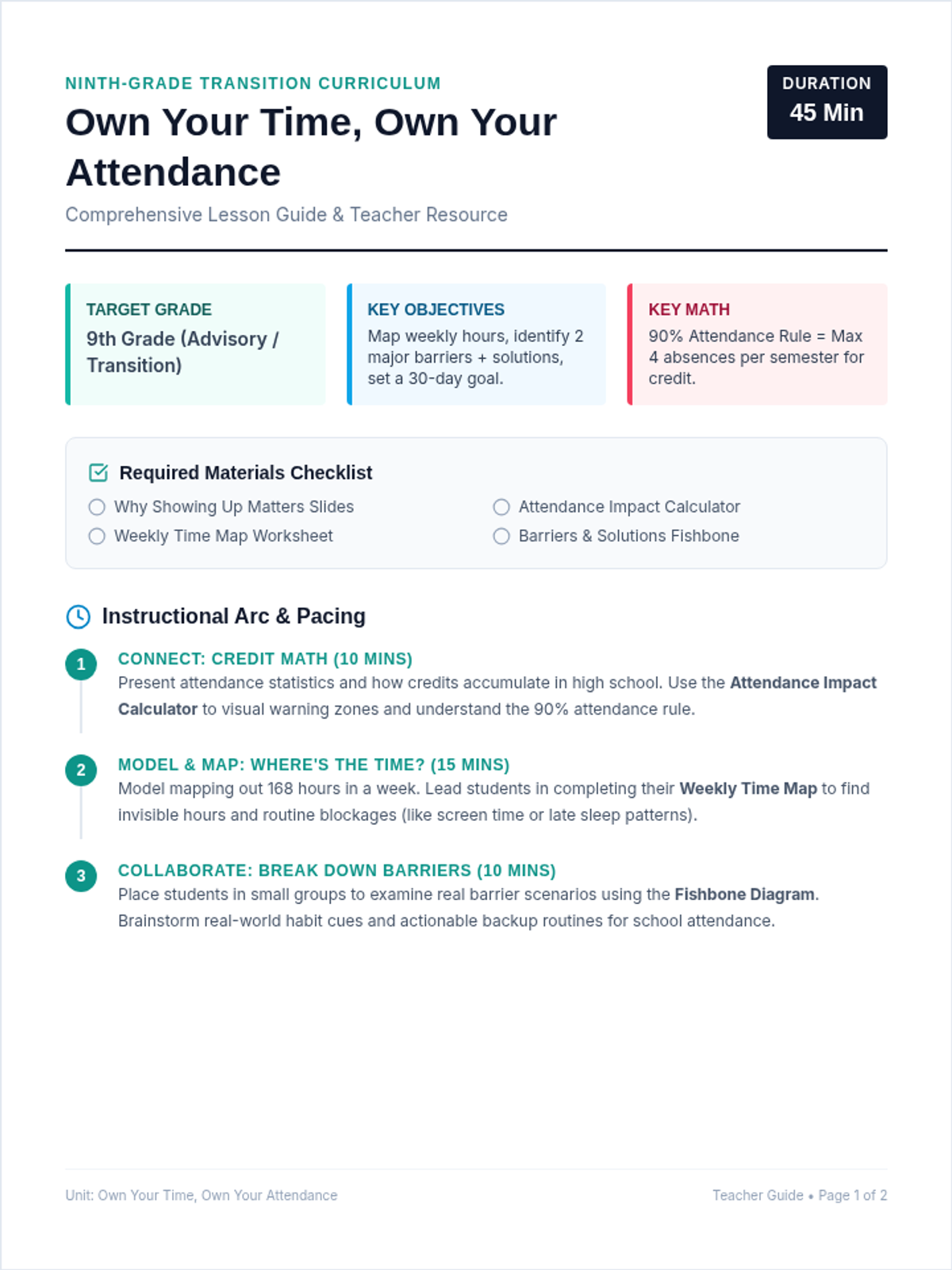
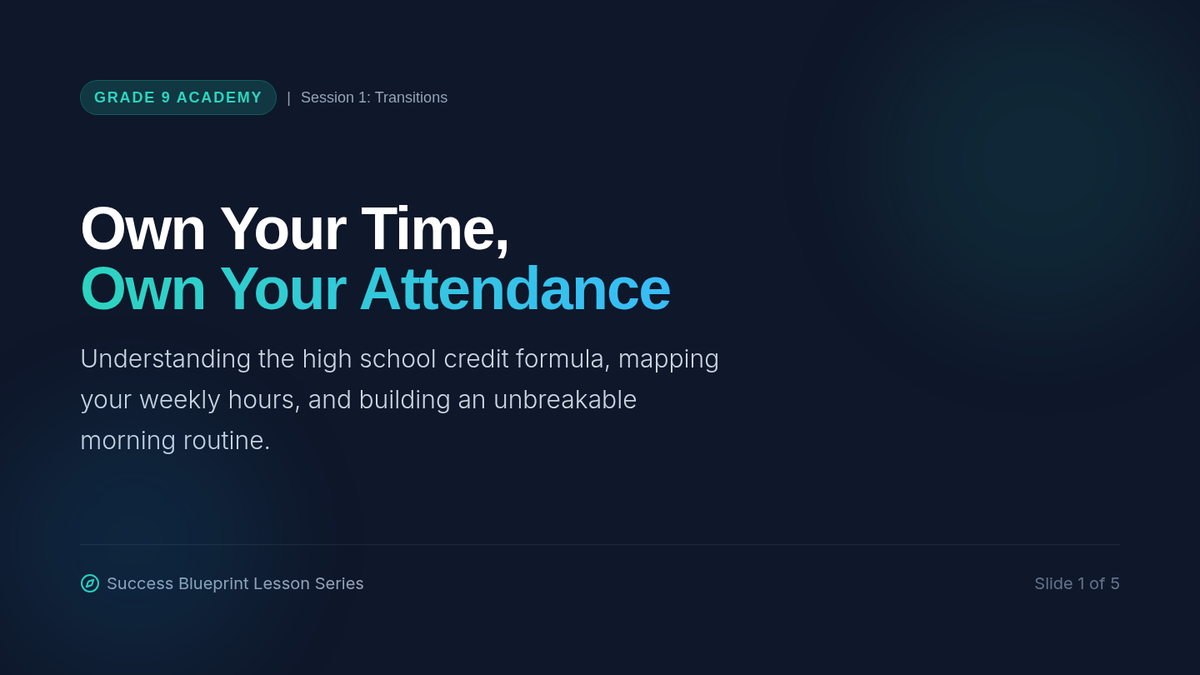
A high school transition lesson designed for 9th graders to understand the direct connection between daily attendance, high school credit acquisition, and time management. Students analyze their weekly schedules, map out barriers using a fishbone diagram, and commit to a 30-day attendance goal.
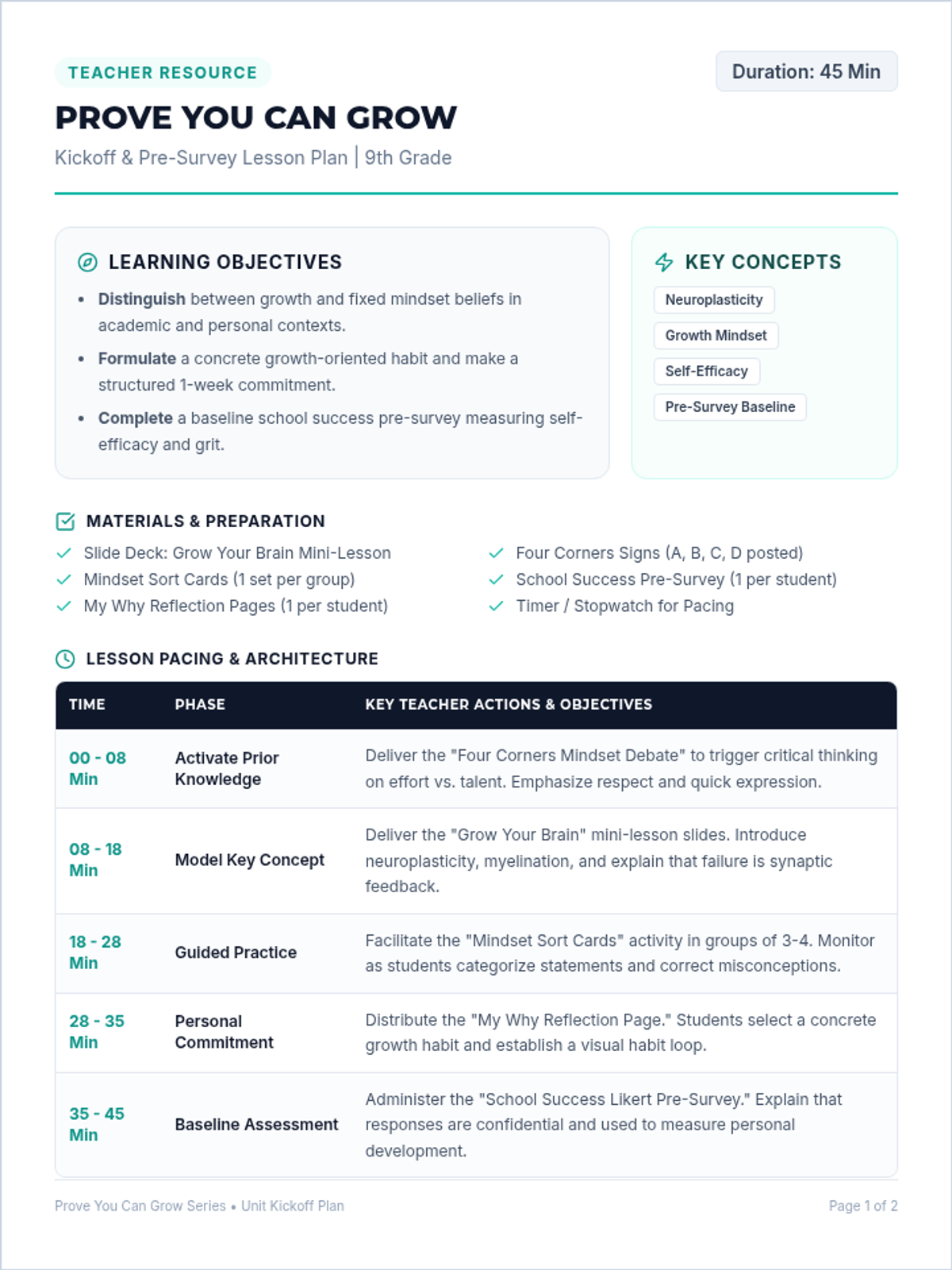
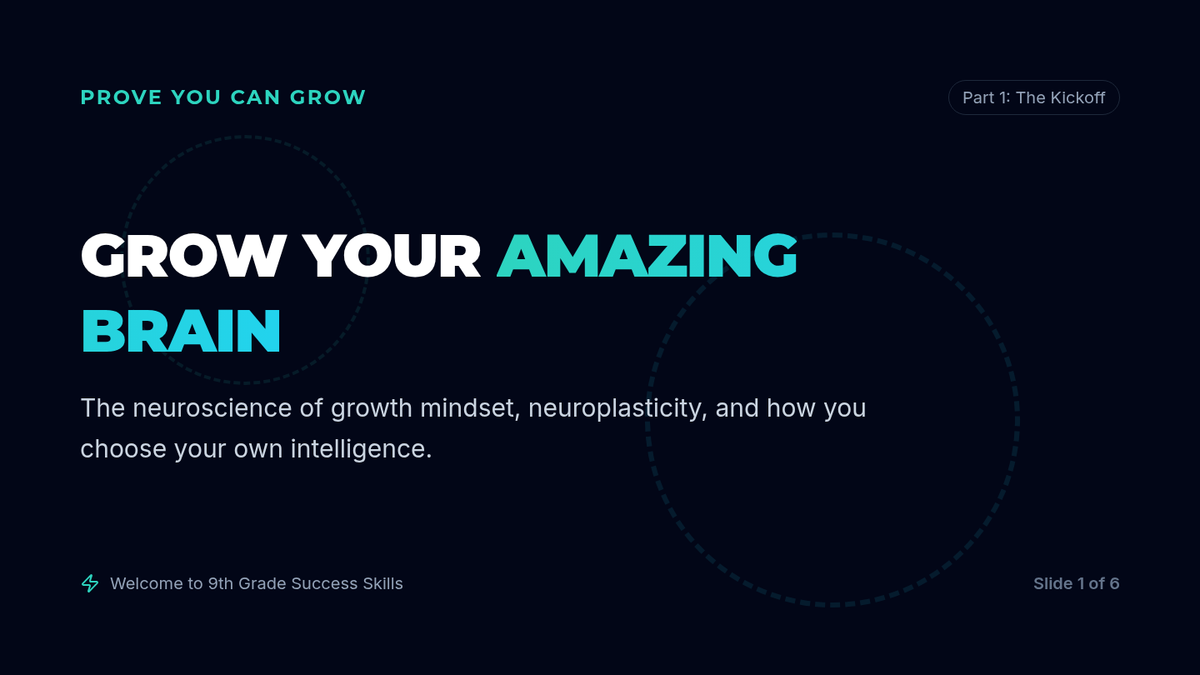
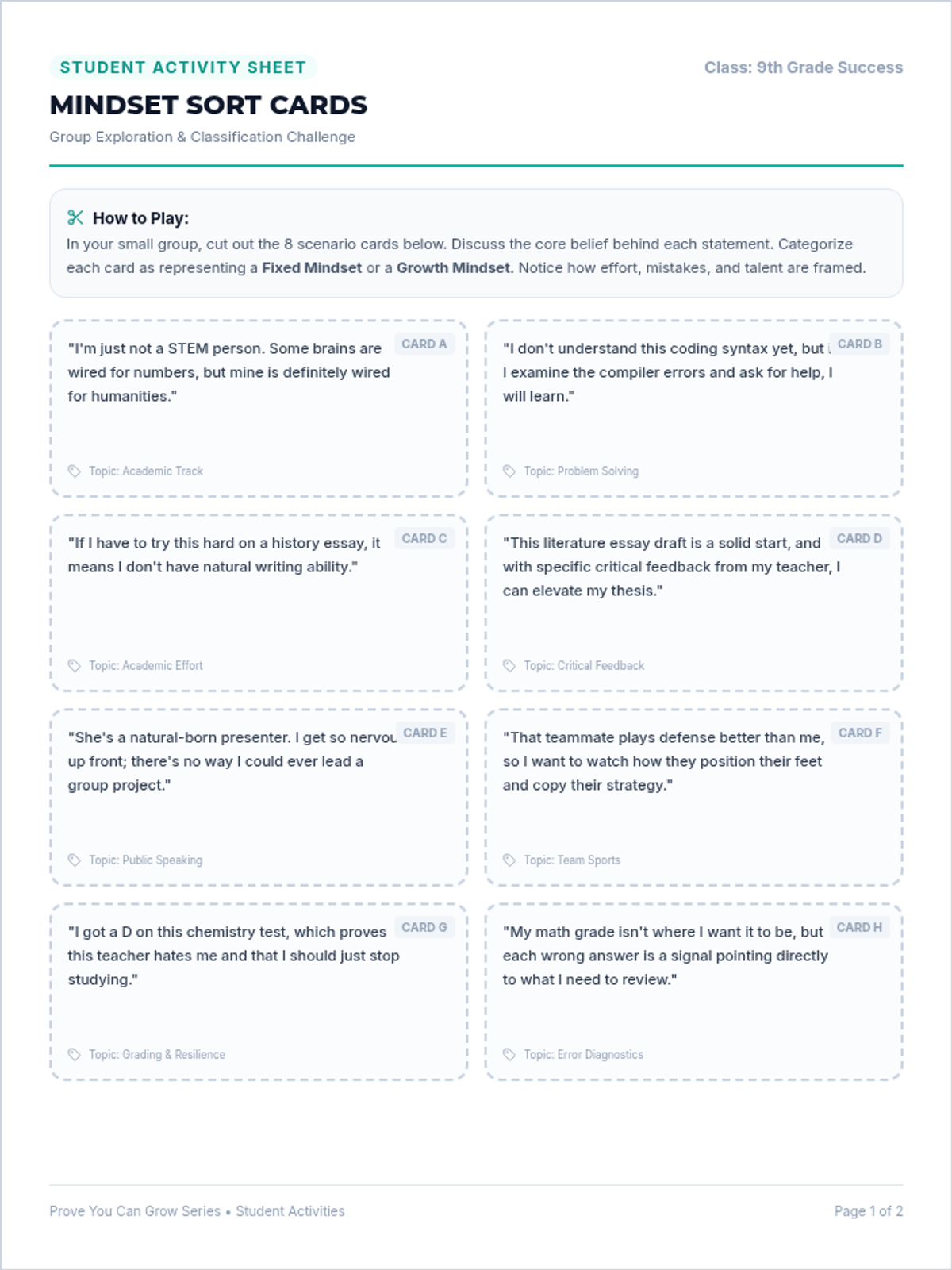
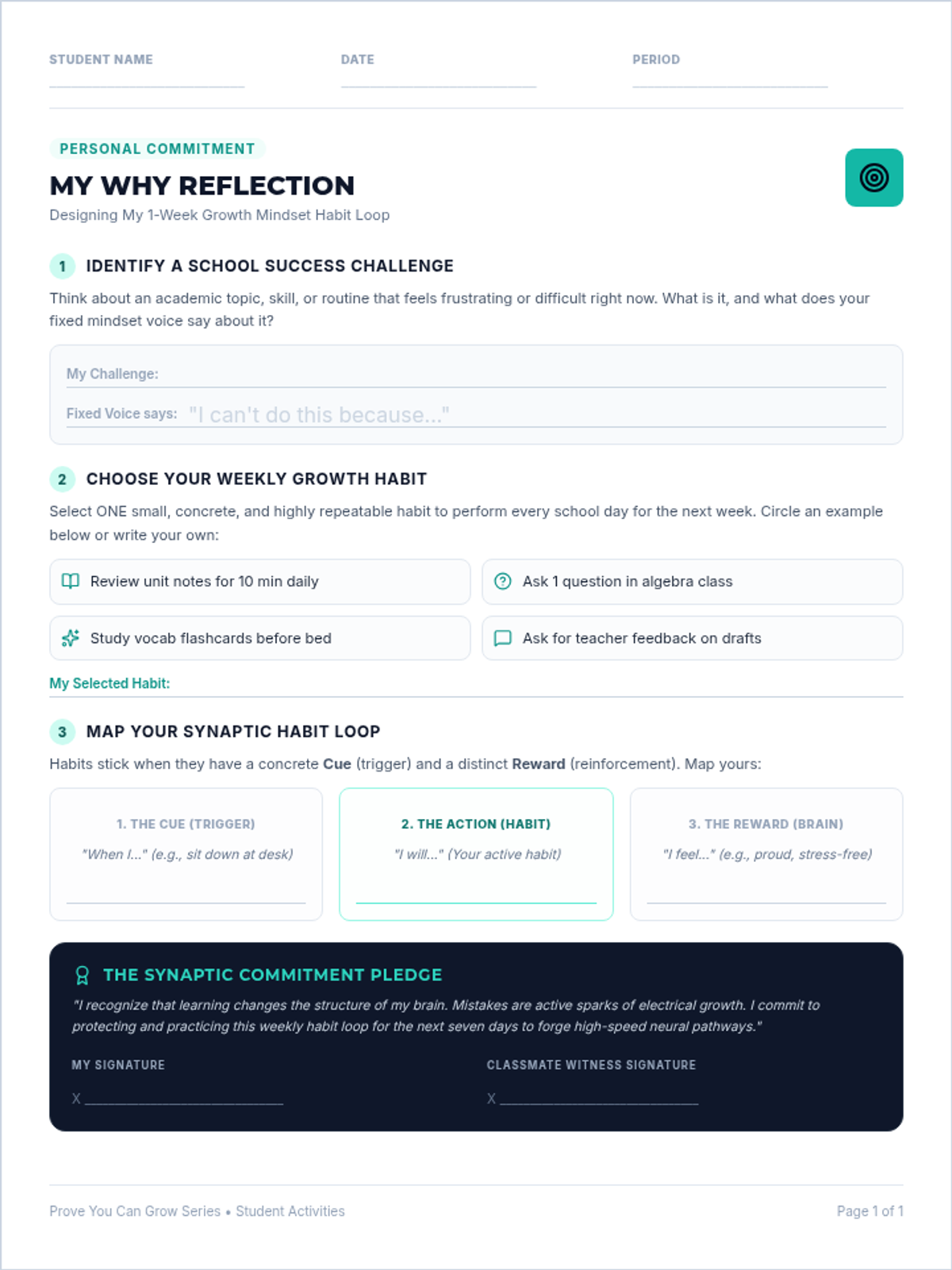
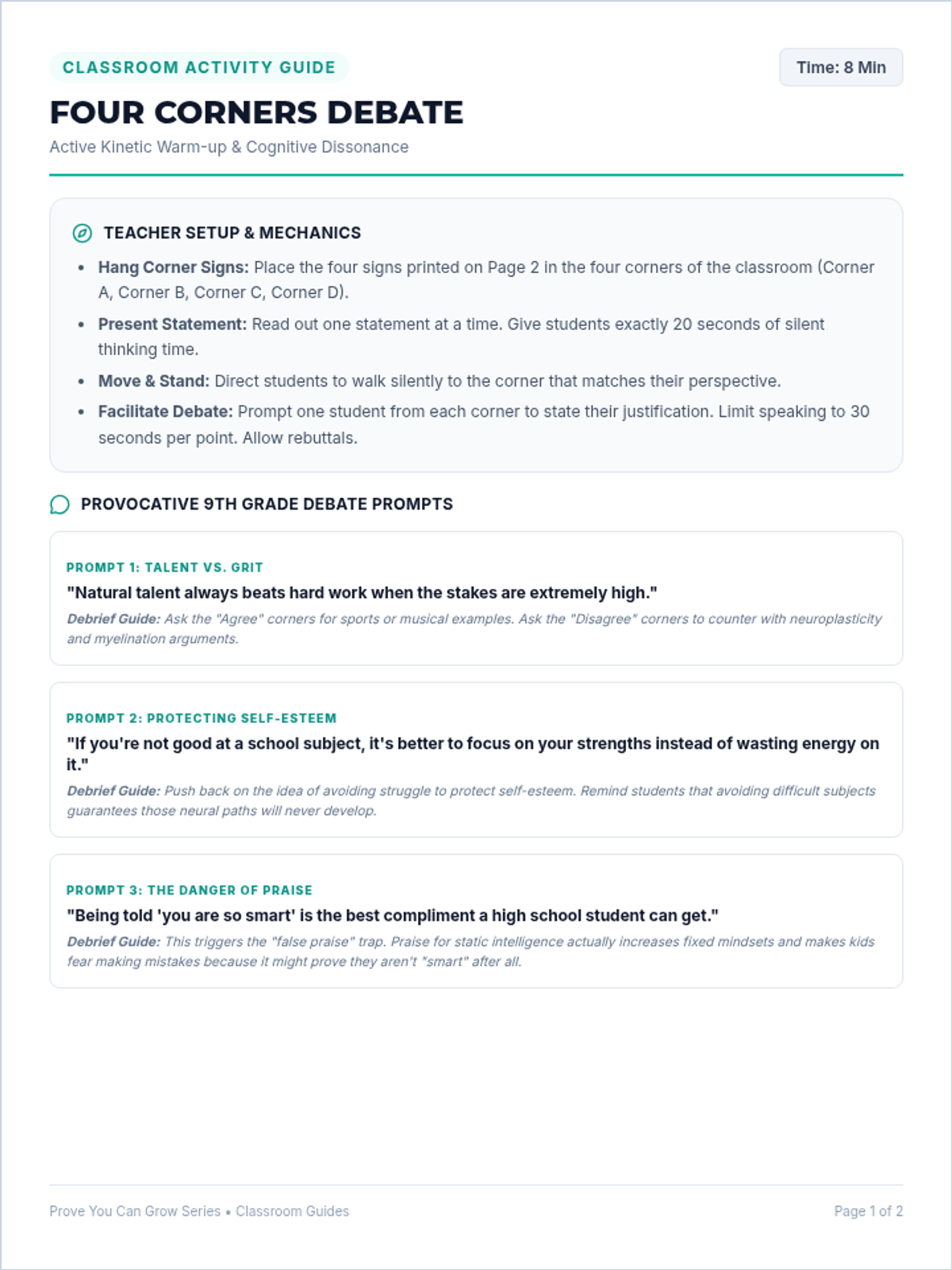
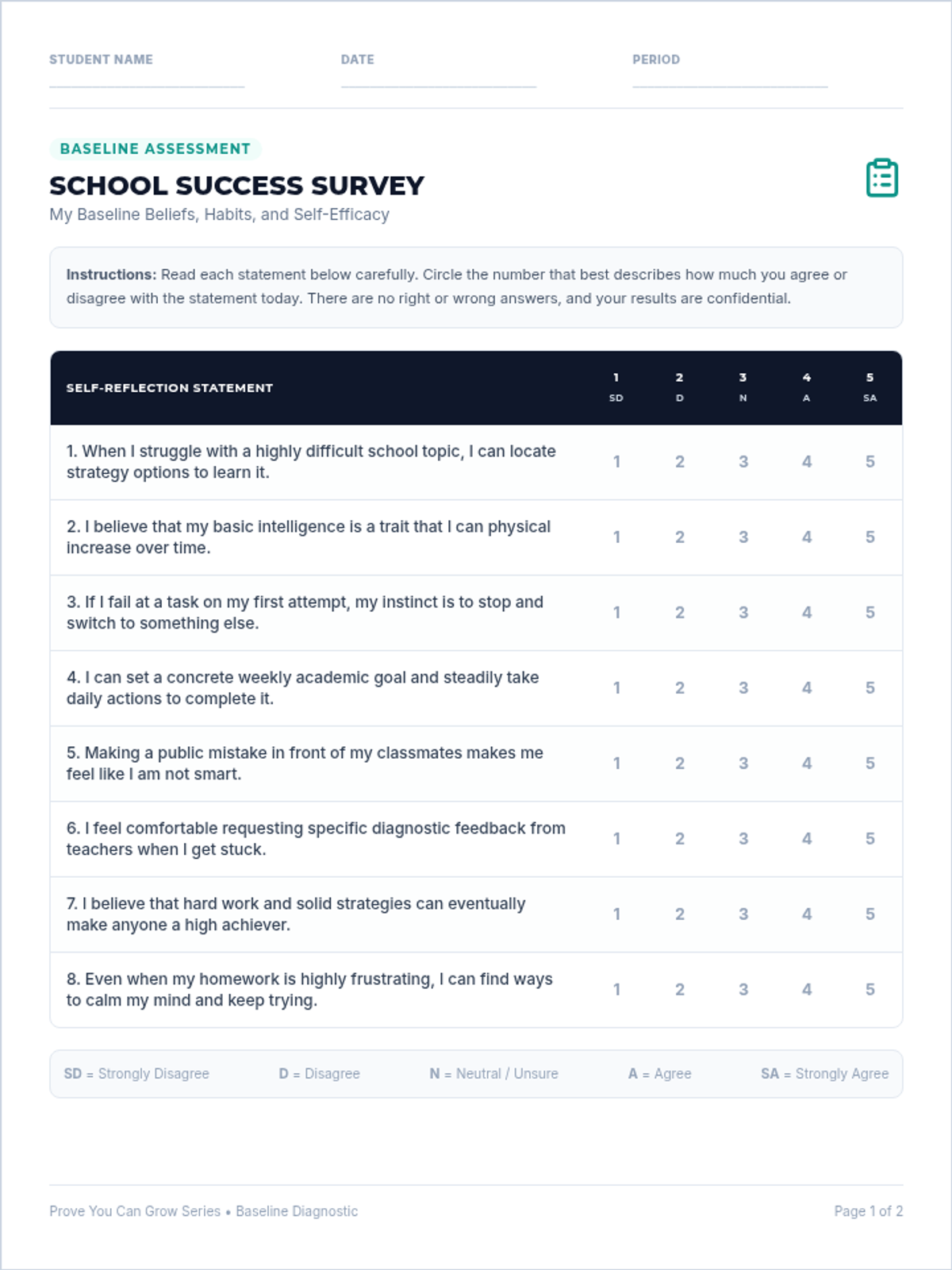
A kickoff lesson introducing 9th graders to growth mindset, neuroplasticity, and self-efficacy. Students engage in collaborative activities, analyze their mindsets, make a personal growth commitment, and complete a baseline school success pre-survey.
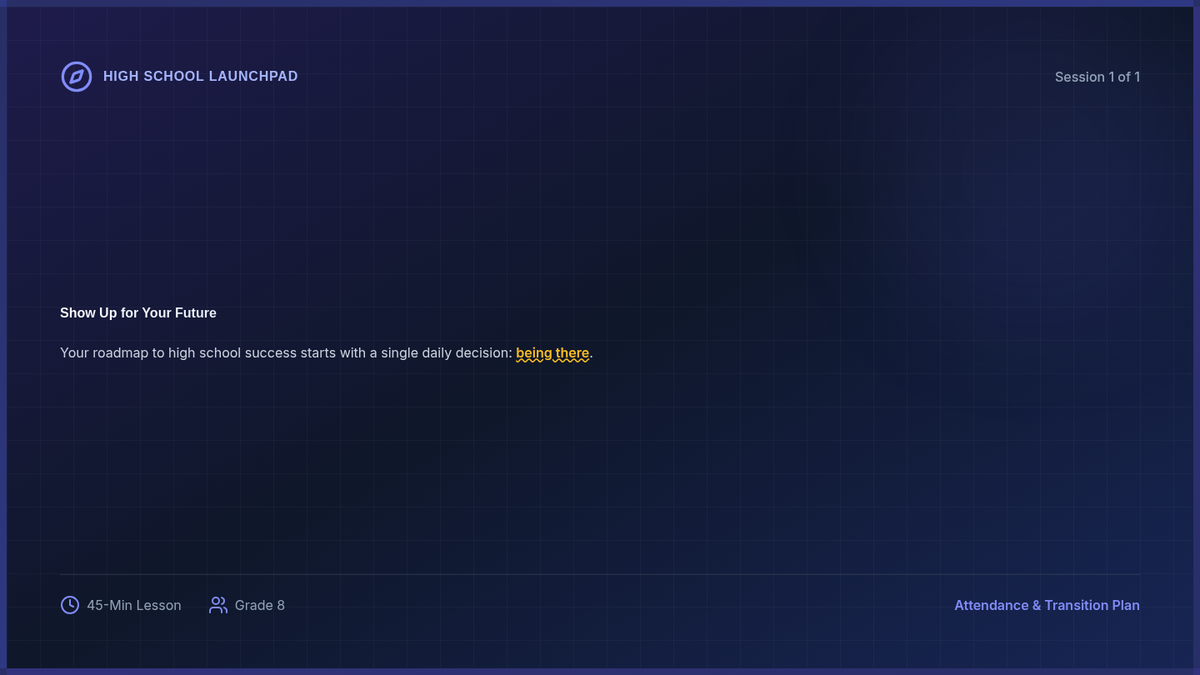
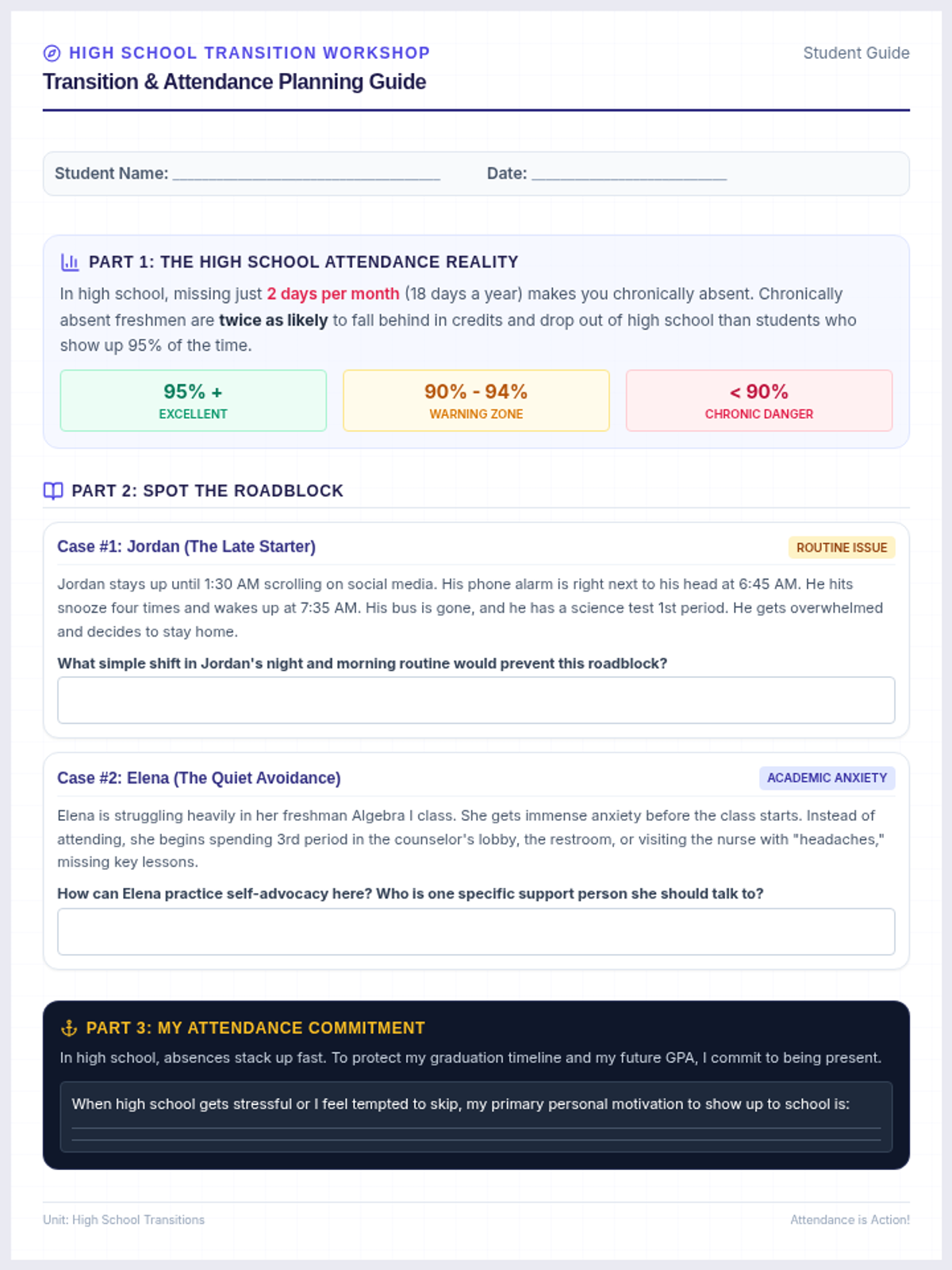
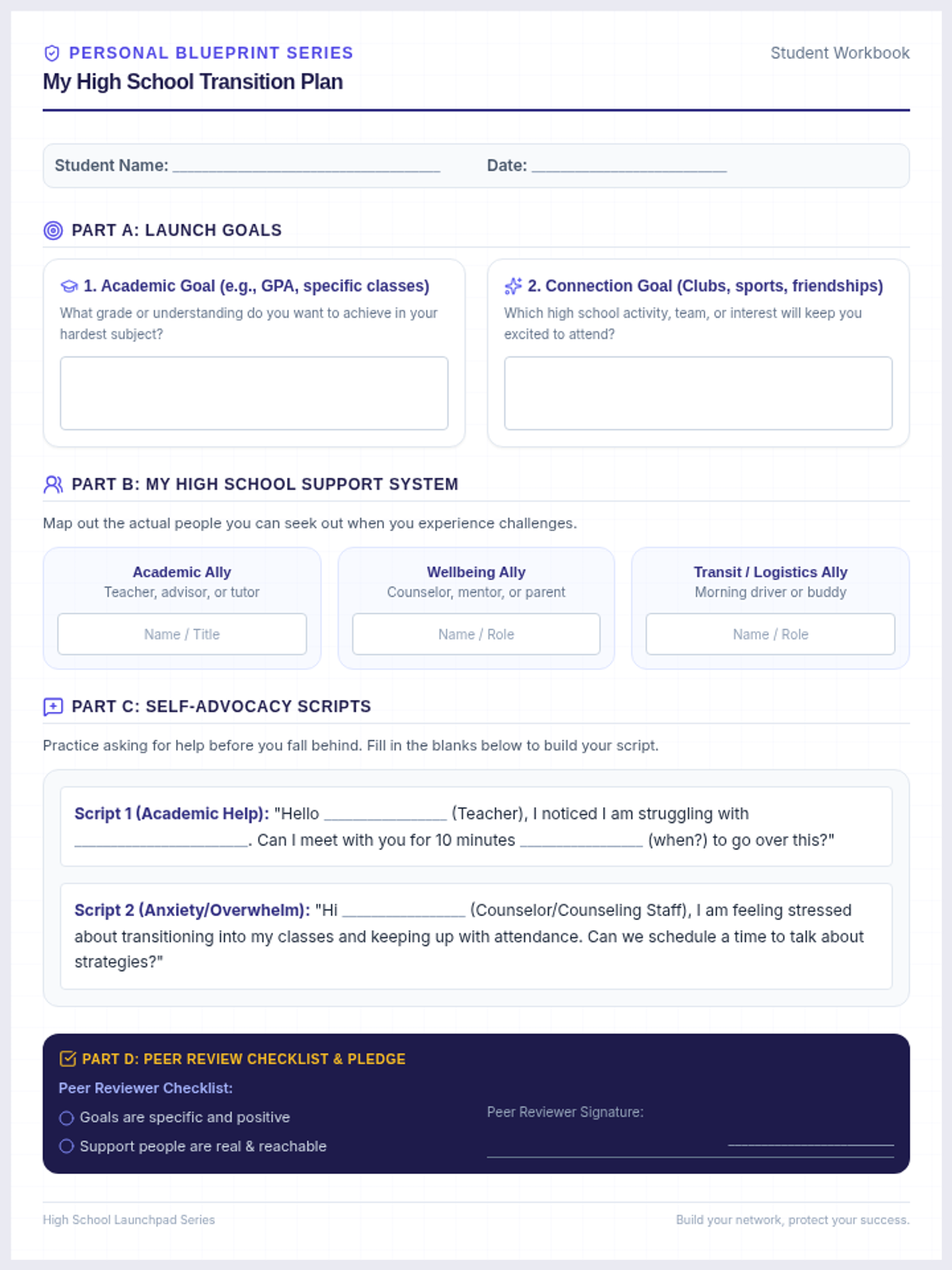
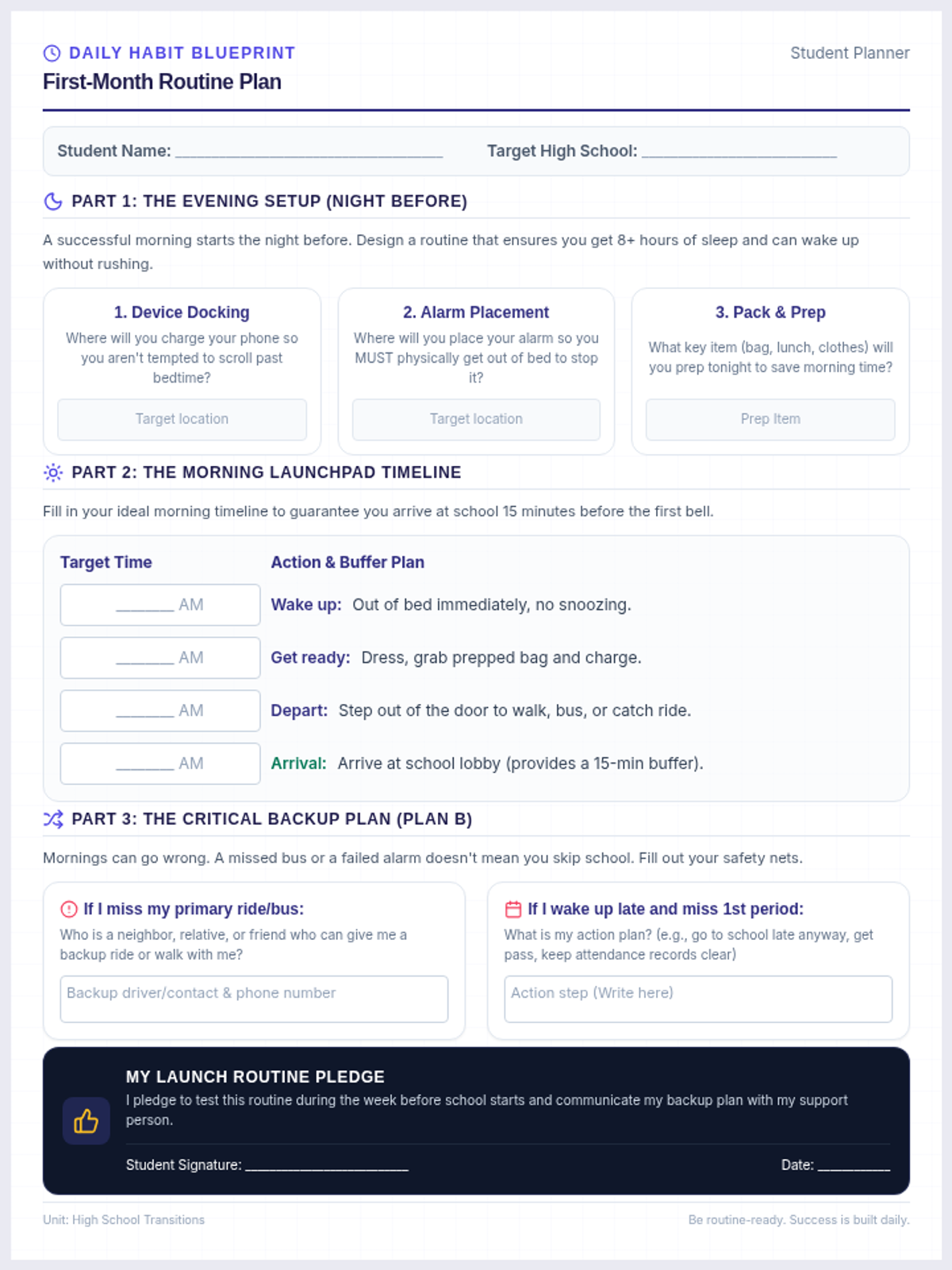
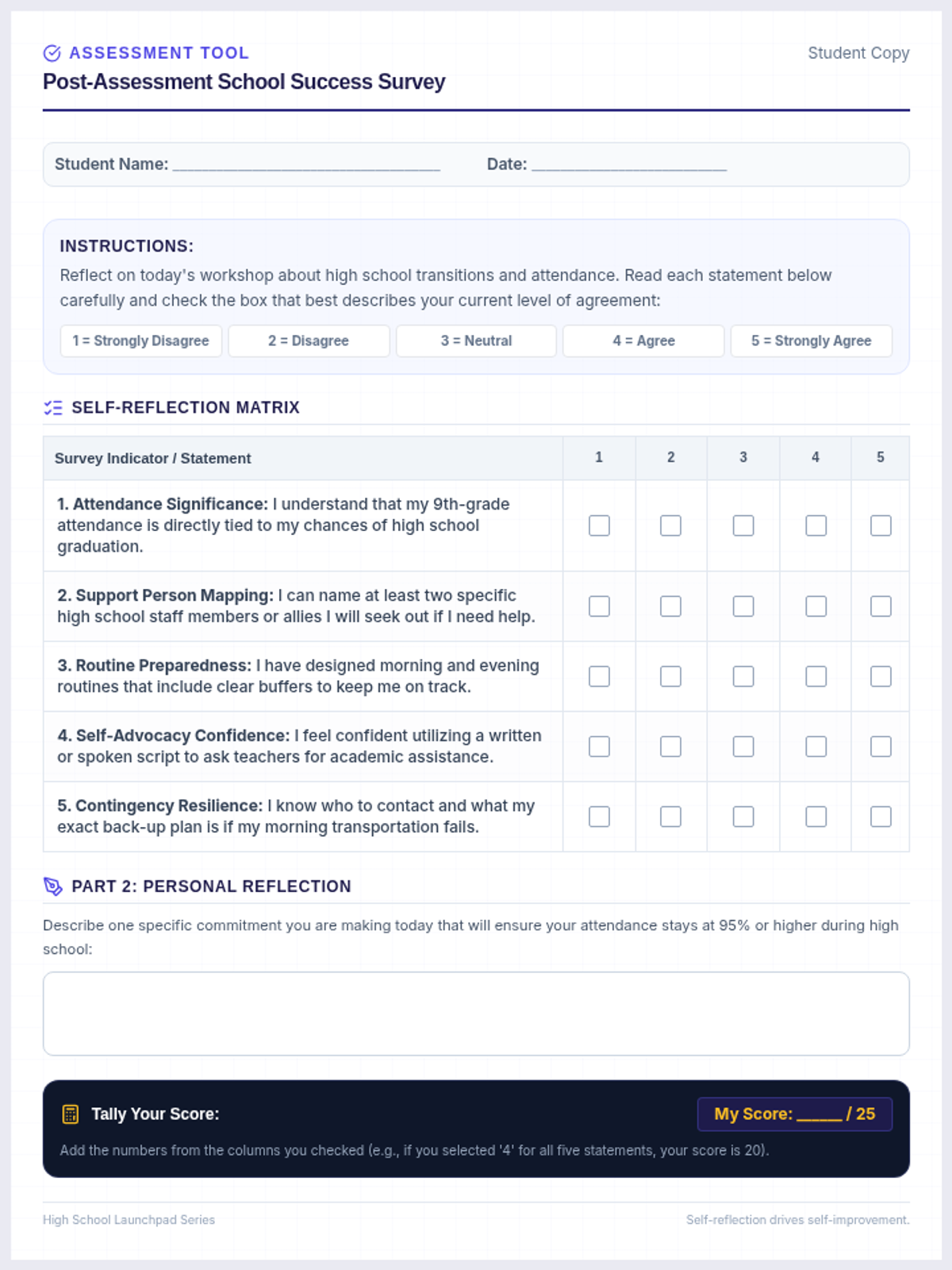
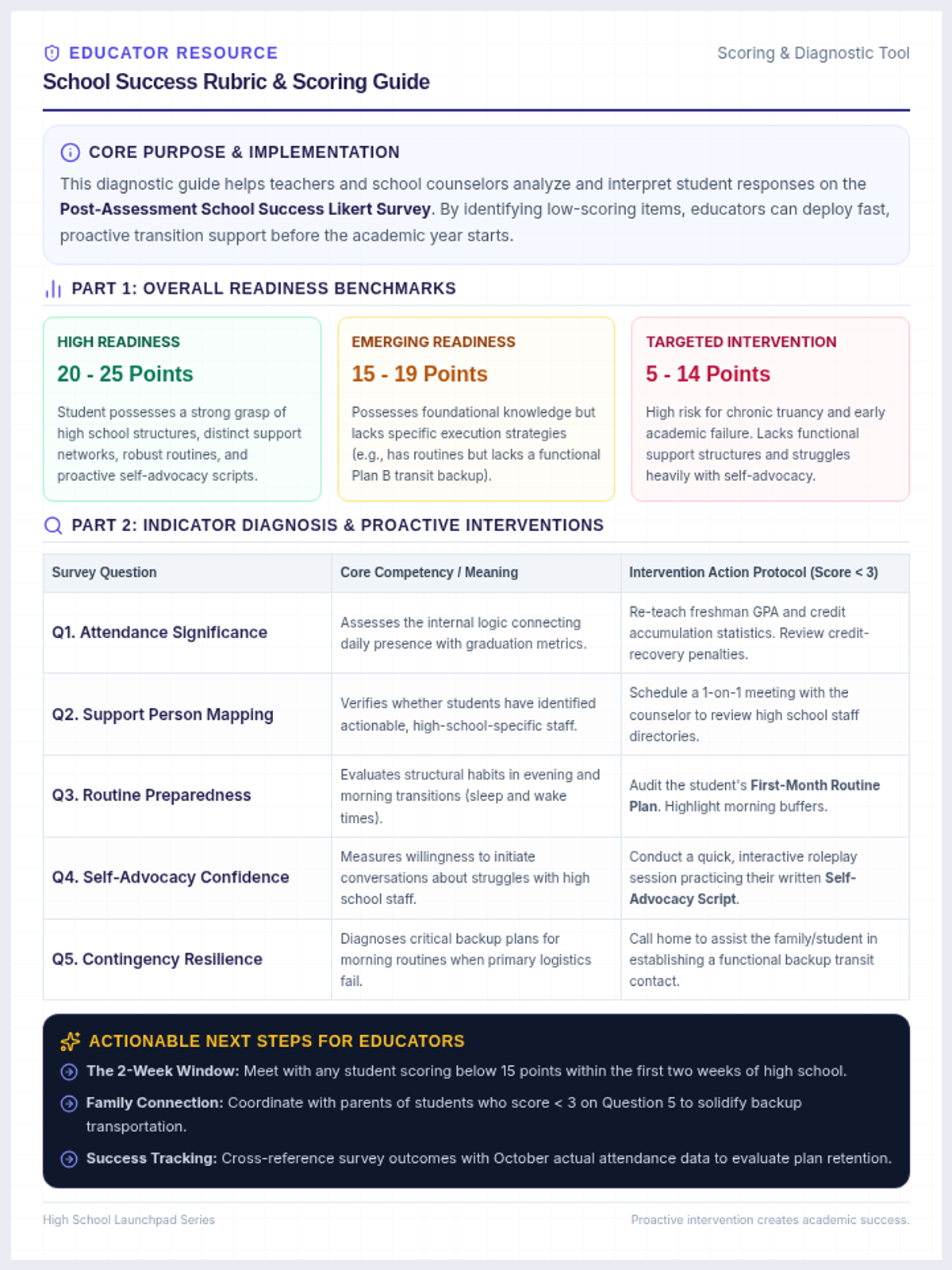
A comprehensive 45-minute lesson for 8th graders transitioning to high school, focusing on the link between attendance and academic success, building a personal transition plan with support networks, designing daily routines, and self-assessing readiness.
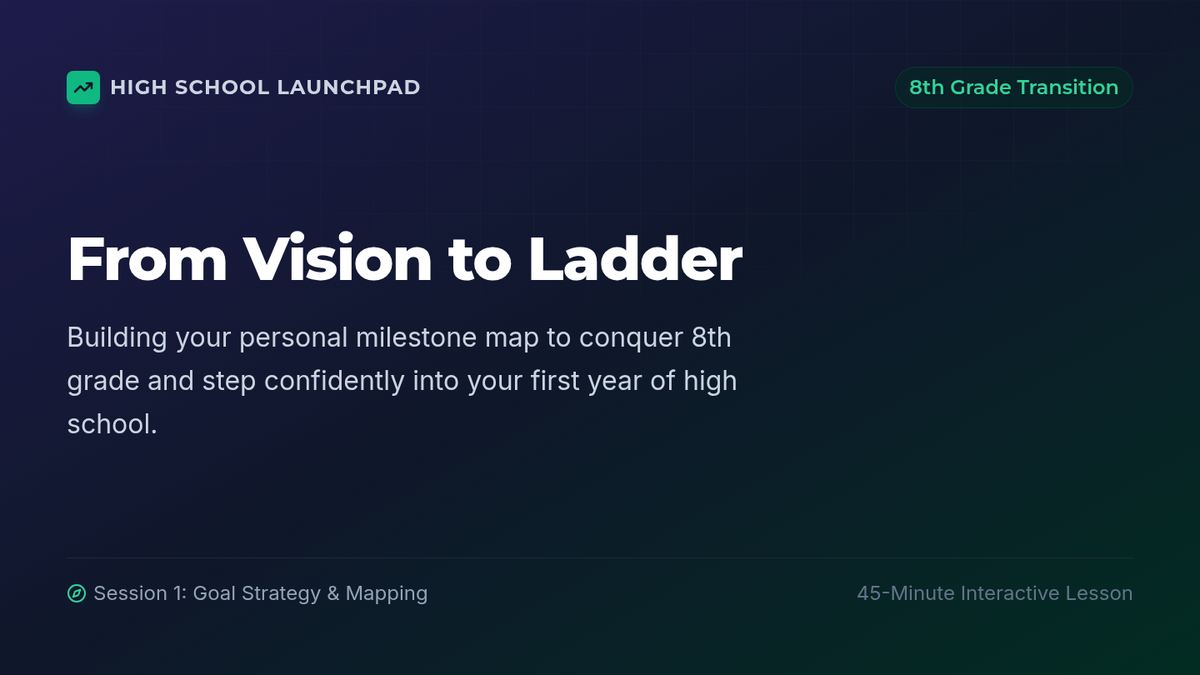
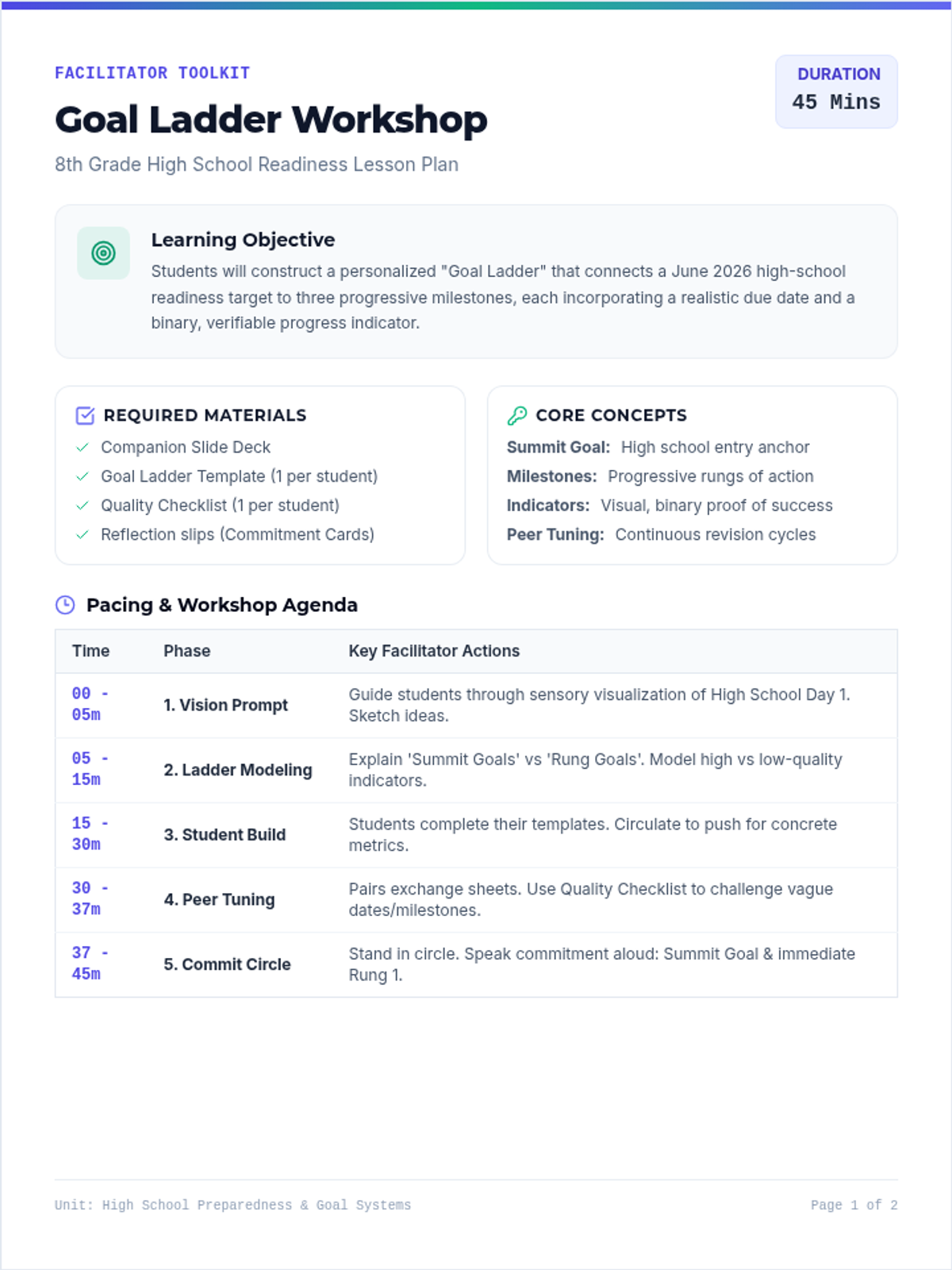
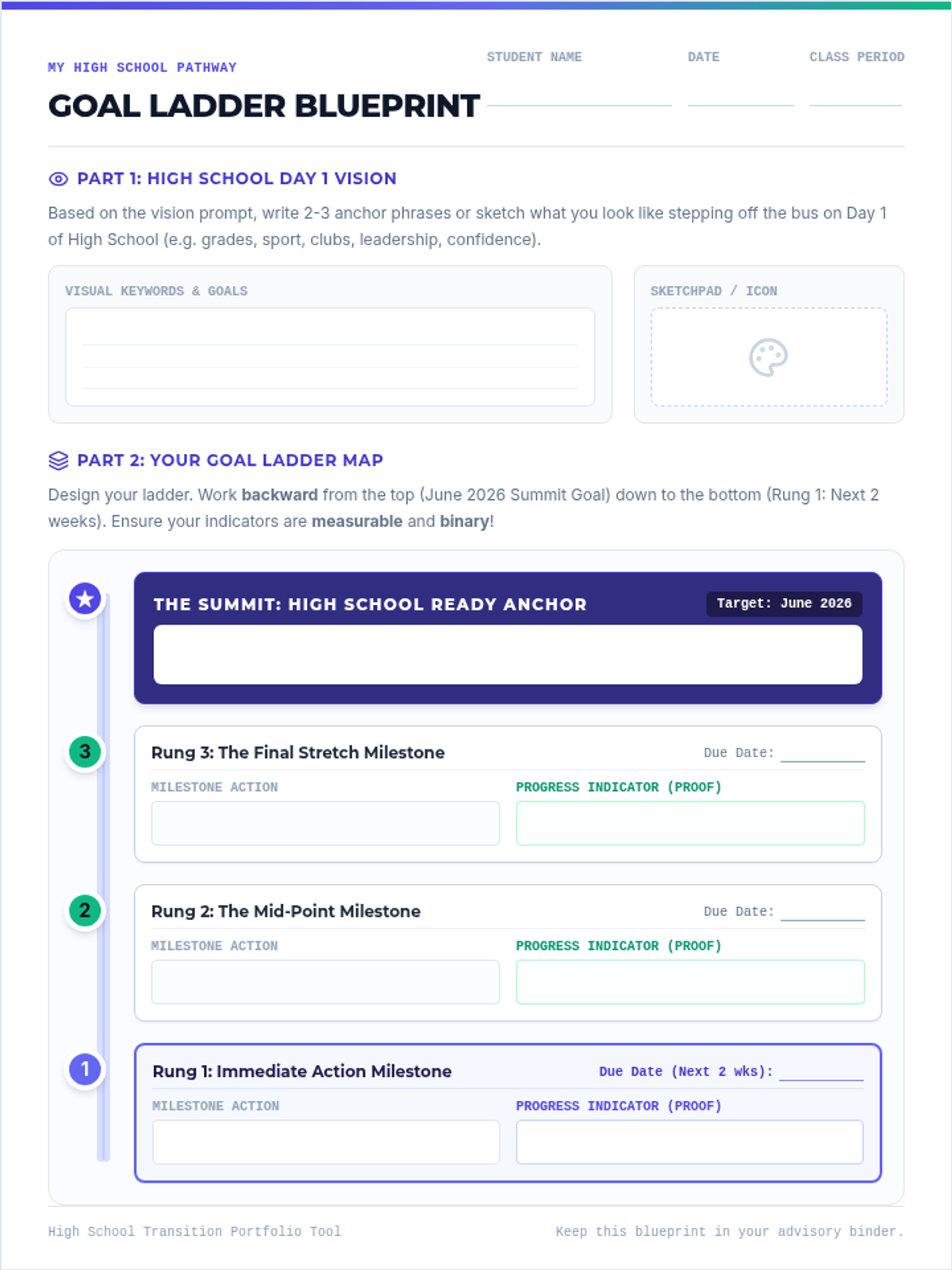
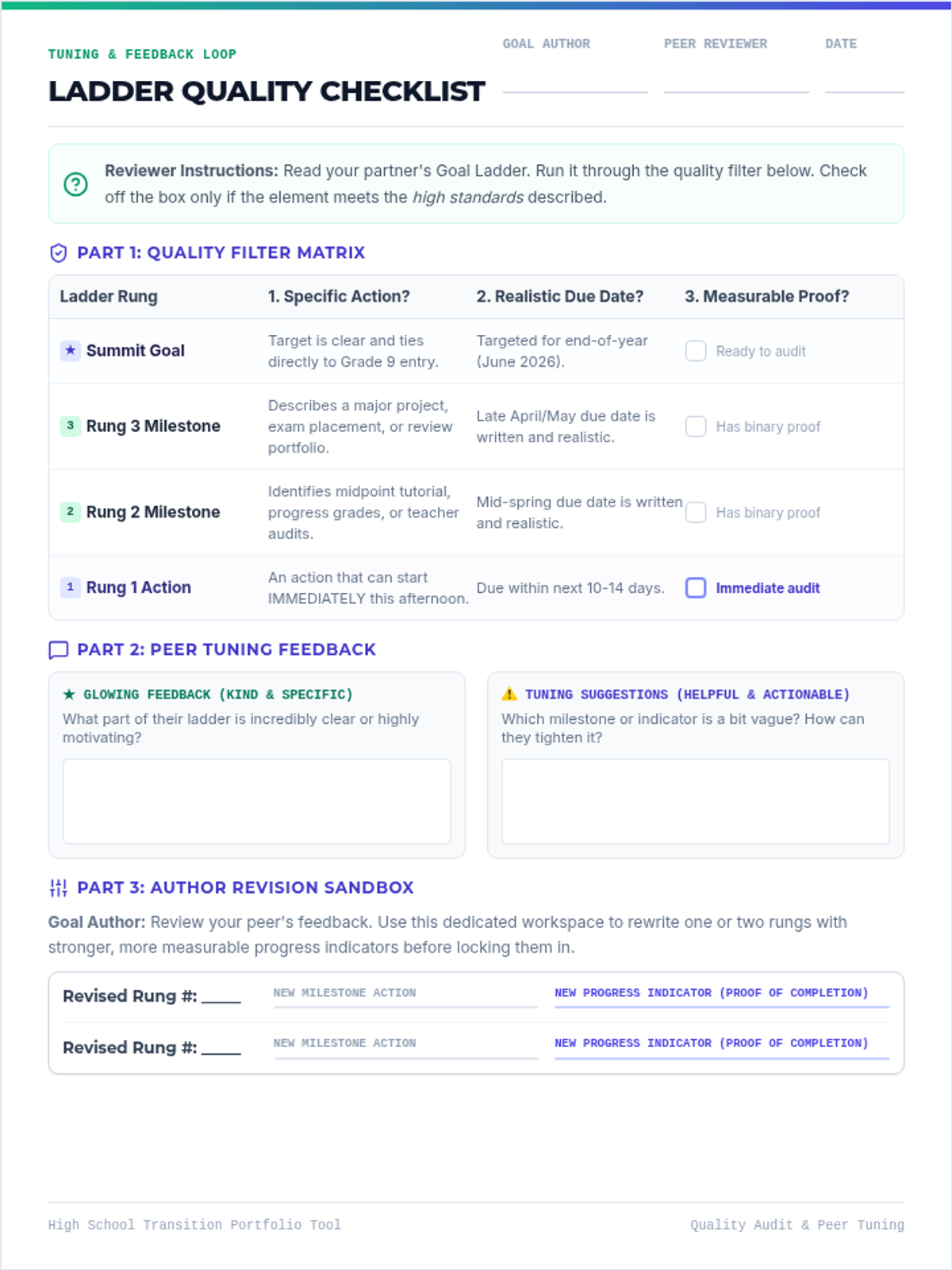
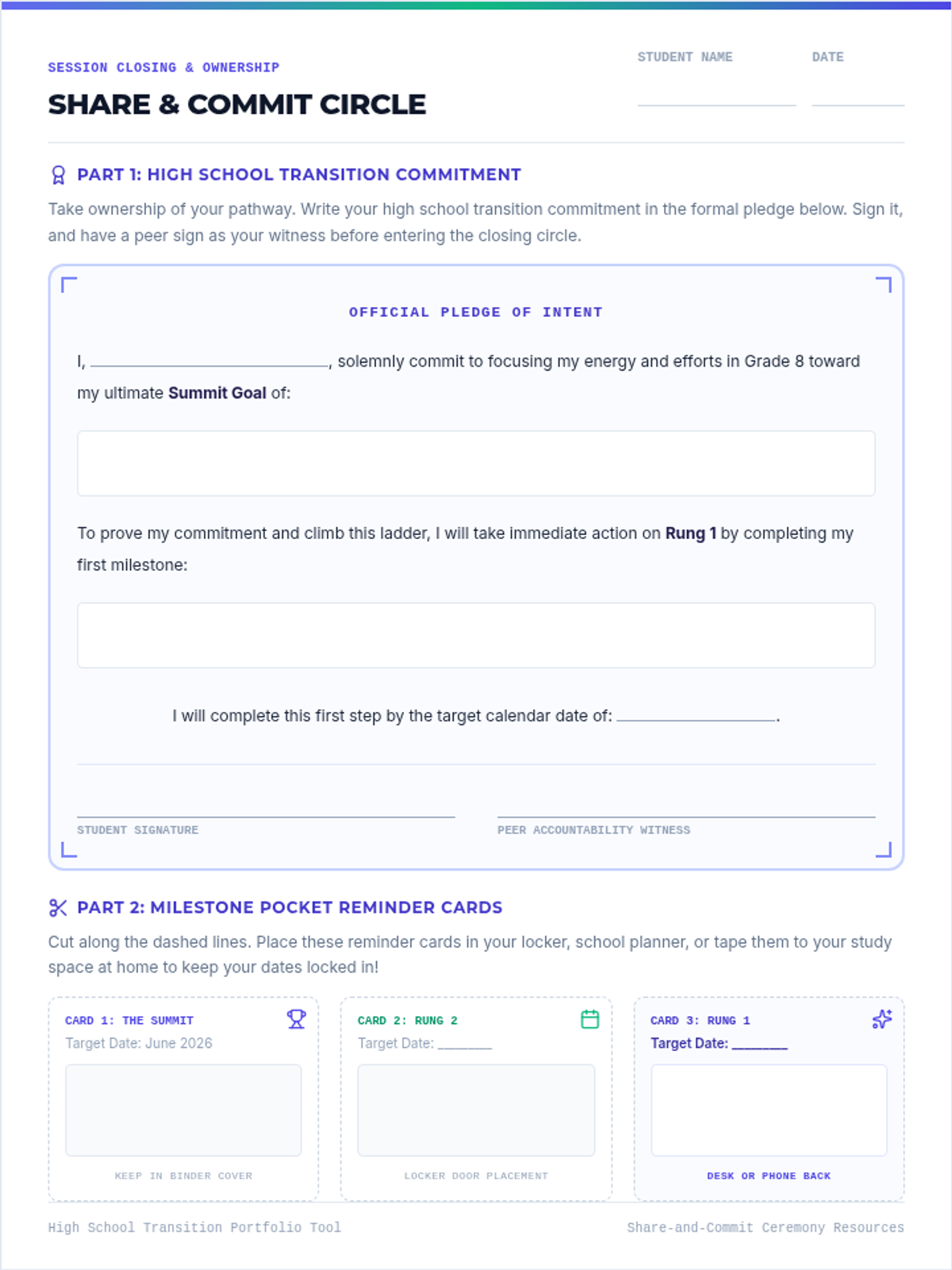
An interactive 8th-grade lesson designed to help students transition to high school by translating long-term visions into concrete, actionable steps. Students create a structured goal ladder with three milestones, specific due dates, and measurable progress indicators, followed by peer feedback and a share-and-commit circle.
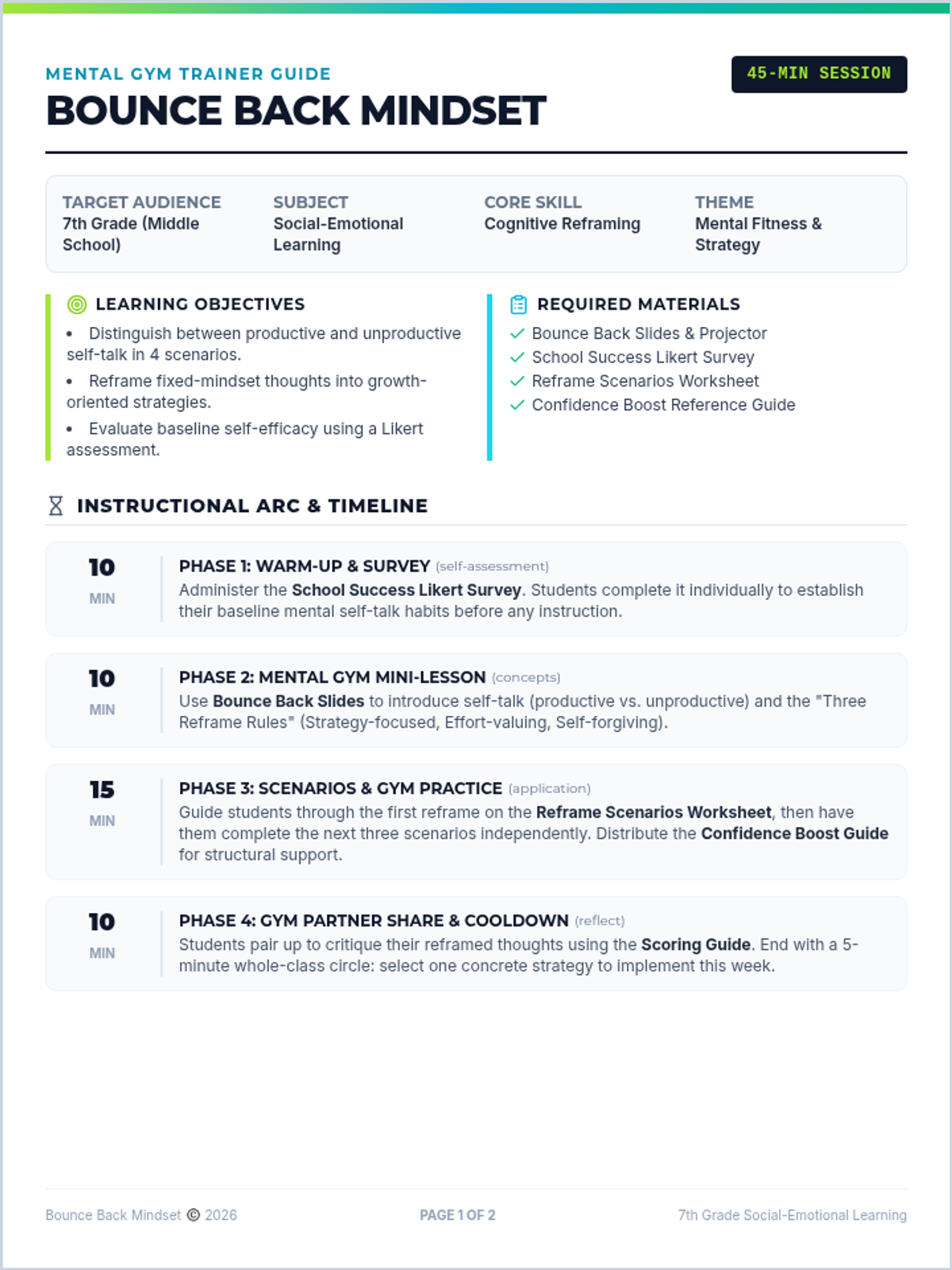
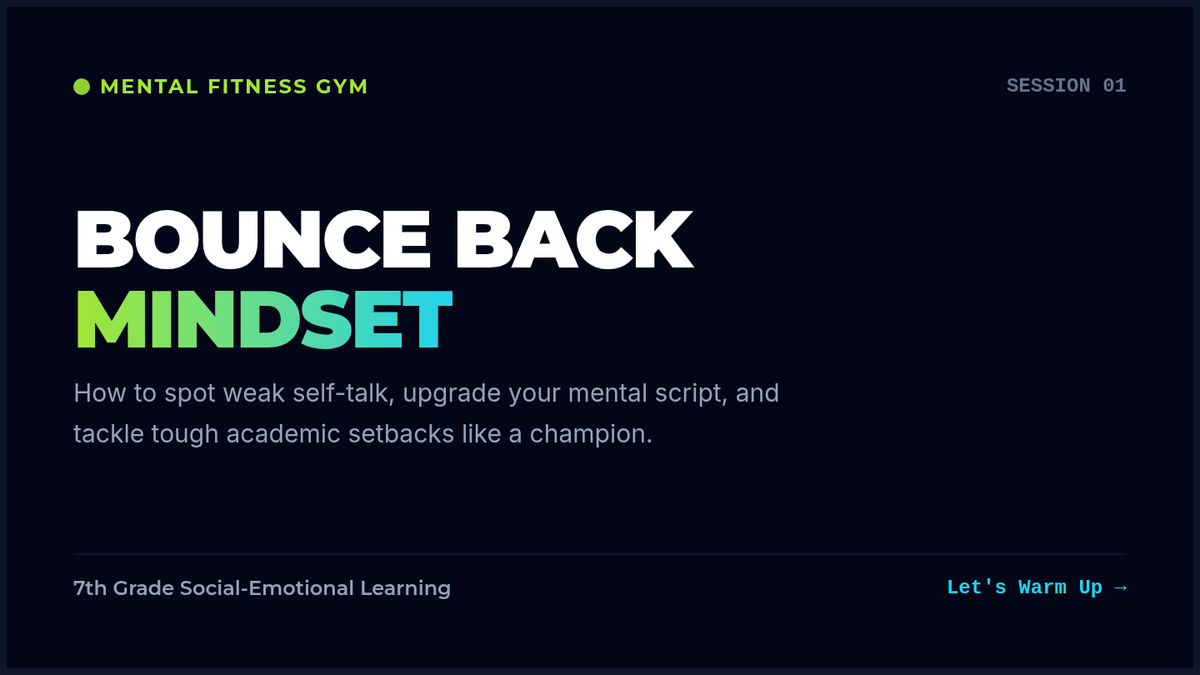
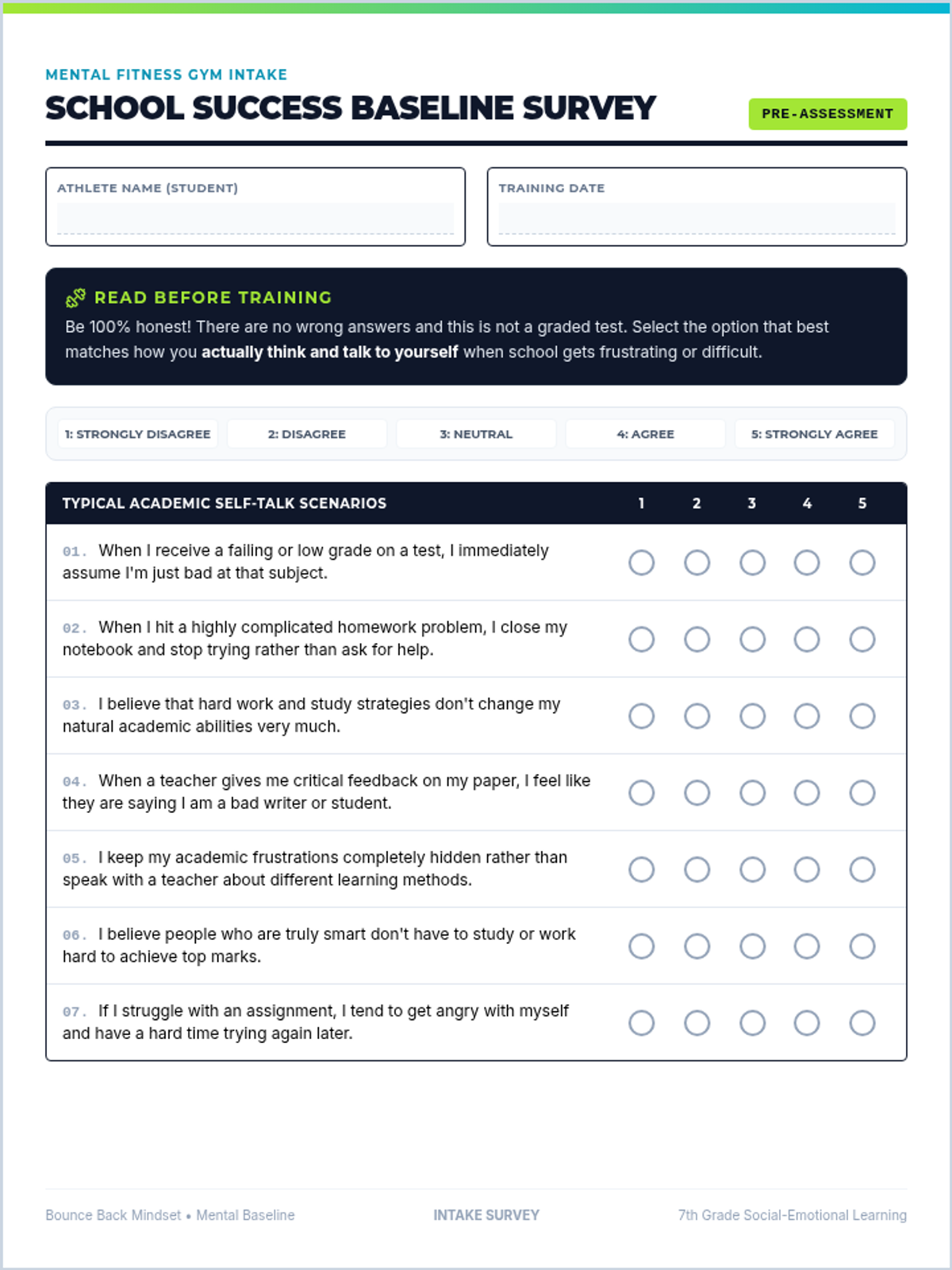
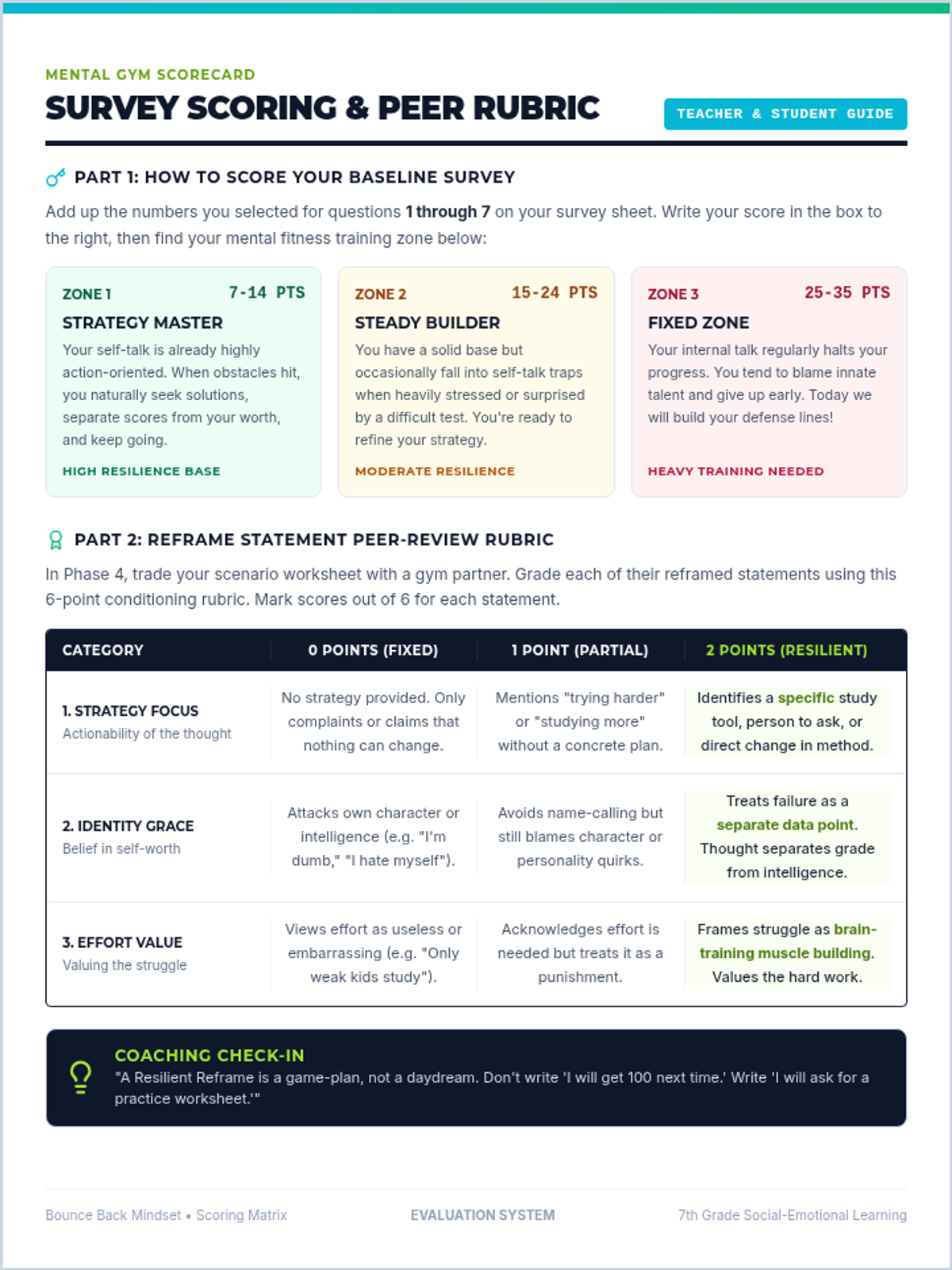
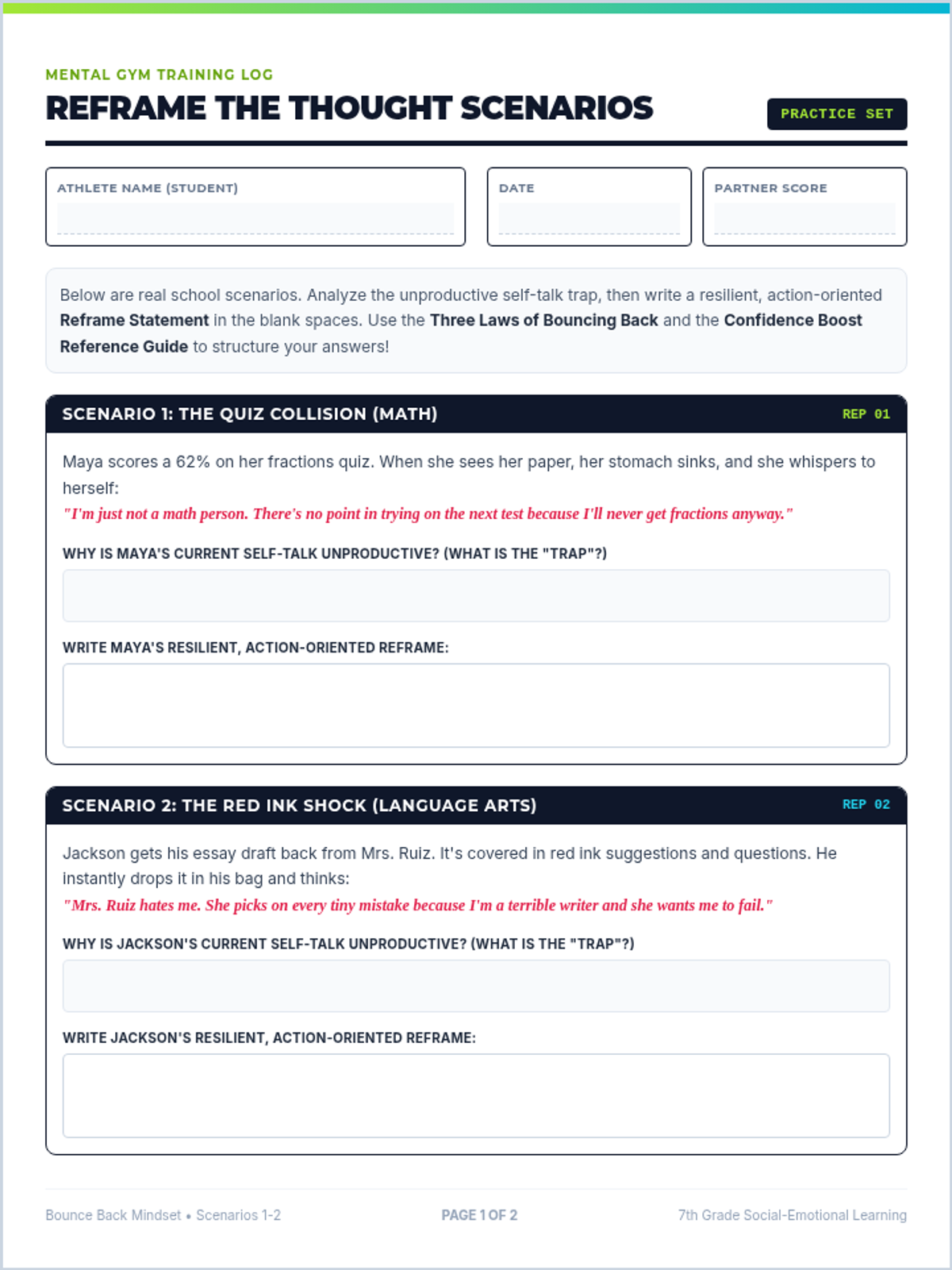
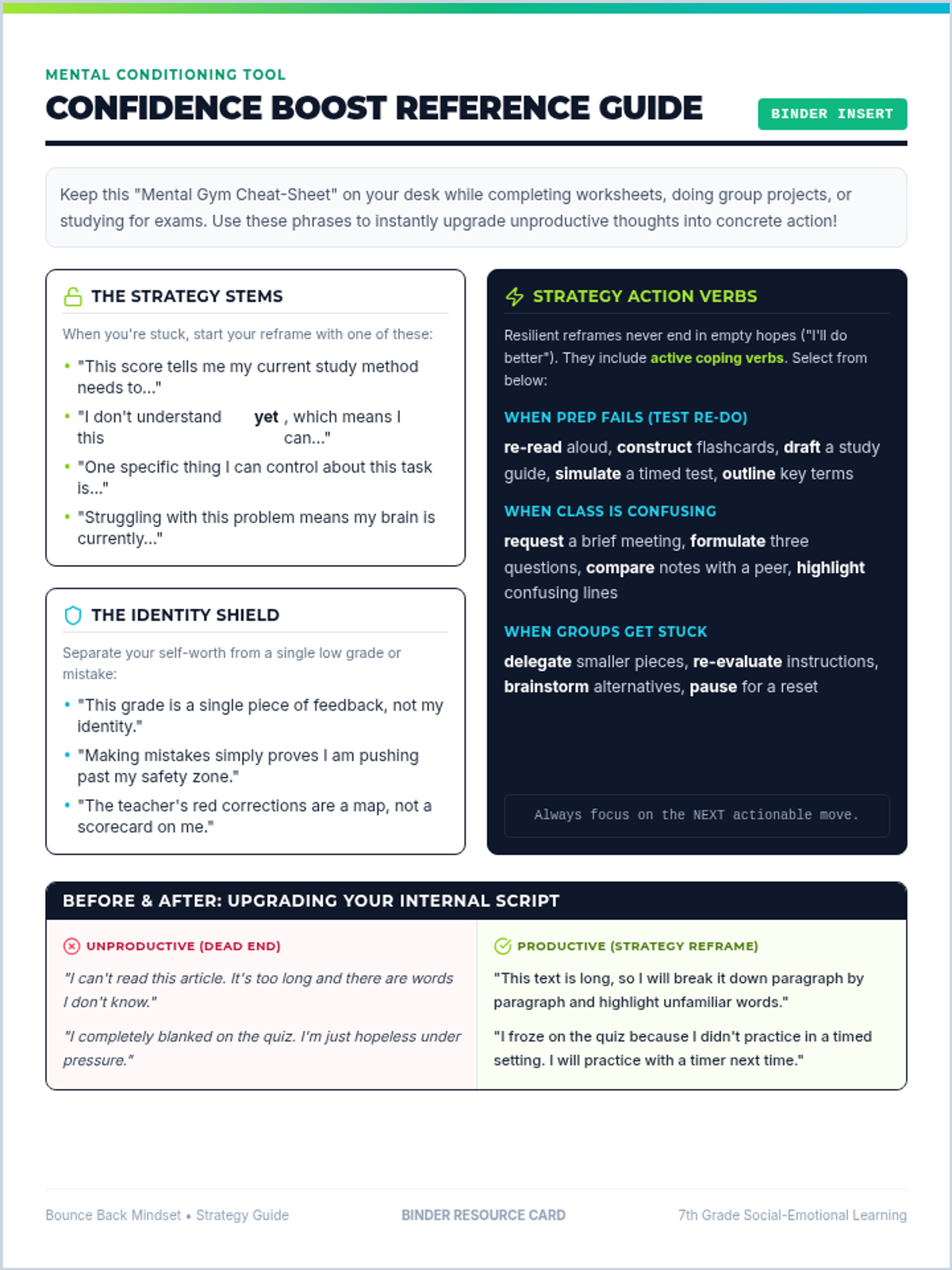
A 45-minute social-emotional learning lesson for 7th graders to explore cognitive reframing, distinguish between productive and unproductive self-talk, and practice applying growth-oriented strategies to academic setbacks.