Students practice auditory processing and following complex instructions through an engaging secret agent game. By decoding a hidden message, they learn the importance of active listening and attention to detail.
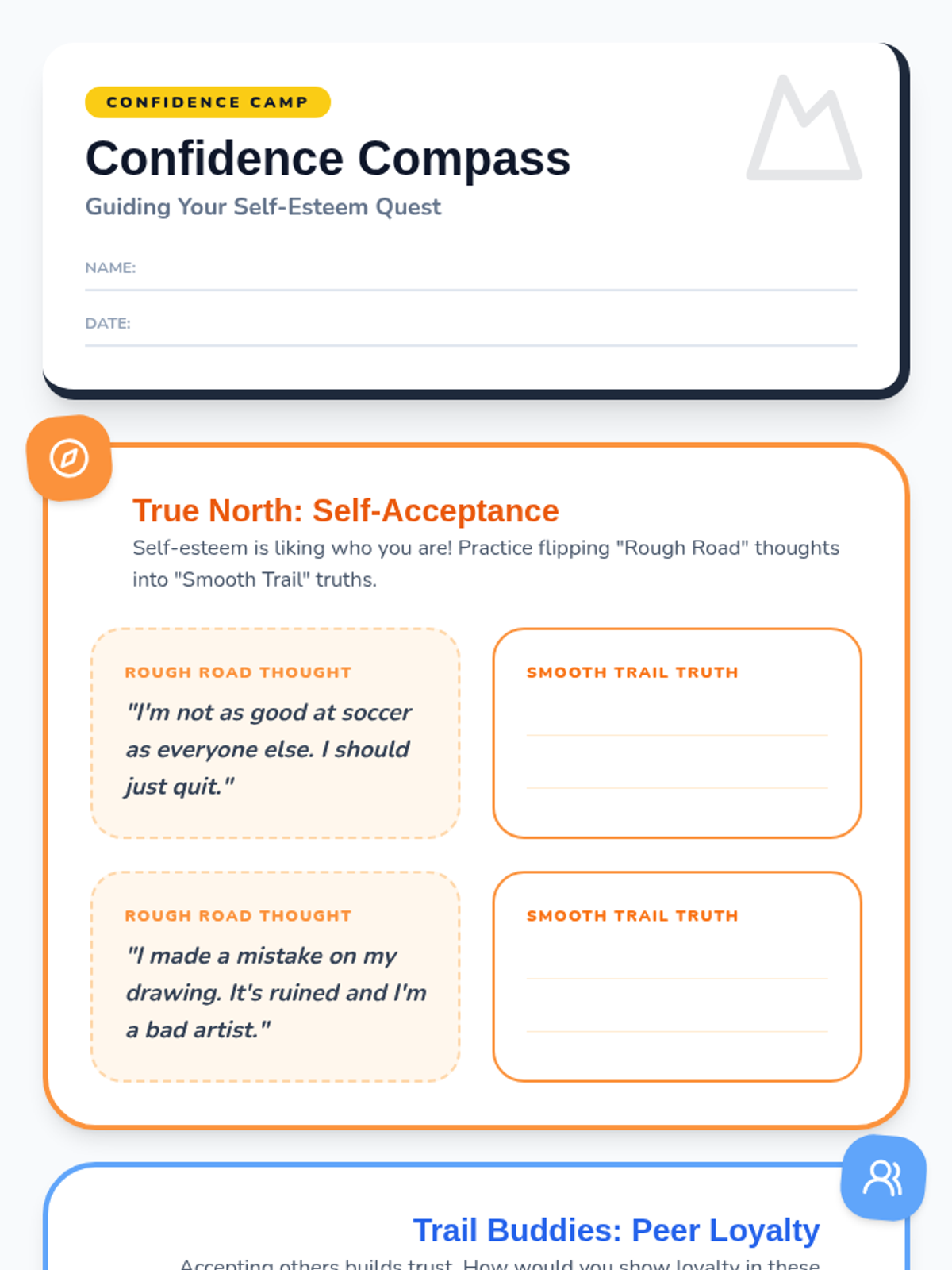
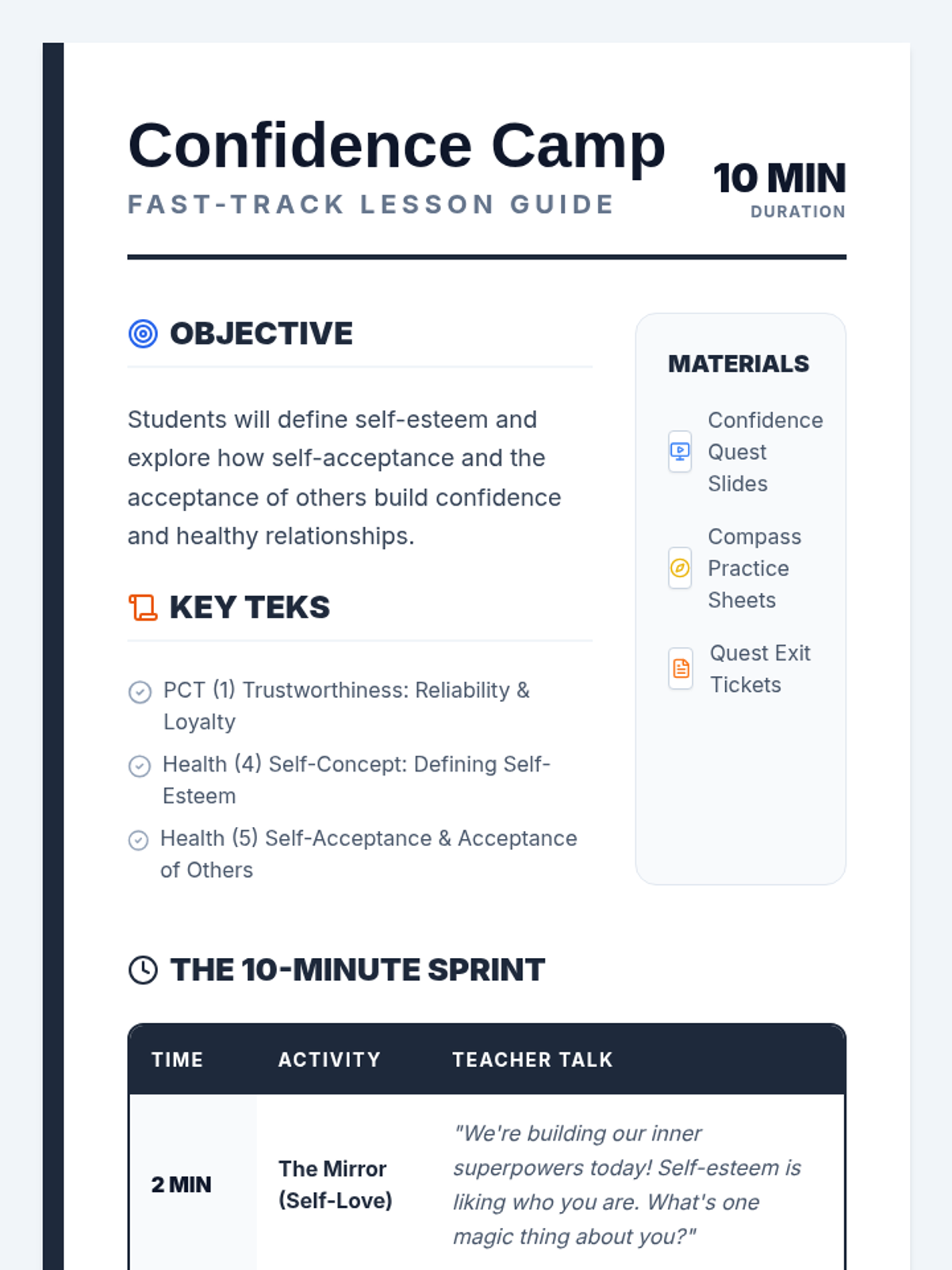
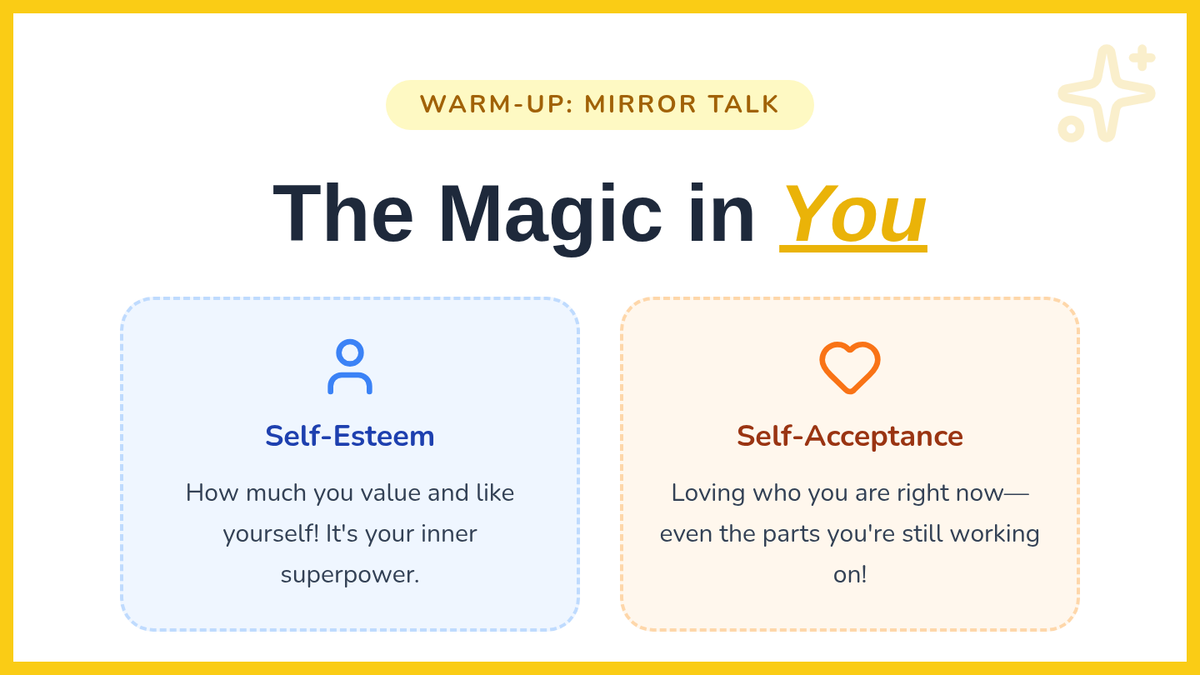
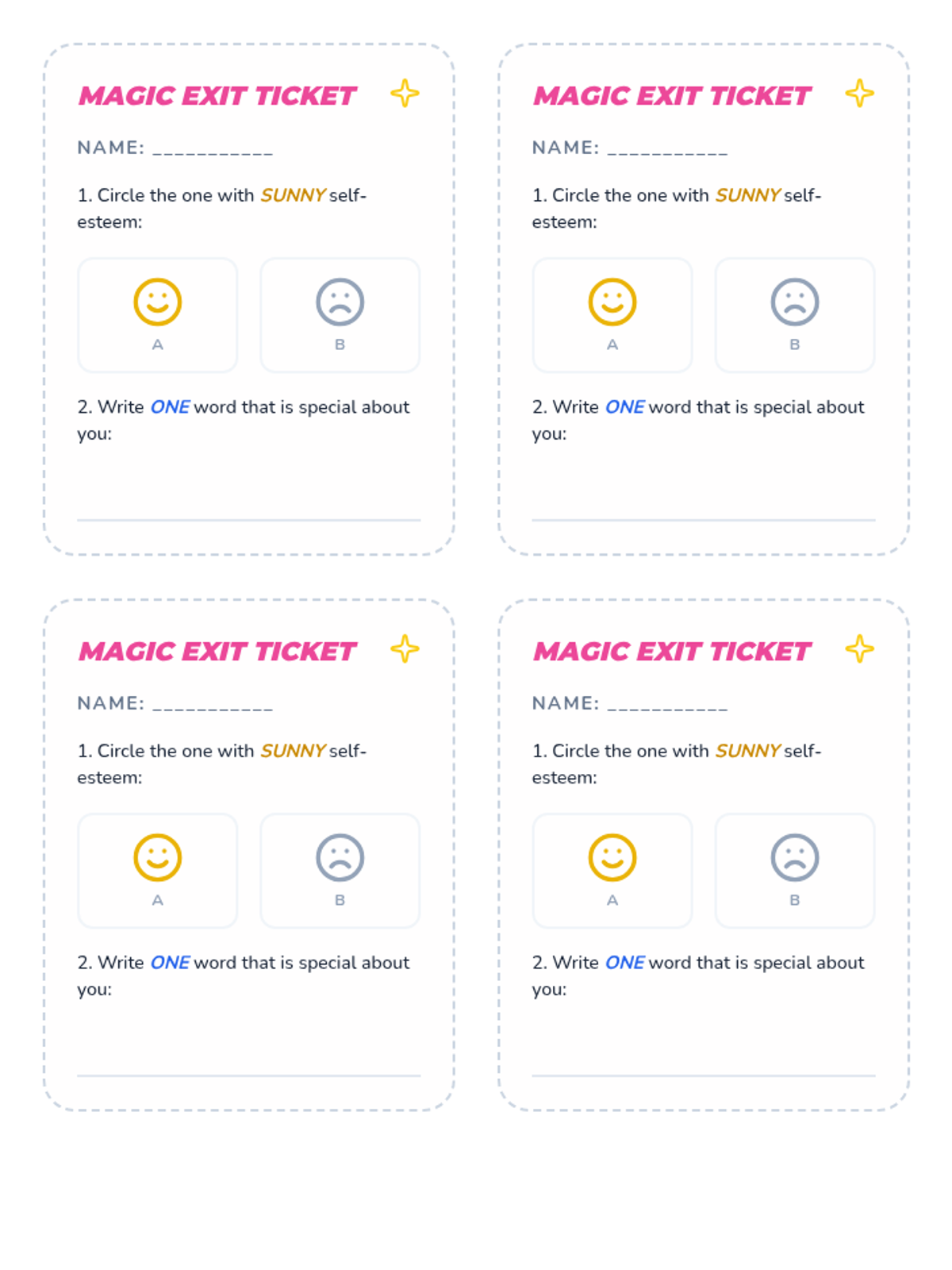
A fast-paced, 10-minute social-emotional learning lesson focused on building self-confidence through self-acceptance and kindness toward others. Students define self-esteem and set immediate goals for personal growth and peer acceptance.
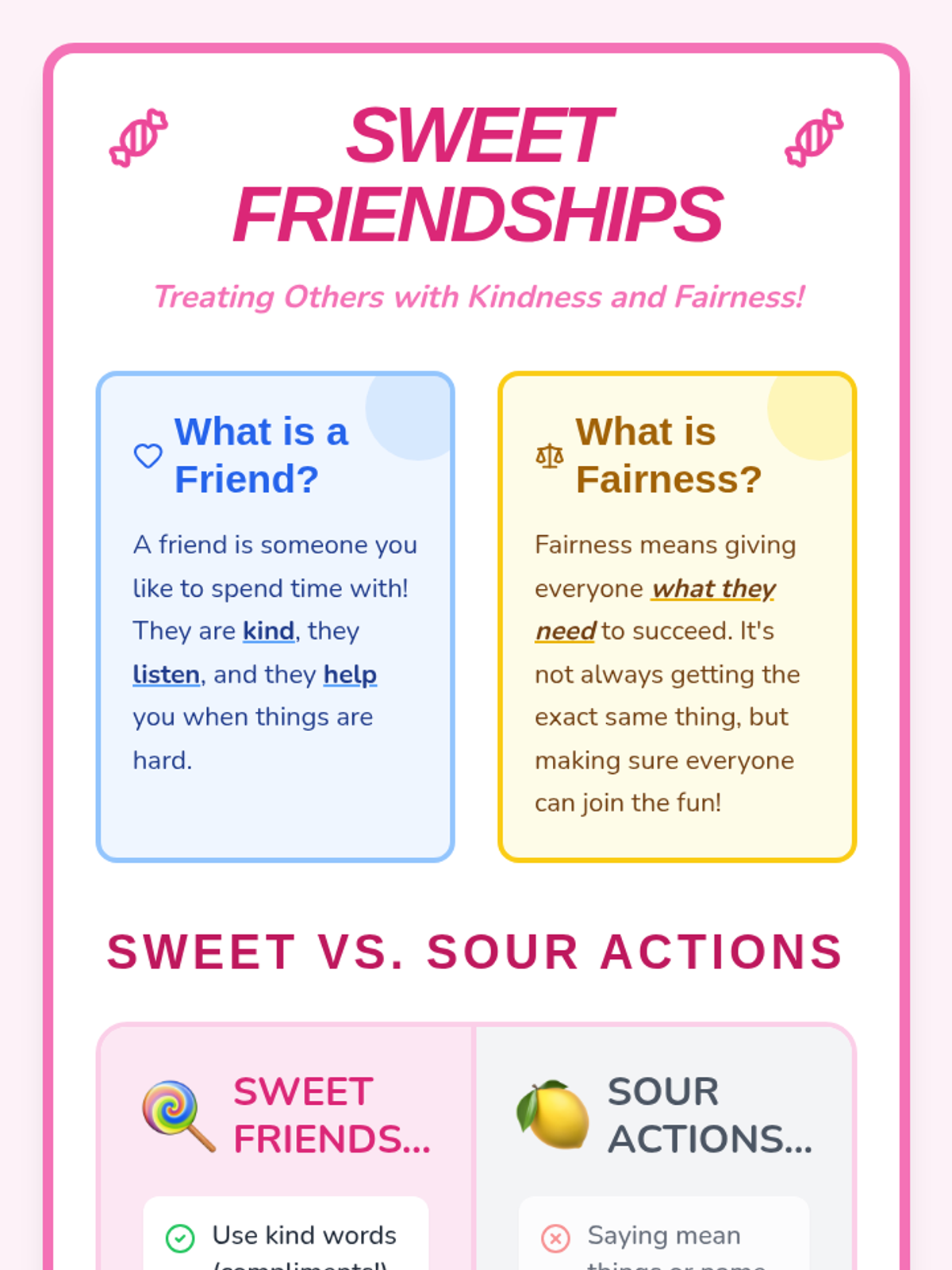
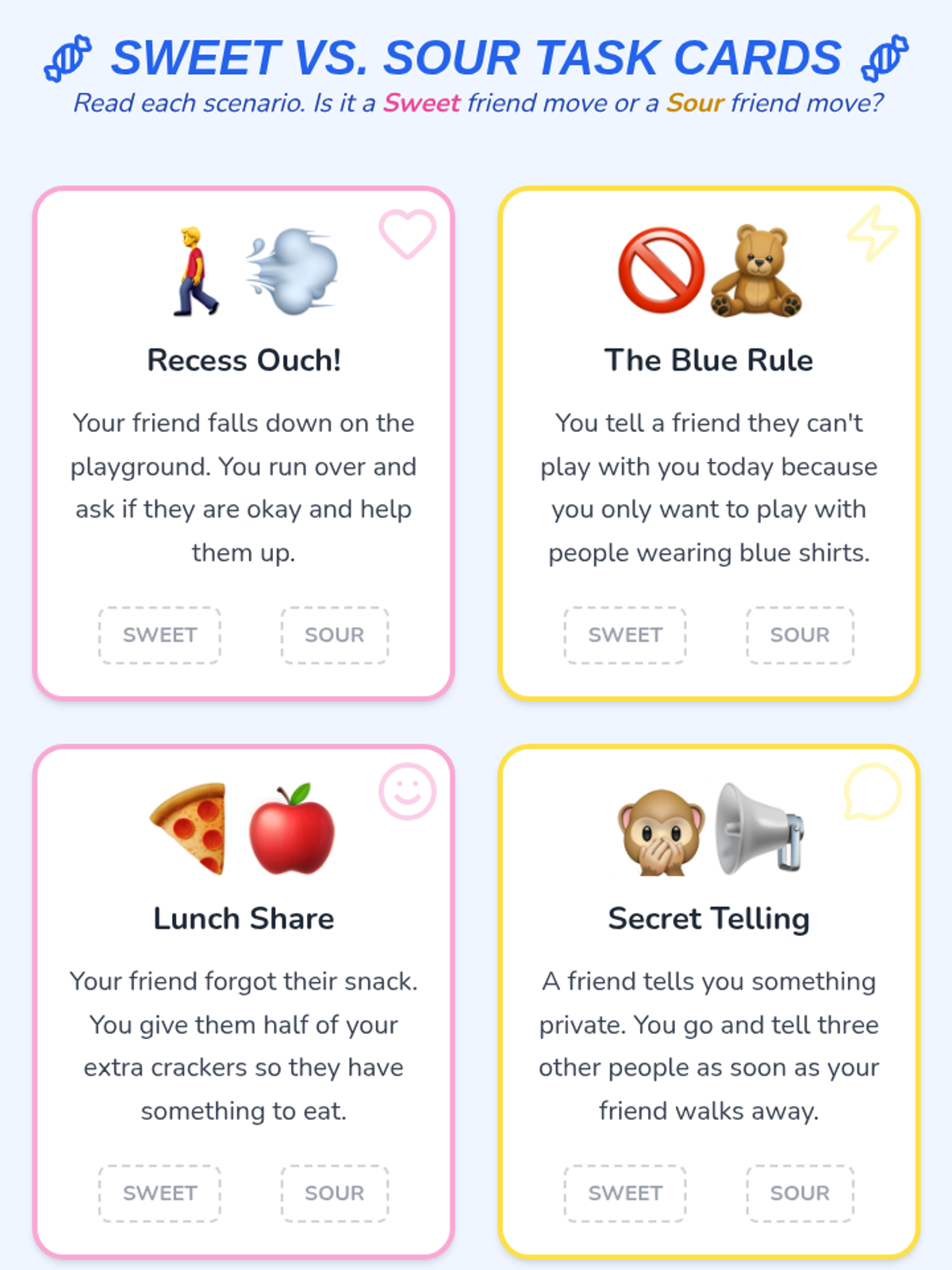
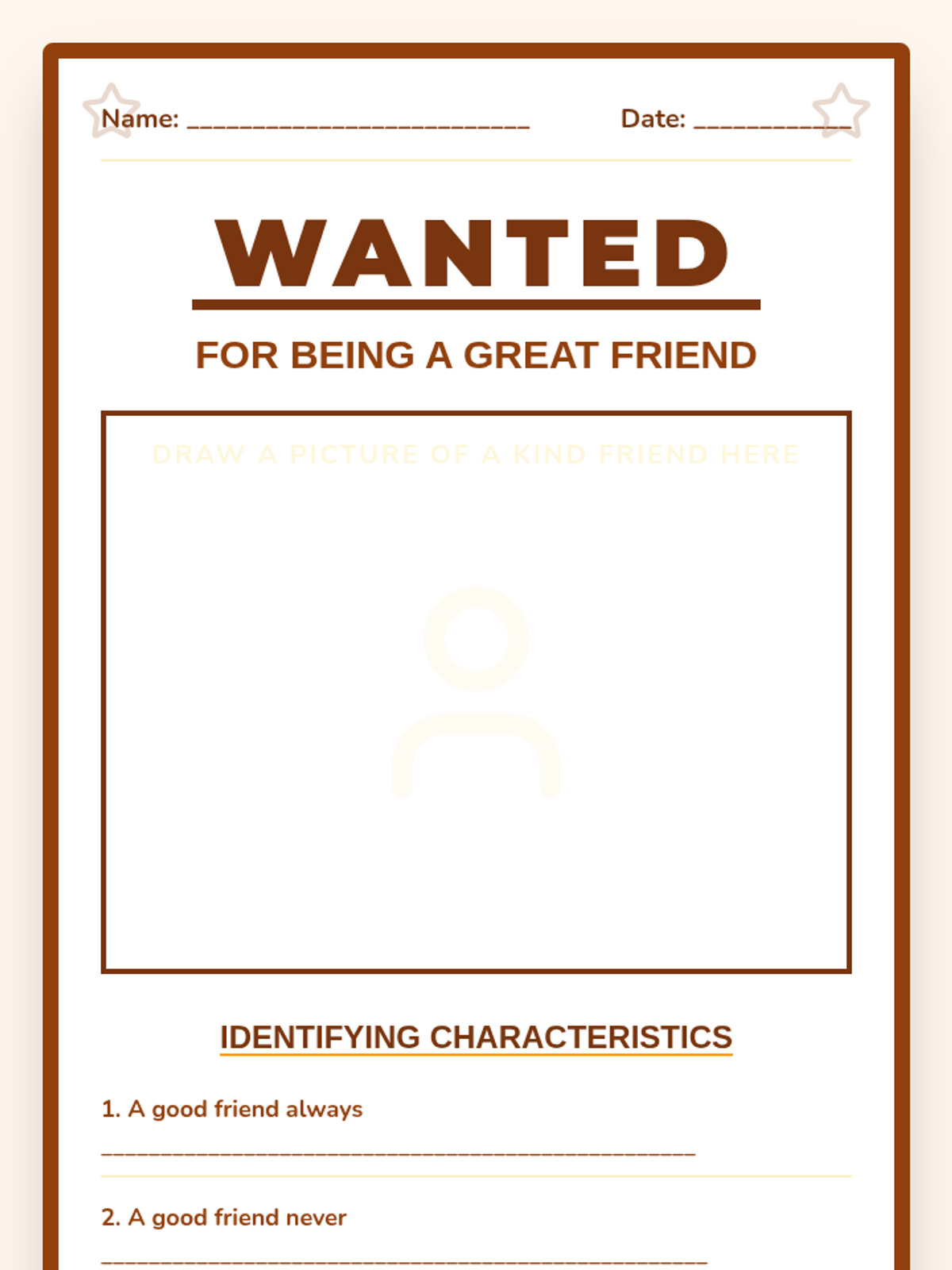
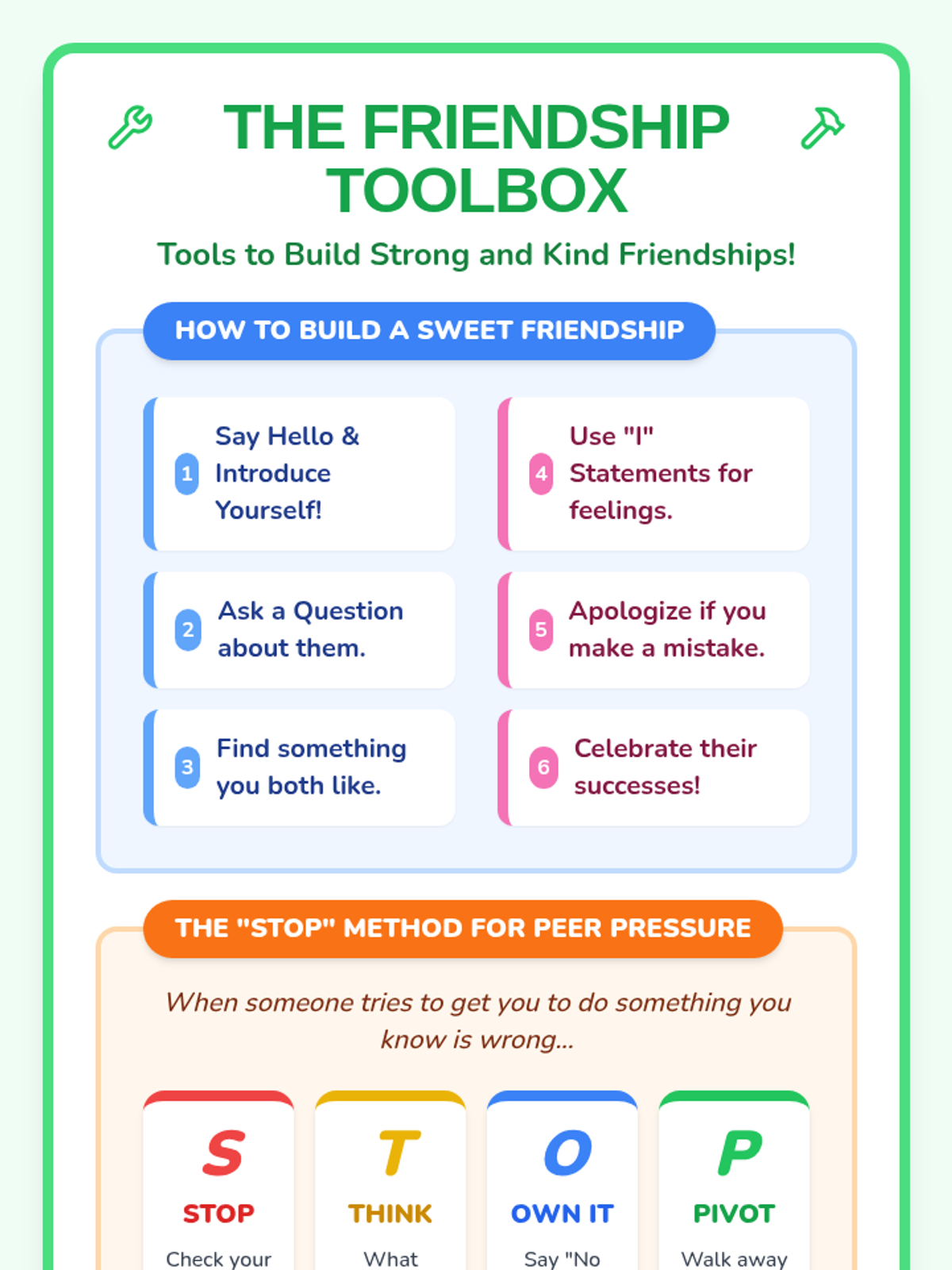
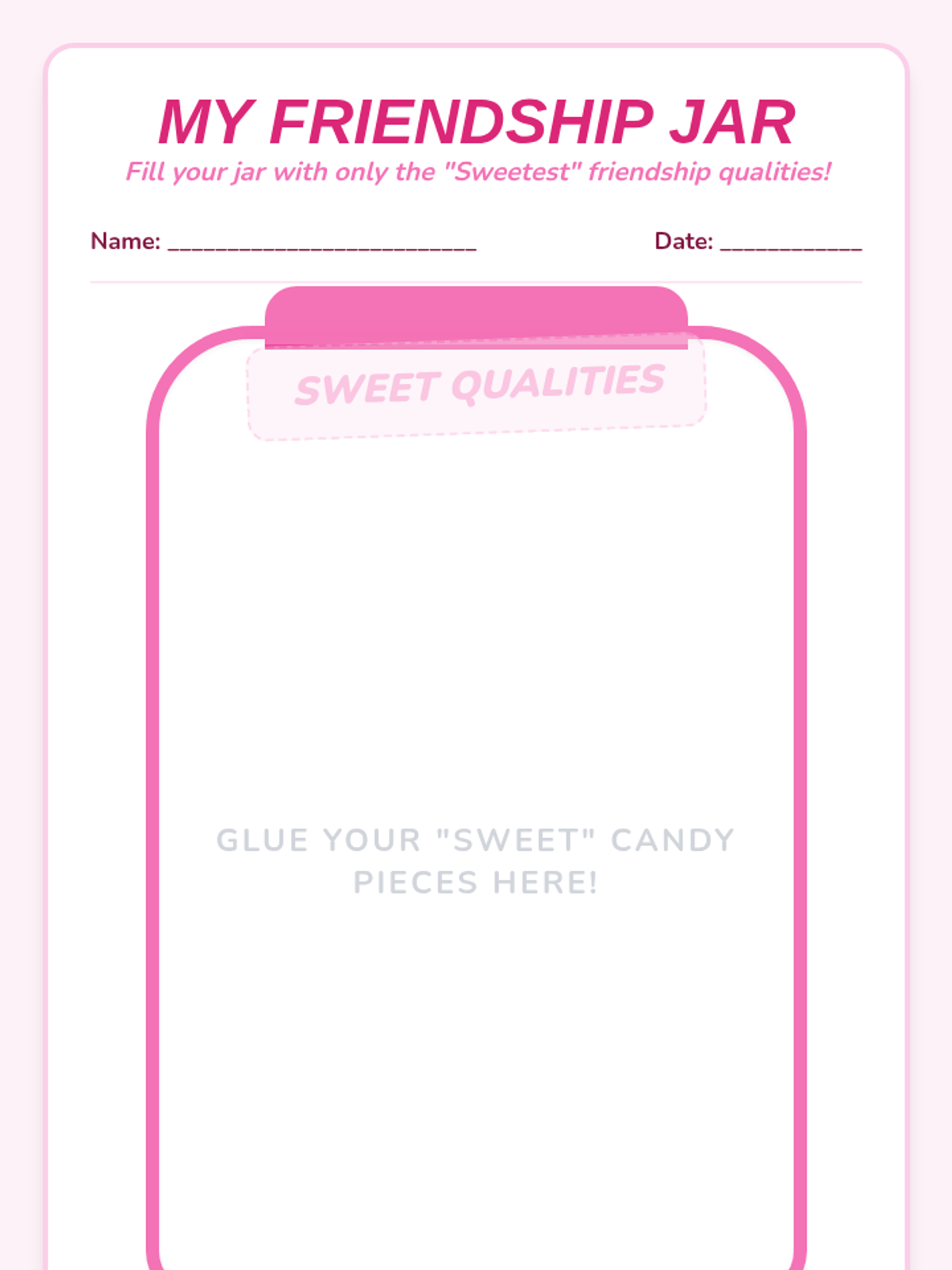
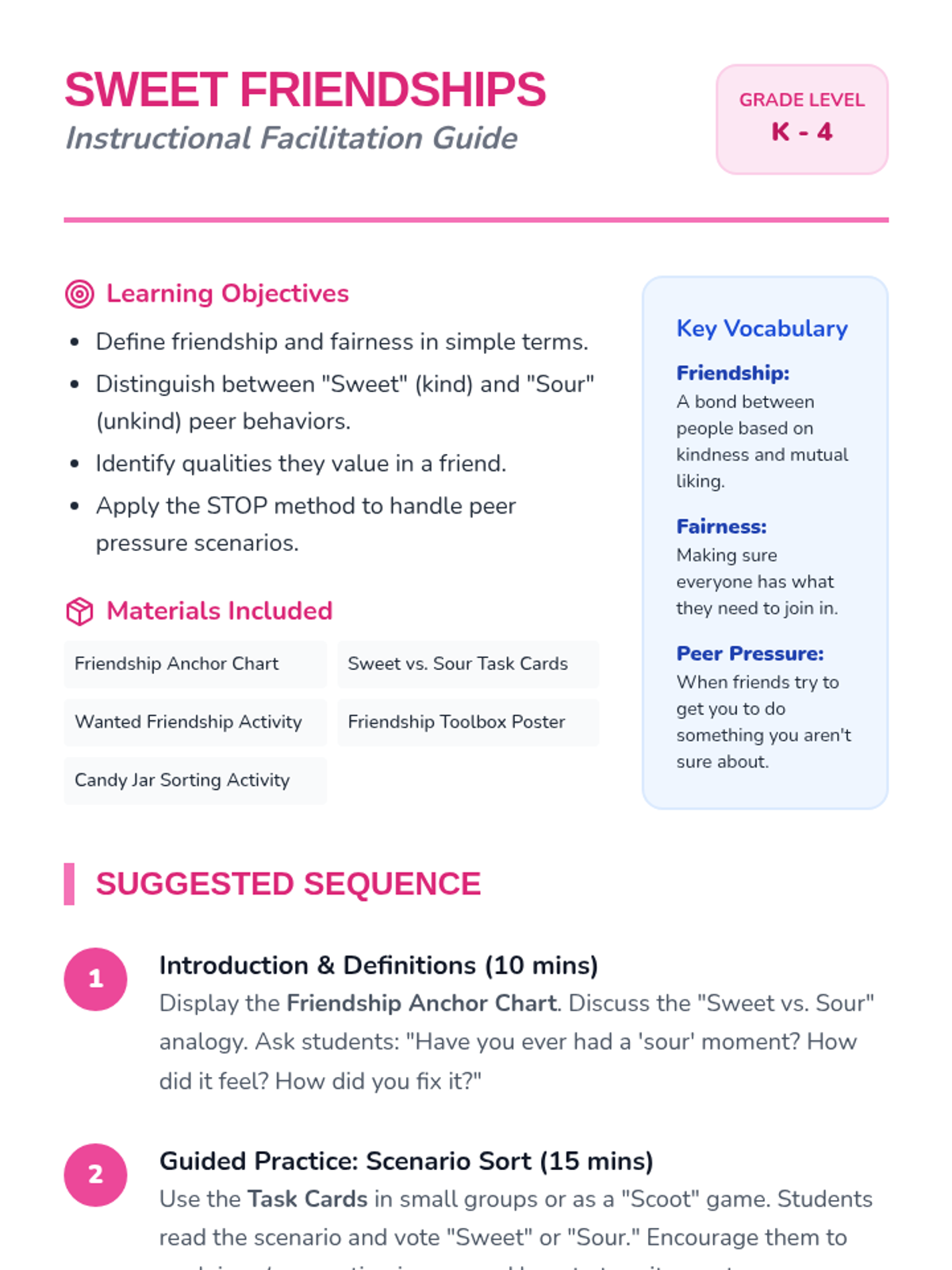
A comprehensive primary lesson focused on building positive relationships, understanding fairness, and developing social skills through interactive candy-themed activities.
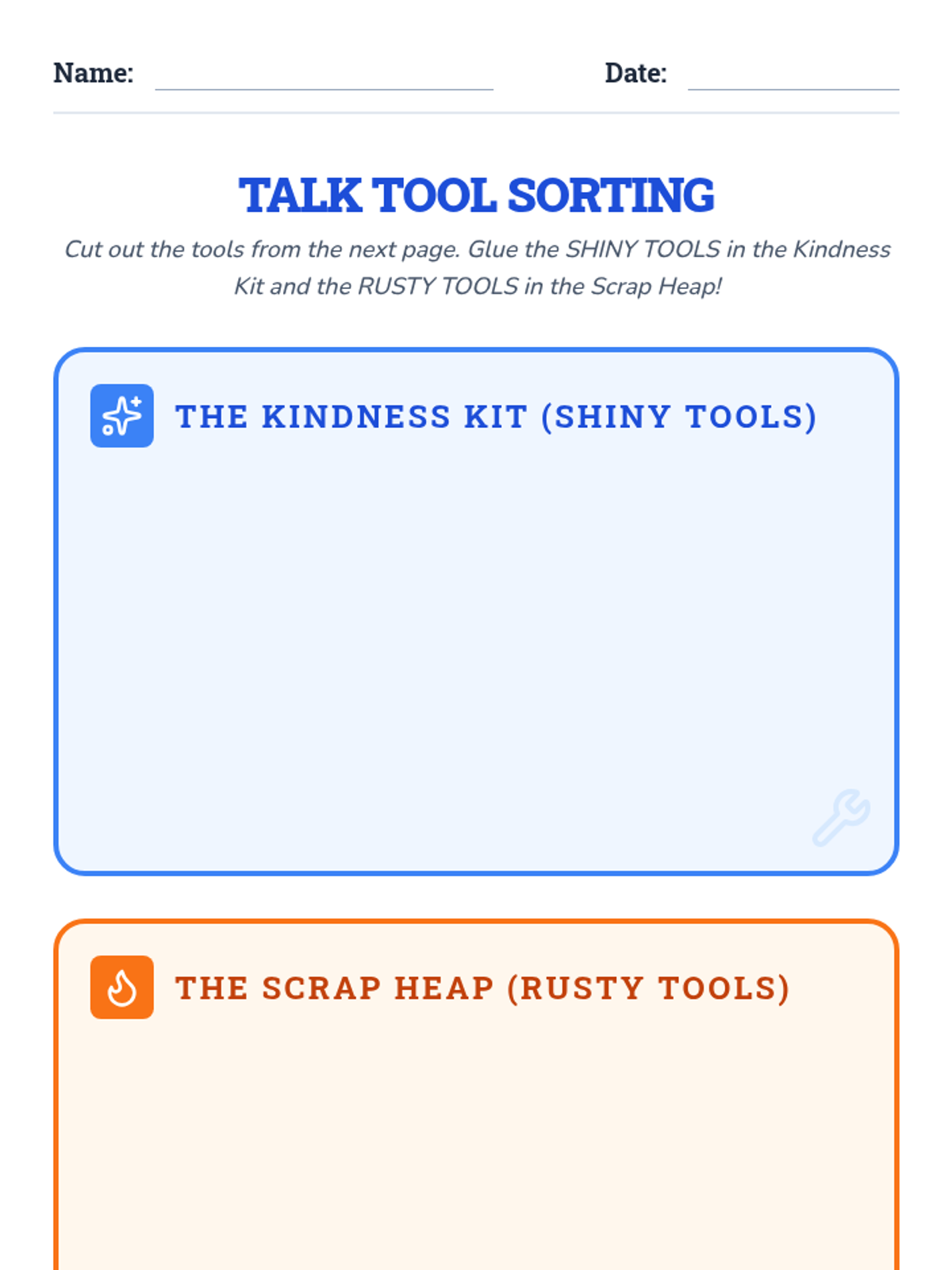
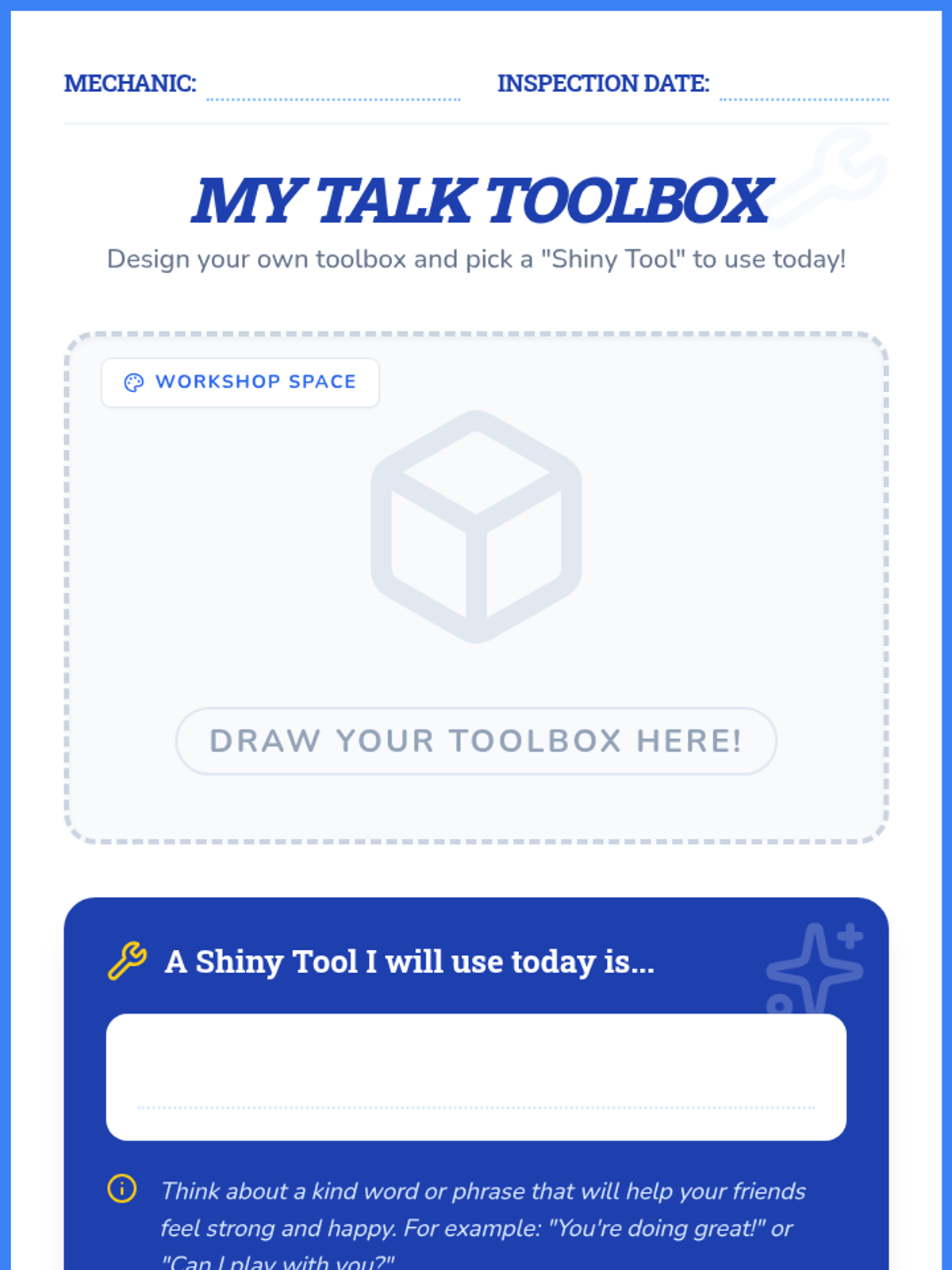
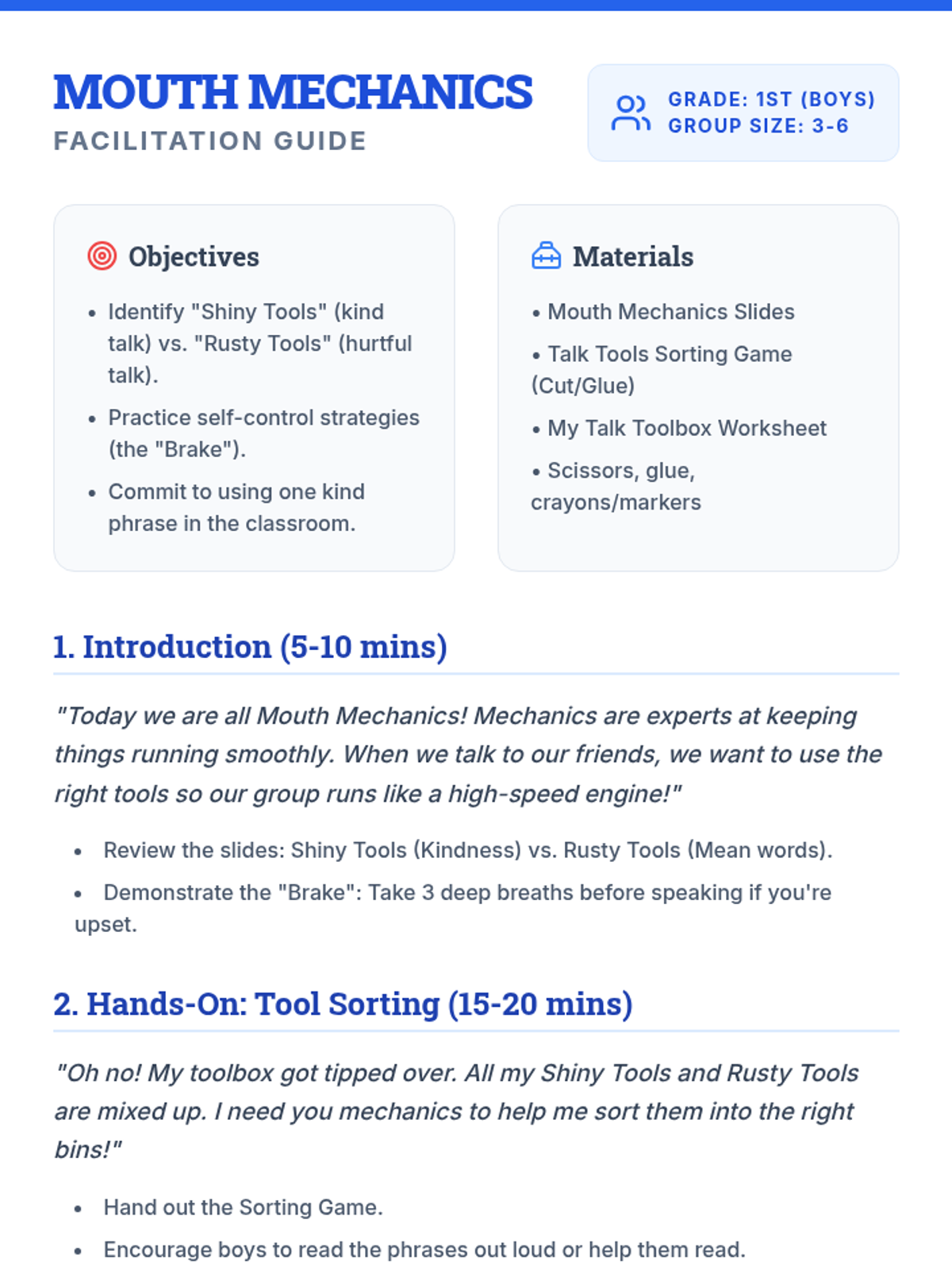
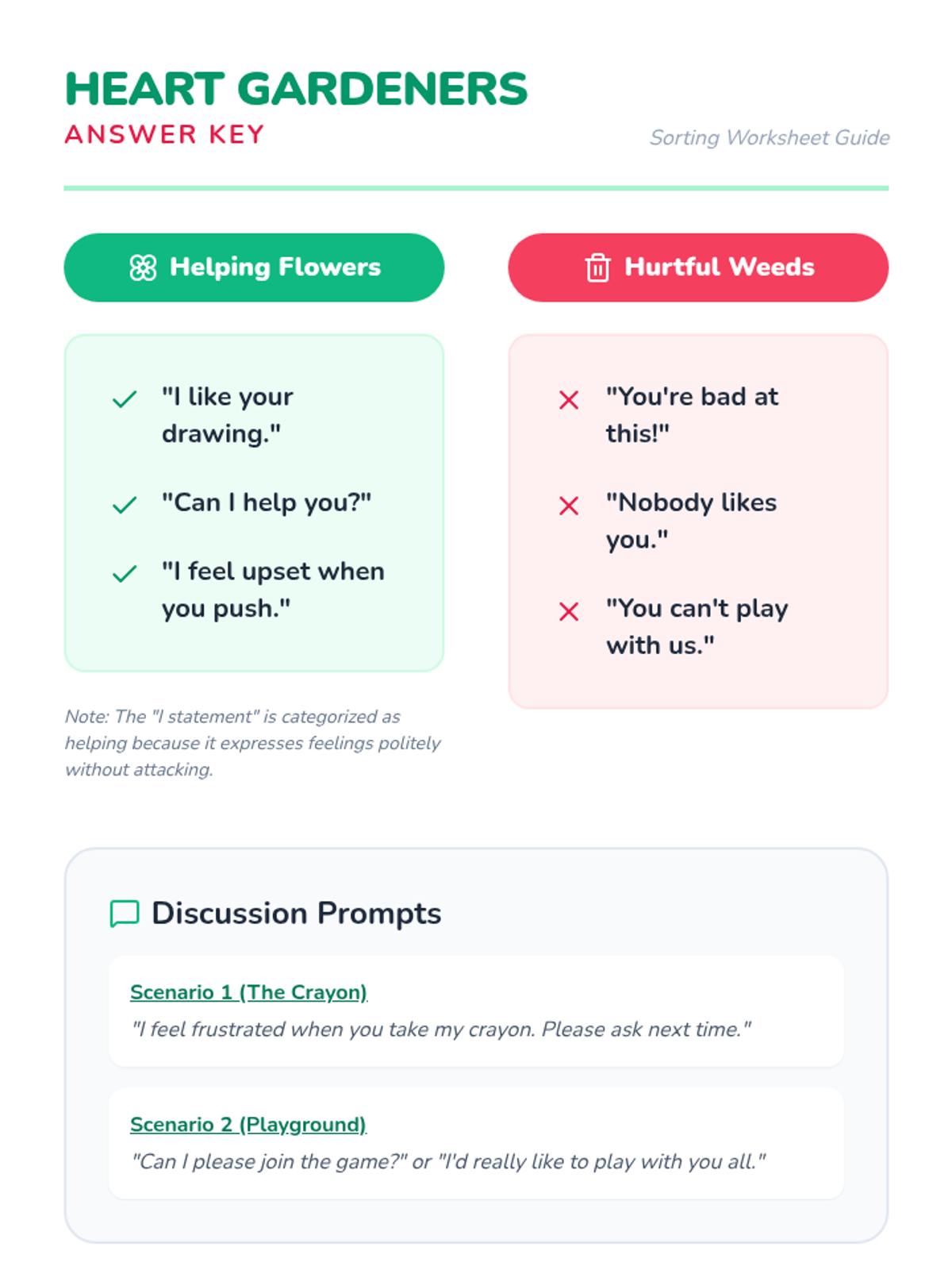
A small-group lesson for 1st-grade boys focused on developing self-control and respect through kind and appropriate talk. Students learn to distinguish between helpful and hurtful words using a 'toolbox' analogy.
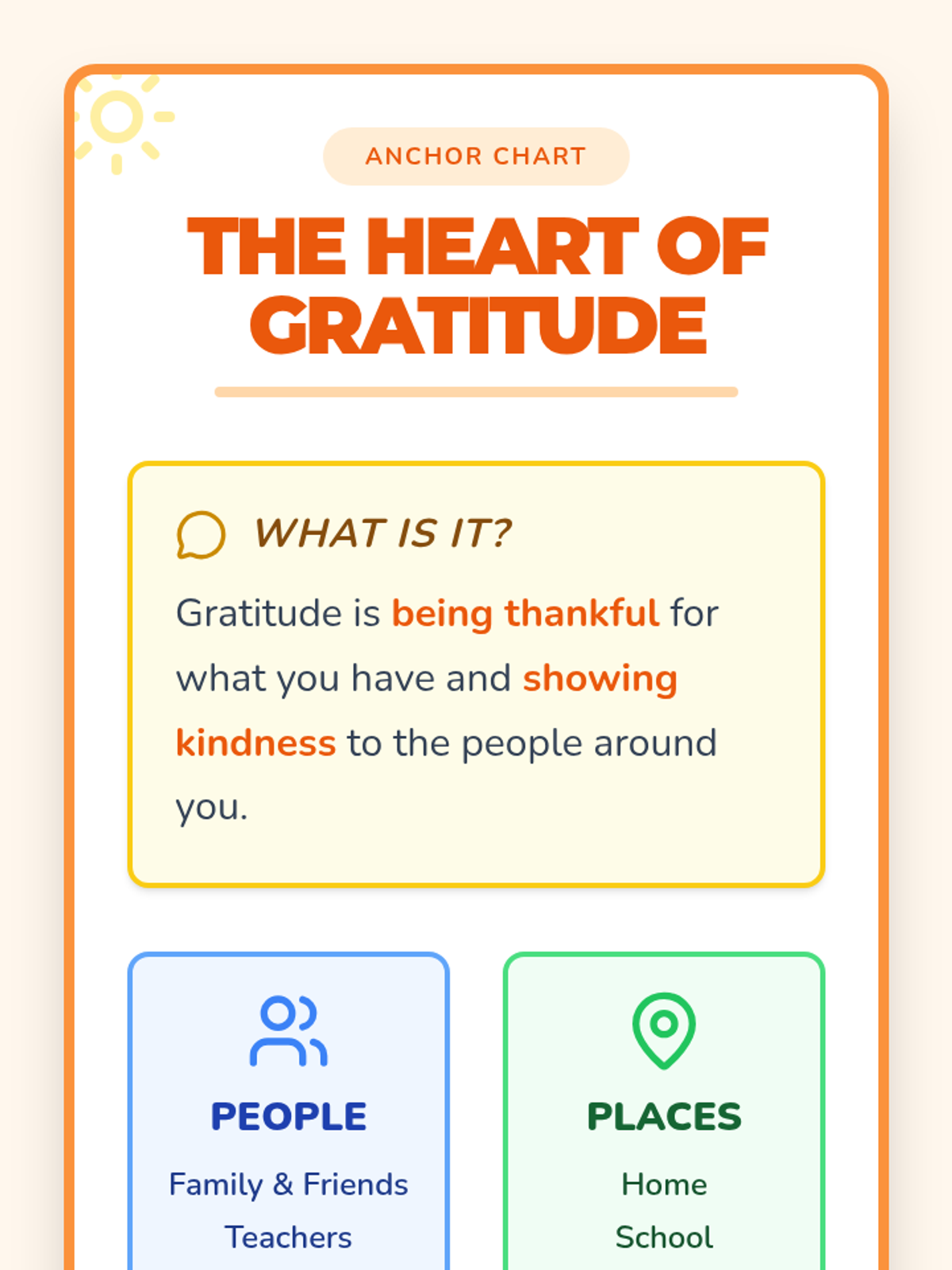
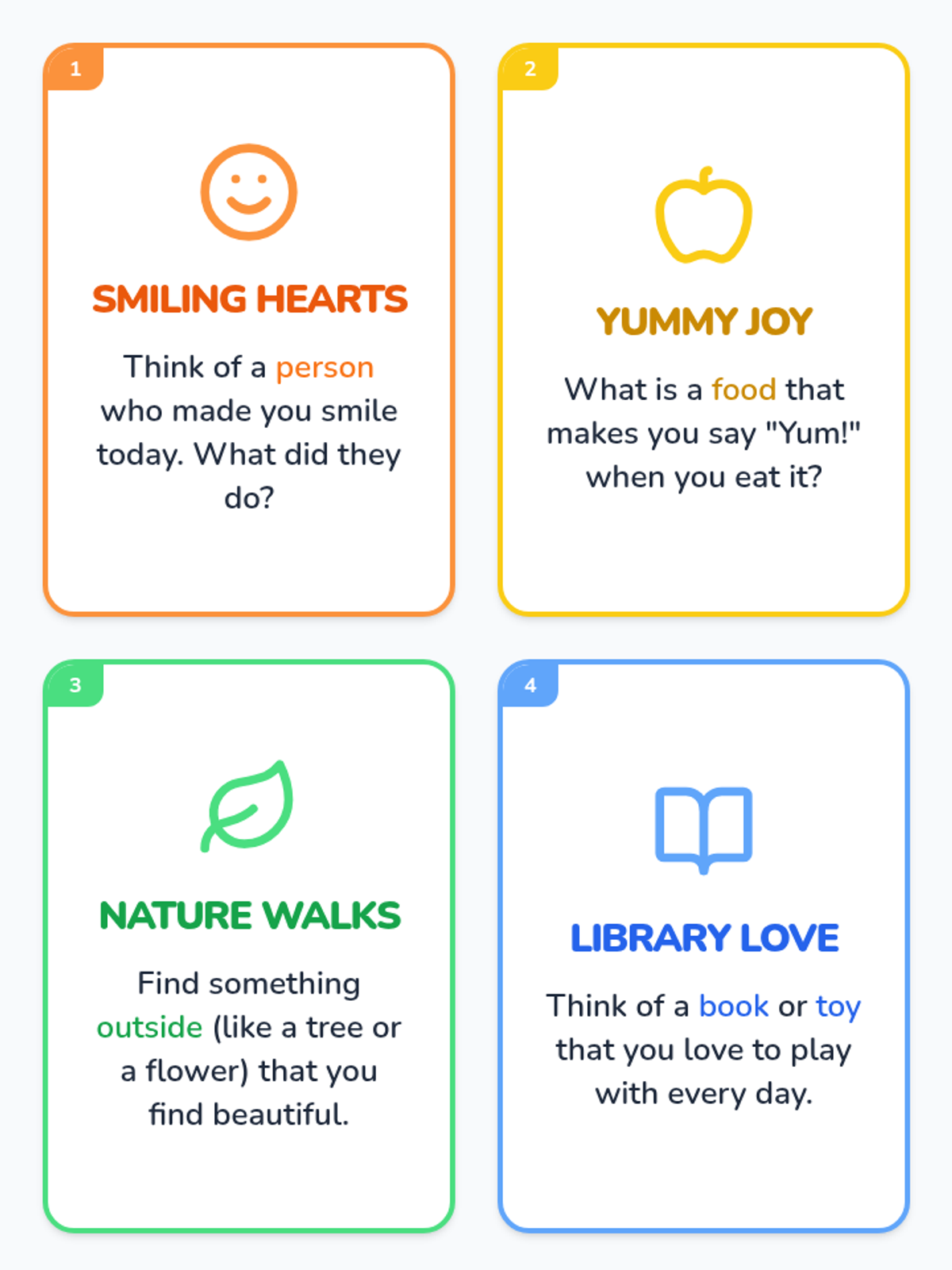
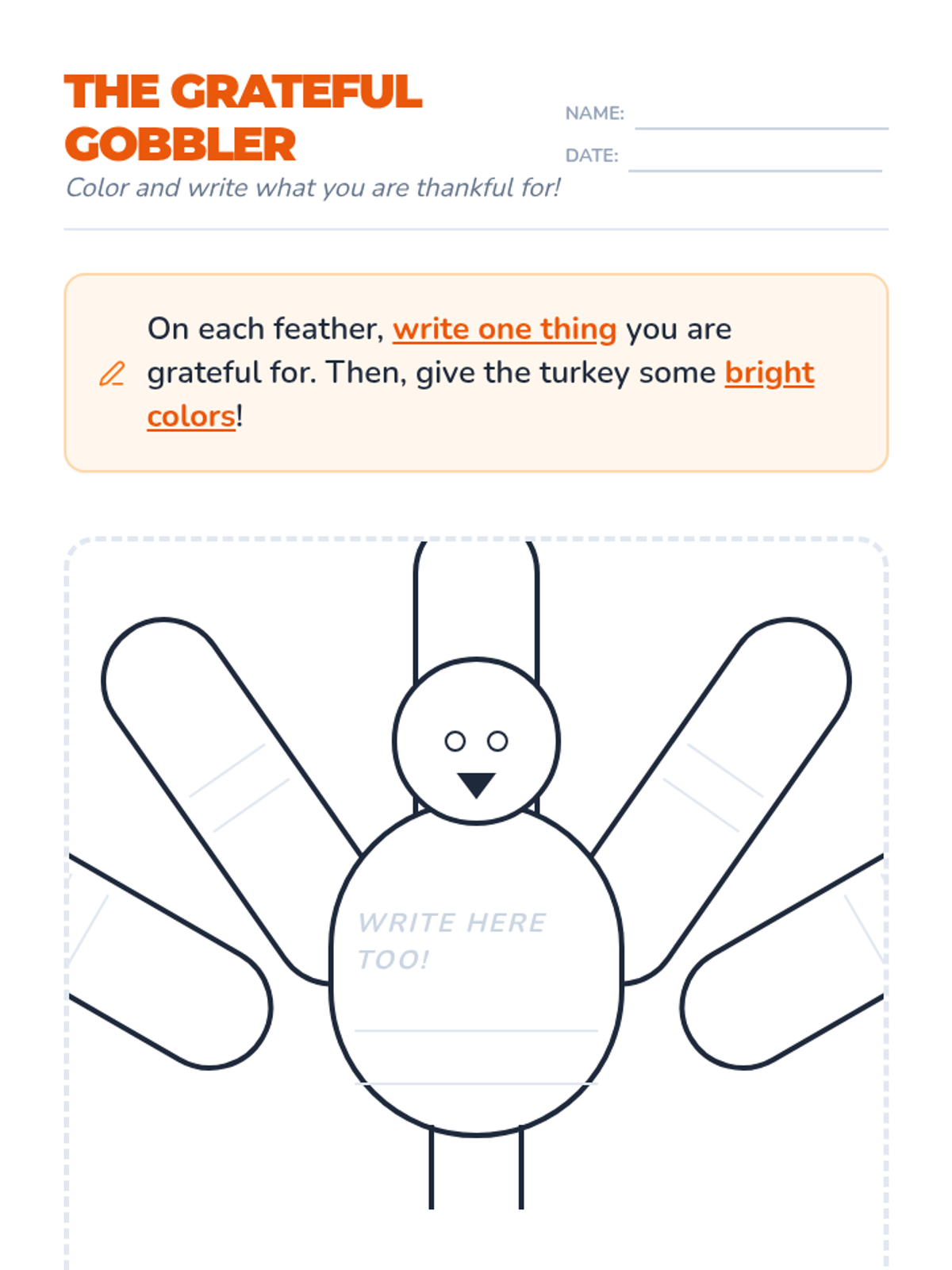
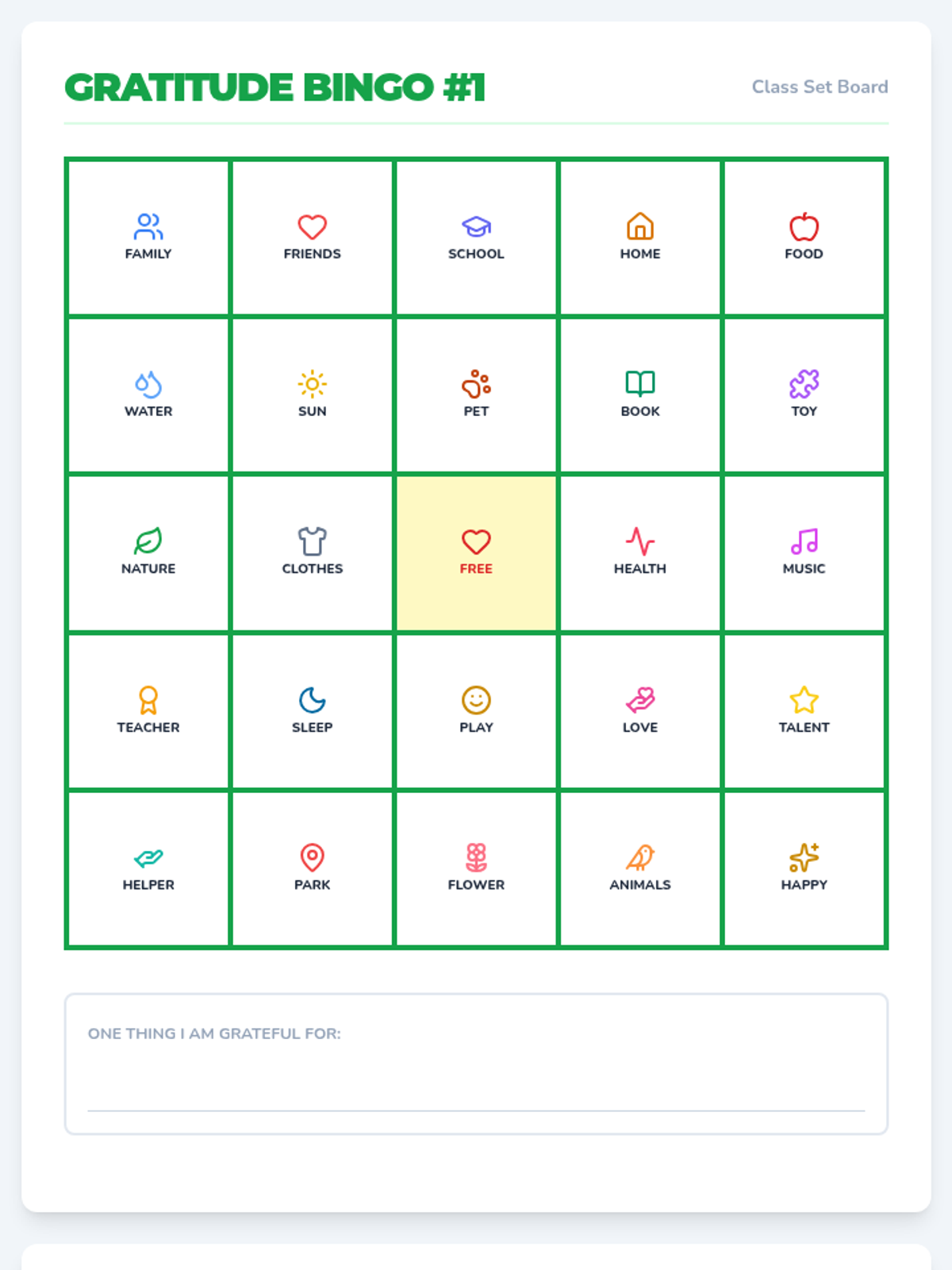
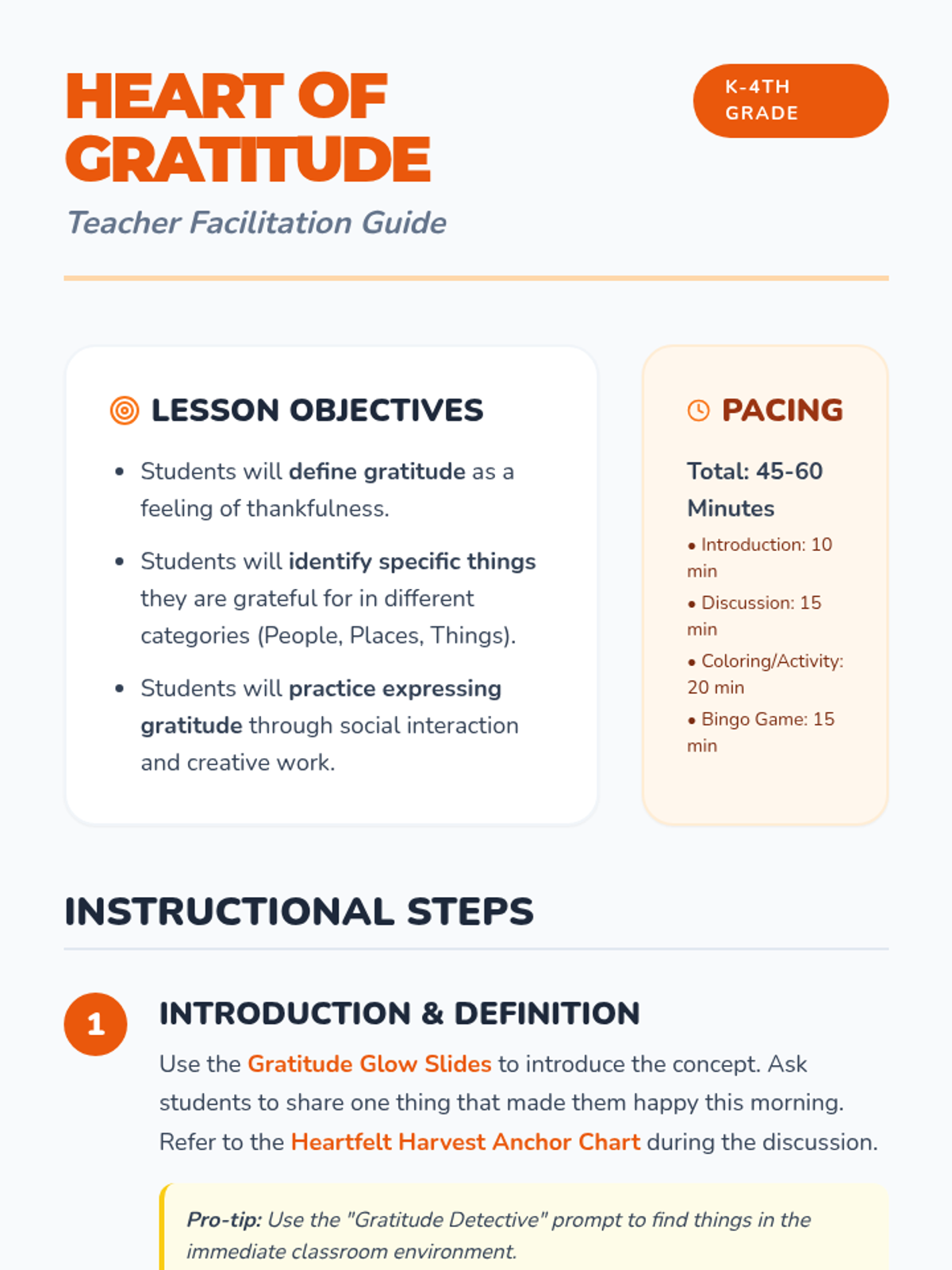
An introductory lesson on gratitude where students define the concept, engage in a visual anchor chart activity, and play a classroom-wide game of Gratitude Bingo.
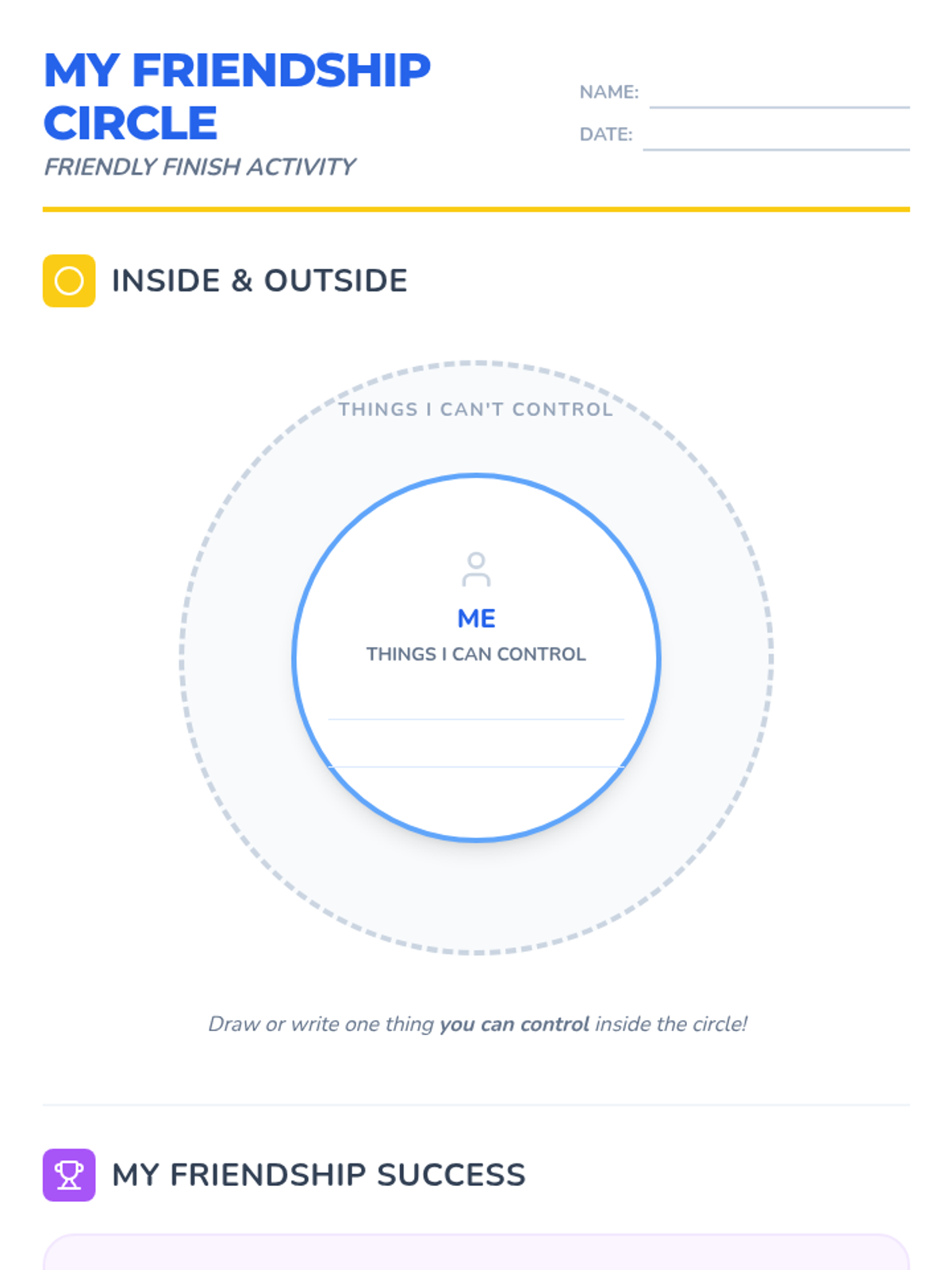
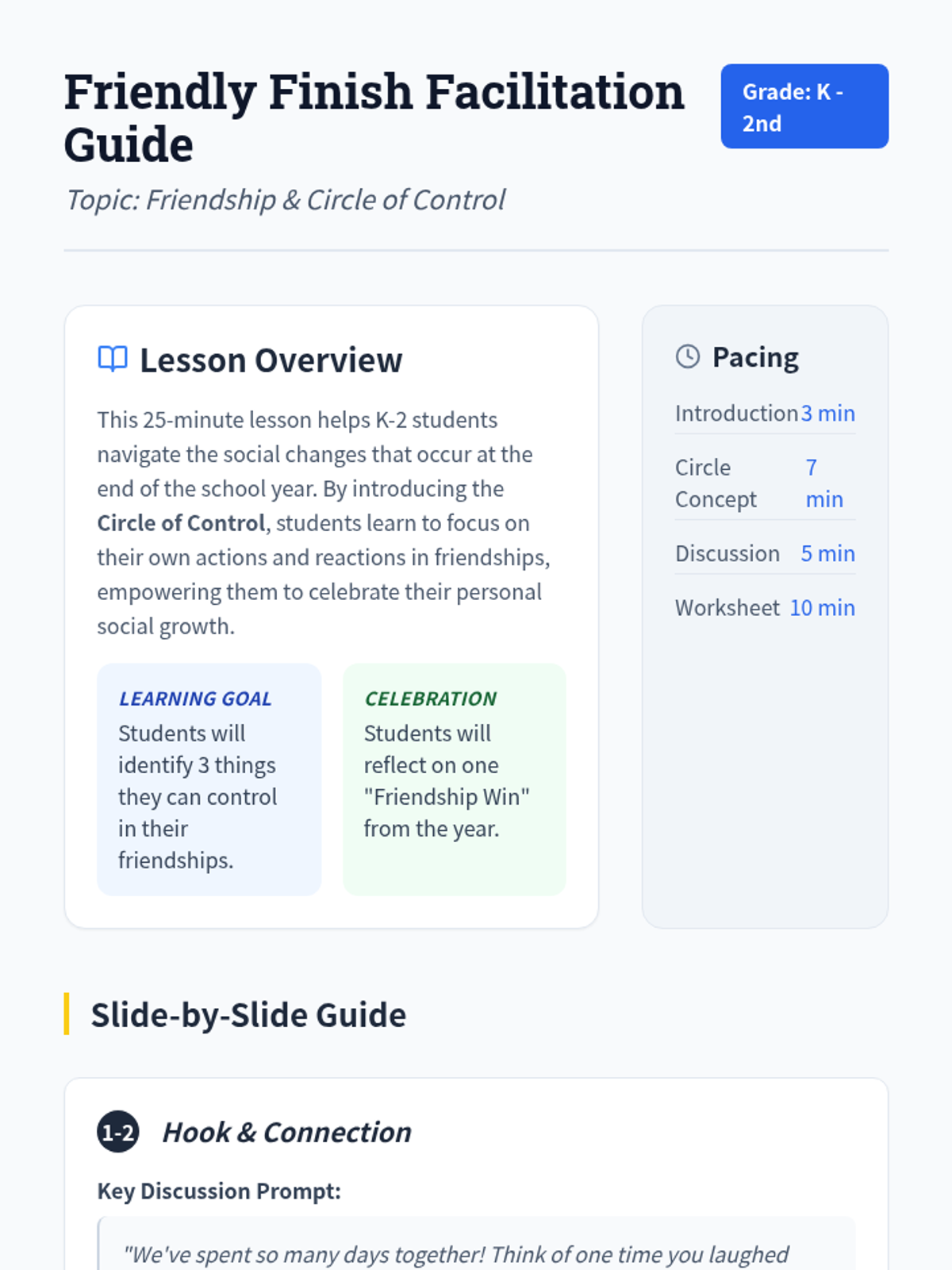
An end-of-year lesson for K-2 students focused on navigating social interactions using the Circle of Control and celebrating friendship growth. Students will learn what they can influence in their friendships and reflect on their social successes throughout the year.
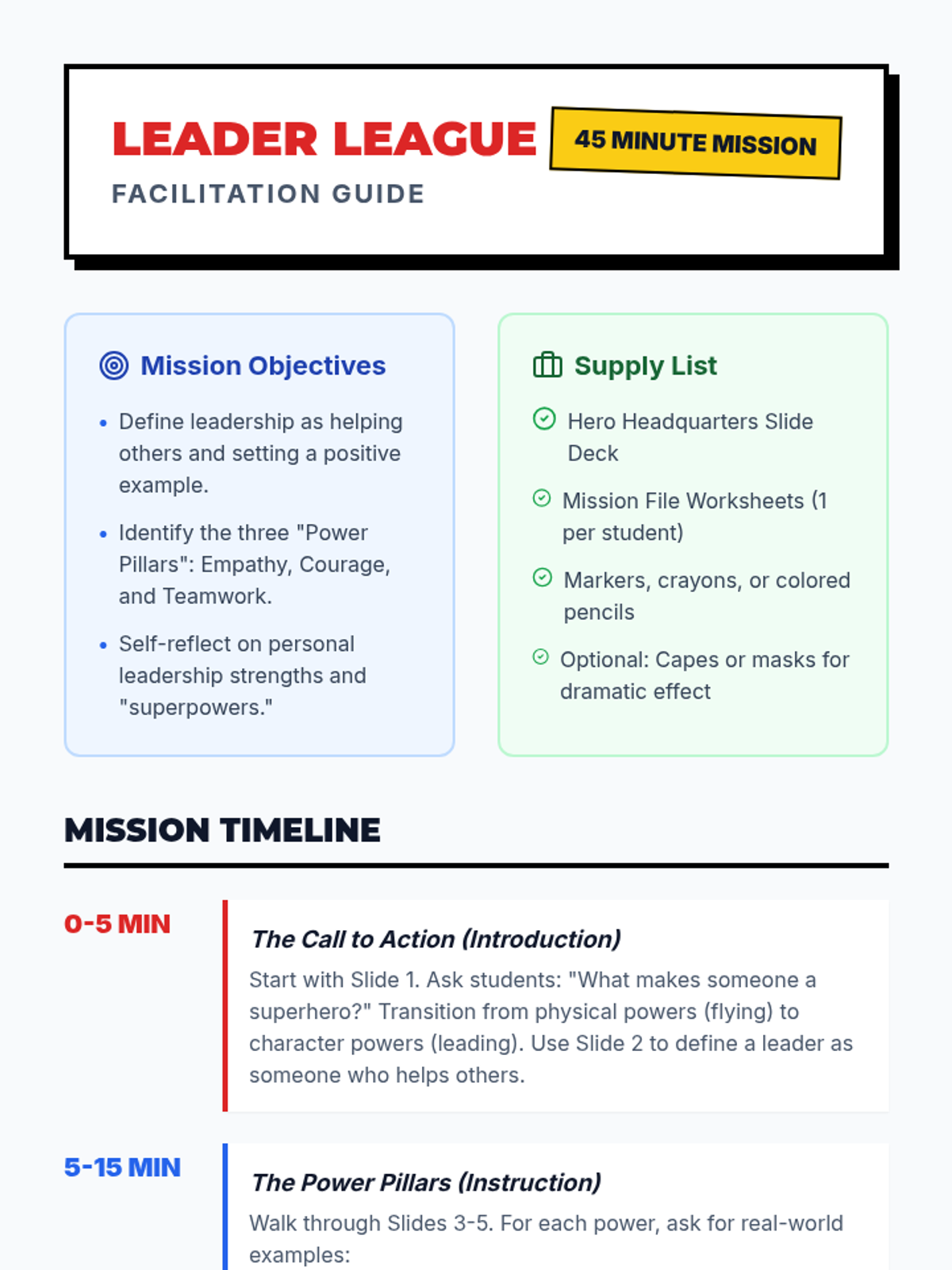
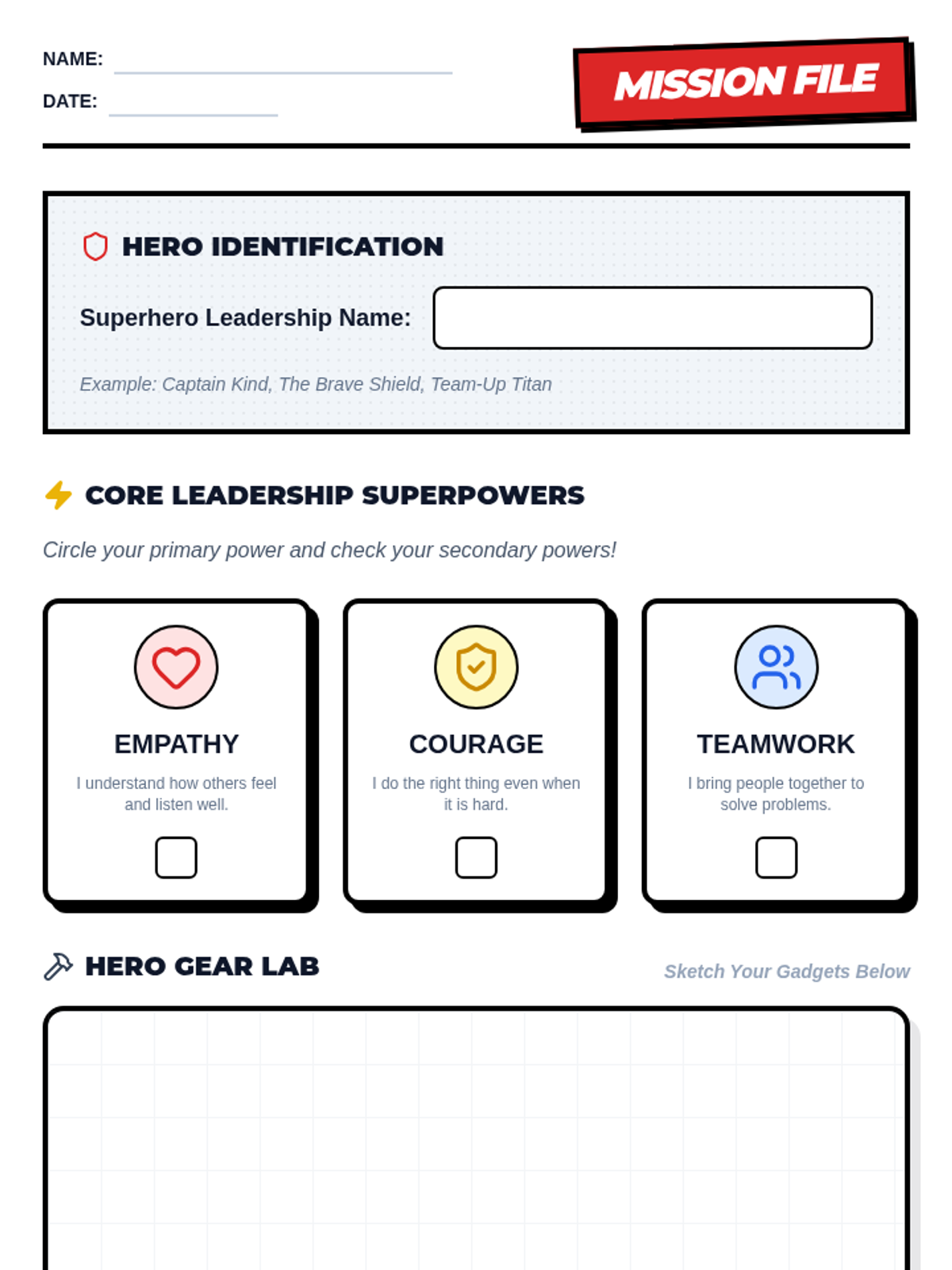
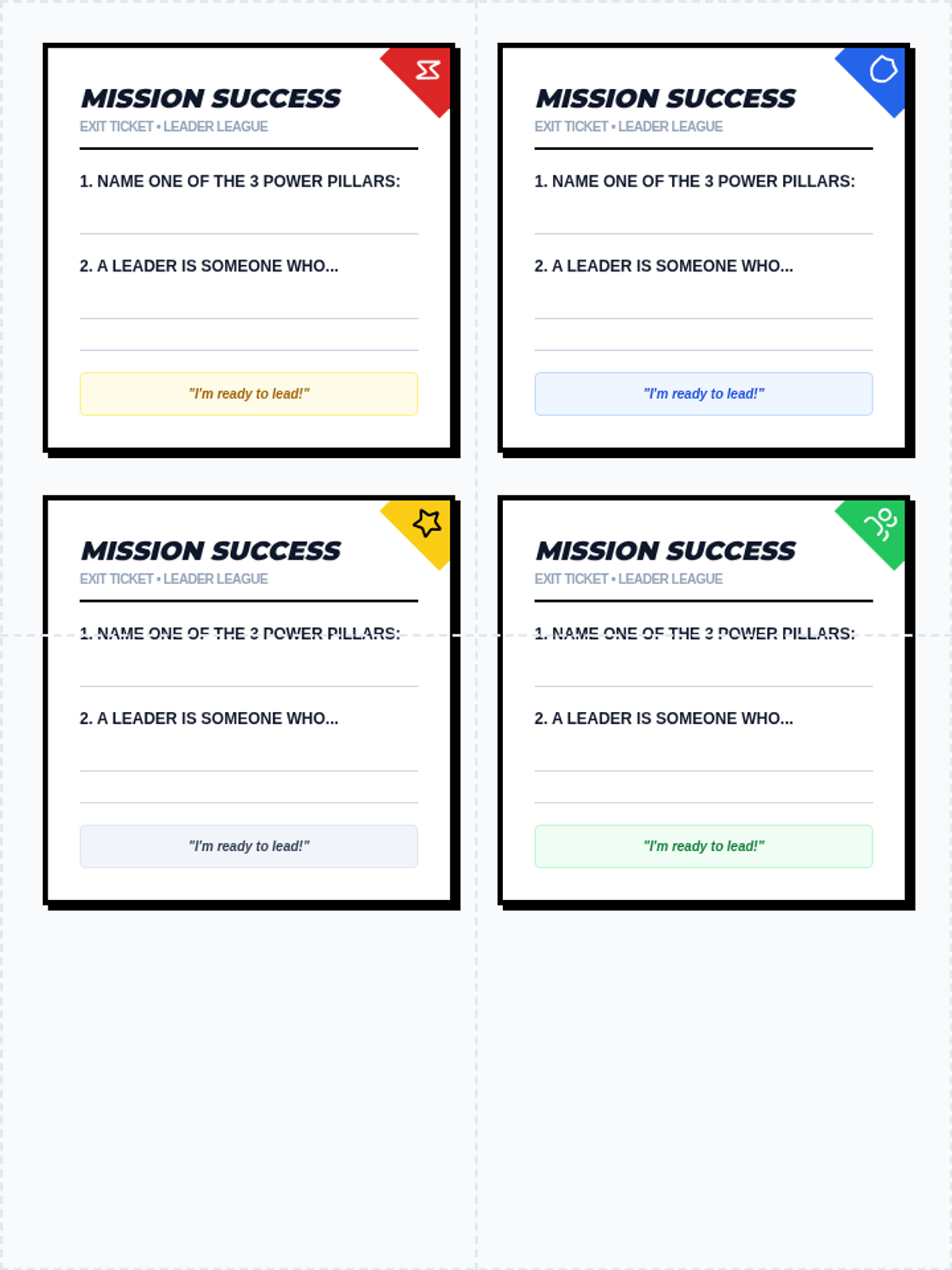
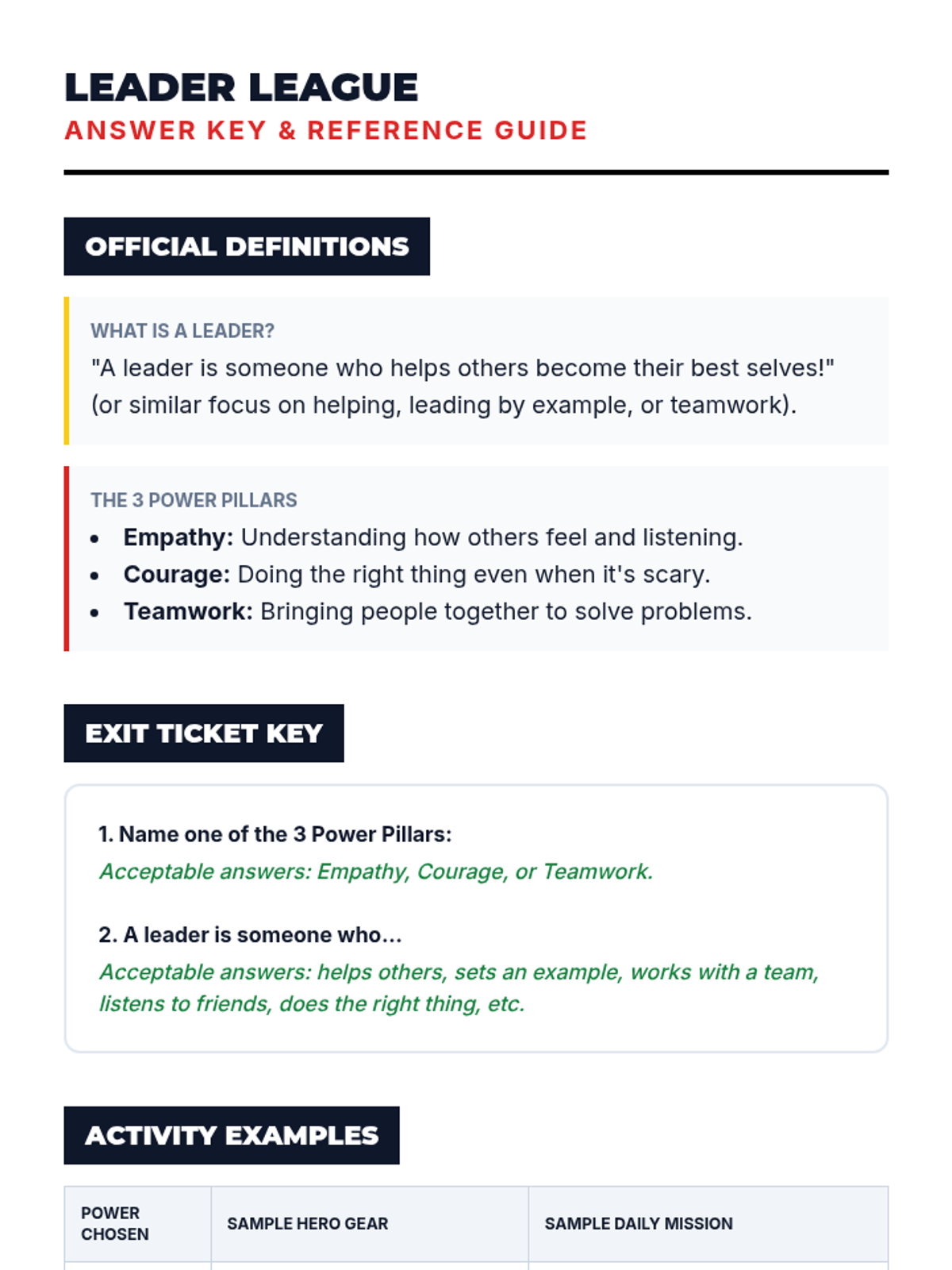
Students explore core leadership qualities through the lens of superheroes, identifying their own unique leadership 'superpowers' and learning how to lead with empathy, courage, and teamwork.
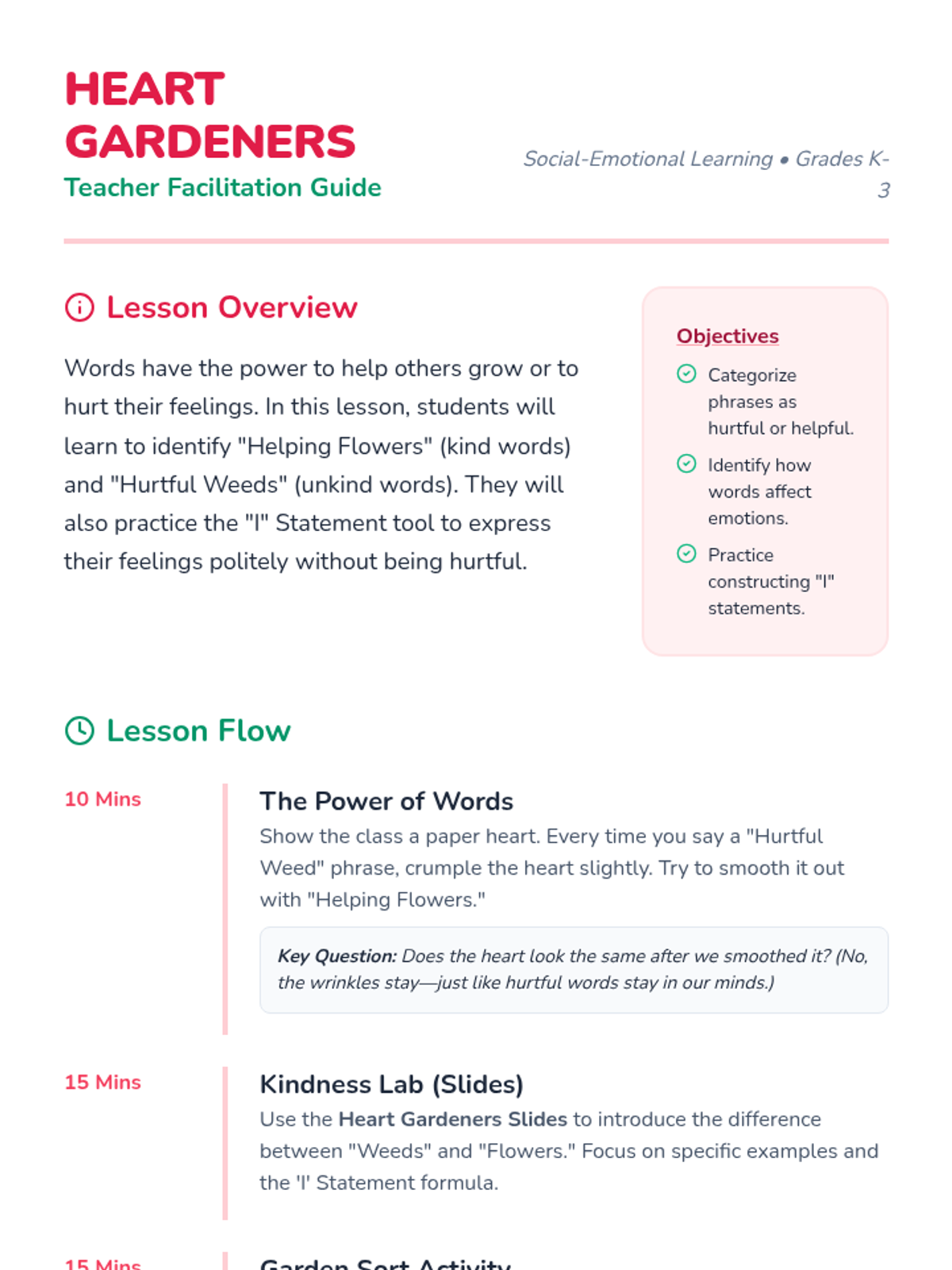
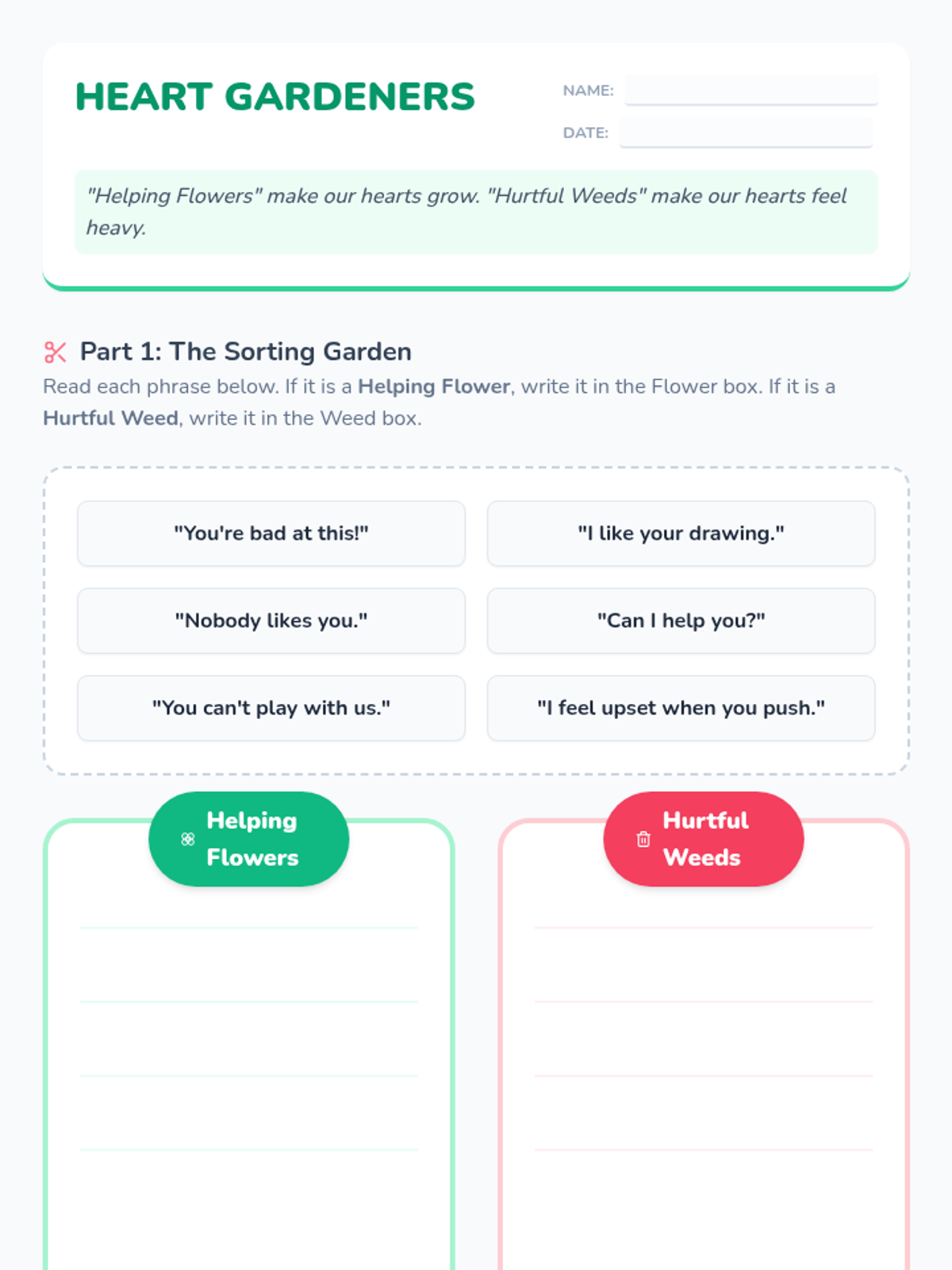
An SEL lesson focused on distinguishing between hurtful and helpful language, introducing 'I' statements to manage emotions and maintain positive relationships.
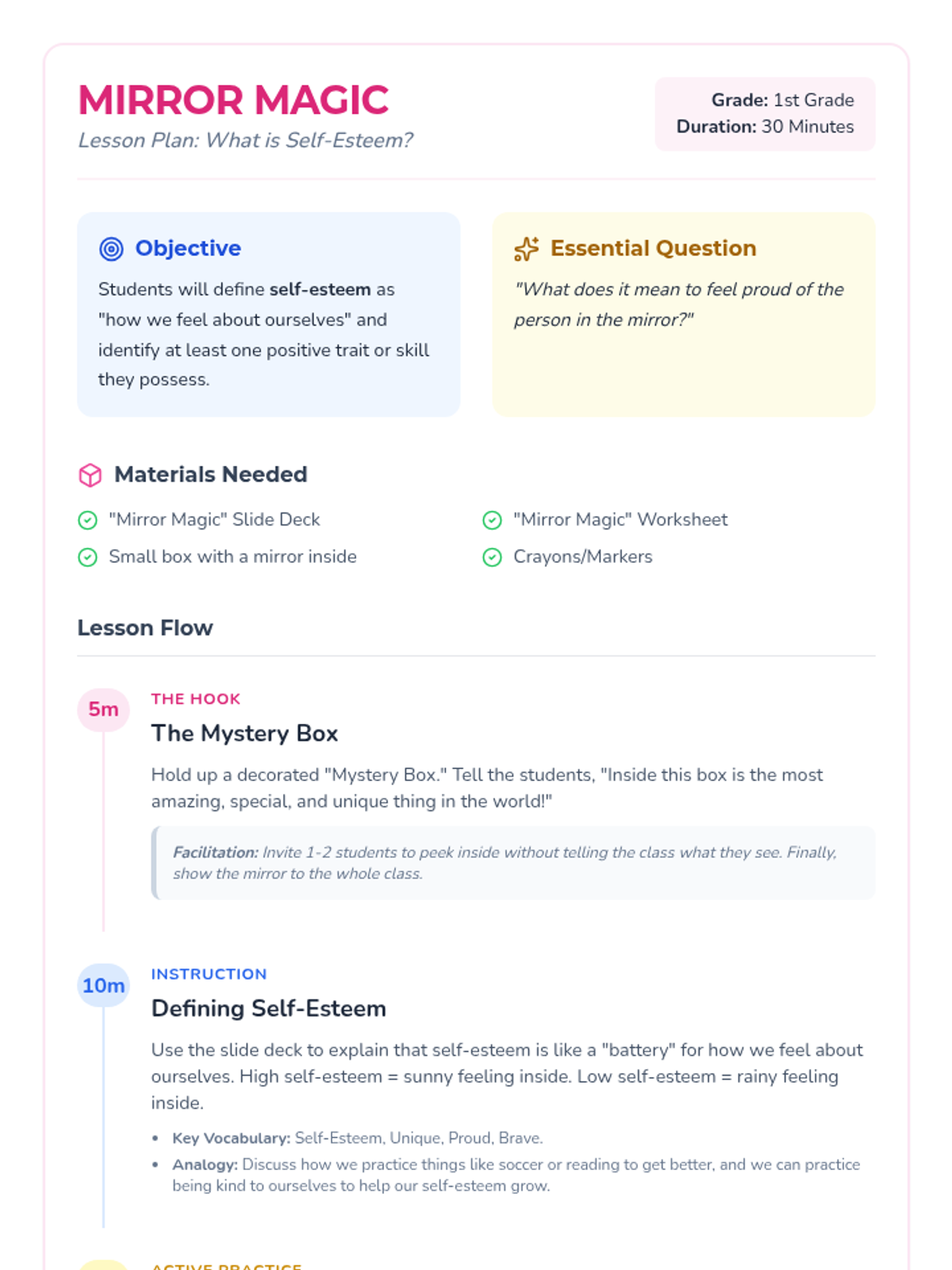
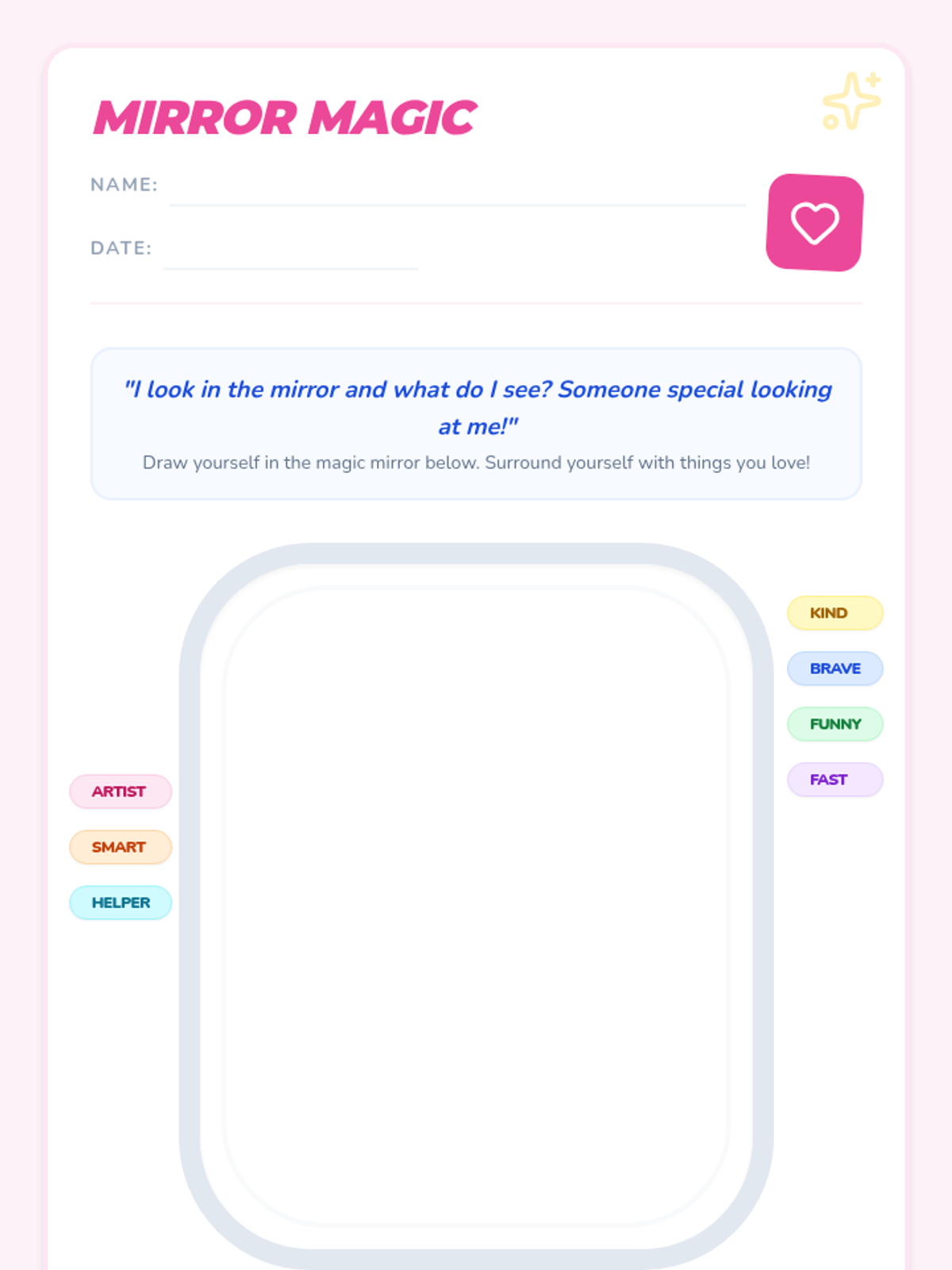
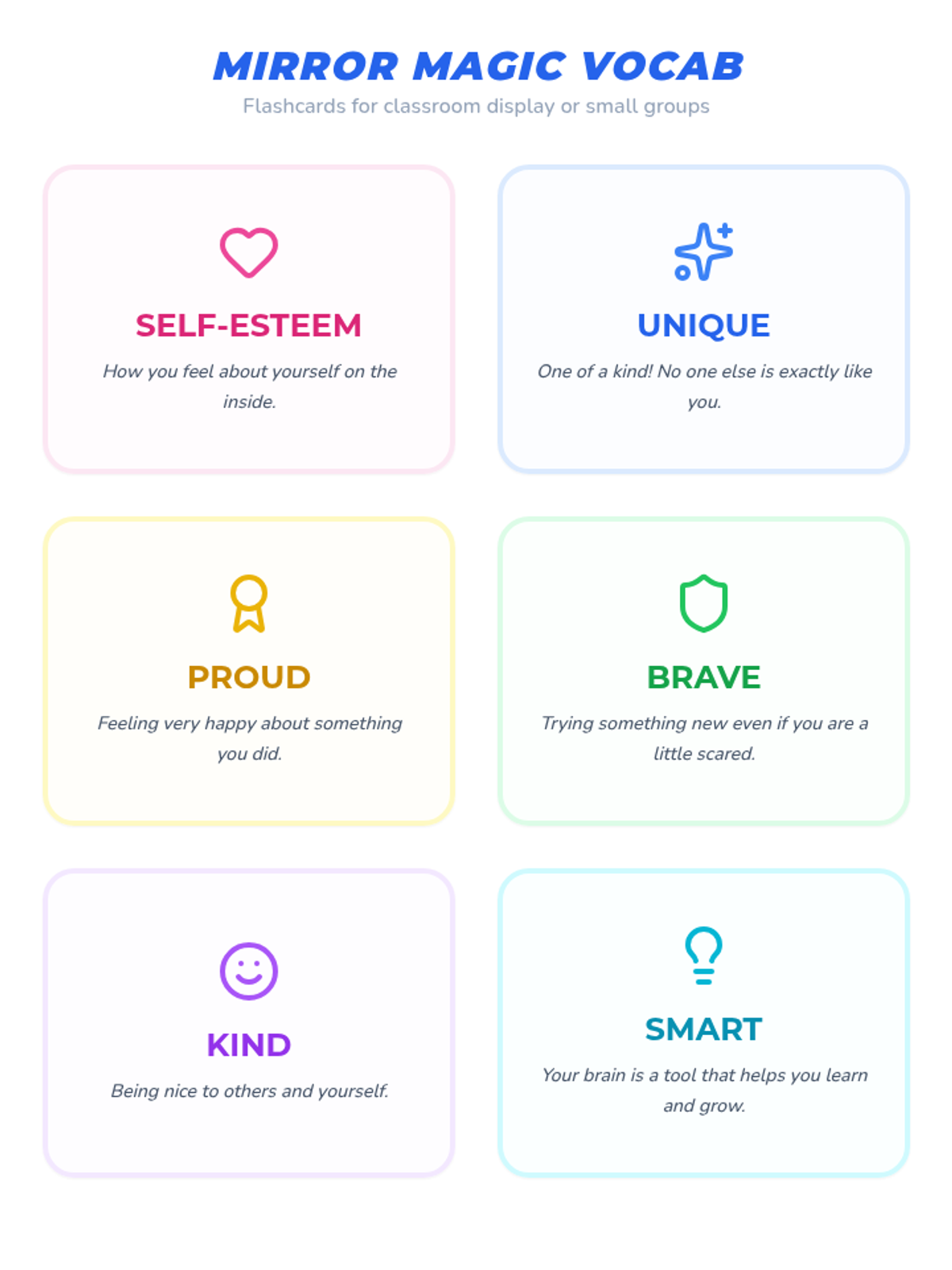
A 30-minute introduction to self-esteem for 1st graders, focusing on understanding what it means to feel good about yourself and identifying personal strengths through the theme of 'Mirror Magic'.
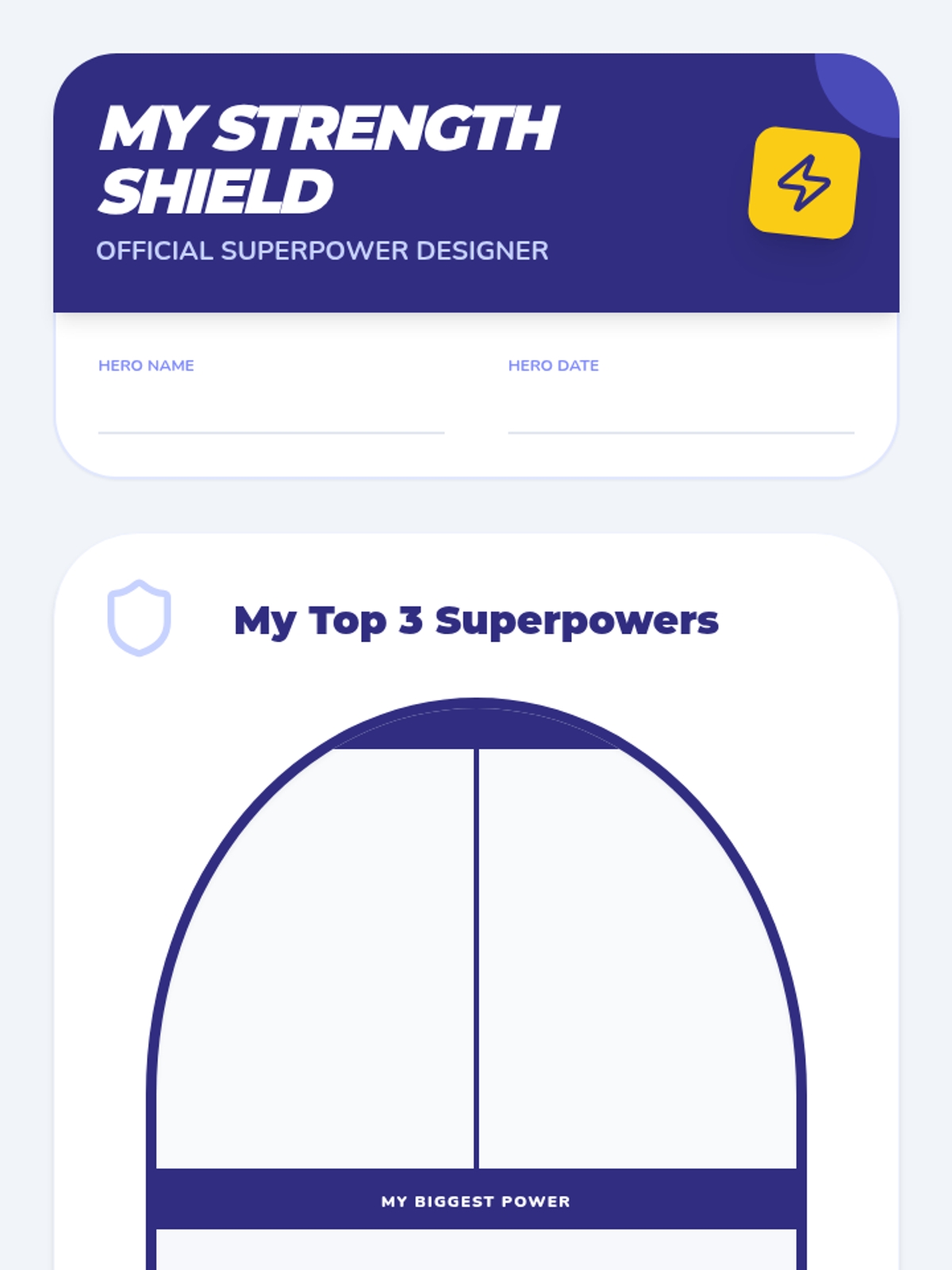
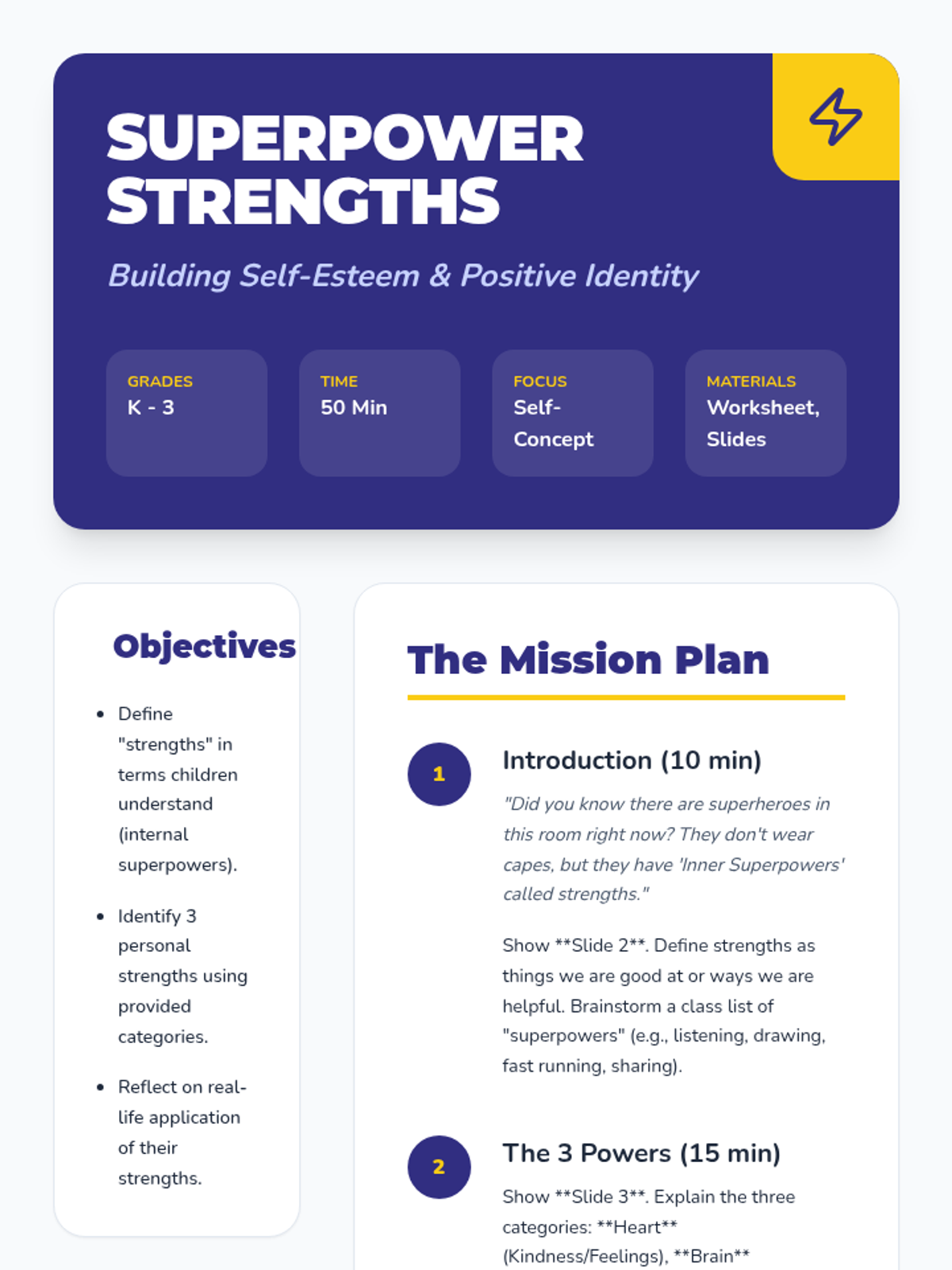
Students identify their personal strengths and positive qualities, reframing them as "inner superpowers". This lesson helps build self-esteem and a positive self-concept.
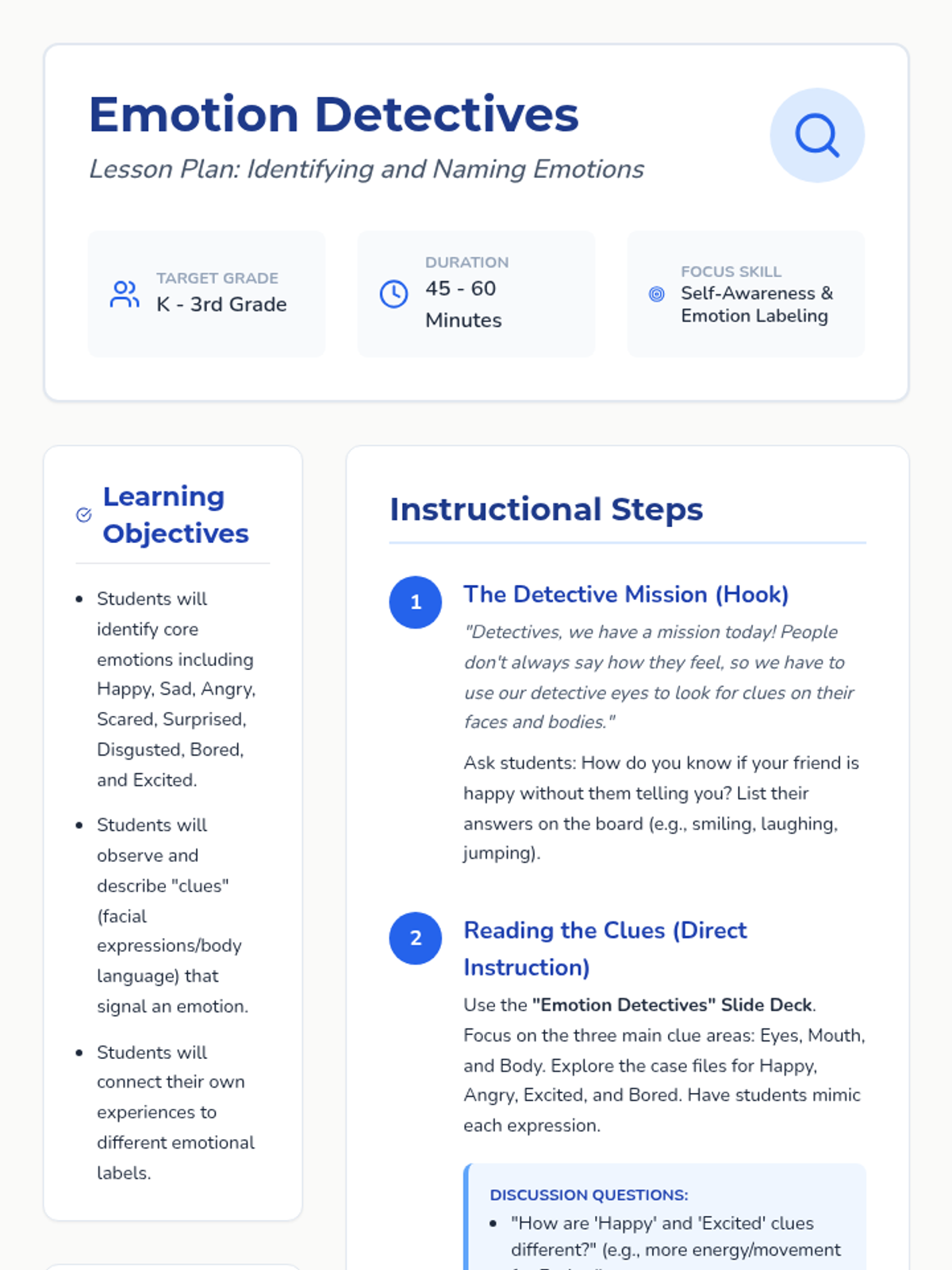
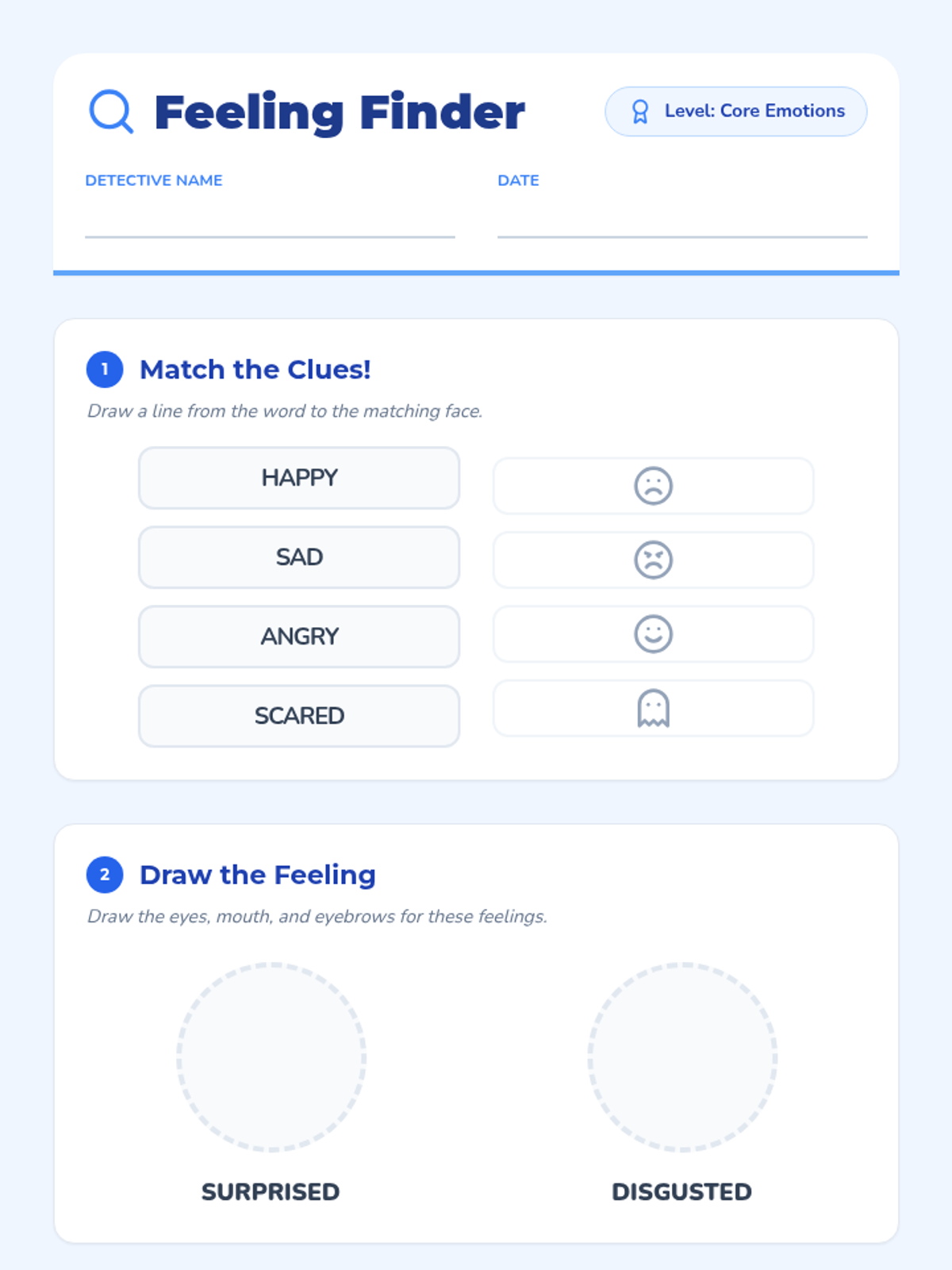
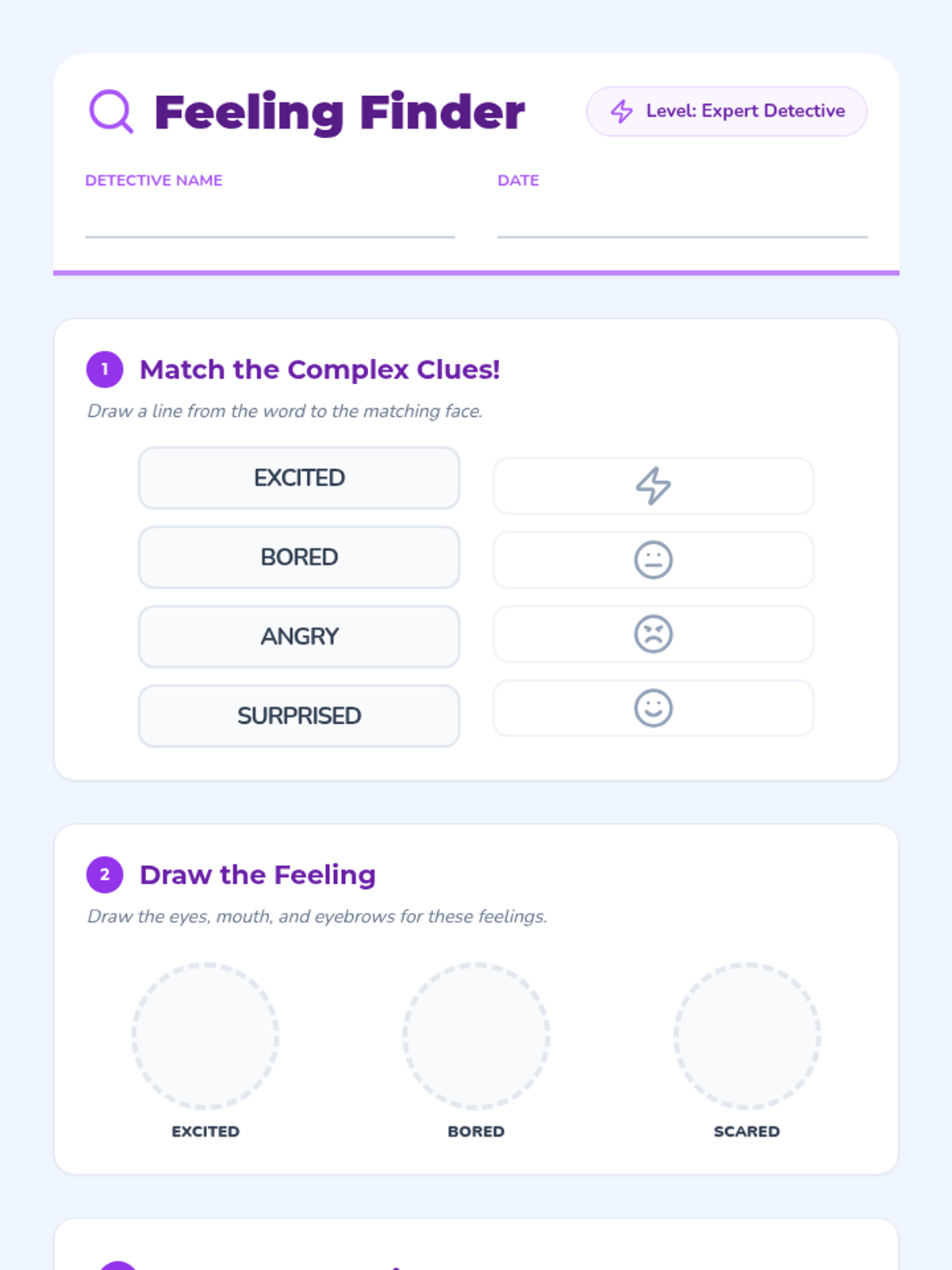
Students become Emotion Detectives to identify and name core emotions by looking for facial and body clues. This K-3 lesson focuses on happy, sad, angry, scared, surprised, and disgusted.
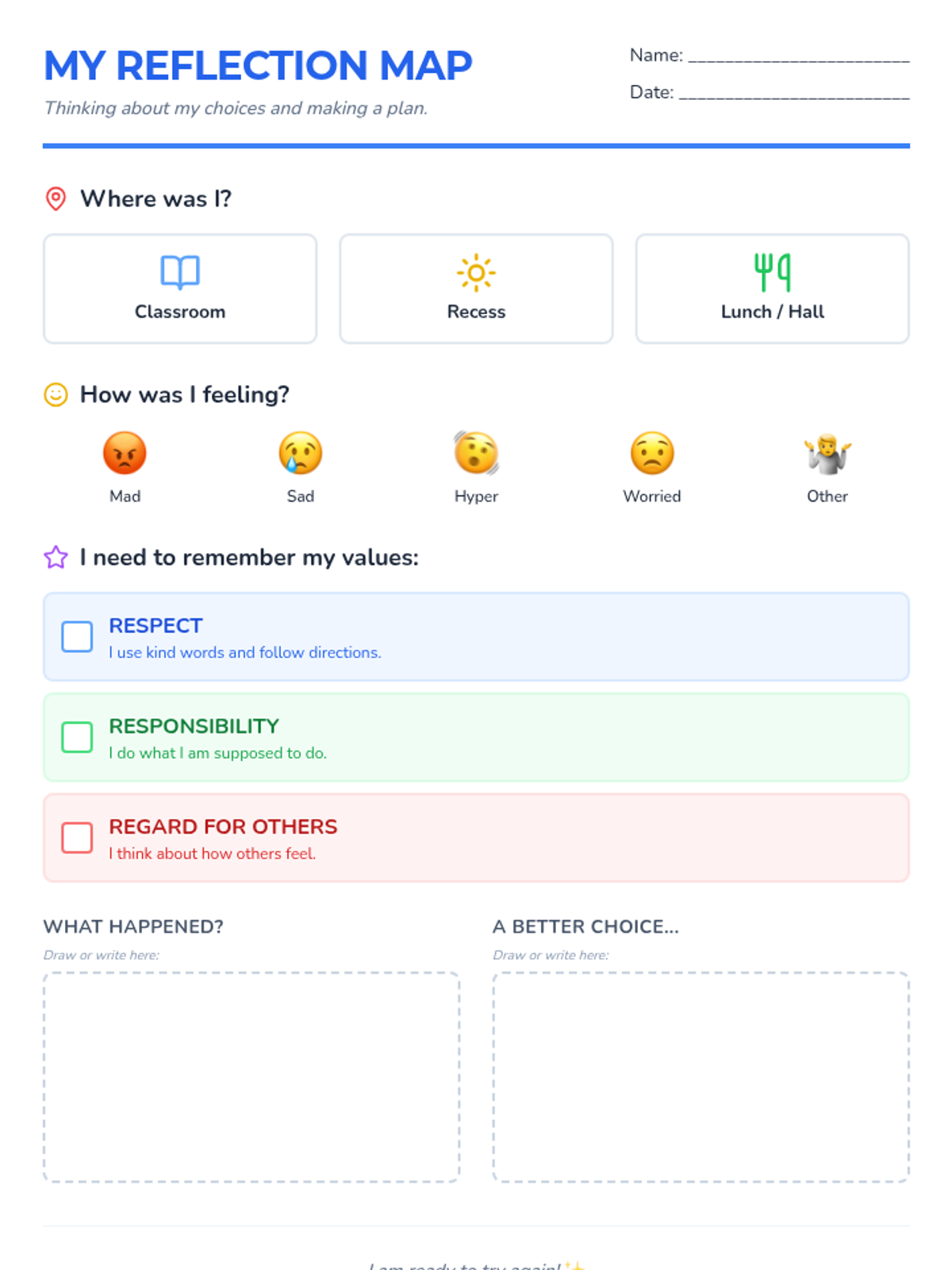
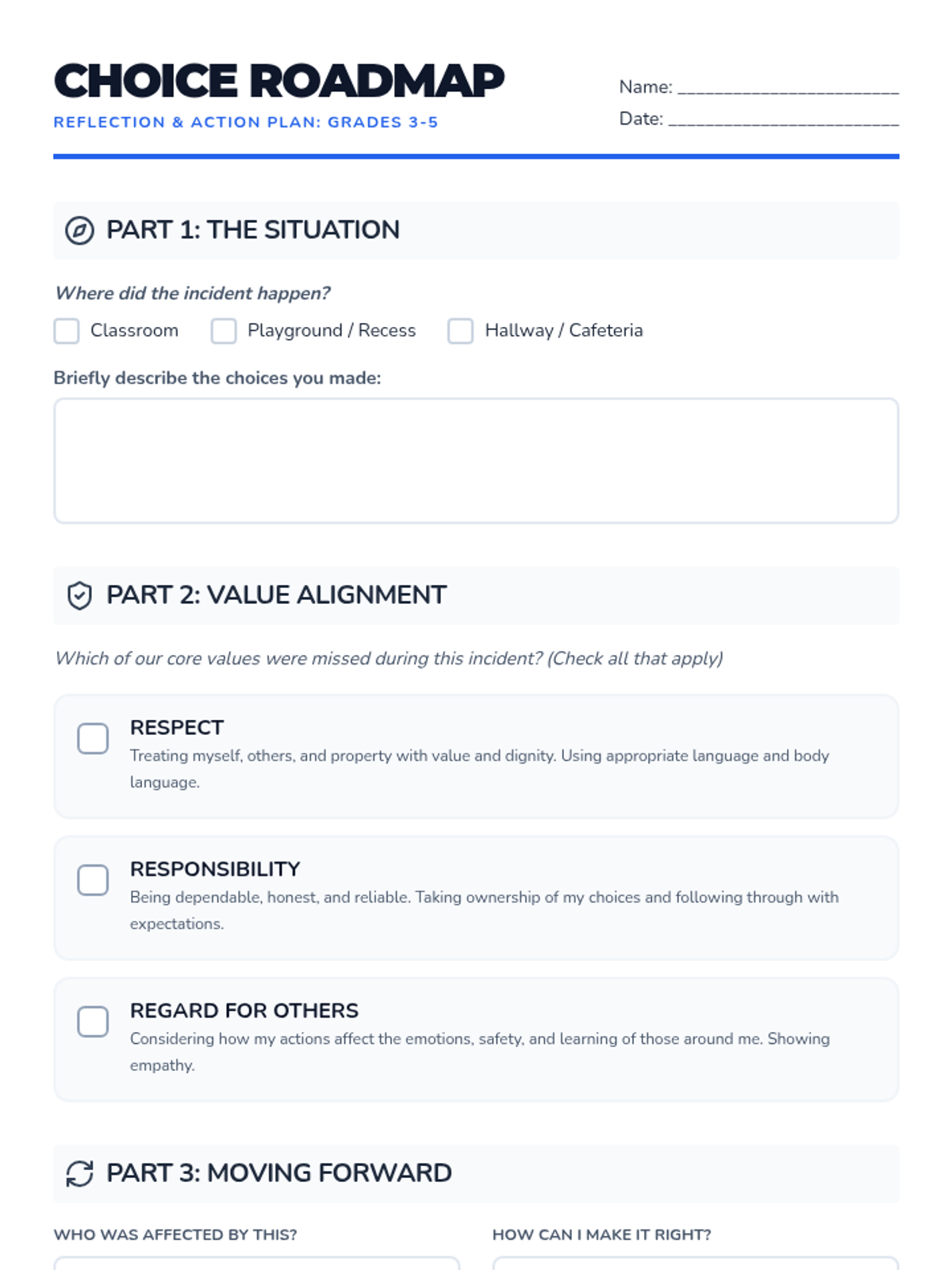
A set of reflection tools for students in grades K-5 to process behavioral incidents through the lens of core values: Respect, Responsibility, and Regard for Others. Includes tiered versions for lower and upper elementary students.
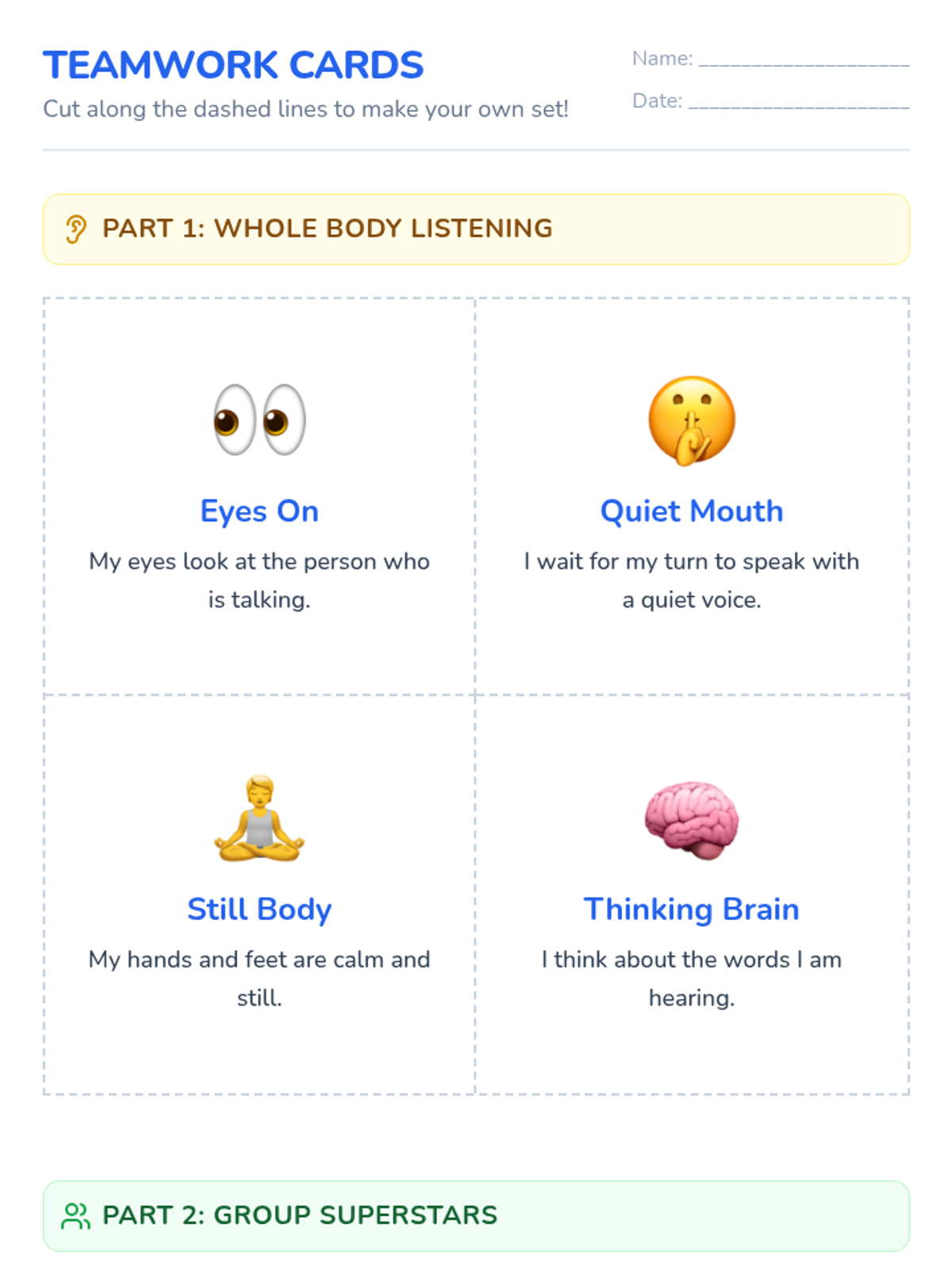
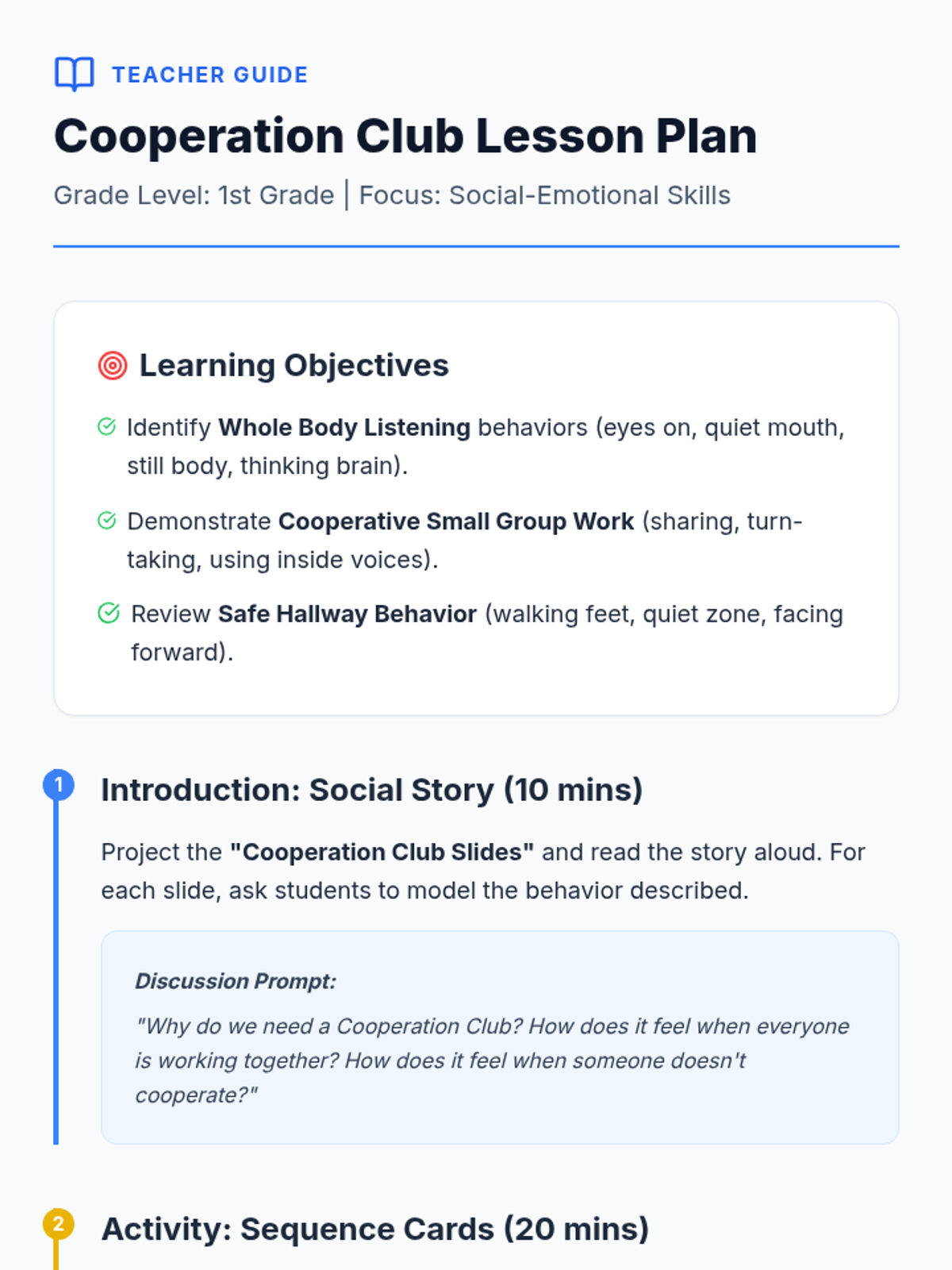
A social story and visual aid lesson focused on developing cooperative behaviors in first-grade students, specifically targeting active listening, small group collaboration, and hallway safety.
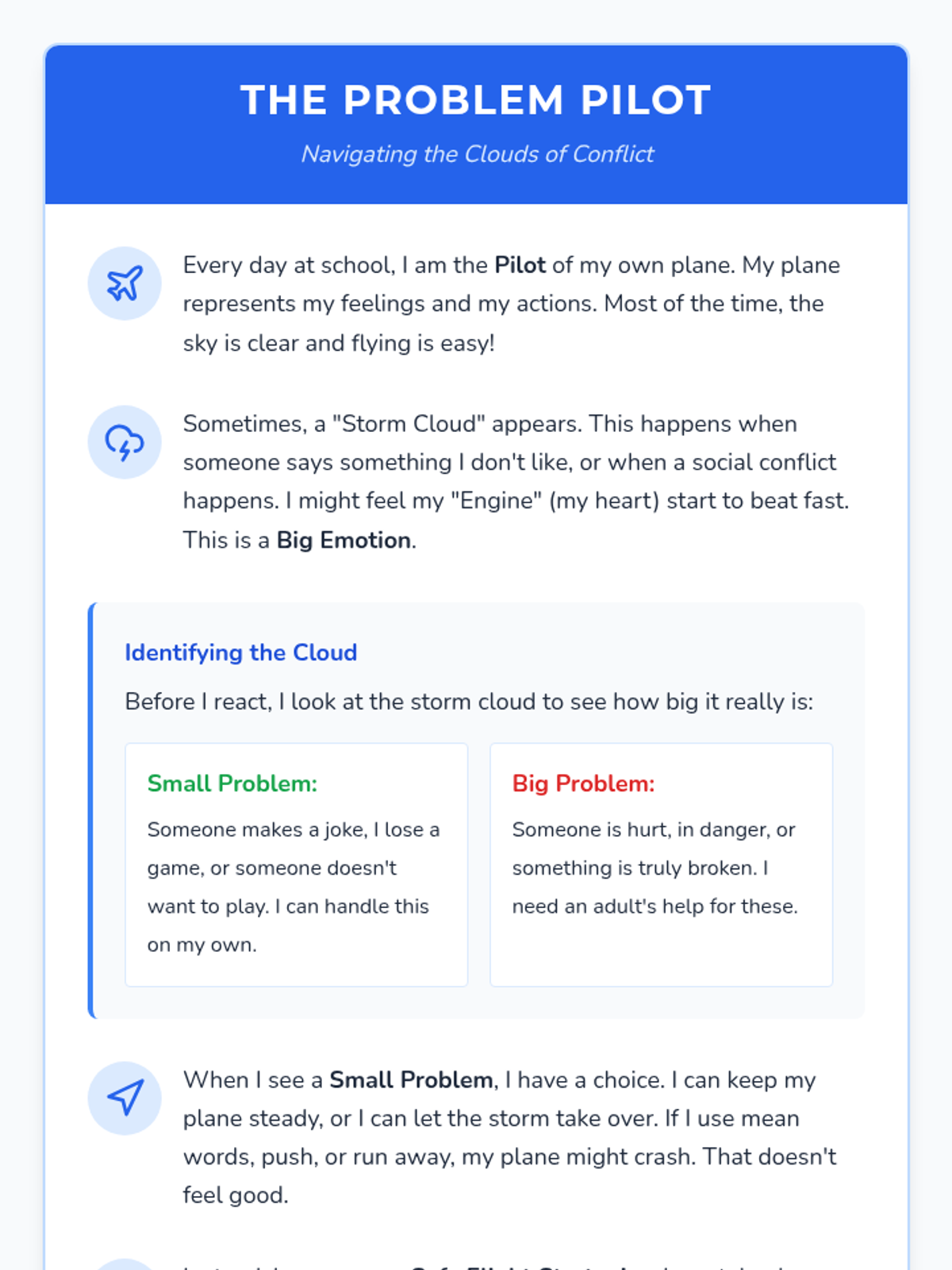
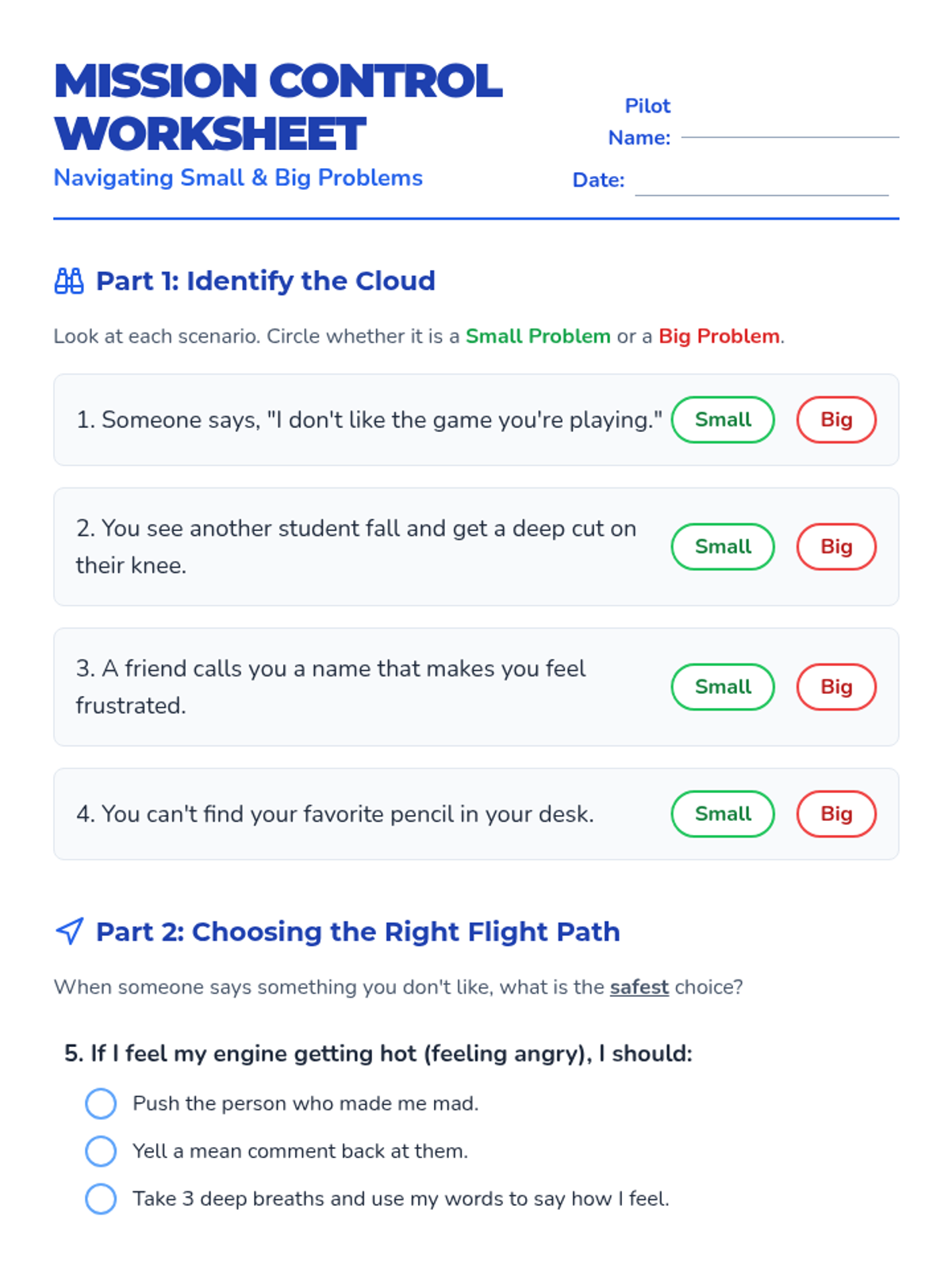
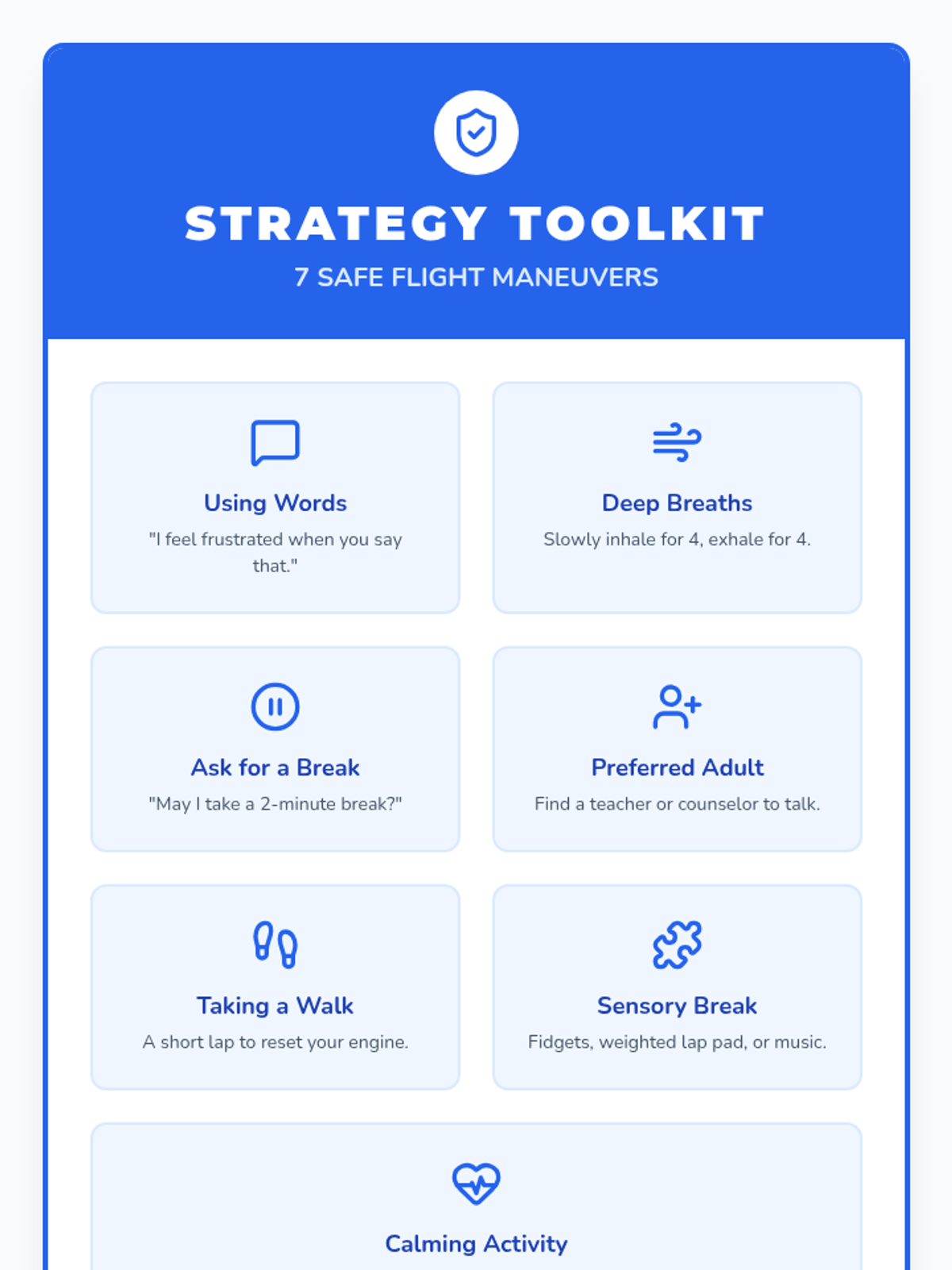
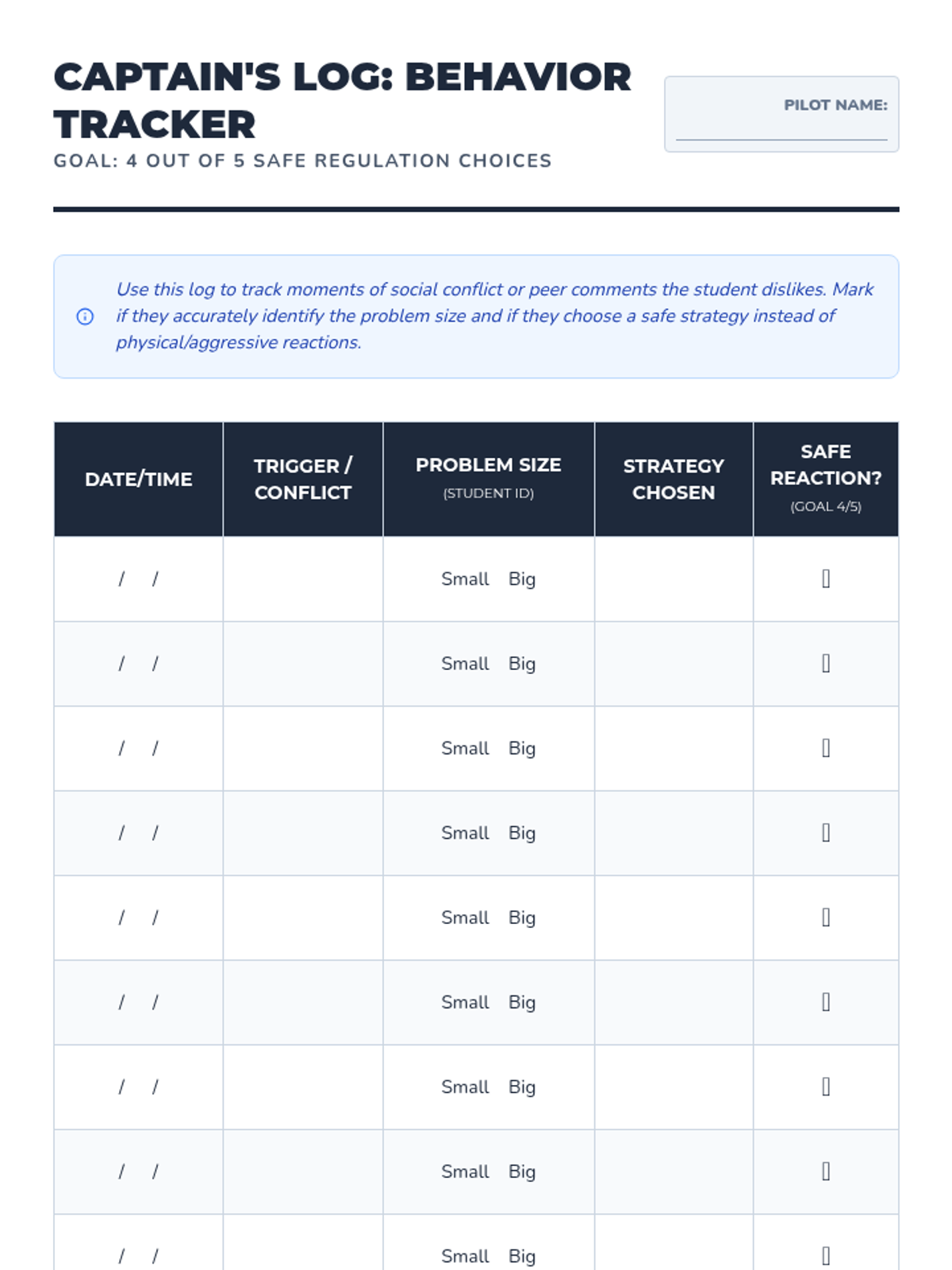
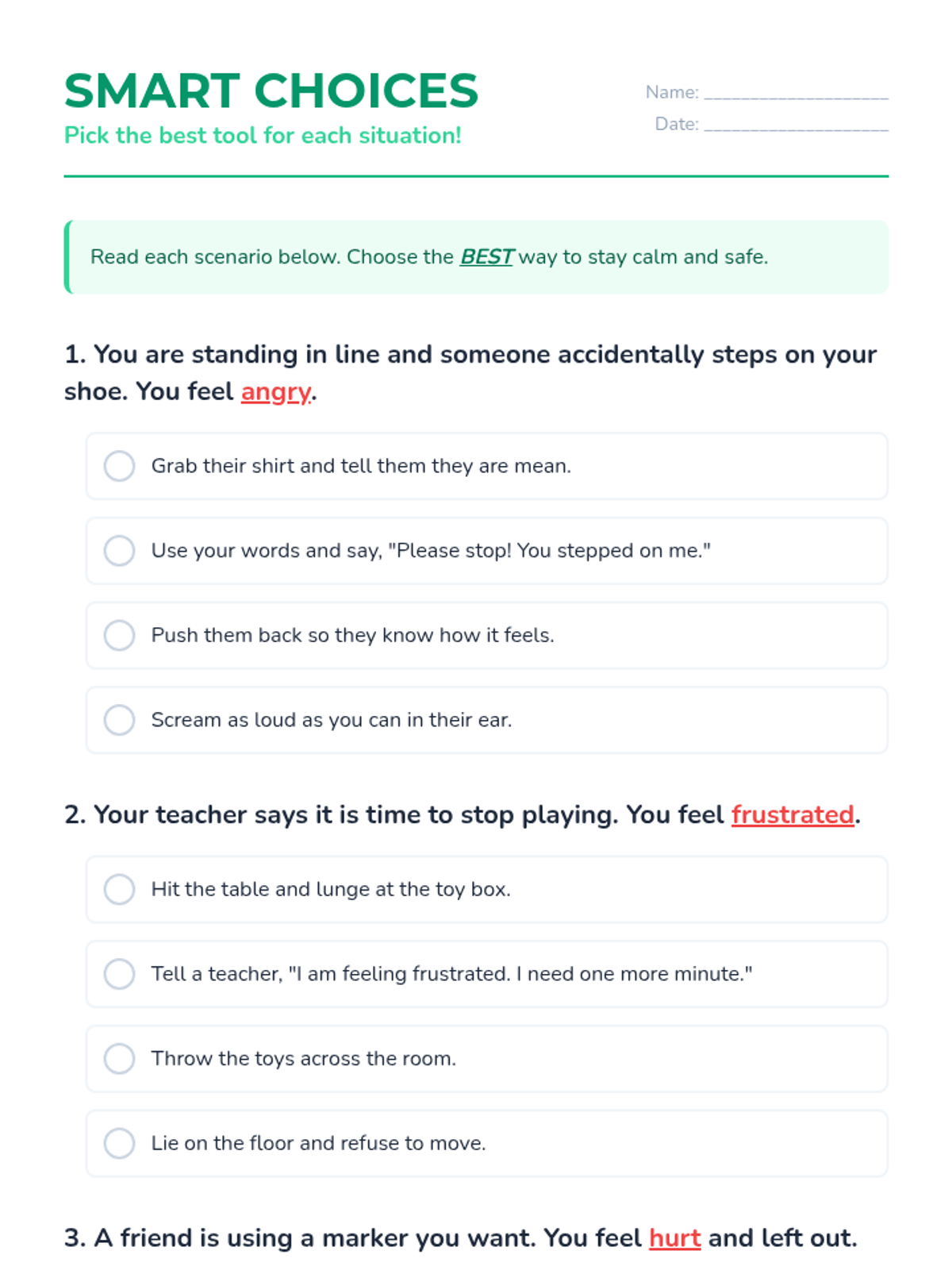
A lesson designed to help students distinguish between Small and Big Problems and choose safe regulation strategies instead of physical reactions. It includes a social story, practice worksheet, and strategy reference guide.
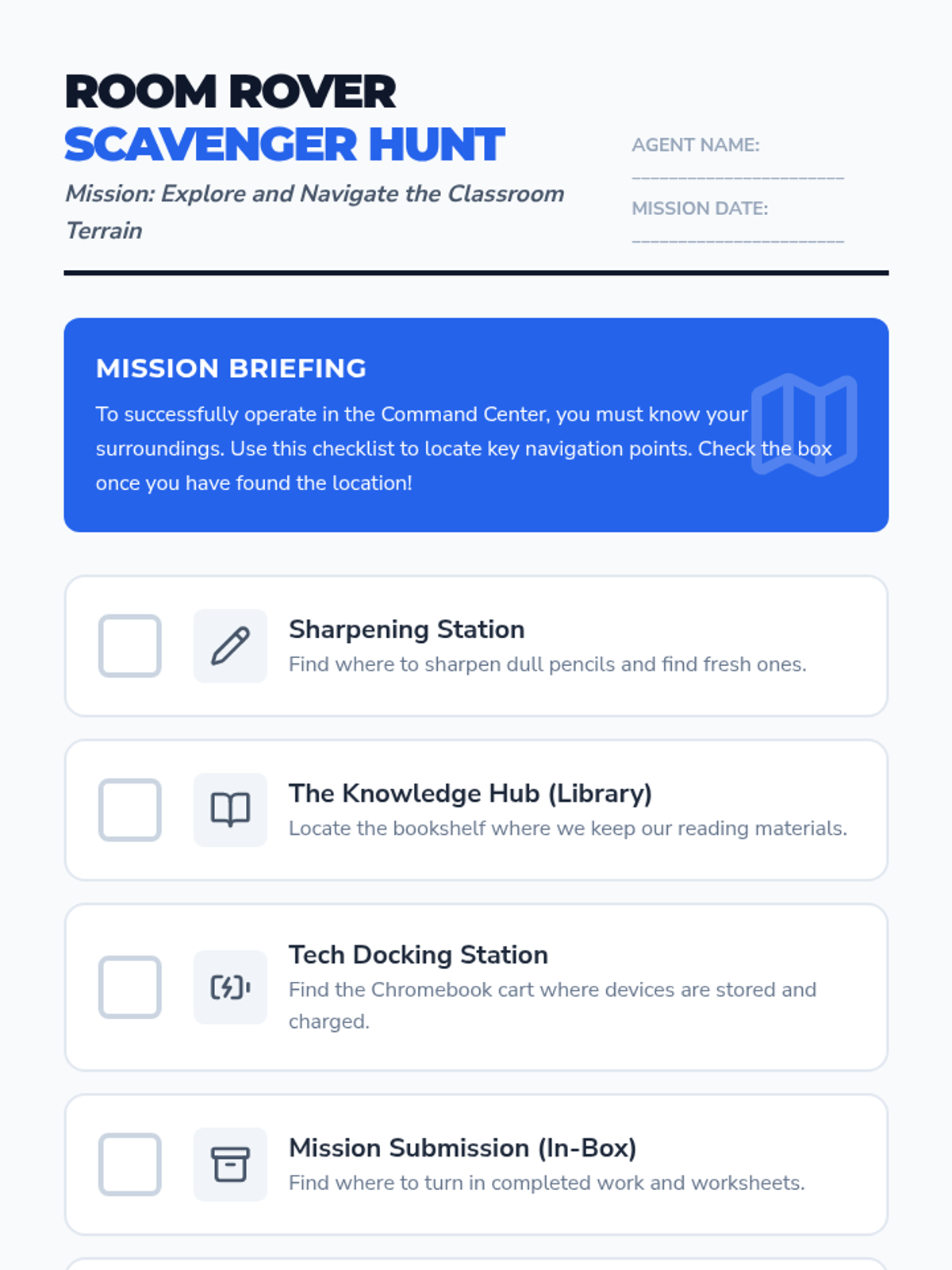
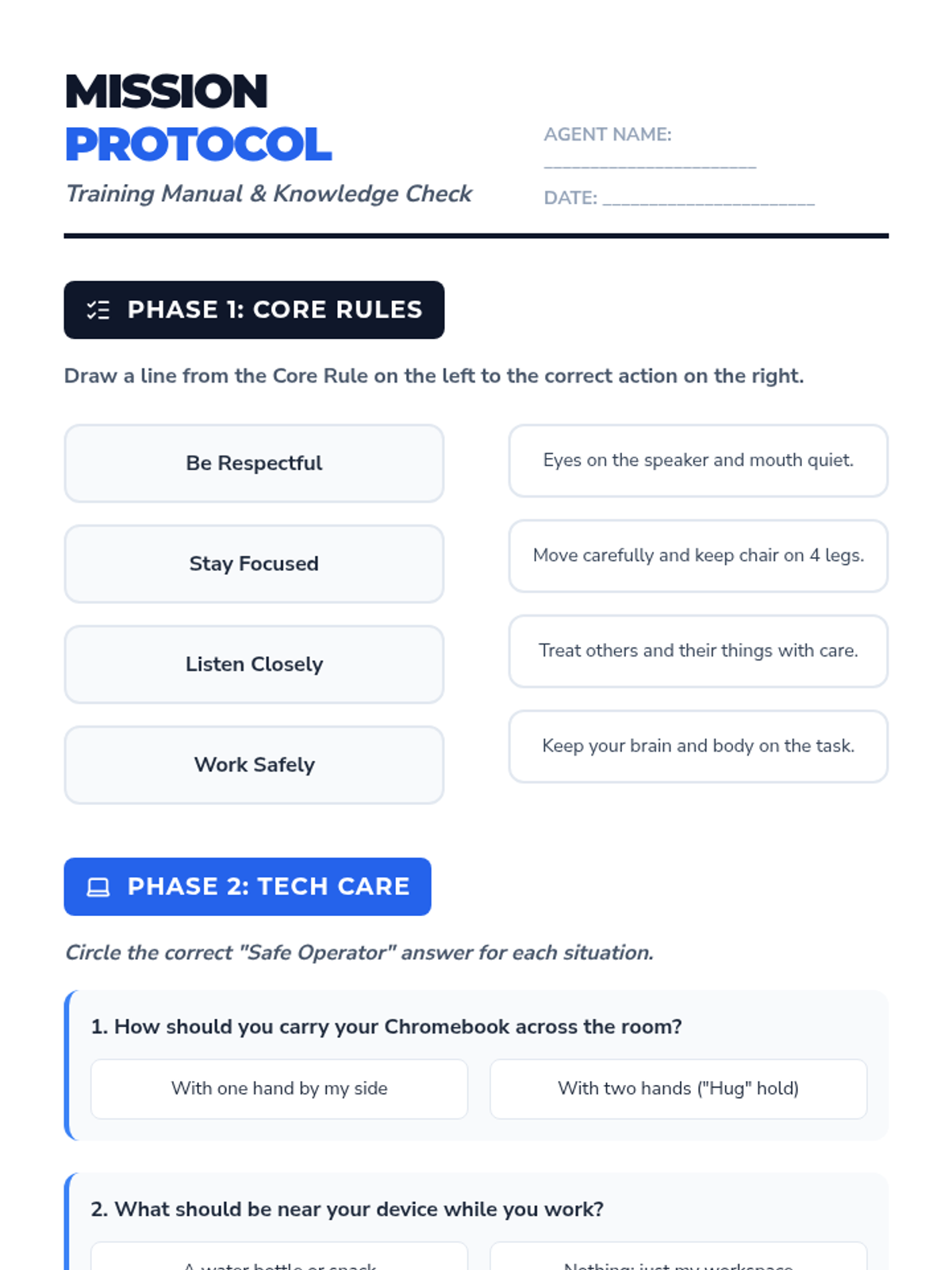
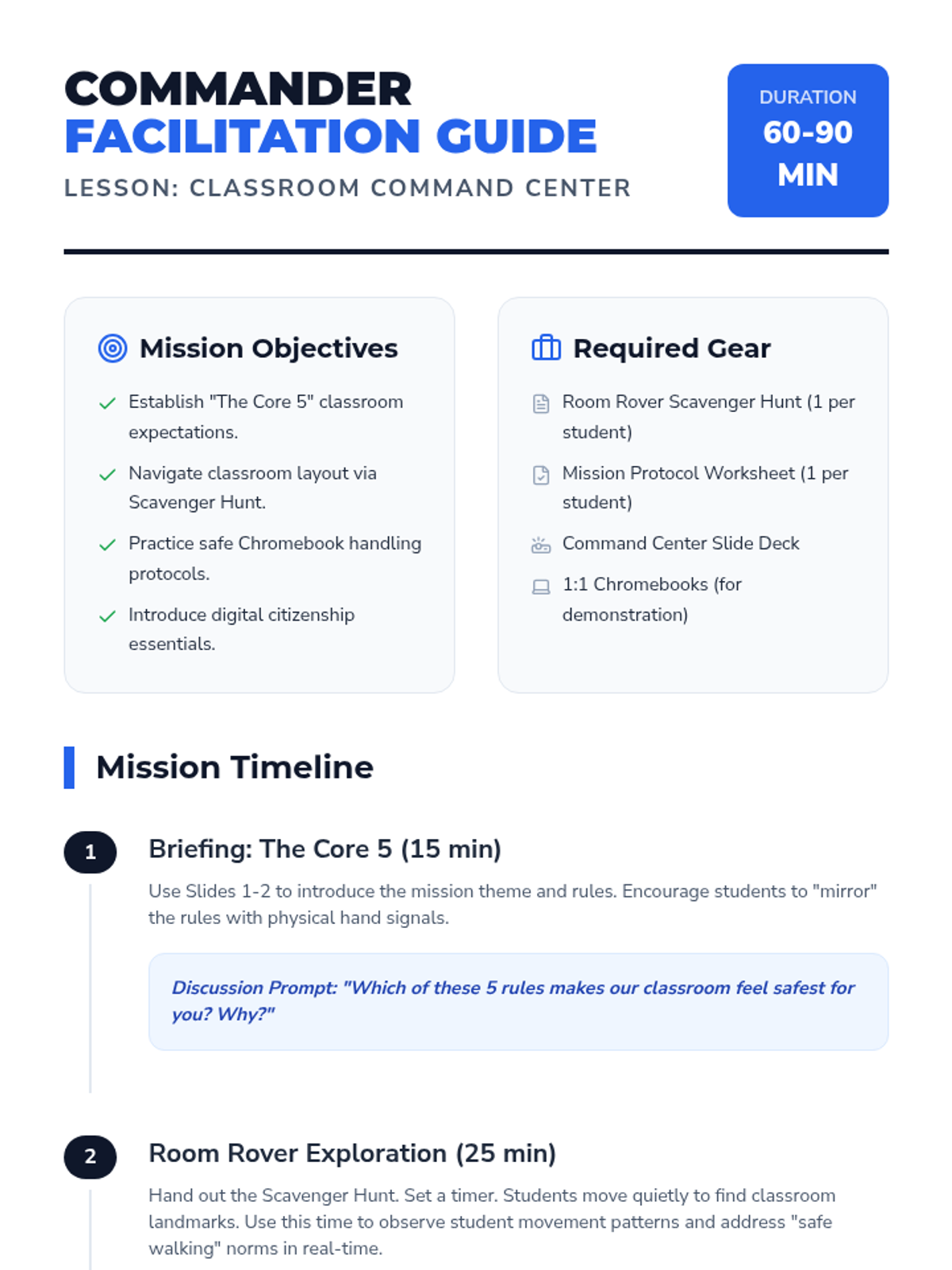
A comprehensive first-day lesson to establish classroom norms, physical space navigation, and digital responsibility. Includes instruction on Chromebook care and digital citizenship.
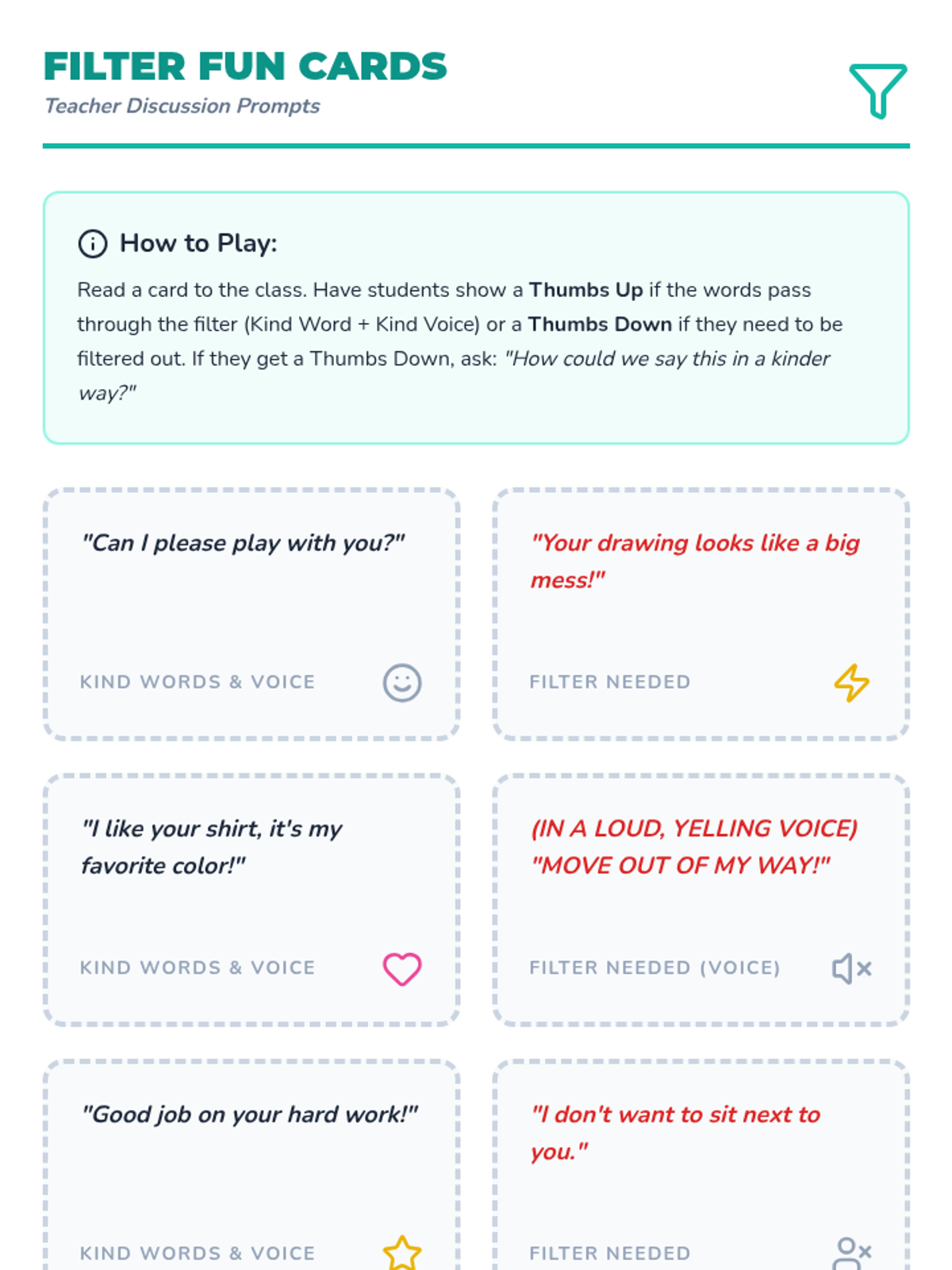
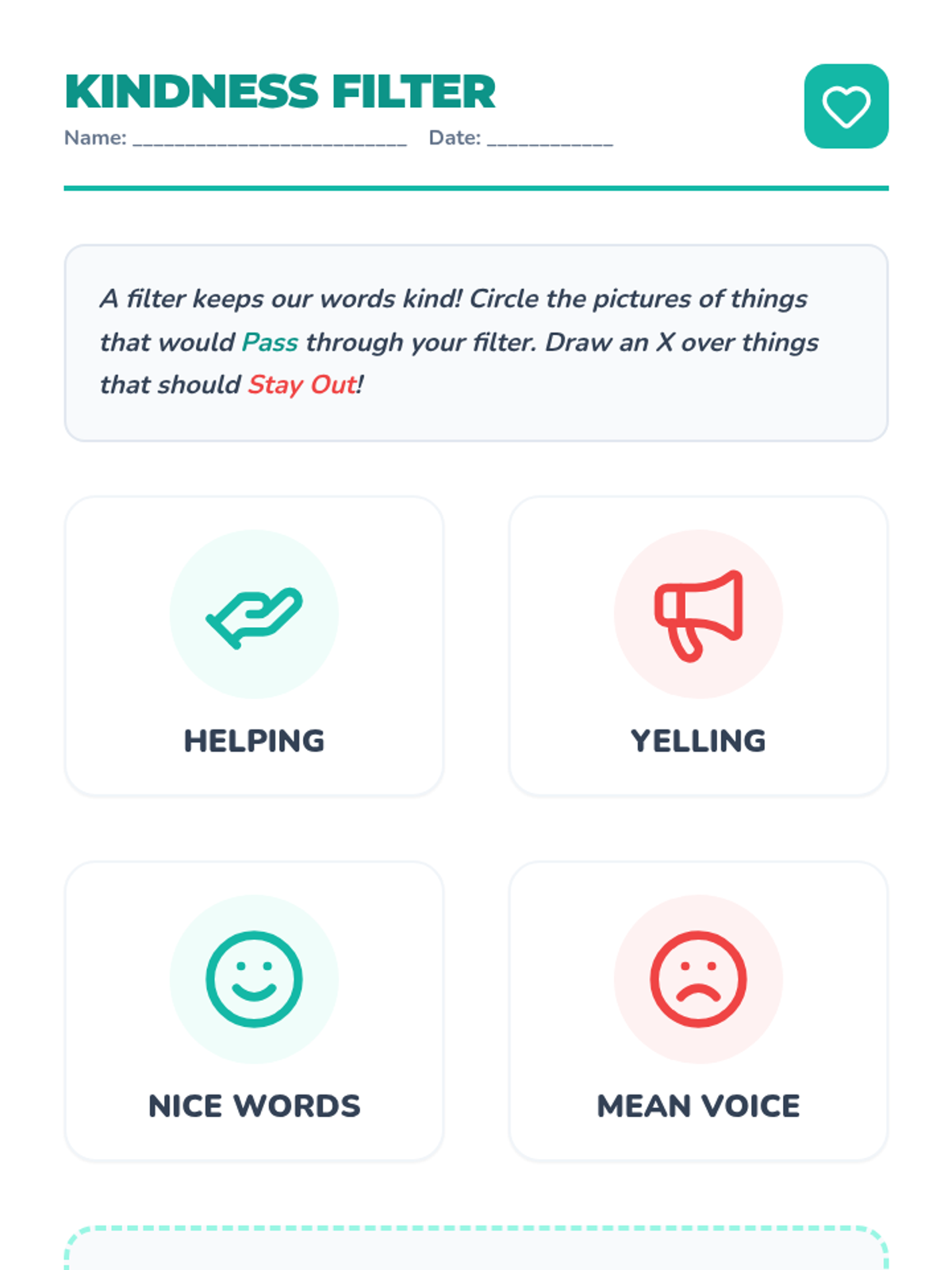
A social-emotional learning mini-lesson for K-1 students focusing on the 'Think Before You Speak' concept using a 'Thought Filter' to ensure words and voices are kind and helpful.
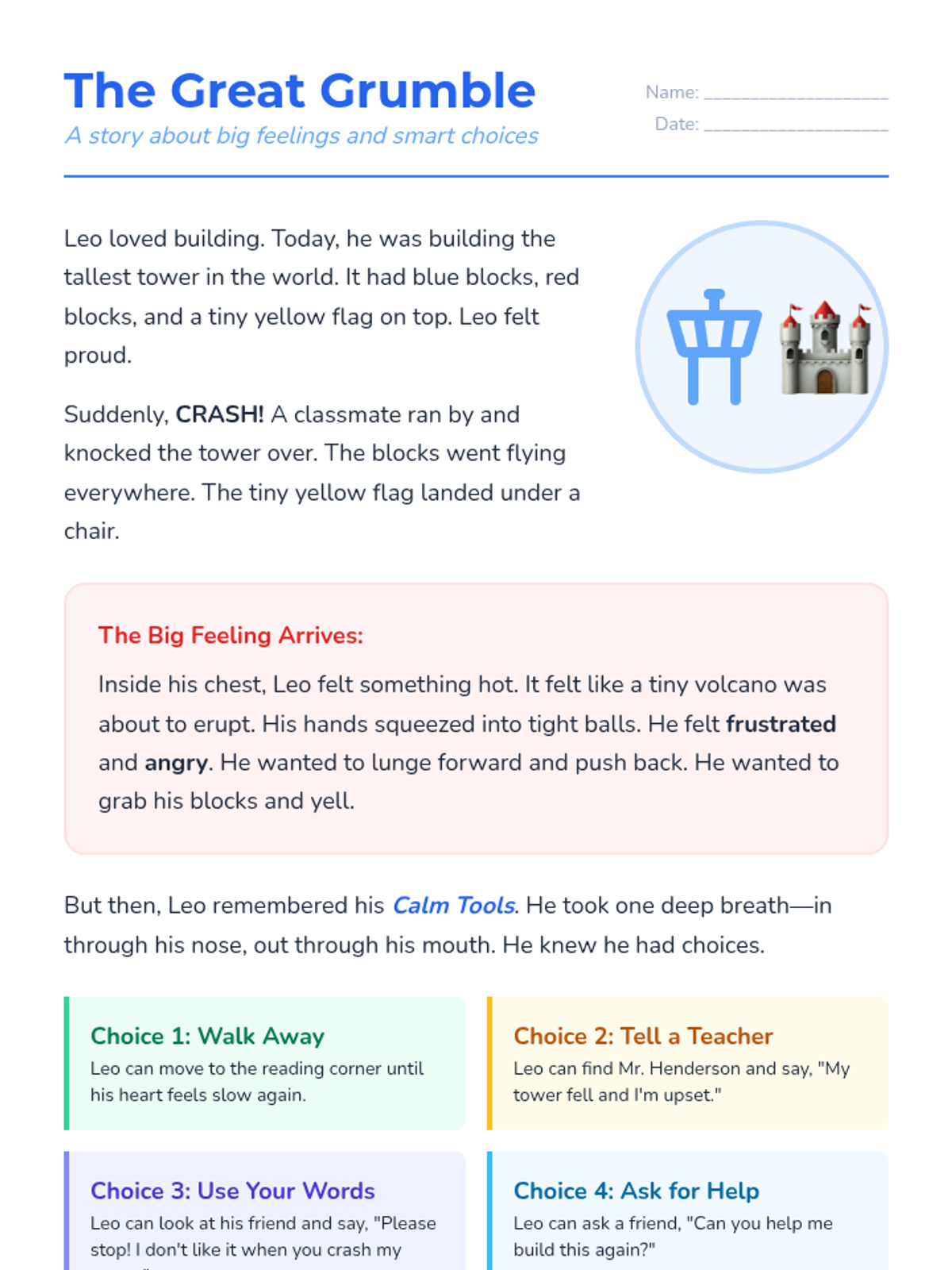
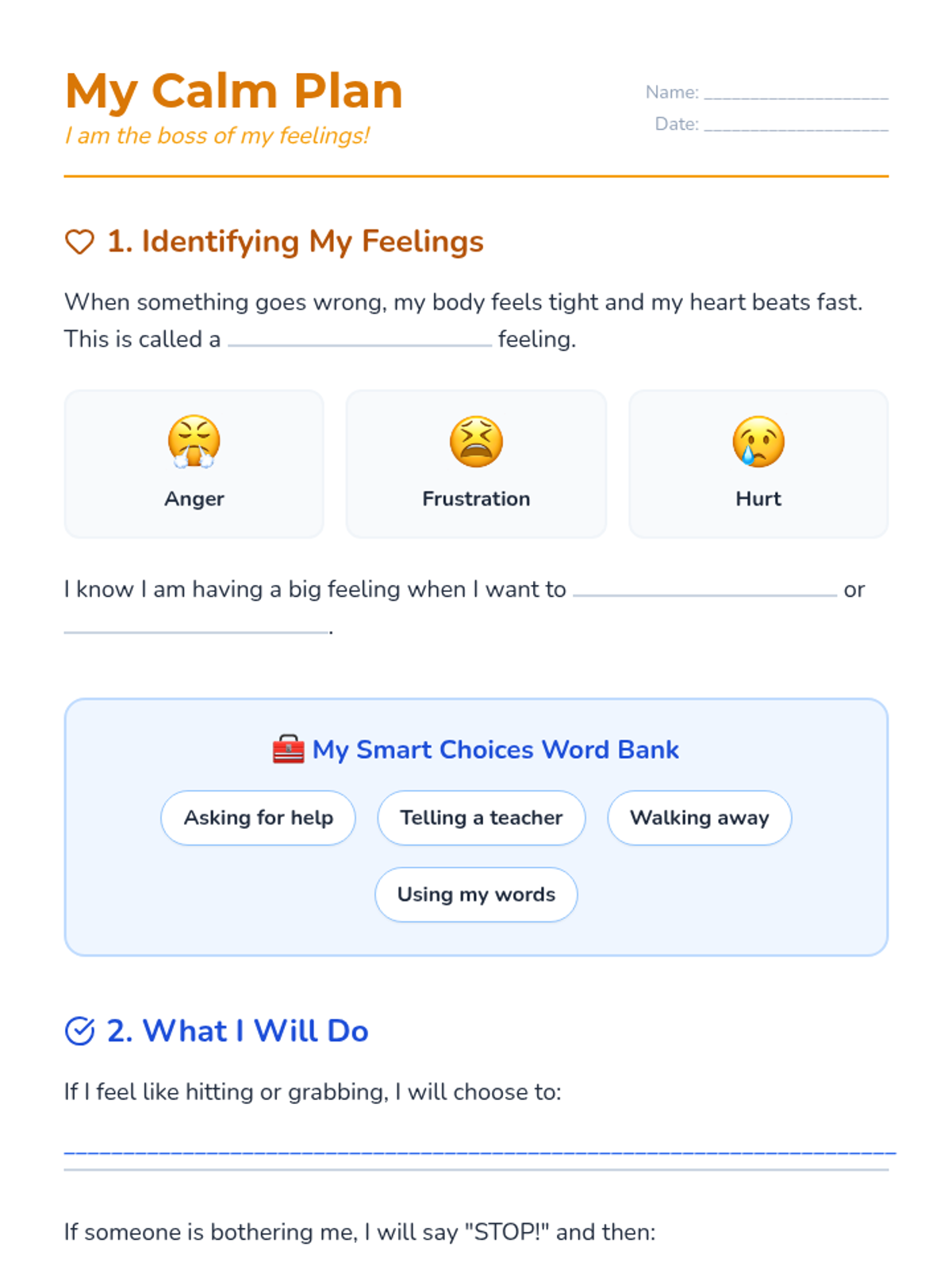
A social-emotional learning lesson designed to help students identify 'big feelings' and practice safe replacement behaviors for physical aggression. Includes a narrative story, situational practice, and a personalized reflection plan.
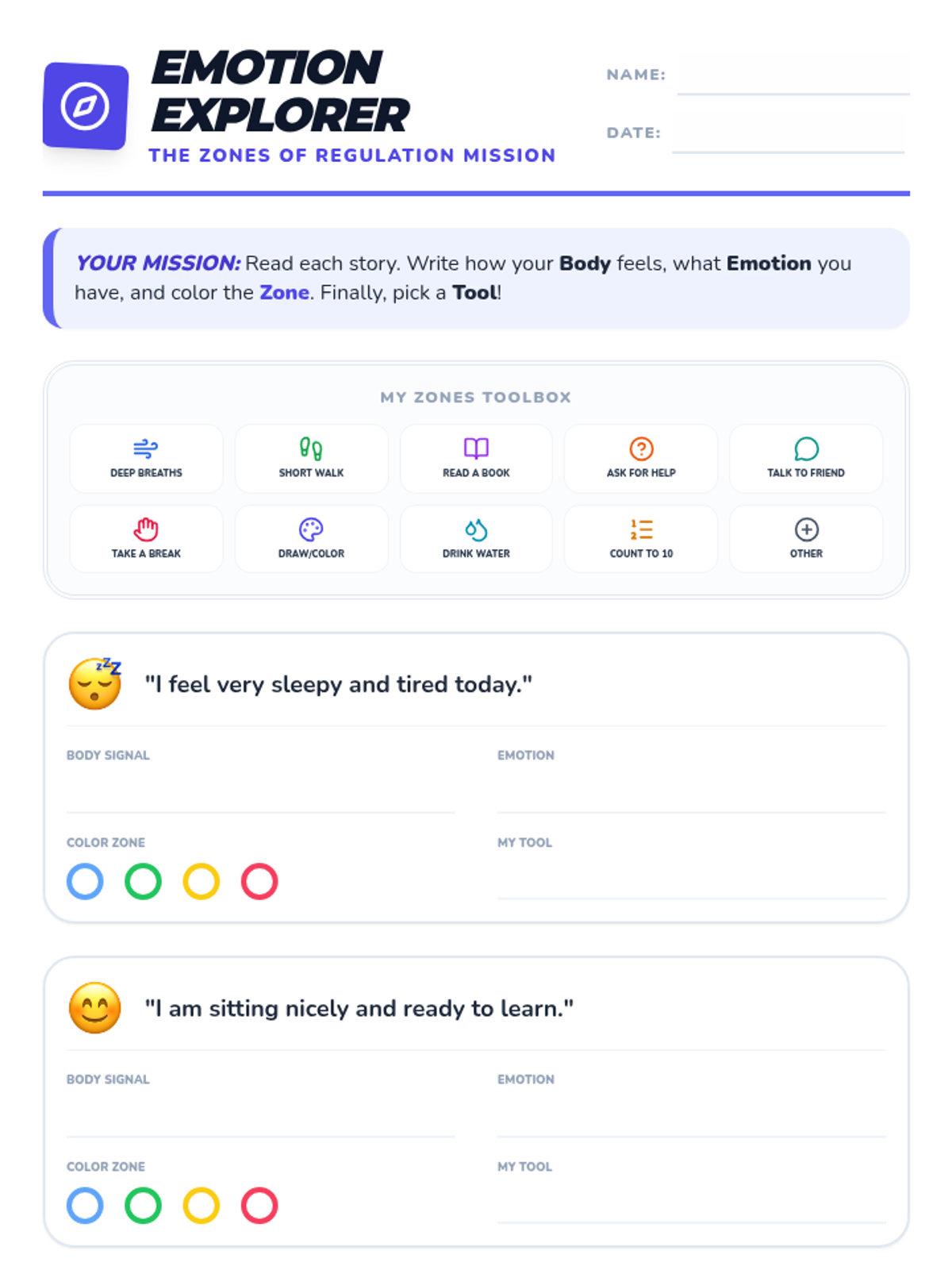
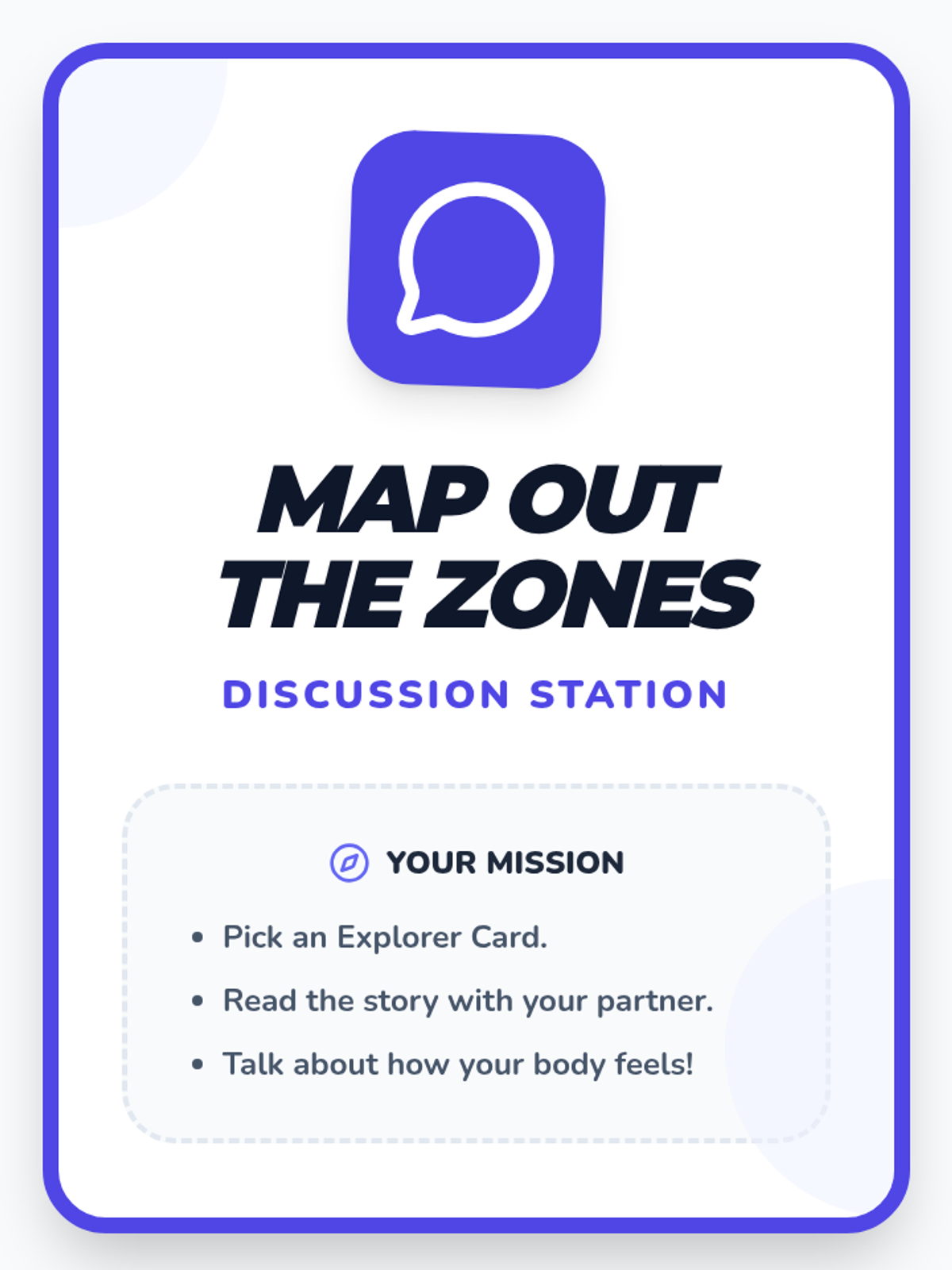
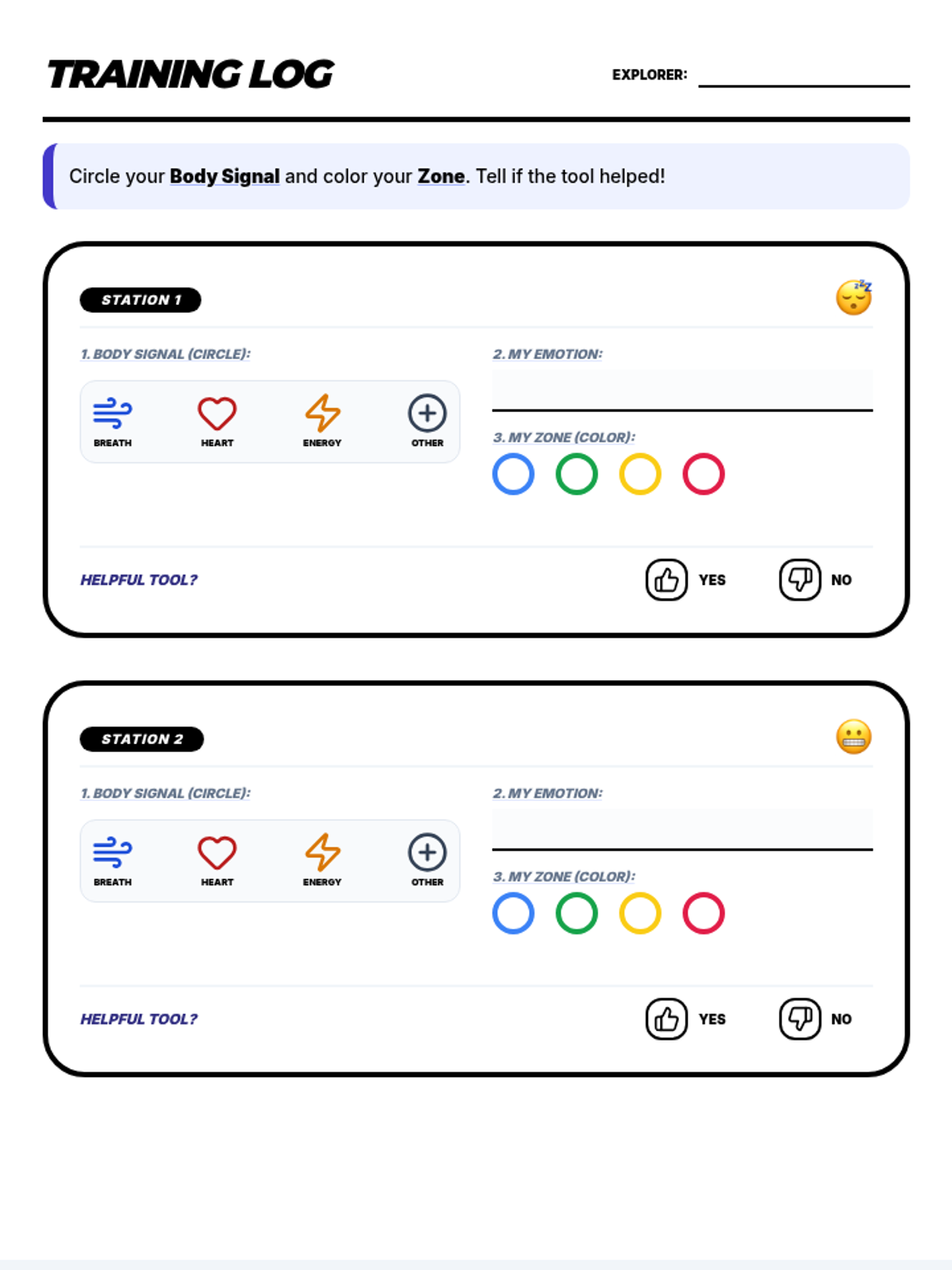
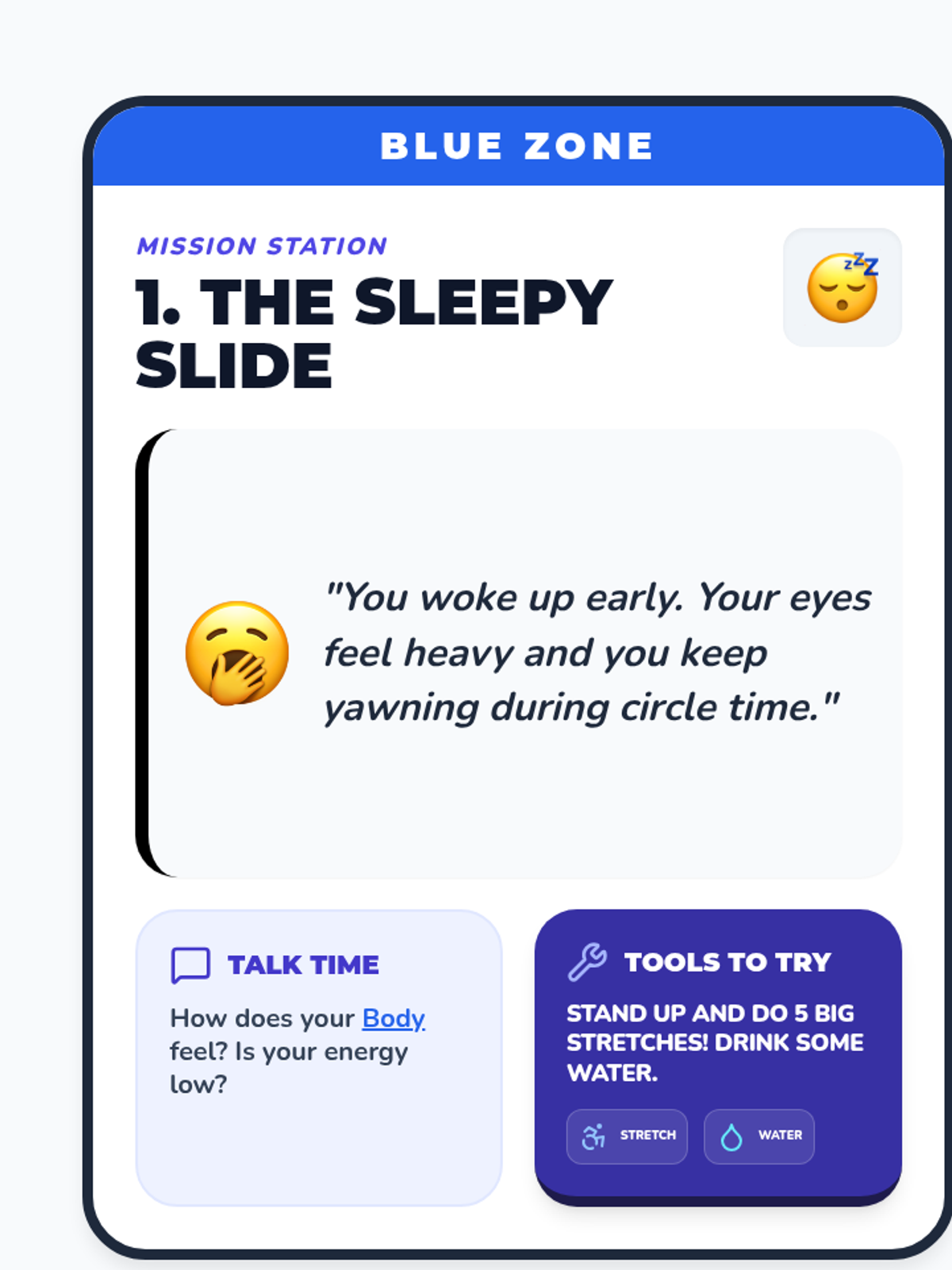
A lesson for first graders to identify emotional zones, body signals, and coping tools through scenario-based practice and hands-on station activities.
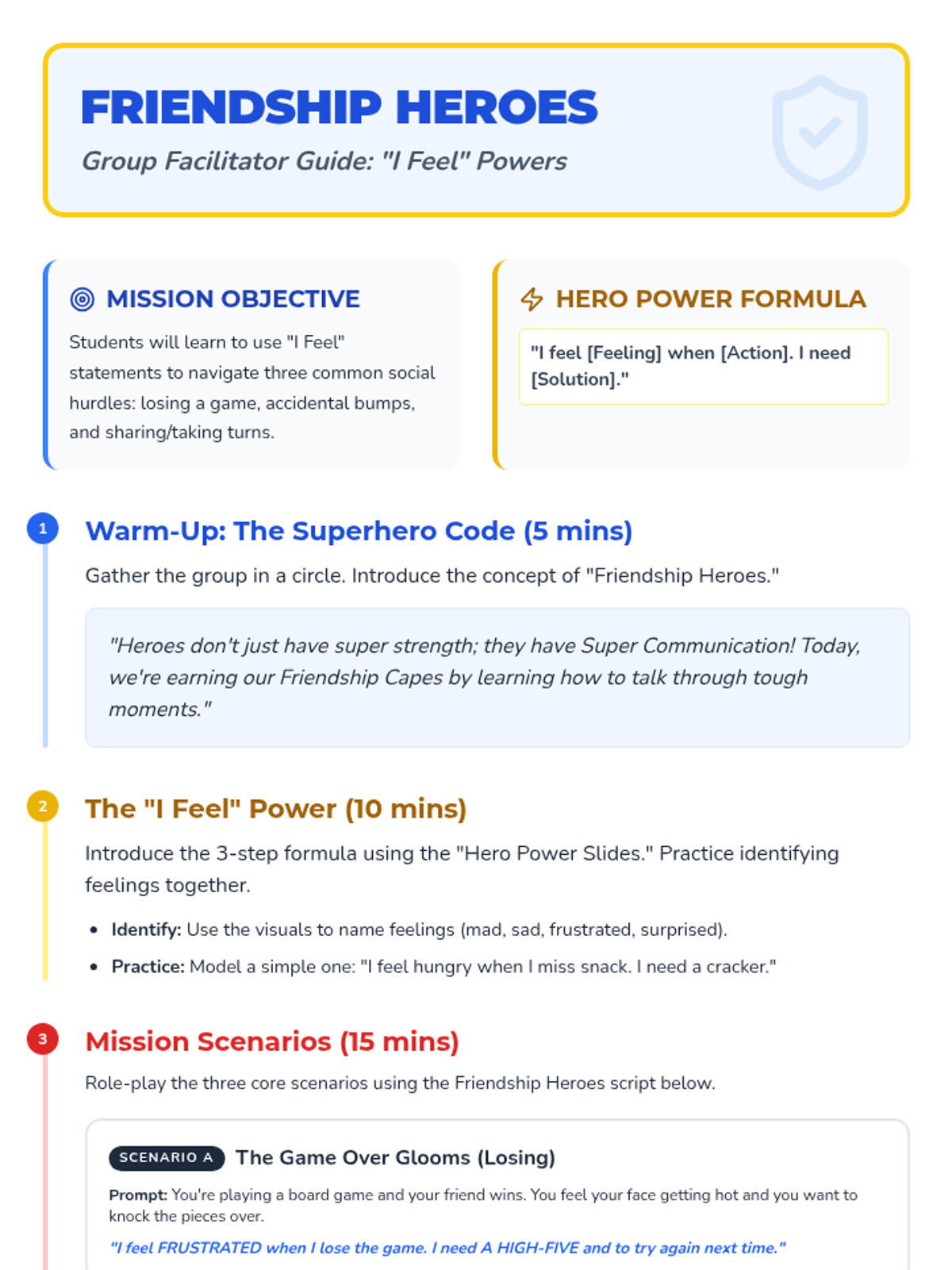
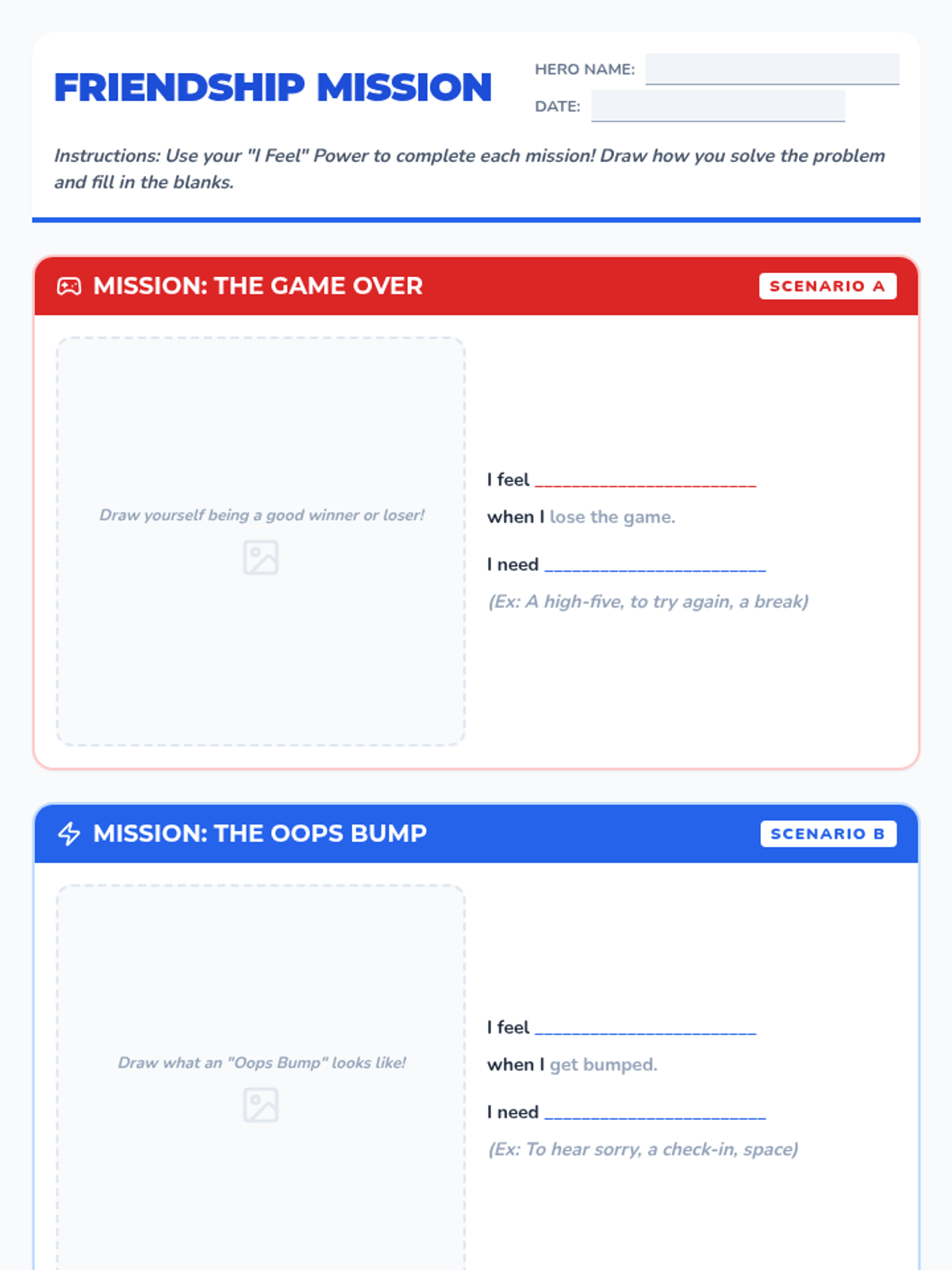
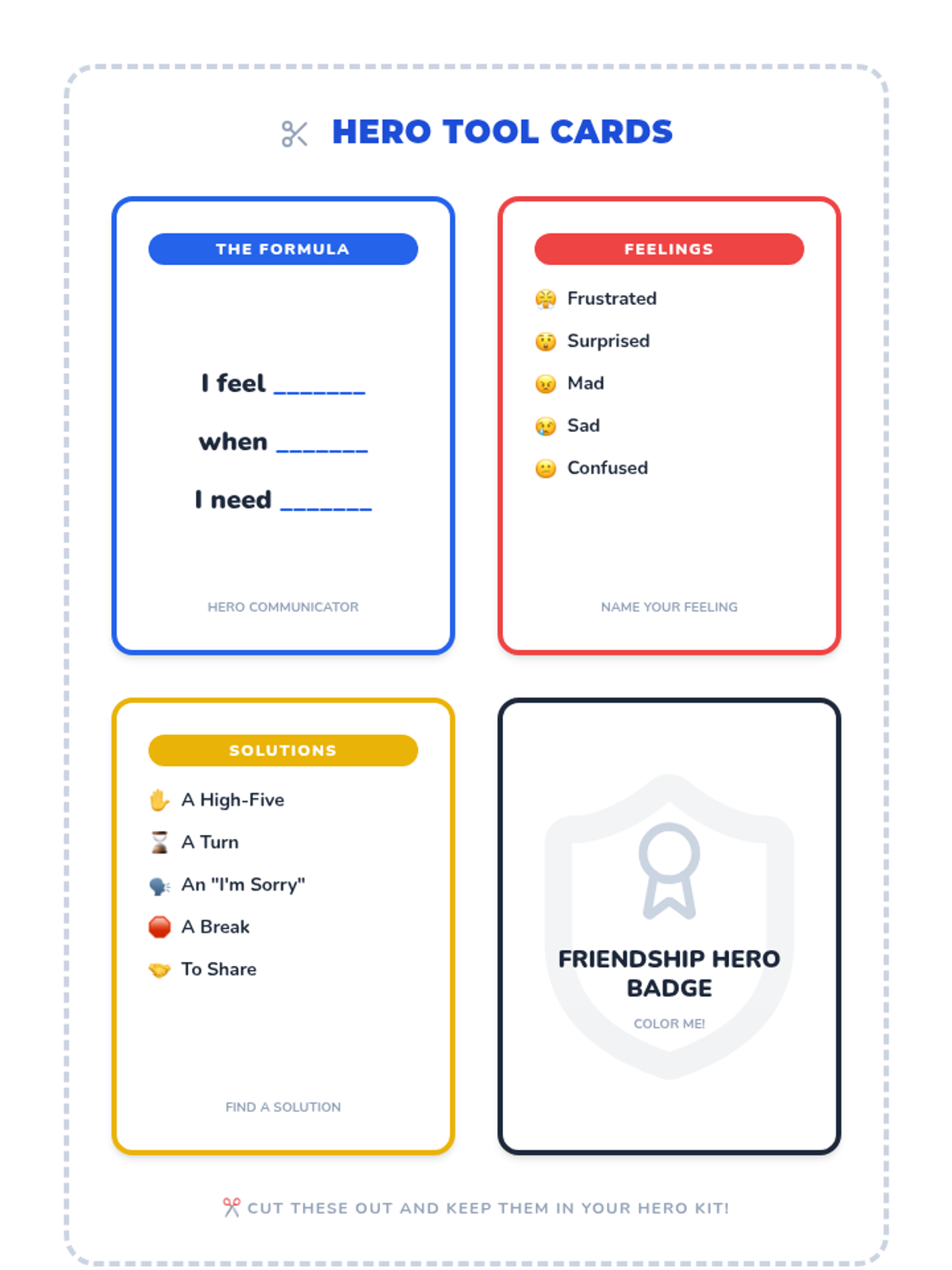
A social skills group intervention for 1st grade boys focusing on using 'I Feel' statements to navigate friendship challenges like losing, accidents, and sharing.
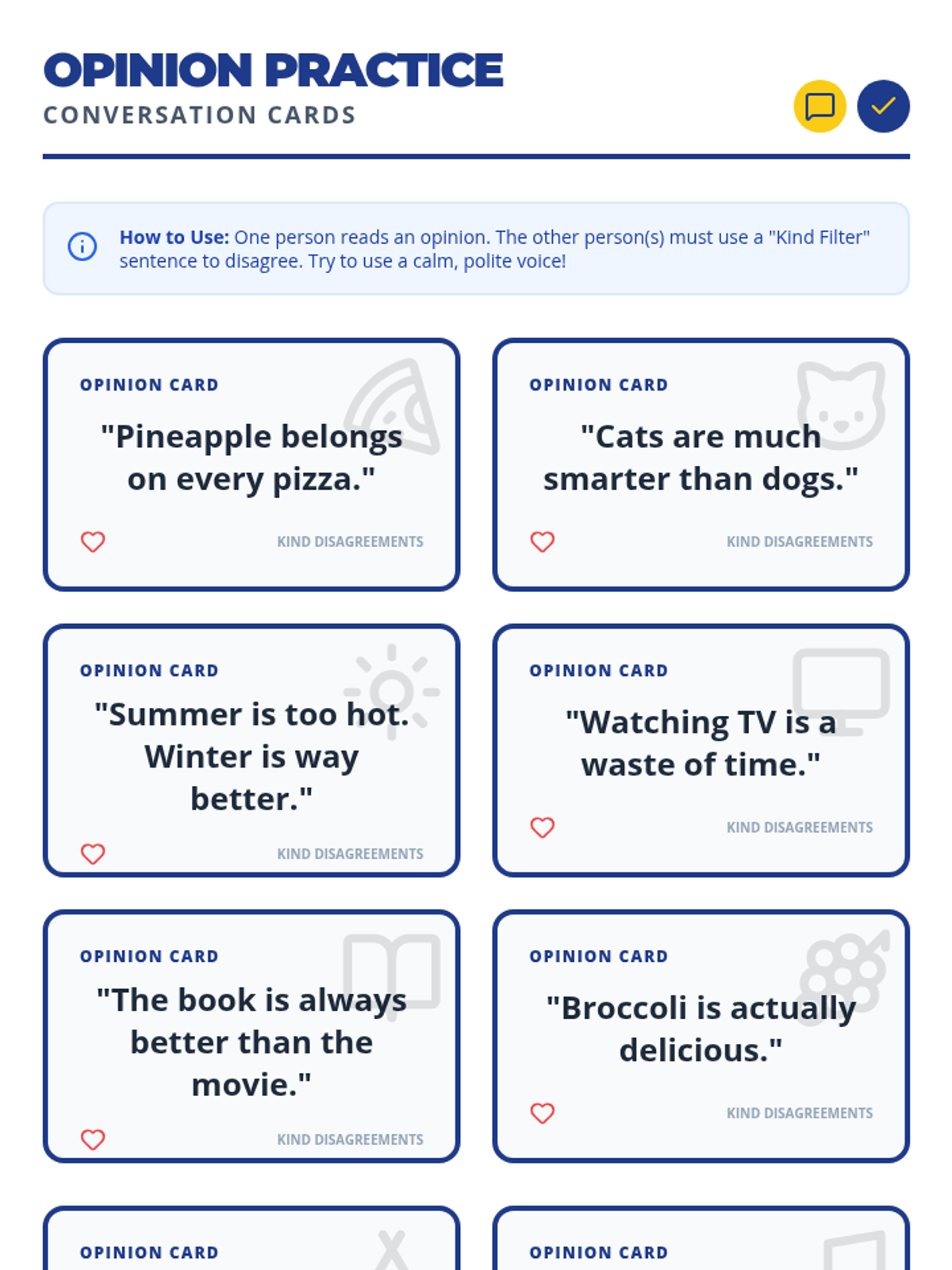
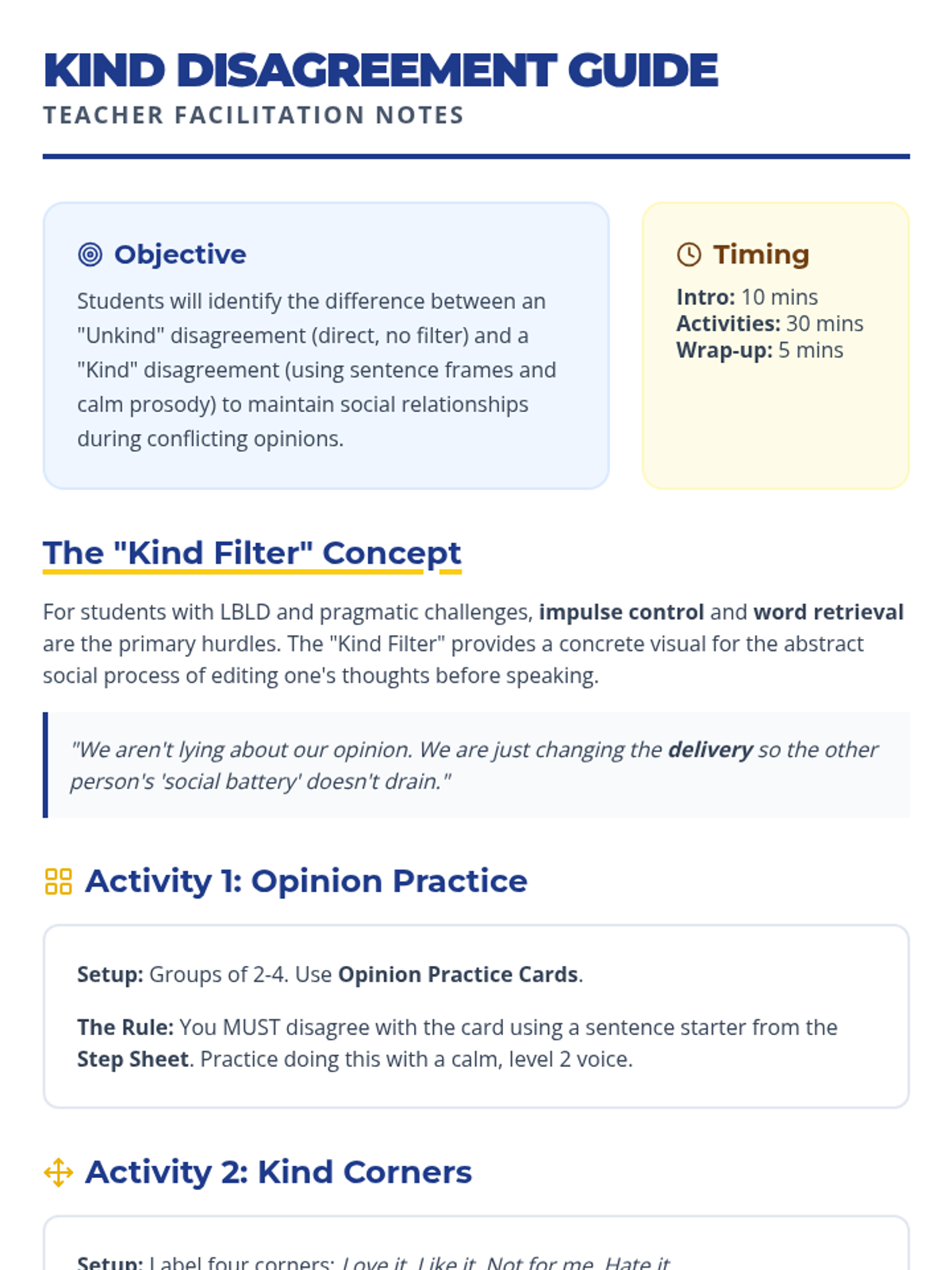
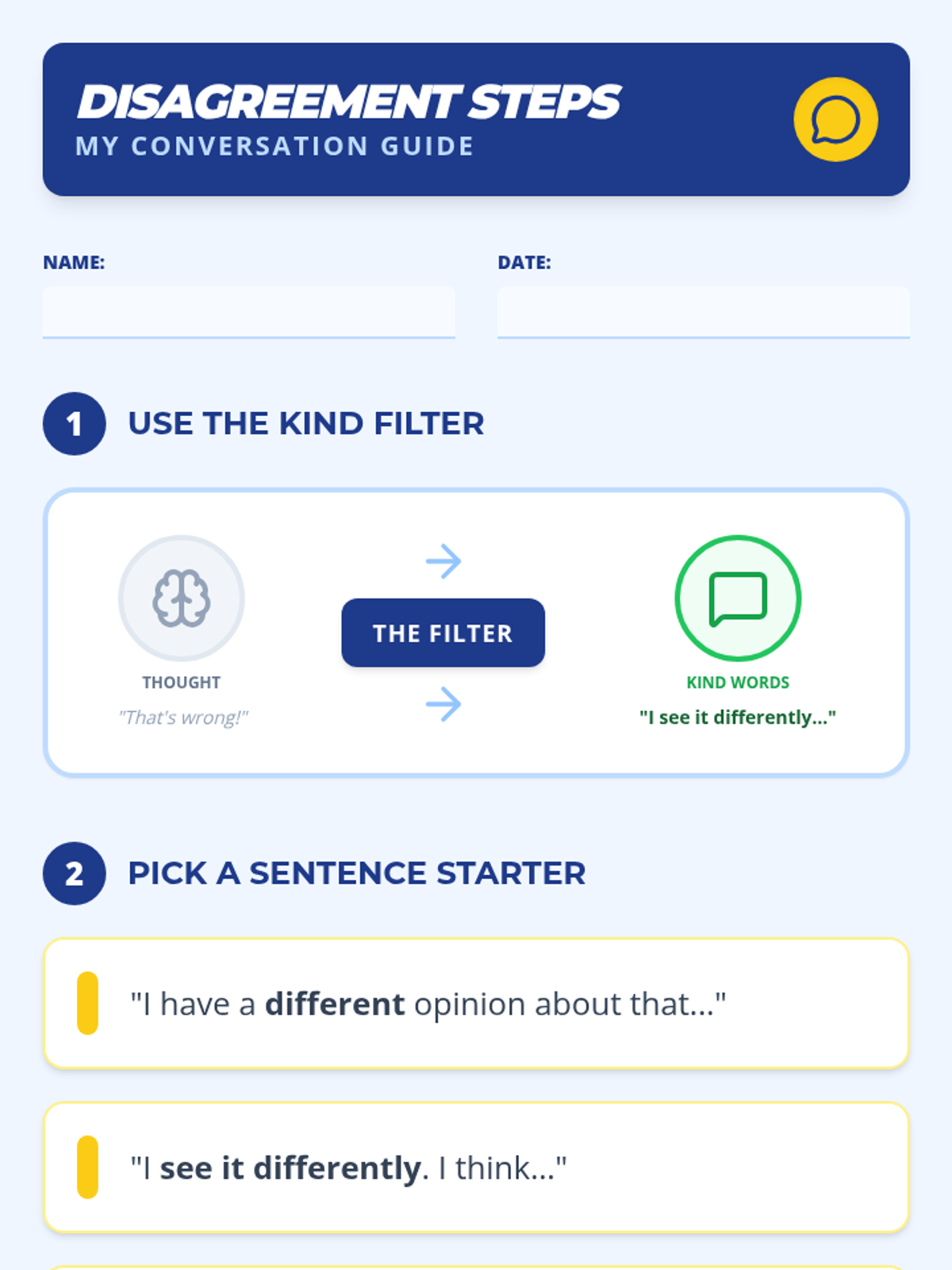
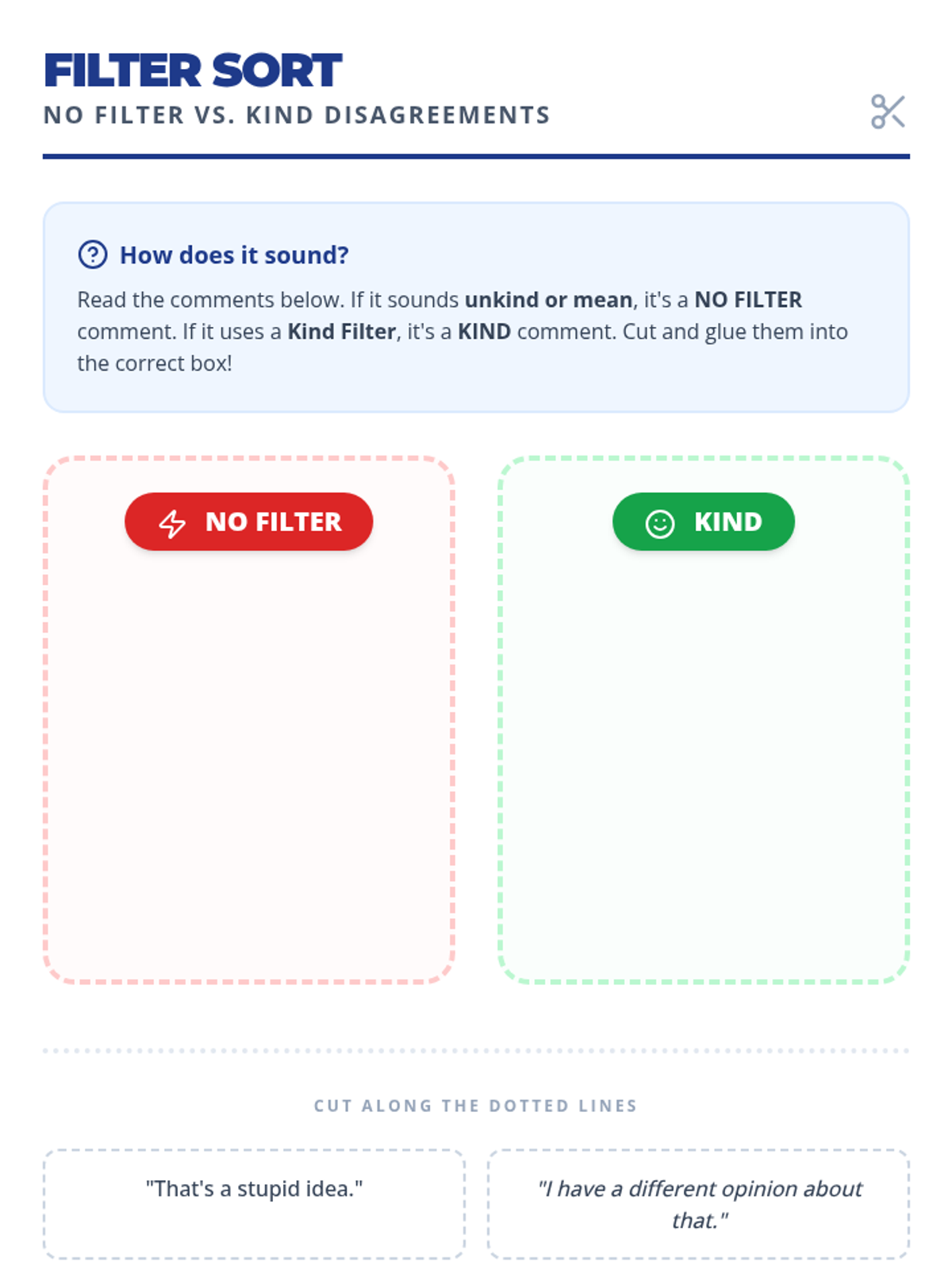
A pragmatic language lesson designed for students with LBLD to practice expressing disagreement respectfully. Through visual-heavy slides, structured role-plays, and hands-on activities like 'Kind Corners' and 'Opinion Practice', students learn to use social filters and sentence frames to navigate conflicting opinions.
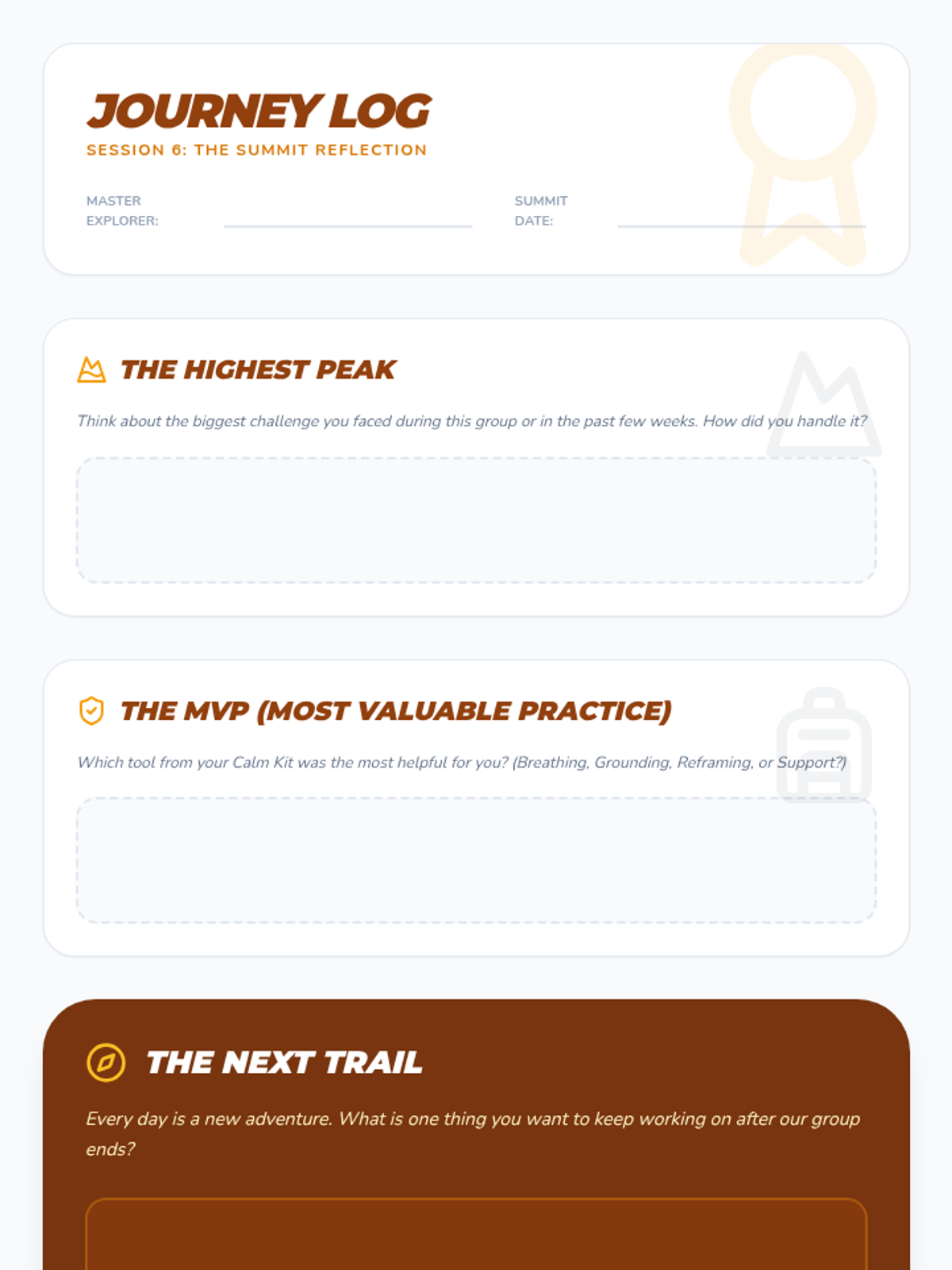
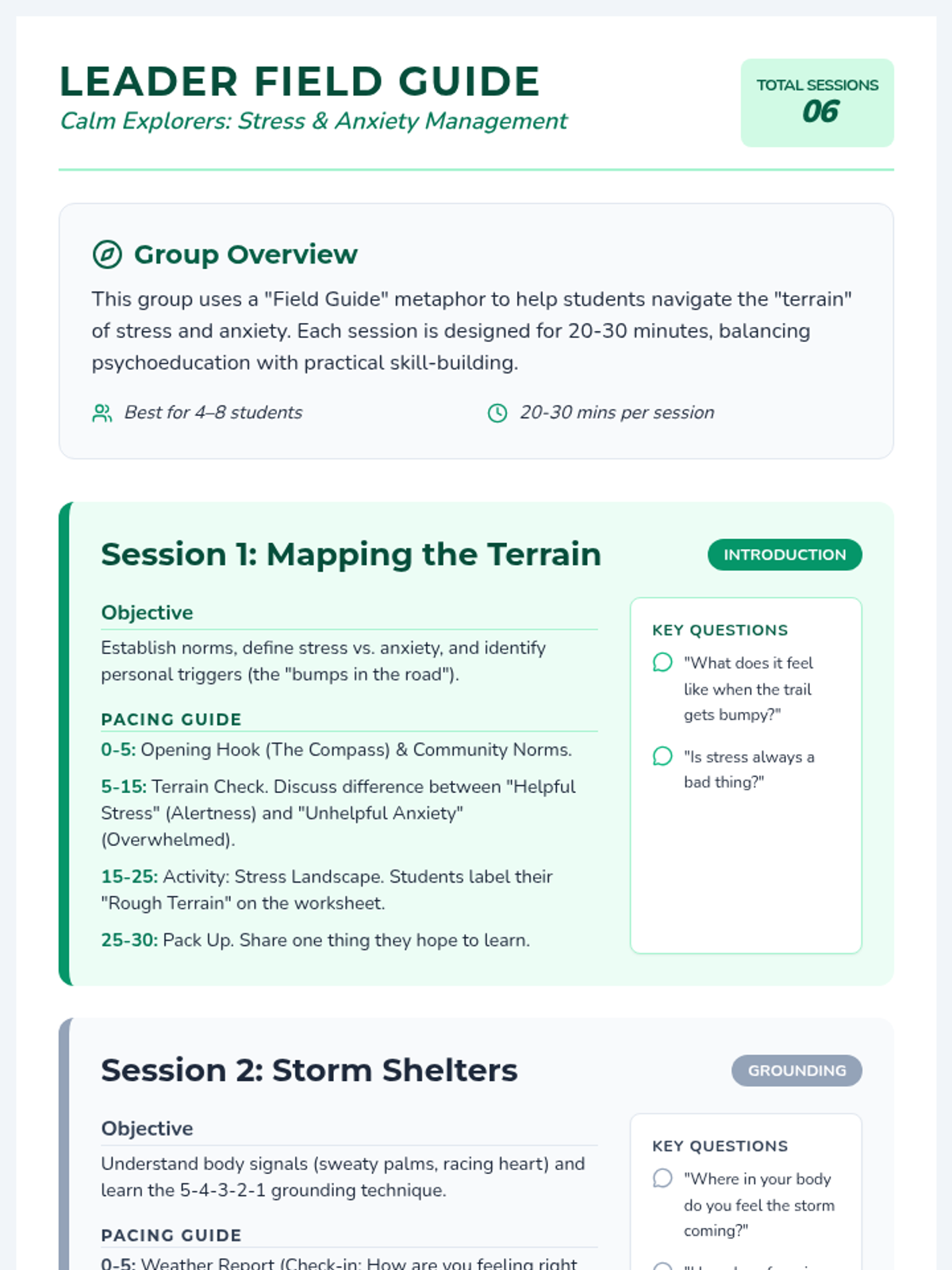
Final reflection, celebration of growth, and planning for the journey ahead.
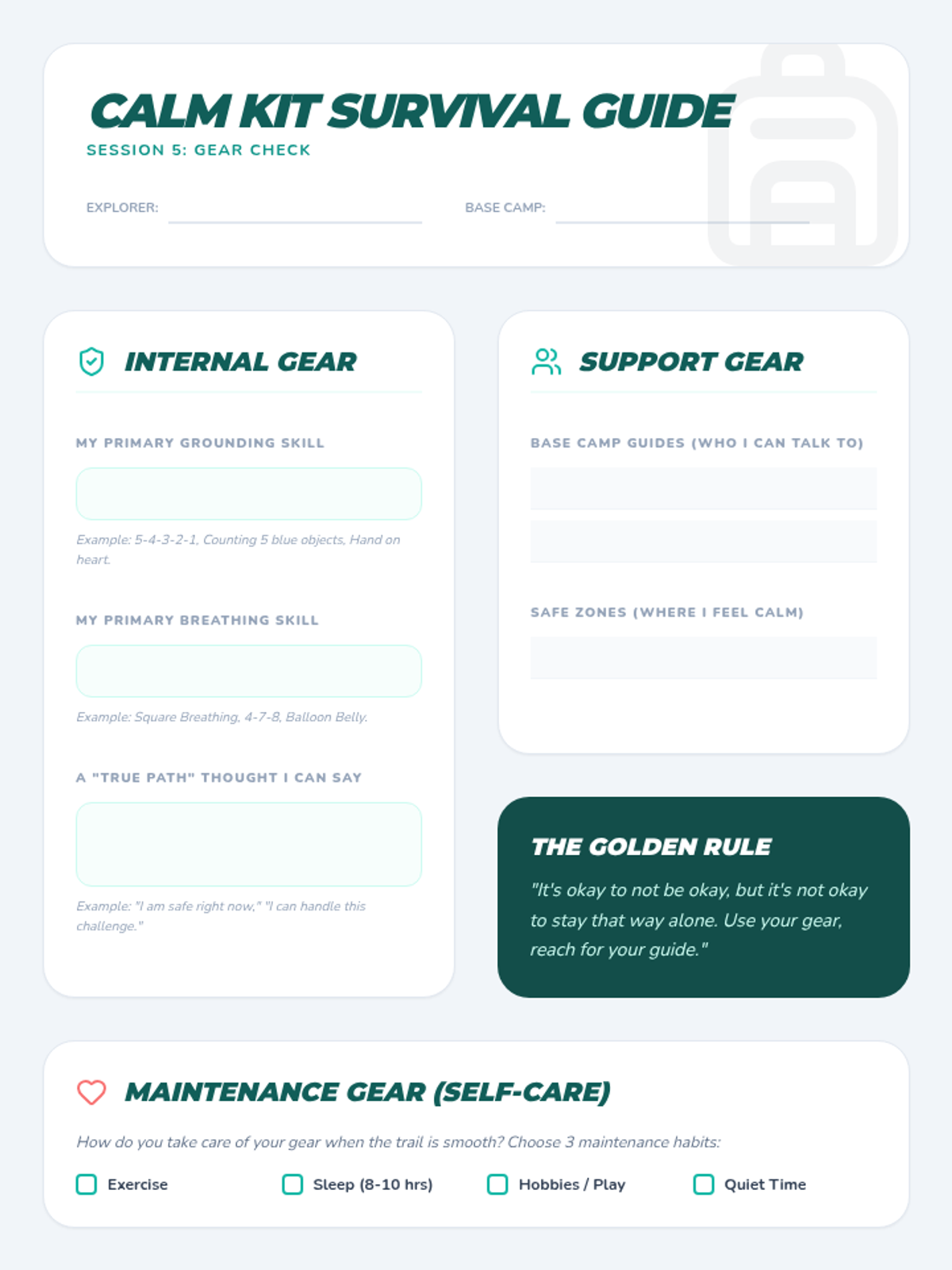
Reviewing various coping skills and creating a personalized 'Survival Kit' for future use.
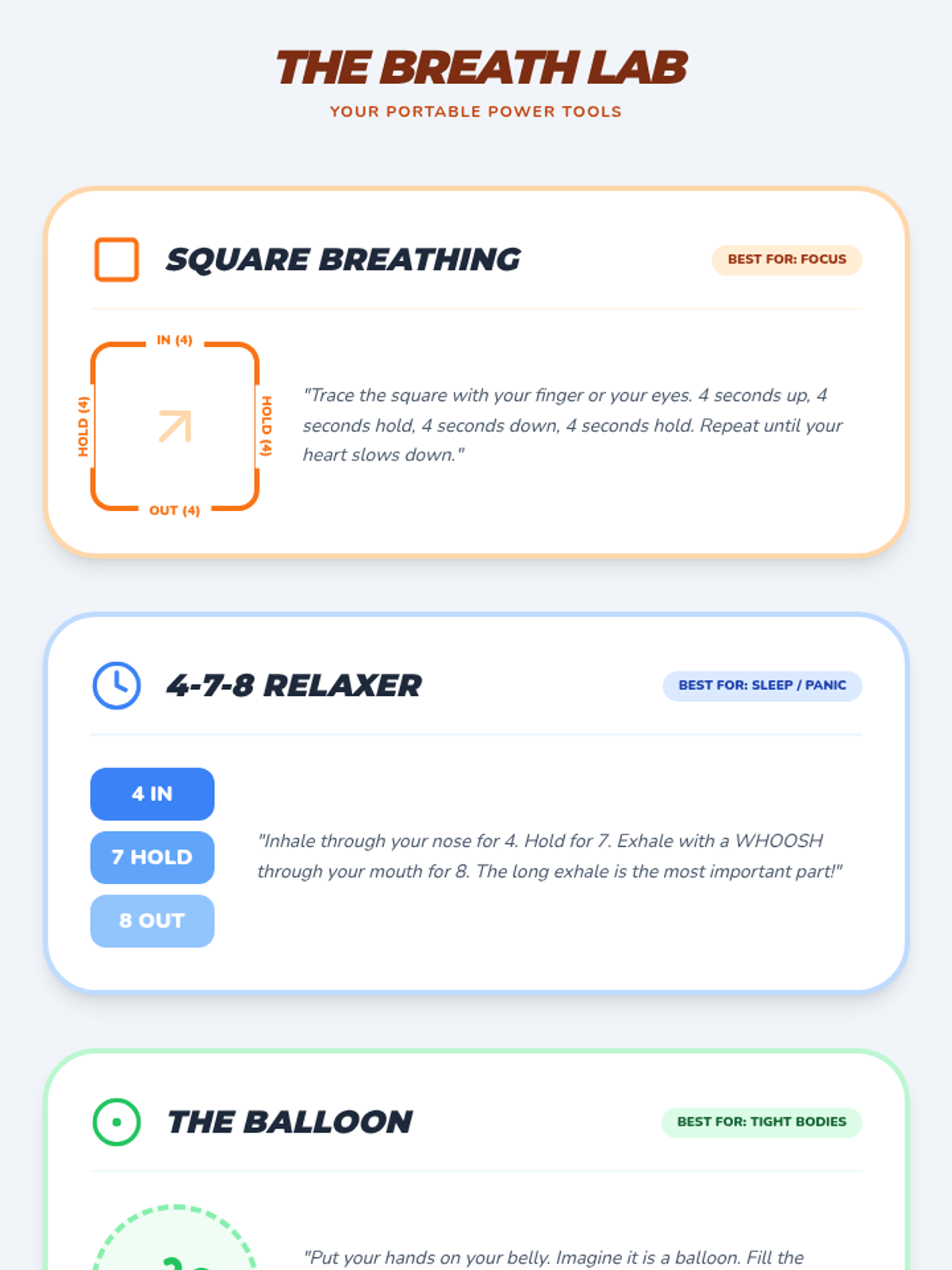
Focusing on the power of breath and mindfulness as internal tools for regulation.
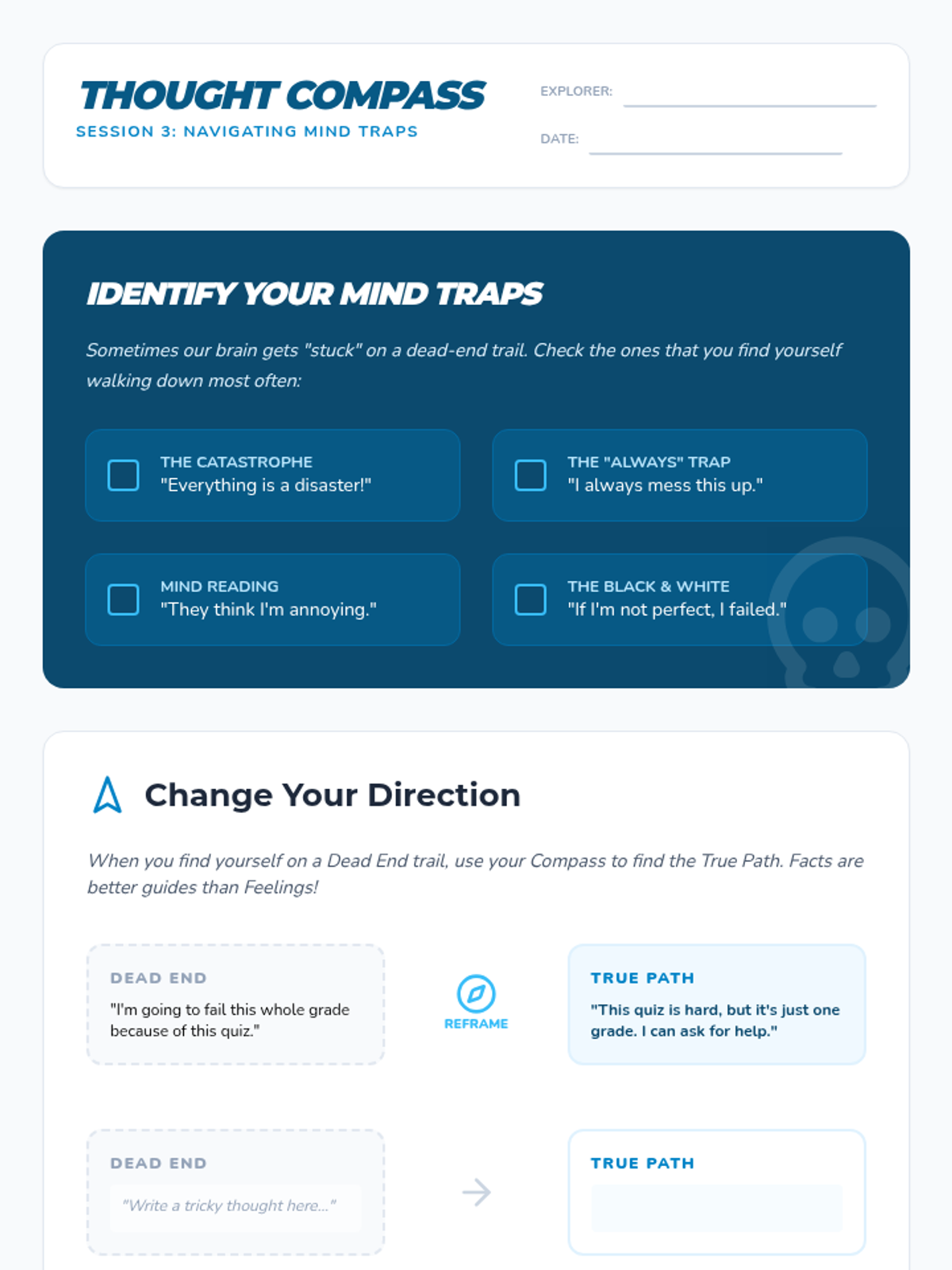
Identifying cognitive distortions or 'tricky trails' and learning to reframe thoughts using a 'Thought Compass'.
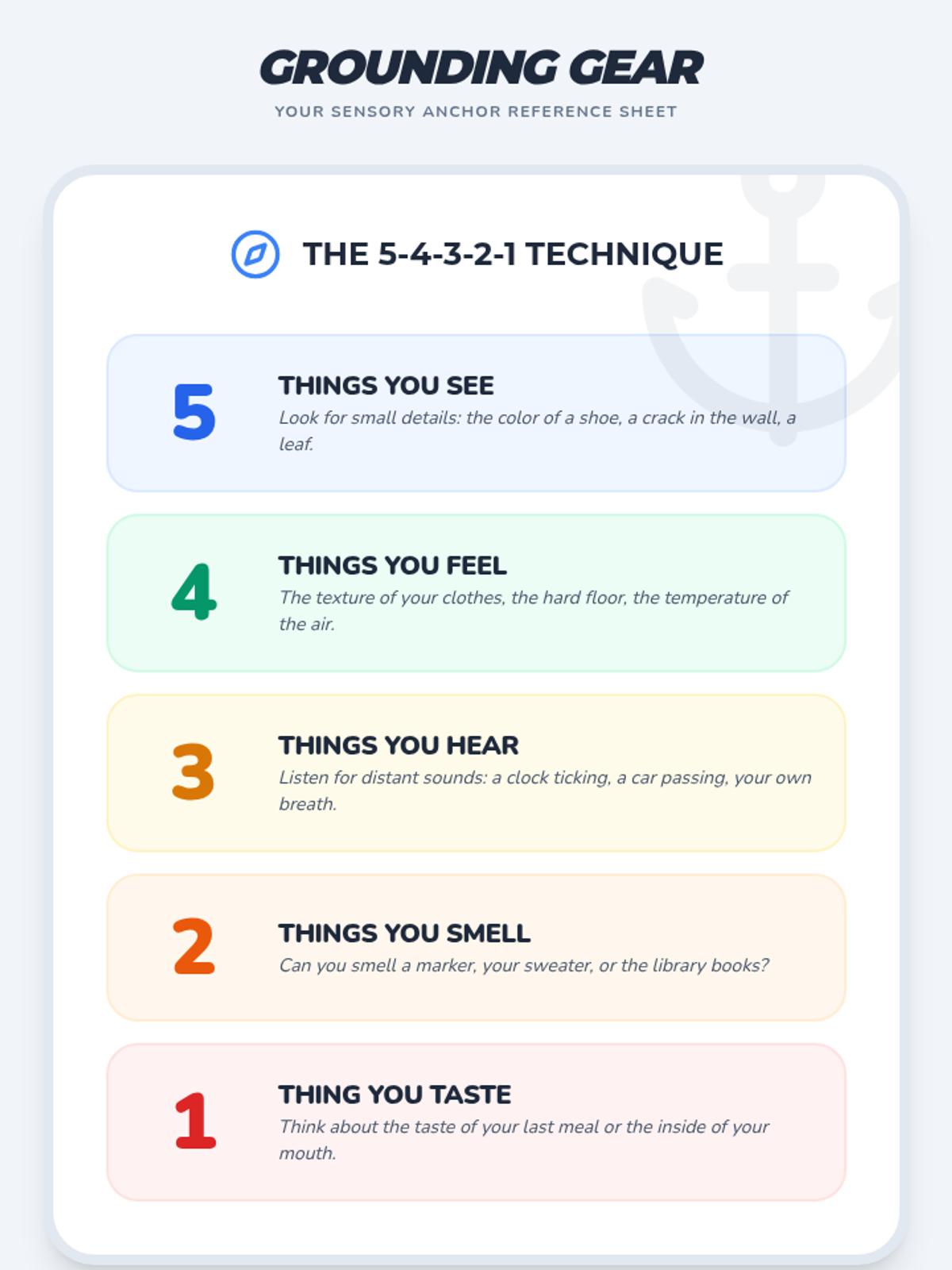
Understanding the physical 'alarm system' of the body and learning grounding techniques to stay present during 'storms'.
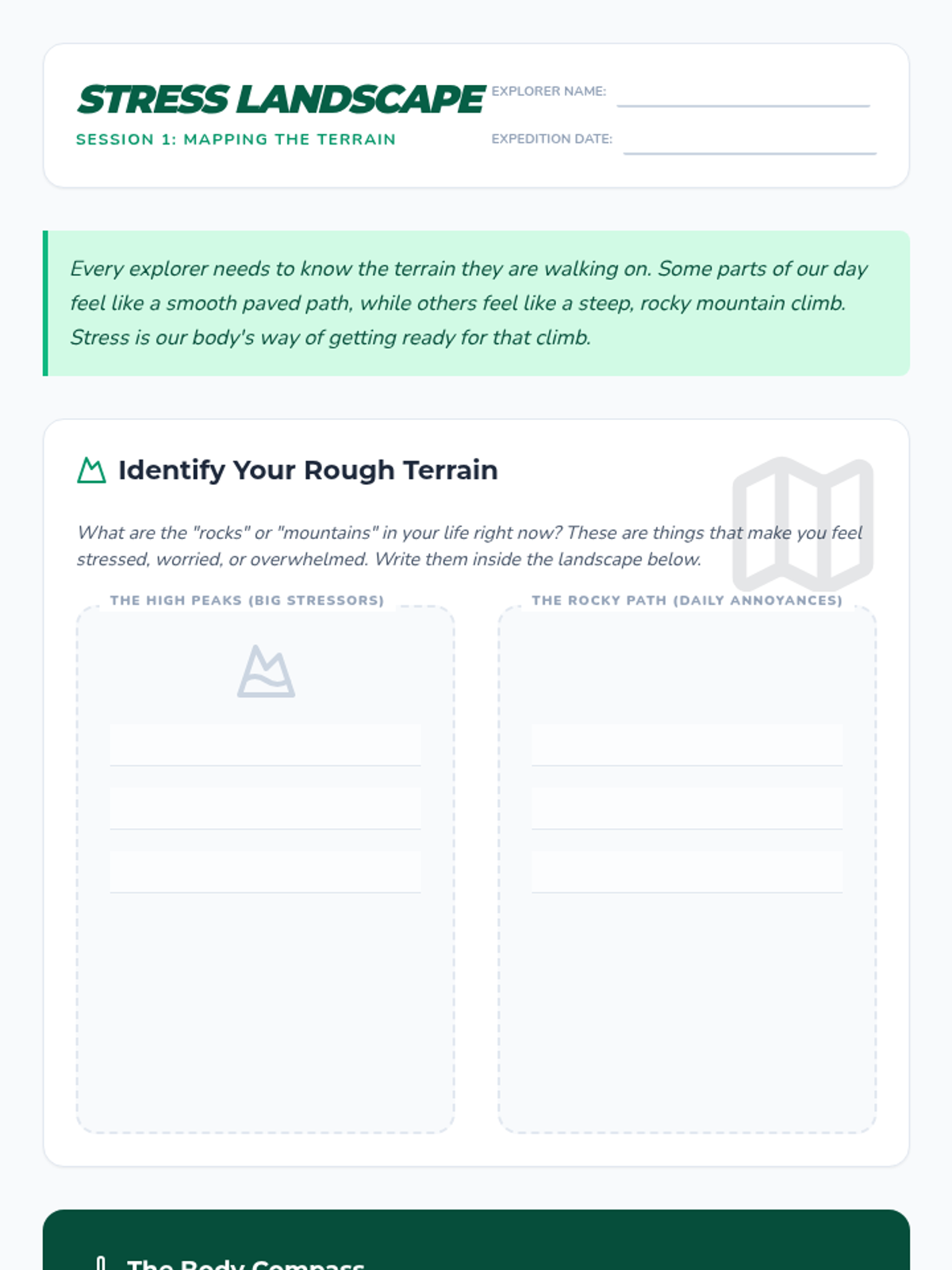
Introduction to the group, establishing norms, and identifying individual stress triggers using the 'Stress Landscape' metaphor.
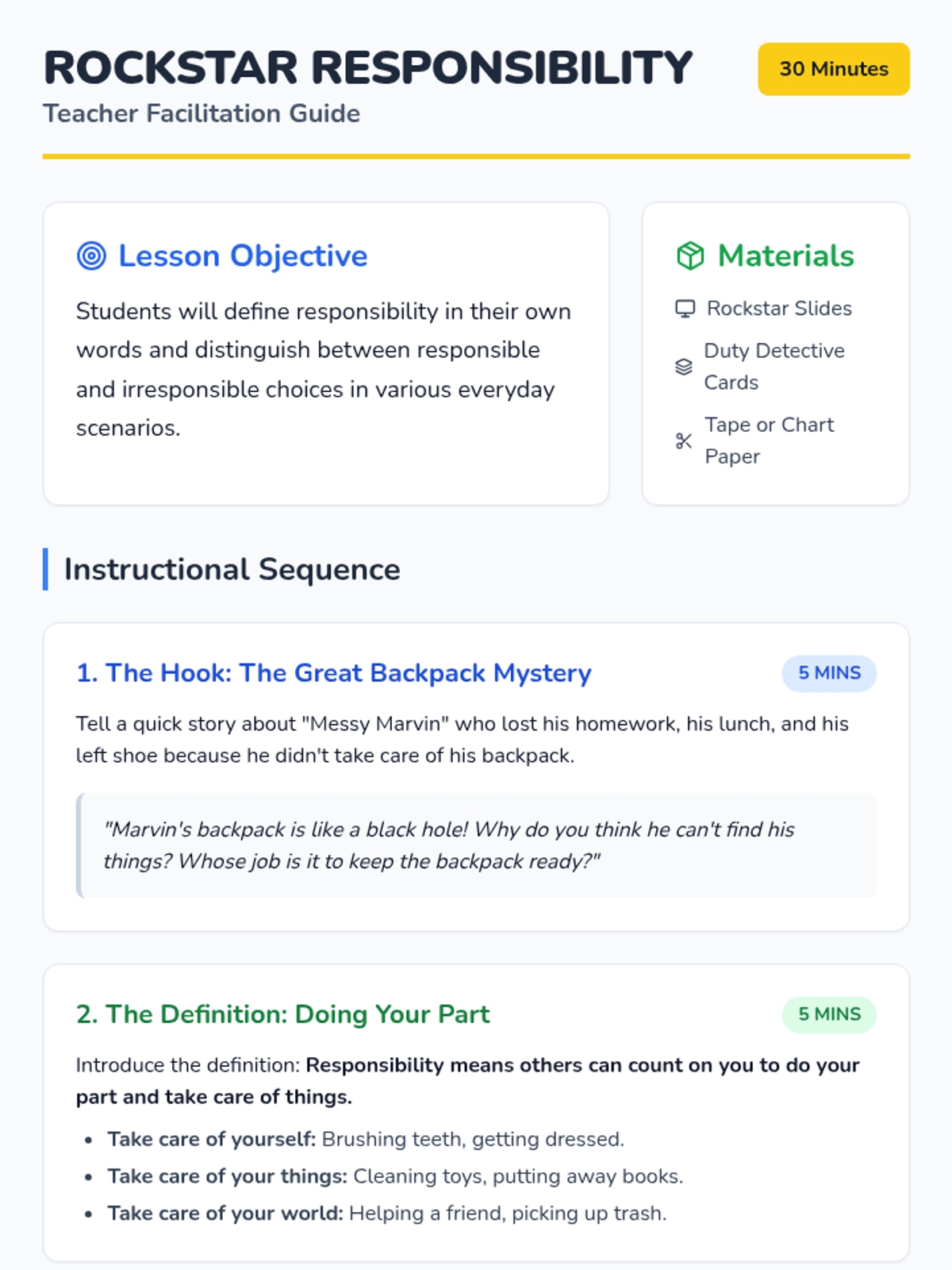
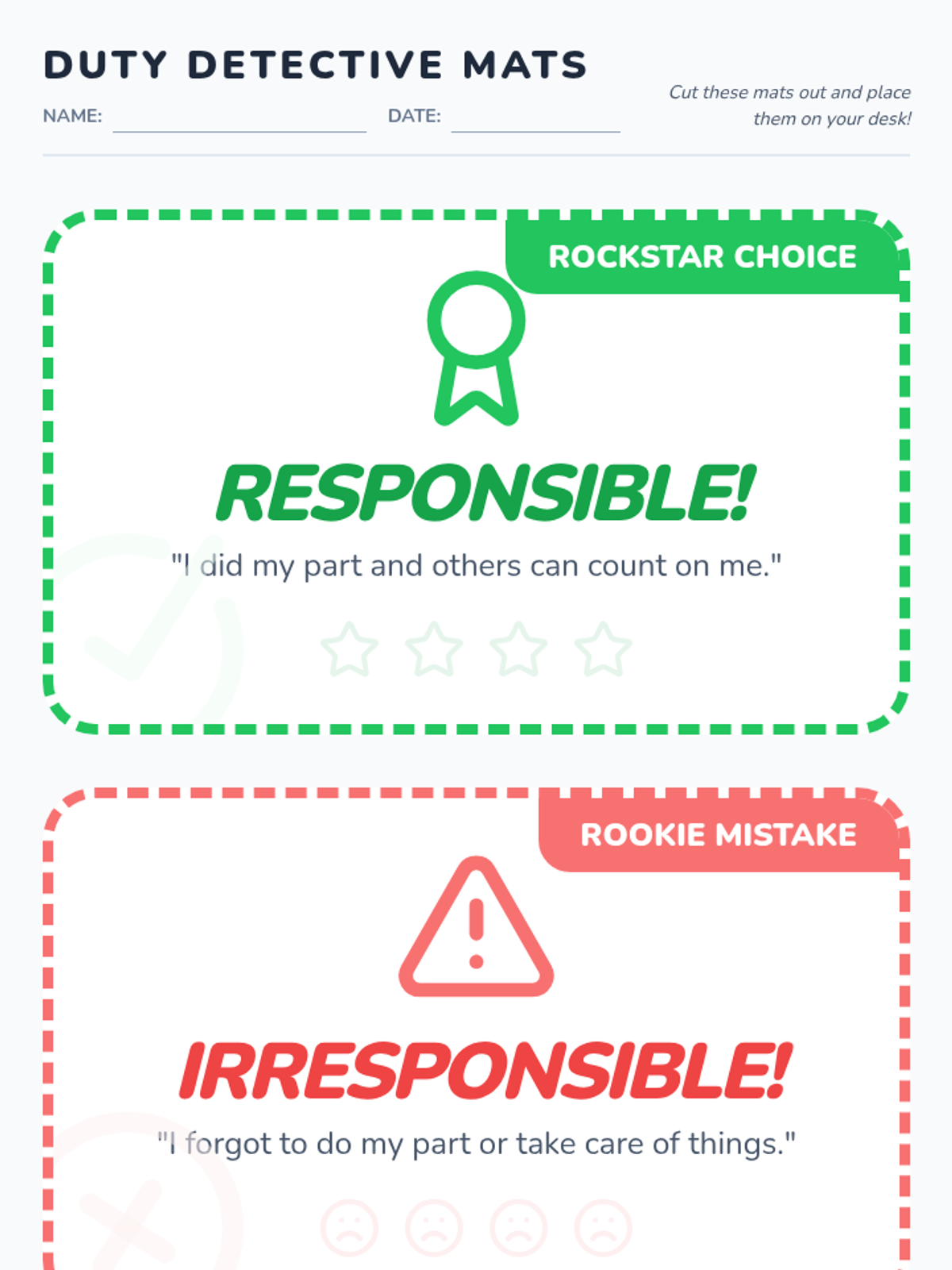
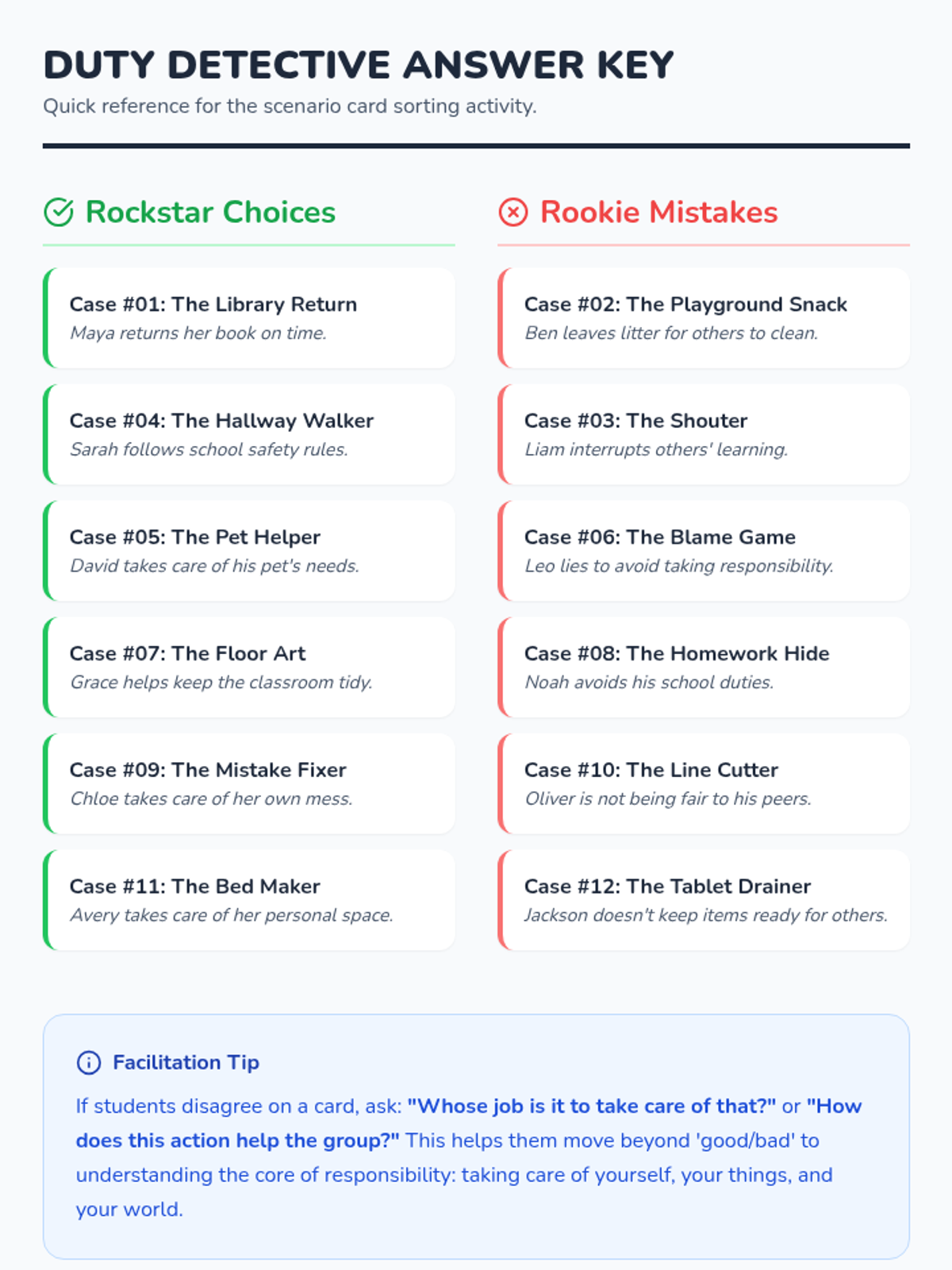
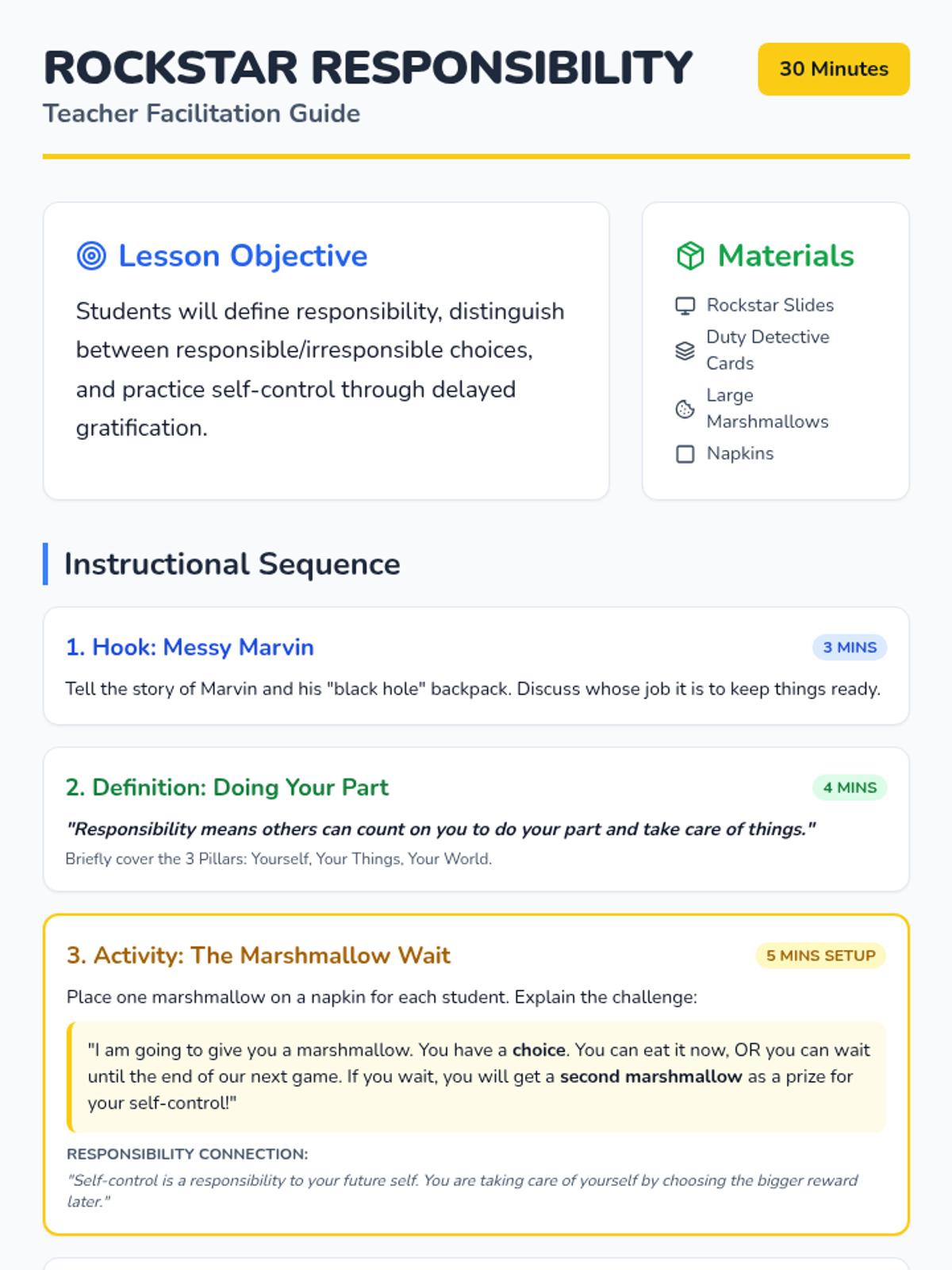
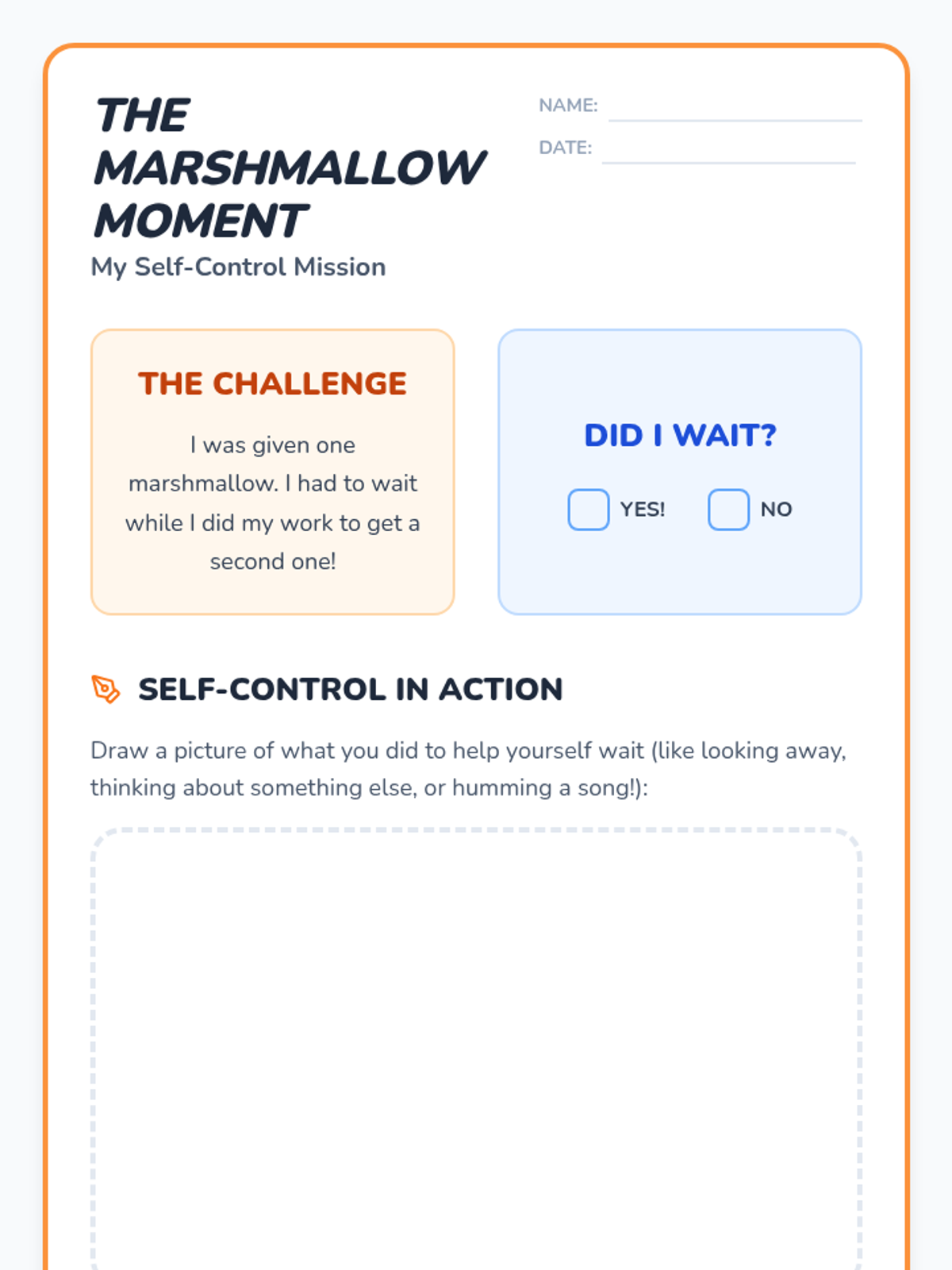
A high-energy, 30-minute introduction to responsibility for K-4 students, featuring a scenario-based hook, clear definitions, and interactive choice-sorting activities.
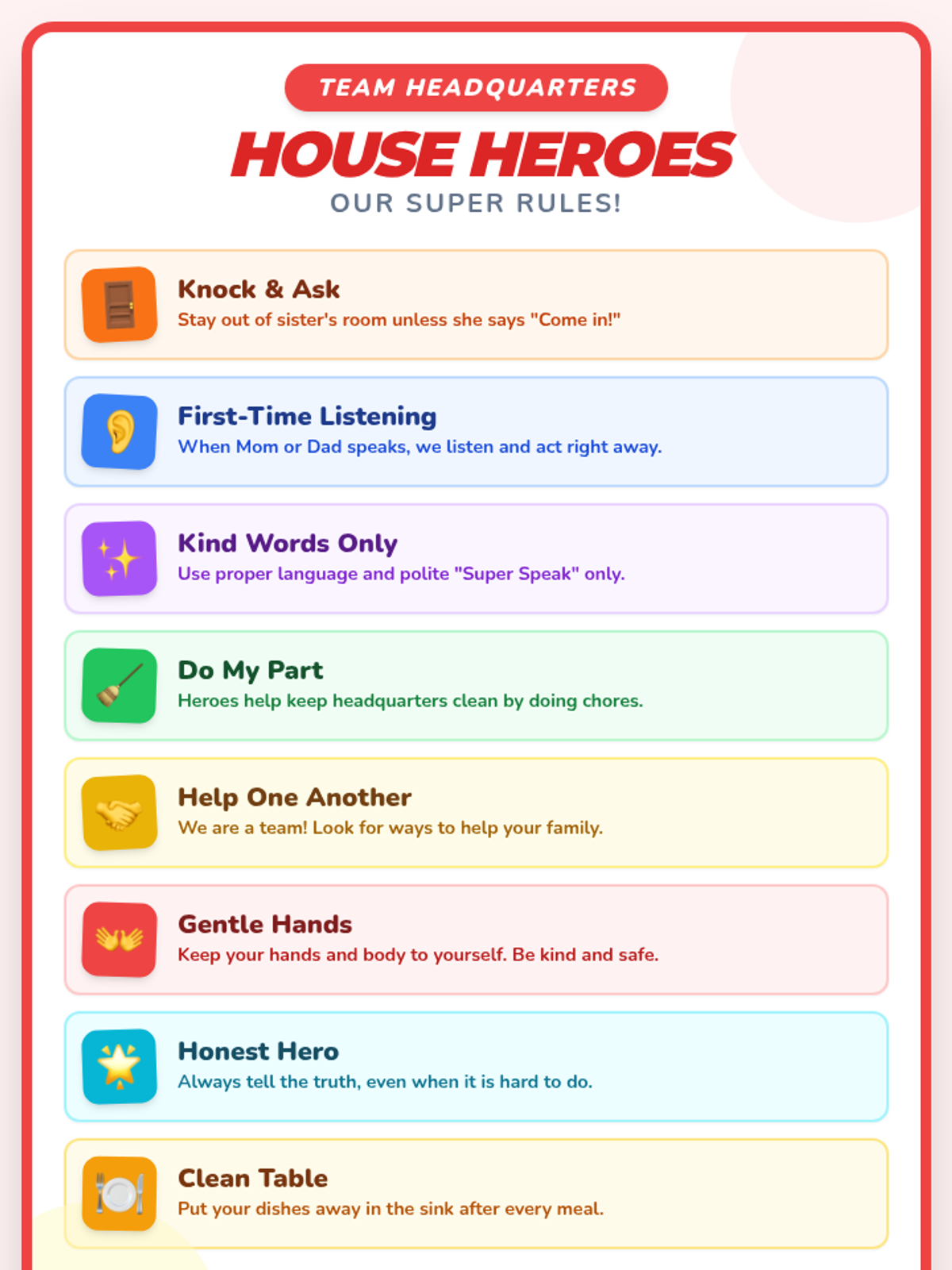
A clear and positive set of house rules to help first graders understand expectations for behavior and cooperation at home.