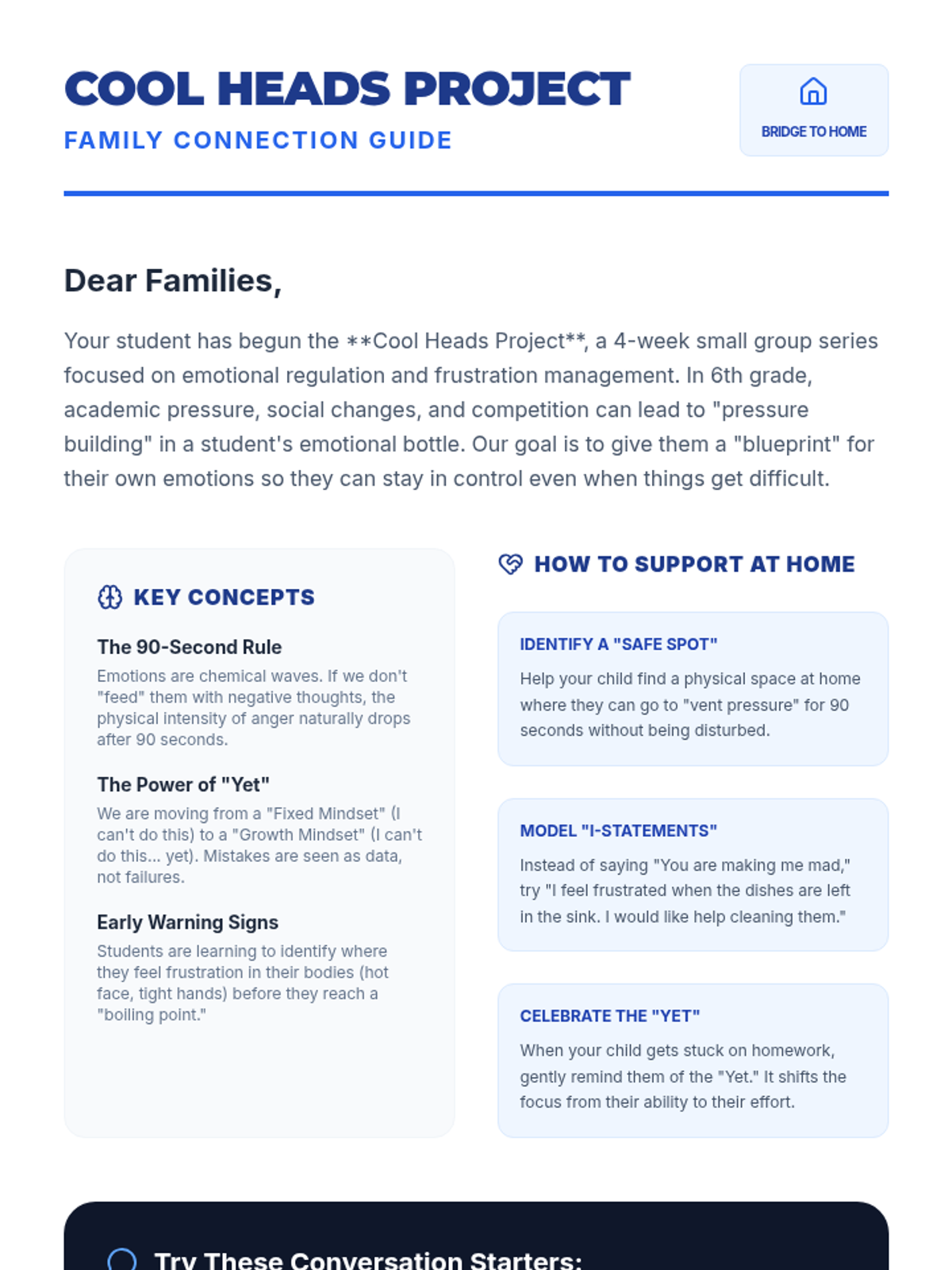
A 90-minute workshop for parents focused on practical de-escalation strategies to manage tense situations with children and teens. Participants will learn to identify triggers and apply specific techniques to foster a calmer home environment.
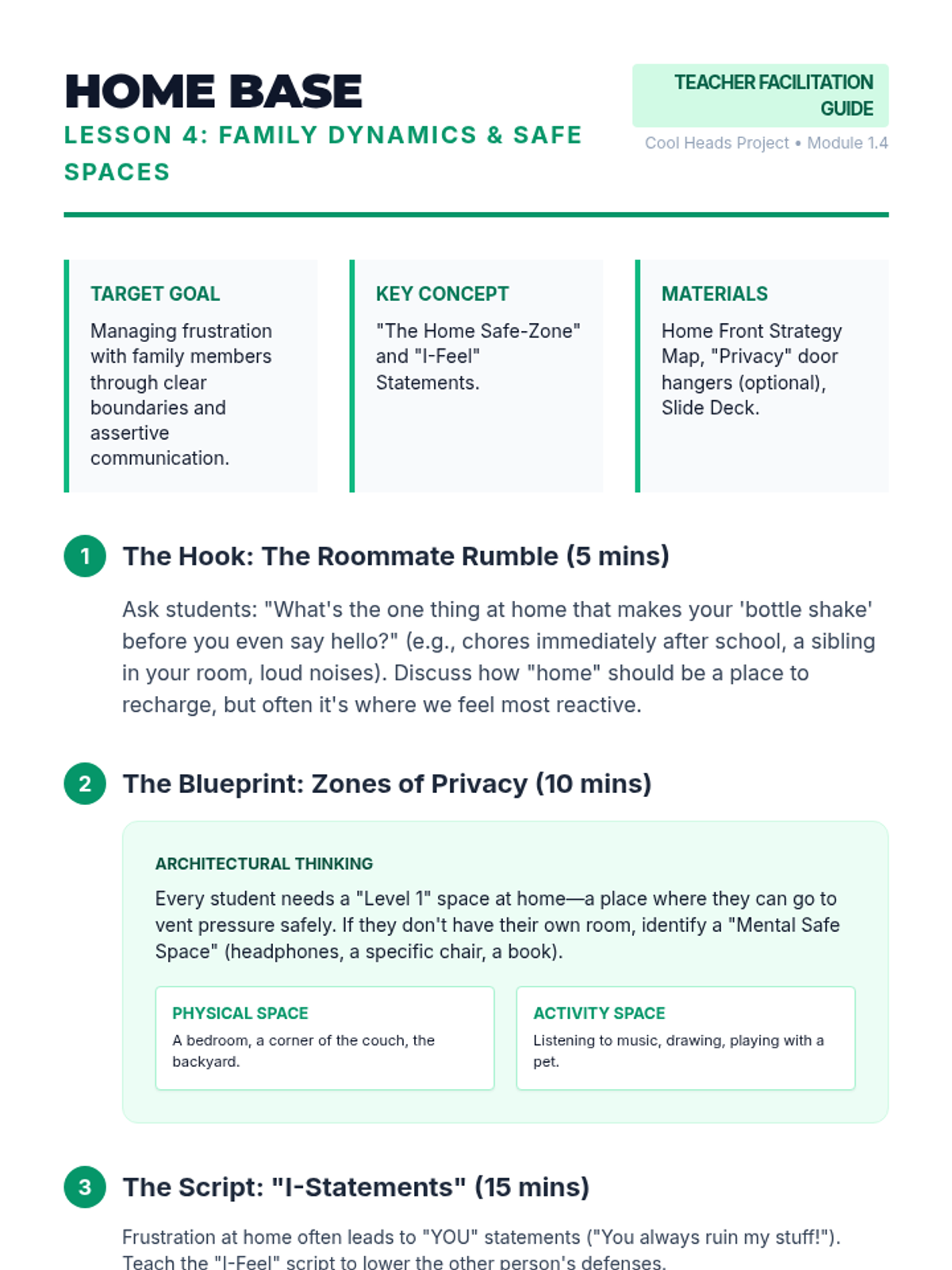
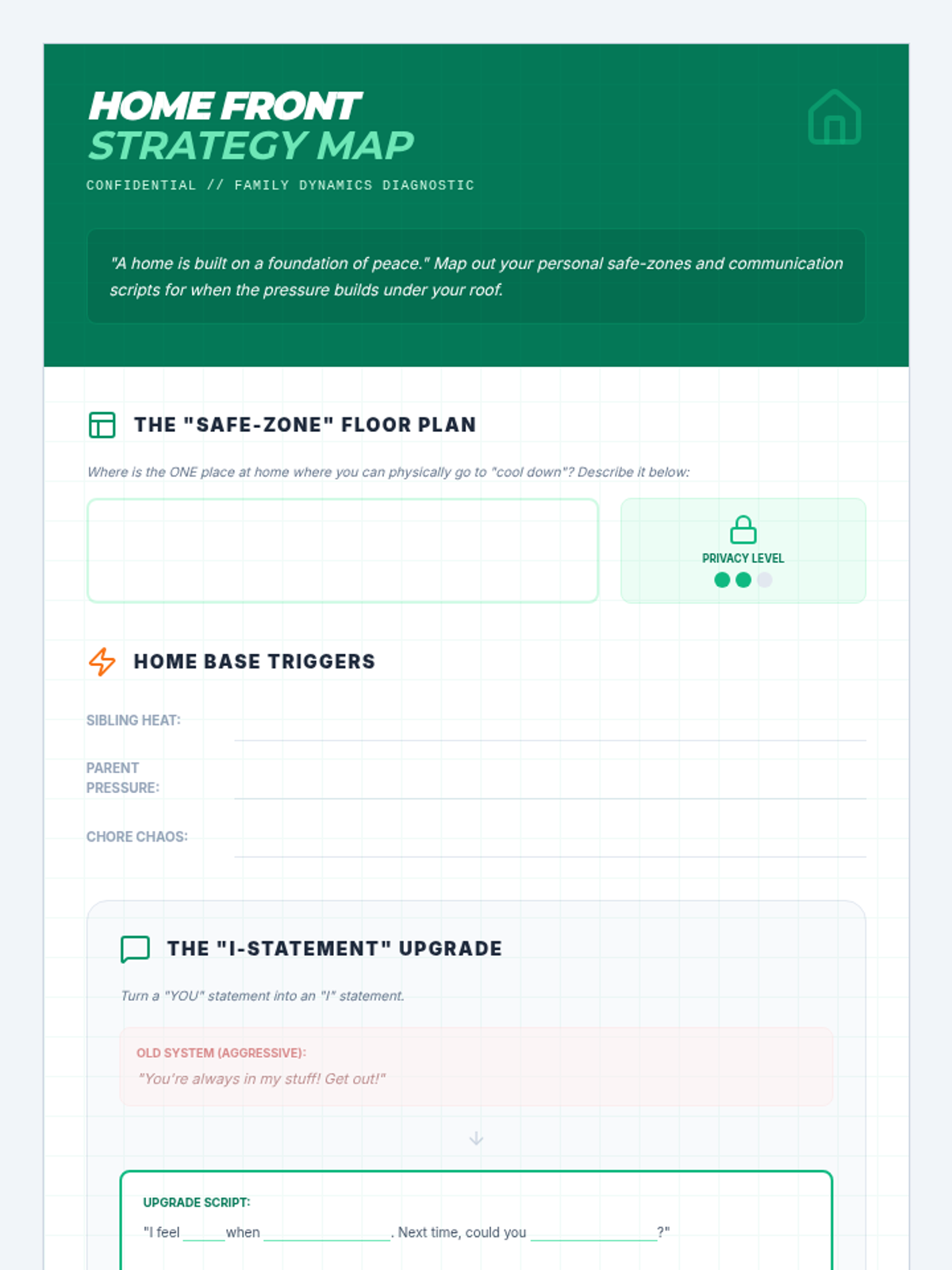
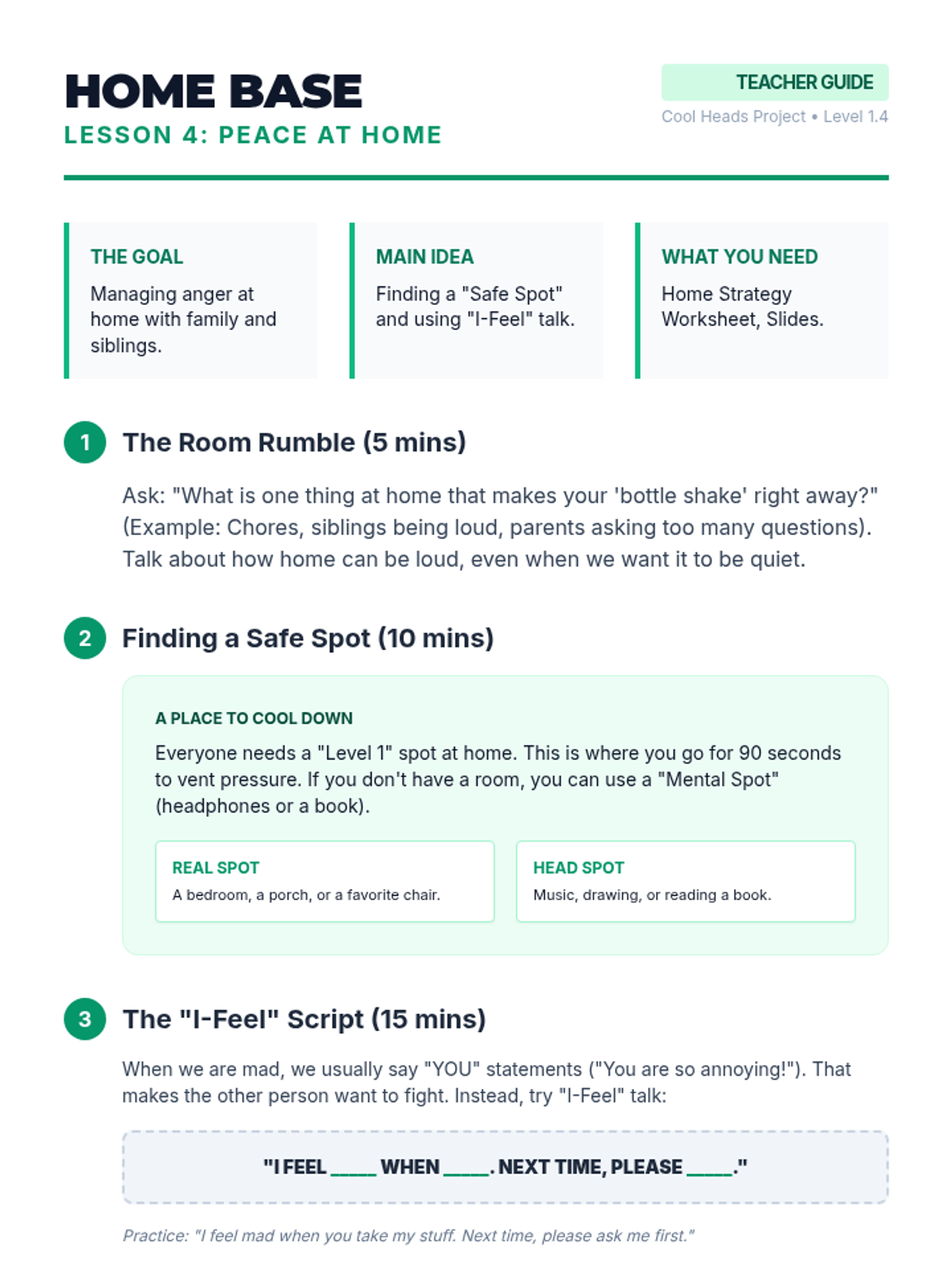
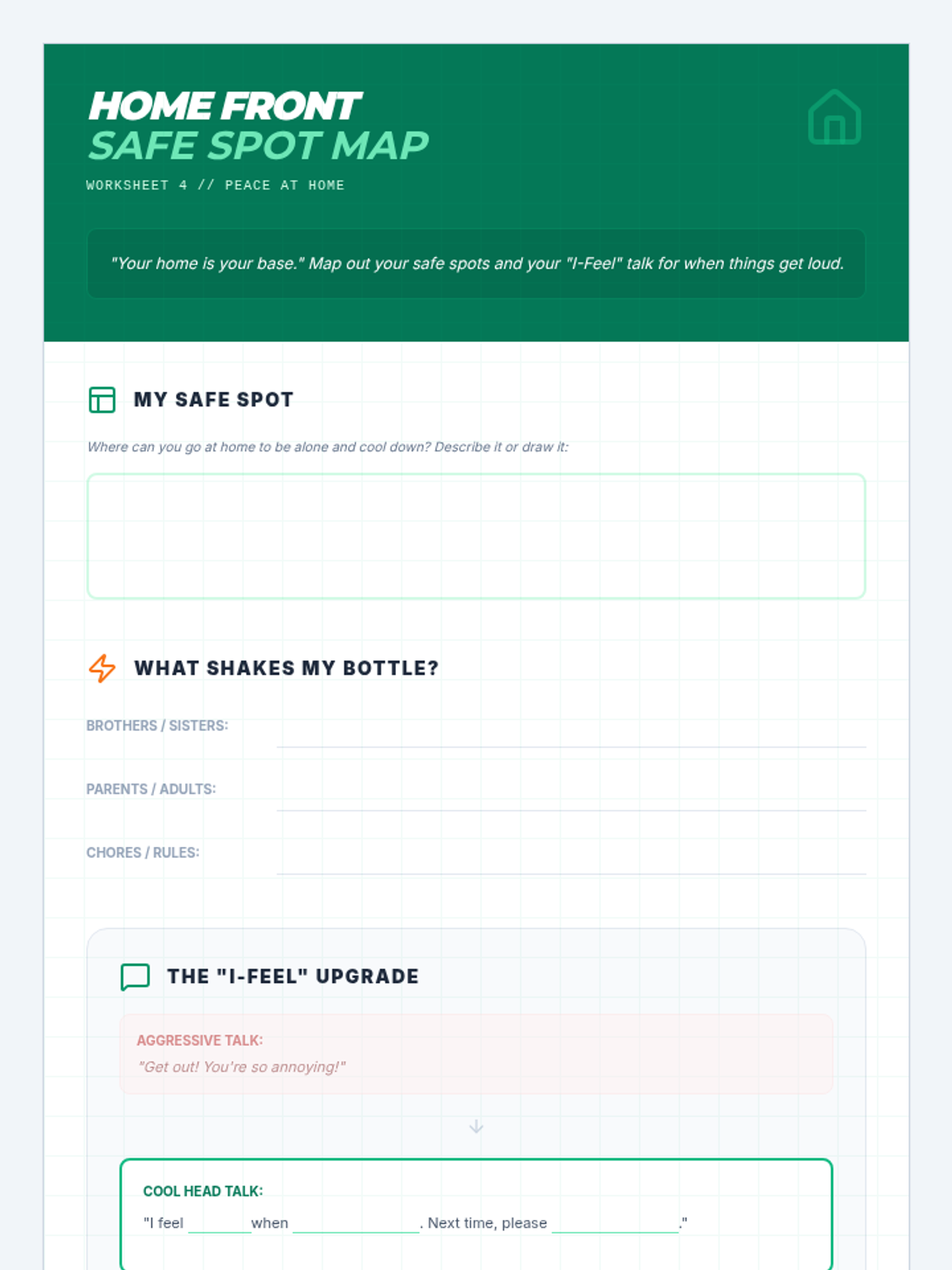
Strategies for navigating family dynamics, sibling conflicts, and home-based stressors through clear communication and personal space.
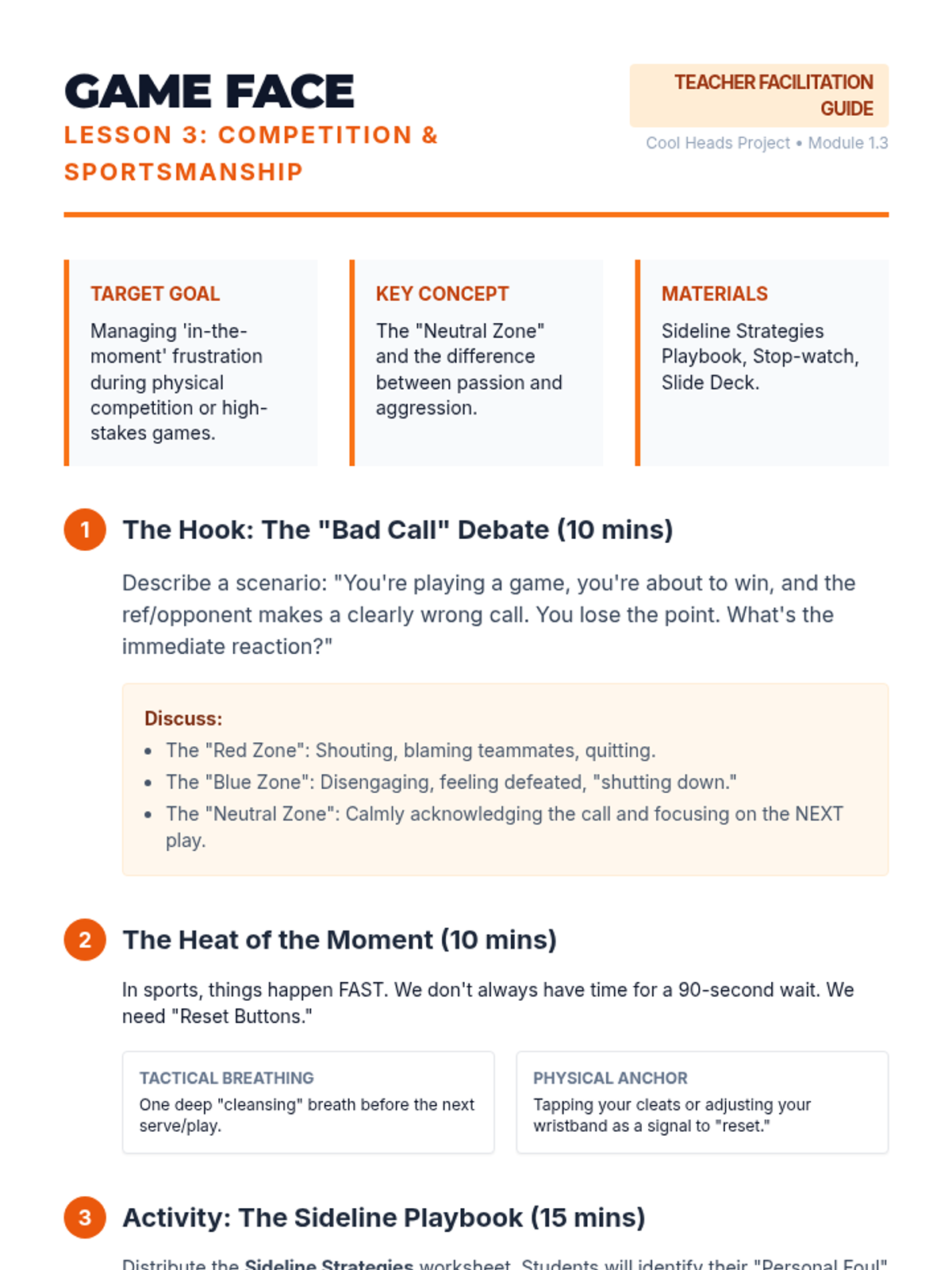
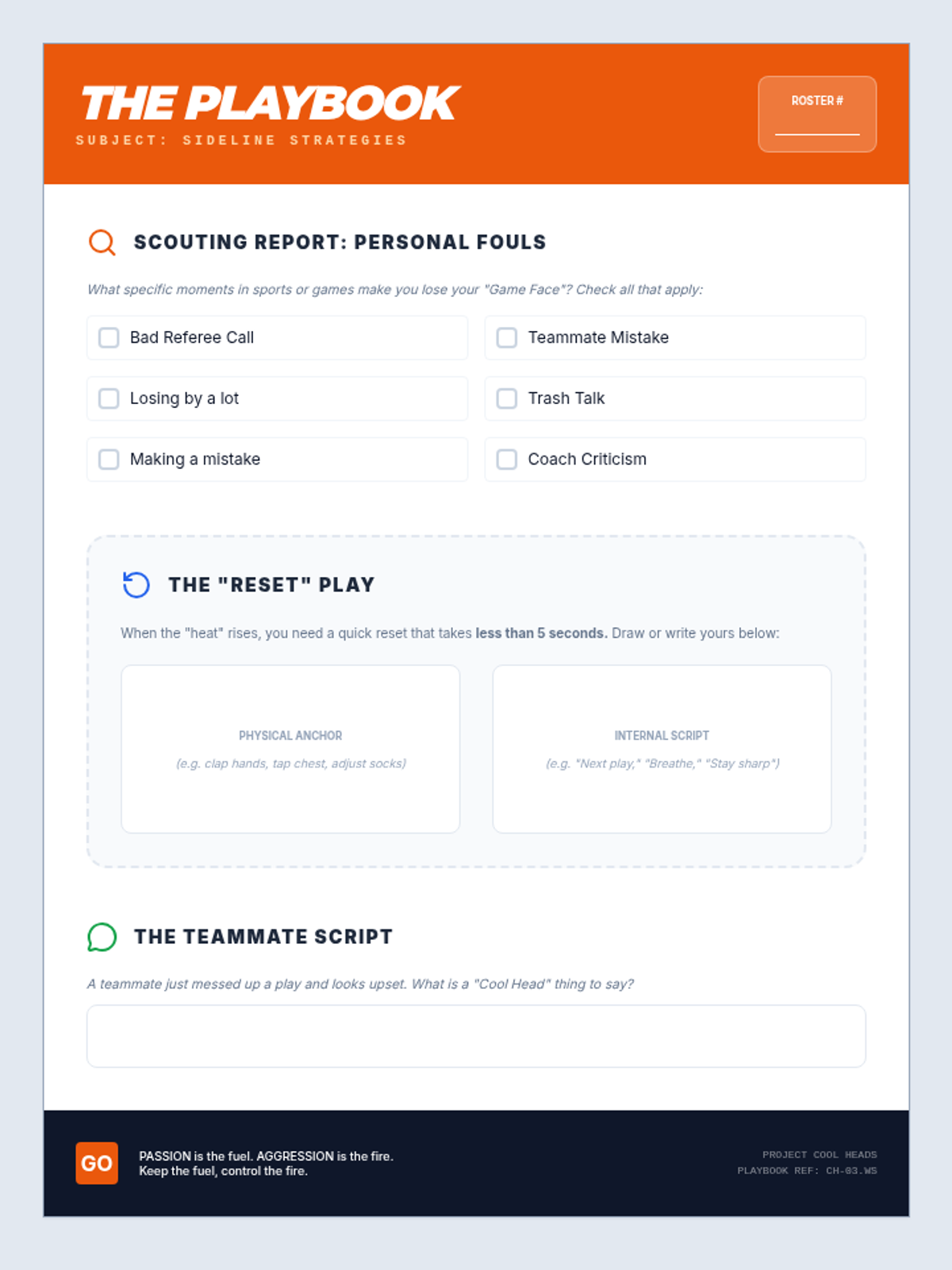
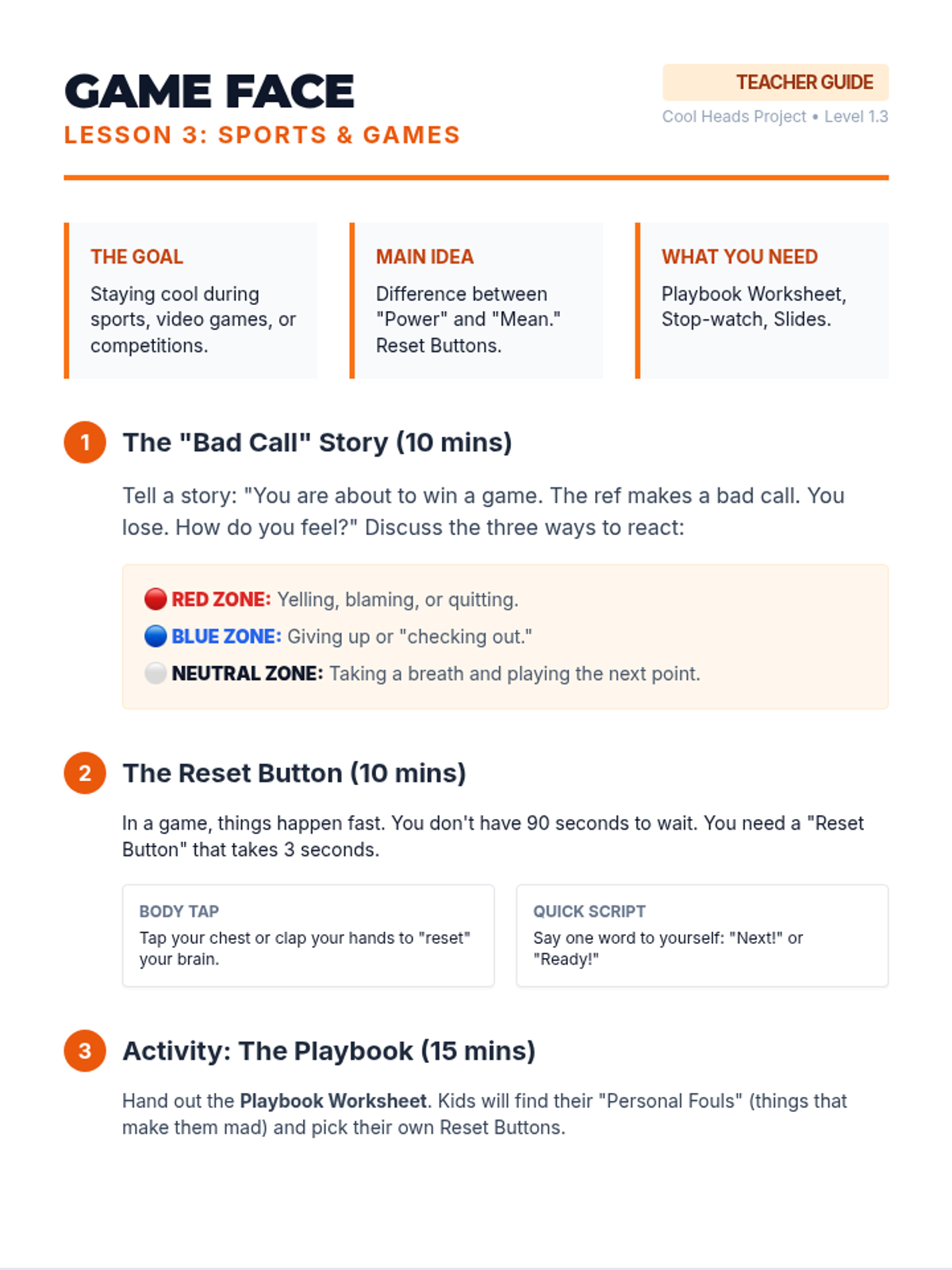
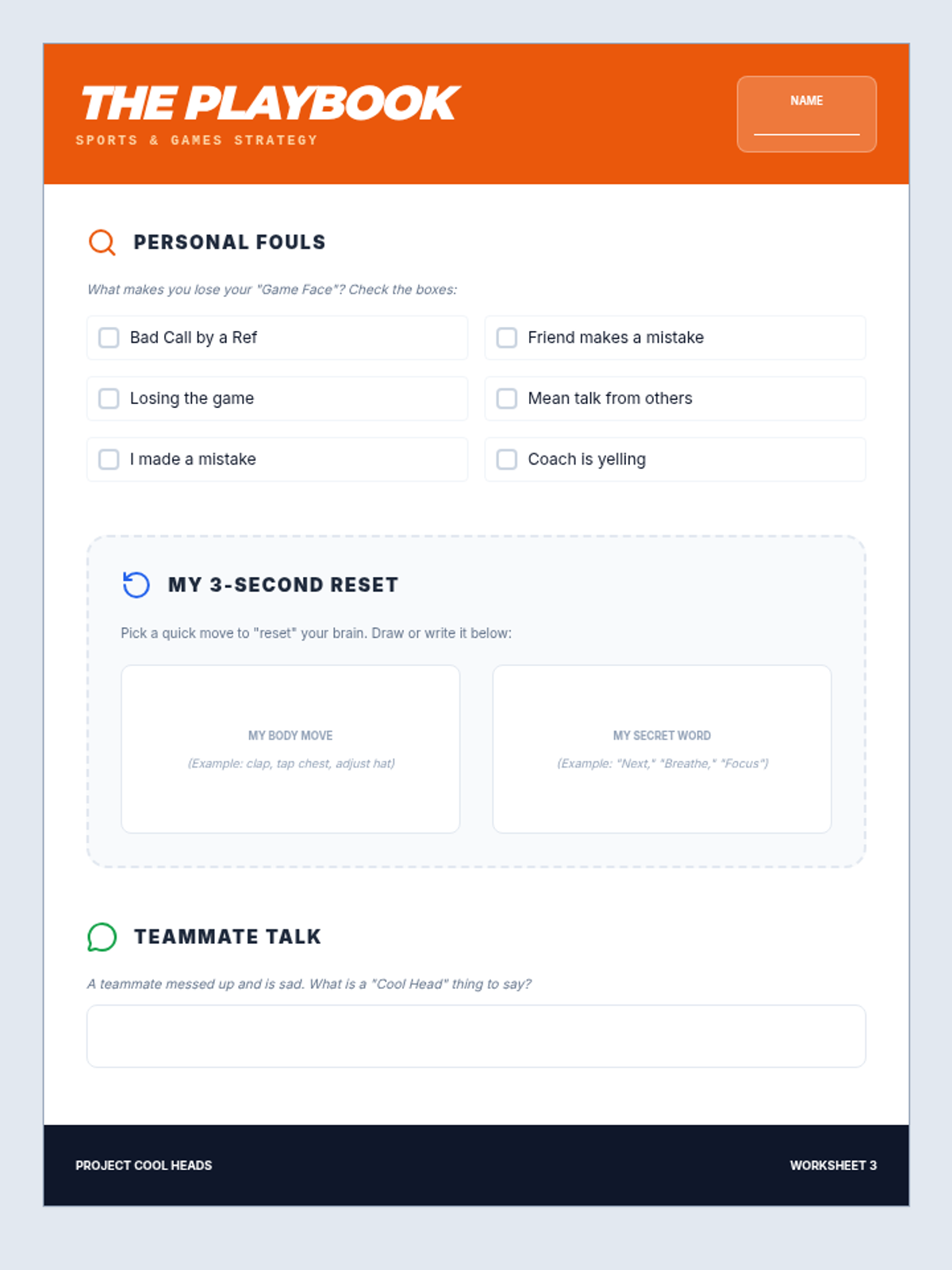
Explores the emotional ups and downs of sports and competition, teaching students how to keep their cool during wins and losses.
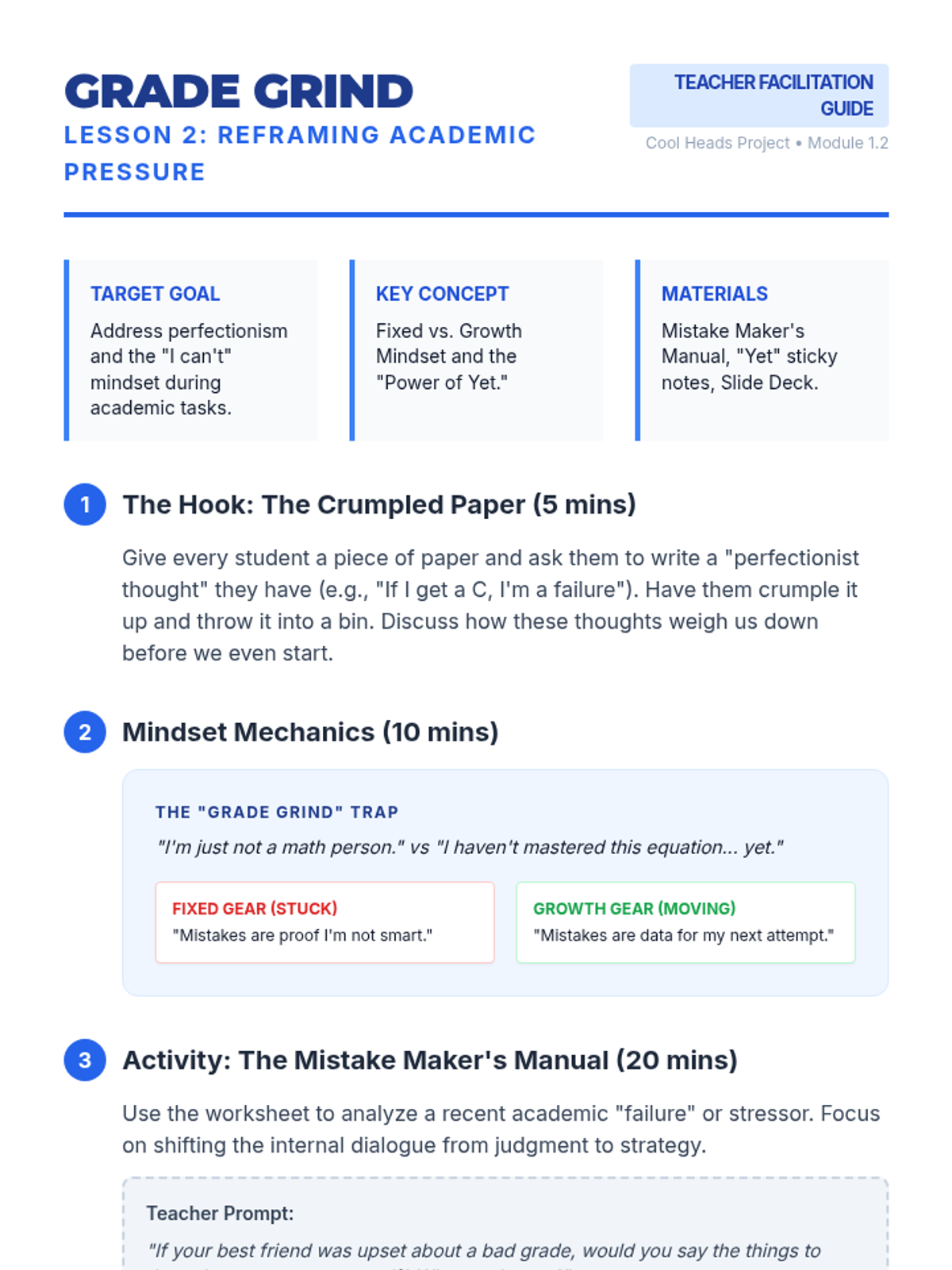
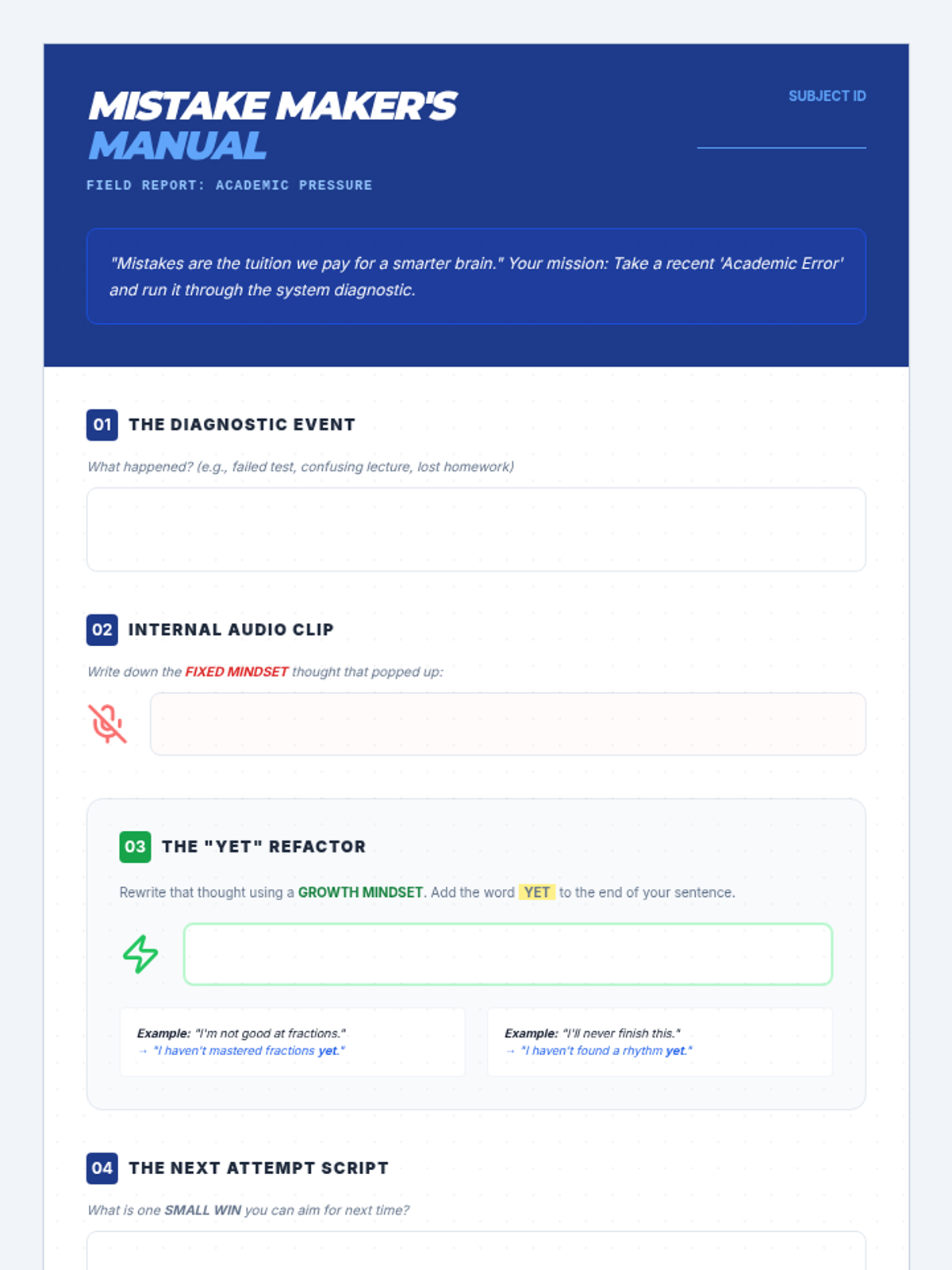
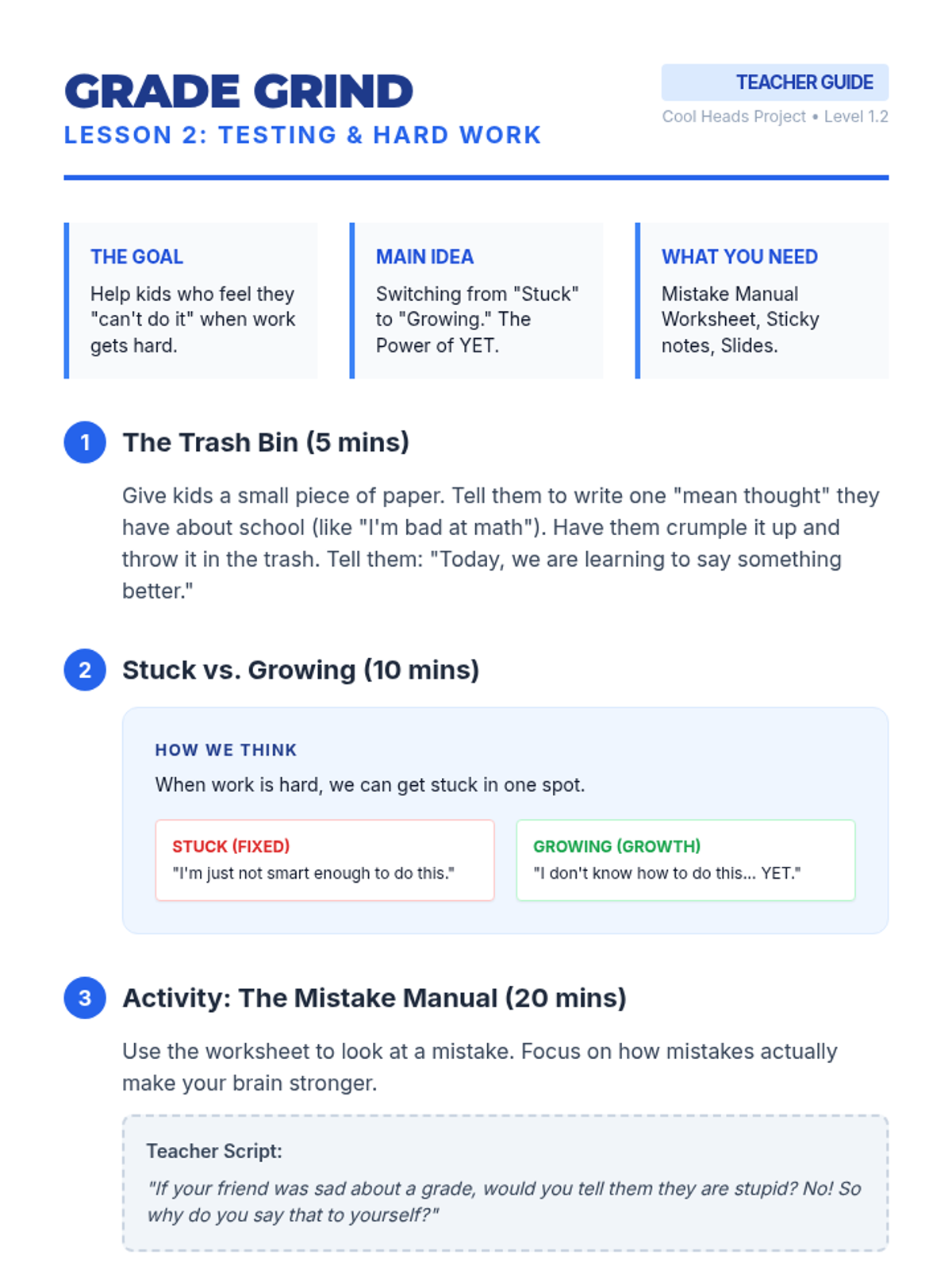
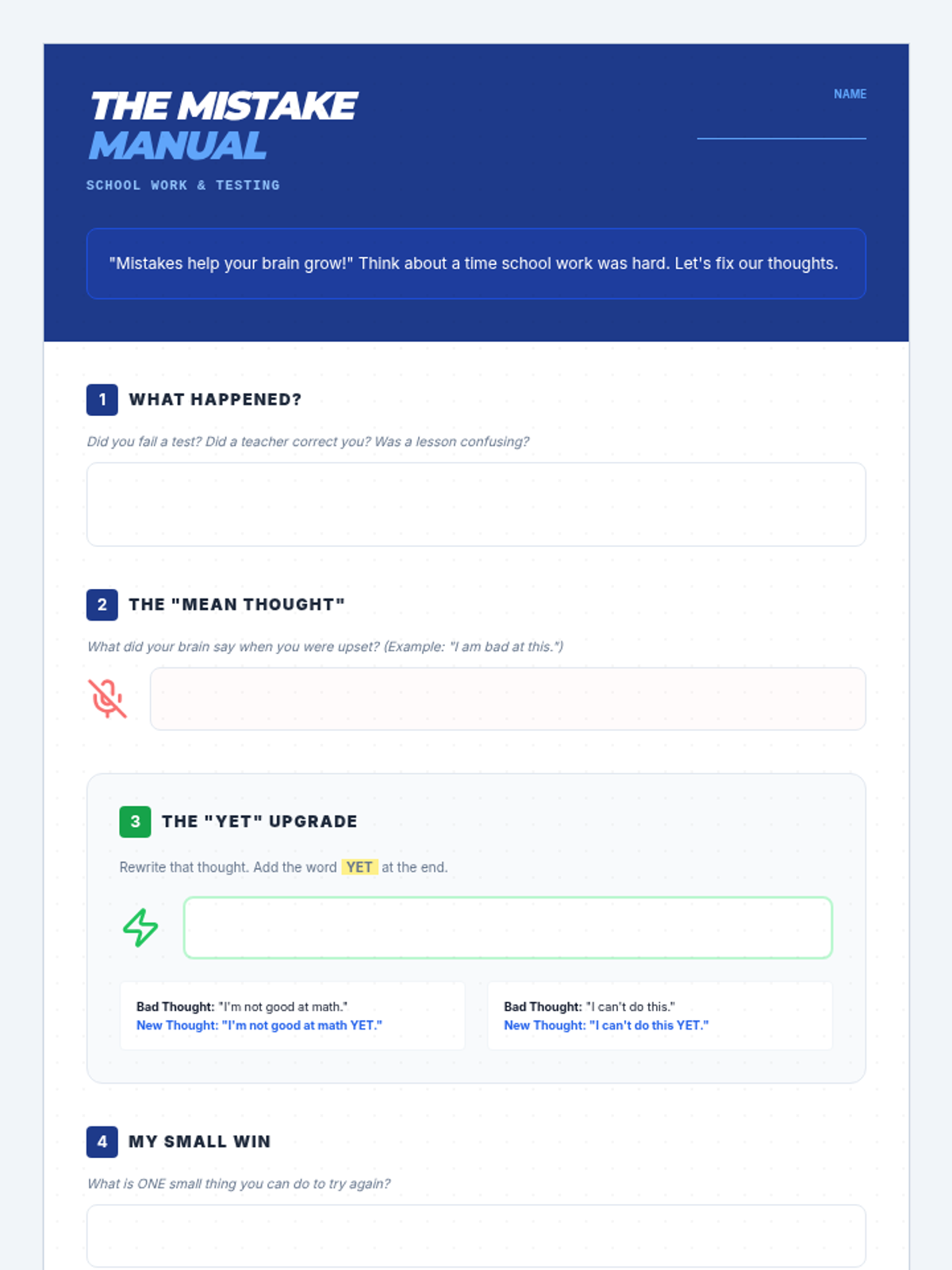
Focuses on managing the pressure of grades, tests, and academic expectations through reframing and realistic goal-setting.
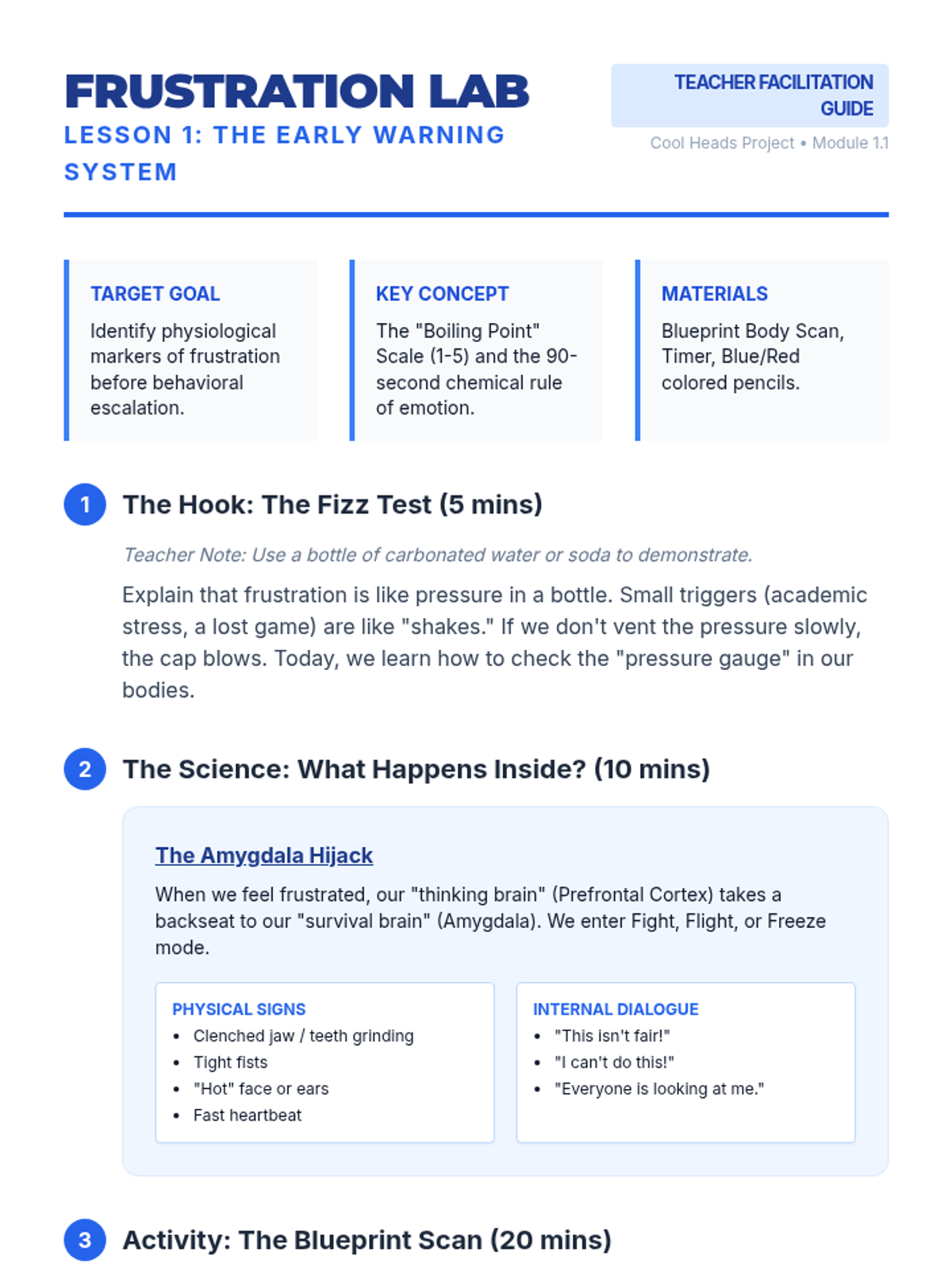
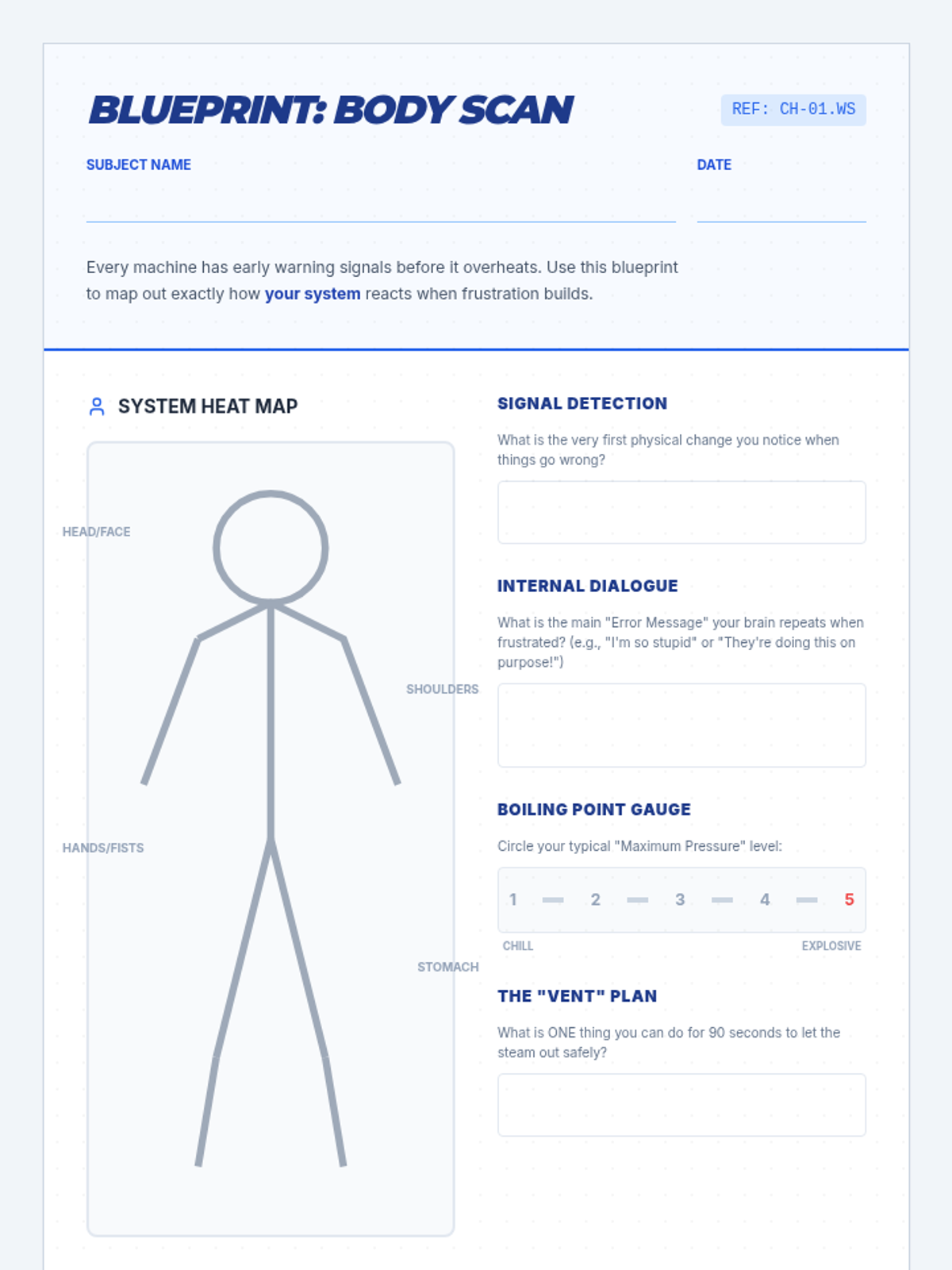
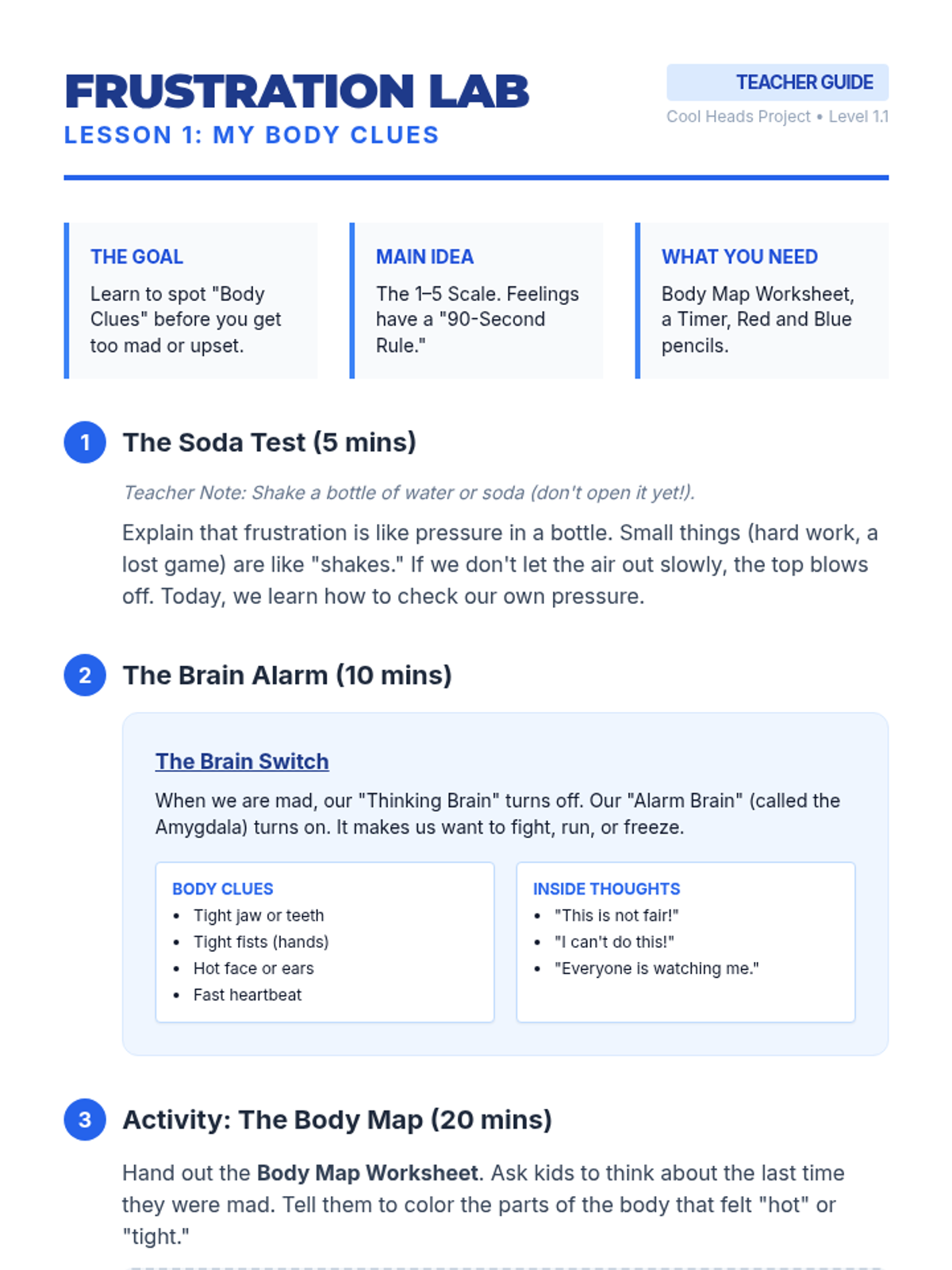
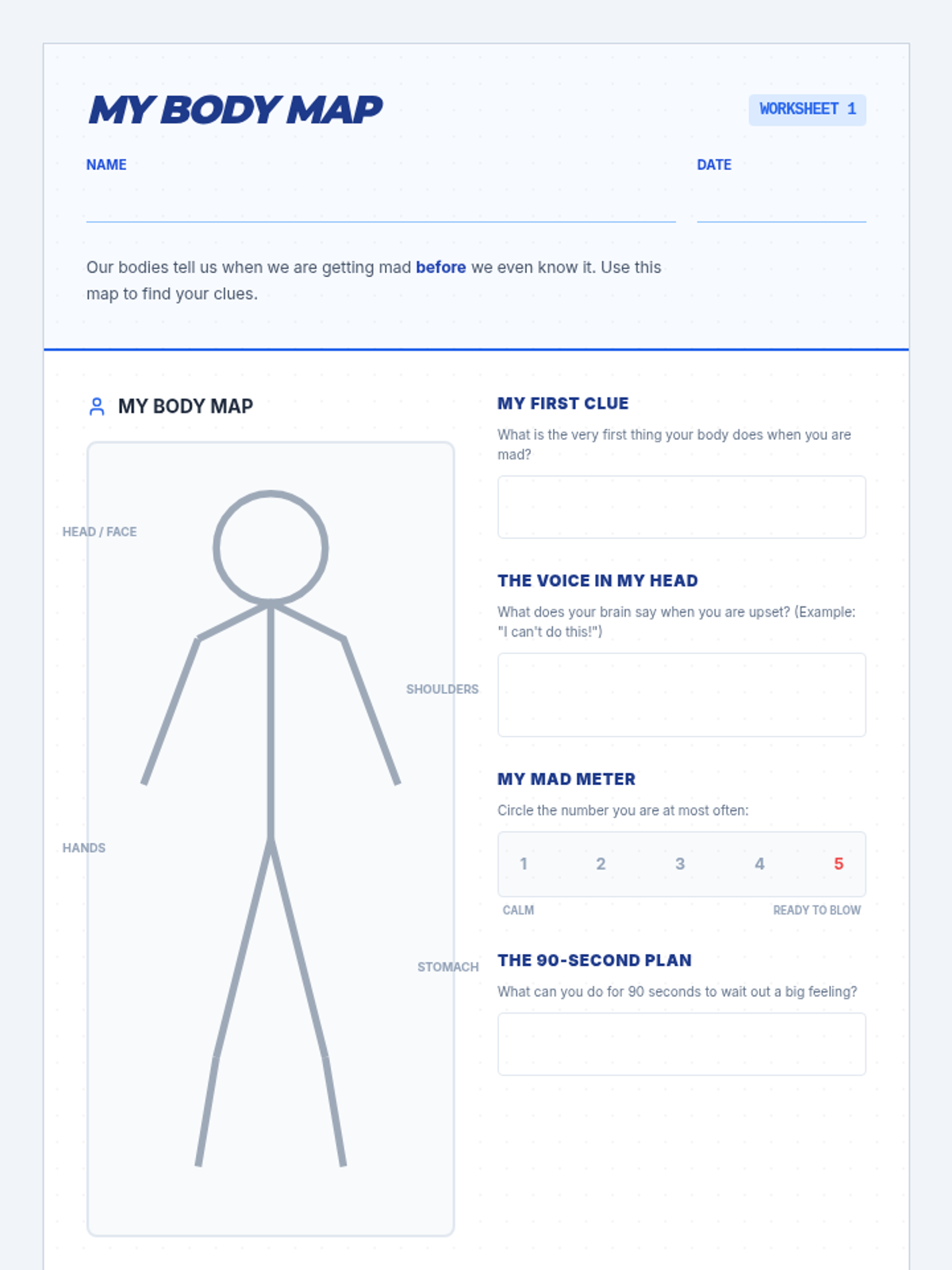
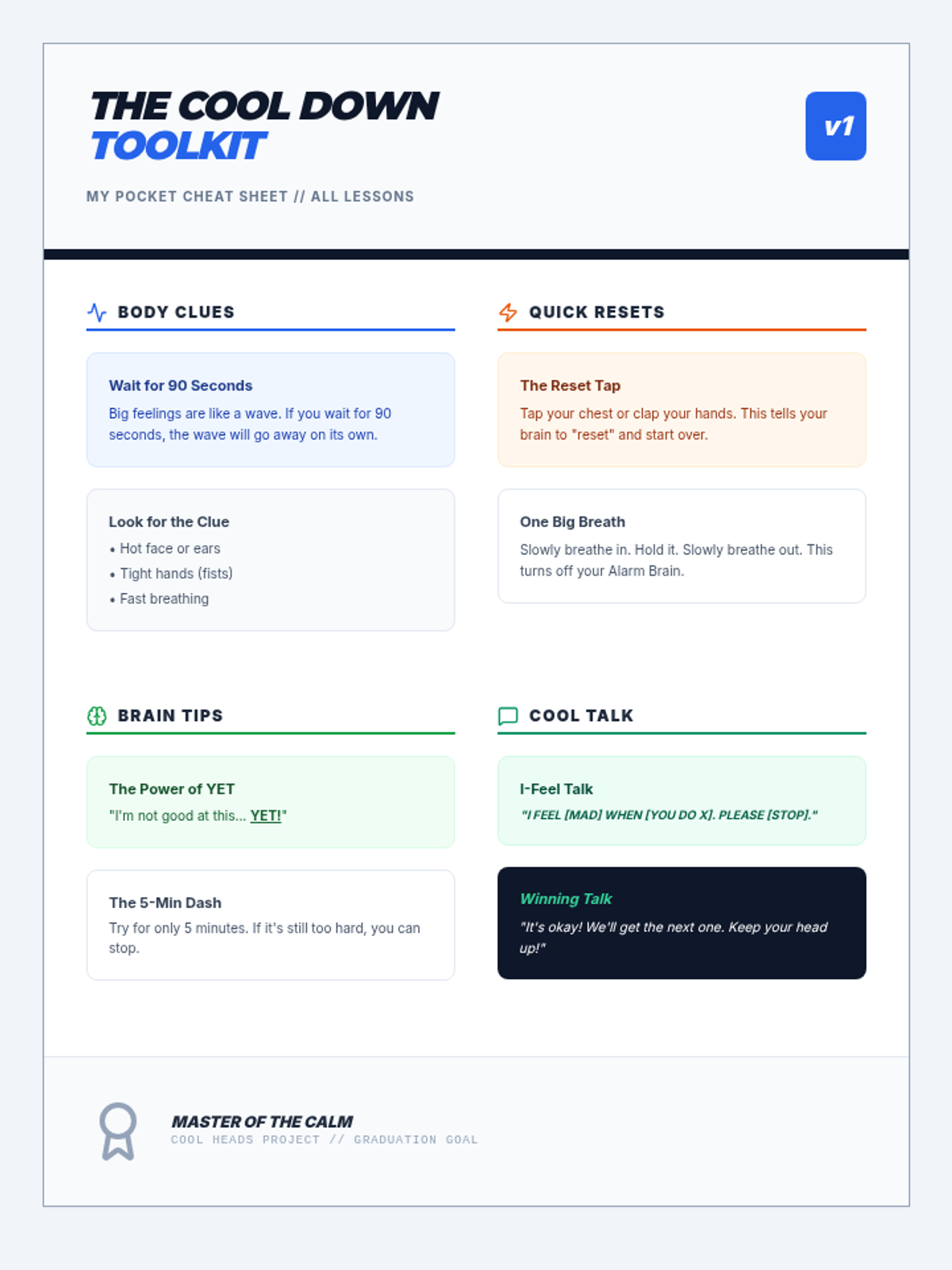
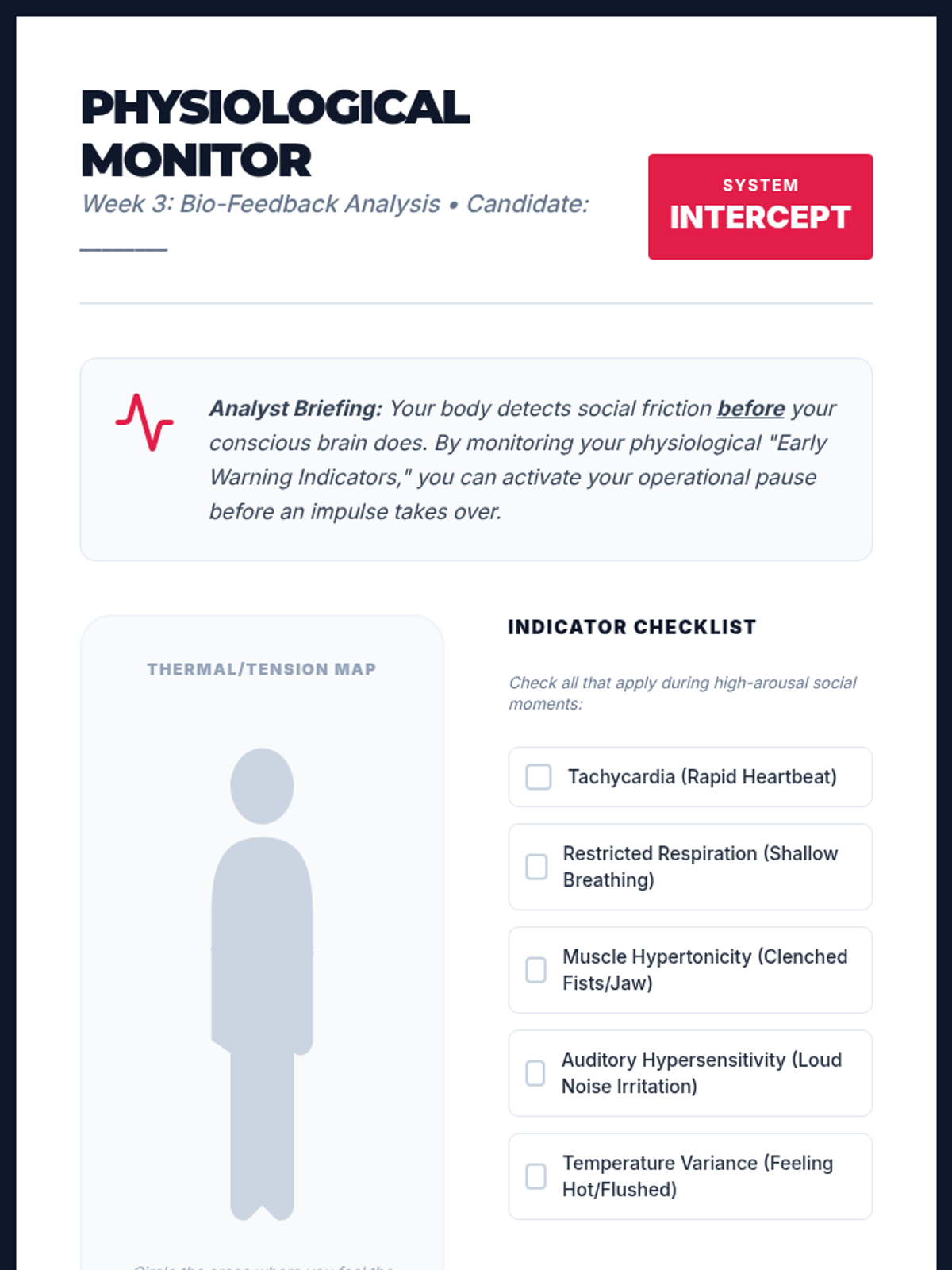
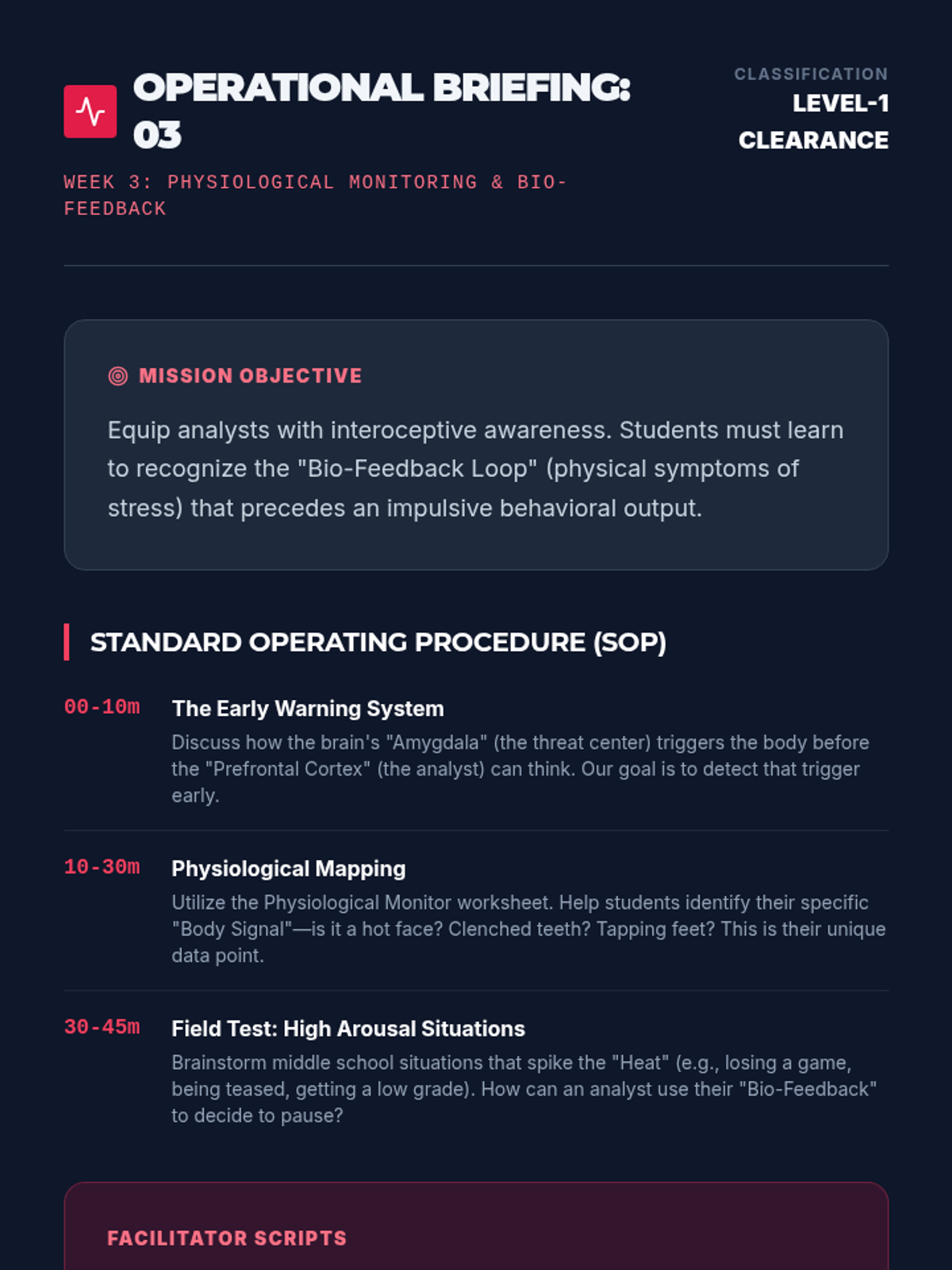
Students identify the physical sensations of frustration and learn to recognize their personal 'early warning signs' before they reach a boiling point.
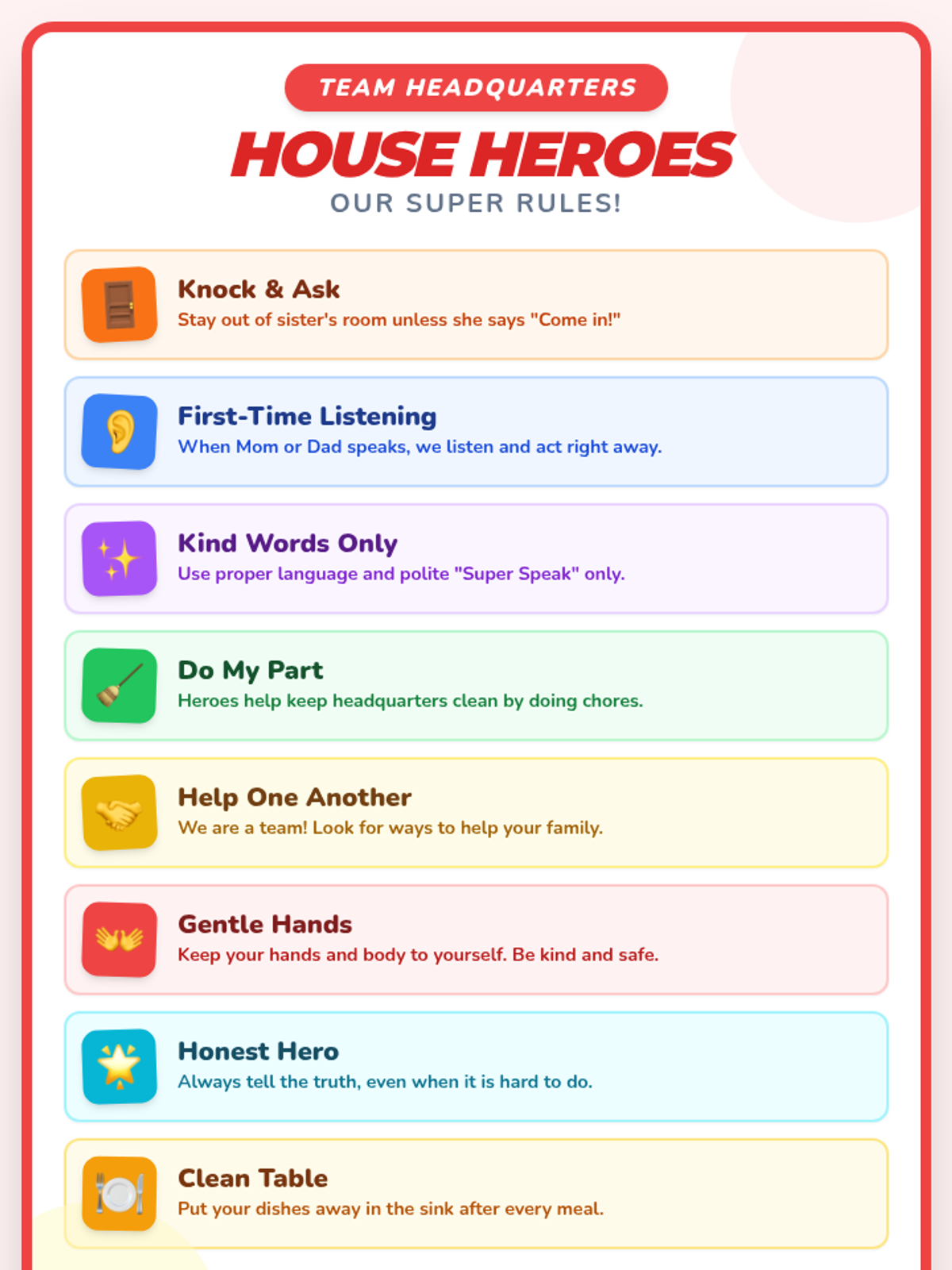
A clear and positive set of house rules to help first graders understand expectations for behavior and cooperation at home.
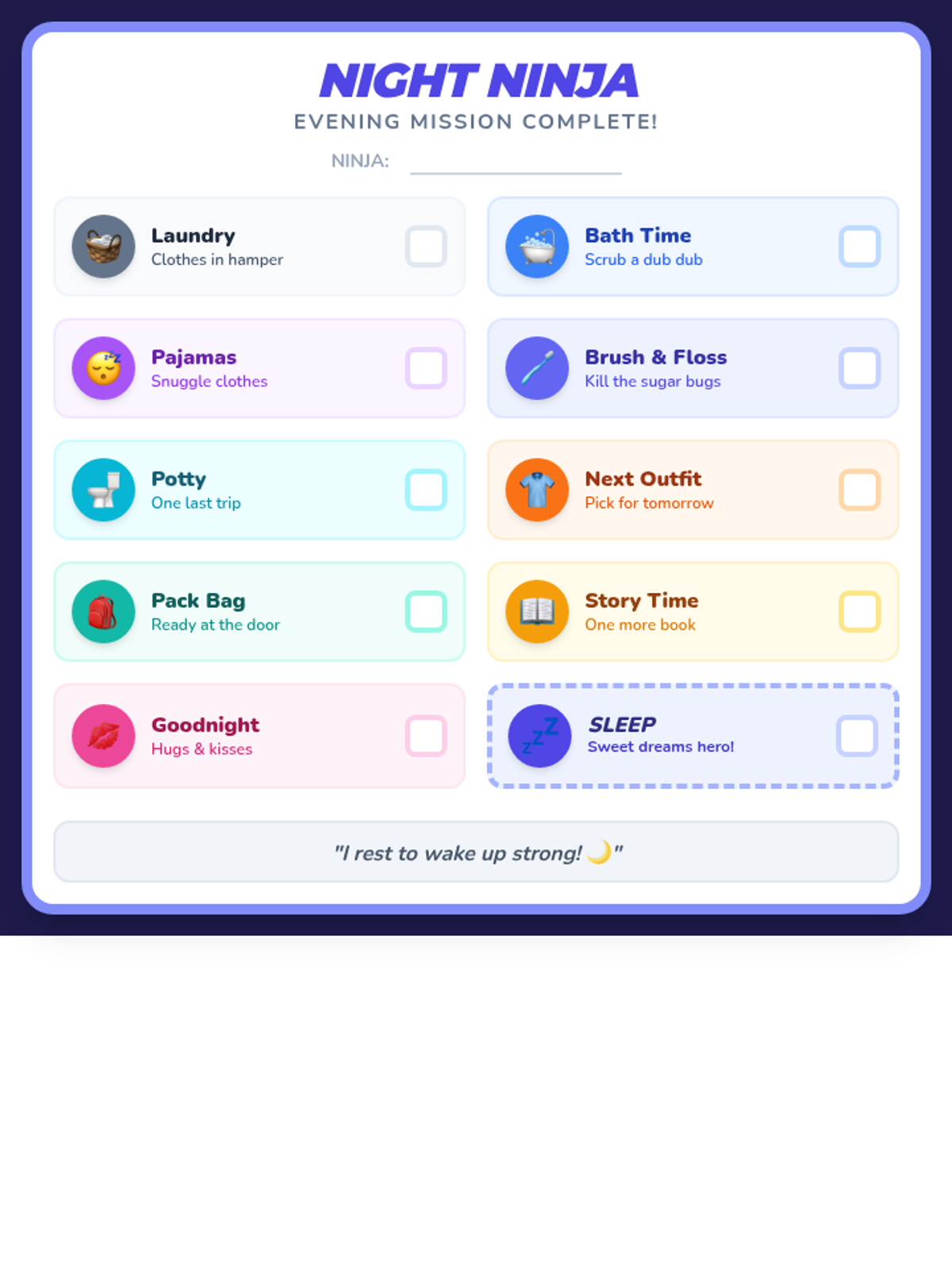
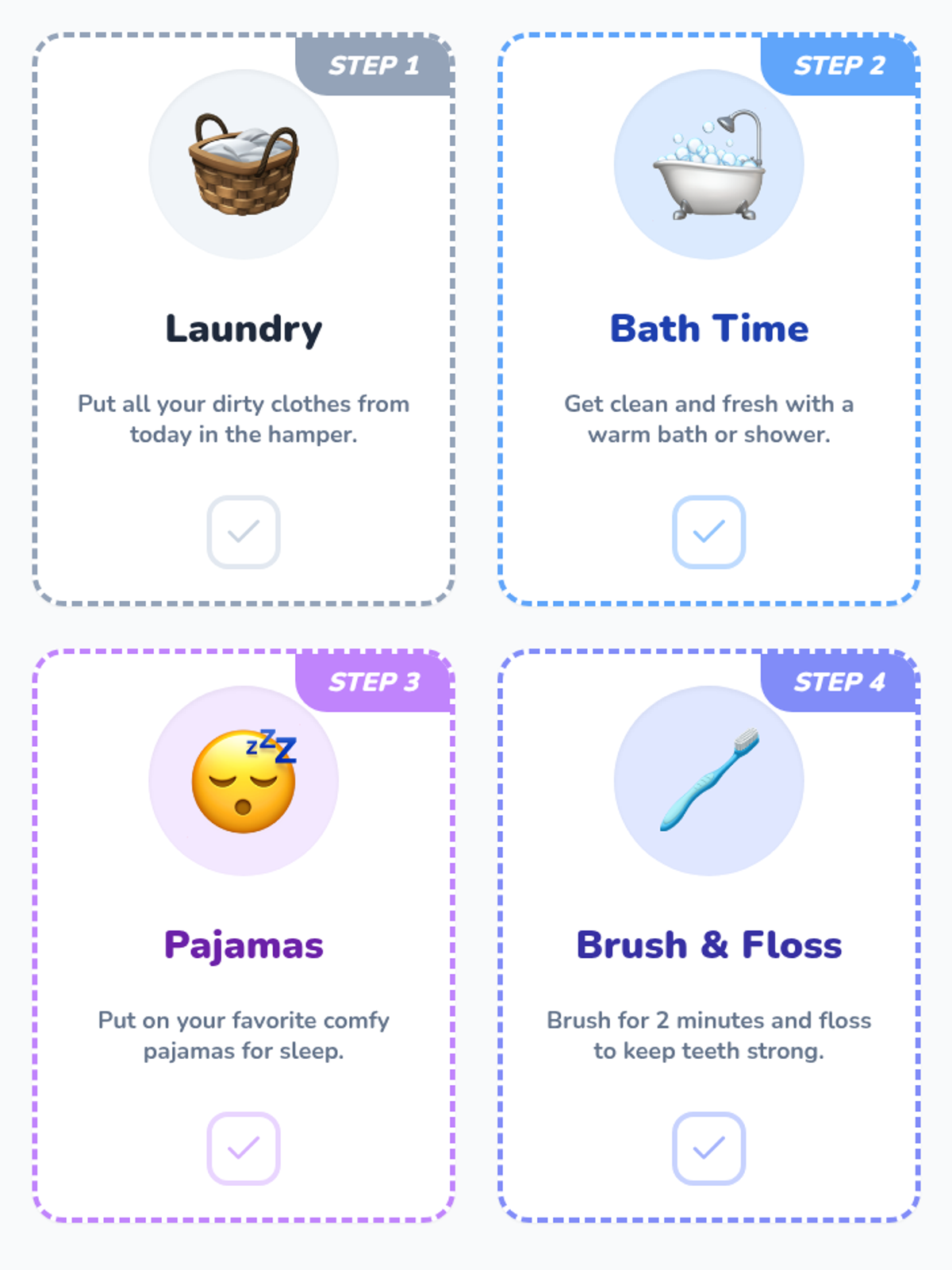
Visual routines to help first graders wind down and prepare for the next day, ensuring a peaceful transition to sleep.
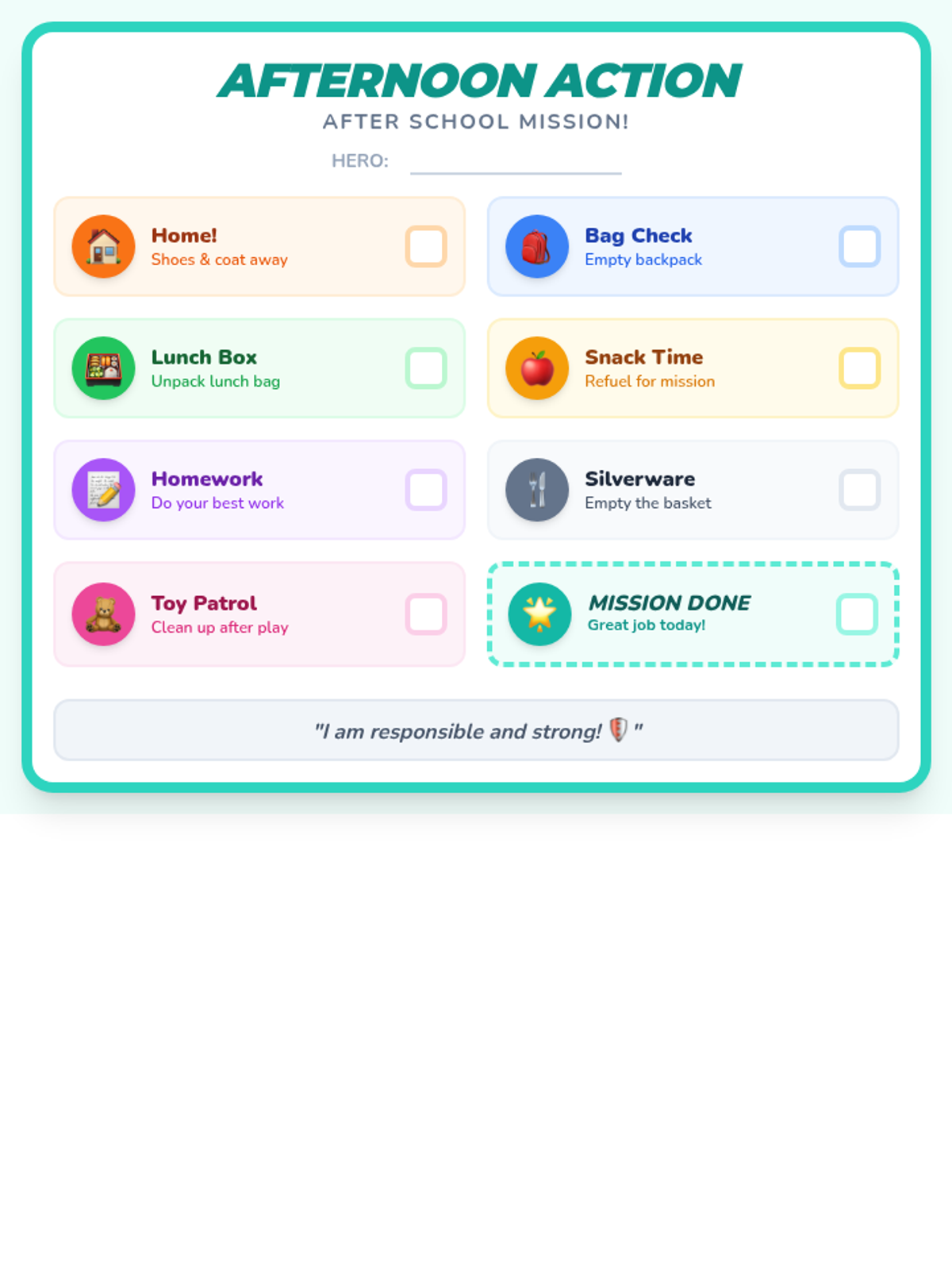
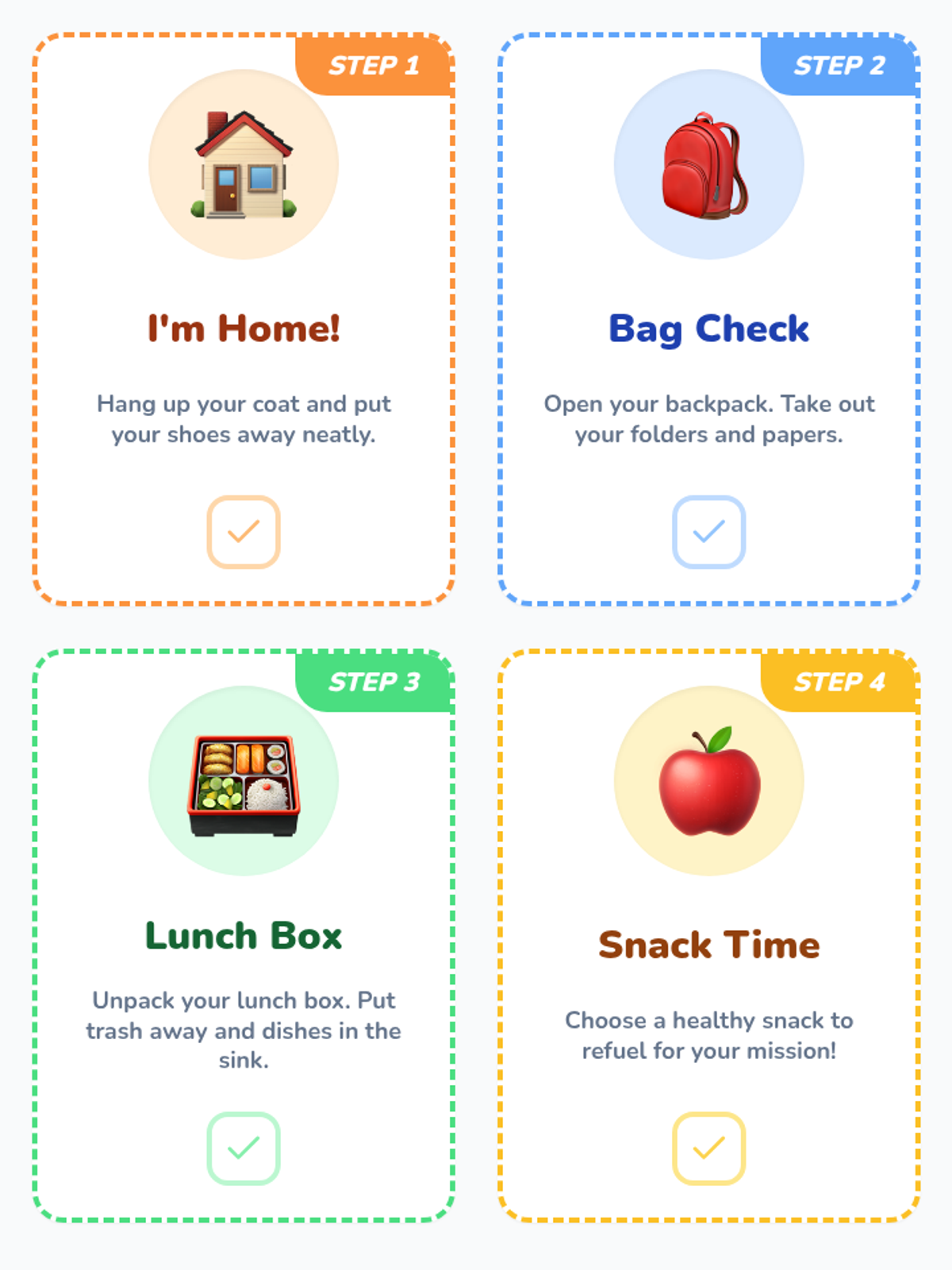
Visual checklists and task cards to help first graders manage their afternoon responsibilities, from school dismissal to dinner time.
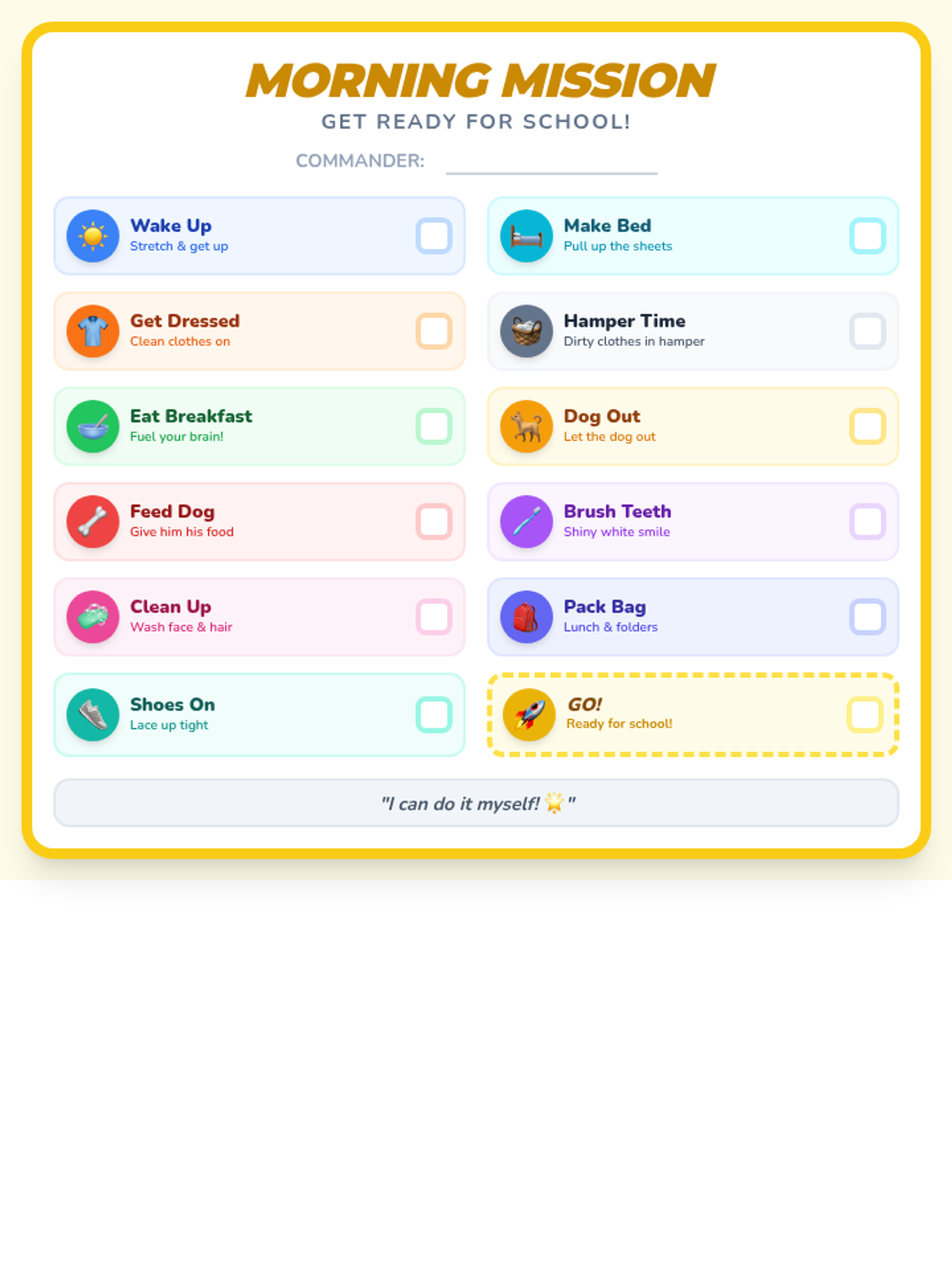
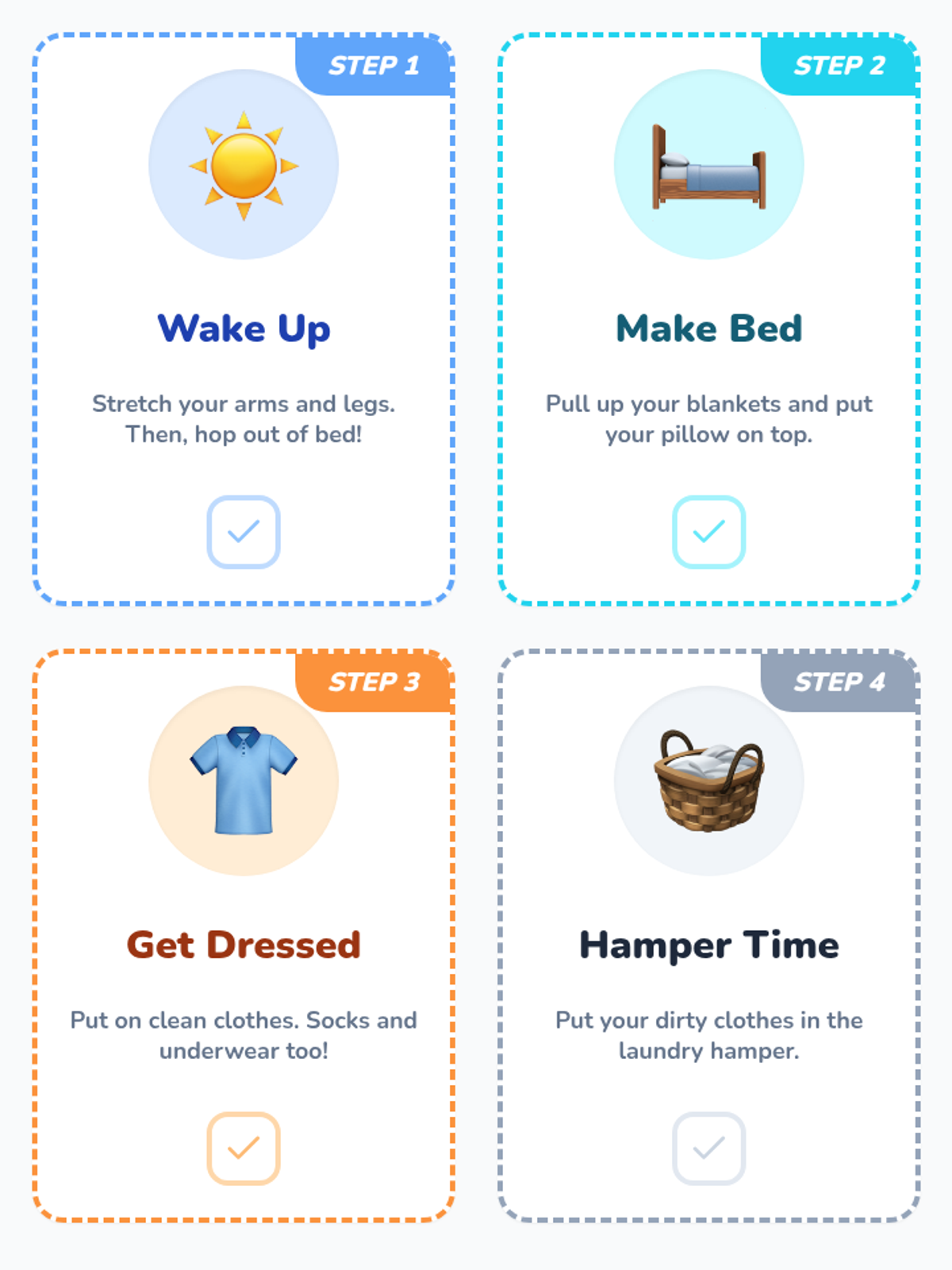
A set of visual tools to help first graders independently navigate their morning routine from waking up to heading out the door.
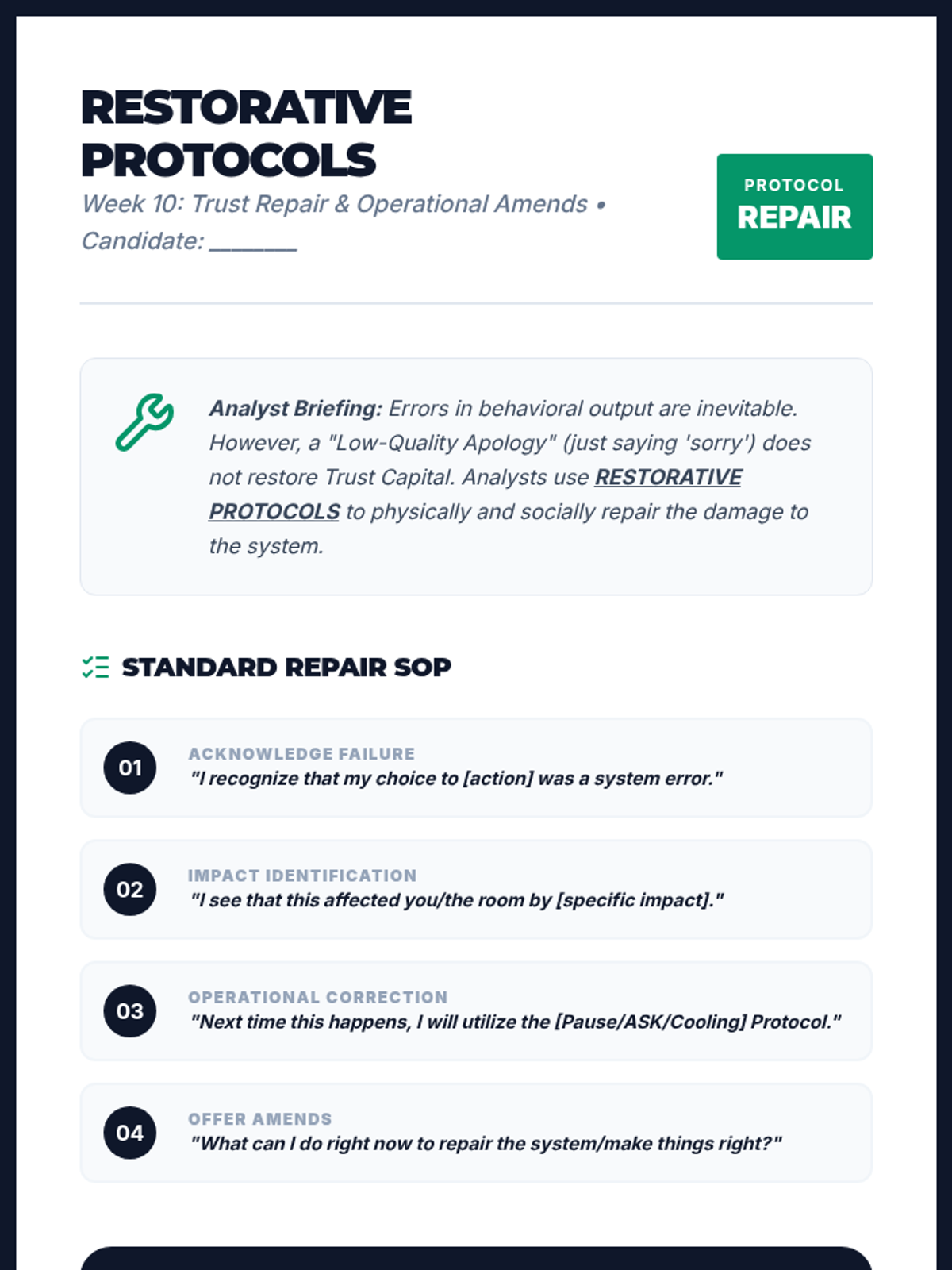
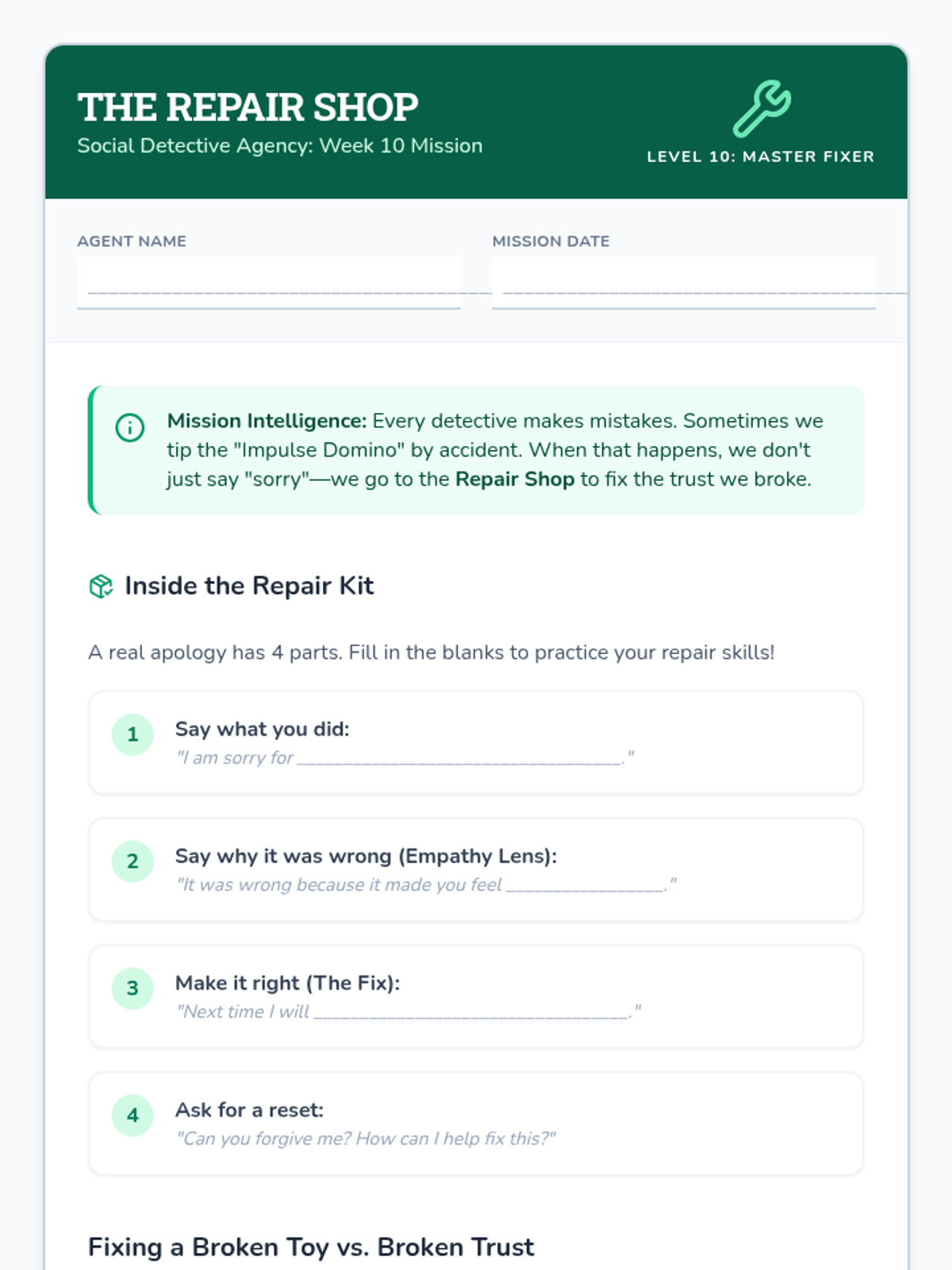
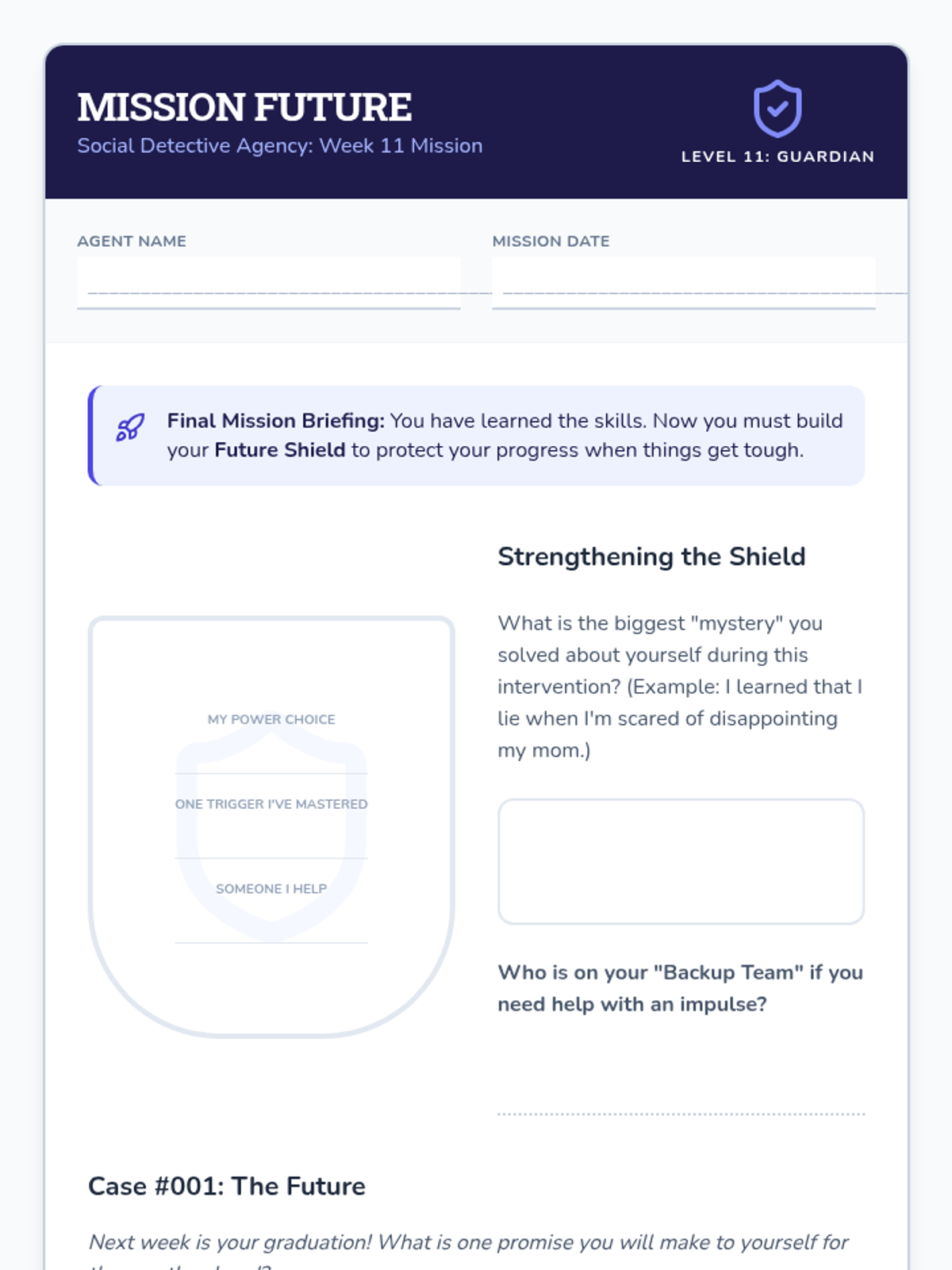
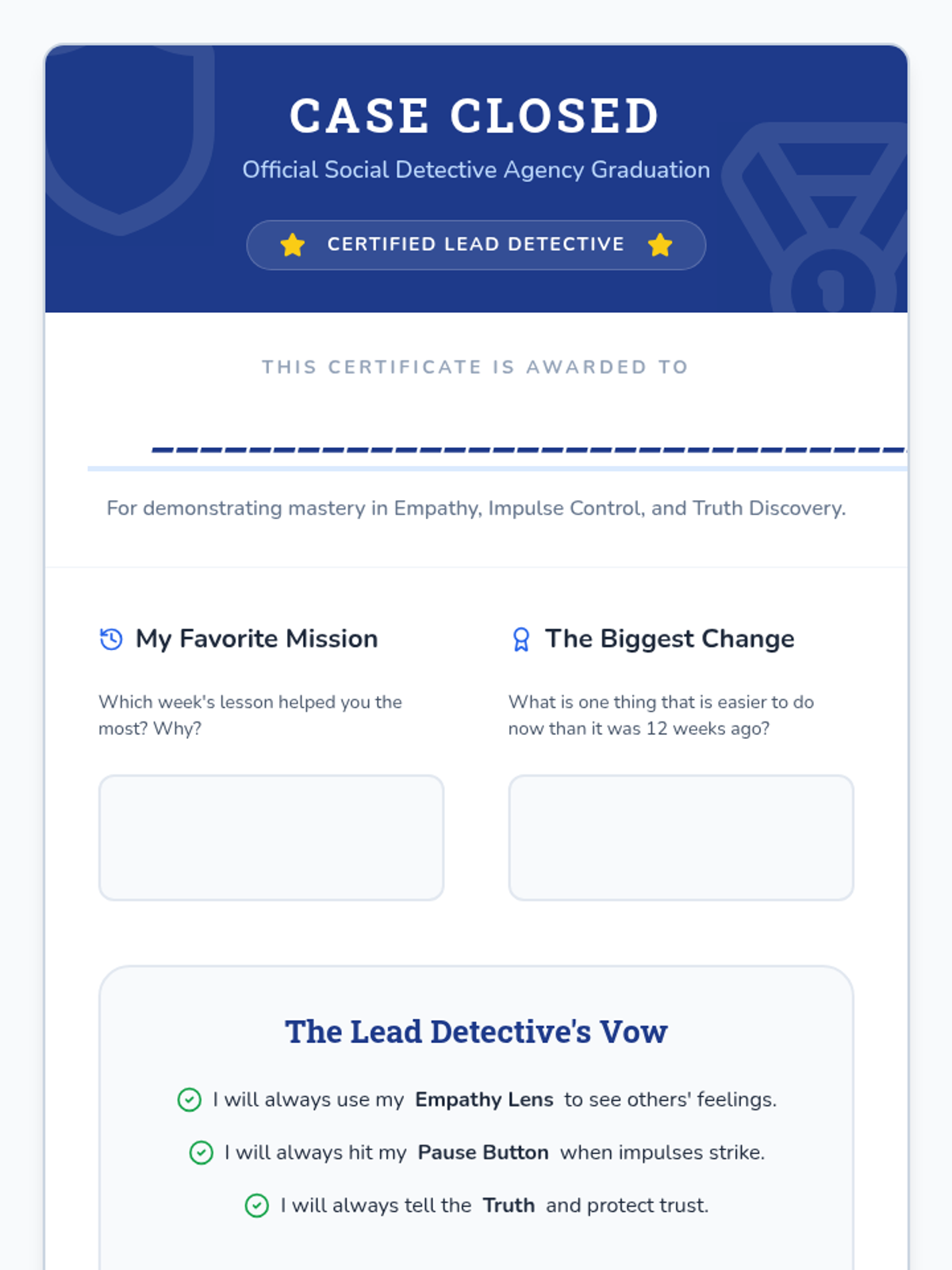
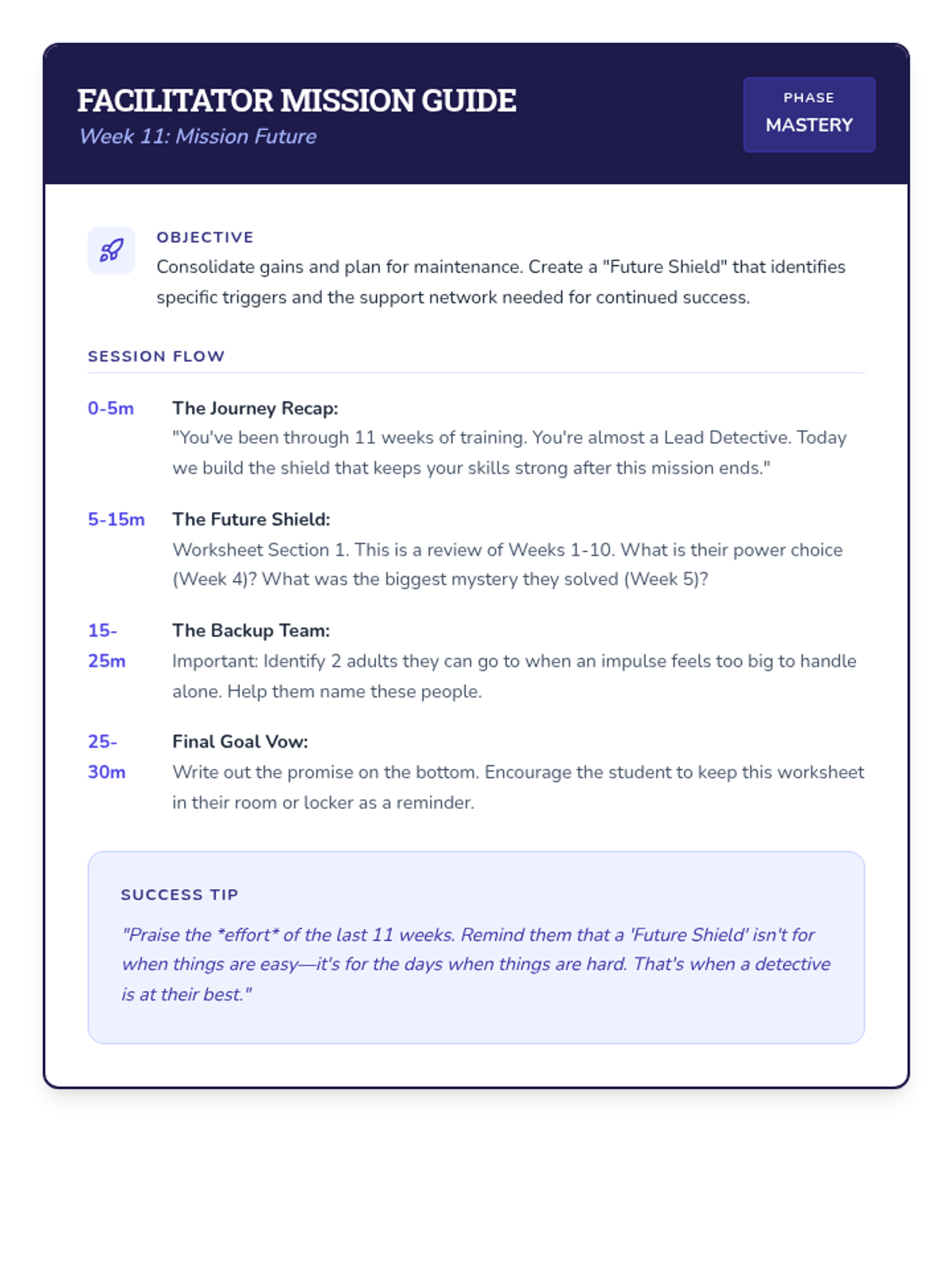
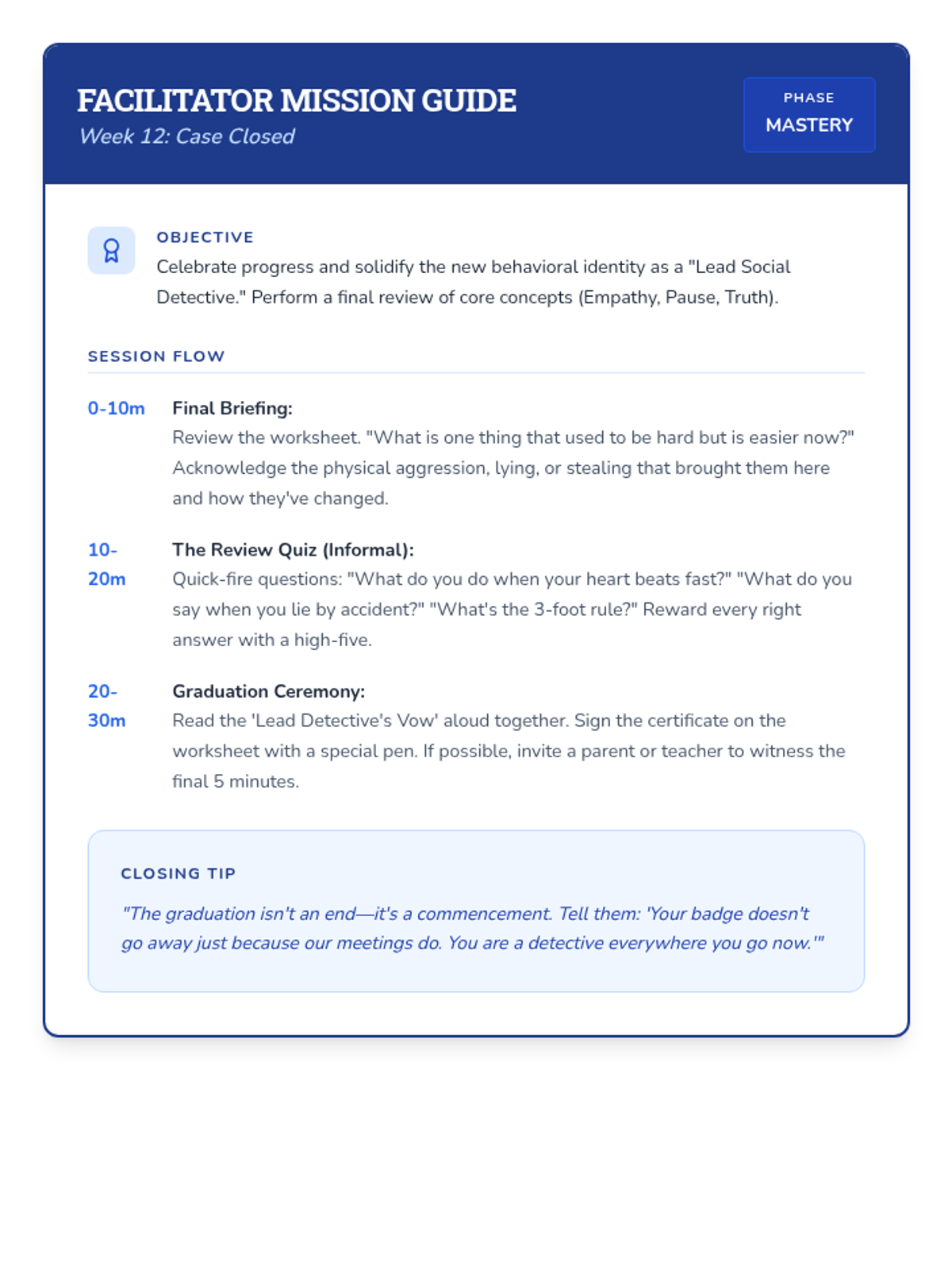
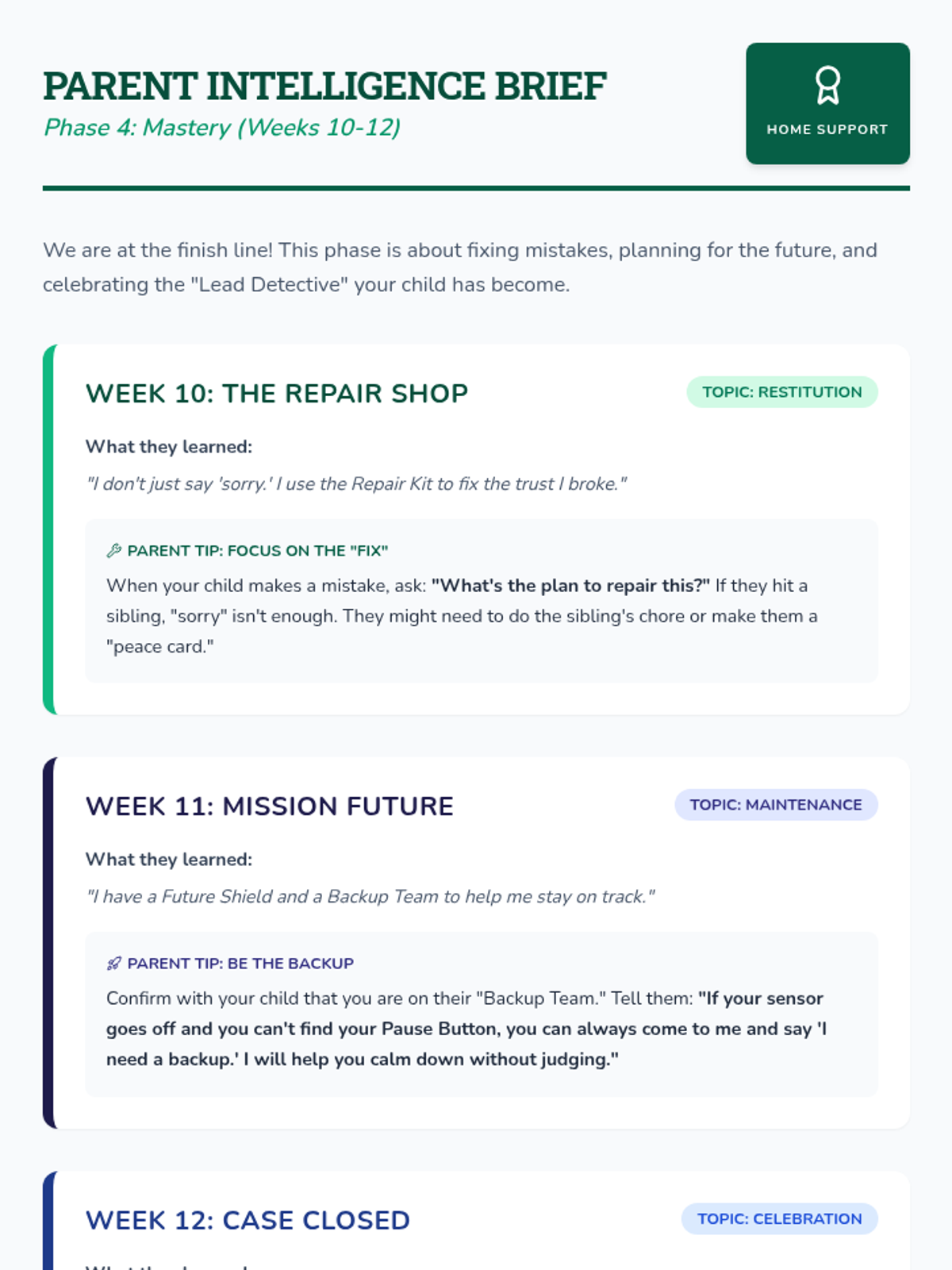
The final three weeks focus on making amends, setting future goals, and celebrating the progress made throughout the Social Detective program.
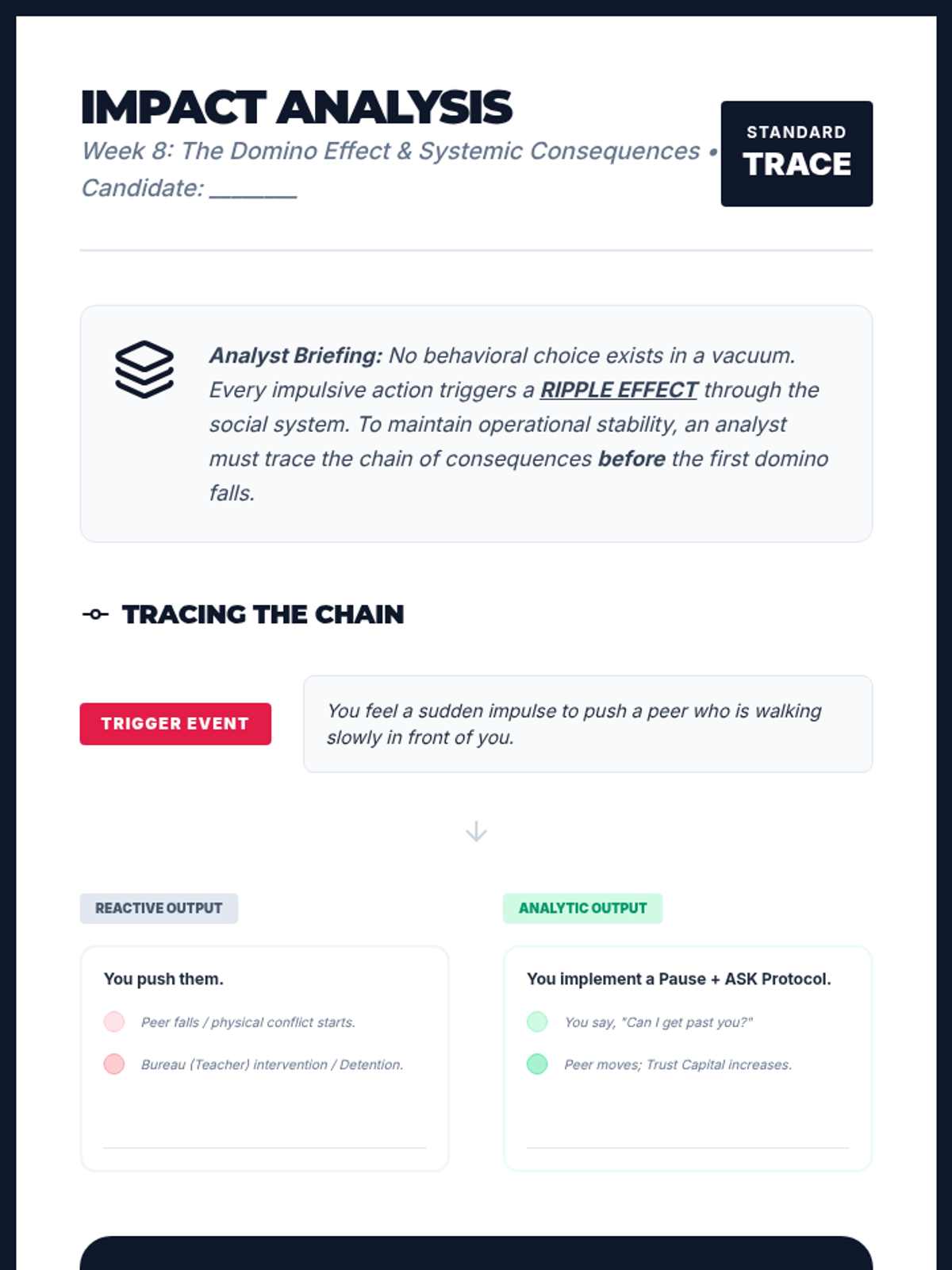
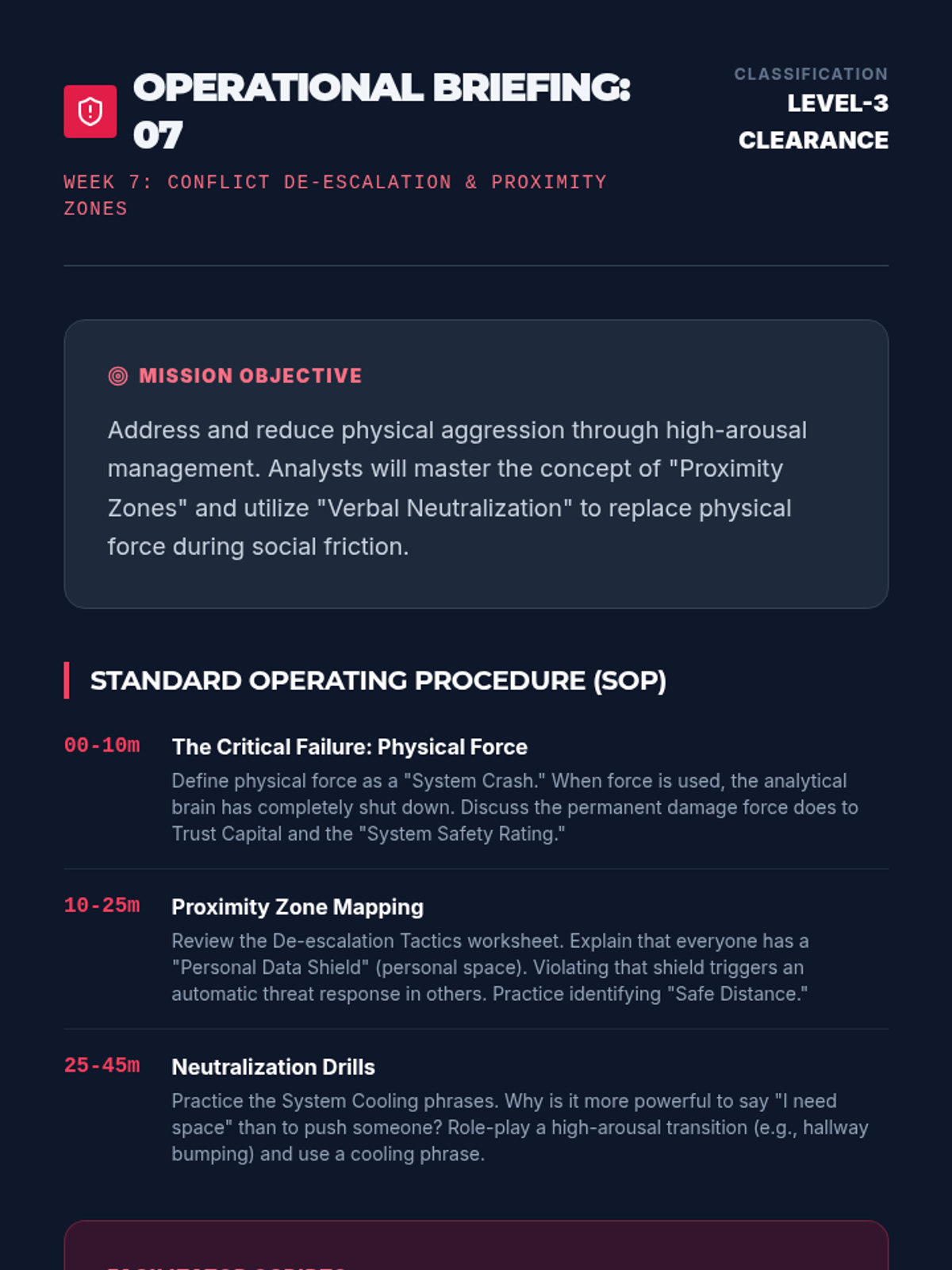
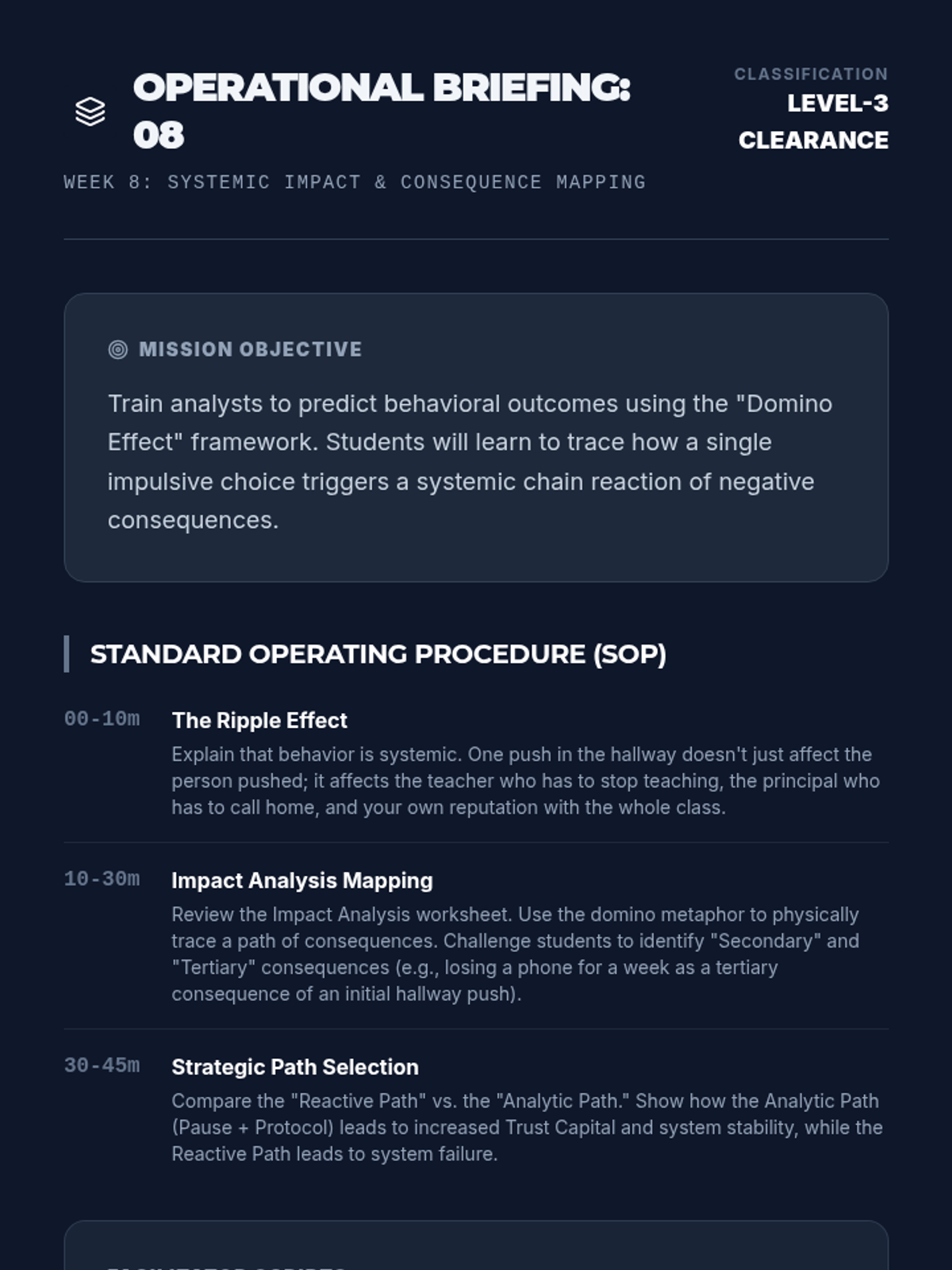
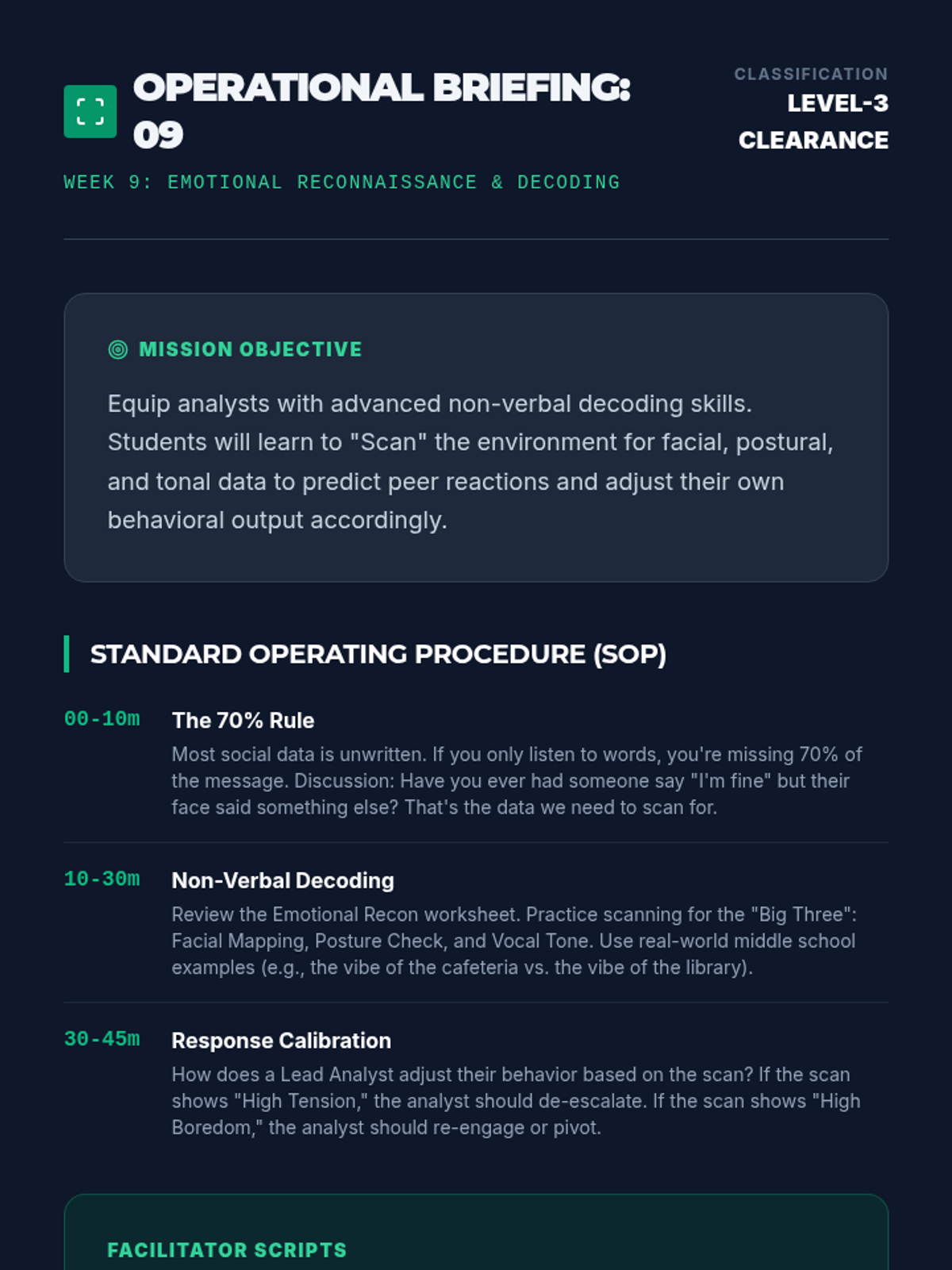
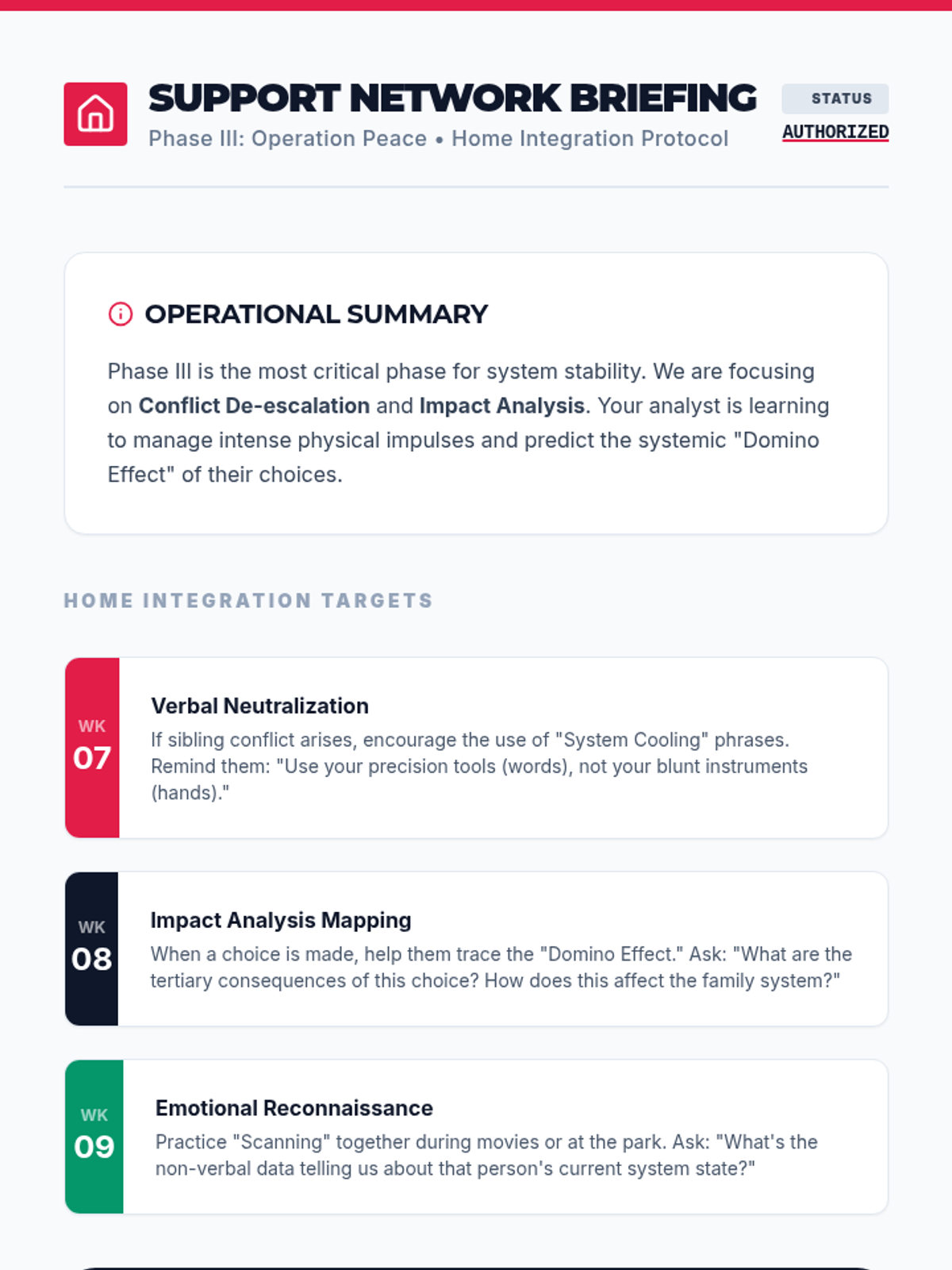
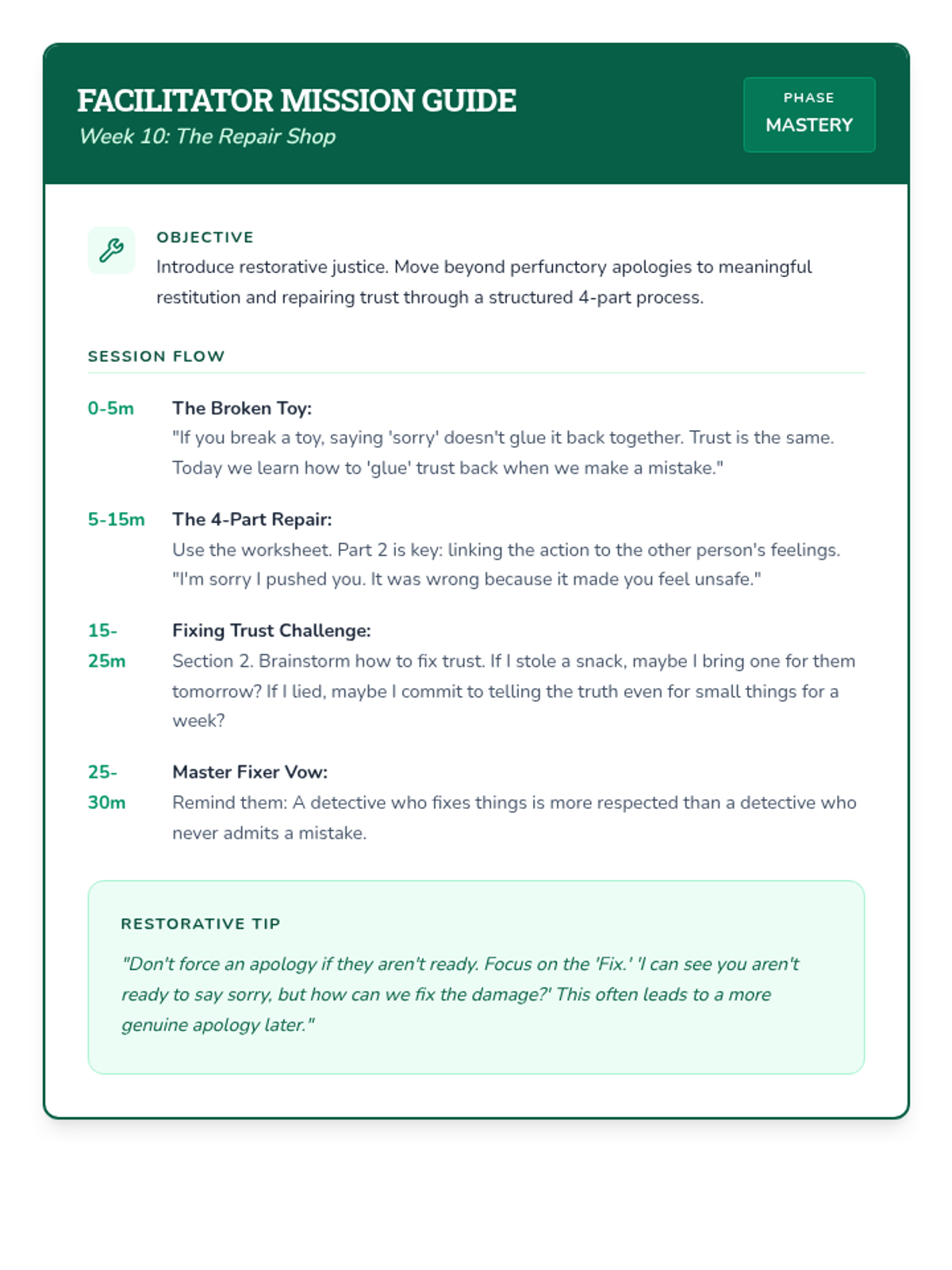
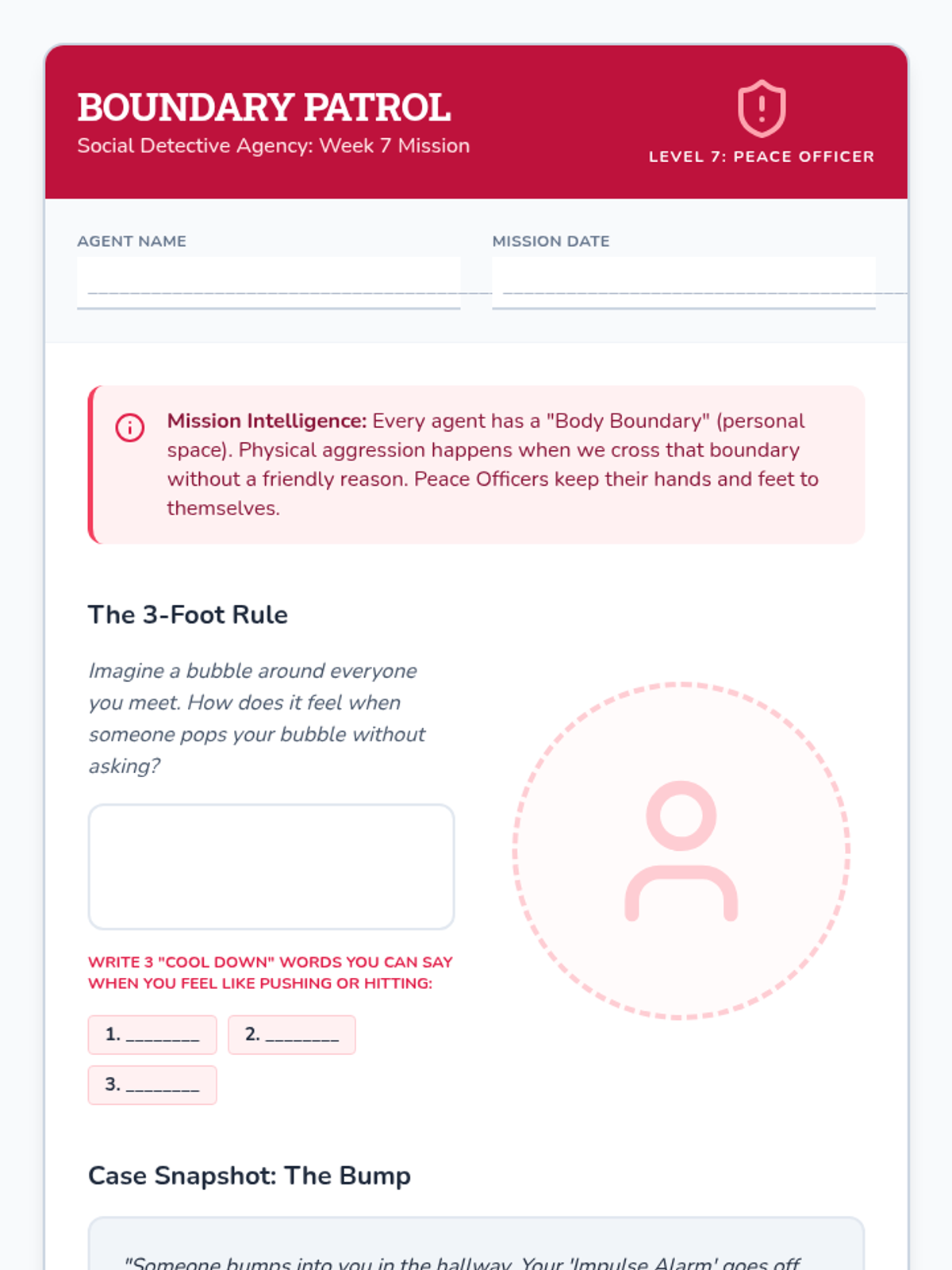
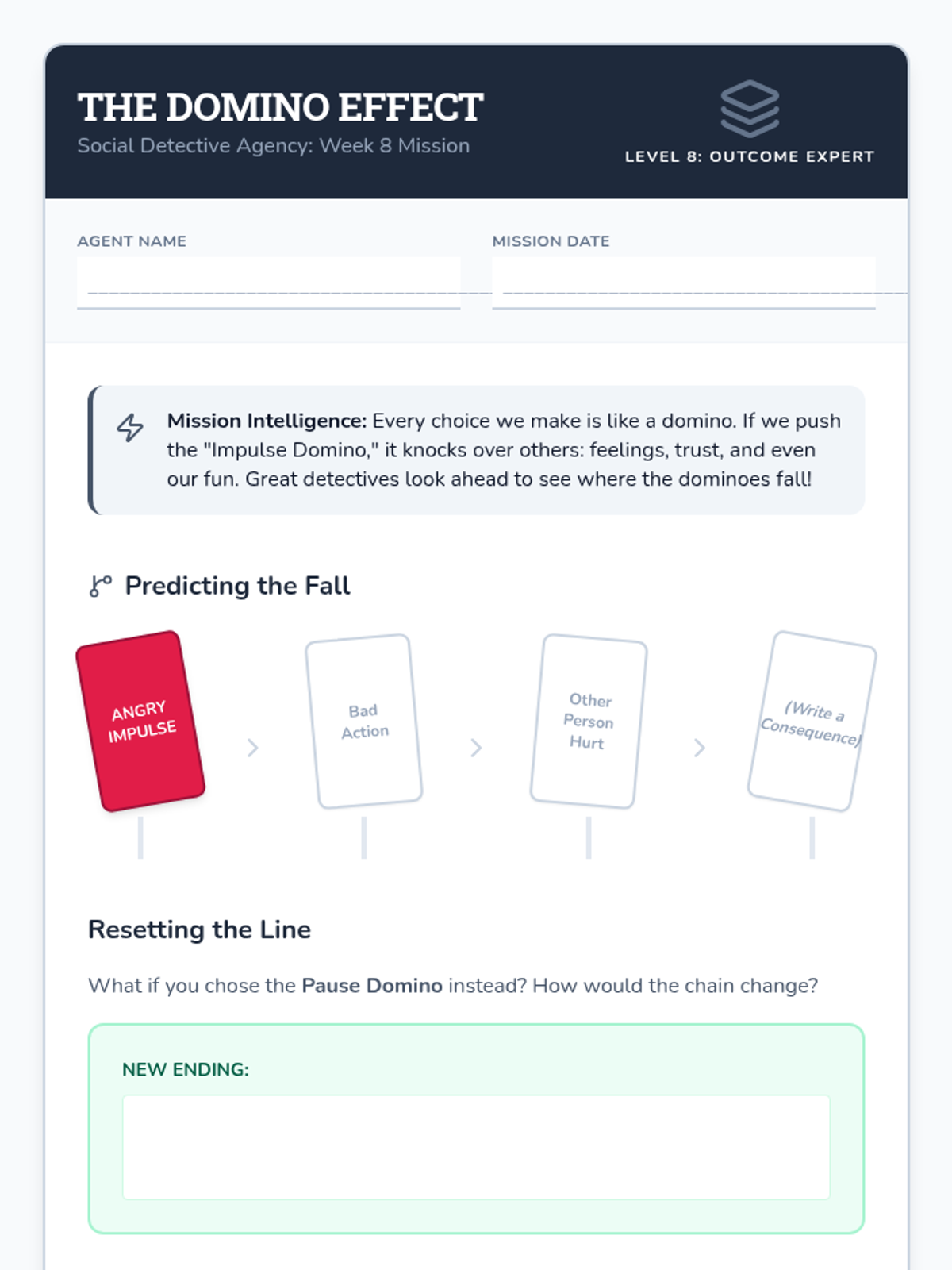
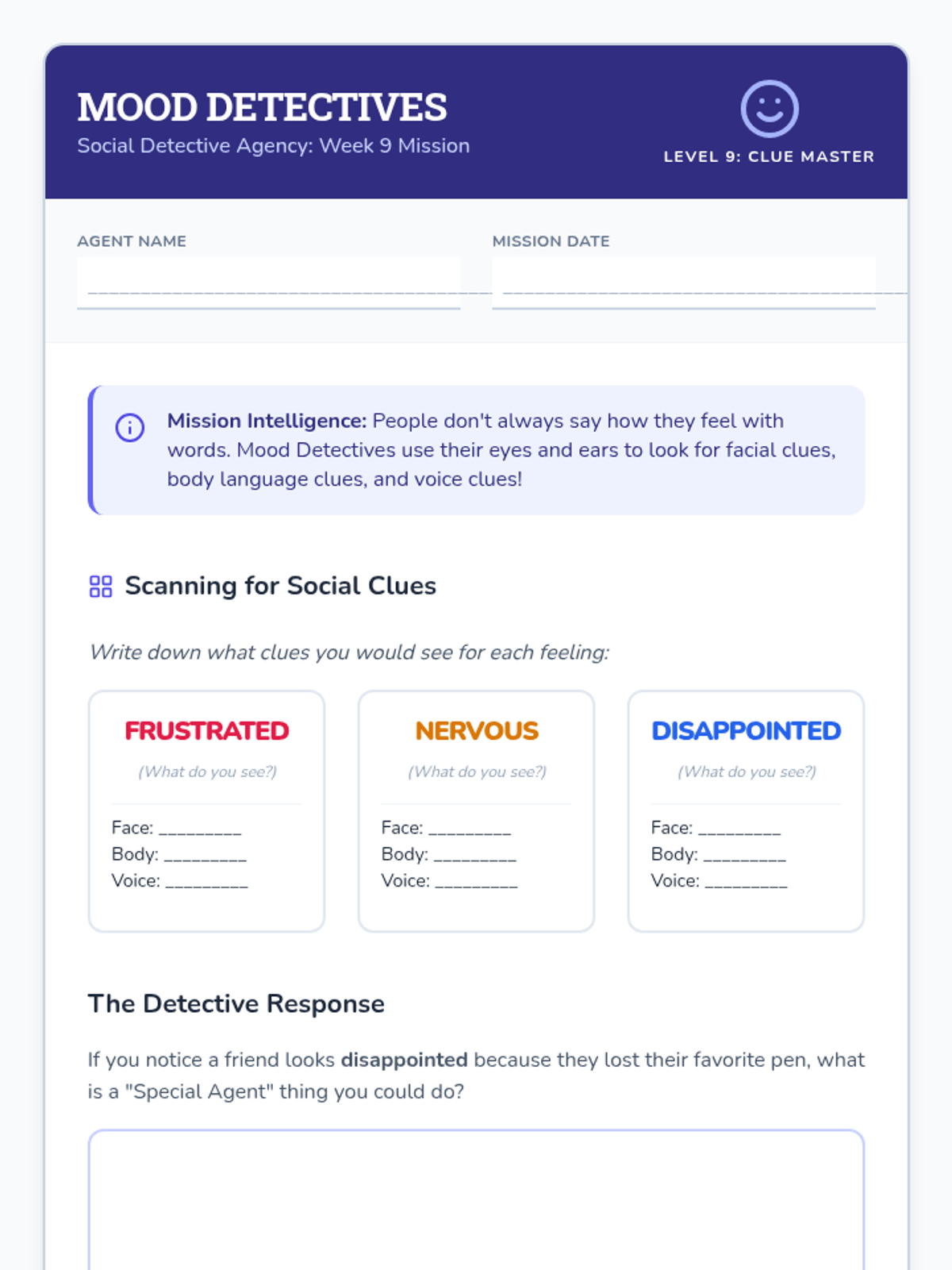
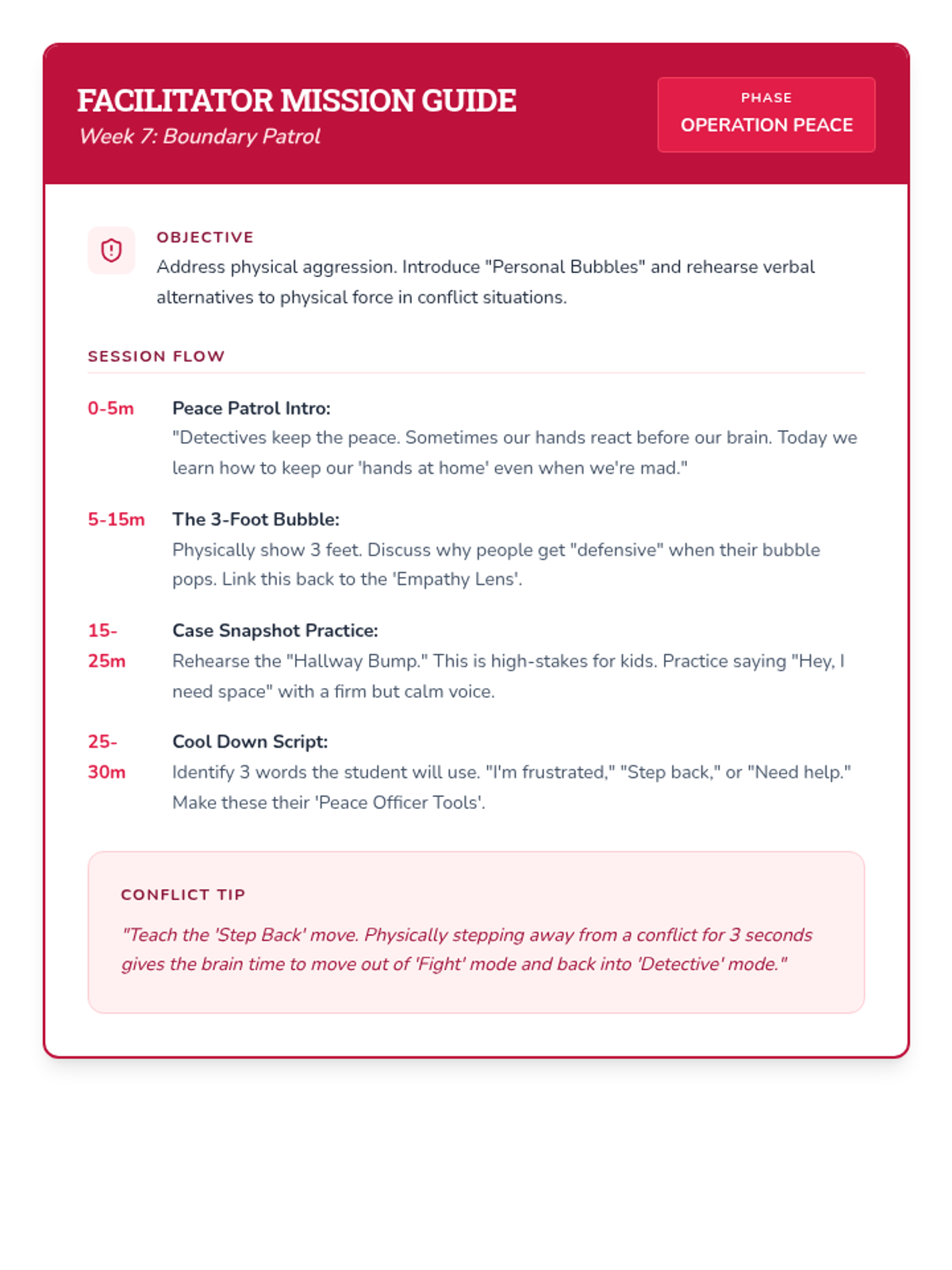
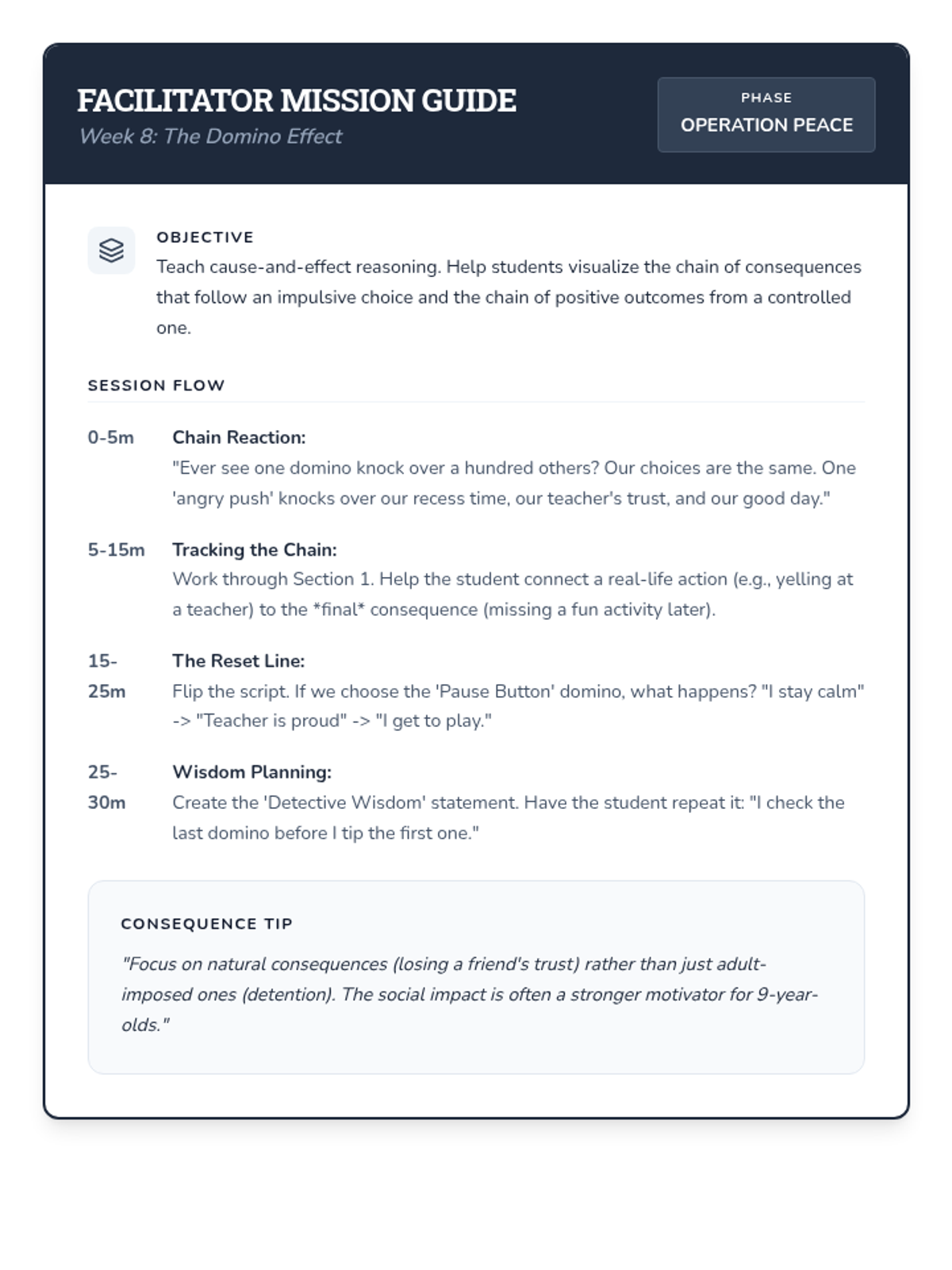
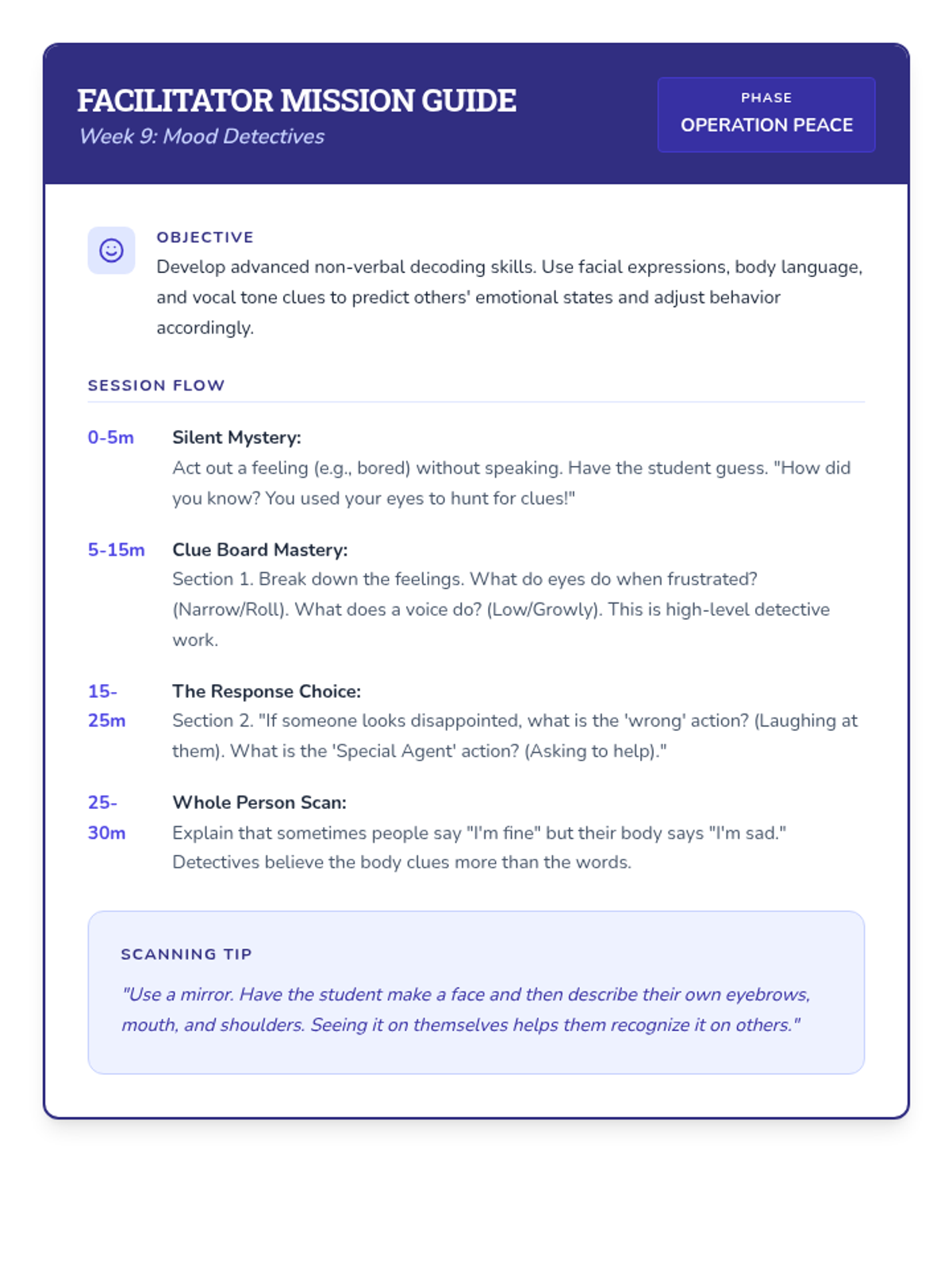
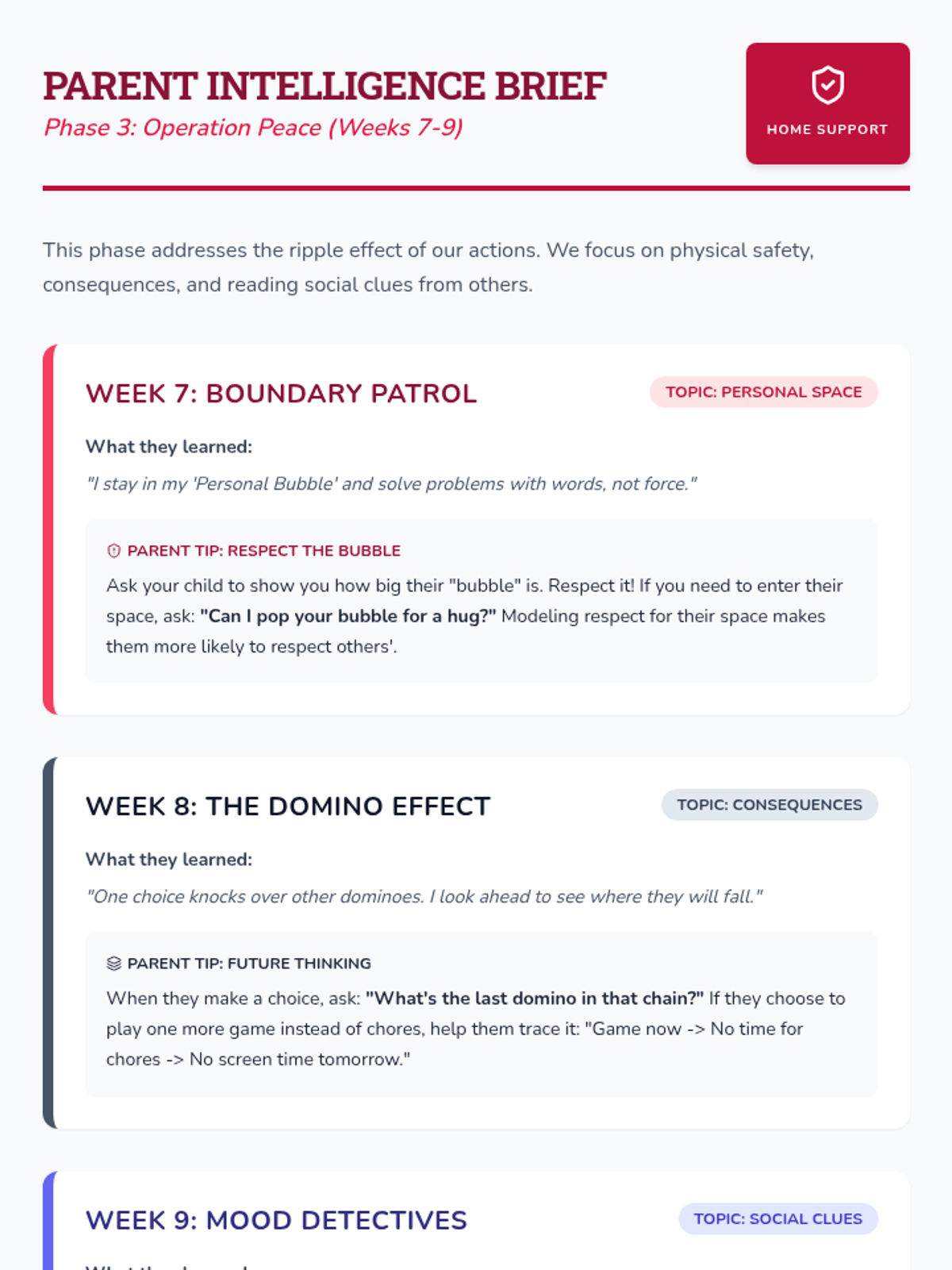
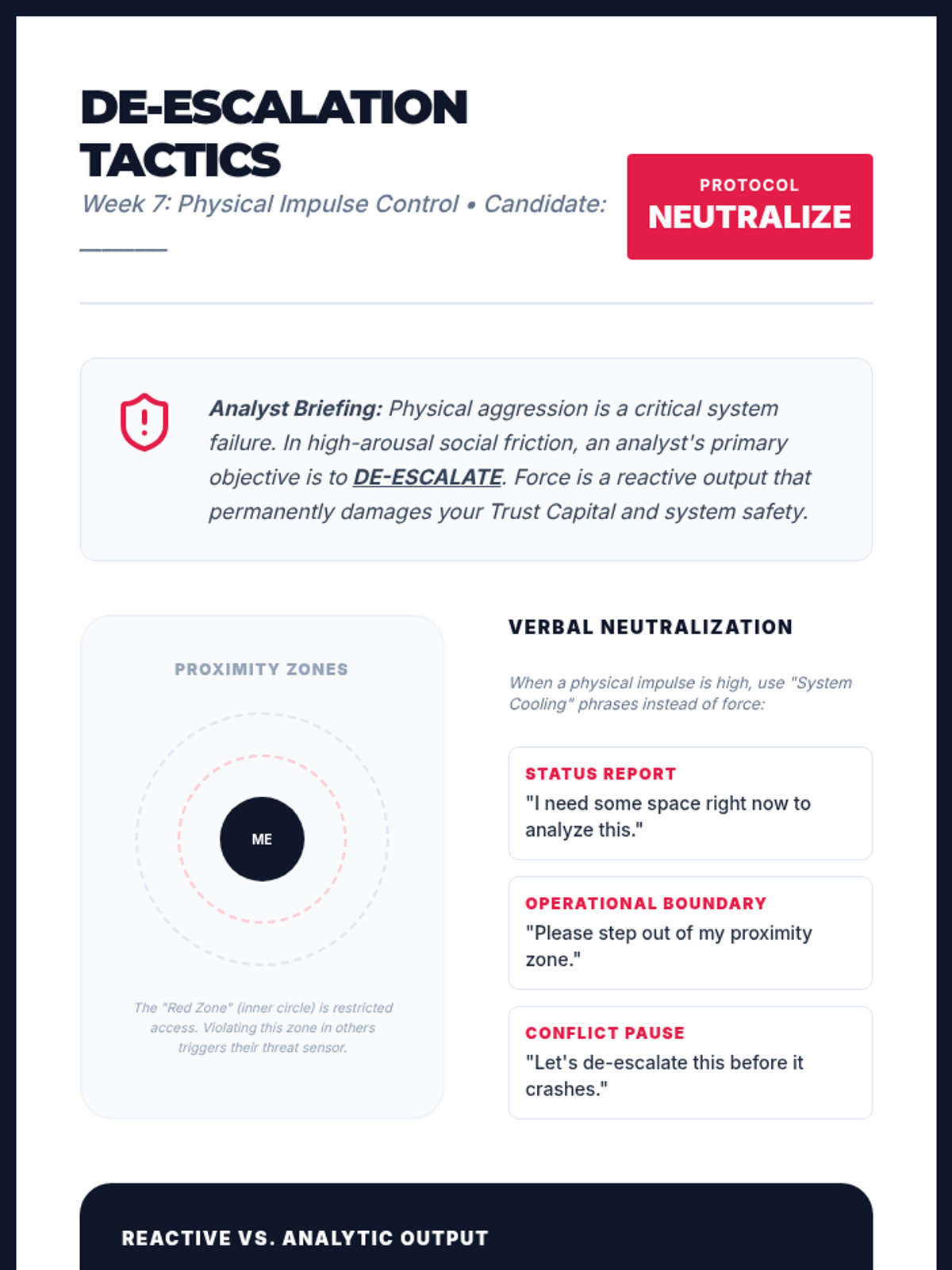
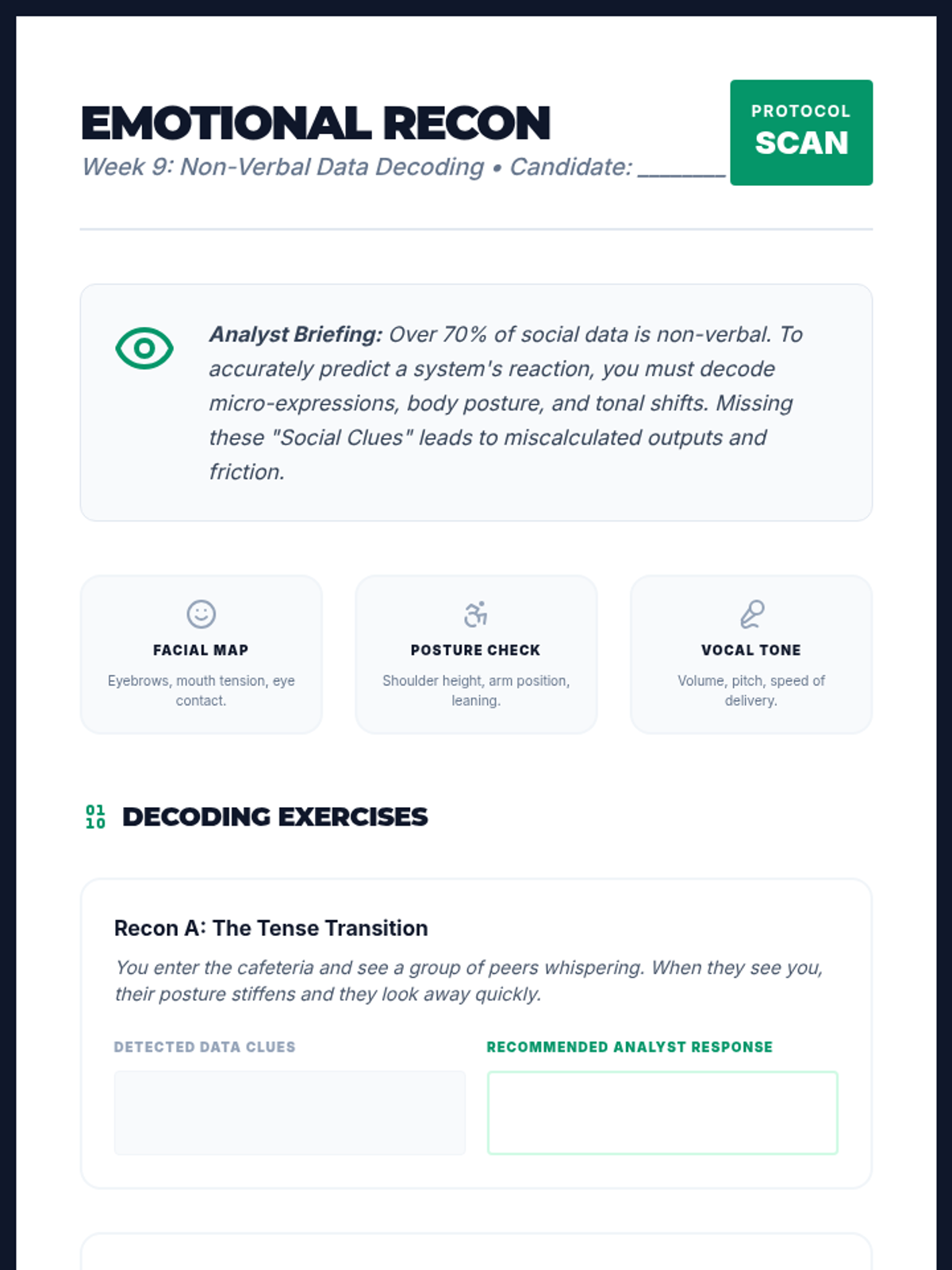
Weeks 7-9 address physical aggression, understanding consequences, and deep-diving into reading social clues to build empathy.
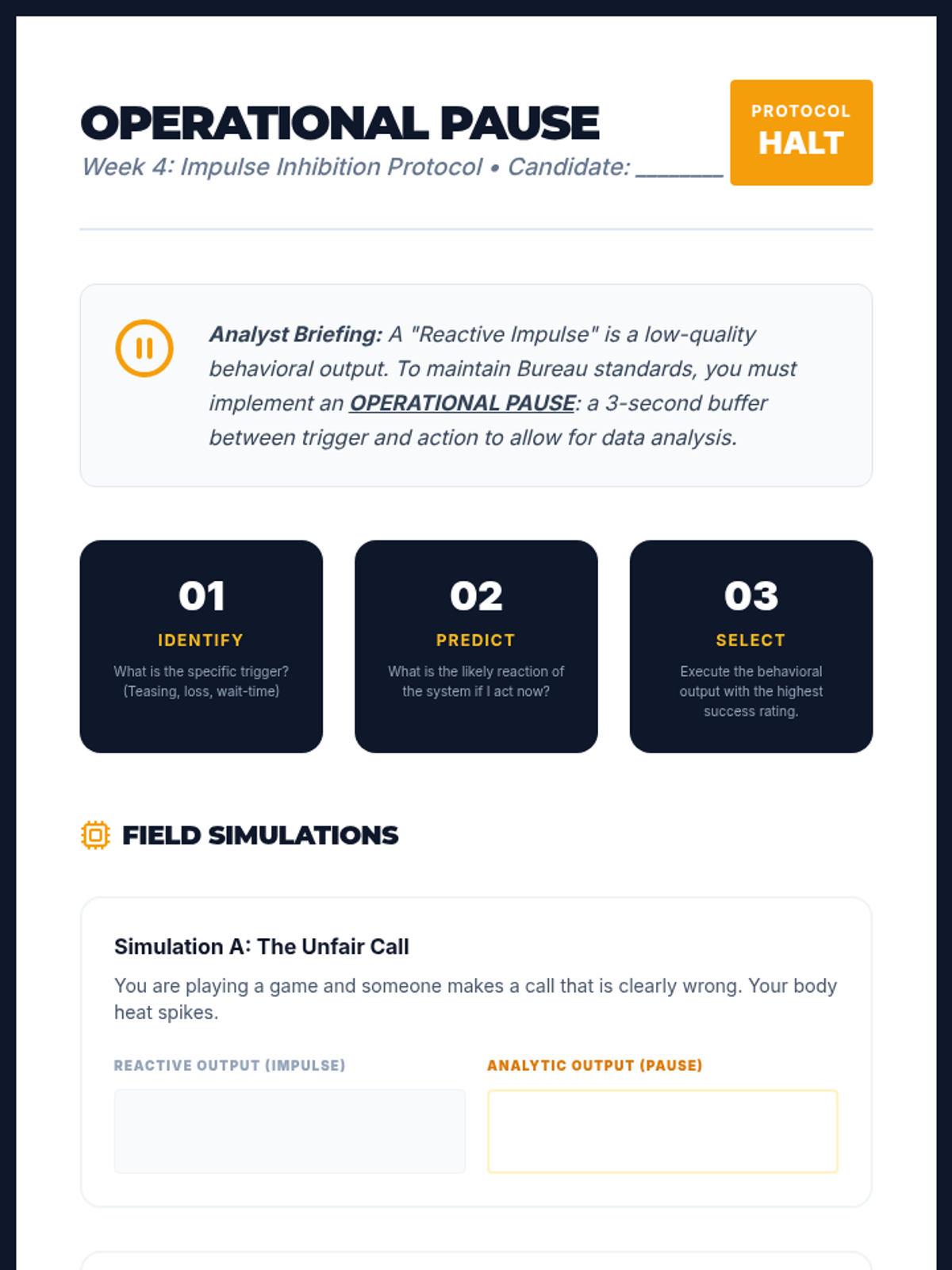
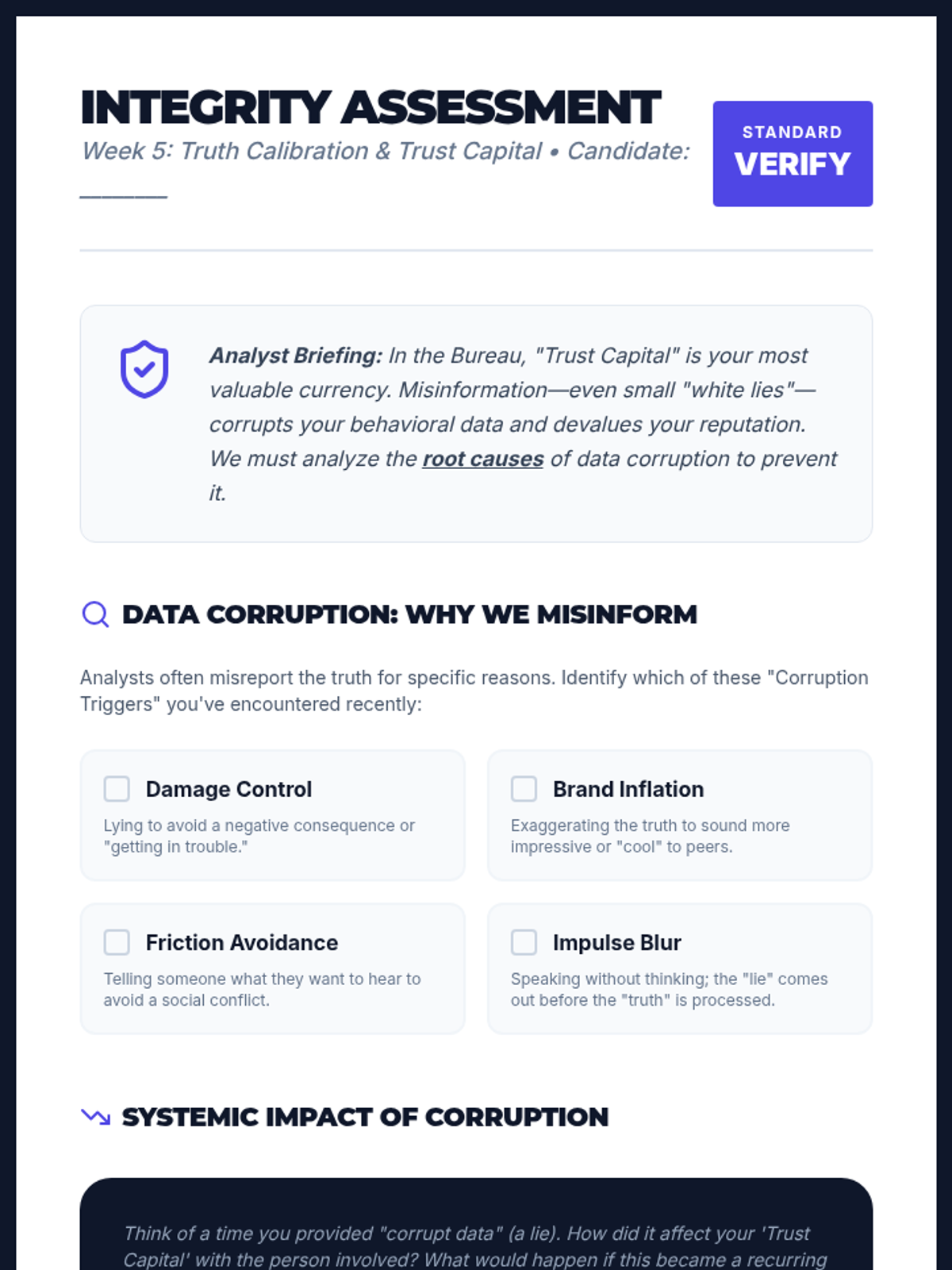
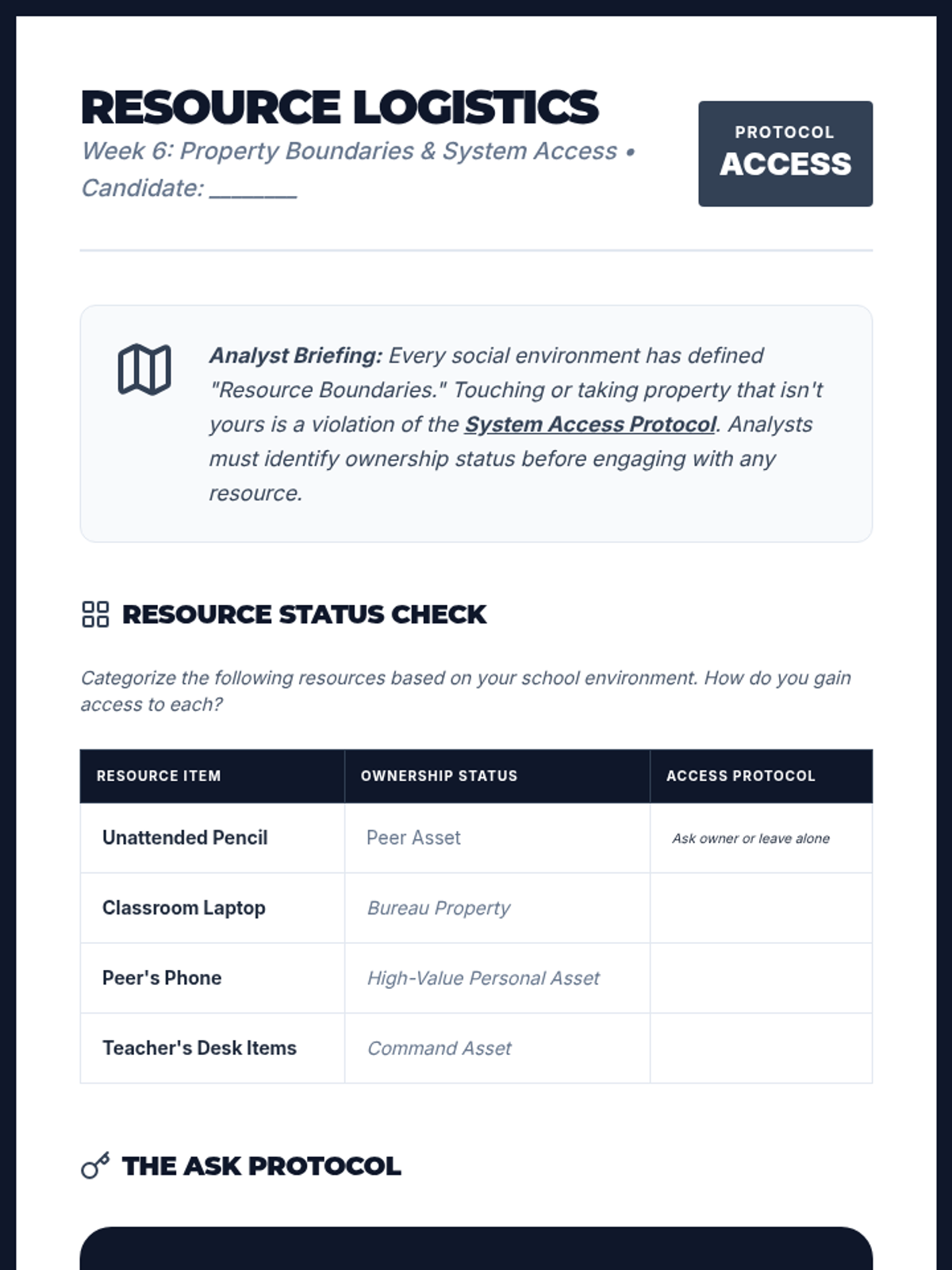
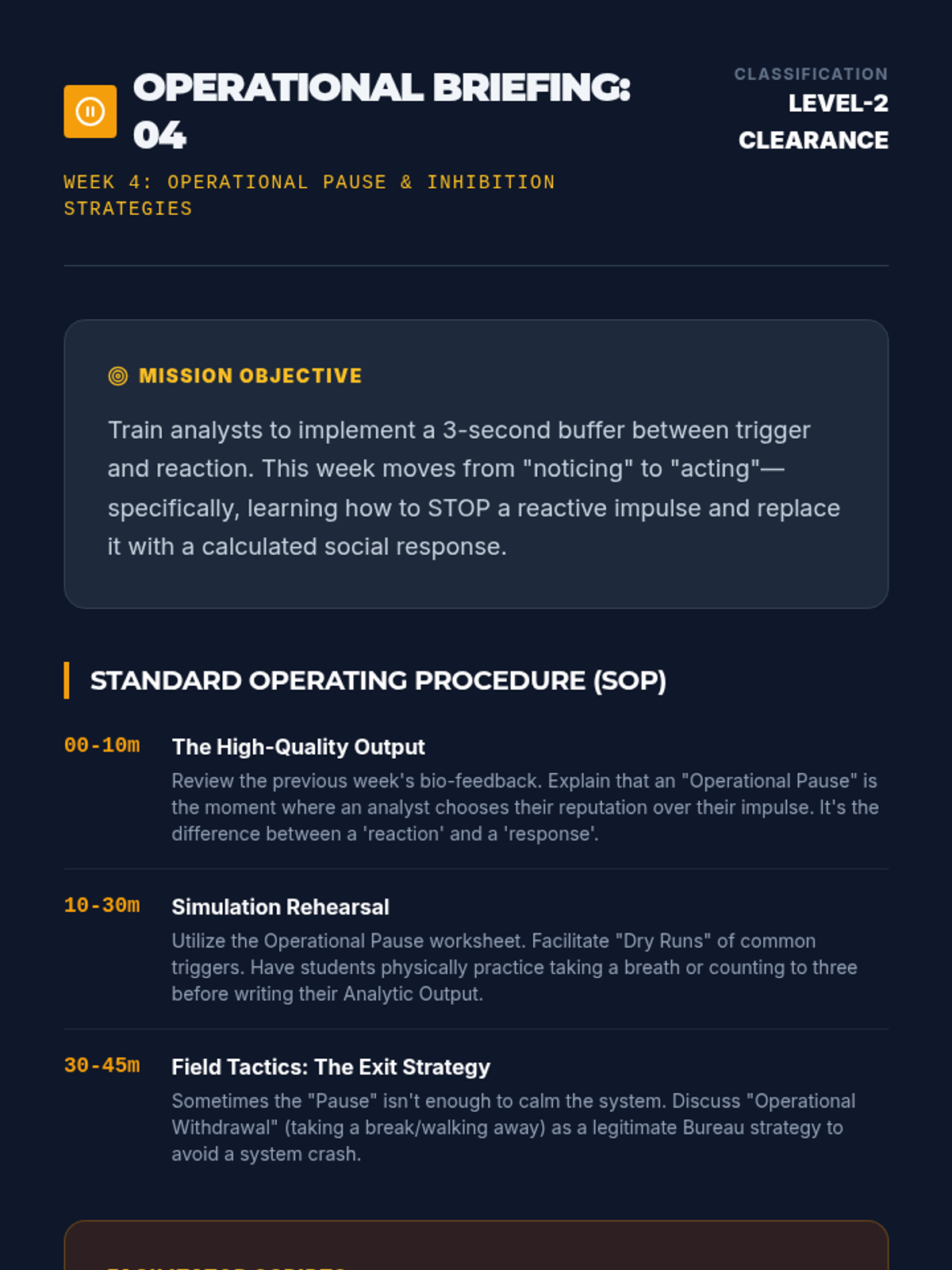
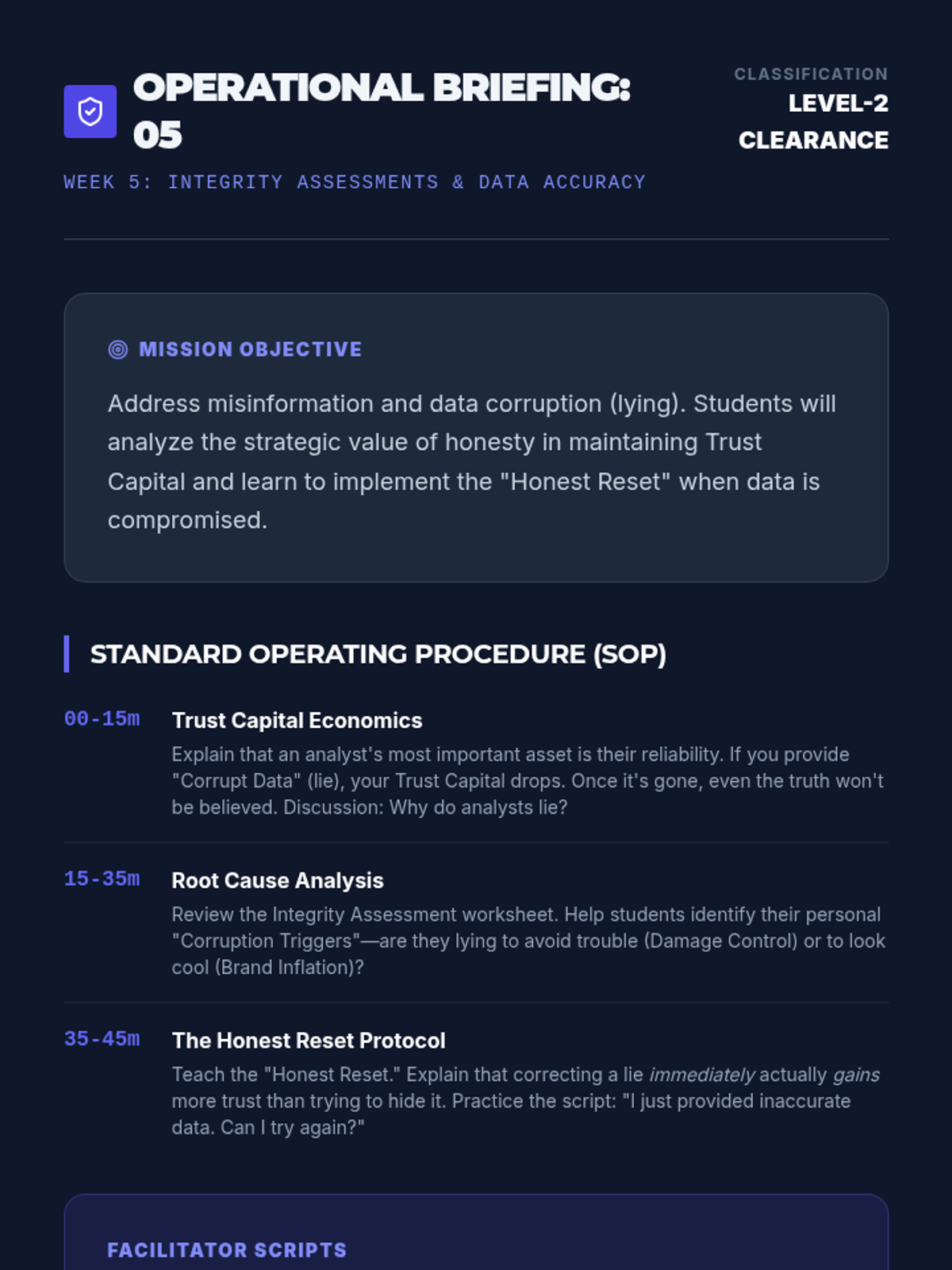
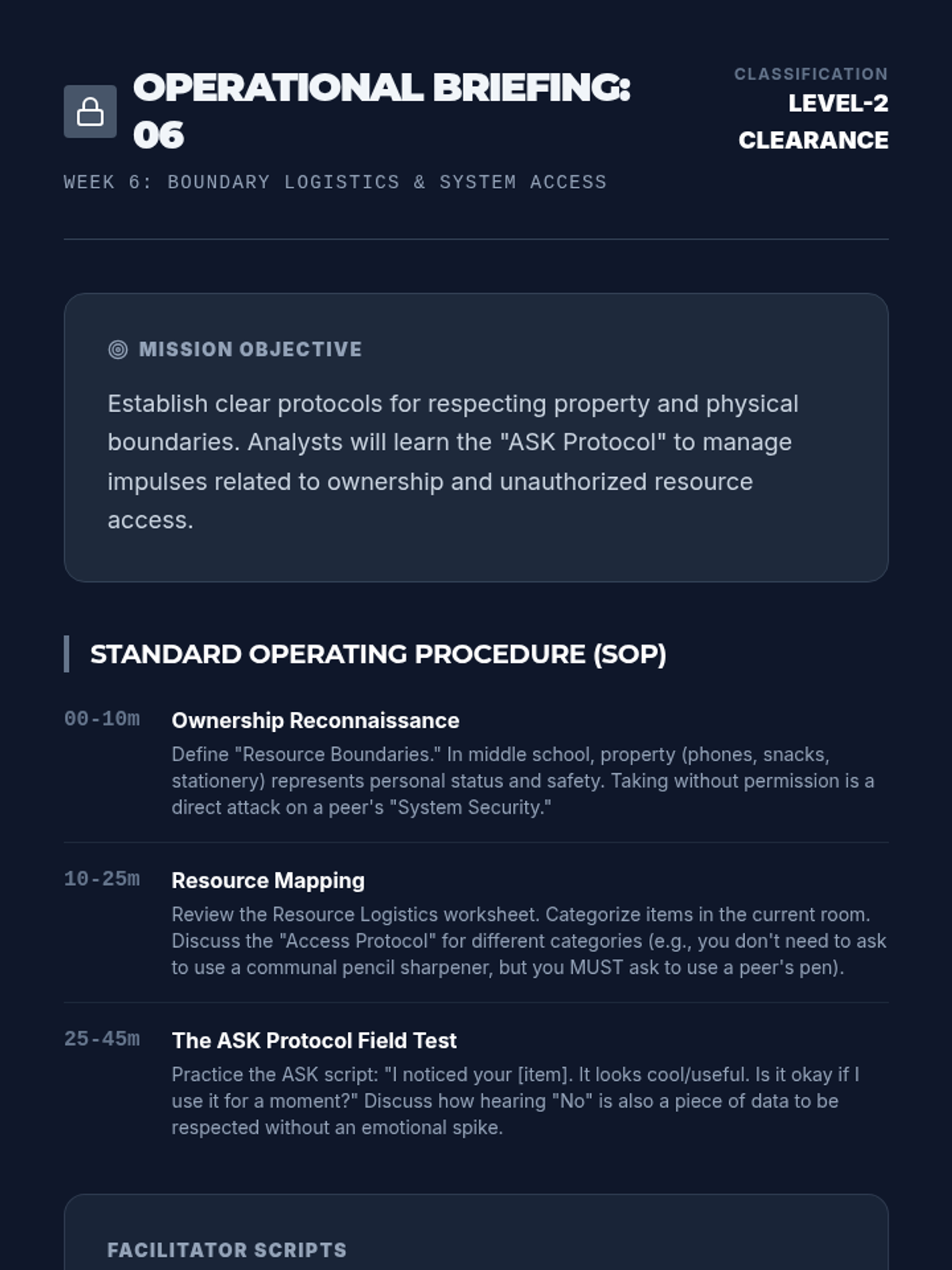
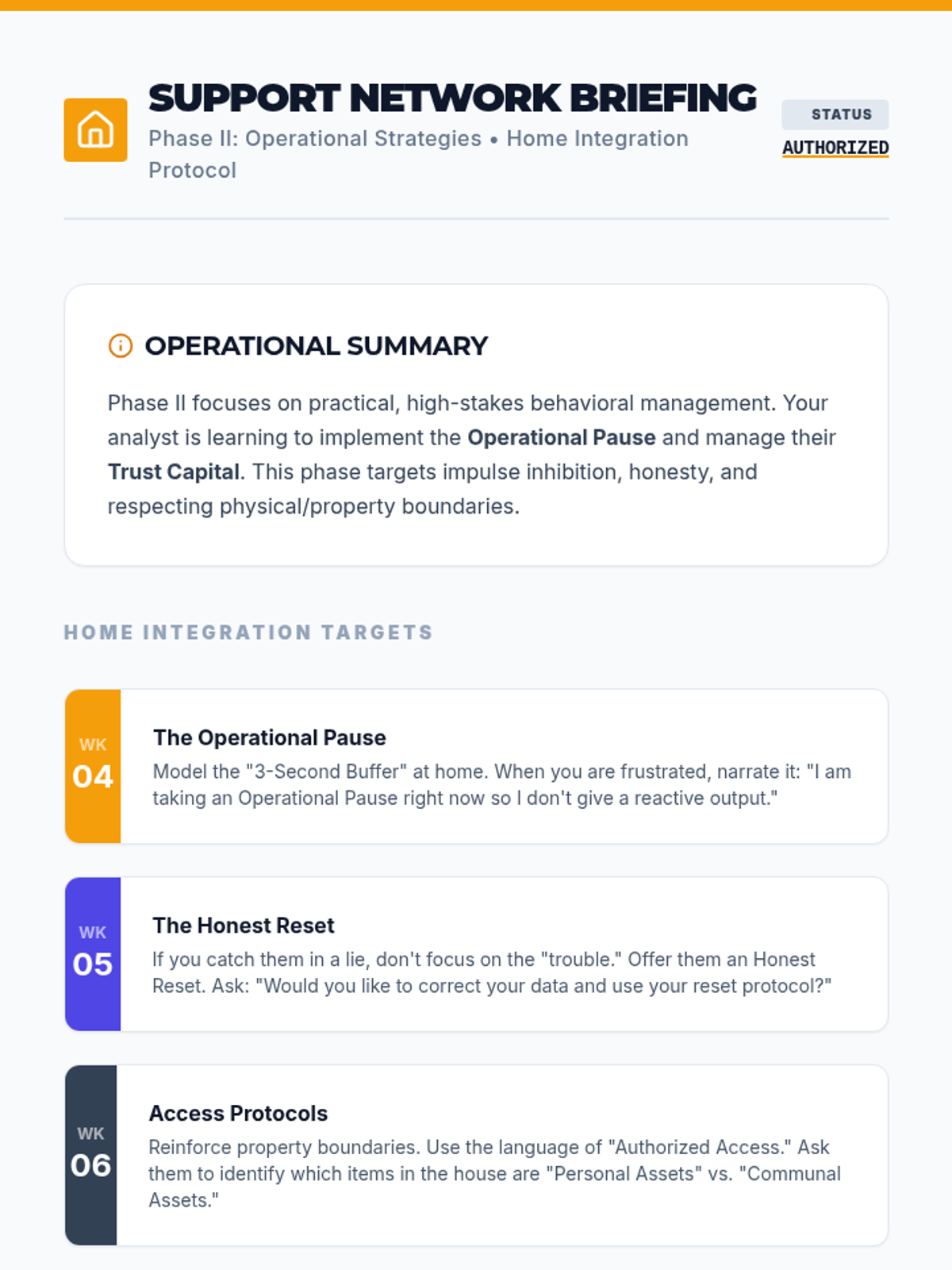
Weeks 4-6 of the intervention, focusing on practical impulse control strategies like the 'Pause Button' and addressing specific behaviors like lying and respecting property.
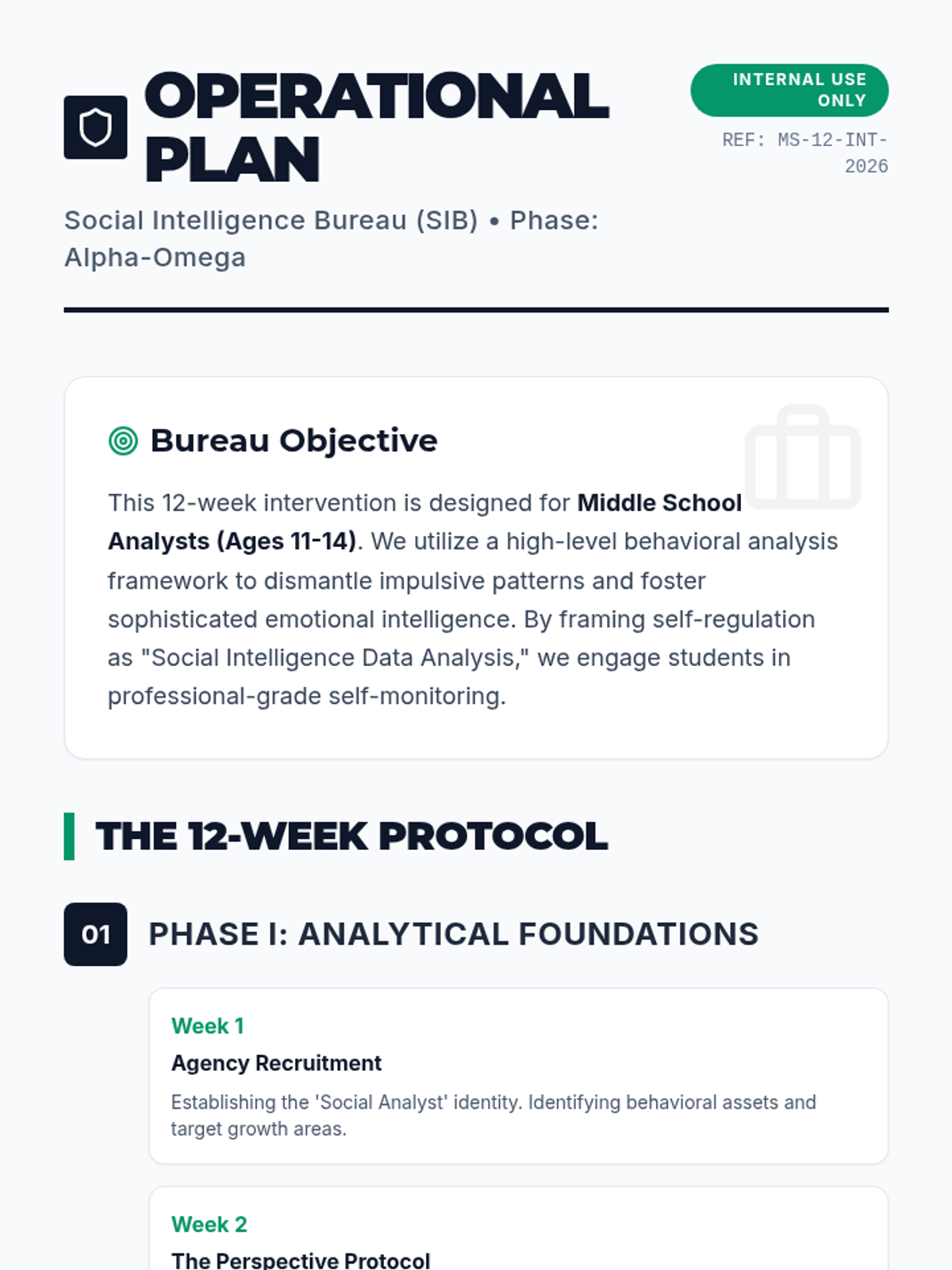
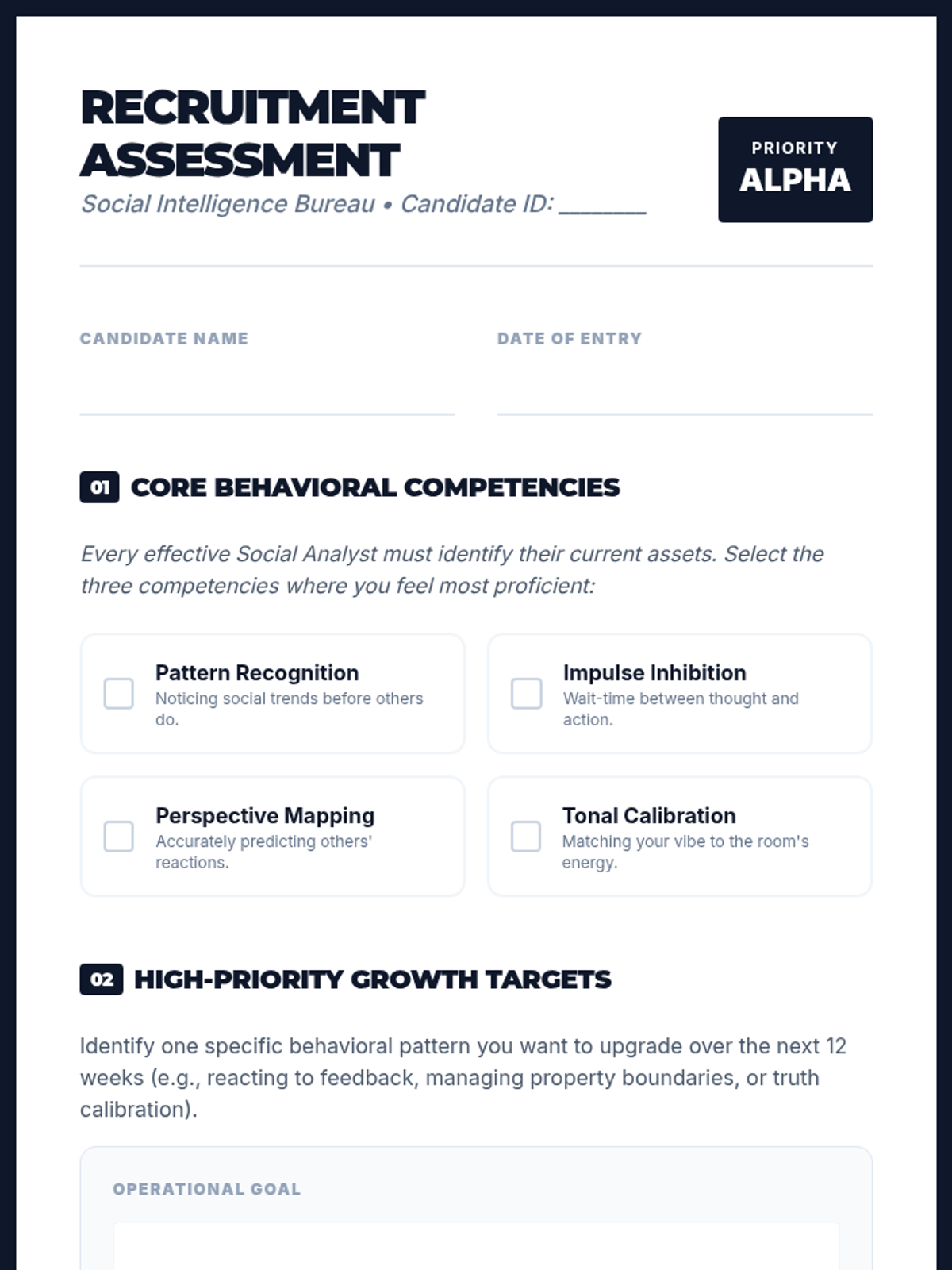
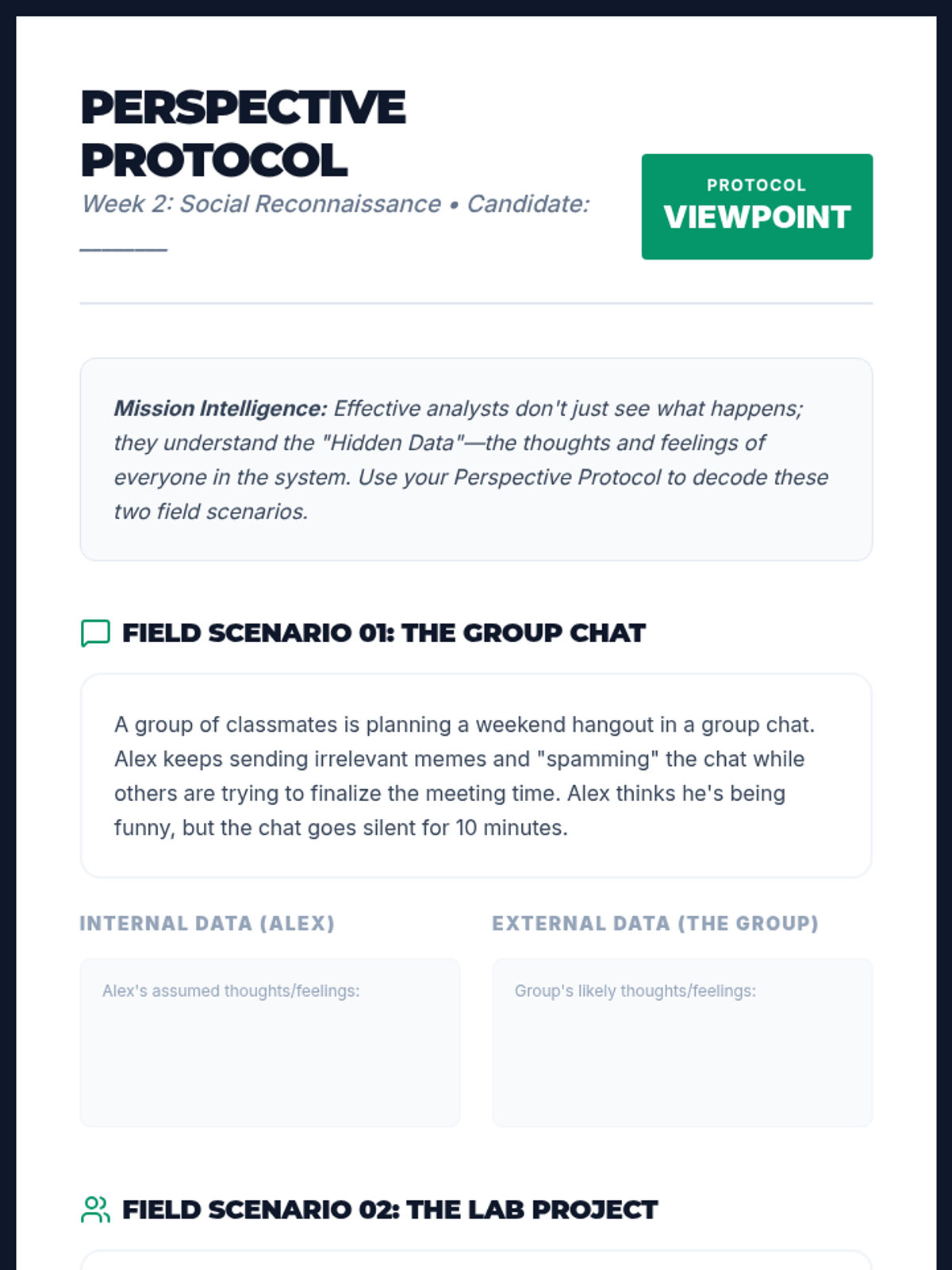
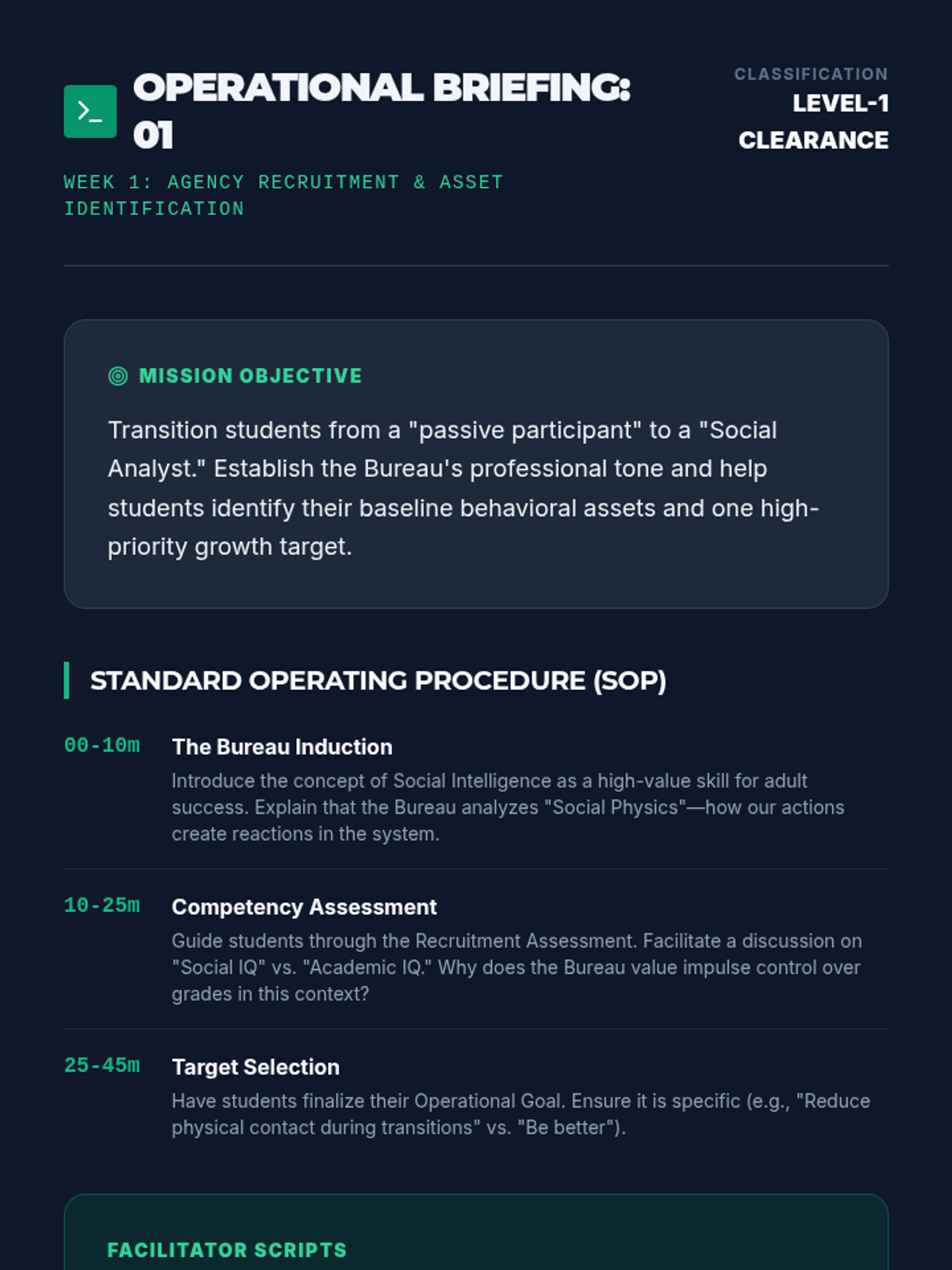
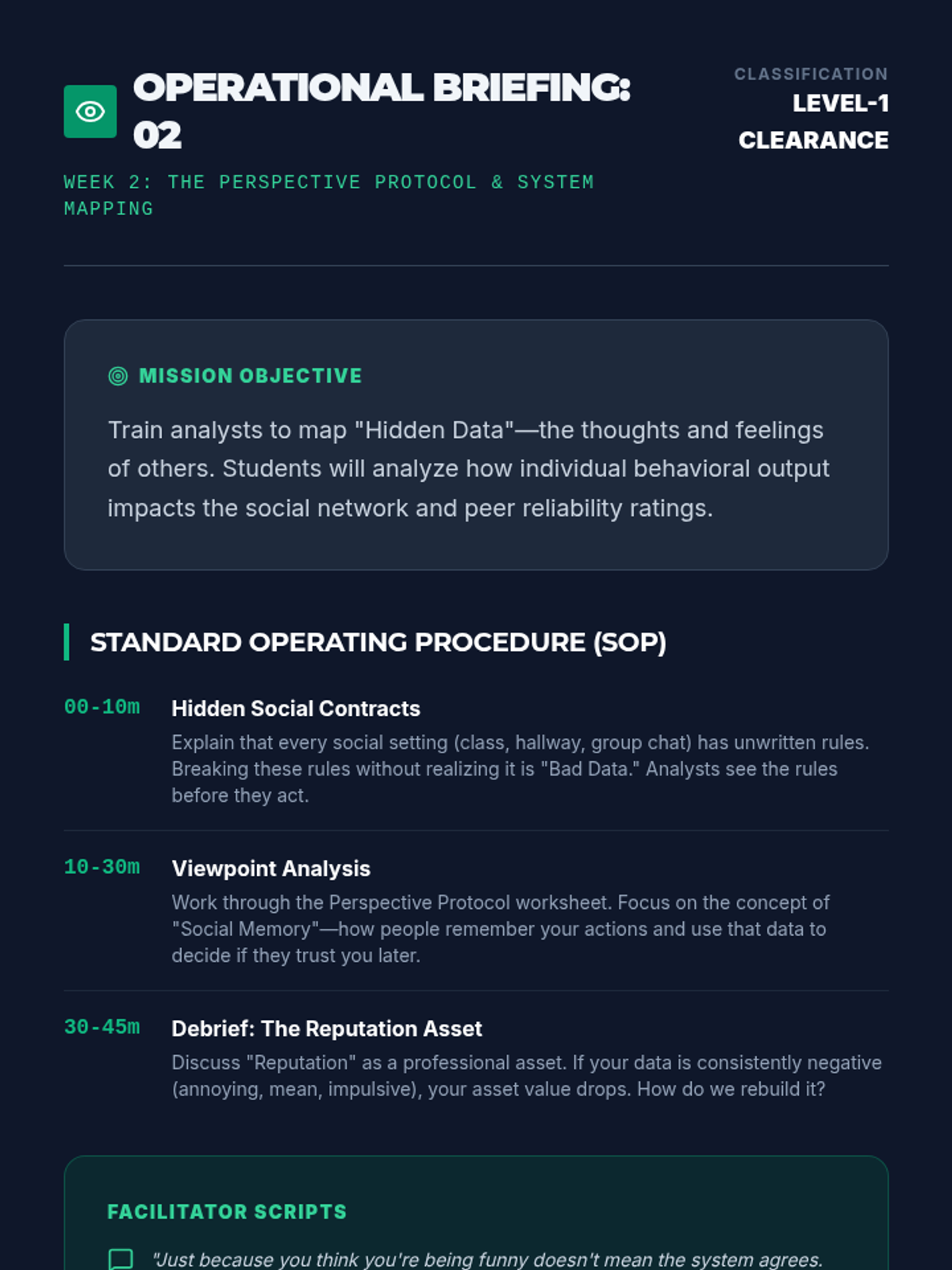
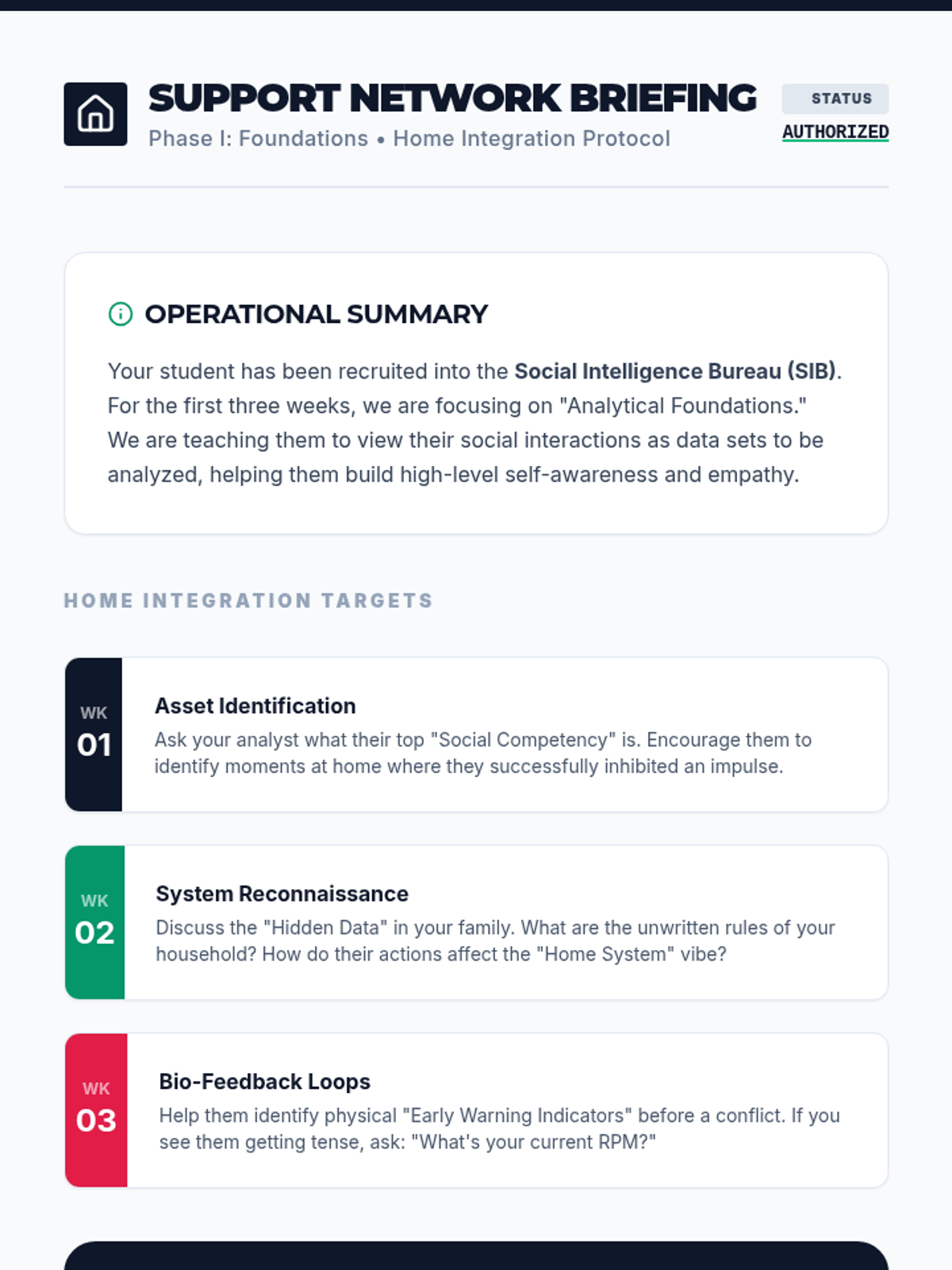
The first three weeks focus on building high-level self-awareness and understanding the core concepts of social perspective-taking and physiological self-monitoring.