A high school mental health lesson designed to help students differentiate between healthy and unhealthy coping mechanisms, explore problem-focused vs. emotion-focused strategies, and practice building their own coping toolkits.
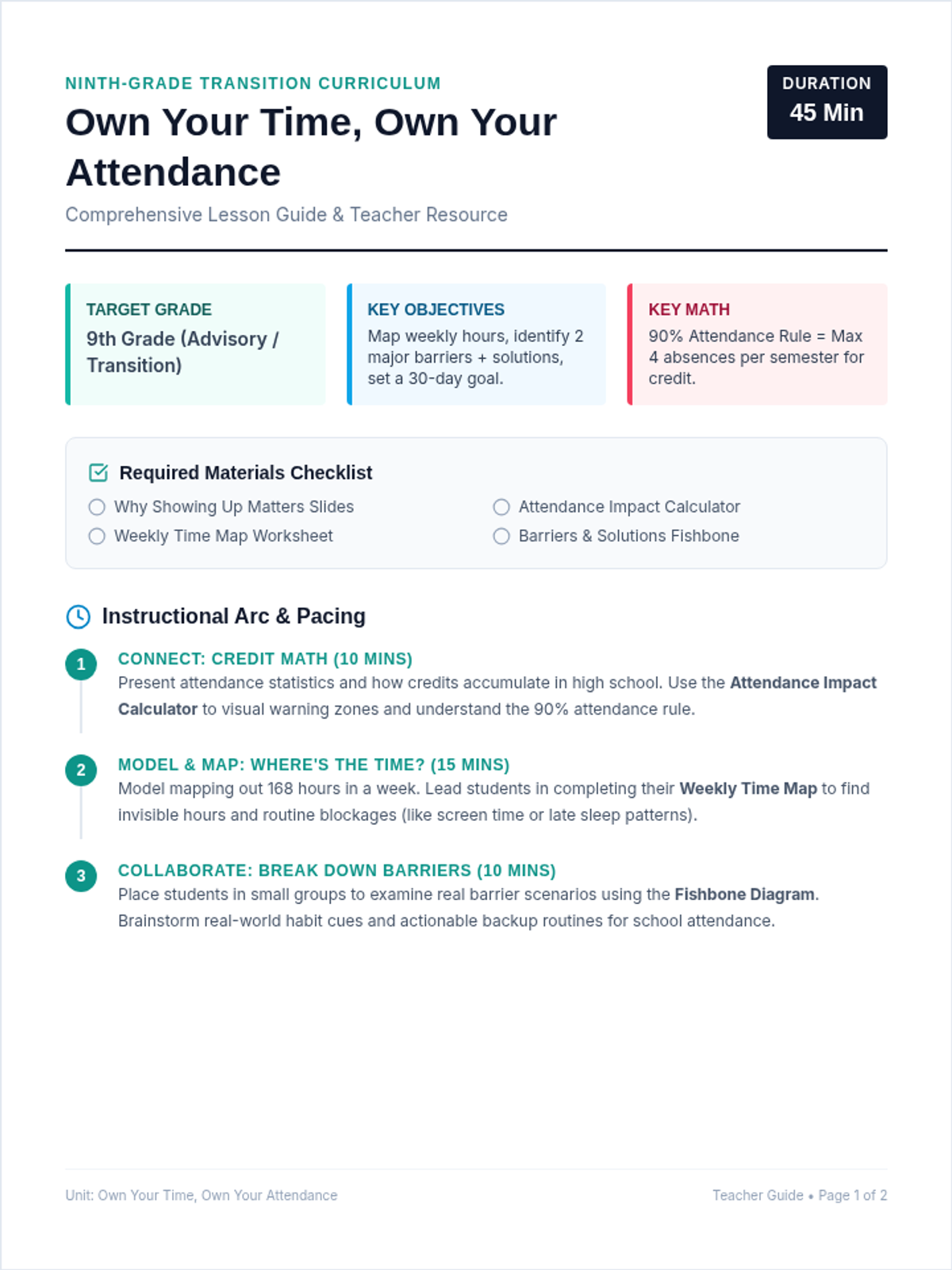
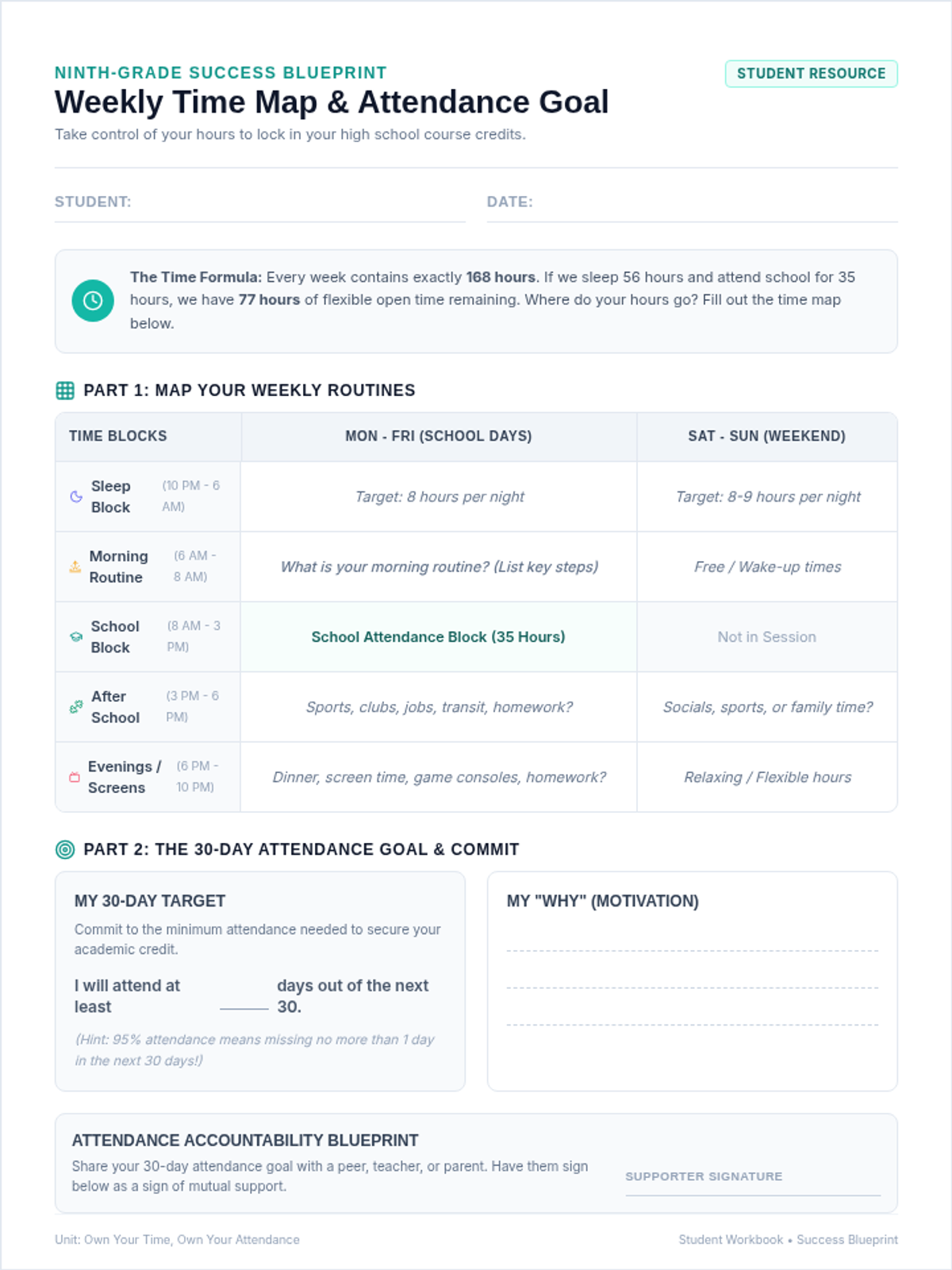
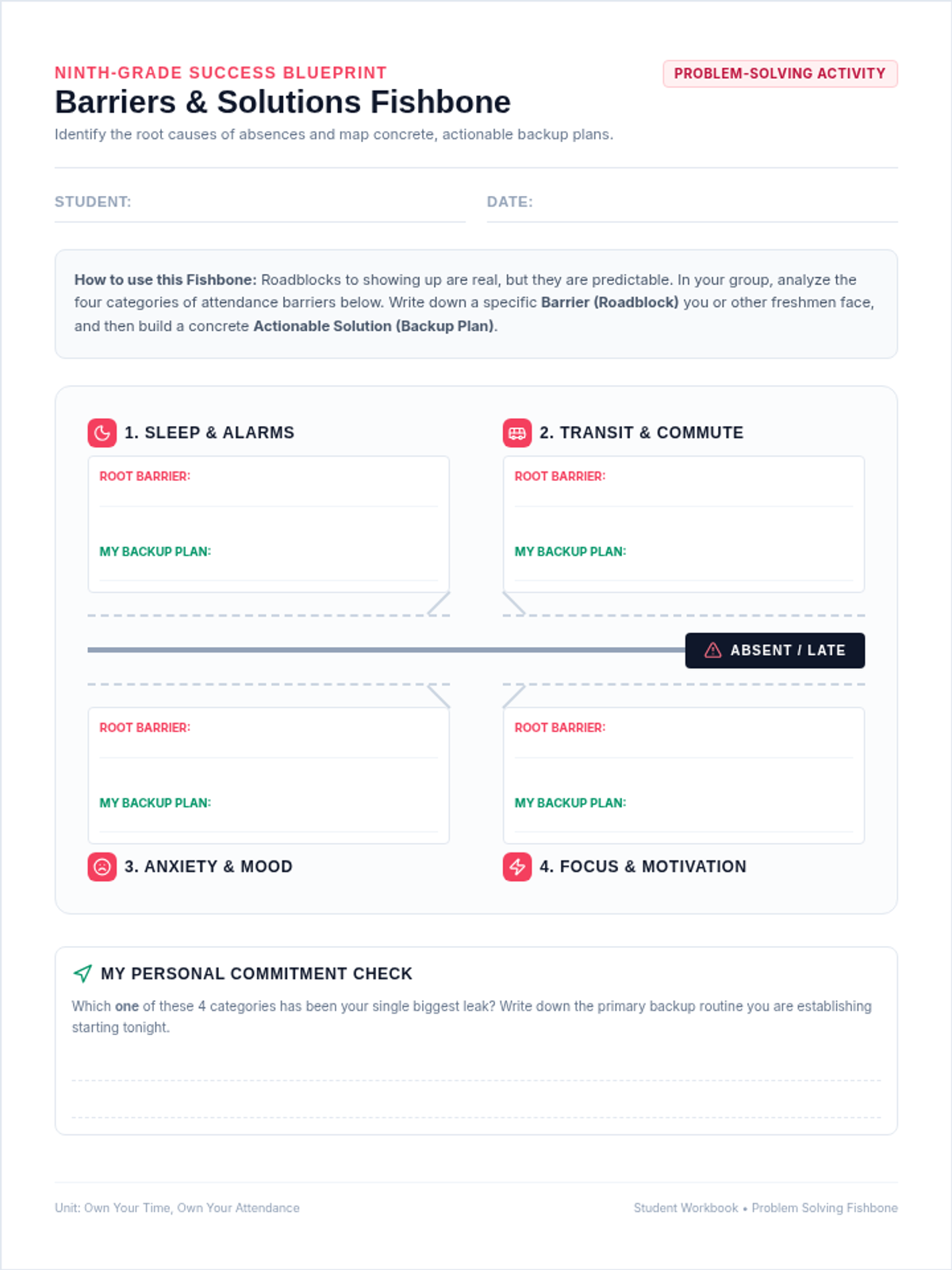
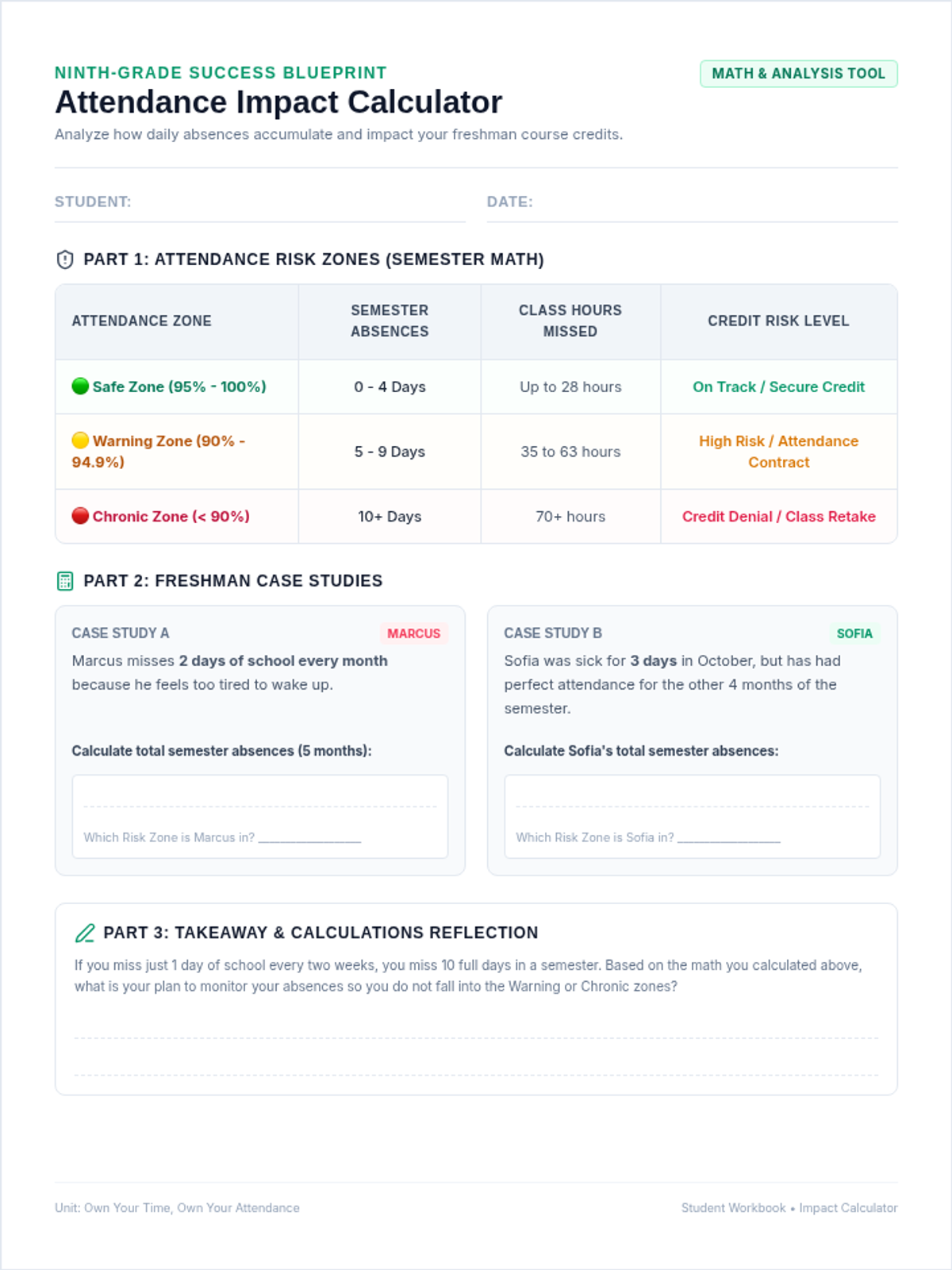
A high school transition lesson designed for 9th graders to understand the direct connection between daily attendance, high school credit acquisition, and time management. Students analyze their weekly schedules, map out barriers using a fishbone diagram, and commit to a 30-day attendance goal.
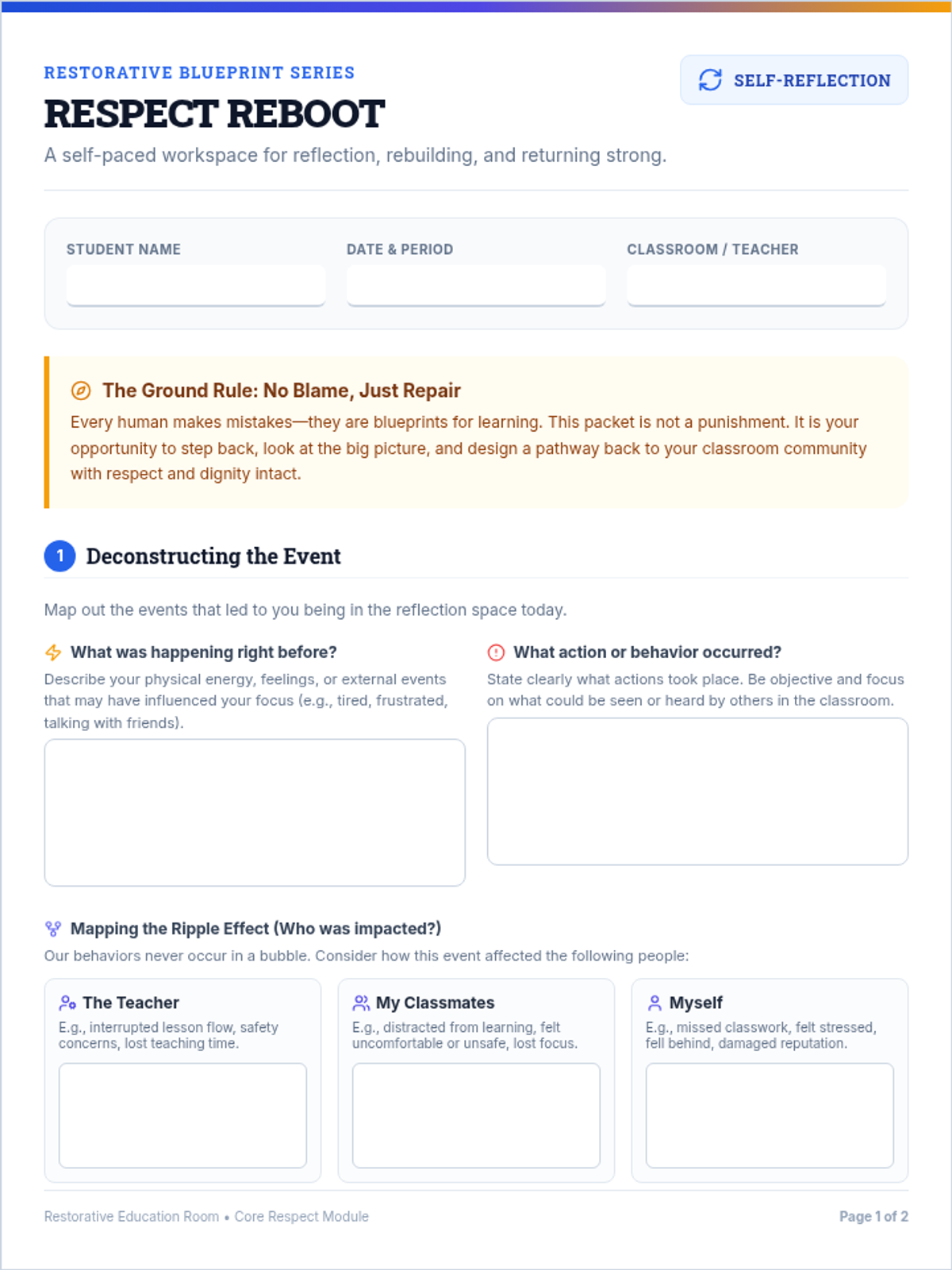
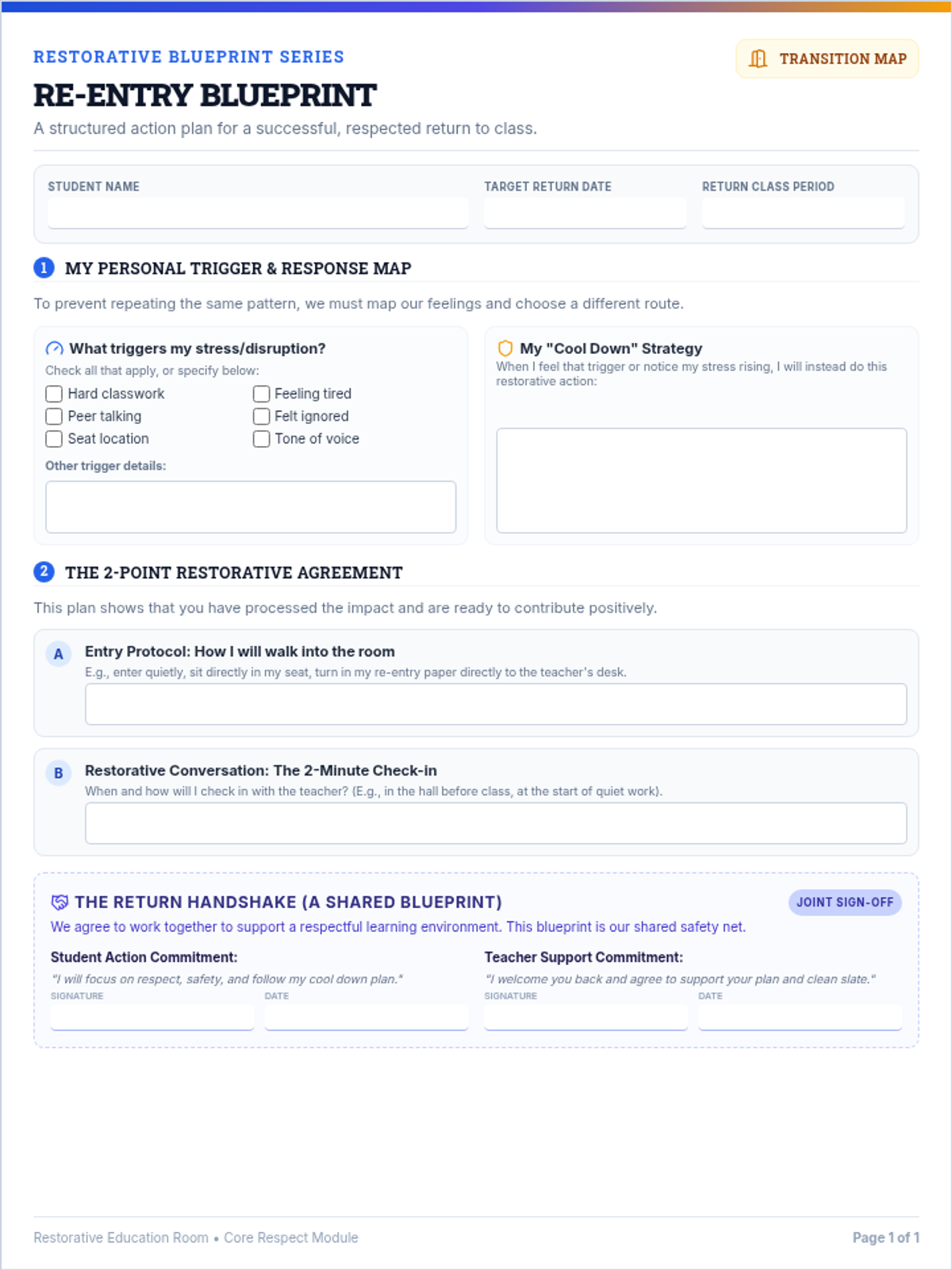
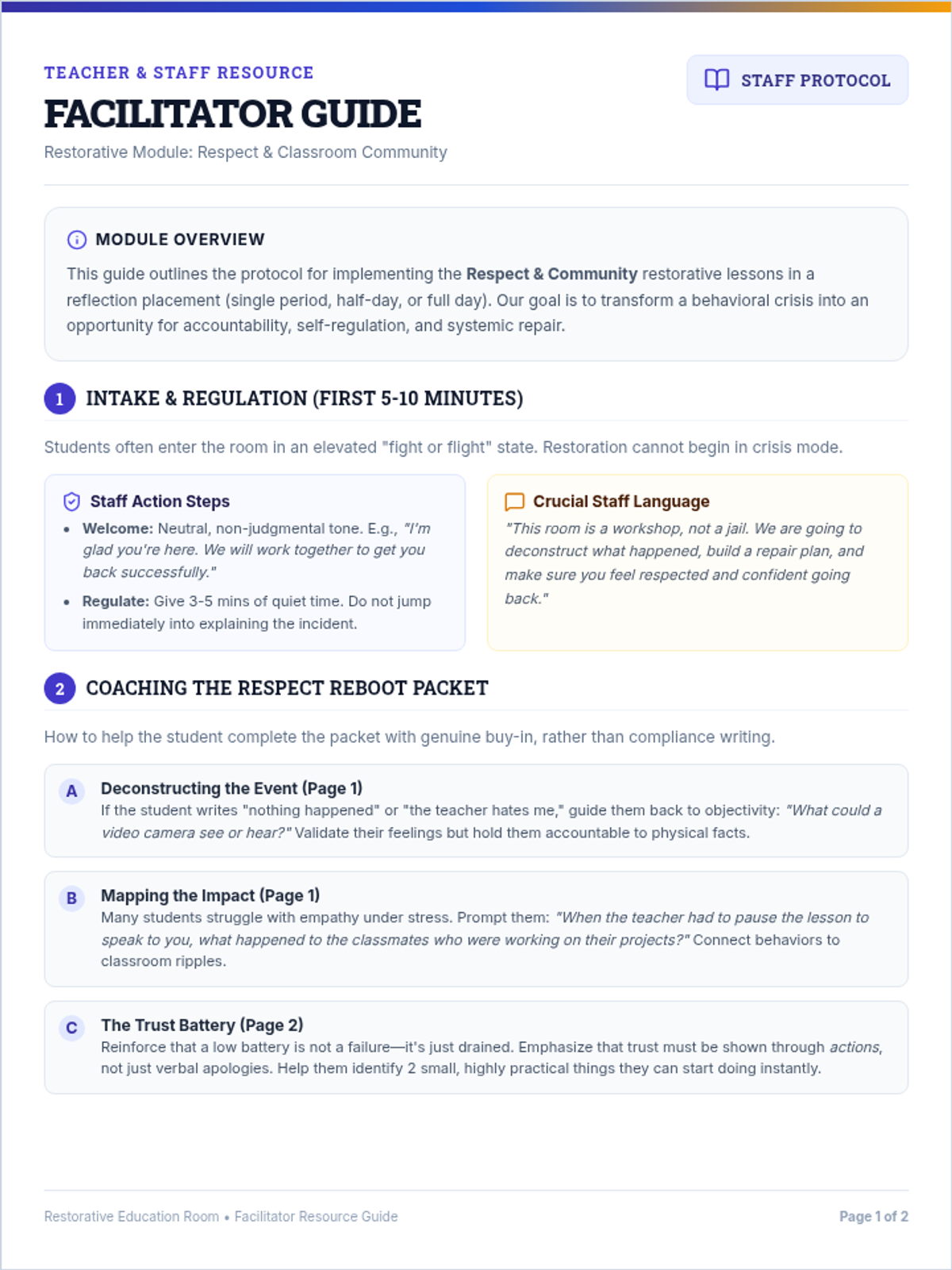
A restorative module focusing on understanding behavior impact, rebuilding classroom trust, and respecting authority. Includes a self-paced reflection packet, transition blueprint, guiding slides, and a facilitator guide.
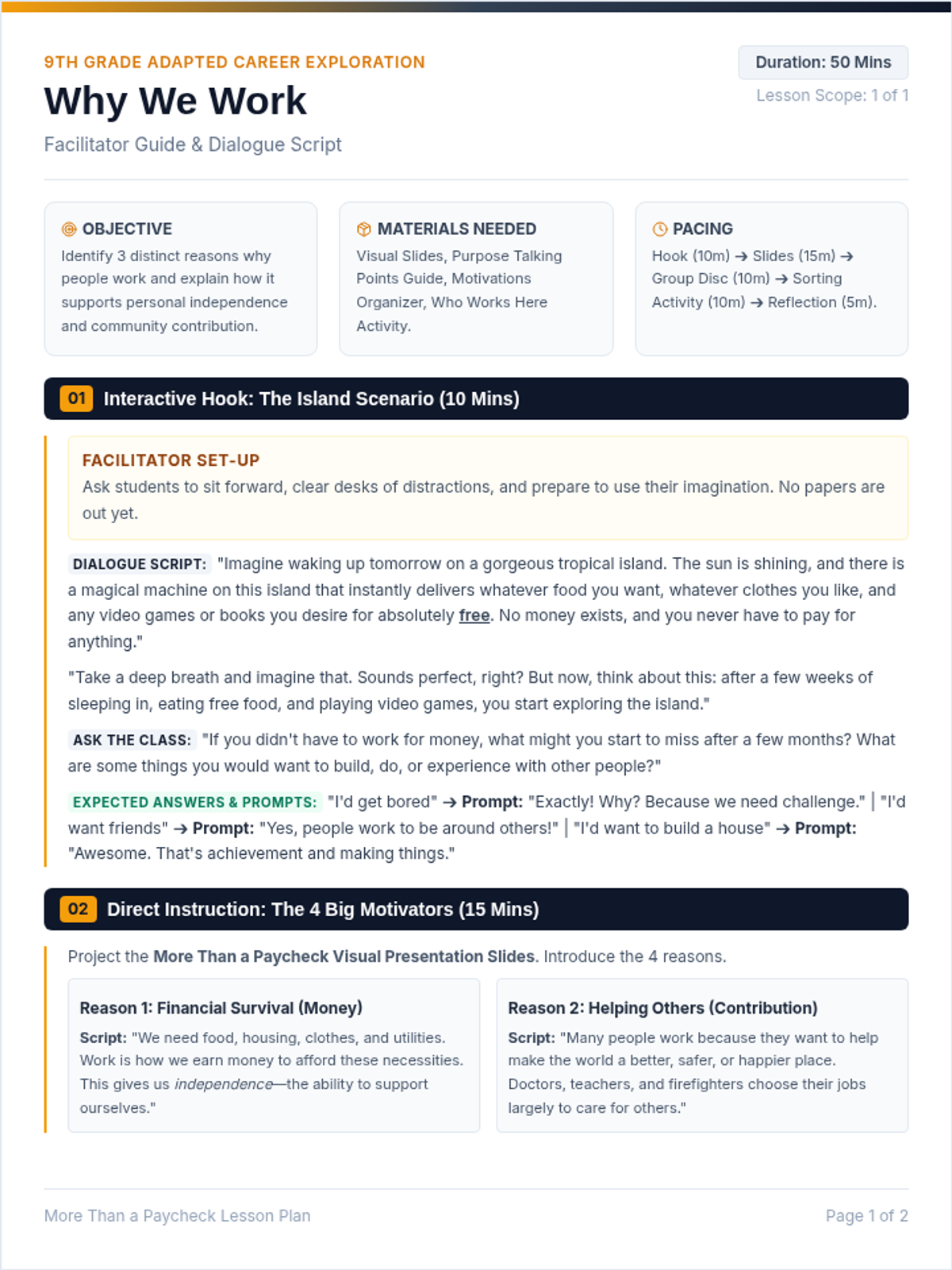
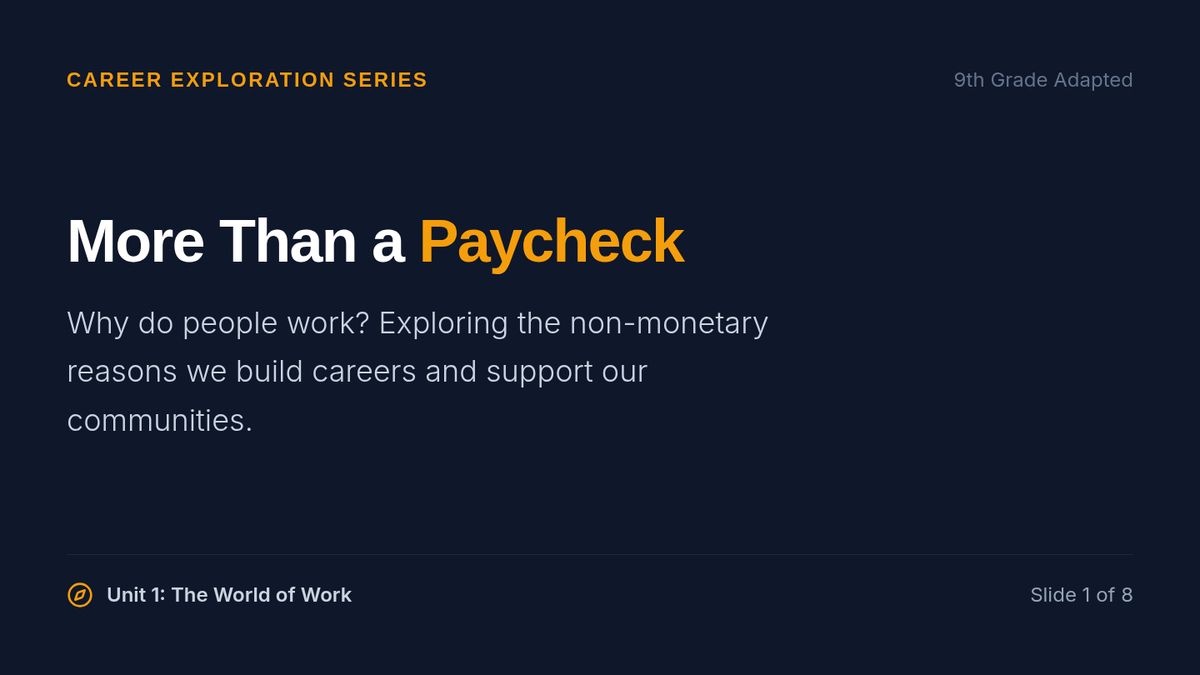
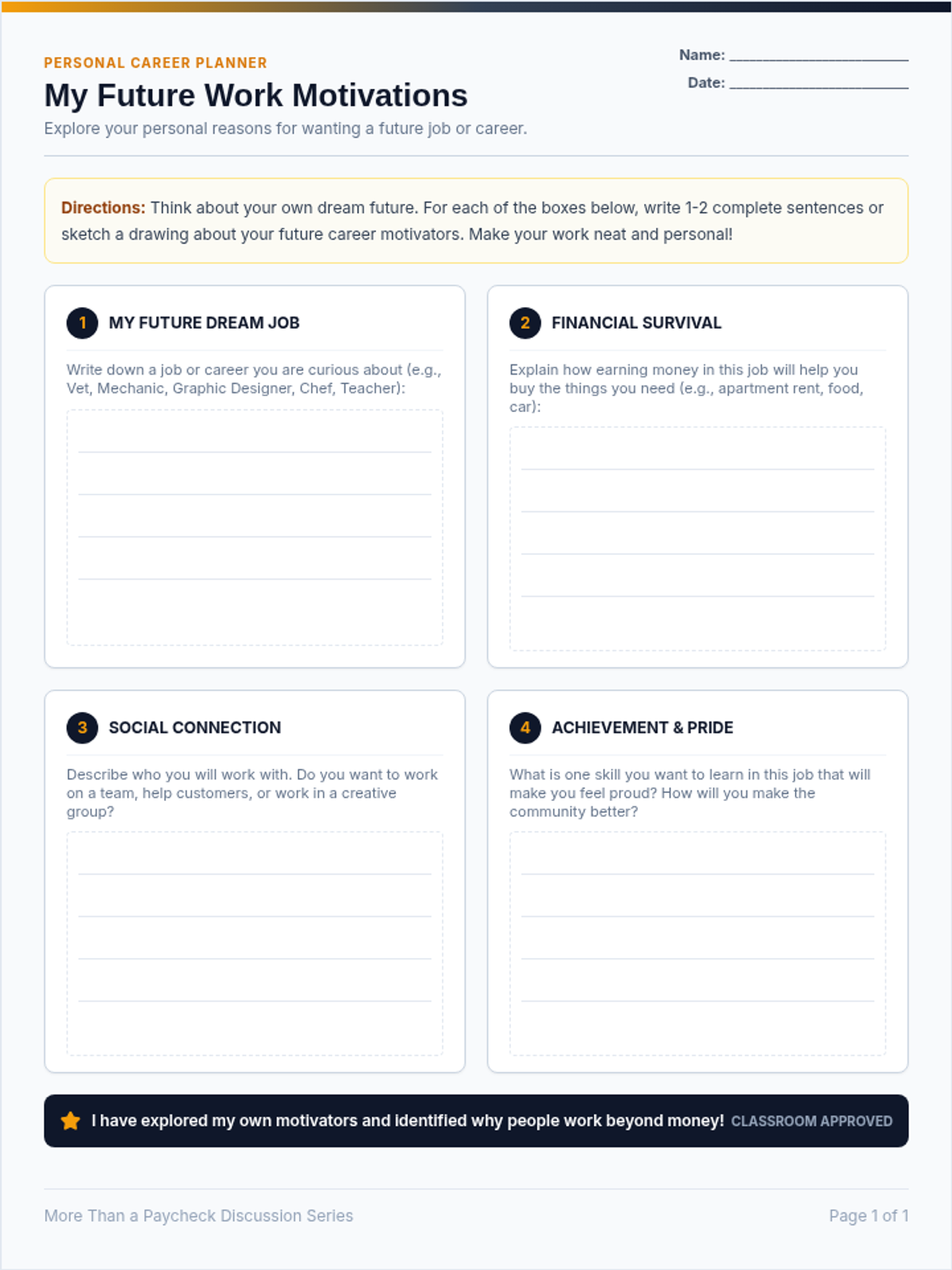
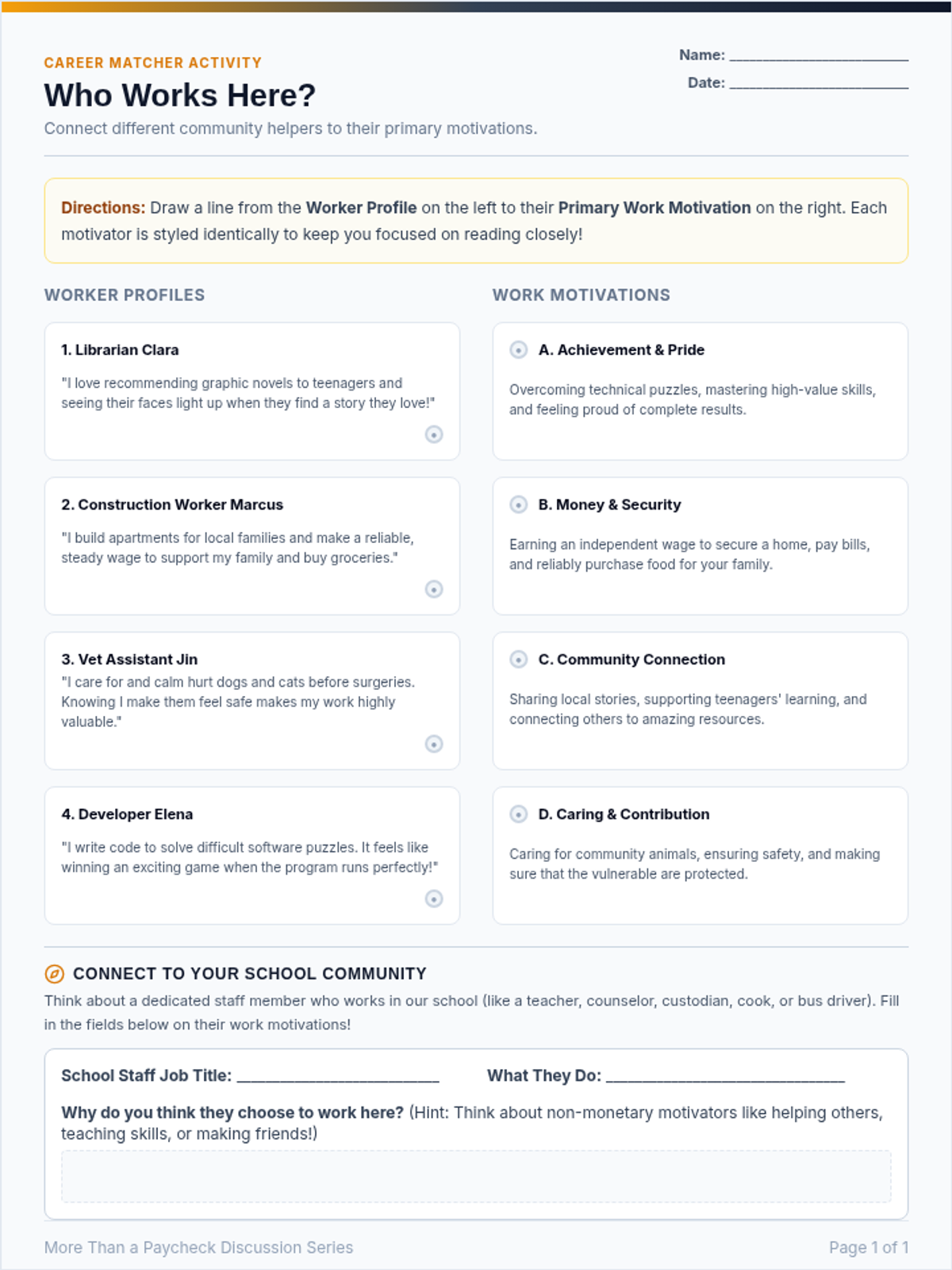
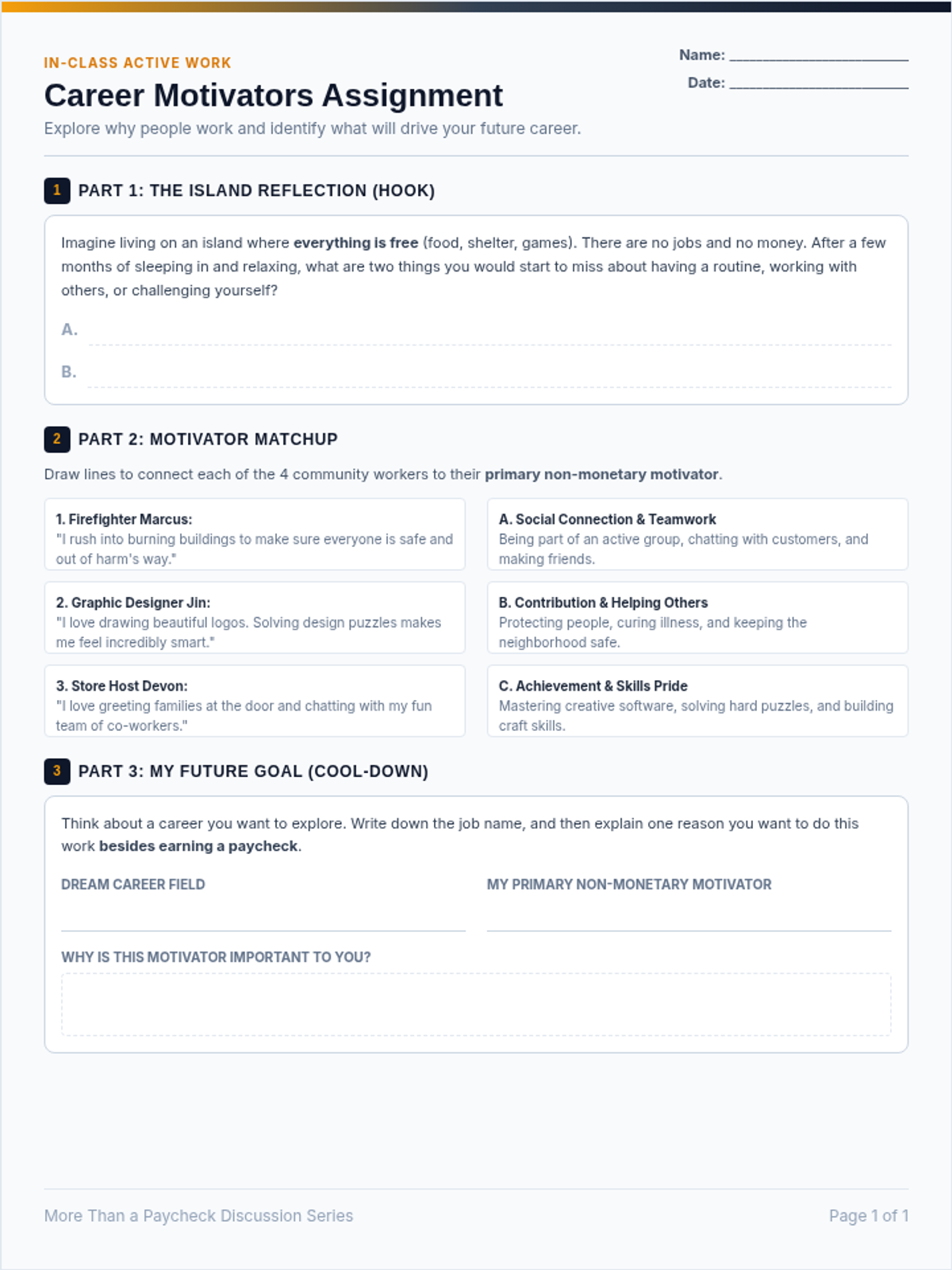
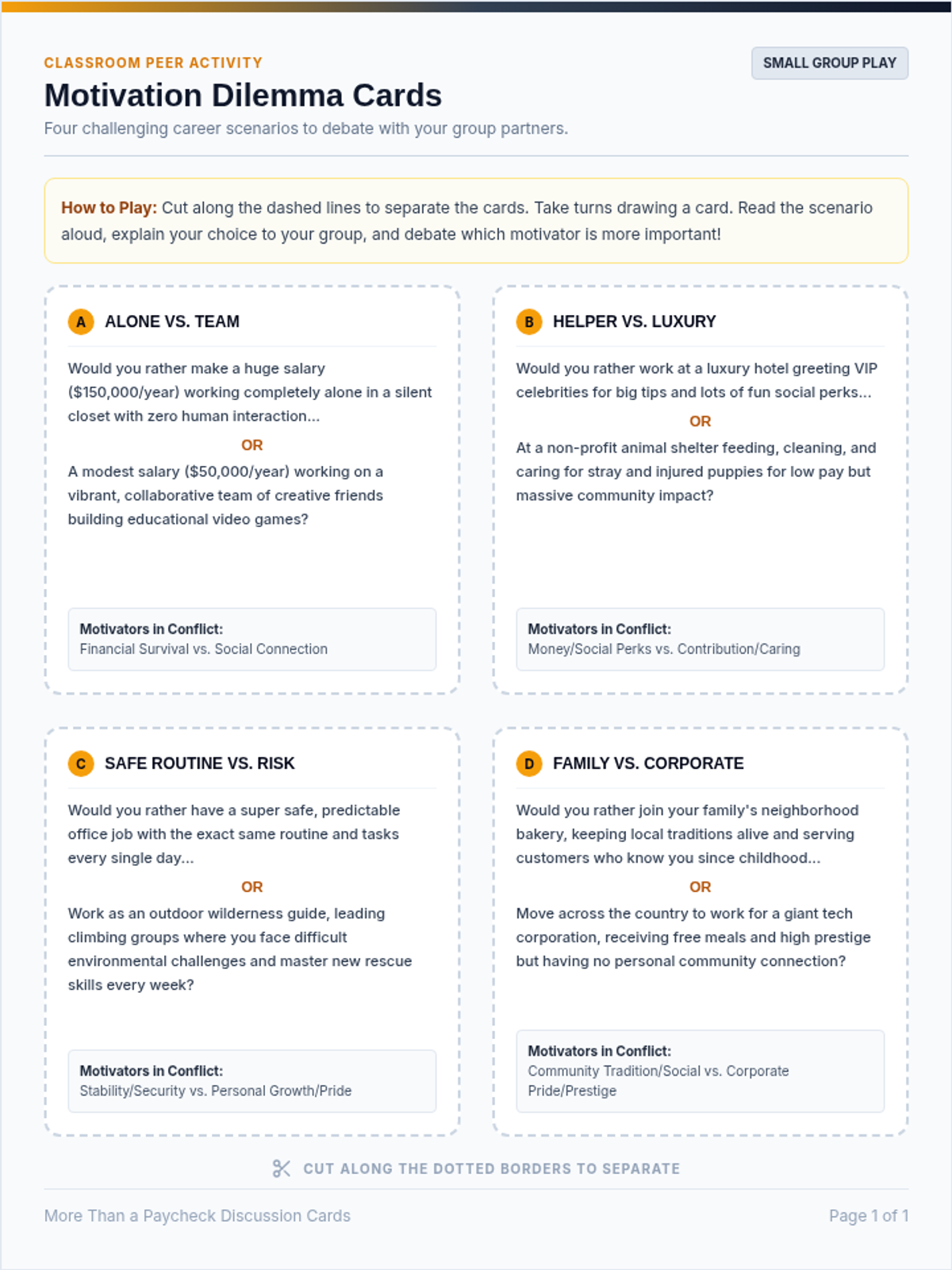
A 50-minute career exploration lesson designed for 9th-grade students to investigate why people work beyond just financial compensation. Students will explore non-monetary motivators like helping others, socializing, and personal achievement through interactive discussions, matching activities, and visual organizers.
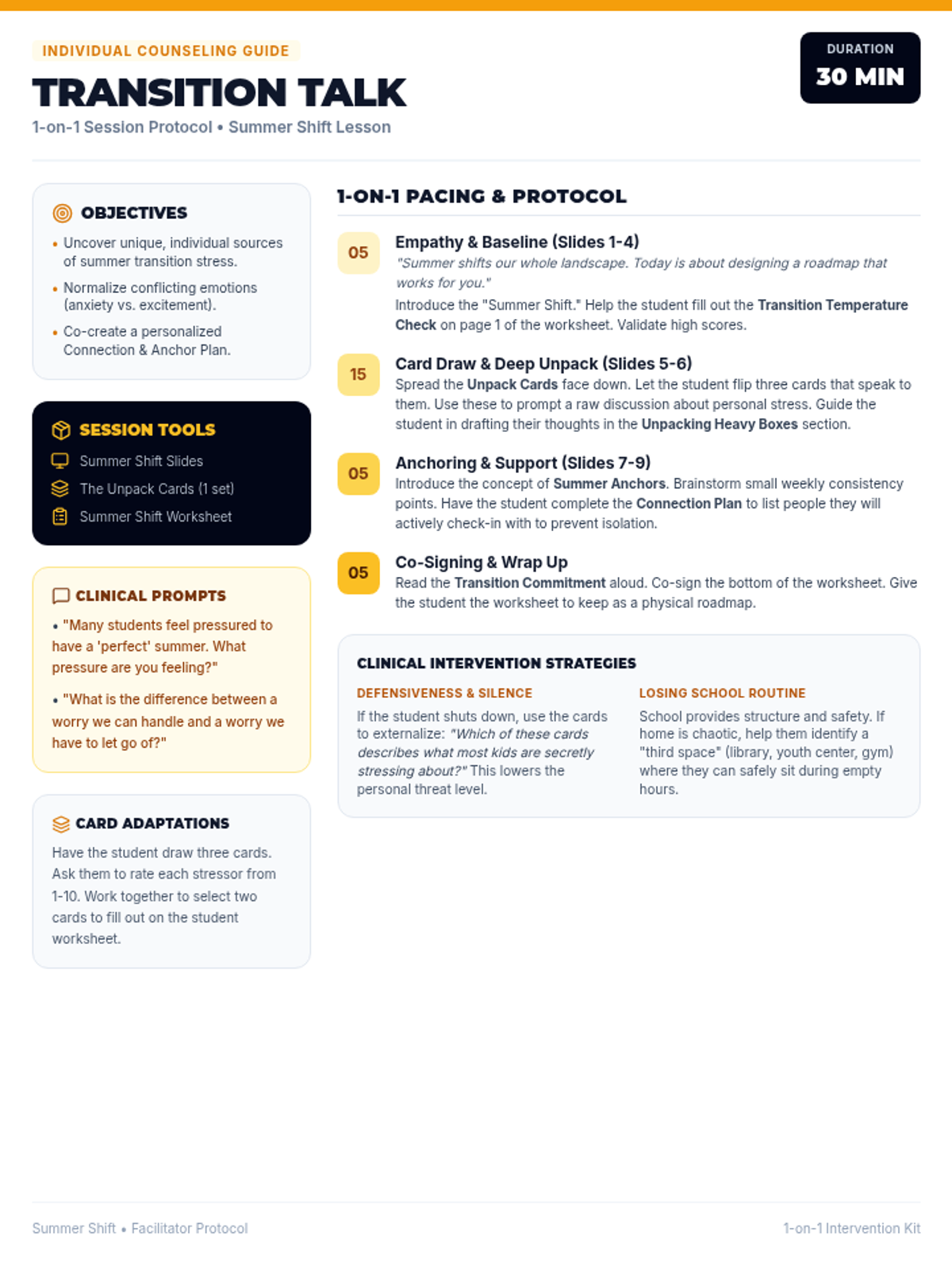
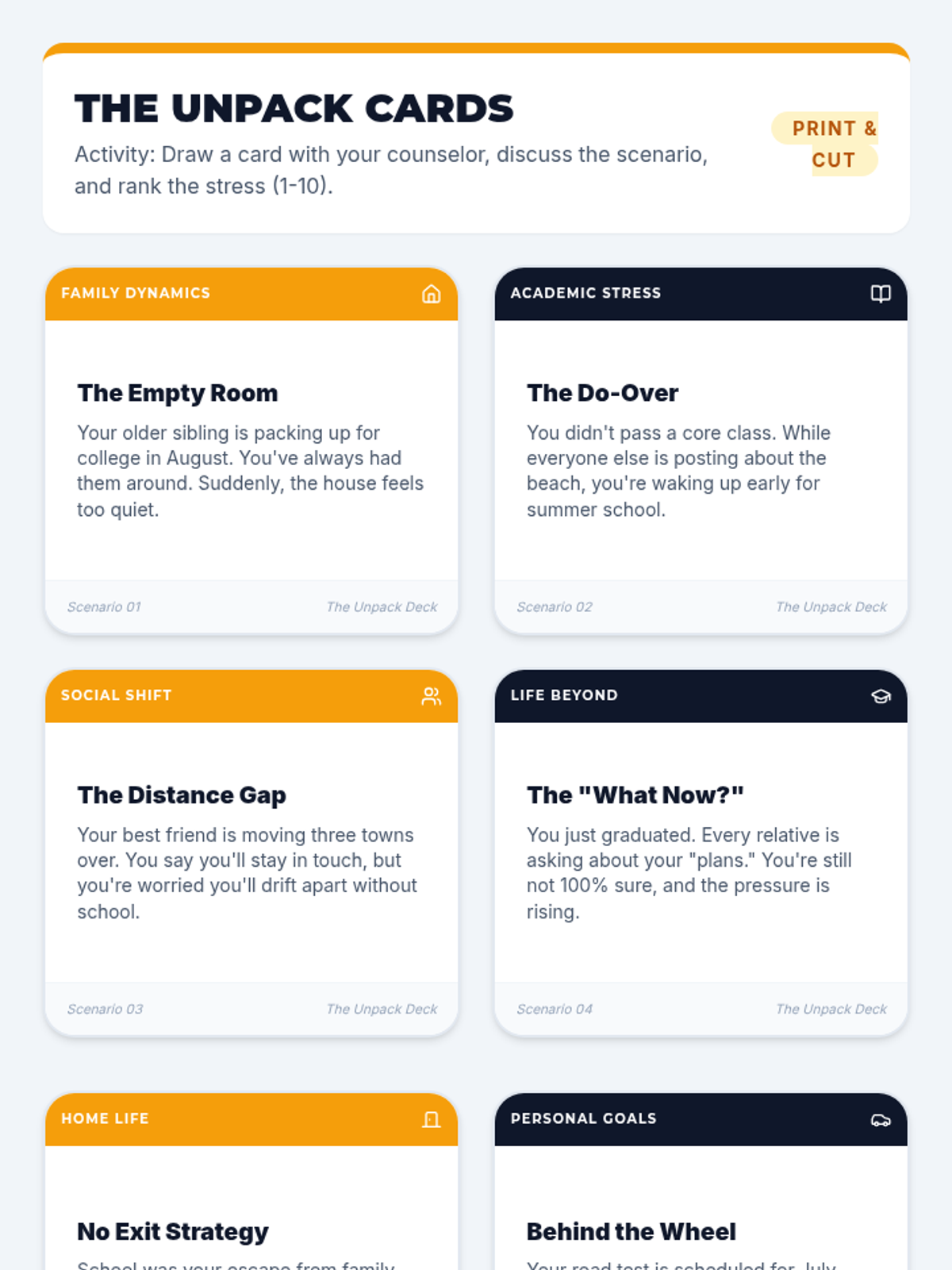
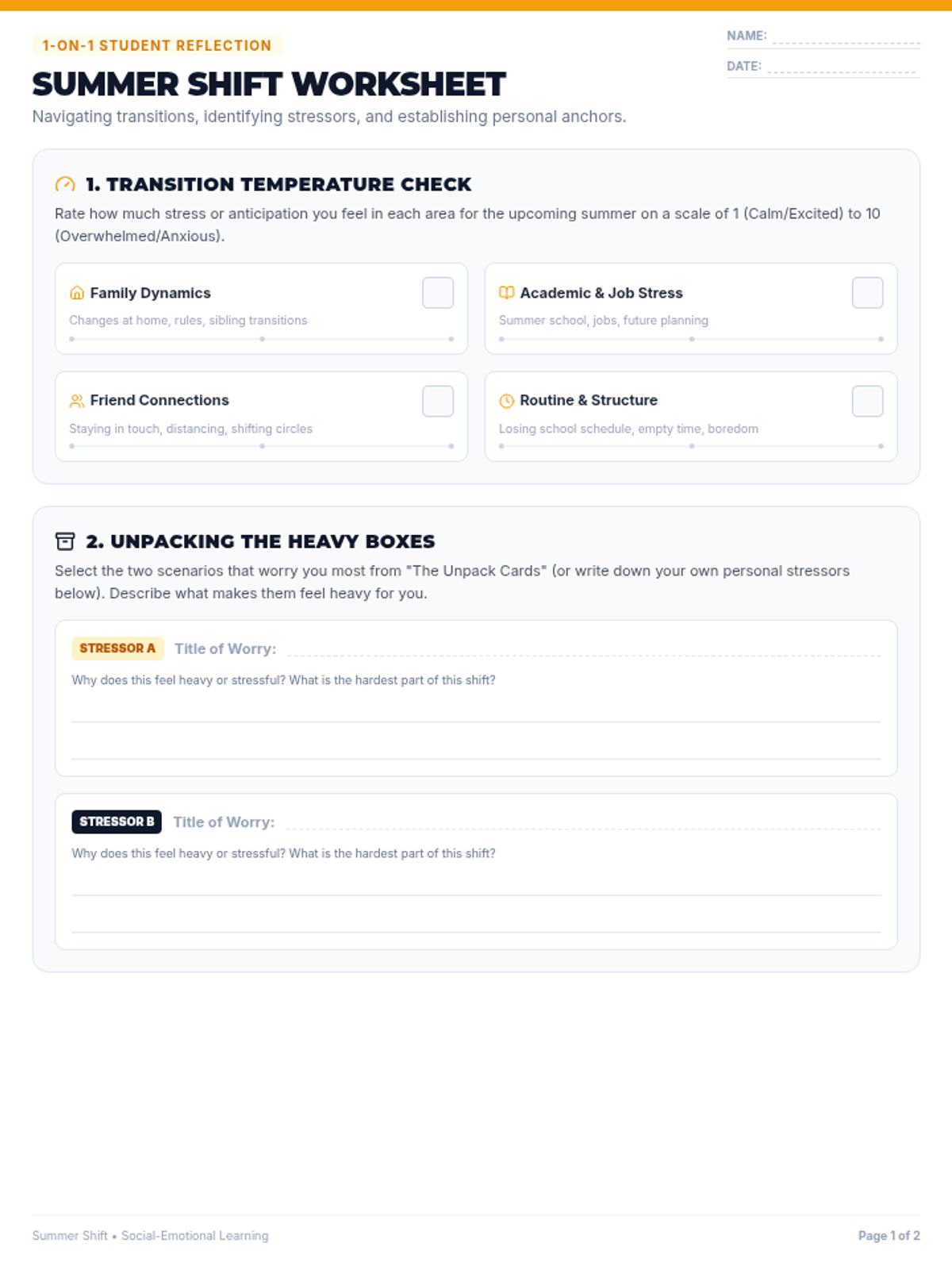
A 30-minute social-emotional learning session designed to help high schoolers navigate the complex transitions of summer, from academic stress to shifting friendships and family dynamics.
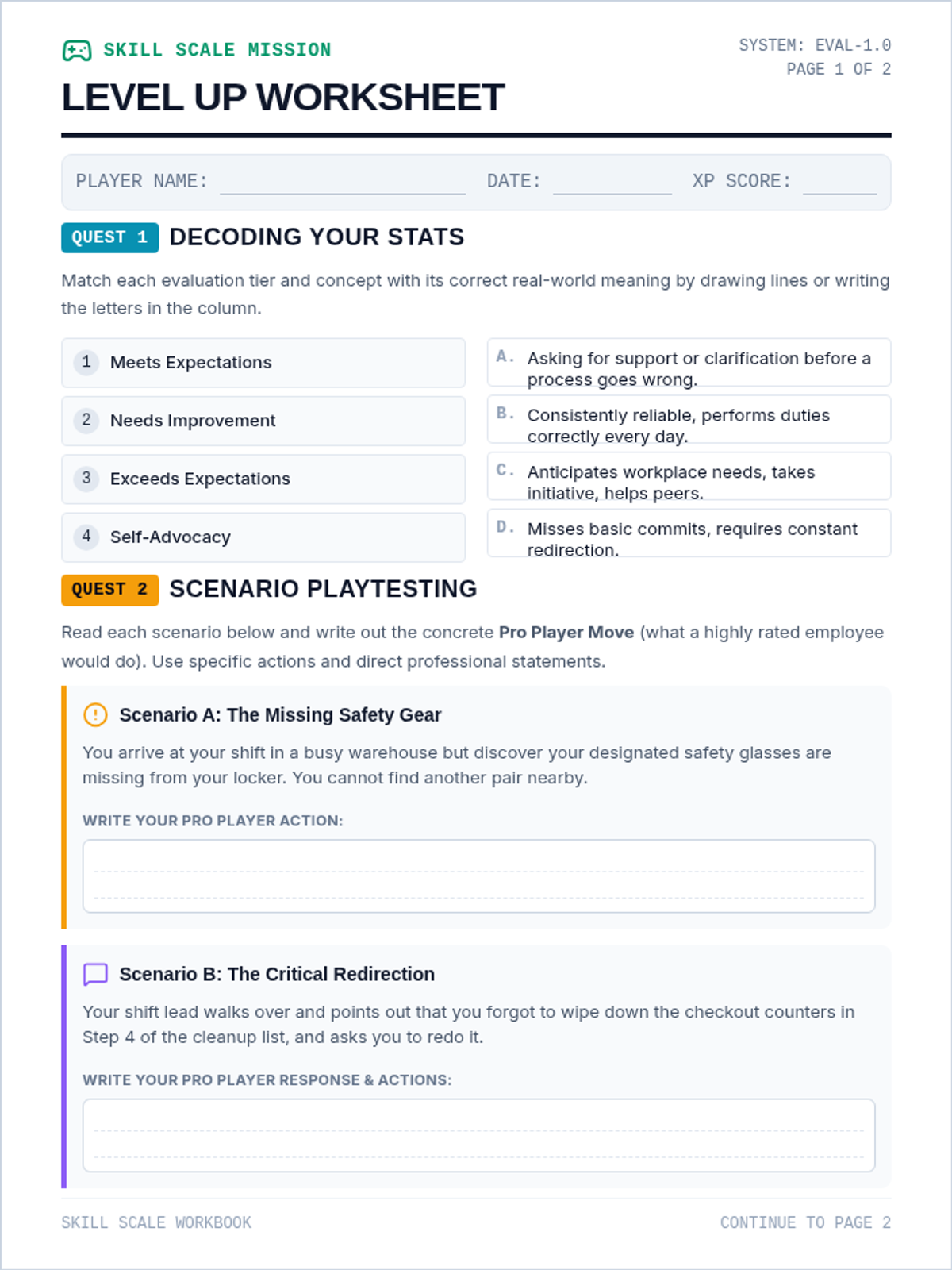
A foundational lesson introducing students to workplace evaluations, soft skills, and constructive feedback. Students learn how to interpret rubrics and use performance feedback as a tool for career advancement.
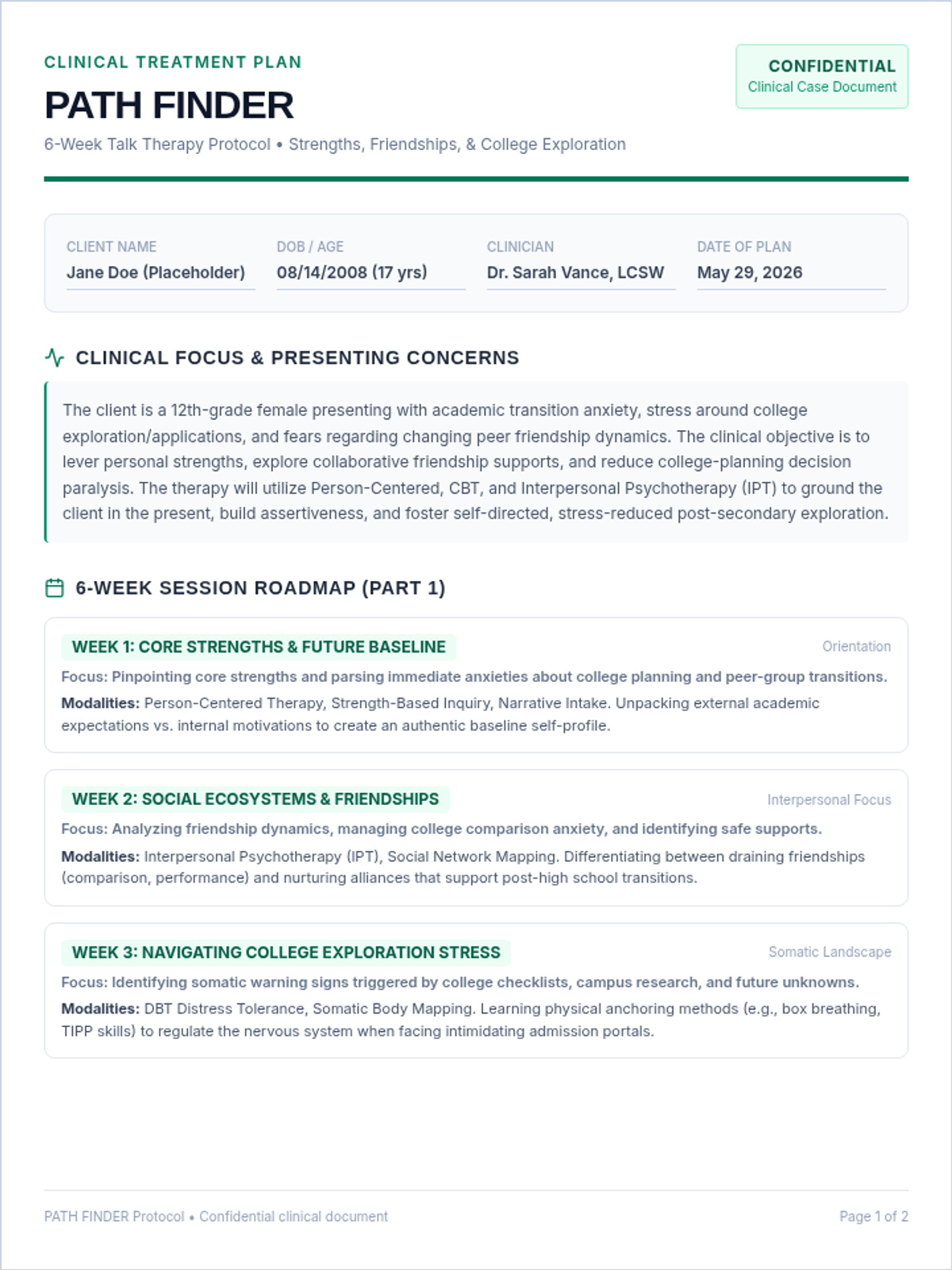
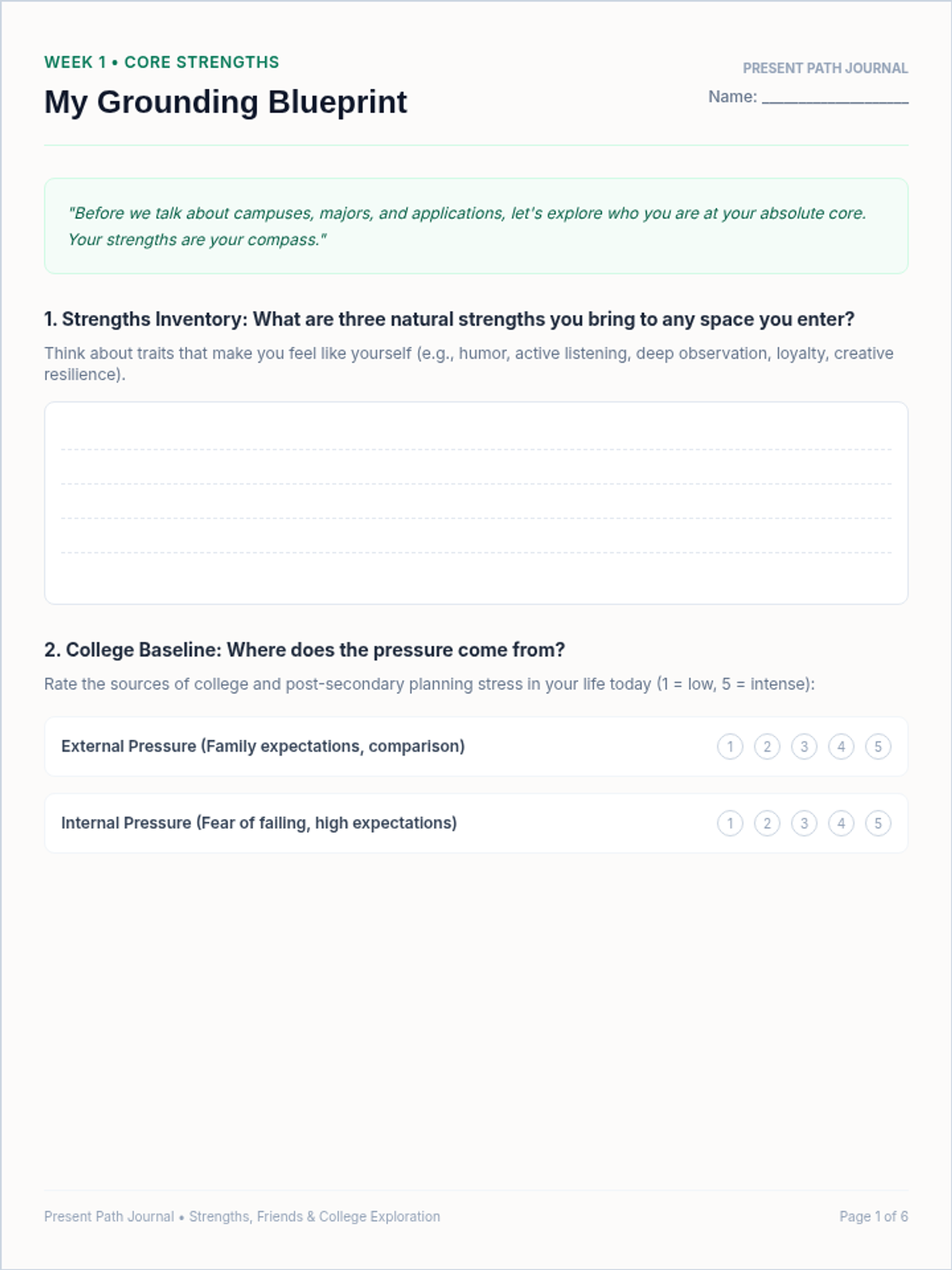
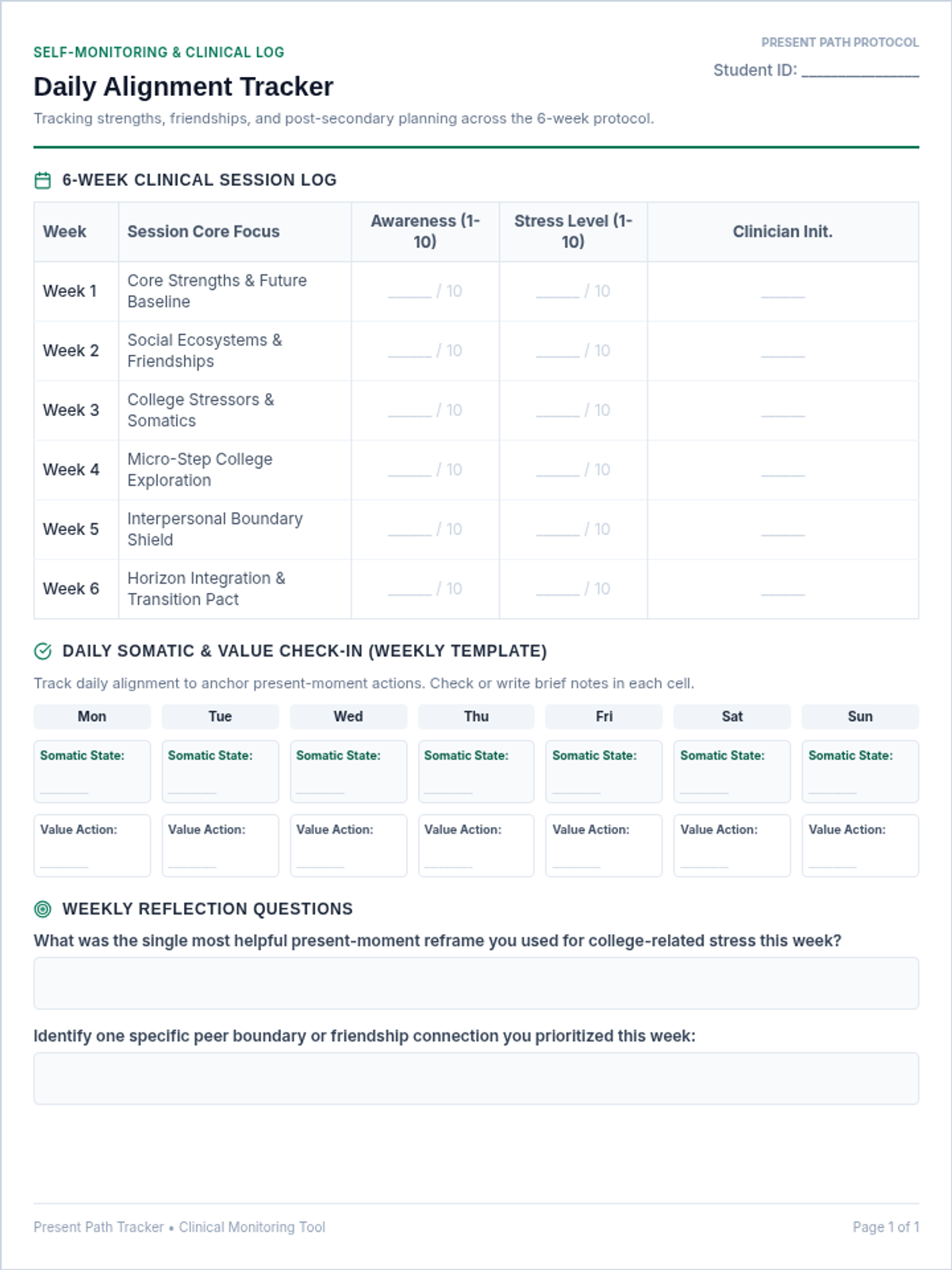
A comprehensive 6-week talk therapy intervention bundle for 12th-grade students, focusing on deepening self-awareness and structured present-moment planning. It contains a professional clinical treatment plan, a weekly reflective journal, and an alignment tracker.
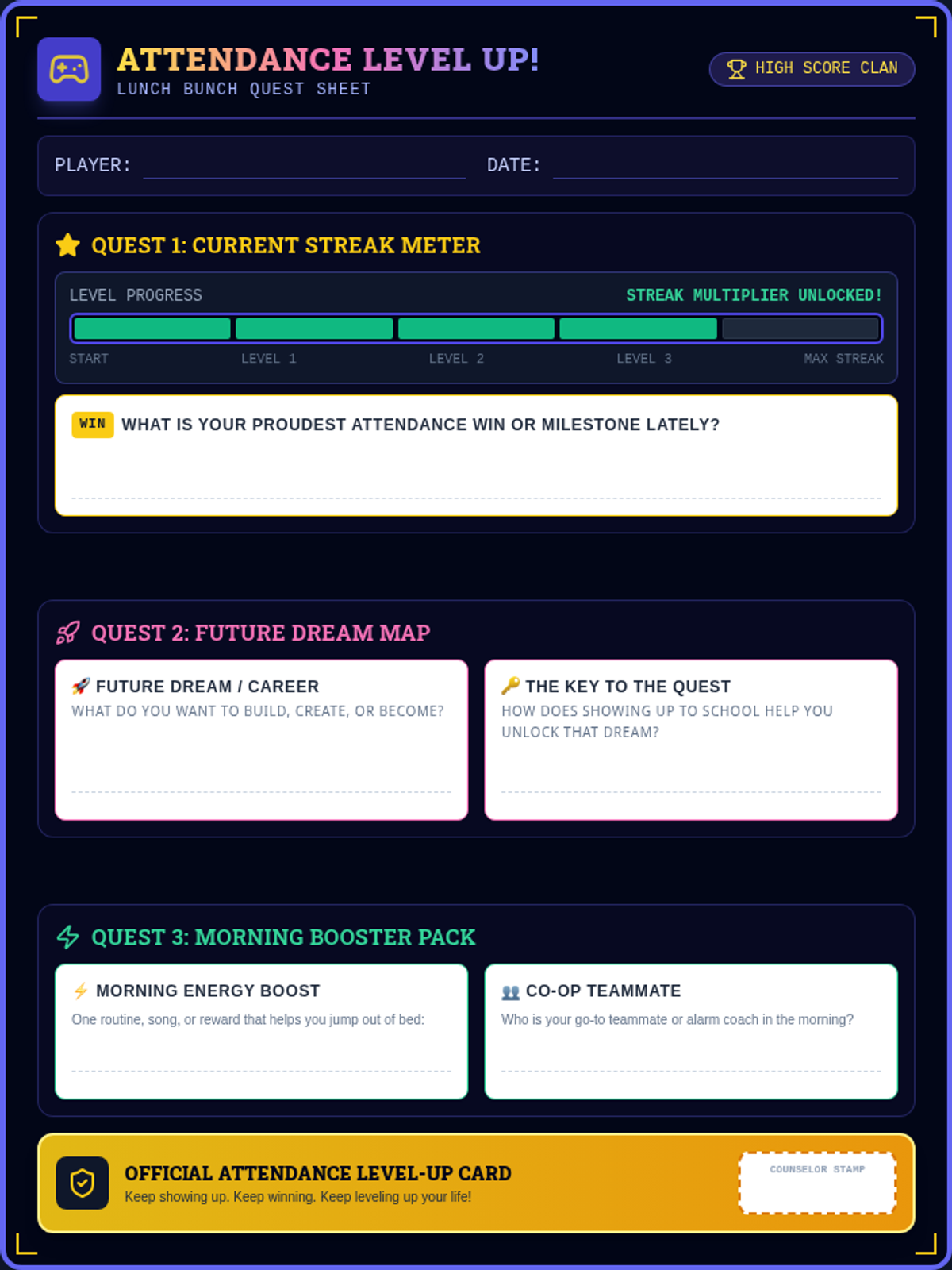
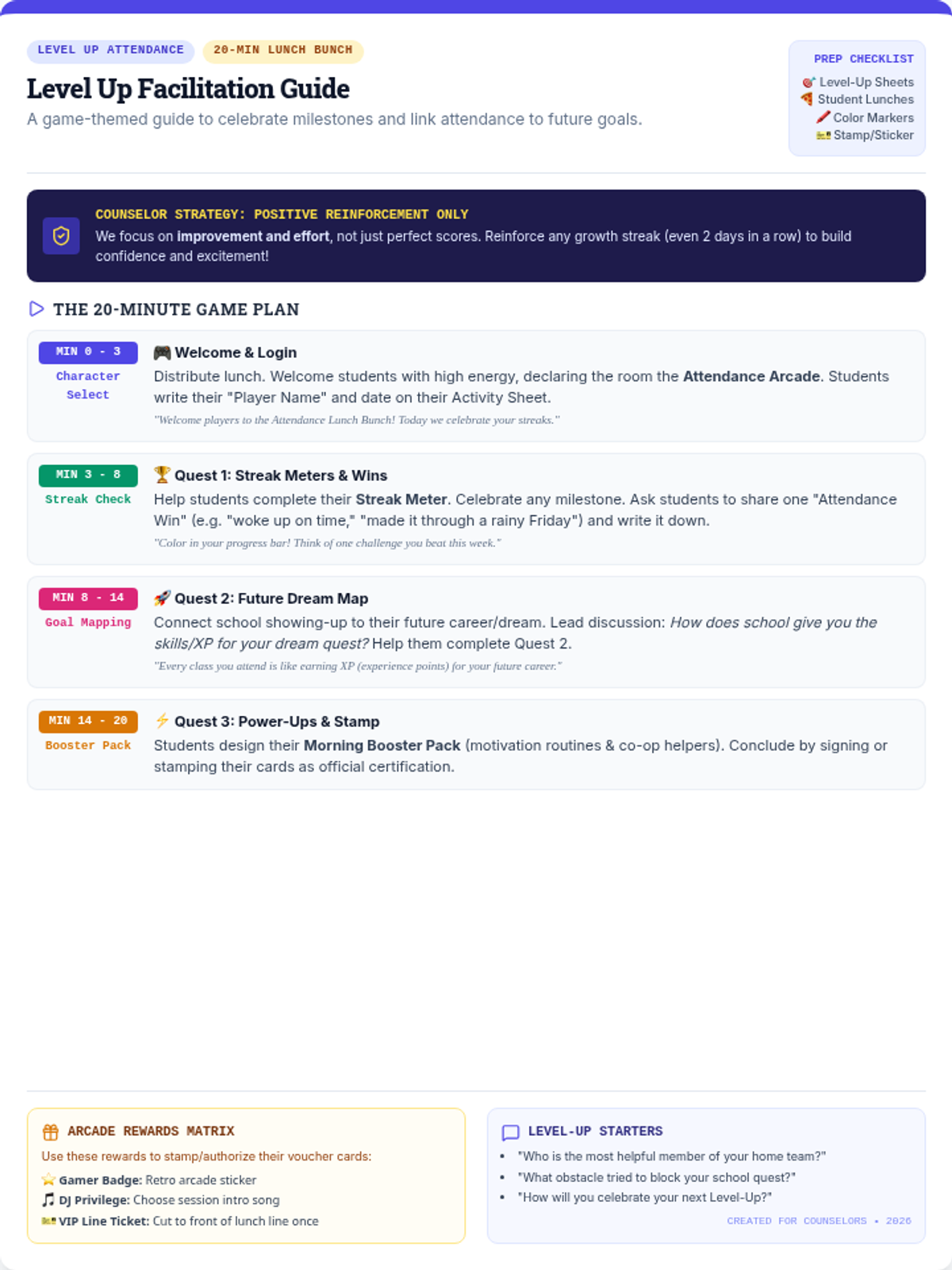
A 20-minute Lunch Bunch lesson plan and facilitation guide designed to celebrate attendance milestones, connect consistent attendance to future goals, and foster a high-energy, positive environment for students.
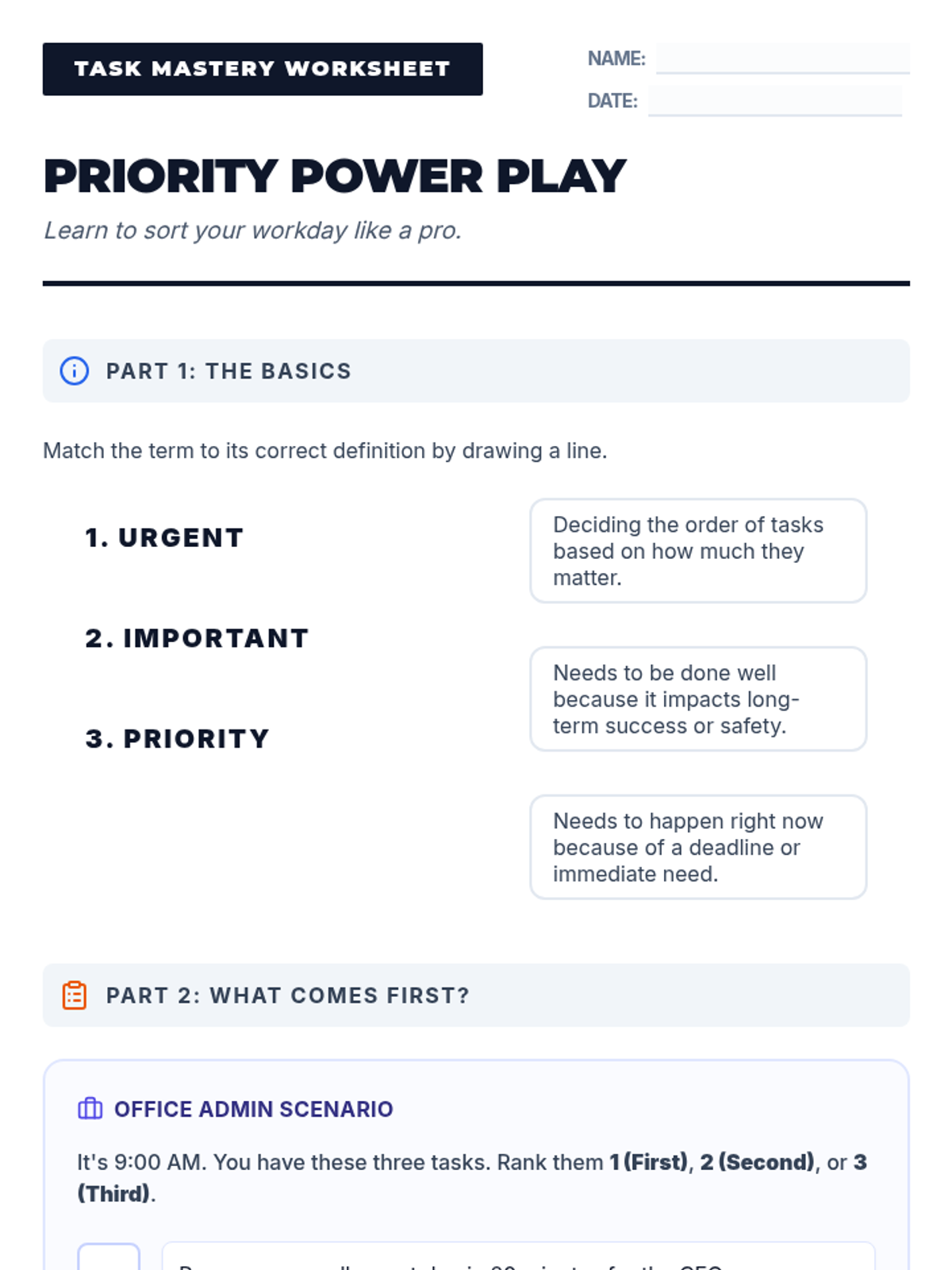
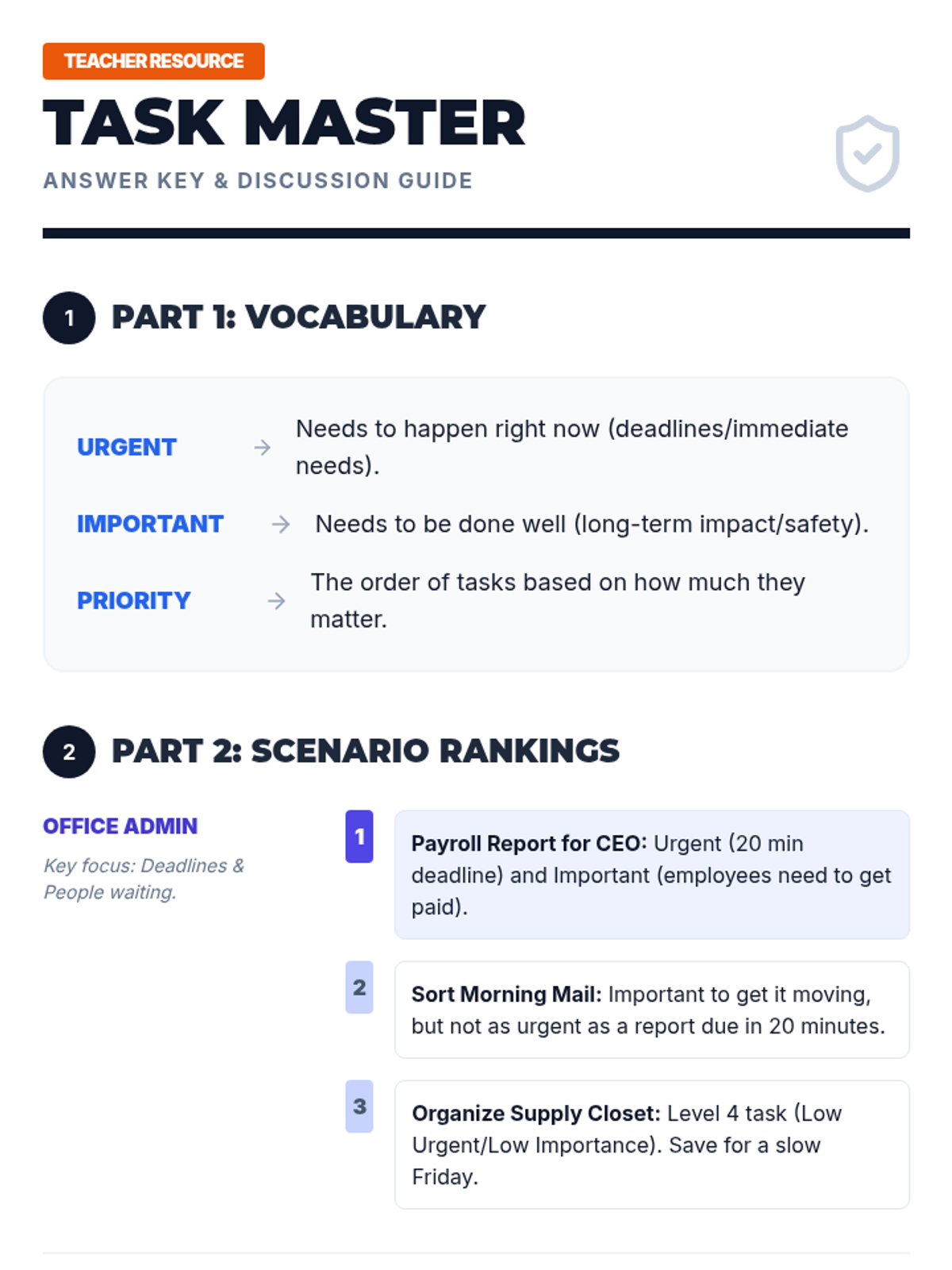
A comprehensive lesson on workplace prioritization and task management across food service, office, and janitorial roles. Students learn to distinguish between urgent and important tasks using real-world scenarios.
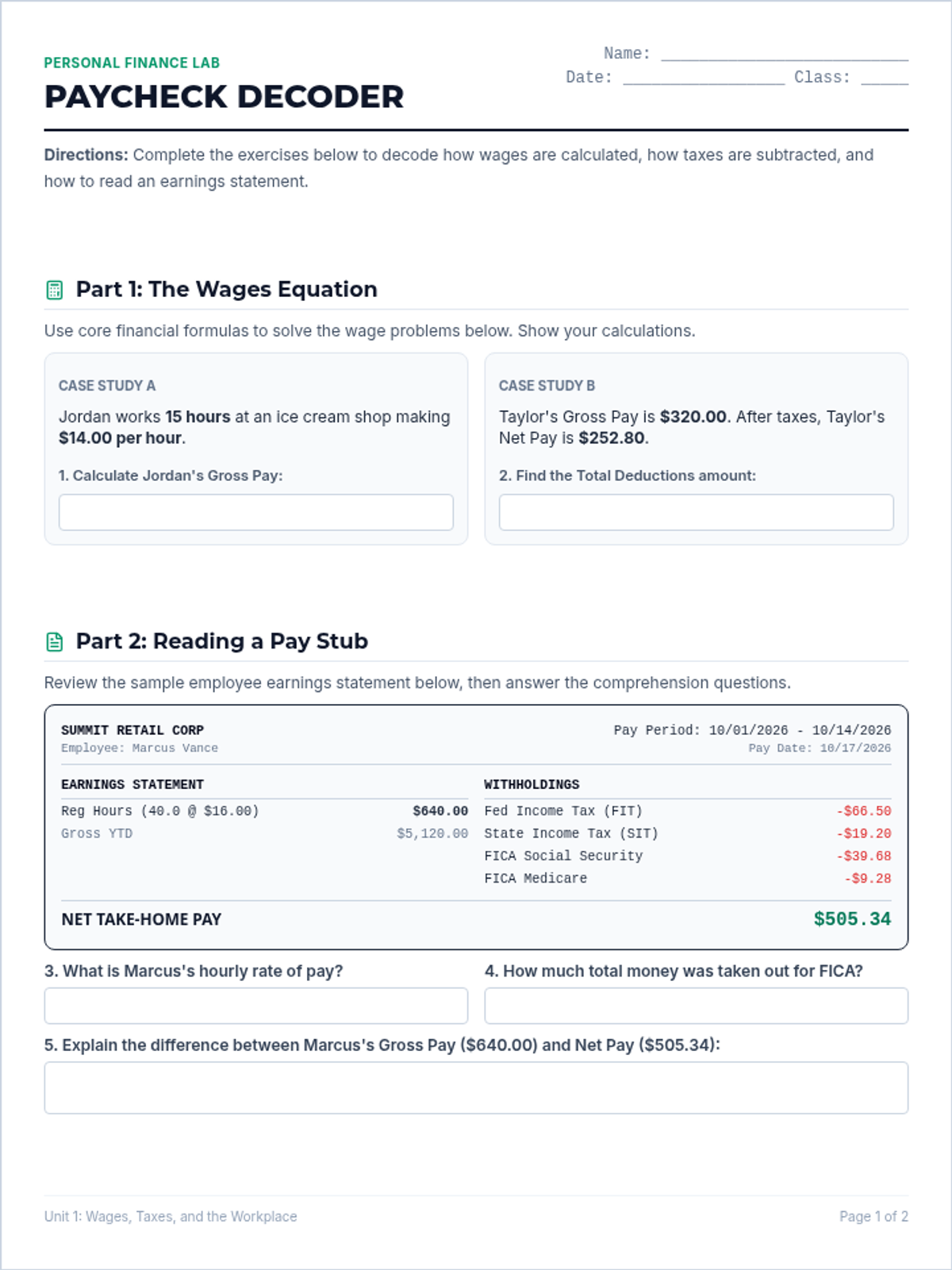
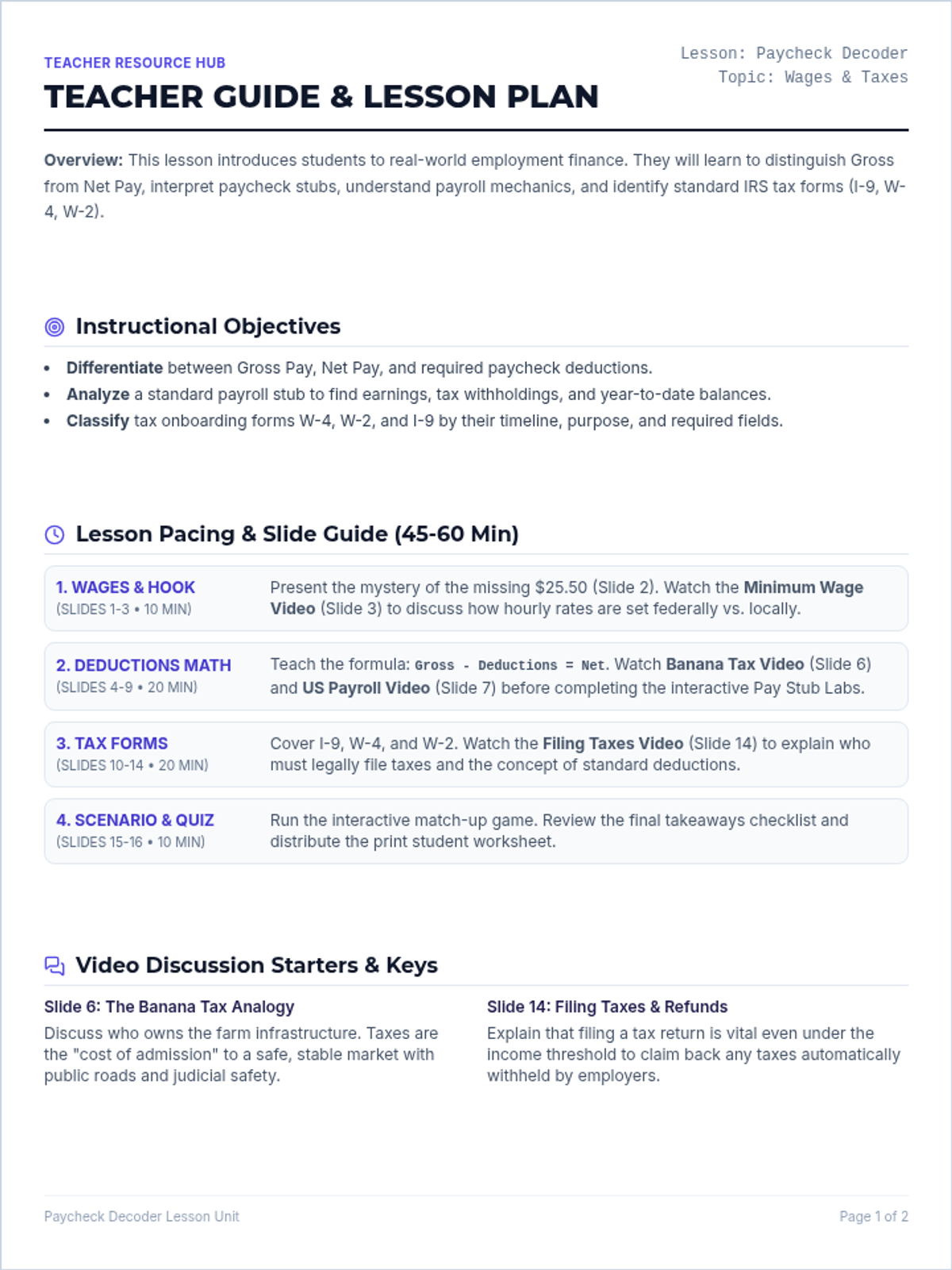
A lesson focusing on gross versus net pay, understanding paycheck deductions, reading a pay stub, and identifying key employment tax forms (W-4, W-2, I-9).
A cognitive-behavioral lesson designed to help individuals identify fearful self-talk, expose underlying cognitive distortions, and construct healthy, reality-based alternative narratives. This lesson guides learners through actionable reframing protocols for social anxiety, perfectionism, and worst-case scenarios.
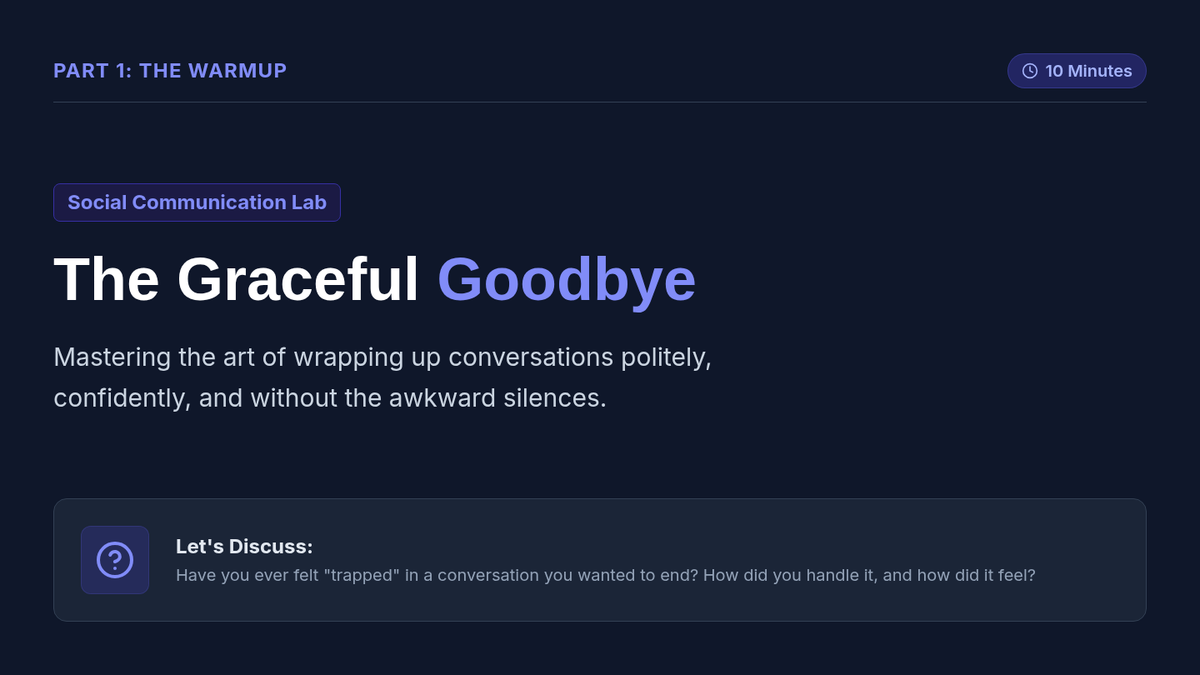
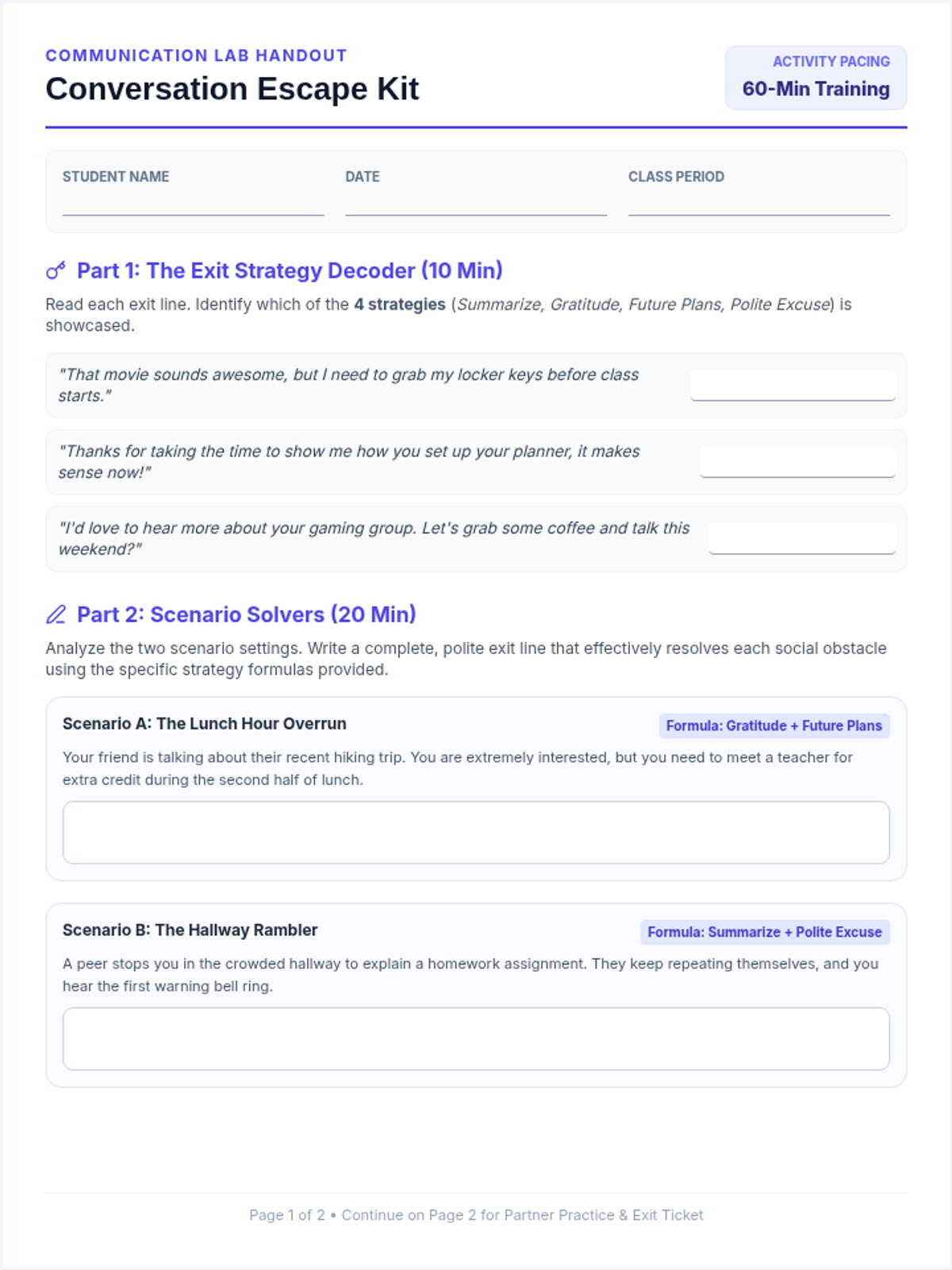
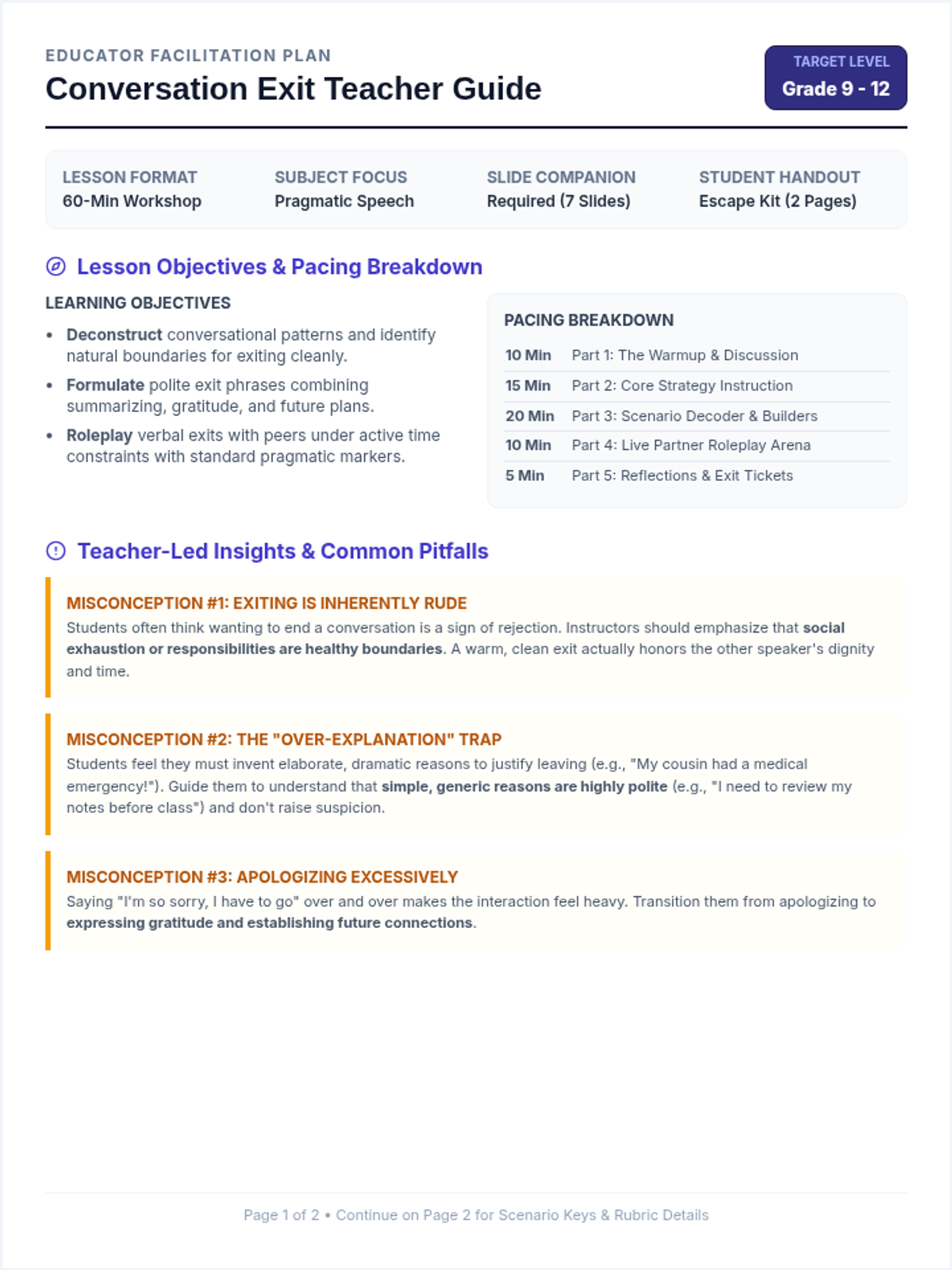
A comprehensive 60-minute lesson on mastering conversation exits for high schoolers, including a guided presentation, partner roleplay activities, and a teacher guide.
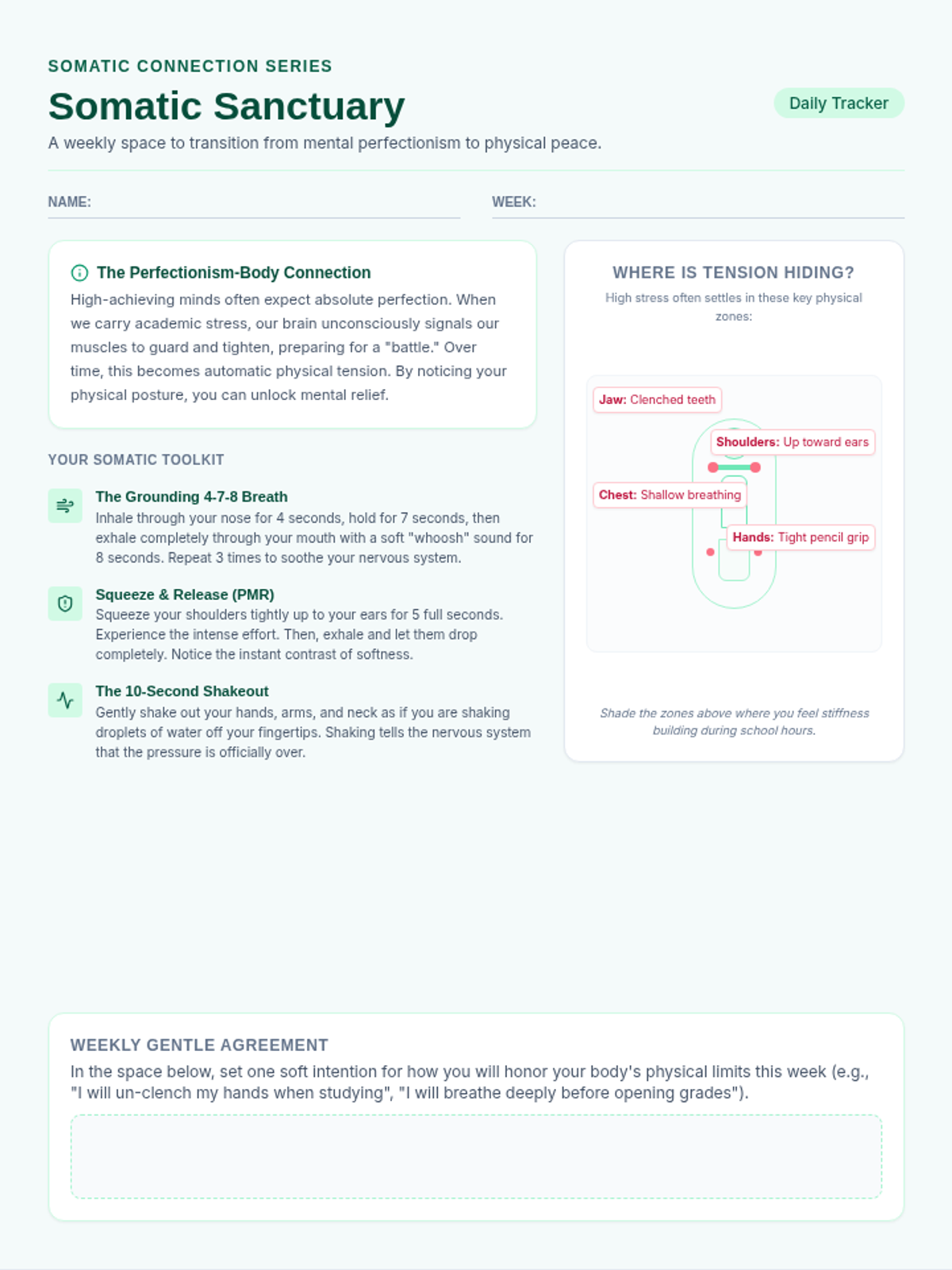
A somatic and mindfulness-centered lesson designed for academically high-achieving high schoolers who carry stress and perfectionism in their physical bodies. This lesson focuses on connecting the mind's expectations with the body's physical sensations, teaching progressive muscle relaxation, breathing anchors, and body-awareness tracking.
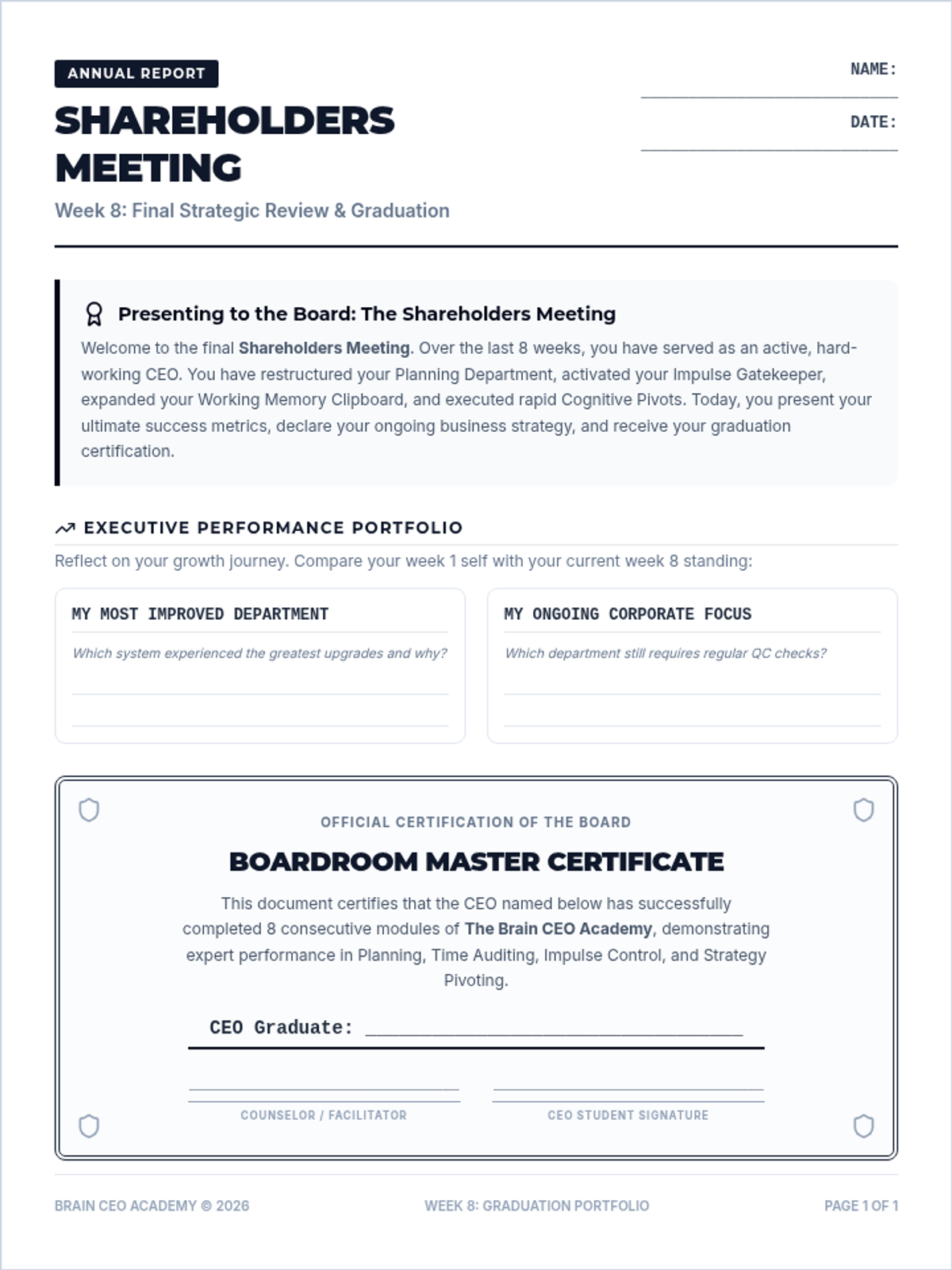
Students host their final Shareholders Meeting to present their executive progress. They receive their Brain CEO Certifications, consolidate their boardroom binders, and commit to long-term habits.
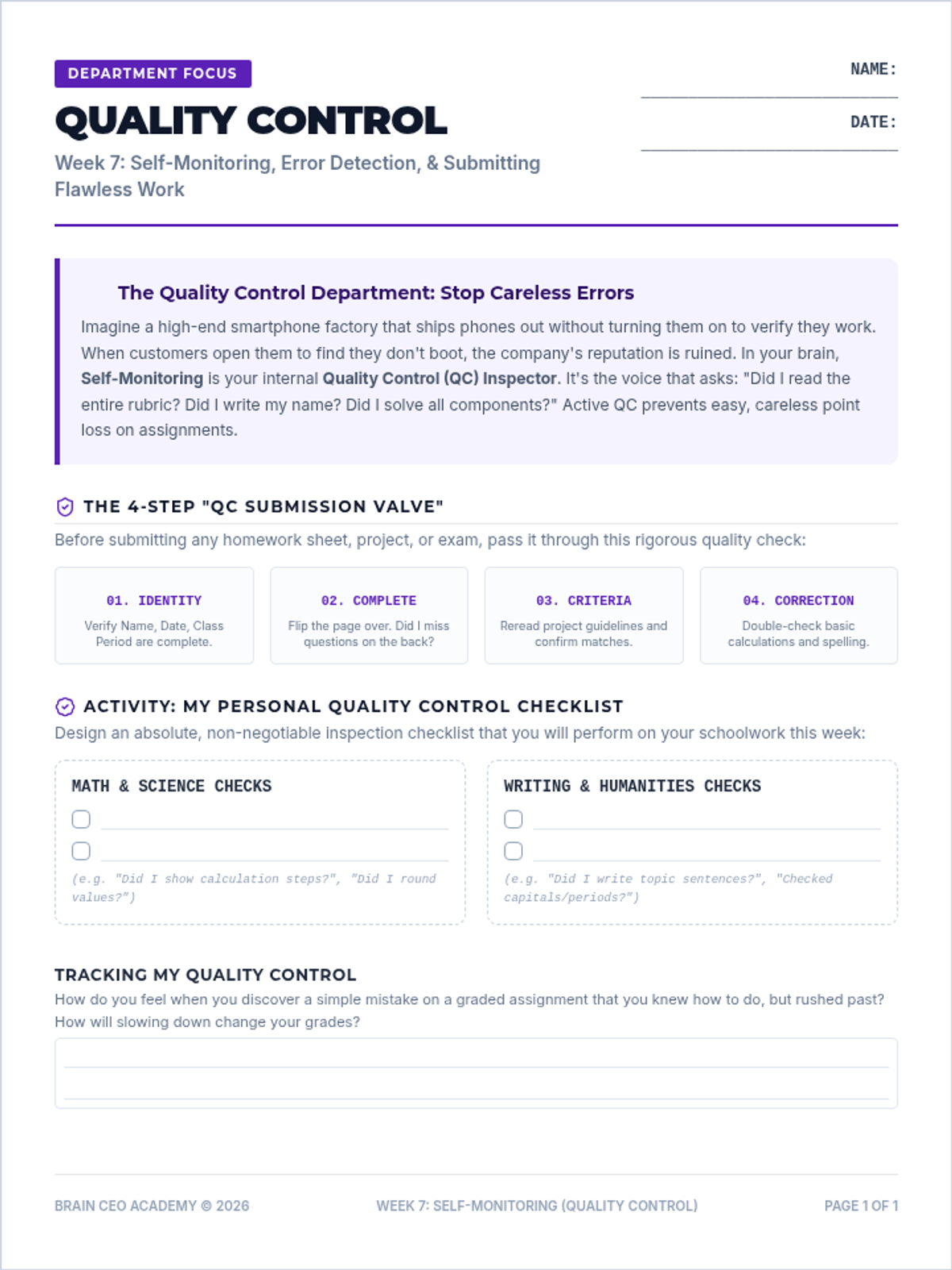
Students examine the brain's 'Quality Control' (self-monitoring). They review academic progress, track habit loops, and self-correct work before submitting it.
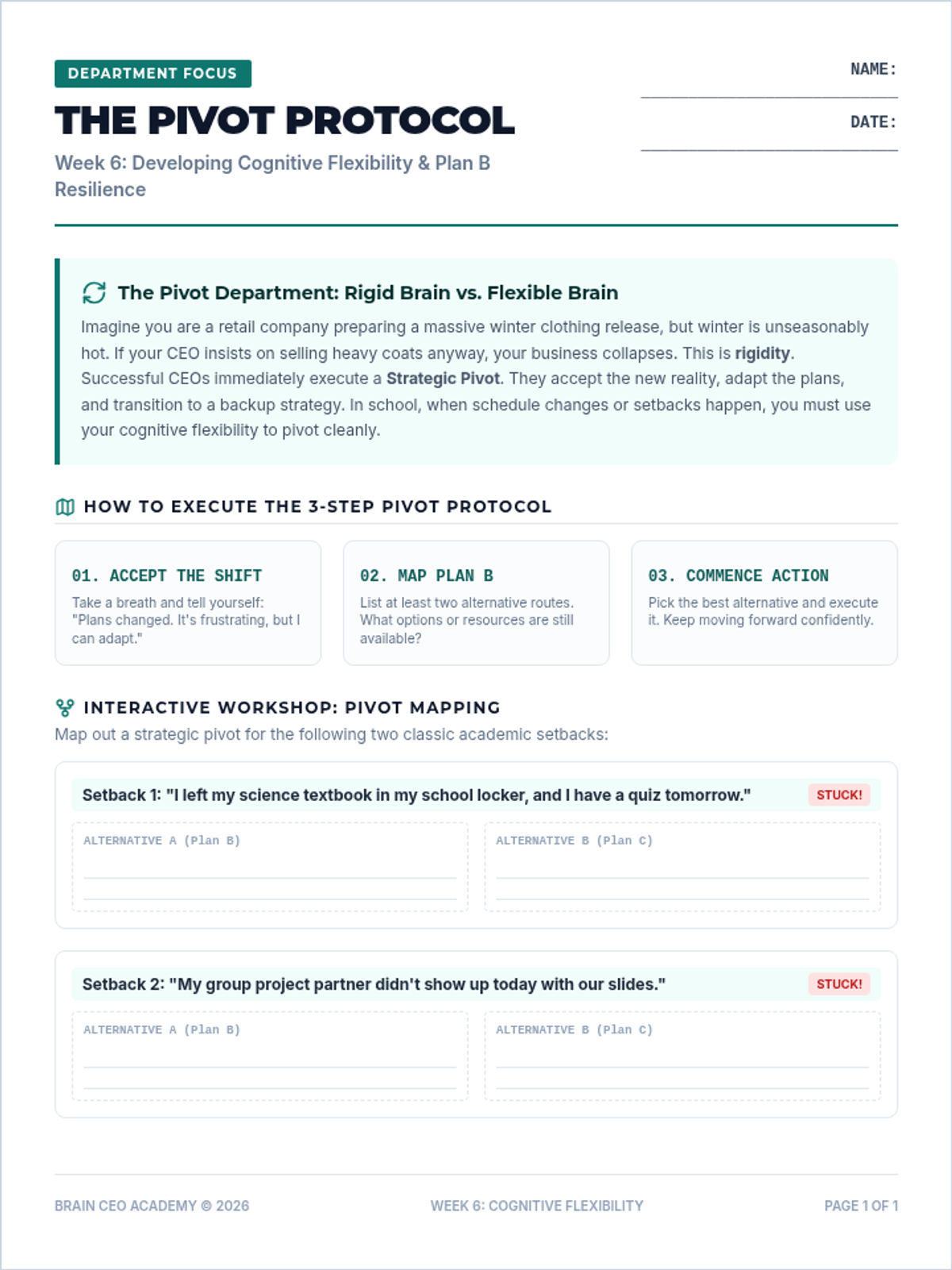
Students examine the brain's 'Pivot' (cognitive flexibility). They learn how to adapt to unexpected boardroom shifts, handle academic setbacks, and problem-solve when plans fail.
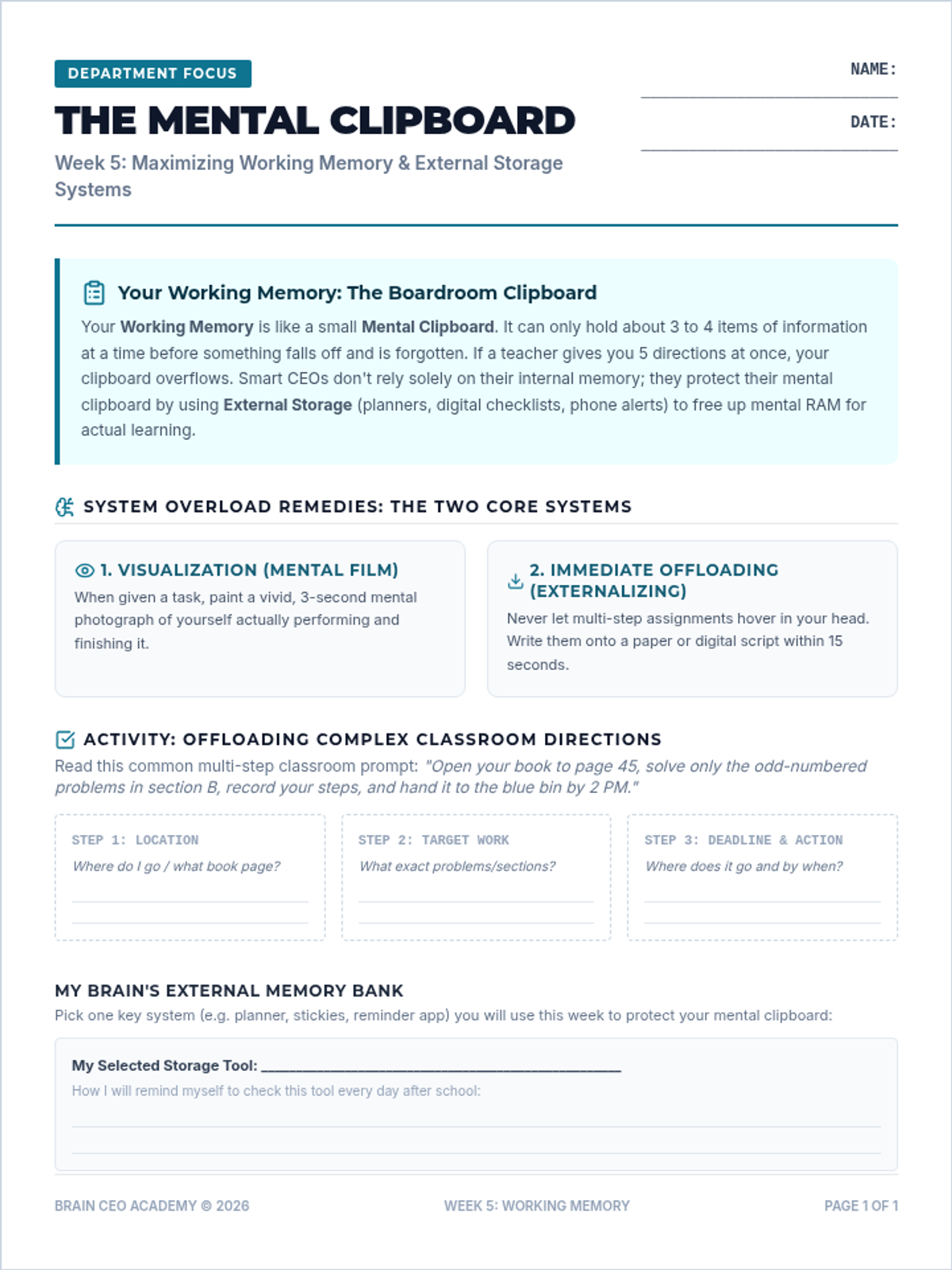
Students explore the brain's 'Mental Clipboard' (working memory). They practice visualization, externalization, and mnemonics to retain multi-step instructions and organize school information.
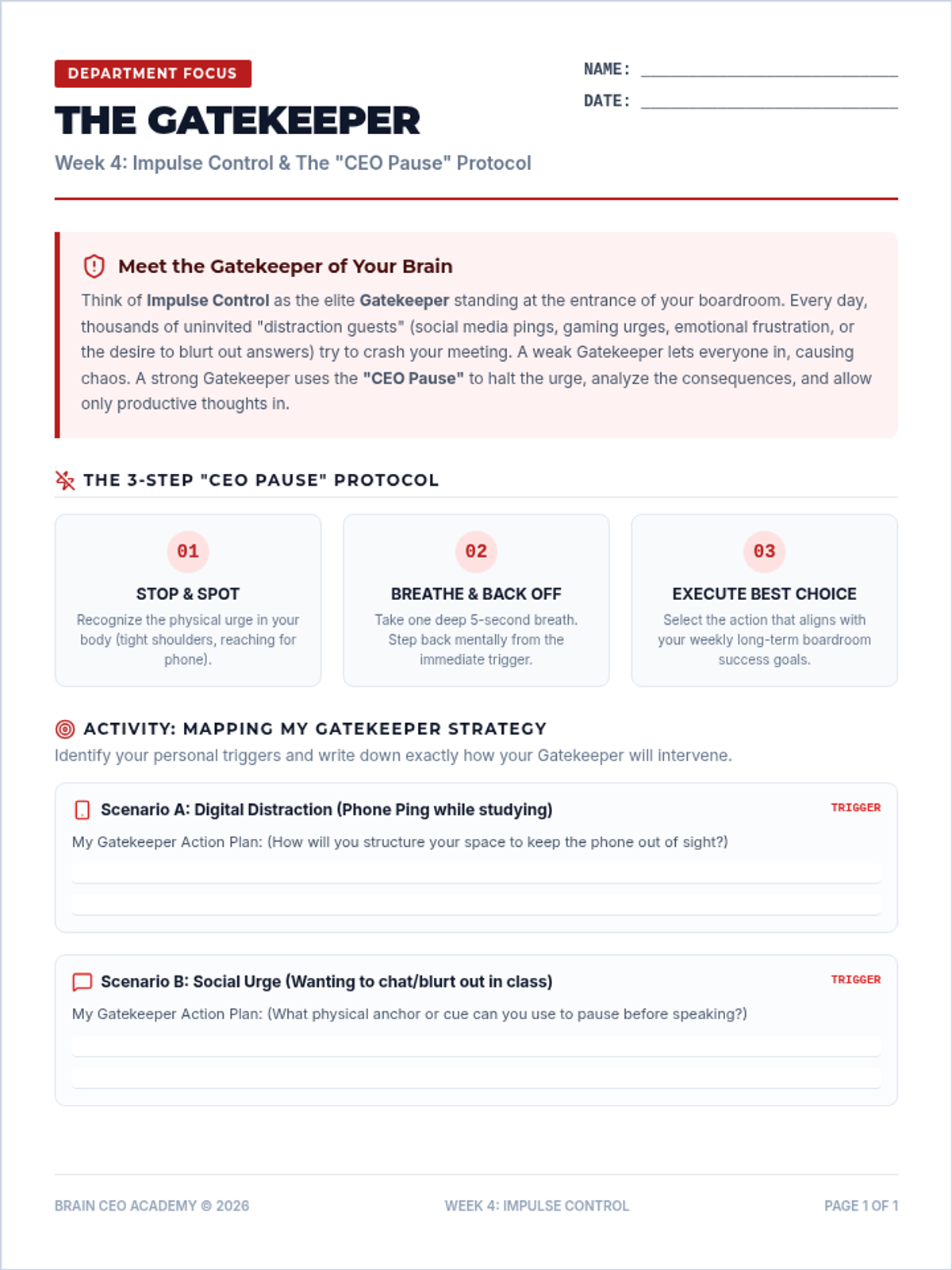
Students explore the brain's 'Gatekeeper' (impulse control), developing practical techniques like the 'CEO Pause' to resist high-tech distractions and control emotional impulses before acting.
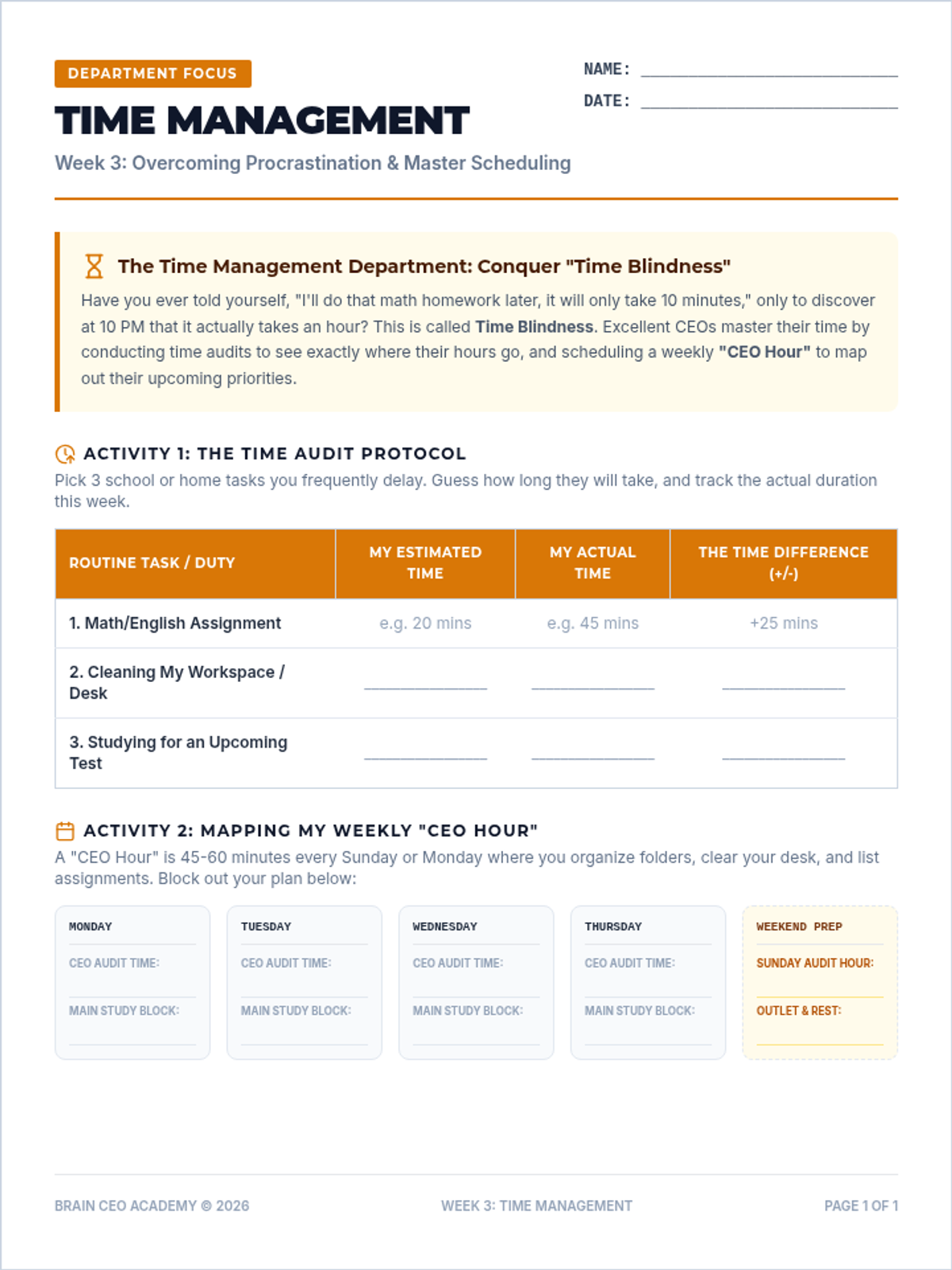
Students examine their brain's Time Management department, learning how to overcome procrastination, estimate task durations accurately, and implement the 'CEO Hour' weekly scheduling technique.
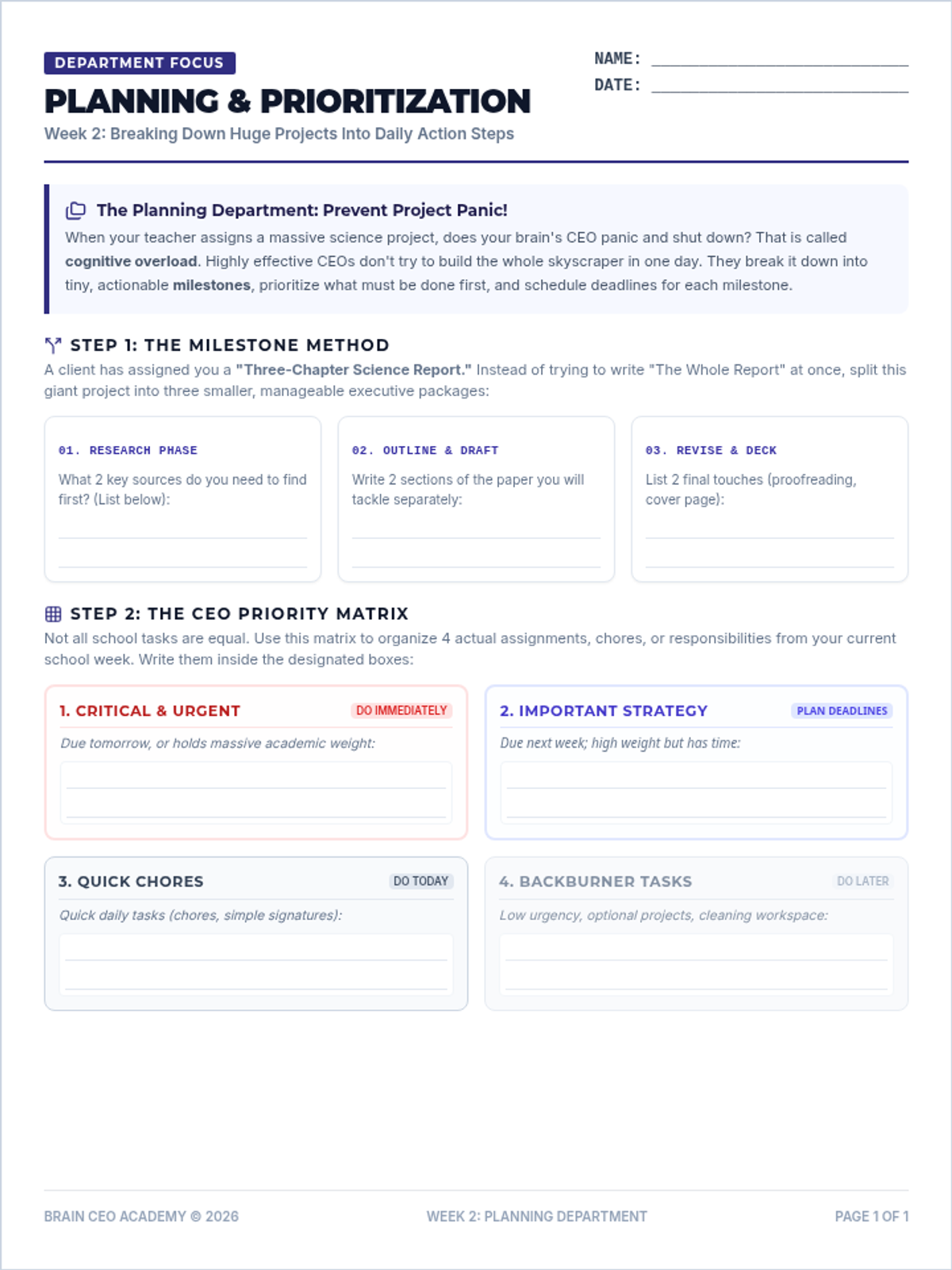
Students dive into the Planning & Prioritization Department, learning how to break down complex projects into actionable steps and organize tasks using the 'CEO Action Item' matrix.