A small group session for 1st graders to learn and practice a simple countdown technique for emotional regulation. The lesson uses a space-themed rocket countdown to make calming down engaging and memorable.
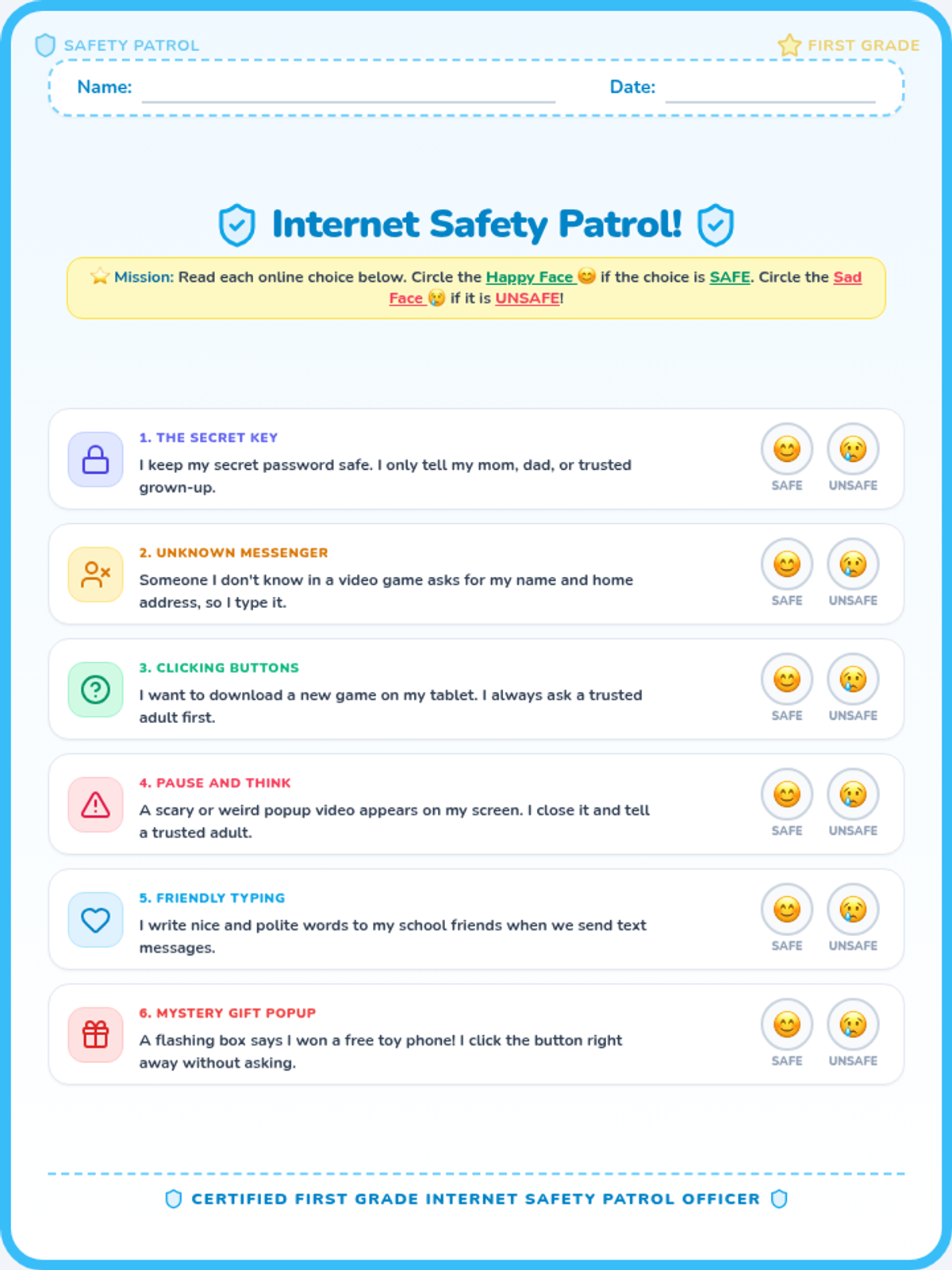
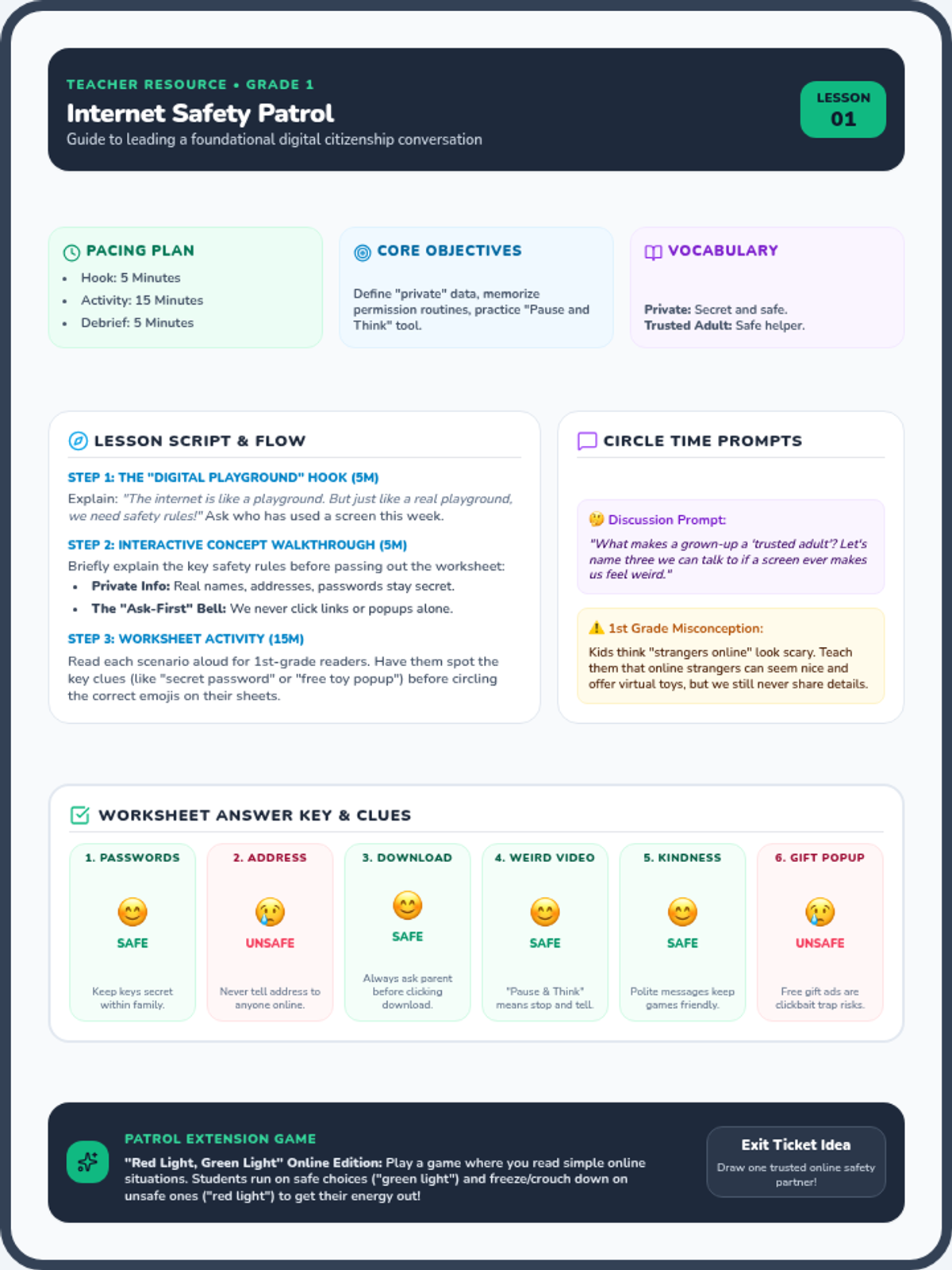
A 1st-grade interactive lesson about online safety. Includes a hands-on coloring and coding worksheet for identifying safe and unsafe digital behaviors, and a comprehensive teacher guide with discussion prompts and lesson walkthroughs.
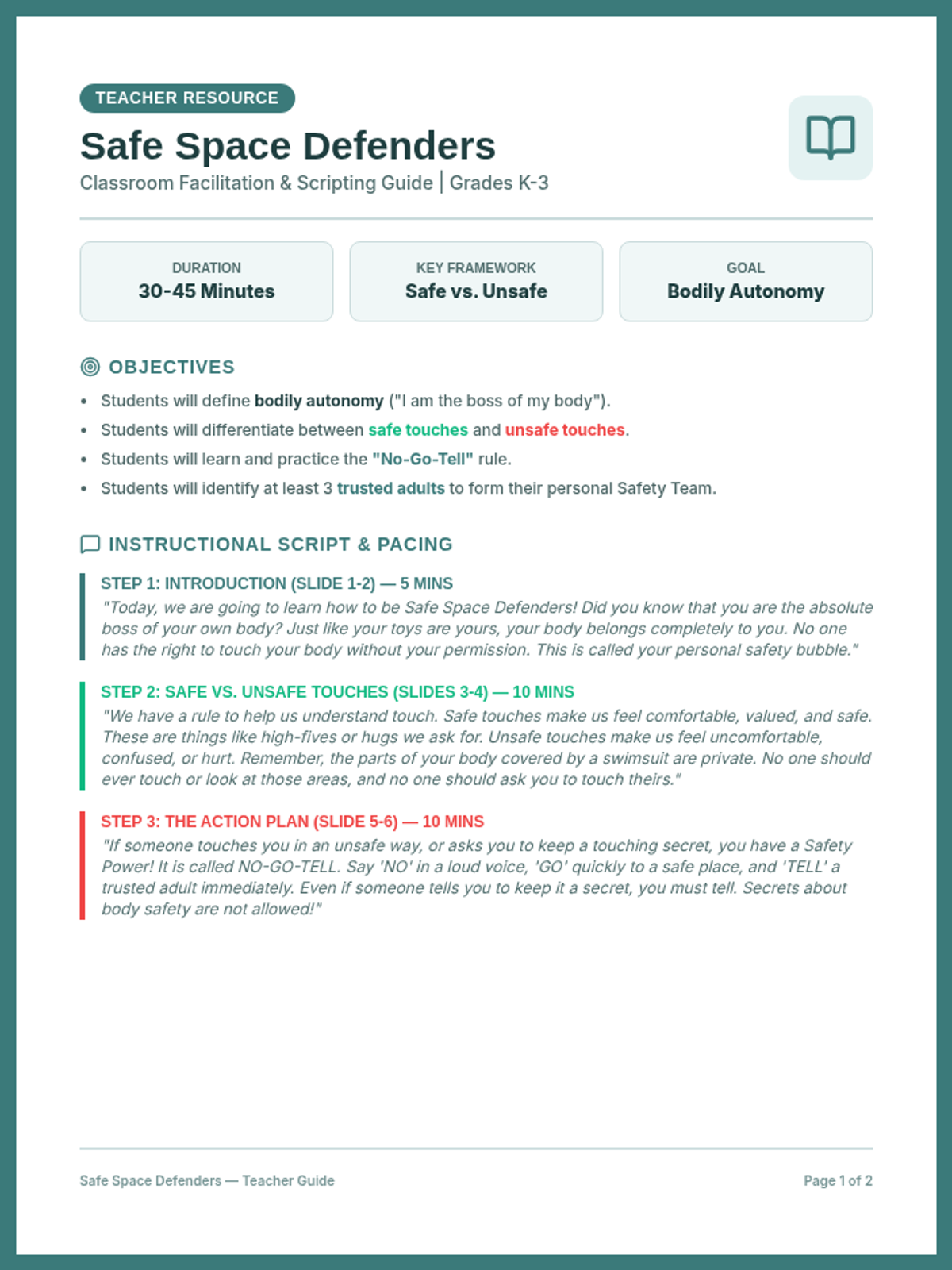
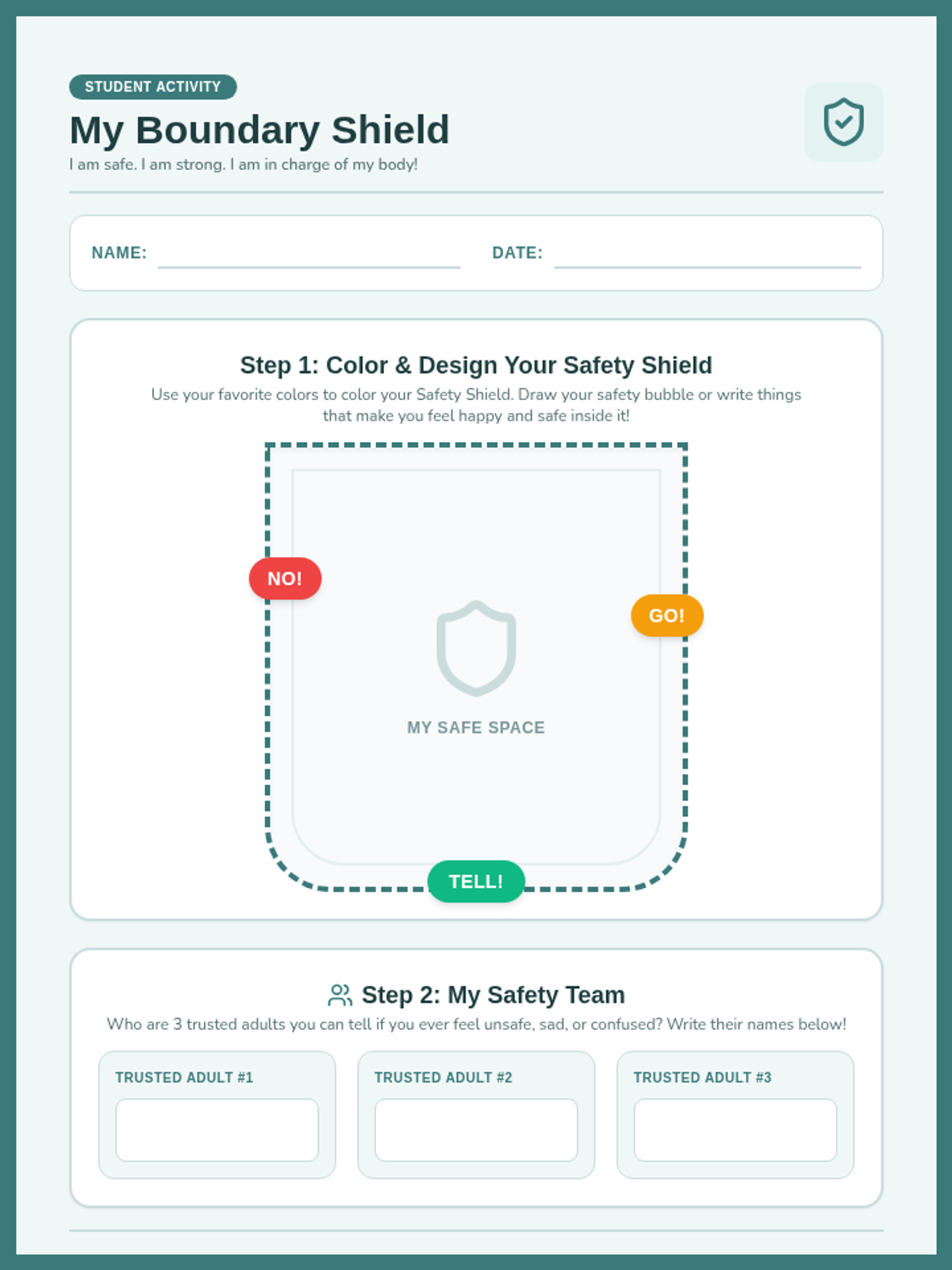
A sensitive and empowering Social-Emotional Learning (SEL) lesson designed to teach elementary students the concepts of safe versus unsafe touches, bodily autonomy, and how to identify and communicate boundaries with trusted adults.
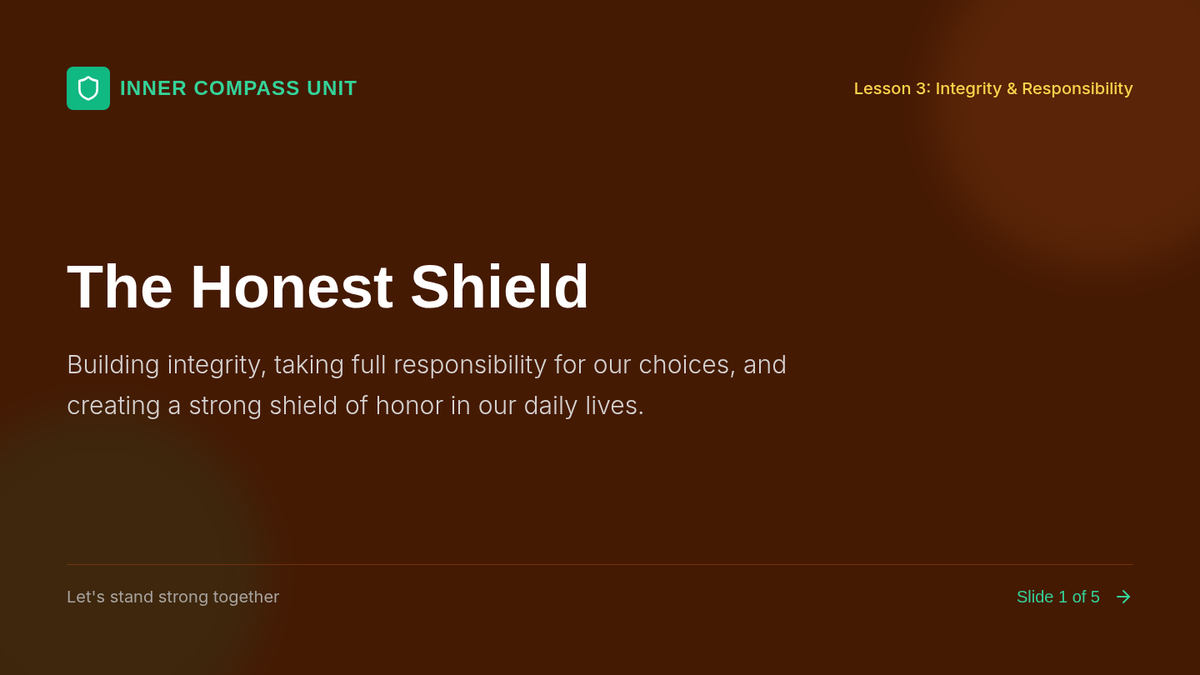
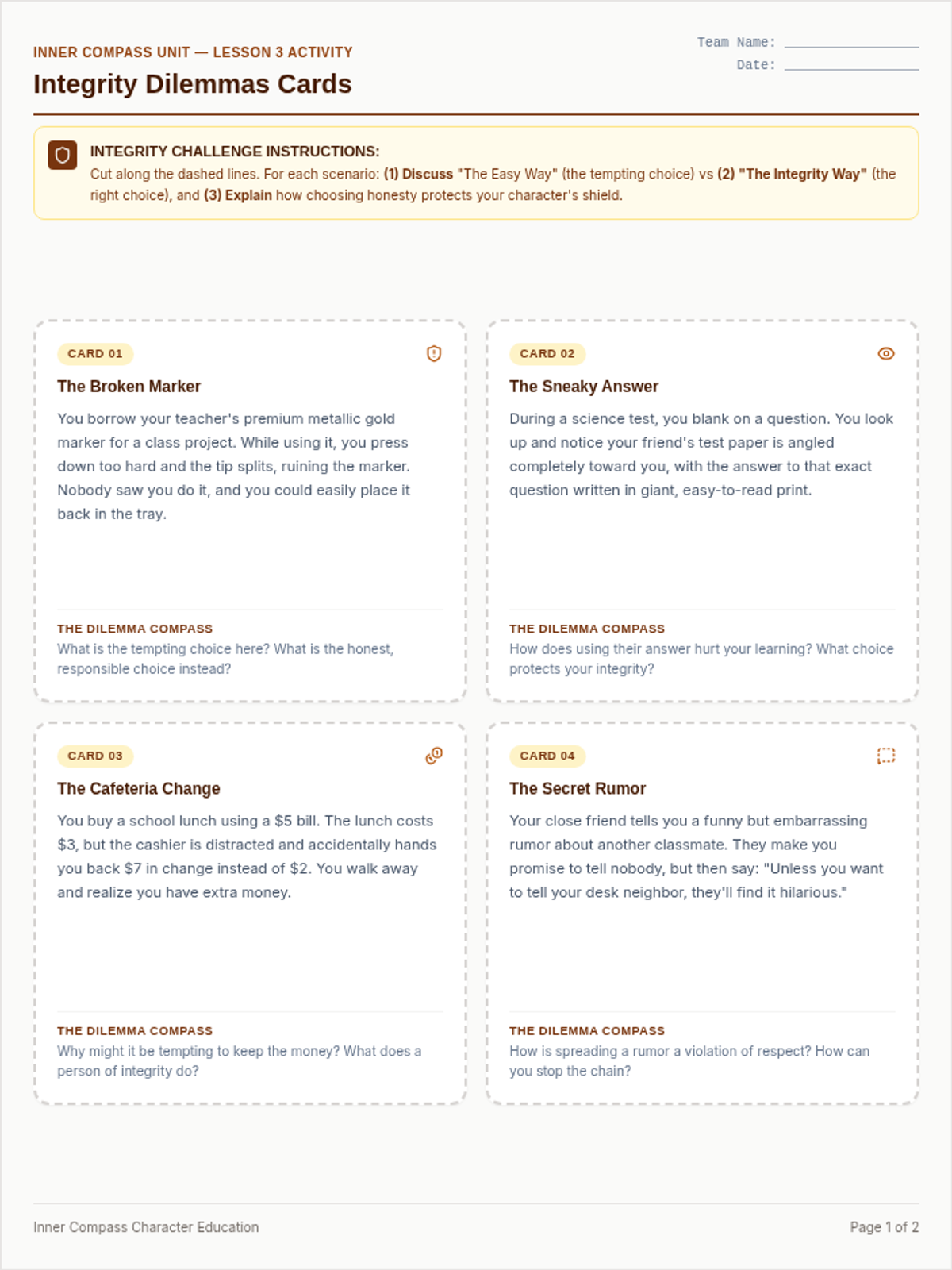
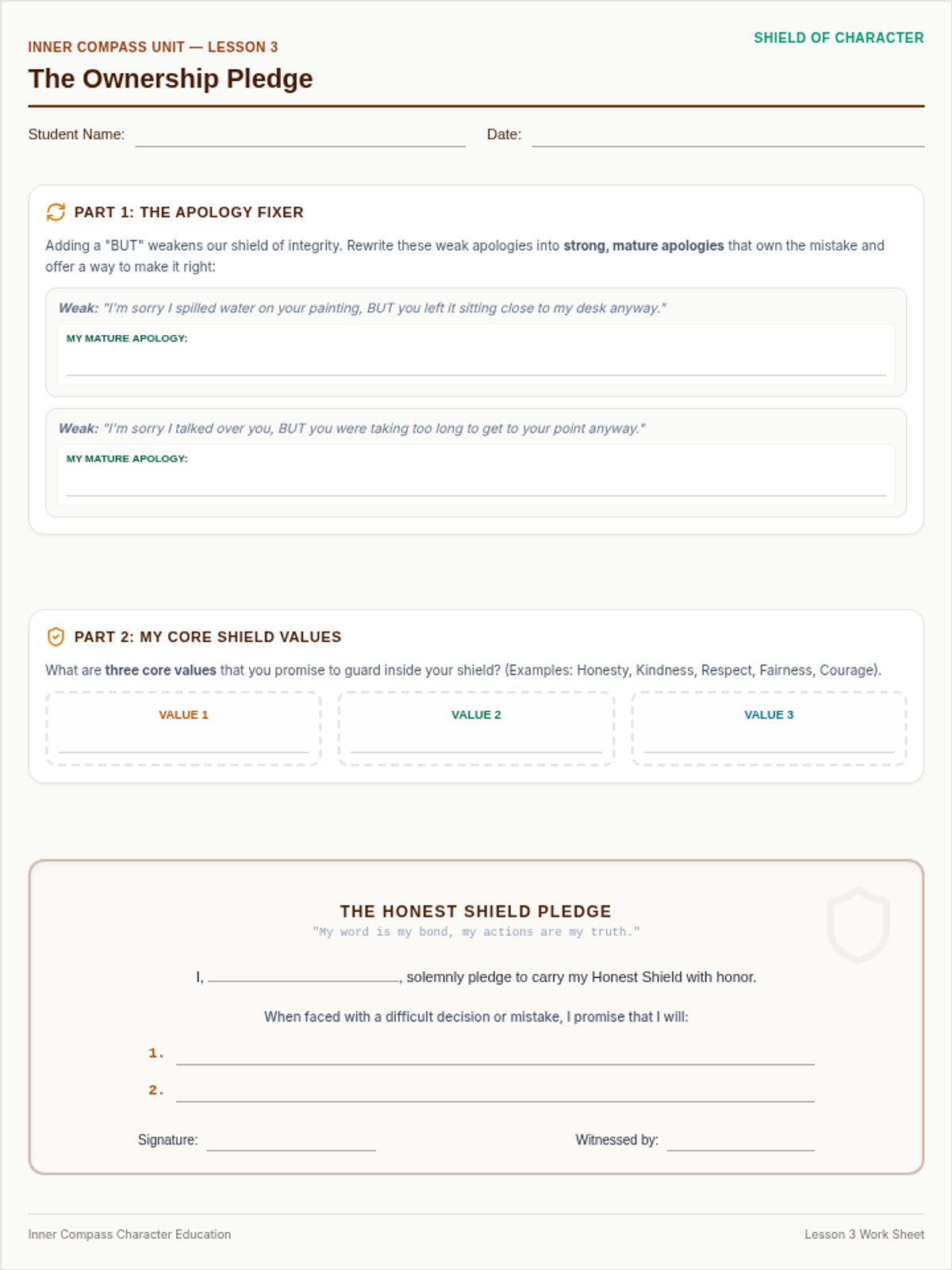
Students investigate responsibility, honesty, and integrity. They learn to make difficult choices, take ownership of mistakes, and construct a personal pledge for moral character.
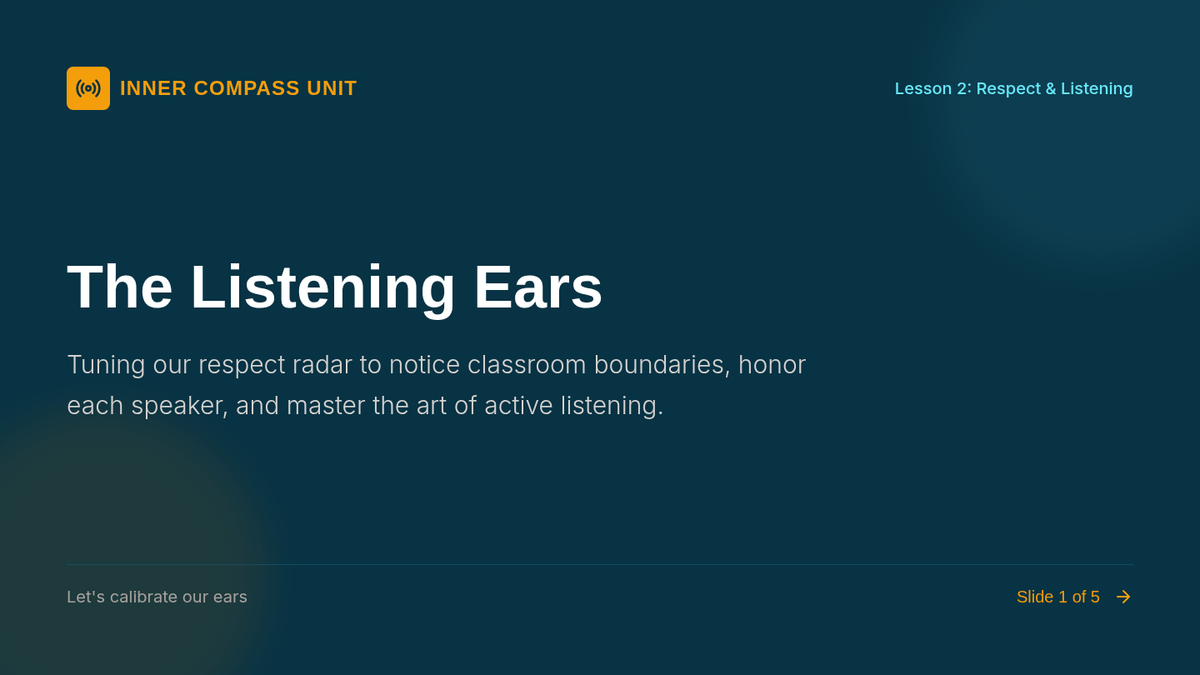
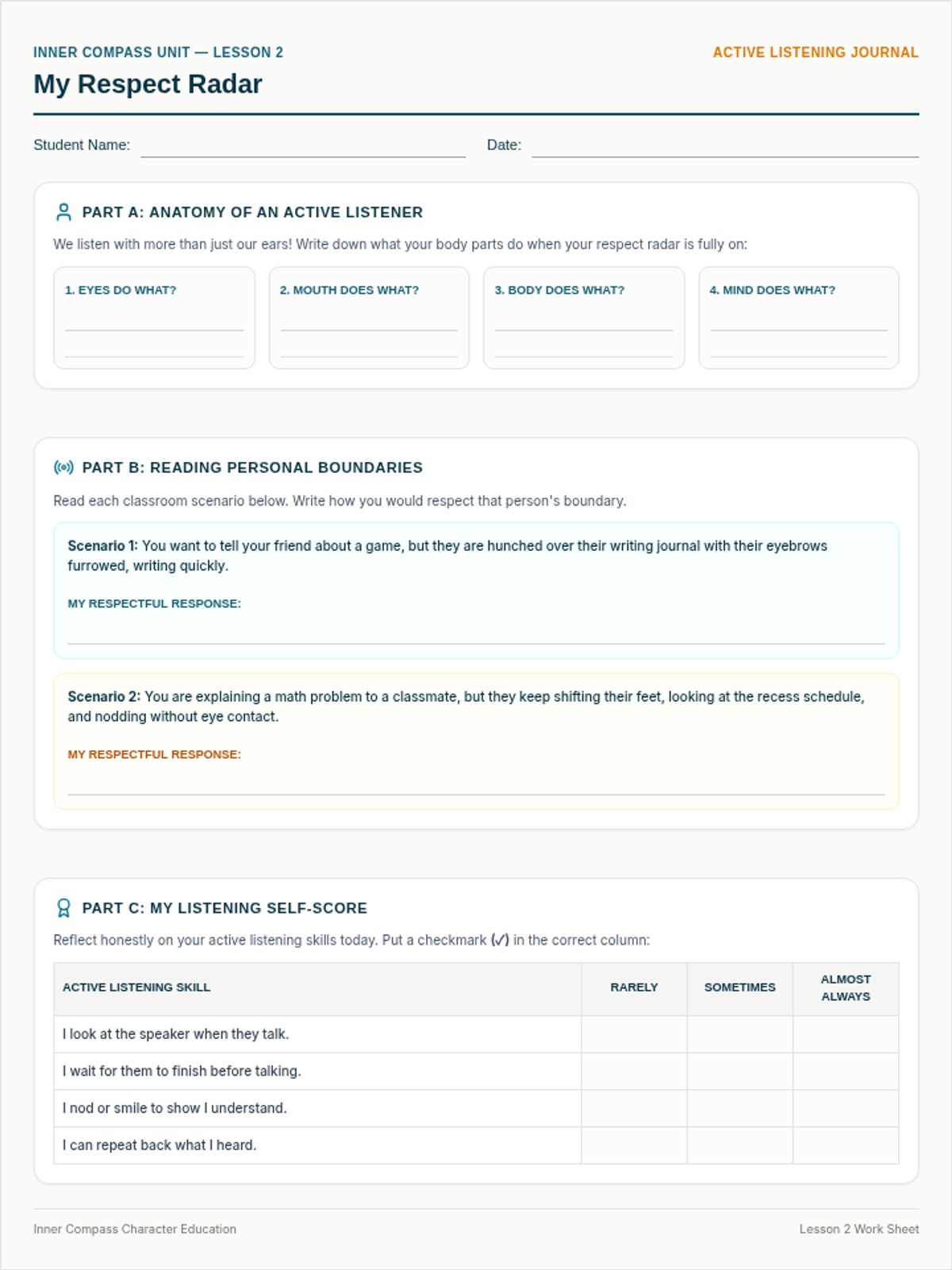
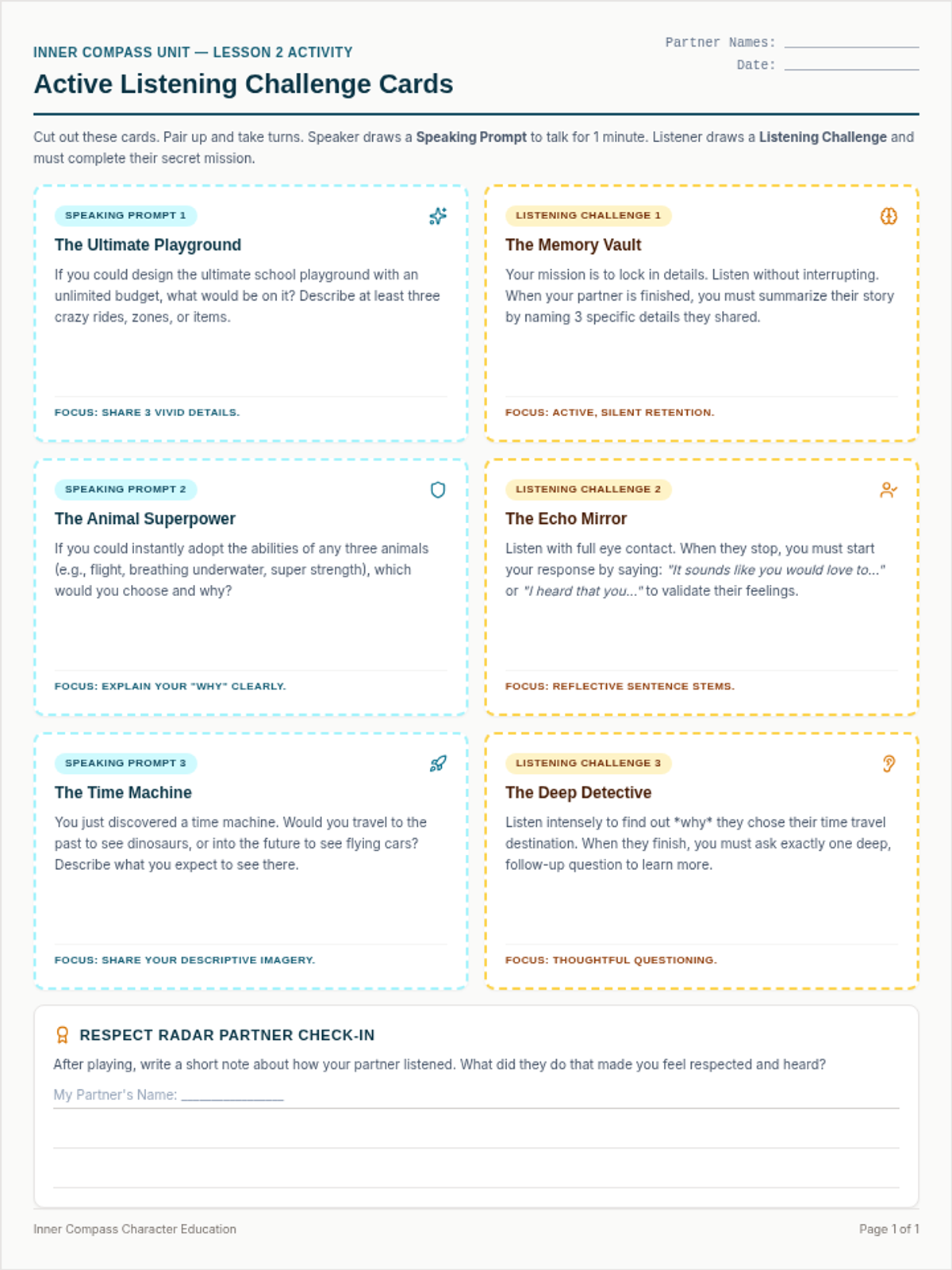
Students learn respect and active listening techniques. They engage in verbal exercises and boundary-setting activities to build effective communication and mutual respect.
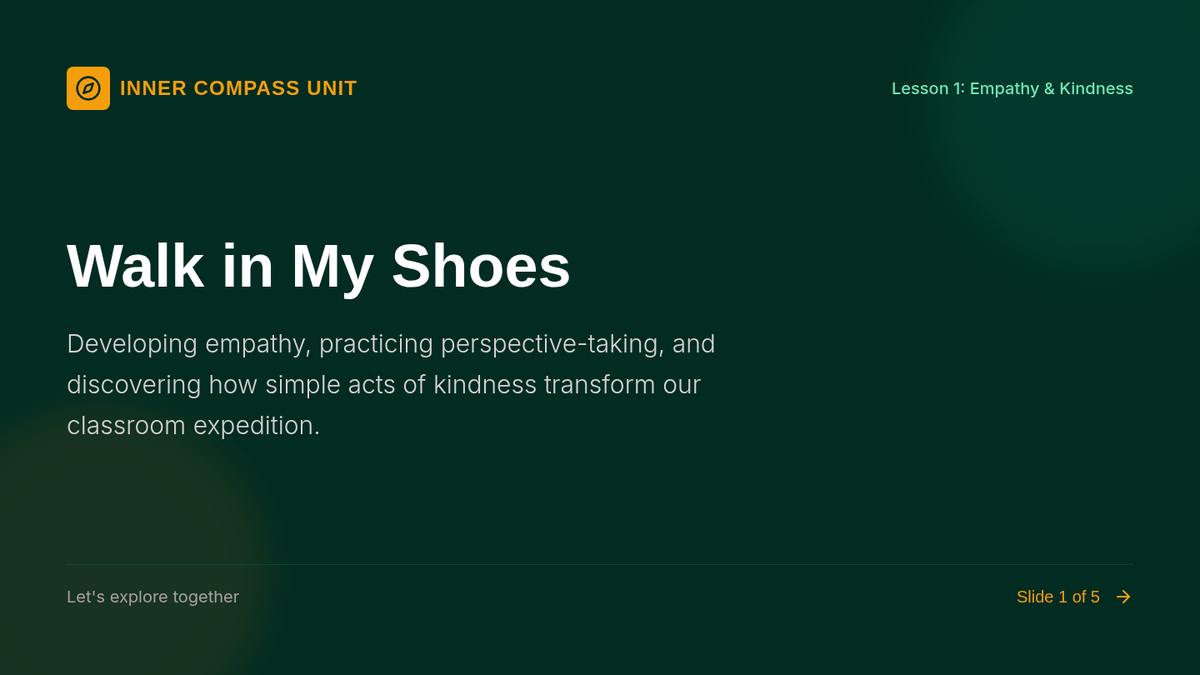
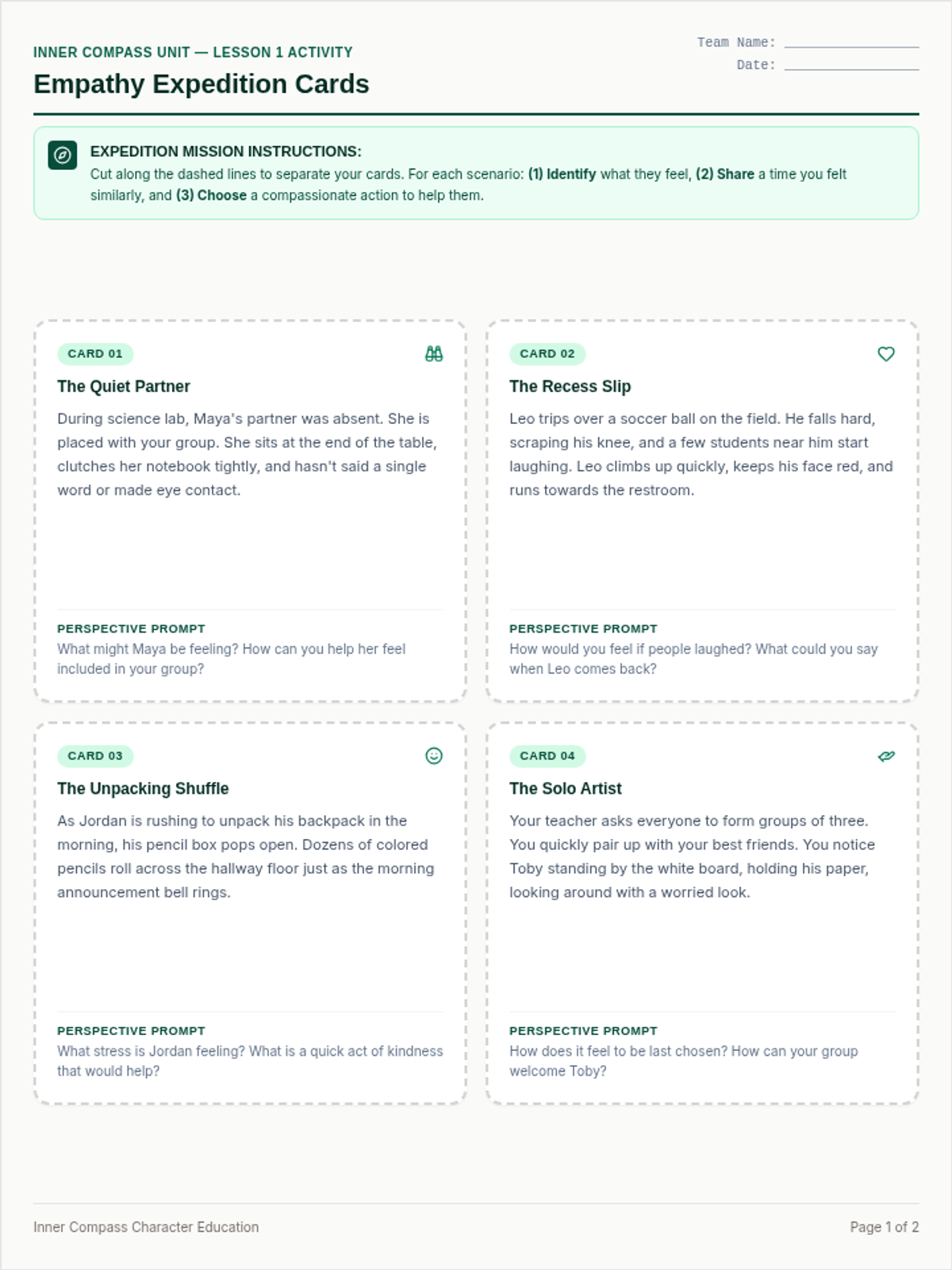
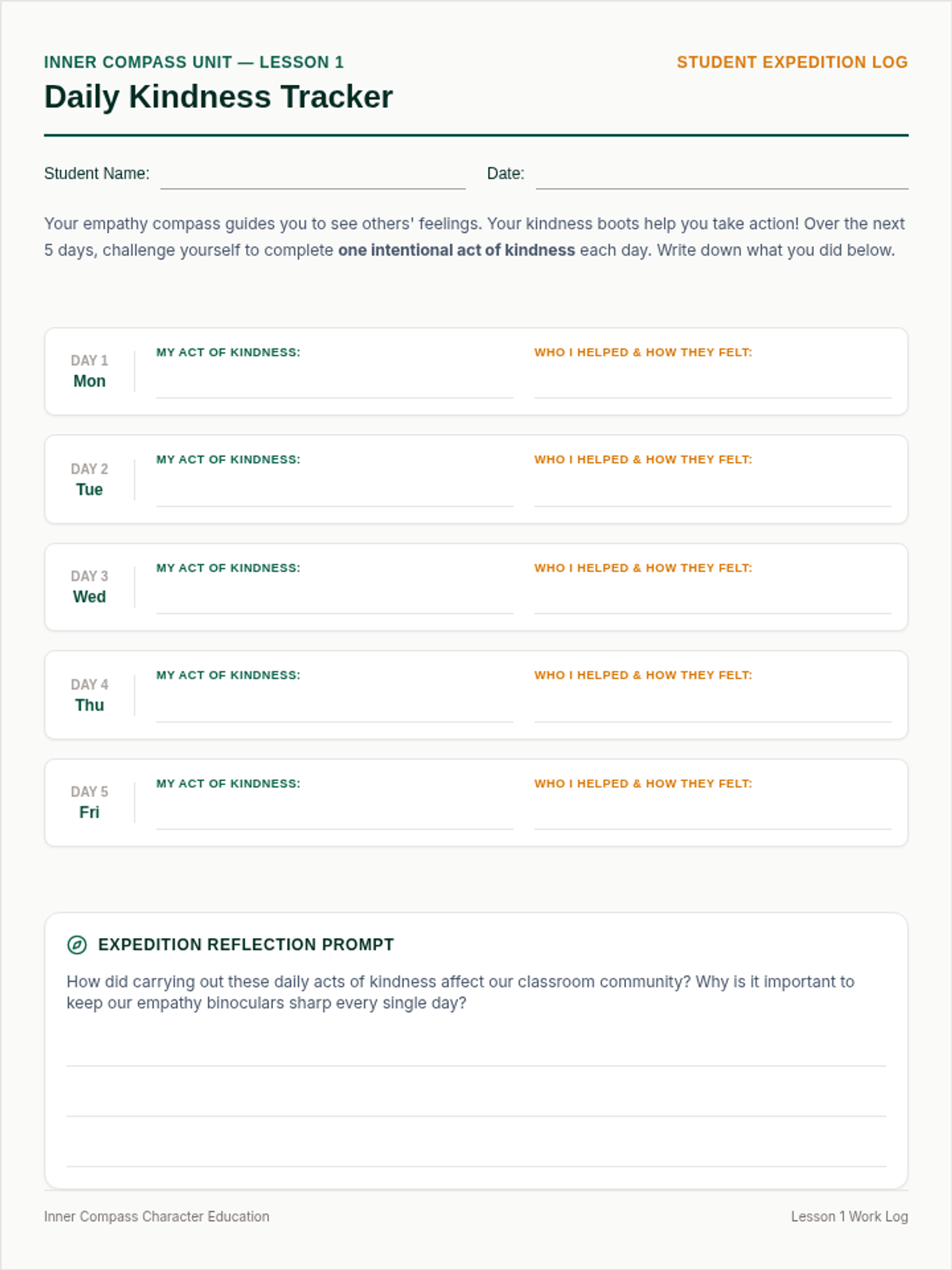
Students explore the power of empathy and kindness. Through looking at perspectives and performing small acts of helpfulness, students build connection and support in the classroom.
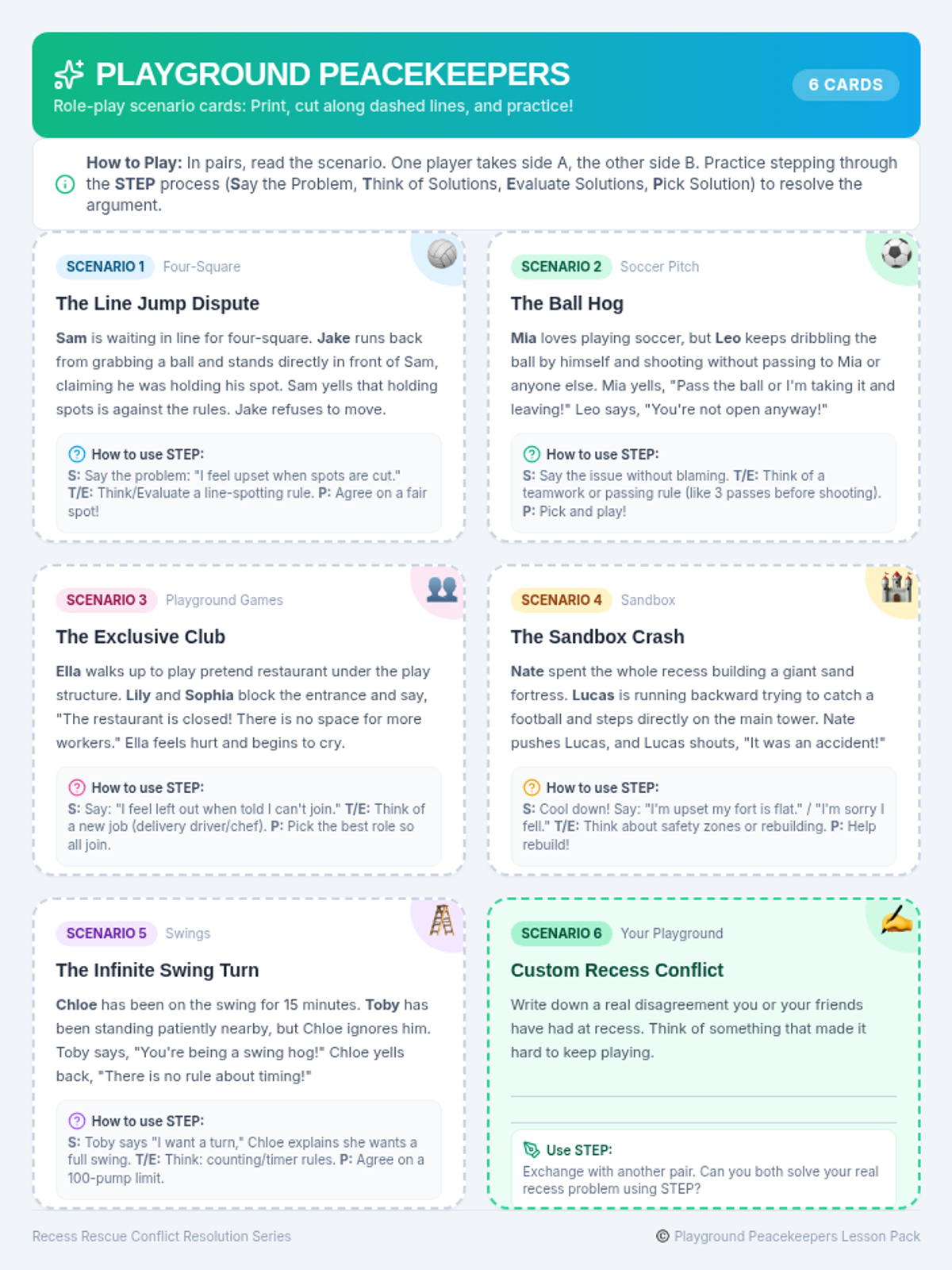
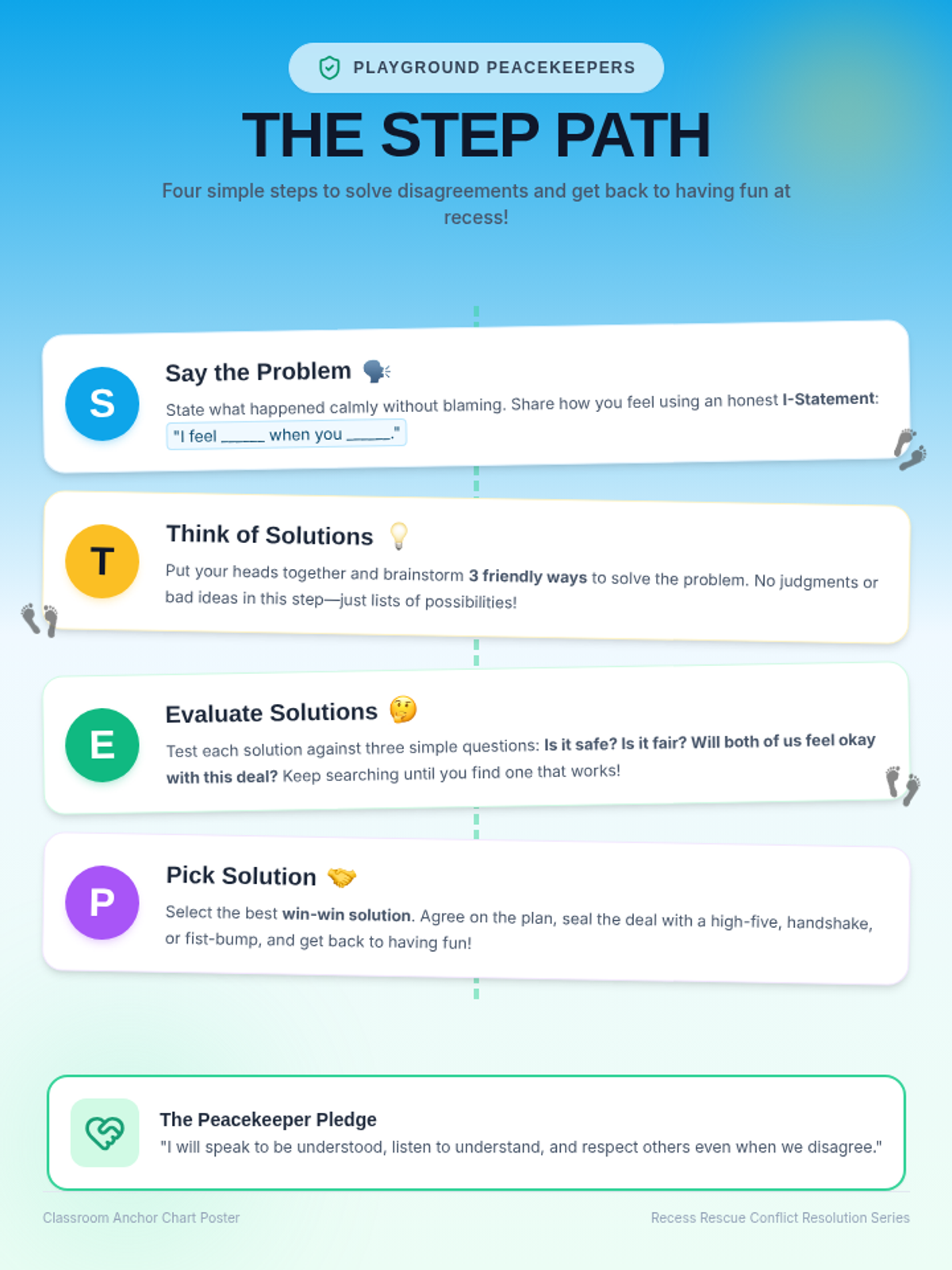
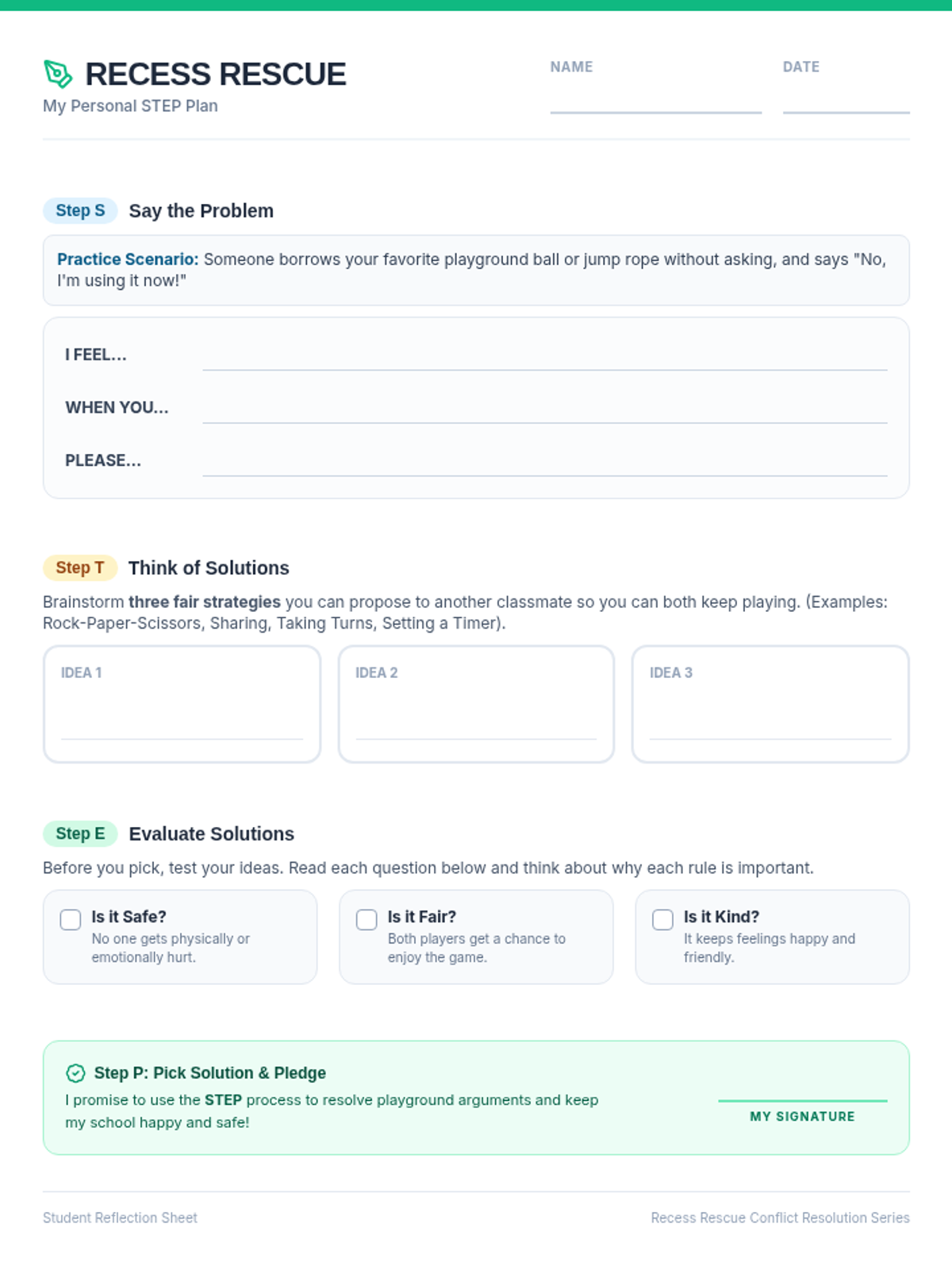
A lesson bundle designed to teach elementary students how to resolve playground conflicts using a structured, peer-to-peer 'Peace Path'. Students will learn self-regulation, active listening, and collaborative problem-solving through interactive slides, role-play scenario cards, a colorful classroom anchor chart, and an individual reflection worksheet.
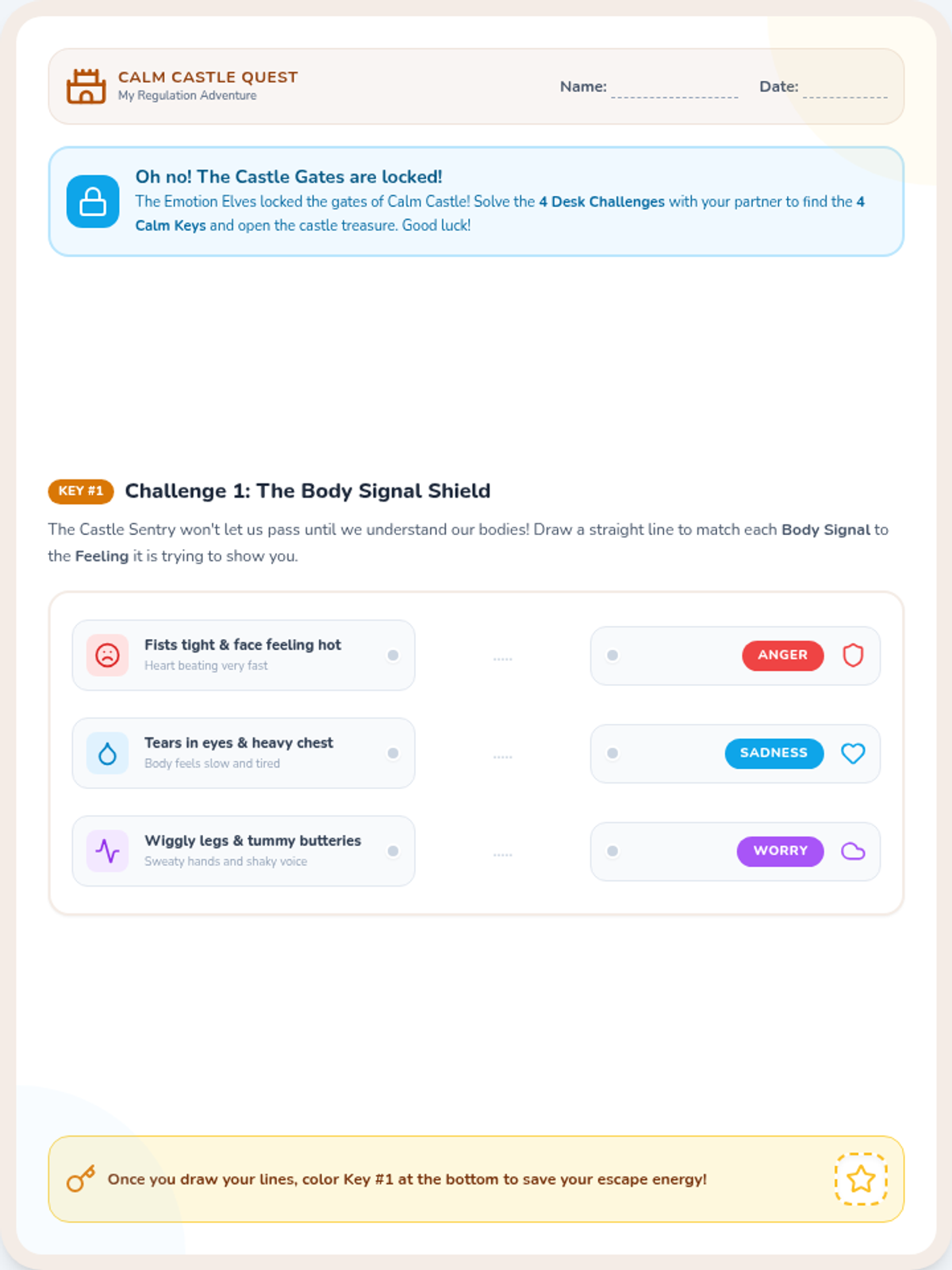
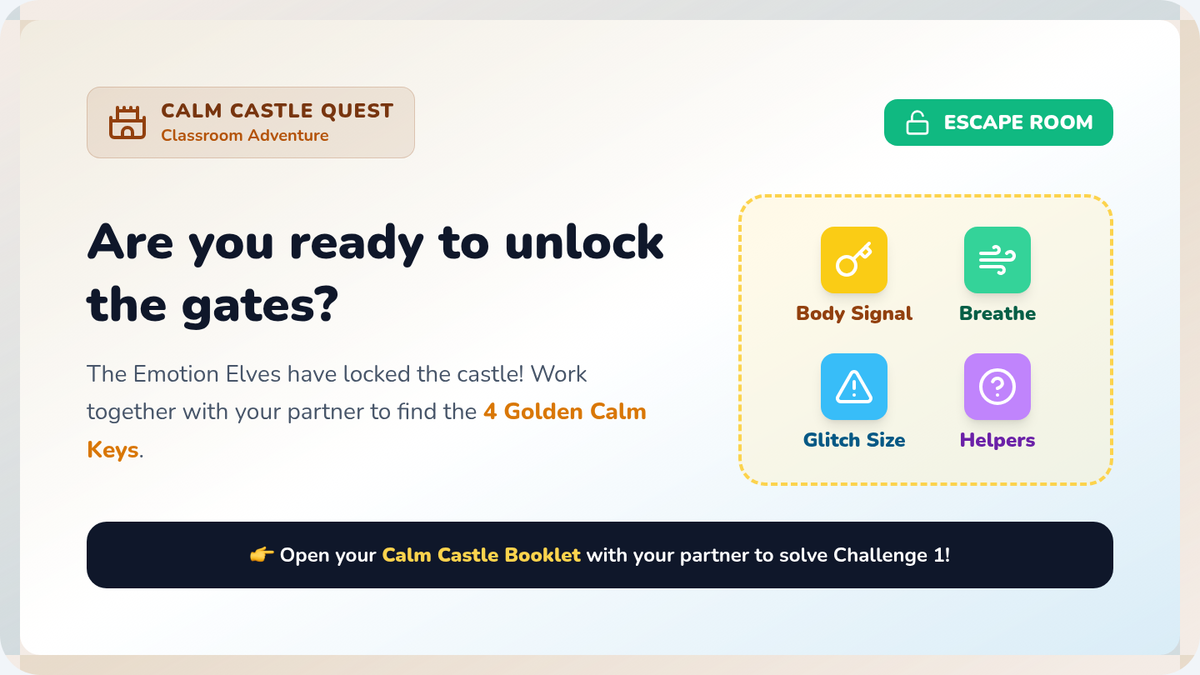
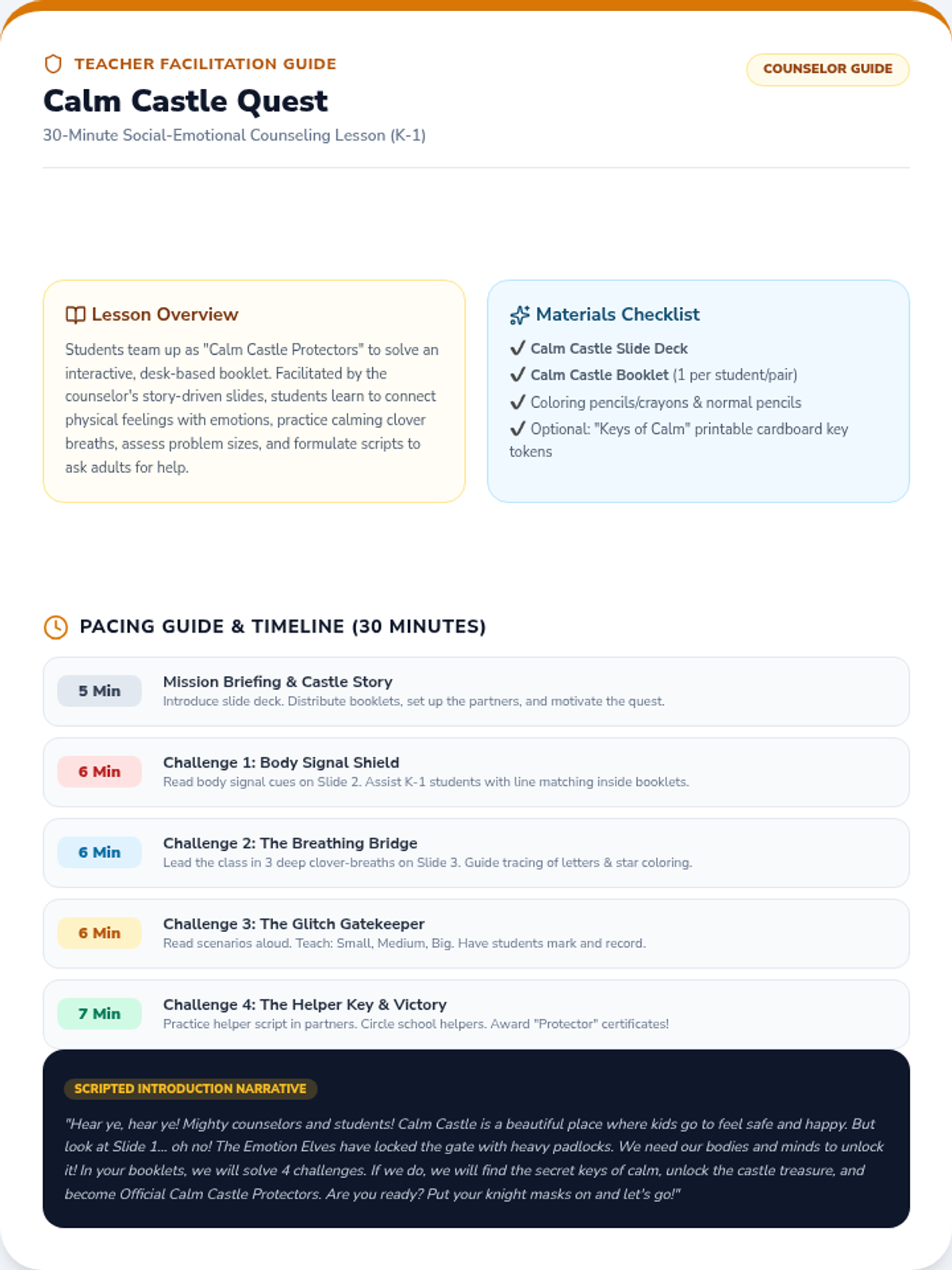
A 30-minute high-engagement emotional regulation escape adventure for Kindergarten and 1st-grade students. Through a series of interactive desk-based challenges in a printable booklet, students practice identifying body signals, deep breathing, sorting the size of problems, and asking for help to 'unlock' the gates of Calm Castle.
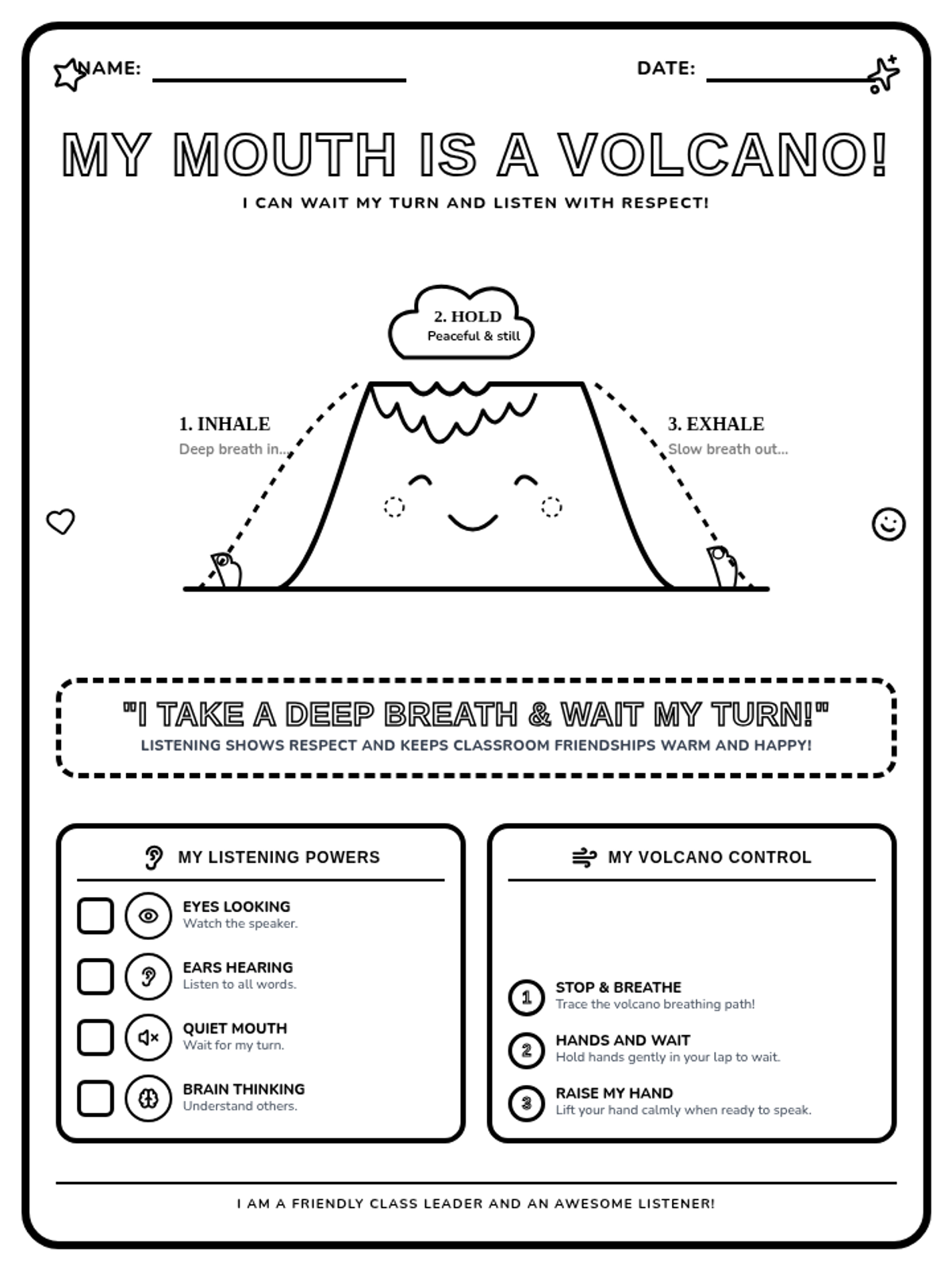
A social-emotional learning lesson focused on self-regulation, respectful listening, and turn-taking in the classroom, inspired by the children's book 'My Mouth Is a Volcano'.
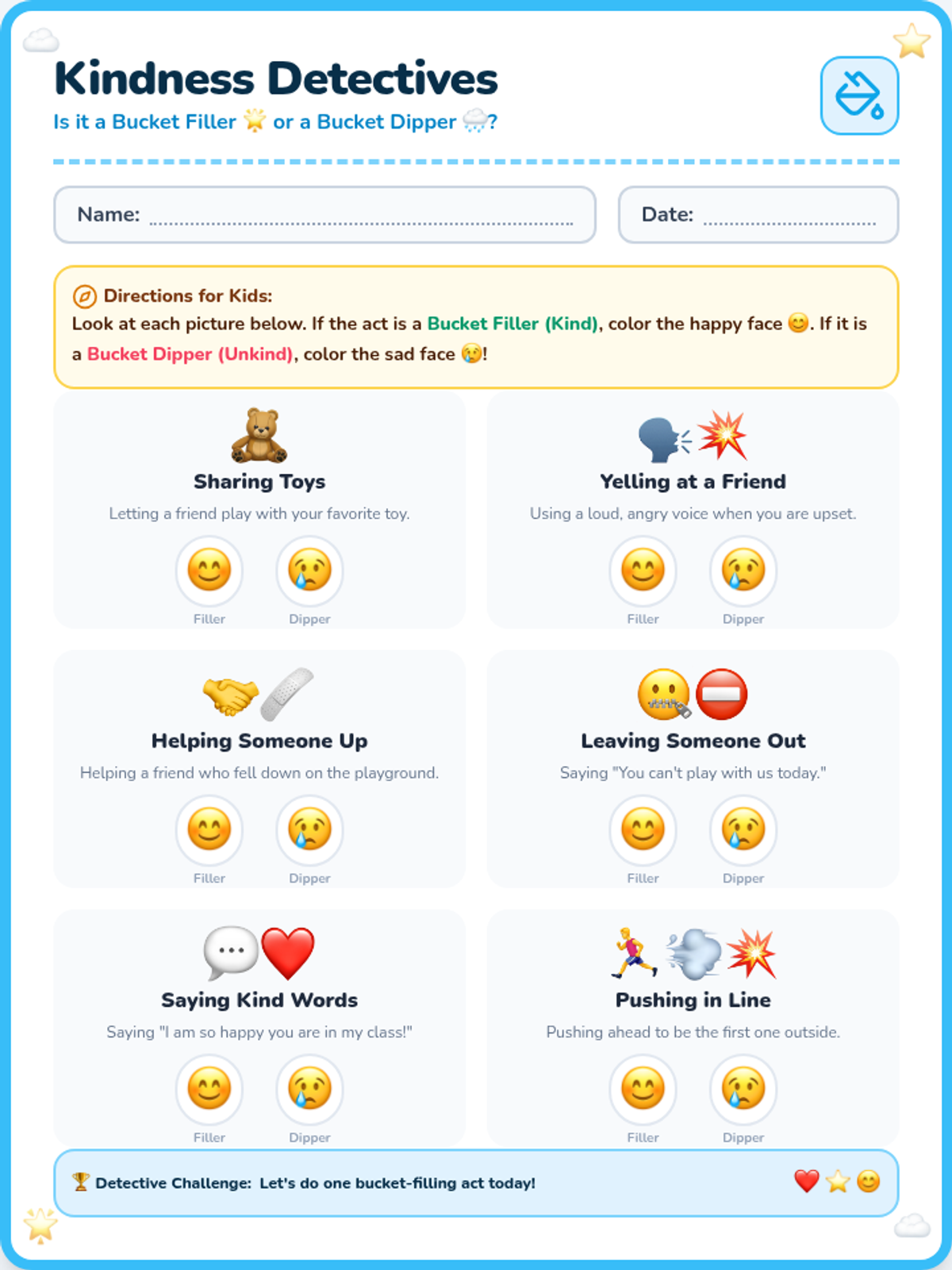
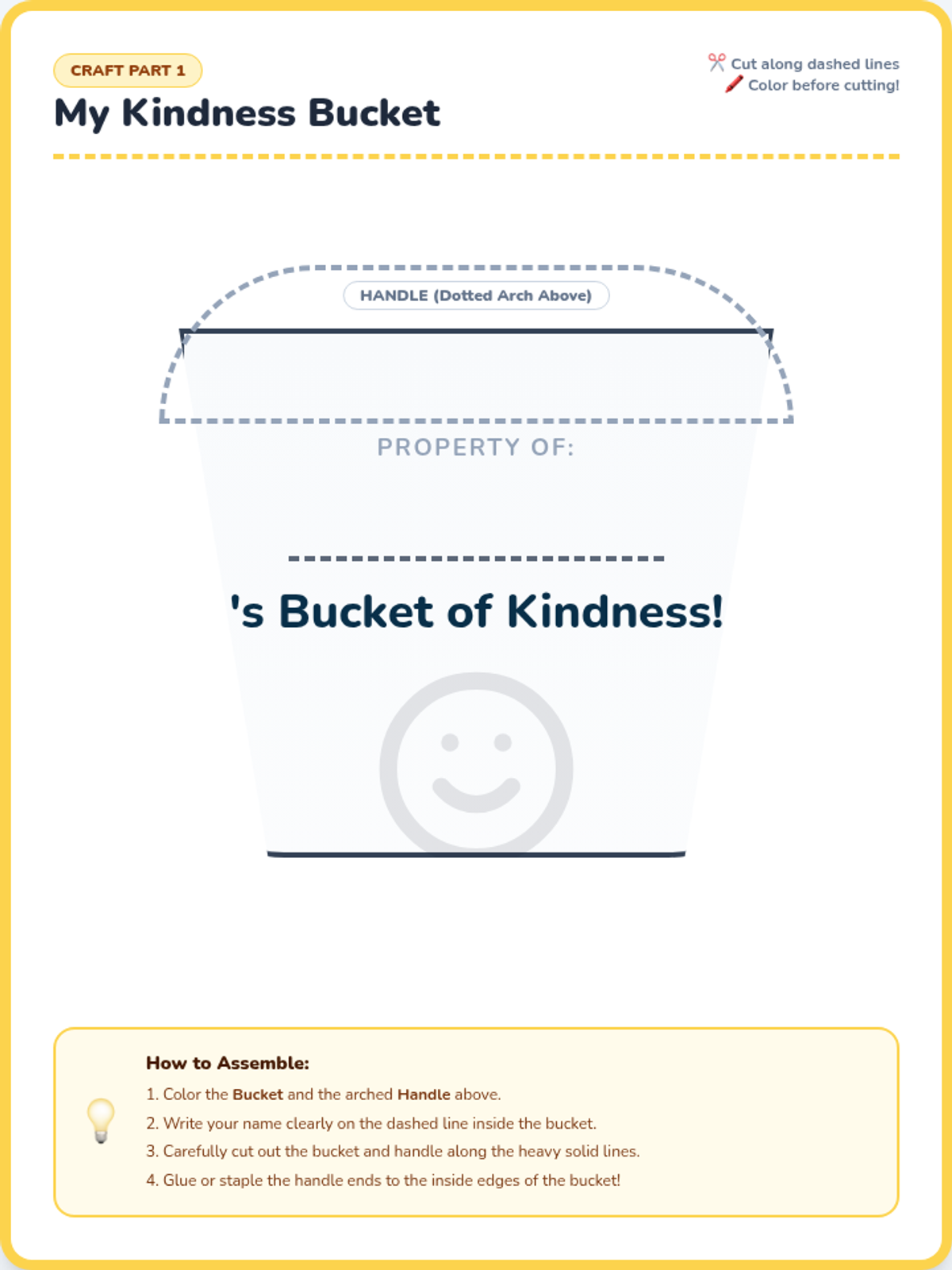
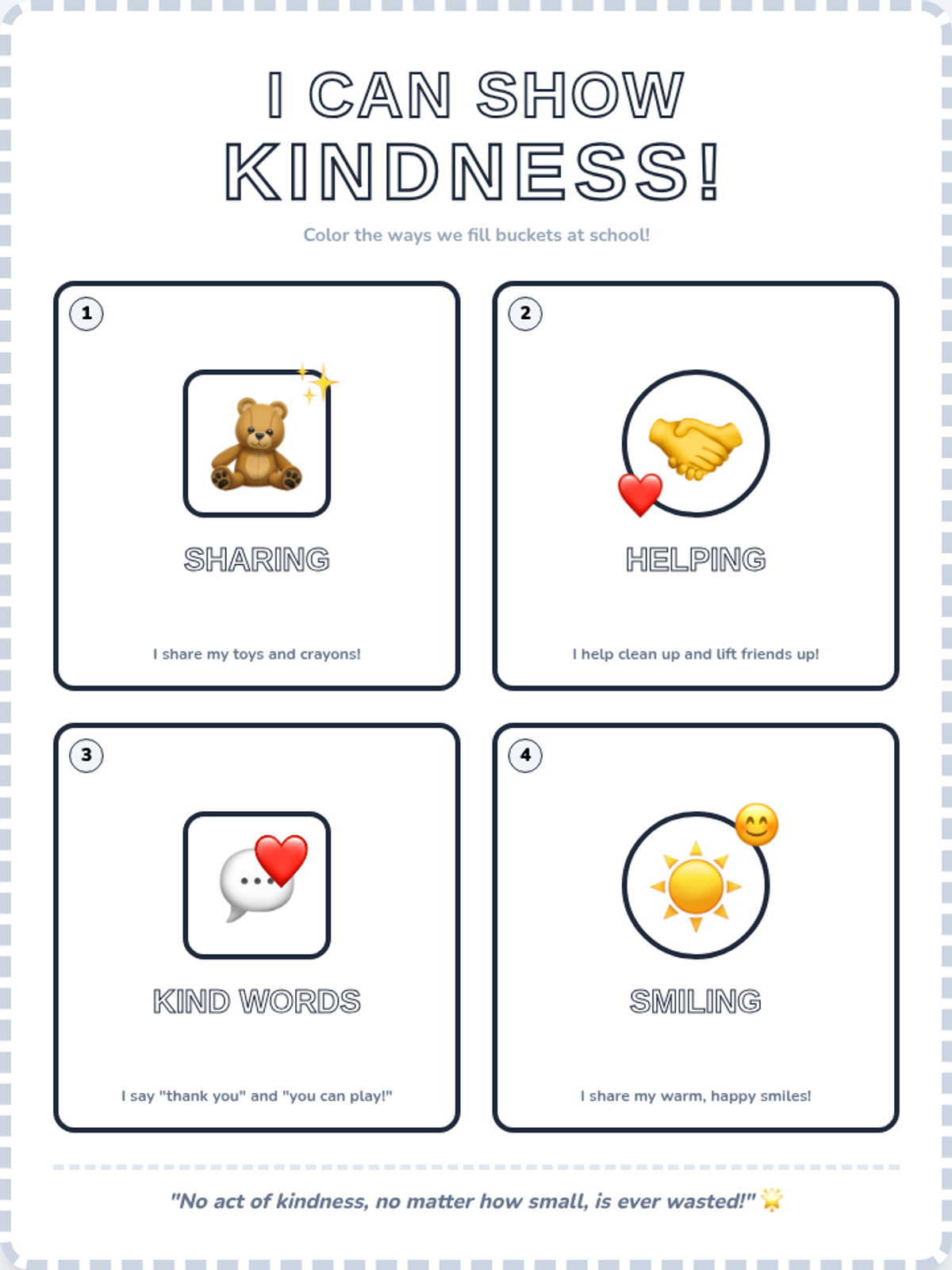
An interactive introduction to empathy, kindness, and emotional awareness for Kindergarteners. Students learn about bucket filling through cooperative discussion, a hands-on bucket craft, a sorting worksheet, and a themed coloring page.
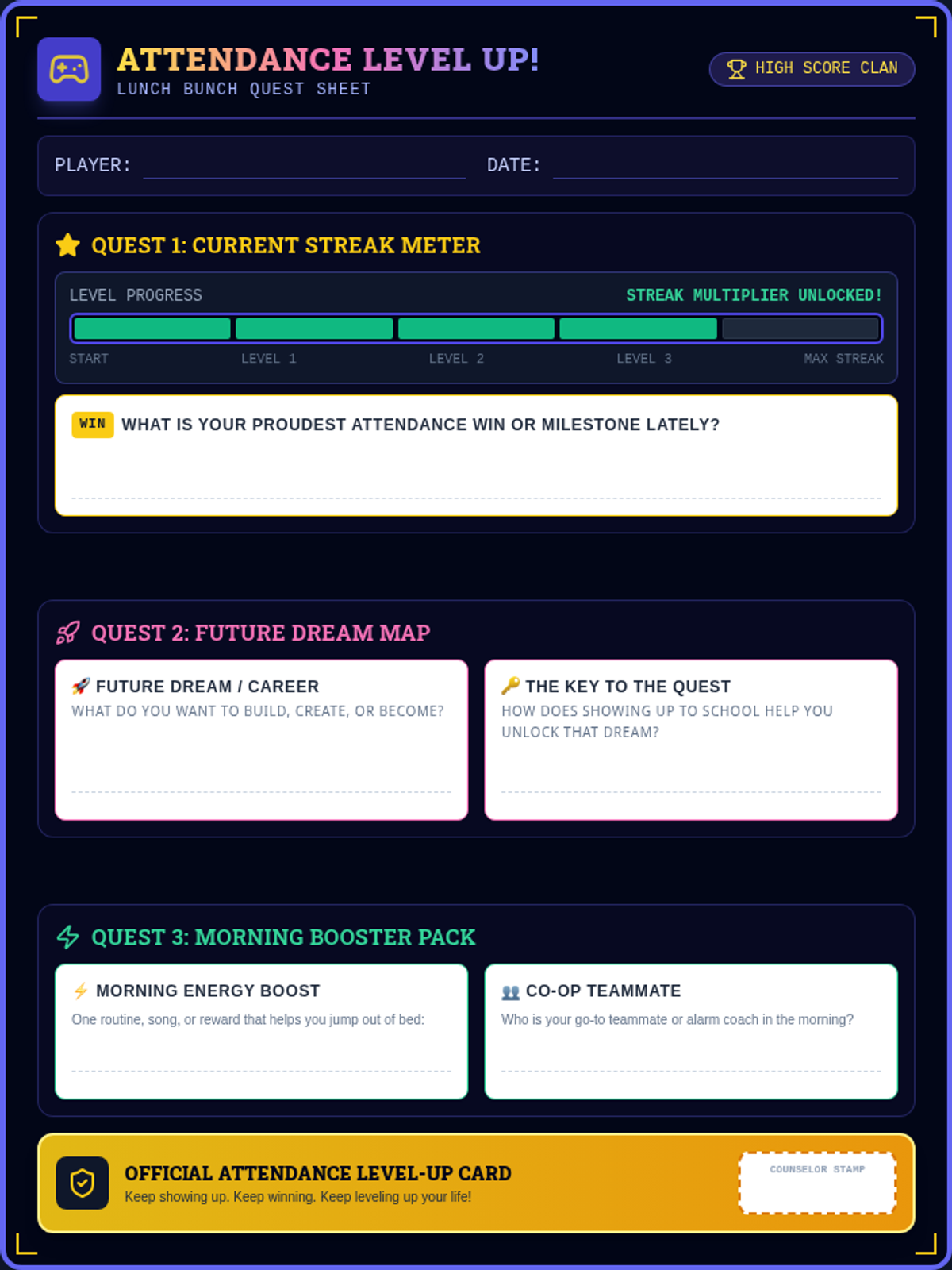
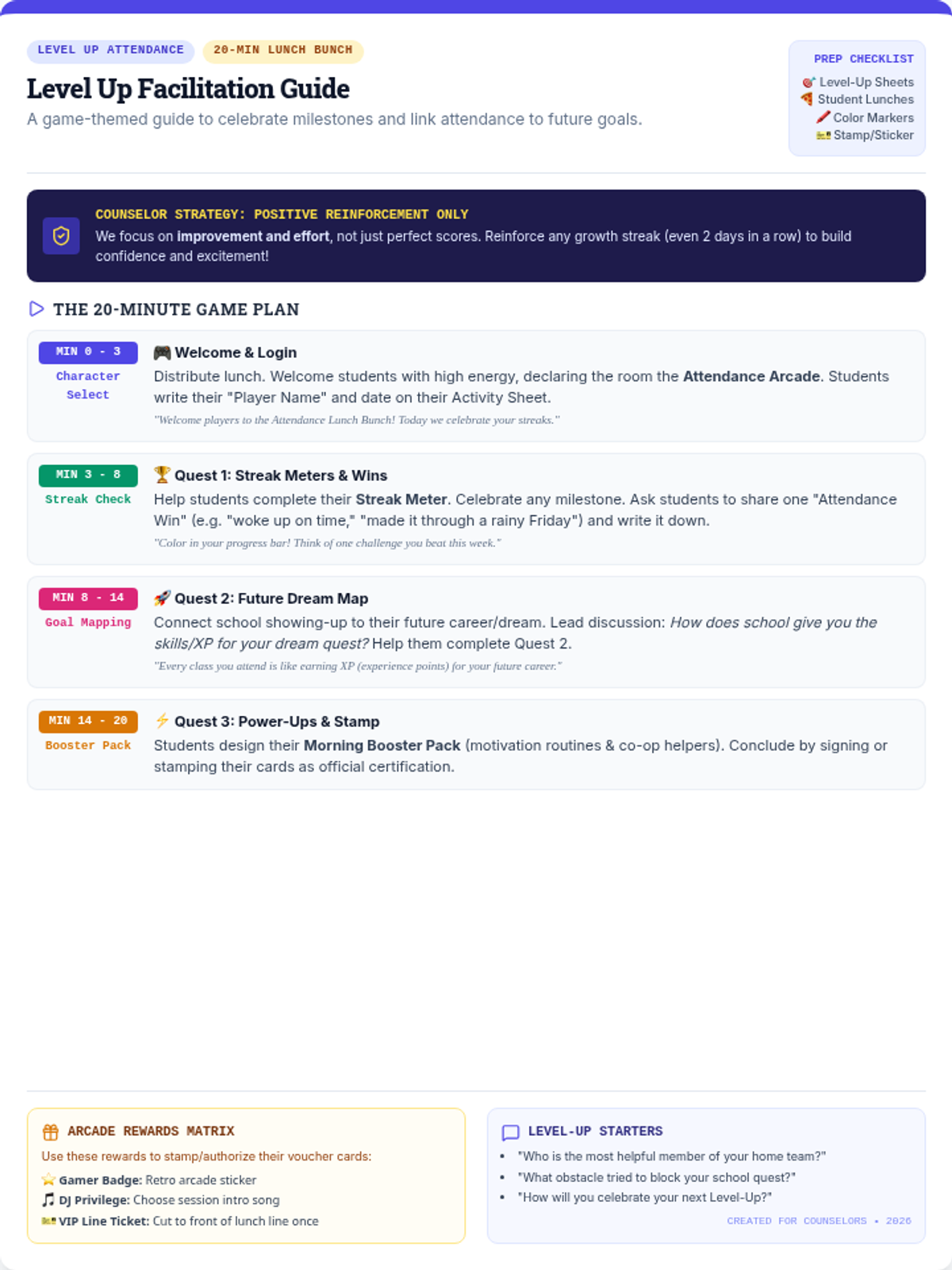
A 20-minute Lunch Bunch lesson plan and facilitation guide designed to celebrate attendance milestones, connect consistent attendance to future goals, and foster a high-energy, positive environment for students.
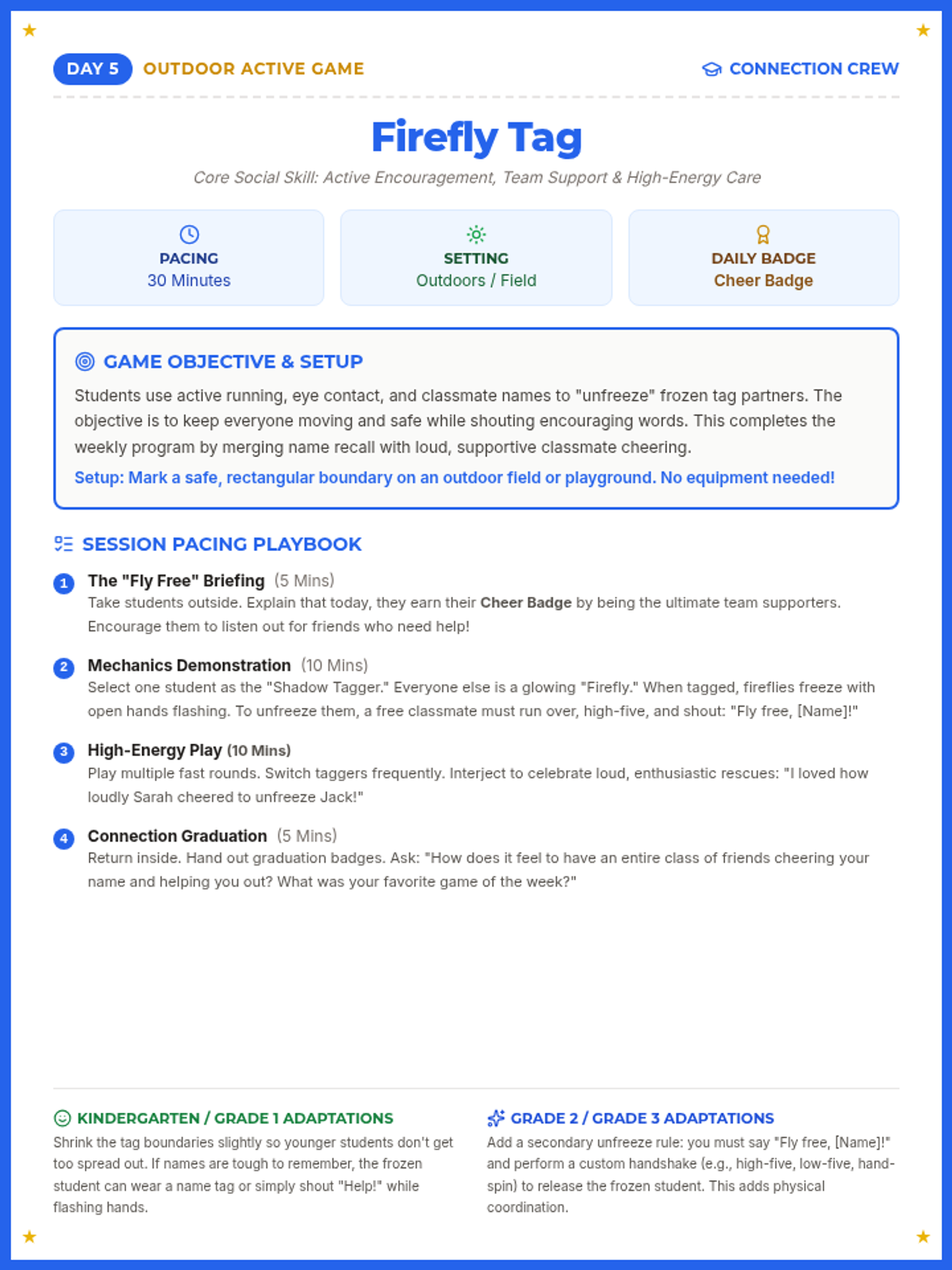
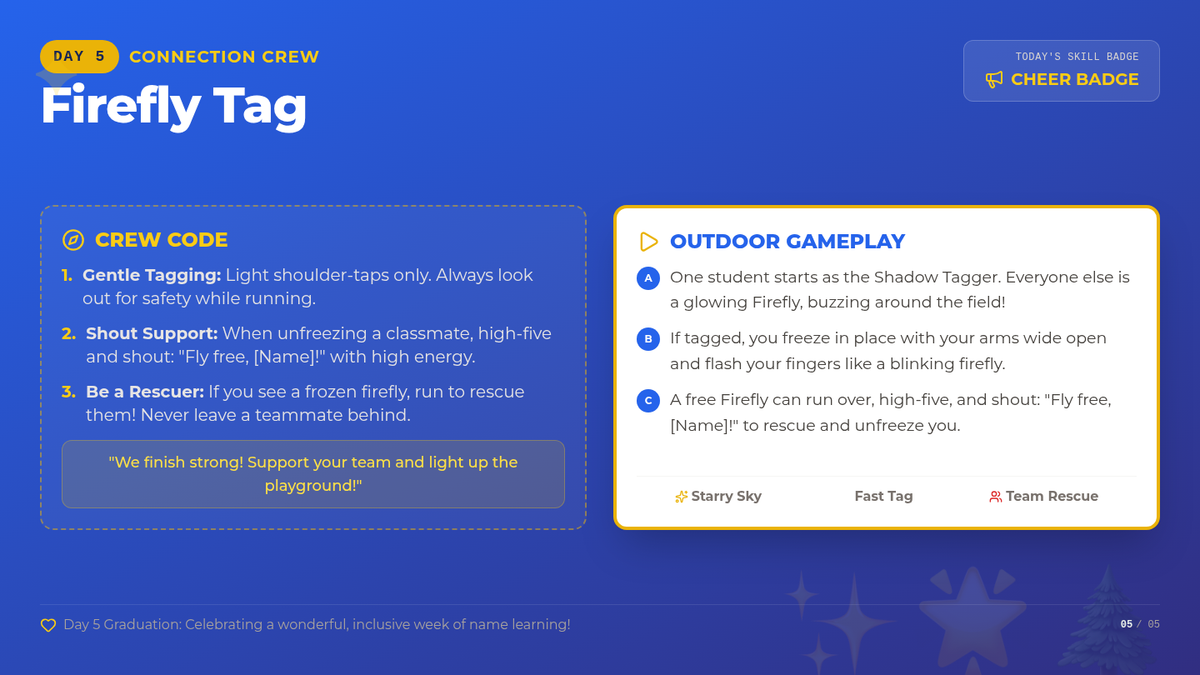
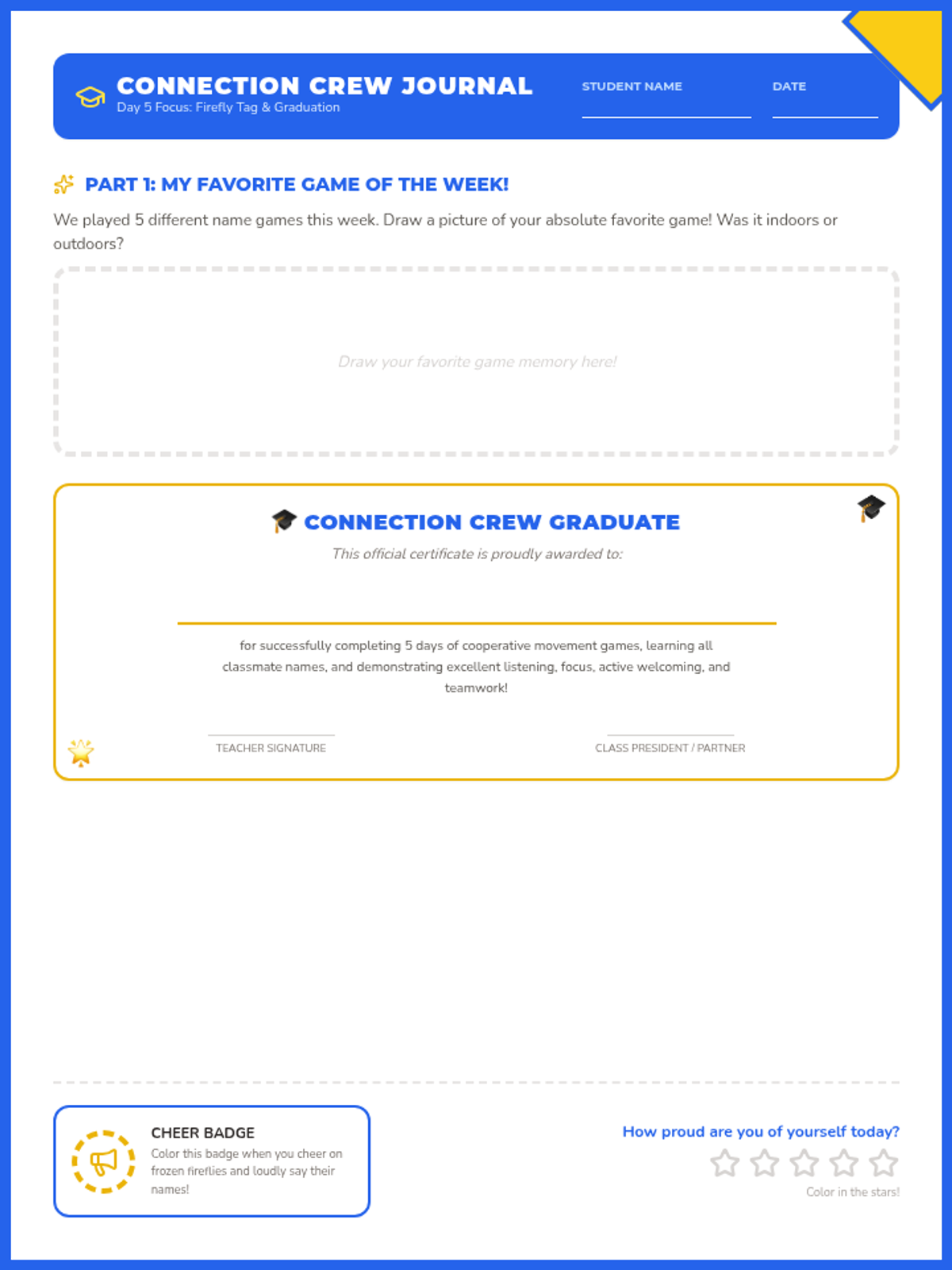
Day 5 of Connection Crew. An outdoor tag game focusing on encouragement and speed, where students must use classmate names and handshakes/high-fives to "unfreeze" them.
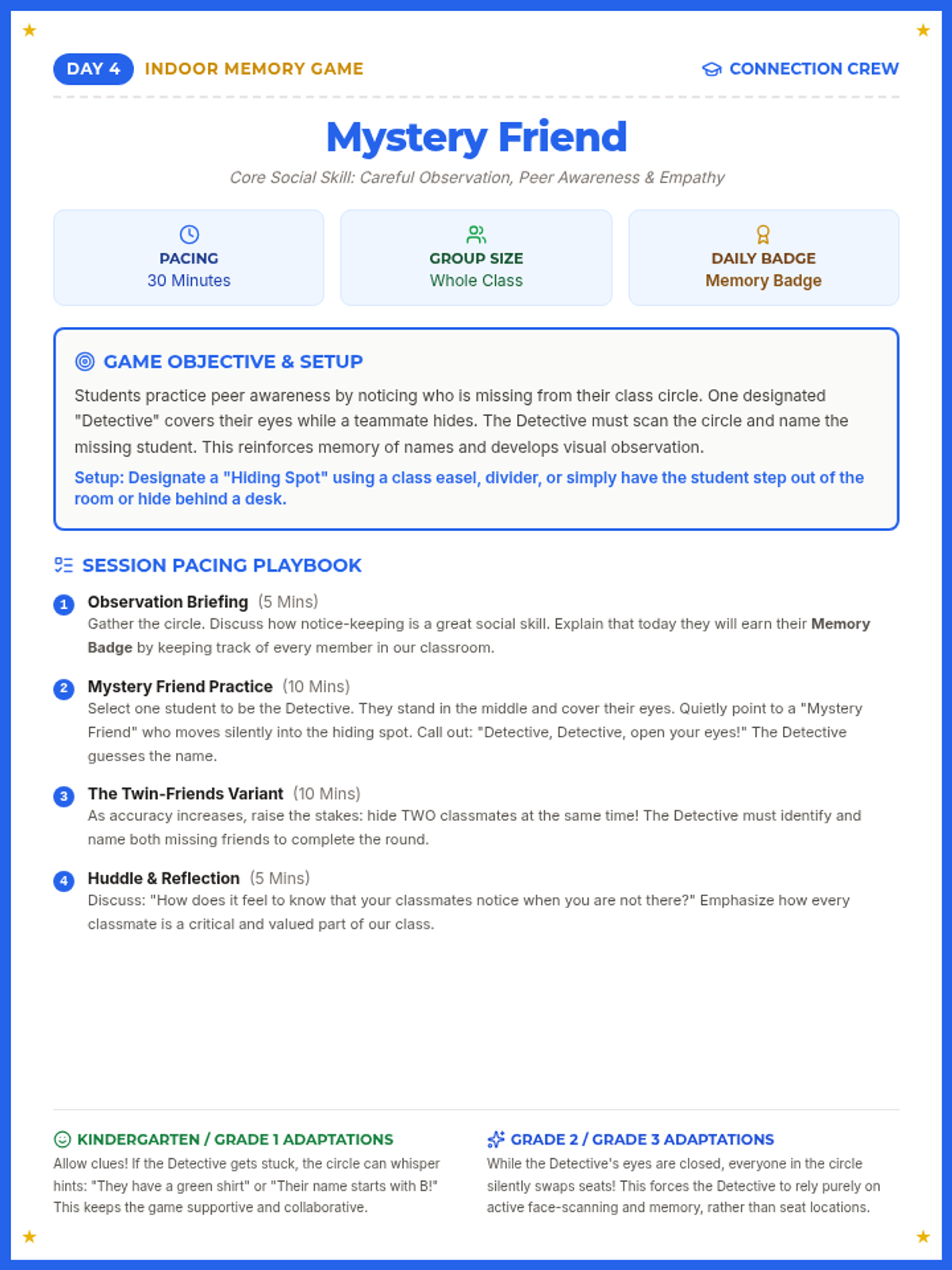
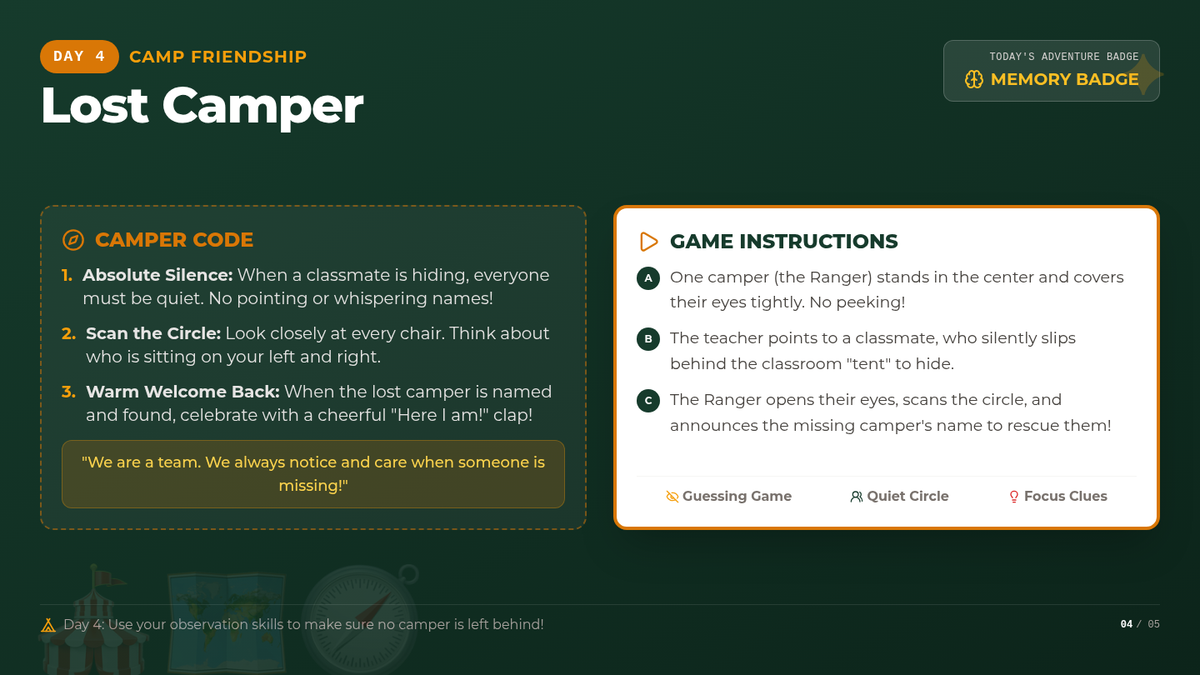
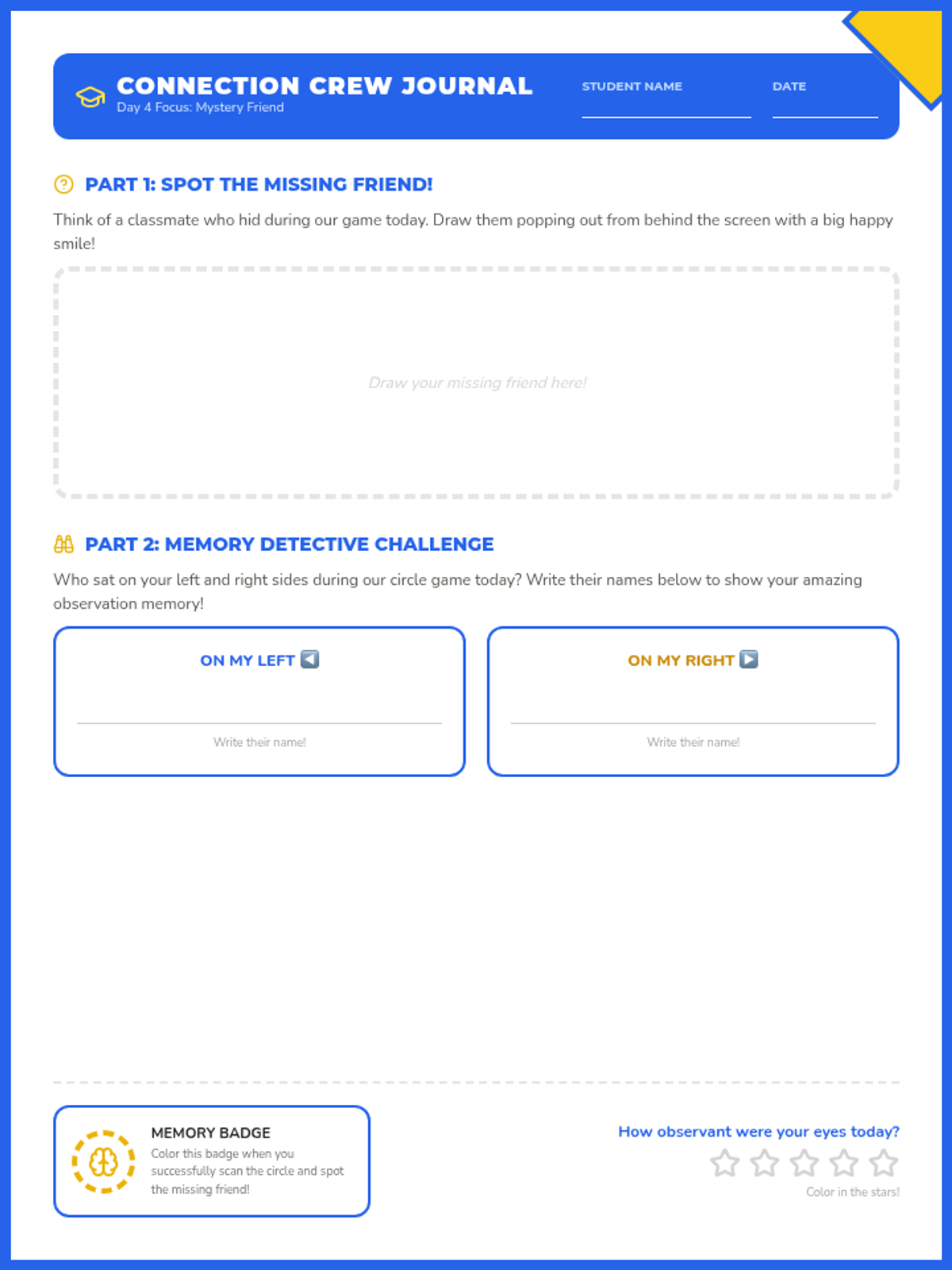
Day 4 of Connection Crew. An indoor sensory and memory game where students work together to identify which classmate is hidden in the "tent," reinforcing observation and recall.
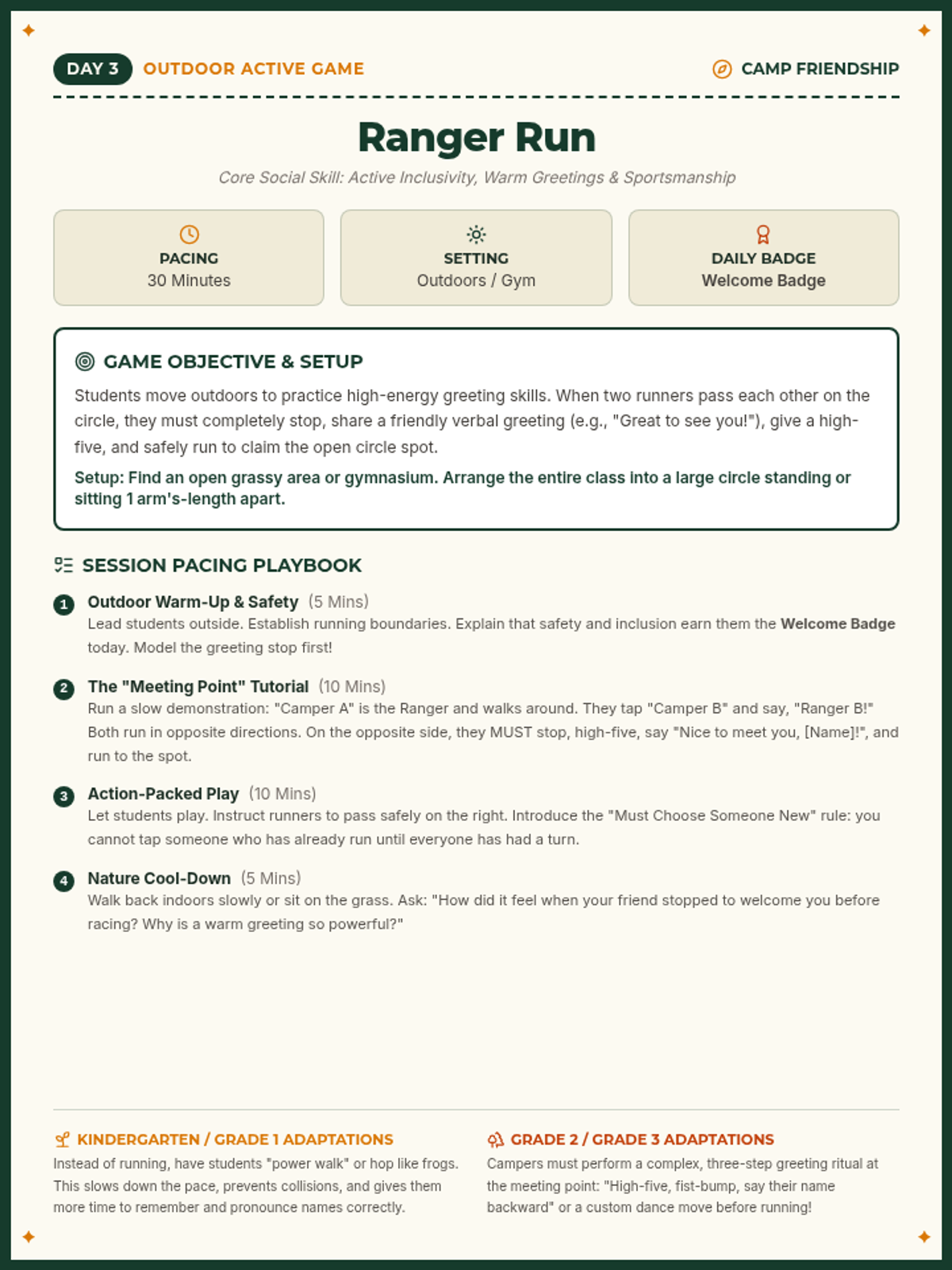
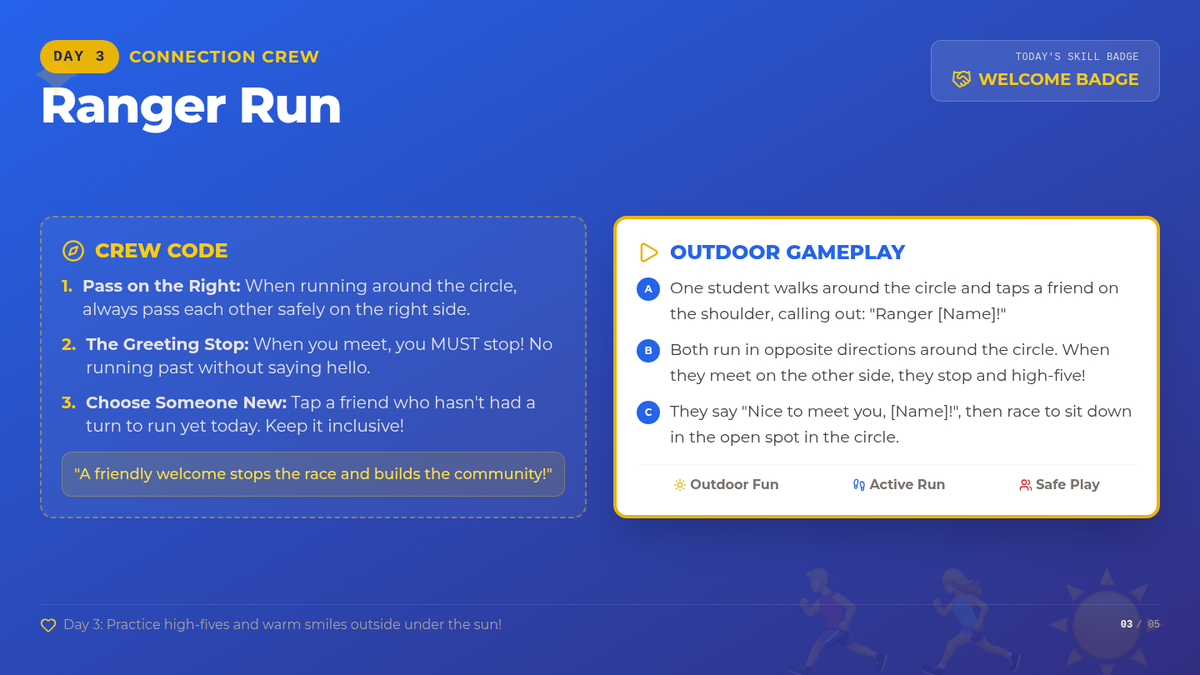
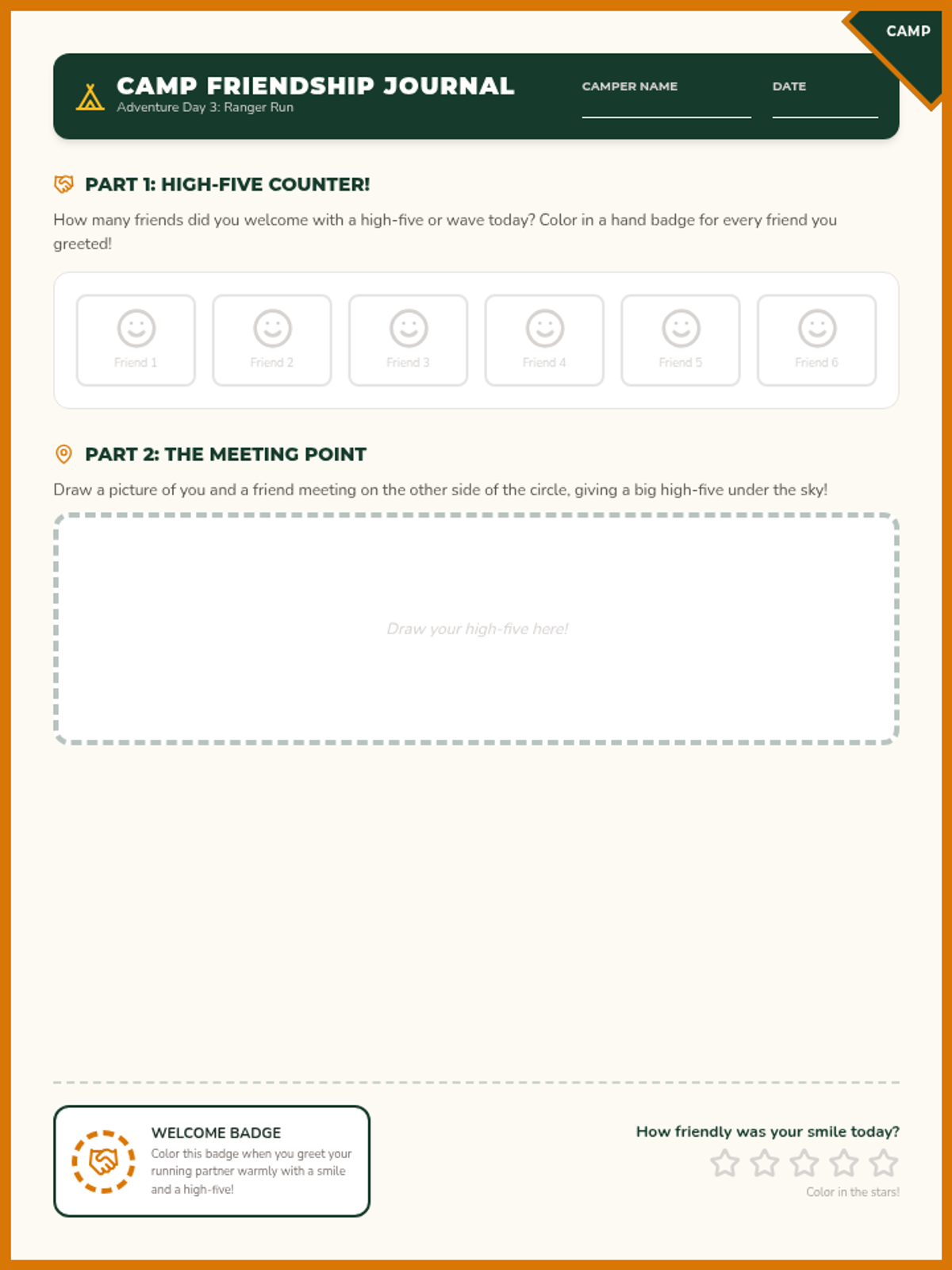
Day 3 of Connection Crew. An outdoor, highly active running circle game that combines physical exercise, name-learning, and warm welcomes under the sky.
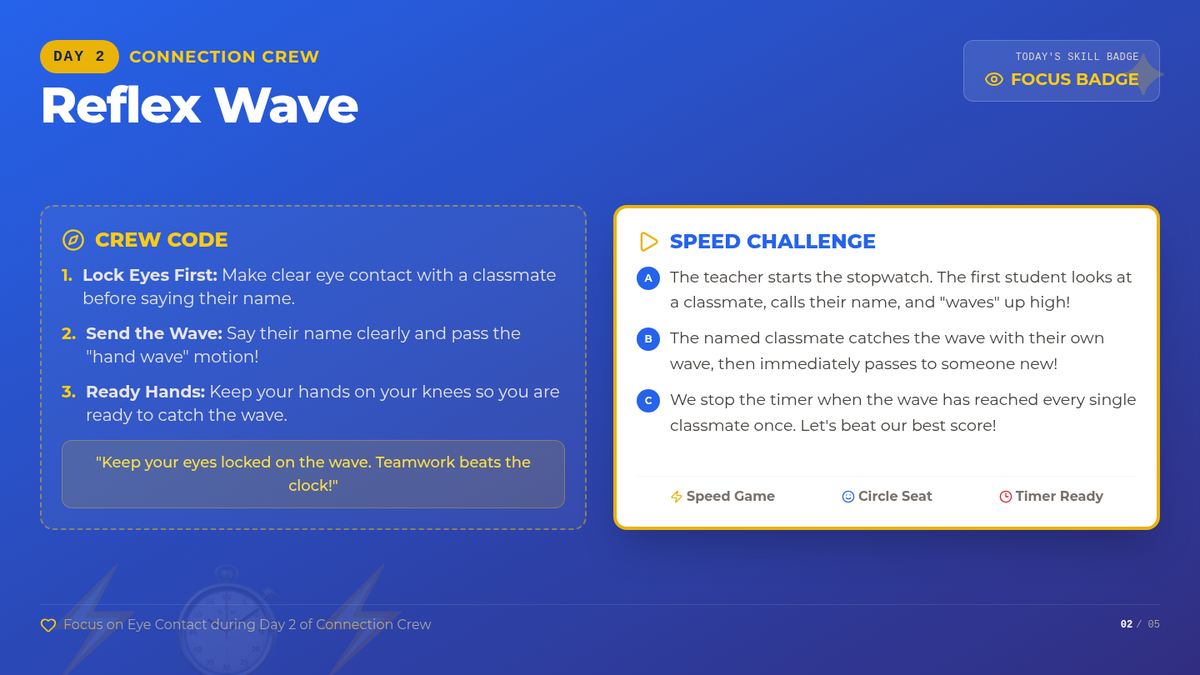
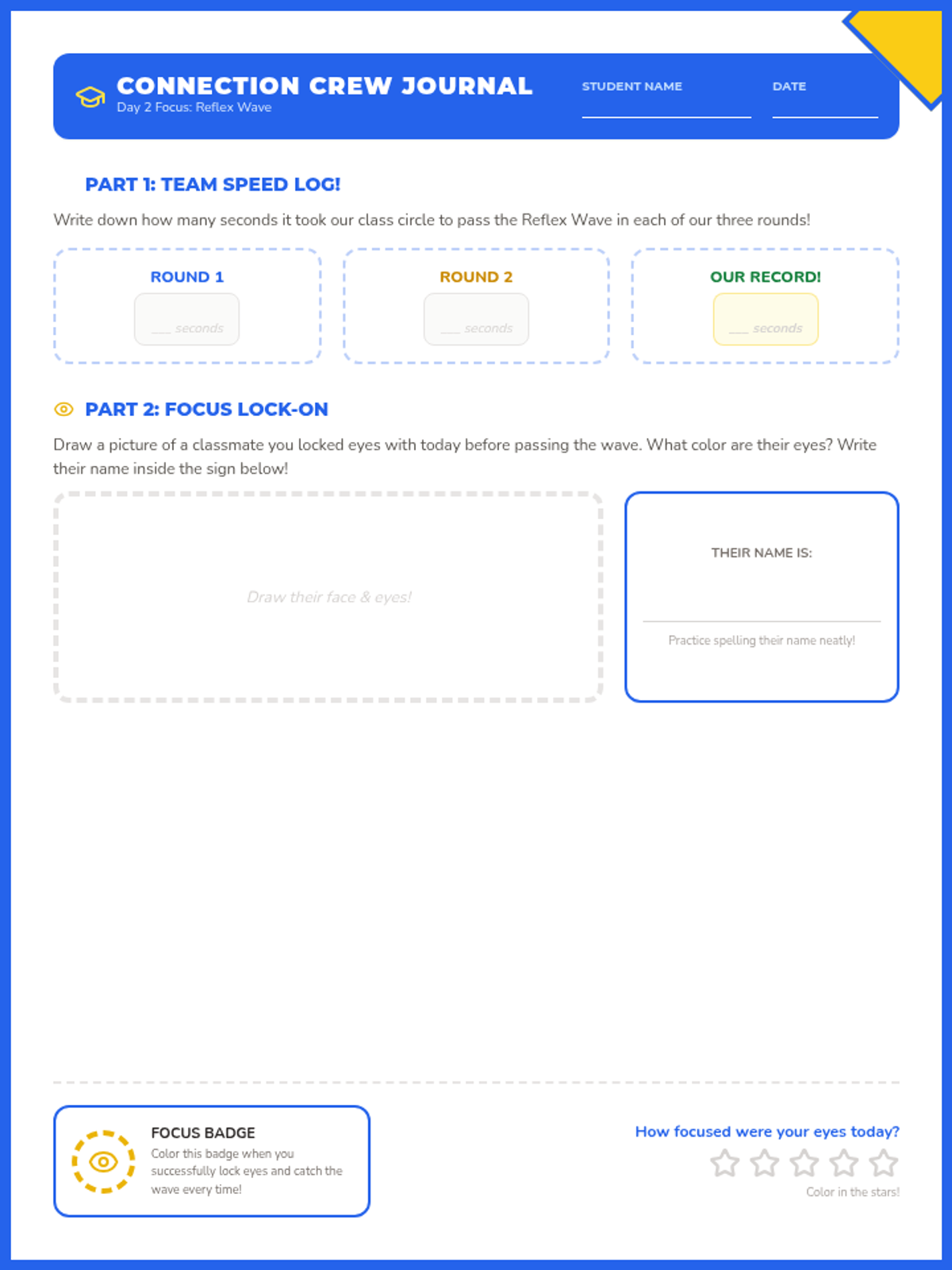
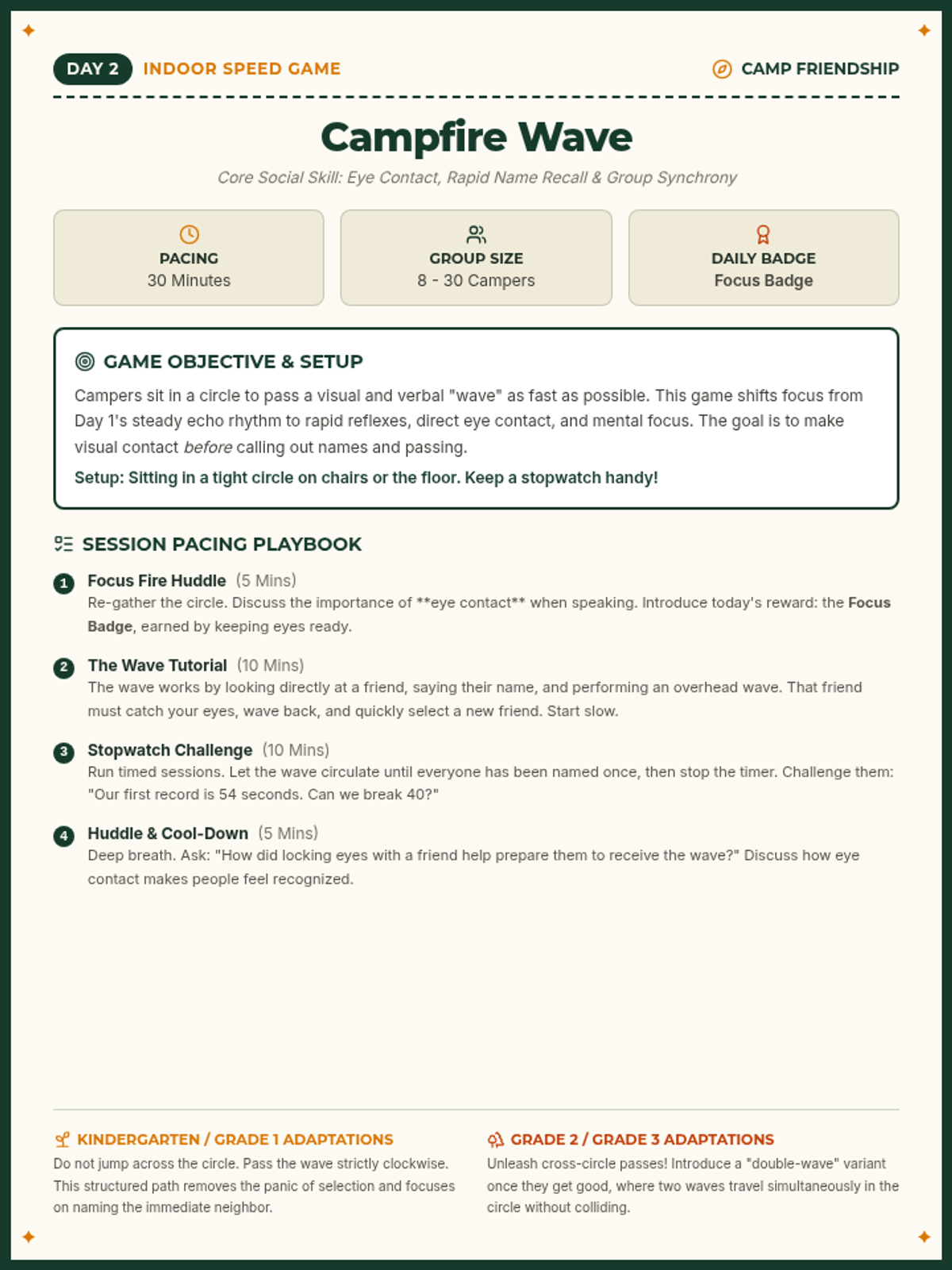
Day 2 of Connection Crew. An indoor speed-focus name game that builds reflexes, eye contact, and collective teamwork as the class tries to beat their own "Reflex Wave" time-record.
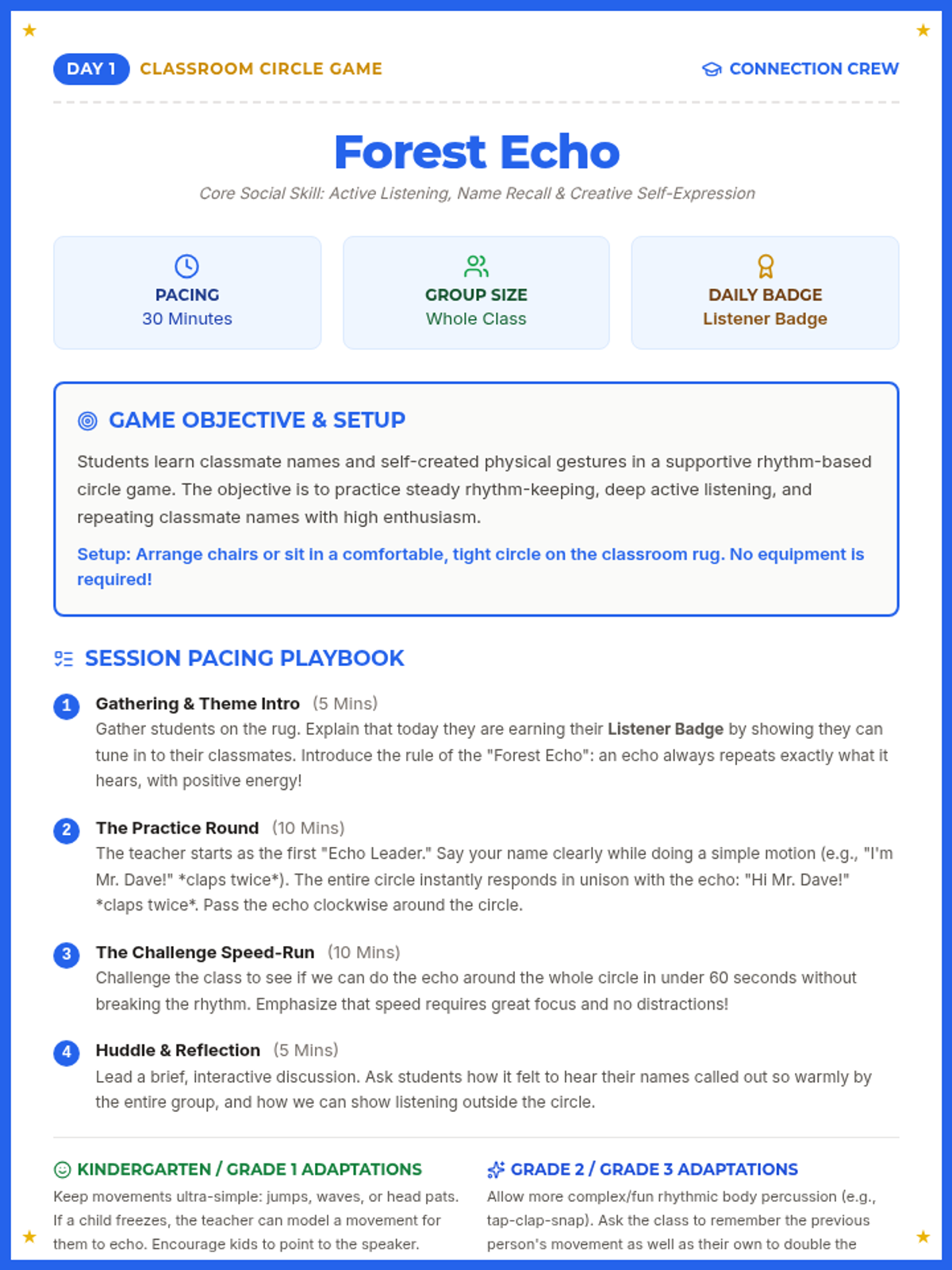
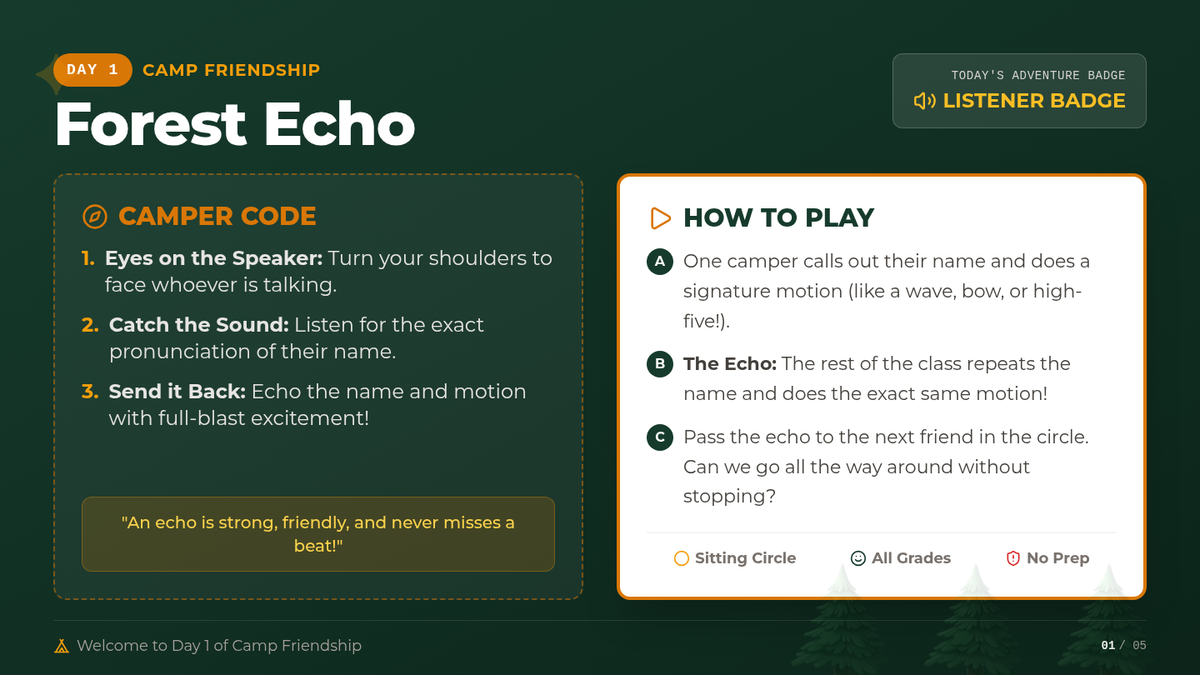
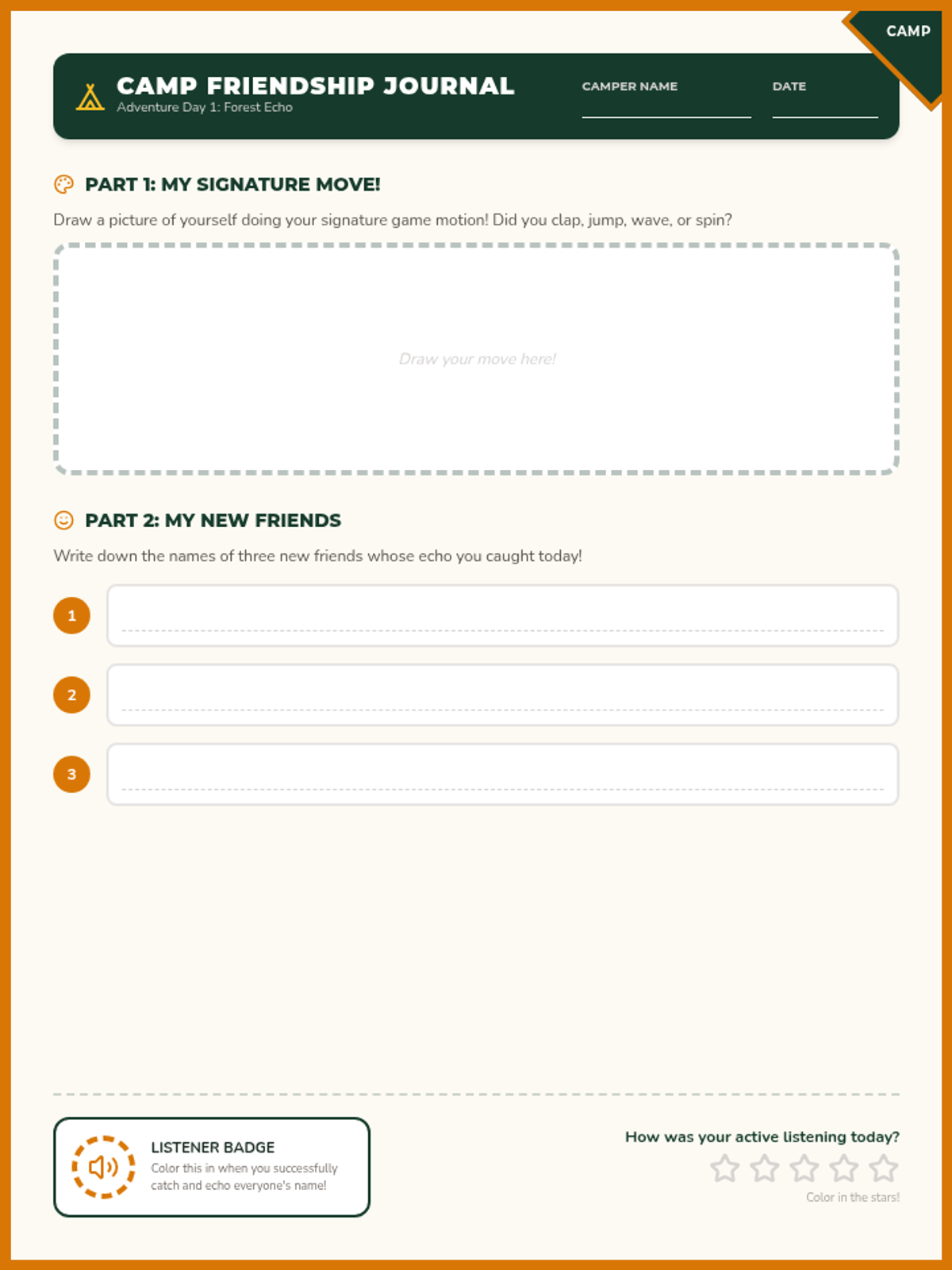
Day 1 of Connection Crew. Students gather in a classroom circle for a rhythmic echo game where they learn classmate names, share custom movements, and practice active listening in a 30-minute indoor session.
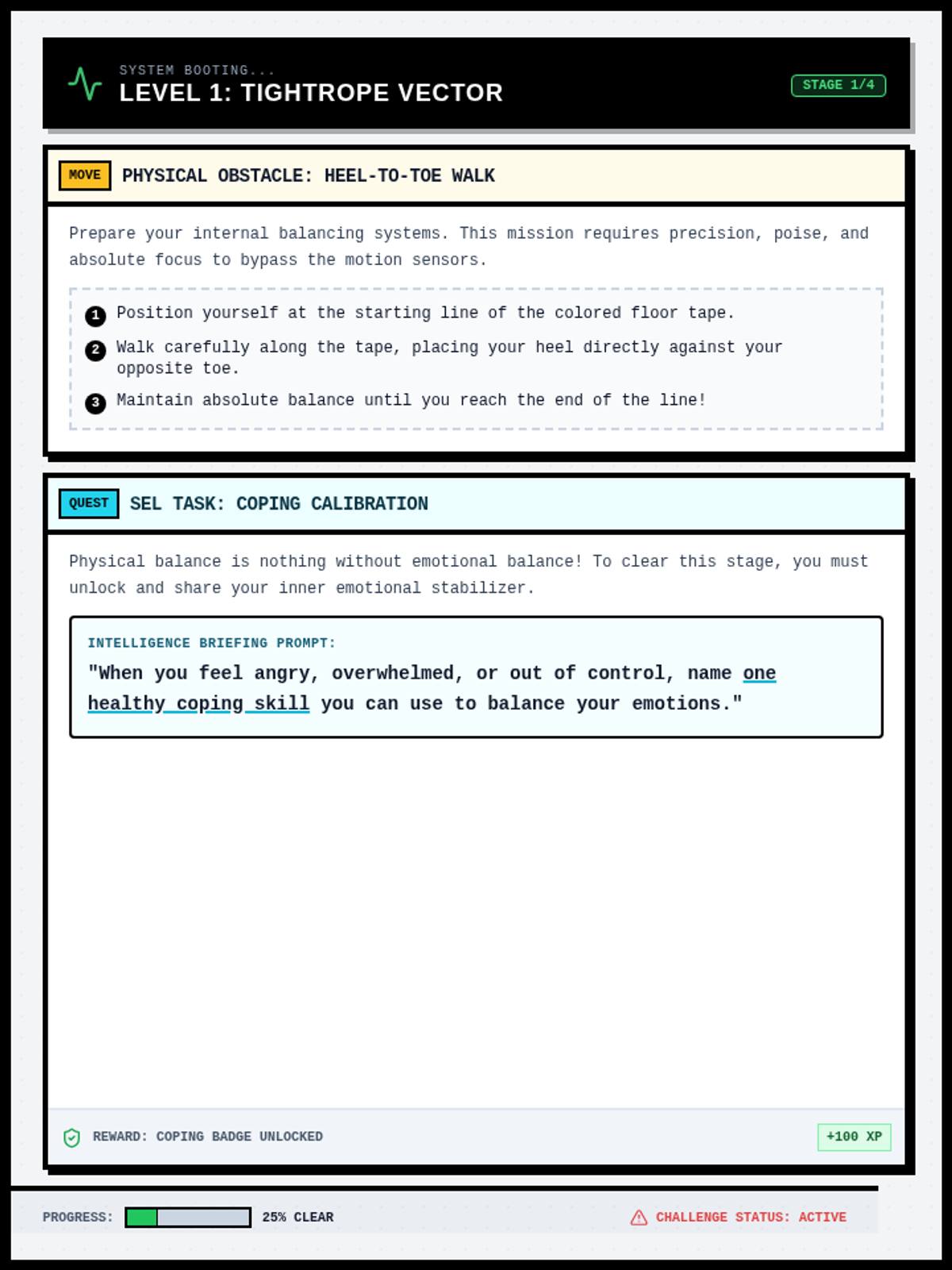
An action-packed obstacle course lesson where students complete physical challenges and social-emotional quests to graduate from their counseling group.
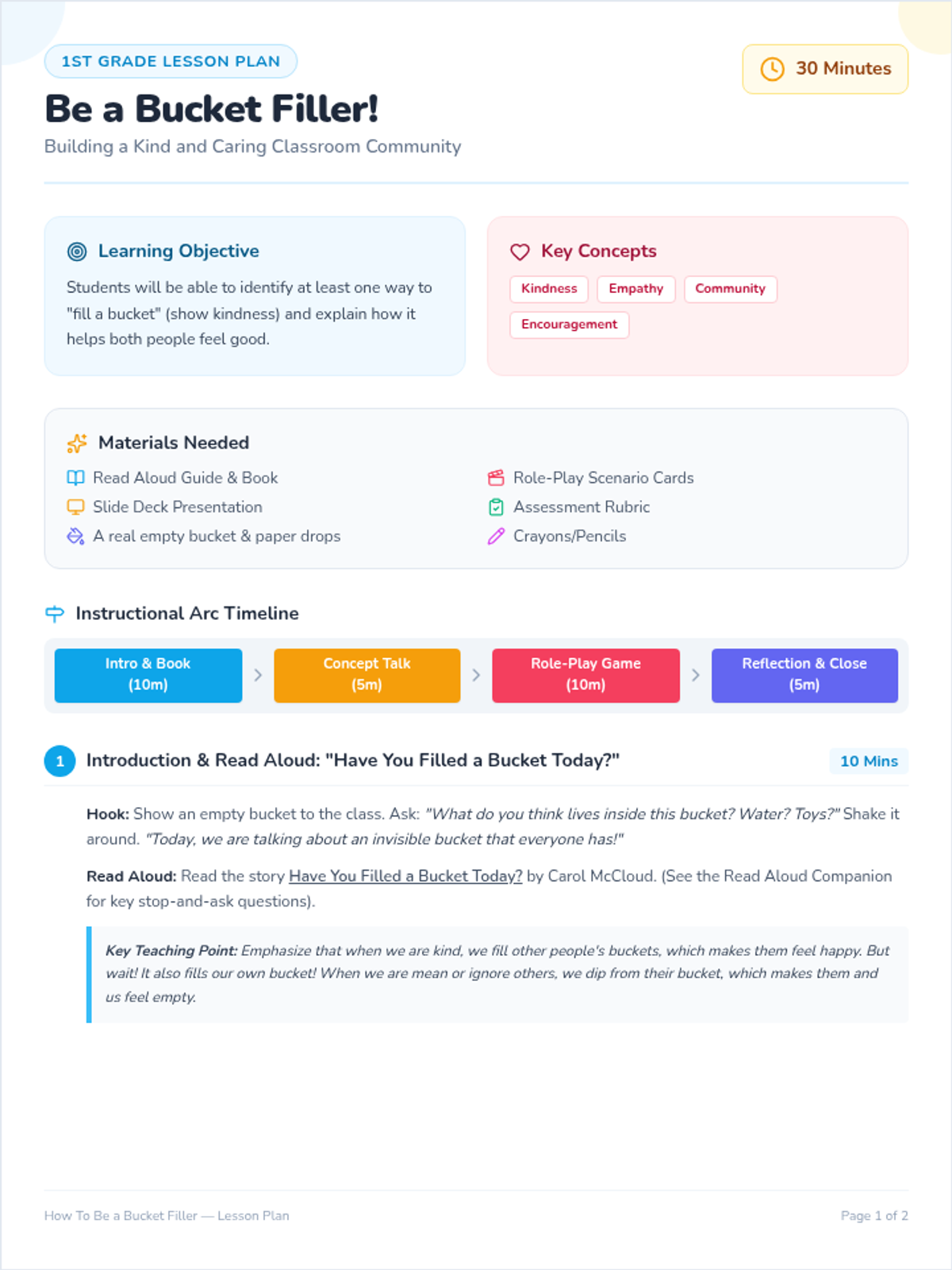
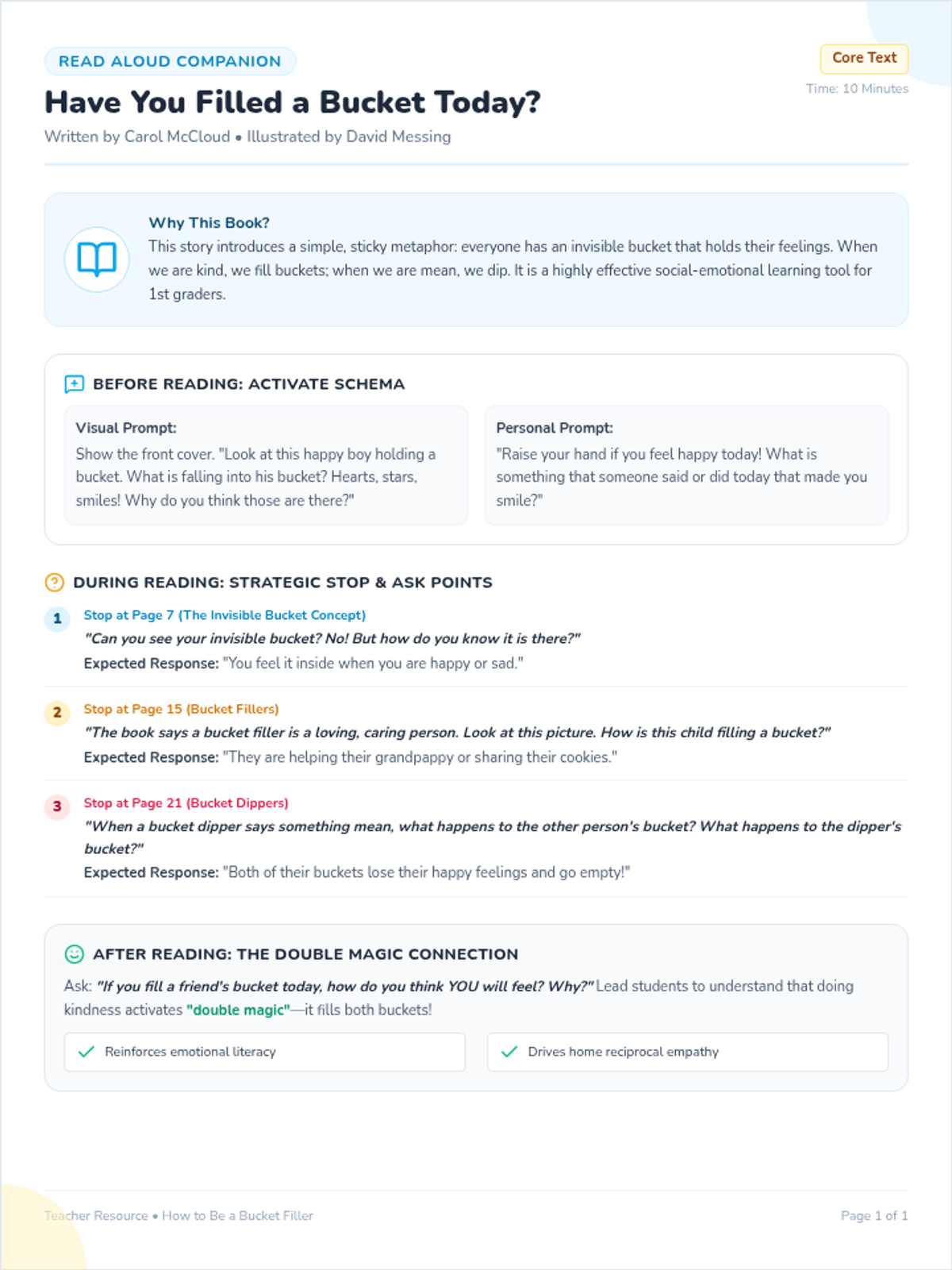
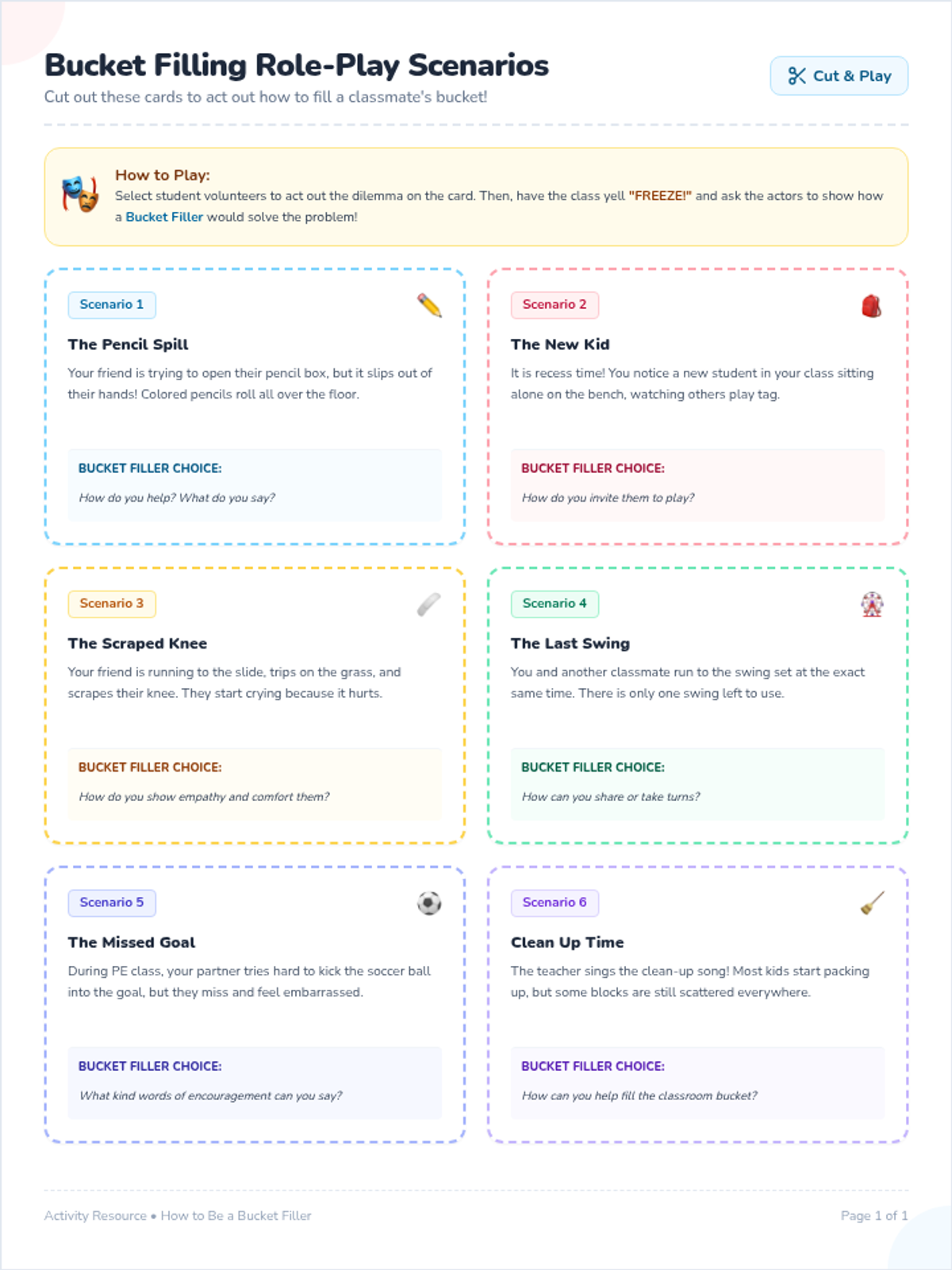
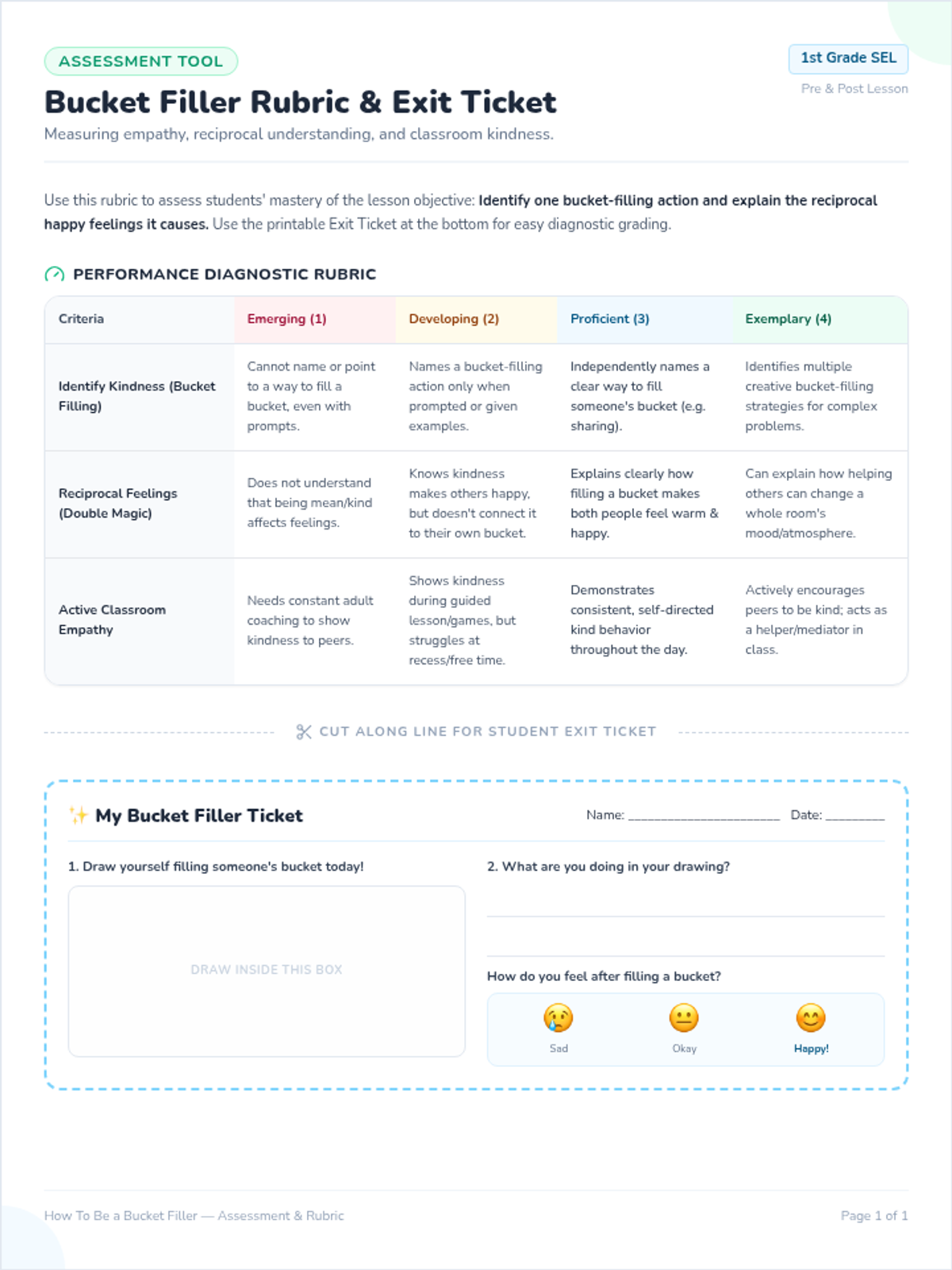
A interactive and heartwarming lesson for 1st-grade students that teaches kindness, empathy, and classroom community using the metaphor of 'bucket filling'. Students learn how their actions impact others and themselves through a read-aloud, role-playing, and self-reflection.
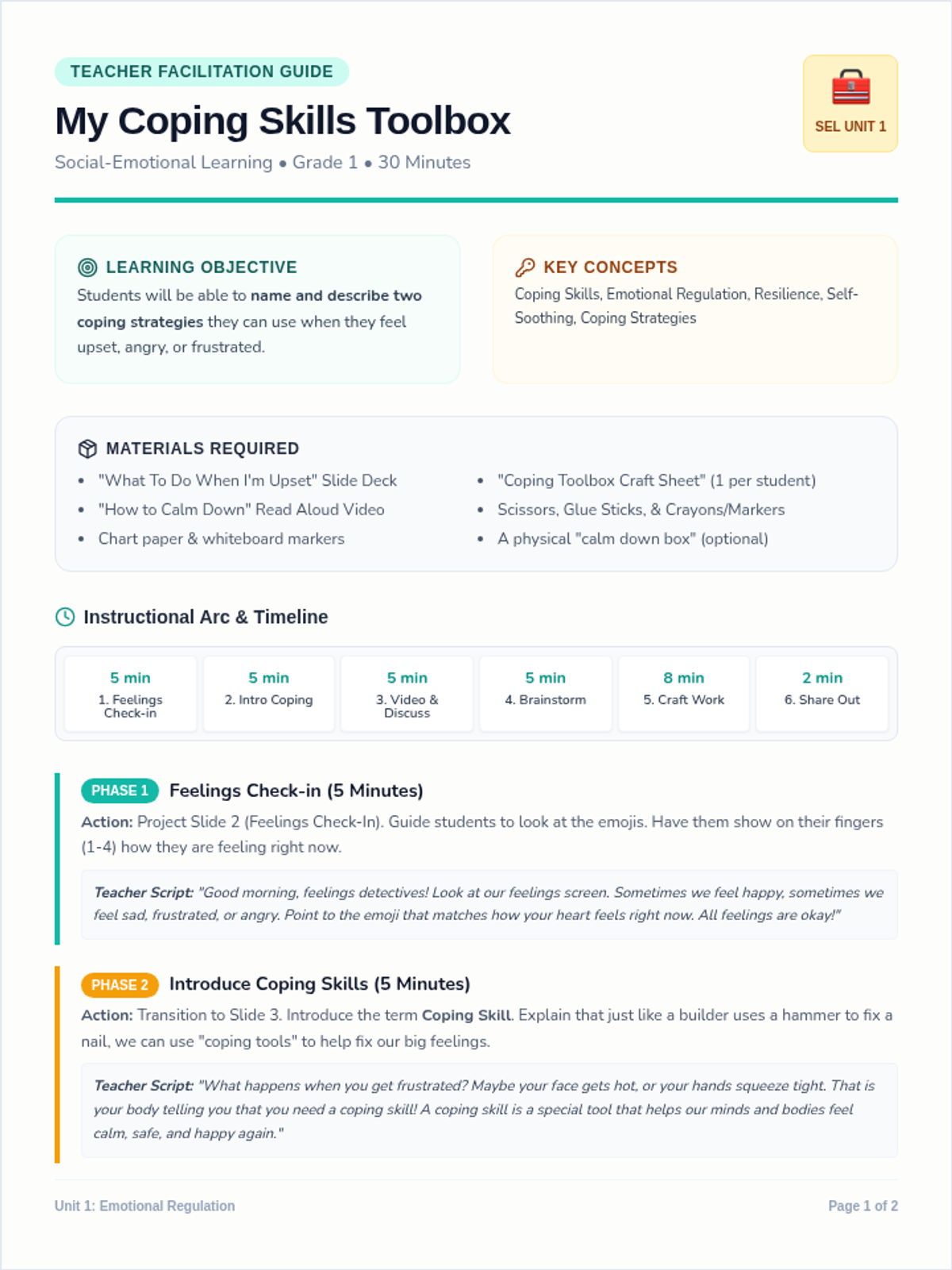
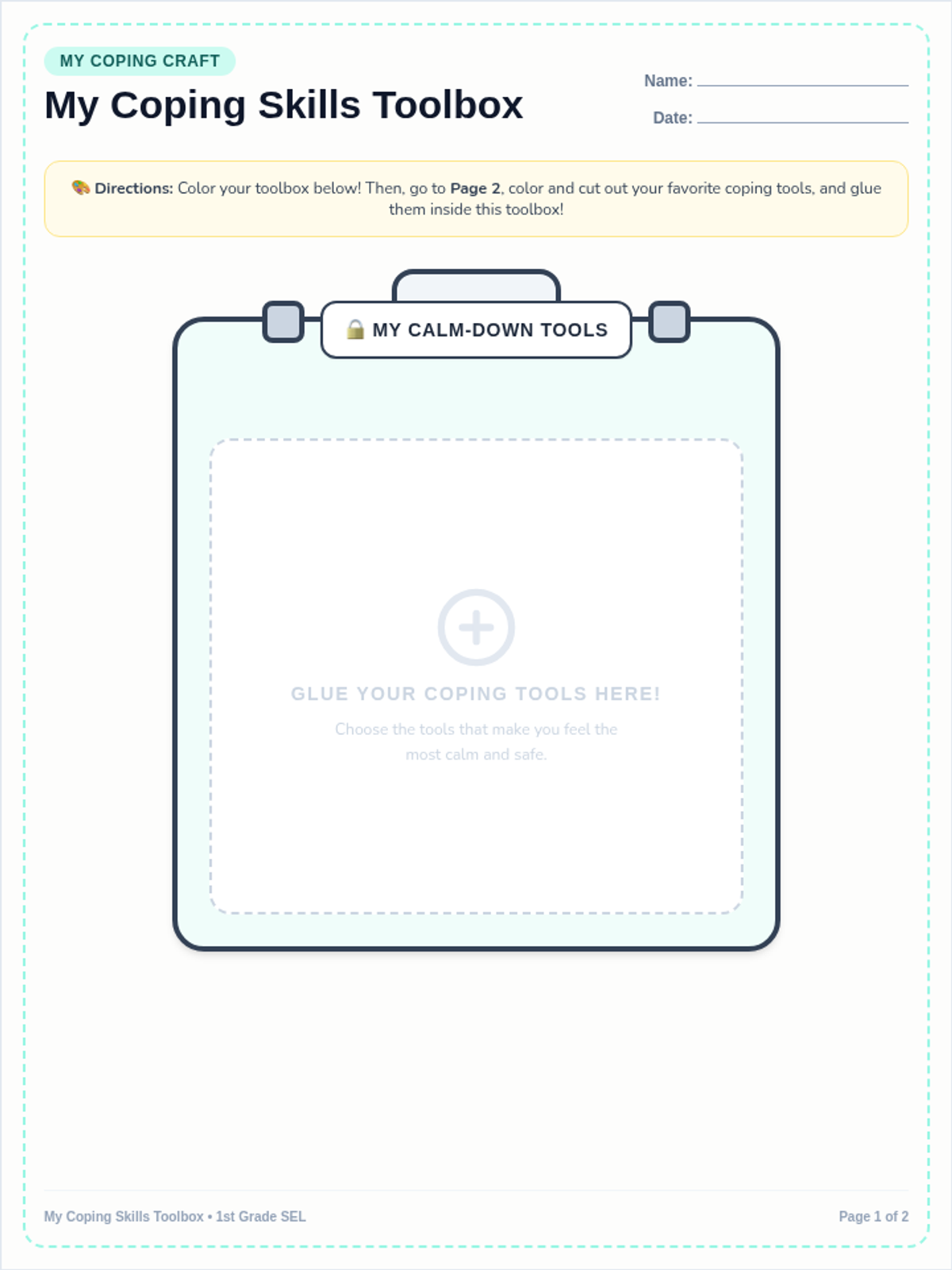
A 1st-grade lesson on emotional regulation where students explore coping strategies and create their own coping skills toolbox craft.
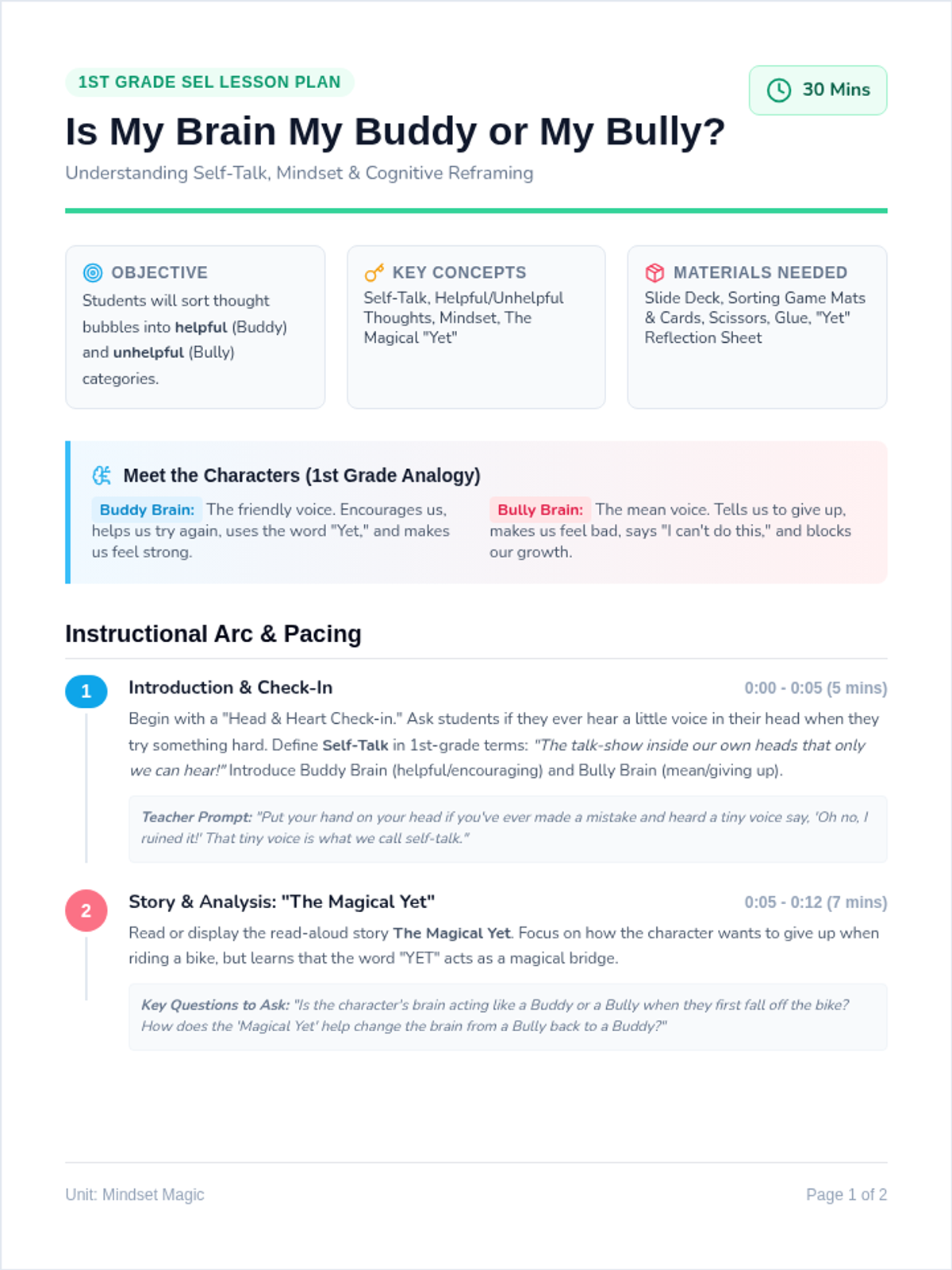
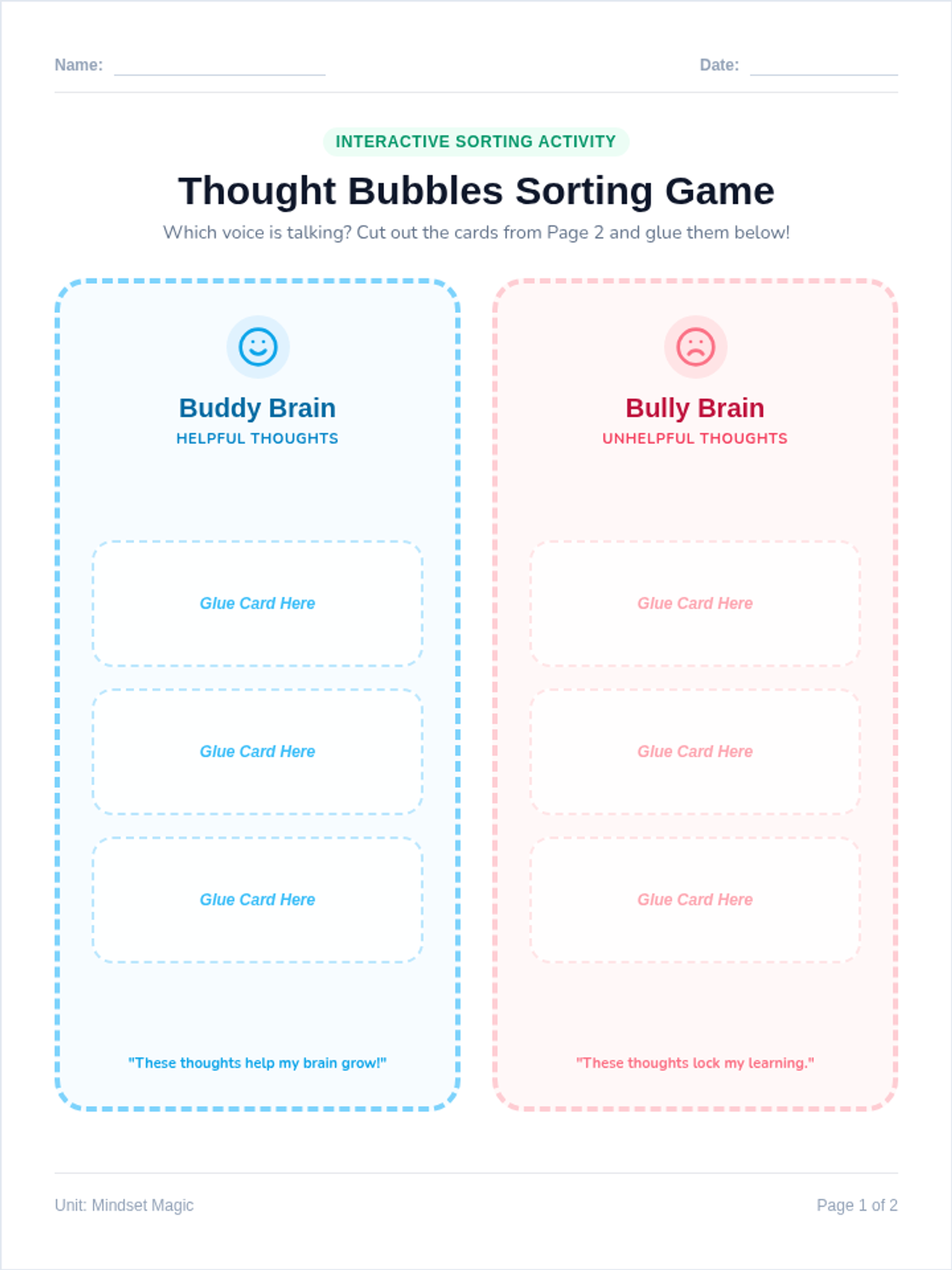
A 30-minute Social-Emotional Learning lesson for 1st graders to understand self-talk, distinguishing between helpful and unhelpful thoughts (Buddy Brain vs. Bully Brain), and practicing cognitive reframing with 'The Magical Yet'.
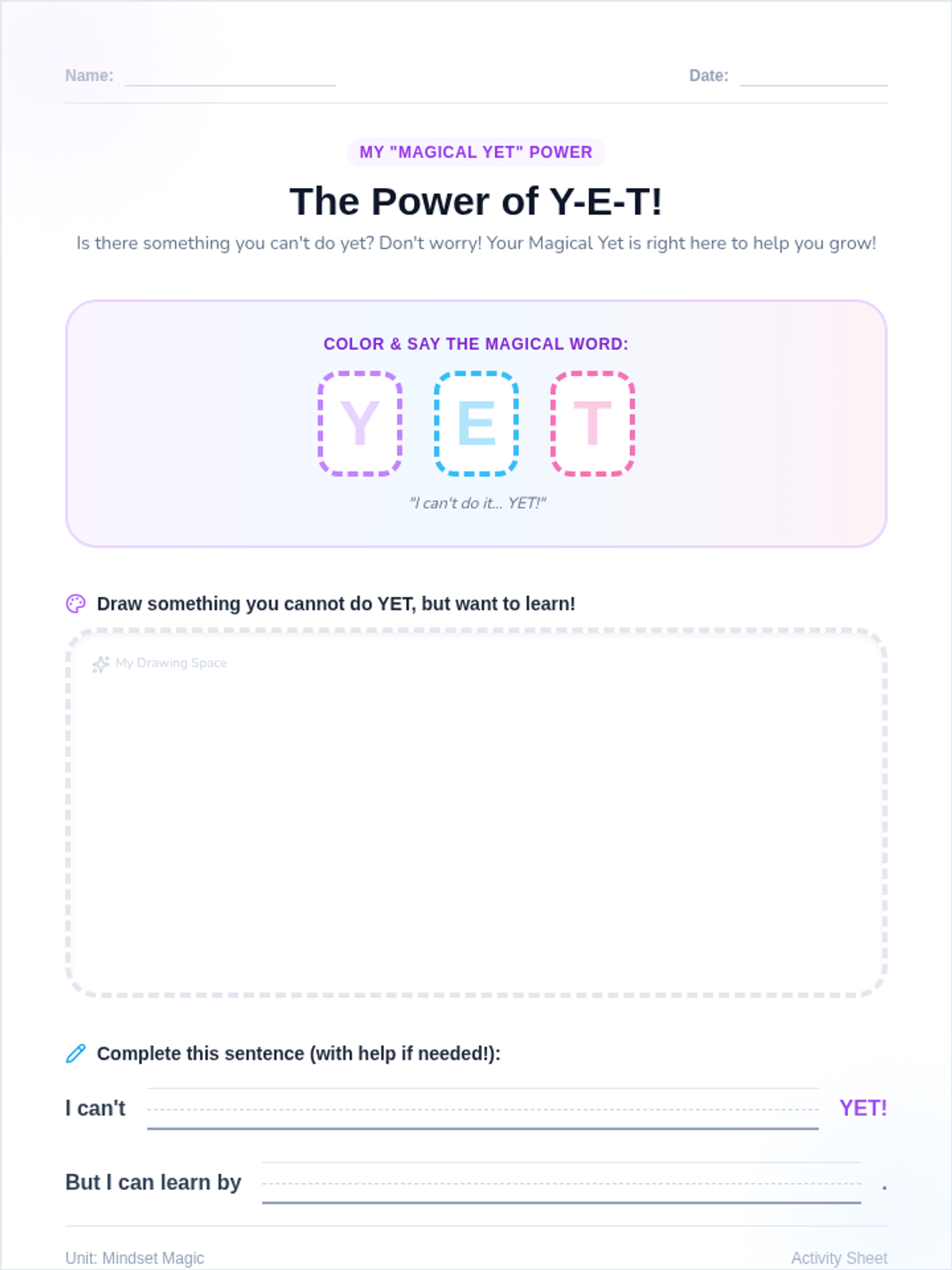
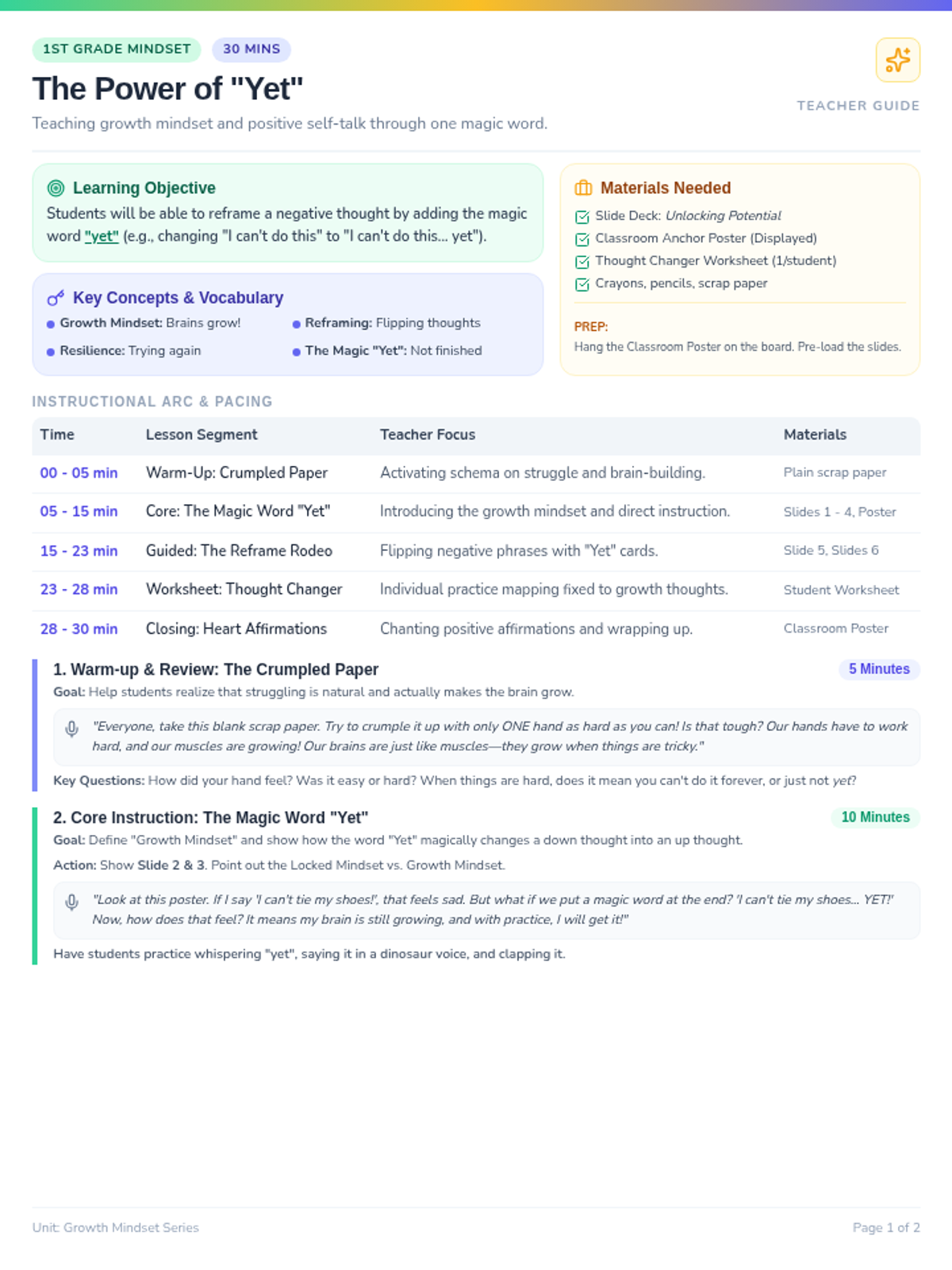
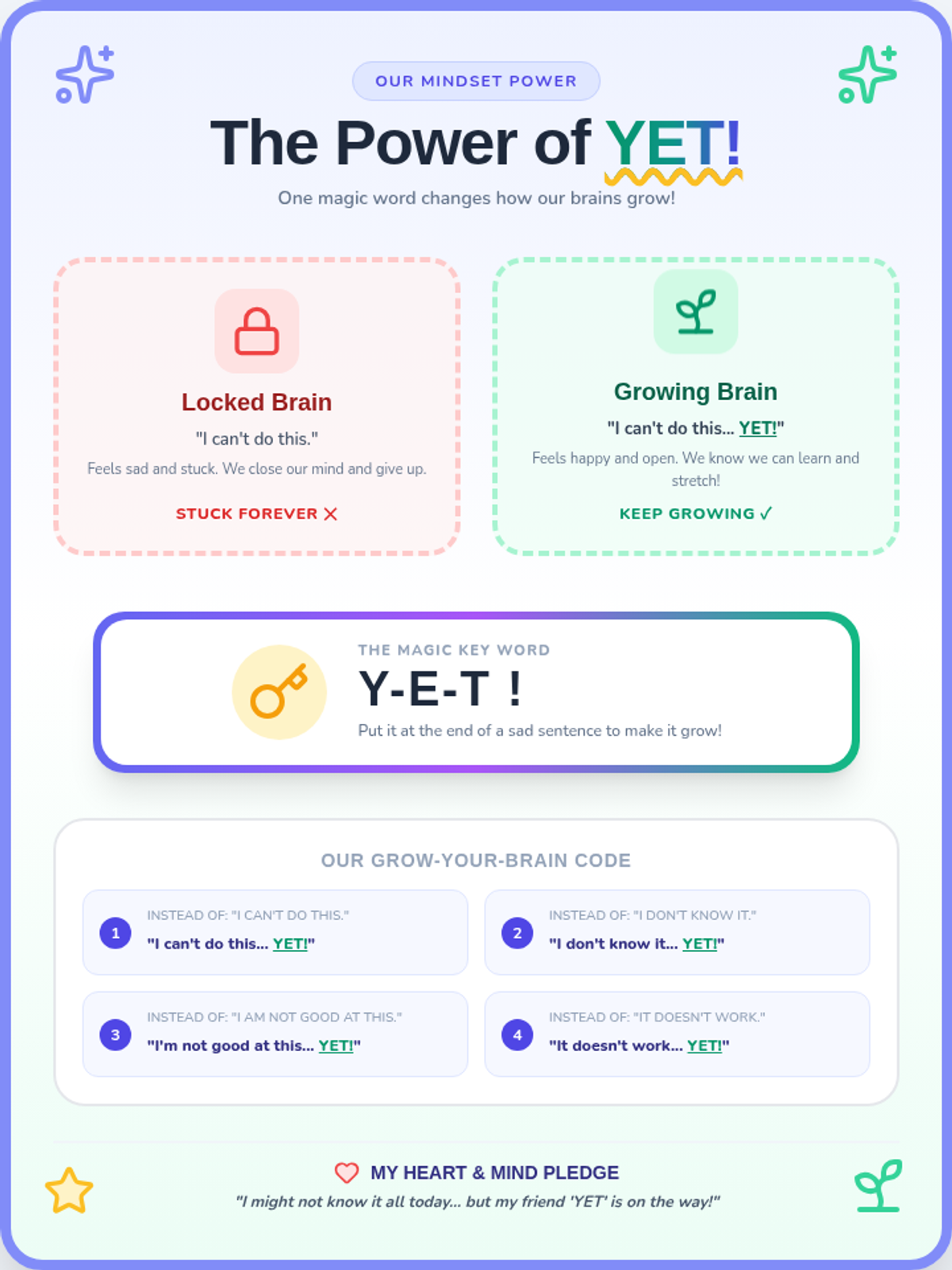
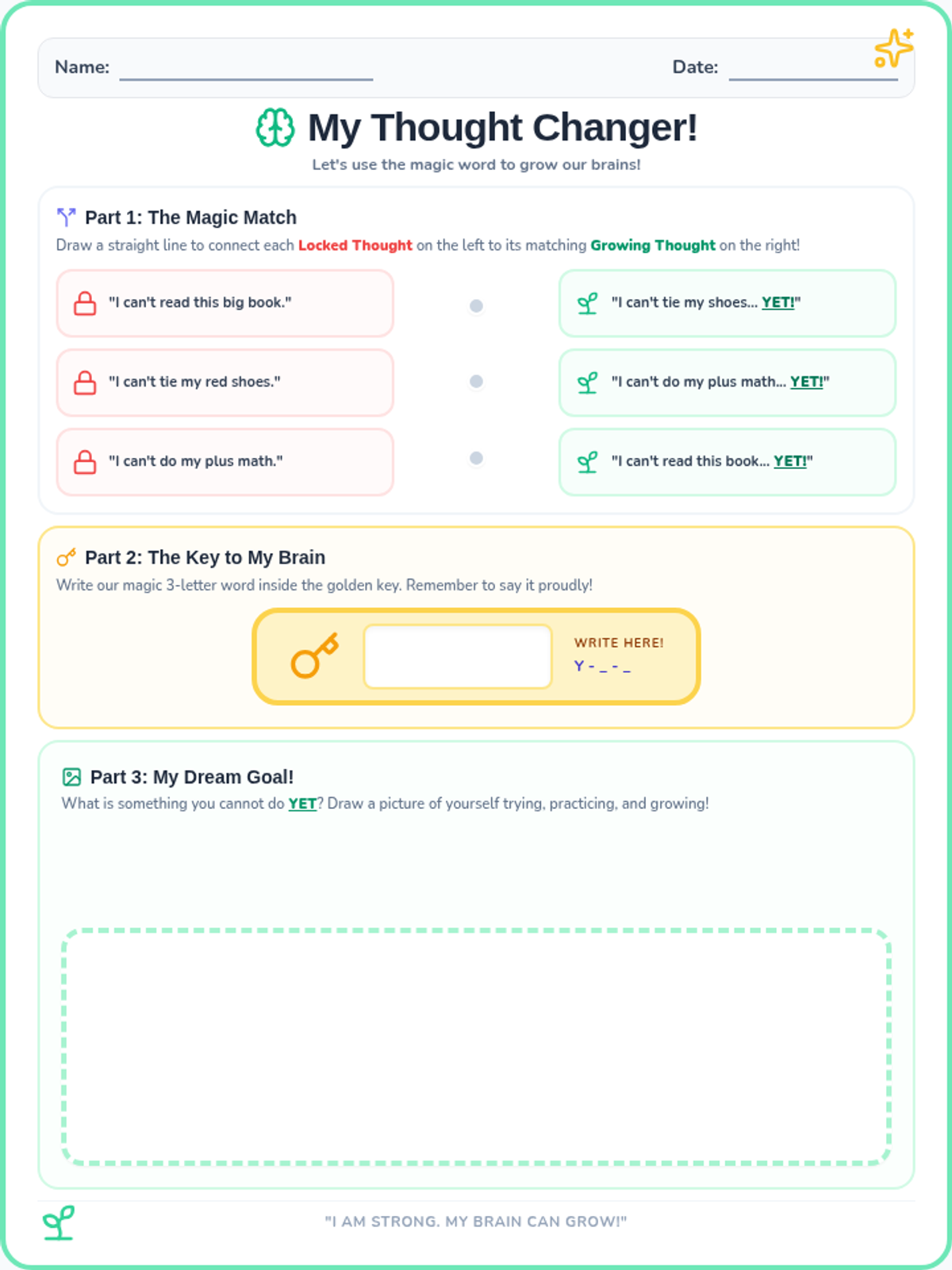
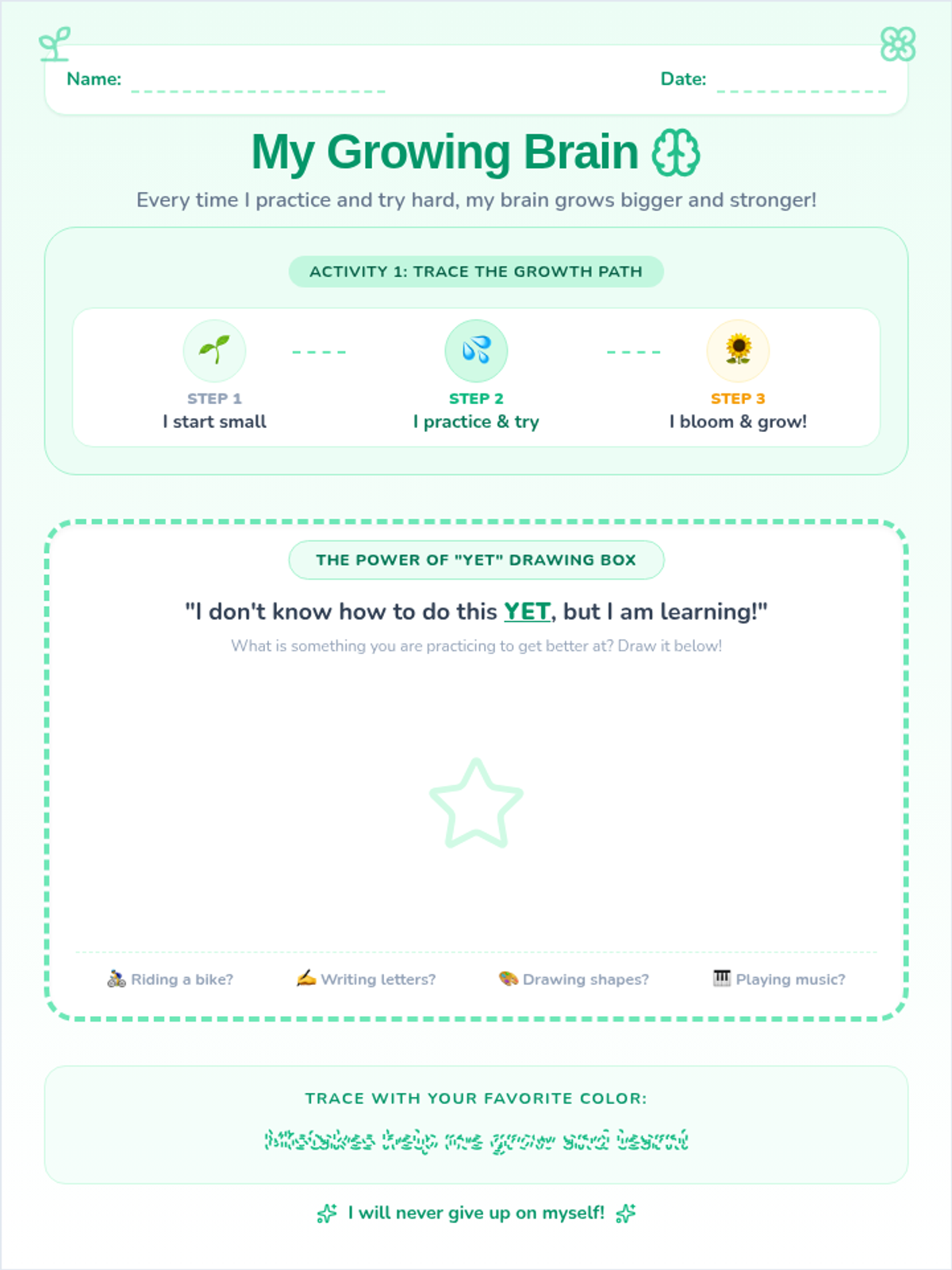
A comprehensive 30-minute introductory lesson on growth mindset for 1st graders, focusing on using the magic word 'yet' to transform fixed mindsets into growth mindsets. This lesson includes a structured teacher lesson plan, a highly visual slide presentation, an inspirational classroom anchor poster, and an interactive self-talk worksheet.
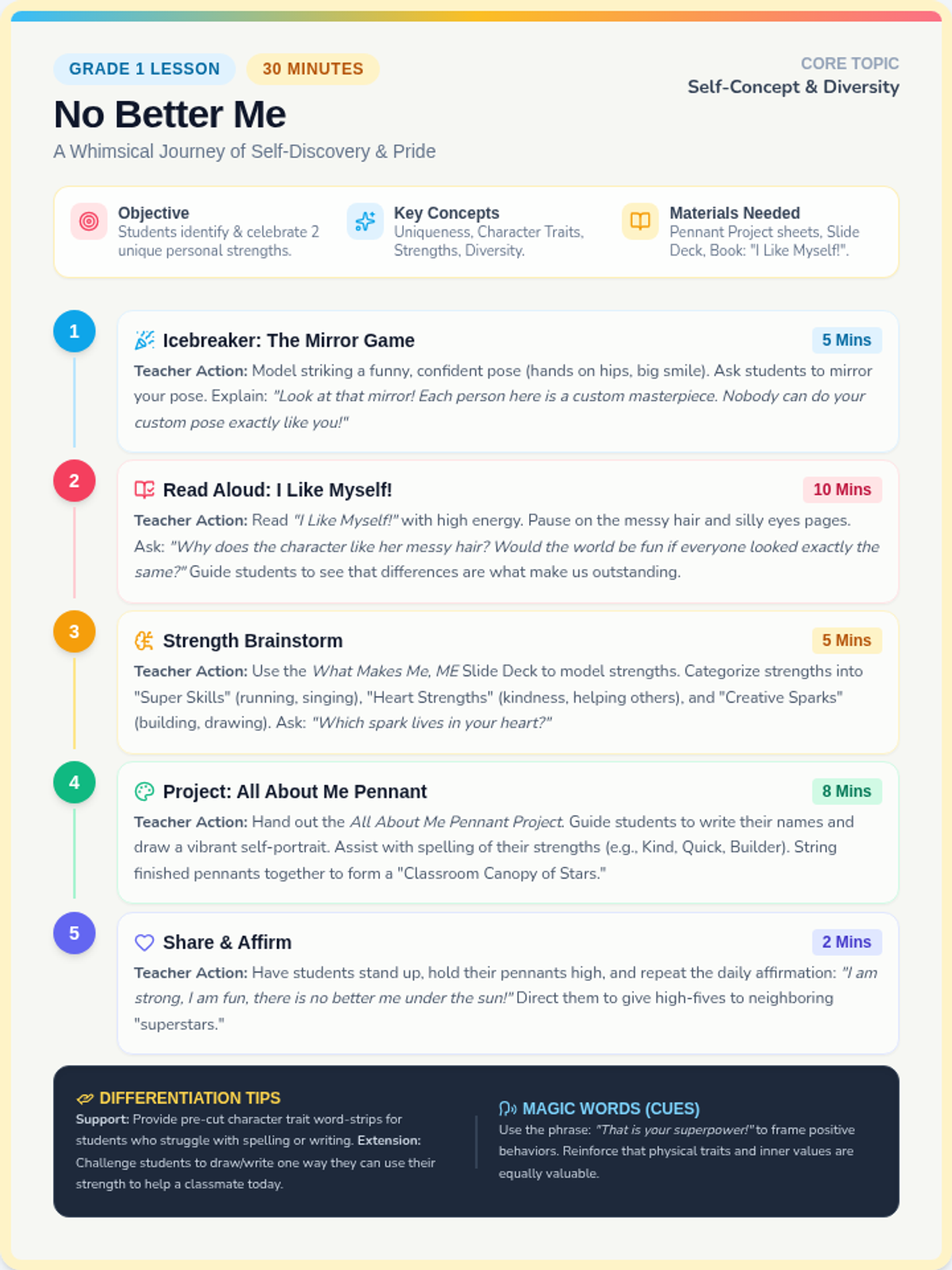
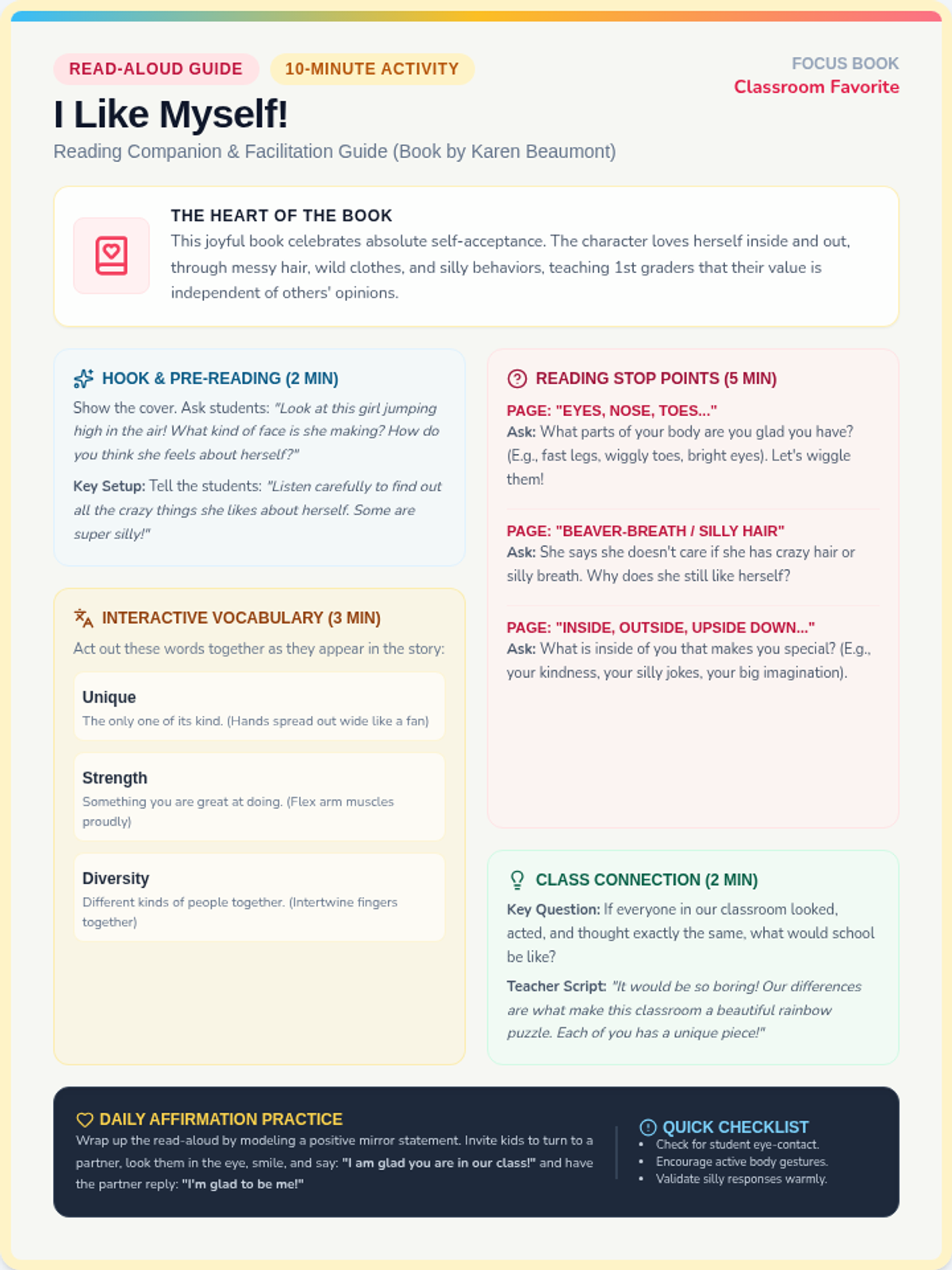
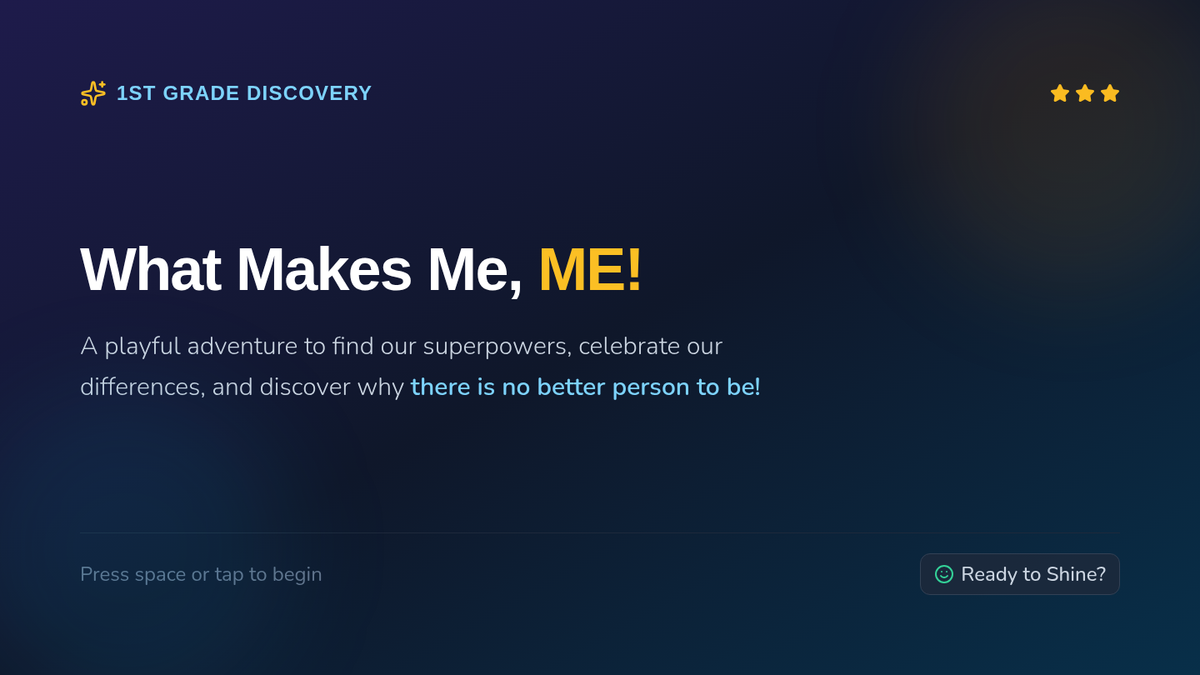
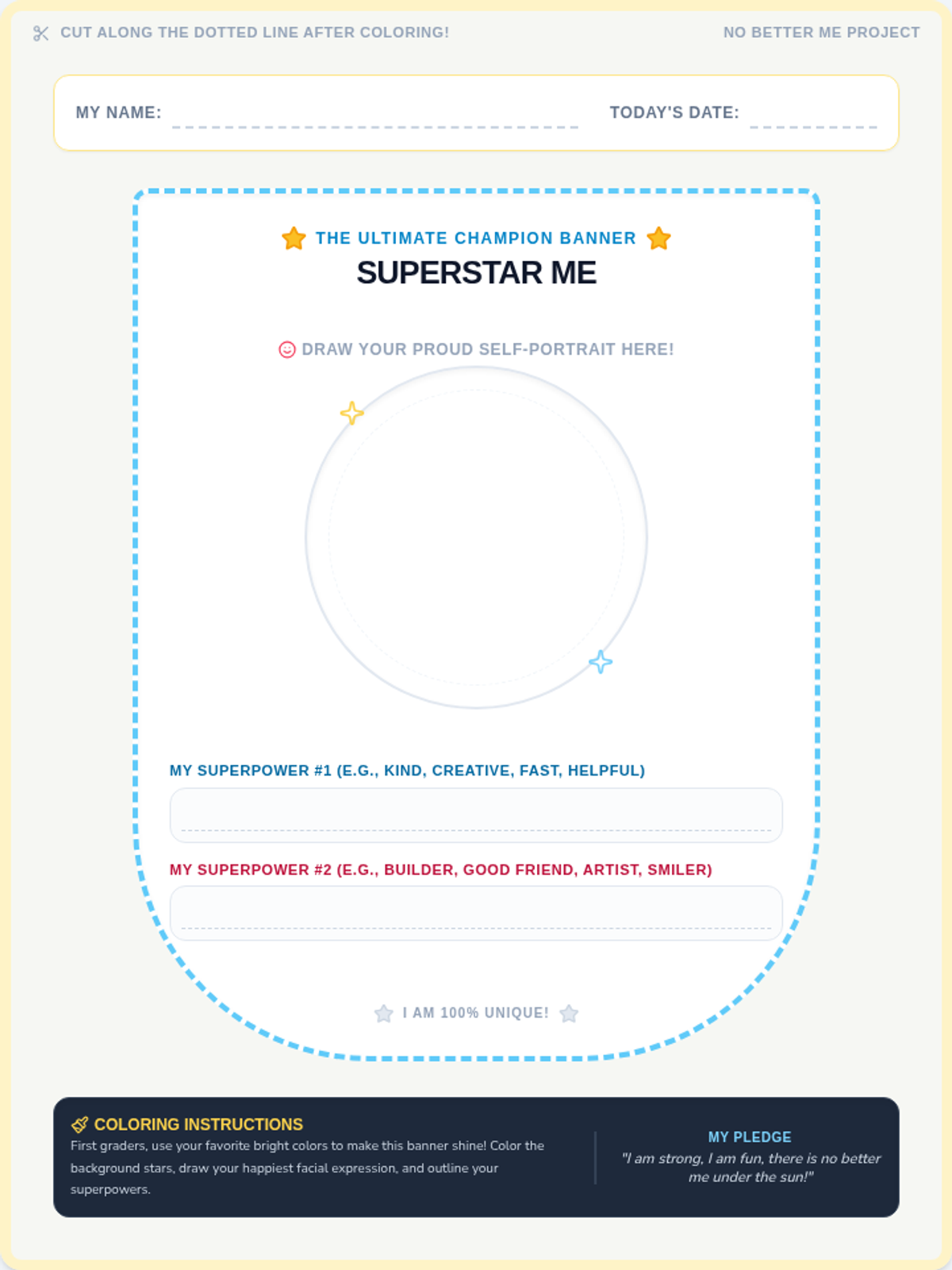
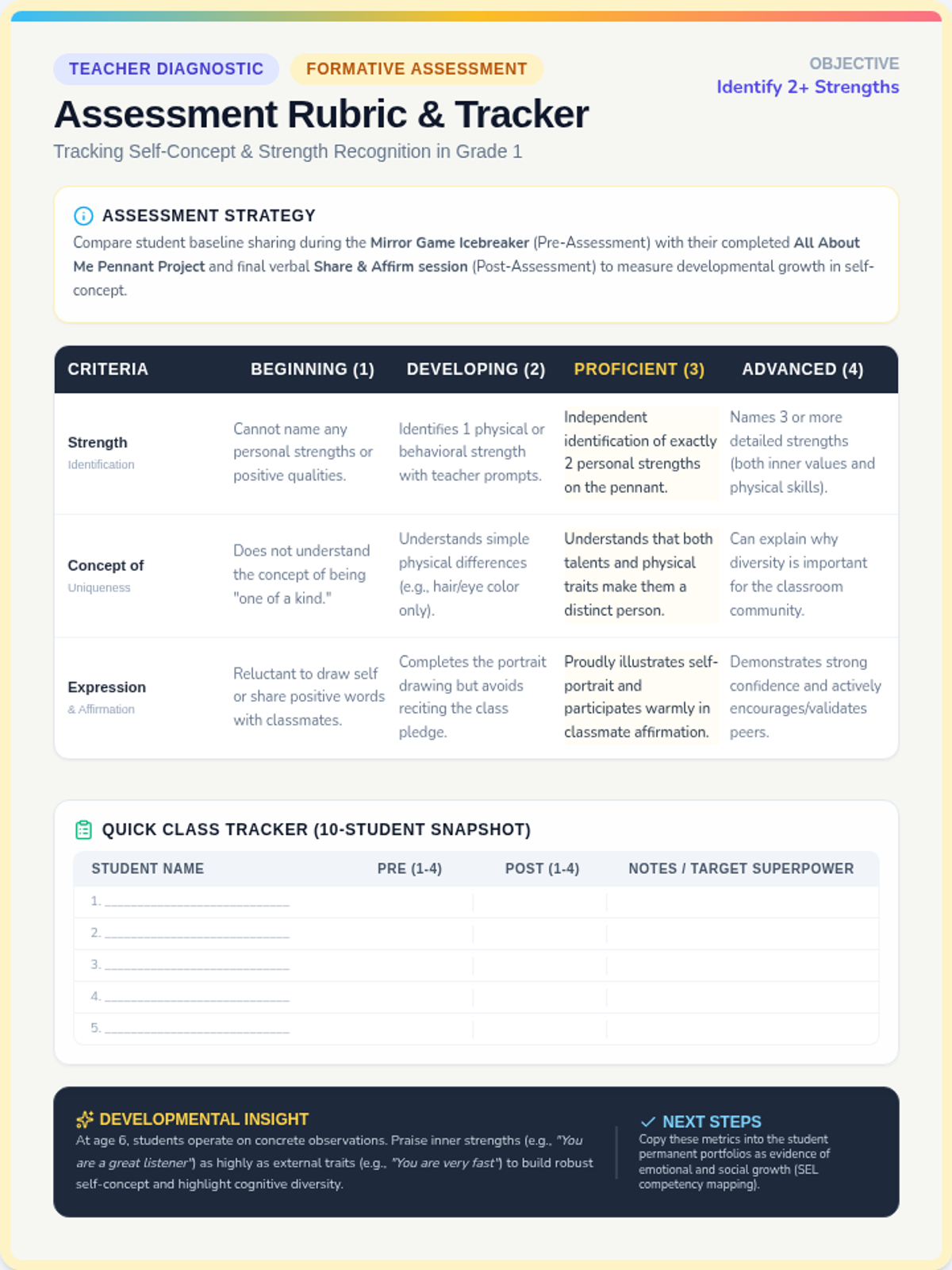
A playful and warm 30-minute lesson for 1st graders focused on self-concept, uniqueness, and identifying personal strengths. Through a shared read-aloud, interactive slides, and a hands-on banner project, students discover and celebrate what makes them special.
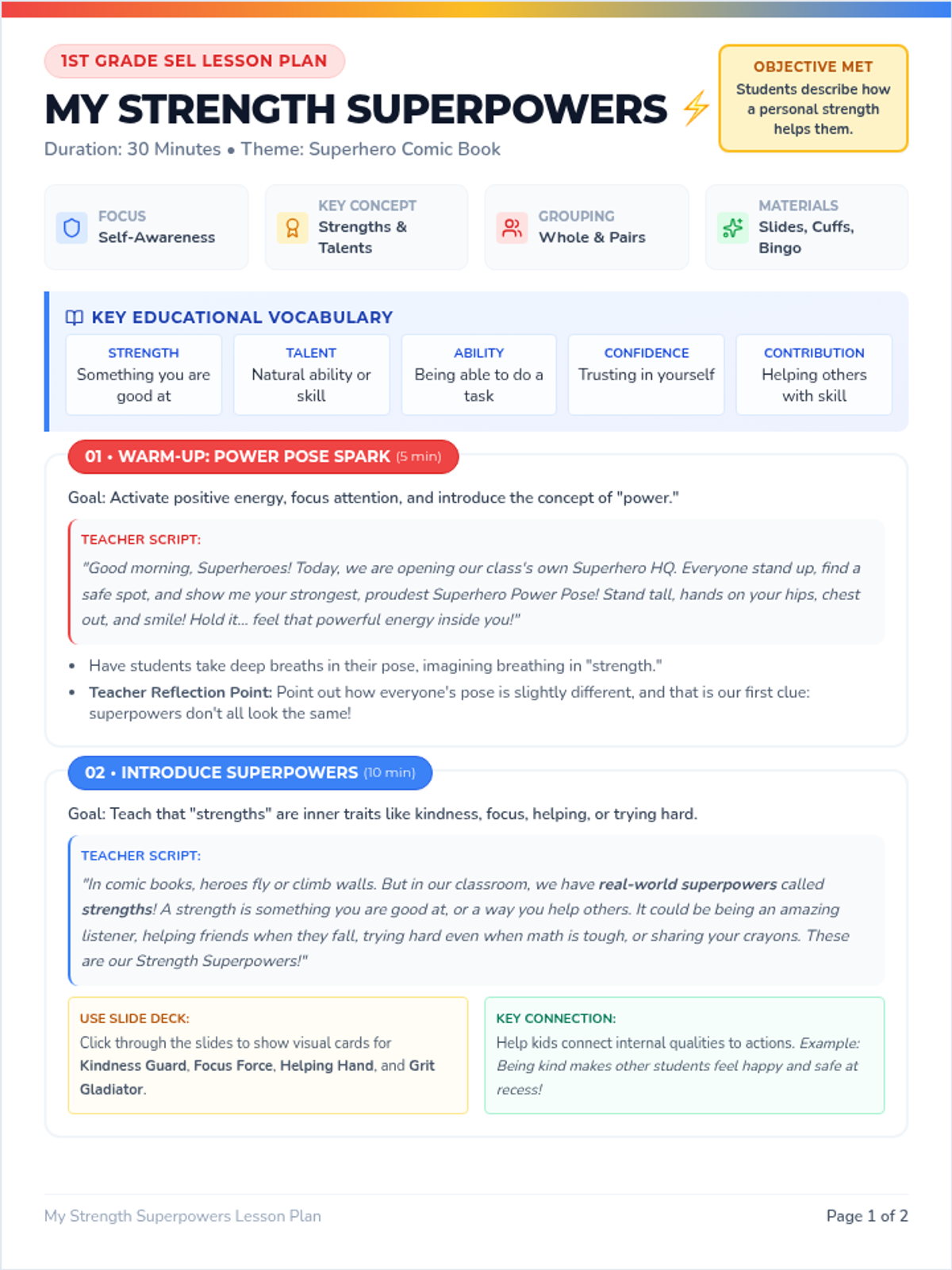
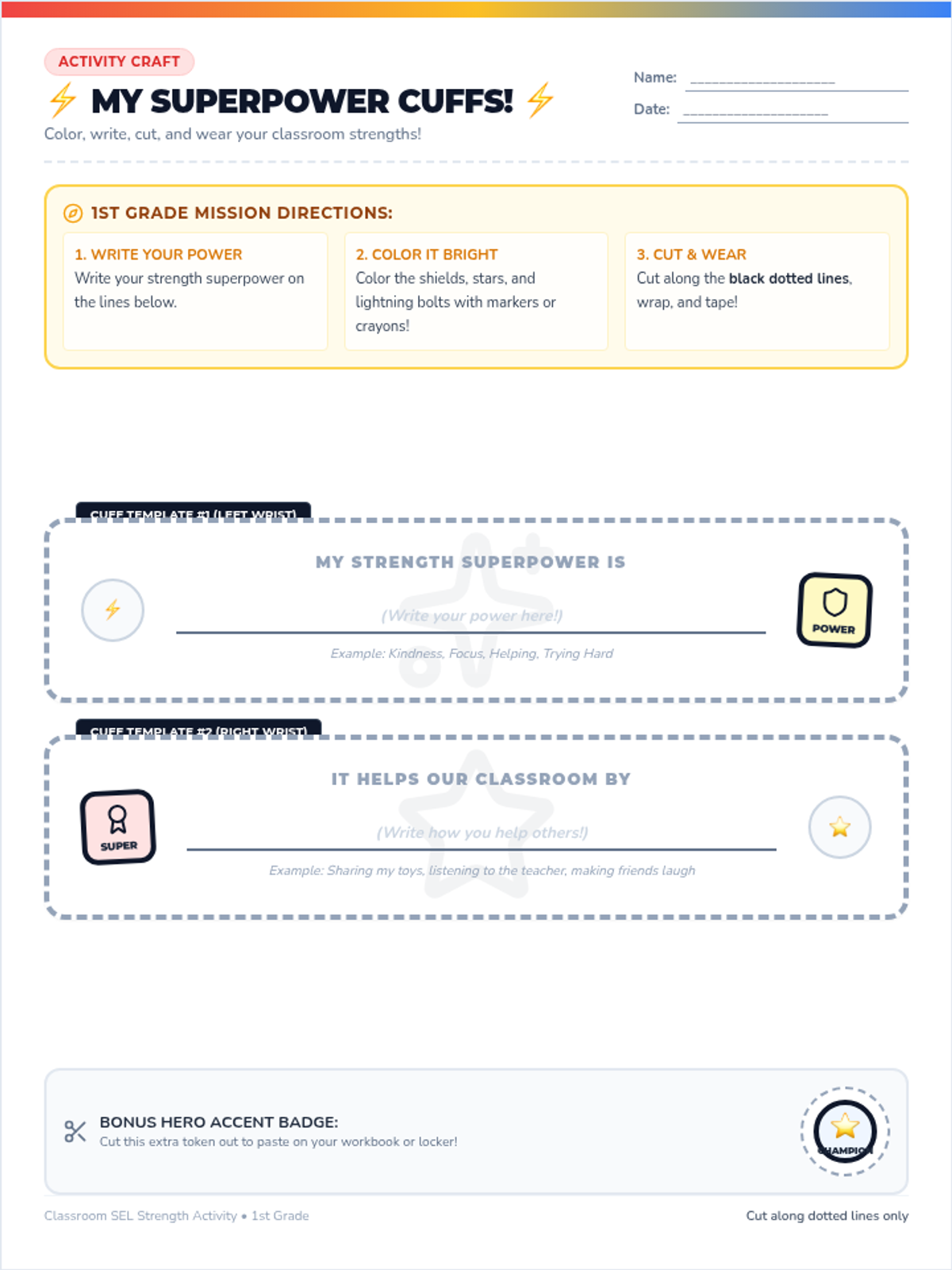
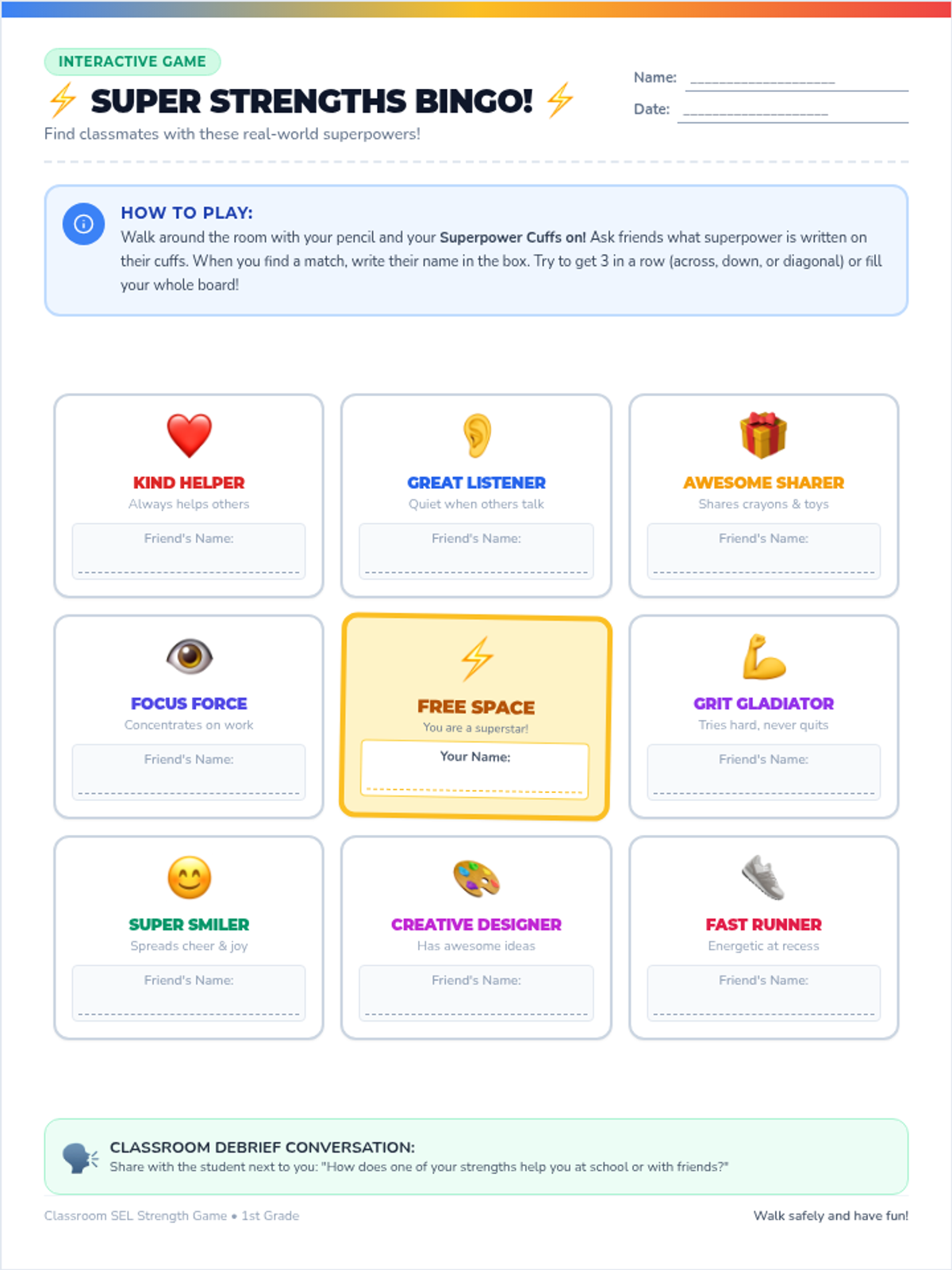
A 30-minute social-emotional learning lesson for 1st graders to discover, celebrate, and share their personal strengths using a fun superhero comic book theme. Students identify their inner superpowers (like kindness, sharing, listening, or trying hard) and create tangible cuffs to wear and a interactive game to play.
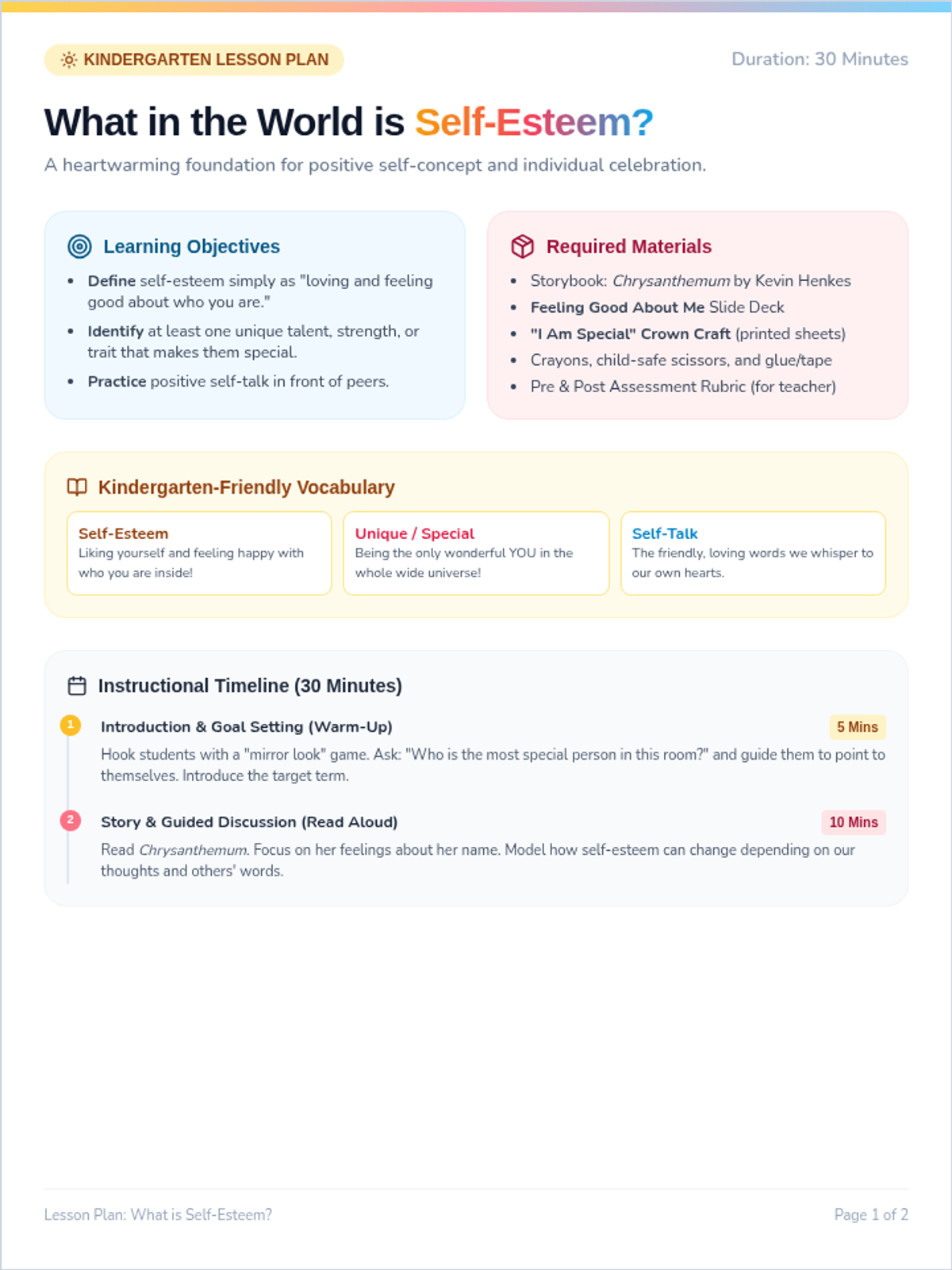
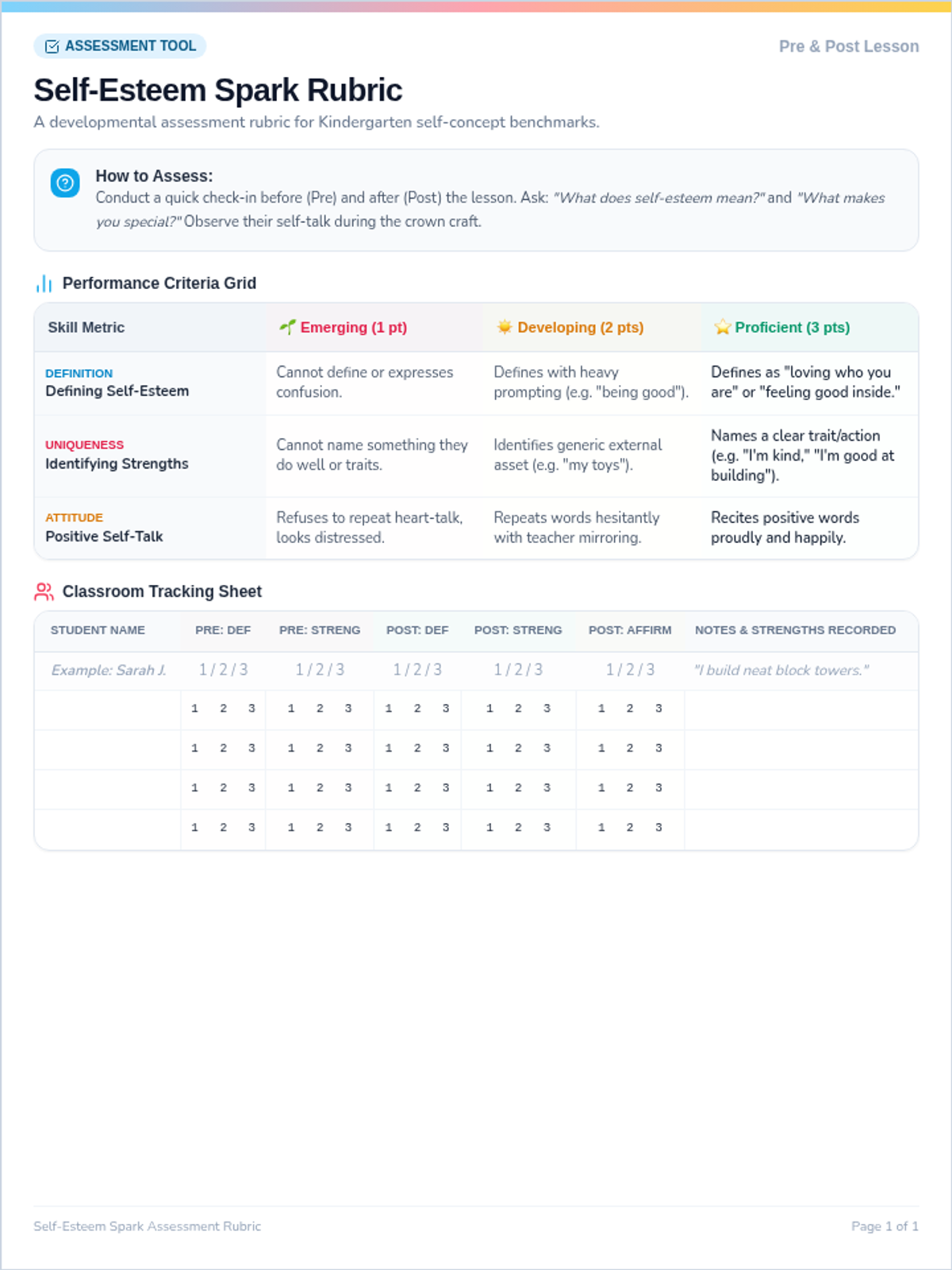
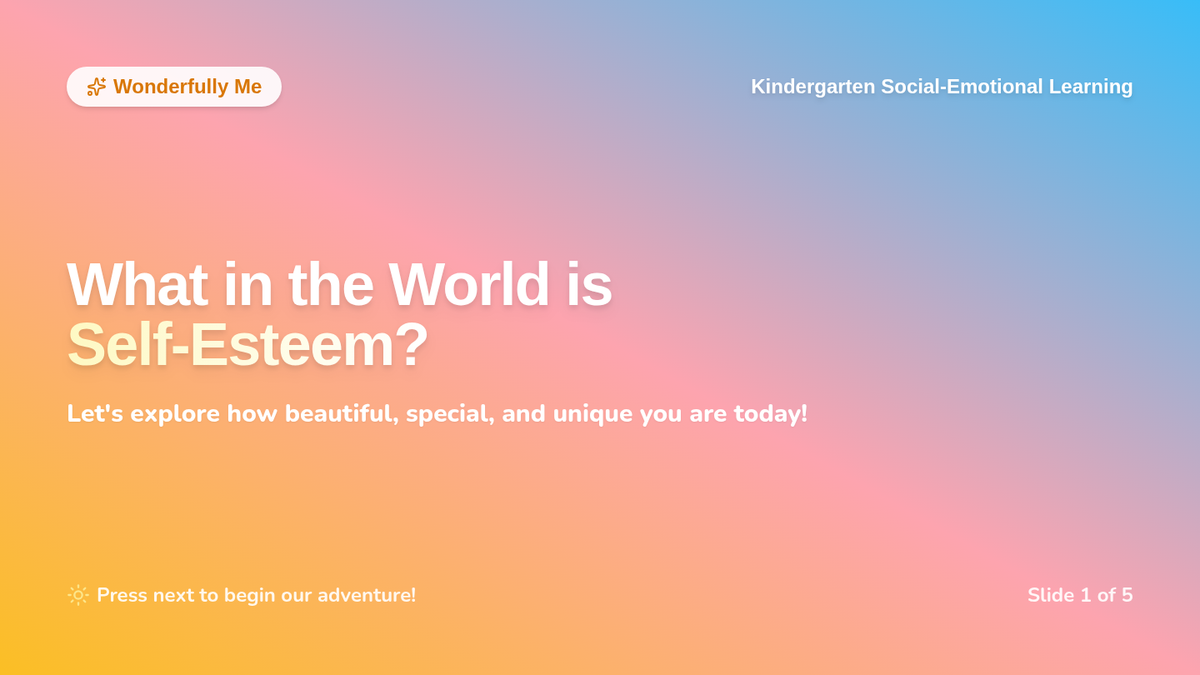
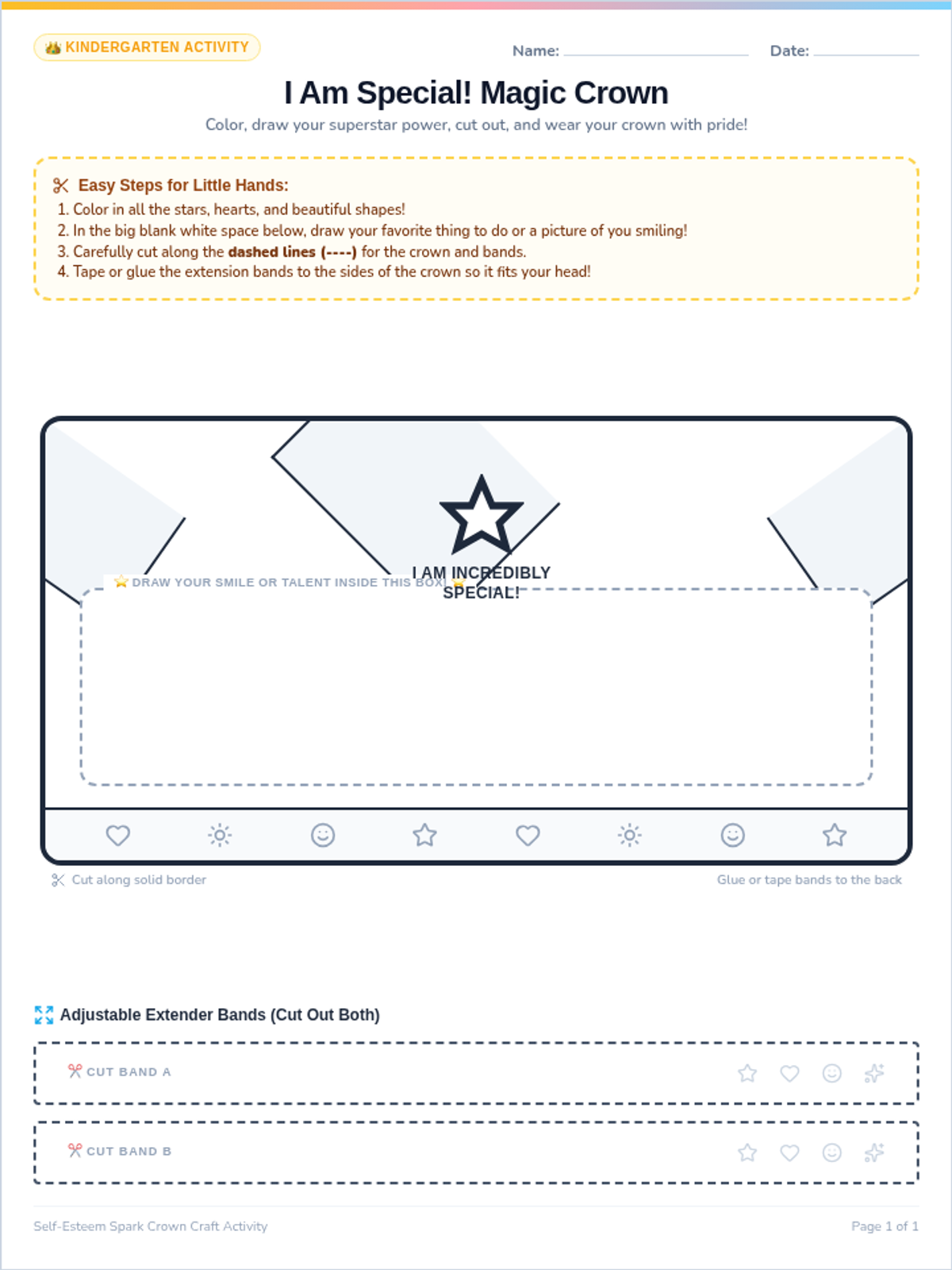
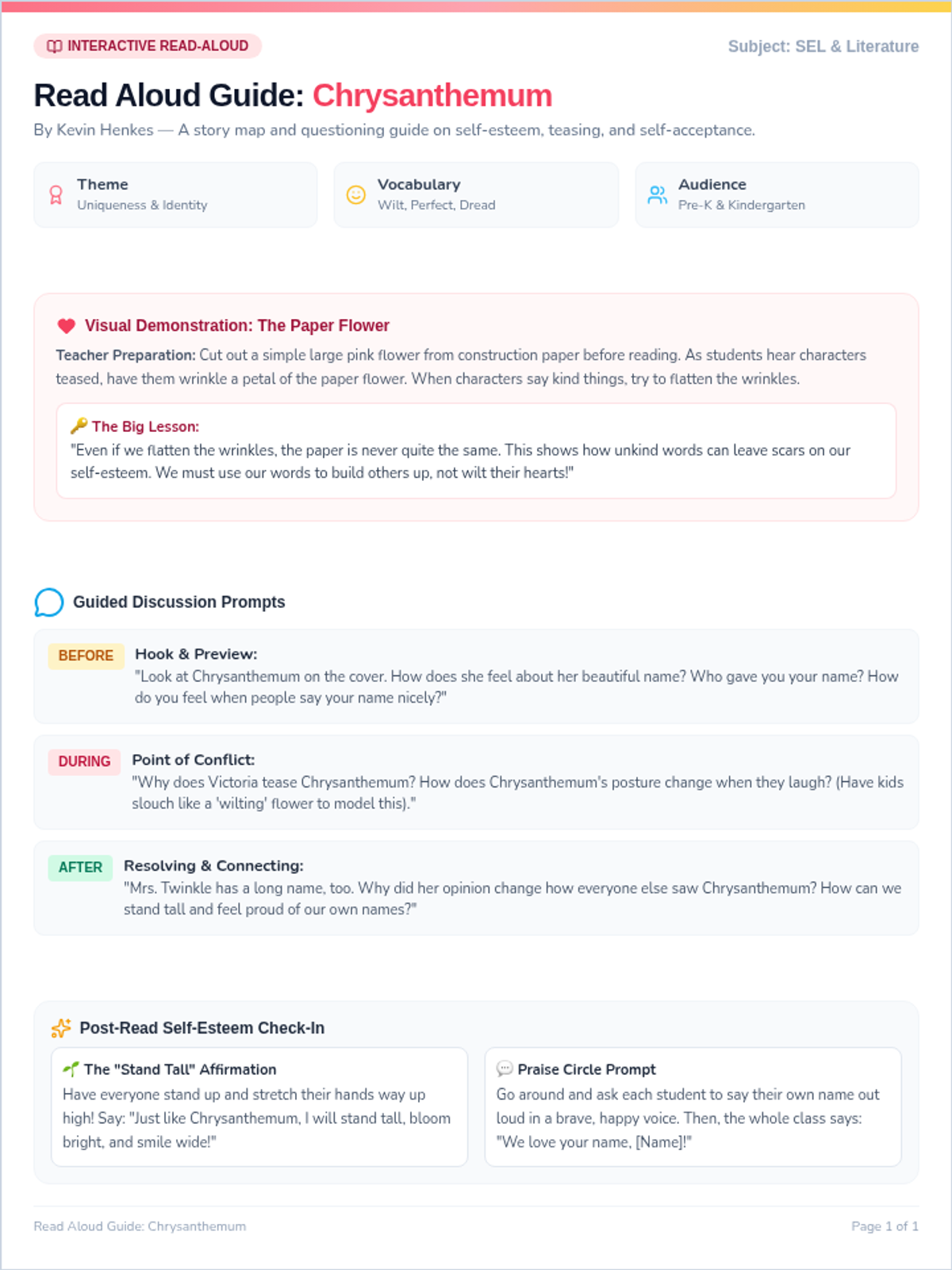
A 30-minute Kindergarten lesson designed to introduce the concept of self-esteem, celebrate individual uniqueness, and help students identify their own special strengths.
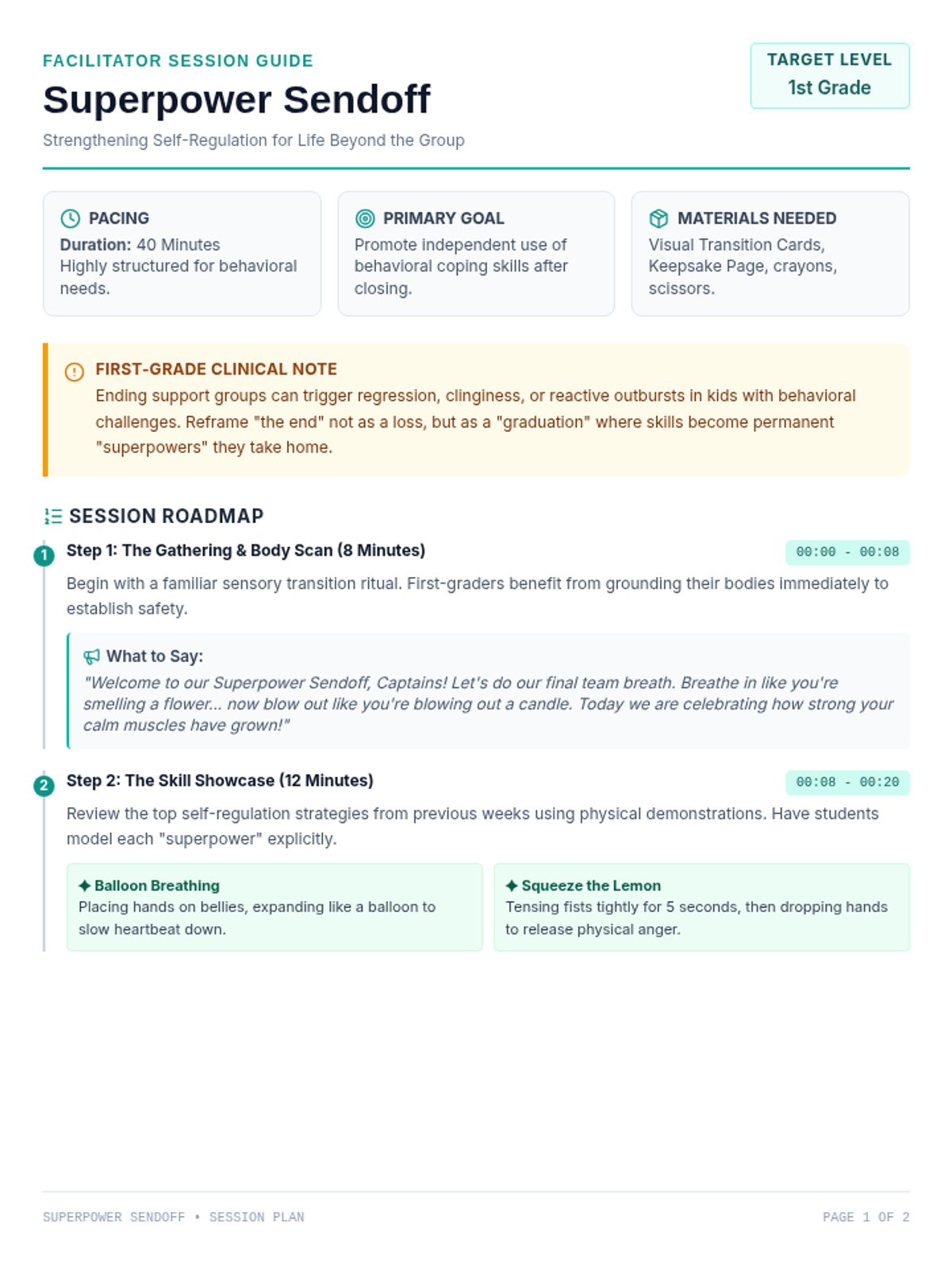
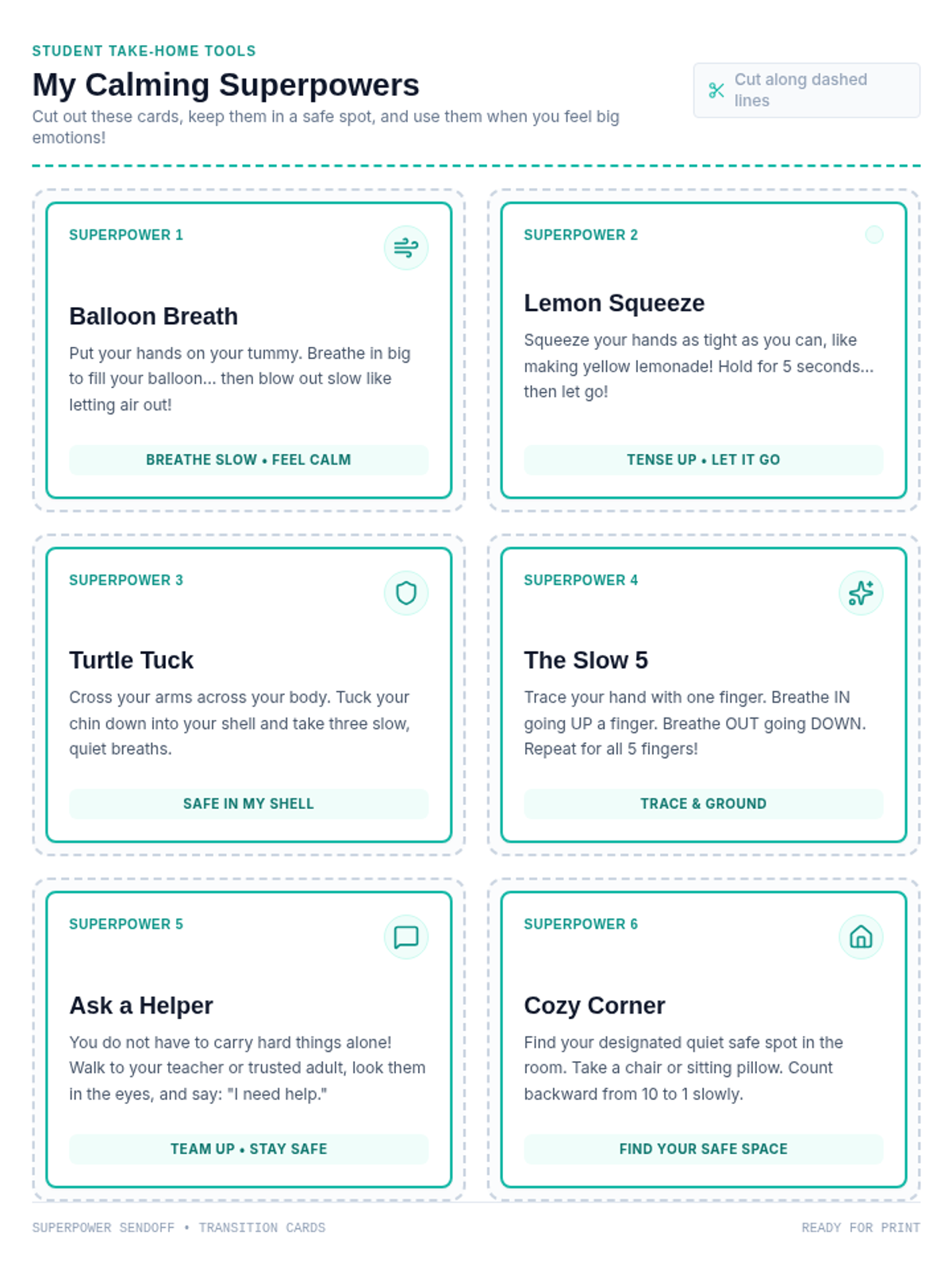
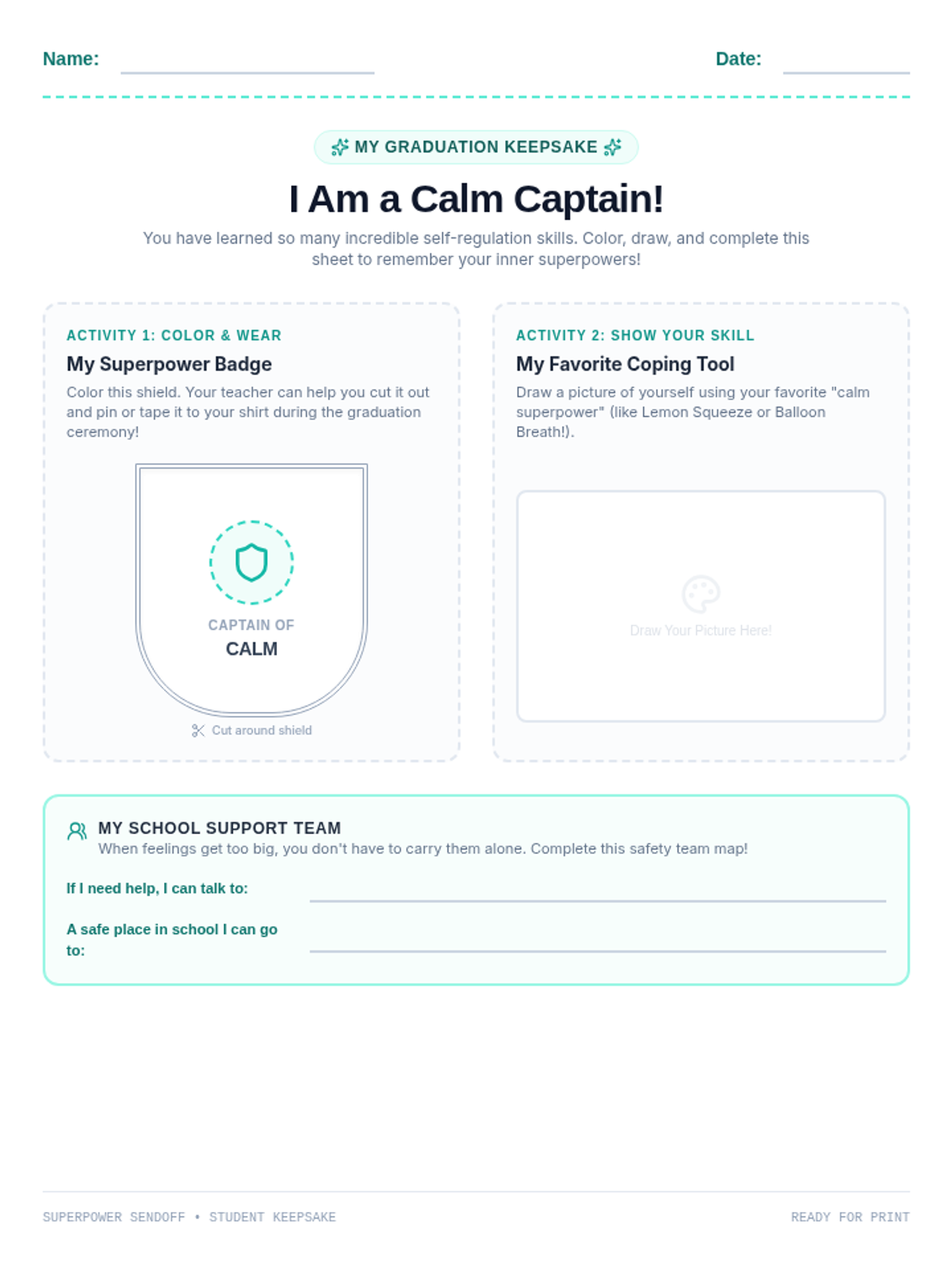
A structured, calming close-out session for first-grade students with behavioral concerns. The lesson focuses on celebrating progress, reinforcing independent self-regulation "superpowers," and preparing for the transition after sessions end with supportive, visual resources.
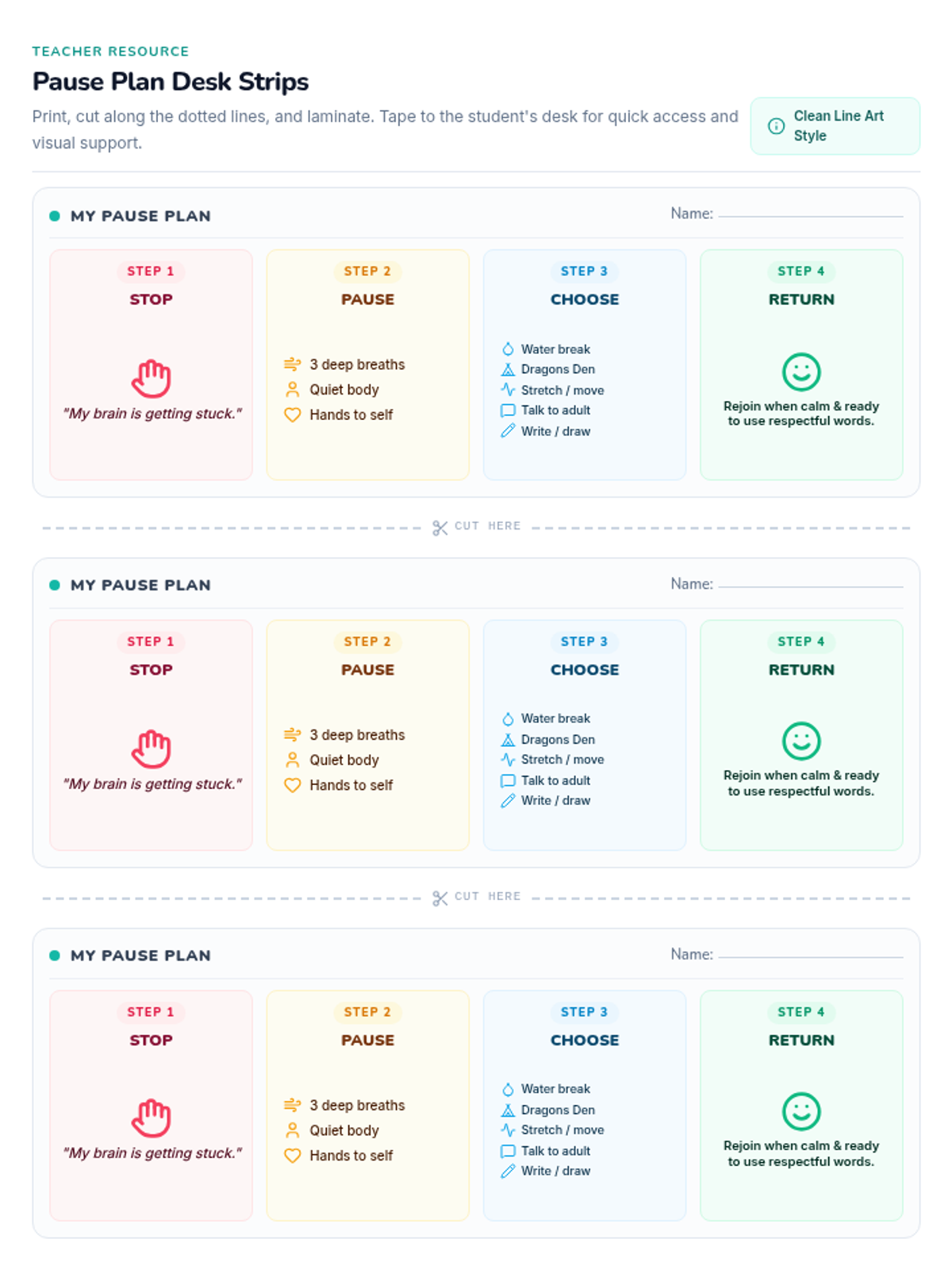
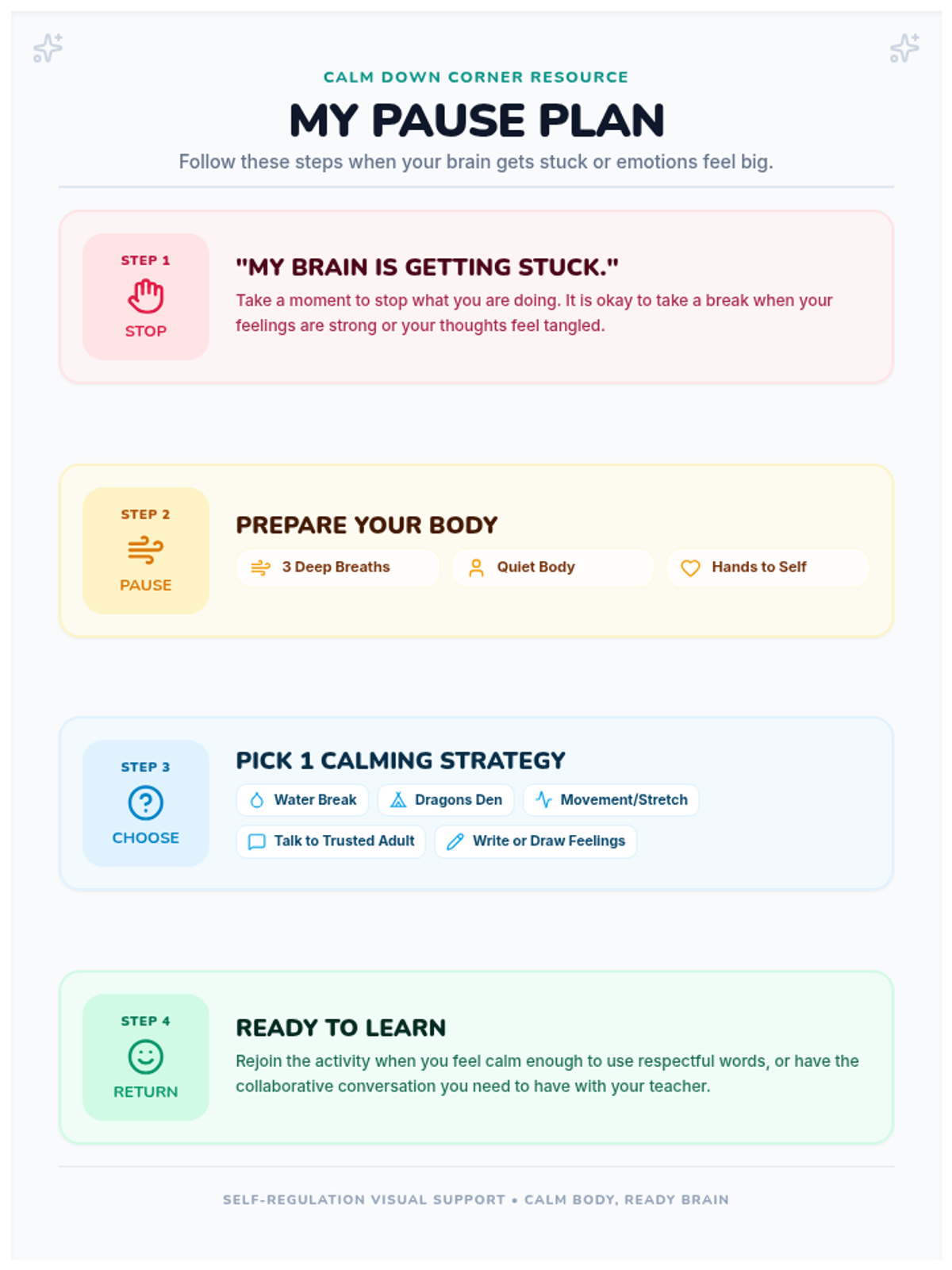
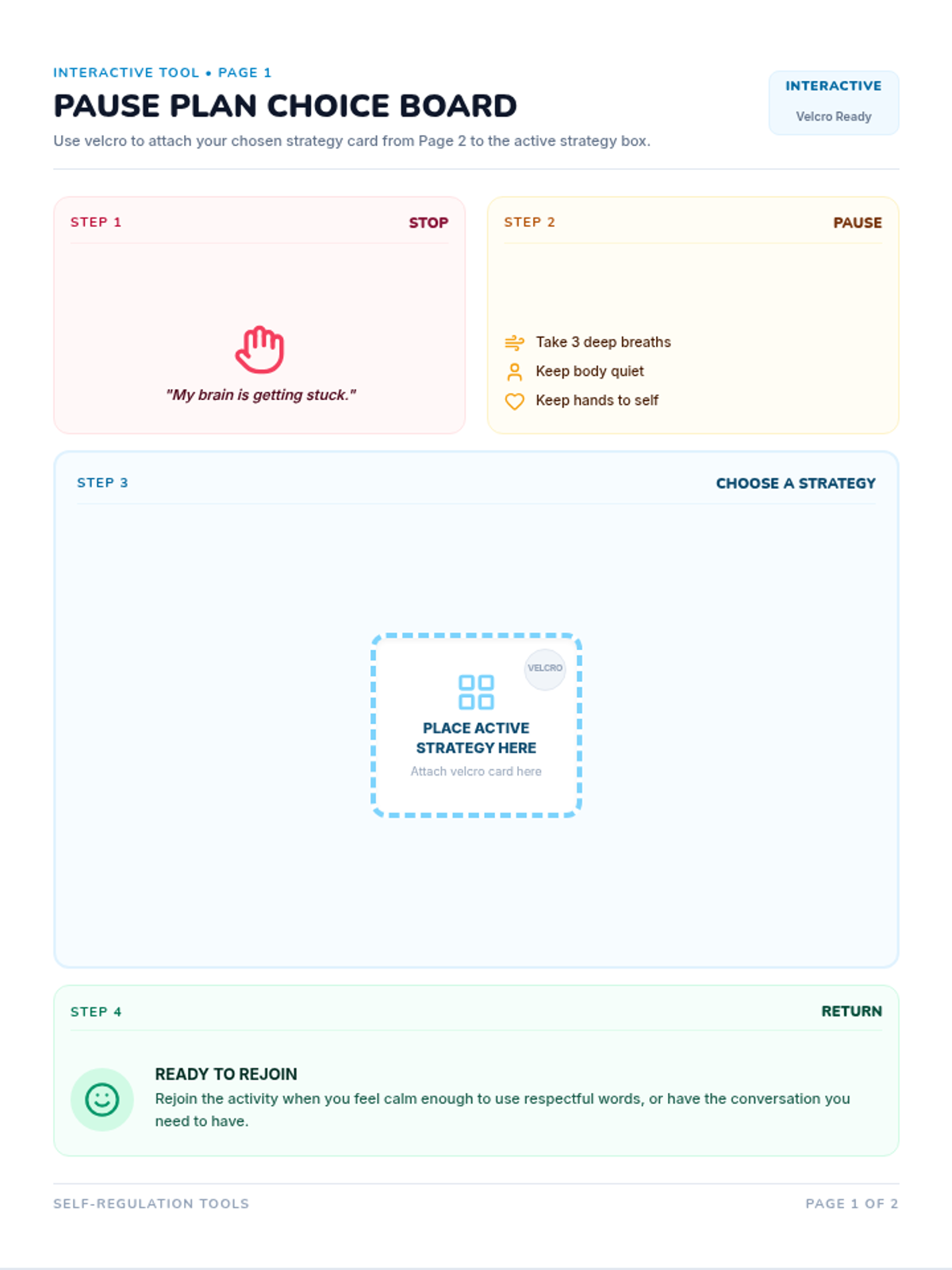
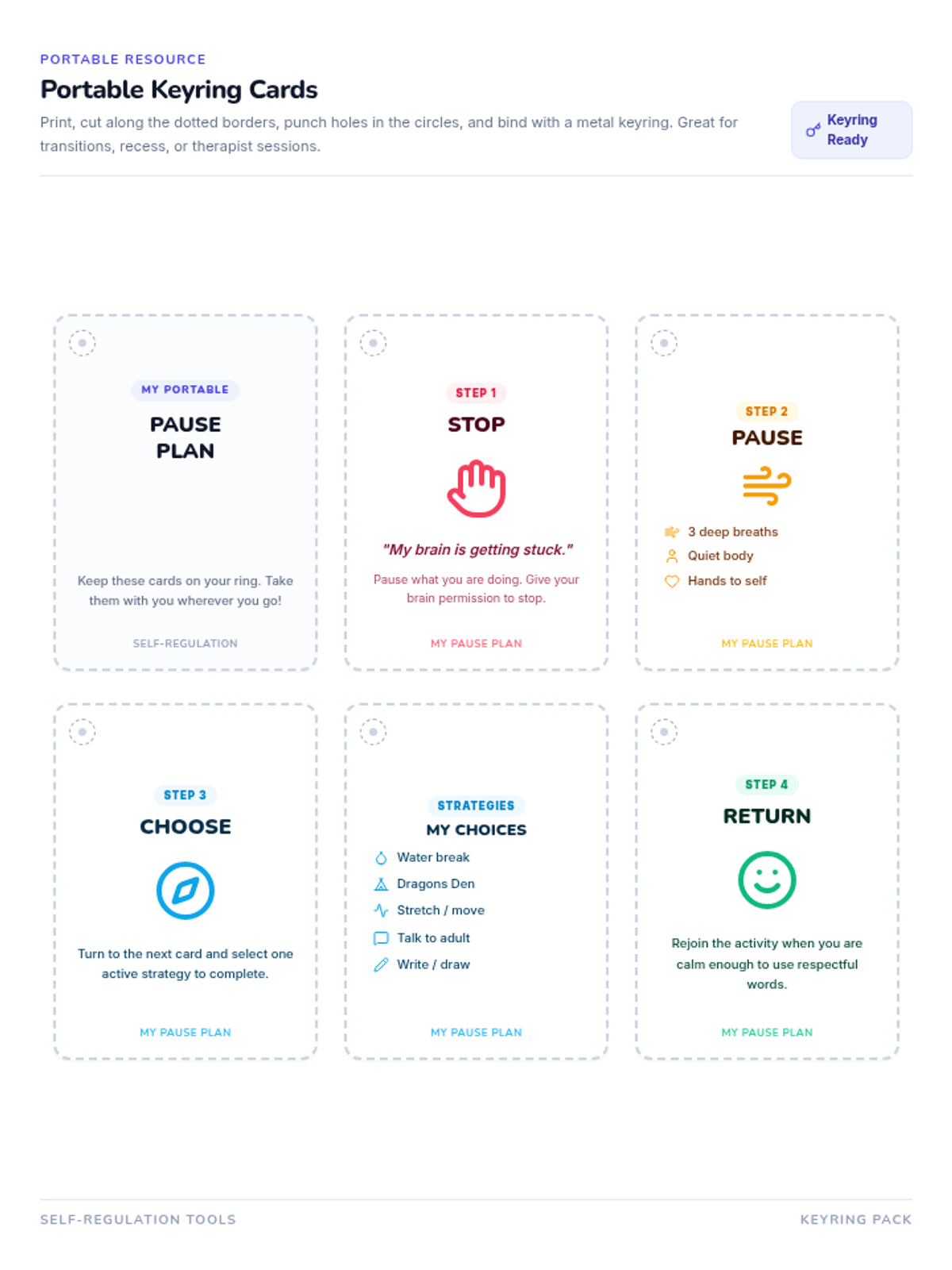
A collection of visual support tools and plans designed to help students self-regulate, manage big emotions, and transition back to learning.
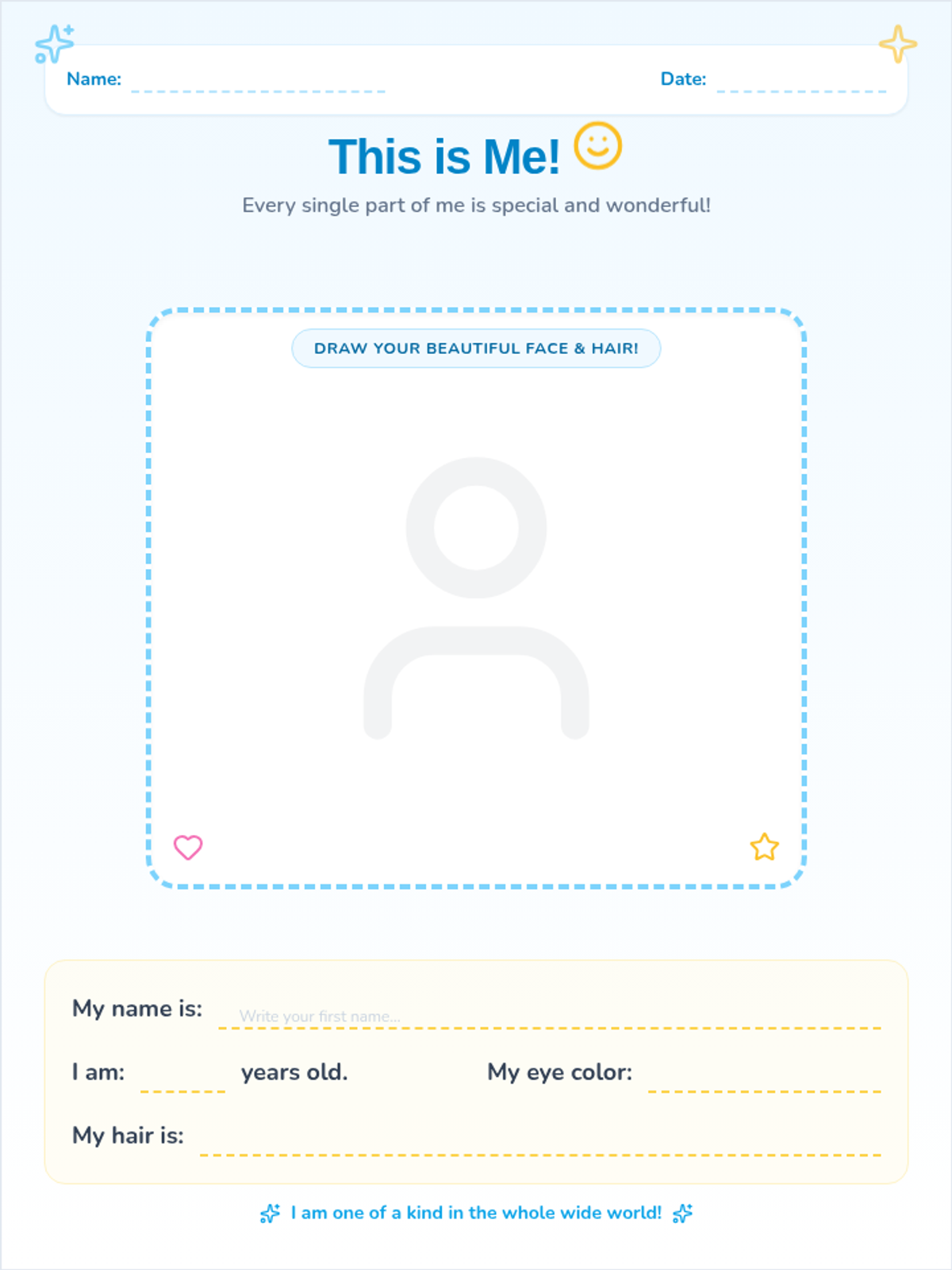
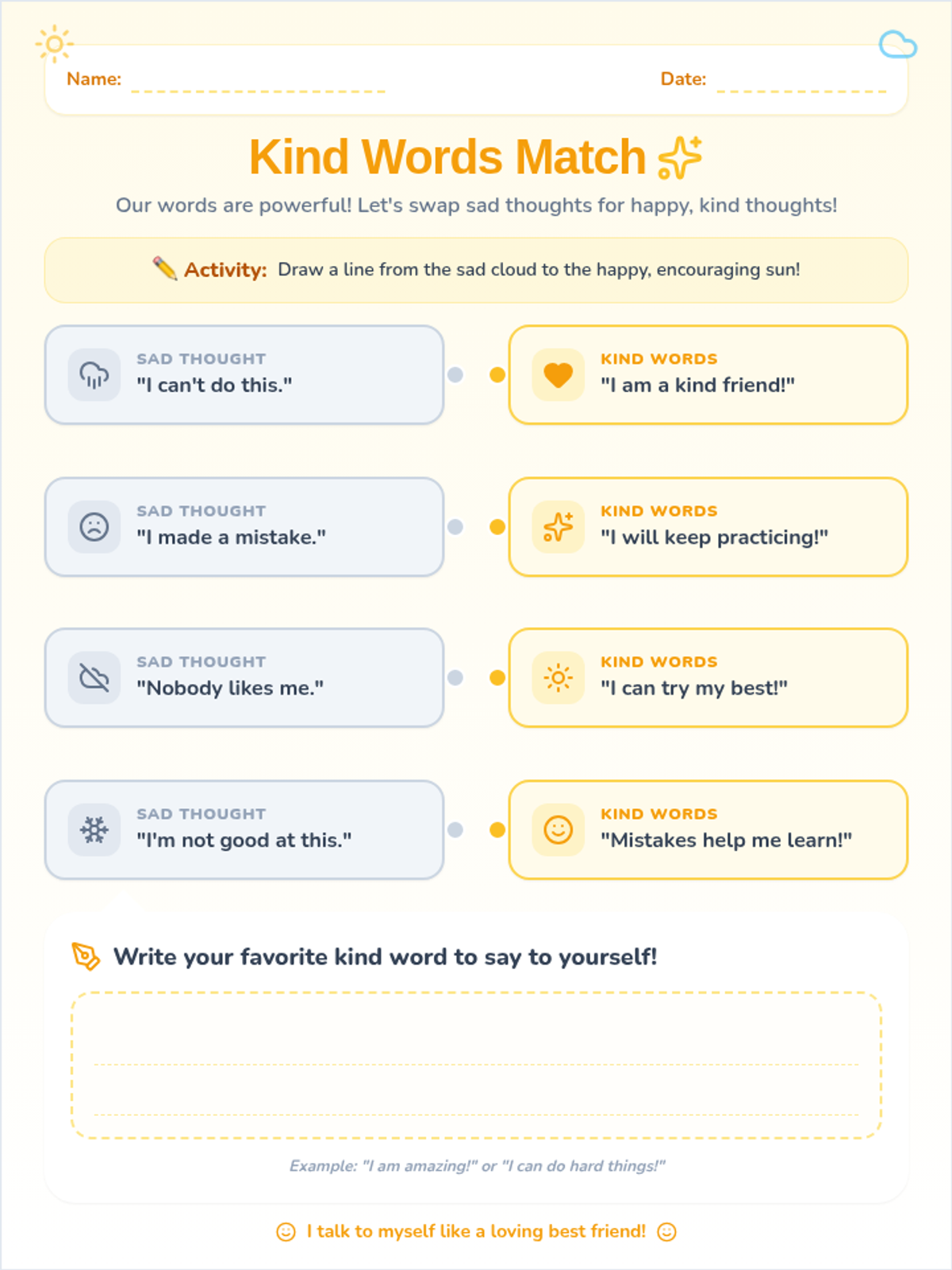
A comprehensive self-esteem and positive self-talk activity pack designed for first graders. Through interactive drawing, matching, and tracing worksheets, students explore self-portraits, celebrate their unique strengths, practice positive self-talk, and embrace a growth mindset.
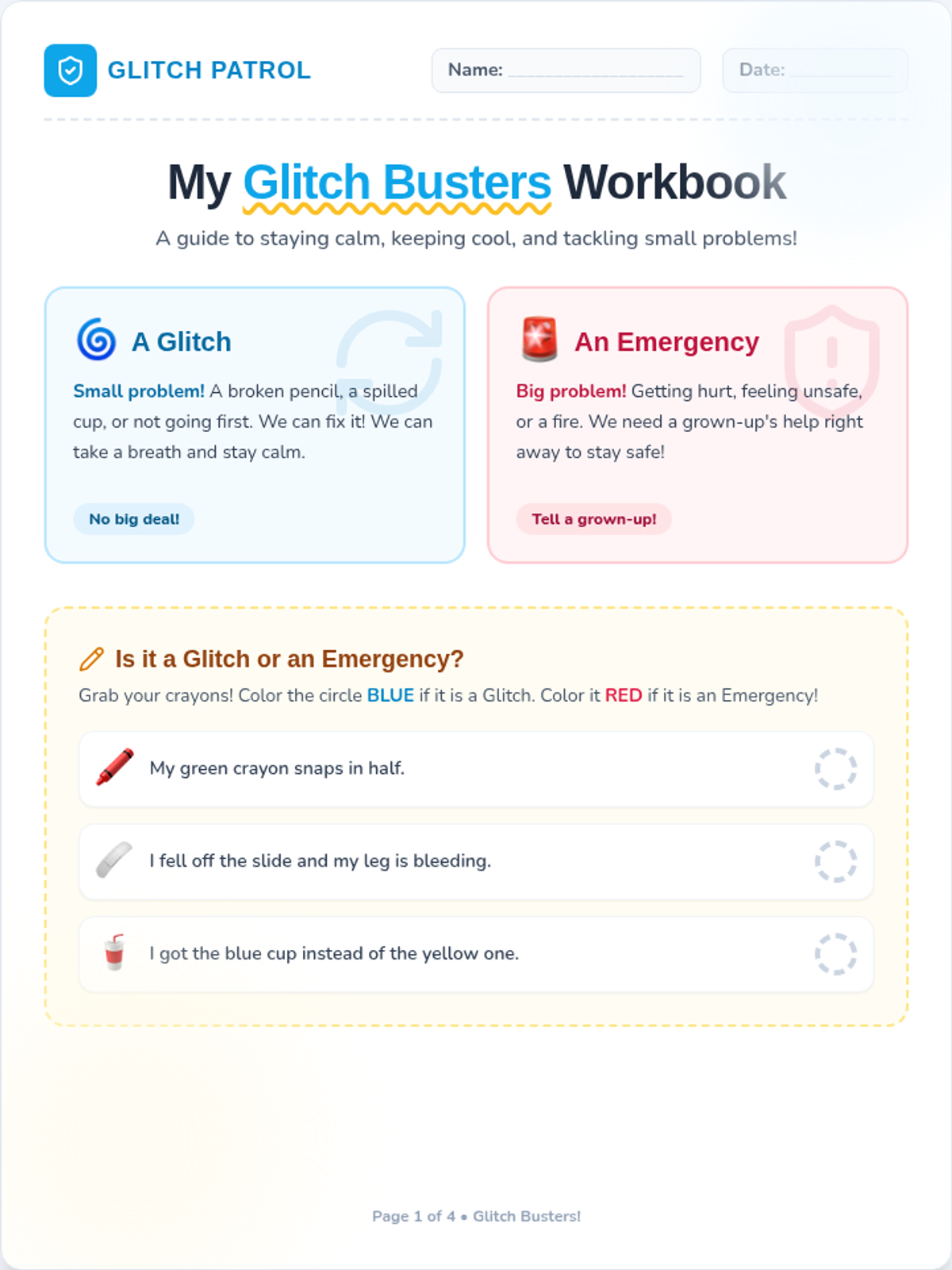
A Kindergarten-level lesson designed to help young students manage big emotions by teaching them the 'Size of the Problem' (Glitches vs. Emergencies), physical calming strategies, and basic emotional self-advocacy using I-statements.