Students practice giving and following single-step verbal instructions in a blind building challenge. This lesson emphasizes the need for isolated commands to ensure the 'Builder' can accurately process and execute tasks without visual feedback.

Establishing a weekly planning routine and reflecting on personal executive function tools for long-term success.
Developing time estimation skills and learning how to break large projects into manageable chunks.
Transitioning to digital organization using Google Calendar, reminders, and managing digital clutter.
Mastering physical organization systems including binders, lockers, and study spaces using color-coding strategies.
Learning how to create actionable checklists and prioritize tasks effectively using the 'Brain Dump' method.
Introduction to the concept of executive function as the 'brain's boss' and the importance of planning for middle school success.
Students establish a recurring weekly routine to review their systems, celebrate wins, and prep for the week ahead.
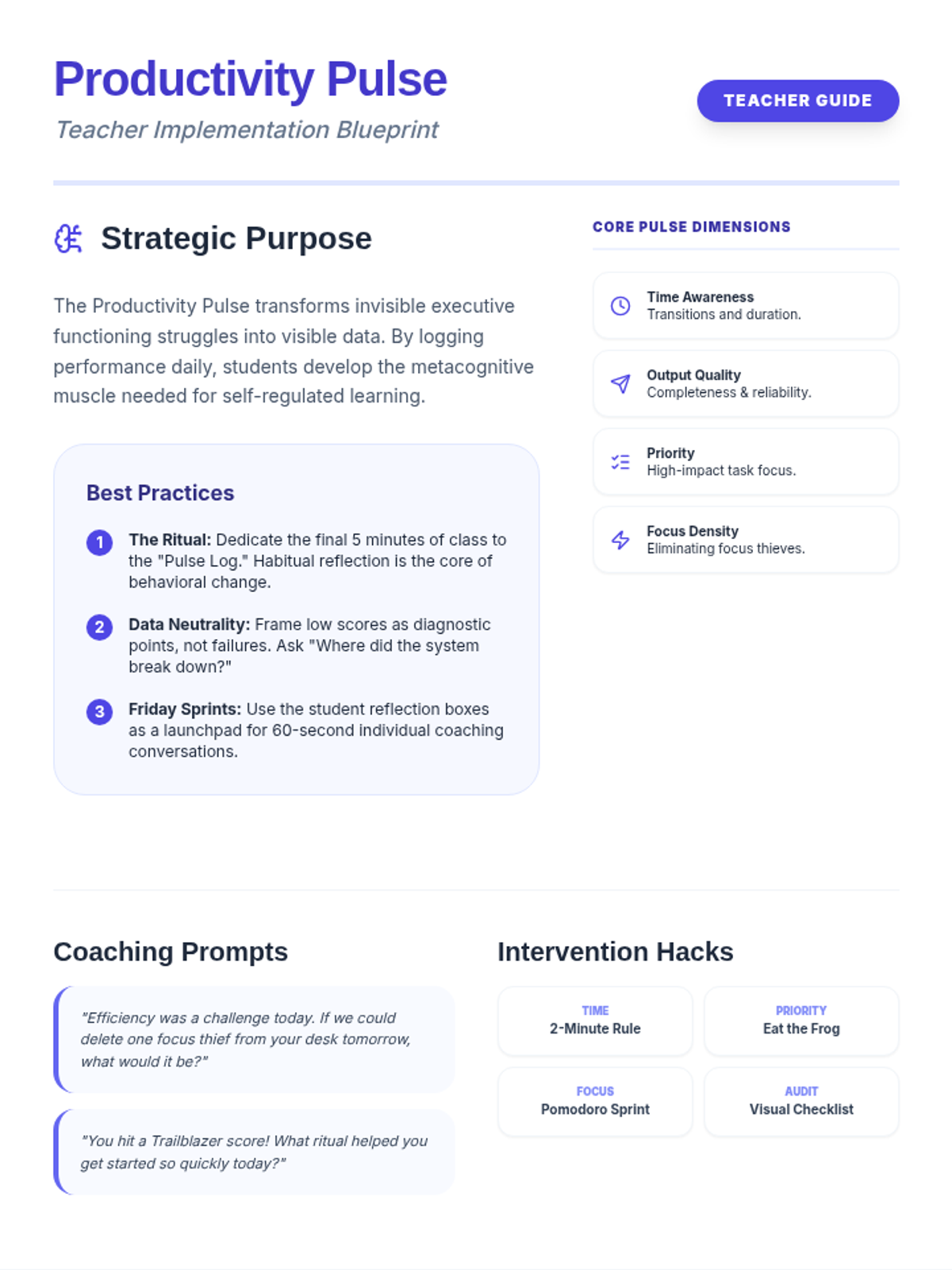
Students identify "focus thieve" and learn the Pomodoro technique for sustained task completion.
Students organize digital files and learn basic email management to prevent "digital overwhelm."
Students learn to categorize and clear physical clutter in lockers and backpacks to reduce transition stress.
Students learn how to integrate their tasks and project steps into a daily and weekly planner system.
Students develop the skill of 'time sensing' by estimating task duration and accounting for transitions and distractions.
Students practice the 'chunking' method to turn overwhelming projects into manageable, bite-sized steps.
Students learn to categorize tasks using a priority matrix to identify what needs immediate attention versus what can wait.
A comprehensive resource kit for the 'Neuro Command Academy' 10-week curriculum, including high-impact TPT product pages and standards-aligned guides.