Students analyze adult attachment styles through clinical vignettes, focusing on how these patterns manifest in interactional cycles and partner selection.
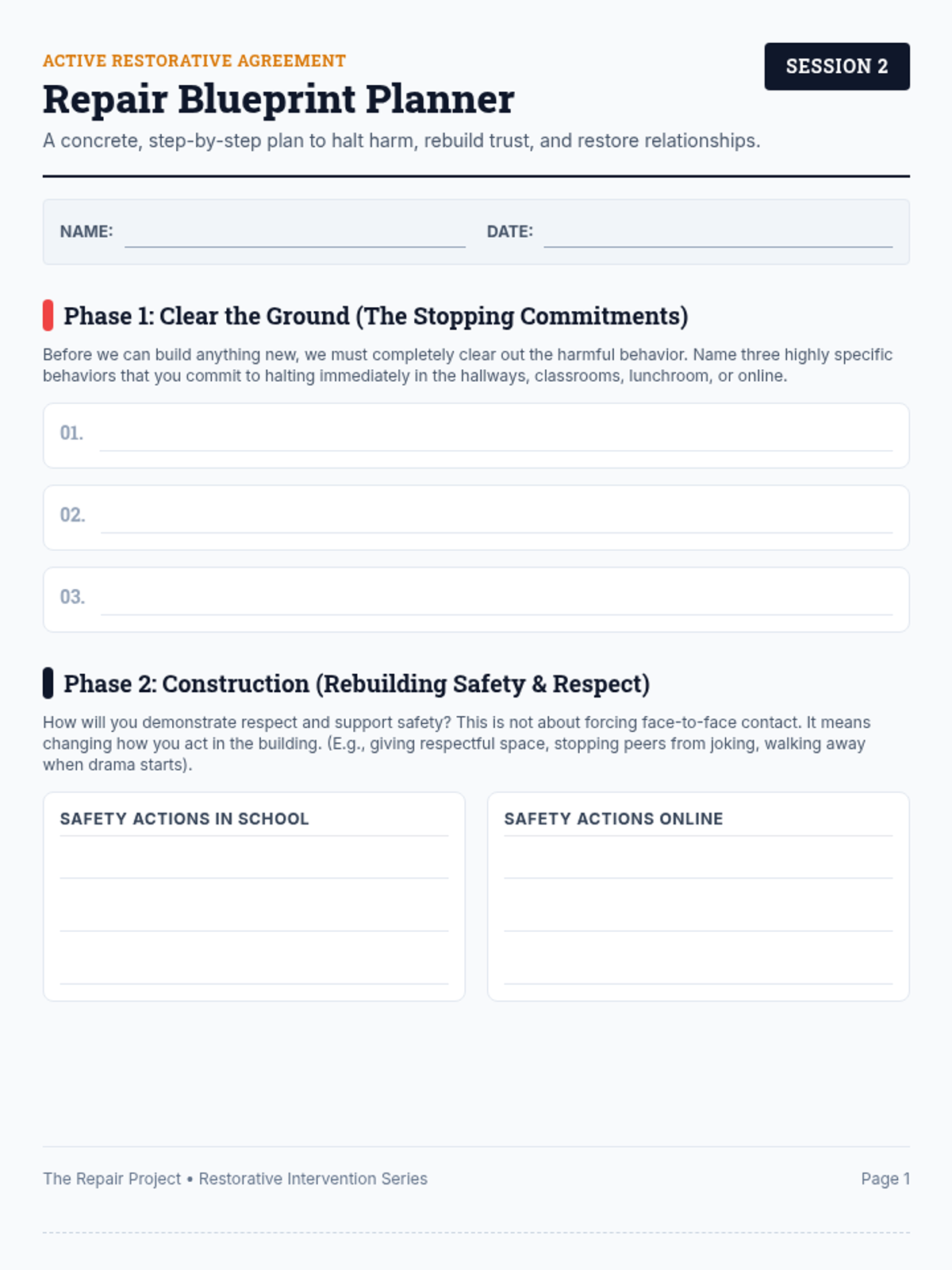
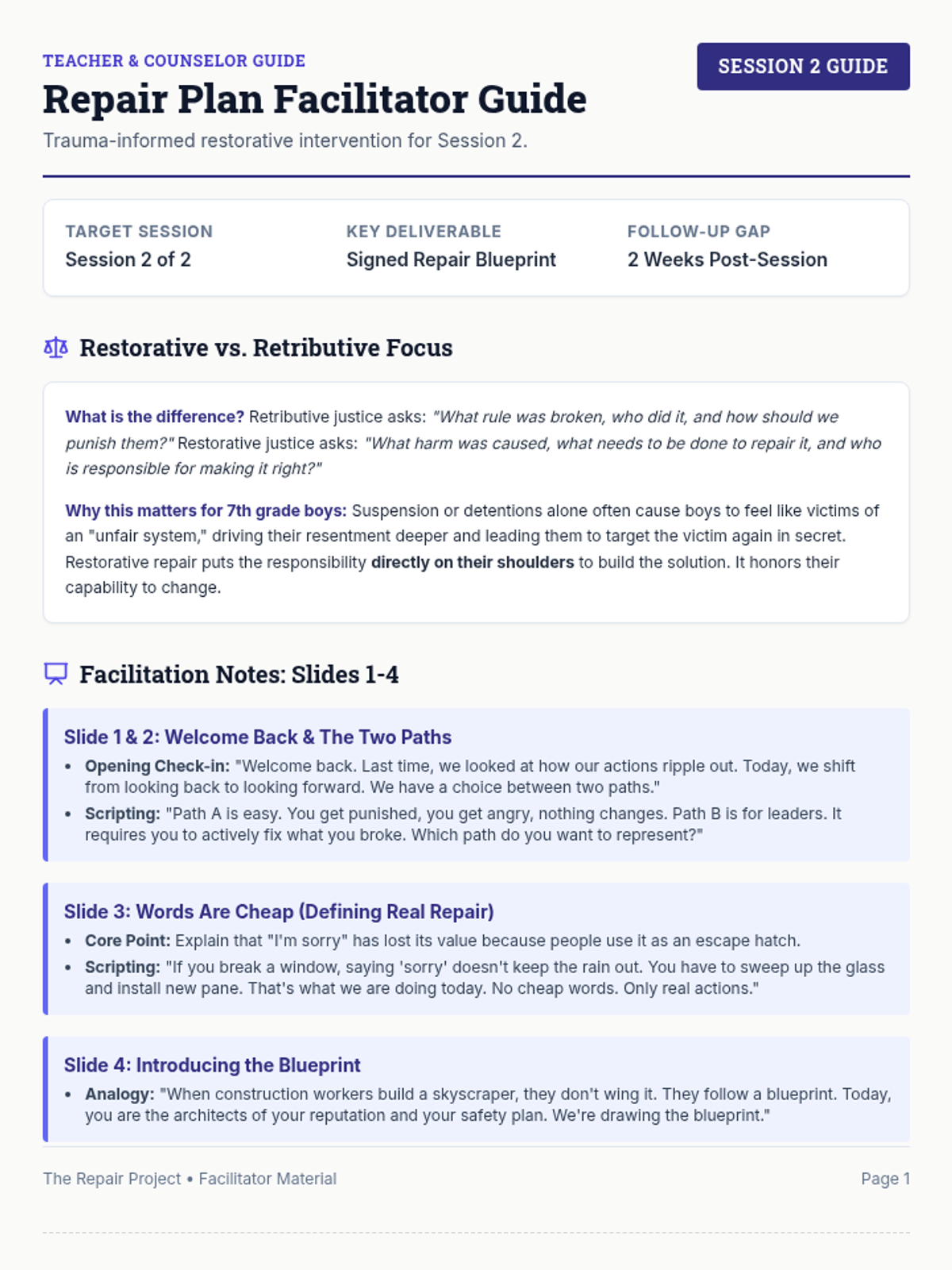
In this second session, students shift from analyzing impact to taking active accountability. They explore restorative justice and draft a concrete "Repair Blueprint" detailing specific actions to rebuild trust and repair the harm.
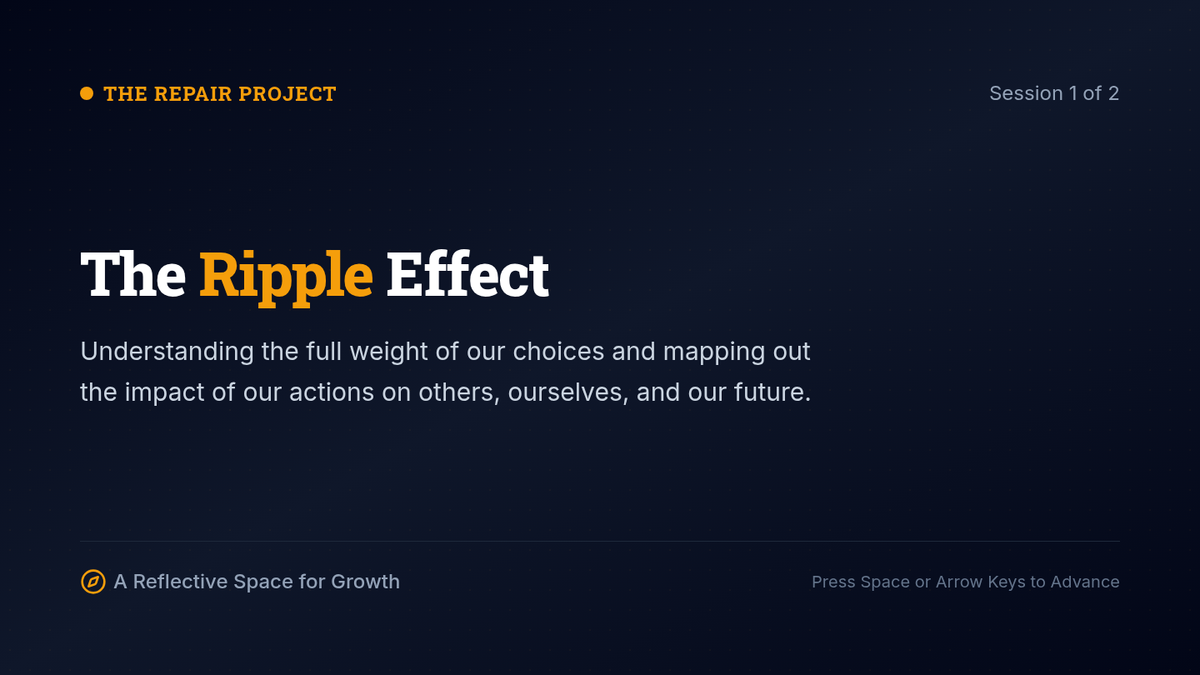
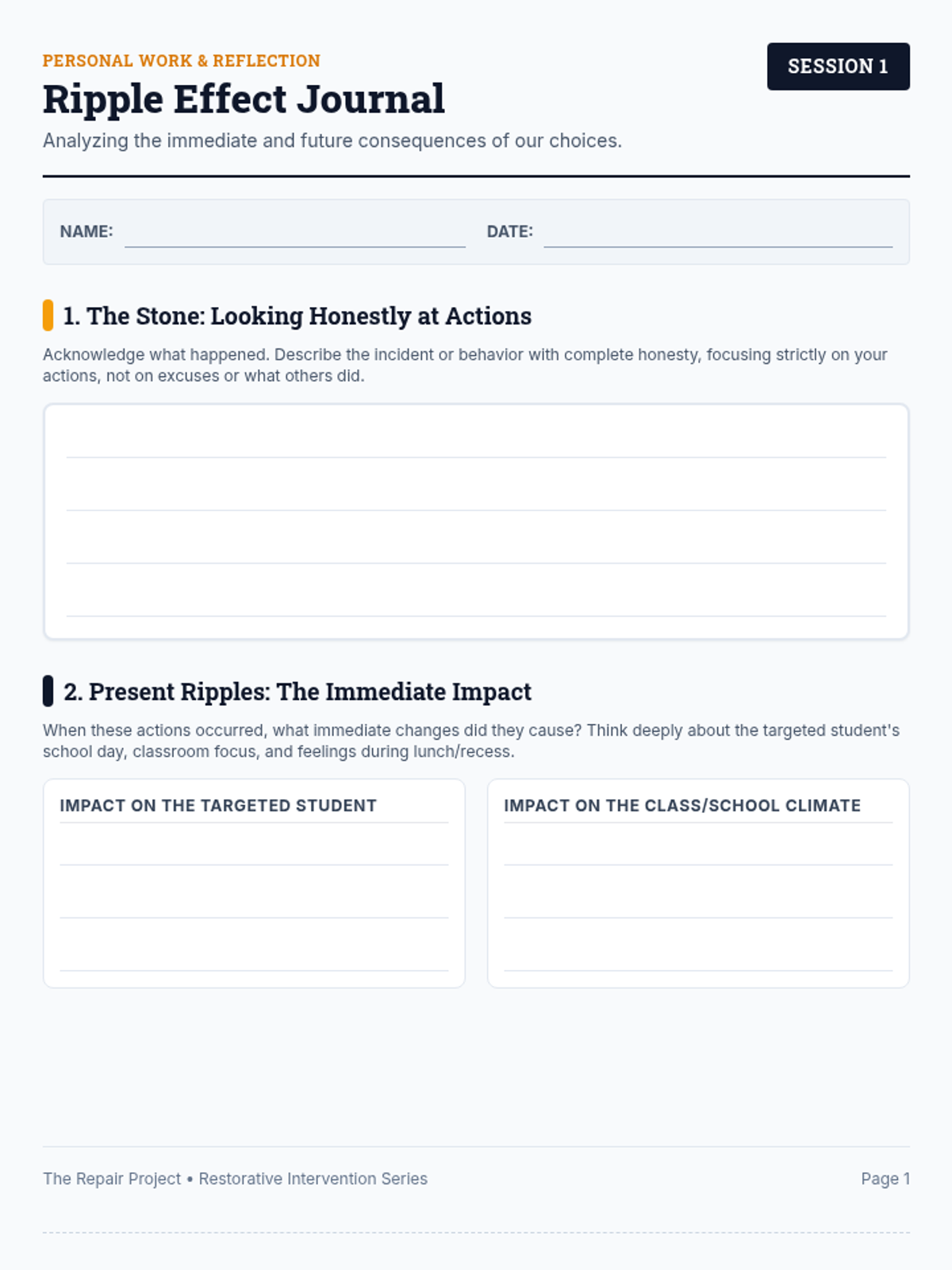
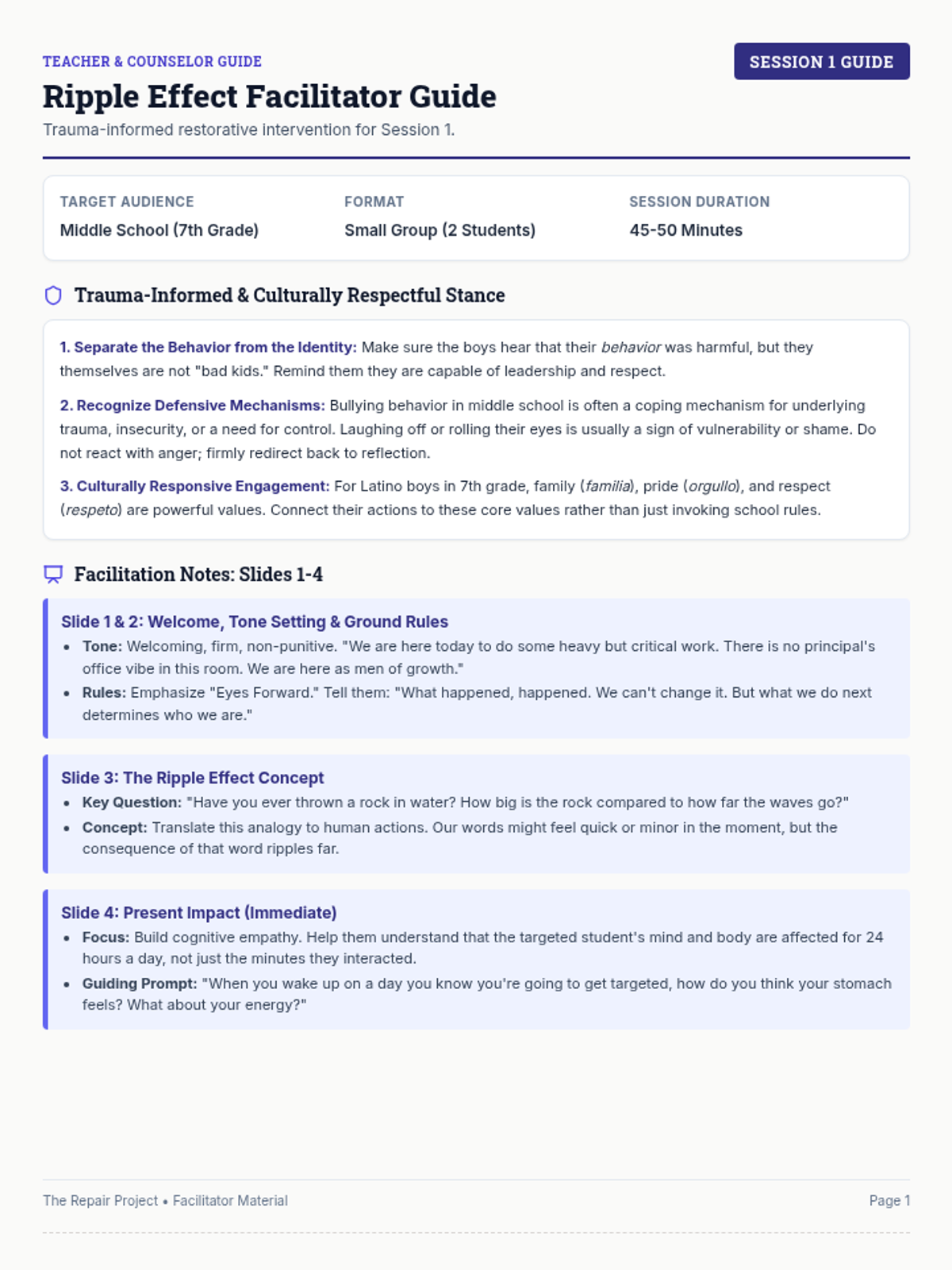
In this first session, students explore the concepts of cause and effect, analyzing how behavior ripples outward to affect the targeted student, their families, the school community, and themselves, both now and in the future.
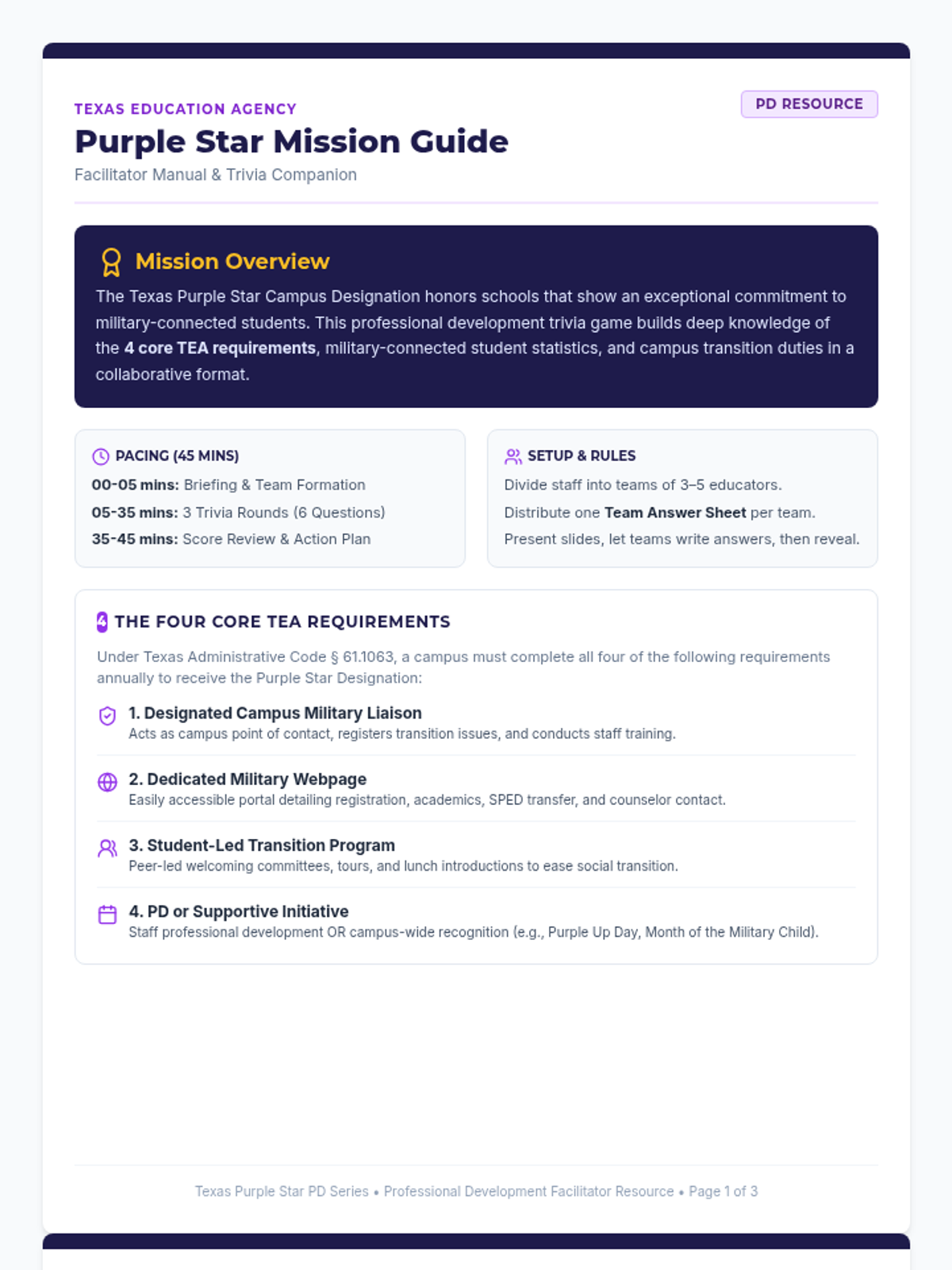
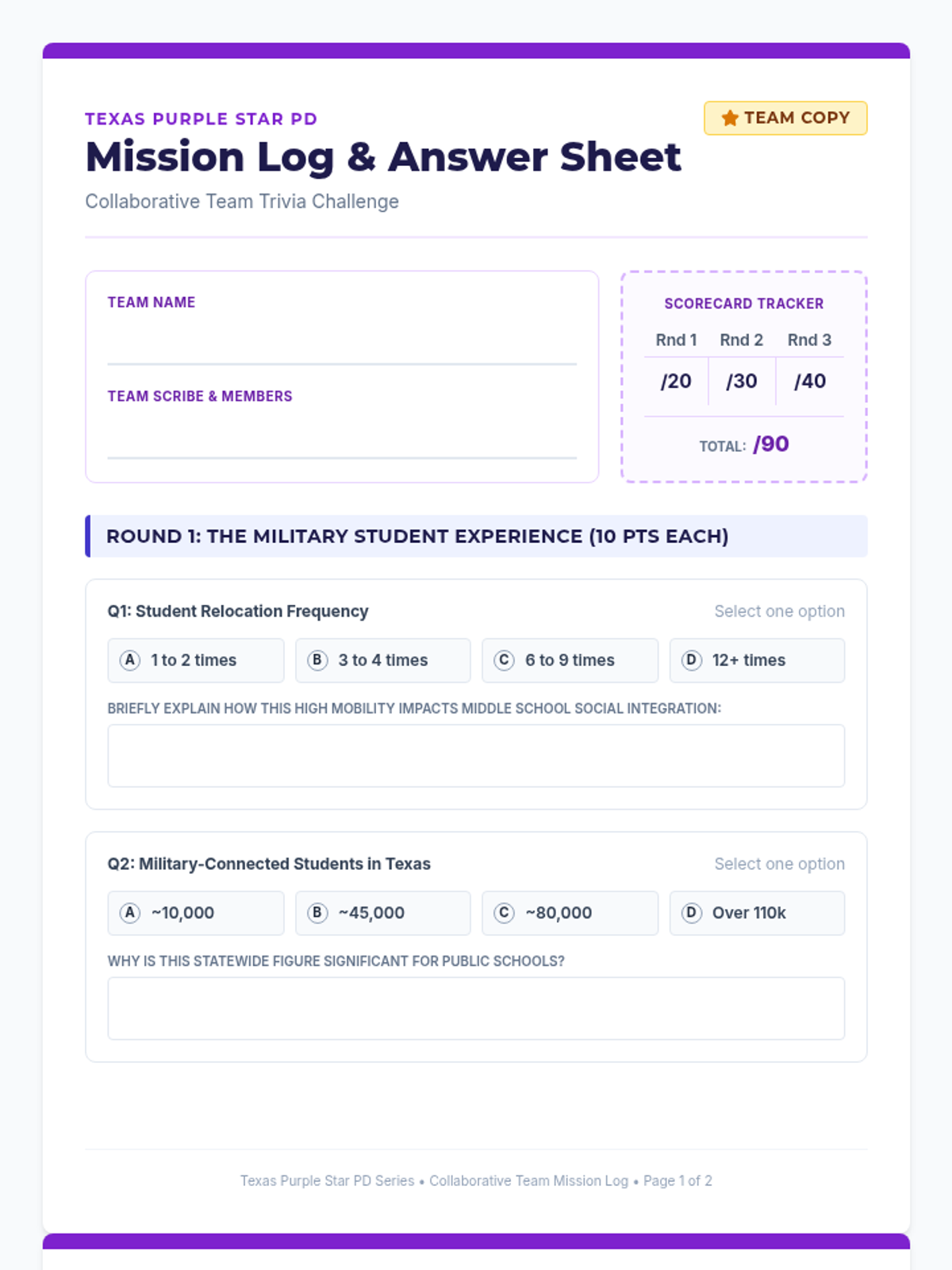
An interactive professional development lesson designed for Texas middle school educators to master the Texas Education Agency (TEA) Purple Star Designation requirements, student transition challenges, and military liaison duties through a competitive team trivia game.
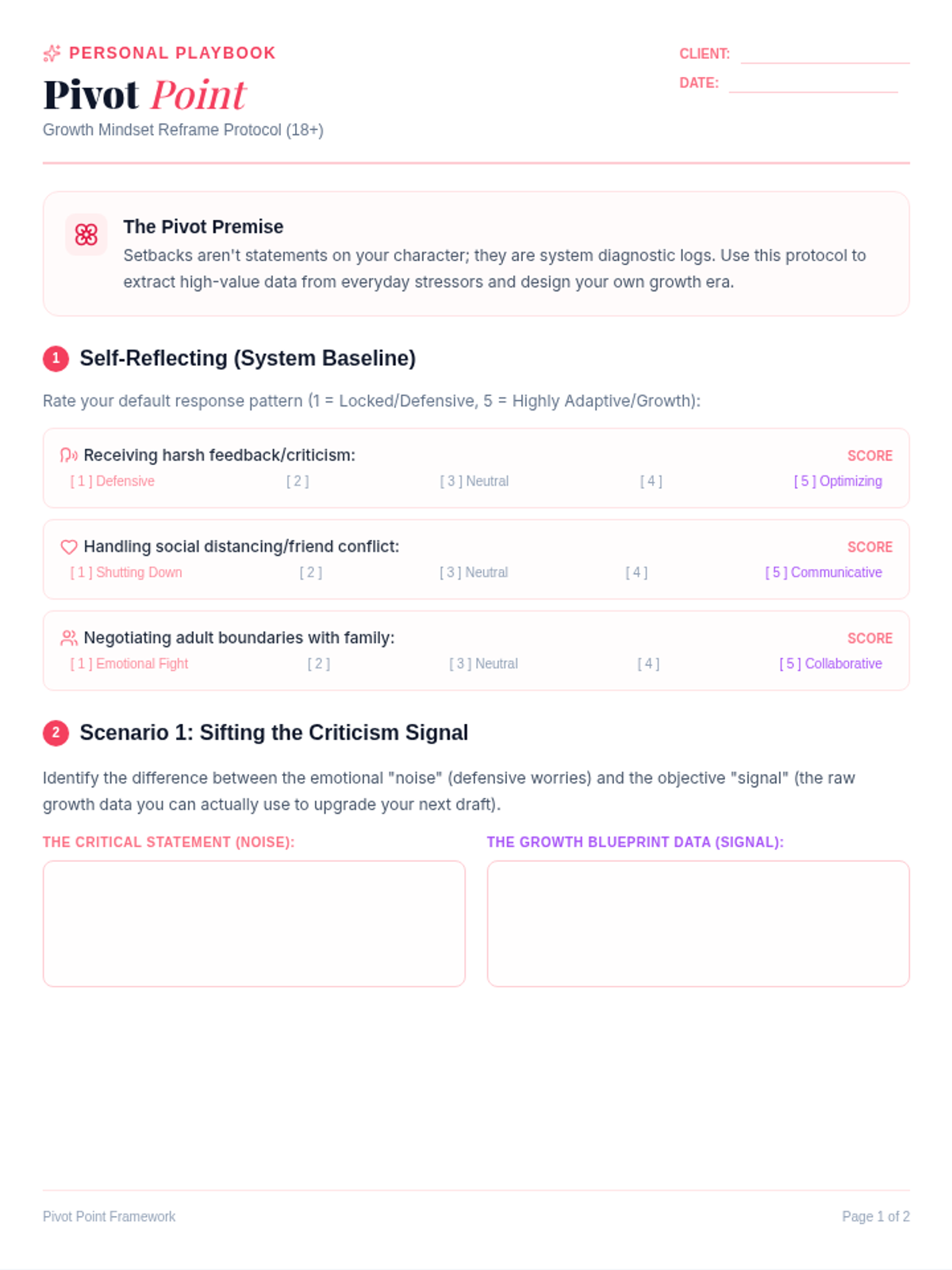
A growth-mindset coaching framework designed specifically for young adults (18+) navigating transition. Focuses on actionable cognitive reframing, emotional regulation, and interactive role-play scenarios covering work/academic feedback, roommate/friendship friction, and emerging adult family boundaries.
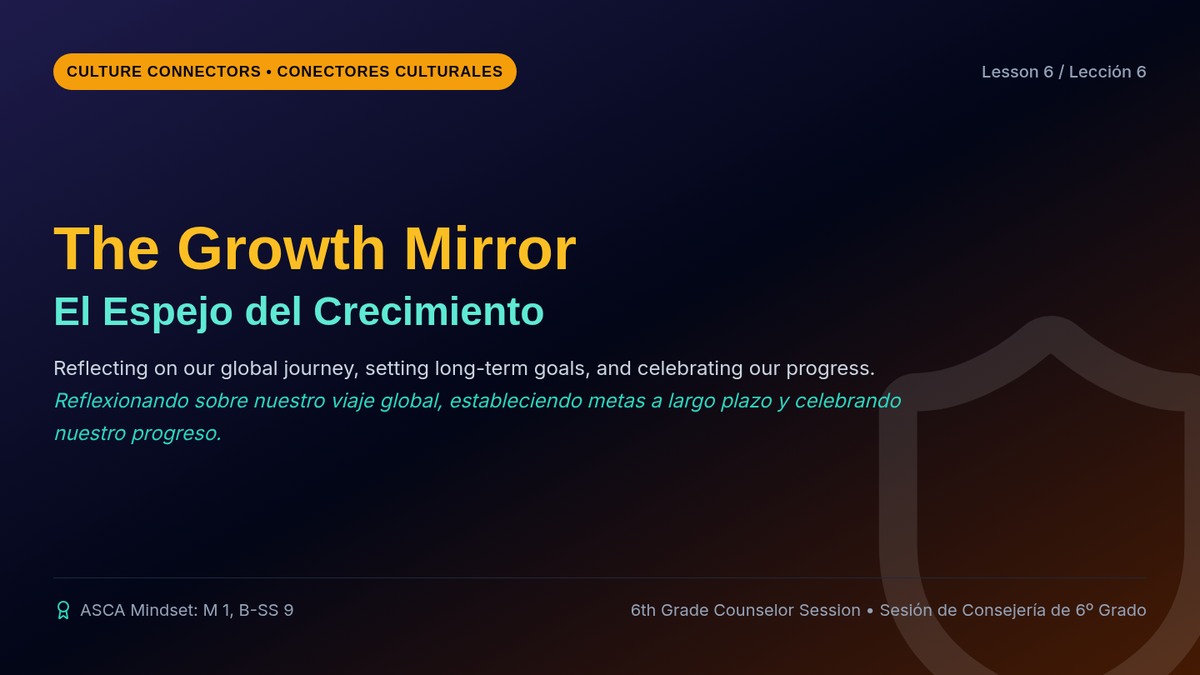
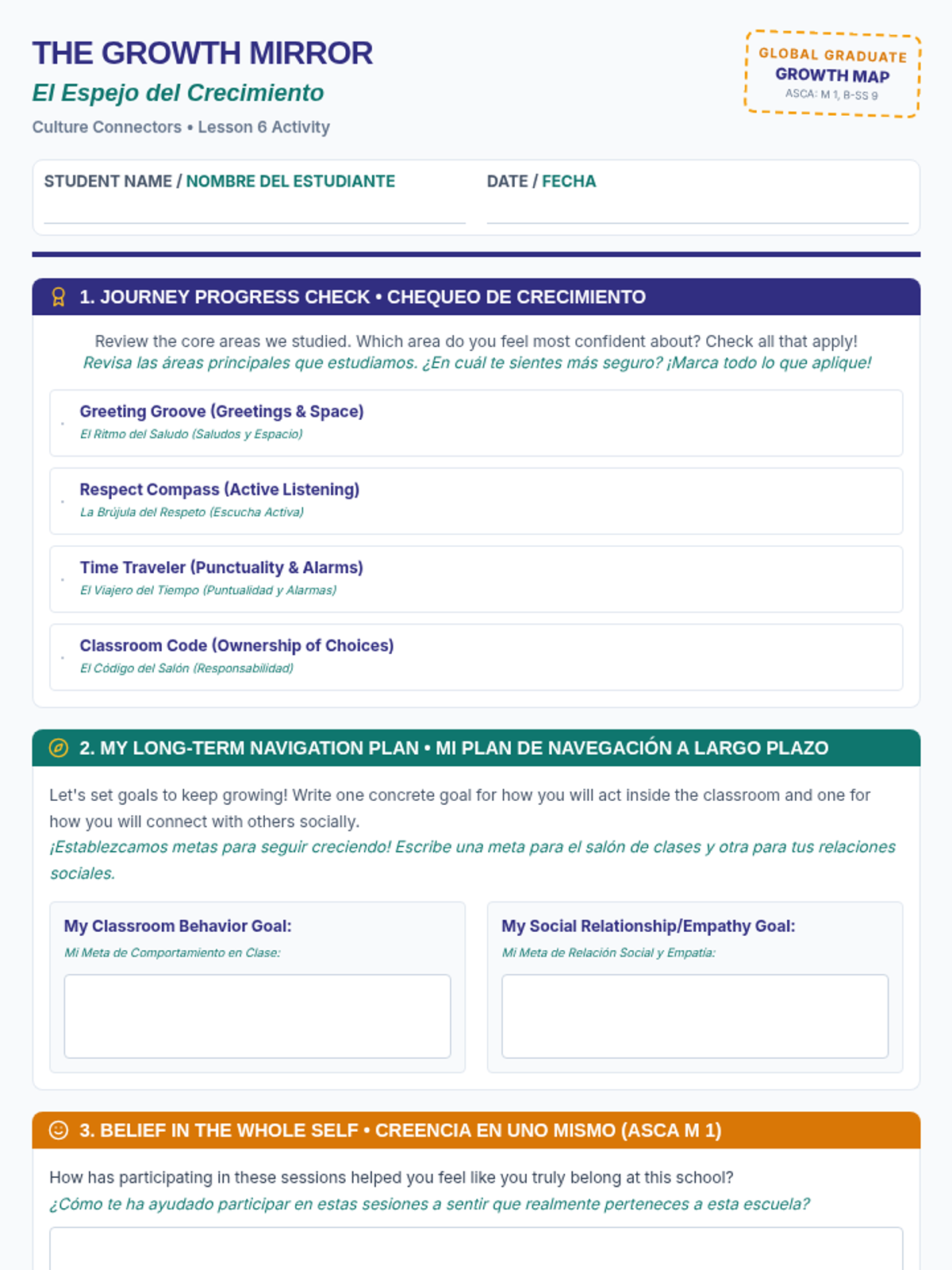
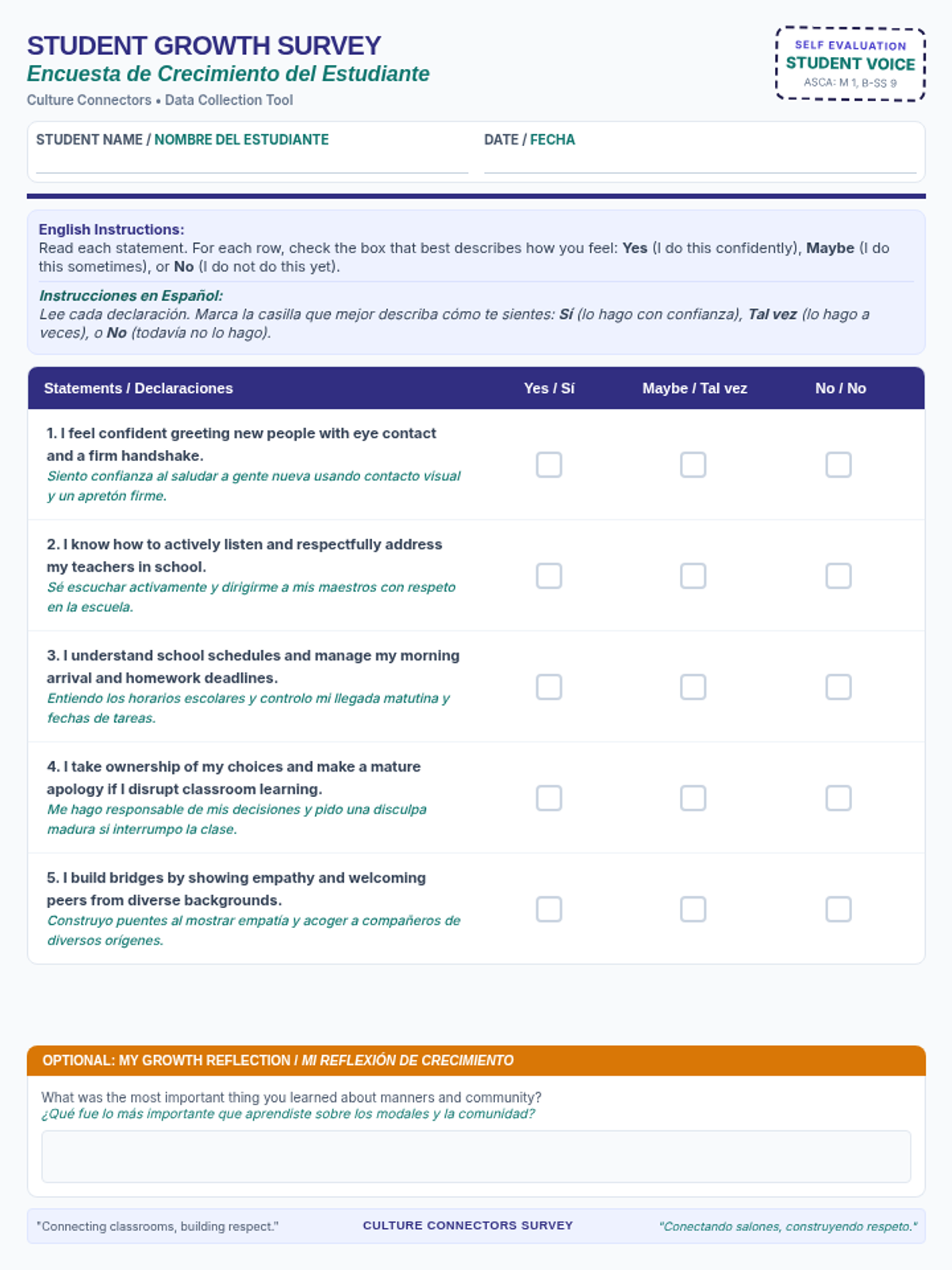
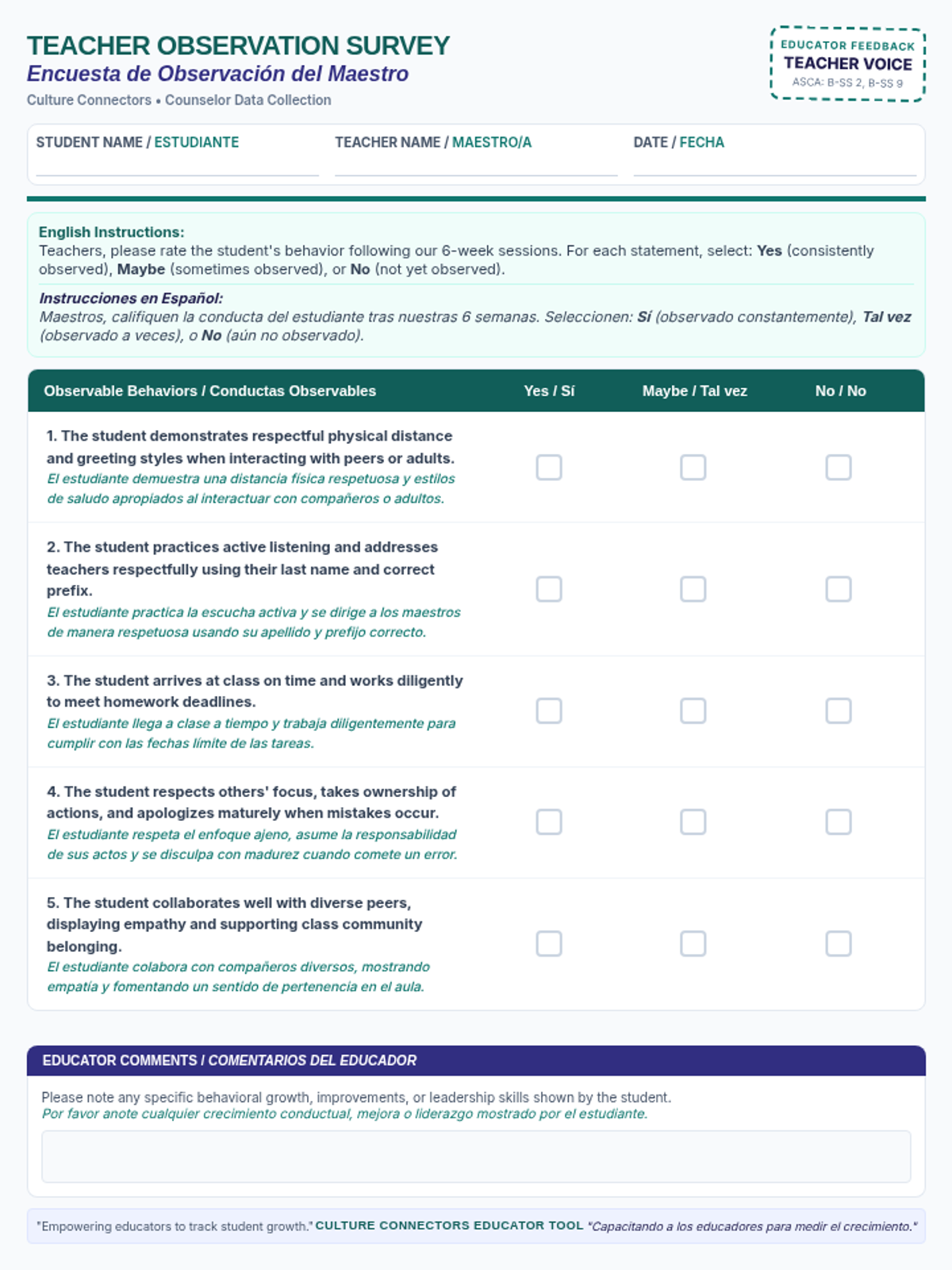
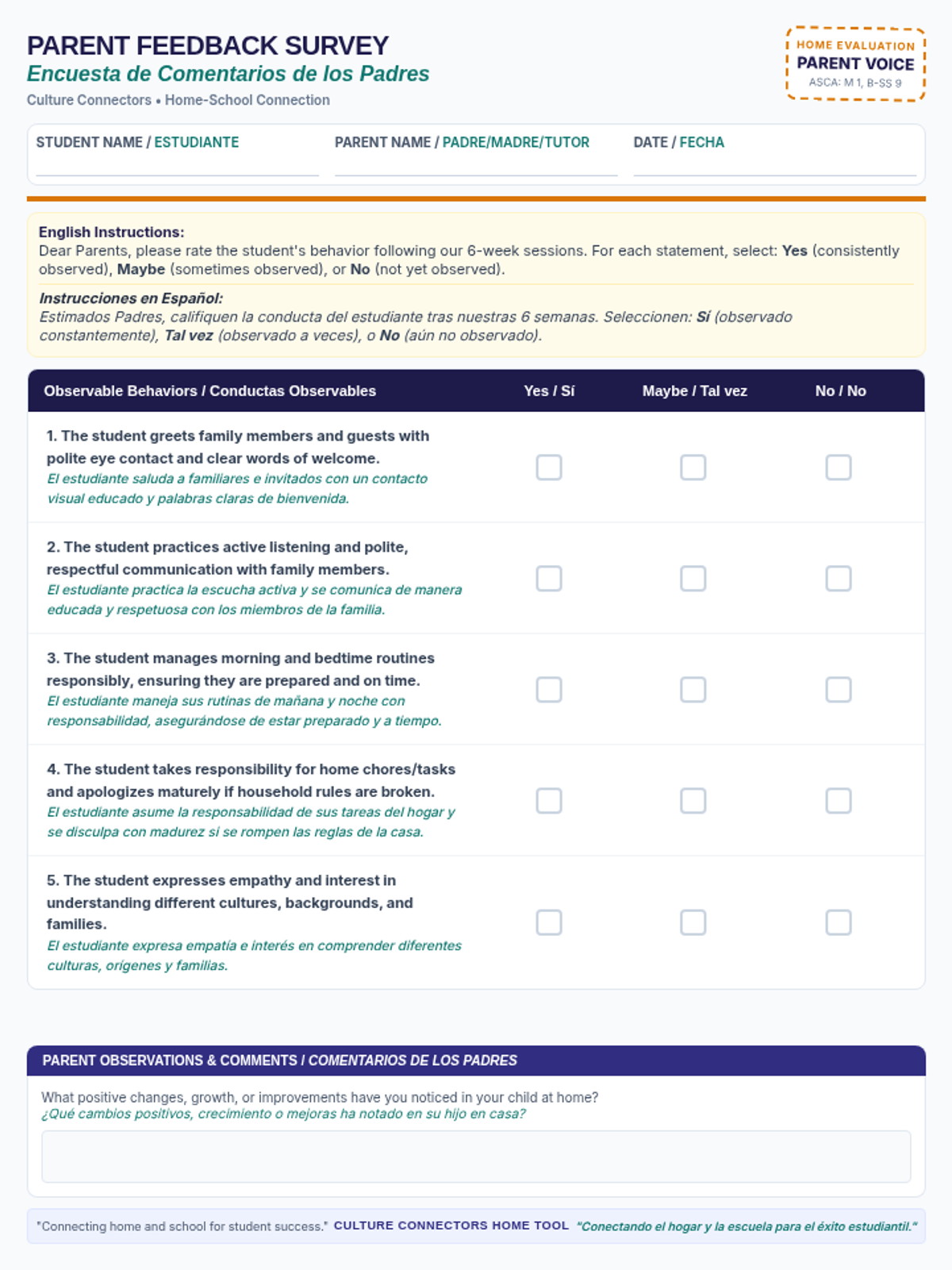
Encourages self-reflection and belief in the development of the whole self. Students reflect on their growth throughout the curriculum and complete personal goal-setting plans. Includes bilingual Likert scales for data collection.
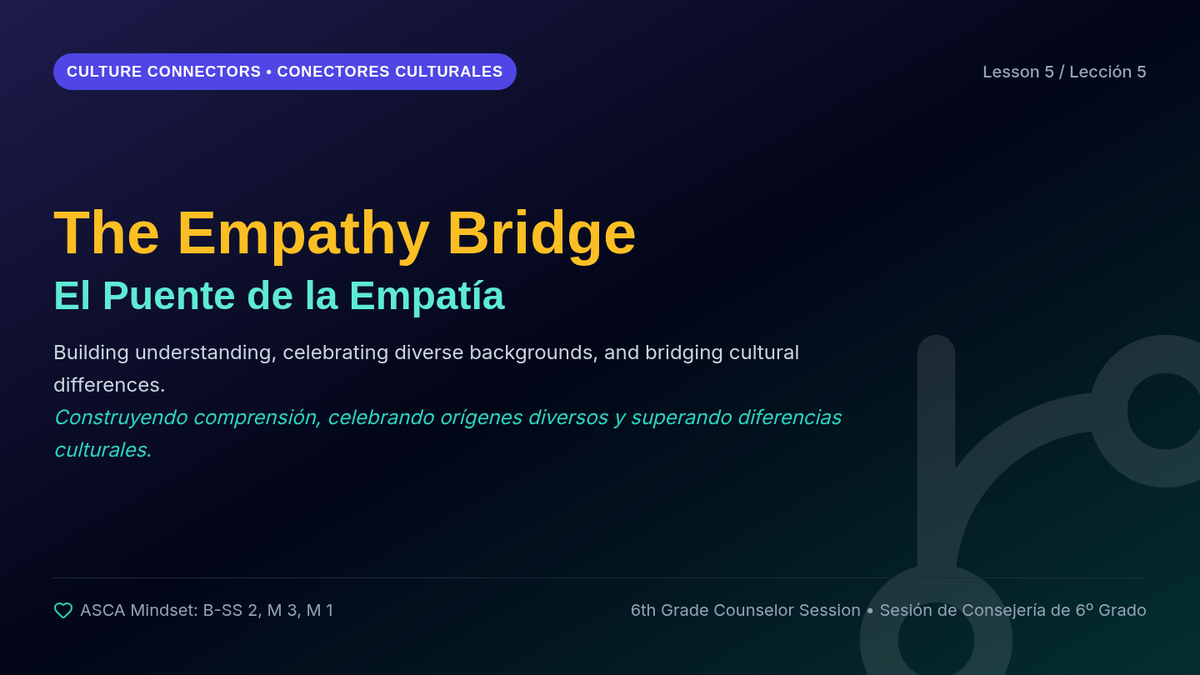
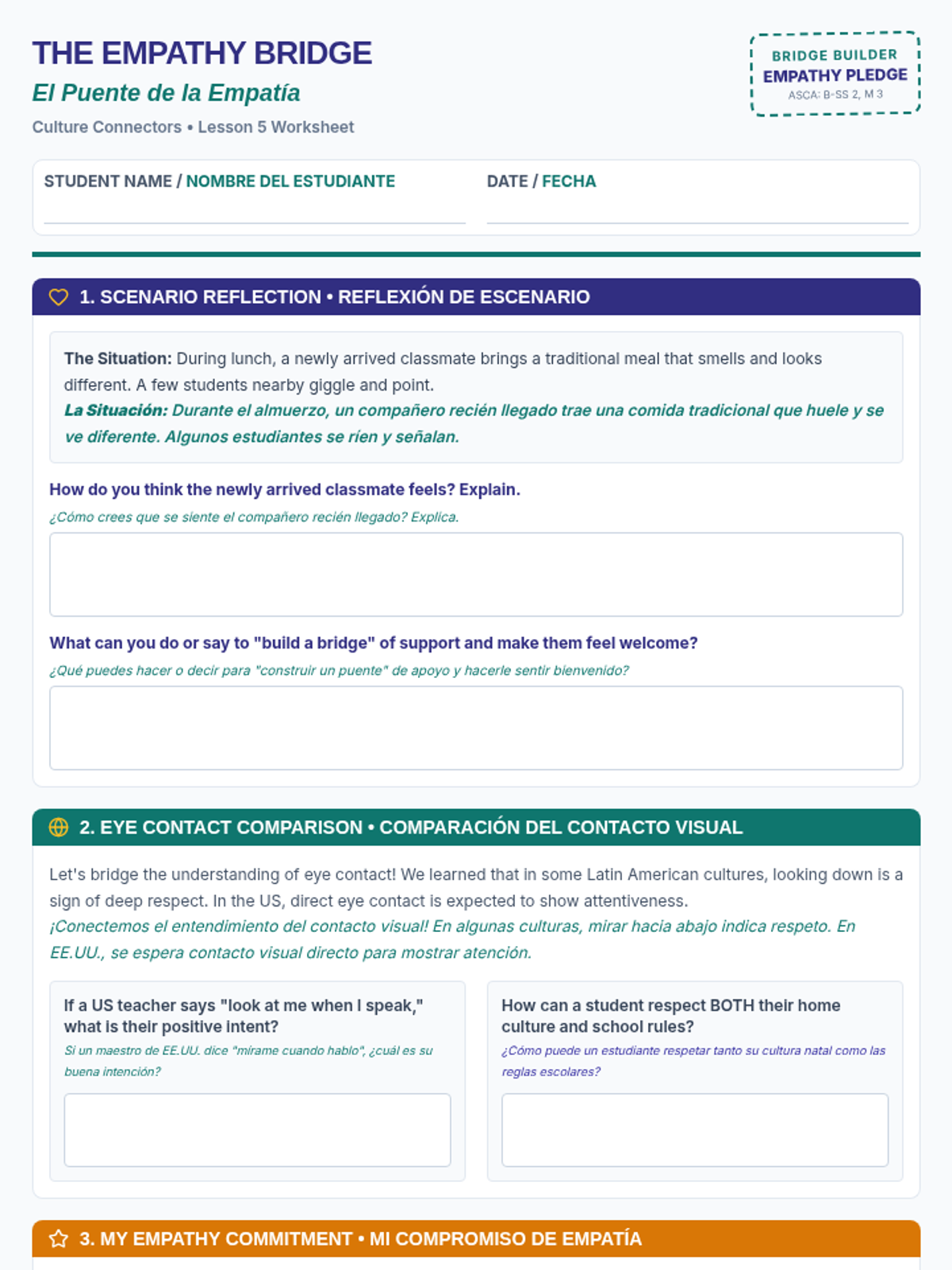
Explores perspective-taking, diversity, understanding cultural differences in expectations, and resolving social conflicts respectfully. Helps students find common ground while celebrating unique cultural identities.
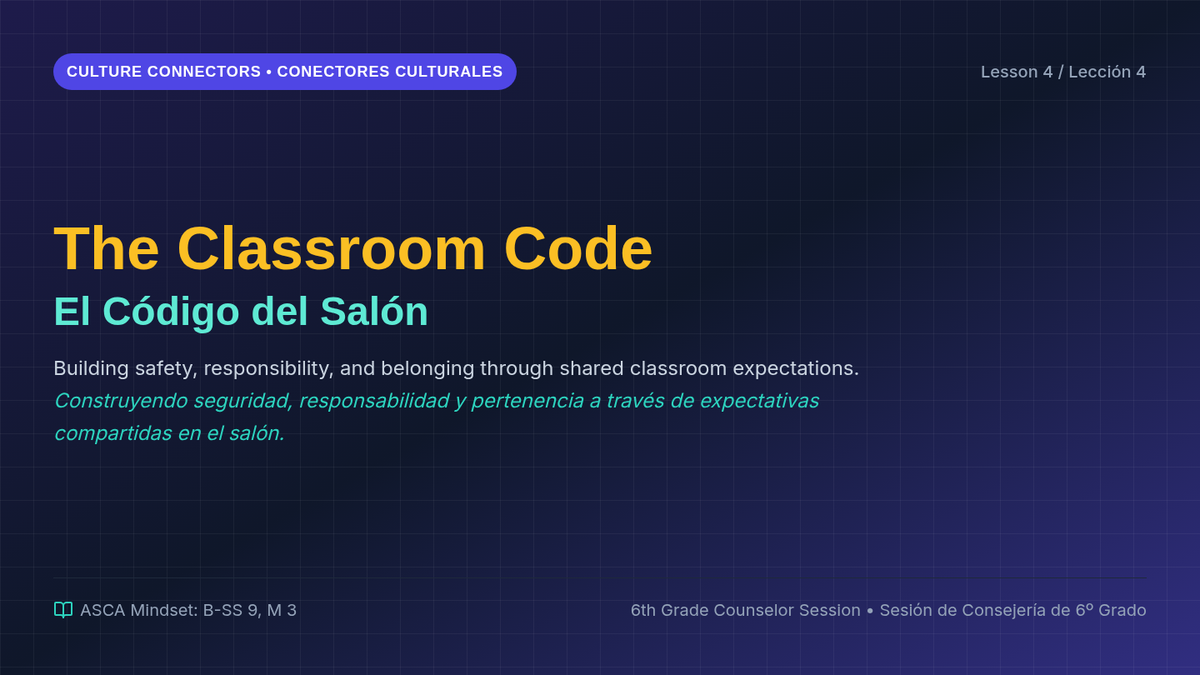
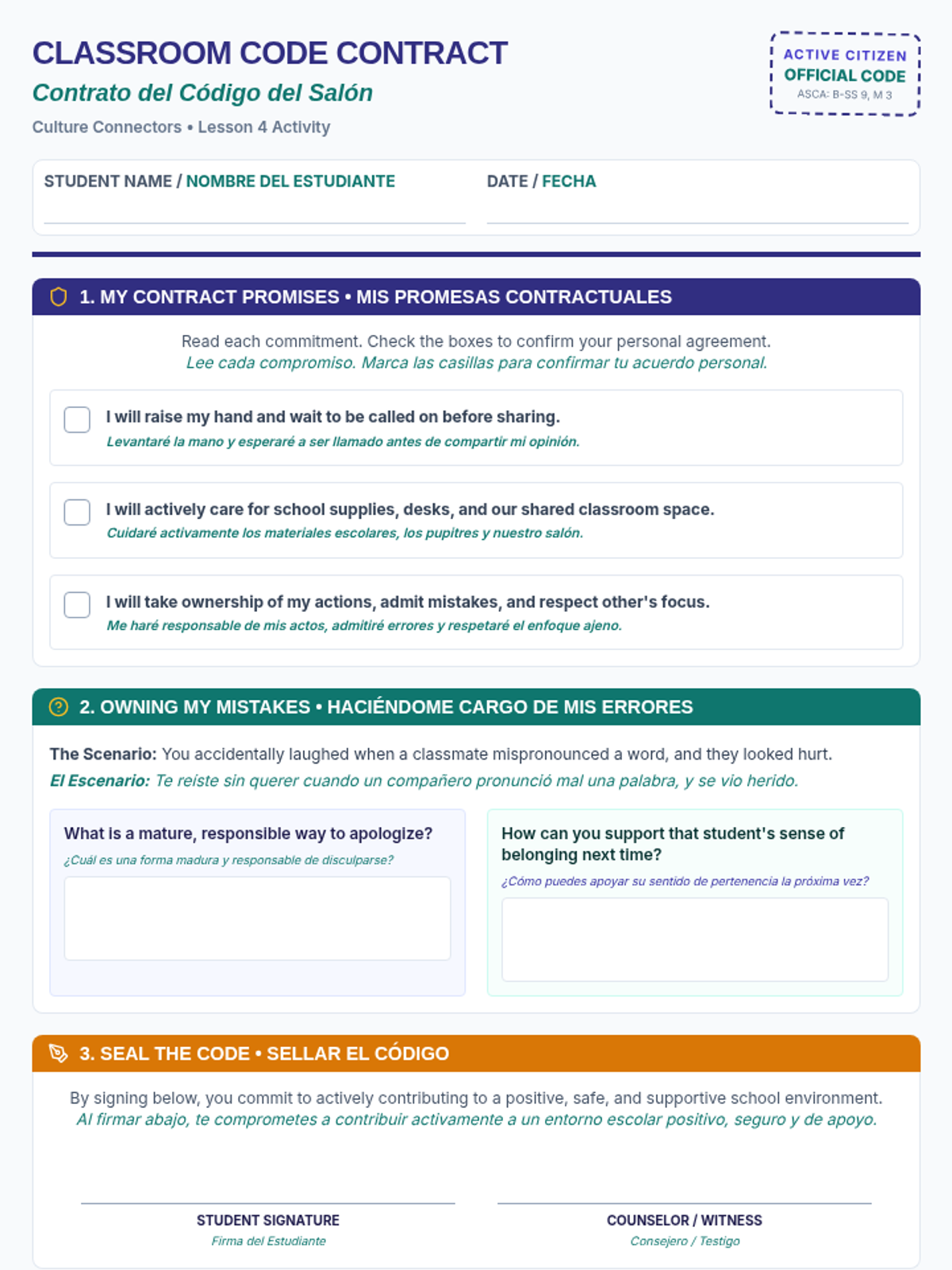
Guides students through classroom behavior expectations, raising hands, active participation, and taking ownership of school behavior to foster a strong sense of school community belonging.
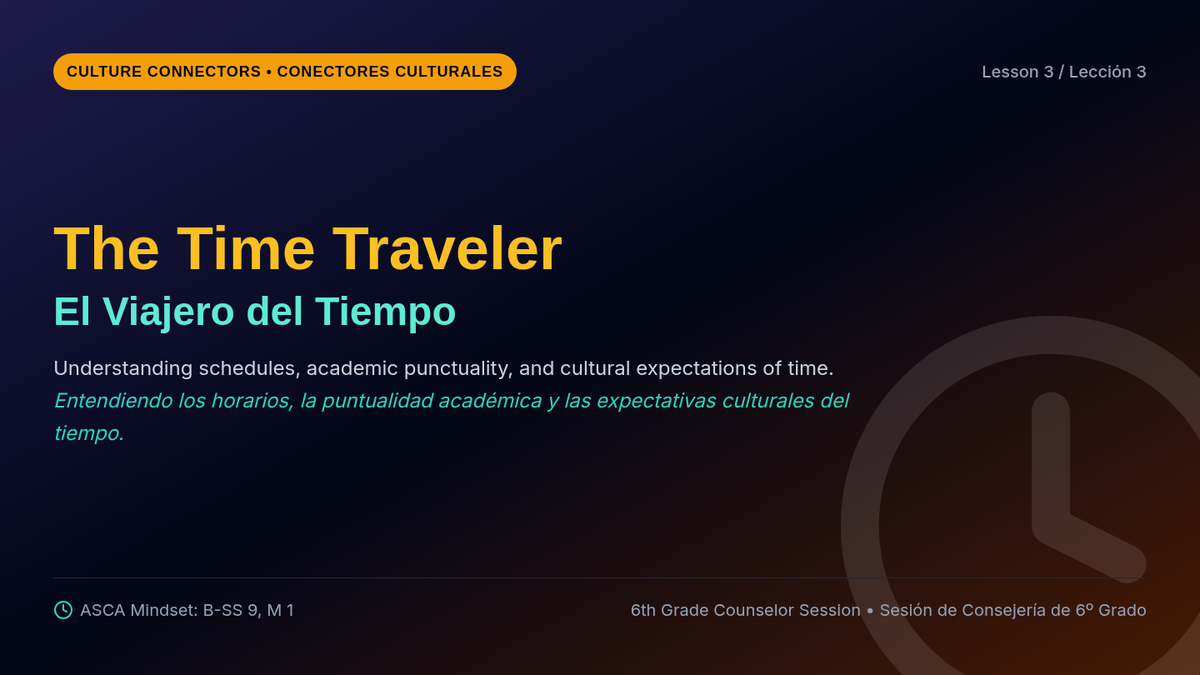
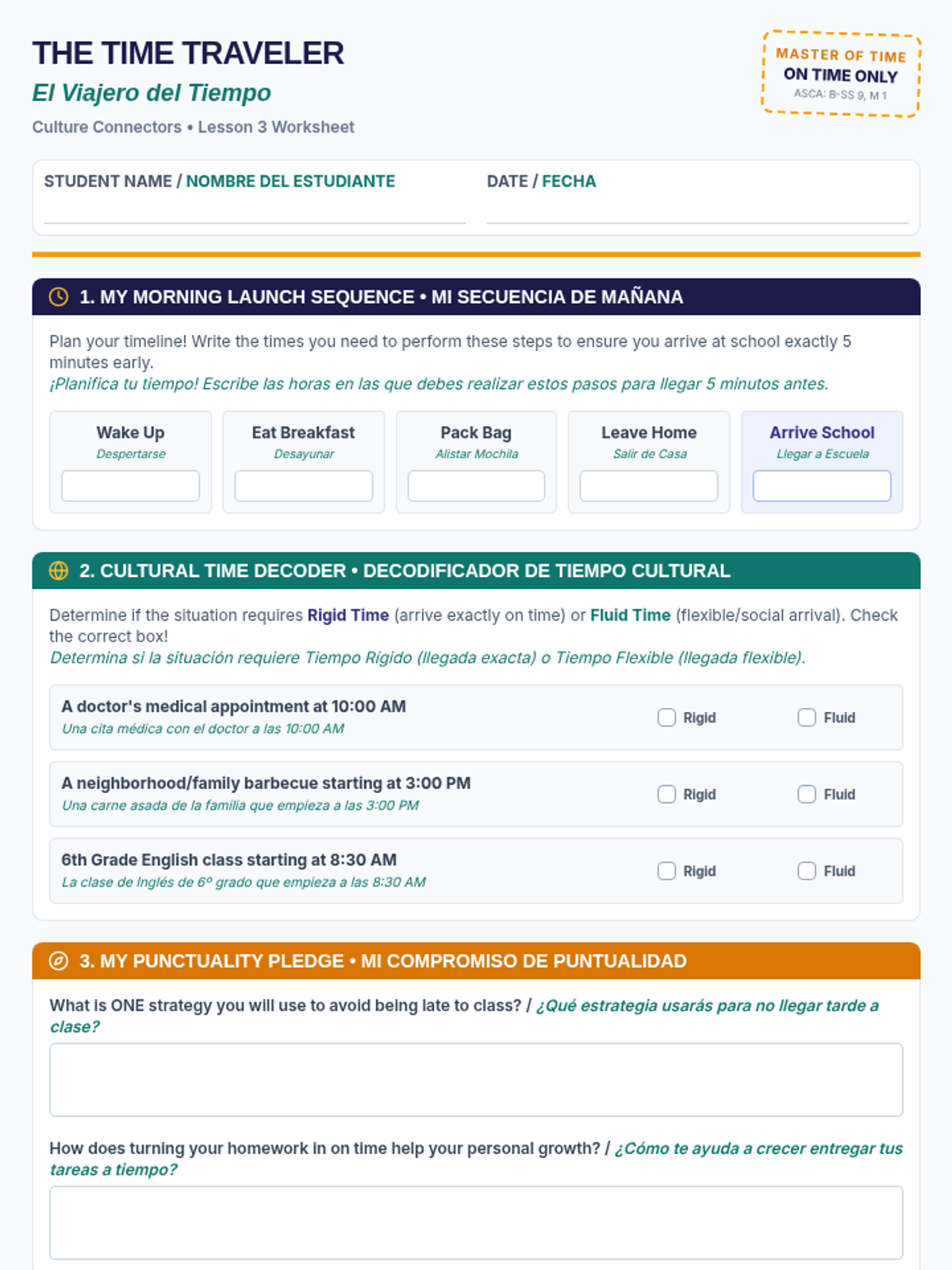
Covers punctuality, deadlines, and time expectations in academic and social settings. Helps students understand the cultural differences in time concepts while developing school success habits.
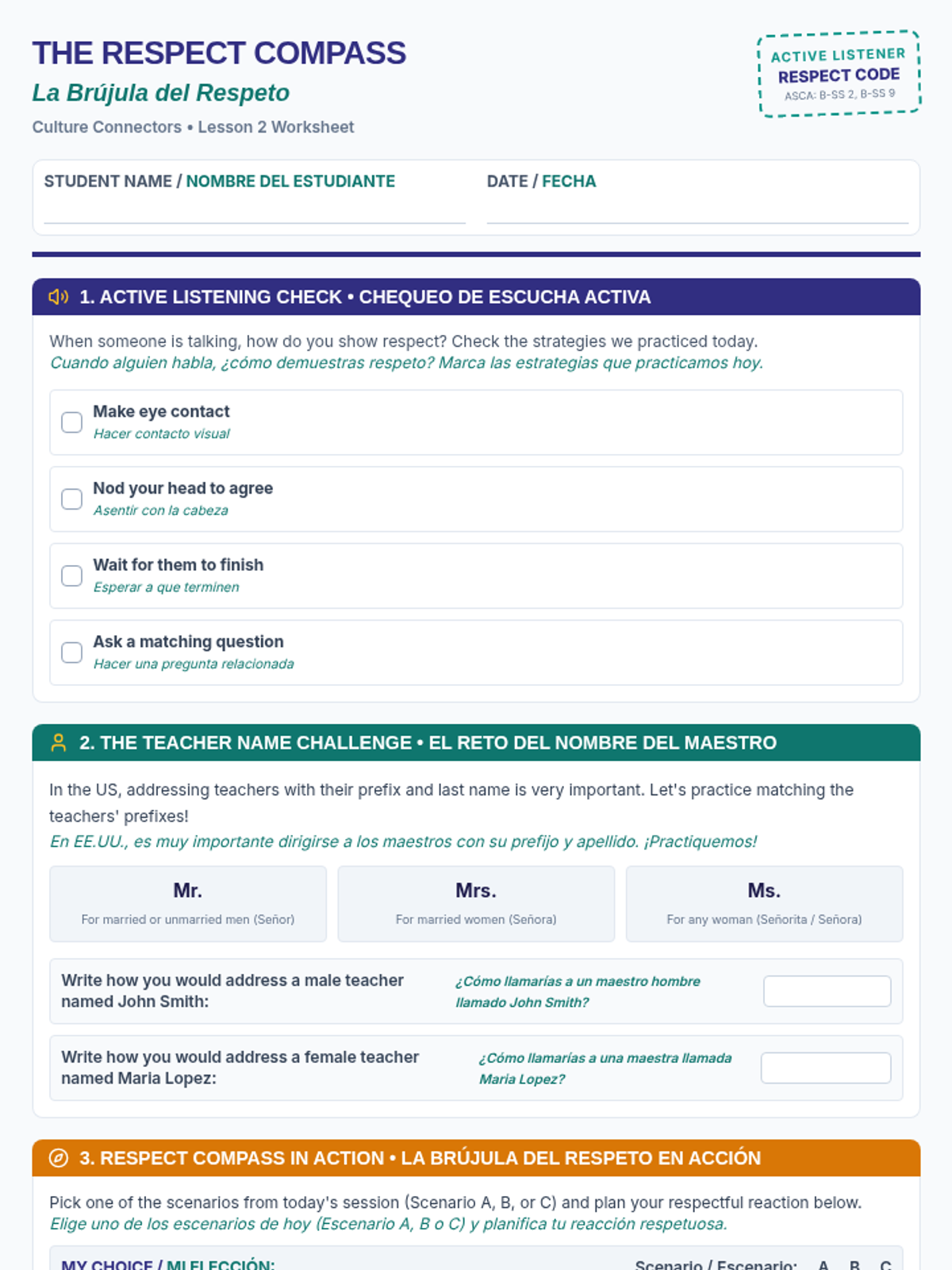
Explores active listening, manners, and showing respect to teachers, peers, and authority figures. Students practice bilingual courtesy terms and cross-cultural respectful communication.