A simulation of a factory environment where students are responsible for a single part of a process. This lesson explores how individual focus on a single step contributes to the success of a larger collaborative goal.

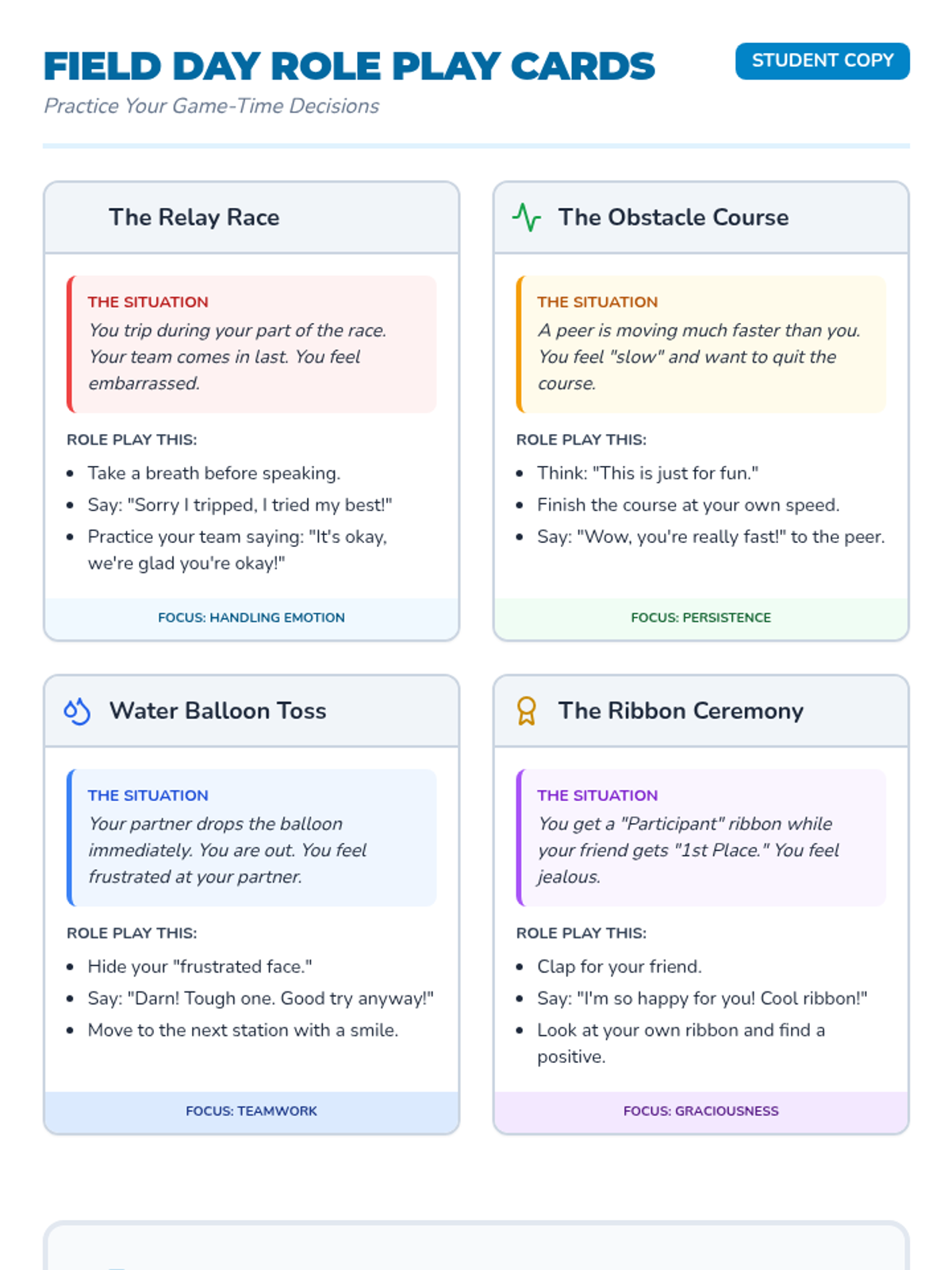
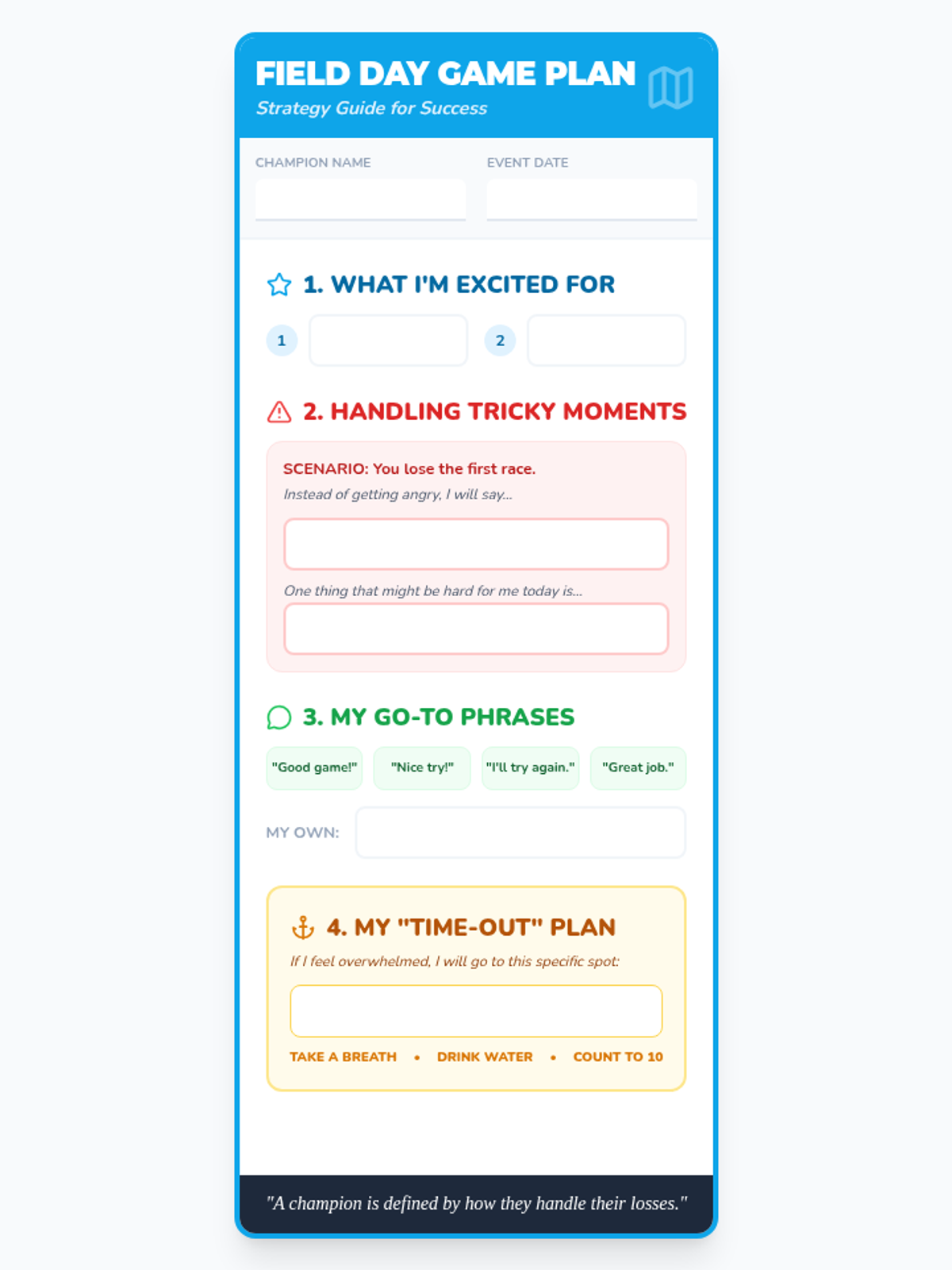
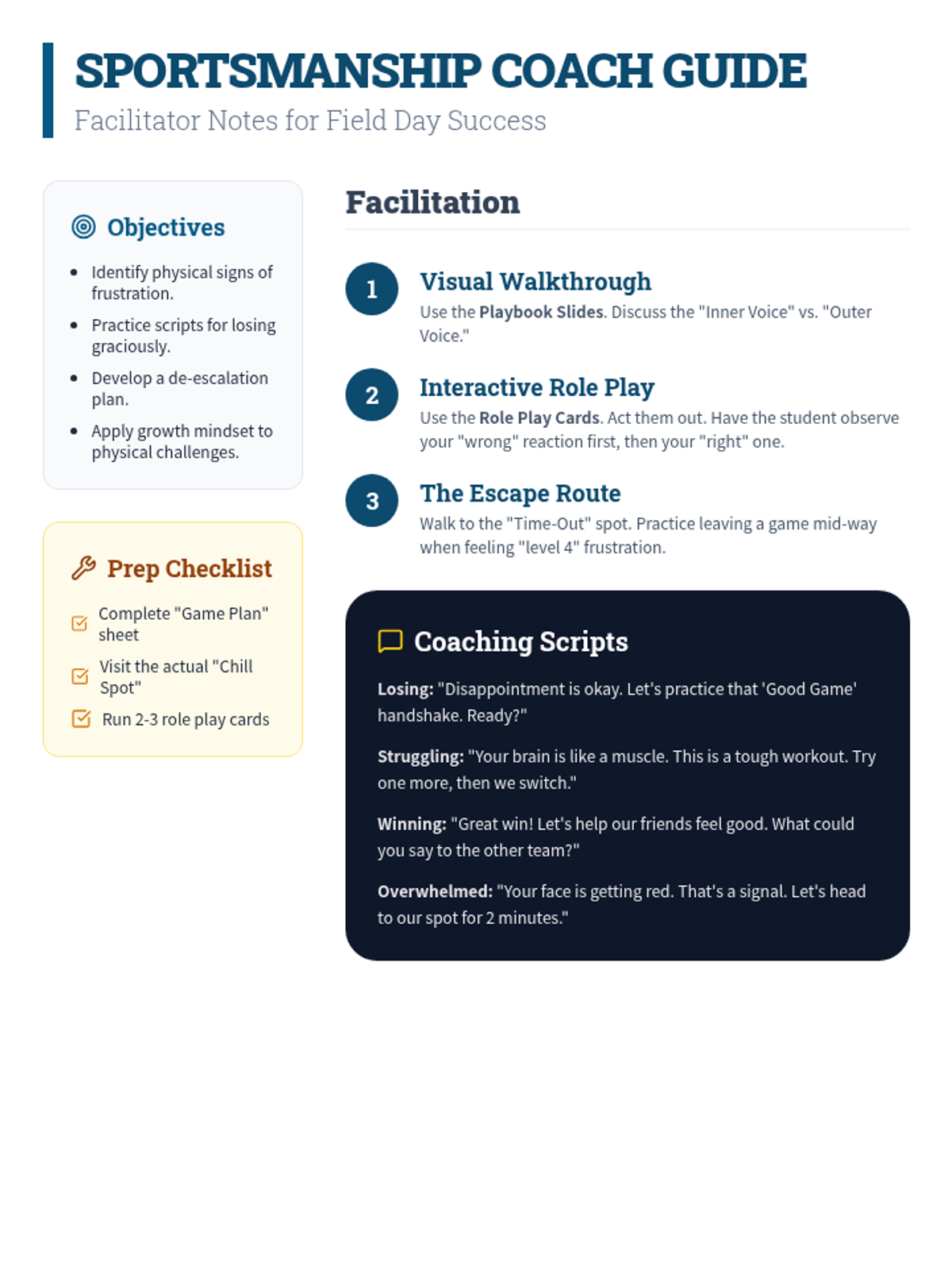
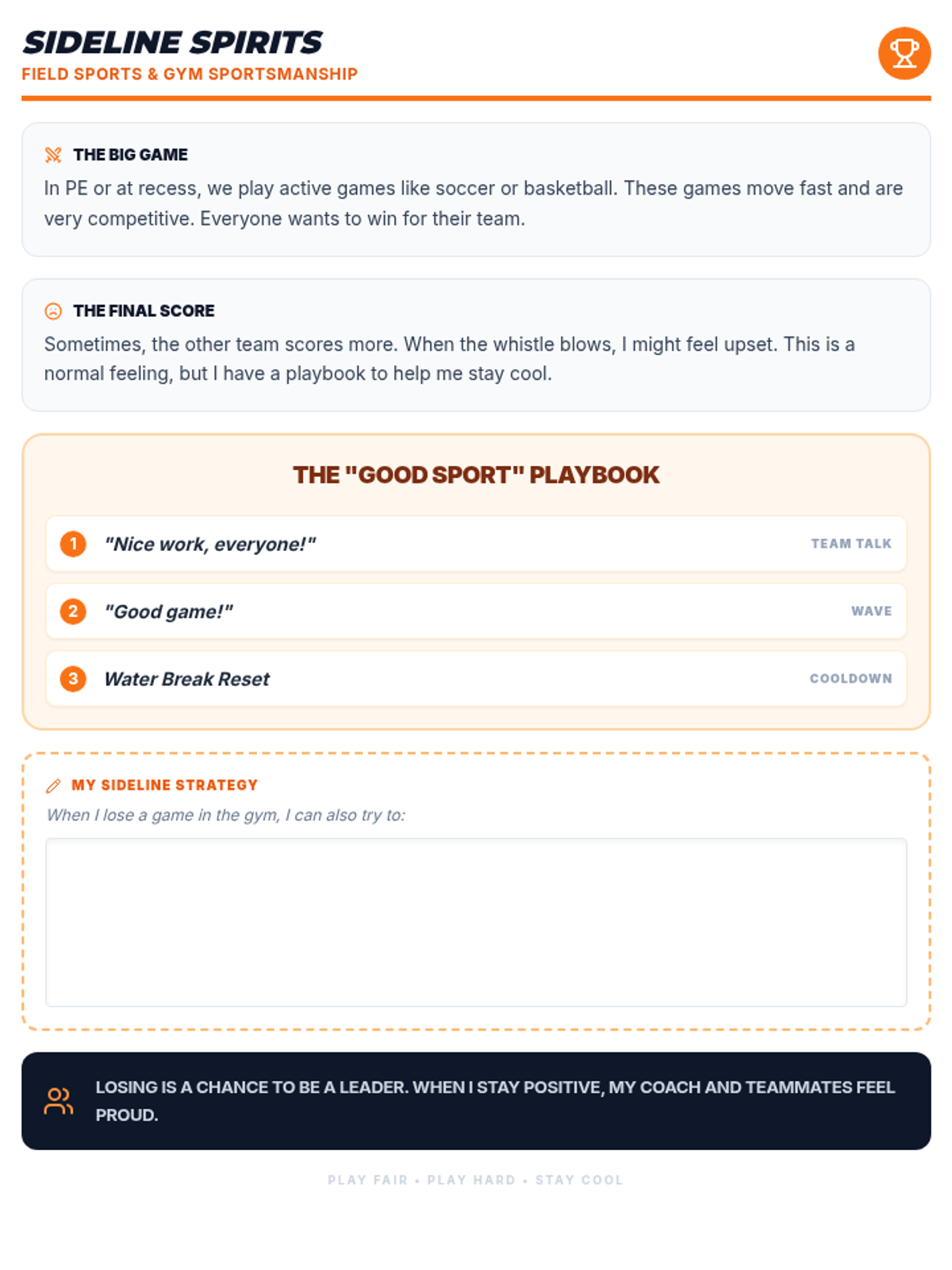
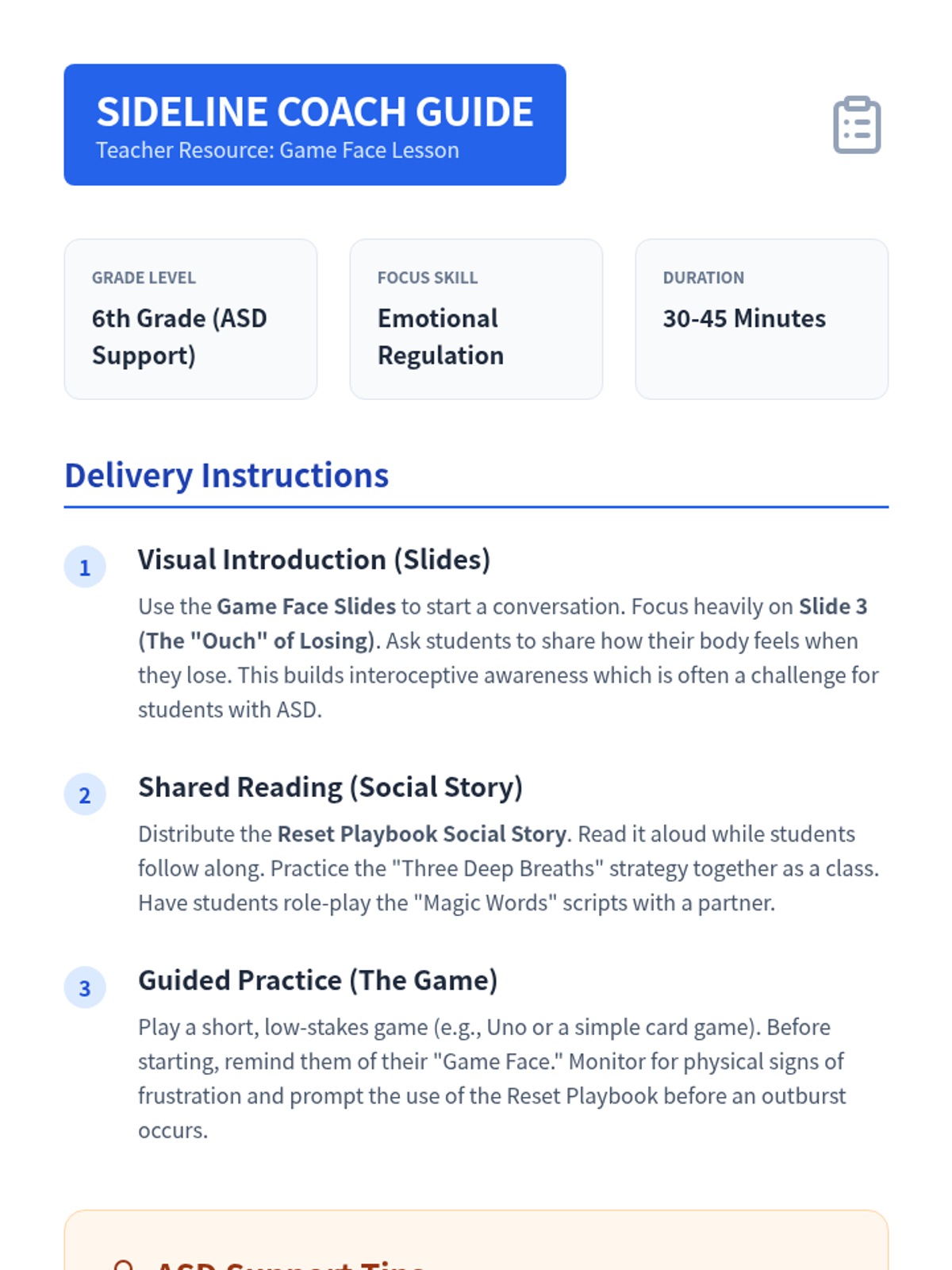
A social skills lesson designed for 6th-grade students with ASD to prepare for the emotional and social challenges of a school Field Day, focusing on sportsmanship, handling loss, and managing frustration when skills are difficult.
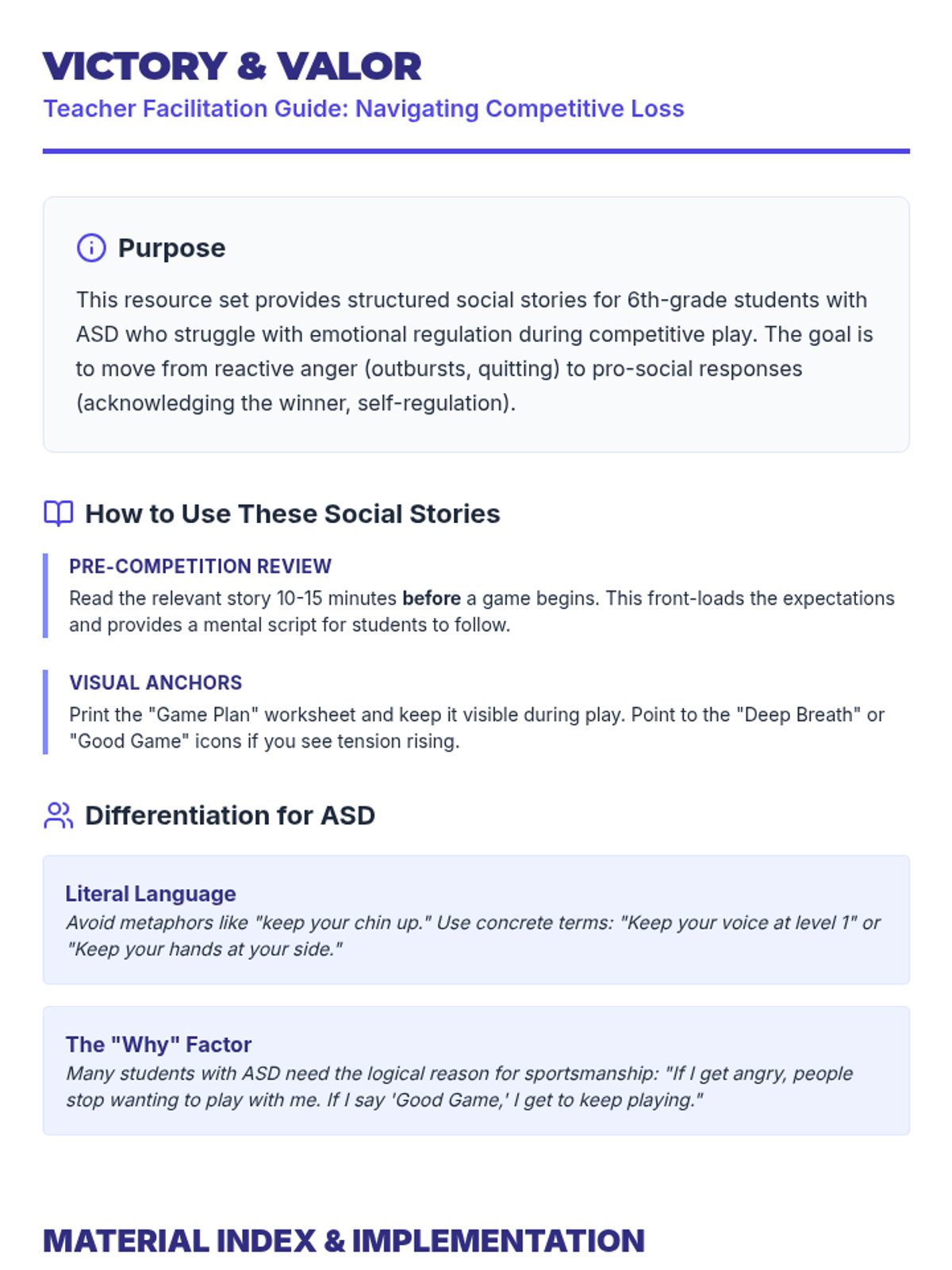
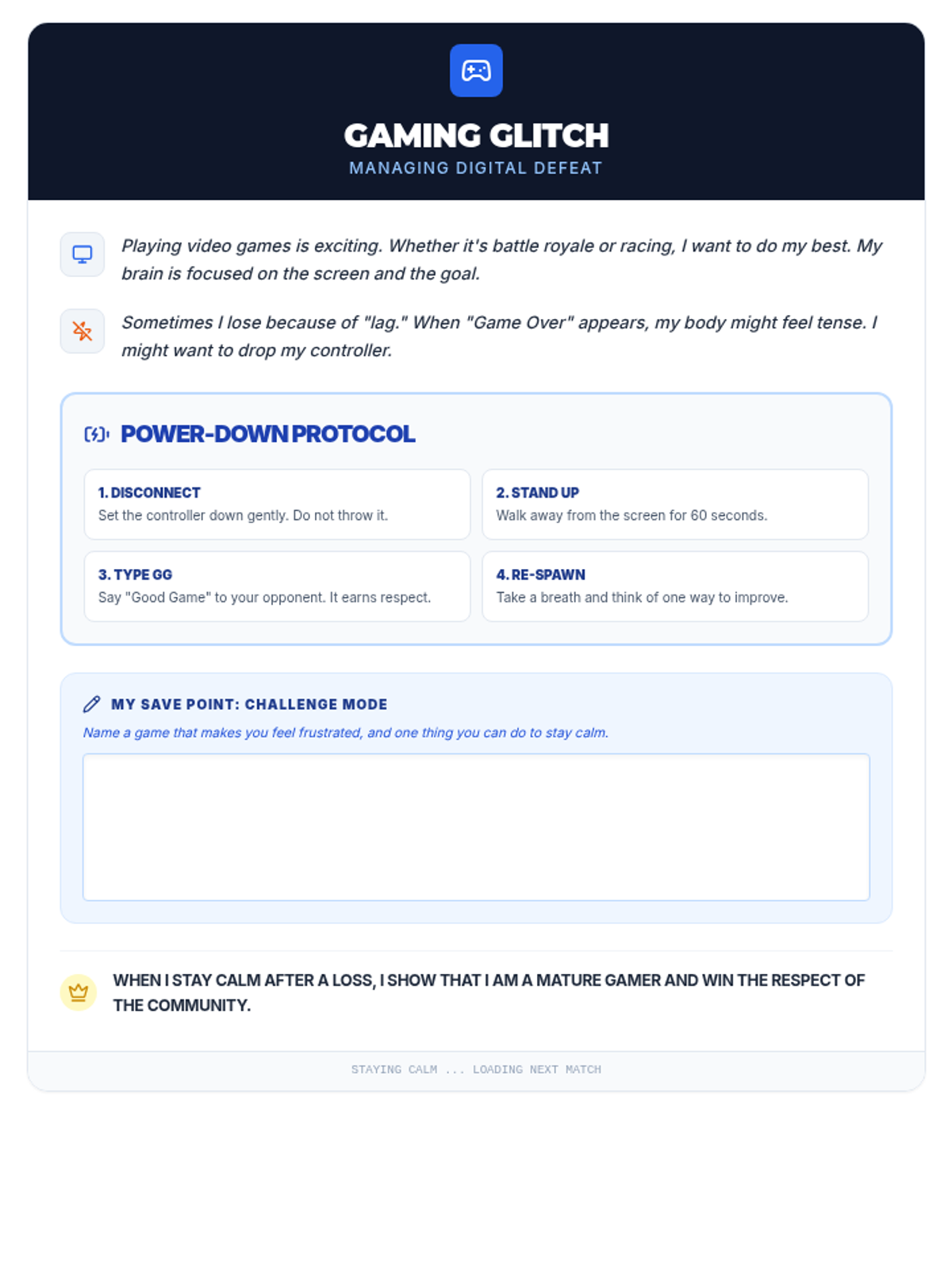
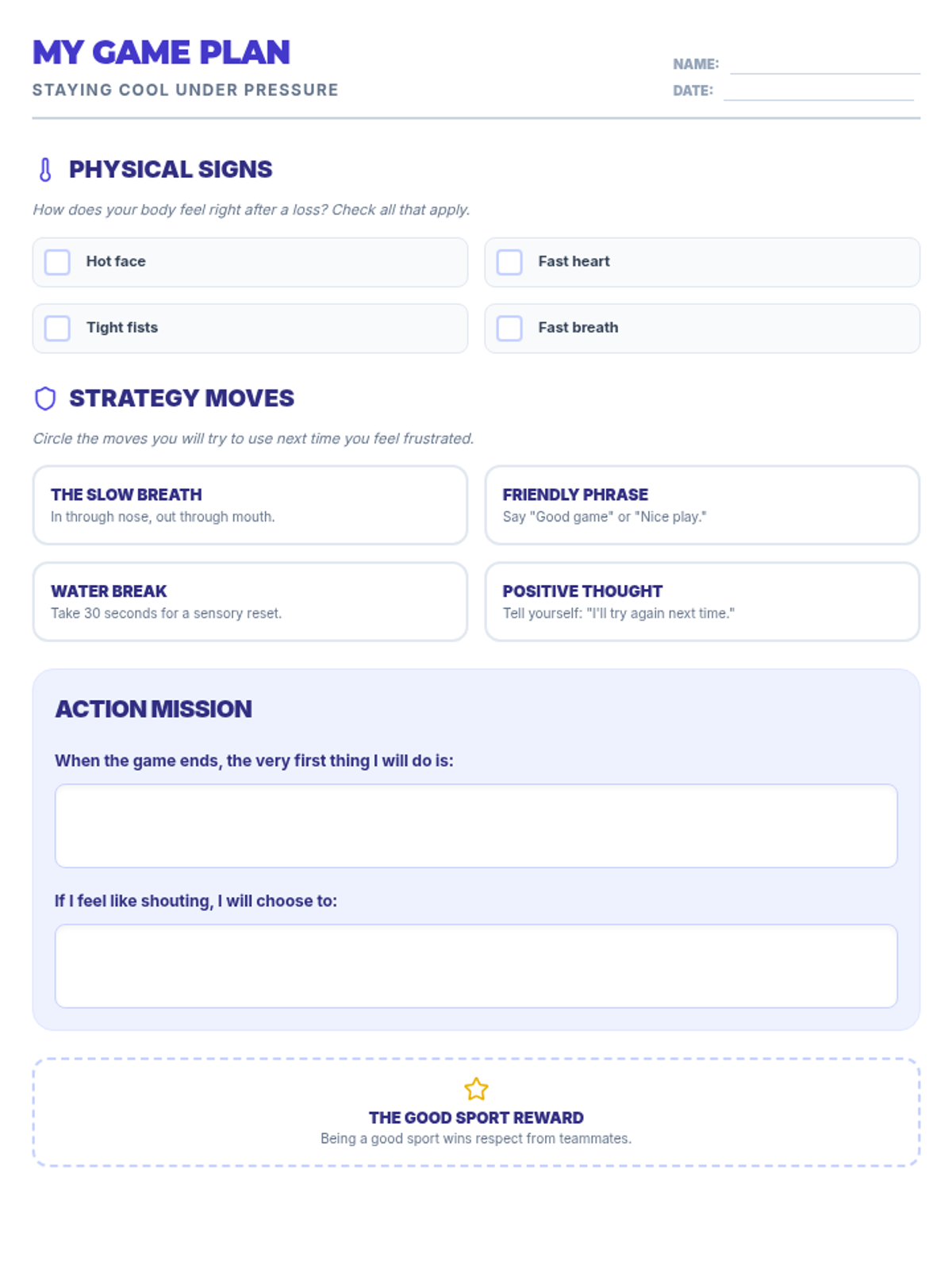
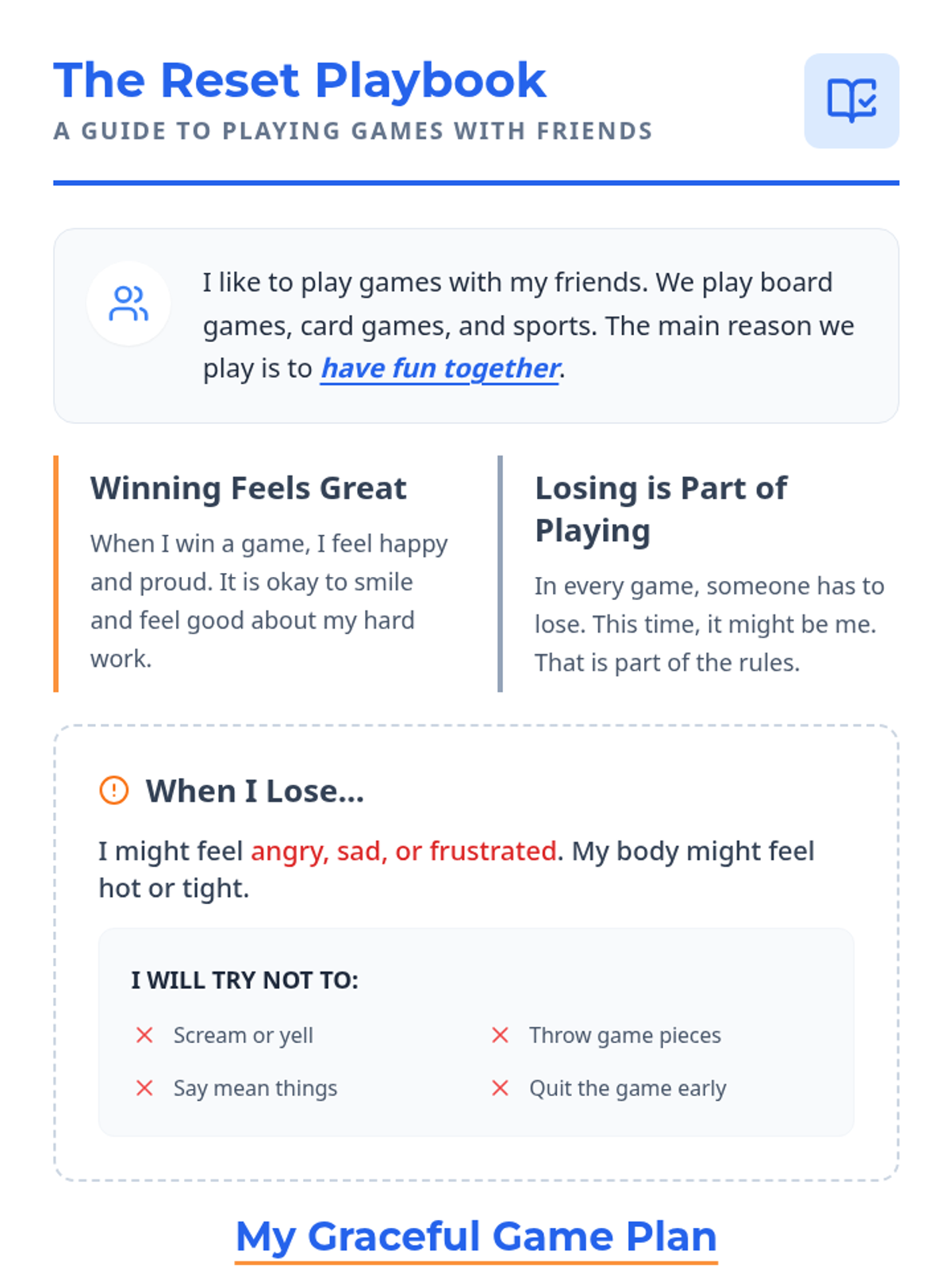
A series of social stories and supporting materials designed to help 6th-grade students with ASD navigate the emotional challenges of losing in competitive games. The lesson focuses on identifying triggers, managing frustration, and practicing prosocial responses.
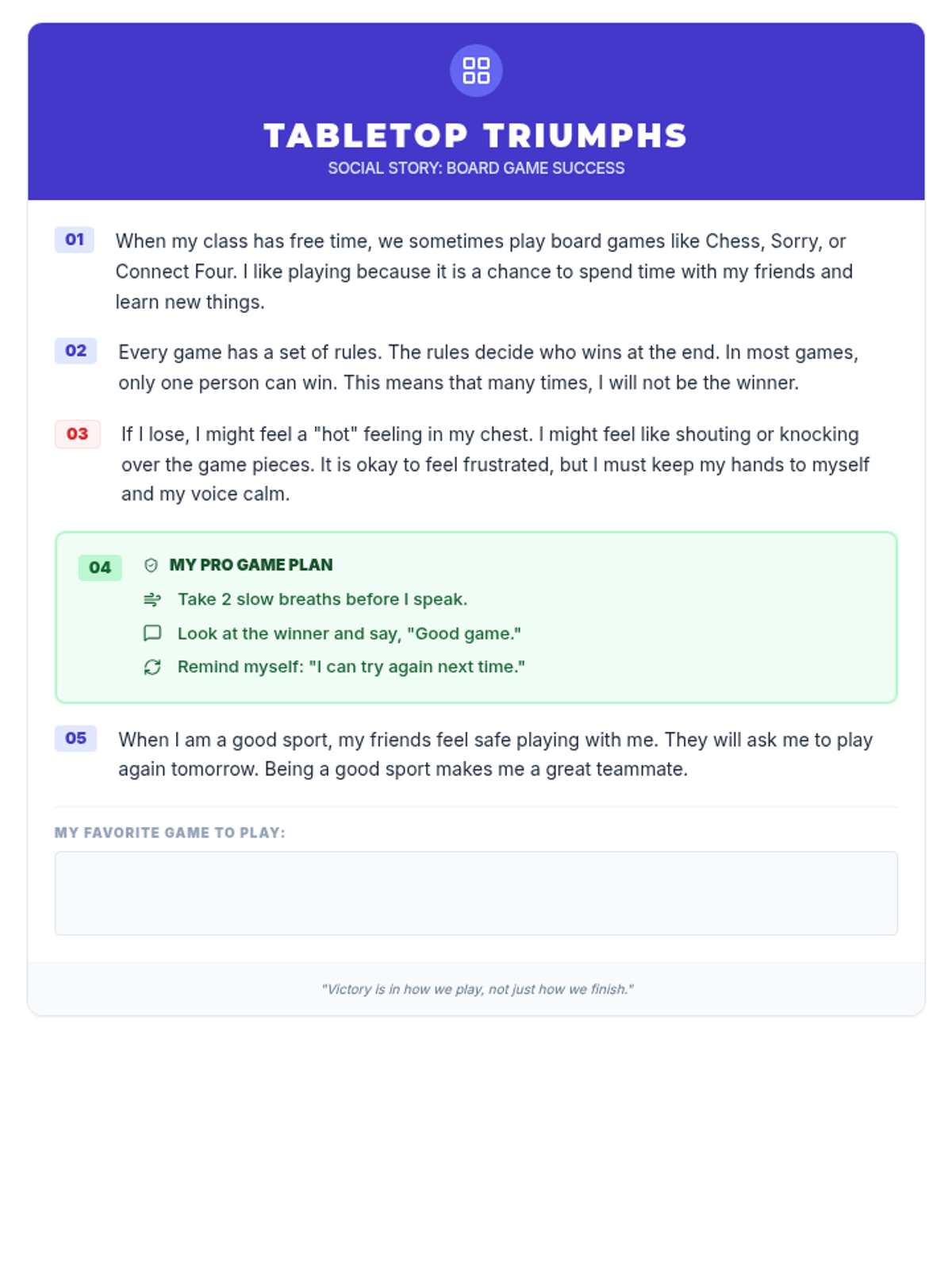
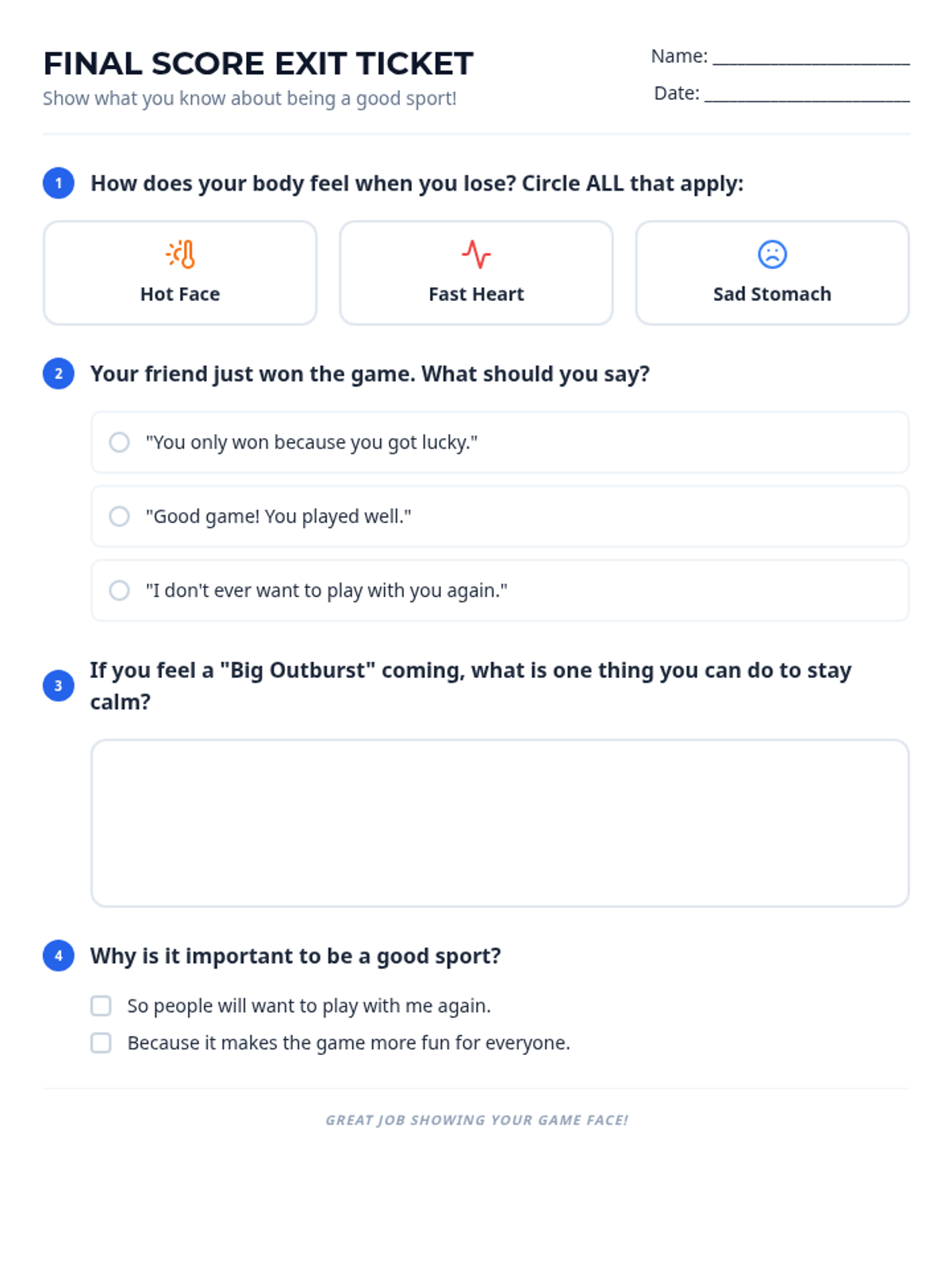
A lesson designed for 6th-grade students with ASD to develop the social skills needed to lose gracefully during games, featuring a social story, visual slides, and an exit ticket.
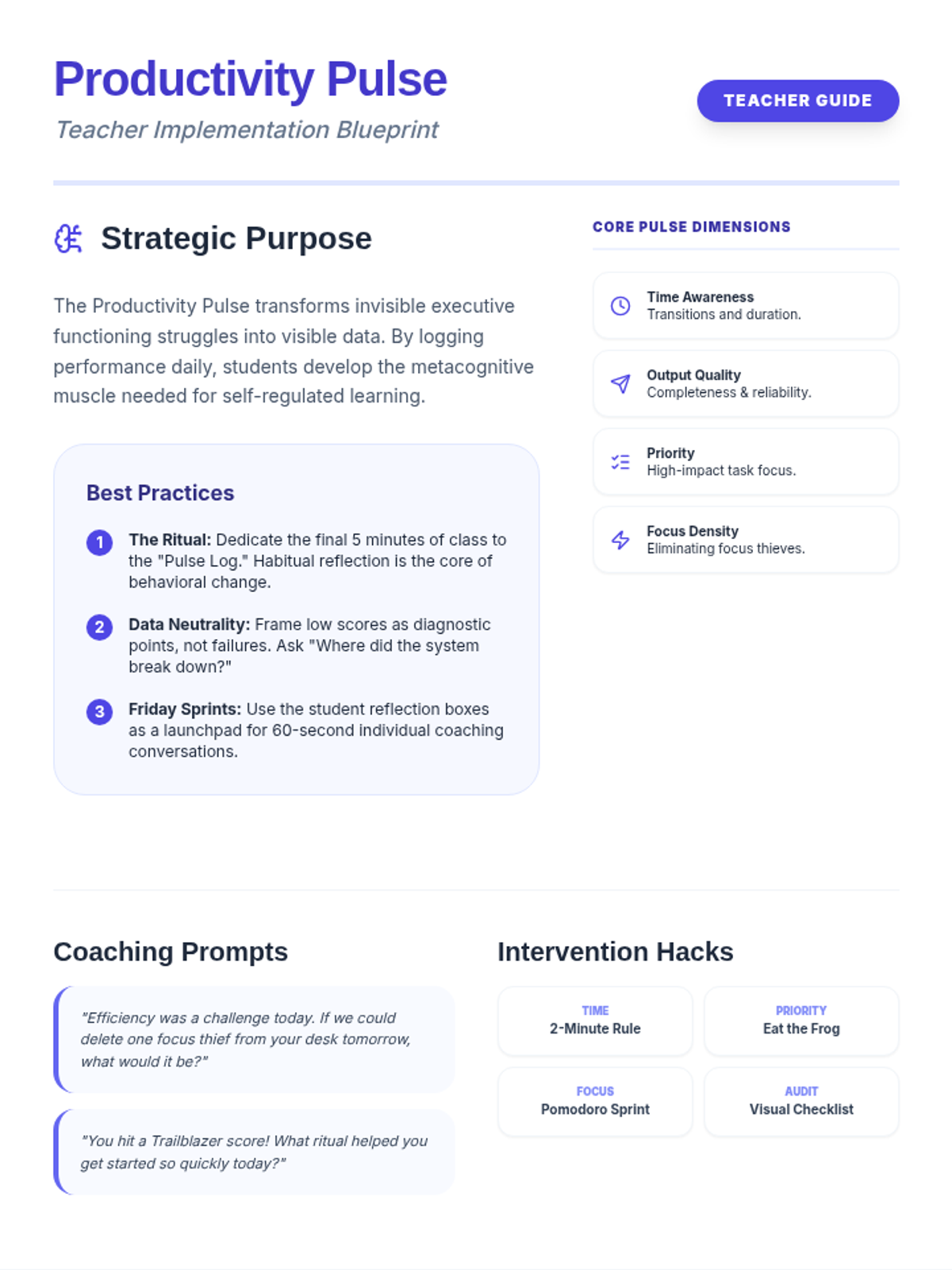
A comprehensive toolkit for students to track and improve their executive functioning skills through daily logging and descriptive rubrics.
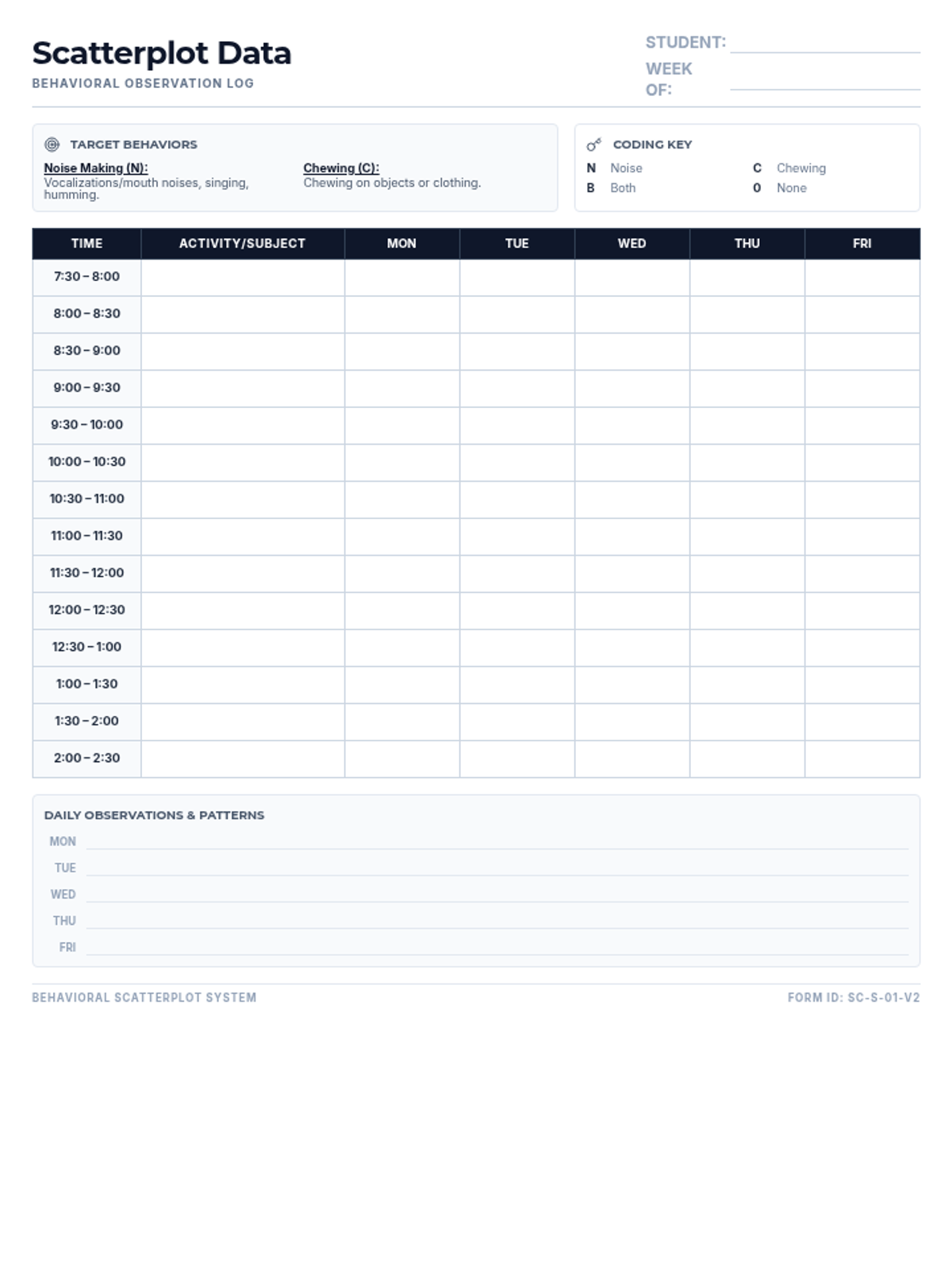
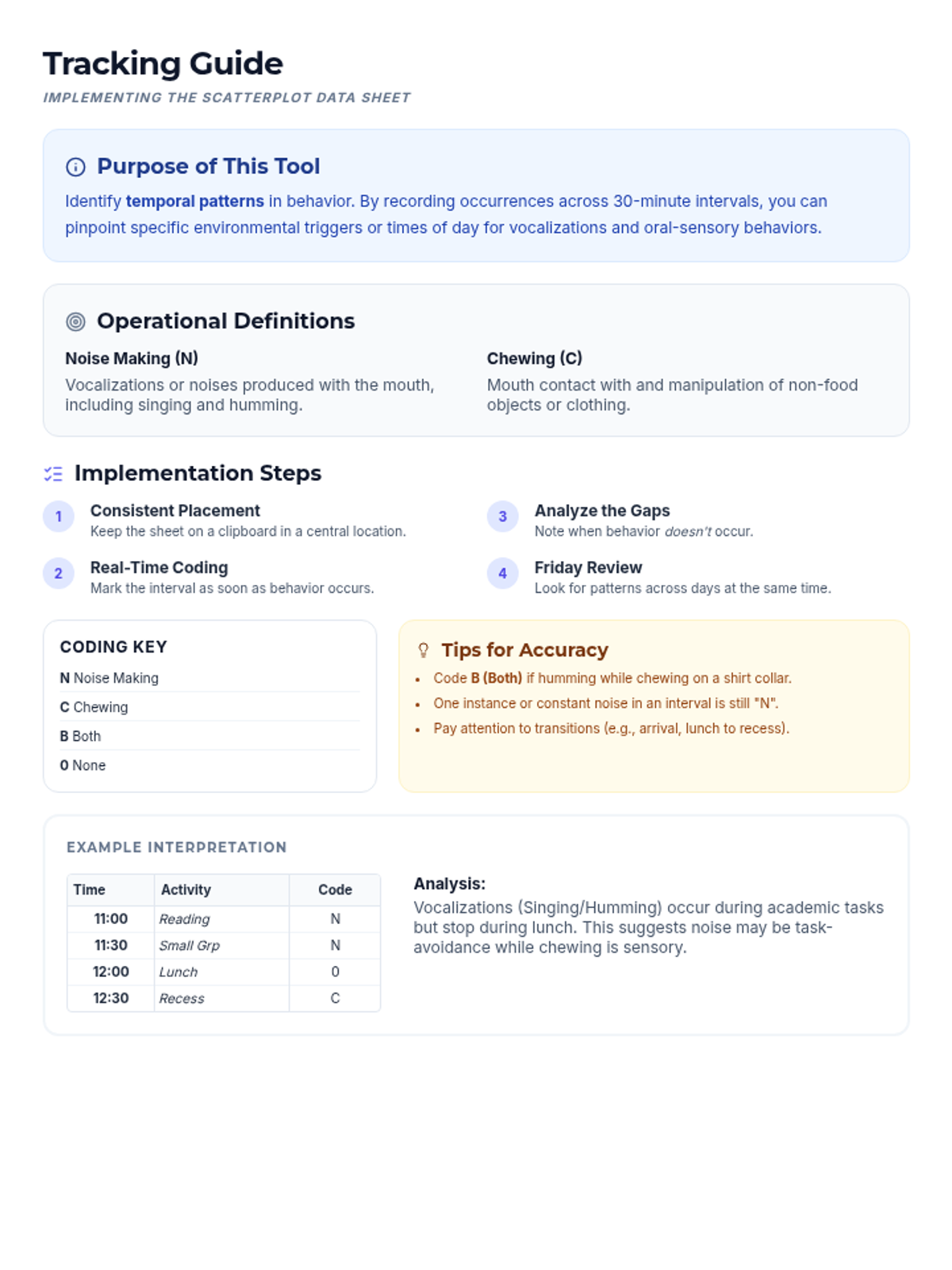
A collection of resources for tracking and analyzing noise-making and chewing behaviors in a classroom or clinical setting, featuring a structured scatterplot data sheet and implementation guide.
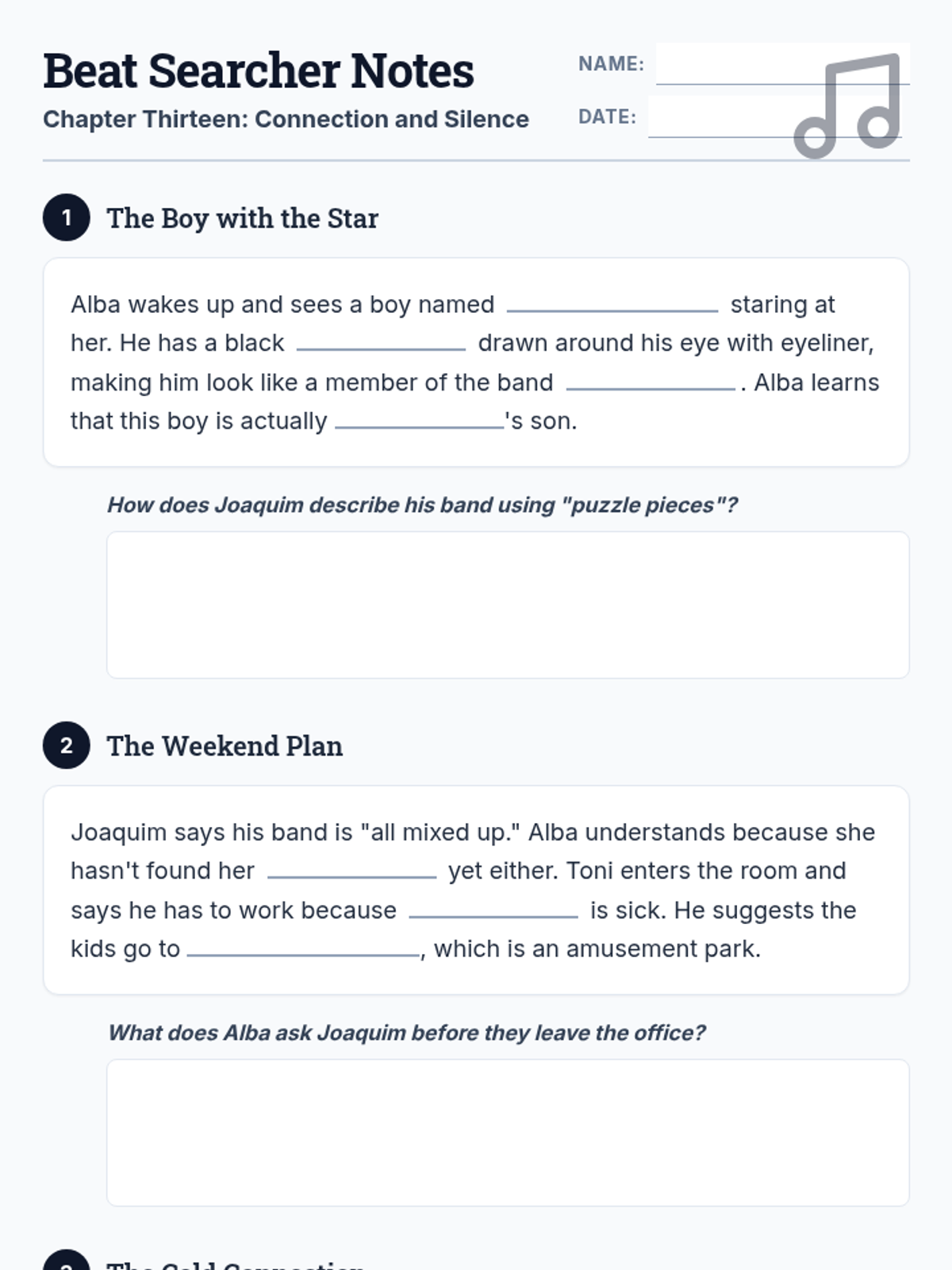
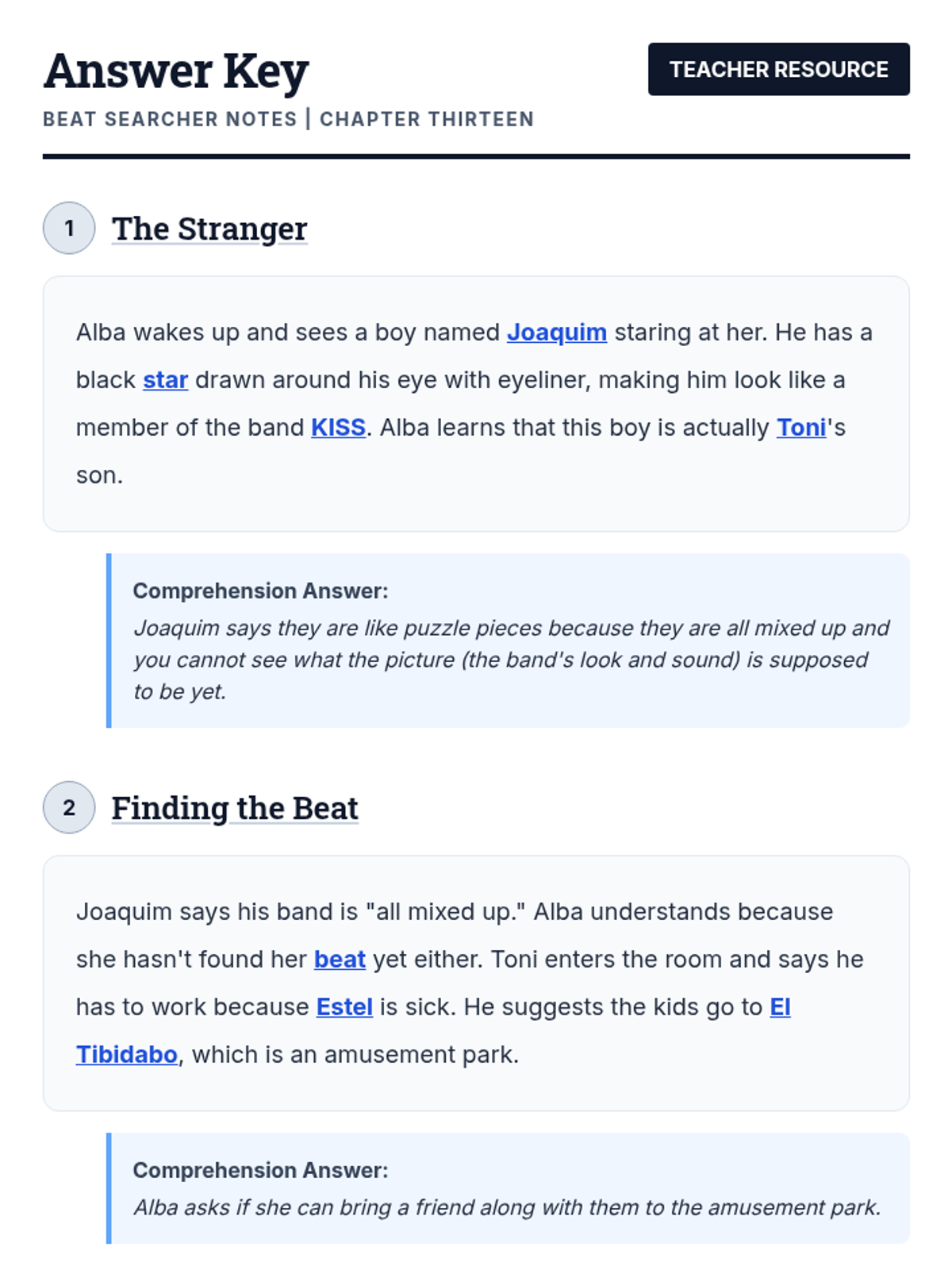
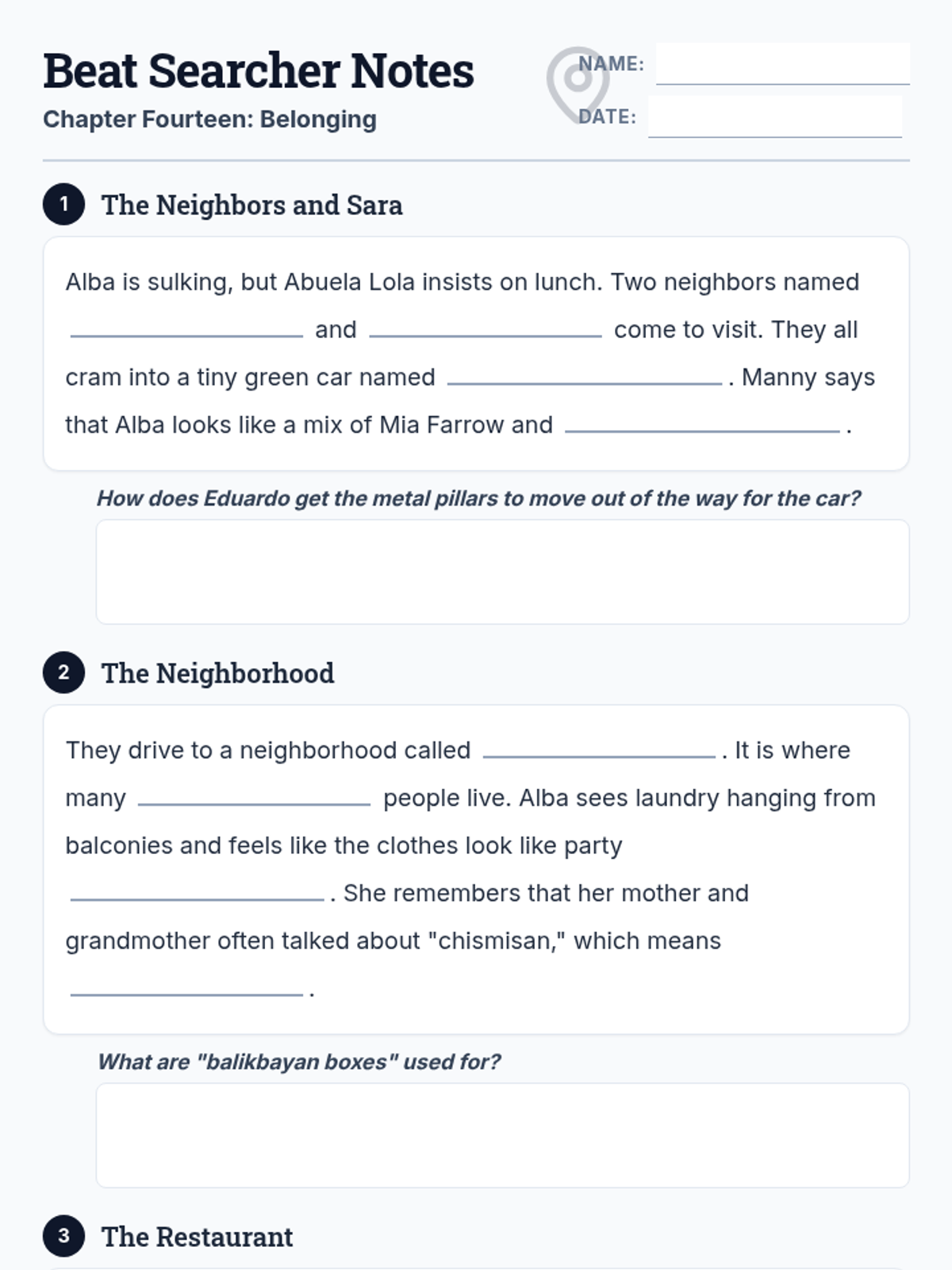
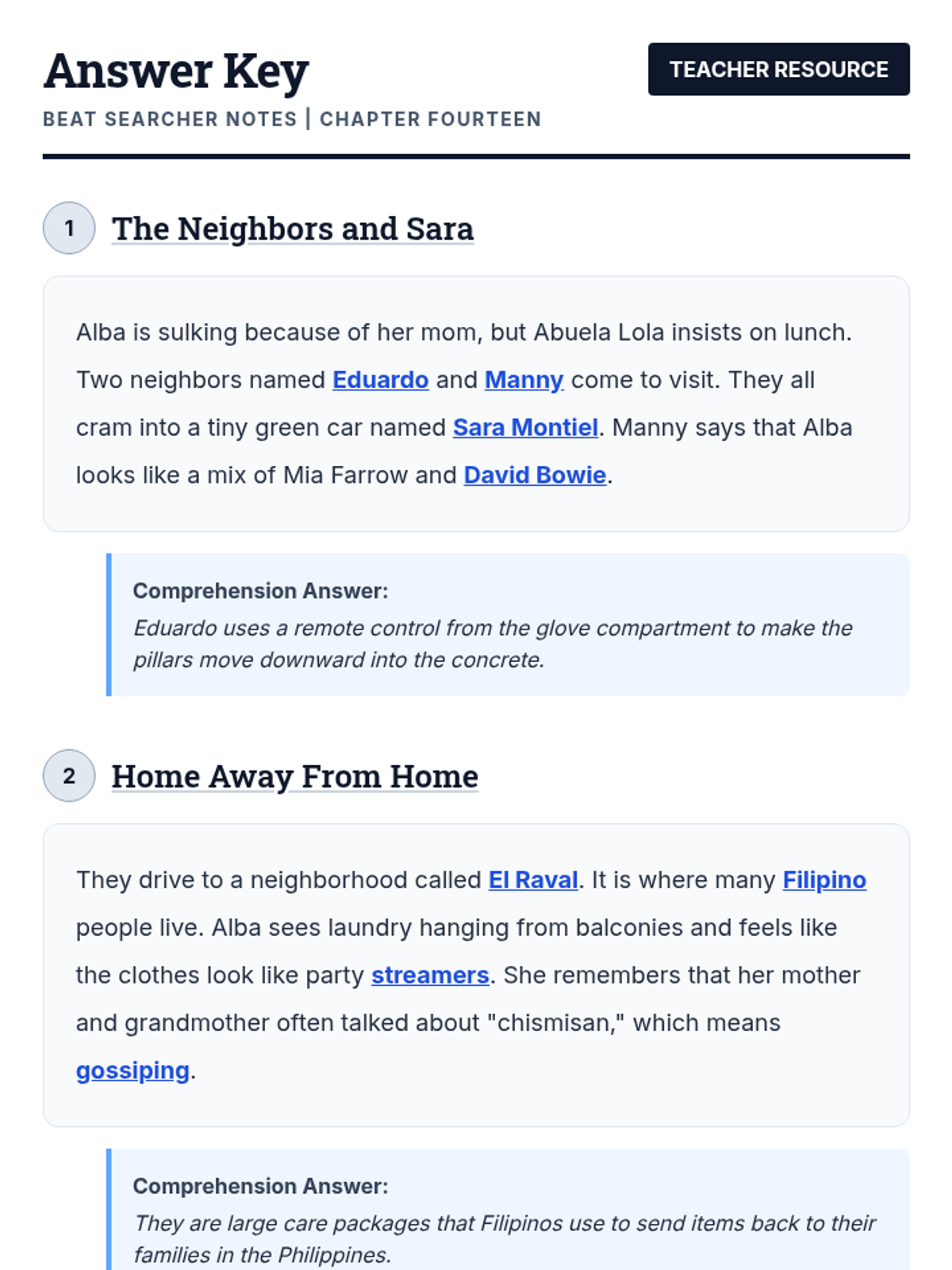
A reading comprehension lesson focused on analyzing character dynamics and emotional subtext in Chapters 13 and 14 of the text, specifically exploring identity, culture, and familial distance.
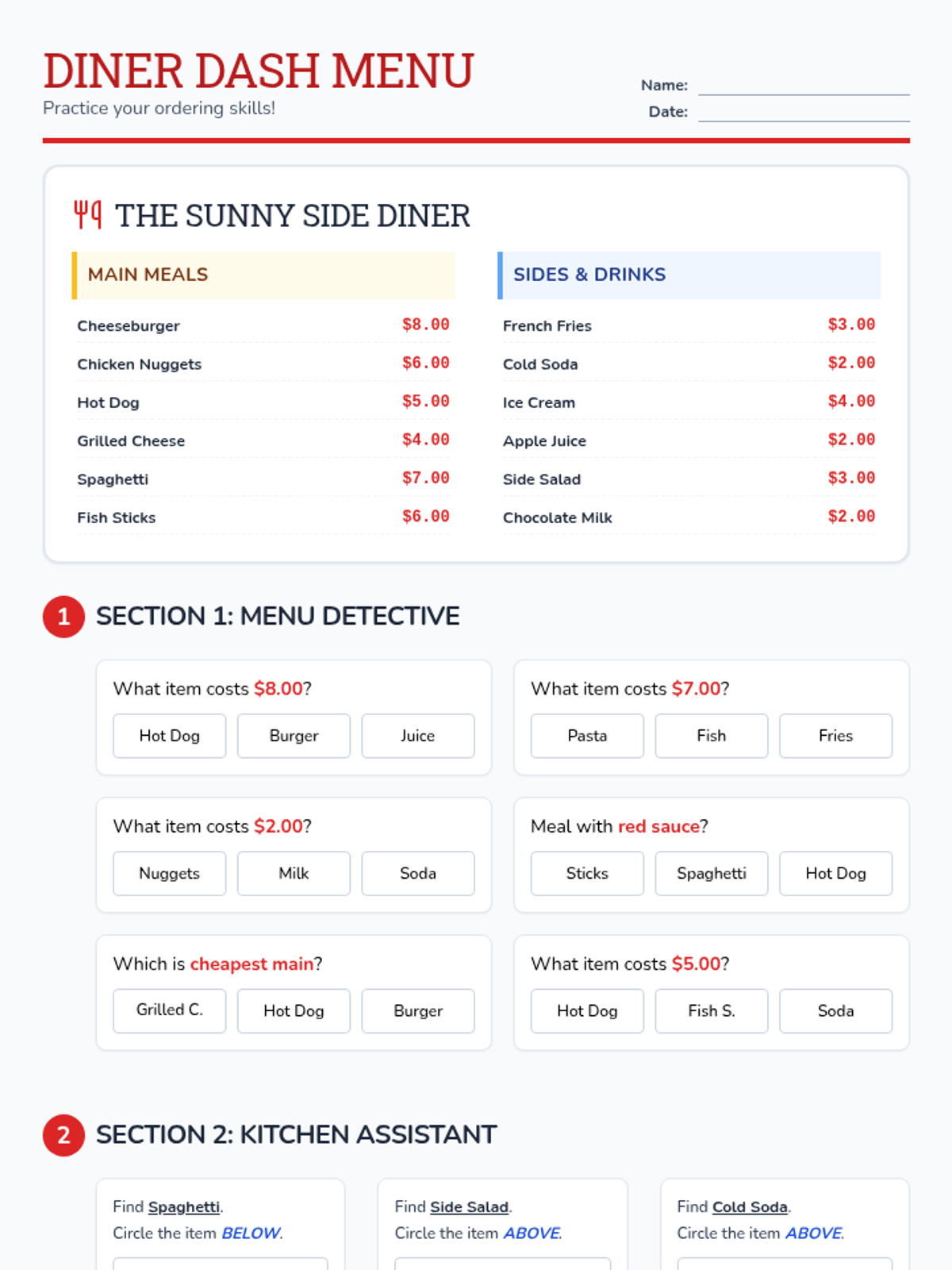
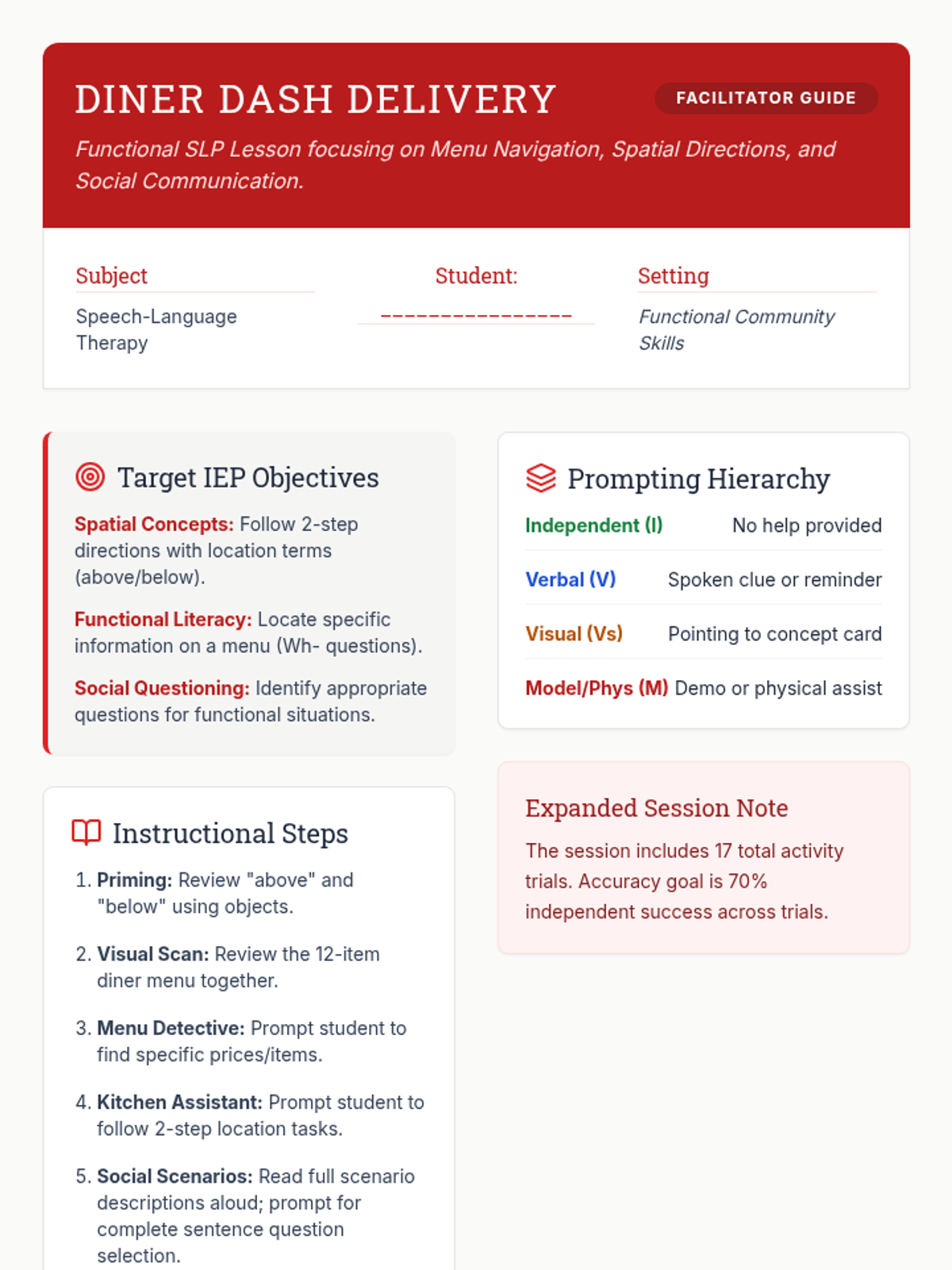
A functional speech-language therapy lesson focused on restaurant ordering, menu navigation, and social problem-solving for students with moderate-to-severe autism.
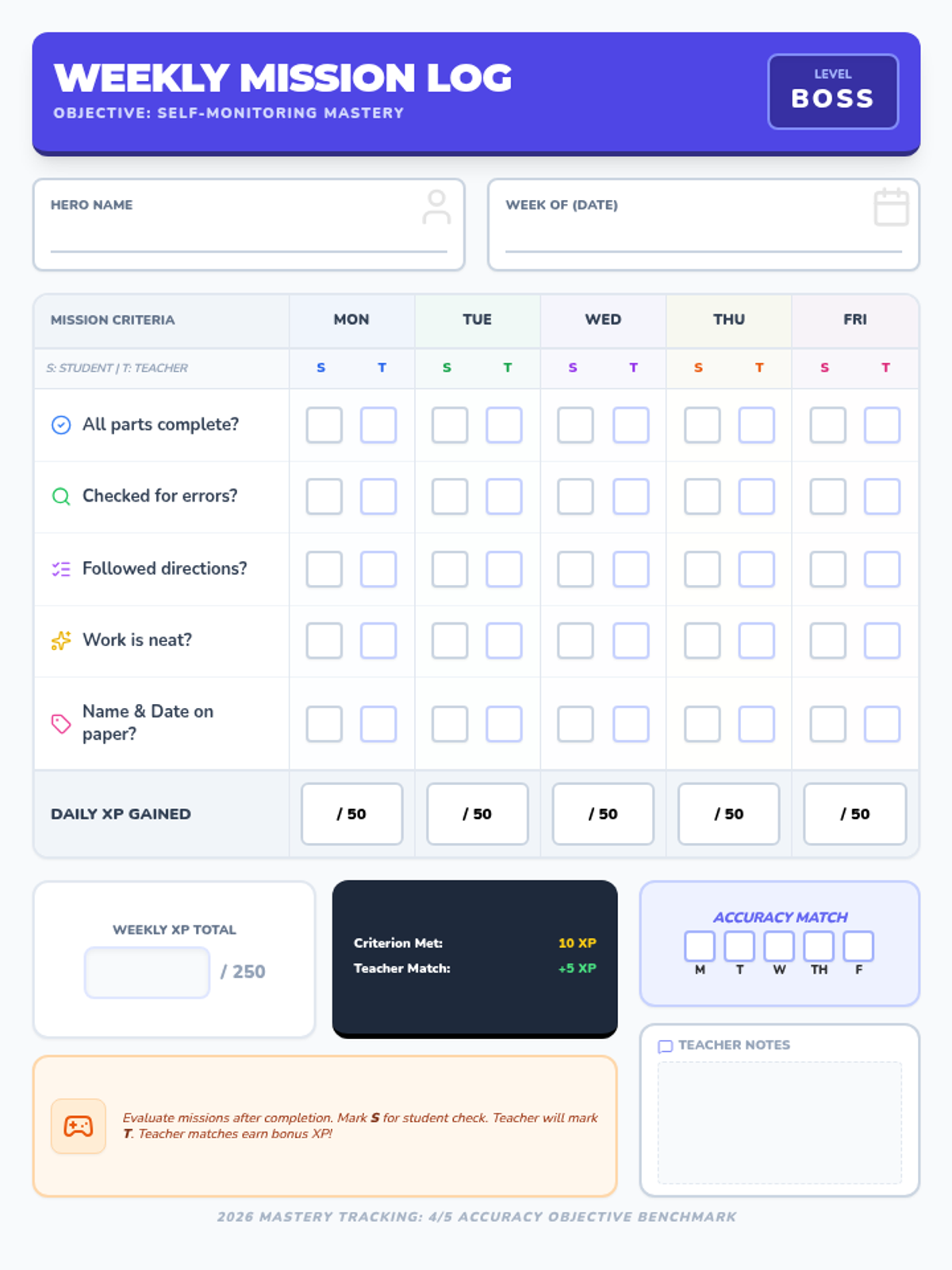
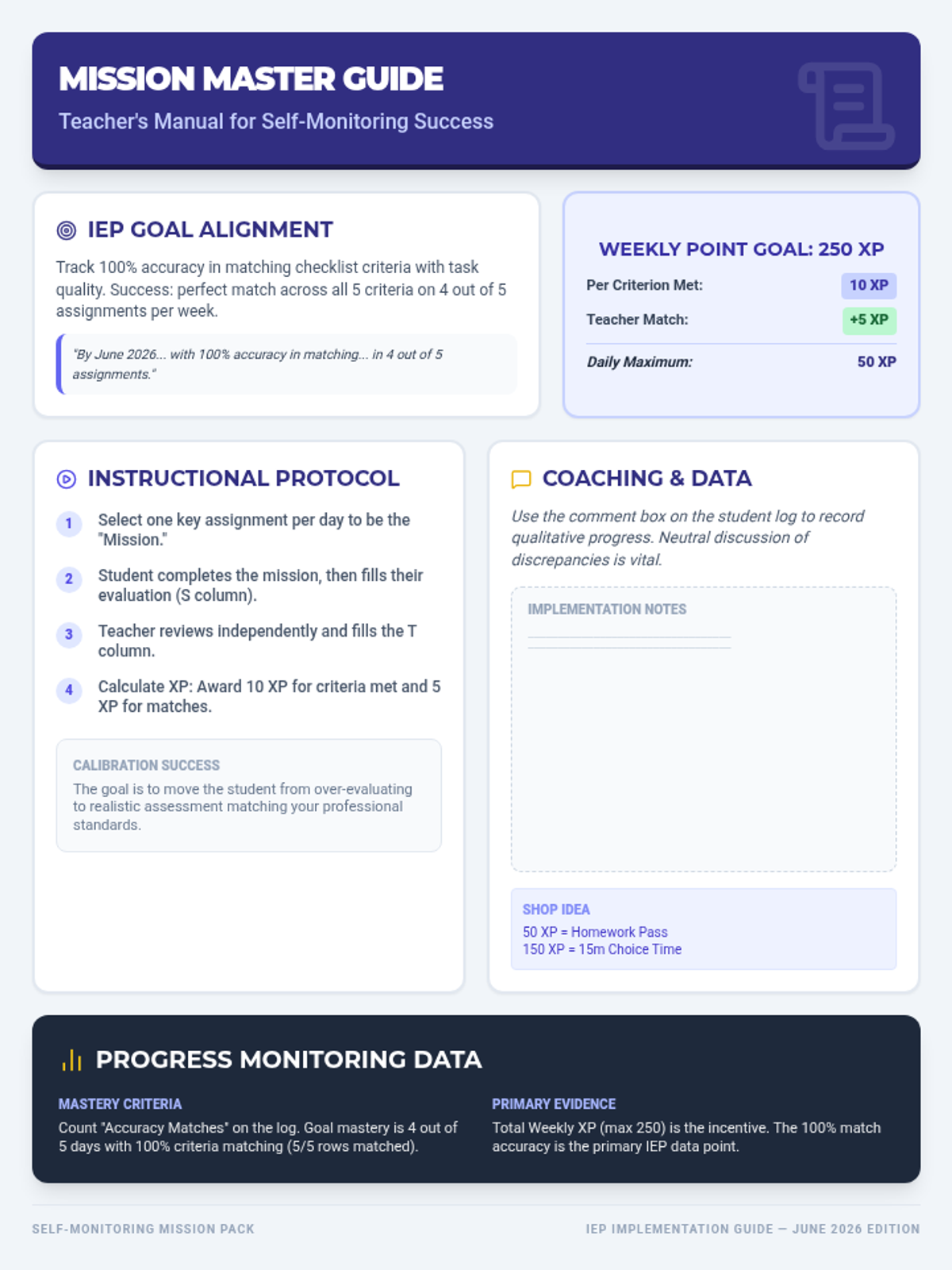
A lesson centered on developing self-monitoring skills for task completion and quality through a gamified weekly point system. Students learn to evaluate their own work against specific criteria and match their assessments with teacher feedback.
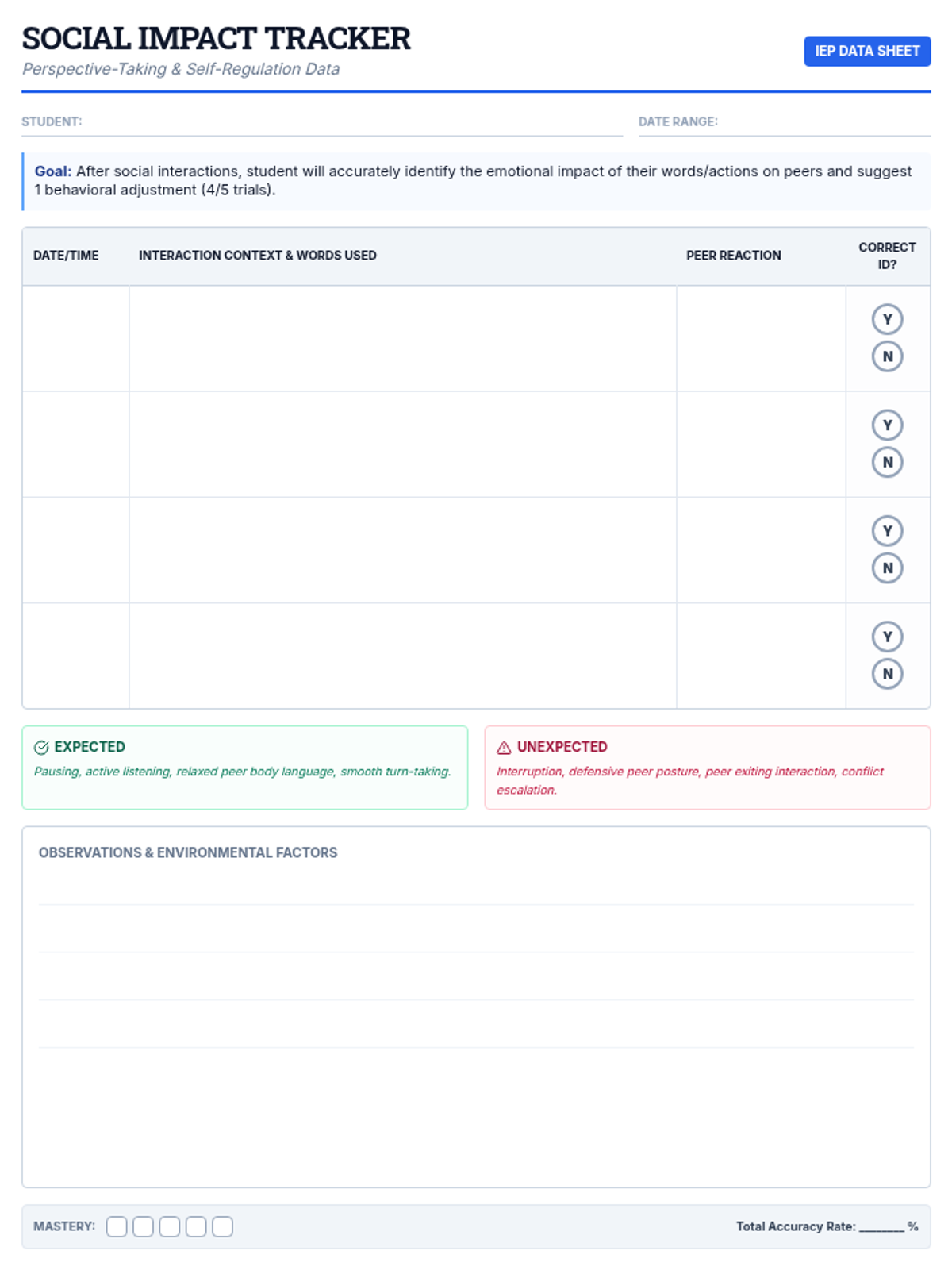
This lesson focuses on developing perspective-taking skills, specifically helping students understand the ripple effect of their words and actions on the people around them. It includes tools for monitoring progress and reflective practice.
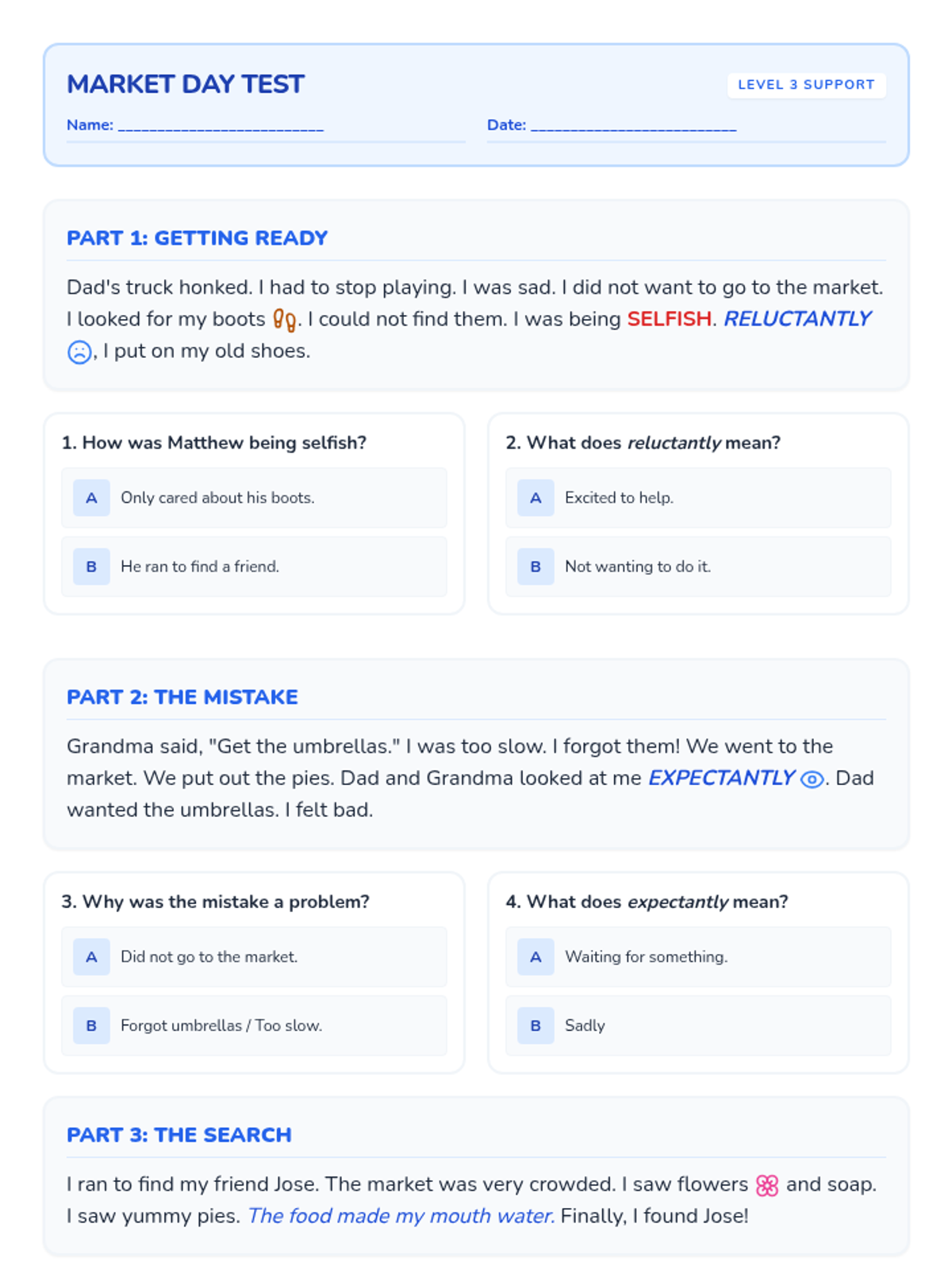
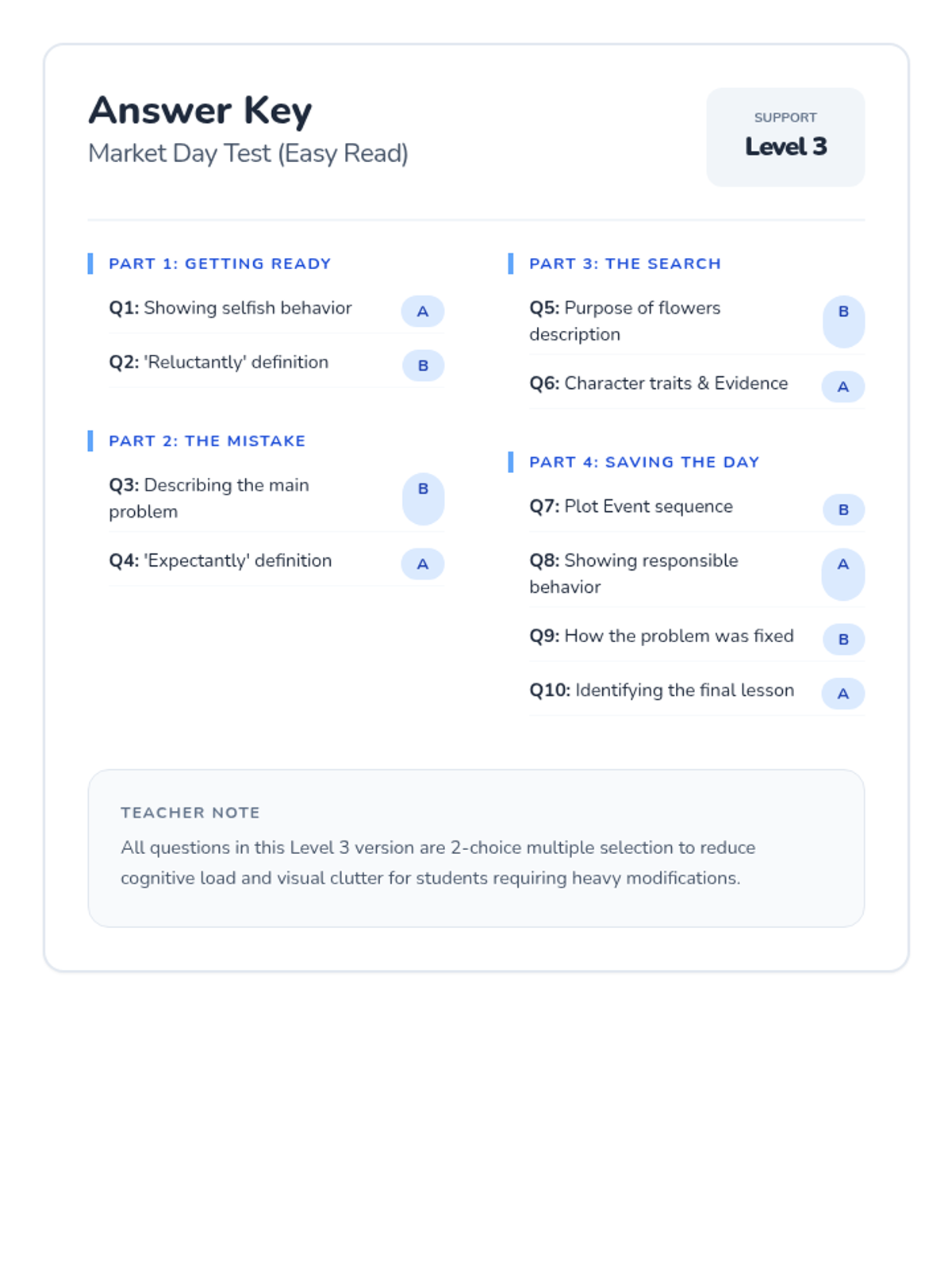
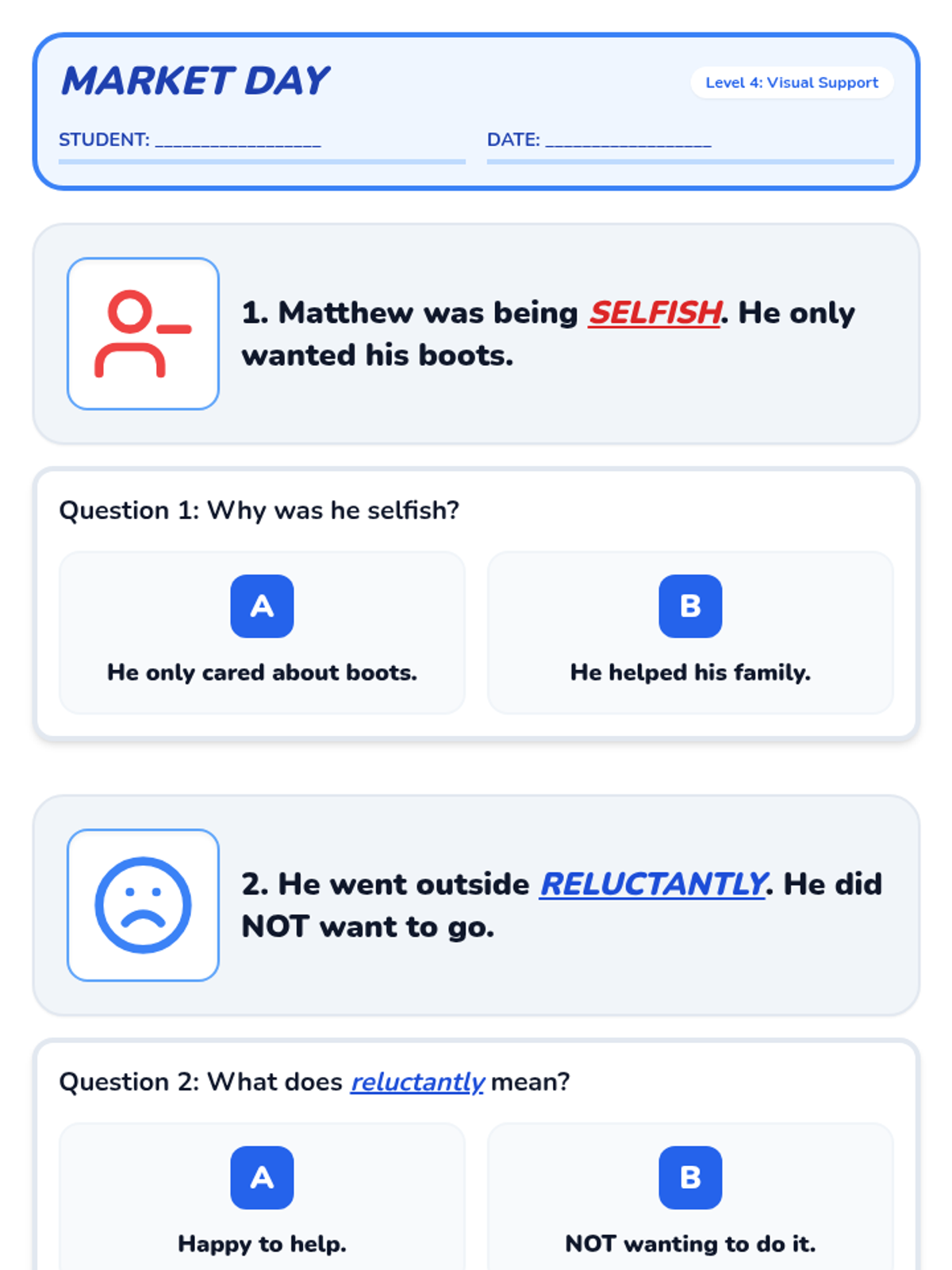
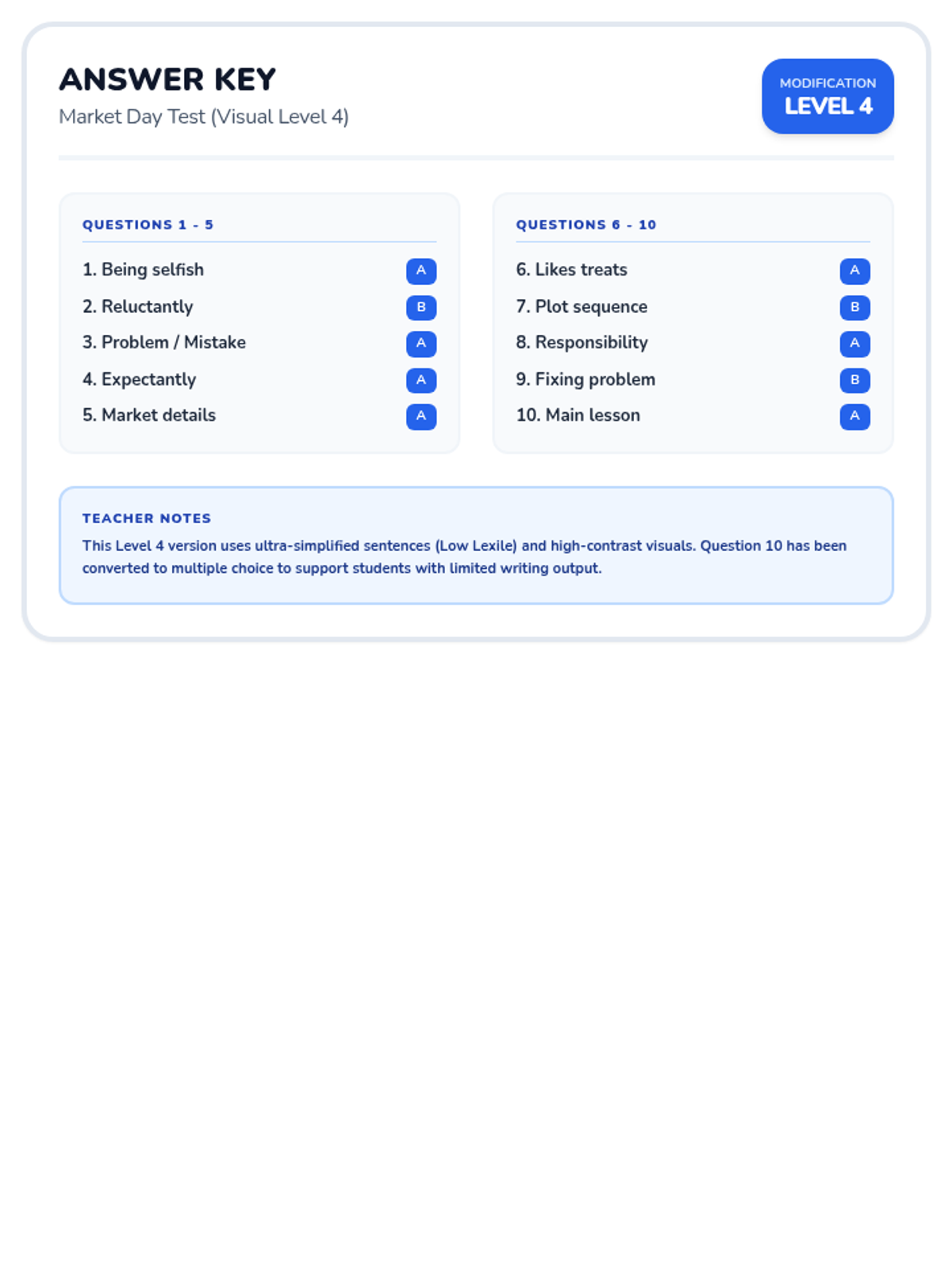
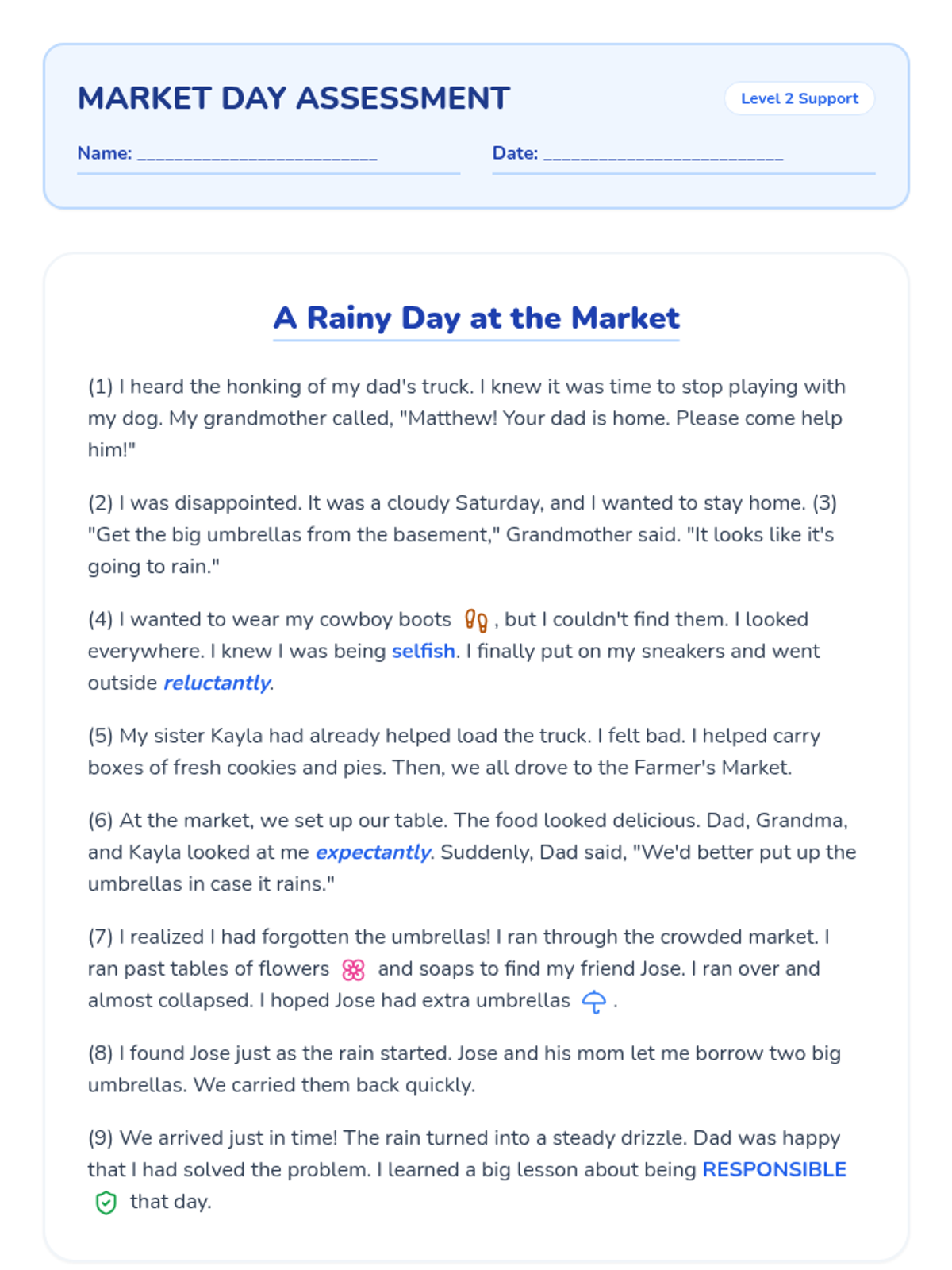
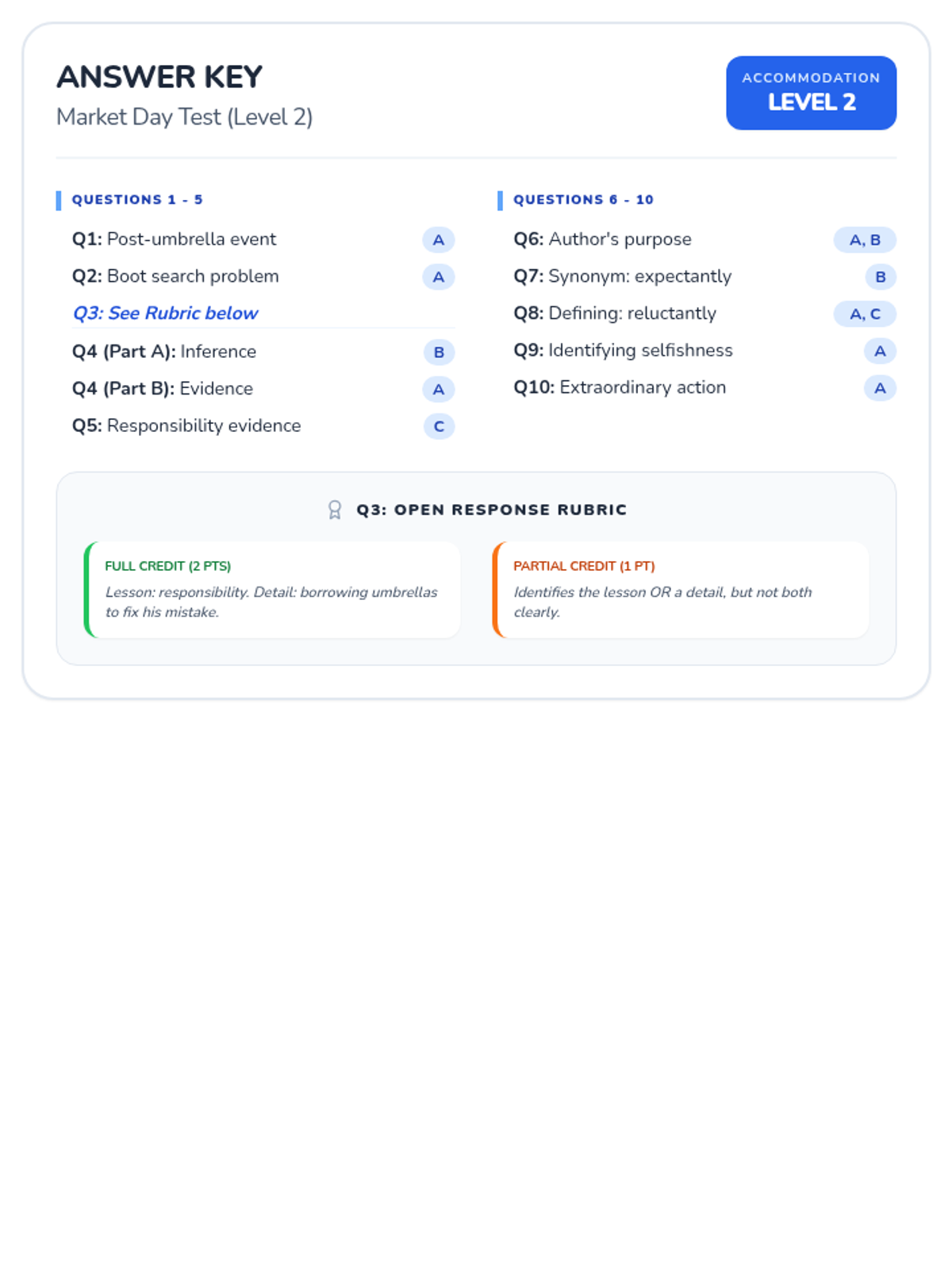
A modified assessment set for the 6th Grade ELA Unit 4 test, specifically designed for students with IEPs. The materials include a simplified reading passage, reduced answer choices, and visual vocabulary supports.
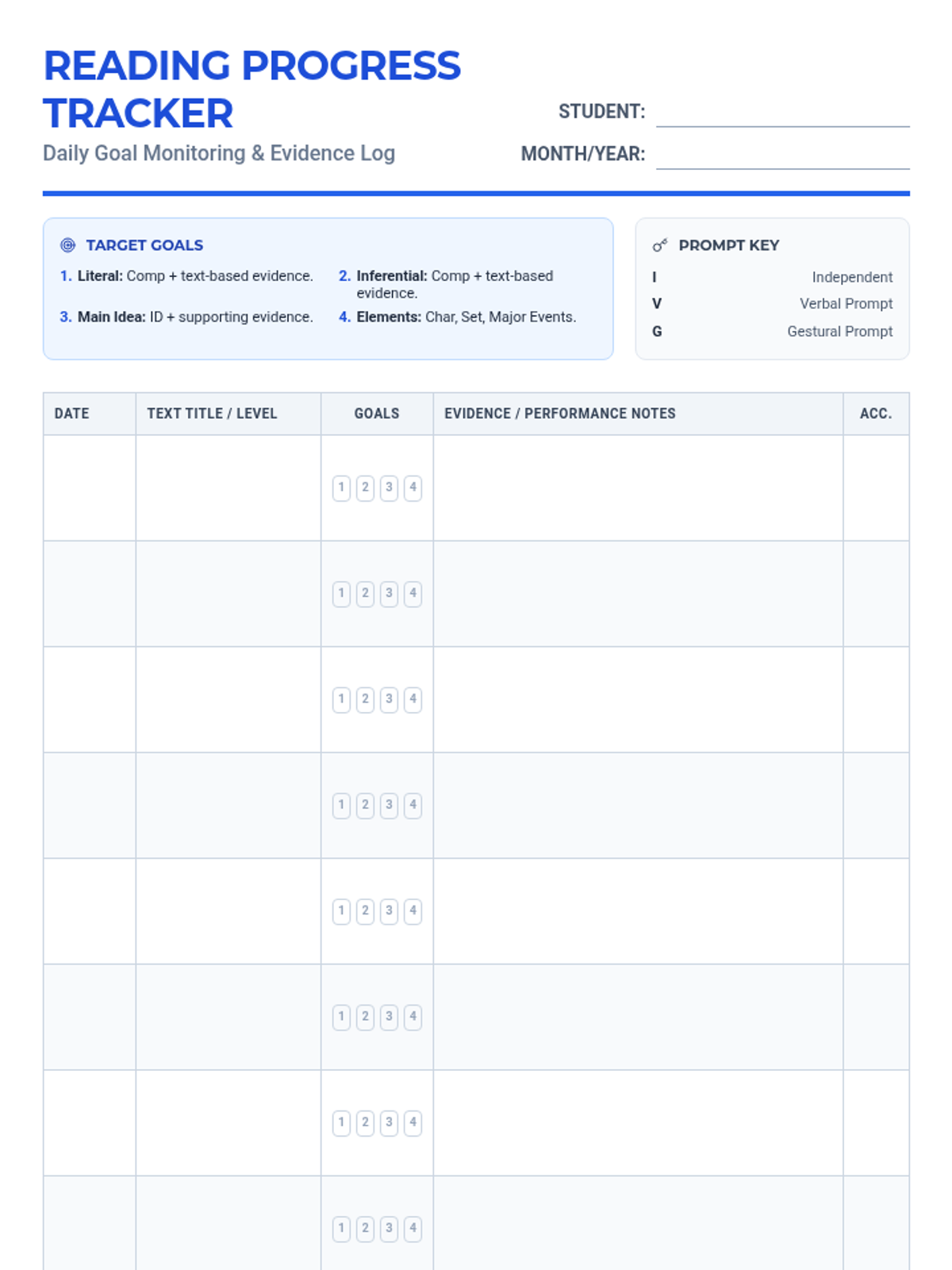
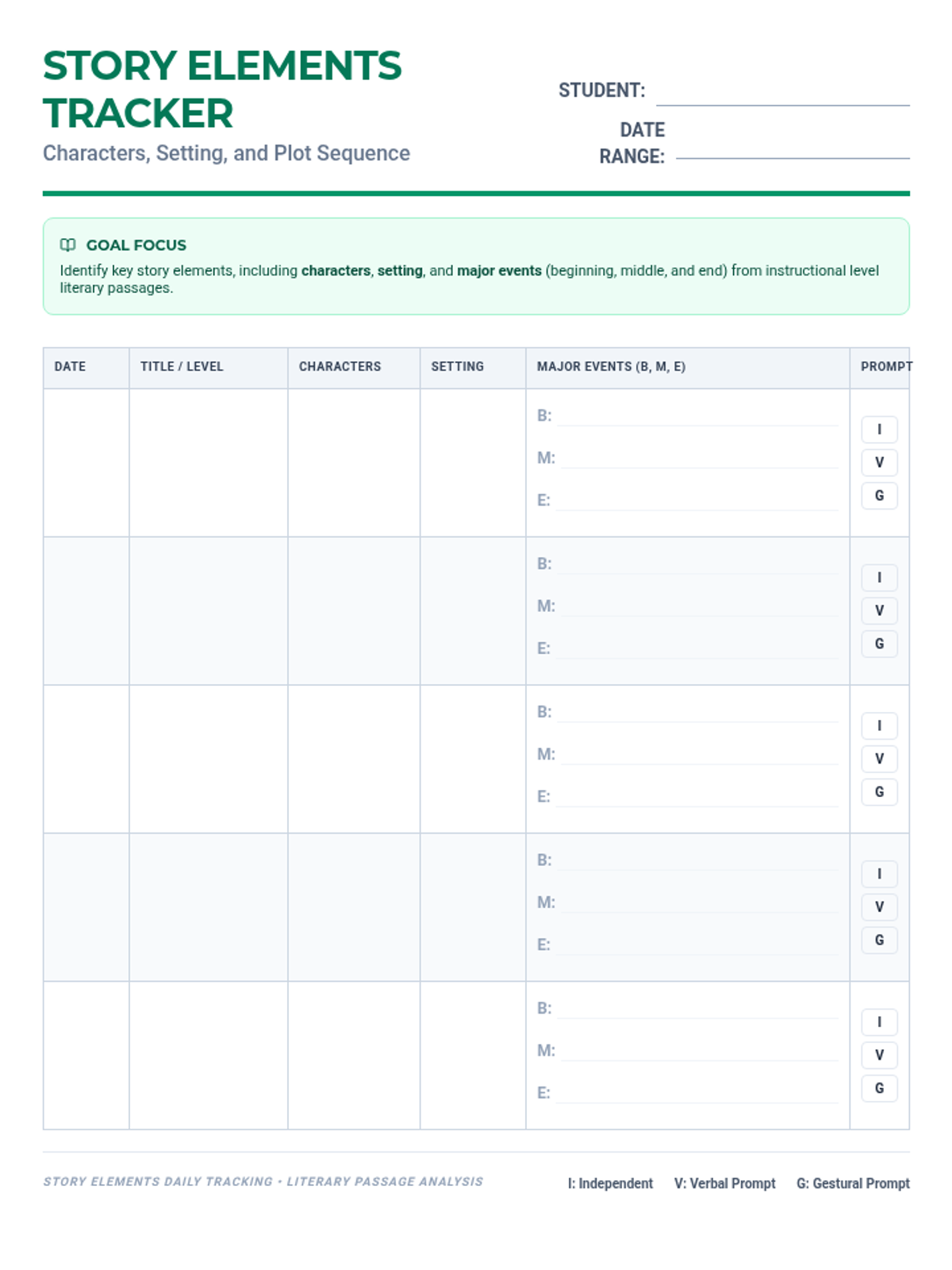
A collection of professional data tracking sheets for monitoring specific reading comprehension goals, including literal, inferential, and story element identification.
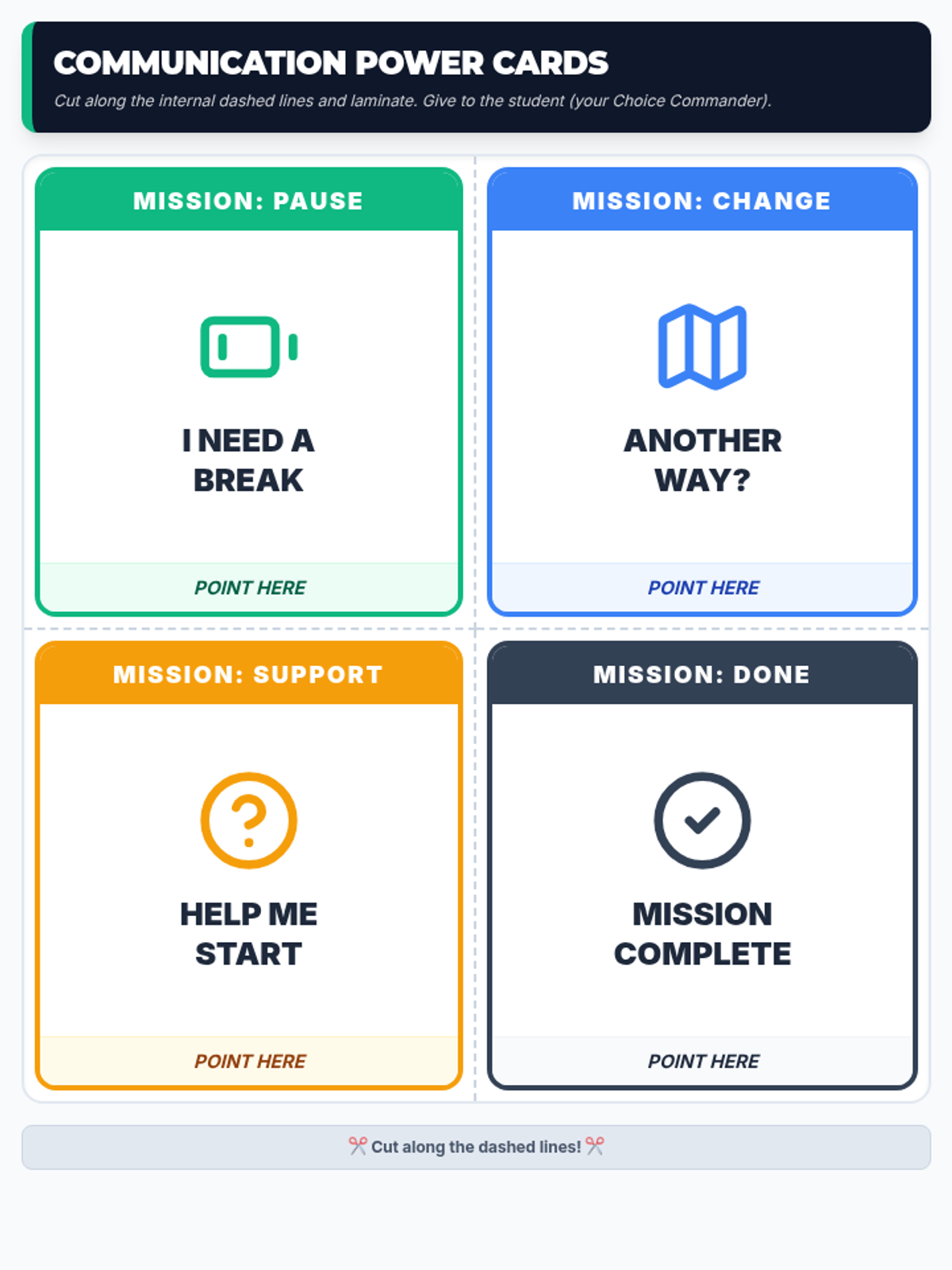
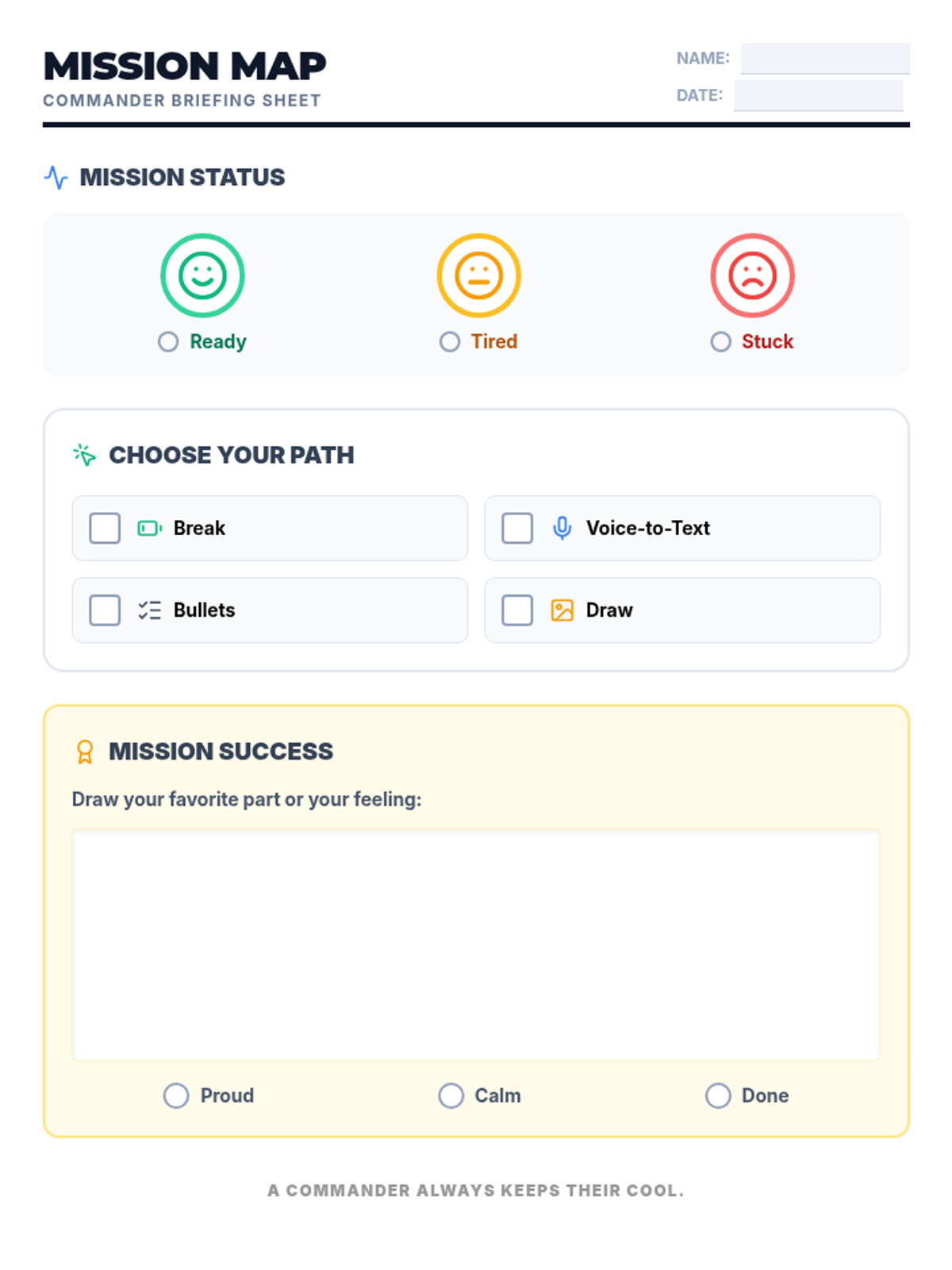
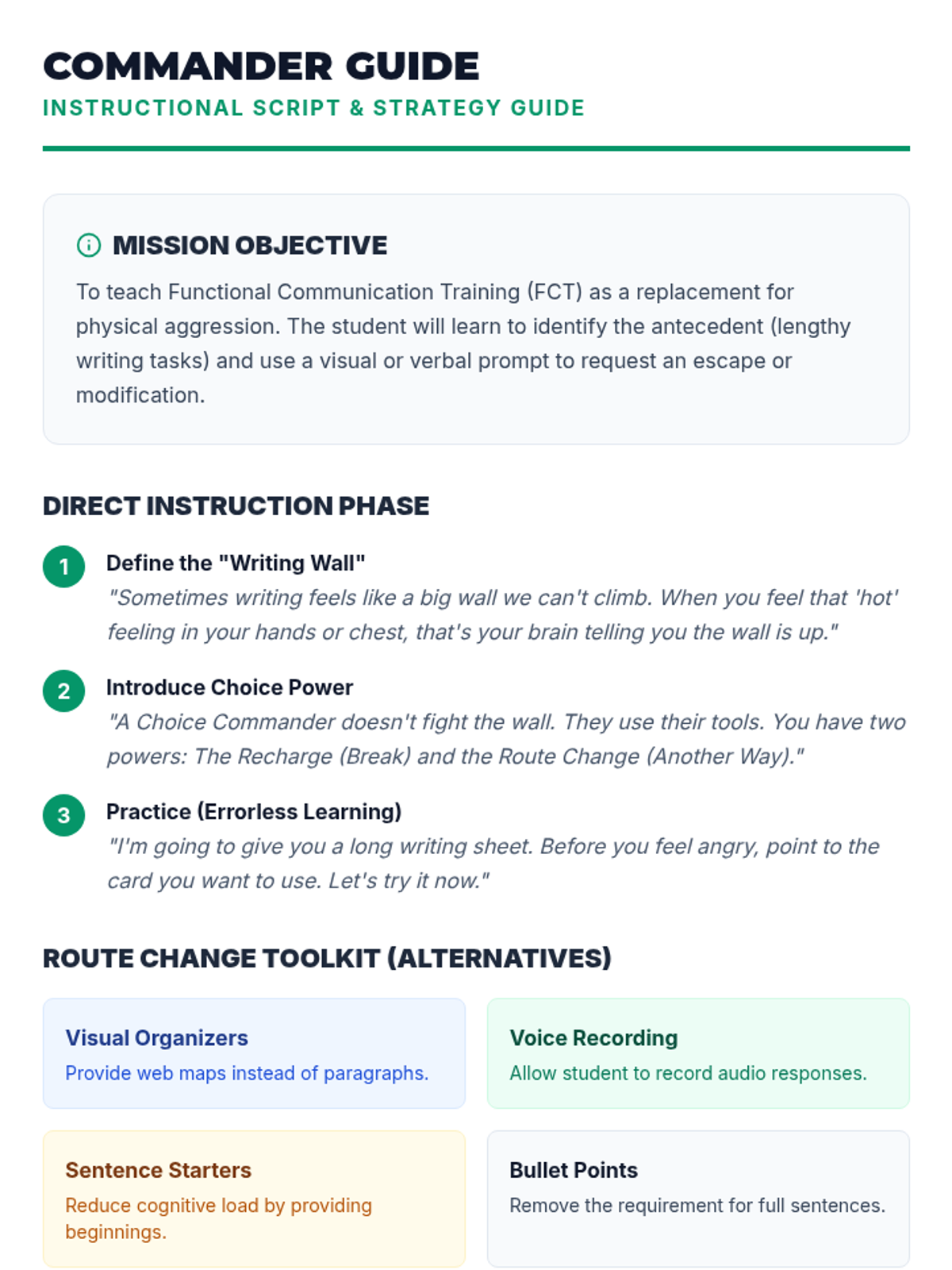
A specialized lesson designed to teach functional communication skills to a student who experiences frustration with writing. The lesson focuses on identifying 'writing walls' and using specific replacement behaviors—requesting a break or an alternative task—to maintain self-regulation.
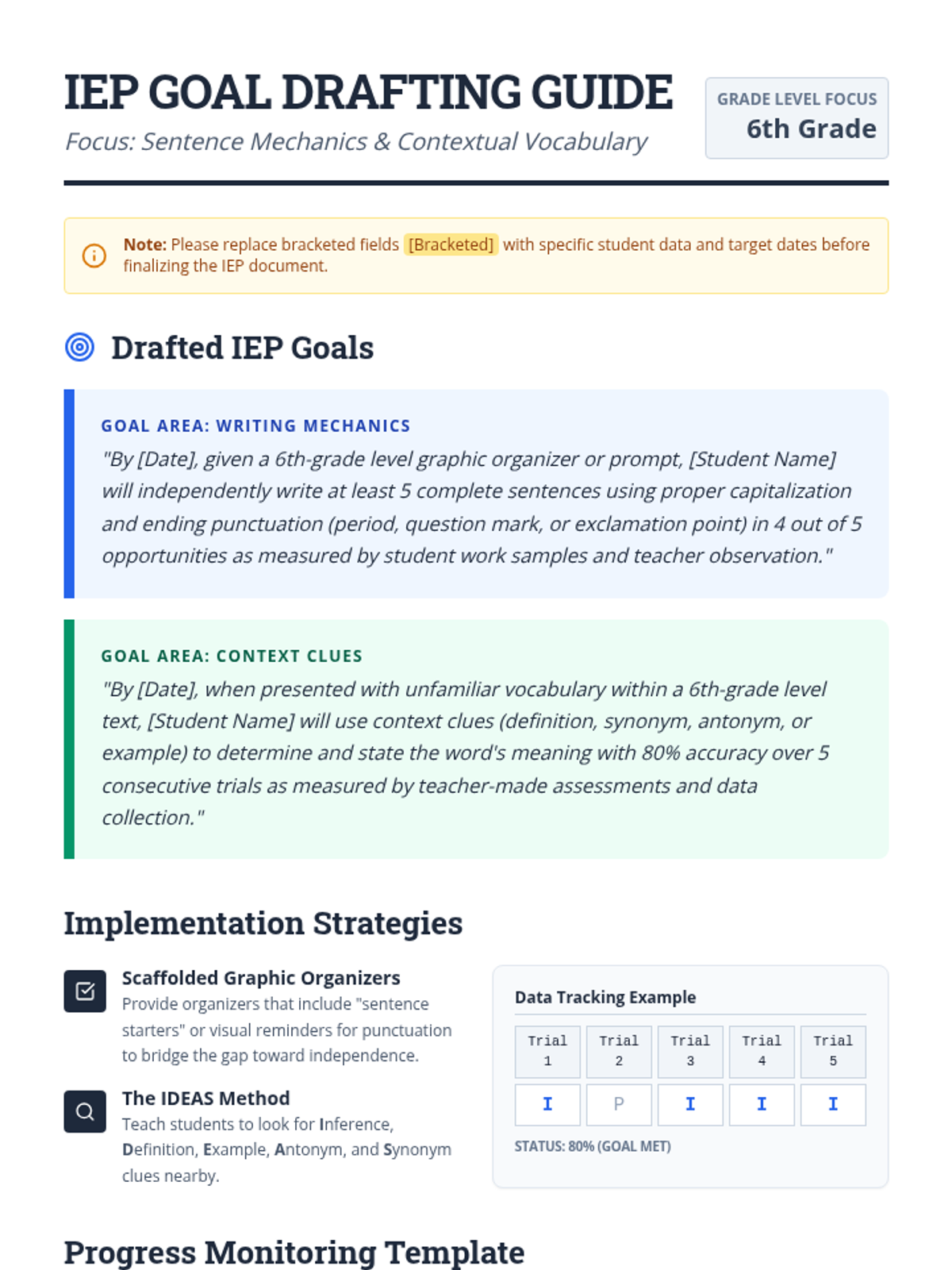
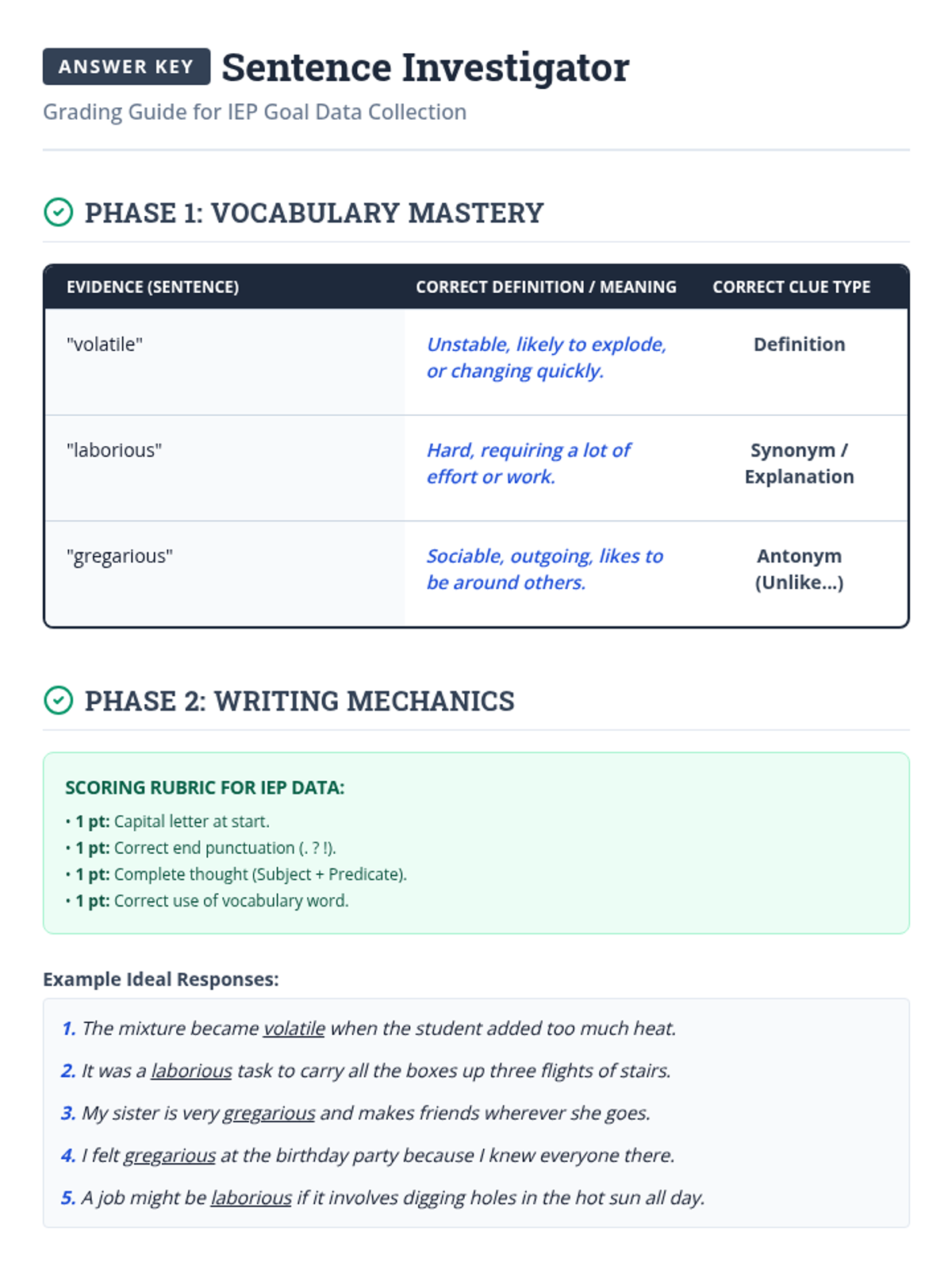
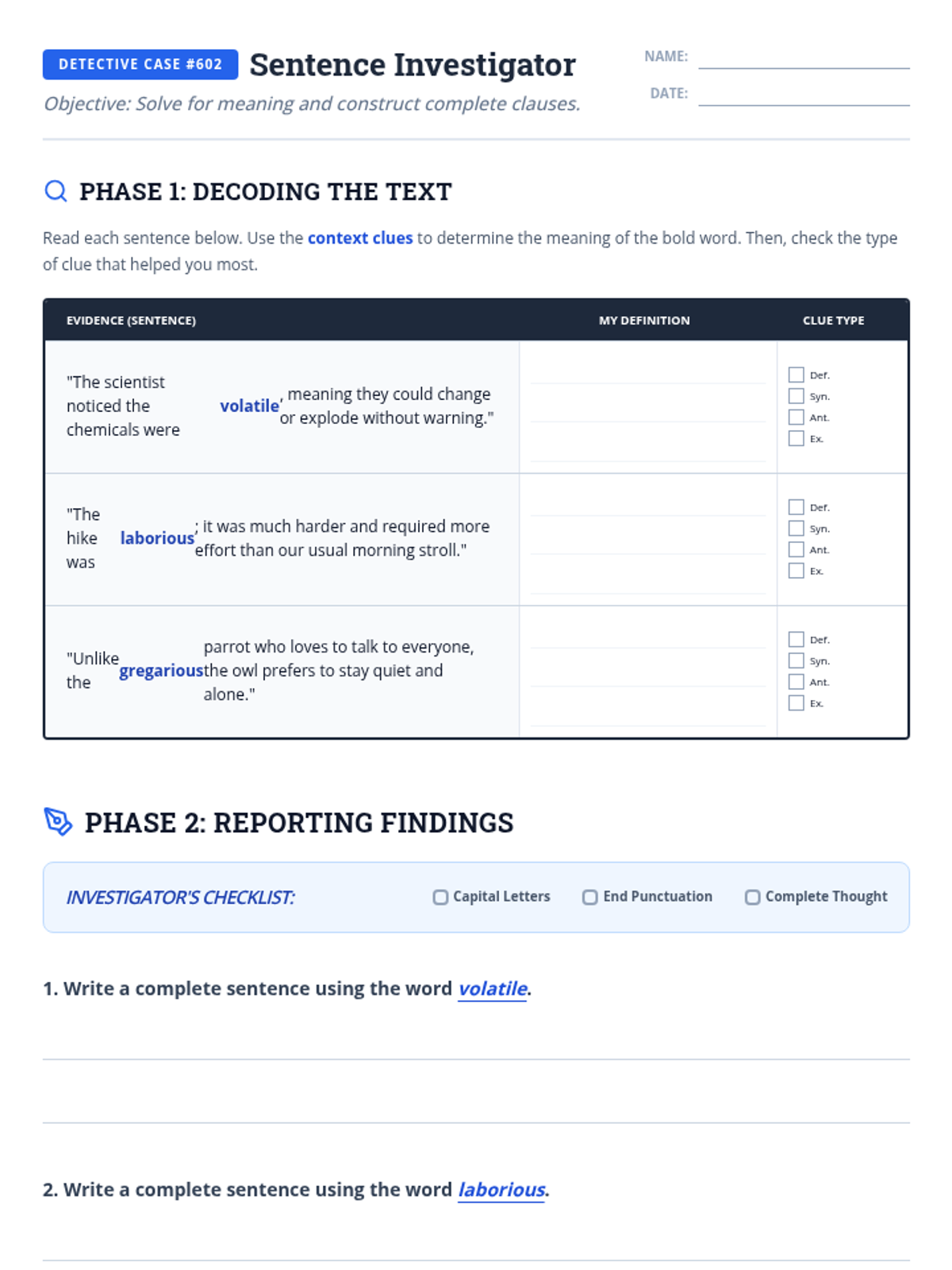
A targeted lesson on using context clues to define academic vocabulary and applying those words in syntactically correct, punctuated sentences.
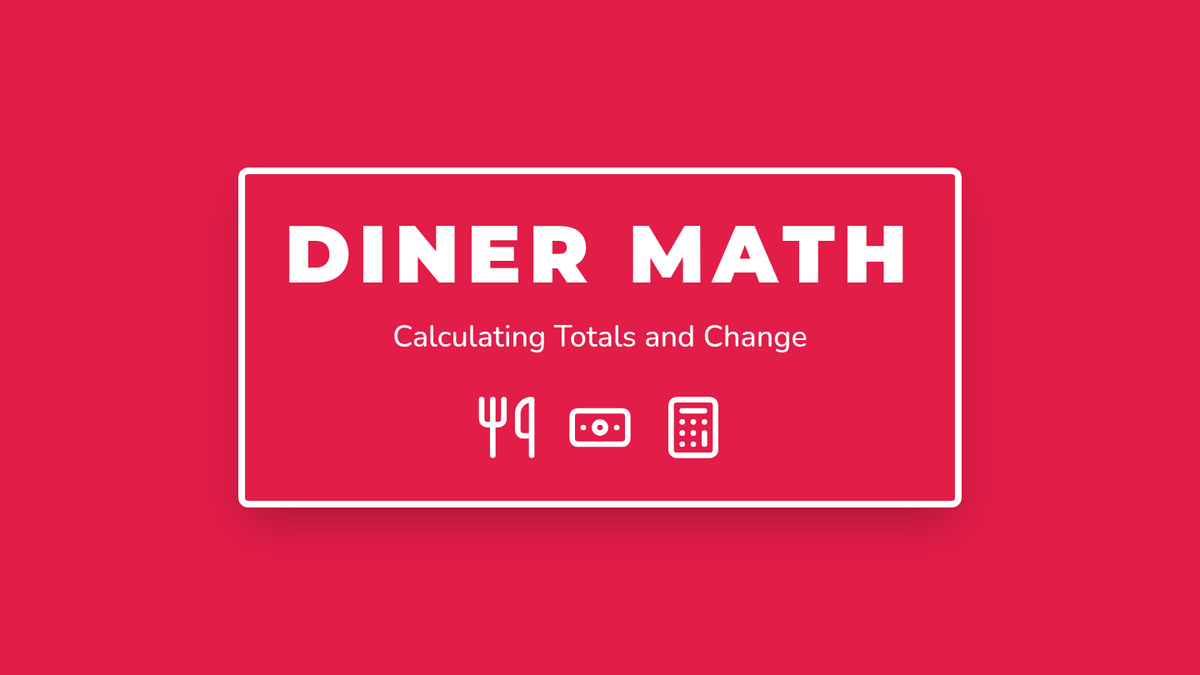
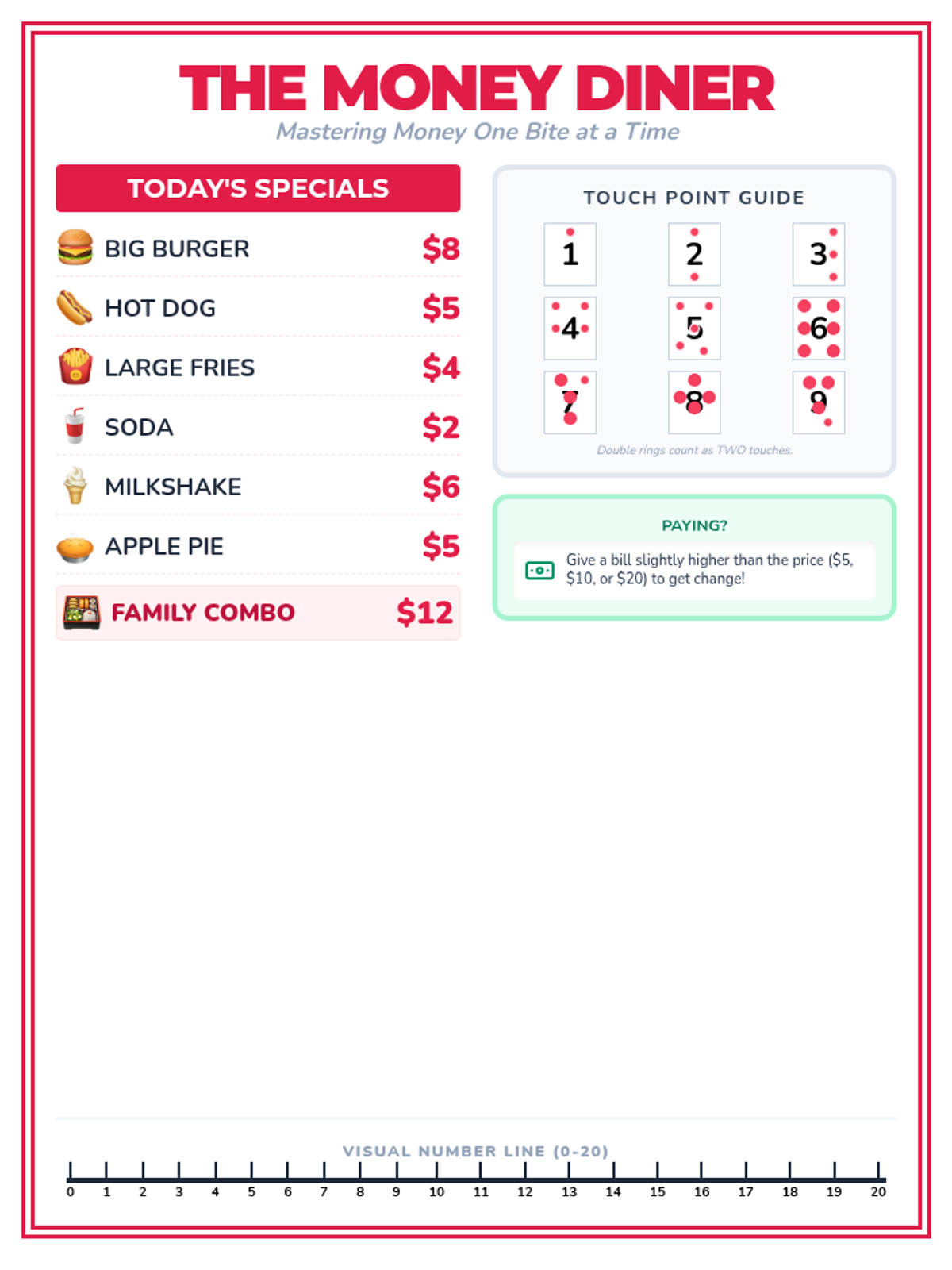
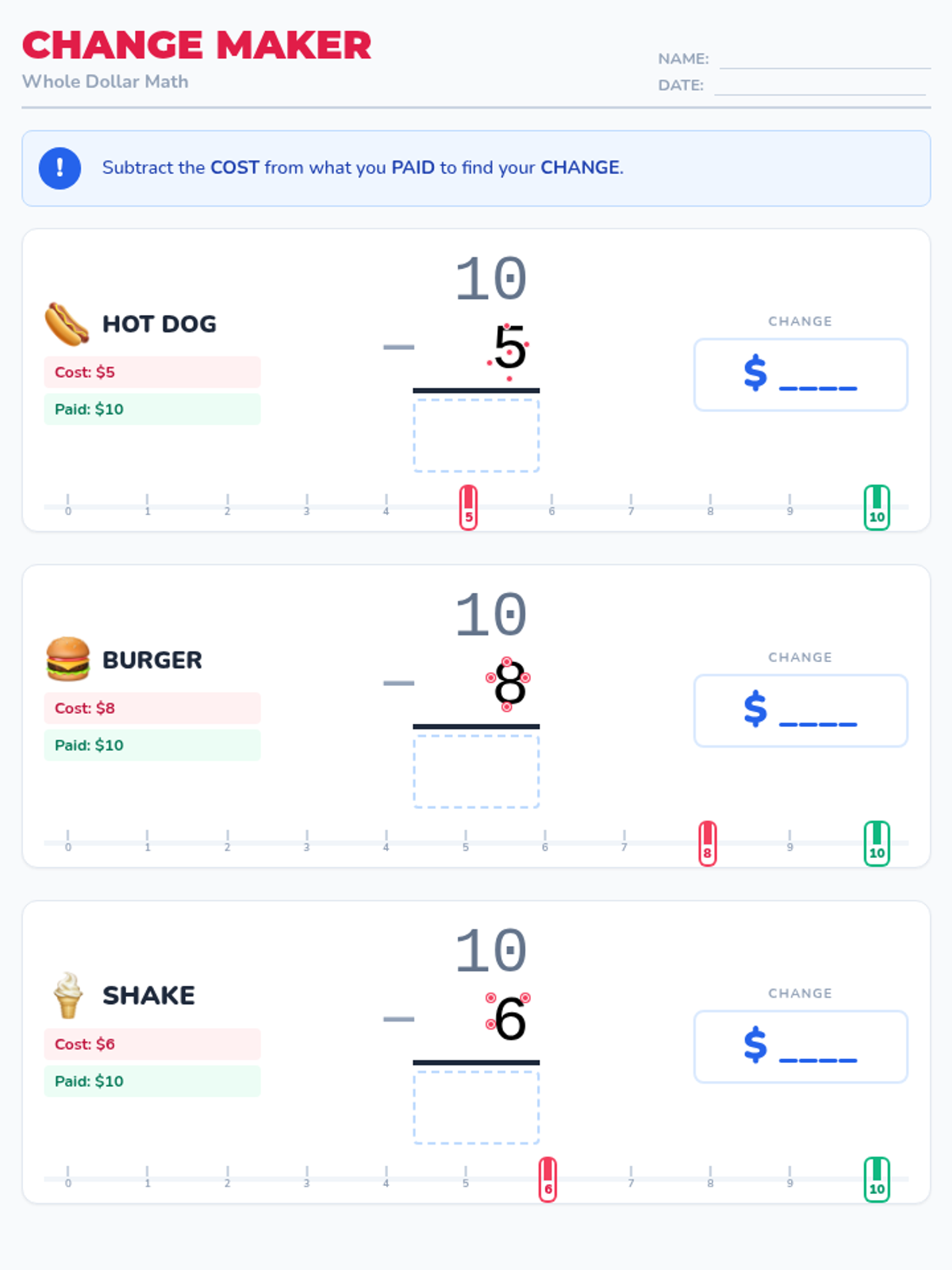
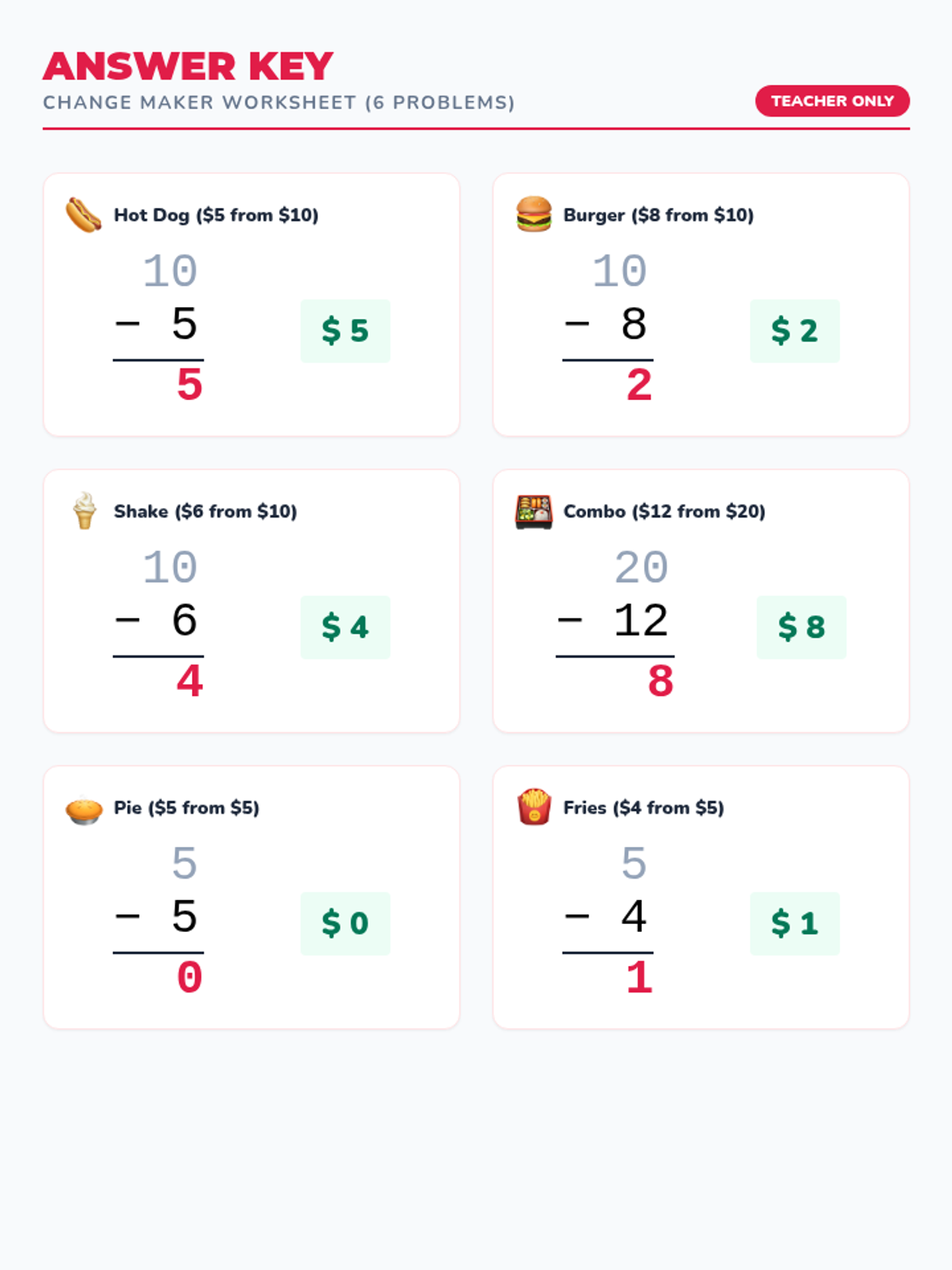
A functional math lesson focusing on calculating totals and change using whole dollar amounts. Designed with IEP supports including touch-points, visual number lines, and step-by-step guides for independent living skills.
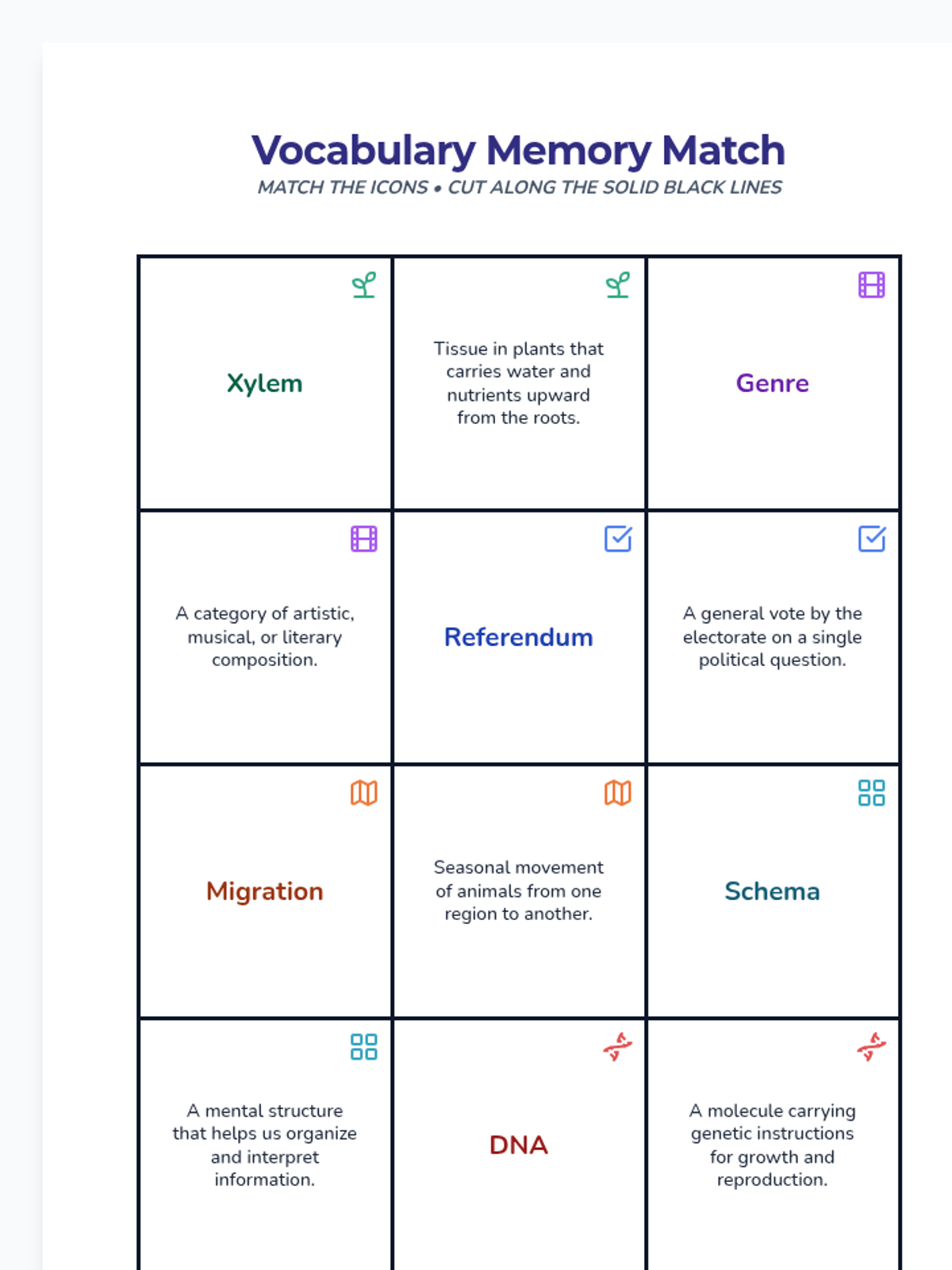
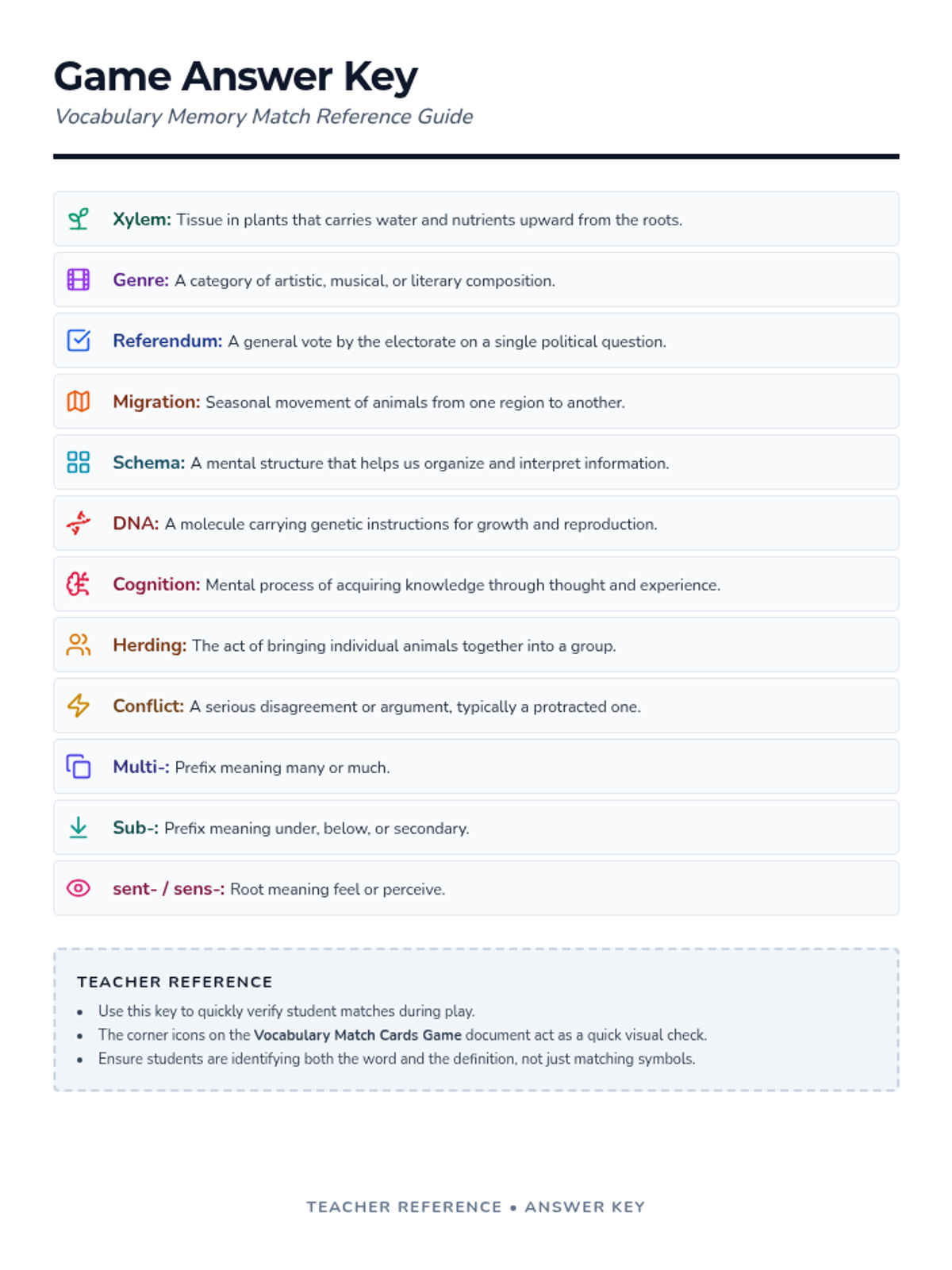
A memory matching game designed to reinforce vocabulary across various subjects including science, linguistics, and social studies. Students match words with their definitions using visual icon cues.
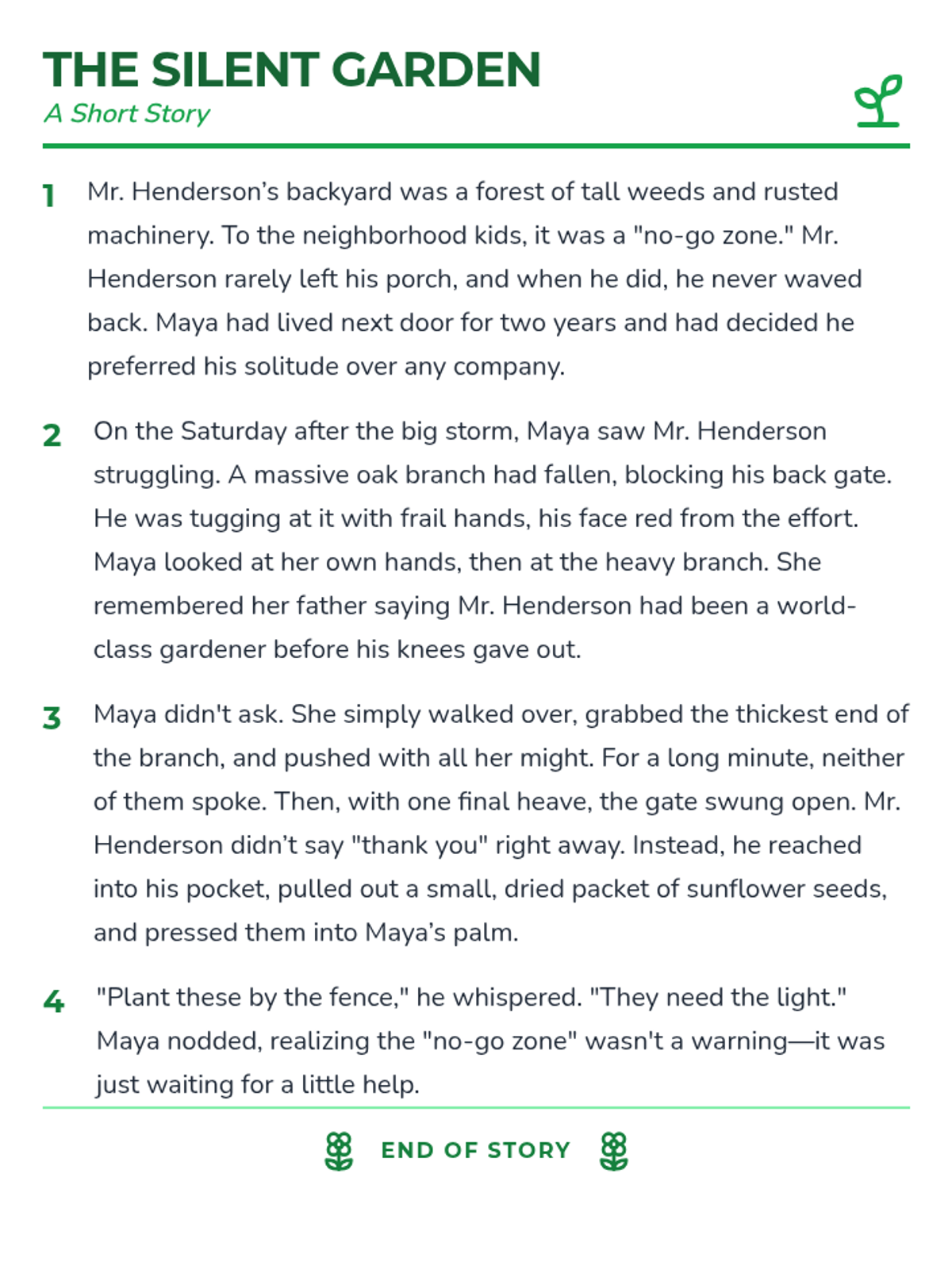
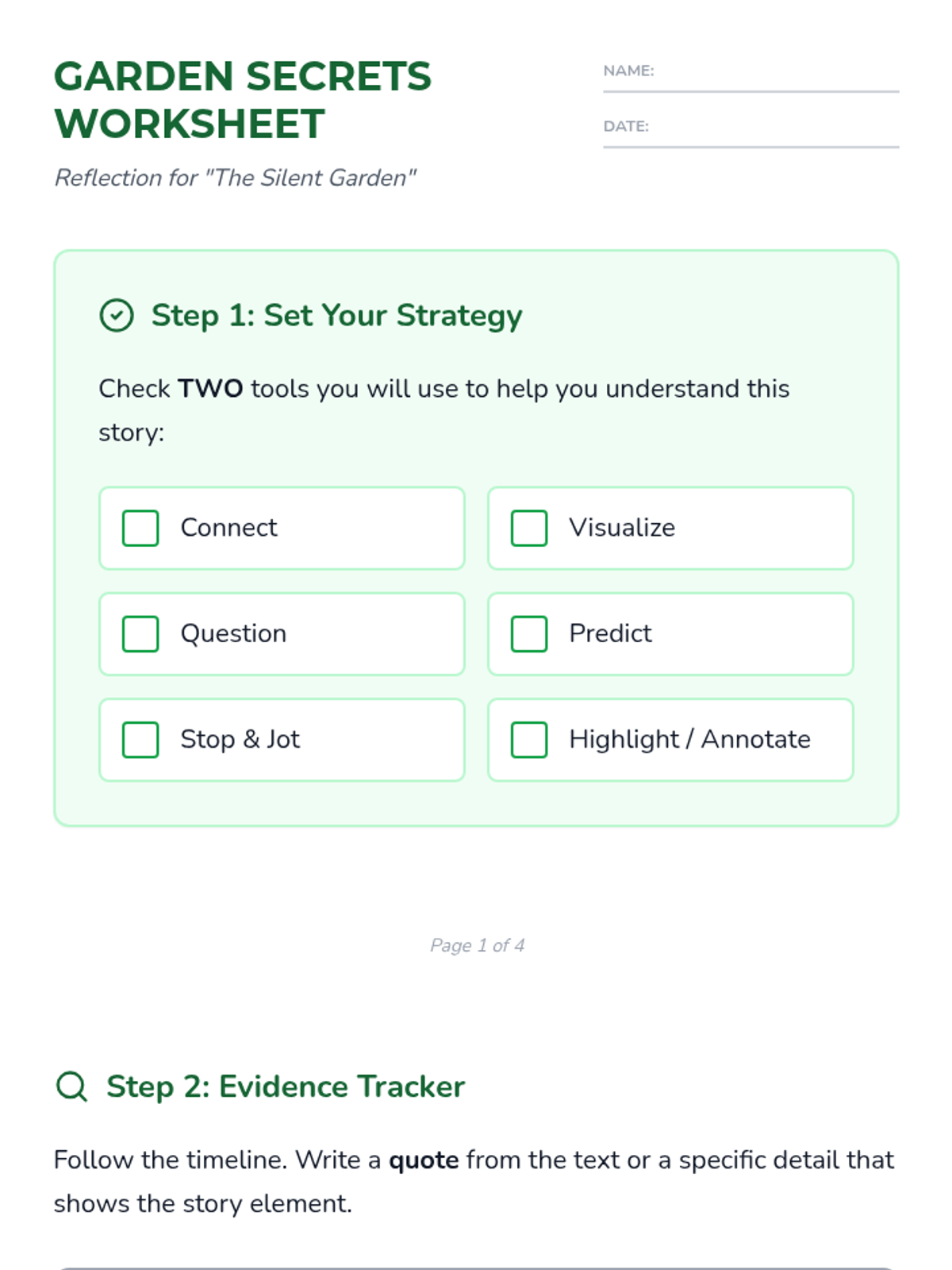
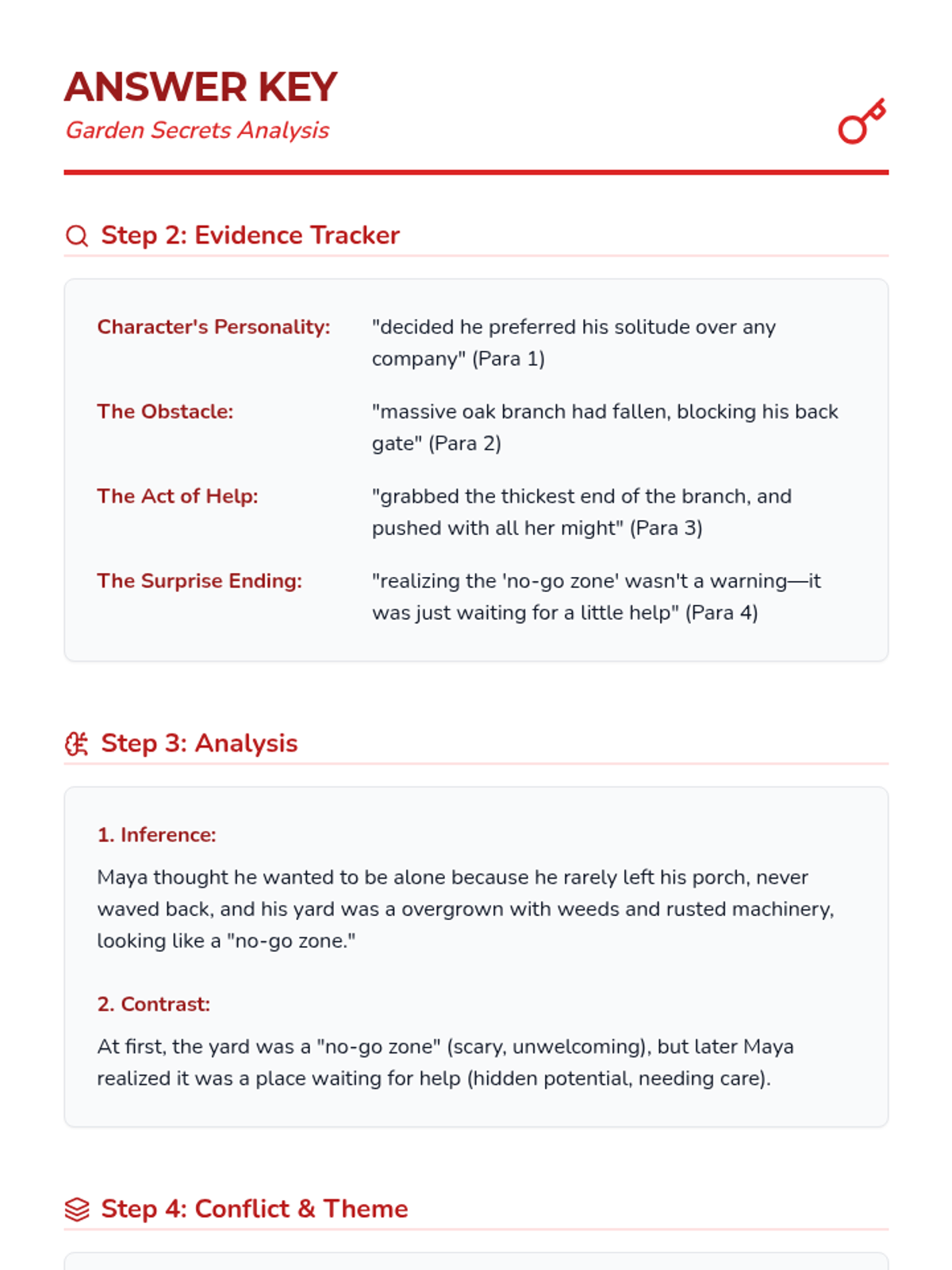
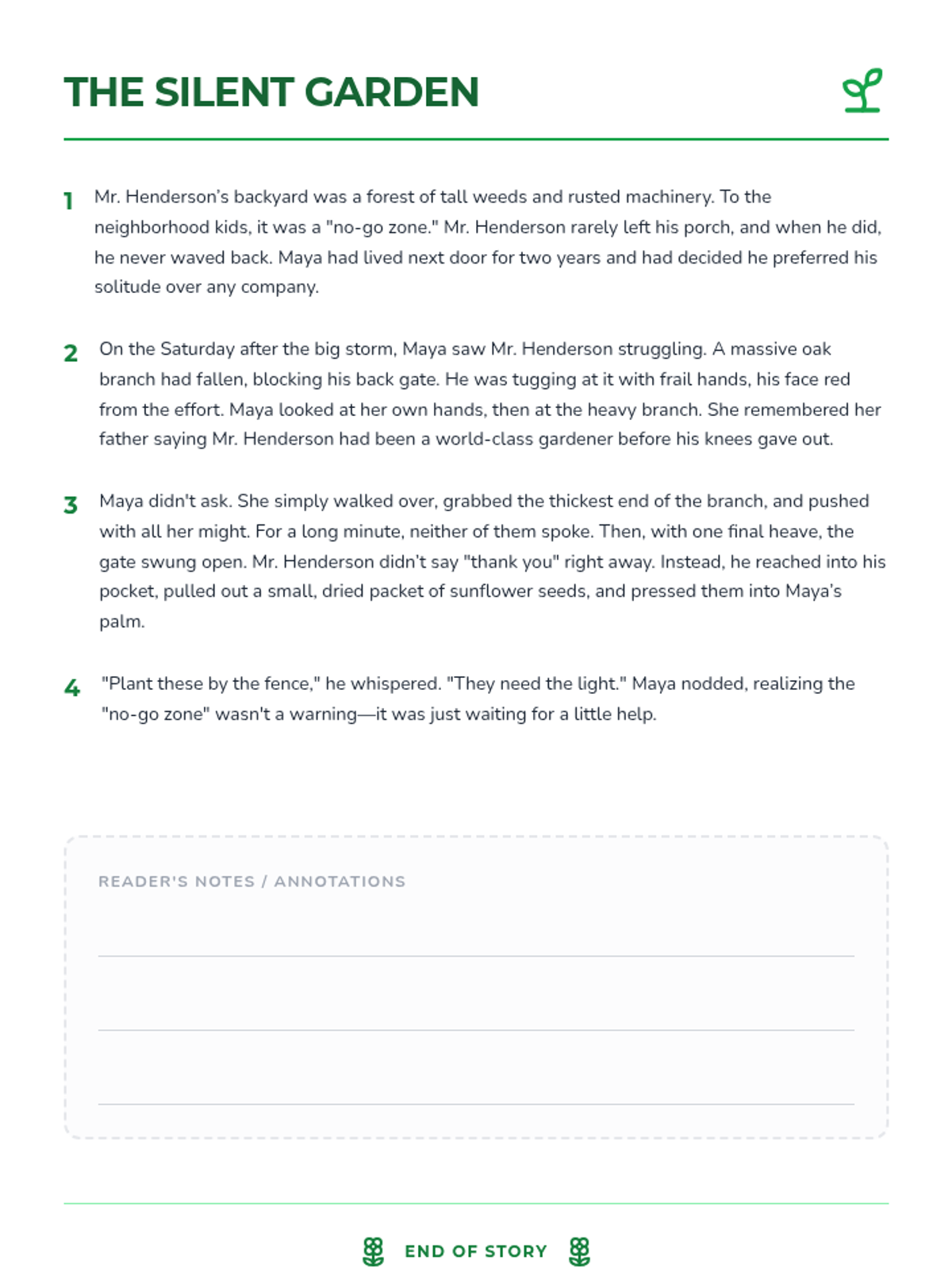
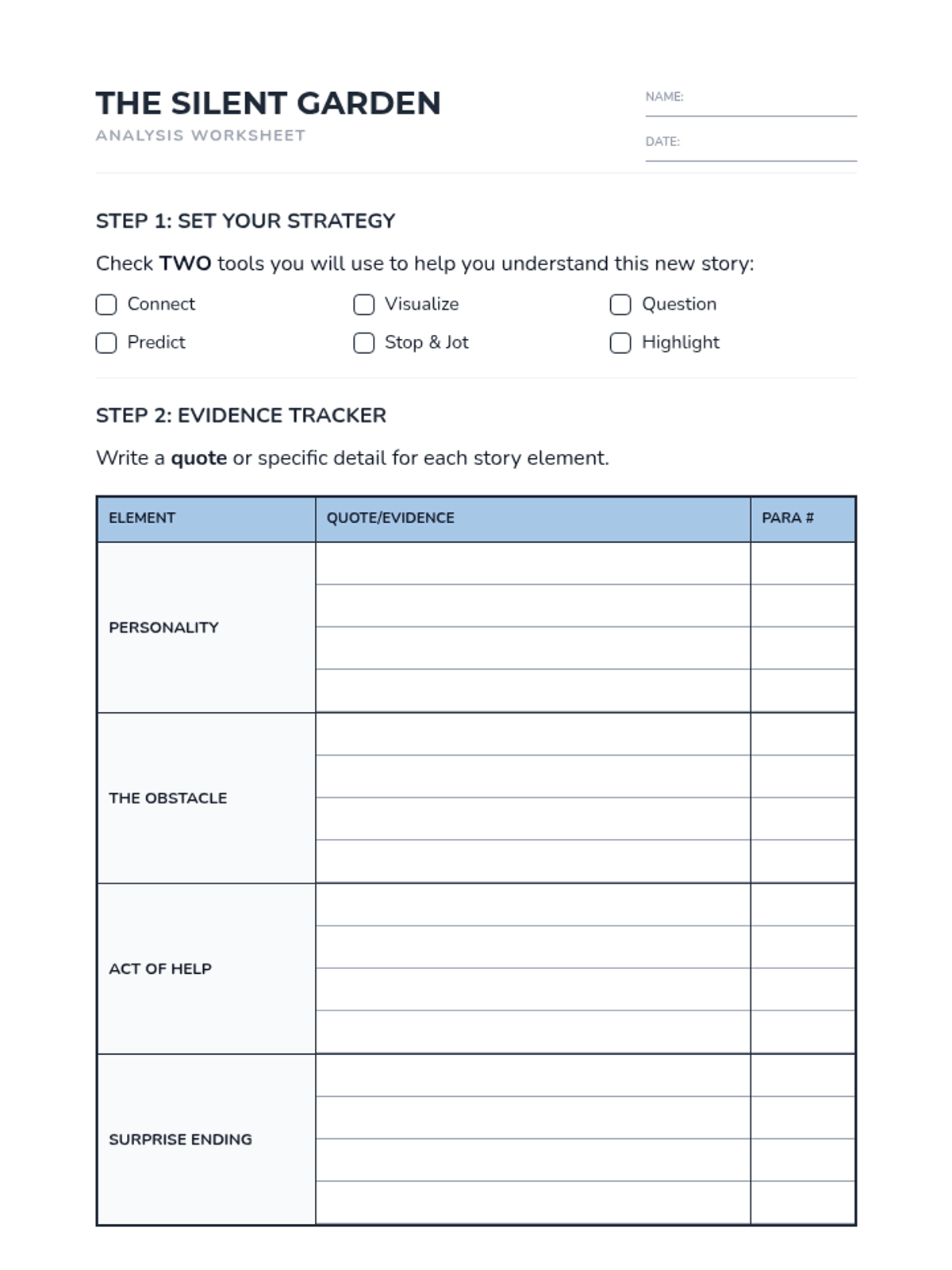
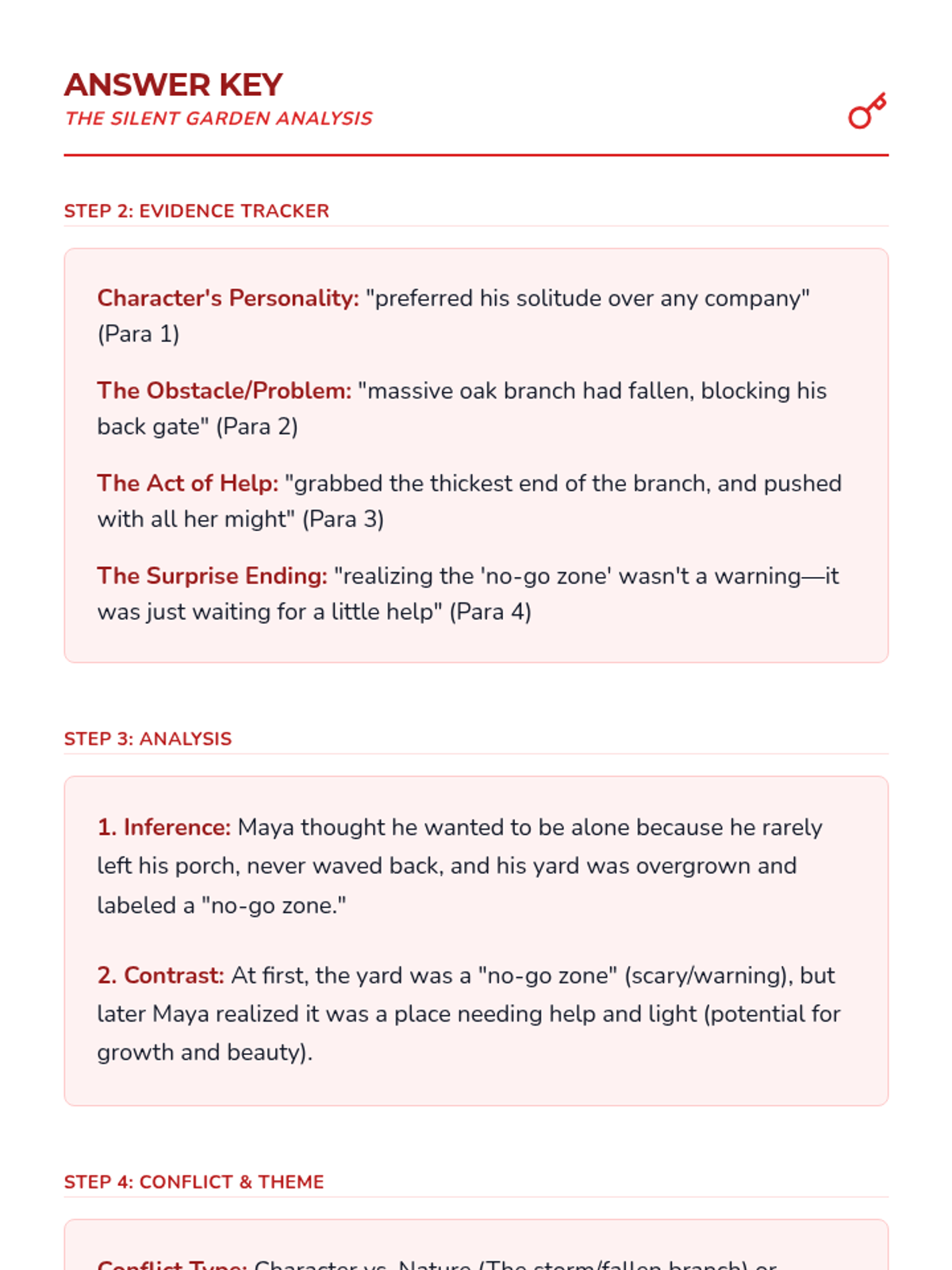
A reading comprehension lesson centered on 'The Silent Garden', focusing on character analysis, conflict types, and theme development with accommodations for special education needs.
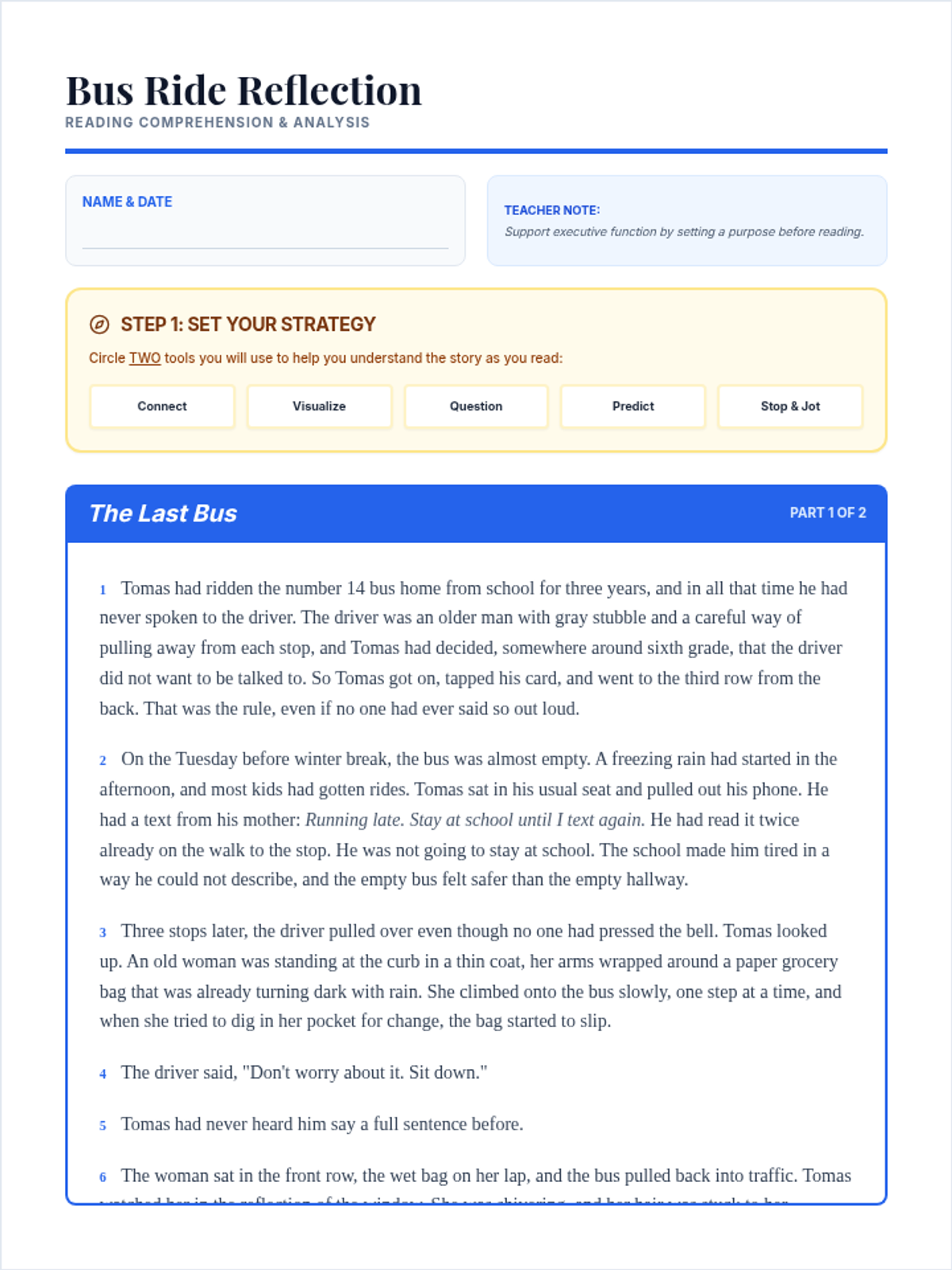
A reading comprehension assessment centered on the story 'The Last Bus', featuring scaffolded graphic organizers to support executive function and inferential thinking.
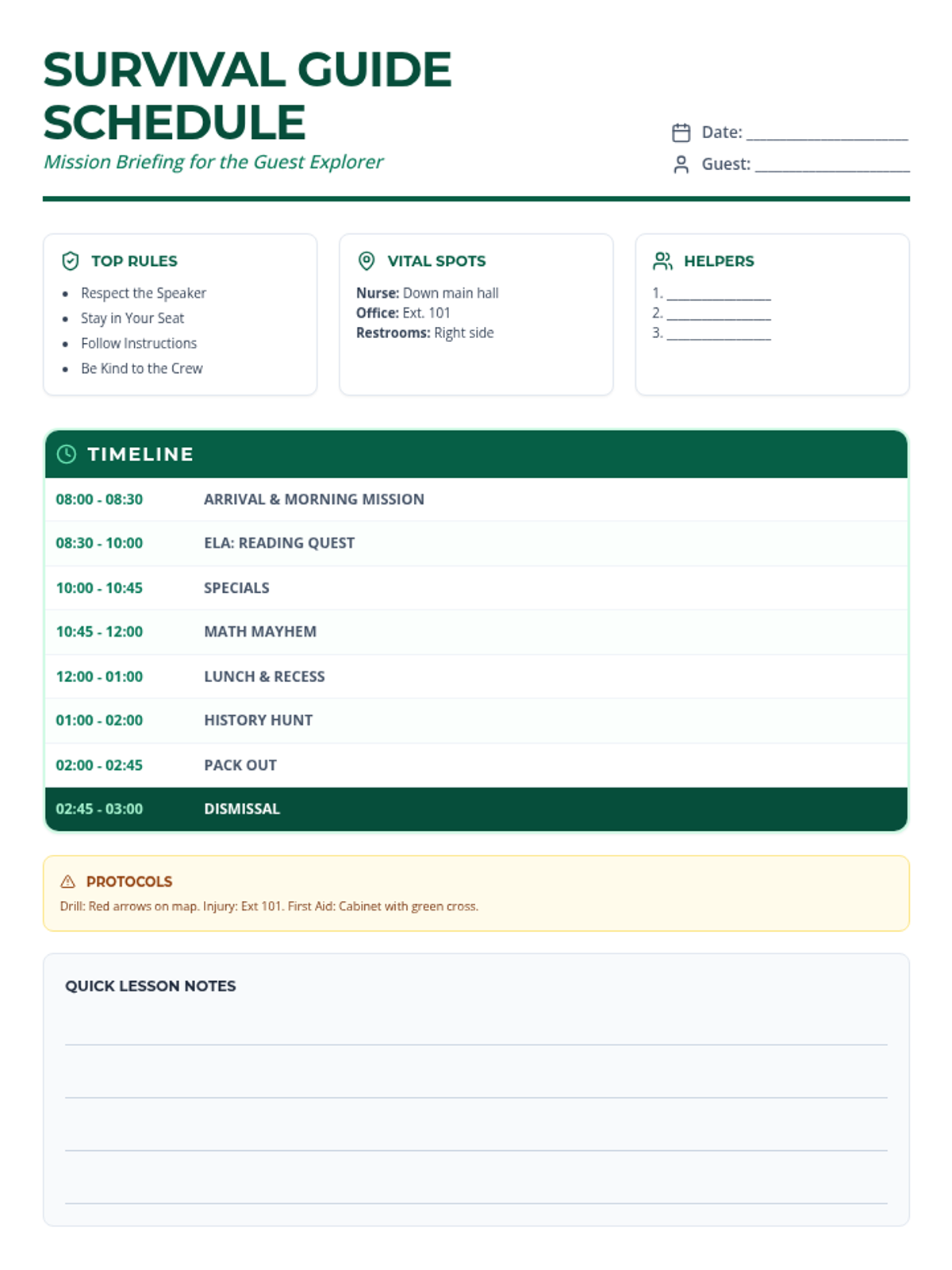
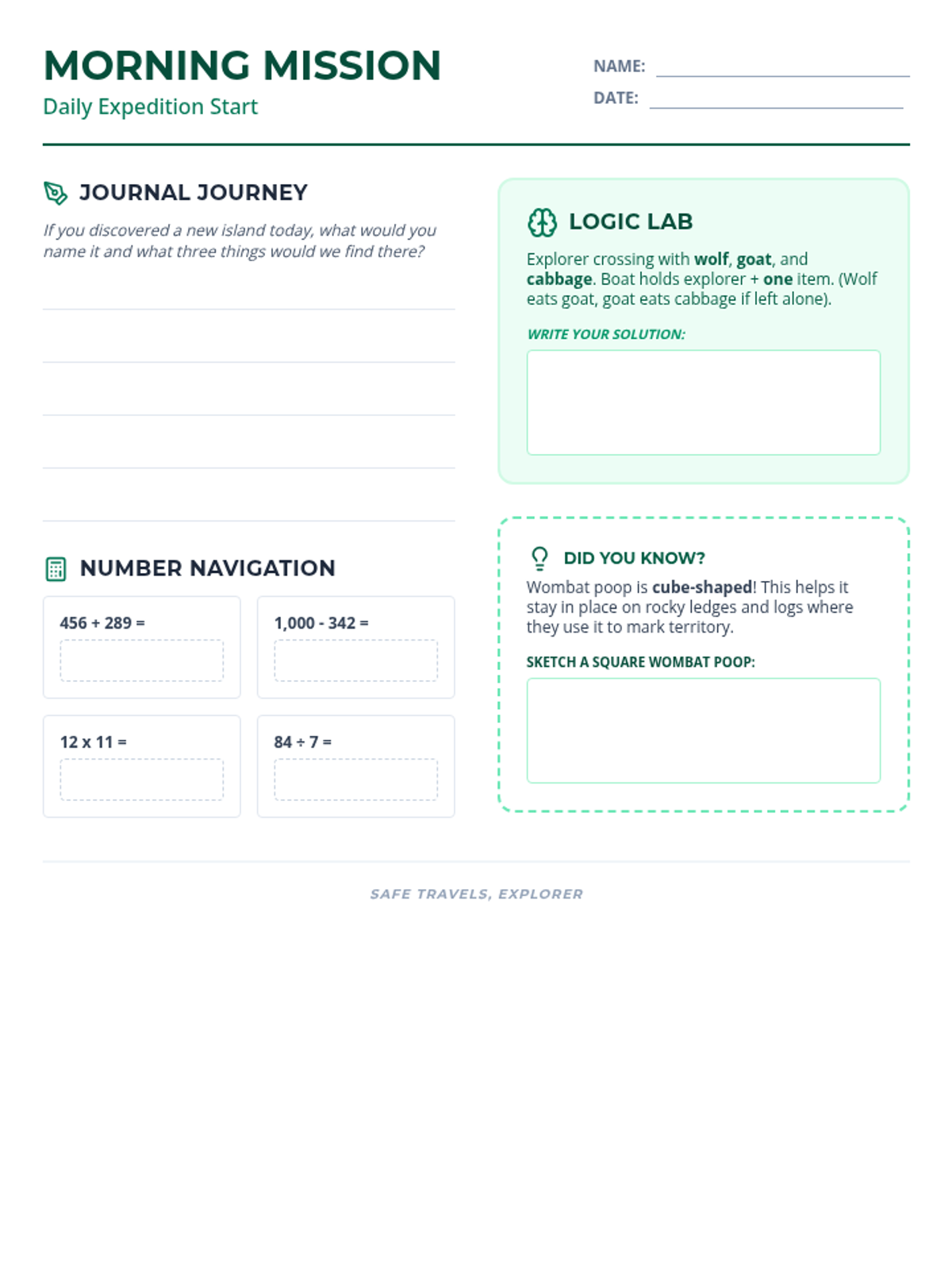
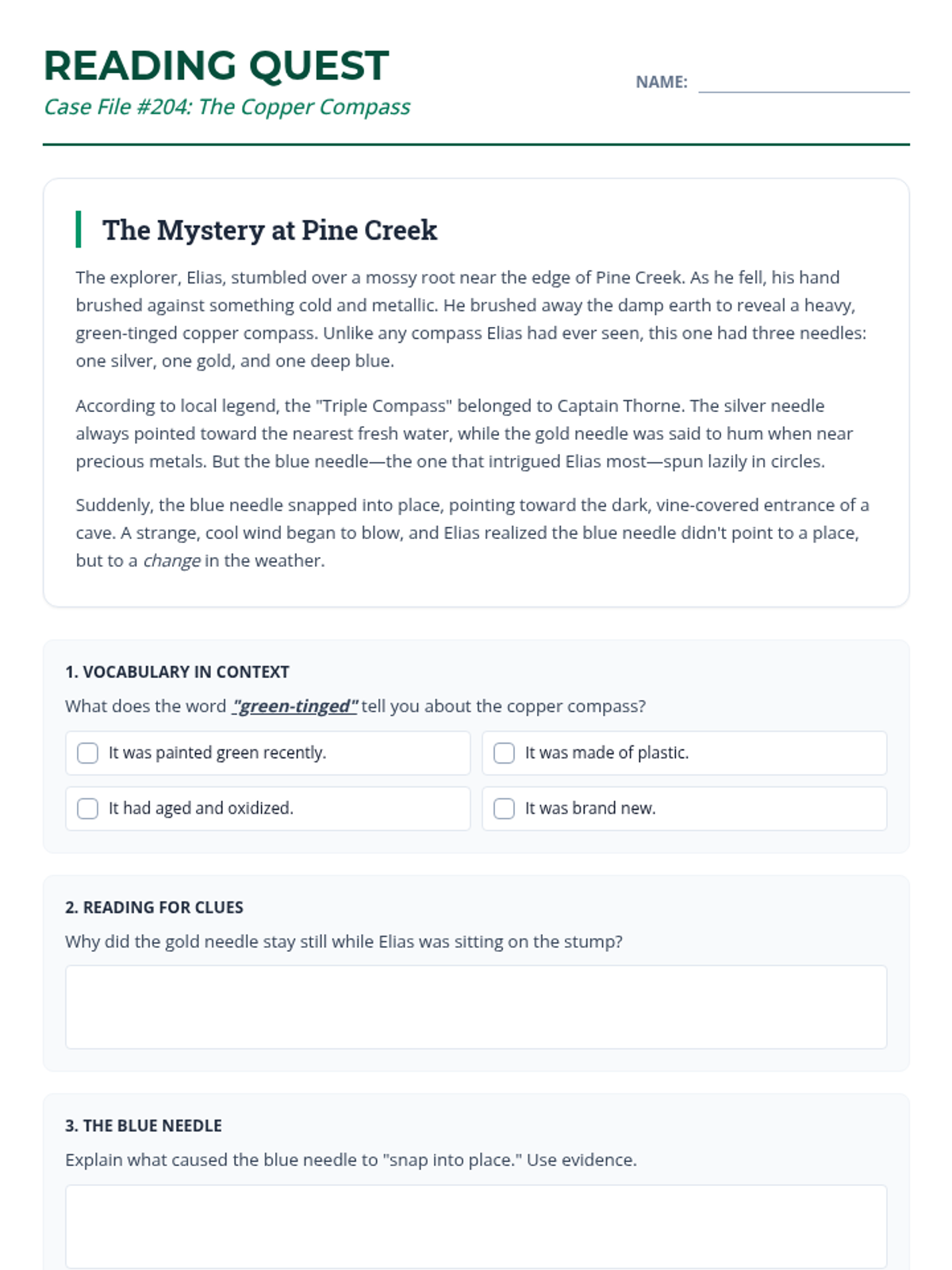
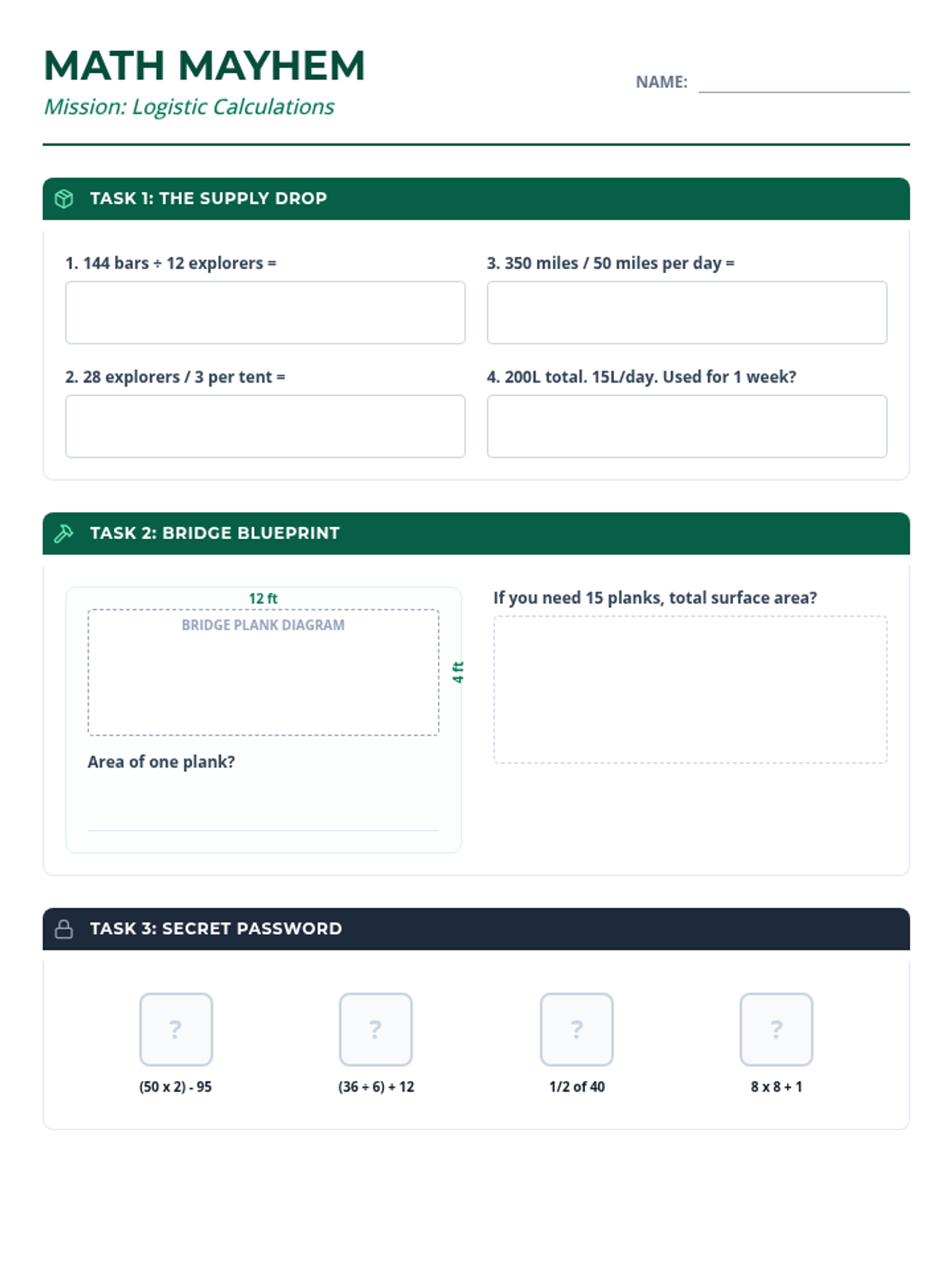
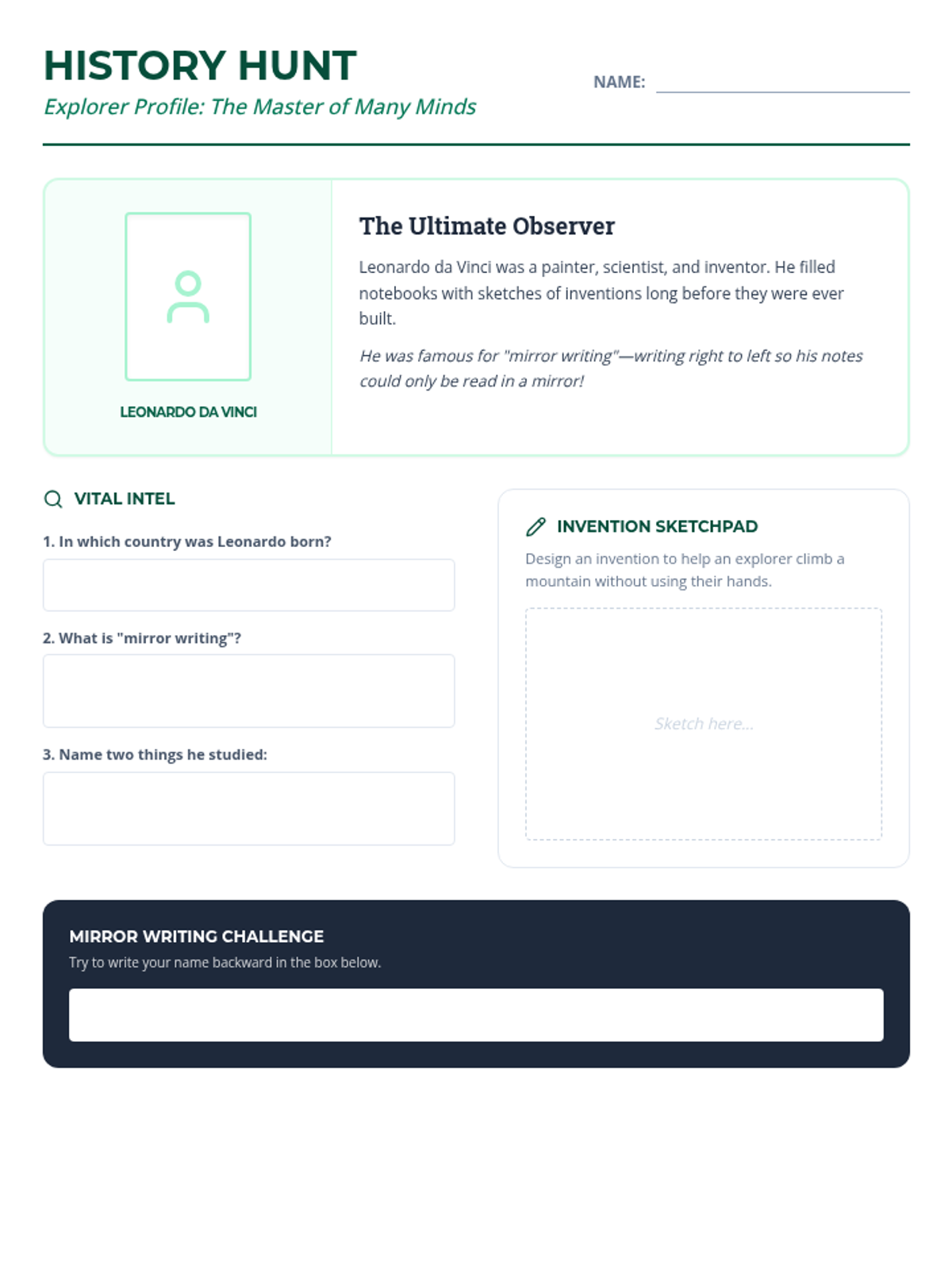
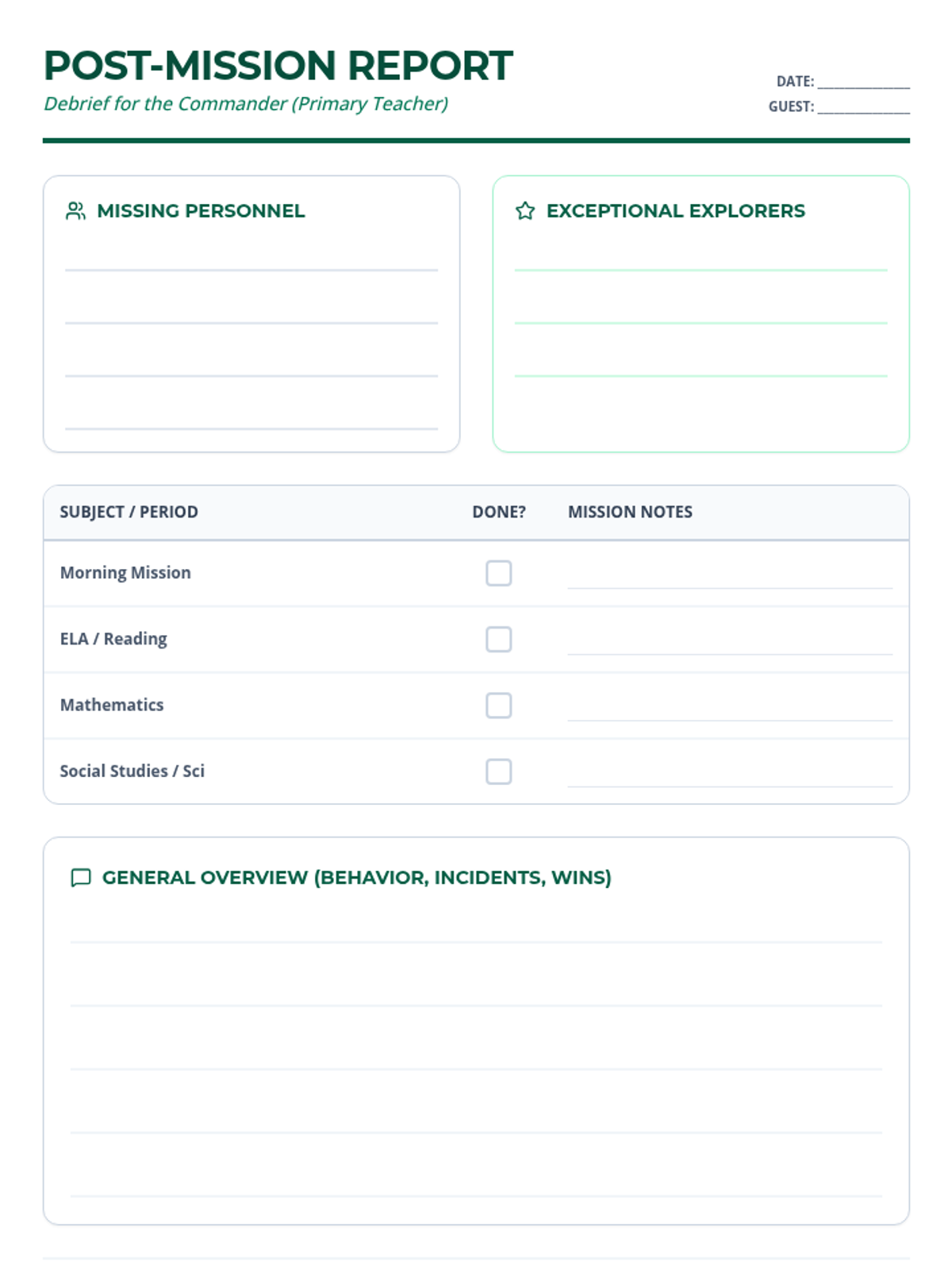
A comprehensive set of materials for a substitute teacher to manage a full school day, including a detailed schedule, morning work, core subject activities, and a reporting system.
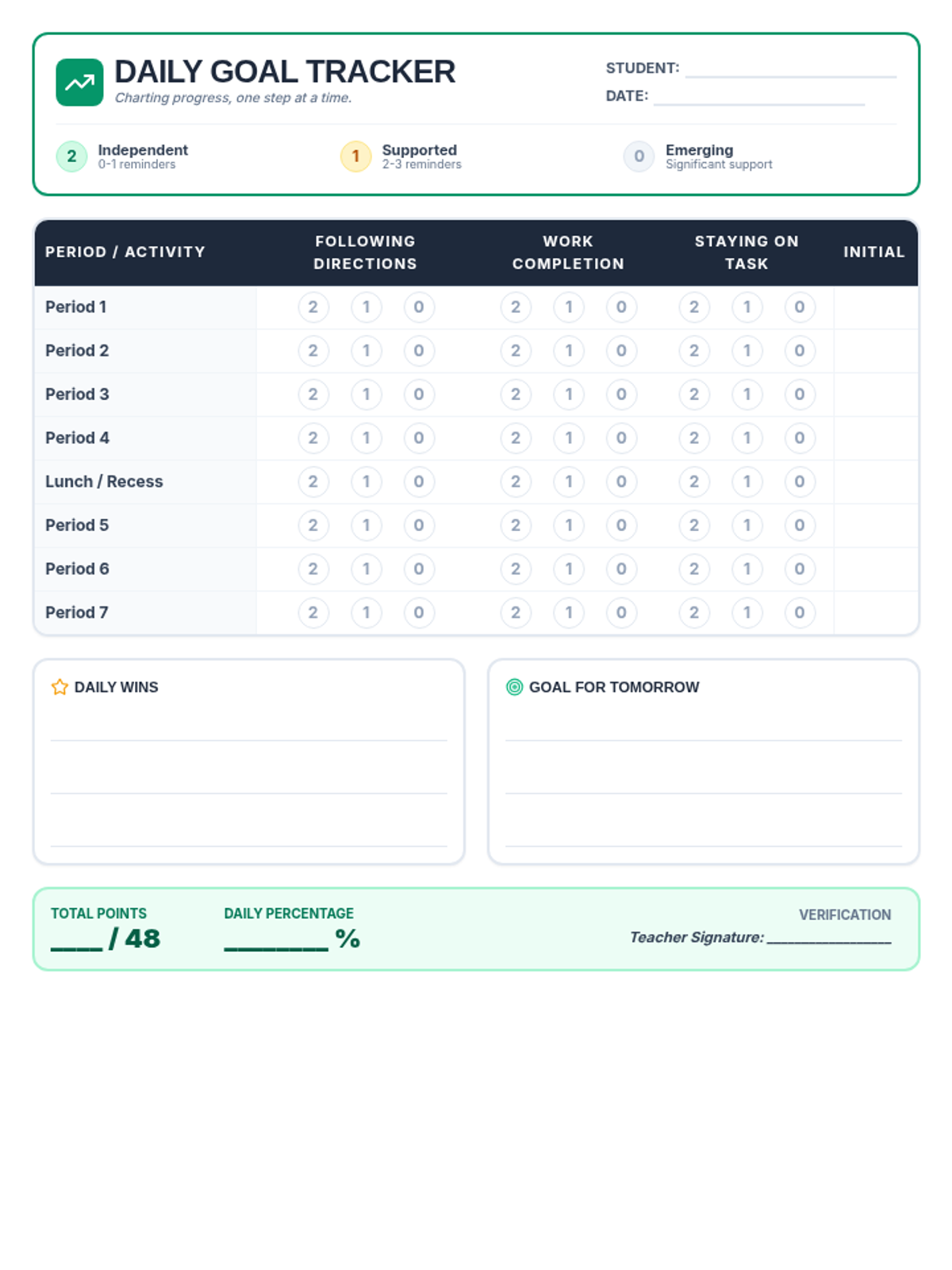
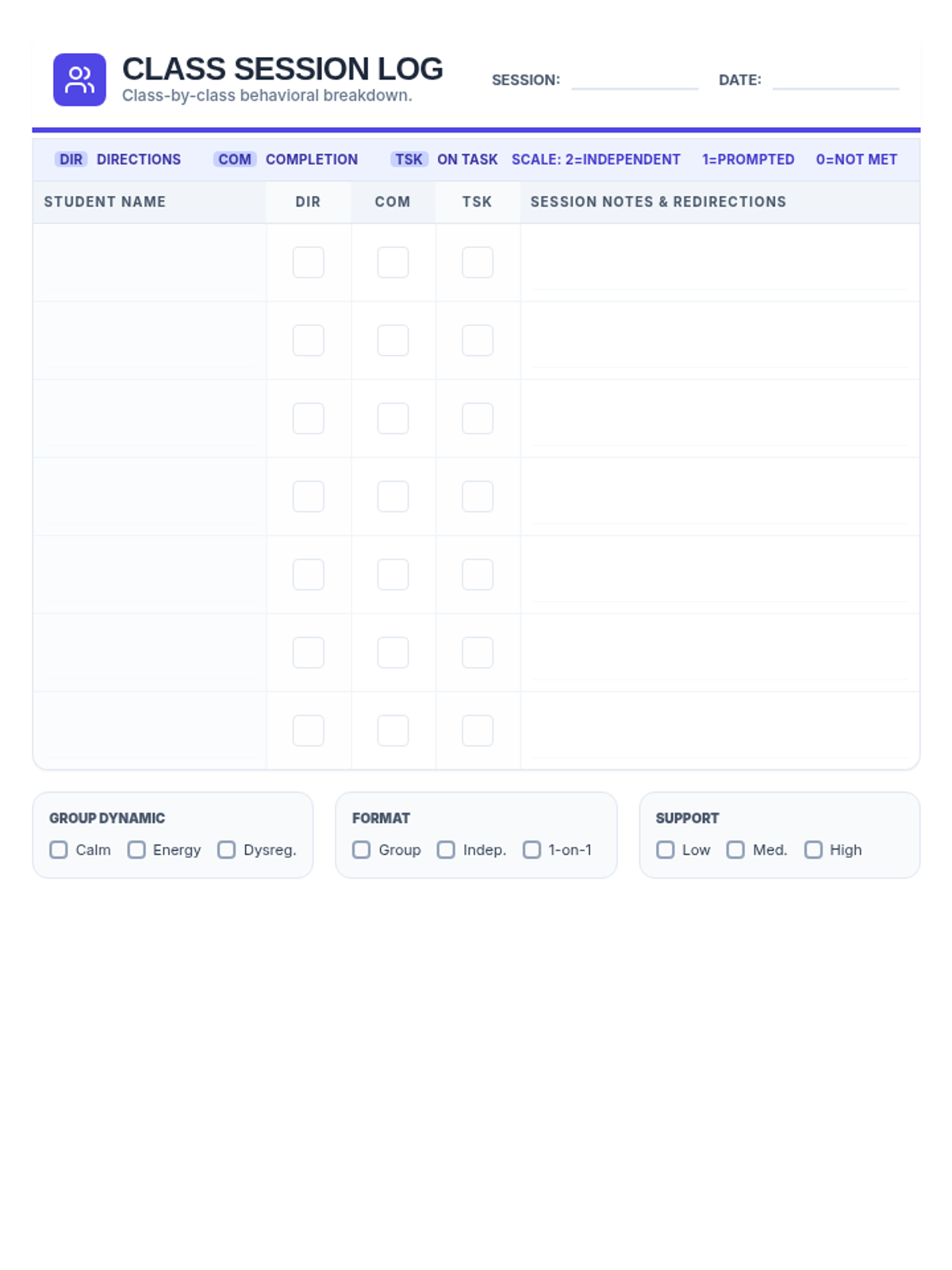
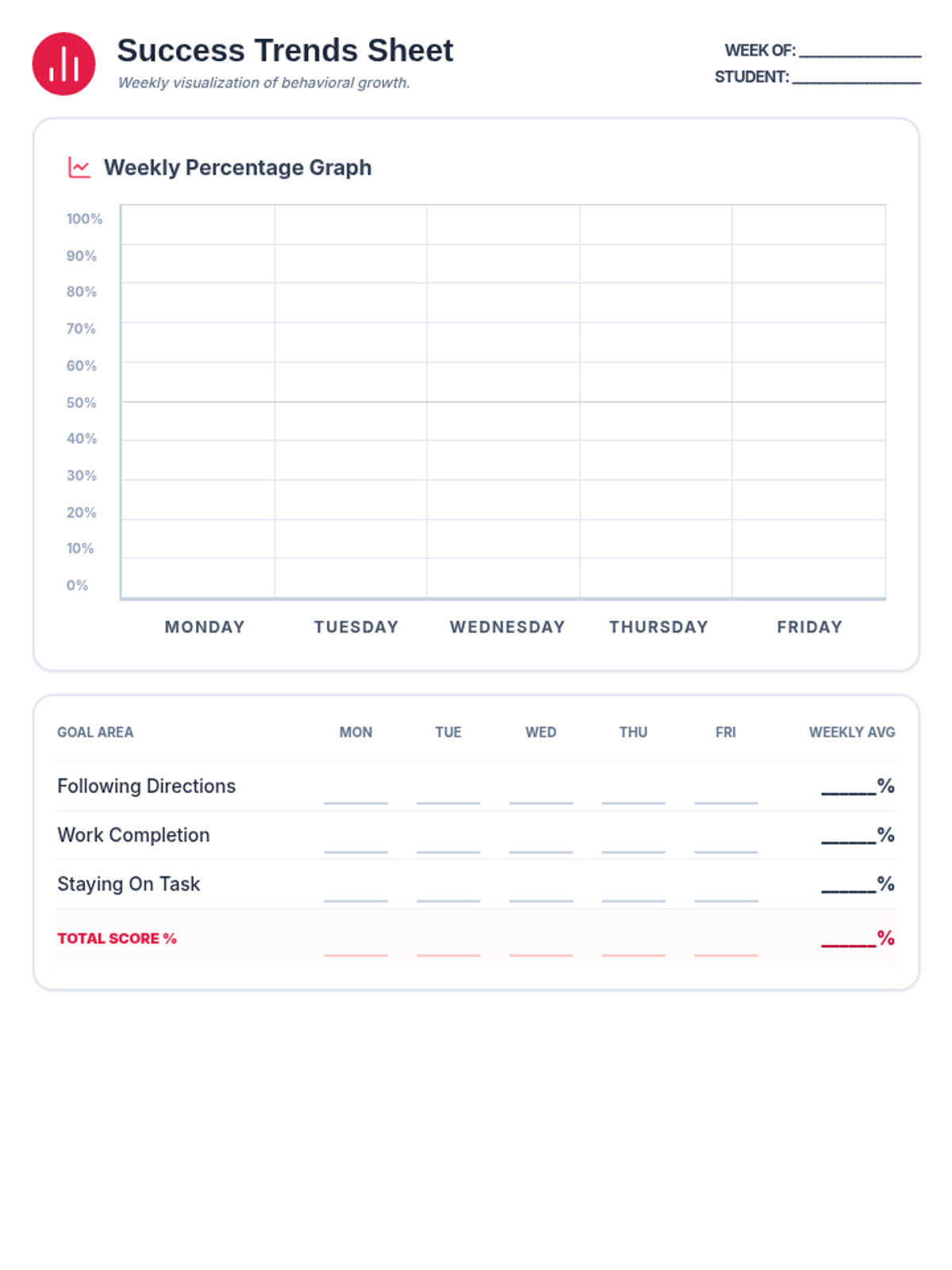
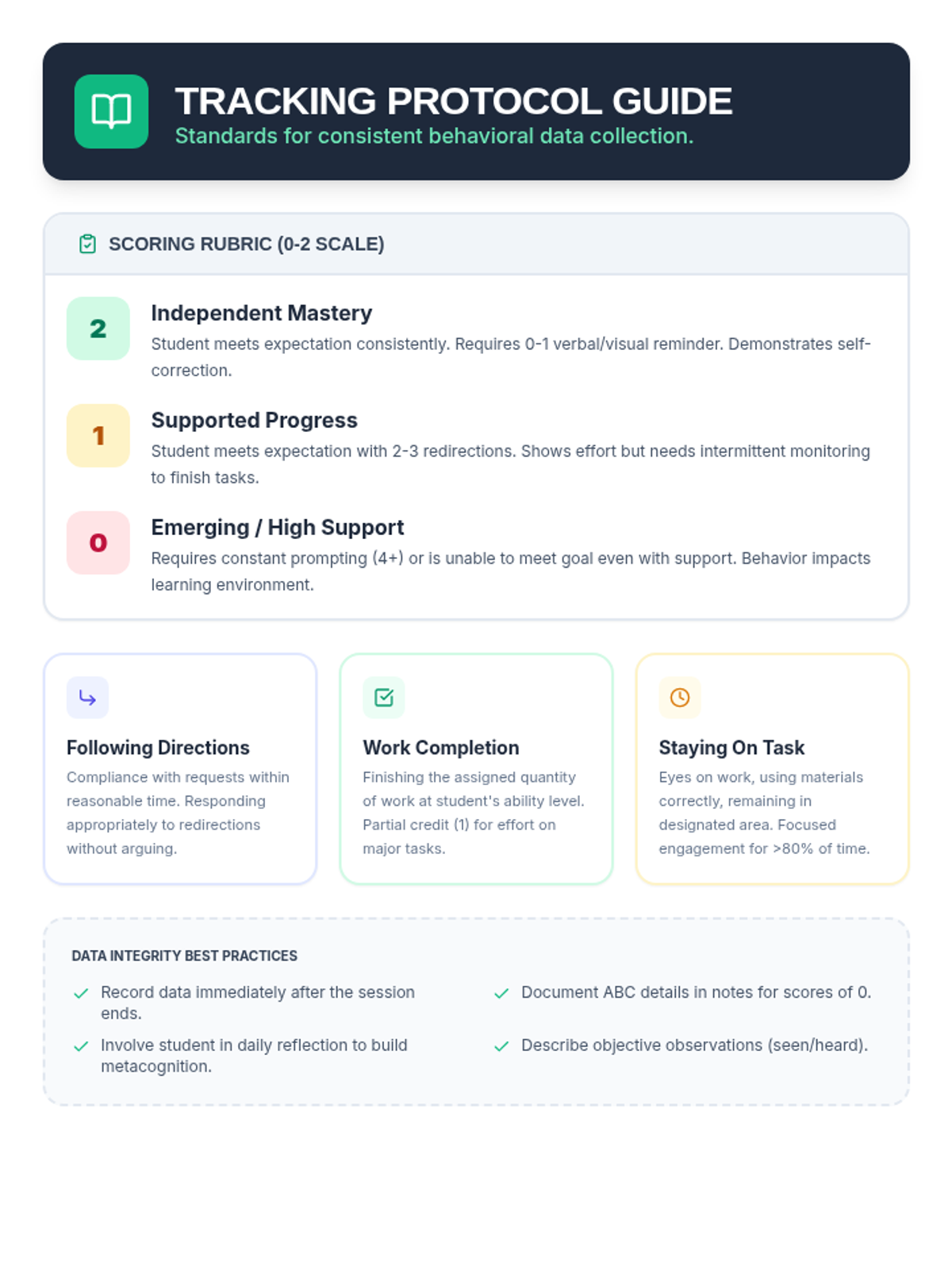
A comprehensive set of data tracking tools designed for special education settings to monitor student engagement, focus, and compliance with behavioral expectations throughout the school day.
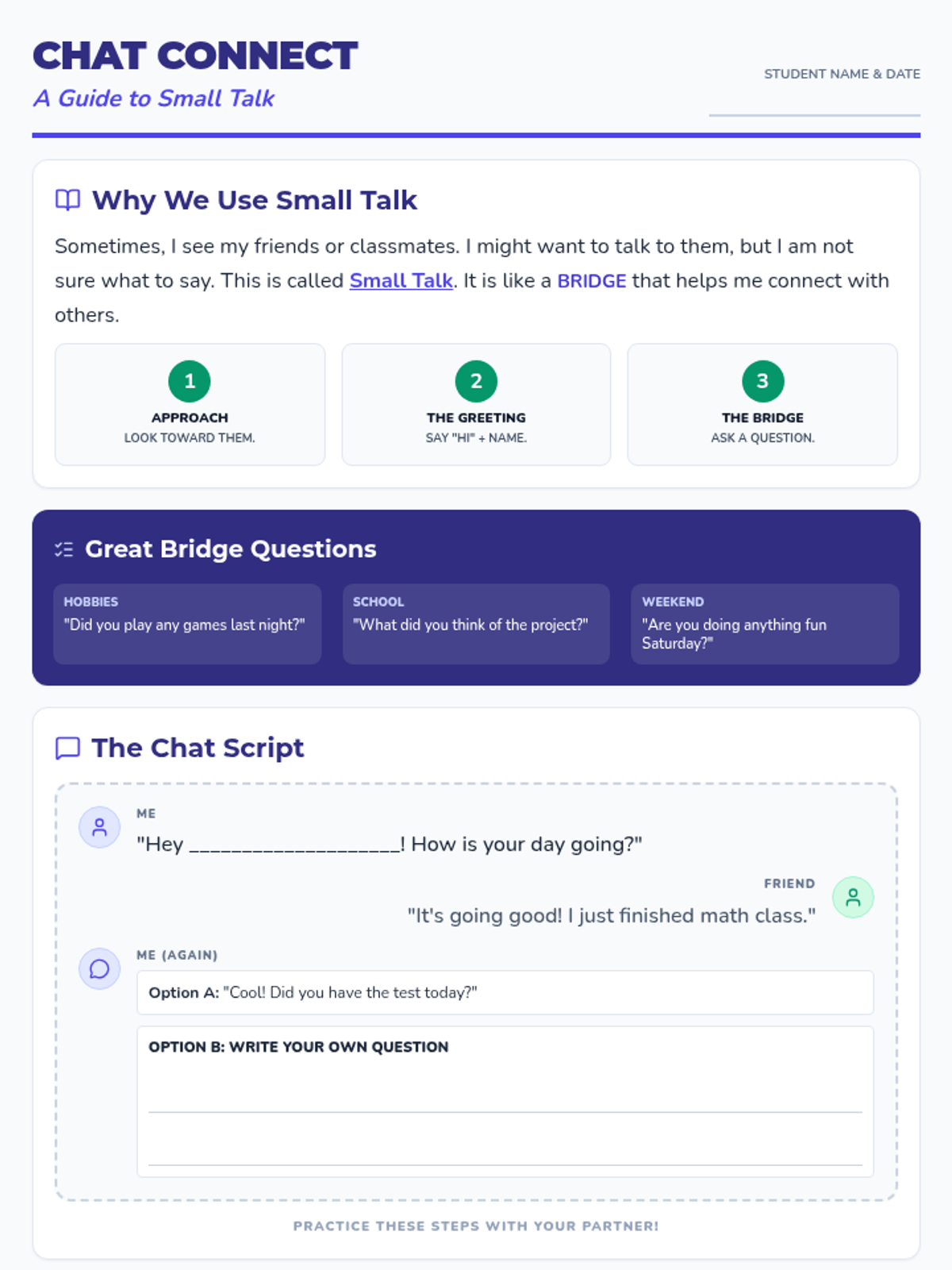
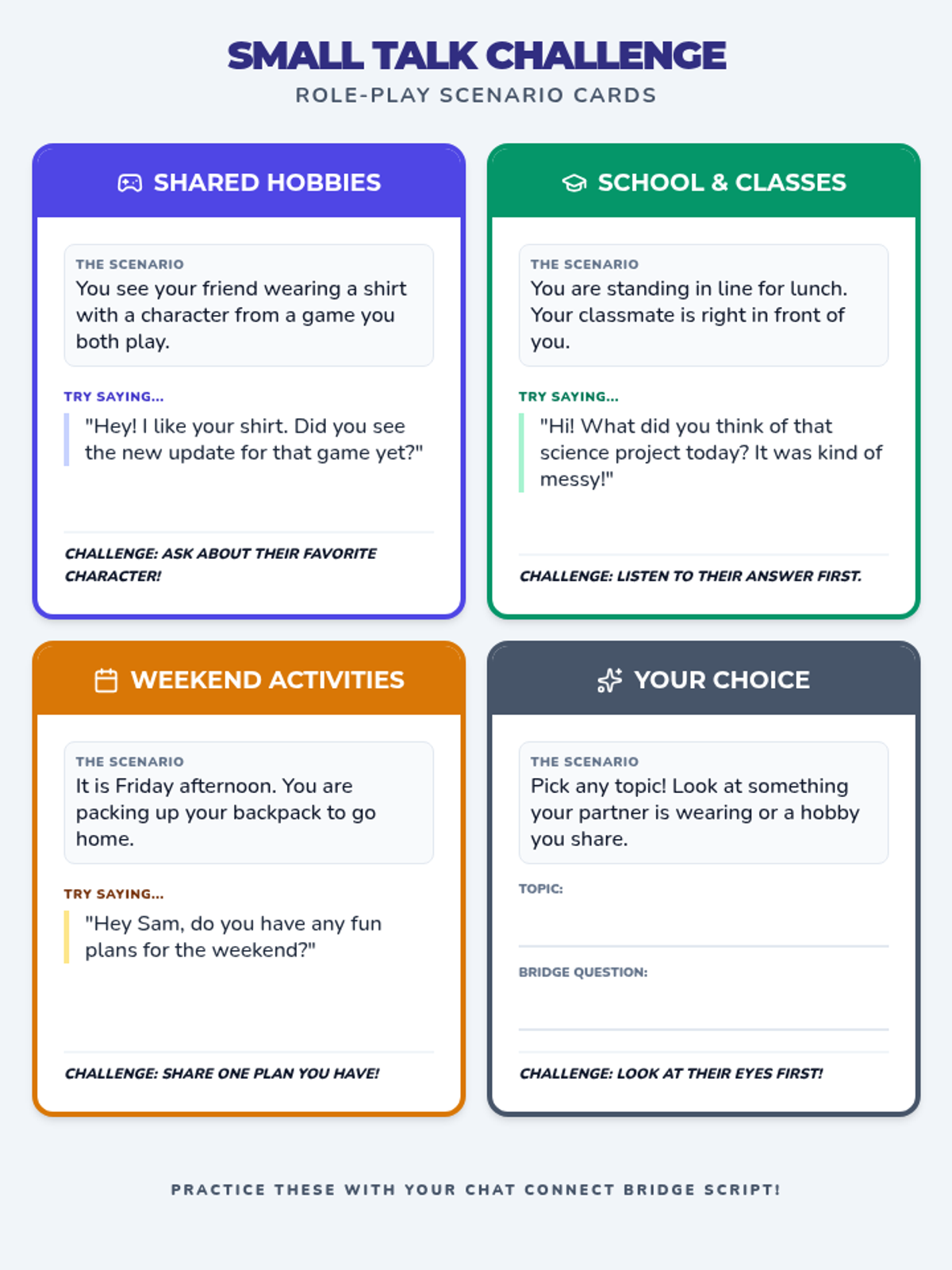
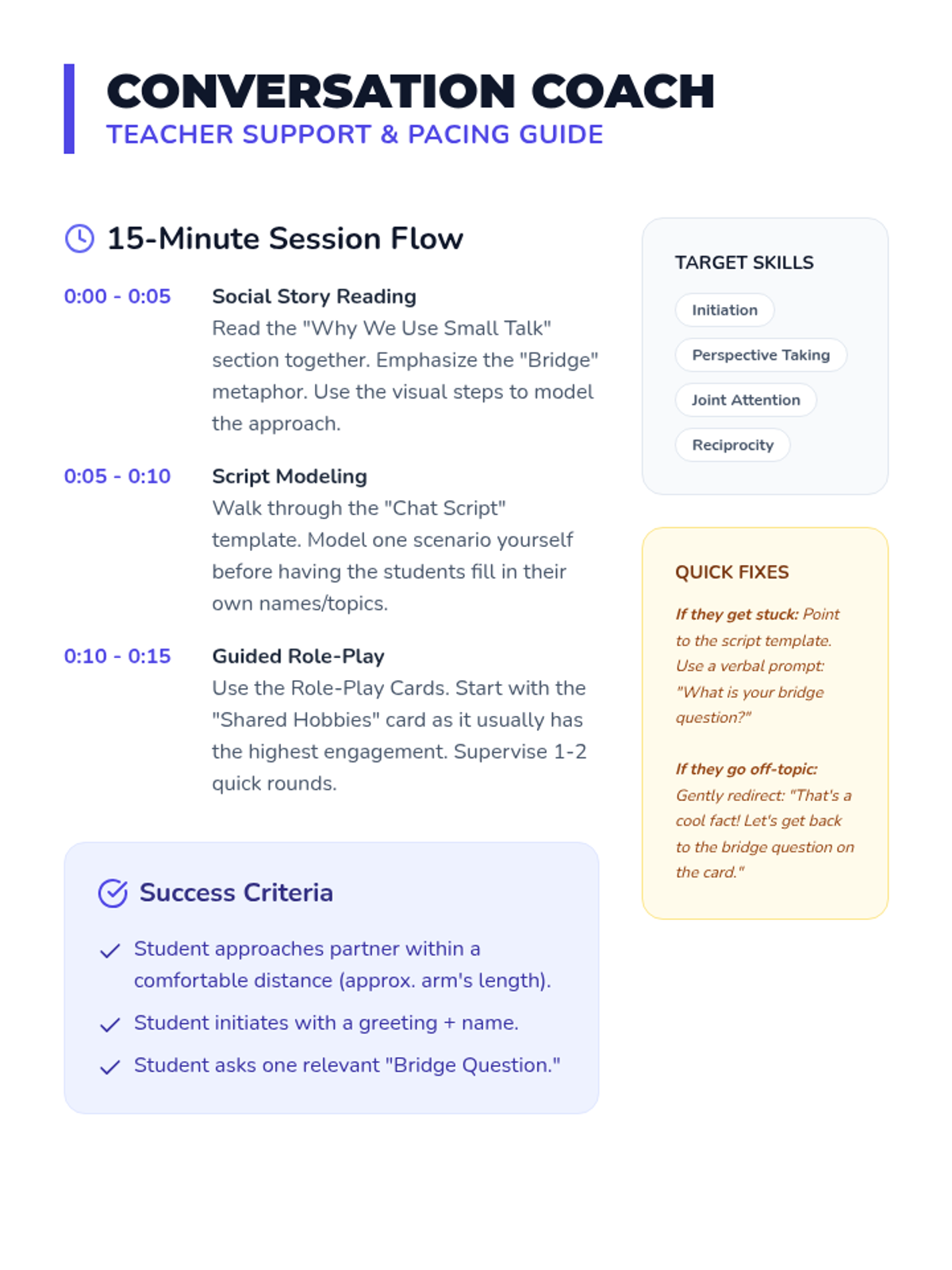
A focused 15-minute lesson for middle school students with autism, focusing on the mechanics of starting a conversation and maintaining small talk through visual supports and structured practice.
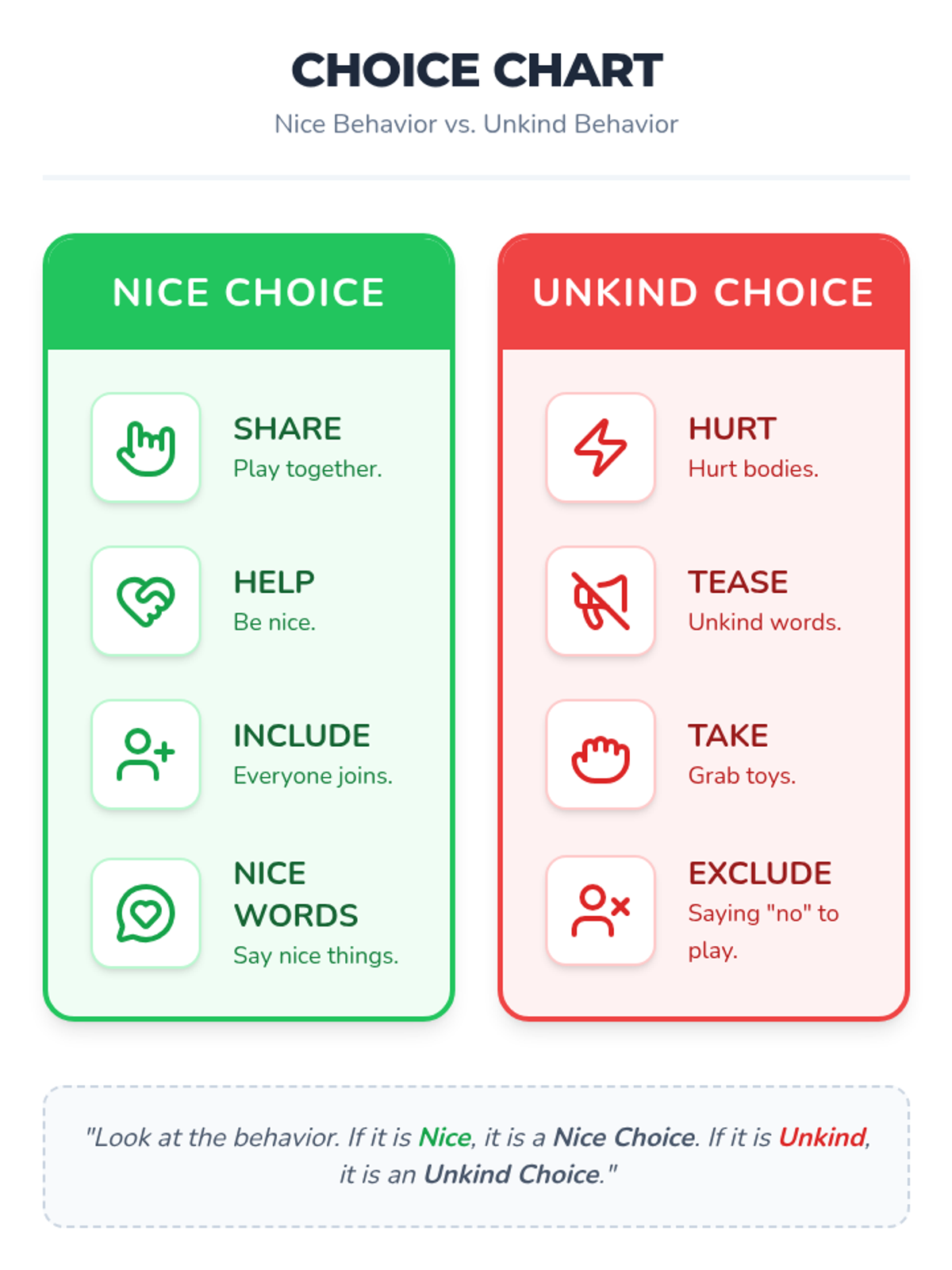
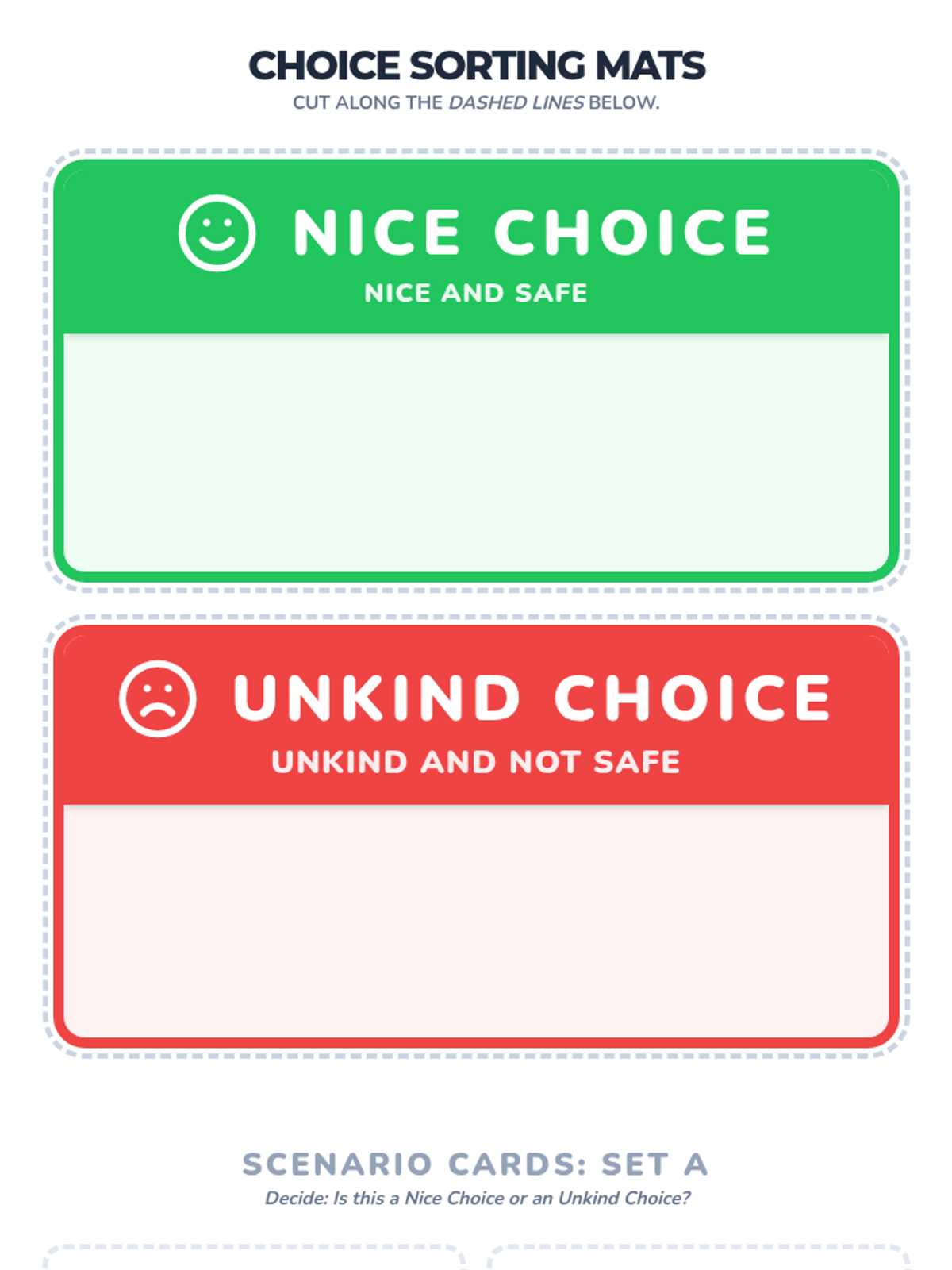
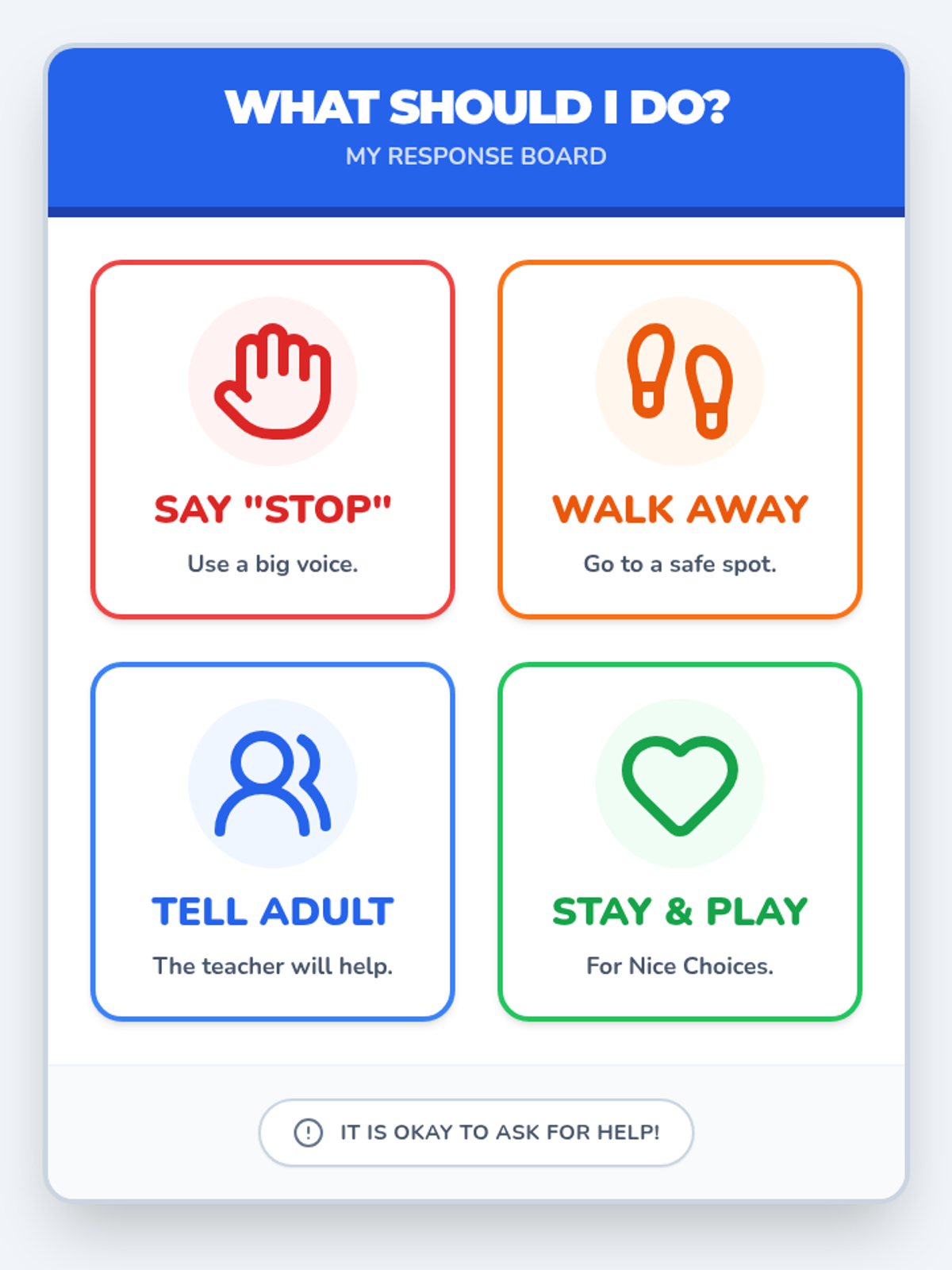
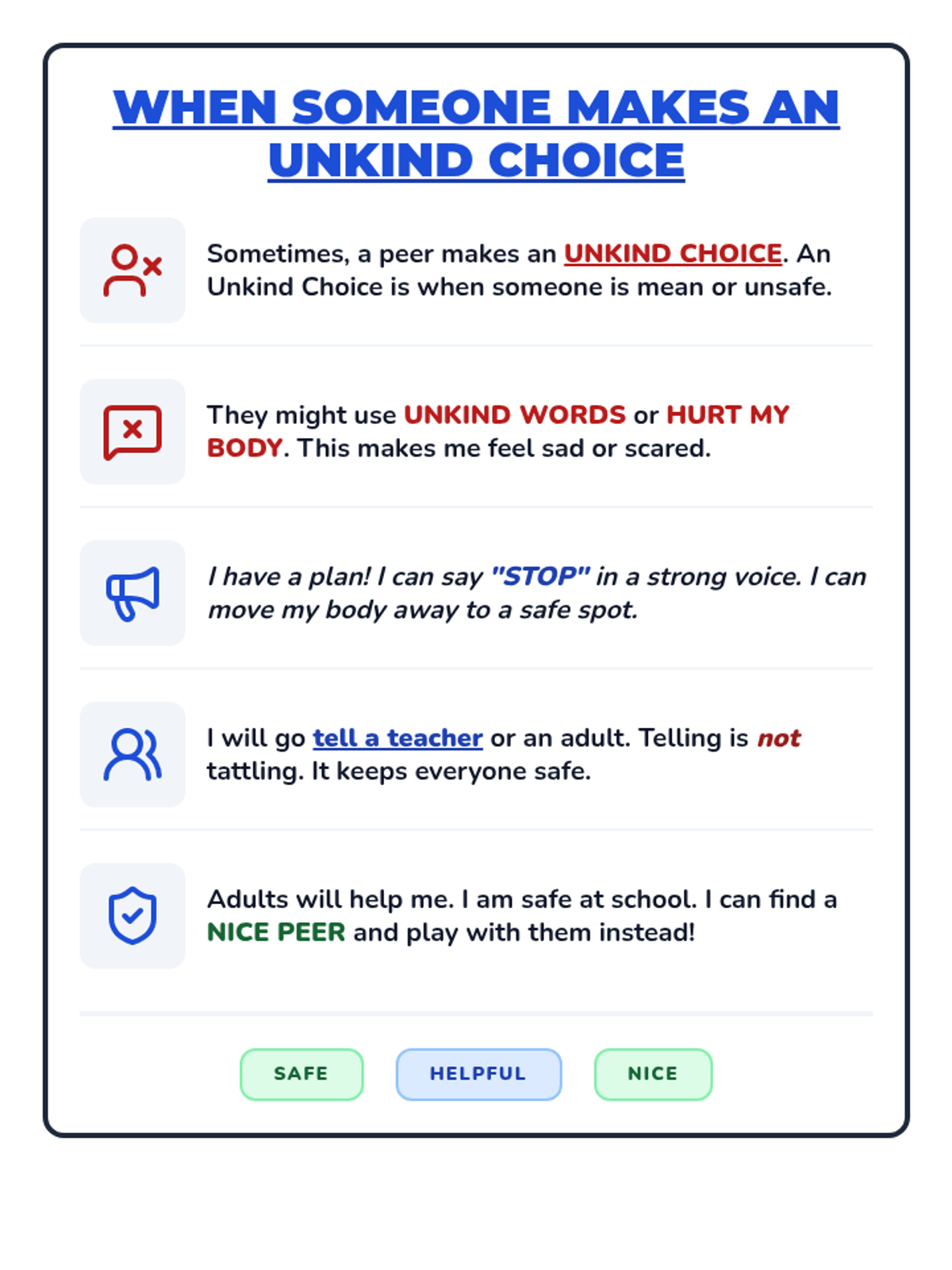
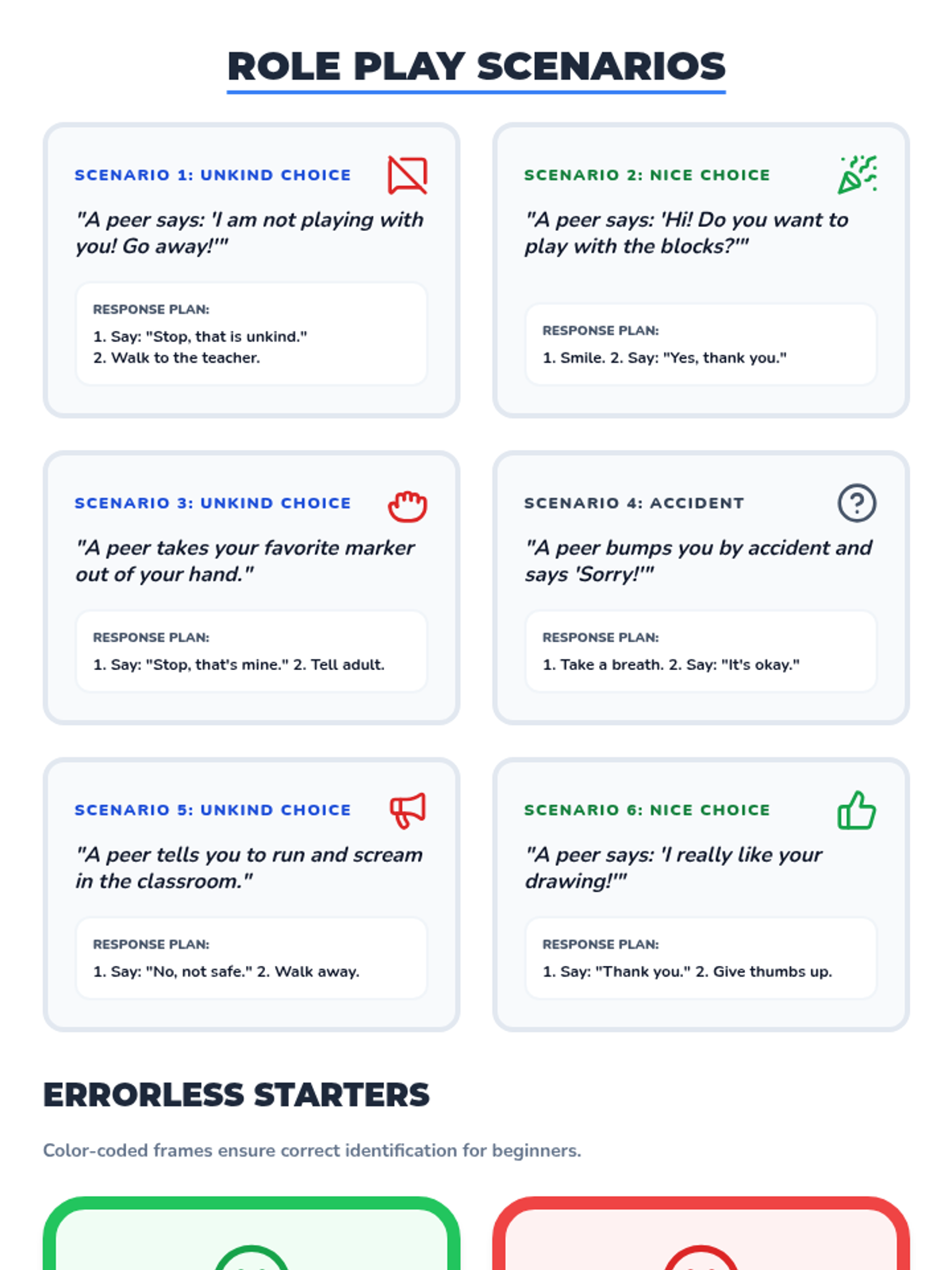
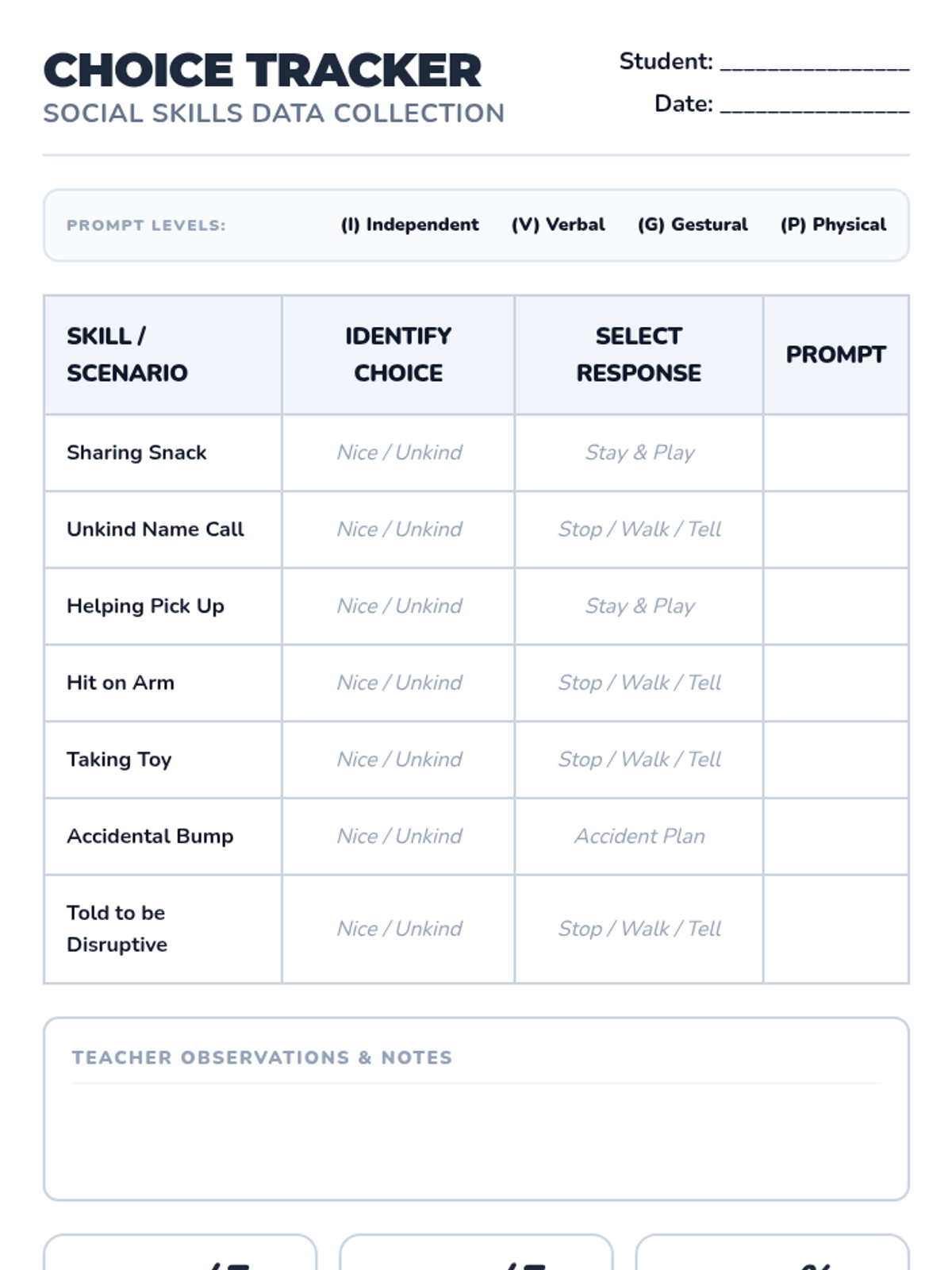
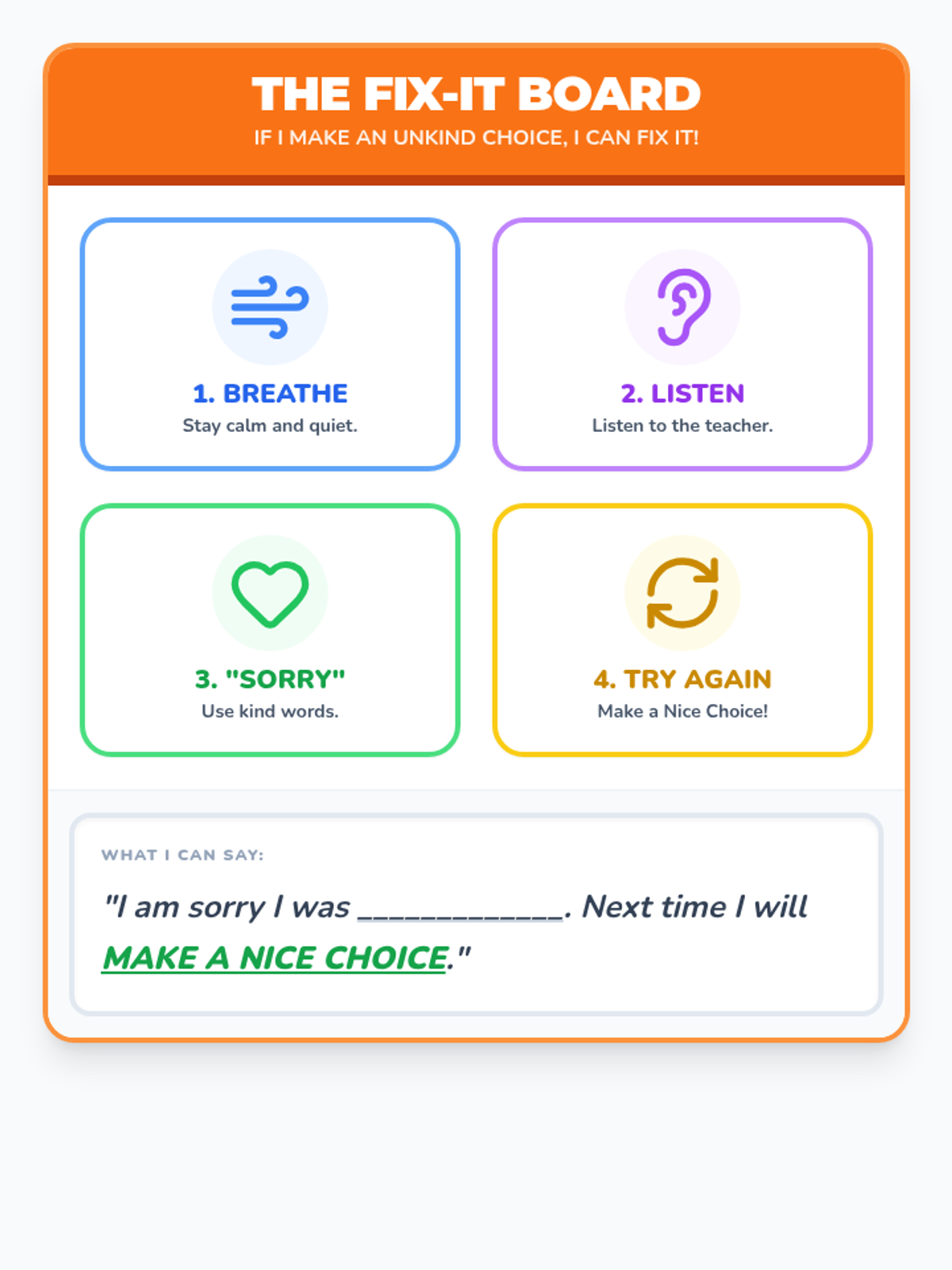
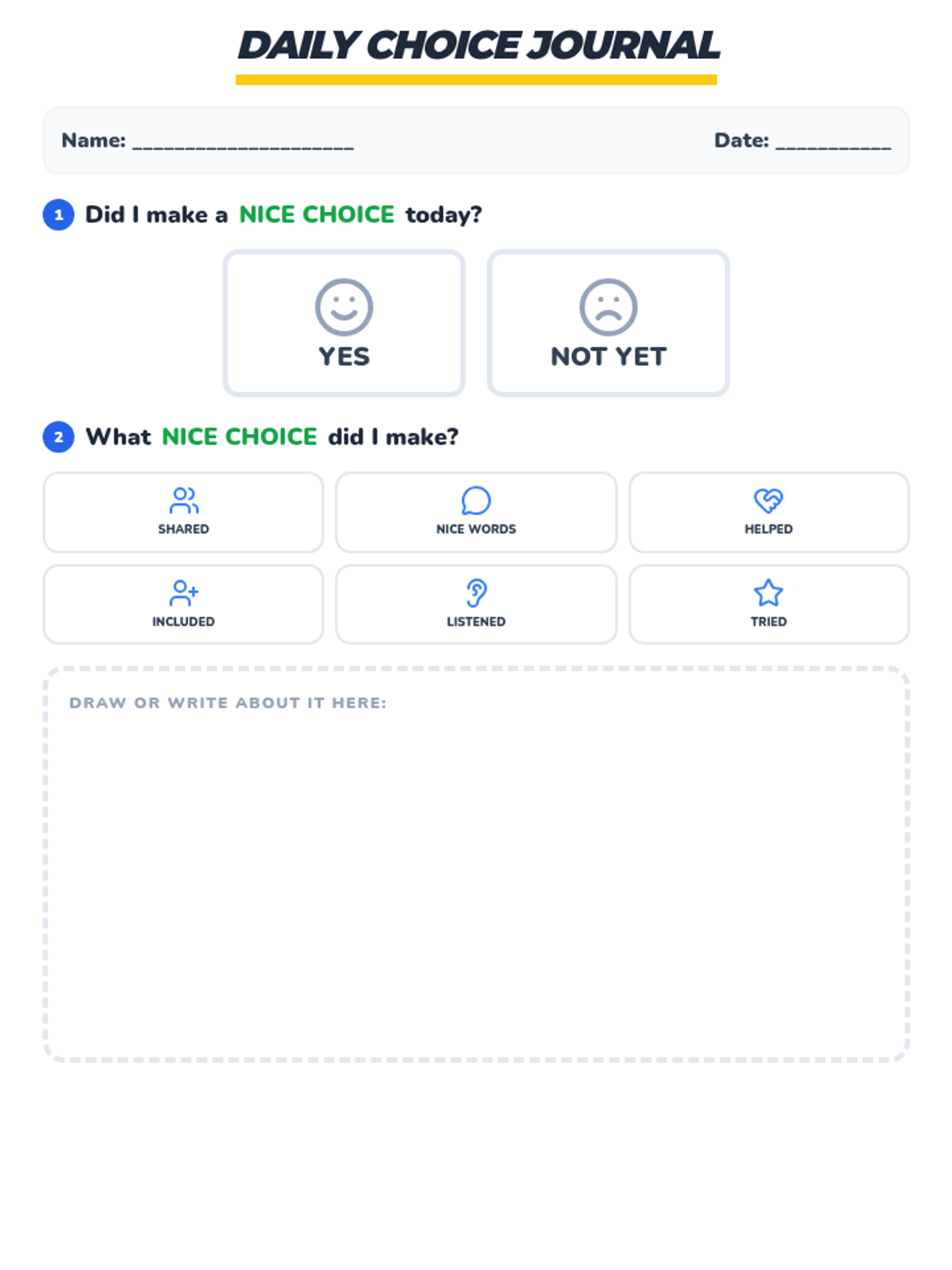
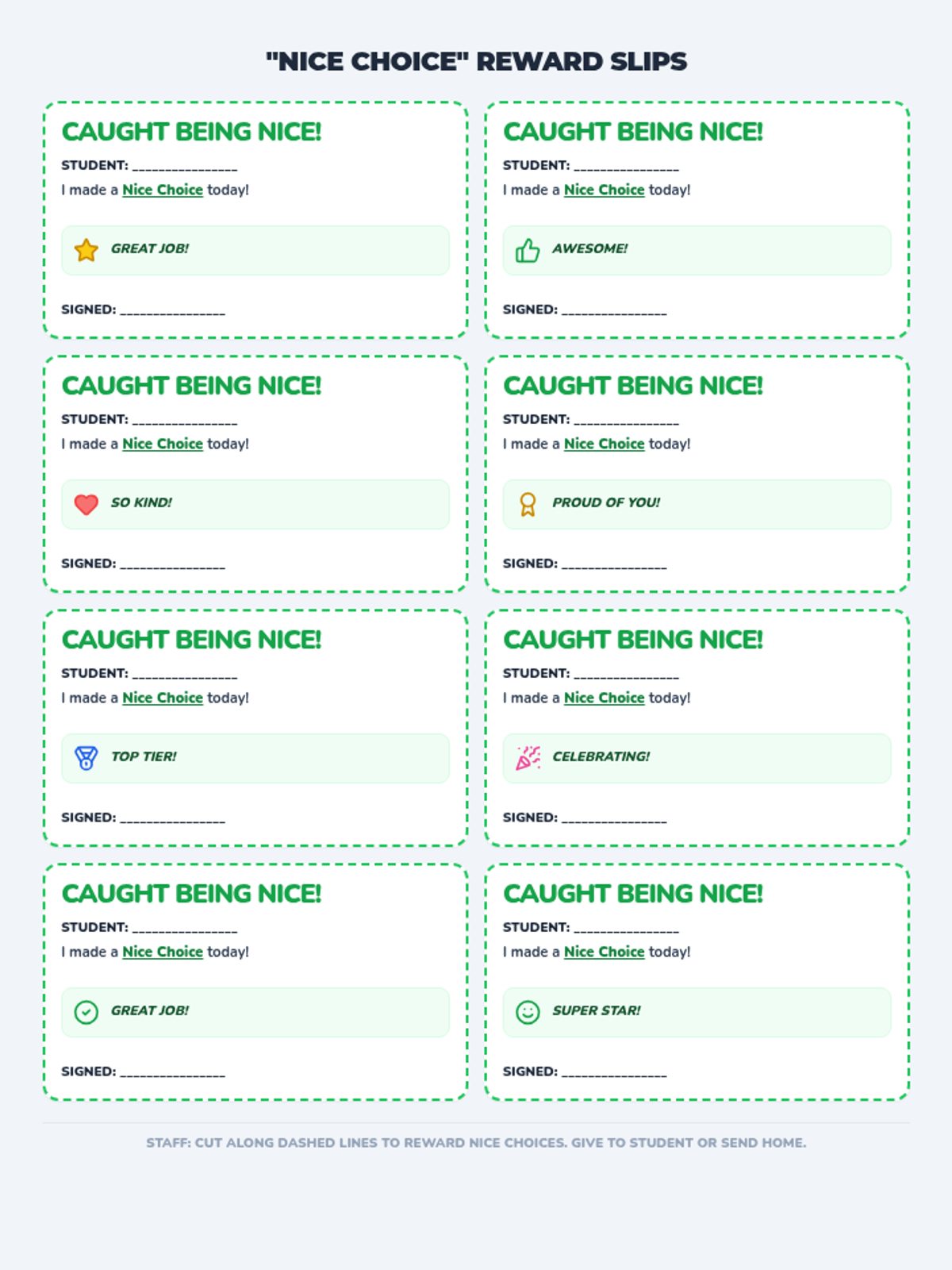
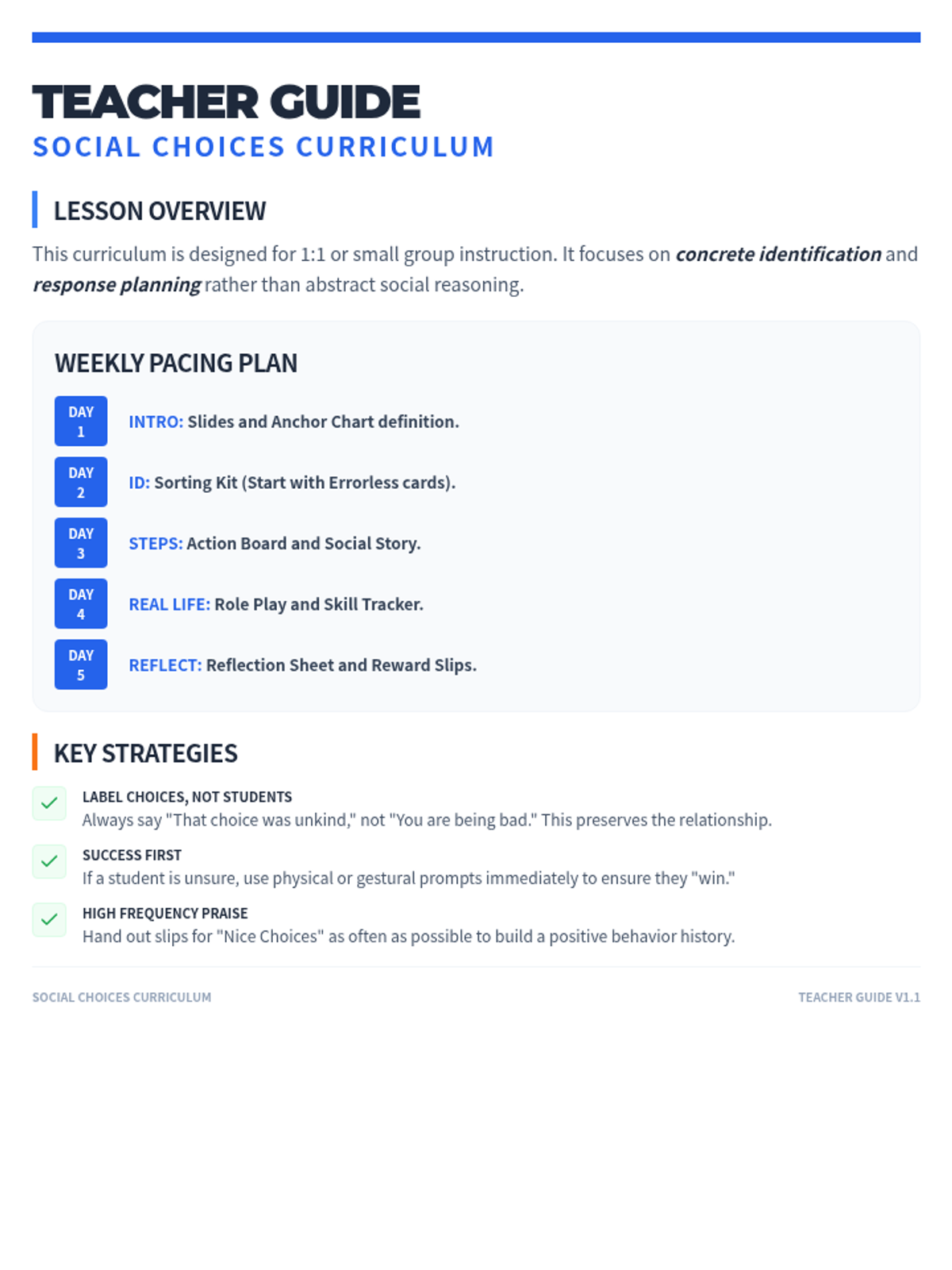
A comprehensive social skills lesson for middle school life skills students to distinguish between kind peer behaviors (Nice Choices) and unkind behaviors (Unkind Choices), including response strategies for bullying.
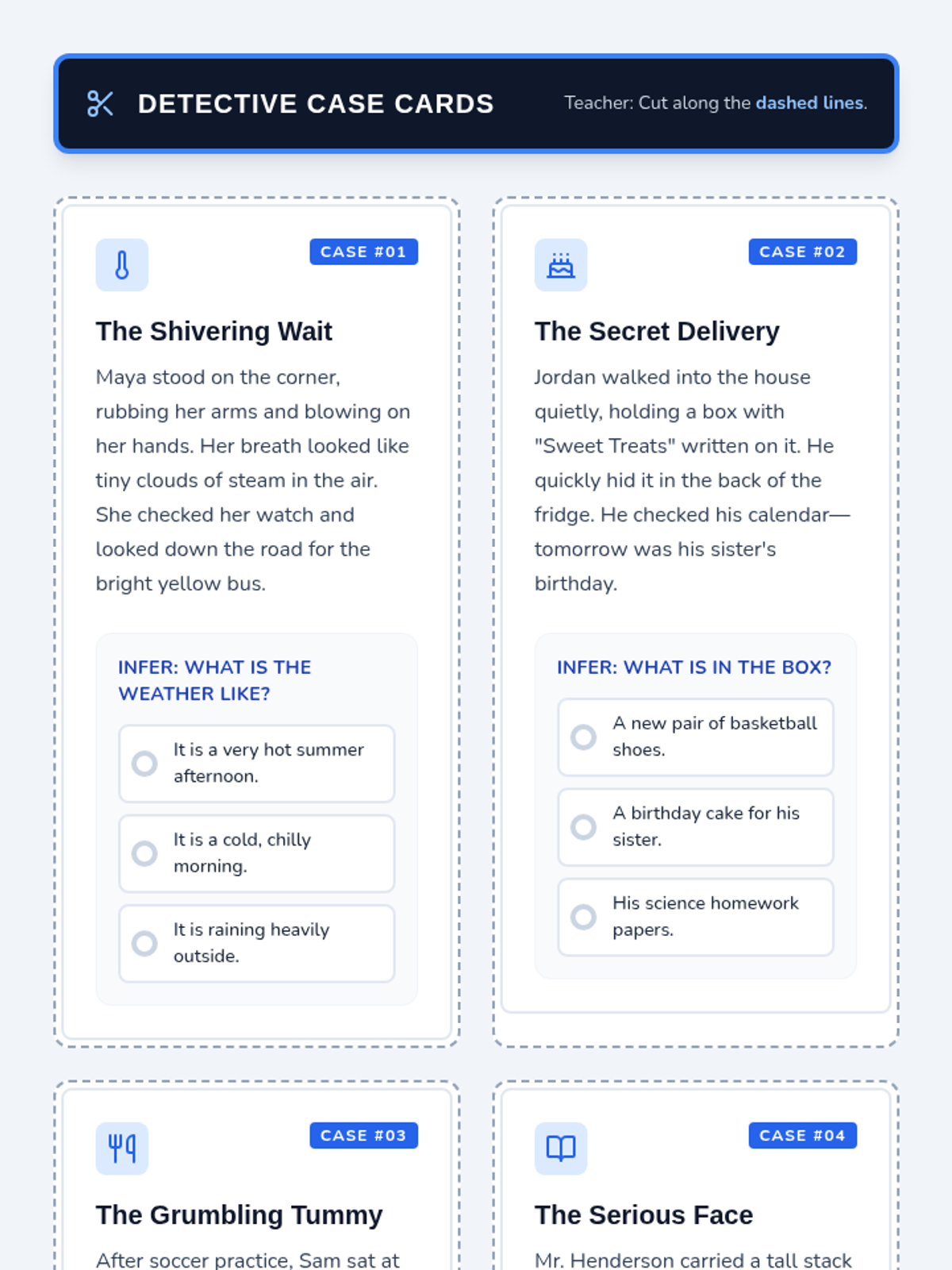
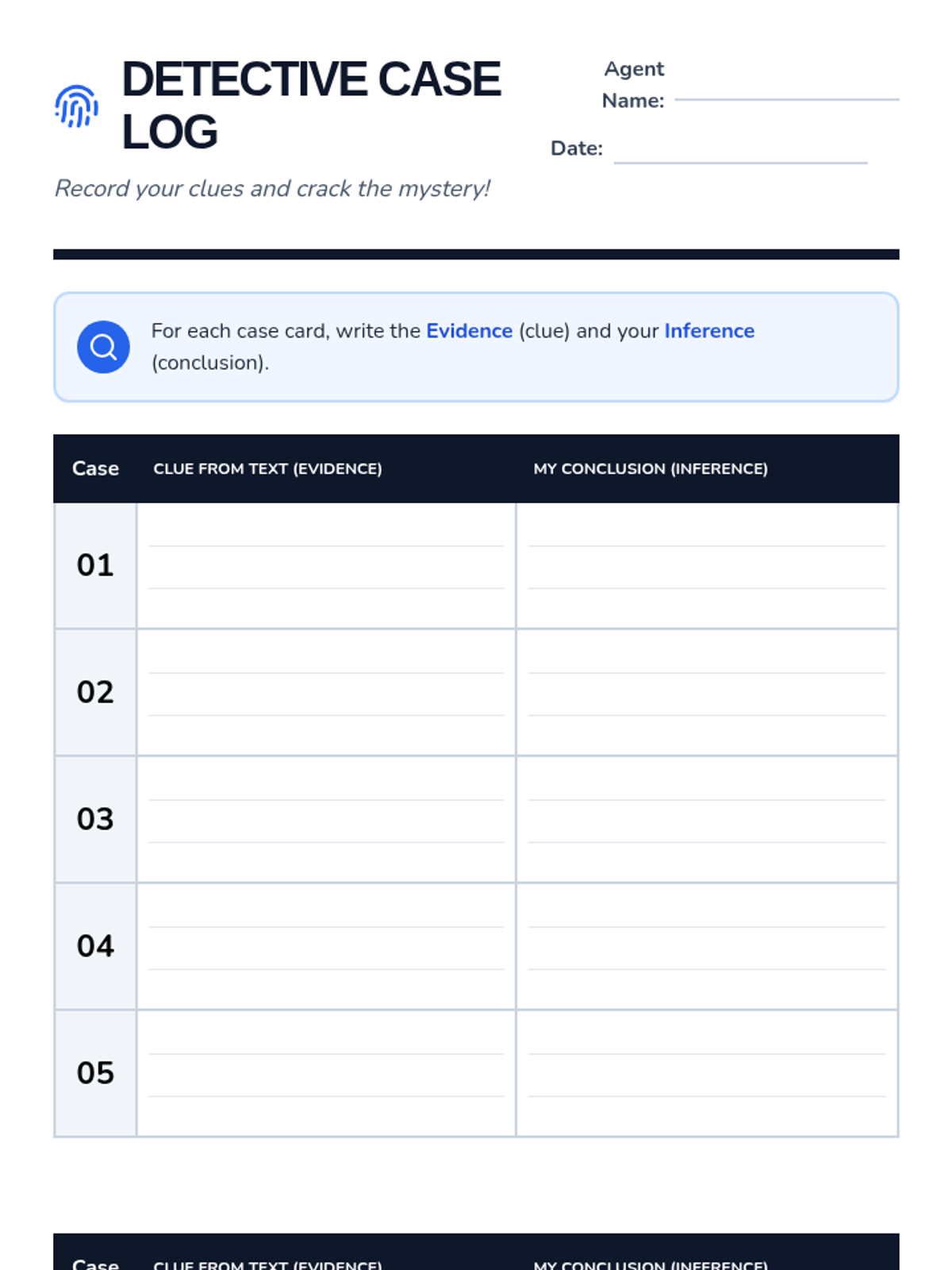
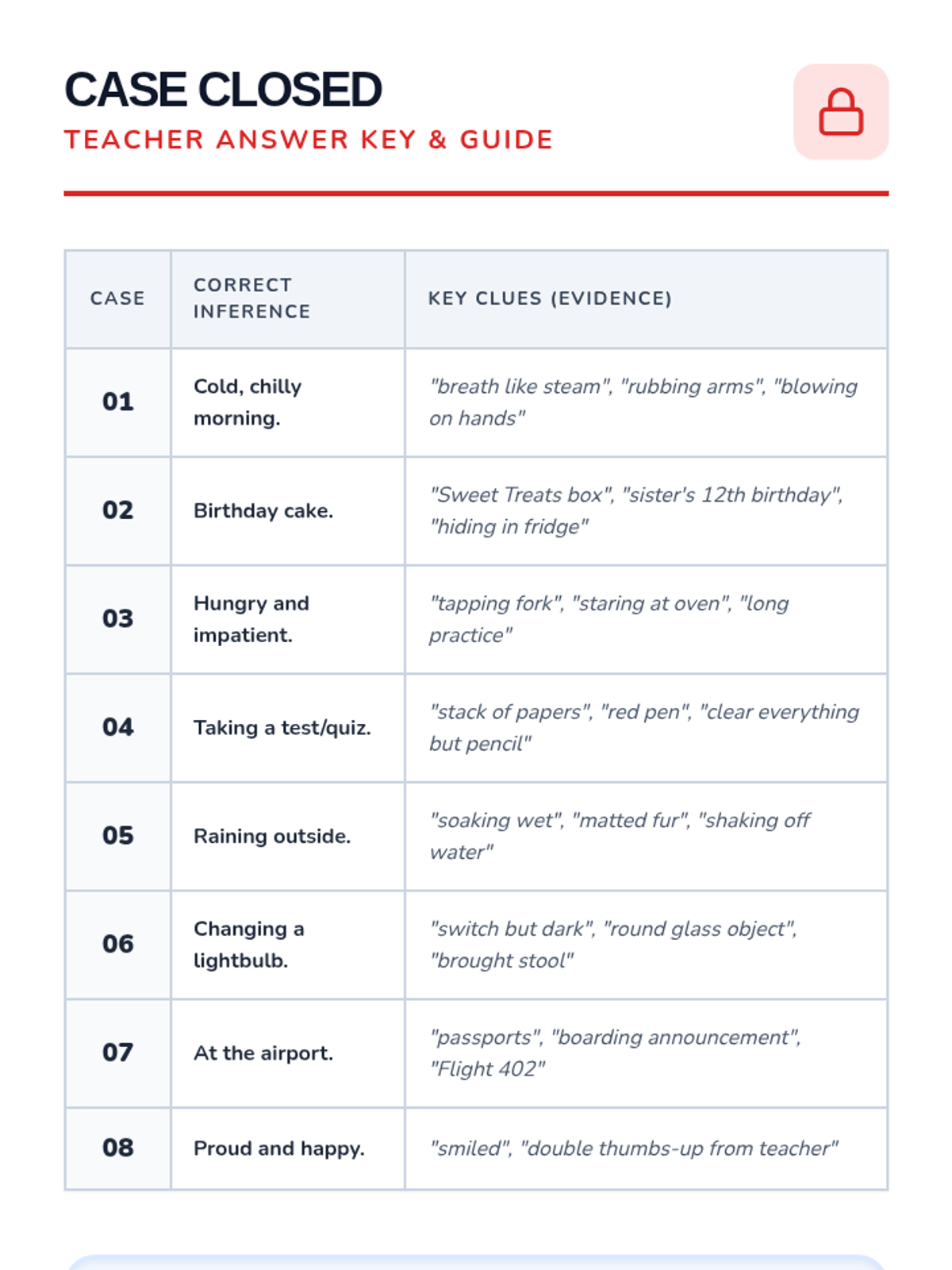
A lesson focused on developing inferencing skills through visual and textual clues, designed for 6th-grade students with neurodiverse needs. Students will learn the 'Evidence + Schema = Inference' formula and apply it to various scenarios.
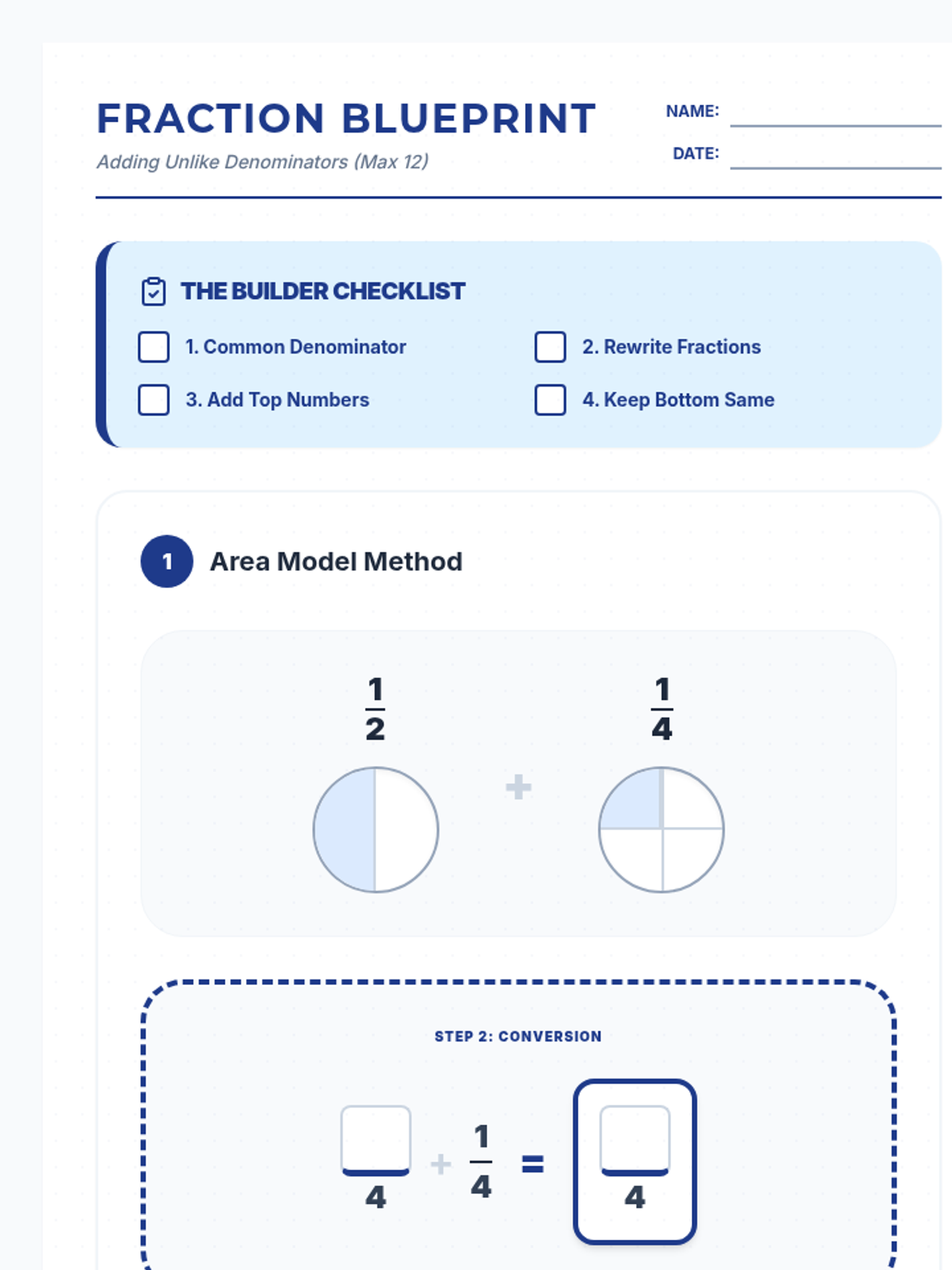
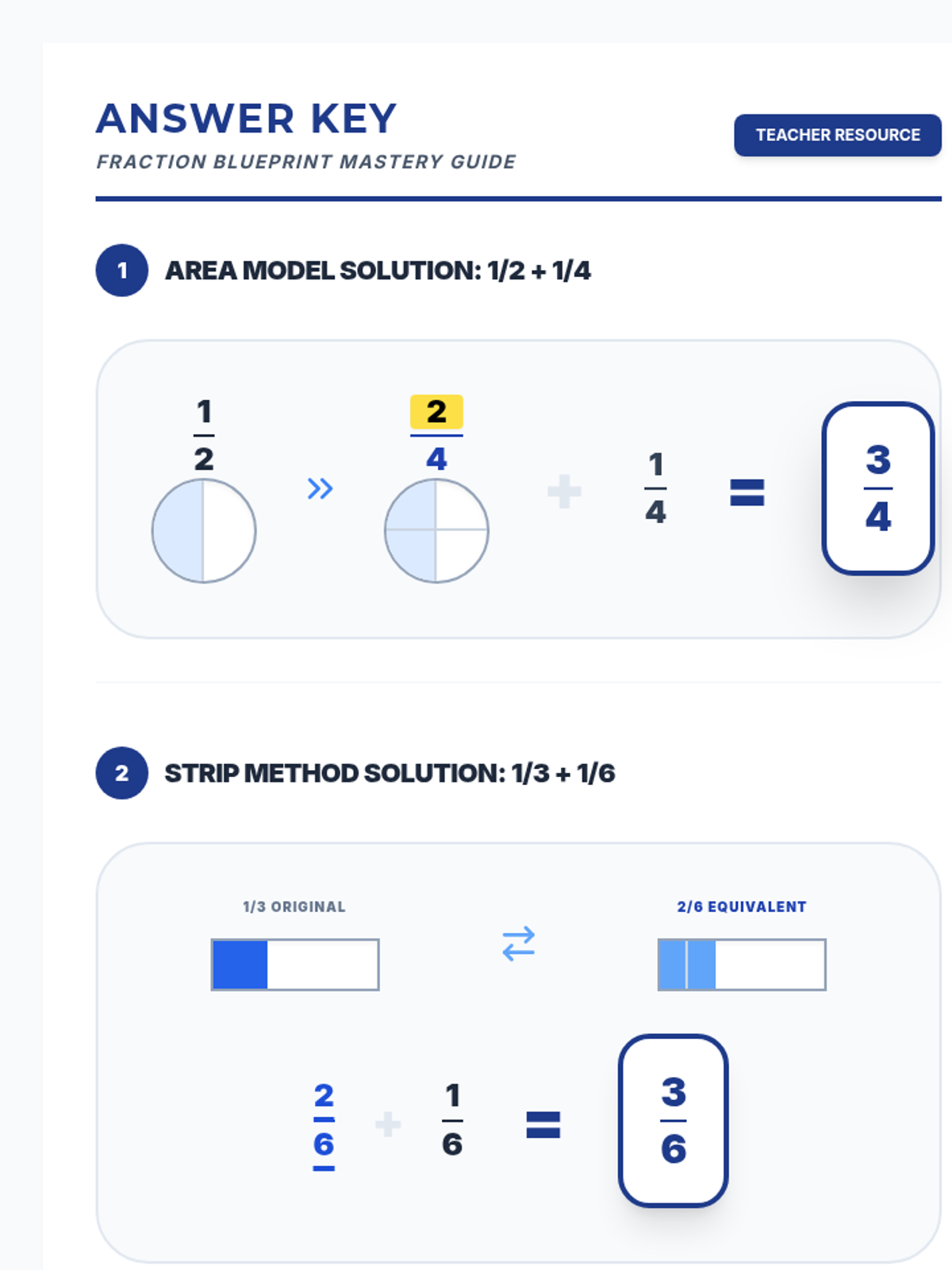
A specialized lesson for students with IEPs focused on adding fractions with unlike denominators using visual scaffolds like area models, fraction strips, and a step-by-step checklist. Content is limited to denominators up to 12 to ensure accessibility and mastery of the core concept.