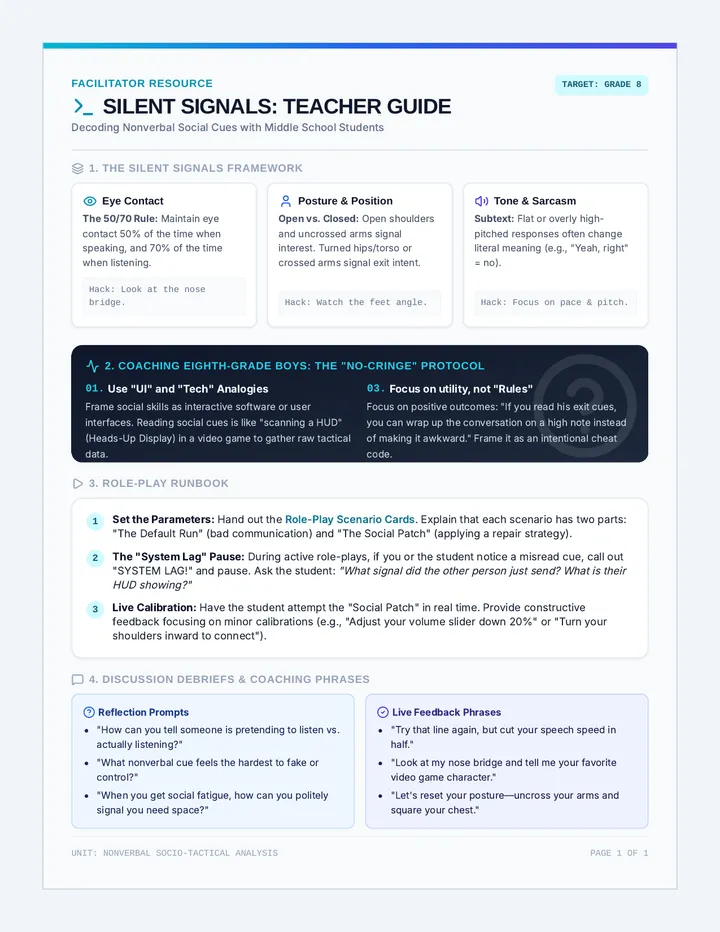
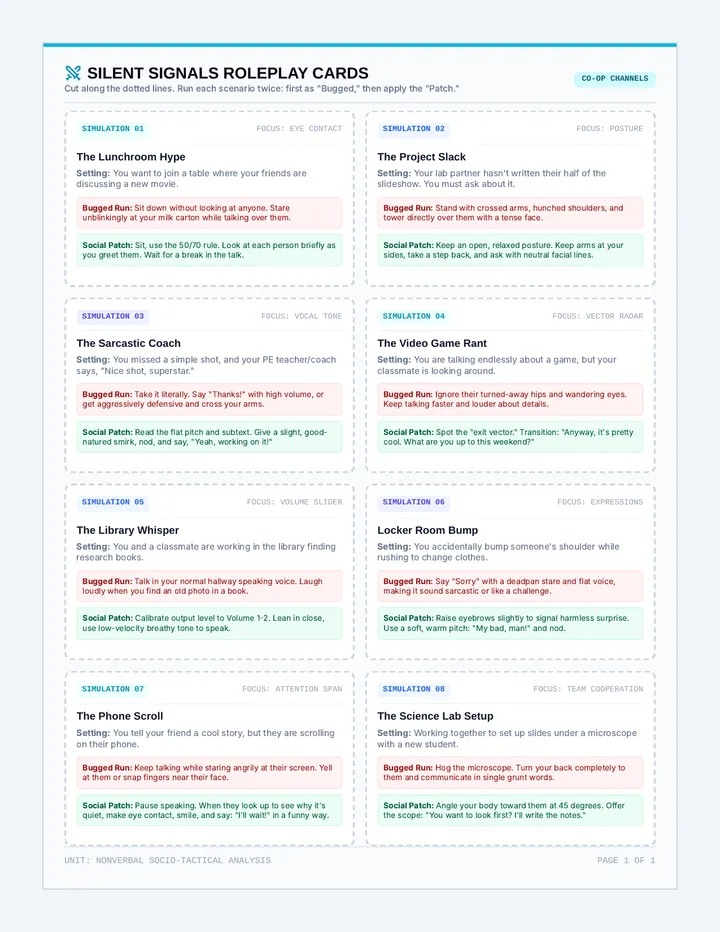
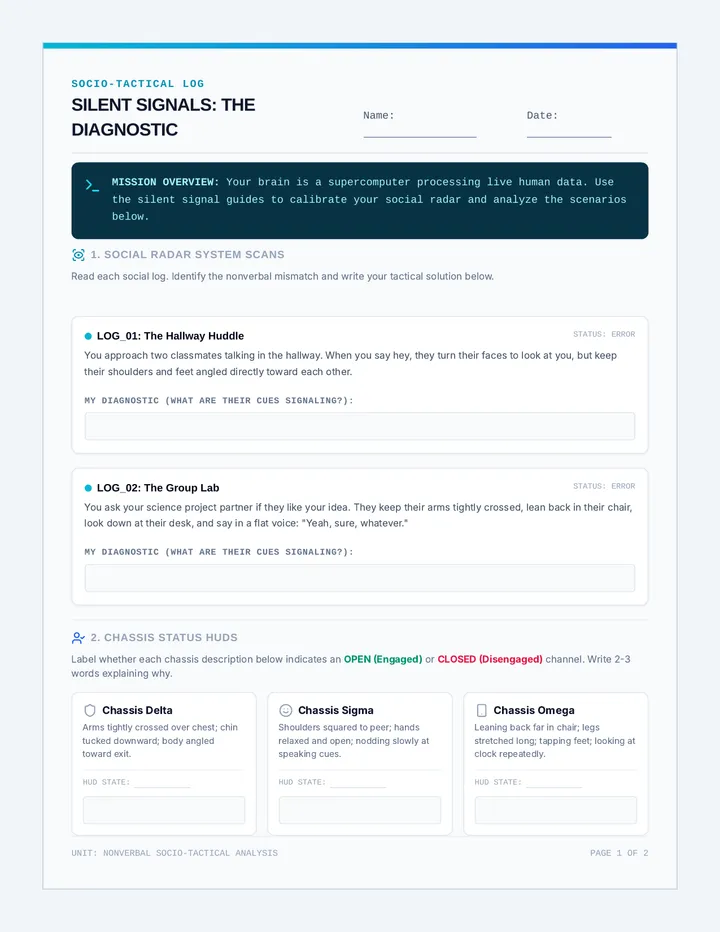
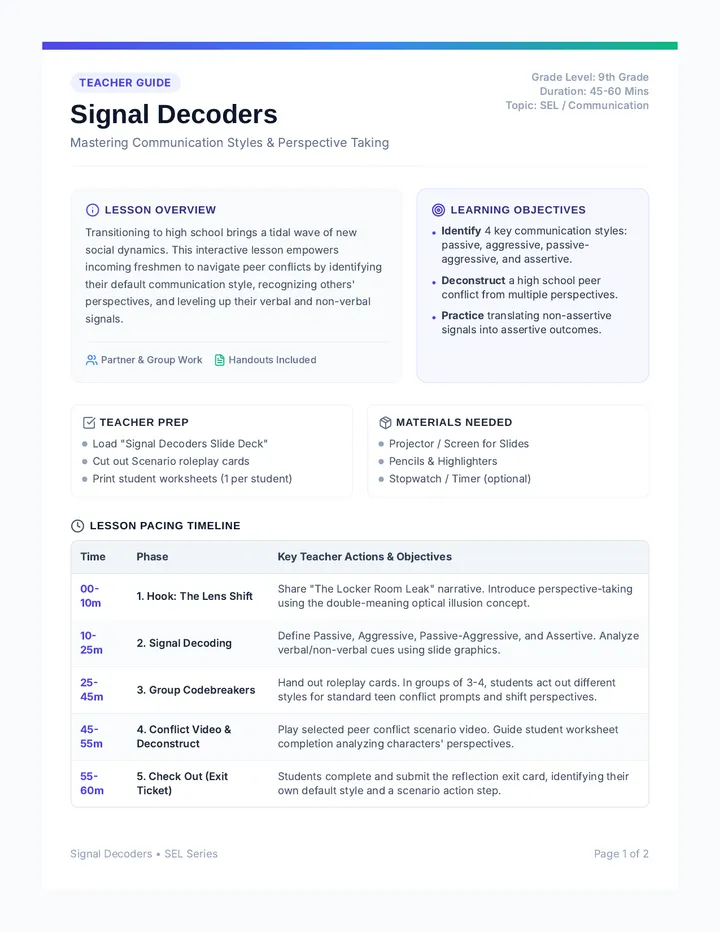
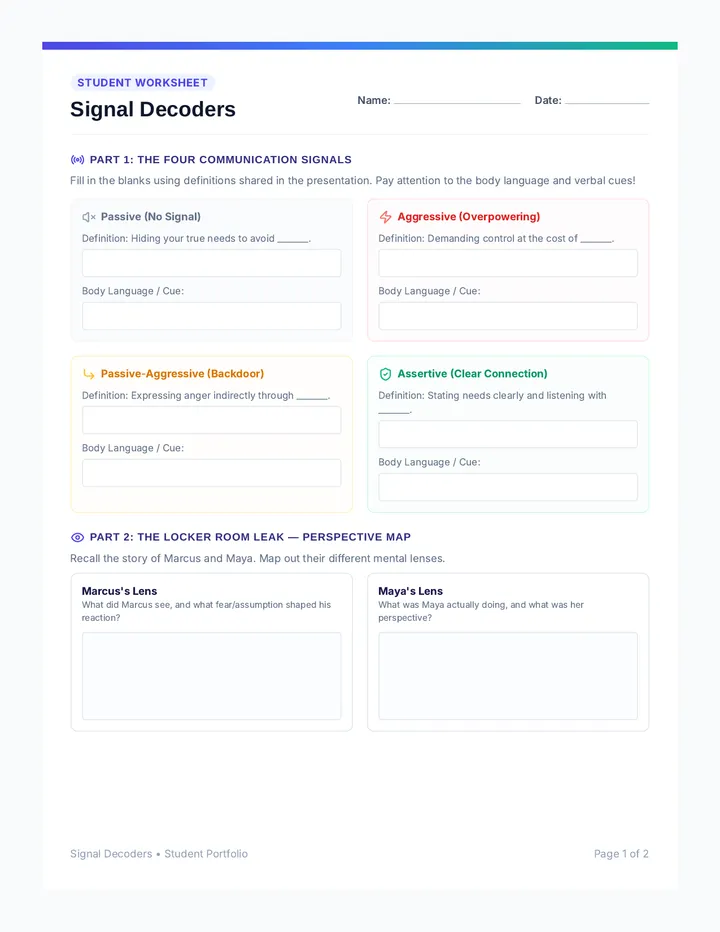
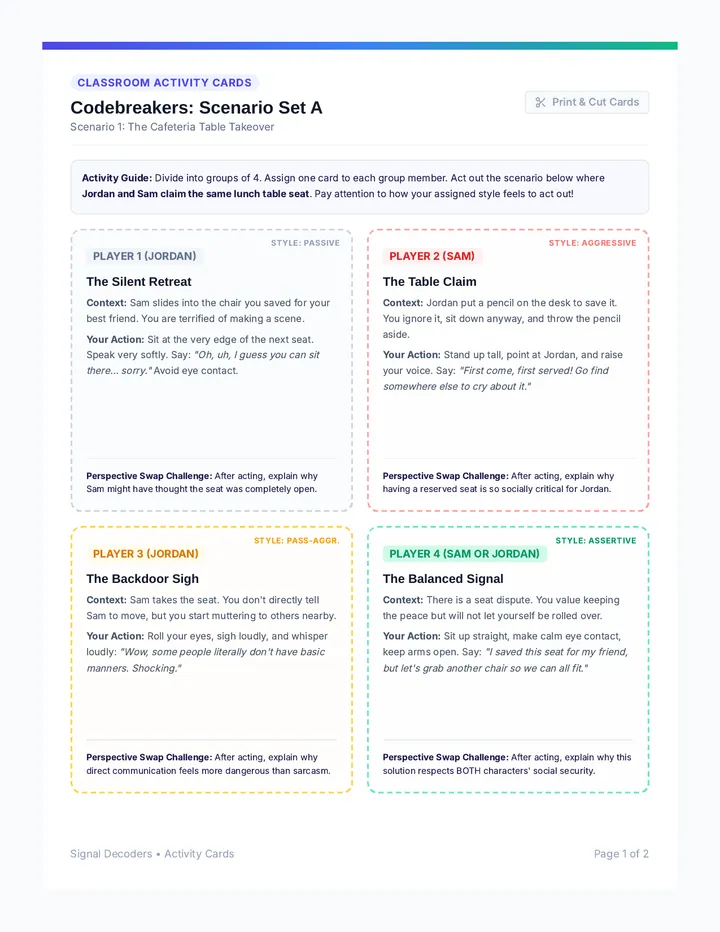
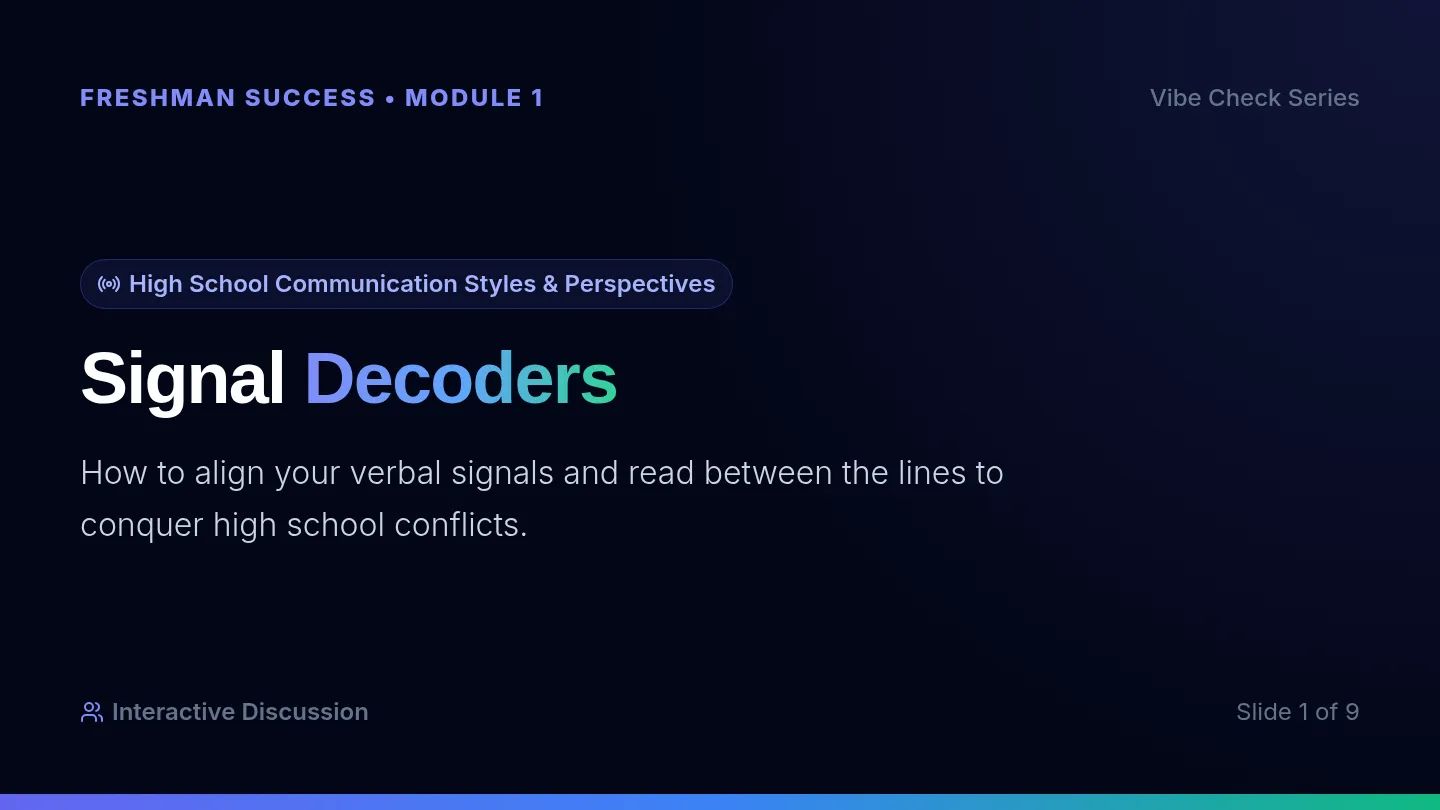
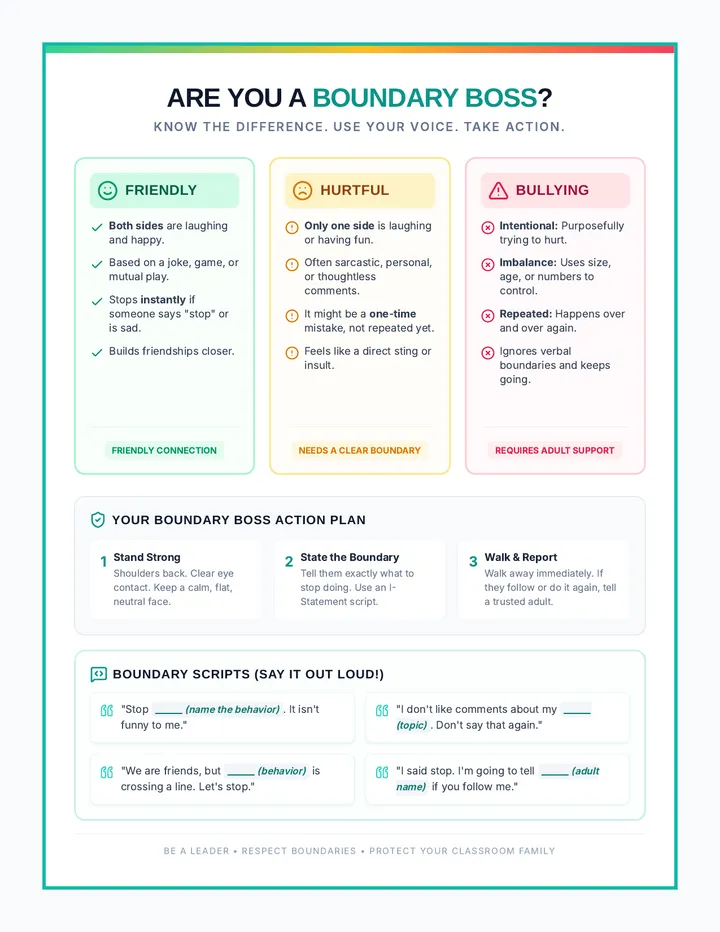
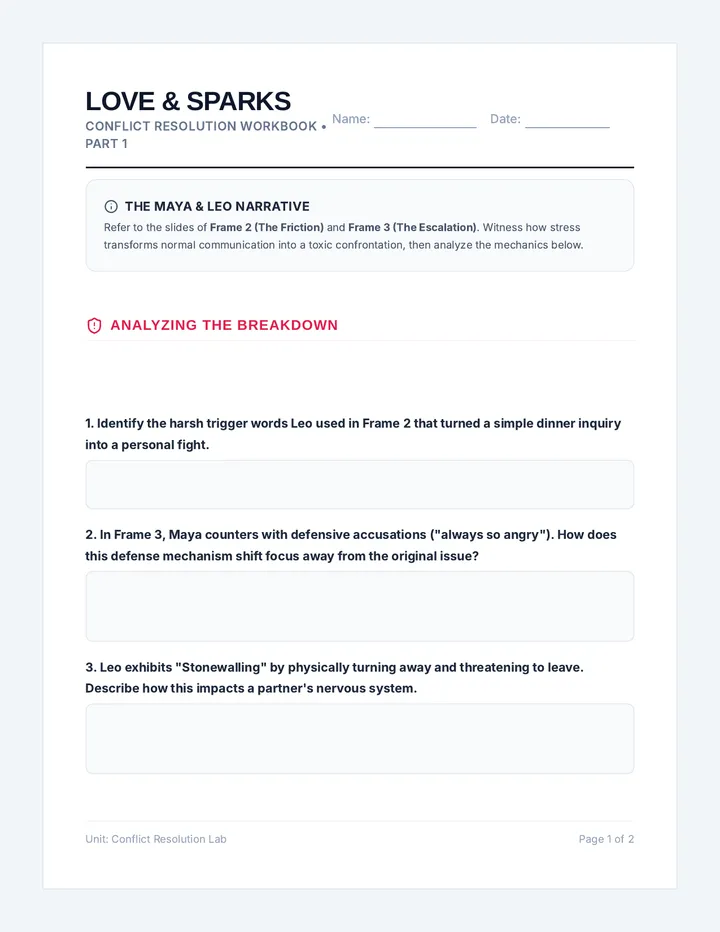
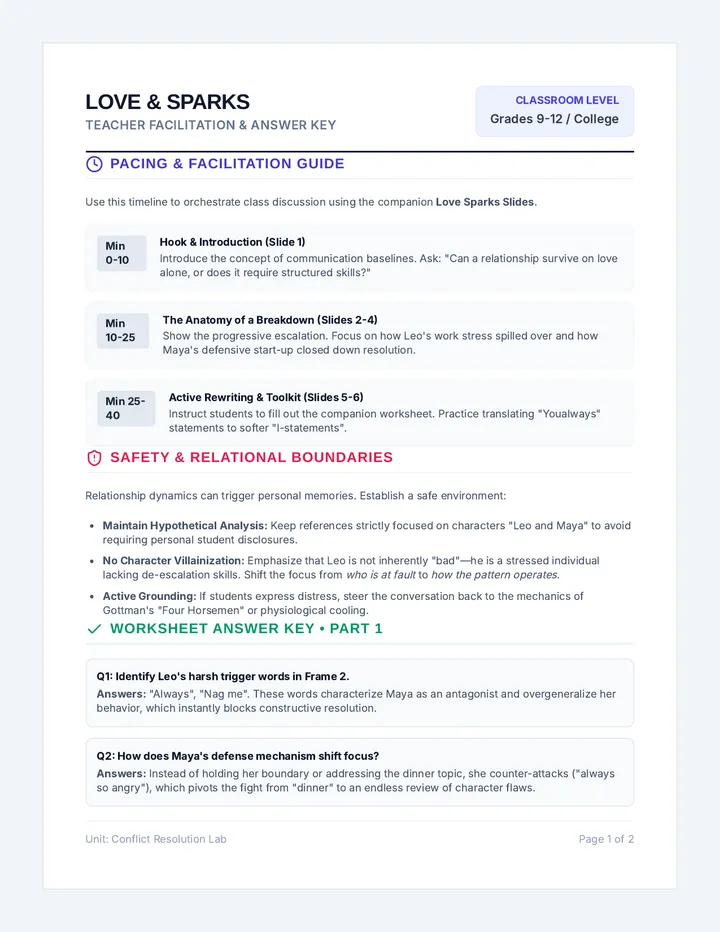
Students analyze the spectrum of communication styles (aggressive, assertive, passive) and how volume and tone contribute to these perceptions.
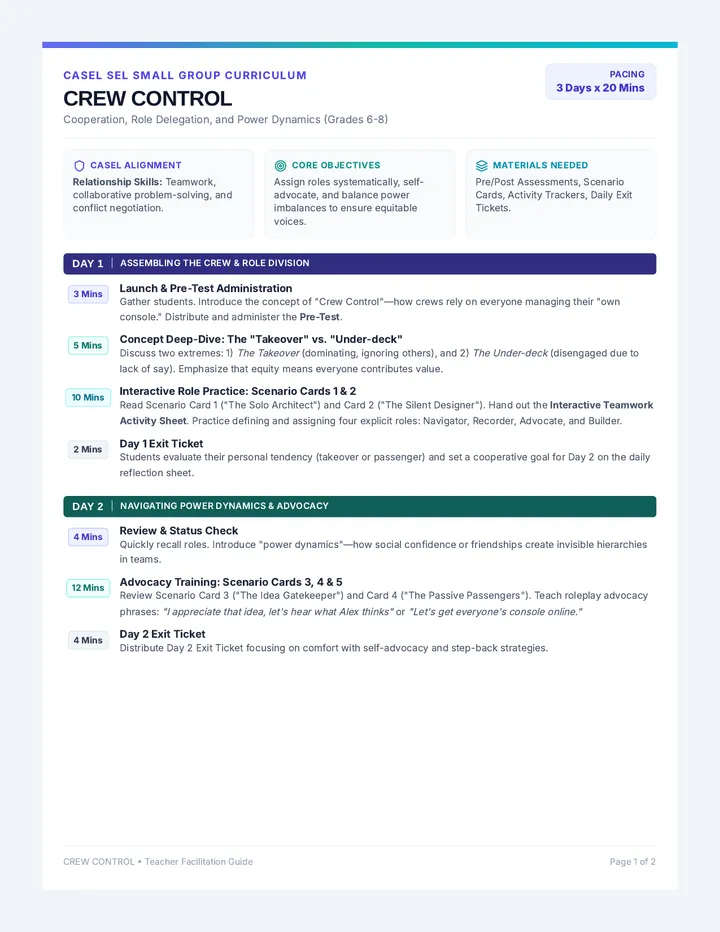
A small group session for 6th-grade girls focused on building self-confidence by navigating social dynamics, understanding peer pressure, and identifying healthy friendship traits.
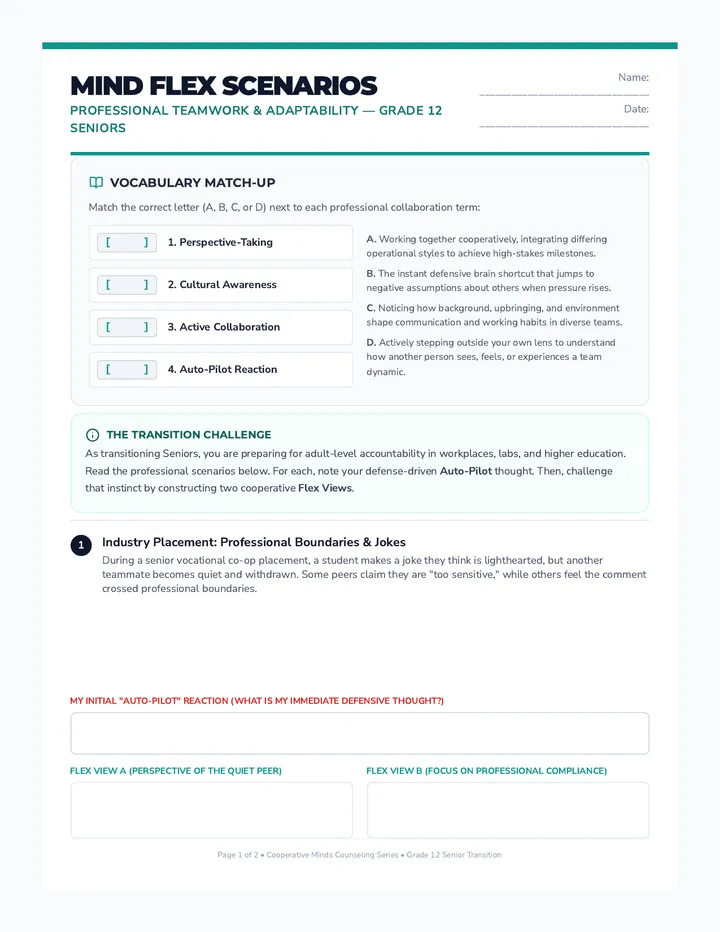
Students assemble their 'Ultimate Life Blueprint' and create a 'Pocket Panic Card' for quick stress-relief during high-pressure moments like finals week.
Teaches the 'Power of No' to handle FOMO and over-scheduling, helping students protect their time for the things that actually matter to them.
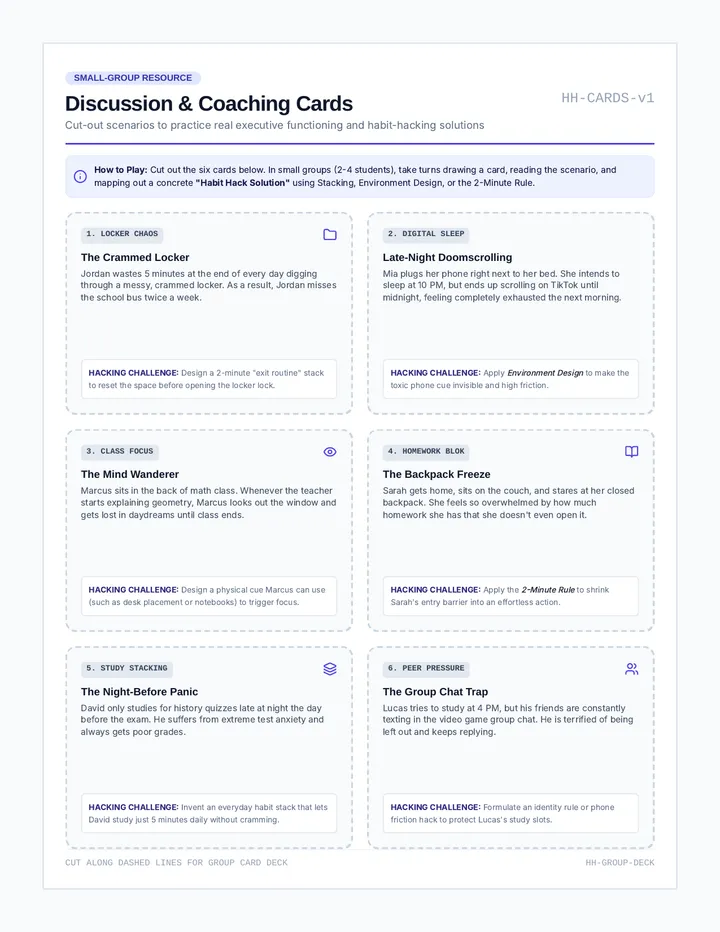
Explores why sleep is a superpower for grades and mood, helping students design a 'Phone Lockdown' ritual to beat late-night screen scrolling.
Moves beyond simple planners to teach 'energy auditing.' Students identify 'time thieves' like infinite scrolling and design a schedule that includes guilt-free rest.
Students learn to tell the difference between 'stressors' (the math test) and the 'stress response' (the racing heart), practicing physical hacks to tell their brains they are safe.
This lesson provides middle and high school teachers with actionable strategies for managing students who sleep in class, moving from frustration to empathetic problem-solving. It covers root causes, immediate intervention techniques, and long-term support systems.
The final session focuses on maintaining healthy social boundaries, the role of forgiveness in growth, and group closure.
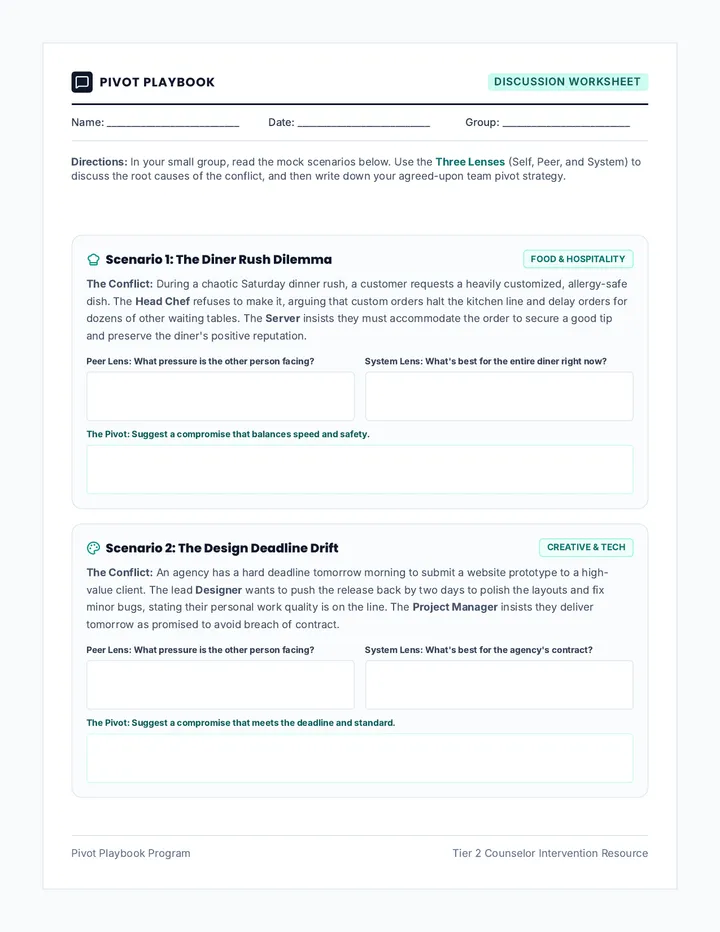
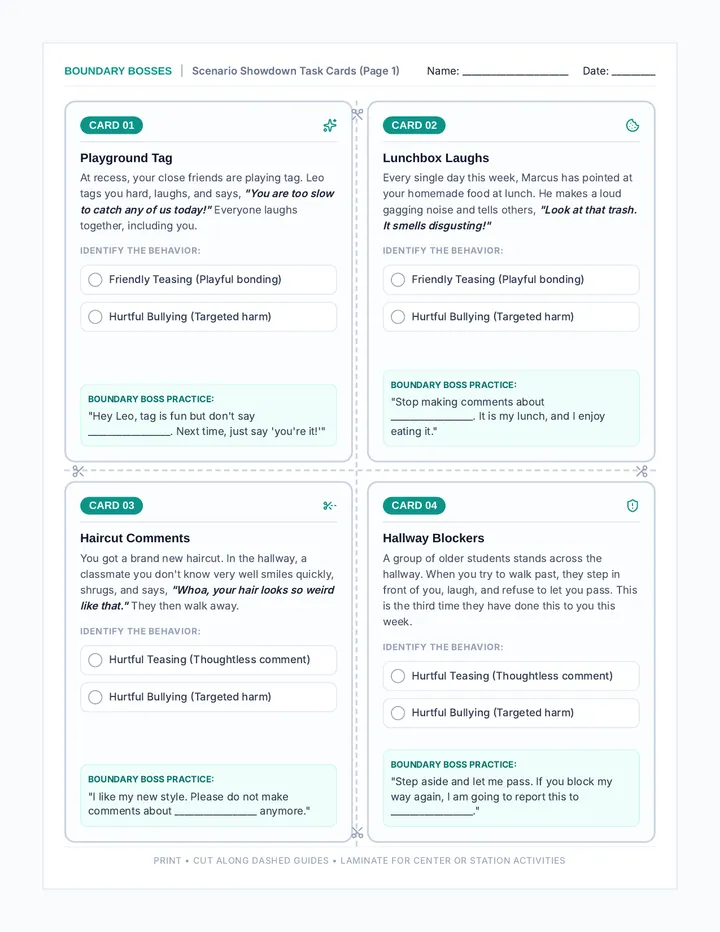
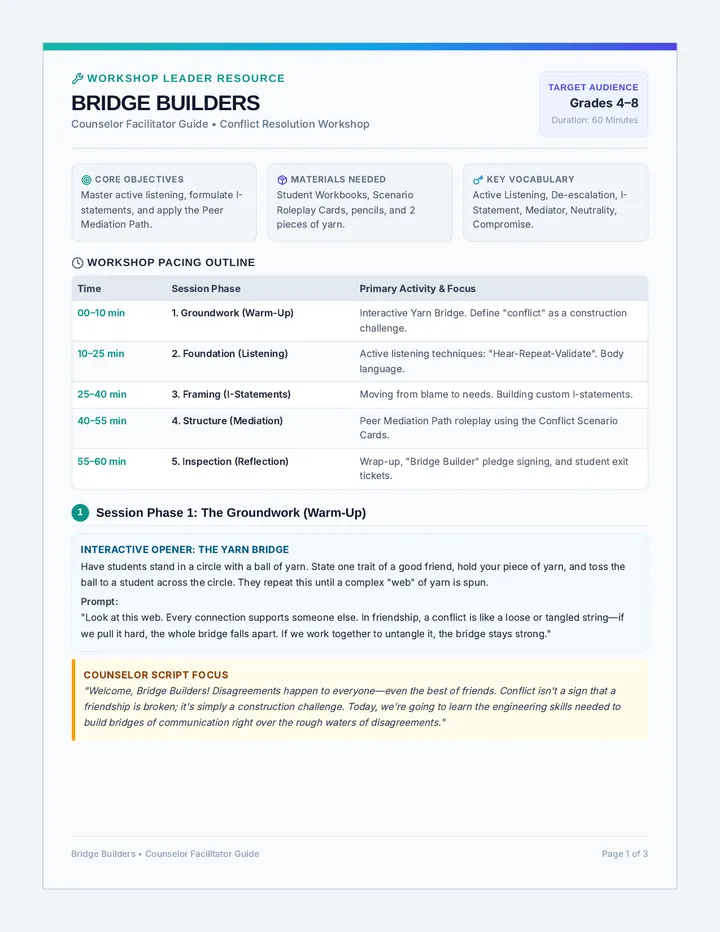
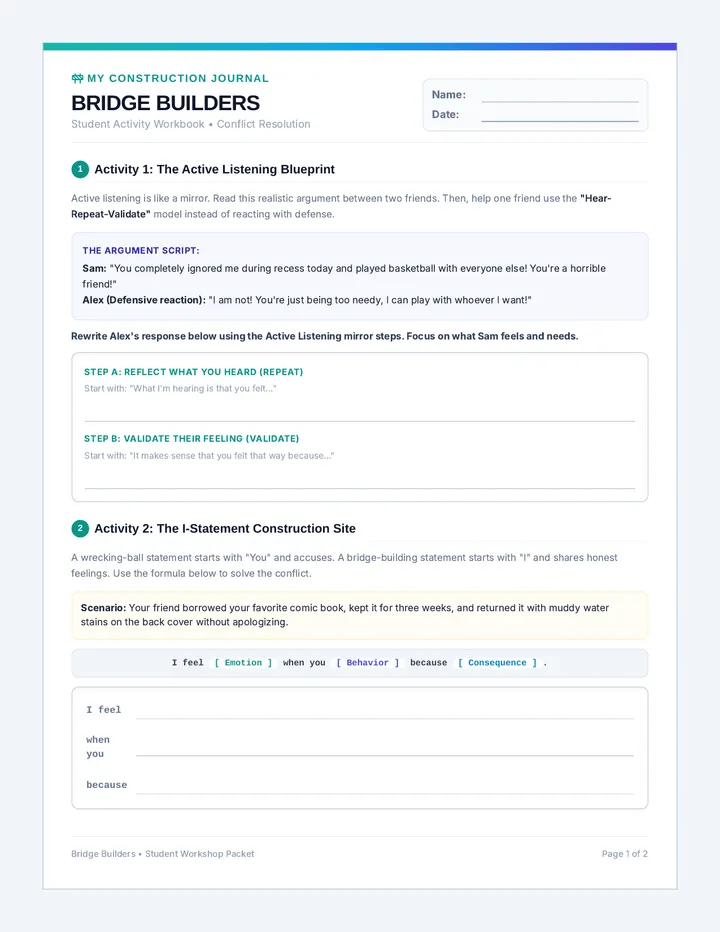
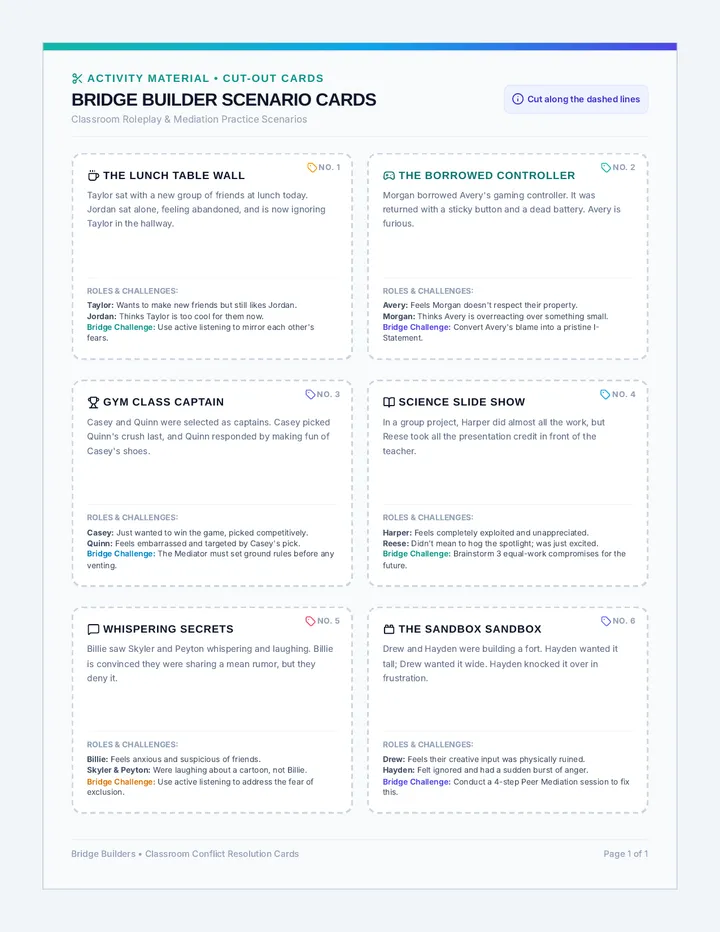
Students apply a conflict mediation model to realistic middle school scenarios, focusing on sustainable compromise and healthy boundaries.
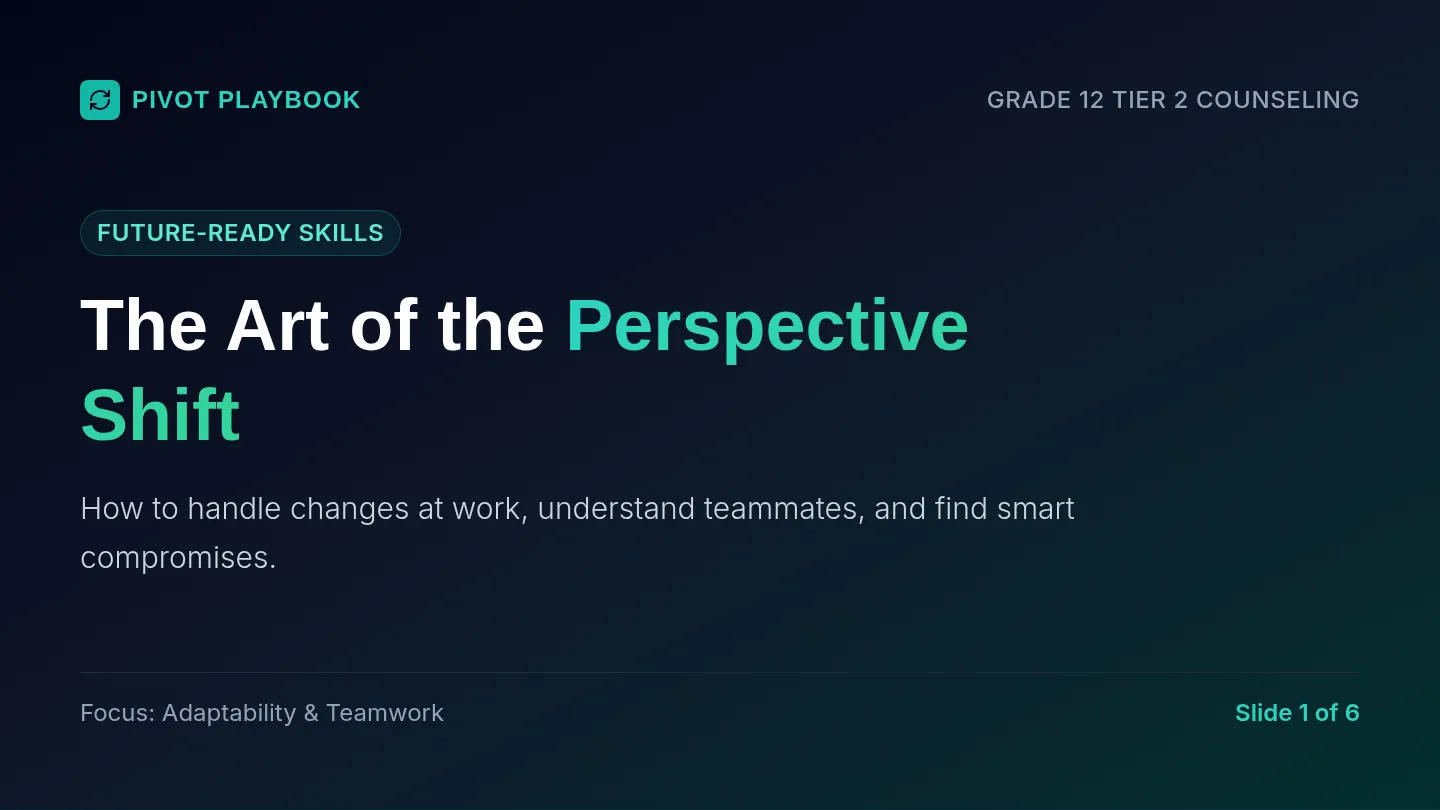
Students practice advanced perspective-taking to navigate complex social situations and understand the role of perception in peer groups.
This lesson focuses on assertive communication and the impact of digital tone, teaching students to advocate for their needs without aggression.
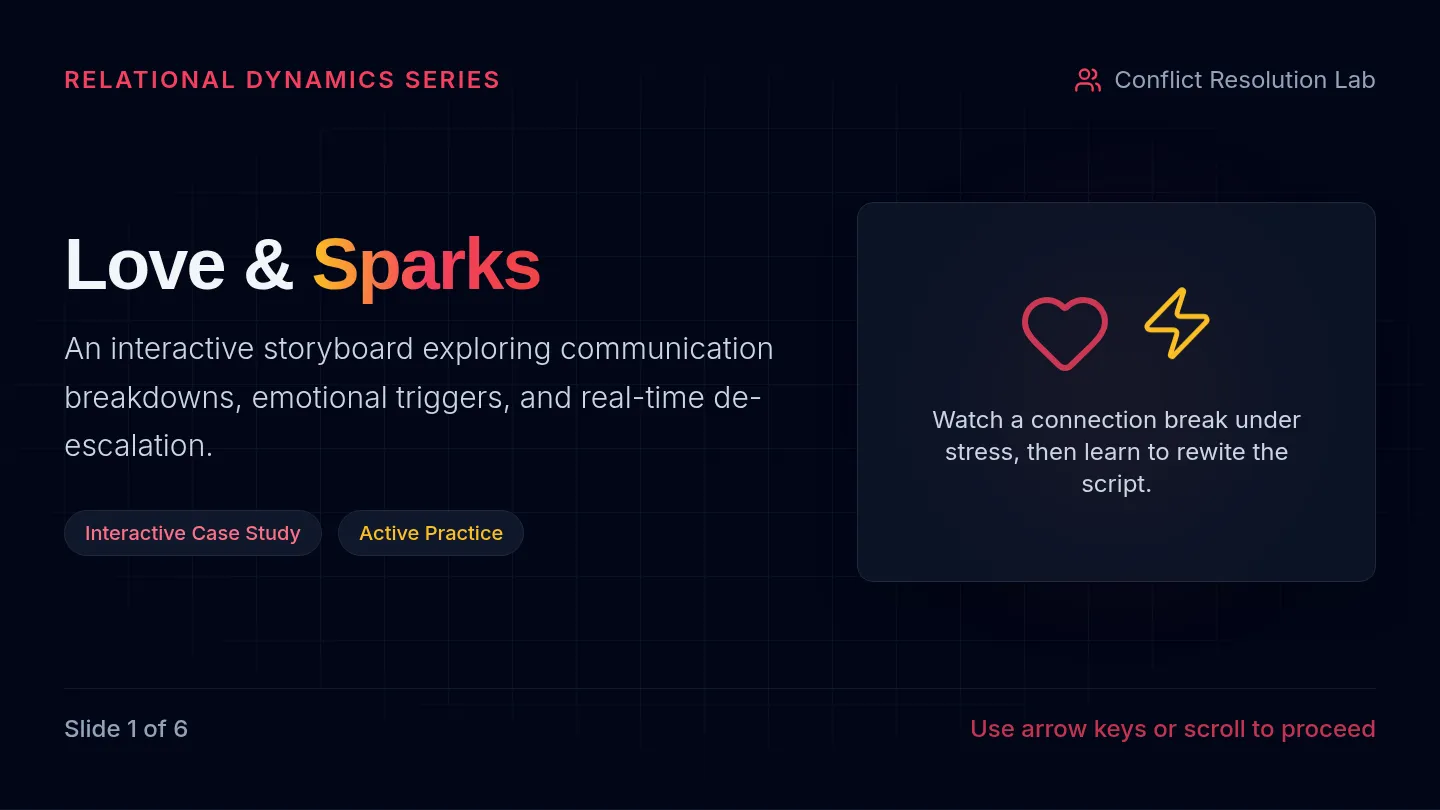
Students analyze common middle school conflict triggers, including digital drama and social hierarchy, distinguishing between surface behaviors and underlying needs.
Students identify the core values that ground healthy friendships and analyze the difference between 'situational friends' and 'value-based friends.'
A practical budgeting lesson focused on selecting essential apartment items within a $100 limit, supporting IEP goals for functional math and decision-making.
Synthesizes all lessons into a long-term goal plan and commitment to personal excellence.
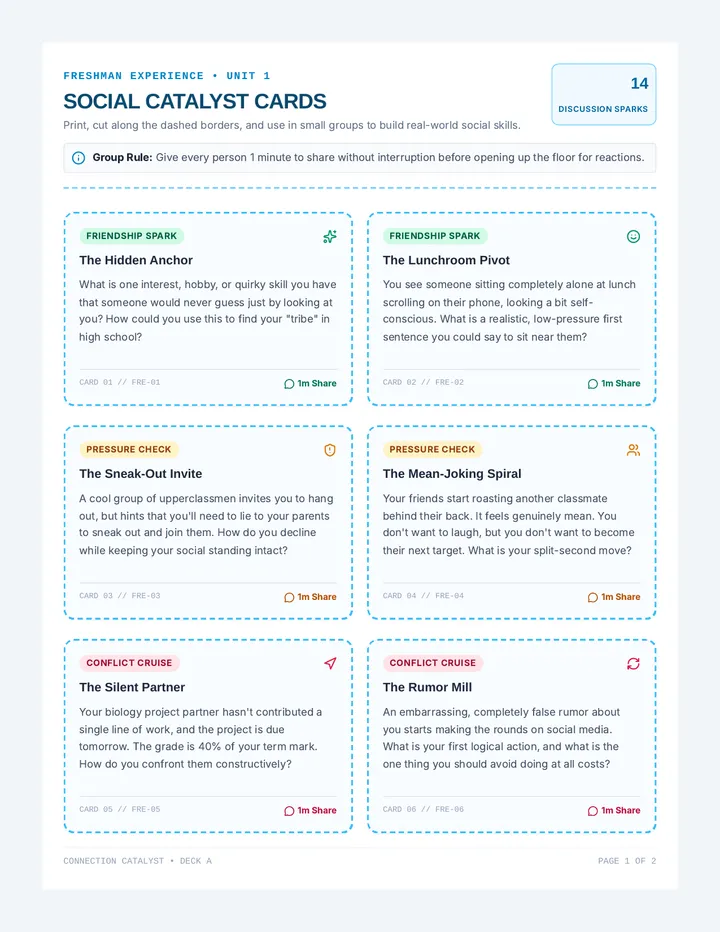
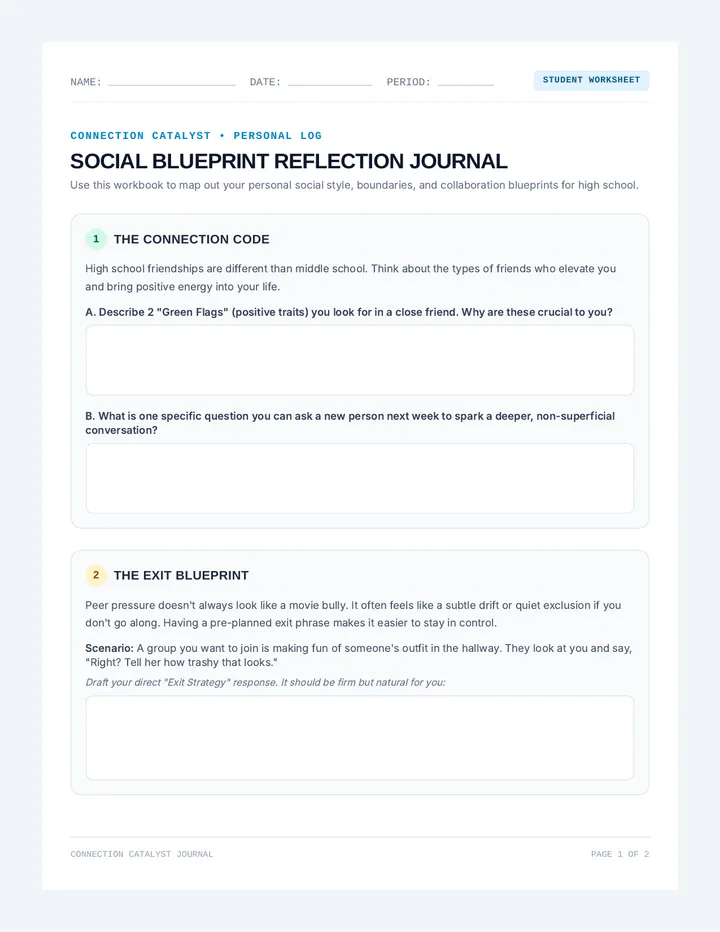
Focuses on distinguishing between convenience friends and true allies, and developing exit strategies for peer pressure.