A comprehensive Tier 2 social skills curriculum for 10th graders, moving from initial peer connection to advanced communication, collaborative problem-solving, and a school-wide community impact project.
An advanced five-part professional development series for 11th graders focusing on the psychology of conflict, high-stakes communication, and strategic diplomacy. Students prepare for adult environments by mastering emotional intelligence, interest-based negotiation, and professional digital protocols.
A specialized workshop sequence designed for high school parents to help them navigate the emotional complexities of their children's post-secondary transitions. The sequence focuses on moving from a 'pressure-based' approach to a 'support-based' framework using nautical metaphors.
A mental health and communication lesson for high schoolers focusing on 'deflection' as a social reflex. Students analyze Jake Tyler's 'I'm Fine' TEDx talk, explore the 'masks' they wear in social interactions, and practice authentic listening skills.
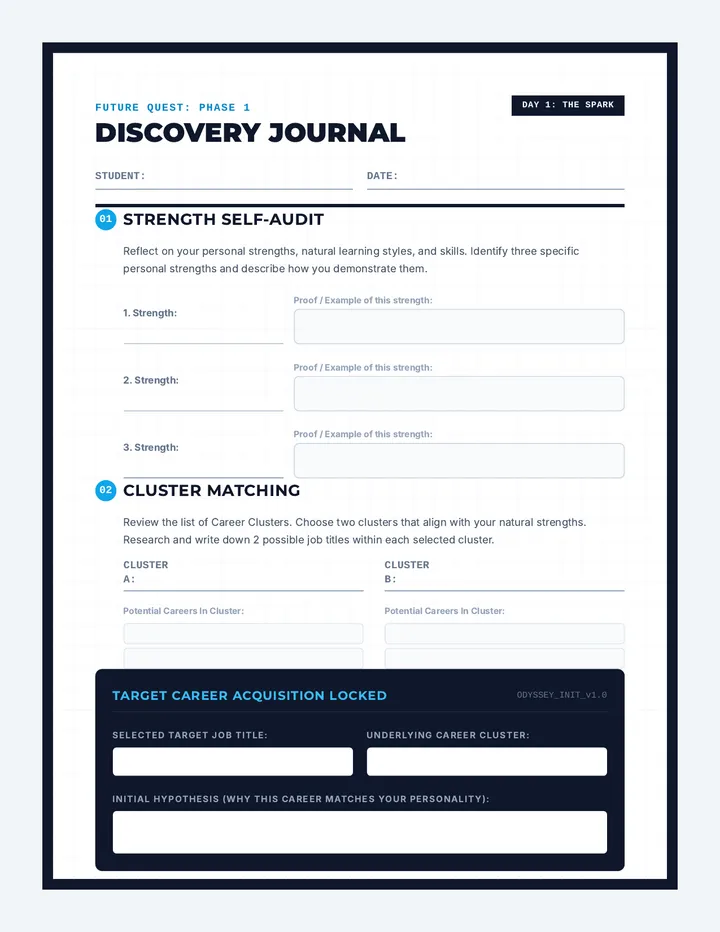
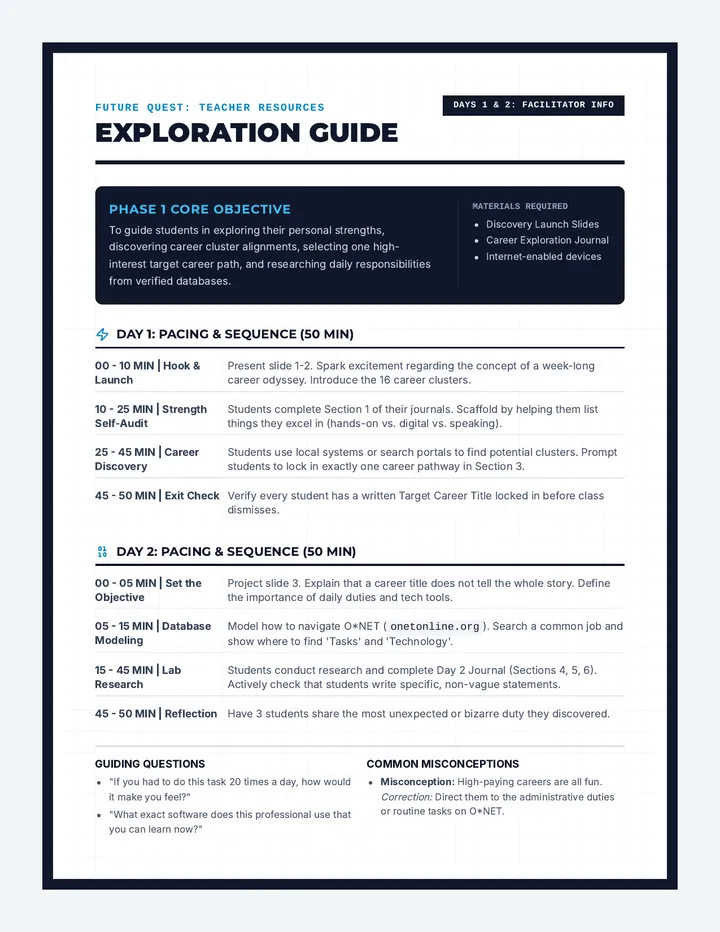
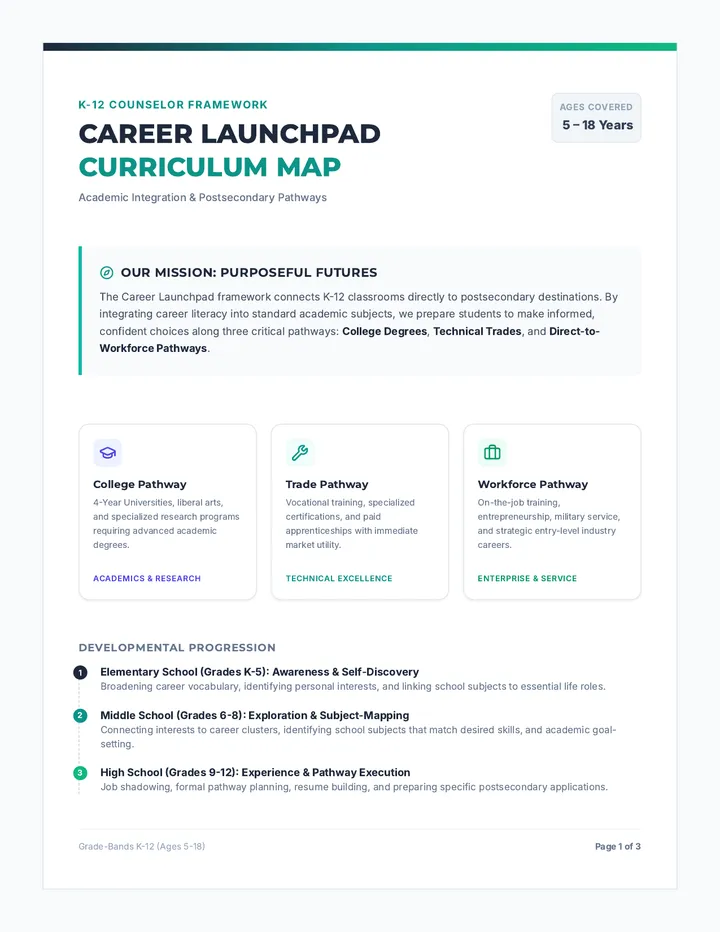
A career and college readiness series designed to help high school students navigate the transition from school to the workforce, military, or higher education.
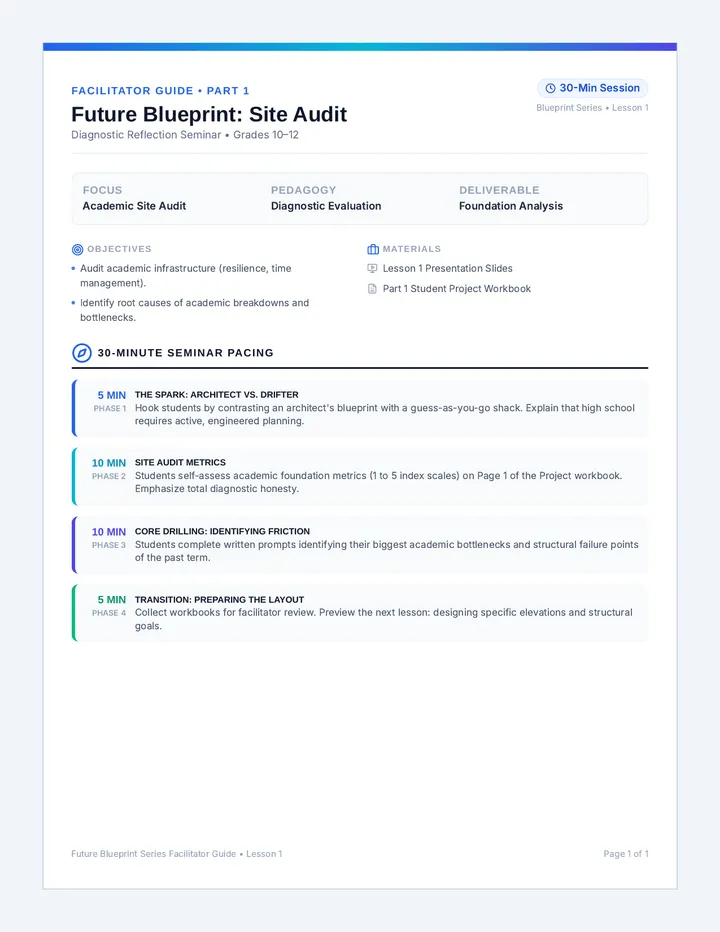
A sequence focused on executive functioning and study skills, helping students manage cognitive load and optimize their daily routines for academic success.
A series of workshops designed for student council and youth leaders to develop community-focused initiatives and positive school culture.
A lesson sequence exploring the practical application of Stoic philosophy for high school students, focusing on Marcus Aurelius's Meditations and modern stress management.
A career exploration and self-discovery unit for 8th-10th graders that reframes 'passion' from a specific hobby to a personal 'environment' or 'nature,' using Jay Shetty's teachings and the DISC model.
This lesson explores the concept of Emotional Intelligence (EI) through the lens of the Mayer and Salovey model, comparing it with other prominent theories of intelligence such as Gardner's Multiple Intelligences and Goleman's EI model. Students will evaluate whether EI is a distinct form of intelligence or a collection of personality traits.