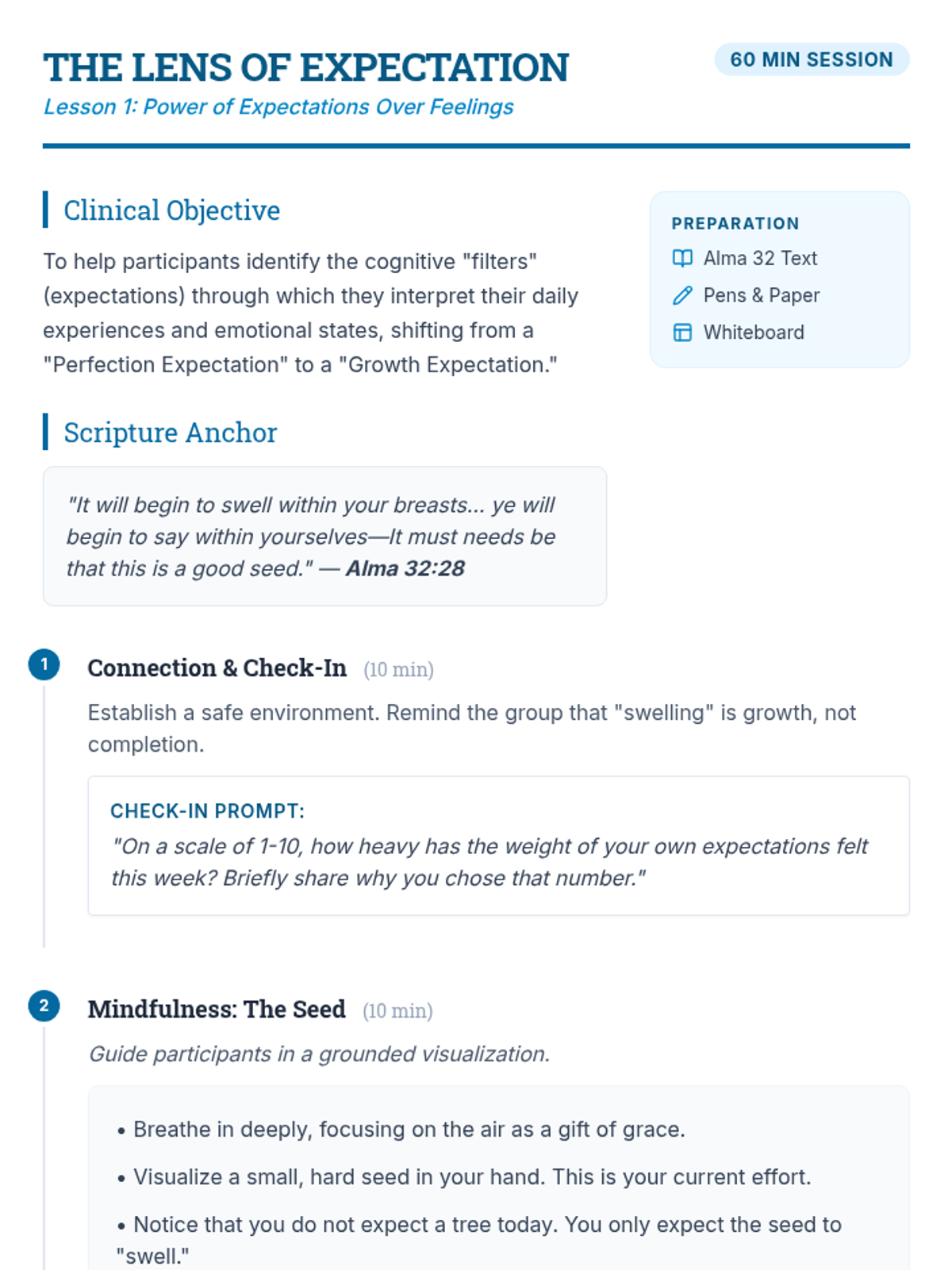
A 5-lesson sequence for undergraduate students focused on deconstructing academic failure, understanding stress physiology, practicing vulnerability through storytelling, and creating personalized resilience frameworks through peer support.
A two-day intensive training for staff working in gender and trauma sectors, focusing on organizational sustainability, psychological safety, and emotional resilience.
A comprehensive 3-hour one-on-one employment readiness curriculum designed for adults with disabilities. The sequence focuses on self-discovery, workplace etiquette, and practical application skills through engaging, accessible worksheets.
A specialized workshop sequence designed for high school parents to help them navigate the emotional complexities of their children's post-secondary transitions. The sequence focuses on moving from a 'pressure-based' approach to a 'support-based' framework using nautical metaphors.
A parent-focused sequence designed to help caregivers differentiate between normal adolescent moodiness and clinical depressive disorders, providing tools for identification and pathways to support.
A career-readiness sequence designed for older students and undergraduates to identify their current skills, potential growth areas, and personality types using the Ikigai and Quadrant of Success models. Students move from auditing their time to creating a strategic roadmap for professional development.
A transformative workshop for parents focused on identifying early signs of body image issues in children and fostering a home environment of body neutrality and positive self-talk. Through the lens of a classic Full House scene, parents explore the impact of diet culture and learn to use vulnerability as a parenting tool.
A professional development sequence designed for school leaders and educators to identify and dismantle systemic stigma within school policies and language, fostering a more supportive and empathetic educational environment.
This lesson explores the concept of Emotional Intelligence (EI) through the lens of the Mayer and Salovey model, comparing it with other prominent theories of intelligence such as Gardner's Multiple Intelligences and Goleman's EI model. Students will evaluate whether EI is a distinct form of intelligence or a collection of personality traits.