A visual presentation for Lesson 1 teaching 1st graders the fundamentals of device care through the concept of being a 'Tech Care Ranger'. Includes rules for gentle handling, no food/drink, and safe carrying.
A vibrant 7-slide visual presentation including new 'We Will' and 'I Will' statements, and a dedicated definition slide for charity.
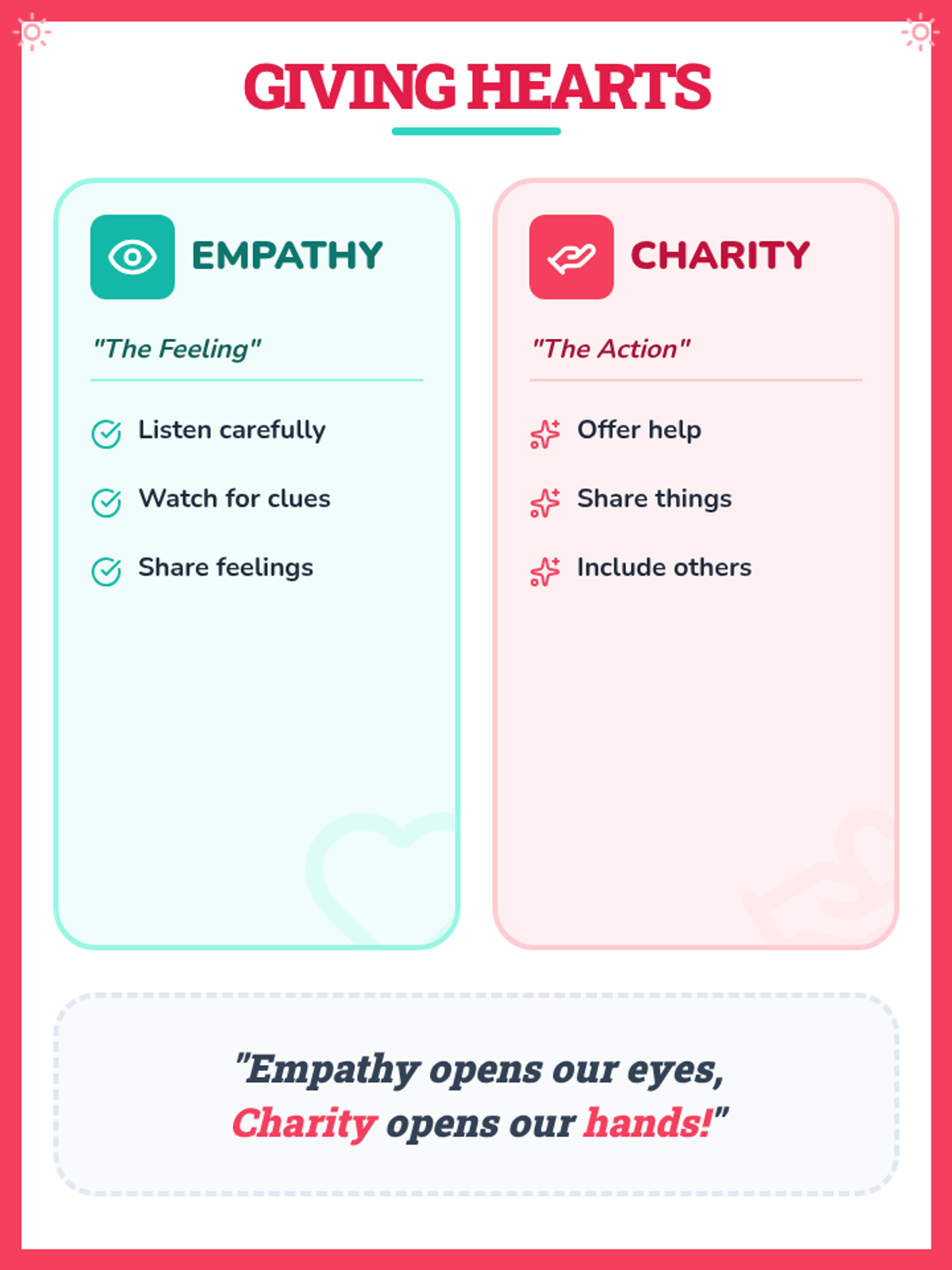
A bold, visual anchor chart for classroom display that reinforces the connection between empathy (the feeling) and charity (the action) with clear examples.
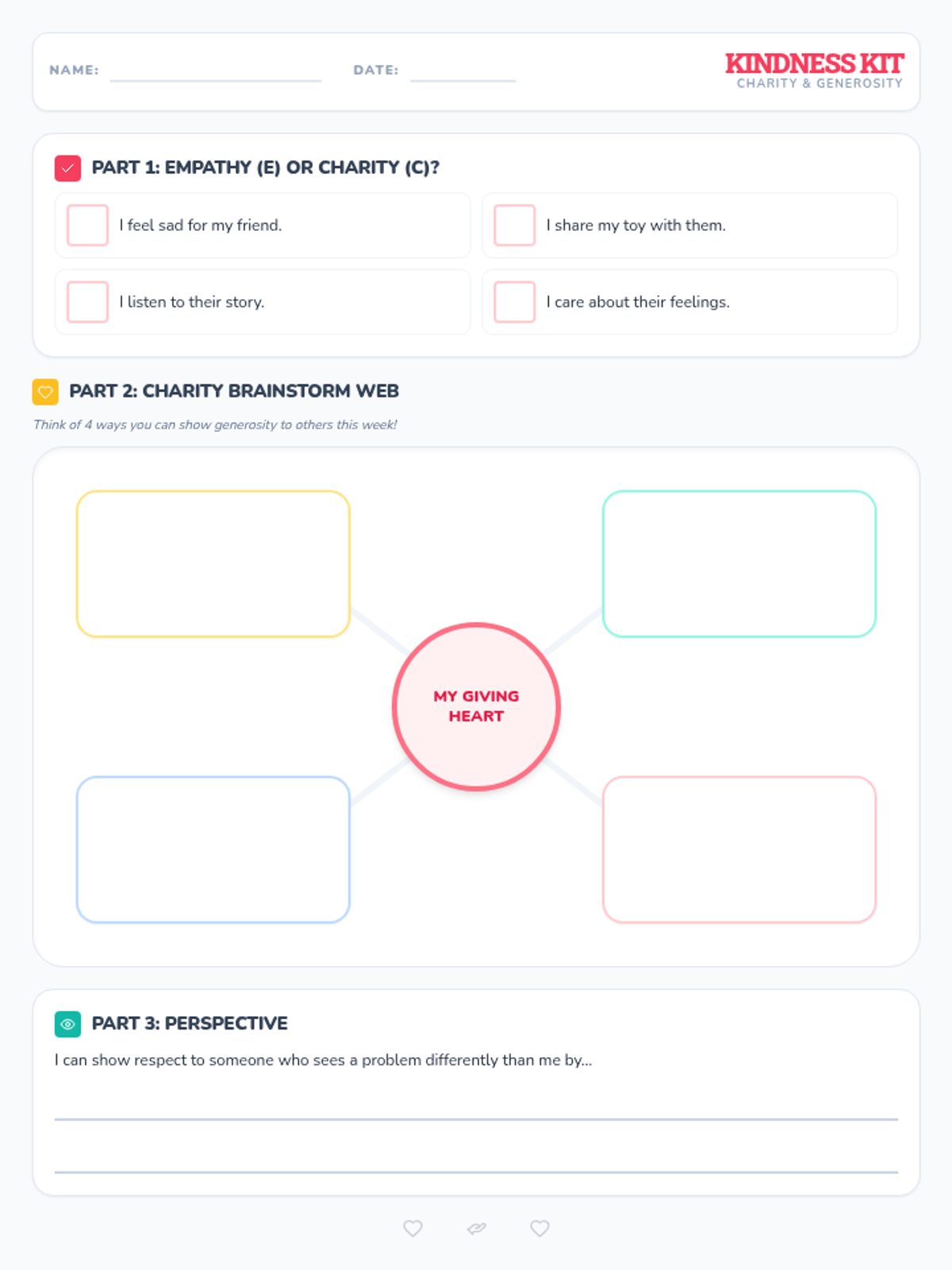
A student-facing worksheet featuring a categorization task to distinguish empathy from charity, a visual brainstorming web for identifying acts of generosity, and a reflection prompt on perspective-taking.
A vibrant 6-slide visual presentation including new 'We Will' and 'I Will' statements to frame the lesson goals and student accountability.
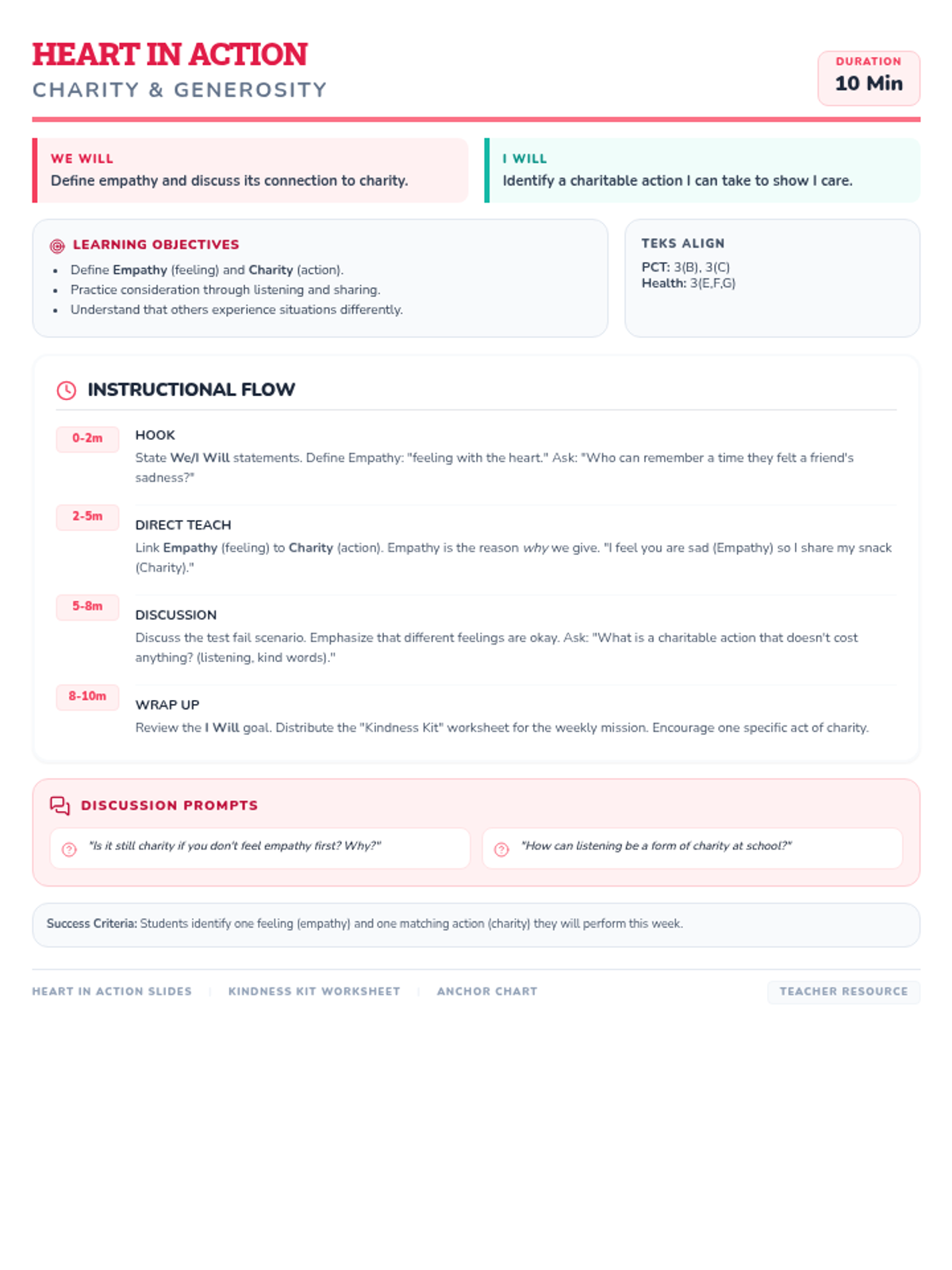
A comprehensive facilitator guide for a 10-minute whole-group lesson on empathy and charity, now featuring explicit 'We Will' and 'I Will' statements for standard-aligned instruction.
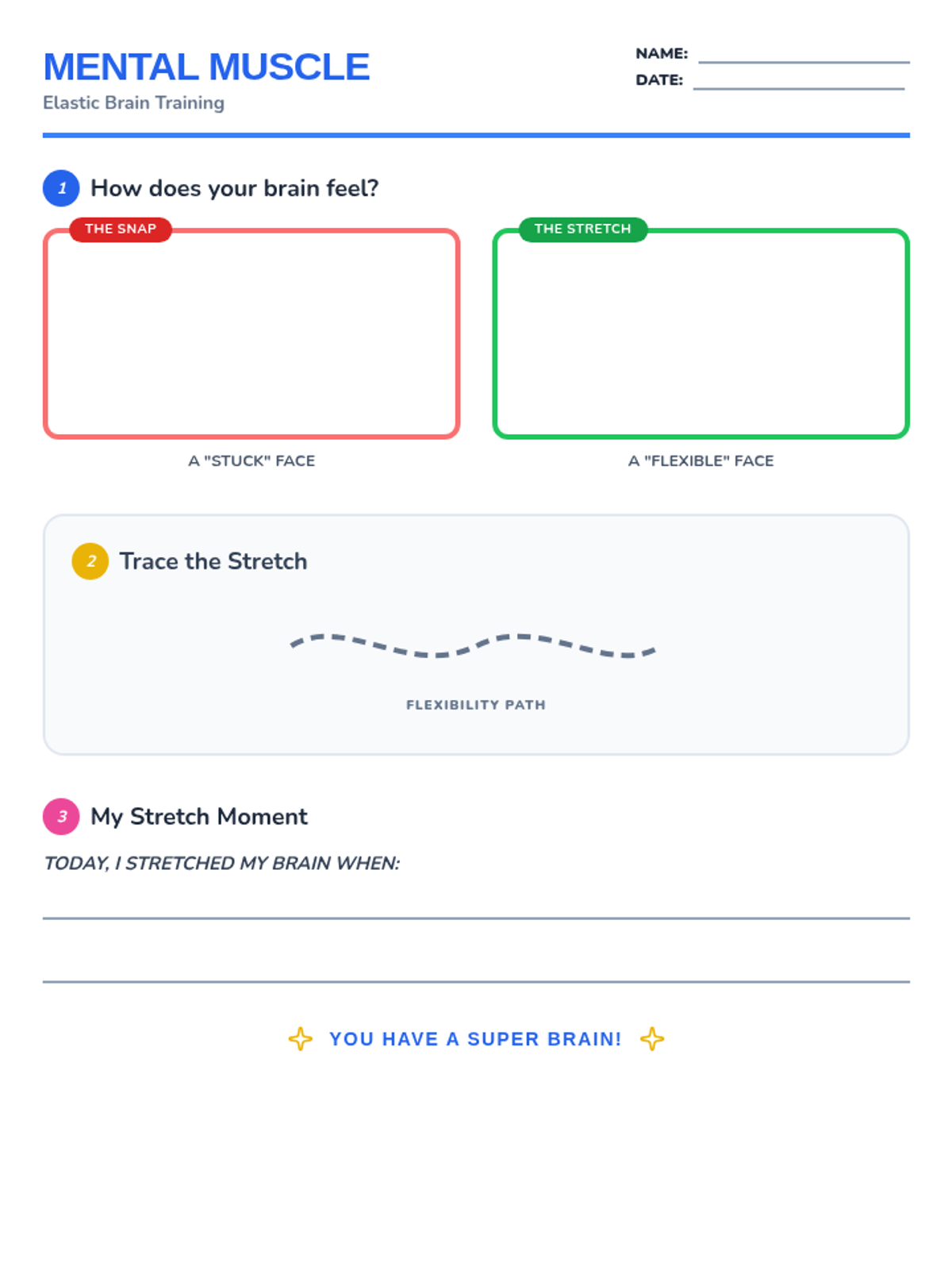
A K-2 student worksheet that uses drawing, tracing, and simple reflection to reinforce the concepts of 'snap' and 'stretch' reactions.
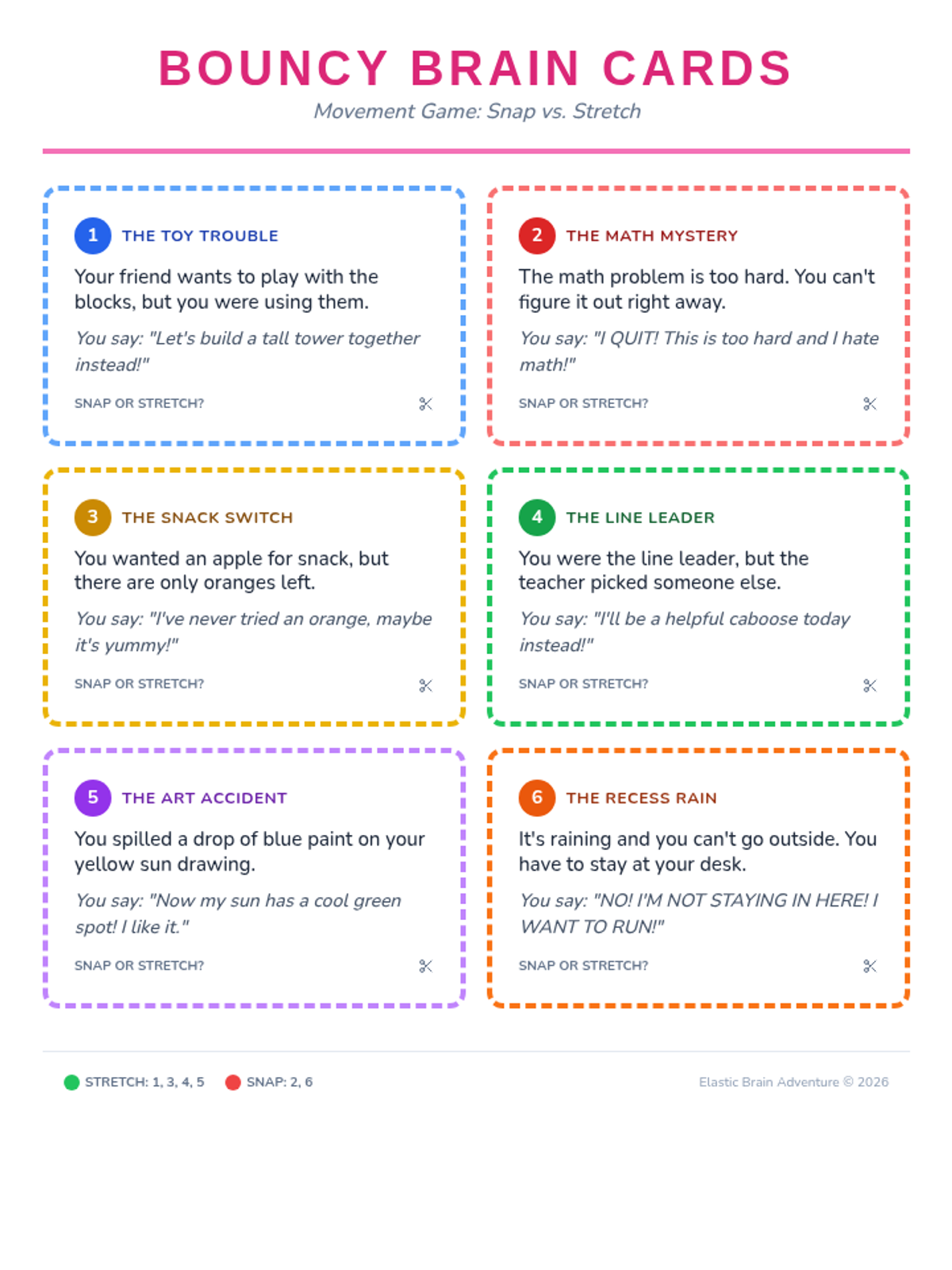
A set of six printable scenario cards for the Bouncy Brain movement activity, helping students distinguish between rigid 'snap' reactions and flexible 'stretch' responses.
A vibrant, high-energy slide deck that introduces the rubber band metaphor for cognitive flexibility through visual storytelling and movement-based prompts.
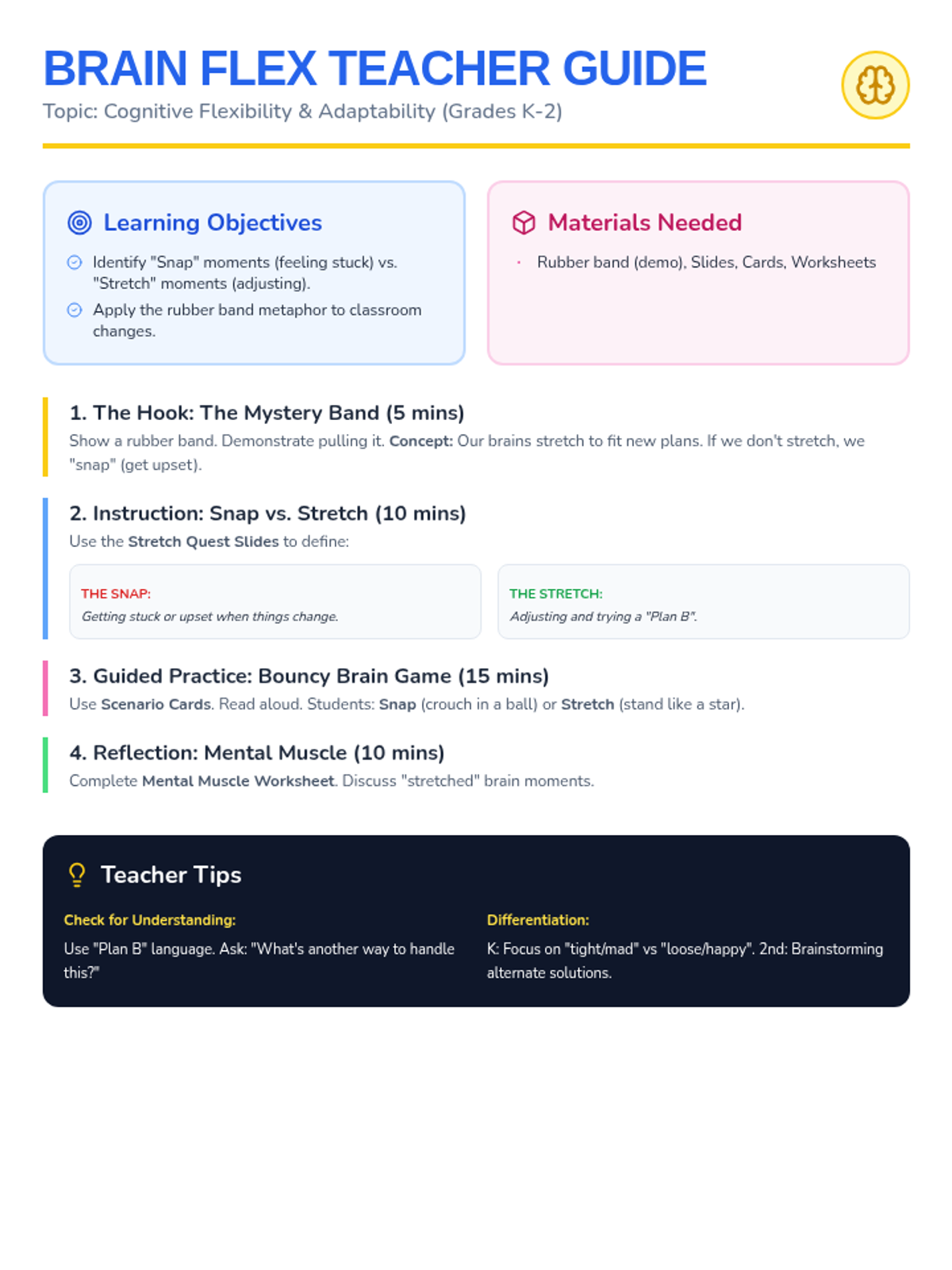
A comprehensive teacher guide for leading the Elastic Brain Adventure lesson, including objectives, step-by-step procedures, and facilitation tips for K-2 educators.
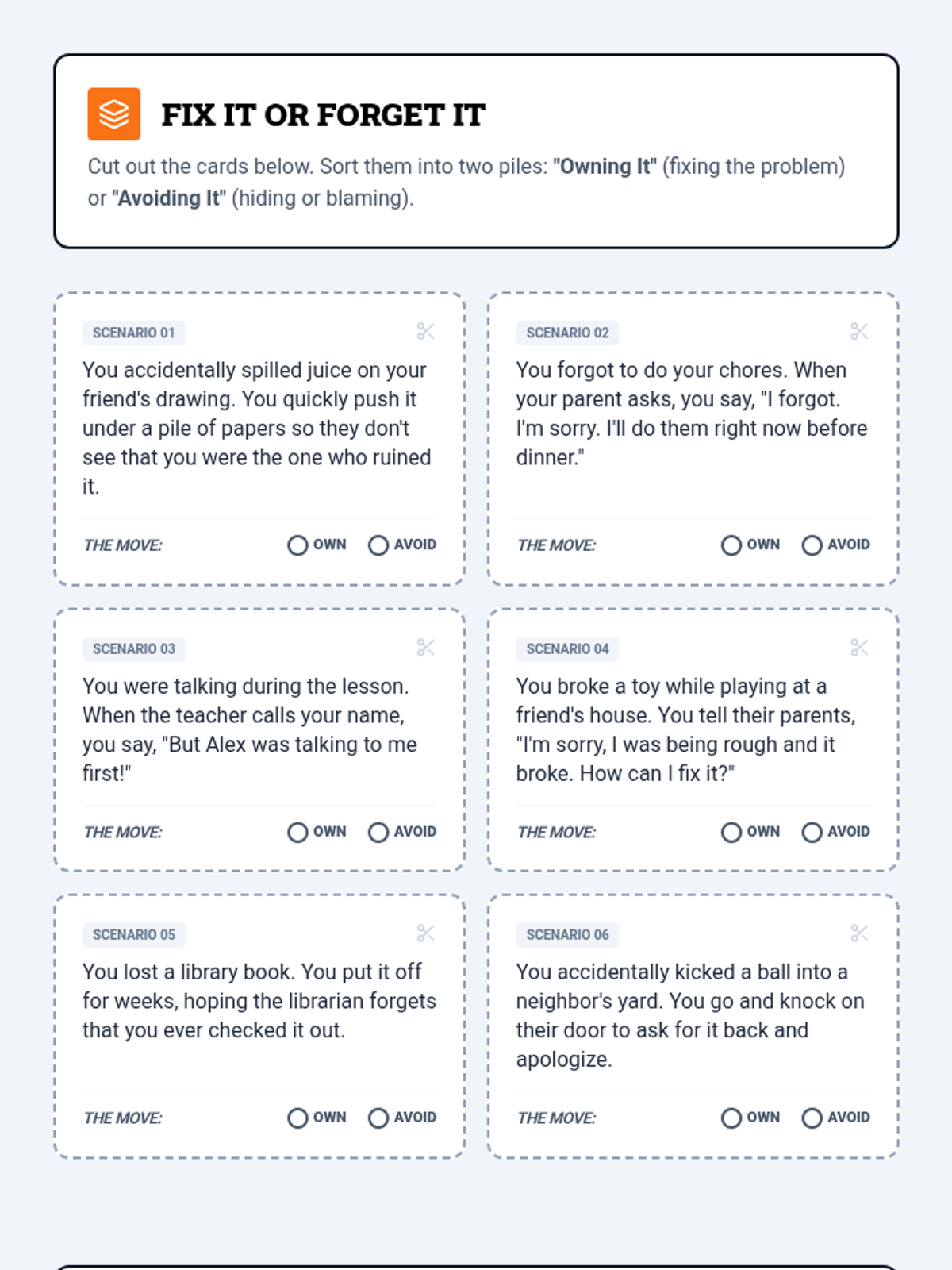
A hands-on sorting activity featuring 6 scenario cards where characters either take ownership or avoid accountability. Includes two large sorting mats ('Owning It' and 'Avoiding It') for group discussion and categorization.
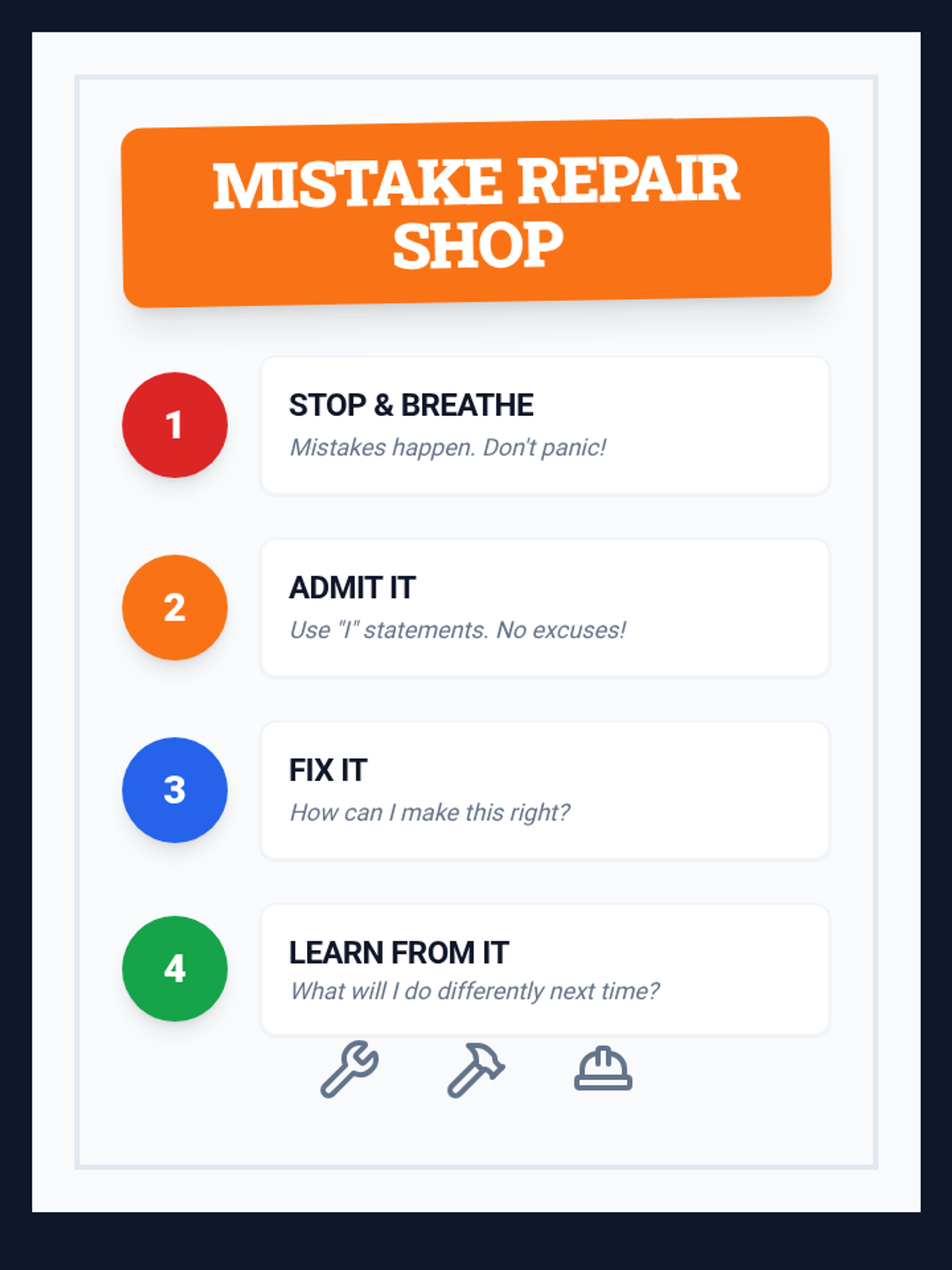
A set of classroom visuals including a large 'Mistake Repair Shop' anchor chart outlining the four-step ownership process, plus two motivational posters focusing on integrity and the growth mindset of 'upgrading' through mistakes.
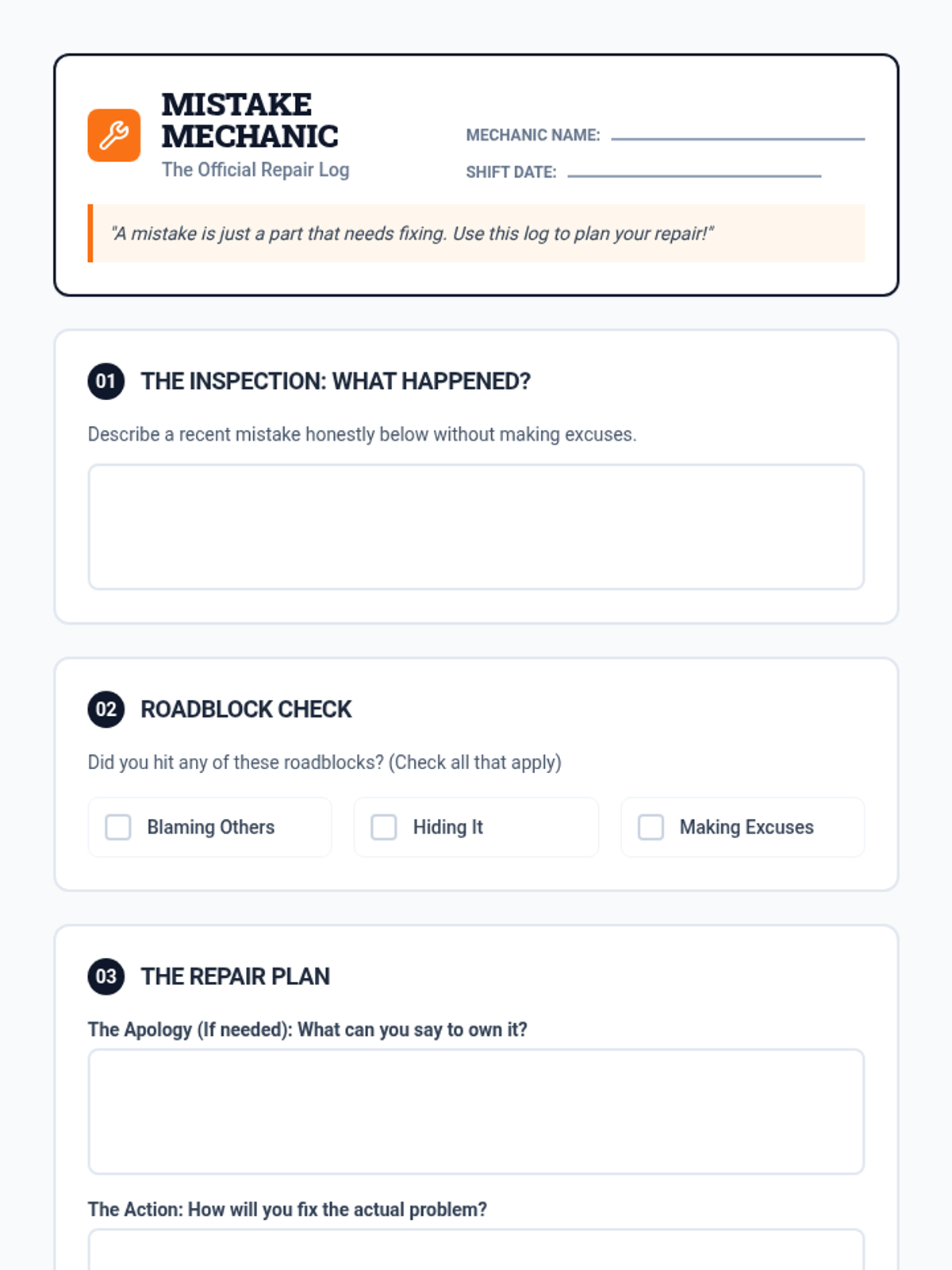
A reflection worksheet that guides students through the 'Mistake Mechanic' process. It includes sections for identifying a mistake, checking for emotional roadblocks (blame, hiding), planning a 'repair' (apology and action), and identifying the lesson learned for future 'system upgrades'.
An interactive slide deck introducing the 'Mistake Repair Shop' metaphor. It defines ownership, identifies common roadblocks like blaming and hiding, and provides a four-step 'Repair Manual' for students to follow when they make mistakes.
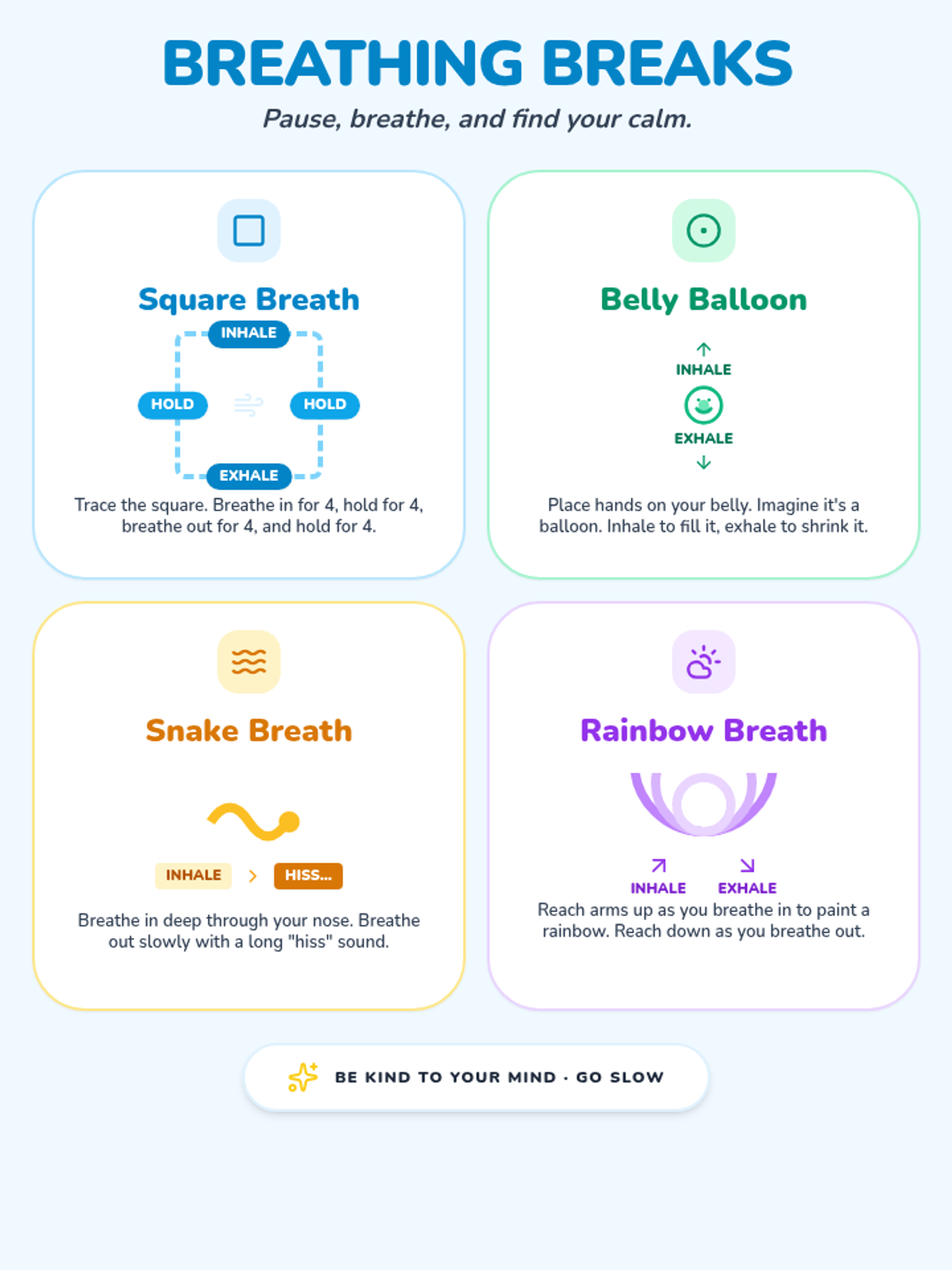
A colorful and kid-friendly classroom anchor chart featuring four breathing techniques: Square, Belly Balloon, Snake, and Rainbow breathing. Each section includes a visual guide and simple instructions to help students manage stress and find focus. Revised for better page fitting and visual clarity.
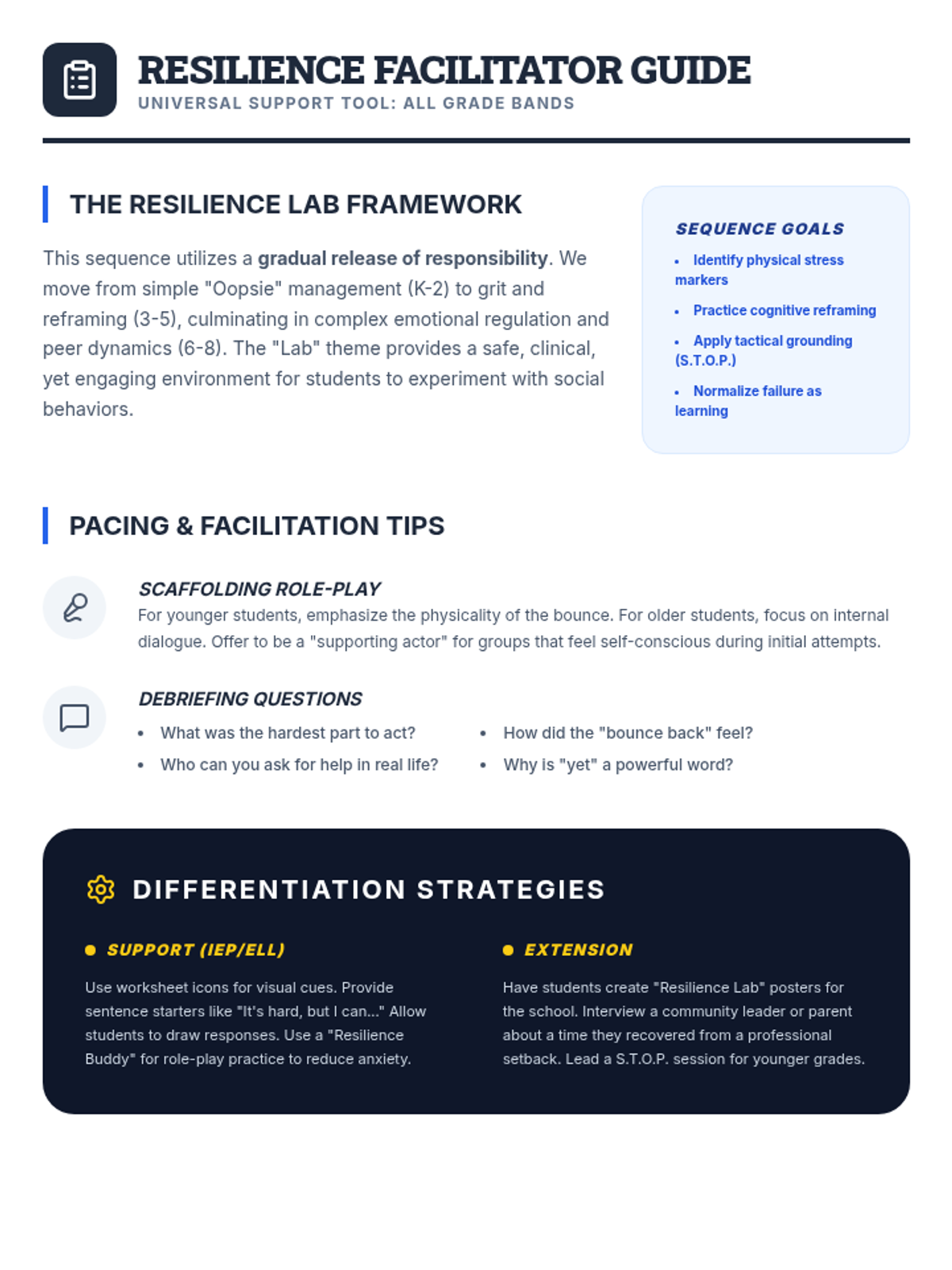
Revised facilitator guide. Fixed page break issues in the differentiation section by using 'break-inside-avoid'. Optimized layout and spacing to ensure all content fits professionally on a single page.
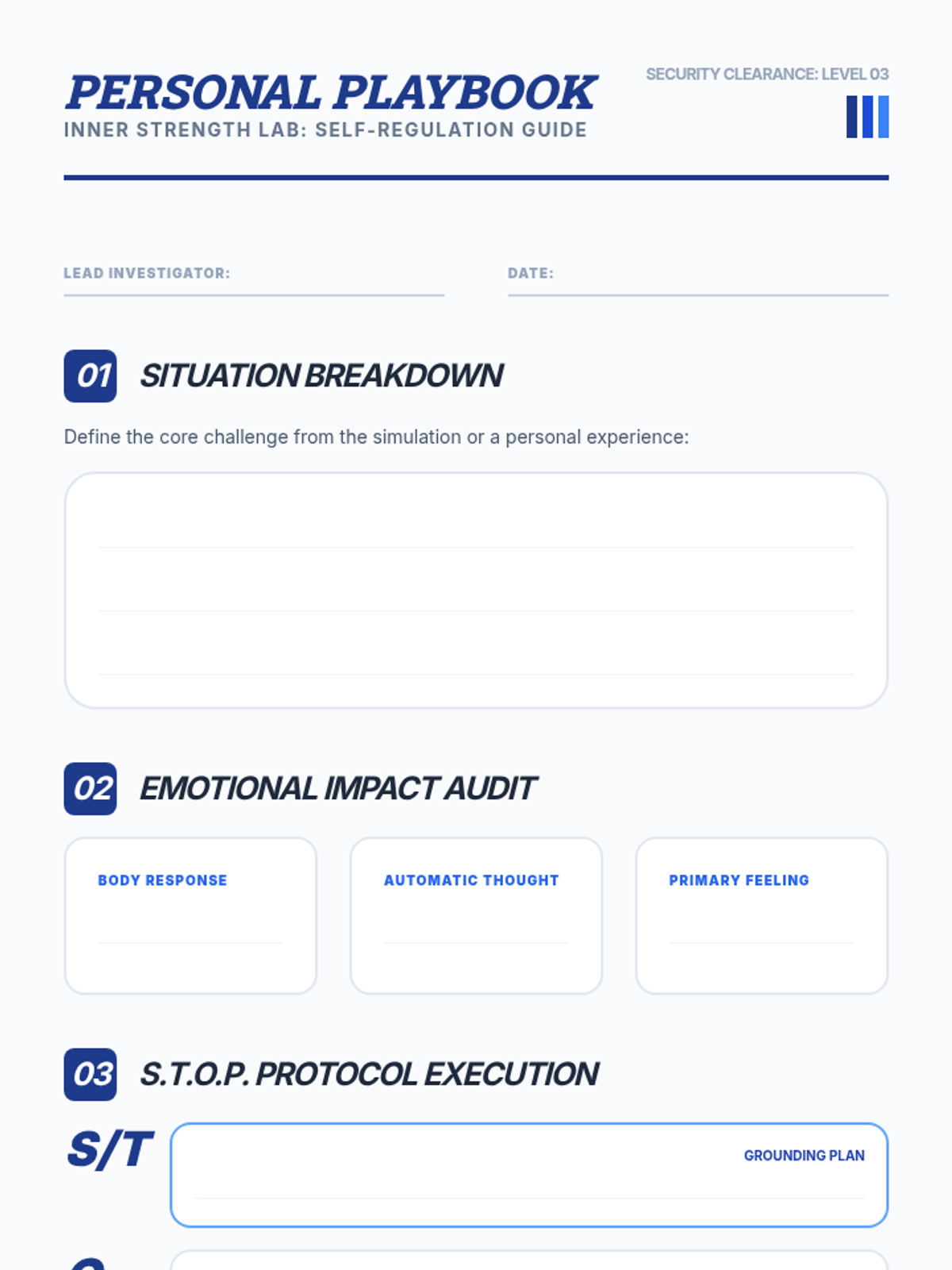
Revised worksheet for 6th-8th graders. Fixed page break issues for Section 3, increased height for emotional audit boxes (min-h-120px), and added input lines for S.T.O.P. execution steps. Improved overall tracking and legibility.
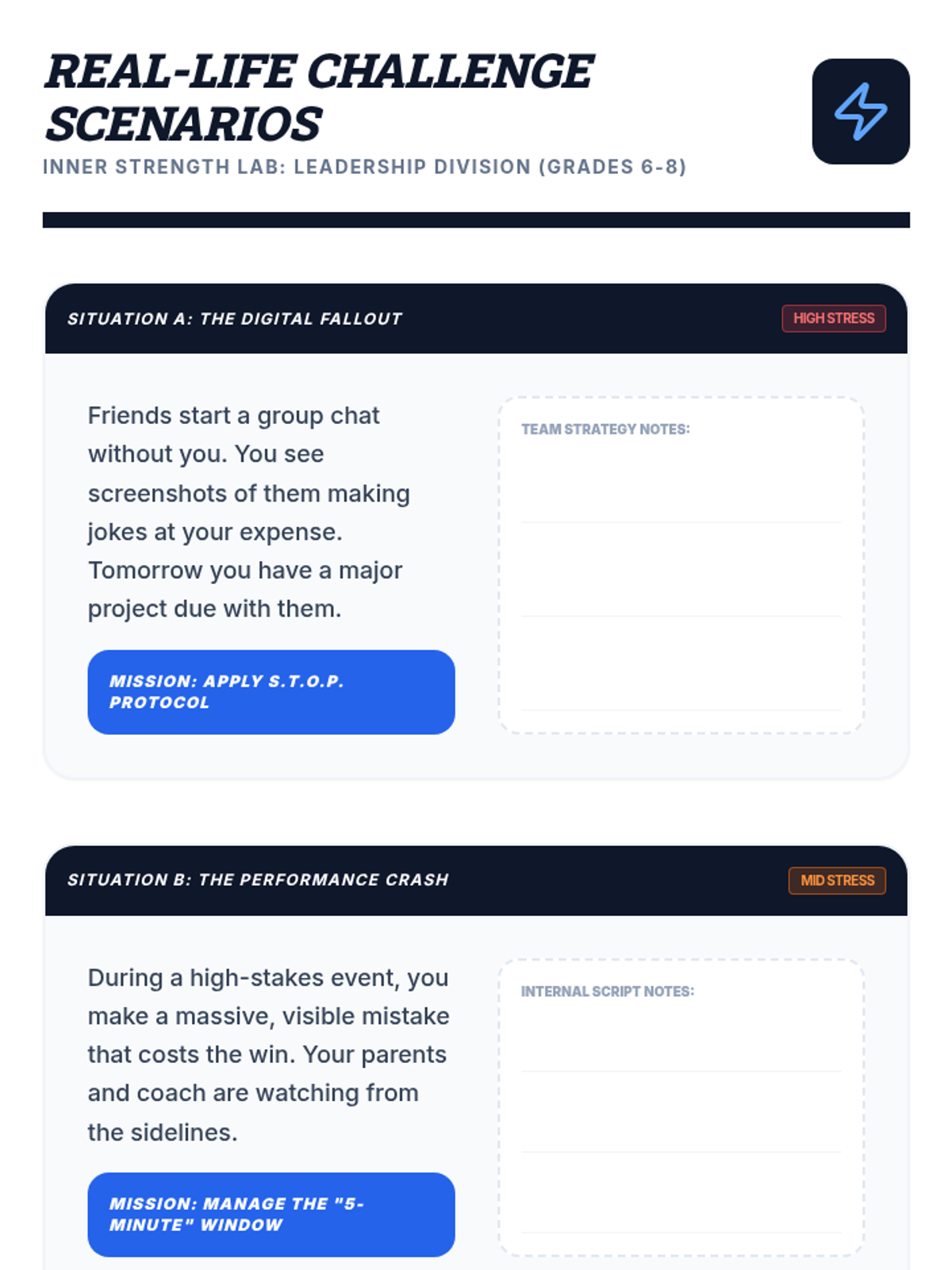
Revised scenario handout for 6th-8th graders. Added dedicated student response areas for each situation, fixed page break issues with 'break-inside-avoid', and included a S.T.O.P. protocol reference for self-contained usability.