The teacher answer key for the Summer Scavenger Word Search, featuring highlighted solution paths and instructional notes for facilitating the activity.
An instructional slide deck teaching students three core strategies for finishing the year strong: chunking large projects, the 5-minute rule, and identifying a support network.
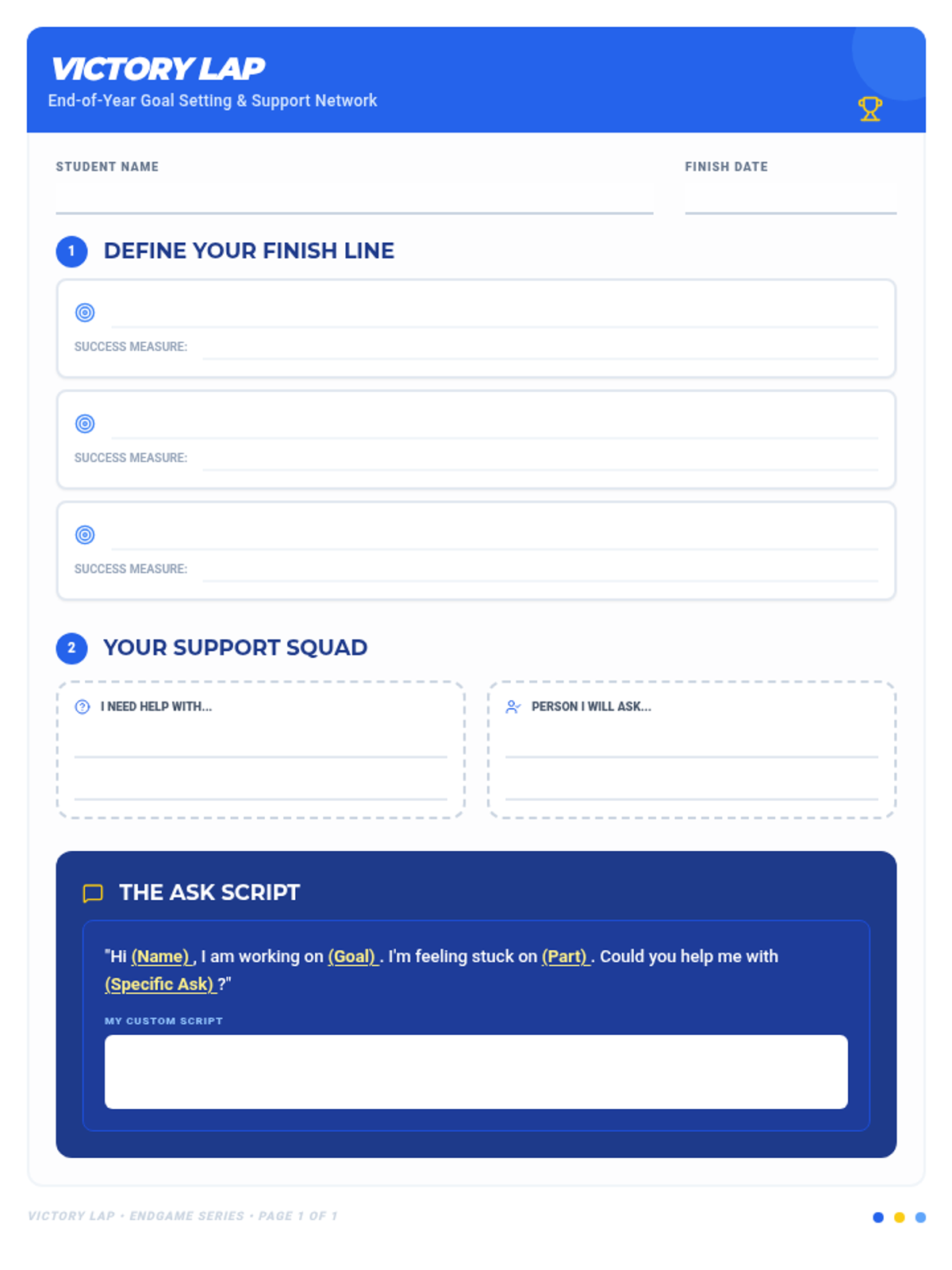
A goal-setting worksheet that guides students in identifying end-of-year objectives, mapping out their support network, and practicing self-advocacy scripts.
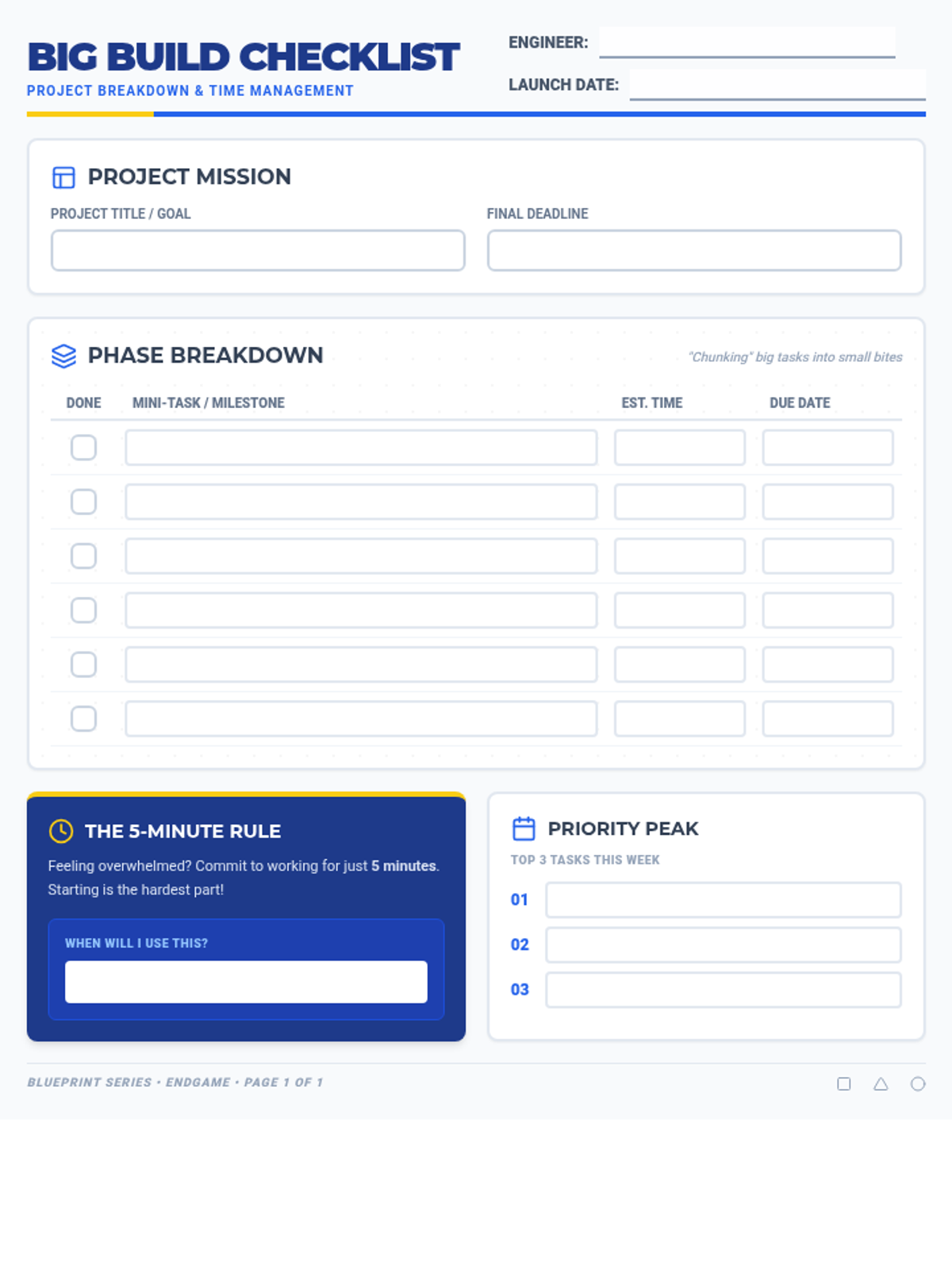
A project management checklist designed to help students break down large assignments into manageable mini-tasks with time estimates and deadlines.
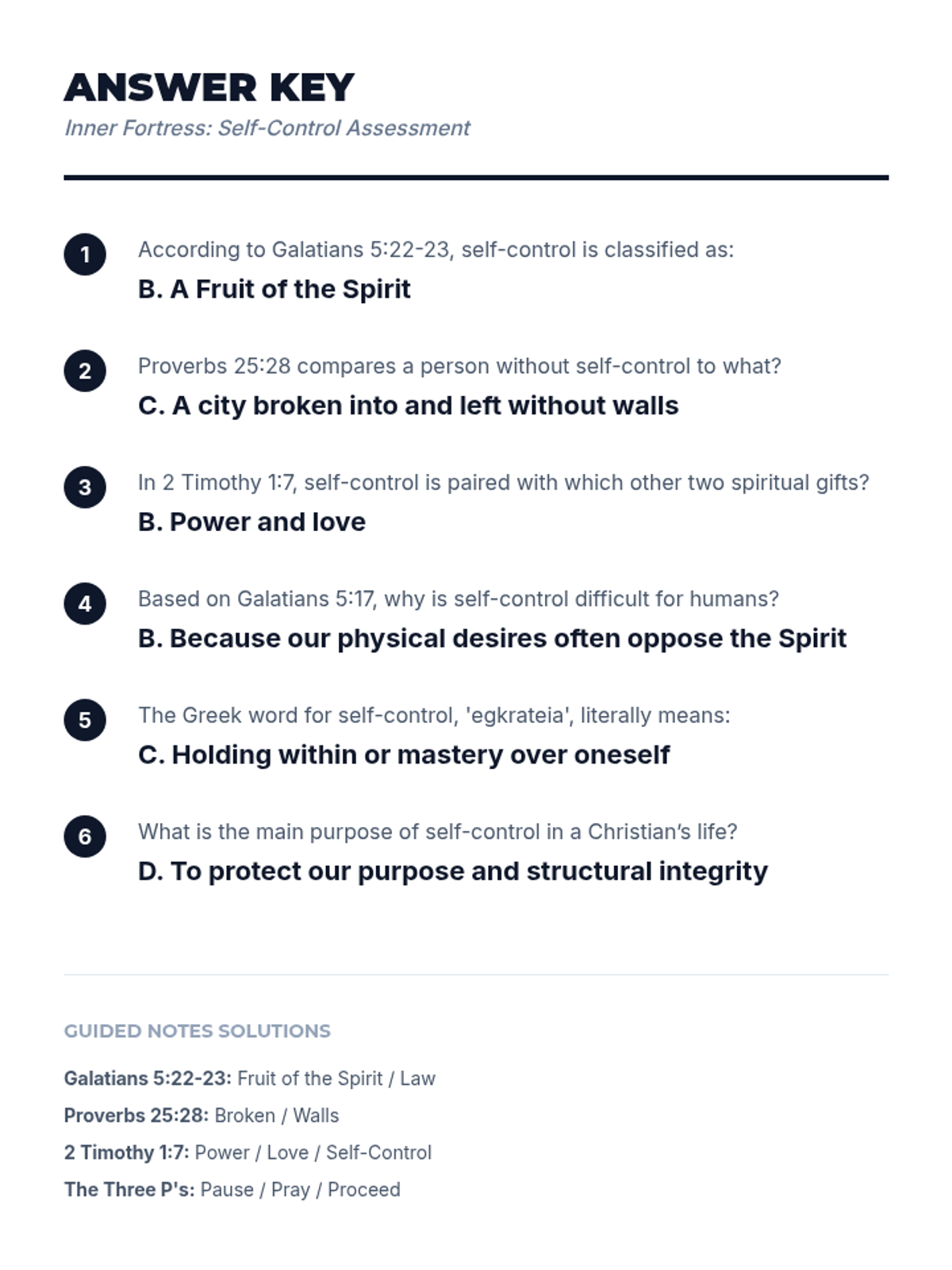
Answer key for the self-control assessment and guided notes for teacher reference.
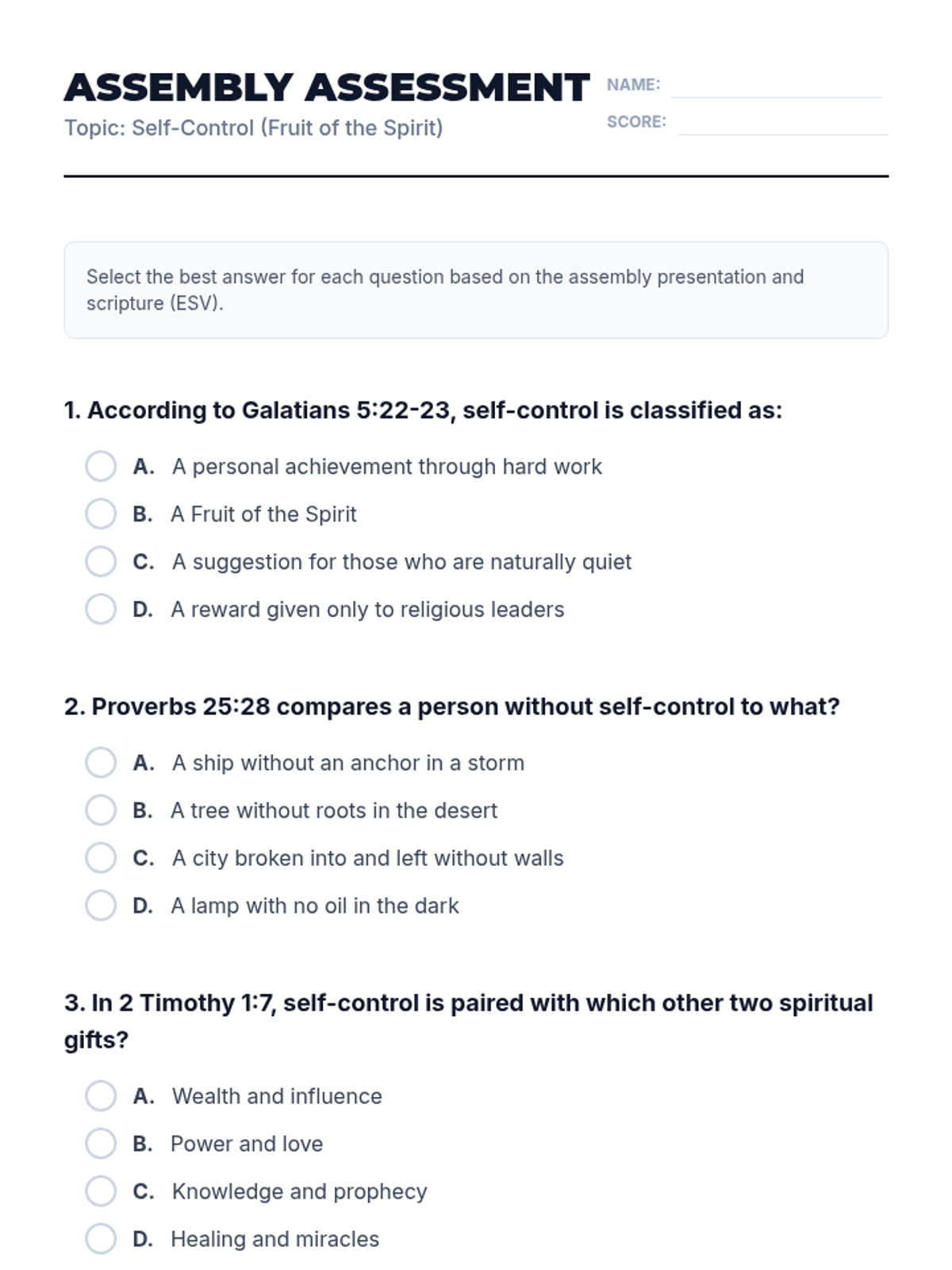
A 6-question multiple-choice assessment for students on the biblical concept of self-control. Updated with A/B/C/D labels for better readability.

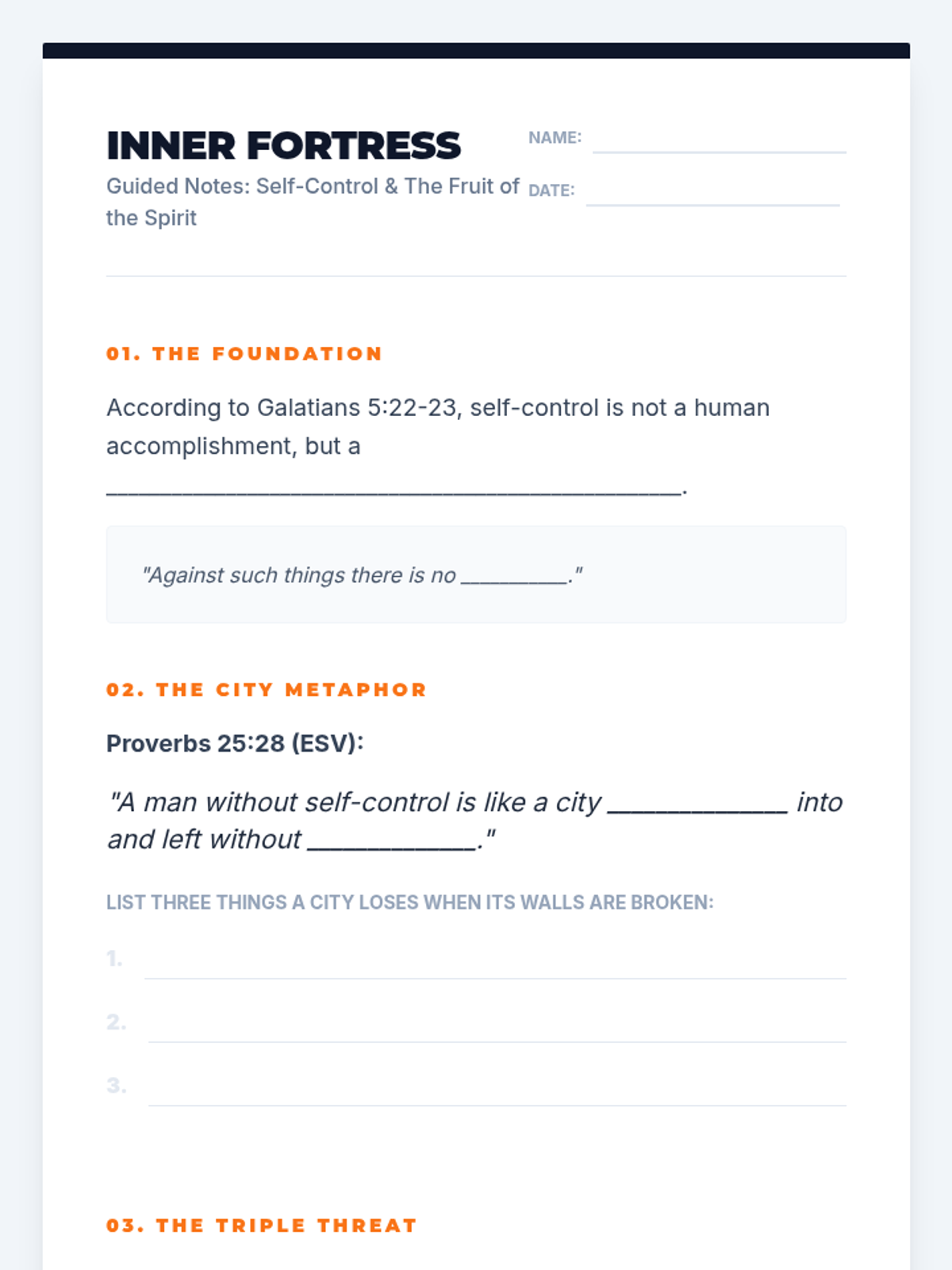
A guided notes handout for students to complete during the presentation on self-control. Updated with a forced page break for the 'Triple Threat' section and a light-background reflection area for better legibility.
A set of 8 high-impact presentation slides for a Bible lesson on self-control. Updated with higher contrast on step numbers and clarified closing prompts.
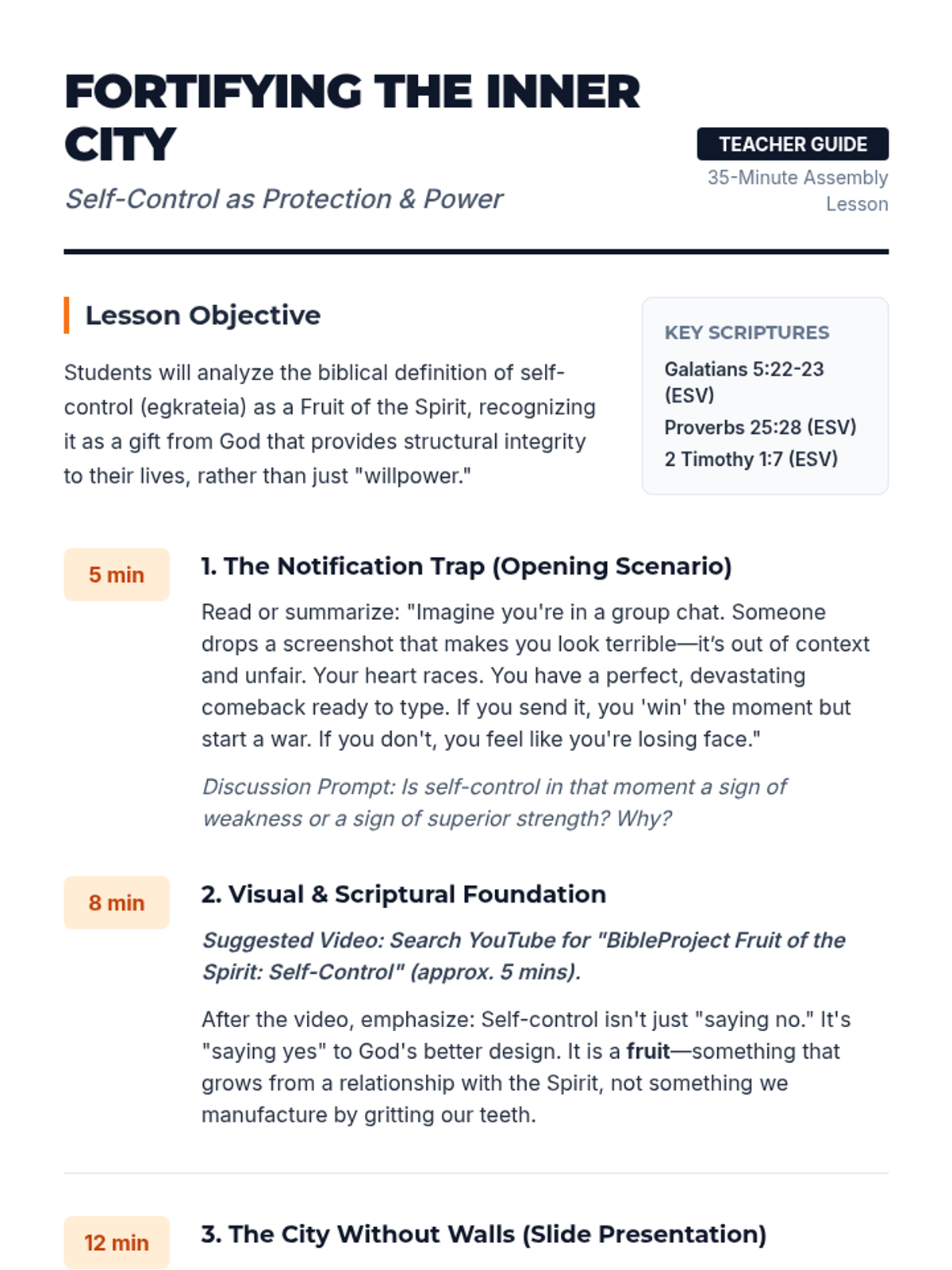
Teacher guide for the 35-minute assembly lesson on self-control, including timing, opening scenario, and teaching tips. Updated with improved page breaks.
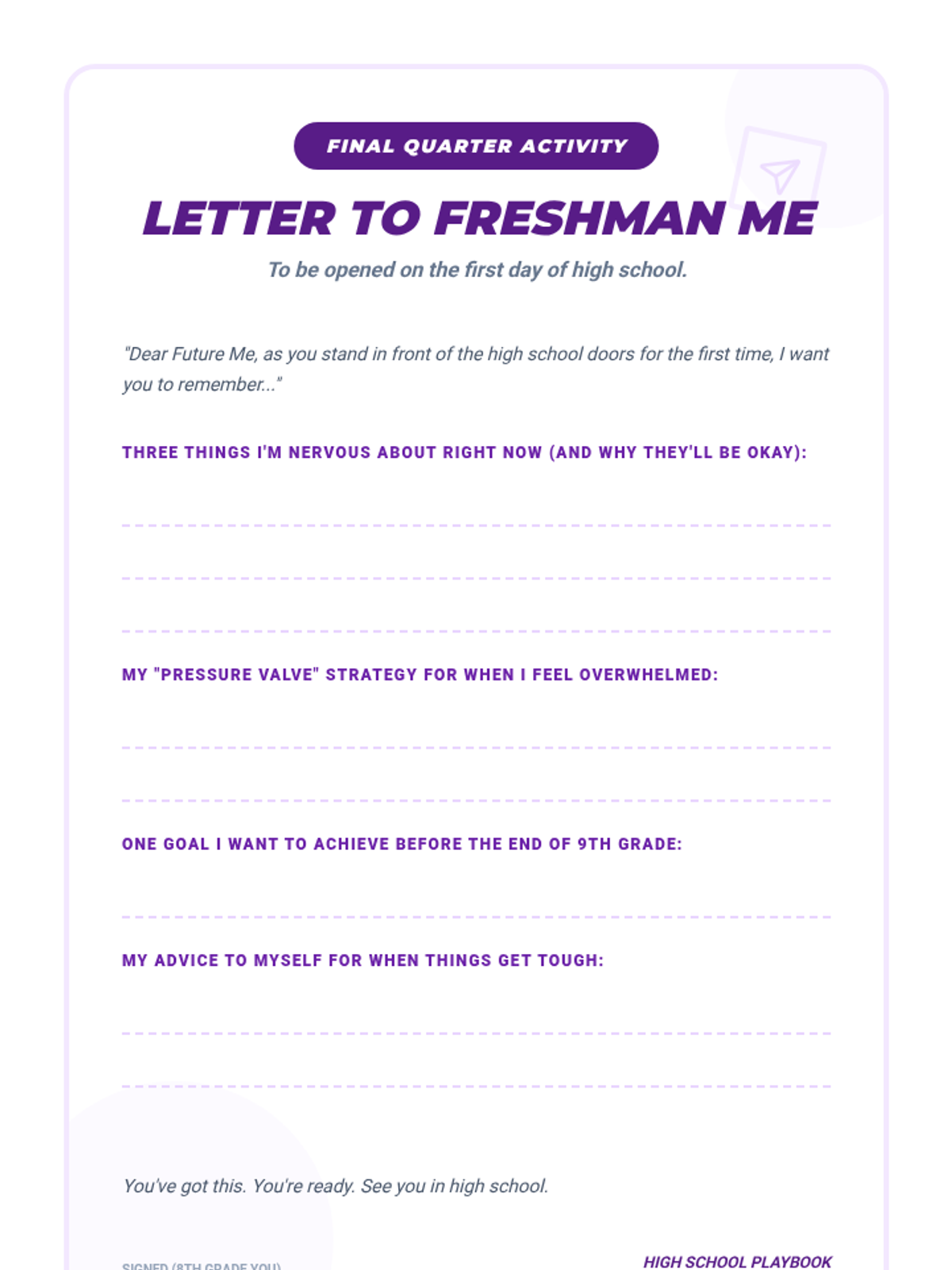
A reflective writing activity where students write a supportive letter to their future freshman selves, summarizing their goals, strategies, and advice for the transition.
Final slides of the series, focusing on emotional resilience, growth mindset, and stress management techniques for the transition to high school.
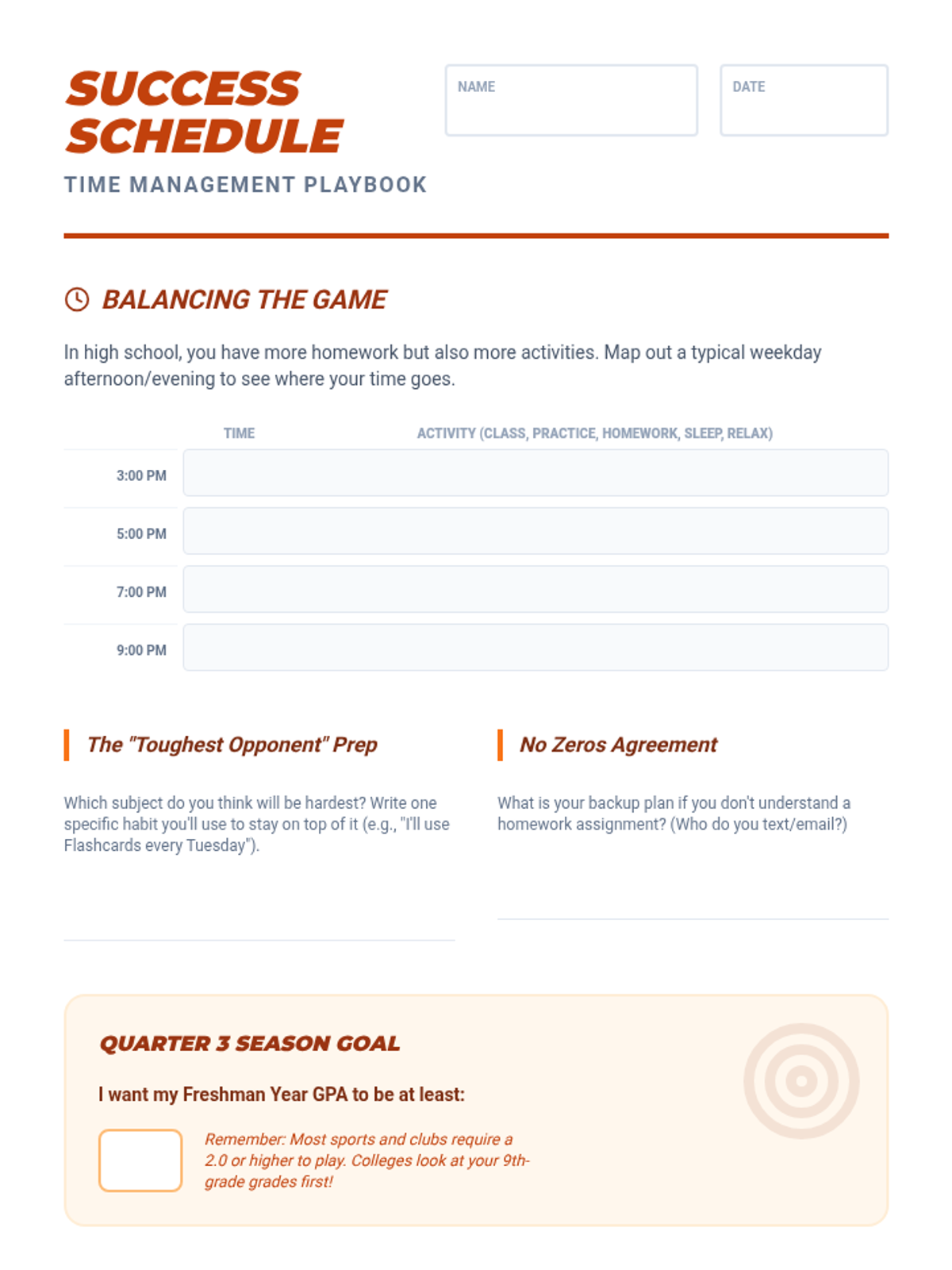
A time management and goal-setting worksheet for 8th graders, helping them map out their after-school schedules and set academic targets for their freshman year.
Slides for Lesson 3, covering high school academic expectations including the credit system, GPA calculations, and time management strategies for freshman success.
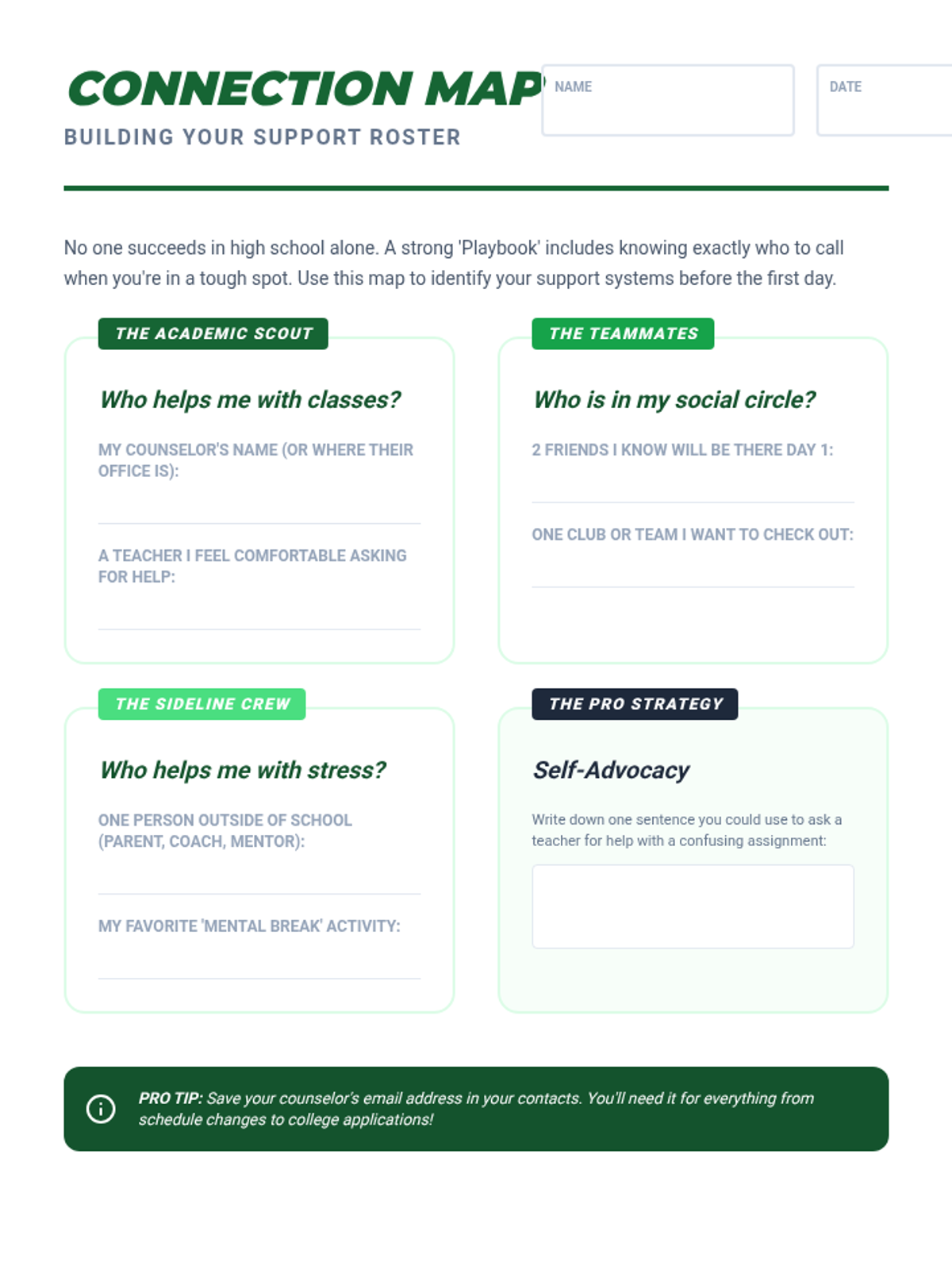
A networking worksheet for students to identify key adult and peer supports in high school, including counselors, teachers, friends, and clubs.
Slides for Lesson 2, identifying key staff and peer support systems in high school and offering strategies for building a positive social network.
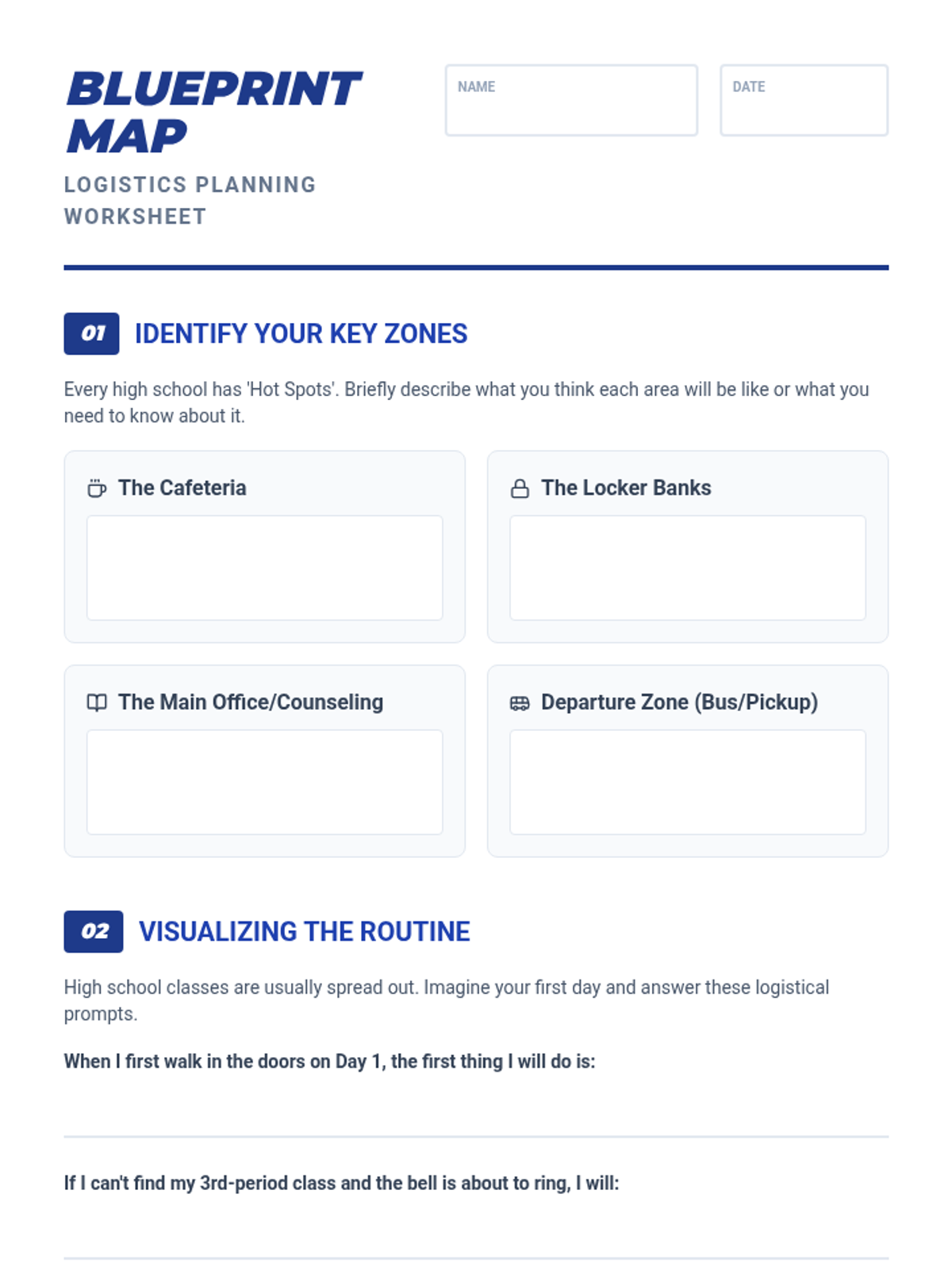
A worksheet for students to map out their logistical plans for high school, focusing on campus 'hot spots', first-day routines, and organizational strategies.
Introductory slides for Lesson 1, covering the physical transition to high school, including campus navigation, locker logistics, and schedule changes.
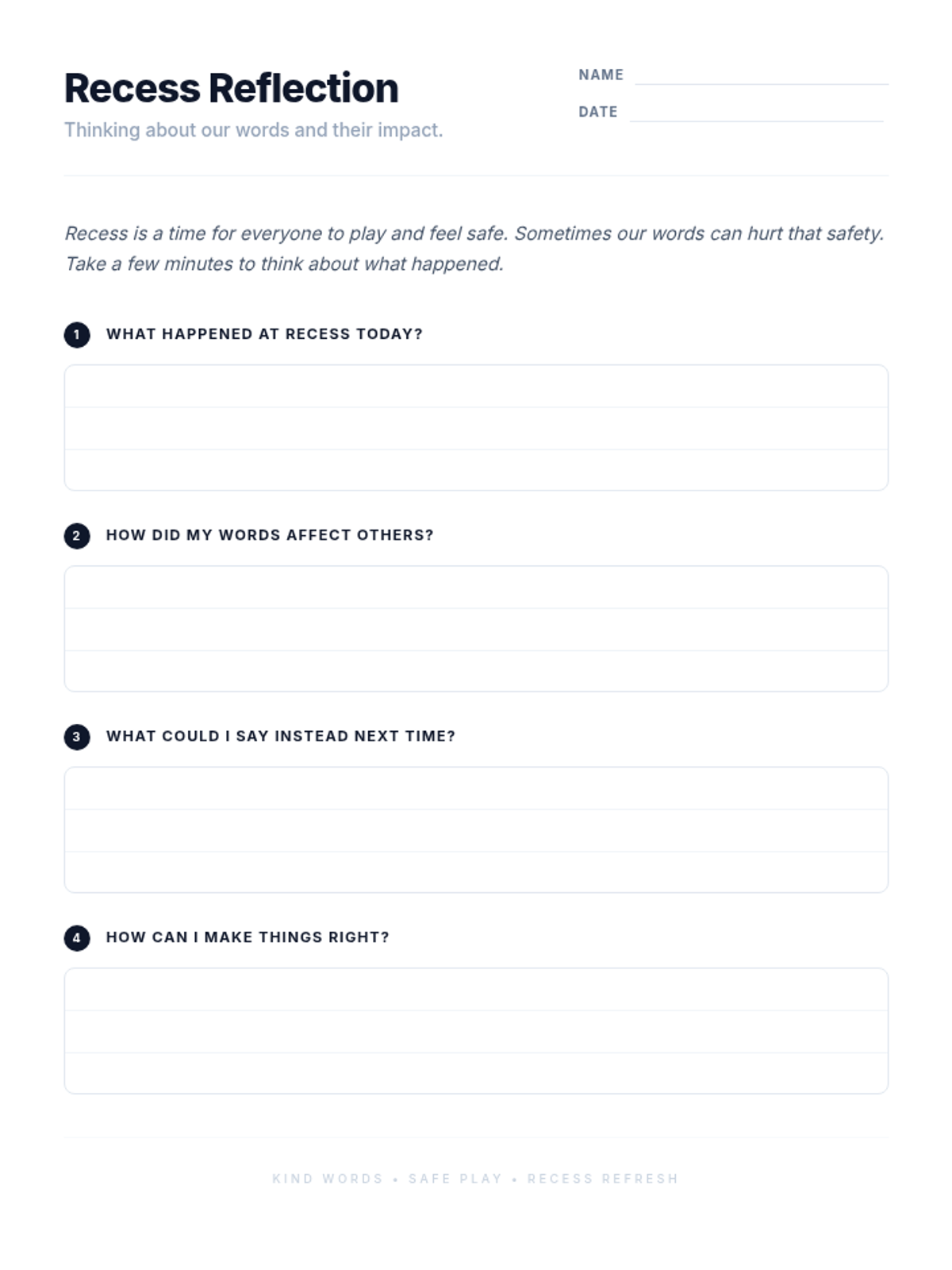
A student-facing reflection sheet to help children process their use of unkind language. Revised with a cleaner, more minimalist design and darker labels.
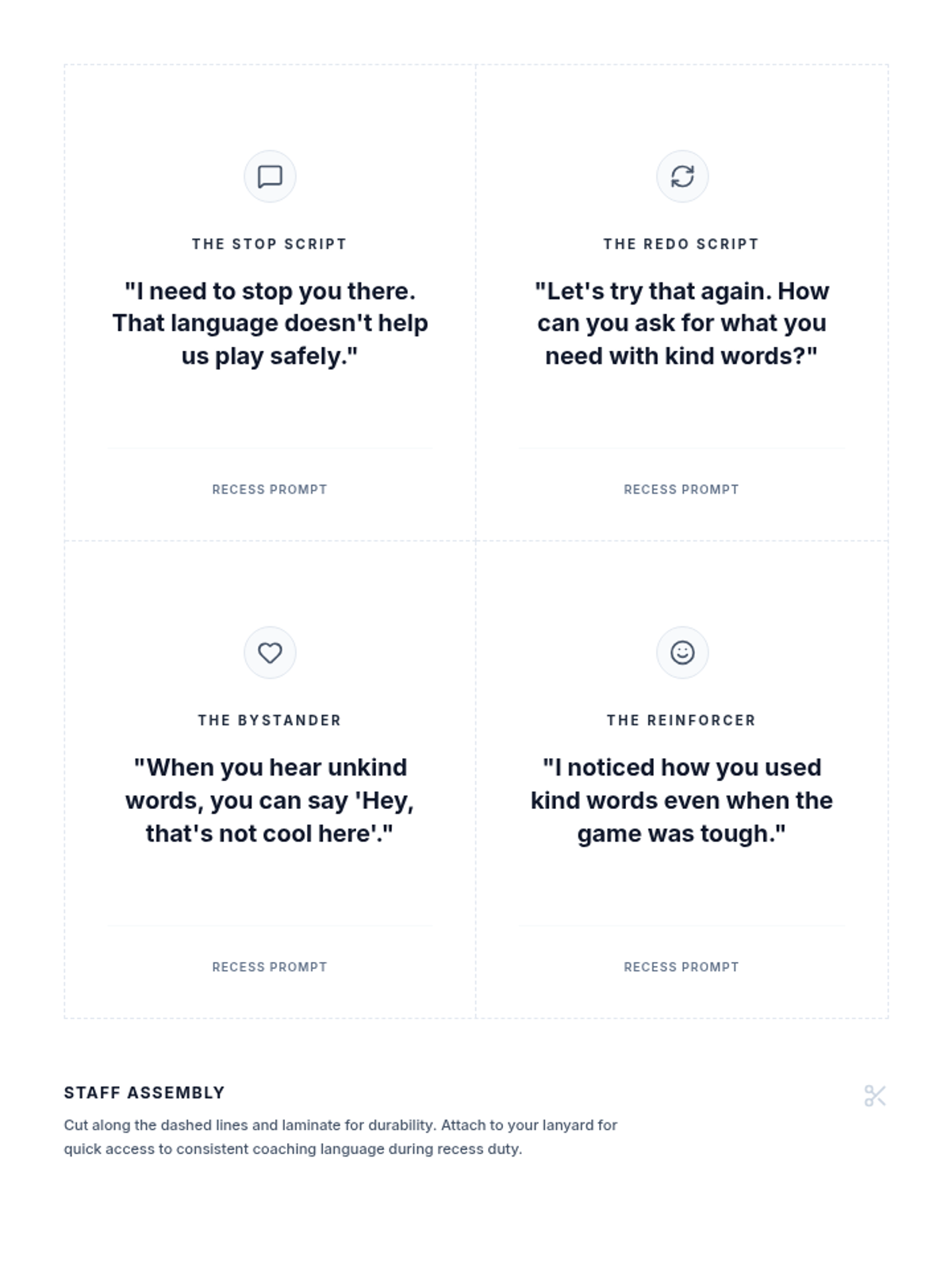
Pocket-sized reference cards for staff with pre-written scripts to handle unkind language. Revised with high-contrast text and cut lines.
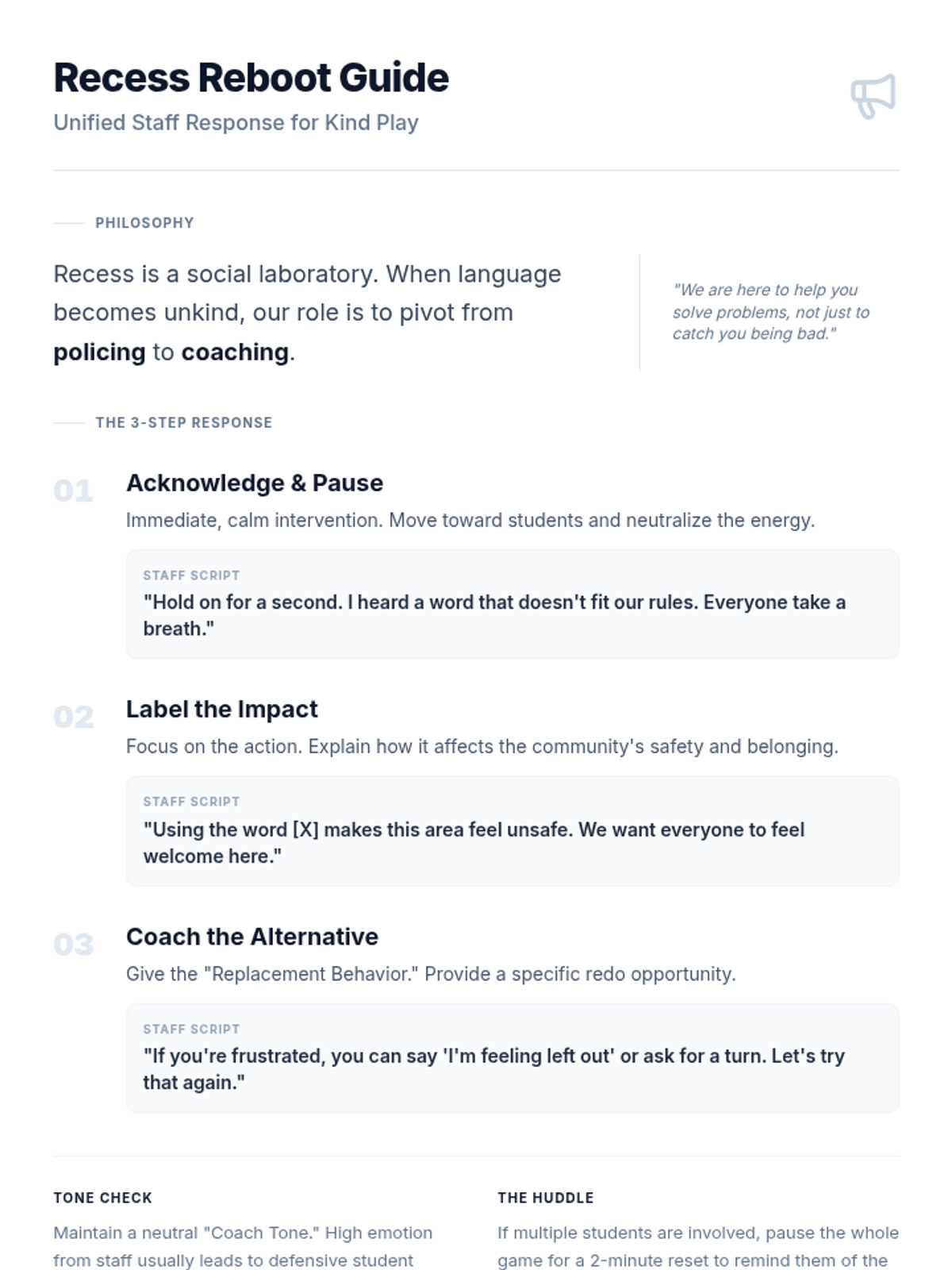
A comprehensive guide for staff on how to consistently respond to and coach students through unkind language incidents at recess using a 3-step protocol. Revised for a cleaner design and single-page fit.
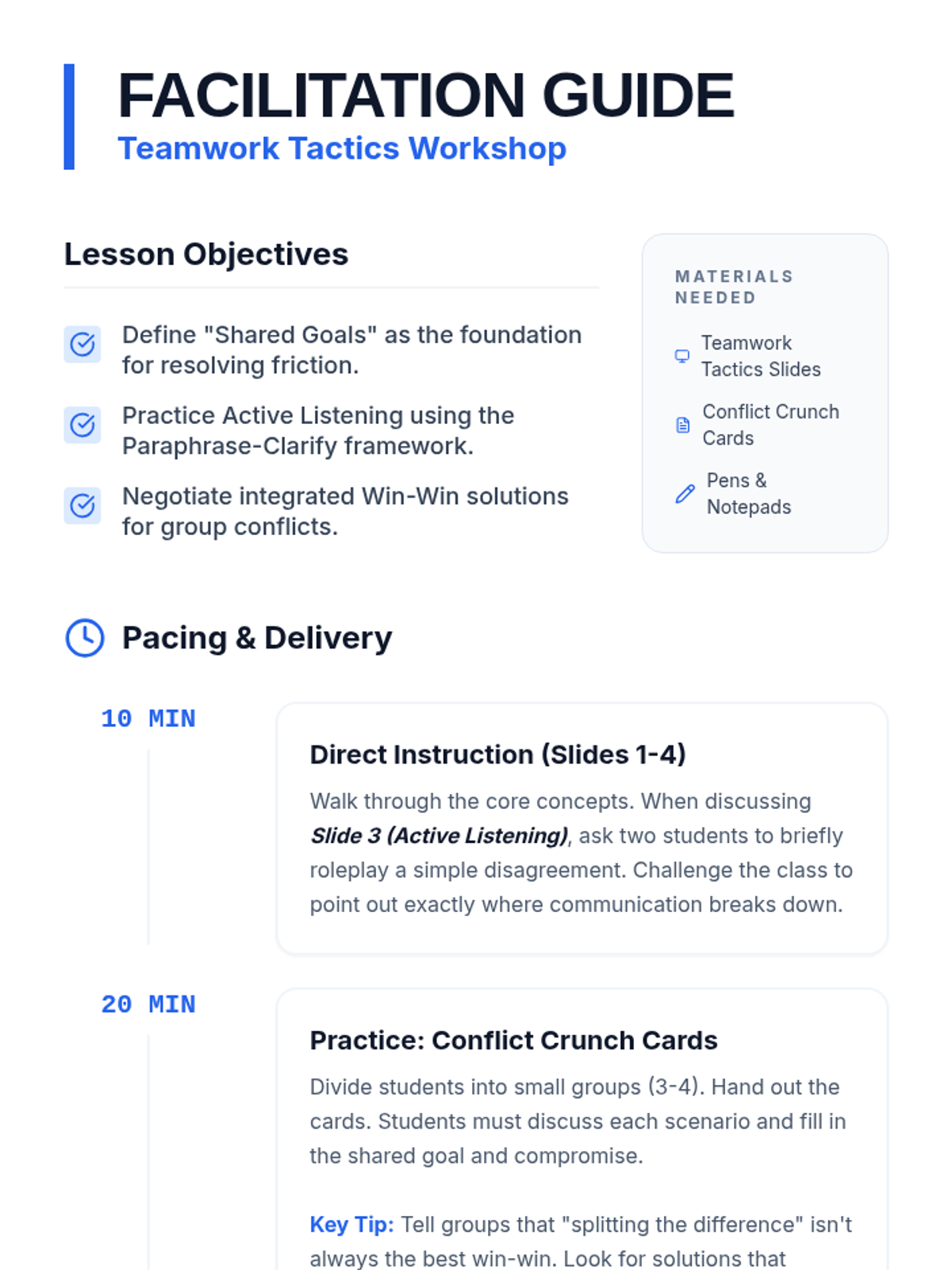
A comprehensive teacher's guide for the Teamwork Tactics lesson, including learning objectives, a detailed pacing guide, and thought-provoking discussion prompts.
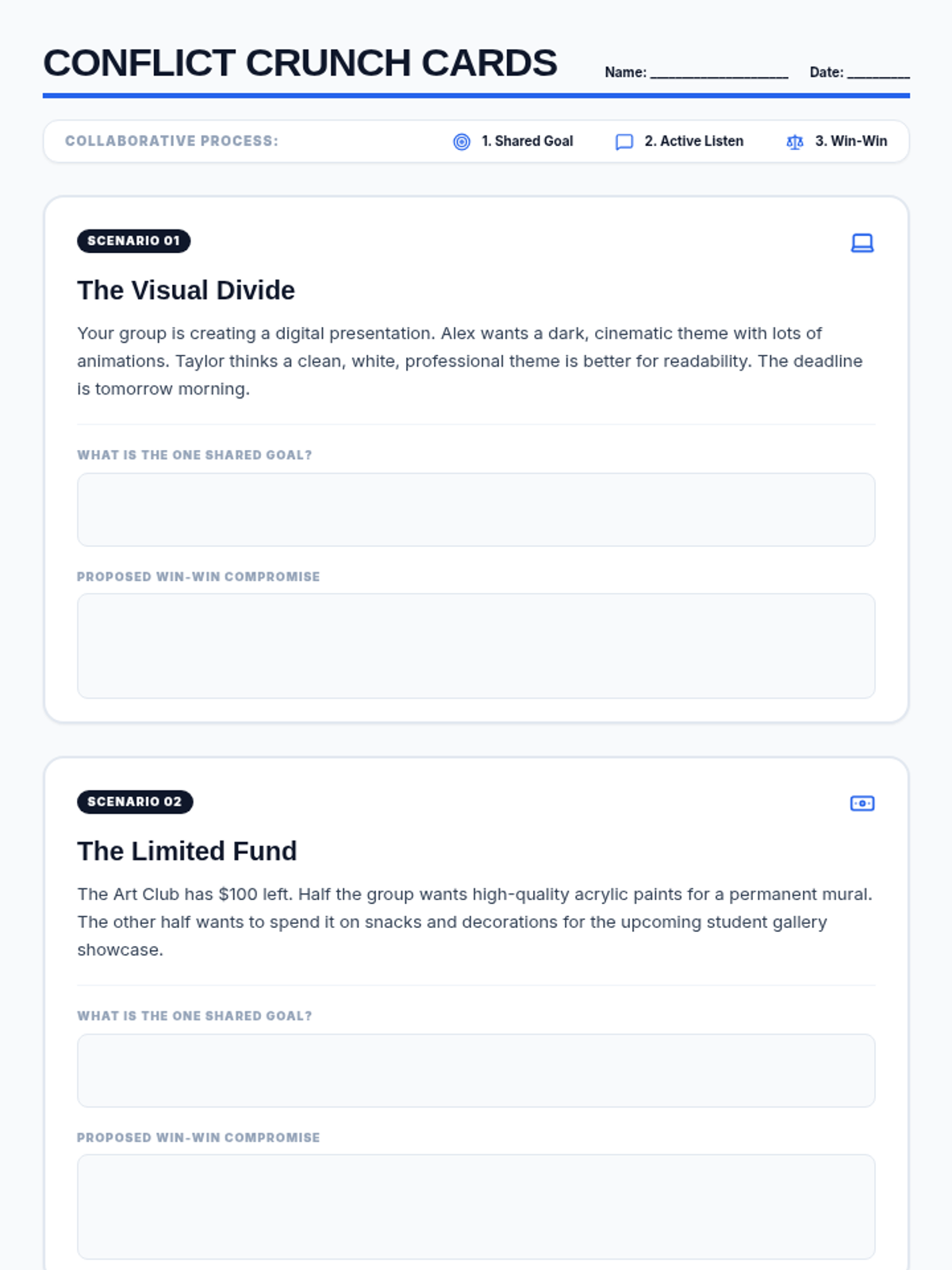
A set of 6 printable scenario cards designed to help students practice identifying shared goals and negotiating compromises in realistic group conflict situations.
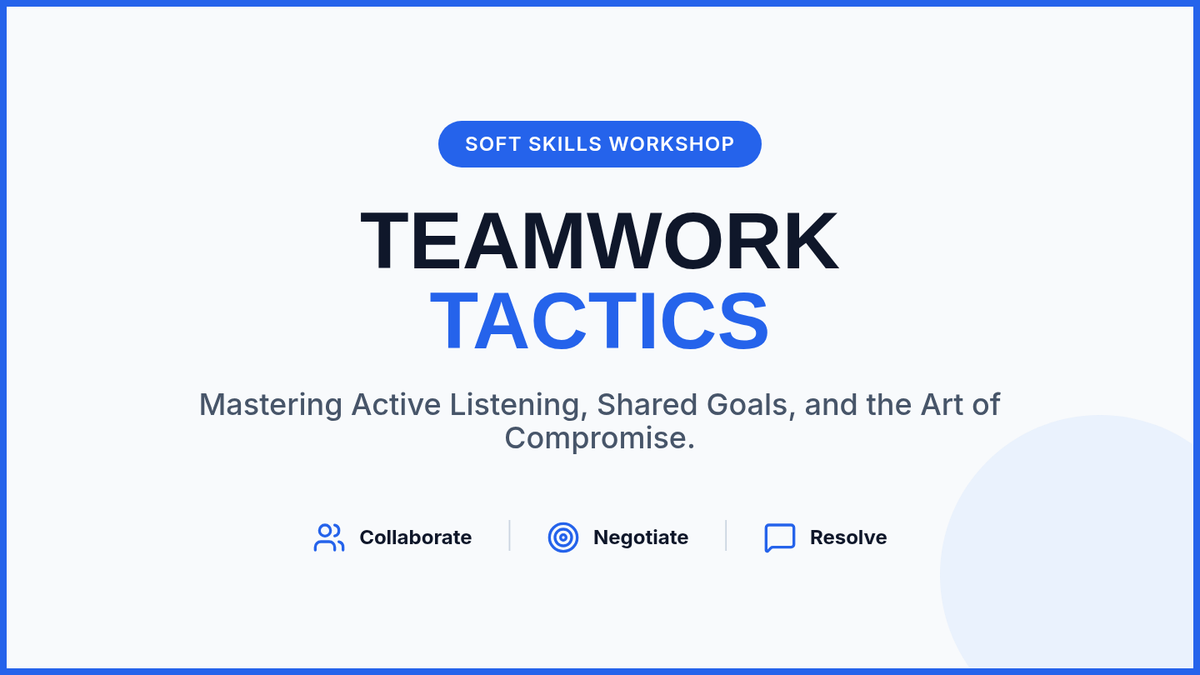
A 5-slide visual presentation covering the core principles of collaborative problem solving, including shared goals, active listening techniques, and negotiation strategies.
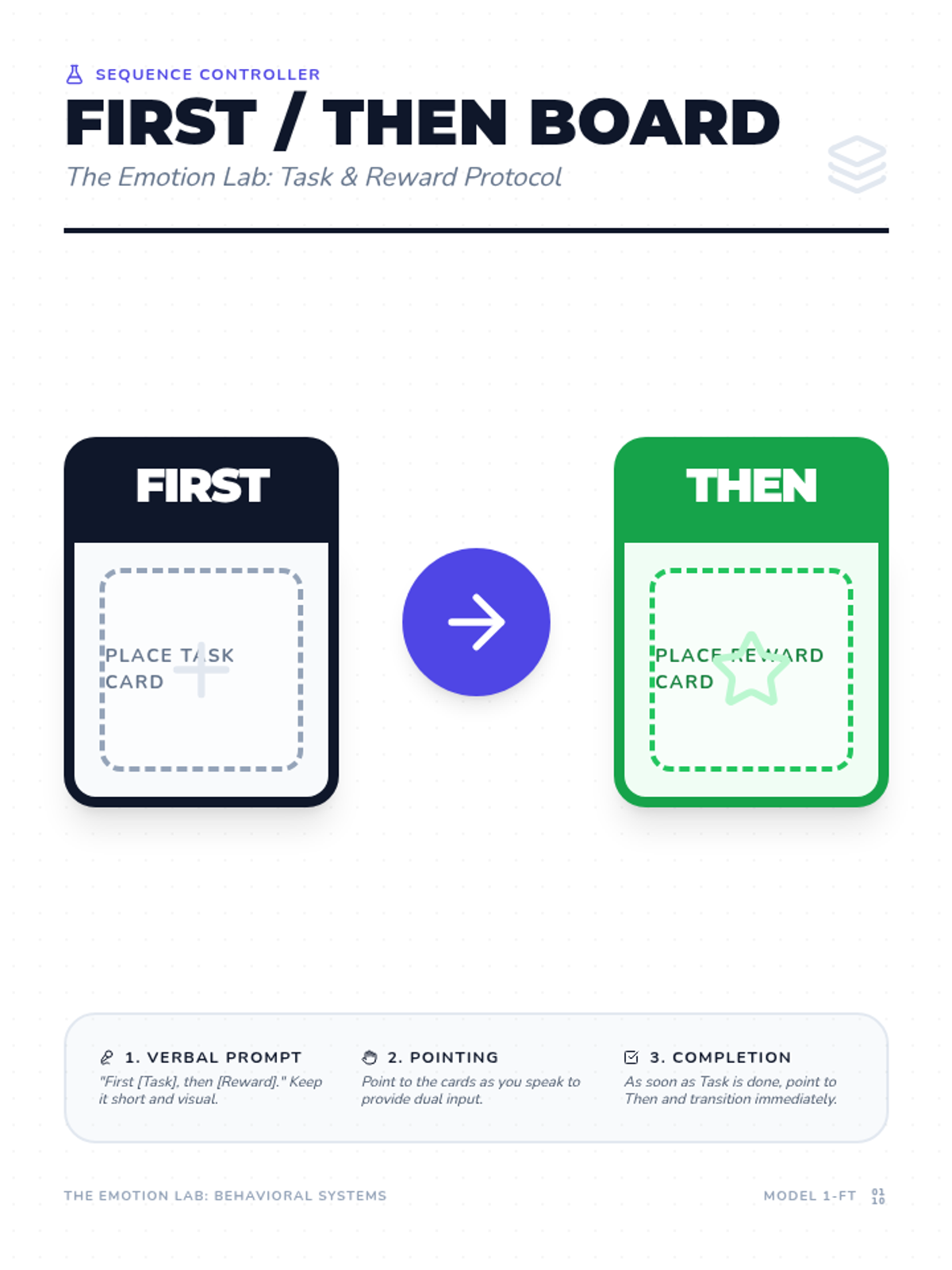
A themed First/Then visual board designed for structured behavioral support, including task and reward cards to help students navigate classroom transitions.
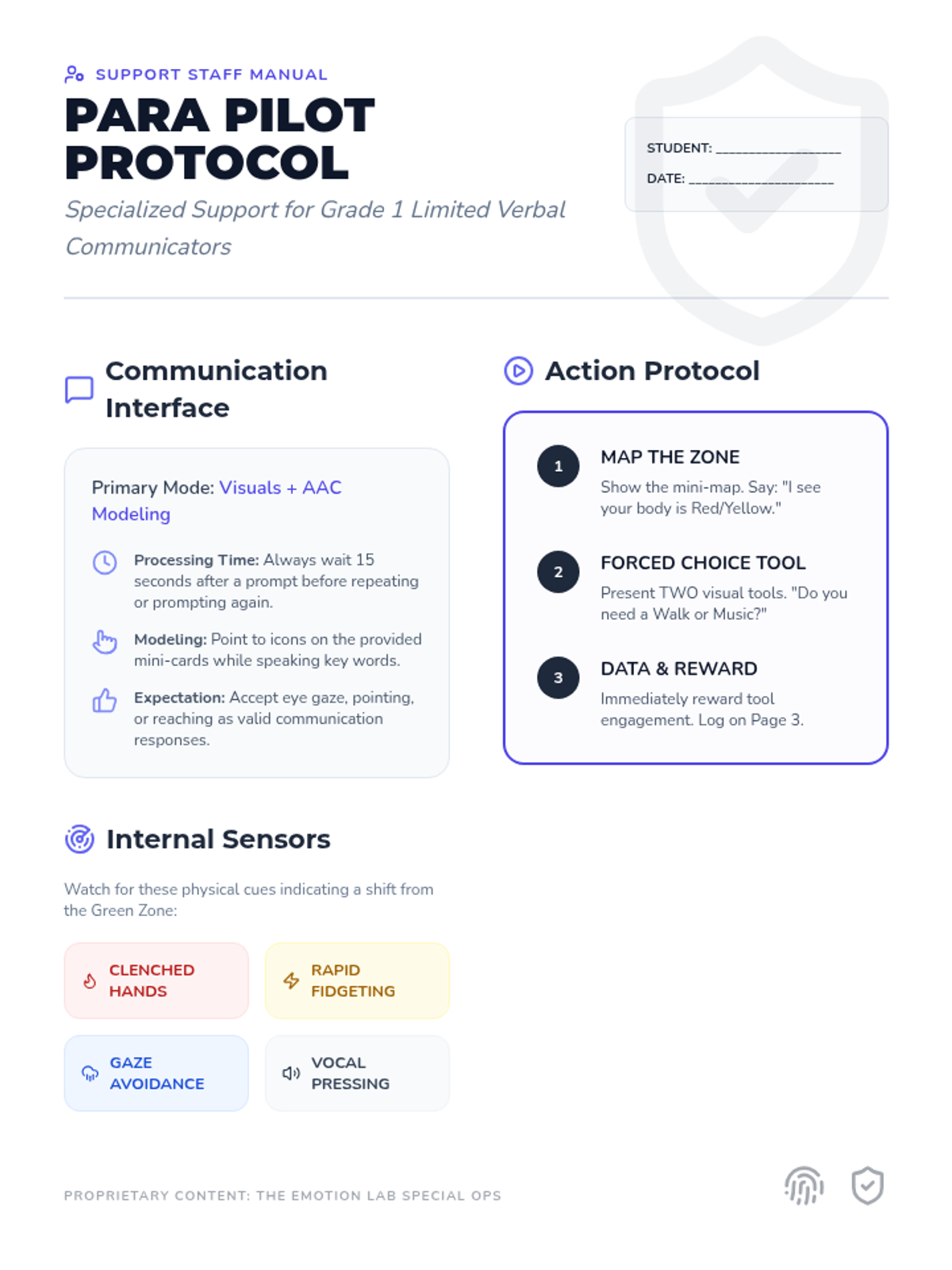
A comprehensive multi-page paraprofessional support pack featuring a specific action protocol, portable visual toolkit cards for non-verbal support, and an expanded daily data log.
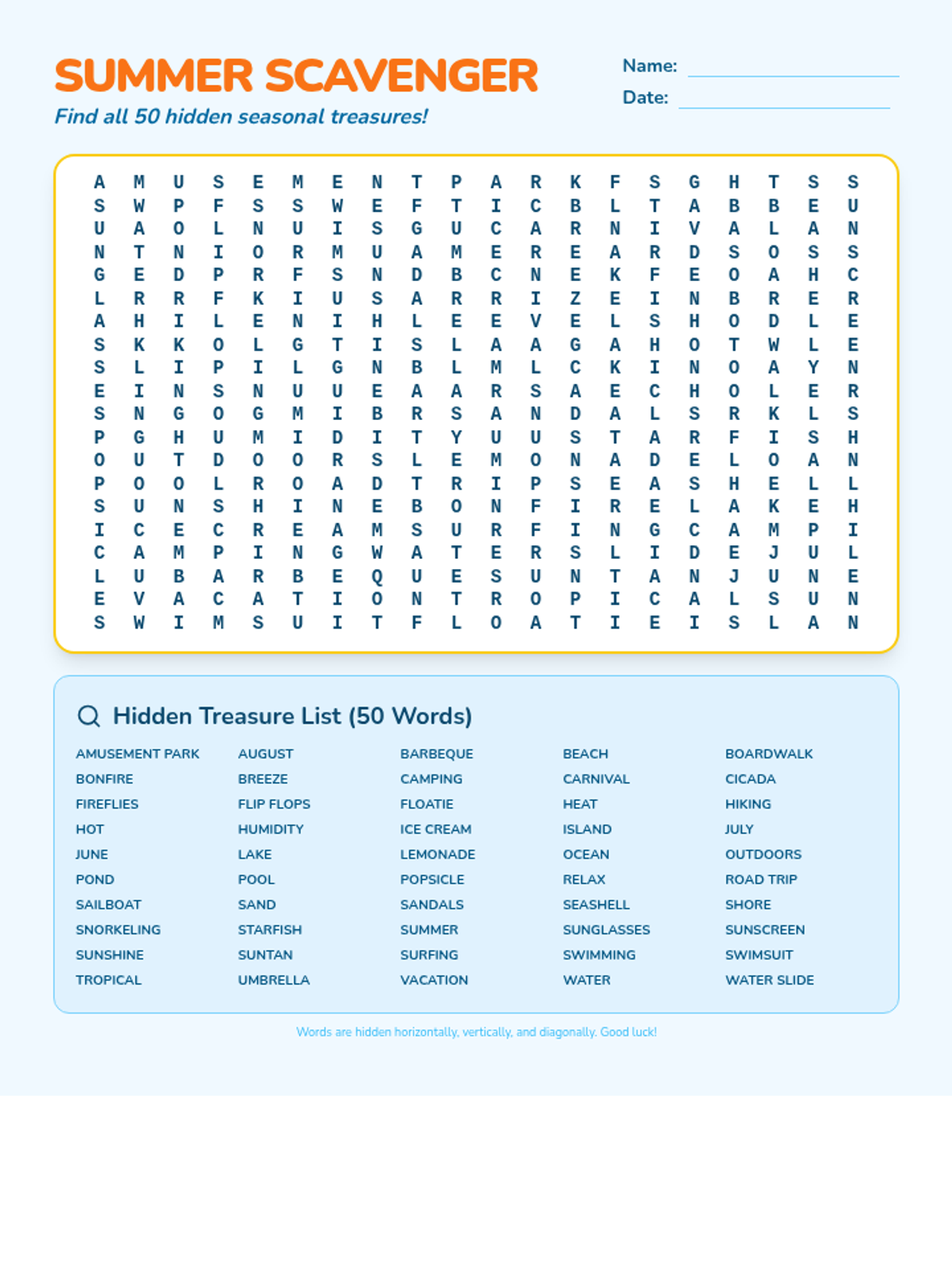
A challenging 20x20 summer-themed word search document featuring 50 seasonal terms hidden in a fully populated grid. The layout includes a bright, beachy aesthetic with a clear word bank for reference.
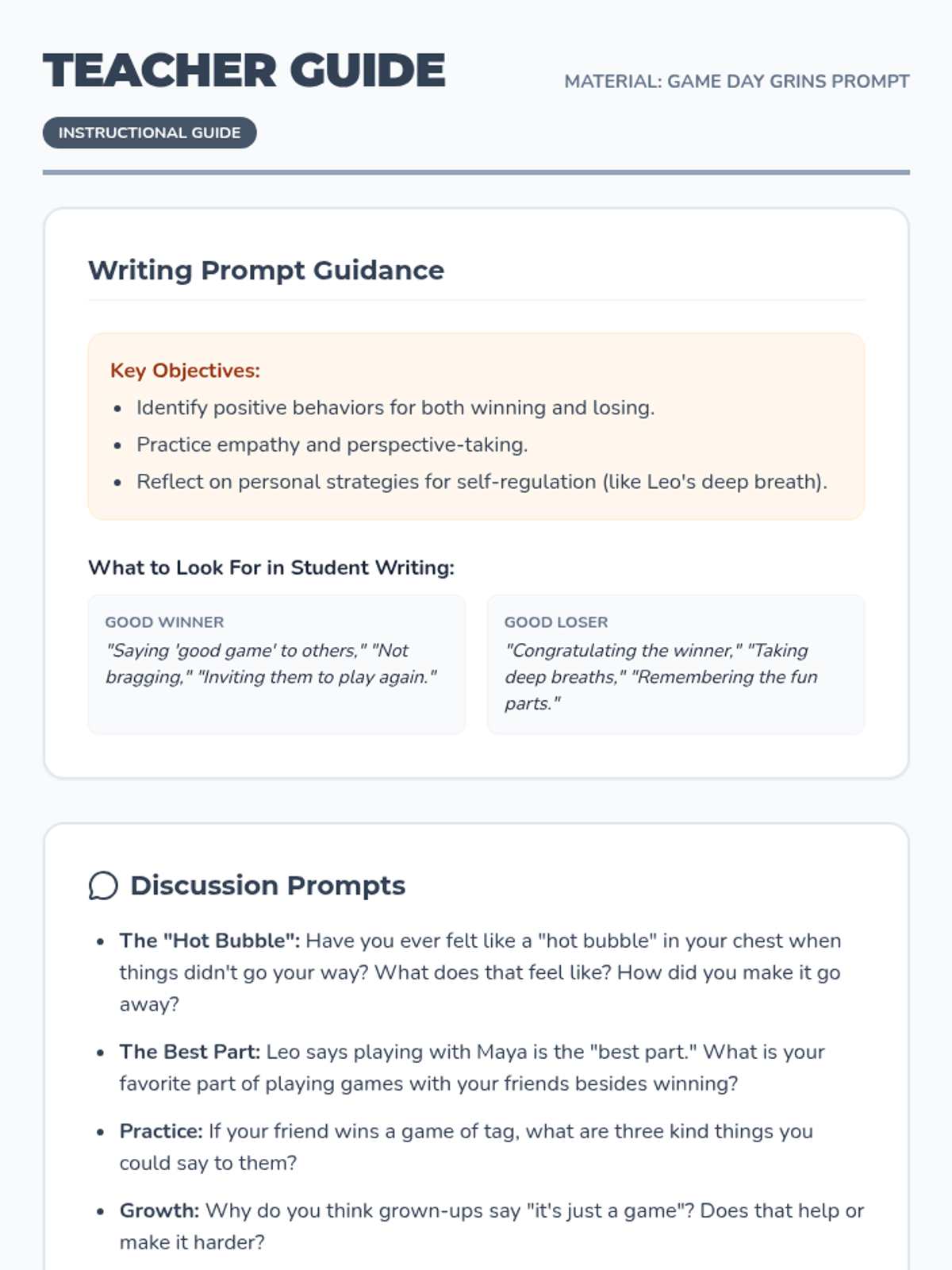
A teacher guide for the 'Game Day Grins Prompt' material. Includes instructional goals for the writing prompt, student response examples, and social-emotional discussion questions.
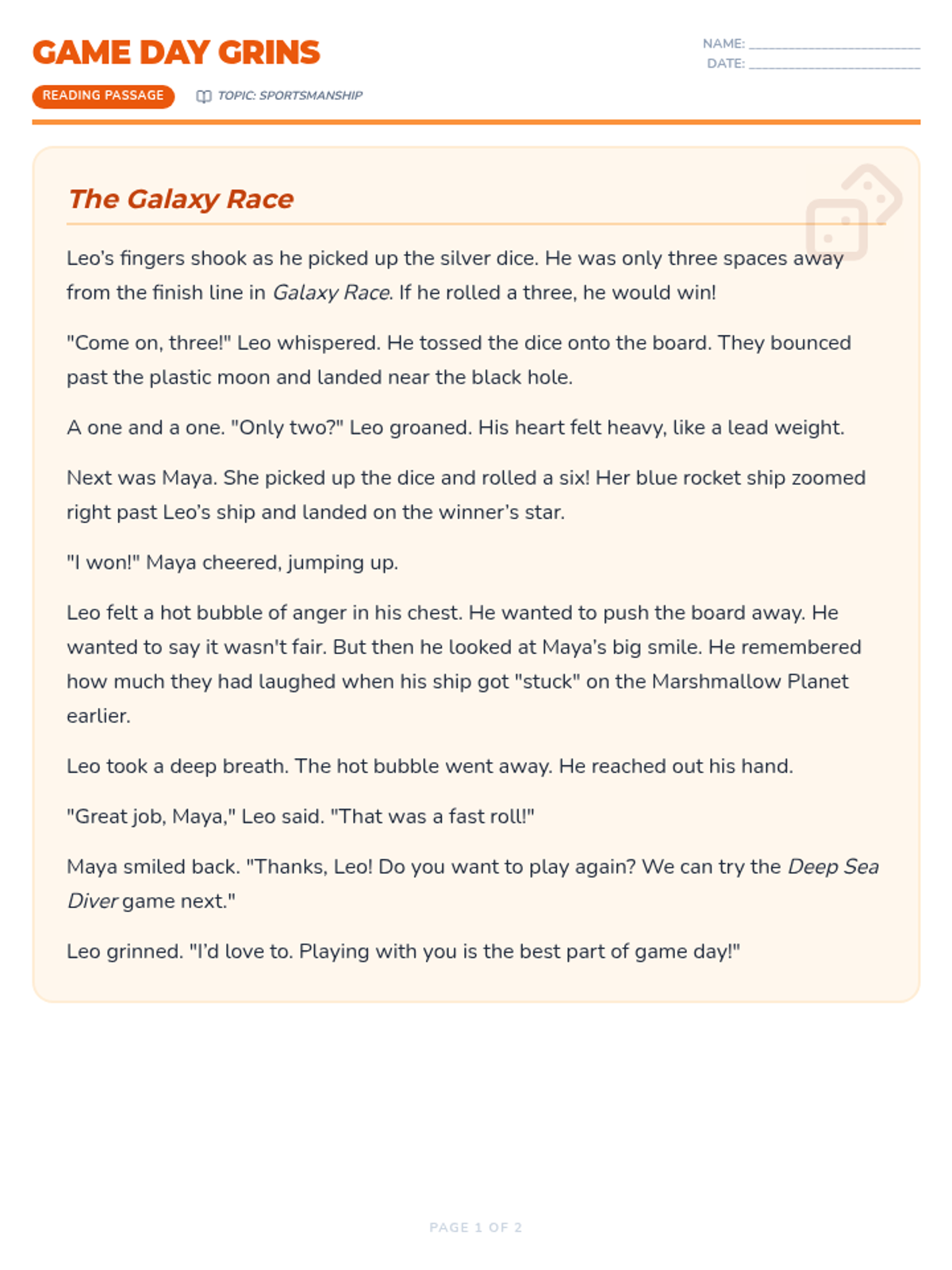
A reading passage and writing prompt for second graders focused on sportsmanship. Students read a story and then complete two distinct sections on how to be a good winner and a good loser.
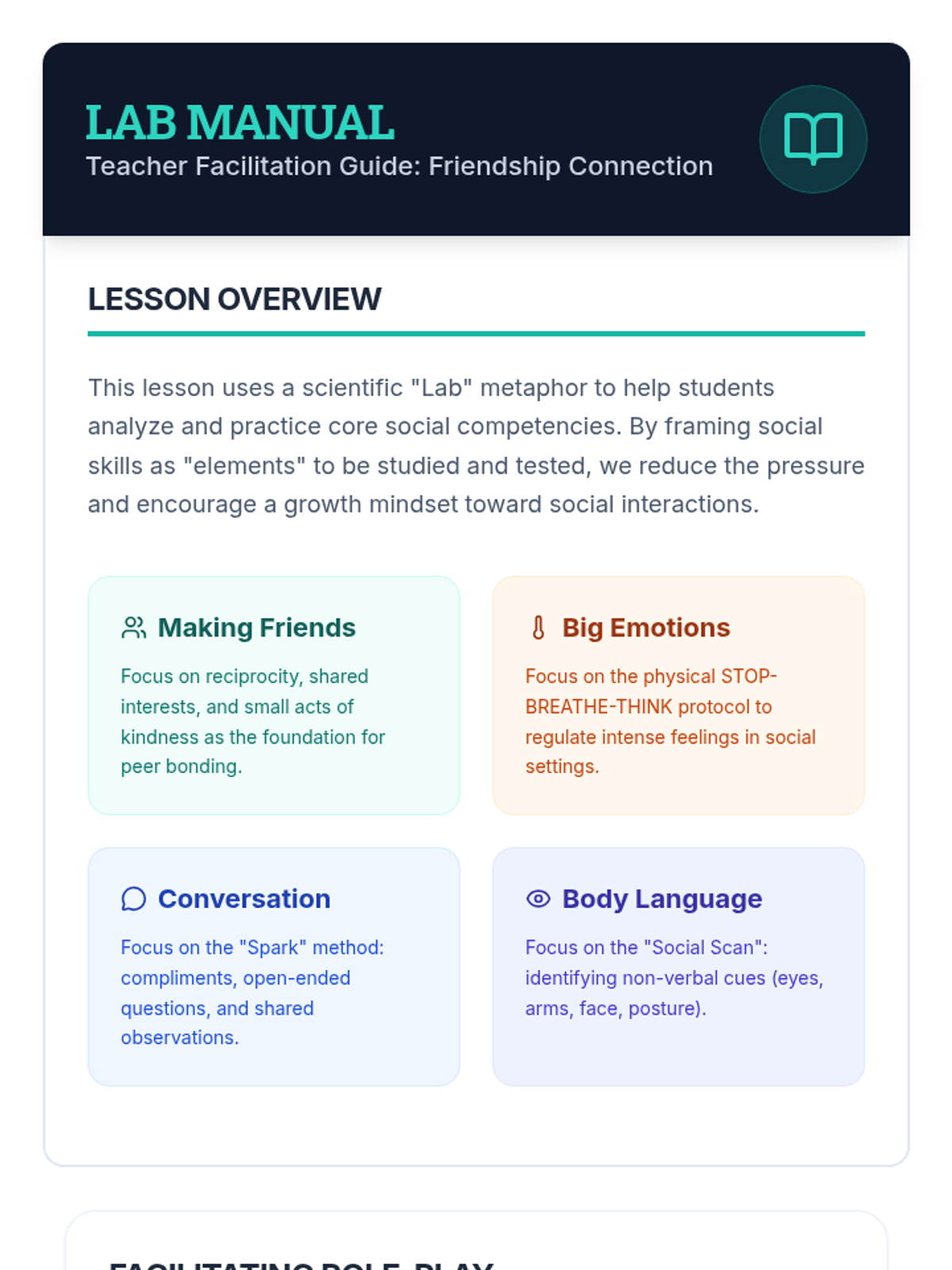
A comprehensive teacher's guide for the Friendship Connection lesson. It includes a thematic overview, specific strategies for facilitating role-play activities, and an answer key for the student sorting worksheet.
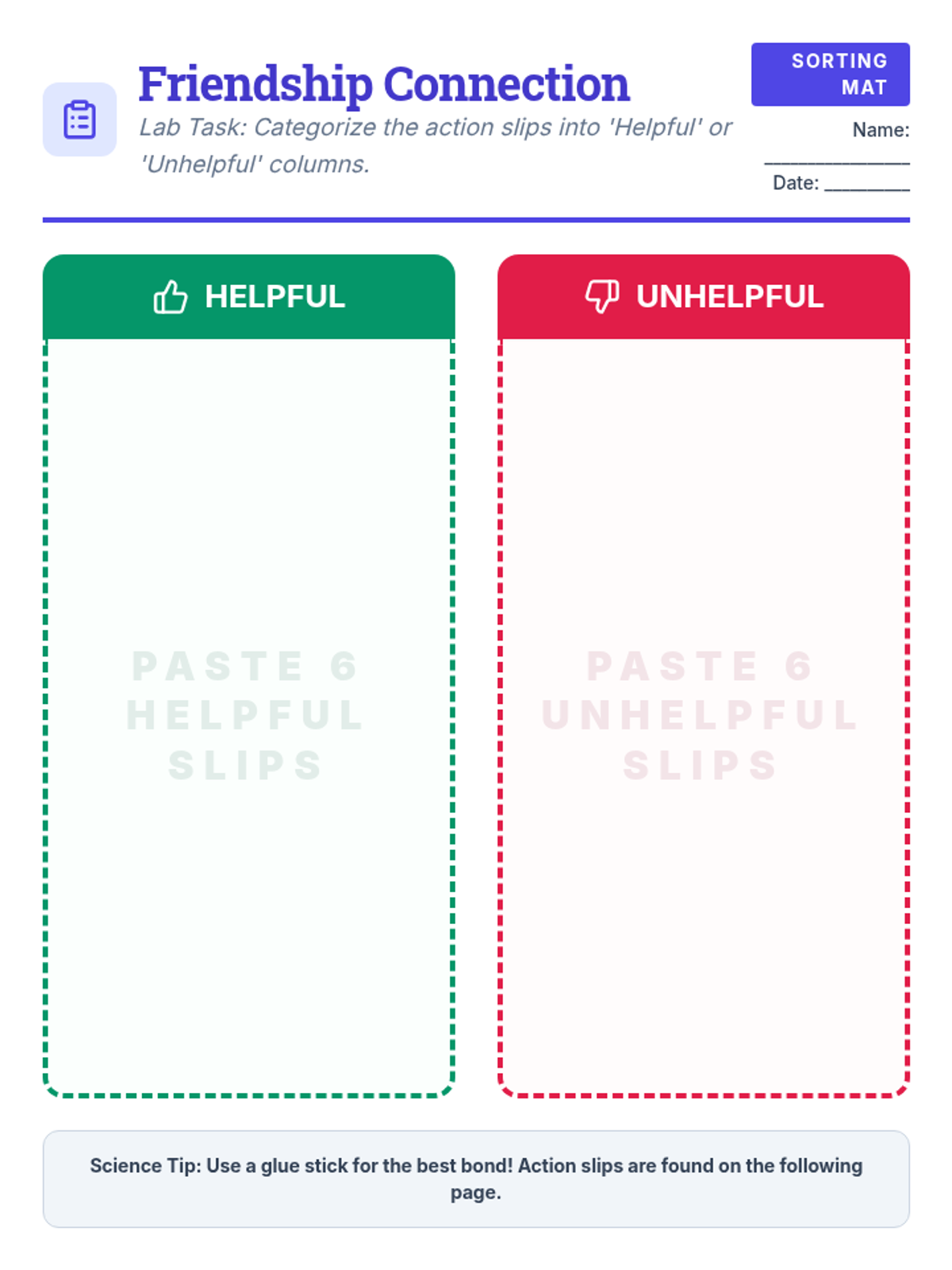
A hands-on cut-and-paste sorting activity where students categorize 12 social behaviors as either 'Helpful' or 'Unhelpful'. This reinforces positive social habits and emotional regulation strategies in a tactile way.
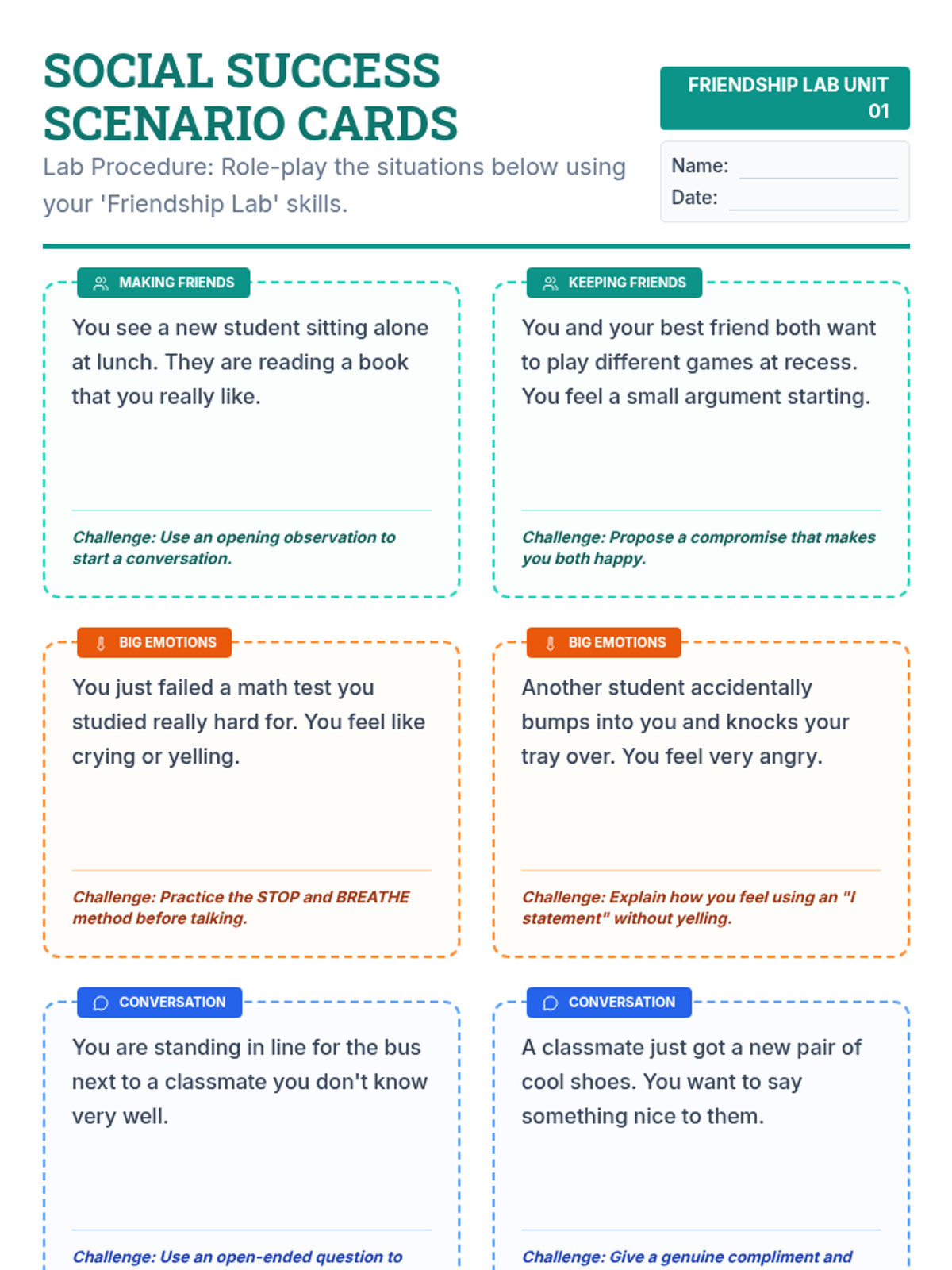
A set of 8 printable role-play cards categorized into four social skill areas. Each card features a realistic social scenario and a specific 'Challenge' for students to address using the skills learned in the lesson.
An engaging instructional slide deck introducing the 'Friendship Lab' concept. It covers four critical social skill elements: making friends, managing emotions, starting conversations, and reading body language clues with clear, visual-first explanations.
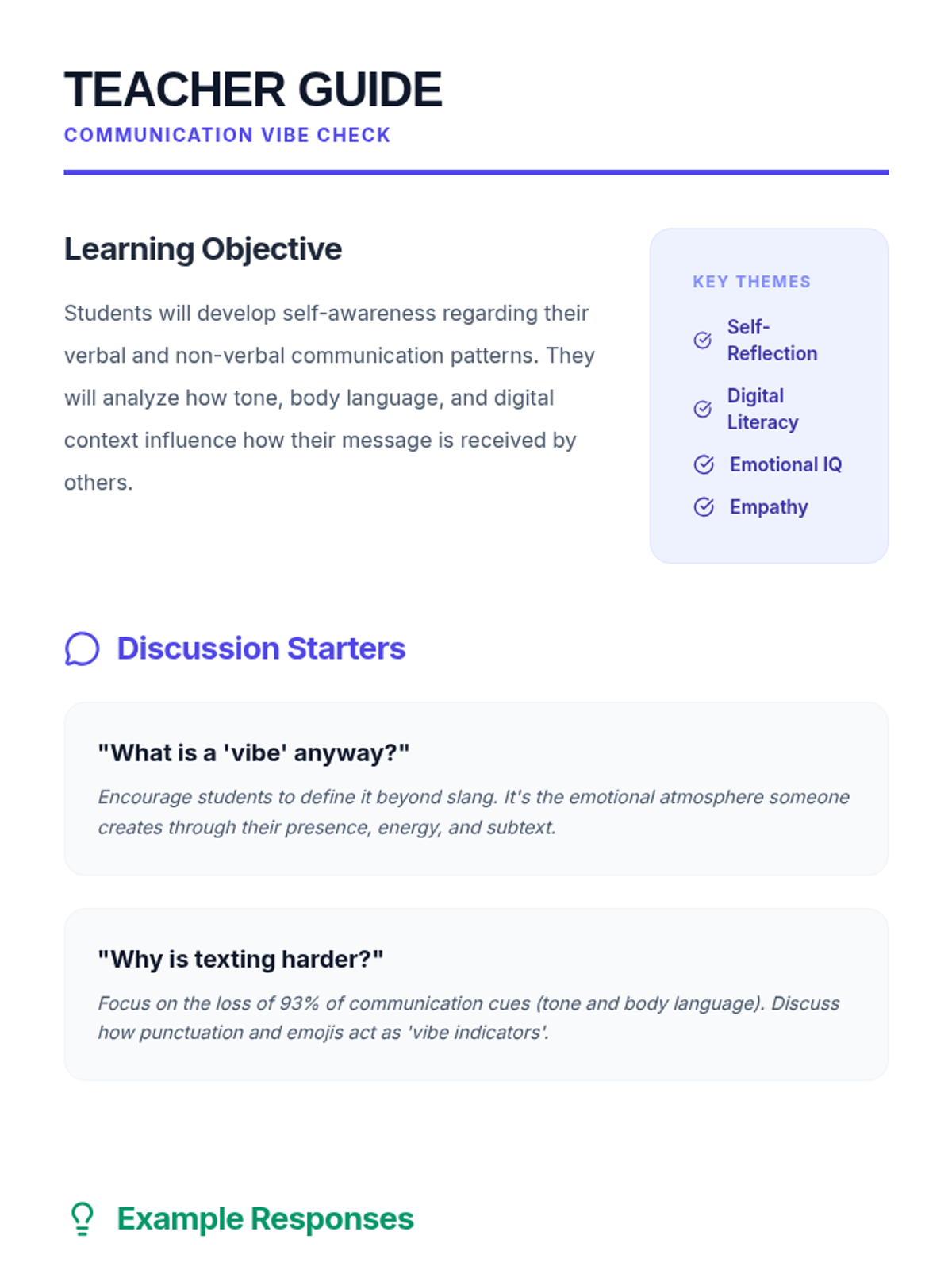
Teacher-facing guide for facilitating the Communication Vibe Check lesson, including learning objectives, discussion prompts, and example responses.
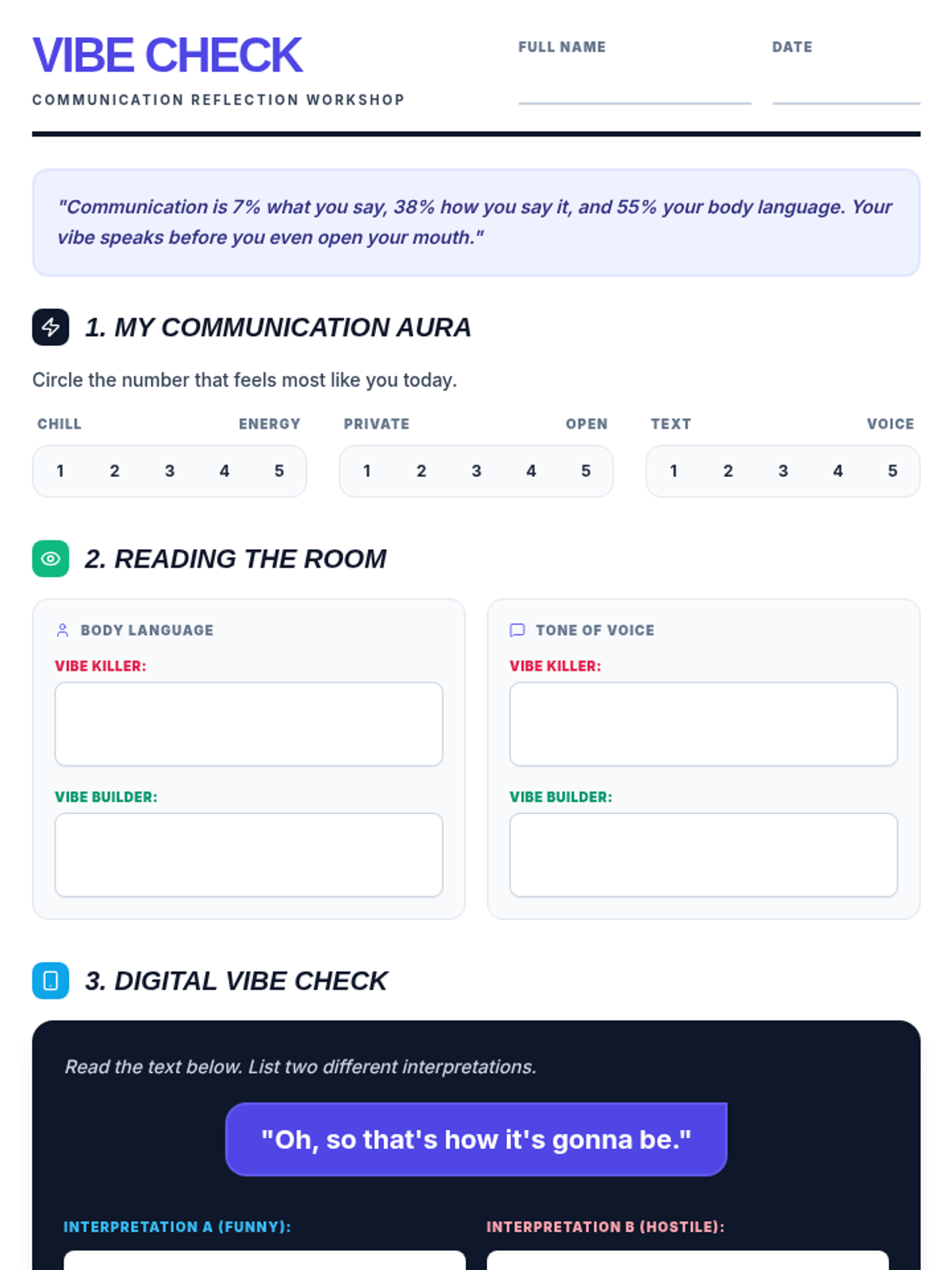
A modern, reflective worksheet for middle schoolers to analyze their interpersonal and digital communication styles through a 'vibe check' lens.
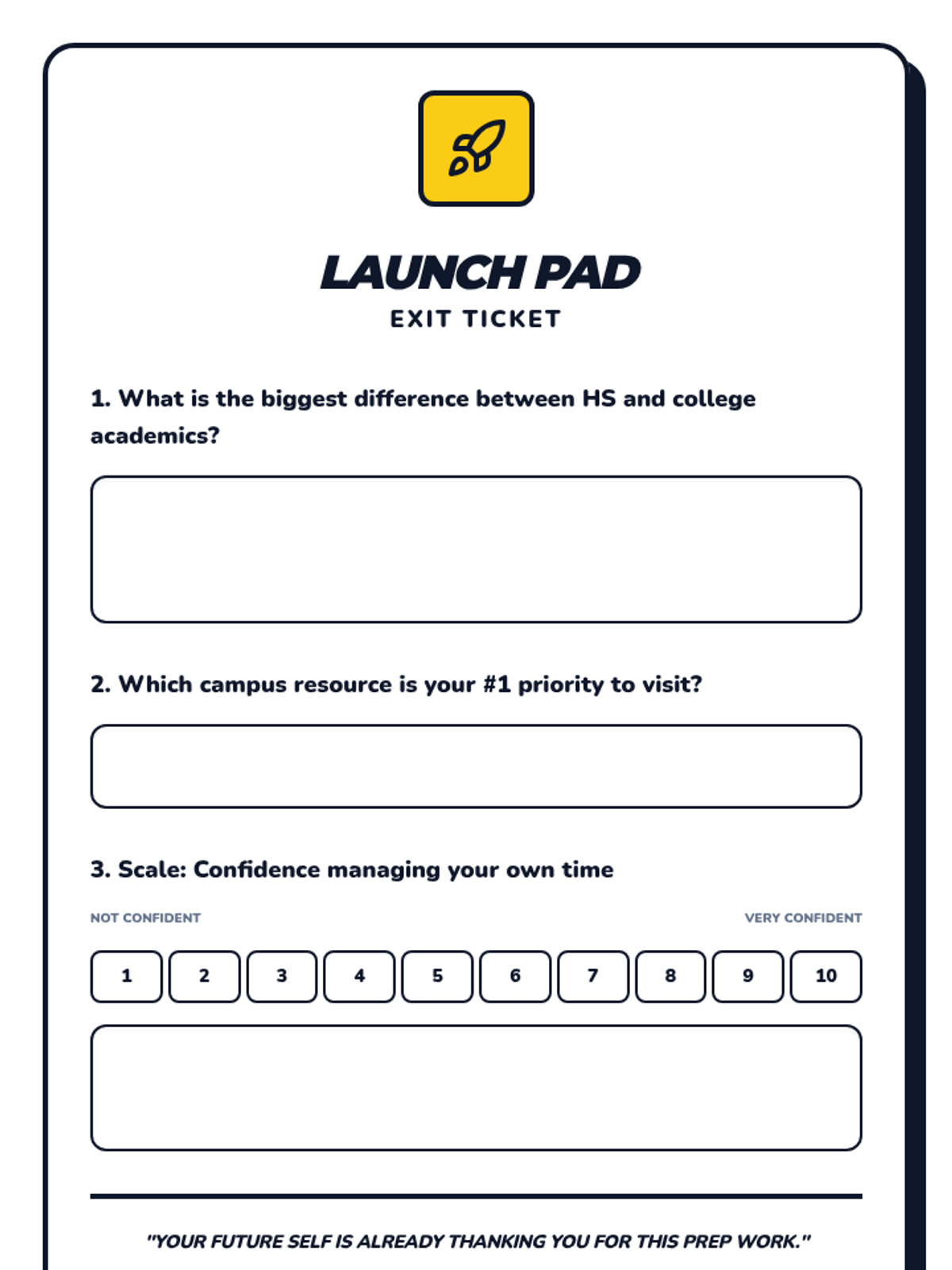
A final exit ticket for gauging student readiness. Revised to fit on a single page, include white work areas for legibility, and use higher contrast for all text and elements.
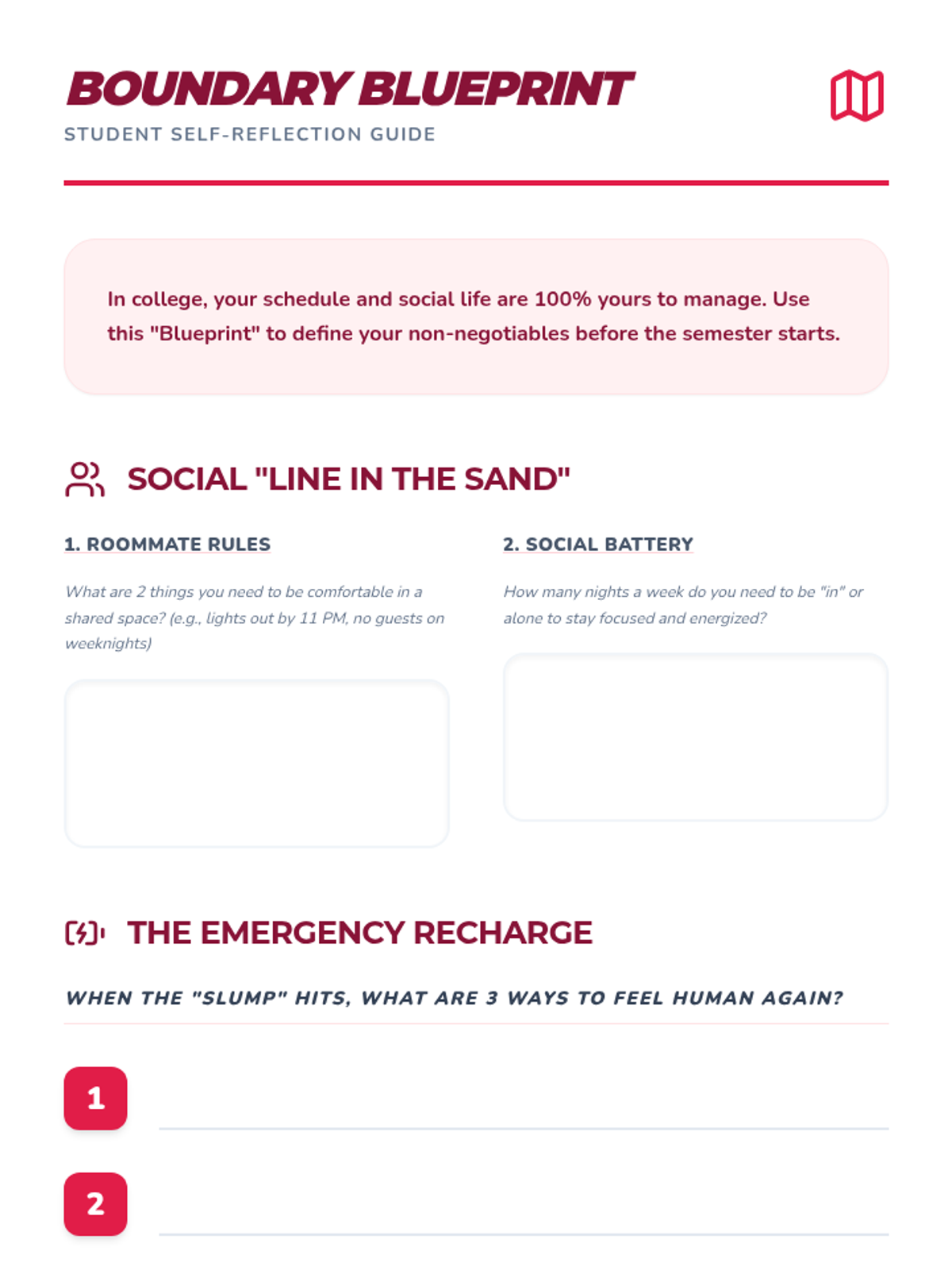
A self-reflection worksheet for personal boundaries. Revised to prevent header orphaning, increase writing area heights (h-32 and h-48), and improve visual styling for student engagement.
A slide deck exploring the emotional phases of the first college semester. Revised with improved text contrast (white subtitle on red, darker headers) and better icon scaling on Slide 3.
A scenario-based worksheet for matching crises to resources. Revised with larger response areas (h-16), improved page break handling, and more reflection space.
A comprehensive guide for teaching self-advocacy. Revised to include a student practice page with larger drafting areas and improved contrast for grayscale printing.
A slide deck focusing on the transition to self-advocacy. Revised with larger icons, an interactive activity slide, and improved visual hierarchy.
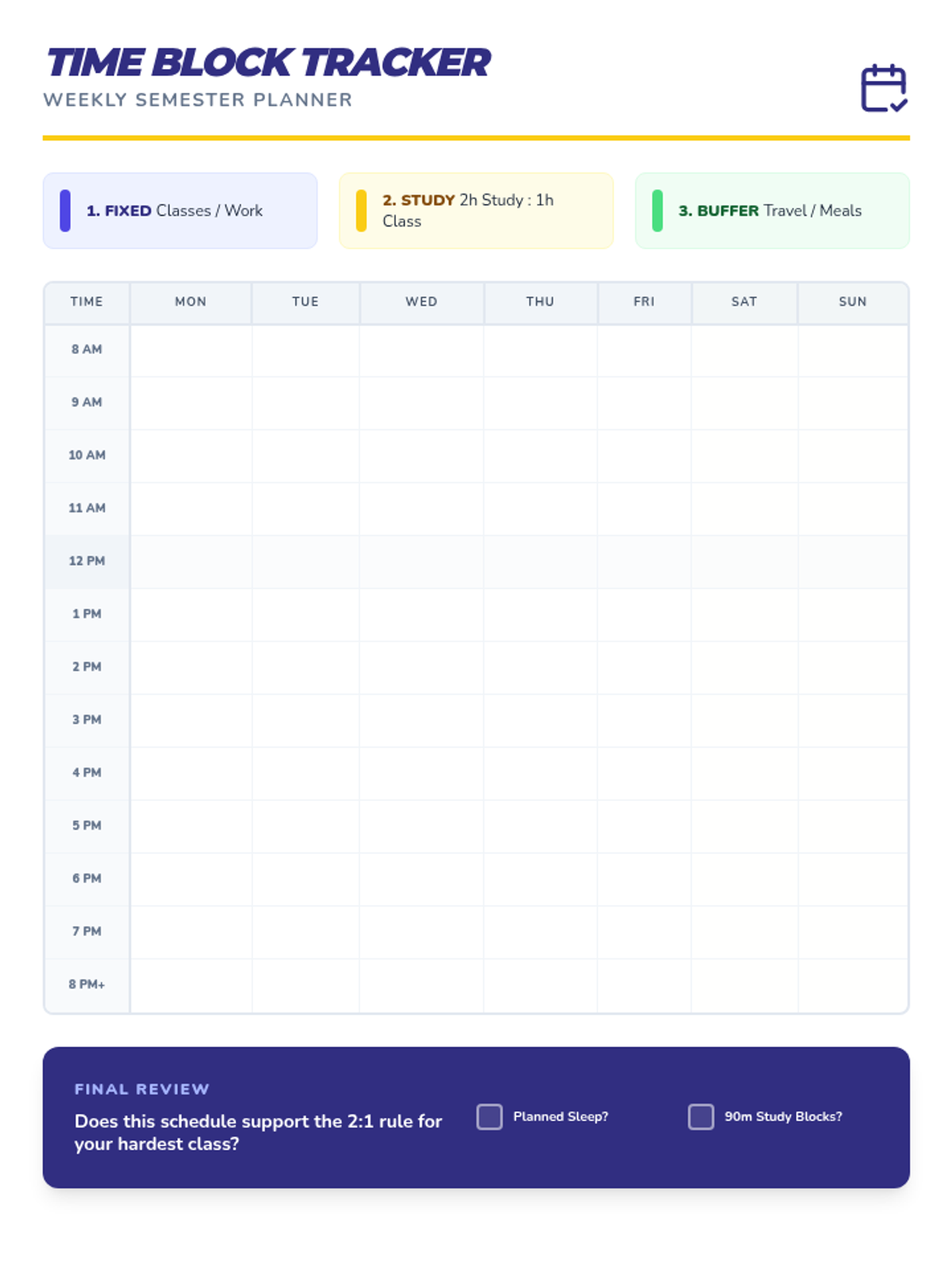
A structured weekly planner template designed specifically for college schedules. Revised to include weekends, larger writing areas (h-20 rows), and fixed page breaks.
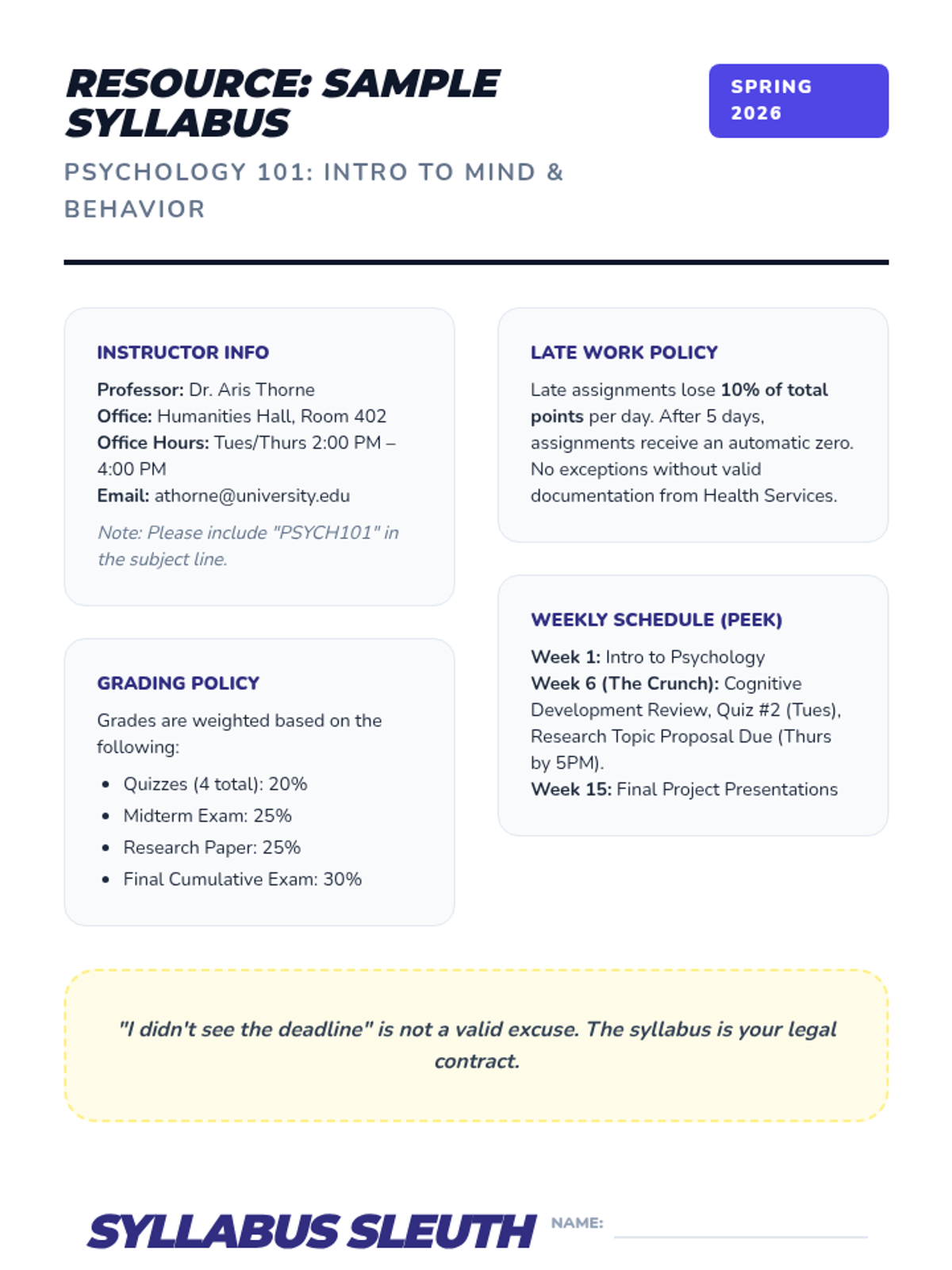
A practical worksheet that includes a sample college syllabus and a scavenger hunt to teach students how to extract critical logistical and academic information. Revised with actual syllabus text and improved layout.
A visually engaging presentation that breaks down the major differences between high school and college academics, introduces the syllabus as a student's 'contract,' and teaches the 2:1 rule for time management. Revised with actual visuals and better icon scaling.
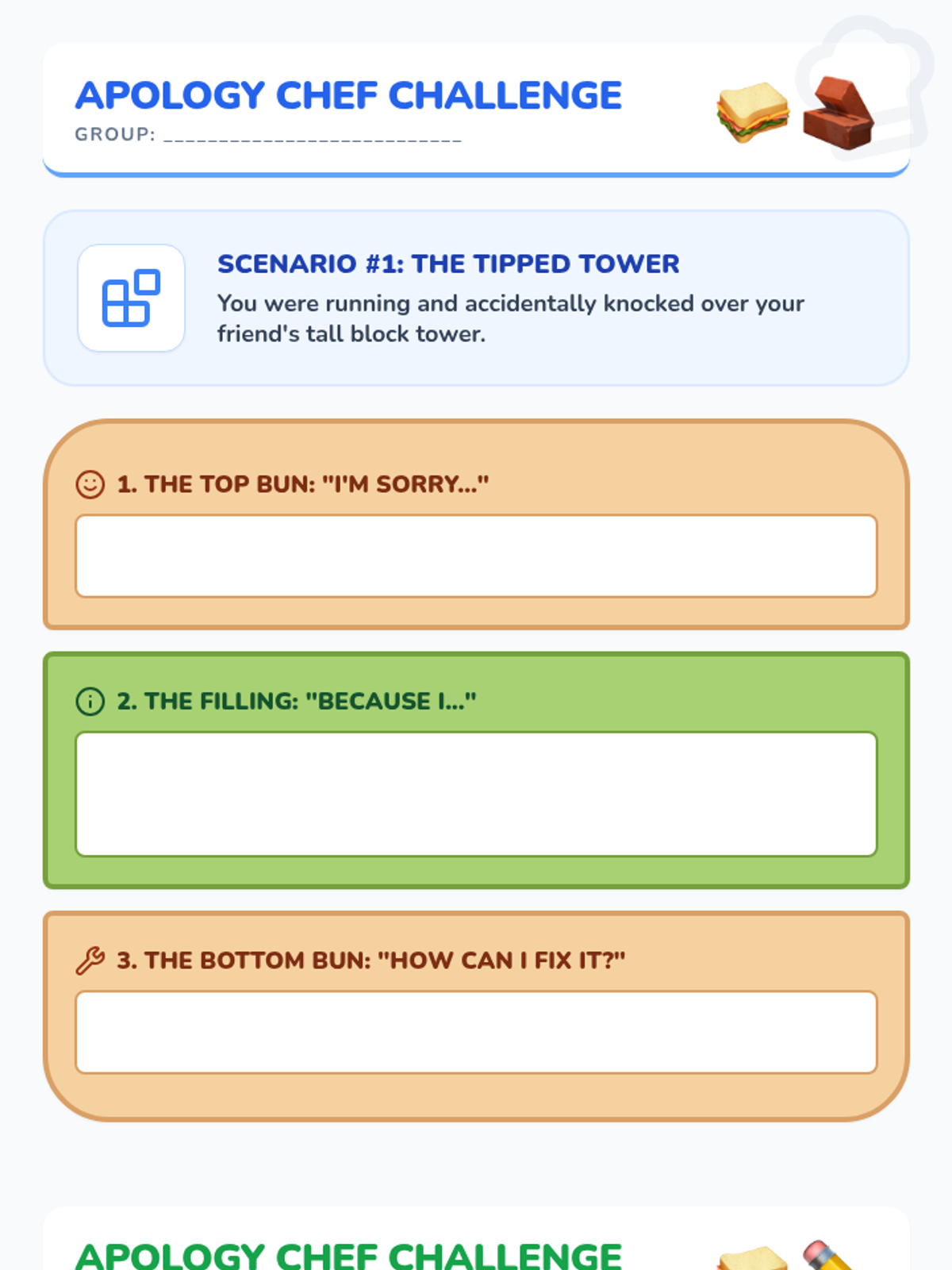
A group activity packet containing four unique apology scenario pages. Each page includes a specific conflict scene and a three-part sandwich template for students to complete, ideal for digital or print use.
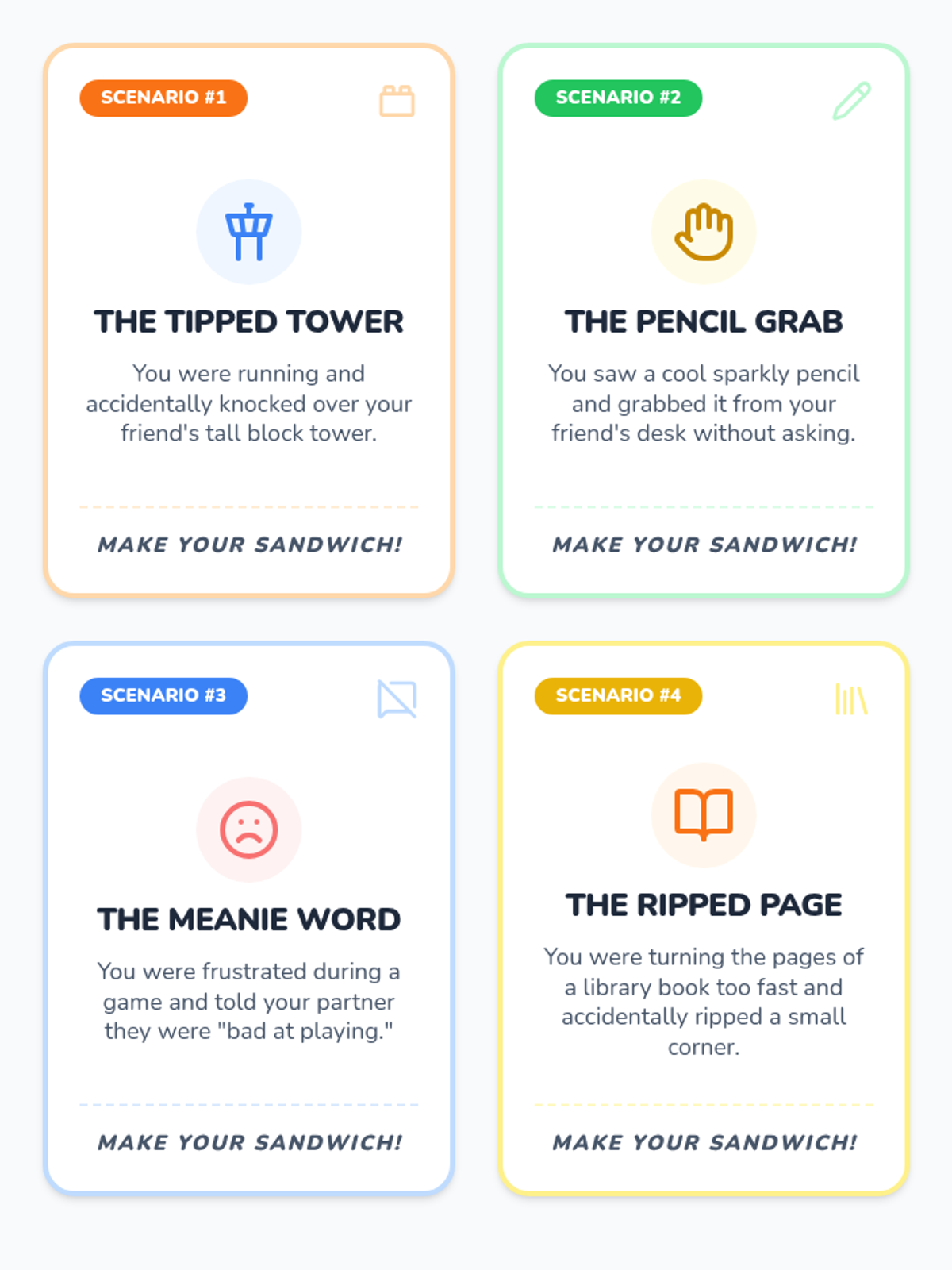
A set of role-play scenario cards designed for practicing the 'Apology Sandwich'. Updated with higher contrast text and bold styling for better classroom usability.
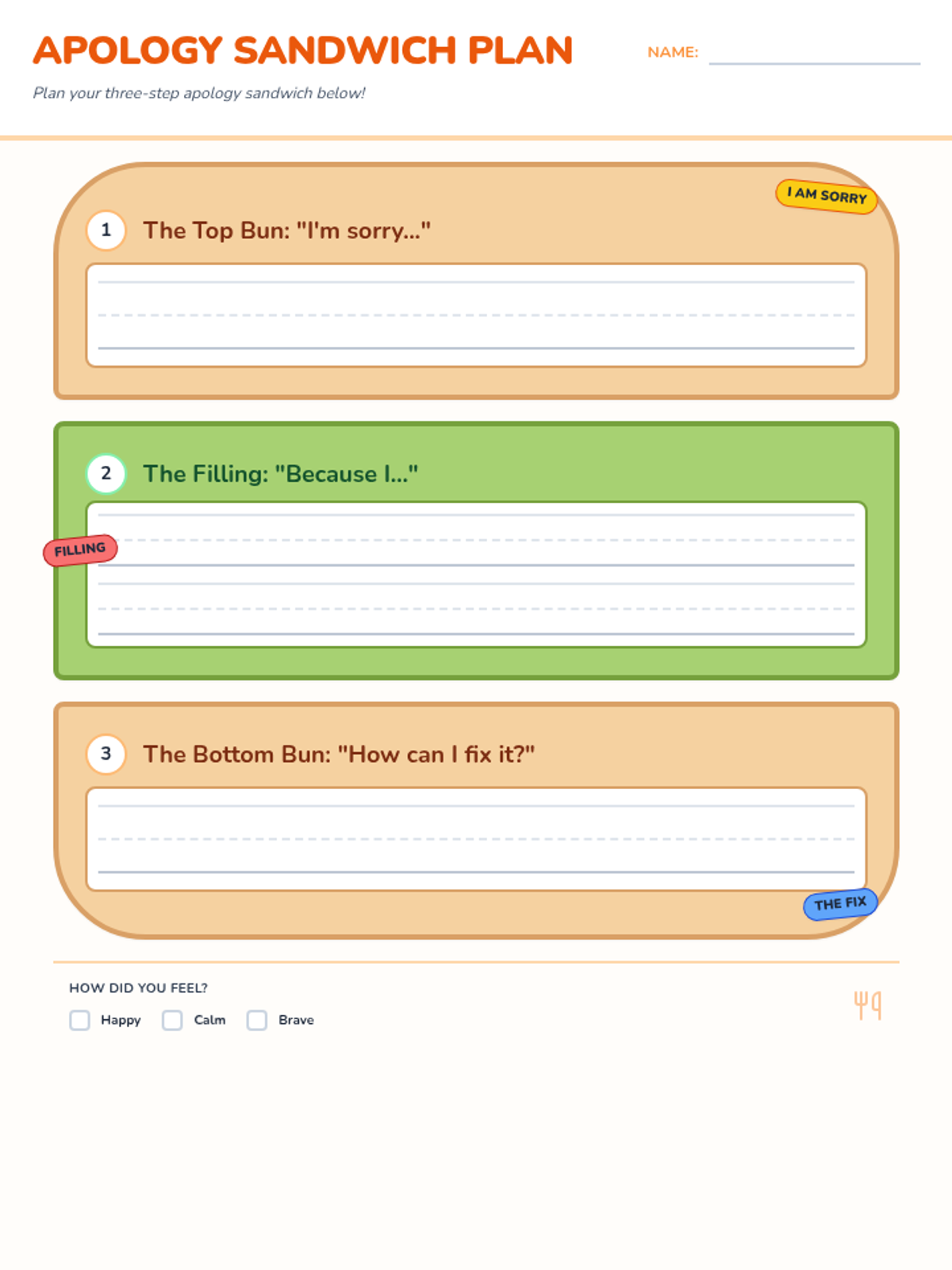
A visual graphic organizer for students to plan a three-part apology using a sandwich metaphor: I'm sorry (top bun), because I (filling), and how can I fix it (bottom bun). Features primary writing lines and fits on a single page.
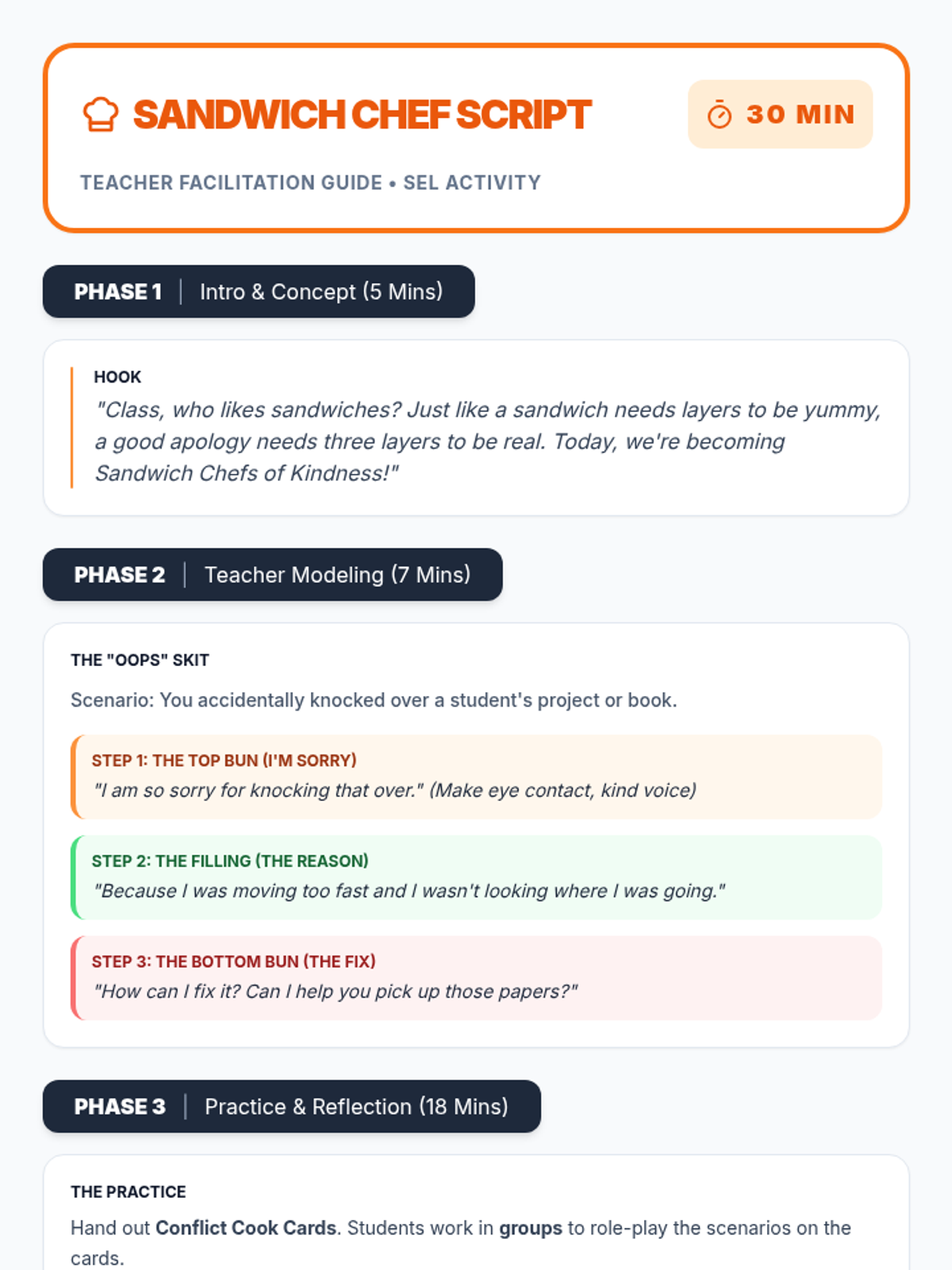
A teacher's instructional script and facilitation guide for delivering 'The Apology Sandwich' lesson. Updated to include a sample answer key for the four conflict scenarios to assist the facilitator during group practice.
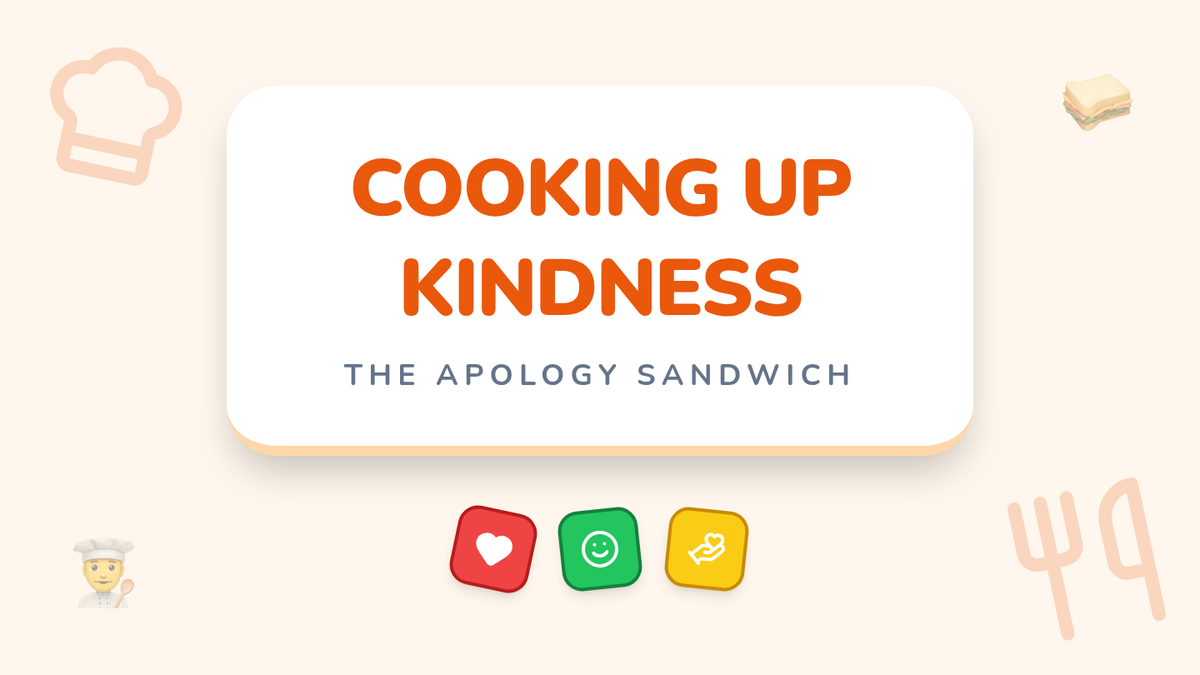
A visual slide deck for 'The Apology Sandwich' lesson, featuring the three-part apology model, a new 'Bumped Desk' example scenario on slide 7 to distinguish it from practice materials, and interactive reflection slides.
A Dojo-themed slide deck with a natural parchment and wood aesthetic. It features three mission-based scenarios including a science experiment logic challenge, and specific 'Quiet Shield' tools to teach self-control to high-achieving students.
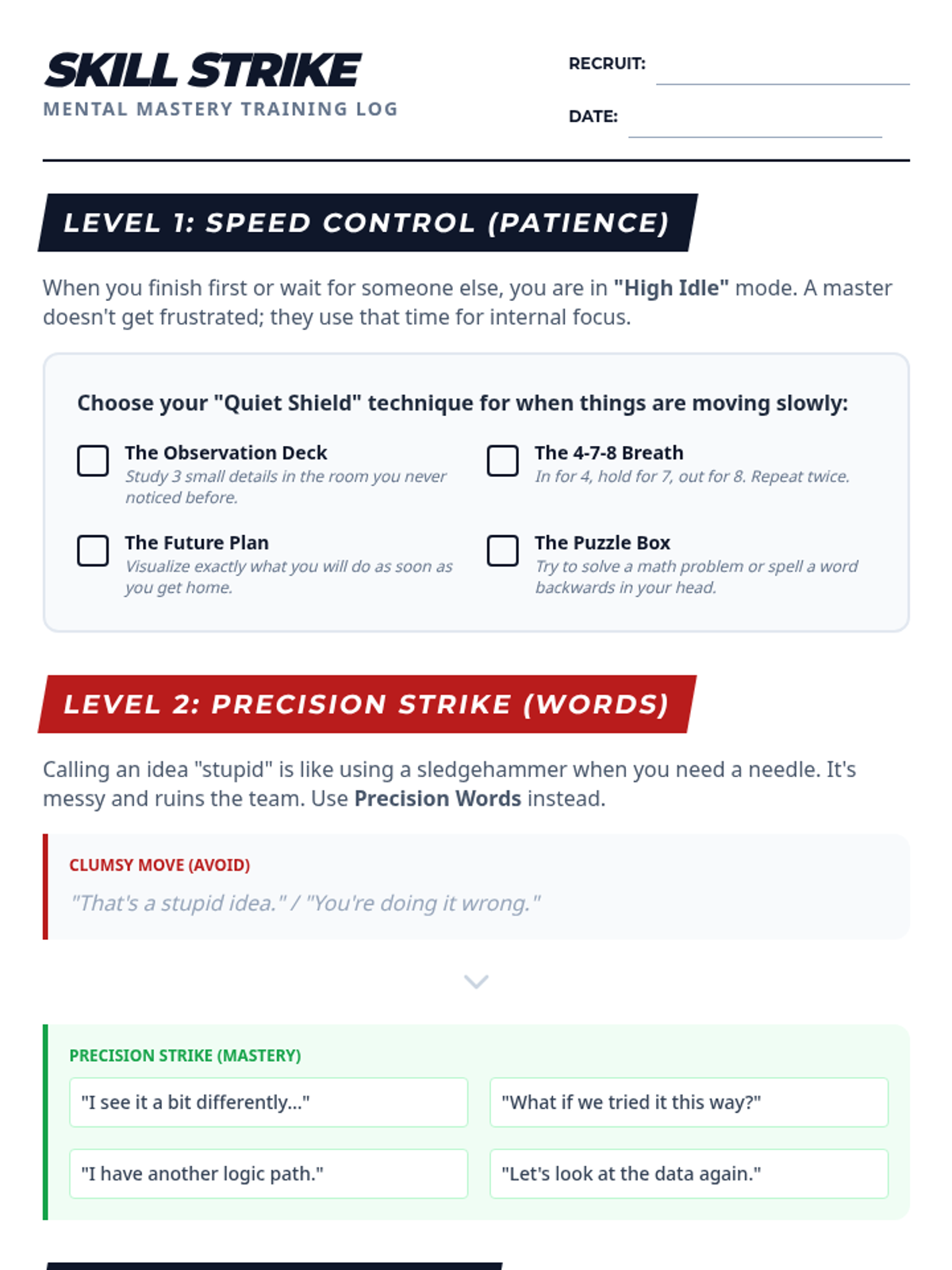
A Dojo-themed student worksheet on parchment-colored background, including three 'Mission' scenarios including a science experiment logic challenge, a tool selection area, and a large commitment space for self-mastery goals.
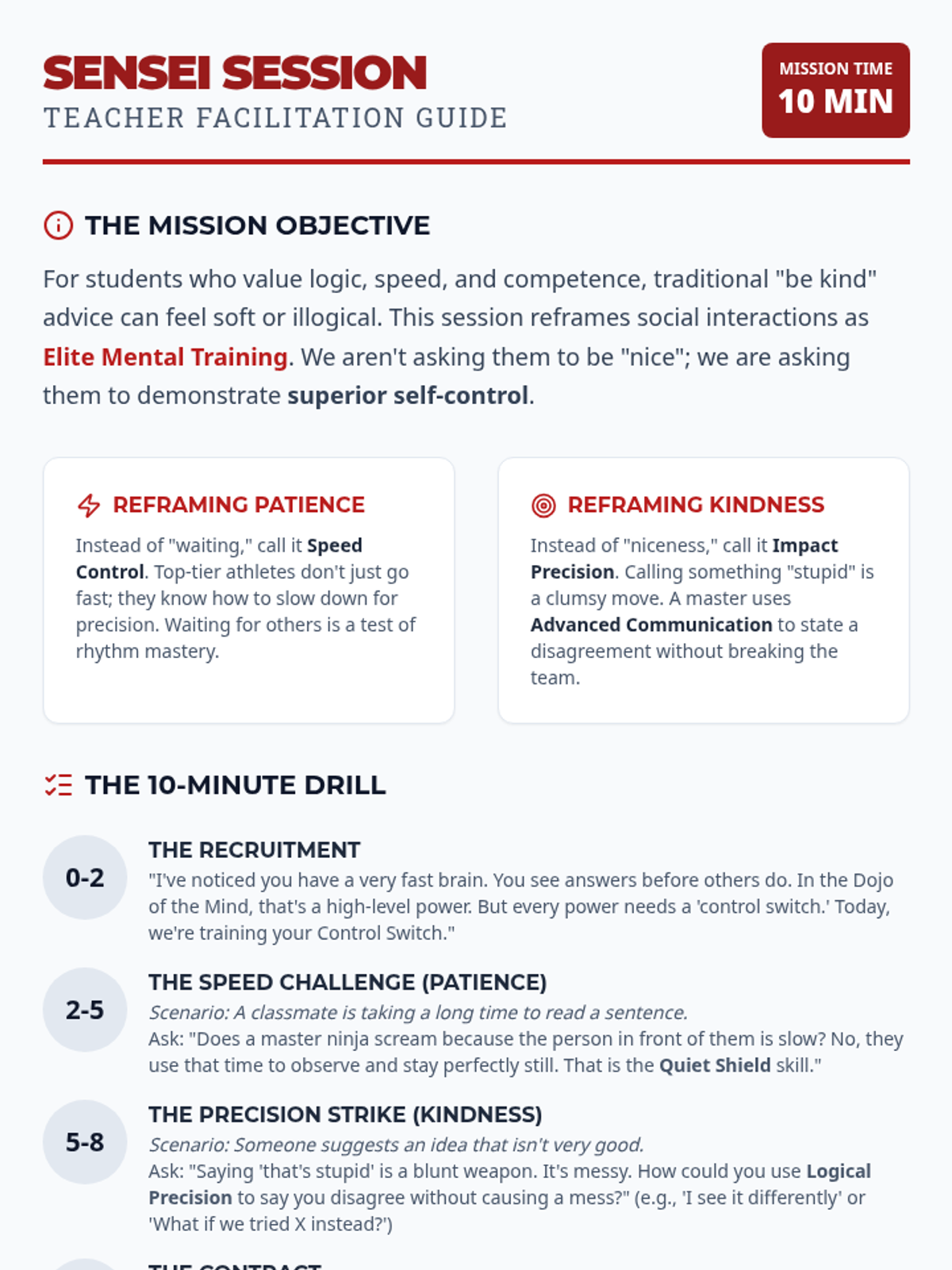
A specialized facilitator guide for the Mind Dojo lesson, focusing on high-level language and strategic coaching for students with fast-moving, ego-driven minds.